


Abstract
Nanofluid development is facing the challenge of instability despite the significant body of research dedicated to developing new nanoparticle-enhanced fluids. Numerous combinations of fluids and particles have been studied; however, the research on surfactants is rather limited, and the results are scattered. This paper is dedicated to the study of two regular polymeric surfactants (PVP and PSS) as well as two polyethylene glycols and one ionic liquid as possible alternatives. The results of a coordinated experiment are followed by a discussion of the density, thermal conductivity, thermal effusivity and viscosity of several samples with the same amount of titanium oxide nanoparticles dispersed in water and different mass concentrations of surfactants (2, 4 and 6%wt.). The results indicated that both the thermal properties and viscosity are negatively affected by the addition of surfactant, which is a drawback. The viscosity remains within a reasonable variation (i.e., between a 0.7 and 1.5% increase) for concentrations of PEG 200, PEG 400 and PSS up to 2%wt. Also, the addition of titania nanoparticles increases the water thermal conductivity by 1.8%, while the addition of surfactant decreases the overall values by around 5%. This disadvantage is amplified when also considering the foam creation, characteristic of all regular surfactants, that limits their real-life applications in turbulent flow.
1. Introduction
Nanofluids (i.e., nanoparticle-enhanced fluids) are at the forefront of the development of advanced cooling and heating technologies; however, their widespread application is hindered by their poor stability and particle sedimentation over time. Despite the numerous stabilization techniques reported in the literature, surfactant addition remains one of the most reliable approaches [1,2,3,4,5,6]. Surfactants are not new (the word “surfactant” comes from “surface active agent”) and there are many types, which cover many areas in engineering and beyond. A key challenge associated with surfactant-stabilized nanofluids is the careful selection of both the type and concentration of the surfactant required for obtaining a well-balanced nanofluid, particularly with respect to its thermophysical properties, as several experimental nanofluid studies affirmed (see [7,8,9,10,11,12,13,14,15,16,17,18,19,20], for example).
A good review on surfactants and their relevance for nanofluids preparation was conducted by Farade et al. [14], who concluded that the precise surfactant concentration is critical, as both the under- and over-use of surfactants can negatively impact nanofluid performance. Consequently, several problems have to be considered in designing fluid–nanoparticle–surfactant systems (as was outlined by Farade et al. [4]), including the optimal surfactant concentration and finding the right balance between stability and performance (i.e., thermophysical properties). Therefore, recommendations of surfactant concentration are required to balance nanoparticle dispersion and stability with thermophysical properties, as excessive amounts increase interfacial resistance and reduce thermal conductivity [15,16]. While optimal levels enhance stability and improve factors such as dielectric breakdown voltage and resistivity, surplus surfactant leads to property degradation [17,18]. Additionally, the currently used dielectric constant models are insufficient because they do not fully account for surfactant–nanoparticle interactions, requiring more accurate predictive modeling [19,20].
A pivotal factor in the practical application of surfactants is the Critical Micelle Concentration (CMC), which represents the concentration threshold above which surfactant molecules spontaneously organize into aggregates known as micelles [2,21]. The CMC is a fundamental characteristic since it marks the point where the surface tension of the liquid reaches its minimum value and becomes constant. In nanocolloid preparation, exceeding the CMC unnecessarily can sometimes lead to depletion flocculation or an undesired increase in fluid viscosity, making its precise determination essential [14,21].
Another aspect that is highlighted in some studies refers to the synergy between surfactant and nanoparticle type, while this phenomenon is primarily governed by electrostatic and hydrophobic forces. Surfactant molecules are, basically, amphiphilic, possessing both a hydrophilic (water-loving) head and a hydrophobic (water-fearing) tail [22,23]. The main mechanisms that may sustain the aforementioned synergy concept are [3,14] adsorption (i.e., the molecules adsorb onto the nanoparticle surface); electrostatic attraction (i.e., if the surfactant head group and the nanoparticle surface carry opposite charges, an electrical double layer is formed, creating a repulsive force between particles that prevents settling) and hydrophobic interaction. For example, in the case of hydrophobic nanoparticles, the surfactant’s tails attach to the surface, leaving the hydrophilic heads facing the bulk fluid, thereby rendering the particles dispersible in polar solvents [14].
Although several studies have investigated the role of surfactants in nanofluids, research in this field is still in its early stages. Shaban et al. [3] conducted an extensive review on surfactants, categorizing frequently employed chemicals to mitigate nanoparticle agglomeration into five groups:
- Anionic surfactants (e.g., SDBS).
- Cationic surfactants (e.g., CTAB).
- Non-ionic surfactants (e.g., Triton X-100).
- Polymeric surfactants (e.g., PVP).
- Magneto surfactants.
Duangthongsuk and Wongwises [1] proposed three effective methods for enhancing suspension stability: (i) controlling the pH of the suspension, (ii) adding surface activators or surfactants, and (iii) applying ultrasonic vibration. These techniques aim to modify the surface properties of suspended nanoparticles, thereby preventing particle agglomeration and promoting stable suspensions.
Singh [2] examined the stability of nanocolloids in relation to surfactant use, noting that cetyltrimethylammonium bromide (CTAB) is often highlighted in the literature as an effective stabilizer for various nanoparticle systems.
Valan Arasu et al. [4] studied a hybrid water nanofluid with sodium lauryl sulfate (SDS) and sodium dodecyl benzene sulfonate (SDBS) surfactants with different (0.1, 0.3, 0.5, and 0.7%wt.) mass concentrations and studied the impact of the surfactant on thermal conductivity. The authors found that a higher mass concentration of surfactant minimizes the thermal conductivity enhancement of the nanofluid. As far as the authors are explaining (see [4]), they added 0.28 g of TiO2–Ag composite nanoparticles, and the surfactant quantity was between 0.2 and 0.29 g, thus corresponding to a mass NP:surfactant ratio of up to about 1:1.04.
On the other hand, Yang and Du [10] revised research on nanofluids containing TiO2 nanoparticles and systematically summarized their advantages over other types of nanoparticle-enhanced fluids. TiO2 nanoparticles are non-toxic and have been widely employed in diverse applications. Moreover, they can be produced on an industrial scale and exhibit excellent chemical stability, resistance to acidic and alkaline environments, and high thermal stability, rendering them cost-effective. In addition, TiO2 nanoparticles demonstrate favorable dispersion characteristics in both polar and non-polar base fluids, which can be further enhanced through the use of tailored dispersants.
Das et al. [11] studied the stability and thermophysical properties of TiO2/water nanofluids for various volume concentrations (0.1%, 0.5%, and 1.0%) using different surfactants, including CTAB, SDBS, SDS, and acetic acid. Their results showed that SDS-stabilized TiO2/water nanofluids exhibited higher thermal conductivity than those stabilized with CTAB across all tested temperatures and concentrations. In addition, the effect of Triton X-100 and sodium dodecyl benzene sulfonate (SDBS) on the properties of TiO2/water nanofluids were analyzed, and experimental findings indicated enhanced heat transfer performance when SDBS was employed [12]. Nevertheless, both SDS and SDBS have a major disadvantage: foam appearance, which limits the practical applications (see an in-depth discussion in Minea [8] and Ilyas et al. [13]).
Another method to assure a good stability of nanofluids is to perform steric stabilization, which can be commonly achieved by introducing polymeric additives, such as polyvinylpyrrolidone (PVP), into the suspension. This polymer is able to adsorb onto the nanoparticle surfaces, forming a protective layer that induces steric repulsion and inhibits particle agglomeration; for this reason, steric stabilization is often referred to as polymeric stabilization. Electrostatic stabilization, in contrast, is governed by Coulombic repulsion, arising when particles bearing similar surface charges approach one another. While steric stabilization is effective in both aqueous and non-aqueous systems, electrostatic stabilization is generally restricted to water-based applications [9]. For example, Ma et al. [24] investigated the thermophysical properties of hybrid nanocolloids (specifically Al2O3-TiO2 and Al2O3-CuO of 0.005 vol%) using various stabilizers. Their findings indicated that polyvinylpyrrolidone (PVP) provided the highest level of stability compared to other tested agents.
Concluding from the state of the art, current research clearly suggests that there is no “universal” surfactant for nanocolloid stabilization [25,26,27]. While ionic (electrostatic) surfactants are the most widely employed due to their potent repulsive mechanisms, reported results remain contradictory and highly dependent on the specific nanoparticle–fluid mixture [28]. Furthermore, while PVP remains a primary choice for researchers, a lack of transparency regarding specific concentration levels in published data often hinders the reproducibility of these studies (see Lim et al. [29] for further insights).
Plus, these additives modify the transport properties of nanofluids, including viscosity and thermal conductivity. It is increasingly recognized that both the type and concentration of surfactants or dispersants exert significant influence on the transport properties of nanofluids [5,6,7,8], and the selection of an optimal surfactant remains a subject of significant debate. Therefore, it is clear that the scientific community currently lacks coordinated, systematic studies that provide a conclusive roadmap for surfactant selection across diverse nanoparticle types. Considering the challenges identified in the state of the art of nanofluids stability, this paper presents an experimental study on the surfactant influence over the thermophysical properties of a 2%wt. TiO2 + water nanofluid. The scanned properties were density, viscosity, and thermal conductivity and effusivity. Plus, two traditional polymeric surfactants were studied (PVP, PSS) together with PEG 200, PEG 400 and ionic liquid as possible dispersants [8].
2. Methodology
2.1. Chemicals and Samples Preparation
Titanium oxide (IV) nanopowder with a 99.8% metal basis and 21 nm size from Merck (Darmstadt, Germany) is employed in this study together with two commonly used polymeric surfactants, polyvinylpyrrolidone (PVP) and poly(sodium 4-styrenesulfonate) solution (PSS). Additionally, three chemicals are employed as possible dispersants (two low molecular weight polyethylene glycols and one ionic liquid) and studied for their capacity to create stable suspensions. All the chemicals are purchased from Merck (Darmstadt, Germany) and IoLitec (Heilbronn, Germany), and their details are given in Table 1.
Table 1.
Chemical properties [30,31,32,33,34].
PSS (poly(sodium styrene sulfonate)) is an anionic polymeric surfactant (polyelectrolyte), where primarily electrostatic stabilization occurs, with an additional steric (electro steric) contribution due to its polymeric chain. Typical applications of PSS are for the dispersion and stabilization of nanoparticles in aqueous nanofluids.
PVP (polyvinylpyrrolidone) is a non-ionic polymeric surfactant, often classified as a polymeric dispersant (steric stabilizer). The stabilization mechanism is steric via the adsorption of polymer chains onto the nanoparticle surface. PVP is often employed for the stabilization of nanoparticles in both aqueous and non-aqueous nanofluids [8].
1-Butyl-3-methylimidazolium tetrafluoroborate ([C4mim][BF4]) is a versatile ionic liquid that is widely used as a solvent, reaction medium, and electrolyte in lithium–ion batteries and supercapacitors. It exhibits properties such as low vapor pressure, high thermal stability, and good ionic conductivity, making it applicable in chemical synthesis and energy storage systems, as it is affirmed by Sigma Aldrich (Darmstadt, Germany) (manufacturer). As an ionic liquid, it is a salt in the liquid state at room temperature, containing ([C4mim]{+}) (1-butyl-3-methylimidazolium) and ([BF4]{−}) (tetrafluoroborate) ions.
Distilled water is used as a base fluid for the nanofluid preparation. The samples preparation procedure followed a strict protocol developed in the lab: (1) suspensions calculation; (2) addition of surfactant to water; (3) sonication for 30 min, (4) addition of nanoparticles; (5) sonication for 30 min followed by (6) magnetic stirring for 60 min.
The samples were calculated for different mass concentration of surfactants/PEG/IL and a fixed mass concentration of nanoparticles (i.e., 2%wt. TiO2, related to water content). The dispersant concentration was established from state-of-the-art recommendations, where the NP:surfactant ratio was claimed to be up to 1:10 [8]. For each type of surfactant, three concentrations were considered: 2%wt. (i.e., 2%wt. TiO2 + 2%wt. surfactant, corresponding to NP to surfactant ratio of 1:1); 4%wt. (i.e., 2%wt. TiO2 + 4%wt. surfactant, corresponding to NP to surfactant ratio of 1:2) and 6%wt. (i.e., 2%wt. TiO2 + 6%wt. surfactant, corresponding to NP to surfactant ratio of 1:3). The concentrations are related to sample mass, while 30 g was the total mass of each nanofluid sample.
Ultra sonication (i.e., both mechanical and magnetic) was employed to disperse both the surfactants and the nanoparticles, since it has been proved as the most effective dispersion method for preparing nanofluids. The ultrasonication time was established after consulting the literature, and our lab protocol was established as such (see also Ilyas et al. [13] and Arasu et al. [4]). More exactly, first the water + surfactant dispersions were prepared and sonicated at 60 W power for 30 min, which was followed by nanoparticle addition. The nanofluid samples with surfactants/PEG/IL (i.e., distilled water + 2%wt. TiO2 + surfactants) were sonicated for 30 min at 60 W power, which was followed by a magnetic stirring for 60 min. All the equipment is outlined in the next section where all the details are included. The samples preparation process was at ambient temperature (i.e., around 23 °C).
Overall, a total of 16 samples (three concentrations for each surfactant/PEG/IL and a sample without surfactant) were manufactured and comparatively studied in terms of their thermophysical properties.
2.2. Equipment
All the samples were tested for thermal properties (thermal conductivity and effusivity), density variation with temperature, as well as viscosity variation at heating. The equipment along with its characteristics are presented in Table 2.
Table 2.
Employed equipment.
The samples employed in the different processes of property estimation were established based on equipment recommendations, as outlined in Table 2.
3. Results and Discussion
3.1. Density
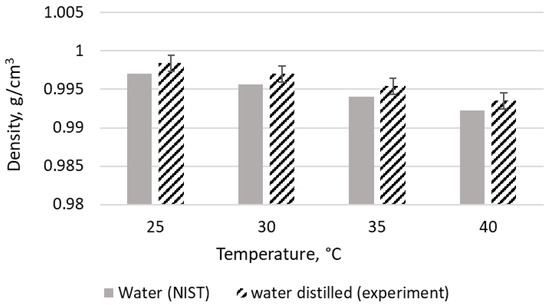
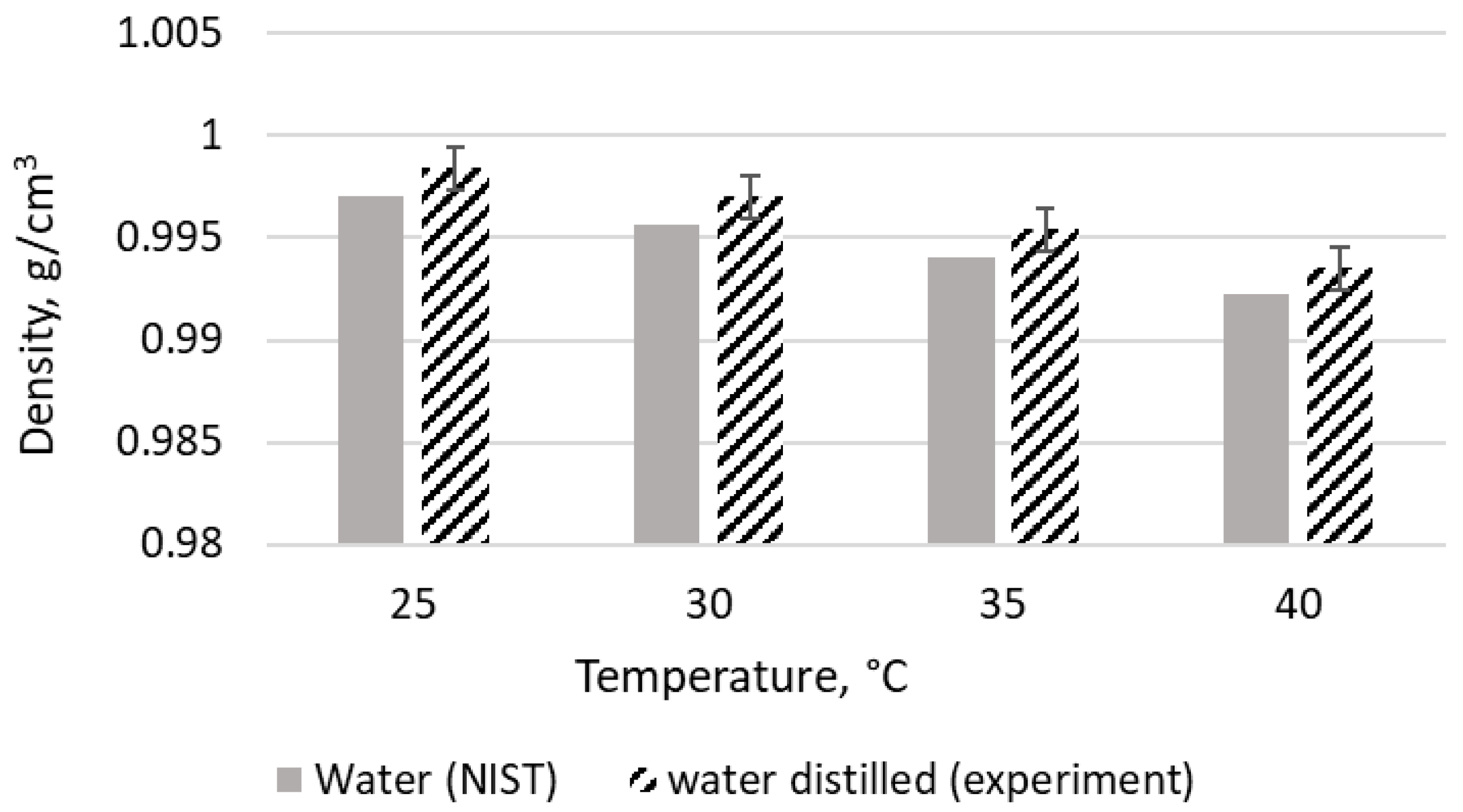
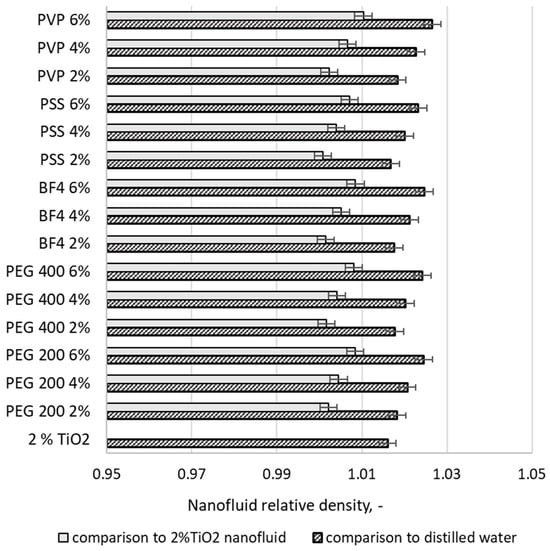
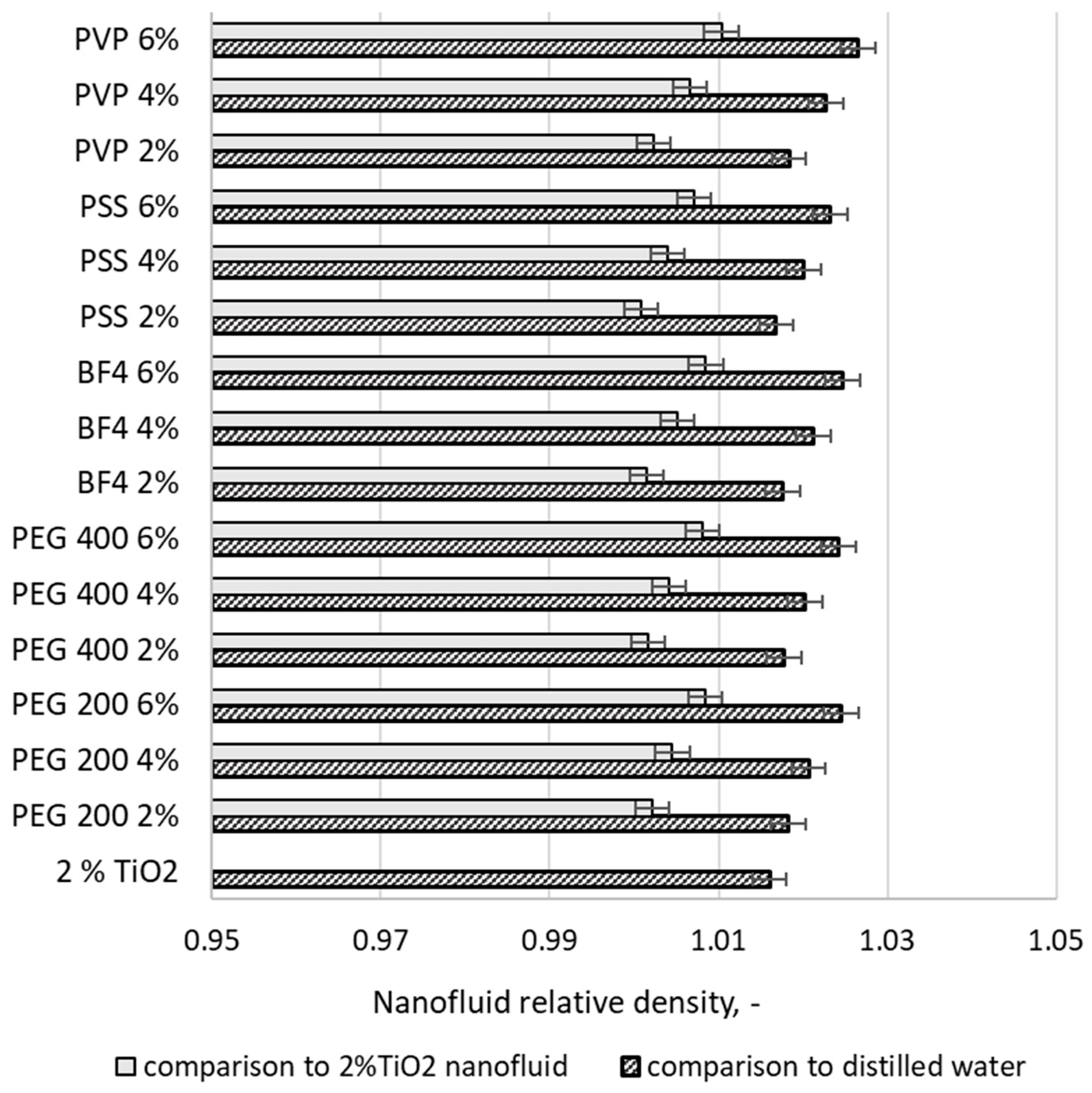
The experimental data were validated using The National Institute of Standards and Technology (NIST) [30] data, as can be seen in Figure 1, where the uncertainties are less than 0.1%. The density variation, at ambient temperature (i.e., 25 °C), with the addition of surfactant lies between 1.6% to 2.7% if compared to water, depending on the surfactant type and concentration (see Figure 2).
Figure 1.
Density measurements validation.
Figure 2.
Relative experimental density plotted at 25 °C.
Figure 2 illustrates the relative density, which is defined as the ratio between the sample density and the density of water or the base nanofluid. Data analysis reveals that the surfactant’s influence on nanofluid density is minor; this is due to the intrinsic density of the chemicals, which are close to the density of water [8].
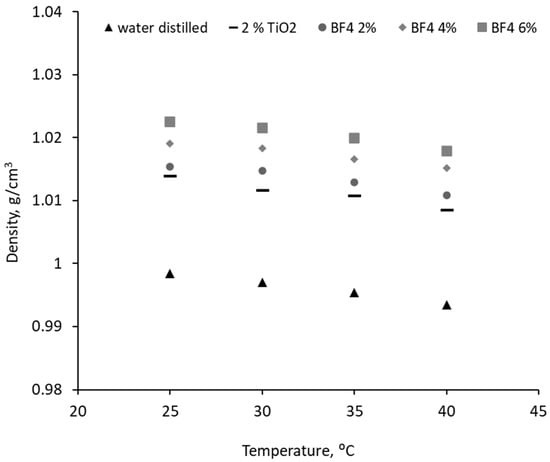
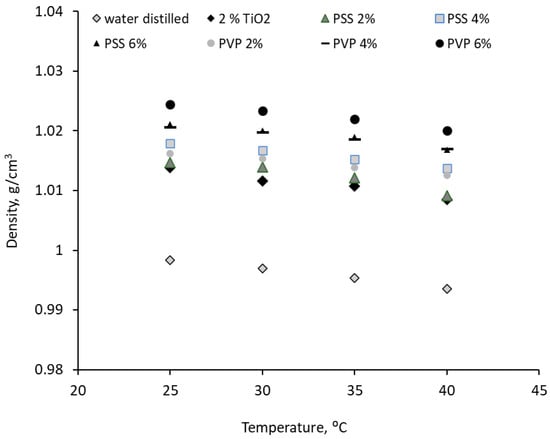
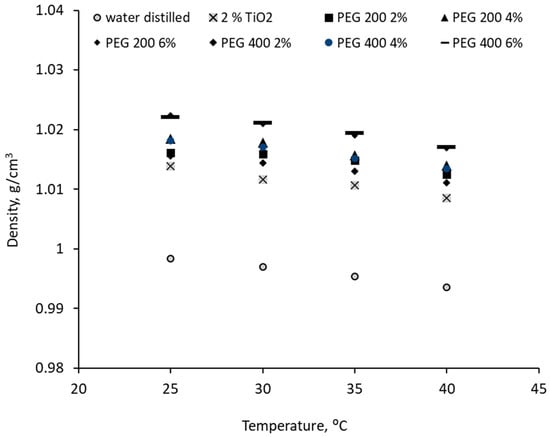
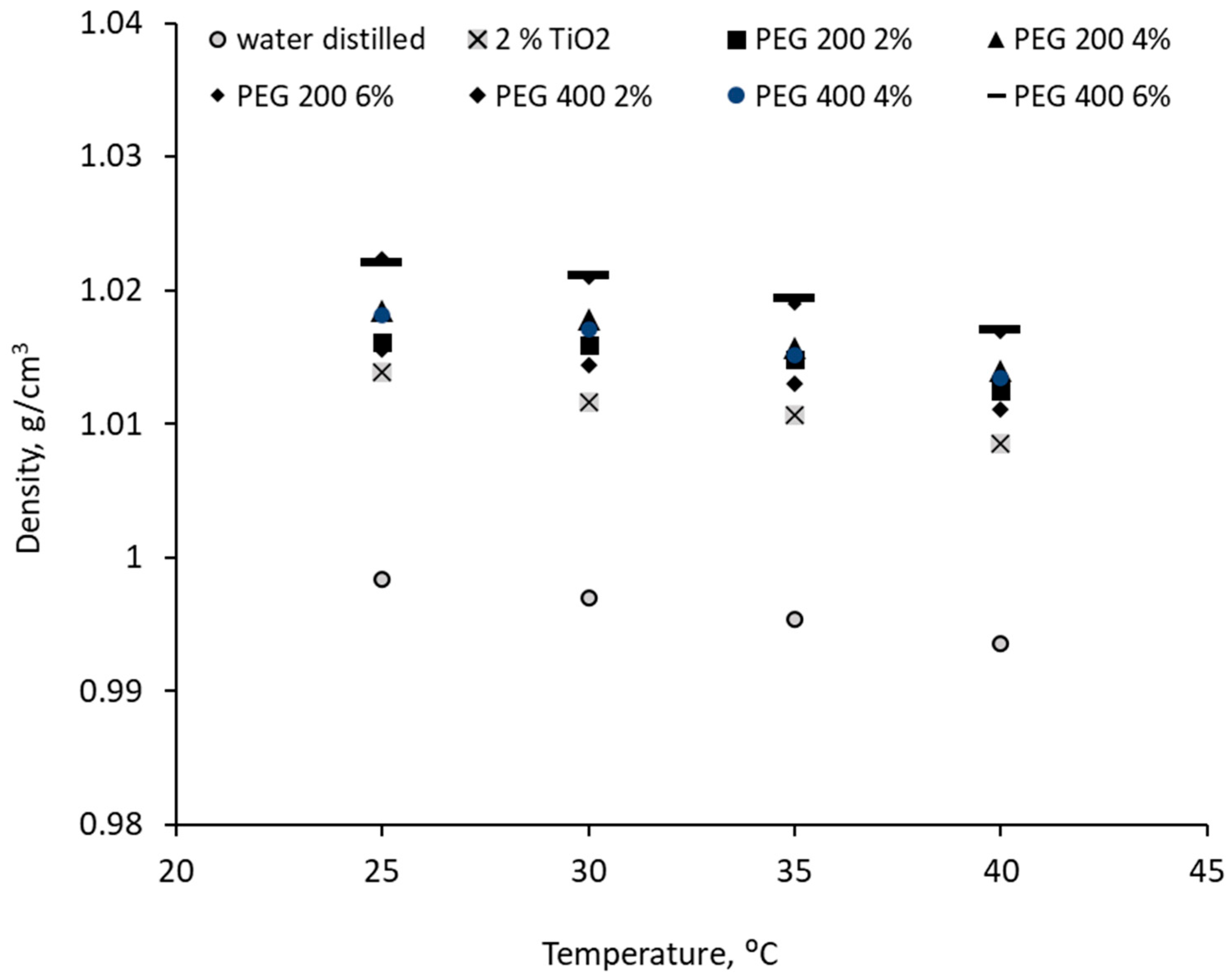
Furthermore, the experimental results for density variation with temperature (Figure 3, Figure 4 and Figure 5) show that all samples maintain a higher density than water. The data indicate a downward trend as the samples are heated up to 40 °C.
Figure 3.
Density variation with temperature for samples with ionic liquids.
Figure 4.
Density variation with temperature for PVP and PSS surfactant samples.
Figure 5.
Density variation with temperature for PEG samples.
When nanoparticles are added to water, the density slightly increases 1.6% (see Figure 3), while the addition of surfactant increases the density up to 2.7% for higher surfactant concentrations, as can be seen in Figure 3, Figure 4 and Figure 5. Actually, this is a normal phenomenon for all the mixtures.
The experimental data were fitted as a function of temperature, and the resulting linear regression coefficients are summarized in Table 3.
Table 3.
Coefficients and R-squared values for samples density.
3.2. Thermal Conductivity
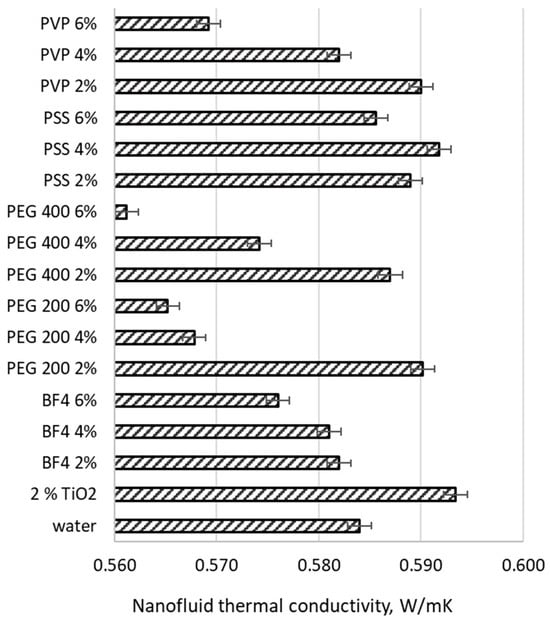
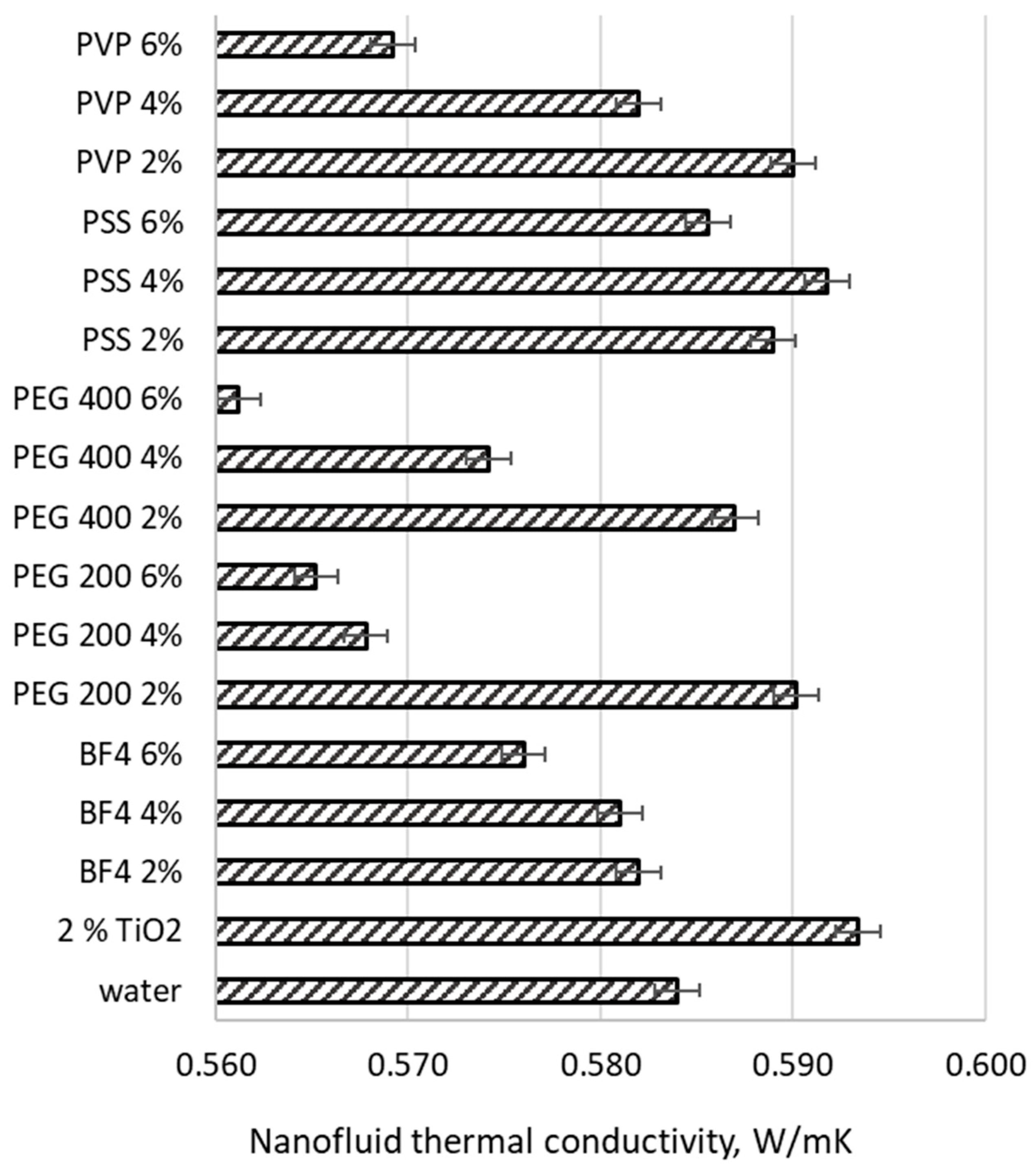
Thermal conductivity was evaluated at ambient temperature, where the addition of titania nanoparticles was found to increase the thermal conductivity of water by 1.8%.
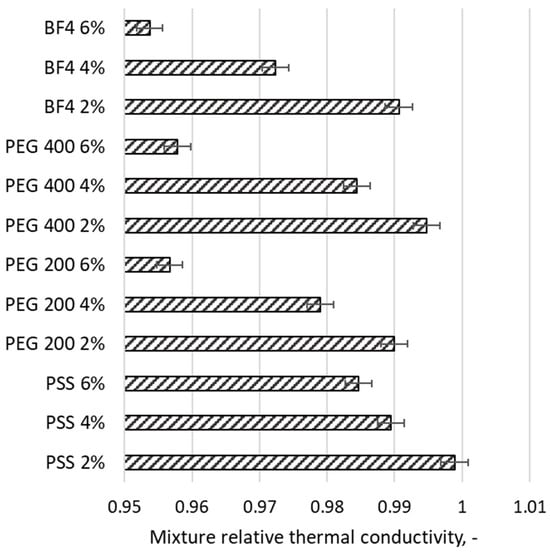
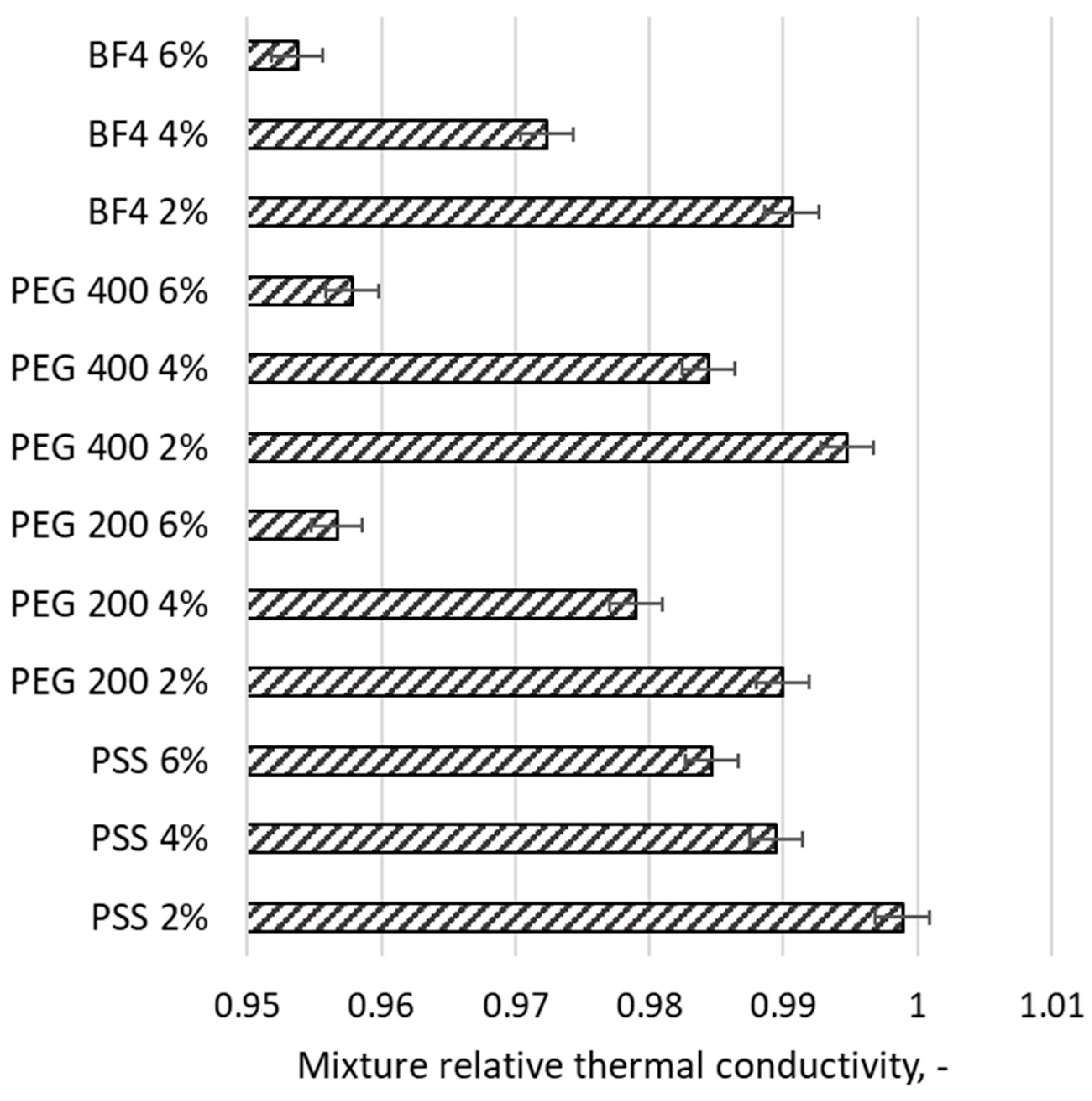
The inclusion of a surfactant, however, led to a decrease in thermal conductivity. As shown in Figure 6, this reduction was significant enough in some cases to offset the gains from the nanoparticle addition. This downward trend was also evident prior to the addition of nanoparticles. Figure 7 illustrates the relative thermal conductivity of water–surfactant, water–PEG, and water–IL mixtures compared to pure water. As illustrated in Figure 7, all additives decrease the thermal conductivity of water with the decline becoming more pronounced at higher concentrations of polymers or ionic liquids. This phenomenon is expected, as most polymers exhibit low thermal conductivity (for example, PEGs have a k value of approximately 0.2 W/mK).
Figure 6.
The influence of each chemical addition on nanofluid thermal conductivity at 25 °C.
Figure 7.
Influence of each chemical addition on water thermal conductivity at 25 °C.
The observed decrease reaches up to 3%, whereas the smallest impact is seen for PSS and PEGs at concentrations below 4%. In all cases, thermal conductivity decreases as the mass concentration of the surfactant, PEG, or IL increases. Consequently, it is recommended to limit dispersant concentrations to a maximum 1:1 ratio relative to the nanoparticle addition. At this ratio, the impact on thermal conductivity is minor compared to a nanofluid without dispersants.
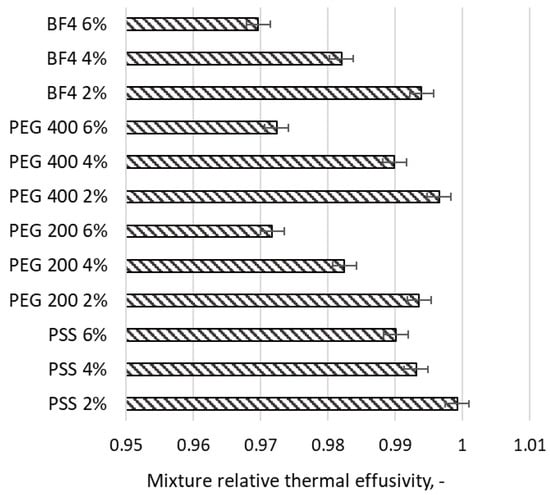
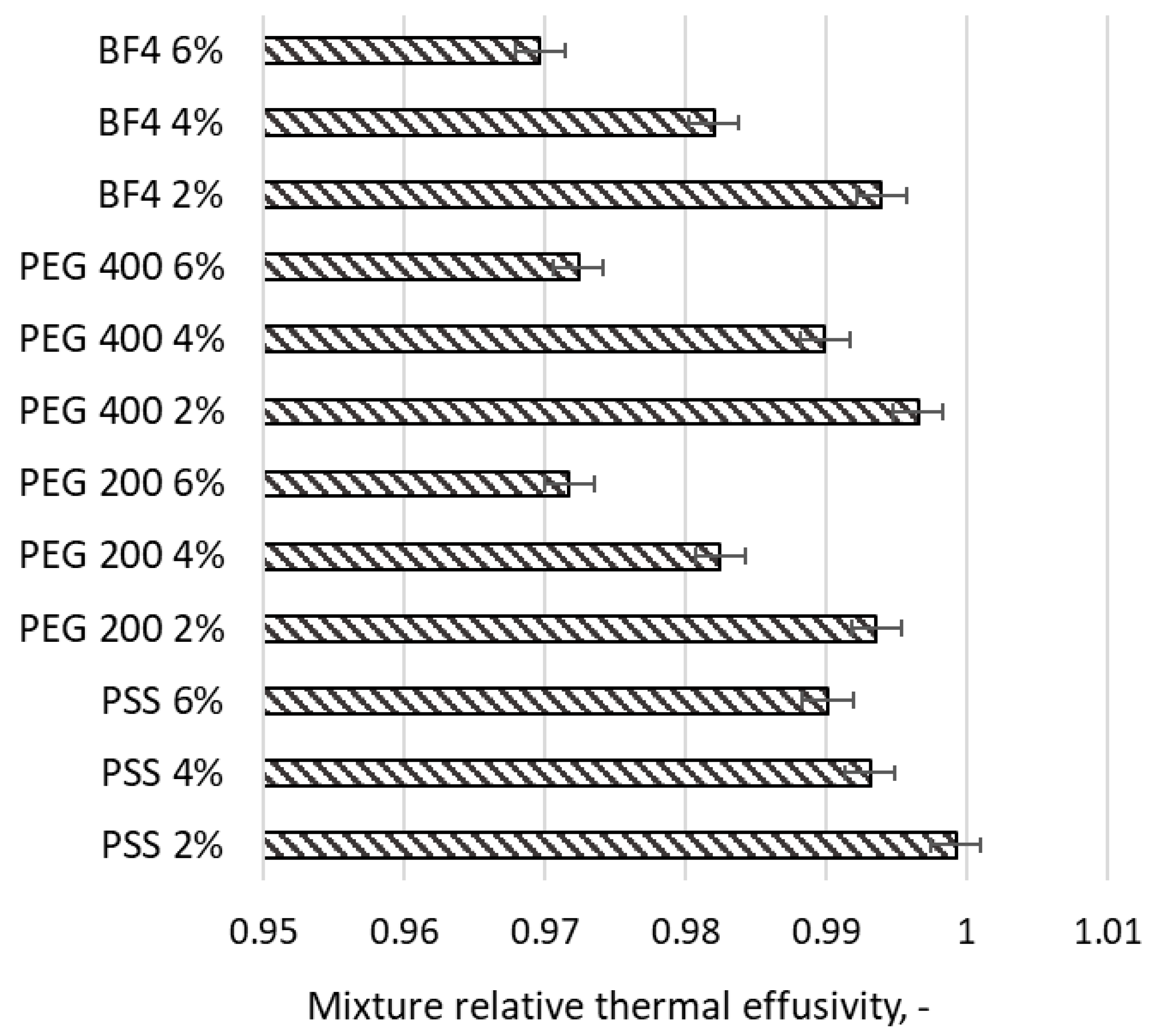
A similar phenomenon was noticed also for thermal effusivity. Basically, the thermal effusivity—that is, a material capacity to exchange heat with its surroundings—is extremely relevant especially in short-duration heat exchange scenarios. The effusivity was measured with the C-Therm equipment and can create the premises for evaluating the isobaric heat capacity (i.e., the effusivity formula, which is the square root of (thermal conductivity × volumetric heat capacity)), and several results are shown in Figure 8. The experimental data indicate a decrease in the thermal effusivity when surfactants are added in water that is larger for the concentrated ionic liquid and PEGs, while PSS addition does not majorly influence the water behavior. If 2%wt. surfactant is added, the influence is up to 1%, which is balancing well this drawback in the favor of increasing the stability.
Figure 8.
Influence of each chemical addition on water thermal effusivity at 25 °C.
Concluding, the thermal conductivity of the nanofluid is negatively influenced by the addition of surfactants, as well as other chemicals with lower conductivities than water. This is a normal phenomenon for all mixtures, especially when it refers to fluid mixtures (i.e., the case for PEGs and ionic liquid).
3.3. Viscosity
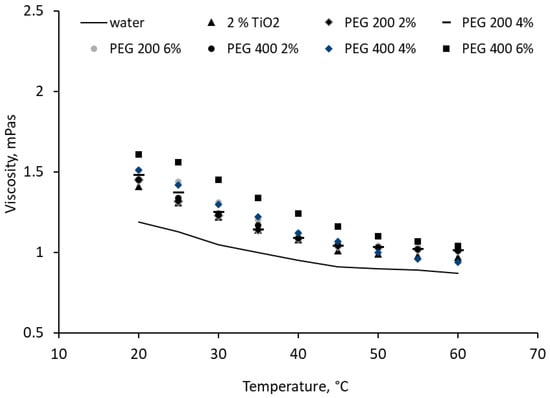
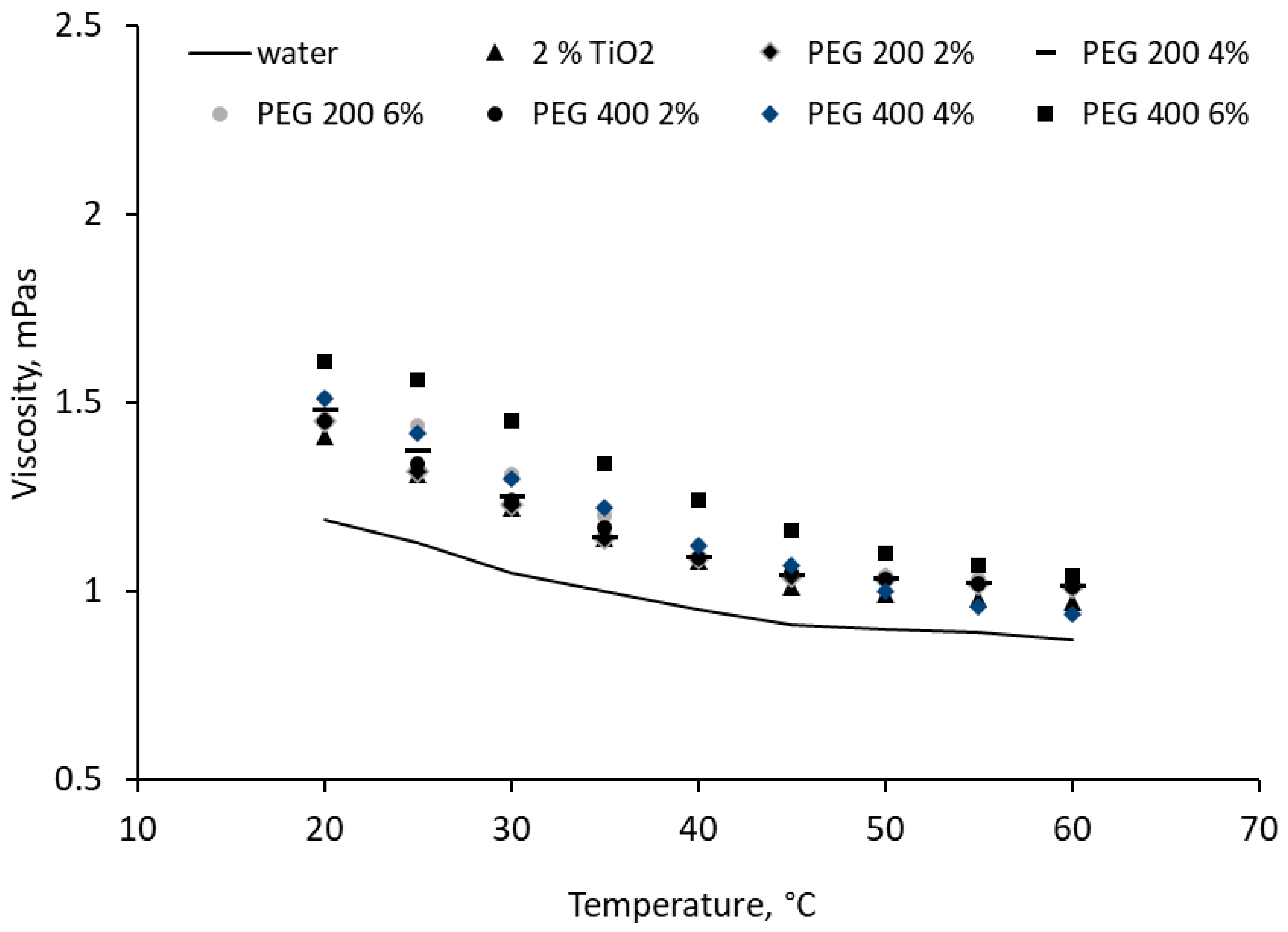
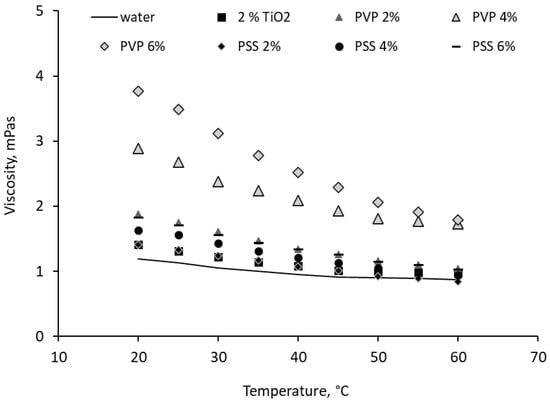
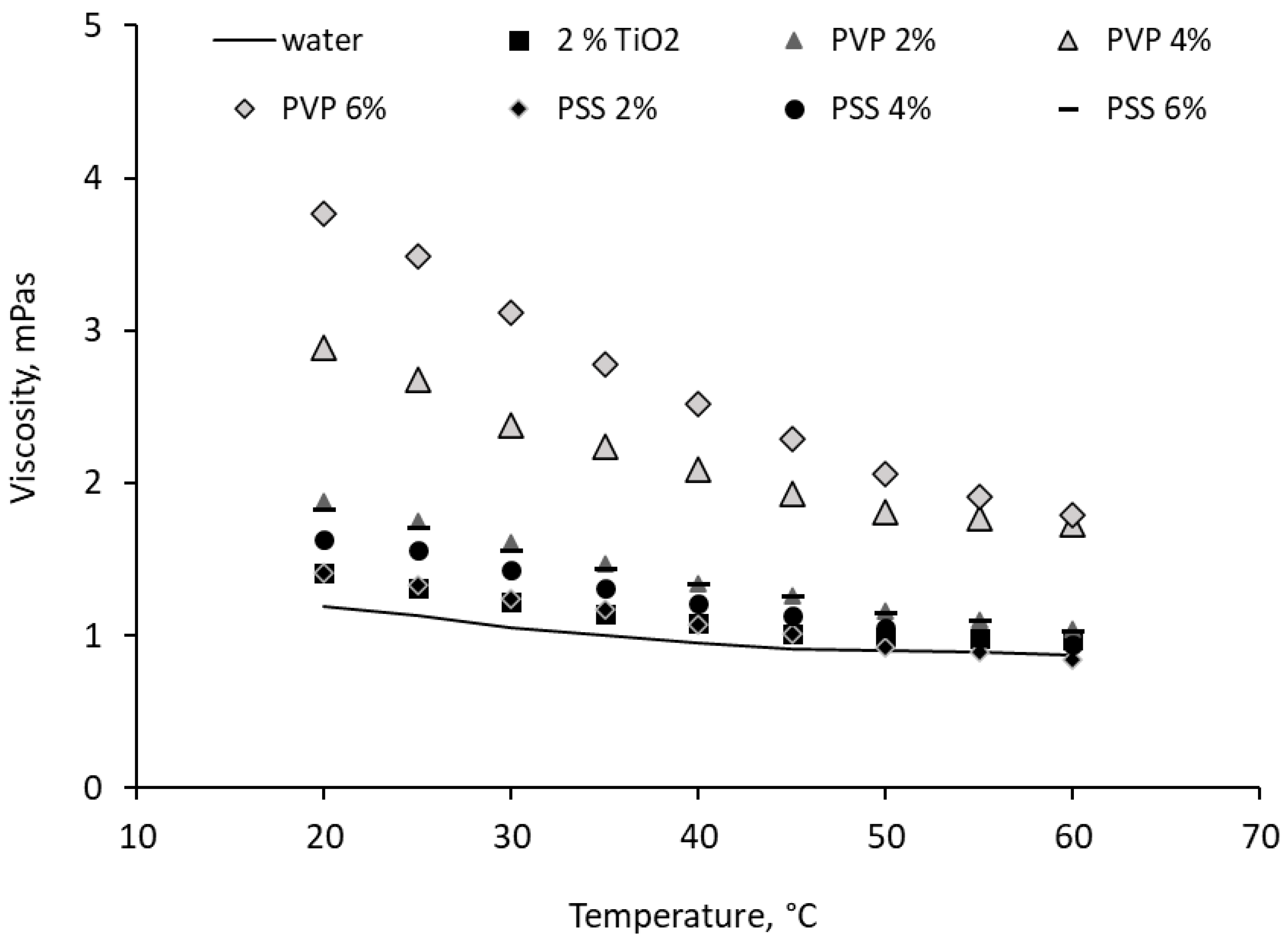
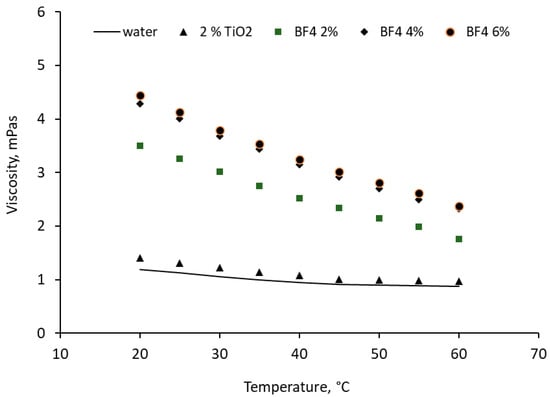
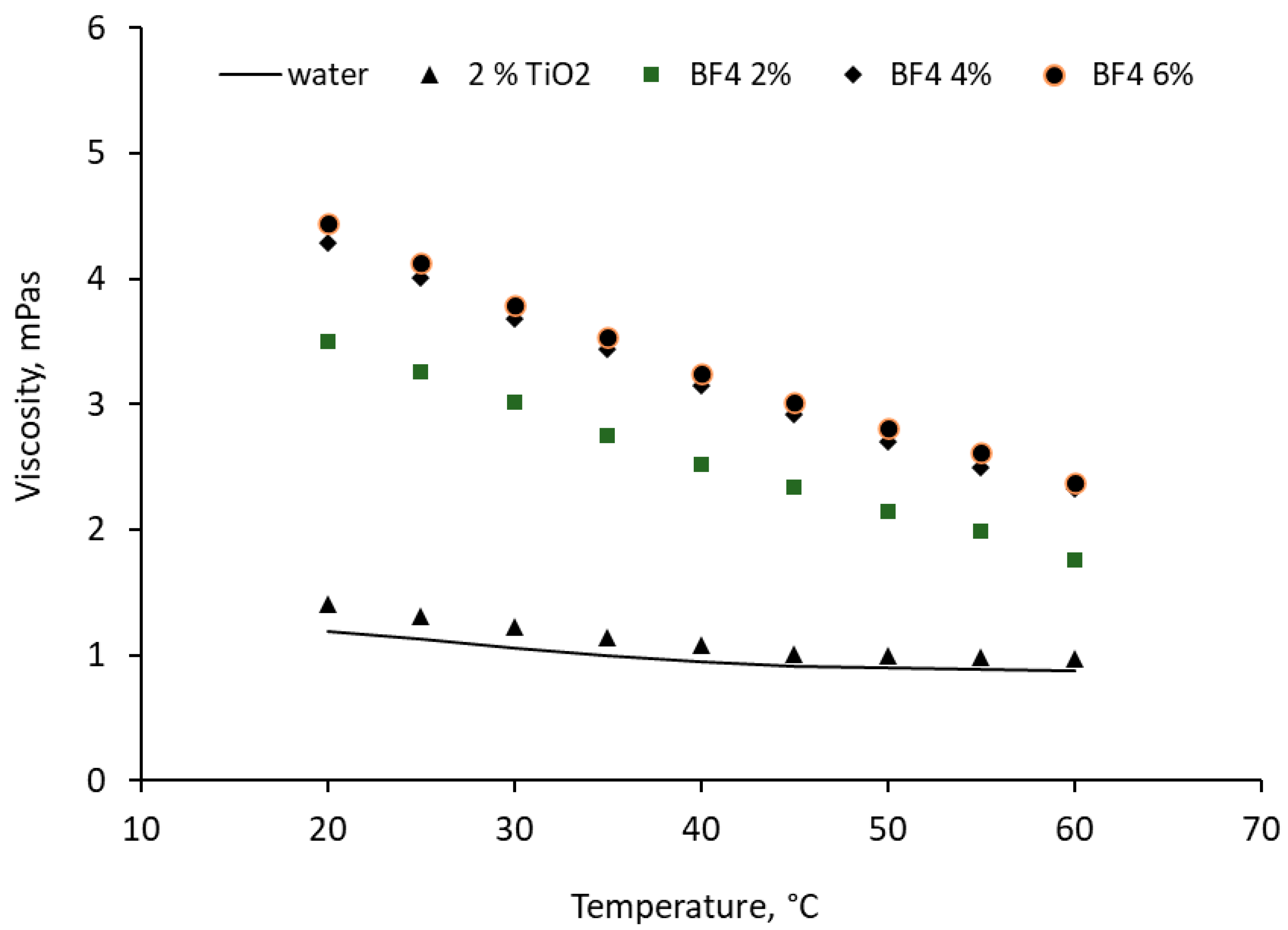
The viscosity of all samples was initially measured across various shear rates, confirming that the addition of surfactants, PEGs, or ionic liquids does not alter the Newtonian behavior of water; this remains a significant advantage for these formulations. Following this confirmation, viscosity was measured continuously during heating, as illustrated in Figure 9 for several suspensions (water, nanofluid without surfactant, and TiO2 nanofluid with PEG). Consequently, Figure 10 and Figure 11 present the experimental data for nanofluids containing PVP, PSS, and ionic liquids.
Figure 9.
Experimental data on viscosity of water, TiO2 nanofluid and nanofluids with PEG 200 and PEG 400.
Figure 10.
Experimental data on viscosity of water, TiO2 nanofluid and nanofluids with PVP and PSS surfactants.
Figure 11.
Experimental data on viscosity of water, TiO2 nanofluid and nanofluids with ionic liquid.
At ambient temperature, the viscosity depends on the specific mixture, showing increases ranging from 0.7% to 266%. The highest values were recorded for the ionic liquid and the samples with higher PVP loading. In contrast, the addition of PEG 200 had a minimal impact with a maximum viscosity increase of only 1%.
The viscosity variation with temperature exhibits standard fluid behavior with values decreasing as temperature rises. While the influence of surfactants depends on their specific type, the addition of TiO2 nanoparticles alone increases the viscosity of water by 16%. As noted in Figure 10 and Figure 11, the most significant "viscosity penalty" was observed for the ionic liquid (due to its high intrinsic viscosity) and the PVP surfactant (which caused a 266% increase). This sharp rise in PVP-based samples can be attributed to its molecular structure; specifically, PVP’s longer molecular chains increase flow resistance more significantly than those of PSS.
On the other hand, due to their specific polymeric structure, PEG 200, PEG 400 and PSS were found to have a lower influence on viscosity (i.e., up to 10%, 19% and 30%, respectively).
All the experimental data on temperature influence on viscosity were plotted against Arrhenius equation, and the data are available in Table 4. The Arrhenius-type equation for viscosity describes how viscosity decreases with increasing temperature and can be expressed as
or in linearized form:
where = dynamic viscosity, = pre-exponential factor, = activation energy for viscous flow, = gas constant (8.314 J·mol−1·K−1), = absolute temperature (K). The equation is valid for Newtonian fluids over a limited temperature range (i.e., up to 60 °C in this case). The plot of versus gives a straight line with slope .
Table 4.
Coefficients for the Arrhenius equation.
The data presented in Table 4, along with the proposed Arrhenius equations, are valid for temperatures up to 60 °C and a TiO2 nanoparticle concentration of 2%wt. The experimental results demonstrate a strong correlation with the Arrhenius model, yielding R2 values greater than 0.92. This high degree of fit confirms that all tested fluids exhibit standard temperature-dependent behavior.
3.4. Final Remarks on Experiment
Considering all the experimental data, the best outcomes in terms of thermal properties are obtained with low concentrations of PEG 200, PVP and PSS. When focusing on the viscosity penalty, the PSS surfactant has a major drawback, while the differences in the samples’ density are minor.
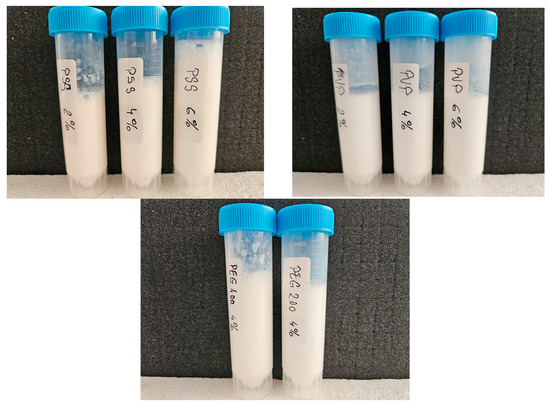
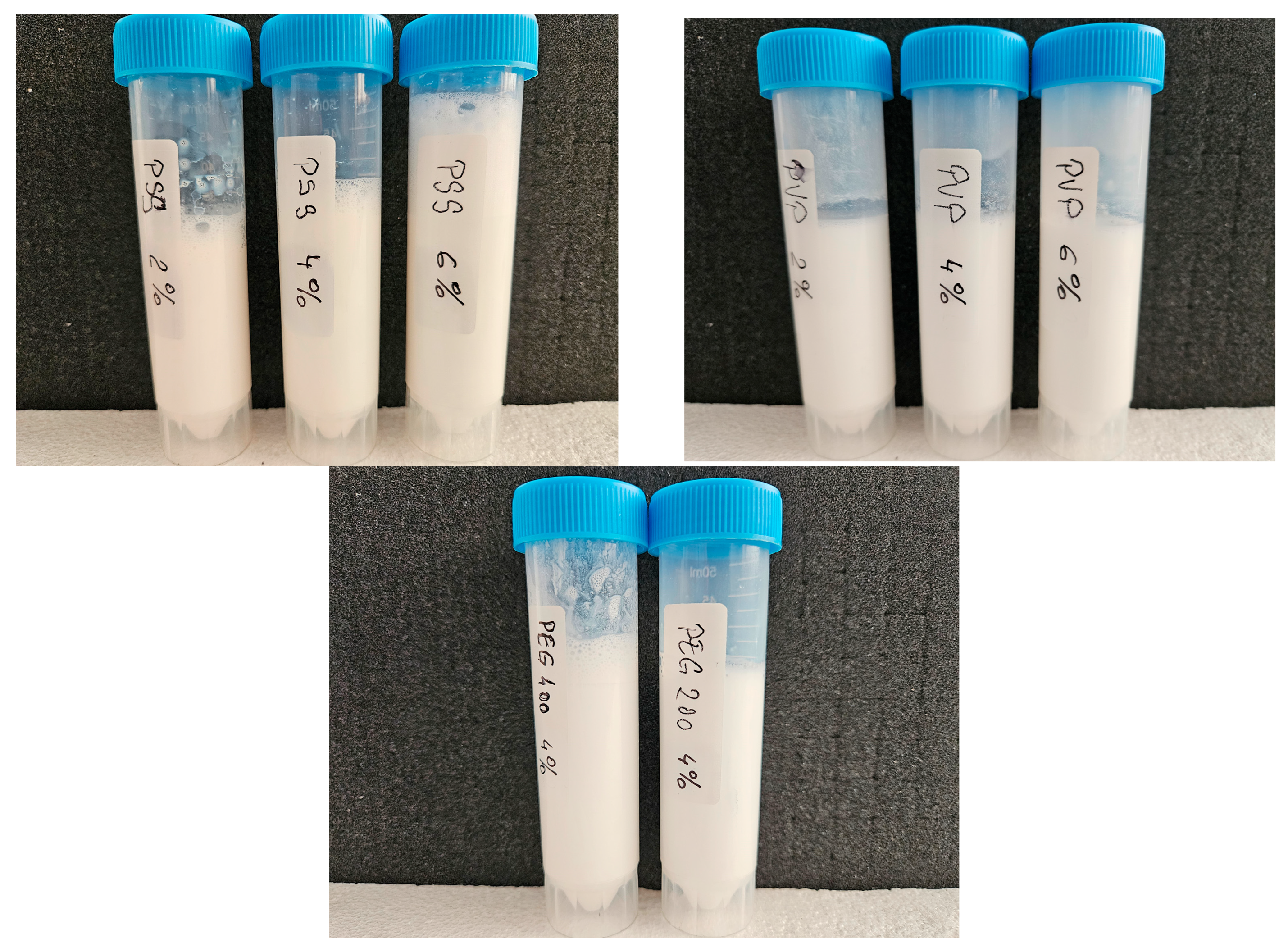
On the other hand, the stability was very good with all polymers (surfactants and PEGs) and satisfactory with the ionic liquid. The assessment of sedimentation occurrence was visually performed over 2 months of daily observations (several photos are in Figure 12) and polydispersity index (PDI) evaluation. More exactly, the PDI index is lower for all samples if compared with the TiO2 nanofluid, being situated under 0.3 for the evaluated samples.
Figure 12.
Several photos of the samples after 3 weeks.
Another phenomenon that was noticed was the persistent foam occurrence at stirring for PVP and PSS, which is a phenomenon that is clearly limiting the real-life applications, especially those in turbulent flow. More exactly, the larger quantity of foam was registered for the most concentrated samples, and the PSS foam half-life is larger than that of PVP, lasting for a minimum of 20 min.
Concluding, from this experiment, PEG 200 in concentration of up to 2%wt. might be the best solution from all the studied samples and concentrations. Alternatively, PVP can be employed in laminar flow, where the foam occurrence can be kept at minimum for low Reynolds numbers.
4. Conclusions
This paper presents an experimental study on several surfactants that are either conventional or less conventional. As far as the authors are aware, PEG and ionic liquids are investigated for the first time as possible surfactants, which is a novel concept. Consequently, several samples were manufactured and experimentally investigated in terms of their density, thermal properties and viscosity. The conclusion of this investigation are summarized below:
- -
- PEG 200, PEG 400 and BF4 were employed, for the first time, as possible surfactants in a TiO2 + water nanofluid.
- -
- The samples’ density decreases with temperature and moderately increases with the addition of nanoparticles and surfactants.
- -
- Thermal conductivity is negatively influenced by the addition of surfactants, which is a phenomenon often highlighted in the literature. Nevertheless, lower surfactant concentration keeps this drawback under control.
- -
- Viscosity is increasing with the addition of surfactants, in some cases in higher percentages than the addition of nanoparticles, which is a disadvantage for higher loaded suspensions. Nevertheless, for concentrations of PEG 200, PEG 400 and PSS of up to 2%wt., the viscosity remains within a reasonable variation (i.e., between 0.7 and 1.5% increase)
- -
- Foaming is a considerable drawback when PSS or PVP surfactants are employed, which is a phenomenon that was not noticed for PEG and ionic liquid.
- -
- Adding higher concentrations of surfactant have clear disadvantages over the nanofluid thermophysical properties, and this paper’s results show that the NP: surfactant ratio is recommended to be situated at a maximum of 1:1.
In conclusion, although this study is limited to a specific selection of surfactants, the approach is valuable for evaluating the influence of dispersants on nanofluid development and for investigating other chemicals to improve its stability. Nevertheless, a more extensive experimental effort involving a broader range of surfactants could establish a more robust framework for assessing the inherent benefits and drawbacks of surfactant-enhanced nanofluids.
Author Contributions
Conceptualization, A.A.M.; methodology A.A.M.; software, G.C.T., C.A.Ţ.; validation, A.A.M., B.P.; formal analysis, G.C.T.; investigation, G.C.T.; resources, A.A.M.; data curation, A.A.M.; writing—original draft preparation B.P. and C.A.Ţ.; writing—review and editing, A.A.M.; visualization, A.A.M., supervision, A.A.M.; project administration, A.A.M.; funding acquisition, A.A.M. All authors have read and agreed to the published version of the manuscript.
Funding
This research was funded by CNCS-UEFISCDI grant number: 18PCE/08.01.2025.
Data Availability Statement
Data will be made available by request addressed to the corresponding author.
Acknowledgments
This work was supported by a grant from the Ministry of Research, Innovation and Digitalization, CNCS-UEFISCDI, project PN-IV-P1-PCE-2023-0171, number 18PCE/2025 within PNCDI IV.
Conflicts of Interest
The authors declare no conflicts of interest.
References
- Duangthongsuk, W.; Wongwises, S. Measurement of temperature-dependent thermal conductivity and viscosity of TiO2–water nanofluids. Exp. Therm. Fluid Sci. 2009, 33, 706–714. [Google Scholar] [CrossRef] [Scilit]
- Singh, S.K. Review on the Stability of the Nanofluids; Intechopen: London, UK, 2022. [Google Scholar]
- Shaban, S.M.; Kang, J.; Kim, D.-H. Surfactants: Recent advances and their applications. Compos. Commun. 2020, 22, 100537. [Google Scholar] [CrossRef] [Scilit]
- Arasu, A.V.; Kumar, D.; Khan, I. Experimental investigation of thermal conductivity and stability of TiO2–Ag/water nanocomposite fluid with SDBS and SDS surfactants. Thermochim. Acta 2019, 678, 178308. [Google Scholar]
- Zhu, D.; Li, X.; Wang, N.; Wang, X.; Gao, J.; Li, H. Dispersion behavior and thermal conductivity characteristics of Al2O3–H2O nanofluids. Curr. Appl. Phys. 2009, 9, 131–139. [Google Scholar] [CrossRef] [Scilit]
- Chen, L.; Xie, H. Properties of carbon nanotube nanofluids stabilized by cationic gemini surfactant. Thermochim. Acta 2010, 506, 62–66. [Google Scholar] [CrossRef] [Scilit]
- Zhou, M.Z.; Xia, G.D.; Li, J.; Chai, L.; Zhou, L.J. Analysis of factors influencing thermal conductivity and viscosity in different kinds of surfactant solutions. Exp. Therm. Fluid Sci. 2012, 36, 22–29. [Google Scholar] [CrossRef] [Scilit]
- Minea, A.A. Surfactants for heat exchange nanocolloids: Review of advantages, drawbacks, quantitative information and recommendations. Therm. Sci. Eng. Prog. 2025, 65, 103983. [Google Scholar] [CrossRef] [Scilit]
- Kumar, D.D.; Arasu, A.V. A comprehensive review of preparation, characterization, properties and stability of hybrid nanofluids. Renew. Sustain. Energy Rev. 2018, 81, 1669–1689. [Google Scholar] [CrossRef] [Scilit]
- Yang, L.; Du, K. A comprehensive review on heat transfer characteristics of TiO2 nanofluids. Int. J. Heat Mass Transf. 2017, 108, 11–31. [Google Scholar] [CrossRef] [Scilit]
- Das, P.K.; Mallik, A.K.; Ganguly, R.; Santra, A.K. Stability and thermophysical measurements of TiO2 (anatase) nanofluids with different surfactants. J. Mol. Liq. 2018, 254, 98–107. [Google Scholar] [CrossRef] [Scilit]
- Sözen, A.; Gürü, M.; Menlik, T.; Karakaya, U.; Çiftçi, E. Experimental comparison of Triton X-100 and sodium dodecyl benzene sulfonate surfactants on thermal performance of TiO2–deionized water nanofluid in a thermosiphon. Exp. Heat Transf. 2018, 31, 450–469. [Google Scholar] [CrossRef] [Scilit]
- Ilyas, S.; Pendyala, R.; Marneni, N. Stability of Nanofluids. In Engineering Applications of Nanotechnology; Springer: Cham, Switzerland, 2017. [Google Scholar]
- Farade, R.A.; Wahab, N.I.A.; Said, Z.; Khan, T.M.Y.; Saleel, C.A. Toward green and sustainable dielectric nanofluids: Surfactant impacts on stability, properties, and regulations. Adv. Colloid Interface Sci. 2025, 346, 103668. [Google Scholar] [CrossRef] [Scilit]
- Rajnak, M.; Kurimsky, J.; Dolnik, B.; Marton, K.; Tomco, L.; Taculescu, A.; Vekas, L.; Kovac, J.; Vavra, I.; Tothova, J.; et al. Dielectric response of transformer oil-based ferrofluid in low frequency range. J. Appl. Phys. 2013, 114, 034313. [Google Scholar] [CrossRef] [Scilit]
- Malaescu; Marin, C.N. Dependence on the temperature of the activation energy in the dielectric relaxation processes for ferrofluids in low-frequency field. J. Magn. Magn. Mater. 2002, 252, 68–70. [Google Scholar] [CrossRef] [Scilit]
- Farade, R.A.; Wahab, N.I.A.; Mansour, D.-E.A.; Junaidi, N.; Soudagar, M.E.M.; Rajamony, R.K.; AlZubaidi, A. A review on ultrasonic alchemy of oil-based nanofluids for cutting-edge dielectric and heat transfer oils. J. Mol. Liq. 2024, 408, 125312. [Google Scholar] [CrossRef] [Scilit]
- Van Thanh, N.; Ngoc, N.T.H.; Thuy, D.M.; Van Tuynh, L.; Son, H.H.; Long, N.P. Highly improved dielectric and thermal performance of polyalphaolefin oil-based fluids using MgO nanoparticles. Coatings 2023, 13, 931. [Google Scholar] [CrossRef] [Scilit]
- Amizhtan, S.K.; Amalanathan, A.J.; Sarathi, R.; Srinivasan, B.; Gardas, R.L.; Edin, H.; Taylor, N. Impact of surfactants on the electrical and rheological aspects of silica-based synthetic ester nanofluids. IEEE Access 2022, 10, 18192–18200. [Google Scholar] [CrossRef] [Scilit]
- Farade, R.A.; Wahab, N.I.A.; Mansour, D.-E.A.; Azis, N.B.; Jasni, J.B.; Veerasamy, V.; Vinayagam, A.; Kotiyal, B.M.; Khan, T.M.Y. The effect of interfacial zone due to nanoparticle–surfactant interaction on dielectric properties of vegetable oil-based nanofluids. IEEE Access 2021, 9, 107033–107045. [Google Scholar] [CrossRef] [Scilit]
- Alexander, K.; Gajghate, S.S.; Katarkar, A.S.; Majumder, A.; Bhaumik, S. Role of nanomaterials and surfactants for the preparation of graphene nanofluid: A review. Mater. Today Proc. 2021, 44, 1136–1143. [Google Scholar] [CrossRef] [Scilit]
- Stolaś, A.; Darmadi, I.; Nugroho, F.A.A.; Moth-Poulsen, K.; Langhammer, C. Impact of Surfactants and Stabilizers on Palladium Nanoparticle–Hydrogen Interaction Kinetics: Implications for Hydrogen Sensors. ACS Appl. Nano Mater. 2020, 3, 2647–2653. [Google Scholar] [CrossRef] [Scilit]
- Fayzi, P.; Bastani, D.; Lotfi, M. A note on the synergistic effect of surfactants and nano-particles on rising bubble hydrodynamics. Chem. Eng. Process. Process Intensif. 2020, 155, 108068. [Google Scholar] [CrossRef] [Scilit]
- Ma, M.; Zhai, Y.; Yao, P.; Li, Y.; Wang, H. Effect of surfactant on the rheological behavior and thermophysical properties of hybrid nanofluids. Powder Technol. 2021, 379, 373–383. [Google Scholar] [CrossRef] [Scilit]
- Gomez-Flores, A.; Bradford, S.A.; Hong, G.; Kim, H. Statistical analysis, machine learning modeling, and text analytics of aggregation attachment efficiency: Mono and binary par-ticle systems. J. Hazard. Mater. 2023, 454, 131482. [Google Scholar] [CrossRef] [Scilit]
- Abooali, D.; Soleimani, R. Structure-based modeling of critical micelle concentration (CMC) of anionic surfactants in brine using intelligent methods. Sci. Rep. 2023, 13, 13361. [Google Scholar] [CrossRef] [Scilit] [PubMed]
- Correia, E.L.; Thakur, S.; Ervin, A.; Shields, E.; Razavi, S. Adsorption of surfactant mol-ecules onto the surface of colloidal particles: Case of like-charged species. Colloids Surf. A Physicochem. Eng. Asp. 2023, 676, 132142. [Google Scholar] [CrossRef] [Scilit]
- Rehman, A.; Yaqub, S.; Ali, M.; Nazir, H.; Shahzad, N.; Shakir, S.; Liaquat, R.; Said, Z. Effect of surfactants on the stability and thermophysical properties of Al2O3+TiO2 hybrid nanofluids. J. Mol. Liq. 2023, 391, 123350. [Google Scholar] [CrossRef] [Scilit]
- Lim, S.S.; Elochukwu, H.; Nandong, J.; Bennour, Z.; Hamid, M.A. A review on the mechanisms of low salinity water/surfactant/nanoparticles and the potential synergistic application for c-EOR. Pet. Res. 2023, 8, 324–337. [Google Scholar]
- Available online: https://webbook.nist.gov/chemistry/fluid/ (accessed on 15 December 2025).
- Xie; Nylander; Piculell; Utsel; Wågberg; Åkesson; Forsman, J. Polyelectrolyte adsorption on solid surfaces: Theoretical predictions and experimental measurements. Langmuir 2013, 29, 12421–12431. [Google Scholar] [CrossRef] [Scilit]
- Covaliu, C.I.; Stoian, O.; Matei, E.; Paraschiv, G.; Tanasa, E.; Catrina, G.A. Research on copper ions removal from wastewater using Fe3O4 and Fe3O4-PVP hybrid nanomaterials. Mater. Plast. 2021, 58, 154–166. [Google Scholar] [CrossRef] [Scilit]
- Zhang, X.; Granick, S. Nanorheology of aqueous polyethylene glycol (PEG). Macromolecules 2002, 35, 4017–4022. [Google Scholar] [CrossRef] [Scilit]
- Wu, L.; Zhou, K.; Zheng, Y.; Zeng, Y.; Zeng, G.; Cheng, Z.; Peng, Y. Efficient Separation and Enrichment of Rubidium in Salt Lake Brine Using High-Performance PAN-KCuFC-PEG Adsorption Composite. Molecules 2025, 30, 1273. [Google Scholar] [CrossRef] [Scilit] [PubMed]

Disclaimer/Publisher’s Note: The statements, opinions and data contained in all publications are solely those of the individual author(s) and contributor(s) and not of MDPI and/or the editor(s). MDPI and/or the editor(s) disclaim responsibility for any injury to people or property resulting from any ideas, methods, instructions or products referred to in the content. |
© 2026 by the authors. Licensee MDPI, Basel, Switzerland. This article is an open access article distributed under the terms and conditions of the Creative Commons Attribution (CC BY) license.