


Abstract
The construction sector operates under conditions of high capital intensity, project complexity, cost uncertainty, fragmented supply chains, and increasing pressure to improve efficiency, sustainability, and long-term competitiveness. Although prior research has emphasized the importance of organizational resources and knowledge-based capabilities for competitive advantage, fewer empirical studies have examined how internal capacities, intellectual capital, and knowledge sharing jointly explain sustainable competitive advantage in construction companies. Drawing on the resource-based view, the knowledge-based view, and the dynamic capabilities perspective, this study examines the effects of marketing capacity, financial capacity, innovative capacity, management capacity, human capacity, human capital, structural capital, relational capital, and knowledge sharing on sustainable competitive advantage in the construction sector. Survey data were collected from 306 employees working in construction companies in the Republic of Serbia and analyzed using confirmatory factor analysis and covariance-based structural equation modeling. The measurement model demonstrated satisfactory reliability, convergent validity, and discriminant validity. The structural results indicate that financial capacity is the only significant internal capacity predicting sustainable competitive advantage, while relational capital is the only significant dimension of intellectual capital. Marketing capacity, innovative capacity, management capacity, human capacity, human capital, structural capital, and knowledge sharing did not show significant direct effects. The study contributes to research on sustainable competitive advantage by showing that, in construction companies, competitiveness is most strongly associated with financial robustness and stakeholder-based relational strength. For managers, the findings highlight the importance of strengthening liquidity, investment capacity, risk absorption, and long-term relationships with clients, suppliers, subcontractors, and institutional stakeholders.
1. Introduction
The construction sector is one of the most influential sectors in both developed and developing economies because of its substantial contribution to national income, employment, infrastructure development, and the satisfaction of broader social needs (Durdyev & Ismail, 2012; Khaertdinova et al., 2021; Alaloul et al., 2022; Fei et al., 2021). Its performance plays a central role in supporting long-term economic growth and stability, while also shaping the physical and institutional foundations on which other sectors depend (Dang & Pheng, 2011; Alaloul et al., 2022). For this reason, the competitiveness of construction firms is not only a firm-level concern, but also an issue with wider economic and societal implications.
Despite its importance, the construction sector is frequently described as inefficient compared with many other industries, largely because of recurring problems such as cost overruns, time overruns, low productivity, and quality deficiencies in project delivery (Kabirifar & Mojtahedi, 2019). These structural weaknesses have stimulated sustained scholarly and managerial interest in identifying the factors that can improve firm performance and strengthen long-term competitiveness in construction (Nudurupati et al., 2007; Yusof & Bakar, 2012; Rivera et al., 2016; Tezel et al., 2018; Aigbe et al., 2024). In an environment characterized by intense rivalry, technological change, and rising sustainability expectations, the question of how construction firms achieve and sustain competitive advantage has become particularly important.
Within this context, sustainable competitive advantage has emerged as a key strategic concept. Sustainable competitive advantage refers to a firm’s ability to maintain a superior market position and preserve above-average performance over time on the basis of resources, capabilities, and strategic attributes that are valuable and difficult for competitors to imitate. In the construction sector, such advantages may derive from advanced technologies, specialized knowledge, strong organizational routines, skilled labour, proprietary processes, and durable stakeholder relationships. Sustainability-related capabilities can also become strategic resources when they enhance a firm’s reputation, market legitimacy, and client value proposition (Florez, 2020).
The dynamic capabilities perspective further reinforces this view by emphasizing the ability of firms to adapt, renew, and reconfigure their competences in response to environmental change (Teece et al., 1997). In construction, this adaptability may take the form of more efficient project management, the adoption of sustainable design and construction practices, the integration of new technologies, and the development of strategic relationships with suppliers, subcontractors, clients, and institutional actors. Because construction projects are delivered through interdependent networks rather than isolated firms, competitiveness depends not only on internal efficiency but also on the firm’s ability to mobilize and coordinate resources across organizational boundaries. Firms that can combine internal strengths with external collaboration are therefore more likely to maintain a favorable long-term position.
At the same time, achieving sustainable competitive advantage in the construction sector is particularly demanding. Firms face strong market pressure, tightening environmental regulations, evolving technical standards, fragmented supply chains, and substantial uncertainty in project execution. Sustainability-related investments and innovation initiatives often require considerable financial and organizational resources, which may be especially burdensome for small and medium-sized firms. Under such conditions, identifying the drivers of sustainable competitive advantage is strategically important because it helps firms allocate resources more effectively, prioritize capability development, respond to regulatory and market changes, and strengthen value creation for stakeholders.
The Republic of Serbia represents a relevant context for examining sustainable competitive advantage in the construction sector because construction companies operate in an environment characterized by market transition, strong cost pressure, increasing competition, changing client requirements, and growing expectations related to sustainability, quality, and efficiency. The Serbian construction sector includes a large number of micro, small, and medium-sized firms that often face resource constraints, limited investment capacity, dependence on project-based income, and exposure to delayed payments and cost fluctuations. At the same time, construction companies are expected to modernize their operations, improve cooperation with clients and subcontractors, adopt more efficient practices, and respond to regulatory and market pressures. These characteristics make Serbia a suitable and theoretically meaningful setting for examining which internal and knowledge-based resources are most relevant for sustainable competitive advantage in construction companies.
Previous research has highlighted the importance of identifying strategic factors that support competitiveness and performance in the construction sector (Aiyetan & Das, 2022; Zahoor & Ali, 2023; Nejatyan et al., 2023; Abal-Seqan et al., 2023; Homthong et al., 2024). Empirical studies have examined a range of factors associated with business competitiveness and organizational success (Johari et al., 2019; Somiah et al., 2022), while other work has emphasized the strategic importance of internal variables in explaining differences in competitive outcomes (Toppinen et al., 2018). Research has also shown that innovation contributes to competitive advantage by improving performance, adaptability, and market responsiveness (C. J. Chen & Huang, 2009; Buenechea-Elberdin et al., 2017; Rajapathirana & Hui, 2018; Xu et al., 2019). In parallel, intellectual capital and knowledge-related processes have been increasingly recognized as important for firm competitiveness, particularly in sectors where expertise, learning, and coordination are central to value creation (Egbu, 2004; Wu et al., 2007; Yeşil et al., 2013; Nowacki & Bachnik, 2016).
These insights are especially relevant in project-based industries such as construction, where firms must continuously coordinate diverse actors, manage technical and financial complexity, and respond to changing project and client requirements. In such settings, internal capacities, intellectual capital, and knowledge sharing are likely to play an important role in shaping competitive outcomes. Internal capacities determine how effectively firms mobilize and deploy resources; intellectual capital reflects the stock of intangible knowledge assets embedded in employees, organizational systems, and external relationships; and knowledge sharing enables firms to transfer and combine expertise across individuals, teams, and projects. Together, these constructs reflect organizational strengths that may help firms sustain competitiveness over time.
The present study is grounded in the resource-based view, the knowledge-based view of the firm, and the dynamic capabilities perspective. From the resource-based view, sustainable competitive advantage arises from resources and capabilities that are valuable, rare, difficult to imitate, and difficult to substitute. The knowledge-based view extends this argument by emphasizing that knowledge assets and knowledge processes are among the most strategically important resources available to the firm. The dynamic capabilities perspective complements both by explaining how firms renew and reconfigure such resources in response to environmental change. Taken together, these perspectives provide a strong theoretical basis for examining internal capacities, intellectual capital, and knowledge sharing as determinants of sustainable competitive advantage in the construction sector.
Although previous studies have examined internal capabilities, intellectual capital, innovation, knowledge sharing, and competitiveness separately in construction and related organizational contexts (Egbu, 2004; Wu et al., 2007; Giménez et al., 2019; Li et al., 2019; Toppinen et al., 2018), fewer empirical studies have integrated internal capacities, intellectual capital, and knowledge sharing within a single explanatory model of sustainable competitive advantage in construction companies.
Accordingly, the aim of this study is to examine whether internal capacities, intellectual capital, and knowledge sharing predict sustainable competitive advantage in companies operating in the construction sector. More specifically, the study evaluates the effects of marketing capability, financial capability, innovative capability, managerial capability, human capability, human capital, structural capital, relational capital, and knowledge sharing on sustainable competitive advantage. In doing so, the study contributes to the literature in few ways. First, it integrates internal capacities and knowledge-based constructs within a single explanatory model of sustainable competitive advantage. Second, it extends the application of resource- and knowledge-based perspectives to the construction sector in a national context that remains underrepresented in the literature. Third, it provides practical insight into which organizational resources are most strongly associated with long-term competitiveness in construction firms.
Variables included in the model are theoretically and empirically grounded. Internal capacities were included because the resource-based view emphasizes that firm-specific resources and capabilities can generate sustainable competitive advantage when they are valuable, difficult to imitate, and strategically deployed. In the construction sector, marketing, financial, innovative, managerial, and human capacities are particularly relevant because firms compete through project acquisition, cost control, technical reliability, organizational coordination, and workforce expertise. Intellectual capital was included because the knowledge-based view highlights the strategic importance of intangible assets embedded in employees, organizational systems, and external relationships. Human capital, structural capital, and relational capital are especially important in construction, where project delivery depends on expertise, routines, documentation, cooperation, and stakeholder trust. Knowledge sharing was included because construction is a project-based industry in which knowledge generated in one project must be transferred and applied in subsequent projects in order to improve quality, reduce errors, support innovation, and strengthen long-term competitiveness.
The remainder of the paper is structured as follows. The next section presents the theoretical framework and develops the hypotheses. This is followed by the Materials and Methods Section, which describes the research context, sample, measures, and analytical strategy. The Results Section then reports the measurement and structural model findings. Finally, the Discussion and Conclusion Sections interpret the findings, outline the theoretical and managerial implications, and identify limitations and directions for future research.
2. Theoretical Framework and Hypothesis Development
The predictor constructs examined in this study are grounded primarily in the resource-based view (RBV), the knowledge-based view of the firm, and the dynamic capabilities perspective. According to RBV, sustainable competitive advantage arises from resources and capabilities that are valuable, rare, difficult to imitate, and difficult to substitute. In this context, internal factors represent firm-specific organizational capabilities that determine how effectively companies mobilize and deploy their resources in pursuit of superior performance. Intellectual capital reflects a firm’s stock of intangible knowledge assets embedded in employees, organizational structures, and external relationships, while knowledge sharing represents the process through which knowledge is transferred, combined, and utilized across the organization. From the perspective of the knowledge-based view, these knowledge-related assets and processes are central to long-term competitiveness because they support learning, innovation, and problem-solving. At the same time, the dynamic capabilities perspective explains how firms renew and reconfigure such internal and knowledge-based resources in response to environmental change. Taken together, these theoretical perspectives provide a strong foundation for treating internal factors, intellectual capital, and knowledge sharing as predictor constructs of sustainable competitive advantage in the construction sector.
2.1. Internal Factors and Sustainable Competitive Advantage
Internal factors refer to the set of organizational capabilities that enable firms to function effectively, respond to market demands, and create value more efficiently than competitors. In this study, internal factors include promotion capacity, financial capacity, innovation capacity, enterprise management capacity, and human resource capacity. These capacities are critical because they influence how firms allocate resources, organize operations, communicate with the market, innovate, and manage their workforce. In construction companies, where performance depends on coordination, project execution, cost control, and responsiveness to client requirements, these internal factors represent an important basis for competitive success.
The literature suggests that internal organizational variables are among the most important determinants of competitive advantage (Toppinen et al., 2018). Firms with stronger promotional or marketing capabilities are more likely to position themselves effectively in the market, communicate their value to clients, and build stronger reputations. Firms with stronger financial capabilities are better able to invest in technology, innovation, and project delivery, while also maintaining stability in uncertain environments. Innovation capability enables firms to generate and apply new ideas, processes, and solutions, which is particularly important in a sector facing increasing pressure for efficiency and sustainability. Managerial capability contributes to the coordination of resources, decision making, and strategic adaptation, whereas human capability reflects the knowledge, skills, and competencies of employees that directly affect the quality and effectiveness of business operations. Taken together, these internal factors can strengthen the ability of firms to achieve and sustain a superior market position. Based on this logic, internal factors can be understood as key determinants of sustainable competitive advantage in construction companies. Promotion capacity supports market visibility and reputation, financial capacity ensures investment ability and resilience, innovation capacity enables technological and process improvement, management capacity strengthens project coordination and strategic adaptation, while human resource capacity provides the knowledge and skills necessary for high-quality project execution. Taken together, these internal capacities improve the ability of construction firms to create value, respond to market demands and maintain a superior competitive position over time.
The hypotheses on internal capacities are also supported by prior empirical research. Toppinen et al. (2018) emphasized the role of internal and external competitiveness factors in shaping construction-related competitiveness, while Giménez et al. (2019) demonstrated the importance of competitive capabilities for innovation and performance in construction companies. Financial capability has been linked to resilience, project continuity, and construction firm performance (Vorasubin & Chareonngam, 2007; Tucker et al., 2015; Gündeş et al., 2018). Innovation capability has been associated with improved adaptability, performance, and competitiveness (C. J. Chen & Huang, 2009; Buenechea-Elberdin et al., 2017; Rajapathirana & Hui, 2018; Xu et al., 2019). Managerial and human capabilities have also been recognized as important for project coordination, site performance, productivity, and organizational effectiveness in construction contexts (Yusof & Bakar, 2012; Aiyetan & Das, 2022; Nejatyan et al., 2023; Homthong et al., 2024). These empirical findings support the expectation that internal capacities may positively influence sustainable competitive advantage.
Internal factors are conceptualized in this study through five dimensions: marketing capability, financial capability, innovative capability, managerial capability, and human capability. Based on the theoretical arguments presented above, the following dimension-level hypotheses are proposed:
H1a.
Marketing capability has a positive and significant effect on the sustainable competitive advantage in companies operating in the construction sector.
H1b.
Financial capability has a positive and significant effect on the sustainable competitive advantage in companies operating in the construction sector.
H1c.
Innovative capability has a positive and significant effect on the sustainable competitive advantage in companies operating in the construction sector.
H1d.
Managerial capability has a positive and significant effect on the sustainable competitive advantage in companies operating in the construction sector.
H1e.
Human capability has a positive and significant effect on the sustainable competitive advantage in companies operating in the construction sector.
2.2. Intellectual Capital and Sustainable Competitive Advantage
Intellectual capital represents a critical intangible resource that contributes to the development of sustainable competitive advantage. In this study, intellectual capital comprises human capital, structural capital, and relational capital. Human capital refers to the knowledge, skills, expertise, and creative potential of employees. Structural capital includes organizational systems, procedures, databases, routines, and institutionalized knowledge that remain within the firm. Relational capital refers to the value embedded in relationships with clients, suppliers, partners, and other stakeholders. Together, these dimensions of intellectual capital shape the firm’s capacity to innovate, solve problems, maintain quality, and build durable competitive positions.
In the construction sector, intellectual capital is especially important because firms rely heavily on expertise, project experience, coordination mechanisms, and stakeholder relationships. Egbu (2004) emphasizes that construction companies need targeted efforts, such as training, education, and an innovation-supportive culture, in order to strengthen intellectual capital and improve competitiveness. In contemporary knowledge-based societies, the storage, application, and strategic use of knowledge have become essential for capital accumulation and business success. Accordingly, construction companies increasingly depend not only on physical assets and labour, but also on intangible knowledge resources that influence performance and competitiveness. Previous studies indicate that intellectual capital contributes to market competitiveness and organizational success (Wu et al., 2007; Nowacki & Bachnik, 2016). On this basis, it is reasonable to expect that intellectual capital will positively influence sustainable competitive advantage in the construction sector.
The hypotheses on intellectual capital are grounded in empirical studies showing that knowledge-based intangible assets contribute to organizational performance, innovation, and competitiveness. Bontis et al. (2000) showed that human, structural, and relational capital are relevant dimensions of intellectual capital, while Hsu and Fang (2009) linked intellectual capital to new product development performance through organizational learning. In the construction sector, Egbu (2004) emphasized the role of intellectual capital and knowledge management in improving innovation and competitiveness. Li et al. (2019) provided empirical evidence from the construction industry that intellectual capital and knowledge sharing are connected to innovation performance. These studies support the expectation that human capital, structural capital, and relational capital may contribute to sustainable competitive advantage.
Intellectual capital is conceptualized in this study through three dimensions: human capital, structural capital, and relational capital. Based on the theoretical arguments presented above, the following dimension-level hypotheses are proposed:
H2a.
Human capital has a positive and significant effect on the sustainable competitive advantage in companies operating in the construction sector.
H2b.
Structural capital has a positive and significant effect on the sustainable competitive advantage in companies operating in the construction sector.
H2c.
Relational capital has a positive and significant effect on the sustainable competitive advantage in companies operating in the construction sector.
2.3. Knowledge Sharing and Sustainable Competitive Advantage
Knowledge sharing refers to the dissemination and exchange of knowledge, information, experience, and expertise among individuals and units within the organization. In project-based industries such as construction, knowledge sharing is especially important because valuable insights are often generated during project execution and may be lost if they are not transferred and embedded within the firm. Effective knowledge sharing reduces the repetition of mistakes, improves coordination, supports innovation, and strengthens organizational learning.
Previous studies show that knowledge sharing can enhance market competitiveness (Wu et al., 2007; Yeşil et al., 2013; Nowacki & Bachnik, 2016). In the construction sector, where firms must constantly respond to changing project requirements, client demands, technological developments, and sustainability expectations, the ability to share and apply knowledge can become a decisive competitive resource. Knowledge sharing enables firms to make better use of their intellectual capital, improve decision making, and strengthen their capacity to generate value across projects. Consequently, companies that promote knowledge sharing are more likely to improve their long-term competitive position.
The hypothesis on knowledge sharing is based on empirical and theoretical work showing that knowledge transfer and knowledge-sharing behavior support organizational learning, innovation, and competitiveness. Darroch (2003) conceptualized knowledge management behaviors as important organizational practices, while Szulanski (1996) emphasized that the transfer of best practices within firms is often difficult but strategically important. Yeşil et al. (2013) found that knowledge sharing is related to innovation capability and innovation performance, while Li et al. (2019) demonstrated the importance of knowledge sharing in the construction industry. Accordingly, knowledge sharing is expected to support sustainable competitive advantage by enabling firms to transfer project experience, reduce repeated mistakes, and apply accumulated knowledge across projects.
Based on these arguments, the following hypothesis is proposed:
H3.
Knowledge sharing has a positive and significant effect on the sustainable competitive advantage in companies operating in the construction sector.
Figure 1 presents the conceptual model tested in this study. Internal capacities (marketing capability, financial capability, innovative capability, managerial capability and human capability), intellectual capital (human capital, structural capital and relational capital), and knowledge sharing are modeled as predictors of sustainable competitive advantage.
Figure 1.
Conceptual model of determinants of sustainable competitive advantage in companies operating in the construction sector.
3. Materials and Methods
3.1. Research Context and Sample
The study was conducted in the Republic of Serbia and focused on companies operating in the construction sector.
The companies included in the study were selected using a purposive sampling approach. The main inclusion criteria were that the companies operated in the construction sector’s so-called “F sector” according to the Regulation on the classification of activities in the Republic of Serbia. The selection of companies also aimed to include firms of different sizes and different administrative districts among the territory of the Republic of Serbia in order to capture variation in organizational capacity and competitive conditions across the sector.
Data were collected from employees across 17 companies operating in the construction sector. Employees were considered appropriate informants because the study focused on perceived organizational capabilities and competitive position, which can be meaningfully assessed by organizational members familiar with company operations. The sample included both managerial and non-managerial employees in order to capture perceptions across hierarchical levels.
Although the sample was not formed through random probability sampling and therefore cannot be considered as a result of entire population of construction companies in Serbia, it reflects relevant heterogeneity within the sector. The inclusion of companies of different sizes and employees from both managerial and non-managerial positions among different districts in the Republic of Serbia enabled the study to capture perceptions across different organizational contexts and hierarchical levels. Consequently, the findings should be interpreted as analytically informative for the Serbian construction sector, while generalization to the entire population should be made with caution.
Table 1 summarizes the main characteristics of the respondent sample, including gender, educational attainment, and distribution across company size categories. A detailed overview of sample characteristics is presented in Table 1.
Table 1.
Sample structure.
3.2. Data Collection Procedure
The empirical data for this study were collected through a structured questionnaire survey administered to employees in construction companies in September 2025. The sample included the respondents that reflect the target population relevant to the objectives of the study, namely employees in companies of various characteristics in the construction sector.
At the same time, because both the independent variables and the dependent variable were collected through the same survey instrument and from the same respondents, the study is potentially exposed to common method bias.
Data collection was conducted over a defined period using a paper-and-pencil survey. Respondents were informed that participation was voluntary and that their responses would be used exclusively for academic research purposes. To minimize common method bias, respondents were encouraged to answer honestly and were assured that there were no right or wrong answers. Participants were informed about the objectives of the study, the voluntary nature of participation, and their right to withdraw at any time without consequence. No personally identifiable information was collected.
A total of 550 questionnaires were distributed across the 17 construction companies, and 318 were returned. After excluding incomplete responses and surveys not meeting the inclusion criteria, 12 questionnaires were rejected from the analysis, resulting in a usable response rate of 306 (55.63%).
3.3. Measures
Sustainable competitive advantage was measured by the Sustainable Competitive Advantage Scale (De Guimarães et al., 2018). The scale consists of five statements of five-point ordered categories of the Likert-type ranging from 1—strongly disagree to 5—strongly agree. Each item is designed to assess its various aspects. First, the scale assesses the financial dimension by measuring the company’s revenue from new products or services compared to competitors. Second, it measures operational efficiency by examining costs of production or service delivery relative to competitors. Third, the scale assesses the profitability of a company’s new offerings compared to its competitors. Furthermore, it explores the integration of environmental sustainability into new products or services. Finally, the scale examines the company’s adherence to the principles of social responsibility in the production and delivery of new offerings.
Internal factors of the organization were measured by the Organizational Capacity Scale (Giménez et al., 2019). The scale measures five capacities within the organization—marketing capacity, financial capacity, innovation capacity, management capacity, and human capacity. Innovation capacity is that which enables a company to make systematic innovations in products, services and processes and to develop and adapt new processes and ways of working. Marketing capacity are those that an industrial system has developed to commercialize products or services, as well as the strength of their brands and their positioning. Financial capacity is the ability of an industrial system to self-finance its operations and to seek and manage external sources of financing in a global context. Managerial capacity refers to the ability, talent, preparedness and willingness of managers to effectively manage the operations of business systems. Human capacity refers to the set of knowledge and skills of personnel that enable the efficient operation of the industrial system and its survival in the markets in which it intervenes. The scale is five-point, ordered Likert-type categories (1—much worse than our competitors; 5—much better than our competitors) and it consists of 20 items.
Intellectual capital was measured by the Intellectual Capital Scale (Li et al., 2019) based on the works of Bontis et al. (2000) and Hsu and Fang (2009). The Intellectual Capital Scale consists of three key dimensions, in accordance with the main components of the theory of intellectual capital: Human capital focuses on the knowledge, skills and expertise found in the company’s human resources. It measures the individual competencies and intellectual capacities of employees that contribute to the overall intellectual capital of the company. Structural capital refers to the organizational infrastructure, processes and systems that facilitate the creation and use of knowledge. This dimension assesses the structural elements that support effective functioning and knowledge management within the enterprise. Relational capital: the relational dimension of capital focuses on external relationships and networks that a company builds and maintains. It explores how a firm uses its external linkages, collaborations and partnerships to enhance its intellectual capital. The scale consists of 12 items using a five-point Likert scale ranging from 1—strongly disagree to 5—strongly agree.
Knowledge sharing was measured using the Knowledge Sharing Scale adapted from Darroch (2003) and Szulanski (1996). The Knowledge Sharing Scale consists of four items, each designed to capture different aspects of knowledge sharing behaviour among individuals within a firm. The scale is structured to assess the frequency, extent, or willingness of individuals to share their knowledge with colleagues.
The response format for each item is a five-point Likert scale. Respondents are asked to select the answer that best represents their agreement or disagreement with the statements presented in each statement.
The questionnaire was adapted for the present research context through translation and review of item wording for contextual clarity. Where necessary, minor linguistic adjustments were made to improve readability while preserving the original meaning of the items.
All scales are given in the Appendix A.
3.4. Analytical Strategy
All statistical analyses were conducted using IBM SPSS Statistics version 24 and AMOS. SPSS was used for preliminary data screening, descriptive analyses, and reliability assessment, while AMOS was used for confirmatory factor analysis (CFA) and structural equation modeling (SEM).
The psychometric adequacy of the adapted measures was reassessed in the present study through reliability analysis and confirmatory factor analysis prior to hypothesis testing.
Prior to the main analyses, the dataset was examined for missing values and distributional properties.
Confirmatory factor analysis (CFA) was conducted to evaluate the factor structure of all latent constructs and to assess the adequacy of the measurement model prior to hypothesis testing. Initial CFAs were performed separately for each measurement scale included in the research model in order to examine standardized factor loadings and overall model fit.
Descriptive statistics were computed for all study variables. Univariate normality was assessed using skewness and kurtosis statistics, which were evaluated against the acceptable range of ±2, supporting the suitability of the data for parametric analyses.
Internal consistency reliability was assessed using Cronbach’s alpha coefficients. All constructs were evaluated against the recommended reliability threshold of 0.70 to ensure adequate internal consistency prior to inclusion in the structural model.
Given that the study relied on same-source self-reported data, additional attention was devoted to the possibility of common method variance. In addition to the procedural remedies applied during data collection, post hoc statistical checks were performed in order to assess whether a substantial proportion of covariance among the study variables could be attributed to a common measurement source rather than to the constructs of interest. Specifically, Harman’s single-factor test and the common latent factor (CLF) approach were used as supplementary diagnostic procedures.
Before estimating the structural model, multicollinearity among the predictor variables was assessed using variance inflation factors (VIF) and tolerance values.
Structural equation modeling (SEM) was employed to test the hypothesized relationships among the study variables. The structural model was estimated using the maximum likelihood estimation method. Dimensions of internal capabilities, intellectual capital and knowledge sharing were specified as exogenous variables, while sustainable competitive advantage was specified as the endogenous variable. The structural analysis was conducted following validation of the measurement model to examine the direct effects proposed in the research hypotheses.
4. Results
Prior to the analysis, the dataset was examined for missing values. Proportion of missing data was minimal (less than 1%). Given the very low level of missingness, expectation–maximization (EM) estimation was applied.
Confirmatory factor analysis (CFA) was conducted in order to validate the factor structure of each construct and to evaluate the adequacy of the measurement model prior to hypothesis testing. Initial CFAs were performed separately for each scale included in the research model to examine factor loadings and overall model fit.
In cases where the initial CFA results indicated inadequate model fit, items with standardized factor loadings below the recommended threshold of 0.50 (Hair et al., 1995) were removed. After the initial CFA results, two items were removed: “Ability to anticipate future customer needs” (Organizational Capacity Scale) and “The company where I work provides resources to support research and development activities” (Intellectual Capital Scale). No theoretically essential dimension was removed from the model; only individual measurement items with insufficient empirical performance were excluded.
Additionally, where modification indices indicated theoretically meaningful error covariances within the same construct, these were added. No modifications were introduced that conflicted with the theoretical foundations of the constructs.
Following these refinements, all measurement models demonstrated improved and satisfactory fit indices, meeting commonly accepted thresholds—χ2/df ≤ 3 (Brown, 2006), CFI ≥ 0.90 (Hu & Bentler, 1999), TLI ≥ 0.90 (Hu & Bentler, 1999), RMSEA ≤ 0.08 (Brown, 2006), providing a sound basis for subsequent structural equation modeling and hypothesis testing, as presented in Table 2.
Table 2.
CFA model fit indices for measurement scales.
Table 3 represents the descriptive statistics and reliability of the scales included in the model. Univariate normality of the distribution was assessed using skewness and kurtosis. All variables exhibited skewness and kurtosis values within the acceptable range ±2 (West et al., 1995), indicating no substantial deviations from normality; therefore, the data were considered suitable for parametric analysis. The given results indicate satisfactory internal consistency for all constructs included in the model, with Cronbach’s alpha values ranging from 0.71 to 0.88, exceeding the commonly accepted threshold of 0.70 (Nunnally & Bernstein, 1994).
Table 3.
Descriptive statistics and reliability.
To assess potential common method variance (CMV), Harman’s single-factor test and CLF were conducted. Harman’s single-factor test indicates that multiple factors emerged and that the first factor accounted for 33.89% of the total variance, which is below the commonly used 50% threshold (Howard et al., 2024). Additionally, CLF was added to the measurement model to assess common method variance. The inclusion of the CLF did not meaningfully change standardized loadings or structural path estimates (max change < 0.10), indicating CMV is unlikely to bias the results (Podsakoff et al., 2003). The results in Table 4 confirmed adequate composite reliability and convergent validity. Composite reliability values ranged from 0.73 to 0.86, exceeding the recommended threshold of 0.70. AVE values ranged from 0.57 to 0.71, exceeding the recommended threshold of 0.50, indicating that the constructs explain a sufficient proportion of variance in their indicators.
Table 4.
Measurement model results: standardized loadings, CR, and AVE.
In addition to the separate CFAs conducted for each scale, a full measurement model was estimated in which all retained latent constructs were specified simultaneously. The overall fit of the full measurement model was acceptable (χ2/df = 2.79, CFI = 0.93, TLI = 0.91, RMSEA = 0.07), supporting the adequacy of the measurement structure when all constructs were considered together.
Discriminant validity was assessed using the Fornell–Larcker criterion (Fornell & Larcker, 1981). As shown in Table 5, the square root of AVE for each construct exceeded its correlations with the remaining constructs, supporting the empirical distinctiveness of the constructs in the full measurement model.
Table 5.
Discriminant validity (Fornell–Larcker criterion).
In addition to discriminant validity assessment, multicollinearity diagnostics were performed because some inter-construct correlations were moderately high, particularly between human capacity and human capital and between structural capital and knowledge sharing. The results showed that all VIF values were below the commonly accepted threshold of 5.00, while all tolerance values were above the recommended minimum threshold of 0.20. Therefore, multicollinearity was not considered severe enough to bias the structural model estimates. Nevertheless, given the moderately high correlations among some constructs, multicollinearity was explicitly assessed before interpreting the structural paths.
Internal factors received partial support as a predictor of sustainable competitive advantage. Among the internal factors, financial capacity (β = 0.42, p < 0.01) emerged as the significant predictor of sustainable competitive advantage, whereas marketing capability, innovative capability, managerial capability and human capability did not reach significance. Among the examined internal factors, only Financial Capacity made a statistically significant contribution, indicating that stronger financial resources and stability play a decisive role in enhancing sustainable competitive advantage, while marketing capability, innovative capability, managerial capability, and human capability did not show independent predictive power in this model.
Further results showed that the hypotheses related to intellectual capital also received partial support. Of the three proposed dimensions, only relational capital showed a statistically significant positive effect on sustainable competitive advantage. Relational capital has a strong and statistically significant positive effect on sustainable competitive advantage (β = 0.15, p < 0.05). This finding suggests that stronger relationships with external stakeholders, such as customers, partners, suppliers, and other relevant actors, appear to contribute to building and maintaining sustainable competitive advantage.
Knowledge sharing did not demonstrate a statistically significant positive direct effect on sustainable competitive advantage (β = 0.09, p > 0.05). Table 6 below summarizes the structural hypotheses testing H1–H3.
Table 6.
Summary of structural hypotheses testing H1–H3.
5. Discussion
This study examined the determinants of sustainable competitive advantage in the construction sector by analyzing the effects of internal organizational capacities, intellectual capital, and knowledge sharing. The findings provide partial support for the proposed model and show that, in construction companies, sustainable competitive advantage is not equally shaped by all organizational resources and capabilities. Instead, the results indicate that competitiveness is primarily associated with those factors that directly support project financing, risk absorption, market access, and stakeholder coordination.
Among the internal organizational capacities, only financial capacity had a statistically significant positive effect on sustainable competitive advantage in companies that operate in construction sector. This result is particularly relevant for the construction sector, where firms operate under conditions of high capital intensity, long project cycles, delayed payments, complex contractual arrangements, and considerable exposure to cost overruns. Construction projects usually require substantial upfront investment in materials, equipment, labor, subcontracting, permits, and site preparation, while revenues are often realized gradually across project phases. Construction firms operate in a capital-intensive environment characterized by long project cycles, delayed payments, cost fluctuations and high execution risks. Therefore, firms with stronger financial capacity are better able to maintain liquidity, secure project continuity, absorb market shocks and undertake larger or more complex projects. This result is consistent with prior studies showing that access to capital, efficient cash management and strategic investment strengthen the resilience, performance and competitive position of construction firms (Vorasubin & Chareonngam, 2007; Tucker et al., 2015; Gündeş et al., 2018). Financial capacity also enables investment in modern equipment, digital tools, skilled employees and sustainable construction solutions, which improves efficiency, quality and long-term market positioning.
This result also supports the resource-based view, which argues that valuable and difficult-to-imitate resources contribute to sustained competitive advantage. In construction companies, financial capacity functions as a strategic resource because it enables the acquisition of advanced technologies, specialized machinery, qualified personnel and innovation-oriented processes that competitors cannot easily replicate (Azadda et al., 2023). Stronger financial management helps firms mitigate risks, respond to uncertainty and exploit new market opportunities (Giménez et al., 2019). Accordingly, financial capacity should be understood not only as a condition for solvency, but as a core driver of sustainable competitive advantage, allowing construction firms to combine stability, innovation and strategic growth.
The importance of financial capacity is also connected to the specific risk structure of construction projects. Delays in project execution, changes in material prices, difficulties in supply chains, regulatory requirements, and unexpected technical problems can significantly affect project profitability. Firms with stronger financial capacity are better able to manage these pressures without compromising quality, deadlines, or contractual obligations. Therefore, financial capacity does not function only as an accounting indicator, but as a strategic capability that allows construction companies to remain reliable, flexible, and competitive in uncertain project environments.
Marketing capacity, innovative capacity, management capacity, and human capacity did not show statistically significant direct effects on sustainable competitive advantage. In the construction sector, this result can be interpreted through the project-based and tender-driven nature of competition. Unlike sectors in which marketing activities may directly shape consumer demand, construction companies often compete through formal procurement procedures, references, technical capacity, price, deadlines, certification, previous project experience, and financial credibility. As a result, marketing capacity may contribute to reputation and visibility, but it may not independently explain sustainable competitive advantage once other capacities are included in the model.
The non-significant effect of innovative capacity should also be interpreted in relation to the construction-sector context. Although innovation is important for modern construction, including digital tools, energy-efficient solutions, new materials, prefabrication, and sustainable building practices, its competitive value may depend on the firm’s ability to finance and implement such innovation in real projects. In many construction companies, especially in environments where cost competition is strong, innovation may remain incremental or project-specific. Therefore, innovative capacity may influence sustainable competitive advantage indirectly, through improved project performance, cost efficiency, quality, or environmental compliance, rather than through a direct effect.
Similarly, management capacity and human capacity may be necessary for successful project execution, but their effects may be embedded in operational outcomes rather than directly visible in the structural model. Construction work depends on coordination between engineers, site managers, project managers, subcontractors, procurement teams, and clients. However, managerial and human capacities may contribute to competitiveness through schedule control, site productivity, safety management, defect reduction, and efficient coordination. These mechanisms may not appear as direct effects on sustainable competitive advantage unless they are translated into measurable project outcomes such as lower costs, faster delivery, higher quality, or client satisfaction.
Regarding intellectual capital, the findings show that only relational capital had a statistically significant positive effect on sustainable competitive advantage. This result is highly consistent with the nature of the construction sector. Construction companies operate through complex project networks that involve clients, suppliers, subcontractors, designers, public institutions and other external partners. In such a context, strong relational capital enables firms to build trust, improve coordination, access external knowledge and secure more stable cooperation across project phases. This is consistent with previous studies emphasizing that relational capital supports inter-organizational cohesion, project success and long-term market positioning in construction and other project-based industries (Gölgeci et al., 2018; Jones et al., 2018). Firms with stronger relationships are better able to mobilize resources, respond to client needs, reduce uncertainty and strengthen their legitimacy in the market. This result also shows that relational capital should be understood as a strategic intangible resource that contributes to sustainable competitive advantage through knowledge exchange, innovation and adaptability. In construction companies, relationships with customers, suppliers, partners and project teams facilitate access to market information, technical expertise and collaborative learning, which can improve decision-making and project performance (Marinelli et al., 2022). Strong external linkages also support innovation by enabling firms to combine internal capabilities with external resources and develop improved processes, services and solutions (X. Chen et al., 2021; Pigola et al., 2023). Therefore, relational capital strengthens sustainable competitive advantage because it allows construction firms to create value not only through their internal resources, but also through durable, trust-based and knowledge-rich relationships with key stakeholders.
Relational capital may be especially important in construction because trust, reputation, and previous cooperation strongly influence project selection and partnership formation. Clients often rely on proven contractors, suppliers prioritize reliable buyers, and subcontractors prefer firms with predictable payment practices and stable project pipelines. Strong relational capital can therefore reduce transaction uncertainty, improve coordination, support repeat business, and strengthen a firm’s position in competitive tenders. In this sense, relational capital represents a strategic intangible asset that is difficult for competitors to imitate because it is built over time through repeated project delivery, reliability, and stakeholder trust.
Human capital and structural capital did not show significant direct effects on sustainable competitive advantage. In construction companies, human capital is clearly important because project quality depends on the expertise of engineers, architects, site workers, supervisors, and managers. However, the results suggest that employee knowledge and skills may not be sufficient to create sustainable competitive advantage unless they are converted into superior project execution, innovation, quality control, or client-recognized value. The same applies to structural capital. Organizational procedures, databases, technical documentation, project routines, and internal systems can improve efficiency, but they may not generate direct competitive advantage if they are not connected to market positioning, tender success, cost control, and stakeholder relationships.
The non-significant effect of knowledge sharing also requires sector-specific interpretation. Construction companies produce valuable knowledge across projects, including lessons about site organization, supplier reliability, design changes, regulatory procedures, cost estimation, health and safety, and client requirements. However, this knowledge is often fragmented across project teams and may remain informal or localized. The findings suggest that knowledge sharing alone does not directly lead to sustainable competitive advantage unless shared knowledge is systematically captured, institutionalized, and used to improve future project delivery. In construction, the competitive value of knowledge sharing may depend on whether lessons learned from one project are transferred into better planning, fewer defects, improved risk management, and more accurate cost estimation in subsequent projects.
Taken together, the results indicate that sustainable competitive advantage in the construction sector is primarily supported by financial robustness and stakeholder-based relational strength. This finding reflects the specific logic of construction markets, where competitiveness depends on the ability to finance and deliver projects reliably, manage risk, maintain trust, and secure repeated business opportunities. The results also suggest that other organizational and knowledge-based resources may be important, but their effects are likely to be indirect and mediated through project performance, operational efficiency, innovation implementation, or client satisfaction.
5.1. Theoretical Implications
The findings provide several theoretical implications. First, the study contributes to the resource-based view by showing that not all internal resources and capabilities have equal strategic relevance in the construction sector. Among the internal capacities examined, only financial capacity had a significant direct effect on sustainable competitive advantage, suggesting that financial robustness represents a particularly critical strategic resource in project-based and capital-intensive industries. Second, the results refine the knowledge-based view by showing that knowledge-related assets do not automatically generate sustainable competitive advantage. Human capital, structural capital, and knowledge sharing may require conversion mechanisms, such as project learning systems, standardized procedures, digital knowledge repositories, or post-project evaluation routines, before they influence long-term competitiveness. Third, the significant effect of relational capital confirms the importance of stakeholder-based resources in construction, where competitiveness depends strongly on trust, repeated cooperation, supplier reliability, client relationships, and inter-organizational coordination. These findings extend existing theory by showing that sustainable competitive advantage in construction is shaped most directly by financial capacity and relational capital, while other capabilities may operate indirectly through project performance, innovation implementation, or client satisfaction.
5.2. Managerial Implications
The findings also have important managerial implications for construction companies. Managers should prioritize financial capacity as a core component of competitive strategy. This includes strengthening liquidity management, improving access to external financing, controlling project costs, developing financial reserves, and improving the ability to absorb delays, price fluctuations, and project-related risks. In addition, managers should treat relational capital as a strategic asset. Long-term relationships with clients, suppliers, subcontractors, consultants, public institutions, and professional networks can improve access to projects, reduce uncertainty, support coordination, and strengthen market credibility. Although innovation, management, human resources, structural capital, and knowledge sharing did not show significant direct effects, managers should not neglect these areas. Instead, they should connect them more explicitly to project-level outcomes such as cost reduction, quality improvement, safety, sustainability performance, client satisfaction, and delivery reliability. Knowledge-sharing practices should be institutionalized through lessons-learned systems, digital documentation, project reviews, and internal knowledge repositories so that project experience can be transformed into future competitive advantage.
5.3. Serbian Context and Broader Applicability
The Serbian construction sector provides a specific but relevant context for interpreting the findings. Construction companies in Serbia operate in an environment marked by strong cost pressure, project-based income, dependence on timely financing, fragmented cooperation among project actors, and increasing expectations related to quality, sustainability, and modernization. In this context, the significant role of financial capacity is understandable because firms with stronger liquidity, investment capacity, and access to financing are better able to manage delayed payments, cost fluctuations, and project uncertainty. Similarly, the importance of relational capital reflects the fact that construction activity depends on repeated cooperation with clients, subcontractors, suppliers, designers, public institutions, and regulatory actors.
At the same time, the findings may be relevant beyond Serbia. Many construction industries, especially in transitional, emerging, and small-market economies, share similar characteristics: capital intensity, project uncertainty, reliance on subcontracting, price competition, and dependence on stakeholder relationships. Therefore, the conclusion that financial robustness and relational strength are central to sustainable competitive advantage may be applicable to construction companies in other national contexts with comparable market structures. However, generalization should be made carefully because institutional conditions, procurement systems, labor markets, access to finance, and regulatory environments differ across countries. Future cross-country studies could examine whether the same pattern of findings appears in other construction sectors.
6. Conclusions
This study investigated the critical determinants of sustainable competitive advantage in the construction sector by examining internal organizational capacities, intellectual capital, and knowledge sharing. The results show that sustainable competitive advantage in construction companies is directly predicted by financial capacity and relational capital, while other examined factors do not show statistically significant direct effects.
The main conclusion is that construction firms achieve sustainable competitive advantage primarily through their ability to maintain financial strength and develop high-quality relationships with external stakeholders. Financial capacity is crucial because construction projects require substantial capital, stable cash flow, risk absorption, and the ability to respond to cost changes, delays, and contractual requirements. Relational capital is equally important because construction activity is based on cooperation among multiple actors, including clients, subcontractors, suppliers, designers, consultants, regulators, and investors. Firms that are financially stable and relationally embedded are better positioned to win projects, deliver them reliably, and maintain long-term competitiveness.
In the Serbian context, these findings indicate that sustainable competitiveness in construction is closely related to the ability of firms to remain financially stable and relationally reliable in a demanding project environment. For construction companies operating under resource constraints, cost uncertainty, and strong dependence on external partners, financial capacity and relational capital represent practical foundations for long-term competitiveness. Nevertheless, the results may also be relevant for construction sectors in other countries that share similar project-based, capital-intensive, and stakeholder-dependent characteristics.
The results also show that marketing, innovation, management, human capacity, human capital, structural capital, and knowledge sharing do not independently predict sustainable competitive advantage in the tested model. This does not mean that these factors are irrelevant for construction companies. Rather, their effects may be indirect and dependent on how they are translated into project-level outcomes. In construction, capabilities become strategically valuable when they improve tender success, cost control, delivery reliability, technical quality, safety, sustainability performance, and client satisfaction.
The study contributes to the literature by offering empirical evidence that sustainable competitive advantage in the construction sector is shaped by a selective configuration of resources. The findings indicate that the most influential resources are those that support financial resilience and stakeholder coordination. This sector-specific insight is important because construction firms operate in an environment marked by complex projects, high uncertainty, fragmented supply chains, strong price competition, and dependence on external actors.
The practical implications are clear. Construction companies seeking to strengthen sustainable competitive advantage should improve financial planning, liquidity management, cost control, and access to financing. They should also invest in relational capital by maintaining reliable cooperation with clients, subcontractors, suppliers, public institutions, and professional networks. Furthermore, firms should not treat knowledge sharing, innovation, and human resources as isolated activities. These capabilities should be connected to project management systems, lessons-learned practices, digital tools, and measurable improvements in project execution.
This study has several limitations. The research is based on cross-sectional data, which restricts causal interpretation. The use of self-reported survey data may introduce perceptual bias, although common method variance checks were conducted. The study was conducted in one national context, which may limit generalization to construction sectors in other countries. The model examined direct effects only, while several predictors may influence sustainable competitive advantage indirectly through project performance, innovation implementation, quality management, or stakeholder satisfaction. Another limitation relates to the structure of the data. Because multiple respondents were drawn from the same companies, some degree of dependence among observations may be present. Although the analysis was conducted at the individual perceptual level, future research should use multilevel designs to distinguish more clearly between individual-level perceptions and firm-level effects.
Future research should examine the indirect mechanisms through which innovation, human capital, structural capital, and knowledge sharing influence competitiveness in construction companies. Longitudinal studies would be particularly valuable for understanding how competitive advantage develops across multiple project cycles. Future studies could also examine the role of digital transformation, BIM adoption, green construction practices, supply chain integration, and project governance as mediators or moderators. Cross-country research would further clarify how institutional conditions, procurement systems, labour markets, and regulatory environments shape the determinants of sustainable competitive advantage.
In conclusion, the findings show that sustainable competitive advantage in the construction sector depends most directly on financial capacity and relational capital. Construction companies that are able to secure financial stability, manage project-related risks, and build strong stakeholder relationships are more likely to achieve and maintain a favourable competitive position. At the same time, other organizational and knowledge-based capabilities should be developed as supporting mechanisms that enhance project delivery, operational reliability, and long-term strategic resilience.
Author Contributions
Conceptualization, M.J. and A.S. (Aleksandra Sitarević); methodology, RB.; software, A.S. (Aleksandra Sitarević); validation, M.J. and A.S. (Aleksandra Sitarević); formal analysis, A.S. (Aleksandra Sitarević); investigation, N.N.B.; resources, M.J.; data curation, R.B.; writing—original draft preparation, M.J.; writing—review and editing, J.M.; visualization, A.S. (Aleksandra Stevanović); supervision, R.B. All authors have read and agreed to the published version of the manuscript.
Funding
This research received no external funding.
Institutional Review Board Statement
Ethical review and approval were waived for this study due to this study involved voluntary, anonymous, non-interventional questionnaire responses. No personal data, sensitive information, or identifiable participant details were collected. Participation posed no physical, psychological, or social risk. Under Serbian law—Law on Personal Data Protection—this study does not require Ethics Committee or IRB approval. The study was conducted in accordance with the Declaration of Helsinki.
Informed Consent Statement
Informed consent was obtained from all subjects involved in the study.
Data Availability Statement
The original contributions presented in this study are included in the article. Further inquiries can be directed to the corresponding author.
Conflicts of Interest
The authors declare no conflicts of interest.
Appendix A
| Sustainable Competitive Advantage | The revenues of the company where I work from new services are significantly higher than those of the competition |
| The operating costs of the company where I work, during the provision of services, are lower compared to our competition | |
| The profitability of new services of the company where I work is much higher than our competitors. | |
| The new services of the company where I work include knowledge and concepts of environmental sustainability. | |
| The new services of the company where I work go hand in hand with respect for social responsibility. | |
| Organizational Capacity Scale | Distribution network of our products/services |
| Ability to collect and use relevant market information | |
| Ability to anticipate future customer needs | |
| Ability to identify potential customers | |
| The possibility of increasing financial reserves through self-financing | |
| Possibility of capital increase | |
| Ease of access to capital markets | |
| Service at a lower average price | |
| The possibility of obtaining suitable external loans | |
| Possibility of access to international funds | |
| Research and development (R&D) capability | |
| Technological business | |
| Level of scientific and technological information | |
| Marketing and managerial skills | |
| Management skills | |
| Knowledge of global culture | |
| Qualification of personnel | |
| Integration of personnel in the company | |
| Staff motivation | |
| Team work | |
| Intellectual Capacity Scale | The employees of the company where I work have excellent professional skills |
| The company where I work has a low employee turnover rate | |
| Employees in the company where I work often take the initiative to discuss work-related matters with their colleagues and managers | |
| Managers in the company where I work adequately organize the work of their employees and allocate resources | |
| The company where I work fosters a culture of information exchange | |
| The company where I work has an easily accessible information system | |
| The company where I work provides resources to support research and development activities | |
| The processes and experience of employees in the company where I work are recorded in the database | |
| The company I work for maintains long-term relationships with its clients | |
| The company where I work often cooperates effectively with scientific research institutions | |
| The company where I work cooperates effectively with experts or consultants | |
| The company where I work has strong strategic alliances | |
| Knowledge Sharing Scale | The company where I work often holds regular or extraordinary meetings within or between departments to expand work experience and work methods |
| In the company where I work, experienced employees are encouraged to teach and mentor new employees | |
| The company where I work often sends staff to training | |
| The company where I work exchanges knowledge about construction technology with other companies in the sector |
References
- Abal-Seqan, M. H., Pokharel, S., & Naji, K. K. (2023). Key success factors and their impact on the performance of construction projects: Case in Qatar. Sustainability, 15(4), 3700. [Google Scholar] [CrossRef] [Scilit]
- Aigbe, F., Aigbavboa, C., Aliu, J., & Amusan, L. (2024). Understanding the future competitive advantages of the construction industry. Buildings, 14(6), 1616. [Google Scholar] [CrossRef] [Scilit]
- Aiyetan, A. O., & Das, D. K. (2022). Factors and strategies for improving construction management on sites in mega-projects in South Africa: An explorative survey. Infrastructures, 7(2), 19. [Google Scholar] [CrossRef] [Scilit]
- Alaloul, W. S., Musarat, M. A., Rabbani, M. B. A., Altaf, M., Alzubi, K. M., & Al Salaheen, M. (2022). Assessment of economic sustainability in the construction sector: Evidence from three developed countries (the USA, China, and the UK). Sustainability, 14(10), 6326. [Google Scholar] [CrossRef] [Scilit]
- Azadda, W. N., Koomson, S., & Klutse, S. K. (2023). Sustainable finance and business risk resilience: A conceptual perspective and suggestions for upcoming research. Vilakshan—XIMB Journal of Management, 21(1), 66. [Google Scholar] [CrossRef] [Scilit]
- Bontis, N., Chua Chong Keow, W., & Richardson, S. (2000). Intellectual capital and business performance in Malaysian industry. Journal of Intellectual Capital, 1, 85–100. [Google Scholar] [CrossRef] [Scilit]
- Brown, T. A. (2006). Confirmatory factor analysis for applied research. Guilford Press. [Google Scholar]
- Buenechea-Elberdin, M., Sáenz, J., & Kianto, A. (2017). Exploring the role of human capital, renewal capital and entrepreneurial capital in innovation performance in high-tech and low-tech firms. Knowledge Management Research & Practice, 15, 369–379. [Google Scholar] [CrossRef] [Scilit]
- Chen, C. J., & Huang, J. W. (2009). Strategic human resource practices and innovation performance—The mediating role of knowledge management capacity. Journal of Business Research, 62, 104–114. [Google Scholar] [CrossRef] [Scilit]
- Chen, X., Locatelli, G., Zhang, X., Gong, Y., & He, Q. (2021). Firm and project innovation outcome measures in infrastructure megaprojects: An interpretive structural modelling approach. Technovation, 109, 102349. [Google Scholar] [CrossRef] [Scilit]
- Dang, T. H. G., & Pheng, L. S. (2011). Role of construction in economic development: Review of key concepts in the past 40 years. Habitat International, 35(1), 118–125. [Google Scholar] [CrossRef] [Scilit]
- Darroch, J. (2003). Developing a measure of knowledge management behaviors and practices. Journal of Knowledge Management, 7, 41–54. [Google Scholar] [CrossRef] [Scilit]
- De Guimarães, J. C. F., Severo, E. A., & de Vasconcelos, C. R. M. (2018). The influence of entrepreneurial, market, knowledge management orientations on cleaner production and the sustainable competitive advantage. Journal of Cleaner Production, 174, 1653–1663. [Google Scholar] [CrossRef] [Scilit]
- Durdyev, S., & Ismail, S. (2012). Role of the construction industry in economic development of Turkmenistan. Energy Education Science and Technology Part A: Energy Science and Research, 29, 883–890. [Google Scholar]
- Egbu, C. O. (2004). Managing knowledge and intellectual capital for improved organizational innovations in the construction industry: An examination of critical success factors. Engineering, Construction and Architectural Management, 11, 301–315. [Google Scholar] [CrossRef] [Scilit]
- Fei, W., Opoku, A., Agyekum, K., Oppon, J. A., Ahmed, V., Chen, C., & Lok, K. L. (2021). The critical role of the construction industry in achieving the sustainable development goals (SDGs): Delivering projects for the common good. Sustainability, 13(16), 9112. [Google Scholar] [CrossRef] [Scilit]
- Florez, L. (2020). Sustainability and green building rating systems: A critical analysis to advance sustainable performance. Encyclopedia of Renewable and Sustainable Materials, 4, 211–220. [Google Scholar] [CrossRef] [Scilit]
- Fornell, C., & Larcker, D. F. (1981). Evaluating structural equation models with unobservable variables and measurement error. Journal of Marketing Research, 18(1), 39–50. [Google Scholar] [CrossRef] [Scilit]
- Giménez, J. I., Guijarro, A. M., & Gómez-Guillamón, A. L. D. (2019). Competitive capabilities for the innovation and performance of Spanish construction companies. Sustainability, 11(19), 5475. [Google Scholar] [CrossRef] [Scilit]
- Gölgeci, İ., Gligor, D., Tatoğlu, E., & Arda, Ö. A. (2018). A relational view of environmental performance: What role do environmental collaboration and cross-functional alignment play? Journal of Business Research, 96, 35. [Google Scholar] [CrossRef] [Scilit]
- Gündeş, S., Atakul, N., & Buyukyoran, F. (2018). Financial issues in construction companies: Bibliometric analysis and trends. Canadian Journal of Civil Engineering, 46(4), 329. [Google Scholar] [CrossRef] [Scilit]
- Hair, J. F., Anderson, R. E., Tatham, R. L., & Black, W. C. (1995). Multivariate data analysis (4th ed.). Prentice-Hall. [Google Scholar]
- Homthong, S., Moungnoi, W., & Charoenngam, C. (2024). Whole life critical factors influencing construction project performance for different objectives: Evidence from Thailand. Buildings, 14(4), 999. [Google Scholar] [CrossRef] [Scilit]
- Howard, M. C., Boudreaux, M., & Oglesby, M. (2024). Can Harman’s single-factor test reliably distinguish between research designs? Not in published management studies. European Journal of Work and Organizational Psychology, 33(6), 790–804. [Google Scholar]
- Hsu, Y. H., & Fang, W. (2009). Intellectual capital and new product development performance: The mediating role of organizational learning capability. Technological Forecasting and Social Change, 76, 664–677. [Google Scholar] [CrossRef] [Scilit]
- Hu, L., & Bentler, P. M. (1999). Cutoff criteria for fit indexes in covariance structure analysis: Conventional criteria versus new alternatives. Structural Equation Modeling. A Multidisciplinary Journal, 6(1), 1–55. [Google Scholar] [CrossRef] [Scilit]
- Johari, G., Walujodjati, E., Mulyana, S., & Permana, S. (2019). Factors affecting competitiveness small contractors in the construction industry. Journal of Physics: Conference Series, 1402, 022011. [Google Scholar] [CrossRef] [Scilit]
- Jones, T. M., Harrison, J. S., & Felps, W. (2018). How applying instrumental stakeholder theory can provide sustainable competitive advantage. Academy of Management Review, 43(3), 371. [Google Scholar] [CrossRef] [Scilit]
- Kabirifar, K., & Mojtahedi, M. (2019). The impact of engineering, procurement and construction (EPC) phases on project performance: A case of large-scale residential construction project. Buildings, 9, 15. [Google Scholar] [CrossRef] [Scilit]
- Khaertdinova, A., Maliashova, A., & Gadelshina, S. (2021). Economic development of the construction industry as a basis for sustainable development of the country. E3S Web of Conferences, 274, 10021. [Google Scholar] [CrossRef] [Scilit]
- Li, Y., Song, Y., Wang, J., & Li, C. (2019). Intellectual capital, knowledge sharing, and innovation performance: Evidence from the Chinese construction industry. Sustainability, 11(9), 2713. [Google Scholar] [CrossRef] [Scilit]
- Marinelli, L., Bartoloni, S., Pascucci, F., Gregori, G. L., & Briamonte, M. F. (2022). Genesis of an innovation-based entrepreneurial ecosystem: Exploring the role of intellectual capital. Journal of Intellectual Capital, 24(1), 10. [Google Scholar] [CrossRef] [Scilit]
- Nejatyan, E., Sarvari, H., Hosseini, S. A., & Javanshir, H. (2023). Determining the factors influencing construction project management performance improvement through earned value-based value engineering strategy: A Delphi-based survey. Buildings, 13(8), 1964. [Google Scholar] [CrossRef] [Scilit]
- Nowacki, R., & Bachnik, K. (2016). Innovations within knowledge management. Journal of Business Research, 69, 1577–1581. [Google Scholar] [CrossRef] [Scilit]
- Nudurupati, S., Arshad, T., & Turner, T. (2007). Performance measurement in the construction industry: An action case investigating manufacturing methodologies. Computers in Industry, 58, 667–676. [Google Scholar] [CrossRef] [Scilit]
- Nunnally, J. C., & Bernstein, I. H. (1994). Psychometric theory (3rd ed.). McGraw-Hill. [Google Scholar]
- Pigola, A., Costa, P. R. d., Porto, G. S., & Mazieri, M. R. (2023). Towards a comprehensive conceptualization of relational capabilities: An innovation management perspective. Journal of Innovation Management, 10(4), 1. [Google Scholar] [CrossRef] [Scilit]
- Podsakoff, P. M., MacKenzie, S. B., Lee, J.-Y., & Podsakoff, N. P. (2003). Common method biases in behavioral research: A critical review of the literature and recommended remedies. Journal of Applied Psychology, 88(5), 879–903. [Google Scholar] [CrossRef] [Scilit] [PubMed]
- Rajapathirana, R. P. J., & Hui, Y. (2018). Relationship between innovation capability, innovation type, and firm performance. Journal of Innovation & Knowledge, 3, 44–55. [Google Scholar] [CrossRef] [Scilit]
- Rivera, A., Le, N., Kashiwagi, J., & Kashiwagi, D. (2016). Identifying the global performance of the construction industry. Journal for the Advancement of Performance Information & Value, 8(2), 7. [Google Scholar] [CrossRef] [Scilit]
- Somiah, M. K., Aigbavboa, C. O., & Thwala, W. D. (2022). Critical success strategies for competitive advantage of indigenous construction firms in developing countries: A Ghana study. Global Business Review, 23(5), 1188–1199. [Google Scholar] [CrossRef] [Scilit]
- Szulanski, G. (1996). Exploring internal stickiness: Impediments to the transfer of best practice within the firm. Strategic Management Journal, 17, 27–43. [Google Scholar] [CrossRef] [Scilit]
- Teece, D. J., Pisano, G., & Shuen, A. (1997). Dynamic capabilities and strategic management. Strategic Management Journal, 18, 509–533. [Google Scholar] [CrossRef] [Scilit]
- Tezel, A., Koskela, L., & Aziz, Z. (2018). Current condition and future directions for lean construction in highways projects: A small and medium-sized enterprises (SMEs) perspective. International Journal of Project Management, 36, 267–286. [Google Scholar] [CrossRef] [Scilit]
- Toppinen, A., Sauru, M., Pätäri, S., Lähtinen, K., & Tuppura, A. (2018). Internal and external factors of competitiveness shaping the future of wooden multistory construction in Finland and Sweden. Construction Management and Economics, 37, 201–216. [Google Scholar] [CrossRef] [Scilit]
- Tucker, G. C., Windapo, A., & Cattell, K. (2015). Exploring the use of financial capacity as a predictor of construction company corporate performance. Journal of Engineering Design and Technology, 13(4), 596. [Google Scholar] [CrossRef] [Scilit]
- Vorasubin, P., & Chareonngam, C. (2007). Strategic assets driving financial capability of Thai construction firms. Journal of Financial Management of Property and Construction, 12(2), 87. [Google Scholar] [CrossRef] [Scilit]
- West, S. G., Finch, J. F., & Curran, P. J. (1995). Structural equation models with nonnormal variables: Problems and remedies. In R. H. Hoyle (Ed.), Structural equation modeling: Concepts, issues and applications (pp. 56–75). Sage. [Google Scholar]
- Wu, S., Lin, L., & Hsu, M. (2007). Intellectual capital, dynamic capabilities and innovative performance of organisations. International Journal of Technology Management, 39, 279–296. [Google Scholar] [CrossRef] [Scilit]
- Xu, X., Wang, Y., & Tao, L. (2019). Comprehensive evaluation of sustainable development of regional construction industry in China. Journal of Cleaner Production, 211, 1078–1087. [Google Scholar] [CrossRef] [Scilit]
- Yeşil, S., Koska, A., & Büyükbeşe, T. (2013). Knowledge sharing process, innovation capability and innovation performance: An empirical study. Procedia Social and Behavioral Sciences, 75, 217–225. [Google Scholar] [CrossRef] [Scilit]
- Yusof, M. N., & Bakar, A. H. A. (2012). Knowledge management and growth performance in construction companies: A framework. Procedia—Social and Behavioral Sciences, 62, 128–134. [Google Scholar] [CrossRef] [Scilit]
- Zahoor, M. H., & Ali, M. (2023). Assessment of critical success factors for building projects through the literature. Engineering Proceedings, 53(1), 45. [Google Scholar] [CrossRef] [Scilit]
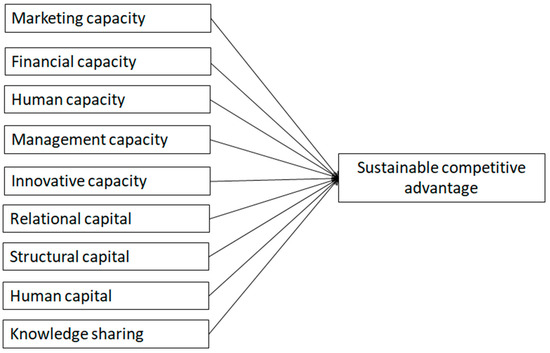
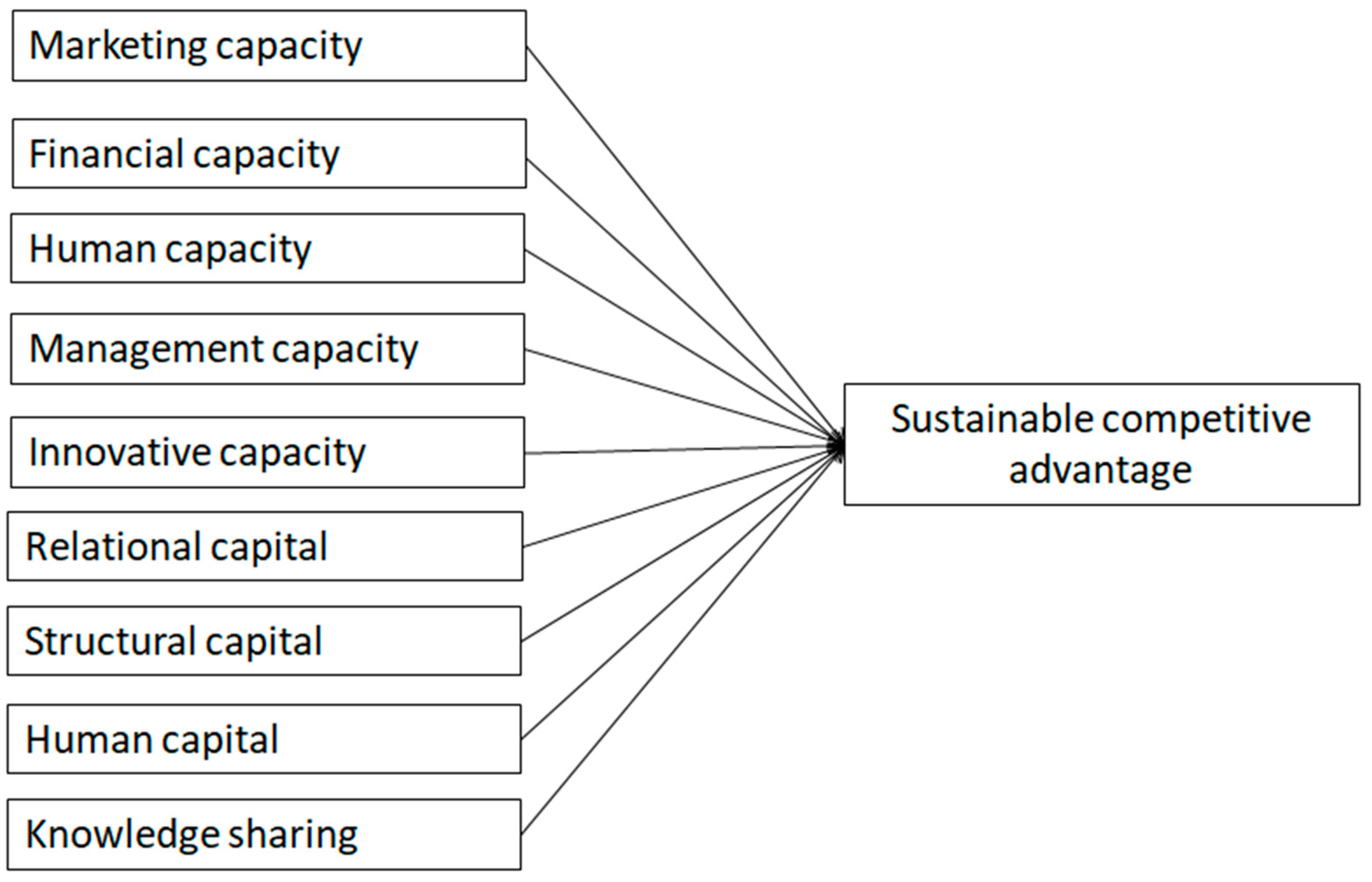

Disclaimer/Publisher’s Note: The statements, opinions and data contained in all publications are solely those of the individual author(s) and contributor(s) and not of MDPI and/or the editor(s). MDPI and/or the editor(s) disclaim responsibility for any injury to people or property resulting from any ideas, methods, instructions or products referred to in the content. |
© 2026 by the authors. Licensee MDPI, Basel, Switzerland. This article is an open access article distributed under the terms and conditions of the Creative Commons Attribution (CC BY) license.