


Abstract
Small- and medium-sized enterprises (SMEs) operate under conditions of rapid change, competitive pressure and growing informational complexity, while their owner-managers often have limited time and cognitive bandwidth to interpret emerging strategic possibilities. Artificial intelligence (AI) is beginning to change this by extending how firms detect signals, interpret shifting environments and evaluate possible strategic responses. However, existing work in dynamic capabilities, sensemaking and microfoundations does not fully explain how AI-augmented cognitive systems shape organisational interpretive capacity, strategic adaptability and sustainable competitive positioning. This article addresses that gap by developing Strategic Edge Architecture (SEA), a sociotechnical microfoundational theory of how AI-augmented cognitive infrastructure enhances environmental sensing, prospective sensemaking, adaptive strategic response and sustainability integration in SMEs. Drawing on a multiparadigm theoretical synthesis, this article integrates insights from strategic management, organisational cognition, microfoundations, AI governance and sustainability strategy. SEA conceptualises strategic capability as an emergent property of cognitive infrastructure within which human and AI systems interact to support environmental interpretation, strategic adaptation and sustainable growth. The framework proposes a causal pathway through which AI augmentation strengthens sensing and sensemaking, with human-in-the-loop governance acting as a key moderating condition. The article concludes with formal propositions to guide future empirical research on AI-augmented organisational cognition, whilst recognising that the framework’s claims remain inferential and require empirical examination before SEA’s explanatory power can be assessed.
1. Introduction
The competitive survival of small- and medium-sized enterprises (SMEs) increasingly depends on how well their leaders can read a changing environment and act on what they see. But what happens when the volume, speed and complexity of relevant information exceeds what any individual or small leadership team can realistically process?
Artificial intelligence (AI) is beginning to change the answer to that question. Unlike earlier waves of technology adoption, which were primarily about operational efficiency, contemporary AI systems can extend the interpretive reach of organisations. They help firms detect weak signals and surface latent patterns in heterogeneous data and explore strategic possibilities that unaided human cognition might miss (Choi et al., 2025; Nambisan et al., 2019; Verganti et al., 2020). This matters most for SMEs, where strategic authority typically sits with a small group of owner-managers who carry much of the firm’s sensemaking burden with limited analytical infrastructure behind them. Felin and Powell (2016) made this point in their work on organisational design for strategic cognition, and the challenge has only intensified since.
The core issue is not automation; it is augmentation.
AI can structure information flows, identify patterns and generate predictive insights that feed into the evaluation of strategic options (Berente et al., 2021; Rai et al., 2019). Emerging empirical work suggests that this can improve decision quality under uncertainty by sharpening signal detection and expanding the range of possibilities that decision-makers consider (Choi et al., 2025; López-Solís et al., 2025). Yet the strategic contribution of AI is not self-executing. As Raisch and Krakowski (2021) have argued, the real question is how AI capability is combined with human judgement. Their concept of the automation–augmentation paradox captures the tension. AI’s most significant strategic value may arise not when it replaces cognitive tasks, but when it extends human interpretive capability within hybrid cognitive systems where people retain contextual understanding, ethical judgement and strategic agency (Faraj et al., 2018; Jarrahi, 2018).
A further complication is that the strategic challenge facing SMEs is no longer just about technology and competition. Sustainability expectations from regulators, markets and stakeholders now require firms to integrate environmental, social and governance (ESG) considerations into their core strategic thinking (Gallotta et al., 2023). This pressure is especially acute for resource-constrained SMEs in emerging and developing economies. In South Africa, where SMEs account for more than 90% of registered businesses and make a substantial contribution to GDP and employment (Manyaga et al., 2024; Takawira & Pooe, 2025), digital transformation and sustainability integration are converging into a single strategic challenge rather than two separate ones.
Existing theory offers important foundations but not a complete explanation. Dynamic capabilities theory (Teece, 2007) explains adaptation at the organisational level. Sensemaking theory (Maitlis & Christianson, 2014; Weick, 1995) explains how actors construct meaning under ambiguity. Microfoundations research (Foss & Pedersen, 2019) shows that capabilities arise through the cognitive processes and decision mechanisms of individual actors. Each tradition was built on the assumption that cognition resides within human beings. Understandably, none adequately explains what changes when AI becomes part of the interpretive machinery.
This article responds by developing Strategic Edge Architecture (SEA). SEA is a sociotechnical microfoundational theory that theorises about how AI-augmented cognitive infrastructure strengthens prospective sensemaking, strategic adaptability and sustainability-oriented strategic capability in SMEs. The central argument is that strategic capability should be understood as an emergent property of integrated human-AI cognitive systems, not as something that resides in either human actors or technological tools taken separately.
Prior research has recognised AI as relevant to strategic decision-making (Powell et al., 2011; Shrestha et al., 2019), and some studies have examined how human and AI actors interact in organisational cognition (Faraj et al., 2018; Raisch & Krakowski, 2021). But no existing framework specifies the full causal architecture through which AI augmentation, human sensemaking, governance mechanisms and sustainability interpretation jointly shape strategic adaptability at the microfoundational level. Current integrative approaches tend to position AI in one of three ways: as a tool to be adopted within digital transformation models (Vial, 2019; Warner & Wäger, 2019), as an analytical capability within analytics frameworks (Davenport & Harris, 2007; Wamba et al., 2017), or as a contextual feature of the competitive landscape (Al-Noor, 2025; Keding, 2021). What remains absent is a conceptualisation of AI as a constitutive cognitive participant, one that is embedded within the interpretive infrastructure of the organisation itself. SEA addresses this theoretically by shifting the unit of analysis to the cognitive infrastructure as a sociotechnical system through which organisational cognition is enacted, governed and directed toward both competitive and sustainability objectives.
SEA makes five contributions to organisational and strategic management theory. It introduces cognitive infrastructure as a foundational construct distinct from IT capability, analytics capability and conventional decision-support systems. It extends dynamic capabilities theory by specifying the cognitive and technological microfoundations of sensing, seizing and strategic transformation in AI-augmented contexts, responding to gaps identified by Helfat and Peteraf (2014) and Foss and Pedersen (2019). It advances sensemaking theory beyond Weick’s (1995) retrospective emphasis by conceptualising prospective sensemaking as an AI-augmented organisational capability, building on and extending Seidel et al.’s (2025) account by specifying the technological mechanisms involved. It treats sustainability not as an external compliance requirement but as a substantive dimension of AI-augmented strategic cognition. Finally, it advances formal propositions, including propositions about the conditions under which augmentation may fail, that are open to empirical investigation and potential falsification.
2. Theoretical Framework
SEA is developed at the intersection of five theoretical conversations that have usually been treated separately. These include dynamic capabilities and their cognitive microfoundations, strategic cognition and sensemaking, the sociotechnical transformation of organisational cognition through AI, the demands created by environmental complexity in SME contexts and the growing strategic importance of sustainability integration. These streams show that existing theory offers important partial insights but not yet a unified explanation of how AI-augmented cognitive infrastructure shapes strategic adaptability and sustainable growth in SMEs. This provides the basis for SEA.
2.1. Strategic Adaptation and the Cognitive Microfoundations of Dynamic Capabilities
Strategic adaptation is the capacity of organisations to align their strategic orientation continuously with changing environmental conditions. It remains central to organisational survival and sustained competitive advantage. Dynamic capabilities theory has long provided a key framework for explaining this process by conceptualising adaptation, as Teece (2007) and Teece et al. (2008) argue, in terms of an organisation’s ability to sense environmental change, seize emerging opportunities and transform its resource base in response to shifting competitive conditions. Whilst dynamic capabilities theory explains adaptation at the organisational level, it has historically said less about the cognitive mechanisms through which sensing, interpretation, seizing and strategic judgement are actually accomplished (Foss & Pedersen, 2019; Helfat & Peteraf, 2014). Microfoundations research has helped to address this limitation by showing that organisational capabilities arise through the cognitive processes, decision mechanisms and interpretive activity of organisational actors (Felin et al., 2020; Foss & Pedersen, 2019). Helfat and Peteraf (2014), for example, extended the framework by identifying managerial cognitive capabilities as a microfoundational basis for sensing and strategic judgement. Their account remains centred on human cognition and does not fully accommodate technological augmentation as a structural determinant of interpretive capacity.
2.2. Strategic Cognition and Organisational Sensemaking in AI-Augmented Environments
Sensemaking theory offers a complementary microfoundational perspective by explaining how organisational actors construct meaning under conditions of ambiguity and uncertainty (Maitlis & Christianson, 2014; Weick, 1995). Much of the literature, however, has focused on retrospective interpretation. Strategic adaptation now increasingly depends on something more forward-looking: prospective sensemaking, understood, as Gioia et al. (2002) and Seidel et al. (2025) suggest, as the ongoing interpretation of emerging signals and the exploration of alternative future trajectories. AI becomes especially relevant at this point. By processing large-scale data, identifying patterns and generating strategic insights, AI can extend the scope, speed and temporal reach of organisational interpretation (Bieńkowska et al., 2026; Fascinari & English, 2025; López-Solís et al., 2025). AI does not merely accelerate analysis; it may alter the conditions under which prospective sensemaking becomes possible.
2.3. Artificial Intelligence and the Sociotechnical Transformation of Strategic Cognition
AI also represents a more fundamental shift in the sociotechnical microfoundations of organisational cognition (Nambisan et al., 2019). Increasingly, organisation theory treats AI not simply as a tool but as part of hybrid cognitive systems in which organisational cognition emerges through interaction between human and technological agents (Faraj et al., 2018; Shrestha et al., 2019). Within these systems, AI contributes computational capabilities such as pattern recognition, predictive analysis and scenario simulation, while human actors, as Jarrahi (2018) and Raisch and Krakowski (2021) note, contribute contextual interpretation, ethical judgement and strategic agency. This distinction matters because the strategic value of AI depends on how these contributions are combined. Human-in-the-loop governance (HITL) structures are therefore critical. They allow SME managers and owners to retain interpretive authority and decision accountability while still benefiting from AI augmentation (Akbar et al., 2025; Berente et al., 2021; Kellogg et al., 2020). AI is not external to organisational cognition; it becomes part of the infrastructure through which cognition is enacted.
2.4. Environmental Complexity and the Increasing Importance of Augmented Strategic Cognition
The importance of augmented cognition becomes clearer under conditions of environmental complexity. Contemporary strategic environments are marked by uncertainty, rapid technological change and increasing informational density. These conditions place growing demands on organisational interpretive capacity, especially in SMEs where analytical infrastructure is often limited (Anderson, 1999; Felin & Powell, 2016; Powell et al., 2011). The challenge is even more acute in South Africa and across sub-Saharan Africa, where, as Mavimbela and Dube (2016) and Takawira and Pooe (2025) observed, SMEs often operate amid institutional volatility, infrastructural constraints and rapidly evolving digital environments. In such settings, AI offers a possible mechanism for extending organisational cognitive capability through continuous environmental monitoring, pattern recognition and strategic simulation (Brynjolfsson et al., 2019; Shrestha et al., 2019; Wamba et al., 2017). Its significance lies in its potential to widen the scope of strategic interpretation under conditions that would otherwise exceed the limits of unaided human cognition.
2.5. Sustainability Integration as a Dimension of AI-Augmented Strategic Cognition
Strategic adaptability in SMEs cannot be separated from the question of sustainability. The integration of sustainability into strategic planning has become an increasingly important dimension of long-term competitiveness, reflecting stakeholder expectations, regulatory pressures and market incentives related to environmental, social and governance (ESG) considerations (Arroyabe et al., 2024; Cheng et al., 2024; Gallotta et al., 2023). Sustainability strategy therefore involves more than compliance. It requires firms to interpret and respond to a broader and more complex set of signals when making strategic choices. AI can support this process by extending organisational capacity to interpret sustainability-relevant information, assess the ESG implications of strategic decisions and identify opportunities linked to eco-efficiency, sustainable innovation and circular economy participation, as Arroyabe et al. (2024) and Mick et al. (2024) note. For SMEs, this is especially significant. AI systems can process regulatory, environmental and market signals at the same time, helping firms identify sustainability-related risks and opportunities that might otherwise remain outside the reach of human decision-makers working without augmented support.
2.6. Theoretical Fragmentation and the Need for a Sociotechnical Microfoundational Theory
The preceding sections reveal a persistent fragmentation in the literature. Dynamic capabilities theory explains organisational adaptation but does not fully specify the cognitive and technological mechanisms through which sensing, seizing and transformation occur. Sensemaking theory explains interpretive processes but has not adequately incorporated AI augmentation into its account of how meaning is formed and acted upon. Sustainability strategy research highlights the importance of ESG integration yet generally lacks a clear account of the AI-mediated cognitive mechanisms through which such integration is interpreted and operationalised.
SEA is developed in response to this fragmentation.
It offers a unified sociotechnical microfoundational theory that explains how cognitive infrastructure augmented with AI shapes strategic capability and sustainability integration in SMEs.
Table 1 positions SEA’s novelty by comparing it with five prior integrative frameworks across seven theoretical dimensions. As the table shows, SEA’s contribution lies not simply in combining existing perspectives but in advancing theory on dimensions that previous frameworks have not addressed together. SEA conceptualises AI as a constitutive cognitive participant rather than as a tool, capability or contextual condition. It embeds human-in-the-loop (HITL) governance as a formal moderating construct, integrates sustainability as a substantive theoretical dimension, situates the framework within emerging economy SME contexts and explicitly theorises failure conditions under which AI augmentation may produce dysfunctional strategic outcomes.
Table 1.
Positioning Strategic Edge Architecture (SEA) against related integrative frameworks.
3. Research Design: Multiparadigm Theoretical Synthesis and Formal Theory Development
This study develops SEA through a conceptual theory-building design grounded in multiparadigm theoretical synthesis. The purpose of this design is not to test an existing model but to develop a new theoretical explanation for how AI-augmented cognitive infrastructure shapes strategic adaptability and sustainability integration in SMEs.
3.1. Conceptual Research Design and Theory-Building Objective
This study adopts a conceptual research design oriented toward formal theory development. Such designs are appropriate where the aim is to introduce new constructs, specify relationships among them and strengthen explanation of organisational phenomena that are only partially accounted for in existing theory (Gilson & Goldberg, 2015; Whetten, 1989). In this case, the objective is to develop SEA as a theory capable of explaining how AI augmentation may reshape organisational interpretation, strategic adaptation and sustainability-oriented decision-making in SME contexts.
The theory-building process followed four interrelated stages. The first involved identifying the principal theoretical gaps across the literatures reviewed in Section 2. The second focused on specifying the core constructs needed to address those gaps. The third involved articulating the causal relationships linking those constructs. The fourth, as Cornelissen (2017) and Whetten (1989) suggest, clarified the boundary conditions under which those relationships are expected to hold and translated them into formal propositions open to empirical investigation.
3.2. Ontological and Epistemological Foundations: Sociotechnical Microfoundational Theory
The SEA framework rests on a sociotechnical microfoundational ontology. From this perspective, organisational capability emerges through the interaction of human cognition, technological augmentation and organisational structure, as Felin et al. (2020) and Foss and Pedersen (2019) argue, rather than from any one of these elements in isolation. This position is important because the theory seeks to explain not only strategic capability but how that capability is constituted when AI becomes part of the organisation’s interpretive infrastructure.
A multiparadigm synthesis is appropriate in this context because the underlying explanatory mechanisms are drawn from more than one theoretical tradition (Gioia & Pitre, 1990; Lewis & Kelemen, 2002; Okhuysen & Bonardi, 2011). SEA brings together the functionalist logic of dynamic capabilities theory with the interpretive orientation of sensemaking theory through a sociotechnical framing. Within this arrangement, AI provides computational support for sensing and pattern recognition, while human actors remain responsible for contextual interpretation, meaning-making and strategic judgement. This bridging logic is consistent with Gioia and Pitre’s (1990) account of metatriangulation.
3.3. Construct Specification and Conceptual Definitions
SEA is built around five core constructs. These are AI-augmented cognitive infrastructure, environmental sensing capacity, prospective sensemaking capability, strategic adaptability and HITL governance.
3.3.1. AI-Augmented Cognitive Infrastructure
AI-augmented cognitive infrastructure encompasses the integrated sociotechnical system through which human cognition, AI augmentation and organisational processes jointly support environmental interpretation, sustainability-related sensemaking and strategic decision-making. It includes AI-enabled capabilities such as environmental monitoring, pattern recognition, predictive analysis and scenario simulation, together with the governance mechanisms required to integrate these capabilities with human interpretive authority (Berente et al., 2021; Rai et al., 2019; Wamba et al., 2017).
3.3.2. Environmental Sensing Capacity
Environmental sensing capacity describes the organisational ability to detect, interpret and evaluate relevant signals in the external environment. These signals may include technological developments, competitive threats, emerging opportunities and regulatory, market or ecological developments linked to sustainability. AI augmentation strengthens this capacity by supporting continuous monitoring, pattern recognition and the integration of heterogeneous information sources (Shrestha et al., 2019; Verganti et al., 2020).
3.3.3. Prospective Sensemaking Capability
Prospective sensemaking capability is the organisational ability to interpret emerging signals and explore multiple plausible future trajectories in ways that inform strategic action. Unlike retrospective interpretation, this capability is oriented toward what may be unfolding rather than only what has already occurred (Bieńkowska et al., 2026; Gioia et al., 2002; Seidel et al., 2025).
3.3.4. Strategic Adaptability
Strategic adaptability is the organisational capacity to revise strategic orientation, resource allocation and organisational configuration in response to changing environmental conditions. In SEA, this includes responsiveness to competitive, technological and sustainability-related pressures, as Teece (2007) and Teece et al. (2008) note.
3.3.5. Human-in-the-Loop Governance
Berente et al. (2021) and Kellogg et al. (2020) explain HITL governance as concerning the structures and practices through which human leaders retain interpretive authority, contextual judgement and decision accountability whilst using AI augmentation. Within SEA, HITL governance operates at two interrelated levels. At the proximal level, it functions as a moderator of specific augmentation-to-interpretation relationships. It shapes how effectively AI-derived signals are translated into contextually grounded strategic meaning. This function is formalised in Proposition 4. At the system level, HITL governance functions as a broader quality-assurance mechanism that determines whether failure conditions in the cognitive infrastructure, such as automation complacency, biased outputs or low-fidelity representations, are surfaced and corrected before they propagate into strategic action.
This second function connects directly to the failure conditions specified in Proposition 7. In SME settings, both functions may often be enacted more through owner-manager review, contextual evaluation and the capacity to override AI-generated recommendations when necessary than through formal policy.
3.3.6. Delineation of Constructs
Environmental sensing capacity, prospective sensemaking capability and strategic judgement all involve interpretive activity and therefore the boundaries between them require specification. Within SEA, these constructs are distinguished by their primary cognitive function, not by the absence of interpretation.
Environmental sensing capacity is concerned with the detection and identification of signals in the external environment and addresses the question of what is present in the strategic field.
Prospective sensemaking capability concerns the construction of forward-looking meaning from those signals. It addresses what their unfolding may imply for plausible future trajectories.
Strategic judgement, exercised within the human-in-the-loop layer, concerns evaluation and decision-making. It addresses the question of what the organisation should do in response.
AI-augmented cognitive infrastructure is the enabling sociotechnical system within which all three functions are performed.
This division of function is consistent with distinctions in the sensemaking and dynamic capabilities literatures (Helfat & Peteraf, 2014; Maitlis & Christianson, 2014; Weick, 1995) and makes clear that interpretation is distributed across the architecture and not localised within a single construct.
3.4. Specification of Causal Relationships and Theoretical Mechanisms
SEA explains strategic adaptability through a proposed sequential causal logic. AI-augmented cognitive infrastructure first strengthens environmental sensing capacity by extending the organisation’s ability to detect and interpret external signals, including sustainability-relevant ones. Stronger sensing is expected to support prospective sensemaking by giving leaders a richer and more differentiated representation of changing conditions. Improved prospective sensemaking supports strategic adaptability by enabling earlier and more deliberate adjustment of strategic commitments. Across these relationships, HITL governance functions as a moderating condition by shaping how effectively AI augmentation is integrated with human interpretive authority.
3.5. Boundary Conditions and Scope of Theoretical Applicability
SEA cannot claim universal applicability. Its explanatory power is expected to be strongest under conditions of moderate to high environmental dynamism and informational complexity, particularly in SMEs where owner-manager cognition remains central to strategic interpretation (Felin & Powell, 2016; Manyaga et al., 2024). The framework is also especially relevant in emerging economy SME contexts, where digital infrastructure constraints and sustainability transition pressures are often experienced together rather than separately. These conditions make the question of augmented strategic cognition especially salient.
3.6. Formal Theory Development and Theoretical Contribution
SEA stands as a formal sociotechnical microfoundational theory linking AI-augmented cognitive infrastructure, interpretive capability, sustainability integration and strategic adaptability. In line with established theory-building criteria, the framework, as Cornelissen (2017) and Whetten (1989) indicate, introduces new constructs, specifies the relationships among them, identifies the conditions under which those relationships are expected to hold and translates them into propositions that can be examined empirically.
3.7. Use of Generative AI in Conceptual Model Development and Visualisation
During the development of Figure 1, the author used Gemini 3.1 Pro (Google DeepMind, 2026) as a generative visual reasoning tool to support the iterative articulation of the SEA conceptual model. The author developed prompts from the emerging theoretical architecture of SEA, including its constructs, causal pathways, sustainability dimension, HITL governance layer, feedback loops and failure conditions. AI-generated visual outputs were then used as externalised design artefacts that enabled the author to reflect critically on the coherence, structure and representational adequacy of the model. The tool was not used to generate the underlying theoretical claims independently. Rather, each AI-generated version was reviewed, evaluated and further refined by the author through successive prompts and conceptual revisions. The final model structure, construct definitions, propositions, interpretation and scholarly judgement remained entirely the responsibility of the author.
Figure 1.
Strategic Edge Architecture (SEA) as a sociotechnical microfoundational model of AI-augmented strategic adaptation in SMEs. The numbered components show the primary causal pathway, while the sustainability band, HITL governance layer, feedback loops and failure-condition panel indicate cross-cutting sustainability integration, governance-based quality assurance, recursive recalibration and contingencies that may attenuate or reverse the benefits of AI augmentation. The red arrow indicates the remedial relationship whereby HITL-enabled mitigation attenuates the failure conditions, signalling risk correction rather than forward-running causation. HITL = human-in-the-loop; ESG = environmental, social and governance. Source: Author’s own compilation.
4. Strategic Edge Architecture: A Sociotechnical Microfoundational Theory of AI-Augmented Strategic Adaptation
The previous theoretical synthesis identified what existing frameworks leave unresolved. SEA is the response. What follows specifies its architecture in full: the constructs, the causal logic connecting them, the conditions under which it applies and the conditions under which it may fail.
4.1. Strategic Edge Architecture as AI-Augmented Cognitive Infrastructure
Strategic Edge Architecture (SEA) conceptualises strategic capability as an emergent property of an integrated sociotechnical cognitive infrastructure through which artificial intelligence (AI) augments leadership interpretation and strengthens organisational strategic adaptability. In this formulation, strategic capability is not treated as an abstract organisational attribute but as an emergent property of integrated human-AI cognitive systems through which organisations interpret environmental conditions, engage in prospective sensemaking, incorporate sustainability considerations and adjust strategic action over time (Anderson, 1999; Felin & Powell, 2016; Felin et al., 2020; Holland, 2006; Powell et al., 2011).
Within SEA, AI functions as a mechanism of cognitive augmentation rather than as a substitute for human cognition, consistent with the automation–augmentation paradox identified in the literature on AI and organising, as Raisch and Krakowski (2021) argue.
The framework therefore treats AI not as an external decision-support tool but as part of the interpretive infrastructure through which strategic capability is enacted.
4.2. Structural Components of Strategic Edge Architecture
SEA comprises five interrelated structural components. Together, these components explain how environmental signals are detected, processed, interpreted, judged and translated into adaptive strategic recalibration. Figure 1 presents the conceptual model and the relationships among these components.
4.2.1. Environmental Signal Interface
The environmental signal interface is the set of organisational mechanisms through which relevant environmental signals are detected, collected and presented for interpretation. AI strengthens this interface by enabling large-scale signal detection and pattern recognition across heterogeneous information environments, including sustainability-relevant signals such as emissions data, regulatory shifts, supply-chain ESG indicators and circular economy opportunities, as Shrestha et al. (2019) and Verganti et al. (2020) show.
4.2.2. Cognitive Augmentation Layer
The cognitive augmentation layer is the point at which AI becomes integrated into organisational interpretive processes. At this layer, AI supports cognitive work such as pattern recognition, predictive analysis, anomaly detection and scenario simulation, thereby extending the range and speed of interpretive processing available to decision-makers (Berente et al., 2021; Rai et al., 2019; Fascinari & English, 2025; López-Solís et al., 2025).
4.2.3. Prospective Sensemaking Workspace
The prospective sensemaking workspace is the organisational space within which leaders interpret environmental signals, compare strategic alternatives and construct forward-looking meaning. This includes the evaluation of sustainability-oriented pathways as well as more conventional competitive options. AI support enables more systematic exploration of alternative strategic trajectories and richer scenario modelling of future conditions (Fascinari & English, 2025; Gioia et al., 2002; Seidel et al., 2025; Verganti et al., 2020).
4.2.4. Strategic Judgement Layer
Berente et al. (2021) and Kellogg et al. (2020) argue that the strategic judgement layer gives practical expression to HITL governance by ensuring that human leaders retain interpretive authority and decision accountability. In SME settings, this layer is often centred on owner-manager review of AI outputs, with contextual knowledge concentrated in a small leadership group that can test, refine or override AI-generated recommendations.
4.2.5. Adaptive Recalibration Mechanism
The adaptive recalibration mechanism describes the organisational processes through which strategic interpretations and commitments are updated in response to evolving environmental conditions. In SEA, recalibration includes responsiveness to sustainability transitions, as well as competitive and technological shifts (Brynjolfsson et al., 2019; Verganti et al., 2020).
4.2.6. Sustainability as a Cross-Cutting Interpretive Dimension
Sustainability is theorised across the five structural components as a cross-cutting interpretive dimension enacted within each component of the cognitive infrastructure rather than as a separate layer of the architecture or as a discrete outcome variable. The environmental signal interface attends to sustainability-relevant signals alongside competitive and technological ones. The cognitive augmentation layer applies pattern recognition and predictive analysis to ESG-related data in the same way as it does to other strategic information. The prospective sensemaking workspace evaluates sustainability-oriented trajectories alongside more conventional competitive options. The strategic judgement layer ensures that HITL review is exercised over sustainability-related recommendations. The adaptive recalibration mechanism updates strategic commitments in response to sustainability transitions as well as competitive and technological shifts.
Positioning sustainability in this way reflects the reality, particularly in resource-constrained SME environments, that sustainability pressures are increasingly interpreted through the same cognitive infrastructure and not processed through parallel channel (Arroyabe et al., 2024; Gallotta et al., 2023; Mick et al., 2024). This is preferable to treating it as a separate outcome.
Proposition 5 formalises the cross-cutting nature of the dimension of sustainability as a distinct theoretical claim about the relationship between AI-augmented cognitive infrastructure and sustainability integration capability.
4.3. Causal Mechanisms and Formal Theoretical Propositions
AI-augmented cognitive infrastructure is expected to strengthen environmental sensing. Stronger sensing is expected to support prospective sensemaking, and stronger prospective sensemaking is expected to improve strategic adaptability. Across these relationships, HITL governance shapes whether AI support is integrated in ways that preserve contextual judgement and accountability. The propositions below state the core relational claims of the framework and are offered to guide future empirical investigation (Whetten, 1989). A seventh proposition, addressing failure conditions under which the predicted positive effects are attenuated or reversed, is presented in Section 4.7.
Proposition 1.
AI-augmented cognitive infrastructure enhances environmental sensing capacity through three specific mechanisms: (a) computational pattern recognition across data sources that exceed human attentional bandwidth, (b) continuous automated monitoring that eliminates temporal gaps in human environmental scanning, and (c) anomaly detection that surfaces weak signals below the threshold of unaided human perception. SMEs with functionally integrated AI-cognitive infrastructure are therefore expected to demonstrate greater breadth, timeliness and accuracy of environmental signal detection, including both competitive/technological and sustainability-relevant signals, than SMEs relying primarily on unaided human sensing, controlling for firm size, industry and leadership experience.
Proposition 2.
Environmental sensing capacity mediates the relationship between AI-augmented cognitive infrastructure and prospective sensemaking. As AI-enhanced sensing produces richer and more differentiated informational inputs, organisational leaders are better able to interpret emerging conditions, compare plausible future scenarios and construct forward-looking strategic representations.
Proposition 3.
Prospective sensemaking capability mediates the relationship between environmental sensing capacity and strategic adaptability. Organisations with a stronger capability are expected to adjust strategic commitments earlier, respond more deliberately to environmental shifts and display greater flexibility in reallocating resources than organisations with equivalent sensing capacity but weaker prospective sensemaking.
Proposition 4.
HITL governance positively moderates the relationship between AI-augmented cognitive infrastructure, environmental sensing capacity and prospective sensemaking. Organisations with stronger HITL governance structures are therefore expected to derive greater strategic value from AI augmentation by preserving human contextual judgement, interpretive authority and ethical oversight.
Proposition 5.
AI-augmented cognitive infrastructure enhances SMEs’ sustainability integration capability, such that SMEs equipped with AI-augmented sensing of sustainability signals and AI-supported ESG scenario modelling are expected to demonstrate closer alignment between strategic decisions and environmental and social sustainability objectives than SMEs without such infrastructure.
Proposition 6.
The positive relationship between AI-augmented cognitive infrastructure and strategic adaptability is expected to be stronger in SMEs operating under resource constraints, high environmental dynamism and sustainability pressure, where augmented interpretive capacity provides greater marginal value than unaided leadership cognition.
4.4. Feedback Dynamics and Recursive Recalibration
The propositions above specify SEA’s primary causal logic as a forward-running sequence in which AI-augmented cognitive infrastructure strengthens sensing, sensing supports prospective sensemaking, and prospective sensemaking enables adaptive strategic response. Whilst sequential framing is analytically useful for empirical testing, as it specifies directional relationships that can be examined and potentially falsified, it should not imply that organisational cognition operates only in a linear mode.
Three concurrent feedback loops are integral to SEA’s microfoundational architecture. The first loop runs from adaptive recalibration back to the environmental signal interface. As organisations adjust strategic commitments and observe the consequences of those adjustments, the firm may learn which categories of signal have proved most consequential and reconfigures its scanning priorities accordingly. The second loop runs from strategic judgement back to HITL governance practices. Patterns of override, contextual correction and accepted recommendation accumulate over time and become institutionalised review protocols, sharpening the governance layer through use. The third loop runs from realised strategic performance back to the cognitive augmentation layer. Information about which predictions and pattern detections proved valuable, and which did not, can be incorporated into model retraining, prompt refinement or platform reconfiguration, recalibrating the AI component of the infrastructure itself.
These loops do not displace the forward-running causal claims of Propositions 1–6. Rather, they make explicit that the cognitive infrastructure is a learning system, the effectiveness of which is shaped by its initial design, as well as by the recursive interaction between strategic outcomes and the architecture that produced them. The propositions therefore specify the primary mechanism of strategic adaptation, whilst the feedback dynamics described here specify the conditions under which that mechanism is sustained and refined over time.
4.5. Strategic Edge Architecture as a Microfoundational Extension of Dynamic Capabilities Theory
SEA extends dynamic capabilities theory by specifying the sociotechnical cognitive mechanisms through which sensing, seizing and transformation occur in AI-augmented settings. In relation to sensing, AI-augmented cognitive infrastructure is expected to broaden the organisation’s perceptual reach. In relation to seizing, the cognitive augmentation layer and prospective sensemaking workspace may support more effective evaluation of strategic opportunities, including opportunities linked to sustainable innovation. In relation to transformation, the adaptive recalibration mechanism explains how strategic commitments are continuously realigned as conditions evolve (Cockburn et al., 2021; Verganti et al., 2020).
SEA thus offers a more explicit account of the cognitive and technological microfoundations through which dynamic capabilities are enacted. Its contribution is therefore not simply to restate sensing, seizing and transforming but to show how those processes are constituted when AI becomes part of the organisation’s interpretive infrastructure.
4.6. Boundary Conditions and Applicability of Strategic Edge Architecture
SEA should apply most strongly under conditions of environmental dynamism, informational complexity, sustainability transition pressure and resource constraint. It is particularly relevant to SMEs in emerging economies, where strategic interpretation is often concentrated in owner-managers, digital infrastructure may be uneven but increasingly accessible and sustainability integration is becoming both a regulatory and a market imperative (Holland, 2006; Mavimbela & Dube, 2016; Takawira & Pooe, 2025).
Under these conditions, the central issue is not merely whether AI is present in the organisation but whether it is integrated into the interpretive infrastructure in a way that strengthens judgement and adaptive capacity.
4.7. Empirical Operationalisation and Measurement Pathways
For SEA to have empirical value, its core constructs must be translated into observable indicators that can be measured, compared and subjected to verification or falsification (MacKenzie et al., 2011; Whetten, 1989). The measurement pathways proposed here are illustrative rather than prescriptive. They are intended as starting points for empirical work across survey-based, archival, behavioural, experimental and mixed-method designs, recognising that appropriate operationalisation will vary by research context, sample characteristics and methodological design. Table 2 summarises these pathways across SEA’s five core constructs.
Table 2.
Illustrative measurement pathways for SEA core constructs.
4.7.1. Measuring AI-Augmented Cognitive Infrastructure
AI-augmented cognitive infrastructure is a multidimensional construct capturing the extent to which an organisation has developed an integrated sociotechnical system in which AI systems actively participate in strategic sensemaking and environmental interpretation. Three principal operationalisation pathways are proposed.
- (i)
- An AI-integration index may be constructed as a composite score reflecting the depth of AI integration across strategic decision-making processes, distinguishing between peripheral AI use and constitutive AI integration, for example where AI-generated environmental scenarios are actively evaluated in leadership strategy sessions. Survey items may include statements such as “AI systems are actively used in our organisation’s strategic planning processes” and “AI-generated insights are regularly reviewed by senior leadership when formulating strategy.” AI tool adoption breadth captures the range of AI tool categories deployed across the structural components of SEA.
- (ii)
- HITL governance maturity captures the extent to which structured review and override practices are in place, for example: “In our organisation, AI recommendations are always reviewed by a human decision-maker before implementation.”
- (iii)
- Archival indicators may include AI-related capital expenditure as a proportion of total IT investment and the number of AI systems or licences used in strategic processes. Experimental designs may also compare managers given access to AI-supported decision tools with managers operating under non-AI or control conditions.
4.7.2. Measuring Environmental Sensing Capacity
Environmental sensing capacity should capture both the process of sensing and the quality of sensing outcomes. Four operationalisation pathways are proposed.
- (i)
- Environmental scanning frequency captures how regularly an organisation systematically monitors its technological, competitive, regulatory and sustainability environments.
- (ii)
- Signal detection accuracy may be assessed perceptually, for example through an item such as “Our organisation is typically among the first in our industry to identify emerging technological trends,” or more objectively through archival indicators such as the number of competitor moves correctly anticipated on the basis of prior expectations.
- (iii)
- Sustainability signal coverage captures the extent to which environmental scanning explicitly includes ESG-relevant signals such as regulatory developments, stakeholder expectations and circular economy opportunities.
- (iv)
- In experimental research, signal detection task performance may be assessed by presenting managers with simulated information environments containing embedded strategic signals and then measuring detection rate, classification accuracy and response latency under AI-augmented versus non-augmented conditions.
4.7.3. Measuring Prospective Sensemaking Capability
Gioia et al. (2002) suggest that this capability should capture the degree to which an organisation engages in structured forward-looking interpretation and the quality of the interpretive frameworks produced. Five pathways are proposed.
- (i)
- Scenario planning usage captures the frequency and systematicity with which an organisation develops and evaluates multiple alternative future scenarios.
- (ii)
- Strategic foresight capability may be assessed using adapted measures from the strategic foresight literature (Rohrbeck & Kum, 2018), including items such as “Our organisation systematically monitors weak signals of future technological and market developments.”
- (iii)
- Temporal orientation of strategic planning may serve as a proxy for prospective depth, measured for example through the average time horizon of strategic plans.
- (iv)
- AI-assisted sensemaking intensity captures the extent to which AI tools actively support the prospective sensemaking process.
- (v)
- Interpretive output quality may be assessed in experimental designs by evaluating the comprehensiveness and anticipatory validity of strategic interpretations produced by managers operating under AI-augmented versus non-augmented conditions.
4.7.4. Measuring Strategic Adaptability
Strategic adaptability may be measured using a combination of perceptual scales, behavioural indicators and archival evidence. Five pathways are proposed.
- (i)
- Strategy revision frequency captures how regularly an organisation formally reviews and updates its strategic commitments.
- (ii)
- Adaptation speed measures the elapsed time between the identification of a significant environmental shift and the implementation of a corresponding strategic adjustment.
- (iii)
- Resource reallocation responsiveness captures the extent to which budget, personnel and operational resources are redirected in response to strategic reassessment.
- (iv)
- A proactive-versus-reactive adaptation ratio distinguishes between adjustments made in anticipation of emerging developments and those made only after disruptions have materialised. This distinction is important to SEA because the framework predicts that AI augmentation should shift organisations towards more proactive adaptation.
- (v)
- Sustainability strategy integration can capture the sustainability dimension of adaptability, for example through an item such as “Our organisation has adjusted its strategic priorities in response to changing sustainability regulations and stakeholder expectations.”
4.7.5. Measuring Human-in-the-Loop Governance
Measuring HITL governance requires attention to the extent to which formal or informal structures ensure human review, contextualisation and accountability for AI-generated outputs. In SME contexts, HITL governance is likely to be enacted less through elaborate formal systems than through deliberate practices of owner-manager review and interpretive challenge. Four pathways are proposed.
- (i)
- An HITL governance maturity scale may include items such as “Our leadership team actively questions and interrogates AI-generated strategic insights rather than accepting them passively” and “We have established clear protocols defining when and how humans can override AI-generated recommendations.”
- (ii)
- AI override frequency provides a behavioural indicator of active human interpretive authority.
- (iii)
- AI accountability structures may be assessed through archival indicators such as the existence of governance policies, review protocols or designated AI review responsibilities.
- (iv)
- In experimental designs, HITL governance conditions may be manipulated by varying the degree to which participants are required to review, challenge or override AI outputs, thereby enabling direct testing of the moderating relationship specified in Proposition 4.
Table 2 consolidates the empirical measurement pathways for SEA’s five core constructs. These pathways support multi-method empirical investigation across survey, archival, behavioural, experimental and longitudinal designs. MacKenzie et al. (2011) and Podsakoff et al. (2003) strongly recommend the triangulation of perceptual indicators with archival or behavioural measures to reduce common method variance and strengthen construct validity. In emerging economy SME contexts, qualitative comparative analysis (QCA) may also provide a useful complement to survey-based operationalisation by accommodating smaller samples and configurational patterns of causality (Fiss, 2007; Mavimbela & Dube, 2016). Researchers should also distinguish clearly between nominal AI adoption and functional AI integration, since the claims of SEA depend on the latter rather than the mere presence of AI tools.
4.8. Cognitive Infrastructure Failure Modes and Dysfunctional AI Augmentation
A robust theory should also specify when its predicted relationships are expected to fail.
In SEA, AI augmentation is not assumed to produce strategic benefit automatically. Its effects depend on governance quality, data conditions and the organisation’s capacity to interrogate AI-generated outputs critically. A balanced theory must therefore account for mechanisms of failure as well as mechanisms of success (Holland, 2006; Whetten, 1989). Four failure modes are particularly salient.
4.8.1. Failure Mode 1: Automation Complacency and Interpretive Abdication
The first failure mode arises when organisational leaders defer too readily to AI-generated outputs and reduce their own interpretive engagement. Parasuraman and Manzey (2010) show that operators interacting with automated systems may reduce monitoring effort and accept automated outputs without sufficient critical evaluation. In SME contexts, where owner-managers may not always possess the technical literacy needed to interrogate AI outputs critically, the risk of interpretive abdication is amplified. Under weak or absent HITL governance, AI augmentation may therefore narrow rather than broaden the organisation’s interpretive repertoire.
4.8.2. Failure Mode 2: Algorithmic Bias Amplification
A second failure mode arises when AI systems reproduce or amplify biases embedded in historical data, thereby generating systematically distorted representations of the environment (Elhamahmy et al., 2025; Kellogg et al., 2020). In emerging-economy SME settings, where available data may reflect institutional distortion, infrastructural inequality or exclusionary market structures, biased AI outputs may misrepresent the real opportunity landscape. If those outputs are incorporated into organisational sensemaking without adequate scrutiny, they may reinforce rather than overcome existing strategic disadvantage.
4.8.3. Failure Mode 3: Data Poverty and Infrastructure Constraints
A third failure mode concerns the quality and availability of data. The effectiveness of AI augmentation depends fundamentally on the breadth, quality and timeliness of data inputs. Mavimbela and Dube (2016) and Takawira and Pooe (2025) note that SMEs in emerging economies often operate under conditions of data poverty, including limited access to high-quality digital data, unreliable internet connectivity and fragmented information systems. Under such conditions, AI systems may generate low-fidelity environmental representations that create misplaced confidence in strategic interpretation, which may be more damaging than openly acknowledged uncertainty under unaided human judgement.
4.8.4. Failure Mode 4: AI-Induced Strategic Rigidity
A fourth failure mode arises when AI systems over-weight historical patterns and anchor organisational attention to previously successful trajectories. This may inhibit the exploratory cognition needed to identify genuinely novel opportunities, especially in rapidly changing environments where historical patterns offer weak guidance for future conditions (Verganti et al., 2020). During sustainability transitions, for example, SMEs may need to consider radically different pathways such as circular economy business models. AI systems trained on linear economic assumptions may fail to surface these transformative options.
These failure modes are not merely contextual risks. They function as theoretically consequential boundary conditions that specify when the positive relationships proposed in Propositions 1–6 may weaken or reverse. This is captured in Proposition 7.
Proposition 7.
The positive effects of AI-augmented cognitive infrastructure on environmental sensing capacity, prospective sensemaking capability and strategic adaptability are expected to be attenuated or reversed under the following conditions: (a) when HITL governance is weak, leading to automation complacency and interpretive abdication; (b) when AI training data encode systematic biases that distort environmental representations; (c) when data poverty produces low-fidelity AI outputs that generate false confidence in strategic interpretation; and/or (d) when AI-based pattern recognition anchors organisational attention too strongly to historical trajectories, thereby inducing strategic rigidity. Under such conditions, AI augmentation may reduce rather than enhance strategic adaptability by narrowing interpretive repertoires, reinforcing distorted representations or constraining exploratory cognition.
Proposition 7 strengthens the falsifiability of SEA. If AI augmentation were assumed always to improve strategic adaptability regardless of governance quality, data conditions or implementation context, the theory would become difficult to falsify and therefore scientifically weaker. By specifying the conditions under which the predicted positive effects may be attenuated or reversed, Proposition 7 provides the contingencies necessary for more rigorous empirical testing.
4.8.5. Mitigation Mechanisms
Each of the four failure modes specified above implies a corresponding mitigation pathway. These mitigations remain partial rather than absolute.
Automation complacency and interpretive abdication can be addressed through deliberate strengthening of HITL governance routines. This includes structured review of AI outputs before strategic commitment, scheduled override exercises that maintain owner-manager interpretive engagement and the cultivation of what Kahneman (2011) terms slow thinking in moments of high strategic consequence.
Algorithmic bias amplification can be mitigated through periodic auditing of AI outputs against contextual knowledge, the use of multiple AI systems whose disagreements surface points of interpretive uncertainty and explicit attention to whether training data reflect the operating environment of the focal SME (Elhamahmy et al., 2025).
Data poverty effects can be partly offset through hybrid sensing arrangements in which AI-based environmental scanning is complemented by qualitative inputs from industry networks, sector associations and local relational sources that AI systems cannot easily access.
AI-induced strategic rigidity can be addressed through explicit exploration mandates that require leaders to consider strategic alternatives outside the pattern set generated by historical data, particularly during sustainability transitions where past trajectories offer limited guidance.
None of these mitigations eliminates the underlying risk, and Proposition 7 retains its falsifiability function. They do, however, indicate that the failure modes described here are theoretically tractable rather than inevitable.
4.9. Illustrative Application: A South African SME Vignette
The following vignette illustrates SEA in a resource-constrained emerging economy context.
4.9.1. Context
Consider GreenPack Solutions, a hypothetical small manufacturing enterprise based in Gqeberha, South Africa. The firm employs 45 workers and produces biodegradable packaging materials for the local food industry. Its owner-manager, Ms Dlamini, holds a business diploma and has 12 years of industry experience. GreenPack operates under growing pressure from regulation aimed at reducing single-use plastics, volatile raw-material costs, increasing competition from imported packaging and rising customer demand for verified sustainability credentials.
4.9.2. Pre-SEA Condition
Before AI integration, Ms Dlamini relied mainly on personal industry networks, trade publications and attendance at annual conferences for environmental scanning. Strategic planning was informal and largely reactive. Product lines and pricing were adjusted in response to competitor moves and customer complaints rather than in anticipation of market shifts. Sustainability compliance was managed through annual audits rather than continuous monitoring. Under these conditions, bounded rationality and attentional limits meant that regulatory developments in export markets were often overlooked, emerging competitor innovations were detected late and the firm lacked the analytical capacity to evaluate whether circular economy investments were financially viable.
4.9.3. SEA Implementation
With SEA implementation, GreenPack adopted a cloud-based AI analytics platform, accessed through an AI-as-a-service subscription that reduced capital barriers. The platform supported three functions aligned with SEA’s structural components.
- (i)
- The environmental signal interface was operationalised through an AI-driven market intelligence tool that continuously monitored regulatory databases, competitor patent filings, commodity price indices and sustainability certification standards across domestic and export markets.
- (ii)
- The cognitive augmentation layer was activated through a predictive analytics module that identified patterns in raw-material price fluctuations, flagged emerging regulatory requirements, including the implications of the European Union’s proposed Carbon Border Adjustment Mechanism for South African exporters, and detected anomalies in customer purchasing behaviour suggesting changing preferences.
- (iii)
- The prospective sensemaking workspace was operationalised through a scenario-modelling function that allowed Ms Dlamini to compare three strategic pathways, namely, maintaining the current product line with incremental improvements, investing in compostable packaging technology for the domestic hospitality sector or pursuing European export certification for biodegradable packaging aligned with circular economy standards.
4.9.4. HITL Governance in Practice
Ms Dlamini did not accept the AI platform’s outputs uncritically. When the predictive module recommended a rapid pivot towards European export markets on the basis of detected demand signals, she brought contextual knowledge of local logistics constraints, customer relationship dependencies and workforce capability to bear on the recommendation. She recognised that the AI output had not adequately captured the current unreliability of port logistics in Gqeberha. Rather than following the recommendation directly, she revised it: European certification became a medium-term objective, while the domestic hospitality opportunity was prioritised as the immediate growth path. This illustrates the strategic judgement layer in practice, with human contextual knowledge refining and correcting AI-generated strategic recommendations.
4.9.5. Sustainability Integration
The platform’s environmental scanning functions enabled GreenPack to monitor scope 1 and 2 emissions data, track supply-chain ESG compliance and identify potential circular economy partnerships with waste-management enterprises. Ms Dlamini also used AI-supported scenario modelling to evaluate the cost-benefit profile of investing in post-consumer recycled content, aligning the firm’s strategic direction more closely with customer sustainability expectations and emerging regulatory requirements.
4.9.6. Adaptive Recalibration
Six months after implementation, the AI system detected an unanticipated regulatory development: the South African Department of Forestry, Fisheries and the Environment announced accelerated timelines for Extended Producer Responsibility regulations in the packaging sector. Because GreenPack’s cognitive infrastructure was configured for continuous monitoring rather than periodic scanning, the signal was detected within days of the announcement. Ms Dlamini then used the prospective sensemaking workspace to reassess the firm’s strategic commitments and reallocate research and development resources toward compliance-ready packaging designs. This proactive recalibration, undertaken before formal enforcement, illustrates the adaptive recalibration mechanism and shows how AI-augmented cognitive infrastructure can shift strategic response from reactive to proactive modes.
4.9.7. Illustration of Failure Modes
The vignette also shows how the failure modes specified in Proposition 7 could arise. Had Ms Dlamini accepted the recommendation to pivot immediately to European export markets without bringing contextual knowledge of port logistics constraints into the decision, the outcome could have been a costly strategic misallocation, illustrating automation complacency. Similarly, if the platform’s training data reflected only historical market patterns associated with a linear economy, it may have failed to surface circular economy opportunities, illustrating AI-induced strategic rigidity.
The vignette demonstrates the five structural components of SEA, the moderating role of HITL governance, sustainability integration as a substantive strategic dimension and the conditions under which augmentation benefits may fail to materialise. While hypothetical, the scenario is grounded in documented features of the South African SME landscape and therefore illustrates the practical applicability of SEA to resource-constrained emerging economy settings (Manyaga et al., 2024; Mavimbela & Dube, 2016; Takawira & Pooe, 2025).
5. Discussion
This discussion considers what SEA contributes to strategic management theory and what follows from it for research, managerial practice and policy. The framework offers a clearer account of how AI becomes consequential for strategic adaptation in SMEs. Rather than treating AI as a background technology, SEA places it within the interpretive infrastructure through which organisations detect environmental shifts, construct forward-looking meaning and adapt under conditions of complexity.
5.1. Overview of Theoretical Contribution
This study developed strategic edge architecture (SEA) as a sociotechnical microfoundational theory explaining how AI-augmented cognitive infrastructure strengthens prospective sensemaking, sustainability integration and strategic adaptability in SMEs. By drawing together insights from dynamic capabilities theory, organisational cognition, microfoundations research, AI governance and sustainability strategy, SEA offers a unified explanatory framework for understanding how hybrid human–AI cognitive systems support sustained adaptation and sustainable growth in complex environments.
5.2. Introducing Cognitive Infrastructure as a Foundational Strategic Construct
A central contribution of SEA is the formalisation of cognitive infrastructure as a foundational construct in strategic management. The framework suggests that strategic capability emerges from an integrated infrastructure comprising human cognition, AI augmentation and governance mechanisms, rather than from resources, routines or managerial judgement in isolation. SEA extends Felin and Powell’s (2016) treatment of organisational design for strategic cognition by making AI an explicit structural component of the cognitive infrastructure rather than treating it as an external or contextual factor. Whereas earlier work conceptualised cognitive infrastructure mainly in terms of organisational arrangements shaping human cognition, SEA specifies how interpretive capability may be distributed across human and AI agents within the same sociotechnical system.
Clarifying the distinctiveness of AI-augmented cognitive infrastructure is important for establishing the theoretical precision of SEA. As Table 3 indicates, the construct should not be conflated with IT capability, analytics capability, dynamic capabilities or decision support systems. Each captures an important but partial dimension of technological or cognitive capacity. None, however, conceptualises AI as a constitutive participant embedded within an integrated interpretive infrastructure governed through ongoing human judgement.
Table 3.
Differentiating AI-augmented cognitive infrastructure from related constructs.
This distinction matters theoretically. IT capability refers primarily to technological resources and competencies rather than to the integrated sociotechnical system through which environmental interpretation occurs (Bharadwaj, 2000). Analytics capability addresses data acquisition and insight generation but does not, as Wamba et al. (2017) note, by itself explain how those outputs are incorporated into human interpretation and strategic meaning construction. Dynamic capabilities describe organisational adaptation at the macro level, whereas cognitive infrastructure addresses the microfoundational mechanism through which sensing, seizing and transformation are accomplished. Decision support systems are then better understood as artefacts that assist decision-making, whereas AI within SEA is treated as an active participant in shaping information flows, attention allocation and interpretive work (Keen & Scott Morton, 1978).
5.3. Extending Dynamic Capabilities Theory Through Sociotechnical Microfoundations
SEA extends dynamic capabilities theory by specifying the sociotechnical microfoundations through which sensing, seizing and transformation occur in AI-augmented settings. Existing dynamic capabilities scholarship has shown that firms adapt by sensing environmental changes, seizing opportunities and reconfiguring resources. SEA adds to this tradition by clarifying how these processes are enacted when AI becomes part of the organisation’s interpretive architecture. This provides a more contemporary explanation of strategic adaptability in digitally enabled environments (Choi et al., 2025; López-Solís et al., 2025).
The contribution here is not simply that AI improves decision quality. It is that AI changes the microfoundational conditions under which strategic adaptation becomes possible. Environmental sensing becomes broader and more continuous, prospective interpretation becomes more systematic and strategic adjustment can occur earlier and with greater informational support.
5.4. Advancing Sensemaking Theory Through AI-Augmented Prospective Interpretation
SEA also advances sensemaking theory by conceptualising prospective sensemaking as an AI-augmented organisational capability. Traditional sensemaking scholarship has focused predominantly on retrospective meaning-making, yet strategic leadership increasingly requires the capacity to interpret emerging signals and evaluate possible future trajectories. SEA contributes by showing how AI can extend this forward-looking capability through scenario exploration, pattern detection and the anticipation of strategic developments, including sustainability transitions (Bieńkowska et al., 2026; Fascinari & English, 2025).
This does not displace the role of human actors. Rather, it sharpens it. AI can widen the range of plausible futures considered, but meaning still depends on human interpretation, contextual judgement and strategic agency. SEA suggests that the future of sensemaking is not machine-led but sociotechnical.
5.5. Integrating Sustainability as a Substantive Dimension of AI-Augmented Strategic Cognition
A further contribution of SEA lies in treating sustainability as a substantive dimension of AI-augmented strategic cognition rather than as an external compliance issue. By incorporating sustainability signal interpretation, ESG scenario modelling and sustainability-oriented adaptation into the cognitive infrastructure itself, SEA moves beyond frameworks that focus only on competitive adaptation. This is particularly important for SMEs confronting, as Arroyabe et al. (2024) and Mick et al. (2024) indicate, the dual pressure of digital transformation and sustainability transition.
The implication is that sustainability is not added after strategic interpretation has occurred. It becomes part of the information environment, the sensemaking process and the strategic judgement architecture through which adaptation takes place. AI-augmented cognitive infrastructure may therefore help SMEs identify sustainable innovation opportunities, monitor environmental performance and align decisions more closely with stakeholder expectations.
5.6. Implications for Microfoundations Theory
SEA contributes to microfoundations research by reframing strategic cognition as a distributed sociotechnical phenomenon. Rather than locating cognition exclusively within human actors, the framework conceptualises organisational strategic cognition as emerging through interaction among human judgement, AI augmentation and organisational structure (Felin et al., 2020; Foss & Pedersen, 2019). This broadens the scope of microfoundations research by suggesting that technological systems may form part of the mechanism through which capabilities are constituted, provided that human interpretive authority remains central.
The implication is not that agency disappears into infrastructure but that the infrastructure within which agency operates now matters more explicitly than many earlier microfoundational accounts allowed.
5.7. Managerial Implications for Strategic Leadership in AI-Augmented SMEs
SEA also has practical implications for SME leaders. The framework suggests that AI is better understood as a potential strategic means of extending interpretive capacity, strengthening sustainability orientation and improving adaptive responsiveness. For SME owner-managers, the managerial question is therefore not simply whether to adopt AI but how to embed it into strategic processes without displacing human judgement.
In practice, this means developing deliberate HITL governance routines. Owner-managers should review AI-generated insights against contextual knowledge, expose AI-supported recommendations to challenge and retain clear accountability for final strategic decisions (Berente et al., 2021; Kellogg et al., 2020). In SMEs, these routines may remain relatively informal, but they should not be left implicit.
5.8. Policy Implications for SME Competitiveness, Digital Transformation and Sustainable Growth
Several policy directions follow from SEA. Initiatives that support SME AI adoption should focus on technology uptake and, as Nambisan et al. (2019) suggest, on the development of organisational cognitive infrastructure and governance capability. Access to cloud-based AI platforms, accompanied by practical governance and oversight training for SME owner-managers, would address both infrastructure and capability constraints.
Policymakers should also recognise AI-augmented cognitive infrastructure as a potential sustainability-enablement mechanism. Incentives that support the use of AI for ESG monitoring, sustainability scenario planning and more sustainable supply-chain integration could advance digital transformation and sustainability objectives at the same time.
Industry 4.0 and Industry 5.0 readiness programmes should incorporate AI-governance capability as a core component rather than treating governance as a secondary consideration (Kumar & Sharma, 2025; Takawira & Pooe, 2025). Development finance institutions should explore AI-as-a-service models that reduce capital barriers for smaller firms seeking to build AI-augmented cognitive infrastructure (Manyaga et al., 2024). Finally, regulatory frameworks, as Elhamahmy et al. (2025) argue, should balance the encouragement of AI augmentation with safeguards relating to algorithmic bias, privacy and unsupervised AI decision-making.
5.9. Summary of Theoretical Contribution
SEA advances organisational and strategic management theory in five main ways. It introduces cognitive infrastructure as a foundational construct, extends dynamic capabilities theory through a sociotechnical account of sensing, seizing and transformation, advances sensemaking theory by specifying prospective sensemaking as AI-augmented, integrates sustainability as a substantive strategic dimension and articulates a set of formal propositions, including failure conditions, that establish a testable empirical agenda.
5.10. Study Limitations
Several limitations should be recognised.
SEA remains a conceptual theory developed through multiparadigm theoretical synthesis and its conclusions are inferential rather than evidence-based. Although the propositions are designed to be empirically testable, the framework has not yet been validated against primary data. The relationships proposed in Propositions 1 to 7, the construct definitions advanced in Section 3.3 and the failure conditions specified in Section 4.8 all remain provisional theoretical claims until examined through quantitative, qualitative and experimental research across a range of SME settings. The illustrative vignette presented in Section 4.9 is intended to clarify the framework’s practical logic and should not be read as evidence of its descriptive accuracy.
The multiparadigm synthesis itself raises legitimate philosophical questions. Dynamic capabilities theory is generally associated with more functionalist assumptions, whereas sensemaking theory is rooted in interpretive epistemology. SEA addresses this tension through a sociotechnical ontology intended to bridge these positions, consistent with Gioia and Pitre’s (1990) notion of metatriangulation, but the coherence of that bridge remains open to further debate. Future metatheoretical work should therefore examine whether the functionalist and interpretive elements of SEA can be sustained within a single explanatory framework without loss of precision.
The theoretical foundations of SEA draw mainly on Western academic traditions in strategic management, organisational cognition and AI governance. Although the framework is contextualised for emerging economy SMEs, especially in South Africa and sub-Saharan Africa, it remains uncertain whether constructs such as dynamic capabilities and sensemaking fully capture the strategic cognition of owner-managers operating in different institutional, cultural and relational settings. Indigenous knowledge systems, relational decision norms and ubuntu-informed governance practices, as Manyaga et al. (2024) note, may shape cognitive infrastructure in ways that SEA does not yet fully capture. Future research should examine how culturally embedded forms of cognition interact with AI augmentation in non-Western contexts.
SEA assumes access to at least a basic threshold of functional AI infrastructure, whether through direct investment or AI-as-a-service models. For many SMEs in emerging economies, however, electricity instability, internet reliability, digital literacy and affordability remain significant constraints. The theory is therefore bounded by infrastructural conditions that are not yet widely or evenly available.
Some of the framework’s constructs remain difficult to operationalise in SME contexts where strategic processes are informal, tacit and weakly documented. While Section 4.6 offers measurement pathways, constructs such as prospective sensemaking capability and HITL governance maturity may be difficult to capture through self-report instruments alone, and relevant archival indicators may be limited or absent.
The vignette presented in Section 4.9 is hypothetical rather than empirically derived. It is useful for illustrating the framework’s practical logic, but it cannot substitute for case-based or survey-based evidence. Future empirical work should therefore investigate SMEs that are actively implementing AI-augmented strategic processes in order to assess the descriptive accuracy and explanatory power of SEA.
6. Conclusions
The growing integration of artificial intelligence into organisational decision-making is changing the conditions under which strategic capability is formed and exercised. As firms operate in environments marked by rapid technological change, uncertainty, informational complexity and increasing sustainability demands, strategic success depends on how effectively organisations interpret change and respond to it. For SMEs, this challenge is especially acute because strategic judgement is often concentrated in a small leadership group with limited analytical support.
This article addressed that problem by developing Strategic Edge Architecture (SEA), a sociotechnical microfoundational theory explaining how augmenting cognitive infrastructure with AI can strengthen strategic adaptability and sustainability integration through enhanced environmental sensing and prospective sensemaking. SEA conceptualises strategic capability as an emergent property of integrated human–AI cognitive infrastructure through which leaders detect relevant signals, interpret possible futures, exercise judgement and recalibrate strategic commitments over time. The framework extends existing work in dynamic capabilities, sensemaking and microfoundations by specifying how AI becomes part of the interpretive infrastructure of the organisation rather than remaining a peripheral decision-support tool.
The seven propositions advanced in the article provide a foundation for future empirical work. These propositions make it possible to examine the expected benefits of AI augmentation and the conditions under which those benefits may be weakened or reversed. This opens a research agenda that can be pursued through survey-based, archival, experimental, longitudinal and comparative case-study designs across SME settings. Such work will be important in determining whether, and under what conditions, cognitive infrastructure augmented with AI consistently improves adaptive capability, and under what organisational and contextual conditions it does so.
From a practical perspective, SEA offers SME leaders and policymakers a way of thinking about AI that goes beyond efficiency or automation alone. The framework suggests that the strategic value of AI may lie in its capacity to strengthen interpretation, widen strategic foresight and support more adaptive and sustainability-aware decision-making, provided that human judgement remains central. SEA positions AI not as a replacement for leadership but as part of the cognitive infrastructure through which more resilient, forward-looking and sustainable strategic action can emerge.
Funding
This research received no external funding.
Institutional Review Board Statement
Not applicable.
Informed Consent Statement
Not applicable.
Data Availability Statement
No new data were created or analysed in this study. Data sharing is not applicable to this article.
Acknowledgments
During the preparation of this manuscript, the author used Gemini 3.1 Pro (Google DeepMind, 2026) to support the iterative visualisation and conceptual refinement of Figure 1. The tool was used to generate visual representations from author-developed prompts based on the emerging SEA framework. These outputs were critically reviewed, revised and further developed by the author and were used as aids to conceptual reflection rather than as substitutes for scholarly judgement. The author reviewed and edited all AI-assisted outputs and takes full responsibility for the content of this publication.
Conflicts of Interest
The author declares a potential institutional conflict of interest in that the guest editors of this Special Issue are employed at the same university as the author. However, the author has no role in the editorial handling of the manuscript, peer review process, or publication decision, and declares no other competing interests.
Abbreviations
The following abbreviations are used in this manuscript:
| AI | Artificial Intelligence |
| IT | Information Technology |
| ESG | Environmental, social and governance |
| HITL | Human-in-the-loop |
| R&D | Research and Development |
| SMEs | Small and medium-sized enterprises |
| SEA | Strategic Edge Architecture |
References
- Akbar, M. A., Khan, A. A., Rafi, S., Kedziora, D., & Hyrynsalmi, S. (2025). Strategic motivators for ethical AI system development: An empirical and holistic model. Available online: https://ui.adsabs.harvard.edu/abs/2025arXiv250720218A (accessed on 20 February 2026).
- Al-Noor, M. A. (2025). The intersection of AI and strategy: Navigating challenges and opportunities. International Journal of Advanced Research in Computer and Communication Engineering, 14(2), 13–28. [Google Scholar] [CrossRef] [Scilit]
- Anderson, P. (1999). Complexity theory and organization science. Organization Science, 10(3), 216–232. [Google Scholar] [CrossRef] [Scilit]
- Arroyabe, M. F., Arranz, C. F. A., & de Arroyabe, J. C. F. (2024). The integration of circular economy and digital transformation as a catalyst for SME innovation. Business Strategy and the Environment, 33(7), 7162–7181. [Google Scholar] [CrossRef] [Scilit]
- Berente, N., Gu, B., Recker, J., & Santhanam, R. (2021). Managing artificial intelligence. MIS Quarterly, 45(3), 1433–1450. [Google Scholar] [CrossRef] [Scilit]
- Bharadwaj, A. S. (2000). A resource-based perspective on information technology capability and firm performance. MIS Quarterly, 24(1), 169–196. [Google Scholar] [CrossRef] [Scilit]
- Bieńkowska, A., Małecki, J., Mathiesen-Ohman, A., & Tworek, K. (2026). Human-AI symbiosis dynamic capabilities: A proof-of-concept case study during management decision-making process in dynamically changing environment. Available online: https://ssrn.com/abstract=6077649 (accessed on 20 February 2026).
- Brynjolfsson, E., Rock, D., & Syverson, C. (2019). Artificial intelligence and the modern productivity paradox: A clash of expectations and statistics. In A. Agrawal, J. Gans, & A. Goldfarb (Eds.), The economics of artificial intelligence (pp. 23–57). University of Chicago Press. [Google Scholar] [CrossRef] [Scilit]
- Cheng, C.-H., Tang, B.-J., & Cheng, Y.-R. (2024). Strategies and tools for SMEs to move toward green operations. Sustainability, 16(11), 4705. [Google Scholar] [CrossRef] [Scilit]
- Choi, S., Levy, K., & Suh, A. (2025). How artificial intelligence improves human decision making. Strategic Management Journal, 46(1), 78–105. [Google Scholar] [CrossRef] [Scilit]
- Cockburn, I. M., Henderson, R., & Stern, S. (2021). The impact of artificial intelligence on innovation: An exploratory analysis. In A. Agrawal, J. Gans, & A. Goldfarb (Eds.), The economics of artificial intelligence (pp. 115–146). University of Chicago Press. [Google Scholar] [CrossRef] [Scilit]
- Cornelissen, J. P. (2017). Preserving theoretical divergence in management research. Journal of Management Studies, 54(3), 368–383. [Google Scholar] [CrossRef] [Scilit]
- Davenport, T. H., & Harris, J. G. (2007). Competing on analytics: The new science of winning. Harvard Business School Press. [Google Scholar]
- Elhamahmy, A., Gohar, H., Galal, A., & Khalafallah, A. (2025). Integrating artificial intelligence into governance systems: Opportunities, challenges, and ethical considerations. International Journal of Scientific Engineering and Science, 9(5), 230–236. [Google Scholar] [CrossRef]
- Faraj, S., Pachidi, S., & Sayegh, K. (2018). Working and organizing in the age of the learning algorithm. Information and Organisation, 28(1), 62–70. [Google Scholar] [CrossRef] [Scilit]
- Fascinari, M., & English, V. (2025). The impact of artificial intelligence on strategic technology management: A mixed-methods analysis of resources, capabilities, and human-AI collaboration. The Development of Humanities and Social Sciences, 1, 133–157. [Google Scholar] [CrossRef] [Scilit]
- Felin, T., Kauffman, S., & Zenger, T. R. (2020). Microfoundations of resources: A theory [Unpublished manuscript]. Available online: https://www.academia.edu/42371891/Microfoundations_of_Resources_A_Theory (accessed on 3 March 2026).
- Felin, T., & Powell, T. C. (2016). Designing organizations for dynamic capabilities. California Management Review, 58, 78–96. [Google Scholar] [CrossRef] [Scilit]
- Fiss, P. C. (2007). A set-theoretic approach to organizational configurations. Academy of Management Review, 32(4), 1180–1198. [Google Scholar] [CrossRef] [Scilit]
- Foss, N. J., & Pedersen, T. (2019). Microfoundations in strategy research. Strategic Management Journal, 40(6), 857–863. [Google Scholar] [CrossRef] [Scilit]
- Gallotta, B., Baranova, P., & Paterson, F. (2023). Pro-environmental enterprise support: Developing a framework for SMEs in sustainability transitions. Local Economy, 38(6), 582–605. [Google Scholar] [CrossRef] [Scilit]
- Gilson, L. L., & Goldberg, C. B. (2015). Editors’ comment: So, what is a conceptual paper? Group & Organization Management, 40(2), 127–130. [Google Scholar] [CrossRef] [Scilit]
- Gioia, D. A., Corley, K. G., & Fabbri, T. (2002). Revising the past while thinking in the future perfect tense. Journal of Organizational Change Management, 15(6), 622–634. [Google Scholar] [CrossRef] [Scilit]
- Gioia, D. A., & Pitre, E. (1990). Multiparadigm perspectives on theory building. Academy of Management Review, 15(4), 584–602. [Google Scholar] [CrossRef] [Scilit]
- Google DeepMind. (2026). Gemini 3.1 pro preview (gemini-3.1-pro-preview) [Large language model]. Google. Available online: https://ai.google.dev/gemini-api/docs/models/gemini-3.1-pro-preview (accessed on 20 March 2026).
- Helfat, C. E., & Peteraf, M. A. (2014). Managerial cognitive capabilities and the microfoundations of dynamic capabilities. Strategic Management Journal, 36(6), 831–850. [Google Scholar] [CrossRef] [Scilit]
- Holland, J. H. (2006). Studying complex adaptive systems. Journal of Systems Science and Complexity, 19, 1–8. [Google Scholar] [CrossRef] [Scilit]
- Jarrahi, M. H. (2018). Artificial intelligence and the future of work: Human–AI symbiosis in organisational decision making. Business Horizons, 61(4), 577–586. [Google Scholar] [CrossRef] [Scilit]
- Kahneman, D. (2011). Thinking, fast and slow. Farrar, Straus and Giroux. [Google Scholar]
- Keding, C. (2021). Understanding the interplay of artificial intelligence and strategic management. Management Review Quarterly, 71(1), 91–134. [Google Scholar] [CrossRef] [Scilit]
- Keen, P. G. W., & Scott Morton, M. S. (1978). Decision support systems: An organizational perspective. Addison-Wesley. [Google Scholar]
- Kellogg, K. C., Valentine, M., & Christin, A. (2020). Algorithms at work: The new contested terrain of control. Academy of Management Annals, 14(1), 366–410. [Google Scholar] [CrossRef] [Scilit]
- Kumar, L., & Sharma, R. K. (2025). Adapting to Industry 4.0: Evaluating SMEs preparedness through a comprehensive digital readiness assessment maturity model by validating stakeholders’ perceptions. Business Process Management Journal, 31(7), 2755–2800. [Google Scholar] [CrossRef] [Scilit]
- Lewis, M. W., & Kelemen, M. L. (2002). Multiparadigm inquiry: Exploring organisational pluralism and paradox. Human Relations, 55(2), 251–275. [Google Scholar] [CrossRef] [Scilit]
- López-Solís, O., Luzuriaga-Jaramillo, A., Bedoya-Jara, M., Naranjo-Santamaría, J., Bonilla-Jurado, D., & Acosta-Vargas, P. (2025). Effect of generative artificial intelligence on strategic decision-making in entrepreneurial business initiatives: A systematic literature review. Administrative Sciences, 15(2), 66. [Google Scholar] [CrossRef] [Scilit]
- MacKenzie, S. B., Podsakoff, P. M., & Podsakoff, N. P. (2011). Construct measurement and validation procedures in MIS and behavioural research. MIS Quarterly, 35(2), 293–334. [Google Scholar] [CrossRef] [Scilit]
- Maitlis, S., & Christianson, M. (2014). Sensemaking in organizations. Academy of Management Annals, 8(1), 57–125. [Google Scholar] [CrossRef]
- Manyaga, M. B., Goldman, G. A., & Thomas, P. (2024). Sustaining SMEs through indigenous knowledge systems. Southern African Journal of Entrepreneurship and Small Business Management, 16(1), a882. [Google Scholar] [CrossRef] [Scilit]
- Mavimbela, R., & Dube, E. (2016). Can an internet adoption framework be developed for SMEs in South Africa. Journal of Entrepreneurship and Innovation in Emerging Economies, 2(2), 120–135. [Google Scholar] [CrossRef] [Scilit]
- Mick, M. M. A. P., Kovaleski, J. L., & Chiroli, D. M. G. (2024). Sustainable digital transformation roadmaps for SMEs: A Systematic Literature Review. Sustainability, 16(19), 8551. [Google Scholar] [CrossRef] [Scilit]
- Nambisan, S., Wright, M., & Feldman, M. (2019). The digital transformation of innovation and entrepreneurship: Progress, challenges and key themes. Research Policy, 48, 103773. [Google Scholar] [CrossRef] [Scilit]
- Okhuysen, G. A., & Bonardi, J. P. (2011). The challenges of building theory by combining lenses. Academy of Management Review, 36(1), 6–11. [Google Scholar] [CrossRef] [Scilit]
- Parasuraman, R., & Manzey, D. H. (2010). Complacency and bias in human use of automation: An attentional integration. Human Factors, 52(3), 381–410. [Google Scholar] [CrossRef] [Scilit]
- Podsakoff, P. M., MacKenzie, S. B., Lee, J.-Y., & Podsakoff, N. P. (2003). Common method biases in behavioral research. Journal of Applied Psychology, 88(5), 879–903. [Google Scholar] [CrossRef] [Scilit]
- Powell, T. C., Lovallo, D., & Fox, C. R. (2011). Behavioural strategy. Strategic Management Journal, 32(13), 1369–1386. [Google Scholar] [CrossRef] [Scilit]
- Rai, A., Constantinides, P., & Sarker, S. (2019). Next generation digital platforms: Toward human-AI hybrids. MIS Quarterly, 43(1), iii–ix. [Google Scholar] [CrossRef] [Scilit]
- Raisch, S., & Krakowski, S. (2021). Artificial intelligence and management. Academy of Management Review, 46(1), 192–210. [Google Scholar] [CrossRef] [Scilit]
- Rohrbeck, R., & Kum, M. E. (2018). Corporate foresight and its impact on firm performance. Technological Forecasting and Social Change, 129, 105–116. [Google Scholar] [CrossRef] [Scilit]
- Seidel, S., Frick, C., & Brocke, J. V. (2025). Regulating emerging technologies: Prospective sensemaking through abstraction and elaboration. MIS Quarterly, 49(1), 179–204. [Google Scholar] [CrossRef] [Scilit]
- Shrestha, Y. R., Ben-Menahem, S. M., & von Krogh, G. (2019). Organizational decision-making structures in the age of artificial intelligence. California Management Review, 61(4), 66–83. [Google Scholar] [CrossRef] [Scilit]
- Takawira, B., & Pooe, D. (2025). SME readiness for Industry 5.0. Southern African Journal of Entrepreneurship and Small Business Management, 17(1), a946. [Google Scholar] [CrossRef] [Scilit]
- Teece, D. J. (2007). Explicating dynamic capabilities. Strategic Management Journal, 28(13), 1319–1350. [Google Scholar] [CrossRef] [Scilit]
- Teece, D. J., Pisano, G., & Shuen, A. (2008). Dynamic capabilities and strategic management. In Technological know-how, organizational capabilities, and strategic management (pp. 27–51). World Scientific. [Google Scholar] [CrossRef] [Scilit]
- Verganti, R., Vendraminelli, L., & Iansiti, M. (2020). Innovation and design in the age of artificial intelligence. Journal of Product Innovation Management, 37(3), 212–227. [Google Scholar] [CrossRef] [Scilit]
- Vial, G. (2019). Understanding digital transformation: A review and a research agenda. Journal of Strategic Information Systems, 28(2), 118–144. [Google Scholar] [CrossRef] [Scilit]
- Wamba, S. F., Gunasekaran, A., Akter, S., Ren, S. J. F., Dubey, R., & Childe, S. J. (2017). Big data analytics and firm performance. Journal of Business Research, 70, 356–365. [Google Scholar] [CrossRef] [Scilit]
- Warner, K. S. R., & Wäger, M. (2019). Building dynamic capabilities for digital transformation. Long Range Planning, 52(3), 326–349. [Google Scholar] [CrossRef] [Scilit]
- Weick, K. E. (1995). Sensemaking in organizations. Sage. [Google Scholar]
- Whetten, D. A. (1989). What constitutes a theoretical contribution? Academy of Management Review, 14(4), 490–495. [Google Scholar] [CrossRef] [Scilit]
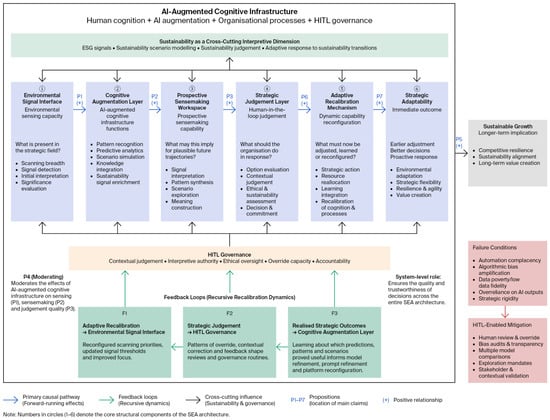
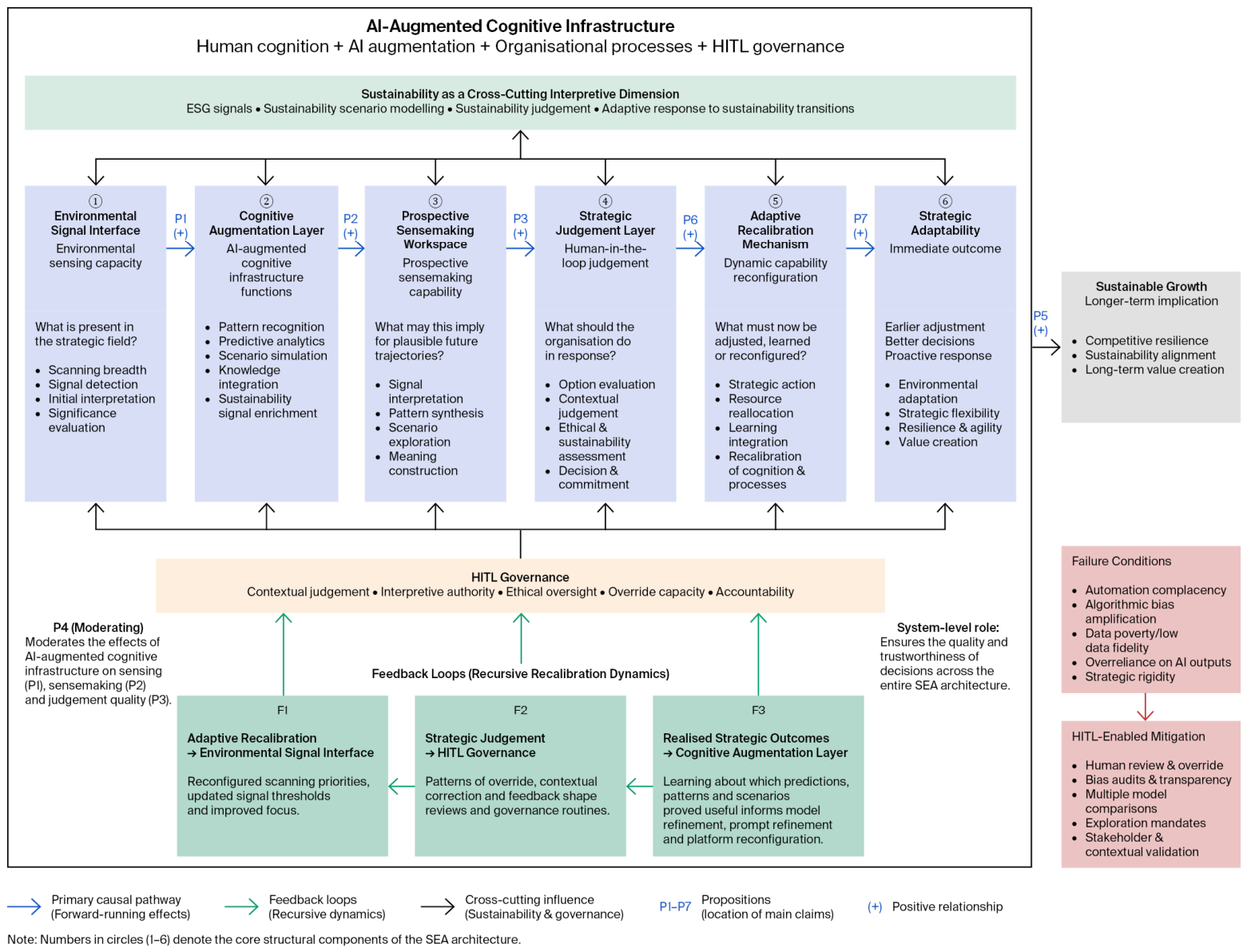

Disclaimer/Publisher’s Note: The statements, opinions and data contained in all publications are solely those of the individual author(s) and contributor(s) and not of MDPI and/or the editor(s). MDPI and/or the editor(s) disclaim responsibility for any injury to people or property resulting from any ideas, methods, instructions or products referred to in the content. |
© 2026 by the author. Licensee MDPI, Basel, Switzerland. This article is an open access article distributed under the terms and conditions of the Creative Commons Attribution (CC BY) license.