


Abstract
This study investigates the relative impact of utilizing various forms of work flexibility on mothers’ retention in full-time jobs. Drawing from a model of work reentry for new mothers and Human Ecology Theory (HET), we theorize that mothers’ flexibility needs influence retention through flexibility use and that top management support strengthens this process. Using a cross-sectional Qualtrics online survey, we recruited a diverse sample of 213 women across the United States who stayed with or left their full-time jobs after childbirth or adoption. Using relative weights and path analysis, we compared six forms of flexibility. Schedule, career, and leave flexibility emerged as stronger predictors of retention than other forms of flexibility, with schedule flexibility explaining the largest proportion of variance. For most flexibility types, the need for flexibility increased usage, which, in turn, raised the likelihood of staying in a full-time position. Strong top management work–life support further strengthened the relationship between need and use for certain forms of flexibility. We extend the work reentry framework beyond early motherhood by including mothers in later career and parenting stages. Our results also extend HET by demonstrating that top management support is a critical environmental factor influencing whether flexibility need translates into actual use by working mothers. This suggests that working mothers use flexibility to shape their work environment to meet personal needs, and top management support signals that the use of flexibility effectively addresses these needs. From a practical standpoint, organizations can use these insights to design flexibility policies that more effectively support working mothers in their full-time jobs.
1. Introduction
During the Coronavirus pandemic, 40% of women worldwide considered reducing their work hours to gain more control over their work lives (Deloitte, 2022). In the U.S., women left the workforce at twice the rate of men, with workforce participation among women with children under 18 dropping from 69.9% pre-pandemic to 67.6%. Contributing significantly to women’s departure from the workforce are the often-conflicting demands of work and caregiving responsibilities, which fall disproportionately on working women. Without meaningful policy accommodations, organizations risk eroding talent pools and exacerbating gender gaps in participation (Catalyst, 2026). These findings suggest that despite the expansion of flexibility policies in many organizations, existing approaches may not adequately address the structural and identity-based challenges facing working mothers. Leaving a full-time job, even temporarily, has significant personal costs for women. It can hinder career growth, limit earnings potential, and reduce competitiveness in the labor market (Lawter et al., 2016; Lovejoy & Stone, 2012).
With recent organizational efforts focused on increasing diversity, equity, and inclusion coupled with a growing commitment to UN Sustainable Development Goals (SDGs), organizations have enhanced their focus on attracting and retaining female workers. One means of achieving greater gender equality (SDG 5) and fostering decent work and economic opportunities (SDG 10) has been to offer work flexibility. Flexibility has become a standard organizational offering, rather than a fringe benefit, aimed at giving employees, especially working mothers, greater control over their work boundaries and increasing retention (De Smet et al., 2021; Kossek et al., 2023a; Kossek et al., 2021). However, the impact of different types of flexibility on working mothers’ decisions to remain in full-time roles remains underexplored, with limited empirical evidence on which types of flexibility are most impactful on retention. Much of the existing research focuses on the impact of paid maternity leave or a single benefit on retention, rather than examining the comparative effects of different forms of flexibility on retention (e.g., Paustian-Underdahl et al., 2023; Rossin-Slater, 2017; Kossek et al., 2023a; Masterson et al., 2021).
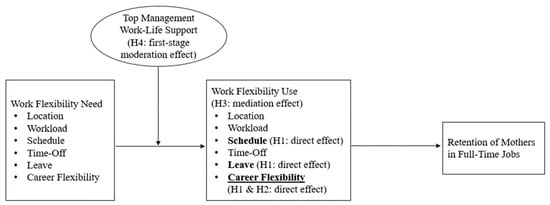
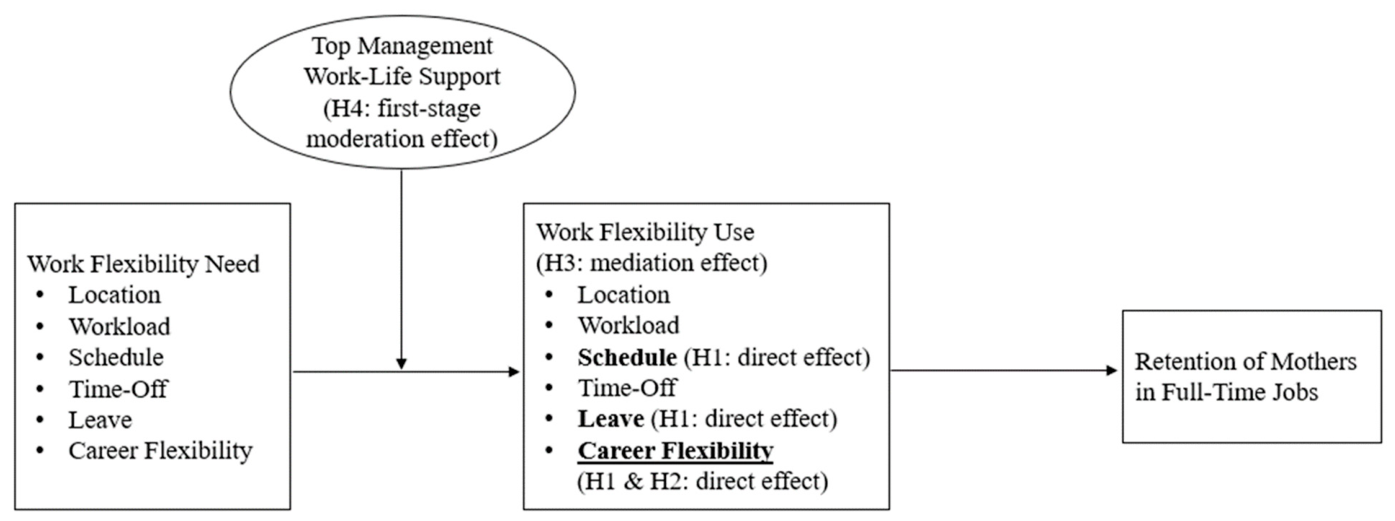
In the present study, we compare the effectiveness of six types of work flexibility offered by organizations on the retention of working mothers. Using a cross-sectional survey of 213 working mothers across the United States, relative weight analysis and path analysis were conducted to test four hypotheses related to the impact of flexibility on retention and the intervening impact of need of use and top management support of use in this relationship. See Figure 1 for a conceptual model of our study variables and hypotheses. While all forms of flexibility may contribute to retaining working mothers, we argue that the most impactful types are those that help mothers balance their dual roles as employees and parents and whose use is supported by the organization. Drawing on the concepts of identity negotiation and self-efficacy (Ladge & Greenberg, 2015), we argue that schedule flexibility, leave flexibility (i.e., maternity leave), and career flexibility are particularly critical for retaining working mothers because they support dual identities and reduce self-efficacy uncertainty. Among these, we expect career flexibility to have the strongest impact, as it allows for “multiplicity control”, the ability to manage multiple characteristics of work boundaries (Kossek et al., 2023a).
Figure 1.
Conceptual model of study variables and hypotheses. For the Work Flexibility Use variables, bolded variables (Schedule, Leave, and Career Flexibility) were hypothesized to have more impact on retention than the un-bolded variables (Location, Workload, and Time-Off Flexibility). The bolded and underlined variable (Career Flexibility) was hypothesized to be the most important for retention.
While many organizations offer flexibility benefits, research on the stigma of using work–family benefits suggests that employees who use such benefits may be perceived as less committed, less competent, or less deserving of advancement opportunities (Williams et al., 2013; Cech & Blair-Loy, 2014). These perceptions can discourage the use of flexibility benefits even if they would be helpful (Leslie et al., 2012; Rudman & Mescher, 2013). Drawing on the Human Ecology Theory (HET; Bronfenbrenner, 1979), we propose that two factors will promote the use of flexibility: (1) working mothers’ need for flexibility, as a means to enhancing their work–life balance; and (2) environmental cues within the organization that destigmatize the use of flexibility. Kossek et al. (2023b) argued that leadership at the highest levels of an organization influences employee experiences, with effects cascading down to line managers (Sikora et al., 2015). We propose that a greater need for flexibility increases the likelihood that working mothers will use these benefits, making them more likely to stay in full-time work. Additionally, we posit that perceptions of top management support serve as a key environmental cue, signaling that using flexibility is acceptable. By identifying the relative importance of multiple flexibility forms and demonstrating how leadership cues activate their use, this study moves beyond policy availability to explain when and why flexibility translates into mothers’ retention. Research has emphasized that the effectiveness of flexibility benefits depends not only on their availability but also on organizational culture, perceived stigma, and institutional context (Kelly et al., 2014; Williams et al., 2013; Chung, 2019). Our research contributes to the work–life literature in three important ways. First, we identify the types of work flexibility that best support the retention of working mothers. Second, we investigate the relationship between the need for and use of flexibility benefits, particularly as it relates to retention. And third, we investigate top management support acting as an environmental factor that facilitates the use of flexibility. From a practical perspective, our findings can help organizations tailor flexibility policies that better support women’s retention in full-time roles, reinforcing the importance of work–life-supportive practices at all management levels.
2. Literature Review
2.1. Relative Importance of Work Flexibility for Retaining Mothers
Kossek et al. (2023a) identified six types of work flexibility benefits, each linked to a specific form of boundary control. Location flexibility offers spatial control, allowing employees to choose where they work (Bailey & Kurland, 2002). Workload flexibility provides control over work volume, including options like part-time schedules or reduced hours (Kossek & Ollier-Malaterre, 2020). Schedule flexibility grants temporal control, letting employees decide when they work (Allen et al., 2013). Time-off (e.g., paid days off) and leave flexibility (e.g., maternity leave) offer continuity control, enabling employees to take time away from work when needed (Rossin-Slater, 2017). Lastly, career flexibility—a flexibility bundle—combines workload flexibility and continuity control, allowing career breaks with structured re-entry options (Kossek et al., 2023a).
While all forms of flexibility may help retain working mothers in full-time roles, they likely differ in effectiveness. To identify the most essential types, we apply Ladge and Greenberg’s (2015) framework of identity negotiation and self-efficacy uncertainty. Working mothers must continuously balance their professional and maternal identities, often facing conflicts between the two. Identity negotiation involves managing these competing roles, while self-efficacy uncertainty refers to doubts about successfully fulfilling both responsibilities (e.g., handling job demands while coordinating children’s schedules).
Supportive work policies, including flexibility options, are vital for helping mothers sustain both identities (Ladge & Greenberg, 2015). We argue that schedule flexibility (temporal control), leave flexibility (long-term continuity control), and career flexibility (bundled workload and continuity control) are particularly important. These forms help mothers navigate role conflicts and strengthen their confidence in managing both domains. In contrast, location flexibility (e.g., remote work), workload flexibility (e.g., part-time work), and time-off flexibility (e.g., paid days off) may be less critical for retention as they do not provide the same long-term stability or career continuity.
2.2. Workload Flexibility, Time-Off Flexibility, and Location Flexibility
Workload flexibility (e.g., part-time work or reduced hours) allows mothers to better manage their parenting duties (De Vos et al., 2020). However, it lacks continuity control or a clear pathway for returning to full-time work. As a result, it may not offer the long-term career benefits that career flexibility does. Career flexibility combines workload flexibility with a structured re-entry plan, ensuring a smoother return to the original work role (Kossek & Ollier-Malaterre, 2020). Additionally, part-time work can reduce visibility at work and limit opportunities for high-profile assignments, which may hinder career progression and increase turnover (e.g., Barnett & Hall, 2001; McCafferty & Hamilton, 2020; van Osch & Schaveling, 2020).
Time-off flexibility (i.e., paid days off) provides short-term relief from work for personal needs. While it may help working mothers temporarily balance their dual roles as parents and professionals, it is unlikely to have a significant impact on long-term career development or role identity negotiation.
Location flexibility, such as working from home, has been linked to increased work demands, blurred boundaries, and greater isolation, both before and after the COVID-19 pandemic (e.g., Becker et al., 2022; Ficapal-Cusí et al., 2023; Hodzic et al., 2024). For working mothers, this can lower self-efficacy in both their professional and parenting abilities. Those who work remotely more than 2.5 days a week may experience career setbacks due to reduced visibility, making it harder to sustain a strong professional identity (Gajendran & Harrison, 2007; Golden & Eddleston, 2020).
2.3. Schedule Flexibility, Leave Flexibility, and Career Flexibility
Schedule flexibility allows working mothers to control their work hours, balancing parenting duties and professional responsibilities. This flexibility helps maintain both work and motherhood roles by allowing mothers to be present for their children while also fulfilling work requirements. It can boost self-efficacy in both roles, as mothers can work during core hours and manage parenting tasks before and after school. Additionally, flexible schedules can provide opportunities for networking and mentorship, helping mothers stay engaged in their careers while managing personal responsibilities. By supporting long-term career advancement, flexible schedules foster a “future working self” (Ladge & Greenberg, 2015) and reduce work–family conflict, which is key for maintaining identity and self-efficacy (Ladge & Greenberg, 2015).
Leave flexibility, such as maternity leave, offers continuity control, enabling mothers to pause their careers during pregnancy and childbirth without leaving the workforce entirely. This allows them to manage early motherhood while maintaining a professional identity. By facilitating a return to their roles post-leave, it supports long-term career success and organizational commitment (Kossek & Ollier-Malaterre, 2020). In support of this premise, Thévenon (2011), in a cross-national study of OECD countries, found that moderate length and paid leave policies were positively related to mothers’ return to work.
Career flexibility bundles workload control with methods for career continuity, such as off-ramps and on-ramps, to accommodate personal or family needs (Perry-Smith & Blum, 2017). Unlike workload flexibility, which may not include a clear return to high-demand roles, career flexibility offers structured pathways to re-enter high-demand roles. This flexibility supports the dual identities of worker and mother, enhancing career success and organizational commitment (Bal & De Lange, 2015).
While workload, time-off, and location flexibility offer short-term support, they lack the long-term mechanisms necessary to help mothers sustain both their professional and maternal identities as effectively as schedule, leave, and career flexibility. These forms of flexibility may also be less suited to professional occupations (e.g., business, law, consulting), where full-time status and “facetime” are often tied to career progression and perceptions of commitment. In these fields, the ability to demonstrate consistent visibility is crucial for career advancement, making long-term, structured forms of flexibility—like schedule, leave, and career flexibility—more important for retention. These flexibility types provide not just immediate relief but also the stability and continuity needed to maintain a professional presence and advance within the organization (Powell & Mainiero, 1999). Indeed, empirical evidence shows that schedule control enhances job retention (Allen et al., 2013; Kelly et al., 2014). Furthermore, parental leave policies have been shown to facilitate individuals’ return to work after having a child (Ruhm, 1998; Rossin-Slater, 2017). Finally, career flexibility, having been researched in the past as off-ramps/on-ramps, has suggested that structured pathways can facilitate long-term retention (Hewlett & Luce, 2005; Stone & Lovejoy, 2004). Meanwhile, location flexibility has mixed findings, with research on telework indicating that it can lead to reduced career visibility with mixed implications for career outcomes (e.g., Golden & Eddleston, 2020). Similarly, a reduced workload, or part-time work, is often associated with reduced career progression and earning penalties (Connolly & Gregory, 2009). Thus, we predict:
Hypothesis 1.
Schedule flexibility, leave flexibility, and career flexibility will have a greater impact on retention in full-time jobs than location flexibility, time-off flexibility, and workload flexibility.
We argue that career flexibility is the most crucial form of flexibility for retaining working mothers because it provides both workload control and career continuity, ensuring sustainable workforce participation. Unlike temporary solutions (e.g., paid time off) or policies that primarily accommodate short-term caregiving (e.g., location flexibility), career flexibility offers structured pathways for long-term career success while allowing mothers to balance evolving family responsibilities.
Career flexibility is unique because it provides “multiplicity control” (Kossek et al., 2023a)—the ability to adjust multiple aspects of work boundaries, such as reducing workload temporarily while maintaining a structured re-entry path. Examples include off-ramp and on-ramp programs, which allow mothers to scale back responsibilities during life transitions without sacrificing future career growth. In contrast, options like workload flexibility (e.g., part-time work) may hinder long-term advancement by reducing visibility and access to leadership roles. Similarly, while schedule flexibility (e.g., setting one’s own work schedule) may help with daily management of work and non-work responsibilities, it does not ensure career continuity in high-demand roles.
Because career flexibility proactively integrates work and caregiving needs while maintaining professional trajectories, we expect it to have the strongest impact on retention. Therefore, we predict:
Hypothesis 2.
Among all forms of flexibility, career flexibility will be the strongest predictor of the retention of mothers in traditional jobs.
2.4. The Path to the Retention of Working Mothers
Prior research identifies adaptation to the work environment as a key factor in shaping employees’ decisions to use work–family benefits (Schabracq et al., 1994). Adaptation to the work environment is characterized through the Human Evolution Theory (HET) in which people modify their surroundings to better align with their needs (Bronfenbrenner, 1979). In the work–family context, when individuals perceive pressures from their work environments, they may adjust their work surroundings to better meet their personal needs (Schabracq et al., 1994) by using flexibility benefits. In further support of this relationship, Lee et al. (2002) found that a primary reason employees used workload reduction benefits was the need for better work–family balance. Based on this research and our earlier argument linking flexibility use to retention, we hypothesize:
Hypothesis 3.
Flexibility use mediates the relationships between flexibility need and the decision to stay in a full-time job; need will increase the likelihood of use, which in turn will increase the likelihood of staying.
2.5. Moderating Effect of Top Management Work–Life Support
Despite a strong need for work flexibility, many employees hesitate to use these benefits due to workplace barriers, including concerns about stigma, career penalties, and unsupportive organizational cultures (e.g., Perrigino et al., 2018; Tanquerel & Grau-Grau, 2020; Thompson et al., 1999). Research suggests that employees who utilize work–family benefits are sometimes perceived as less committed, less competent, or less deserving of advancement opportunities (Williams et al., 2013; Cech & Blair-Loy, 2014). These perceived career penalties can discourage employees from using flexibility arrangements even when such benefits are formally available (Leslie et al., 2012) and when they are needed. As a result, the relationship between flexibility need and flexibility use may depend heavily on organizational signals that legitimize flexibility use and reduce concerns about negative consequences. HET suggests that individuals adapt their environments to meet their personal needs, but social cues from the workplace—such as organizational and managerial support—can significantly influence these adaptations (Bronfenbrenner, 1979).
In the work–family context, supervisory support plays a key role in shaping employees’ willingness to use flexibility benefits. Supervisors often act as “gatekeepers” who influence employees’ perceptions of flexibility effectiveness, actual benefit usage, and long-term retention (Kossek et al., 2023b; French & Shockley, 2020). Therefore, the effectiveness of policies depends largely on organizational implementation, including supportive leadership and workplace norms surrounding flexibility use (Kelly et al., 2014; Kaduk et al., 2019).
However, the role of top management in supporting work–life balance is less clear. We define top management work–life support as visible actions that demonstrate a leadership commitment to helping employees balance work, family, and personal responsibilities. This includes setting policies that accommodate family needs, encouraging supervisors to support flexibility use, and reinforcing work–life balance as a cultural norm. We propose that when top management signals strong work–life support, employees—particularly working mothers—will feel more empowered to use flexibility benefits without fear of negative consequences. As a result, the impact of flexibility need on actual flexibility use should be stronger in organizations where top management actively endorses work–life balance. Thus, we hypothesize:
Hypothesis 4.
Top management work–life support moderates the relationships between flexibility need and flexibility use, such that the effect of flexibility need on flexibility use is stronger when top management support is high.
3. Methodology
3.1. Procedure and Participants
We conducted a cross-sectional online survey study as part of a larger study examining mothers’ careers in the United States (U.S.). Given that women’s flexibility needs and use vary across industries, organizations, jobs, financial situations, and parenting stages, it was important to access a heterogeneous sample. A Qualtrics panel enabled us to capture this natural variability and enhance the generalizability of our findings. We asked several prescreening questions to identify participants who met our sample criteria. First, participants included only individuals who decided to remain in full-time jobs (i.e., working >35 h per week for an organization) or who decided to leave a full-time job. We determined this with the following prescreening question: “Please indicate which of the below best describes your current work status (1 = I left a traditional career to be a full-time caregiver, 2 = I left a traditional career to work part-time (fewer than 35 h a week), 3 = I left a traditional career to start my own business, 4 = I currently work in a traditional career, 5 = none of the above).” We also provided participants with a definition of “traditional career”—a full-time job working 35 h or more a week for an organization—to help ensure they accurately answered the question. If participants responded with “None of the above,” they were deemed ineligible and the survey ended for them.
Participants who currently worked in their traditional careers were categorized as stayers, and those who left their traditional careers for any reason were categorized as leavers. Stayers were required to be working for the same organization they were employed by when they gave birth to or adopted their most recent child, to ensure the correct frame of reference when responding to the survey questions. Leavers separated from their jobs within the last five years. In order to aid recall of flexibility need and use, participants also had to meet the following criteria: they were the parent or guardian of a child who was five years old or younger and they were female.
Based on these criteria, we obtained a sample of 400 working mothers who were diverse in socioeconomic status, geography, occupation, career stage, and parenting stage. We set a quota with Qualtrics to recruit more leavers (N = 300) than stayers (N = 100) given that individuals could have left their jobs for a variety of reasons. Because our focus was on how work flexibility need and use affect mothers’ decisions to remain in their full-time jobs, we limited leavers to those who left their full-time jobs for work–family-related reasons (e.g., company would not allow working from home, company would not allow a flexible schedule). For example, individuals who left for salary-related reasons or because their work was unfulfilling were excluded from the sample. As a result, a total of 187 leavers were excluded from the sample.
The final sample (N = 213) included 100 participants currently working full-time for the same organization they worked for when they birthed or adopted their most recent child, and 113 participants who had left their full-time jobs in the past five years to become full-time caregivers (n = 50), work part-time (n = 41), or become entrepreneurs (n = 22). Most participants were white (75%) and married/living as married (76%). Their average age was 39, and 32% were responsible for elder care. The sample was diverse regarding parenting stage; the average number of children ranged from 1 to 6 (M = 2.11), and 62% had more than one child. Among those married, 80% had a spouse who worked full-time outside the home. Participants were living in various regions of the U.S. and working in a variety of industries. The income range was representative of the U.S. population, with 82% reporting a household income under $100,000 (U.S. Bureau of Labor Statistics, 2023). Most participants had a bachelor’s (40%) or master’s degree (32%). Participants who were currently in full-time jobs worked an average of 42 h per week, with a majority working in companies with fewer than 1000 employees (75%).
3.2. Measures
To measure the decision to stay in a traditional full-time job, respondents who stopped working full-time for an organization within the past five years were coded as 0 and classified as “leavers,” and those who were currently still working full-time for an organization were coded as 1 and categorized as “stayers.” When answering questions about work flexibility and work–life support, “stayers” were asked to think of their current organizations, and “leavers” were asked to think about the organization that they left.
To measure work flexibility need, respondents indicated whether they need/needed each form of flexibility in their full-time jobs (0 = no, 1 = yes). To measure work flexibility use, respondents indicated whether they use or have used each form of flexibility while in their full-time jobs (0 = no, 1 = yes). Location flexibility was measured by asking if participants needed and used a benefit that enabled them to work from home. Workload flexibility was assessed by asking if participants needed and used benefits that afforded flexibility in the hours they worked (e.g., part-time work, reduced work hours). We assessed schedule flexibility by asking if participants needed and used benefits that gave them schedule flexibility (e.g., setting their own work schedule). To measure time-off flexibility, we asked if participants needed and used policies that allowed them to take paid days off how and when they wished. We measured leave flexibility by asking if participants needed and used maternity leave. For career flexibility, we asked if participants needed and used a benefit that allowed for a customized career path where they could scale back responsibilities or exit/re-enter the workplace as needed.
To measure top management work–life support, we adapted four managerial support items from Thompson and colleagues (1999) validated work–life culture scale. The items were: “Top management accommodates/accommodated family-related needs,” “Top management encourages/encouraged supervisors to be sensitive to employees’ family and personal concerns,” “In the event of a conflict, top management is/was understanding when employees have/had to put their family first,” and “Top management is/was sympathetic toward employees’ childcare responsibilities.” Participants were asked about the messaging regarding top management’s support of work–life flexibility (1 = strongly agree to 5 = strongly disagree; α = 0.94).
3.3. Control Variables
For working mothers, several other non-work factors may impact the use of flexibility and decisions to stay in full-time jobs, including a number of children under 5 years old, marital status, spousal support, age, elder care responsibility, and income. For participants with children, the number of children under the age of 5 was measured by asking, “How many children do you have under the age of 5 in your household?” Participants indicated their marital status as 1 = married or living with a partner, 2 = single or never married, and 3 = divorced or widowed. We assessed spousal support with an 8-item scale (Parasuraman et al., 1992). A sample item is: “My spouse/partner participates in the housework and/or child-rearing activities” (1 = strongly disagree to 5 = strongly agree). Age was measured in years. For elder care responsibility, we asked participants if they were responsible for taking care of an elderly relative for at least 10 h a week (0 = no, 1 = yes). Participants indicated their approximate household income as 1 = less than $50,000, 2 = $50,000–99,000, 3 = $100,000–149,000, 4 = $150,000–199,000, 5= $200,000-$299,000, or 6 = more than $300,000.
First, we examined whether the variables were related to our outcome variables. Marital status, age, elder care, and income were significantly related to using flexibility and/or stay decisions (see Table 1). Therefore, we tested our models with and without these variables to determine their possible influences on the outcome variables. For all forms of flexibility, the odds ratios were higher when these variables were included in the models as compared to when excluded, suggesting that the models including these variables can partially correct for ‘omitted variable bias’. The error variance decreased by adding these variables to the models, as these variables were likely confounds that diluted the strength of the relationships when not included in the models. As a result, when testing our proposed models, we controlled for marital status, age, elder care responsibility, and income.
Table 1.
Descriptive statistics and correlations.
3.4. Analytical Strategy
To understand the relative influence of using each form of flexibility on retention, we conducted a relative weight analysis (RWA-Web, Tonidandel & LeBreton, 2015). RWA allows the comparison of predictors that are highly correlated with one another (Johnson, 2000). The statistical significance of the relative weights was estimated using a bootstrapping procedure.
The moderated mediation models were examined in MPLUS 8 with path analysis. Flexibility need, flexibility use, and the decision to stay were treated as binary variables and therefore tested with logistic regression using maximum likelihood estimation (MLE) and odds ratios (ORs). We utilized bias-corrected bootstrap 90% confidence intervals (Monte Carlo method) to test for OR significance using 5000 resamples (Hayes, 2009); 90% confidence intervals correspond to one-tailed hypothesis tests, which is justified in applied mediation research. ORs are positive, with OR > 1 indicating a greater likelihood of staying and OR < 1 indicating a lower likelihood of staying. Effects were considered statistically significant when the confidence interval did not include 1.
To test the rigor of our proposed models, we controlled for the direct effects of flexibility needed on stay decisions. All variables in the mediation models were binary, thus we reported the counterfactually defined indirect and direct effects (“causal effects”; Muthén & Asparouhov, 2015). For each mediation effect, the OR represents the likelihood of staying in a full-time job that would have been observed for an individual who needed (first path) and used (second path) a form of flexibility. To estimate logistic coefficients in a moderated mediation model, 20 behavioral observations are generally needed in each combination of the X (flexibility need), M (flexibility use), and Y (retention) binary variables (Peduzzi et al., 1996), which implies that there are at least 50 observations for each binary variable (Van Der Ploeg et al., 2014). All binary variables met these criteria except for time-off flexibility, which was needed by only 26 respondents. Due to this insufficient sample size, time-off flexibility was omitted from all logistic regression analyses.
Prior to testing the moderation hypotheses, top management support was mean-centered (Aiken & West, 1991). For the moderated mediation models, we analyzed ORs for the conditional counterfactually defined indirect effects between flexibility need and decisions to stay at different levels of support (i.e., −1 SD and +1 SD). The ORs represent the likelihood of staying that would have been observed for an individual who needed and used a policy at low and high levels of support. In addition to testing our hypotheses, we tested alternative mediation models to check the robustness of our mediation models (Hayes & Preacher, 2013). We also conducted post hoc mediation analyses focused on the second path of our model to better understand why flexibility use translates into decisions to stay. See the Supplemental File for more detail on these analyses.
4. Results
Table 1 presents the means, standard deviations, and correlations for the study variables. Bivariate correlations provided preliminary support for our hypotheses. For all forms of flexibility, need was positively related to use, and use was positively related to decisions to stay. Top management work–life support was positively correlated with using all forms of flexibility.
To test Hypothesis 1 and Hypothesis 2 and understand the relative importance of using each type of flexibility on the decision to stay in a traditional full-time job, we conducted RWA, which indicates the percentage of variance each form of flexibility contributes to the total variance for staying (see Table 2). The weighted linear combination of the six flexibility usage variables accounts for 37.49% of the variance in staying (R2 = 0.3749), and the use of each form of flexibility is significantly related to staying. The rescaled relative weights indicate the percentage of predicted variance in the decision to stay in a full-time organizational job attributed to each variable. Schedule flexibility use is the most important, explaining 29.83% of the predicted variance in staying, followed by career flexibility (25.84%), maternity leave (24.04%), time-off flexibility (9.56%), location flexibility (4.89%), and workload flexibility (4.89%). Thus, Hypothesis 1 was fully supported. Although Hypothesis 2 was not supported, career flexibility was the second most important form of flexibility, suggesting that flexibility bundles are generally more impactful than single forms of flexibility.
Table 2.
Relative weights analysis results for work flexibility benefits using predicting staying in a traditional full-time job.
For Hypothesis 3, we predict that flexibility use will mediate the relationships between flexibility needs and the decision to stay in a full-time job. Specifically, we expected flexibility to increase the odds of staying. Hypothesis 3 was supported (see Table 3). For all forms of flexibility, if an employee needed flexibility and used it, they were more likely to stay in a traditional full-time job. For example, working mothers who needed and used career flexibility were more than twice as likely to stay in their traditional full-time jobs than to leave. Together, these results highlight the role of flexibility use as the critical mechanism that links needing flexibility with a higher likelihood of staying in a traditional full-time job. If a needed form of flexibility is not used, the results suggest that an individual may be more likely to leave, whereas if a needed form of flexibility is used, they are more likely to stay.
Table 3.
Odds ratios and bootstrapping tests for the indirect effect of work flexibility need on staying in a traditional full-time job through flexibility use.
For Hypothesis 4, flexibility need was expected to have a stronger impact on the likelihood of flexibility use when top management support was high (vs. low), which would, in turn, increase the odds of staying (i.e., first-stage moderated mediation model). See parameter estimates for first-stage models in Table 4. The counterfactually defined indirect effects for the moderated mediated models were greater than 1 for all forms of flexibility, and the confidence intervals did not contain 1. These results suggest that the odds of flexibility need increasing the chances of staying via increased flexibility use depended on top management support, with support influencing the path from needing flexibility to using it. Given these significant interactions, we analyzed the conditional counterfactually defined indirect effects at two levels of support (+1 SD and −1 SD). Hypothesis 4 was partially supported. For location and schedule flexibility, needing flexibility increased the odds of staying via using flexibility only when top management support was strong, as predicted. For workload flexibility, maternity leave, and career flexibility, needing flexibility increased the odds of staying via using flexibility regardless of whether support was high or low; however, for maternity leave and career flexibility, the odds of staying were notably greater when support was high. These results suggest that regardless of top management support, needing these forms of flexibility translates into greater use, and, in turn, a greater likelihood of staying. However, for workload flexibility, top management did not seem to influence the likelihood of flexibility use and decisions to stay.
Table 4.
Odds ratios and bootstrapping tests for the indirect effect of work flexibility need on staying through flexibility use with top management support moderating the first path.
Table 5 summarizes the results across the RWA and logistic regression analyses. First, based on the RWA results, schedule, career, and leave flexibility as the primary predictors of retention, together accounting for nearly 80% of the explained variance in decisions to stay in a full-time job. Second, flexibility use was the mechanism for staying in a full-time position across all forms of flexibility. Third, strong top management support served as a “gatekeeper” for using schedule and location flexibility, such that it increased the likelihood of flexibility need translating into flexibility use, whereas maternity leave and career flexibility translated into staying regardless of top management support.
Table 5.
Summary of RWA Results, Indirect Effects, and Moderated Indirect Effects for Work Flexibility.
We checked the robustness of our mediation models by testing alternative mediation models with the decision to stay as the mediator (Hayes & Preacher, 2013) and found stronger support for our hypothesized process models (see Supplemental File for details). Also, to help explain why the use of flexibility translates into decisions to stay, we tested additional mediation models focused on this second path of the model and found that flexibility use was positively related to organizational commitment which, in turn, was related to a greater odds of staying in a traditional full-time job (see Supplemental File for details).
5. Discussion
5.1. Flexibility Policies and Retention
Flexibility policies play a crucial role in retaining full-time workers and have broader social and economic implications (Heikkinen et al., 2021). However, organizations lack clear guidance on how different forms of flexibility impact retention, particularly for working mothers (Kossek et al., 2023a; Masterson et al., 2021).
Our findings show that schedule, leave, and career flexibility were the most effective for retaining working mothers, which is consistent with our theorizing that such forms of flexibility may help to reduce uncertainties surrounding identity and efficacy when returning to work (Ladge & Greenberg, 2015). By enabling better planning and coordination of both personal and professional responsibilities, these forms of flexibility increase boundary control, strengthen worker and maternal identities, and bolster self-efficacy in both domains. Although career flexibility was expected to exert the strongest influence, schedule flexibility emerged as the most powerful predictor of retention. This suggests that daily boundary control may be more critical for sustained workforce attachment than episodic career adjustments particularly in contexts where role demands fluctuate daily rather than at discrete transition points. Consistent with Ladge and Greenberg’s framework for mothers’ reentry to work, the ongoing management of professional and maternal identities occurs in everyday interactions and routines rather than only at major career transition points, supporting a long-term attachment to full-time work (Ladge & Greenberg, 2015). Also, given that our sample was not limited to first-time mothers, our results extend Ladge and Greenberg’s framework beyond early motherhood, implying that identity and efficacy uncertainties remain relevant for mothers who are in later career and parenting stages. From a practical standpoint, organizations can use these insights to design flexibility policies that more effectively support working mothers in full-time roles, regardless of their parenting stage.
Conversely, workload, location, and time-off flexibility are less important for retention. While they may support maternal identity, they can weaken professional identity and role definition, leading to unintended career setbacks (e.g., McCafferty & Hamilton, 2020). Reduced boundary control and increased role blurring may limit long-term career sustainability, making these forms of flexibility less conducive to full-time workforce retention.
5.2. The Power of Flexibility Bundles
Our results highlight the effectiveness of flexibility bundles, which provide multiple mechanisms for employees to control their work role boundaries (Kossek et al., 2023a). Career flexibility, which integrates workload and continuity control, enables working mothers to adjust their career demands while maintaining a structured return path. This dual approach fosters both career progression and long-term workforce attachment, strengthening employer commitment. Thus, future research should explore the effectiveness of various flexibility bundles with regard to work environment and personal characteristics.
5.3. Flexibility Need and Use
Our results also reinforce that the need for flexibility is a key driver to actually using it, aligning with past research on how individual characteristics, such as gender and parental status, create demand for work–family benefits (Mandeville et al., 2016). In a new application of HET, we suggest that working mothers actively shape their work environments to accommodate their flexibility needs by using flexibility (Bronfenbrenner, 1979). Further, supplemental analysis suggested that organizational commitment mediates the relationship between flexibility use and retention, which helps to illuminate why the reshaping of one’s work environment—i.e., the use of work flexibility—to meet one’s needs subsequently translates into retention, which has implicates for HET. Future research should explore how often flexibility benefits must be used to meaningfully impact retention to pinpoint a threshold at which the environment must be reshaped in order to reap the intended benefits. Additionally, future research should examine whether employees experience the intended boundary control from these policies (Kossek et al., 2023a), as this may also influence the degree to which flexibility use positively impacts retention.
5.4. The Role of Top Management in Flexibility Use
Our study extends HET by demonstrating that top management support is a critical environmental factor influencing whether working mothers translate their need for flexibility into actual use. This highlights the structural role of senior leadership in legitimizing flexibility use and shaping work–life culture, suggesting that policy effectiveness depends not only on design but on visible executive endorsement. However, for workload flexibility, top management support did not influence the likelihood of flexibility use and decisions to stay, perhaps because other work and nonwork factors that were not included in our models are impacting the use of workload flexibility, such as job level and household constraints.
Another possible explanation is that although top leaders can signal that flexibility is valued, workload flexibility would require concrete adjustments at a more proximal level such as task allocation, deadlines, coworker coverage, and staffing. These types of adjustments are often negotiated at the supervisor level and may therefore depend more on one’s more proximal manager as opposed to the leader at the organizational level. In other words, if an employee has a need for workload flexibility, even if the top manager is supportive, if their immediate work group does not allocate resources to redistribute work, it may not be possible to use the benefit.
While previous research has emphasized the importance of supervisory support (see Kossek et al., 2023b), our findings suggest that top management plays a unique role in shaping an organizational culture that normalizes flexibility use. Future multi-level research should examine how co-workers, supervisors, upper management, and organizational policies collectively influence flexibility adoption and job retention. In particular, future research could examine whether proximal factors, such as supervisor support, coworker support, perceived staffing adequacy, and workload interdependence, impact the relationship between workload flexibility need and use.
5.5. Limitations and Future Directions
Despite its strengths, this study has several limitations. First, our cross-sectional, self-reported data may be susceptible to common method bias. To mitigate this risk, we followed Podsakoff et al.’s (2003) recommendations, including encouraging honest responses and temporally separating survey variables. Additionally, our dichotomous measures (need, use, and retention) were relatively objective, reducing the likelihood of inflated relationships. At the same time, our dichotomous measures of flexibility need and use may have limited our understanding of the extent to which individuals needed and used each form of work flexibility, which, in turn, may limit our understanding of whether there is a specific threshold at which need translates to use and use translates to retention. To capture this variance, future studies should measure the degree of need and the frequency of using flexibility to add more explanatory power to mothers’ retention decisions. Furthermore, we recommend measuring satisfaction with flexibility benefits as a potential moderator of each path in the model, as the extent to which a benefit meets one’s needs may influence utilization, and, likewise, may shape whether use leads to retention.
Second, our sample primarily consisted of employees from U.S.-based organizations with fewer than 1000 employees. Since our study focused on formal flexibility policies, it is possible that some participants benefited from informal flexibility arrangements, which are not legally mandated in the U.S. Future research should explore both formal and informal flexibility structures across different national contexts, especially in countries with stronger government-mandated work–life policies.
Third, participants classified as “leavers” were asked to recall their flexibility needs and use as well as their perceptions of top management support at the organization they had left, which may introduce a potential memory bias. To help reduce this concern, we restricted the sample to participants who had left their organizations within the previous five years. Also, flexibility need and use were objective yes/no measures and thus may not have been as susceptible to memory bias as compared to perceptual measures. To aid in recall, we reminded participants to think about whether they needed and used each flexibility benefit while they were employed by the organization they left after having birthed or adopted a child. When asked to indicate their extent of agreement or disagreement with the top management support items, participants were reminded again to think about the organizations they left after having birthed or adopted a child. These reminders helped provide the “leavers” with the correct frame of reference. We recognize that for some participants, a few years may have passed since they left their organizations. However, we expected participants to accurately recall their flexibility needs because birthing or adopting a child is such a significant and disruptive life event. Likewise, we expected participants to accurately recall perceptions of top management support because it was at the time of a significant life event. We also expected participants to accurately recall their use of flexibility because the use of work–family benefits typically requires employees to follow formal procedures with the organization. To further aid in recall, future research focused on “leavers” should ask participants to reconstruct this life event—that is, giving birth or adopting their most recent child while working. The event reconstruction method (ERM; Hertel & Stamov-Roßnagel, 2013) requires participants to accurately reconstruct details of past events via episodic memory traces by focusing on exactly what happened when an event occurred (Kahneman et al., 2004). ERM helps reduce memory biases by facilitating the reactivation of behaviors, thoughts, and emotions before, during, and after the event (Diener & Tay, 2014).
Finally, although we controlled several relevant individual characteristics, we did not account for organizational, or job-level factors such as industry, occupational role, or job demands. These factors may shape both access to flexibility and the ability to use it without negative consequences and thus could influence retention decisions.
6. Conclusions
This study set out to (1) identify which forms of work flexibility are most strongly associated with the retention of working mothers, (2) examine how work flexibility needs translate into retention through use, and (3) assess whether top management support facilitates the usage of work flexibility. Our findings demonstrate that not all forms of flexibility contribute equally to retention, as suspected, based on identity and efficacy uncertainties that mothers often encounter upon reentry to work (Ladge & Greenberg, 2015). Schedule flexibility emerged as the most influential predictor, followed by career and leave flexibility, suggesting that ongoing temporal control may be more critical for sustained workforce attachment than episodic adjustments. In addition, flexibility use was a key mechanism linking the need for flexibility to retention, demonstrating that policy availability alone is insufficient for understanding predictors of utilization. Finally, in line with HET, top management work-life support generally strengthened the relationship between need and use. This emphasizes the importance of leaders legitimizing the use of certain forms of work flexibility and sending organizational signals that endorse employees’ use of work flexibility. By distinguishing among forms of work flexibility, identifying flexibility use as a key mechanism, and demonstrating the facilitative role of top management support, this study provides a more integrated understanding of how work flexibility translates into the retention of working mothers.
Supplementary Materials
The following supporting information can be downloaded at: https://www.mdpi.com/article/10.3390/admsci16060287/s1.
Author Contributions
Conceptualization, J.K.A., L.L., T.R.; methodology, J.K.A., A.R.G., L.L., T.R.; formal analysis, A.R.G.; investigation, J.K.A., A.R.G., L.L., T.R., C.A.T.; data curation, A.R.G.; writing—original draft preparation, J.K.A., A.R.G., L.L., T.R., C.A.T.; writing—review and editing, J.K.A., A.R.G., L.L., T.R., C.A.T.; funding acquisition, J.K.A., L.L. All authors have read and agreed to the published version of the manuscript.
Funding
This research was funded by the Welch College of Business at Sacred Heart University.
Institutional Review Board Statement
The study was conducted in accordance with the Declaration of Helsinki, and approved by the Institutional Review Board (or Ethics Committee) of Sacred Heart University (protocol code IRB#181108A and date of approval 8 January 2019).
Informed Consent Statement
Informed consent was obtained from all subjects involved in the study.
Data Availability Statement
The raw data supporting the conclusions of this article will be made available by the authors on request.
Conflicts of Interest
The authors declare no conflict of interest.
References
- Aiken, L. S., & West, S. G. (1991). Multiple regression: Testing and interpreting interactions. Sage. [Google Scholar]
- Allen, T. D., Johnson, R. C., Kiburz, K. M., & Shockley, K. M. (2013). Work–family conflict and flexible work arrangements: Deconstructing flexibility. Personnel Psychology, 66(2), 345–376. [Google Scholar] [CrossRef] [Scilit]
- Bailey, D. E., & Kurland, N. B. (2002). A review of telework research: Findings, new directions, and lessons for the study of modern work. Journal of Organizational Behavior, 23(4), 383–400. [Google Scholar] [CrossRef] [Scilit]
- Bal, P. M., & De Lange, A. H. (2015). From flexibility in human resource management to employee engagement and perceived job performance across the lifespan: A multisample study. Journal of Occupational and Organizational Psychology, 88(1), 126–154. [Google Scholar] [CrossRef] [Scilit]
- Barnett, R. C., & Hall, D. T. (2001). How to use reduced hours to win the war for talent. Organizational Dynamics, 29(3), 192–210. [Google Scholar] [CrossRef] [Scilit]
- Becker, W. J., Belkin, L. Y., Tuskey, S. E., & Conroy, S. A. (2022). Surviving remotely: How job control and loneliness during a forced shift to remote work impacted employee work behaviors and well-being. Human Resource Management, 61(4), 449–464. [Google Scholar] [CrossRef] [Scilit]
- Bronfenbrenner, U. (1979). The ecology of human development: Experiments by nature and design. Harvard University Press. [Google Scholar]
- Catalyst. (2026, January 29). Caregiving pressures top factor pushing women out of the workforce, Catalyst finds. Catalyst. Available online: https://www.catalyst.org/about/newsroom/2026/caregiving-pressures-women-workforce (accessed on 11 May 2026).
- Cech, E. A., & Blair-Loy, M. (2014). Consequences of flexibility stigma among academic scientists and engineers. Work and Occupations, 41(1), 86–110. [Google Scholar] [CrossRef] [Scilit]
- Chung, H. (2019). National-level family policies and the access to schedule control in a European comparative perspective: Crowding out or in, and for whom? Journal of Comparative Policy Analysis: Research and Practice, 21(1), 25–41. [Google Scholar] [CrossRef] [Scilit]
- Connolly, S., & Gregory, M. (2009). The part-time pay penalty: Earnings trajectories of British women. Oxford Economic Papers, 61, i76–i97. [Google Scholar] [CrossRef] [Scilit]
- Deloitte. (2022). Women @ work: A global outlook 2022. Deloitte. Available online: https://www.deloitte.com/bd/en/issues/work/women-at-work-global-outlook-2022.html (accessed on 15 January 2024).
- De Smet, A., Dowling, B., Mugayar-Baldocchi, M., & Schaninger, B. (2021, September 8). “Great attrition” or “great attraction”? The choice is yours. McKinsey & Company. Available online: https://www.mckinsey.com/capabilities/people-and-organizational-performance/our-insights/great-attrition-or-great-attraction-the-choice-is-yours (accessed on 1 February 2024).
- De Vos, A., Van der Heijden, B. I. J. M., & Akkermans, J. (2020). Sustainable careers: Towards a conceptual model. Journal of Vocational Behavior, 117, 103196. [Google Scholar] [CrossRef] [Scilit]
- Diener, E., & Tay, L. (2014). Review of the day reconstruction method (DRM). Social Indicators Research, 116(1), 255–267. [Google Scholar] [CrossRef] [Scilit]
- Ficapal-Cusí, P., Torrent-Sellens, J., Palos-Sanchez, P., & González-González, I. (2023). The telework performance dilemma: Exploring the role of trust, social isolation and fatigue. International Journal of Manpower, 45(1), 155–168. [Google Scholar] [CrossRef] [Scilit]
- French, K. A., & Shockley, K. M. (2020). Formal and informal supports for managing work and family. Current Directions in Psychological Science, 29(2), 207–216. [Google Scholar] [CrossRef] [Scilit]
- Gajendran, R. S., & Harrison, D. A. (2007). The good, the bad, and the unknown about telecommuting: Meta-analysis of psychological mediators and individual consequences. Journal of Applied Psychology, 92(6), 1524–1541. [Google Scholar] [CrossRef] [Scilit]
- Golden, T. D., & Eddleston, K. A. (2020). Is there a price telecommuters pay? Examining the relationship between telecommuting and objective career success. Journal of Vocational Behavior, 116, 103348. [Google Scholar] [CrossRef] [Scilit]
- Hayes, A. F. (2009). Beyond Baron and Kenny: Statistical mediation analysis in the new millennium. Communication Monographs, 76(4), 408–420. [Google Scholar] [CrossRef] [Scilit]
- Hayes, A. F., & Preacher, K. J. (2013). Conditional process modeling: Using structural equation modeling to examine contingent causal processes. In G. R. Hancock, & R. O. Mueller (Eds.), Structural equation modeling: A second course (2nd ed., pp. 219–266). IAP Information Age Publishing. [Google Scholar]
- Heikkinen, S., Lämsä, A.-M., & Niemistö, C. (2021). Work–family practices and complexity of their usage: A discourse analysis towards socially responsible human resource management. Journal of Business Ethics, 171(4), 815–831. [Google Scholar] [CrossRef] [Scilit]
- Hertel, G., & Stamov-Roßnagel, C. (2013). Reconstruction methods: Using episodic memory traces to capture experiences at work efficiently. In A. B. Bakker, & K. Daniels (Eds.), A day in the life of a happy worker (pp. 100–113). Psychology Press. [Google Scholar]
- Hewlett, S. A., & Luce, C. B. (2005). Off-ramps and on-ramps: Keeping talented women on the road to success. Harvard Business School Press. [Google Scholar]
- Hodzic, S., Prem, R., Nielson, C., & Kubicek, B. (2024). When telework is a burden rather than a perk: The roles of knowledge sharing and supervisor social support in mitigating adverse effects of telework during the COVID-19 pandemic. Applied Psychology, 73(2), 599–621. [Google Scholar] [CrossRef] [Scilit]
- Johnson, J. W. (2000). A heuristic method for estimating the relative weight of predictor variables in multiple regression. Multivariate Behavioral Research, 35(1), 1–19. [Google Scholar] [CrossRef] [Scilit]
- Kaduk, A., Genadek, K., Kelly, E. L., & Moen, P. (2019). Involuntary vs. voluntary flexible work: Insights for scholars and stakeholders. Community, Work & Family, 22(4), 412–442. [Google Scholar] [CrossRef] [Scilit]
- Kahneman, D., Krueger, A. B., Schkade, D. A., Schwarz, N., & Stone, A. A. (2004). A survey method for characterizing daily life experience: The day reconstruction method. Science, 306(5702), 1776–1780. [Google Scholar] [CrossRef] [Scilit]
- Kelly, E. L., Moen, P., Oakes, J. M., Fan, W., Okechukwu, C., Davis, K. D., Hammer, L. B., Kossek, E. E., King, R. B., Hanson, G. C., Mierzwa, F., & Casper, L. M. (2014). Changing work and work-family conflict: Evidence from the work, family, and health network. American Sociological Review, 79(3), 485–516. [Google Scholar] [CrossRef] [Scilit] [PubMed]
- Kossek, E. E., & Ollier-Malaterre, A. (2020). Desperately seeking sustainable careers: Redesigning professional jobs for the collaborative crafting of reduced-load work. Journal of Vocational Behavior, 117, 103315. [Google Scholar] [CrossRef] [Scilit]
- Kossek, E. E., Perrigino, M. B., & Gounden Rock, A. (2021). From ideal workers to ideal work for all: A review integrating the careers and work–family literatures. Journal of Vocational Behavior, 126, 103504. [Google Scholar] [CrossRef] [Scilit]
- Kossek, E. E., Perrigino, M. B., & Lautsch, B. A. (2023a). Work-life flexibility policies from a boundary control and implementation perspective: A review and research framework. Journal of Management, 49(6), 2062–2108. [Google Scholar] [CrossRef] [Scilit]
- Kossek, E. E., Perrigino, M. B., Russo, M., & Morandin, G. (2023b). Missed connections between the leadership and work-life fields: Work-life supportive leadership for a dual agenda. Academy of Management Annals, 17(1), 181–217. [Google Scholar] [CrossRef] [Scilit]
- Ladge, J. J., & Greenberg, D. N. (2015). Becoming a working mother: Managing identity and efficacy uncertainties during resocialization. Human Resource Management, 54(6), 977–998. [Google Scholar] [CrossRef] [Scilit]
- Lawter, L., Rua, T., & Andreassi, J. (2016). The glass cage: The gender pay gap and self-employment in the United States. New England Journal of Entrepreneurship, 19(1), 24–39. [Google Scholar] [CrossRef] [Scilit]
- Lee, M. D., MacDermid, S. M., & Buck, M. L. (2002). Reduced-load work arrangements: Response to stress or quest for integrity of functioning? In D. L. Nelson, & R. J. Burke (Eds.), Gender, work stress, and health (pp. 169–190). American Psychological Association. [Google Scholar] [CrossRef] [Scilit]
- Leslie, L. M., Manchester, C. F., Park, T. Y., & Mehng, S. A. (2012). Flexible work practices: A source of career premiums or penalties? Academy of Management Journal, 55(6), 1407–1428. [Google Scholar] [CrossRef] [Scilit]
- Lovejoy, M., & Stone, P. (2012). Opting back in: The influence of time at home on professional women’s career redirection after opting out. Gender, Work & Organization, 19(6), 631–653. [Google Scholar] [CrossRef] [Scilit]
- Mandeville, A., Halbesleben, J., & Whitman, M. (2016). Misalignment and misperception in preferences to utilize family-friendly benefits: Implications for benefit utilization and work-family conflict. Personnel Psychology, 69(4), 895–929. [Google Scholar] [CrossRef] [Scilit]
- Masterson, C., Sugiyama, K., & Ladge, J. (2021). The value of 21st century work-family supports: Review and cross-level path forward. Journal of Organizational Behavior, 42(2), 118–138. [Google Scholar] [CrossRef] [Scilit]
- McCafferty, T., & Hamilton, J. (2020). Reducing voluntary turnover through career development: Strategic HRD research proposal. International Journal of Business and Management Research, 8(4), 137–142. [Google Scholar] [CrossRef] [Scilit]
- Muthén, B., & Asparouhov, T. (2015). Causal effects in mediation modeling: An introduction with applications to latent variables. Structural Equation Modeling: A Multidisciplinary Journal, 22(1), 12–23. [Google Scholar] [CrossRef] [Scilit]
- Parasuraman, S., Greenhaus, J. H., & Granrose, C. S. (1992). Role stressors, social support, and well-being among two-career couples. Journal of Organizational Behavior, 13(4), 339–356. [Google Scholar] [CrossRef] [Scilit]
- Paustian-Underdahl, S. C., Little, L. M., Mandeville, A. M., Hinojosa, A. S., & Keyes, A. (2023). Examining the role of maternity benefit comparisons and pregnancy discrimination in women’s turnover decisions. Personnel Psychology, 77, 819–846. [Google Scholar] [CrossRef] [Scilit]
- Peduzzi, P., Concato, J., Kemper, E., Holford, T. R., & Feinstein, A. R. (1996). A simulation study of the number of events per variable in logistic regression analysis. Journal of Clinical Epidemiology, 49(12), 1373–1379. [Google Scholar] [CrossRef] [Scilit] [PubMed]
- Perrigino, M. B., Dunford, B. B., & Wilson, K. S. (2018). Work-family backlash: The “dark side” of work-life balance policies. Academy of Management Annals, 12(2), 600–630. [Google Scholar] [CrossRef] [Scilit]
- Perry-Smith, J. E., & Blum, T. C. (2017). Work-family human resource bundles and perceived organizational performance. Academy of Management Journal, 43(6), 1107–1117. [Google Scholar] [CrossRef] [Scilit]
- Podsakoff, P. M., MacKenzie, S. B., Lee, J.-Y., & Podsakoff, N. P. (2003). Common method biases in behavioral research: A critical review of the literature and recommended remedies. Journal of Applied Psychology, 88(5), 879–903. [Google Scholar] [CrossRef] [Scilit] [PubMed]
- Powell, G. N., & Mainiero, L. A. (1999). Managerial decision making regarding alternative work arrangements. Journal of Occupational and Organizational Psychology, 72(1), 41–56. [Google Scholar] [CrossRef] [Scilit]
- Rossin-Slater, M. (2017). Maternity and family leave policy. NBER Working Paper No. 23069. National Bureau of Economic Research. [Google Scholar] [CrossRef] [Scilit]
- Rudman, L. A., & Mescher, K. (2013). Penalizing men who request a family leave: Is flexibility stigma a femininity stigma? Journal of Social Issues, 69(2), 322–340. [Google Scholar] [CrossRef] [Scilit]
- Ruhm, C. J. (1998). The economic consequences of parental leave mandates: Lessons from Europe. The Quarterly Journal of Economics, 113(1), 285–317. [Google Scholar] [CrossRef] [Scilit]
- Schabracq, M., Cooper, C. L., & Winnubst, J. A. M. (1994). Work and health psychology: Toward a theoretical framework. In M. Schabracq, C. L. Cooper, & J. A. M. Winnubst (Eds.), Handbook of work and health psychology (pp. 3–29). John Wiley. [Google Scholar]
- Sikora, D. M., Ferris, G. R., & Van Iddekinge, C. H. (2015). Line manager implementation perceptions as a mediator of relations between high-performance work practices and employee outcomes. Journal of Applied Psychology, 100(6), 1908–1918. [Google Scholar] [CrossRef] [Scilit]
- Stone, P., & Lovejoy, M. (2004). Fast-track women and the “choice” to stay home. The Annals of the American Academy of Political and Social Science, 596(1), 62–83. [Google Scholar] [CrossRef] [Scilit]
- Tanquerel, S., & Grau-Grau, M. (2020). Unmasking work-family balance barriers and strategies among working fathers in the workplace. Organization, 27(5), 680–700. [Google Scholar] [CrossRef] [Scilit]
- Thévenon, O. (2011). Family policies in OECD countries: A comparative analysis. Population and Development Review, 37(1), 57–87. [Google Scholar] [CrossRef] [Scilit]
- Thompson, C. A., Beauvais, L. L., & Lyness, K. S. (1999). When work-family benefits are not enough: The influence of work-family culture on benefit utilization, organizational attachment, and work-family conflict. Journal of Vocational Behavior, 54(3), 392–415. [Google Scholar] [CrossRef] [Scilit]
- Tonidandel, S., & LeBreton, J. M. (2015). RWA Web: A free, comprehensive, web-based, and user-friendly tool for relative weight analyses. Journal of Business and Psychology, 30(2), 207–216. [Google Scholar] [CrossRef] [Scilit]
- U.S. Bureau of Labor Statistics. (2023). Available online: http://bls.gov/news.release/wkyeng.t01.htm (accessed on 18 May 2026).
- Van Der Ploeg, T., Austin, P. C., & Steyerberg, E. W. (2014). Modern modelling techniques are data hungry: A simulation study for predicting dichotomous endpoints. BMC Medical Research Methodology, 14(1), 137. [Google Scholar] [CrossRef] [Scilit]
- van Osch, Y., & Schaveling, J. (2020). The effects of part-time employment and gender on organizational career growth. Journal of Career Development, 47(3), 328–343. [Google Scholar] [CrossRef] [Scilit]
- Williams, J. C., Blair-Loy, M., & Berdahl, J. L. (2013). Cultural schemas, social class, and the flexibility stigma. Journal of Social Issues, 69(2), 209–234. [Google Scholar] [CrossRef] [Scilit]

Disclaimer/Publisher’s Note: The statements, opinions and data contained in all publications are solely those of the individual author(s) and contributor(s) and not of MDPI and/or the editor(s). MDPI and/or the editor(s) disclaim responsibility for any injury to people or property resulting from any ideas, methods, instructions or products referred to in the content. |
© 2026 by the authors. Licensee MDPI, Basel, Switzerland. This article is an open access article distributed under the terms and conditions of the Creative Commons Attribution (CC BY) license.