


Abstract
Urban and rural green spaces can accumulate potentially toxic elements in topsoil and support wild mushrooms that concentrate metals. This study quantified Cd, Cu, and Zn in topsoil and naturally growing wild mushrooms from Leicestershire, UK, and evaluated spatial patterns, species- and tissue-specific accumulation, apparent soil-to-fungus transfer, and a screening dietary exposure scenario. Samples were acid-digested and analysed by ICP-MS; left-censored data were treated using R/NADA, and apparent bioconcentration factors (BCFs) were calculated from matched quadrant-level medians. Urban topsoils showed higher median Cu and Zn than rural topsoils, whereas Cd medians were similar; the SW quadrant had the highest topsoil medians for all three metals. Mushroom patterns were more heterogeneous: SW had the highest median Cd (3.15 mg kg−1 dw), while NW had the highest median Cu and Zn, particularly Zn (301.29 mg kg−1 dw). Agaricus bitorquis caps showed the highest median Cd and Cu among retained taxa, whereas Mycena citrinomarginata showed the highest median Zn. Cd showed the strongest apparent transfer, with a pooled urban BCF of 4.66. Median Cd concentrations were below the approximate dry-weight equivalent of the European maximum level for wild fungi, although some A. bitorquis caps exceeded it. Occasional adult-consumption estimates remained below selected health-based guidance values. Wild mushrooms provide useful complementary biomonitors of biologically expressed metal availability in public green spaces.
1. Introduction
Soil contamination by potentially toxic elements (PTEs) remains a major environmental and public-health concern because metals and metalloids are persistent, non-biodegradable, and able to accumulate in surface soils over long periods of time [1,2]. This issue is now increasingly framed within the broader concept of soil health, as contaminated soils can compromise ecosystem services, food security, biodiversity, groundwater quality, and human well-being [1,3]. Unlike many organic pollutants, PTEs are not destroyed by biological or chemical degradation processes; instead, they persist in soil while undergoing changes in speciation, mobility, and biological availability. Their retention and transfer to biota are controlled by interacting soil properties, including pH, organic matter content, texture, redox conditions, microbial activity, and the presence of reactive mineral phases such as iron and manganese oxides [4,5]. This is particularly relevant in urban and peri-urban environments, where topsoil can act as a long-term sink for contaminants derived from traffic emissions, industrial legacy, atmospheric deposition, construction materials, waste disposal, fertilisers, pesticides, sewage sludge, and other diffuse anthropogenic inputs [1,4]. Consequently, contemporary soil contamination assessment increasingly requires approaches that go beyond total metal concentrations and consider the extent to which PTEs are biologically available to plants, fungi, soil organisms, and human receptors.
Urban and rural green spaces provide important ecosystem services, including recreation, biodiversity support, climate regulation, and opportunities for contact with nature. However, these environments may also represent zones of interaction between humans, soils, vegetation, fungi, and environmental contaminants. Urban parks and open green spaces are of particular interest because they are frequently located near roads, historical industrial areas, or densely populated neighbourhoods, where metal inputs may be spatially heterogeneous. Recent work has shown that metal contamination in urban and recreational soils can be strongly influenced by traffic-related emissions and may vary markedly between and within green spaces, with elevated metal concentrations often occurring near roads or high-traffic corridors [6,7,8]. In the United Kingdom (UK), a national assessment of urban horticultural soils demonstrated that metals and metalloids [metal(loid)s] are widespread in urban soils, although total concentrations do not necessarily reflect the fraction that is bioavailable to crops or other biological receptors [9]. This distinction is particularly relevant for urban green spaces, where soil properties, land-use history, and management can strongly influence metal retention, mobility and biological availability. For example, parkland and road-verge soils in Liverpool showed considerable heterogeneity in pH, carbon storage and metal(loid) concentrations, with copper (Cu) and lead (Pb) associated with organic matter and water-extractable organic carbon, whereas cadmium (Cd) and zinc (Zn) appeared to be more strongly dependent on soil pH [10]. Similarly, work in Manchester showed that formally and informally managed green spaces differed in soil carbon storage and metal mobility, with leaf litter-associated acidification in orchard soils increasing the mobility of Pb and Zn [11]. Studies in Bristol and the London region further indicate that urban soil metal concentrations may reflect both geogenic controls and anthropogenic inputs, including local bedrock weathering, historical industrial activity, atmospheric deposition and traffic-related sources [12,13,14]. Together, these findings support the need for integrated approaches that combine total soil concentrations with biological matrices capable of reflecting local metal availability.
Information from the UK remains relatively limited, particularly for studies that directly combine soil and fungal matrices from the same recreational green spaces. A multi-element survey of wild edible fungi and blackberries collected across the UK reported measurable concentrations of several metals in wild fungi, including Cd, Cu, Pb, and Zn, and confirmed that fungi can contain higher concentrations of several elements than co-occurring wild plant foods [15]. However, although soil samples were collected and stored in that survey, they were not analysed, meaning that soil-to-fungus transfer could not be evaluated directly [15]. In parallel, UK soil studies have documented Cd, Cu, Pb, and Zn in roadside, urban, parkland, allotment, horticultural, and brownfield settings, including roadside soils from Northern England [16], urban horticultural soils from ten UK cities [9], parkland and road-verge soils in Liverpool [10], managed green spaces in Manchester [11], parks and allotments in Bristol [13], and national soil datasets generated through the UK Soil and Herbage Pollutant Survey [17]. These studies show that metal concentrations in UK urban soils are spatially heterogeneous and influenced by land-use history, traffic, industrial legacy, parent material, pH, and organic matter; however, they generally focus on soils rather than paired soil–fungus transfer.
European evidence further supports the relevance of wild mushrooms as biological matrices for metal accumulation. A bibliometric review of 200 European publications published between 2001 and 2016 showed that Cd, Cu, Pb, and Zn were among the most frequently investigated elements in mushrooms, with research dominated by studies from Turkey, Poland, Spain, and the Czech Republic rather than the UK [18]. Similarly, a systematic review and meta-analysis of edible mushrooms reported pooled concentrations of Zn, Cu, and Cd and highlighted that metal accumulation depends on both environmental variables, such as soil pH, organic matter, and soil metal concentrations, and fungal traits, including species, mycelial development, and fruiting-body morphology [19]. Paired soil–mushroom studies from Europe also show that Cu and Zn concentrations in fruiting bodies can correlate with their concentrations in soil, although the magnitude of accumulation remains species-specific [20]. Therefore, although the wider European literature confirms the capacity of mushrooms to accumulate metals, there remains a clear UK-specific gap for studies linking Cd, Cu, and Zn concentrations in topsoil with their accumulation in naturally growing wild mushrooms collected across urban and rural recreational green spaces. The present study addresses this gap using paired topsoil and wild mushroom samples from Leicestershire, UK.
Cadmium, Cu, and Zn are particularly informative elements for environmental monitoring because they combine toxicological relevance, anthropogenic sensitivity, and contrasting biological roles. Cd is a non-essential toxic metal of concern in environmental and food-chain exposure assessment, whereas Cu and Zn are essential micronutrients that can become toxic when present at elevated concentrations [1,4]. These three metals are also relevant to urban and semi-rural landscapes because they may be associated with road traffic, tyre and brake wear, metal processing, fuel combustion, waste inputs, fertiliser and pesticide use, and historical land-use legacies [4,7,16]. However, their behaviour in soil–biota systems is not governed by total soil concentration alone. Metal speciation, sorption and desorption processes, soil solution chemistry, organic matter, pH, and organism-specific accumulation mechanisms can all influence the fraction that is biologically available for uptake [4].
Wild mushrooms are well suited to this type of assessment because their mycelia explore the soil or substrate in which they grow, while their fruiting bodies can accumulate metals to concentrations that differ substantially from those measured in surrounding soils [19,21,22]. This makes them useful complementary biomonitors of local contamination and soil-to-biota transfer while also raising food-safety considerations where edible species are foraged and consumed. Metal accumulation in mushrooms is strongly element- and species-dependent. Previous studies have reported substantial interspecific differences in the accumulation of Cd, Cu, Zn, and other elements, reflecting both environmental factors, such as soil chemistry and metal availability, and fungal traits, including species identity, mycelial development, fruiting-body morphology, physiology, and metal-tolerance mechanisms [21,22,23,24].
Across Europe, paired soil–mushroom studies have demonstrated that Cd, Cu, and Zn can be transferred from soils or forest substrates to wild mushrooms, although the magnitude of transfer differs between elements, species, and sites [23,25,26,27,28,29,30]. These studies indicate that Cd is often efficiently bioconcentrated in wild mushrooms, whereas Cu and Zn may show more variable accumulation patterns because of their essential biological roles and tighter physiological regulation. Therefore, paired soil–fungus datasets are particularly valuable for distinguishing between total soil contamination and biologically expressed metal availability.
Despite this growing literature, integrated soil–fungus studies in public green spaces remain comparatively limited, particularly in the UK. Much of the available evidence has focused on forest ecosystems, mining-impacted areas, sludge-amended soils, marketable mushrooms, or dietary risk assessment, whereas fewer studies have combined topsoil and naturally growing wild mushrooms collected across urban and rural recreational spaces. This represents an important knowledge gap because parks and green spaces can receive diffuse metal inputs while also supporting fungal fruiting bodies that may provide a sensitive indication of local metal availability. Such combined datasets are especially useful for distinguishing between soil contamination, biological accumulation, and biomonitoring value.
Leicestershire provides a relevant case study area for this type of assessment because it includes urban parks, open green spaces, and surrounding rural sites with varying degrees of anthropogenic influence. The present study, therefore, investigated the occurrence, spatial distribution, and area-level soil-to-fungus transfer of Cd, Cu, and Zn in topsoil and naturally growing wild mushrooms collected across urban and rural green spaces in Leicestershire, UK. Specifically, this work aimed to: (i) quantify Cd, Cu, and Zn concentrations in topsoil and wild mushrooms; (ii) compare their spatial distribution across urban quadrants and rural locations; (iii) assess metal accumulation in different wild mushroom species; and (iv) evaluate soil-to-fungus transfer using bioconcentration factors. By focusing on three environmentally relevant metals with contrasting biological behaviour, this study provides evidence to support the use of wild mushrooms as complementary biomonitors of local metal availability in anthropogenically influenced green spaces.
2. Materials and Methods
2.1. Study Area and Sampling Design
Leicestershire is located in the East Midlands, UK, and includes a mosaic of densely urbanised areas, smaller towns, agricultural land, rural parks, and semi-natural green spaces. Leicester is the main urban centre of the county, located approximately at 52.6333° N, 1.1333° W, and constitutes a separate city and unitary authority area within the wider Leicestershire geographical context. According to the 2021 Census, Leicester had a population of approximately 368,600 inhabitants, increasing from around 329,800 in 2011 [31]. Leicestershire covers approximately 2156 km2 and includes both urban and rural environments, while Leicester city occupies a much smaller and more densely populated urban area. The county contains numerous public parks, nature reserves, and open green spaces that are regularly used for recreation, dog walking, angling, and other outdoor activities.
For the purposes of this study, “Leicester” refers to the urban city area where the urban parks and open green spaces were sampled, whereas “Leicestershire” refers to the wider county context, including rural green spaces sampled outside the urban boundary. The A563 Leicester ring road was used as the operational boundary distinguishing the urban Leicester sampling area from surrounding rural Leicestershire sites. Urban sampling sites were assigned to four geographical sectors of Leicester: northwest, northeast, southwest, and southeast. Rural sampling locations were considered separately to allow comparison between urban and rural green-space environments.
Leicester and Leicestershire provide a relevant setting for assessing Cd, Cu, and Zn in green-space topsoils and wild mushrooms because the area combines high urban population density, extensive public use of parks and open spaces, major road networks, waterways, rural catchments, and a long agricultural and industrial legacy. Historically, Leicester and the wider county have been associated with manufacturing, textiles, footwear production, engineering, metal working, coal mining, quarrying, and brick manufacture, all of which may have contributed to diffuse and spatially heterogeneous metal inputs to surface soils.
Permission to access and sample the selected public open spaces was obtained from Leicester City Council before fieldwork. The Council’s Parks Department approved access to the proposed sites, and the Nature Conservation Officer provided maps and site-specific background information to support the selection of suitable sampling areas. This local information identified several potential environmental pressures relevant to the interpretation of the dataset, including road runoff, sediment accumulation, upstream industrial influence, dog fouling, bird feeding, litter accumulation, canal and brook inputs, car park runoff, and rural catchment-derived sediments. These observations were used to guide site selection and field logistics but were not treated as analytical evidence of contamination.
This article reports Cd, Cu, and Zn concentrations from a broader PhD environmental biomonitoring programme that characterised eleven metal(loid)s in topsoil and naturally growing wild mushrooms across Leicestershire [32]. The present manuscript was deliberately restricted to Cd, Cu, and Zn to maintain a focused soil–fungus transfer framework. These three elements were selected because they combine toxicological relevance, contrasting biological roles, and sufficient paired topsoil–mushroom coverage for spatial, species-level, and apparent transfer interpretation. Other environmentally relevant elements measured within the wider programme, including arsenic, lead, and nickel, were not included in the present focused analysis because their interpretation would require additional regulatory, toxicological and element-specific frameworks, substantially broadening the scope of the article.
2.2. Topsoil Collection and Preparation
Topsoil samples were collected between May 2017 and March 2018 as part of the broader Leicestershire environmental sampling programme. A total of 18 urban parks and open green spaces across Leicester city and 8 rural green spaces across Leicestershire were sampled (Figure 1). In each urban park, 25 surface topsoil subsamples were collected following a fixed sampling pattern, with the first sampling point recorded by Global Positioning System (GPS) and the remaining points collected at 2 m intervals. In each rural location, 50 surface topsoil subsamples were collected using a randomised approach, and GPS coordinates were recorded for each sampling point using a handheld GPS device.
Figure 1.
Sampling locations in Leicester city and Leicestershire, UK.
Surface topsoil was collected from the upper 0–5 cm layer using a clean plastic shovel, targeting areas sparsely covered by vegetation and exposed to atmospheric deposition. Samples were placed in sealed polypropylene bags, labelled, and transported to the laboratory. Sampling tools were cleaned between collections to minimise cross-contamination.
In the laboratory, samples were placed on fresh blotting paper in open plastic trays and air-dried at room temperature for two weeks, away from open windows to minimise contamination by airborne dust or particles. Dried samples were mechanically disaggregated, sieved through a 2 mm stainless-steel mesh to remove coarse material, stones, and other debris, and stored in sealed polypropylene bags at room temperature until further processing. The analysed topsoil fraction, therefore, corresponded to the <2 mm fine-earth fraction, while stones, coarse fragments, and other material retained on the sieve were discarded. Particle-size distribution within this <2 mm fraction was characterised separately through soil texture analysis, as described in Section 2.7.
Topsoil sites (n = 26) and wild mushroom collection sites (n = 13) are shown using separate symbols. Symbols represent sampling sites or site-level locations, not individual analytical samples. For topsoil, plotted locations correspond to the sampled parks, nature reserves, or rural green spaces from which field subsamples were collected and subsequently combined into area-level composites. For wild mushrooms, plotted locations represent the parks or collection areas where fruiting bodies were recorded. The dashed lines provide an approximate visual guide to the urban quadrant structure used in the study (NW, NE, SW, and SE). The shaded outer area represents the wider rural Leicestershire context, whereas the central unshaded area indicates the approximate urban Leicester study area. Selected site names are labelled to aid interpretation.
For each park or rural area, the corresponding topsoil subsamples were pooled in pre-cleaned capped plastic bottles and homogenised using a motorised rotating mixer. The resulting homogenised area-level composites were used for metal determination, soil texture analysis, and physicochemical characterisation. The field sampling design generated 26 area-level topsoil composites: 18 from urban parks and open green spaces and 8 from rural Leicestershire sites. From each homogenised composite, separate laboratory aliquots were obtained and independently processed for the analytical determinations, including metal concentrations, soil texture, and physicochemical parameters. These aliquots were treated as laboratory/subsampling replicates to assess within-composite variability and analytical precision, rather than as independent field sampling locations.
The final statistical dataset comprised 102 analytical topsoil observations derived from these processed composite materials and their associated analytical replicates. Therefore, the topsoil results are interpreted as area-level summaries of homogenised composite material, rather than as estimates based on independent point-level field samples.
2.3. Wild Mushroom Sampling, Labelling, Species Identification, and Preparation
Wild mushroom fruiting bodies were collected between September and November 2019 from selected urban green spaces in Leicester and from Bradgate Park, which represented the rural public-park mushroom sampling site within the wider Leicestershire study area (Figure 1). Unlike the topsoil survey, which included multiple rural Leicestershire sites, the rural mushroom dataset should be interpreted as a Bradgate Park subset rather than as a pooled rural mushroom dataset. Collections were performed during dry weather, with ambient temperatures ranging from approximately 8 °C to 17 °C. Fruiting bodies were visually located across each park or green space and collected opportunistically where available. The geographical position of each collection point was recorded using a handheld GPS device. Specimens were collected using nitrile gloves to minimise external contamination and to avoid direct contact with potentially toxic or inedible species. Where possible, whole fruiting bodies were collected by gently removing the stipe from the topsoil. Each specimen was placed in a labelled sealed polypropylene bag, transported to the laboratory, and processed individually.
In the laboratory, fruiting bodies were manually cleaned to remove insects, adherent topsoil particles, and visible debris. Samples were washed with tap water, rinsed with deionised water, and finally rinsed with Milli-Q ultrapure water (Milli-Q® Direct 8, Merck Millipore, Darmstadt, Germany; resistivity 18.2 MΩcm). Where sufficient biomass was available, mushroom specimens were separated into caps and stipes before drying to enable tissue-specific evaluation of metal accumulation, following approaches commonly used in mushroom trace-element studies [33]. When sample mass was limited, whole fruiting bodies were processed to prioritise species-level and site-level comparisons.
Cleaned mushroom samples were oven-dried at 70–80 °C for 24 h, following previously reported procedures for elemental analysis of mushroom matrices [34]. Dried samples were cryogenically homogenised with liquid nitrogen using a ceramic mortar and pestle to obtain a fine, uniform powder, as this approach facilitates complete grinding of dried biological material and reduces sample heating during homogenisation [35]. The powdered material was sieved through a 200-mesh sieve, thoroughly homogenised, and stored in pre-cleaned polyethylene bags or capped polypropylene tubes until digestion, following established procedures for environmental biomonitoring matrices [36]. All reusable equipment was cleaned between samples using 5% v/v nitric acid, followed by thorough rinsing with deionised water and Milli-Q ultrapure water, to minimise cross-contamination.
Mushroom identification was initially based on macroscopic characteristics and subsequently confirmed by DNA barcoding. Genomic DNA was extracted from approximately 100 mg of frozen, homogenised mushroom material using the DNeasy Plant Mini Kit® (Qiagen Inc., Germantown, MD, USA), following the manufacturer’s instructions. The internal transcribed spacer region of fungal ribosomal DNA was amplified using ITS1/ITS4 primers, as this region is widely used for fungal identification. Amplified products were purified and sequenced, and the resulting sequences were compared with reference sequences to confirm species identity, following previously described molecular methods [37].
For the present manuscript, the species-level assessment was restricted to Agaricus bitorquis, Panaeolus foenisecii, Marasmius oreades, Coprinopsis atramentaria, and Mycena citrinomarginata because these taxa provided retained analytical subsets with sufficient replicated material and analytical coverage for meaningful comparison. These taxa were collected from contrasting green-space settings across Leicester and Leicestershire. A. bitorquis was collected from the grass verge adjacent to St Augustine Road, within the NW urban location group and close to Leicester city centre. P. foenisecii was represented by samples from Abbey Park and Braunstone Park, corresponding to the NE and SW urban groups, respectively. M. oreades was collected from Jesse Jackson Park, within the NE urban group, whereas M. citrinomarginata was collected from Victoria Park, within the SE urban group. The retained C. atramentaria subset was collected from Bradgate Park, which was classified as a rural public-park site within the NW Leicestershire location group. Coprinopsis atramentaria was previously known as Coprinus atramentarius and may appear under the older name in historical records.
The number of samples available for the retained analytical subsets differed between taxa and sites. The species-level dataset included 22 A. bitorquis cap samples from St Augustine Road, 16 P. foenisecii samples from Abbey Park and Braunstone Park, 4 M. oreades samples from Jesse Jackson Park, 6 C. atramentaria samples from Bradgate Park, and 22 M. citrinomarginata samples from Victoria Park. Within the P. foenisecii subset, 11 samples were collected from Abbey Park and 5 from Braunstone Park, allowing a supplementary park-level comparison within this species.
The Bradgate Park dataset also included additional tissue-specific records, namely, three Macrolepiota procera stem samples and four tissue-separated C. atramentaria cap or stem samples (Table S2). These records were retained for traceability but were not pooled with the retained C. atramentaria subset because they represented either a different species with only stem material available or tissue-separated records not directly comparable with the retained subset. Therefore, the Bradgate Park C. atramentaria results should not be interpreted as representing all wild mushrooms collected from Bradgate Park or all rural mushrooms from Leicestershire.
2.4. Mushroom Mineralisation and Elemental Analysis
Dried, homogenised mushroom samples were mineralised before inductively coupled plasma mass spectrometry (ICP-MS) analysis using a conventional closed-vessel acid digestion procedure in pre-cleaned Teflon digestion vessels, rather than microwave-assisted digestion. Where sufficient material was available, approximately 0.500 g of dry mushroom powder was accurately weighed into pre-cleaned Teflon digestion vessels. Samples were digested using concentrated nitric acid (Suprapur®, Merck, Darmstadt, Germany) and hydrogen peroxide (Suprapur®, Merck, Darmstadt, Germany). This procedure was based on previously applied Teflon-vessel acid digestion protocols for trace-element determination in environmental and biological matrices, with the inclusion of hydrogen peroxide to improve oxidation of the organic mushroom matrix [38]. After cooling, the resulting digestates were filtered through Whatman™ Grade 42 ashless quantitative filter paper (Cytiva, Marlborough, MA, USA) and made up to a final volume of 25 mL with Milli-Q ultrapure water. Before ICP-MS analysis, an aliquot of each digest was passed through a 0.45 µm PTFE syringe filter (Agilent Technologies, Cheadle, Cheshire, UK) as a precautionary step to remove any residual fine particulate material and protect the sample introduction system. Thus, the first filtration step corresponded to post-digestion clarification and volume preparation, whereas the second filtration step was an instrumental precaution immediately before ICP-MS analysis.
Cd, Cu, and Zn concentrations were determined by ICP-MS using an Agilent 7900 ICP-MS system with integrated autosampler (Agilent Technologies, Santa Clara, CA, USA) at De Montfort University, Leicester, UK. The monitored isotopes were 111Cd, 65Cu, and 66Zn. Multi-element calibration standards were prepared from certified stock solutions (TraceCERT® solutions; Merck, Darmstadt, Germany), and calibration curves were accepted when coefficients of determination were >0.99. Samples, procedural blanks, and certified reference materials were analysed under the same instrumental conditions.
2.5. Topsoil Mineralisation and Elemental Analysis
Homogenised topsoil composite samples were mineralised using microwave-assisted acid digestion at the Instituto Madrileño de Investigación y Desarrollo Rural, Agrario y Alimentario (IMIDRA), Madrid, Spain. Briefly, 0.500 g of dried homogenised topsoil was digested with 6 mL of nitric acid, 69%, and 2 mL of hydrochloric acid, 37% (Suprapur®, Merck, Darmstadt, Germany), using a Multiwave GO microwave digestion system (Anton Paar GmbH, Graz, Austria), following the manufacturer’s operating instructions. This acid digestion was selected to determine the environmentally relevant acid-extractable, or pseudo-total, Cd, Cu, and Zn fraction in the <2 mm topsoil material. Hydrofluoric acid was not used because complete dissolution of refractory silicate minerals was not required for the objectives of this study, which focused on environmental distribution, mushroom accumulation, and apparent soil-to-fungus transfer. Therefore, the topsoil values should not be interpreted as complete geochemical totals including silicate-bound residues. After digestion and cooling, samples were filtered through Whatman™ Grade 42 ashless quantitative filter paper (Cytiva, Marlborough, MA, USA) and made up to a final volume of 50 mL with Milli-Q ultrapure water.
Cd, Cu, and Zn concentrations were also determined by ICP-MS using an Agilent 7900 ICP-MS with integrated autosampler at De Montfort University, Leicester, UK. The monitored isotopes included 111Cd, 65Cu, and 66Zn. Multi-element calibration standards were prepared from TraceCERT® solutions (Merck, Darmstadt, Germany), and calibration curves were accepted when coefficients of determination were >0.99. Mineralised samples were diluted twentyfold in 5% v/v nitric acid, filtered through 0.45 µm syringe filters (Agilent Technologies, Cheadle, Cheshire, UK), and analysed in triplicate.
2.6. Quality Assurance and Quality Control
All laboratory ware used for sample preparation, digestion, dilution, and storage was managed to minimise external contamination. Single-use polypropylene bags, tubes, and syringe filters were used where appropriate. Reusable plasticware, Teflon digestion vessels, forceps, spatulas, mortars, and other preparation equipment were washed with laboratory detergent, rinsed thoroughly with deionised water, soaked or rinsed with 5% v/v nitric acid, and finally rinsed several times with Milli-Q ultrapure water before use. Glassware was avoided where possible for trace-metal work; when required, it was subjected to the same acid-washing and Milli-Q rinsing procedure. Cleaned materials were allowed to dry in a protected laboratory environment and were stored covered until use. Procedural blanks were included with each digestion batch to monitor potential contamination introduced during sample preparation, digestion, and dilution. Procedural acid blanks were included with each mineralisation batch to evaluate possible background contamination and to calculate method limits of detection. Blank-corrected concentrations were used for all sample calculations. Method limits of detection (LoD) were calculated as 3.3 times the standard deviation of the procedural acid blank determinations. Values below the limit of detection were treated as left-censored observations during statistical analysis rather than being replaced by arbitrary substituted values.
Instrumental precision was assessed through triplicate ICP-MS measurements, and the mean value of the triplicate determinations was used for concentration expressions. The analytical precision of the ICP-MS measurements, expressed as relative standard deviation, was <5%. Calibration standards were prepared from certified multi-element stock solutions, and calibration curves were accepted when coefficients of determination were ≥0.99.
Analytical accuracy was assessed using certified reference materials processed and analysed alongside the samples. For topsoil, CRM059-50G, Trace Metals—Loamy Clay 2, lot LRAA8361, was used as the soil certified reference material (Sigma-Aldrich/Merck, Darmstadt, Germany). The certified concentrations for the elements reported in this study were 298 ± 6.49 mg kg−1 for Cd, 203 ± 3.96 mg kg−1 for Cu, and 638 ± 12.2 mg kg−1 for Zn. The corresponding measured concentrations were 313.45, 215.76, and 667.27 mg kg−1, giving recoveries of 105%, 106%, and 105%, respectively.
For mushroom analysis, NIST SRM 1570a, Trace Elements in Spinach Leaves, was used as a plant-based certified reference material because no mushroom-specific certified reference material was available (National Institute of Standards and Technology, Gaithersburg, MD, USA; supplied by Sigma-Aldrich/Merck, Darmstadt, Germany). The certified concentrations for Cd, Cu, and Zn were 2.876 ± 0.058, 12.22 ± 0.86, and 82.3 ± 3.9 mg kg−1, respectively. The corresponding measured concentrations were 2.58, 12.51, and 80.24 mg kg−1, giving recoveries of 90%, 102%, and 97%, respectively. These recovery values were within the commonly accepted range of 80–120% for trace-element analysis of environmental and biological matrices, supporting the suitability of the digestion and ICP-MS procedures for Cd, Cu, and Zn determination in topsoil and mushroom samples.
2.7. Soil Physicochemical Characterisation
Physicochemical properties and soil texture were determined in homogenised composite topsoil samples at IMIDRA, in accordance with Spanish official protocols [39]. The parameters measured were pH, electrical conductivity (EC), moisture content, organic matter (OM), and soil texture. These parameters were used to support the interpretation of Cd, Cu, and Zn distribution in topsoil and their apparent transfer to mushroom fruiting bodies, particularly because pH, OM, and texture can affect sorption/desorption processes, metal solubility, and soil-to-biota transfer.
After air-drying and sieving through a 2 mm mesh, pH and EC were determined in soil–water suspensions using a 1:2.5 w/v ratio of topsoil to deionised water, following procedures previously applied for the physicochemical characterisation of urban topsoils [40]. Briefly, 10 g of homogenised topsoil was mixed with 25 mL of deionised water and agitated for 20 min before measurement using calibrated probes. Moisture content was determined gravimetrically after drying at 105 °C to constant weight. Organic matter was determined using the Walkley–Black dichromate oxidation method. Soil texture analysis was performed on the homogenised <2 mm topsoil fraction using the Bouyoucos hydrometer method, allowing estimation of the relative proportions of sand, silt, and clay [41].
2.8. Data Treatment and Statistical Analysis
Data processing and statistical analyses were performed using R statistical software (v4.4.3) [42]. Because environmental elemental datasets commonly include values below analytical limits of detection, non-detects were treated as left-censored observations rather than being replaced by arbitrary substituted values, such as one-half of the detection limit. Censored-data methods were applied following established recommendations for environmental concentration data [43,44]. In brief, the Kaplan–Meier method was used when censoring was <50%; robust regression on order statistics was applied for datasets with 50–80% censoring and sample sizes below 50; maximum likelihood estimation was applied for datasets with 50–80% censoring and sample sizes above 50; and, when censoring exceeded 80%, only high sample percentiles were reported. These approaches were implemented using the NADA package in R, following the strategy applied in previous environmental soil studies [40].
Descriptive statistics were calculated for Cd, Cu, and Zn concentrations in topsoil and mushroom samples, including the number of observations, percentage of censored values, arithmetic mean, standard deviation, 95% confidence interval of the mean, median, range, and selected percentiles, where appropriate. Data were grouped by sampling matrix, sampling area, urban/rural classification, Leicester quadrant, mushroom species, and fruiting-body tissue, where relevant.
Numerical values in the statistical tables are presented with three decimal places for consistency and traceability across censored-data summaries, confidence intervals, interquartile ranges, limits of detection, and BCF calculations. This formatting should not be interpreted as implying biological or analytical interpretation at the third decimal place.
Intergroup comparisons were performed according to data structure, censoring, and distributional properties. For variables containing censored observations, a Peto-type one-factor test was used to evaluate differences between groups. For uncensored variables, normality was assessed using the Shapiro–Wilk test and homogeneity of variance using the Fligner–Killeen test. When both normality and homoscedasticity assumptions were met, Duncan’s new multiple range test was applied. If normality was not rejected but homoscedasticity was rejected, pairwise Welch’s t-tests were used. If normality was rejected, pairwise Wilcoxon rank-sum tests were applied. Where multiple pairwise comparisons were performed, p-values were adjusted using the Benjamini–Hochberg false discovery rate procedure. Statistical significance was set at α = 0.05.
Spearman’s rank correlation coefficients were calculated to explore associations between Cd, Cu, and Zn concentrations in topsoil and between topsoil metal concentrations and soil physicochemical properties. Soil–mushroom correlations were assessed only as exploratory matched area-level analyses, where the sample size and data structure allowed meaningful interpretation. Correlations were interpreted cautiously because the topsoil dataset was based on area-level composite samples, whereas wild mushroom fruiting bodies were collected opportunistically and their availability depended on natural fruiting patterns, species occurrence, and local microhabitat conditions. Therefore, soil–mushroom correlations were not interpreted as mechanistic evidence of individual uptake, but as supplementary exploratory information to contextualise the apparent area-level transfer results.
2.9. Soil-to-Fungus Transfer Assessment
Soil-to-fungus transfer was assessed using bioconcentration factors (BCFs), following recent soil–mushroom elemental transfer studies [45,46]. BCFs were calculated as:
where Cmushroom is the concentration of Cd, Cu, or Zn in the mushroom sample, and Ctopsoil is the corresponding concentration in the relevant topsoil composite. Both concentrations were expressed as mg kg−1 dry weight. BCF values greater than 1 were interpreted as indicating enrichment in mushroom tissue relative to the corresponding topsoil matrix.
BCF = Cmushroom/Ctopsoil
Because the topsoil dataset was based on homogenised area-level composite samples, BCFs were interpreted as apparent area-level soil-to-fungus transfer indicators rather than as individual uptake coefficients for each fruiting body. This distinction was considered important because wild mushroom fruiting bodies were collected opportunistically where available, whereas topsoil samples represented integrated composite material from each park or rural area. Therefore, BCFs were used to compare element-specific, site-level, and species-level accumulation patterns, not to infer mechanistic uptake rates at the scale of individual mycelia.
Where fruiting bodies had been separated into anatomical tissues, tissue-to-tissue concentration ratios were calculated to evaluate the internal distribution of Cd, Cu, and Zn within mushroom fruiting bodies. Cap-to-stem ratios were used when cap and stipe data were available. Ratios above 1 indicated preferential accumulation in caps, whereas ratios below 1 indicated relatively higher concentrations in stipes.
2.10. Dietary Exposure Screening Method for Edible Wild Mushrooms
For edible wild mushroom taxa, a simple dietary exposure screening estimate was calculated to contextualise the potential contribution of Cd, Cu, and Zn from occasional consumption. This estimate was not intended to represent a full dietary exposure assessment, but rather to provide an interpretable comparison with available health-based guidance values for the three metals.
Because metal concentrations in the present study were expressed on a dry-weight basis, whereas mushroom consumption is usually expressed as fresh weight, dry-weight concentrations were converted to approximate fresh-weight concentrations using an assumed dry matter fraction of 0.10, corresponding to approximately 90% moisture in fresh mushroom tissue. This assumption is consistent with the general composition of edible mushrooms, which are commonly reported to contain approximately 90% water and 10% dry matter [47]. Thus, approximate fresh-weight concentrations were estimated as:
where Cfw is the estimated fresh-weight concentration, Cdw is the measured dry-weight concentration, and DMF is the dry matter fraction. Estimated weekly intake was then calculated as:
where EWI is the estimated weekly intake expressed as µg kg−1 bw week−1, IR is the weekly intake of fresh mushrooms expressed as kg week−1, BW is body weight expressed as kg, and 1000 converts mg to µg. This calculation follows the standard dietary exposure principle in which intake is estimated from the concentration of an element in food, the food intake rate, and body weight, as applied in previous mushroom exposure assessments [48,49]. A default adult body weight of 70 kg was used, following EFSA (European Food Safety Authority) guidance for European adult consumer risk assessment [50]. An illustrative consumption scenario of 100 g fresh mushrooms per week was selected to represent occasional but realistic wild mushroom consumption; this intake level has previously been used as a high-consumption scenario in wild edible mushroom exposure assessment [48].
Cfw = Cdw × DMF
EWI = Cdw × DMF × IR × 1000/BW
For Cd, EWI was compared with the EFSA tolerable weekly intake (TWI) of 2.5 µg kg−1 bw week−1 [51]. For Cu, estimated intake was compared with the EFSA acceptable daily intake (ADI) of 0.07 mg kg−1 bw day−1, expressed as a weekly equivalent of 0.49 mg kg−1 bw week−1, and also contextualised against the adult intake level of 5 mg day−1 at which no copper retention was expected [52]. For Zn, estimated intake was compared with the adult tolerable upper intake level (UL) of 25 mg day−1, expressed as 175 mg week−1 [53,54].
The exposure screening was restricted to taxa considered edible within the retained dataset. The main edible retained taxa were Agaricus bitorquis and Marasmius oreades. The three Macrolepiota procera stem samples from Bradgate Park were also included descriptively in the supplementary dietary screening table because this species is edible, but they were not interpreted as a full species-level dataset because only stem material was available, and the sample size was small. Taxa classified as toxic, inedible, or taxonomically unsuitable for food consumption interpretation were not included in this dietary screening calculation.
3. Results
3.1. Analytical Performance and Retained Dataset
Cadmium, Cu, and Zn were quantified in topsoil and wild mushroom matrices with satisfactory analytical performance. For topsoil, recoveries obtained using CRM059-50G were 105.2% for Cd, 106.3% for Cu, and 104.6% for Zn. For wild mushrooms, recoveries obtained using NIST SRM 1570a were 89.7% for Cd, 102.4% for Cu, and 97.5% for Zn (Table S1). These recovery values were consistent with commonly accepted performance criteria for trace-element analysis of environmental and biological matrices [55], supporting the reliability of the reported concentrations.
The wider wild mushroom survey comprised 157 collected mushroom samples representing 17 identified or recorded taxa from urban green spaces in Leicester and from Bradgate Park, the rural public-park site within the wider Leicestershire study area [32]. These included edible species, toxic or inedible species, and taxa for which edibility was not classified. Overall, 65 samples were classified as edible, 27 as toxic or inedible, and 65 remained unclassified with respect to edibility or toxicity [32]. After final analytical filtering, the overall mushroom dataset comprised 155 observations for Cd and Cu and 156 observations for Zn (Table S1).
Briefly, the retained species-level subsets included A. bitorquis caps from St Augustine Road, P. foenisecii from Abbey Park and Braunstone Park, M. oreades from Jesse Jackson Park, C. atramentaria from Bradgate Park, and M. citrinomarginata from Victoria Park.
3.2. Cd, Cu, and Zn Concentrations in Topsoil Across Leicestershire
Cadmium, Cu, and Zn were determined in all topsoil samples collected across Leicestershire. Cu and Zn were detected above the LoD in all topsoil observations, whereas Cd showed limited left-censoring, with 5.9% of observations below the LoD. The corresponding LoDs were 0.16 mg kg−1 for Cd, 1.34 mg kg−1 for Cu, and 1.32 mg kg−1 for Zn. Across Leicestershire topsoil, Zn showed the highest median concentration among the three monitored metals, followed by Cu and Cd (Table 1). Median concentrations were 119.02 mg kg−1 for Zn, 35.45 mg kg−1 for Cu, and 0.32 mg kg−1 for Cd. Concentration ranges were 48.12–488.70 mg kg−1 for Zn, 9.58–101.23 mg kg−1 for Cu, and 0.16–1.88 mg kg−1 for Cd.
Table 1.
Cd, Cu, and Zn concentrations in topsoil from urban and rural green spaces across Leicestershire, UK.
Spatial differences were observed between urban Leicester and rural Leicestershire topsoils. Urban topsoils showed higher median concentrations than rural topsoils for Cu (43.78 vs. 32.68 mg kg−1) and Zn (125.93 vs. 102.39 mg kg−1), whereas Cd medians were very similar between the two groups (0.32 vs. 0.31 mg kg−1). The urban–rural comparison indicated significant differences for Cu [χ2(1) = 7.4, p-value = 0.007] and Zn [χ2(1) = 6.5, p-value = 0.01], but not for Cd [χ2(1) = 2.9, p-value = 0.09]. At the quadrant level, the SW quadrant showed the highest median concentrations for all three metals: Cd, 0.50 mg kg−1; Cu, 51.35 mg kg−1; and Zn, 156.26 mg kg−1. The lowest median Cu and Zn concentrations were observed in the NE quadrant, whereas Cd medians were lowest in the NE and SE quadrants.
Overall, the topsoil results indicate measurable spatial heterogeneity for Cd, Cu, and Zn across Leicestershire green spaces. The highest median values for all three metals were observed in the SW quadrant, whereas rural topsoil sites generally showed lower median concentrations than urban sites, particularly for Cu and Zn. This pattern supports the use of spatially resolved topsoil data for interpreting local soil–fungus transfer, while recognising that the topsoil dataset represents homogenised area-level material rather than individual point-sample exposure estimates.
3.3. Cd, Cu, and Zn Concentrations in Wild Mushrooms Across Leicestershire
Cadmium, Cu, and Zn were determined in wild mushroom fruiting bodies collected across Leicestershire. Across the overall wild mushroom analytical dataset, Cu and Zn were detected above the LoD in all observations, whereas Cd showed limited left-censoring, with 4.0% of observations below the LoD. The corresponding LoDs were 0.08 mg kg−1 dw for Cd, 2.22 mg kg−1 dw for Cu, and 5.34 mg kg−1 dw for Zn. Overall median concentrations in wild mushrooms were 1.91 mg kg−1 dw for Cd, 80.07 mg kg−1 dw for Cu, and 84.90 mg kg−1 dw for Zn, with broad ranges of 0.08–13.45 mg kg−1 dw for Cd, 2.72–460.31 mg kg−1 dw for Cu, and 7.88–1375.73 mg kg−1 dw for Zn (Table S1).
In the pooled urban Leicester mushroom dataset, excluding Bradgate Park, median concentrations were 1.48 mg kg−1 dw for Cd, 56.90 mg kg−1 dw for Cu, and 111.36 mg kg−1 dw for Zn (Table 2). Within this pooled urban subset, Cd showed only limited censoring, with 1.2% of observations below the LoD, while Cu and Zn were detected above the LoD in all observations.
Table 2.
Cd, Cu, and Zn concentrations in wild mushroom fruiting bodies from pooled urban Leicester observations, individual Leicester quadrant-level groups, and the retained Bradgate Park rural subset, UK.
At the Leicester quadrant level, with Bradgate Park excluded from the NW group and reported separately, median Cd concentrations ranged from 0.55 mg kg−1 dw in SE Leicester to 3.15 mg kg−1 dw in SW Leicester. The SW value incorporated the Braunstone Park P. foenisecii subset, including one high but analytically retained Cd observation of 13.45 mg kg−1 dw. Cu medians ranged from 47.45 mg kg−1 dw in SE Leicester to 70.08 mg kg−1 dw in NW Leicester. Zn showed the strongest spatial contrast, with a median of 301.29 mg kg−1 dw in NW Leicester compared with 69.82–129.53 mg kg−1 dw in the NE, SW, and SE groups. The quadrant-level comparison was significant for Cd [χ2(3) = 22.1, p-value = 6 × 10⁻⁵] and Zn [χ2(3) = 42.1, p-value = 4 × 10⁻⁹], but not for Cu [χ2(3) = 2.1, p-value = 0.6].
The retained Bradgate Park subset, represented separately by the C. atramentaria cap-and-stem analytical subset, showed a lower median Cd concentration (0.15 mg kg−1 dw) than the pooled urban Leicester dataset and all four Leicester quadrant-level groups. In contrast, Cu (68.20 mg kg−1 dw) and Zn (104.04 mg kg−1 dw) in the retained Bradgate Park subset were within the range observed across the Leicester quadrant-level groups. Cd showed higher censoring in this Bradgate Park subset, with 50.0% of observations below the LoD, whereas Cu and Zn were detected above the LoD in all six observations.
Additional Bradgate Park records, including M. procera stem samples and tissue-separated C. atramentaria cap and stem samples, are reported descriptively in Table S2 and were not pooled with the retained C. atramentaria cap-and-stem subset. Overall, these results indicate that Cd, Cu, and Zn accumulation in wild mushrooms was spatially heterogeneous and strongly influenced by the retained species and tissue subset considered. The high Zn median observed in the NW Leicester group was the most pronounced spatial feature, whereas the retained Bradgate Park C. atramentaria subset showed comparatively low Cd but Cu and Zn values within the urban range.
3.4. Screening Comparison with the European Cd Maximum Level for Wild Fungi
A screening comparison was performed for Cd using the maximum level established in Commission Regulation (EU) 2023/915 [56] for wild fungi. The regulatory maximum level for Cd in wild fungi is 0.50 mg kg−1 fresh weight and applies after washing and separating the edible portion [56]. Because the present mushroom concentrations were expressed on a dry-weight basis, whereas the European maximum level for Cd in wild fungi is expressed on a fresh-weight basis, the regulatory value was converted to an approximate dry-weight equivalent using an assumed dry matter fraction of 0.10. This assumption reflects the general composition of fresh mushrooms, which are commonly reported to contain approximately 90% water and 10% dry matter [47], and is also consistent with reported dry matter ranges for common edible mushroom species [57]. Therefore, the Cd maximum level of 0.50 mg kg−1 fresh weight was expressed as an approximate screening equivalent of 5.0 mg kg−1 dry weight. This conversion should be interpreted as a screening approximation because sample-specific moisture contents were not measured.
On this basis, median Cd concentrations in the four urban quadrant-level mushroom groups, ranging from 0.55 mg kg−1 dw in SE Leicester to 3.15 mg kg−1 dw in SW Leicester, were below the approximate dry-weight equivalent of the EU Cd maximum level for wild fungi (Table 2). The pooled urban median Cd concentration (1.48 mg kg−1 dw) was also below this approximate benchmark. At the species level, the median Cd concentration in the A. bitorquis cap subset (3.88 mg kg−1 dw) was below the approximate 5.0 mg kg−1 dw benchmark, although the observed range for this subset extended up to 6.60 mg kg−1 dw, indicating that some individual cap samples would exceed the approximate dry-weight equivalent under the assumed moisture scenario (Table 3). Median Cd concentrations in M. oreades and the retained Bradgate Park C. atramentaria subset were substantially below this screening benchmark.
No equivalent harmonised European maximum levels were applied for Cu or Zn in wild mushrooms. Therefore, Cu and Zn were not assessed using a regulatory exceedance framework, but were interpreted through spatial comparisons, species-specific accumulation patterns, apparent soil-to-fungus transfer, and the dietary exposure screening presented below. This distinction is important because Cu and Zn are essential elements subject to physiological regulation, whereas Cd is a non-essential toxic metal with explicit food-contaminant maximum levels.
Overall, the food-related screening indicates that median Cd concentrations were below the approximate dry-weight equivalent of the European maximum level for wild fungi, but that individual high-Cd samples, particularly within the A. bitorquis cap subset, may be relevant for food-safety interpretation where foraging occurs. These comparisons should be interpreted cautiously for the following reasons: (1) the mushroom dataset included edible, inedible/toxic, and taxonomically unclassified samples; (2) the European value is expressed on a fresh-weight basis; (3) dry-to-fresh conversion was based on an assumed dry matter fraction rather than direct moisture measurement.
Table 3.
Species-specific Cd, Cu, and Zn concentrations in retained wild mushroom analytical subsets from Leicestershire, UK.
Table 4.
Tissue-specific Cd, Cu, and Zn distribution in caps and stems of Agaricus bitorquis collected from St Augustine Road, Leicester, UK.
3.5. Species-Specific Accumulation of Cd, Cu, and Zn in Wild Mushrooms
Metal concentrations varied markedly between the retained mushroom taxa (Table 3). For Cd, the highest median concentration was observed in the A. bitorquis cap subset (3.88 mg kg−1 dw), followed by P. foenisecii (2.57 mg kg−1 dw). The P. foenisecii Cd range extended from 0.08 to 13.45 mg kg−1 dw, reflecting the inclusion of the high Braunstone Park observation in the final analytical dataset.
For Cu, the highest median concentration was also observed in the A. bitorquis cap subset (114.91 mg kg−1 dw). The retained C. atramentaria subset showed a median Cu concentration of 68.20 mg kg−1 dw, followed by M. oreades (65.81 mg kg−1 dw), P. foenisecii (57.79 mg kg−1 dw), and M. citrinomarginata (46.30 mg kg−1 dw). Although M. citrinomarginata showed a lower median Cu concentration than several other retained taxa, it included the highest individual Cu value among the retained species-level subsets.
Zn showed a different taxon-specific pattern. The highest median Zn concentration was observed in M. citrinomarginata (111.36 mg kg−1 dw), followed by the retained C. atramentaria subset from Bradgate Park (104.04 mg kg−1 dw), M. oreades (86.78 mg kg−1 dw), P. foenisecii (86.03 mg kg−1 dw), and the A. bitorquis cap subset (75.37 mg kg−1 dw). Thus, the retained taxon showing the highest median Cd and Cu concentrations was not the same as the taxon showing the highest median Zn concentration, indicating element-specific and taxon-specific accumulation behaviour.
The species-level results, therefore, suggest that accumulation patterns were not driven solely by the concentration of metals in the broader area-level topsoil matrix. Instead, they likely reflect the combined influence of local substrate conditions, species-specific physiology, fruiting-body morphology, mycelial ecology, and tissue allocation. This is particularly evident for A. bitorquis, which showed the highest median Cd and Cu concentrations, and for M. citrinomarginata, which showed the highest median Zn concentration despite lower median Cd and Cu values.
3.6. Distribution of Cd, Cu, and Zn Between Cap and Stem Tissues
Where sufficient biomass was available, cap and stem tissues were analysed separately to evaluate tissue-specific metal distribution. This analysis was performed for A. bitorquis collected from the grass verge adjacent to St Augustine Road (Table 4). For all three metals, median concentrations were higher in caps than in stems. Cd concentrations showed a median of 3.88 mg kg−1 dw in caps and 2.07 mg kg−1 dw in stems, corresponding to a cap-to-stem ratio of 1.88. Cu concentrations showed a median of 114.91 mg kg−1 dw in caps and 93.30 mg kg−1 dw in stems, corresponding to a ratio of 1.23. Zn concentrations showed a median of 75.37 mg kg−1 dw in caps and 47.55 mg kg−1 dw in stems, corresponding to a ratio of 1.59.
These results indicate preferential accumulation of Cd, Cu, and Zn in caps relative to stems in the analysed A. bitorquis specimens. The strongest tissue contrast was observed for Cd, followed by Zn and Cu. The distinction between the species-level A. bitorquis cap subset and the paired cap/stem tissue comparison is important because tissue-specific partitioning was evaluated separately from the broader species-level analysis.
3.7. Park-Level Comparison of Panaeolus foenisecii
To explore within-species spatial variability, Cd, Cu, and Zn concentrations were compared in P. foenisecii samples from Abbey Park and Braunstone Park (Table S3). This comparison comprised 11 samples from Abbey Park and 5 samples from Braunstone Park.
Median Cd concentrations were higher in Braunstone Park than in Abbey Park (4.81 vs. 2.28 mg kg−1 dw). The Braunstone Park subset included the highest Cd observation recorded for P. foenisecii (13.45 mg kg−1 dw), which was retained in the final analytical dataset and is reflected in the species-level and quadrant-level summaries. Cu showed a similar descriptive pattern, with a median of 79.36 mg kg−1 dw in Braunstone Park compared with 38.92 mg kg−1 dw in Abbey Park. Zn also showed higher median concentrations in Braunstone Park than in Abbey Park, with values of 133.16 and 65.77 mg kg−1 dw, respectively.
This park-level comparison should be interpreted cautiously because the Braunstone Park subset comprised only five observations and showed wide confidence intervals, particularly for Cd. Therefore, these data are best interpreted as a supplementary within-species comparison that provides useful context on possible local-scale variability in P. foenisecii, without overextending the main species-level interpretation.
3.8. Integrated Topsoil–Wild Mushroom Comparison and Apparent Soil-to-Fungus Transfer
Apparent soil-to-fungus transfer was evaluated using BCFs calculated as the ratio between the median metal concentration in mushrooms and the matched median topsoil concentration for the same urban quadrant (Table 5). This quadrant-matched approach was used because the topsoil dataset was based on homogenised area-level composites, and wild mushrooms were collected opportunistically where fruiting bodies were available. Therefore, the resulting BCFs should be interpreted as apparent area-level transfer indicators rather than mechanistic uptake coefficients for individual fruiting bodies.
Table 5.
Apparent soil-to-fungus bioconcentration factors for Cd, Cu, and Zn by Leicestershire quadrant-level group, UK.
Apparent BCFs showed the strongest relative transfer for Cd. Cd BCFs were >1 in all urban quadrants and ranged from 1.83 in SE to 7.17 in NW, with similarly high values in NE (7.01) and SW (6.25). Cu BCFs were also >1 in all urban quadrants, ranging from 1.27 in SE to 2.51 in NE. Zn showed more variable behaviour: the apparent BCF was highest in NW (2.62), close to unity in SE (1.00), and <1 in NE and SW (0.74 and 0.83, respectively). Across the four urban quadrants, the average apparent BCF followed the order Cd (5.57) > Cu (1.68) > Zn (1.30). The corresponding pooled urban apparent BCFs were 4.66 for Cd, 1.30 for Cu, and 0.88 for Zn.
This pattern indicates that Cd showed the strongest relative enrichment in wild mushroom fruiting bodies, despite being the least abundant of the three metals in topsoil. Cu also showed consistent enrichment in mushrooms relative to matched topsoil medians, whereas Zn showed a more site-dependent pattern. Bradgate Park was not included in the apparent BCF table because the retained Bradgate Park mushroom data represent a specific C. atramentaria subset and do not constitute a pooled rural Leicestershire mushroom dataset.
3.9. Dietary Exposure Screening Results for Edible Wild Mushrooms
A screening dietary exposure estimate was performed for edible wild mushroom taxa using median Cd, Cu, and Zn concentrations, an assumed dry matter fraction of 0.10, an adult body weight of 70 kg, and an illustrative consumption scenario of 100 g fresh mushrooms per week (Table S4). The dry matter fraction was used to convert dry-weight concentrations to approximate fresh-weight concentrations, consistent with the high moisture content typically reported for edible mushrooms [47]. The adult body weight assumption followed EFSA default values for adult consumer risk assessment [50]. The assessment was restricted to edible retained taxa and to the descriptive M. procera stem subset from Bradgate Park. It was not intended as a full dietary exposure assessment.
Under this scenario, Cd intake from the edible taxa considered remained below the EFSA TWI of 2.5 µg kg−1 bw week−1 [51]. The highest median-based Cd contribution was estimated for A. bitorquis, with an EWI of 0.55 µg kg−1 bw week−1, corresponding to 22.2% of the Cd TWI. The estimated Cd contribution from M. oreades was substantially lower, at 0.03 µg kg−1 bw week−1, corresponding to 1.1% of the TWI. The descriptive M. procera stem subset from Bradgate Park gave an estimated Cd intake of 0.12 µg kg−1 bw week−1, equivalent to 4.9% of the TWI.
Estimated Cu intake was also low relative to the EFSA ADI of 0.07 mg kg−1 bw day−1, expressed here as a weekly equivalent of 0.49 mg kg−1 bw week−1 [52]. For A. bitorquis, the median-based estimated Cu intake was 0.02 mg kg−1 bw week−1, corresponding to 3.4% of the weekly ADI equivalent. For M. oreades, the corresponding value was 0.01 mg kg−1 bw week−1, equivalent to 1.9% of the weekly ADI. The M. procera stem subset contributed <0.01 mg kg−1 bw week−1, corresponding to 0.4% of the weekly ADI. When expressed as absolute daily intake, the estimated Cu contribution remained well below 5 mg day−1 for all edible taxa considered.
Estimated Zn intake represented a very small proportion of the adult UL of 25 mg day−1, expressed here as 175 mg week−1 [53,54]. Median-based Zn intake was 0.75 mg week−1 for A. bitorquis and 0.87 mg week−1 for M. oreades, corresponding to 0.4% and 0.5% of the adult weekly UL equivalent, respectively. The M. procera stem subset contributed 0.51 mg week−1, equivalent to 0.3% of the adult weekly UL equivalent.
Overall, this screening assessment suggests that, under an illustrative occasional consumption scenario, Cd was the most relevant element for dietary exposure interpretation among the three metals studied, particularly for A. bitorquis. However, median-based estimated intakes of Cd, Cu, and Zn from the edible taxa considered remained below the selected health-based guidance values. These estimates should be interpreted cautiously because they were based on an assumed dry matter fraction, a single adult body weight, an illustrative consumption rate and median concentrations rather than individual portion-level exposure data.
4. Discussion
4.1. Principal Findings and Comparison with Studies from England, the UK, and Europe
The main findings were as follows: (i) urban topsoils showed higher median Cu and Zn concentrations than rural topsoils, whereas Cd medians were very similar between urban and rural groups; (ii) wild mushrooms showed stronger spatial and taxon-specific variability than topsoil; (iii) the A. bitorquis cap subset showed the highest median Cd and Cu concentrations among the retained taxa, whereas M. citrinomarginata showed the highest median Zn concentration; (iv) Cd, Cu, and Zn were preferentially accumulated in caps relative to stems in A. bitorquis; and (v) apparent BCFs indicated stronger relative enrichment of Cd than Cu or Zn in wild mushroom fruiting bodies.
In the English context, the Leicestershire topsoil results are consistent with previous evidence that urban and recreational soils are spatially heterogeneous and may reflect both diffuse anthropogenic inputs and local soil properties. In Bristol, urban soil chemistry was shown to be strongly influenced by parent material, with extreme outliers interpreted as evidence of contamination [13]. The Leicestershire median topsoil concentrations, particularly for Cd and Cu, are not suggestive of exceptional area-wide contamination when compared with such urban-soil contexts, although the higher urban medians for Cu and Zn indicate measurable enrichment relative to rural Leicestershire. In Liverpool, parkland and road-verge soils showed broad variability in metal(loid) concentrations, with Zn among the elements showing the highest pseudo-total concentrations and Cd and Zn associated mainly with pH rather than organic matter [10]. This is relevant to the present study because Cd and Zn transfer to fungal tissues cannot be interpreted from total topsoil concentrations alone; soil pH, organic matter, texture, and metal speciation may alter the biologically available fraction.
At the wider UK level, the results also align with national evidence that metal(loid)s are widespread in urban soils, although total concentration does not necessarily imply high biological availability. Crispo et al. [9], in a UK-wide assessment of urban horticultural soils from 200 allotments across ten cities, reported that most total metal concentrations were below UK soil screening values and that bioavailable fractions represented only a small percentage of the total concentrations. The Leicestershire dataset similarly shows that total topsoil values provide essential spatial context but do not fully explain mushroom concentrations. This is particularly evident for Cd, which was present at low topsoil concentrations but showed the highest apparent mushroom enrichment.
For wild mushrooms, the most directly relevant UK comparator remains the multi-element survey by Weeks et al. [15], which analysed 34 wild fungi samples collected across the UK. That study reported fresh-weight ranges of 0.60–34.80 mg kg−1 for Cu and <0.001–19.6 mg kg−1 for Cd in wild fungi, with higher concentrations generally observed in fungi than in blackberries. Direct comparison with the present data requires caution because Weeks et al. reported fresh-weight concentrations, whereas the present study reports dry-weight concentrations. However, using the commonly assumed dry matter fraction of approximately 0.10 for fresh mushrooms, the Leicestershire Cd and Cu concentrations fall within the broad variability previously observed in UK wild fungi. The present study extends this earlier UK evidence by combining wild mushroom data with matched topsoil data, quadrant-level spatial structure, and apparent soil-to-fungus transfer metrics.
In the broader European context, the Leicestershire findings are consistent with the well-established capacity of wild mushrooms to accumulate Cd, Cu, and Zn in a species-dependent manner. A systematic review and meta-analysis by Dowlati et al. [19] reported pooled concentrations in edible mushrooms in the order Fe > Zn > Cu > Mn > Ni > Cr > Pb > Cd, with pooled values of 154.61 mg kg−1 for Zn, 32.20 mg kg−1 for Cu and 1.39 mg kg−1 for Cd. The pooled urban Leicestershire mushroom median for Cd (1.48 mg kg−1 dw) was very close to that pooled Cd value, whereas the pooled urban Cu median (56.90 mg kg−1 dw) was higher, and the pooled urban Zn median (111.36 mg kg−1 dw) was lower. This supports the interpretation that the Leicestershire dataset is broadly consistent with published mushroom data while also showing local and species-specific deviations.
Recent European work further reinforces this interpretation. Mleczek et al. [46], studying 11 Boletales species over four consecutive years, showed that both soil characteristics and species identity influenced elemental uptake, with species emerging as a major determinant of mushroom elemental profiles. Stihi and Dumitrescu [58], in wild edible mushrooms from Romania, also reported marked interspecific differences in metal concentrations and emphasised the need for species-specific interpretation when evaluating health implications. Rusin et al. [59] demonstrated strong spatial and species-specific variability in Cd and Zn accumulation in edible wild mushrooms from industrial and non-industrial areas in southern Poland, with Cd concentrations in Xerocomellus species substantially higher than in Suillus species. Širić et al. [60] similarly showed species- and tissue-specific Cd and Pb accumulation in wild mushrooms from Croatia, with BCF values confirming metal transfer from soil to fruiting bodies. Together, these recent studies provide a robust interpretative framework for the Leicestershire results: wild mushroom metal concentrations are best understood as the outcome of local soil chemistry, species identity, tissue partitioning, microhabitat, and site-specific exposure history.
4.2. Spatial Distribution of Cd, Cu, and Zn in Leicestershire Topsoils
The topsoil results indicate moderate but clear spatial heterogeneity across Leicestershire green spaces (Table 1). Zn was the most abundant of the three monitored metals in topsoil, followed by Cu and Cd, with overall median concentrations of 119.02, 35.45, and 0.32 mg kg−1, respectively. This order is consistent with the relative abundance and environmental behaviour of these elements in urban and peri-urban soils, where Zn and Cu commonly occur at higher concentrations than Cd [1,4]. The observed Leicestershire ranges for Zn, Cu, and Cd (48.12–488.70, 9.58–101.23 and 0.16–1.88 mg kg−1, respectively) were broadly comparable with those reported for urban soils in England in the UK Soil and Herbage Pollutant Survey, where corresponding ranges were 35.1–521 mg kg−1 for Zn, 8.27–181 mg kg−1 for Cu, and 0.10–2.39 mg kg−1 for Cd, with medians of 112, 31, and 0.33 mg kg−1, respectively [17]. This comparison suggests that the Leicestershire topsoil dataset is consistent with the wider range of urban English soils while still showing localised enrichment patterns, particularly for Cu and Zn.
Urban topsoils showed higher median Cu and Zn concentrations than rural topsoils, whereas Cd medians were almost identical between urban and rural groups. This suggests that Cu and Zn were more responsive to urban enrichment across the sampled green-space network, while Cd may have been controlled by a combination of background and site-specific factors. The SW quadrant showed the highest median concentrations for all three metals, indicating a spatially coherent enrichment pattern in this part of the urban study area. The NE quadrant, by contrast, showed the lowest median Cu and Zn concentrations. Such patterns are consistent with the recognised influence of diffuse urban inputs, including traffic-related non-exhaust emissions, tyre and brake wear, road dust, construction materials, atmospheric deposition, historical industrial activity, fertilisers, sewage sludge, and urban runoff [1,7,9].
These topsoil data are used here primarily to provide environmental context for interpreting mushroom accumulation and apparent soil-to-fungus transfer, in line with the objectives of the present manuscript. A detailed contaminated-land risk characterisation of Cd, Cu, and Zn in Leicestershire topsoils, including land-use-specific screening and broader exposure considerations, will be addressed separately. Nevertheless, a brief contextual comparison indicates that Cd concentrations in the present topsoil dataset were below UK provisional Category 4 Screening Levels (pC4SLs) for all considered land-use scenarios. The maximum Cd concentration observed (1.88 mg kg−1) was below the most conservative Cd pC4SL for allotment land use (3.9 mg kg−1) and well below the corresponding values for residential land with homegrown produce (22 mg kg−1), residential land without homegrown produce (150 mg kg−1), commercial land use (410 mg kg−1), public open space close to housing (220 mg kg−1), and park-type public open space (880 mg kg−1) [61]. Therefore, Cd in Leicestershire topsoil would not trigger a screening-level concern under the pC4SL framework.
The interpretation of soil–fungus transfer also requires consideration of soil physicochemical properties. Jagdev [32] reported marked heterogeneity in pH, electrical conductivity (EC), organic matter (OM), humidity, and texture across Leicestershire topsoils, including differences between sites within the same quadrant. Exploratory Spearman analyses further supported a shared spatial structure among the three metals in topsoil. Across all topsoil observations, Cd, Cu and Zn were positively correlated with each other, particularly Cu–Zn (ρ = 0.86), Zn–Cd (ρ = 0.73), and Cu–Cd (ρ = 0.68), with all associations remaining significant after Benjamini–Hochberg correction. Positive associations were also observed between these metals and humidity and organic matter, especially for Zn and Cd. In the urban subset, Cu–Zn showed a particularly strong correlation (ρ = 0.94), and Cu and Zn were negatively associated with pH, supporting the interpretation that both co-enrichment and soil physicochemical conditions contributed to the observed urban topsoil patterns. In particular, higher OM in SW topsoils may have contributed to the higher Cd, Cu, and Zn concentrations observed in that quadrant, while differences in pH are relevant because lower pH can increase the mobility of Cd and Zn [4,10,32]. Thus, the topsoil dataset provides essential environmental context for interpreting mushroom accumulation, but total Cd, Cu, and Zn concentrations alone cannot fully explain fungal accumulation patterns.
4.3. Spatial Variability of Cd, Cu, and Zn in Wild Mushrooms
The spatial pattern observed in wild mushrooms did not simply reproduce the spatial pattern observed in topsoil. Whereas the highest topsoil medians for Cd, Cu, and Zn were found in the SW quadrant, mushroom accumulation showed a more element-specific spatial pattern: the highest median Cd concentration was observed in SW Leicester, while the highest median Cu and Zn concentrations were observed in NW Leicester, particularly for Zn (Table 2). This divergence indicates that mushroom metal concentrations were not governed by area-level total topsoil concentrations alone but reflected the combined influence of species composition, local microhabitat, soil physicochemical properties, and element-specific uptake behaviour.
This point is particularly clear for Zn. Although Zn was highest in SW topsoils (median: 156.26 mg kg−1), the strongest mushroom Zn signal was observed in NW Leicester (median: 301.29 mg kg−1 dw) (Table 1 and Table 2). Therefore, the high NW mushroom Zn concentration should be interpreted as a biologically expressed accumulation pattern rather than as evidence that NW topsoils had the highest Zn burden. This interpretation is consistent with recent studies showing that mushroom metal accumulation is strongly influenced by both site and species, and that spatial patterns in fruiting bodies may differ from those in the underlying soil matrix [46,59,62].
The park-level comparison of P. foenisecii provides a useful example of local-scale variability. Braunstone Park samples showed higher median Cd, Cu, and Zn concentrations than Abbey Park samples (Table S3), and the source soil characterisation indicated that Braunstone Park had lower pH, higher humidity, higher OM, and slightly more silt than Abbey Park [32]. These conditions may have favoured greater metal mobility or availability, helping explain why the same species showed different accumulation profiles between two urban parks. However, this interpretation remains cautious because the Braunstone Park subset was small and because mushroom uptake is also controlled by fungal physiology, mycelial-scale substrate conditions, and fruiting-body development.
The retained Bradgate Park C. atramentaria subset further illustrates the need for cautious spatial interpretation. Its low Cd concentration should not be treated as evidence of a general rural pattern because Bradgate Park represented a specific rural public-park mushroom subset rather than a pooled rural mushroom dataset. Moreover, additional Bradgate Park tissue-separated records were deliberately excluded from the retained subset and showed contrasting concentrations (Table S2), reinforcing that the retained C. atramentaria subset should not be interpreted as representative of all mushrooms from Bradgate Park. Overall, the spatial variability in wild mushrooms is best interpreted as the outcome of interacting site conditions, soil physicochemistry, and species-specific accumulation, rather than as a direct reflection of total topsoil Cd, Cu, and Zn concentrations.
4.4. Species-Specific Accumulation Patterns
The retained taxa showed clear element- and species-specific accumulation patterns (Table 3). The A. bitorquis cap subset had the highest median concentrations of Cd and Cu among the retained taxa, whereas M. citrinomarginata showed the highest median Zn concentration. This separation indicates that the same species did not act as the dominant accumulator for all three elements, supporting the interpretation that Cd, Cu, and Zn accumulation was shaped by both element-specific behaviour and fungal taxon.
The high Cd and Cu concentrations in the A. bitorquis cap subset are relevant for two reasons. First, this subset was collected from a grass verge adjacent to St Augustine Road, close to Leicester city centre, where traffic-related non-exhaust emissions, road dust, tyre and brake wear, deposited particulates, and resuspended soil may contribute to local metal inputs [1,7]. Secondly, the tissue-specific analysis showed that A. bitorquis caps contained higher Cd, Cu, and Zn concentrations than stems (Table 4), indicating that the species-level values for this taxon represent a tissue fraction with relatively greater accumulation potential. Similar tissue-dependent accumulation has been reported for Cd in Croatian Tricholoma species, where caps showed higher Cd concentrations than stipes, while broader studies indicate that the direction of cap/stipe enrichment can vary by element and taxon [33,63].
The comparatively high Zn median in M. citrinomarginata suggests a different accumulation profile. Zn is an essential micronutrient and may be more actively regulated than Cd, but fungal species can still differ markedly in Zn uptake, transport, and tissue retention. The fact that M. citrinomarginata showed the highest median Zn while having much lower Cd and Cu medians than A. bitorquis supports the view that species-level uptake traits can generate distinct elemental fingerprints. This is important for biomonitoring because a species that is informative for one element may not be equally informative for another.
Recent studies support this species-specific interpretation. Mleczek et al. [46] showed that elemental uptake in Boletales mushrooms was influenced by both soil properties and species identity, with individual taxa displaying distinct accumulation profiles. Stihi and Dumitrescu [58] similarly reported marked interspecific differences in metal concentrations among wild edible mushrooms from Romania, while Rusin et al. [59] showed that Xerocomellus species accumulated substantially more Cd than Suillus species within the same broader geographical framework. These findings are consistent with the present dataset and support the interpretation that mushroom metal accumulation cannot be inferred solely from site or total soil concentration; it must also be interpreted at the species level.
The retained C. atramentaria subset from Bradgate Park showed low Cd but Cu and Zn concentrations within the range observed for several urban taxa (Table 3). This pattern should be interpreted cautiously because the subset was small and represented a specific retained analytical subset rather than all mushrooms collected from Bradgate Park. Additional Bradgate Park tissue-separated records, reported only for traceability in Table S2, showed contrasting concentrations and were deliberately excluded from the main species comparison. Therefore, the retained C. atramentaria subset should not be treated as a general rural comparator. Similarly, M. oreades showed low Cd but moderate Cu and Zn, illustrating that edible taxa from urban parks may differ substantially in their accumulation profiles.
Overall, these findings support the inclusion of species identity as a central interpretative variable in soil–fungus studies. Pooling wild mushroom taxa without accounting for species composition and tissue type can obscure important accumulation patterns and may lead to misleading spatial interpretations. Future work would benefit from larger, balanced species-specific datasets that combine repeated sampling of the same taxa with local soil physicochemical characterisation and, where possible, bioavailable metal fractions.
4.5. Tissue-Specific Distribution in Agaricus bitorquis
The paired cap/stem analysis of A. bitorquis showed preferential accumulation of Cd, Cu, and Zn in caps (Table 4). Cap-to-stem ratios were 1.88 for Cd, 1.23 for Cu, and 1.59 for Zn, indicating the strongest tissue enrichment for Cd and the weakest for Cu. This pattern is consistent with the broader mushroom literature, in which caps frequently show higher concentrations of several trace elements than stipes, although the magnitude and direction of tissue partitioning vary by species, element, developmental stage, and local substrate conditions [33,60,63].
The preferential accumulation of Cd in caps is particularly relevant for exposure assessment because caps are commonly consumed and may represent the tissue fraction with higher contaminant concentrations. For A. bitorquis, the median cap Cd concentration was below the approximate dry-weight equivalent of the European maximum level for Cd in wild fungi, but the upper range exceeded that screening value (Table 3). This suggests that individual high-Cd fruiting bodies could be relevant for consumer exposure, especially if collected from roadside or urban verge habitats.
Recent literature reinforces the importance of tissue-specific interpretation. Širić et al. [63] reported higher Cd concentrations in caps than stipes in three wild Tricholoma species from Croatia, while Širić et al. [60] showed species-specific uptake and internal transport of Cd and Pb in wild mushrooms, including pronounced cap accumulation in M. procera. These findings support the interpretation that tissue selection should be considered when comparing mushroom studies, evaluating biomonitoring data, or estimating dietary exposure.
For Cu and Zn, cap enrichment also has nutritional and toxicological implications, although these elements are essential micronutrients. The observed Cu and Zn concentrations do not by themselves imply unacceptable risk, but they demonstrate that tissue selection matters when comparing studies or estimating intake. Studies analysing whole fruiting bodies, caps only, or stipes only may not be directly comparable unless tissue composition is considered.
4.6. Apparent Soil-to-Fungus Transfer
The apparent BCF results showed the strongest relative enrichment for Cd (Table 5). Cd BCFs were >1 in all urban quadrants, with the highest values in NW, NE, and SW Leicester (7.17, 7.01, and 6.25, respectively), followed by SE (1.83). Cu also showed consistent enrichment in mushroom tissues relative to matched topsoil medians, with BCFs > 1 in all urban quadrants, although within a narrower range (1.27–2.51). Zn behaved less consistently: BCFs were >1 in NW and SE but <1 in NE and SW, and the pooled urban apparent BCFs followed the order Cd (4.66) > Cu (1.30) > Zn (0.88).
This element-specific pattern is consistent with previous soil–mushroom studies showing that Cd is often efficiently accumulated by wild mushrooms, even where total soil concentrations are relatively low [25,28,29,60]. Cd is non-essential and toxic, but fungi can tolerate and accumulate Cd through mechanisms such as metal binding, intracellular complexation, and compartmental sequestration, including metallothionein-related pathways [64,65]. In the present study, this was reflected at the ecological level by the much higher apparent Cd BCFs compared with Cu and Zn (Table 5), supporting the use of wild mushrooms as complementary biomonitors of biologically expressed Cd availability.
Cu and Zn require a more nuanced interpretation. Both are essential elements involved in fungal metabolism, enzyme function, and cellular homeostasis, and their uptake and internal distribution may be more tightly regulated than Cd. The consistently positive Cu enrichment suggests active uptake or retention in mushroom tissues, whereas the more variable Zn pattern probably reflects a combination of physiological regulation, species composition, and local soil conditions. The high NW Zn BCF was driven by high mushroom Zn relative to the matched topsoil median, whereas the NE and SW Zn BCFs < 1 suggest lower relative Zn transfer in those groups despite measurable Zn in topsoil.
The BCF results are useful, but they should not be overinterpreted as individual uptake coefficients. Matched park-level soil–mushroom Spearman correlations were also explored, but no soil–mushroom association involving Cd, Cu, or Zn remained significant after the false discovery rate correction. This supports the cautious interpretation adopted here: total area-level topsoil concentrations provided environmental context, but mushroom accumulation was also shaped by species identity, tissue type, fruiting-body availability, and local microhabitat conditions. Širić et al. [60] used BCF and translocation factor analyses to demonstrate species-specific uptake and internal transport of metals in wild mushrooms, while Mleczek et al. [46] showed that species identity and soil properties jointly influence elemental uptake. Conversely, Golubkina et al. [62] highlighted that high BCFs can occur where soil metal concentrations are low or spatially uneven, limiting the value of BCF as a stand-alone descriptor. This limitation is directly relevant here because the topsoil samples were homogenised area-level composites, whereas mushrooms were collected opportunistically from specific microhabitats.
Therefore, the BCFs reported here are best interpreted as apparent area-level transfer indicators rather than mechanistic uptake constants. They summarise the relationship between quadrant-level topsoil medians and mushroom medians and are useful for comparing element-specific transfer patterns across Leicester. However, they cannot capture the precise substrate explored by each mycelial network or the micro-scale variation in pH, organic matter, texture, and metal bioavailability around individual fruiting bodies.
4.7. Food-Safety Interpretation and Dietary Exposure
The food-safety interpretation of the mushroom dataset should be regarded as a screening contextualisation rather than a formal risk assessment. This distinction is important because the present study was designed primarily to assess spatial distribution, species-specific accumulation, and apparent soil-to-fungus transfer, while the dietary calculation was included to place the edible taxa into an interpretable exposure context. Therefore, the concentration-based comparison with the European Cd maximum level and the supplementary intake estimate should be read together, rather than as independent evidence of safety or risk.
For Cd, the approximate dry-weight equivalent of the European maximum level for wild fungi was 5.0 mg kg−1 dw, based on the dry-matter conversion described in the Methods. Median Cd concentrations in the pooled urban mushroom dataset and in the four urban quadrant-level groups were below this approximate benchmark (Table 2). At the species level, the A. bitorquis cap subset also had a median Cd concentration below this value, although its upper range exceeded it (Table 3). This indicates that the central tendency of the dataset does not suggest widespread exceedance, but that individual high-Cd fruiting bodies, particularly from urban verge habitats, remain relevant for cautious foraging interpretation.
The dietary exposure screening provides a more realistic context than concentration comparison alone (Table S4). Under the illustrative scenario of 100 g fresh mushrooms per week for a 70 kg adult, estimated Cd intake from A. bitorquis represented 22.2% of the EFSA TWI of 2.5 µg kg−1 bw week−1, whereas M. oreades and the descriptive M. procera stem subset contributed 1.1% and 4.9%, respectively [51]. These values were below the selected health-based guidance value, but Cd remained the most relevant element for food-safety interpretation because it is non-essential, cumulative, and showed the strongest apparent soil-to-fungus enrichment in this dataset.
For Cu and Zn, the estimated contributions were low relative to the selected health-based guidance values. Even for A. bitorquis, which had the highest median Cu concentration among the retained edible taxa, Cu intake represented only 3.4% of the EFSA weekly ADI equivalent. Zn intake represented <1% of the adult weekly UL equivalent for all edible taxa considered [52,53,54]. Thus, under the occasional adult consumption scenario used here, Cu and Zn were of lower dietary concern than Cd, despite their measurable accumulation in mushroom tissues.
This interpretation is consistent with recent mushroom risk-assessment studies showing that health-risk conclusions depend strongly on species, element, consumption scenario, and receptor group. Rusin et al. [59] reported that high-consumption scenarios for Cd-accumulating Xerocomellus species could exceed accepted non-carcinogenic risk thresholds, while Stihi and Dumitrescu [58] showed that risk estimates for wild edible mushrooms differed between adults and children. These studies support a cautious interpretation of the Leicestershire screening estimate: it is useful for contextualising occasional adult consumption, but it should not be extrapolated to children, high consumers, or repeated seasonal foraging.
A further caveat is that the present screening was based on total Cd, Cu, and Zn concentrations. Total concentration is appropriate for regulatory and comparative screening, but it does not necessarily represent the fraction released during digestion and potentially available for absorption. Recent work integrating Cd speciation and gastrointestinal bioaccessibility has shown that total Cd alone may be an incomplete predictor of dietary exposure from mushrooms [66]. Because no bioaccessibility or speciation analysis was performed in the present study, the intake estimates should be interpreted as conservative screening values based on total concentration rather than as refined bioaccessibility-adjusted exposure estimates.
Overall, occasional consumption of the edible taxa considered would not exceed the selected health-based guidance values under the assumptions used. However, the results should not be interpreted as evidence that all wild mushrooms from the study area are safe for unrestricted consumption. The most appropriate conclusion is that Cd is the priority element for food-safety contextualisation, especially for high-Cd taxa, cap tissues, and mushrooms collected from roadside or urban verge environments.
4.8. Strengths and Limitations
A major strength of this study is the integrated assessment of topsoil and wild mushroom matrices from the same wider geographical setting. UK data directly linking green-space topsoil concentrations with wild mushroom accumulation remain limited, and this study contributes to this gap by combining spatial grouping, species-level interpretation, tissue-specific analysis, and apparent soil-to-fungus transfer. The use of ICP-MS, certified reference materials, and censored-data-aware statistical treatment further strengthens the analytical reliability of the dataset.
Another strength is the explicit distinction between urban Leicester topsoils, rural Leicestershire topsoils, and the Bradgate Park mushroom subset. This distinction prevents overinterpretation of the rural mushroom data and avoids treating the retained C. atramentaria subset as representative of all rural mushrooms. Similarly, separating species-level results from tissue-specific records reduces the risk of inappropriate pooling.
The main limitation is the opportunistic nature of wild mushroom sampling. Fruiting-body availability depends on season, weather, species ecology, and microhabitat conditions, resulting in an unbalanced dataset across sites, taxa, and tissues. Some retained subsets were small, particularly M. oreades, C. atramentaria, and the Braunstone Park P. foenisecii group; therefore, species- and park-level patterns should be interpreted cautiously.
A further limitation is the use of area-level composite topsoil samples. This approach is appropriate for characterising broader green-space contamination patterns, but it does not capture the micro-scale substrate conditions surrounding each fruiting body. Consequently, apparent BCFs should be interpreted as area-level transfer indicators rather than individual uptake coefficients.
The screening food-safety interpretation also has limitations. Sample-specific mushroom moisture contents were not measured, so dry-to-fresh conversion relied on an assumed dry matter fraction of 0.10. In addition, Cd, Cu, and Zn speciation and in vitro bioaccessibility were not assessed, meaning that exposure estimates were based on total concentrations rather than potentially bioaccessible fractions. This is relevant because recent work has shown that total Cd concentration alone may not accurately reflect the fraction released during digestion and may, therefore, incompletely characterise dietary exposure from mushrooms [66]. Finally, this manuscript focuses only on Cd, Cu, and Zn from a broader metal(loid) dataset. These elements were selected because of their environmental relevance, contrasting biological roles and suitability for soil-to-fungus transfer interpretation. However, other elements, including Pb, As, Hg, and Ni, may also be relevant for comprehensive foraging risk assessment, as shown by recent studies of wild mushrooms from Türkiye, Slovakia, Poland, and Croatia [59,60,67,68,69].
4.9. Environmental and Biomonitoring Implications
The results support the use of wild mushrooms as complementary biomonitors of biologically expressed metal availability in urban and peri-urban green spaces. Topsoil data provide the environmental baseline, whereas mushroom fruiting bodies indicate the fraction of contamination that is taken up and biologically expressed. This was particularly evident for Cd, which showed strong apparent enrichment despite low topsoil concentrations.
However, mushrooms should not be interpreted as passive mirrors of total soil composition. Species identity, tissue type, local microhabitat, and soil physicochemical properties strongly influence metal accumulation. Recent work has also emphasised that mushrooms can be useful bioindicators of heavy metal pollution, but that standardised sampling, tissue selection, and analytical protocols are needed to improve comparability across studies [70]. Biomonitoring programmes should, therefore, prioritise repeated sampling of the same species across comparable sites, paired with local soil data and, where possible, soil bioavailability measurements.
For public green-space management, naturally growing mushrooms may provide useful supplementary evidence of local metal availability, especially in areas affected by historical industry, roadside inputs, or high recreational use. From a foraging perspective, the results support a precautionary approach for mushrooms collected from urban roadsides or areas with uncertain contamination history, particularly for Cd-accumulating taxa and cap tissues.
5. Conclusions
This study assessed Cd, Cu, and Zn in topsoil and naturally growing wild mushrooms from urban and rural green spaces in Leicestershire, UK. Urban topsoils showed higher median Cu and Zn concentrations than rural topsoils, whereas Cd medians were similar between urban and rural groups. At the urban quadrant level, the SW quadrant showed the highest median topsoil concentrations for all three metals, indicating spatially coherent enrichment in this part of the study area.
Wild mushrooms showed more pronounced spatial, taxon-specific, and tissue-specific variability than topsoil. The SW urban mushroom group showed the highest median Cd concentration, influenced by the Braunstone Park P. foenisecii subset, whereas the NW urban mushroom group showed the highest median Cu and Zn concentrations, particularly for Zn. Species identity was a major determinant of accumulation: the Agaricus bitorquis cap subset showed the highest median Cd and Cu concentrations among the retained taxa, while Mycena citrinomarginata showed the highest median Zn concentration. In paired A. bitorquis tissues, Cd, Cu, and Zn were preferentially accumulated in caps relative to stems.
Apparent BCFs indicated stronger relative enrichment of Cd than Cu or Zn, supporting the interpretation that wild mushrooms can act as sensitive complementary biomonitors of biologically expressed Cd availability in public green spaces. However, these BCFs should be interpreted as apparent area-level transfer indicators rather than individual mechanistic uptake coefficients because topsoil samples were homogenised area-level composites and mushroom fruiting bodies were collected opportunistically.
The screening food-safety interpretation showed that median Cd concentrations were below the approximate dry-weight equivalent of the European maximum level for wild fungi, although some individual A. bitorquis cap samples exceeded this approximate benchmark. Under the illustrative occasional consumption scenario used here, estimated intakes of Cd, Cu, and Zn from the edible taxa considered remained below selected health-based guidance values, with Cd representing the most relevant element for exposure interpretation.
Overall, the findings demonstrate that paired topsoil–wild mushroom datasets can provide valuable insight into metal distribution, biological accumulation, and apparent soil-to-fungus transfer in public green spaces. However, interpretation should explicitly account for species identity, tissue type, local microhabitat, soil physicochemical properties, and the distinction between total topsoil concentrations, biologically available metal fractions and potentially bioaccessible dietary exposure.
Supplementary Materials
The following supporting information can be downloaded at: https://www.mdpi.com/article/10.3390/environments13060312/s1, Table S1: Analytical performance and overall Cd, Cu, and Zn concentrations in topsoil and wild mushrooms from Leicestershire, UK; Table S2: Bradgate Park tissue-specific samples not included in the retained C. atramentaria analytical subset; Table S3: Cd, Cu and Zn concentrations in Panaeolus foenisecii from Abbey Park and Braunstone Park, Leicester, UK; Table S4: Screening estimated dietary intake of Cd, Cu and Zn from edible wild mushroom taxa under an illustrative adult consumption scenario.
Author Contributions
Conceptualization, A.P.-F.; methodology, A.P.-F., M.C.L.-B. and T.S.; software, A.P.-F.; validation, A.P.-F., M.C.L.-B. and T.S.; formal analysis, A.P.-F. and G.S.J.; investigation, G.S.J., A.P.-F. and T.S.; resources, A.P.-F., M.C.L.-B., M.D.E. and T.S.; data curation, A.P.-F. and G.S.J.; writing—original draft preparation, A.P.-F.; writing—review and editing, A.P.-F., M.C.L.-B., T.S., M.D.E. and G.S.J.; visualization, A.P.-F.; supervision, A.P.-F., M.D.E., M.C.L.-B. and T.S.; project administration, A.P.-F.; funding acquisition, A.P.-F. and M.C.L.-B. All authors have read and agreed to the published version of the manuscript.
Funding
This study was supported by the project “Rehabilitation of soils contaminated by complex mixtures. Application of an assisted nanoremediation strategy (REHABILITA)” (CTM2016-78222-C2-1-R), funded by the Spanish Ministry of Economy and Competitiveness (Ministerio de Economía y Competitividad, Spain). Additional funding was provided by the project METASOIL (PID2023-149788OB-C21), supported by MICIU/AEI/10.13039/501100011033 and the European Regional Development Fund (ERDF, EU). The authors also acknowledge support from the Comunidad de Madrid through the programme CARESOIL-CM (TEC-2024/ECO-69), funded by the Consejería de Educación, Ciencia y Universidades. This work also received institutional support from the Institute of Allied Health Sciences Research at De Montfort University, England.
Institutional Review Board Statement
Not applicable. This study did not involve humans, animals, human tissues, or personal data.
Informed Consent Statement
Not applicable.
Data Availability Statement
The data presented in this study are available in the Open Science Framework (OSF) repository, Leicester topsoil and wild mushroom metal dataset, at https://osf.io/xbrd7/overview?view_only=750aba9f380044e38ce5c9162e0d4020 (accessed on 29/05/2026). The repository includes curated CSV files containing raw and final calculated concentrations, limits of detection (LoDs), and below-LoD flags for the topsoil and wild mushroom datasets. The dataset is released under the Creative Commons Attribution 4.0 International licence (CC BY 4.0).
Acknowledgments
The authors thank the Leicester City Council for granting access to the selected public parks and open green spaces and for providing contextual information to support the environmental interpretation of the sampling areas. The authors also acknowledge the support provided by De Montfort University through a Sandwich Year Placement hosted by the Faculty of Health & Life Sciences and funded by Student and Academic Services (SAAS), De Montfort University. The placement, titled “Environmental contamination by toxic and carcinogenic elements in Leicester (UK)”, was undertaken between August 2018 and September 2019 under the supervision of Antonio Peña-Fernández.
Conflicts of Interest
The authors declare no conflicts of interest.
References
- FAO; UNEP. Global Assessment of Soil Pollution: Report; Food and Agriculture Organization of the United Nations and United Nations Environment Programme: Rome, Italy, 2021. [Google Scholar] [CrossRef] [Scilit]
- Fuller, R.; Landrigan, P.J.; Balakrishnan, K.; Bathan, G.; Bose-O’Reilly, S.; Brauer, M.; Caravanos, J.; Chiles, T.; Cohen, A.; Corra, L.; et al. Pollution and health: A progress update. Lancet Planet. Health 2022, 6, e535–e547. [Google Scholar] [CrossRef] [Scilit]
- European Parliament; Council of the European Union. Directive (EU) 2025/2360 of the European Parliament and of the Council of 12 November 2025 on soil monitoring and resilience (Soil Monitoring Law). Off. J. Eur. Union 2025, L, 2025/2360. Available online: http://data.europa.eu/eli/dir/2025/2360/oj (accessed on 13 May 2026).
- Alloway, B.J. (Ed.) Heavy Metals in Soils: Trace Metals and Metalloids in Soils and Their Bioavailability, 3rd ed.; Springer: Dordrecht, The Netherlands, 2013. [Google Scholar] [CrossRef] [Scilit]
- Peijnenburg, W.J.G.M. Bioavailability of heavy metals in soil: A review of tools, models, and regulatory applications. Environ. Biogeochem. Process. 2025, 1, e011. [Google Scholar] [CrossRef] [Scilit]
- Dao, L.; Morrison, L.; Zhang, H.; Zhang, C. Influences of traffic on Pb, Cu and Zn concentrations in roadside soils of an urban park in Dublin, Ireland. Environ. Geochem. Health 2014, 36, 333–343. [Google Scholar] [CrossRef] [Scilit]
- Wang, X.; Birch, G.F.; Liu, E. Traffic emission dominates the spatial variations of metal contamination and ecological-health risks in urban park soil. Chemosphere 2022, 297, 134155. [Google Scholar] [CrossRef] [Scilit]
- González-Romero, A.; Rico, P.E.; Alastuey, A.; Moreno, N.; Querol, X.; Córdoba Sola, P. Spatial variability of metal pollution in sands and sandy soils of playgrounds and parks in the Barcelona metropolitan area: Assessing the impact of urban and industrial activities. Air Qual. Atmos. Health 2025, 18, 1713–1727. [Google Scholar] [CrossRef] [Scilit]
- Crispo, M.; Dobson, M.C.; Blevins, R.S.; Meredith, W.; Lake, J.A.; Edmondson, J.L. Heavy metals and metalloids concentrations across UK urban horticultural soils and the factors influencing their bioavailability to food crops. Environ. Pollut. 2021, 288, 117960. [Google Scholar] [CrossRef] [Scilit]
- Beesley, L.; Moreno-Jiménez, E.; Jenn, P.; Lepp, N.W. Carbon and metal(loid)s in parkland and road verge surface soils in the city of Liverpool, UK. Agronomy 2020, 10, 335. [Google Scholar] [CrossRef] [Scilit]
- Dennis, M.; Beesley, L.; Hardman, M.; James, P. Ecosystem (dis)benefits arising from formal and informal land-use in Manchester (UK); a case study of urban soil characteristics associated with local green space management. Agronomy 2020, 10, 552. [Google Scholar] [CrossRef] [Scilit]
- Appleton, J.D.; Johnson, C.C.; Ander, E.L.; Flight, D.M.A. Geogenic signatures detectable in topsoils of urban and rural domains in the London region, UK, using parent material classified data. Appl. Geochem. 2013, 39, 169–180. [Google Scholar] [CrossRef] [Scilit]
- Giusti, L. The chemistry and parent material of urban soils in Bristol (UK): Implications for contaminated land assessment. Environ. Geochem. Health 2013, 35, 53–67. [Google Scholar] [CrossRef] [Scilit]
- Meng, Y.; Cave, M.; Zhang, C. Identifying geogenic and anthropogenic controls on different spatial distribution patterns of aluminium, calcium and lead in urban topsoil of Greater London Authority area. Chemosphere 2020, 238, 124541. [Google Scholar] [CrossRef] [Scilit] [PubMed]
- Weeks, C.A.; Croasdale, M.; Osborne, M.A.; Hewitt, L.; Miller, P.F.; Robb, P.; Baxter, M.J.; Warriss, P.D.; Knowles, T.G. Multi-element survey of wild edible fungi and blackberries in the UK. Food Addit. Contam. 2006, 23, 140–147. [Google Scholar] [CrossRef] [Scilit] [PubMed]
- Akbar, K.F.; Hale, W.H.G.; Headley, A.D.; Athar, M. Heavy metal contamination of roadside soils of Northern England. Soil Water Res. 2006, 1, 158–163. [Google Scholar] [CrossRef] [Scilit]
- Ross, S.M.; Wood, M.D.; Copplestone, D.; Warriner, M.; Crook, P. UK Soil and Herbage Pollutant Survey. Report No. 7: Environmental Concentrations of Heavy Metals in UK Soil and Herbage; Environment Agency: Bristol, UK, 2007. [Google Scholar]
- Świsłowski, P.; Dołhańczuk-Śródka, A.; Rajfur, M. Bibliometric analysis of European publications between 2001 and 2016 on concentrations of selected elements in mushrooms. Environ. Sci. Pollut. Res. 2020, 27, 22235–22250. [Google Scholar] [CrossRef] [Scilit]
- Dowlati, M.; Sobhi, H.R.; Esrafili, A.; FarzadKia, M.; Yeganeh, M. Heavy metals content in edible mushrooms: A systematic review, meta-analysis and health risk assessment. Trends Food Sci. Technol. 2021, 109, 527–535. [Google Scholar] [CrossRef] [Scilit]
- Kuziemska, B.; Wysokiński, A.; Jaremko, D.; Pakuła, K.; Popek, M.; Kożuchowska, M. The content of copper, zinc, and nickel in the selected species of edible mushrooms. Environ. Prot. Nat. Resour. 2019, 30, 7–10. [Google Scholar] [CrossRef] [Scilit]
- Barea-Sepúlveda, M.; Espada-Bellido, E.; Ferreiro-González, M.; Benítez-Rodríguez, A.; López-Castillo, J.G.; Palma, M.; Barbero, G.F. Metal concentrations in Lactarius mushroom species collected from Southern Spain and Northern Morocco: Evaluation of health risks and benefits. J. Food Compos. Anal. 2021, 99, 103859. [Google Scholar] [CrossRef] [Scilit]
- Salihović, M.; Pazalja, M.; Huremović, M.; Ajanović, A.; Tahirović, I. Element contents and health risk assessment in wild edible mushrooms of Bosnia and Herzegovina. Plant Soil Environ. 2021, 67, 668–677. [Google Scholar] [CrossRef] [Scilit]
- Alonso, J.; García, M.A.; Pérez-López, M.; Melgar, M.J. The concentrations and bioconcentration factors of copper and zinc in edible mushrooms. Arch. Environ. Contam. Toxicol. 2003, 44, 180–188. [Google Scholar] [CrossRef] [Scilit]
- Mleczek, M.; Siwulski, M.; Budka, A.; Niedzielski, P.; Mleczek, P.; Kuczyńska-Kippen, N.; Budzyńska, S.; Karolewski, Z.; Kalač, P.; Jędryczka, M. Can the concentration of elements in wild-growing mushrooms be deduced from the taxonomic rank? Environ. Res. 2024, 252, 119079. [Google Scholar] [CrossRef] [Scilit]
- Blanuša, M.; Kučak, A.; Varnai, V.M.; Sarić, M.M. Uptake of cadmium, copper, iron, manganese, and zinc in mushrooms (Boletaceae) from Croatian forest soil. J. AOAC Int. 2001, 84, 1964–1971. [Google Scholar] [CrossRef] [Scilit] [PubMed]
- Benbrahim, M.; Denaix, L.; Thomas, A.L.; Balet, J.; Carnus, J.M. Metal concentrations in edible mushrooms following municipal sludge application on forest land. Environ. Pollut. 2006, 144, 847–854. [Google Scholar] [CrossRef] [Scilit] [PubMed]
- Vinichuk, M. Selected metals in various fractions of soil and fungi in a Swedish forest. ISRN Ecol. 2012, 2012, 521582. [Google Scholar] [CrossRef] [Scilit]
- Gucia, M.; Jarzyńska, G.; Rafał, E.; Roszak, M.; Kojta, A.K.; Osiej, I.; Falandysz, J. Multivariate analysis of mineral constituents of edible parasol mushroom (Macrolepiota procera) and soils beneath fruiting bodies collected from Northern Poland. Environ. Sci. Pollut. Res. 2012, 19, 416–431. [Google Scholar] [CrossRef] [Scilit] [PubMed]
- Pająk, M.; Gąsiorek, M.; Jasik, M.; Halecki, W.; Otremba, K.; Pietrzykowski, M. Risk Assessment of Potential Food Chain Threats from Edible Wild Mushrooms Collected in Forest Ecosystems with Heavy Metal Pollution in Upper Silesia, Poland. Forests 2020, 11, 1240. [Google Scholar] [CrossRef] [Scilit]
- Mleczek, M.; Szostek, M.; Siwulski, M.; Budka, A.; Kalač, P.; Budzyńska, S.; Kuczyńska-Kippen, N.; Niedzielski, P. Road traffic and abiotic parameters of underlying soils determine the mineral composition and nutritive value of the mushroom Macrolepiota procera (Scop.) Singer. Chemosphere 2022, 303, 135213. [Google Scholar] [CrossRef] [Scilit]
- Office for National Statistics. Leicester Population Change, Census 2021; Office for National Statistics: Leicester, UK, 2022. [Google Scholar]
- Jagdev, G.S. Human and Environmental Health Risks Associated with Eleven Metal(loid)s Evaluated in Topsoil and Wild Mushrooms Sampled from across Leicestershire, UK. Ph.D. Thesis, De Montfort University, Leicester, UK, 2024. Available online: https://hdl.handle.net/2086/26168 (accessed on 27 April 2026).
- Fiket, Ž.; Medunić, G.; Furdek Turk, M.; Ivanić, M.; Kniewald, G. Influence of soil characteristics on rare earth fingerprints in mosses and mushrooms: Example of a pristine temperate rainforest (Slavonia, Croatia). Chemosphere 2017, 179, 92–100. [Google Scholar] [CrossRef] [Scilit]
- Wang, Y.; Wang, R.; Fan, L.; Chen, T.; Bai, Y.; Yu, Q.; Liu, Y. Assessment of multiple exposure to chemical elements and health risks among residents near Huodehong lead-zinc mining area in Yunnan, Southwest China. Chemosphere 2017, 174, 613–627. [Google Scholar] [CrossRef] [Scilit]
- Agnan, Y.; Séjalon-Delmas, N.; Claustres, A.; Probst, A. Investigation of spatial and temporal metal atmospheric deposition in France through lichen and moss bioaccumulation over one century. Sci. Total Environ. 2015, 529, 285–296. [Google Scholar] [CrossRef] [Scilit]
- Macedo-Miranda, G.; Avila-Pérez, P.; Gil-Vargas, P.; Zarazúa, G.; Sánchez-Meza, J.C.; Zepeda-Gómez, C.; Tejeda, S. Accumulation of heavy metals in mosses: A biomonitoring study. SpringerPlus 2016, 5, 715. [Google Scholar] [CrossRef] [Scilit]
- Sgamma, T.; Masiero, E.; Mali, P.; Mahat, M.; Slater, A. Sequence-specific detection of Aristolochia DNA—A simple test for contamination of herbal products. Front. Plant Sci. 2018, 9, 1828. [Google Scholar] [CrossRef] [Scilit]
- Schlecht, M.T.; Säumel, I. Wild growing mushrooms for the Edible City? Cadmium and lead content in edible mushrooms harvested within the urban agglomeration of Berlin, Germany. Environ. Pollut. 2015, 204, 298–305. [Google Scholar] [CrossRef] [Scilit]
- MAPA (Ministry of Agriculture, Fisheries and Food). Official Methods of Analysis; Technical General Secretariat of the Ministry of Agriculture, Fisheries and Food: Madrid, Spain, 1994; Volume III, pp. 219–324. (In Spanish) [Google Scholar]
- Peña-Fernández, A.; Higueras, M.; Tepanosyan, G.; Peña Fernández, M.Á.; Lobo, M.C. Geochemical Patterns and Human Health Risks of Less-Regulated Metal(loid)s in Historical Urban and Industrial Topsoils from Alcalá de Henares, Spain. J. Xenobiot. 2026, 16, 17. [Google Scholar] [CrossRef] [Scilit]
- Gil-Díaz, M.; Pinilla, P.; Alonso, J.; Lobo, M.C. Viability of a nanoremediation process in single or multi-metal (loid) contaminated soils. J. Hazard. Mater. 2017, 321, 812–819. [Google Scholar] [CrossRef] [Scilit]
- R Core Team. R: A Language and Environment for Statistical Computing; R Foundation for Statistical Computing: Vienna, Austria, 2026; Available online: https://www.R-project.org/ (accessed on 27 April 2026).
- Helsel, D.R. Statistics for Censored Environmental Data Using Minitab and R; John Wiley & Sons: Hoboken, NJ, USA, 2012; Volume 77. [Google Scholar]
- Shoari, N.; Dubé, J.S. Toward improved analysis of concentration data: Embracing nondetects. Environ. Toxicol. Chem. 2018, 37, 643–656. [Google Scholar] [CrossRef] [Scilit] [PubMed]
- Wang, C.; Bi, J.; Zhang, Y.; Zhang, Y.; Liu, X. Metals transfer in mushroom Tricholoma matsutake from regional high geochemical background areas: Environmental influences and human health risk. J. Fungi 2024, 10, 608. [Google Scholar] [CrossRef] [Scilit]
- Mleczek, M.; Szostek, M.; Siwulski, M.; Budka, A.; Mleczek, P.; Kuczyńska-Kippen, N.; Niedzielski, P.; Budzyńska, S. Linking soil properties to elemental uptake patterns: Species-specific accumulation in Boletales mushrooms. Environ. Geochem. Health 2025, 47, 236. [Google Scholar] [CrossRef] [Scilit]
- Assemie, A.; Abaya, G. The effect of edible mushroom on health and their biochemistry. Int. J. Microbiol. 2022, 2022, 8744788. [Google Scholar] [CrossRef] [Scilit] [PubMed]
- Ostos, C.; Pérez-Rodríguez, F.; Moreno Arroyo, B.; Moreno-Rojas, R. Study of mercury content in wild edible mushrooms and its contribution to the Provisional Tolerable Weekly Intake in Spain. J. Food Compos. Anal. 2015, 37, 136–142. [Google Scholar] [CrossRef] [Scilit]
- Rashid, M.H.; Rahman, M.M.; Correll, R.; Naidu, R. Arsenic and other elemental concentrations in mushrooms from Bangladesh: Health risks. Int. J. Environ. Res. Public Health 2018, 15, 919. [Google Scholar] [CrossRef] [Scilit]
- EFSA Scientific Committee. Guidance on selected default values to be used by the EFSA Scientific Committee, Scientific Panels and Units in the absence of actual measured data. EFSA J. 2012, 10, 2579. [Google Scholar] [CrossRef] [Scilit] [PubMed]
- EFSA Panel on Contaminants in the Food Chain (CONTAM). Statement on tolerable weekly intake for cadmium. EFSA J. 2011, 9, 1975. [CrossRef] [Scilit]
- EFSA Scientific Committee; More, S.J.; Bampidis, V.; Benford, D.; Bragard, C.; Halldorsson, T.I.; Hernández-Jerez, A.F.; Bennekou, S.H.; Koutsoumanis, K.; Lambré, C.; et al. Scientific Opinion on the re-evaluation of the existing health-based guidance values for copper and exposure assessment from all sources. EFSA J. 2023, 21, 7728. [Google Scholar] [CrossRef] [Scilit]
- Scientific Committee on Food. Opinion of the Scientific Committee on Food on the Tolerable Upper Intake Level of Zinc; SCF/CS/NUT/UPPLEV/62 Final; Expressed on 5 March 2002; European Commission: Brussels, Belgium, 2003. [Google Scholar]
- EFSA NDA Panel (EFSA Panel on Dietetic Products, Nutrition and Allergies). Scientific Opinion on Dietary Reference Values for zinc. EFSA J. 2014, 12, 3844. [Google Scholar] [CrossRef] [Scilit]
- AOAC International. Appendix F: Guidelines for Standard Method Performance Requirements. In Official Methods of Analysis of AOAC International, 20th ed.; AOAC International: Rockville, MD, USA, 2016. [Google Scholar]
- Commission Regulation (EU) 2023/915 of 25 April 2023 on maximum levels for certain contaminants in food and repealing Regulation (EC) No 1881/2006. Off. J. Eur. Union 2023, L119, 103–157.
- Bernaś, E.; Jaworska, G.; Lisiewska, Z. Edible mushrooms as a source of valuable nutritive constituents. Acta Sci. Pol. Technol. Aliment. 2006, 5, 5–20. [Google Scholar]
- Stihi, C.; Dumitrescu, C. Assessment of the impact of metals in wild edible mushrooms from Dâmbovița County, Romania, on human health. Foods 2025, 14, 3540. [Google Scholar] [CrossRef] [Scilit]
- Rusin, M.; Domagalska, J.; Czendlik, A.; Wróbel, N.; Kidoń, A. Spatial variation in Cd, Pb, Hg, and Zn accumulation in edible wild-growing mushroom species from different environmentally loaded areas in Southern Poland: Risk assessment and implications for consumer safety. Toxics 2026, 14, 36. [Google Scholar] [CrossRef] [Scilit]
- Širić, I.; Šimić, P.; Mihanović, D.; Kumar, P. Soil contamination and health risk assessment of cadmium and lead exposure from four wild mushrooms in the Petrova Gora region, Croatia. Environ. Monit. Assess. 2025, 197, 1044. [Google Scholar] [CrossRef] [Scilit]
- CL:AIRE. SP1010: Development of Category 4 Screening Levels for Assessment of Land Affected by Contamination. Appendix F: Provisional C4SLs for Cadmium; Department for Environment, Food and Rural Affairs: London, UK, 2014. [Google Scholar]
- Golubkina, N.; Plotnikova, U.; Koshevarov, A.; Sosna, E.; Hlebosolova, O.; Polikarpova, N.; Murariu, O.C.; Tallarita, A.V.; Caruso, G. Nickel, Cu, Fe, Zn, and Se accumulation, and the antioxidant status of mushrooms grown in the Arctic under Ni/Cu pollution and in unpolluted areas. Stresses 2025, 5, 25. [Google Scholar] [CrossRef] [Scilit]
- Širić, I.; Kumar, P.; Eid, E.M.; Bachheti, A.; Kos, I.; Bedeković, D.; Mioč, B.; Humar, M. Occurrence and health risk assessment of cadmium accumulation in three Tricholoma mushroom species collected from wild habitats of central and coastal Croatia. J. Fungi 2022, 8, 685. [Google Scholar] [CrossRef] [Scilit]
- Gadd, G.M. Geomycology: Biogeochemical transformations of rocks, minerals, metals and radionuclides by fungi, bioweathering and bioremediation. Mycol. Res. 2007, 111, 3–49. [Google Scholar] [CrossRef] [Scilit]
- Jan, S.; Krůta, T.; Krausová, D.; Podlaha, J.; Zelený, L.; Borovička, J. Intracellular sequestration of cadmium and zinc in ectomycorrhizal fungus Amanita muscaria (Agaricales, Amanitaceae) and characterization of its metallothionein gene. Sci. Total Environ. 2022, 841, 156679. [Google Scholar] [CrossRef] [Scilit]
- Liu, P.; Wang, X.; Chen, W.; Yang, Y. Integrating speciation analysis and bioaccessibility to reassess cadmium exposure risk from six mushrooms. Toxics 2026, 14, 66. [Google Scholar] [CrossRef] [Scilit]
- Acar, İ.; Canbolat, F.; Ayata, F. Determination of the elemental impurity levels in different mushroom species and probabilistic risk assessment. Environ. Toxicol. 2026, 41, 5–17. [Google Scholar] [CrossRef] [Scilit]
- Canbolat, F.; Acar, İ.; Okumuş, E.; Ayata, F. Carcinogenic and non-carcinogenic risk assessment of elemental impurities and bioactive compounds in six wild mushrooms using Monte Carlo simulation. Sci. Rep. 2026, 16, 11755. [Google Scholar] [CrossRef] [Scilit]
- Kautmanová, I.; Gbúrová Štubňová, E.; Červenka, J.; Lalinská-Voleková, B.; Krajanová, V.; Izsáková, A.; Faragó, T.; Brčeková, J.; Šottník, P. Potentially toxic elements in basidiomycetes and plants from areas affected by historical mining in Slovakia. Biologia 2026, 81, 109. [Google Scholar] [CrossRef] [Scilit]
- Neenu, G.; Ceasar, S.A.; Krishnakumar, N.M. Harnessing mushrooms as bioindicators to monitor heavy metal pollution. Environ. Qual. Manag. 2026, 35, e70348. [Google Scholar] [CrossRef] [Scilit]
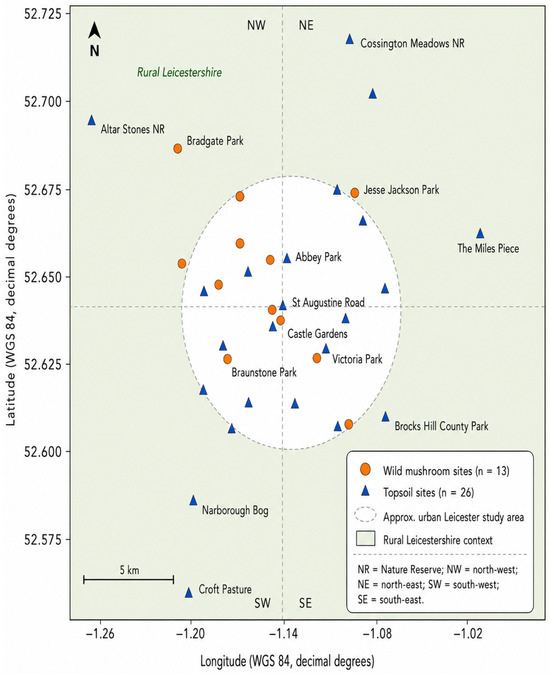
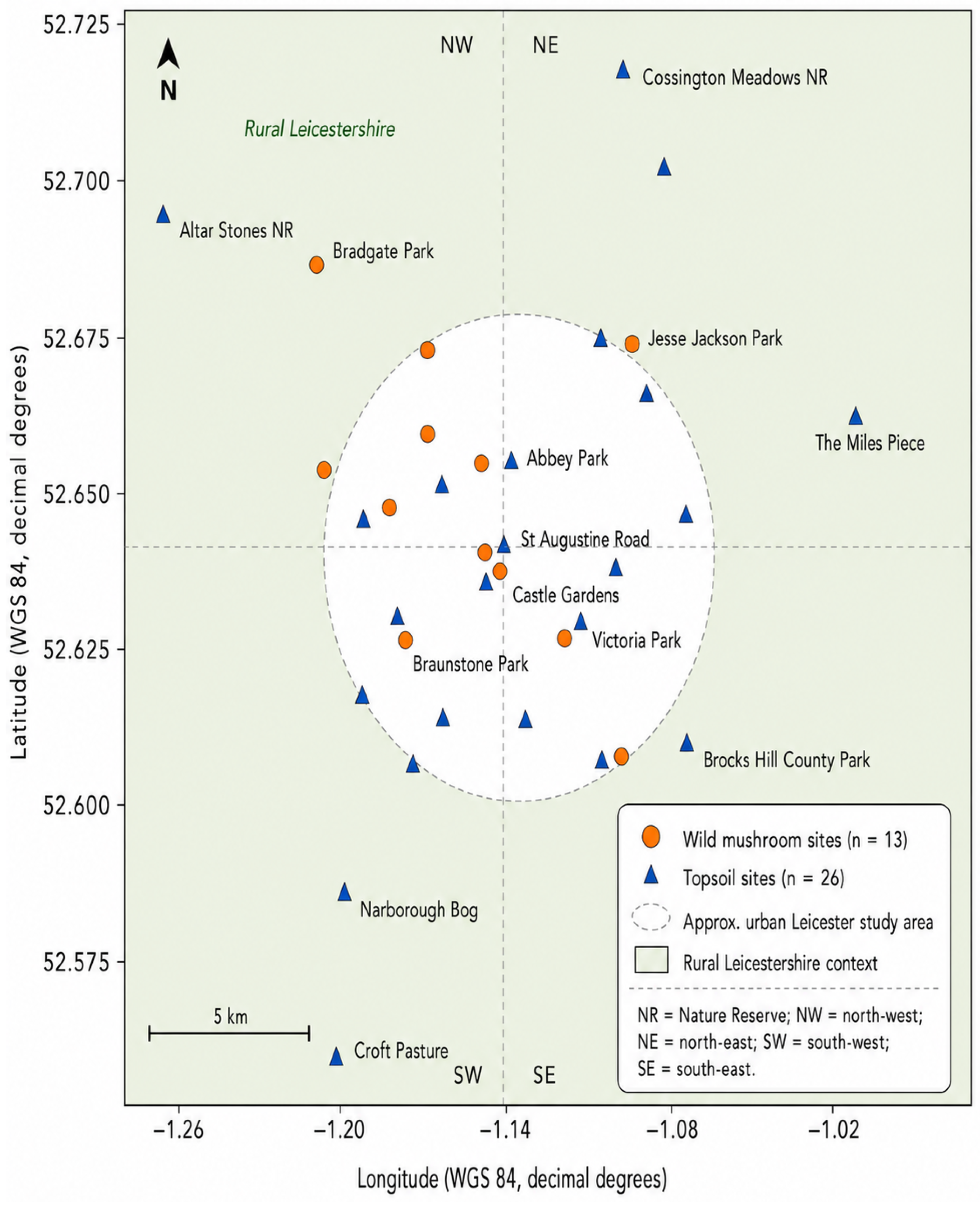

Disclaimer/Publisher’s Note: The statements, opinions and data contained in all publications are solely those of the individual author(s) and contributor(s) and not of MDPI and/or the editor(s). MDPI and/or the editor(s) disclaim responsibility for any injury to people or property resulting from any ideas, methods, instructions or products referred to in the content. |
© 2026 by the authors. Licensee MDPI, Basel, Switzerland. This article is an open access article distributed under the terms and conditions of the Creative Commons Attribution (CC BY) license.