1. Introduction
End-of-life (EOL) tyres present a significant environmental and resource management challenge due to their non-biodegradable nature, long service life, large volume of accumulation, complex material compositions and limited recovery pathways. Globally, an estimated 1.5 billion tyres reach the end of their service life each year, with approximately 60–65% either stockpiled or illegally dumped where little resource value is recovered [
1,
2]. In Australia, between March 2017 and March 2022, approximately 563,000 tonnes of tyres were consumed across various sectors, including passenger vehicles (227,600 tonnes), trucks (194,400 tonnes), and off-the-road (OTR) vehicles (141,000 tonnes [
3]. As of 2024, Australia generates roughly 500,000 tonnes of EOL tyres annually [
4]. These figures not only reflect a waste management issue, but a broader inefficiency in environmental resource systems, where durable engineered materials are discarded rather than reintegrated into productive material cycles.
Improperly managed tyre waste can create significant environmental, safety, and public health risks. Large tyre stockpiles occupy substantial land area, create fire hazards, contribute to chemical leaching and provide breeding environments for disease carrying pests [
1,
5,
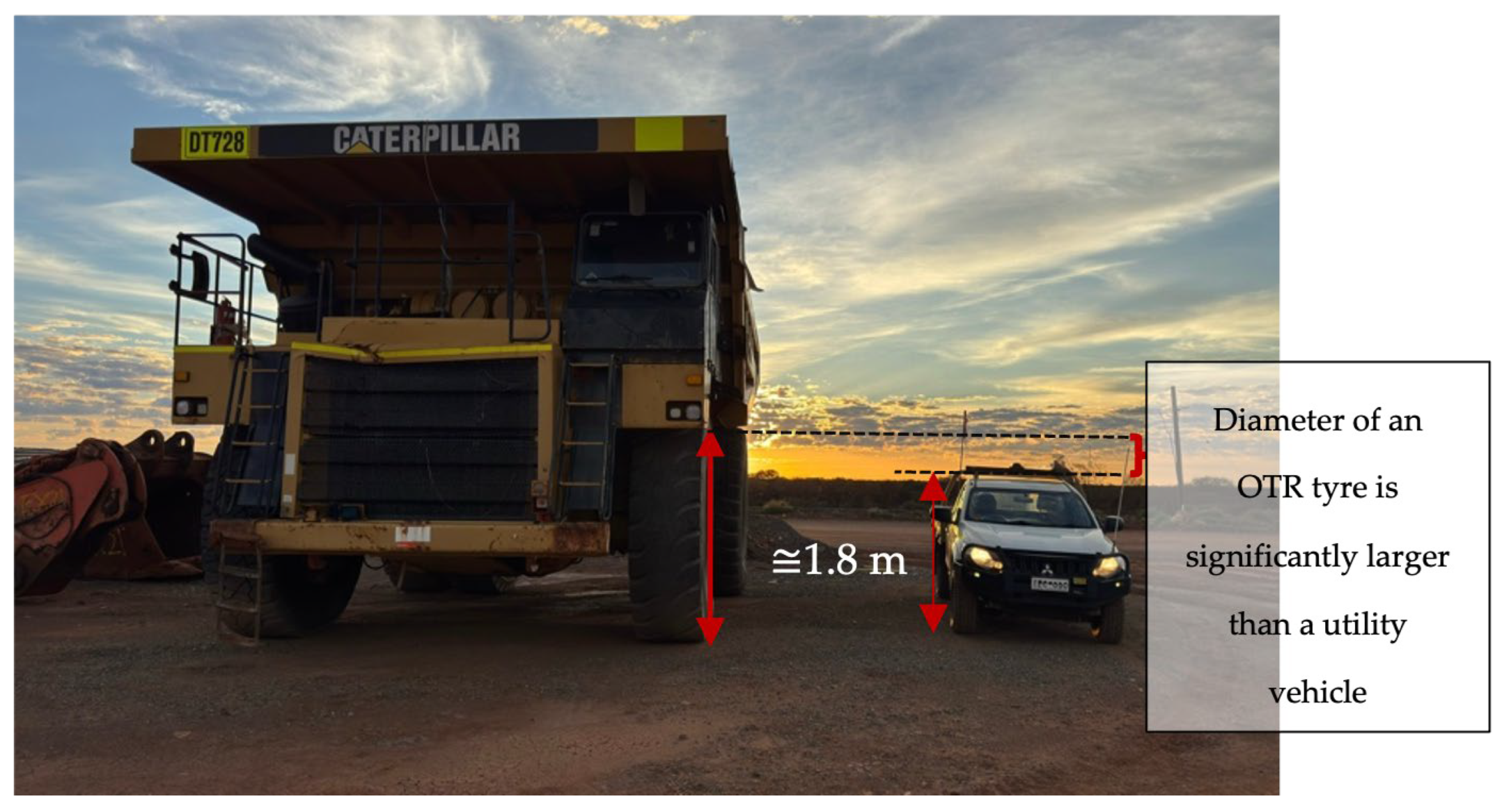
6]. These risks are particularly evident for OTR tyres used in the mining industry, which are significantly larger than passenger vehicle tyres (
Figure 1). These tyres typically measure up to 0.8–1.7 m in diameter for underground mining equipment and up to 4.0 m for surface mining vehicles [
7], making it difficult to transport them to recycling points from remote sites.
In Australia, regulatory measures have been introduced to reduce illegal dumping, burning and export of whole unprocessed tyres, with a licence or registration required for stockpiles exceeding 5 m
3 or 40 tonnes (5000 equivalent passenger units) [
8]. However, large quantities of recovered tyres continue to be exported, typically processed into shreds, crumbs, or buffings smaller than 150 mm for use in tyre-derived fuel (TDF), retreading, or other recycling pathways [
9,
10]. The environmental sustainability of these export-based solutions remains debated, as it shifts the environmental burdens geographically rather than resolving them within a local closed-loop system.
The mining industry represents a particularly significant contributor to OTR tyre waste. Despite national recovery targets of OTR tyres being 80%, the recovery rate remains at approximately 10%. The low recovery rate is primarily attributed to the perceived low cost of onsite disposal, logistical challenges associated with transporting large tyres from remote locations, limited end-market capacity, and low prioritisation of tyre stewardship within the industry [
11]. This highlights a critical opportunity to develop localised on-site reuse strategies that align with circular economy principles.
Economic barriers further complicate tyre recovery efforts. When purchasing a passenger car tyre at a commercial rate of
$71.4 to
$357.13 (AU
$ 100 to AU
$ 500) [
12], the consumers bear a cost of
$7.1 (AU
$ 10) per tyre as a ‘disposal’ fee, from which only
$1.4–1.8 (AU
$ 2.0–2.50) is passed onto tyre collectors [
2]. Transport and collection costs vary depending on location, with charges ranging from
$1.1–2.69 (AU
$ 1.50–3.77) per passenger tyre, up to
$357.13 (AU
$ 500) per large earthmoving tyre in rural areas [
13]. Processing costs typically range between
$2.14 to
$2.86 (AU
$ 3 to AU
$ 4) per tyre, excluding transportation to recycling facilities [
14]. Given these economic constraints, recycling tyres at or near the location of generation may present a beneficial and cost-effective recovery pathway.
The transition of tyre waste to tyre-derived materials provides an important route in improving resource efficiency. Tyres can be converted to smaller fragments (shreds, crumbs, powders and recovered steel/textile fibres) through mechanical processing. These products can be directly reused as construction materials in benefiting systems or in pyrolysis. Pyrolysis has been widely studied as a promising method for waste tyre disposal due to the reduction in secondary environmental pollution (reduced disposal and need for fossil fuel). However, the products generated from pyrolysis require further purification prior to use, leaving pyrolysis as a complementary recovery pathway rather than a universally ready-to-use construction material source [
15]. Construction and infrastructure applications are particularly attractive as they use a large volume of raw materials and can potentially benefit from the structural properties in tyre-derived products. The reuse of tyre-derived materials cannot be considered universally beneficial due to the soft, deformable and hydrophobic behaviour of rubber fragments. Therefore, the engineering value of the use of tyre-derived materials must be assessed through an application-specific framework rather than a single strength-based criterion.
This review critically examines the potential for repurposing EOL tyres within construction, geotechnical, and mining applications, particularly in contexts where the waste is generated and can be reused locally.
2. Review Methodology
A structured critical review methodology is adopted in this review to evaluate the use of tyre-derived materials across construction, asphalt, geotechnical, and mining engineering applications. Unlike a formal systematic review or quantitative analysis, the literature synthesis developed progressively throughout broader research into the engineering behaviour of tyre-derived materials. Consequently, the review process is guided primarily by recurring engineering problems, application-specific performance requirements, and reported material behaviour rather than a strictly predefined review protocol. The objective of the review is therefore not to identify a university optimal tyre-derived material system, but to critically examine how tyre-derived products influence engineering performance differently across various application environments. Therefore, the search process was iterative rather than based on a single fixed search string. Initial literature exploration focused primarily on the influence of tyre-derived materials on strength-related performance, particularly compressive strength behaviour, since strength reduction is one of the most frequently reported limitations associated with rubber inclusion in construction materials. Therefore, initial search strings used combinations of terms such as:
“waste tyre rubber” AND “concrete” AND “strength”;
“rubberised concrete”;
“rubberised asphalt” AND “fatigue” AND “roads”;
“rubberised soil” AND “shear strength”;
“rubberised mining backfill” AND “cemented rock fill”.
As recurring issues were identified within the reviewed studies, the review process progressively expanded into studies examining the underlying causes of observed performance changes, including interfacial bonding limitations, increased porosity, stiffness incompatibility, settlement behaviour, crack propagation mechanisms, and constructability challenges. The literature search expanded to include additional terms such as “tensile behaviour”, and “ductility”, mainly paired with “recycled tyre fibres” AND “concrete”. This was later followed by “waste tyre rubber” AND “concrete” AND “leaching”, “interfacial bonding”, “surface treatments” when literature continuously identified surface bonding issues. Consequently, search combinations progressively evolved throughout the review process according to the emerging engineering themes and application-specific research gaps. This branching approach allowed the review to move beyond a poorly strength-based interpretation and instead critically evaluate the trade-offs associated with tyre-derived materials across different engineering systems.
The literature sources were identified primarily through Scopus and ScienceDirect, with supplementary searches conducted using Google Scholar. Google was used to capture technical reports, government publications, standards, regulatory documents, and industry information relevant to current industry existent tyre recovery and implementation pathways. The final literature research was completed in April 2026, bringing the total number of records to 390. The studies were then screened by one author based on the main application groups of concrete (41 records), asphalt (13 records), geotechnical (12 records), and mining (15 records) upon reviewing titles, abstracts and strength/durability parameters addressed without repetition. The non-structural applications accounted for 3 records and the introductory and challenges in applying rubber to the identified construction pathways accounted for 35 records. This consolidated the total records addressed in this study to 119.
Concrete is the most established application method over many years (since 1990s) and the other application methods are relatively recent, hindering the vast research properties of the other applications considered. Therefore, the literature distribution across the selected applications discussed in this study was not uniform, but rather reflected the relative maturity, availability, and depth of existing research within each engineering field. Since the review was developed as critical engineering synthesis rather than a formal systematic review, no strict publication year limits or journal ranking thresholds were imposed. However, the review primarily focused on studies published between 2010 and 2026, with earlier foundational studies included where they provided important comparative and mechanical insights.
Peer-reviewed journal articles formed the primary basis for technical interpretation and critical discussion. Conference papers, technical reports, government publications, standards, and industry documents were used mainly to provide contextual information related to tyre generation volumes, recycling pathways, regulatory frameworks, implementation challenges, cost considerations, and sustainability implications to keep discussions relevant to current updated market and regulatory systems to prevent outdated calculations.
Table 1 includes a brief distribution of the 119 records referenced in this study.
Due to the substantial variation in material forms, testing methodologies, application scales, and engineering objectives across the reviewed studies, direct quantitative comparison and formal meta-analysis were not considered appropriate. Instead, findings were synthesised qualitatively using an application-specific critical framework focused on engineering trade-offs, governing mechanisms, implementation readiness, and the balance between strength reduction in functional performance enhancement.
3. Material Characteristics of Tyre-Derived Products
3.1. Composition and Mechanical Properties
Tyres are complex composite materials composed of natural rubber, synthetic rubber, carbon black, steel reinforcement, and textile fibres. These constituents provide high elasticity, durability, and energy absorption capacity during their service life. However, the same durability that makes tyres suitable for transportation applications also renders them as highly persistent waste materials due to their resistance to degradation, leading to long-term environmental risks [
16]. The compositions of the components in the tyres vary between tyres as presented in
Table 2, typically based on their type, brand and intended use [
2].
From a materials engineering perspective, tyre-derived products exhibit relatively low density and stiffness compared to traditional aggregates. The density of tyre-derived products varies depending on their particle size and component (steel and textile fibre) composition. Previous studies have measured the density of tyre crumbs, chips and shreds with dimensions of 0.15–4.75 mm at 1160 kg/m
3 [
20], 4–6 mm at 509 kg/m
3 [
21], and 50–76 mm at 309–560 kg/m
3 [
22], respectively.
Rubber exhibits significant elongation capacity from its original size, enabling significant energy absorption and deformation without permanent damage. Xu et al. [
23] measured the tensile strength of rubber shreds and reported an average elastic modulus of 112 MPa, a tensile strength of 14 MPa, and a strain of 13.1%. Bijarimi et al. [
24] also reported that the tensile strength of rubber ranged from 16.5 to 21.2 MPa. These results show that these properties have the potential to vary depending on the location within the tyre, brand, manufacturing process and type of tyre.
These properties are advantageous in applications requiring energy absorption, deformation or lightweight characteristics, but they can simultaneously compromise strength and structural stiffness. These characteristics can also be environmentally beneficial, enabling the substitution of natural aggregates in cementitious composites.
3.2. Variability of Recycled Tyre Materials
A critical challenge identified in the literature is the high variability in tyre-derived materials, as discussed in
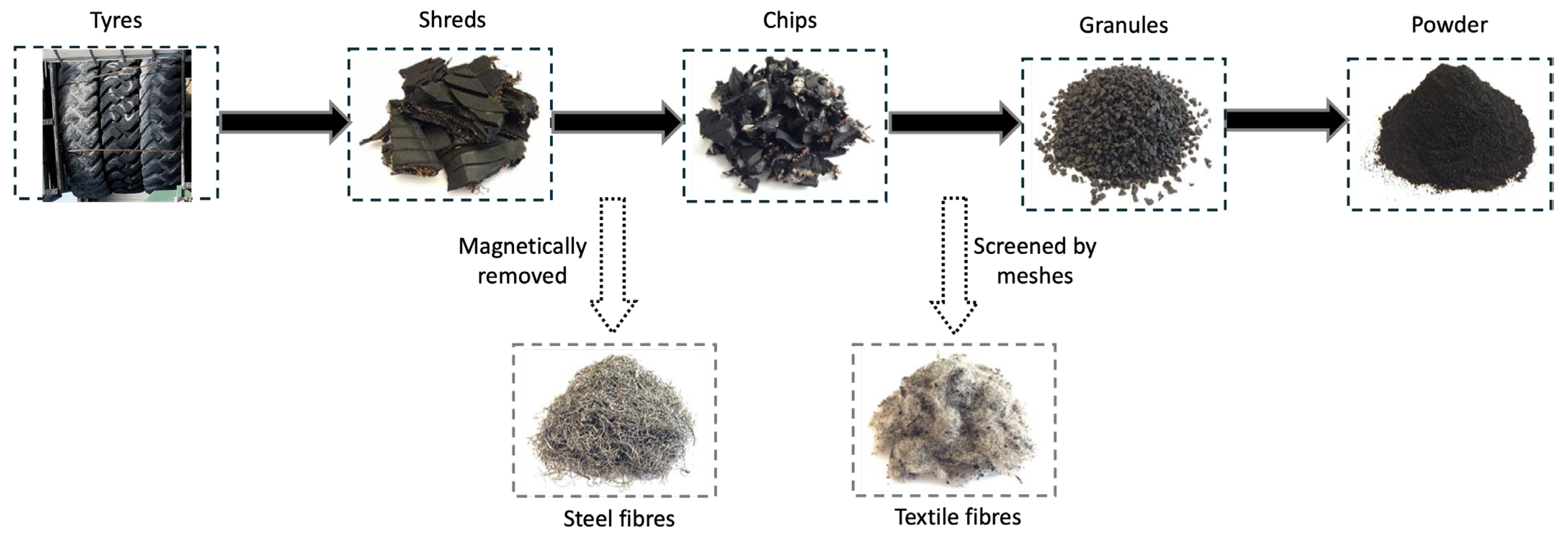
Section 3.1. Tyres are typically processed through series of processing and separation stages, as shown in
Figure 2, where rubber at several sizes and other by-products such as steel and textile fibres are extracted.
Table 3 presents the different tyre products and their typical sizes produced during processing.
These product terms have been interchangeably used in many studies. However, these terms have been standardised throughout this study according to their dimensions in
Table 3. The particle sizes influence mechanical behaviour when incorporated into composite materials. Existing studies frequently report inconsistent results due to differences in particle size, surface treatment, and replacement ratios. As a result, direct comparison between studies remains difficult, highlighting the need for standardised experimental frameworks.
4. Performance of Tyre-Derived Materials in Construction Applications
4.1. Flooring/Pavement
Due to the durability, impact absorption, ease of installation, low maintenance, and cost-efficiency over time, using rubber for the construction of flooring in residential or commercial buildings, playgrounds, jogging paths, tennis courts and driveways has gained popularity [
29]. In pavement materials, rubberised cement composites exhibit improved durability due to the higher strain capacity and post-peak residual strength obtained due to controlled crack propagation, enhancing the materials’ resilience to sudden failure. However, this is coupled with a decrease in flexural and splitting tensile strength [
30,
31].
From an environmental perspective, these applications represent a low-risk high-value reuse pathway, where material performance aligns with functional requirements, enabling effective diversion of waste from landfills.
4.2. Rubberised Concrete
Cementitious materials such as concrete are traditionally brittle and highly rigid, exhibiting minimal tensile strength (between 2 and 5 MPa) post peak [
32,
33]. Due to high safety factors in public infrastructure, reinforcement techniques like steel rebar are widely employed to improve tensile capacity and mechanical performance, addressing these inherent limitations [
34]. However, steel reinforcement manufacture is associated with high capital and energy costs [
35], along with environmental concerns related to steel production and procurement. These challenges have driven interest in sustainable, low-cost alternatives, particularly in the construction industry [
36].
Rubberised concrete was initially proposed in the 1990s to repurpose waste tyre rubber into concrete to improve flexibility, reduce cracking, and address environmental concerns associated with tyre disposal [
37]. Since then, a large body of research has examined the feasibility of replacing conventional concrete ingredients as aggregates and cement with tyre-derived products such as crumb rubber, rubber powder, and shredded rubber particles. Despite the growing volume of research, the reported benefits and limitations of rubberised concrete remain debated, primarily because rubber inclusion introduces competing mechanical effects that influence concrete performance in different ways.
4.2.1. Aggregate Replacement
A consistent observation across the literature was that rubber inclusion generally leads to reductions in compressive and tensile strengths [
38,
39]. These reductions are attributed to three interacting mechanisms: weak interfacial bonding between rubber particles and cement paste, increased porosity within the cement matrix, and the low stiffness of rubber relative to mineral aggregates.
Microstructural investigations confirm that the hydrophobic nature of rubber inhibits strong adhesion between rubber surfaces and cement hydration products, resulting in weak interfacial transition zones [
40]. Consequently, the load transfer efficiency between the cement matrix and rubber inclusions is significantly lower than in conventional aggregate–cement interfaces. This weak bonding behaviour contributes to early microcracking and reduced stiffness under compressive loading.
While this explanation is widely cited, it does not fully account for the variation in reported strength reductions across different studies. For instance, some investigations report substantial strength losses even at low rubber contents, while others demonstrate that acceptable structural strengths can still be achieved when replacement levels remain below approximately 10–20% [
6,
41]. These discrepancies suggest that strength reduction cannot be attributed solely to interfacial bonding limitations but is also strongly influenced by factors such as rubber particle size, distribution, and overall mix design.
4.2.2. Influence of Rubber Content and Particle Size
The extent to which rubber inclusion affects mechanical performance depends strongly on the volume fraction and geometry of the rubber inclusion. Increasing rubber content generally leads to progressive reductions in compressive strength, as the load-bearing mineral aggregate skeleton is replaced by softer, deformable particles [
42,
43]. For example, experimental studies replacing fine aggregates with crumb rubber at replacement levels of up to 45% consistently observed declining compressive strengths with an increasing rubber content [
42].
Nevertheless, these results should be interpreted cautiously. In rubberised concrete, compressive strength remains a necessary starting point because concrete is commonly classified and accepted in practise using compressive strength. Therefore, the large number of studies reporting UCS does not necessarily indicate a narrow assessment approach. It reflects the need to determine whether rubberised concrete can still satisfy the minimum strength requirements for its intended use. This is particularly important for structural and semi structural applications about improved ductility, impact resistance, damping, acoustic performance or thermal performance can only be considered useful if the material retains adequate compressive capacity. While strength reductions are frequently highlighted as a limitation of rubberised concrete, several studies have demonstrated that compressive strengths exceeding 60 MPa can still be achieved when rubber replacement levels remain below approximately 12.5% [
6]. Similarly, Holmes et al. [
41] reported that acceptable strength levels could be maintained at aggregate replacement ratios below about 20%. These findings indicate that rubberised concrete does not inherently lack structural capacity; rather, its performance is highly dependent on controlling the amount and form of rubber inclusion.
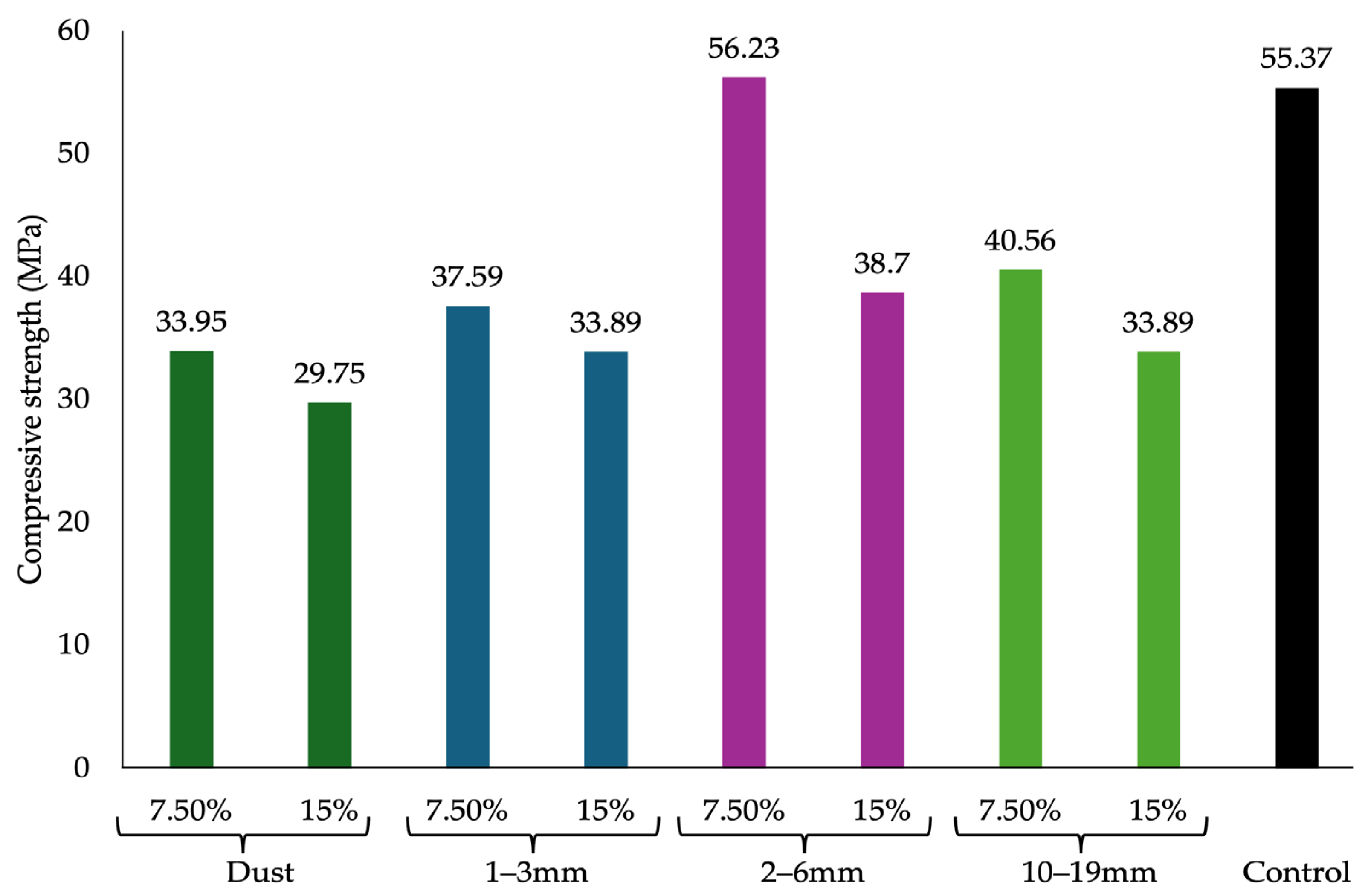
Particle size plays a critical role (
Figure 3). Finer rubber powders tend to perform better mechanically than coarse crumb rubber because they disrupt the aggregate skeleton less and behave more like fillers within the cement matrix [
42]. In contrast, larger rubber particles introduce larger voids and more pronounced stiffness contrasts, amplifying stress concentrations within the matrix. Despite these observations, the literature still lacks systematic studies that isolate the independent effects of particle size, particle shape, and surface characteristics, making it difficult to define optimal rubber geometries for concrete applications.
In field practices, the tensile strength of concrete is often estimated as 10% of its UCS [
44], but this assumption can lead to an over or under estimation depending on the mix, emphasising that empirical estimations may not fully capture performance and can lead to unnecessary costs associated with overdesigning mixes, specifically in cement.
The tensile strength of any material is most accurately obtained from a direct tensile loading test. However, due to practical challenges associated with specimen preparation, indirect methods such as the splitting tensile test (STS) and flexural tests (three (3PB)- or four (4PB)-point bending) are commonly used to obtain the tensile strength of construction and geo-materials [
45,
46]. Each of these test methods use a compressive loading mechanism to generate tensile failure. As a result, the measured values can be affected by local loading conditions and failure mechanisms (such as excessive compressive crushing) and should not be considered directly interchangeable [
45,
47]. Accordingly, the data presented in
Table 4 is synthesised to highlight general trends in tensile behaviour relative to UCS, rather than direct comparisons between studies. Where multiple tensile values are reported for the same material, the more conservative value has been adopted to avoid overestimation.
The data presented in the table consistently demonstrates that the commonly adopted approximated tensile strength does not reliably represent the tensile behaviour of rubberised concrete with deviations influenced by the rubber content, particle size, and the type of tensile test employed.
From a mechanistic perspective, this variability reflects the matrix-controlled nature of concrete, where tensile behaviour is governed by crack initiation and propagation within the cement paste and the interfacial transition zone (ITZ). The inclusion of rubber, which exhibits low stiffness and weak interfacial bonding, disrupts the matrix continuity, leading to localised stress concentrations and earlier crack initiation. As a result, tensile strength does not scale proportionally with UCS, particularly as the rubber content increases. In fine-scale materials such as concrete, mechanical behaviour is largely governed by the continuity of the cement matrix and the integrity of the ITZ. Replacing mineral aggregates with rubber disrupts this continuity, leading to reduced tensile capacity and inconsistent relationships between compressive and tensile strength.
However, this behaviour is not directly transferable to particulate systems such as mining backfills (e.g., cemented rock fill). The material response in such systems is governed by coarse particle interaction, where rubber inclusion and the discontinuity in matrix bonding affects the strength differently. These differences result in distinct interaction mechanisms and tensile responses, which are further introduced and discussed in
Section 4.5.5.
Aiello et al. [
48] also showed that the toughness indices (I
5, I
10, and I
20) at 50% and 75% replacement levels are within the acceptable ranges (1 < I
5 < 6, 1 < I
10 < 12
, and 1 < I
20 < 25) suggested by ASTM C1018-97 for fibrous concrete, indicating significant post-cracking behaviour. Najim et al. [
47] also showed that there was a 76%, 102% and 118% increase in the I
5, I
10, and I
20 indices, respectively, with 5% rubber replacement. Chen et al. [
58] also mentions that the characteristic length (l
ch) of concrete can serve as a metric evaluation of ductility and brittleness. The equation, l
ch = EG
f/f
t2, where E is the elastic modulus, G
f is the fracture energy and f
t is the tensile strength of the sample, can be used to calculate the value. G
f =
, where W
0 is the area under the load deflection curve, m is the quality of the specimen, g is 9.81 m/s
2 and
is the mid span deflection at specimen failure. The lower l
ch values represented brittle material.
4.2.3. Cement Replacement
In addition to aggregate substitution, several studies have explored replacing cement with crumb rubber or rubber powder. Compared to aggregate replacement, cement substitution generally produces more severe strength deterioration because it directly interferes with the formation of the cementitious binding phase [
50]. Experimental investigations replacing cement with rubber at levels up to 12% reported compressive strength reductions of 6–17% and tensile strength reductions of 6–21% depending on the dosage and mix composition [
50].
Microscopic observations indicate that rubber particles disrupt the continuity of hydration products and reduce matrix cohesion due to their hydrophobic and chemically inert surfaces [
40]. As a result, rubber particles behave as inclusions rather than reactive constituents within the cement matrix. Several studies have demonstrated that these negative effects can be partially mitigated through surface treatments of rubber particles or through the addition of supplementary cementitious materials such as silica fume, which improves interfacial bonding and refines pore structure [
42].
Despite these improvements, the literature generally suggests that cement replacement with rubber remains less favourable than aggregate replacement from a mechanical standpoint. Nevertheless, cement replacement may still be viable in applications where reduced density, improved damping capacity, or enhanced thermal performance is prioritised over compressive strength.
4.2.4. Ductility and Energy Absorption Improvements
While strength reduction remains the most frequently reported limitation of rubberised concrete, focusing exclusively on compressive strength provides an incomplete assessment of the material’s mechanical behaviour. Several studies demonstrate that rubber inclusion significantly improves ductility, toughness, and energy absorption capacity [
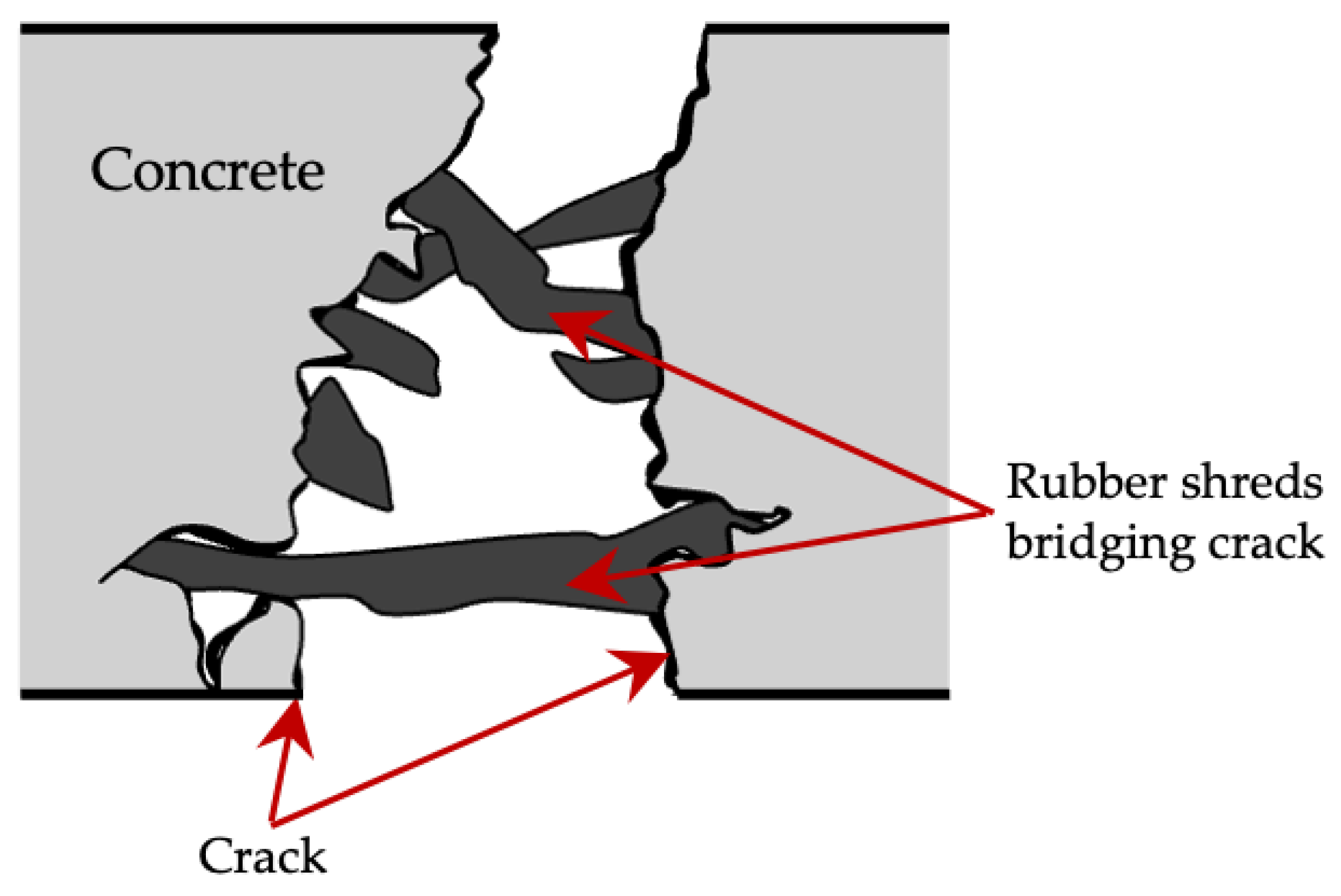
48]. Rubber particles act as deformable inclusions capable of bridging cracks, delaying crack propagation, and enabling gradual post-peak failure behaviour rather than brittle fracture [
59]. These crack-bridging mechanisms are particularly evident when rubber shreds or larger rubber particles are used, as they span developing cracks (
Figure 4) and sustain a residual load after peak stress [
48]. Consequently, rubberised concrete often exhibits higher residual strength and greater strain capacity compared to conventional concrete. From a structural perspective, these properties can be advantageous in applications subjected to dynamic loading, impact, or seismic activity [
60,
61].
The extent to which these benefits compensate for strength losses remains debated. Many studies emphasise the improved toughness of rubberised concrete but rarely quantify how these improvements translate into structural performance under realistic loading conditions. This gap suggests that further research is required to evaluate rubberised concrete using performance metrics beyond compressive strength alone.
4.2.5. Durability and Functional Performance
Beyond mechanical behaviour, rubber inclusion also affects the durability and functional properties of concrete. Durability-focused investigations have shown that high-volume rubber aggregates can improve resistance to chloride migration, electrical resistivity, and permeability [
62]. For example, concrete containing up to 80% rubber aggregates demonstrated improvements of approximately 80% in chloride migration resistance and 87% in electrical resistivity compared with conventional mixes [
62]. These results indicate that rubberised concrete may perform well in aggressive environmental conditions where durability rather than strength governs service life.
Rubber inclusion also reduces material density compared to conventional concrete [
63]. This reduction offers potential benefits in lightweight structural systems, which is advantageous. In addition, increased air content within rubberised concrete contributes to improved acoustic absorption and thermal insulation. Crumb rubber concrete containing approximately 15% rubber chips between 2 and 19 mm has been shown to exhibit enhanced sound absorption characteristics [
41], while rubber–epoxy composites have demonstrated reductions in thermal conductivity of up to 58.6% [
64].
However, these functional benefits often occur alongside substantial reductions in compressive strength. For instance, improvements in acoustic and thermal performance have sometimes been achieved at the cost of compressive strength losses exceeding 90% [
64]. These trade-offs reinforce the importance of defining clear performance objectives when designing rubberised concrete mixes.
4.2.6. Workability and Mix Design Considerations
Rubber inclusion also significantly influences fresh concrete behaviour. An increasing rubber content generally reduces workability because rubber particles absorb less water than mineral aggregates and introduce higher internal friction within the mix [
6]. Holmes et al. [
41] reported that slump values decreased from approximately 125 mm to 25 mm as the crumb rubber content increased from 0 to 120 kg/m
3. Maintaining workable mixes therefore often requires adjustments to water-to-cement ratios or the use of admixtures.
These observations highlight an important but often overlooked aspect of rubberised concrete research. Many studies focus exclusively on hardened mechanical properties without fully considering the implications of rubber inclusion on fresh concrete behaviour and constructability.
4.2.7. Alternative Tyre-Derived Reinforcement: Steel Fibres
While most research focuses on rubber particles, tyre recycling also produces steel fibres that can be used as reinforcement in concrete. Fibre reinforcement improves crack control and post-cracking behaviour, but conventional industrial steel fibres increase material density and involve significant carbon emissions during manufacturing [
65,
66].
In contrast, recycled tyre steel fibres provide a potentially more sustainable and lower cost alternative [
59]. Zia et al. [
67] reported that raw steel fibres obtained from waste tyres, added at 0.30–0.75% by concrete volume, which increased the compressive strength and splitting tensile strength by 20% and 16%, respectively. Michalik et al. [
59] further showed that purified recovered steel fibres can perform comparable to or better than manufactured steel fibres in fracture-related behaviour, with improved work or fracture toughness indices and better distribution within the concrete matrix. Their later adhesion studies showed that recycled tyre steel fibres can bond very effectively to the cement matrix, with the rough and irregular fibre surface improving mechanical anchorage. The effectiveness of this bonding depends on the fibre cleanliness, geometry, and dispersion within the matrix, since residual rubber or textile contaminations can reduce the efficiency of the reinforcement [
68].
Hybrid mixes containing 1.75% recycled tyre steel fibres combined with industrial steel fibres have demonstrated improvements of 52% in tensile splitting energy and 689% in flexural energy compared with plain concrete [
69]. Recent work has also shown that hybrid use of recycled tyre steel and textile fibres can enhance compressive strength, tensile strength, flexural strength, toughness and crack resistance, with the best performance obtained with steel fibres controlling macro-cracking and textile fibres assisting finer scale crack restraint [
70]. In addition, current research is beginning to move towards structural application where Franco–Quiñonez et al. [
71] showed that reused tyre steel fibres can be incorporated into structural concretes for applications such as precast segments, pavements, and sprayed concrete linings where structural requirements are satisfied and compatible with the fib Model code 2020 and Eurocode Annex L. The study also confirms that the cradle to gate global warming potential of recovered steel fibres is significantly lower than industrial steel fibres.
Overall, these findings suggest that the non-rubber components of recycled tyres may represent a distinct and potentially high-value reinforcement pathway for cementitious composites. Their main benefit lies not simply in increasing peak strength, but in improving crack control, fracture resistance, and post-cracking integrity. Future work should therefore focus on standardising fibre processing and classification, improving durability assessment and linking recovered tyre steel fibres performance more directly to structural design requirements.
4.2.8. Long-Term Performance and Practical Applications
Despite concerns regarding reduced strength, long-term studies suggest that rubberised concrete can maintain adequate durability under service conditions. Investigations of decade-old crumb rubber concrete bridge decks showed strong resistance to carbonation, corrosion, and mechanical degradation [
72]. Flexural testing of these aged specimens reported flexural tensile strengths exceeding 5 MPa and significantly higher strain capacities than conventional concrete.
In practical applications, the enhanced deformability of rubberised concrete may even improve safety performance. Conventional concrete barriers possess high impact stiffness, which can increase injury severity during collisions. Incorporating rubber reduces stiffness and allows the barrier to absorb impact energy more effectively, potentially reducing accident severity while maintaining structural integrity [
60].
4.2.9. Critical Synthesis
Overall, the literature demonstrates that rubberised concrete presents a clear trade-off between strength and functional performance. Rubber inclusion typically reduces compressive and tensile strengths due to weak interfacial bonding and increased porosity. It simultaneously enhances ductility, energy absorption, impact resistance, and certain durability properties.
These findings suggest that rubberised concrete should not be viewed simply as a weaker alternative to conventional concrete but rather as a modified composite material with distinct mechanical characteristics. When used in appropriate proportions, particularly below about 10–20% aggregate replacement, rubberised concrete can maintain acceptable structural performance while providing additional functional benefits.
Nevertheless, many existing studies rely heavily on compressive strength as the primary performance indicator, which may underestimate the value of rubber inclusion in applications where toughness, resilience, and damping capacity are more critical than peak strength. Future research should therefore focus on performance-based evaluation methods that better capture the multifunctional behaviour of rubberised concrete.
4.3. Asphalt and Pavement Applications
The incorporation of tyre-derived rubber into asphalt mixtures represents one of the earliest and most commercially implemented recycling pathways for EOL tyres. Rubber-modified asphalt, commonly referred to as asphalt rubber, has attracted attention due to its potential to improve pavement durability while simultaneously addressing waste tyre disposal challenges. Unlike rubberised concrete, where rubber often disrupts the load-bearing mineral skeleton, asphalt binders can interact more favourably with rubber particles due to their viscoelastic nature, particularly when appropriate processing methods are employed.
Two primary approaches are used to incorporate rubber into asphalt mixtures: the wet process and the dry process [
73]. In the wet process, crumb rubber is blended directly with hot bitumen, allowing partial devulcanization of the rubber and interaction between rubber polymers and the binder. In contrast, the dry process introduces rubber particles as a partial replacement for mineral aggregates. The wet process is generally considered more effective in improving binder properties because high mixing temperatures promote swelling and partial de-vulcanisation of rubber particles, enabling improved interaction with the bitumen phase. These chemical and physical interactions increase binder viscosity and elasticity, which can improve resistance to rutting and fatigue cracking under traffic loading [
74].
Beyond direct rubber incorporation, thermochemical conversion of waste tyres into pyrolysis-derived oils has emerged as an alternative pathway for asphalt modification [
75]. Waste tyre pyrolysis oil (WTPO) has been shown to improve binder workability and blending efficiency with reclaimed asphalt pavement materials while enhancing fatigue resistance and reducing cracking susceptibility. Optimal performance is commonly reported at dosages of approximately 12%, although variability in chemical composition resulting from the pyrolysis process introduces challenges related to thermal stability and long-term durability [
75].
Complementing these findings, studies on crumb rubber modified with hot-mix asphalt demonstrated that increasing the rubber content between 5 and 19% by binder weight significantly enhanced the viscosity and temperature resistance. This resulted in improved stiffness and load-bearing capacity in asphalt mixtures [
76]. Both dense-graded and gap-graded mixes showed improved volumetric properties (voids in total mix, volume of mineral aggregate), with dense graded systems exhibiting a superior structural response. These findings suggest that, under controlled conditions, rubber inclusion can simultaneously improve stiffness and durability. This contrasts with trends observed in concrete systems, although such improvements remain highly dependent on binder composition and mix design.
Despite these reported benefits, the performance improvements associated with rubber-modified asphalt are not universally consistent across studies. Some investigations report increased stiffness and improved fatigue resistance, while others observe reductions in the resilient modulus and load-bearing capacity when rubber content becomes excessive. These inconsistencies suggest that the performance of rubber-modified asphalt is highly dependent on rubber particle size, rubber content, and the processing method used, similar to trends observed in rubberised concrete systems.
4.3.1. Mechanical Performance of Rubberised Asphalt Mixtures
Experimental investigations into rubber-modified asphalt mixtures frequently highlight improvements in fatigue resistance, rutting resistance, and service life. These improvements are primarily attributed to the viscoelastic behaviour of rubber particles, which enables asphalt mixtures to dissipate stresses and accommodate deformation more effectively than conventional asphalt. Rubber acts as elastic inclusions within the binder, absorbing strain energy and delaying crack propagation under repeated traffic loading.
However, these improvements often occur alongside changes in stiffness and structural capacity. Walotek et al. [
77] reported that rubber shreds incorporated into pavement mixtures improved fatigue life, moisture resistance, and deformation tolerance. An increased rubber content enhanced the ability of the material to redistribute stresses and absorb deformation without catastrophic failure. While these characteristics may improve pavement durability, they also reduce mixture stiffness, which may compromise the load-bearing capacity under heavy traffic loads.
This trade-off highlights a recurring challenge in rubber-modified materials: improvements in ductility and fatigue resistance often occur at the expense of stiffness and structural strength. In pavement design, where both durability and structural capacity are important, balancing these competing effects is critical.
4.3.2. Influence of Rubber Particle Size and Content
The influence of rubber particle size and content on pavement performance has been explored in several studies. Li, Saberian, and Nguyen [
78] investigated the incorporation of crumb rubber into pavement base and subbase layers by blending rubber with recycled crushed concrete and crushed rock materials. Their study evaluated both fine rubber particles (400–600 µm) and coarse rubber particles (10–15 mm) at replacement levels of 0.5%, 1%, and 2%. The results highlight how particle size significantly influences mechanical performance. Fine crumb rubber was found to slightly improve UCS, although this improvement was accompanied by increased brittleness in the mixtures. In contrast, mixtures containing coarse crumb rubber showed reduced UCS and increased deformability. This indicates that larger rubber particles disrupt the granular load-bearing skeleton of the pavement base material, similar to the strength reduction mechanisms observed in rubberised concrete.
A similar size-dependent behaviour has also been reported in asphalt systems. Vigneswaran et al. [
79] investigated crumb rubber particles ranging from 0.5 to 2 mm as a 10% virgin asphalt binder replacement. Larger particles (1–2 mm) increased the viscosity and rutting resistance, potentially expanding pavement service life. However, particles
0.5 mm were the most effective in reducing the phase separation between the asphalt and rubber. Similarly, Cai et al. [
80] found that larger rubber particles (>300
m) improved high temperature deformation resistance, whereas medium (300
m–75
m) and small (75
m–0.22
m) particles enhanced high temperature and fatigue resistance. Asphalt tends to undergo brittle failure at low temperatures. Higher contents of microparticles (<0.22
m) significantly improved low temperature cracking resistance. These findings collectively highlight that coarse particles contribute to load-bearing resistance and finer particles improve matrix-level interactions and durability.
The effect of the rubber content is consistently identified as a controlling factor on pavement performance. Li, Saberian, and Nguyen [
78] reported a reduction in the resilient modulus with an increasing rubber content, irrespective of the rubber size, suggesting reduced stiffness and potentially lower resistance to dynamic traffic loading. UCS increased with an increasing crumb rubber content from 0.5% to 2%, with the highest strength observed at 2% inclusion. On the contrary, an increase in rubber chips contents from 0.5% to 2% showed an increase followed by a decrease in the strength with highest UCS at 1% rubber in the rubberised samples. Similarly, Wu et al. [
81] observed that increasing the crumb rubber content (0–4%) improves functional performance such as anti-sliding performance and noise reduction by enhancing damping properties, with an optimum around 3%. Wang [
82] further showed that increasing rubber powder content enhances specific performance characteristics such as ice suppression and durability of the pavement, with benefits plateauing under extreme temperatures at −14
. Cao et al. [
83] identified that increasing rubber powder contents (10%, 15% and 20%) show an increase in ductility, irrespective of rubber size. The study shows that the finer rubber particles outperform the larger particles with an ascending order of 120 mesh > 80 mesh > 60 mesh > 40 mesh and 20 mesh. The optimal particle size was identified as 80 mesh at 15%, where beyond this, the performance declined due to an excessive decrease in viscosity and ageing effects.
These results highlight a consistent trade-off in which increasing the rubber content enhances damping-related properties but reduces stiffness and structural capacities beyond optimal levels of inclusion. Overall, the combined evidence shows that the rubber particle size controls the scale of interaction within the pavement matrix, while the rubber content governs the magnitude of the resulting mechanical and functional changes.
Importantly, most studies evaluating rubberised pavement mixtures use relatively finer particles and lower rubber contents compared with rubberised concrete research, to preserve structural integrity while improving durability-related properties. This reflects an implicit understanding that rubber inclusion must remain limited to avoid excessive stiffness reduction. However, the literature still lacks a systematic framework defining the optimal rubber size and content combinations across different pavement layers.
4.3.3. Functional Benefits Beyond Structural Performance
Beyond mechanical performance, rubber inclusion can also improve the functional properties of pavement systems. For example, rubber-modified asphalt is widely recognised for its ability to reduce traffic noise due to the increased flexibility and damping capacity of the pavement surface. Additionally, rubberised mixtures may improve resistance to moisture damage and reduce crack propagation caused by thermal cycling.
Walotek et al. [
77] reported that shredded rubber waste reduced capillary rise and water absorption in pavement mixtures, thereby improving resistance to moisture-related damage. These properties can be particularly beneficial in environments where moisture infiltration contributes to damaging the pavement structure. Landi et al. [
17] also highlighted that incorporating rubber into asphalt mixtures reduces the demand for primary raw materials and may reduce greenhouse gas emissions and environmental impacts associated with resource extraction.
While these benefits are widely cited, their long-term effectiveness under varying climatic conditions remains insufficiently documented. Many laboratory-based studies demonstrate improved fatigue and moisture resistance, but fewer studies evaluate the long-term field performance of rubber-modified pavements.
4.3.4. Rubber in Pavement Base Layers
Rubber-derived materials have also been explored in pavement base and subbase layers, where they may provide additional functional advantages beyond structural reinforcement. For instance, tyre shreds have been investigated as lightweight thermal insulation layers for frost heave mitigation in cold regions. Edeskär [
84] demonstrated that tyre shreds can reduce frost penetration in roadbeds due to their low thermal conductivity and high permeability. These properties allow tyre shred layers to act as both insulation barriers and drainage media, reducing frost heave potential and improving thaw stability. However, the same properties that provide thermal insulation also reduce structural stiffness. Under frozen conditions, tyre shreds remain flexible and do not exhibit the stiffness characteristics that are typical of granular materials, resulting in a reduced load-bearing capacity.
To address this limitation, a structural superlayer of at least 900 mm thickness is recommended above tyre shred insulation layers, in accordance with ASTM guidelines [
85]. This requirement illustrates the trade-offs associated with tyre-derived materials in geotechnical applications: while they offer beneficial thermal and drainage properties, they often require additional structural support to maintain pavement stability.
4.3.5. Critical Synthesis
The existing literature suggests that rubber-modified asphalt can provide significant improvements in fatigue resistance, crack control, and functional performance such as noise reduction and moisture resistance. These benefits are accompanied by reductions in mixture stiffness and resilient modulus when rubber contents become excessive.
Unlike rubberised concrete, where rubber primarily acts as a disruptive inclusion within a rigid matrix, rubber particles in asphalt mixtures interact more favourably with the bitumen. This interaction allows rubber-modified asphalt to accommodate deformation more effectively, improving fatigue performance and service life. Consequently, the effectiveness of rubber-modified asphalt depends strongly on controlling rubber particle size, content, and mixing procedures.
In contrast, the behaviour of tyre-derived materials in pavement base and subbase layers is governed by fundamentally different mechanisms. Tyre shreds function as lightweight, compressible inclusions with low thermal conductivity and high permeability, making them effective for frost heave mitigation and drainage. Their low stiffness and high deformability reduce the load-bearing capacity, requiring additional structural thickness to maintain pavement stability. This demonstrates that, unlike asphalt systems where rubber contributes to viscoelastic enhancement, rubber in unbound base layers primarily alters the mechanical response by reducing stiffness and increasing compressibility.
Overall, the literature indicates that the role of rubber in pavement systems is application-dependent. In bound asphalt layers, optimised rubber inclusion may enhance binder elasticity and durability without significantly compromising structural integrity. In contrast, in unbound base layers, rubber inclusion introduces a trade-off between functional benefits such as insulation and drainage and reduced structural capacity. Future research should therefore focus on developing performance-based design frameworks that explicitly account for these differing mechanisms across pavement layers, ensuring a balanced integration of structural capacity, durability, and sustainability objectives when incorporating tyre-derived materials into pavement systems.
4.4. Geotechnical Applications
4.4.1. Soil Stabilisation
The use of tyre-derived materials in geotechnical engineering has attracted increasing attention as a method for improving soil performance while simultaneously repurposing waste tyres. Unlike cementitious systems, where rubber particles interact with a rigid matrix, soil–rubber mixtures form particulate composites in which the behaviour is governed by particle interaction, frictional resistance, and compressibility. Consequently, the effectiveness of rubber in geotechnical applications depends strongly on the interaction between rubber particles and the surrounding soil skeleton.
Soil stabilisation techniques are generally used to improve the bearing capacity of weak or highly deformable soils and to reduce settlement and lateral deformation under loading conditions [
86]. Expansive soils, in particular, are prone to significant deformation due to moisture variations and loading, which can lead to cracked foundations, pavement failures, and unstable slopes [
87]. In hilly terrains and embankments, these conditions can be further aggravated by rainfall infiltration, seismic activity, and prolonged loading, potentially triggering the erosion of slopes or landslides that disrupt infrastructure networks.
To mitigate these risks, there are three main stabilisation techniques: mechanical, compaction and chemical. Mechanical stabilisation enhances soil properties through mixing with reinforcing materials. Compaction stabilisation increases the load-bearing capacity by reducing air voids using dynamic or vibratory methods. Chemical stabilisation alters soil characteristics through cementitious or pozzolanic reactions using additives like cement, lime, fly ash, or kiln dust [
86,
88]. Over the years, studies have incorporated plant fibres, glass fibres, geotextiles and waste tyre rubber as a form of reinforcement to soil [
86,
89,
90]. Incorporating a tensile reinforcement to soil, a composite material is produced that improves the overall strength of the soil, similar to reinforced concrete [
91].
4.4.2. Embankments and Tyre-Encased Soil Systems
Past studies have used whole or unprocessed tyres effectively as lightweight fill for embankments over unstable ground and as stabilisers along riverbanks [
91,
92,
93]. These characteristics allow tyre-based structures to reduce vertical stresses imposed on weak foundation soils while providing drainage pathways that mitigate pore water pressure buildup. Although beneficial, this approach presents limitations due to the high compressibility of tyres, which can compromise long-term stability under load due to excessive long-term settlement. As a result, although tyre embankments can reduce initial foundation stresses, their long-term stability under infrastructure loads remains a concern.
To address these limitations, more structured tyre-based systems such as tyre-encased soil elements (TESE) have been proposed. Xu et al. [
23] investigated the structural performance of tyre-encased soil walls designed as load-bearing components for lightweight housing. Their experimental results showed that the tyre wall could support a lightweight roof load while exhibiting minimal settlement, equivalent to approximately 0.2% of the wall height. The axial force-displacement behaviour was largely linear, and the failure mechanism was governed primarily by sliding and joint rotation, rather than brittle structural collapse.
The study also demonstrated that increasing axial loads improved the out-of-plane resistance and stiffness of the tyre wall system. While these findings highlight the potential of tyre-encased soil systems for low-rise construction, the experimental results were obtained under controlled laboratory conditions and for relatively small structural loads. Consequently, further research is needed to evaluate the performance of TESE systems under full-scale loading conditions and dynamic loading scenarios.
4.4.3. Shear Strength and Frictional Behaviour of Rubber–Soil Mixtures
Attom [
94] observed that the addition of tyre shreds increased the internal friction angle of sand–rubber mixtures regardless of sand gradation or density. The strengthening effect was particularly pronounced in mixtures containing coarse sand, where rubber particles acted as reinforcing inclusions that resisted sliding and shear deformation. This behaviour is conceptually similar to the reinforcing role of fibres in fibre-reinforced concrete, where discrete inclusions improve the resistance of the matrix to crack propagation and shear failure [
48].
However, the reinforcing effect of rubber inclusions appears to be limited to relatively low rubber contents. Terzi et al. [
21] investigated sand–rubber mixtures for use as lightweight backfill materials in buried pipe systems and found that a rubber chips content of approximately 7% by weight provided the most favourable balance between strength and deformability. Beyond this threshold, the compressibility of the mixture increased substantially, resulting in reduced shear strength and structural stability.
These findings highlight an important limitation in rubber–soil reinforcement: while rubber particles can increase frictional resistance and improve shear strength at low concentrations, an excessive rubber content disrupts the granular load-bearing skeleton and reduces the overall stiffness.
4.4.4. Compressibility and Settlement Behaviour
The compressibility of rubber–soil composites is one of the most frequently reported challenges associated with tyre-derived materials in geotechnical applications. Rubber particles possess significantly lower stiffness than mineral soil particles, and therefore, their inclusion can increase the deformability of soil mixtures under loading.
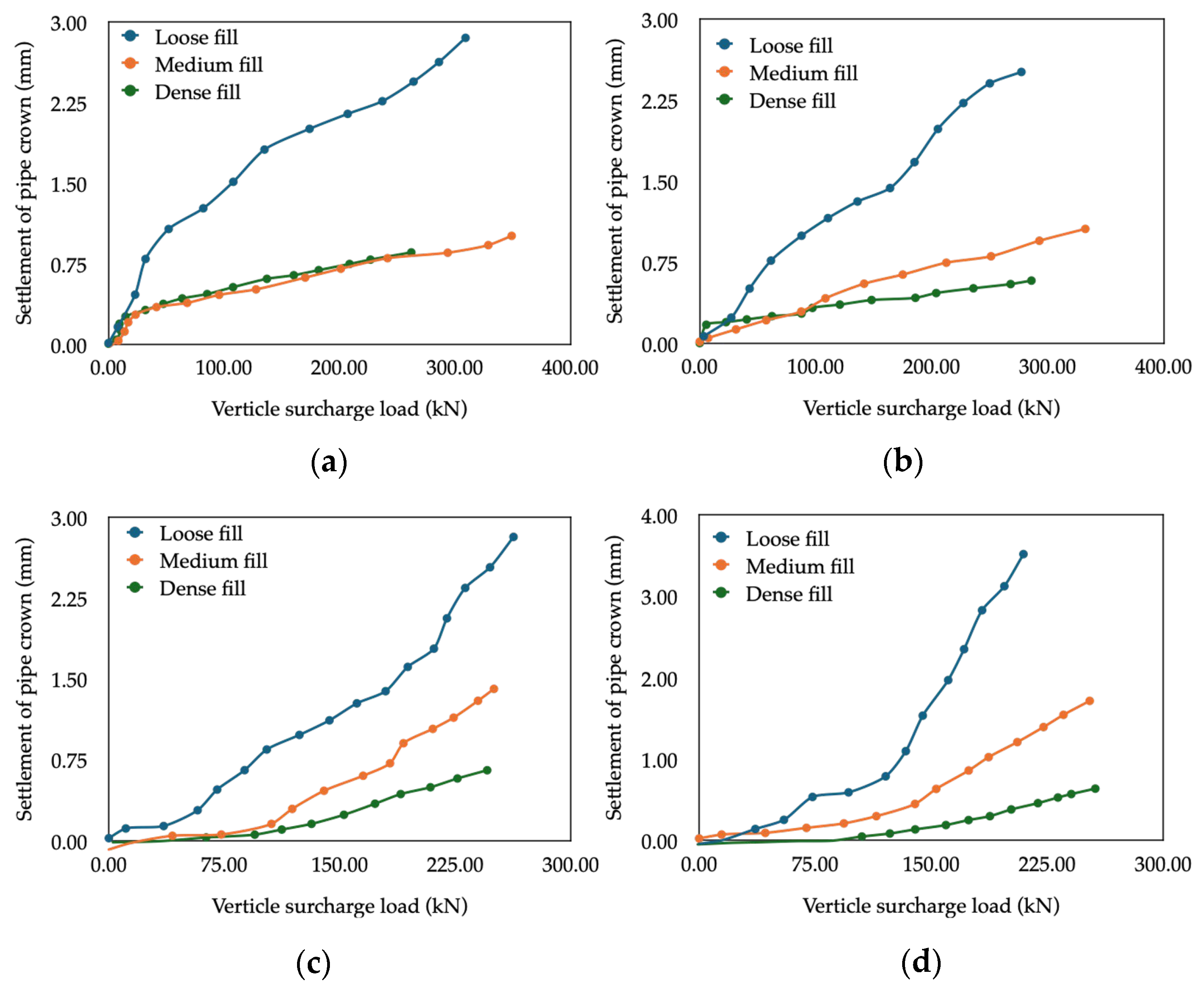
Experimental investigations by Terzi et al. [
21] demonstrated that increasing the rubber content beyond approximately 7% resulted in larger settlements in pipe backfill systems (
Figure 5). These findings indicate that while small amounts of rubber can improve the structural performance, excessive rubber inclusion leads to undesirable deformation behaviour.
Similar trends have been observed in gravel–rubber mixtures (GRMs), where rubber particles are combined with coarse aggregates to produce lightweight fill materials. Tasalloti et al. [
92] reported that increasing the rubber content caused a transition in soil behaviour from a dilative to contractive response during loading. This shift indicates that the rubber inclusions reduce the ability of the granular skeleton to mobilise interparticle friction and dilation.
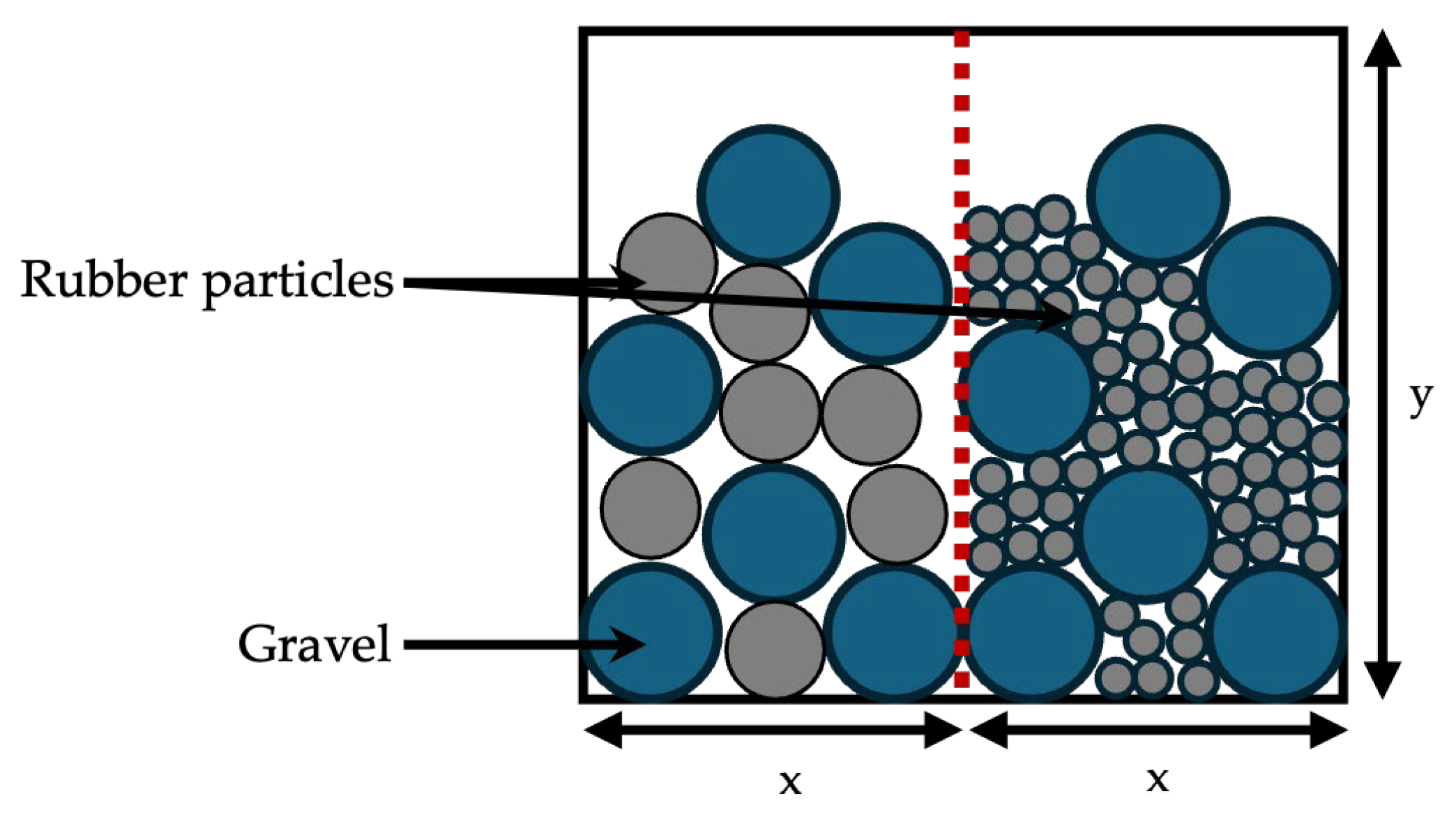
Particle size also plays an important role in controlling compressibility. Crumb rubber (0.6–4.75 mm) particles may fill voids between gravel particles more effectively than tyre chips (2–6 mm), reducing the initial porosity. As illustrated in
Figure 6 (adapted from [
92]), when the gravel skeleton remains constant, replacing a single large rubber particle with an equivalent volume of smaller rubber particles allows the finer material to distribute more efficiently and fill the surrounding space. Since rubber is highly compressible, these finer particles can also increase the overall compressibility of the mixture when subjected to a load. As a result, many studies recommend limiting the rubber content in gravel–rubber mixtures to approximately 10% to avoid excessive settlement [
92].
4.4.5. Seismic and Damping Performance
The rubberised soil mixture has also demonstrated improved seismic and vibration absorption behaviour. Tasalloti et al. [
92] highlighted that GRMs with volumetric rubber contents between 25% and 40% demonstrate excellent seismic isolation properties, making them suitable for use in seismic-resilient foundation systems for lightweight residential buildings. Edinçliler et al. [
95] found that the rubber particle size and aspect ratio affect damping performance. Rubber buffings, a by-product of tyre recycling (5–8 mm, aspect ratio 2.3) resulted in a lower damping ratio compared to crumb rubber (0.3–5 mm, aspect ratio 1.2). A higher damping ratio implies greater energy dissipation, which benefits seismic isolation by reducing vibration transmission. However, an increase in the damping ratio was accompanied by reductions in the shear modulus, indicating reduced stiffness and increasing potential settlement risks. While this flexibility improves energy dissipation and reduces seismic loads on structures, excessive reductions in shear modulus can lead to instability, excessive settlements, and lower bearing capacity. This trade-off highlights the need for an optimal rubber content to balance damping benefits with adequate strength and stiffness.
4.4.6. Bearing Capacity Enhancement
Haq et al. [
96] demonstrated that combining lime stabilisation with waste rubber tyre powder significantly improved the mechanical performance of clayey soils. An optimal mixture containing approximately 3% lime and 12.5% rubber powder increased the shear strength by 44% and improved the bearing capacity by nearly 89%. The improvement was attributed to lime-induced pozzolanic reactions that enhanced soil bonding, while rubber particles filled void spaces and contributed to the improved load transfer. As a result, the California Bearing Ratio (CBR) increased from 2.48% to 8.5%, enabling a reduction in pavement thickness of approximately 50% and reducing construction costs by nearly 40%. These results suggest that rubber inclusions may perform more effectively when combined with chemical stabilisation techniques, rather than being used as standalone reinforcement elements.
4.4.7. Environmental and Practical Considerations
Beyond mechanical performance, environmental considerations play an important role in evaluating rubber–soil composites. Several studies indicate that properly processed tyre particles pose minimal environmental risk when steel wires are removed and the rubber particles are embedded within soil matrices [
97]. Larger rubber particles may even reduce the potential for metal leaching by lowering the exposed surface area available for chemical degradation [
92]. However, environmental safety depends strongly on the processing and preparation of tyre materials. Steel components must be removed prior to use, particularly when rubber is placed near geosynthetic materials, as exposed steel wires can puncture geotextiles and compromise system integrity [
91].
From a design perspective, the overall performance of rubber–soil composites is governed by several interacting parameters, including soil gradation, rubber particle size, rubber content, and applied loading conditions [
95]. Achieving stable mixtures requires sufficient interparticle contact between soil particles to maintain a load-bearing skeleton while allowing rubber particles to contribute reinforcement and energy dissipation.
4.4.8. Critical Synthesis
Overall, the literature suggests that tyre-derived materials are most useful when the role is defined by the function required from the soil system, rather than the strength improvement alone. In soil–rubber mixtures, performance is governed by the ability to maintain an effective mineral soil skeleton while allowing rubber particles to contribute frictional resistance, drainage, lightweight behaviour or vibration damping. This makes geotechnical applications fundamentally different from concrete, because the response is controlled by particle interaction and packing, rather than cementitious matrix continuity. In soils, rubber particles can improve shear resistance, damping capacity, and drainage behaviour, but their effectiveness depends strongly on the rubber particle content, size, soil gradation, and density state. Most studies’ beneficial reinforcement effects are generally achieved at relatively low rubber contents, commonly below about 7–10%, where the soil skeleton remains in the load-bearing phase. At higher rubber contents, the mixture behaviour becomes dominated by the deformability of rubber particles, leading to reduced structural stability.
The findings suggest that tyre-derived materials are best suited to geotechnical applications where lightweight behaviour, drainage, vibration damping or controlled deformation provide direct design value. Their use should be guided by application-specific criteria including allowable settlement, stiffness demand, drainage conditions, and long-term stability. Future research should focus on developing design frameworks that link rubber content, particle size, and soil type.
4.5. Mining Applications
Mining operations generate substantial quantities of waste rock and tailings as by-products of ore extraction and mineral processing. These wastes are commonly managed either through surface disposal in tailings storage facilities [
98] or through underground backfilling to provide ground support and enable continued ore recovery [
99]. Mining is also one of the largest generators of OTR tyre waste. Yet, recovery options for these tyres remain limited due to their size, transport cost, and remote generation locations. This makes mining uniquely relevant within the broader tyre recycling landscape. Unlike concrete, asphalt, or general geotechnical applications, where waste tyre products are sourced from recyclers, where they are usually transported to another sector for reuse from their production, mining offers the possibility of closed-loop operations of tyre waste generation and tyre-derived material use within the same operational system.
From a circular economy perspective, this makes mining particularly attractive. A potential closed-loop operation in which waste tyres are processed and reused onsite in mine backfill systems could reduce disposal volumes, reduce transport demand, lower reliance on conventional strength improving reinforcement materials, and potentially offset part of the cement demand in backfill production. This may also provide potential environmental benefits by reducing transport requirements associated with external tyre recycling and, in some cases, lowering cement demand through partial material replacement. The extent of these benefits depends strongly on processing methods, logistics, and application-specific performance requirements.
4.5.1. Tailings Dam Stabilisation
Tailings dams are large-scale surface storage facilities used to contain finely ground waste materials (tailings) generated during mineral processing. These systems are typically constructed as embankments, within which tailings are deposited as slurry and remain in a predominantly saturated or partially saturated state over long service lives (100 years+) [
100]. At first glance, tailings dams may appear to be a promising destination for tyre-derived reinforcement because they are large-scale mining waste structures that require long-term stability.
Reinforcement of tailings systems using geosynthetics has been shown to improve both compressive and tensile behaviour [
101], suggesting that reinforcement-based approaches are relevant in principle. However, tyre-derived materials are far less suitable in this context than in other mining applications. Unlike cemented backfill systems, tailings in storage facilities are generally not bound within a cementitious matrix and are instead deposited in an unconfined or weakly consolidated state above ground. The corrosive nature of tailings environments limits the direct use of steel-bearing tyre components, unless they are further processed to remove steel fibres [
101]. Rubber components also raise concerns regarding chemical leaching, particularly in saturated and chemically aggressive environments [
102]. Tailings dams represent large, open, and often saturated environments where rubber particles would be directly exposed to pore water and long-term environmental interaction, making encapsulation impractical at scale. Although encapsulating rubber within a cemented matrix could reduce the leaching risk, this would increase material and processing costs and undermine the cost efficiency for large-scale tailings application [
102]. Moreover, such an approach would contradict the fundamental purpose of tailings dams, which function primarily as bulk disposal systems rather than engineered composite materials. In this sense, tailings dams differ markedly from concrete or pavement systems, where rubber is often embedded in a bound matrix and where exposure conditions are more controllable. Tailings themselves are often later reprocessed and used as feed material for cemented paste backfill (CPB) in underground mining, representing a separate application pathway in which the material is re-engineered and cemented prior to placement, in which rubber application has been examined.
Therefore, although tailings stabilisation is conceptually relevant, the current literature suggests that tyre-derived materials are not yet a practical or efficient reinforcement option for tailings dams. Compared with later sections on backfill, this application appears to offer weaker mechanical justification and poorer alignment with environmental risk management.
4.5.2. Cemented Backfill
In contrast to tailings dams, underground cemented backfills present a much stronger case for the reuse of tyre-derived materials. Cemented rock fill (CRF) and CPB are widely used in underground mining to stabilise voids, support exposed rock surfaces, and permit safe extraction of adjacent ore. These backfills are typically produced from mine waste streams such as waste rock or tailings, with cement contents commonly ranging between 3 and 7% depending on the required strength [
103,
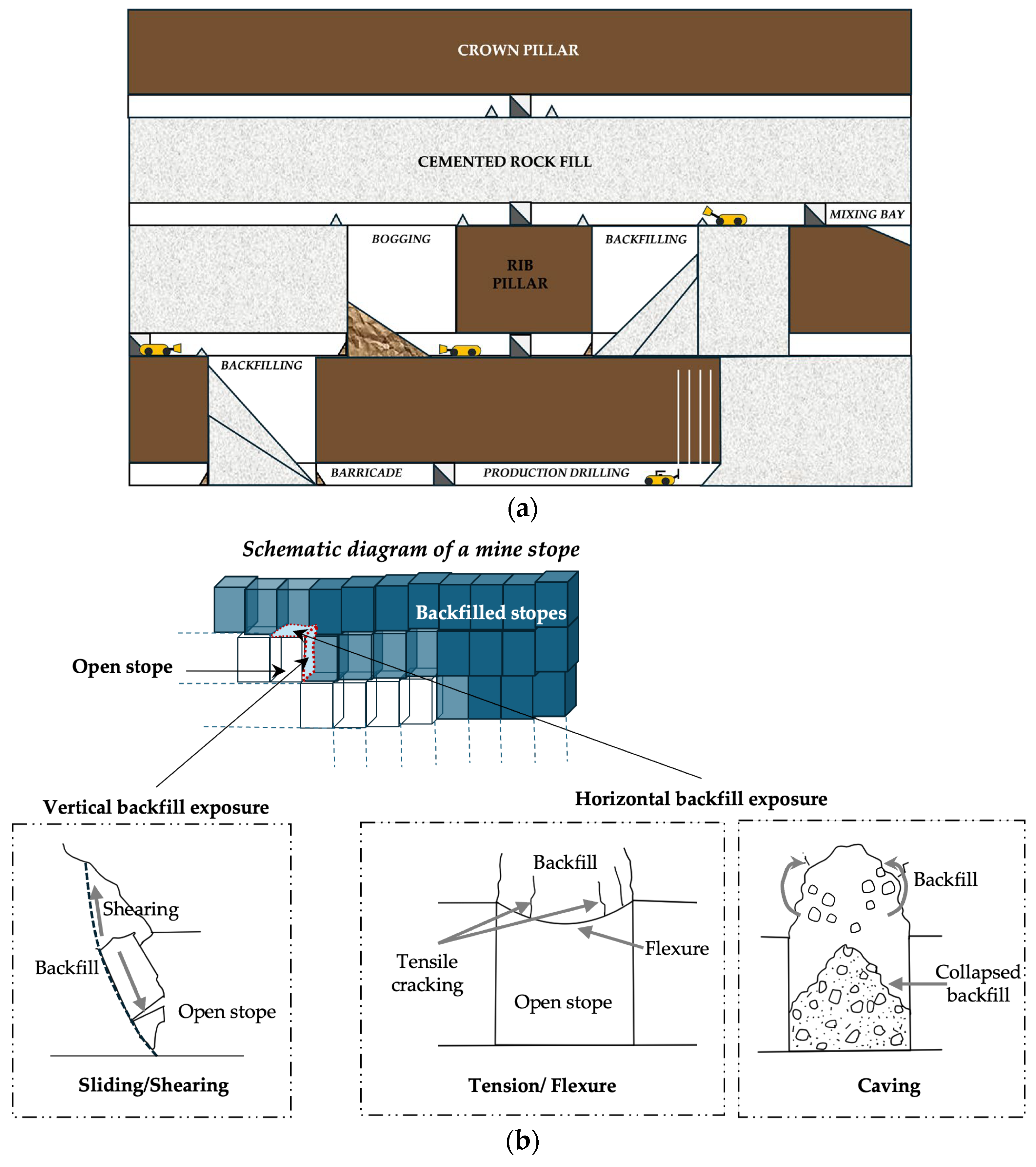
104]. Since cement is often the most expensive component of these systems, there has been strong interest in alternative reinforcement strategies that can improve performance without proportionally increasing binder demand. To contextualise the functional role of the backfill within mining systems,
Figure 7a presents the schematic representation of CRF placement in an underground stope. This figure illustrates the arrangement of crown pillars, rib pillars and filled stopes, as well as the production drilling and digging processes associated with ore extraction. Importantly, it highlights that backfill is not a passive material but is actively integrated into the mining cycle, where it is placed, cured, and subsequently exposed during adjacent excavation stages. This operational context is essential for understanding why conventional material performance metrics alone are insufficient.
Unlike the applications discussed in earlier sections, cemented backfill systems are operationally distinct even though there are structural similarities to concrete [
99]. While rubberised concrete is usually judged against conventional compressive and flexural performance criteria, and asphalt against fatigue and rutting resistance, mine backfills are primarily required to maintain stability under exposure conditions in underground stopes. As shown schematically in
Figure 7a, exposed backfill cannot typically fail in pure compression; instead, it is more vulnerable to tensile cracking, caving, and sliding [
99]. This makes mining backfill fundamentally different from many conventional material systems and raises an important criticism of the current literature, where most studies still assess tyre-modified backfills predominantly through UCS [
105,
106,
107,
108,
109], even though UCS does not directly represent the governing in situ failure mode.
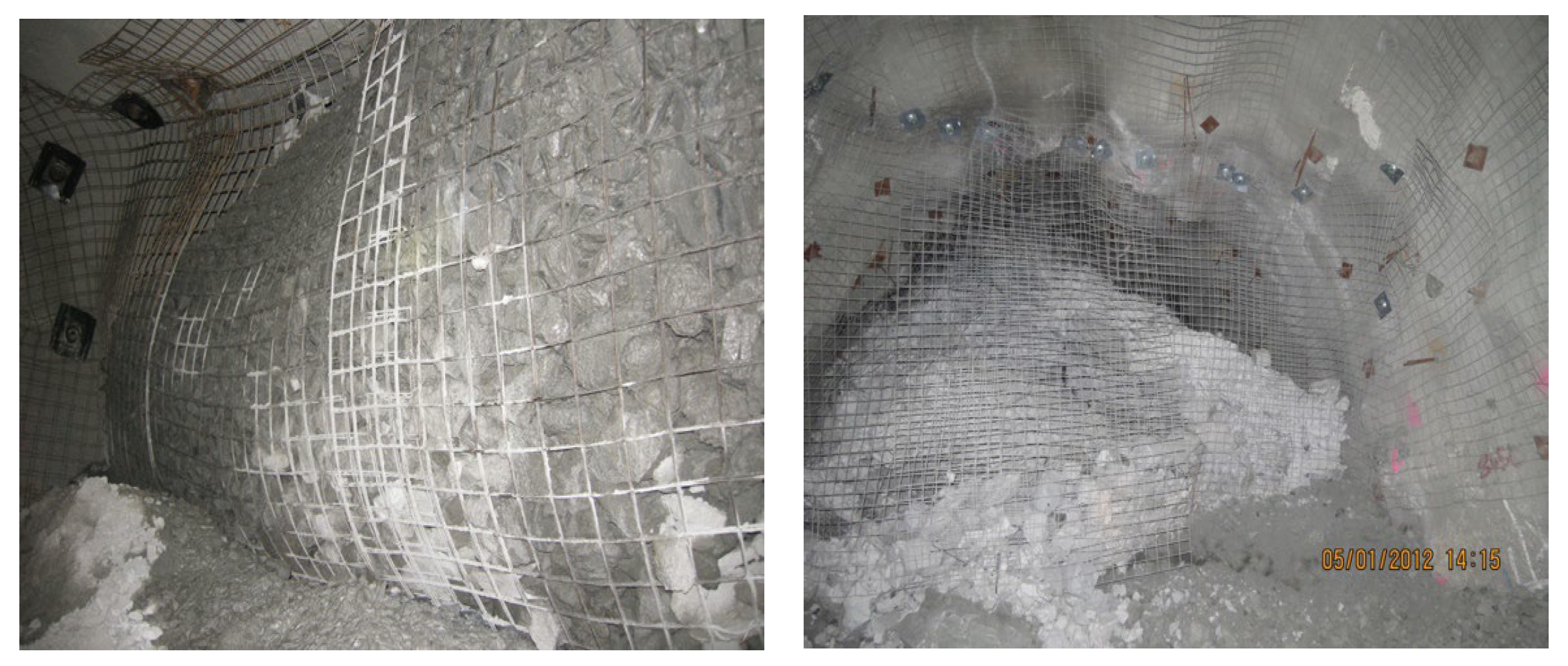
Figure 7b further reinforces this distinction by linking the geometric exposure of backfill to the corresponding failure mechanisms observed in practice. The isolated stope scale representation demonstrates how backfill is exposed over large vertical and horizontal spans following ore extraction, while the accompanying images of underhand and vertical exposures illustrate that instability is governed by tensile and shear-dominated mechanisms, rather than compressive crushing.
The reliance on compressive testing portrays a similar issue identified earlier for rubberised concrete, where compressive strength is often treated as the dominant indicator despite improved post-cracking behaviour and energy absorption being among the main benefits of rubber inclusion. In mining backfill, this mismatch is even more significant because tensile instability is not secondary—it is central to backfill performance. However, the need for compressive strength analysis in any new engineering to mining backfill remains relevant in application scale as the industry uses UCS for the quality assurance and quality control purposes of the mix design. Therefore, the limited studies on rubberised cemented backfill focus on compressive strength to identify the optimal disposal levels and matrix behaviour with rubber addition.
4.5.3. Compressive Strength Response
Across the available literature, the most consistent finding is that tyre-derived inclusions reduce compressive strength and stiffness in cemented backfill systems. Yao et al. [
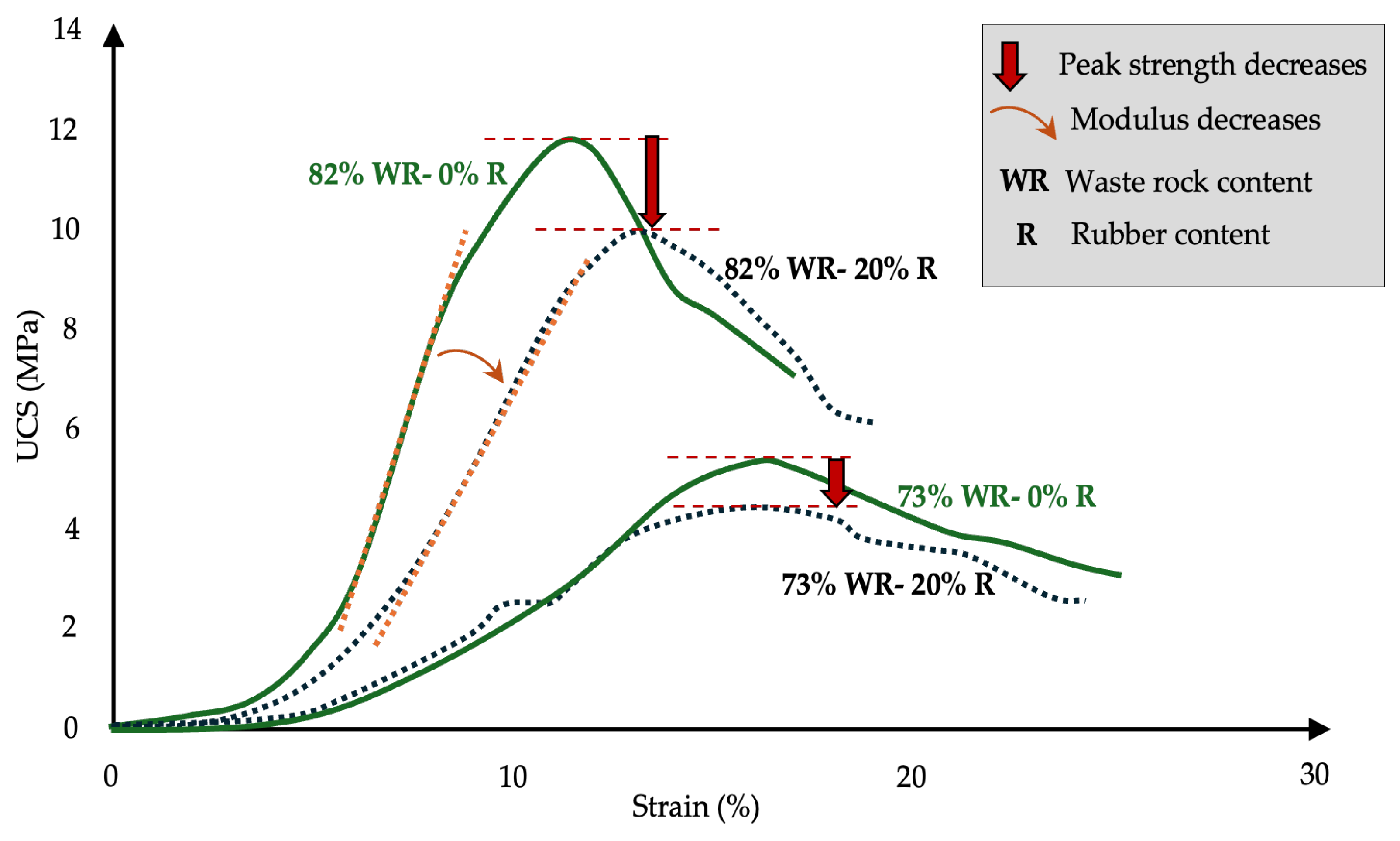
106] showed that incorporating crumb rubber aggregate into cemented waste rock backfill decreased both UCS and modulus, although higher waste rock (4–5 mm) concentrations reduced the severity of the strength loss. At 20% crumb rubber (3–6 mm) content, UCS decreased by 24.11% for mixes with 73% rock mass concentration and by 12.68% for mixes with 82% concentration (
Figure 8). This result is important because it suggests that the host granular matrix plays a moderating role, where stiffer and denser coarse particle frameworks can offset the disruptive effect of rubber inclusions.
This trend is broadly consistent with the earlier concrete and geotechnical sections. In rubberised concrete, rubber particles weaken the rigid mineral skeleton through poor bonding and stiffness contrast. In soil–rubber systems, excessive rubber contents disrupt particle contact and reduce load-bearing capacity. Backfill systems sit between these two cases. They are particulate composites bound by a weak cementitious matrix, so they experience both interfacial debonding and skeleton disruption, which results in strength reduction. What matters more is whether that reduction is accompanied by beneficial changes in post-peak behaviour.
Yao et al. [
106] reported that although peak strength declined, post-peak ductility increased, with the rate of stress drop after peak becoming less severe (
Figure 8). This feature has been observed across several backfill studies with rubber inclusion [
107,
109] and suggests that compressive strength loss alone does not capture the full mechanical consequence of rubber inclusion.
Costa et al. [
107] and Wickramasinghe et al. [
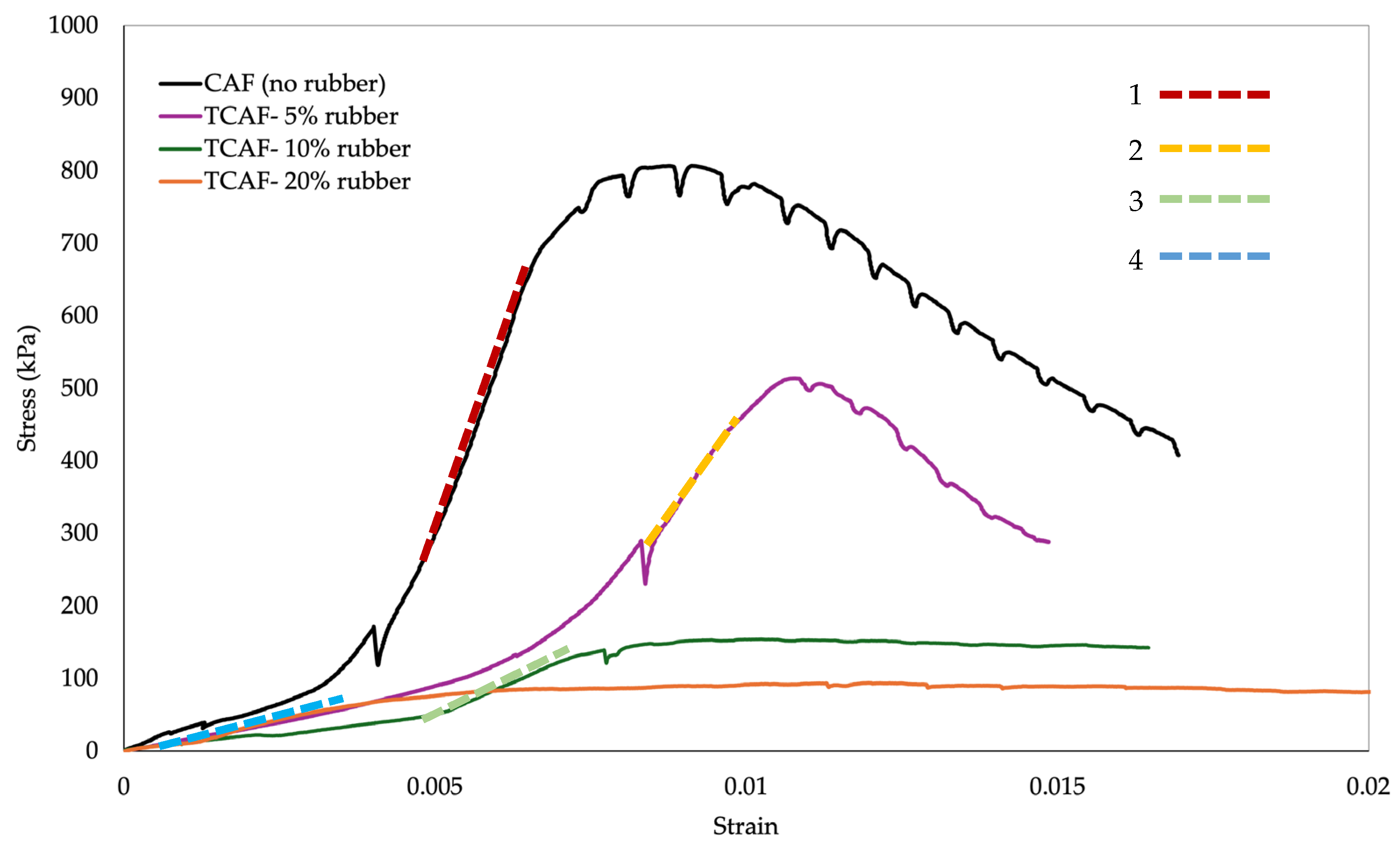
109] reported a similar pattern in large-scale cemented aggregate and cemented rock fill tests where increasing tyre shred contents from 5% to 20% reduced UCS and modulus (gradient of elastic portion of the stress–strain graph 1–4) exponentially (
Figure 9), yet the post-failure stress drop became less abrupt and residual capacity was retained more effectively. Bonding issues were clearly observed, with rubber particles debonding from surrounding aggregates because of their smooth surfaces and compositional variability [
107]. This mechanism is consistent with the weak interfacial transition zones identified earlier in rubberised concrete [
40], reinforcing that poor rubber–matrix bonding is a challenge. The practical consequence in backfill appears to extend beyond lower peak strength to an altered failure process that may be less brittle and therefore safer under underground exposure conditions.
4.5.4. Particle Size Effect
The available literature suggests that the form of tyre-derived inclusion can strongly influence backfill performance. Wang et al. [
105] investigated waste tyre fibres in cemented paste backfill and found that increasing the fibre content reduced the dry density and UCS but improved toughness, with optimum toughness observed at approximately 4% fibre content. The rubber fibres produced a ligament effect, allowing the material to remain partially intact after failure. This closely represented the crack-bridging mechanisms described earlier for rubber shreds in concrete (
Figure 4), but the implication is arguably more important in backfill because residual integrity after cracking can directly affect underground safety.
In contrast, Hou et al. [
108] examined fine rubber particles as a partial sand replacement in cemented coarse aggregate backfill and found a more mixed response. The waste rock and crumb rubber used in the study measured <18 mm and 0.635 mm, respectively. The rubber particles showed an improvement in early-age compressive strength at 3 days, likely due to a local void-filling effect, but reduced longer-term 7-day and 28-day strengths by 1–2% (for 5% and 10% rubber contents) and 2–3% (for 15% and 20% rubber contents), respectively. There was a steady reduction in splitting tensile strength (up to 4%) with an increasing rubber content from 5% to 15%. The authors identified an optimum content of approximately 15% but also concluded that rubber was mechanically less effective than conventional fibres for strength enhancement [
108].
The earlier concrete section similarly showed that finer rubber particles can act more as fillers, while larger shreds and fibres contribute more directly to crack bridging and post-peak toughness. The same pattern appears in backfill. Fibre-like or shred-like geometries are better suited to tensile crack control, while fine particles mainly modify density, packing, and deformability. Thus, not all tyre-derived materials should be treated as functionally equivalent. The choice between crumbs, fibres, and shreds is not merely a matter of processing scale but of intended mechanism of strength modification.
4.5.5. Tensile Behaviour
The most significant development in the mining literature is the shift from purely compressive testing toward tensile characterisation of tyre-reinforced backfill. Wickramasinghe et al. [
109] extended the earlier observations on ductility and crack bridging into a large-scale CRF system using actual mine waste rock and tyre shreds up to 100 mm in size. As shown in
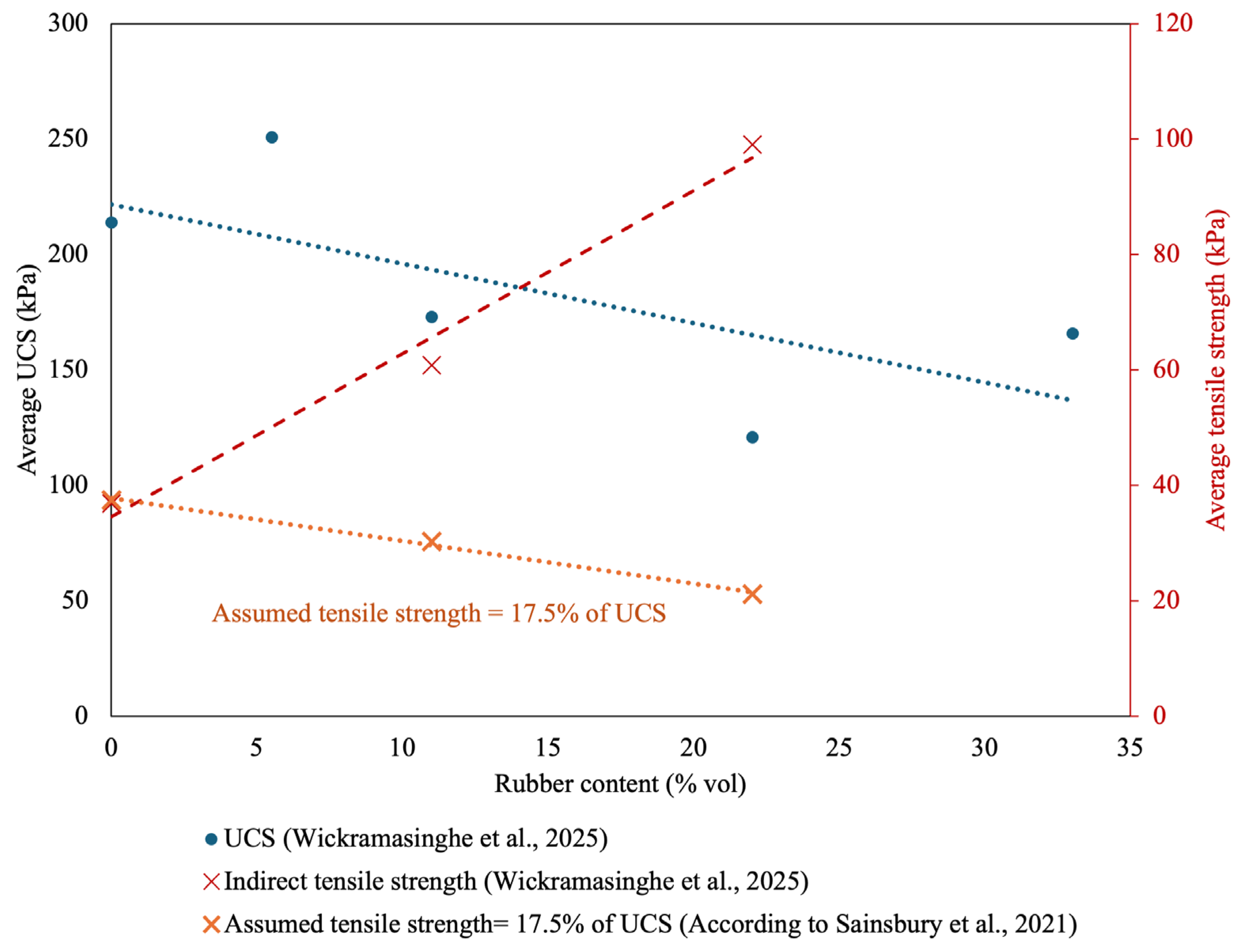
Figure 10, increasing rubber content reduced UCS and revealed oversaturation at 33% rubber inclusion, consistent with the broader literature. Unlike most earlier studies, the work also included indirect (three-point bending) and direct tensile testing and showed that rubber shreds increased the average tensile strength (obtained from the three-point bending) substantially, with a reported increase of 169% at 22% rubber content, relative to the control mix [
109]. Recent studies by Wickramasinghe et al. [
110] also presented similar trends on a CRF mix with a finer waste rock gradation, where the UCS decreased with rubber additions and the direct tensile strength increased with rubber addition of up to 22% by volume.
The apparent contrast with the tensile strength reductions commonly reported in rubberised concrete (
Section 4.2.2) and the tensile strength increase reported in rubberised CRF can be explained by the fundamentally different load transfer mechanisms governing the two systems. In concrete, which is a matrix dominated with fine material, tensile behaviour is controlled by the continuity of the cement paste and the integrity of the interfacial transition zone. Rubber particles in this context act as compliant inclusions that disrupt the matrix continuity and reduce effective stress transfer, leading to lower tensile strength. In contrast, CRF is a coarse particulate system, in which the load transfer is governed primarily by particle interlock and discontinuous cementation. Under these conditions, rubber shreds contribute to crack bridging, deformation accommodation, and stress redistribution within the granular skeleton. As a result, when rubber shreds are included in such a matrix, the tensile response is beneficial despite reductions in compressive strength. As presented in
Figure 10, the assumed tensile strength at 17.5% of the UCS for CRF, based on Sainsbury et al. [
99], shows that the tensile strength for the conventional mix can be overestimated but could severely underestimate the tensile strength on the rubberised CRF system.
This finding is important for two reasons. First, it directly addresses the dominant underground failure mode, rather than relying on UCS as a host strength to iterate tensile strength. Second, it suggests that the same rubber addition that weakens compressive response may significantly improve the performance parameter that matters more in practice. This differs from the rubberised concrete literature, where tensile or flexural improvements are often modest relative to the compressive penalties, and from geotechnical systems, where reinforcing effects are typically constrained to low rubber contents before compressibility dominates. In CRF, under the right geometry and dosage, rubber shreds appear capable of influencing the failure mechanism toward a more stable, crack-bridged behaviour from a brittle tensile cracking.
This provides preliminary support for the potential of closed-loop mining reuse. If tyre-derived shreds can both consume onsite tyre waste and reduce cement demand by approximately 2% while improving tensile stability [
109], the value proposition extends beyond waste recycling and promotes operational optimisation as well. However, these findings remain limited to a small number of studies, and the role of particle size distribution, host rock grading, and field-scale placement conditions still requires broader validation.
Considering the environmental implications, as reported by Wickramasinghe et al. [
109], a reduction of 2% cement content by weight (40 kg of cement) per cubic metre of CRF is produced with 22% tyre rubber inclusion. To illustrate the potential environmental implications, a simplified scenario can be considered in which reductions in the cement demand result in proportional reductions in CO
2 emissions. Given that cement production emits 0.5–0.9 kg of CO
2 per kilogram (average
0.7 kg) [
111], this reduction corresponds to an avoided emission of approximately 28 kg of CO
2 per cubic metre of TCRF. With CRF placement rates being 224 m
3/shift [
112], over a full year of continuous operation (365 shifts) with TCRF with 22% rubber inclusion would translate to saving 3270 tonnes of cement consumption, contributing to avoiding approximately 2289 tonnes of CO
2. This highlights the substantial climate mitigation potential in addition to recycling tyres with integrating the tyre waste into cemented backfill systems. Such estimates are highly sensitive to site-specific parameters including cement content, backfill volumes, and operational practices, and should therefore be interpreted as illustrative, rather than broadly generalizable.
4.5.6. Influence of Host Matrix and Gradation
One of the clearest lessons across mining studies is that the effectiveness of tyre-derived inclusions is highly dependent on the host matrix. Yao et al. [
106] showed that a higher rock mass concentration reduced the severity of strength loss. Costa et al. [
107] found that aggregate gradation and mix composition significantly influenced the response of tyre-reinforced cemented aggregate fills, especially when compared with Wickramasinghe et al. [
109]. This is consistent with trends in earlier sections. In concrete, the aggregate skeleton governs how severely rubber disrupts the matrix, and in soil, sand gradation controls the degree of frictional interlock and stability. In mining backfill, where aggregate particles are large, angular, and highly variable (
Figure 11), this sensitivity is likely even greater.
In mining backfill systems such as CRF, this dependency is amplified due to the inherently coarse and heterogeneous nature of waste rock used. As illustrated in
Figure 11, field-scale CRF is typically composed of large, angular rock fragments placed directly after blasting, resulting in a particle size distribution that is significantly coarser than that used in most laboratory investigations.
In contrast, many of the studies discussed [
106,
107,
108] use simplified, crushed and screened or scaled-down gradations, often incorporating finer aggregates or partially processed materials to enable controlled laboratory testing. While these approaches are necessary for repeatability and parametric evaluation, they do not fully capture the structural behaviour of coarse, load-bearing rock skeletons that dominate in situ CRF systems.
As directly comparable between studies by Costa et al. [
107] and Wickramasinghe et al. [
109], where the studies used waste rock capped at 50 mm and 100 mm respectively, the UCS of the finer mix is significantly greater than the coarser mix in both conventional and rubberised conditions. This difference introduces an important scale-related limitation. This does not invalidate the findings but influences how rubber interacts with the matrix. In scaled systems, rubber particles may have a more pronounced effect on the packing density and contact mechanics, whereas in coarse, field-scale systems, specifically rock fill systems such as in studies by Hou et al. [
108], field-scale applications might not be able to replicate laboratory findings directly due to the scale misrepresentation.
Unlike conventional concrete, where constituents can be relatively well controlled, mine waste rock varies from between sites and even between blasts. Therefore, tyre inclusion thresholds identified in one backfill system cannot be assumed to transfer directly to another. Therefore, it is important to resist generalising optimal rubber contents. What appears optimal in one CRF or CPB system may not be optimal in another because the response is controlled not only by the rubber content but also by the waste rock size distribution, cement dosage, packing density, and confinement conditions.
4.5.7. Closed-Loop Potential
Among all end-of-life tyre reuse pathways discussed in this review, mining may offer one of the strongest opportunities for a closed-loop operation. In concrete and asphalt, waste tyres must be collected, processed, transported, and integrated into industries that are geographically separated from the point of waste generation. In geotechnical works, although tyres may be used locally, the demand is often project-specific and discontinuous. Mining is different: the waste tyres, waste rock, tailings, and backfill demand all coexist within the same operational system. This creates the possibility of onsite processing and immediate reuse, which could bypass one of the biggest barriers identified earlier in the review: the transport cost.
Technically, the case is also stronger in mining backfill than in tailings dam stabilisation because backfill can encapsulate rubber within a cemented mass, reducing exposure and making the reinforcement function structurally relevant. Mechanically, the transition from brittle to ductile behaviour observed in
Figure 8,
Figure 9 and
Figure 10 is particularly meaningful under underground exposure conditions, where sudden collapse is more dangerous than moderate loss of compressive strength. In this regard, the mining application aligns closely with the broader trend identified across earlier sections: tyre-derived materials tend to reduce stiffness and peak strength but improve deformability, crack control, and energy dissipation. In mining, unlike many other sectors, those latter benefits may be more operationally valuable than peak UCS.
The environmental safety cannot be assumed from this closed-loop concept alone. Although cement encapsulation can reduce direct contact between rubber particles and groundwater, it should be considered a risk-reduction mechanism, rather than a complete solution to leaching. A safe circular system would require a staged approach that includes testing the compatibility with site specific mine water chemistry, leaching assessments on loose tyre fragments and tyre cemented backfill composites, and long-term monitoring for leaching in underground conditions.
Accordingly, this closed-loop potential is still overstated as the literature is still limited, field validation remains scarce, on-site processing protocols are undetermined, long-term durability in underground conditions is not yet well established, and environmental issues such as leaching have not been comprehensively resolved for all mine settings. While cost estimates for tyre collection, processing, and reuse are presented, it should also be noted that these values vary significantly depending on geographic location, scale of operation, and logistical constraints. As such, the economic feasibility of tyre reuse pathways cannot be generalised and requires site-specific evaluation. Moreover, the dominant reliance on compressive testing in much of the existing literature continues to obscure the true structural relevance of tyre-derived reinforcement in backfill.
4.5.8. Critical Synthesis
It is important to recognise that the current body of literature on tyre-reinforced mining backfill remains relatively limited compared with concrete and asphalt applications. Much of the available evidence is derived from a relatively small number of experimental studies, including both laboratory-scale investigations and emerging large-scale testing programmes. While these studies provide consistent indications of altered failure behaviour and improved post-cracking response, the findings should be interpreted as indicative rather than definitive, and further validation across different mining conditions, material gradations, and field-scale implementations is required between operations.
Overall, the mining literature indicates that tyre-derived materials are more promising for cemented backfill enhancement than for tailings dam stabilisation, and more promising in large crack-bridging forms than as fine filler-like particles when tensile stability is the objective. As in rubberised concrete and asphalt, rubber addition generally reduces compressive strength and stiffness due to weak interfacial bonding and the low modulus of the rubber inclusions. As in geotechnical systems, the host matrix and particle skeleton strongly govern whether rubber acts as reinforcement or disruption. What distinguishes mining is that the most valuable effect of rubber inclusion is the shift from brittle to ductile, implementing crack-bridged failure under exposure conditions, where backfill can fail by separation (due to falling into open stopes), rather than crushing (applicable if driven over).
This distinction is important. If evaluated only through UCS, tyre-reinforced backfills appear mechanically compromised. If evaluated in terms of post-cracking stability, tensile resistance, and residual integrity under underground exposure, they may represent a potentially high-value reuse pathways for mine-generated tyre waste. For this reason, future research should prioritise large-scale tensile and flexural characterisation, site-specific optimisation based on waste rock gradation, long-term underground durability, and practical assessment of onsite processing routes. These are key steps required to further evaluate, and advance tyre-reinforced mining backfill from a promising concept toward a closed-loop practical implementation.
5. Comparative Performance Framework
The reviewed literature demonstrates that tyre-derived materials influence engineering systems differently depending on the host matrix, loading environment, and performance requirements of the target application. Consequently, a direct comparison based solely on UCS provides an incomplete assessment of engineering suitability. In several applications, reductions in peak strength are partially offset by improvements in ductility, crack resistance, damping capacity, residual integrity and durability-related performance. To better illustrate these application-specific trade-offs,
Table 5 comparatively summarises the dominant engineering responses, implementation limitations, environmental considerations, and current maturity level of tyre-derived material applications across the reviewed sectors. The field-scale validation and implementation readiness is ranked based on current industry standard availability for director-modified applications and accumulation of promising results.
The comparative framework highlights that tyre-derived materials should not be assessed exclusively according to the peak compressive strength performance. While reductions in stiffness and strength are frequently reported, particularly in rigid cementitious systems, several applications benefit from improved ductility, fracture resistance, damping capacity, deformation tolerance, and residual load-bearing behaviour. Importantly, the dominant performance requirements differ substantially between applications. For example, asphalt systems prioritise fatigue resistance and viscoelastic behaviour, while mining backfill applications may prioritise integrity and controlled deformation rather than maximum UCS alone. These findings demonstrate that the suitability of tyre-derived materials is strongly application-dependent and requires performance-based evaluation frameworks tailored to the engineering objectives of each system.
6. Challenges in Applying EOL Tyre Rubber
The use of EOL tyre-derived materials in engineering applications presents several technical, environmental, and practical challenges. These challenges are not uniform across all applications. As synthesised in
Figure 12, the suitability of tyre-derived materials depends on how material variability, interface behaviour, environmental exposure, and processing requirements interact with the performance demands of each system.
Material variability remains one of the main barriers to consistent performance. EOL tyres differ in rubber, steel, and textile composition depending on tyre type, source and processing history [
113]. This variability affects particle size, surface condition, density, and grading, which can directly influence the mechanical response. Therefore, reliable use of tyre-derived materials requires stronger quality control, including clear classification of the particle size, composition, density type, and processing method.
In cementitious systems (
Section 4.2 and
Section 4.5), the most critical material level challenges poor bonding between rubber and cement paste. The hydrophobic nature and low surface energy of rubber are particularly critical in cement-bound systems where interfacial bonding governs mechanical performance [
114]. Poor adhesion between rubber particles and cement paste leads to increased porosity, and reduced strengths, as discussed in
Section 4.2. Surface treatments can partially improve this interface, particularly in rubberised concrete, but the effectiveness depends on rubber source, surface condition, treatment concentration, direction, and cost. Surface modification techniques including physical (washing with water or precoating with cementitious materials), chemical (e.g., using sodium hydroxide, potassium permanganate, silane coupling agents or acids) and mechanical treatments (e.g., grinding or abrasion) have shown to improve the surface characteristics of rubber particles enhancing interfacial bonding between rubber and cement [
115]. The use of supplementary cementitious materials (e.g., silica fume and fly ash) can partially mitigate the strength loss by refining pore structure of the composite.
Studies on rubberised concrete indicate that sodium hydroxide pre-treatment can partially recover some strength losses, with improvements of up to 20% in UCS and 15% in STS (15% recovery) at higher rubber contents (20% fine aggregate replacement) using higher concentrations of NaOH (1 mole concentration) and longer treatment durations (24 h of soaking) [
116]. These improvements are attributed to the removal of surface contaminants, increased surface roughness, and introduction of polar functional groups on the rubber surface, which enhance adhesion and stress transfer within the cement matrix [
116,
117]. Other treatments, such as potassium permanganate, silane coupling agents or acid-based methods, similarly act by the surface modification by removing impurities and making the rubber surface rough and hydrophilic [
115]. The effectiveness of these treatments cannot be universally defined, as it depends on the characteristics of the rubber particles, including composition and surface condition, which vary depending on the tyre source and processing (as presented in
Table 2). In addition, treatment performance is influenced by processing parameters such as concentration and duration, as well as practical considerations including cost and scalability. Accordingly, while certain treatments (e.g., NaOH or silane-based methods) have shown effectiveness in cementitious systems, surface modification should be considered application-specific, rather than universally optimal.
Environmental risk is strongly controlled by exposure conditions. In unbound or saturated applications, such as tailing dams or drainage layers, rubber particles may remain in direct contact with pore water, increasing the relevance of leaching and long-term degradation risks [
6,
62]. In contrast, cemented systems such as concrete and cemented backfill can reduce exposure pathways by encapsulating rubber within a bound matrix. However, encapsulation should be treated as a risk reduction mechanism rather than proof of environmental safety, and site-specific leach testing remains necessary. Beyond leaching, uncontrolled degradation scenarios such as tyre fires further increase the environmental risks. Soils exposed to tyre fire residues have moderate phytotoxicity with significant reduction in seed germination (about 55%) and root growth inhibition (about 27–28%) due to the presence of polycyclic aromatic hydrocarbons and heavy metals [
118]. While remediation strategies such as biochar amendment can partially restore the soil’s biological activity and reduce toxicity [
118], the findings highlight the need for controlled application. To minimise environmental risks, studies have suggested that the use of tyre-derived products above the groundwater table is a safe method to avoid possible contamination from leaching [
6]. In contrast, in underground cemented backfill systems (
Section 4.5.2), encapsulation within a cemented matrix significantly reduces exposure pathways, making rubber inclusion more viable under controlled conditions.
Mechanical performance challenges also vary across applications. In load-bearing systems such as structural concrete and pavements (
Section 4.2 and
Section 4.3), the elastic nature of rubber leads to increased deformation and reduced stiffness, which can compromise the load-bearing capacity [
39]. This behaviour is critical in pavement systems where an excessive rubber content reduces the resilient modulus, and in structural concrete where strength reduction is a primary limitation. However, these effects are not universally detrimental, as they are often accompanied by improved energy absorption and crack resistance. Hybrid composites combining rubber with fibres or plastics have been explored to balance stiffness and ductility [
69].
Economic feasibility remains a challenge but is highly dependent on scale and application. The processing of EOL tyres into usable forms requires specialised equipment, with reported infrastructure costs ranging from approximately
$ 214,279.5 to
$ 714,265 (AU
$ 300,000 to AU
$ 1 million) for shredding facilities and exceeding
$ 1.4–7.1 million (AU
$ 2–10 million) for larger-scale crumbing plants [
2]. While such costs may limit widespread adoption in large-volume applications such as tailings dams, they may be more justifiable in higher-value applications such as engineered backfill or specialised pavement systems. Government funding initiatives and the development of on-site processing strategies may help reduce costs and improve feasibility.
Overall, the challenges associated with EOL tyre reuse are not inherent limitations but are strongly dependent on the interaction between material properties, environmental conditions, and application requirements. As demonstrated throughout this review, successful implementation requires aligning tyre-derived material characteristics with the governing performance demands of each system, rather than applying a uniform approach across all construction applications.
7. Conclusions
This review examined the engineering potential of tyre-derived materials across construction, geotechnical, and mining applications, highlighting both their functional advantages and the challenges associated with their integration into conventional material systems. Tyre-derived materials have the potential to interconnect waste management, resource efficiency and sustainable material use. The findings indicate that tyre-derived inclusions offer unique mechanical characteristics that can improve deformability, energy dissipation, and crack bridging capacity in several engineering applications. However, these benefits are often accompanied by reductions in stiffness and peak strength, meaning that their successful implementation depends on aligning these material characteristics with the performance requirements of the target system.
The review also suggests that the effectiveness of tyre-derived materials is strongly governed by the interaction between rubber inclusions and the host matrix. Factors such as the rubber content, particle geometry, and the structural behaviour of the surrounding material system play a critical role in determining whether tyre-derived inclusions act beneficially or detrimentally. As a result, the use of waste tyres in engineering materials cannot be generalised through a single design approach and instead requires application-specific optimisation.
Despite the technical challenges discussed, tyre-derived materials present potential opportunities for improving resource efficiency and reducing the environmental burden associated with end-of-life tyre disposal. Their use may potentially contribute to reduced natural resource extraction, lower greenhouse gas emissions, and diversion of waste from landfills, aligning with circular economy principles and sustainable waste management. Among the sectors reviewed, applications that benefit from enhanced deformability and energy absorption appear to show greater compatibility with rubber inclusions. In the context of mining, cemented backfill systems have been identified as a potentially favourable application due to their controlled environment and materials requirements. The current evidence base remains limited and largely derived from a small number of experimental studies. Accordingly, while the concept of closed-loop reuse of tyre-derived materials within mining operations appears promising, its practical implementation at the operational scale still requires substantial validation. Most existing studies remain laboratory-based and frequently rely on simplified, crushed, screened, or scaled-down particle gradations that may not fully reproduce field-scale cemented rock fill (CRF) behaviour. Consequently, mining backfill applications should currently be viewed as an emerging research direction with significant potential, rather than a near-ready industrial solution.
Future research should therefore focus on developing performance-based design frameworks that capture the multifunctional behaviour of tyre-derived inclusions, rather than relying solely on conventional strength metrics. There is greater emphasis on durability assessment with long-term stability analysis, field-scale validation, and environmental risk evaluation, including leaching behaviour under application-specific exposure conditions. In addition, comprehensive life cycle assessment (LCA) is needed to determine whether there may be any potential environmental benefits associated with tyre reuse, cement reduction, or natural aggregate replacement. These are maintained after accounting for tyre collection, transport, shredding, separation, surface treatment, and other processing requirements, including transporting to reuse location. These efforts are essential to better quantify the trade-offs identified in this review and to establish the conditions under which tyre-derived materials can be reliably, effectively and sustainably applied. With these advances, tyre-derived materials have the potential to move beyond waste management solutions and become valuable functional components in sustainable engineering systems.