


Abstract
Mineral scale deposits in groundwater-supplied drinking water distribution systems reduce hydraulic efficiency and increase maintenance costs. This study evaluated the effectiveness of citric acid as a descaling agent for natural scale deposits collected from the Benito Juárez and La Joya drinking water distribution systems in Zacatecas, Mexico. The samples were treated with citric acid solutions at concentrations of 1, 2, and 3 M (moles per liter) and characterized before and after treatment using X-ray diffraction (XRD), Fourier-transform infrared spectroscopy (FTIR), scanning electron microscopy (SEM), and inductively coupled plasma optical emission spectrometry (ICP-OES). In addition, statistical analyses were performed using analysis of variance (ANOVA) and Tukey’s test. The scale deposits were composed mainly of calcium carbonate and exhibited differences in their initial mineralogical composition between the two systems. Treatment with citric acid promoted the progressive dissolution of carbonate phases, resulting in mineralogical, chemical, and morphological changes. The 3 M solution produced the highest degree of mineral dissolution, whereas the 1 M and 2 M treatments showed statistically similar behavior. The results demonstrate that scale deposit removal efficiency is influenced by the initial composition of the scale deposits, providing a scientific basis for optimizing remediation strategies in drinking water distribution systems.
1. Introduction
The long-term operation of drinking water distribution systems is strongly influenced by the formation of mineral scale deposits on the internal walls of pipes. These deposits progressively reduce the effective pipe diameter, increase hydraulic head losses, decrease conveyance capacity, and raise maintenance costs, ultimately compromising the operational efficiency of water supply systems [1,2]. This phenomenon is particularly common in groundwater-supplied systems, whose hydrogeochemical characteristics are largely determined by the geological formations through which the water flows prior to extraction. The interaction between groundwater and these geological materials can contribute to the presence of dissolved calcium and bicarbonate, influencing water hardness and the potential formation of mineral scale deposits. For example, the Calera aquifer in Zacatecas, Mexico, has been reported to be associated with geological materials containing calcite, dolomite, and pyrite, which contribute to the hydrogeochemical characteristics of the groundwater system [3].
The chemical composition of groundwater is influenced by water–rock interactions within the aquifer. The dissolution of carbonate rocks, silicate minerals, and other geological materials introduces calcium, magnesium, bicarbonates, silica, aluminum, and other dissolved components that may subsequently precipitate inside pipelines under favorable physicochemical conditions. As a result, naturally formed scale deposits are often composed of complex mineral assemblages dominated by calcium carbonate, accompanied by silicates, sulfates, iron oxides, and other secondary mineral phases [4,5,6,7].
Among these minerals, calcium carbonate represents the main component of scale deposits in drinking water distribution systems due to its low solubility. Depending on the physicochemical conditions under which precipitation occurs, this compound may occur in the crystalline forms of calcite, aragonite, and vaterite [8,9] However, unlike synthetic calcium carbonate, naturally formed scale deposits exhibit considerably greater compositional heterogeneity as a consequence of the incorporation of other mineral phases derived from both groundwater hydrogeochemistry and the operating conditions of the distribution network.
Various mechanical and chemical methods have been proposed for the removal of scale deposits from drinking water pipelines. Mechanical methods generally require specialized equipment and are not always suitable for all materials used in distribution networks. In contrast, chemical treatments represent an attractive alternative because they allow mineral deposits to be dissolved while minimizing mechanical intervention [10,11,12]. Among these treatments, hydrochloric acid has been widely used because of its high dissolution capacity; however, its corrosive behavior and the environmental risks associated with its use have encouraged the search for less aggressive alternatives [13,14,15]. In this context, organic acids, particularly citric acid, have attracted increasing interest because of their biodegradability, lower toxicity, and ability to form soluble complexes with calcium ions, thereby promoting the dissolution of calcium carbonate-rich deposits [15,16,17,18]. In addition to promoting the acid dissolution of calcium carbonate, citric acid facilitates calcium complexation, contributing to maintaining this element in solution during the demineralization process. Several studies have demonstrated that citric acid is an effective alternative for the removal of calcium carbonate-rich deposits [2,19,20]. Nevertheless, most of these investigations have been conducted using synthetic systems or laboratory-prepared materials and have primarily evaluated removal efficiency. In addition, previous studies have characterized scale deposits in drinking water distribution systems, including those in the Zacatecas region [3,21]. However, a knowledge gap remains regarding the behavior of these natural scale deposits during chemical demineralization processes, particularly concerning the transformations and morphological changes induced by treatment with organic acids and the influence of the initial mineralogical composition.
Actual scale deposits constitute heterogeneous mineral systems whose response to chemical treatment depends not only on the concentration of the acid used but also on their initial mineralogical composition and the hydrogeochemical context in which they formed. Consequently, the study of natural scale deposits provides a more realistic representation of the demineralization process than experiments conducted exclusively with synthetic materials.
In this context, the objective of this study is to evaluate the dissolution of mineral deposits collected from two groundwater-supplied drinking water distribution systems with different hydrogeochemical characteristics. To this end, an integrated analytical approach combining X-ray diffraction (XRD), scanning electron microscopy (SEM), Fourier-transform infrared spectroscopy (FTIR), inductively coupled plasma optical emission spectrometry (ICP-OES), and mechanical tests was employed to characterize the transformations occurring before and after treatment with 1, 2, and 3 M citric acid solutions. The selected concentrations were intended to investigate the response of naturally formed mineral deposits to increasing citric acid concentrations. Previous studies have examined citric acid-based descaling formulations at lower concentrations or in combination with other chemical agents [2,8,17]. Accordingly, this study extends the concentration range investigated by evaluating citric acid solutions at 1, 2, and 3 M. By relating the initial characteristics of the mineral deposits to their response during treatment, this study provides an integrated perspective on the influence of mineralogical composition on the morphological, chemical, and mechanical evolution of the deposits and provides a basis for their potential remediation.
2. Methods
2.1. Study Area
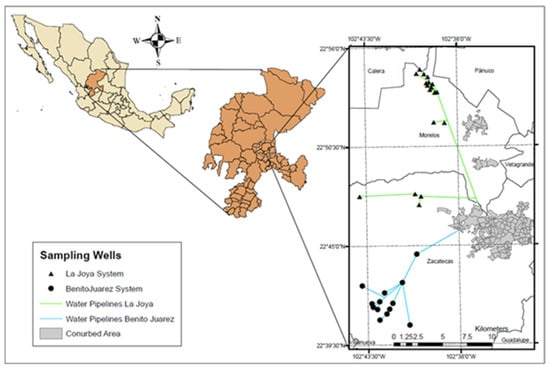
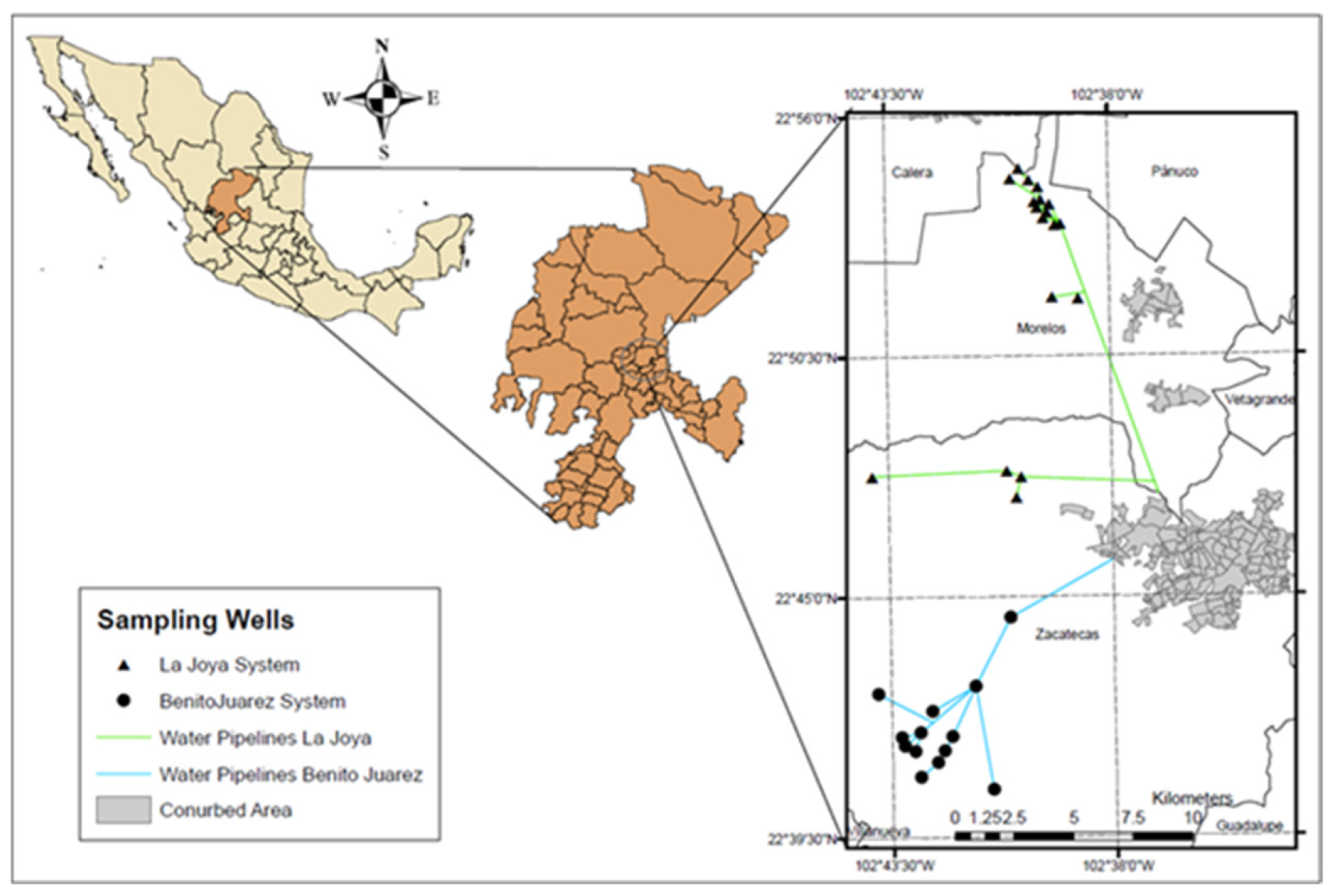
The scale deposits analyzed in this study were collected from two groundwater-supplied drinking water distribution systems located in the Zacatecas–Guadalupe metropolitan area, Mexico (Figure 1). The study area extends approximately between 22°39′30″ and 22°56′00″ N latitude and 102°30′00″ and 102°43′30″ W longitude. The region has a semi-arid climate, with an average annual precipitation of approximately 450 mm, concentrated mainly during the summer season. These climatic conditions, together with the geological characteristics of the region, directly influence the hydrogeochemical composition of groundwater, which is the main source of drinking water supply for the population.
Figure 1.
Drinking water distribution networks of the Benito Juárez and La Joya systems.
The drinking water distribution network is operated by the Junta Intermunicipal de Agua Potable y Alcantarillado de Zacatecas (JIAPAZ), the organization responsible for the operation and maintenance of the hydraulic infrastructure. The water supply system comprises seven main systems: Benito Juárez, La Joya, Bañuelos, San Ramón, Pimienta, Cerro del Gato, and Centenario. Among these, the Benito Juárez and La Joya systems were selected for this study because they represent major water supply sources in terms of extraction volume, service coverage, and operational importance within the distribution network [22]. In addition, both systems exhibit hydrogeochemical differences associated with the geological characteristics of the aquifers supplying them, providing a suitable scenario for evaluating the influence of the initial composition of the scale deposits on their response to citric acid treatment.
Figure 1 shows the locations of the groundwater extraction wells supplying the Benito Juárez and La Joya systems, together with their associated water pipelines and the conurbated area. The La Joya system comprises 18 wells, represented by triangles, whereas the Benito Juárez system comprises 13 wells, represented by circles. Green and blue lines indicate the water pipelines associated with the La Joya and Benito Juárez systems, respectively. Groundwater extracted from these wells is conveyed to facilities where chlorination is performed before being distributed to the population. Water supply is provided intermittently through a scheduled rotation system.
2.2. Scale Sampling
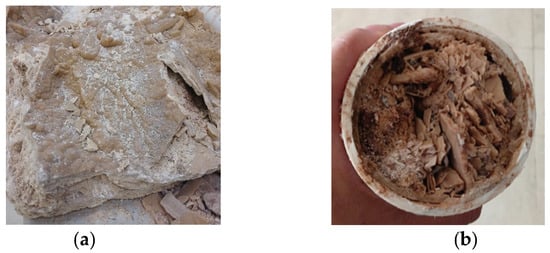
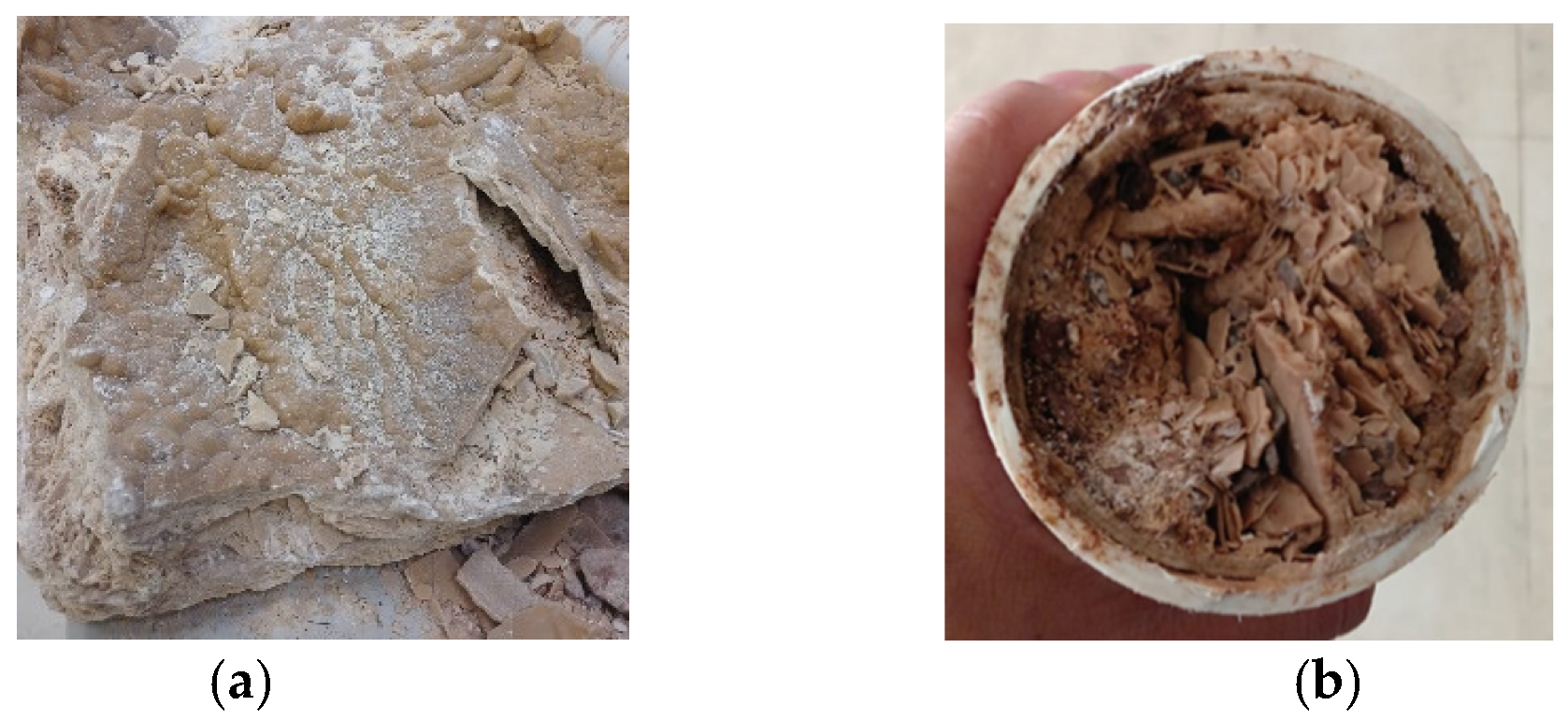
The scale deposits used in this study were provided by the Junta Intermunicipal de Agua Potable y Alcantarillado de Zacatecas (JIAPAZ) during routine pipe replacement activities within the drinking water distribution network. The samples were collected from the inner walls of polyvinyl chloride (PVC) pipes with diameters of 6 inches for the Benito Juárez system and 20 inches for the La Joya system (Figure 2). These pipes were removed from service due to severe mineral scale accumulation, which considerably reduced their effective hydraulic diameter.
Figure 2.
Completely clogged PVC pipe samples from the drinking water network systems of Benito Juárez (a) and La Joya (b).
The collected deposits correspond to mineral scales naturally formed under actual operating conditions of the drinking water distribution network. Consequently, the samples retain the mineralogical complexity developed over years of groundwater circulation, representing real scale deposits rather than synthetic materials prepared under laboratory conditions.
2.3. Sample Preparation for Initial Characterization
After collection, the samples were transported to the Hydrogeochemistry Laboratory of the Universidad Autónoma de Zacatecas for processing and initial characterization. Initially, the deposits were dried in an electric oven at 40 °C for 12 h to remove residual moisture without causing significant mineralogical alterations.
Subsequently, a representative fraction of the untreated scale deposits was manually ground using an agate mortar until a homogeneous powder was obtained. Particle size was controlled by sieving, ensuring that at least 98% of the material passed through a 325-mesh sieve. This material was used to determine the initial mineralogical, morphological, and chemical characteristics of the scale deposits by X-ray diffraction (XRD), scanning electron microscopy (SEM), Fourier-transform infrared spectroscopy (FTIR), and inductively coupled plasma optical emission spectrometry (ICP-OES), providing the baseline for subsequently evaluating the changes induced by citric acid treatment.
Additionally, representative fragments of the scale deposits from both water supply systems were preserved for compressive strength tests, with the objective of determining the initial mechanical properties of the deposits before the application of the chemical treatments.
2.4. Citric Acid Treatment
To evaluate the effect of citric acid concentration on the demineralization of real scale deposits, aqueous solutions of citric acid (C6H8O7) were prepared at concentrations of 1, 2, and 3 M using citric acid with a purity greater than 99.5% and deionized water. For the preparation of the solutions, 19.21, 38.42, and 57.63 g of citric acid were dissolved in 100 mL of deionized water to obtain the corresponding concentrations.
For each treatment, 10 g aliquots of intact scale fragments collected from the inner walls of the pipes of the Benito Juárez and La Joya systems were used (Figure 2). Each experimental treatment (1, 2, and 3 M) was performed in triplicate for both distribution systems, using independent samples for each replicate. The samples were placed in Erlenmeyer flasks containing the corresponding solution and maintained under static conditions for 8 h at room temperature.
The contact time was selected based on previous studies reporting reaction intervals ranging from 2 to 24 h for the dissolution of carbonate deposits using organic acids [2,19,23]. Thus, the reaction time was kept constant for all treatments, allowing the effect of citric acid concentration on the demineralization process to be evaluated exclusively.
During the experiments, pH and electrical conductivity of the solutions were recorded at one-hour intervals to monitor the evolution of the reaction process.
Once the reaction time was completed, the suspensions were subjected to filtration to recover the solid material remaining after citric acid treatment. The material retained on the filter paper was dried in an electric oven at 40 °C for 12 h to remove residual moisture without significantly modifying its mineralogical composition.
Subsequently, the dried material was manually ground in an agate mortar to obtain a fine and homogeneous powder for physicochemical characterization. The solids recovered after treatment were considered the residual material resulting from the demineralization process and were analyzed by SEM, XRD, FTIR, and ICP-OES, using the same analytical procedures applied to the untreated samples. This allowed for a direct comparison of the mineralogical, morphological, and chemical characteristics of the scale deposits before and after citric acid treatment.
2.5. Scanning Electron Microscopy (SEM)
The morphology and surface characteristics of the scale deposits were analyzed using scanning electron microscopy (SEM). Both untreated and citric acid-treated samples were mounted on metal sample holders and coated with a thin layer of gold by sputtering to prevent electrical charging during analysis.
Micrographs were acquired at different magnifications to evaluate the morphological and textural changes induced by citric acid treatment, allowing comparison of the surface structure of the scale deposits before and after treatment.
2.6. X-Ray Diffraction (XRD)
The mineralogical composition of the scale deposits was determined by X-ray diffraction using an Empyrean diffractometer ((Malvern Panalytical, Almelo, The Netherlands)) equipped with Bragg–Brentano geometry, a PIXcel1D-Medipix3 detector, and CuKα radiation (λ = 1.5406 Å), operating at 45 kV and 40 mA.
The diffractograms were collected over a 2θ range from 10° to 100°, using a step size of 0.0263° and an acquisition time of 56.865 s per point. The incident beam optical configuration included a 0.04 rad Soller slit, a 10 mm fixed mask, a 1/2° divergence slit, and a 2° antiscatter slit. On the diffracted beam, a 0.04 rad Soller slit and a 7.5 mm antiscatter slit were used.
Mineral phase identification was performed using X’Pert HighScore Plus software (version 3.0; PANalytical B.V., Almelo, The Nether-landsPlus software with the PDF-2 database. The diffractograms obtained before and after treatment were compared to evaluate the mineralogical transformations induced by the different citric acid concentrations. Due to the multiphase nature of the residues obtained after treatment, the identified phases should be considered qualitative mineralogical assignments. A more rigorous quantification would require Rietveld refinement, which was considered beyond the scope of the present study.
2.7. Inductively Coupled Plasma Optical Emission Spectroscopy (ICP-OES)
The elemental composition of the scale deposits was determined before and after citric acid treatment using inductively coupled plasma optical emission spectroscopy (ICP-OES).
For this purpose, approximately 0.5 g of dried and pulverized sample was subjected to acid digestion using concentrated nitric acid (HNO3) under controlled heating until complete dissolution of the material was achieved. The resulting solutions were subsequently filtered and diluted to volume with deionized water before analysis.
The determinations were performed using a Thermo Scientific iCAP 7400 Duo ICP-OES spectrometer (Thermo Fisher Scientific, Waltham, MA, USA), Scientific ICP-OES spectrometer, previously calibrated with certified standards for the quantification of 26 elements. The analysis focused primarily on the determination of calcium (Ca), aluminum (Al), iron (Fe), and magnesium (Mg), due to their relevance to the mineralogical composition of the scale deposits. The results are expressed as mg/g of dry material.
2.8. Fourier-Transform Infrared Spectroscopy (FTIR)
The chemical characterization of the scale deposits was performed using Fourier-transform infrared spectroscopy (FTIR). The previously pulverized samples were mixed with potassium bromide (KBr) and pressed to obtain translucent pellets. The spectra were recorded at room temperature using a Thermo Scientific Nicolet iS10 spectrometer over a spectral range from 4000 to 400 cm−1.
For each sample, 32 scans were acquired at a spectral resolution of 4 cm−1, and an average spectrum was obtained and used to identify the main functional groups present before and after citric acid treatment.
2.9. Compressive Strength Test
The initial mechanical properties of the scale deposits were evaluated through uniaxial compression tests. Representative fragments of the scale deposits collected from the Benito Juárez and La Joya systems were selected before the application of the citric acid treatments.
The tests were performed using a universal testing machine, and the maximum compressive strength was recorded and expressed in N/mm2. The values obtained were used as an indicator of the structural cohesion of the mineral deposits and were subsequently related to the mineralogical and chemical composition determined using the characterization techniques. Because the citric acid treatments significantly modified the structural integrity of the scale deposits, mechanical tests were performed only on the untreated samples.
2.10. Experimental Design and Statistical Analysis
The demineralization experiments were conducted using a completely randomized design, considering the concentration of citric acid applied to the scale deposits as the experimental factor. The linear model used was
where
Yij = μ + τi + eij
Yij = observed response variable (elemental concentration in mg/g);
μ = overall mean elemental concentration across all treatments included in the analysis;
τi = treatment effect (citric acid concentration);
eij = random experimental error;
i = treatment index (citric acid concentration);
j = replicate of the experimental unit.
The statistical analysis aimed to evaluate the effect of citric acid concentration on the elemental composition of the scale deposits after treatment. An analysis of variance (ANOVA) was performed using Fisher’s F-test to determine whether statistically significant differences existed among the treatments. When significant differences were detected (p < 0.05), Tukey’s multiple-comparison test (HSD) was applied to identify statistically different groups among the evaluated concentrations.
All statistical analyses were performed using the R programming environment. The dependent variables corresponded to the concentrations of calcium (Ca), magnesium (Mg), iron (Fe), and aluminum (Al) determined by ICP-OES. The results allowed the response of each element to increasing citric acid concentration to be evaluated and the elements most affected during the demineralization process to be identified.
3. Results
3.1. Hydrogeochemical Characteristics of the Groundwater Supplying the Drinking Water Distribution Systems
The hydrogeochemical composition of groundwater plays a fundamental role in the formation of scale deposits, as it controls the availability of dissolved ions that may subsequently precipitate inside the pipes under favorable physicochemical conditions. Consequently, differences in water chemistry may influence both the mineralogy of the scale deposits and their behavior during chemical treatments intended for their removal.
Table 1 presents the concentrations of the main hydrogeochemical parameters in the groundwater supplying the Benito Juárez and La Joya drinking water distribution systems. Differences were observed in the concentrations of calcium, magnesium, sodium, potassium, bicarbonates, sulfates, and chlorides between the two systems. The Benito Juárez system showed higher concentrations of calcium and magnesium, whereas the La Joya system presented higher concentrations of potassium and bicarbonates. These differences may reflect variations in the hydrogeochemical conditions of the aquifers supplying the two systems and may influence the composition of the scale deposits formed within the distribution networks.
Table 1.
Main hydrogeochemical parameters of the groundwater supplying the Benito Juárez and La Joya distribution systems.
The Benito Juárez system presented the highest concentrations of calcium and magnesium, with values of 69.34 mg/L and 26.80 mg/L, respectively, whereas the La Joya system recorded concentrations of 32.47 mg/L and 6.11 mg/L for the same elements. In contrast, the bicarbonate concentration was slightly higher in the La Joya system (183.49 mg/L) compared with Benito Juárez (168.00 mg/L). Differences were also observed in the concentrations of sodium, potassium, sulfates, and chlorides, although these were less pronounced.
The observed hydrogeochemical differences suggest that groundwater chemical composition may influence the mineral precipitation processes responsible for scale formation, favoring the development of deposits with different mineralogical and elemental compositions. Previous studies have demonstrated that calcium carbonate precipitation, crystal growth, and polymorphism are influenced by physicochemical conditions such as pH, temperature, and supersaturation, as well as by the presence of dissolved ions, including magnesium, sulfate, and iron [24,25]. Consequently, the mineralogical, morphological, chemical, and mechanical variations described in the following sections are interpreted considering the hydrogeochemical conditions under which the scale deposits naturally formed.
3.2. Initial Characterization of the Scale Deposits
3.2.1. Mechanical Strength of the Scale Deposits
The mechanical strength of the scale deposits was evaluated through uniaxial compression tests to determine the initial structural cohesion of the naturally formed scale deposits in both drinking water distribution systems. This property serves as an indicator of the compaction and consolidation of the mineral deposits, which may influence their behavior during chemical demineralization processes. The scale deposits collected from the Benito Juárez system exhibited a maximum compressive strength of 13.03 ± 0.29 N/mm2, whereas those from the La Joya system recorded a value of 12.30 ± 0.23 N/mm2, as shown in Table 2.
Table 2.
Maximum compressive strength of untreated scale deposits collected from the Benito Juárez and La Joya systems.
The higher mechanical strength observed in the scale deposits from the Benito Juárez system may be associated with their higher calcium and magnesium contents, as well as with differences in the hydrogeochemical characteristics of the groundwater supplying this system. A greater availability of these elements may favor the precipitation of carbonate minerals, which can contribute to the formation of more compact and structurally cohesive deposits.
In contrast, the scale deposits from the La Joya system exhibited slightly lower mechanical strength, suggesting differences in their mineralogical composition and solid-matrix organization. These differences are analyzed in greater detail using the mineralogical, morphological, and chemical characterization techniques presented in the following sections.
3.2.2. Macroscopic Appearance, Mineralogical Composition, and Surface Morphology
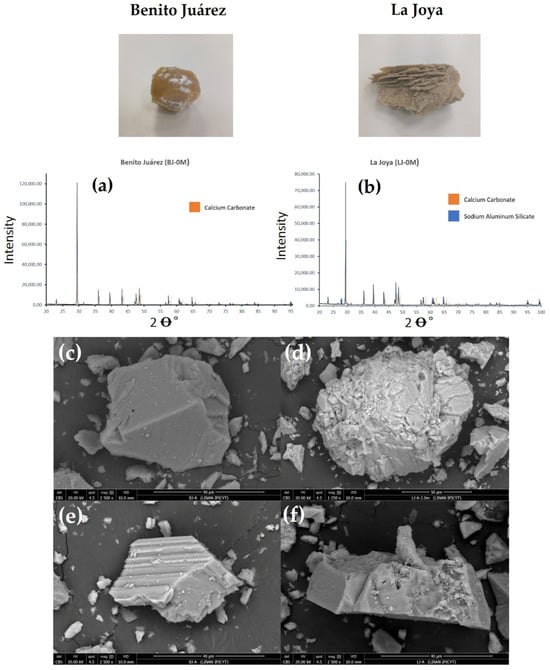
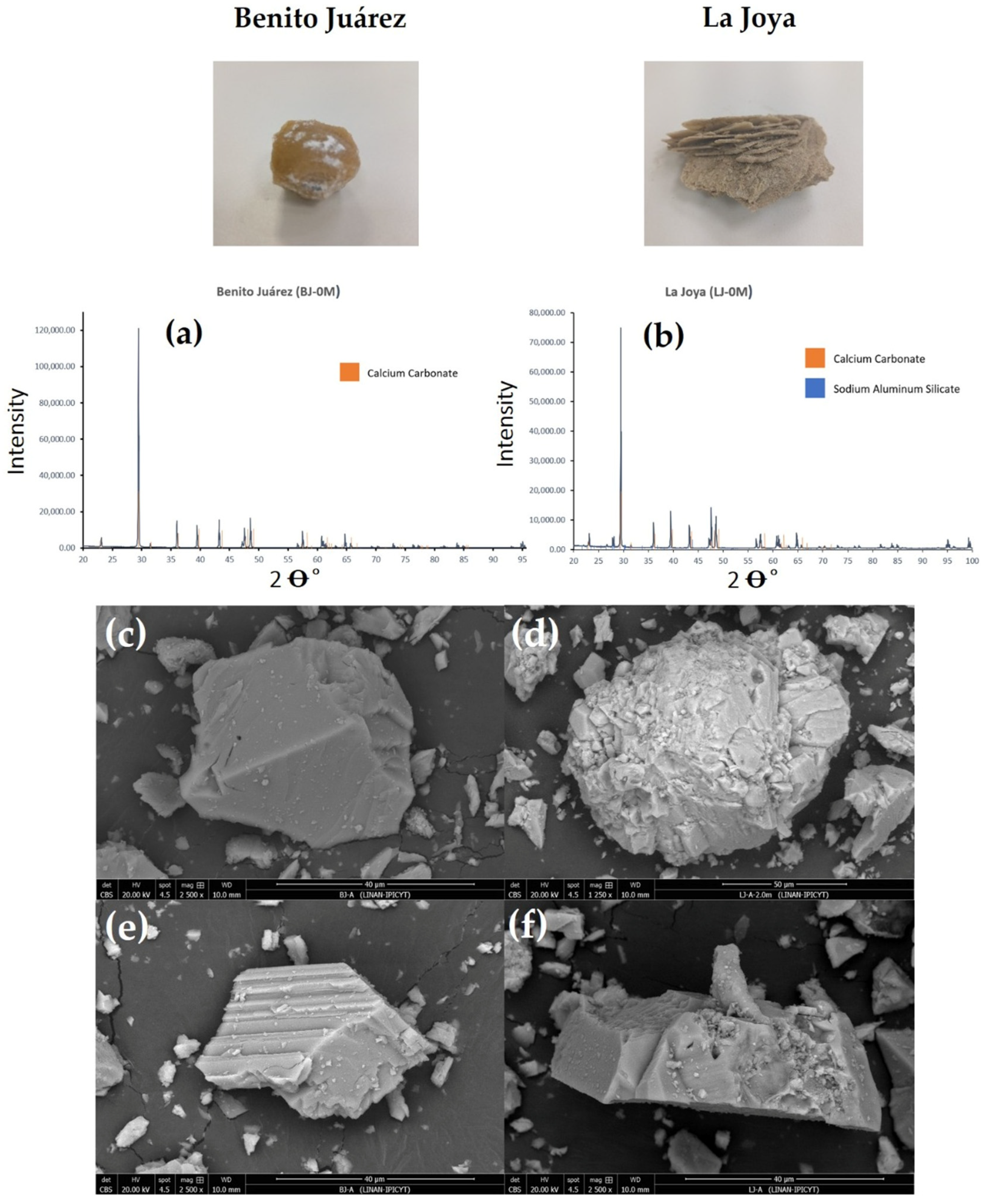
Figure 3 presents the macroscopic appearance of the scale deposits collected from the Benito Juárez and La Joya systems, together with their mineralogical characterization by XRD and surface morphology by SEM. At the macroscopic level, both deposits showed evident differences in their structure and physical appearance. The scale deposit from the Benito Juárez system exhibited a more compact and homogeneous structure, whereas that from the La Joya system displayed a more irregular and laminated morphology, suggesting differences in the mineral precipitation and growth processes that occurred during their formation.
Figure 3.
Initial characterization of untreated scale deposits from the Benito Juárez and La Joya drinking water distribution systems. The upper photographs show the macroscopic appearance of the deposits. Panels (a) and (b) show the X-ray diffraction (XRD) patterns of the Benito Juárez and La Joya samples, respectively. Panels (c) and (e) show scanning electron microscopy (SEM) images of the Benito Juárez deposit, whereas panels (d) and (f) show SEM images of the La Joya deposit. BJ-0M and LJ-0M refer to untreated scale samples from the Benito Juárez and La Joya systems, respectively.
The X-ray diffraction patterns showed that calcium carbonate was the predominant crystalline phase in both drinking water distribution systems (Figure 3a,b). In the Benito Juárez sample (BJ-0M), calcium carbonate was identified as the main crystalline phase, whereas the La Joya sample (LJ-0M) contained calcium carbonate together with sodium aluminum silicate (Na(Si3Al)O8). The presence of the latter phase indicates greater mineralogical diversity in the La Joya deposit.
The observations obtained by scanning electron microscopy confirmed the structural differences evidenced by the mineralogical analyses. The samples corresponding to the Benito Juárez system (Figure 3c,e) exhibited well-defined rhombohedral crystals, a morphology typically associated with calcite, consistent with the phase identified by XRD. In contrast, the samples from the La Joya system (Figure 3d,f) showed a more heterogeneous morphology, characterized by irregular aggregates, rough surfaces, and particles with less-defined geometries, suggesting a more complex precipitation process and a greater contribution of minerals other than calcium carbonate.
The initial mineralogical and morphological differences were also consistent with the elemental composition of the deposits. Calcium was the predominant element in both systems, whereas the La Joya deposit showed a greater relative contribution of aluminum and other elements associated with non-carbonate mineral phases. The detailed elemental composition and its evolution after citric acid treatment are presented in Section 3.3.6.
3.3. Effect of Citric Acid Treatment on Scale Deposits
3.3.1. Mineralogical Transformations Induced by Citric Acid Treatment
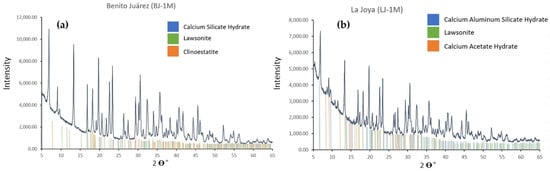
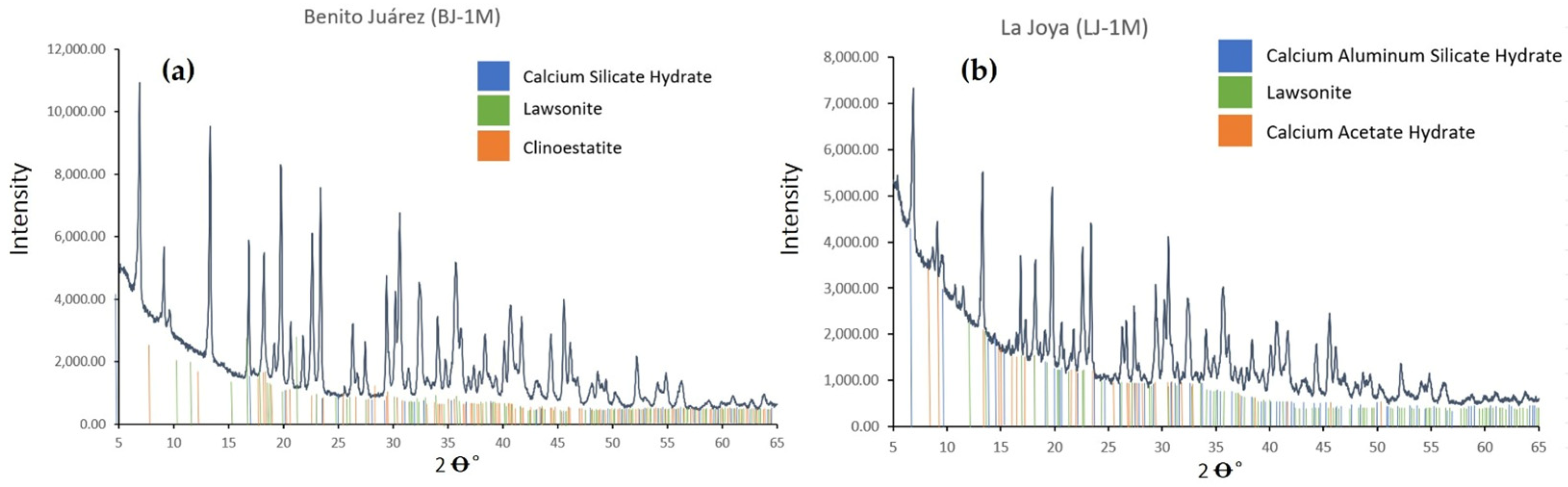
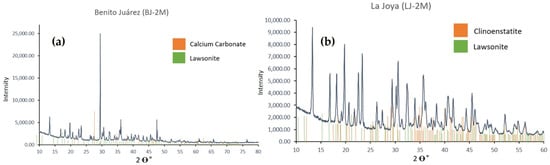
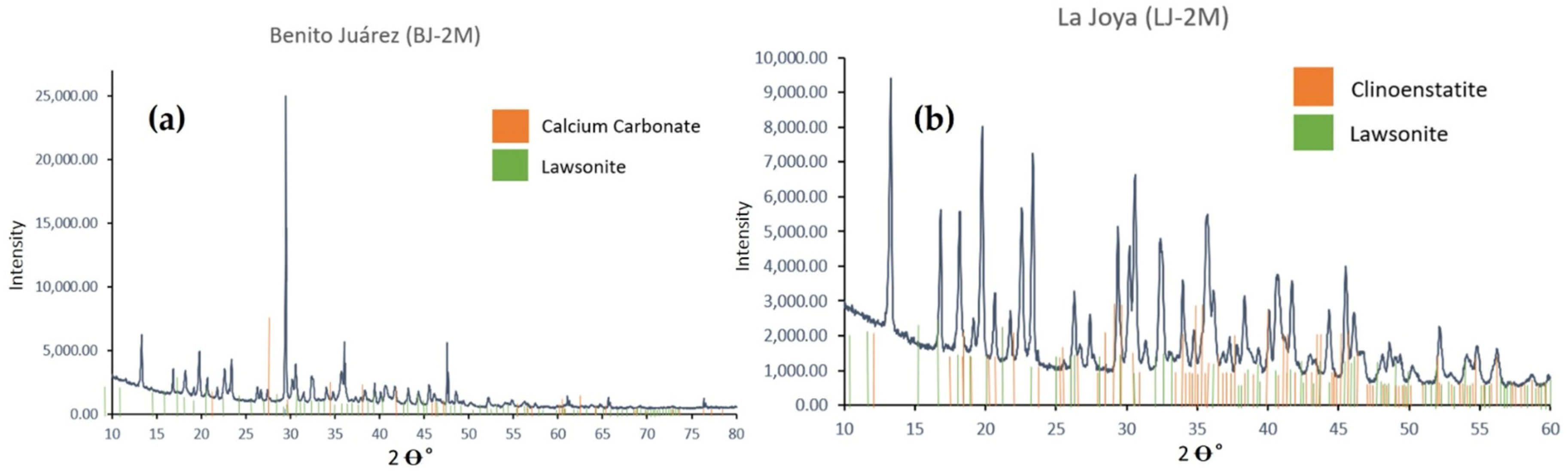
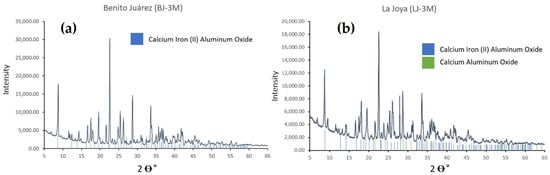
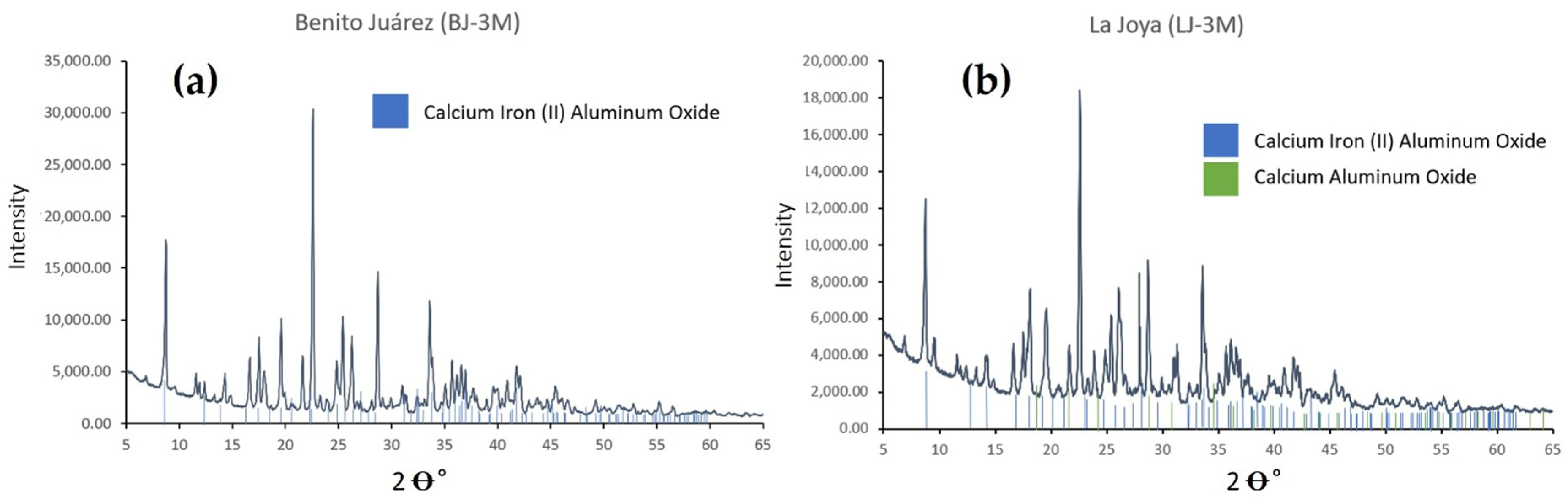
The mineralogical evolution of the scale deposits after citric acid treatment was evaluated by X-ray diffraction (XRD) to identify the changes that occurred in the composition of the solid residues remaining after demineralization. Figure 4a, Figure 5a and Figure 6a, correspond to the samples from the Benito Juárez system treated with 1, 2, and 3 M citric acid solutions, respectively, whereas Figure 4b, Figure 5b and Figure 6b show the results obtained for the samples from the La Joya system under the same experimental conditions. The diffractograms of the untreated samples are presented in Section 3.2 as a reference for comparison of the mineralogical transformations induced by the chemical treatment.
Figure 4.
X-ray diffraction (XRD) patterns of the scale deposits after treatment with 1 M citric acid: (a) BJ-1M; (b) LJ-1M.
Figure 5.
X-ray diffraction (XRD) patterns of the scale deposits after treatment with 2 M citric acid: (a) BJ-2M; (b) LJ-2M.
Figure 6.
X-ray diffraction (XRD) patterns of the scale deposits after treatment with 3 M citric acid: (a) BJ-3M; (b) LJ-3M.
In both drinking water distribution systems, a progressive evolution of the mineralogical composition was observed as the citric acid concentration increased. This evolution was dominated by the preferential dissolution of calcium carbonate, the main component of the original scale deposits, favoring the relative persistence and greater identification of less-soluble mineral phases present in the deposit matrix.
After treatment with 1 M citric acid, the Benito Juárez system exhibited phases corresponding to clinoenstatite (MgSiO3), lawsonite (CaAl2Si2O7(OH)2·H2O), and calcium silicate (Ca2O4Si). In the La Joya system, hydrated calcium aluminum silicate (Ca2Al4Si3O13(OH)2·3H2O), lawsonite, and hydrated calcium acetate were identified, evidencing changes in the mineralogical composition of the solid residues after treatment.
As the concentration increased to 2 M, the intensity of the carbonate phases decreased considerably. In the Benito Juárez system, calcium carbonate was still identified together with lawsonite, whereas in the La Joya system, clinoenstatite and lawsonite predominated, indicating a different mineralogical evolution between the two distribution systems.
The most important mineralogical modifications were observed with the application of 3 M citric acid. In both systems, the predominant carbonate phases disappeared, and the diffractograms were dominated by calcium aluminum iron oxide (AlCa2FeO5). Additionally, calcium aluminum oxide (Ca12Al14O33) was also identified in the La Joya system. These results indicate that the highest acid concentration produced the greatest degree of demineralization, allowing the less-soluble mineral phases present in the solid residues to be identified more clearly.
3.3.2. Semi-Quantitative Analysis of Mineral Phases
To complement the interpretation of the X-ray diffraction patterns, a semi-quantitative analysis of the mineral phases identified using X’Pert HighScore Plus software (version 3.0; PANalytical B.V., Almelo, The Nether-lands) was performed. The estimated percentages were obtained from the relative intensities of the diffraction peaks and represent an approximation of the relative abundance of the phases present in each sample. The estimated mineralogical composition of the untreated and citric acid-treated scale deposits is summarized in Table 3. Due to the multiphase nature of the residues obtained after citric acid treatment, absolute mineralogical quantification would have required Rietveld refinement, a procedure that was beyond the scope of the present study.
Table 3.
Semi-quantitative mineralogical composition of the scale deposits before and after treatment with different concentrations of citric acid, estimated by X-ray diffraction using HighScore Plus software.
The results of the semi-quantitative analysis confirmed that calcium carbonate was the predominant phase in the untreated samples, accounting for approximately 99% of the mineralogical composition in the Benito Juárez system and 97% in the La Joya system. In the latter, a small proportion of sodium aluminosilicate was also identified, indicating greater initial mineralogical diversity compared with the Benito Juárez system.
Following citric acid treatment, progressive changes in the relative abundance of the mineral phases were observed. As the proportion of calcium carbonate decreased, the relative representation of minerals such as lawsonite, clinoenstatite, and various calcium and aluminum silicates increased, reflecting the persistence of these less-soluble phases in the solid residues after the demineralization process. In the samples treated with 1 M, both systems retained a multiphase composition dominated by calcium silicates and aluminosilicates. In the 2 M treatments, lawsonite became the predominant phase, particularly in the Benito Juárez system, where it represented approximately 85% of the estimated mineralogical composition. Finally, the samples treated with 3 M were characterized by the predominance of calcium-, aluminum-, and iron-rich oxides, evidencing the greatest degree of mineralogical transformation among the concentrations evaluated.
Overall, the semi-quantitative analysis supported the trends observed in the X-ray diffraction patterns and demonstrated a progressive decrease in the relative proportion of carbonate phases as the citric acid concentration increased. Consequently, the less-soluble mineral phases acquired a greater relative representation in the solid residues remaining after treatment, providing additional evidence of the mineralogical transformations induced by the demineralization process.
3.3.3. Morphological Transformations Induced by Citric Acid Treatment
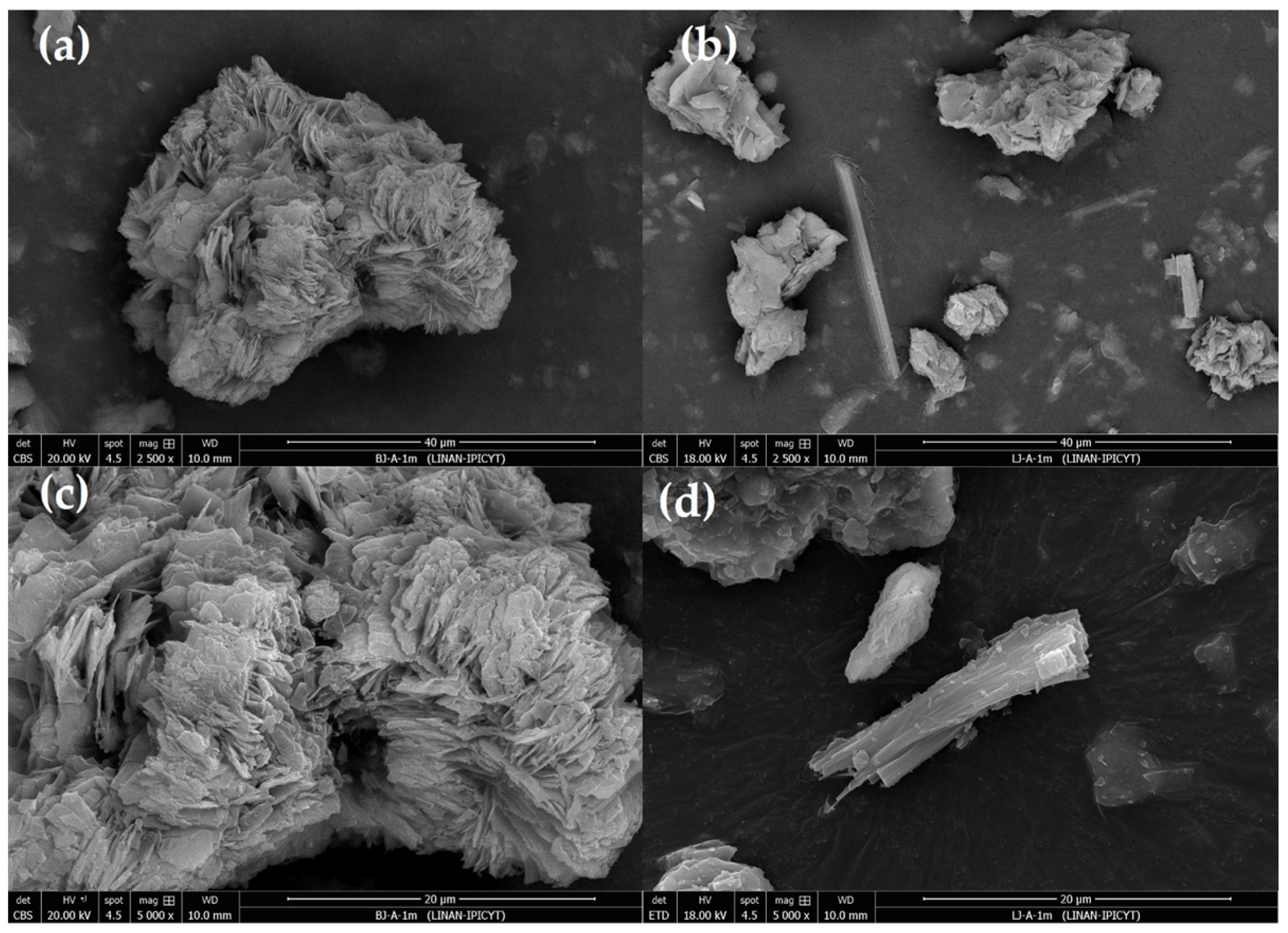
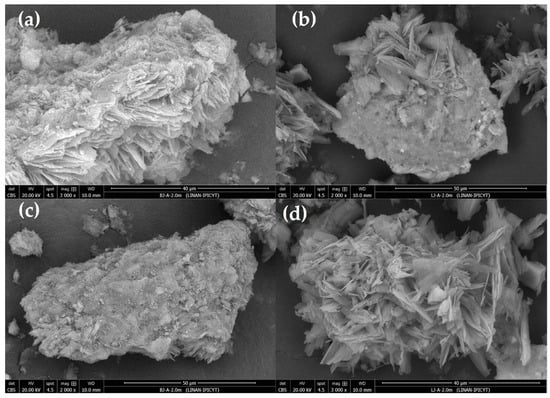
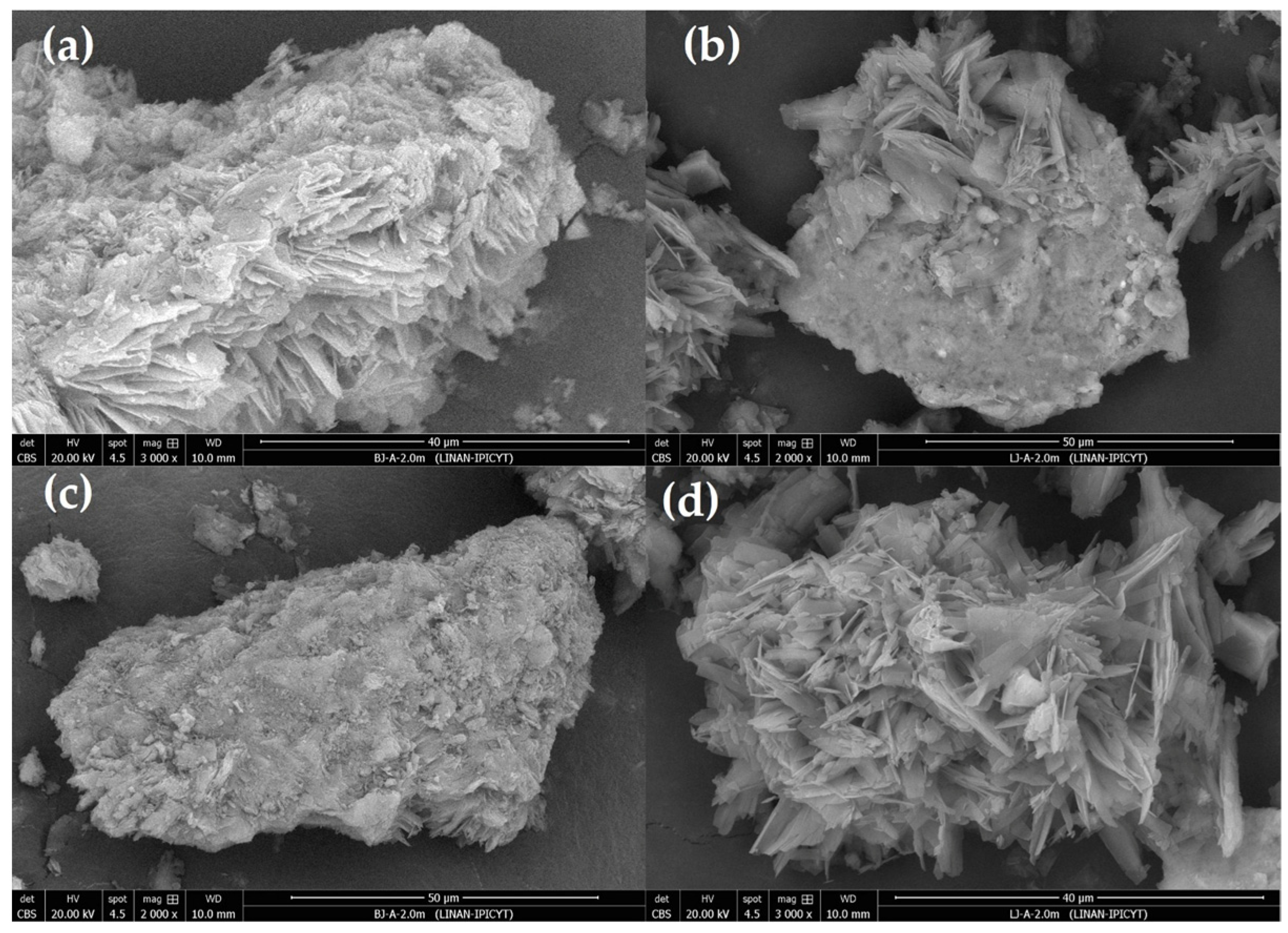
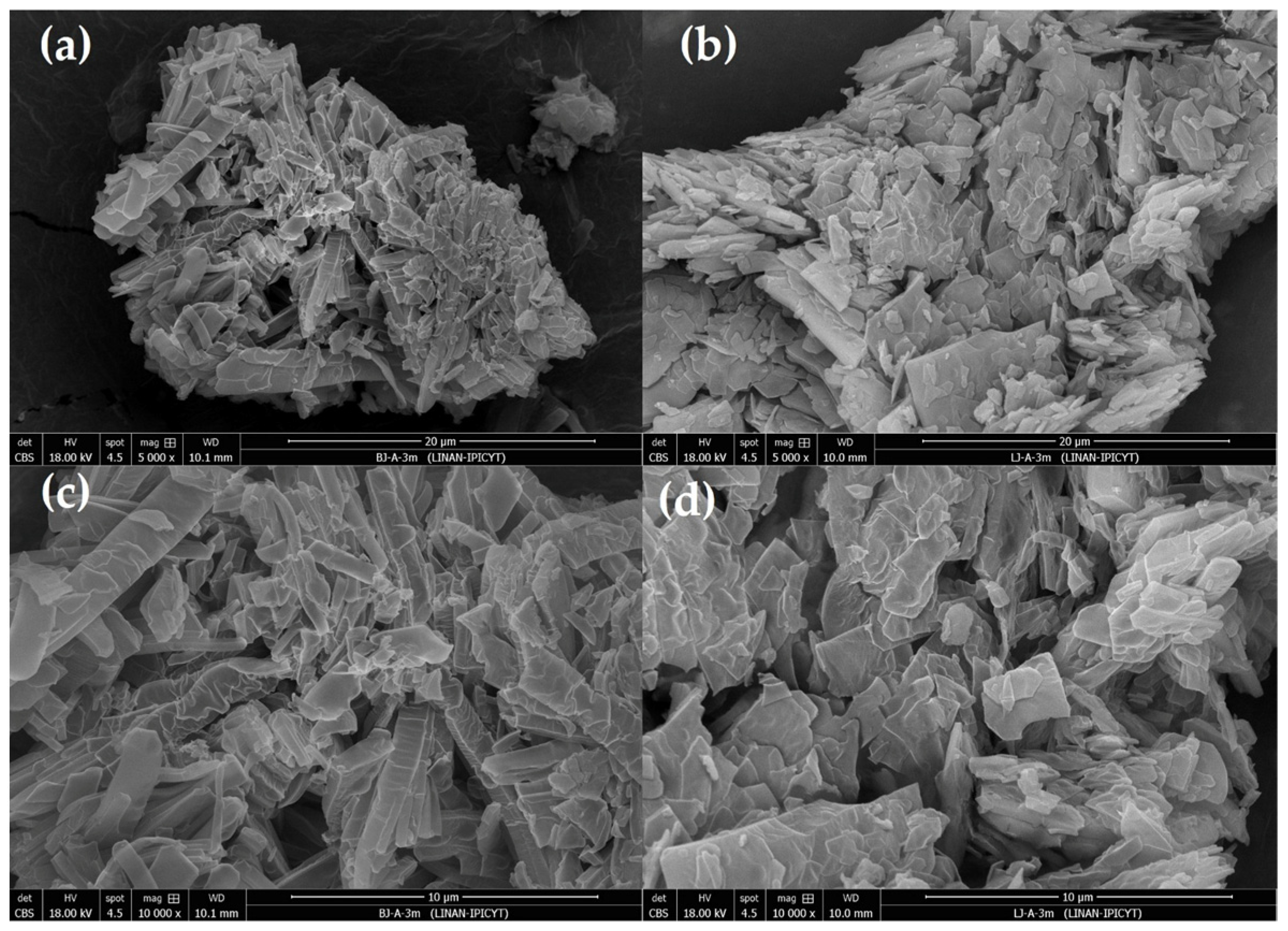
The morphological evolution of the scale deposits after citric acid treatment was evaluated by scanning electron microscopy (SEM). Figure 7, Figure 8 and Figure 9 present representative micrographs of the samples treated with 1, 2, and 3 M citric acid solutions, respectively, for the Benito Juárez and La Joya systems. The images were acquired at different magnifications to highlight the most representative morphological characteristics of the solid residues obtained after each treatment.
Figure 7.
Scanning electron microscopy (SEM) micrographs of the scale deposits treated with 1 M citric acid. Panels (a) and (c) correspond to the Benito Juárez system (BJ-1M), whereas (b) and (d) correspond to the La Joya system (LJ-1M). The micrographs show representative regions of the solid residues obtained after treatment.
Figure 8.
Scanning electron microscopy (SEM) micrographs of the scale deposits treated with 2 M citric acid. Panels (a) and (c) correspond to the Benito Juárez system (BJ-2M), whereas (b) and (d) correspond to the La Joya system (LJ-2M). The micrographs show representative regions of the solid residues obtained after treatment.
Figure 9.
Scanning electron microscopy (SEM) micrographs of the scale deposits treated with 3 M citric acid. Panels (a) and (c) correspond to the Benito Juárez system (BJ-3M), whereas (b) and (d) correspond to the La Joya system (LJ-3M). The micrographs show representative regions of the solid residues obtained after treatment.
After treatment with 1 M (Figure 7), both systems exhibited modifications in surface morphology compared with the untreated samples. In the Benito Juárez system (Figure 7a,c), aggregates composed of thin overlapping plates forming compact structures with irregular surfaces were observed. In contrast, the samples from the La Joya system (Figure 7b,d) exhibited a more heterogeneous morphology, characterized by particles of different sizes and the presence of elongated, needle-like structures distributed among the aggregates.
With the 2 M treatment (Figure 8), the morphological modifications became more evident. In the samples from the Benito Juárez system (Figure 8a,c), larger aggregates with compact surfaces and the development of more clearly defined lamellar structures were identified. In contrast, the samples corresponding to the La Joya system (Figure 8b,d) showed aggregates composed mainly of elongated and oriented lamellar crystals, forming structures with a more uniform surface organization than that observed after the 1 M treatment.
The most noticeable changes were observed after treatment with 3 M (Figure 9). In both systems, aggregates formed by well-developed plates or lamellae predominated, with defined edges and more homogeneous surfaces. The images obtained at higher magnification revealed a compact lamellar organization and a marked decrease in the crystalline morphologies observed in the untreated samples, with these characteristics being particularly evident in the samples from the Benito Juárez system.
Overall, the SEM micrographs showed concentration-dependent changes in the surface morphology of the scale deposits, including the development of lamellar aggregates and changes in surface homogeneity. The most pronounced morphological modifications were observed after treatment with 3 M citric acid.
3.3.4. Chemical Transformations Determined by FTIR
The chemical evolution of the scale deposits during citric acid treatment was evaluated by Fourier-transform infrared spectroscopy (FTIR). Figure 10 presents the spectra corresponding to the untreated samples and those treated with 1, 2, and 3 M citric acid solutions for the Benito Juárez and La Joya systems. For comparative purposes, a reference spectrum of calcium carbonate (CaCO3) was also included, facilitating the identification of the characteristic bands of this mineral phase and the evaluation of the modifications produced during the demineralization process.
Figure 10.
FTIR spectra of untreated and citric acid-treated scale deposits collected from the Benito Juárez (a) and La Joya (b) drinking water distribution systems. Spectra corresponding to treatments with 1, 2, and 3 M citric acid are compared with untreated samples and a calcium carbonate reference spectrum.
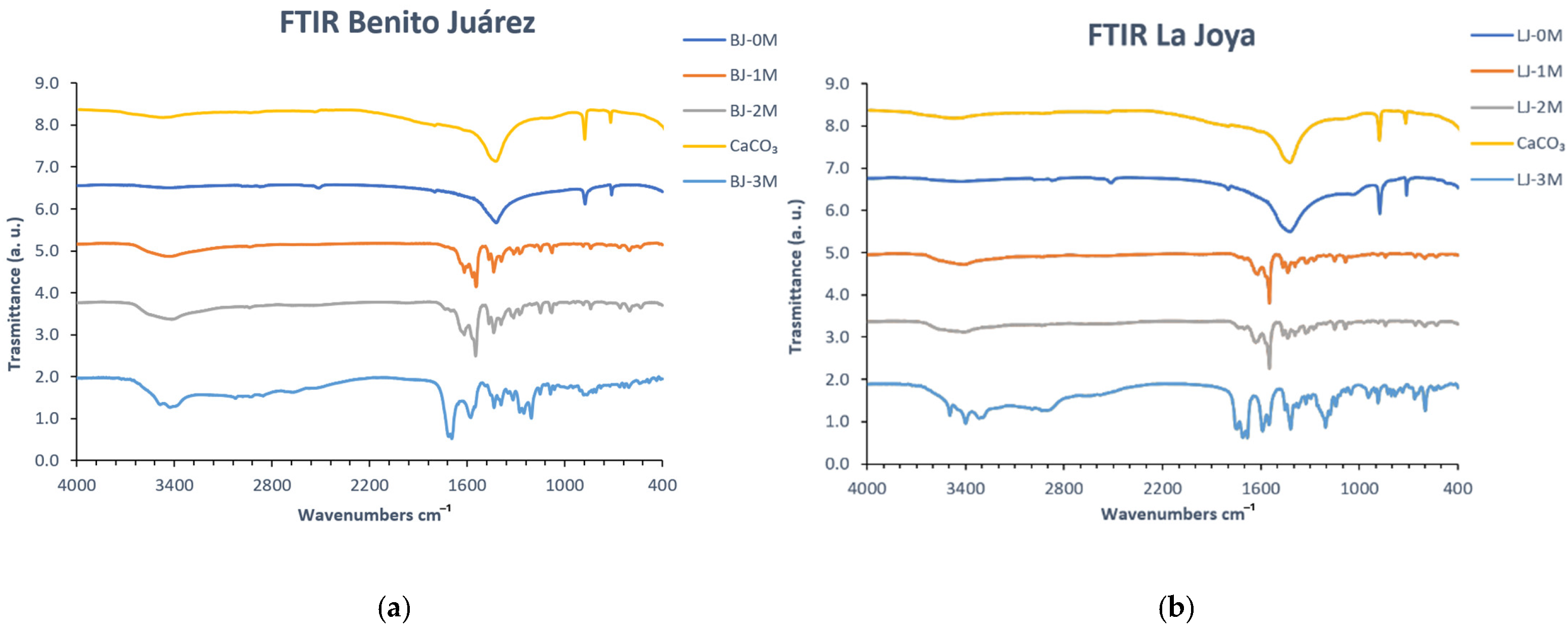
The FTIR spectra of the untreated samples (BJ-0M and LJ-0M) showed high similarity to the CaCO3 reference spectrum, confirming the predominance of carbonate phases previously identified by X-ray diffraction. As the citric acid concentration increased, the characteristic carbonate bands progressively decreased in intensity and definition, evidencing the gradual removal of these mineral phases during treatment [26,27].
In the region between 3400 and 3300 cm−1, as well as around 1630 cm−1, bands associated with O–H group vibrations were observed, related to structural water and hydrated compounds present in the solid residues after treatment. Likewise, the bands located between 1500 and 1200 cm−1 correspond mainly to carbonate group vibrations, whereas the signals recorded between 1100 and 500 cm−1 are characteristic of Si–O, Si–O–Si, Al–OH bonds, and T–O–T vibrations (T = Al and/or Si), which are characteristic of silicate and aluminosilicate minerals [26,27,28,29,30,31].
The progressive decrease in the bands associated with carbonate, together with the relative persistence of signals corresponding to silicates and aluminosilicates, confirms that citric acid preferentially dissolved the carbonate phases, whereas the less-soluble minerals remained in the solid residue. Consequently, the relative increase in these signals does not represent the formation of new mineral phases but rather the expected effect of selective calcium carbonate removal, in agreement with the results obtained by X-ray diffraction [32,33].
Overall, the FTIR results were consistent with the progressive reduction in carbonate-related signals and the relative persistence of silicate and aluminosilicate features observed after treatment.
3.3.5. Evolution of pH and Electrical Conductivity During Demineralization
As a complement to the monitoring of the demineralization process, pH and electrical conductivity were monitored in the citric acid solutions during the eight-hour treatment period for the three concentrations evaluated. Similar behavior was observed in both drinking water distribution systems, indicating that the evolution of these parameters was mainly determined by the initial citric acid concentration.
In the 1 M treatment, the pH gradually increased from 2.22 to 2.58 in the Benito Juárez system and from 2.42 to 2.66 in the La Joya system. For the 2 M solution, the pH remained below 2 during the first four hours and subsequently reached values between 2.02 and 2.09. In contrast, the 3 M treatment maintained pH values below 2 throughout the experimental period, indicating a greater capacity to sustain acidic conditions during demineralization.
Electrical conductivity also varied throughout the treatment period. Considering the measurements from both systems, the 1 M treatments presented values between 6.56 and 9.19 mS/cm, whereas the 2 M treatments ranged from 5.56 to 7.08 mS/cm, and the 3 M treatments ranged from 3.10 to 4.02 mS/cm. Thus, the lowest conductivity values were observed in the 3 M treatments, whereas the conductivity ranges corresponding to the 1 M and 2 M treatments showed some overlap.
In general, an increase in acid concentration may be expected to increase electrical conductivity because the dissociation of the acid generates ionic species capable of transporting electrical current. However, the magnitude of this effect depends on the degree of dissociation of the acid. Strong acids, such as hydrochloric acid, undergo extensive dissociation in aqueous solution, whereas weak acids, such as citric acid, undergo only partial dissociation. Consequently, the concentration of free ions available to contribute to electrical conductivity is lower than would be expected from the total acid concentration. This behavior may explain why the 3 M citric acid treatments exhibited lower electrical conductivity values than the 1 M and 2 M treatments under the conditions evaluated in this study [34].
Therefore, the lower electrical conductivity observed at the highest citric acid concentration should not be interpreted as indicating a lower acid concentration in the treatment solution. Rather, it reflects the different physicochemical behavior of concentrated citric acid solutions and the partial dissociation of this weak acid. In addition, because the citric acid solutions remained in contact with the scale deposits throughout the eight-hour treatment, changes in the composition of the aqueous phase resulting from the demineralization process may also have contributed to the measured conductivity values.
3.3.6. Chemical Transformations Determined by ICP-OES
The elemental composition of the scale deposits before and after citric acid treatment was determined by inductively coupled plasma optical emission spectrometry (ICP-OES). This technique allowed the quantification of variations in the concentration of the main elements constituting the scale deposits and the evaluation of the effect of the different citric acid concentrations on the demineralization process.
In both drinking water distribution systems, calcium was the predominant element in the untreated scale samples, which is consistent with the predominance of calcium carbonate-rich phases identified by XRD and FTIR. The initial calcium concentration was higher in the deposits from the Benito Juárez system (295.53 mg/g) than in those from the La Joya system (272.58 mg/g). In contrast, the untreated La Joya deposits presented higher concentrations of aluminum (1.825 mg/g), iron (2.76 mg/g), and magnesium (1.19 mg/g) than the Benito Juárez deposits (0.145, 0.34, and 0.73 mg/g, respectively). These differences indicate variations in the initial elemental composition of the deposits from the two systems. The elemental concentrations measured in the untreated and treated solid samples are summarized in Table 4.
Table 4.
Elemental concentrations of untreated and citric acid-treated scale deposits determined by ICP-OES (mg/g of solid sample).
Following citric acid treatment, the residual calcium concentration decreased in both systems relative to the corresponding untreated samples. In the Benito Juárez system, the calcium concentration decreased from 295.53 mg/g in the untreated sample to 144.84 mg/g after treatment with 1 M citric acid. At 2 M, the residual calcium concentration was 167.16 mg/g, followed by a further decrease to 60.81 mg/g after treatment with 3 M citric acid. Thus, although the calcium concentration did not decrease monotonically between 1 and 2 M, the 3 M treatment produced the lowest residual calcium concentration in the Benito Juárez deposits. In the La Joya system, the calcium concentration decreased from 272.58 mg/g in the untreated sample to 122.83, 119.11, and 49.24 mg/g after treatment with 1, 2, and 3 M citric acid, respectively. Therefore, the lowest residual calcium concentration in both systems was obtained after treatment with 3 M citric acid, indicating the greatest reduction in calcium concentration under this experimental condition.
Aluminum, iron, and magnesium showed different variations depending on the distribution system and treatment concentration. Because the results are expressed as elemental concentrations per unit mass of the remaining solid sample (mg/g), changes in these values should not necessarily be interpreted as absolute enrichment or depletion of each element in the original deposit. In particular, the preferential removal of calcium-rich material may alter the relative elemental composition of the residual solids. Therefore, these results should be interpreted together with the mineralogical changes identified by XRD and FTIR and the morphological modifications observed by SEM.
Overall, the ICP-OES results showed clear differences in the initial elemental composition of the deposits from the two distribution systems and demonstrated changes in the elemental composition of the residual solids following citric acid treatment. The lowest residual calcium concentrations were obtained after the 3 M treatment in both systems, supporting the conclusion that this concentration produced the greatest reduction in residual calcium under the experimental conditions evaluated.
3.4. Statistical Analysis
3.4.1. Analysis of Variance of Elemental Composition
To statistically evaluate the effect of citric acid concentration on the elemental composition of the scale deposits, a one-way analysis of variance (ANOVA) was performed using the ICP-OES results for calcium, aluminum, magnesium, and iron. The untreated scale samples were included as a reference group (0 M), while the remaining groups corresponded to samples treated with citric acid at concentrations of 1, 2, and 3 M. The null hypothesis (H0) stated that there were no significant differences in the mean elemental concentrations among the four groups, whereas the alternative hypothesis (H1) stated that at least one group differed significantly from the others. Statistical significance was evaluated using Fisher’s F-test at a 95% confidence level (α = 0.05). The ANOVA results are presented in Table 5.
Table 5.
Results of the analysis of variance (ANOVA) for calcium, aluminum, magnesium, and iron in the Benito Juárez and La Joya drinking water distribution systems.
The analysis of variance revealed statistically significant differences (p < 0.05) among the treatments for all the elements evaluated in both drinking water distribution systems. Among the analyzed elements, calcium showed the highest F-values, reaching 961.367 for the Benito Juárez system and 4295.780 for the La Joya system, indicating that citric acid concentration had the greatest effect on the calcium content of the scale deposits. Significant differences were also observed for aluminum, magnesium, and iron, confirming that the treatment modified the elemental composition of the solid residues obtained after the demineralization process.
Although significant differences were identified for all the analyzed elements, calcium showed the most pronounced and consistent response to the increase in citric acid concentration. This behavior is consistent with the predominance of calcium carbonate in the untreated scale deposits and with the progressive decrease in this element determined by ICP-OES. Overall, the statistical analysis results support the mineralogical transformations identified by XRD, the morphological modifications observed by SEM, and the chemical changes evidenced by FTIR and ICP-OES.
3.4.2. Multiple Comparison of Treatments for Calcium (Tukey HSD)
Because the analysis of variance revealed highly significant differences in calcium, Tukey’s multiple-comparison test (HSD) was applied to identify the differences among the evaluated citric acid concentrations. The results showed that all citric acid treatments significantly reduced the calcium content compared with the untreated samples. However, no statistically significant differences were observed between the 1 M and 2 M treatments (p > 0.05), indicating that both concentrations showed similar performance under the experimental conditions evaluated.
In contrast, the 3 M treatment produced a significantly greater reduction in calcium content (p < 0.001) compared with the 1 M and 2 M treatments, demonstrating that this concentration achieved the highest degree of demineralization in both drinking water distribution systems.
The results obtained from Tukey’s test are consistent with the mineralogical transformations identified by XRD, the morphological modifications observed by SEM, the chemical changes determined by FTIR, and the decrease in calcium content quantified by ICP-OES. Overall, the statistical analysis confirms that increasing the citric acid concentration promoted the demineralization process of calcium carbonate-rich scale deposits under the experimental conditions evaluated.
4. Discussion
4.1. Mechanism of Scale Demineralization Using Citric Acid
The demineralization of the scale deposits evaluated in this study was governed by the combined action of two complementary mechanisms: the acid dissolution of calcium carbonate and the complexation of calcium ions by citrate anions. The interaction between these two processes explains the progressive decrease in calcium content and the mineralogical, chemical, and morphological transformations observed after citric acid treatment. This mechanism has been widely described for the dissolution of carbonate materials by organic acids and constitutes the basis for their application in descaling processes [16,23].
Dissolution begins with the protonation of carbonate groups present on the calcite surface, promoting the disruption of Ca–CO3 bonds and the release of Ca2+ into solution. As the citric acid concentration increases, proton availability increases, accelerating the dissolution rate of calcium carbonate. Simultaneously, citrate anions form stable complexes with the released calcium, decreasing its concentration in solution and shifting the chemical equilibrium toward the continuous removal of calcium carbonate [23]. Unlike conventional mineral acids, this combined mechanism reduces the likelihood of reprecipitation and promotes greater treatment efficiency.
The experimental evidence obtained by XRD, FTIR, SEM, and ICP-OES supports this interpretation. The progressive decrease in carbonate phases identified by XRD, the attenuation of bands associated with the carbonate ion in the FTIR spectra, the morphological modifications observed by SEM, and the reduction in calcium content determined by ICP-OES indicate a preferential dissolution process of calcite as the citric acid concentration increased. These results are consistent with previous investigations describing similar behavior during the demineralization of calcium carbonate-rich deposits using organic acids [19].
The morphological modifications observed after treatment reflect the progression of carbonate-phase dissolution, whereas minerals with lower solubility remain in the solid residue. Consequently, the relative increase in silicates and aluminosilicates does not represent the formation of new mineral phases but rather the selective removal of calcium carbonate, a behavior widely reported in selective dissolution processes of carbonate materials [32,35].
Finally, the statistical analysis confirmed that citric acid concentration significantly affected process efficiency, with the 3 M solution producing the greatest decrease in calcium content. Overall, these results support the hypothesis that the demineralization of natural scale deposits using citric acid is controlled by the interaction between acid dissolution and calcium complexation. Although this mechanism was common to both drinking water distribution systems, the magnitude of the response depended on the initial mineralogical composition of the scale deposits, as discussed in the following section.
4.2. Influence of Initial Mineralogical Composition on Demineralization Efficiency
The results obtained demonstrate that the efficiency of citric acid treatment was determined not only by the concentration of the demineralizing agent but also by the initial mineralogical composition of the scale deposits. Although the deposits from both systems were dominated by calcium carbonate, the differences identified by XRD and ICP-OES indicate that the relative proportion of carbonate phases and lower-solubility minerals influenced the extent of demineralization. This behavior is consistent with studies indicating that initial mineralogy is one of the main factors controlling the response of mineral deposits to chemical treatments [3].
The scale deposits from the Benito Juárez system exhibited a higher initial calcium content and a greater proportion of carbonate phases, whereas those from the La Joya system showed a relatively greater contribution of silicate and aluminosilicate phases, as indicated by the mineralogical characterization using XRD and FTIR. These observations refer to the composition of the solid scale deposits and are distinct from the groundwater composition reported in Table 1. Consequently, the Benito Juárez samples experienced a greater absolute decrease in calcium content during treatment, whereas a higher relative proportion of less-soluble minerals remained in the La Joya samples. These results demonstrate that the initial mineralogical composition conditions the response of the deposits to chemical treatment and helps explain the differences observed between the two systems. In particular, the presence of clinoenstatite and lawsonite in the La Joya samples may contribute to explaining the greater relative proportion of silicate and aluminosilicate phases observed after treatment. This mineralogical composition differs from that generally described in review studies on the alteration and dissolution of mineral materials, in which the behavior of carbonate and silicate phases is mainly discussed as a function of their composition and the physicochemical conditions of the geological medium [36]. Likewise, previous research has shown that the structural and morphological characteristics of calcium carbonate deposits can influence their interaction with citric acid solutions and, consequently, the changes experienced during the dissolution process [35]. Calcium carbonate occurs in different polymorphic forms, mainly calcite, aragonite, and vaterite, which may differ in stability, solubility, and morphology [25,36]. In the present study, the scale deposits were characterized using XRD, FTIR, and SEM; however, Raman spectroscopy was not performed. Therefore, the potential influence of calcium carbonate polymorphism on the observed dissolution and morphological changes is recognized as an aspect for further investigation. Raman spectroscopy could complement the identification of calcium carbonate polymorphs in future studies [37,38]. The observations obtained by SEM support this interpretation by showing more pronounced morphological modifications in scale deposits with a higher initial calcite content, whereas those with a greater proportion of silicates partially retained their structure due to the lower reactivity of these phases toward citric acid. Overall, these results demonstrate that the initial mineralogical composition controls both the magnitude of calcium removal and the structural evolution of the scale deposits during treatment, in agreement with previous investigations [39,40].
From an applied perspective, these findings highlight the importance of mineralogical and chemical characterization of scale deposits before selecting a cleaning strategy. Prior identification of the predominant phases makes it possible to anticipate the response of the deposit to treatment, optimize operating conditions, and improve the efficiency of maintenance operations. In this regard, the results support the hypothesis of the present study by demonstrating that the effectiveness of citric acid depends on both its concentration and the initial mineralogical composition of the scale deposits, providing the basis for the practical implications discussed in the following section.
4.3. Implications for Chemical Cleaning of Drinking Water Distribution Systems
The results of this study demonstrate that citric acid is an effective alternative for the removal of calcium carbonate-rich scale deposits in drinking water distribution systems supplied by groundwater. Its ability to combine the dissolution of carbonate phases with calcium complexation promotes progressive demineralization and reduces the possibility of reprecipitation during treatment, supporting its use as a less aggressive alternative to mineral acids traditionally employed in chemical cleaning operations [15,18,41].
From an operational perspective, the results demonstrate that treatment efficiency depends not only on acid concentration but also on the mineralogical composition of the scale deposits. Consequently, prior characterization of the deposits constitutes a key tool for selecting the most appropriate cleaning conditions, optimizing reagent consumption, and improving the efficiency of maintenance operations. This approach is consistent with current trends toward maintenance and control strategies based on the characterization of mineral deposits.
Although the experiments were conducted under controlled laboratory conditions, the findings provide a scientific basis for the development of future applications in drinking water distribution systems. Further studies should evaluate the behavior of citric acid under dynamic flow conditions and at pilot scale, considering variables such as contact time, hydraulic conditions, compatibility with infrastructure materials, and the technical and economic feasibility of the process. These investigations will contribute to validating the use of citric acid as a sustainable strategy for the chemical cleaning of drinking water distribution networks.
5. Conclusions
The present study enabled the mineralogical, chemical, and morphological characterization of natural scale deposits collected from two drinking water distribution systems supplied by groundwater and the evaluation of their behavior during demineralization treatments with citric acid. The results demonstrated that the response of the scale deposits was determined by both the acid concentration and the initial mineralogical composition of the deposits.
Characterization by XRD, FTIR, SEM, and ICP-OES showed that citric acid promoted the preferential dissolution of carbonate phases, resulting in a progressive decrease in calcium content, modifications in mineralogical composition, and significant changes in the morphology of the scale deposits. These transformations were consistent across the different characterization techniques, providing an integrated interpretation of the demineralization process.
The statistical analysis confirmed that citric acid concentration significantly affected calcium removal, with the 3 M treatment producing the greatest degree of demineralization in both distribution systems. In contrast, the 1 M and 2 M concentrations exhibited statistically similar behavior under the experimental conditions evaluated.
The results also demonstrated that the initial mineralogical composition constitutes a determining factor in treatment efficiency. Although both systems were dominated by calcium carbonate, differences in the proportion of carbonate and silicate phases conditioned the magnitude of the response to citric acid, highlighting the importance of performing prior characterization of scale deposits before selecting a chemical cleaning strategy.
Overall, this study demonstrates that citric acid represents an effective alternative for the demineralization of calcium carbonate-rich scale deposits present in drinking water distribution systems. Furthermore, it shows that the integration of mineralogical, morphological, and chemical characterization techniques provides a solid scientific basis for understanding the behavior of natural scale deposits and optimizing future chemical cleaning strategies adapted to the specific characteristics of each system.
As a research perspective, future studies should evaluate the performance of citric acid under dynamic operating conditions, including recirculation systems and pilot-scale tests in drinking water distribution networks. The influence of variables such as contact time, temperature, flow velocity, and solid-to-liquid ratio should also be assessed, together with the compatibility of the treatment with the materials comprising the hydraulic infrastructure. Incorporating economic and environmental assessments will make it possible to establish more efficient, sustainable, and viable chemical cleaning protocols for application under real operating conditions.
Author Contributions
Conceptualization, M.D.R.T. and J.G.T.; Methodology, M.D.R.T.; O.N.S. and J.G.T.; Software, H.E.J.F., A.I.V.G. and E.G.R.; Validation, A.R.C.R., J.A.R.R. and A.I.V.G.; Formal Analysis, R.R.O.; E.G.R., J.A.R.R. and H.E.J.F.; Investigation, M.D.R.T., J.G.T. and O.N.S.; Resources, M.D.R.T., J.G.T. and O.N.S.; Data Curation, R.R.O., M.D.R.T., A.I.V.G. and E.G.R.; Writing, H.E.J.F., J.G.T., J.A.R.R. and A.R.C.R.; Writing—Original Draft Preparation, M.D.R.T., J.G.T., O.N.S. and H.E.J.F.; Writing—Review & Editing, J.G.T., H.E.J.F., E.G.R. and O.N.S.; Visualization, A.I.V.G. and A.R.C.R.; Supervision, J.G.T. and O.N.S.; Project Administration, J.G.T.; Funding Acquisition, J.G.T., O.N.S. and H.E.J.F. All authors have read and agreed to the published version of the manuscript.
Funding
This research received no external funding.
Institutional Review Board Statement
Not applicable.
Informed Consent Statement
Not applicable.
Data Availability Statement
The data presented in this study are available in the article.
Acknowledgments
Misael Del Rio Torres acknowledges the financial support provided through a doctoral scholarship from the Secretaría de Ciencia, Humanidades, Tecnología e Innovación (SECIHTI, Mexico), scholarship number 1048089.
Conflicts of Interest
The authors declare no conflicts of interest.
Abbreviations
The following abbreviations are used in this manuscript:
| BJ-0M | Benito Juárez untreated scale sample |
| BJ-1M | Benito Juárez scale sample treated with 1 M citric acid |
| BJ-2M | Benito Juárez scale sample treated with 2 M citric acid |
| BJ-3M | Benito Juárez scale sample treated with 3 M citric acid |
| LJ-0M | La Joya untreated scale sample |
| LJ-1M | La Joya scale sample treated with 1 M citric acid |
| LJ-2M | La Joya scale sample treated with 2 M citric acid |
| LJ-3M | La Joya scale sample treated with 3 M citric acid |
References
- Gal, J.-Y.; Fovet, Y.; Gache, N. Mechanisms of scale formation and carbon dioxide partial pressure influence. Part I. Elaboration of an experimental method and a scaling model. Water Res. 2002, 36, 755–763. [Google Scholar] [CrossRef] [Scilit]
- Malik, A.; González-Gutiérrez, A.G.; Calderón-Anaya, I.L.; Casillas, N. Evaluation of an organic acid descaling solution for removal of calcareous scales on pipelines. J. Solid. State Electrochem. 2023, 27, 3119–3128. [Google Scholar] [CrossRef] [Scilit]
- Navarro Solís, O. Metodología para Identificar Patrones de Flujo en un Sistema de Acuíferos. Ph.D. Thesis, Universidad Autónoma de Zacatecas, Zacatecas, Mexico, 2017. [Google Scholar]
- Chen, W.; Chen, J. Formation and prevention of pipe scale in water supply pipelines with anti-corrosion lining. Water Supply 2022, 22, 4006–4014. [Google Scholar] [CrossRef] [Scilit]
- Khorsandi, H.; Mohammadi, A.; Karimzadeh, S.; Khorsandi, J. Evaluation of corrosion and scaling potential in rural water distribution network of Urmia, Iran. Desalin. Water Treat. 2016, 57, 10585–10592. [Google Scholar] [CrossRef] [Scilit]
- Zhang, H.; Zhao, L.; Liu, D.; Wang, J.; Zhang, X.; Chen, C. Early period corrosion and scaling characteristics of ductile iron pipe for groundwater supply with sodium hypochlorite disinfection. Water Res. 2020, 176, 115742. [Google Scholar] [CrossRef] [Scilit]
- Karar, A.; Henni, A. Scale Inhibition in Hard Water System. In Water Resources in Algeria—Part I; Negm, A.M., Bouderbala, A., Chenchouni, H., Barceló, D., Eds.; Springer: Cham, Switzerland, 2020; pp. 293–318. [Google Scholar] [CrossRef] [Scilit]
- Karar, A.; Naamoune, F.; Kahoul, A. Chemical and electrochemical study of the inhibition of calcium carbonate precipitation using citric acid and sodium citrate. Desalin. Water Treat. 2016, 57, 16300–16309. [Google Scholar] [CrossRef] [Scilit]
- Kontoyannis, C.G.; Vagenas, N.V. Calcium carbonate phase analysis using XRD and FT-Raman spectroscopy. Analyst 2000, 125, 251–255. [Google Scholar] [CrossRef] [Scilit]
- Gamal, H.; Elkatatny, S.; Al-Afnan, S.; Bahgat, M. Development of a unique organic acid solution for removing composite field scales. ACS Omega 2021, 6, 1205–1215. [Google Scholar] [CrossRef] [Scilit]
- Li, C.; Liu, C.; Xu, W.; Han, Y.; Gao, Z.; Bing, Y.; Li, Q.; Yu, J. Control approach and evaluation framework of scaling in drinking water distribution systems: A review. Sci. Total Environ. 2024, 948, 174836. [Google Scholar] [CrossRef] [Scilit]
- Li, M.; Zhang, D.; Ru, Z.; Wang, F.; Chen, F.; Yang, J. Recent advances in the unlined cast iron pipe scale characteristics, cleaning techniques and harmless disposal methods: An overview. Chemosphere 2023, 340, 139849. [Google Scholar] [CrossRef] [Scilit]
- Raheem, D.; Lazer, J. Experimental study on boiler scales cleaning using hydrochloric and citric acids. Eng. Technol. J. 2012, 30, 489–499. [Google Scholar] [CrossRef] [Scilit]
- Alkhaldi, M.H.; Nasr-El-Din, H.A.; Sarma, H. Kinetics of the reaction of citric acid with calcite. In Proceedings of the SPE International Symposium on Oilfield Chemistry, The Woodlands, TX, USA, 20–22 April 2009; p. SPE-118724-MS. [Google Scholar] [CrossRef] [Scilit]
- Kamal, M.S.; Hussein, I.; Mahmoud, M.; Sultan, A.S.; Saad, M.A.S. Oilfield scale formation and chemical removal: A review. J. Pet. Sci. Eng. 2018, 171, 127–139. [Google Scholar] [CrossRef] [Scilit]
- Cheng, Y.; Guo, X.; Zhao, X.; Wu, Y.; Cao, Z.; Cai, Y.; Xu, Y. Nanosilica modified with polyaspartic acid as an industrial circulating water scale inhibitor. npj Clean. Water 2021, 4, 46. [Google Scholar] [CrossRef] [Scilit]
- Prisciandaro, M.; Mazziotti Di Celso, G.; Lancia, A.; Musmarra, D.; Karatza, D. Citric acid as a green additive to retard calcium carbonate scales on process equipment. Can. J. Chem. Eng. 2020, 98, 1973–1979. [Google Scholar] [CrossRef] [Scilit]
- Alhamad, L.; Alrashed, A.; Al Munif, E.; Miskimins, J. A review of organic acids roles in acidizing operations for carbonate and sandstone formations. In Proceedings of the SPE International Conference and Exhibition on Formation Damage Control, Lafayette, LA, USA, 19–21 February 2020; SPE: Richardson, TX, USA, 2020; p. 199291-MS. [Google Scholar] [CrossRef] [Scilit]
- Raharjo, S.; Muryanto, S.; Jamari, J.; Bayuseno, A.P. Controlling of calcium carbonate scale deposition on the piping system with laminar flow and in the presence of citric acids. J. Phys. Conf. Ser. 2019, 1150, 012058. [Google Scholar] [CrossRef] [Scilit]
- Montanari, G.; Rodriguez-Blanco, J.D.; Bovet, N.; Stipp, S.L.S.; Tobler, D.J. Impact of Citrate Ions on the Nucleation and Growth of Anhydrous CaCO3. Cryst. Growth Des. 2017, 17, 5269–5275. [Google Scholar] [CrossRef] [Scilit]
- Padilla González, P.; Bautista-Capetillo, C.; Ruiz-Canales, A.; González-Trinidad, J.; Júnez-Ferreira, H.E.; Contreras Rodríguez, A.R.; Robles Rovelo, C.O. Characterization of Scale Deposits in a Drinking Water Network in a Semi-Arid Region. Int. J. Environ. Res. Public Health 2022, 19, 3257. [Google Scholar] [CrossRef] [Scilit]
- Junta Intermunicipal de Agua Potable y Alcantarillado de Zacatecas (JIAPAZ). Sistemas de Abastecimiento de Agua Potable en la Zona Conurbada Guadalupe–Zacatecas. Available online: https://jiapaz.gob.mx/ (accessed on 17 August 2025).
- Hamidah; Rismawati, N. Comparative Effectiveness of Durian Peel and Coconut Shell Charcoal Biofilters for Calcium Carbonate Reduction in Groundwater: Experimental Study in Palu City. Promot. J. Kesehat. Masy. 2026, 16, 1–12. [Google Scholar] [CrossRef] [Scilit]
- Korchef, A.; Korchel, A. Effect of Operating rarameters ad Foreign lons on the Crystal Growth of Calcium Carbonate during Scale For-mation: An Overview. In Crystsffizsfion; IntechOpen: London, UK, 2020. [Google Scholar] [CrossRef] [Scilit]
- Chang, R.; Kim, S.; Lee, S.; Choi, S.; Kim, M.; Park, Y. Calcium Carbonate Precipitation for CO2 Storage and Utilization: A Review of the Carbonate Crystallization and Polymorphism. Front. Energy Res. 2017, 5, 17. [Google Scholar] [CrossRef] [Scilit]
- Bromiley, G.D. High-pressure phase transitions and hydrogen incorporation into MgSiO3 enstatite. Am. Mineral. 2006, 91, 1094–1101. [Google Scholar] [CrossRef] [Scilit]
- Choudhary, R.; Koppala, S.; Swamiappan, S. Bioactivity studies of calcium magnesium silicate prepared from eggshell waste by sol–gel combustion synthesis. J. Asian Ceram. Soc. 2015, 3, 173–177. [Google Scholar] [CrossRef] [Scilit]
- Markovic, S.; Dondur, V.; Dimitrijevic, R. FTIR spectroscopy of framework aluminosilicate structures: Carnegieite and pure sodium nepheline. J. Mol. Struct. 2003, 654, 223–234. [Google Scholar] [CrossRef] [Scilit]
- Chen, T.; Gao, Y.; Li, Y.; Zhu, J.; Cheng, Z.; Xiong, H. The strength, reaction mechanism, and sustainable potential of full solid waste alkali-activated cementitious materials using red mud and carbide slag. Constr. Build. Mater. 2024, 449, 138454. [Google Scholar] [CrossRef] [Scilit]
- Köck, E.-M.; Kogler, M.; Bielz, T.; Klötzer, B.; Penner, S. In situ FT-IR spectroscopic study of CO2 and CO adsorption on Y2O3, ZrO2, and yttria-stabilized ZrO2. J. Phys. Chem. C 2013, 117, 17666–17673. [Google Scholar] [CrossRef] [Scilit]
- Liu, J.; Deng, X.; Ma, Z.; Liu, H. Effect of alternative silicon sources on alkali-activated carbon steel slag binder and silicon sources substitution mechanism. Results Eng. 2023, 19, 101322. [Google Scholar] [CrossRef] [Scilit]
- Yang, J.; Wang, J.; Pan, W.; Regier, T.; Hu, Y.; Rumpel, C.; Bolan, N.; Sparks, D. Retention mechanisms of citric acid in ternary kaolinite–Fe(III)–citrate systems using Fe K-edge EXAFS and L3,2-edge XANES spectroscopy. Sci. Rep. 2016, 6, 26127. [Google Scholar] [CrossRef] [Scilit]
- Guerra, P.; Valenzuela, J.; Rámila, C.; Cattaneo, G. Settling of iron and aluminum particles in acid solutions for acid drainage remediation. Water 2022, 14, 2231. [Google Scholar] [CrossRef] [Scilit]
- Živkov-Baloš, M.; Popov, N.; Vidaković, S.; Ljubojević-Pelić, D.; Pelić, M.; Mihaljev, Ž.; Jakšić, S. Electrical conductivity and acidity of honey. Arh. Vet. Med. 2018, 11, 91–101. [Google Scholar] [CrossRef] [Scilit]
- Katagiri, N.; Kobayashi, T.; Matsueda, K.; Furukawa, S.; Kioka, A. Accelerated Calcium Carbonate Dissolution in Citric Acid Solution Due to Morphological Changes by Air Ultrafine Bubbles/Nanobubbles. J. Water Process Eng. 2025, 76, 108138. [Google Scholar] [CrossRef] [Scilit]
- Potysz, A.; Bartz, W. Bioweathering of minerals and dissolution assessment by experimental simulations—Implications for sandstone rocks: A review. Constr. Build. Mater. 2022, 316, 125862. [Google Scholar] [CrossRef] [Scilit]
- Wehrmeister, U.; Jacob, D.E.; Soldati, A.L.; Loges, N.; Häger, T.; Hofmeister, W. Amorphous, Nanocrystalline and Crystalline Calcium Carbonates in Biological Materials. J. Raman Spectrosc. 2011, 42, 926–935. [Google Scholar] [CrossRef] [Scilit]
- De La Pierre, M.; Carteret, C.; Maschio, L.; André, E.; Orlando, R.; Dovesi, R. The Raman spectrum of CaCO3 polymorphs calcite and aragonite: A combined experimental and computational study. J. Chem. Phys. 2014, 140, 164509. [Google Scholar] [CrossRef] [Scilit]
- Nirmala Devi, M.; Sanjiv Raj, K.; Subramanian, V.K. Synergistic effects of magnesium and EDTA on polymorphism and morphology of CaCO3 and its influence on scale. J. Cryst. Growth 2021, 564, 126108. [Google Scholar] [CrossRef] [Scilit]
- Blanco, K.; Aponte, H.; Vera, E. Effect of the temperature and the CO2 concentration on the behaviour of citric acid as a scale inhibitor of CaCO3. J. Phys. Conf. Ser. 2017, 935, 012053. [Google Scholar] [CrossRef] [Scilit]
- El-Nahas, S.; Kodari, M.; Hamam, A.; Gad, A. Descaling treatment of sugarcane evaporative tubes using organic acid solutions. Aswan Univ. J. Environ. Stud. 2024, 5, 101–115. [Google Scholar] [CrossRef] [Scilit]

Disclaimer/Publisher’s Note: The statements, opinions and data contained in all publications are solely those of the individual author(s) and contributor(s) and not of MDPI and/or the editor(s). MDPI and/or the editor(s) disclaim responsibility for any injury to people or property resulting from any ideas, methods, instructions or products referred to in the content. |
© 2026 by the authors. Licensee MDPI, Basel, Switzerland. This article is an open access article distributed under the terms and conditions of the Creative Commons Attribution (CC BY) license.