Article

First Detection of Trichinella pseudospiralis in the Genus Martes Within a Croatian Mustelid Survey

1
Croatian Veterinary Institute, Department Vinkovci, Laboratory for Diagnostic-National Reference Laboratory for Parasites (Genus Trichinella), J. Kozarca 24, 32100 Vinkovci, Croatia
2
Istituto Superiore di Sanità, European Union Reference Laboratory for Parasites, V. Regina Elena 299, 00161 Rome, Italy
3
Croatian Veterinary Institute, Department Vinkovci, Laboratory for Microbiology and Analytical Chemistry, J. Kozarca 24, 32100 Vinkovci, Croatia
4
Ministry of Agriculture, Forestry and Fisheries, Veterinary and Food Safety Directorate, Planinska 2a, 10000 Zagreb, Croatia
*
Author to whom correspondence should be addressed.
Animals 2026, 16(4), 603; https://doi.org/10.3390/ani16040603
Submission received: 8 January 2026 / Revised: 6 February 2026 / Accepted: 12 February 2026 / Published: 14 February 2026

Simple Summary

Trichinellosis is a cosmopolitan foodborne zoonosis that poses a risk to humans through the consumption of raw or insufficiently heat-treated meat or meat products infected with Trichinella spp. Recently, it has been observed that the risk of trichinellosis increases, particularly after the consumption of infected game meat. After previously conducting research on the risk of infection from wild boar meat in Croatia, in this study we aimed to assess the risk of infection from badger meat, the second most common source of trichinellosis in humans from game meat. Our second objective was to investigate the prevalence of Trichinella infection in other genera of this game family and thus assess their significance in the sylvatic cycle of Trichinella. This paper presents the results of analyses conducted by the Croatian National Reference Laboratory on muscle tissue samples from animals of the Mustelidae family and the Trichinella species identified. We hope that the results of this study will raise awareness among hunters and consumers of game meat regarding responsible handling of game meat, compliance with regulations requiring inspection, and the prevalence of Trichinella infection among wild animals, as well as possible measures to prevent its spread in nature.

Abstract

The prevention of trichinellosis is one of the most important tasks of the public veterinary services. In most EU countries, mandatory testing for parasites of the genus Trichinella includes domestic pigs as well as game species such as wild boar and bears. In Croatia, hunters occasionally also submit badger (Meles meles) meat for Trichinella testing. In addition to the samples from the genus Meles, samples from two other genera within the same family, Martes and Mustela, were analysed. These specimens were most frequently delivered to the laboratory, as roadkill, within a passive surveillance program for the rabies virus. During a 14-year study period, muscle samples from 40 badgers (M. meles), 11 martens (M. foina) and from one polecat (M. putorius) were examined using the artificial digestion method. Trichinella infection was confirmed in four badgers (10%) and one marten (9.1%). Molecular identification by multiplex PCR revealed T. spiralis and T. britovi in two badger specimens, while T. pseudospiralis was identified in a stone marten. Further genetic analysis of the T. pseudospiralis isolate demonstrated its belonging to the Palaearctic population. This study evaluates the epidemiological significance of these findings in relation to trichinellosis, the most important foodborne parasitosis in Croatia, and emphasizes the need for further epidemiological studies in the country targeting both Mustelidae and T. pseudospiralis in the sylvatic cycle of Trichinella.

1. Introduction

Trichinellosis is reported in Croatia almost every year and, due to its frequency, remains the most significant food-borne parasitosis in the country [1]. According to the latest annual report published by the European Food Safety Authority (EFSA) and by the European Centre for Disease Prevention and Control (ECDC) [2], trichinellosis remains persistently present at the European level and, in certain years, ranks among the zoonoses of greatest public health importance. In 2023, the highest increase in the trichinellosis reporting rate (+94.0%) was observed. This increase was due to cases reported in 11 Member States (Austria, Bulgaria, Croatia, France, Germany, Italy, Latvia, Lithuania, Poland, Romania, and Spain), with a total of 76 confirmed cases, an increase of 37 cases compared to 2022. According to the same report, since 2015, wild boar meat has been identified as the main source of trichinellosis, replacing domestic pig meat as the dominant one. Consequently, game meat control should be conducted responsibly and systematically to effectively reduce the incidence of trichinellosis.
The Mustelidae family is the most diverse within Carnivora and is divided into eight subfamilies [3]. Apart from the badger, members of Mustelidae are mostly small animals with long bodies and short legs, but all possess well-developed anal glands. Many have claws that can be retracted into the paws and use them for climbing, except for the badger, which cannot retract its claws and uses them for digging [4]. According to their eating habits, most feed exclusively on meat (martens, weasels, and gerdavis), while others are scavengers (skunks, badgers, Arctic martens, and tayres). Otters, however, mainly eat fish and crustaceans [5].
In Croatia, the Mustelidae family is represented by seven species across four genera: badger (Meles meles), stone marten (Martes foina), pine marten (M. martes), weasel (Mustela nivalis), polecat (M. putorius), ermine (M. erminea), and otter (Lutra lutra) [6]. According to the Hunting Act [7], the first five species are classified as small, fur-bearing game and are hunted either year-round or during designated periods [8]. The otter is protected by law and not subject to hunting [6]. According to the criteria of the International Union for the Conservation of Nature (IUCN), the otter is listed as an endangered species in the Red Book of Mammals of Croatia [9].
Nematodes of the genus Trichinella have been identified in the muscle tissue of 77 species of mammals, 12 species of birds, and three species of reptiles [10], demonstrating their high adaptability across different vertebrate classes. Within the family Mustelidae, infections with Trichinella spp. have been reported across several genera, with different Trichinella species or genotypes identified in one or more species within each genus. Within the genus Martes, T. nativa, T. britovi, and the T6 genotype have been detected in four host species. In Neovison, T. nativa has been reported in one host species. Within the genus Meles, T. nativa, T. spiralis, T. britovi, and T. pseudospiralis have been identified in two host species. In Mustela, T. nativa and T. britovi have been detected in four host species. In Lutra, T. nativa and T. britovi have been reported in two host species. Finally, within the genus Gulo, one host species has been found to be infected with four Trichinella species (T. spiralis, T. nativa, T. pseudospiralis, T. chanchalensis) and one genotype (T6) [10].
Trichinella infection has so far been described in two species from the Carnivora family in Croatia. Beck et al. [11] published a report on Trichinella infection in wolves, and Balić et al. [12] reported infection in two populations of golden jackals. In both species, the presence of two Trichinella species, T. spiralis and T. britovi, was confirmed.
This study aims to investigate the prevalence and species of Trichinella infection among members of the Mustelidae family in Croatia. By integrating parasitological, molecular, and epidemiological approaches, we assess the significance of these findings for understanding the sylvatic cycle of identified Trichinella species and their relevance to trichinellosis, a major foodborne parasitosis in the country.

2. Materials and Methods

Twenty-seven badger meat samples were collected by hunters and submitted to licensed veterinary organisations, where they were tested for the presence of Trichinella spp. using artificial digestion method in accordance with EU Regulation No. 2015/1375. Data on badgers tested after hunting, during the period 2011–2024, were submitted to the Ministry of Agriculture by licensed veterinary organisations. One positive sample was sent to the National Reference Laboratory (NRL) for identification of larvae at species level. Thirteen badger samples, eleven stone marten samples, and one polecat sample, all collected from animals killed in traffic accidents as part of a passive surveillance program for the rabies virus, were examined by artificial digestion in accordance with EU Regulation No. 2015/1375 at the NRL (Table 1). All tested samples from captured badgers were taken from the diaphragmatic pillar, while samples from animals killed in traffic accidents were taken from the foreleg muscles.
Isolated larvae were fixed in 96% ethanol and stored at 2–8 °C until PCR analysis. Identification of Trichinella species was performed at the NRL for Trichinella in Croatia on five individual larvae per isolate to investigate possible infections with different species, using multiplex PCR [13,14]. Molecular confirmation of Trichinella species was carried out by PCR using the AllTaq PCR Kit (Promega, Madison, WI, USA). PCR products were analysed by agarose gel electrophoresis and visualised using SERVA DNA Stain Clear G (SERVA Electrophoresis GmbH, Heidelberg, Germany). Species identification was based on amplicon size.
For badgers, martens, and polecats, data on host species, collection origin, number of specimens, and the Trichinella species identified were obtained from the database of the International Trichinella Reference Centre (https://trichinella.iss.it/ (accessed on 6 February 2026)).
The T. pseudospiralis isolate from marten was sent to the European Reference Laboratory for Parasites for further molecular investigations. The Expansion Segment V (ESV) region of the lsrDNA was amplified using Primer pair I forward (5′-GTTCCATGTGAACAGCAGT) and Primer pair I reverse (5′-CGAAAACATACGACAACTGC) [14]. A DNA fragment of 289 bp, obtained from the multiplex PCR, was purified using QIAquick PCR Purification Kit (Qiagen, Hilden, Germany) according to manufacturer’s instructions, sent to Eurofins Genomics (Ebersberg, Bavaria, Germany) for standard Sanger sequencing, and submitted to GenBank under accession number PX723917. The bioinformatics platform CLC Main Workbench 25.0.3 (Qiagen, Hilden, Germany) was used to align the ESV sequence versus its homologous sequence obtained from T. pseudospiralis isolates belonging to Palearctic, Nearctic, and Australian populations. A total of seven Palearctic isolates (belonging to Croatia, Denmark, Finland, Italy, Romania, and Southern Russia), one Nearctic isolate (Alabama), and one Australian isolate (Tasmania) were used in the alignment (Table 2).

3. Results

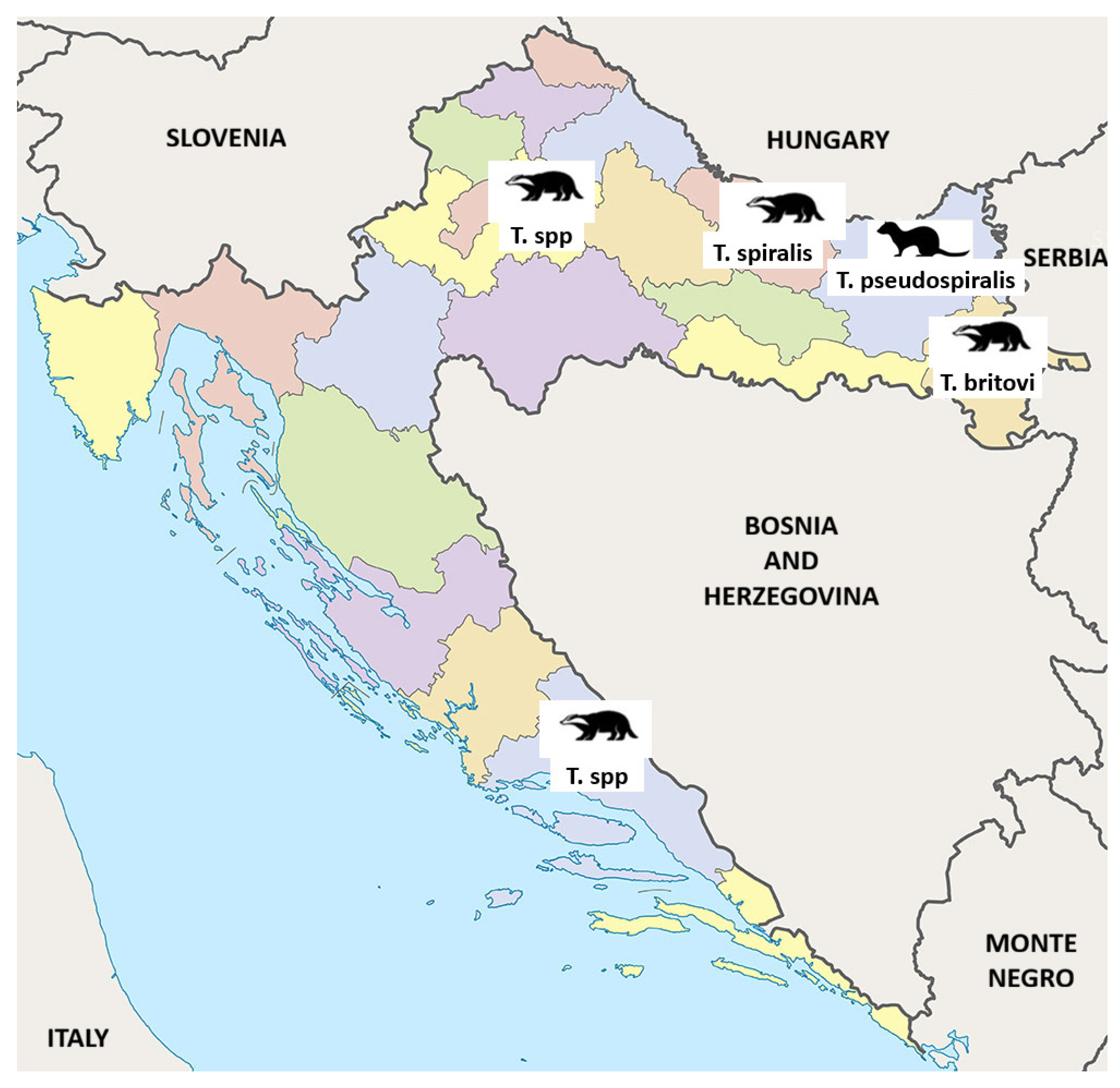
Of the 40 samples collected from badgers, four tested positive for Trichinella larvae. In one positive sample submitted to the NRL, the infection level was determined to be 2.53 larvae per gram of tissue (lpg), and T. spiralis was identified. The second positive samples, which tested positive at licensed veterinary organisations, were not sent to the NRL for identification due to a lack of sample material. In two positive samples from badgers tested at the NRL, the infection levels were determined to be 0.13 lpg and 9.52 lpg. Amplification of the third positive sample failed, probably due to prior freezing, while T. britovi was identified in the fourth positive sample. In the positive sample from the stone marten, the infection level was 7.48 lpg, and T. pseudospiralis was identified (Table 1). The spatial distribution of the identified samples from two badgers and one marten, as well as two unidentified samples from badgers, is shown in Figure 1.
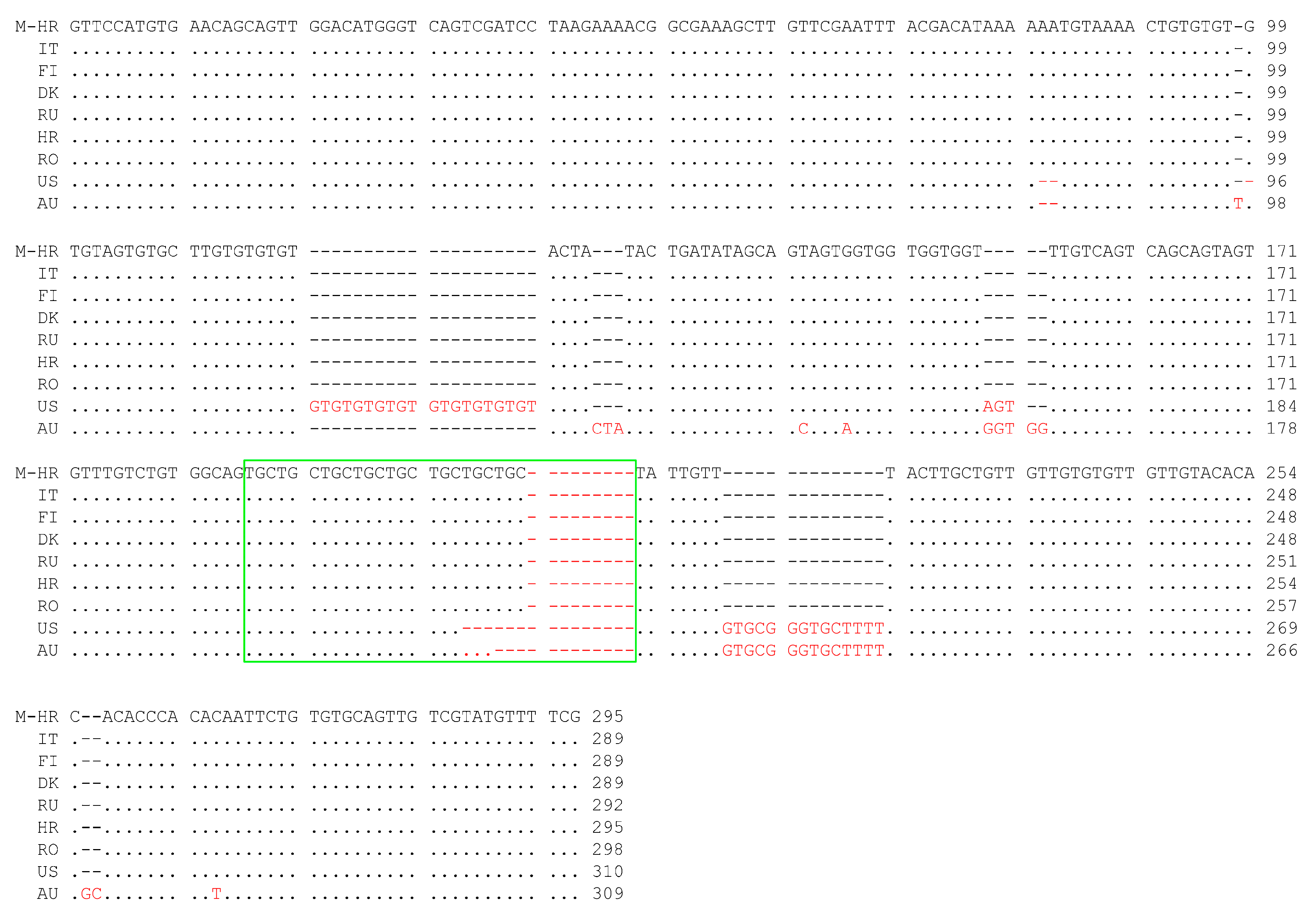
The ESV sequence of the T. pseudospiralis isolate found in the stone marten was identical to sequences obtained from other T. pseudospiralis Palearctic isolates (i.e., Denmark, Finland, Italy, Romania, and Southern Russia), as well as to the T. pseudospiralis isolate previously detected in two wild boar specimens in Croatia (Figure 2).

4. Discussion

The European legislation, outlined in Commission Implementing Regulation (EU) 2015/1375 [15], together with the international standard ISO 18743:2015 [16] require that, in addition to domestic pig and horse, wild boar meat and other game species, potentially harbouring parasites of the genus Trichinella, must be tested for trichinellosis. However, among these other game animals, the Regulation explicitly mentions only samples from bears, walruses, crocodiles, and birds, while the ISO standard also includes samples from seals, foxes, and raccoon dogs. For other carnivorous mammals, including members of the Mustelidae family, recommendations are based on the work of Pozio and Rossi (2008) [17].
Within the Mustelidae family, badger meat is the most significant and in practice the only source of trichinellosis for humans. Outbreaks associated with badger meat consumption have been reported in South Korea [18], following ingestion of raw badger liver, spleen, blood, and muscle, and in Russia [19] after consumption of badger meat marinated in vinegar and grilled. Ozeretskovskaya et al. (2005) [20] reported that trichinellosis outbreaks caused by badger meat are not uncommon in Russia, reporting that, between 1998 and 2002, 92 cases were recorded across seven epidemics. Most of these epidemics occurred in the Asian part of Russia, although two of them were recorded in the European part.
Badger meat is rarely hunted and consumed in Croatia, but it is considered a delicacy and can be prepared in various ways [21]. The most common method involve preservation through drying and smoking, while consumption after thorough heat treatment, such as roasting or cooking, is less frequent [22]. Because drying and smoking do not inactivate Trichinella larvae in the meat, and grilling may sometimes be insufficient to ensure safety, badger meat must be examined for Trichinella infection after removal of the scent glands [21].
In Croatia, hunters, trained in the proper handling of captured badgers, submit diaphragm samples to the nearest veterinary organisation for examination. If a sample tests positive, the remaining portion of the sample, or muscles from the front leg are submitted to the NRL for identification of isolated larvae. We found a 10% prevalence of Trichinella infection in badgers in Croatia. This result is notably higher than the 1.6% reported from Romania [23] and 5% from Finland [24]. Some studies reported 100% positive samples in Bulgaria and Latvia [25,26], 50% in Estonia [27], and 14% in Poland [28]; however, these figures were based on very small sample sizes (two in Bulgaria, Latvia, and Estonia; seven in Poland) and should be interpreted with caution.
Trichinella britovi is a species commonly found in wild game, as it is primarily responsible for the sylvatic circulation of the parasite [29]. This has been confirmed in badgers from several European countries, including Romania [23], Latvia [26], Bulgaria [25], and Poland [28]. The second most commonly identified Trichinella species in badgers appears to be T. nativa, which has been found as the sole species in badgers from Finland [24], Estonia [25], and Kazakhstan [30]. Trichinella spiralis is the rarest Trichinella species in badgers and has so far only been identified in the Czech Republic in 2017 and South Korea in 1997 [30]. The detection of T. spiralis in wild animals in Croatia is not surprising, as this species has previously been found in wolves [11], jackals [12], foxes and bears (unpublished data), and in wild boars, in which more individuals were infected with T. spiralis than with T. britovi [31]. These frequent and regular findings of T. spiralis in wild animals in Croatia are interpreted as a spillover of Trichinella from domestic to sylvatic circulation as a consequence of the Homeland War (1991–1995) and the post-war period, during which carcasses of domestic animals infected with Trichinella were left unattended and became a source of infection for game, either directly or via synanthropic animals. Since that time, the parasite has been circulating among wild animals in Croatia [31].
Other members of the Mustelidae family, not considered game for consumption, are less frequently hunted and have limited economic importance. It has been hypothesized that the number of Mustelidae in Europe is decreasing, mainly due to changes in land use, particularly the intensification of agriculture [32]. However, historically, marten fur was highly valued, and large declines in pine marten populations have been recorded over time due to excessive hunting or the introduction of predator control programs, which led to reductions in individual populations [33].
Of the eight species in the genus Martes, only two occur in Croatia: the white or stone marten and the European or pine marten [6]. The stone marten and the pine marten differ in fur colour, size, and habitat. The stone marten has white fur on its chest, is smaller than the pine marten, and is more often found in and around human settlements. In contrast, the pine marten has yellowish-brown fur on its chest, typically inhabits higher altitudes, and is more often found in dark, forested habitats [4]. The marten specimen infected with T. pseudospiralis reported in this study was found as a traffic casualty in a highly urbanised village near the largest city in Slavonia and had white fur on its chest.
Differences also exist regarding the species of Trichinella identified in stone and pine martens. Trichinella britovi was most frequently found in stone martens, with 13 isolates reported from Italy, Bulgaria, and Spain), while only two isolates were detected in pine martens, one each from Latvia and Ukraine [30]. Trichinella nativa was most commonly detected in pine martens, with 9 isolates from Finland [30]. Within the genus Martes, T. nativa was also identified in the American marten (M. americana), and genotype T6 in the fisher marten (M. pennanti) in North America [30]. Trichinella spiralis was identified in both stone and pine marten: one isolate from a stone marten in Spain, and one isolate from a pine marten in Russia [30]. According to available information, the confirmation of T. pseudospiralis in marten from Croatia represents the first report of this Trichinella species in the genus Martes both in Europe and worldwide. Since T. pseudospiralis is the rarest of the four Trichinella species reported in Europe [34], its detection in the first Trichinella-positive marten in Croatia is especially noteworthy. To assess the potential risk of Trichinella infection in martens, it is necessary to understand their feeding habits. Analysis of trace elements and stable carbon isotopes in the skeletons of both marten species has shown that they are opportunistic feeders, with a diet primarily consisting of mammals, birds, insects, and fruits [35]. In the context of Trichinella infection, martens may become infected by consuming the muscle tissue of mammals or birds. Faecal analyses of marten from Hungary [36] and Italy [37] indicate that the mammals they consumed are either small forest rodents (voles, mice, dormice, shrews, etc.) or medium-sized rodents (rabbits, nutria, and “undefined” rodents).
Trichinella larvae have been sporadically detected in micromammals, including small rodents such as Apodemus flavicollis and bank voles (Myodes glareolus), indicating their occasional involvement in sylvatic transmission cycles. Low-prevalence infections with T. pseudospiralis have been confirmed in micromammals in Slovakia [38], and serological evidence from northeastern Poland suggests limited exposure among bank vole populations [39]. Despite their low prevalence and constrained epidemiological importance due to small body size, short lifespan, and limited parasite biomass [10], micromammals are considered a potential source of Trichinella infection for other wildlife species [40], including martens.
However, one species within this group of animals is considered an important reservoir of trichinellosis for other animals and occupies a low enough position in the food chain to serve as prey for many carnivores and omnivores, including martens. This species is the rat (Rattus spp.), in which three species of Trichinella (T. spiralis, T. britovi, and T. pseudospiralis) have been identified [30], and which has also been found in the stomachs of martens [41]. Therefore, rats represent one of the possible sources of T. pseudospiralis infection for martens.
A third potential source of T. pseudospiralis for martens is birds. T. pseudospiralis is the only Trichinella species known to infect this class of animals, which allowed it to achieve a worldwide distribution. Based on genetic studies, three distinct T. pseudospiralis populations have been identified in the Palaearctic, Nearctic, and Australian regions [42]. Our isolate of T. pseudospiralis, with sequences available in NCBI GenBank under accession number PX723917, as well as previously sequenced isolates from wild boars [31], belongs to the Palaearctic population. Furthermore, the results confirm the previously reported high uniformity at the ESV locus among T. pseudospiralis isolates from the Palaearctic population [43], as well as the genetic differences compared to isolates from other zoogeographic regions (Nearctic and Australian populations).
Studies on marten feeding habits have identified bird species in their stomachs or in consumed remains, including geese, chickens, sparrows, and doves [37], and starlings, grouse, and pheasants [36]. However, the birds in which the species T. pseudospiralis was detected were mostly birds of prey from the families Accipitridae, Corvidae, Tytonidae, and Strigidae [42], which are more often predators of martens rather than their prey [44]. From this, it can be inferred that the probability of a marten being infected with T. pseudospiralis through birds is low, although it remains possible, as a marten can overcome a smaller bird of prey from the Corvidae or Tytonidae families, and thereby become infected with Trichinella.
Trichinella infection has been reported in polecats in several European countries. In Romania, 2 of 75 ferrets examined were infected, including one with T. spiralis and another with a mixed T. spiralis/T. britovi infection [45]. In Slovakia, T. britovi was detected in three of nine ferrets examined [46]. In the present study, only a single polecat was examined in Croatia, so its role in the local sylvatic circulation of Trichinella cannot currently be determined.

5. Conclusions

Animals from the Mustelidae family represent an important reservoir and indicator of Trichinella spp. circulation in the sylvatic cycle. Regular preventive examination of each hunted badger is important for public health, as it may help to reduce the risk of trichinellosis outbreaks in humans. Epidemiological surveillance of other members of this family contributes to understanding the intensity of infection in the sylvatic cycle and the capacity of Trichinella to infect other wild and, possibly, domestic animals. The detection of the rare species T. pseudospiralis in a stone marten specimen highlights the need for further research on the bird population in Croatia and the assessment of their role in the occurrence of T. pseudospiralis in wild animals.

Author Contributions

Conceptualization, D.B. and G.M.; Methodology, D.B., M.K., G.M. and I.T.; Software, H.K.; Validation, D.B., M.K. and L.S.; Formal Analysis, D.B., M.K., G.M. and I.T.; Investigation, D.B. and L.S.; Resources, L.S.; Data Curation, D.B.; Writing—Original Draft Preparation, D.B.; Writing—Review and Editing, G.M.; Visualization, D.B.; Supervision, D.B. and G.M.; Funding Acquisition, G.M. and L.S. All authors have read and agreed to the published version of the manuscript.

Funding

This research received no external funding.

Institutional Review Board Statement

The authors confirm that the ethical policies of the journal, as outlined in the notes on the journal’s author guidelines page, have been adhered to. All animals included in the study were collected according to an ongoing rabies annual monitoring program in Croatia prescribed by the Croatian Ministry of Agriculture, Veterinary and Food Safety Directorate. No animals were sacrificed specifically for the purpose of this study. This research did not involve any animal experiments.

Informed Consent Statement

Not applicable.

Data Availability Statement

The raw data supporting the conclusions of this article will be made available by the authors on request.

Acknowledgments

This research was partially supported by the European Commission‘s Directorate-General for Health and Food Safety (DG SANTE) under the grant agreement no. 101200161: “Work programme 2025–2027 of the European Union Reference Laboratory for the Parasites (EURL-P)”. The funders had no role in study design, data collection, data analysis, data interpretation, or writing of the report.

Conflicts of Interest

The authors declare no conflicts of interest.

References

  1. Balić, D.; Kurečić Filipović, S.; Mlinarić, I.; Ilić, M.; Majić, A.; Pem-Novosel, I. Human trichinellosis in Croatia: A review of the last 16 years. In Program and Abstract Book, 16th International Conference on Trichinellosis, Belgrade, Serbia, 30 August–1 September 2023; Narodna biblioteka Srbije: Belgrade, Serbia, 2023; pp. 101–102. [Google Scholar]
  2. EFSA and ECDC (European Food Safety Authority and European Centre for Disease Prevention and Control). The European Union One Health 2023 zoonoses report. EFSA J. 2024, 22, e9106. [Google Scholar] [CrossRef]
  3. Nascimento, F.O. On the correct name for some subfamilies of Mustelidae (Mammalia, Carnivora). Papéis Avulsos Zool. 2014, 54, 307–313. [Google Scholar] [CrossRef]
  4. Blüchel, K.G. Lovstvo-Velika Ilustrirana Enciklopedija; Znanje d.o.o.: Zagreb, Croatia, 2011; p. 480. [Google Scholar]
  5. Kolias, G.V.; Fernandez-Moran, J. Mustelidae. In Fowler’s Zoo and Wild Animal Medicine Fowler’s, 1st ed.; Miller, R.E., Fowler, M.E., Eds.; Elsevier: Amsterdam, The Netherlands, 2014; Volume 8, pp. 476–491. [Google Scholar] [CrossRef]
  6. Tucak, Z.; Florijančić, T.; Grubešić, M.; Topić, J.; Brna, J.; Dragičević, P.; Tušek, T.; Vukušić, K. Lovstvo, 1st ed.; Poljoprivredni fakultet Osijek Sveučilišta Josipa Jurja Strossmayera: Osijek, Croatia, 2001; pp. 34–35. [Google Scholar]
  7. Official Gazette of the Republic of Croatia. Hunting Law (Official Gazette No. 99/2018). Available online: https://narodne-novine.nn.hr/clanci/sluzbeni/2005_11_140_2641.html (accessed on 28 January 2026).
  8. Official Gazette of the Republic of Croatia. Law on Hunting Seasons (Official Gazette No. 94/2019). Available online: https://narodne-novine.nn.hr/clanci/sluzbeni/2019_10_94_1848.html (accessed on 28 January 2026).
  9. Jelić, M. Nacionalni Programi za Praćenje Stanja Očuvanosti Vrsta u Hrvatskoj: Vidra (Lutra lutra); Državni Zavod Za Zaštitu Prirode: Zagreb, Croatia, 2013; Available online: https://www.haop.hr/sites/default/files/uploads/dokumenti/03_prirodne/monitoring_prog/FINAL%20Lutra_lutra%2010-15.pdf (accessed on 28 January 2026).
  10. Pozio, E. Epidemiology. In Trichinella and Trichinellosis; Bruschi, F., Ed.; Elsevier, Academic Press: Oxford, UK, 2021; pp. 185–196. [Google Scholar]
  11. Beck, R.; Beck, A.; Kusak, J.; Mihaljević, Ž.; Lučinger, S.; Živičnjak, T.; Huber, Đ.; Gudan, A.; Marinculić, A. Trichinellosis in wolves from Croatia. Vet. Parasitol. 2009, 159, 308–311. [Google Scholar] [CrossRef] [PubMed]
  12. Balić, D.; Marucci, G.; Krajina, M.; Benić, M.; Mihaljević, Ž.; Andreanszky, T.; Sukalić, T.; Lukačević, D.; Miškić, T.; Škrivanko, M. Is golden jackal (Canis aureus) the most important indicator species of Trichinella infection in Croatia? Vet. Parasitol. 2025, 333, 110239. [Google Scholar] [CrossRef] [PubMed]
  13. Zarlenga, D.S.; Chute, M.B.; Martin, A.; Kapel, C.M.O. A multiplex PCR for unequivocal differentiation of six encapsulated and three non-encapsulated genotypes of Trichinella. Int. J. Parasitol. 1999, 29, 1859–1867. [Google Scholar] [CrossRef]
  14. Pozio, E.; La Rosa, G. PCR-derived methods for the identification of Trichinella parasites from animal and human samples. In PCR Detection of Microbial Pathogens (Methods in Molecular Biology), 1st ed.; Sachse, K., Frey, J., Eds.; Humana Press Inc.: Totowa, NJ, USA, 2003; Volume 216, pp. 299–309. [Google Scholar]
  15. Council Regulation (EU) No 2015/1375. Commission Implementing Regulation (EU) No 2015/1375 of 10 August 2015 laying down specific rules on official controls for Trichinella in meat. Off. J. Eur. Union 2015, 212, 7–34.
  16. ISO 18743:2015; Detection of Trichinella Larvae in Meat by Artificial Digestion Method. International Organization for Standardization (ISO): Geneva, Switzerland, 2015.
  17. Pozio, E.; Rossi, P. Guidelines for the identification and development of sampling methods and design of suitable protocols for monitoring of Trichinella infection in indicator species. Ann. Ist. Super. Sanità 2008, 44, 200–204. [Google Scholar]
  18. Sohn, W.M.; Kim, H.M.; Chung, D.I.; Tae, S. The first human case of Trichinella spiralis infection in Korea. Korean J. Parasitol. 2000, 38, 111–115. [Google Scholar] [CrossRef]
  19. Suzdaltsev, A.A.; Verkhovtsev, V.N.; Spiridonov, A.M.; Vekhova, E.Y.; Serbina, V.A.; Alexeyev, O.A. Trichinosis Outbreak after Ingestion of Barbecued Badger. Int. J. Infect. Dis. 1999, 3, 216. [Google Scholar] [CrossRef]
  20. Ozeretskovskaya, N.N.; Mikhailova, L.G.; Sabgaida, T.P.; Dovgalev, A.S. New trends and clinical patterns of human trichinellosis in Russia at the beginning of the XXI century. Vet. Parasitol. 2005, 132, 167–171. [Google Scholar] [CrossRef]
  21. Konjević, D. Slatka tajna lovačke kuhinje—Jazavac obični (Melles melles L.). Meso 2005, 1, 46–49. [Google Scholar]
  22. Hespeler, B. Dachsschinken eine Delikatesse. Niederschsischer Jäger 2004, 15, 6–9. [Google Scholar]
  23. Boros, Z.; Ionica, A.M.; Deak, G.; Mihalca, A.D.; Chisamera, G.B.; Adriana Gyorke, A.; Gherman, C.M.; Cozma, V. The European badger, Meles meles, as a new host for Trichinella britovi in Romania. Vet. Parasitol. 2020, 288, 109301. [Google Scholar] [CrossRef]
  24. Oksanen, A.; Intersiano, M.; Isomursu, M.; Heikkinen, P.; Tonanzi, D.; Oivanen, L.; Pozio, E. Trichinella spiralis prevalence among wildlife of a boreal region rapidly reduced in the absence of spillover from the domestic cycle. Vet. Parasitol. 2018, 262, 1–5. [Google Scholar] [CrossRef] [PubMed]
  25. Dilcheva, V.; Petkova, S. Trichinella britovi, etiologic agent of trichinellosis in wild carnivores in Bulgaria. Acta Morphol. Anthropol. 2018, 25, 3–4. [Google Scholar]
  26. Deksne, G.; Seglina, Z.; Jahundoviča, I.; Esite, Z.; Bakasejevs, E.; Bagrade, G.; Pozio, E. High prevalence of Trichinella spp. in sylvatic carnivore mammals of Latvia. Vet. Parasitol. 2016, 231, 118–123. [Google Scholar] [CrossRef]
  27. Jarvis, T.; Miller, I.; Pozio, E. Epidemiological studies on animal and human trichinellosis in Estonia. Parasite 2001, 8, 86–87. [Google Scholar] [CrossRef]
  28. Moskwa, B.; Gozdzik, K.; Bien, J.; Bogdaszewski, M.; Cabaj, W. Molecular identification of Trichinella britovi in martens (Martes martes) and badgers (Meles meles); new host records in Poland. Acta Parasitol. 2012, 57, 402–405. [Google Scholar] [CrossRef]
  29. Pozio, E. Factors affecting the flow among domestic, synanthropic and sylvatic cycles of Trichinella. Vet. Parasitol. 2000, 93, 241–262. [Google Scholar] [CrossRef]
  30. International Trichinella Reference Centre Database. Available online: https://trichinella.iss.it/ (accessed on 8 December 2025).
  31. Balić, D.; Marucci, G.; Agičić, M.; Benić, M.; Krovina, Z.; Miškić, T.; Aladić, K.; Škrivanko, M. Trichinella spp. in wild boar (Sus scrofa) populations in Croatia during an eight-year study (2010–2017). One Health 2020, 11, 100172. [Google Scholar] [CrossRef]
  32. Otte, P.J.; Hofmeester, T.R.; Dekker, J.; Poerink, B.J.; Smit, C. Optimizing small mustelid monitoring: Enclosed camera traps increase detection of the smallest carnivores. Ecol. Solut. Evid. 2025, 6, e70120. [Google Scholar] [CrossRef]
  33. Helldin, J.O. Population trends and harvest management of pine marten Martes martes in Scandinavia. Wildlife Biol. 2000, 6, 111–120. [Google Scholar] [CrossRef]
  34. Malone, C.J.; Oksanen, A.; Mukaratirwa, S.; Rajnish, S.; Jenkins, E. From wildlife to humans: The global distribution of Trichinella species and genotypes in wildlife and wildlife-associated human trichinellosis. Int. J. Parasitol. Parasites Wildl. 2024, 24, 100934. [Google Scholar] [CrossRef]
  35. Grupe, G.; Krüger, H.H. Feeding ecology of the stone and pine marten revealed by element analysis of their skeletons. Sci. Total Environ. 1990, 90, 227–240. [Google Scholar] [CrossRef] [PubMed]
  36. Lanszki, J.; Heltai, M. Feeding habits of sympatric mustelids in an agricultural area of Hungary. Acta Zool. Acad. Sci. Hung. 2011, 57, 291–304. [Google Scholar]
  37. Balestrieri, A.; Remonti, L.; Capra, R.B.; Canova, L.; Prigioni, C. Food habits of the stone marten (Martes foina) (Mammalia: Carnivora) in plain areas of Northern Italy prior to pine marten (M. martes) spreading. Ital. J. Zool. 2013, 80, 60–68. [Google Scholar] [CrossRef]
  38. Hurníková, Z.; Syrota, Y.; Komorová, P.; Chovancová, G.; Miterpáková, M. Contribution to host diversity, genetic diversification, and epidemiology of Trichinella pseudospiralis in Slovakia, Central Europe. Vet. Parasitol. 2025, 318, 110332. [Google Scholar] [CrossRef] [PubMed]
  39. Grzybek, M.; Cybulska, A.; Tołkacz, K.; Alsarraf, M.; Behnke-Borowczyk, J.; Szczepaniak, K.; Strachecka, A.; Paleolog, J.; Moskwa, B.; Behnke, J.M.; et al. Seroprevalence of Trichinella spp. infection in bank voles (Myodes glareolus): A long-term study. Int. J. Parasitol. Parasites Wildl. 2019, 9, 144–148. [Google Scholar] [CrossRef]
  40. Pozio, E.; Zarlenga, D.S. New pieces of the Trichinella puzzle. Int. J. Parasitol. 2013, 43, 983–997. [Google Scholar] [CrossRef]
  41. Bakaloudis, D.E.; Vlachos, C.G.; Papakosta, M.A.; Bontzorlos, V.A.; Chatzinikos, E.N. Diet composition and feeding strategies of the stone marten (Martes foina) in a typical Mediterranean ecosystem. Sci. World J. 2012, 2012, 163920. [Google Scholar] [CrossRef]
  42. Pozio, E. Trichinella pseudospiralis an elusive nematode. Vet. Parasitol. 2016, 231, 97–101. [Google Scholar] [CrossRef]
  43. La Rosa, G.; Marucci, G.; Zarlenga, D.S.; Pozio, E. Trichinella pseudospiralis populations of the Palearctic region and their relationship with populations of the Nearctic and Australian regions. Int. J. Parasitol. 2001, 31, 297–305. [Google Scholar] [CrossRef]
  44. Suffice, P.; Asselin, H.; Imbeau, L.; Cheveau, M.; Drapeau, P. More fishers and fewer martens due to cumulative effects of forest management and climate change as evidenced from local knowledge. J. Ethnobiol. Ethnomed. 2017, 13, 51. [Google Scholar] [CrossRef] [PubMed] [PubMed Central]
  45. Boros, Z.; Ionică, A.M.; Deak, G.; Mihalca, A.D.; Chișamera, G.; Constantinescu, I.C.; Adam, C.; Gherman, C.M.; Cozma, V. Trichinella spp. Infection in European Polecats (Mustela Putorius Linnaeus, 1758) from Romania. Helminthologia 2021, 58, 323–327. [Google Scholar] [CrossRef] [PubMed] [PubMed Central]
  46. Hurníková, Z.; Miterpáková, M.; Chovancová, B. The important zoonoses in the protected areas of the Tatra National Park (TANAP). Wiad. Parazytol. 2009, 55, 395–398. [Google Scholar] [PubMed]
Figure 1. Spatial distribution of identified and unidentified Trichinella isolates.
Animals 16 00603 g001
Figure 2. Alignment of homologous ESV sequences of T. pseudospiralis isolate belonging to Palearctic, Nearctic, and Australian populations. M-HR, isolate from the stone marten (Martes foina) of Croatia (ISS11031); IT, isolate from a wild boar (Sus scrofa) from Italy (ISS2851); FI, isolate from a raccoon dog (Nyctereutes procyonoides) of Finland (ISS681); DK, isolate from an American mink (Neogale vison) of Denmark (ISS1938); RU, isolate from a raccoon dog (N. procyonoides) of Southern Russia (ISS13); HR, isolate from a wild boar (S. scrofa) of Croatia (ISS7221); RO, isolate from a jackal (Canis aureus) from Romania (ISS9492); US, isolate from a black vulture (Coragyps atratus) of the USA (ISS470); AU, isolate from a tiger cat (Dasyurus maculatus) of Australia (ISS141). Conserved bases are represented by dots; gaps are represented by dashes; different residues are highlighted in red; TGC microsatellite region is boxed in green.
Animals 16 00603 g002
Table 1. Number of tested animals and Trichinella species identified in three Mustelidae species.
Animal SpeciesHuntedRabies MonitoringTotal
(% of Positive)
Identified
Species
TestedPositiveTestedPositive
Badger
(Meles meles)
27213240
(10%)
T. spiralis (1 isolate)
T. britovi (1 isolate)
Stone marten
(Martes foina)
--11111
(9, 1%)
T. pseudospiralis
Polecat
(Mustela putorius)
--101
(0%)
-
Table 2. Trichinella pseudospiralis isolates for which ESV sequences were used in this study.
Isolate Code a/An bOriginal HostGeographical Origin
ISS13/S82661.1Raccoon dog (Nyctereutes procyonoides)Caucasus region (Russia)
ISS141Tiger cat (Dasyurus maculatus)Tasmania (Australia)
ISS470/S82657.1Black vulture (Coragypus atratus)Alabama (USA)
ISS681Raccoon dog (Nyctereutes procyonoides)Finland
ISS1938American mink (Neogale vison)Denmark
ISS2851Wild boar (Sus scrofa)Italy
ISS7221Wild boar (Sus scrofa)Croatia
ISS9492//OR916274Golden jackal (Canis aureus)Romania
ISS11031/PX723917Stone marten (Marten foina)Croatia
a Isolate code of the International Trichinella Reference Centre, Rome, Italy. b GenBank accession number.
Disclaimer/Publisher’s Note: The statements, opinions and data contained in all publications are solely those of the individual author(s) and contributor(s) and not of MDPI and/or the editor(s). MDPI and/or the editor(s) disclaim responsibility for any injury to people or property resulting from any ideas, methods, instructions or products referred to in the content.