


Simple Summary
Plant-based feed additives are being explored as safe ways to improve animal production, but their effects in sheep are still not fully understood. In this study, we tested puerarin, a natural compound from kudzu root, in the diets of Hu sheep to see whether it could improve growth, feed use, rumen function, and health-related blood indicators. Sheep were fed diets containing different amounts of puerarin for 30 days. The results showed that puerarin improved daily weight gain, and the best overall response was observed at 100 milligrams per kilogram of diet. At this level, sheep also showed better digestion of fiber, more favorable rumen fermentation, higher levels of useful fermentation products and microbial protein, and better blood indicators related to metabolism and oxidative balance. Analysis of rumen bacteria showed that puerarin did not strongly change overall bacterial diversity, but it was associated with changes in some bacterial groups and their predicted functions. Overall, these findings suggest that puerarin may be a promising natural feed additive for improving nutrient use, rumen efficiency, and growth performance in Hu sheep.
Abstract
Puerarin has been suggested to improve ruminant productivity, but its effects on rumen fermentation and rumen microbiota in sheep remain insufficiently understood. In this study, Hu sheep were fed diets supplemented with 0, 50, 100, 200, 400, or 800 mg/kg puerarin for 30 d to evaluate growth performance, apparent nutrient digestibility, serum biochemical and antioxidant indices, rumen fermentation, and rumen microbial community structure. Puerarin supplementation improved growth performance, with the 100 mg/kg group showing the greatest average daily gain. Acid detergent fiber digestibility was also significantly increased in the 100 mg/kg group. In the rumen, microbial crude protein concentration was significantly increased in the 100 and 400 mg/kg groups, propionate concentration was significantly increased in the 50 and 100 mg/kg groups, and the acetate-to-propionate ratio was significantly decreased in the 100 mg/kg group. In serum, albumin and glucose concentrations were significantly increased at appropriate supplementation levels, whereas malondialdehyde was reduced in the 100 mg/kg group but increased in the 800 mg/kg group. 16S rRNA sequencing showed limited effects on overall bacterial diversity, but changes in specific rumen microbial taxa and predicted microbial functions were observed. Collectively, these findings suggest that dietary puerarin, particularly at 100 mg/kg, may improve growth performance in Hu sheep, at least in part, through improving rumen fermentation.
1. Introduction
Driven by global population growth and evolving dietary preferences, mutton and lamb have emerged as indispensable protein sources in the human diet. There is growing consumer demand for high-quality, safe, and efficiently produced mutton. Hu sheep are a prominent indigenous Chinese breed that plays a pivotal role in the national mutton production industry. This breed is characterized by exceptional reproductive performance and efficient growth characteristics, and is highly valued by consumers for its superior carcass traits and nutritional value [1]. In recent years, the substantial demand for meat products has driven the rapid development of China’s indigenous meat sheep breeding industry. In the current market-driven industry, the lamb sector profits significantly from raising lambs that yield high-quality meat at lower costs [2]. Therefore, numerous studies have focused on enhancing growth and productivity in sheep [3,4]. Currently, confined feeding systems are widely adopted in most large-scale meat sheep farms. Under this management model, sheep primarily derive nutrients from basal diets. However, beyond a certain age, the growth rate of sheep tends to decline, reducing economic returns for producers [5]. In ruminants, feed efficiency and growth performance are closely linked to rumen function, because the rumen is the primary site of microbial fermentation, feed degradation, the production of volatile fatty acids (VFAs), and the synthesis of microbial crude protein (MCP) [6]. Thus, nutritional interventions capable of modulating rumen microbial composition and improving rumen fermentation may represent an effective approach to enhancing productivity and health in sheep.
Phytoestrogens have attracted considerable attention because of their potential to improve animal performance and physiological status [7,8]. Due to structural and functional similarities with the estrogenic hormone 17β-estradiol, isoflavones are recognized as natural phytoestrogens [9]. Soy and red clover isoflavones are among the most extensively studied in animal production. Previous studies have shown that these compounds can improve growth performance and modify rumen microbial composition [10,11]. Compared with these commonly studied isoflavones, puerarin is a distinctive C-glycoside isoflavone extracted from the root of kudzu (Pueraria lobata) [12]. The C-glycosidic bond confers metabolic stability against β-glucosidase hydrolysis, providing significant advantages over O-glycosylated analogs [13]. In contrast to the predominantly O-glycosidic forms found in soy and red clover isoflavones, puerarin differs in absorption pattern, metabolic fate, and bioavailability, which may result in distinct biological effects. Compared to the direct inclusion of Pueraria lobata root material or crude extracts, the use of a standardized puerarin product with defined purity allows more accurate control of the supplementation dose and reduces potential confounding effects from other phytochemical constituents. A comparative study in rats showed that Pueraria lobata crude extract and isolated puerarin differed in their antioxidant properties and modulatory effects on hepatic cytochrome P450 enzymes, indicating that constituents other than puerarin in crude preparations may exert additional biological effects [14]. Therefore, the use of standardized puerarin enables a more specific evaluation of its biological effects in ruminants.
Accumulating evidence has shown that puerarin supplementation can improve feed efficiency and productive performance, enhance antioxidant capacity, and support intestinal and immune function, thereby contributing to improved livestock productivity [15,16,17]. However, current research has predominantly focused on monogastric animals (e.g., pigs, poultry) or murine models; data regarding the application of puerarin in ruminants remain markedly limited. In particular, the effects of puerarin on rumen fermentation and rumen microbial ecology in sheep are still poorly understood. Because rumen microorganisms are directly involved in feed degradation, fermentation end-product formation, and microbial protein synthesis, modulation of the rumen microenvironment may represent an important mechanism by which puerarin enhances ruminant performance [18]. Our previous studies showed that dietary puerarin supplementation alleviated heat stress-induced impairment of beef quality in cattle and was associated with improved antioxidant capacity and remodeling of the rumen microbial community [19]. These findings suggest that puerarin may serve as a promising nutritional regulator of rumen function in ruminants. Nevertheless, the dose-dependent responses of growing lambs to puerarin have not been systematically evaluated, leaving the optimal inclusion level undefined.
Therefore, the present study was conducted to systematically investigate the effects of dietary puerarin supplementation across a wide dose range (0 to 800 mg/kg) on growth performance, nutrient digestibility, serum biochemical and antioxidant indices, rumen fermentation characteristics, and rumen bacterial composition in Hu sheep. We hypothesized that puerarin may improve growth performance and nutrient utilization by optimizing rumen fermentation and affecting rumen microbial composition, thereby exerting beneficial effects on the productivity and physiological status of Hu sheep.
2. Materials and Methods
2.1. Animals, Experimental Design, and Diets
Puerarin (purity ≥ 90%) was procured from Shaanxi Herbpure Co., Ltd. (Xi’an, China). A single-factor completely randomized design was adopted. Seventy-two 4-month-old male Hu sheep (21 ± 0.9 kg) were randomly allocated to a control group and five puerarin supplementation groups, with dietary inclusion levels of 50, 100, 200, 400, and 800 mg/kg on a dry matter (DM) basis, respectively. Each group contained four replicates, with three sheep per replicate. A 20-day adaptation period was provided to allow the lambs to acclimate to the experimental environment and gradually transition to the experimental diets, thereby minimizing stress and digestive disturbances before formal data collection. Following a 20-day adaptation period, a 30-day feeding trial was conducted to evaluate the dose-dependent short-term responses of growing Hu sheep to dietary puerarin supplementation. The control group received a basal diet, while the treatment groups were provided with the same basal diet supplemented with five graded levels of puerarin in the concentrate portion. Sheep were fed twice daily (08:00 and 18:00) with ad libitum access to water. The amount of feed provided was adjusted daily based on their intake, ensuring a 10% surplus. The dietary concentrate-to-forage ratio was 40:60 (DM basis), and peanut vine was chopped to an average length of approximately 8–10 cm before mixing. Because puerarin was included at relatively low dietary levels, it was first thoroughly incorporated into the concentrate portion to facilitate uniform premixing and reduce the risk of uneven distribution. The puerarin-containing concentrate was subsequently blended in batches with chopped peanut vine to prepare the total mixed ration (TMR). Table 1 presents the composition and nutritional levels of the basal diet. Net energy for maintenance and growth (NEmf) was calculated according to the “Feeding Standard for Meat Sheep” (NY/T 816-2021).
Table 1.
Ingredient composition and nutrient levels of the basal diet (% of DM).
2.2. Measurement of Growth Performance
The sheep were weighed before morning feeding on days 0 and 30. Average daily gain (ADG) was calculated as the difference between final and initial body weight (BW) divided by the 30-day experimental period. Daily feed intake was recorded to determine average daily dry matter intake (ADMI) and feed-to-gain ratio (F/G).
2.3. Sample Collection
During the collection period (days 24–30), fresh fecal grab samples (approximately 200 g each) were collected from each sheep at 4 h intervals (00:00, 04:00, 08:00, 12:00, 16:00, and 20:00 h) to account for diurnal variation in fecal excretion. Feed samples were collected concurrently. The 6 daily fecal grab samples from each sheep were pooled by day, and the 7 daily pools were then thoroughly mixed to obtain one composite sample per animal for the entire collection period. A 10% aliquot of the composite sample was retained and stored at −20 °C until nutrient analysis. Before analysis, samples were dried at 65 °C for 72 h, ground, and passed through a 40-mesh sieve (0.425 mm).
On day 30 of the trial, blood samples were collected via jugular venipuncture. After standing at room temperature for 30 min, the samples were centrifuged at 3000× g for 10 min at 4 °C, and the resulting serum was aliquoted and stored at −20 °C until analysis.
On day 30, rumen fluid samples were collected from sheep approximately 6 h after the morning feeding using an oral stomach tube. To minimize saliva contamination, the first 2 aliquots were discarded. The remaining rumen fluid was filtered through 4 layers of surgical gauze, and pH was measured immediately. A portion of the filtrate was stored at −20 °C for rumen fermentation analysis, and another portion was aliquoted into sterile cryovials and stored at −80 °C for microbial analysis. For 16S rRNA gene sequencing, one sheep per replicate pen was randomly selected as the representative (n = 4 per group), with the replicate pen as the experimental unit for microbial community analysis. For rumen fermentation parameters, samples from all 12 sheep per group were analyzed, with individual sheep as the experimental unit.
2.4. Determination of Nutrient Levels in Feed and Feces
Samples were dried at 65 °C for 72 h, ground, and passed through a 40-mesh sieve (0.425 mm). DM, crude protein (CP), neutral detergent fiber (NDF), acid detergent fiber (ADF), calcium, and total phosphorus contents in feed and feces were measured as described by Chen et al. [20]. The feed and fecal nutrient analyses were conducted between January and February 2025. Ash content was determined using a muffle furnace (Model SX2-12-10, Shanghai Yuejin Medical Instruments Co., Ltd., Shanghai, China) following GB/T 6438–2007 [21]. Ether extract (EE) was analyzed using a Soxhlet extractor (250 mL, 29/32 joint, Huaguang Glass, Wuxi, China) in accordance with GB/T 6433–2006 [22]. These standards were the applicable versions during the analytical period. The apparent digestibility of nutrients was determined using the acid-insoluble ash (AIA) method, which employs AIA concentration as an internal indigestible marker [23].
2.5. Rumen Fermentation Parameter Analysis
VFAs were quantified using an Agilent 7820A gas chromatograph (Agilent Technologies, Santa Clara, CA, USA) equipped with a capillary column (Agilent Technologies, Santa Clara, CA, USA; 30 m × 0.25 mm × 0.33 μm). Sample preparation and parameters followed the method of Xiao et al. [24]. Ammonia nitrogen (NH3-N) concentration was analyzed colorimetrically using a spectrophotometer (UV-2450, Shimadzu, Tokyo, Japan) [25]. Rumen MCP concentration was determined colorimetrically with a commercial enzyme-linked detection system (Suzhou Geruisi Biotechnology Co., Ltd., Suzhou, China; Cat. No. G0418W).
2.6. Serum Parameter Analysis
Blood urea nitrogen (BUN), total protein (TP), albumin (ALB), and glucose (GLU) were analyzed using an automatic biochemical analyzer (BS-2800M, Mindray, Shenzhen, China). Serum antioxidant indicators, including catalase (CAT), superoxide dismutase (SOD), glutathione peroxidase (GSH-Px), and malondialdehyde (MDA), were measured using commercial assay kits (Nanjing Jiancheng Bioengineering Institute, Nanjing, China).
2.7. 16S rRNA Gene Sequencing
For rumen microbial analysis, one sheep was randomly selected from each of the four replicate pens in each treatment group, resulting in four biological replicates per treatment. Rumen fluid samples collected from these sheep were used for 16S rRNA gene sequencing. Because dietary treatment was assigned at the pen level, each pen was considered an independent experimental unit.
Rumen microbial DNA was extracted using a commercial genomic DNA extraction kit (EC801; TransGen Biotech Co., Ltd., Beijing, China) according to the manufacturer’s instructions. PCR amplification and sequencing were performed by Novogene Co., Ltd. (Beijing, China). The V3–V4 region of the 16S rRNA gene was amplified using primers 341F (5′-CCTAYGGGRBGCASCAG-3′) and 806R (5′-GGACTACNNGGGTATCTAAT-3′), as described by Hjelmsø et al. [26]. PCR amplification consisted of initial denaturation at 98 °C for 1 min, followed by 30 cycles at 98 °C for 10 s, 50 °C for 30 s, and 72 °C for 30 s, with a final extension at 72 °C for 5 min. Amplicons were sequenced on an Illumina MiSeq platform (Illumina, Inc., San Diego, CA, USA) using a 2 × 300 bp paired-end sequencing strategy. Raw reads were merged and quality-filtered, and operational taxonomic units (OTUs) were clustered at 97% similarity using USEARCH (v11.0.667). Taxonomic annotation was performed using the RDP Classifier against the SILVA database (release 138.1), and downstream analyses were conducted in QIIME 2 (version 2022.2).
Alpha diversity indices were calculated to evaluate the richness and diversity of the rumen microbial community. Beta diversity was assessed by principal coordinate analysis (PCoA). Differential microbial taxa among treatments were identified by linear discriminant analysis effect size (LEfSe, v1.1.01). Functional profiles of the rumen microbial community were predicted using Tax4Fun (v0.3.1) based on the Kyoto Encyclopedia of Genes and Genomes (KEGG) database. Spearman correlation analysis was further performed to assess the relationships between key rumen microbial taxa, predicted microbial functions, and major phenotypic parameters.
2.8. Statistical Analysis
Data are presented as the mean ± standard error of the mean (SEM), except for the alpha-diversity indices, which are presented as the mean ± standard deviation (SD). Statistical analyses were performed using SPSS 26.0 software (SPSS Inc., Chicago, IL, USA). Growth performance, serum indices, nutrient digestibility, rumen fermentation parameters, and the relative abundances of major microbial taxa and predicted microbial functions were analyzed by one-way analysis of variance (ANOVA), followed by Tukey’s multiple-comparison test for multiple comparisons. In addition, linear and quadratic dose–response effects were evaluated using orthogonal polynomial contrasts based on the actual unequally spaced puerarin supplementation levels of 0, 50, 100, 200, 400, and 800 mg/kg DM. Alpha-diversity indices were analyzed using the Kruskal–Wallis test followed by Dunn’s post hoc test, with p values adjusted using the Benjamini–Hochberg false discovery rate procedure. Alpha-diversity data are presented as the mean ± SD. Differential microbial taxa among treatments were identified by LEfSe analysis. For LEfSe analysis, the significance threshold for the Kruskal–Wallis test was set at p < 0.05, and the logarithmic linear discriminant analysis score threshold was set at 2.0. To evaluate whether the numerical differences in initial BW affected the final BW results, final BW was additionally analyzed using analysis of covariance (ANCOVA), with dietary treatment as the fixed effect and initial BW as the covariate. Homogeneity of regression slopes was assessed using the dietary treatment × initial BW interaction. When the interaction was not significant, it was removed from the final model. Bonferroni adjustment was applied to pairwise comparisons of the estimated marginal means. Differences were considered statistically significant when p < 0.05.
3. Results
3.1. Growth Performance
The growth performance results are presented in Table 2. After 30 d of feeding, puerarin supplementation significantly affected ADG (ANOVA, p = 0.031). Compared with the control group, ADG was significantly increased in the 50, 100, and 400 mg/kg puerarin groups, with the highest value observed in the 100 mg/kg group. As the puerarin supplementation level increased, ADG showed a quadratic response (p-quadratic = 0.039). Initial BW, final BW, ADMI, and F/G were not significantly affected by treatment in the one-way ANOVA and showed no significant linear or quadratic responses (p > 0.05). The dietary treatment × initial BW interaction was not significant (p = 0.649), indicating that the homogeneity-of-regression-slopes assumption was satisfied. After adjustment for initial BW, dietary treatment significantly affected final BW (p = 0.038), and the adjusted final BW was greater in the 100 mg/kg group than in the control group (p = 0.039; Table A1).
Table 2.
Effects of puerarin on the growth performance of Hu sheep.
3.2. Apparent Nutrient Digestibility
The apparent nutrient digestibility results are shown in Table 3. Among the measured indices, only ADF digestibility was significantly affected by puerarin supplementation (p = 0.015). The 100 mg/kg group showed the highest ADF digestibility, which was significantly greater than that of the control group. As the puerarin supplementation level increased, ADF digestibility showed a quadratic response (p-quadratic = 0.048). No significant treatment, linear, or quadratic effects were observed for the digestibility of DM, CP, EE, or NDF (p > 0.05).
Table 3.
Effects of dietary puerarin supplementation on apparent nutrient digestibility in Hu sheep (%).
3.3. Rumen Fermentation
As shown in Table 4, puerarin supplementation significantly affected several rumen fermentation parameters. Compared with the control group, MCP concentration was significantly increased in the 100 and 400 mg/kg groups (ANOVA, p = 0.043), and MCP showed a quadratic response as the puerarin level increased (p-quadratic = 0.025). Propionate concentration was significantly increased in the 50 and 100 mg/kg groups (p = 0.008) and showed a significant linear dose–response component (p-linear = 0.004). A/P (acetate-to-propionate ratio) was significantly decreased in the 100 mg/kg group (ANOVA, p = 0.035), but showed no significant linear or quadratic response (p > 0.05).
Table 4.
Effects of puerarin on rumen fermentation in Hu sheep.
Although NH3-N concentration did not differ significantly among treatments (ANOVA, p = 0.419), it decreased linearly with increasing puerarin supplementation (p-linear = 0.041). Acetate and total VFAs were significantly decreased in the 800 mg/kg group (ANOVA, p = 0.008 and 0.009, respectively). Acetate and total VFAs exhibited both linear and quadratic dose–response components (acetate: p-linear = 0.004 and p-quadratic = 0.023; total VFA: p-linear = 0.003 and p-quadratic = 0.018). No significant treatment, linear, or quadratic effects were observed for butyrate concentration (p > 0.05).
3.4. Serum Biochemical and Antioxidant Indices
Serum biochemical and antioxidant indices are summarized in Table 5. Puerarin supplementation significantly affected serum MDA, ALB, and GLU concentrations. Compared with the control group, serum MDA concentration was significantly decreased in the 100 mg/kg group but significantly increased in the 800 mg/kg group (p < 0.001). MDA showed a significant linear dose–response component across the tested supplementation range (p-linear < 0.001), whereas the quadratic response was not significant (p-quadratic = 0.536).
Table 5.
Effects of dietary puerarin supplementation on serum biochemical and antioxidant indices in Hu sheep.
Serum ALB concentration was significantly increased in the 100, 200, and 400 mg/kg groups (ANOVA, p = 0.044) and showed a quadratic response to increasing puerarin supplementation (p-quadratic = 0.005). Serum GLU concentration was significantly increased in the 100 and 200 mg/kg groups (ANOVA, p = 0.004) and also exhibited a quadratic response (p-quadratic = 0.007). No significant treatment, linear, or quadratic effects were observed for GSH-Px, SOD, CAT, BUN, or TP (p > 0.05).
3.5. Composition of Rumen Microbial Community
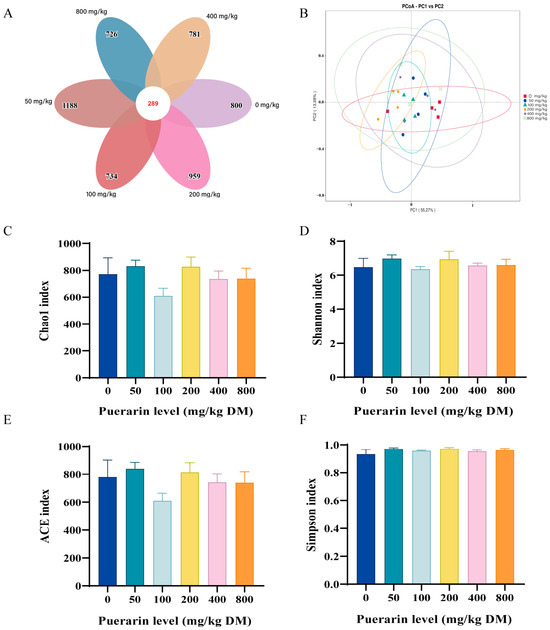
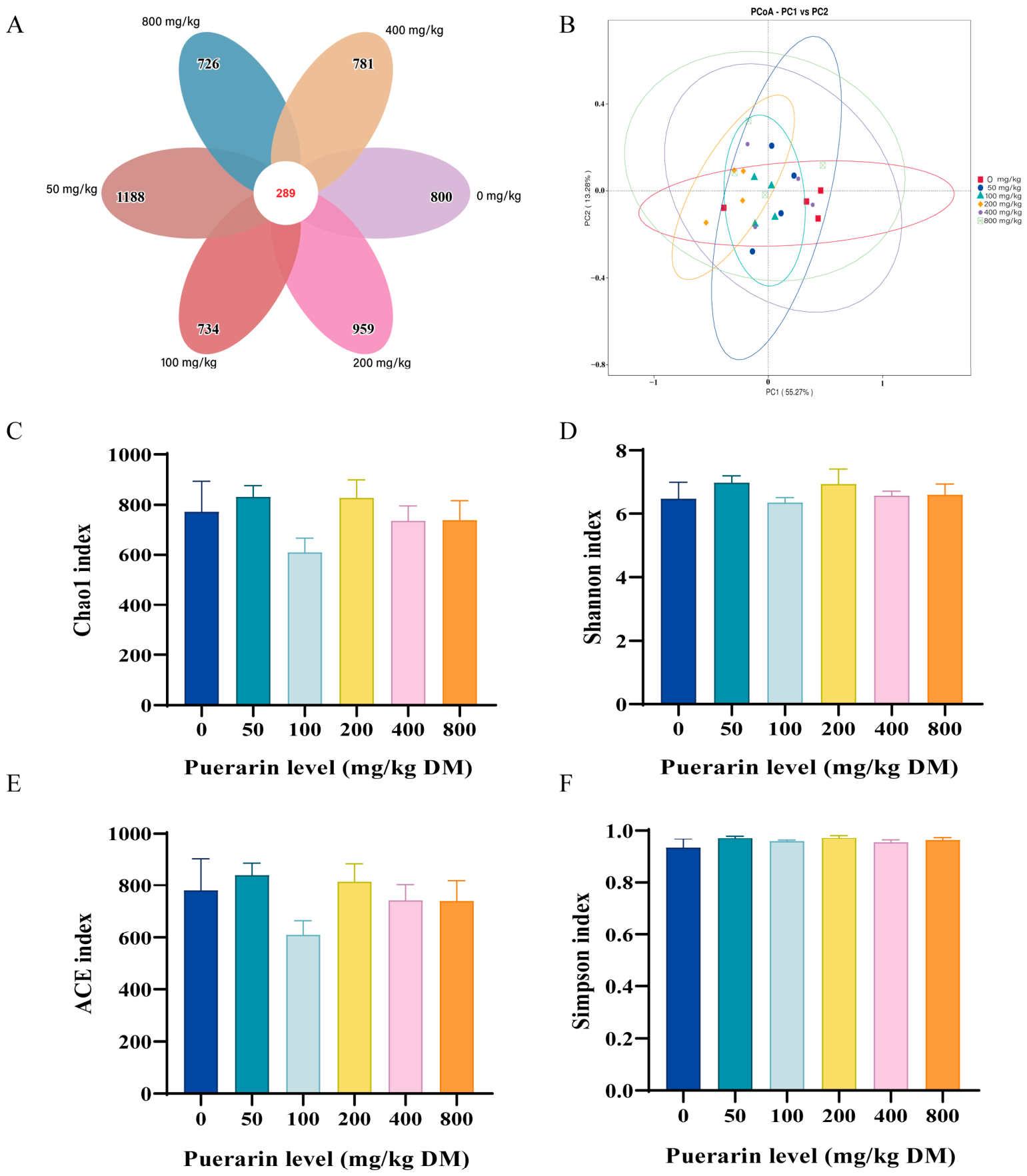
A total of 289 OTUs were shared among all six treatment groups, while each group also contained unique OTUs (Figure 1A). The PCoA plot showed substantial overlap among groups, suggesting no obvious differences in overall beta diversity (Figure 1B). Similarly, the Chao1, Shannon, ACE, and Simpson indices did not differ significantly among treatments (p > 0.05; Figure 1C–F).
Figure 1.
Effects of dietary puerarin supplementation on rumen microbial diversity in Hu sheep. (A) Flower diagram showing the shared and unique operational taxonomic units (OTUs) among the six treatment groups. (B) Principal coordinate analysis (PCoA) of the rumen bacterial communities based on weighted UniFrac distances; The colored ellipses represent the 95% confidence intervals for each treatment group. (C–F) Alpha-diversity indices of the rumen microbial community, including Chao1 (C), Shannon (D), ACE (E), and Simpson (F). The dietary puerarin supplementation levels were 0, 50, 100, 200, 400, and 800 mg/kg on a dry matter basis. Each treatment group included four biological replicates (n = 4). Data in panels (C–F) are presented as mean ± SD. Differences among treatments were analyzed using the Kruskal–Wallis test followed by Dunn’s post hoc test with Benjamini–Hochberg false discovery rate correction. No significant differences were detected among treatments for any alpha-diversity index (p > 0.05).
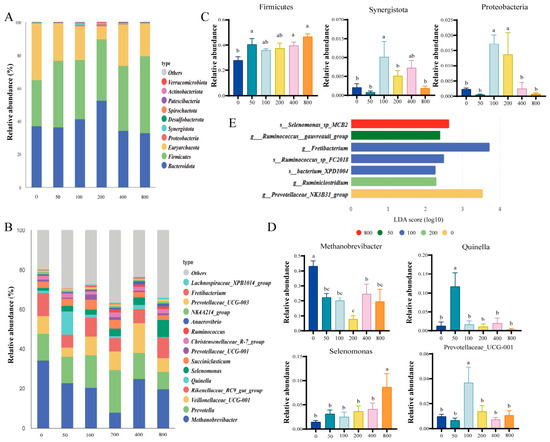
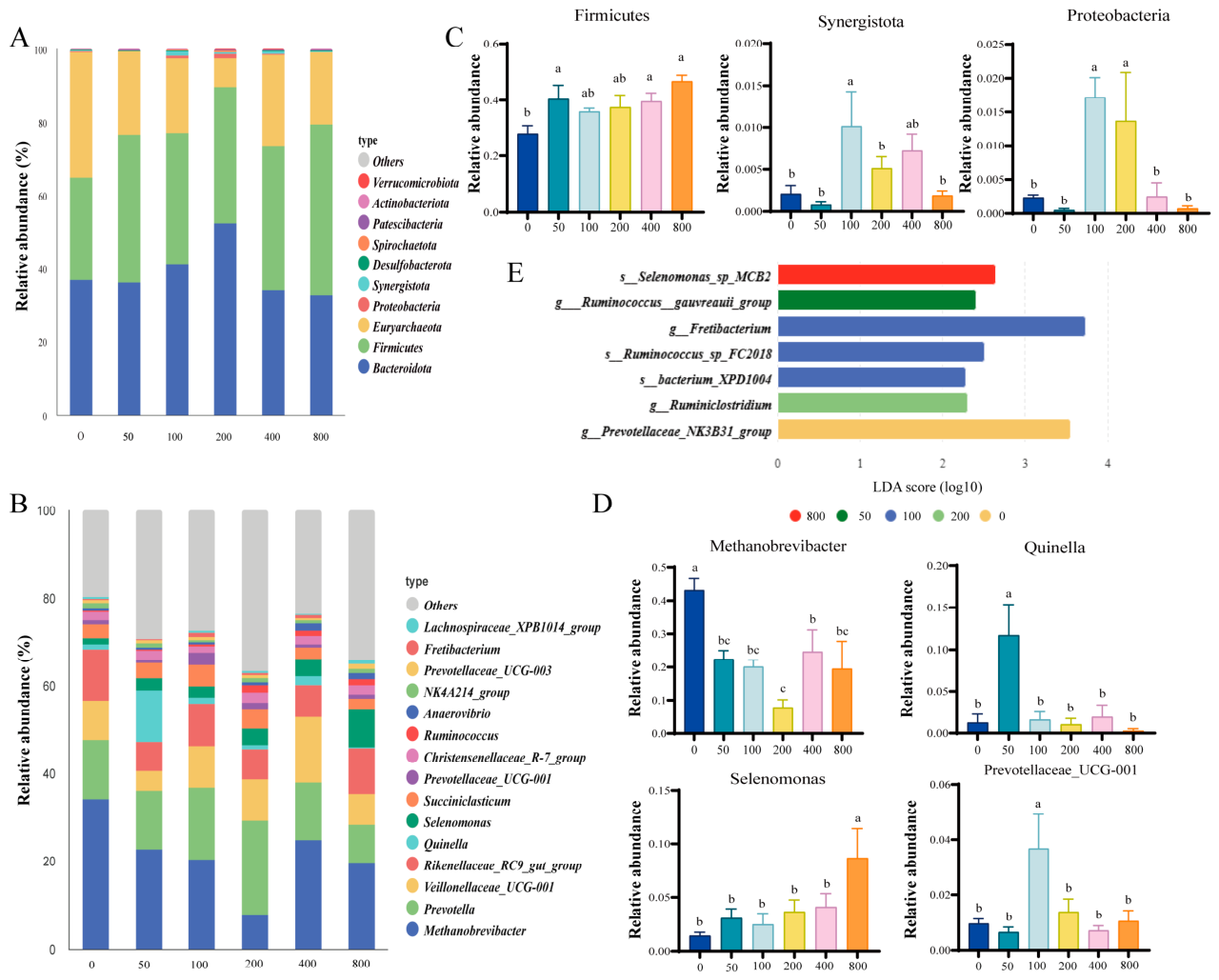
At the phylum level, Bacteroidota, Euryarchaeota, and Firmicutes were the dominant taxa in the rumen fluid of Hu sheep, accounting for more than 98% of the total sequences (Figure 2A). Compared with the control group, Firmicutes was significantly increased in the 50, 400, and 800 mg/kg groups, whereas Proteobacteria was significantly increased in the 100 and 200 mg/kg groups (p < 0.05). In addition, Synergistota was significantly enriched in the 100 mg/kg group (Figure 2C; p < 0.05).
Figure 2.
Effects of dietary puerarin supplementation on rumen microbial composition in Hu sheep. (A) Relative abundance of the dominant microbial taxa at the phylum level. (B) Relative abundance of the dominant microbial taxa at the genus level. (C) Relative abundances of Firmicutes, Synergistota, and Proteobacteria among treatments. (D) Relative abundances of Methanobrevibacter, Quinella, Selenomonas, and Prevotellaceae_UCG-001 among treatments. (E) Linear discriminant analysis effect size (LEfSe) analysis showing the discriminative microbial taxa enriched in the different treatment groups. The numbers 0, 50, 100, 200, 400, and 800 on the x-axis represent dietary puerarin supplementation levels in mg/kg DM. Data in panels (C,D) are presented as mean ± SEM (n = 4 per treatment). Different lowercase letters indicate significant differences among treatments (p < 0.05). Only treatment groups with taxa meeting the LEfSe screening criteria are shown in panel (E). Only taxa with an LDA score > 2.0 and p < 0.05 are shown.
At the genus level, Methanobrevibacter and Prevotella were among the dominant genera across treatments (Figure 2B). Compared with the control group, the relative abundance of Methanobrevibacter was significantly reduced in all puerarin-supplemented groups (p = 0.007). Quinella was significantly increased in the 50 mg/kg group (p = 0.002), Prevotellaceae_UCG-001 was significantly increased in the 100 mg/kg group (p = 0.007), and Selenomonas was significantly increased in the 800 mg/kg group (Figure 2D; p = 0.035).
LEfSe analysis further identified distinct bacterial biomarkers among treatments (Figure 2E). The control group was characterized by enrichment of Prevotellaceae_NK3B31_group, whereas the 50 mg/kg group was enriched in Ruminococcus_gauvreauii_group. The 100 mg/kg group was characterized by enrichment of Fretibacterium, Ruminococcus_sp_FC2018, and bacterium_XPD1004. In the 200 mg/kg group, Ruminiclostridium was identified as a representative biomarker, whereas the 800 mg/kg group was enriched in Selenomonas_sp_MCB2.
3.6. Predicted Microbial Functions
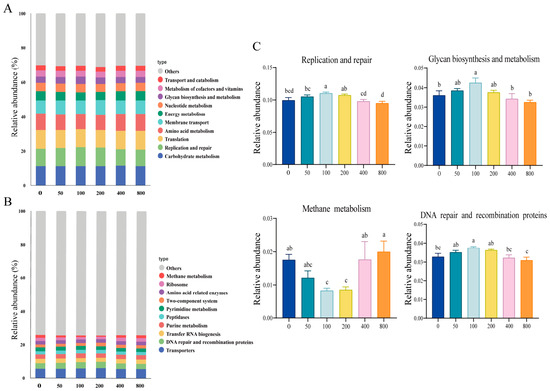
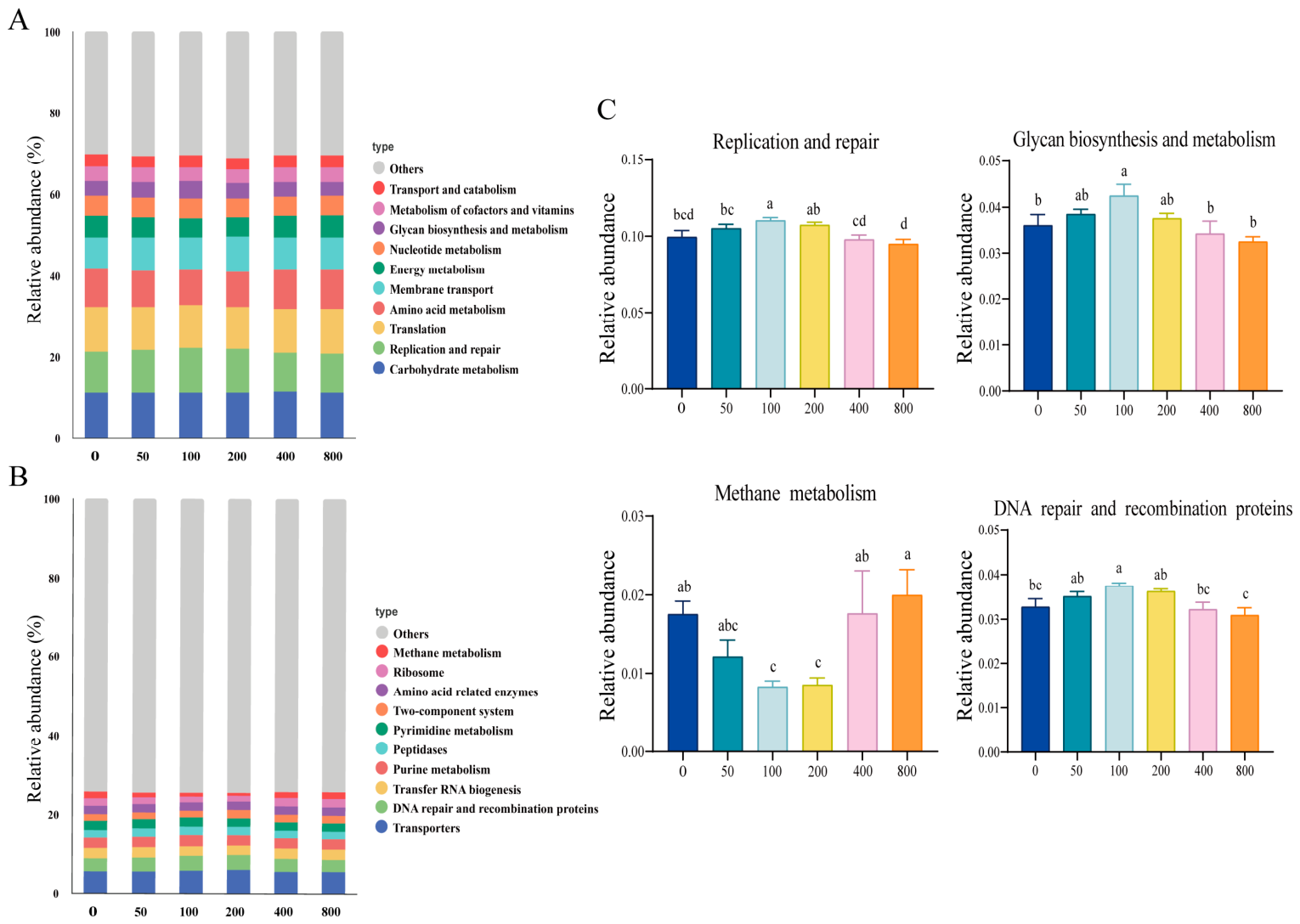
As shown in Figure 3, Tax4Fun-based functional prediction suggested that puerarin selectively affected the predicted functional profile of the rumen microbiota. At level 2, pathways related to replication and repair and glycan biosynthesis and metabolism were significantly affected among treatments. At level 3, methane metabolism was significantly decreased, whereas DNA repair and recombination proteins were significantly increased. These results suggest that puerarin may influence specific microbial functional potentials associated with fermentation pattern and microbial adaptation.
Figure 3.
Effects of dietary puerarin supplementation on the predicted functional profiles of the rumen microbial community in Hu sheep. (A) Relative abundance of the major Tax4Fun-predicted microbial functions at Kyoto Encyclopedia of Genes and Genomes (KEGG) level 2. (B) Relative abundance of the major predicted microbial functions at KEGG level 3. (C) Relative abundances of selected predicted microbial functions that differed among treatments, including replication and repair, glycan biosynthesis and metabolism, methane metabolism, and DNA repair and recombination proteins. The numbers 0, 50, 100, 200, 400, and 800 on the x-axis represent dietary puerarin supplementation levels in mg/kg DM. Data in panel C are presented as mean ± SEM (n = 4 per treatment). Different lowercase letters indicate significant differences among treatments (p < 0.05).
3.7. Correlation Analysis
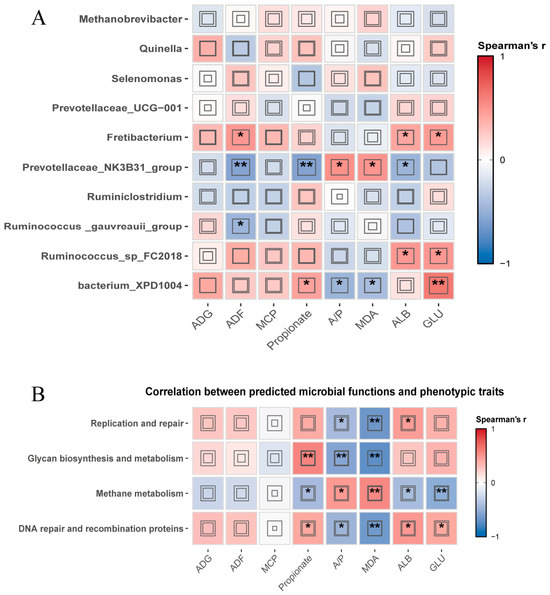
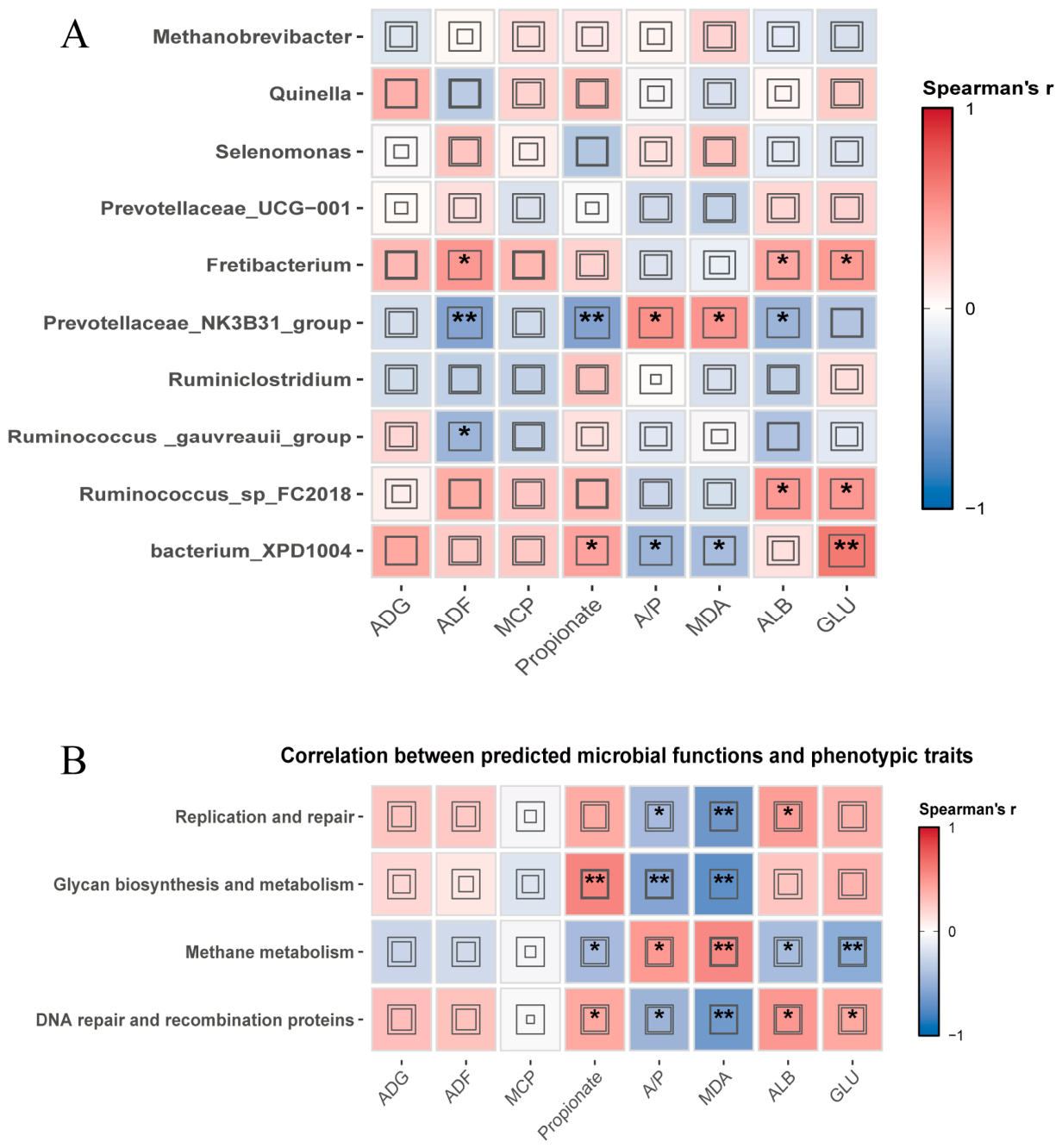
Spearman correlation analysis revealed selective associations between puerarin-responsive rumen microbes and host phenotypic traits (Figure 4A). Specifically, Fretibacterium was positively correlated with ADF digestibility, ALB, and GLU (p < 0.05). In contrast, Prevotellaceae_NK3B31_group showed negative correlations with ADF digestibility, propionate, and ALB, but positive correlations with the A/P and MDA (p < 0.05 or p < 0.01). In addition, Ruminococcus_gauvreauii_group was negatively correlated with ADF digestibility (p < 0.05), whereas Ruminococcus_sp_FC2018 was positively correlated with ALB and GLU (p < 0.05). Notably, bacterium_XPD1004 was positively correlated with propionate and GLU, but negatively correlated with the A/P and MDA (p < 0.05 or p < 0.01). At the functional level (Figure 4B), the pathway “replication and repair” was negatively correlated with A/P and MDA, but positively correlated with ALB (p < 0.05). Glycan biosynthesis and metabolism showed a positive correlation with propionate (p < 0.01) and negative correlations with A/P and MDA (p < 0.01). In contrast, methane metabolism was negatively correlated with propionate, ALB, and GLU, but positively correlated with A/P and MDA (p < 0.05 or p < 0.01). Furthermore, the pathway DNA repair and recombination proteins was positively correlated with propionate, ALB, and GLU, but negatively correlated with A/P and MDA (p < 0.05 or p < 0.01). These results indicate that puerarin-responsive microbial taxa and predicted microbial functions were closely associated with a more favorable rumen fermentation pattern and improved metabolic and antioxidant status in Hu sheep.
Figure 4.
Spearman correlation analysis among differential rumen microbes, predicted microbial functions, and phenotypic traits in Hu sheep. (A) Correlation heatmap between key differential rumen microbial taxa and phenotypic traits. (B) Correlation heatmap between selected predicted microbial functions and phenotypic traits. The color indicates the direction and strength of the correlation, with red representing positive correlations and blue representing negative correlations. The size of the inner square is proportional to the absolute value of Spearman’s correlation coefficient, with larger squares indicating stronger correlations. Asterisks indicate significant correlations (* p < 0.05, ** p < 0.01). ADF = acid detergent fiber digestibility; MCP = microbial crude protein; A/P = acetate-to-propionate ratio; MDA = malondialdehyde; ALB = albumin; GLU = glucose.
4. Discussion
In meat sheep production, the economic returns of fattening lambs largely depend on growth performance and feed utilization efficiency. ADG serves as a critical indicator of farming profitability [27,28]. Puerarin has attracted increasing attention as a plant-derived bioactive compound with potential applications in animal production. Previous studies in broilers and piglets have shown that puerarin supplementation can improve growth performance, feed efficiency, and physiological status [29,30]. In the present study, dietary puerarin supplementation significantly increased ADG, with the greatest value observed in the 100 mg/kg group. In addition, ADF digestibility was significantly improved in the 100 mg/kg group. The concurrent improvement in ADF digestibility and ADG at the 100 mg/kg dose suggests that enhanced fiber utilization may have contributed to the observed growth response. However, because the formal feeding period was limited to 30 days, the observed improvement in ADG should be interpreted as a short-term growth response under the present experimental conditions. Longer feeding trials covering a greater proportion of the fattening period are required to determine whether this response can be sustained over time.
In ruminants, growth performance is closely linked to rumen fermentation efficiency, because ruminal microorganisms degrade dietary substrates into VFAs and synthesize MCP, which are major contributors to host energy and amino acid supply [31,32]. Among VFAs, propionate is particularly important because it serves as the principal glucogenic precursor in ruminants [33,34]. Consequently, dynamic changes in the composition of the rumen microbiota directly affect fermentation patterns, tightly linking the structure of the rumen microbial community to its production traits, such as ADG and feed efficiency [35]. In the present study, puerarin supplementation, particularly at 100 mg/kg, increased propionate and MCP concentrations, decreased A/P, and increased serum GLU concentration. These changes indicate that puerarin shifted rumen fermentation toward a more favorable pattern, which may have enhanced nutrient conversion efficiency and energy availability. Consistent with this interpretation, serum GLU concentration was significantly elevated in the 100 and 200 mg/kg groups. Because glucose supply in ruminants depends largely on hepatic gluconeogenesis from propionate, the increase in serum GLU further supports the view that puerarin improved the efficiency of energy metabolism through modulation of rumen fermentation [36,37]. Notably, this improvement in energy availability occurred without a corresponding increase in ADMI, suggesting that puerarin enhanced energy extraction efficiency rather than simply promoting greater consumption.
In addition to effects on fermentation, puerarin supplementation altered several serum biochemical and antioxidant indices. Serum ALB concentration was significantly increased in the 100, 200, and 400 mg/kg groups, suggesting an improvement in protein nutritional status and metabolic homeostasis. ALB is not only an indicator of protein synthesis capacity but also an important marker reflecting the overall metabolic condition of the animal [38,39]. Meanwhile, serum MDA concentration was significantly reduced in the 100 mg/kg group but markedly increased in the 800 mg/kg group. This pattern suggests that an appropriate level of puerarin may alleviate oxidative stress, whereas excessive supplementation may impose a pro-oxidative burden. Similar dose-dependent responses of plant-derived bioactive compounds have been reported previously, indicating that moderate supplementation can be beneficial, but excessive doses may reduce or even reverse the positive effects [40,41,42,43]. Therefore, the present findings suggest that 100 mg/kg puerarin may represent a more suitable supplementation level for improving both metabolic status and antioxidant balance in Hu sheep.
The 16S rRNA sequencing results further indicated that dietary puerarin supplementation had limited effects on overall rumen microbial diversity. Alpha-diversity indices did not differ significantly among treatments, and the PCoA plot showed substantial overlap among treatment groups, suggesting no obvious change in overall beta diversity. These findings indicate that the effects of puerarin on rumen fermentation were more likely associated with changes in specific microbial taxa than with broad restructuring of the rumen microbial community.
At the phylum level, Bacteroidota, Firmicutes, and Euryarchaeota remained the dominant taxa across all groups, which is consistent with the typical rumen bacterial composition reported in sheep and other ruminants [44,45]. Compared with the control group, Firmicutes was significantly increased in the 50, 400, and 800 mg/kg groups, whereas Proteobacteria was significantly increased in the 100 and 200 mg/kg groups, and Synergistota was enriched in the 100 mg/kg group. Among the phyla affected by puerarin, Firmicutes have been widely linked to fiber degradation and feed utilization, with several Firmicutes-affiliated genera reported to play pivotal roles in NDF and ADF degradation in Hu sheep [26], whereas Proteobacteria and Synergistota may participate in specific substrate transformation processes in the rumen [46,47]. These phylum-level shifts suggest that puerarin did not broadly disrupt the dominant rumen microbial composition, but was associated with changes in microbial groups related to fiber degradation, substrate transformation, and fermentation pattern. Together with the increased ADF digestibility, higher MCP and propionate concentrations, lower A/P, and greater ADG observed in the present study, these findings suggest that puerarin may enhance nutrient utilization and growth performance in Hu sheep by improving rumen fermentation and influencing specific components of the rumen microbiota.
At the genus level, puerarin supplementation significantly reduced the relative abundance of Methanobrevibacter in all treatment groups. Methanobrevibacter is one of the major methanogenic archaea in the rumen and is directly involved in methane formation through hydrogen utilization [48,49]. A reduction in this genus may imply that less metabolic hydrogen was directed toward methanogenesis, potentially favoring alternative electron-sinking fermentation pathways, including propionate formation [50]. This interpretation is consistent with the observed increase in propionate concentration and the lower A/P in the present study. In addition, Quinella was significantly increased in the 50 mg/kg group, Prevotellaceae_UCG-001 was significantly increased in the 100 mg/kg group, and Selenomonas was significantly increased in the 800 mg/kg group. Quinella and Selenomonas have frequently been associated with carbohydrate fermentation and propionate-related pathways in the rumen [51,52,53], whereas members of Prevotellaceae are widely involved in the degradation of dietary substrates and fermentation product formation [54]. Therefore, the enrichment of these taxa further supports the idea that puerarin may have influenced specific components of the rumen microbiota toward a fermentation pattern more favorable for host nutrient utilization.
LEfSe analysis provided further evidence that different puerarin levels enriched different microbial biomarkers. The control group was characterized by Prevotellaceae_NK3B31_group, whereas the 50 mg/kg group was enriched in Ruminococcus_gauvreauii_group. The 100 mg/kg group was characterized by enrichment of Fretibacterium, Ruminococcus_sp_FC2018, and bacterium_XPD1004, while the 200 mg/kg group was characterized by Ruminiclostridium and the 800 mg/kg group by Selenomonas_sp_MCB2. This pattern indicates that puerarin exerted dose-dependent effects on specific rumen microbial taxa. Notably, the unique enrichment of Ruminococcus-related taxa at the 100 mg/kg supplementation level is of particular interest. Even though the total phylum-level abundance of Firmicutes did not shift significantly at this specific dose, the targeted proliferation of these core fiber-degrading genera likely served as the primary biological driver for the improved ADF digestibility observed in the 100 mg/kg group [55]. These findings suggest that the beneficial effects of puerarin on performance and fermentation may be associated with changes in bacterial groups involved in fiber utilization and favorable fermentation pathways.
Tax4Fun-based functional prediction further suggested that puerarin selectively altered specific microbial functions rather than broadly reshaping the overall functional profile of the rumen microbiota. At level 2, replication and repair and glycan biosynthesis and metabolism were significantly affected among treatments, with both showing the highest relative abundance in the 100 mg/kg group. At level 3, methane metabolism was significantly decreased, whereas DNA repair and recombination proteins showed a significant increase. The reduced abundance of Methanobrevibacter, together with the decline in predicted methane metabolism, suggests that puerarin may suppress methanogenesis-related functional potential in the rumen microbiota [56]. By contrast, the enrichment of replication- and repair-related functions may reflect altered microbial adaptation and genomic maintenance under puerarin supplementation [57]. The increase in glycan biosynthesis and metabolism further suggests changes in carbohydrate-related microbial functions that may be associated with improved substrate utilization and fermentation efficiency [58]. Because Tax4Fun is based on 16S-derived function prediction, these results should be regarded as putative functional shifts rather than direct measurements of metabolic activity. Nevertheless, they provide complementary evidence supporting the observed improvements in rumen fermentation.
Rumen microorganisms have been recognized as key regulators of nutrient acquisition and health status in ruminants [27,59]. Changes in rumen microbial composition can influence host physiological traits by affecting feed degradation, fermentation pattern, and nutrient utilization efficiency [59]. In the present study, the correlation analyses further supported the association between puerarin-responsive rumen microbes and host phenotypic traits. Specifically, Fretibacterium abundance was positively associated with ADF digestibility, ALB, and GLU, suggesting that this taxon may contribute to fiber degradation and host metabolic status, or alternatively, that its proliferation is favored by the same environmental conditions that promote these phenotypic traits. In addition, Ruminococcus_sp_FC2018 and bacterium_XPD1004 were positively associated with favorable fermentation and metabolic traits, including higher propionate, ALB, or GLU, and lower A/P or MDA. These correlations suggest that puerarin-induced shifts in the rumen microbiota were associated with taxa linked to phenotypic traits indicative of enhanced fermentation efficiency and metabolic status.
At the functional level, the predicted microbial functions showed a similar pattern of association with host traits. Glycan biosynthesis and metabolism and DNA repair and recombination proteins were generally associated with higher propionate, ALB, and GLU, whereas methane metabolism showed the opposite tendency and was positively associated with A/P and MDA. Together, these findings suggest that puerarin may improve rumen fermentation efficiency and host metabolic status by influencing specific responsive microbial taxa and the predicted functional potential of the rumen microbiota. A limitation of the present study is that rumen microbial sequencing was conducted using one sheep from each replicate pen, resulting in four biological replicates per treatment. Although this design ensured representation of all independent pens and avoided pseudoreplication, it may not have fully captured within-pen variation and may have limited the statistical power to detect subtle treatment-associated differences, particularly in low-abundance microbial taxa. Future studies involving a larger number of independent experimental units are warranted to validate the observed microbial responses.
5. Conclusions
Dietary puerarin supplementation improved short-term growth performance, rumen fermentation, nutrient utilization, and metabolic status in Hu sheep, with 100 mg/kg showing the most favorable overall response. Specifically, puerarin increased ADG, improved ADF digestibility, enhanced ruminal MCP and propionate concentrations, decreased A/P, increased serum ALB and GLU concentrations, and decreased serum MDA concentration at appropriate supplementation levels. These beneficial effects were accompanied by alterations in certain rumen microbial taxa and predicted microbial functions. Collectively, the results suggest that puerarin may enhance nutrient utilization and growth performance in Hu sheep, at least in part, through improving rumen fermentation and affecting specific components of the rumen microbiota.
Author Contributions
Conceptualization, C.N. and D.F.; methodology, C.N.; software, C.N. and J.Y.; validation, C.N., J.Y. and X.P.; formal analysis, C.N., T.Z. and W.C.; investigation, C.N., W.C. and T.Z.; resources, M.B. and X.S.; data curation, C.N.; writing—original draft preparation, C.N.; writing—review and editing, C.N., M.B. and X.S.; visualization, J.Y.; supervision, M.B. and X.S.; project administration, X.S.; funding acquisition, X.S. All authors have read and agreed to the published version of the manuscript.
Funding
The National Natural Science Foundation of China (32460850), the Jiangxi Agriculture Research System (JXARS-13), and the Jiujiang Key Research and Development Program (2025_000286) provided financial support for this study.
Institutional Review Board Statement
Jiangxi Agricultural University’s Committee for the Care and Use of Experimental Animals approved this trial (JXAULL-2026-05-02).
Informed Consent Statement
Written informed consent has been obtained from animals’ owner.
Data Availability Statement
The raw sequencing data used in this study were deposited in the NCBI Sequence Read Archive (SRA) under BioProject accession number PRJNA1478048. All data generated or analyzed during this study are included in this published article.
Acknowledgments
This study was carried out at Jiangxi Tiansheng Animal Husbandry Co., Ltd. We thank the farm staff for animal care and vaccination, as well as all team members for assistance with sampling, measurements, and data entry.
Conflicts of Interest
The authors declare no conflicts of interest.
Abbreviations
The following abbreviations are used in this manuscript:
| ADG | Average daily gain |
| ADMI | Average daily dry matter intake |
| F/G | Feed-to-gain ratio |
| DM | Dry matter |
| CP | Crude protein |
| NDF | Neutral detergent fiber |
| ADF | Acid detergent fiber |
| EE | Ether extract |
| AIA | Acid-insoluble ash |
| VFAs | Volatile fatty acids |
| NH3-N | Ammonia nitrogen |
| MCP | Microbial crude protein |
| A/P | Acetate-to-propionate ratio |
| BUN | Blood urea nitrogen |
| TP | Total protein |
| ALB | Albumin |
| GLU | Glucose |
| CAT | Catalase |
| SOD | Superoxide dismutase |
| GSH-Px | Glutathione peroxidase |
| MDA | Malondialdehyde |
| TMR | Total mixed ration |
| PCoA | Principal coordinate analysis |
| LEfSe | Linear discriminant analysis effect size |
| KEGG | Kyoto Encyclopedia of Genes and Genomes |
| SEM | Standard error of the mean |
| SD | Standard deviation |
| NEmf | Net energy for maintenance and growth |
| ANCOVA | Analysis of covariance |
| BW | Body weight |
| ANOVA | Analysis of variance |
| OTUs | Operational taxonomic units |
| LDA | Linear discriminant analysis |
Appendix A
Table A1.
Adjusted final body weight of Hu sheep after controlling for initial body weight using ANCOVA.
References
- Sun, H.; Wang, J.; Kuang, H.; Fan, G.; Yang, X. Effects of supplementary and restricted feeding on meat flavor, lipid metabolism and muscle protein metabolism of Hu sheep. Food Chem. X 2025, 29, 102865. [Google Scholar] [CrossRef] [Scilit] [PubMed]
- Mao, H.; Wang, C.; Yu, Z. Weaning ages do not affect the overall growth or carcass traits of Hu sheep. Animals 2019, 9, 356. [Google Scholar] [CrossRef] [Scilit] [PubMed]
- Wang, Y.; Zheng, W.; Duan, H.; Luo, J.; Yin, Y.; Shen, J.; Mao, S.; Zhu, W.; Yu, Z. Effects of increasing levels of dietary cationeanion difference on growth performance, nutrient digestibility, rumen fermentation, and rumen microbiota in fattening Hu sheep. Anim. Nutr. 2025, 2, 119–128. [Google Scholar] [CrossRef] [Scilit] [PubMed]
- Muqier; Qi, S.; Wang, T.; Chen, R.; Wang, C.; Ao, C. Effects of flavonoids from Allium mongolicum Regel on growth performance and growth-related hormones in meat sheep. Anim. Nutr. 2017, 1, 33–38. [Google Scholar] [CrossRef] [Scilit] [PubMed]
- Sultana, N.H.S.M. Effects of age on intake, growth, nutrient utilization and carcass characteristics of castrated native sheep. Bangladesh Vet. 2010, 27, 62–73. [Google Scholar]
- Yang, F.; Yang, L.; Shi, J.; Tang, Z.; Meng, Q.; Pi, Z.; Li, H.; Liu, T.; Zhang, C.; Cheng, S. Comparative analysis of cecal microbiota and metabolites in relation to growth performance of Tibetan and Hu sheep. Front. Microbiol. 2026, 16, 1725706. [Google Scholar] [CrossRef] [Scilit] [PubMed]
- Li, Y.; He, G.; Chen, D.; Yu, B.; Yu, J.; Zheng, P.; Huang, Z.; Luo, Y.; Luo, J.; Mao, X.; et al. Supplementing daidzein in diets improves the reproductive performance, endocrine hormones and antioxidant capacity of multiparous sows. Anim. Nutr. 2021, 7, 1052–1060. [Google Scholar] [CrossRef] [Scilit] [PubMed]
- Wyse, J.; Latif, S.; Gurusinghe, S.; McCormick, J.; Weston, L.A.; Stephen, C.P. Phytoestrogens: A review of their impacts on reproductive physiology and other effects upon grazing livestock. Animals 2022, 12, 2709. [Google Scholar] [CrossRef] [Scilit] [PubMed]
- Grgic, D.; Varga, E.; Novak, B.; Müller, A.; Marko, D. Isoflavones in animals: Metabolism and effects in livestock and occurrence in feed. Toxins 2021, 13, 836. [Google Scholar] [CrossRef] [Scilit] [PubMed]
- Ahn, H.; Park, Y.K. Soy isoflavone supplementation improves longitudinal bone growth and bone quality in growing female rats. Nutrition 2017, 37, 68–73. [Google Scholar] [CrossRef] [Scilit] [PubMed]
- Weinert-Nelson, J.R.; Ely, D.G.; Flythe, M.D.; Hamilton, T.A.; May, J.B.; Ferrell, J.L.; Hamilton, M.C.; LeeAnn Jacks, W.; Davis, B.E. Red clover supplementation modifies rumen fermentation and promotes feed efficiency in ram lambs. J. Anim. Sci. 2023, 101, skad036. [Google Scholar] [CrossRef] [Scilit] [PubMed]
- Yeung, D.K.Y.; Man, R.Y.K. Puerarin, an isoflavonoid derived from Radix puerariae, potentiates endothelium-independent relaxation via the cyclic AMP pathway in porcine coronary artery. Eur. J. Pharmacol. 2006, 552, 105–111. [Google Scholar] [CrossRef] [Scilit] [PubMed]
- Kato, E.; Kawabata, J. Glucose uptake enhancing activity of puerarin and the role of C-glucoside suggested from activity of related compounds. Bioorg. Med. Chem. Lett. 2010, 20, 4333–4336. [Google Scholar] [CrossRef] [Scilit] [PubMed]
- Guerra, M.C.; Speroni, E.; Broccoli, M.; Cangini, M.; Pasini, P.; Minghetti, A.; Crespi-Perellino, N.; Mirasoli, M.; Cantelli-Forti, G.; Paolini, M.; et al. Comparison between Chinese medical herb Pueraria lobata crude extract and its main isoflavone puerarin: Antioxidant properties and effects on rat liver CYP-catalysed drug metabolism. Life Sci. 2000, 67, 2997–3006. [Google Scholar] [CrossRef] [Scilit] [PubMed]
- Cao, S.; Li, X.; Yin, H.; Wang, J.; Liu, J. Dietary puerarin supplementation improves immune response and antioxidant capacity of sows. Antioxidants 2024, 13, 290. [Google Scholar] [CrossRef] [Scilit] [PubMed]
- Zeng, Y.; Li, R.; Dong, Y.; Yi, D.; Wu, T.; Wang, L.; Zhao, D.; Zhang, Y.; Hou, Y. Dietary supplementation with puerarin improves intestinal function in piglets challenged with Escherichia coli K88. Animals 2023, 13, 1908. [Google Scholar] [CrossRef] [Scilit] [PubMed]
- Du, X.; Zhao, D.; Pian, H.; Li, Y.; Wu, X.; Liu, F.; Yu, D. Effects of puerarin as a feed additive on the laying performance, egg quality, endocrine hormones, antioxidant capacity, and intestinal morphology of aged laying hens. Poult. Sci. 2024, 103, 103420. [Google Scholar] [CrossRef] [Scilit] [PubMed]
- Mayulu, H.; Christiyanto, M. Rumen microbiota mysteries: Nutrition, function, and its impact on livestock productivity. Am. J. Anim. Vet. Sci. 2025, 20, 180–191. [Google Scholar] [CrossRef] [Scilit]
- Li, Y.; Shang, H.; Zhao, X.; Qu, M.; Peng, T.; Guo, B.; Hu, Y.; Song, X. Radix Puerarin extract (puerarin) could improve meat quality of heat-stressed beef cattle through changing muscle antioxidant ability and fiber characteristics. Front. Vet. Sci. 2020, 7, 615086. [Google Scholar] [PubMed]
- Chen, H.; Yang, M.; Shang, X.; Chen, H.; Li, Y.; Li, Y.; Li, L.; Qu, M.; Song, X. Pogostemon cablin essential oil as feed additive promotes the repair of the rumen epithelial barrier in heat-stressed beef cattle. Anim. Nutr. 2024, 18, 433–440. [Google Scholar] [CrossRef] [Scilit] [PubMed]
- GB/T 6438-2007; Animal Feeding Stuffs—Determination of Crude Ash. Standards Press of China: Beijing, China, 2007.
- GB/T 6433-2006; Determination of Crude Fat in Feeds. Standards Press of China: Beijing, China, 2006.
- Zhong, R.Z.; Li, J.G.; Gao, Y.X.; Tan, Z.L.; Ren, G.P. Effects of substitution of different levels of steam-flaked corn for finely ground corn on lactation and digestion in early lactation dairy cows. J. Dairy Sci. 2008, 91, 3931–3937. [Google Scholar] [CrossRef] [Scilit] [PubMed]
- Xiao, J.; Chen, T.; Peng, R.; Alugongo, G.M.; Yang, H.; Liu, S.; Ma, Y.; Wang, J.; Li, S.; Cao, Z. How neonatal diet affects the long-term development of rumination behavior, rumen fermentation and feed digestion in dairy calves fed a high milk level? Anim. Nutr. 2024, 16, 326–337. [Google Scholar] [CrossRef] [Scilit] [PubMed]
- Chaney, A.L.; Marbach, E.P. Modified reagents for determination of urea and ammonia. Clin. Chem. 1962, 8, 130–132. [Google Scholar] [CrossRef] [Scilit]
- Hjelmsø, M.H.; Hansen, L.H.; Bælum, J.; Feld, L.; Holben, W.E.; Jacobsen, C.S. High-resolution melt analysis for rapid comparison of bacterial community compositions. Appl. Environ. Microbiol. 2014, 80, 3568–3575. [Google Scholar] [CrossRef] [Scilit] [PubMed]
- Xie, X.; Yang, H.; Zhao, X.; Teng, L.; Yang, Y.; Luo, H. Potential role of key rumen microbes in regulating host health and growth performance in Hu sheep. Anim. Microbiome 2025, 7, 51. [Google Scholar] [CrossRef] [Scilit] [PubMed]
- Xu, H.; Wang, G.; Gao, Q.; Liu, Z.; Jia, J.; Xu, Y.; Chen, Z.; Li, B.; Li, C. Microbial insights into ruminal fiber degradation and feed efficiency of Hu sheep. Front. Microbiol. 2025, 16, 1561336. [Google Scholar] [CrossRef] [Scilit] [PubMed]
- Lu, Y.; Ge, S.; Zhang, H.; Lu, W.; Bao, X.; Pan, S.; Pang, Q. Metabolomic and microbiome analysis of the protective effects of puerarin against Salmonella Enteritidis infection in chicks. BMC Vet. Res. 2023, 19, 242. [Google Scholar] [CrossRef] [Scilit] [PubMed]
- Wu, H.; Peng, W.; Yu, X.; Zhang, X.; Ji, F.; Shen, Q.; Lv, R. Effects of Pueraria extracts on growth performance, immune function, and immune-related gene expression of Wuzhishan piglets. Front. Vet. Sci. 2025, 12, 1491130. [Google Scholar] [CrossRef] [Scilit] [PubMed]
- Liang, J.; Zhang, R.; Chang, J.; Chen, L.; Nabi, M.; Zhang, H.; Zhang, G.; Zhang, P. Rumen microbes, enzymes, metabolisms, and application in lignocellulosic waste conversion—A comprehensive review. Biotechnol. Adv. 2024, 71, 108308. [Google Scholar] [CrossRef] [Scilit] [PubMed]
- Zhao, X.; Zhang, Y.; Rahman, A.; Chen, M.; Li, N.; Wu, T.; Qi, Y.; Zheng, N.; Zhao, S.; Wang, J. Rumen microbiota succession throughout the perinatal period and its association with postpartum production traits in dairy cows: A review. Anim. Nutr. 2024, 18, 17–26. [Google Scholar] [CrossRef] [Scilit] [PubMed]
- Ramirez-Garzon, O.; Barber, D.; Meneses, L.; Soust, M. Effect of gestational direct-fed microbials supplementation on the metabolic profile in periparturient dairy cows. Animals 2024, 14, 2928. [Google Scholar] [CrossRef] [Scilit] [PubMed]
- Wang, G.; Zhu, Y.; Feng, D.; Yao, J.; Cao, Y.; Deng, L. Hepatic gluconeogenesis and regulatory mechanisms in lactating ruminants: A literature review. Anim. Res. One Health 2025, 3, 230–239. [Google Scholar]
- Bi, Y.; Zeng, S.; Zhang, R.; Diao, Q.; Tu, Y. Effects of dietary energy levels on rumen bacterial community composition in Holstein heifers under the same forage to concentrate ratio condition. BMC Microbiol. 2018, 18, 69. [Google Scholar] [CrossRef] [Scilit] [PubMed]
- Loncke, C.; Noziere, P.; Vernet, J.; Lapierre, H.; Bahloul, L.; Al-Jammas, M.; Sauvant, D.; Ortigues-Marty, I. Net hepatic release of glucose from precursor supply in ruminants: A meta-analysis. Animal 2020, 14, 1422–1437. [Google Scholar] [CrossRef] [Scilit] [PubMed]
- Leskova, R.; Zucker, H. Blood glucose and nutritive antibiotic activity in ruminants. Nature 1974, 248, 245. [Google Scholar] [CrossRef] [Scilit] [PubMed]
- Thongrueang, N.; Yang, S.F.; Ke, G.M.; Hsu, H.Y.; Lee, H.H. Albumin and other metabolic parameters as potential indicators of purulent vaginal discharge in dairy cows during the transition period. J. Vet. Med. Sci. 2023, 85, 743–750. [Google Scholar] [CrossRef] [Scilit] [PubMed]
- Ouni, A.; Aounallah, H.; Rebai, W.K.; Llorente, F.; Chendoul, W.; Hammami, W.; Rhim, A.; Jiménez-Clavero, M.Á.; Pérez-Ramírez, E.; Bouattour, A.; et al. The role of ruminants as sentinel animals in the circulation of the West Nile virus in Tunisia. Pathogens 2025, 14, 267. [Google Scholar] [CrossRef] [Scilit] [PubMed]
- Inoue, H.; Akiyama, S.; Maeda-Yamamoto, M.; Nesumi, A.; Tanaka, T.; Murakami, A. High-dose green tea polyphenols induce nephrotoxicity in dextran sulfate sodium-induced colitis mice by down-regulation of antioxidant enzymes and heat-shock protein expressions. Cell Stress Chaperones 2011, 16, 653–662. [Google Scholar] [CrossRef] [Scilit] [PubMed]
- Murakami, A. Impact of hormesis to deepen our understanding of the mechanisms underlying the bioactivities of polyphenols. Curr. Opin. Biotechnol. 2024, 86, 103074. [Google Scholar] [CrossRef] [Scilit] [PubMed]
- Canivenc-Lavier, M.; Bennetau-Pelissero, C. Phytoestrogens and health effects. Nutrients 2023, 15, 317. [Google Scholar] [CrossRef] [Scilit] [PubMed]
- Albulescu, L.; Suciu, A.; Neagu, M.; Tanase, C.; Pop, S. Differential biological effects of Trifolium pratense extracts—In vitro studies on breast cancer models. Antioxidants 2024, 13, 1435. [Google Scholar] [CrossRef] [Scilit] [PubMed]
- Xu, M.; Di, M.; Zeng, W.; Li, X.; Xu, D.; Ma, Z.; Wang, Y.; Liu, M.; Chen, Y. Effects of arginine supplementation on growth performance, serum parameters, and rumen microbial diversity in fattening Altay sheep fed a forage-based diet. Agriculture 2026, 16, 932. [Google Scholar] [CrossRef] [Scilit]
- Ge, L.; Bai, S.; Shen, H.; Sha, K.; Shao, Y.; Shi, H. Yeast cultures improve lactation performance by influencing rumen microbial composition in dairy goats. Anim. Nutr. 2025, 2, e3. [Google Scholar] [CrossRef] [Scilit]
- Han, B.; Shi, X.; Zheng, C.; Zeng, H.; Wang, Y.; Liu, T. Effects of active dry yeast on production performance, meat quality, and rumen microecology in lambs. Animals 2026, 16, 1228. [Google Scholar] [CrossRef] [Scilit] [PubMed]
- McSweeney, C.S.; Halliday, M.; Mackie, R.I. Rumen Synergistota: New insights into their role in mimosine and fluoroacetate toxicity of ruminant livestock. Appl. Environ. Microbiol. 2025, 91, e0038025. [Google Scholar] [CrossRef] [Scilit] [PubMed]
- Chai, H.; Park, W.; Lim, D. Uncovering major structural and functional features of methyl-coenzyme M reductase (MCR) from Methanobrevibacter ruminantium in complex with two substrates. Int. J. Mol. Sci. 2026, 27, 995. [Google Scholar] [CrossRef] [Scilit] [PubMed]
- Rugwete, N.; Mutibvu, T.; Nyakudya, E.; Hadebe, K.; Halimani, T.E. Effect of sorghum-based diets on the abundance and diversity of ruminal methanogenic archaea in Mashona goats. Front. Microbiol. 2026, 17, 1762242. [Google Scholar] [CrossRef] [Scilit] [PubMed]
- Maeda, K.; Nguyen, V.T.; Suzuki, T.; Yamada, K.; Kudo, K.; Hikita, C.; Le, V.P.; Nguyen, M.C.; Yoshida, N. Network analysis and functional estimation of the microbiome reveal the effects of cashew nut shell liquid feeding on methanogen behaviour in the rumen. Microb. Biotechnol. 2021, 14, 277–290. [Google Scholar] [CrossRef] [Scilit] [PubMed]
- Gao, J.; Dai, H.; Wang, Q.; Guo, M.; Sun, Z.; Hao, L.; Cheng, Y. Abundance distribution of Quinella bacteria in the rumen of highland yaks and its effects on ruminal carbohydrate metabolism. Anim. Nutr. 2026, 3, e8. [Google Scholar] [CrossRef] [Scilit]
- Kumar, S.; Altermann, E.; Leahy, S.C.; Jauregui, R.; Jonker, A.; Henderson, G.; Kittelmann, S.; Attwood, G.T.; Kamke, J.; Waters, S.M.; et al. Genomic insights into the physiology of Quinella, an iconic uncultured rumen bacterium. Nat. Commun. 2022, 13, 6240. [Google Scholar] [CrossRef] [Scilit] [PubMed]
- Hua, D.; Zhao, Y.; Nan, X.; Xue, F.; Wang, Y.; Jiang, L.; Xiong, B. Effect of different glucogenic to lipogenic nutrient ratios on rumen fermentation and bacterial community in vitro. J. Appl. Microbiol. 2021, 130, 1868–1882. [Google Scholar] [CrossRef] [Scilit] [PubMed]
- Wu, Q.; Wang, W.; Zhang, F.; Li, W.; Wang, Y.; Lv, L.; Yang, H. Dietary cysteamine supplementation remarkably increased feed efficiency and shifted rumen fermentation toward glucogenic propionate production via enrichment of Prevotella in feedlot lambs. Microorganisms 2022, 10, 1105. [Google Scholar] [CrossRef] [Scilit] [PubMed]
- Weimer, P.J. Degradation of cellulose and hemicellulose by ruminal microorganisms. Microorganisms 2022, 10, 2345. [Google Scholar] [CrossRef] [Scilit] [PubMed]
- Pitta, D.; Indugu, N.; Narayan, K.; Hennessy, M. Symposium review: Understanding the role of the rumen microbiome in enteric methane mitigation and productivity in dairy cows. J. Dairy Sci. 2022, 105, 8569–8585. [Google Scholar] [CrossRef] [Scilit] [PubMed]
- Wozniak, K.J.; Simmons, L.A. Bacterial DNA excision repair pathways. Nat. Rev. Microbiol. 2022, 20, 465–477. [Google Scholar] [CrossRef] [Scilit] [PubMed]
- Dias, A.V.L.; Granja-Salcedo, Y.T.; Messana, J.D.; Camargo, K.D.V.; Alves, K.L.G.C.; Machado, E.V.A.; Constancio, M.T.L.; Reis, R.A.; Berchielli, T.T. Assessing the impact of non-protein nitrogen or rumen undegradable protein supplementation on rumen bacterial diversity and ruminal fermentation in grazing steers during the dry season. Front. Microbiol. 2025, 16, 1670636. [Google Scholar] [CrossRef] [Scilit] [PubMed]
- Liu, K.; Zhang, Y.; Yu, Z.; Xu, Q.; Zheng, N.; Zhao, S.; Huang, G.; Wang, J. Ruminal microbiota-host interaction and its effect on nutrient metabolism. Anim. Nutr. 2021, 7, 49–55. [Google Scholar] [CrossRef] [Scilit] [PubMed]

Disclaimer/Publisher’s Note: The statements, opinions and data contained in all publications are solely those of the individual author(s) and contributor(s) and not of MDPI and/or the editor(s). MDPI and/or the editor(s) disclaim responsibility for any injury to people or property resulting from any ideas, methods, instructions or products referred to in the content. |
© 2026 by the authors. Licensee MDPI, Basel, Switzerland. This article is an open access article distributed under the terms and conditions of the Creative Commons Attribution (CC BY) license.