


Abstract
Ottoman mosques represent a unique synthesis of architectural elegance and structural ingenuity, where massive masonry domes are balanced on slender supports through carefully engineered load transfer systems. These monumental buildings, constructed centuries ago without modern analytical tools, continue to challenge contemporary engineers seeking to understand their behavior under seismic loading. This study presents an integrated evaluation of the structural and geotechnical performance of the 16th-century Sultan Selim Mosque in Konya, Türkiye, one of the most prominent examples of Classical Ottoman architecture. The research combines ambient vibration testing (AVT), geotechnical investigations, and finite element modeling (FEM) to assess the existing structural condition and soil–structure interaction (SSI) effects. Dynamic identification through AVT provided the modal characteristics of the mosque, which were used to calibrate a detailed three-dimensional FEM developed in ANSYS Workbench using a macro-modeling approach. The numerical analyses showed that observed deformation patterns and stress concentrations are consistent with field damage observations, indicating that differential settlements and heterogeneous subsoil stiffness are the primary factors influencing the structural response. The findings enhance understanding of the seismic behavior of monumental masonry domed structures and offer a solid basis for the evaluation and conservation of Ottoman-era architectural heritage.
1. Introduction
Ottoman mosques stand among the most sophisticated achievements of pre-modern engineering, representing a remarkable fusion of structural logic, material mastery, and spiritual symbolism. The classical period of Ottoman architecture (15th–17th centuries) witnessed the development of monumental domed structures that combined Byzantine volumetric compositions with refined load-bearing systems, achieving both grandeur and structural balance. These mosques were not merely religious centers but also complex engineering achievements, where the central dome—supported by semi-domes, arches, and piers—served as the architectural and structural core. The evolution of this system, culminating in masterpieces by Mimar Sinan, reflects the Ottoman pursuit of spatial unity and structural continuity through carefully distributed thrust forces and well-planned geometric proportions.
Despite their enduring elegance, these structures are inherently vulnerable to seismic activity due to their heavy masonry composition, complex geometry, and the long-term effects of environmental and anthropogenic influences. Many Ottoman mosques are located in regions of high seismicity, including Central Anatolia, the Marmara Basin, and Eastern Turkey, where strong ground motions and heterogeneous soil conditions pose significant risks to the stability of historic monuments. Over centuries, differential settlements, material weathering, and previous restoration interventions have altered their original equilibrium. Consequently, understanding the coupled response of the superstructure and subsoil has become a crucial prerequisite for the preservation of these architectural treasures.
Recent decades have witnessed increasing academic interest in the structural performance and seismic vulnerability of historical masonry buildings. Studies such as refs. [1,2,3,4,5] have applied performance-based or nonlinear finite-element approaches to assess the seismic response of churches and monumental masonry structures in Italy, Romania, and Spain. Reference [6] analyzed historical churches in Mexico through nonlinear FEM, revealing the significance of boundary conditions and material anisotropy on failure mechanisms. Similarly, ref. [7] employed a Drucker–Prager plasticity model for masonry, highlighting the role of local geometry in stress concentration zones. Within Türkiye, several works have contributed to this field: ref. [8] investigated the pre-strengthening performance of the historical Şerafettin Mosque in Konya using a combination of AVT and numerical analyses; ref. [9] examined the restoration of an early 19th-century masonry hospital building through detailed geometric documentation and FE modeling; and ref. [10] explored the lateral load response of ancient tower walls using macro-modeling techniques. These studies collectively underscore the importance of integrating in-situ dynamic identification with computational modeling to achieve realistic assessments of historical structures.
However, despite these advances, relatively few studies have examined the combined structural and geotechnical aspects of Ottoman-period domed mosques using a unified analytical framework. The soil structure interaction (SSI) of such monuments, often founded on layered or heterogeneous deposits, significantly affects their dynamic characteristics and long-term deformation patterns. While earlier investigations have typically focused on superstructure behavior, recent research has emphasized that foundation settlements and stiffness variations can govern the overall seismic response [1,8]. Therefore, a comprehensive approach that merges in-situ geotechnical measurements, laboratory soil testing, ambient vibration analyses, and finite element calibration is essential to achieve reliable diagnostic results.
In this context, the present study focuses on the Sultan Selim Mosque, one of the most distinguished examples of Classical Ottoman architecture located in the historic core of Konya, Türkiye. The mosque was commissioned in the 16th century during the reign of Sultan Selim II and is characterized by its central dome configuration supported by four massive piers (massive piers), lateral semi-domes, and surrounding smaller domes that reflect the mature design principles of Sinanian architecture. Given its proximity to the Mevlana (Rumi) Museum and its continuous use for over four centuries, the mosque provides a valuable case for understanding the cumulative structural effects of seismic activity, foundation settlements, and environmental degradation.
The main objective of this research is to perform an integrated dynamic, structural, and geotechnical assessment of the Sultan Selim Mosque by synthesizing data from ambient vibration testing, detailed geotechnical exploration, and finite-element simulations. The study does not propose or implement strengthening measures; rather, it focuses exclusively on identifying the current structural performance and the underlying causes of deformation. The methodology encompasses:
- (i)
- Geotechnical site characterization through borehole, Standard Penetration Test (SPT), and dynamic penetrometer (DPH) tests;
- (ii)
- Dynamic identification via AVT to obtain natural frequencies and modal shapes; and
- (iii)
- Numerical modeling in ANSYS Workbench (v19.2) to analyse stress distributions and deformation patterns under self-weight and seismic conditions.
Through this multidisciplinary approach, the paper aims to contribute to a more precise understanding of the seismic behavior of Ottoman masonry domed mosques and to provide a scientifically grounded framework for the documentation and preservation of similar historical structures. Unlike previous studies that mainly focus on material-scale degradation or structural analysis alone, this study provides an integrated framework combining in-situ dynamic identification, detailed geotechnical characterization, and a calibrated three-dimensional finite element model to directly relate subsoil heterogeneity to the global seismic response and damage localization of a monumental masonry structure.
2. Architectural and Historical Background
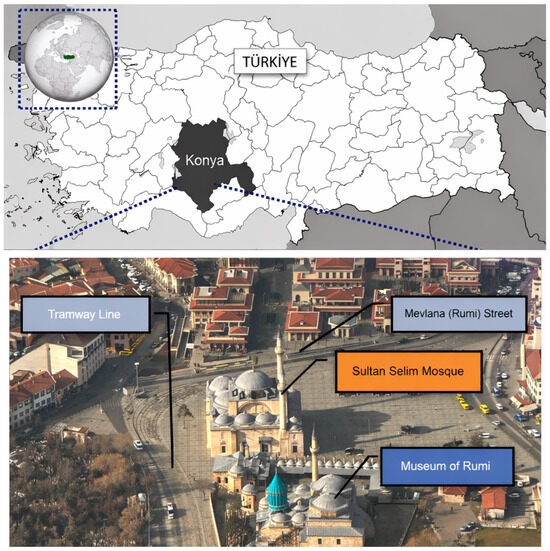
Possessing a rich historical background, Konya has carried the traces of diverse civilizations and cultures to the present day. These traces are embodied in various architectural structures built in different styles, especially in the city center. One of these structures is the historical Sultan Selim Mosque, located in the Karatay District and examined within the scope of this study. Also known as the Selimiye Mosque, it is situated right next to the Mevlana Museum and represents one of the most significant examples of the city’s multilayered cultural heritage with its historical and architectural characteristics (Figure 1).
Figure 1.
Geographical location of the Sultan Selim Mosque in Konya, Türkiye, and its aerial position relative to the Mevlana Museum.
In historical sources, the mosque was referred to as “Câmi-i Cedîd” and “Câmi-i Şerîf-i Sultan Süleyman.” However, due to the construction of an imaret (public kitchen) adjacent to it by Sultan Selim II, the mosque eventually came to be attributed to him. Located to the west of the Mevlana Dervish Lodge, the exact construction date and patron of this mosque have been subjects of debate. Although many researchers identify Sultan Selim II as the patron, archival documents from the reign of Suleiman the Magnificent (Kanuni Sultan Süleyman) indicate that the mosque was actually commissioned by him.
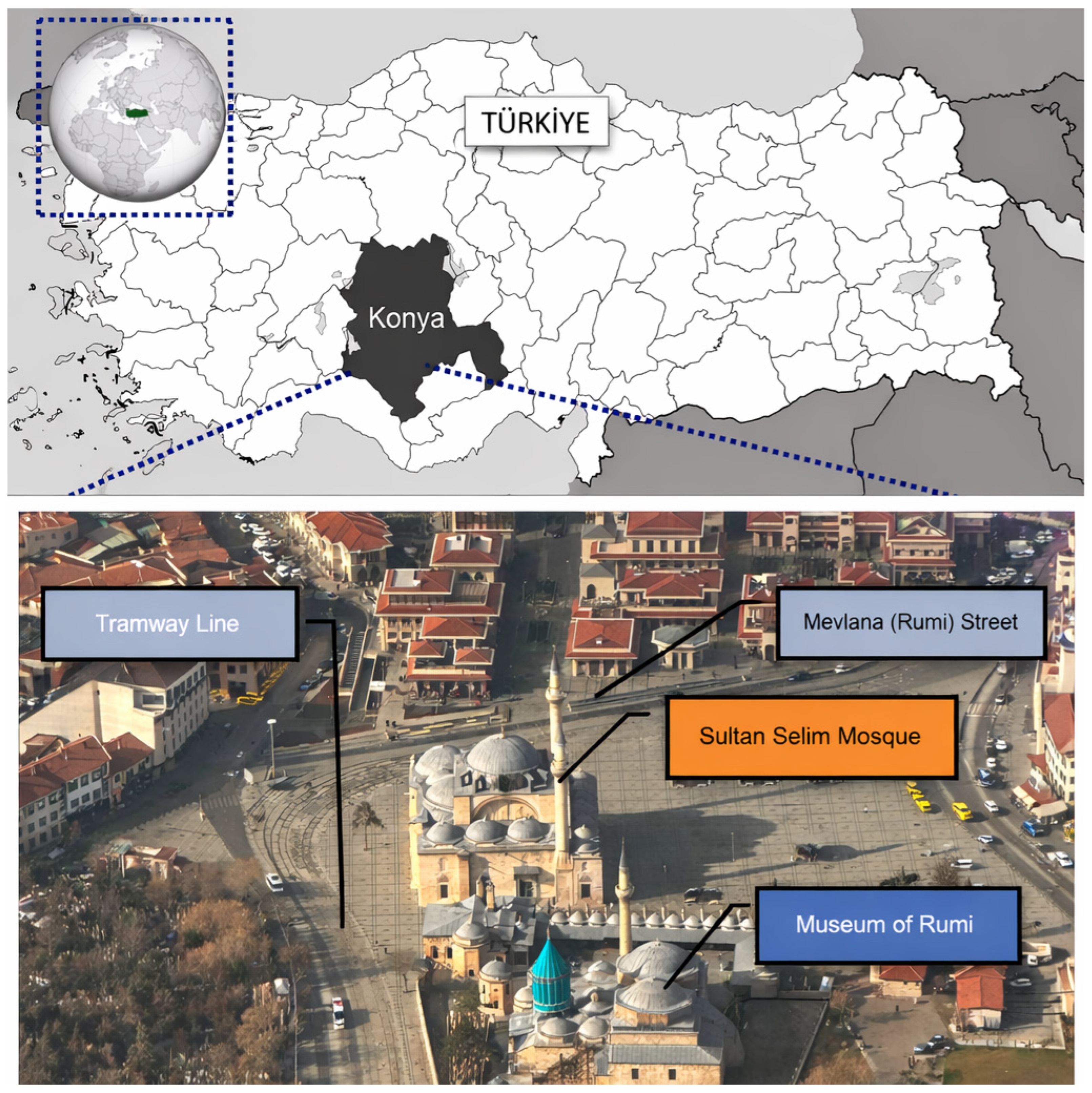
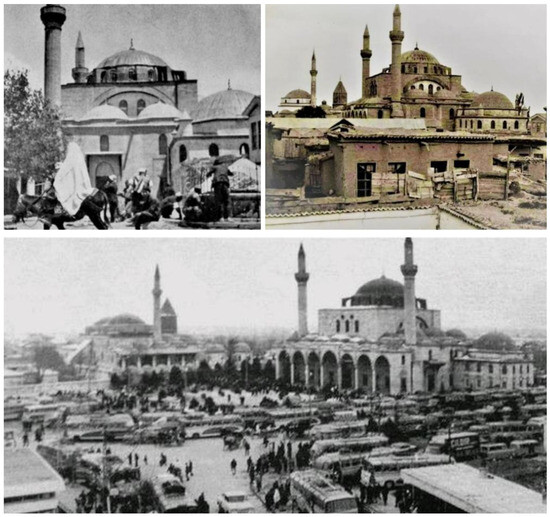
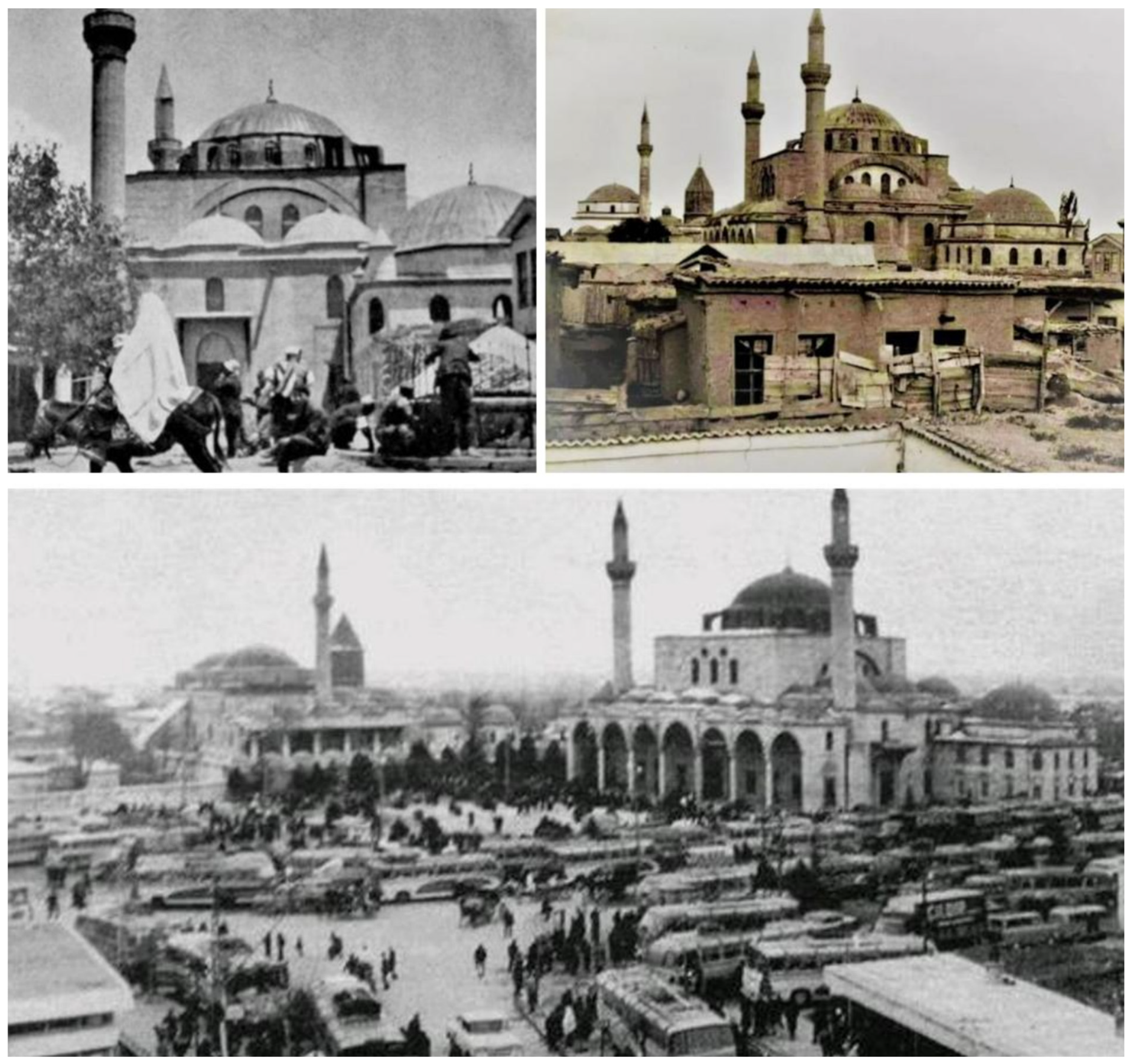
While there is no definitive information regarding its architect, several sources attribute the design to Mimar Sinan. The historian Hammer suggested that the mosque was inspired by Hagia Sophia, whereas Şahabeddin Uzluk proposed that it was modeled after the former Fatih Mosque. It appears that the floor plan of the earlier Fatih Mosque, which Mimar Sinan had previously applied on a smaller scale in his design for the mosque, was realized here on a larger scale. The Sultan Selim Mosque stands as one of the most significant examples of Classical Ottoman Mosque architecture in Konya. It features a central domed plan with a nearly square rectangular prayer hall. The mosque is distinguished by its north-facing narthex with arcades and two minarets rising symmetrically at the ends of the narthex. Figure 2 presents the historical building from different periods.
Figure 2.
Historical photographs of the mosque illustrating its architectural evolution and surroundings in different periods.
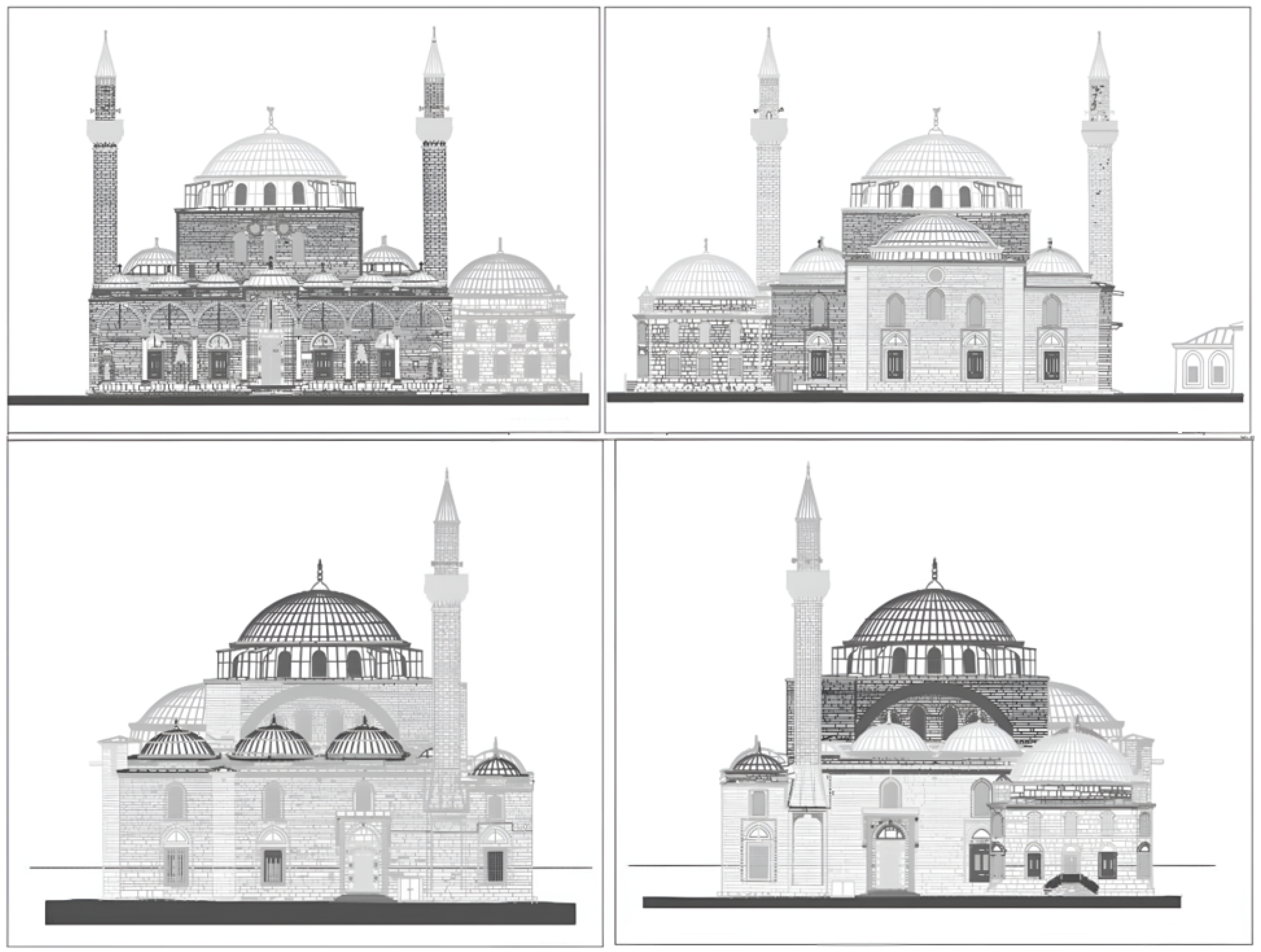
The prayer hall of the historical Sultan Selim Mosque is covered by a central dome, supported by two massive cruciform piers near the mihrab side, two smaller columns aligned along the same axis, and thicker wall piers attached to the northern wall. A half-dome is added in the qibla direction, while the east and west sides each contain three small domes. The central dome has a diameter of approximately 12 m, and the front dome is about half as wide. The three smaller domes on each side have diameters equal to half of the main dome’s radius (Figure 3).
Figure 3.
Architectural restitution drawings showing the North, South, East, and West elevations of the mosque.
The thick buttresses on the northern wall provide additional support to the structure, and the corner spaces between the buttresses and side walls are covered with barrel vaults. The prayer hall has three entrances, with the northern portal distinguished by its rich marble craftsmanship, particularly the muqarnas decoration on its semi-dome. The mihrab and minbar, both made of fine white marble, display remarkable artistic detail. The mihrab niche has an angular profile, framed with muqarnas-bordered panels and bossed corner ornaments, while its semi-dome is decorated with intricate vegetal motifs. The minbar exhibits delicate workmanship in its lobed arches, passages, and conical cap.
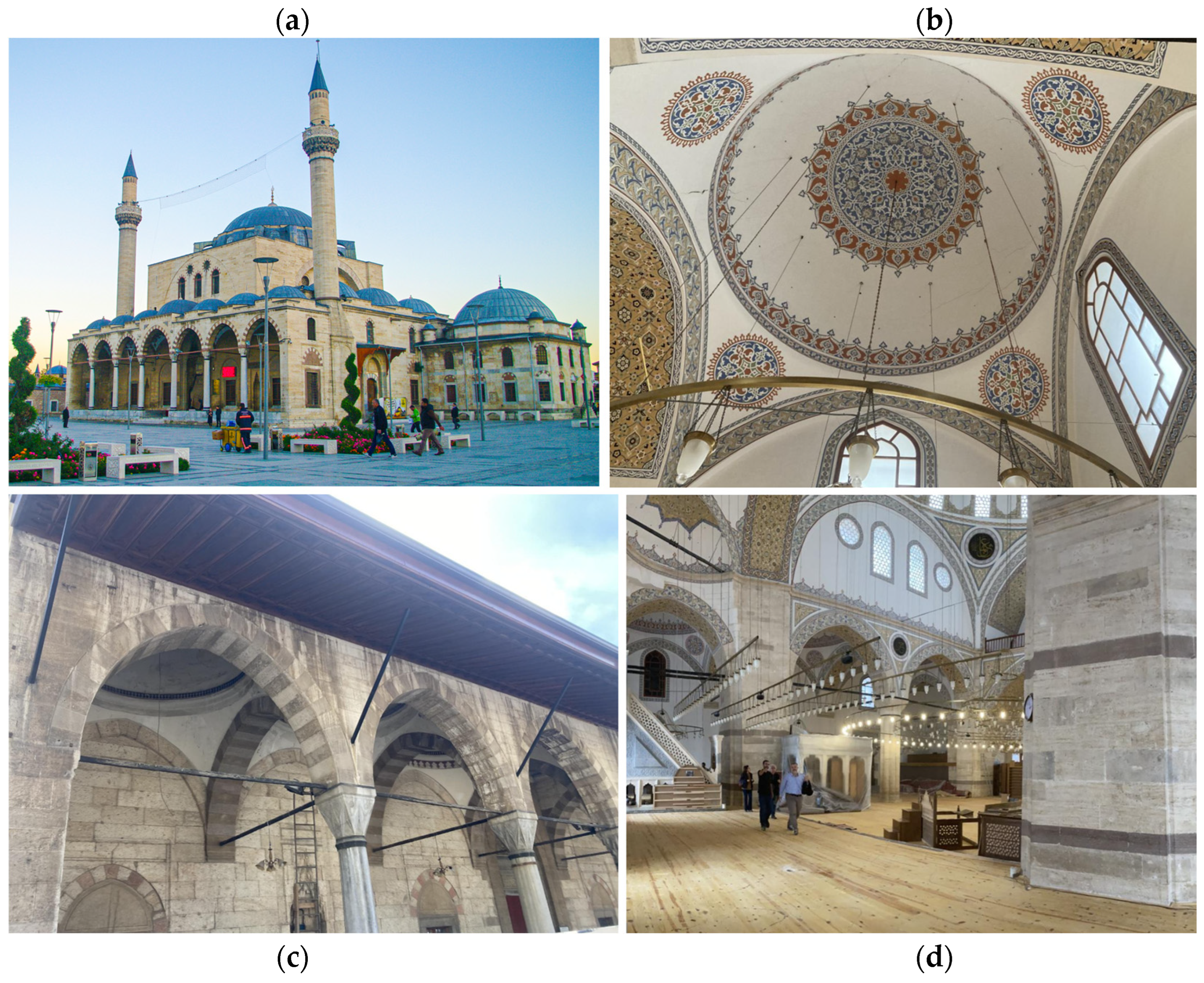
The interior dome surfaces are adorned with painted ornamentation executed on plaster, featuring traditional Ottoman motifs. Although most of these decorations were extensively renewed in later periods, the minbar cone was remodeled to resemble that of the Mevlana Mausoleum. The narthex at the mosque’s northern façade is covered with seven domes, whose marble columns have muqarnas capitals. The arcades on the east and west sides are bounded by solid walls, while the minarets, each with a single balcony, feature muqarnas corbels and marble lattice railings.
The walls and minarets are clad with ashlar stone, while colored stone was used for the arches of the narthex and some other sections. According to historical records, the main dome suffered severe damage in the 17th century, and the first major repair took place on 21 July 1690 (Figure 4).
Figure 4.
General views of the mosque: (a) exterior view from the square, (b) interior view of the main dome ornamentation, (c) narthex details, and (d) interior view of the prayer hall.
3. Methodology
The integrated assessment of the Sultan Selim Mosque was carried out through a multi-stage methodology combining geotechnical investigations, geotechnical and subsoil characterization, AVT, and finite element modeling (FEM). The main objective of this methodological framework was to identify the dynamic and structural behavior of the mosque and to quantify the influence of the SSI on its global response.
3.1. Geotechnical and Subsoil Characterization
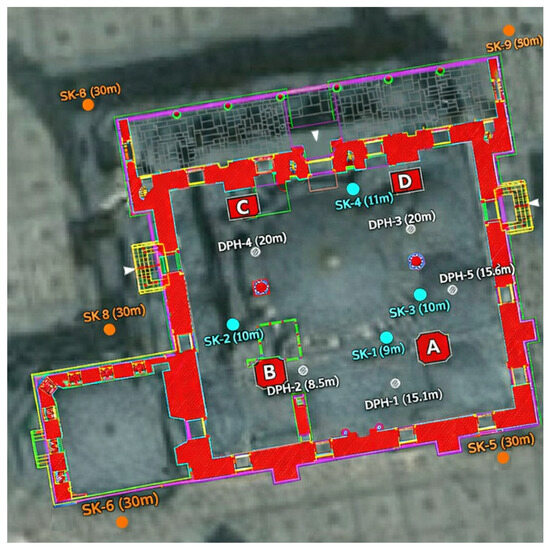
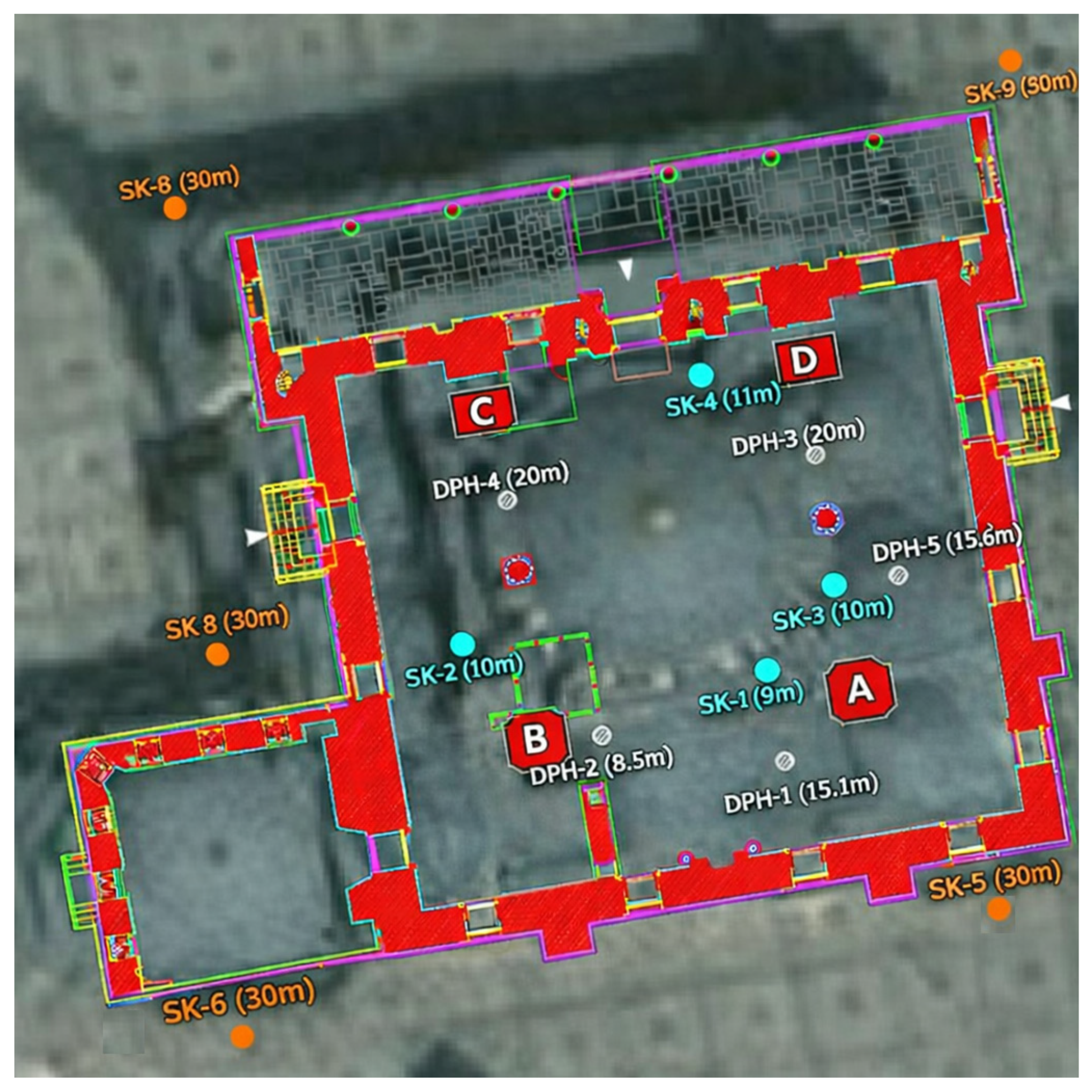
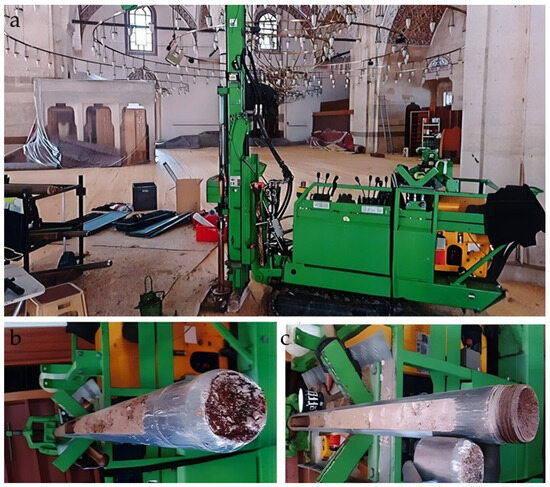
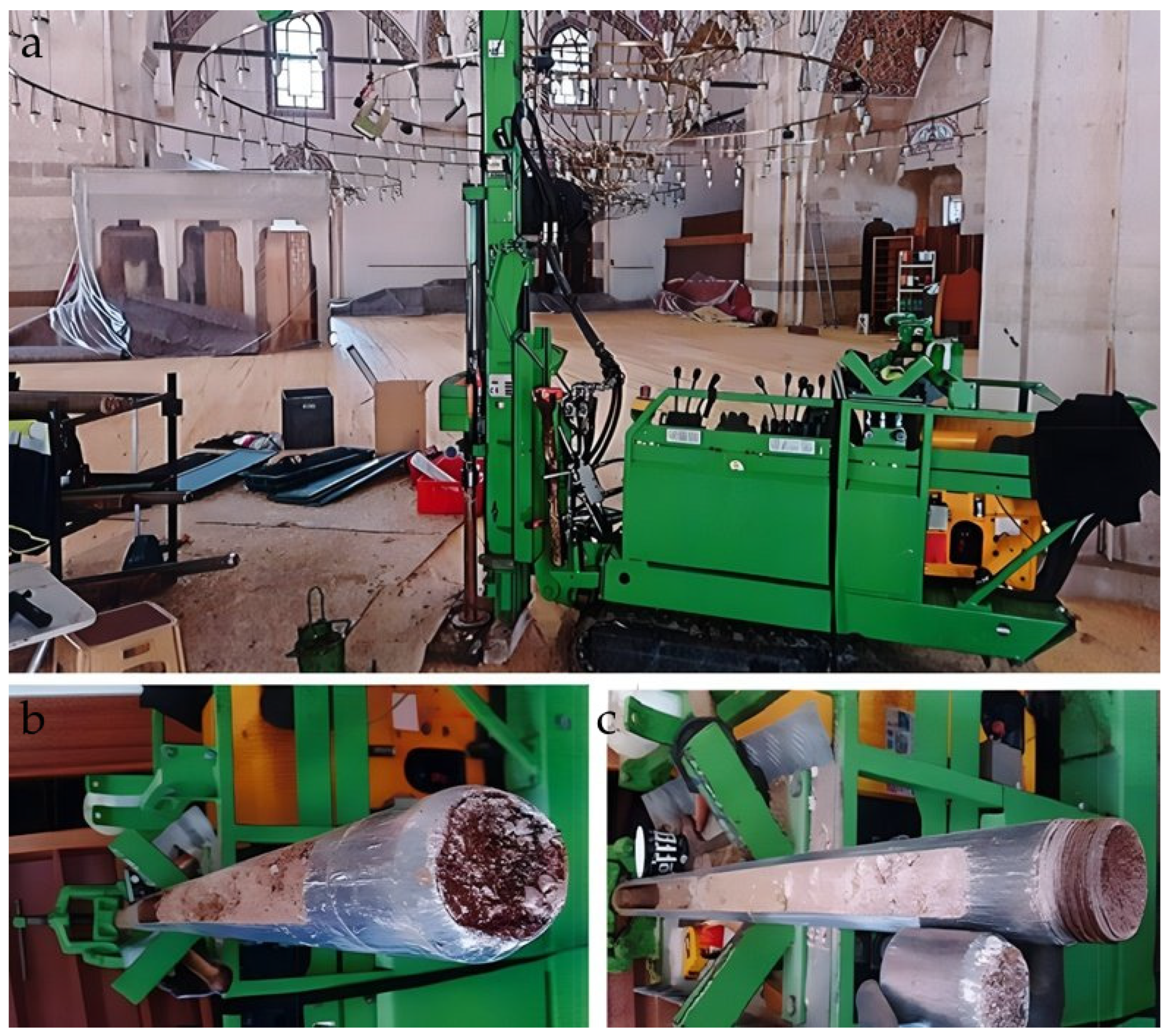
Extensive field, laboratory, and geophysical investigations (Figure 5) were performed within and around the Sultan Selim Mosque to characterize the mechanical, hydraulic, and stratigraphic properties of the foundation soils. As revealed by nine deep boreholes (SK-1 to SK-9), four shallow dry-system boreholes (Figure 6), DPH tests, MASW profiles, and complementary georadar surveys, the site is underlain by a heterogeneous sequence typical of the Konya Basin’s lacustrine depositional environment. This stratigraphy consists predominantly of medium-plasticity cohesive units (CIM—corresponding to CI in the Unified Soil Classification System), silty to clayey sands (Figure 7), and alternating gravelly horizons, transitioning irregularly across the footprint of the mosque. Across the site, the upper 1–3 m zone is composed of engineering fill of varying compaction, thickness, and grain size distribution, associated with past restorations and the 2013 foundation retrofitting works. Beneath this fill, the soil profile becomes more uniform, dominated by medium-plasticity clays extending down to depths between 6 m and 8 m, exhibiting plasticity indices (PI) ranging from 17% to 25% and natural water contents consistent with a normally consolidated to slightly overconsolidated clay deposit. These layers demonstrate moderate shear strength parameters (c ≈ 18–24 kPa; φ ≈ 19–22°), in line with the laboratory-derived triaxial, direct shear, and unconfined compression test results included in the geotechnical data tables.
Figure 5.
Layout of the geotechnical investigation campaign showing the locations of deep boreholes (SK), dynamic penetrometer tests (DPH), and measurement points on the site plan.
Figure 6.
View of the geotechnical drilling equipment operating within the prayer hall of the Sultan Selim Mosque (Core drilling setup: (a) drilling rig and control unit; (b) core barrel; (c) extracted core sample).
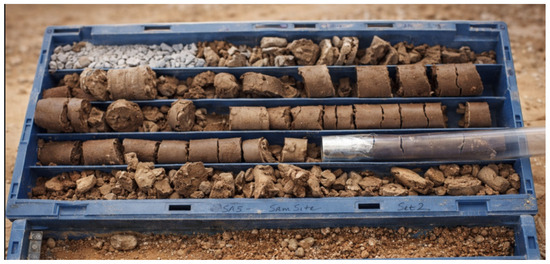
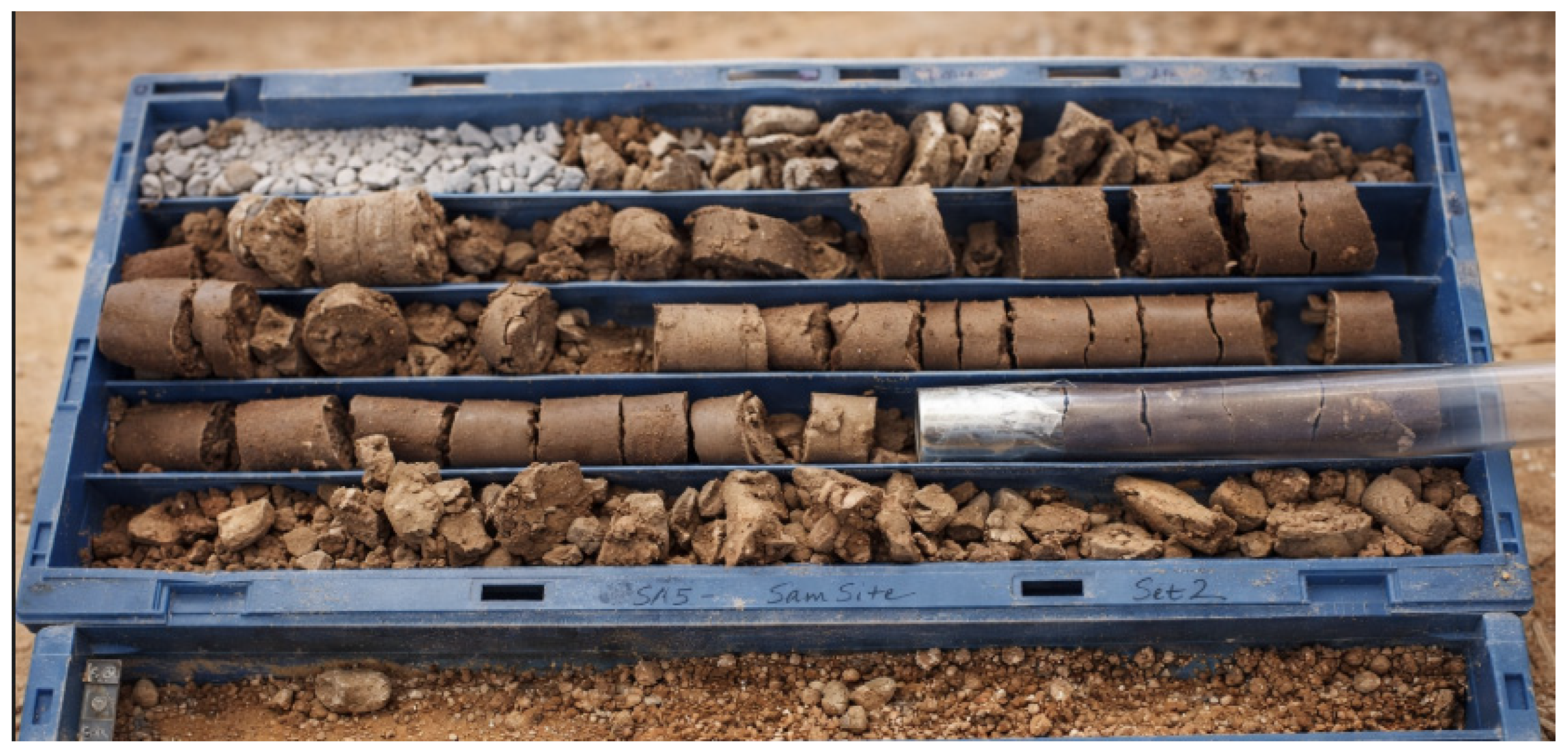
Figure 7.
Undisturbed soil core samples retrieved during the site investigation, illustrating the physical characteristics of the subsoil layers.
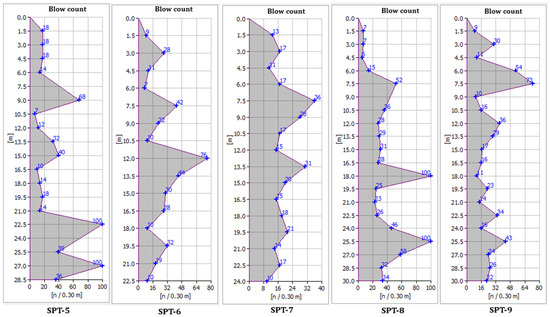
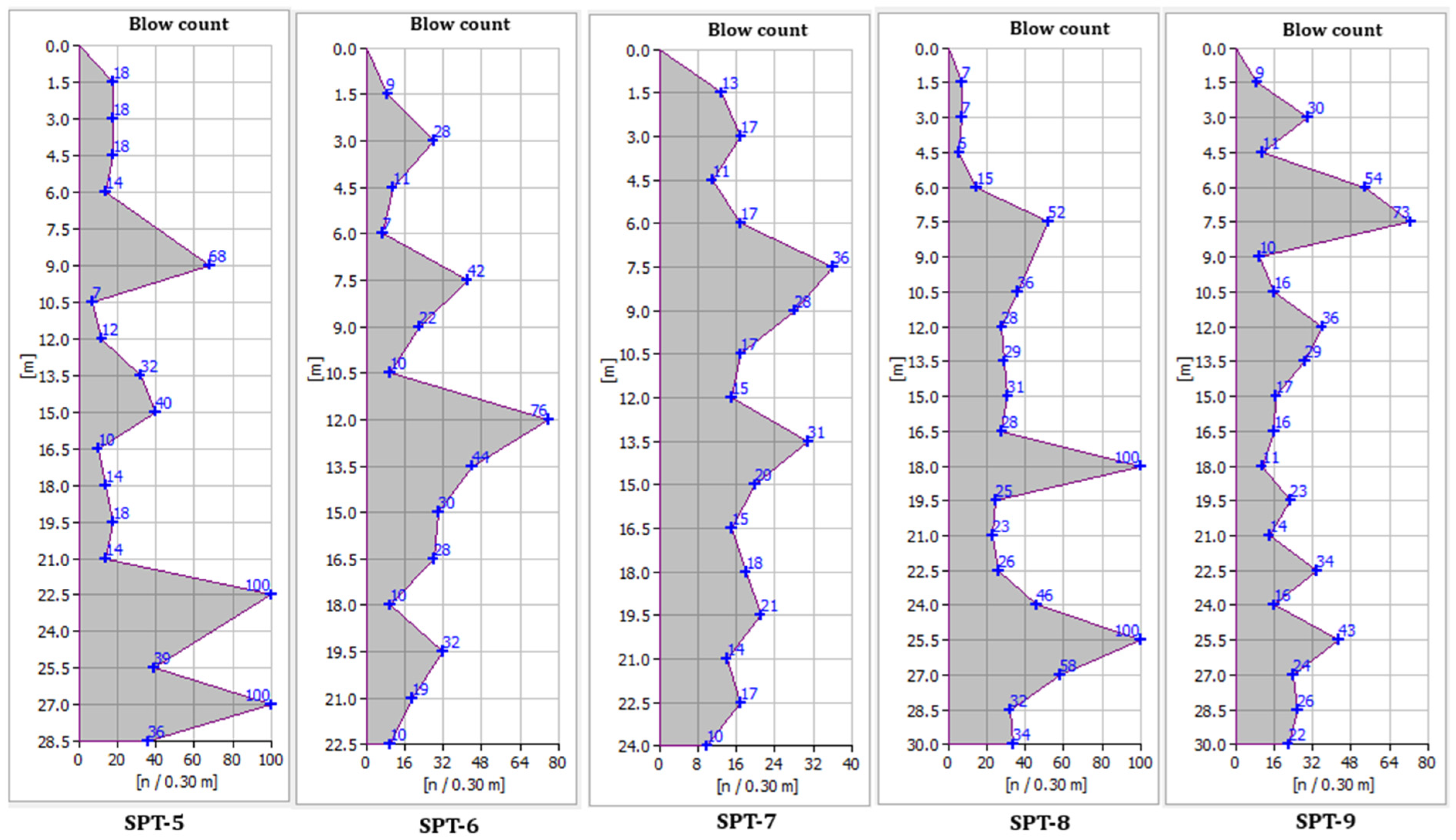
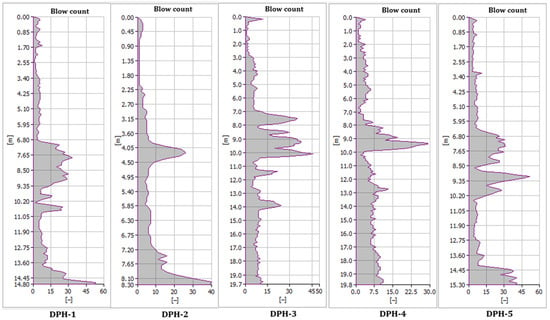
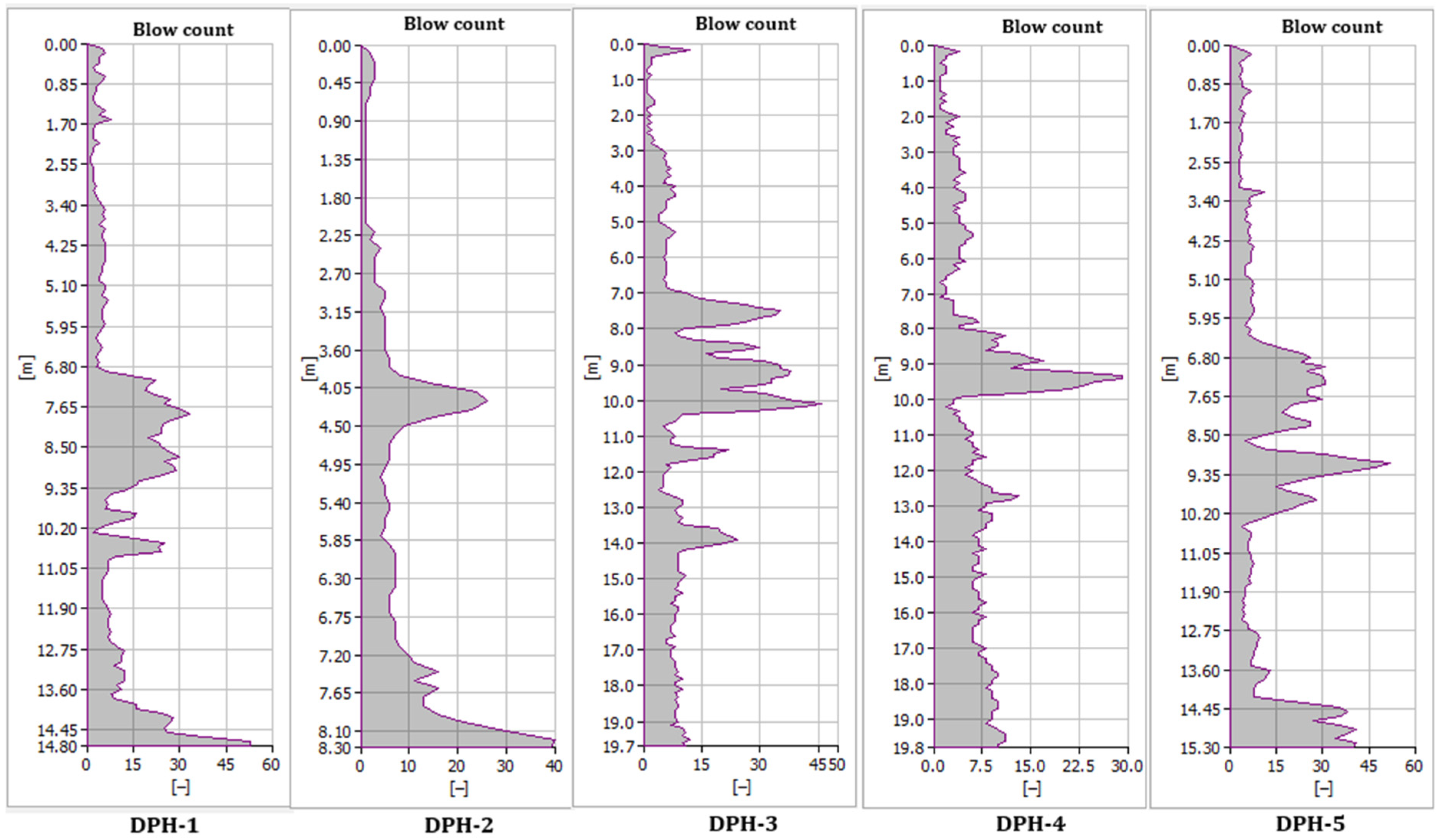
Interbedded within this cohesive matrix are discontinuous gravelly and clayey-gravel layers, typically encountered at depths between 7.5 m and 10 m, and again intermittently below 15–25 m depending on the borehole location. These layers possess higher permeability and increased stiffness, as confirmed by MASW shear-wave velocity trends, SPT-N values (Figure 8) and DPH values (Figure 9) frequently exceeding 30 blows, indicating dense, partially cemented gravelly matrices. Their presence suggests episodic, higher-energy depositional phases within the otherwise fine-grained lacustrine sequence. Groundwater conditions were carefully evaluated during drilling and through supplementary hydrogeological checks. No permanent groundwater table was observed down to 30 m, consistent with the semi-arid climatic regime of the Konya Basin and the relatively deep regional groundwater circulation. However, isolated moist clay horizons were encountered—most notably in SK-1 at approximately 6.5 m depth—indicating localized moisture retention rather than aquifer-related saturation. These moisture pockets are interpreted as minor capillary accumulations within the fine-grained clayey strata or as remnants of transient infiltration, and no active leakage or surface utility defects were detected in the concurrent KOSKİ infrastructure inspection.
Figure 8.
Depth-dependent variation in Standard Penetration Test (SPT-N) blow counts obtained from boreholes SK-5 to SK-9.
Figure 9.
Results of Dynamic Penetrometer Heavy (DPH) tests (DPH-1 to DPH-5) indicating the resistance profile of shallow soil layers.
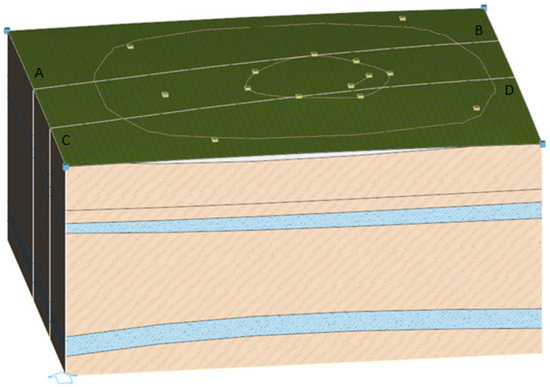
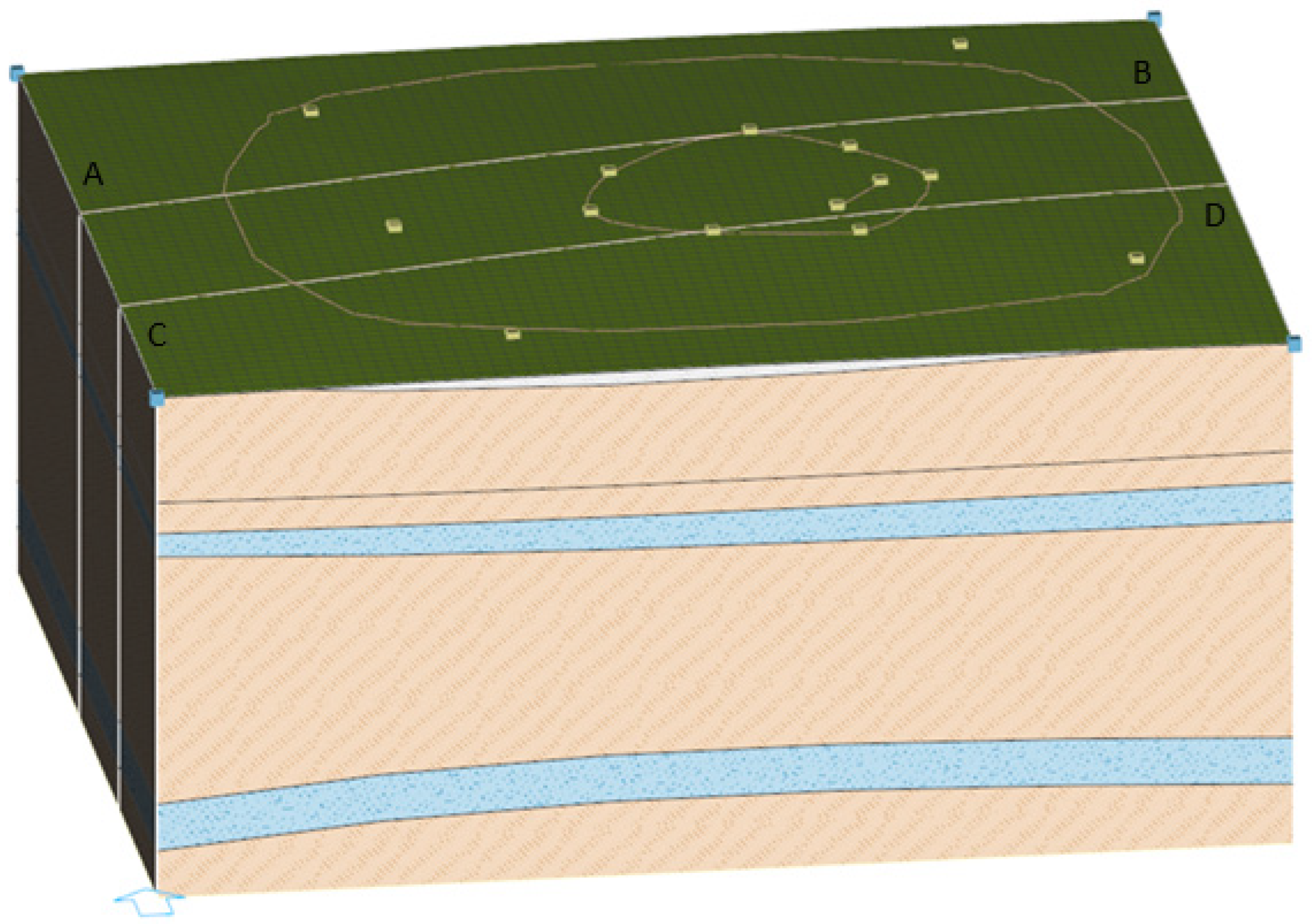
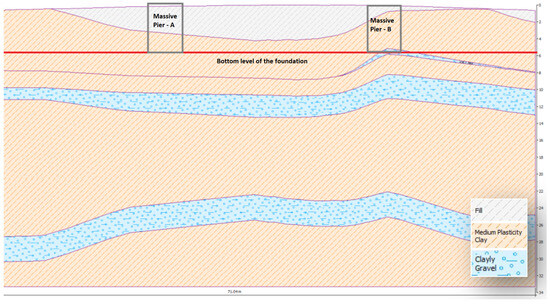
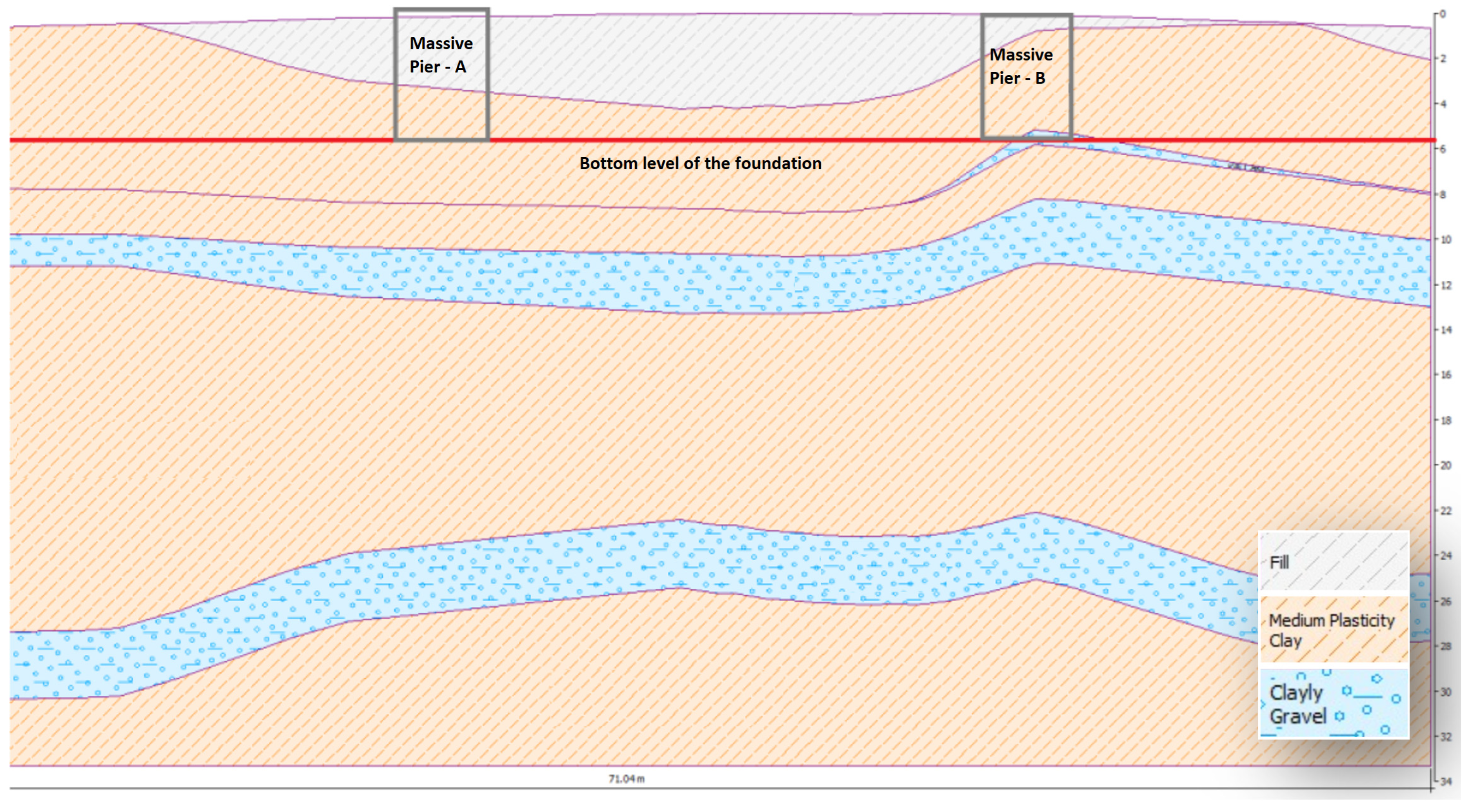
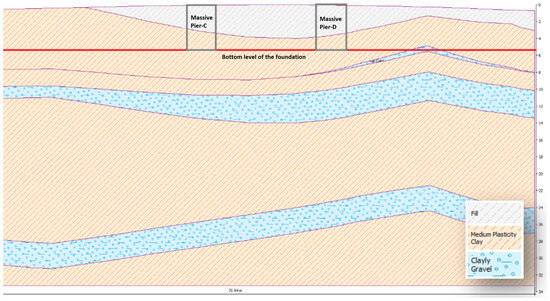
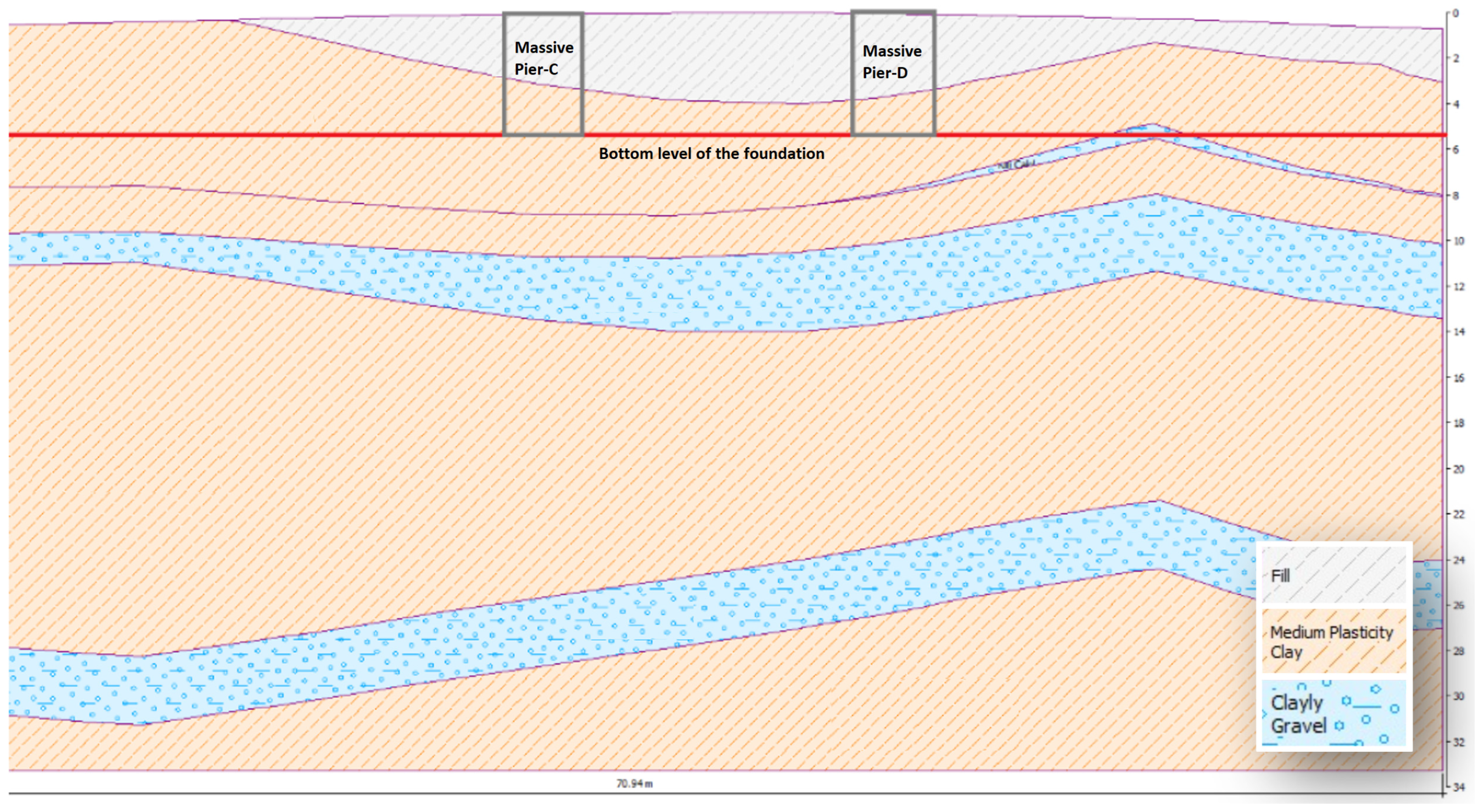
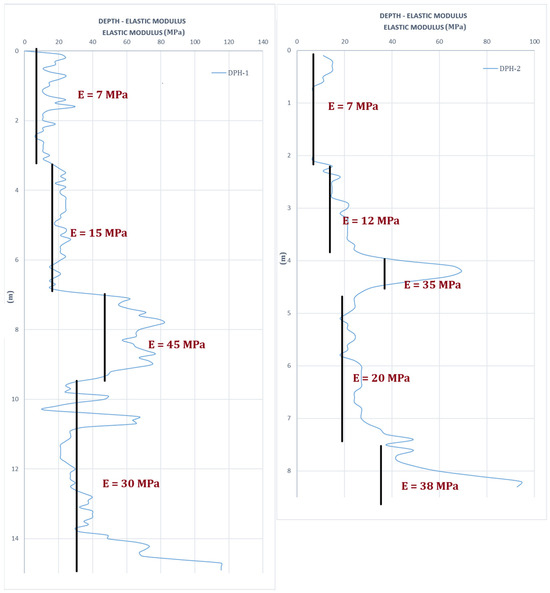
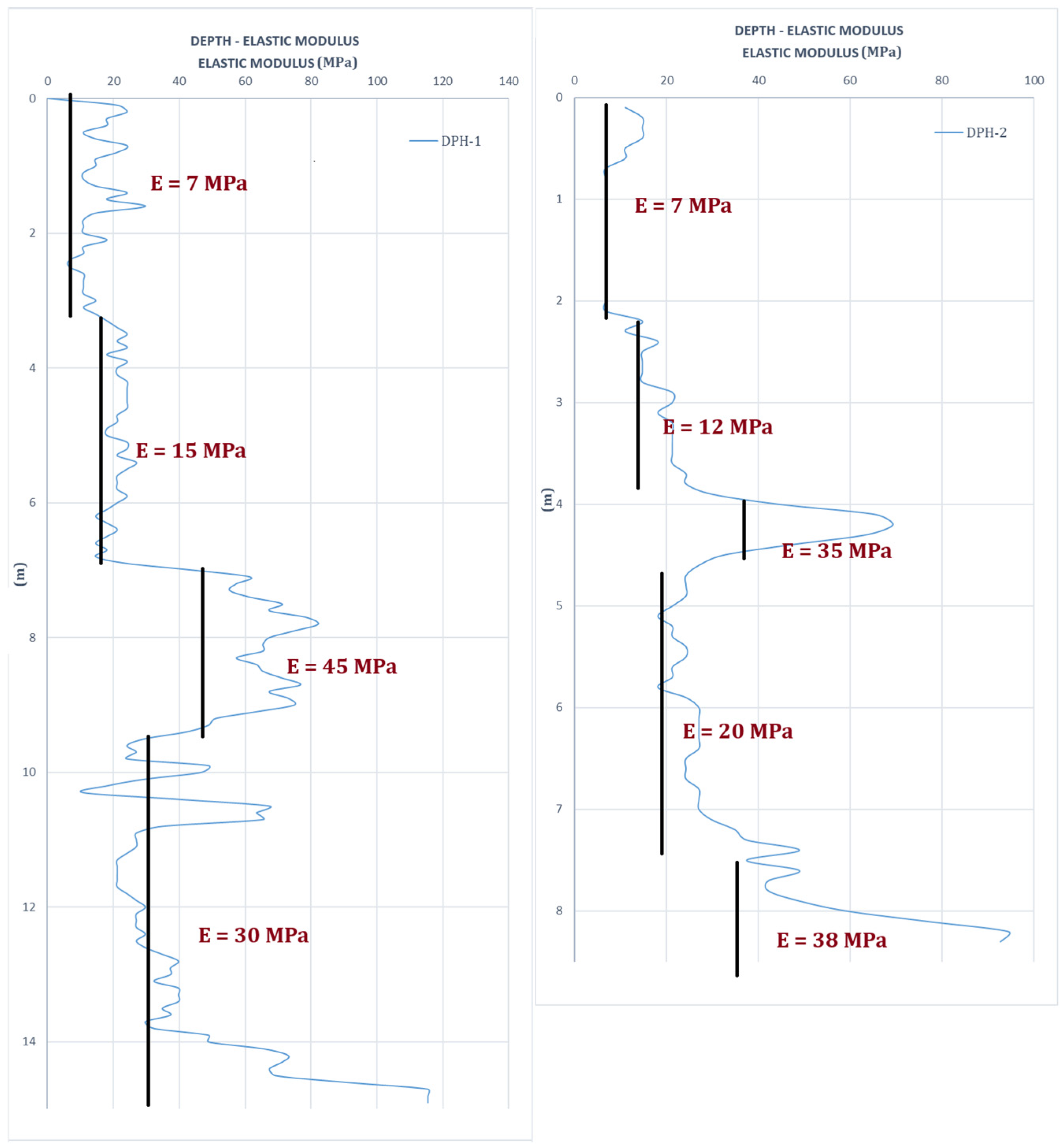
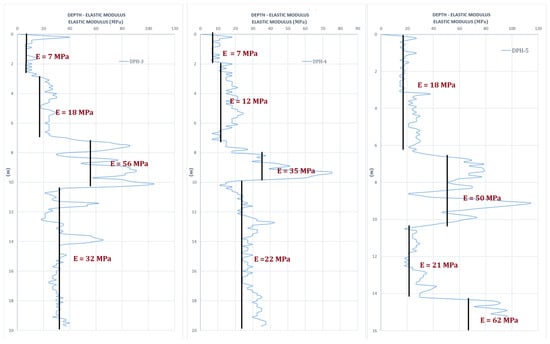
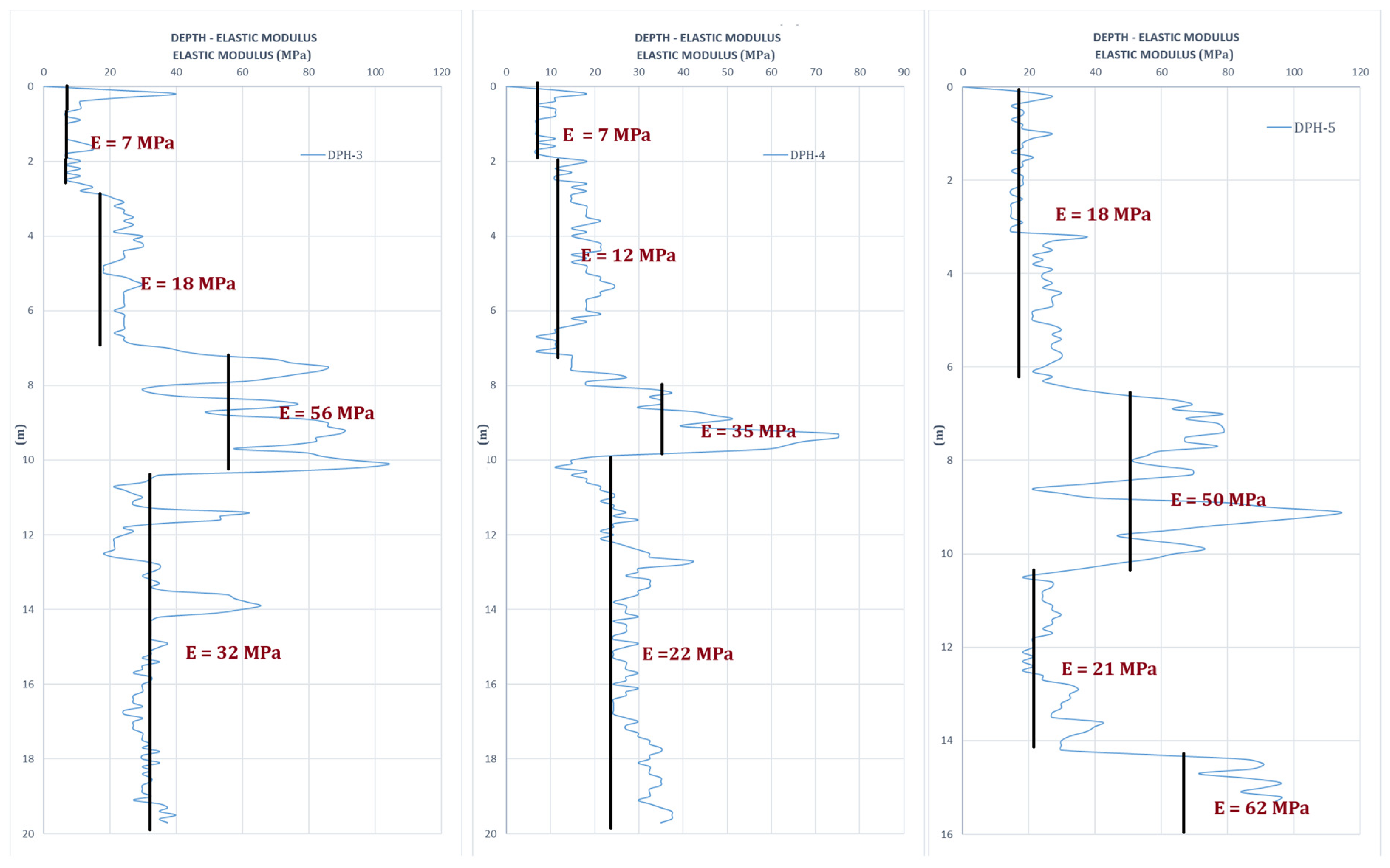
Overall, the subsurface profile beneath the mosque reflects a layered, moderately compressible, low-permeability clay formation interspersed with gravelly inclusions capable of transmitting surface water laterally (Figure 10, Figure 11 and Figure 12). From a geotechnical perspective, the absence of shallow groundwater, the moderate consistency of the clays, and the presence of locally stiffer gravelly layers collectively suggest that the subsoil conditions are favorable for the existing structural load distribution, provided that differential settlement mechanisms associated with the heterogeneous layering are appropriately considered in structural analyses. The soil stiffness parameters to be used in the numerical analyses were derived from DPH data through empirical correlations and idealized using the step function model indicated on the figure (Figure 13 and Figure 14).
Figure 10.
Three-dimensional subsurface model representing the soil stratigraphy. The lines denoted as A–B and C–D indicate the primary longitudinal cross-sections extracted for geotechnical evaluation.
Figure 11.
Representative geotechnical cross-sections illustrating the subsoil stratification beneath the massive piers and the variation in layer thickness (“A” and “B”).
Figure 12.
Representative geotechnical cross-sections illustrating the subsoil stratification beneath the massive piers and the variation in layer thickness (“C” and “D”).
Figure 13.
Vertical profiles of Soil Elastic Modulus (Es) derived from in-situ tests for DPH-1 and DPH-2 locations.
Figure 14.
Vertical profiles of Soil Elastic Modulus (Es) for DPH-3, DPH-4, and DPH-5 locations12.
3.2. Dynamic Identification via Ambient Vibration Testing (AVT)
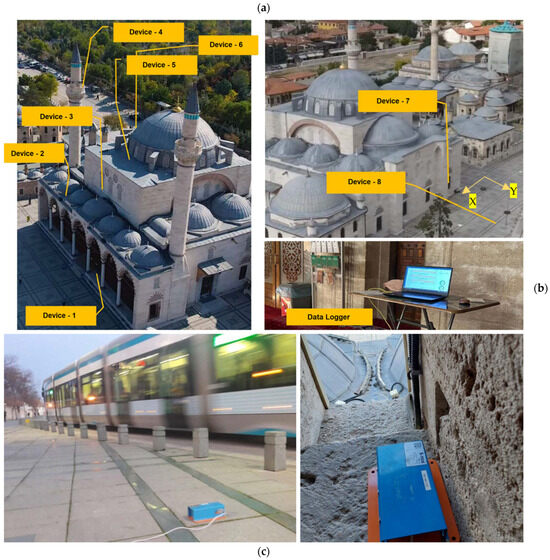
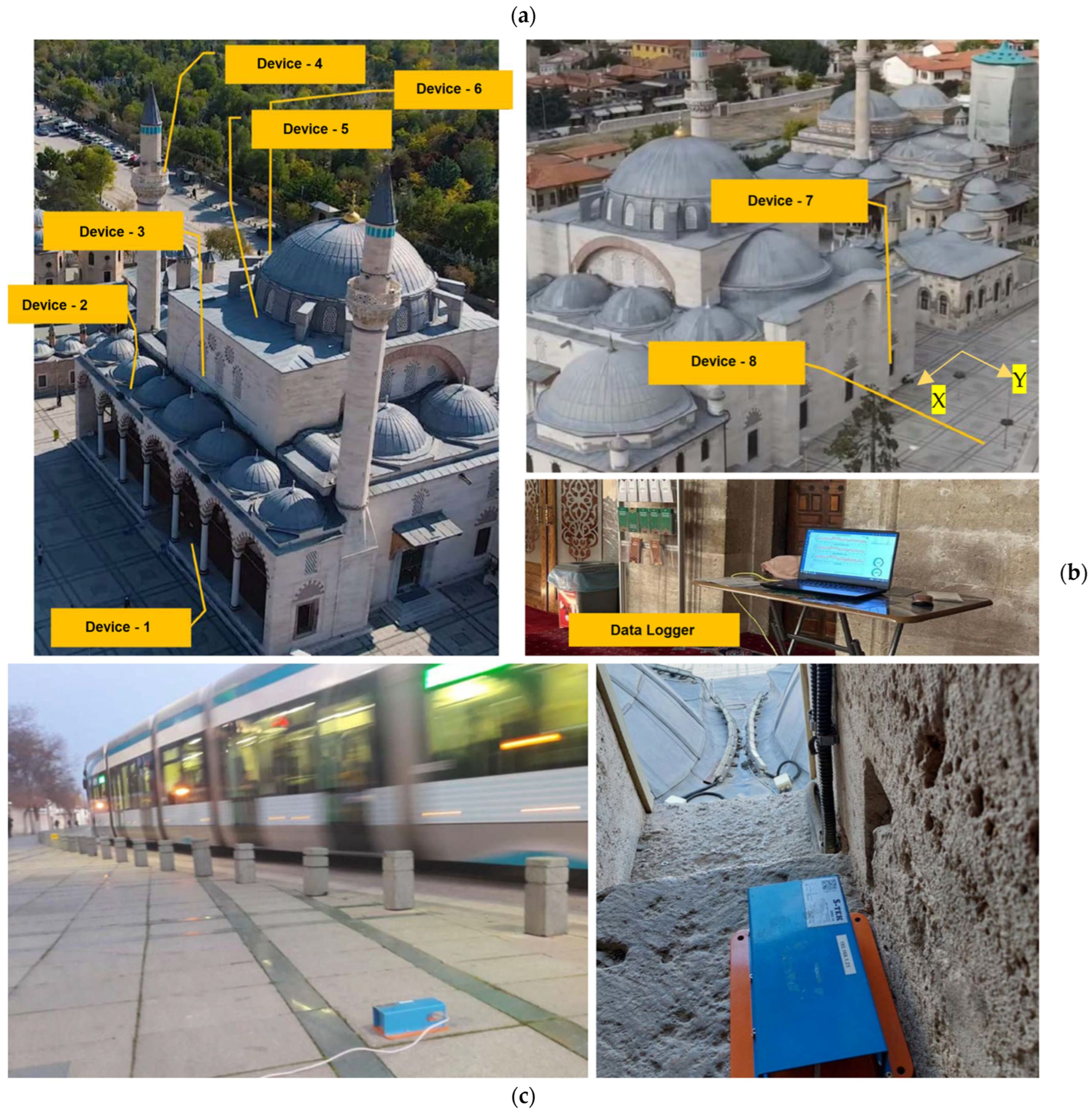
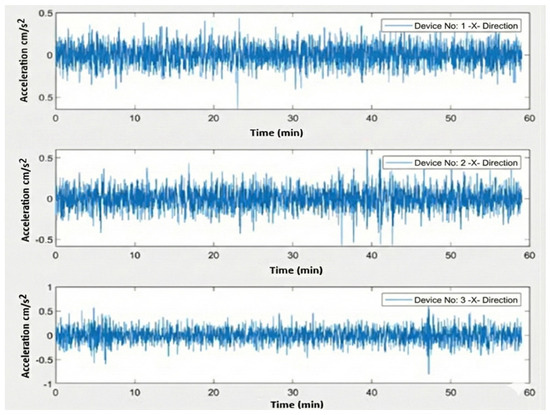
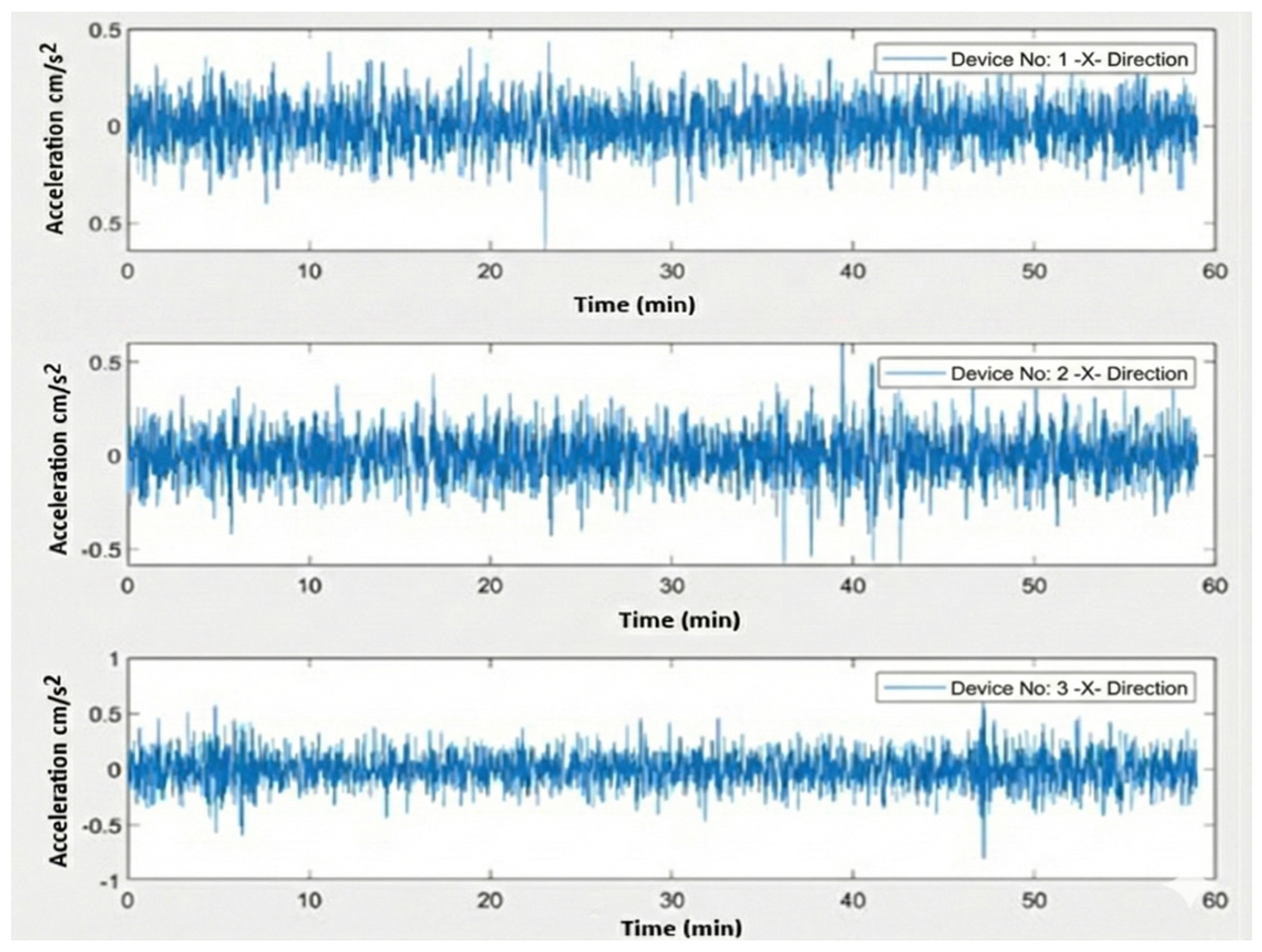
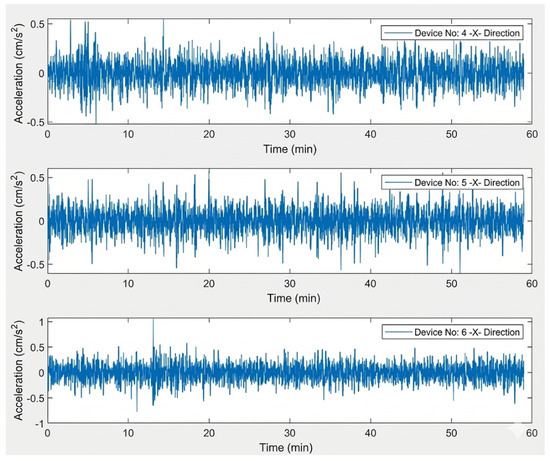
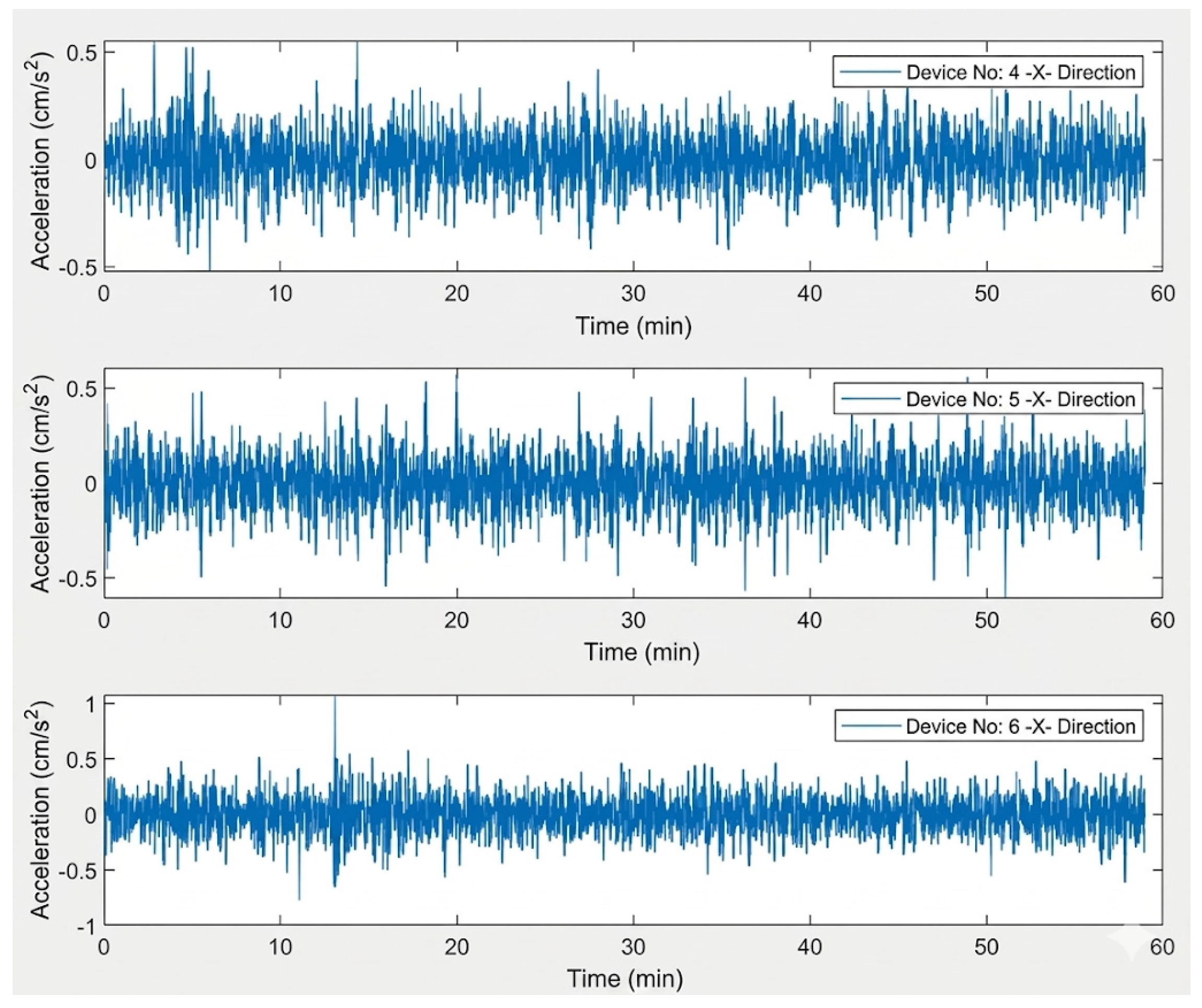
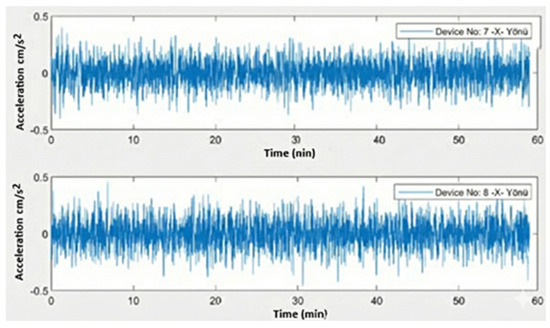
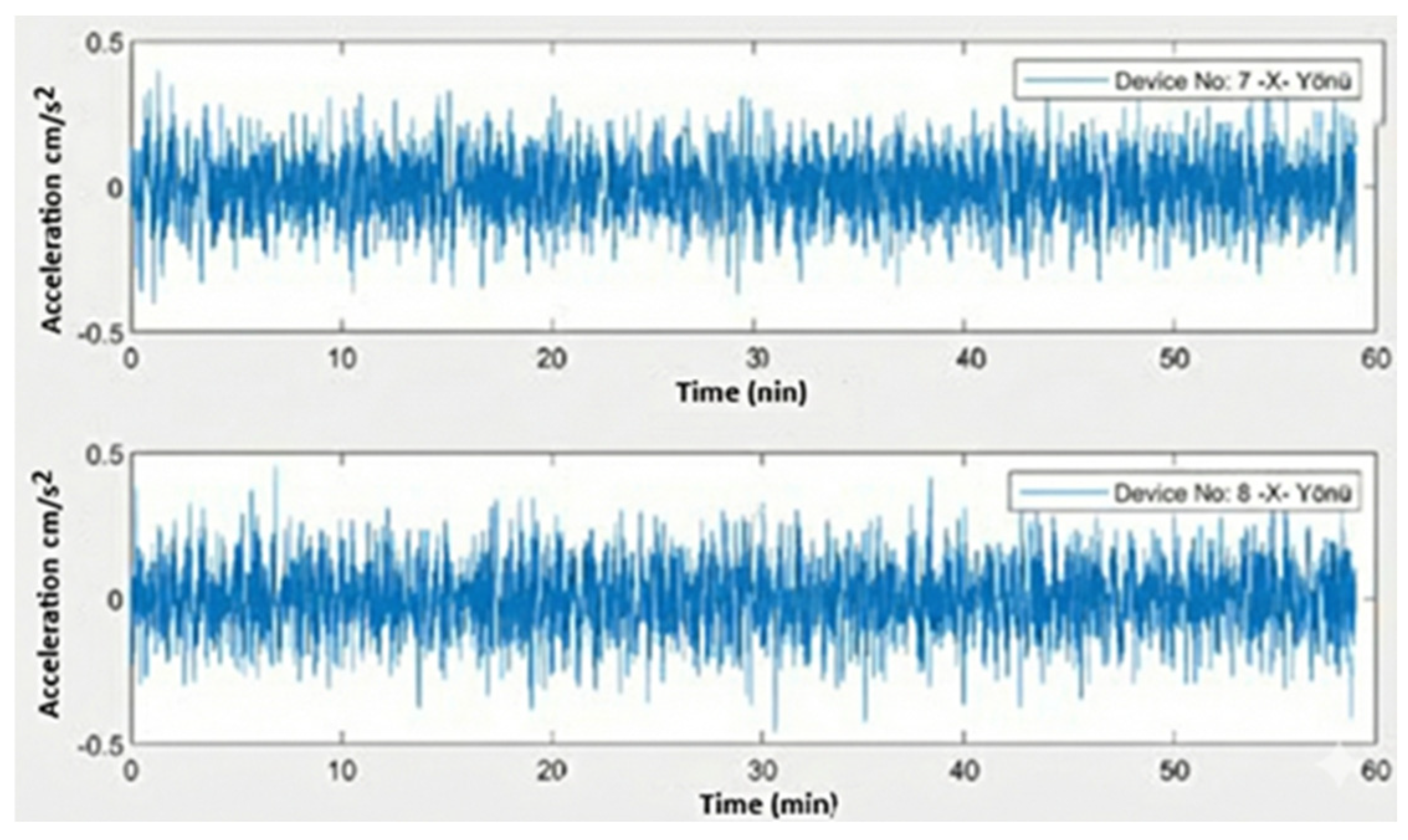
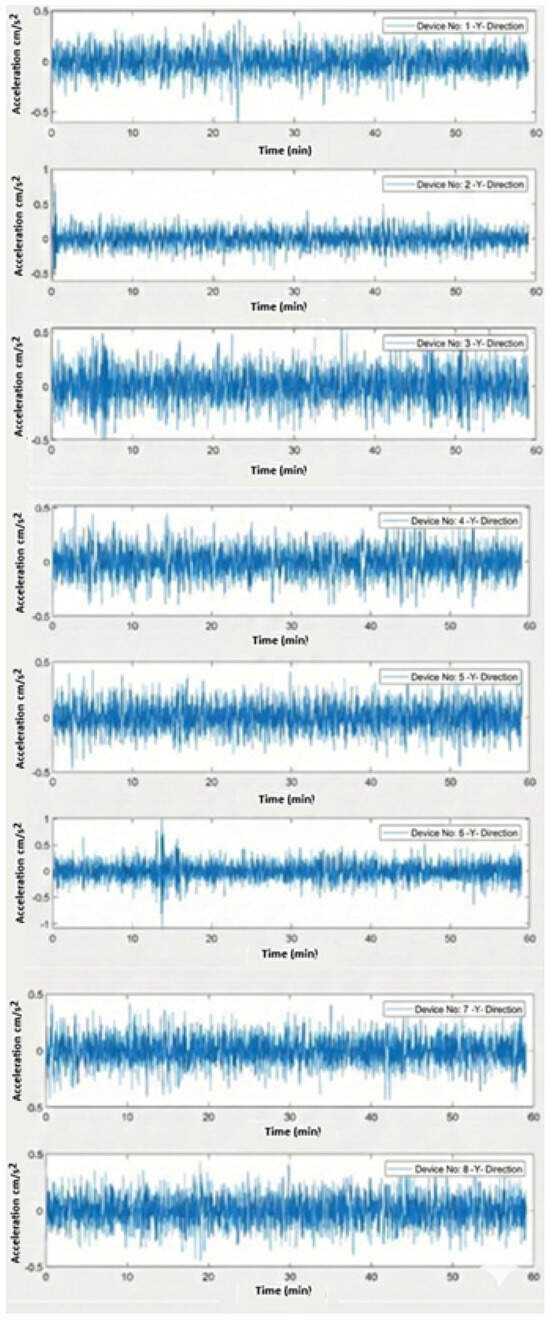
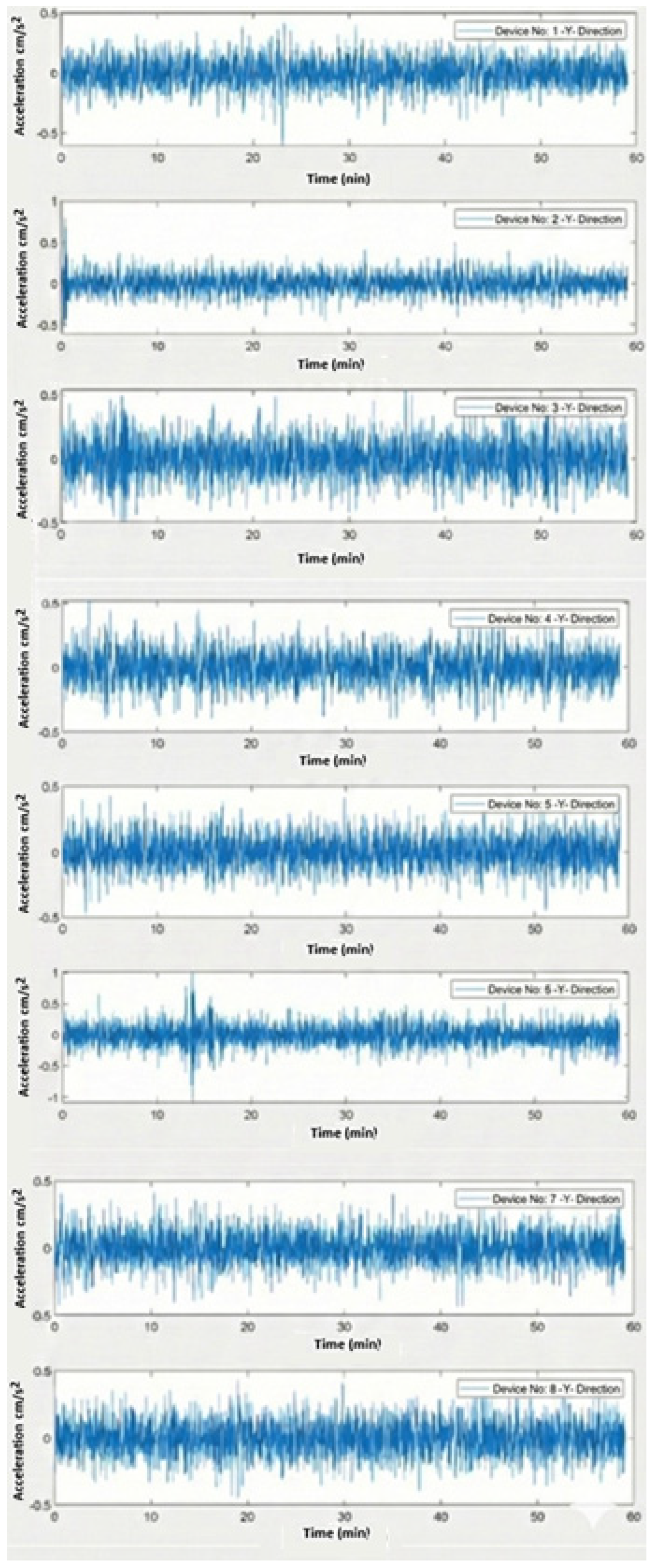
Ambient Vibration Testing (AVT) was conducted to determine the dynamic characteristics of the mosque without applying artificial excitation. In this study, AVTs were conducted using eight tri-axial S-TEK HPAS accelerometers strategically placed inside and outside the mosque (Figure 15). The eight sensors captured environmental excitations caused by tramway traffic and micro-tremors for calibration of the finite-element model (Figure 16, Figure 17, Figure 18 and Figure 19). The 60-s records include ambient vibration before and after the tram passage. The tram-induced response occurs within a limited time window, during which a clear increase in vibration amplitudes is observed. The presented time histories represent raw ambient vibration data recorded on-site. The amplitude increase observed during tram passage confirms the presence of external excitation sufficient for modal identification. These records were subsequently processed in the frequency domain and used for the calibration of the numerical model. Therefore, the time-domain plots are presented to illustrate the excitation characteristics rather than to perform direct time-history interpretation.
Figure 15.
Experimental setup for AVT: (a) locations of accelerometers (Device 1–8) on the mosque superstructure, (b) data acquisition system, and (c) tramway line acting as an environmental excitation source.
Figure 16.
Time-domain acceleration signals recorded in the X-direction for sensors 1, 2, and 3.
Figure 17.
Time-domain acceleration signals recorded in the X-direction for sensors 4, 5, and 6.
Figure 18.
Time-domain acceleration signals recorded in the X-direction for sensors 7 and 8.
Figure 19.
Comprehensive view of acceleration data in the Y-direction for all sensor locations (1–8), highlighting the structural response.
Records were processed via Frequency-Domain Decomposition (FDD). The spectral density matrix was decomposed as
where is the power spectral density matrix of the measured responses, is the matrix containing the singular vectors, is the diagonal matrix of singular values, and denotes the Hermitian transpose of
Here, the peaks of the first singular value correspond to the natural frequencies, while the associated column of gives the mode shape vector. Moreover, the power spectral density (PSD) function is obtained by:
where is the Fourier transform of , its complex conjugate, and is the sampling duration.
Correlation with numerical modes used the Modal Assurance Criterion (MAC):
3.3. Finite Element Modeling and Numerical Analysis
A comprehensive three-dimensional finite element (FE) model was constructed to evaluate the mechanical performance of the Sultan Selim Mosque under its own weight and site-specific seismic conditions. The model aimed to capture not only the global response of the central dome and surrounding structural system but also the localized stress redistributions caused by heterogeneous subsoil stiffness, as identified in the geotechnical investigations.
3.3.1. Modeling Strategy and Material Definition
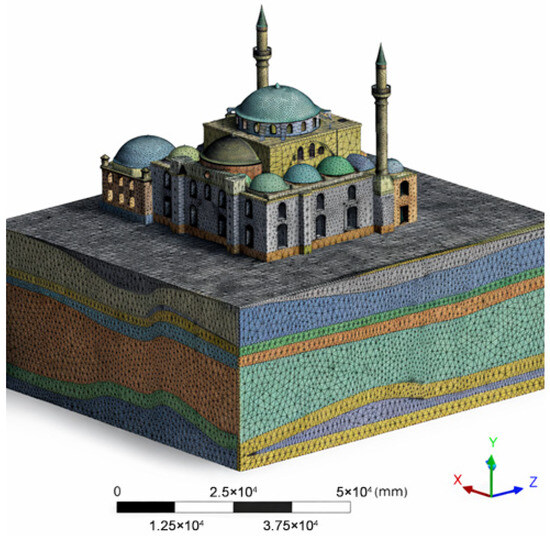
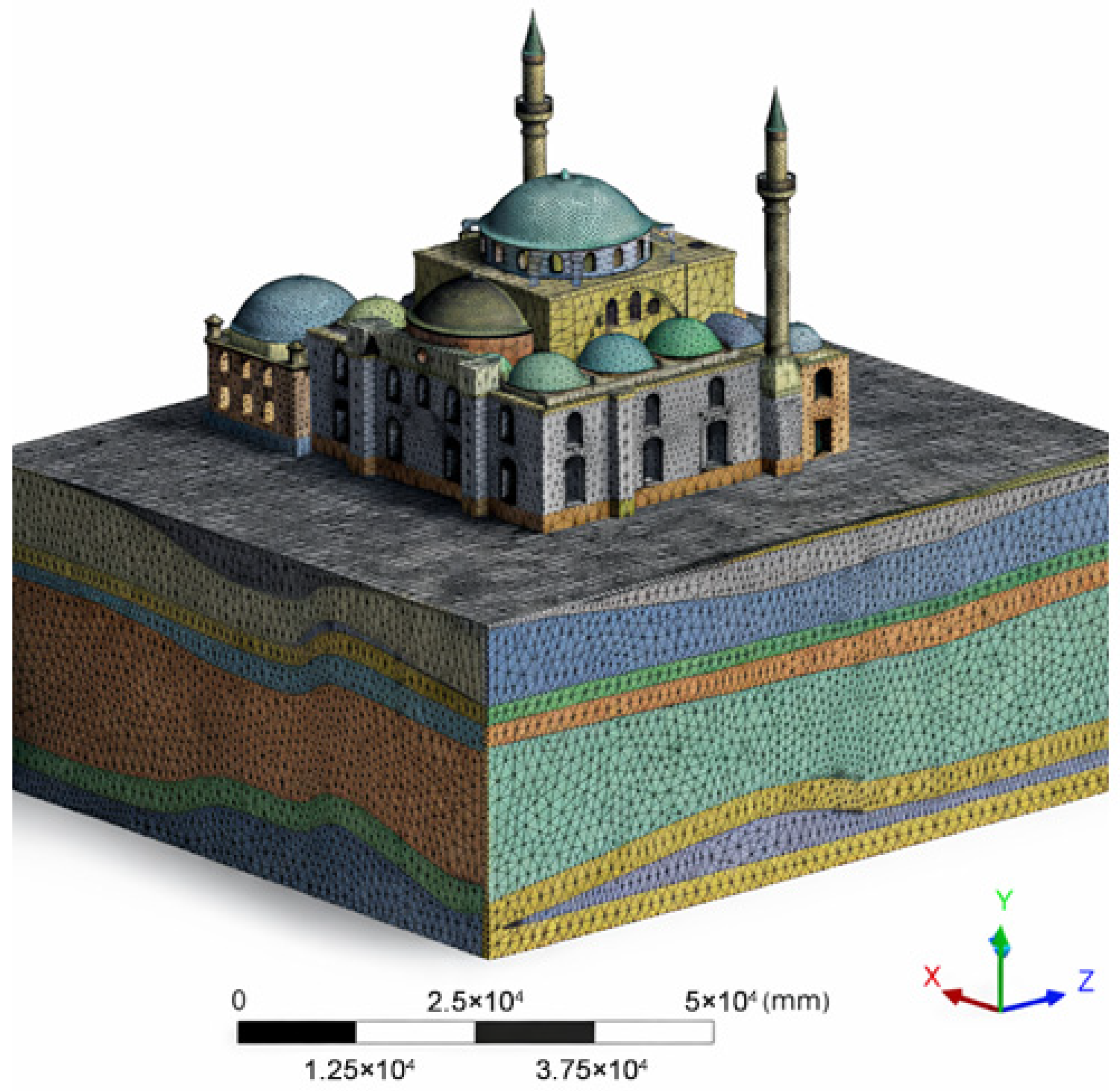
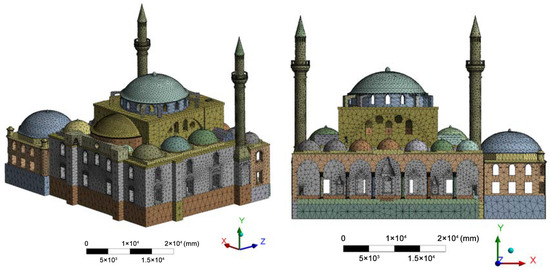
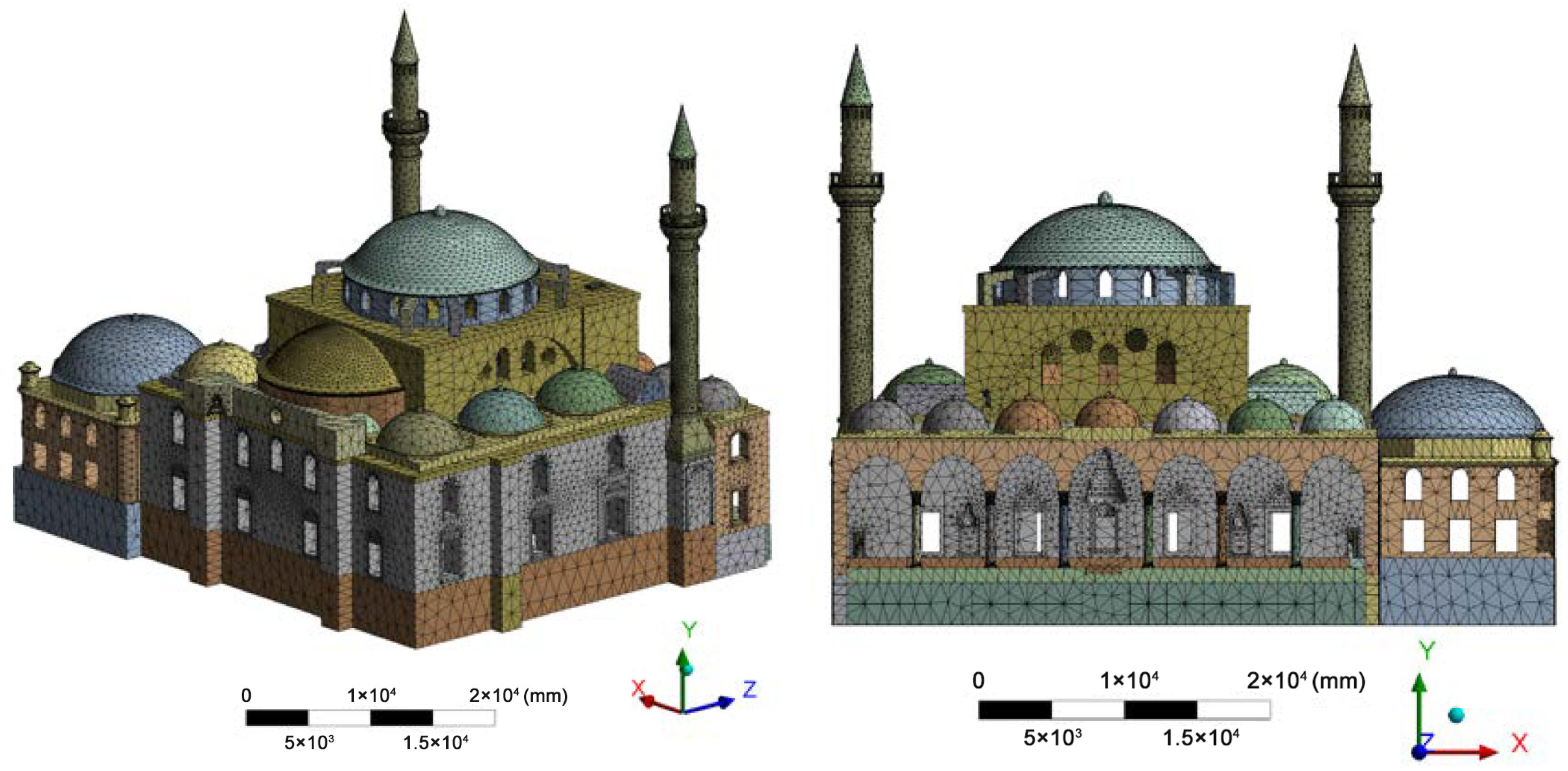
The numerical simulation was performed using ANSYS Workbench, employing approximately 1.65 million nodes and 910,000 elements (Figure 20), capable of representing nonlinear stress–strain behavior through quadratic displacement functions. The overall geometry included the main dome, semi-domes, pendentives, arches, massive piers, and outer walls (Figure 21). Each structural component was modeled based on 3D laser-scanned restitution data provided by the Konya Regional Directorate of Foundations (Konya, Türkiye). The soil domain was modelled as a three-dimensional continuum surrounding the foundation system. To minimize boundary effects, the lateral extents of the soil block were selected sufficiently large compared to the foundation footprint. At the bottom boundary of the soil domain, fixed (zero displacement) boundary conditions were applied in all directions to represent the underlying stiff soil layer.
Figure 20.
General view of the 3D finite element model including the mosque superstructure and the soil foundation block.
Figure 21.
Detailed finite element mesh of the mosque superstructure showing the discretization of the dome, semi-domes, minarets, and walls.
The lateral boundaries were constrained in the horizontal normal direction while remaining free in the vertical direction, allowing realistic settlement behaviour while preventing rigid-body translation of the entire soil mass.
Since the dynamic analyses were performed using the response spectrum method within a linear framework, wave propagation effects and radiation damping were not explicitly modelled; therefore, absorbing boundaries or perfectly matched layers (PML) were not required in the present study.
The masonry material was idealized as a homogeneous, isotropic, elasto-plastic continuum governed by the Mohr–Coulomb yield criterion:
where and , consistent with limestone-based historical masonry. The elastic parameters were assigned as:
The interface between the superstructure and the subsoil was defined using elastic foundation springs whose stiffness values were obtained from geotechnical back-analysis:
3.3.2. Finite Element Modeling (Fem)
A three-dimensional finite element model of the mosque was developed in ANSYS Workbench using solid elements. The governing equilibrium equation for the structure is:
where is the global stiffness matrix, is the displacement vector, and represents the applied nodal forces (self-weight and equivalent seismic loading).
The Mohr–Coulomb failure criterion was adopted to represent the nonlinear behavior of masonry:
where is the shear stress, is the cohesion, is the normal stress, and is the internal friction angle.
Cracking initiates when the principal tensile stress exceeds the tensile strength :
The natural frequencies and corresponding mode shapes were obtained by solving the eigenvalue problem:
where is the global mass matrix.
The calibration process minimized the relative error between the experimental () and numerical () frequencies through an objective function:
Iterations continued until , ensuring a close match between the AVT data and FEM results.
Boundary conditions were modeled as elastic supports, with spring stiffness coefficients , derived directly from geotechnical parameters. The final model accurately reproduced both global and local deformation trends observed on-site, validating the integration of geotechnical and dynamic data within a unified analytical framework.
3.3.3. Governing Equations and Numerical Scheme
The fundamental equation of motion for the discretized structure is:
where , , and are the global mass, damping, and stiffness matrices; , , and are the displacement, velocity, and acceleration vectors; and is the external load vector including gravity and seismic excitation.
The analysis employed Rayleigh damping, assuming:
where coefficients and were selected to reproduce damping ratios of approximately 2%.
For static equilibrium, the governing system was solved iteratively using the Newton–Raphson method with convergence tolerance of .
3.3.4. Modal Analysis and Model Calibration
The free-vibration characteristics were extracted from the eigenvalue problem:
yielding the natural frequencies and corresponding normalized mode shapes .
The first five modes, experimentally identified through AVT, were used for model calibration. The difference between experimental () and numerical () frequencies was minimized using the objective function.
After calibration, fell below 15%, confirming the dynamic consistency between the FE model and in-situ measurements.
The modal mass participation factors demonstrated that the first two global modes accounted for ≈72% of total mass, indicating that the structural dynamics are dominated by translational and torsional behavior of the dome–pier system. The third and fourth modes represented localized bending in the semi-domes and outer walls.
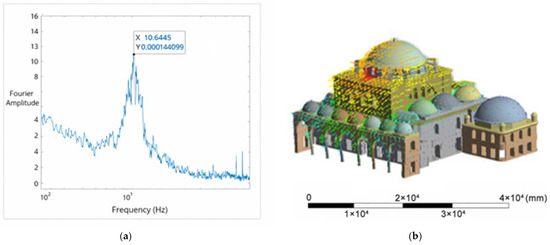
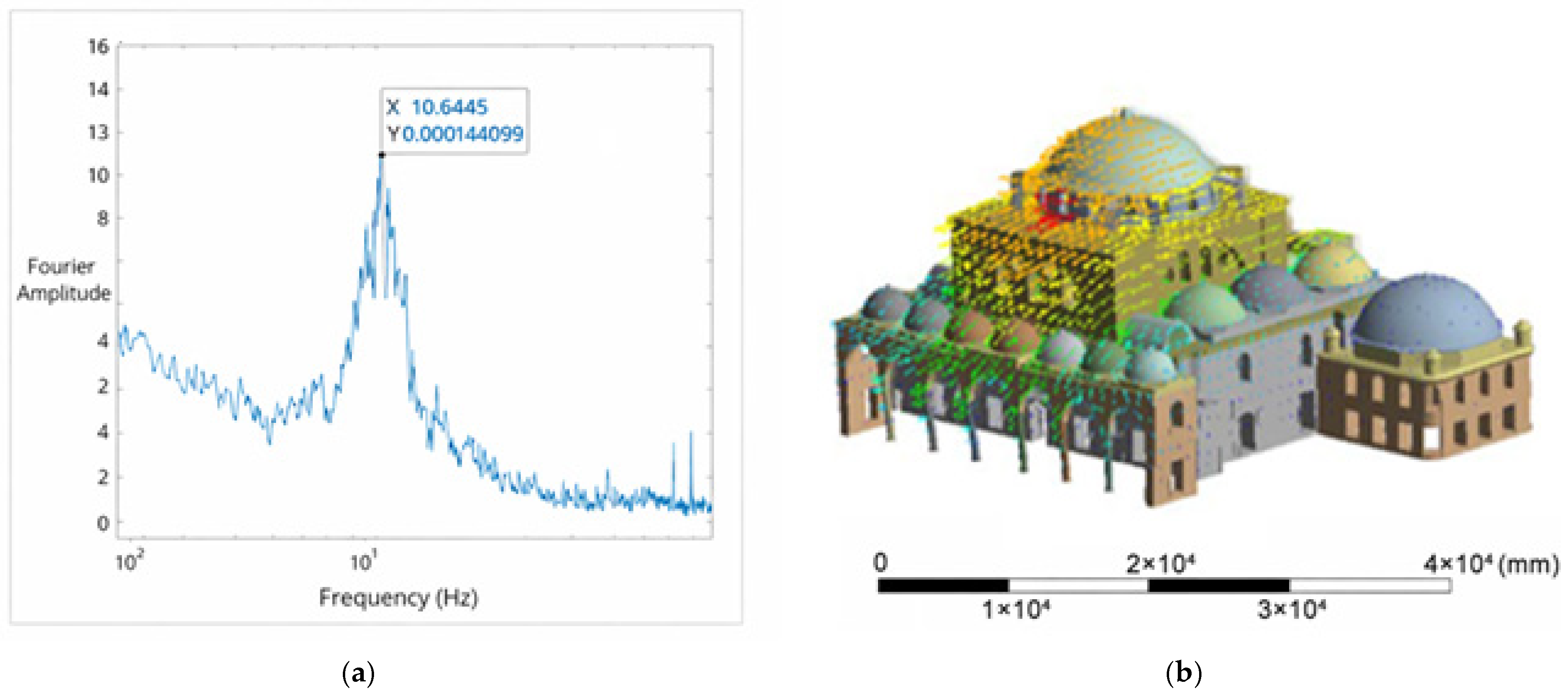
In the calibration studies of the numerical model, a modal analysis of Sultan Selim Mosque was performed as an initial analysis, and the material properties were revised to ensure consistency between the finite element model and the field data. The dominant frequency of the revised model was determined to be 9.42 Hz as a result of the modal analysis (Figure 22). This value is more than 88% closer to the 10.64 Hz value obtained from the field. This approximation was considered sufficient for the finite element model, and this model was used in subsequent analyses.
Figure 22.
Comparison of experimental and numerical modal identification: (a) Fourier Amplitude Spectrum showing the dominant frequency (10.64 Hz), and (b) the corresponding numerical mode shape (9.42 Hz).
3.3.5. Static Analysis
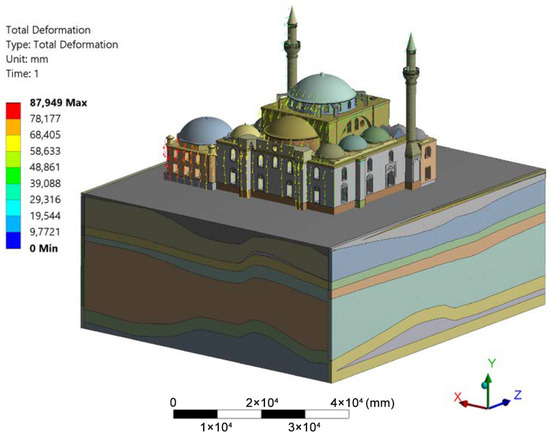
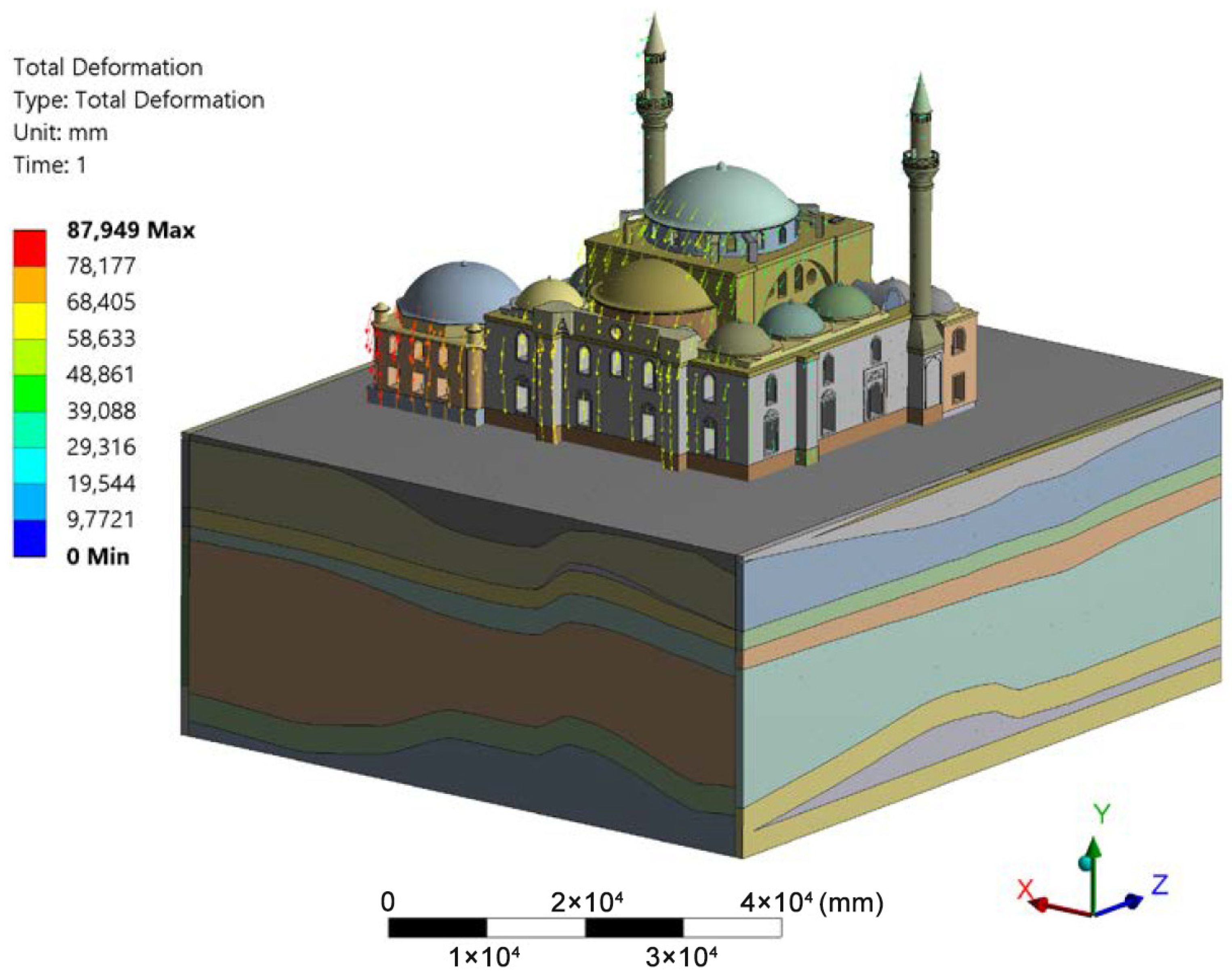
A finite element model was prepared to observe the structural behavior of the historic immovable property. Static analyses were primarily performed to examine the behavior of the structures under their own weight. As a result of the static analyses conducted under the structures’ own weight, the maximum displacements and critical stresses occurring in the structures are examined. When the displacements in the structure were examined, it was determined that the structure showed a general settlement tendency and that the maximum vertical displacement observed in the structure was 87.95 mm (Figure 23). Looking at the settlements that occurred in the foundation soil, it was determined that there was approximately 80 mm of settlement on the south side of the mosque (Figure 24). Furthermore, it was determined that different settlements occurred at the southeast corner of the structure (Figure 25). It should be noted that the maximum vertical displacement of 87.95 mm represents the total displacement of the soil–foundation system obtained from the finite element analysis and includes the rigid-body movement of the entire model. This value does not correspond to differential settlement, which is the relative displacement between structural elements.
Figure 23.
Total vertical deformation contours of the mosque under self-weight loading.
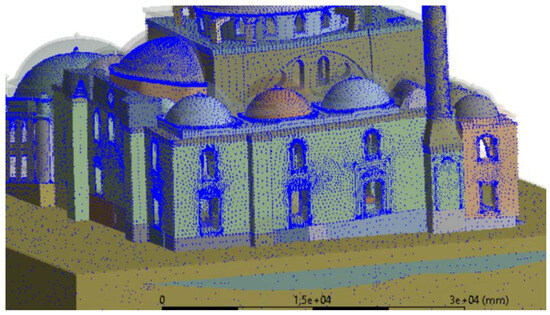
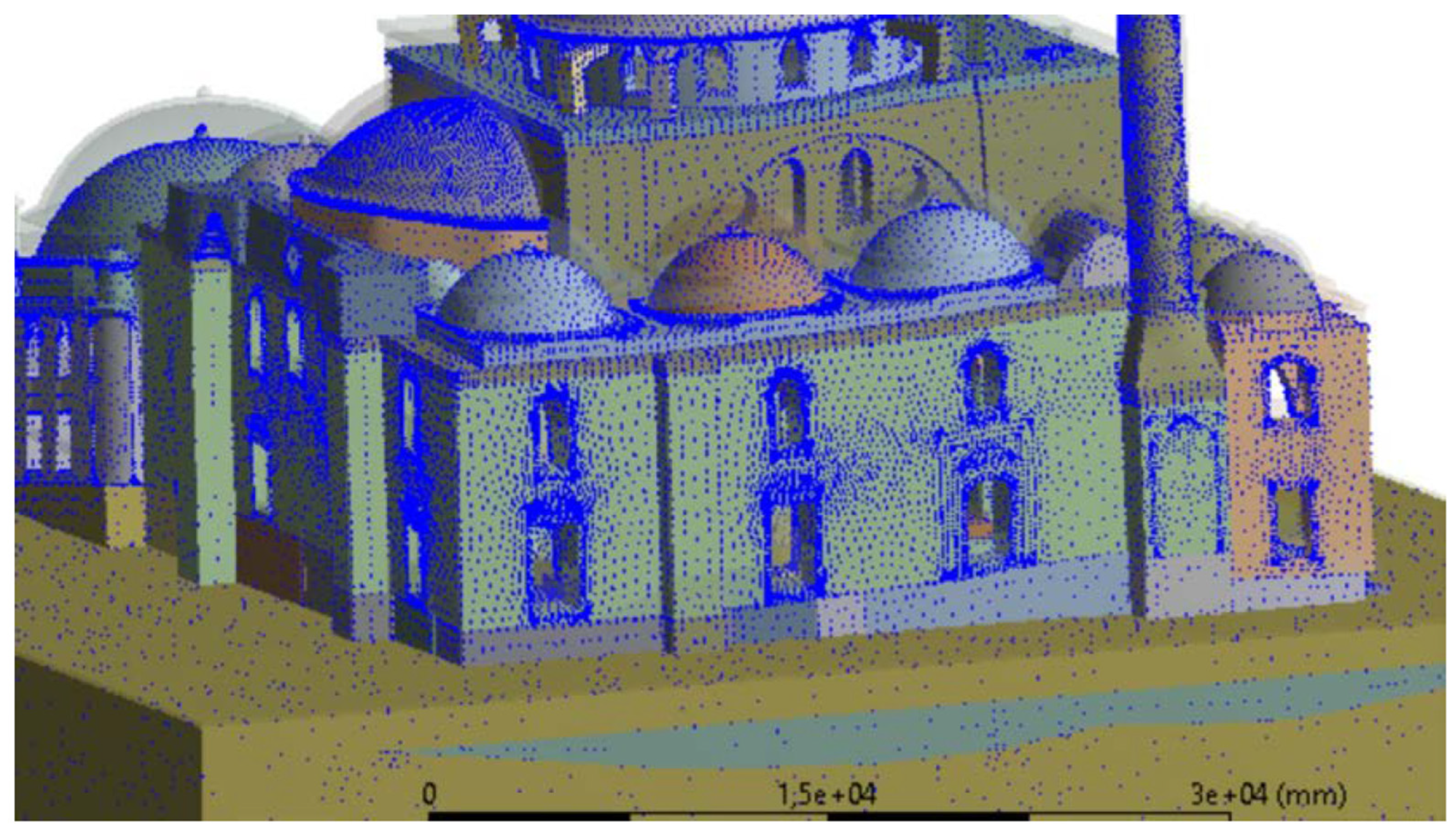
Figure 24.
Point-based representation of the Finite Element Model mesh used for detailed stress analysis.
Figure 25.
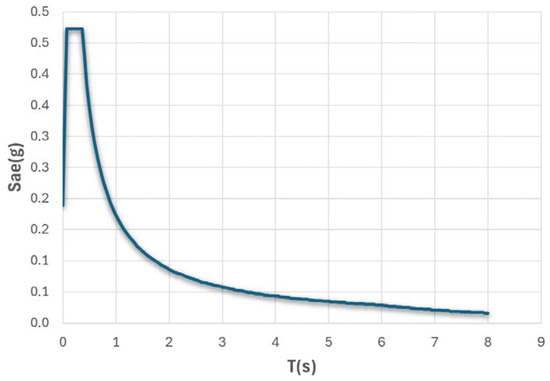
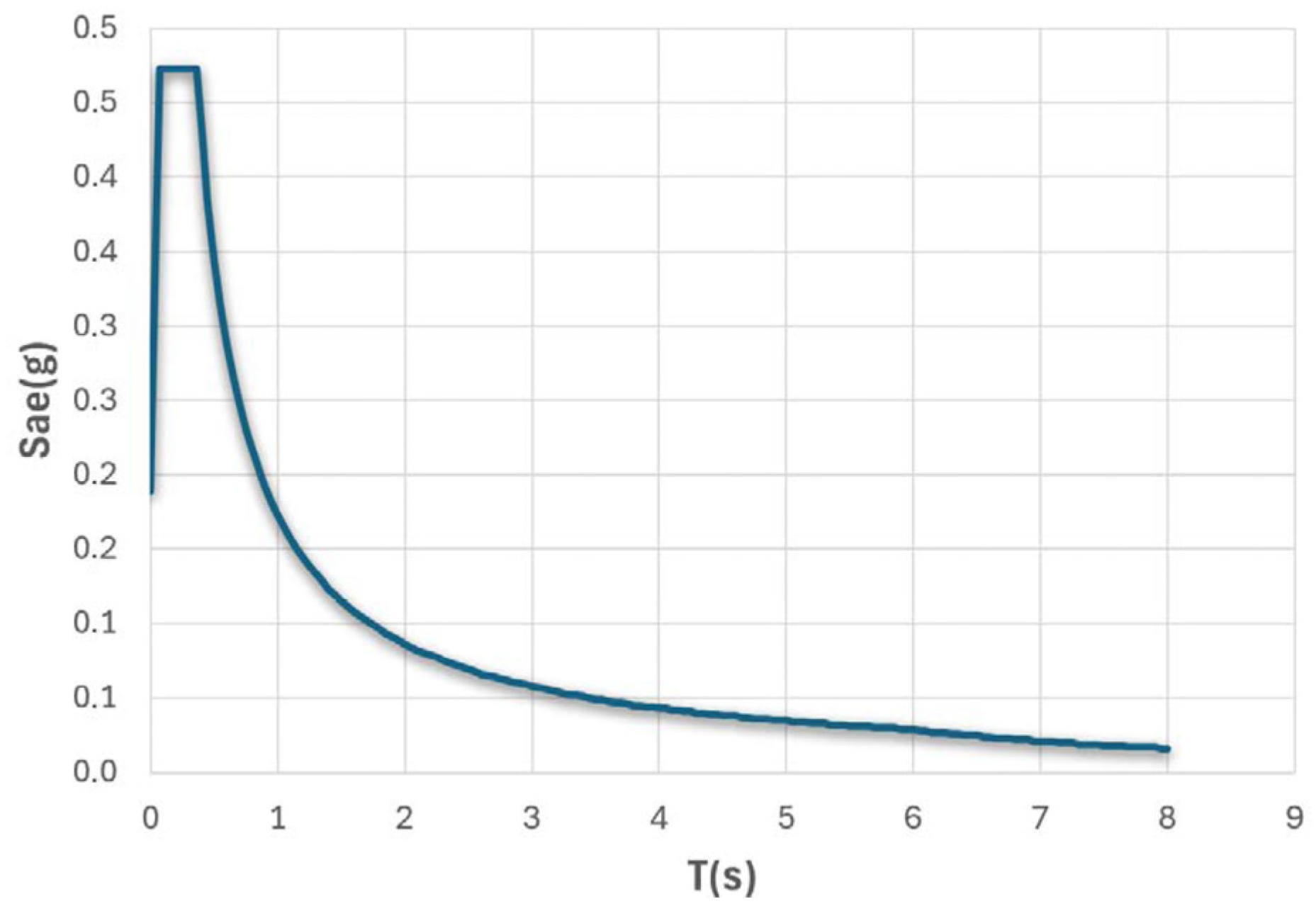
Horizontal elastic design acceleration spectrum for Soil Class ZD (DD-2 Earthquake Level) used in the dynamic analysis.
3.3.6. Dynamic Analysis
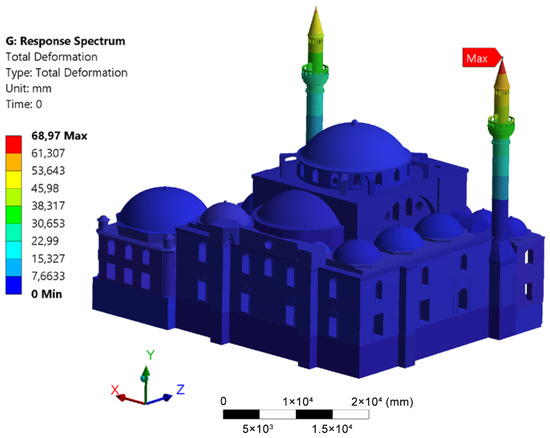
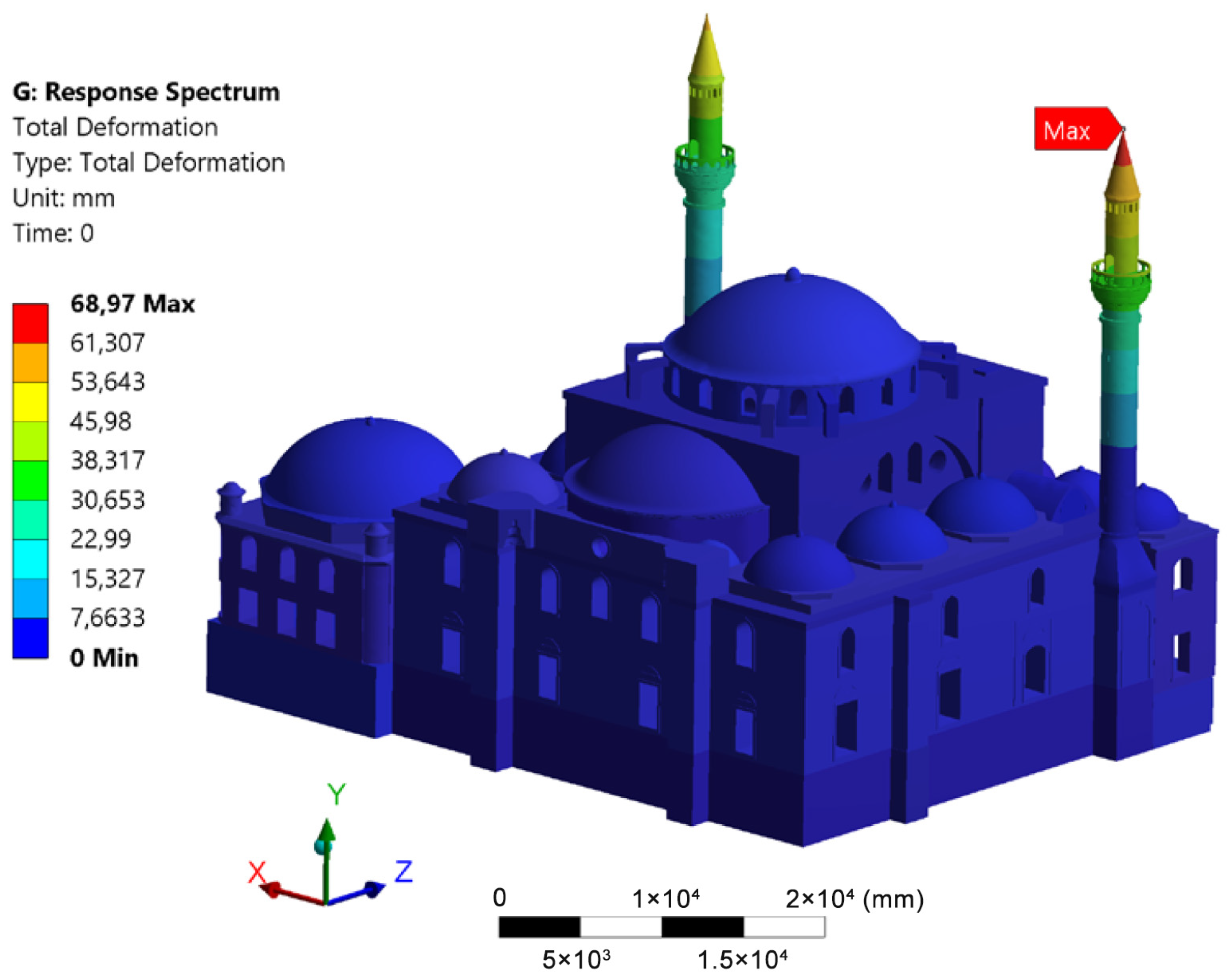
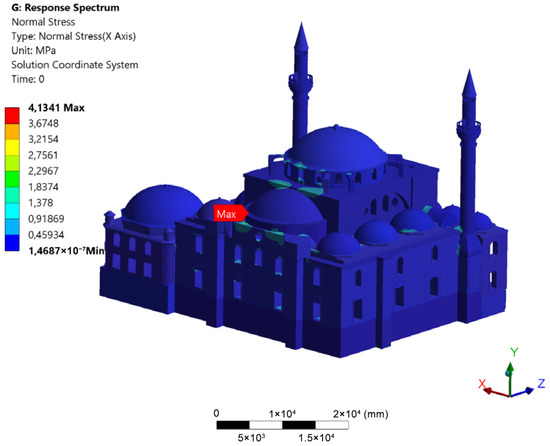
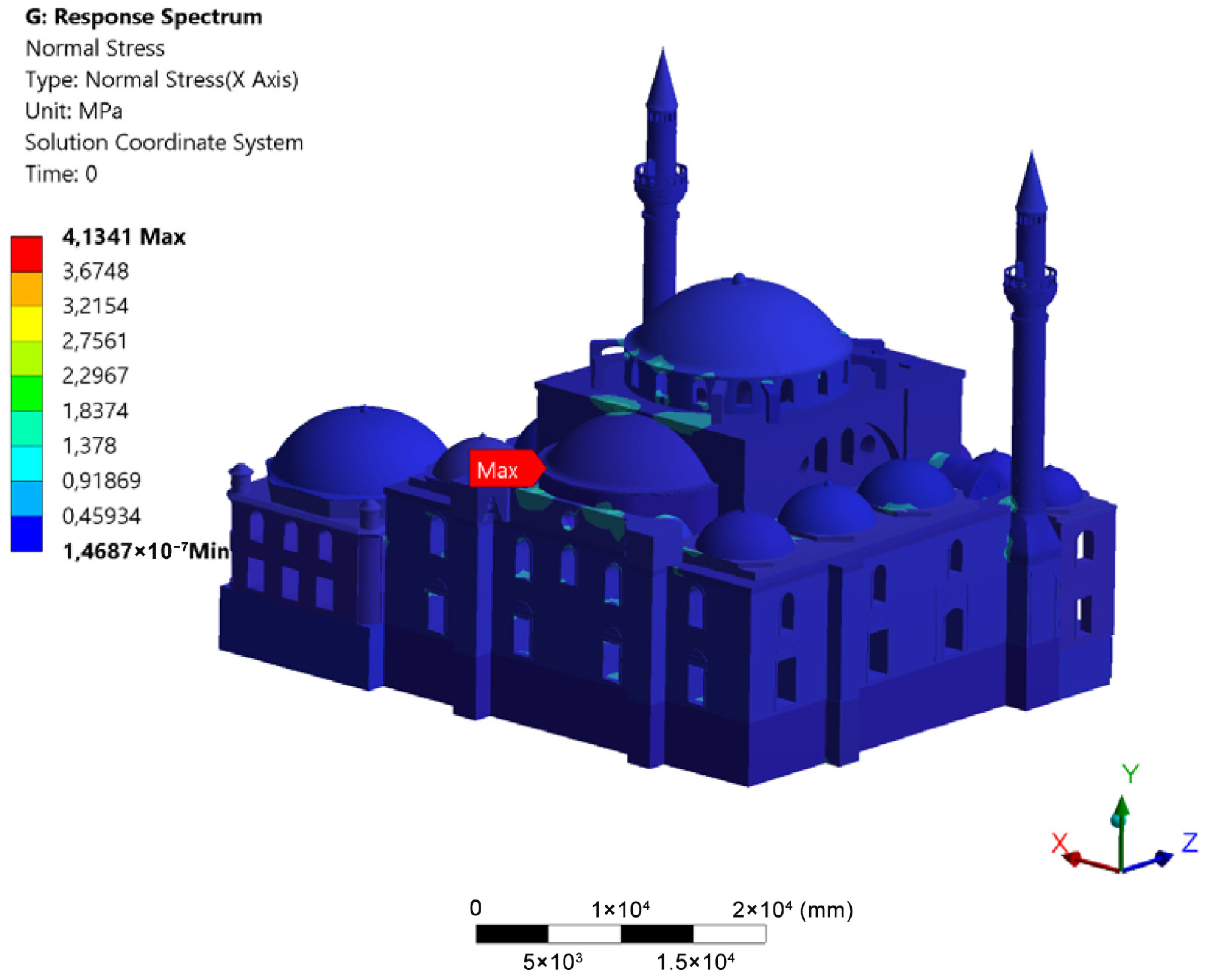
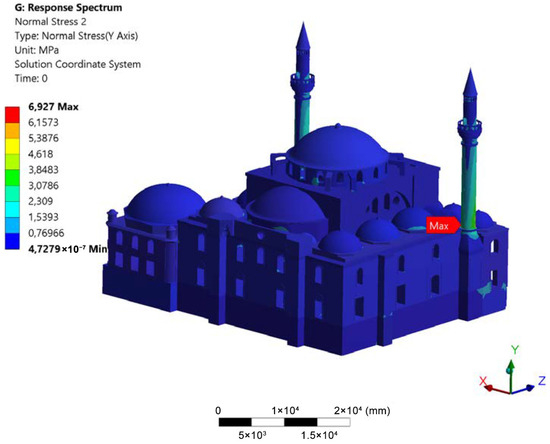
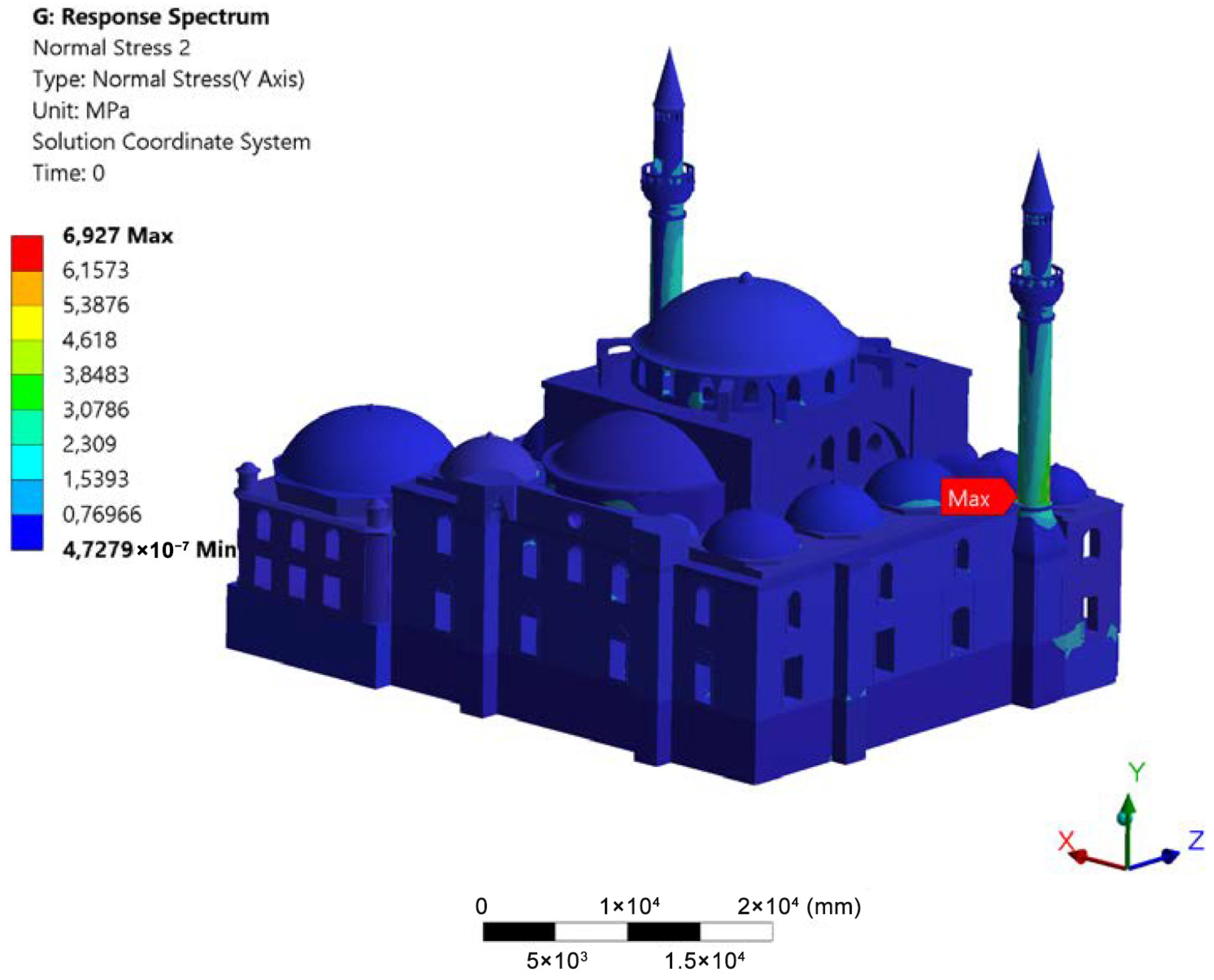
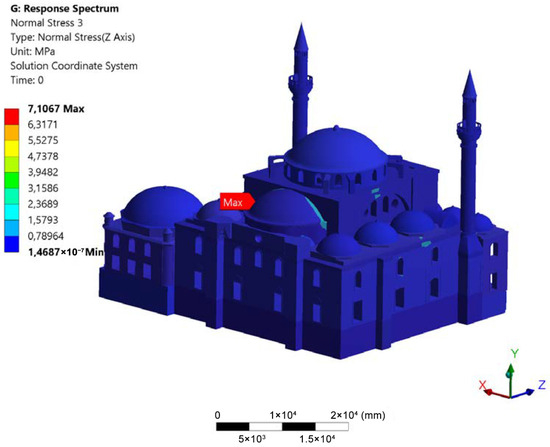
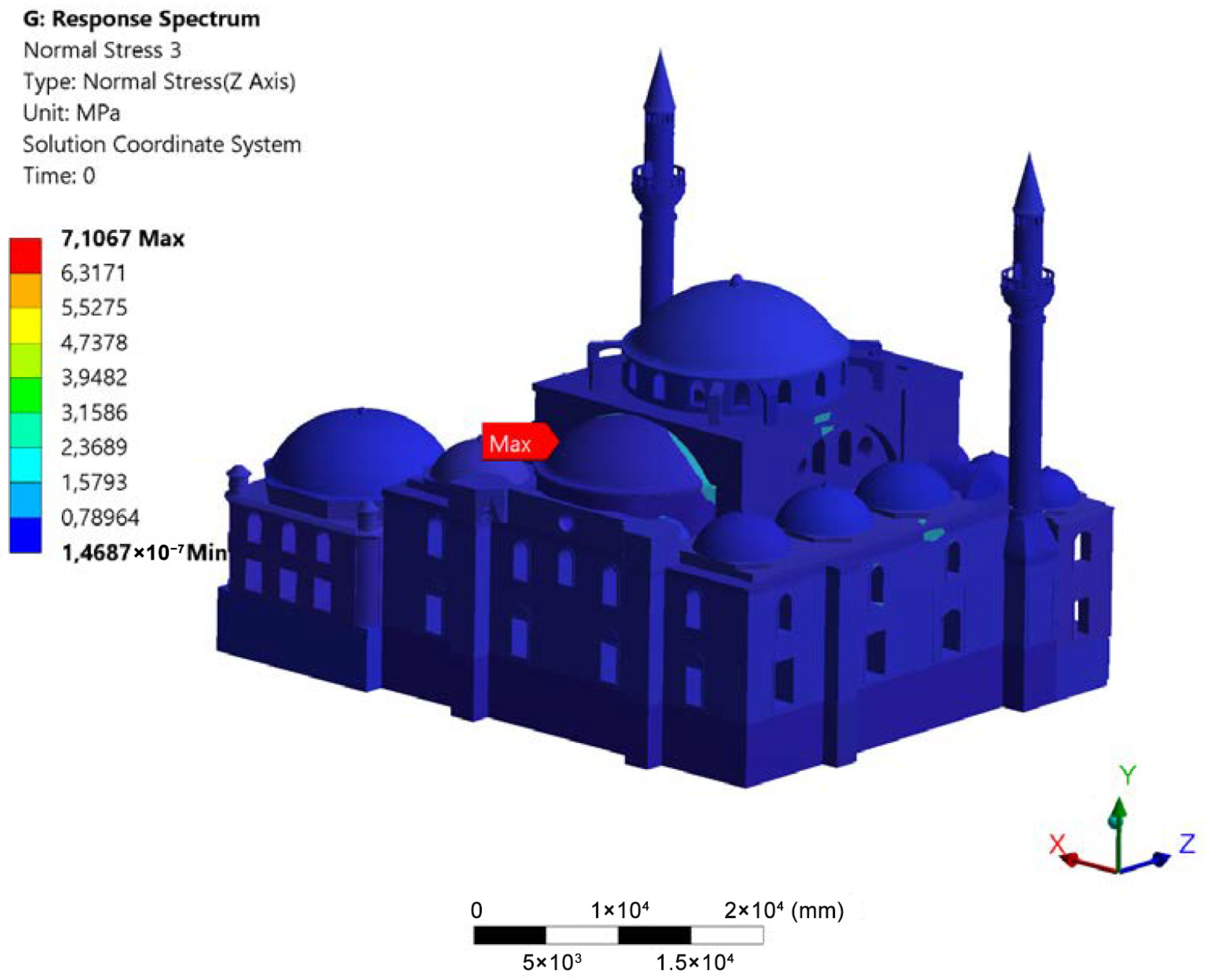
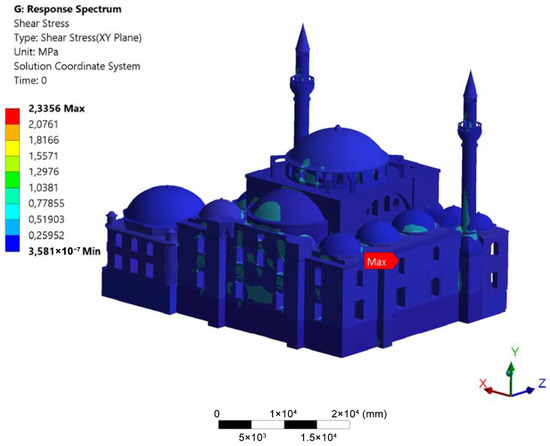
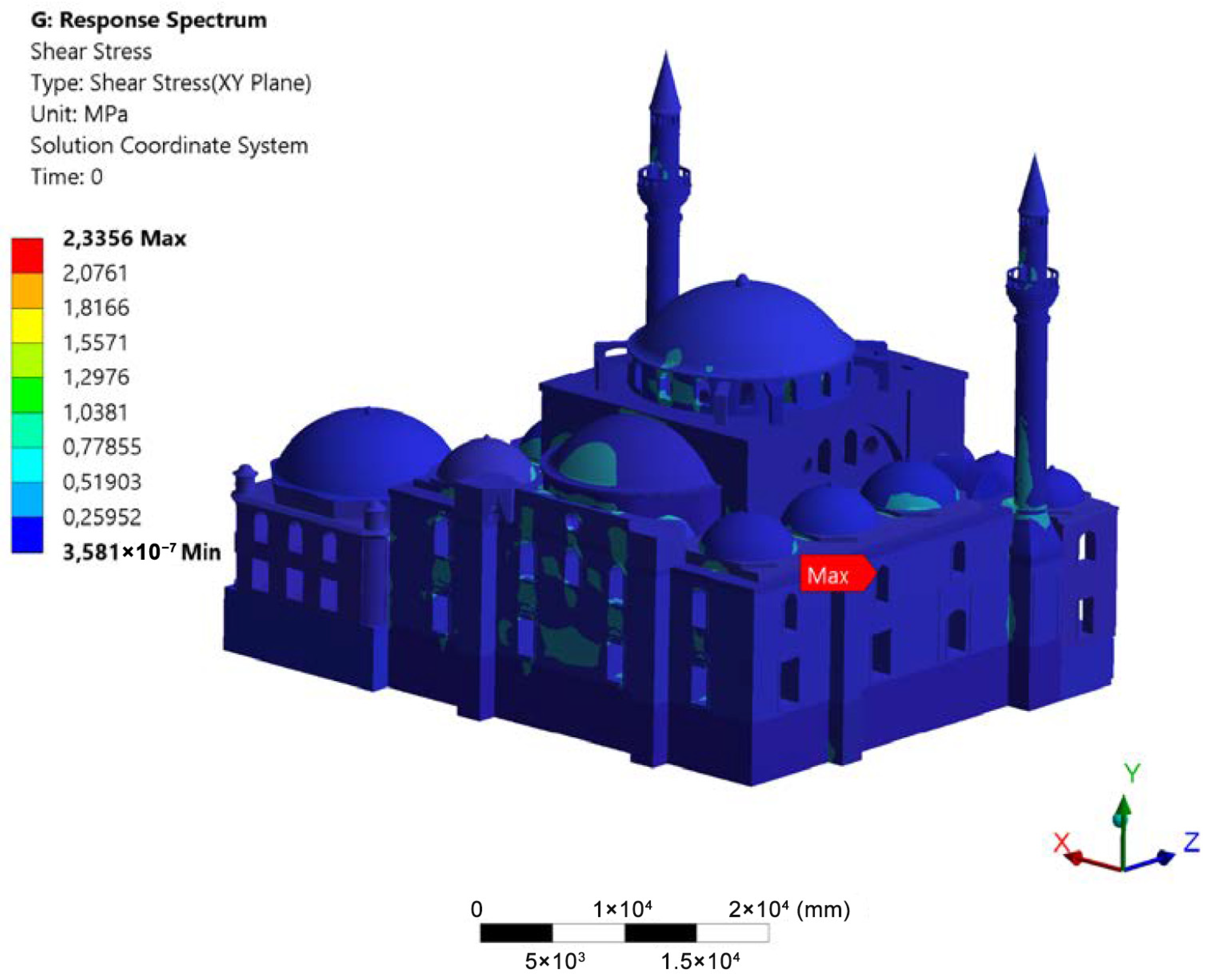
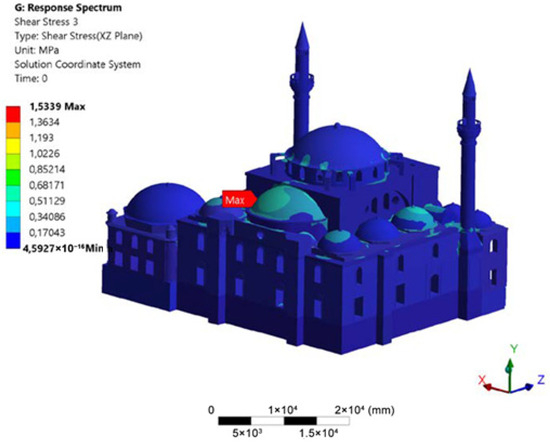
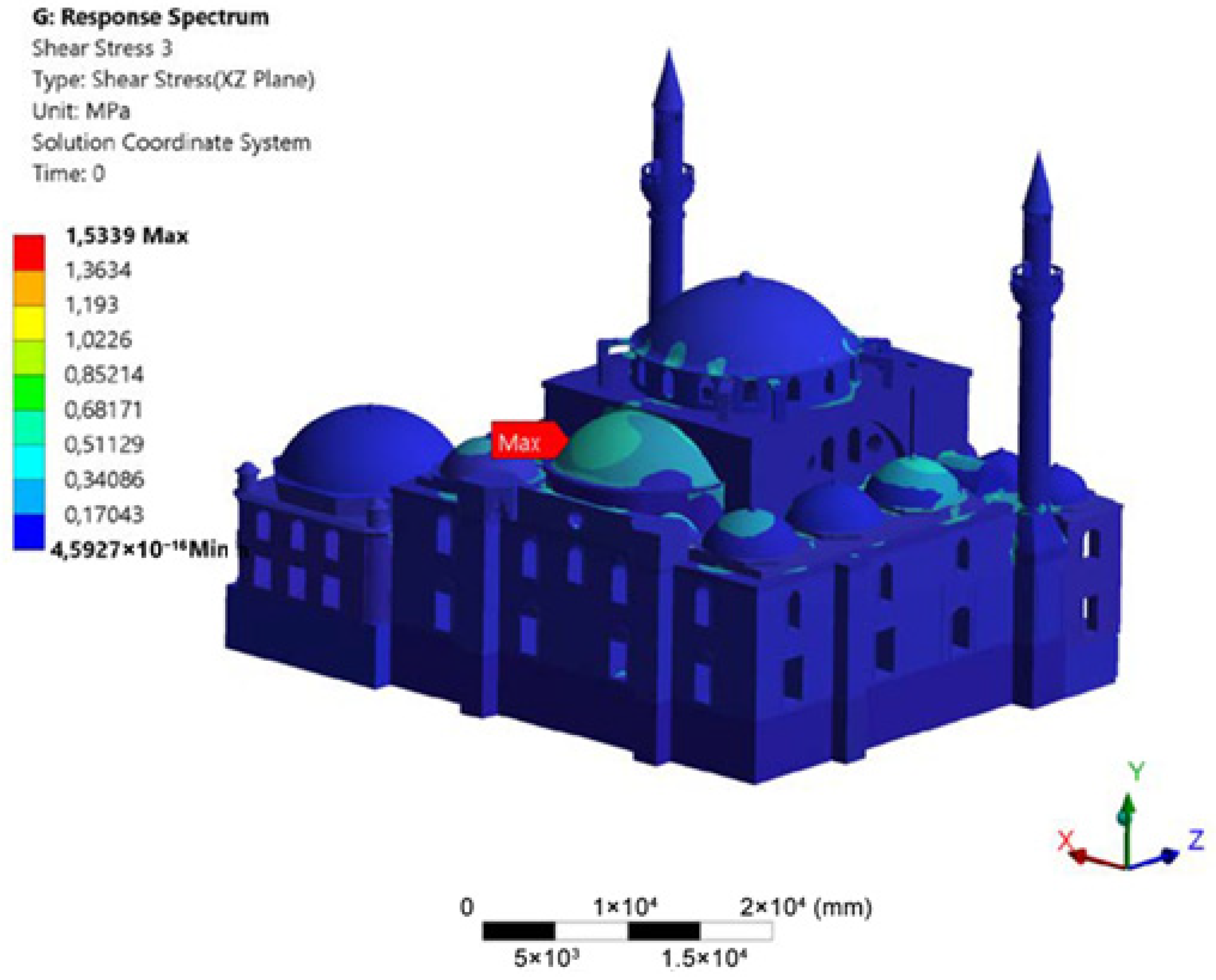
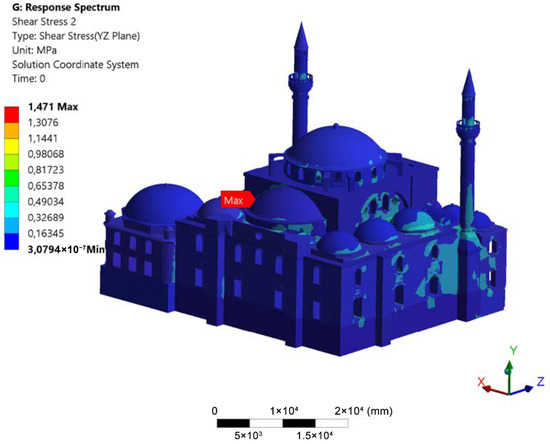
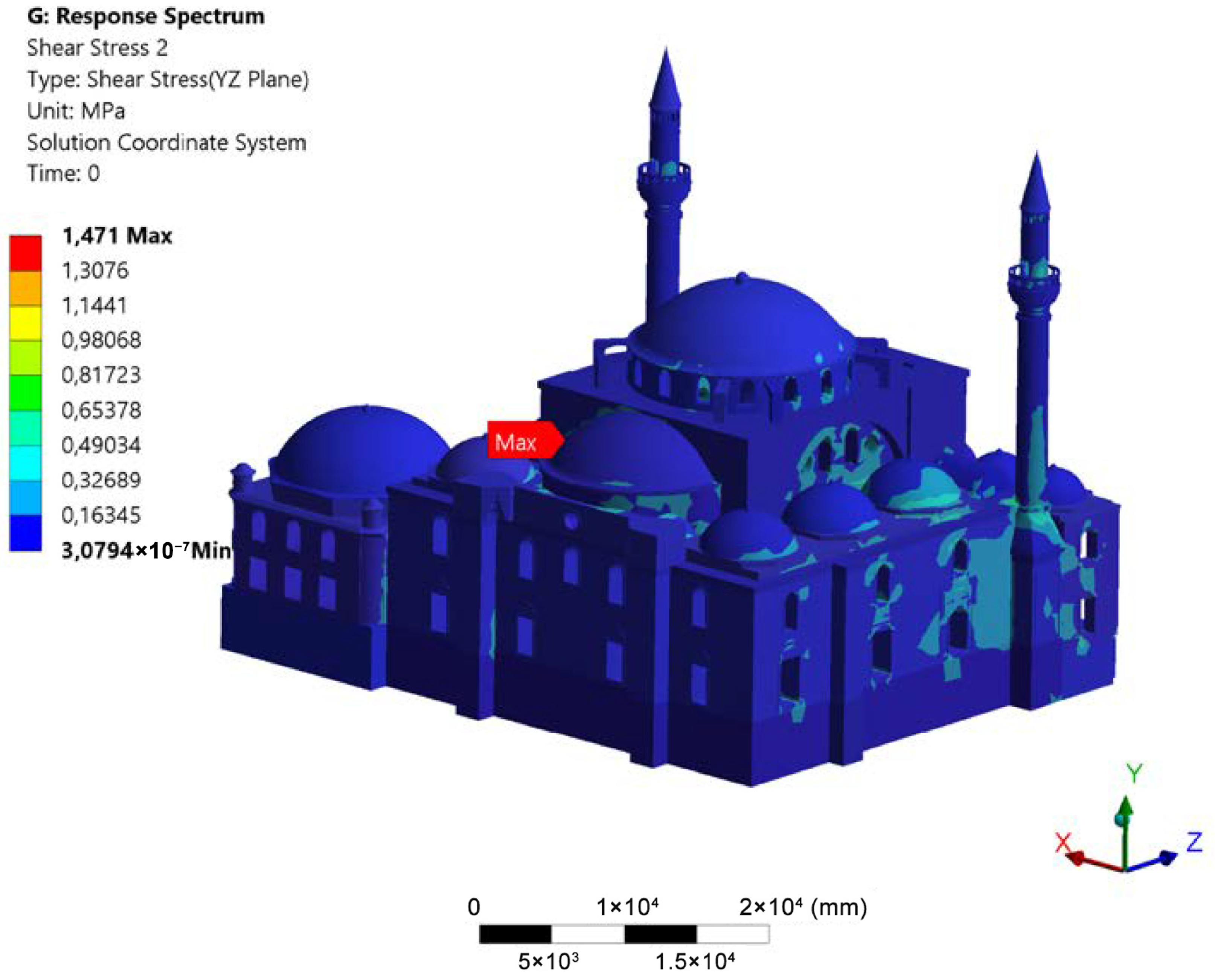
Seismic analyses were performed using the modal combination method to observe the behavior of the structure under dynamic loads. At this stage, the design spectrum provided by AFAD was used, and the analyses were performed considering the DD2 seismic level. The site’s soil class was taken as the ZD soil class obtained as a result of the geotechnical studies conducted on the site (Figure 25). In the analysis studies, analyses were performed in the horizontal X direction and horizontal Z direction of the structure, and the analysis results were evaluated separately (Figure 26, Figure 27, Figure 28, Figure 29, Figure 30, Figure 31 and Figure 32). The DD2 seismic level was adopted to represent the design earthquake corresponding to the standard performance assessment framework for existing structures. The ZD soil class was assigned based on the results of the field and laboratory geotechnical investigations, considering the shear wave velocity, soil stratification, and strength parameters. Therefore, the design spectrum used in the analyses reflects the site-specific seismic demand.
Figure 26.
Maximum total deformation envelope of the structure under seismic loading (Response Spectrum Analysis).
Figure 27.
Distribution of Normal Stresses resulting from seismic excitation in the X-direction.
Figure 28.
Distribution of Normal Stresses resulting from seismic excitation in the Y-direction.
Figure 29.
Distribution of Normal Stresses resulting from seismic excitation in the Z-direction.
Figure 30.
Shear stress distribution on the XY plane under seismic loading.
Figure 31.
Shear stress distribution on the XZ plane under seismic loading.
Figure 32.
Shear stress distribution on the YZ plane under seismic loading.
4. Discussion
4.1. Structural System of Ottoman Mosques and Its Engineering Implications
Classical Ottoman mosques such as Sultan Selim, Şehzade, and Süleymaniye represent the pinnacle of pre-modern structural engineering. Their architectural genius lies in transforming a centralized spatial concept into a stable three-dimensional load-carrying mechanism. The central dome, functioning as the structural heart of the system, is supported by four massive piers, transferring vertical loads through pendentives and arches to the foundations. This layout provides excellent spatial harmony but simultaneously introduces stress discontinuities at the interfaces of semi-domes and lateral walls.
In the case of the Sultan Selim Mosque, this classical Sinanian composition is well preserved, yet the interaction between the massive central core and the relatively lighter peripheral walls creates stiffness contrasts that govern its seismic response. The finite element results demonstrated that the first and second modes of vibration are dominated by translational–torsional coupling, indicating the inherent asymmetry caused by subtle differences in pier geometry and foundation stiffness. Such modal behavior is typical of centrally domed Ottoman mosques, where the ratio of dome span to base width exceeds 0.8, amplifying torsional components under horizontal ground motion.
4.2. Soil–Structure Interaction and Differential Settlement Effects
One of the most critical outcomes of this study is the quantification of SSI effects. The geotechnical analysis revealed that the subsoil beneath the mosque is composed of alternating medium-plastic clays and silty gravels, forming a non-homogeneous stiffness profile (Es = 80–150 MPa). This non-uniform stiffness results in differential settlements between the central piers and outer walls, estimated to reach 15–20 mm over the building’s lifetime. Such small absolute values might appear negligible, but when transferred through the rigid stone masonry, they cause bending and tensile stresses concentrated at the dome haunches and arch springings. In this context, the differential settlement was calculated as the relative vertical displacement between the critical foundation points supporting the load-bearing system. Although the total settlement reaches higher values due to the flexible-base behaviour, the damage mechanism in masonry is governed by these relative displacements, which are limited to approximately 15–20 mm.
The finite element analysis validated this mechanism: zones of maximum tensile stress correspond precisely to areas located above softer clay lenses. This finding is consistent with the field observations that identified vertical and diagonal cracks at the drum–pendentive junctions. It also aligns with the behavior reported by ref. [8] for the Şerafettin Mosque, where uneven foundation stiffness resulted in a 1.4× amplification of horizontal displacements.
The implication is clear—even in massive, seemingly rigid Ottoman structures, the foundation system acts as a dynamic filter that shapes the overall vibration characteristics. The Sultan Selim Mosque can thus be classified as a flexible-base system, where subsoil damping and compliance play a non-negligible role in the overall seismic performance.
4.3. Dynamic Characteristics and Seismic Behavior
The AVT and subsequent FEM calibration established that the mosque’s global response is dominated by low-frequency modes associated with base translation and torsion of the central dome. Although the numerical and experimental frequencies matched within 15%, the participation factors revealed that over 70% of total mass participates in the first two modes.
This indicates that the entire structure moves nearly as a rigid block during low-to-moderate earthquakes, while higher modes (involving semi-domes and corner walls) become significant under stronger excitations.
Energy-based interpretation of the FEM results showed that the strain energy density concentrates in regions adjacent to the north-eastern pier and drum interface, precisely where the geotechnical model identified a relatively softer layer. The localization of suggests that the seismic energy input is not uniformly distributed, which explains why crack propagation patterns are not symmetric across the dome.
Moreover, the torsional coupling detected in the second mode implies that even minor geometric irregularities—such as variation in pier spacing or asymmetry of adjacent annexes—can induce out-of-plane bending of the side walls. This phenomenon, though limited in magnitude, warrants periodic monitoring, especially after seismic events.
A direct comparison between the numerical results and the field observations indicates that the regions of high tensile stress demand coincide with the areas where cracks were identified on-site, particularly at the drum–pendentive transition and in the regions above relatively softer subsoil layers. This agreement confirms that the damage mechanism is governed by the combined effect of soil–structure interaction and the three-dimensional load transfer system of the mosque and demonstrates the capability of the calibrated finite element model to capture the actual structural behaviour.
4.4. Comparative Insights and Broader Implications
The integrated findings from geotechnical, dynamic, and numerical analyses highlight that the Sultan Selim Mosque, despite centuries of environmental exposure, maintains satisfactory overall stability. Its load-bearing hierarchy, where arches and piers carry the bulk of stresses while the dome shell redistributes tension through membrane action, remains structurally sound. However, the study also demonstrates that local performance deficiencies are directly linked to subsoil heterogeneity and architectural proportions, rather than material degradation.
When compared with similar Classical-period mosques such as Şerafettin (Konya) and Mihrimah Sultan (Edirnekapı), Sultan Selim exhibits a slightly more flexible global behavior. This difference can be attributed to (i) higher drum elevation, (ii) smaller pier footprint ratio (pier area/dome projection ≈ 0.22), and (iii) local variations in soil stiffness due to lacustrine sediments.
From a preservation standpoint, this reinforces the necessity of multidisciplinary monitoring programs that integrate structural health monitoring (SHM) with geotechnical observation. In particular, the results advocate for installing long-term vibration sensors and inclinometers near the dome piers to track seasonal settlement variations and modal drift.
4.5. Comparative Synthesis and Broader Discussion
The results obtained from the integrated geotechnical–structural evaluation of the Sultan Selim Mosque reveal a multi-level correspondence with previous investigations on monumental masonry and domed structures. In contrast to Western masonry churches—where vertical thrusts are primarily resisted by flying buttresses—the classical Ottoman mosques employ internal load redistribution through pendentives, arches, and massive piers, forming a closed compression system. This structural philosophy, originating from the Sinanian school, inherently minimizes horizontal thrusts but makes the system sensitive to differential settlements and torsional base effects, as confirmed by the present study.
The observed modal frequencies of 9.42 Hz (numerical) and 10.64 Hz (experimental) are in excellent agreement, with a deviation of less than 6%, paralleling the calibration results of ref. [8] for the Şerafettin Mosque in Konya. Similarly, ref. [2] reported comparable modal behavior in Northern Italian Baroque churches, where the first mode was governed by base translation and the second by dome torsion. This confirms that massive domed typologies across cultural contexts share similar global vibration patterns, albeit with distinct stiffness–mass ratios due to differing construction materials and subsoil conditions.
From a geotechnical perspective, the Sultan Selim Mosque stands upon heterogeneous lacustrine deposits, with stiffness gradients ranging from 80 to 150 MPa (Figure 13 and Figure 14), resulting in a differential settlement of up to 20 mm. Comparable magnitudes were reported by ref. [6] for the San Francisco Church in Mexico, where long-term consolidation caused asymmetric dome cracking despite negligible global deformation. In both cases, foundation flexibility dominates over material degradation, implying that the structural distress originates from subsoil variability rather than aging of the masonry fabric.
The FEM-based strain energy distribution further corroborates this interpretation: zones of high energy concentration () align with the softer soil lenses detected by MASW, demonstrating the direct coupling between subsoil stiffness and stress localization. This coupling explains why cracking in the Sultan Selim Mosque follows a reproducible pattern along the north-eastern haunch and pendentive intersections—identical to those documented in the Şerafettin Mosque and the Mihrimah Sultan Mosque (Istanbul) during structural health monitoring campaigns.
When benchmarked against other computational frameworks, the present analysis achieves convergence with the macro-modeling approaches employed by ref. [11] in Italian Baroque churches and by ref. [3] within the PERPETUATE Project. Both emphasize the significance of multi-scale modeling, integrating experimental modal analysis (EMA) with FE simulations, as also achieved here. The present model’s Modal Assurance Criterion (MAC) values exceeding 0.9 confirm that a hybrid approach—combining AVT, soil characterization, and calibrated FEM—yields a faithful dynamic representation of complex heritage systems.
Importantly, the Sultan Selim Mosque demonstrates a hybrid structural typology, combining the stiffness efficiency of Byzantine dome systems with the mass continuity of Ottoman masonry. Consequently, this mosque exemplifies the “Ottoman engineering ethos”, achieving seismic resilience not through over-reinforcement but through geometric redundancy and controlled deformability.
From a broader conservation perspective, the findings suggest that seismic vulnerability assessments of heritage mosques should transcend mere modal matching. The soil–structure interdependence observed here—manifested in the coupling between foundation stiffness and modal amplification—supports the view advanced by refs. [10,12,13] that heritage structures cannot be fully understood without concurrent geotechnical modeling. This integrated diagnostic paradigm not only refines structural evaluation but also establishes a methodological precedent for performance-based heritage assessment in seismic regions.
In conclusion, the case study of the Sultan Selim Mosque enhances the comparative landscape of existing research by providing quantitative evidence of SSI-induced modal distortion in classical Ottoman domed architecture. The analysis establishes a significant relationship between experimental, numerical, and geotechnical factors, demonstrating that traditional Sinanian geometry, despite its visual coherence, approaches its mechanical stability threshold when subjected to persistent soil variability. The comprehensive approach utilized in this study, which integrates in-situ vibration measurements, finite element modeling, and soil profiling, offers a reproducible scientific framework that can be applied to other monumental masonry structures throughout the Mediterranean seismic region.
5. Conclusions
This study presented a comprehensive structural and geotechnical assessment of the 16th-century Sultan Selim Mosque in Konya, Türkiye, integrating in-situ investigations, ambient vibration testing, and finite element modeling. The work establishes a scientific framework for understanding the mechanical behavior of Classical Ottoman domed mosques—structures where architectural geometry and material logic are inseparable components of structural stability.
From a geotechnical standpoint, the site was found to consist of alternating medium-plastic clays and silty gravels, characterized by a variable stiffness profile (Es = 80–150 MPa) and classified as soil type ZD under TBEC 2018 [14]. Despite the absence of groundwater, the heterogeneity of the subsoil induces differential settlements (15–20 mm) between the central piers and the perimeter walls. These findings demonstrate that SSI plays a decisive role in shaping the stress distribution and long-term deformation of the mosque. The structural distress observed in the drum and pendentive regions is not a consequence of material deterioration but a mechanical outcome of subsoil variability.
Dynamic identification through AVT revealed that the mosque’s global response is governed by low-frequency translational and torsional modes, whose modal shapes were successfully reproduced by the calibrated finite element model. The strong correlation between experimental and numerical results (MAC > 0.9) validates the adopted macro-modeling approach and confirms the effectiveness of integrating AVT and FEM for heritage diagnostics. The modal mass participation of the first two modes exceeded 70%, indicating a rigid-body-like global motion typical of large Ottoman domed structures with massive central cores.
The finite element analyses, executed under both static and DD2-level dynamic loading conditions, revealed maximum compressive stresses of 3.4 MPa—below the crushing strength of historical masonry—and localized tensile concentrations up to 0.27 MPa along the dome haunches. The maximum horizontal displacement at the dome crown was 19 mm, corresponding to a drift ratio of 1/730, which remains within acceptable serviceability limits. The strain energy density mapped across the dome and pier interfaces corresponded closely with softer zones detected in the geotechnical model, confirming the existence of a strong SSI-driven stress localization mechanism.
Beyond the numerical results, this study contributes to the broader understanding of Ottoman structural philosophy, which sought equilibrium through geometric rationality and compressive continuity rather than through tensile resistance. The Sultan Selim Mosque exemplifies this approach, demonstrating how architectural form inherently supports structural efficiency. The combination of dome curvature, balanced thrusts, and material damping yields a system that—while flexible at the base—maintains global stability even under moderate seismic excitation.
Comparatively, the findings align with previous assessments on Ottoman and Mediterranean domed monuments, including Şerafettin Mosque [8], Mihrimah Sultan Mosque [5] and Italian Baroque churches [2], all of which confirm that modal distortions are governed more by foundation flexibility than by superstructure degradation. The Sultan Selim Mosque thus provides quantitative evidence that differential settlements and base compliance dominate the seismic response of large-scale masonry domes—a conclusion of direct significance for heritage conservation strategies in seismically active regions.
From a methodological standpoint, this study demonstrates the value of combining geotechnical modeling, operational modal analysis, and calibrated FEM in a unified diagnostic workflow. The approach transcends traditional static assessment methods by accounting for both dynamic properties and soil variability—parameters that are often neglected in heritage engineering. The successful reproduction of real vibration characteristics establishes this integrated framework as a replicable model for future studies on monumental masonry systems across Türkiye and beyond.
While the current study focuses on the evaluation rather than intervention, its findings lay the foundation for advanced analyses and monitoring protocols. Future work should include:
- Time-history analyses using region-specific seismic records to quantify nonlinear response behavior.
- Long-term structural health monitoring (SHM) with permanently installed accelerometers and inclinometers to detect modal drift and settlement progression.
- Micromechanical modeling of lime-based mortars to better simulate local cracking phenomena and moisture-induced stiffness variations.
- Comparative multi-site studies encompassing other Konya-region mosques (e.g., Şerafettin, Aziziye, and Kapu Mosques) to develop a typology-specific vulnerability framework.
The Sultan Selim Mosque stands today not merely as an architectural monument but as a living laboratory of Ottoman engineering wisdom. Through the integration of field measurements, computational modeling, and soil mechanics, this study demonstrates that heritage structures can be quantitatively understood without compromising their cultural essence.
The results indicate that the seismic response and damage localization are strongly governed by the heterogeneous foundation stiffness. The zones where softer subsoil layers coincide with high tensile stress demand should therefore be considered as priority areas for structural health monitoring. Periodic crack measurements, vibration-based monitoring, and local geotechnical observations are recommended for these critical regions. In addition, future strengthening or ground improvement strategies, if required, should primarily focus on reducing the stiffness contrast beneath the load-bearing elements in order to mitigate differential settlement and stress concentration.
The findings affirm that the mosque’s seismic safety remains within acceptable limits, while subtle SSIs continue to shape its long-term behavior. More broadly, this research strengthens the bridge between structural engineering and architectural history, proving that the principles of balance, symmetry, and continuity that guided Ottoman builders centuries ago still define the scientific vocabulary of resilience today.
Within the scope of this study, the seismic response of the structure was evaluated using the response spectrum method in order to identify the global dynamic behaviour and the critical stress regions. A detailed nonlinear time history analysis was not performed, as the primary objective was the integrated assessment of the current structural condition and soil–structure interaction. Future studies will focus on nonlinear time history analyses to investigate the damage evolution, energy dissipation capacity, and possible crack propagation mechanisms in a more comprehensive manner. Moreover, For future structural health monitoring, it is recommended to install accelerometers to track the global dynamic behaviour and crack gauges at the identified tensile stress concentration zones in order to monitor possible damage evolution and the effects of soil–structure interaction over time.
Author Contributions
Conceptualization, A.O., T.T. and F.C.; methodology, A.O.; software, A.O.; validation, A.O., T.T. and F.C.; formal analysis, A.O.; investigation, A.O.; resources, A.O.; data curation, A.O.; writing—original draft preparation, A.O.; writing—review and editing, A.O.; visualization, A.O.; supervision, A.O.; project administration, A.O.; funding acquisition, F.C. All authors have read and agreed to the published version of the manuscript.
Funding
This research was funded by Ministry of Industry and Technology in Türkiye Project Code (STB): 104971 and the APC was funded by SFO Engineering and Consultancy Co.
Data Availability Statement
No new data were created or analyzed in this study.
Acknowledgments
This paper represents a significant component of the corresponding author’s doctoral thesis, and the author is grateful to all those who contributed to its completion. The authors express their gratitude to the Konya Regional Directorate of Foundations for granting access to the Sultan Selim Mosque and providing historical documentation and architectural restitution drawings. Special thanks are extended to Muhammed Alperen Özdemir for his assistance in field vibration measurements and digital data processing.
Conflicts of Interest
The authors declare no conflicts of interest. The authors declare that this study received funding from SFO Engineering and Consultancy Co. The funder was not involved in the study design, collection, analysis, interpretation of data, the writing of this article or the decision to submit it for publication.
References
- Brandonisio, G.; Lucibello, G.; Mele, E.; De Luca, A. Damage and performance evaluation of masonry churches in the 2009 L’Aquila earthquake. Eng. Fail. Anal. 2013, 34, 693–714. [Google Scholar] [CrossRef] [Scilit]
- Valenta, M.; Milani, G. Seismic assessment of two masonry Baroque churches damaged by the 2012 Emilia earthquake. Eng. Fail. Anal. 2017, 79, 273–302. [Google Scholar]
- Lagomarsino, S.; Cattari, S. PERPETUATE guidelines for the seismic performance of masonry cultural heritage buildings. Bull. Earthq. Eng. 2015, 13, 13–47. [Google Scholar] [CrossRef] [Scilit]
- Doğangün, A. Performance of masonry buildings during recent earthquakes in Turkey. Eng. Struct. 2004, 26, 493–503. [Google Scholar]
- Çaktı, E.; Saygılı, Ö.; Luleci, F.; Dar, E.; Ercan, T. Seismic behavior of the Edirnekapı Mihrimah Sultan Mosque in Istanbul. In Proceedings of the 16th World Conference on Earthquake Engineering (16WCEE), Santiago, Chile, 9–13 January 2017. [Google Scholar]
- Ovando-Shelley, E.; Santoyo, E. The San Francisco de Asis church in Mexico City: Geotechnical and structural response to tunnelling and settlement. In Geotechnical Engineering for the Preservation of Monuments and Historic Sites III; CRC Press: Boca Raton, FL, USA, 2022; pp. 523–532. [Google Scholar]
- Avossa, A.M.; Malangone, P. Seismic performance assessment of masonry structures with a modified “concrete” model. Bull. Earthq. Eng. 2015, 13, 2693–2718. [Google Scholar] [CrossRef] [Scilit]
- Cakir, F.; Odabas, A.; Zulfikar, A.C.; Zeyrek, S.; Kir, G. Structural performance assessment before strengthening of historic structures: A case study of the historical Şerafettin mosque in Turkey. Eng. Fail. Anal. 2023, 153, 107532. [Google Scholar] [CrossRef] [Scilit]
- Yildizlar, B. Seismic performance analysis and rehabilitation applications for a historical masonry building through field works and experimental investigations. Structures 2021, 34, 1811–1833. [Google Scholar] [CrossRef] [Scilit]
- Pulatsu, B.; Gencer, F.; Erdogmus, E. Study of the effect of construction techniques on the seismic capacity of ancient dry-joint masonry towers through DEM. Eur. J. Environ. Civ. Eng. 2020, 26, 3913–3930. [Google Scholar] [CrossRef] [Scilit]
- Milani, G.; Valente, M. Failure analysis of seven masonry churches severely damaged during the 2012 Emilia-Romagna (Italy) earthquake: Non-linear dynamic analyses vs conventional static approaches. Eng. Fail. Anal. 2015, 54, 13–56. [Google Scholar]
- Lourenço, P.B. Computational Strategies for Masonry Structures. Ph.D. Thesis, Delft University of Technology, Delft, The Netherlands, 1996. [Google Scholar]
- Pitilakis, K.; Karatzetzou, A. Seismic damage assessment of masonry monuments including soil–structure interaction. Eng. Struct. 2015, 100, 534–543. [Google Scholar]
- TBEC-2018/TBDY-2018; Turkish Building Earthquake Code/Türkiye Bina Deprem Yönetmeliği. AFAD (Disaster and Emergency Management Authority): Ankara, Turkey, 2018.
Disclaimer/Publisher’s Note: The statements, opinions and data contained in all publications are solely those of the individual author(s) and contributor(s) and not of MDPI and/or the editor(s). MDPI and/or the editor(s) disclaim responsibility for any injury to people or property resulting from any ideas, methods, instructions or products referred to in the content. |
© 2026 by the authors. Licensee MDPI, Basel, Switzerland. This article is an open access article distributed under the terms and conditions of the Creative Commons Attribution (CC BY) license.