


Abstract
The progressive depletion of natural aggregate resources and the increasing emphasis on sustainable construction practices have intensified interest in incorporating recycled concrete aggregate (RCA) into cement-based materials. This study provides a comprehensive evaluation of the influence of partially replacing natural fine aggregate with fine RCA on the physical, mechanical, and durability properties, as well as the microstructure, of cement mortars. Mortar mixtures containing 25%, 50%, 75%, and 100% RCA were tested and compared with a reference mix MC. The experimental program included measurements of bulk density, compressive and flexural strength, water absorption, and freeze–thaw resistance. Additionally, microstructural observations were performed to assess the effect of RCA on the internal structure of matured mortars. The results demonstrated that the intrinsic characteristics of RCA—particularly its higher water absorption and lower density—significantly affected the pore structure and mechanical behavior of the cement mortars. Mortars with RCA exhibited enhanced early-age compressive and flexural strength, especially at substitution levels of 50–100%, attributed to the activation of residual cement paste adhering to the recycled particles. However, increased porosity and water absorption in RCA-based mixes led to a higher sensitivity to freeze–thaw cycles compared with the reference mix. Overall, the findings indicate that incorporating fine RCA up to 50% enables the production of mortars with performance comparable to conventional mixtures under non-freezing conditions, while, under freeze–thaw exposure, comparable performance is achieved at replacement levels up to 25%, contributing to improved resource efficiency and reduced environmental impact. This study confirms the viability of fine RCA in cement mortars, emphasizing the importance of controlling pore structure development to maintain long-term durability. Additionally, it demonstrates that the use of recycled concrete aggregates provides a sustainable alternative to natural sand in mortar production.
1. Introduction
Modern construction (civil engineering) is facing challenges related to the need to reduce the impact of human activity on the natural environment. Intensive economic development, urbanization, and the growing demand for infrastructure cause not only an increase in energy consumption but also a significant increase in greenhouse gas emissions. Among the particularly energy-intensive and carbon-intensive sectors is the cement industry, which is responsible for about 5% of global carbon dioxide emissions. The entire construction sector, on the other hand, generates nearly 40% of the world’s total greenhouse gas emissions [1]. Such a high share is mainly due to the energy consumption of cement and concrete production processes, the exploitation of natural resources, and the transport of building materials. The effort to reduce CO2 emissions in the construction sector is in line with global sustainable development strategies, initiated, among others, in the Kyoto Protocol (1997) and developed as part of the UN 2030 Agenda and the European Union’s climate policy. The common goal of these initiatives is to achieve climate neutrality by increasing energy efficiency, reducing the consumption of primary raw materials, and implementing the principles of the circular economy (CE) [2,3,4].
In the context of the circular economy, the construction sector plays a key role as it accounts for a significant portion of natural resource use. According to the European Commission, this sector is responsible for approximately 50% of the total material consumption and generates over 35% of the waste in EU Member States [5]. The implementation of the principles of the circular economy in construction practice consists of the following:
- Reuse of materials from demolition;
- Minimizing the amount of construction waste sent to landfills;
- Reduction in greenhouse gas emissions;
- Optimization of the life cycle of materials [6,7].
Recycling construction waste, particularly concrete, is one of the most promising areas of action. The use of recycled aggregates enables a reduction in the exploitation of natural deposits, a decrease in the energy consumption required for the extraction and processing of raw materials, and a decrease in the amount of construction waste [8,9]. Natural aggregates (NAs) account for 75–80% of the volume of concrete mixtures and cement mortars, making them a basic component of these materials [10]. Their massive extraction leads to environmental degradation, including soil erosion and hydrological disturbances. Recycled aggregates (RAs) are a viable alternative, allowing the construction sector to reduce the use of raw materials and reduce the environmental impact of construction.
The most commonly used secondary materials are concrete aggregates (RCA—recycled concrete aggregate) and fine aggregates (RFA—recycled fine aggregate) [11,12,13]. The literature emphasizes that the properties of these aggregates depend on several factors, including the type of primary concrete, the method of crushing, and the methods used for cleaning and sorting [14].
RAs are characterized by lower volume density and higher porosity than natural aggregates, which results from the presence of cement mortar residues on the surface of the grains [15]. Increased water absorption and a rough structure may adversely affect the properties of the mixture, leading to an increase in the demand for production water and, consequently, a decrease in the compressive strength and durability of the composite [16]. Despite these limitations, numerous studies indicate that with proper preparation and selection of the proportions of secondary aggregate, it is possible to obtain mortars and concretes with parameters similar to conventional materials. It has also been shown that appropriate fractionation and rinsing of aggregate allows for reducing the amount of fine impurities and improving the adhesion of cement slurry to recycle grains [17,18,19].
In recent years, numerous research studies have confirmed the potential effectiveness of using recycled aggregates in cement mortars. Pawluczuk [20] conducted an analysis of the possibility of using small fractions of concrete rubble as a filler in standard mortars. Studies have shown that a filler roasted at 550 °C can replace some of the cement without causing significant strength losses. Khoshkenari et al. [21] found that the use of fine recycled aggregate (0–2 mm) results in a reduction in concrete density of 8–13.5%, which is attributed to the higher porosity and absorbency of the recycle. At the same time, the introduction of silica dust as a mineral additive allowed for improving the strength parameters of the mixture. Research by Ledesma et al. [22] has demonstrated that partial replacement of up to 40% of natural sand with recycled concrete in M-5 grade mortars yields favorable mechanical properties after 180 days of maturation. In turn, Mahmood, Nanos, and Begg [23] found that cement mortars containing 50% recycled aggregate achieve compressive strength comparable to reference mortars. Adesina and Das [24] noted that the introduction of recycled aggregate leads to a reduction in the shrinkage of the mixture by about 40%, but increases its permeability to chloride ions. It was indicated that modification of the composition of the mortar through the appropriate selection of mineral additives may limit this effect. Research conducted by Rucińska [25] and Prošek [26] confirms that fine fractions of concrete and ceramic materials can be successfully used in cementitious mortars, but proper material preparation, including cleaning, drying, and grain size control, is crucial.
Despite many positive research results, the widespread use of recycled aggregates in construction practice still faces numerous limitations. The variability in the physical and chemical properties of the recyclate, resulting from the diversity of waste sources and treatment methods, makes it challenging to standardize technological parameters. Additionally, the lack of unambiguous standards regarding the quality of secondary aggregates and the permissible levels of their substitution in mortars and concretes warrants caution in their use [27]. One of the primary technological challenges is the increased absorbency of fine recycled aggregates, which impacts the rheological properties of mortars. To maintain the required consistency and workability, it is necessary to increase the amount of working water or use plasticizing admixtures. However, excessive water can lead to a deterioration in pore structure and a decrease in strength. The solution may be pre-conditioning the aggregate by rinsing, heat treatment, or the use of sealing and reactive additives (e.g., fly ash, metakaolin, microsilica), which can reduce water absorption, improve the aggregate–matrix interface, and enhance the mechanical and durability properties of the resulting mortar [28,29,30]. The use of such techniques allows for reducing the absorbency of the recyclate, improving the adhesion of the grains to the cement slurry, and increasing the durability of the mortars. The literature increasingly emphasizes the need for a comprehensive assessment of the influence of recycled aggregates on cementitious mortars, covering both mechanical performance and durability-related parameters. In addition, environmental aspects such as life cycle assessment (LCA) and carbon footprint should be taken into account. Based on the available research, the optimal performance–sustainability balance is achieved when natural aggregate is replaced with recycled aggregate at a level of approximately 30–50% by volume. Higher replacement ratios generally result in a deterioration of mechanical properties, whereas lower replacement ratios reduce the potential environmental benefits [31,32,33]. In the context of the Polish construction market, the use of recycled aggregates remains limited; however, the dynamic development of material recovery technology and legislative pressure in the field of the circular economy are expected to increase interest in this solution. The development of national and European standards for the quality of secondary aggregates is currently a key direction for the industry’s growth [1,2,3].
The aim of this study is to conduct a comprehensive assessment of the impact of replacing natural fine aggregate with aggregate derived from recycled concrete on the physico-mechanical properties and microstructure of cement mortars. Samples containing 25%, 50%, and 75% recycled additive were analyzed until the river sand was fully replaced by 100%. This made it possible to identify the limit values of its content, at which it is possible to maintain the technological and performance parameters of mortars at a level consistent with the application requirements, while reducing the environmental burden associated with the production of cement materials. The innovativeness of the work stems from a holistic approach to the issue, which involves the simultaneous assessment of bending and compressive strength, resistance to cyclic freezing and thawing, water absorption, and microstructural analyses of mortars maturing in laboratory conditions, without the use of chemical admixtures that modify the structure of the cement matrix. This allowed for the clear capture of the real impact of fine fractions of recycled aggregate on the properties of the cement composite and the preservation of the pore system under operating conditions. This approach, oriented towards assessing the long-term durability and behavior of the material under real-world environmental-impact conditions, remains relatively rarely undertaken in previous work on fine fractions of RCA. The practical value of the results lies in providing data that enable a rational selection of the level of substitution of natural aggregate with a fine fraction of recycled aggregate in cement mortar technology, taking into account both their functional properties. The research results can serve as the basis for developing materials with a reduced raw material footprint, and the conclusions obtained can be applied in designing durable and sustainable cement composites, as well as in engineering practice, particularly in the context of sustainable construction and the circular economy.
2. Materials
2.1. Cement
For the experimental program, Portland cement CEM I 42.5 R was used (Cement Ożarów S.A., Ożarów, Poland), which meets the requirements of EN 197-1:2012 [34]. Tap water, in accordance with EN 1008:2004 [35], was used. The declared performance properties of cement class 42.5 R are listed in Table 1 and Table 2. The presented values represent the average parameters guaranteed by the manufacturer for 2025. No chemical or mineral additives were used in the conducted studies. This approach was intended to isolate the effect of the recycled aggregate itself, avoiding factors that could distort the interpretation of the results. The use of admixtures, such as plasticizers, superplasticizers, or sealing agents, could significantly influence pore structure, water absorption, density, and compressive strength, making it difficult to unambiguously assess the role of RCA in determining both the mechanical and durability properties of the mortars.
Table 1.
Physical properties and phase composition of CEM I 42.5 R cement (according to data from the manufacturer) [36].
Table 2.
Chemical properties of CEM I 42.5R cement (data from the manufacturer) [36].
2.2. Fine Aggregate
For experimental research, fine aggregate was used—river sand with a fraction of 0–2 mm—coming from the Vistula River (Poland), and aggregate from recycled concrete, coming from a construction site located in Warsaw (Poland). The RCA originated from concrete elements, and the recycling process involved careful crushing, screening, and removal of unwanted contaminants such as reinforcing steel, wood, plastics, and other debris. The resulting aggregate was characterized by controlled grading, particle shape, and physical properties, making it suitable for reuse in cement mortars.
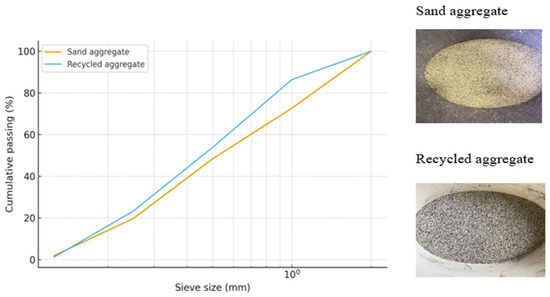
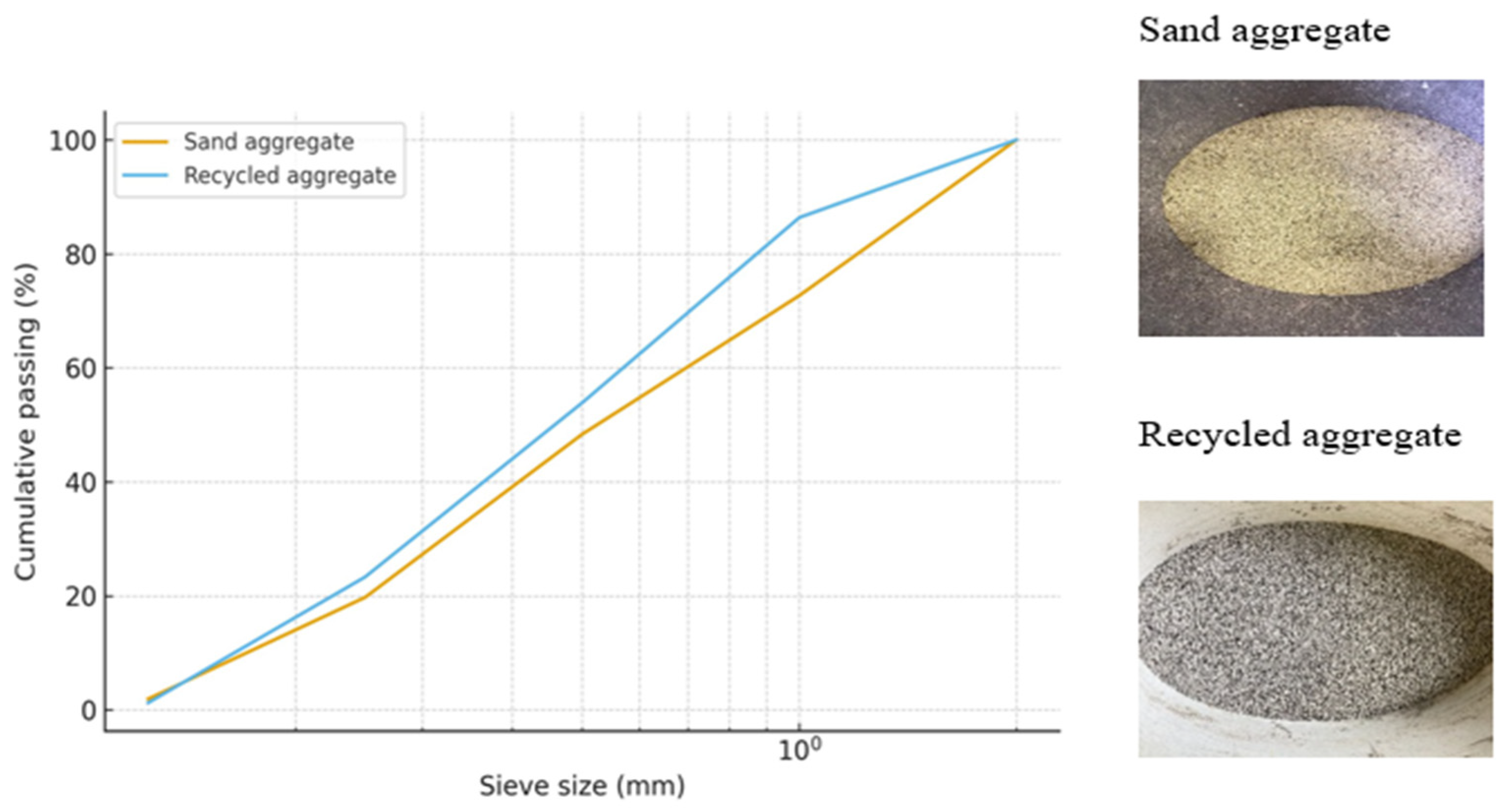
Before the mortars were made, the aggregates were dried at 105 ± 5 °C to a solid mass to ensure reproducible humidity conditions. After drying, the absorption, grain density in the dry state, and loose bulk density were determined. The results of aggregate properties are presented in Table 3. In terms of physical properties, recycled aggregate is characterized by higher porosity and lower bulk density compared to natural aggregate. This is due to the presence of cement mortar residues on the surface of the grains. The particle size distribution of the sand aggregate and recycled aggregate is presented in Figure 1.
Table 3.
Properties of natural and recycled aggregate (fraction 0–2 mm).
Figure 1.
The particle size distribution of the sand aggregate and recycled aggregate.
3. Methodology
3.1. Preparation of Mortars
To conduct experimental research, the procedures contained in the applicable EU regulations and standards were used. In order to determine the impact of aggregate from recycled construction waste (concrete) on the flexural and compressive strength, frost resistance, and microstructure of the material, two types of samples were prepared:
- MC—without additive—reference mortar;
- RCA (25, 50, 75, 100%)—with the addition of recycled aggregate (fraction 0–2 mm) in the amounts of 25, 50, 75, and 100% of the aggregate weight.
Aggregates in a dry state were used to prepare the mortars. Due to the higher absorbency of recycled aggregate, a correction of the amount of production water was planned. For this purpose, the additional amount of water necessary to compensate for the difference in the absorption of aggregates was calculated. The composition of the mortars was determined based on EN 196-1:2016-07 [37]. The quantitative ratio of cement to aggregate was 1:3, and the water/cement ratio (W/C) was set at 0.50 for the reference mixture with natural aggregate. The mortars were prepared in a mixer. A measured amount of water was introduced into the mixer (increased by the ΔW correction in the case of recycled aggregate). The additional water (ΔW) was calculated based on the difference in 24 h water absorption between natural aggregate and recycled concrete aggregate, multiplied by the mass fraction of RCA in each mixture. This correction was applied to compensate for the higher absorbency of RCA used in a dry state and to ensure sufficient water availability for cement hydration. The composition of individual mortars is presented in Table 4.
Table 4.
Quantitative composition of individual cement mortars.
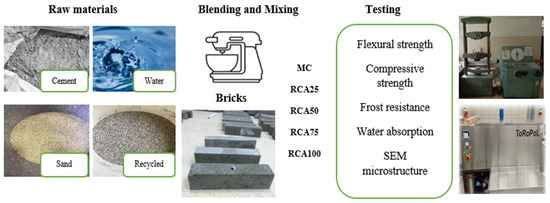
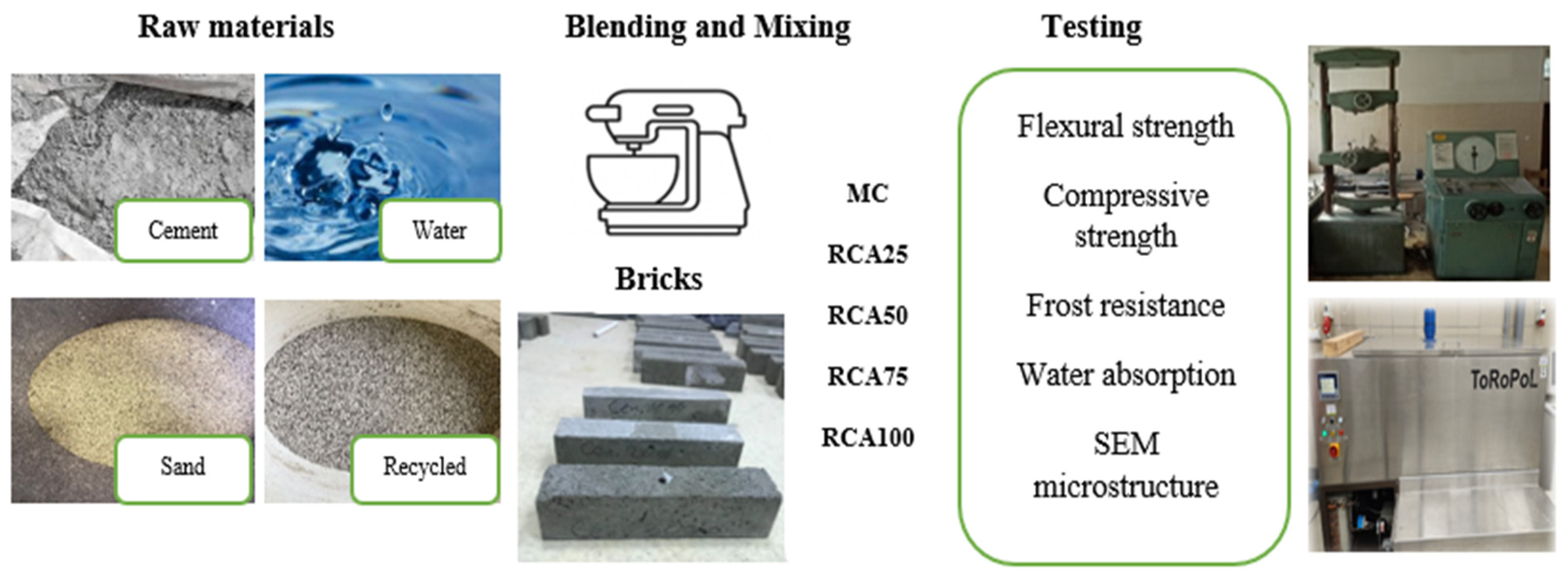
Experimental studies were carried out in the Construction Laboratory at the Faculty of Civil and Environmental Engineering, in the Laboratory of Physical Processes at the Aquatic Centre of the Warsaw University of Life Sciences, and in the Concrete Laboratory at the Institute of Building Technology in Warsaw. Figure 2 shows a diagram of the experimental research.
Figure 2.
Diagram of the experimental research.
The procedure for mixing cement mortar was carried out in accordance with the requirements of the EN 196-1:2016-07 [37] standard. Standard proportions were used for preparing the mortar, consisting of one part cement, three parts standardized sand, and water in an amount equal to 0.5 of the cement mass. Before mixing, the individual components were measured. The process was carried out in a planetary mixer. All the water was added to the mixing bowl, followed by the cement, and the mixer was operated at low speed (140 ± 5 rpm) for 30 s. Then, with the mixer running, the sand (and recycled aggregate) was gradually added over 30 s. Mixing continued for an additional 30 s at low speed, after which the mixer was stopped for 90 s; during the first 15 s of the pause, the mortar was scraped from the sides of the bowl toward the center, and it was left at rest for the remaining 75 s. In the final stage, the mixer was operated at high speed (285 ± 10 rpm) for 60 s. The total mixing time was 4 min.
3.2. Fresh Mortar Properties
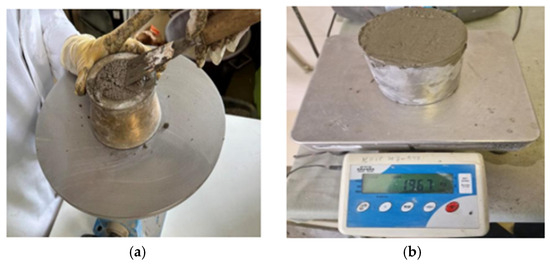
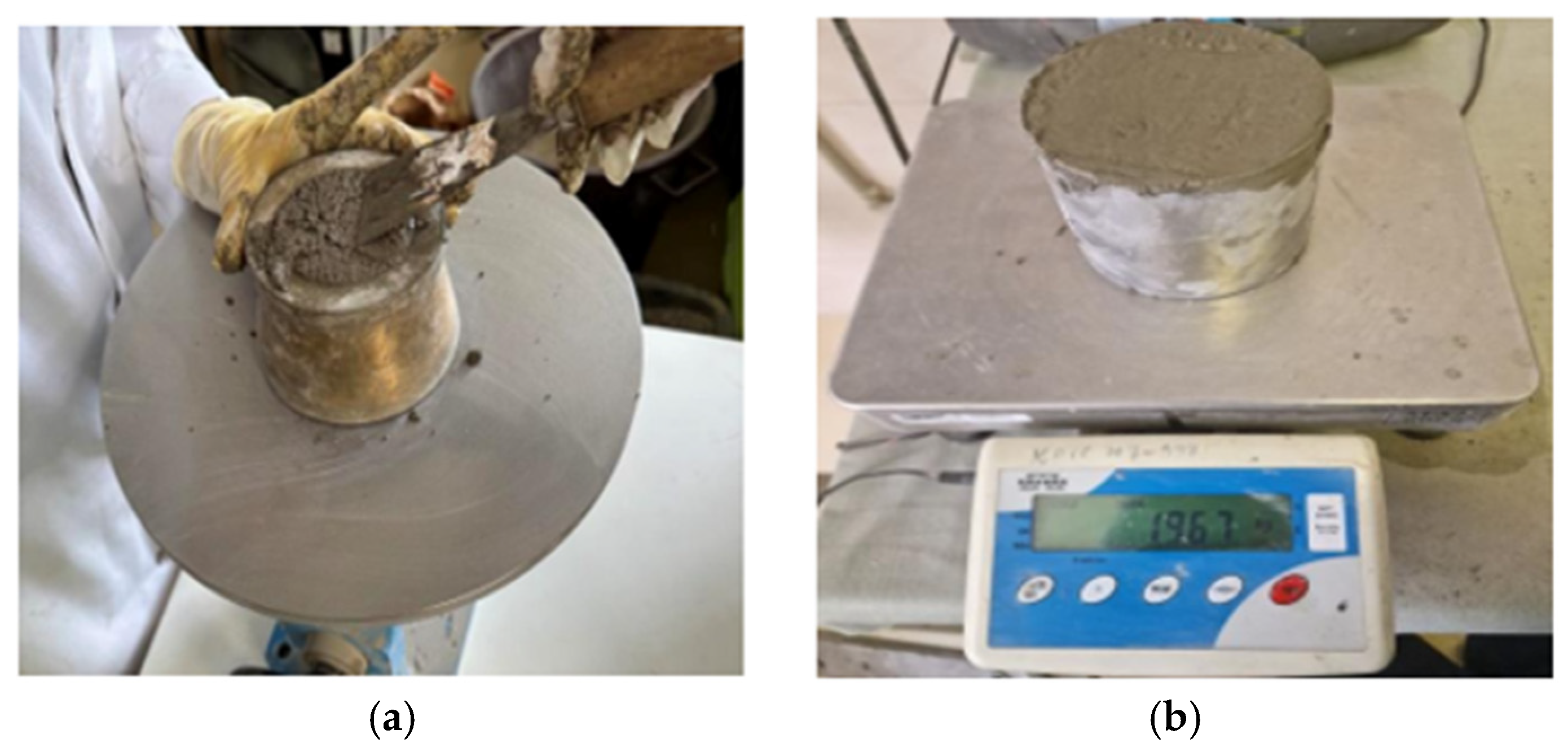
The consistency of the cementitious mortars was tested using the flow cone method according to EN 1015-3:2000, and the bulk density of the fresh mortar was determined according to EN 1015-6:2000 [38,39]—Figure 3.
Figure 3.
Fresh mortar testing: (a) consistency, (b) density.
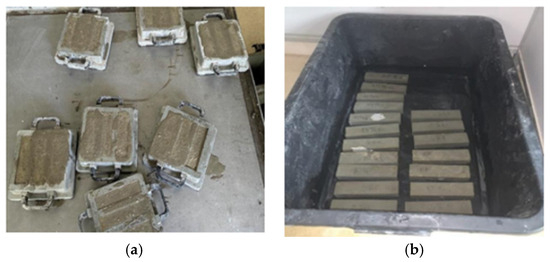
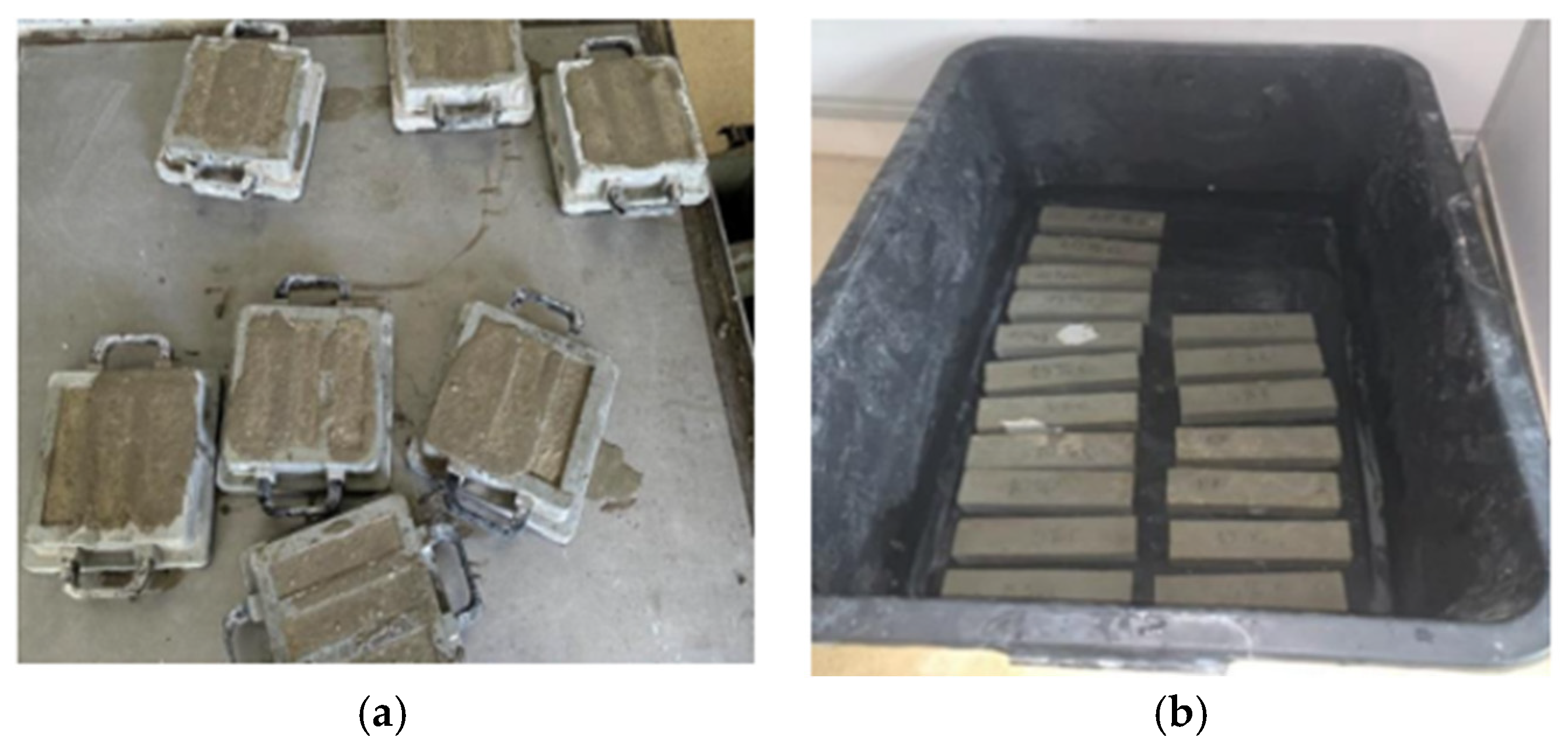
After checking the properties for each type of mortar, samples were prepared—Figure 4.
Figure 4.
Preparation of samples for testing: (a) Sample formation, (b) samples after demolding.
3.3. Flexural and Compressive Strength
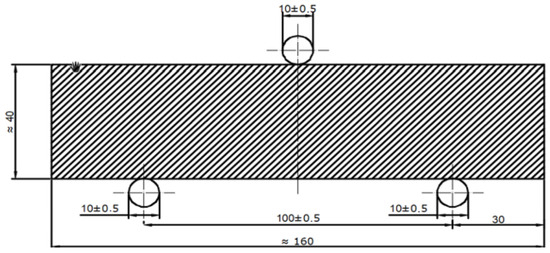
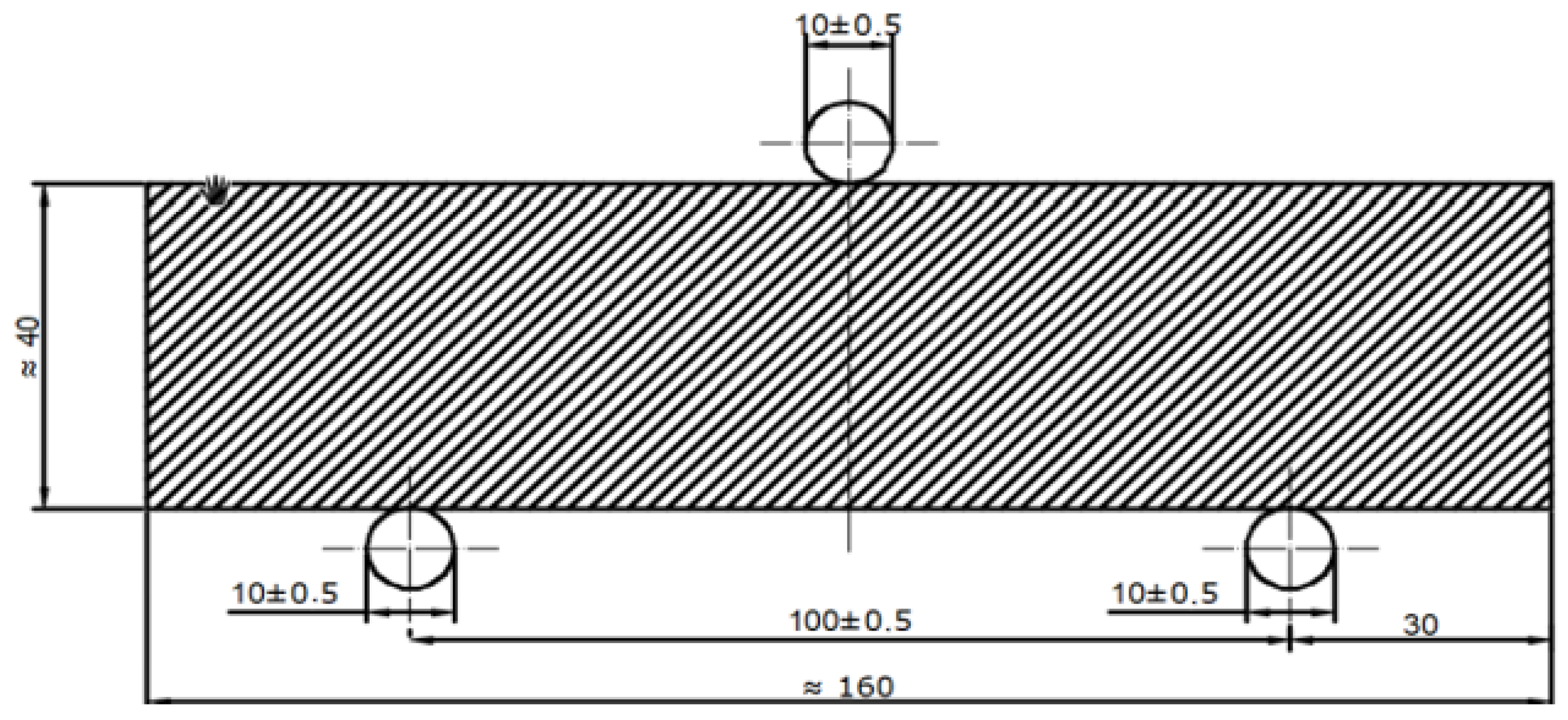
To assess the effect of recycled aggregate on the properties of cementitious mortars, the bending strength was evaluated. Each of the individual specimens was placed in the testing machine on two supports so that the bending force on the specimen was at the center of the beam and perpendicular to the direction of its formation. The test was carried out in accordance with EN 1015-11:2020-04 on 40 × 40 × 160 mm samples after 2, 7, 14, 21, and 28 days of maturation [40] using the following formula.
where
—Flexural strength (MPa); Ft—failure load of the specimen (N);
l—distance between supports (mm); b—lateral length of the beam section (mm).
Figure 5 shows the point load diagram during the flexural strength test.
Figure 5.
Load system for flexural strength determination.
Subsequently, the two halves obtained after the flexural test (each with nominal dimensions of 40 × 40 × 80 mm) were used for the compressive strength test. The load was applied at a speed of 2400 ± 200 N/s until crushed. Compressive strength was determined based on EN 1015-11:2020-04 [40]. Compressive strength was calculated according to the following formula:
where
Rc—Compressive strength (MPa); Fc—highest load when the sample is crushed (N);
1600—Compression area (mm2).
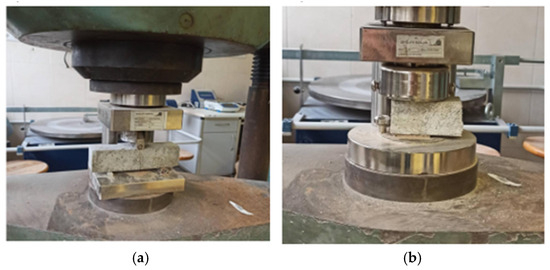
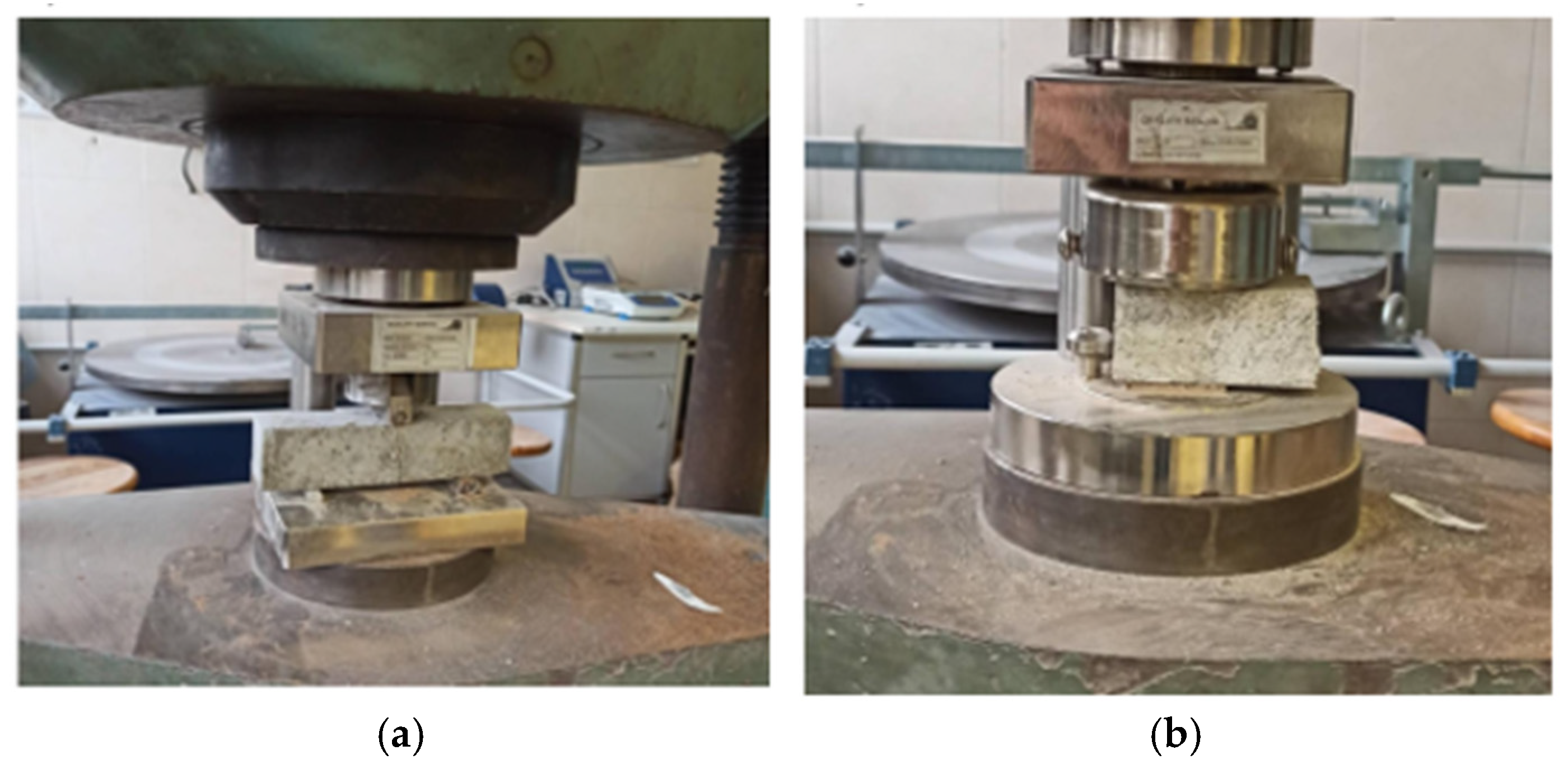
The ZD-40 hydraulic press (produced by the GDR), shown in Figure 6, was used for the research. Flexural strength tests for each curing period were conducted on three specimens, while the compressive strength was determined using six specimens, in accordance with the relevant standard.
Figure 6.
Testing of strength: (a) flexural, (b) compression.
3.4. Water Absorption
The test was carried out in accordance with EN 1015-10:2001 [41] on samples measuring 40 × 40 × 160 mm and was performed on three specimens, as specified by the applicable standard. Measurements of mortar absorbency were carried out at four intervals: 0.5 h, 24 h, 7 days, and 28 days. After the test, the mortars were dried to a solid mass and weighed, and then their water absorption was determined by weight. The dry matter percentage at 14 days was used to calculate water absorption according to the following equation:
where
M1—Mass of wet samples (g); M2—mass of dried samples (g).
3.5. Frost Resistance
The frost resistance test was conducted after 28 days of maturation of the mortars, which underwent 25 freezing and thawing cycles, as specified in PN-B/06250 [42]. Each cycle involved freezing the samples in water at −20 °C for 4 h, followed by thawing in a water bath at approximately 20 °C. The freeze–thaw resistance test was performed on twelve specimens, as specified by the applicable standard. Three criteria were used to assess the degree of frost resistance, the fulfillment of which determines the degree of frost resistance achieved:
- No cracks on samples after all freezing and thawing cycles;
- Not exceeding the value of 5% of the weight difference of samples soaked in water before and after the frost resistance test;
- A decrease in the compressive strength of frozen samples in relation to witness samples of no more than 20%.
3.6. Optical Microscopy and Scanning Electron Microscopy (SEM)
The aim of microscopic research was to assess the changes in the microstructure of mortars resulting from the addition of recycled aggregate.
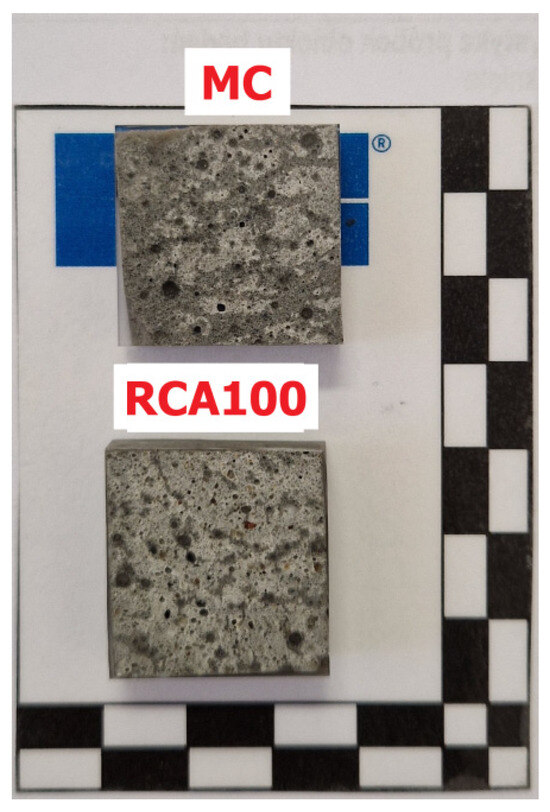
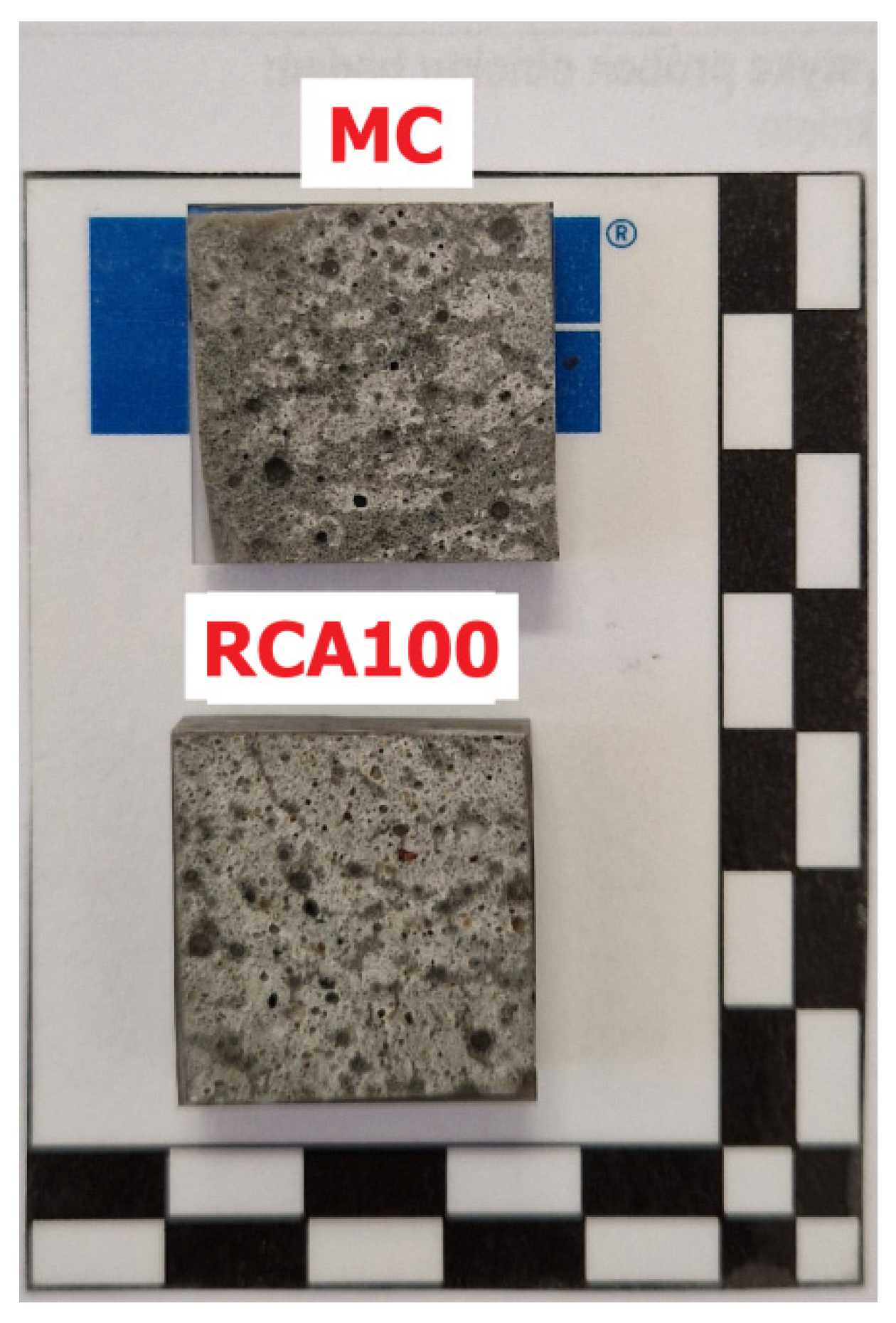
From the middle section of the MC, RCA50, and RCA100 samples, a 5 mm slice was cut perpendicularly to the throwing surface. Edges of the received surface were cut around, and the dimensions of the final samples were about 25 mm × 25 mm. After cutting, the samples were dried in an oven at a temperature of 40 °C for 24 h. Next, the samples were immersed in resin under a vacuum. After hardening the resin, samples were ground and polished to receive a smooth and even surface. Details of sample preparation are described in one of the previous publications [43]. Examples of prepared samples are presented in Figure 7.
Figure 7.
Polished sections of mortars prepared for microstructural investigations.
At the first step, the surface of each sample was analyzed in reflected light using a stereoscopical microscope, Stemi 508, produced by ZEISS (Carl Zeiss Microscopy GmbH, Köln, Germany). In the second step, after gold evaporation, samples were investigated using a scanning electron microscope (SEM) model Sigma 500 VP produced by ZEISS (Carl Zeiss Microscopy GmbH, Köln, Germany). Backscattered electron (BSE) images were collected. Elemental compositions in micro-areas and maps of element distributions were carried out using an energy X-ray dispersive analyser (EDX) model Ultim Max 40 produced by Oxford Instruments (Oxford Instruments, High Wycombe, UK).
4. Results
4.1. Properties of Fresh Mortars
In order to assess the impact of the degree of substitution of natural sand with recycled concrete aggregate (RCA) on the rheological properties of cementitious mortars, studies of consistency, density, and air content were carried out (pressure method according to EN 1015-7). The results are summarized in Table 5.
Table 5.
Fresh mortar results.
Based on the results obtained, it can be concluded that an increase in the share of recycled aggregate in the mortars leads to a systematic decrease in the consistency of the cement mortar. The reference mortar (MC) had a flow of 127.5 mm, which is a benchmark. At 25% substitution (RCA25), the decrease was small, amounting to only 1.0 mm, which suggests that the small proportion of RCA does not significantly affect the rheological properties. In the case of 50% replacement (RCA50), the reduction in consistency reached 9.4 mm compared to the reference sample, representing an approximate decrease of 7.4%. Further increase in the proportion of RCA (RCA75 and RCA100) resulted in a further decrease in consistency, but the differences were less pronounced (116.11 and 115.0 mm, respectively). The observed trend can be linked to the characteristic properties of recycled aggregate: the higher water absorption of RCA—the presence of a porous cement slurry on the surface of the grains causes increased absorption of the production water, which leads to a decrease in the fluidity of the mixture; rough and irregular grain texture—unlike natural aggregate, RCA grains have a more developed surface area, resulting in greater internal friction and reduced workability; the increased content of fine fractions in RCA can further affect the water requirement and, thus, the consistency.
Volumetric density studies have shown a systematic decrease in value with an increase in the proportion of recycled concrete aggregate (RCA). The reference sample (MC) had the highest density (1967 kg/m3). With the partial replacement of sand with RCA, a gradual decrease in density was observed—with a 25% share of RCA, this value decreased to 1945 kg/m3, which corresponds to a decrease of approximately 1.1% compared to the MC. For the RCA50 and RCA75, the decline was more noticeable and amounted to 2.0% and 3.0%, respectively, compared to the reference sample. The lowest density was recorded for the RCA100 mortar, at 1900 kg/m3, representing a 3.4% reduction compared to the reference mortar. Based on the conducted research, it was found that the decrease in density is influenced by the porosity of the recycled aggregate (RCA). RCA grains contain residues of cement slurry, which is characterized by lower density and higher absorbency than natural sand. Higher micropore content—due to the rough texture of the beans, more air can be retained in the fresh mortar—which lowers the volume density. In addition, a decrease in consistency—with the increase in the proportion of RCA, a decrease in workability was noted—could have favored a worse thickening of the mixture and further reduced the density.
The results confirm the close relationship between consistency and density. Mortars with higher fluidity (MC, RCA25) obtained higher densities, while a decrease in workability with higher RCA shares (≥50%) resulted in lower densities. This phenomenon is also correlated with an increase in the content of air trapped in the mixture, typical of materials with porous and irregular aggregates. The obtained values of air content in the tested mortars reflect the expected increase in aeration with the increase in the share of recycled aggregate (RCA), resulting from the higher porosity of RCA grains and the presence of old mortar residues. Studies of rheological and physical properties of cement mortars with various shares of recycled concrete aggregate (RCA) have shown a clear impact of this aggregate on the consistency, volume density, and estimated air content. It was found that an increase in the proportion of RCA causes a systematic decrease in consistency—from 127.5 mm for the reference sample to 115.0 mm with 100% sand substitution. This observation confirms that the presence of a more porous and coarse aggregate limits the workability of the mixture, which results from the higher absorbency and increased internal friction of the grains. A similar trend was observed for volume density, which decreased from 1967 kg/m3 (MC) to 1900 kg/m3 (RCA100). This reduction was partly correlated with a decrease in consistency and partly with a higher porosity of the recycled aggregate. Replacing sand with RCA leads to a deterioration in workability, a decrease in density, and an increase in the air content of cement mortars, and this effect becomes particularly pronounced with ≥50% substitution. These results are consistent with observations from the literature and confirm the need for appropriate correction of the composition of the mixture (e.g., regulation of w/c, use of liquefaction admixtures) to minimize the negative effects of RCA use.
The non-linear relationship between density reduction and consistency loss observed in Table 5 is primarily related to the specific characteristics of recycled concrete aggregate (RCA), rather than density alone. While a reduction in density is generally associated with decreased workability, in the present study, the decrease in consistency is disproportionately higher, particularly for RCA replacement levels of 50% and above. This behavior can be attributed to the higher porosity, rougher surface texture, and angular shape of RCA particles, which increase internal friction within the fresh mortar and intensify water demand. Despite the applied water correction to compensate for RCA absorption, part of the mixing water is rapidly absorbed into the porous structure of the recycled aggregate during mixing, reducing the amount of free water available for lubrication. As a result, consistency decreases more sharply than density, leading to a non-linear trend. From an application perspective, this effect becomes particularly relevant for mortars with an already low initial density, such as lightweight mortars. At higher RCA contents (≥50%), the pronounced loss of workability may limit the practical use of these mortars in applications requiring high flowability, ease of placement, or good surface finishing. Additional measures—such as the use of plasticizers, viscosity-modifying admixtures, or pre-saturation of RCA—may therefore be necessary to maintain adequate workability without further increasing the water-to-cement ratio, which could negatively affect mechanical performance and durability.
Overall, the observed non-linear trend highlights the need for careful mixture design when incorporating high volumes of RCA, especially in lightweight mortar systems, where workability requirements are often critical.
4.2. Properties of Hardened Mortars
4.2.1. Flexural Strength
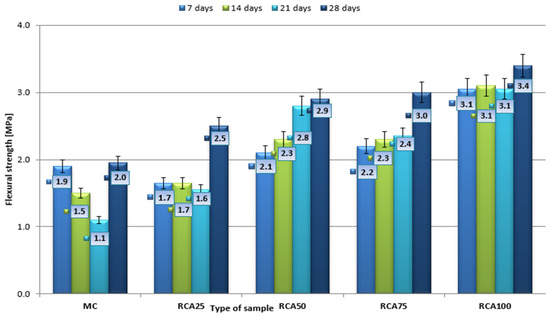
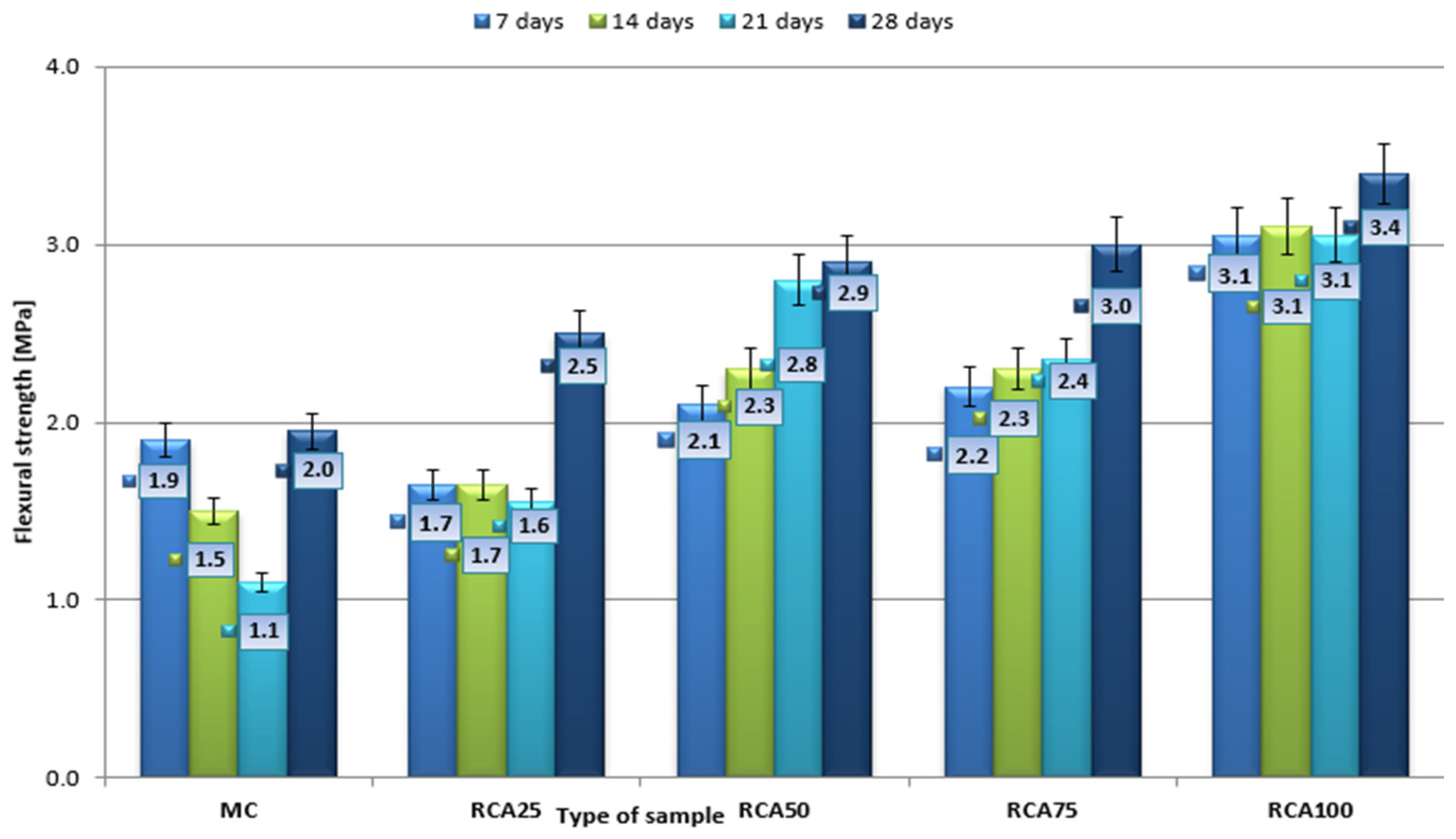
Figure 8 shows the results of flexural strength tests of reference mortars (MCs) and mortars in which river sand was partially or completely replaced with fine recycled concrete aggregate (RCA).
Figure 8.
Flexural strength of mortars.
During the initial maturation period (after 7 days), the reference mortar achieved a flexural strength of 1.9 MPa, indicating an intensive course of the hydration process. In the following days, a decrease in this value was observed—to 1.5 MPa after 14 days and 1.1 MPa after 21 days of hardening—which may be associated with uneven moisture distribution or microcracks in the structure of the mortar. After 28 days, however, a return to 2.0 MPa was observed, indicating further progress in the hydration and stabilization of the microstructure. For RCA25 mortar, the initial strength after 7 days (1.7 MPa) was close to the value obtained for the reference sample. Within the following days, however, a clear increase was observed—after 28 days, the strength reached 2.9 MPa, representing an improvement of approximately 45% compared to MC mortar. Later on, the values fell slightly to 2.1–2.3 MPa (14–21 days), but after 28 days they rose again to 2.8 MPa, maintaining a clear advantage over the reference mortar (around +40%). For the RCA75 series, the highest values were obtained in the initial phase—after 7 days the strength was 3.0 MPa. In the following weeks, a gradual decrease to 2.2–2.4 MPa was observed, and after 28 days, the results stabilized at 2.3 MPa, indicating no further increase in the longer maturation period. RCA100, on the other hand, had stable results throughout the study period, ranging from 3.1 MPa on day 7 to 3.4 MPa on day 28. The final value obtained was the highest of all series, representing an increase of approximately 70% compared to the reference mortar.
The greatest strength gains were recorded for the RCA25 and RCA50 mortars, which may indicate the beneficial effect of the partial introduction of recycled aggregate, which improves adhesion at the aggregate–cement matrix interface due to a more developed grain surface. A further increase in the share of RCA (up to 75% and 100%) no longer caused a deterioration in properties, but, on the contrary, it maintained or slightly increased strength, which proves the good compatibility of this aggregate with the mortar matrix. This may be due to the secondary hydration of the unbound cement grains present in the recycled aggregate and the internal curing effect associated with the higher absorbency of RCA (5.0% compared to 1.0% for river sand). The increase in strength can also be attributed to the more favorable combination of the porous and rough surface of the recycled aggregate with the cement slurry, as well as its ability to fill micropores in the mortar structure, leading to its compaction. The results obtained indicate that recycled aggregate can effectively replace natural aggregate, particularly in composites subjected to a longer maturation period. Similar observations were also presented by the authors of this publication, in which samples containing 100% recycled aggregate achieved the highest flexural strength values of all samples with the addition of recyclate, and at the same time, they were comparable to the results of reference samples. The exception was a sample containing 40% recycled fine aggregate, which showed a marked decrease in strength compared to the reference sample with natural fine aggregate [23].
4.2.2. Compressive Strength
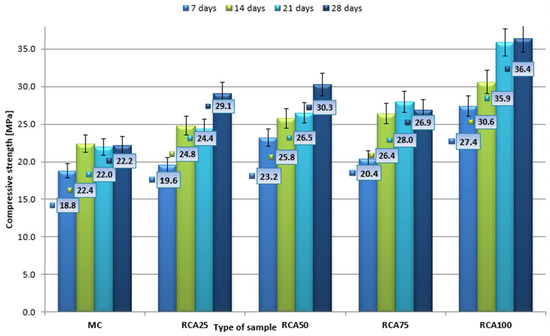
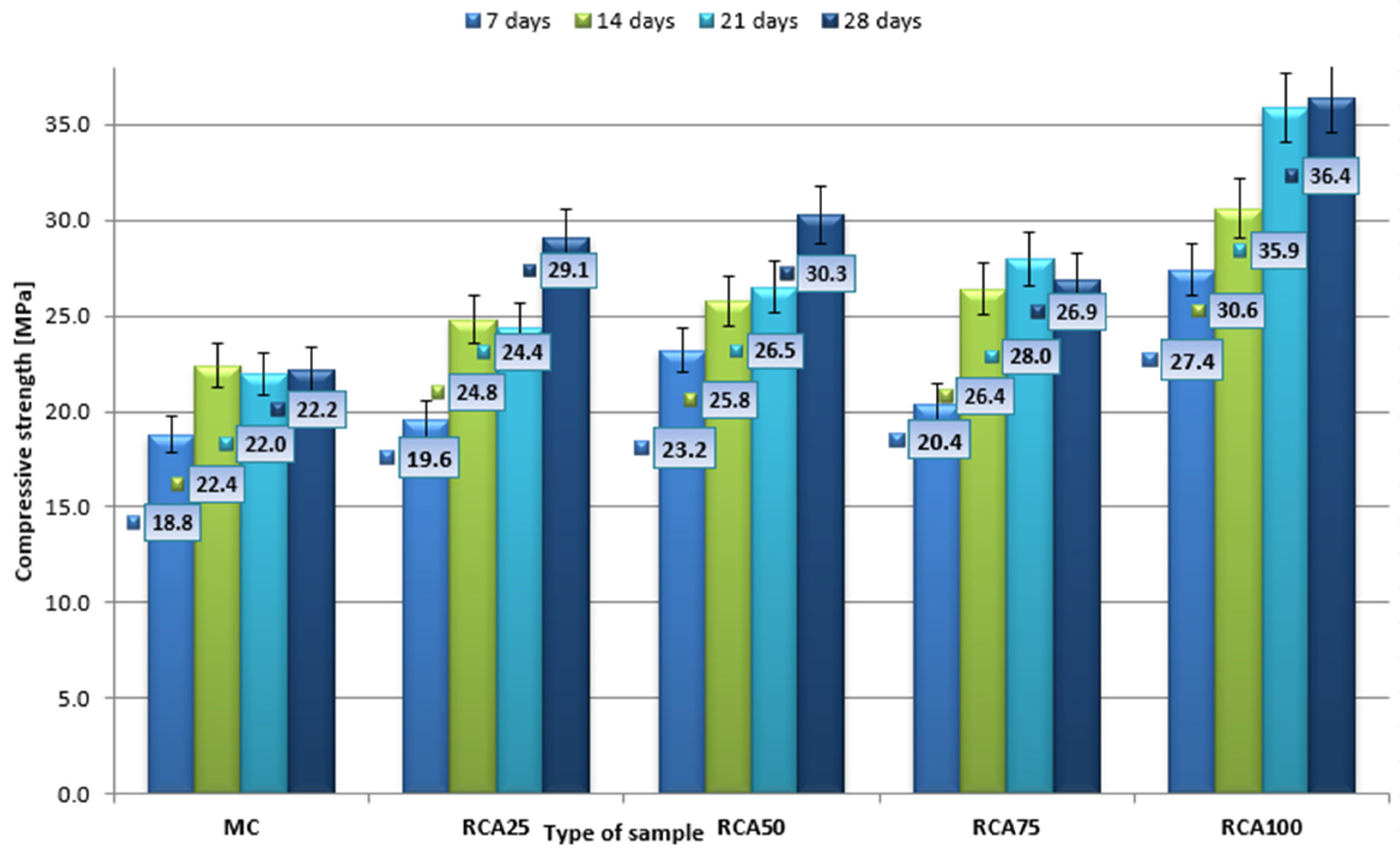
Figure 9 shows the results of compressive strength tests of cement mortars after 7, 14, 21, and 28 days of hardening.
Figure 9.
Compressive strength of mortars.
On the basis of the conducted research, it was found that the reference mortar reached a compressive strength of 18.8 MPa after 7 days, which systematically increased with the maturation time to 22.0 MPa after 14 days, 22.4 MPa after 21 days, and 22.2 MPa after 28 days. The increase in the initial period was noticeable, while after the 21st day, the strength growth process slowed down, which is typical for cement mortars with a stabilized hydration process. For the mortar with a 25% recycled aggregate content, a slightly lower strength was reported at day 7 (19.6 MPa) compared to the MC sample; however, further maturation resulted in a marked increase to 29.1 MPa after 28 days. This represents an improvement of about 31% compared to the reference sample. This result confirms the beneficial effect of a moderate proportion of RCA on the subsequent development of strength. With a 50% replacement of river sand with RCA aggregate, a compressive strength of 23.2 MPa was achieved after 7 days, increasing to 30.3 MPa after 28 days. An increase of about 37% over MC indicates that a half-change of natural aggregate may be optimal in terms of compressive strength. The high final value indicates good adhesion of RCA aggregate to the cement matrix and a favorable microstructural effect. For RCA75 mortar, the compressive strength was 20.4 MPa after 7 days, after which it steadily increased to 28.0 MPa on day 21 and 26.9 MPa after 28 days. Compared to the reference sample, an improvement of +21% was achieved after 28 days. The results indicate that a higher proportion of RCA may cause a slight weakening of the structure over the long-term maturation period, probably due to its higher porosity and absorbency. The highest strength values were obtained for RCA100 mortar, reaching 27.4 MPa after 7 days and as high as 36.4 MPa after 28 days. This represents an increase of approximately 62% compared to the MC sample.
The temporary decrease in both the flexural and compressive strength of the reference mortar (MC) at 21 days, followed by recovery at 28 days, is indeed an atypical trend and requires further clarification. Several factors may contribute to this behavior. First, normal test variability should be considered. Despite strict compliance with EN 196-1:2016-07 [37] procedures, mortar strength tests are inherently sensitive to minor variations in specimen preparation, compaction, demolding, and testing conditions. Small differences in moisture condition at the time of testing may lead to temporary fluctuations in measured strength, particularly at intermediate ages such as 21 days. Second, moisture redistribution during curing may play a role. After 7 and 14 days, the specimens were subjected to ongoing hydration and internal moisture migration. At approximately 21 days, partial surface drying or non-uniform internal moisture distribution may occur, especially if specimens are removed from curing water for testing and storage. This can temporarily reduce the measured strength due to an increased microcrack sensitivity under load, particularly in flexural testing. Third, early-age microcracking related to shrinkage cannot be excluded. Although the reference mortar does not contain recycled aggregate, cement paste shrinkage and restrained moisture gradients may induce fine microcracks that temporarily affect strength measurements. Continued hydration and pore structure refinement between 21 and 28 days may subsequently lead to partial crack healing and densification of the cement matrix, resulting in strength recovery at 28 days. Importantly, the observed strength reduction at 21 days was relatively small and within the expected scatter range for standard mortar testing. Therefore, it is most likely a combined effect of normal experimental variability and transient moisture-related phenomena rather than a systematic material-related degradation. To reflect this more clearly, the manuscript has been revised to explicitly acknowledge test variability as a plausible explanation and to present the 21-day results as part of normal strength development scatter rather than a distinct anomaly.
High and stable strength throughout the maturation period indicates a strong bond between the recycled aggregate and the cement matrix, as well as the internal maturation effect resulting from the increased absorbency of the RCA, which promotes secondary hydration of the cement. The observed improvement in the strength of the mortars containing recycled concrete aggregate (RCA) can be attributed to better adhesion at the aggregate–matrix interface and to the internal curing effect, resulting from the possibility of reusing the water absorbed by the RCA. In addition, the relatively low strength of the reference mortar may have contributed to the comparatively large increase in strength. While the strength of the original high-strength RCA could also play a role, the main factors in this study appear to be the improved adhesion and internal curing effects. The results obtained confirm the potential for the full replacement of natural sand with recycled concrete aggregate in cementitious mortars without loss or even with improvement of mechanical properties.
The best compressive strength results were achieved for composites with a content of more than 50%, but further research is necessary due to decreasing trends, such as composites with 25% and 100% recycled aggregate content on day 21 of care. The results obtained were confirmed by the Dworzańczyk-Krzywiec study [44]. It has been confirmed that secondary aggregate can be used as a component of new cement concrete. The study revealed that the differences in compressive strength between concrete with aggregate, both partially and fully recycled, were minimal. Concrete with the addition of recycled aggregate with a fraction of 2–16 mm achieved compressive strength comparable to that of concrete made exclusively of natural aggregate. The highest strength after 28 days was obtained in samples containing 50% recycled aggregate, while in this study, the best effects were observed in composites with over 50% recycled material [44].
Influence of Aggregate Density and Porosity
The recycled aggregate had a lower grain density (2450 kg/m3) and bulk density (1400 kg/m3) compared to river sand (2650 kg/m3 and 1550 kg/m3). The reduced density and higher porosity of RCA grains favored their better adhesion to the cement slurry. The increased surface roughness, resulting from the presence of cement mortar residues, created favorable conditions for mechanical anchoring in the matrix. This effect was particularly evident in the case of the RCA75 and RCA100 samples, for which the highest values of both bending (3.0–3.4 MPa) and compressive strength (30.3–36.4 MPa after 28 days) were obtained for the RCA50 and RCA100 samples.
Effect of Absorbency and Internal Ripening Effect
An important factor turned out to be a much higher absorbency of recycled aggregate (5.0%) compared to natural sand (1.0%). Part of the water absorbed by RCA during mixing was gradually released during the maturation process of the mortar, performing the function of internal curing. This phenomenon promoted the secondary hydration of the unbound cement grains, reducing the risk of microcracks, which explains the higher strength values observed in later periods (21–28 days). As a result, mortars with a high proportion of RCA were characterized by greater durability of the microstructure and a more favorable stress distribution during bending.
4.2.3. Frost Resistance
The next stage of the assessment involved analyzing the behavior of the tested cement mortars in variable temperatures, ranging from negative (in the range of −18 ± 2 °C) to positive (in the range of +18 ± 2 °C), with simultaneous exposure to water. After 25 cycles, the surface appearance of the samples, the change in mass, and the mechanical properties were evaluated. In all the cases studied, no visible surface damage was found during the evaluation of the samples “with the unaided eye”. Table 6 presents the results of other tests performed after 25 test cycles, i.e., changes in the weight of the samples.
Table 6.
Average decrease in strength and average loss in mass of samples subjected to 25 cycles of freezing/thawing.
The analysis of the results indicates a clear differentiation in the behavior of mortars depending on the type of aggregate used. For the MC reference mortar, after 25 freeze–thaw cycles, an increase in compressive strength was recorded from 24.5 MPa to 28.4 MPa, corresponding to a 15.9% increase. Although this behavior may appear counter-intuitive, similar effects have been reported for cementitious materials tested at relatively early ages. The freeze–thaw tests were initiated at 28 days, when cement hydration is still ongoing. Repeated water saturation and thawing phases may promote further hydration of unhydrated cement particles, leading to matrix densification and pore structure refinement. Consequently, the strength gain should not be interpreted as a direct strengthening effect of freezing, but rather as a result of continued hydration under favorable moisture conditions, combined with the relatively young age of the specimens. Mortars containing recycled concrete aggregate, on the other hand, showed a decrease in strength after freezing cycles, the intensity of which increased as the share of RCA increased. Thus, RCA25 samples showed a decrease of 17.2%; RCA50, a decrease of 25.2%; RCA75, a decrease of 24.1%; and RCA100, a decrease of 21.8%. The greatest loss of strength was observed for the RCA50 and RCA75 samples, while the RCA100 mortar, despite fully replacing sand, showed a slightly smaller decrease in strength. This indicates that the impact of recycled aggregate is not linear, and the final effect also depends on the porosity structure and the degree of moisture saturation of the mortar. The changes in the weight of the tested mortars after 25 freeze–thaw cycles were small, indicating good resistance of the material to frost damage. For the MC sample, the weight loss was −0.2%, while for RCA mortars, it was in the range of −0.3% to −0.7%. The largest weight loss was recorded for RCA25, suggesting that in the initial range of replacing sand with recycling, the aggregate may have formed a slightly less compact structure with higher absorbency.
The deterioration of the frost resistance of RCA mortars is mainly due to the higher water absorption of recycled aggregate (5.0%) compared to river sand (1.0%). A larger number of capillaries and open pores in the RCA grain structure facilitated the penetration of water, which expanded in volume during freezing and resulted in microcracks at the aggregate–cement matrix contact zone. In addition, the lower density and higher surface roughness of the RCA could promote local water accumulation, leading to micro-damage with repeated thermal-load cycles. An interesting phenomenon is a slightly smaller decrease in strength in the case of the RCA100 compared to the RCA50 and RCA75. This may be due to a more homogeneous mortar structure, resulting from the complete replacement of natural aggregate and the “internal maturation” effect, which leads to a better binding of free water spaces within the cement structure.
The obtained results demonstrate that mortars with recycled fine aggregate, characterized by higher water absorption and porosity, are not suitable for use under conditions of exposure to periodic freezing and thawing. The use of RA in frost-resistant mortars requires special care for proper aeration. In addition, RA has been found to affect the distribution of pores in the leaven by reducing the content of small macropores, which are responsible for frost resistance.
The results indicate that while increasing the content of recycled concrete aggregate (RCA) generally improves compressive and flexural strength, it has a noticeable negative impact on frost resistance and increases water absorption. This trade-off can be explained by the intrinsic properties of RCA. The higher porosity and water absorption of RCA compared to natural sand lead to greater saturation of the mortar matrix, which makes it more susceptible to freeze–thaw damage. At the same time, the rough and porous surface of RCA contributes to improved adhesion with the cement matrix, resulting in higher strength values, especially for partial replacement levels (25–50%). The observed strength gains for the RCA25 and RCA50 mortars suggest that moderate RCA content enhances the aggregate–matrix interface and promotes internal curing, as absorbed water in RCA is gradually released, aiding the secondary hydration of cement. For higher replacement levels (75–100%), strength remains high or slightly increases, indicating good compatibility of RCA with the mortar matrix. However, the same high RCA content contributes to reduced frost resistance due to the greater capillary porosity, which facilitates water ingress and ice formation during freeze–thaw cycles. These results highlight a clear need for feasible improvement measures to mitigate the reduction in frost resistance. Potential strategies include the use of chemical admixtures (e.g., air-entraining agents), mineral additives (e.g., fly ash or silica fume), or pre-saturation techniques to control water content in RCA. Such approaches are widely applied in contemporary practice and could enhance the durability of mortars containing higher RCA contents without compromising mechanical properties.
To evaluate the reliability and repeatability of the mechanical performance results, a statistical analysis was conducted using the standard deviation and the coefficient of variation (CV). The analysis was performed separately for flexural strength, compressive strength, and compressive strength after the freeze–thaw test, as summarized in Table 7.
Table 7.
Statistical analysis of strength test results for cement mortars modified with recycled aggregates.
For flexural strength, the reference mortar (MC) exhibited the lowest variability, with a CV of 4.0, indicating very stable and repeatable test results. Mortars containing recycled concrete aggregate showed higher dispersion, particularly at higher RCA contents. The highest variability was observed for the RCA75 series (CV = 28.8), which may be associated with increased heterogeneity of the microstructure, uneven stress distribution during bending, and the presence of microcracks related to recycled aggregate. Nevertheless, all CV values remained within acceptable limits for cementitious materials, confirming adequate repeatability of the flexural strength tests. In the case of compressive strength before freeze–thaw exposure, all mortars exhibited low coefficients of variation, ranging from 2.5 for the reference mortar to approximately 10.6 for RCA75. This indicates good consistency of compressive strength results despite the increased material heterogeneity introduced by RCA. The slightly higher variability observed for mortars with recycled aggregate can be attributed to differences in aggregate quality, porosity, and aggregate–matrix interaction. After the freeze–thaw test, an increase in variability was observed for all mortar series, particularly for MC, RCA50, and RCA100, where CV values exceeded 17. This increase reflects the more complex and heterogeneous damage mechanisms induced by cyclic freezing and thawing, including localized microcracking and moisture redistribution. Nevertheless, the CV values remained within the typical range reported for freeze–thaw durability testing of cement-based materials, indicating that the observed strength changes are statistically reliable. Overall, the statistical analysis confirms that the mechanical test results are reproducible and that the observed trends in strength and frost resistance are not a consequence of random scatter but reflect systematic effects associated with recycled aggregate content and freeze–thaw exposure.
4.2.4. Water Absorption
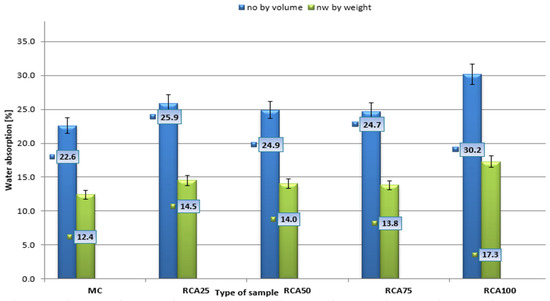
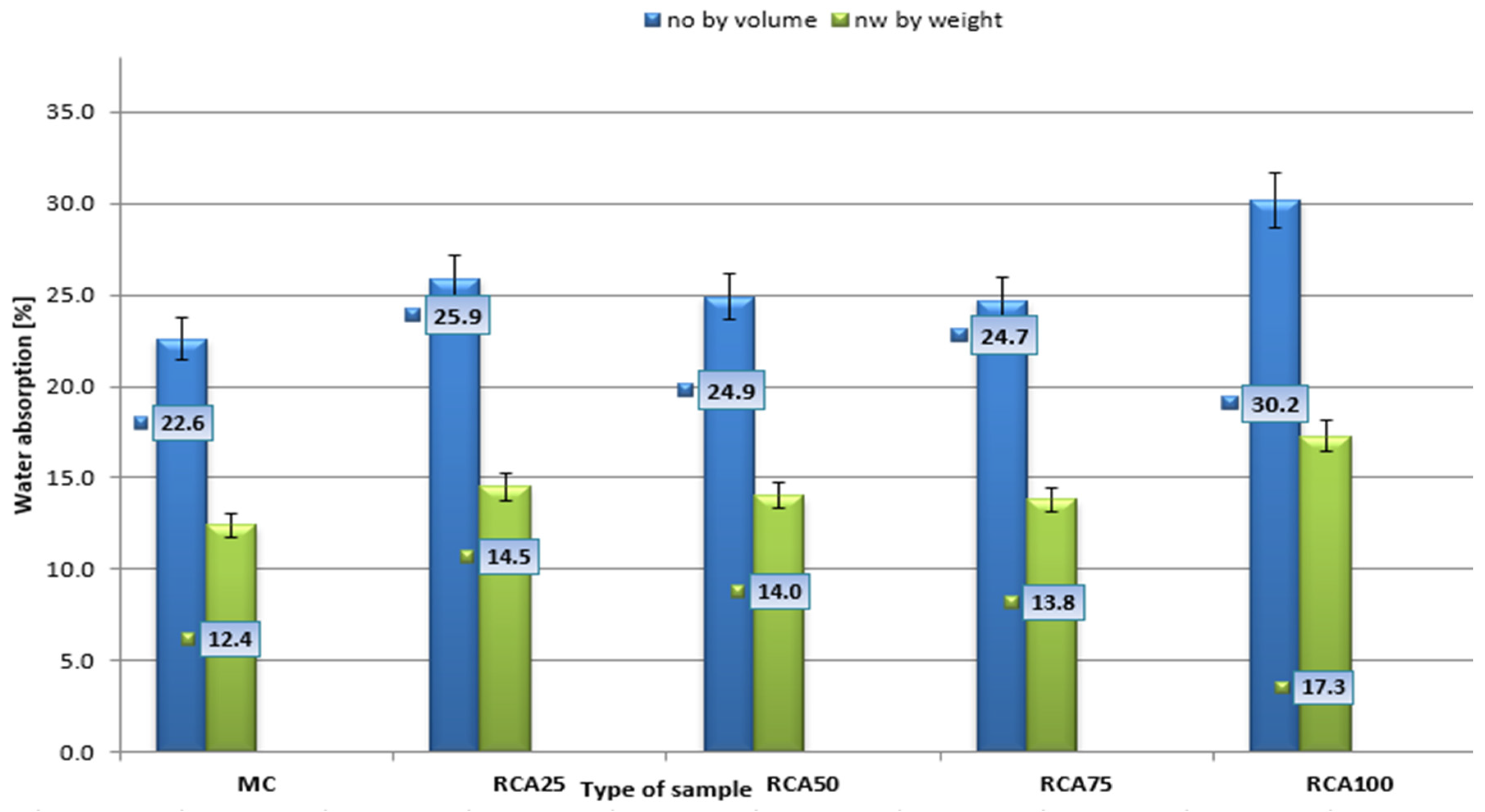
A water absorption test was conducted on mature cement mortars, in which natural river sand was partially or completely replaced with fine recycled concrete aggregate (RCA). Volume absorbency (no) and weight absorbency (nw) were evaluated after the full period of mortar maturation. The lowest absorbency was obtained by the reference mortar MC, with values of 22.6% (by volume) and 12.4% (by weight). In the case of mortars with the addition of recycled aggregate, a clear increase in absorbency was recorded with an increase in its share in the mixture:
- RCA25: 25.9% (no), 14.5% (nw);
- RCA50: 24.9% (no), 14.0% (nw);
- RCA75: 24.7% (no), 13.8% (nw);
- RCA100: 30.2% (no), 17.3% (nw).
The largest increase in water absorption was found for the RCA100 mortar, in which river sand was completely replaced with recycled aggregate. The increase compared to the reference sample was about +34% (volume) and +40% (weight), respectively—Figure 10.
Figure 10.
Weight and volume absorbency of mortars.
The results obtained clearly confirm the influence of recycled aggregate on the ability of mortars to absorb water. As shown in Table 3, RCA was characterized by a lower grain density (2.45 g/cm3) and significantly higher water absorption (5.0%) compared to river sand (1.0%). The structure of this aggregate contains cement slurry residues and micropores that result from the previous concrete hydration process, leading to an increased water absorption capacity. With the increase in the share of RCA, a systematic increase in the absorbency of mortars was observed, confirming the hypothesis of an increase in the total porosity of the system. However, it is worth noting that these changes are not fully linear. The RCA25–RCA75 samples showed relatively similar water absorption values, which may indicate that even a small addition of recycled aggregate (25%) introduces a significant amount of open pores into the system, and that further increasing the proportion of RCA has a limited impact due to the stabilization of the pore structure in the mortar. The highest water absorption values in the RCA100 series, on the other hand, can be attributed to the complete replacement of natural sand with a material of much higher absorbency, which increases the proportion of capillaries and micropores in the cement matrix. This effect is further enhanced by the greater roughness and irregularity of the RCA grains, which make it difficult to achieve a compact mixture structure and promote the formation of local air voids.
The increase in absorbency has a direct impact on other functional properties of the mortars. As previous studies have shown, mortars with higher absorbency were characterized by lower resistance to freeze/thaw cycles, which confirms the correlation between water absorption and frost resistance. Increased porosity promotes the accumulation of water, which causes local stresses and microcracks during freezing. At the same time, a moderate increase in water absorption (e.g., in the RCA25–RCA50 series) did not lead to a significant deterioration in mechanical properties—these mortars achieved even higher compressive and bending strengths than the reference sample. This may be due to the beneficial effect of “internal maturation”, which consists of the gradual release of water from the pores of the aggregate and the continuation of cement hydration in the mortar microstructure.
The use of recycled aggregate in cement mortars increases the absorbency of mature mortars; however, with the appropriate selection of the RCA share (up to 50%), this increase does not negatively affect the mechanical properties and durability of the material to a disqualifying degree. The high water absorption of the RCA100 mortar, on the other hand, indicates the need to modify the mortar in a fresh state.
From a practical perspective, absorption by volume is more relevant for durability-related phenomena such as freeze–thaw resistance, moisture transport, and susceptibility to internal damage, as it directly reflects the volume of pores that can be saturated and subjected to ice formation. On the other hand, absorption by weight provides useful comparative information on material quality and compactness, especially when assessing changes in mixture composition. The observed increase in both volumetric and gravimetric water absorption with increasing RCA content indicates a higher open porosity of the mortar matrix, which explains the reduced frost resistance observed in RCA mortars. Therefore, considering both measures together provides a more comprehensive assessment of the moisture-related performance and durability of mortars containing recycled aggregates.
4.2.5. Density
The analysis of the density of the hardened mortars revealed slight differences between the individual batches, indicating that the material structure was relatively compact despite the use of recycled aggregate. The density value of the reference mortar MC was 2.05 g/cm3, while mortars containing RCA reached values in the range of 2.01–2.064 g/cm3. The highest density was recorded for the RCA25 mortar (2.06 g/cm3), which may be related to the beneficial effect of filling the spaces between the grains by finer fractions of recycled aggregate and the effect of the so-called “internal maturation”, which reduces the formation of air voids. With the increase in RCA content (RCA50–RCA75), a slight decrease in density was observed to around 2.01 g/cm3, which is a consequence of the higher porosity and lower specific density of recycled aggregate (2.45 g/cm3) compared to river sand (2.65 g/cm3). In the case of the RCA100 mortar, despite the complete replacement of sand with recycled river aggregate, a density of 2.04 g/cm3 was achieved, suggesting that with the right selection of water and cement proportions, it is possible to obtain a structure with satisfactory compactness and good mechanical properties. These results confirm that the use of recycled aggregate in fine-grained mortars does not lead to a significant reduction in the volume density of the material, which is beneficial in terms of its strength and durability.
4.3. Microstructure of Mortars
4.3.1. Microstructure—Optical Microscopy
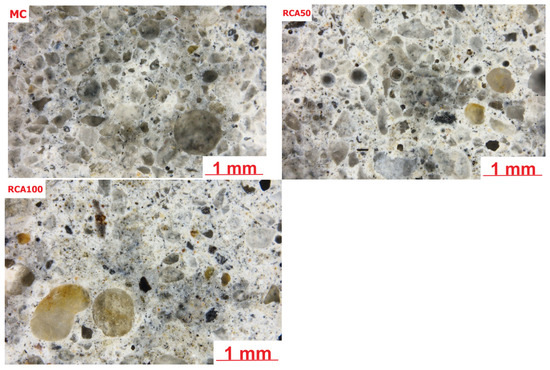
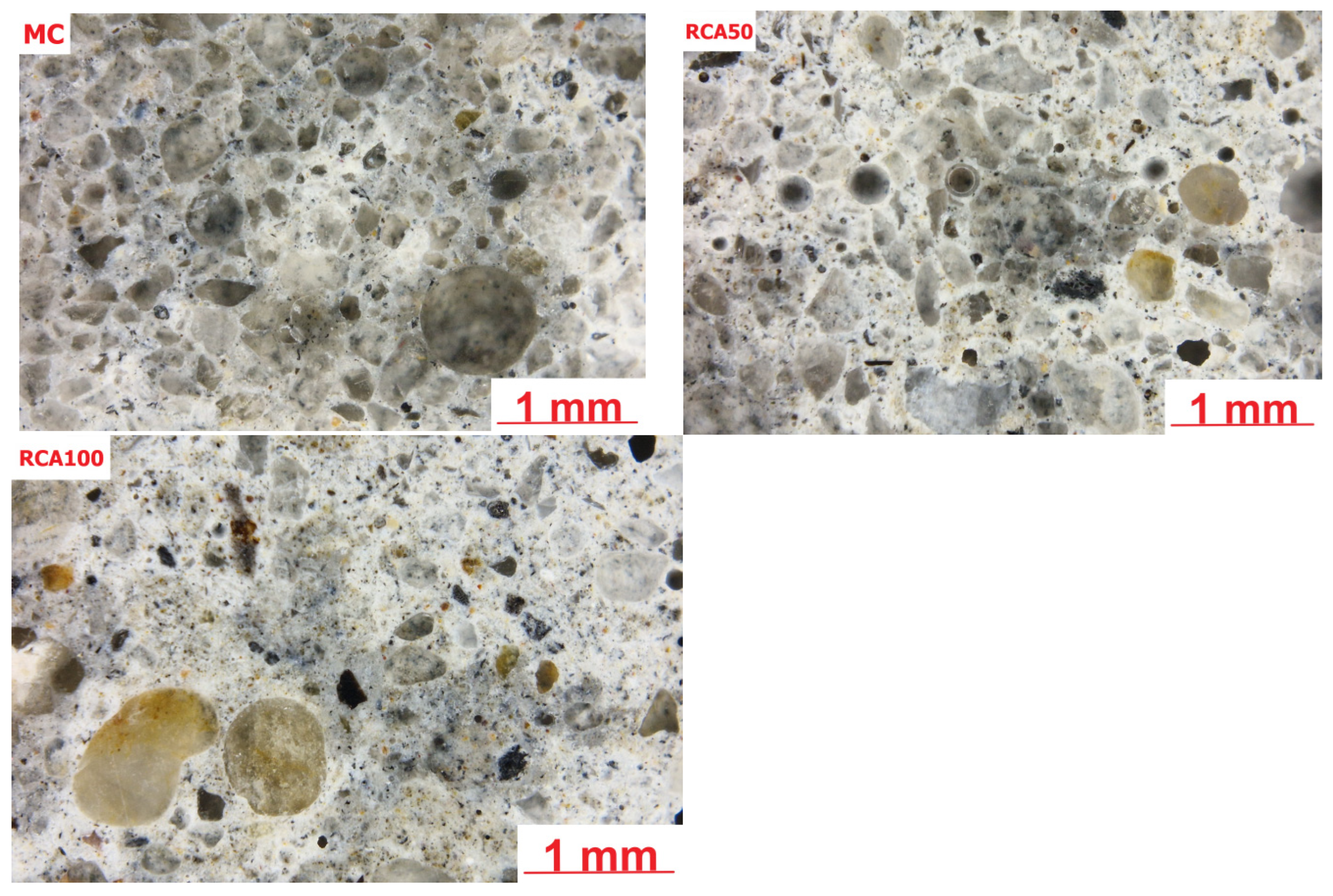
Examples of the microstructures of the MC, RCA50, and RCA100 samples received using optical microscopy are presented in Figure 11.
Figure 11.
Microstructures of MC, RCA50, and RCA100 samples (optical microscopy).
Examinations of the microstructure of the reference mortar, MC, have shown the presence of natural fine aggregates with a clearly observable proportion of crushed grains. Some macro pores were observed with mostly spherical shapes and diameters of less than 2 mm. Analysis of the RCA50 sample has shown that recycled aggregate (RA) was very similar to the new mortar, and differences were hard to notice. In the RCA100 mortar, which contains only RA, it was also hard to notice where exactly the transition zone lies between the old mortar and the new cement grout.
4.3.2. Microstructure—Scanning Electron Microscopy
MC Sample
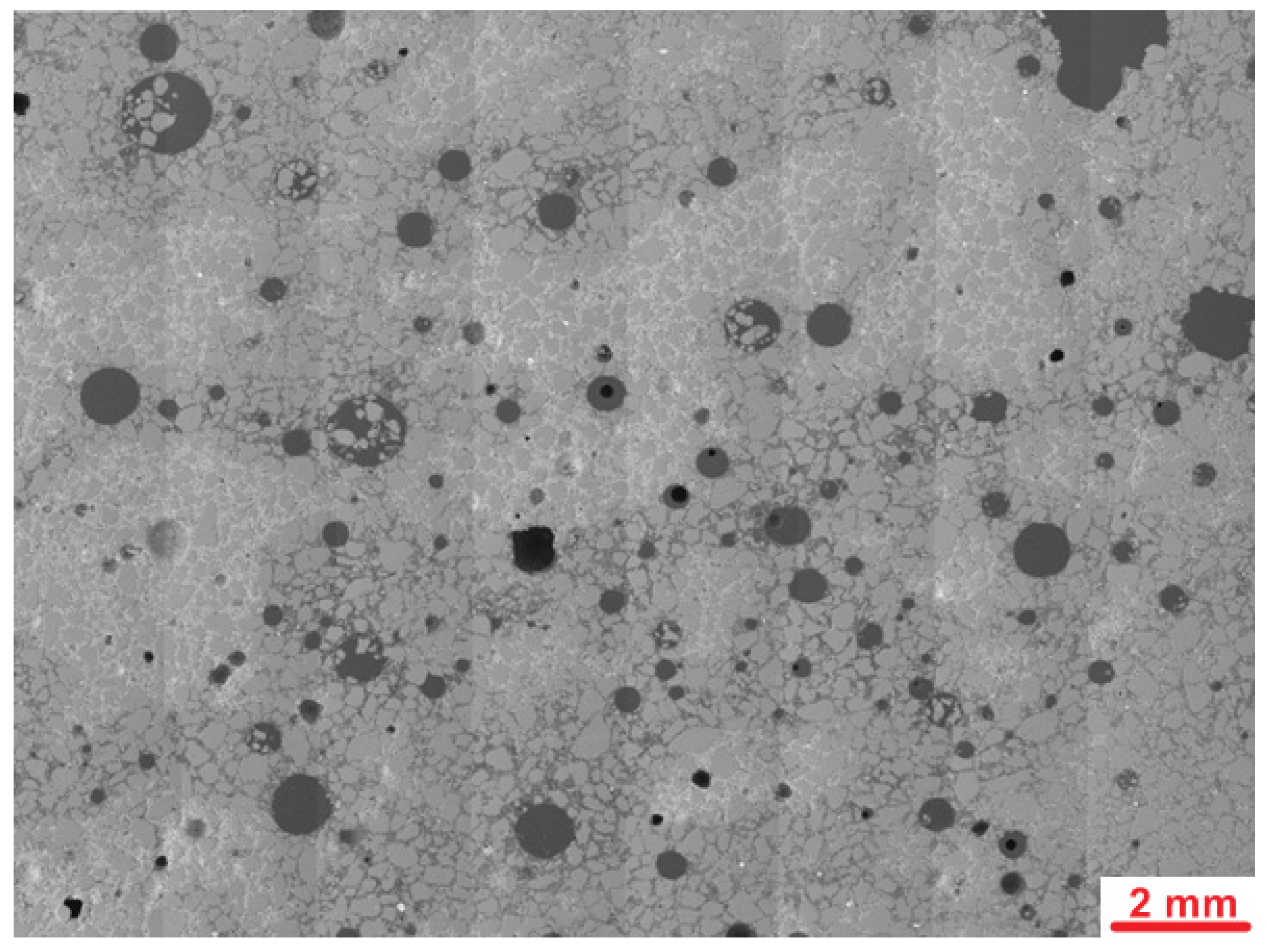
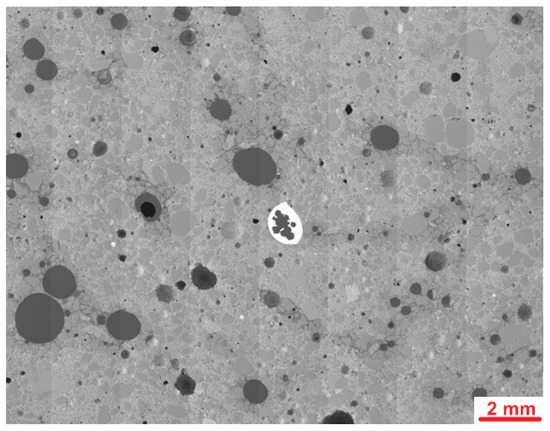
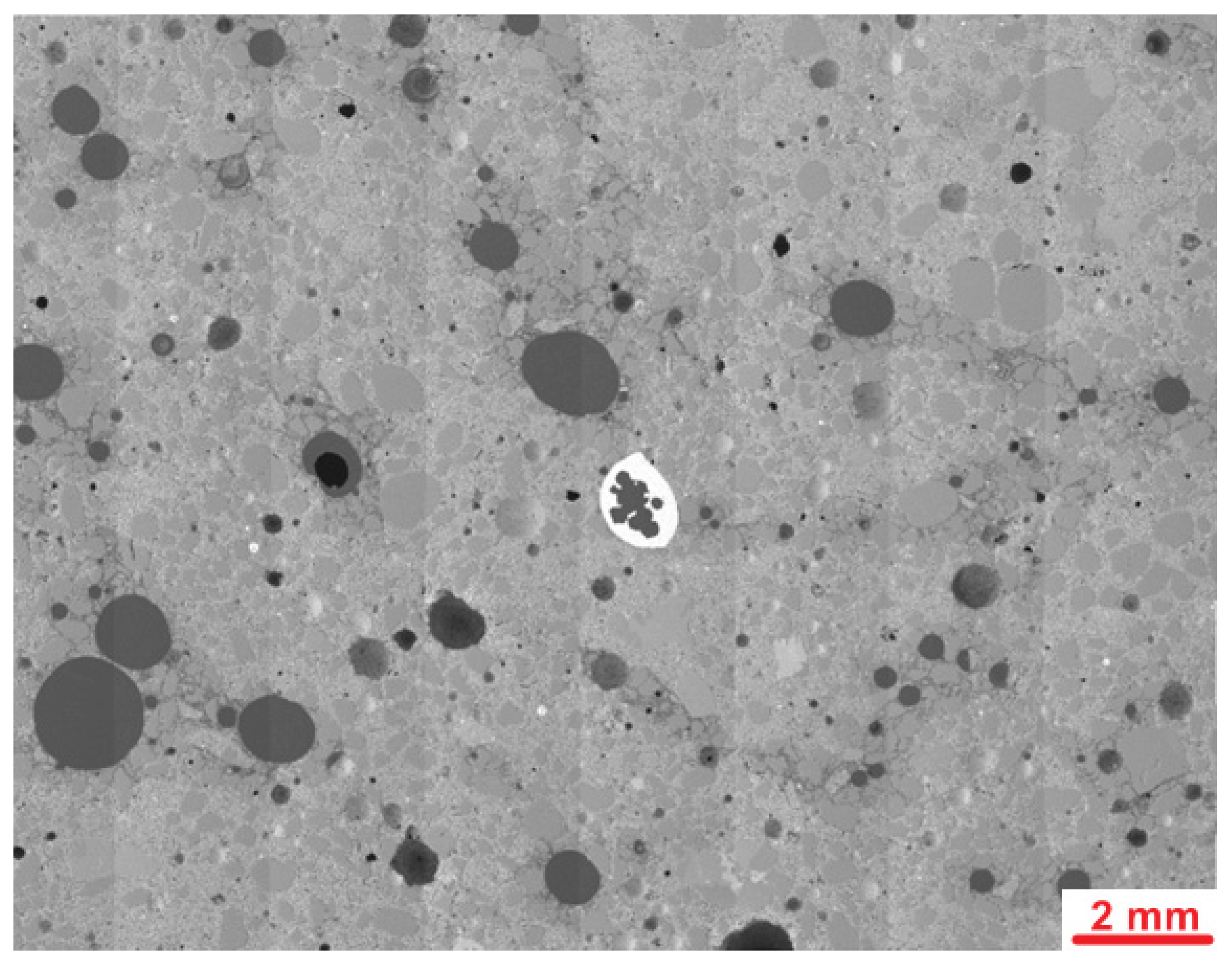
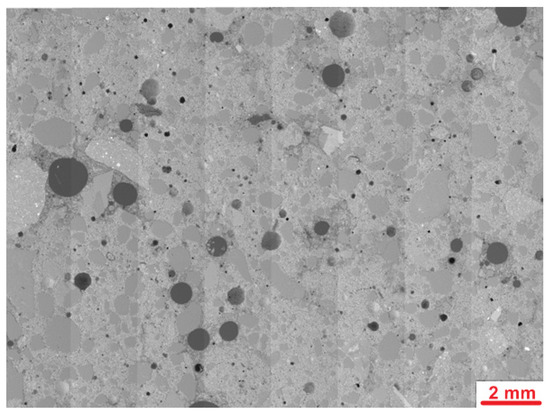
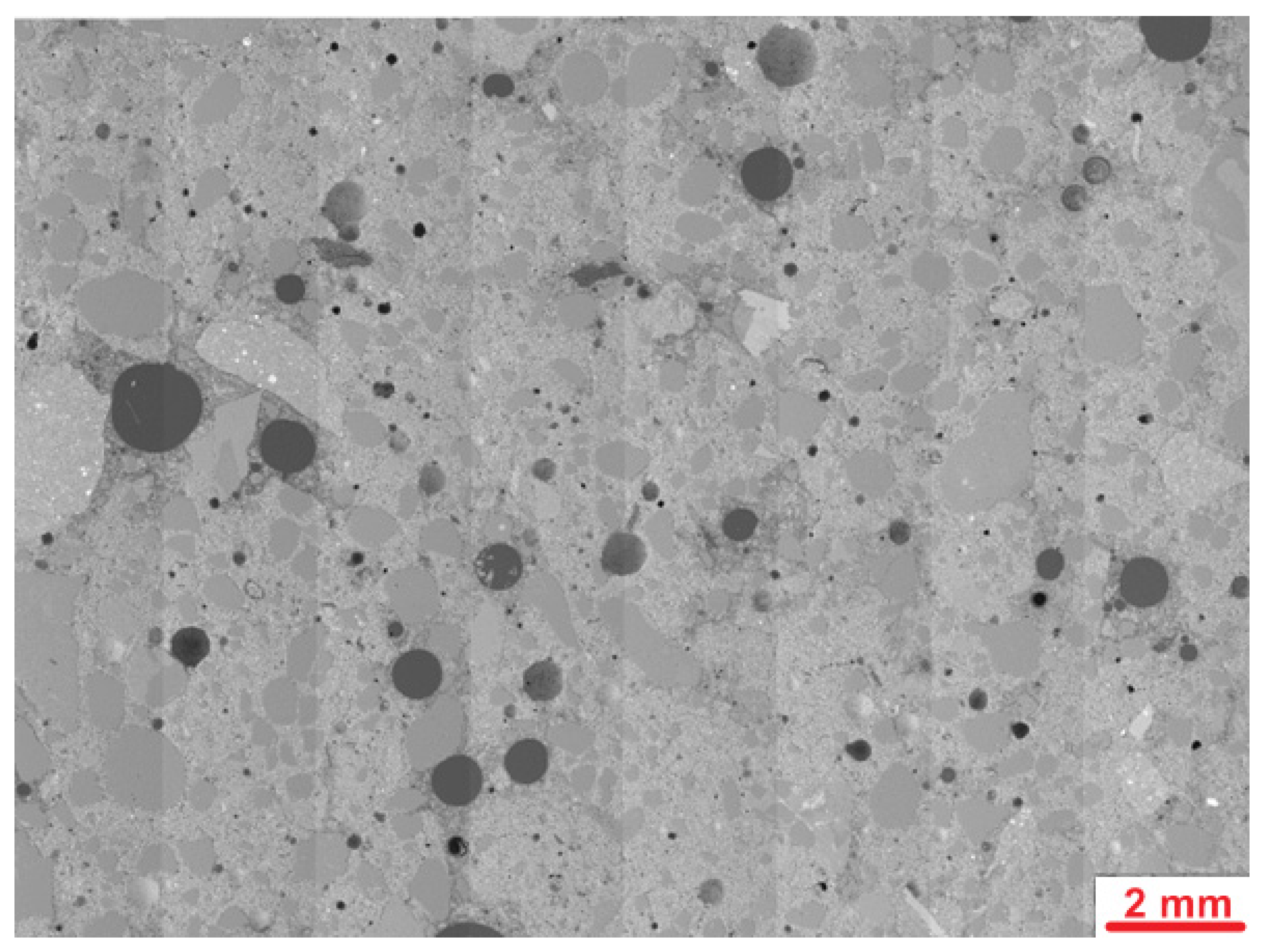
The image of the investigated area of the MC sample is presented in Figure 12 as stitched SEM images.
Figure 12.
Analyzed area of the MC sample.
Analysis of the microstructure of the MC sample has revealed fine aggregates composed primarily of quartz grains, with the addition of aluminosilicate grains. In the cement matrix, several macropores, mostly with spherical shape, were observed. However, their size, amount, and distribution do not indicate deliberate action to produce a frost-resistant composite. It is more likely they were formed during the mixing of the mortar without air-entraining admixture. Figure 13 presents an example of images collected during further investigation of the MC sample.
Figure 13.
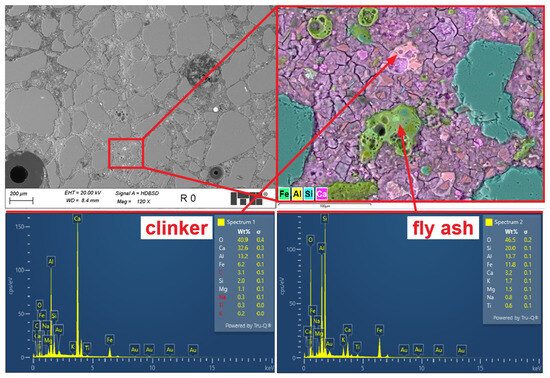
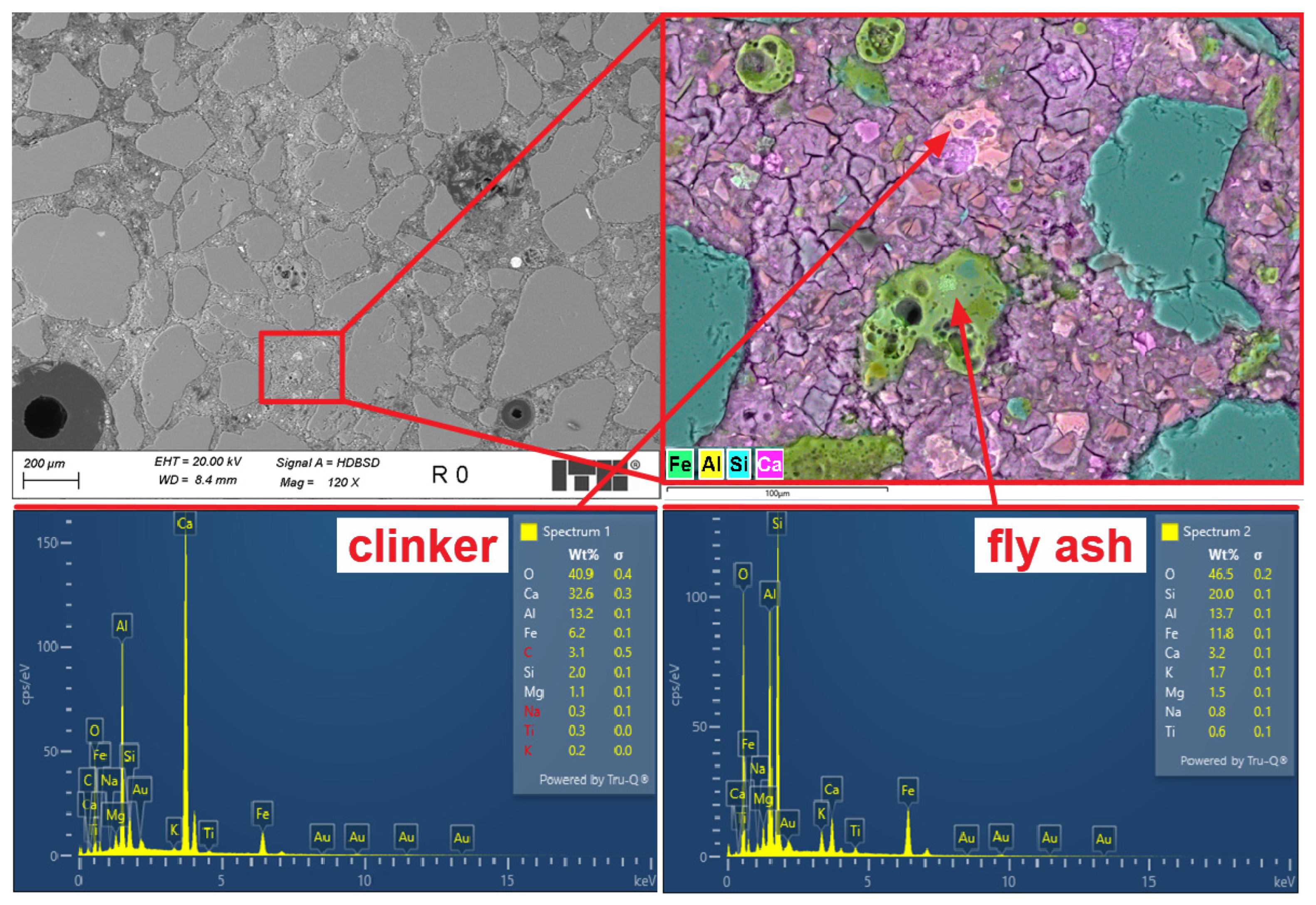
Microstructure of R0 MC sample and analysis of cement matrix compounds.
Microstructural analysis of the R0 MC sample has shown that the grains of fine aggregate were well-integrated into the cement matrix. The transition zone between the aggregate and cement grout was mostly sealed and free from discontinuities. In the cement matrix, some grains of siliceous fly ash were observed, which is a constituent of cement. Grains of Portland cement relics were noticed.
RCA50 Sample
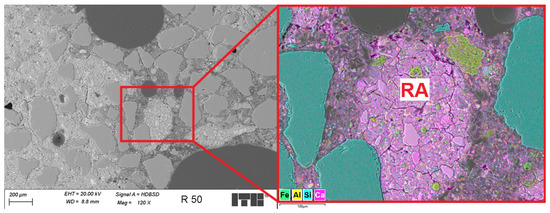
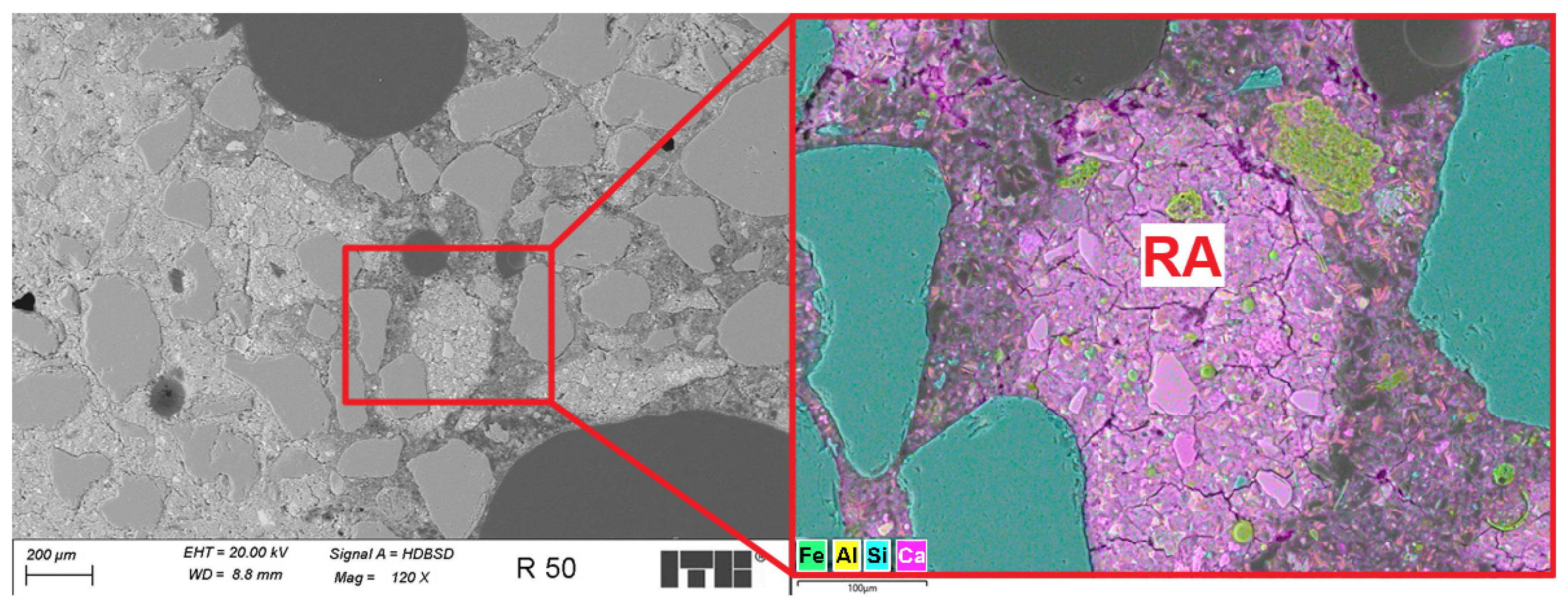
Figure 14 presents stitched SEM images of the analyzed area of the RCA50 sample.
Figure 14.
Analyzed area of RCA50 sample.
Analysis of the microstructure of RCA has shown that the sample contains a smaller amount of small macropores than R0 MC mortar, which is preferable for frost-resistant mortars. RA grains were present in the cement matrix, mostly well-covered by new mortar. Example images collected during deeper investigations into the microstructure of RCA50 mortar are presented in Figure 15.
Figure 15.
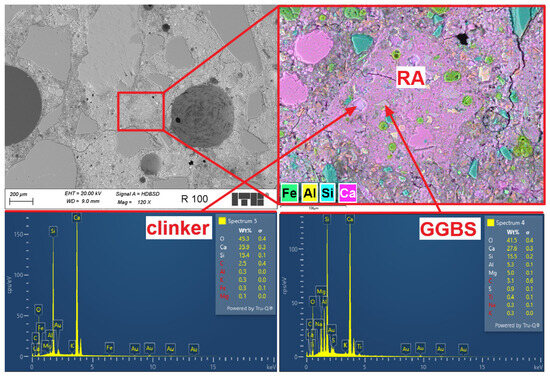
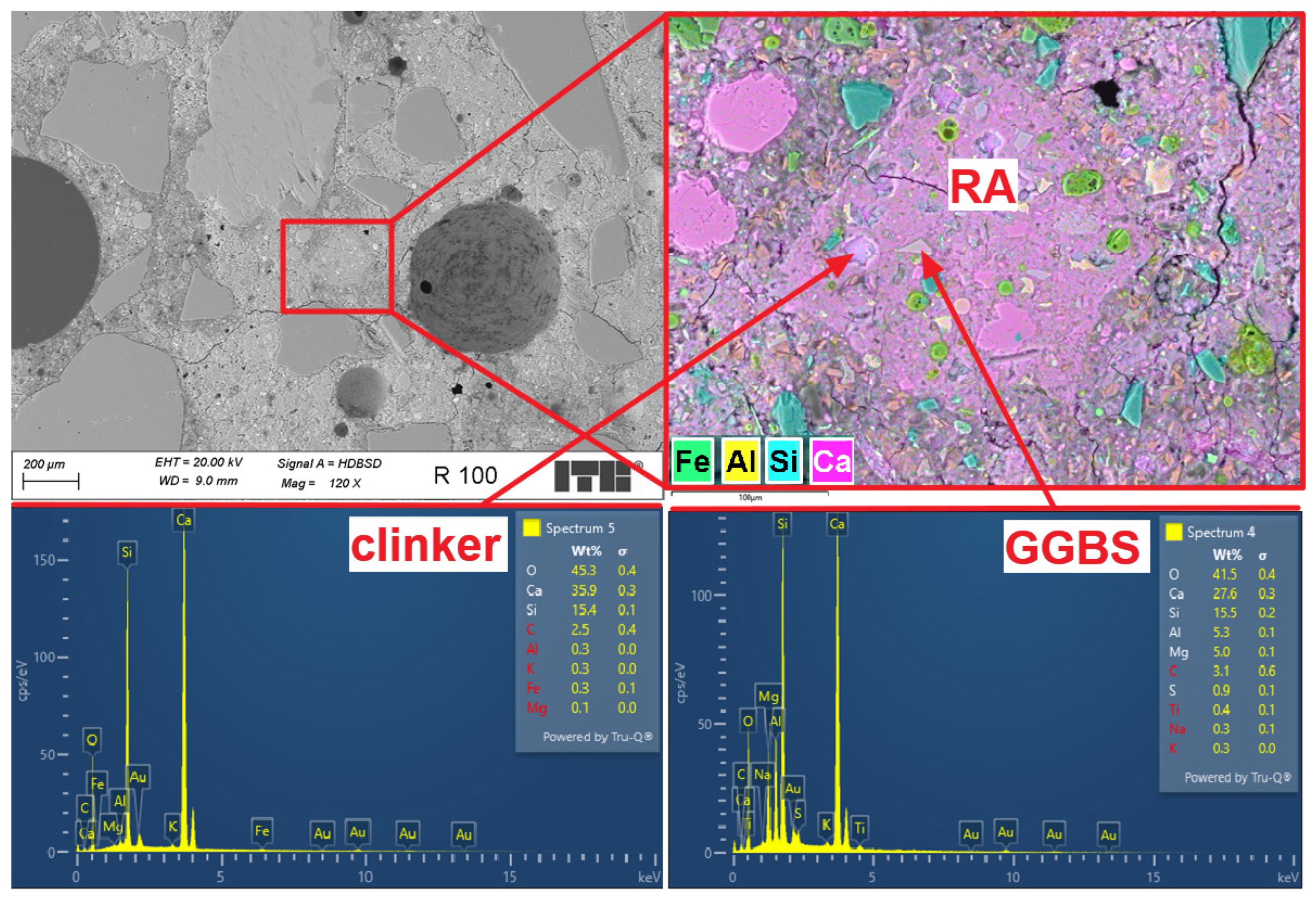
Microstructure of RCA50 sample observed by SEM.
Observations of RA grains used in mortars have shown that they are formed from natural aggregates, primarily quartz, with the addition of aluminosilicates and old mortar. The composition of the old mortar was different than the new one. Clinker relics and fly ash particles were also present; however, additional grains of GGBS with various ratios of hydration were noticed. The observed C-S-H phase in the old mortar was denser and more sealed than in the new one, and had a higher concentration of calcium. The water–cement ratio in the old mortar was probably lower than in the new one, or the cement content was higher. Several microcracks were observed in RA grains, which might have been formed during the shrinkage of the old mortar or during its crushing to receive aggregate. Analysis of the microstructure surrounding grains of RA has shown that they are well-covered by cement matrix; however, their presence disrupts the composition and morphology of the C-S-H phase in the transition zone compared to those observed around natural aggregates. The transition zone is more porous and contains less calcium, which might suggest that water balance has been disrupted by a water demand of RA grain.
RCA100 Sample
Figure 16 presents stitched SEM images of analyzed area of RCA100 sample.
Figure 16.
Analyzed area of RCA100 sample.
The microstructure of the RCA100 mortar, in which all natural aggregate was replaced by RA, contains fewer macropores than the R0 MC reference sample and also fewer than the RCA50 sample. This might suggest that the addition of RA seals the microstructure by entrapping a smaller amount of air during mixing. It might also be caused by the different content of fine particles in RA. Grains of RA were mostly well-bonded in the new cement matrix, and in some areas, the transition zones between the old mortar and the new cement matrix were difficult to notice. Figure 17 presents an example of images collected during further investigations into the microstructure of the RCA100 sample.
Figure 17.
Microstructure of RCA100 sample observed by SEM.
Analysis of the microstructure of the RCA100 mortar has shown that RAs are similarly built in the cement matrix, as was observed in the RCA50 sample; however, the difference between the calcium concentration in the transition zone and further from it was not so obvious. The amount of fine particles in the cement matrix was greater than in other observed mortars, which may absorb excessive water from the grout and make the calcium concentration more uniform. Several microcracks were observed in the RCA100 sample in a greater amount than in both other examined mortars, which might be caused by shrinkage.
Micro–Macro Relationships Between Microstructure and Macroscopic Properties
The microstructural observations provide a coherent explanation for the macroscopic behavior of the mortars. The reference mortar (MC), composed of dense quartz and aluminosilicate aggregates, exhibited a relatively homogeneous cement matrix with isolated spherical macropores formed unintentionally during mixing. This microstructure corresponds to moderate water absorption, stable mechanical strength, and good frost resistance, as the limited connectivity of pores restricts water ingress and ice-induced damage. In the RCA50 mortar, a reduced number of macropores was observed, which could potentially enhance frost resistance by limiting large, water-filled voids. However, the introduction of recycled aggregate led to a more porous interfacial transition zone (ITZ) between the aggregate and cement matrix, as well as microcracks originating from the old adhered mortar and aggregate crushing. These microstructural features explain the increased water absorption and the observed reduction in frost resistance despite relatively high compressive and flexural strength. The rough and porous surface of RCA improves mechanical interlocking and contributes to strength development, but simultaneously promotes moisture accumulation and local stress concentration during freeze–thaw cycles. The RCA100 mortar exhibited the lowest macroporosity and well-bonded recycled aggregate grains, indicating improved matrix sealing and a more uniform aggregate distribution. This dense structure explains the relatively high mechanical strength. Nevertheless, a higher number of microcracks, most likely induced by shrinkage and the higher moisture content associated with RCA, was observed. These microcracks provide preferential pathways for water penetration, which accounts for the increased water absorption and reduced frost resistance compared to the reference mortar. Overall, increasing RCA content leads to a reduction in macroporosity and improved aggregate–matrix bonding, which favors strength development. At the same time, the higher intrinsic porosity of RCA and the presence of microcracks and a porous ITZ increase water absorption and vulnerability to freeze–thaw damage. These micro–macro relationships confirm that the mechanical performance and durability of RCA mortars are governed by a balance between improved matrix sealing and the adverse effects of microstructural heterogeneity and cracking.
5. Conclusions
The results of this study demonstrate that the incorporation of recycled concrete aggregate (RCA) significantly affects the mechanical performance, moisture-related properties, and durability of cement mortars, and that these effects strongly depend on the replacement level. Moderate substitution of natural sand with RCA (25–50%) provides the most favorable balance between strength and durability, while higher replacement levels introduce limitations that must be carefully managed.
At moderate RCA contents, both compressive and flexural strength were enhanced compared to the reference mortar. This improvement is primarily attributed to the rough and porous surface of RCA, which promotes better aggregate–matrix bonding and mechanical interlocking, as well as to the internal curing effect associated with water stored in the recycled aggregate. These mechanisms compensate for the increased porosity of RCA and result in stable mechanical performance despite changes in mixture composition.
As the RCA content increases, water absorption rises systematically, reflecting the higher porosity and water uptake capacity of recycled aggregate. While this increase remains limited and acceptable at 25–50% replacement, full replacement of natural sand leads to a pronounced increase in absorption, exceeding 30%. This higher open porosity directly affects durability-related properties, particularly resistance to freeze–thaw cycles.
Freeze–thaw testing revealed a clear distinction between the reference mortar and RCA-modified mortars. The reference mixture exhibited a slight increase in compressive strength after freeze–thaw exposure, which can be attributed to continued cement hydration under favorable moisture conditions. In contrast, mortars containing RCA experienced strength losses of up to approximately 25%. These losses are mainly associated with increased moisture uptake, a more porous interfacial transition zone, and the presence of microcracks, which facilitate internal damage during cyclic freezing and thawing. Although all RCA mortars retained more than 75% of their initial strength, the results indicate that durability becomes a limiting factor at higher RCA contents, particularly above 50% replacement.
Microstructural observations support these macroscopic findings. Increasing RCA content reduces macroporosity and improves matrix sealing, which favors strength development. However, the presence of a more porous transition zone and shrinkage-related microcracking increases water transport pathways and reduces frost resistance. This explains why high-strength RCA mortars may still exhibit inferior durability performance.
It should also be emphasized that the interpretation of the results is influenced by the increase in the nominal water-to-cement ratio resulting from water correction applied to compensate for RCA absorption. Although the base mixing water was kept constant, the effective w/c ratio increased with RCA content due to absorption-related corrections. Consequently, direct comparison between mixtures must consider that part of the observed changes in strength and durability are linked to differences in effective w/c ratio rather than aggregate replacement alone. This highlights the importance of careful mixture design when incorporating RCA.
Overall, this study confirms that recycled concrete aggregate can be successfully used in fine-grained mortars, particularly at moderate replacement levels (25–50%), where mechanical benefits are achieved without significant durability penalties. Higher RCA contents remain technically feasible but require additional measures—such as aggregate pre-saturation, air-entraining or sealing admixtures, and strict control of water balance—to ensure adequate frost resistance and long-term durability.
Author Contributions
Conceptualization, G.R. and B.F.; methodology, G.R., F.C., and P.M.; software, F.C.; validation, G.R. and A.B.; formal analysis, G.R. and M.Ż.; investigation, P.M.; resources, M.Ż.; data curation, G.R. and B.F.; writing—original draft preparation, G.R. and M.Ż.; writing—review and editing, A.B.; visualization, G.R., P.M., and M.Ż.; supervision, A.B. and F.C.; project administration, M.Ż. and G.R.; funding acquisition, M.Ż. All authors have read and agreed to the published version of the manuscript.
Funding
This research received no external funding.
Data Availability Statement
Data are not publicly available. The data may be made available upon request from the corresponding author.
Conflicts of Interest
The authors declare no conflicts of interest.
References
- Andrew, R.M. Global CO2 emissions from cement production. Earth Syst. Sci. Data 2018, 10, 195–217. [Google Scholar] [CrossRef] [Scilit]
- Uddin, M.A.; Shahabuddin, M.; Jameel, M.; Rahman, M.; Hosen, M.A.; Alanazi, F.; AbdelMongy, M.; El-Kady, M.S. Sustainable construction practices in urban areas: Innovative materials, technologies, and policies to address environmental challenges. Energy Build. 2025, 341, 115831. [Google Scholar] [CrossRef] [Scilit]
- Gümüsburun Ayalp, G.; Metinal, Y.B. Identifying Challanges Affecting Sustainable Construction in the Construction Industry. Proc. Int. Struct. Eng. Constr. 2024, 11, AAE-12. [Google Scholar] [CrossRef] [Scilit]
- Han, S.; Zhao, S.; Lu, D.; Wang, D. Performance Improvement of Recycled Concrete Aggregates and Their Potential Applications in Infrastructure: A Review. Buildings 2023, 13, 1411. [Google Scholar] [CrossRef] [Scilit]
- Ali, B.; Raza, S.S.; Kurda, R.; Alyousef, R. Synergistic effects of fly ash and hooked steel fibers on strength and durability properties of high strength recycled aggregate concrete. Resour. Conserv. Recycl. 2021, 168, 105444. [Google Scholar] [CrossRef] [Scilit]
- Silva, S.; Evangelista, L.; de Brito, J. Durability and shrinkage performance of concrete made with coarse multi-recycled concrete aggregates. Constr. Build. Mater. 2021, 272, 121645. [Google Scholar] [CrossRef] [Scilit]
- Ismail, S.; Kwan, W.H.; Ramli, M. Mechanical strength and durability properties of concrete containing treated recycled concrete aggregates under different curing conditions. Constr. Build. Mater. 2017, 155, 296–306. [Google Scholar] [CrossRef] [Scilit]
- Berredjem, L.; Arabi, N.; Molez, L. Mechanical and durability properties of concrete based on recycled coarse and fine aggregates produced from demolished concrete. Constr. Build. Mater. 2020, 246, 118421. [Google Scholar] [CrossRef] [Scilit]
- Andreu, G.; Miren, E. Experimental analysis of properties of high performance recycled aggregate concrete. Constr. Build. Mater. 2014, 52, 227–235. [Google Scholar] [CrossRef] [Scilit]
- Pedro, D.; de Brito, J.; Evangelista, L. Structural concrete with simultaneous incorporation of fine and coarse recycled concrete aggregates: Mechanical, durability and long-term properties. Constr. Build. Mater. 2017, 154, 294–309. [Google Scholar] [CrossRef] [Scilit]
- Zhang, W.; Wang, S.; Zhao, P.; Lu, L.; Cheng, X. Effect of the optimized triple mixing method on the ITZ microstructure and performance of recycled aggregate concrete. Constr. Build. Mater. 2019, 203, 601–607. [Google Scholar] [CrossRef] [Scilit]
- Hao, L.; Liu, Y.; Xiao, J. Durability of recycled aggregate thermal insulation concrete under combined flexural loading and freeze–thaw cycles. Constr. Build. Mater. 2021, 272, 121652. [Google Scholar] [CrossRef] [Scilit]
- Poon, C.S.; Kou, S.C.; Lam, L. Influence of recycled aggregate on slump and bleeding of fresh concrete. Mater. Struct. 2007, 40, 981–988. [Google Scholar] [CrossRef] [Scilit]
- Qasrawi, H.; Marie, I. Towards Better Understanding of Concrete Containing Recycled Concrete Aggregate. Adv. Mater. Sci. Eng. 2013, 2013, 636034. [Google Scholar] [CrossRef] [Scilit]
- Vo, D.-H.; Yehualaw, M.D.; Hwang, C.-L.; Liao, M.-C.; Tran Thi, K.-D.; Chao, Y.-F. Mechanical and durability properties of recycled aggregate concrete produced from recycled and natural aggregate blended based on the Densified Mixture Design Algorithm method. J. Build. Eng. 2021, 35, 102067. [Google Scholar] [CrossRef] [Scilit]
- Zhu, P.; Hao, Y.; Liu, H.; Wei, D.; Liu, S.; Gu, L. Durability evaluation of three generations of 100% repeatedly recycled coarse aggregate concrete. Constr. Build. Mater. 2019, 210, 442–450. [Google Scholar] [CrossRef] [Scilit]
- Junak, J.; Šičaková, A. Concrete containing recycled concrete aggregate with modified surface. Procedia Eng. 2017, 180, 1284–1291. [Google Scholar] [CrossRef] [Scilit]
- Feng, C.; Cui, B.; Huang, Y.; Guo, H.; Zhang, W.; Zhu, J. Enhancement technologies of recycled aggregate—Enhancement mechanism, influencing factors, improvement effects, technical difficulties, life cycle assessment. Constr. Build. Mater. 2022, 317, 126168. [Google Scholar] [CrossRef] [Scilit]
- Rutkowska, G.; Ogrodnik, P.; Żółtowski, M.; Powęzka, A.; Kucharski, M.; Krejsa, M. Fly Ash from the Thermal Transformation of Sewage Sludge as an Additive to Concrete Resistant to Environmental Influences in Communication Tunnels. Appl. Sci. 2022, 12, 1802. [Google Scholar] [CrossRef] [Scilit]
- Pawluczuk, E.; Kalinowska-Wichrowska, K.; Jimenez, J.R.; Rodriguez, J.M.F.; Suescum-Morales, D. Geopolymer concrete with treated recycled aggregates: Macro and microstructural behaviour. J. Build. Eng. 2021, 44, 103317. [Google Scholar] [CrossRef] [Scilit]
- Khoshkenari, A.G.; Shafigh, P.; Moghimi, M.; Mahmud, H.B. The role of 0–2 mm fine recycled concrete aggregate on the compressive and splitting tensile strengths of recycled concrete aggregate concrete. Mater. Des. 2014, 64, 345–354. [Google Scholar] [CrossRef] [Scilit]
- Ledesma, E.F.; Jiménez, J.R.; Fernández, J.M.; Galvín, A.P.; Agrela, F.; Barbudo, A. Properties of masonry mortars manufactured with fine recycled concrete aggregates. Constr. Build. Mater. 2014, 71, 289–298. [Google Scholar] [CrossRef] [Scilit]
- Mahmood, A.; Nanos, N.; Begg, D. An evaluation of the strength for recycled fine aggregate replacement replacement in cementitious mortars. Buildings 2024, 14, 470. [Google Scholar] [CrossRef] [Scilit]
- Adesina, A.; Das, S. Evaluation of the durability properties of engineered cementitious composites incorporating recycled concrete as aggregate. J. Mater. Civ. Eng. 2021, 33, 04020439. [Google Scholar] [CrossRef] [Scilit]
- Rucińska, T. The use of recycled fine-grained aggregates in cement composites. Aggregates 2017, 4, 39–43. [Google Scholar]
- Prošek, Z.; Topič, J.; Trejbal, J.; Šeps, K.; Tesárek, P. Influence of recycled materials on resulting mechanical properties of cement composites. Appl. Mech. Mater. 2016, 825, 53–56. [Google Scholar] [CrossRef] [Scilit]
- Gao, D.Y.; Lv, M.; Yang, L.; Tang, J.; Chen, G.; Meng, Y. Experimental study of utilizing recycled fine aggregate for the preparation of high ductility cementitious composites. Materials 2020, 13, 679. [Google Scholar] [CrossRef] [Scilit]
- Kalinowska-Wichrowska, K. Using a recycling binder as an example of CO2 reduction. Constr. Environ. Eng. 2017, 8, 41–46. [Google Scholar]
- Lenart, M. Traditional and modern methods of waste management of cement composites. Przegląd Bud. 2018, 89, 9. [Google Scholar]
- Li, J.; Yang, E.H. Macroscopic and microstructural properties of engineered cementitious composites incorporating recycled concrete fines. Cem. Concr. Compos. 2017, 78, 33–42. [Google Scholar] [CrossRef] [Scilit]
- Liang, C.; Liu, X.; Zhang, Y.; Zhang, Z.; Ma, Z. Development of eco-friendly engineered cementitious composites composites (ECC) with both waste glass powder and aggregate: A comprehensive investigation. J. Build. Eng. 2024, 95, 110339. [Google Scholar] [CrossRef] [Scilit]
- Lv, M.; Gao, D.; Yang, L.; Li, C.; Tang, J. Bond properties between concrete and high ductility cementitious composite with totally recycled fine aggregate. Constr. Build. Mater. 2022, 357, 129373. [Google Scholar] [CrossRef] [Scilit]
- Ma, Q.; Yang, W.; Song, M.; Duan, Z. Influence of the effect of recycled fine aggregate and powder on the frost resistance of recycled concrete. Low-Carbon Mater. Green Constr. 2025, 3, 6. [Google Scholar] [CrossRef] [Scilit]
- EN 197-1:2012; Cement—Part 1: Composition, Specifications and Conformity Criteria for Common Cements. CEN-CENELEC Management Centre: Brussels, Belgium, 2011.
- EN 1008:2004; Mixing Water for Concrete—Specification for Sampling, Testing and Assessing the Suitability of Water, Including Water Recovered from Processes in the Concrete Industry, as Mixing Water for Concrete. CEN-CENELEC Management Centre: Brussels, Belgium, 2004.
- Manufacturer’s Data on Cement 2025. Available online: https://ozarow.com.pl/ (accessed on 20 January 2026).
- EN 196-1:2016-07; Methods of Testing Cement—Part 1: Determination of Strength. CEN-CENELEC Management Centre: Brussels, Belgium, 2016.
- EN 1015-3:2000; Methods of Test for Mortar for Masonry—Determination of Consistence of Fresh Mortar (by Flow Table). CEN-CENELEC Management Centre: Brussels, Belgium, 2000.
- EN 1015-6:2000; Methods of Test for Mortar for Masonry—Part 6: Determination of Bulk Density of Dried Hardened Mortar. CEN-CENELEC Management Centre: Brussels, Belgium, 2000.
- EN 1015-11:2020-04; Methods of Test for Mortar for Masonry—Part 11: Determination of Flexural and Compressive Strength of Hardened Mortar. CEN-CENELEC Management Centre: Brussels, Belgium, 2019.
- EN 1015-10:2001; Methods of Test for Mortar for Masonry—Part 18: Determination of Water Absorption Coefficient Due to Capillary Action. CEN-CENELEC Management Centre: Brussels, Belgium, 1999.
- PN-B/06250; Ordinary Concrete. Polski Komitet Normalizacyjny: Warsaw, Poland, 1988.
- Chyliński, F. Microstructural assessment of pozzolanic activity of ilmenite mud waste compared to fly ash in cement composites. Materials 2024, 17, 2483. [Google Scholar] [CrossRef] [Scilit]
- Dworzańczyk-Krzywiec, D. The impact of recycled aggregate content on selected concrete properties. Constr. Environ. Eng. 2011, 2, 229–233. [Google Scholar]

Disclaimer/Publisher’s Note: The statements, opinions and data contained in all publications are solely those of the individual author(s) and contributor(s) and not of MDPI and/or the editor(s). MDPI and/or the editor(s) disclaim responsibility for any injury to people or property resulting from any ideas, methods, instructions or products referred to in the content. |
© 2026 by the authors. Licensee MDPI, Basel, Switzerland. This article is an open access article distributed under the terms and conditions of the Creative Commons Attribution (CC BY) license.