


Abstract
Tunnel lining concrete exposed to sulfate-rich groundwater is prone to powdering, spalling, cracking, and loss of load-bearing capacity during long-term service. Taking the sulfate deterioration of the Fangdoushan Tunnel as the engineering background, C30 lining concrete was modified with nano-SiO2 sol at dosages of 0, 1.0%, 2.0%, and 3.0%. A 150-day single-sided accelerated corrosion test was conducted under the combined action of 5% Na2SO4 solution, wet–dry cycles, and pressure. Mass change, compressive strength, acoustic emission, sulfate ion concentration, SEM–EDS, and XRD were used to evaluate corrosion resistance and the associated mechanisms. Both mass and compressive strength first increased and then decreased, while an appropriate nano-SiO2 dosage delayed deterioration. The 2.0% mixture (NS-2) showed the best overall performance. At 150 days, its mass change, compressive strength, and strength ratio were 0.39%, 38.3 MPa, and 1.04, compared with −0.71%, 31.7 MPa, and 0.84 for the reference mixture. NS-2 also exhibited more stable crack propagation and a faster decrease in SO42− concentration with depth, indicating restricted sulfate ingress. Microstructural analyses showed that nano-SiO2 did not alter the principal sulfate attack products, but promoted denser C–S–H formation through micro-filling and pozzolanic reactions, thereby reducing sulfate transport and the accumulation of gypsum and ettringite. Field application of 2.0% nano-SiO2-modified C30 concrete further showed good construction adaptability and improved lining surface integrity. Overall, 2.0% nano-SiO2 sol was the most effective dosage within the investigated range and provides a practical reference for sulfate-resistant design and rehabilitation of tunnel linings.
1. Introduction
With the continued development of mountainous expressways, deep-buried tunnels, and underground structures in karst regions, the durability of tunnel lining concrete exposed to water-rich and sulfate-rich formations has become an increasingly important concern. Aggressive ions, particularly sulfate ions carried by groundwater, may penetrate concrete through rock fractures, construction joints, lining defects, and poorly drained zones, leading to leakage, salt crystallization, surface powdering, spalling, and cracking, and ultimately impairing the load-bearing capacity and service safety of tunnel linings [1]. Previous studies have shown that the safety condition of sulfate-deteriorated tunnels is closely related to the degree of corrosion, lining thickness, surrounding rock conditions, structural defects, and drainage performance. For deteriorated tunnels under complex geological conditions, replacement or rehabilitation may also induce disturbance of the surrounding rock and even structural instability [2,3]. Therefore, for in-service tunnel linings exposed to sulfate-rich environments, reproducing the actual deterioration process more realistically and evaluating the effectiveness of corrosion-resistant modification measures remain important issues in tunnel durability research.
Early studies on sulfate attack generally attributed concrete deterioration to the diffusion of sulfate ions into the cementitious matrix and their subsequent reaction with hydration products to form ettringite, whose expansive growth induces internal strain and cracking [4]. With increasing recognition of the complexity of exposure environments, other deterioration modes have also been identified, including salt-crystallization damage associated with dehydration of sulfate-containing phases [5] and thaumasite-related deterioration under low-temperature conditions [6]. Considering the influence of environmental factors on sulfate attack, some researchers [7] investigated the evolution of the damaged layer thickness of concrete subjected to wet–dry cycles in sulfate and magnesium salt solutions. Their mechanical characterization of the damaged layer showed that concrete exposed to magnesium sulfate suffered more severe deterioration than that exposed to sulfate solution alone. Existing experimental studies have further suggested that the combined action of wet–dry cycles and sulfate attack may produce a synergistic deterioration effect, with concrete damage governed jointly by chemical reactions and physical crystallization [8,9]. In addition, tunnel linings are continuously subjected to external actions from the surrounding rock and groundwater during service, and these mechanical effects may interact with aggressive media, resulting in more complex physicochemical processes [10]. Nevertheless, most laboratory studies on sulfate attack still rely on full-immersion exposure [11,12], which differs considerably from the actual exposure conditions of tunnel linings. Consequently, results obtained from conventional immersion tests may not adequately represent the sulfate deterioration behavior of in-service tunnel lining concrete.
To improve the durability of concrete in sulfate environments, extensive studies have been conducted on mineral admixtures, sulfate-resistant cement, fiber-reinforced concrete, and other modification approaches [13,14,15]. Among these methods, the incorporation of mineral admixtures has been widely adopted because of its relatively simple implementation and favorable modification effect. Wu et al. [16] investigated the mass loss, compressive strength, and microstructural evolution of fly ash- and slag-containing concrete subjected to sulfate wet–dry cycles, and reported that sulfate resistance was strongly dependent on the type and dosage of the mineral admixture. Xie et al. [17] examined the durability and deterioration mechanism of concrete containing additional mineral components under chemical sulfate attack, demonstrating that material composition can alter the progression of corrosion damage. Zhu et al. [18] further improved concrete compactness through the incorporation of an appropriate amount of calcium carbonate microparticles, thereby reducing sulfate ion penetration. However, conventional mineral-admixture concrete may still exhibit limitations such as relatively low early-age strength, a comparatively porous microstructure, and insufficient resistance to chloride ingress, indicating that further improvement is needed.
In recent years, nano-silica has attracted considerable attention as a highly reactive nanomaterial for modifying cement-based composites because of its small particle size, large specific surface area, and high pozzolanic activity [19,20]. Compared with conventional mineral admixtures such as fly ash and slag, nano-SiO2 can not only refine the pore structure through a nano-filling effect, but also promote early cement hydration through heterogeneous nucleation. It can further react with Ca(OH)2 generated during hydration to form additional C–S–H gel, thereby partially compensating for the low early reactivity, slow early-strength development, and relatively weak interfacial transition zones commonly associated with traditional mineral admixtures [21]. Previous studies have extensively investigated the mechanical properties and microstructure of nano-SiO2-modified concrete, showing that an appropriate dosage can improve compressive, flexural, and splitting tensile strengths, while reducing porosity and permeability and enhancing the aggregate–paste interfacial transition zone [22]. Other studies have also demonstrated that nano-SiO2 can improve durability under sulfate and other aggressive environments by refining the pore structure, reducing the connectivity of transport pathways for aggressive species, and modifying hydration products, suggesting promising potential for improving sulfate resistance [23]. Nevertheless, systematic investigations into the sulfate resistance of nano-SiO2-modified concrete remain relatively limited. Existing studies have mainly focused on macroscopic mechanical properties and durability under conventional immersion conditions, while the effects of nano-SiO2 dosage on mechanical deterioration, crack evolution, and microscale corrosion mechanisms during sulfate attack have not yet been sufficiently clarified. In particular, further investigation is still needed for nano-SiO2-modified tunnel lining concrete subjected to service conditions representative of long-term sulfate exposure.
Against this background, the central research question of this study is: under coupled single-sided sulfate exposure, wet–dry cycling, and pressure conditions representative of tunnel service environments, how does the dosage of nano-SiO2 sol affect sulfate transport, mechanical deterioration, crack evolution, and microstructural damage of C30 tunnel lining concrete, and can the identified effective dosage provide a feasible material solution for the rehabilitation of sulfate-deteriorated tunnel linings? Nano-SiO2 sol is introduced as an internally incorporated corrosion-resistant modifier. To better reproduce the long-term exposure of the water-facing surface of in-service tunnel linings to groundwater and sulfate-bearing media, a coupled sulfate wet–dry cycling environment was established, and a 150-day single-sided partial-immersion accelerated corrosion test was conducted. Mass change, compressive strength and corrosion resistance coefficient, sulfate ion concentration profiles, SEM–EDS, and XRD were employed to investigate the macroscopic performance evolution, sulfate transport behavior, and microstructural characteristics of the reference and nano-SiO2-modified concretes. On this basis, the applicability of nano-SiO2-sol-modified C30 concrete for the rehabilitation of sulfate-deteriorated tunnel linings was further evaluated in combination with field repair observations, with the aim of providing a reference for the treatment of similar tunnel deterioration and the mix-design optimization of sulfate-resistant concrete.
2. Materials and Methods
2.1. Case Study and Engineering Background
The Fangdoushan Tunnel is located between Gaojia Town in Fengdu County and Xialu Town in Shizhu County, Chongqing, China. It is a four-lane expressway tunnel with separate tubes for the two traffic directions and a total length of 7285 m. During operation, the combined effects of complex geological conditions and elevated sulfate concentrations in groundwater have resulted in severe deterioration of the tunnel lining concrete, including corrosion, surface powdering, and spalling, as shown in Figure 1.
Figure 1.
Field Morphology of Sulfate Corrosion Diseases in Fangdoushan Tunnel Lining.
Sampling and examination of the severely deteriorated tunnel sections revealed several forms of damage, including thaumasite attack, dissolution-induced deterioration, and wet–dry cycling-related corrosion [24,25,26]. The main causes are summarized as follows:
- Groundwater is abundant at the tunnel site, including karst cave water, karst fissure water, and pore–fissure water. The karst system is developed in a composite carbonate–sulfate rock formation, where the rock mass exhibits relatively high solubility and is in direct contact with groundwater. Dissolution of the surrounding rock can therefore release large amounts of aggressive sulfate ions (SO42−). Under prolonged exposure to sulfate-bearing groundwater through wetting and penetration, the concrete gradually becomes disintegrated and loosened, resulting in strength loss, reduction in lining thickness, and severe water leakage, which considerably compromises the structural safety of the tunnel.
- Mudstone, shale, and locally distributed sandstone at the tunnel site are generally classified as soft rocks and are susceptible to softening and disintegration upon contact with water. Such deterioration reduces the load-bearing capacity of the surrounding rock and increases the additional load acting on the tunnel lining. This effect is particularly unfavorable when the tunnel foundation is located in soft-rock strata, where insufficient bearing capacity and water accumulation around the invert may occur.
- The tunnel region is characterized by pronounced seasonal precipitation. During the rainy season, sulfate-bearing groundwater comes into contact with the water-facing surface of the lining, whereas the lining remains relatively dry during the dry season. The lining is therefore repeatedly subjected to wet–dry cycles, which intensify physical deterioration and promote extensive crystallization of sodium sulfate on the air-exposed surface.
The analysis of these representative deterioration mechanisms indicates that sulfate attack in water-rich environments can seriously impair the service life and operational safety of underground structures. Accordingly, the deterioration behavior and damage mechanisms of tunnel lining concrete exposed to sulfate-rich environments need to be systematically investigated, together with appropriate rehabilitation measures.
2.2. Raw Materials
P.O 42.5 ordinary Portland cement was used as the cementitious material, with 28 d flexural and compressive strengths of 9.1 MPa and 57.6 MPa, respectively. Manufactured sand with a particle size range of 0–4.75 mm and a fineness modulus of 2.89 was used as the fine aggregate. Continuously graded crushed stone with particle sizes ranging from 5 to 25 mm was used as the coarse aggregate. A polycarboxylate-based high-range water reducer was employed, and ordinary tap water was used for mixing.
The reference concrete mixture was designed according to the C30 concrete used for the secondary lining of the Fangdoushan Tunnel, with a water-to-cement ratio of 0.45. The detailed mix proportions are listed in Table 1. Maintaining consistency with the concrete used in the actual tunnel lining facilitates comparison between the laboratory results and the sulfate-induced deterioration observed in the field. Nano-SiO2 sol was selected as an internally incorporated corrosion-resistant modifier because of its small particle size, good dispersibility, and high reactivity. Once incorporated into concrete, it can exert a micro-filling effect and promote the consumption of Ca(OH)2 to form additional C–S–H gel, thereby improving matrix compactness and resistance to sulfate transport. The nano-SiO2 sol dosage was calculated as a percentage of the cement mass and set at 1.0%, 2.0%, and 3.0%. To maintain the same total liquid content for all mixtures, the amount of nano-SiO2 sol added was deducted by an equal amount from the original mixing water, while the quantities of the other constituents remained unchanged. The selected dosage range was mainly based on commonly adopted nano-SiO2 contents reported in previous studies on modified cement-based materials and sulfate resistance [27], together with the mixing and construction requirements of the concrete used for field repair. Owing to limitations in the experimental duration, number of specimens, and field verification conditions, only three nano-SiO2 dosages were considered in this study, and a more refined dosage interval may be investigated in future work.
Table 1.
Mix Proportion of C30 Concrete (kg·m−3).
2.3. Experimental Apparatus
To investigate the deterioration of tunnel lining concrete in sulfate-rich environments, a self-developed sulfate wet–dry cycling apparatus was used to conduct single-sided partial-immersion corrosion tests [28], as shown in Figure 2. The apparatus mainly consisted of a test chamber, solution reservoir, drainage pump, liquid-level gauge, coil heating system, specimen rack, and temperature-control system. The test chamber was used to accommodate the concrete specimens and provide a relatively enclosed exposure environment. The solution reservoir was connected to the test chamber through pipelines for the supply and recovery of the sulfate solution. The liquid-level gauge was used to control the solution height in the chamber, thereby maintaining a consistent exposure condition for the specimens during different cycles. The coil heating system and temperature-control unit were employed to regulate the chamber temperature during the drying stage and satisfy the requirements of the wet–dry cycling test.
Figure 2.
Pressure–chemistry–temperature coupling test device.
During testing, the concrete specimens were placed on the specimen rack, and the solution level was adjusted so that the lower part of each specimen was immersed in the sulfate solution while the upper part remained exposed to the air inside the chamber, thereby establishing a stable single-sided partial-immersion condition. The apparatus enabled continuous control of solution filling, immersion, drainage, heating and drying, and subsequent cooling, providing the experimental conditions required to reproduce the alternating wetting and drying experienced by tunnel lining concrete in water-rich sulfate environments.
2.4. Test Methods
2.4.1. Sulfate Corrosion Test
In accordance with the Standard for Test Methods of Long-Term Performance and Durability of Concrete (GB/T 50082-2024) [29], anhydrous sodium sulfate supplied by Tongqing Nanfeng Co., Ltd.(Chongqing, China) was used to prepare a Na2SO4 solution for the accelerated corrosion test. The concrete specimens were prepared as 100 mm × 100 mm × 100 mm cubes. After demolding, the specimens were subjected to standard curing for 28 days under 20 ± 2 °C and a relative humidity above 95%. Subsequently, the four lateral surfaces were sealed with epoxy resin, leaving the top and bottom surfaces exposed. During the wetting stage, the lower 30 mm of each specimen was immersed in the 5 wt.% Na2SO4 solution, corresponding to approximately 30% of the specimen height, while the upper portion remained exposed to the chamber atmosphere. In this way, a stable single-sided partial-immersion condition was established, as shown in Figure 3.
Figure 3.
One-dimensional single-sided corrosion schematic diagram of the specimen.
The applied pressure was imposed on the entire test chamber rather than directly on the water-facing surface of the specimen. During the wetting stage, the pressure was transmitted through the sulfate solution to the immersed surface, while the air-exposed surface was subjected to the chamber gas pressure. The four lateral surfaces were sealed with epoxy resin to restrict sulfate ingress from the sides.
Considering the combined effects of surrounding-rock pressure and groundwater pressure acting on the water-facing surface of the tunnel lining, the surrounding rock is predominantly sandy mudstone with a unit weight of 25.8 kN/m3 and is classified as Grade V rock mass. The tunnel width is 12.2 m, and the elevation difference between the groundwater table and the tunnel centerline is approximately 300 m. According to the Specifications for Design of Highway Tunnels (JTG D70/2-2014) [30] and Rock Hydraulics and Engineering [31], the combined pressure exerted by the surrounding rock and groundwater on the secondary lining was calculated to be approximately 2.0 MPa, as given in Equations (1)–(3).
where q is the total pressure acting on the tunnel lining, kN/m2; q1 is the uniformly distributed vertical pressure exerted by the surrounding rock, kN/m2; q2 is the hydrostatic pressure, kN/m2; γ is the unit weight of the surrounding rock, kN/m3; s is the surrounding-rock grade, taken as 5 for Grade V rock mass; i is the empirical adjustment coefficient for surrounding-rock pressure associated with tunnel width, taken as 0.1; B is the tunnel width (m); β is the hydrostatic pressure reduction coefficient determined according to groundwater activity and drainage conditions, taken as 0.6; γw is the unit weight of groundwater, kN/m3; and h is the vertical elevation difference between the groundwater table and the tunnel centerline, m. Based on the above engineering parameters and the pressure estimation method, the total pressure was approximately 2.0 MPa, which was adopted as the target pressure for the accelerated sulfate exposure test.
A wet–dry cycle consisting of 24 h of immersion, 12 h of drying at 80 °C, and 12 h of cooling was adopted. During the sulfate exposure test, the main test chamber was pressurized using an air compressor and booster pump, with the target pressure maintained at 2.0 MPa. During the 24 h wetting stage, the chamber pressure was maintained at 2.0 MPa to simulate the influence of the pressure environment on sulfate solution penetration into the concrete. At the end of the wetting stage, the chamber was depressurized before the drainage system was activated to discharge the sulfate solution. After drainage was completed, the chamber was repressurized to 2.0 MPa, and the prescribed pressure was maintained throughout the subsequent 12 h drying stage at 80 °C and the 12 h natural-cooling stage. Therefore, the chamber pressure was maintained at 2.0 MPa during the wetting, drying, and cooling stages, except for the temporary depressurization required for drainage. This pressure-loading procedure was repeated during successive wet–dry cycles throughout the 150-day sulfate exposure period.
The air compressor and booster pump were used to apply air pressure to the main test chamber throughout the 150-day corrosion test. Specimens were removed at 30-day intervals for subsequent testing and analysis.
To ensure the reliability and reproducibility of the experimental results, four groups of concrete specimens (A0, NS-1, NS-2, and NS-3) were prepared and subjected to sulfate exposure for different durations. For the mass-change test, five specimens were used for each group at each exposure age, and the average value was adopted to characterize the mass evolution. For the uniaxial compressive strength test, three specimens were tested for each group at each exposure age. Acoustic emission (AE) monitoring was conducted on three specimens from each group after 150 days of sulfate exposure to characterize the damage evolution during compression. For the sulfate ion concentration test, three specimens were used under each test condition to investigate the depth-dependent distribution of sulfate ions. In addition, SEM–EDS and XRD analyses were performed using relatively intact concrete fragments collected from specimens after the compressive strength tests, rather than preparing additional specimens specifically for microstructural characterization. The fragments were selected from the designated sampling depths and subsequently prepared according to the corresponding testing procedures.
2.4.2. Compressive Strength Test with Acoustic Emission Monitoring
The uniaxial compression tests were conducted using a WDAJ-600 electro-hydraulic servo rock shear rheological testing machine. The system has a maximum axial loading capacity of 600 kN and supports multiple loading-control modes, including load, deformation, and displacement control, thereby satisfying the requirements for loading stability and machine stiffness in the present study. To continuously capture the deformation response and post-peak behavior of the specimens during compression, displacement-controlled loading was adopted at a rate of 1.0 mm/min.
During loading, the specimens progressed from initial compression to final failure. After the peak load was reached and obvious post-peak deformation occurred, loading was continued until the descending branch of the response curve became relatively stable, after which the test was terminated. The built-in data acquisition system automatically recorded the load, displacement, and time histories, from which the load–displacement–time relationships and failure loads were obtained. The uniaxial compressive strength of concrete was calculated using Equation (4). In addition, the compressive strength corrosion resistance coefficient was adopted to characterize the degree of concrete deterioration [32], as defined in Equation (5).
where fc is the compressive strength of the concrete specimen after different sulfate exposure periods, MPa; F is the failure load, N; A is the loaded area of the concrete specimen, mm2; f0 is the compressive strength of the uncorroded concrete specimen, MPa; and Kf is the compressive strength corrosion resistance coefficient. When Kf > 1, sulfate exposure has a strengthening effect on the compressive strength of concrete; when Kf < 1, the compressive strength is reduced, indicating that sulfate attack has begun to cause deterioration of the internal structure.
The test system consisted of a loading apparatus and an acoustic emission (AE) monitoring system, as shown in Figure 4. Two AE sensors were arranged in a crossed configuration on each of the left and right sides of the specimen to acquire AE signals. A DS2-series eight-channel full-information acoustic emission system manufactured by Beijing Soft Island Technology Co., Ltd. (Beijing, China) was used for AE monitoring. The threshold was set to 45 dB, the preamplifier gain to 40 dB, the resonant frequency range of the AE sensors to 50–400 kHz, and the sampling frequency to 3 MHz; all other parameters were set to the system defaults. Uniaxial compression was performed using the WDAJ-600 electro-hydraulic servo rock shear rheological testing machine manufactured by Sinotest Equipment Co., Ltd. (Changchun, China), under displacement control at a loading rate of 1.0 mm/min. Loading was continued until specimen failure, with a portion of the post-peak response retained before the test was terminated.
Figure 4.
Uniaxial Compression and AE Test Apparatus.
2.4.3. Sulfate Ion Concentration Test
The sulfate ion concentration was determined by gravimetric analysis to characterize its transport and accumulation at different depths within the concrete. Previous studies have shown that, under single-sided sulfate attack, aggressive species in tunnel lining concrete generally migrate progressively from the exposed surface toward the interior, and the ion concentration profile along the depth can be used to characterize the advancement of the corrosion front and the degree of ion accumulation [24]. Accordingly, specimens were sampled layer by layer from the water-facing surface inward, with emphasis placed on comparing the depth-dependent sulfate ingress among different concrete groups.
The detailed procedure is illustrated in Figure 5. Thin slices approximately 50 mm × 50 mm × 2 mm were first cut successively from the water-facing surface toward the interior using a wire-cutting machine. Considering material loss during cutting, the corresponding depth intervals were 0–2 mm, 3–5 mm, 6–8 mm, 9–11 mm, 12–14 mm, 15–17 mm, 18–20 mm, 21–23 mm, 24–26 mm, and 27–29 mm. The midpoint of each slice was taken as the representative depth for the measured sulfate ion concentration. The sliced samples were then ground into powder, passed through a 200-mesh sieve, collected, and weighed, with the sample mass denoted as mc.
Figure 5.
Flow chart of ion concentration test. Note: The handwritten labels on the concrete slices are original specimen identification codes used during the experiment, indicating the concrete strength grade, immersion method, and exposure duration, respectively.
The weighed powder was mixed with deionized water and hydrochloric acid solution, followed by boiling, cooling, filtration, and washing to transfer the sulfate ions into the filtrate. The filtrate was then diluted to 200 mL and boiled again. Under continuous stirring, barium chloride solution was added to precipitate the sulfate ions as barium sulfate. After further boiling, the solution was allowed to cool naturally and stand until precipitation was complete. The precipitate was subsequently collected using slow-speed filter paper. The filter paper containing the precipitate was placed in a pre-weighed porcelain boat and ignited at 800 °C for 1 h. After cooling, the total mass of the porcelain boat and barium sulfate precipitate was recorded as m2. Together with the porcelain boat mass m1 and the sample mass mc, the sulfate ion concentration in the concrete was calculated according to Equation (6).
2.5. Microstructural Characterization
Concrete samples at different corrosion ages were examined using a TM4000 Plus II scanning electron microscope (SEM) equipped with energy-dispersive X-ray spectroscopy (EDS), manufactured by Hitachi High-Tech Corporation (Tokyo, Japan) and supplied by Hitachi Scientific Instruments (Beijing) Co., Ltd. (Beijing, China). SEM–EDS was mainly used to characterize the morphology and elemental composition of corrosion products formed within the concrete after sulfate attack. To minimize the influence of sampling-position variability among different corrosion ages, all samples were collected from a depth of approximately 8–12 mm from the water-facing surface. This region corresponds to the near-surface reaction zone where sulfate attack is relatively pronounced and can therefore provide representative information on the formation of corrosion products. After the uniaxial compression tests, relatively intact concrete fragments with diameters smaller than 1 cm were selected from this depth range. The samples were dried at low temperature, gold-coated, and subsequently examined under vacuum by SEM and EDS.
X-ray diffraction (XRD) analyses were performed using an ARL Perform’X diffractometer on concrete samples collected at different corrosion ages. To ensure comparability between the SEM–EDS and XRD results, the XRD samples were likewise taken from a depth of approximately 10 mm from the water-facing surface. After the uniaxial compression tests, relatively intact concrete fragments were collected from this region, and visibly coarse aggregate particles were removed. The remaining material was then thoroughly ground in a mortar for 15 min until a smooth powder was obtained [33]. The samples were scanned over a 2θ range of 5–90° at a scanning rate of 2° (2θ)/min, and the diffraction patterns were recorded. The testing equipment is shown in Figure 6.
Figure 6.
Microanalysis Test Apparatus. (a) TM4000 Plus II Scanning Electron Microscope. (b) ARL Perform XX X-ray diffractometer.
It should be noted that the SEM–EDS and XRD samples were collected from concrete fragments remaining after the compressive strength tests. Therefore, these analyses were primarily intended for qualitative characterization of corrosion products and microstructural features. In interpreting the observed cracks, the possible influence of mechanical loading during specimen failure was also considered.
3. Test Results and Analysis
3.1. Mass Evolution
At 30-day intervals, the specimens were removed from the test chamber. The same cleaning procedure was applied consistently to all specimen groups and at all exposure ages. Before each mass measurement, loosely attached surface precipitates and debris were gently removed using the same type of nylon brush and the same cleaning procedure. No mechanical scraping, grinding, or removal of firmly attached material was performed. The specimens were then weighed, and the mass change rate was calculated according to Equation (7):
where Δm is the mass change rate, %; m1 is the mass of the specimen after an exposure period of t, g; and m0 is the mass of the uncorroded specimen, g. The average mass of five specimens at the same exposure age was taken as the representative value for each group.
As shown in Figure 7, the mass of both the reference concrete and the nano-SiO2-sol-modified concretes first increased and then decreased with increasing exposure duration, although clear differences were observed in the time at which the peak occurred and in the subsequent mass retention. The reference group exhibited a relatively rapid mass increase during the early stage of sulfate attack, reaching a maximum mass change rate of 1.07% at 60 days. Thereafter, the value gradually decreased to −0.71% at 150 days, indicating pronounced mass loss at the later stage. In comparison, the incorporation of nano-SiO2 sol delayed the subsequent mass reduction to varying degrees. The NS-2 group exhibited the most stable response, with its mass peak postponed to 90 days and a corresponding mass change rate of 1.07%. Even after 150 days of exposure, a positive mass change of 0.39% was maintained. These results indicate that an appropriate dosage of nano-SiO2 sol can effectively mitigate mass loss during the later stage of sulfate attack.
Figure 7.
Mass Change Rules of Concrete Specimens of Different Groups Under Sulfate Corrosion.
Differences were also observed among the mixtures with different nano-SiO2 sol dosages. Owing to its relatively low dosage, the NS-1 group showed only a limited ability to suppress mass loss. At 150 days, the mass change, compressive strength, and compressive strength corrosion resistance coefficient (Kf) of NS-2 were 0.39%, 38.3 MPa, and 1.04, respectively, compared with −0.71%, 31.7 MPa, and 0.84 for the reference mixture. For the NS-3 group, the mass change rate reached 0.95% at 90 days and remained positive at 0.40% after 150 days, indicating that a higher nano-SiO2 dosage could also improve mass stability, although the overall effect was slightly inferior to that of NS-2. This behavior may be attributed to insufficient pore-structure refinement at a low nano-SiO2 dosage, whereas an excessive dosage may adversely affect dispersion uniformity and prevent the filling and modification effects from being fully utilized. Overall, the NS-2 group containing 2.0% nano-SiO2 sol performed best in delaying the occurrence of the mass peak and reducing the subsequent mass decline, indicating that this dosage provided more effective resistance to sulfate-induced surface deterioration and material loss.
3.2. Uniaxial Compression Test Results
3.2.1. Evolution of Compressive Strength
Figure 8 presents the evolution of compressive strength and the strength change ratio of concrete specimens with different nano-SiO2 sol dosages as a function of corrosion age. The compressive strength of both the reference and modified groups first increased and then decreased, although clear differences were observed in the timing of the peak strength and the subsequent strength retention. The reference group reached a maximum compressive strength of 42.2 MPa at 60 days, with a strength change ratio of 0.12, after which the strength decreased rapidly. At 150 days, the compressive strength had fallen to 31.7 MPa and the strength change ratio to 0.84, indicating that prolonged sulfate attack had significantly impaired the load-bearing capacity of the concrete.
Figure 8.
Changes in Compressive Strength and Corrosion Resistance Coefficient of Different Groups of Specimens Under Sulfate Corrosion.
In comparison, the nano-SiO2-sol-modified groups exhibited a generally delayed strength deterioration process. The NS-2 group showed the most pronounced improvement, with the peak strength postponed to 90 days and reaching 42.3 MPa. Even after 150 days of exposure, its compressive strength remained at 38.3 MPa, with a strength change ratio of 1.04, markedly higher than that of the reference group. This indicates that the 2.0% nano-SiO2 sol dosage provided better mechanical stability during the later stage of sulfate attack.
From the perspective of dosage effects, the improvement in strength retention provided by nano-SiO2 sol exhibited a clear optimal dosage range. At a dosage of 1.0%, the later-age strength remained higher than that of the reference group, but the improvement was relatively limited, indicating that the refinement of paste pores and interfacial structure was still insufficient at a low nano-SiO2 content. When the dosage increased to 2.0%, the strength peak was delayed and the subsequent strength reduction was minimized, suggesting that this dosage allowed the filling effect and hydration-promoting effect of nano-SiO2 to be more effectively utilized, thereby retarding structural damage induced by the accumulation of corrosion products. Further increasing the dosage to 3.0% did not lead to additional improvement in strength retention, and the performance was slightly inferior to that of the NS-2 group. This may be associated with the increased difficulty of maintaining uniform dispersion at a higher nanomaterial content, together with possible local agglomeration and reduced mixture homogeneity. These results indicate that a higher nano-SiO2 sol dosage does not necessarily provide better performance. An appropriate dosage is required to achieve a favorable balance between matrix densification and dispersion during mixing. Under the present test conditions, a dosage of 2.0% was more effective in improving the strength retention of concrete exposed to sulfate attack.
In addition, compared with previous studies on single-sided sulfate attack of concrete [34], the present study further considered the effects of surrounding-rock pressure and groundwater pressure under single-sided partial-immersion wet–dry cycling conditions. The applied pressure can promote the migration of sulfate solution into pores and microcracks within the concrete, thereby accelerating the transport of aggressive species and the development of internal damage. Comparison with previously reported single-sided sulfate exposure tests without applied pressure shows that the compressive strength change ratio of the specimens after 150 days in the present study was already close to that reported after 360 days of sulfate exposure in related studies. This suggests that pressure exerted an accelerating effect on the sulfate deterioration process. Therefore, although the corrosion period in this study was limited to 150 days, the test results are capable of reflecting the stage-dependent deterioration characteristics of concrete subjected to sulfate attack under pressure.
3.2.2. Acoustic Emission Characteristics
To investigate the damage characteristics of the different concrete groups during uniaxial compression after sulfate attack, acoustic emission behavior was monitored for the A0, NS-1, NS-2, and NS-3 specimens after 150 days of exposure. Figure 9 presents the stress–strain curves together with the AE ringing counts recorded during uniaxial compression of the four groups at 150 days.
Figure 9.
Diagram of relation between stress–strain curve and acoustic emission ringing count under uniaxial compression.
After 150 days of sulfate exposure, all specimen groups exhibited distinct stage-dependent acoustic emission characteristics during uniaxial compression. The ring counts and cumulative ring counts effectively reflected the successive processes of internal defect closure, microcrack initiation, stable crack propagation, and eventual macrocrack coalescence. At the initial loading stage, AE activity remained relatively low for all groups, and the cumulative ring counts increased slowly, indicating that the response was dominated by the compaction and closure of initial pores and pre-existing microcracks, accompanied by only a limited number of low-intensity AE signals. As loading progressed, the number of ring-count events gradually increased and the slope of the cumulative ring-count curve became steeper, suggesting the initiation of numerous new microcracks and their continued propagation under increasing load. Near the pre-failure stage, abrupt increases in local ring counts were observed, corresponding to a transition from dispersed crack growth to localized crack coalescence and penetration. Subsequently, the growth rate of the cumulative ring counts decreased and gradually stabilized, indicating substantial damage to the primary load-bearing structure. Overall, the cumulative ring-count curves of all four groups exhibited an S-shaped evolution, characterized by slow growth, rapid accumulation, and eventual stabilization. However, the intensity of AE activity and the crack evolution patterns varied markedly with nano-SiO2 dosage.
The reference group A0 exhibited relatively intense and dispersed AE activity during loading. Several high-amplitude increases in ring counts occurred as early as the intermediate loading stage, with the maximum value approaching 800. Additional intense AE events in the range of approximately 300–500 were still observed at later stages. The cumulative ring counts increased rapidly during the middle stage and ultimately reached approximately 8 × 10⁴. These observations indicate that, after 150 days of sulfate attack, substantial corrosion-induced damage and microstructural defects had accumulated within the A0 specimens. Under external loading, these defects facilitated rapid crack propagation and localized coalescence, resulting in frequent high ring-count events. In contrast, the incorporation of nano-SiO2 markedly suppressed the overall AE activity, with the final cumulative ring counts of the modified groups remaining at approximately 6 × 10⁴, lower than that of A0. This suggests that an appropriate amount of nano-SiO2 can improve the compactness of the cement paste and interfacial transition zone through its micro-filling and pozzolanic effects, reduce the number of pathways available for sulfate ingress, and consequently decrease the initial defects and corrosion-induced cracks accumulated after 150 days of exposure. As a result, fewer AE events were generated during subsequent compressive failure.
Further comparison among NS-1, NS-2, and NS-3 shows that their final cumulative ring counts were of a similar order of magnitude, whereas the AE events of NS-2 were more concentrated and exhibited a relatively stable evolution. During the early and intermediate loading stages, NS-2 was dominated by low- to medium-level ring-count events, with a large proportion of AE activity concentrated in the stage of stable crack development. Its cumulative ring counts increased continuously with loading. Except for a few relatively high ring-count events associated with rapid crack propagation, the frequent and scattered large-amplitude AE bursts observed in A0 were absent. This indicates that 2.0% nano-SiO2 more effectively restrained the development of sulfate-induced defects, allowing cracks to undergo a more complete process of initiation and stable propagation during compression rather than extensive localized brittle cracking at relatively low load levels. Accordingly, NS-2 exhibited better stability of damage accumulation and more coordinated crack evolution. It should be noted that the absolute magnitude of total AE counts alone cannot be used to evaluate material performance and should be interpreted together with the peak strength, as well as the loading stage and concentration of AE events. From this perspective, NS-2 combined relatively low cumulative AE activity with a smoother crack-development process, indicating that 2.0% was a more appropriate nano-SiO2 dosage among the mixtures investigated.
3.3. Spatiotemporal Transport of Sulfate Ions
Previous studies have shown that the raw materials used in concrete may contain small amounts of sulfate [35]. To minimize the resulting experimental error, the sulfate ion concentration of the uncorroded specimens was measured before exposure. The average initial sulfate ion concentration was 0.231%, and it was assumed that all specimen groups had the same initial sulfate content with a uniform distribution.
The influence of sulfate attack on concrete is reflected not only in changes in mass and compressive strength, but more directly in the migration and accumulation of sulfate ions within the specimens. The mass and strength results showed that NS-2 exhibited the best overall resistance among the mixtures with different nano-SiO2 sol dosages, with both the mass and strength peaks occurring later and with smaller subsequent losses than those of the other groups. Therefore, to further clarify the effect of 2.0% nano-SiO2 sol on sulfate transport, the depth-dependent sulfate ion concentration profiles of the reference group and NS-2 were compared. As shown in Figure 10, the sulfate ion concentration in both groups decreased progressively with increasing distance from the water-facing surface, indicating that sulfate attack developed primarily from the exposed surface toward the interior and that the near-surface region was the first zone of sulfate accumulation. The reference group exhibited relatively high sulfate concentrations near the surface at all exposure ages, and the high-concentration zone gradually extended inward as the exposure period increased. At 120 and 150 days, pronounced sulfate enrichment was still observed beyond a depth of 10 mm, indicating that sulfate had progressively penetrated from the surface into the intermediate region of the specimens.
Figure 10.
Sulfate ion concentration test results.
In comparison, the sulfate ion concentrations in the NS-2 group were consistently lower than those in the reference group and decreased more rapidly with increasing depth. Beyond 10 mm, the concentration profiles of NS-2 showed a more pronounced decline at all exposure ages, and the sulfate ion concentration within the 22–28 mm range was close to the initial level of the uncorroded concrete (C0 = 0.231%), indicating that the deeper region of the specimen had not yet been significantly affected by sulfate ingress. This difference can be mainly attributed to the improvement in the paste microstructure by nano-SiO2 sol. An appropriate amount of nano-SiO2 can fill fine pores in the cement paste and promote the formation of additional C–S–H gel, thereby refining and segmenting the originally connected capillary pores. As a result, the external sulfate solution must pass through more tortuous transport pathways after entering the concrete. Sulfate ions therefore tend to accumulate in the near-surface region, while their further migration toward the intermediate and deeper regions is reduced. Combined with the mass and strength results, the lower mass loss and better strength retention of NS-2 at the later stage cannot be attributed solely to the filling effect of surface corrosion products, but are closely related to the restricted inward transport of sulfate ions and the reduced formation of corrosion products in the deeper region. Overall, NS-2 did not completely prevent sulfate ingress into the near-surface zone, but effectively delayed the inward advancement of the corrosion front.
3.4. Microstructural Evolution
3.4.1. SEM–EDS Analysis
Mass, compressive strength, and sulfate ion content reflect the overall development of sulfate-induced deterioration, whereas the distribution of corrosion products within pores and cracks requires further assessment of the microstructural morphology. The incorporation of nano-SiO2 sol mainly delays sulfate transport and the development of corrosion damage rather than completely preventing sulfate attack. Therefore, the modified concrete still produced the same principal types of corrosion products as the reference concrete after exposure, indicating that the fundamental reaction pathway remained essentially unchanged.
As shown in Figure 11, the nano-SiO2-modified concrete exhibited a relatively dense internal structure, with hydration products closely bonded to the aggregates and no obvious through-cracks or large pores observed. A substantial amount of continuously distributed C–S–H gel was present within the matrix, forming a relatively complete cementitious network around the aggregates and throughout the paste and effectively filling pre-existing pores and the interfacial transition zone. Based on the EDS spectra, these regions were mainly identified as calcium silicate hydrate rich in Ca, Si, and O. Owing to its high pozzolanic activity, nano-SiO2 can improve particle packing within the cement paste through a micro-filling effect and, simultaneously, react with Ca(OH)2 generated during hydration to form additional C–S–H gel. These effects refine the pore structure and improve the aggregate–paste interfacial transition zone, resulting in a denser and more continuous microstructure before sulfate exposure. Such an initial microstructure can reduce the migration rate of external sulfate ions to a certain extent and thereby provide a favorable microstructural basis for the subsequent resistance of concrete to sulfate attack.
Figure 11.
SEM–EDS characteristics of uncorroded specimens.
After 120 days of single-sided sulfate attack, the internal microstructure of the specimens had undergone obvious changes. As shown in Figure 12, needle-like or short rod-like crystals can be observed in local regions, where they are clustered within pores, on paste surfaces, and around cracks. Based on their morphology and the corresponding EDS spectra, these crystals can be identified as ettringite. At the same time, relatively distinct corrosion-induced cracks had already appeared in the matrix, indicating that sulfate attack had gradually progressed from the initial pore-filling stage to the stage of expansive damage. The sulfate ions (SO42−) penetrating into the concrete reacted with the aluminum-bearing phases and calcium-containing components in the cement hydration products, generating expansive ettringite. At the early stage of attack, the newly formed ettringite can precipitate within pre-existing pores and microcracks and thus exert a certain filling effect. However, as the exposure period increases, the continuous accumulation of reaction products leads to crystal growth under the restraint of the surrounding cementitious matrix, thereby generating localized expansive stress. Once this expansive stress exceeds the local tensile resistance of the paste, the original microcracks gradually propagate and interconnect, forming the corrosion cracks shown in the figure. At this stage, part of the C–S–H gel still remains relatively intact, indicating that the dense matrix formed by nano-SiO2 can retard sulfate attack to some extent; nevertheless, the local accumulation of corrosion products has already begun to disrupt the originally continuous cementitious structure.
Figure 12.
SEM–EDS characteristics of specimens after 120 days of sulfate attack.
Further examination of the specimens after 150 days of sulfate attack (Figure 13) reveals that, in addition to C–S–H gel, distinct plate-like or blocky gypsum crystals are present, accompanied by relatively large pores and loose, fragmented hydration products. Compared with the uncorroded state, the originally continuous and dense C–S–H gel gradually becomes rougher and less continuous, with local debonding and pore enlargement, indicating a pronounced loss of matrix compactness at the later stage of sulfate attack. As SO42− continuously migrates into the concrete, it not only promotes the formation of ettringite but also reacts with calcium-bearing hydration products to form gypsum. The accumulation and crystal growth of gypsum and ettringite jointly induce volumetric expansion, further promoting the propagation of microcracks. Meanwhile, continued chemical reactions disturb the chemical equilibrium of the C–S–H gel, leading to local decalcification and structural loosening of the cementitious phase and consequently weakening the bonding capacity of the cement paste.
Figure 13.
SEM–EDS characteristics of specimens after 150 days of sulfate attack.
These observations indicate that the microstructural deterioration of nano-SiO2-modified concrete under sulfate exposure proceeds in distinct stages. Initially, the filling effect and secondary hydration promoted by nano-SiO2 contribute to the formation of a dense C–S–H network. As sulfate attack progresses, ettringite and gypsum gradually form and accumulate within the pores. With continued accumulation of corrosion products, crystallization-induced expansion and degradation of the cementitious phases jointly promote crack propagation and pore coarsening. Consequently, the microstructure progressively evolves from a dense and continuous state to a porous, cracked, and loose structure.
3.4.2. XRD Analysis
To further explain the differences in mass evolution and compressive strength retention between the reference and NS-2 groups, XRD phase analysis was performed on samples from these two groups to evaluate the effect of nano-SiO2 sol on the progression of sulfate reactions from the perspective of corrosion-product formation. Because rust products generated by the test apparatus near the bottom of the specimens could interfere with phase identification, samples taken directly from the bottom contact region were avoided. Instead, XRD samples were collected from a depth of approximately 10 mm from the bottom surface and subsequently ground for analysis. This sampling position not only minimized possible contamination by rust products but also corresponded to a region subjected to relatively pronounced sulfate attack, making it suitable for characterizing the formation of sulfur-bearing crystalline products.
As shown in Figure 14, characteristic diffraction peaks corresponding to ettringite, gypsum, anhydrous sodium sulfate, quartz, and calcium carbonate were detected in both the reference and NS-2 groups at different corrosion ages. This indicates that the incorporation of nano-SiO2 sol did not fundamentally alter the principal crystalline phases formed in the concrete under sulfate exposure.
Figure 14.
Analysis Results of XRD.
For the reference group, the diffraction peaks associated with sulfur-bearing phases, particularly gypsum and ettringite, gradually increased with increasing corrosion age and became more pronounced at 90 and 120 days, indicating the continuous accumulation of sulfate reaction products within this region. In comparison, the same sulfur-bearing phases were also detected in the NS-2 group, but the increase in peak intensity was less pronounced and did not exhibit the persistent strengthening observed in the reference group. This suggests that the formation and accumulation of corrosion products in NS-2 were lower at the same exposure age. The quartz peaks in the diffraction patterns mainly originated from aggregates or unreacted inert components, whereas the calcium carbonate peaks may be associated with carbonate-containing raw materials and local carbonation and therefore cannot be directly used to evaluate the degree of sulfate attack. Thaumasite is also a possible corrosion product in sulfate-rich tunnel lining concrete, and some of its diffraction peaks overlap with those of ettringite. In the present XRD patterns, however, the principal identifiable sulfur-bearing phases after corrosion were gypsum and ettringite, and no characteristic thaumasite peaks could be clearly distinguished from those of ettringite. Accordingly, the subsequent analysis focused mainly on the formation and evolution of gypsum and ettringite.
From the perspective of phase evolution, the better mass stability and strength retention of the NS-2 group were not attributable to a change in the types of products formed during sulfate attack, but rather to a reduction in the rate and extent of corrosion-product accumulation. In the reference group, the increasing intensities of the gypsum and ettringite peaks with corrosion age indicate that sulfate ions entering the matrix continuously participated in chemical reactions and were progressively converted into detectable sulfur-bearing crystalline products. At the early stage, these products may partially fill existing pores; however, their continued formation and accumulation can intensify internal expansion and structural damage, corresponding to the subsequent mass loss and strength degradation observed at later ages. The weaker sulfur-bearing peaks in the NS-2 group indicate that nano-SiO2 sol retarded the progression of sulfate reactions to some extent. This effect may be attributed to the micro-filling and pozzolanic reactions of nano-SiO2, which increase the compactness of the cement paste and thereby limit the effective reaction space and reaction extent available to sulfate species after entering the matrix, reducing the excessive formation of gypsum and ettringite. Because major cementitious phases such as C–S–H gel have relatively low crystallinity, they generally do not produce distinct sharp peaks in XRD patterns; consequently, changes in crystalline corrosion products such as gypsum and ettringite are more readily detected. Overall, the XRD results indicate that NS-2 did not prevent sulfate reactions from occurring, but reduced the accumulation of sulfur-bearing corrosion products, providing a phase-level explanation for its lower mass loss and better compressive strength retention at the later stage of exposure.
4. Discussion and Engineering Application
4.1. Multiscale Inhibition Mechanism of Nano-SiO2 Throughout Sulfate Attack
The combined results of mass change, compressive strength, acoustic emission, sulfate ion concentration, and microstructural characterization indicate that the macroscopic performance evolution of concrete under sulfate attack is not governed by a single chemical reaction, but rather by the coupled effects of aggressive-medium transport, corrosion-product formation, and pore–crack evolution across multiple scales. At the early stage of exposure, all groups exhibited increases in both mass and compressive strength, indicating that the initially formed sulfate reaction products partially filled pre-existing pores and microcracks, temporarily increasing matrix compactness and load-bearing capacity. With prolonged exposure, however, sulfate ions continuously migrated into the concrete, while sulfur-bearing corrosion products such as ettringite and gypsum progressively formed and accumulated. Once crystallization-induced expansion exceeded the available pore space, the initial filling effect gradually evolved into expansive damage, leading to the initiation, propagation, and coalescence of microcracks. This accounts for the stage-dependent increase followed by a decrease in mass and compressive strength observed for all groups. The same evolution is consistent with the SEM–EDS observations, in which the initially dense C–S–H structure progressively developed into regions containing ettringite, corrosion cracks, gypsum accumulation, and coarsened pores. These results suggest that sulfate deterioration of concrete essentially involves a transition from pore-filling-induced strengthening to expansion-driven cracking and degradation.
The principal role of nano-SiO2 is to delay this transition rather than alter the fundamental reaction pathway of sulfate attack. In the uncorroded nano-SiO2-modified concrete, a relatively continuous and dense C–S–H gel structure was observed, together with close bonding between the aggregate and paste, indicating that the micro-filling effect and pozzolanic reaction of nano-SiO2 improved both the cement paste and the interfacial transition zone. The fine nano-SiO2 particles can fill small pores generated during cement hydration, while highly reactive SiO2 reacts with Ca(OH)2 to form additional C–S–H gel, further refining and increasing the tortuosity of the originally connected capillary pore network. Consequently, once external sulfate enters the nano-SiO2-modified concrete, its effective transport path becomes more tortuous and further inward migration is restricted. This is directly supported by the sulfate concentration profiles: the SO42− concentrations in NS-2 were generally lower than those in A0 at all exposure ages and decreased more rapidly with depth. Within the 22–28 mm range, the sulfate concentration approached the initial level of the uncorroded concrete, indicating that nano-SiO2 cannot completely prevent sulfate from entering the near-surface region, but can markedly retard the inward advancement of the corrosion front toward the intermediate and deeper regions.
This inhibition of sulfate transport further alters the spatial distribution and accumulation rate of corrosion products. XRD results showed that sulfur-bearing phases such as ettringite, gypsum, and anhydrous sodium sulfate were detected in both A0 and NS-2 after exposure, confirming that the principal sulfate reaction products were not fundamentally changed by the incorporation of nano-SiO2. The key difference was that the characteristic peaks of ettringite and gypsum increased more markedly with exposure age in A0, whereas the corresponding increase in NS-2 was considerably milder. This indicates that the main function of nano-SiO2 is not to suppress the formation of a particular corrosion product, but to reduce the inward transport rate of sulfate ions, thereby limiting both the amount of aggressive species participating in the reaction and the effective reaction space within the matrix. As a result, the accumulation of expansive corrosion products at a given exposure age is reduced.
The acoustic emission results further demonstrate how this microstructural improvement influences damage development under subsequent loading. After 150 days of sulfate exposure, the A0 group exhibited several abrupt high-amplitude increases in ring counts during uniaxial compression, with the cumulative ring counts ultimately reaching approximately 8 × 10⁴. This indicates that considerable initial defects and corrosion-induced cracks had already accumulated after prolonged sulfate attack, making the material more susceptible to rapid localized crack propagation and coalescence under external loading. In contrast, the AE events of NS-2 were concentrated mainly in the low- to medium-ring-count range, while the cumulative ring counts increased more continuously and the transition from crack initiation to stable propagation was more gradual, reflecting a relatively more uniform distribution of internal damage. These results show that the improved sulfate resistance provided by nano-SiO2 is manifested not only in a lower transport rate of aggressive species, but also in a reduction in corrosion-induced initial defects, resulting in a more stable crack-evolution process during subsequent mechanical loading. The better mechanical stability of NS-2 therefore has a clear microstructural basis.
4.2. Effect of Nano-SiO2 Dosage
The experimental results show that the improvement in sulfate resistance provided by nano-SiO2 does not increase monotonically with dosage, but instead exhibits a distinct effective dosage range. The incorporation of 1.0%, 2.0%, and 3.0% nano-SiO2 improved the mass and strength retention of concrete after sulfate exposure to varying degrees, with NS-2 showing the best overall performance. At 150 days, the mass change rate of A0 had decreased to −0.71%, while that of NS-1 was −0.19%; in contrast, NS-2 and NS-3 still maintained positive mass changes. The mass peak of NS-2 was delayed to 90 days, indicating that its transition from the early corrosion-product filling stage to the later spalling-damage stage occurred substantially later than that of the reference group. A similar trend was observed for compressive strength. The peak strength of NS-2 occurred at 90 days, and its compressive strength remained at 38.3 MPa after 150 days, with a strength change ratio of 1.04, higher than those of the other groups. This demonstrates that a 2.0% dosage was more effective in delaying the loss of load-bearing capacity during the later stage of sulfate attack.
Accordingly, the measured mass change should not be regarded as a direct measure of the total amount of corrosion products generated during sulfate exposure. Rather, it represents the net residual mass response after a standardized surface-cleaning procedure, which is jointly influenced by sulfate-product accumulation within the concrete, salt deposition, moisture condition, surface scaling, and material loss.
The relatively limited improvement observed for NS-1 suggests that, at a low nano-SiO2 dosage, the available particle content is insufficient to fully fill fine pores within the cement paste or to extensively improve the aggregate–paste interfacial transition zone. Although the pozzolanic reaction consumes part of the Ca(OH)2 and generates additional C–S–H gel, the resulting pore refinement is still insufficient to substantially disrupt the connectivity of the original capillary pore network. Consequently, as the number of wet–dry cycles increases, SO42− can still migrate inward through connected pores and microcracks and participate in subsequent reactions. This eventually results in mass loss in NS-1 at 150 days, although the deterioration remains less severe than that in A0. These results indicate that nano-SiO2 already provides a beneficial modification effect at a low dosage, but its ability to regulate the overall transport network of aggressive species remains limited.
When the dosage is increased to 2.0%, the filling effect, nucleation effect, and pozzolanic reaction of nano-SiO2 can act more synergistically. On the one hand, the nanoparticles effectively fill fine pores between cement particles and within the interfacial transition zone, increasing the compactness of the initial matrix. On the other hand, additional C–S–H gel formed through secondary hydration further partitions and blocks connected pores, increasing the tortuosity of sulfate transport pathways. The substantially lower SO42− concentration in the intermediate and deeper regions of NS-2 and the slower accumulation of gypsum and ettringite observed by XRD both indicate that the 2.0% dosage reduces the extent of subsequent corrosion reactions by limiting sulfate transport at an early stage. Because the ingress rate of aggressive species is reduced, a longer period is required for expansive products to reach a critical accumulation level within the available pore space, thereby delaying both the mass and strength peaks. In other words, the superior performance of NS-2 is not attributable solely to a higher initial strength, but rather to the combined effects of initial matrix densification and reduced long-term accumulation of corrosion products.
It is noteworthy that further increasing the nano-SiO2 dosage to 3.0% did not produce a further improvement in sulfate resistance. Although NS-3 still exhibited relatively good mass stability at 150 days, its overall strength retention was slightly lower than that of NS-2. This suggests that, for a nanomaterial with a high specific surface area, increasing the dosage does not indefinitely enhance its effective contribution. The nano-SiO2 sol used in this study possesses better initial dispersibility than directly added nano-powder; however, at higher dosages, the increased nanoparticle content imposes greater requirements on mixture homogeneity, local dispersion, and the spatial distribution of hydration products. Local enrichment of nanoparticles may reduce the effective filling efficiency and introduce greater structural heterogeneity, thereby offsetting part of the benefit expected from the higher dosage. The present results support the observation that the 3.0% dosage did not provide additional improvement, but the degree of nanoparticle agglomeration was not directly measured. Therefore, any interpretation involving agglomeration should be regarded as a reasonable hypothesis rather than a mechanism directly demonstrated by the present experiments.
Accordingly, the advantage of the 2.0% nano-SiO2 dosage under the present test conditions can be interpreted as an appropriate dosage balance. Compared with 1.0%, the particle content and reactivity are sufficient to substantially refine the pore structure and improve the interfacial transition zone; compared with 3.0%, the lower dosage reduces the risk of declining effective dispersion efficiency associated with an excessive nanoparticle content. This condition favors the formation of a more uniform and continuous C–S–H network, thereby suppressing sulfate transport, corrosion-product accumulation, and crack propagation simultaneously. Based on the combined multiscale evidence from mass change, compressive strength, acoustic emission, sulfate ion distribution, and phase analysis, 2.0% nano-SiO2 sol can be regarded as a more appropriate recommended dosage under the present test conditions, rather than assuming that sulfate resistance continuously improves with increasing nano-SiO2 content.
4.3. Field Demonstration Application
Based on the laboratory results, C30 corrosion-resistant concrete containing 2.0% nano-SiO2 sol was applied in field repair of the deteriorated tunnel lining, as shown in Figure 15. After removal of the deteriorated concrete, the modified corrosion-resistant concrete was recast in the repair region. Field construction indicated that the material could satisfy the requirements for transportation, placement, and forming during tunnel lining rehabilitation. After repair, the local lining surface remained relatively continuous, with no obvious large-area honeycombing, pitting, looseness, or early spalling. Compared with the pre-repair condition, which was characterized by water leakage, salt crystallization, and surface deterioration, the repaired areas exhibited improved surface integrity. Following treatment of local leakage pathways, surface dampness, salt crystallization, and continuing deterioration were also alleviated to some extent.
Figure 15.
Field application and local lining surface condition of nano-silica sol-modified C30 anti-corrosion concrete.
Combined with the laboratory results for mass change, compressive strength, and sulfate ion distribution, the use of 2.0% nano-SiO2 sol in C30 corrosion-resistant concrete can improve resistance to sulfate transport and enhance performance retention during the later stage of corrosion. Overall, the 2.0% nano-SiO2-sol-modified C30 concrete exhibited good construction adaptability during field repair and shows potential for the rehabilitation of tunnel linings exposed to sulfate-rich environments. Nevertheless, its long-term in-service performance still requires further verification through continued field inspection and durability monitoring.
5. Conclusions
To improve the durability of tunnel lining concrete in sulfate-rich environments, a 150-day accelerated corrosion test was conducted on concrete containing different dosages of nano-SiO2 sol under the combined action of sulfate exposure, wet–dry cycles, and pressure. The sulfate resistance was evaluated at multiple scales, including macroscopic performance, load-induced damage, ion transport, and microstructural evolution. The main conclusions are as follows:
- (1)
- During sulfate attack, both the mass and compressive strength of all concrete groups exhibited a distinct increase followed by a decrease, indicating a clear stage-dependent deterioration process. At the early stage, sulfate reaction products formed within the pore system, partially filling existing pores and microcracks and temporarily increasing specimen mass and load-bearing capacity. With continued exposure, ettringite, gypsum, and other corrosion products progressively formed and accumulated. Once the resulting expansive effect exceeded the available pore space, crack propagation, surface deterioration, and structural loosening developed, marking a transition from pore-filling-induced strengthening to expansion-driven damage.
- (2)
- Nano-SiO2 effectively delayed mass loss and compressive strength degradation, although its beneficial effect was strongly dosage-dependent. Among the investigated mixtures, the NS-2 group containing 2.0% nano-SiO2 exhibited the best overall performance. For the reference group, both mass and strength reached their peaks at approximately 60 days and then declined rapidly. At 150 days, its mass change rate was −0.71% and its compressive strength had decreased to 31.7 MPa. In contrast, the corresponding peaks of NS-2 were delayed to 90 days, and at 150 days, its mass change rate remained positive at 0.39%, while its compressive strength and strength change ratio were 38.3 MPa and 1.04, respectively. Further increasing the nano-SiO2 dosage to 3.0% did not produce additional improvement, indicating that a higher dosage is not necessarily more beneficial. Under the present test conditions, 2.0% can therefore be regarded as a more appropriate recommended dosage.
- (3)
- Acoustic emission characteristics after 150 days of sulfate exposure showed that the reference group exhibited frequent and dispersed high ring-count events during uniaxial compression, with cumulative ring counts reaching approximately 8 × 10⁴. This indicates that substantial initial defects and corrosion-induced cracks had accumulated after prolonged sulfate attack. An appropriate amount of nano-SiO2 reduced AE activity in the corroded concrete. In particular, NS-2 was dominated by low- to medium-level ring-count events, while its cumulative ring counts increased more continuously and the transition from crack initiation through stable propagation to final coalescence was more gradual. These results demonstrate that 2.0% nano-SiO2 effectively suppresses sulfate-induced initial damage and improves the stability of the subsequent load-induced failure process.
- (4)
- The sulfate ion concentration generally decreased with increasing depth from the exposed surface and progressively migrated inward with increasing corrosion age. Compared with the reference group, NS-2 exhibited lower SO42− concentrations at all exposure ages and a more rapid decrease with depth. In particular, within the 22–28 mm range, the sulfate concentration was close to the initial level of the uncorroded concrete. This indicates that an appropriate nano-SiO2 dosage cannot completely prevent sulfate ingress into the near-surface region, but can effectively reduce its migration toward the intermediate and deeper regions and delay the inward advancement of the corrosion front.
- (5)
- Microstructural observations clarified the mechanism by which nano-SiO2 improves sulfate resistance. Before sulfate exposure, nano-SiO2 promoted the formation of a denser and more continuous C–S–H gel structure through its micro-filling effect and pozzolanic reaction, thereby improving both the cement paste and the aggregate–paste interfacial transition zone. As sulfate attack progressed, ettringite formation, corrosion cracking, gypsum accumulation, and pore coarsening successively developed within the concrete. XRD results further showed that nano-SiO2 did not alter the principal types of sulfate reaction products, but reduced the formation and accumulation of sulfur-bearing corrosion products such as gypsum and ettringite.
- (6)
- Based on the optimum dosage identified in the laboratory, C30 corrosion-resistant concrete containing 2.0% nano-SiO2 sol was applied to the field repair of a sulfate-deteriorated tunnel lining. The material met the practical requirements for transportation, placement, and forming, and the repaired surface remained relatively continuous without obvious large-area honeycombing, pitting, looseness, or early spalling. Compared with the pre-repair condition, local dampness, salt crystallization, and continuing deterioration were alleviated to some extent. The combined laboratory and preliminary field results indicate that C30 concrete modified with 2.0% nano-SiO2 sol has favorable sulfate resistance and engineering application potential, although its long-term in-service performance and durability still require further verification through continued field inspection and long-term monitoring.
Author Contributions
Conceptualization, P.Y., W.S. and Z.Z.; Methodology, P.Y., W.S., Z.Z., Z.Y. and X.L.; Software, W.S., Z.Y. and Z.W.; Formal analysis, Z.Z., Z.Y. and X.L.; Resources, P.Y., Z.Z. and X.L.; Data curation, P.Y., W.S. and Z.Y.; Writing—original draft, P.Y. and W.S.; Writing—review & editing, P.Y., W.S., Z.Z., Z.Y. and Z.W.; Visualization, W.S., Z.Y. and Z.W.; Supervision, P.Y., Z.Z. and X.L.; Project administration, P.Y., Z.Z. and X.L.; Funding acquisition, Z.Z. All authors have read and agreed to the published version of the manuscript.
Funding
This research was funded by China Communications Construction Road & Bridge International Co., Ltd. Technological Innovation Project, grant number ZJLJ-2025-13.
Data Availability Statement
The data that support the findings of this study are available from the corresponding author upon reasonable request.
Conflicts of Interest
Author Peiwen Yang is employed by the company China Communications Construction Road & Bridge International Co., Ltd. The remaining authors declare that the research was conducted in the absence of any commercial or financial relationships that could be construed as potential conflicts of interest. The authors declare that this study received funding from China Communications Construction Road & Bridge International Co., Ltd. Technological Innovation Project. The funder was not involved in the study design, collection, analysis, interpretation of data, the writing of this article or the decision to submit it for publication.
References
- Liu, X.; Sun, W.; Zhou, X.; Zhuang, Y.; Suliman, L.; Wang, L. Safety evaluation of in-service sulfate corrosion tunnel considering time effect and free surface evaporation effect. Tunn. Undergr. Space Technol. 2025, 155, 106165. [Google Scholar] [CrossRef] [Scilit]
- Zhou, S.; Ju, J.W. A chemo-micromechanical damage model of concrete under sulfate attack. Int. J. Damage Mech. 2021, 30, 1213–1237. [Google Scholar] [CrossRef] [Scilit]
- Lei, M.; Peng, L.; Shi, C.; Wang, S. Experimental study on the damage mechanism of tunnel structure suffering from sulfate attack. Tunn. Undergr. Space Technol. 2013, 36, 5–13. [Google Scholar] [CrossRef] [Scilit]
- Bellmann, F.; Möser, B.; Stark, J. Influence of sulfate solution concentration on the formation of gypsum in sulfate resistance test specimen. Cem. Concr. Res. 2006, 36, 358–363. [Google Scholar] [CrossRef] [Scilit]
- Crammond, N. The occurrence of thaumasite in modern construction-A review. Cem. Concr. Compos. 2002, 24, 393–402. [Google Scholar] [CrossRef] [Scilit]
- Ma, K.L.; Long, G.C.; Xie, Y.J. Railway tunnel concrete lining damaged by formation of gypsum, thaumasite and sulfate crystallization products in southwest of China. J. Cent. South Univ. 2012, 19, 2340–2347. [Google Scholar] [CrossRef] [Scilit]
- Liu, Z.; Hu, W.; Deng, D.; Zhang, F.; Hou, L. Micro-analysis of MgSO4 crystallization of carbonation Portland cement concrete. J. Chin. Ceram. Soc. 2018, 46, 662–669. (In Chinese) [Google Scholar] [CrossRef]
- Jiang, L.; Niu, D. Study of deterioration of concrete exposed to different types of sulfate solutions under drying-wetting cycles. Constr. Build. Mater. 2016, 117, 88–98. [Google Scholar] [CrossRef] [Scilit]
- Yuan, J.; Liu, Y.; Tan, Z.; Zhang, B. Investigating the failure process of concrete under the coupled actions between sulfate attack and drying–wetting cycles by using X-ray CT. Constr. Build. Mater. 2016, 108, 129–138. [Google Scholar] [CrossRef] [Scilit]
- Liu, C.; Gao, J.; Zhang, S.; Zhang, D.; Li, P.; Liu, D. Investigating the time-dependent behavior of rock induced by environmental erosion and its effect on the long-term safety of tunnel lining. Tunn. Undergr. Space Technol. 2025, 155, 106152. [Google Scholar] [CrossRef] [Scilit]
- Zhang, Z.; Jin, X.; Lin, S.; Bi, J. Direct shear behavior of sulfate-exposed shotcrete: Experimental and modelling research. Constr. Build. Mater. 2019, 210, 607–619. [Google Scholar] [CrossRef] [Scilit]
- Zhou, C.; Zhu, Z.; Zhu, A.; Zhou, L.; Fan, Y.; Lang, L. Deterioration of mode II fracture toughness, compressive strength and elastic modulus of concrete under the environment of acid rain and cyclic wetting-drying. Constr. Build. Mater. 2019, 228, 116809. [Google Scholar] [CrossRef] [Scilit]
- Cheng, X.; Tian, W.; Gao, J.; Gao, Y. Performance evaluation and lifetime prediction of steel slag coarse aggregate concrete under sulfate attack. Constr. Build. Mater. 2022, 344, 128203. [Google Scholar] [CrossRef] [Scilit]
- Ju, Y.; Zhang, H.; Wang, D.; Kong, X.; Ma, Y.; Zhang, X.; Bai, J. Effect of mineral admixtures on the resistance to sulfate attack of reactive powder concrete. J. Clean. Prod. 2024, 440, 140769. [Google Scholar] [CrossRef] [Scilit]
- Su, Q.; Xu, J. The effect of basalt fiber on concrete performance under a sulfate attack environment. J. Renew. Mater. 2023, 11, 233–244. [Google Scholar] [CrossRef] [Scilit]
- Wu, R.; Zou, M.; Liu, J.; Zhang, G.; Zhang, Y. Experimental study on sulfate wetting–drying cycle of metal tailings powder concrete. Front. Mater. 2022, 9, 858517. [Google Scholar] [CrossRef] [Scilit]
- Xie, F.; Li, J.; Zhao, G.; Wang, C.; Wang, Y.; Zhou, P. Experimental investigations on the durability and degradation mechanism of cast-in-situ recycled aggregate concrete under chemical sulfate attack. Constr. Build. Mater. 2021, 297, 123771. [Google Scholar] [CrossRef] [Scilit]
- Zhu, P.; Zhou, X.; Liu, X.; Liang, N.; Sun, W.; Li, X.; Chen, X. Properties and durability assessment of concrete incorporating calcium carbonate microparticles: A numerical simulation method for sulfate ion transport considering the influence of material properties. Constr. Build. Mater. 2025, 492, 142991. [Google Scholar] [CrossRef] [Scilit]
- Singh, L.P.; Karade, S.R.; Bhattacharyya, S.K.; Yousuf, M.M.; Ahalawat, S. Beneficial role of nanosilica in cement based materials—A review. Constr. Build. Mater. 2013, 47, 1069–1077. [Google Scholar] [CrossRef] [Scilit]
- Abhilash, P.P.; Nayak, D.K.; Sangoju, B.; Kumar, R.; Kumar, V. Effect of nano-silica in concrete: A review. Constr. Build. Mater. 2021, 278, 122347. [Google Scholar] [CrossRef] [Scilit]
- Li, G. Properties of high-volume fly ash concrete incorporating nano-SiO2. Cem. Concr. Res. 2004, 34, 1043–1049. [Google Scholar] [CrossRef] [Scilit]
- Garba, M.J.; Yu, C.; Liu, J.; Yuan, Q.; Shalaby, Y.; Zhao, X.; Tian, Y. Enhancing long-term strength of liquid-accelerated shotcrete: Effect of nano-silica and synthesized nano-crystalline C-S-H seeds. Constr. Build. Mater. 2025, 459, 139798. [Google Scholar] [CrossRef] [Scilit]
- Yu, C.; Tian, Y.; Zhou, X.; Xu, Y.; Shalaby, Y.; Umar, H.A.; Garba, M.J.; Yuan, Q. Potential exploit of the hydration-enhancing effect of nanomaterials on sulfate durability and calcium leaching mitigation of accelerated shotcrete. Arch. Civ. Mech. Eng. 2026, 26, 112. [Google Scholar] [CrossRef] [Scilit]
- Liu, X.; Zhuang, Y.; Zhou, X.; Zhu, P.; Chen, H. Damage evolution behavior of tunnel lining concrete with non-through crack under single-sided sulfate attack. Struct. Concr. 2024, 25, 3600–3614. [Google Scholar] [CrossRef] [Scilit]
- Cao, W.; Hu, G.; Liu, X.; Liao, M.; Li, L.; Wang, L. Study on the performance evolution and deterioration mechanism of deformed plastic-steel fiber reinforced sprayed concrete (DPSC) under sulfate erosion. J. Build. Eng. 2025, 115, 114495. [Google Scholar] [CrossRef] [Scilit]
- Diamond, S. Thaumasite in Orange County, Southern California: An inquiry into the effect of low temperature. Cem. Concr. Compos. 2003, 25, 1161–1164. [Google Scholar] [CrossRef] [Scilit]
- Li, J.; Wu, S.; Shi, Y.; Huang, Y.; Tian, Y.; Yagaanbuyant, D. Effects of nano-SiO2 on sulfate attack resistance of multi-solid waste-based alkali-activated mortar. Case Stud. Constr. Mater. 2025, 22, e04227. [Google Scholar] [CrossRef] [Scilit]
- Sun, W.; Zhong, Z.; Liu, X.; Yang, P. Mechanisms of deterioration in in-service tunnel lining concrete subjected to sulfate attack: An experimental method accounting for actual corrosion conditions. Tunn. Undergr. Space Technol. 2026, 176, 107837. [Google Scholar] [CrossRef] [Scilit]
- GB/T 50082-2024; Standard for Test Methods of Long-Term Performance and Durability of Concrete. China Architecture Publishing & Media Co., Ltd.: Beijing, China, 2024. (In Chinese)
- JTG 3370.1-2018; Specifications for Design of Highway Tunnels: Section I Civil Engineering. People’s Communications Publishing House Co., Ltd.: Beijing, China, 2019. (In Chinese)
- Zhang, Y.T. Rock Hydraulics and Engineering; China Water Power Press: Beijing, China, 2005. [Google Scholar]
- Zhou, Y.; Tian, H.; Sui, L.; Xing, F.; Han, N. Strength deterioration of concrete in sulfate environment: An experimental study and theoretical modeling. Adv. Mater. Sci. Eng. 2015, 2015, 951209. [Google Scholar] [CrossRef] [Scilit]
- Liu, Z.; Zhang, F.; Deng, D.; Xie, Y.; Long, G.; Tang, X. Physical sulfate attack on concrete lining—A field case analysis. Case Stud. Constr. Mater. 2017, 6, 206–212. [Google Scholar] [CrossRef] [Scilit]
- Zhang, Z.; Jin, X.; Luo, W. Long-term behaviors of concrete under low-concentration sulfate attack subjected to natural variation of environmental climate conditions. Cem. Concr. Res. 2019, 116, 217–230. [Google Scholar] [CrossRef] [Scilit]
- Zhou, Y.; Tian, H.; Cui, H.; Xing, F.; Sui, L. Model for sulfate diffusion depth in concrete under complex aggressive environments and its experimental verification. Adv. Mater. Sci. Eng. 2015, 2015, 693834. [Google Scholar] [CrossRef] [Scilit]
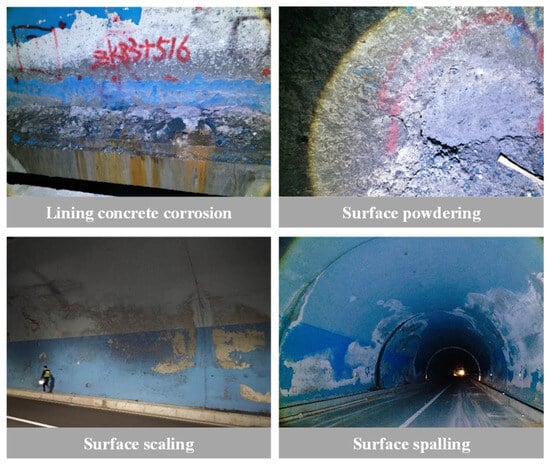
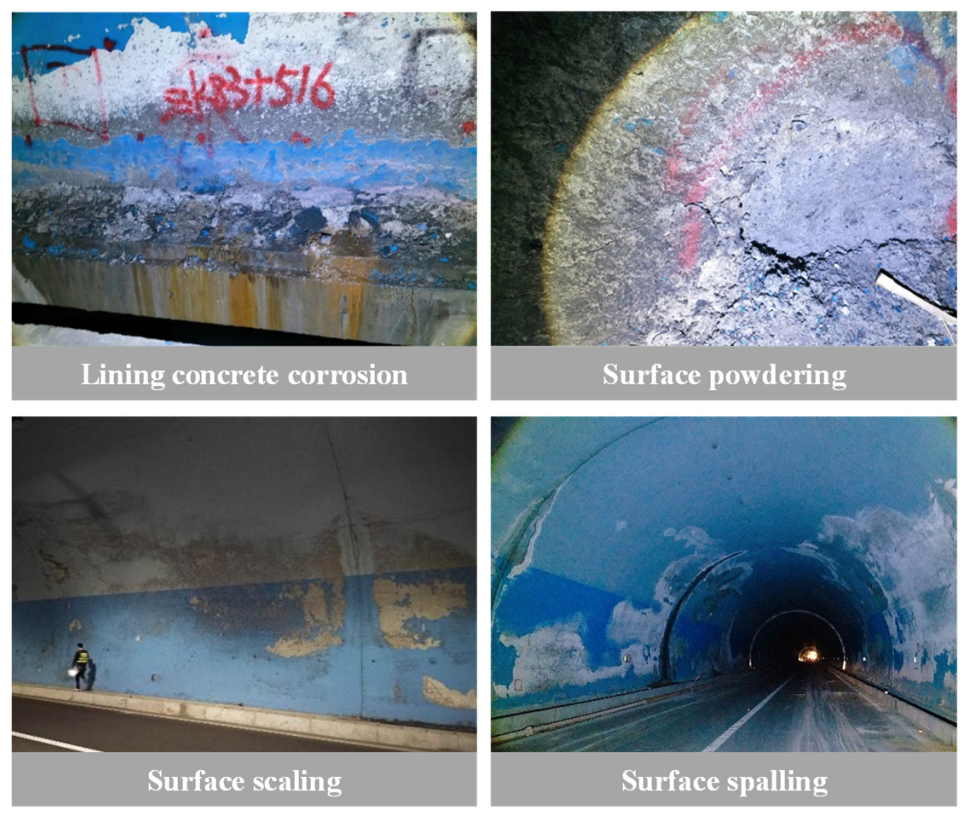
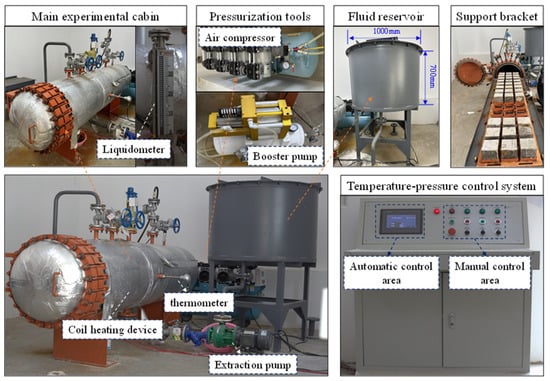
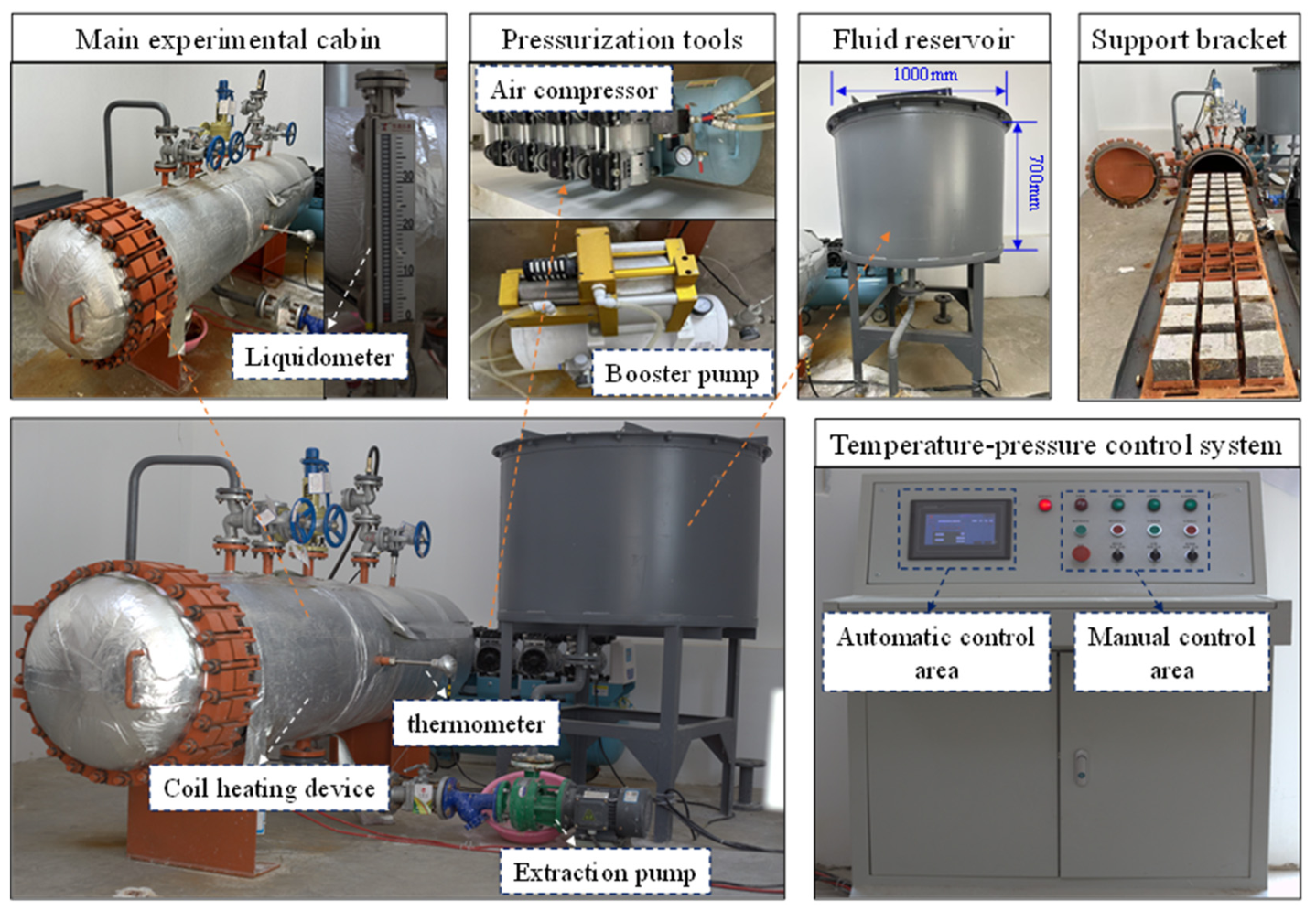
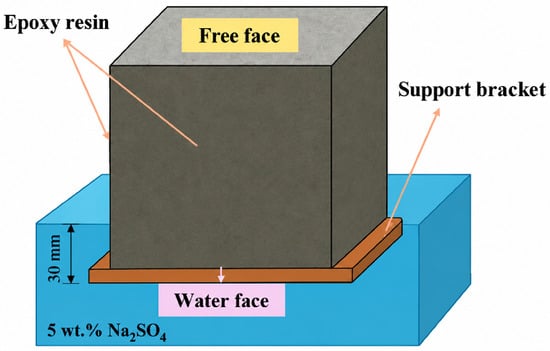
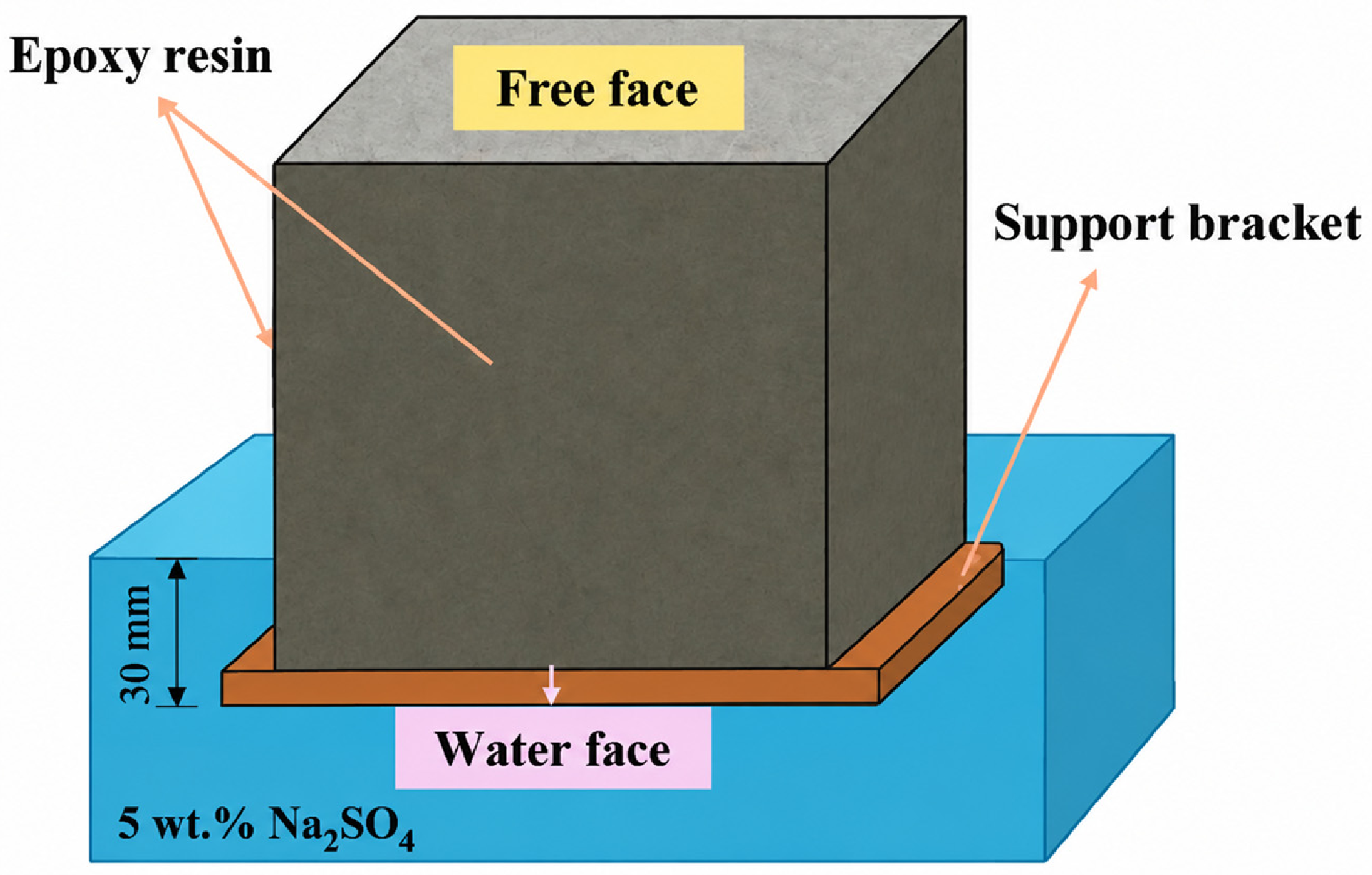
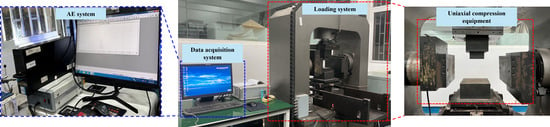
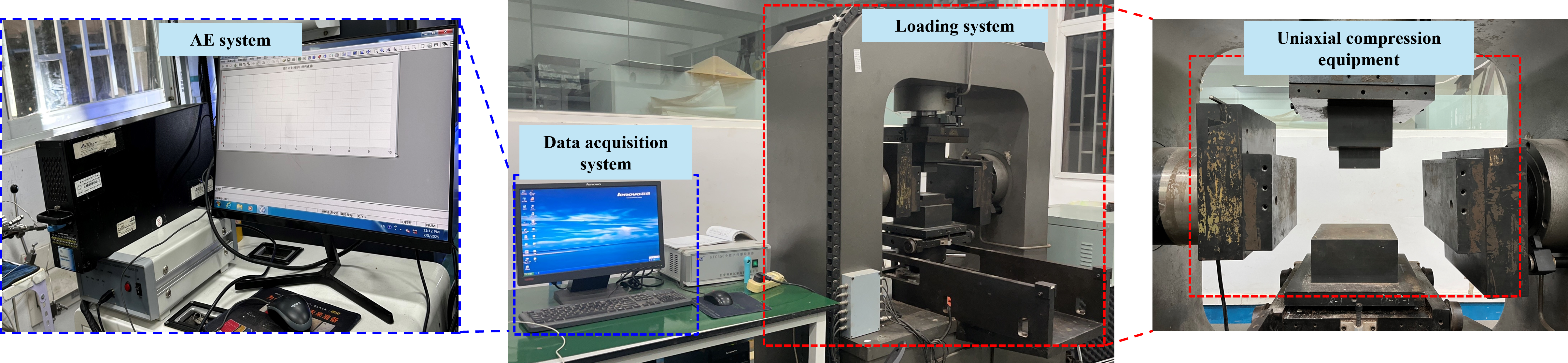
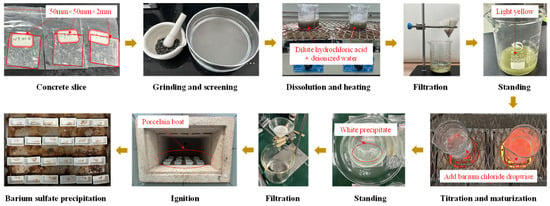
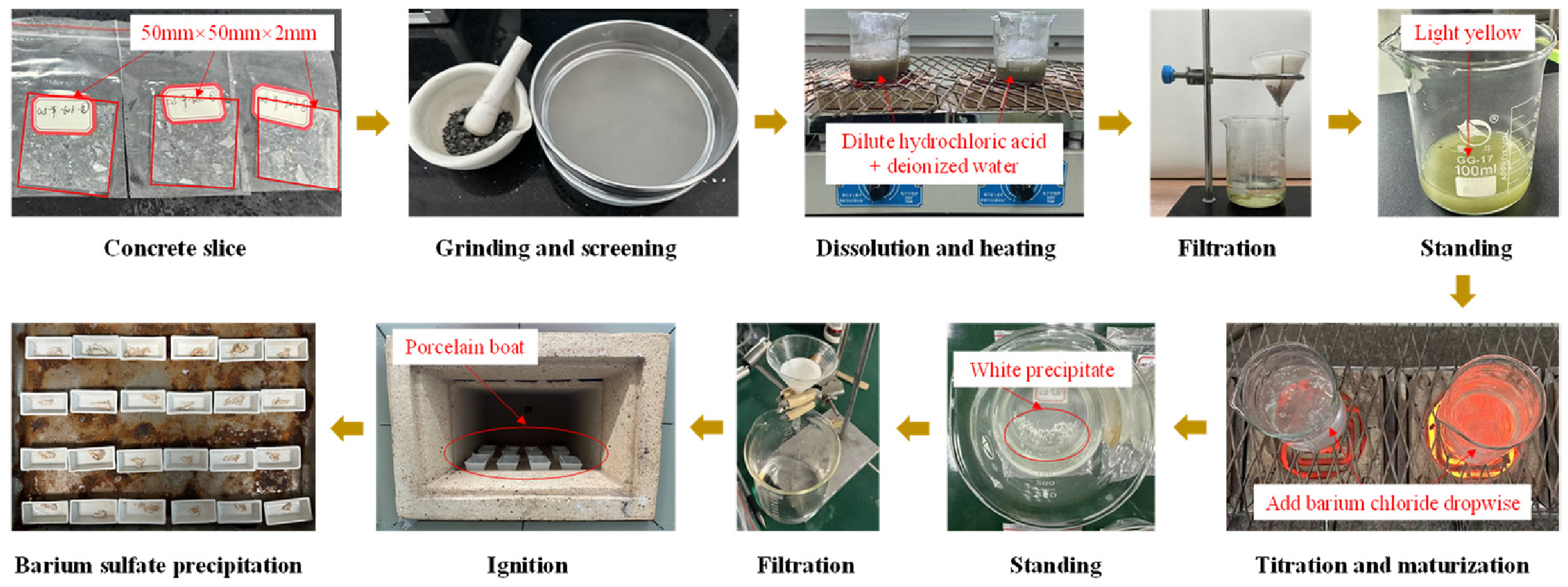
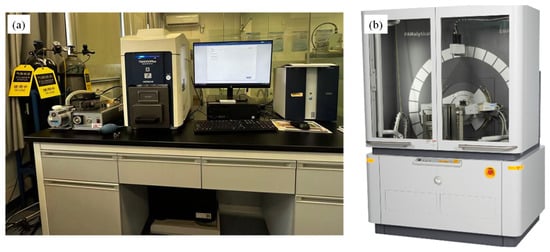
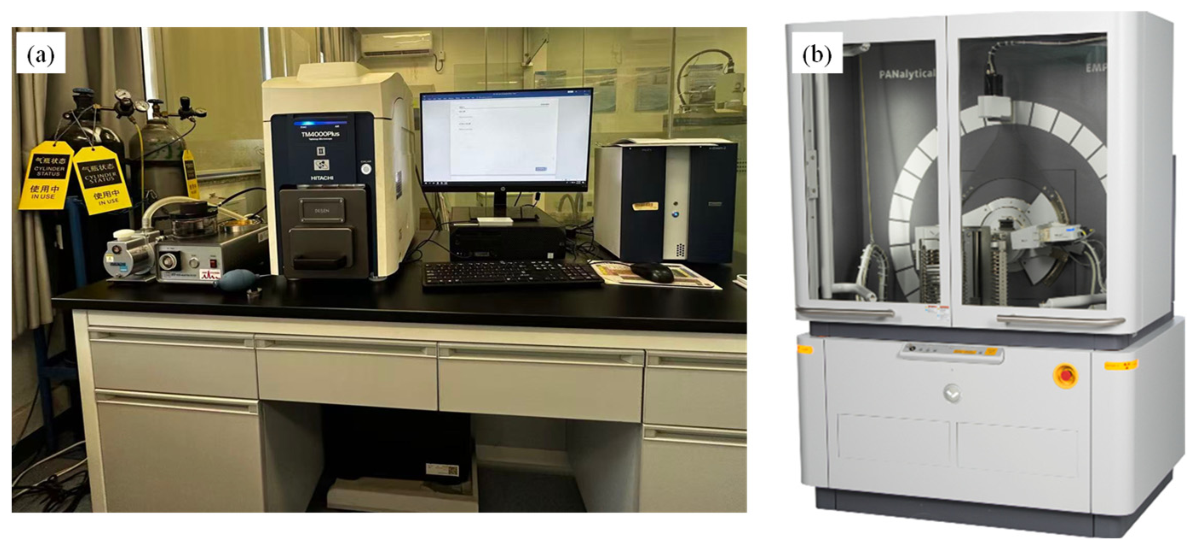
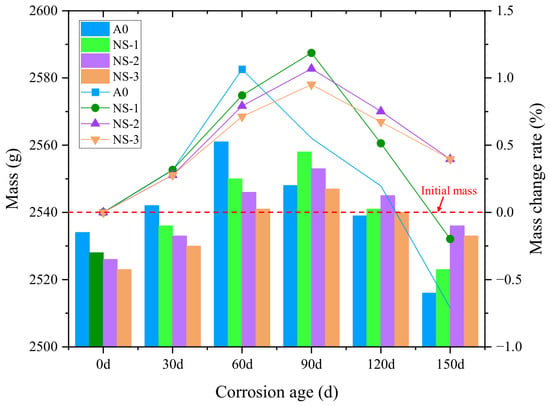
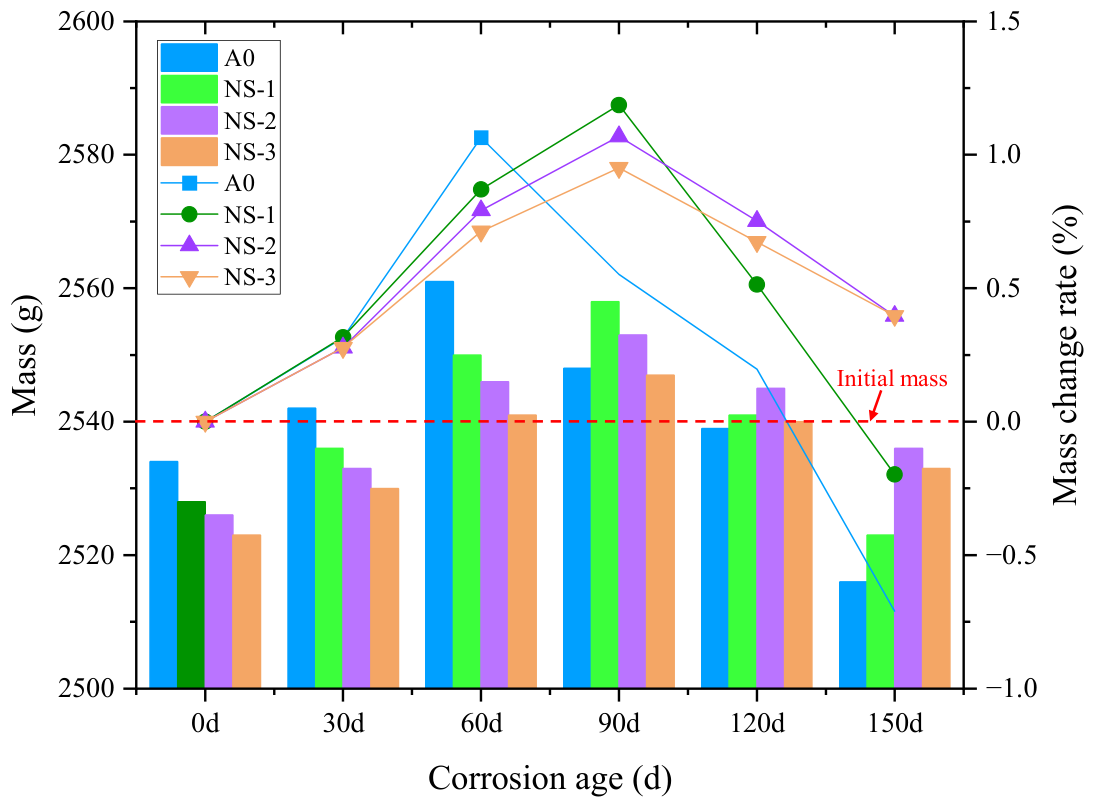
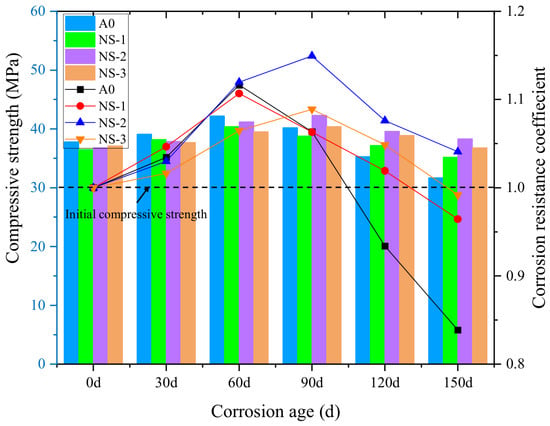
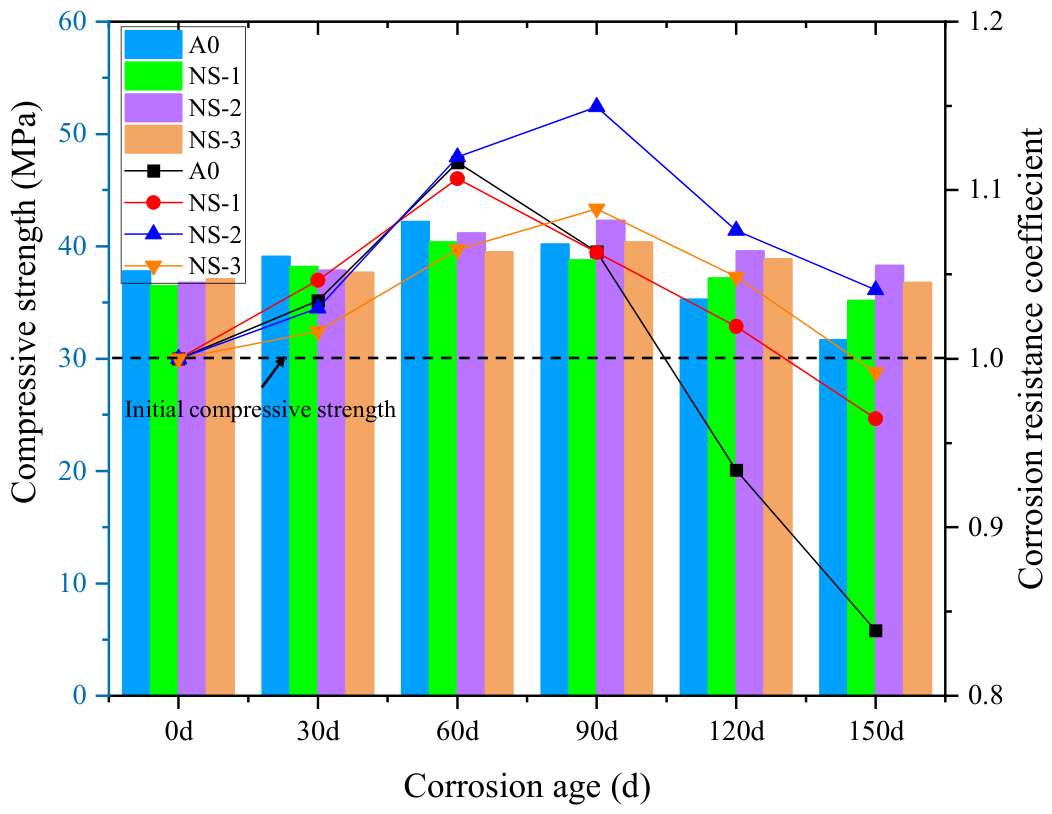
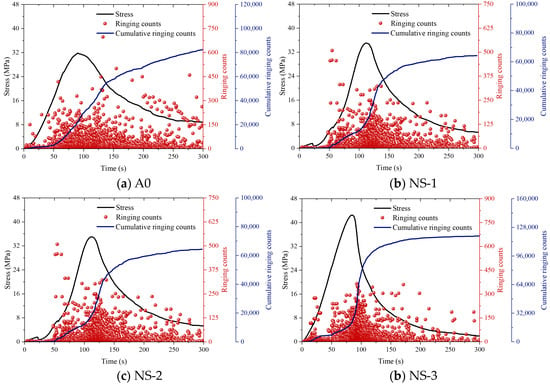
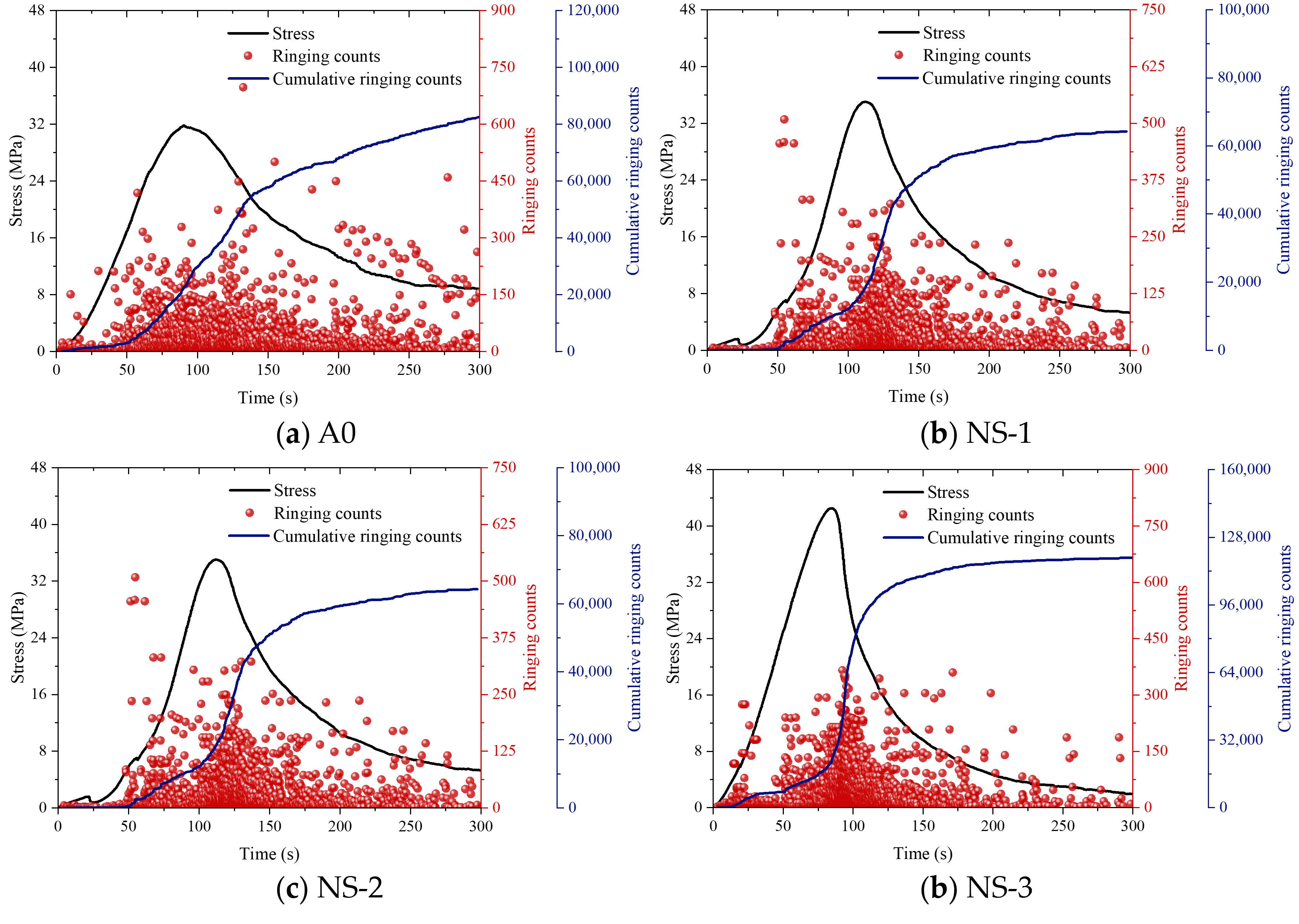
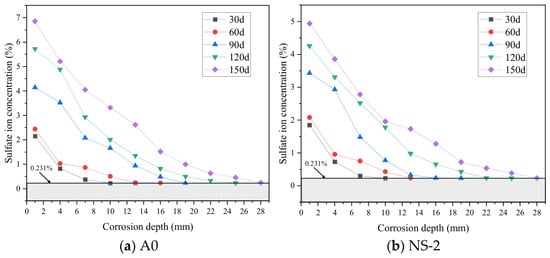
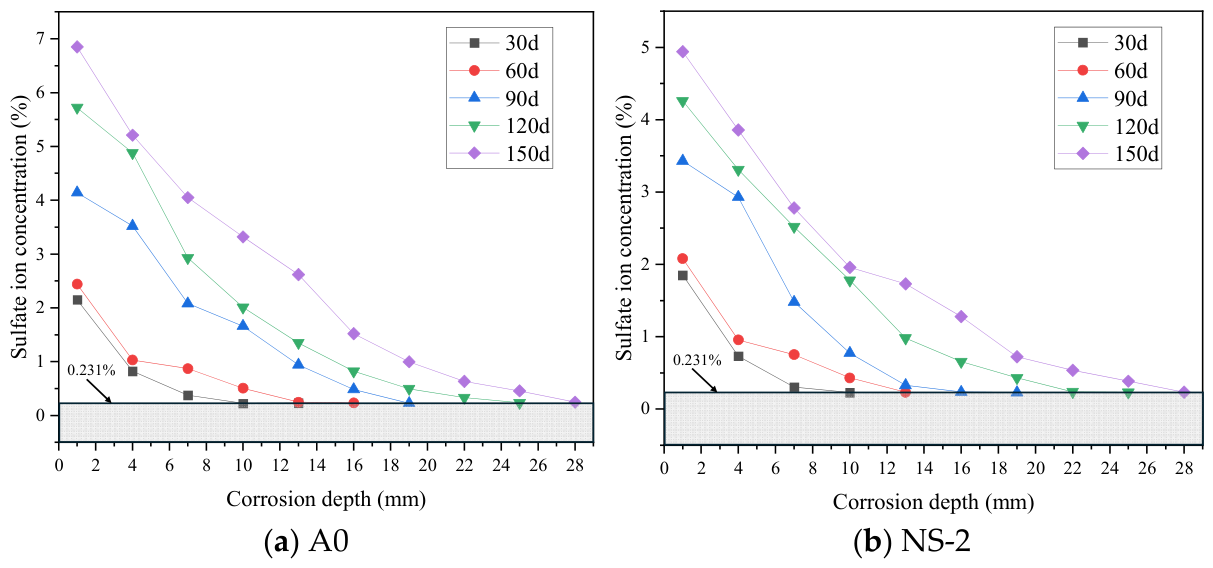
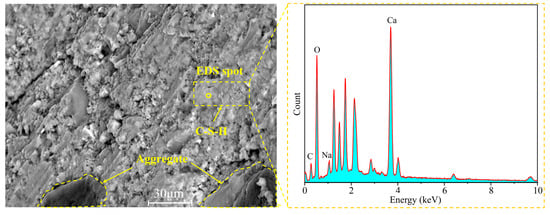
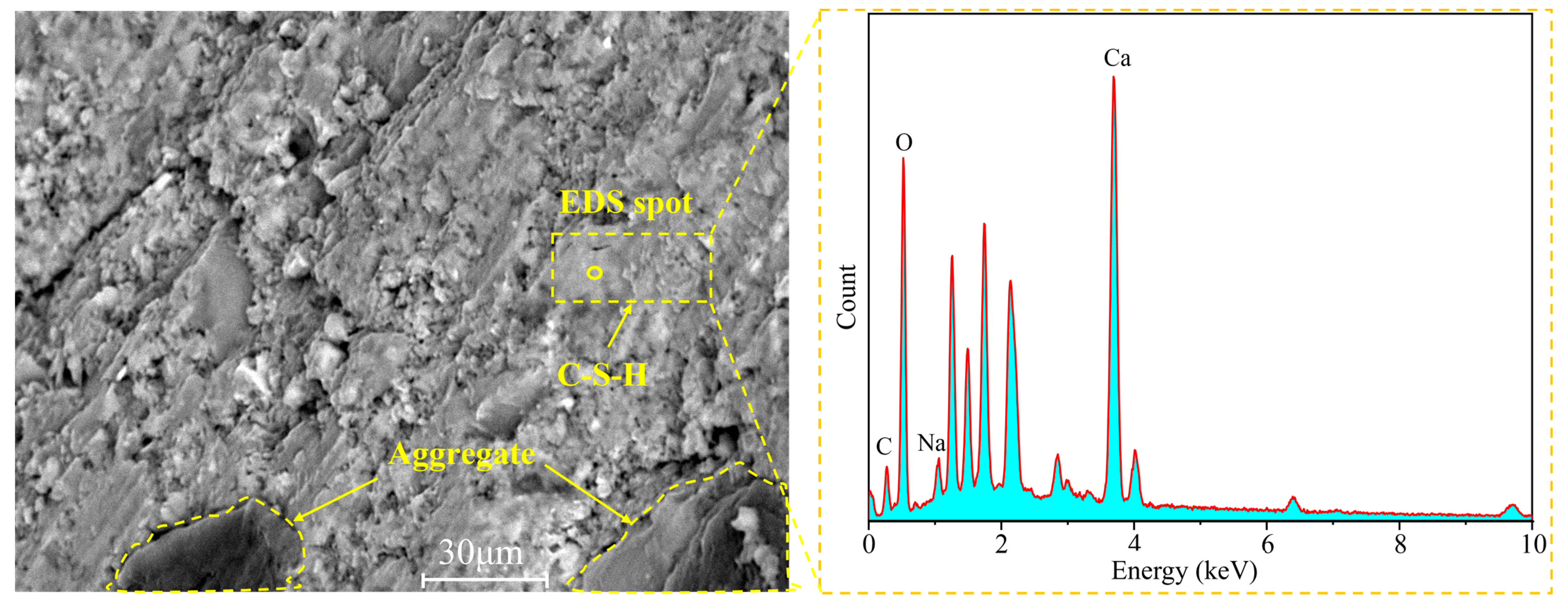
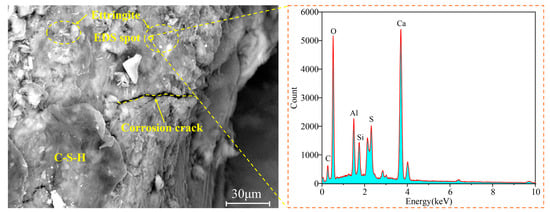
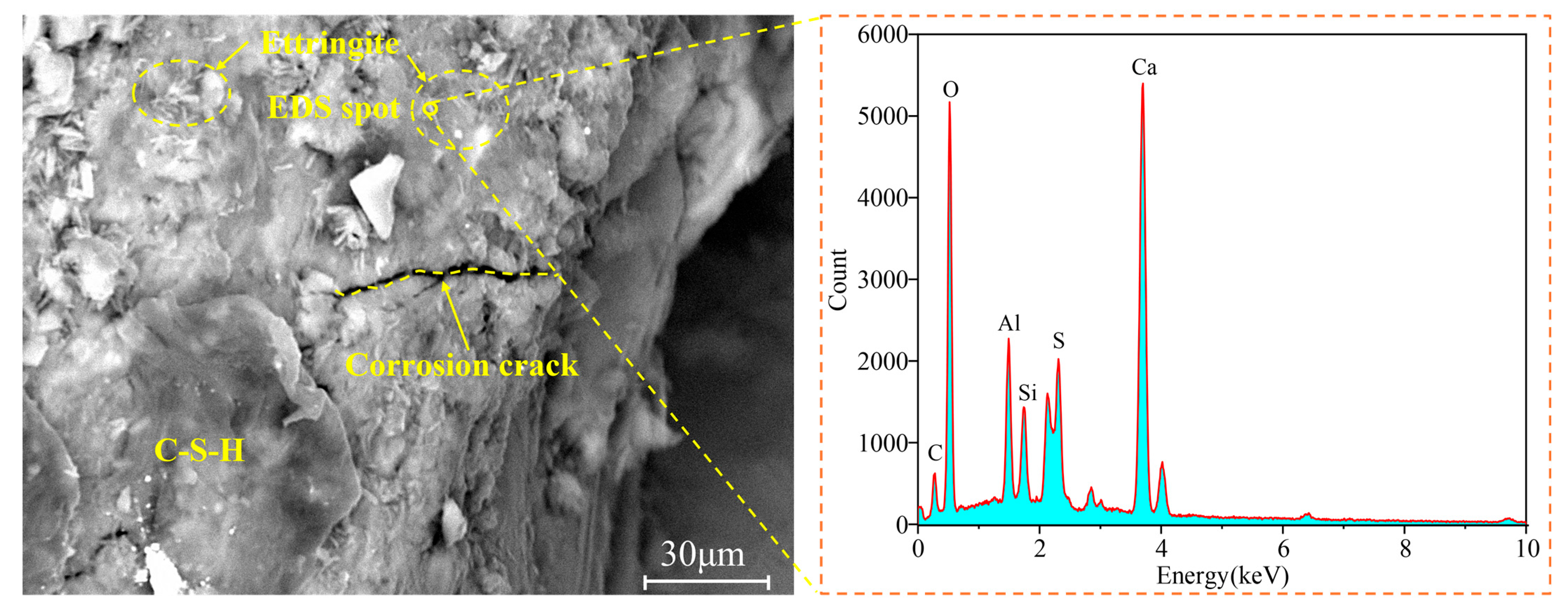
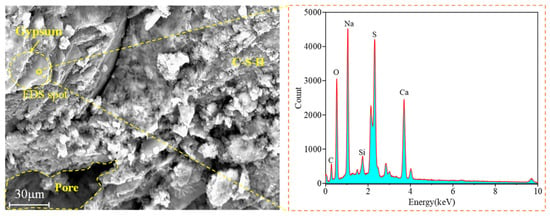
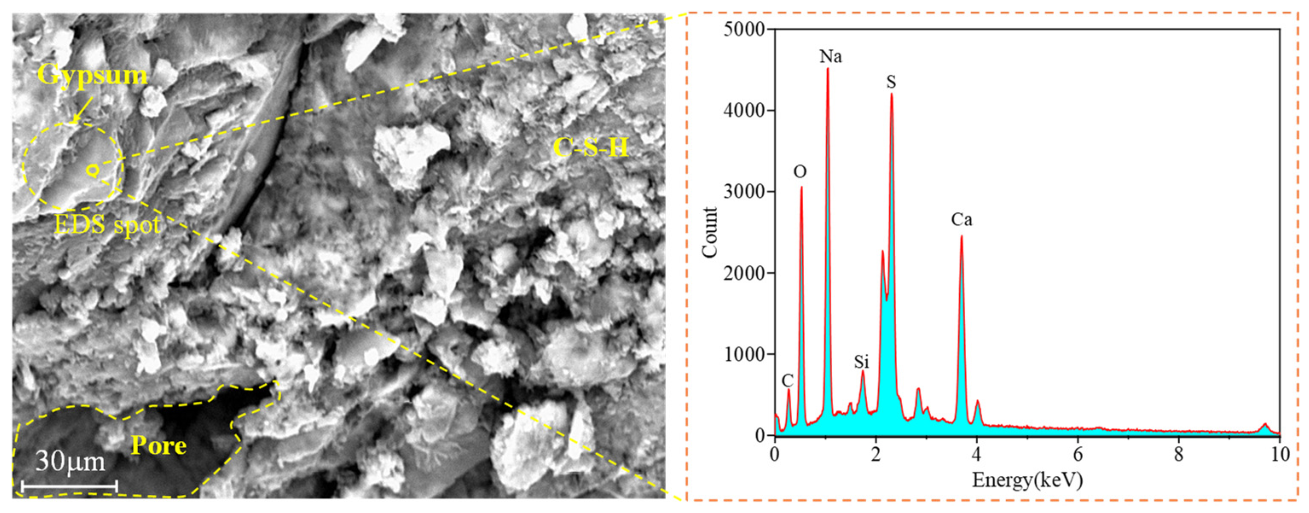
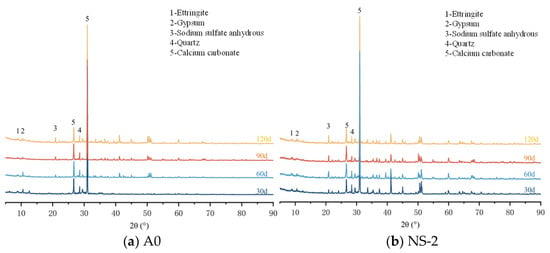
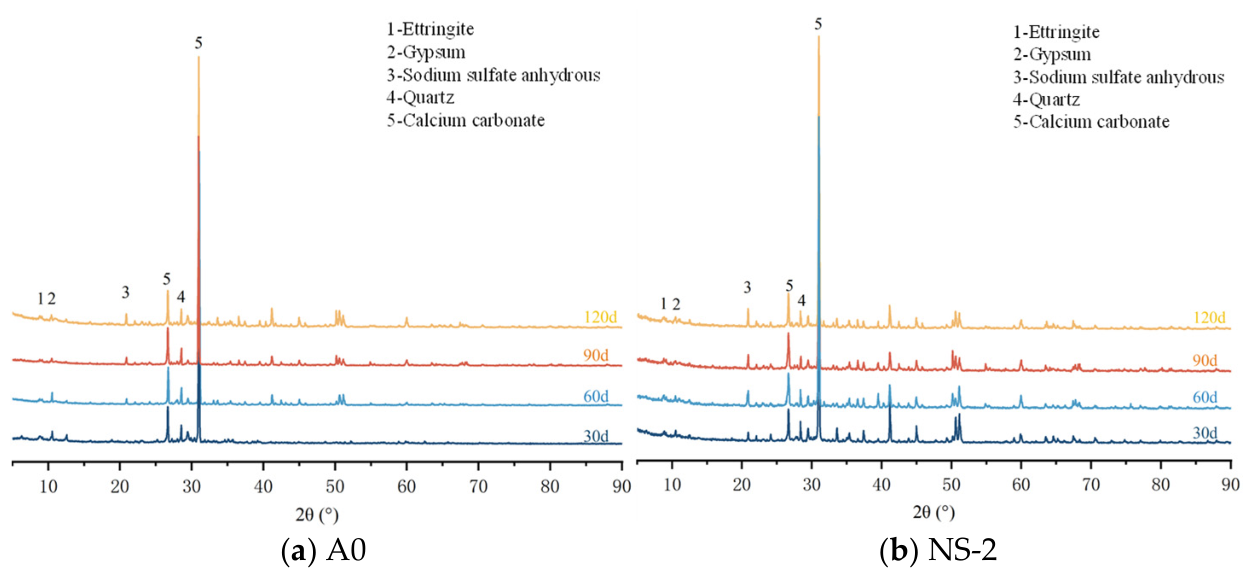
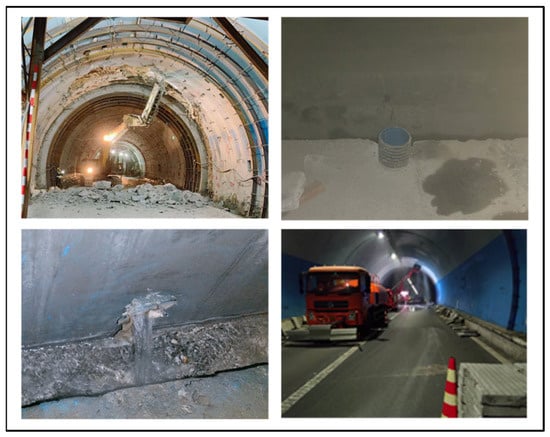
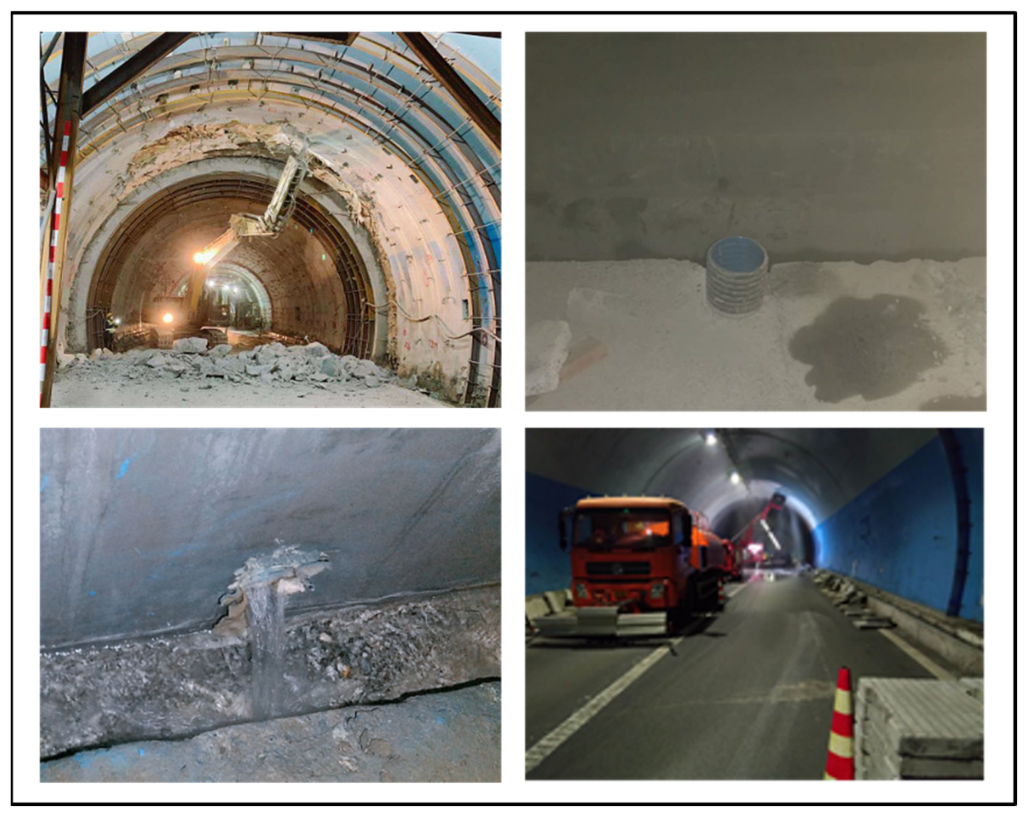

Disclaimer/Publisher’s Note: The statements, opinions and data contained in all publications are solely those of the individual author(s) and contributor(s) and not of MDPI and/or the editor(s). MDPI and/or the editor(s) disclaim responsibility for any injury to people or property resulting from any ideas, methods, instructions or products referred to in the content. |
© 2026 by the authors. Licensee MDPI, Basel, Switzerland. This article is an open access article distributed under the terms and conditions of the Creative Commons Attribution (CC BY) license.