


Abstract
Coal fly ash has emerged as a promising resource for developing multifunctional construction materials with integrated energy-storage capabilities. This structured narrative review examines fly ash-containing cementitious and geopolymer systems, fly ash-derived electroactive materials, and cenosphere-supported phase-change composites, with particular attention to their storage mechanisms, mechanical performance, durability, and potential building applications. By distinguishing electrode-level measurements from assembled-device performance and material-scale evidence from building-level functionality, the review identifies opportunities and limitations in integrating electrochemical and thermal storage into construction materials. Reported studies demonstrate laboratory-scale charge-storage functionality and measurable thermal-regulation effects, whereas long-term structural reliability, functional retention, safety, and building-scale operation remain insufficiently validated. An illustrative fixed-input screening compares a fly-ash-containing case with a no-fly-ash reference under an equal-mass cement-substitution assumption. Under the assigned material proxy coefficients, replacing 16 kg of OPC with 16 kg of fly ash reduces the A0 material-carbon proxy by 14.528 kg CO2-eq (23.38%); this conditional result does not establish equivalent strength, storage service, or service life. The review therefore identifies feedstock characterization, coupled mechanical-storage durability, device packaging, and service-specific assessment as priorities for translating fly ash-based storage concepts from materials to building components.
1. Introduction
Building energy storage is shifting toward material and component integration as photovoltaics, electrified heating, and climate disruptions increase demands for buffering, thermal regulation and resilience [1,2,3,4,5,6]. Embodied carbon is also an important design constraint [7,8,9], motivating safe, durable, and scalable storage compatible with building structures.
Thermal energy storage (TES) in walls, roofs, floors, and façades can attenuate temperature fluctuations and shift heating and cooling loads [10,11,12]. Phase-change materials (PCMs) provide latent-heat storage, while conductive cementitious composites, geopolymers, and structural supercapacitors offer electrochemical routes. Both must meet mechanical, fire-safety, maintenance, scalability, and life-cycle requirements for building integration [1,2,3,4,10,11,12].
Supercapacitors offer high power and cycling stability, but active-material costs and manufacturing complicate construction-scale deployment [2,3,4]. Fly ash can reduce clinker demand while contributing aluminosilicate glass, residual carbon, iron-bearing phases, spherical particles, and cenospheres [13,14,15,16]. Depending on activation, conductive additives and PCM integration, these constituents influence pore transport, charge storage, and thermal buffering [10,11,12,17,18,19,20].
Fly ash–cement zinc-ion devices and conductive-polymer-coated fly ash geopolymers demonstrate laboratory storage functionality [19,20]. Related cementitious, electrode and TES studies use different feedstocks and test scales [1,2,3,4,21,22,23,24]; their results cannot automatically establish building performance.
Existing reviews [1,2,3,4,25] already examine cementitious electrical storage, PCM/TES, mechanical performance, durability, and aspects of implementation or environmental assessment. Table 1 compares their declared scopes with the present review without treating limited emphasis as absence. Here the distinctive organizing principle is how fly ash is retained, converted, extracted, or removed across electrochemical and thermal pathways, together with the strength of evidence linking each pathway to a building function.
Table 1.
Scope comparison with related reviews and the present fly ash-focused synthesis.
Figure 1 outlines these pathways. Section 2, Section 3 and Section 4 cover materials and storage mechanisms; Section 5, Section 6, Section 7 and Section 8 assess durability, environmental and economic implications, building deployment and research needs.
Figure 1.
Author-composed schematic and conceptual renderings informed by [17,18,19,20,26,27]. Selected material textures, architectural views and illustrative elements were prepared with generative-AI assistance and then labelled, checked and assembled by the authors; they are not experimental images and have no measured scale. Lower panels show (a) the GeoAsh laboratory concept [19], (b) a non-fly-ash carbon-cement comparator [26], and (c) a cenosphere/PCM textile-reinforced concrete concept [27]. No third-party figure panel was reproduced.
Review Design and Literature Identification
Initial searches were conducted around April 2026 in Web of Science Core Collection and Google Scholar, followed by targeted literature updates and source checks through October 2026 using Crossref, OpenAlex, publisher pages and institutional repositories. No fixed earliest publication year was applied. The principal combinations joined (fly ash OR coal fly ash OR cenosphere) with (structural supercapacitor OR electrochemical energy storage OR geopolymer), (phase-change material OR thermal energy storage), (durability OR cracking OR moisture), and (life-cycle assessment OR embodied carbon OR building integration). The search supported a structured narrative review rather than an exhaustive systematic-review claim [28].
Titles and abstracts were screened for explicit fly ash involvement, a defined material role, a measured storage or supporting structural function, and sufficient test information for interpretation. Available primary articles and supplementary files of the reviewed studies were then checked for fly ash content or characteristics, active phases, cell and electrolyte geometry, voltage and current conditions, normalization basis, strength age, cycling protocol, PCM loading, thermal conditions, and evidence scale. Non-fly-ash cementitious and carbon-cement systems were retained only as labelled comparators.
Selection considered composition, test conditions, and available primary or supplementary evidence. Electrode, assembled-device, mechanical, and thermal-composite results were separated; incompatible test geometries or denominators were not pooled [29,30,31,32,33,34,35,36].
Unreported operating conditions were not inferred. Experimental measurements, proposed mechanisms, models, and building demonstrations were distinguished, particularly for durability and functional retention.
In Table 2, Table 3 and Table 4, NV means that a parameter could not be independently verified from the source material accessible for this review. NR is reserved for a parameter confirmed as not reported in inspected full text or supporting information of the reviewed studies. Missing operating conditions and normalization bases were not inferred or converted.
This review focuses on the retained or transformed roles of fly ash across electrical and thermal storage and the evidence needed for building-level claims, building upon cementitious-storage reviews [1,2,3,4,25].
2. Fly Ash as a Functional Precursor for Energy Storage
2.1. Chemical Composition and Phase Characteristics
Fly ash composition varies with coal source, combustion, and processing [13,37,38]. For energy-storage design, reactive aluminosilicate glass, residual carbon, iron-bearing phases, fineness, cenospheres, and accessible surface area can matter more than conventional calcium-based classification [13,38].
In cement, fly ash contributes pozzolanic reactions and microfilling; alkali activation forms geopolymer networks affecting pores and ionic transport [39,40,41]. The same ash can supply electroactive derivatives [19,20,22]. Its contribution therefore depends on the selected processing and device architecture.
Residual carbon can impair air entrainment and admixture demand in cement, yet contribute to conductive networks under controlled conditions [34]. Its benefit depends on distribution and connectivity; iron phases may also contribute composition-dependent redox or polarization responses.
Fineness, glass content, and activation affect binder pores [14,15,16], but pore refinement alone does not quantify device ion accessibility. Causal storage relationships require matched materials, curing, moisture, and electrochemical geometry.
The fly ash/slag study [42] describes binder pore regulation, not device retention; effects on durability and electrolyte access require device-specific testing.
Precursor selection should jointly consider phase composition, carbon, particle size, and accessible porosity, along with electrolyte and conductive-network continuity [13,14,15,16,17,18,19,20].
2.2. Particle Morphology and Cenosphere Characteristics
As illustrated in Figure 2, packing, connected pores, wettability, and added conductive phases influence transport. Spherical particles do not independently prove electroactive area or percolation; the dominant ions depend on the electrolyte.
Figure 2.
Original schematic by the authors, informed by studies of fly ash pore regulation and cenosphere morphology [14,17,18,19]. (a) Conceptual comparison of particle packing without and with fly ash; (b) connected pore/electrolyte pathways and an added conductive network among fly ash particles; (c) particle–binder interfaces with conductive additives and electrolyte; (d) cenosphere shell structure and alternative uses for PCM or electrolyte confinement. Particle packing, pores, and interfaces are conceptual; conductive networks require added phases. PCM-filled shells and electrolyte-containing pores illustrate alternative uses. Ionic species and thermal response depend on the selected matrix, electrolyte and PCM.
Cenospheres introduce additional structural functionality. These hollow aluminosilicate microspheres have low density, internal voids, and ceramic-like thermal stability, making them attractive for lightweight multifunctional composites [17,18]. In structural energy-storage systems, their primary role is not to provide high intrinsic electrochemical activity, but to regulate the physical framework in which electrochemical and thermal-storage processes occur. Their shell-cavity structures add multiscale pore networks, internal free volume, thermal buffering, and interface-rich configurations whose transport or thermal contribution depends on how the cavities and interfaces are used. Their properties also vary substantially with fly ash source; differences in particle-size distribution, wall thickness, chemical composition, and thermal stability provide guidance for selecting cenospheres for applications such as lightweight structural electrodes and phase-change material carriers [18].
Carrier selection must account for recovery, shell integrity, and controlled mixing, curing and filling; morphology alone does not guarantee lower cost or improved transport.
2.3. Activation Pathways
Fly ash is activated either into a matrix or into electroactive derivatives. Alkali activation produces geopolymer networks with tunable pores for electrolyte or structural functions [1,21,43]; waterglass and NaOH activation produce different gel structures and transport properties [39]. Cement–fly ash mixtures retain conventional processing compatibility while modifying hydration and pores [20].
Other routes retain ash, extract feedstock, or remove ash templates to produce active phases [22,24,35,44,45,46,47]. Alloy-based high-temperature TES [23] and cenosphere-supported organic PCM [48,49,50] have distinct service temperatures and cannot alone establish a combined building component.
These routes span mineral matrices, geopolymer electrolytes, derived electrodes, and thermal composites. Each must be evaluated for its actual fly ash role and measured service.
2.4. Functional Implications for Structural Energy Storage
Fly ash’s engineering value depends on demonstrated material and device function; construction compatibility, durability, and life-cycle benefit remain formulation- and service-dependent.
3. Fly Ash-Based Energy-Storage Materials and Device Architectures
Figure 3 classifies four routes: fly ash–cement composites, geopolymer devices, fly ash-derived electrodes, and cenosphere/PCM thermal composites. Fly ash functions respectively as mineral matrix, activated framework, electroactive feedstock, or PCM carrier.
Figure 3.
Original classification schematic by the authors, informed by [19,20,22,27,31,35,44,45,46,47,48,49,50]. (a) Conducting-network illustration, not a complete cell; separated electrodes and electrolyte/separator are required [20,31]. (b) Fly ash geopolymer example [19]; the montmorillonite system [21] is a non-fly-ash comparator. (c) Alternative retained-ash and derived-electrode routes [22,35,44,45,46,47], not sequential synthesis or load-bearing demonstrations. (d) Cenosphere/PCM concepts [17,27,48,49,50] require measured loading, confinement and cycling; the higher-temperature modified-fly-ash/alloy route [23] is a separate TES class. Rendered material textures are not experimental microscopy.
3.1. Fly Ash–Cement Structural Energy-Storage Composites
Fly ash–cement storage has been demonstrated at laboratory scale [20], where fly ash forms part of the ionic matrix and AC/Zn supplies the electrodes. In PEDOT-coated GeoAsh [19], the ash geopolymer is distinct from the active polymer. Neither shows intrinsic storage from untreated fly ash alone.
These composites require electrochemical performance alongside mechanical integrity and durability [20].
Ash effects on packing and pores vary with dosage, curing, and conductive additives; binder-strength improvements alone cannot establish storage retention. Electrode, electrolyte, and matrix contributions must be distinguished.
Activated structural carbon fibres can enhance electrochemical area [51], but benefits and tensile integrity must be verified separately in fly ash–cement devices.
Table 2 does not justify ranking fly ash–cement as the most practical option: moisture control, contacts, sealing, loading, and maintenance require component-scale qualification.
The non-fly-ash cementitious comparator [30] uses 30 mm cement/sand cubes cured for 28 d, approximately 20% porosity and 4.5 MPa matrix compressive strength. Its AC electrodes are approximately 2 mm thick, but their areal mass loading was not directly measured. CV uses −0.5 to 0.5 V at 0.02–0.10 V s−1; the EIS volumetric normalization uses liquid held in the pores, not packaged-device volume. These distinctions preclude importing its numerical electrode or pore-volume results into a structural-component ranking.
Table 2 distinguishes fly ash systems from non-fly-ash comparators and preserves each study’s electrode, device and strength reporting basis; entries are not common-condition rankings.
Table 2 reporting note: capacitance (F) and capacity (Ah) are different quantities. For a constant-current discharge, C = IΔt/ΔV and Q = IΔt; dividing by mass, area or volume requires the same explicitly stated denominator. Capacity reported as mAh g−1 is not relabelled F g−1. Device energy depends on the actual voltage range and discharge curve. No conversion between electrode and device energy, or between mass, area, and volume, was made without a verified denominator and geometry. Cycling retention is not coulombic efficiency, and compressive strength at an early curing age is not a structural design value.
Table 2.
Fly ash-containing structural storage systems and separately labelled mineral-matrix comparators.
3.2. Geopolymer-Based Energy-Storage Systems
Geopolymers provide tunable aluminosilicate networks and pores for structural or quasi-solid electrolyte applications [1,21,40,61].
Geopolymer chemistry, pore control, and ion exchange support functional design [41], while scale-up and supply-chain stability remain significant barriers [62].
Activator chemistry, precursor ratios, curing, and moisture govern geopolymer transport behavior [1,21].
The montmorillonite membrane in [21] is a non-fly-ash comparator: its MnO2/CNT electrode delivered 3310 mF cm−2 at 1 mA cm−2, while the assembled device gave 2094.4 mF cm−2 under 15 MPa and 65.43% retention after 10,000 cycles.
The fly ash-slag electrolyte study [32] separates modifier and electrode roles. The study reports ionic conductivity of 28.7 mS cm−1 with 1.0 wt% PEO, compared with 13.7 mS cm−1 for its unmodified control. A Cu–Co oxide/rGO/nickel-foam electrode gives 1003.14 mF cm−2 at 1 mA cm−2, while the separately assembled asymmetric device gives 113.59 mF cm−2 and 40.39 μWh cm−2 at 0.5 mA cm−2, with 90.3% retention after 2000 GCD cycles. The device voltage, normalization denominator, and cycling current are not specified in the comparative data. These are formulation-specific laboratory results, not a verified carbon footprint or construction route.
Studies of fly ash, slag, and metakaolin binders [63,64] provide mechanical context, not assembled-device performance.
Geopolymer tunability remains a design opportunity; printed or prefabricated devices still require coupled mechanical and environmental qualification.
3.3. Fly Ash-Derived Electroactive Materials
Fly ash may supply retained mineral phases, extracted feedstocks, or sacrificial templates for electroactive electrodes [22,24,35,44,45,46,47]. Performance belongs to the resulting electrode architecture, not ash origin; acid-treated electrodes [65] are not structural components.
The zeolite-derived electrode [66], retained PANI/FA composite [44] and carbon-microtube/FA/cement electrode [36] represent different material roles and test conditions. Reference [36] reports 669 F g−1 at 1 A g−1 in 3 M KOH for an electrode and 87 Wh kg−1 for a separate symmetric device. Its supplementary information specifies a PVA/KOH gel and calls the device-energy denominator the overall device mass, but does not provide an itemized packaged-device inventory. Neither electrode performance nor the presence of cement establishes load-bearing component service.
Retained-ash, extracted-feedstock, and removed-template routes must remain distinct; an electrode made using a sacrificial ash template is not necessarily an ash-containing structural material.
In [35], CFA-MDC reached 306.59 F g−1 in a three-electrode test; a CFA-FumMOF//CFA-MDC device delivered 4.0 mAh g−1 at 0.5 A g−1 and 2.48 Wh kg−1 at 1 A g−1. The 5.09 mAh g−1 value belongs to a non-FA control, while 98.90% after 5000 cycles is coulombic efficiency.
Table 3 distinguishes retained ash composites, extracted-feedstock electrodes, and ash-template routes from structural storage devices. Electrode and full-device metrics are reported separately. For example, Ref. [22] reports 1419 F g−1 for an electrode, whereas 26.6 Wh kg−1 and 95.7% retention after 10,000 cycles refer to its hybrid device. In [47], 522.1 F g−1 is a three-electrode result in 6 M KOH; the Na2SO4 and ionic-liquid device energies belong to separate configurations. No mass, area, or volume conversion is made without a verified denominator. The reported units are retained because cell architecture, voltage, and normalization differ; the entries are not a direct performance ranking. NV is used as defined under “Review Design and Literature Identification”.
Table 3.
Fly ash-derived electroactive materials for supercapacitors.
A fair benchmark set includes the non-fly-ash cementitious devices in Table 2 and commercial storage matched to the intended duty. A sensor buffer requires suitable leakage, discharge rate, and usable voltage, whereas overnight backup requires delivered energy and autonomy. The A0–A substitution and A–B inventory contrasts in Section 6 address assigned material inputs only; none is a commercial-product or equal-storage-service benchmark. Powder-electrode values in Table 3 are therefore kept separate from packaged batteries and supercapacitors.
Processing burdens must be inventoried despite a low-cost feedstock. Reference [36] reports waste-mask carbonization at 700 °C and KOH activation at 900 °C; these temperatures do not provide measured process energy per usable device. Reference [45] uses roasting, ion exchange and subsequent functionalization. Activation reagents, furnace duty, yield, washing, waste treatment, and active phases belong inside a complete cost and environmental inventory. The generic material factors in Section 6 do not quantify these specific processing routes.
3.4. Fly Ash- and Cenosphere-Based Thermal Energy-Storage Composites
Cenosphere PCMs can buffer indoor temperatures [48,49,50,67], unlike the high-temperature Al–12Si/modified-fly-ash alloy route [23]. Insulation effects should not be equated with measured latent-heat storage.
Surface-engineered cenosphere pastes provide a verified example of the importance of normalization [49]. The capsules contained approximately 28.0 ± 1.0 wt% PCM with melamine-formaldehyde sealing or 27.0 ± 1.0 wt% with silica sealing according to DSC, while the pastes used 20 wt% functionalized cenospheres in the solids. Paste-level latent heats were 7.2 ± 0.2 and 6.7 ± 0.4 J g−1, respectively. These are paste values, not capsule latent heats. After 50 cycles at 15–50 °C, the sealed particles changed in mass by less than 2%; this leakage test is not an independent measurement of retained latent heat.
The same study [49] reported approximately 30% lower thermal conductivity for the PCM-cenosphere pastes than the plain hydrated paste. Its 20 cm wall model used July weather near DTU and an indoor temperature of 22 °C. The integrated interior heat-flux demand was approximately 30% below plain paste but approximately 6% above the untreated-cenosphere mixture, with a simulated demand shift of up to 3 h. These model-specific comparisons are not measured annual whole-building HVAC savings. The stronger comparator performance also shows why thermal insulation and latent storage must be evaluated together.
A separate fly ash foam-concrete study [29] illustrates the need to preserve loading denominators. Its PCM18D-30% batch contained 2.25 kg cement, 0.45 kg fly ash, and 1.35 kg commercial PCM; the 30% label refers to the original reference cement dosage, not the final composite mass fraction. DSC at 10 °C min−1 gave 44.73 J g−1 melting and 41.76 J g−1 freezing enthalpy for the selected composite. The study reports 4.5 MPa compressive strength at 28 d, compared with 13 MPa without PCM, and 55.3% lower conductivity. Laboratory prototype heating and cooling were delayed by approximately 3 and 8 h under its own protocol. It does not establish annual HVAC savings, long-term latent-heat retention, or a load-bearing storage wall. Inconsistent curing temperatures and cycle durations in the source prevent assigning a single verified exposure protocol.
Table 4 records thermal storage, leakage, and application evidence separately. Material or chamber results do not establish long-term wall, roof, or floor performance. Future component validation should measure usable heat within the operating temperature interval, leakage, and latent-heat retention after exposure, mechanical serviceability, fire response, and actual HVAC demand. A cradle-to-gate study of fly ash/nitrate/expanded-graphite PCM [68] concerns medium-temperature TES; its environmental result must not be transferred to an organic-PCM building envelope without equivalent temperature service and a new inventory.
Table 4.
Thermal-storage evidence with explicit normalization and application boundaries.
The LC3/FAC-PCM study [33] found improved temperature regulation but poorer mechanical and transport durability associated with porous interfaces and fewer hydration products. Loading efficiency and ratio have different definitions and cannot be converted directly into final mortar PCM content or annual savings. See also [69].
4. Charge Storage Behavior and Structure–Property Relationships
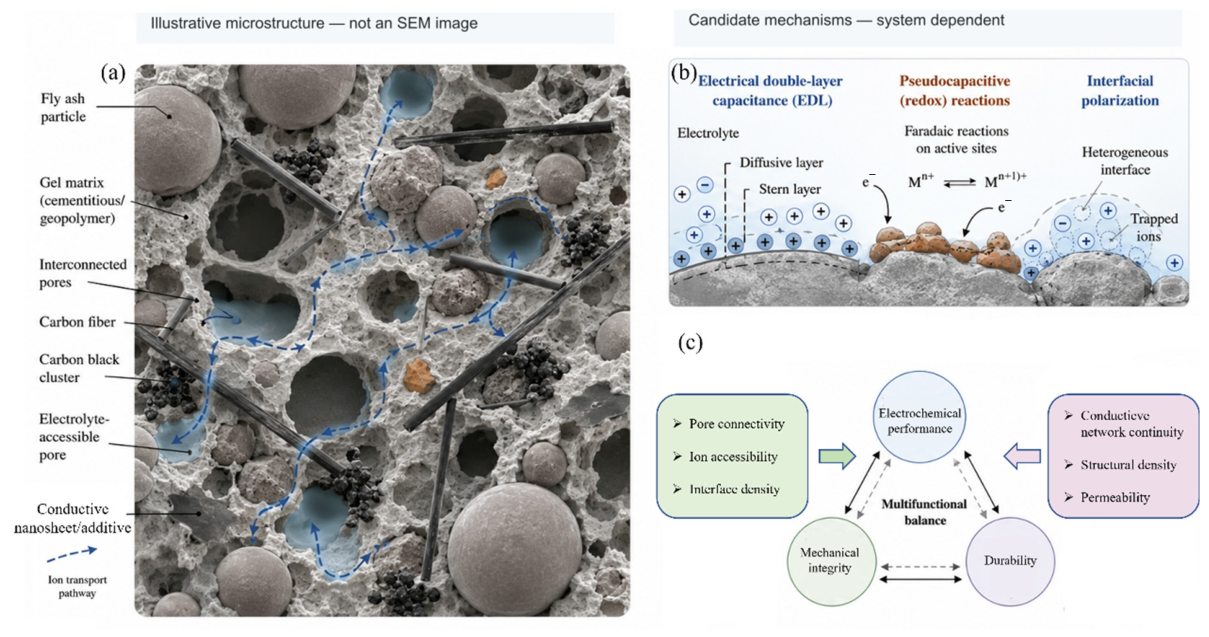
Figure 4 illustrates the conceptual microstructure, candidate storage mechanisms, and structure–property relationships. Storage mechanisms are evaluated separately for electrodes, complete devices and thermal composites [70].
Figure 4.
Author-composed microstructure and mechanism schematic informed by [20,31,70,71,72,73,74,75]. Generative-AI assistance was used for selected illustrative textures in panel (a), followed by author labelling and scientific review; panel (a) is not an experimental SEM image, measured pore geometry or spatial scale. Panel (b) presents candidate electrical-double-layer, redox and interfacial-polarization mechanisms that require separate confirmation in each system. Panel (c) is a conceptual trade-off map. No experimental dataset or third-party figure panel is reproduced.
4.1. Heterogeneous Charge Storage in Fly Ash-Based Systems
Charge at conductive carbon/electrolyte interfaces can be stored in electrical double layers; active oxides and polymers can support redox storage [22,34,35,44,45,46,47,73,74,75]. Neither mechanism is universally intrinsic to fly ash, and interfacial polarization alone does not prove recoverable capacity.
CV peaks, curve shape, or equivalent circuits do not uniquely establish mechanisms in Figure 4b; phase-specific controls and electrochemical/chemical evidence are required.
4.2. Pore Structure, Ion Accessibility, and Interfacial Density
The accessible pore network depends on connectivity, tortuosity, wettability, retained liquid, and electronic percolation. Mineral characterization [17,18] supports morphology descriptions, whereas direct electrochemical measurements in the assembled device are needed to determine accessible charge-storage area and ion transport. Cenosphere cavity volume used for PCM loading must not be counted automatically as an electrochemical double-layer surface.
Pore connectivity, wettability, and retained electrolyte can favor ion access, while greater porosity may reduce load-bearing capacity. Densification can improve mechanical performance yet restrict accessible pathways, and additional conductive filler can alter workability, interfaces and environmental burden. These competing effects depend on composition and test state; the available studies do not establish a universal quantitative pore–transport–storage relationship for fly ash systems.
Reference [31] reports that increasing fly ash substitution improved electrochemical response while reducing compressive strength, with FA40 giving 831 mF cm−2 and 15 MPa. The available results do not establish a quantitative pore-size/capacitance relationship. A separate ionic-conductivity change from 13.7 to 28.7 mS cm−1 in [32] concerns PEO modification of a fly ash-slag electrolyte, not an ash-only effect. These within-study observations motivate matched pore/transport/mechanical testing; they cannot be pooled as a causal law or used to validate the A inventory recipe.
4.3. Building-Relevant Electrochemical Metrics, Conductive Networks, and Interfacial Effects
Electrochemical comparisons require the cell type, current or scan rate, voltage limits, discharge treatment, and mass, area, or volume denominator [1,2,3,4,70,73,74,75]. A three-electrode working-electrode value does not establish an assembled two-electrode device result. Areal and volumetric metrics aid geometrically constrained component design when electrode, electrolyte, and packaged-device dimensions are declared. Table 2 and Table 3 retain source-reported metrics: missing electrode area, volume, mass coverage, or cell conditions prevent defensible conversion to a common basis. Their entries describe the evidence rather than rank component performance.
Standby service depends on how much charge remains available between charging and use. Self-discharge should be assessed from open-circuit voltage decay after a stated charging and conditioning protocol; leakage current should be reported separately during a defined voltage hold. Initial voltage, hold time and temperature are needed to interpret either result. A fitted self-discharge resistance, such as the electrode-model parameter in [34], is not a measured building-device autonomy rating. These losses can erode low-power sensor buffering or outage reserves even when short-cycle coulombic efficiency is high [75].
The usable voltage window must be verified for the electrode–electrolyte pair, including water decomposition and other parasitic reactions in aqueous formulations; it is not a universal fixed ceiling [74,75]. Connecting matched cells in series raises the pack voltage while reducing the equivalent capacitance. Differences in capacitance or leakage can produce unequal cell voltages, requiring balancing, monitoring, insulation, and reliable interconnects. The series-connected GeoAsh demonstrations [19] establish laboratory connectivity, not a qualified building-voltage module.
Power capability requires complete-device discharge-rate, equivalent-series-resistance, and voltage-sag measurements within a declared usable voltage range [74,75]; low-rate capacitance alone cannot establish response to PV fluctuations or a short power demand. Temperature-dependent capacitance, resistance and leakage should be measured across the intended service range, because electrolyte transport and parasitic reactions affect available energy, power and aging. A room-temperature cycling result or an electrothermal heating demonstration does not establish retained storage under seasonal temperature changes. Geometry, load path, and electrical and fire safety must be assessed alongside these operating metrics.
Conductive-network formation governs this balance. Carbon black, carbon fibers, CNTs, graphene derivatives, conductive polymers, and residual carbon can provide electronic pathways, but excessive additions may reduce workability, increase cost, or weaken interfaces. Fly ash particles and cenospheres influence these networks through packing, pore connectivity, interface density, and electrolyte distribution.
Coulombic efficiency measures charge recovery under specified cycling conditions and differs from retained capacitance or energy [76]. Potential ion trapping and side reactions must be examined in the particular electrode-electrolyte system; the fly ash origin does not establish their magnitude.
4.4. Mechanical–Thermal–Electrochemical Trade-Offs for Building Integration
A material labelled structural must satisfy the relevant load path and serviceability requirements in addition to storing charge [70,77]. Compressive strength alone does not establish flexural or tensile capacity, fracture energy, reinforcement bond, creep, shrinkage, or cyclic-load resistance. For example, the 5.5 MPa result in [20] is a one-day material strength, not a design strength for a floor slab.
The cenosphere-mortar study [67] reports compression and flexure together, 36.5 and 6.2 MPa at 28 days for its reported 20% replacement mixture; this is more informative than compression alone, but still does not establish reinforced component performance. In [49], changing the sealing interface increased paste compressive strength by more than 50% relative to MF sealing, whereas the reported interface tensile values come from atomistic simulations and are not experimental structural tensile strengths.
A within-study mechanical comparison is available in [19]: uncoated GeoAsh gave 44.2 ± 9.4 MPa, the HCl-only control 31.8 ± 3.9 MPa, and PEDOT-coated material approximately 38.0 MPa. These compression results use separate 10 mm cubes, whereas electrochemical testing uses a different specimen geometry. They identify a treatment-related strength trade-off, not retained storage during structural loading, and do not establish a pore-controlled multifunctional optimum.
Coupled evaluation should measure residual load-bearing capacity and storage response during and after loading, cracking, and environmental exposure. Required records include specimen geometry, loading rate, test age, moisture condition, reinforcement, crack width, creep or shrinkage history, and device current/voltage limits. A matched-control design is needed to distinguish effects of the ash, conductive filler, and electrolyte.
Fibre and carbon-network studies [78,79] provide comparator evidence about multifunctional design. Their behavior in another binder, electrode or loading geometry is not transferred quantitatively to fly ash PCM or geopolymer systems. Two-electrode device measurements are reported separately from three-electrode working-electrode tests in Table 1 and Table 2.
Multifunctional balance requires direct evidence for each claimed service. The following durability and life-cycle sections therefore identify what is measured, what is contextual and what remains an assessment requirement.
5. Durability and Long-Term Serviceability of Building-Integrated Thermal–Electrical Storage Materials
Matrix durability, electrochemical device aging and PCM stability are distinct [80,81,82,83,84,85,86,87]. Binder survival or isolated laboratory cycling cannot by itself establish long-term storage function under building exposure.
Exposure to moisture, carbonation, chloride, freezing, cracking, or heat requires paired structural and storage measurements; binder microscopy or strength alone cannot quantify residual capacitance or latent heat.
Figure 5 proposes mechanisms and paired validation tests rather than experimental aging curves. SEM/EDS, FTIR, and XRD diagnose materials changes but cannot replace device-retention measurements.
Figure 5.
Conceptual degradation and validation map informed by reported mechanisms in [80,81,82,83,84,85]. Selected state-change textures and icons were prepared with generative-AI assistance and then labelled, checked, and assembled by the authors. They are illustrative rather than experimental micrographs or measured aging data. The CV, GCD, and EIS sketches show proposed measurements only. Matrix-durability studies motivate exposure hypotheses but do not establish complete-device retention; [84] is a slag/metakaolin binder comparator. No third-party figure panel was reproduced.
Previous studies show that degradation mechanisms in alkali-activated systems differ fundamentally from those in conventional calcium silicate hydrate-based materials. Bernal and Provis noted that long-term deterioration is mainly governed by carbonation-induced pore-solution changes, alkali-related reactions, and drying-shrinkage cracking [80]. In fly ash-based geopolymers, these processes are further coupled with ongoing microstructural evolution, including continued geopolymerization and crystallization [82]. Magotra and Jee systematically reviewed the durability of fly ash-based geopolymer concrete under chloride exposure, sulfate attack, and high-temperature conditions, emphasizing the strong influence of activator chemistry and curing conditions on long-term performance [83].
5.1. Moisture Effects, Ionic Transport, and Thermal-Storage Stability
Moisture, carbonation, chloride, freeze–thaw, cracking, and temperature influence pores, ionic transport, conductive networks, and PCM confinement [1,2,3].
Drying may raise electrolyte resistance; excessive moisture may destabilize contacts or promote leakage and parasitic reactions. Moisture management is therefore crucial.
In [49], sealed cenospheres lost less than 2% mass after 50 cycles at 15–50 °C, but this does not establish latent-heat retention. The high-temperature alloy PCM in [23] retained 93.3% of latent heat after 100 cycles; service conditions differ.
Qualification should combine humidity-controlled EIS, drying–rewetting cycles, absorption and post-exposure leakage, and thermal-cycling tests.
In [33], PCM-related thermal benefits coincided with mechanical and transport-durability losses. Electrochemical retention after moisture, chloride, carbonation, or freezing requires separate paired measurements.
5.2. Carbonation, Shrinkage, Pore Evolution, and Storage Retention
Binder reactions and pore evolution can affect ion transport, but binder references [43,80,81,82,83,84,85,86,87,88] do not establish full-device storage lifetime.
Long-term tests should jointly track mechanical strength, electrochemical retention, latent heat, conductivity, pore evolution, and dimensional change.
Ten-year fly ash geopolymer results [82] show matrix evolution, not ten-year device retention; calcium-activated binder results [88] likewise cannot establish storage lifetime.
The slag/metakaolin study [84] is a non-fly-ash comparator and does not demonstrate fly ash device degradation.
5.3. Environmental and Mechanical Degradation
Cracks and environmental exposure can disrupt conductive contacts near percolation [1,2,3,4] and weaken PCM or matrix interfaces; coupled functional measurements are required.
Freeze–thaw and crack-exposure studies on ordinary binders [81] inform test design, but residual strength cannot substitute for capacitance or usable-energy retention. Published results reviewed here do not quantify complete-device storage retention after repeated freeze–thaw, carbonation, or chloride exposure. Short-term temperature operation and charge–discharge cycling address different endpoints. Paired measurements of strength, electrical continuity, capacitance, impedance, and leakage after a defined exposure remain necessary.
Mineral-matrix heat resistance [85] does not establish complete-device fire safety. PCM combustion, electrolyte leakage, gas, shorts and post-fire strength, and storage require assembly-level tests.
Service assessment should link mechanical damage and exposure to impedance, capacitance, PCM leakage, latent heat, and conductivity retention.
5.4. Durability Assessment
The component-level protocol should pair each conventional exposure test with measurements of storage-device function before and after exposure. Table 5 identifies representative single-domain standards and the corresponding device adaptations; none of these standards alone certifies a structural storage element. Temperature, humidity, state of charge, crack width, geometry, and aging history must be stated.
Table 5.
Exposure-specific standards and additional tests needed for multifunctional storage components.
Across these exposures, the deciding question is whether residual structural capacity and usable charge or heat remain sufficient for the intended component service. Measurements must be paired on the same or matched samples and interpreted against the intended use.
5.5. Electrical Safety and Reinforcement Corrosion
Electrical qualification requires insulation, leakage, and short-circuit testing under wet conditions, collector corrosion assessment, sealed penetrations, and safe disconnection. Alkaline/acidic electrolytes, zinc salts, polymers, and organic PCMs introduce hazards absent from the bare mineral matrix; matrix strength does not establish device fire safety.
Two distinct corrosion pathways must be considered. Carbonation can lower pore-solution alkalinity and destabilize steel passivation, while chloride ingress can induce localized depassivation and pitting. The response depends on precursor chemistry, alkalinity, redox environment, moisture, and steel type [80,98]. Recycled carbon-fibre or pore-refinement results do not establish universal steel passivation in fly ash-containing devices. Storage electrolytes and electrical connections introduce additional conditions that require direct corrosion testing rather than transfer of Portland-cement thresholds to alkali-activated systems.
6. Life-Cycle Assessment Considerations and Illustrative Material-Input Screening
Environmental performance depends on full material and process inputs, delivered service and life cycle. Fly ash savings may be offset by additives, activators, collectors, sealing, or replacements; Table 6 therefore compares assessment considerations, not universal rankings.
Table 6.
Material-specific cost and environmental assessment considerations without universal ranking.
Figure 6 maps proposed cradle-to-gate, use, and end-of-life assessment stages. Figure 7 quantifies listed material inputs only, not the entire framework.
Figure 6.
Proposed life-cycle accounting framework. This diagram identifies stages that a future complete LCA could include. The numerical screening in Figure 7 includes only listed material-input proxies; separately inventoried manufacturing, transport, installation, use, maintenance, replacement, and end-of-life stages are not calculated [43,99,100,101,102,103,104,105,106,107,108,109,110,111,112,113,114,115,116,117].
Figure 7.
Illustrative fixed-input substitution between the no-fly-ash reference A0 and fly ash case A: (a) assigned material-carbon proxies; (b) relative changes in cost, material-carbon proxy, and embodied-energy proxy. A replaces 16 kg OPC with 16 kg fly ash and holds all other assigned inputs unchanged. These are screening assumptions, not harmonized cradle-to-gate results or evidence of equal mechanical, electrical, or lifetime service. The separate B-module scenario is described in Supplementary Section S1.
6.1. Embodied Carbon, Resource Utilization, and Building-Level Life-Cycle Value
As operational building energy falls, embodied impacts matter more [7,8,9,106]. Fly ash substitution, however, must be assessed alongside added chemicals and manufacturing burdens.
Fly ash can displace clinker, while cenosphere recovery and geopolymer activation add processing burdens [1,2,43]. Carbon and cost comparisons require explicit inputs and equivalent service.
A nominal 1 m2 panel is a geometric unit, not an equivalent functional unit [99]. Comparisons must match delivered energy, usable voltage or thermal range, structural service, lifetime, and replacement rates.
6.2. Cost Perspective
Low ash price alone does not demonstrate low integrated cost; collectors, reinforcement, seals, controls, installation, inspection, and replacement contribute to project expense.
Cenosphere recovery incurs separation, grading, etching, sealing, and PCM filling; qualified yield and energy demand govern cost [17,48,49].
Costs for TES should be normalized to usable heat within the intended temperature window, and electrical storage to lifetime delivered energy for equivalent service. On a consistent batch basis, the cost per qualified carrier mass is Cqualified = (Cfeed + Cseparation + Cdrying + Ctreatment)/Mqualified, where Mqualified is the qualified output mass.
PCM loading ratio [33] is distinct from cenosphere recovery yield; cost comparisons require qualified output mass and compatible service.
6.3. Integrated Techno-Economic Evaluation Framework
Building integration requires joint electrochemical, thermal, mechanical, environmental, and economic assessment, including service life, geometry, and replacement.
Areal/volumetric capacitance and ESR support device comparison, but environmental assessment requires delivered energy and service lifetime; Section 6.3.2 presents only material-input screening.
6.3.1. Electrochemical Characterization and Reporting Requirements
Device geometry, test conditions, and structural qualification should accompany electrochemical metrics.
Areal/volumetric capacitance requires stated denominators. CV, GCD, and EIS complement device testing, but electrode metrics are not packaged-device results [70,73,74,75].
CV determines capacitance by integrating the current–voltage curve.
GCD provides capacitance, equivalent series resistance (ESR), and rate capability.
EIS probes ionic transport and interfaces; resistance depends on moisture, pores, and conductive continuity in fly ash composites.
6.3.2. Material-Inventory-Based Carbon and Cost Screening
The quantitative calculation is restricted to a nominal 1 m2 A0–A input substitution, not a matched-service LCA. A0 substitutes 16 kg additional OPC for the 16 kg fly ash in A, while all other listed inputs are fixed. Equations (1), (3), and (4) calculate material-carbon, cost, and energy proxies; Equations (2) and (5) show service-normalized quantities that cannot yet be calculated. No equivalence in compression, cracking, usable electrical delivery, structural duty, or service life has been demonstrated. Upstream boundaries and incomplete factors differ, so neither a measured product advantage nor a verified carbon saving is claimed.
Here mi is kg of listed material per nominal system, EFi is kg CO2-eq per kg material for the screening proxy, Pi is CNY kg−1, and EEi is MJ kg−1. Gmat, Cmat and EEmat are, respectively, kg CO2-eq, CNY, and MJ per nominal system. Submitted per-tonne parameters are divided by 1000 before multiplication. The listed mass is not a measured finished-product yield or dry mass. Water, concentration, losses, encapsulation, and ancillary components require additional inventories; omitted processes are not assumed impact-free.
Service-normalized comparisons require matched delivered energy, lifetime, structural duty, and replacements; they are not computed without such data.
Equation (2) uses lifetime carbon Glife (kg CO2-eq) and usable delivered energy Edelivered,k (Wh), yielding IG in kg CO2-eq Wh−1; Equation (5) defines the analogous cost intensity.
Fly ash is assigned a low-burden material proxy without an additional avoided-production credit; the cement-substitution difference is counted only through A0 versus A. All other processing burdens remain separate.
Table 7 lists the nine material factors used in the screening; they do not constitute a harmonized cradle-to-gate GWP dataset. In particular, the 2.62 kg CO2 kg−1 carbon-black value is an IPCC furnace-black process-CO2 factor [112], not a complete product carbon footprint. The nickel study [116] concerns refined metal rather than foam conversion. Accordingly, the sum is an illustrative carbon proxy and its percentages must not be read as verified product-LCA reductions.
Table 7.
Assumed material-input parameters and source limitations used in the screening.
The assumed factors are deliberately heterogeneous: the 2.62 kg CO2 kg−1 carbon-black entry is a process CO2 factor [112], not full product GWP; nickel foam factors are unverified; AC and PVA factors depend on production route [101,102,111]. The source-specific carbon-fibre inventory [113] approximates 19.85 kg CO2 kg−1 and 318 MJ kg−1 on a stated boundary. The A0–A difference is driven by the assigned OPC and ash coefficients and does not validate other material factors or life-cycle equivalence.
The A0–A calculation also examines deliberately selected one-at-a-time ±20% perturbations, not measured uncertainty distributions or confidence intervals. The OPC and fly ash carbon proxies are varied separately with shared inputs held fixed. In the replacement-mass diagnostic, fly ash varies from 12.8 to 19.2 kg while OPC plus fly ash remains 32 kg and A0 retains 32 kg OPC. Common inputs are held fixed. These tests describe algebraic sensitivity of the A0−A material-carbon difference; they do not resolve the wider factor-boundary or performance uncertainty.
6.3.3. Illustrative A0–A Substitution Results
A contains 16 kg OPC, 16 kg fly ash, 4 kg sand, 2 kg carbon black, 0.8 kg carbon fibre, 2 kg PVA, 2 kg KOH, and 0.100 kg nickel foam. A0 substitutes 16 kg additional OPC for fly ash; both total 42.9 kg per nominal 1 m2. Neither recipe claims to reproduce [19,20,31].
An auxiliary conventional-panel plus activated-carbon-module scenario (B), including its assumed 4 kg AC input and 2–6 kg sensitivity, is documented separately in Supplementary Section S1; it is not used for the primary A0–A conclusion.
Table 8 summarizes the material-input screening totals. Under the specified input assumptions, A0 and A each contain 42.9 kg of listed materials per nominal 1 m2. Replacing 16 kg of OPC with fly ash reduces the material-carbon proxy by 14.528 kg CO2-eq (23.38% relative to A0), the assumed material cost by 4.000 CNY (0.73%), and the embodied-energy proxy by 86.400 MJ (11.12%). These are differences in prescribed input factors, not measured functional equivalence or lifetime carbon savings.
Table 8.
Material-input screening totals for matched listed masses in A0 and A.
The A0−A carbon-proxy difference is 16 × (0.912 − 0.004) = 14.528 kg CO2-eq. One-at-a-time ±20% changes in the assigned OPC factor produce an 11.6096–17.4464 kg difference; corresponding changes in the small fly ash factor produce 14.5152–14.5408 kg. These are algebraic diagnostics under assigned boundaries, not empirical uncertainty intervals.
7. Engineering Deployment in Sustainable and Energy-Resilient Buildings
Walls, roofs, floors, façades, and infrastructure are prospective applications; reviewed evidence is primarily from material tests, lab devices, chambers, and models, not occupied-building demonstrations.
7.1. Building Envelope and Prefabricated Component Integration
References [118,119,120] provide PV-storage integration, conventional elevator storage and cement microstructure context, respectively; none demonstrates a fly ash building component. The carbon–cement estimate [121] is also a non-fly-ash comparator.
(1) Walls and building envelopes
Wall candidates must meet thermal, moisture, fire, isolation, and structural requirements. The 20 cm model in [49] demonstrates conditional heat-flux response, not measured building operation.
GeoAsh [19] used 10 × 5 × 2.5 mm electrochemical specimens and separate 10 mm compression cubes. Three series-connected cells powered a watch for over 45 min; five solar-charged cells reached 4.9 V and operated an LED. These laboratory demonstrations require component-scale sealing, balancing and retained service validation. The 129 μWh cm−2 reported in [19] corresponds arithmetically to 1.29 Wh m−2 of the same area, not to demonstrated usable energy from a 1 m2 building panel.
(2) Floors and slabs
Floors and slabs need post-cracking storage tests under service loading. The one-day strength and device energy in [20] do not establish structural design performance; [120] provides only cement-microstructure context.
Application thresholds should be derived from the intended service. For a sensor, E_required = P_load × t_autonomy/η gives a starting electrical budget; an illustrative 10 mW load for 24 h needs 0.24 Wh before efficiency losses and self-discharge. This arithmetic is a design example, not a measured bridge-sensor demand. A candidate must also provide the required instantaneous power, usable voltage, and safe reserve after aging.
(3) Prefabricated components
Non-FA benchmarks include 30.68 MPa compression and 13.37 MPa flexure for printed OPC mortar [52], and capacitance tested under 15 MPa for a montmorillonite device [21]. Neither qualifies fly ash beams or slabs for fatigue, cracking, or long-term retention.
Prefabrication enables controlled curing and connections, but qualification must advance from material tests through packaged cells and coupled component exposure to monitored field service. These are evidence stages, not numeric TRL ratings.
PEDOT-coated GeoAsh [19] still requires scalable coating, chemical handling, washing, adhesion, and quality-control validation.
7.2. Infrastructure-Integrated Multifunctional Systems
Road, bridge, and tunnel storage remains prospective until loading, exposure, connections, repair, and delivered-energy performance are demonstrated [1,2,3,4].
Application benchmarks should be service-specific: packaged batteries and conventional supercapacitors for sensor autonomy, leakage, and peak power; PCM boards and ordinary thermal-mass materials for matched heat capacity, temperature range, cycling, and HVAC effects. These benchmarks are reference duties, not direct claims of electrical/structural equivalence. Building deployment requires packaged-cell and component tests before monitored occupancy-scale demonstrations.
The carbon-cement study [121] presents a scale-up estimate in which approximately 45 m3 of material could correspond to around 10 kWh. This is a projection based on the reported carbon-cement system, not a full-scale operating demonstration and not a fly ash result. The later architectural-storage study [26] is also retained as a non-fly-ash comparator. Neither establishes the energy capacity, fire response, or resilience of a fly ash building component.
7.3. Hybrid Thermal–Electrical Energy-Management Systems
Thermal–electrical integration remains prospective: cenosphere/textile concrete [27] and wall modeling [49] support thermal functions, while geopolymer insulation [122] does not imply PCM storage without measured latent heat.
Hybrid service requires compatible thermal/electrical design, insulation, and moisture management and a validated control strategy; separate material demonstrations do not establish PV smoothing, backup, or resilience.
Deployment also requires reproducible feedstock specifications for reactive glass, residual carbon, particle size, contaminant content, and cenosphere yield. Leachability must be tested after activation, cycling, and damage under the relevant disposal or building exposure conditions. Coal-plant changes and transport distances can alter future supply and burdens; current fly ash availability is not a universal long-term supply guarantee.
Connections, electrode isolation, encapsulation, replaceable modules, inspection access, moisture management, collector corrosion, sensor/control power, and end-of-life separation all belong to the component design and inventory. Maintenance intervals and replacement fractions are not assigned without evidence. Embedding storage in a long-life structure may complicate repair, so component replaceability must be evaluated alongside any space-saving benefit.
8. Research Gaps and Future Perspectives
Research priorities are feedstock characterization, phase-specific attribution, normalized device tests, coupled exposure/structural retention and verified component inventories. Evidence should progress from material to packaged device, coupled component and monitored field service without claiming an unsupported numeric TRL.
TES qualification requires declared PCM fraction, temperature range, latent heat, conductivity, leakage, and post-cycling retention. Building studies must state climate and HVAC baselines; chamber or model heat reductions are not annual energy savings.
Structural electrochemical qualification needs cell geometry, voltage/current, self-discharge, and efficiency alongside flexure, cracking, creep, and post-exposure capacitance or EIS. Binder durability alone cannot establish device lifetime.
A0−A is an assumed cement-substitution calculation; B uses an unverified 4 kg AC module. Their mass and capacity changes do not establish matched electrical or structural service.
Future comparisons need harmonized factors, production and transport inventories, verified component performance, lifetime, and end-of-life data. Nominal area or mass cannot substitute for delivered functional equivalence.
9. Conclusions
Fly ash provides distinct pathways: laboratory fly ash–cement and geopolymer devices [19,20,31], derived electrodes with added active phases, and cenospheres carrying PCM. Non-FA cement, slag, metakaolin, and carbon–cement results remain comparators.
Cenosphere/PCM research provides material and wall-model thermal evidence [48,49,50,67]. In [49], sealed capsules lost less than 2% mass over 50 cycles; [29] reports measurable latent heat and thermal delays alongside reduced strength. These do not establish annual HVAC savings or transfer high-temperature TES results [23,68] to indoor service.
Electrode/device energy, binder strength, and cycle retention do not alone qualify structural storage. Comparable measurements need voltage, normalization, loading, cracking, creep, exposure, and electrical-isolation conditions.
PV smoothing, backup, and thermal–electrical building resilience remain prospective until tested for defined services.
Within the illustrative A0–A substitution, replacing 16 kg OPC with fly ash while holding all other inputs unchanged yields a 14.528 kg CO2-eq (23.38%) material-carbon proxy difference under assigned coefficients. It does not establish equal strength, energy service or lifetime, or a verified complete life-cycle saving. The main contribution of this review is to distinguish fly ash pathways and the evidence required to test their material-to-building translation.
The practical research priority is to connect reproducible fly ash feedstocks with packaged devices and thermally appropriate PCM components, then verify coupled structural, storage, safety, and environmental performance at the component and building scales. Current evidence identifies promising routes and substantial qualification needs, rather than a demonstrated replacement for conventional building storage systems.
Supplementary Materials
The following supporting information can be downloaded at: https://www.mdpi.com/article/10.3390/buildings16214358/s1. Section S1: Non-equivalent auxiliary storage-module scenario; Table S1: Material-input screening totals for the A0, A and auxiliary B scenarios; Figure S1: Auxiliary three-scenario material-input display and mathematical sensitivity to the assumed activated-carbon-module mass.
Author Contributions
Conceptualization, K.Z. (Kai Zhou), K.Z. (Ke Zhuang), and J.C.; Methodology, Y.J. (Yilin Jiang) and Y.X.; Investigation, Z.W., H.H., L.D. and Y.J. (Yilin Jiang); Data curation, H.F. and Z.P.; Visualization, Y.J. (Yang Jiang), L.D. and H.F.; Writing—original draft preparation, K.Z. (Kai Zhou) and Y.J. (Yang Jiang); Writing—review and editing, Y.X., K.Z. (Ke Zhuang), and J.C.; Project administration, K.Z. (Ke Zhuang) and J.C. All authors have read and agreed to the published version of the manuscript.
Funding
This work was funded by the Open Project Program of State Key Laboratory of Low-carbon Smart Coal-fired Power Generation and Ultra-clean Emission, grant number D2026FK010.
Data Availability Statement
Data will be made available on request.
Acknowledgments
OpenAI ChatGPT and Codex (both using model 6.1sol) assisted targeted literature discovery, language editing, document checks, and verification of the illustrative material-input arithmetic. Generative-AI image tools available through OpenAI ChatGPT were also used to prepare selected illustrative textures, renderings, and icons in Figure 1, Figure 4, and Figure 5; the exact image-generation model/version was not retained in the project records. The authors specified the scientific concepts and layouts, checked labels and interpretations against the cited literature, and completed the final composition. These figures do not contain experimental measurements or copied third-party figure panels. The authors take responsibility for all scientific content and the final manuscript.
Conflicts of Interest
Authors Kai Zhou, Yun Xu, Ziqun Wang and Ke Zhuang were employed by the company China Energy Science and Technology Research Institute Co., Ltd. The remaining authors declare that the research was conducted in the absence of any commercial or financial relationships that could be construed as a potential conflict of interest.
References
- Dong, W.K.; Li, Z.; Zhang, Q.; Guo, H.; Chen, Y.; Chu, D.; Li, W. Emerging cement-based energy harvesting and storage materials for future net-zero energy buildings and infrastructure. Sustain. Mater. Technol. 2026, 47, e01817. [Google Scholar] [CrossRef] [Scilit]
- Barbhuiya, S.; Das, B.B.; Adak, D. Energy storage potential of cementitious materials: Advances, challenges and future directions. Energy Build. 2025, 327, 115063. [Google Scholar] [CrossRef] [Scilit]
- Feng, H.C.; Wei, Y.; Li, Y.F.; Zhang, D.; Yao, J.K. Cement-based structural supercapacitors design and performance: A review. J. Energy Storage 2024, 102, 114090. [Google Scholar] [CrossRef] [Scilit]
- Yousaf, A.; Khan, S.A.; Koç, M. Exploring the potential of construction-compatible materials in structural supercapacitors for energy storage in the built environment. Cem. Concr. Compos. 2025, 155, 105809. [Google Scholar] [CrossRef] [Scilit]
- Rehman, H.U.; Nik, V.M.; Ramesh, R.; Ala-Juusela, M. Quantifying and rating the energy resilience performance of buildings integrated with renewables in the Nordics under typical and extreme climatic conditions. Buildings 2024, 14, 2821. [Google Scholar] [CrossRef] [Scilit]
- Niklas, S.; Alexander, D.; Dwyer, S. Resilient buildings and distributed energy: A grassroots community response to the climate emergency. Sustainability 2022, 14, 3186. [Google Scholar] [CrossRef] [Scilit]
- Ramesh, T.; Prakash, R.; Shukla, K.K. Life cycle energy analysis of buildings: An overview. Energy Build. 2010, 42, 1592–1600. [Google Scholar] [CrossRef] [Scilit]
- Sartori, I.; Hestnes, A.G. Energy use in the life cycle of conventional and low-energy buildings: A review article. Energy Build. 2007, 39, 249–257. [Google Scholar] [CrossRef] [Scilit]
- Cabeza, L.F.; Rincón, L.; Vilariño, V.; Pérez, G.; Castell, A. Life cycle assessment (LCA) and life cycle energy analysis (LCEA) of buildings and the building sector: A review. Renew. Sustain. Energy Rev. 2014, 29, 394–416. [Google Scholar] [CrossRef] [Scilit]
- de Gracia, A.; Cabeza, L.F. Phase change materials and thermal energy storage for buildings. Energy Build. 2015, 103, 414–419. [Google Scholar] [CrossRef] [Scilit]
- Rathore, P.K.S.; Gupta, N.K.; Yadav, D.; Shukla, S.K.; Kaul, S. Thermal performance of the building envelope integrated with phase change material for thermal energy storage: An updated review. Sustain. Cities Soc. 2022, 79, 103690. [Google Scholar] [CrossRef] [Scilit]
- Barbi, S.; Barbieri, F.; Marinelli, S.; Rimini, B.; Merchiori, S.; Bottarelli, M.; Montorsi, M. Phase change material evolution in thermal energy storage systems for the building sector, with a focus on ground-coupled heat pumps. Polymers 2022, 14, 620. [Google Scholar] [CrossRef] [Scilit] [PubMed]
- Ahmaruzzaman, M. A review on the utilization of fly ash. Prog. Energy Combust. Sci. 2010, 36, 327–363. [Google Scholar] [CrossRef] [Scilit]
- Chindaprasirt, P.; Jaturapitakkul, C.; Sinsiri, T. Effect of fly ash fineness on compressive strength and pore size of blended cement paste. Cem. Concr. Compos. 2005, 27, 425–428. [Google Scholar] [CrossRef] [Scilit]
- Ward, C.R.; French, D. Determination of glass content and estimation of glass composition in fly ash using quantitative X-ray diffractometry. Fuel 2006, 85, 2268–2277. [Google Scholar] [CrossRef] [Scilit]
- Kumar, S.; Kumar, R. Mechanical activation of fly ash: Effect on reaction, structure and properties of resulting geopolymer. Ceram. Int. 2011, 37, 533–541. [Google Scholar] [CrossRef] [Scilit]
- Ranjbar, N.; Kuenzel, C. Cenospheres: A review. Fuel 2017, 207, 1–12. [Google Scholar] [CrossRef] [Scilit]
- Shishkin, A.; Abramovskis, V.; Zalite, I.; Singh, A.K.; Mezinskis, G.; Popov, V.; Ozolins, J. Physical, thermal, and chemical properties of fly ash cenospheres obtained from different sources. Materials 2023, 16, 2035. [Google Scholar] [CrossRef] [Scilit] [PubMed]
- Kohestanian, M.; Jin, P.; Rezaei, B.; Hasany, M.; Keller, S.S.; Mehrali, M. Turning waste to function: Scalable fly ash-based building materials with structural, energy storage, and electrothermal capabilities. Energy Storage Mater. 2025, 83, 104701. [Google Scholar] [CrossRef] [Scilit]
- Liu, R.D.; Feng, P.; Liu, Z.; Yuan, L.; Tao, G.; Yu, Z.; Meng, X.; Chen, J. An innovative structural energy storage solution using fly ash-cement composites for net-zero energy buildings. Cem. Concr. Compos. 2025, 157, 105960. [Google Scholar] [CrossRef] [Scilit]
- Liu, J.H.; Yang, J.-L.; Yang, F.; Feng, J.; Yuan, X.-Y.; Zhou, J.; Ma, X.-J.; Zhang, W.-B. A renewable bifunctional structural supercapacitor using the recycled geopolymer membrane and MnO2/CNTs electrode. J. Energy Storage 2024, 102, 114203. [Google Scholar] [CrossRef] [Scilit]
- Chen, D.; Wang, H.; Wang, D.Y.; Wang, S.; Wu, X.H. Construction of fly ash-based CoFeSi/NiCo-LDH heterostructure for hybrid supercapacitors. Electrochim. Acta 2025, 537, 146819. [Google Scholar] [CrossRef] [Scilit]
- Li, C.H.; Yu, Q.C.; Deng, Y.; Su, Q.X.; Xiao, T.L.; Sun, Y.F. Preparation and properties of phase change energy storage composites based on modified fly ash. Materials 2025, 18, 2153. [Google Scholar] [CrossRef] [Scilit] [PubMed]
- Shukla, S.; Kadian, S.; Narayan, R.J. Electrochemical applications of fly ash as surface modifier: Sustainable mitigation of industrial residue. J. Solid State Electrochem. 2025, 29, 3073–3094. [Google Scholar] [CrossRef] [Scilit]
- Lyu, G.; Dong, L.; Wang, Q.; Zhi, X. Preparation routes, characterization methods, and performance control of cementitious materials-based structural supercapacitors for next-generation energy storage—A review. Cem. Concr. Compos. 2026, 172, 106673. [Google Scholar] [CrossRef] [Scilit]
- Stefaniuk, D.; Weaver, J.C.; Ulm, F.-J.; Masic, A. High energy density carbon–cement supercapacitors for architectural energy storage. Proc. Natl. Acad. Sci. USA 2025, 122, e2511912122. [Google Scholar] [CrossRef] [Scilit] [PubMed]
- Jing, L.; Tao, R.; Bai, R.; Liu, S.; Wang, X.; Yin, S. Development and mechanical-thermal characterization of fly-ash phase change cenospheres-modified textile-reinforced concrete for enhanced energy storage and structural performance. Constr. Build. Mater. 2025, 483, 141820. [Google Scholar] [CrossRef] [Scilit]
- Baethge, C.; Goldbeck-Wood, S.; Mertens, S. SANRA—A scale for the quality assessment of narrative review articles. Res. Integr. Peer Rev. 2019, 4, 5. [Google Scholar] [CrossRef] [Scilit] [PubMed]
- Bat-Erdene, P.-E.; Pareek, S. Experimental Study on the Development of Fly Ash Foam Concrete Containing Phase Change Materials (PCMs). Materials 2022, 15, 8428. [Google Scholar] [CrossRef] [Scilit] [PubMed]
- Han, J.S.; Li, G.R.; Li, X.Q.; Lai, Z.C.; Gu, G.H.; Song, Z.G. Influences of electrolyte composition and electrode type on cement-based supercapacitor performance. Case Stud. Constr. Mater. 2026, 24, e05991. [Google Scholar] [CrossRef] [Scilit]
- Wu, R.; Li, G.D. Investigating the effects of fly ash substitution rate and carbon black-carbon fiber ratio on performance of cement-based supercapacitors. J. Energy Storage 2026, 155, 121454. [Google Scholar] [CrossRef] [Scilit]
- He, Q.; Long, W.; Feng, G.; Liang, Z.; Pan, Y.; Li, H.; Luo, Q.; Luo, C. Carbon/polymer-modified fly ash-slag geopolymers as high-performance electrolytes for structural supercapacitors. Constr. Build. Mater. 2026, 542, 147923. [Google Scholar] [CrossRef] [Scilit]
- Han, Y.; Zhang, G.-Y.; Lim, J.; Wang, X.-Y. LC3 mortar with fly ash cenosphere-based phase change materials: Performance and mechanism. J. Build. Eng. 2026, 128, 116756. [Google Scholar] [CrossRef] [Scilit]
- Martinovic, S.; Vlahović, M.; Ponomaryova, E.; Ryzhkov, I.; Jovanović, M.; Bušatlić, I.; Husović, T.V.; Stević, Z. Electrochemical behavior of supercapacitor electrodes based on activated carbon and fly ash. Int. J. Electrochem. Sci. 2017, 12, 7287–7299. [Google Scholar] [CrossRef] [Scilit]
- Rambau, K.M.; Tarimo, D.J.; Fasakin, O.; Musyoka, N.M.; Manyala, N. Asymmetric supercapacitor based on novel coal fly ash derived metal-organic frameworks as positive electrode and its derived carbon as negative electrode. J. Appl. Electrochem. 2022, 52, 821–834. [Google Scholar] [CrossRef] [Scilit]
- Nagarani, S.; Chang, J.H.; Kumar, M.; Prasad, K.V.; Arunpandian, R. Activated carbon microtube electrodes with cement and fly ash for enhanced supercapacitor performance. J. Mater. Chem. A 2026, 14, 487–505. [Google Scholar] [CrossRef] [Scilit]
- Yao, Z.T.; Ji, X.S.; Sarker, P.K.; Tang, J.H.; Ge, L.Q.; Xia, M.S.; Xi, Y.Q. A comprehensive review on the applications of coal fly ash. Earth-Sci. Rev. 2015, 141, 105–121. [Google Scholar] [CrossRef] [Scilit]
- Blissett, R.S.; Rowson, N.A. A review of the multi-component utilisation of coal fly ash. Fuel 2012, 97, 1–23. [Google Scholar] [CrossRef] [Scilit]
- Fernández-Jiménez, A.; Palomo, A. Composition and microstructure of alkali activated fly ash binder: Effect of the activator. Cem. Concr. Res. 2005, 35, 1984–1992. [Google Scholar] [CrossRef] [Scilit]
- Duxson, P.; Fernández-Jiménez, A.; Provis, J.L.; Lukey, G.C.; Palomo, A.; van Deventer, J.S.J. Geopolymer technology: The current state of the art. J. Mater. Sci. 2007, 42, 2917–2933. [Google Scholar] [CrossRef] [Scilit]
- Provis, J.L. Alkali-activated materials. Cem. Concr. Res. 2018, 114, 40–48. [Google Scholar] [CrossRef] [Scilit]
- Jiao, Z.; Zhang, S.; Wang, Y.; Dong, Z.; Lu, Z. Influence of fly ash content on pore structure regulation in alkali-activated slag under alkaline conditions. Constr. Build. Mater. 2025, 485, 141863. [Google Scholar] [CrossRef] [Scilit]
- Shi, X.S.; Zhang, C.; Liang, Y.; Luo, J.; Wang, X.; Feng, Y.; Li, Y.; Wang, Q.; Abomohra, A.E.-F. Life cycle assessment and impact correlation analysis of fly ash geopolymer concrete. Materials 2021, 14, 7375. [Google Scholar] [CrossRef] [Scilit] [PubMed]
- Karri, S.N.; Ega, S.P.; Perupogu, V.; Srinivasan, P. Enhancing the electrochemical performance of polyaniline using fly ash of coal waste for supercapacitor application. ChemistrySelect 2021, 6, 2576–2589. [Google Scholar] [CrossRef] [Scilit]
- Wang, H.; Wang, M.; Zhang, J.S.; Wang, N.; Wang, J.J.; Yang, J.C. Preparation of fly ash-based cobalt-iron silicate as supercapacitor electrode material. Chem. Eng. J. 2022, 434, 134661. [Google Scholar] [CrossRef] [Scilit]
- Pransisco, P.; Singh, M.S.B.; Shuaib, M.; Shukur, M.F.; Joseph, E. 3D graphene/fly ash waste material for hybrid supercapacitor electrode: Specific capacitance analysis. Materwiss. Werksttech. 2020, 51, 713–718. [Google Scholar] [CrossRef] [Scilit]
- Zheng, G.F.; Huang, Z.C.; Liu, Z. Cooperative utilization of beet pulp and industrial waste fly ash to produce N/P/O self-co-doped hierarchically porous carbons for high-performance supercapacitors. J. Power Sources 2021, 482, 228935. [Google Scholar] [CrossRef] [Scilit]
- Brooks, A.L.; Fang, Y.; Shen, Z.; Wang, J.; Zhou, H. Enabling high-strength cement-based materials for thermal energy storage via fly-ash cenosphere encapsulated phase change materials. Cem. Concr. Compos. 2021, 120, 104033. [Google Scholar] [CrossRef] [Scilit]
- Rahemipoor, S.; Kuenzel, C.; Eiduks, T.V.; Shishkin, A.; Izadifar, M.; Ukrainczyk, N.; Koenders, E.; Ranjbar, N. Surface-Engineered Cenospheres Encapsulating Phase Change Materials for Functional Cementitious Composites. Adv. Sci. 2025, 12, 2417350. [Google Scholar] [CrossRef] [Scilit] [PubMed]
- Perumal Arulselvan, S.; Vellalapalayam Gurusamy, S. Characterization of Fly Ash Cenosphere—Capric acid composite as phase change material for thermal energy storage in buildings. Energy Sources Part A Recovery Util. Environ. Eff. 2022, 44, 2088–2102. [Google Scholar] [CrossRef] [Scilit]
- Qian, H.; Diao, H.; Shirshova, N.; Greenhalgh, E.S.; Steinke, J.G.; Shaffer, M.S.; Bismarck, A. Activation of structural carbon fibres for potential applications in multifunctional structural supercapacitors. J. Colloid Interface Sci. 2013, 395, 241–248. [Google Scholar] [CrossRef] [Scilit] [PubMed]
- Luo, Z.H.; Sun, Y.; Mbabazi, J.; Du, Q.; Zhang, Y.; Zong, M.; Yin, F.; Lyu, Q. 3D-printed concrete structural supercapacitor with PVA-KOH enhanced polymer mortar electrolyte. J. Build. Eng. 2026, 123, 115950. [Google Scholar] [CrossRef] [Scilit]
- Wang, J.; Zhan, P.M.; Zhang, D. Redox active cement-based electrolyte towards high-voltage asymmetric solid supercapacitor. Cem. Concr. Compos. 2023, 138, 104987. [Google Scholar] [CrossRef] [Scilit]
- Zhu, S.M.; Sun, Y.W.; Li, K.K.; Dang, Y.; Guan, X.M. Construction of structural supercapacitor with high energy density and mechanical strength based on dual-carbon electrodes and polyacrylamide-Portland cement-Na2SO4 electrolyte. J. Power Sources 2024, 597, 234150. [Google Scholar] [CrossRef] [Scilit]
- Ma, W.Y.; Zhang, D. Multifunctional structural supercapacitor based on graphene and magnesium phosphate cement. J. Compos. Mater. 2019, 53, 719–730. [Google Scholar] [CrossRef] [Scilit]
- Pang, F.J.; Ma, C.; Zhang, Z.; Chen, X.; Feng, P.; Ding, Y.; Yang, F.; Wang, Z.; Zhu, J. Porous calcium sulphoaluminate cement-based composites for electrochemical energy storage. J. Power Sources 2026, 676, 239930. [Google Scholar] [CrossRef] [Scilit]
- Fang, C.Q.; Zhang, D. Portland cement electrolyte for structural supercapacitor in building application. Constr. Build. Mater. 2021, 285, 122897. [Google Scholar] [CrossRef] [Scilit]
- Fang, C.Q.; Zhang, D. High areal energy density structural supercapacitor assembled with polymer cement electrolyte. Chem. Eng. J. 2021, 426, 130793. [Google Scholar] [CrossRef] [Scilit]
- Yao, J.; Sun, W.; Ma, Y.; Feng, X.; Gu, X.; Tang, Q.; Ranjith, P. Structural supercapacitor performance of alkali-activated steel slag/ground granulated furnace slag electrolyte-graphene electrode. Cem. Concr. Compos. 2025, 167, 106437. [Google Scholar] [CrossRef] [Scilit]
- Mao, J.; Wang, S.; Jia, W.; Liu, Y.; Chen, S.; Zhang, Y.; Yan, D. Alkali-activated metakaolin geopolymers as structural electrolytes: Insights into structure–function relationships and energy storage potential. Cem. Concr. Compos. 2026, 167, 106407. [Google Scholar] [CrossRef] [Scilit]
- Provis, J.L. Geopolymers and other alkali activated materials: Why, how, and what? Mater. Struct. 2014, 47, 11–25. [Google Scholar] [CrossRef] [Scilit]
- van Deventer, J.S.; Provis, J.L.; Duxson, P. Technical and commercial progress in the adoption of geopolymer cement. Miner. Eng. 2012, 29, 89–104. [Google Scholar] [CrossRef] [Scilit]
- Xing, Z.; Li, Z.; Wang, P.; Song, Z.; Wu, L. Research on the mechanical properties and microstructure of fly ash, slag, and metakaolin geopolymers. Coatings 2025, 15, 1258. [Google Scholar] [CrossRef] [Scilit]
- Luhar, I.; Luhar, S. A comprehensive review on fly ash-based geopolymer. J. Compos. Sci. 2022, 6, 219. [Google Scholar] [CrossRef] [Scilit]
- Lie, J.; Shuwanto, H.; Abdullah, H.; Ismadji, S.; Warmadewanthi, I.D.A.A.; Soetaredjo, F.E. Fly ash electrodes fabricated by an acid-assisted subcritical water extraction method for supercapacitor applications. New J. Chem. 2023, 47, 3802–3809. [Google Scholar] [CrossRef] [Scilit]
- Kumar, V.; Dahiya, R.; Rani, S.; Kumar, S.; Jatrana, A.; Bhardwaj, N. Development and analysis of zeolite-based electrodes drived from fly ash for supercapacitor application. Indian J. Eng. Mater. Sci. 2024, 31, 721–727. [Google Scholar]
- Yu, K.; Liu, Y.; Jia, M.; Wang, C.; Yang, Y. Thermal energy storage cement mortar containing encapsulated hydrated salt/fly ash cenosphere phase change material: Thermo-mechanical properties and energy saving analysis. J. Energy Storage 2022, 51, 104388. [Google Scholar] [CrossRef] [Scilit]
- Zhou, W.; Jiang, T.; Lu, P.; Hu, J.; Wu, S. Thermal performance and life cycle assessment of coal fly ash-based phase change materials. Sol. Energy 2026, 315, 114798. [Google Scholar] [CrossRef] [Scilit]
- Odukomaiya, A.; Woods, J.; James, N.; Kaur, S.; Gluesenkamp, K.R.; Kumar, N.; Mumme, S.; Jackson, R.; Prasher, R. Addressing energy storage needs at lower cost via on-site thermal energy storage in buildings. Energy Environ. Sci. 2021, 14, 5315–5329. [Google Scholar] [CrossRef] [Scilit]
- Greenhalgh, E.S.; Nguyen, S.; Valkova, M.; Shirshova, N.; Shaffer, M.S.P.; Kucernak, A.R.J. A critical review of structural supercapacitors and outlook on future research challenges. Compos. Sci. Technol. 2023, 235, 109968. [Google Scholar] [CrossRef] [Scilit]
- Zhang, W.; Yin, B.; Akbar, A.; Li, W.-W.; Dai, Y.; Liew, K.M. Nano-micro pore structure characteristics of carbon black and recycled carbon fiber reinforced alkali-activated materials. npj Mater. Sustain. 2024, 2, 30. [Google Scholar] [CrossRef] [Scilit]
- Al Bakri Abdullah, M.M.; Hussin, K.; Bnhussain, M.; Ismail, K.N.; Yahya, Z.; Razak, R.A. Fly ash-based geopolymer lightweight concrete using foaming agent. Int. J. Mol. Sci. 2012, 13, 7186–7198. [Google Scholar] [CrossRef] [Scilit] [PubMed]
- Zhang, L.L.; Zhao, X.S. Carbon-based materials as supercapacitor electrodes. Chem. Soc. Rev. 2009, 38, 2520–2531. [Google Scholar] [CrossRef] [Scilit] [PubMed]
- Simon, P.; Gogotsi, Y. Materials for electrochemical capacitors. Nat. Mater. 2008, 7, 845–854. [Google Scholar] [CrossRef] [Scilit] [PubMed]
- Conway, B.E. Electrochemical Supercapacitors: Scientific Fundamentals and Technological Applications; Kluwer Academic/Plenum Publishers: New York, NY, USA, 1999. [Google Scholar] [CrossRef] [Scilit]
- Li, P.; Liu, Q.Y.; Jiang, J.Y.; Wang, F.J.; Zhang, Y. Capacitance and coulombic efficiency controlling of cement-based supercapacitors. J. Energy Storage 2025, 130, 117446. [Google Scholar] [CrossRef] [Scilit]
- Asp, L.E.; Greenhalgh, E.S. Structural power composites. Compos. Sci. Technol. 2014, 101, 41–61. [Google Scholar] [CrossRef] [Scilit]
- Javaid, A.; Ho, K.K.C.; Bismarck, A.; Shaffer, M.S.P.; Steinke, J.H.G.; Greenhalgh, E.S. Multifunctional structural supercapacitors for electrical energy storage applications. J. Compos. Mater. 2014, 48, 1409–1416. [Google Scholar] [CrossRef] [Scilit]
- Mao, J.; Ye, S.; Wang, S.; Lin, J.; Yan, D.; Chen, S.; Liu, Y. Cement-based structural supercapacitors with structural optimization and conductive fiber reinforcement. J. Power Sources 2025, 657, 238127. [Google Scholar] [CrossRef] [Scilit]
- Bernal, S.A.; Provis, J.L. Durability of alkali-activated materials: Progress and perspectives. J. Am. Ceram. Soc. 2014, 97, 997–1008. [Google Scholar] [CrossRef] [Scilit]
- Zhang, S.; Chen, B.; Tian, B.; Lu, X.; Xiong, B. Effect of fly ash content on the microstructure and strength of concrete under freeze–thaw condition. Buildings 2022, 12, 2113. [Google Scholar] [CrossRef] [Scilit]
- Aziz, I.H.A.; Abdullah, M.M.A.B.; Razak, R.A.; Yahya, Z.; Salleh, M.A.A.M.; Chaiprapa, J.; Rojviriya, C.; Vizureanu, P.; Sandu, A.V.; Tahir, M.F.; et al. Mechanical performance, microstructure, and porosity evolution of fly ash geopolymer after ten years of curing age. Materials 2023, 16, 1096. [Google Scholar] [CrossRef] [Scilit] [PubMed]
- Magotra, S.; Jee, A.A. A review on durability and microstructure of fly-ash based geopolymer concrete (FA-GPC). Mater. Today Proc. 2024. [Google Scholar] [CrossRef] [Scilit]
- Bernal, S.A.; Provis, J.L.; Rose, V.; de Gutierrez, R.M. Evolution of binder structure in sodium silicate-activated slag-metakaolin blends. Cem. Concr. Compos. 2011, 33, 46–54. [Google Scholar] [CrossRef] [Scilit]
- Kucukgoncu, H.; Özbayrak, A. Microstructural analysis of low-calcium fly ash-based geopolymer concrete with different ratios of activator and binder under high temperatures. Arab. J. Sci. Eng. 2025, 50, 8197–8223. [Google Scholar] [CrossRef] [Scilit]
- Ren, X.; Wang, F.; He, X.; Hu, X. Resistance and durability of fly ash based geopolymer for heavy metal immobilization: Properties and mechanism. RSC Adv. 2024, 14, 12580–12592. [Google Scholar] [CrossRef] [Scilit] [PubMed]
- Konuklu, Y.; Ostry, M.; Paksoy, H.O.; Charvat, P. Review on using microencapsulated phase change materials (PCM) in building applications. Energy Build. 2015, 106, 134–155. [Google Scholar] [CrossRef] [Scilit]
- Yu, J.; Ji, F.; Lv, Q.; Li, W.; Lin, Z.; Peng, Y. Mechanical property and microstructure of fly ash-based geopolymer by calcium activators. Case Stud. Constr. Mater. 2024, 21, e03811. [Google Scholar] [CrossRef] [Scilit]
- ASTM C1585-20; Standard Test Method for Measurement of Rate of Absorption of Water by Hydraulic-Cement Concretes. ASTM International: West Conshohocken, PA, USA, 2020.
- ISO 1920-12:2015; Testing of Concrete—Part 12: Determination of the Carbonation Resistance of Concrete—Accelerated Carbonation Method. ISO: Geneva, Switzerland, 2015.
- ASTM C1202-25; Standard Test Method for Electrical Indication of Concrete’s Ability to Resist Chloride Ion Penetration. ASTM International: West Conshohocken, PA, USA, 2025.
- ASTM C1556-25; Standard Test Method for Determining the Apparent Chloride Diffusion Coefficient of Cementitious Mixtures by Bulk Diffusion. ASTM International: West Conshohocken, PA, USA, 2025.
- ASTM C666/C666M-26; Standard Test Method for Resistance of Concrete to Rapid Freezing and Thawing. ASTM International: West Conshohocken, PA, USA, 2026.
- ASTM C157/C157M-24e1; Standard Test Method for Length Change of Hardened Hydraulic-Cement Mortar and Concrete. ASTM International: West Conshohocken, PA, USA, 2024.
- IEC 62391-1:2022; Fixed Electric Double-Layer Capacitors for Use in Electric and Electronic Equipment—Part 1: Generic Specification. IEC: Geneva, Switzerland, 2022.
- IEC 62391-2:2025; Fixed Electric Double-Layer Capacitors for Use in Electric and Electronic Equipment—Part 2: Sectional Specification. IEC: Geneva, Switzerland, 2025.
- ASTM E793-24; Standard Test Method for Enthalpies of Fusion and Crystallization by Differential Scanning Calorimetry. ASTM International: West Conshohocken, PA, USA, 2024.
- Mundra, S.; Bernal, S.A.; Criado, M.; Hlaváček, P.; Ebell, G.; Reinemann, S.; Gluth, G.J.G.; Provis, J.L. Steel corrosion in reinforced alkali-activated materials. RILEM Tech. Lett. 2017, 2, 33–39. [Google Scholar] [CrossRef] [Scilit]
- Antypa, D.; Petrakli, F.; Gkika, A.; Ali, A.; Pawelz, F.; Kieseritzky, E.; Koumoulos, E.P. Life cycle assessment of a PCM-filled compact storage module for building applications. Buildings 2025, 15, 1545. [Google Scholar] [CrossRef] [Scilit]
- Hammond, G.P.; Jones, C.I. Inventory of Carbon and Energy (ICE), Version 2.0; Sustainable Energy Research Team; University of Bath: Bath, UK, 2011. [Google Scholar]
- Saleem, J.; Moghal, Z.K.B.; Tahir, F.; Al-Ansari, T.; Osman, A.I.; McKay, G. Life cycle assessment of high value activated carbon production based on mass and functional performance metrics. Sci. Rep. 2025, 15, 32797. [Google Scholar] [CrossRef] [Scilit] [PubMed]
- Luanwuthi, S.; Iamprasertkun, P.; Akkharaamnuay, T.; Kunyawut, C.; Phukhrongthung, A.; Puchongkawarin, C. Techno-economic and environmental assessment of activated carbon electrodes for supercapacitors from oil palm leaves. ACS Sustain. Chem. Eng. 2024, 12, 14446–14458. [Google Scholar] [CrossRef] [Scilit]
- Arvidsson, R.; Kushnir, D.; Molander, S.; Sanden, B.A. Energy and resource use assessment of graphene as a substitute for indium tin oxide in transparent electrodes. J. Clean. Prod. 2016, 132, 289–297. [Google Scholar] [CrossRef] [Scilit]
- Yang, K.H.; Song, J.K.; Song, K.I. Assessment of CO2 reduction of alkali-activated concrete. J. Clean. Prod. 2013, 39, 265–272. [Google Scholar] [CrossRef] [Scilit]
- Tempest, B.; Sanusi, O.; Gergely, J.; Ogunro, V. Compressive strength and embodied energy optimization of fly ash based geopolymer cement concrete. In Proceedings of the 2009 World of Coal Ash Conference, Lexington, KY, USA, 4–7 May 2009. [Google Scholar]
- Habert, G.; Miller, S.A.; John, V.M.; Provis, J.L.; Favier, A.; Horvath, A.; Scrivener, K.L. Environmental impacts and decarbonization strategies in the cement and concrete industries. Nat. Rev. Earth Environ. 2020, 1, 559–573. [Google Scholar] [CrossRef] [Scilit]
- Ye, H.; Zhu, B.; Ping, P.; Lin, Y.; Cai, J.; Pan, J. Mechanical performance, impact behavior and environmental assessment of coal furnace slag based low-carbon ultra-high performance engineered cementitious composites (UHP-ECC). J. Clean. Prod. 2024, 450, 141921. [Google Scholar] [CrossRef] [Scilit]
- Mendes, B.C.; Pedroti, L.G.; Vieira, C.M.F.; Carvalho, J.M.F.; Ribeiro, J.C.L.; Albuini-Oliveira, N.M.; Andrade, I.K.R. Evaluation of eco-efficient geopolymer using chamotte and waste glass-based alkaline solutions. Case Stud. Constr. Mater. 2022, 16, e00847. [Google Scholar] [CrossRef] [Scilit]
- Zhou, Y.C.; Hu, Z.; Sui, X.; Shi, H.; Lin, Y.; Pan, J.; Ukrainczyk, N.; Cai, J. Low-velocity impact behavior of one-part engineered geopolymer composite under extreme temperatures. Compos. Part A Appl. Sci. Manuf. 2025, 191, 108739. [Google Scholar] [CrossRef] [Scilit]
- CarbonCloud. Potassium Hydroxide (KOH), E525. CarbonCloud ClimateHub. Available online: https://apps.carboncloud.com/climatehub/product-reports/id/1394351136979 (accessed on 19 October 2026).
- Kuraray. Life Cycle Assessment 2024: Kuraray Poval Polyvinyl Alcohol Produced in Frankfurt am Main, Germany; Kuraray Europe GmbH: Hattersheim am Main, Germany, 2024; Available online: https://poval.kuraray.com/content/dam/poval/en/library/brochures/pdf/kuraray-poval-life-cycle-assessment-2024.pdf (accessed on 19 October 2026).
- IPCC. 2006 IPCC Guidelines for National Greenhouse Gas Inventories, Volume 3: Industrial Processes and Product Use, Chapter 3, Table 3.23: CO2 Emission Factors for Carbon Black Production, Intergovernmental Panel on Climate Change; IPCC: Geneva, Switzerland, 2006; Volume 3. [Google Scholar]
- Japan Carbon Fiber Manufacturers Association. Overview of LCI Data for Carbon Fiber. October 2022. Available online: https://www.carbonfiber.gr.jp/english/tech/lci/ (accessed on 19 October 2026).
- Suzuki, T.; Takahashi, J. Prediction of energy intensity of carbon fiber reinforced plastics for mass-produced passenger cars. In Proceedings of the 9th Japan International SAMPE Symposium, Tokyo, Japan, 29 November–2 December 2005; Available online: https://j-t.o.oo7.jp/publications/051129/S1-02.pdf (accessed on 19 October 2026).
- Teah, H.Y.; Sato, S.; Shito, K.; Kasai, Y.; Takagaki, A. Life cycle greenhouse gas emissions of long and pure carbon nanotubes synthesized via on-substrate and fluidized-bed chemical vapor deposition. ACS Sustain. Chem. Eng. 2020, 8, 1730–1740. [Google Scholar] [CrossRef] [Scilit]
- Mistry, M.; Gediga, J.; Boonzaier, S. Life cycle assessment of nickel products. Int. J. Life Cycle Assess. 2016, 21, 1559–1572. [Google Scholar] [CrossRef] [Scilit]
- Inazawa, S.; Hosoe, A.; Majima, M.; Nitta, K. Novel plating technology for metallic foam. SEI Tech. Rev. 2010, 71, 23–28. [Google Scholar]
- Alshareef, R.S.; Maghrabie, H.M. Building-integrated photovoltaics with energy storage systems: A comprehensive review. J. Energy Storage 2025, 116, 115916. [Google Scholar] [CrossRef] [Scilit]
- Makar, M.; Pravica, L.; Kutija, M. Supercapacitor-based energy storage in elevators to improve energy efficiency of buildings. Appl. Sci. 2022, 12, 7184. [Google Scholar] [CrossRef] [Scilit]
- Yan, D.; Mao, J.; Gao, R.; Wang, W.; Wang, S.; Ruan, S.; Qian, H.; Mu, F.; Chen, S.; Liu, Y. Improving the electrochemical performance of cement-based supercapacitors through microstructure optimization. J. Energy Storage 2024, 96, 112717. [Google Scholar] [CrossRef] [Scilit]
- Chanut, N.; Stefaniuk, D.; Weaver, J.C.; Zhu, Y.; Shao-Horn, Y.; Masic, A.; Ulm, F.-J. Carbon–cement supercapacitors as a scalable bulk energy storage solution. Proc. Natl. Acad. Sci. USA 2023, 120, e2304318120. [Google Scholar] [CrossRef] [Scilit] [PubMed]
- Zhang, Z.; Provis, J.L.; Reid, A.; Wang, H. Geopolymer foam concrete: An emerging material for sustainable construction. Constr. Build. Mater. 2014, 56, 113–127. [Google Scholar] [CrossRef] [Scilit]
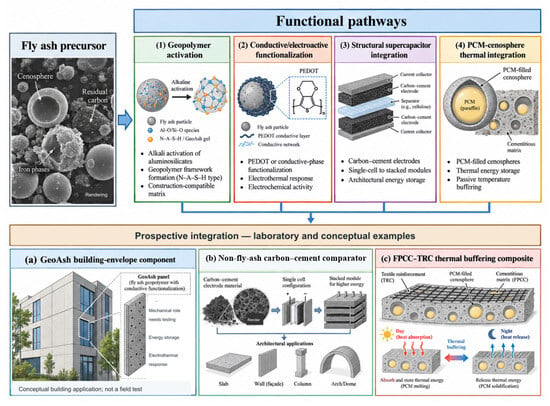
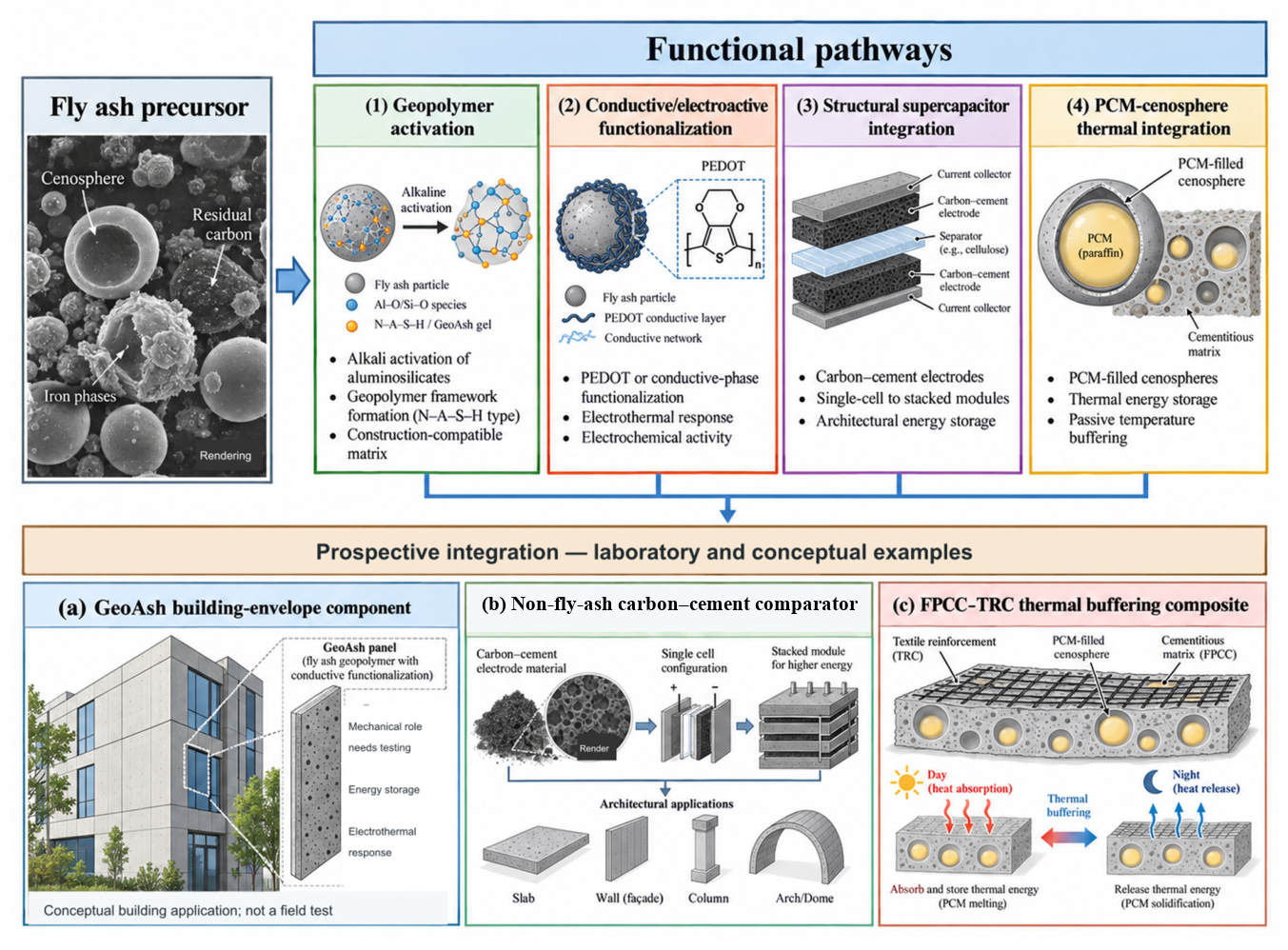
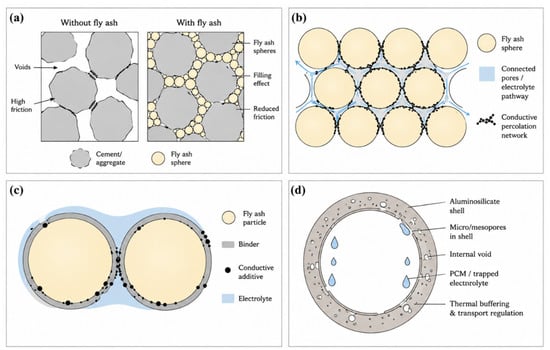
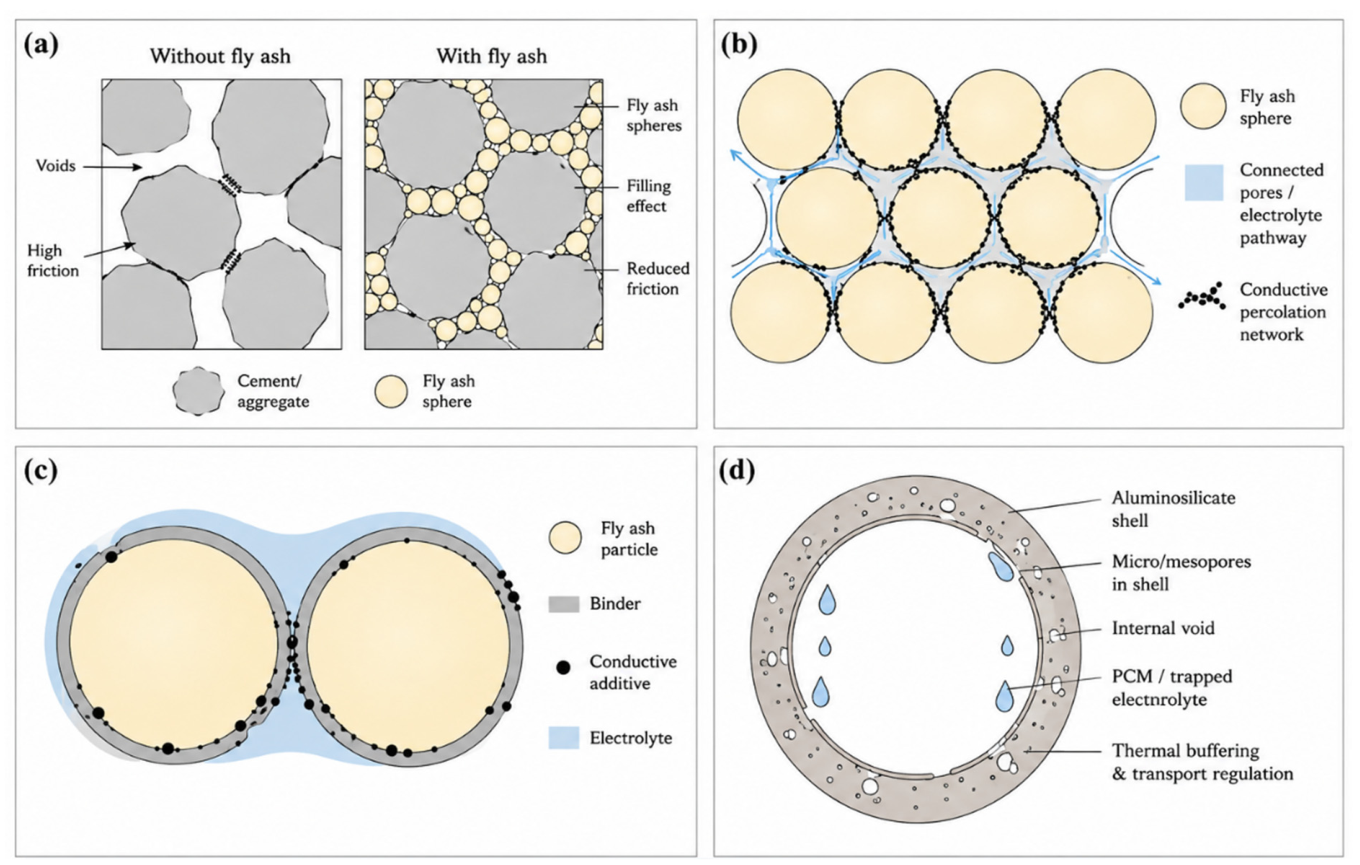
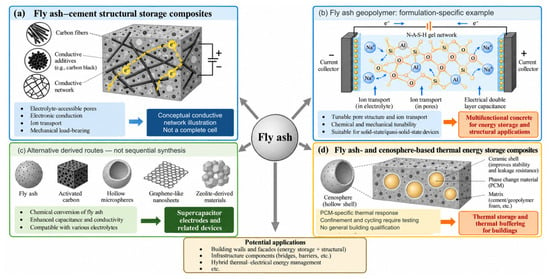
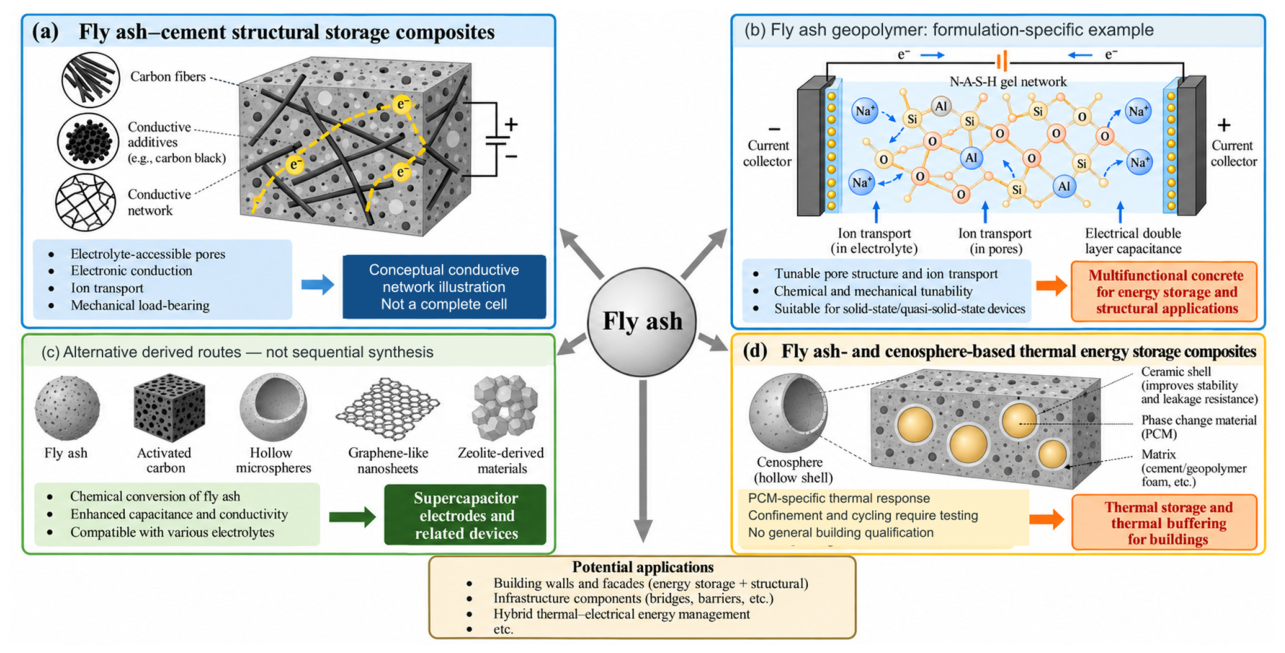
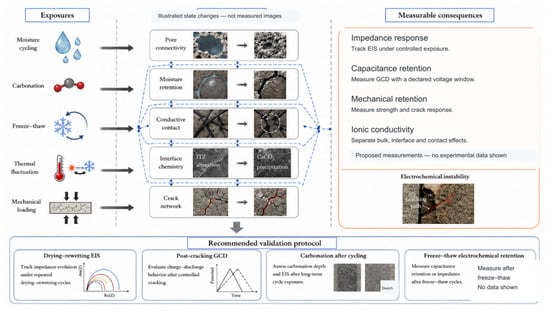
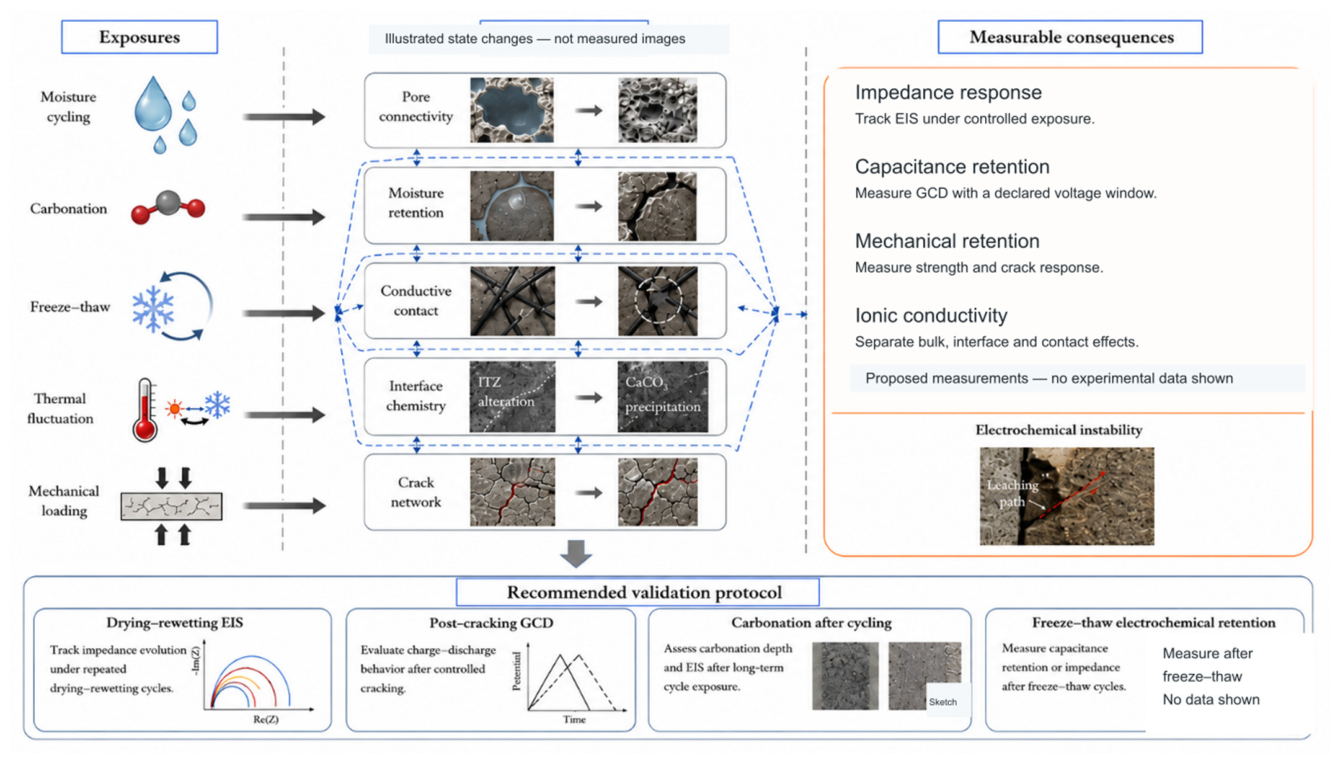
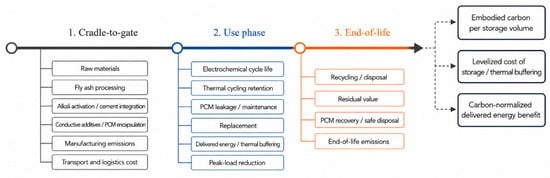
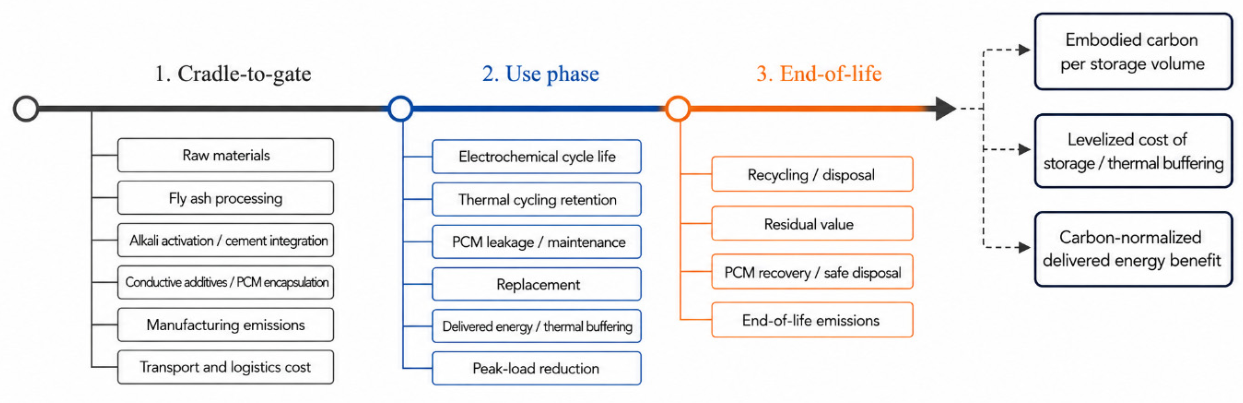
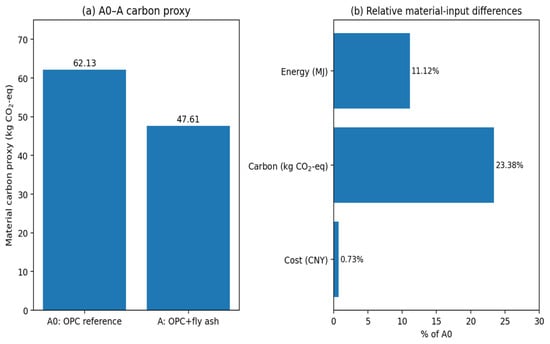
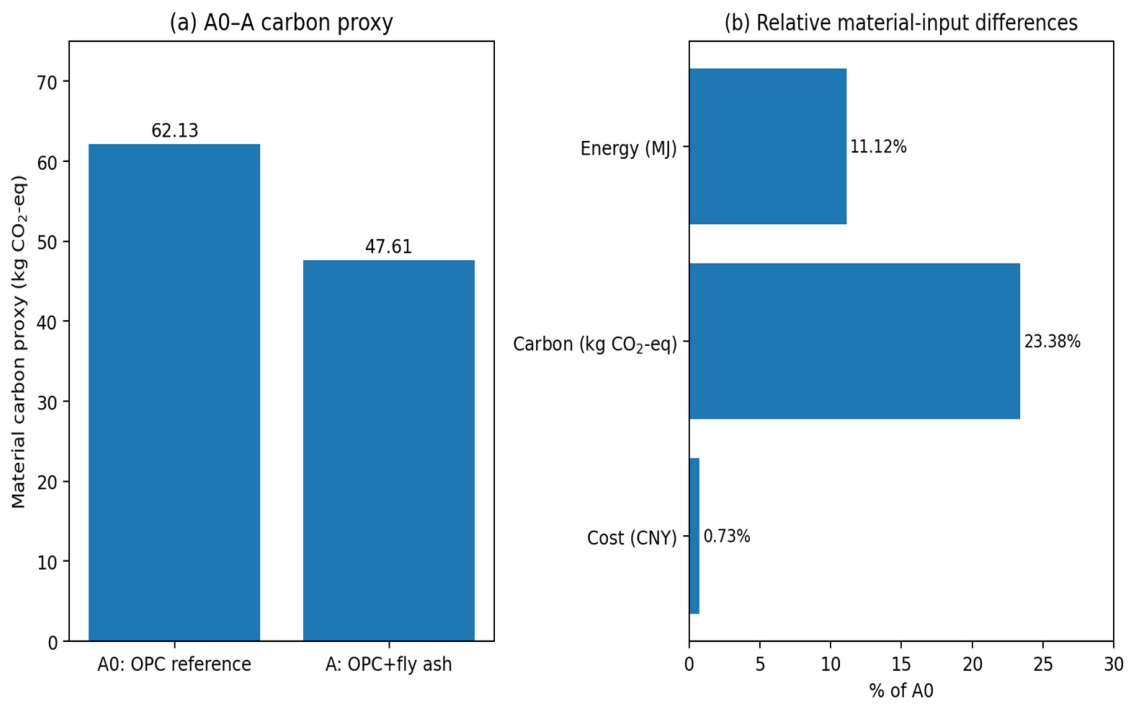

Disclaimer/Publisher’s Note: The statements, opinions and data contained in all publications are solely those of the individual author(s) and contributor(s) and not of MDPI and/or the editor(s). MDPI and/or the editor(s) disclaim responsibility for any injury to people or property resulting from any ideas, methods, instructions or products referred to in the content. |
© 2026 by the authors. Licensee MDPI, Basel, Switzerland. This article is an open access article distributed under the terms and conditions of the Creative Commons Attribution (CC BY) license.