


Abstract
Prismatic mortar specimens with dimensions of 40 × 40 × 160 mm were produced in accordance with TS EN 196-1:2016 using rice husk ash (RHA) as a partial cement replacement at levels ranging from 0% to 15%. The specimens were exposed to aggressive seawater and 7% NaCl environments and evaluated through compressive strength, flexural strength, ultrasonic pulse velocity (UPV), water absorption, carbonation, capillary water absorption, and thermal conductivity tests. The highest compressive strength values were generally obtained at RHA replacement levels of 8–10%, depending on the exposure condition and curing period. In the 7% NaCl environment, most RHA-incorporated mixtures exhibited higher flexural strength than the control mixture, with the highest values generally observed at replacement levels between 6% and 10%. UPV results indicated that the incorporation of RHA did not significantly impair the internal quality of the mortars. Water absorption, capillary water absorption, and carbonation depth generally increased with increasing RHA content, particularly at replacement levels of 10–15%. No carbonation depth was observed in the control specimens, whereas the highest carbonation depths were measured in the 15% RHA mixtures. Thermal conductivity decreased with increasing RHA content, with the lowest values obtained at the highest replacement levels. Overall, the results indicate that RHA replacement levels of approximately 8–10% provide a favorable balance between mechanical performance, durability-related properties, and thermal insulation performance under aggressive chloride-rich exposure conditions.
1. Introduction
Studies aimed at reducing cement-related CO2 emissions and carbon footprints have shown that using fly ash, silica fume, and rice husk ash (RHA) as mineral additives not only reduces cement consumption but also enhances concrete durability, with concrete density decreasing as the RHA replacement ratio increases due to its lower specific gravity compared with ordinary Portland cement [1,2,3,4].
The use of RHA as a pozzolanic additive in cement and concrete enhances its reactivity through its high amorphous silica content and large specific surface area due to its porous structure, improving strength and durability while reducing cement consumption as well as other costs and environmental impacts [5,6]. The increase in RHA content reduces the workability of concrete due to its porous structure, high specific surface area, and carbon content, requiring higher water and consequently more superplasticizer use than the control mixture [7,8]. While high replacement ratios of RHA reduce compressive strength, replacing cement with 10% RHA increases compressive strength through pozzolanic reaction, high specific surface area, and reactive silica content and also improves durability in normal concrete [9,10,11,12,13]. Finely ground RHA can increase the compressive strength of concrete; experimental studies indicate that replacing cement with RHA up to 20% improves strength and durability but does not provide a significant increase in early-age compressive strength [14,15]. Depending on average particle size, 10% RHA (20.43 µm) at early age and 20% RHA (13.50 µm) at 28 days provide higher compressive strength than control cement and silica fume, while RHA ratios exceeding 15% lead to a decrease in compressive strength [16,17]. RHA-incorporated concrete exhibits late-age strength development due to high specific surface area, silica content, and pozzolanic reactivity, reaching higher compressive strength than normal concrete at 90 days, and maximum compressive strength was observed at a 20% RHA replacement ratio for all mixtures examined [7,18,19,20]. As the RHA ratio increases, flexural strength rises slightly in parallel with compressive strength, and particularly the use of fine-grained RHA provides significant improvement in flexural and tensile strengths, while coarse-grained RHA exhibits the lowest performance [18,21,22]. The partial replacement of Portland cement with 10% RHA and the use of titanium dioxide nanoparticles up to 3% increase flexural strength at all ages through pozzolanic reaction and densification of the concrete matrix, while an increase in nanoparticle content beyond this threshold does not create a significant effect on strength [23]. The replacement of cement with highly reactive RHA at 12–15% effectively controls the harmful expansion caused by the alkali–silica reaction in concrete, depending on the aggregate structure, through the retention of alkalis by supplementary hydrates and the decrease in pH of the pore solution [24,25]. RHA demonstrates better performance than ordinary Portland cement, significantly reducing the chloride ion permeability of concrete, particularly at 10–20% replacement levels, and the use of finely ground RHA reduces penetration resistance from moderate-low to very low levels depending on the type and amount of RHA [26,27].
The addition of RHA reduces chloride ion permeability by decreasing the paste pore diameter, while concrete containing 15% RHA showed lower compressive strength loss than concrete without additives under 28 days of sulfate solution exposure, and the combination of fly ash and ground rice husk ash significantly increased resistance to 5% sodium sulfate solution [28,29].
In a recent study, RHA was incorporated into alkali-activated ternary mortar mixtures together with coffee husk ash and ground granulated blast furnace slag. The optimum mixture, containing 10% RHA, exhibited satisfactory mechanical properties, durability against seawater exposure, and improved sustainability performance [30]. Miyandehi et al. [31] reported that RHA incorporation enhanced the durability performance of mortars, particularly with respect to chloride permeability and water absorption characteristics. The authors also observed a gradual reduction in compressive strength with increasing RHA content, highlighting the importance of identifying an optimum replacement level. In concrete exposed to seawater, RHA incorporation has been reported to increase both modulus of rupture and split tensile strength while improving resistance to marine exposure. These findings indicate the potential of RHA as a sustainable supplementary cementitious material for structures subjected to chloride-rich environments [32]. Studies have also shown that RHA can enhance the resistance of concrete to seawater attack by reducing chloride ion permeability and mitigating the formation of deleterious products such as gypsum and ettringite [33,34].
The aforementioned studies demonstrate that RHA can provide significant benefits in cement-based materials, including improvements in mechanical performance, durability, and sustainability. In addition, several researchers have investigated the behavior of RHA-containing mortars and concretes under seawater and chloride-rich exposure conditions, reporting enhanced resistance to aggressive environments and reduced chloride penetration. However, most previous investigations have focused primarily on conventional seawater exposure, while limited information is available regarding the combined evaluation of mechanical, durability-related, and thermal properties under highly aggressive saline curing conditions. Furthermore, to the best of our knowledge no study has simultaneously investigated the compressive strength, flexural strength, ultrasonic pulse velocity (UPV), water absorption, capillary absorption, carbonation behavior, and thermal conductivity of RHA-containing mortars cured in both seawater and a highly concentrated 7% NaCl solution.
Therefore, the present study aims to comprehensively evaluate the performance of RHA-incorporated mortars exposed to seawater and 7% NaCl environments. In addition to conventional mechanical and durability assessments, thermal conductivity measurements were also performed to provide insights into the potential use of RHA mortars in sustainable and energy-efficient building applications. It is believed that the comprehensive evaluation presented in this study will contribute to the existing literature by providing a broader understanding of the behavior of RHA-containing mortars under aggressive chloride-rich exposure conditions.
2. Materials and Methods
2.1. Materials
CEM I 42.5R Portland cement from Nuh Çimento Sanayi A. Ş. (Kocaeli, Türkiye), compliant with the TS EN 197-1:2012 standard [35] was used. Rice husk ash was obtained from Erdoğanlar Gıda San. ve Tic. LTD. ŞTİ. (Edirne, Türkiye) and contained 80–90% silica. RILEM sand, obtained from SET Çimento A.Ş. (İstanbul, Türkiye) and compliant with TS EN 197-1:2012 standard [35], was used. The chemical and physical properties of the cement used are presented in Table 1.
Table 1.
Chemical analysis of CEM I 42.5R type cement.
Mortar specimens were produced with varying mix ratios using 0%, 2%, 4%, 6%, 8%, 10%, and 15% RHA addition. Selected physical properties of the RHA used are presented in Table 2. Chemical properties of RHA are presented in Table 3 [36]. The compositions by weight of mixtures containing RHA are given in Table 4. The total binder content was maintained at 450 g in all mixtures by replacing cement with RHA on a mass basis. Therefore, the water-to-binder ratio remained constant at 0.50 throughout the study. Specimens produced using these mixtures were cured in two different environments: seawater and 7% NaCl solution. The 7% NaCl solution was selected to create a more severe chloride exposure condition than that typically encountered in natural seawater, which generally contains approximately 3.5% dissolved salts. The use of this elevated chloride concentration was intended to evaluate the durability performance of RHA-incorporated mortars under highly aggressive conditions and to assess their resistance to chloride-induced deterioration.
Table 2.
Physical properties of RHA.
Table 3.
Chemical analysis of RHA.
Table 4.
Mix properties.
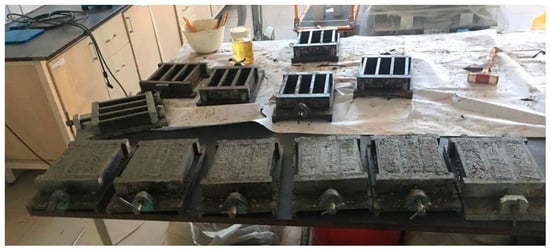
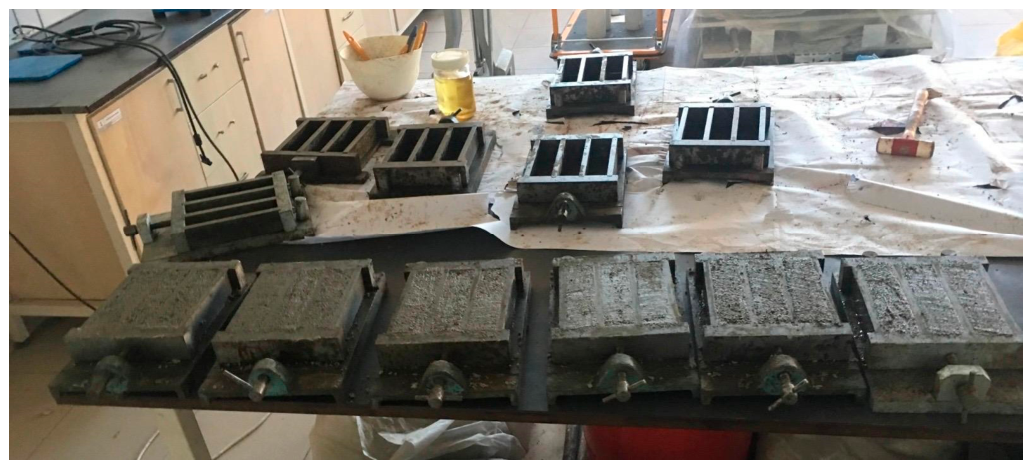
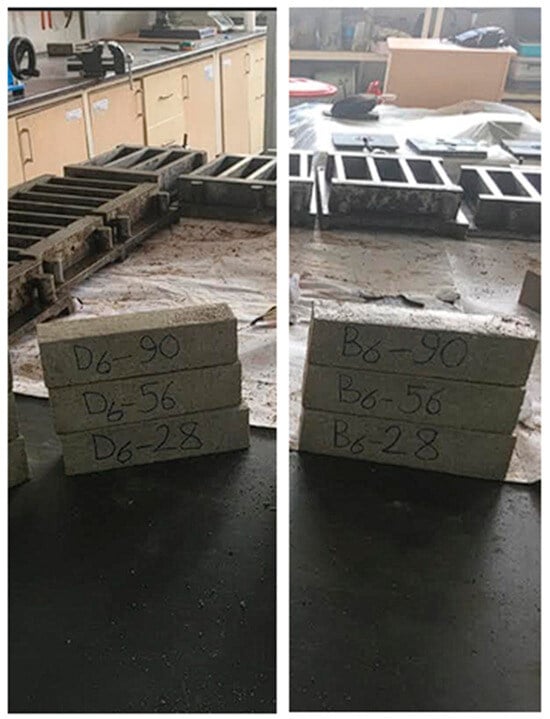
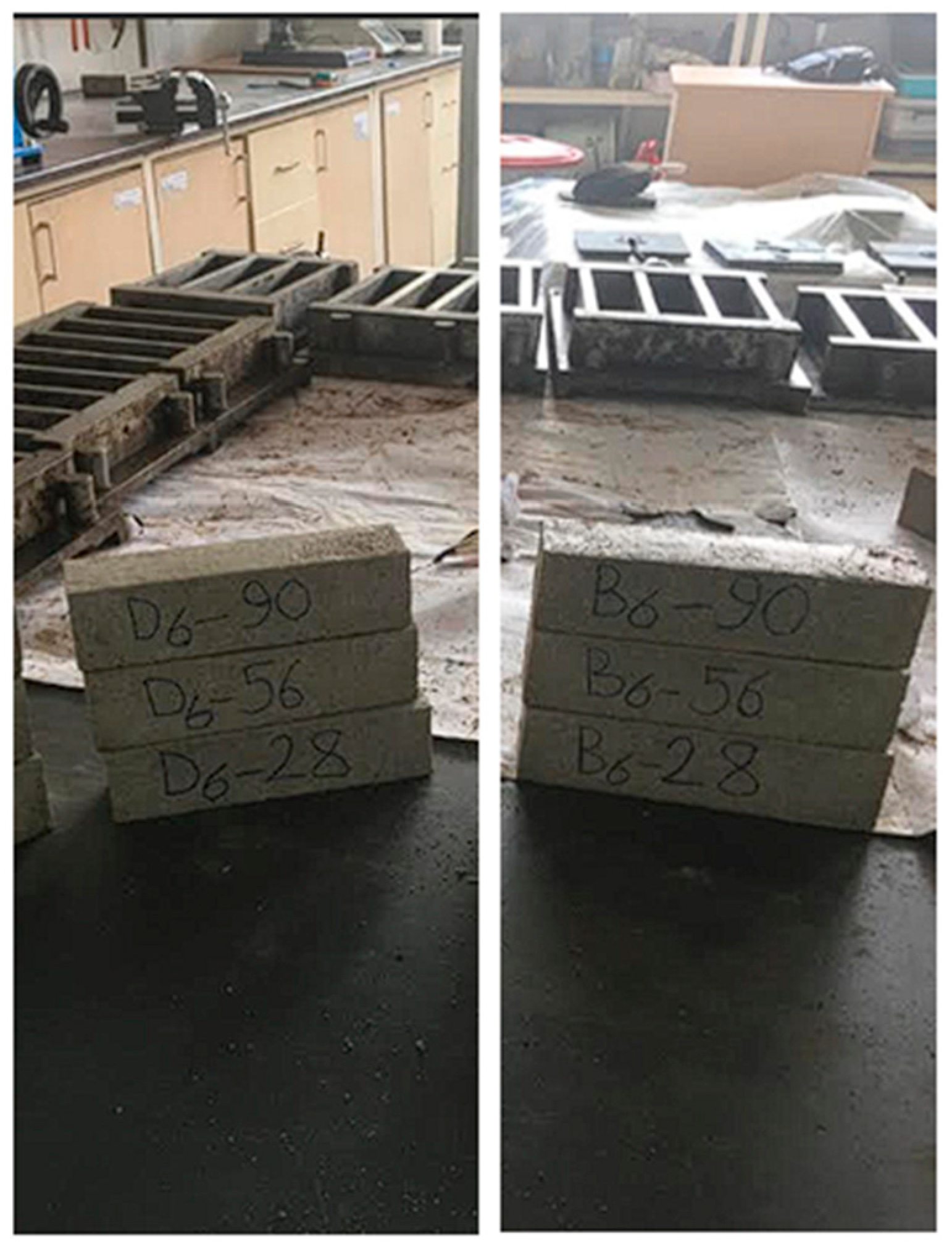
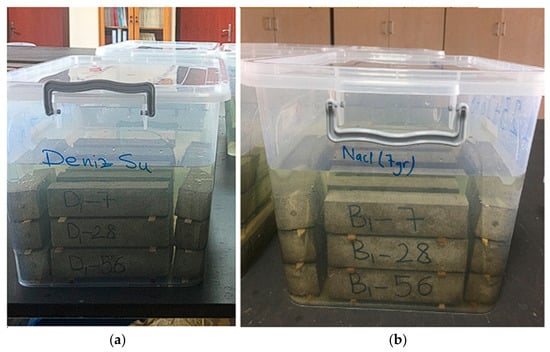
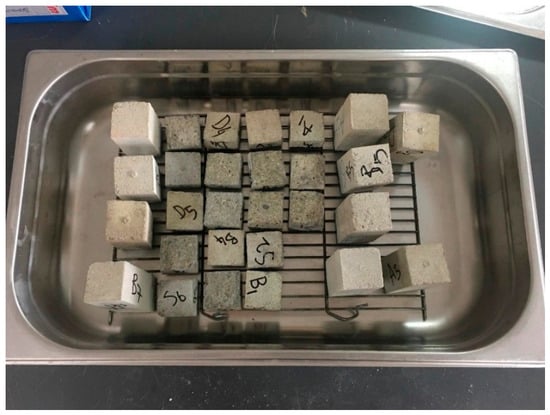
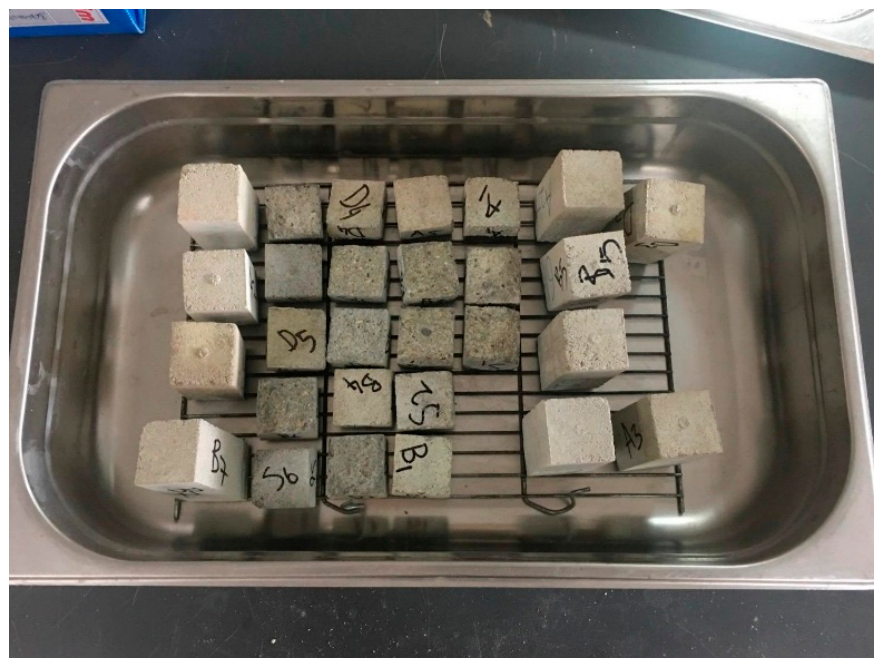
The preparation of specimens for the aging test is shown in Figure 1. Figure 2 presents representative mortar specimens after molding. Specimens curing in seawater and 7% NaCl solution are shown in Figure 3.
Figure 1.
Preparation of mortar specimens.
Figure 2.
Representative mortar specimens after molding.
Figure 3.
Mortar specimens cured in (a) seawater and (b) 7% NaCl solution.
2.2. Methods
2.2.1. Fresh Mortars
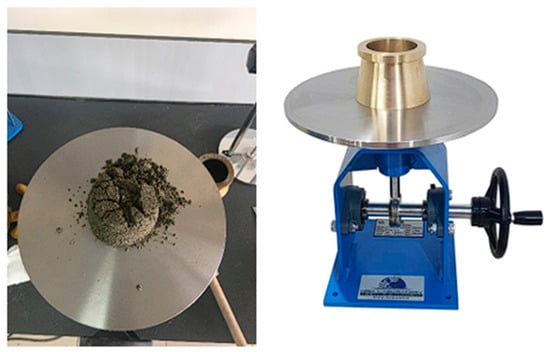
The flow table test, known as the consistency test, was applied to the fresh mortars produced in accordance with the TS EN 1015-3:2000 standard [37]. A truncated cone mold with an upper inner diameter of 70 mm, base inner diameter of 100 mm, and height of 50 mm was placed at the center of the flow table, and compaction was performed in 2 layers using a tamper with a diameter of 40 mm and a weight of 0.250 kg, applying 10 strokes per layer. The mold was then lifted vertically and dropped 15 times onto the flow table from a height of 1.25 cm at a rate of 1 drop per second. The spread mortar diameter was measured from all sides using a caliper, and the average value was recorded in mm. The experimental setup for the flow table test is illustrated in Figure 4.
Figure 4.
Flow table test conducted on fresh mortar.
2.2.2. Hardened Mortars
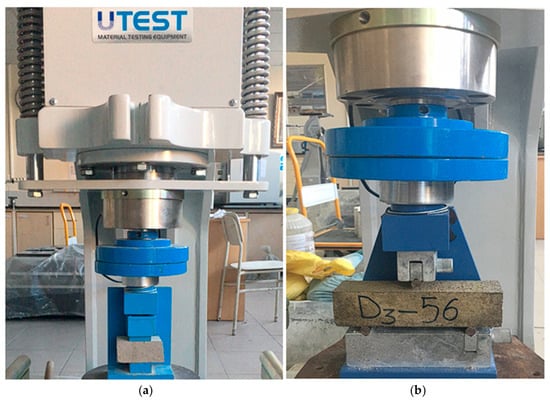
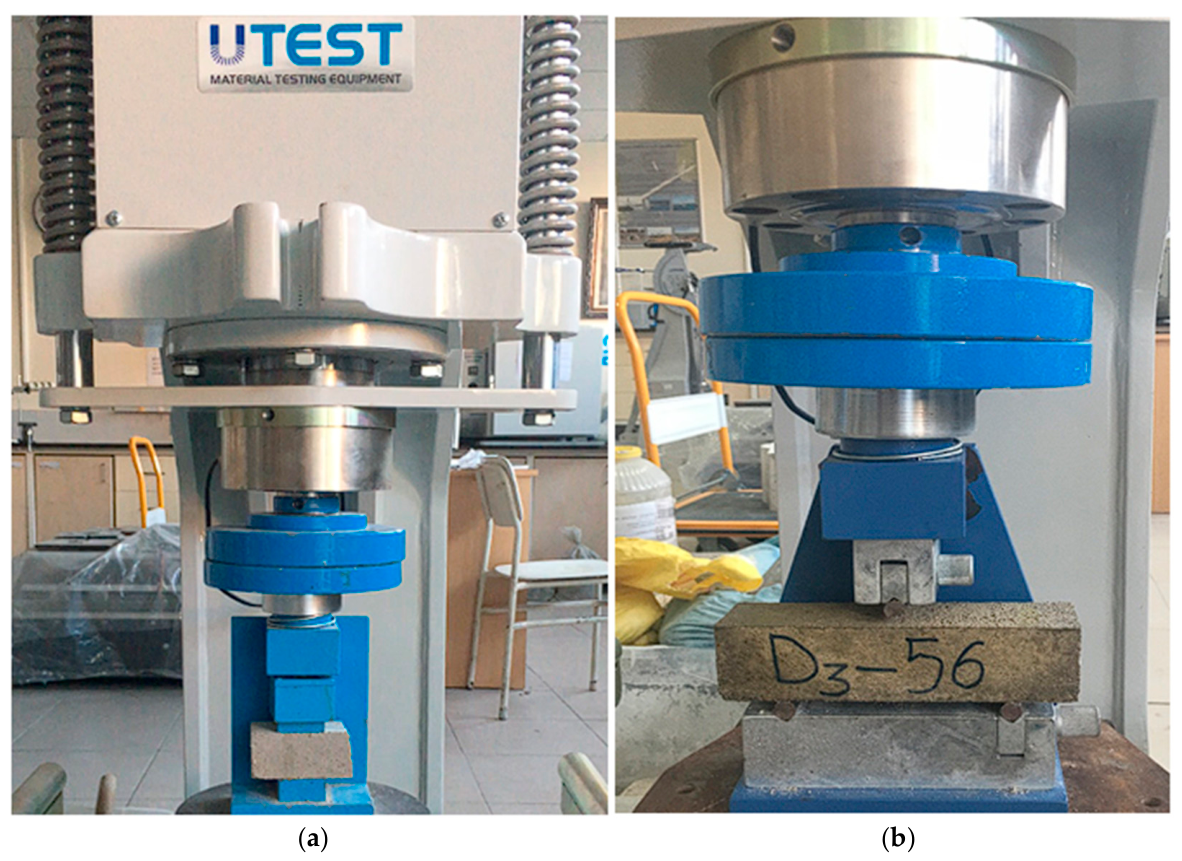
Compressive strength tests, flexural strength tests, UPV tests, water absorption tests, capillary water absorption tests, carbonation tests, and thermal conductivity tests were applied to the produced mortars. Compressive strength tests were conducted on RHA-incorporated mortar specimens cured in seawater and 7% NaCl curing environments at the end of 28, 56, and 90 days of curing. For these tests, three prismatic mortar specimens with dimensions of 40 × 40 × 160 mm were produced from each mixture. Compressive strength tests were performed in accordance with the TS EN 196-1:2016 standard [38] using a compressive strength testing machine (UTEST Malzeme Test Cihazları A.Ş., Ankara, Türkiye) at the Istanbul University—Cerrahpaşa Civil Engineering Cement Laboratory (Figure 5a).
Figure 5.
Experimental setups for (a) compressive strength and (b) flexural strength tests.
For the flexural strength test, hardened mortar specimens with dimensions of 40 × 40 × 160 mm were placed on the testing machine on their side surfaces with a support span of 100 mm in accordance with the TS EN 1015-11:2020 standard [39], and single-point loading was applied. A loading rate of 50 N/s was selected. Figure 5 illustrates the testing setups for compressive and flexural strength measurements.
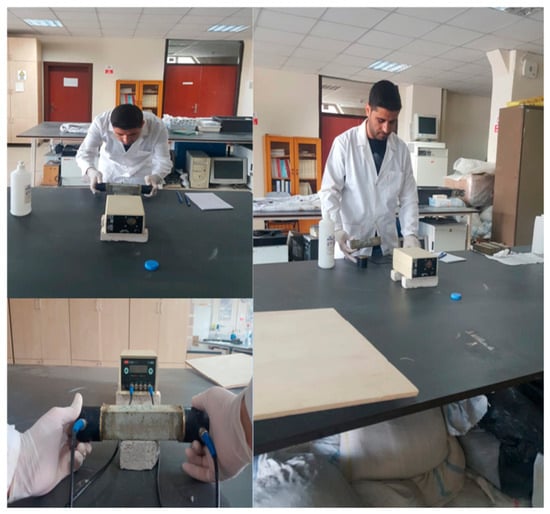
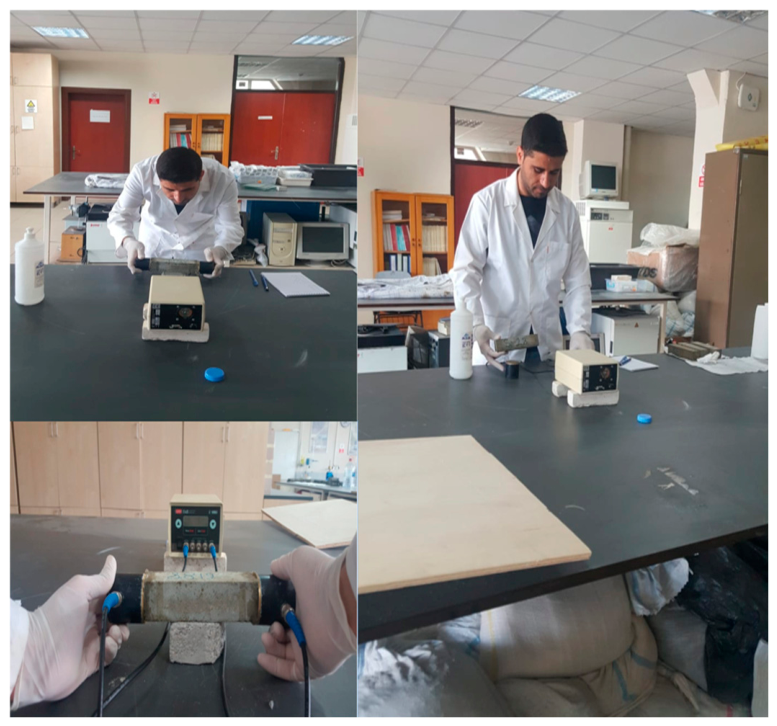
The ultrasonic pulse velocities of the specimens were measured according to ASTM C 597-09:2009 [40] using an ultrasonic pulse velocity tester (UPV E48, CONTROLS Group, Liscate, Italy). Measurements were performed using three prismatic mortar specimens with dimensions of 40 × 40 × 160 mm. Low-frequency ultrasonic signals transmitted from the device pass through the specimen and are detected by the transducers, and the transit time is measured precisely. Gel was applied to the rough surfaces of the specimens as a couplant, and the transducers were placed along the length of the specimen, with readings taken from the 0.16 m section. The transit time T was recorded in μs using the direct transmission method. The transit time of ultrasonic signals depends on the density of the specimen. As a result of ultrasonic tests, information regarding the homogeneity of mortars, voids within them, changes occurring in the structure of mortars, and the strength and quality of mortars was obtained. Figure 6 shows representative views of the UPV test conducted on the specimens. The transit time T was converted from microseconds to seconds, and the UPV was calculated using Equation (1).
where V is the ultrasonic pulse velocity (m/s); L is the path length (m); and T is the transit time (s).
Figure 6.
Photographs of the UPV test.
For the water absorption test, an analytical balance with 0.001 g sensitivity, an oven adjustable up to 105 ± 5 °C, and containers were used. Prismatic specimens of 40 × 40 × 160 mm were cured in water at room temperature for 28 days; then surface water was removed, and specimens were weighed on a precision balance to obtain the saturated mass (ms). To determine the total water absorbed at saturation, water-cured specimens were dried in an oven at 105 ± 5 °C for 24 h and then weighed to obtain the dry mass (mk). The difference between dry mass and saturated mass represents the water absorbed at saturation point. The water absorption ratio by mass (as) was calculated using Equation (2). Tests were conducted in accordance with TS EN 771-1:2005 [41] and TS 699:2009 [42].
Water absorption ratio % (as) = [(ms − mk)/mk] × 100
The capillarity test was conducted in accordance with TS EN 480-5:2008 [43] to determine the capillary water absorption amount of porous materials with air voids. Prior to testing, specimens were kept in an oven at 105 °C for 24 h to determine their dry weights. Subsequently, the side and top surfaces of the specimens were covered with aluminum foil tape to protect them from atmospheric moisture. A gap of 2 ± 1 mm was left on the side surfaces, and the bottom surface was allowed to contact water at a depth of 5 mm. Specimens placed on supports were allowed to absorb water for 2, 4, 8, 30, 60, 120, 240, and 1440 min without touching each other; when removed from water, the surface in contact with water was wiped with a paper towel, and only the amount of capillary absorbed water was calculated in grams. Figure 7 shows the mortar specimens and the capillary water absorption test.
Figure 7.
Mortar specimens during the capillary water absorption test.
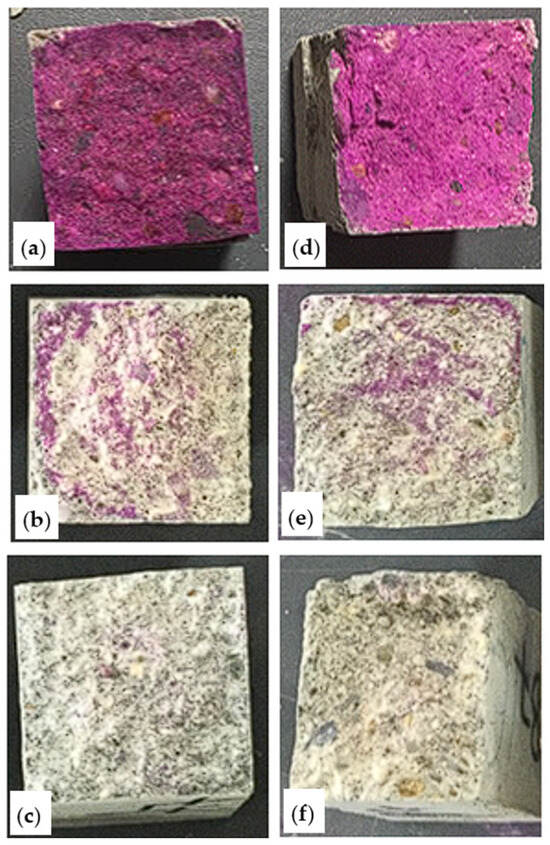
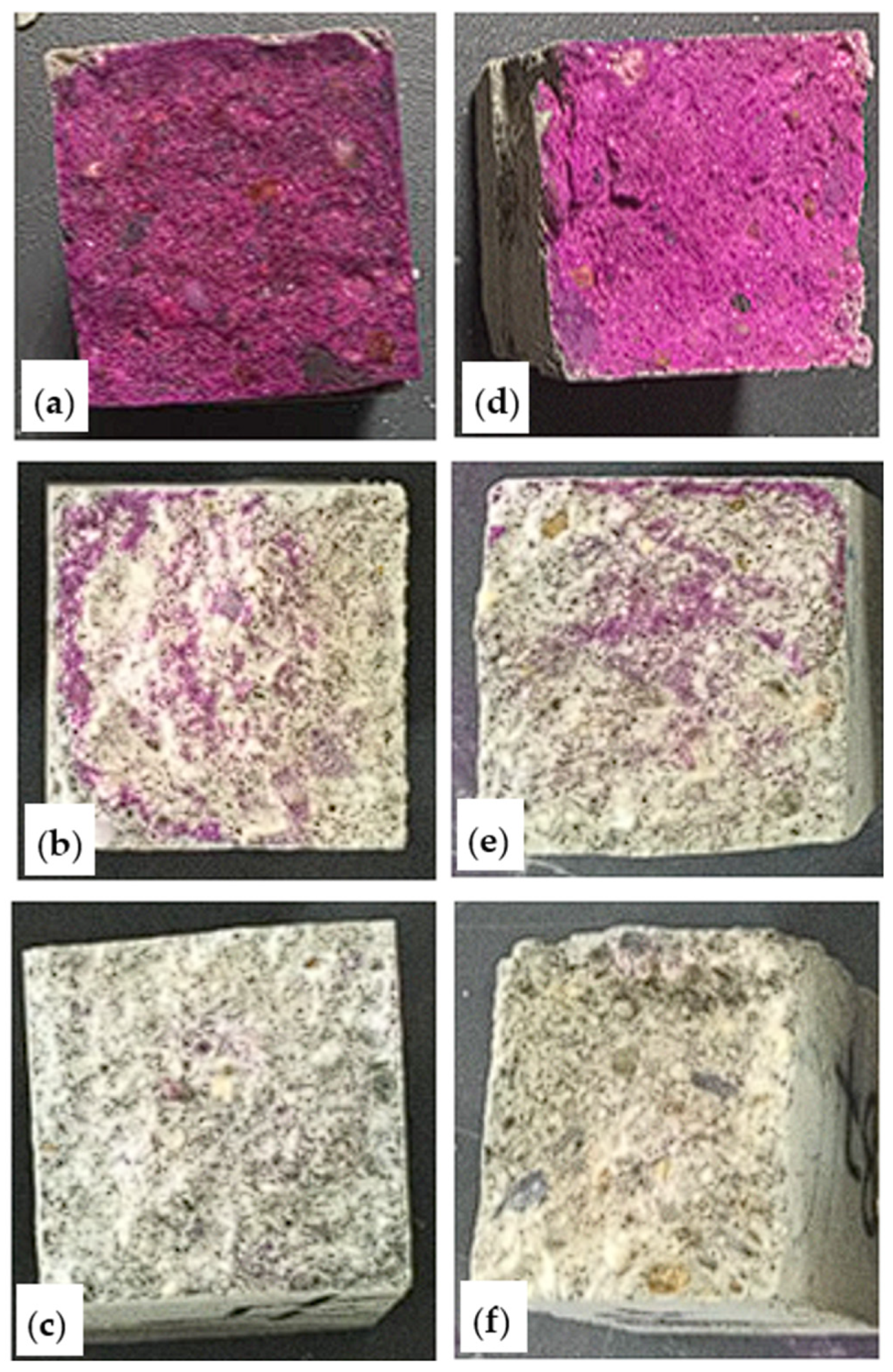
Carbonation depth was determined on prismatic specimens of 40 × 40 × 160 mm in accordance with TS EN 14630:2012 [44]. For the test, RHA-incorporated mortar specimens were kept under laboratory ambient conditions (23 ± 2 °C temperature and 55 ± 5% relative humidity) for 30 days after 90 days of curing in seawater and 7% NaCl solution, and the carbonation measurements were subsequently performed following this period of natural carbonation rather than under accelerated carbonation conditions. The carbonation depth of RHA-incorporated mortar and control specimens was measured by spraying phenolphthalein solution on the fractured surfaces of specimens split in half. Free Ca(OH)2 showed a pink color, while carbonated areas exhibited no color change. Photographs of the specimens after carbonation testing are presented in Figure 8. Carbonation depth was calculated using Equation (3) on a 40 mm surface area.
where D is the carbonation depth (mm), and are the carbonation depths at the four edges (mm).
Figure 8.
Specimens after carbonation testing: (a) 0% RHA, (b) 10% RHA, and (c) 15% RHA exposed to seawater; (d) 0% RHA, (e) 10% RHA, and (f) 15% RHA exposed to 7% NaCl solution.
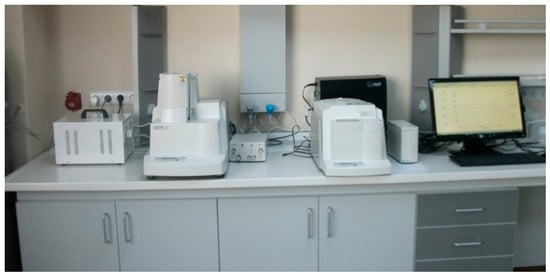
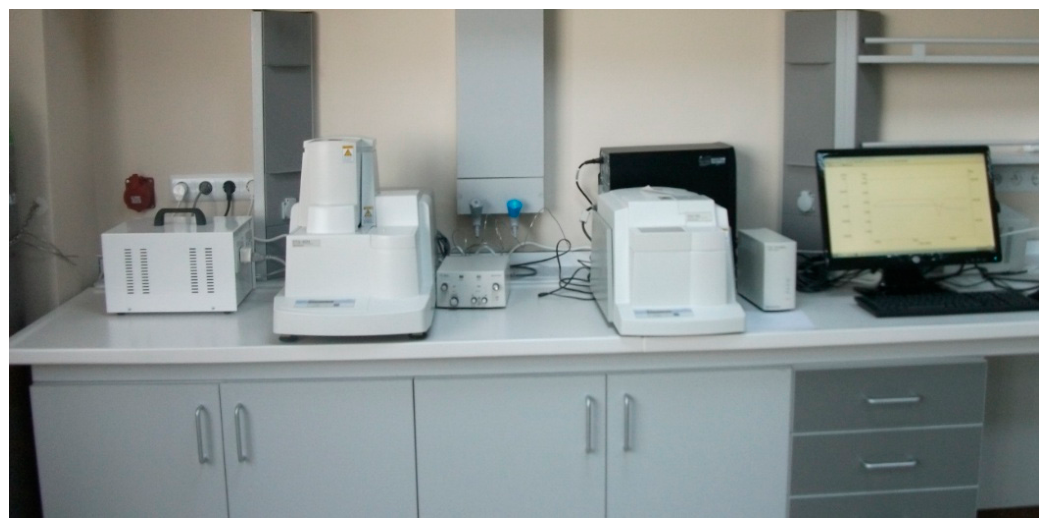
In addition to mechanical strength and durability, thermal conductivity was evaluated because it is an important parameter affecting the thermal insulation performance and energy efficiency of building materials. The measurements were conducted after exposure to aggressive environments to assess the influence of durability-related deterioration on the thermal behavior of the mortars. Thermal conductivity coefficient tests were performed using three specimens from each mixture with dimensions of 40 × 40 × 160 mm. After 90 days of curing in seawater and 7% NaCl solution, the specimens were oven-dried at 105 °C and then conditioned under ambient laboratory conditions for 28 days before the measurements were conducted. Tests were carried out using undisturbed specimens from the mixtures that exhibited the highest compressive strength. Thermal conductivity measurements were performed using a TCi Thermal Conductivity Analyzer (C-Therm Technologies, Fredericton, NB, Canada) at the Düzce University Scientific and Technological Research Application and Research Center. The device has a 3 cm sensor and can measure the thermal conductivity coefficient in W/m·K of materials with dimensions sufficient to cover the sensor diameter. To ensure measurement precision, special care was taken to maintain flat and smooth surfaces of the specimens during production. The test setup is shown in Figure 9.
Figure 9.
Thermal conductivity test setup.
3. Results
The flow values of the RHA-incorporated and control mortar mixtures are presented in Table 5. The flow values of mortars with RHA addition varied between 100 and 150 mm. The workability values of mortar mixtures containing 0%, 5%, 10%, and 15% RHA were measured as 150 mm, 110 mm, 100 mm, and 100 mm, respectively. With the use of RHA, the specific surface area and porosity of cement-based materials increase, and, consequently, concrete consistency and workability decrease [45]. Unless water-reducing admixtures are used, the cement gradually becomes unworkable as the replacement percentage of cement with RHA increases. With increasing RHA ratio, a decrease in workability was observed as measured by both slump and compaction factor tests. Therefore, more water is required to make concrete workable with increasing RHA content. In other words, an increase in RHA ratio in mortars reduces workability. Workability decreased between 5% and 10% RHA, while it remained almost unchanged between 10% and 15%.
Table 5.
Workability results of mixtures (mm).
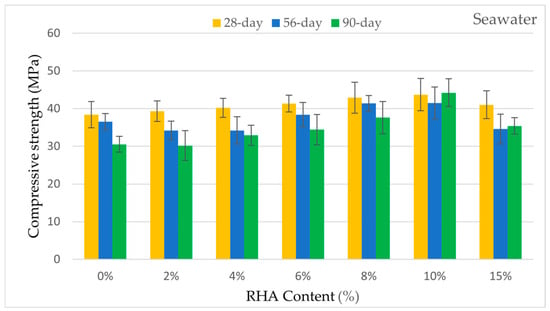
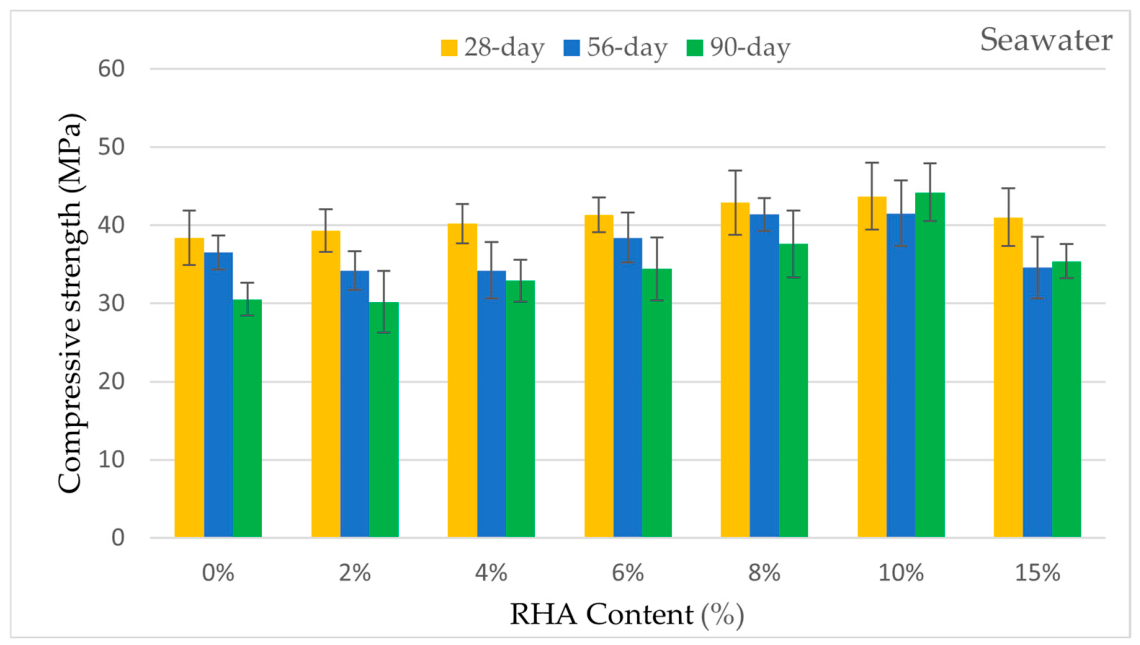
The compressive strength test results of mortar specimens cured in seawater environment versus RHA ratios are shown in Figure 10. The compressive strengths of mortar mixtures containing 0%, 10%, and 15% RHA cured in seawater for 28 days were 38.4 MPa, 43.8 MPa, and 41.1 MPa, respectively. The compressive strengths of mortar mixtures containing 0%, 10%, and 15% RHA cured in seawater for 56 days were 36.6 MPa, 41.6 MPa, and 34.7 MPa, respectively. The compressive strengths of mortar mixtures containing 0%, 10%, and 15% RHA exposed to seawater for 90 days were 30.6 MPa, 44.2 MPa, and 35.4 MPa, respectively. Maximum compressive strength was found at the 10% RHA level for all mixtures examined. These results are consistent with the literature findings [46]. The increases in strength of the 28-, 56-, and 90-day specimens compared with their respective control specimens were found to be 12.3%, 12%, and 30.8%, respectively. A gradual decrease in compressive strength was observed with increasing exposure duration in seawater. It was observed that the compressive strengths of specimens with 15% RHA addition after 56 and 90 days of curing were almost the same. It is also obvious that the compressive strength results at 15% addition ratio yielded strength results very close to that for the 0% addition ratio. This indicates that the use of RHA addition has a positive effect on the mortar characteristics.
Figure 10.
Compressive strengths of specimens cured in seawater environment.
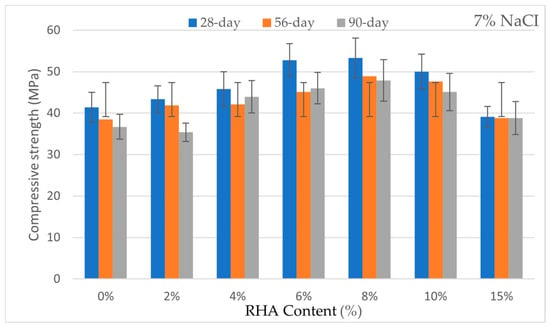
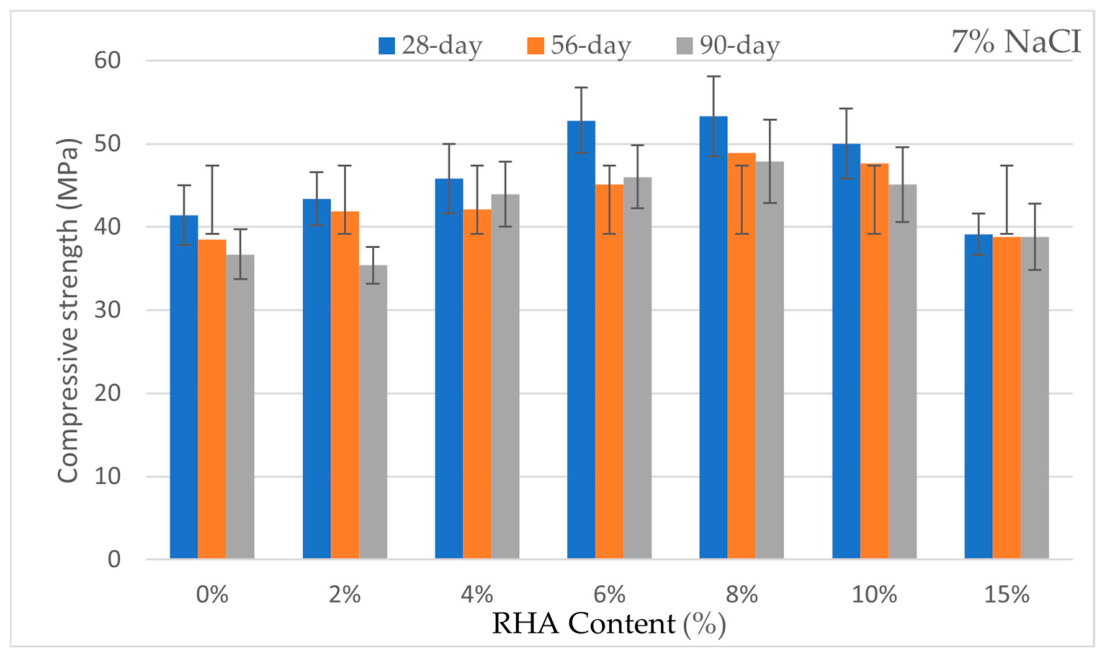
The compressive strengths of mortar specimens cured in a 7% NaCl solution are shown in Figure 11. The 28-day compressive strengths of mortar mixtures containing 0%, 8%, and 15% RHA cured in a 7% NaCl solution were 41.4 MPa, 53.3 MPa, and 39.1 MPa, respectively. The compressive strengths of mortar mixtures containing 0%, 8%, and 15% RHA cured in a 7% NaCl solution for 56 days were 38.6 MPa, 49 MPa, and 38.9 MPa, respectively. The compressive strengths of mortar mixtures containing 0%, 8%, and 15% RHA cured in a 7% NaCl solution for 90 days were determined as 36.8 MPa, 48 MPa, and 38.8 MPa, respectively. Unlike normal curing conditions, where compressive strength generally increases with age due to continued hydration, the specimens exposed to seawater and 7% NaCl solution exhibited a gradual decrease in compressive strength with increasing exposure duration. This behavior is attributed to the aggressive chloride-rich environments, which may adversely affect the microstructure and lead to strength deterioration over time. Maximum compressive strength was found at the 8% RHA content level for all mixtures. The increases in strength of the 28-, 56-, and 90-day specimens compared with their respective control specimens were found to be 22.3%, 21.2%, and 23.3%, respectively. The compressive strength results obtained in the present study are consistent with the findings reported by Miyandehi et al. [31]. In their study, increasing the RHA content from 10% to 30% resulted in a reduction in compressive strength. In addition, when compressive strength and UPV results were evaluated together, the optimum performance was obtained in the mixture containing 10% RHA. Similarly, in the present study, the highest compressive strength values were generally observed at RHA replacement levels of approximately 8–10%, while a decreasing trend was observed at higher replacement levels.
Figure 11.
Compressive strengths of specimens cured in a 7% NaCl solution.
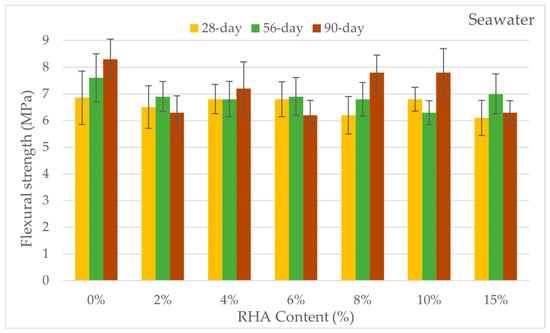
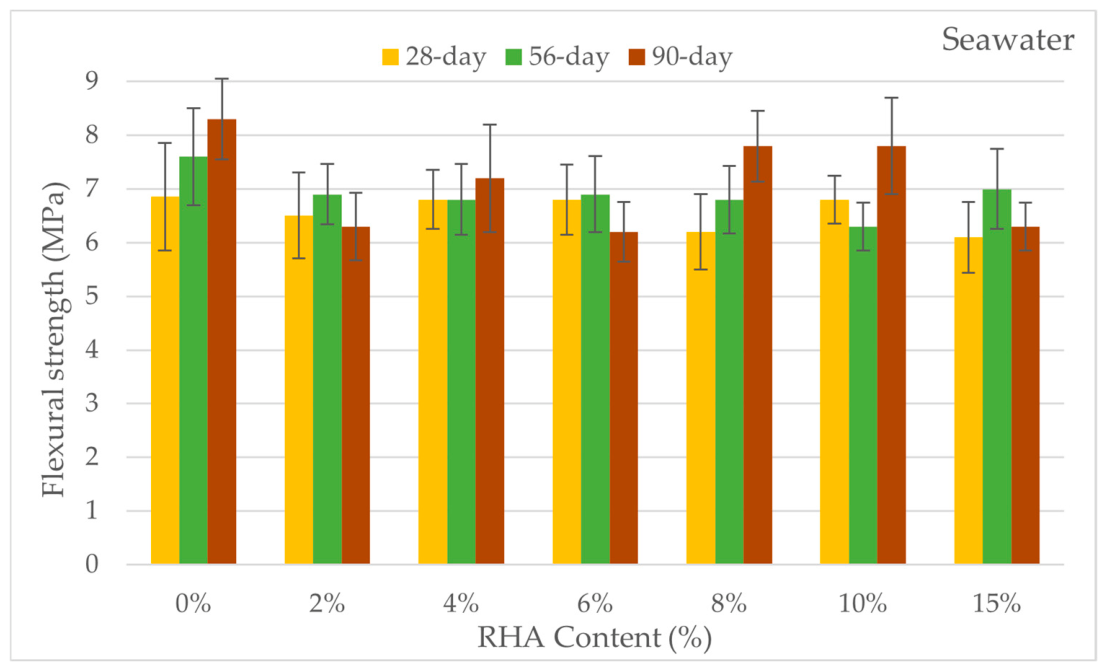
The graph showing the flexural strength results of mortar specimens cured in a seawater environment is presented in Figure 12. The flexural strengths of mortar mixtures containing 0%, 8%, and 15% RHA cured in seawater for 28 days were 7 MPa, 6.3 MPa, and 6.1 MPa, respectively. The flexural strengths of mortar mixtures containing 0%, 8%, and 15% RHA cured in seawater for 56 days were 7.6 MPa, 6.8 MPa, and 7 MPa, respectively. The flexural strengths of mortar mixtures containing 0%, 8%, and 15% RHA cured in seawater for 90 days were 8.3 MPa, 7.8 MPa, and 6.3 MPa, respectively. As the curing period increased, the flexural strength values of specimens without additives also increased. The highest flexural strength values in this group were obtained from the reference specimens for all curing periods. It can be stated that there was no significant increase in flexural strength values as curing periods and addition ratios increased for specimens with additives. Guo et al. [47] stated that flexural strength properties improved at 20% addition in RHA-incorporated concrete. In our study, initial strengths were generally maintained in the seawater environment.
Figure 12.
Flexural strengths of specimens cured in seawater environment.
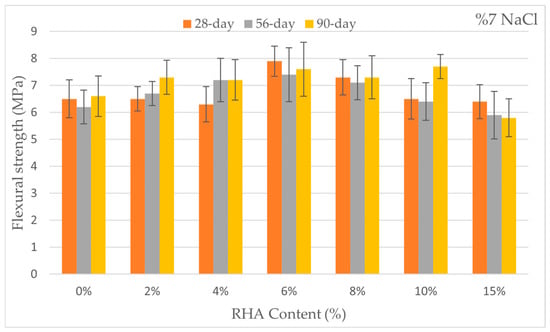
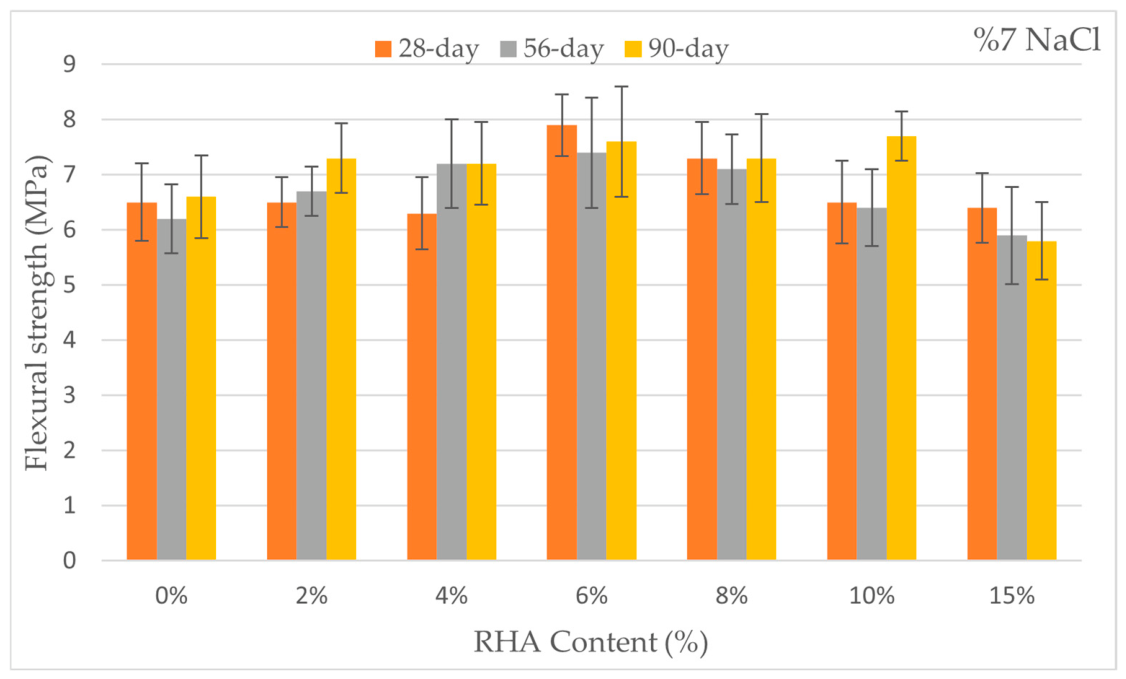
The graph showing the flexural strength results of mortar specimens cured in a 7% NaCl solution is presented in Figure 13. The flexural strengths of mortar mixtures containing 0%, 8%, and 15% RHA cured in a 7% NaCl solution for 28 days were 6.6 MPa, 6.6 MPa, and 6.9 MPa, respectively. The flexural strengths of mortar mixtures containing 0%, 8%, and 15% RHA cured in a 7% NaCl solution for 56 days were 6.5 MPa, 6.8 MPa, and 6.9 MPa, respectively. The flexural strengths of mortar mixtures containing 0%, 8%, and 15% RHA cured in a 7% NaCl solution for 90 days were 6.8 MPa, 8.3 MPa, and 7.3 MPa, respectively. The flexural strength behavior of specimens at 28, 56, and 90 days generally showed similar trends. Compared with the reference specimen values, the flexural strength results obtained from specimens with additives cured in a 7% NaCl environment were notably higher except for specimens with 15% RHA. The increases in strength of the 28-, 56-, and 90-day specimens compared with their respective control specimens were found to be 17.7%, 16.2%, and 13%, respectively. Maximum flexural strength was found at the 6% RHA level for all mixtures examined. Although 7% NaCl is a high concentration, the significant protective effect of RHA addition provided quite good flexural strength in this curing environment as well.
Figure 13.
Flexural strengths of specimens cured in a 7% NaCl solution.
Guo et al. [47] reported that the mechanical properties of concrete improved by 6.84% at 20% RHA addition. In our study, strength increases at lower addition ratios were higher for the NaCl solution. For the 15% RHA ratio, strengths were generally maintained. This result can be interpreted as no strength loss occurring in aggressive environments for addition ratios up to 15%. This observation is also supported by findings reported in previous studies on RHA-incorporated cementitious materials exposed to marine environments. In a similar study [32], concrete mixtures containing 0%, 5%, 10%, 15%, and 20% RHA were produced and cured in both freshwater and seawater conditions. The authors reported that RHA incorporation enhanced both the modulus of rupture (MOR) and splitting tensile strength up to a replacement level of 15%. Furthermore, the presence of RHA improved the resistance of concrete against seawater exposure. However, a decline in mechanical performance was observed when the RHA content exceeded 15%. A comparable trend was observed in the present study, where the mechanical performance of mortar mixtures generally improved at low-to-moderate RHA replacement levels but tended to decrease when the RHA content exceeded approximately 10%. The difference between the optimum replacement levels reported in the literature (15%) and those observed in the present study (approximately 10%) may be attributed to differences in seawater composition, exposure conditions, and material type. In particular, mortar and concrete possess different pore structures, aggregate contents, and transport characteristics, which can influence their response to aggressive marine environments and consequently affect the optimum RHA replacement level.
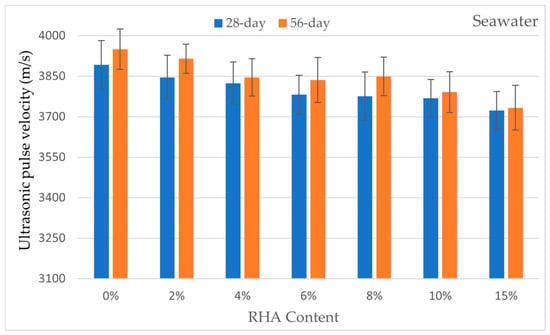
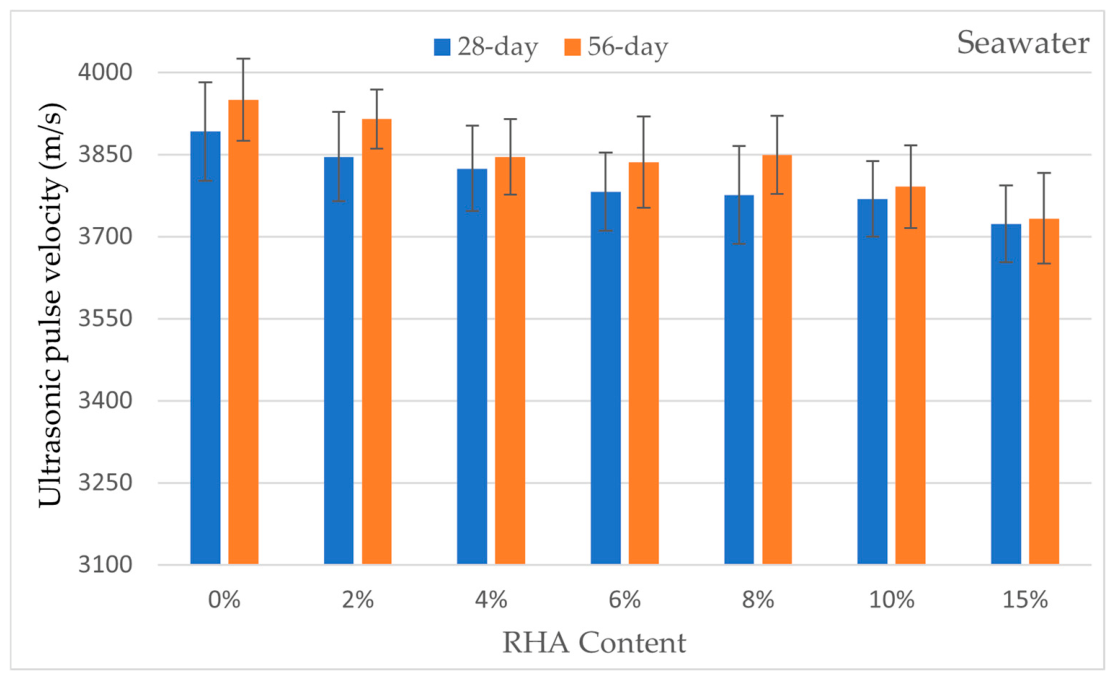
The ultrasonic pulse transit time was measured in the saturated surface dry condition of the RHA-incorporated specimens after curing in seawater for 28 and 56 days. Ultrasonic velocities were calculated by converting the measured times from microseconds to seconds and dividing the specimen length of 0.16 m by these times. After 28 days of curing, the ultrasonic velocities of reference specimens and specimens containing 15% RHA were found to be 3892 m/s and 3723 m/s, respectively. Similarly, after 56 days of curing, the ultrasonic velocities of reference and 15% RHA specimens were 3950 m/s and 3733 m/s, respectively. A decrease in ultrasonic pulse velocities was observed as the RHA content increased in the mixtures. The velocity of sound waves passing through the material depends on its void ratio and density. Since the density of RHA is lower than that of cement, the sound wave velocity in materials with low density and high void ratio is also lower. The graph showing the variation in UPV with RHA content for specimens cured in seawater is presented in Figure 14.
Figure 14.
UPV variation of specimens cured in seawater.
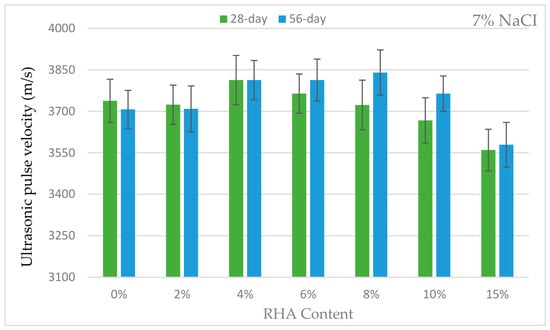
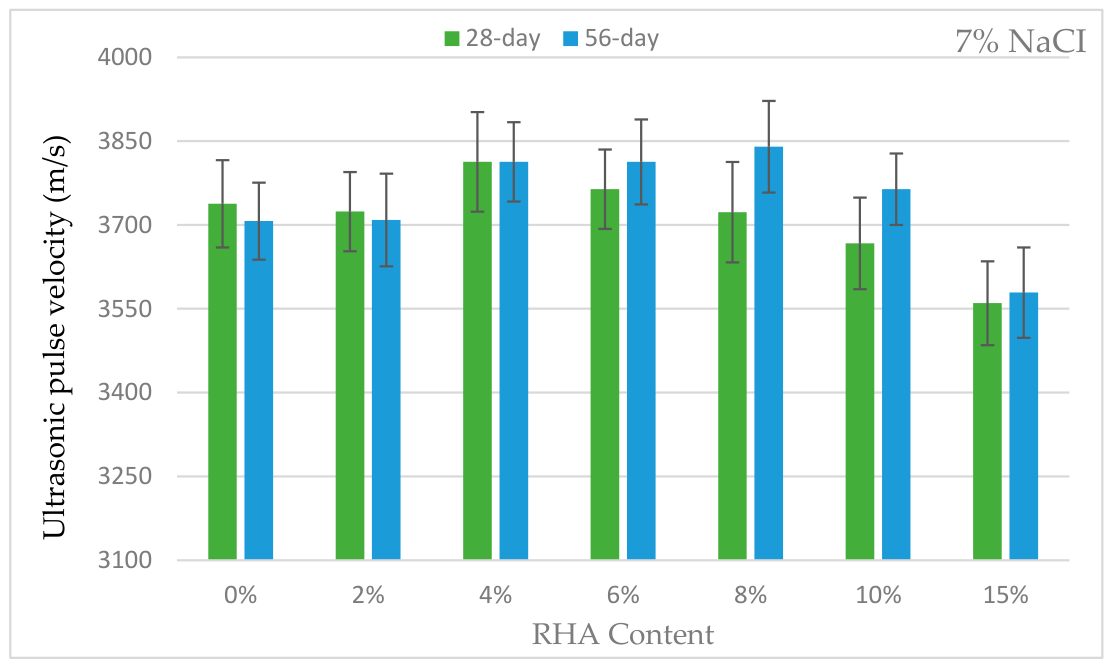
After 28 days of curing in a 7% NaCl solution, the ultrasonic velocities of reference specimens and specimens containing 15% RHA were 3738 m/s and 3560 m/s, respectively. Similarly, after 56 days of curing in a 7% NaCl solution, the ultrasonic velocities of reference and 15% RHA specimens were 3707 m/s and 3579 m/s, respectively. A decrease in ultrasonic velocities was observed as the RHA content increased in the mixtures. The velocity of sound waves passing through the material depends on its void ratio and density of that material. Since the density of RHA is lower than that of cement, the sound wave velocity of materials with low density and high void ratio is also lower. The graph showing the variation in UPV with RHA content for specimens cured in 7% NaCl is presented in Figure 15. For the 28th day, the highest results were obtained at an 8% RHA addition ratio, with values higher than those for the control. The higher UPV values observed at 8% RHA in the specimens exposed to the 7% NaCl solution may be attributed to the development of a denser microstructure at this replacement level. The pozzolanic reaction of RHA can promote the formation of additional C-S-H gel and refine the pore structure, resulting in improved ultrasonic wave transmission. It is therefore considered that, under the 7% NaCl exposure condition, the 8% RHA mixture achieved a more compact internal structure than the other mixtures, leading to the highest UPV; values in the range of 3.5–4.5 km/s are considered good quality [48].
Figure 15.
UPV variation of specimens cured in 7% NaCl solution.
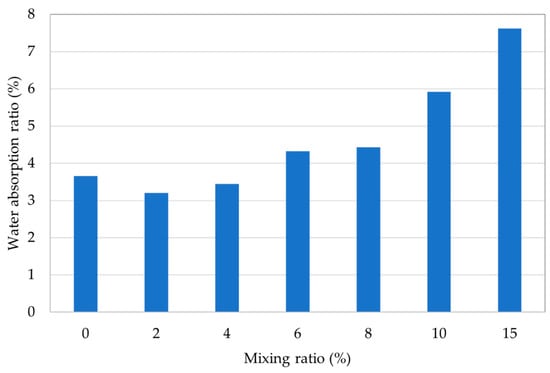
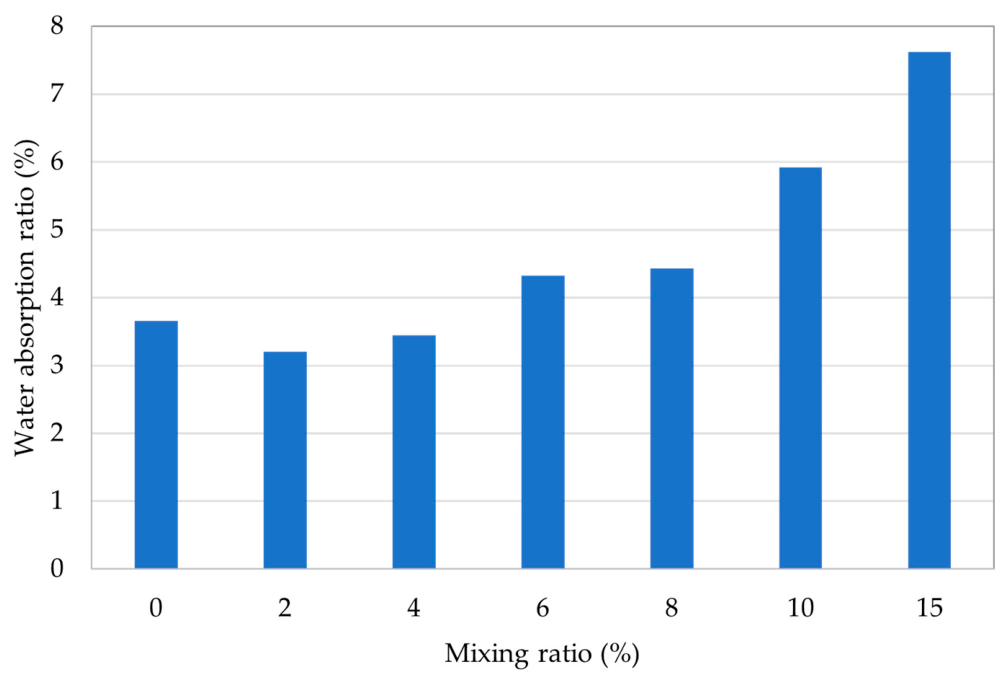
For the determination of water absorption ratio, the saturated surface dry weights in air of control and RHA-incorporated mortar specimens cured in water for 28 days were measured. The water absorption ratios of control (0%) and mortar specimens containing 15% RHA were found to be 3.6% and 7.6%, respectively. In a previous study, the water demand of concrete specimens prepared by adding RHA at 10%, 15%, 20%, 25%, and 30% of cement weight increased [49]. The graph showing the variation in water absorption ratio with RHA content is presented in Figure 16.
Figure 16.
Water absorption ratio of mortar specimens with varying RHA content.
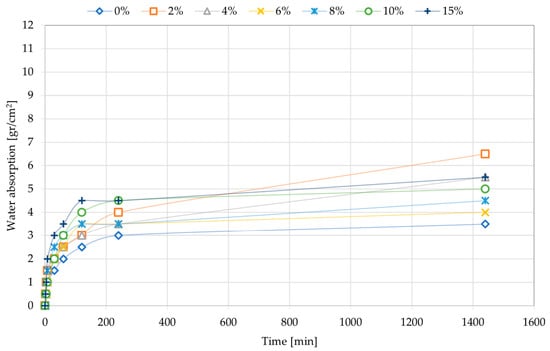
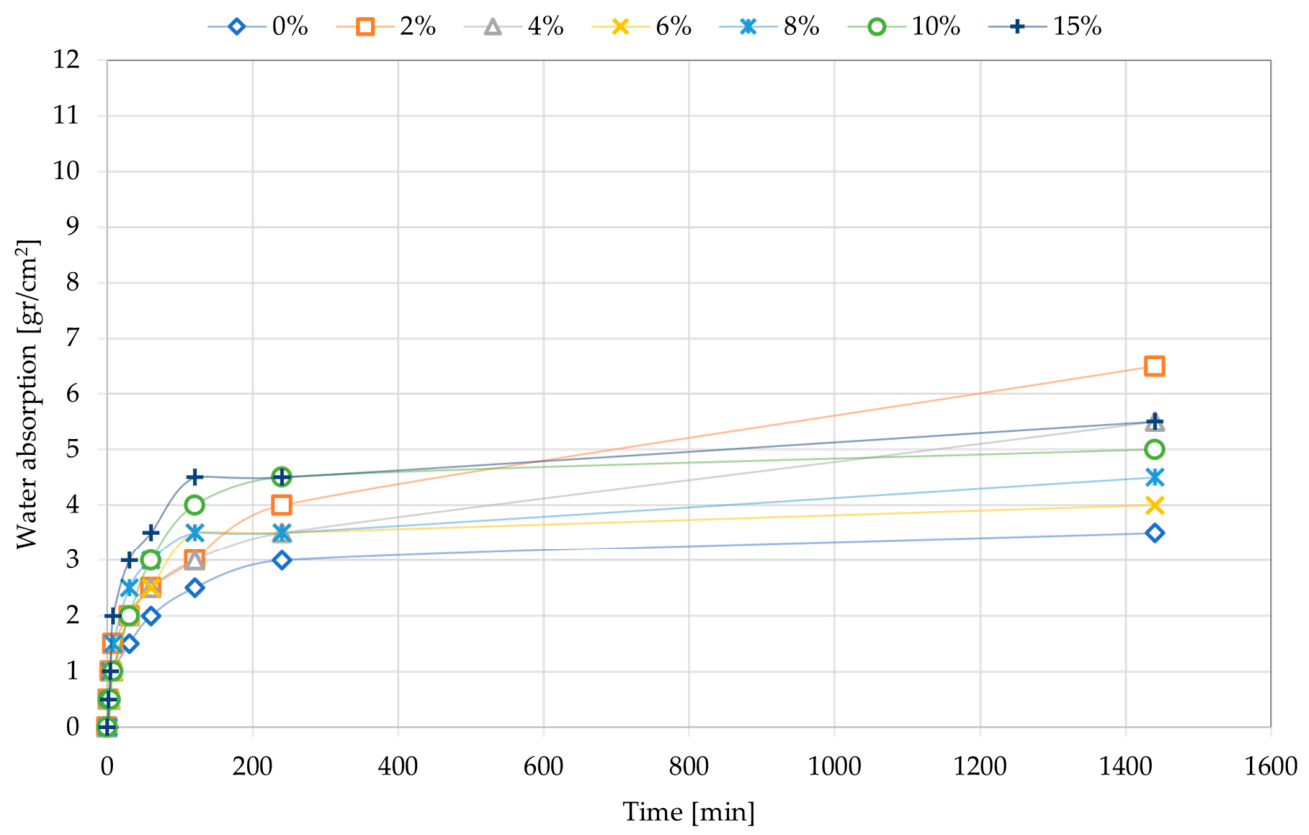
The examination of capillary water absorption results of RHA-incorporated mortar specimens after 90 days of curing in seawater revealed that capillary water absorption values generally increased as time progressed in both reference and RHA-incorporated mortar specimens. While the dry weight of the reference specimen was 77 g, after 24 h of capillary water absorption, its weight increased by 3.5 g to 80.5 g. Similarly, while the dry weight of specimens containing 15% RHA was 63.5 g, after 24 h of capillary water absorption, its weight increased by 5.5 g to 69 g. The capillary water absorption results of specimens cured in seawater are presented in Figure 17.
Figure 17.
Capillary water absorption of specimens cured in seawater.
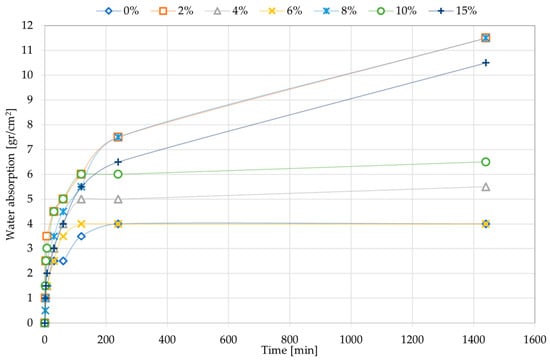
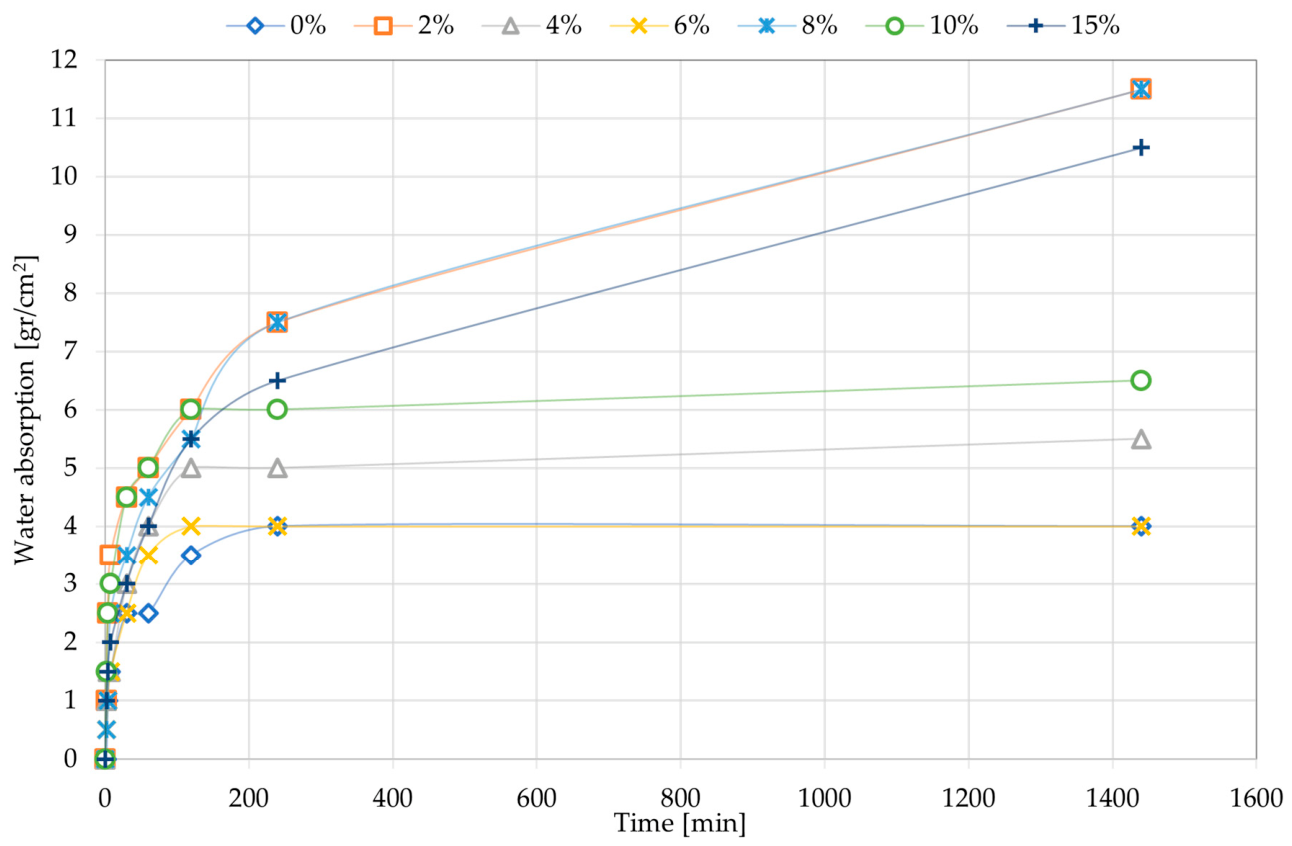
Capillary water absorption values of reference and RHA-incorporated mortar specimens cured in a 7% NaCl solution generally increased as time progressed. While the dry weight of the reference specimen was 65.5 g, after 24 h of capillary water absorption, its weight increased by 4 g to 69.5 g. Similarly, while the dry weight of the specimen containing 15% RHA was 76.5 g, after 24 h of capillary water absorption test, its weight increased by 10.5 g to 87 g. The capillary water absorption graphs of specimens kept in a 7% NaCl solution are presented in Figure 18. According to the results of specimens cured in seawater and 7% NaCl (Figure 17 and Figure 18), the water absorption values of 4% and 6% RHA specimens at 1440 min were similar for both environments. Apart from these two specimens, it is clearly observed that the capillary water absorption values of specimens cured in a 7% NaCl solution yielded higher capillarity results than those of specimens cured in a seawater environment. The adverse effect of the NaCl environment was clearly demonstrated in these tests. A similar relationship between RHA content, pore structure, and fluid transport has also been reported in previous studies. Miyandehi et al. [31] stated that increasing the RHA content may lead to higher water absorption and porosity in cement-based materials. A more porous microstructure facilitates fluid transport and promotes the penetration of chloride-bearing solutions into the matrix. Consequently, higher chloride ingress can be expected at elevated RHA replacement levels. The capillary absorption results obtained in the present study support this observation, as mixtures containing higher RHA contents generally exhibited greater capillary water uptake, particularly under chloride-rich exposure conditions.
Figure 18.
Capillary water absorption of specimens cured in 7% NaCl solution.
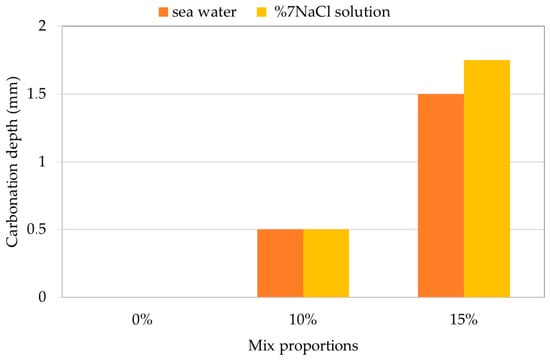
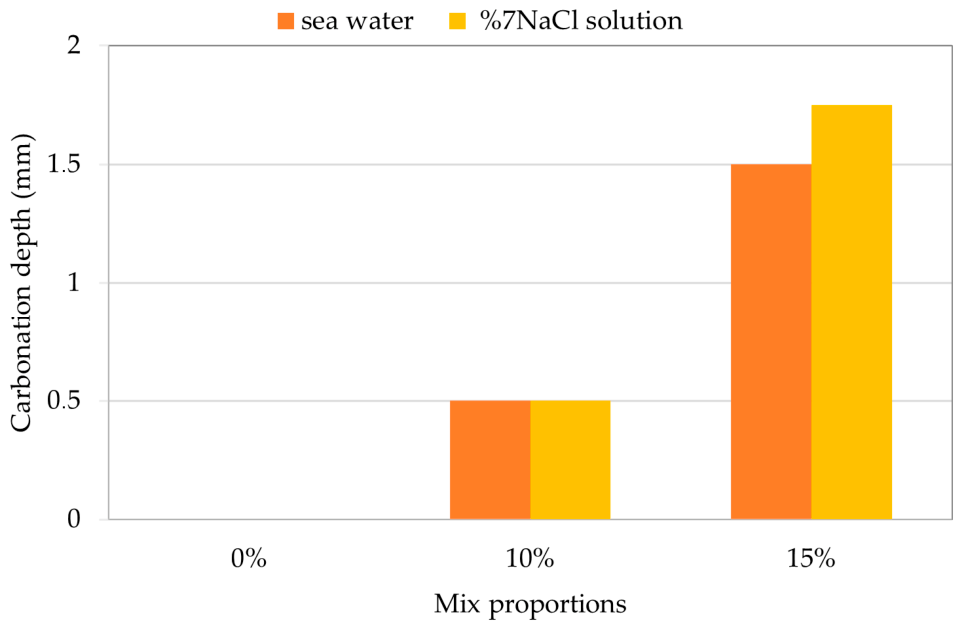
Carbonation depth was measured on reference and RHA-incorporated mortar specimens after 90 days of curing in seawater and 7% NaCl environments. The carbonation variation in specimens is shown graphically in Figure 19. No carbonation depth was observed in reference specimens in either curing environment. Carbonation depths of 0.5 mm and 1.5 mm were measured in mortar specimens with 10% and 15% RHA cured in a seawater environment, respectively. Carbonation depths of 0.5 mm and 1.75 mm were measured in mortar specimens with 10% and 15% RHA cured in a 7% NaCl solution, respectively. For both curing environments, carbonation depth increased significantly with increasing RHA addition. In a study in which the carbonation depth for OPC was below 2 mm, it was stated that compressive strength decreases were associated with increasing carbonation depth [50]. It can be argued that the increase in carbonation depth observed between the 10% and 15% RHA mixtures was similarly reflected in the corresponding decrease in compressive strength.
Figure 19.
Carbonation depth results.
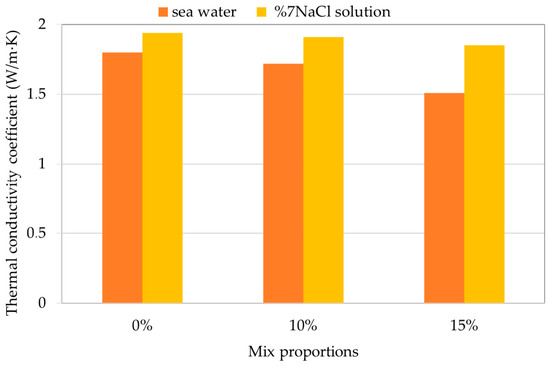
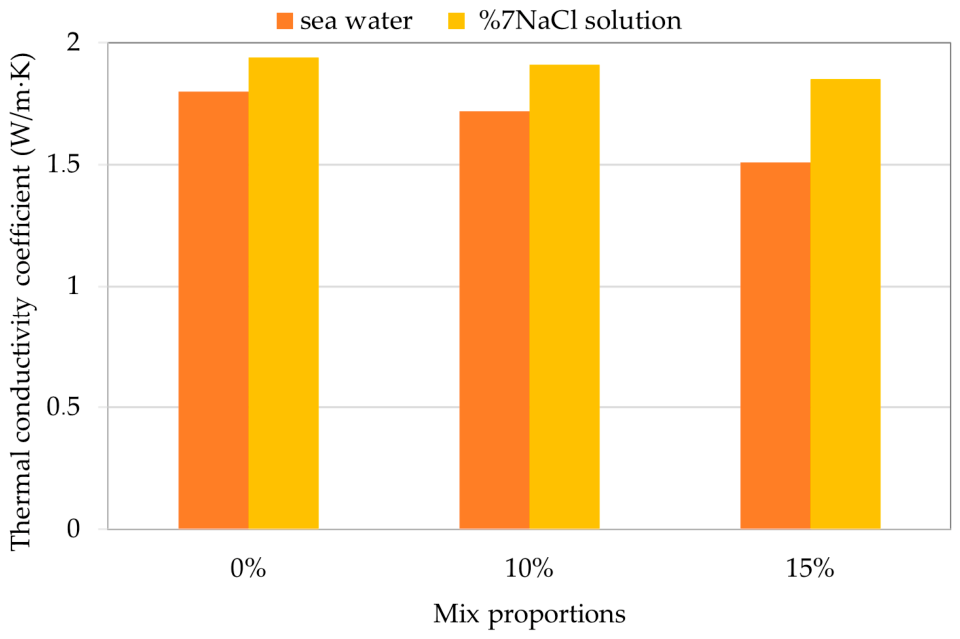
RHA-incorporated specimens were subjected to thermal conductivity coefficient measurement after curing in two different environments, seawater and 7% NaCl, for 90 days. Analysis results in W/(m·K) are presented in Figure 20. The thermal conductivity coefficients of mortar specimens containing 0%, 10%, and 15% RHA cured in a seawater environment were 1.8 W/(m·K), 1.72 W/(m·K), and 1.51 W/(m·K), respectively. The thermal conductivity coefficient values of mortar specimens containing 0%, 10%, and 15% RHA cured in a 7% NaCl solution were 1.94 W/(m·K), 1.91 W/(m·K), and 1.85 W/(m·K), respectively. For both curing environments, the decrease in thermal conductivity coefficients was consistent with the observed decrease in compressive strength.
Figure 20.
Thermal conductivity results.
4. Conclusions
Based on the evaluation of physical, mechanical, ultrasonic, durability, and thermal conductivity test results of mortar mixtures with different compositions, the following conclusions were drawn:
- The workability of fresh mortars decreased with increasing RHA content. The flow value decreased from 150 mm for the control mixture to 100 mm at 15% RHA replacement.
- The optimum RHA replacement level for compressive strength was generally found within the range of 8–10%, depending on the curing environment and exposure duration. The highest compressive strength values at 28, 56, and 90 days were generally obtained at this replacement ratio. Although compressive strength decreased with prolonged exposure time, this behavior was attributed to the aggressive seawater and 7% NaCl environments rather than the curing age itself.
- RHA incorporation generally improved flexural strength performance. The highest flexural strength was obtained at 6% RHA for specimens exposed to 7% NaCl solution.
- UPV results indicated that the incorporation of RHA did not significantly impair the internal quality of the mortars. In some mixtures, UPV values were comparable with or slightly higher than those of the control specimens.
- Water absorption, capillary absorption, and carbonation depth generally increased with increasing RHA content, particularly at replacement levels of 10–15%. No carbonation depth was observed in the control mixtures, whereas the highest carbonation depths were measured in the 15% RHA mixtures. Therefore, excessive RHA replacement may adversely affect some durability-related properties despite its beneficial effects on strength and thermal performance.
- A reduction in thermal conductivity was observed with increasing RHA content in both curing environments. This finding indicates that RHA incorporation can improve the thermal insulation performance of mortars and may contribute to enhanced energy efficiency in building applications.
- Despite exposure to highly aggressive conditions, particularly the 7% NaCl solution selected to represent severe chloride attack, RHA-containing mortars maintained satisfactory mechanical and durability performance. This demonstrates the potential of RHA as a sustainable supplementary cementitious material for use in chloride-rich environments.
- From a practical perspective, RHA replacement levels of approximately 8–10% are recommended for mortars exposed to chloride-rich environments, as these mixtures generally provided the most favorable balance between compressive strength, flexural strength, durability-related properties, and thermal performance. Replacement levels exceeding 10% should be used with caution, since higher RHA contents resulted in increased water absorption, capillary water uptake, and carbonation depth despite their beneficial effect on thermal conductivity.
The results demonstrate that RHA can be successfully utilized as a partial cement replacement material in mortars exposed to chloride-rich environments, provided that the replacement level is appropriately selected. The findings contribute to the understanding of the mechanical, durability, and thermal performance of RHA-incorporated mortars under aggressive exposure conditions.
Future studies should investigate the combined use of RHA with other supplementary cementitious materials and chemical admixtures, as well as its long-term performance in mortar and concrete subjected to different environmental conditions.
Author Contributions
Conceptualization, methodology, validation, formal analysis, investigation, writing—original draft preparation, A.Z. and Ö.Ç.S.; supervision, Ö.Ç.S. All authors have read and agreed to the published version of the manuscript.
Funding
This research received no external funding.
Data Availability Statement
The original contributions presented in this study are included in the article. Further inquiries can be directed to the corresponding author.
Conflicts of Interest
The authors declare no conflicts of interest.
References
- Ganesan, K.; Rajagopal, K.; Thangavel, K. Rice husk ash blended cement: Assessment of optimal level of replacement for strength and permeability properties of concrete. Constr. Build. Mater. 2008, 22, 1675–1683. [Google Scholar] [CrossRef] [Scilit]
- Chatveera, B.; Lertwattanaruk, P. Evaluation of sulfate resistance of cement mortars containing black rice husk ash. J. Environ. Manag. 2009, 90, 1435–1441. [Google Scholar] [CrossRef] [Scilit]
- Tangchirapat, W.; Jaturapitakkul, C.; Chindaprasirt, P. Use of palm oil fuel ash as a supplementary cementitious material for producing high-strength concrete. Constr. Build. Mater. 2009, 23, 2641–2646. [Google Scholar] [CrossRef] [Scilit]
- Rukzon, S.; Chindaprasirt, P. An experimental investigation of the carbonation of blended Portland cement palm oil fuel ash mortar in an indoor environment. Indoor Built Environ. 2009, 18, 313–318. [Google Scholar] [CrossRef] [Scilit]
- Mehta, P.K. Siliceous Ashes and Hydraulic Cements Prepared Therefrom. U.S. Patent 4,105,459, 8 August 1978. [Google Scholar]
- James, J.; Rao, M.S. Silica from rice husk through thermal decomposition. Thermochim. Acta 1986, 97, 329–336. [Google Scholar] [CrossRef] [Scilit]
- Le, H.T.; Nguyen, S.T.; Ludwig, H.M. A study on high performance fine-grained concrete containing rice husk ash. Int. J. Concr. Struct. Mater. 2014, 8, 301–307. [Google Scholar] [CrossRef] [Scilit]
- Ferraro, R.M.; Nanni, A.; Vempati, R.K.; Matta, F. Carbon neutral off-white rice husk ash as a partial white cement replacement. J. Mater. Civ. Eng. 2010, 22, 1078–1083. [Google Scholar] [CrossRef] [Scilit]
- Kartini, K.; Nazierah, N.; Zaidahtulakmal, M.Z.; Aisyah, S.G. Effects of silica in rice husk ash (RHA) in producing high strength concrete. Int. J. Eng. Technol. 2012, 2, 1951–1956. [Google Scholar]
- Yousif, H.A.; Al-Khalaf, M.N. Use of rice husk ash in concrete. Int. J. Cem. Compos. Lightweight Concr. 1984, 6, 241–248. [Google Scholar] [CrossRef] [Scilit]
- Cook, J.D. Rice husk ash. In Concrete Technology and Design, Cement Replacement Materials; Swamy, R.N., Ed.; Surrey University Press: London, UK, 1986; Volume 3, pp. 171–195. [Google Scholar]
- Mehta, P.K. Properties of blended cements made from rice husk ash. ACI Mater. J. 1977, 74, 440–442. [Google Scholar] [CrossRef] [Scilit]
- Zhang, M.H.; Malhotra, V.M. High-performance concrete incorporating rice husk ash as a supplementary cementing material. ACI Mater. J. 1996, 93, 629–636. [Google Scholar] [CrossRef]
- Rodríguez de Sensale, G. Effect of rice-husk ash on durability of cementitious materials. Cem. Concr. Compos. 2010, 32, 718–725. [Google Scholar] [CrossRef] [Scilit]
- Madandoust, R.; Ranjbar, M.M.; Moghadam, H.A.; Mousavi, S.Y. Mechanical properties and durability assessment of rice husk ash concrete. Biosyst. Eng. 2011, 110, 144–152. [Google Scholar] [CrossRef] [Scilit]
- Bahri, S.; Mahmud, H.B. Rice husk ash—An alternative material to silica fume for production of 100 MPa mortar. Electron. J. Struct. Eng. 2013, 13, 31–35. [Google Scholar] [CrossRef] [Scilit]
- Ganesan, K.; Rajagopal, K.; Thangavel, K. Evaluation of bagasse ash as supplementary cementitious material. Cem. Concr. Compos. 2007, 79, 515–524. [Google Scholar] [CrossRef] [Scilit]
- De Sensale, G.R. Strength development of concrete with rice husk ash. Cem. Concr. Compos. 2006, 28, 158–160. [Google Scholar] [CrossRef] [Scilit]
- Olutoge, F.A.; Peter, A.; Adesina, P.A. Effects of rice husk ash prepared from charcoal-powered incinerator on the strength and durability properties of concrete. Constr. Build. Mater. 2019, 196, 386–394. [Google Scholar] [CrossRef] [Scilit]
- Muthadhi, A.; Kothandaraman, S. Experimental investigations of performance characteristics of rice husk ash–blended concrete. J. Mater. Civ. Eng. 2013, 25, 8. [Google Scholar] [CrossRef] [Scilit]
- Farooq, A.; Danish, M. Use of rice husk ash as an admixture to substitute of Portland Cement in concrete. Int. J. Trend Sci. Res. Dev. 2018, 2, 384–402. [Google Scholar] [CrossRef] [Scilit]
- Habeeb, G.A.; Fayyadh, M.M. Rice husk ash concrete: The effect of RHA average particle size on mechanical properties and drying shrinkage. Aust. J. Basic Appl. Sci. 2009, 3, 1616–1622. [Google Scholar]
- Praveenkumar, T.R.; Vijayalakshmi, M.M.; Meddah, M.S. Strengths and durability performances of blended cement concrete with TiO2 nanoparticles and rice husk ash. Constr. Build. Mater. 2019, 217, 343–351. [Google Scholar] [CrossRef] [Scilit]
- Hasparyk, N.P.; Monteiro, P.J.M.; Carasek, H. Effect of silica fume and rice husk ash on alkali-silica reaction. ACI Struct. J. 2000, 97, 486–492. [Google Scholar] [CrossRef] [Scilit]
- Cao, H.T.; Bucea, L.; Ray, A.; Yozghatlian, S. The effect of cement composition and pH of environment on sulfate resistance of Portland cements and blended cements. Cem. Concr. Compos. 1997, 19, 161–171. [Google Scholar] [CrossRef] [Scilit]
- Anwar, M.; Miyagawa, T.; Gaweesh, M. Using rice husk ash as a cement replacement material in concrete. In Waste Materials in Construction; Elsevier: Amsterdam, The Netherlands, 2000; Volume 1, pp. 671–684. [Google Scholar]
- Nehdi, M.; Duquette, J.; El Damatty, A. Performance of rice husk ash produced using a new technology as a mineral admixture in concrete. Cem. Concr. Res. 2003, 33, 1203–1210. [Google Scholar] [CrossRef] [Scilit]
- Salas, A.; Delvasto, S.; Gutiérrez, R.M.; Lange, D. Comparison of two processes for treating rice husk ash for use in high performance concrete. Cem. Concr. Res. 2009, 39, 773–778. [Google Scholar] [CrossRef] [Scilit]
- Sakr, K. Effects of silica fume and rice husk ash on the properties of heavy weight concrete. J. Mater. Civ. Eng. 2006, 18, 367–376. [Google Scholar] [CrossRef] [Scilit]
- Blesson, S.; Rao, A.U. Symbiotic effects of coffee husk ash incorporated ternary AAB system on qualitative, durability and sustainable characteristics. Constr. Build. Mater. 2024, 425, 136058. [Google Scholar] [CrossRef] [Scilit]
- Miyandehi, B.M.; Feizbakhsh, A.; Yazdi, M.A.; Liu, Q.-F.; Yang, J.; Alipour, P. Performance and properties of mortar mixed with nano-CuO and rice husk ash. Cem. Concr. Compos. 2016, 74, 225–235. [Google Scholar] [CrossRef] [Scilit]
- Chrismaningwang, G.; Basuki, A.; Sambowo, K.A. The Effect of Seawater Curing on the Correlation between Split Tensile Strength and Modulus of Rupture in High-strength Concrete Incorporating Rice Husk Ash. Procedia Eng. 2017, 171, 774–780. [Google Scholar] [CrossRef] [Scilit]
- Jaya, R.P.; Bakar, B.H.A.; Johari, M.A.M.; Ibrahim, M.H.W.; Hainin, M.R.; Jayanti, D.S. Strength and microstructure analysis of concrete containing rice husk ash under seawater attack by wetting and drying cycles. Adv. Cem. Res. 2014, 26, 145–154. [Google Scholar] [CrossRef] [Scilit]
- Jaya, R.P.; Hainin, M.R.; Wan Ibrahim, M.H.; Mohamed Nazri, F.; Arshad, M.F.; Muthusamy, K. Physical and chemical properties of rice husk ash concrete under seawater. Int. J. Integr. Eng. 2018, 10, 165–168. [Google Scholar] [CrossRef] [Scilit]
- TS E N 197–1:2012; Cement-Part 1: Compositions and Conformity Criteria for Common Cements. TSE: Ankara, Turkey, 2012.
- Özkan, İ.; Dokumacı, E. Recycling waste clay and rice husk ash in production of low density ceramics. El-Cezeri 2021, 8, 309–314. [Google Scholar] [CrossRef] [Scilit]
- TS EN 1015-3:2000; Methods of Test for Mortar for Masonry-Part 3: Determination of Consistence of Fresh Mortar (by Flow Table). TSE: Ankara, Turkey, 2000.
- TS EN 196-1:2016; Methods of Testing Cement-Part 1: Determination of Strength. TSE: Ankara, Turkey, 2016.
- TS EN 1015-11:2020; Methods of Test for Mortar for Masonry-Part 11: Determination of Flexural and Compressive Strength of Hardened Mortar. TSE: Ankara, Turkey, 2020.
- ASTM C597-09:2009; Standard Test Method for Pulse Velocity Through Concrete. ASTM International: West Conshohocken, PA, USA, 2009.
- TS EN 771-1:2005; Clay bricks (Wall Tile). TSE: Ankara, Turkey, 2005.
- TS 699:2009; Methods of Testing for Natural Building Stones. TSE: Ankara, Turkey, 2009.
- TS EN 480-5; Admixtures for Concrete, Mortar and Grout-Test Methods-Part 5: Determination of Capillary Absorption. TSE: Ankara, Turkey, 2005.
- TS EN 14630:2012; Products and Systems for the Protection and Repair of Concrete Structures-Test Methods-Determination of Carbonation Depth in Hardened Concrete by the Phenolphthalein. TSE: Ankara, Turkey, 2012.
- Endale, S.A.; Taffese, W.Z.; Vo, D.-H.; Yehualaw, M.D. Rice husk ash in concrete. Sustainability 2023, 15, 137. [Google Scholar] [CrossRef] [Scilit]
- Arasteh-Khoshbin, O.; Seyedpour, S.M.; Ricken, T. The effect of Caspian Sea water on mechanical properties and durability of concrete containing rice husk ash, nano SiO2, and nano Al2O3. Sci. Rep. 2022, 12, 20202. [Google Scholar] [CrossRef] [Scilit] [PubMed]
- Guo, Z.; Chen, Z.; Yang, X.; Zhang, L.; Li, C.; He, C.; Xu, W. The Influence of rice husk ash incorporation on the properties of cement-based materials. Materials 2025, 18, 460. [Google Scholar] [CrossRef] [Scilit] [PubMed]
- Salman, A.M.; Alengaram, U.J.; Jaafar, W.Z.W.; Ibrahim, M.S.I.; Pierce, Y.; Mohanraj, R. Enunciation of in-house silicate developed using thermochemical extraction from binary and ternary combinations of rice husk ash, eco-processed pozzolan, illitic clay for one-part geopolymer: Fresh and hardened properties. Constr. Build. Mater. 2025, 495, 143502. [Google Scholar] [CrossRef] [Scilit]
- Yıldız, S.; Balaydın, I.; Ulucan, Z.Ç. The effect of rice husk ash on concrete strength. Sci. Eng. J. Fırat Univ. 2007, 19, 85–91. [Google Scholar]
- Hossain, M.M.; Karim, M.R.; Elahi, M.M.A.; Islam, M.N.; Zain, M.F.M. Long-term durability properties of alkali-activated binders containing slag, fly ash, palm oil fuel ash and rice husk ash. Constr. Build. Mater. 2020, 251, 119094. [Google Scholar] [CrossRef] [Scilit]

Disclaimer/Publisher’s Note: The statements, opinions and data contained in all publications are solely those of the individual author(s) and contributor(s) and not of MDPI and/or the editor(s). MDPI and/or the editor(s) disclaim responsibility for any injury to people or property resulting from any ideas, methods, instructions or products referred to in the content. |
© 2026 by the authors. Licensee MDPI, Basel, Switzerland. This article is an open access article distributed under the terms and conditions of the Creative Commons Attribution (CC BY) license.