


Abstract
Emergency departments (EDs) operate under high-pressure and time-critical conditions in which spatial configuration plays a fundamental role in shaping workflow efficiency, staff coordination, and patient experience. Although Space Syntax has been increasingly applied in healthcare environments, evidence relating specifically to ED design remains fragmented, with inconsistencies in methodological approaches, performance interpretation, and operational linkage. This study presents a structured review informed by PRISMA 2020 guidelines to synthesise peer-reviewed research published between 1990 and 2025 on the application of Space Syntax in emergency department design, resulting in 14 eligible studies. The synthesis identifies three recurring thematic domains: spatial configuration, visibility and visual connectivity, and functional adjacency. The findings indicate that spatial integration, connectivity, and visibility conditions are consistently associated with circulation efficiency, supervision capacity, and workflow continuity. However, methodological heterogeneity, particularly in spatial representation, radius selection, and validation practices, limits cross-study comparability and predictive inference. To address these limitations, this review offers an integrated conceptual synthesis of existing evidence concerning the relationships between spatial configuration, visibility, and functional adjacency in emergency department environments. The synthesis suggests that relationships between spatial configuration, visibility, and functional adjacency may be interpreted as interconnected influences on emergency department performance. Overall, this review positions Space Syntax as a configurational performance evaluation methodology rather than a predictive tool, while highlighting the need for future research to integrate spatial analysis with simulation modelling, behavioural validation, and real-world operational data to enhance applicability in high-demand emergency environments.
1. Introduction
Designing hospital environments requires careful coordination of functional, operational, and human factors within spatial systems that must support both efficiency and adaptability. Among healthcare settings, emergency departments (EDs) represent uniquely demanding environments. They operate continuously, accommodate unpredictable patient volumes, and require rapid clinical decision-making under time-critical conditions. In the context of ageing populations, increasing chronic illness, and growing pressure on acute care services, the performance of emergency departments has become a critical concern in healthcare planning and architectural design.
The physical environment of healthcare facilities has long been recognised as an important determinant of patient safety, staff performance, and the overall quality of care. Hospital design decisions can influence communication, workflow efficiency, error reduction, and the ability of healthcare professionals to respond effectively under demanding operational conditions. Consequently, healthcare facility design is increasingly recognised as a strategic component of healthcare delivery rather than merely a physical setting for clinical activities [1].
A growing body of research indicates that spatial layout and internal configuration play a significant role in shaping ED performance. Ineffective spatial organisation can intensify congestion, reduce visibility, increase staff travel distances, and contribute to delays in diagnosis and treatment. In contrast, layouts characterised by clear circulation structures, strong visual connectivity, and coherent functional adjacencies have been shown to support communication, improve workflow efficiency, and enhance patient and staff safety. Recent studies further demonstrate that spatial configuration influences patient flow dynamics and operational efficiency in complex clinical environments [2,3].
Space Syntax provides a robust analytical methodology for assessing spatial configuration, relational structure, and movement potential within built environments. In emergency department contexts, it enables a structured evaluation of how layout geometry may influence accessibility, visibility, and workflow performance. Through metrics such as integration, connectivity, step depth, and visual field analysis, Space Syntax quantifies spatial accessibility and visual relationships, supporting interpretation of movement patterns and interaction dynamics. Within healthcare research, these methods have been widely applied to investigate wayfinding, staff circulation, patient flow, and the organisation of clinical and public areas. Applications in hospital environments have further demonstrated their value in analysing and improving circulation efficiency in complex healthcare systems [4]. More broadly, the growing relevance of Space Syntax across architecture, urban studies, transportation, and healthcare research is reflected in the substantial expansion of the field over recent decades, as highlighted by a recent bibliometric review of Space Syntax scholarship [5].
Although previous reviews have examined hospital design and healthcare environments more broadly, none have focused specifically on the configurational analysis of ED performance using Space Syntax. By consolidating evidence published between 1990 and 2025, this study provides a field-specific synthesis that supports further exploration of Space Syntax applications in emergency healthcare environments. Healthcare design standards further emphasise the importance of coherent circulation systems, clear zoning strategies, and safe functional adjacencies in emergency departments [6,7].
2. Research Gap and Review Contribution
Despite the increasing application of Space Syntax in healthcare environments, existing studies remain fragmented, methodologically inconsistent, and limited in their ability to provide an integrated understanding of emergency department performance [1,2,3,8,9,10]. Previous research has primarily examined specific aspects of healthcare environments, including circulation, visibility, and wayfinding, often addressing these dimensions separately through different analytical approaches such as axial analysis, Visibility Graph Analysis (VGA), isovist methods, behavioural observation, tracking, and cognitive mapping [11,12]. Although these studies provide valuable insights into particular aspects of emergency department design and performance, there remains limited understanding of how spatial configuration, visibility, and functional adjacency collectively relate to operational performance within emergency department environments. Furthermore, the literature lacks a comprehensive synthesis that integrates findings from these diverse analytical perspectives and evaluates their broader implications for emergency department design and performance assessment. This review addresses this gap by synthesising existing evidence on Space Syntax applications in emergency departments and providing an integrated conceptual interpretation of the relationships between spatial configuration, visibility, and functional adjacency. By bringing together findings from previously fragmented studies, this review identifies recurring themes, methodological patterns, and areas requiring further investigation, offering a consolidated understanding of configurational influences on emergency department performance.
3. Methodology
This review was informed by the PRISMA 2020 reporting guidelines to support transparent study identification, screening, and synthesis [13]. The objective was to examine how Space Syntax has been applied in the design and evaluation of hospital emergency departments.
3.1. Search Strategy
A structured literature search was conducted across five academic databases: Scopus, Web of Science, Art and Architecture Source, Art and Architecture Archive, and Art & Architecture ePortal (A&AePortal). Google Scholar was used only for supplementary searching and citation tracking.
The search strings were adapted to the indexing structure, retrieval logic, and search interface limitations of each database while maintaining conceptual consistency across the core domains related to Space Syntax, healthcare environments, and emergency department performance. Although minor variations in search syntax were required to accommodate database-specific indexing and retrieval functions, the same conceptual search framework was applied across all databases to enhance consistency and reproducibility.
Searches were performed between 10 and 15 April 2025. Database-specific search strings were developed using Boolean operators and applied to titles, abstracts, and keywords. The strategy combined three core concept groups: (i) emergency care environments, (ii) spatial configuration, and (iii) Space Syntax analytical methods.
For transparency and reproducibility, full search strings are provided in Appendix A. Backward citation tracking was used as a supplementary search strategy to identify additional relevant studies from the reference lists of eligible articles. All records identified through citation tracking were screened using the same eligibility criteria and selection procedures applied to database-derived studies before inclusion in the final review.
Health-focused databases (e.g., PubMed, CINAHL, Embase) were excluded because the review specifically targets Space Syntax applications, which are primarily indexed in architecture and engineering databases. A pilot search in PubMed confirmed that no additional relevant studies were missed. Nevertheless, the potential for omission bias is acknowledged.
While the review is informed by PRISMA 2020, no formal review protocol was prospectively registered. Predefined eligibility criteria, structured screening procedures, and transparent synthesis methods were applied to enhance methodological consistency and reproducibility.
3.2. Inclusion and Exclusion Criteria
Studies were included according to the following:
- Focused on emergency departments or emergency care environments.
- Applied Space Syntax methods (e.g., integration, choice, connectivity, Visibility Graph Analysis (VGA)).
- Reported empirical, simulation, or mixed-method findings relevant to ED performance.
- Were published in peer-reviewed journals or conference proceedings.
- Were written in English.
Studies were excluded according to the following:
- Did not address emergency departments.
- Referenced Space Syntax without applying it.
- Were purely conceptual without spatial analysis.
- Were grey literature (e.g., theses, reports).
3.3. Study Selection
Screening was conducted using predefined eligibility criteria to ensure consistency. Title and abstract screening, full-text assessment, and data extraction were performed by the primary reviewer using structured documentation procedures and were discussed with the other authors for agreement. To enhance methodological rigour, (i) eligibility criteria were established prior to screening, and (ii) decisions were carefully documented throughout the review process. The search yielded 245 records, reduced to 210 after removing duplicates. Following screening and eligibility assessment, 14 studies were included in the final synthesis, as illustrated in Figure 1.
Figure 1.
The study selection process.
3.4. Data Extraction and Synthesis
Following the screening process, the included studies were reviewed through an iterative thematic synthesis approach. Study characteristics, analytical methods, spatial variables, and reported operational outcomes were extracted and comparatively examined across the selected literature. The analytical coding process focused on identifying recurring configurational themes associated with emergency department performance and healthcare spatial analysis.
Through this process, three primary thematic categories emerged: spatial configuration, visibility, and functional adjacency. These themes were not predefined rigid categories but were inductively developed based on recurrent conceptual and methodological patterns identified across the reviewed studies. Studies were categorised according to their dominant analytical focus, while acknowledging that some studies overlapped across multiple thematic dimensions.
The review process, study selection decisions, and thematic interpretation were discussed regularly among the authors to support methodological rigour and consistency of interpretation. Accordingly, the findings should be interpreted as a structured thematic synthesis intended to identify methodological and configurational trends within the literature rather than a fully reproducible quantitative meta-analysis.
Data were extracted on study context, emergency department typology, Space Syntax metrics, reported performance implications, and other study characteristics. Extracted variables included study setting, healthcare context, Space Syntax indicators, analytical methods, and reported implications for circulation, visibility, wayfinding, workflow efficiency, and operational performance.
Key Space Syntax measures were interpreted in relation to emergency department performance by examining relationships between spatial accessibility, visibility, movement potential, workflow efficiency, communication, and patient management processes.
Each study was mapped to one or more themes based on its primary outcomes, ensuring that the synthesis remained grounded in empirical evidence.
These measures were selected because they represent the most frequently applied and operationally relevant Space Syntax indicators identified across the reviewed emergency department and healthcare studies.
Key Space Syntax measures and their relevance to ED performance include the following:
- Integration: A measure of how easily a space can be reached from all other spaces in the system. Higher integration typically indicates greater spatial accessibility and concentration of movement and may be associated with patient flow efficiency and circulation performance in emergency departments.
- Choice: A betweenness-type measure estimating how often a segment or axis lies on shortest paths, indicating potential through-movement and its relevance to emergency routing, staff redeployment, and critical path optimisation.
- Connectivity: The number of directly connected spaces or segments, reflecting immediate local accessibility and its relationship to staff movement, interaction patterns, and navigation at the local scale.
- Step depth (mean depth): The number of steps required to reach other spaces. Greater depth indicates more segregated locations and may be associated with reduced accessibility and increased navigation difficulty.
- Visibility Graph Analysis (VGA): A method modelling intervisibility between points in space to quantify visual integration and connectivity, closely linked to supervision, monitoring, and situational awareness in clinical environments.
- Isovist: The visible area from a given viewpoint, used to interpret visual control, perceptual clarity, and spatial awareness.
These measures were functionally interpreted to strengthen the connection between configurational analysis and operational performance, supporting a more coherent and application-oriented synthesis of emergency department design.
3.5. Quality Assessment
A structured appraisal was conducted to evaluate methodological robustness, analytical clarity, and relevance. Given methodological diversity, a narrative approach was adopted rather than formal clinical risk-of-bias tools.
Studies were evaluated against four criteria: (i) clarity of ED context, (ii) transparency of Space Syntax methods, (iii) coherence between measures and interpretations, and (iv) analytical depth.
Each criterion was scored on a three-point scale (0–2), with a maximum score of eight. Studies were classified as high (7–8), moderate (4–6), or low (≤3) quality. The quality appraisal criteria used to assess the included studies are presented in Appendix B (Table A2). The detailed quality assessment scores for the included studies are provided in Appendix B (Table A3).
4. Results
A total of 14 studies met the inclusion criteria and were included in the final synthesis. To ensure alignment with the review scope, studies conducted outside emergency department (ED) contexts were not treated as equivalent empirical evidence. Instead, they were used solely for contextual interpretation where spatial configurations were structurally comparable (e.g., high-flow circulation zones and visibility-dependent supervision areas) [14,15,16]. Accordingly, ED-specific conclusions are derived exclusively from ED-based studies, while non-ED studies support theoretical interpretation.
The characteristics of the included studies are summarised in Table 1, including study context, methodological approach, key findings, and Space Syntax indicators. Clear methodological progression is evident. Earlier studies mainly relied on axial analysis to examine relationships between spatial integration and movement behaviour [14,15]. More recent studies increasingly incorporated visibility-based methods (e.g., Visibility Graph Analysis (VGA) and isovist) alongside movement simulation approaches, including discrete event simulation and agent-based modelling, to examine dynamic operational conditions such as crowding and surge scenarios [2,10,17].
Emergency departments are high-variability environments characterised by unpredictable demand, rapid triage, and continuous staff movement. Under such conditions, spatial configuration functions as an enabling infrastructure for operational performance. Integrated circulation structures support efficient movement and rapid response, whereas deep or fragmented layouts may increase congestion, delay access, and reduce situational awareness [2,18].
Across the reviewed studies, spatial integration, connectivity, and step depth were consistently associated with movement behaviour. Highly integrated spaces supported smoother circulation and clearer wayfinding, while deeper spaces were associated with increased navigation difficulty [11,12]. Integration also influenced user behaviour, with more accessible spaces attracting higher levels of movement and interaction [16].
Visibility-based analyses further highlighted the importance of visual connectivity for supervision and communication. Layouts with strong visual fields, particularly those centred around nurse stations, were associated with improved situational awareness and coordination, whereas limited visibility was associated with reduced monitoring efficiency [8,9,10].
Spatial typology plays a critical role in shaping ED performance. Open-plan (ballroom) layouts tend to maximise visibility and circulation efficiency but may reduce privacy, while podular layouts enhance localised control but can fragment workflows [8]. Linear and hybrid configurations vary depending on corridor structure and nurse station placement, indicating that relatively small spatial variations can significantly affect performance.
Functional adjacency further influences workflow continuity and operational efficiency. Proximity between key zones, such as triage, treatment, and imaging, reduces travel distances and supports efficient clinical sequencing [3,18]. Studies also show that targeted spatial reconfiguration, including corridor realignment or departmental relocation, can improve connectivity, visibility, and overall performance [18].
The findings also highlight the importance of interpreting configurational metrics in relation to real operational conditions. ED performance is influenced not only by spatial structure but also by crowding, staff behaviour, and temporal variability. Simulation-based studies demonstrate that combining Space Syntax with dynamic modelling provides a more comprehensive understanding of circulation bottlenecks and performance under peak demand [2,17].
Overall, the evidence indicates that Space Syntax provides a robust analytical approach for evaluating spatial configuration and its implications for movement, visibility, and workflow in emergency departments. However, its interpretation must be contextualised within dynamic operational environments to fully capture performance outcomes.
Although the review identified recurring configurational principles across healthcare environments, analytical emphasis was placed primarily on ED-specific studies. Selected broader healthcare configuration studies were included cautiously to support contextual interpretation and methodological comparison, recognising that general hospital circulation patterns cannot be considered directly equivalent to emergency department operational conditions characterised by dynamic triage, crowding variability, and continuous workflow adaptation.
Table 1.
Summary Characteristics of Included Studies.
Of the 14 included studies, 7 were emergency department-specific studies, while the remaining 7 broader healthcare studies were included primarily for contextual and methodological interpretation.
4.1. Spatial Configuration and Movement Patterns
ED-specific studies form the primary evidence base of the synthesis, while non-ED studies are used exclusively to support contextual interpretation of configurational patterns. Accordingly, conclusions relating specifically to emergency department performance are derived primarily from ED-focused studies, while evidence from broader healthcare settings is used to support contextual interpretation rather than direct inference.
The emergency department (ED) represents one of the most critical components in hospital settings, delivering immediate care to patients experiencing urgent or life-threatening conditions. The internal spatial configuration of EDs directly influences operational efficiency and, in turn, affects the functional performance of the broader hospital system [21,22]. Healthcare is among the fastest expanding sectors and requires complex architectural responses to support diverse and evolving care demands [23]. Accordingly, hospital design must enable efficient service delivery while maintaining safety, privacy, and coordination across multiple clinical functions [6,7]. Aksoy et al. [11] highlighted that functional performance is shaped by the interaction between a building’s spatial form and its users. Hillier further suggested that spatial configuration has a substantial influence on organisational performance [24], while subsequent studies showed that modifications to circulation networks can significantly disrupt operational outcomes [25]. Given its role as a primary point of patient access, the ED remains a priority target for optimisation in healthcare planning and policy [26]. International healthcare design guidelines further reinforce the importance of circulation safety, zoning clarity, and functional adjacency in clinical facilities, underscoring the regulatory relevance of spatial organisation in emergency department planning [7].
4.2. Visibility and Visual Connectivity
Importantly, EDs differ from many other healthcare environments due to unpredictability, peak overloads, rapid triage prioritisation, and frequent staff redeployment. Under these conditions, relatively small spatial inefficiencies can translate into delayed response, reduced situational awareness, increased cognitive load, and compromised safety during surge events. Therefore, interpreting Space Syntax findings in ED contexts requires attention not only to configurational accessibility and visibility metrics, but also to how these properties perform under dynamic crowding and behavioural adaptation [10,15,18].
From a systems perspective, emergency departments operate as high-variability socio-technical environments where performance depends on the capacity to manage surges, re-route flows, and maintain situational awareness under operational stress. In this context, spatial configuration functions as an enabling infrastructure for adaptive performance: integrated circulation spines may support rapid redeployment and flexible routing, whereas overly deep or fragmented layouts may intensify bottlenecks during peak demand. Moreover, ED-specific phenomena, such as triage reprioritisation, temporary zoning during outbreaks, and sudden influx during major incidents, can alter normal movement patterns, indicating that configurational advantages should be interpreted in relation to performance under variable demand conditions rather than routine operations alone [10].
Best-practice guidelines recommend locating EDs on the ground floor and providing at least two dedicated entrances, one for walk-in patients and one for ambulance arrivals. Entrances should be positioned along direct routes from public access roads, with covered and clearly signposted drop-off areas. Ambulance bays should be adjacent to triage or reception to support rapid clinical assessment, and circulation routes must accommodate stretchers and wheelchairs throughout the department [27]. Achieving layouts that balance privacy, accessibility, and intuitive wayfinding while supporting complex clinical workflows remains a substantial architectural challenge [15,18,20].
Multiple studies indicate that spatially connected and visually accessible circulation spaces facilitate smoother movement and improved spatial accessibility. Corridor configuration, visibility, and integration therefore have measurable effects on movement behaviour, occupancy patterns, and spatial interaction within healthcare environments [12,28]. Higher spatial integration is also associated with greater configurational accessibility and a more public character of an area, which may facilitate interaction among users [15,24]. Radial layouts tend to provide superior visibility due to multiple sightlines, followed by double-corridor configurations [8,10,29]. Aksoy et al. [11] observed that lower connectivity and integration corresponded with increased stops, route deviations, and inefficient path completion during navigation tasks.
Accessibility patterns further influence space occupation and staff behaviour. Pachilova et al. [29] and Cai et al. [30] likewise reported that spatial configuration was associated with staff movement and communication patterns; in some units, staff spent more than two-thirds of their time in circulation and shared zones rather than in treatment rooms, highlighting the potential influence of layout on collaboration and workflow continuity.
Overall, Space Syntax has been widely applied to analyse hospital floor layouts and to interpret their potential implications for wayfinding, interaction, and movement behaviour [12,18]. Although conducted in a general hospital setting rather than an emergency department, Rauof et al. reported that minor spatial reconfigurations were associated with improved visual relationships among hospital functional areas, highlighting the potential value of applying Space Syntax tools during the early stages of healthcare design (Table 2) [18].
Table 2.
Comparative summary of connectivity, integration, and step-depth patterns across two hospital floor levels, illustrating how configurational differences may influence accessibility, circulation efficiency, and movement performance. Adapted from Rauof et al. (2022) [18].
Building on these analytical strengths, at Yuma Regional Medical Centre (Arizona), Morgareidge et al. [17] applied Discrete Event Simulation (DES) alongside Space Syntax Analysis (SSA) to support ED redesign aimed at managing seasonal surges in patient volume. DES was used for planning and scenario testing, while SSA evaluated how layouts influenced care coordination and visual supervision. The combined approach enabled identification of congestion points and informed redesign decisions intended to enhance spatial adaptability and operational performance under projected demand.
International and World Health Organization (WHO) guidelines stress the importance of coherent visual organisation within hospitals to enable continuous and efficient circulation [31]. Poor spatial clarity can lead to confusion and inefficiency, making hospital design one of the most complex tasks in architecture due to its clinical, regulatory, social, and cultural requirements [17]. Circulation complexity particularly challenges wayfinding on ground floors, often necessitating repeated adjustments to spatial configuration to support intuitive navigation. Effective layouts are therefore characterised by recognisable structural patterns reinforced with clear and strategically placed signage [17,19].
Building on these principles, a recent study examined ED wayfinding in the United Arab Emirates, emphasising the role of visual and verbal cues and identifying key spatial anchors such as reception points and different nurse station types, including first look and observation stations [19].
While conducted in a general hospital context rather than an emergency department, the study provides useful insight into the relationship between spatial configuration and wayfinding performance. Building on this work, Aksoy et al. [11] analysed how inexperienced users navigate hospital environments. Using Space Syntax analysis and GoPro-based path tracking, the study found that areas with higher integration and connectivity supported more successful navigation, while spaces with greater step depth increased difficulty and delays. DepthmapX analyses reported average connectivity, integration, and step-depth scores of 135.34, 3.00, and 3.63, respectively, further indicating that spatial configuration plays a significant role in shaping wayfinding behaviour.
Real-world spatial behaviour is shaped not only by spatial configuration but also by contextual factors such as operational schedules, lighting conditions, environmental comfort, and functional adjacency [32,33]. For this reason, field observations are often recommended to validate and substantiate SSA outputs. When SSA is combined with Agent-Based Simulation (ABS) to model dynamic conditions, it offers a more comprehensive approach for understanding space use under crowding. This integrated perspective underscores the value of assessing spatial, behavioural, and operational factors together to better understand workflow efficiency, patient movement, and overall departmental performance.
Yuan & Zhou [2] further advanced this area by incorporating dynamic crowd behaviour into visibility analysis. Whereas earlier analyses typically accounted only for static barriers such as walls or partitions, their approach highlighted the visual obstruction caused by moving crowds, an especially significant factor in high-traffic ED environments. By simulating crowd flows across corridor configurations, they suggested how congestion alters visibility fields and affects spatial accessibility, reinforcing the value of combining Space Syntax methods with agent-based modelling to capture both static and dynamic conditions.
The importance of visibility extends beyond spatial accessibility and also influences how users visually search for and identify destinations within complex environments. Bennett et al. [34] demonstrated that visual search performance is influenced by environmental characteristics and the visibility of target locations. Their findings suggested that environments providing clearer visual information and fewer visual obstructions support more efficient visual search behaviour. In healthcare settings, these observations reinforce the importance of visibility as a factor that may contribute to improved wayfinding performance and spatial understanding.
Beyond visibility and visual search, spatial configuration itself plays a fundamental role in shaping movement behaviour within healthcare environments. While conducted in a general hospital setting rather than an emergency department, one of the earliest applications of Space Syntax in hospital settings was undertaken by Peponis and Zimring [14]. Using axial mapping to represent public circulation networks, they analysed the ground floor of a 100-bed hospital and assigned integration values to corridor intersections. Behavioural data from 15 participants showed that integration-n values accounted for 57% of corridor use and 60.5% of node use. Moreover, when participants became disoriented, they tended to return to more integrated nodes (r = 0.754), suggesting that integrated points can function as cognitive anchors for spatial decision-making [14].
Although focused on broader hospital environments, the findings offer relevant contextual evidence regarding wayfinding and spatial cognition in healthcare settings. Haq [15] conducted an empirical study across three large urban hospitals, in which 128 participants engaged in exploratory search, directed wayfinding, and cognitive mapping tasks. The study reported that spatial configuration, particularly integration and connectivity, was strongly associated with movement patterns and spatial understanding. Differences in spatial intelligibility between hospital layouts were shown to influence navigation performance, with more integrated and intelligible environments supporting more effective wayfinding behaviour. These findings highlight the importance of configurational properties in shaping user interaction with complex healthcare environments. A supplementary summary of the circulation characteristics identified by Haq [15] is provided in Appendix C (Table A4).
Although not ED-specific, these findings provide contextual evidence on the relationship between configurational accessibility and movement patterns in healthcare environments. Setola et al. [16] examined three complex hospital settings in Tuscany (Santa Maria Nuova, Montepulciano, and Careggi) to investigate the relationship between public-area spatial configuration, configurational accessibility, and user behaviour. The research combined Space Syntax analysis with social survey and observational methods, assessing multiple dimensions of configurational accessibility, including overall accessibility, accessibility from entrances, accessibility via vertical circulation, and accessibility to initial points of contact. Observations of movement and occupancy patterns indicated that spaces characterised by higher configurational accessibility were more frequently used, while less accessible areas experienced reduced use, indicating a strong association between spatial configuration and space occupation (r2 = 0.62 in Santa Maria; r2 = 0.46 in Montepulciano). Supplementary summaries of integration hierarchy and occupancy patterns are provided in Appendix C (Table A5 and Table A6).
4.3. Functional Adjacency and ED Layout Typologies
Sabir et al. [8] analysed ED layout typologies (ballroom, podular, and multiple linear variants) and evaluated operational performance using parameters derived from ED design standards, including nurse station placement, corridor circulation, and visual communication. Their findings suggest that ED typologies involve trade-offs: ballroom layouts tend to maximise visibility and circulation efficiency but may reduce privacy, while podular layouts enhance localised observation and privacy but can weaken inter-unit connectivity and fragment workflows. Linear layouts vary widely depending on corridor geometry and nurse station positioning, indicating that relatively small structural differences can lead to meaningful differences in functional performance within emergency care environments. The principal spatial characteristics, circulation patterns, and operational implications of common ED layout typologies are summarised in Table 3.
Table 3.
Comparative summary of emergency department spatial typologies, highlighting differences in spatial organisation, visibility conditions, circulation efficiency, and performance implications. Adapted from Sabir et al. (2022) [8].
Sabir et al. [8] complemented the configurational assessment with Post-Occupancy Evaluation (POE) methods to capture user experience. Their questionnaire evaluated wayfinding, configurational accessibility, privacy, visibility, time efficiency, corridor circulation, and overall spatial performance using a 26-item Likert scale. The results suggested that ballroom layouts were often preferred by users and were associated with clearer navigation, lower spatial depth, stronger visual connectivity between staff and patients, and higher perceived safety and awareness. However, the study also indicated that podular layouts may better support privacy and localised oversight, illustrating that ED design requires balancing multiple competing priorities, privacy, supervision, circulation efficiency, and workflow continuity.
In parallel, a complementary study by Rauof et al. [18] explored how Space Syntax can support hospital design evaluation by assessing connectivity and visual communication between functional areas, entrances, and key destinations within a healthcare environment. Although conducted in a general hospital setting rather than an emergency department, the study suggested that even moderate configurational modifications may reshape visual relationships among functional areas and influence patterns of accessibility and movement. Two strategies were examined: (i) spatial reconfiguration, involving internal corridor adjustments while retaining the overall footprint, and (ii) spatial rearrangement, involving the relocation of functional units to more central and accessible locations. Both scenarios were associated with measurable changes in Space Syntax indicators, highlighting the potential value of syntactic analysis during design development and iterative optimisation processes. A supplementary summary of the spatial reconfiguration scenarios is provided in Appendix C (Table A7).
Taken together, the findings of Sabir et al. [8] and Rauof et al. [18] highlight the importance of spatial typology, corridor structure, and visual connectivity in shaping staff workflows, patient experience, and the balance between privacy, efficiency, and safety in healthcare environments. While Sabir et al. focused on emergency department settings, Rauof et al. provided complementary evidence from a general hospital context. Importantly, these studies support the interpretation that operational performance may be influenced not only by spatial characteristics but also by how those characteristics interact with real-use conditions, including crowding and peak demand.
Similarly, Yuan & Zhou [2] examined the influence of crowd dynamics on visibility and spatial performance in emergency department environments by integrating Space Syntax analysis with agent-based simulation. Their findings demonstrated that crowd movement can significantly alter visibility conditions, accessibility patterns, and wayfinding performance, highlighting the importance of considering both spatial configuration and dynamic operational conditions when evaluating emergency department layouts.
Zamani [9] examined the relationship between spatial design and staff satisfaction and performance, noting that ED staff operate under high workload, time pressure, and occasional aggressive behaviours. Using a mixed-methods approach (interviews, questionnaires, (VGA), and agent-based simulation), the study associated improved visibility in waiting and triage zones, controlled access points, clear circulation routes, and reduced obstructions with stronger team communication and safer workflows. Conversely, irregular intersections and physical barriers reduced spatial awareness and hindered orientation, indicating that unobstructed visibility and direct pathways may support more efficient clinical coordination under pressure.
Although undertaken in inpatient hospital units rather than emergency departments, the study provides relevant evidence on visibility, occupancy, and communication patterns within healthcare environments. A study by Yıldızoğlu & Kasalı [12] analysed inpatient units in a Turkish research hospital using Space Syntax analysis combined with observational and survey-based methods to examine staff movement, occupancy, and communication patterns. The findings suggested that spatially connected and visually accessible layouts supported higher levels of movement and interaction potential; however, staff-perceived communication quality did not always correspond directly with global configurational measures. Instead, corridor organisation, functional proximity, and local visibility conditions were found to strongly influence movement and communication patterns within healthcare environments. The study also highlighted the role of corridor configuration and nurse station placement in shaping occupancy density and circulation behaviour, particularly in highly used corridor segments. A comparative summary of the spatial configuration characteristics, connectivity patterns, and observed communication outcomes across the two inpatient unit layouts is presented in Table 4.
Table 4.
Summary of spatial configuration characteristics and communication outcomes across two inpatient units, highlighting how layout typology, corridor configuration, and spatial connectivity influence interaction and movement patterns. Adapted from Yıldızoğlu & Kasalı (2025) [12].
Khatib and Alshboul [3] evaluated strategies to enhance spatial planning in emergency departments by reducing unnecessary patient movement and delays through improved functional zoning and adjacency. Their work emphasised that ED functional sections form an interconnected care pathway from arrival and triage to treatment and disposition, and that spatial decisions may support rapid prioritisation and more efficient sequencing of services. The zoning logic presented (e.g., triage adjacency to entrance, direct ambulance access to resuscitation, and proximity of imaging to treatment areas) highlights the importance of functional adjacency in supporting workflow continuity and operational efficiency in emergency care settings. A supplementary summary of functional zoning and movement pathways is provided in Appendix C (Table A8).
Beyond configurational metrics, wayfinding performance is also influenced by cognitive strategies, user familiarity, and perceptual cues. Karcı and Bozkurt [35] reported that navigation behaviour varies by user characteristics (e.g., age, gender, and familiarity), with differences in reliance on landmarks versus global reference cues, reinforcing the need to interpret spatial legibility through both configurational and human-centred lenses. In emergency departments, where stress, uncertainty, and time-critical decision-making are common, these human factors may be amplified, increasing the importance of perceptual clarity and visible anchors (e.g., reception areas, triage nodes, and nurse stations) [19,35].
From a complementary perspective, Hernandez-Mejia et al. [10] assessed how architectural interventions can be integrated into ED planning to reduce airborne infection transmission. Their analysis indicated that spatial separation, expansion, and ventilation strategies were associated with reduced risk during high-demand periods such as pandemics. The modelling further showed that bundled, system-level approaches were associated with more favourable outcomes than isolated measures, supporting a high-variability response capacity in which ED layout and environmental controls operate together as an integrated safety system rather than as independent design elements. The principal architectural infection prevention and control (IPC) interventions evaluated in the emergency department simulation scenarios are summarised in Table 5.
Table 5.
Summary of single architectural infection prevention and control (IPC) interventions in Emergency Departments, illustrating how spatial separation, expansion, and ventilation strategies influence airborne transmission potential. Adapted from Hernandez-Mejia et al. (2024) [10].
The combined IPC strategies and their intended spatial and operational effects are summarised in Table 6.
Table 6.
Summary of combined architectural IPC strategies and their intended spatial and functional impacts in emergency departments. Adapted from Hernandez-Mejia et al. (2024) [10].
While not focused on emergency departments, the findings offer transferable insights into how spatial typology and configurational accessibility may influence user experience and supervision within healthcare settings. Rafeeq et al. [20] combined evidence-based design tools (ASPECT and AEDET) with Space Syntax to evaluate inpatient ward typologies, reporting that U-shaped layouts achieved higher user satisfaction, stronger configurational accessibility, and improved visibility and monitoring potential. These findings suggest that spatial typology and integration may influence supervision, privacy, and user experience, considerations that are also relevant to emergency department design where monitoring and rapid response are critical. The combined EBD and syntactic approach further reflects a shift toward multi-criteria evaluation in the field, rather than reliance on configurational metrics alone. The comparative performance of the inpatient ward typologies across ASPECT, AEDET, and Space Syntax measures is summarised in Table 7.
Table 7.
Summary of inpatient ward layout typologies (L-, U-, H-, and T-shape) and their performance across healing environment indicators, based on combined ASPECT, AEDET, and Space Syntax results. Adapted from Rafeeq et al. (2021) [20].
To strengthen interpretability and address transferability to emergency contexts, the following subsection situates syntactic findings within complementary human-centred perspectives.
4.4. Human-Centred Interpretation and Contextual Implications
Beyond configurational analysis, ED performance is also influenced by human-centred factors such as perception, cognition, and embodied movement. While configurational metrics such as integration, connectivity, and visibility provide valuable insights, ED performance under variable operational conditions is also influenced by perceptual clarity, cognitive load, and embodied movement patterns. In high-pressure environments characterised by uncertainty, fatigue, and time-critical decisions, spatial legibility reduces cognitive effort and supports situational awareness. Visibility should therefore be interpreted not only as a geometric property, but also as a human-centred attribute that mediates perception and behavioural adaptation among diverse user groups.
Although not part of the reviewed sample, complementary research in human environment interaction provides useful interpretive context. Studies examining visual salience, perceptual hierarchy, and contrast suggest that navigational performance may be shaped by how spatial configuration interacts with design variables such as colour contrast, luminance hierarchy, and landmark differentiation. In emergency department interiors, these perceptual considerations may complement visibility-based metrics (e.g., VGA) by helping to reduce cognitive load during time-critical navigation. Embodied factors, such as movement behaviour under fatigue or sensory impairment, may further explain why certain configurations perform more effectively beyond network structure alone. Integrating these perspectives supports a broader yet contextually grounded interpretation of ED circulation and visibility performance. Healthcare environments such as intensive care units have been described as cognitively demanding and operationally complex settings, where environmental complexity can amplify error risk and cognitive load. Although focused on ICU contexts, this systems perspective reinforces the importance of spatial clarity and organisational legibility in other high-acuity clinical environments, including emergency departments [36].
4.5. Methodological Comparability Across Studies (Radius, Scale, and Assumptions)
Across the included studies, methodological comparability is constrained by variation in spatial representation (axial maps, segment maps, or VGA grids), radius settings (e.g., local integration at r = 3 versus global integration), and boundary definitions (what is included or excluded from the model). Local-radius measures may be more sensitive to near-field decision-making and staff micro-movement, whereas global measures reflect system-wide accessibility and may better capture overall circulation logic. Because different radius selections can alter the ranking of spatial importance, future ED-focused studies would benefit from reporting radii explicitly, explaining their selection in relation to ED contexts and analytical objectives, and, where feasible, presenting both local and global measures to enhance comparability and synthesis.
5. Discussion
This study provides a critical synthesis of Space Syntax applications in emergency department (ED) design, offering an integrated interpretation of relationships between spatial configuration and operational performance. The findings demonstrate that configurational properties are not merely descriptive indicators of spatial form but are consistently associated with movement patterns, visibility conditions, and functional relationships within ED environments.
A key finding of this review is the consistent association between spatial integration and circulation efficiency. Highly integrated layouts tend to support smoother movement, clearer wayfinding, and reduced congestion, particularly in high-traffic areas such as main corridors and central nodes. Conversely, spatially deep and fragmented layouts are more likely to hinder navigation and increase travel distances, potentially affecting response times and operational coordination. These findings suggest that spatial configuration may represent an important contributing factor associated with accessibility and movement behaviour in complex healthcare environments. This suggests that ED efficiency is not determined solely by departmental adjacency, but by how circulation systems structure continuous spatial accessibility under operational pressure.
Visibility emerged as an important factor associated with the relationship between spatial configuration and operational performance. Studies employing Visibility Graph Analysis (VGA) and isovist-based methods indicate that visual connectivity is associated with improved supervision, situational awareness, and communication among staff. In emergency departments, where rapid decision-making and continuous monitoring are essential, the ability to maintain visual control over key zones may contribute to safety and efficiency. However, the relationship between visibility and performance is not uniform, as it may be influenced by layout typology, user density, and functional conditions within healthcare environments. These inconsistencies suggest that configurational performance in EDs may operate at multiple spatial scales, where global accessibility supports overall circulation logic, while local visibility governs moment-to-moment operational coordination.
Functional adjacency further reflects how configurational and visual properties are translated into workflow efficiency. The spatial proximity of critical zones, such as triage, treatment, and imaging, may contribute to reduced delays and support clinical sequencing. Evidence suggests that even minor spatial reconfigurations may be associated with measurable changes in connectivity, visibility, and operational performance. These findings highlight the importance of considering adjacency not only in terms of spatial proximity but also in relation to movement logic and task interdependencies. These findings suggest that emergency department performance should not be interpreted as the outcome of isolated spatial properties, but rather as the product of interdependent configurational relationships operating across multiple spatial and operational scales. Accordingly, the conceptual synthesis proposed in this review should be interpreted as an evidence-informed framework for understanding relationships between spatial and operational factors, rather than a predictive model of emergency department performance. Furthermore, while traditional healthcare planning often prioritises functional adjacency and departmental zoning as primary determinants of efficiency, the reviewed evidence indicates that circulation integration, visual connectivity, and configurational accessibility collectively shape how clinical workflows emerge and adapt under dynamic operational conditions.
Importantly, the findings indicate that ED performance should be understood as a dynamic and context-dependent phenomenon. While Space Syntax provides valuable insights into spatial potential, actual performance outcomes are influenced by factors such as crowding, staff behaviour, and temporal demand fluctuations. This suggests that configurational analysis should be complemented by behavioural observation and simulation-based modelling to capture real-world conditions more accurately.
The reviewed studies also suggest that methodological choices influence the interpretation of configurational performance. Studies relying primarily on axial analysis tended to emphasise global accessibility, movement structure, and wayfinding behaviour, whereas Visibility Graph Analysis (VGA) more frequently highlighted supervision, visual awareness, and communication patterns. Similarly, local and global radius measures appear to capture different operational dimensions: global measures are generally associated with overall circulation logic and accessibility across departments, while local measures may be more sensitive to immediate operational interactions occurring within treatment zones and nursing areas. The review further indicates that syntax-only studies provide valuable insights into spatial potential, but studies integrating Space Syntax with simulation approaches, such as agent-based modelling or discrete event simulation, offer a more comprehensive representation of dynamic conditions including crowding, surge events, and workflow variability. Consequently, some configurational indicators, particularly integration and connectivity, appear relatively consistent across studies, whereas visibility-related measures and performance outcomes may be more sensitive to modelling assumptions, spatial representation techniques, and operational context. These observations highlight the importance of selecting analytical methods according to the specific performance dimensions under investigation.
Nevertheless, the reviewed findings were not entirely consistent across all healthcare contexts and methodological approaches. Despite recurring agreement regarding the importance of spatial integration and visibility in supporting ED performance, the reviewed studies also reveal important methodological and contextual inconsistencies. Some studies associated global integration measures with improved movement efficiency and communication, whereas others suggested that local visibility conditions, functional zoning, and corridor geometry exert stronger influence on operational performance than global syntactic accessibility alone. These variations suggest that configurational outcomes are influenced not only by spatial structure itself, but also by modelling assumptions, behavioural interpretation, crowding conditions, and operational context.
Accordingly, the findings suggest that Space Syntax should not be interpreted as a universally predictive model of ED performance. Rather, its analytical value appears most robust when integrated with complementary behavioural, observational, and simulation-based approaches capable of capturing dynamic healthcare environments more comprehensively.
Taken together, the configurational relationships identified throughout the reviewed literature should be interpreted as evidence of potential associations and spatial tendencies rather than direct causal determinants of emergency department performance.
Despite the strengths of the reviewed studies, several methodological limitations were identified. Variations in spatial representation methods, radius selection, and performance indicators limit comparability across studies and constrain the ability to derive generalisable conclusions. In addition, although ED-specific studies formed the primary evidence base of the review, a proportion of the supporting evidence was derived from broader healthcare environments. Consequently, caution is required when transferring findings from non-ED settings to emergency department contexts, as differences in operational demands, patient flow characteristics, and clinical processes may influence the applicability of configurational relationships. Although the number of ED-focused studies is increasing, further empirically grounded research is needed to strengthen the evidence base, improve confidence in ED-specific conclusions, and enhance understanding of the relationships between spatial configuration and emergency department performance.
The reviewed studies also reflected considerable geographical and socio-economic diversity across healthcare settings, including studies conducted in both developed and developing countries. These contextual differences may influence healthcare priorities, resource availability, spatial standards, and healthcare management practices, thereby affecting the application and interpretation of Space Syntax methods. In some contexts, factors such as overcrowding, resource limitations, emergency demand pressure, and broader organisational or geopolitical conditions may further shape spatial performance and workflow behaviour within emergency departments.
Overall, this discussion underscores the need to move beyond isolated analytical approaches towards more integrated interpretations that link spatial configuration with behavioural and operational outcomes. These insights provide the basis for the conceptual synthesis presented in this review (Section 6), which brings together the relationships between spatial configuration, visibility, and functional adjacency discussed throughout the literature.
6. Conceptual Synthesis of Configurational Performance
Based on the thematic synthesis of the reviewed studies, this review provides an integrated conceptual interpretation of the relationships between spatial configuration, visibility, and functional adjacency in emergency departments. Rather than representing independent analytical dimensions, these themes emerge as closely interconnected aspects of configurational performance within healthcare environments.
The reviewed evidence suggests that spatial configuration helps shape the underlying accessibility structure of a layout, which may influence visibility conditions and patterns of functional adjacency. Visibility, in turn, appears to support supervision, communication, and situational awareness, while functional adjacency reflects how these spatial relationships relate to workflow continuity and clinical sequencing. Accordingly, emergency department performance can be interpreted as the outcome of interrelated configurational conditions rather than isolated spatial characteristics.
The findings further suggest that spatial configuration, visibility, and functional adjacency are consistently associated with movement efficiency, staff coordination, and patient experience. However, these relationships remain context-dependent and may vary according to operational conditions, layout typologies, modelling assumptions, and behavioural factors. Future research should therefore continue to explore these relationships through stronger integration of configurational, behavioural, and operational evidence.
This conceptual synthesis provides a useful perspective for interpreting relationships between spatial configuration and emergency department performance.
This conceptual interpretation should not be understood as a deterministic spatial model in which operational performance is solely produced by geometric configuration. Rather, this conceptual synthesis views emergency departments as socio-technical systems in which spatial structure interacts dynamically with operational conditions, behavioural adaptation, clinical workflows, and organisational practices.
Within this perspective, configurational properties such as integration, visibility, and adjacency provide spatial potential rather than fixed behavioural outcomes. Their operational influence may vary depending on contextual conditions including crowding intensity, staff deployment patterns, infection-control protocols, temporary zoning strategies, and variations in patient demand. Consequently, the relationship between spatial configuration and operational performance should be understood as adaptive and context-dependent rather than linear or universally causal (Figure 2).
Figure 2.
A conceptual synthesis illustrating the relationships between spatial configuration, visibility, functional adjacency, and emergency department performance. Orange elements represent spatial configuration and functional adjacency factors; blue elements represent visibility-related factors; green elements represent emergency department operational performance outcomes; and grey elements represent contextual moderators.
This conceptual synthesis extends conventional configurational analysis by linking static spatial properties with broader operational interpretation. In this respect, visibility is treated not only as a geometric condition but also as an operational mediator shaped by real-time occupancy, supervision requirements, and behavioural interaction. Similarly, functional adjacency reflects both spatial proximity and workflow coordination within emergency care systems.
Accordingly, this conceptual synthesis positions configurational analysis within broader healthcare operational systems rather than treating spatial layout as an isolated determinant of performance.
6.1. Spatial Configuration
Integration, connectivity, and depth represent the primary configurational properties governing spatial accessibility and movement potential within emergency department layouts. Within emergency departments, spatial configuration helps shape the overall accessibility structure through which staff, patients, and clinical resources interact. Highly integrated circulation systems may support rapid movement, flexible routing, and efficient access between critical treatment zones, whereas fragmented or spatially deep configurations can increase travel distances, delay response, and reduce operational coordination. Accordingly, configurational properties should be interpreted not only as geometric descriptors, but also as organisational conditions influencing workflow continuity and adaptive performance under variable demand conditions.
6.2. Visibility Layer
Visibility conditions, assessed through Visibility Graph Analysis (VGA), isovist analysis, and visual control metrics, mediate spatial awareness, supervision capacity, and interaction patterns within emergency department environments. Visibility can be interpreted as an intermediate layer associated with the relationship between spatial accessibility, supervision, communication, and situational awareness. In emergency department environments, visual connectivity may influence staff coordination, patient monitoring, and rapid behavioural response under time-critical conditions. The reviewed studies suggest that layouts characterised by broader visual fields and reduced visual obstruction were generally associated with more effective observation and communication, whereas visually fragmented environments may reduce awareness and increase operational complexity during crowding and surge events.
6.3. Functional Adjacency and Outcomes
Functional adjacency represents the operational translation of configurational and visual relationships into clinical workflow performance. The spatial positioning of triage, treatment, imaging, and support areas may influence movement continuity, task sequencing, communication efficiency, and patient flow across emergency department systems. The reviewed evidence indicates that effective adjacency planning may reduce unnecessary movement, improve coordination between clinical functions, and strengthen operational resilience during periods of fluctuating demand and emergency surge conditions.
7. Implications for Emergency Department Design
The conceptual synthesis presented in this review offers interpretive insights relevant to the planning and design of emergency departments by bringing together findings reported across the reviewed literature.
First, spatial configuration should be considered a primary design driver rather than a secondary architectural outcome. Highly integrated circulation structures can enhance movement efficiency, reduce congestion, and support rapid access between critical functional zones. Designing clear and continuous circulation spines can therefore improve both operational flow and wayfinding performance.
Second, visibility should be strategically incorporated into the layout to support supervision, communication, and situational awareness. Positioning nurse stations at visually dominant and highly integrated locations can enhance monitoring capacity and improve staff coordination. In addition, minimising visual barriers and maximising sightlines across key clinical areas can strengthen operational control, particularly under high-demand conditions.
Third, functional adjacency should be optimised to support workflow continuity and clinical efficiency. Critical zones such as triage, resuscitation, imaging, and treatment areas should be spatially arranged to minimise travel distances and reduce delays in patient care. Effective adjacency planning can enhance task sequencing, improve response times, and support coordinated clinical operations.
Furthermore, the reviewed evidence highlights the importance of aligning spatial configuration with real-world operational conditions. Emergency departments operate under variable demand, requiring layouts that can accommodate crowding, surge scenarios, and dynamic movement patterns. Integrating configurational analysis with simulation modelling and post-occupancy evaluation can therefore support more robust and adaptable design solutions.
Finally, the findings of this review support a shift towards evidence-based and performance-oriented design in healthcare architecture. By linking spatial metrics with behavioural and operational outcomes, the reviewed evidence offers a useful perspective for interpreting emergency department layouts and informing future design considerations. Collectively, these implications demonstrate how configurational analysis can support more informed and evidence-based emergency department design.
8. Conclusions
This review examined twelve peer-reviewed studies published between 1990 and 2025 that applied Space Syntax to analyse the spatial configuration and operational performance of hospital emergency departments. The synthesis identified three recurring thematic domains: spatial configuration, visibility and visual connectivity, and functional adjacency, each associated with the functional efficiency of emergency healthcare environments.
Across the reviewed literature, spatial configuration emerged as a central factor shaping circulation efficiency, wayfinding clarity, and workflow performance. Emergency departments characterised by higher levels of spatial integration were frequently associated with smoother movement patterns, reduced congestion, and more intuitive navigation for both staff and patients. In contrast, deeper and poorly connected spatial structures were linked to disorientation, extended travel distances, and workflow interruptions, demonstrating how spatial organisation may influence communication patterns, patient flow, and performance under peak demand conditions. Empirical ED-focused applications suggest that configurational properties may be associated with accessibility, circulation efficiency, and functional performance, contributing to an emerging evidence base concerning spatial optimisation in emergency departments [2,3].
Visibility and visual connectivity were likewise associated with improved operational oversight. Studies employing visibility graph analysis and isovist-based methods indicated that nurse stations positioned at visually dominant and highly integrated nodes facilitated improved supervision and more efficient monitoring. Configurations such as radial and ring layouts promoted broader visual coverage and more evenly distributed circulation, whereas linear and podular layouts were more frequently associated with constrained visibility and localised congestion.
Functional adjacency further highlighted the importance of spatial proximity between key clinical zones. Efficient arrangements of triage, treatment, and observation areas were associated with shorter patient pathways and improved workflow continuity. Evidence from empirical and scenario-based investigations suggested that targeted spatial reconfigurations, such as corridor realignment or departmental repositioning, may enhance accessibility, communication efficiency, and infection control performance within ED settings. Beyond configurational modelling, complementary environmental design research suggests that spatial separation, circulation control, and airflow pathways may influence airborne transmission dynamics in hospital settings [37,38]. While not ED-specific, these findings offer relevant interpretive insight into how spatial organisation may support infection-sensitive planning under surge and high-occupancy conditions.
Collectively, the evidence indicates that Space Syntax should be understood as a configurational performance evaluation methodology rather than a predictive or outcome-based healthcare assessment tool. Its primary contribution lies in quantifying spatial relationships and identifying layout conditions that may influence circulation efficiency, visibility control, and functional adjacency within emergency departments. However, the strength of inference remains limited by heterogeneity in modelling assumptions (e.g., radius settings and representation), outcome definitions, and the uneven use of validation against operational or behavioural data. Accordingly, the findings should be interpreted as indicative rather than predictive. Future research should prioritise consistent reporting of syntactic settings, stronger linkage to ED performance indicators, and integration with simulation, post-occupancy evaluation, and human-centred measures to improve transferability to real-world emergency conditions.
Beyond immediate operational implications, these findings also offer broader relevance to Sustainable Development Goals, particularly SDG 3 (Good Health and Well-being) and SDG 11 (Sustainable Cities and Communities). By enhancing circulation efficiency, visibility, and spatial coordination under variable demand conditions, configurationally informed ED design may contribute to more robust and effective healthcare environments. These implications are indirect yet conceptually aligned with long-term system resilience and infrastructure optimisation. The conceptual synthesis presented in this review provides an integrated interpretation of relationships between spatial analysis and emergency department performance, supporting a broader understanding of how configurational factors may relate to healthcare environments.
Limitations
This review has several limitations that should be considered when interpreting the findings. First, the screening and data extraction processes were primarily conducted by a single reviewer, which may have increased the potential for subjective interpretation despite the use of predefined eligibility criteria and structured documentation procedures. However, predefined eligibility criteria and structured documentation procedures were used to minimise potential bias.
Second, the number of eligible studies specifically focused on emergency departments was relatively limited. Although studies from other healthcare settings were included for contextual interpretation where spatial configurations were structurally comparable, ED-specific conclusions were derived only from studies conducted within emergency department environments. Nevertheless, the limited volume of ED-focused empirical evidence may constrain the generalisability of the findings. This reflects the current state of the field rather than a limitation of the search process, highlighting a notable gap in the existing literature on ED focused Space Syntax applications.
Third, methodological heterogeneity across the included studies, particularly in spatial representation methods (e.g., axial maps, segment analysis, and VGA), radius settings, and validation approaches, limits direct comparability and restricts the ability to derive predictive conclusions. As a result, the findings should be interpreted as configurational insights rather than definitive evidence of causal relationships.
Finally, the quality appraisal adopted a narrative and criteria-based approach tailored to architecture and built environment research. While this approach is appropriate given the methodological diversity of the included studies, it differs from formal risk-of-bias tools commonly used in clinical review studies and may limit comparability with clinically oriented evidence syntheses.
Despite these limitations, the present review provides a structured synthesis of existing knowledge and offers an integrated conceptual interpretation of the relationships between spatial configuration, visibility, and functional adjacency in emergency departments, supporting further exploration and evidence-informed design practice.
Author Contributions
Conceptualization, M.A.; methodology, M.A., W.J. and E.L.; investigation, M.A.; formal analysis, M.A.; data curation, M.A.; writing—original draft preparation, M.A.; writing—review and editing, W.J. and E.L.; supervision, W.J. and E.L. All authors have read and agreed to the published version of the manuscript.
Funding
This research was financially supported by Cardiff University, United Kingdom. The author gratefully acknowledges the University’s funding and institutional support, which played a key role in facilitating the successful completion of this research.
Data Availability Statement
No new data were created or analyzed in this study. All data supporting the findings of this review are available within the article and the cited references.
Acknowledgments
The author would like to express sincere gratitude to Cardiff University for its academic support and resources throughout the research process.
Conflicts of Interest
The authors declare no conflict of interest.
Appendix A. Full Search Strategies Used in Review
Table A1.
Database-specific search strings, fields, and execution dates.
Appendix B. Quality Appraisal Was Conducted by the Primary Reviewer, and a Subset of Studies Were Reviewed with the Supervisory Team to Support Scoring Consistency
Table A2.
Quality appraisal rubric applied to included studies.
Table A3.
Quality appraisal scoring was conducted using the predefined assessment rubric. To enhance consistency, a subset of studies was independently reviewed by the supervisory team against the scoring criteria.
Appendix C. Supplementary Tables
Appendix C provides supplementary contextual tables derived primarily from non-ED healthcare studies. These tables are included to support interpretation of configurational relationships discussed in the review but were not used as primary evidence for ED-specific conclusions.
Table A4.
Conceptual interpretation of circulation characteristics across different hospital layout types (adapted from Haq, 2003) [15].
Table A5.
An interpretative summary of axial integration hierarchy within Santa Maria Nuova Hospital, illustrating how spatial configuration influences circulation, access, and user movement. Adapted from Setola et al. (2013) [16].
Table A6.
The relationship between spatial accessibility and occupancy patterns in public hospital environments, showing how Space Syntax measures correspond to observed movement and space use. Adapted from Setola et al. (2013) [16].
Table A7.
A summary of baseline, spatial reconfiguration, and spatial rearrangement scenarios adapted from Rauof et al. (2022) [18], illustrating how changes in spatial configuration may influence connectivity, visibility, and spatial accessibility within a healthcare environment.
Table A8.
A summary of functional zoning and movement flows within the Emergency Department at Jordan University Hospital, illustrating patient and staff circulation pathways. Adapted from Khatib and Alshboul (2022) [3].
References
- Joseph, A.; Rashid, M. The architecture of safety: Hospital design. Curr. Opin. Crit. Care 2007, 13, 714–719. [Google Scholar] [CrossRef] [Scilit] [PubMed]
- Yuan, H.; Zhou, Y. The impact of crowds on visibility in emergency departments: Integrating agent-based simulation and space syntax analysis. Front. Archit. Res. 2025, 14, 1398–1414. [Google Scholar] [CrossRef] [Scilit]
- Khatib, M.; Alshboul, A. A new approach for layout design of an emergency department in hospitals: A case from Jordan. Facilities 2022, 40, 809–827. [Google Scholar] [CrossRef] [Scilit]
- Haron, S.N.; Hamid, R.; Hamzah, N. Designing efficient hospital circulation using space syntax analysis. Procedia-Soc. Behav. Sci. 2012, 68, 793–803. [Google Scholar] [CrossRef] [Scilit]
- Mohamed, A.A.; van der Laag Yamu, C. Space Syntax has come of age: A bibliometric review from 1976 to 2023. J. Plan. Lit. 2024, 39, 203–217. [Google Scholar] [CrossRef] [Scilit]
- Republic of Turkey Ministry of Health. Health Facility Design Standards in Turkey; Republic of Turkey Ministry of Health: Ankara, Turkey, 2010. Available online: https://www.scribd.com/document/858694435/Turkish-Standards-Eng (accessed on 15 March 2024).
- Facility Guidelines Institute. Guidelines for Design and Construction of Health Care Facilities; American Society for Healthcare Engineering: Chicago, IL, USA, 2010. [Google Scholar]
- Sabir, B.M.; Mustafa, F.A. Performance-based building design: Evaluation of the functional performance of the emergency department in Erbil city hospitals using patient feedback. AL-Qadisiyah J. Eng. Sci. 2022, 15, 255–261. [Google Scholar] [CrossRef] [Scilit]
- Zamani, Z. Effects of emergency department physical design elements on security, wayfinding, visibility, privacy, and efficiency and its implications on staff satisfaction and performance. HERD Health Environ. Res. Des. J. 2019, 12, 72–88. [Google Scholar] [CrossRef] [Scilit] [PubMed]
- Hernandez-Mejia, G.; Scheithauer, S.; Blaschke, S.; Kucheryava, N.; Schwarz, K.; Moellmann, J.; Tomori, D.V.; Bartz, A.; Jaeger, V.K.; Lange, B.; et al. Architectural interventions to mitigate the spread of SARS-CoV-2 in emergency departments. J. Hosp. Infect. 2024, 151, 1–10. [Google Scholar] [CrossRef] [Scilit] [PubMed]
- Aksoy, E.; Aydın, D.; İskifoğlu, G. Analysis of the correlation between layout and wayfinding decisions in hospitals. Megaron 2020, 15, 509–520. [Google Scholar] [CrossRef] [Scilit]
- Yıldızoğlu, N.; Kasalı, A. Layout configuration and occupancy in healthcare indoors: A case study in a Turkish research hospital. Megaron 2025, 20, 361–375. [Google Scholar] [CrossRef] [Scilit]
- Page, M.J.; McKenzie, J.E.; Bossuyt, P.M.; Boutron, I.; Hoffmann, T.C.; Mulrow, C.D.; Shamseer, L.; Tetzlaff, J.M.; Akl, E.A.; Brennan, S.E.; et al. The PRISMA 2020 statement: An updated guideline for reporting systematic reviews. BMJ 2021, 372, n71. [Google Scholar] [CrossRef] [Scilit] [PubMed]
- Peponis, J.; Zimring, C.; Choi, Y.K. Finding the building in wayfinding. Environ. Behav. 1990, 22, 555–590. [Google Scholar] [CrossRef] [Scilit]
- Haq, S. Investigating the syntax line: Configurational properties and cognitive correlates. Environ. Plan. B Plan. Des. 2003, 30, 841–863. [Google Scholar] [CrossRef] [Scilit]
- Setola, N.; Borgianni, S.; Martinez, M.; Tobari, E. The role of spatial layout of hospital public spaces in informal patient–medical staff interface. In Proceedings of the Ninth International Space Syntax Symposium; Sejong University Press: Seoul, Republic of Korea, 2013; pp. 025:1–025:11. Available online: https://www.sss9.or.kr/papers_pdf/025.pdf (accessed on 1 February 2024).
- Morgareidge, D.; Cai, H.; Jia, J. Performance-driven design with the support of digital tools: Applying discrete-event simulation and space syntax on the design of the emergency department. Front. Archit. Res. 2014, 3, 250–265. [Google Scholar] [CrossRef] [Scilit]
- Rauof, T.A.; Al-Qemaqchi, N.T. Using Space Syntax technique to enhance visual connectivity in hospitals. Amazon. Investig. 2022, 11, 90–102. [Google Scholar] [CrossRef] [Scilit]
- Haj-Saleh, O.; Çağnan, Ç. A comparative analysis of the spatial design perspective of wayfinding: The emergency room as a case study. Buildings 2025, 15, 516. [Google Scholar] [CrossRef] [Scilit]
- Rafeeq, D.A.; Mustafa, F.A. Evidence-based design: The role of inpatient typology in creating healing environment, hospitals in Erbil city as a case study. Ain Shams Eng. J. 2021, 12, 1073–1087. [Google Scholar] [CrossRef] [Scilit]
- Cheng, Y.; Cao, X.; Zhang, J.; Xu, L.; Qin, L. Comprehensive assessment of emergency departments in county-level public hospitals: A multicenter descriptive cross-sectional study in Henan province, China. Front. Public Health 2023, 11, 1301030. [Google Scholar] [CrossRef] [Scilit] [PubMed]
- Samadbeik, M.; Staib, A.; Boyle, J.; Khanna, S.; Bosley, E.; McCourt, E.; Bodnar, D.; Lind, J.; Austin, J.A.; Sullivan, C. A banana in the tailpipe: A qualitative study of patient flow in the healthcare system. BMC Health Serv. Res. 2025, 25, 745. [Google Scholar] [CrossRef] [Scilit] [PubMed]
- Katoue, M.G.; Cerda, A.A.; García, L.Y.; Jakovljevic, M. Healthcare system development in the Middle East and North Africa region: Challenges, endeavors and prospective opportunities. Front. Public Health 2022, 10, 1045739. [Google Scholar] [CrossRef] [Scilit] [PubMed]
- Hillier, B. Cities as movement economies. Urban Des. Int. 1996, 1, 41–60. [Google Scholar] [CrossRef] [Scilit]
- Rowe, A.; Knox, M. The impact of the healthcare environment on patient experience in the emergency department: A systematic review. HERD Health Environ. Res. Des. J. 2023, 16, 310–329. [Google Scholar] [CrossRef] [Scilit] [PubMed]
- Mostafa, R.; El-Atawi, K. Strategies to measure and improve emergency department performance: A review. Cureus 2024, 16, e52879. [Google Scholar] [CrossRef] [Scilit] [PubMed]
- NHS England. Health Building Note 15-01: Accident and Emergency Departments—Planning and Design Guidance; Department of Health: London, UK, 2013. Available online: https://www.england.nhs.uk/publication/planning-and-designing-accident-and-emergency-departments-hbn-15-01/ (accessed on 15 March 2025).
- Lu, Y.; Peponis, J.; Zimring, C. Targeted visibility analysis for wayfinding research and design. Environ. Plan. B Plan. Des. 2010, 37, 403–418. [Google Scholar]
- Pachilova, R.; Sailer, K. Evidence-based design: The effect of hospital layouts on the caregiver–patient interface. In Proceedings of the Second European Conference on Design4Health, Sheffield, UK, 3–5 July 2013; pp. 1–14. Available online: https://discovery.ucl.ac.uk/id/eprint/1425894/ (accessed on 22 April 2024).
- Cai, H.; Zimring, C. Out of sight, out of reach: Correlating spatial metrics of nurse station typology with nurses’ communication and co-awareness in an intensive care unit. In Proceedings of the 8th International Space Syntax Symposium, Santiago, Chile, 3–6 January 2012; pp. 381–391. Available online: https://sss8.cL/8039.pdf (accessed on 6 January 2024).
- Esposito, D.; Santoro, S.; Camarda, D. Agent-based analysis of urban spaces using space syntax and spatial cognition approaches: A case study in Bari, Italy. Sustainability 2020, 12, 4625. [Google Scholar] [CrossRef] [Scilit]
- Istiani, N.F.F.; Alkadri, M.F.; van Nes, A.; Susanto, D. Investigating the spatial network of playgrounds during COVID-19 based on a space syntax analysis. Cogent Soc. Sci. 2023, 9, 2163754. [Google Scholar] [CrossRef] [Scilit]
- Ullah, U.; Amin, M.; Park, J.S. An objective evaluation of emergency plan types using space syntax and users’ responses. Mehran Univ. Res. J. Eng. Technol. 2023, 42, 46–53. [Google Scholar] [CrossRef] [Scilit]
- Bennett, C.R.; Bex, P.J.; Merabet, L.B. Assessing visual search performance using a novel dynamic naturalistic scene. J. Vis. 2021, 21, 5. [Google Scholar] [CrossRef] [Scilit] [PubMed]
- Karcı, Z.S.; Bozkurt, E. Wayfinding behaviours in a healthcare environment: A case study analysis of individual differences. Environ. Plan. B Plan. Des. 2015, 42, 1072–1091. [Google Scholar] [CrossRef] [Scilit]
- Donchin, Y.; Seagull, F.J. The hostile environment of the intensive care unit. Curr. Opin. Crit. Care 2002, 8, 316–320. [Google Scholar] [CrossRef] [Scilit] [PubMed]
- Ching, W.-H.; Leung, M.K.H.; Leung, D.Y.C.; Li, Y.; Yuen, P.L. Reducing risk of airborne transmitted infection in hospitals by use of hospital curtains. Indoor Built Environ. 2008, 17, 252–259. [Google Scholar] [CrossRef] [Scilit]
- Qian, H.; Li, Y.; Seto, W.H.; Ching, P.; Ching, W.H.; Sun, H. Natural ventilation for reducing airborne infection in hospitals. Build. Environ. 2010, 45, 559–565. [Google Scholar] [CrossRef] [Scilit] [PubMed]
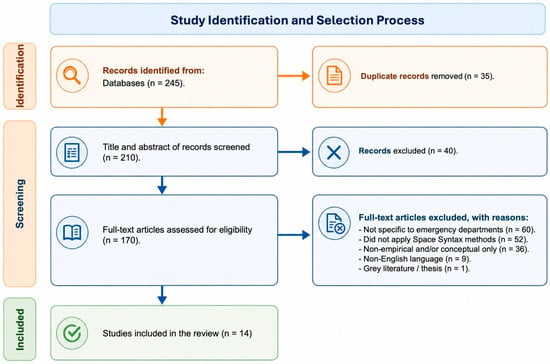
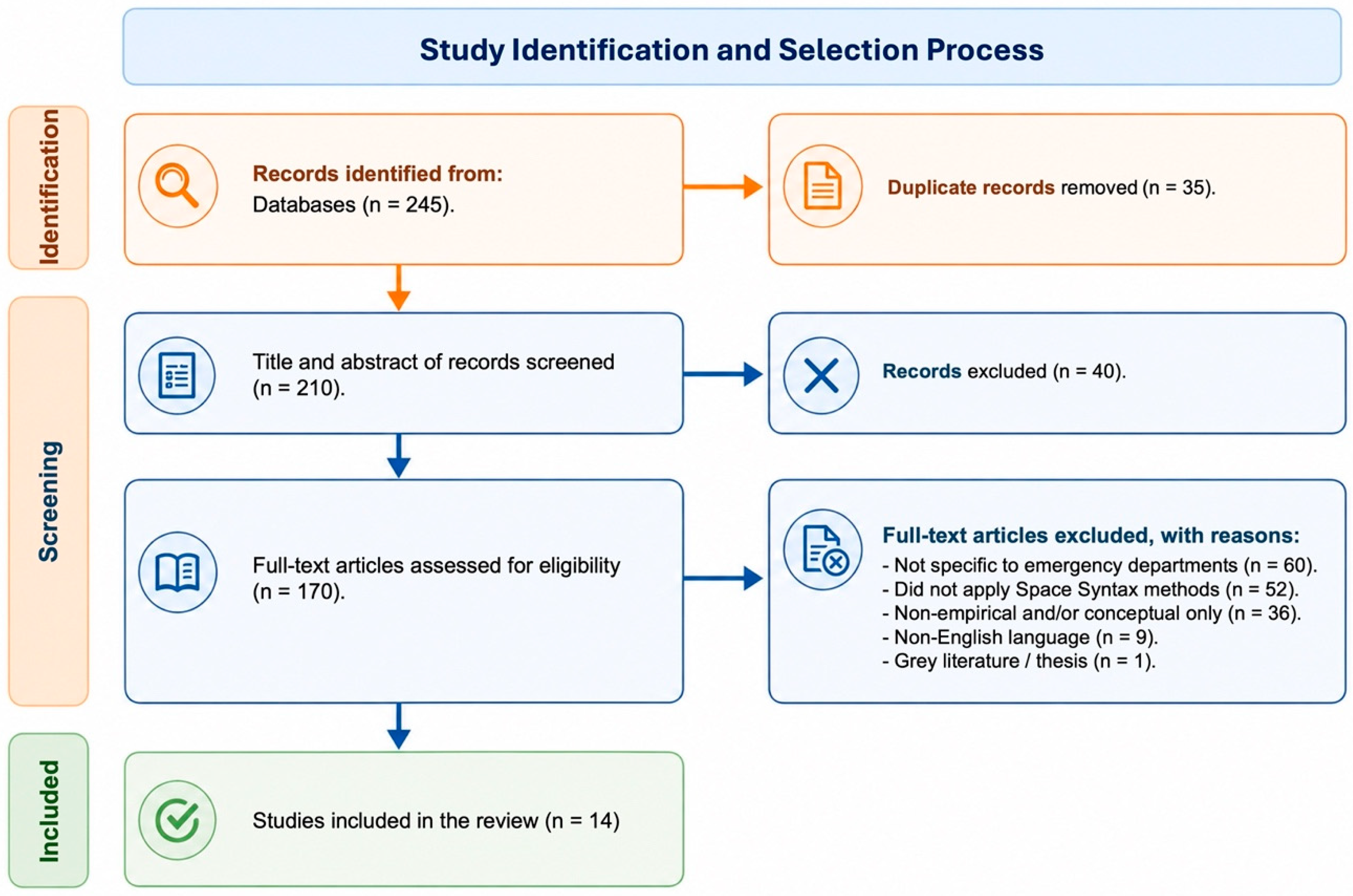
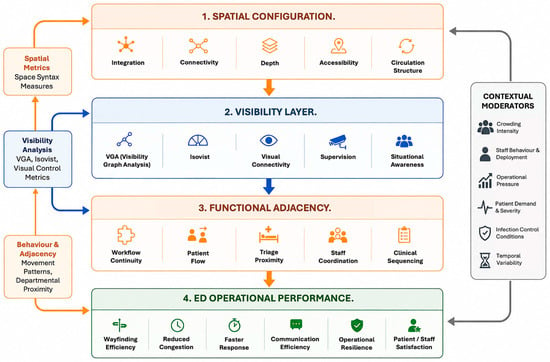
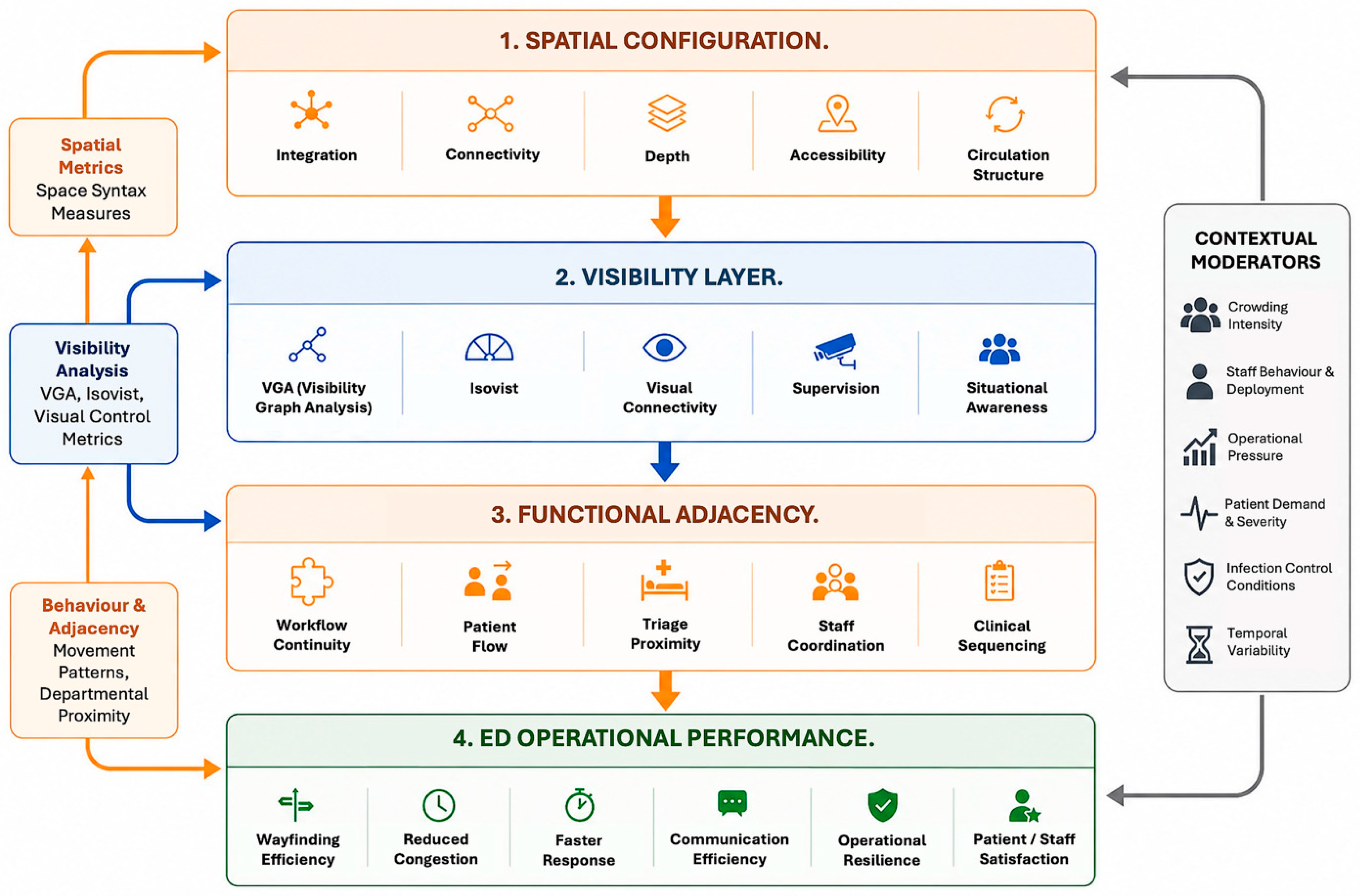

Disclaimer/Publisher’s Note: The statements, opinions and data contained in all publications are solely those of the individual author(s) and contributor(s) and not of MDPI and/or the editor(s). MDPI and/or the editor(s) disclaim responsibility for any injury to people or property resulting from any ideas, methods, instructions or products referred to in the content. |
© 2026 by the authors. Licensee MDPI, Basel, Switzerland. This article is an open access article distributed under the terms and conditions of the Creative Commons Attribution (CC BY) license.