


Abstract
This study developed a high-iron-phase steel slag-based silicate cement system through high-temperature reconstruction and multi-source solid waste synergistic modification. The effects of reconstruction temperature and Ca/Si ratio on burnability, mineral evolution, microstructure, and hydration performance were investigated. Results showed that carbide slag and bauxite significantly improved the sintering behavior of steel slag. At 1275 °C, the f-CaO content in reconstructed steel slag decreased sharply from 1.45% to 0.11%, while overburning and liquid-phase coating occurred at 1300 °C, hindering further reaction of residual f-CaO. Reconstruction promoted the conversion of low-reactivity γ-C2S to active α-C2S and the formation of well-crystallized C4AF. The decomposition of the RO phase enabled Mg2+ and Mn2+ to solid-solve into spinel phases, thus improving volume stability. The Ca/Si ratio regulated intermediate phases: higher ratios favored C4AF, whereas lower ratios promoted spinel or olivine phases. The optimal sample (1275 °C, 65% steel slag + 25% carbide slag + 10% bauxite) achieved a 28 d compressive strength of 107.56 MPa, 18.26% higher than the reference cement, owing to synergistic hydration of α-C2S and C4AF. The F4 sample showed the lowest residual CH content (11.31%) and the highest hydration efficiency.
1. Introduction
Cement, as an indispensable basic material in modern engineering construction, has seen its global annual production surpass 4 billion tons, according to data. China, being the largest producer and consumer of cement, accounts for over 50% of the global total annual production [1]. The production process of traditional Portland cement faces two core challenges: firstly, substantial resource consumption, with approximately 1.5 tons of high-quality limestone required for the production of 1 ton of cement clinker, leading to the depletion of high-quality mineral resources in some areas due to long-term mining; secondly, high carbon emission intensity, with cement industry carbon emissions accounting for 7–8% of the total global anthropogenic carbon emissions [2,3]. Therefore, the development of alternative cementitious systems with low resource consumption and high solid waste incorporation is of great significance.
Steel slag is a solid waste generated during steel production, with an emission amount accounting for approximately 15–20% of crude steel output. In China, the annual discharge exceeds 100 million tons, and the cumulative stockpiled amount has surpassed 1 billion tons [4]. Long-term open-air stockpiling not only occupies large areas of land but may also cause soil and groundwater contamination due to rainwater leaching. Steel slag is rich in calcium, silicon, and a large amount of iron (the Fe2O3 content is usually as high as 15–25%), giving it a natural chemical advantage as a potential substitute raw material for cement production [5,6,7,8]. At present, extensive research on the resource utilization of steel slag has been carried out both domestically and internationally. Its main application fields include road base materials, concrete aggregates, and cement supplementary materials [9,10,11,12,13]. Regarding its application in the cement industry, early studies mainly focused on using steel slag as a supplementary cementitious material to partially replace cement clinker, thereby reducing production costs. However, due to the low hydration activity of untreated steel slag and the enrichment of free CaO and MgO within it, serious volume instability may occur in cement, limiting its dosage (usually no more than 30%). As a result, large-scale high-value utilization remains difficult to achieve. To enhance the hydration activity of steel slag, researchers have adopted various modification methods, including mechanical activation, chemical activation, and thermal activation. Mechanical activation increases the specific surface area of steel slag through grinding, accelerating hydration reactions [14,15,16,17]. Chemical activation promotes the dissolution and hydration of mineral phases in steel slag by adding activators [18,19,20,21,22,23]. Thermal activation reconstructs the mineral phase structure through high-temperature calcination, thereby improving its hydration activity [24,25,26,27,28,29]. Nevertheless, most existing studies on steel slag reconstruction focus on generating high C3S phases (see Table 1). Since the formation of C3S requires relatively high calcination temperatures, this reconstruction approach is not only highly energy-intensive and contrary to the low-carbon objective but also fails to fully utilize the inherent iron-rich characteristics of steel slag. In contrast, high-iron-phase silicate cement (characterized mainly by a high proportion of C4AF) has attracted increasing attention in recent years as a novel low-carbon cement. During calcination, C4AF can serve as an excellent fluxing phase, significantly reducing the clinkering temperature of cement clinker.
Therefore, considering the iron-rich characteristics of steel slag, high-temperature reconstruction to produce high-iron-phase clinker represents a highly feasible new pathway. As the main iron-bearing mineral phase in cement clinker, C4AF exhibits a relatively fast hydration rate and contributes significantly to early strength development. With the growing demand for low-carbon cementitious materials, research on high-iron-phase cement has attracted extensive attention in recent years. Some scholars [30,31,32,33,34,35] have found that by adjusting the moduli of cement clinker (KH, SM, IM) and increasing the C4AF content, high-iron-phase cement clinker with a C4AF content of 16–18% can be prepared. Its sintering temperature is 50–100 °C lower than that of conventional Portland cement clinker [36,37,38], and carbon emissions are reduced by 10–15% [39,40]. By taking advantage of the fluxing effect of a high proportion of iron phases, the calcination temperature during the reconstruction process can be significantly reduced, enabling truly low-carbon resource utilization of solid waste. Furthermore, combining this reconstructed high-iron-phase clinker with ordinary Portland cement is expected to produce a high-performance high-iron-phase composite cement system.
Based on the above background, this study aims to explore the feasibility of using untreated steel slag as the main raw material to reconstruct and prepare high-iron-phase cement clinker at relatively low temperatures. The effects of the Ca/Si ratio and reconstruction temperature on the mineral composition, compressive strength, and hydration products of the reconstructed steel slag were systematically investigated. Techniques including XRD, TG, SEM, and compressive strength testing were employed to comprehensively analyze the mineral composition, micromorphology, and mechanical properties of the reconstructed steel slag, thereby revealing the hydration evolution mechanism of reconstructed steel slag in an OPC system. This study is expected to provide critical theoretical support for the high-value utilization of steel slag and the development of low-carbon high-iron-phase cement.
Table 1.
Results from previous literature studies.
2. Materials and Methods
2.1. Experimental Materials
The raw materials used in the experiment include steel slag produced and provided by Maanshan Baowu Steel Co., Ltd., (Anhui, China) carbide slag, and bauxite, all of which were purchased. Table 2 shows that the steel slag from Maanshan Iron and Steel mainly contains CaO, Fe2O3, and SiO2, exhibiting characteristics of high iron content and low aluminum content. The carbide slag primarily consists of Ca(OH)2, while the main components of bauxite are Al2O3 and SiO2.
Table 2.
Chemical composition of raw materials (wt.%).
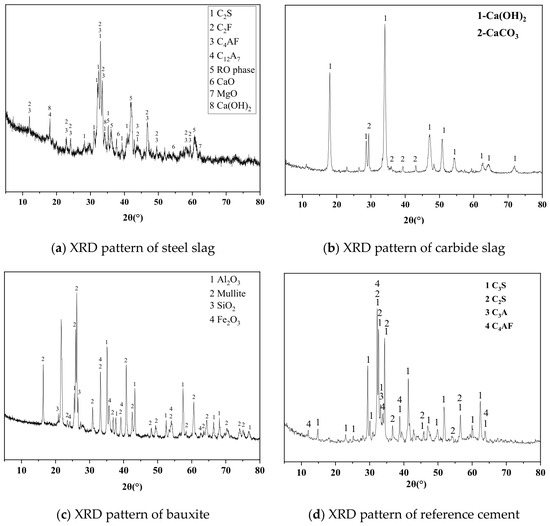
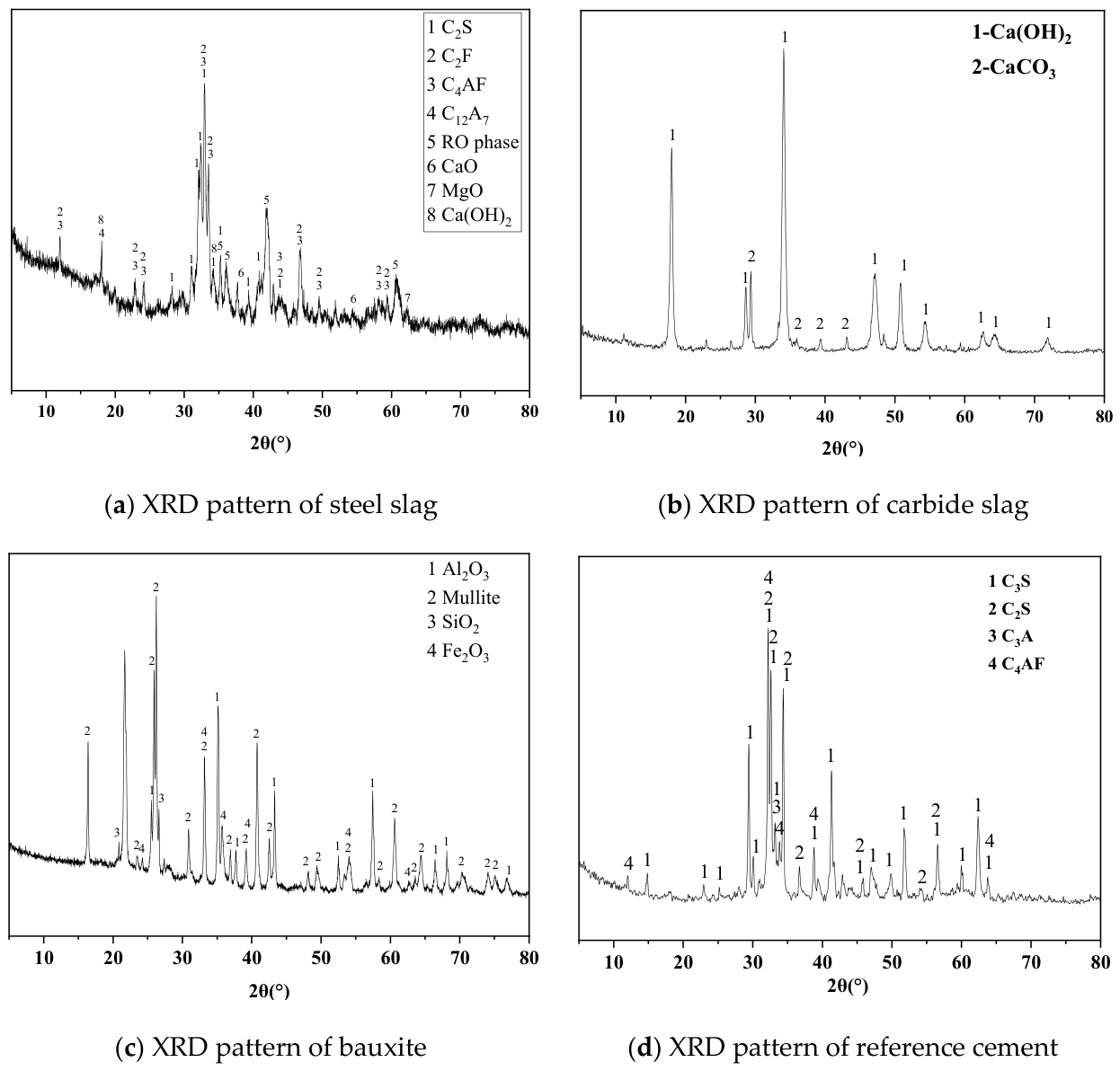
The X-ray diffraction patterns of steel slag, calcium carbide slag, bauxite and reference cement used in the experiment are shown in Figure 1. The main mineral phases in steel slag are C2S, C2F, C4AF and RO phase, with small amounts of C12A7, CaO, MgO and Ca(OH)2. The chemical composition of the calcium carbide slag used mainly consists of Ca(OH)2 and a small amount of CaCO3. The main mineral and chemical compositions of bauxite are mullite, Al2O3, SiO2, and a small amount of Fe2O3. The mineral composition of P·I 42.5 cement primarily consists of C3S, C2S, C4AF, and C3A phases.
Figure 1.
XRD pattern of raw material.
2.2. Scheme Design and Reconstruction of Steel Slag Preparation
To systematically investigate the effects of calcium-to-silica ratio and calcination temperature on the evolution of reconstructed mineral phases, this study primarily utilizes undisturbed steel slag as the main material, with a fixed bauxite content of 10 wt%. By adjusting the carbide slag content in a gradient manner (20 wt% to 30 wt%), the calcium-to-silica ratio of the raw material is controlled. The specific proportions are shown in Table 3.
Table 3.
Reconstruction Plan of Steel Slag with Carbide Slag and Bauxite.
In the preparation process of clinker, first, accurately weigh the raw materials of each component according to the set ratio and place them in a ball mill for dry mixing and grinding for 24 h to ensure thorough homogenization. After homogenization, the raw meal powder was mixed evenly with 5 wt% deionized water. Subsequently, 60 g of the powder was placed in a stainless steel mold and pressed under a pressure of 60 MPa for 20 s to form a raw meal test block with dimensions of 60 mm × 60 mm × 8 mm. The molded specimens were dried at 105 °C for 2 h and then transferred into a high-temperature box-type resistance furnace for calcination. The firing schedule was set as follows: heated to 900 °C at a rate of 10 °C/min and held for 30 min, then further heated to the preset target reconstruction temperature at the same rate and isothermally calcined for 60 min. After the calcination program was completed, the samples were quickly taken out and rapidly cooled to room temperature by forced air cooling to stabilize the high-temperature mineral phases and prevent crystal transformation. Finally, the cooled reconstructed steel slag was preliminarily crushed and then transferred into a planetary ball mill for fine grinding until the specific surface area reached 350–400 m2/kg. The planetary ball mill was operated with a ball-to-powder ratio of 20:1, a rotational speed of 200 r/min, and a milling time of 15 min. In addition, to prepare high iron-phase composite cement for subsequent mechanical and hydration tests, desulfurized gypsum was co-ground and homogenized as an internal admixture at 5 wt% of the clinker mass during the fine grinding stage.
2.3. Testing and Characterization Methods
2.3.1. Mechanical Properties Test
In this study, reconstructed steel slag was uniformly mixed with reference cement at mass replacement ratios of 10 wt%, 20 wt%, and 30 wt%. Mixing water was added at a water-binder ratio of 0.3. The mixture was first stirred at low speed for 120 s in a cement paste mixer, allowed to stand for 15 s, and then stirred at high speed for another 120 s. The homogeneous paste was cast into a triple steel mold with dimensions of 20 mm × 20 mm × 20 mm and vibrated for molding. The specimens were then cured in a standard curing chamber (20 ± 1 °C, relative humidity ≥ 90%) for 24 h. The demolded specimens were transferred to a constant-temperature water bath at 20 ± 1 °C for further curing for 3 d, 7 d, and 28 d. Upon reaching the target curing age, the compressive strength of the paste specimens was determined (six specimens were tested per group, and the average value was adopted). Collect the core fragments of the test specimen after compression test failure, and immediately immerse them in anhydrous ethanol for at least 7 days to terminate the hydration reaction. After terminating the hydration, the samples are dried in a vacuum environment, then ground to pass through an 80 μm square mesh sieve, and sealed for preservation for subsequent microstructure and mineral phase characterization.
2.3.2. Burnability Evaluation
Burnability was evaluated by determining the free calcium oxide (f-CaO) content in the reconstructed steel slag. In strict accordance with the Chinese national standard GB/T 176-2017 [43] Methods for chemical analysis of cement, the benzoic acid-ethylene glycol titration method was used to quantitatively determine the f-CaO content in the ground clinker samples.
2.3.3. Hydration Calorimetry
The hydration heat release rate and cumulative heat release of each system were measured using an isothermal microcalorimeter (STA409 NETZSCH, Selb, Bavaria, Germany). A water-binder ratio of 0.5 was set in the experiment. Exactly 4.00 g of the mixed cementitious material was weighed, mixed with water, and quickly placed into an ampoule positioned in the calorimeter channel. The exothermic behavior at the early hydration stage was continuously recorded under a constant temperature of 20 ± 0.1 °C during the test.
2.3.4. Microstructure and Phase Analysis
Since the XRD diffraction peaks of various phases in the reconstructed steel slag overlap, a selective dissolution method was adopted in this study for stepwise phase separation with reference to relevant literature. The specific procedures are as follows:
First, salicylic acid–methanol (SAM) solution with a mass ratio of 1:5 was used, and the mixture was magnetically stirred at room temperature for 4 h to completely dissolve and remove the silicate phases. Subsequently, a sucrose–KOH aqueous solution (mass ratio 1:1:10) was applied in an oil bath at 95 °C for 25 min to dissolve the intermediate phases. After the above two consecutive extraction steps, washing and drying, the inert phase residue was finally obtained. The raw reconstructed steel slag and extraction residues at each stage were subjected to phase analysis using an X-ray diffractometer (SmartLabTM 3 kW, Rigaku Corporation, Tokyo, Japan) with Cu Kα radiation, a scanning range of 2θ from 10° to 70°, and a step size of 0.02°.
To identify and quantify hydration products, TG/DTG analysis was performed on powdered hydration product samples using a NETZSCH STA409C thermal analyzer, NETZSCH, Selb, Bavaria, Germany. The test was carried out from room temperature to 1000 °C at a heating rate of 10 °/min under a nitrogen gas atmosphere.
A scanning electron microscope (6701F, JEOL Ltd, Tokyo, Japan) was used to observe the micromorphology of the reconstructed steel slag. Blocky fresh sections after vacuum drying were mounted on sample stubs and sputter-coated with gold to enhance conductivity. Morphological images were obtained at an accelerating voltage of 5–15 kV under high-vacuum conditions using the secondary electron imaging mode.
3. Results and Discussions
3.1. Burnability Analysis of Reconstructed Steel Slag
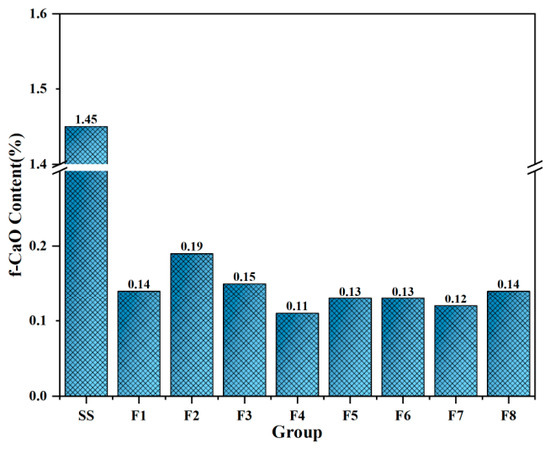
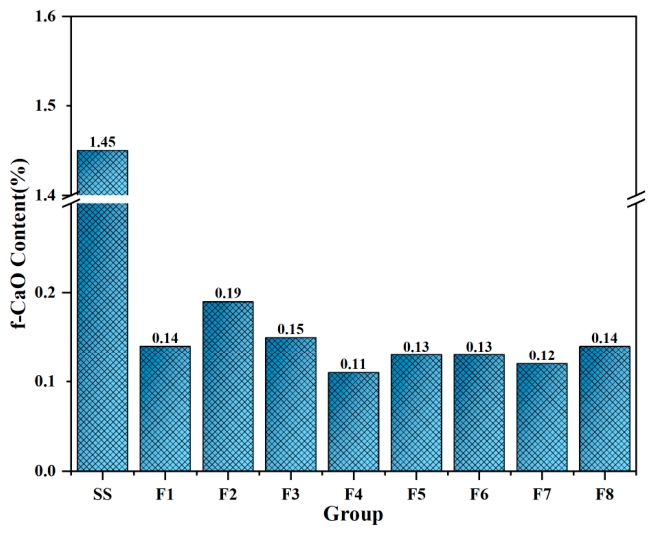
Figure 2 presents the f-CaO content in steel slag under different reconstruction conditions. The free CaO content in the original steel slag was approximately 1.45%. After compositional modification through raw material blending and subsequent high-temperature reconstruction treatment, the f-CaO content of all samples exhibited a significant decreasing trend. Under the firing regimes of 1250 °C, 1275 °C, and 1300 °C, the average reduction in f-CaO content in the reconstructed steel slag reached 1.290%, 1.327%, and 1.320%, respectively. Notably, when the calcination temperature was 1275 °C (F4 group), the system exhibited the most effective consumption of f-CaO, with its absolute content decreasing to approximately 0.11%, which is far below the allowable limit for free lime specified in conventional Portland cement clinker standards. This indicates that the reconstruction process significantly improved the burnability of the original steel slag. This phenomenon can be primarily attributed to the synergistic effect of the modifying components and high-temperature treatment. On the one hand, the incorporation of modifying components optimized the system composition and provided a favorable solid-state reaction environment for f-CaO consumption. On the other hand, as the calcination temperature increased from 1250 °C to 1275 °C, the amount of low-melting eutectic liquid phase increased while its viscosity decreased, which greatly accelerated the diffusion and mass transfer of ions such as Ca2+. Consequently, free CaO dissolved rapidly and was subsequently incorporated into silicate or iron-bearing mineral phases through reorganization.
Figure 2.
f-CaO content of reconstructed steel slag under different regimes.
3.2. Phase Composition Analysis of Reconstructed Steel Slag
To accurately elucidate the mineral phase evolution of the reconstructed steel slag, a selective dissolution method was employed to eliminate the severely overlapping diffraction peaks. The variations in silicate phases, intermediate phases, and other components under different reconstruction temperatures and modifying compositions were systematically compared. The experimental results indicated that the major low-reactivity phases in the original steel slag, including γ-C2S, f-CaO, and the inert RO phase, all underwent significant mineralogical transformations after reconstruction.
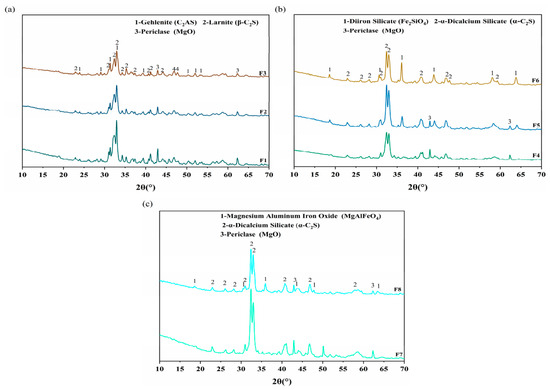
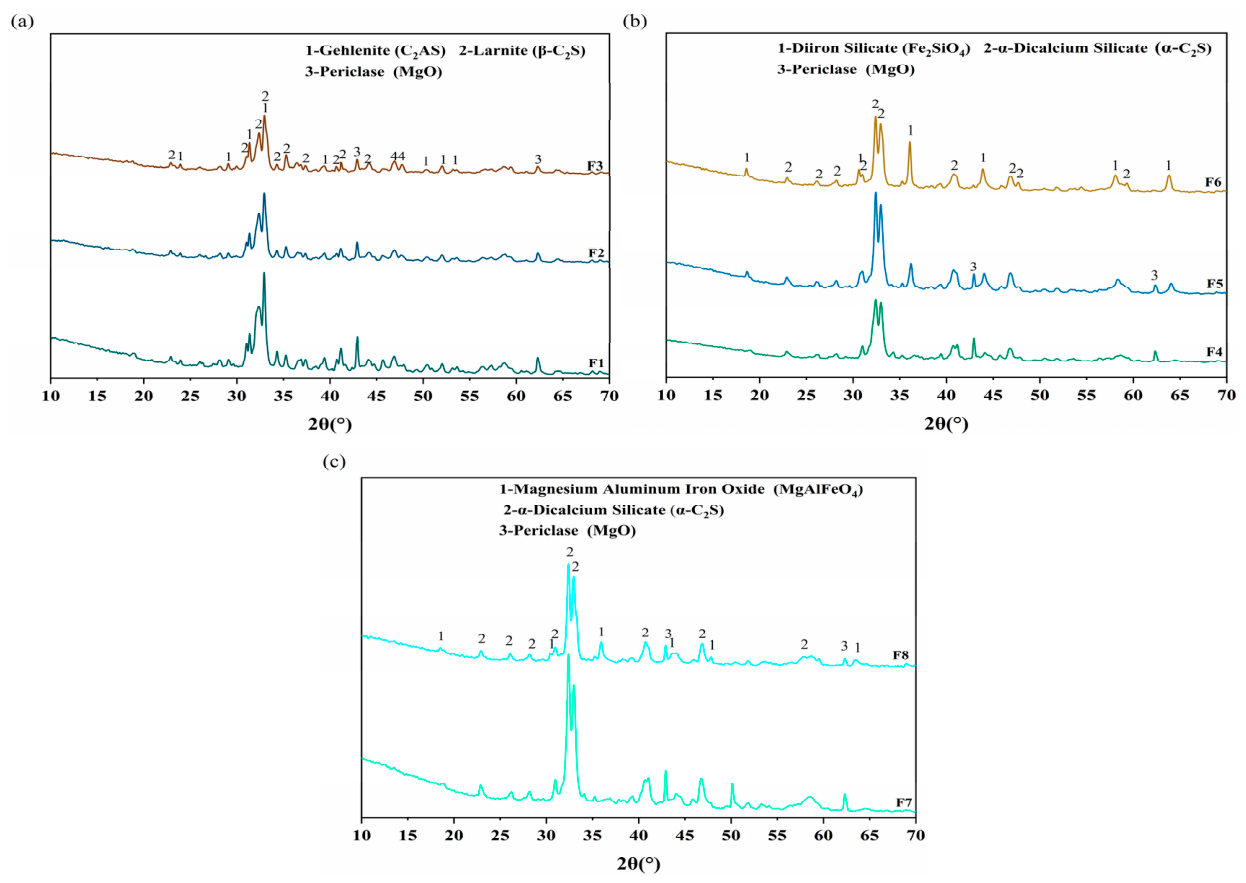
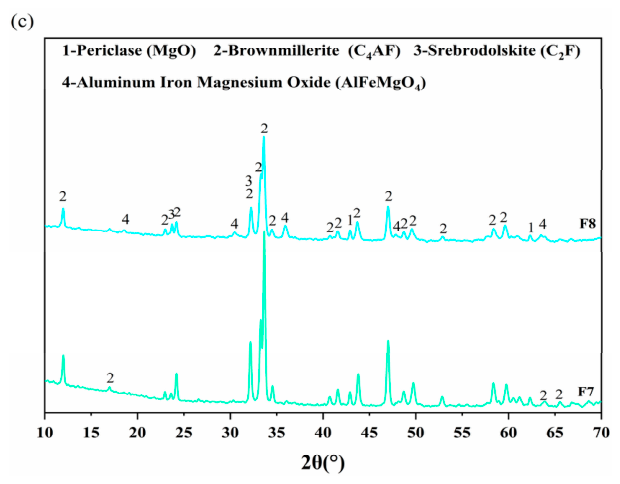
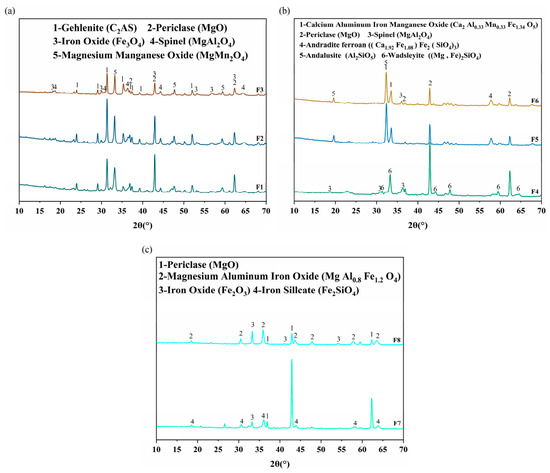
As can be seen from Figure 3, for the silicate phases, the reconstruction temperature served as the primary driving force for polymorphic transformation. At 1250 °C, in addition to β-C2S, a considerable amount of C2AS was still present, indicating that the solid-state reactions were not yet complete at this temperature. When the temperature increased to 1275 °C and above, the increased liquid-phase content accelerated ionic diffusion and rearrangement, leading to the near disappearance of C2AS. Meanwhile, the diffraction peaks of the highly reactive α-C2S were significantly intensified and became dominant. In addition, the dosage of modifying components also determined the phase assemblage of silicate minerals. At a high carbide slag content, α-C2S was well developed; however, as the carbide slag content decreased, inert iron silicates (e.g., Fe2SiO4) began to form, which may, to some extent, weaken the potential cementitious activity of the system.
Figure 3.
XRD patterns of silicate phases in reconstructed steel slag at different temperatures. (a) F1, F2, F3 reconstructed steel slag (b) F4, F5, F6 reconstructed steel slag (c) F7, F8, reconstructed steel slag.
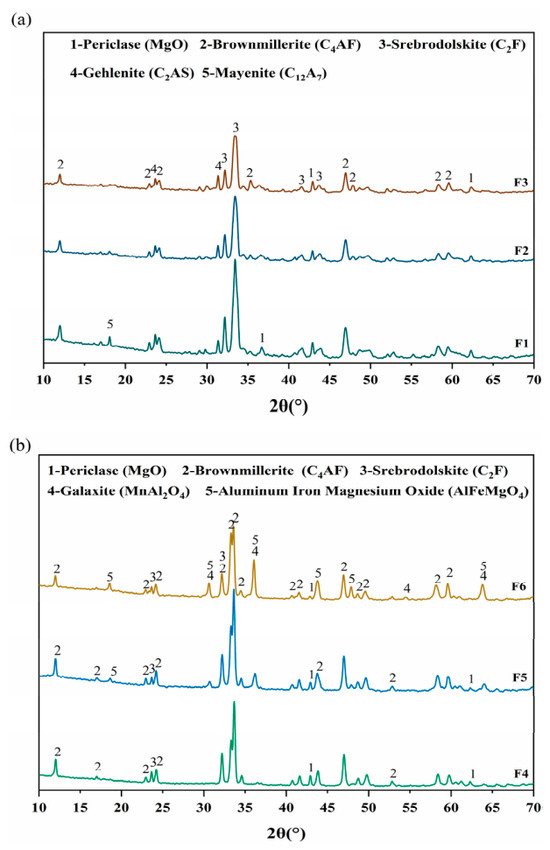
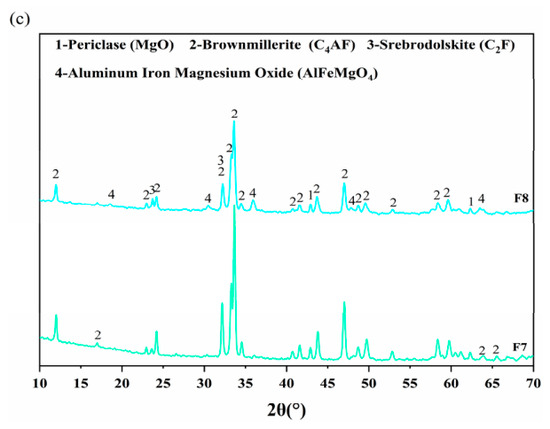
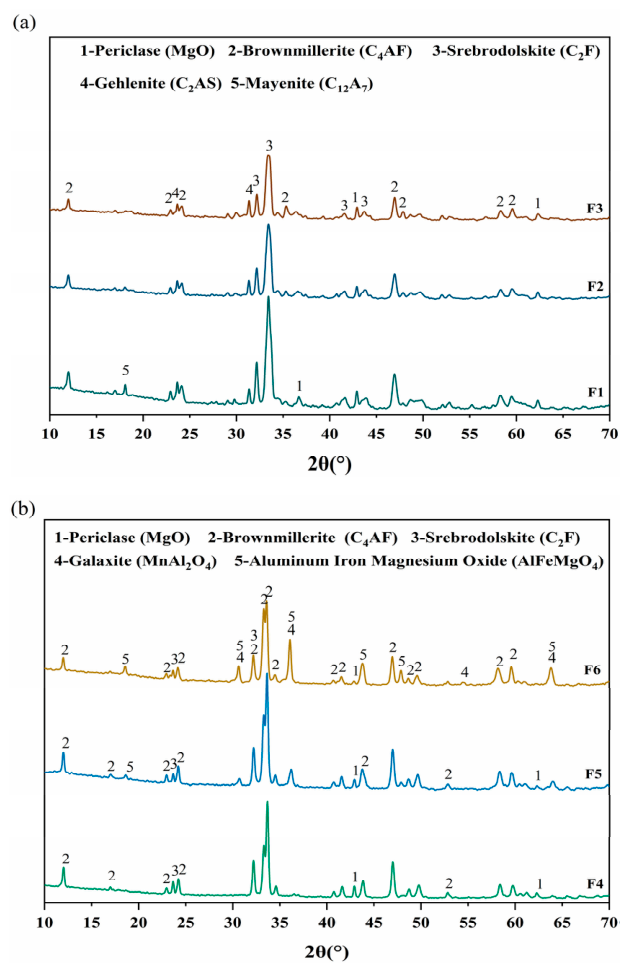
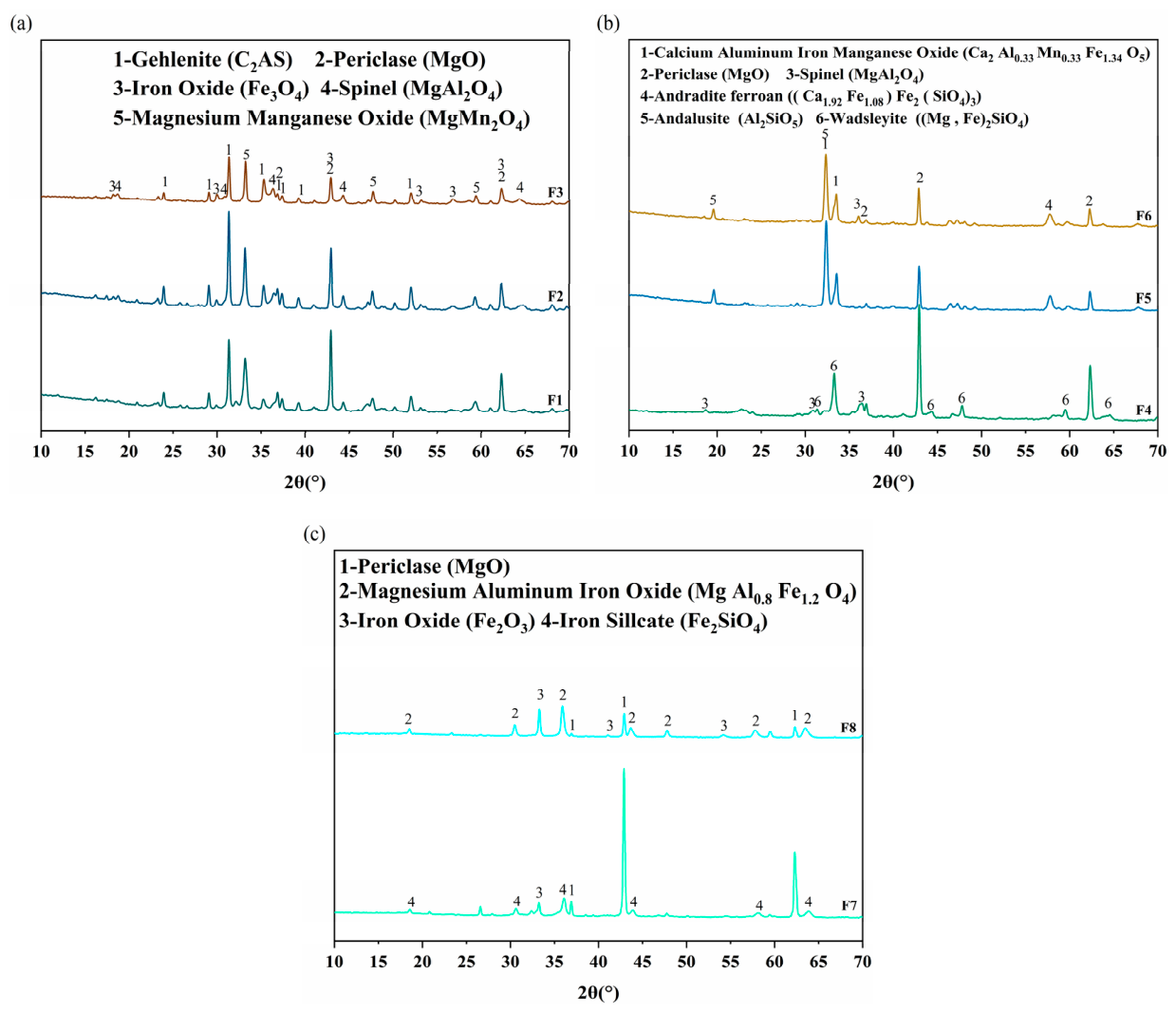
As can be seen from Figure 4, the mineral composition of the intermediate phases is mainly governed by the Ca/Si ratio of the system, while an increase in reconstruction temperature significantly promotes their crystallization and development. Under mix proportions with a relatively high carbide slag dosage (i.e., a high C/S ratio), sufficient calcium sources were available in the system, which preferentially reacted with Fe2O3 and Al2O3. With increasing temperature, the abundant liquid phase further reduced the reaction resistance, facilitating the transformation of C2F in the original steel slag into C4AF and thus forming an active iron-bearing phase with a high degree of crystallinity. In contrast, as the Ca/Si ratio decreased, the intermediate phases gradually transformed from iron-bearing phases to magnesioferrite–aluminate spinel phases. As can be seen from Figure 5 during this process, the chemically stable RO phase in the original steel slag was decomposed, and the released Mg2+ and Mn2+ ions were incorporated into the spinel lattice through isomorphous substitution to form a solid solution. This phase transformation not only effectively immobilized heavy metal ions but also fundamentally consumed f-MgO in the system, thereby significantly reducing the risk of long-term expansion when the reconstructed steel slag is applied in cement-based materials.
Figure 4.
XRD patterns of intermediate phases in reconstructed steel slag at different temperatures. (a) F1, F2, F3 reconstructed steel slag (b) F4, F5, F6 reconstructed steel slag (c) F7, F8, reconstructed steel slag.
Figure 5.
XRD patterns of other constituent phases in reconstructed steel slag at different temperatures. (a) F1, F2, F3 reconstructed steel slag (b) F4, F5, F6 reconstructed steel slag (c) F7, F8, reconstructed steel slag.
3.3. Microstructural Morphology Analysis of Reconstructed Steel Slag
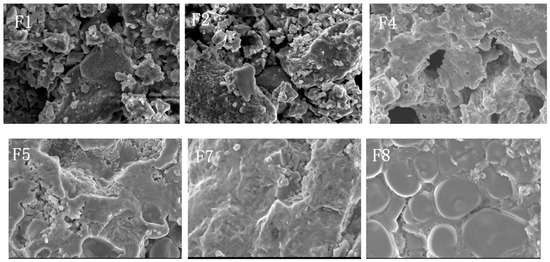
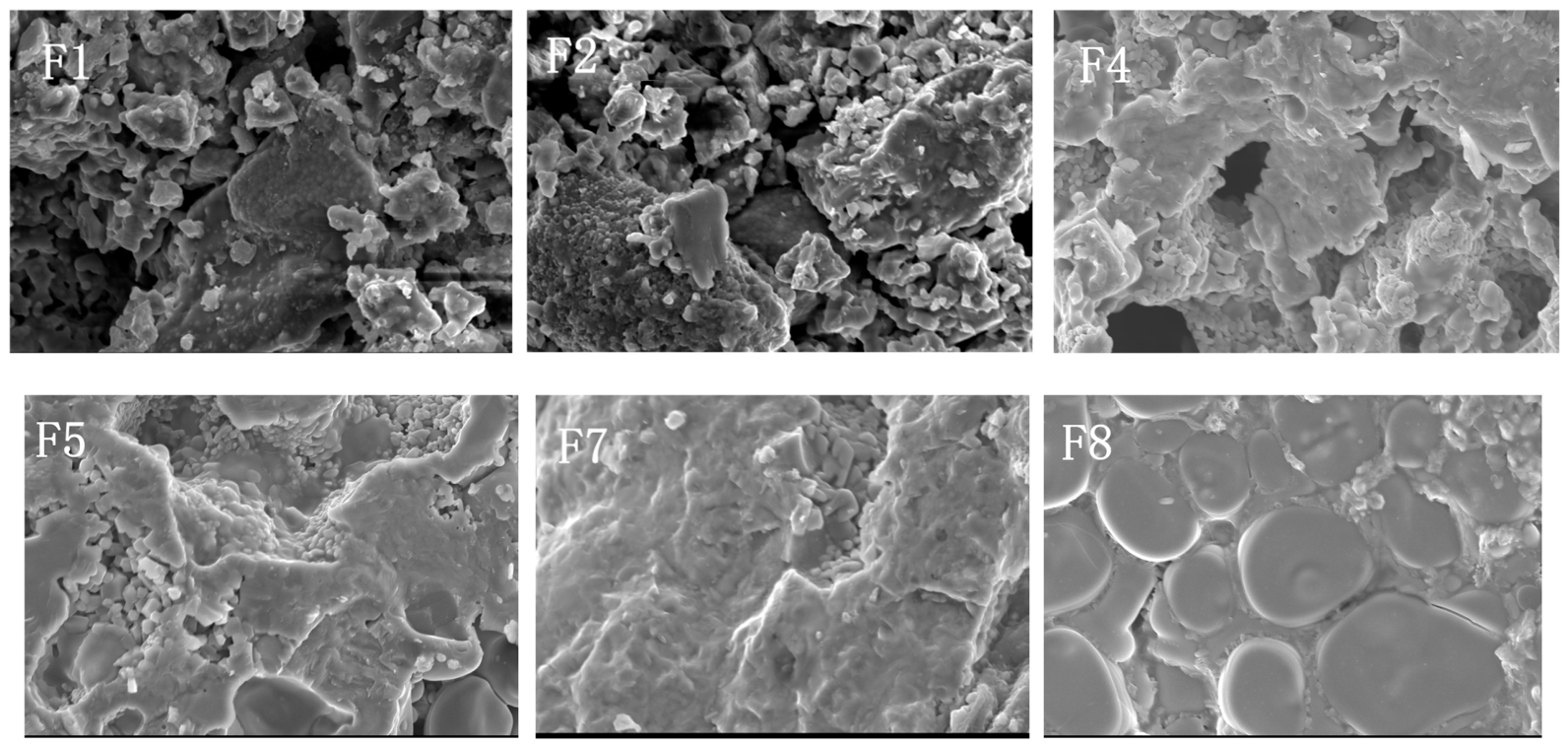
As can be seen from Figure 6, the evolution of the microstructure of reconstructed steel slag directly reflects the kinetic process of the system transitioning from solid-phase packing to liquid-phase sintering. At 1250 °C, the sample exhibited a typical irregular powder-packed morphology, characterized by distinct particle boundaries, sharp edges, and a relatively high porosity. This loose structure can be attributed to the fact that the system had not yet reached the low-melting point, resulting in limited solid-state reaction kinetics and a lack of effective sintering neck formation between particles. As the reconstruction temperature increased to 1275 °C, the system entered a “partial sintering” stage, during which the particle boundaries became blurred and pronounced melting–rearrangement phenomena were observed. At this stage, the liquid phase formed by C4AF and ferrite minerals filled the interparticle voids under capillary forces, promoting mass transfer and bonding between particles, thereby significantly enhancing the degree of structural densification. The enhanced crystallinity of C4AF observed in the XRD results was reflected in the SEM micrographs as a continuous matrix formed after liquid-phase filling. When the temperature further increased to 1300 °C, the system entered a fully liquid-phase sintering state, in which the original particle boundaries nearly disappeared. The morphology transformed into a dense “melt–recrystallized” massive structure, and the porosity decreased to an extremely low level. In addition, the increased Al and Fe contents in the modifying components exerted a significant fluxing effect, accelerating the formation of the liquid phase and reducing the melt viscosity. In sample F8, the excessive liquid phase generated at 1300 °C completely wetted and encapsulated the early-precipitated C2S grains, resulting in a distinctive oval-shaped coated grain structure.
Figure 6.
SEM micrographs of reconstructed steel slag.
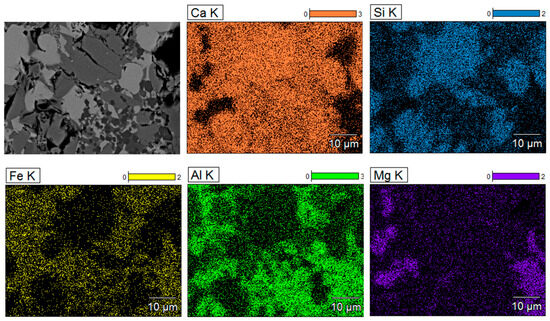
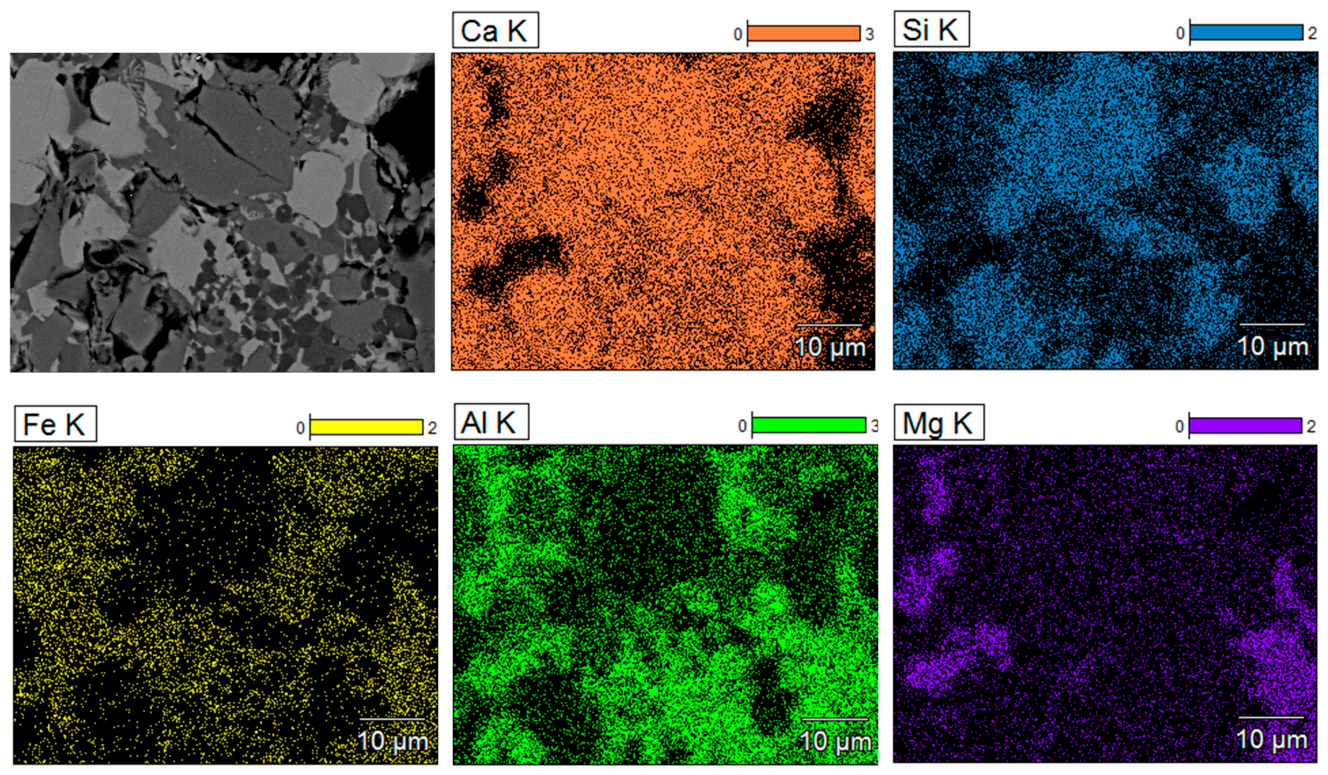
To further clarify the decomposition behavior of the RO phase and the immobilization mechanism of Mg-bearing species during the reconstruction process, SEM–BSE imaging combined with EDS elemental mapping was performed, as shown in Figure 7. In the BSE image, clear grayscale contrast can be observed, indicating the coexistence of multiple mineral phases with distinct average atomic numbers. Typically, brighter regions correspond to Fe-rich phases (higher atomic number), whereas darker regions represent Mg-rich or silicate phases.
Figure 7.
SEM-BSE image and its surface scanning image of reconstructed steel slag.
The Fe elemental map exhibits strong enrichment in the brightest regions, confirming that these areas are dominated by Fe-bearing phases, which can be assigned to ferrite phases such as C4AF. In contrast, the Al distribution shows a broader spatial presence and overlaps partially with the Fe-rich zones, suggesting that Al participates in the formation of ferrite/aluminate phases, consistent with the development of C4AF and related intermediate phases at elevated temperatures.
More importantly, the Mg elemental mapping provides direct evidence for the redistribution of Mg-bearing components after reconstruction. Instead of remaining as isolated Mg-rich RO particles, Mg signals are widely dispersed throughout the matrix and show partial spatial association with Fe/Al-enriched regions. This distribution pattern suggests that Mg2+ is no longer present solely in the form of inert RO solid solution, but has been incorporated into newly formed intermediate phases. Such co-localization supports the formation of Mg-containing spinel solid solutions (e.g., Mg–Fe–Al spinel), where Mg2+ can enter the spinel lattice through isomorphous substitution mechanisms.
This Mg redistribution strongly indicates that the reconstruction process promoted the structural decomposition of the original RO phase and facilitated the migration of Mg2+ into stable crystalline phases. The formation of spinel-type solid solutions is particularly beneficial, as it enables the immobilization of Mg2+ (and potentially Mn2+) within thermodynamically stable lattices, thereby reducing the content of free MgO and significantly lowering the long-term expansion risk associated with delayed MgO hydration.
3.4. Mechanical Performance Analysis of Reconstructed Steel Slag
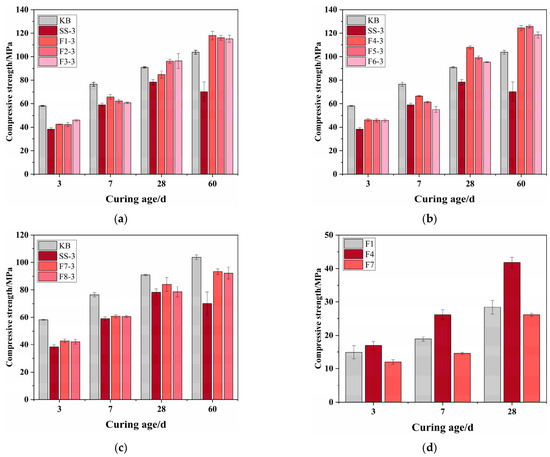
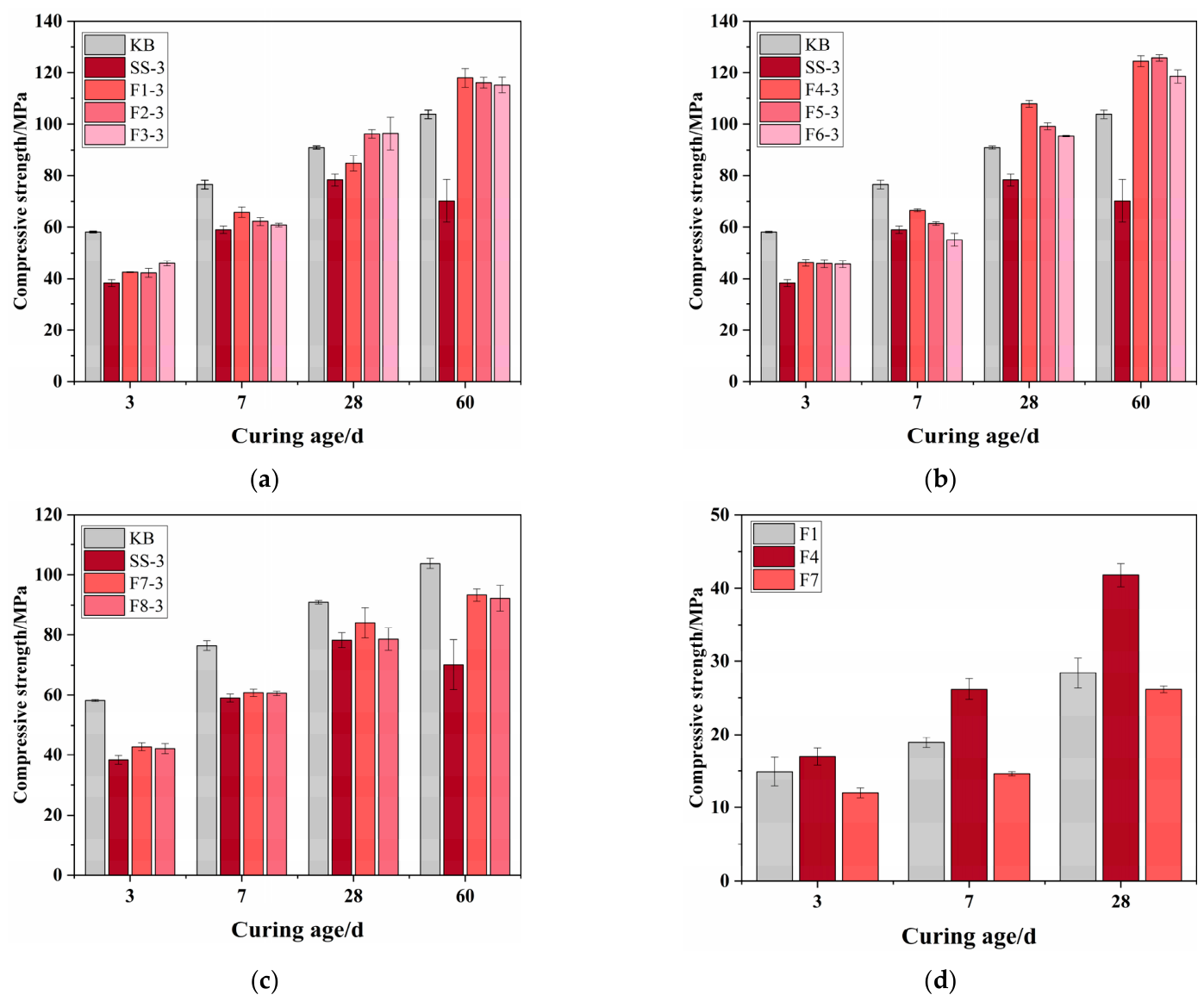
The evolution of compressive strength of the composite cement system under different reconstruction regimes is shown in Figure 8a–c. During the early hydration stage (3 d and 7 d), the reconstructed systems were dominated by α-C2S and lacked C3S, which is responsible for early strength development. As a result, the early compressive strength of all groups was lower than that of the reference cement (KB), yet it was still significantly higher than that of the original steel slag (SS), indicating that mineral phase reorganization contributed to an initial improvement in early reactivity. The 28-day compressive strength results indicated that 1275 °C was the optimal reconstruction temperature. Specifically, the compressive strength of group F4 reached 107.56 MPa, representing an increase of 18.26% compared with the KB group and 35.30% compared with the SS group. This enhancement can be attributed to the formation of highly reactive α-C2S and well-crystallized C4AF at this temperature, which provided a dense structural framework for the hardened paste. In contrast, at 1250 °C, a large amount of inert C2AS remained in the product, resulting in sluggish later-age strength development. Meanwhile, overheating at 1300 °C induced adverse microstructural evolution. On the one hand, excessive grain coarsening under abundant liquid-phase conditions, along with the elimination of internal defects, reduced the intrinsic chemical reactivity of the phases. On the other hand, the substantial formation of ferrite–aluminate liquid phases physically encapsulated the C2S grains, hindering the continuous release of their internal reactivity and ultimately leading to limited strength growth at 28 d and 60 d. In addition, the original steel slag group (SS) exhibited strength retrogression at 60 d, decreasing from 78.27 MPa to 70.15 MPa. This was attributed to the expansive stress generated by the delayed hydration of f-CaO and f-MgO, which damaged the paste structure. In contrast, the groups reconstructed at 1275 °C still maintained strength development at 60 d, indicating that high-temperature reconstruction not only effectively activated the reactivity of steel slag but also fundamentally eliminated the risk of volumetric instability through mineral phase stabilization, thereby exhibiting excellent later-age strength gain. Figure 8d shows the strength curve of pure reconstructed steel slag without reference cement incorporation. It can be clearly observed that the compressive strength of F4 paste is significantly higher than that of F1 and F7.
Figure 8.
Compressive strength of reconstructed steel slag–Portland cement paste at different curing ages. (a) F1, F2, F3 reconstructed steel slag (b) F4, F5, F6 reconstructed steel slag (c) F7, F8, reconstructed steel slag (d) F1, F4, F7 pure reconstructed steel slag paste.
3.5. Analysis of Hydration Products of Reconstructed Steel Slag
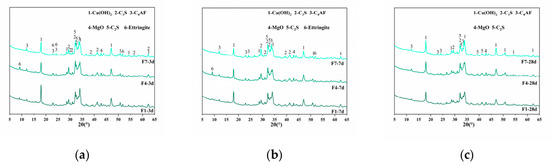
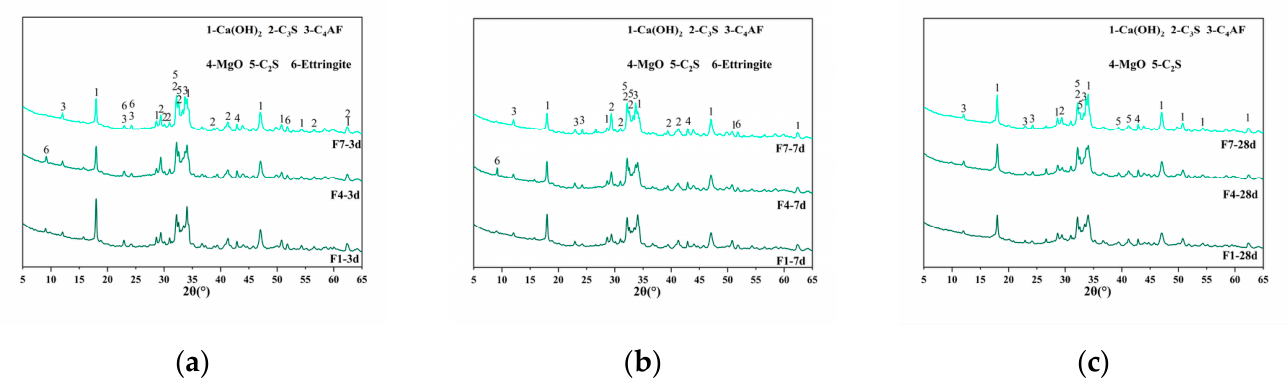
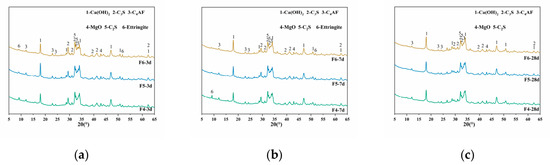
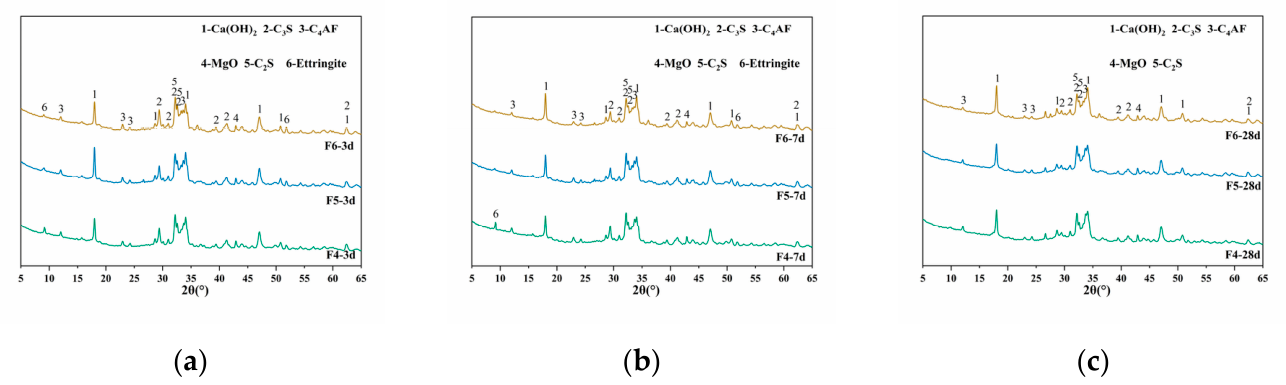
To investigate the influence of reconstruction regimes on the hydration behavior of the composite system, XRD analysis was conducted on hardened pastes at different curing ages (Figure 9 and Figure 10). The results showed that the types of hydration products were consistent among all systems, mainly including calcium hydroxide (CH) and ettringite (AFt). The hydration reactions were accompanied by the formation of amorphous C-S-H gel, while some unhydrated minerals (C2S, C3S, C4AF, and trace amounts of periclase) remained. As the curing age increased from 3 d to 28 d, the diffraction peaks of silicate minerals gradually weakened, while the CH diffraction peaks exhibited a decreasing trend at later ages. This evolution indicates that the reconstructed steel slag participated in the synergistic reactions of the system, promoting hydration by consuming the free CH generated at early stages. In terms of the effect of reconstruction temperature, the 1275 °C regime (F4 group) exhibited superior hydration characteristics. At 3 d, the diffraction peak intensities of unhydrated minerals and CH in the F4 group were significantly lower than those in the 1250 °C (F1) and 1300 °C (F7) groups, while the characteristic peaks of AFt were more pronounced. This indicates that the mineral phases reconstructed at this temperature possessed higher early-age reactivity. At 28 d, the CH peaks in the F4 group were further weakened, confirming that an appropriate reconstruction temperature optimized the development of mineral phases, enabling more efficient consumption of CH through secondary reactions at later ages. Regarding the effect of modifying components, an appropriate Ca/Si ratio further enhanced the phase transformation process described above. Under the reconstruction temperature of 1275 °C, the diffraction peak intensities of unhydrated minerals and CH in the F4 group remained consistently lower throughout the entire curing period than those in the low-calcium mixtures (F5 and F6). This indicates that an optimized mix proportion effectively promoted the formation of target mineral phases with high reactivity, enabling more thorough consumption of CH crystals in the paste during later-stage hydration. Overall, the synergistic effect of the 1275 °C reconstruction temperature and the F4 mix proportion maximized the hydration degree of the composite system.
Figure 9.
XRD patterns of hydration products of reconstructed steel slag–Portland cement composites under different reconstruction temperatures. (a) 3 d (b) 7 d (c) 28 d.
Figure 10.
XRD patterns of hydration products of reconstructed steel slag–Portland cement composites with different Ca/Si ratios at 1275 °C. (a) 3 d (b) 7 d (c) 28 d.
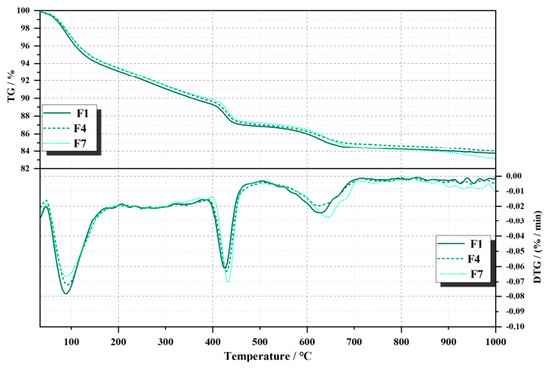
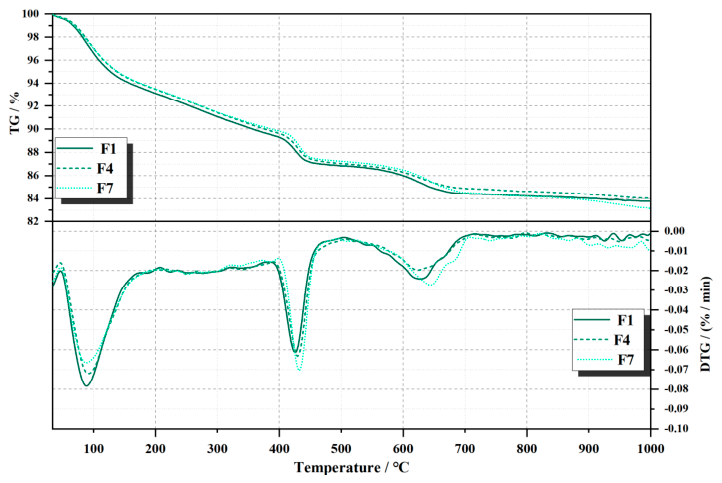
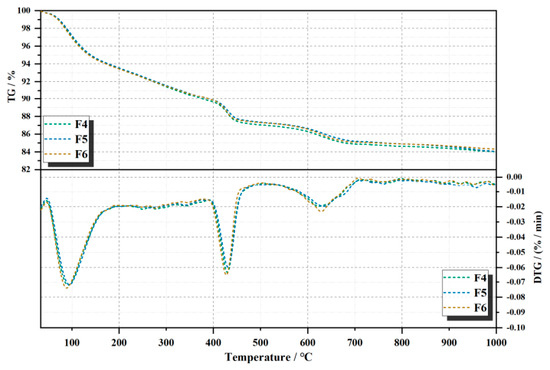
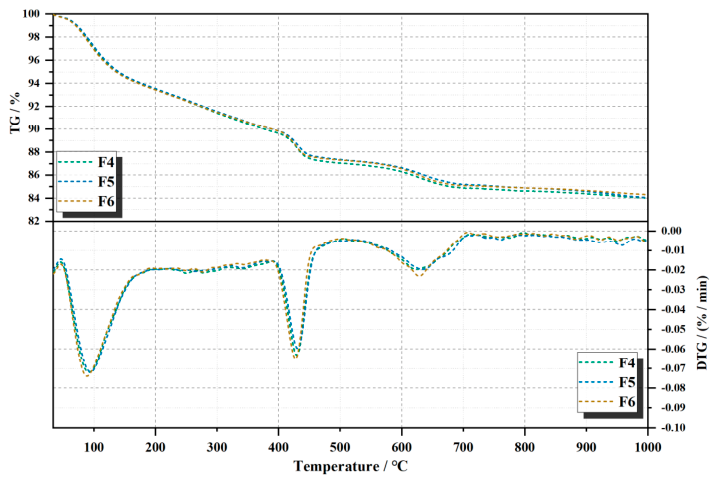
To quantitatively evaluate the influence of reconstruction regimes on the hydration degree of the composite system, TG-DTG analysis was conducted on the 28-day hardened pastes (Figure 11 and Figure 12). The thermal decomposition curves of all groups exhibited three typical mass-loss stages. The mass loss at 60–120 °C corresponded to the dehydration of bound water and hydration products such as ettringite (AFt); the mass loss at 400–500 °C was attributed to the dehydroxylation of calcium hydroxide (CH); and the mass loss at 600–800 °C was mainly associated with the decomposition of carbonates. Quantitative calculations showed that the CH mass fractions in the pastes of the temperature-reconstructed groups (F1, F4, and F7) were 11.47%, 11.31%, and 10.68%, respectively. For the different modifying mix proportion groups (F4, F5, and F6), the CH contents were 11.31%, 11.47%, and 11.88%, respectively. Except for the F7 group, the residual CH content in the F4 group was the lowest among all mix proportions. This result quantitatively confirms that reconstruction at 1275 °C combined with an optimized mix proportion endowed the reconstructed mineral phases with higher hydration reactivity, enabling more effective consumption of free CH during later-stage hydration. Notably, the 1300 °C group (F7) exhibited the lowest CH content (10.68%). Considering its deteriorated macroscopic mechanical performance, this phenomenon is likely not attributed to enhanced secondary consumption of CH, but rather to high-temperature “overburning,” which inhibited the early hydration of clinker phases and resulted in a relatively low initial amount of CH released from the overall hydration process. The TG–DTG quantitative results further confirmed that the reconstruction regime of 1275 °C and the F4 mix proportion provided the optimal combination for promoting synergistic hydration and optimizing the paste composition.
Figure 11.
TG-DTG curves of hydration products of reconstructed steel slag–Portland cement composites under different reconstruction temperatures.
Figure 12.
TG-DTG curves of hydration products of reconstructed steel slag–Portland cement composites with different Ca/Si ratios at 1275 °C.
3.6. Environmental Benefit Evaluation (Simplified CO2 Estimation)
To provide a transparent benchmark for the low-carbon potential of the reconstructed clinker, a simplified CO2 emission estimation was performed for F4 and compared with conventional OPC clinker. The total CO2 emission was calculated as the sum of process-related emission from carbonate decomposition and fuel-related emission from thermal energy consumption:
For OPC clinker, CaCO3 consumption was assumed as 1.55 t/t clinker, resulting in a process emission of 0.682 t CO2/t clinker (0.44 × mCaCO3). The thermal energy consumption was assumed as 3.4 GJ/t clinker with a fuel emission factor of 0.094 t CO2/GJ, giving a fuel emission of 0.320 t CO2/t clinker. For F4 clinker, the Ca source is mainly supplied by carbide slag, which is dominated by Ca(OH)2 and does not generate CO2 during dehydration; however, a conservative assumption of 10 wt% CaCO3 in carbide slag was adopted. Since the carbide slag dosage in F4 is 30 wt%, the process emission was estimated as 0.013 t CO2/t clinker. Considering the reduced clinkering temperature (1275 °C vs. ~1450 °C), a conservative 10% reduction in thermal energy demand was assumed, giving a fuel emission of 0.288 t CO2/t clinker. The results (Table 4) indicate that F4 exhibits a significantly lower estimated CO2 footprint than OPC clinker. Even under conservative assumptions (30–50 wt% CaCO3 in carbide slag), the estimated CO2 emission of F4 clinker remains substantially lower than that of OPC clinker, mainly due to reduced limestone decarbonation demand and lower clinkering temperature. After calculation, incorporating 30% of reconstructed steel slag can reduce carbon emissions by approximately 20.97%. It should be noted that this screening-level calculation does not include electricity consumption for grinding, transportation, or industrial kiln efficiency, which should be considered in future full LCA studies.
Table 4.
Simplified CO2 emission estimation of OPC clinker and reconstructed clinker F4 (per ton of clinker).
4. Conclusions
This study aims to explore a preparation route for high-value-added high-iron-phase steel slag silicate cement. The effects of reconstruction temperature and modifying mix proportion on the burnability, mineral phase evolution, and hydration characteristics of the system were systematically investigated, and the optimal reconstruction regime was determined. The main conclusions are as follows:
- (1)
- High-temperature reconstruction combined with modifying components significantly improved the burnability of the original steel slag. At 1275 °C (F4 group), an appropriate amount of liquid phase promoted ion diffusion and mass transfer within the system, resulting in a remarkable decrease in free calcium oxide (f-CaO) content in the reconstructed steel slag from 1.45% in the original steel slag to 0.11%.
- (2)
- The reconstruction process optimized the mineral phase assemblage and improved volumetric stability. High-temperature sintering promoted the polymorphic transformation of low-reactivity γ-C2S into highly reactive α-C2S, and facilitated the development of Fe-Al components into well-crystallized C4AF. Meanwhile, the mineralogical evolution suggests that the decomposition of the RO phase and the formation of spinel solid solutions may contribute to the stable immobilization of Mg2+/Mn2+ within the crystal structure, thereby reducing the expansion risk associated with free MgO and improving volumetric stability.
- (3)
- The synergistic effect of reconstruction at 1275 °C and the optimized mix proportion (65% steel slag + 25% carbide slag + 10% bauxite) maximized the later-age hydration potential of the reconstructed steel slag. Mechanical performance tests showed that the 28-day compressive strength of the F4 group reached 107.56 MPa, representing a significant increase of 18.26% compared with the reference cement. XRD and TG/DTG results indicated that the reconstructed steel slag promoted later-stage hydration and enhanced the consumption of Ca(OH)2, demonstrating higher reactivity. As a result, the residual CH content of the F4 group at 28 d decreased to 11.31%, leading to an optimized hydration product assemblage. Furthermore, SEM observations revealed that the hydration products in the F4 system were more uniformly distributed, with a denser microstructure and significantly reduced pores and microcracks.
- (4)
- Based on the simplified CO2 emission accounting results, the F4 system (1275 °C) exhibits a potential emission reduction advantage compared with conventional OPC clinker. This benefit mainly arises from the decreased emissions associated with carbonate decomposition and the reduced fuel consumption due to the lower sintering temperature. At a replacement level of 30%, the CO2 emission reduction is estimated to be approximately 20.97%. However, this value is only a preliminary estimation, and a complete life cycle assessment (LCA) under industrial production conditions is still required for further verification.
In summary, this study not only confirmed the technical feasibility of preparing high-iron-phase active supplementary cementitious materials through the synergistic utilization of multi-source solid wastes but also provided an effective microstructural phase regulation strategy to address the practical challenges associated with the application of original steel slag in cement-based materials, namely its low reactivity and high expansion tendency.
Author Contributions
Q.W.: Conceptualization, Methodology, Validation, Formal analysis, Data Curation, Investigation, Writing—Original Draft, Visualization, Resources, Project administration. B.H.: Data Curation, Visualization, Writing—Review and Editing. Z.D.: Writing—Review and Editing, Supervision. All authors have read and agreed to the published version of the manuscript.
Funding
We are grateful to the financial supports from National Key R&D Program of China (2021YFB3802002), and a Project Funded by the Priority Academic Program Development (PAPD) of Jiangsu Higher Education Institutions.
Data Availability Statement
The original contributions presented in this study are included in the article. Further inquiries can be directed to the corresponding author.
Conflicts of Interest
We declare that we do not have any commercial or associative interest that represents a conflict of interest in connection with the work submitted.
References
- Chen, B.L. Operation of China’s cement economy in 2024 and outlook for 2025. China Cem. 2025, 4–10. [Google Scholar] [CrossRef]
- Chen, F.; Kan, K.; Liu, Z.L.; Wang, Y.C.; Xiong, X.C. Comparative study on carbon dioxide emission accounting methods in the cement industry. Metrol. Sci. Technol. 2025, 69, 42–51+66. [Google Scholar]
- State Council Information Office of the People’s Republic of China. China’s Actions for Carbon Peaking and Carbon Neutrality. People's Daily, 9 November 2025.
- Jiao, X.; Li, S. Research on the corresponding relationship between iron and steel output, inventory, price and benefit. China Iron Steel Ind. 2024, 5, 15–20. [Google Scholar]
- Yin, S.H.; Gao, F.; Guo, H.; Yang, X. Phase changes during steel slag reconstruction with lime. J. South China Univ. Technol. (Nat. Sci. Ed.) 2016, 44, 47–52. [Google Scholar] [CrossRef]
- Gao, T.; Shen, L.; Shen, M.; Chen, F.; Liu, L.; Gao, L. Analysis on differences of carbon dioxide emission from cement production and their major determinants. J. Clean. Prod. 2015, 103, 160–170. [Google Scholar] [CrossRef] [Scilit]
- Irbe, L.; Beddoe, R.; Heinz, D. The role of aluminium in C-A-S-H during sulfate attack on concrete. Cem. Concr. Res. 2019, 116, 71–80. [Google Scholar] [CrossRef] [Scilit]
- Zhu, M.; Zeng, L.; Rao, M.J. Study on chloride ion erosion resistance of high-iron low-calcium Portland cement system. Bull. Chin. Ceram. Soc. 2018, 37, 3136–3140. [Google Scholar] [CrossRef]
- Wang, H.; Peng, H.; Wang, Y.; Peng, H.; Luo, Y.; Zheng, J.; Huang, H.; Yang, L.; Zhu, X.; Lin, S.; et al. The High-Efficiency and Harmless Utilization of Steel Slag/Dexing Copper Mine Tailing: An Environment-Friendly Permeable Ceramic Material with Excellent Permeability. JOM 2025, 77, 9500–9511. [Google Scholar] [CrossRef] [Scilit]
- Mohanta, R.N.; Murmu, M. A Review on the Utilization of Steel Slag as Alternative Coarse Aggregate in Concrete: Transforming Waste into Wealth. Iran. J. Sci. Technol. Trans. Civ. Eng. 2025, 49, 2139–2152. [Google Scholar] [CrossRef] [Scilit]
- Akbas, M. Integrated GBR–NSGA-II Optimization Framework for Sustainable Utilization of Steel Slag in Road Base Layers. Appl. Sci. 2025, 15, 8516. [Google Scholar] [CrossRef] [Scilit]
- Islam, U.Z.; Farooq, S.; Wali, O.; Ullah, F. Enhancing concrete properties through the utilization of steel slag as aggregate replacement. J. Build. Pathol. Rehabil. 2025, 10, 135. [Google Scholar] [CrossRef] [Scilit]
- Nerilli, F.; Ahmadi, M.H.; Imperatore, S.; Vairo, G. Bond–Slip Performance of GFRP Rebars in Concrete Under Alkaline and Thermal Conditioning. J. Compos. Sci. 2026, 10, 131. [Google Scholar] [CrossRef] [Scilit]
- Fang, C.; Li, R.; Zheng, Y.; Nie, L. Efficient degradation of tetracycline hydrochloride by activation of peroxomonosulfate on a magnetic steel slag/MoS2 composite via ball milling. Dalton Trans. 2025, 54, 9605–9614. [Google Scholar] [CrossRef] [Scilit]
- Zhao, Y.; Zheng, Y.; Cui, K.; Shen, P.; Poon, C.S.; Peng, G.; Guo, R.; Xia, D. Development of ultrafine and highly reactive SCMs via combined CO2 and mechanical activation of steel slag. Chem. Eng. J. 2025, 516, 163999. [Google Scholar] [CrossRef] [Scilit]
- Sun, X.; Liu, J.; Zhao, Y.; Zhao, J.; Li, Z.; Sun, Y.; Qiu, J.; Zheng, P. Mechanical activation of steel slag to prepare supplementary cementitious materials: A comparative research based on the particle size distribution, hydration, toxicity assessment and carbon dioxide emission. J. Build. Eng. 2022, 60, 105200. [Google Scholar] [CrossRef] [Scilit]
- Li, J.; Ni, W.; Wang, X.; Zhu, S.; Wei, X.; Jiang, F.; Zeng, H.; Hitch, M. Mechanical activation of medium basicity steel slag under dry condition for carbonation curing. J. Build. Eng. 2022, 50, 104123. [Google Scholar] [CrossRef] [Scilit]
- Sun, G.; Liu, Z.; Pei, K.; Sun, J.; Cui, L.; Yang, H.; Li, X. Multi-source solid waste synergistic activation of steel slag cementitious materials: Hydration mechanism, shrinkage regulation and molecular simulation of C-A-S-H. J. Environ. Chem. Eng. 2025, 13, 119815. [Google Scholar] [CrossRef] [Scilit]
- Cui, Y.; Li, H.; Zhang, S.; Li, L. Sequential alkali activation and carbonation synergy: Optimized valorization of steel slag soil blocks. Mater. Today Commun. 2025, 47, 113149. [Google Scholar] [CrossRef] [Scilit]
- Yang, S.; Dong, X.; Zhao, X.; Lu, J.-X.; Cui, H.; Poon, C.S. High value-added utilization of waste glass powder and steel slag for a novel zero-clinker cement: Coactivation mechanism and environmental impact. Constr. Build. Mater. 2025, 474, 141032. [Google Scholar] [CrossRef] [Scilit]
- Ye, W.; Feng, T.; Sun, W.; Gómez-Zamorano, L.Y. Enhancing steel slag cement mortar performance under low-temperature curing through alkali activation: Mechanisms and implications. Front. Mater. 2025, 121, 576078. [Google Scholar] [CrossRef] [Scilit]
- Zhou, F.; Pan, G.; Wang, Q.; Li, S.; Zhang, J.; Sun, H.; Saqib, I. Effects of the surface nano-reconstruction of steel slag on the performance of cement-based materials. Constr. Build. Mater. 2025, 475, 141172. [Google Scholar] [CrossRef] [Scilit]
- Li, M.; Lu, Y.; Yang, S.; Chu, J.; Liu, Y. Study on the Early Effect of Excitation Method on the Alkaline Steel Slag. Sustainability 2023, 15, 4714. [Google Scholar] [CrossRef] [Scilit]
- Hao, S.; Luo, G.; Lu, Y.; An, S.; Chai, Y.; Song, W. Effect of High Temperature Reconstruction and Modification on Phase Composition and Structure of Steel Slag. Minerals 2022, 13, 67. [Google Scholar] [CrossRef] [Scilit]
- Wang, Y.; Meng, W.; Hu, X.; Yao, Y.; Wang, H. Reduction and reconstruction of vanadium-containing steel slag at high temperature. J. Environ. Chem. Eng. 2023, 11, 111320. [Google Scholar] [CrossRef] [Scilit]
- Xu, P.; Fan, J.; Liu, R.; Chen, P.; Wei, J.; Yang, Y.; Tang, X. Effect of thermochemical high-temperature reconstruction on mechanical properties and activity of stainless steel slag. Adv. Cem. Res. 2024, 36, 547–556. [Google Scholar] [CrossRef] [Scilit]
- Li, Z.; Zhou, Z.; Cheng, X. Effect of Temperature on the Present Forms of MgO in the Reconstruction of Steel Slags. Adv. Mater. Lett. 2011, 2, 206–209. [Google Scholar] [CrossRef] [Scilit]
- Li, Z.F.; Li, S.C.; Zhou, Z.H.; Shan, F.; Li, R.T. Crystallisation kinetics of MgO during the reconstruction process of steel slag. Mater. Res. Innov. 2015, 19, S5-1232–S5-1236. [Google Scholar] [CrossRef] [Scilit]
- Hua, L.; Huang, X.Y.; Liu, M.J.; Cui, C.H.; Li, L.; Liao, Y.; Yan, D.H. The fate of heavy metals in the co-processing of solid waste in converter steelmaking. J. Environ. Manag. 2022, 311, 114877. [Google Scholar] [CrossRef] [Scilit]
- Huang, X.; Hu, S.; Wang, F.; Yang, L.; Rao, M.; Tao, Y. Enhanced Sulfate Resistance: The Importance of Iron in Aluminate Hydrates. ACS Sustain. Chem. Eng. 2019, 7, 6792–6801. [Google Scholar] [CrossRef] [Scilit]
- Wan, D.; Zhang, W.; Tao, Y.; Wan, Z.; Wang, F.; Hu, S.; He, Y. The impact of Fe dosage on the ettringite formation during high ferrite cement hydration. J. Am. Ceram. Soc. 2021, 104, 3652–3664. [Google Scholar] [CrossRef] [Scilit]
- Huang, X.; Hu, S.; Wang, F.; Yang, L.; Rao, M.; Mu, Y.; Wang, C. The effect of supplementary cementitious materials on the permeability of chloride in steam cured high-ferrite Portland cement concrete. Constr. Build. Mater. 2019, 197, 99–106. [Google Scholar] [CrossRef] [Scilit]
- Khan, A.H.; Castel, A.; Khan, S.M.; Mahmood, A.H. Durability of calcium aluminate and sulphate resistant Portland cement based mortars in aggressive sewer environment and sulphuric acid. Cem. Concr. Res. 2019, 124, 105852. [Google Scholar] [CrossRef] [Scilit]
- Kalipcilar, I. Sustainability of cement-stabilised clay: Sulfate resistance. Proc. Inst. Civ. Eng. Sustain. 2016, 171, 254–274. [Google Scholar] [CrossRef] [Scilit]
- Han, S.; Zhong, J.; Yu, Q.; Yan, L.; Ou, J. Sulfate resistance of eco-friendly and sulfate-resistant concrete using seawater sea-sand and high-ferrite Portland cement. Constr. Build. Mater. 2021, 305, 124753. [Google Scholar] [CrossRef] [Scilit]
- Shao, Y.; Lu, X.; Li, Q.; Dong, Y.; Zhang, L.; Jiang, C.; Du, P.; Cheng, X. Study on the preparation and sulfate resistance of Portland cement clinker with the high Fe/Al ratio of ferrite phase. Cem. Concr. Compos. 2022, 134, 104699. [Google Scholar] [CrossRef] [Scilit]
- Elakneswaran, Y.; Noguchi, N.; Matumoto, K.; Morinaga, Y.; Chabayashi, T.; Kato, H.; Nawa, T. Characteristics of FerriteRich Portland Cement Comparison With Ordinary Portland Cement. Front. Mater. 2019, 6, 97. [Google Scholar] [CrossRef] [Scilit]
- Luo, L.; Zhang, Y.; Bao, S.; Chen, T. Utilization of Iron Ore Tailings as Raw Material for Portland Cement Clinker Production. Adv. Mater. Sci. Eng. 2016, 2016, 1596047. [Google Scholar] [CrossRef] [Scilit]
- Brown, P.; Hooton, R. Ettringite and thaumasite formation in laboratory concretes prepared using sulfate-resisting cements. Cem. Concr. Compos. 2002, 24, 361–370. [Google Scholar] [CrossRef] [Scilit]
- Irassar, E.; Bonavetti, V.; González, M. Microstructural study of sulfate attack on ordinary and limestone Portland cements at ambient temperature. Cem. Concr. Res. 2003, 33, 31–41. [Google Scholar] [CrossRef] [Scilit]
- Xu, Z.; Hu, X. Characteristics of Steel Slag and Properties of High-Temperature Reconstructed Steel Slag. Metals 2026, 16, 85. [Google Scholar] [CrossRef] [Scilit]
- Mo, L.; Zhang, F.; Deng, M. Mechanical performance and microstructure of the calcium carbonate binders produced by carbonating steel slag paste under CO2 curing. Cem. Concr. Res. 2016, 88, 217–226. [Google Scholar] [CrossRef] [Scilit]
- GB/T 176-2017; Methods for Chemical Analysis of Cement. China Standards Press: Beijing, China, 2017.

Disclaimer/Publisher’s Note: The statements, opinions and data contained in all publications are solely those of the individual author(s) and contributor(s) and not of MDPI and/or the editor(s). MDPI and/or the editor(s) disclaim responsibility for any injury to people or property resulting from any ideas, methods, instructions or products referred to in the content. |
© 2026 by the authors. Licensee MDPI, Basel, Switzerland. This article is an open access article distributed under the terms and conditions of the Creative Commons Attribution (CC BY) license.