1. Introduction
Traditional villages carry rich historical, cultural information and memories of rural society, serving as vital resources for regional identity and sustainable development. However, current conservation practices often face a key challenge: the lack of a scientific and operational building classification guidance system. Many village planning efforts still rely on empirical judgments or single-dimensional grading (e.g., based solely on building age or protection level), making it difficult to balance multiple factors such as historical value, structural condition, and architectural harmony.
In the academic field, Conzenian urban morphology provides a classic analytical framework for deciphering the spatial structure of settlements. By examining three dimensions—plan pattern, building types, and land utilization—this approach identifies morphological regions and traces evolutionary processes and has been widely applied in the study of urban historic landscapes [
1,
2]. In recent years, some scholars have attempted to introduce Conzenian methods into the analysis of traditional villages to reveal spatial layering and the delineation of morphological units. However, existing research largely remains at the level of descriptive morphological analysis—identifying “what exists” and “how it evolved”—while rarely addressing practice-oriented questions such as “which elements require protection,” “to what degree should intervention occur,” and “how to implement categorized management.” [
3,
4,
5] In the international academic community of heritage conservation, the protection of traditional villages and rural landscapes has also received significant attention. In 2017, ICOMOS adopted the ICOMOS-IFLA Principles concerning Rural Landscapes as Heritage, focusing on the recognition of “rural landscapes as heritage”. It states that rural landscapes are continually evolving cultural landscapes, and the perspective on their heritage value should shift from historicity to sustainability. Wang Xi and Han Feng [
6], in a systematic review of these principles, point out that the holistic productive and ecosystem values carried through the sustainable use of various rural natural resources deserve particular attention, and future research and policies will increasingly turn to the dynamic dimension of sustainability in assessing rural landscape values. At the same time, discussions on the living heritage conservation of Chinese rural areas have deepened in international heritage journals. Zhao and Greenop [
7], in a study published in the International Journal of Heritage Studies, analyzed two architectural practices in rural China—the “neo-vernacular” and the “semi-vernacular”—revealing a deep-seated tension between the preservation of physical fabric and the intangible living transmission of vernacular architectural heritage: villagers’ pursuit of modern lifestyles often conflicts with maintaining the material form of traditional buildings. Furthermore, concerning place identity and community participation, Li et al. [
8], in a theoretical model proposed in the journal Heritage, reconceptualized place identity in traditional villages as a dynamic, embodied, and performative ecological system. Through an empirical study of Dali Dong Village in Guizhou, they revealed how mechanisms such as ritual fatigue, symbolic commodification in tourism contexts, and selective continuity in intergenerational transmission erode the cultural cohesion of villages.
Based on the literature review and practical challenges outlined above, this study addresses two interrelated core research questions: (1) In Fengxi Village, a typical Tujia traditional village, what spatial patterns emerge in the distribution of building value, building quality, and building style? (2) How can Conzenian morphological region analysis be combined with multi-factor building evaluation to establish a transparent classification framework that can be adapted by similar studies? The first question focuses on empirical discovery and aims, through a full-coverage building survey, to reveal the actual spatial differentiation of heritage value, physical condition, and stylistic harmony within a traditional village. The second question focuses on methodological translation, seeking to answer how to move from morphological description to classification-based control, so that the research results not only serve Fengxi Village but also provide transferable analytical logic for similar villages. Together, the two questions form a research chain from “what exists” to “how to act”.
To this end, this paper takes Fengxi Village in Dejiang County, Guizhou, as a case study to propose and validate a three-step technical framework of “morphological analysis–factor evaluation–unit-based control”. Specifically: first, using Conzenian plan analysis, the study systematically deconstructs land use, road systems, plot combinations, and building types of Fengxi Village to delineate morphological regions; second, it introduces three quantifiable evaluation factors—building value, building quality, and building style—with clear grading criteria, and assesses all 702 buildings in the village one by one; finally, the buildings are classified into five categories—protection units, repair and improvement units, comprehensive renovation units, demolition and renewal units, and new construction units—and differentiated control guidelines are proposed.
The main contributions of this paper are: (1) Empirical contribution: it provides, for a Tujia traditional village in Guizhou, detailed classification data based on a full-coverage building survey (five unit types, 702 buildings), reveals the spatial mismatch among value, quality, and style, and offers micro-level evidence for understanding the dynamic contradictions of rural heritage; (2) Methodological contribution: it constructs a transparent technical workflow from qualitative morphological description to quantitative unit-based control, improving the replicability of unit delineation. By documenting the classification criteria and inter-rater reliability in detail, the method can be tested, adjusted, or applied by other researchers in similar villages. The following sections first introduce the research methods and data sources, then present the classification results for Fengxi Village, and finally discuss the applicability and limitations of the approach.
2. Research and Theoretical Background
2.1. Conzenian Theory and Its Application in China
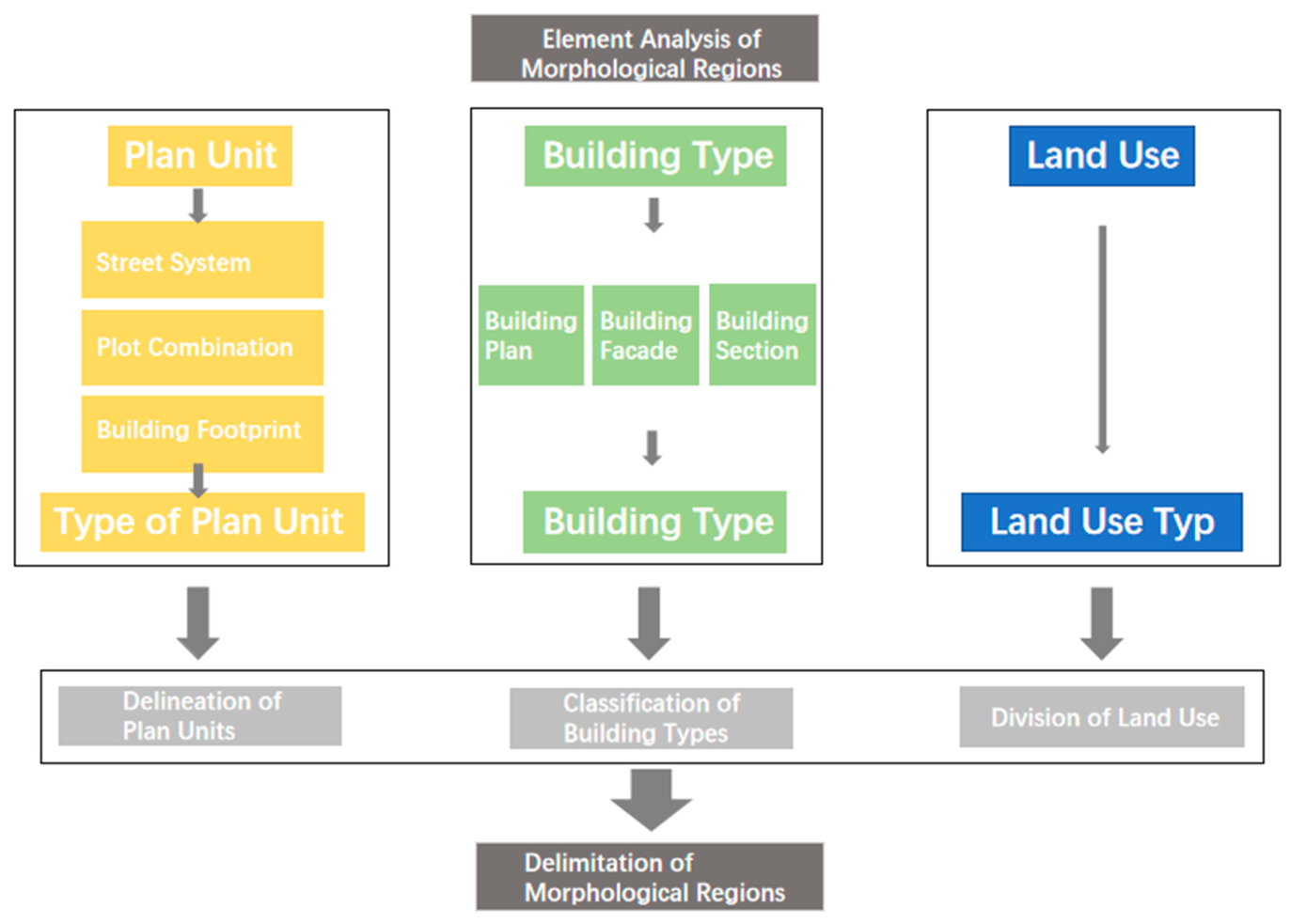
The Conzenian urban morphology theory originated from the book Alnwick, Northumberland: A Study in Town-Plan Analysis published in 1960. The core of this theory is to examine the urban structure and evolutionary process from a historical and dynamic perspective, with its explicit research object being the urban landscape. The urban landscape consists of three core elements, plan units, building types, and land use characteristics, among which plan units include spatial components such as street systems, block combinations, and building footprints [
9,
10]. M.R.G. Conzen established the analysis of urban plan layout as his core research method, which focuses on the systematic analysis and comprehensive overlay study of the three aforementioned morphological elements: plan units, building types, and land use characteristics. Through overlay operations, urban morphological regions are ultimately formed (
Figure 1).
Since the introduction of this theory into China, starting from 2005, the research team led by Professor Tian Yinsheng from South China University of Technology has pioneered a series of groundbreaking academic achievements. Relevant studies cover a number of specific areas; for example, urban morphological analyses of residential blocks such as Xinhepu, Shamian, and Overseas Chinese New Village in Guangzhou, as well as areas including Qingping Road, Gaodi Street, Beijing Road, the surrounding area of Tianhe Sports Center, and Hualin Jade Professional Market, all attempt to deeply explore the laws behind morphological changes and their guiding significance for planning practice [
11,
12,
13,
14,
15,
16,
17]. In terms of theoretical deepening, domestic scholars have conducted discussions around the core concepts of the Conzenian School: the urban fringe is regarded as the forefront of urban spatial expansion; the plot cycle theory reveals the periodic evolution law of building density within private property plots [
18,
19,
20,
21,
22]. These studies provide an important perspective for understanding the spatial evolution of cities and villages.
2.2. The Concept of Management Units and Its Expansion in This Research
From 2009 to 2011, Professor Tian Yinsheng and his team completed the National Natural Science Foundation project Urban Morphology and Its Application in Urban Historical Conservation Planning. While conducting further research and combining with China’s national conditions, they achieved a breakthrough in the localization and practical application of the Conzenian theory. They creatively proposed the practical method of “management units” [
23], which was applied in the Conservation and Renewal Planning of Wenquan Town in Guangzhou and Conservation and Renewal Planning of Zhuangyuanfang in Guangzhou, and received positive practical verification [
24,
25,
26]. The concept of “management units” in this paper is also proposed on the basis of drawing on this method.
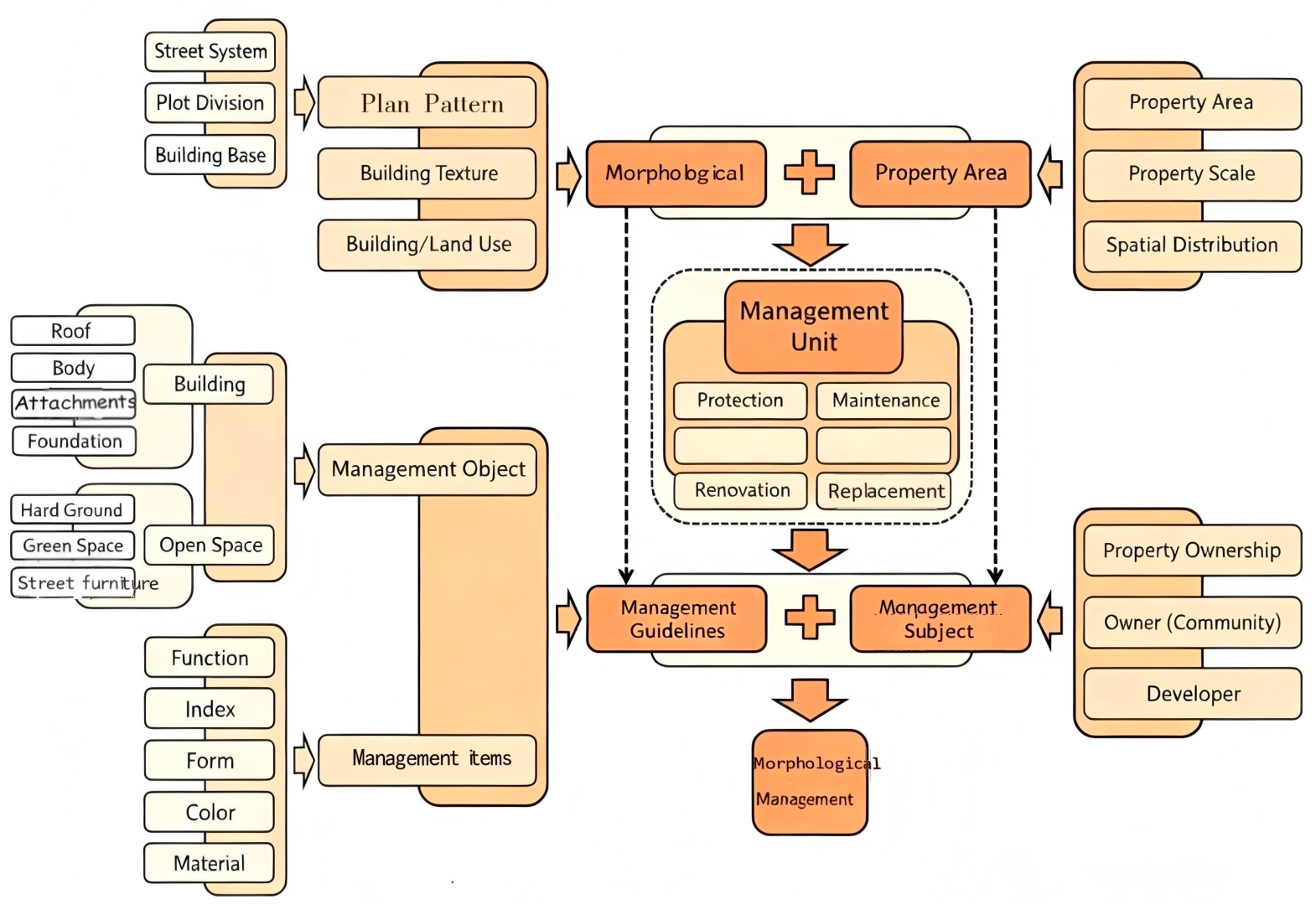
Management units are operational spatial scopes delineated based on the theory of building morphology through a superimposed analysis of morphological regions and building units (
Figure 2). Similar to cities, for traditional villages as living organisms, this paper adopts the theoretical approach of “Conzenian morphology” and the model of “management units”, applying the mindset of “dissecting an ox with ease” (i.e., mastering complexity by understanding its underlying structure) to break down the complex and holistic renewal goals into simple and feasible local actions. Furthermore, considering the specific characteristics of Fengxi Village, the paper proposes a tailored management model and village development suggestions.
This method provides an important foundation for this paper. However, existing research on management units is mainly based on qualitative judgments and lacks a unified quantitative standard. In view of the actual needs of the protection and development of traditional villages, this paper proposes a “spatial unit classification method based on multi-factor evaluation” on the basis of Conzenian morphological analysis. A key feature of this method is introducing three quantifiable evaluation factors—”building value, building quality, and building style”. Through the cross-evaluation of the three factors, the village space is divided into five types of units, preservation, restoration and improvement, comprehensive renovation, demolition and renewal, and new construction, supporting the transformation from morphological description to differentiated management. This framework is not only applicable to Fengxi Village, but also provides a replicable technical pathway that can be adapted for similar villages. The following will take Fengxi Village in Guizhou as an example to show the application process of this method in detail.
3. Research Design, Data and Methods
3.1. Research Design
This study adopts a mixed-methods design within a single-case study framework, aiming to test the feasibility and applicability of the proposed spatial unit classification method. The overall research design follows the logic of “problem identification–method construction–empirical application–strategy derivation” and is divided into four stages: (1) Theoretical framework development. By reviewing the literature on Conzenian morphology, management units, and traditional village conservation, we identify the current lack of operational and quantifiable micro-classification methods. (2) Classification method construction. Based on the theoretical framework, we predefine three evaluation factors (building value, building quality, building style) and their preliminary classification criteria, and construct an initial classification matrix (five types: protection, repair and improvement, comprehensive renovation, demolition and renewal, and new construction). (3) Method application and data collection. Taking Fengxi Village as a case study, we collect data through field mapping, building census, and GIS database construction, then apply the predefined classification method to classify all 702 buildings. (4) Result validation and strategy derivation. Based on the final classification results, we propose differentiated control measures and discuss the limitations of the method as well as its analytical transferability.
It should be noted that, owing to the single-case design, the findings of this study cannot be statistically generalized to a broader population. However, by documenting the classification criteria, scoring procedures, and inter-rater reliability in detail, this study aims to provide a methodological reference with analytical transferability (rather than statistical generalization) for similar traditional villages.
3.2. Research Methods
3.2.1. Data Sources and Collection
Data for this study were collected in July–August 2022 and January 2023 (two field campaigns covering both dry and wet seasons). Basic geographic data were obtained from the Dejiang County Bureau of Natural Resources in the form of a 1:2000 village topographic map (2020 edition). Using this base map, the research team conducted a full-coverage survey of all buildings, roads, and important nodes in the village.
Building data: Each of the 702 buildings were numbered, photographed (no fewer than three angles per building, yielding over 2200 photos in total), and documented for construction year, number of storeys, structural type, roof form, facade material, door and window style, etc., with hand-held GPS used to assist in positioning. Meanwhile, 22 buildings listed as cultural heritage protection units or registered immovable cultural relics were surveyed in detail.
Spatial data preprocessing: All data were imported into the ArcGIS 10.8 platform. The topographic map was first georeferenced and digitised to extract building footprints, road centre-lines, water systems, land use boundaries, and other elements.
3.2.2. Conzenian Plan Analysis and Morphological Region Delineation
Following the Conzenian approach, we zoned four plan elements—land use, road system, plot combination, and building type—and overlaid them in GIS. Continuous areas with consistent morphological characteristics were manually identified, ultimately delineating morphological regions. This process was carried out independently by two researchers (back-to-back); areas of disagreement were discussed until consensus was reached.
3.2.3. Multi-Factor Evaluation Based Building Unit Classification Process
This is the core method of this study, aiming to assign a unique classification to each building. The steps are detailed as follows.
Step 1: Single-factor evaluation. Three trained research assistants independently evaluated all 702 buildings (
Table 1). The definitions and scoring criteria for the three factors are as follows:
Prior to the formal evaluation, 20 representative buildings were selected for a pilot scoring session. After the three evaluators independently scored the buildings, Cohen’s Kappa coefficients of inter-rater agreement were calculated. The results were as follows: building value Kappa = 0.85 (95% CI: 0.78–0.92), building quality Kappa = 0.79 (95% CI: 0.71–0.87), and building style Kappa = 0.81 (95% CI: 0.73–0.89). All three factors reached the level of “substantial agreement” [
27], and the formal evaluation was then initiated.
During the formal evaluation, when the ratings of two evaluators differed by ≥2 levels (e.g., one rated “good” and the other rated “poor”), a third evaluator acted as the arbiter. When the difference was only one level, the average of the two ratings was taken. Ultimately, across all 702 × 3 = 2106 rating items, the rate of complete agreement was 78.2%, and the rate of agreement within one level was 94.6%. The final rating for each factor for each building was taken as the mode of the three evaluators’ scores.
Step 2: Comprehensive classification matrix. The evaluation results of the three factors were combined, and the final unit type was determined using both a total score method and logical rules. In this study, points were assigned to building value, building quality, and building style as follows: Value: Cultural Heritage Protection Unit = 3, Traditional Style Building = 2, Other = 1; Quality: Good = 3, Fair = 2, Poor = 1; Style: Well-preserved = 5, Relatively well-preserved = 4, Fairly preserved = 3, Poorly preserved = 2, Other = 1. The total score ranged from 3 to 11 points. The classification decision matrix is shown in
Table 2.
For borderline cases (e.g., a total score of 8 points but a style rating of “poorly preserved”, or a total score of 6 points but a value rating of Cultural Heritage Protection Unit), a logic-priority rule is adopted: any building with a value rating of “Cultural Heritage Protection Unit” is automatically classified as a Protection Unit; any building with a style rating of “Other Building” (severely conflicting) and a total score ≤5 points is preferentially classified as a Demolition and Renewal Unit. This rule avoids the problem that the total score method might otherwise cause—i.e., a building with high value but low quality being mistakenly assigned to the Renovation Unit.
The above scoring criteria, point assignment system, and decision matrix have all been documented in detail. A researcher who was not involved in the original classification randomly selected 50 buildings and independently re-classified them using the same criteria. The agreement rate with the original classification results was 84% (Kappa = 0.79), indicating that this classification framework can be consistently applied by different researchers.
4. Analysis of the Current Problems of Fengxi Village
4.1. Current Condition of the Village
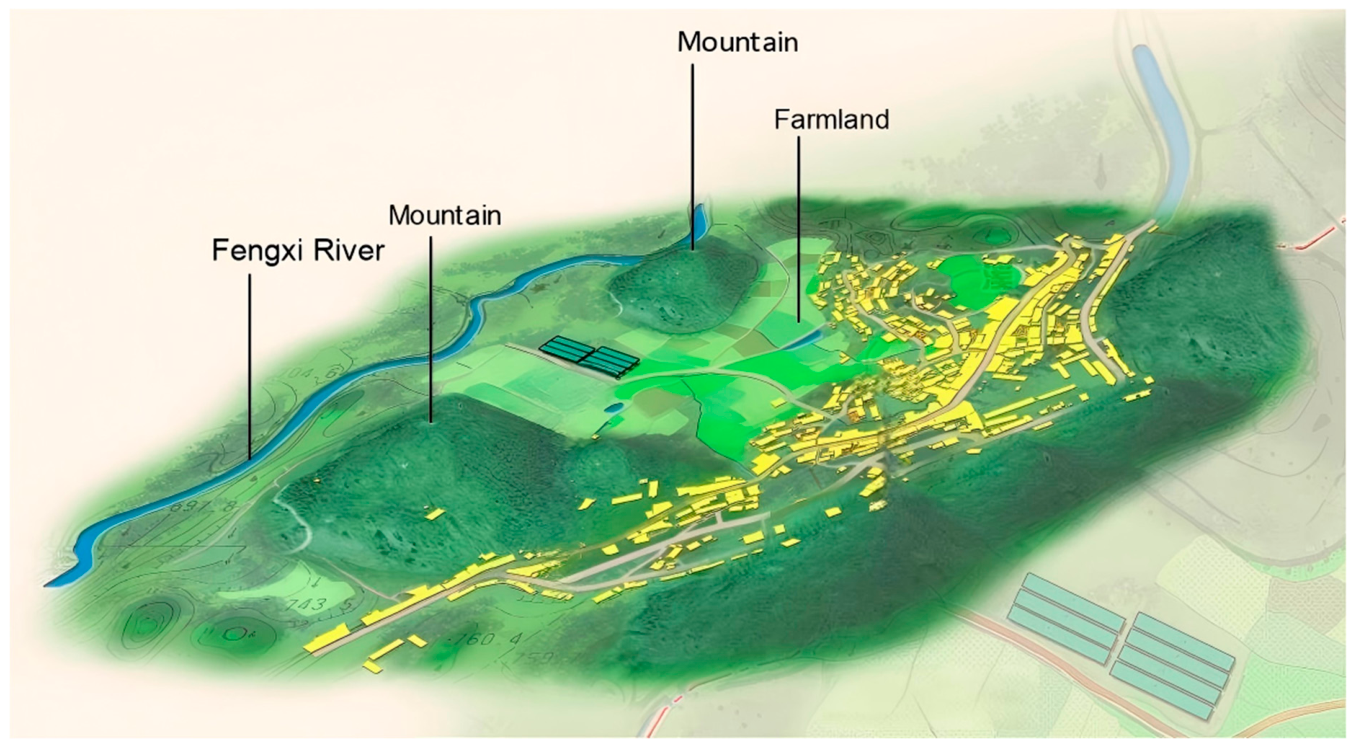
Fengxi Village is located in Fengxiangxi Town, southeastern Dejiang County, and was selected as one of the second batch of Chinese traditional villages in 2013. The village is backed by Ma’an Mountain, faces the Fengxi River to the front, and is surrounded by farmland, forming a typical “mountain–water–farmland–village” pattern (
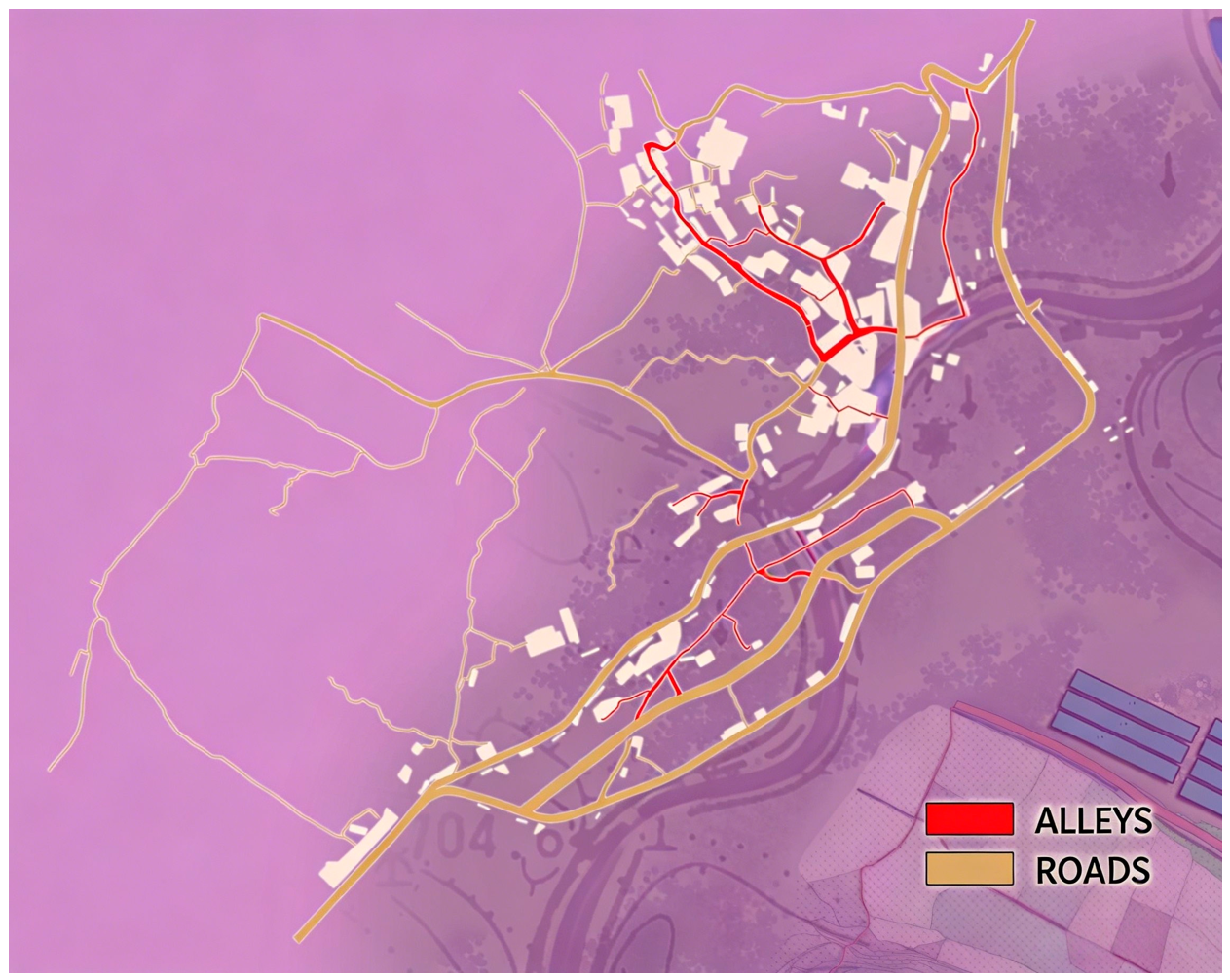
Figure 3). The village has developed linearly along its streets and alleys, with the main streets including Laojie (Old Street), Xinjie (New Street), and Houjie (Back Street) (
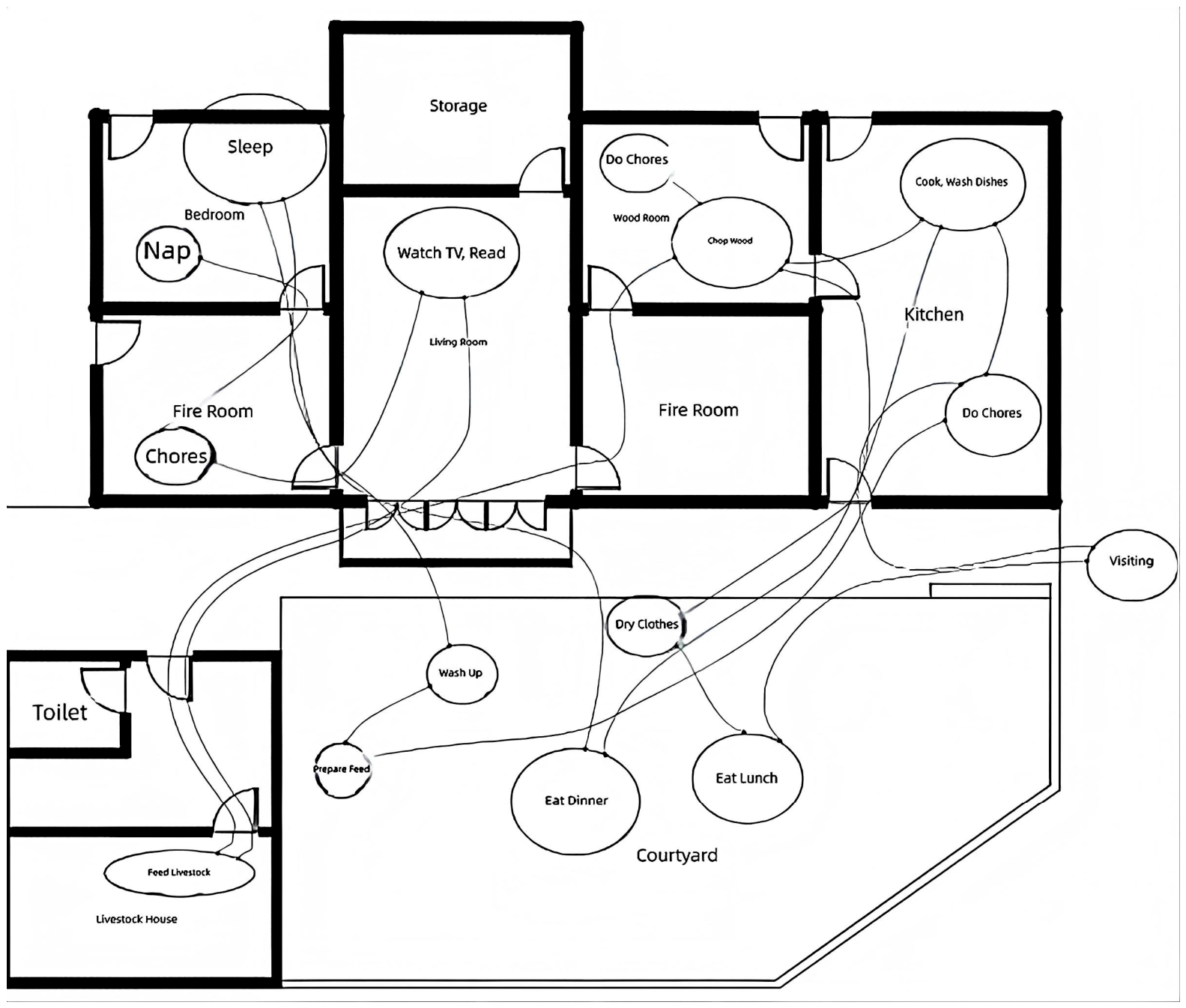
Figure 4). The buildings are predominantly traditional Tujia folk houses, mostly one- to two-story timber structures. The typical floor plan layout is either a “four-pillar, three-bay” configuration (with a central hall flanked by two side rooms) or a “six-pillar, five-bay” configuration. Some houses feature stilted buildings (diao jiao lou) (
Figure 5).
4.2. Existing Problems
Currently, Fengxi Village faces the following prominent problems: (1) Fire safety hazards in buildings. The residential buildings in Fengxi Village are densely connected, which greatly facilitates the rapid spread of fire. Moreover, the water supply capacity within the village is limited, and no dedicated firefighting water storage pool has been established; only a small number of firefighting facilities have been installed around the Fengxiangxi Conference Site. Consequently, the entire village faces a serious fire risk. (2) Impacts on village character. In recent years, most newly constructed houses have adopted modern styles using brick or brick–concrete structures. The main streets are now largely occupied by modern buildings, while traditional architectural features are gradually disappearing. The mixing of old and new materials is prominent, severely undermining the continuity of the village’s traditional character. In addition, arbitrary construction and illegal additions are widespread, leading to a chaotic spatial order. (3) Inadequate infrastructure. The village’s infrastructure remains underdeveloped, as evidenced by: a lack of public activity spaces, aging electrical wiring, the absence of a comprehensive drainage system, insufficient garbage collection facilities, direct discharge of domestic sewage, and poor environmental quality. These factors collectively constrain the improvement of villagers’ quality of life and the sustainable development of the village. (4) Insufficient cultural protection. Tangible cultural carriers have suffered varying degrees of damage. Intangible cultural heritage, such as traditional folk songs and dances, lacks systematic protection and transmission mechanisms. The frequency of related ethnic cultural activities is low, and their dissemination and popularization among the younger generation are insufficient, putting cultural memory at risk of loss.
5. Spatial Morphological Characteristics of Fengxi Village
5.1. Formation of Spatial Units
The formation of spatial units is based on the overlay analysis of morphological regions and property right regions. Among them, a morphological region refers to a continuous area with significant identity in spatial characteristics or constituent elements and obvious differences from the surrounding environment. Due to its unified morphological attributes and spatial characteristics inside, the same protection and development control rules can be applied, thus providing an effective basis for planning and management.
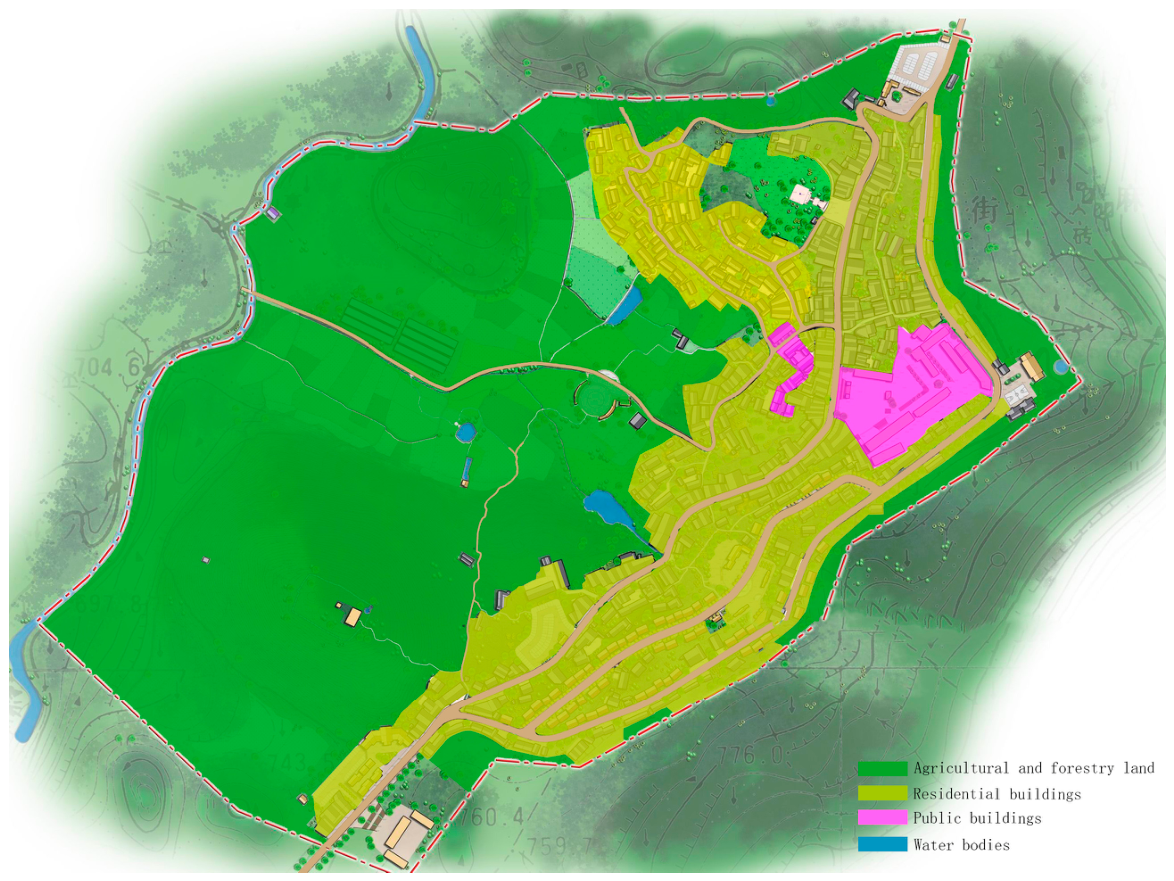
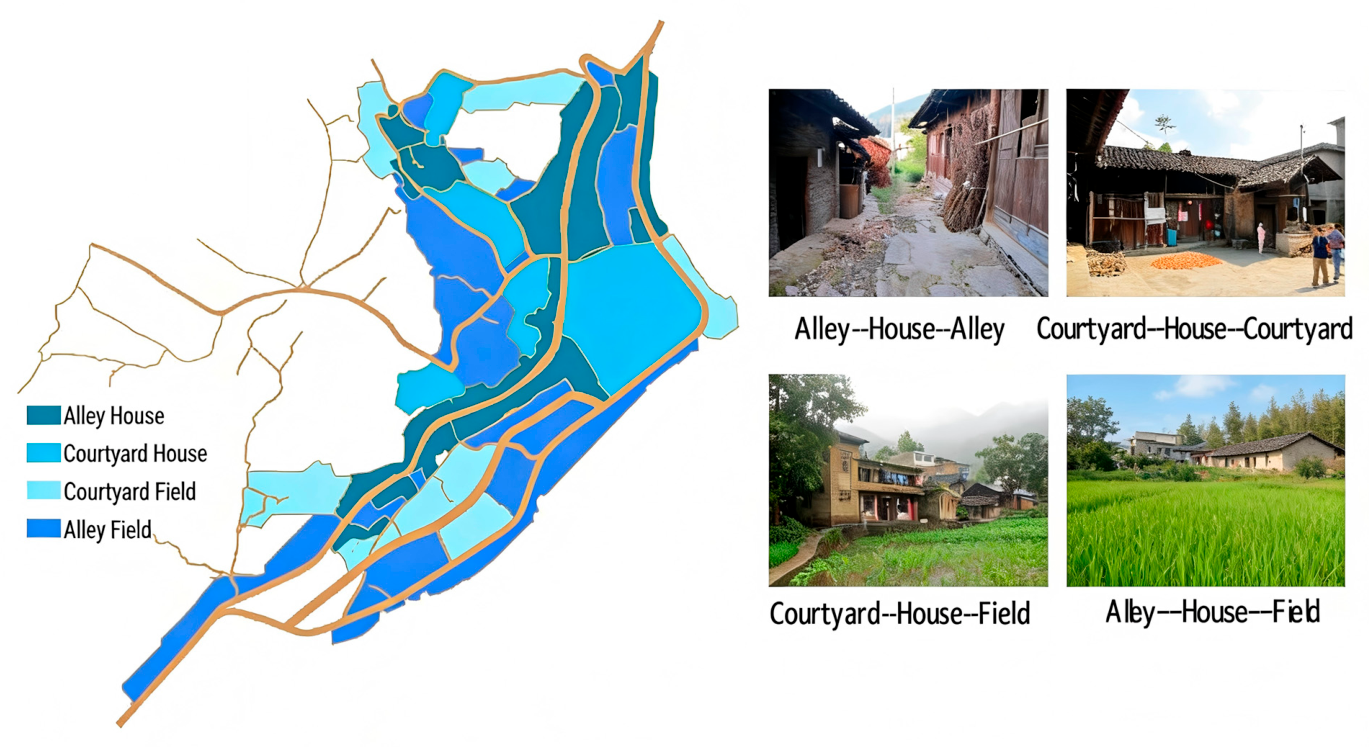
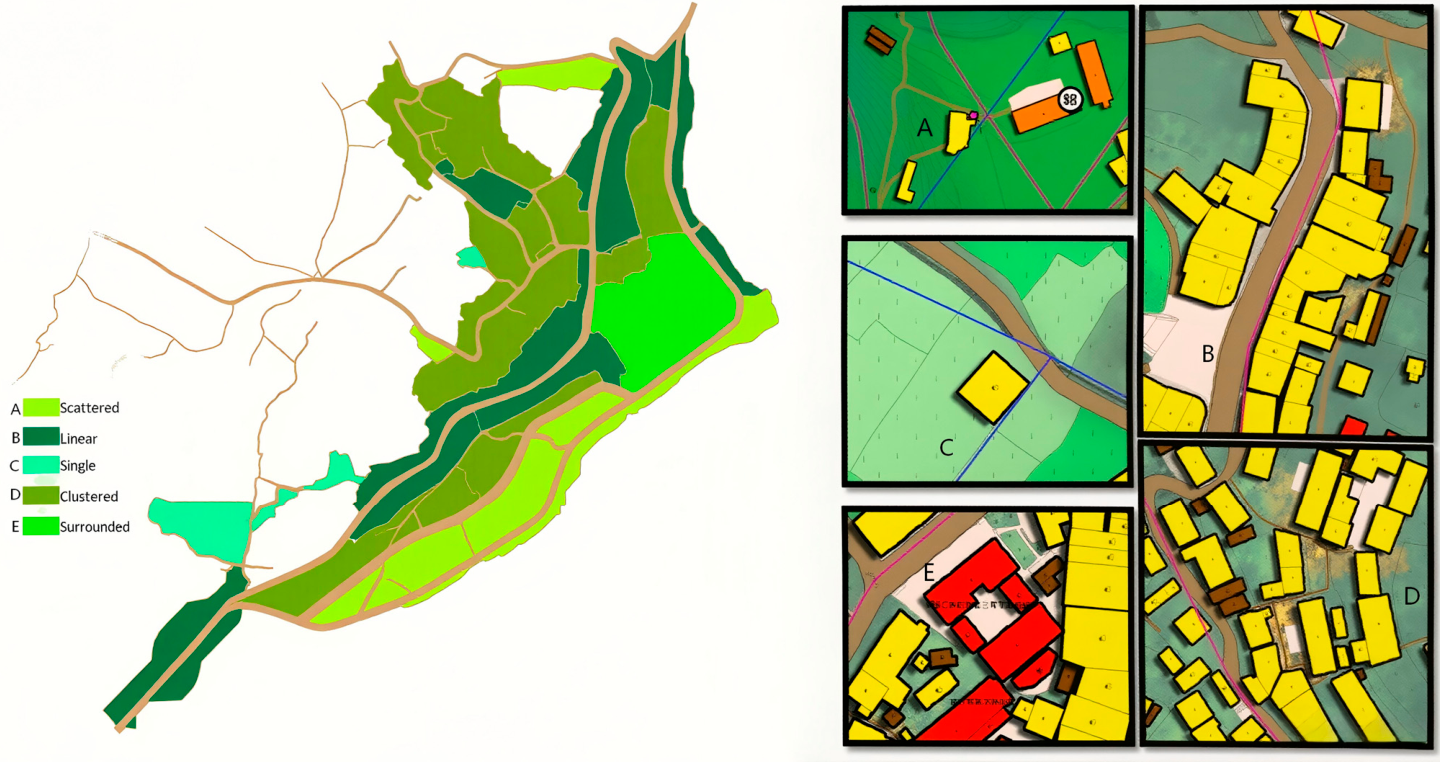
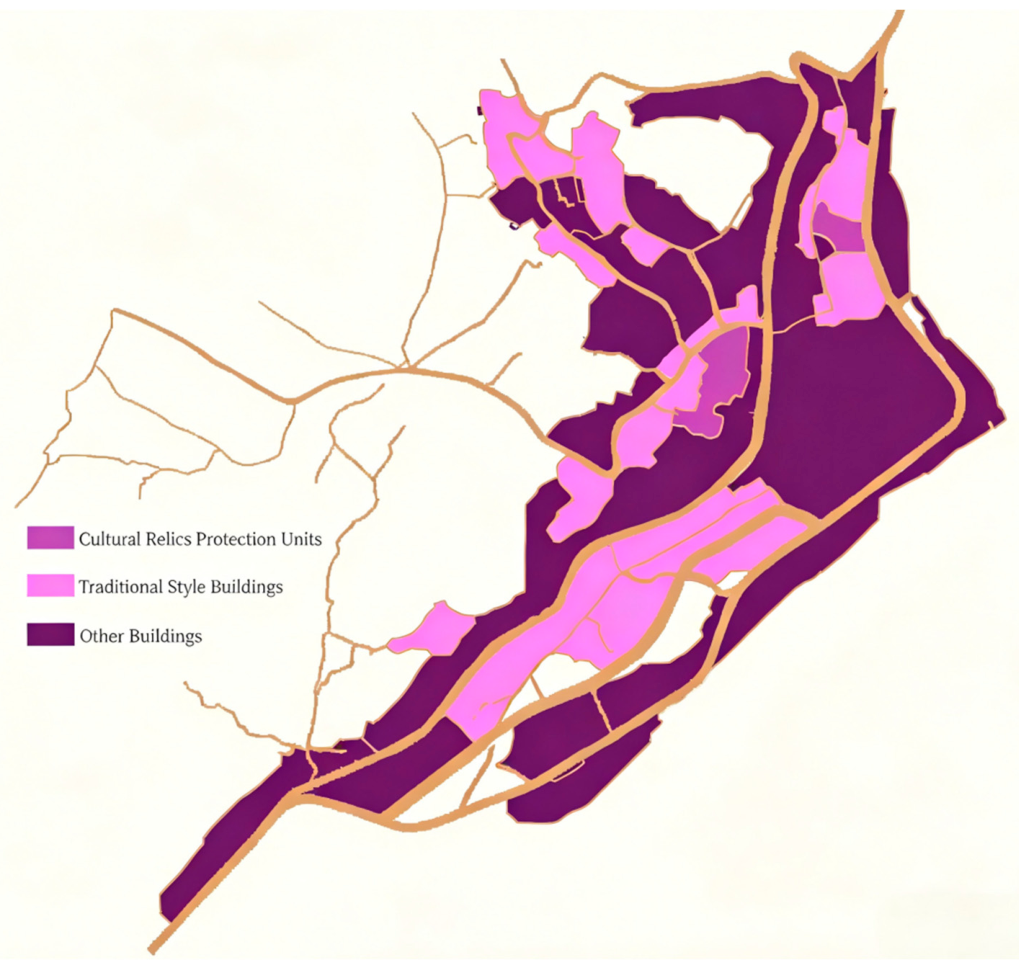
The delineation of morphological regions requires the application of the plan analysis method in Conzenian urban morphology to systematically classify and zone multiple elements of the village, including land use structure (
Figure 6), road system organization (
Figure 7), plot combination mode (
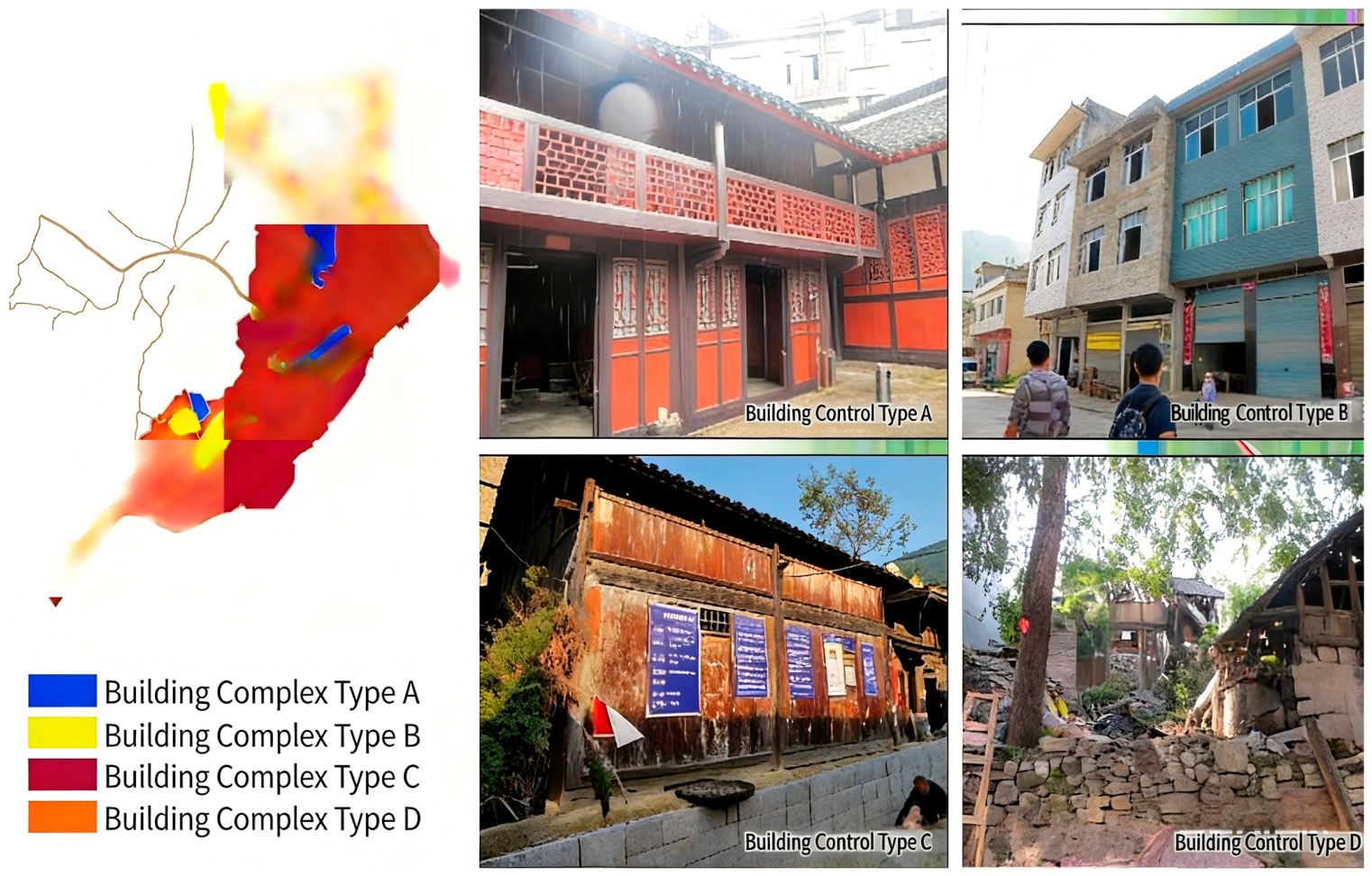
Figure 8), building type differentiation (
Figure 9) and building classification characteristics (
Figure 10). After the zoning of each individual element is completed, the overall morphological region division result of the village is finally obtained through comprehensive overlay and integration analysis (
Figure 11).
5.2. Key Features of Spatial Unit Classification Method Based on Multi-Factor Evaluation
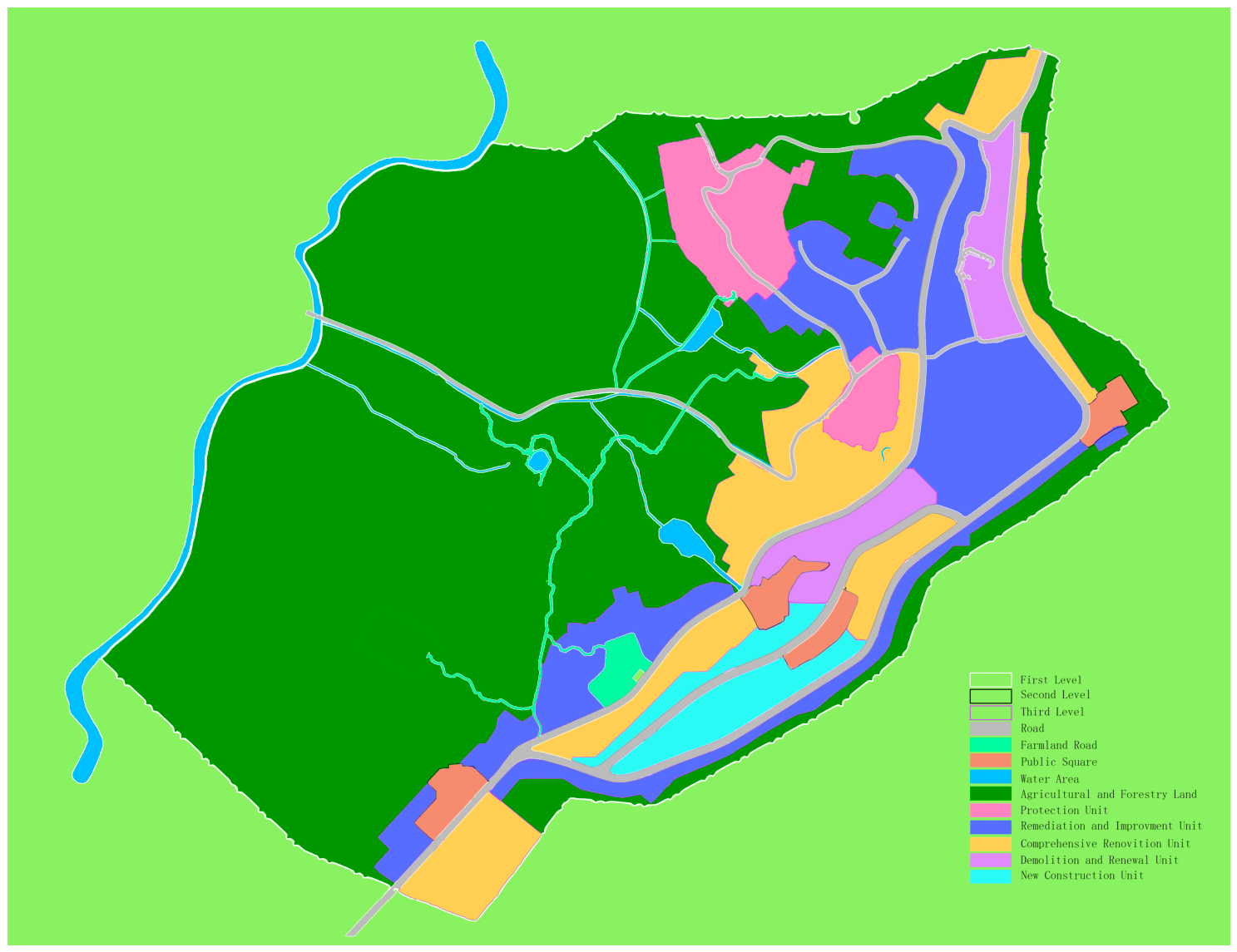
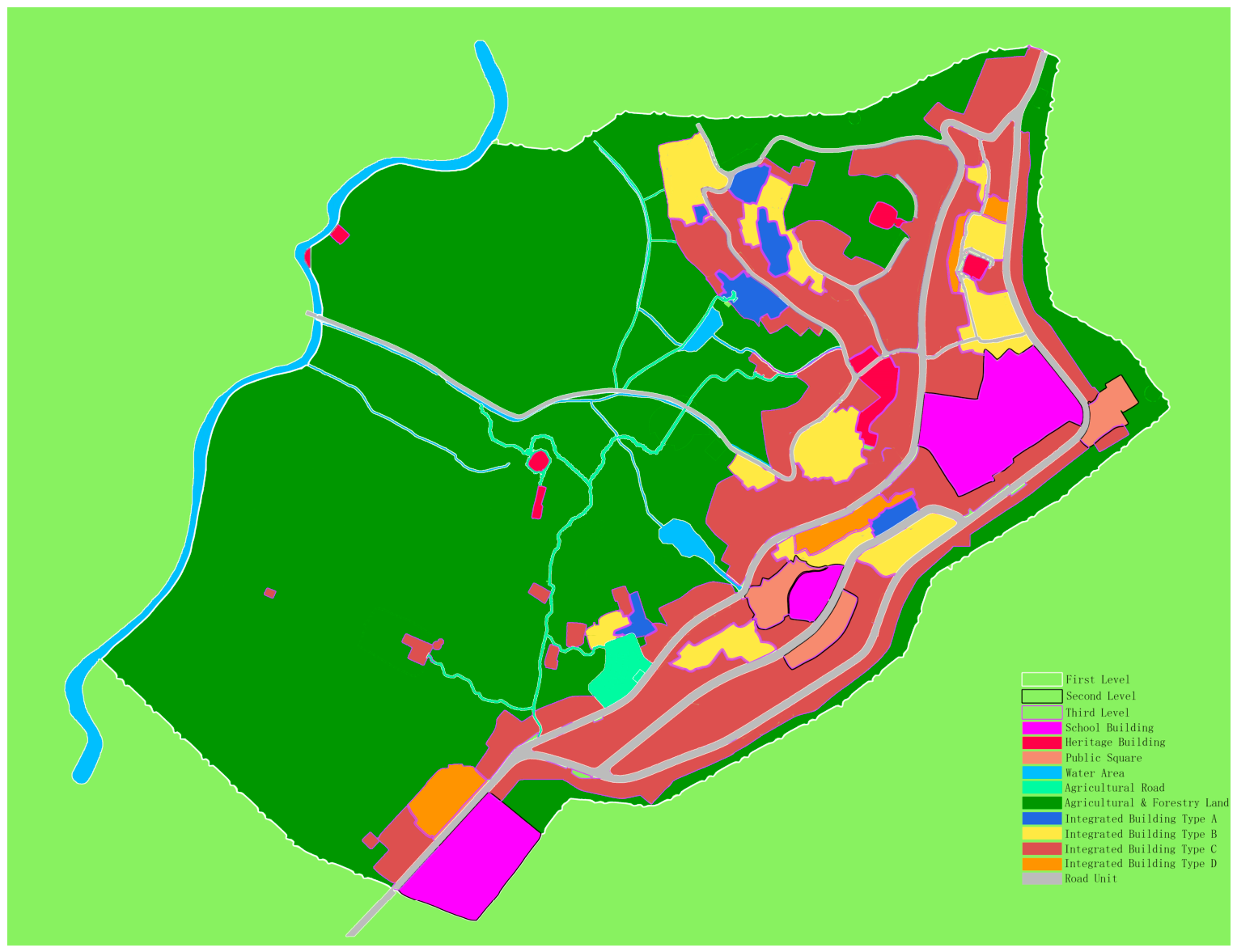
To achieve fine-grained control of traditional villages, it is necessary to transform macro-scale morphological region analysis into micro-scale, operational unit classification. Based on the delineation of Conzenian morphological regions, this paper introduces three core evaluation factors—building value, building quality, and building style. According to the evaluation results, management units can be classified into five types, Protection Unit, Repair and Improvement Unit, Comprehensive Renovation Unit, Demolition and Renewal Unit, and New Construction Unit, thereby constructing a classification matrix for spatial units of traditional villages and enabling fine-grained management (
Figure 12). A major feature of this method is its attempt to convert qualitative morphological description into evaluation based on quantifiable factors, making the classification results traceable and verifiable in terms of methodological documentation, thus providing a transparent assessment basis for planning and management.
Based on the individual evaluation of all 702 buildings in Fengxi Village, the numbers and proportions of each unit type are shown in the table (
Table 3). The data indicate that the Comprehensive Renovation Unit accounts for 73.5%, revealing that the main problem currently facing Fengxi Village is the conflict between a large number of modern buildings and the traditional character. The Protection Unit accounts for only 4.4%, highlighting the scarcity of core historical resources and the urgency of their protection. The Demolition and Renewal Unit accounts for 6.8%, consisting mainly of illegally constructed auxiliary structures, representing the priority for short-term renovation. These quantitative results provide basic data references for subsequent differentiated control. For the five unit types described above, differentiated control guidelines are formulated as follows (
Table 4) to achieve fine-grained management with “one category, one policy”.
Figure 12.
Spatial distribution of the five management unit types in Fengxi Village. The map uses different colours to represent the five unit types. Comprehensive Renovation Units are concentrated along the main streets, indicating the main area of stylistic improvement pressure. This figure is the core output of the study, presenting the final result of the transition from morphological analysis to classification-based control, and provides the spatial basis for the differentiated planning guidelines in
Table 4.
Figure 12.
Spatial distribution of the five management unit types in Fengxi Village. The map uses different colours to represent the five unit types. Comprehensive Renovation Units are concentrated along the main streets, indicating the main area of stylistic improvement pressure. This figure is the core output of the study, presenting the final result of the transition from morphological analysis to classification-based control, and provides the spatial basis for the differentiated planning guidelines in
Table 4.
In summary, based on the five types of spatial units and their quantitative characteristics identified above, the following targeted measures are proposed: Protection Unit (4.4%): Strictly adhere to the principle of “repairing as before” (restoring the old as it was). Focus on maintaining the 31 traditional buildings in their original state, using them as showcases for Tujia architectural culture and incorporating them into the core tourist route. Repair and Improvement Unit (15.3%): For the 107 traditional buildings that partially employ modern materials, carry out “de-modernisation” retrofitting. Replace incongruous components such as red bricks and cement with traditional materials, thereby restoring their traditional character. Comprehensive Renovation Unit (73.5%): This constitutes both the priority and the difficulty of the renovation effort. For the 516 modern buildings, implement facade renovation through “dressing” measures, including converting flat roofs to pitched roofs, replacing doors and windows with traditional styles, and adding ethnic decorative components. These interventions improve stylistic harmony without altering the main building structures. Demolition and Renewal Unit (6.8%): Demolish the 48 dilapidated buildings and illegally constructed structures. Prioritise the vacated land for public spaces (e.g., small plazas, parking areas) or greening. New Construction Unit: Delineate future construction zones and formulate Guidelines for the Character of New Dwellings, requiring that new buildings harmonise with the traditional character in terms of massing, colour, and materials.
6. Conclusions
This study addresses the common problem of the disconnection between “holistic goals” and “micro-operational practices” in traditional village conservation. Taking Fengxi Village in Guizhou as a case study, it attempts to construct and test a technical framework of “morphological analysis–factor evaluation–unit-based control”. The main findings are as follows: (1) A classification framework that can serve as a reference for similar studies is proposed. Different from the qualitative descriptions found in some existing research, this framework introduces three quantifiable factors—building value, building quality, and building style—along with clear assessment criteria, and transforms the results of Conzenian morphological region analysis into five types of management units. This process has been fully documented and preliminarily validated in the Fengxi Village case study. (2) Empirical classification data for Fengxi Village are provided. The census and classification of all 702 buildings in the village show that core protection objects account for 4.4%, the Comprehensive Renovation Unit accounts for 73.5%, and the remaining unit types account for 22.1%. These quantitative results provide basic data references for the subsequent conservation planning of Fengxi Village, while also indicating that the village faces considerable pressure for stylistic improvement.
It should be noted that, owing to the single-case design, the conclusions of this study cannot be directly generalized to all traditional villages. The proposed classification framework has methodological transferability, but its application in other villages requires adjusting the evaluation criteria and weights according to local conditions. Future research can further test and refine the validity and applicability of this framework through multi-case comparisons, the introduction of participatory methods, and long-term follow-up evaluations.
7. Discussion
The core finding of this study is the substantial imbalance between the “protection unit” (4.4%) and the “comprehensive renovation unit” (73.5%) in Fengxi Village. This quantitative evidence indicates that the primary challenge facing Fengxi Village is not the decay of its traditional core area, but rather the large-scale erosion of the traditional character matrix by modern buildings. This finding cross-validates recent empirical research applying the UNESCO Historic Urban Landscape (HUL) approach to traditional villages in China. Li et al. [
28], in their study on Tangfang Village, show that the conservation dilemma of traditional villages often lies not in the preservation of core value buildings themselves, but in the value recognition and classification management of a large number of “intermediate state” buildings—those that are neither of significant heritage value nor completely valueless. This perspective provides relevant international theoretical support for adopting the “comprehensive renovation unit” to address the numerous buildings that conflict with the traditional character. It also indicates that the progressive classification framework proposed in this paper—“protection–repair and improvement–comprehensive renovation–demolition and renewal”—is logically consistent at the foundational level with the dynamic, layered conservation concept advocated by the HUL approach.
The practical application of this study offers several corrective insights for the application of Conzenian urban morphology to traditional village research. First, the classical Conzenian approach places great emphasis on the centrality of property plots (burgage plots) in morphological evolution, stressing the long-term stability of plot boundaries and their subdivision patterns. However, in a traditional village like Fengxi Village, due to collective land ownership, frequent inheritance divisions, and informal land transfers, many historical plot boundaries have become blurred or have disappeared altogether. In practice, we found that relying solely on contemporary cadastral maps cannot restore historical plot units; comprehensive interpretation must be supplemented by villagers’ oral histories, lineage genealogies, and aerial imagery. This experience suggests that when applying the Conzenian method in a rural context, it is necessary to moderately decouple “morphological plots” from “property plots” and rely more on the spatial configuration of building clusters and the street network to delineate morphological units. The Conzenian method focuses on the static description of three dimensions—plan pattern, building types, and land utilization—but lacks a direct interface with normative concepts such as “value” and “style”. By embedding a three-factor evaluation system, this study extends morphological analysis from “what exists” to “what should be done”, thereby endowing morphological units with decision-relevant meanings for conservation. This “morphology-to-decision” translation mechanism can be regarded as an operational extension of the Conzenian method into the field of heritage planning.
The classification framework of this study has several practical implications for the governance of traditional village heritage:
First of all, classification management needs to be linked to the planning system. The five types of management units can be respectively aligned with statutory zones in village planning, such as “core protection areas”, “construction control zones”, and “environmental coordination zones”. At the same time, a “conservation and renewal record card” should be prepared for each building to serve as a basis for approval when villagers apply for reconstruction, repair, or new construction.
Secondly, classification results should be used as a negotiation tool rather than a mandatory standard. The effectiveness of heritage governance depends not only on the rigor of the technical scheme but also on the acceptance of local actors. The three-factor scoring results of this study can be presented in the form of visual maps during villagers’ council meetings, inviting villagers to challenge or supplement the scores assigned to their own buildings.
Thirdly, tiered guidelines need to be developed for the Comprehensive Renovation Unit. The fact that 73.5% of buildings fall into the Comprehensive Renovation Unit, while reflecting the actual pressure, may also lead to a “one-size-fits-all” approach in planning responses. Subsequently, the Comprehensive Renovation Unit can be further subdivided into three categories: Category I (moderate value, acceptable style, mainly cleaning and routine maintenance), Category II (obvious style conflicts but structurally sound, primarily facade renovation), and Category III (low value and severe style conflicts, may be considered for gradual renewal).
Any classification tool may face multiple risks in practical application, and the framework of this study is no exception. (1) Lack of resident participation and local knowledge. The current classification is based entirely on expert assessment and has not systematically incorporated villagers’ emotional attachment to buildings, their practical needs for use, or their economic affordability. (2) Impact of property rights constraints on implementation. Fengxi Village has numerous buildings with shared ownership (e.g., ancestral houses shared among multiple brothers) as well as vacant old houses with unclear ownership. For such buildings, even if the classification recommends “protection” or “repair and improvement”, actual implementation requires consensus among all co-owners, resulting in extremely high coordination costs. (3) Constraints on implementation capacity. Even when the technical scheme is sound, the human, financial, and professional capacities of grassroots organizations are often weak. Township planning and management departments typically lack heritage conservation professionals, making it difficult to carry out building-by-building follow-up supervision for 702 buildings. (4) Tension between stylistic improvement and living heritage. This framework treats “stylistic harmony” as an independent evaluation factor, which may lead planning practice to overemphasize the “uniformity” and “traditional style” of building style, while neglecting the dynamic nature of buildings as “living heritage” and residents’ legitimate pursuit of quality in modern living.
This study has the following limitations. First, simplification of evaluation factors. The current assessment focuses only on the building itself and does not fully consider factors such as courtyard environments, public spaces, and social values (e.g., places serving as community ritual centres), which may lead to an underestimation of the value of certain buildings. Second, residual subjectivity of judgment. Although inter-rater reliability tests were employed, the final determination of concepts such as “value” and “character” inevitably involves a degree of expert subjectivity, and experts from different cultural backgrounds may interpret these concepts differently. Third, limitations of a single case study. The conclusions are derived solely from the case of Fengxi Village; the applicability of this method in plain areas, Han Chinese villages, or ancient towns with higher levels of commercialisation remains to be tested.
Future research could be advanced in the following directions: (1) Introduce participatory GIS (PGIS) methods to incorporate the perceived values of multiple stakeholders—including villagers and tourists—into the evaluation system, thereby achieving a more democratic classification. Tu [
29], in a study published in Sustainability using the World Heritage sites of Nanping and Hongcun as case studies, revealed common problems in heritage management of World Heritage sites, such as insufficient public participation and planning guidance biases. He further pointed out that the public policy nature of heritage conservation requires a dynamic balance between protection and sustainable development. If future research can extend the classification method proposed in this paper from “expert assessment” to “participatory assessment”—quantifying villagers’ emotional attachment to buildings, their perceived use value, and their acceptance of renewal as new evaluation dimensions—it may be possible to develop more inclusive and socially legitimate fine-grained management tools. (2) Conduct comparative case studies across multiple different types of villages to validate and calibrate the classification thresholds of this method, thereby producing more universally applicable technical guidelines.