


Abstract
This paper investigates the Electrode Induction Gas Atomization (EIGA) of a Class 4 tungsten heavy alloy (WHA-4) containing 97.8 wt.% W, with the balance comprising Ni and Fe. Compared with conventional tungsten heavy alloys containing less than 95 wt.% W, the high tungsten content reduces the liquid-phase fraction and melt fluidity, making stable processing significantly more challenging. Powder-metallurgy-fabricated electrodes were atomized under varying resonant induction conditions to evaluate the effects of capacitance, frequency, and input power on melt stability. The results show that stable processing can be achieved through an optimum combination of capacitance and resonant frequency, providing sufficient energy to maintain a steady melt stream and uninterrupted atomization. Under optimized conditions, predominantly spherical powders with minimal defects were successfully produced. Microstructural characterization revealed that the Ni–Fe binder phase remained localized along tungsten grain boundaries and in isolated pockets between tungsten grains. X-ray diffraction and chemical analyses confirmed that the phase constitution and alloy composition of the electrode were preserved during atomization. Under non-optimum conditions, process instability was associated with incomplete melting, beard formation, unstable melt flow, and nozzle blockage. These findings provide new insights into the atomization behavior of high-tungsten heavy alloys and establish practical processing procedures for producing high-quality WHA-4 powders for advanced manufacturing applications.
1. Introduction
Tungsten heavy alloys (WHAs) are two-phase composites consisting of nearly pure tungsten particles dispersed within a ductile Ni-based binder matrix, typically comprising Ni–Fe or Ni–Cu. Owing to tungsten’s extremely high melting point (3422 °C), powder metallurgy (PM) is the predominant manufacturing route for WHAs, enabling near-net-shape fabrication via compaction and liquid-phase sintering [1,2,3,4]. During sintering, the tungsten particles remain as the primary phase supporting most of the load, while the binder forms a continuous or semi-continuous matrix that enhances densification, toughness, and machinability. The unique combination of high density, high strength, excellent wear and corrosion resistance, and superior attenuation of X-rays and γ-rays has led to the widespread use of WHAs in engineering applications. Typical applications include counterweights, balance weights, rotating and oscillating inertia components, radiation shielding for medical and nuclear systems, and kinetic-energy penetrators [1,5,6,7,8,9].
In a recent review, Barua et al. provided a comprehensive overview of the processing and microstructural development of tungsten heavy alloys (WHAs) [1]. The authors examined conventional manufacturing routes, primarily powder metallurgy based on compaction and liquid-phase sintering and discussed the limitations of these processes in achieving precise control over microstructure and properties. The review also highlighted emerging processing technologies, including additive manufacturing, mechanical alloying, and spark plasma sintering, which offer improved control of phase distribution, grain refinement, and property optimization. Furthermore, the effects of processing parameters and alloy composition on microstructural evolution and the resulting mechanical and physical properties were critically assessed. The authors concluded by identifying the key challenges and future research directions required to further optimize WHA processing and expand its application in advanced engineering systems.
Over the past several decades, numerous PM-based processing routes have been developed to achieve near-theoretical density and enhanced mechanical properties. Among these materials, Class-4 WHA (≈97 wt.% W with a Ni–Fe binder) is a high-strength, high-stiffness variant in which a strong tungsten skeleton and a thin, ductile binder phase balance structural integrity and damage tolerance [3,4,5,9].
Conventionally, WHA components are produced via powder metallurgy routes involving mechanical blending, compaction, and liquid-phase sintering (LPS) [1,3,4]. In fact, since the inception of tungsten heavy alloys (WHAs) in the mid-1930s, they have been produced using similar techniques.
During sintering, a Ni–Fe-rich liquid forms and promotes densification via particle rearrangement and solution–reprecipitation, resulting in a characteristic microstructure of rounded tungsten grains within a continuous binder matrix [3,4,8,9,10,11,12,13,14,15]. While this approach is well established, uncertainties may remain regarding chemical inhomogeneity, binder segregation, and powder packing behavior, particularly in advanced manufacturing processes such as metal injection molding (MIM) and laser powder bed fusion (LPBF) [14,15,16,17,18,19].
In recent years, there has been growing demand for spherical tungsten heavy alloy (WHA) powders with excellent flowability, high packing density, and improved chemical homogeneity for powder metallurgy and additive manufacturing applications. Direct gas atomization of pre-alloyed WHAs would represent an attractive processing route for producing such powders. However, owing to tungsten’s extremely high melting point and the associated processing challenges, reports on the direct gas atomization of molten W–Ni–Fe heavy alloys remain scarce.
A gas-atomization-like process has been described in a patented invention for fabricating three-dimensional metallic components using a dry powder bed of substantially spherical composite particles. In this approach, the feedstock consists of tungsten powder blended with Ni–Fe or Ni–Cu binder-phase constituents. The composite particles are produced by spray drying powder slurries containing organic binders, followed by optional plasma spheroidization or densification to improve particle morphology and flowability. Unlike conventional gas atomization, this process does not atomize a fully molten, pre-alloyed tungsten heavy alloy melt; instead, it produces spherical composite feedstock particles suitable for binder-jet and other powder-bed additive manufacturing processes [11].
For atomizing refractory metals and alloys with very high melting points, the Electrode Induction Gas Atomization (EIGA) technique is highly viable, especially for refractory systems, as it enables crucible-free melting, minimizes contamination, and processes high-melting-point alloys such as tungsten-based compositions. EIGA is a patented ALD process for manufacturing high-quality spherical powders of reactive and refractory metals and alloys [20]. It is widely used to atomize Ti, Zr, Nb, and precious metal alloys for aerospace, medical, electronics, and many other industrial applications. In the EIGA process, metal electrodes are inductively melted and disintegrated by a high-velocity inert-gas jet, producing rapidly solidified droplets with a controlled size distribution and morphology [16,17,18,20,21,22]. The use of the EIGA technique to manufacture powders of Class-4 tungsten heavy alloy (WHA-4) electrodes is relatively new. So far, the authors are not aware of any studies on EIGA-processed WHA-4 powders.
Recently, Dorner studied the influence of Ni-Fe liquid binder in WHA to improve the thermo-mechanical and electromagnetic properties of 35%W Ni-Fe. In the high-volume binder phase, W was found to be mostly dissolved, and it was also found that a large part of W remained as precipitated tungsten particles and also as a new separate phase, although the new phase could not be substantiated by XRD analysis [19].
Saxena et al., while studying the mechanical behavior of 92%WNi-Co, found that the matrix phase and the binder undergo a peritectoid reaction that resulted in the creation of the intermetallic phase. Unlike W-Ni-Fe, the microstructure of the sintered part revealed round tungsten particles surrounded by a binder phase, which is clean and devoid of any second phase [23]. Ravikiran et al. also found that in W-Ni-Fe, the addition of Co improved the solubility of W in the binder phase, leading to improvement in mechanical properties. This work demonstrated that alloying additions and processing conditions in 95W Ni-Fe can be tailored to achieve specific mechanical property goals in high-tungsten alloys, which are important for applications in ballistic protection, aerospace, and nuclear industries where high strength and/or ductility are required [24].
However, as per Cury et al., cobalt (W–Ni–Co) indeed improves tungsten solubility in the matrix; however, cobalt was not necessary to add to W-Ni-Fe to improve mechanical properties. Similar mechanical properties can be achieved by suitably controlling the process parameters only [25,26].
All of the studies mentioned above mostly used mechanically blended, plasma-spheroidized, or mechanically alloyed powders. Despite increasing industrial interest, the processing–structure–property relationships of gas-atomized or EIGA-processed Class-4 WHA powders remain insufficiently documented, nonetheless. It may be possible that due to the sensitive nature of the application, particularly in defense and aerospace sectors, industrial production of high-density alloy powders using EIGA (including W-Ni-Fe) is often proprietary or unpublished.
Key open questions include the influence of atomization conditions on internal particle structure and segregation, the evolution of tungsten grain size and contiguity during sintering, and the resulting impact on the powder properties and reliability.
For high-melting-point materials, successful induction melting depends not only on the applied power but also on efficient electromagnetic coupling and effective energy transfer to the material [18,27,28]. This requirement is particularly critical for WHA-4 because of its high tungsten content and low Ni–Fe binder fraction, which result in a narrow processing window for stable melting and atomization. Achieving an appropriate balance among the electrical and processing parameters is therefore essential to provide sufficient melt superheat, maintain a stable melt stream, and enable continuous atomization.
Therefore, the objective of the present work is to systematically investigate the EIGA processing conditions required for stable atomization of WHA-4, which presents greater challenges than more readily atomized alloys. The study also aims to provide a mechanistic understanding of how insufficient or imbalanced energy transfer affects melt-flow behavior, leading to bead formation, melt-stream instability, and premature solidification at the electrode tip.
EIGA-processed WHA-4 powders are studied with particular emphasis on their morphology, chemistry, internal microstructure, porosity, sintering behavior, and microstructures. Although ASTM B777 Class 4 (approximately 97W–2.1Ni–0.9Fe) [29] powders are commercially available, openly published reports describing the production of WHA-4 powder by Electrode Induction Gas Atomization (EIGA) remain scarce. Nevertheless, the successful atomization observed in the present work demonstrates that WHA-4 can be processed by EIGA when sufficient thermal and atomization energy are provided to achieve complete melting of the tungsten-rich electrode tip and stable melt-stream formation.
2. Experimental
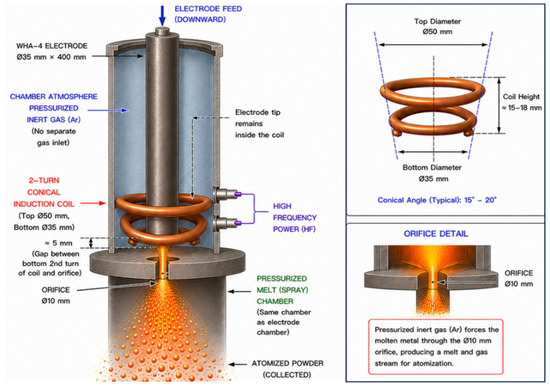
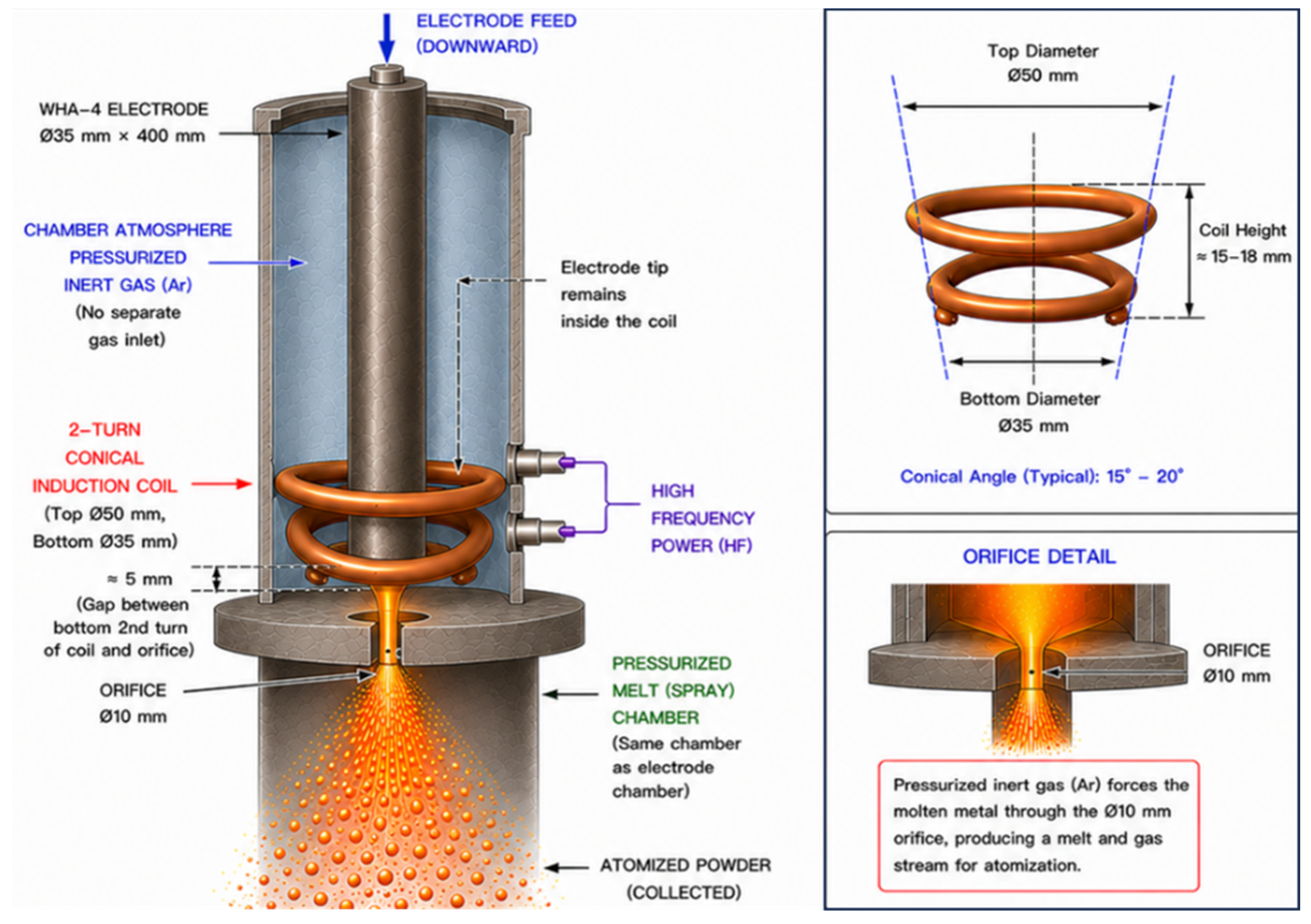
WHA-4 electrodes for EIGA were obtained from a local supplier of metals and alloys. The EIGA Premium production unit, manufactured by ALD Vacuum Technologies—AMG, was utilized to conduct the experiments of the present study. A schematic diagram of EIGA is shown in Figure 1, which illustrates the electrode melt chamber and atomizing tower.
Figure 1.
A schematic representation of the EIGA process detailing the features of the coil and electrode used for the study.
The WHA-4 electrodes, fabricated with conical tips, were positioned vertically along the central axis of the conical induction coil in the EIGA Premium unit. Figure 1 illustrates the experimental atomization setup and its principal features.
Table 1 gives the nominal composition and other physical properties of the WHA-4 electrodes as received from the supplier. WHA Class 4 is a high-density non-magnetic material and was tested as per the applicable industrial standards of ASTM B777 Class 4. According to the supplier’s information, the WHA electrodes were made by pressing and sintering blended powders of pure W, Ni, and Fe, and then machining the sintered parts into rods of desired dimensions.
Table 1.
Typical electrode specifications of ASTM B777 Class-4 compared with the WHA-4 electrodes as received.
In the EIGA process, the following atomization steps are taken: (1) a pre-formed WHA-4 electrode with a conical tip is placed inside a conical induction coil, as shown in detail in Figure 1, (2) as the electrical power is increased, a melt stream forms, (3) a high-velocity inert gas (Ar) disintegrates the melt to form droplets, and (4) the droplets solidify in flight to form powders [16,17,18,20,21,22].
The most tangible advantage of the EIGA process for manufacturing WHA powders is its contact-free melting, which requires no melt crucible. As a result, for high-melting materials such as WHA-4, powders can be produced without contamination from reactions with crucible components, thereby maintaining tight compositional control. It is particularly important for tungsten alloys, as they require very clean binder chemistry.
Due to the high thermal energy required to melt these alloys, atomization of each electrode was intentionally terminated approximately 60 mm before complete consumption to prevent thermal damage to the electrode-holding assembly. The collected atomized powder was sieved using a RoTap in accordance with an ASTM test procedure to estimate) the yields of specific powder fractions commonly required for AM and other PM industries.
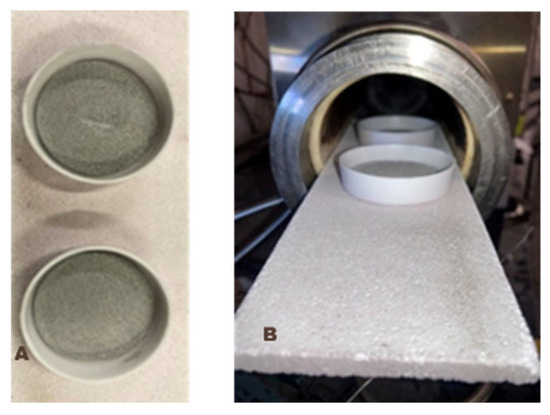
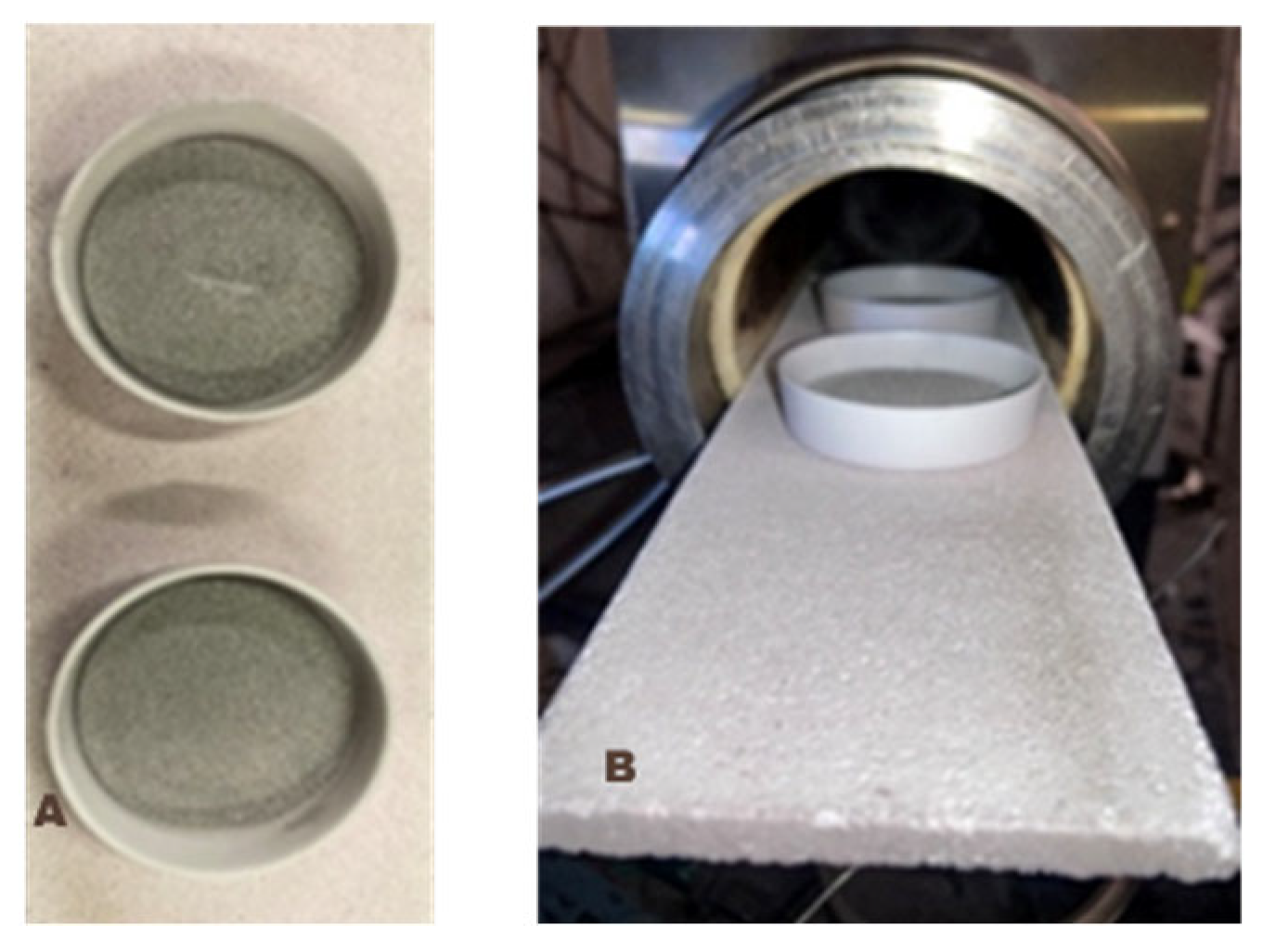
The phase evolution of the as-atomized WHA powder was studied using an X-ray diffractometer (PANalytical Empyrean, Malvern PANalytical, Worcestershire, UK) Kα radiation at 45 kV and 40 mA. The 2θ range was selected from 20 to 90° at a 1°/min scanning rate at room temperature. The microstructures of the as-atomized WHA-4 powder and the resulting tap-sintered compacts were investigated using powder in the 15–63 µm size fraction. Sintering samples were prepared by filling high-purity alumina crucibles (25 mm inner diameter) with loose powder and gently tapping the crucibles to increase the initial packing density. The crucibles were subsequently placed on an alumina support plate (Figure 2A) and loaded into a tube furnace for sintering (Figure 2B).
Figure 2.
(A) Picture of loose powder in alumina crucibles placed on an alumina, (B) Picture of the alumina crucibles with tapped powder introduced into a tube furnace.
Sintering was conducted in a flowing hydrogen atmosphere with a dew point of approximately 20 °C. The samples were heated from room temperature to 600 °C at a rate of 3 °C/min and held for 60 min to facilitate binder reduction and removal of surface oxides. The temperature then increased at 2.5 °C/min to the peak sintering temperature of 1550 °C, and held there for 60 min. After sintering, the samples were cooled at a controlled rate of 3 °C/min.
The density of the sintered samples was measured using the Archimedes water-immersion method. The measured densities of the as-sintered samples were 17.4, 17.8, and 17.6 g/cm3. The samples were subsequently submitted for further microstructural and phase analysis.
To evaluate the microstructure of the as-atomized powder and the sintered pucks from WHA-4 powder, the samples were mounted in epoxy resin. The samples were ground, then polished with 0.05-micron colloidal silica. Murakami’s reagent was used as an etchant to reveal grain structure. Microstructural characterization was performed using a Hitachi TM4000Plus II SEM (Hitachi, Tokyo, Japan), equipped with Oxford AztecLiveLite for Energy-Dispersive X-ray Spectroscopy (EDS). Internal porosity was quantified by image analysis of SEM micrographs using ImageJ:1.54g.
3. Results and Discussion
WHA-4 alloys, containing more than 97 wt.% W with small additions of Ni (<2 wt.%) and Fe (<1 wt.%), rely on the formation of a liquid Ni–Fe binder phase during melting. This liquid phase forms at approximately 1450–1600 °C, dissolves a limited amount of tungsten, and promotes capillary-driven wetting and spreading along tungsten grain boundaries and interparticle contacts [3,4,12,13,26]. Although the presence of the liquid binder significantly lowers the effective melting temperature compared with pure tungsten (3422 °C), its volume fraction in WHA-4 is considerably smaller than that in conventional tungsten heavy alloys.
The atomization behavior of tungsten heavy alloys is therefore strongly dependent on binder content. Alloys with higher binder fractions, such as WHA-3 (>5 wt.% Ni–Fe), exhibit greater melt fluidity, lower apparent viscosity [27,28], and a wider processing window for stable atomization. In contrast, the limited Ni–Fe binder content of WHA-4 (approximately 2.2 wt.%) produces a much smaller liquid-phase fraction, resulting in reduced melt fluidity, increased flow resistance, and a tungsten-rich melt with a narrower processing window. Consequently, stable EIGA requires higher melt superheat and greater atomization energy to ensure complete melting of the electrode tip, maintain a stable melt stream, and achieve consistent droplet formation.
To facilitate comparison, the principal metallurgical characteristics of conventional tungsten heavy alloys are summarized in Table 2 and compared with the results obtained in the present study. The table illustrates the influence of decreasing Ni–Fe binder content on liquid-phase formation, W–W contiguity, and microstructural evolution. Where quantitative data are available, standardized values or literature data are presented; engineering observations derived from the present study are identified separately and should not be regarded as standardized material properties.
Table 2.
Comparison of the principal metallurgical characteristics of tungsten heavy alloys, illustrating the influence of Ni–Fe binder content on liquid-phase formation, W–W contiguity, and expected EIGA behavior.
As the tungsten content increases to approximately 98 wt.% in WHA-4, the volume fraction of the Ni–Fe liquid phase available during melting and sintering decreases substantially. Consequently, the alloy develops higher W–W contiguity and is expected to exhibit higher apparent melt resistance (or effective viscosity) and reduced melt fluidity, thereby narrowing the processing window for stable EIGA.
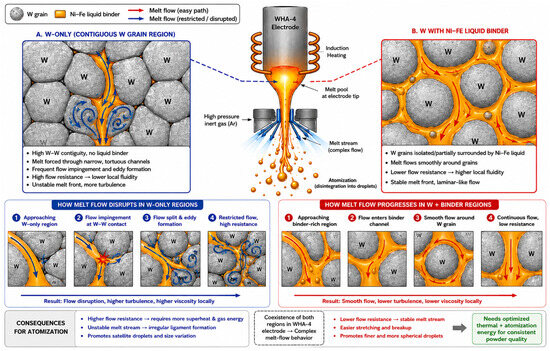
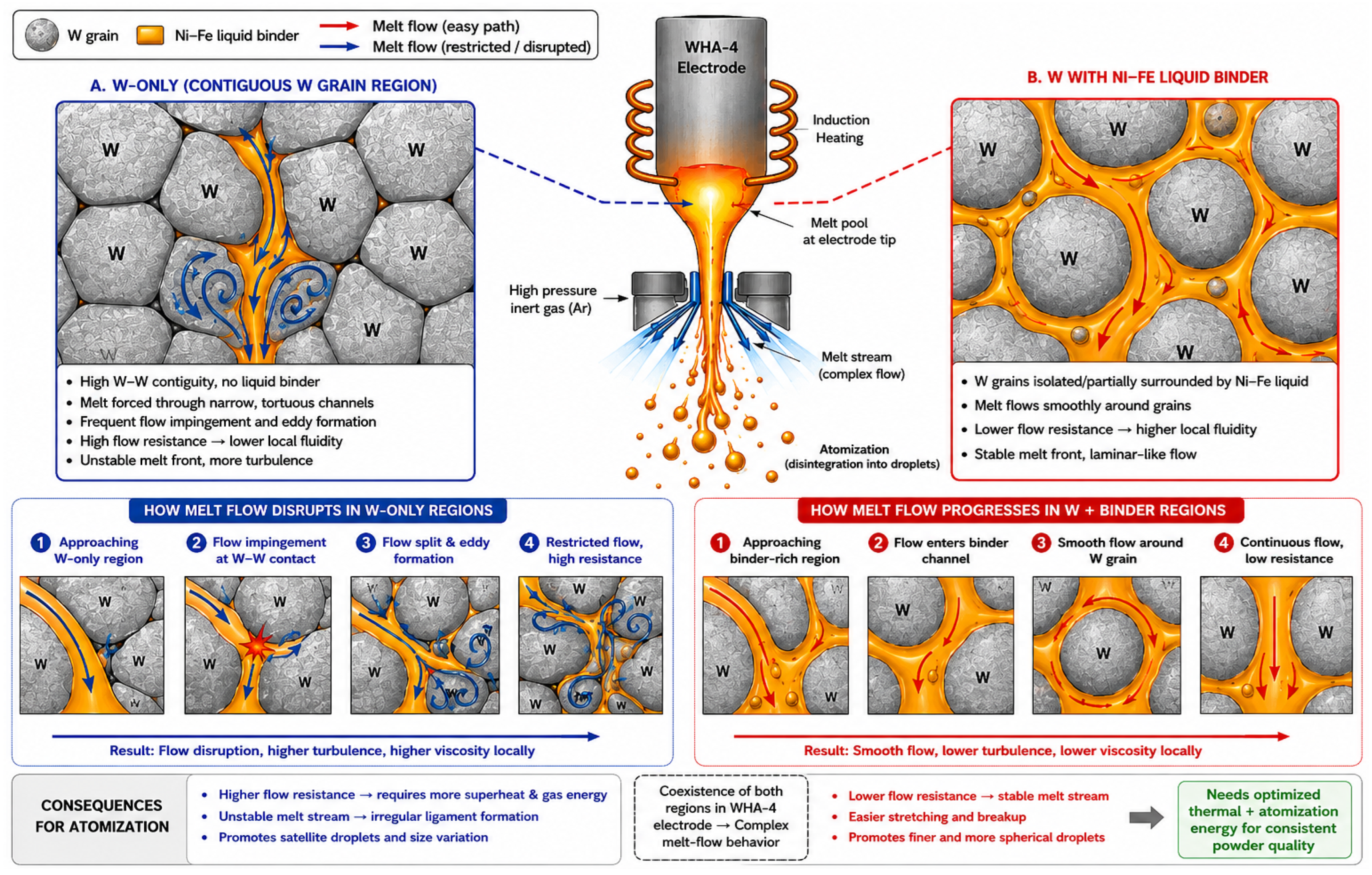
In WHA-4, the melt flow behavior appeared to consist of large W-only phases requiring very high melting energy, followed by W phases with a Ni-Fe liquid binder that flowed with ease. A pictorial description of the complex melt-flow behavior of WHA-4 is shown in Figure 3, which illustrates how the melt flow alternates between W-rich and W-covered states in the Ni-Fe liquid binder, thereby disrupting the flow pattern.
Figure 3.
Conceptual schematic of melt-flow behavior in a WHA-4 electrode during EIGA, illustrating the influence of contiguous W regions and Ni–Fe liquid binder channels on melt-flow stability and atomization behavior.
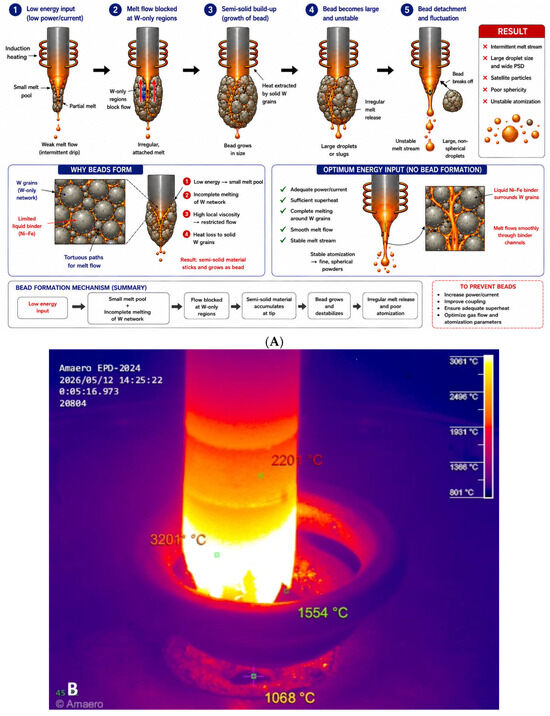
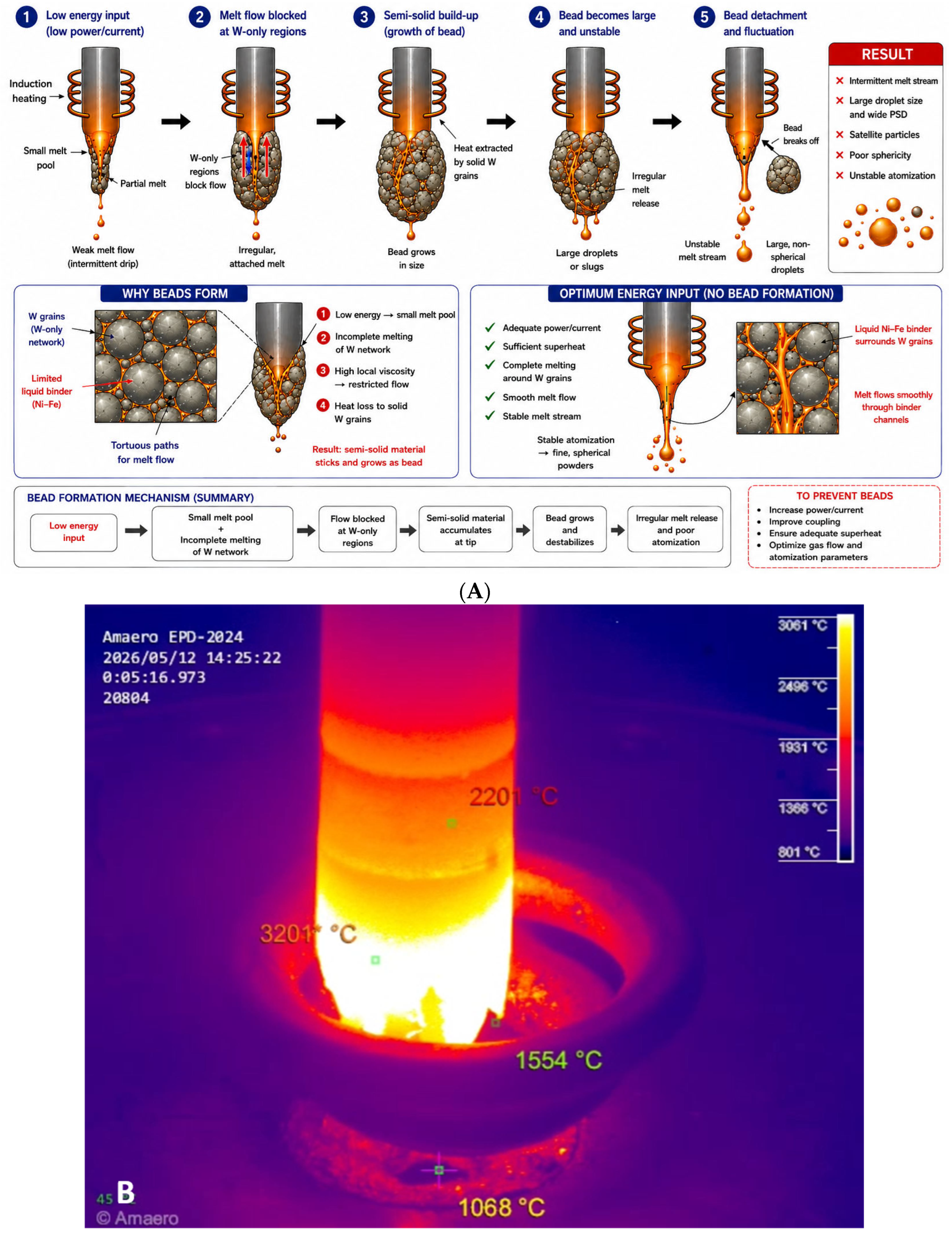
The input energy balance required to maintain a stable melt stream is a critical factor in the EIGA process. Any imbalance between the heat supplied and the heat required to melt can result in a solidified buildup around the electrode tip, commonly referred to as “bearding.” Figure 4 presents a schematic illustration of beard formation and the possible mechanisms responsible for its development. Spitans et al. demonstrated through numerical simulations the importance of maintaining stable melt flow during the induction melting of high-melting-point materials such as tantalum. To improve understanding of the inductive coupling mechanism and address the challenges associated with melting refractory materials, they developed and applied a numerical model of the electrode induction melting process [21,22]. Their work highlights the critical role of efficient energy transfer in achieving stable melting, which is equally important for the successful EIGA of high-tungsten alloys such as WHA-4.
Figure 4.
(A): Mechanistic illustration of build-up or ‘beard’ formation in WHA-4 electrodes during EIGA as a function of melt superheat and energy input. (B): A representative thermal image of beard formation is shown in Figure 4B. Beard formation occurred under conditions of insufficient thermal input to the electrode. The observed behavior is attributed to inadequate and nonuniform induction heating associated with unfavorable electromagnetic coupling under the operating conditions. As shown in the thermal image, the maximum measured outer-surface temperature of the electrode was approximately 3200 °C, below the melting point of tungsten (3422 °C). Under these conditions, a thin molten stream was observed from the central region of the electrode tip, while partially molten material accumulated around the outer region, progressively forming the characteristic bead-like buildup.
In induction heating, the effective thermal energy transferred to the electrode can be expressed as [28,31,32,33]:
where (P) is the applied induction power (W), (t) is the effective heating time (s), and (η) is the overall electromagnetic coupling (heating) efficiency. Equation (1) provides a conceptual energy-balance framework for discussing induction heating during EIGA and is not intended as a predictive thermal model for the present system.
Eeff = ηPt
In a resonant induction system, the operating frequency is related to the circuit inductance and capacitance by
where (f) is the resonant frequency, (L) is the coil inductance, and (C) is the circuit capacitance.
The inductance of the induction coil can be estimated using Wheeler’s equation [34]:
where (r) is the coil radius (in.), (l) is the coil length (in.), and (N) is the number of coil turns. For the two-turn induction coil used in this study (Figure 1), the calculated inductance is approximately 0.14 μH.
Equations (2) and (3) describe the nominal electrical resonance of the induction circuit but do not, by themselves, determine the thermal energy absorbed by the electrode. Actual energy transfer depends on the measured real power and on coupling factors such as coil geometry, coil-to-electrode spacing, electrode diameter, operating frequency, electrical resistivity, magnetic permeability, temperature, and surrounding system losses. Accordingly, these relationships are included only to describe the electrical basis of the induction-heating system and are not presented as a quantitatively validated model of the EIGA melting process.
The energy stored in the resonant capacitor bank and transferred to the induction circuit is given by:
where V is the operating voltage.
The capacitor energy represents the maximum instantaneous energy stored in the capacitor bank. In a resonant induction circuit, this energy oscillates between the capacitor and coil and should not be interpreted as being completely converted into electrode heat during each cycle.
However, (η) is not a constant; it is influenced by several process variables, including the resonant frequency, circuit capacitance, coil inductance, coil geometry, electrode diameter, coil-to-electrode gap, and the electrical and magnetic properties of the workpiece.
As reported by Rudnev et al., the resonant frequency, inductance, and capacitance are intrinsically coupled in an induction-heating system. The actual power transferred to the electrode is further governed by impedance matching, coil current, electromagnetic coupling, load impedance, workpiece geometry, and power-supply control. Consequently, the power delivered to the electrode cannot be determined solely from the circuit capacitance or the operating frequency [31].
Therefore, successful EIGA processing of high-tungsten alloys such as WHA-4 requires an appropriate combination of resonant frequency and circuit capacitance to promote efficient electromagnetic coupling and effective power transfer [24,25,32,33,34]. Because frequency and capacitance are interdependent in a resonant induction circuit, stable melting is achieved by optimizing their combined effect rather than maximizing either parameter independently. An unfavorable combination reduces the energy delivered to the electrode, resulting in insufficient melt superheat, unstable melt flow, and beard formation.
The effective thermal energy supplied to the electrode depends primarily on the applied induction power, effective heating time, and electromagnetic coupling efficiency. The operating capacitance and resonant frequency influence this energy indirectly by governing the efficiency of power transfer within the resonant induction circuit. Conversely, poor coupling lowers the fraction of electrical energy converted into heat at the electrode tip, promoting incomplete melting of tungsten-rich regions, premature solidification, melt-stream instability, beard buildup, and reduced atomization efficiency [21,22].
As illustrated conceptually in Figure 4A, WHA-4 is expected to exhibit lower effective melt fluidity than conventional tungsten heavy alloys such as WHA-3 because of its substantially lower Ni–Fe binder content. Under insufficient thermal input, the electrode tip may not melt completely, leaving partially molten tungsten-rich regions within the liquid. Such conditions can restrict melt flow and promote localized solid retention.
The resulting melt-flow behavior is interpreted to arise from the limited liquid-phase fraction and the high W–W contiguity characteristic of WHA-4 [35,36]. Under these conditions, the molten Ni–Fe-rich binder is expected to flow through narrow intergranular channels between partially molten tungsten grains, increasing the resistance to melt flow. Consequently, semi-molten material may accumulate at the electrode tip, producing the bead-like buildup (“bearding”) illustrated conceptually in Figure 4A. A representative photograph of an actual beard formed during an interrupted atomization trial is shown in Figure 4B. This interpretation is consistent with the experimentally observed interruption of melt flow during unsuccessful atomization trials but was not directly observed in situ.
With continued heating, the accumulated material may detach intermittently as irregular droplets or slugs rather than as a continuous melt stream, thereby disrupting atomization and increasing the likelihood of coarse or irregular particles. Conversely, sufficient thermal input promotes complete melting of the electrode tip and stable melt flow, thereby minimizing beard formation and enabling uninterrupted atomization.
The corresponding EIGA operating conditions are summarized in Table 3. A total of 35 WHA-4 electrodes were processed, of which 26 were successfully atomized under stable operating conditions. The reported processing parameters represent average values from at least three experimental runs conducted at each nominal capacitance. Throughout the study, the atomizing gas pressure was maintained at 10 bar, and the melt flow rate was approximately 0.9 kg min−1. Under the optimized processing conditions, uninterrupted atomization of a single electrode typically required approximately 700 s.
Table 3.
Summary of EIGA operating conditions, including equivalent circuit capacitance, resonant frequency, input power, uninterrupted run time, and induction coil temperature during WHA-4 atomization trials.
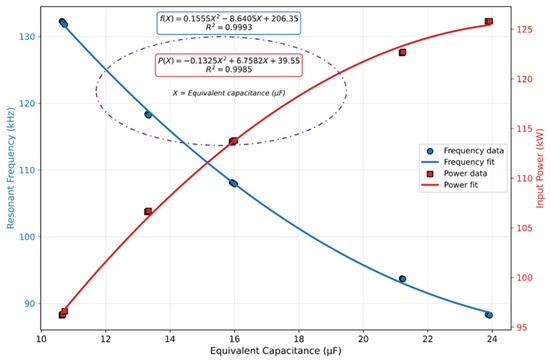
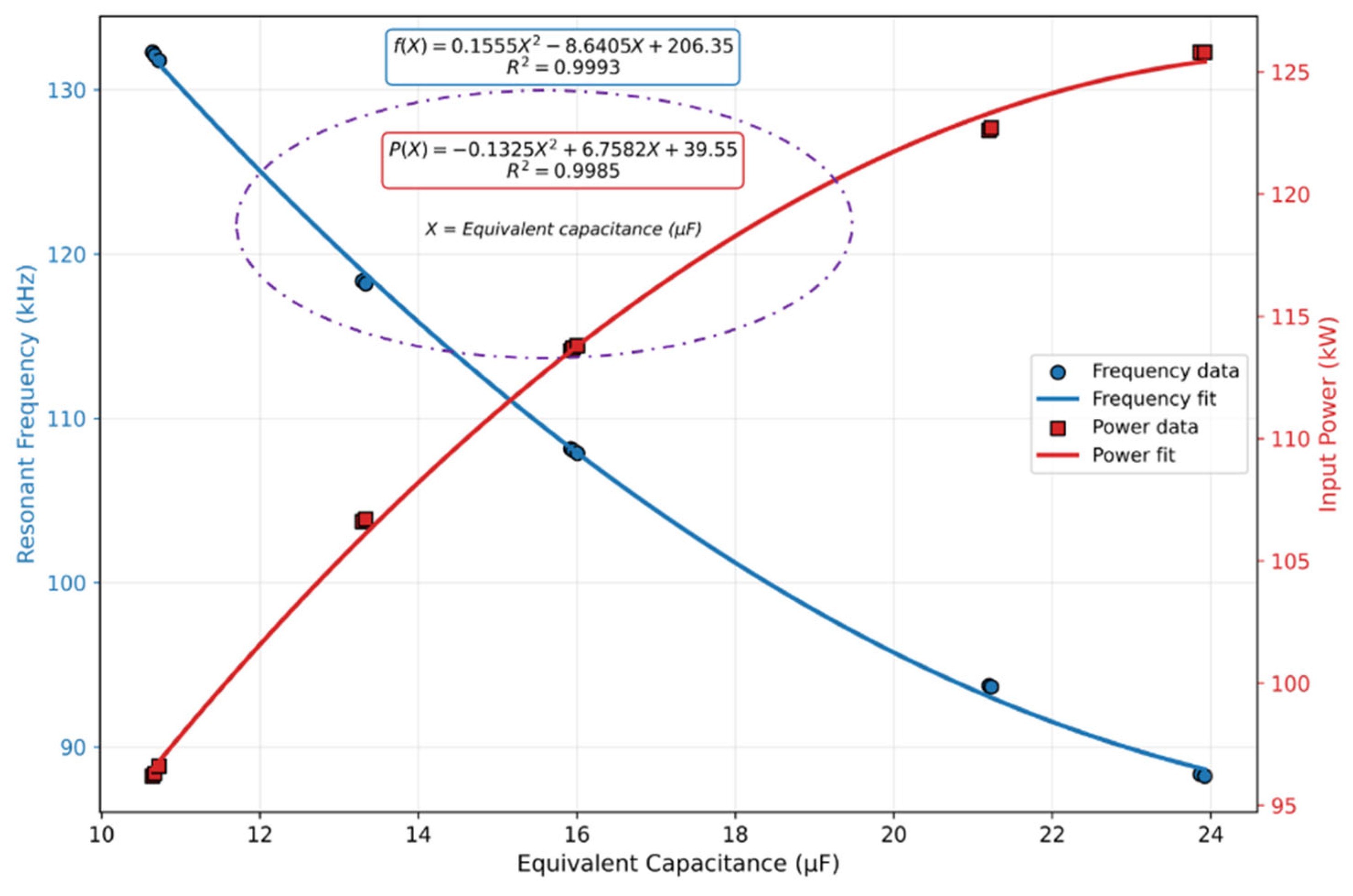
Figure 5 presents the experimentally measured operating frequencies and corresponding input power requirements as a function of circuit capacitance during atomization of a full electrode. The operating conditions immediately above the crossover region of the frequency and power curves, highlighted by the circled area in Figure 5 and corresponding to a capacitance range of approximately 15–17 µF, produced the most stable and consistent atomization. Outside this operating window, process stability deteriorated, resulting in premature interruption of atomization.
Figure 5.
The plot illustrates the interdependence of equivalent capacitance, resonant frequency, and input power in identifying suitable operating conditions for atomizing the high-melting-point WHA-4 alloy. Solid lines represent quadratic least-squares fits to the experimental data. The circled region identifies the optimum operating window.
The resulting atomized powders were classified into the desired particle-size fractions suitable for LPBF, SLM, and DED by sieving, and subsequently characterized for particle morphology and microstructure. The size fraction of interest for 3D printing is generally 15–63 µm [15,26,37,38].
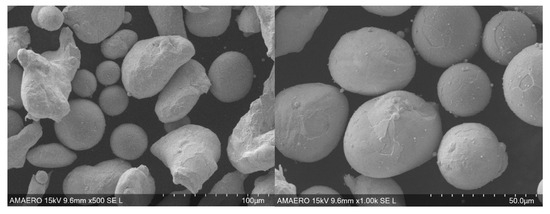
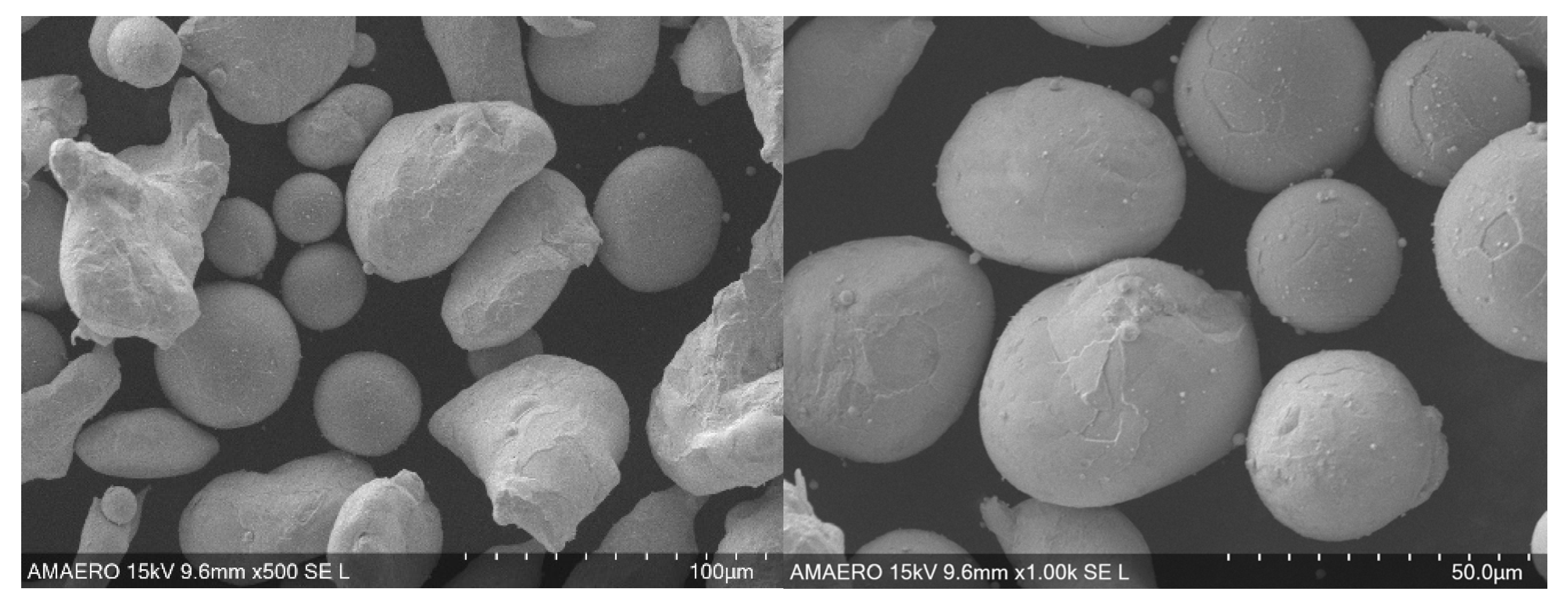
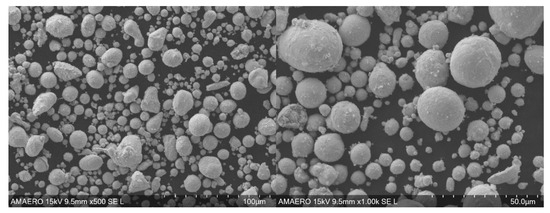
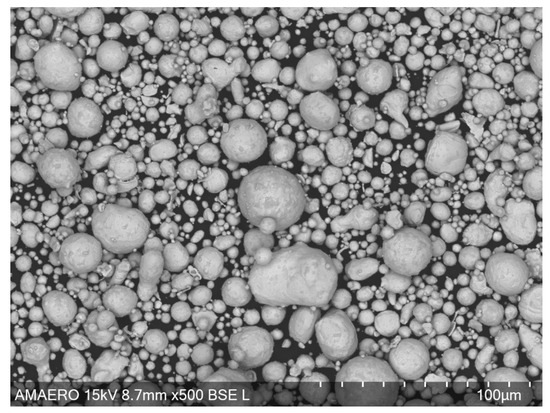
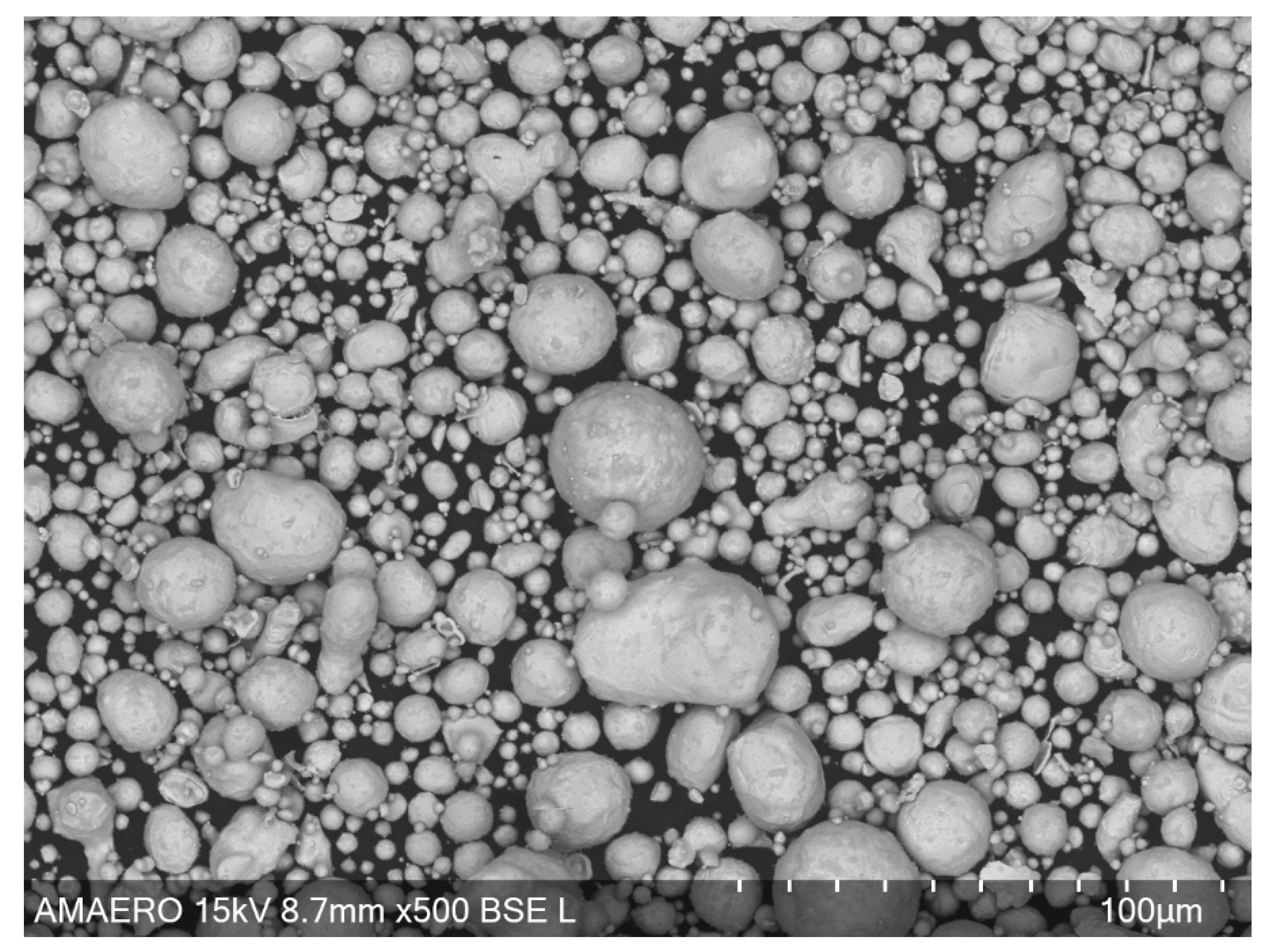
The SEM micrographs of the as-atomized WHA-4 powder show that although the majority of particles exhibit near-spherical morphology typical of gas-atomized powders, as shown in Figure 6 and Figure 7, a fraction of particles display non-spherical or elongated shapes. Such morphological irregularities are primarily associated with incomplete spheroidization of the molten droplets during atomization. In gas atomization processes, spherical particle formation is driven by surface tension, which tends to minimize the surface energy of liquid droplets. However, when the cooling rate of the droplets becomes comparable to or exceeds the characteristic time required for surface-tension-driven reshaping, the droplets may partially solidify before attaining a fully spherical geometry [17,39,40].
Figure 6.
SEM pictures of as-atomized WHA-4 powder at magnifications of 500 and 1000 showing the presence of many spherical particles with some irregular particles.
Figure 7.
SEM pictures of WHA-4 powder sieved through 90 µm screen at magnifications of 500 and 1000 showing some elongated particles.
As a result, irregular or elongated morphologies can be preserved in solidified particles.
This effect is most pronounced in larger particles (>50 µm), which cool more slowly because of their greater thermal mass. As a result, these droplets remain liquid for longer and are more susceptible to deformation or collision-induced elongation before complete solidification, occasionally resulting in non-spherical particles. However, the overall cooling rate within the atomization plume was sufficiently high to promote rapid in-flight solidification, thereby minimizing droplet–droplet interactions and reducing the likelihood of satellite formation. Consequently, the powder exhibited a predominantly clean, spherical morphology with few satellites. Yet another point to note is that particles are formed through rapid solidification of a tungsten-rich melt under highly non-equilibrium conditions. As a result of the large difference in melting temperatures between tungsten and the Ni–Fe binder phase, solidification likely proceeded through (i) nucleation of a W-rich phase, (ii) growth of W-rich dendrites or clusters, (iii) enrichment of the remaining liquid in Ni–Fe, and (iv) final solidification of the binder phase. This sequence resulted in particles that consisted predominantly of a tungsten phase, with Ni–Fe localized in the final solidification regions [13,26,40,41]. The less dense Ni-Fe rich phase is observed as dark spots on the brighter, denser W-rich phase in Figure 6 and Figure 7.
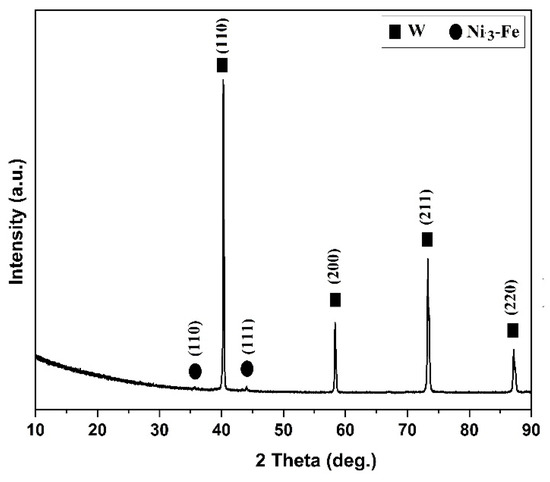
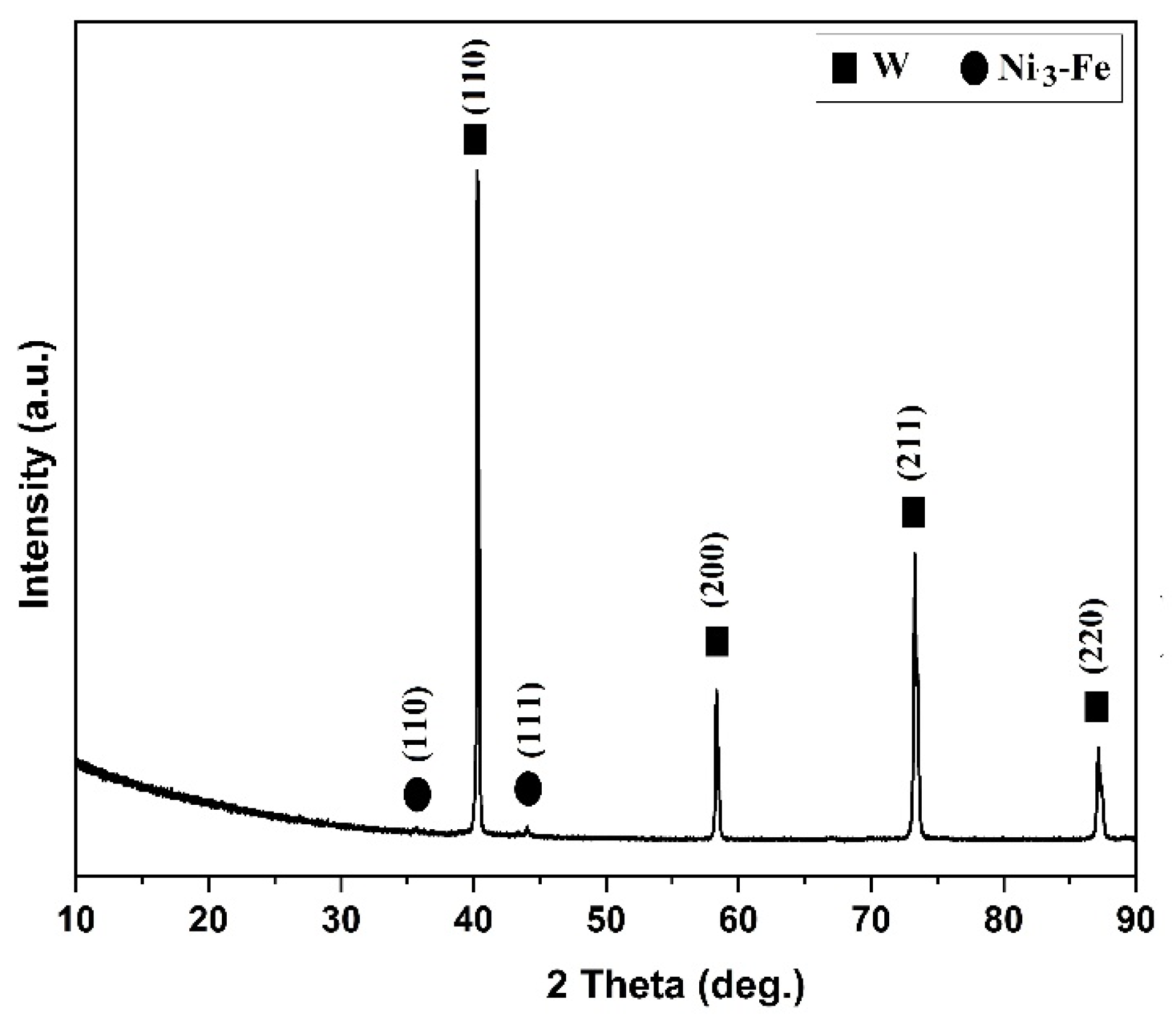
The X-ray diffraction (XRD) analysis of the atomized powder, as shown in Figure 8, indicates that the tungsten (W) phase is the dominant crystalline phase. The XRD pattern of the atomized powder exhibits the characteristic reflections of body-centered cubic (bcc) tungsten. The principal diffraction peaks were detected at approximately 2θ ≈ 40°, 58°, 73°, and 87°, corresponding to the (110), (200), (211), and (220) planes of bcc W, respectively. The relatively low intensity of Ni-Fe peaks reflects the small volume fraction of the binder phase in the WHA-4 composition. WHAs exhibit a characteristic two-phase microstructure consisting of body-centered cubic tungsten grains embedded in a ductile Ni-based binder matrix. The mechanical and physical properties of WHAs are strongly governed by microstructural parameters such as tungsten grain size, binder fraction, and tungsten–tungsten contiguity [9,12,13,26,42,43]. Due to their high density and strength, WHAs are widely used in structural and high-energy applications. The absence of intermediate, intermetallic phases agrees with Han et al. [44], suggesting that the W content in the Ni-Fe binder does not exceed the solubility limits, initiating the peritectic phase transformation.
Figure 8.
XRD of as-atomized WHA-4 powder showing dominant bcc crystalline phase of W with a low volume fraction of Ni-Fe binder phase.
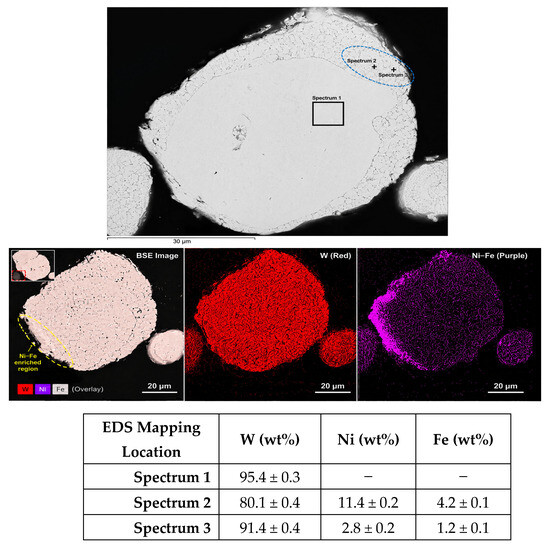
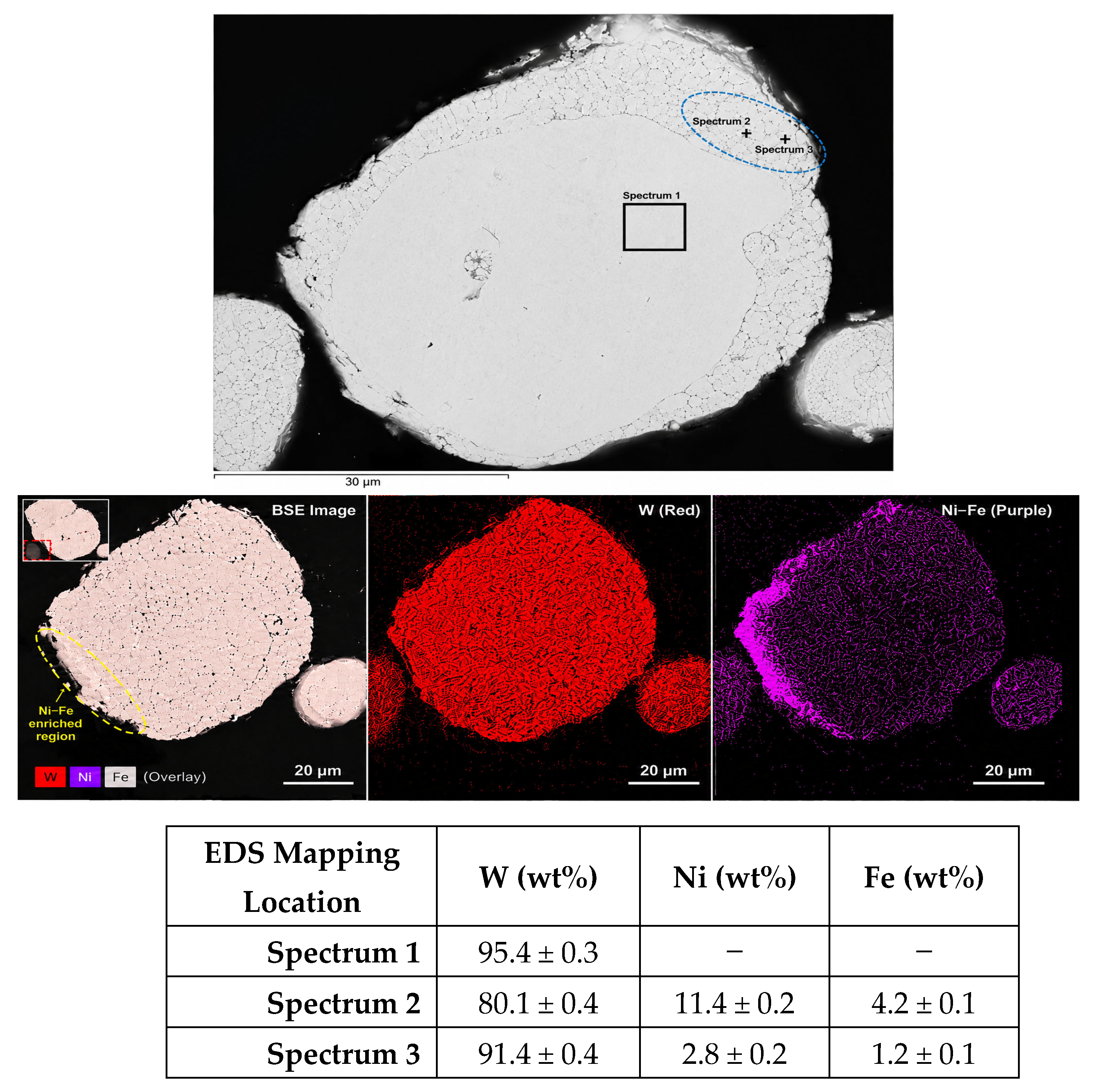
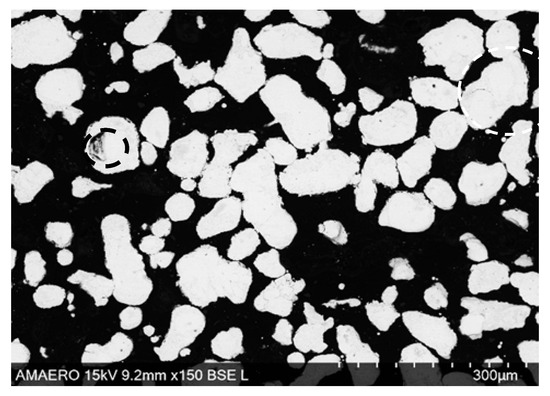
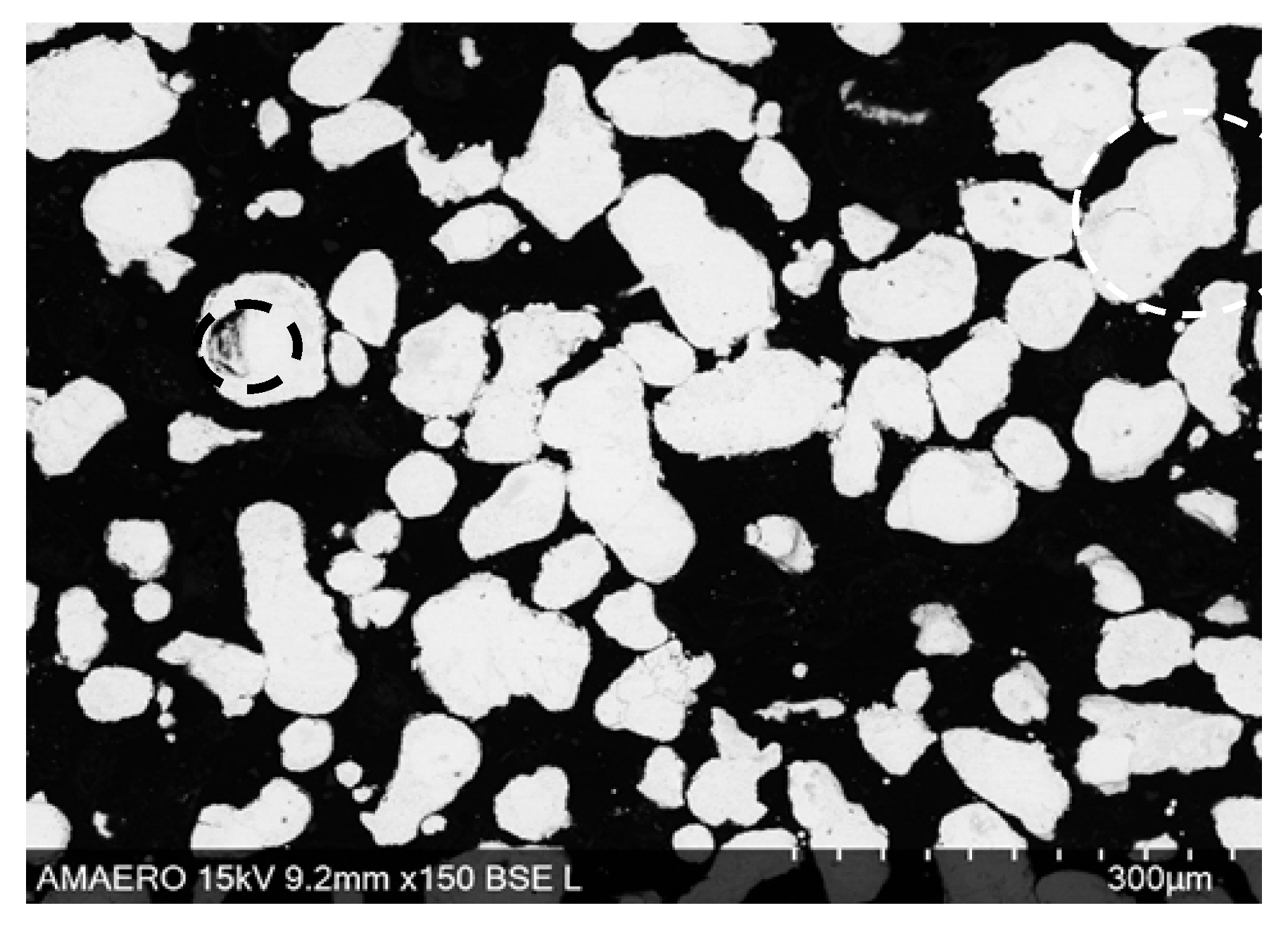
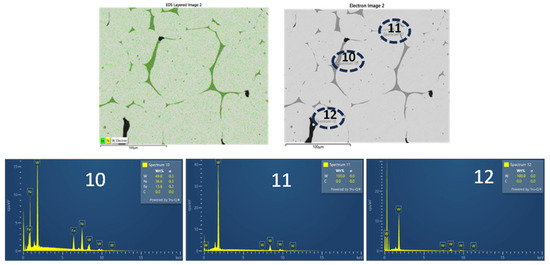
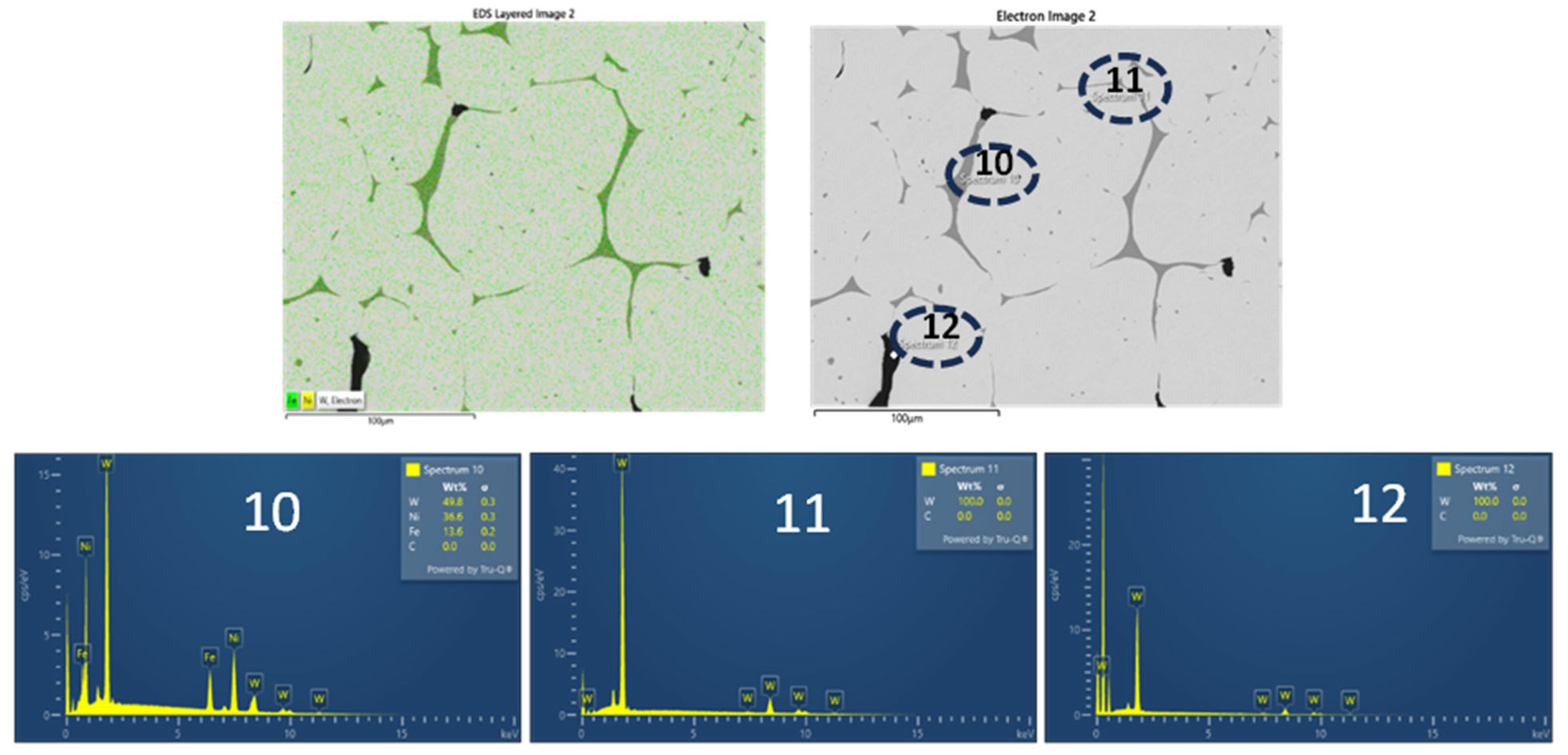
SEM and EDS analyses of the powder microstructures are shown in Figure 9. It is also worth mentioning that the high cooling rate and stable atomization conditions of WHA-4 suppress the development of other common gas-atomization defects, such as particle crowning and hollow-particle formation. These defects typically arise from unstable droplet breakup or gas entrapment during atomization; however, under the present processing parameters, their occurrence was minimal. The SEM picture of the mounted and polished powder particles is shown in Figure 10. As a point to note, while most particles do not exhibit major visible internal porosity, internal porosities may arise in melt-based powder processing, such as laser powder-bed fusion (LPBF) in additive manufacturing, which may create defects affecting final part properties that do not necessarily occur due to the internal porosity of the powder itself. The total number of particles counted and the percentage of hollow particles found in as-atomized WHA-4 powders are very small, ~0.1%. The measurements were carried out using ImageJ. A total of 500 particles were evaluated from 3 representative micrographs/fields of view, of which 2 particles were identified as containing internal hollow regions according to the applied image-analysis criterion. This corresponds to approximately 0.13% of the analyzed particle population.
Figure 9.
SEM micrograph with EDS elemental mapping showing the typical two-phase microstructure of the WHA-4 atomized powders. Tungsten (W) forms the primary grain phase, while the Ni–Fe binder phase is predominantly distributed as thin and discontinuous layers along tungsten grain boundaries and at triple junctions. Localized Ni–Fe enrichment appears as small, sporadic regions (purple contrast in the EDS map), highlighted by a yellow circle (see the inset for clarity).
Figure 10.
SEM of polished as-atomized powder showing particles with very few open pores.
To examine the internal microstructure of WHA-4 powder, the powder was sieved to obtain a size fraction between 15–63 μm. Physical properties of the 15–63 µm WHA-4 powder fraction are listed in Table 4, while a representative SEM image of the as-atomized powder is shown in Figure 11. To assess the internal microstructure of the powder after consolidation, a sectioned, polished, and etched tap-sintered compact produced from the same powder fraction was examined by SEM. Representative micrographs of the resulting microstructure are shown in Figure 12.
Table 4.
Physical properties of 15–63 µm powder.
Figure 11.
SEM of 15–63 μm size fraction of WHA-4 showing far fewer needles compared to the powder sieved through −90 μm as shown in Figure 6.
Figure 12.
Sintered WHA-4 produced by loose powder sintering showing Ni-Fe-rich grain boundaries.
The microstructure represents the sintered structure of the atomized WHA-4 powder derived from the electrodes and provides insight into the phase distribution and the influence of liquid-phase sintering on the internal structure of the atomized particles [3,4,16,17,21,22,37,38,39,40,41].
The representative SEM of the microstructure of the sintered compact prepared from the 15–63 μm WHA-4 powder is shown in Figure 11. The microstructure reflects the phase distribution established during liquid-phase sintering, with a highly contiguous tungsten skeleton and the Ni–Fe binder phase confined primarily to thin intergranular films and localized triple-junction regions. The dark regions correspond to residual porosity or binder-unfilled interstitial spaces remaining after sintering [3,4,26,44].
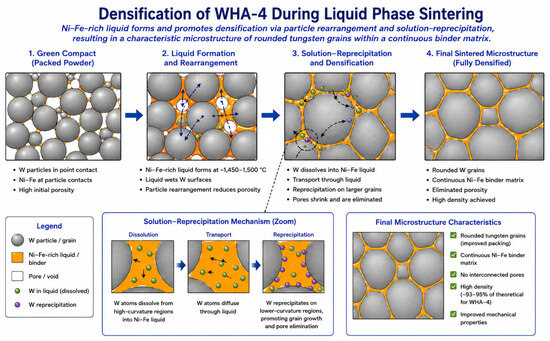
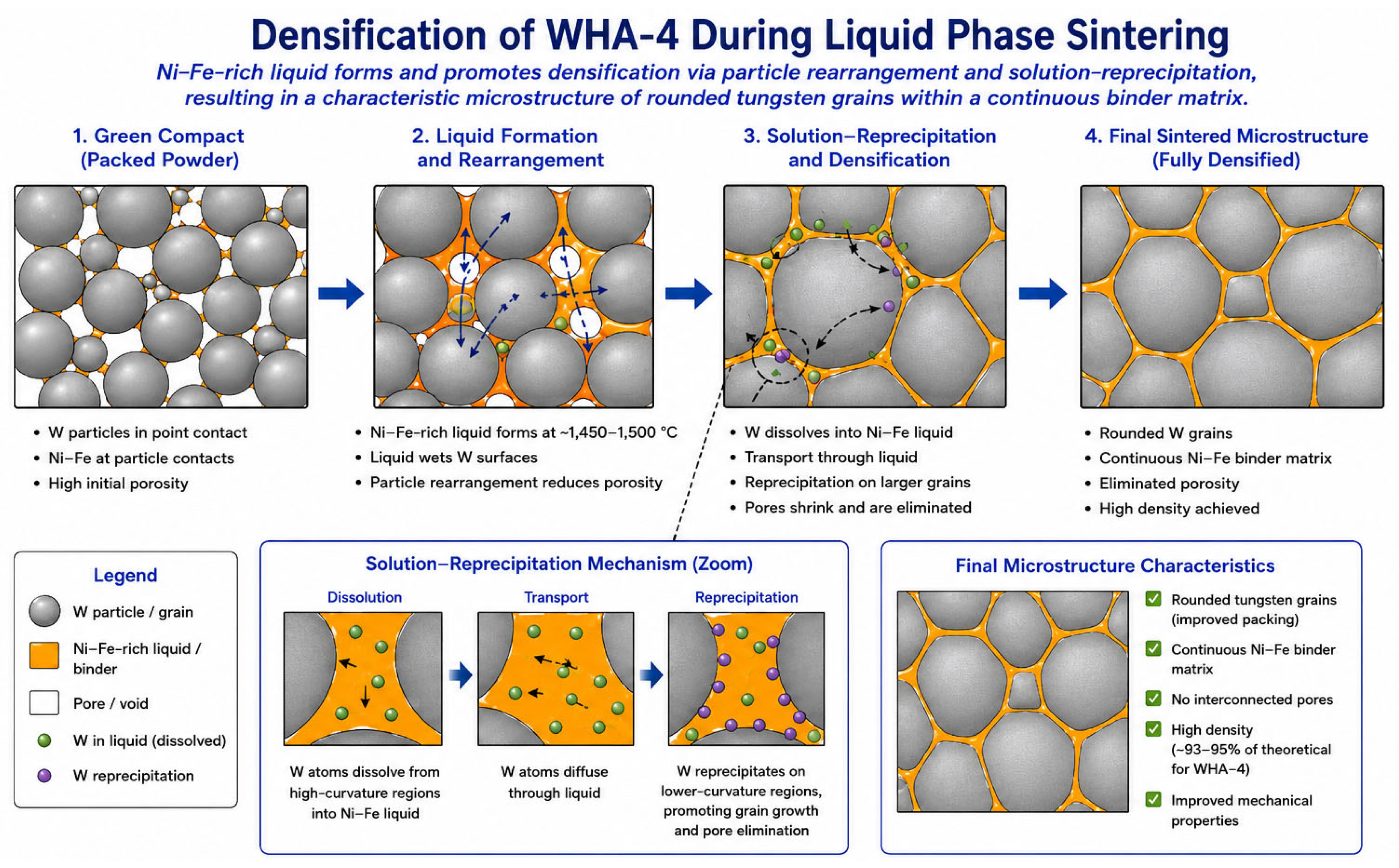
As discussed previously, the Ni–Fe binder fraction in the present WHA-4 alloy is considerably lower than that of conventional tungsten heavy alloys. According to established liquid-phase-sintering theory, solid-state sintering initially produces neck formation between adjacent tungsten particles while the tungsten skeleton remains the primary load-bearing phase. Upon formation of the Ni–Fe-rich liquid, the binder wets the tungsten skeleton and promotes densification through capillary-driven particle rearrangement together with tungsten dissolution and subsequent solution–reprecipitation [3,5,13,15,35,45]. These mechanisms are well established in the literature and are presented here to provide the metallurgical framework for interpreting the observed microstructure rather than as processes directly measured in the present study.
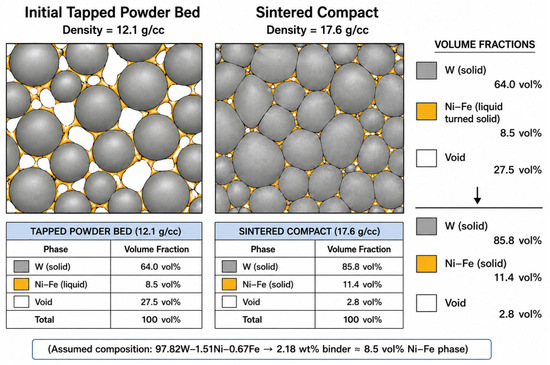
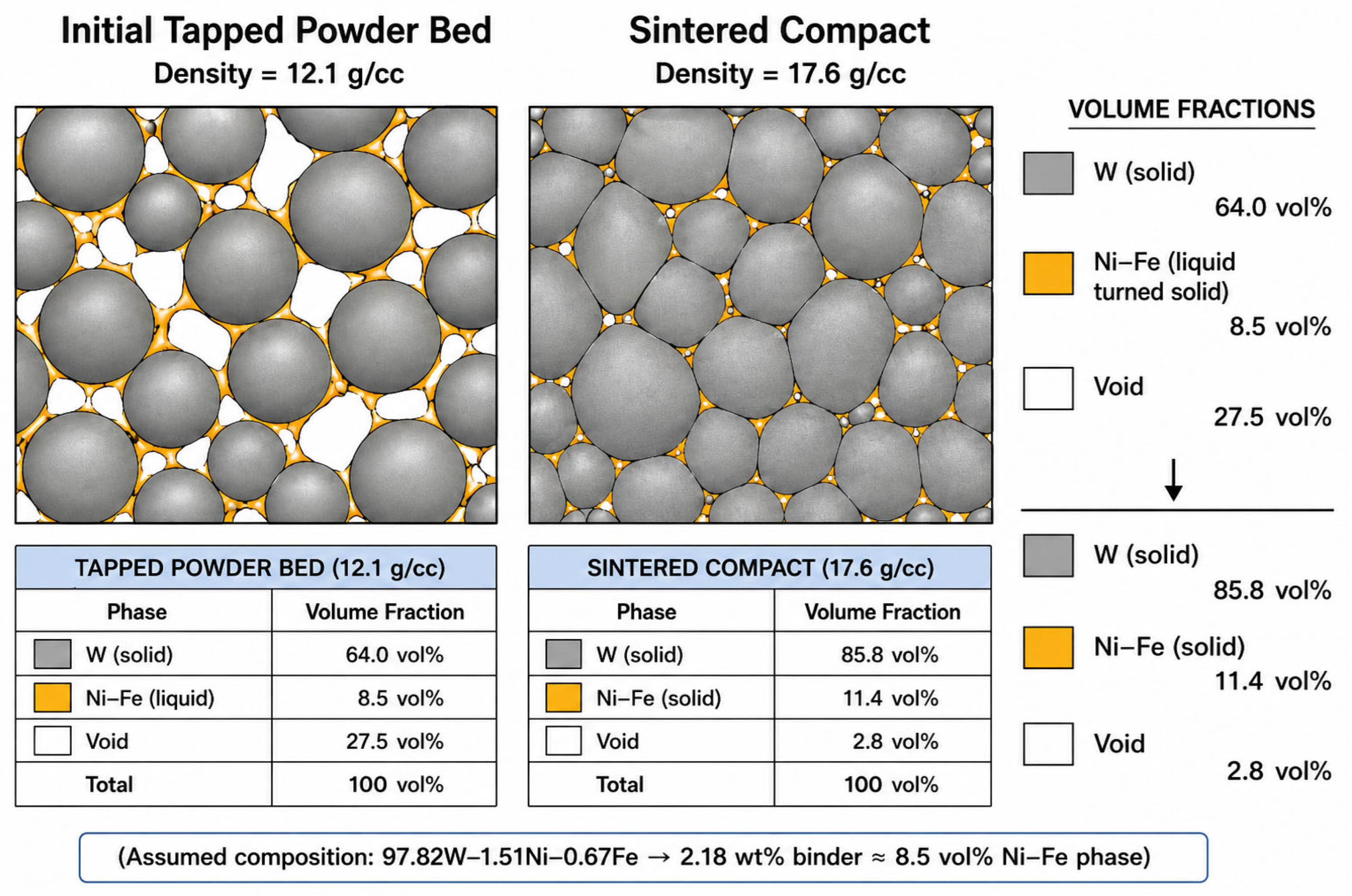
Based on the nominal composition, the calculated volume fraction of the Ni–Fe binder in fully dense WHA-4 is approximately 4.78%. For the powder size fraction (15–63 µm) investigated in this work, this liquid volume is considerably smaller than the initial pore volume of the packed powder bed. Consequently, complete pore elimination by direct liquid filling is unlikely. Instead, the observed densification is consistent with capillary-driven particle rearrangement and solution–reprecipitation, as illustrated conceptually in Figure 13 [27,28,30,40,46,47]. A comparison of the phase fractions in the tapped powder and the sintered compact is presented in Figure 14. The analysis indicates that the available Ni–Fe liquid is insufficient to occupy the initial pore volume directly. The experimentally observed microstructure is therefore consistent with redistribution of the Ni–Fe-rich phase as thin intergranular films along tungsten grain boundaries, with localized enrichment at triple junctions and interparticle necks, resulting in a highly contiguous tungsten skeleton with a discontinuous or semi-continuous binder network [3,4,12,13,27,28].
Figure 13.
A schematic drawing to illustrate the rearrangement and solution reprecipitation mechanisms.
Figure 14.
An illustration of how the tapped 15–63 μm WHA-4 powder transforms after sintering with a contiguous W skeleton of volume fraction of 89.4% w, Ni-Fe of 4.5%, and 6.1% void space. Calculations are based on the rule of mixtures using theoretical densities of W, Ni, and Fe as 19.25 g/cc, 8.9 g/cc, and 7.87 g/cc, respectively.
The conceptual model shown in Figure 13 is consistent with the SEM micrographs presented in Figure 12. The micrographs reveal a continuous skeleton of tungsten grains constituting the primary structural phase, while the Ni–Fe-rich binder is located predominantly along grain boundaries and at triple junctions [3,4,27,28,30,46,47]. This microstructure is characteristic of high-tungsten heavy alloys consolidated by liquid-phase sintering and supports the interpretation that the limited binder content preserves a high degree of W–W contiguity while promoting densification through established liquid-phase-sintering mechanisms [1,2,3,4,5,30,40,46,47].
During atomization, molten WHA-4 behaves as a high-density, tungsten-rich metallic liquid rather than as a homogeneous refractory melt. This differs from the in-situ synchrotron observations of laser-melted WxCoCrFeMnNi reported by Pegues et al. [36], in which tungsten exhibited limited dissolution (≈4–6%) into the fcc matrix, and a diffusion-controlled peritectic reaction restricted further incorporation. In contrast, during liquid-phase sintering, W–Ni–Fe alloys undergo pre-peritectic reactions that precipitate tungsten directly from the fcc matrix without forming intermediate phases [44]. These differences are most likely due to the much higher cooling rates during atomization, which suppress diffusion and tungsten precipitation, thereby retaining metastable intermediate phases.
Energy-dispersive spectroscopy (EDS) analysis, as shown in Figure 12, did not reveal any measurable dissolution of Ni or Fe within the tungsten grains. This observation is consistent with the very limited solid solubility of Ni and Fe in tungsten under equilibrium conditions. Consequently, the tungsten grains appear as a nearly single-phase W structure, while the Ni–Fe binder remains segregated to the intergranular regions.
For Class-4 WHA compositions (e.g., W–2.7Ni–0.3Fe or similar systems), the EIGA process produces rapidly solidified powders with a fine and chemically homogeneous microstructure, consisting of primary tungsten-rich regions embedded within a Ni–Fe-rich interdendritic matrix. The refined solidification structure probably influences subsequent liquid-phase sintering by affecting densification kinetics, tungsten grain growth, and the development of tungsten–tungsten contiguity [3,4]. These microstructural characteristics, in turn, govern the mechanical properties, fracture behavior, and strain-rate response of the consolidated alloy. Furthermore, the excellent compositional uniformity, spherical particle morphology, and superior flowability of EIGA powders make them particularly attractive for powder-bed additive manufacturing processes, where consistent powder spreading and packing density are essential for achieving high-quality components [15,26,37,38].
4. Conclusions
- ASTM B777 Class-4 tungsten heavy alloy (97.82W–1.51Ni–0.67Fe wt.%) was successfully atomized using the Electrode Induction Gas Atomization (EIGA) process, demonstrating the feasibility of producing spherical, pre-alloyed WHA-4 powders with a very high tungsten content.
- Stable atomization was achieved only within an appropriate processing window that provided sufficient thermal input to maintain a continuous melt stream. Under inadequate thermal input, interruption of melt flow and beard formation were observed, leading to unstable atomization. The proposed beard-formation mechanism presented in this work is a conceptual interpretation consistent with experimental observations and established induction-heating and liquid-phase-metallurgy principles.
- The atomized powder consisted predominantly of spherical particles with a very low fraction of hollow particles (approximately 0.1%). XRD and SEM/EDS analyses confirmed a tungsten-rich phase with the Ni–Fe-rich binder distributed primarily along intergranular regions, consistent with the rapid solidification of a high-tungsten alloy.
- Pressureless hydrogen sintering of the atomized powder produced a characteristic high-tungsten heavy-alloy microstructure consisting of a contiguous tungsten skeleton with the Ni–Fe-rich phase located predominantly along grain boundaries and triple junctions. The observed microstructure is consistent with established liquid-phase-sintering behavior of W–Ni–Fe heavy alloys.
- The calculated liquid-phase fraction associated with the approximately 2.2 wt.% Ni–Fe binder is considerably smaller than the initial pore volume of the packed powder. Consequently, the observed densification is consistent with capillary-driven particle rearrangement and solution–reprecipitation mechanisms reported in the literature rather than direct pore filling by the liquid phase.
- The present work establishes the technological feasibility of producing high-tungsten WHA-4 powder by EIGA and provides a detailed characterization of the resulting powder morphology, phase constitution, and liquid-phase-sintering response. A systematic investigation of the independent effects of atomization parameters on powder characteristics and qualification of the powder for additive-manufacturing applications remain subjects for future work.
Author Contributions
Conceptualization, A.K.C.; Methodology, A.K.C., S.A., T.S. and A.B.; Validation, J.P. and A.B.; Formal analysis, A.K.C., J.P., S.A. and A.B.; Investigation, A.K.C., T.S. and A.B.; Resources, E.B.; Data curation, S.A.; Writing—original draft, A.K.C.; Writing—review & editing, A.K.C., J.P., S.A., E.B., T.S. and A.B.; Visualization, A.K.C. and J.P.; Supervision, A.K.C. and E.B.; Project administration, A.K.C. and E.B. All authors have read and agreed to the published version of the manuscript.
Funding
This research received no external funding.
Data Availability Statement
The original contributions presented in this study are included in the article. Further inquiries can be directed to the corresponding author.
Acknowledgments
The authors gratefully acknowledge the support of AMAERO management for this work. Special thanks are extended to Kaushal Patel for his diligence, dedication, and invaluable assistance throughout the study. The authors also sincerely thank Tanner Nielsen for his generous assistance and willingness to help whenever needed.
Conflicts of Interest
Author Arun K. Chattopadhyay, Jonathan Pegues, Sandy Awad and Eric Bono were employed by the company AMAERO Inc. Author Animesh Bose was employed by the company Shaping Innovations, LLC. The remaining authors declare that the research was conducted in the absence of any commercial or financial relationships that could be construed as a potential conflict of interest.
References
- Barua, A.; Pradhan, S.; Priyadarshini, M.; Patra, A.; Kumar, K. Recent Advancement in Tungsten Heavy Alloy Processing for Different Industrial Applications. J. Mater. Eng. Perform. 2025, 34, 8232. [Google Scholar] [CrossRef] [Scilit]
- Manikandan, R.; Raja Annamalai, A. Tungsten Heavy Alloys Processing via Microwave Sintering, Spark Plasma Sintering, and Additive Manufacturing: A Review. Processes 2022, 10, 2352. [Google Scholar] [CrossRef] [Scilit]
- Bose, A.; German, R.M. Microstructural refinement of W-Ni-Fe heavy alloys by alloying additions. Metall. Trans. A 1988, 19, 3100–3103. [Google Scholar] [CrossRef] [Scilit]
- German, R.M. Sintered tungsten heavy alloys: Review of microstructure, strength, densification, and distortion. Int. J. Refract. Met. Hard Mater. 2022, 108, 105940. [Google Scholar] [CrossRef] [Scilit]
- Upadhyaya, A. Processing strategy for consolidating tungsten heavy alloys for ordnance applications. Mater. Chem. Phys. 2001, 67, 101–110. [Google Scholar] [CrossRef] [Scilit]
- Wurster, S.; Baluc, N.; Battabyal, M.; Crosby, T.; Du, J.; García-Rosales, C.; Hasegawa, A.; Hoffmann, A.; Kimura, A.; Kurishita, H. Recent progress in R&D on tungsten alloys for divertor structural and plasma facing materials. J. Nucl. Mater. 2013, 442, 181–189. [Google Scholar] [CrossRef] [Scilit]
- Lee, Y.H.; Choi, C.H.; Jang, Y.T.; Kim, E.K.; Ju, B.K.; Min, N.K.; Ahn, J.H. Tungsten nanowires and their field electron emission properties. Appl. Phys. Lett. 2002, 81, 745–747. [Google Scholar] [CrossRef] [Scilit]
- Price, G.H.S.; Smithells, C.J.; Williams, S.V. Sintered alloys. Part I. Copper-nickel-tungsten alloys sintered with a liquid phase present. J. Inst. Met. 1938, 62, 239–264. [Google Scholar]
- Kim, D.K.; Lee, S.; Ryu, H.J.; Hong, S.H.; Noh, J.W. Correlation of microstructure with dynamic deformation behavior and penetration performance of tungsten heavy alloys fabricated by mechanical alloying. Metall. Mater. Trans. A Phys. Metall. Mater. Sci. 2000, 31, 2475–2489. [Google Scholar] [CrossRef] [Scilit]
- Patel, R.; Karthik, G.M.; Sharma, P. Processing, Microstructure, and Mechanical Behavior of Tungsten Heavy Alloys for Kinetic Energy Penetrators: A Critical Review. J. Manuf. Mater. Process. 2025, 9, 186. [Google Scholar] [CrossRef] [Scilit]
- Stawovy, M.T.; Ohm, S.D.; Fill, F.C. Tungsten Heavy Metal Alloy Powders and Methods of Forming Them. U.S. Patent US11389872B2; Application US17/022,281, Priority to US17/022,281, 16 September 2020. [Google Scholar]
- Jiao, Z.; Kang, R.; Dong, Z.; Guo, J. Microstructure characterization of W-Ni-Fe heavy alloys with optimized metallographic preparation method. Int. J. Refract. Met. Hard Mater. 2019, 80, 114–122. [Google Scholar] [CrossRef] [Scilit]
- Johnson, J.L.; German, R.M. The Effects of Microstructural Parameters on Distortion of Liquid-Phase-Sintered Tungsten Heavy Alloys. J. Jpn. Soc. Powder Powder Metall. Powder Metall. 2025, 72, 289–295. [Google Scholar] [CrossRef] [Scilit]
- Lengauer, W.; Zhang, L.; Johnson, J.L.; Bose, A. Preface to the special issue on 100 years of hardmetals. Int. J. Refract. Met. Hard Mater. 2024, 119, 106553. [Google Scholar] [CrossRef] [Scilit]
- Bose, A.; Schuh, C.A.; Tobia, J.C.; Tuncer, N.; Mykulowycz, N.M.; Preston, A.; Barbati, A.C.; Kernan, B.; Gibson, M.A.; Krause, D.; et al. Traditional and Additive Manufacturing of a New Tungsten Heavy Alloy Alternative. Int. J. Refract. Met. Hard Mater. 2018, 1, 22–28. [Google Scholar] [CrossRef] [Scilit]
- Drawin, S.; Deborde, A.; Thomas, M.; Pierronnet, M.; Sasaki, L.; Delfosse, J.; Godde, O. Atomization of Ti-64 alloy using the EIGA process: Comparison of the characteristics of powders produced in lab-scale and industrial-scale facilities. In Proceedings of the The 14th World Conference on Titanium, Nantes, France, 10–14 June 2019; Volume 321, p. 07013. [Google Scholar] [CrossRef] [Scilit]
- Chattopadhyay, A.K.; Awad, S.; Neilsen, T.; Bono, E.; Chandran, J.; Simsek, T. Can Melt Flow Rate Be a Predictive Tool to Control Particle Size Distribution: A Comparison of the Powder Properties Obtained from the EIGA Atomization Process; PowderMet AMPM Proceedings: Phoenix, AZ, USA, 2025. [Google Scholar]
- Golod, V.M.; Sufiiarov, V.S. The evolution of structural and chemical heterogeneity during rapid solidification at gas atomization. IOP Conf. Ser. Mater. Sci. Eng. 2017, 192, 012009. [Google Scholar] [CrossRef] [Scilit]
- Dorner, L.M. Influencing the Binder Properties in Tungsten Heavy Alloys (WHA). Diploma Thesis, Technische Universität, Wien, Austria, 2023. [Google Scholar] [CrossRef]
- Hohmann, M.; Ludwig, N. Method for Preparing Metal Powder by Water Atomization. B22F9/082, 25 January 1991. [Google Scholar]
- Spitans, S.; Franz, H.; Baake, E. Numerical Modeling and Optimization of the Electrode Induction Melting for Inert Gas Atomization (EIGA). Metall. Mater. Trans. B. 2020, 51, 1918–1927. [Google Scholar] [CrossRef] [Scilit]
- Spitans, S.; Franz, H.; Sehring, B.; Bogner, S. EIGA-Type Electrode Melting for Highest-Purity Cast Parts. Magnetohydrodynamics 2025, 59, 347. [Google Scholar] [CrossRef] [Scilit]
- Saxena, S.P.; Dey, S.; Meena, A.K.; Prabhu, G.; Kumar, N. Stability and mechanical behavior of intermetallic in binder phase of tungsten heavy alloy. J. Alloys Compd. 2025, 1040, 183491. [Google Scholar] [CrossRef] [Scilit]
- Ravi Kiran, U.; Panchal, A.; Sankaranarayana, M.; Nageswara Rao, G.V.S.; Nandy, T.K. Effect of alloying addition and microstructural parameters on mechanical properties of 93% tungsten heavy alloys. Mater. Sci. Eng. 2015, A 640, 82Ű90. [Google Scholar]
- Cury, R.; Issartel, F.; Joubert, J.-M.; Couque, H. Evolution of cobalt-free tungsten heavy alloys for kinetic energy penetrators. Powder Metall. 2013, 56, 347. [Google Scholar] [CrossRef] [Scilit]
- Handtrack, D.; Partner, L.; Cury, R.; Mahot, P.; Mayr-Schmoelzer, B. Additive Manufacturing of Tungsten Heavy Alloys—A Technology Assessment of sinter-based AM Processes. J. Jpn. Soc. Powder Powder Metall. 2025, 72, S327–S334. [Google Scholar] [CrossRef] [Scilit]
- German, R.M. Properties of Liquid Phase Sintered Materials. In Liquid Phase Sintering; Springer: Boston, MA, USA, 1985; pp. 201–221. [Google Scholar] [CrossRef] [Scilit]
- German, R.M. Sintering Theory and Practice; Wiley: Hoboken, NJ, USA, 1996; ISBN 978-0-471-05786-4. [Google Scholar]
- ASTM B777-15(2026); Standard Specification for Tungsten Base, High-Density Metal. ASTM International: West Conshohocken, PA, USA, 2026.
- Xu, X.; Upadhyaya, A.; German, R.M.; Iacocca, R.G. The effect of porosity on distortion of liquid phase sintered tungsten heavy alloys. Int. J. Refract. Met. Hard Mater. 1999, 17, 369–379. [Google Scholar] [CrossRef] [Scilit]
- Rudnev, V.; Loveless, D.; Cook, R.L. Handbook of Induction Heating, 2nd ed.; CRC Press: Boca Raton, FL, USA, 2017. [Google Scholar]
- Davies, J. Conduction Induction Heating. In IEEE Power Engineering Series II; IET: London, UK, 1989. [Google Scholar]
- Zinn, S.; Semiatin, S.L. Electric Power Research Institute; ASM International: Almere, The Netherlands, 1988. [Google Scholar]
- Lupi, S.; Forzan, M.; Aliferov, A. Induction and Direct Resistance Heating: Theory and Numerical Modeling. In ch. Electromagnetic Field in Cylindrical Bodies & Special Problems in Induction and Conduction Heating; Springer Nature: Berlin/Heidelberg, Germany, 2015; pp. 85–302. [Google Scholar]
- German, R.M.; Shen, J.W.; Campbell, L.G.; Suri, P. Liquid-phase-sintered tungsten heavy alloys: Development of microstructure during densification. Int. J. Powder Metall. 2005, 41, 37–45. [Google Scholar]
- Pegues, J.W.; Melia, M.A.; Rodriguez, M.; Babuska, T.F.; Gould, B.; Argibay, N.; Greco, A.; Kustas, A.B. In situ synchrotron X-ray imaging and mechanical properties characterization of additively manufactured high-entropy alloy composites. J. Alloys Compd. 2021, 876, 159505. [Google Scholar] [CrossRef] [Scilit]
- Chen, H.; Zi, X.; Han, Y.; Dong, J.; Liu, S.; Chen, C. Microstructure and mechanical properties of additive manufactured W-Ni-Fe-Co composite produced by selective laser melting. Int. J. Refract. Met. Hard Mater. 2020, 80, 105111. [Google Scholar] [CrossRef] [Scilit]
- Mudda, S.; Raja Annamalai, A.; Muthuchamy, A. Additive Manufacturing of Pure Tungsten and Tungsten Heavy Alloys-State-of-the-Art Processes. Met. Mater. Int. 2025, 31, 1859–1890. [Google Scholar] [CrossRef] [Scilit]
- Erich, L.M.; Winston, L.D.; Oropeza, D. Metal powder atomization: A literature review and experimental comparison. Powder Technol. 2026, 482, 122630. [Google Scholar] [CrossRef] [Scilit]
- Senthilnathan, N.; Annamalai, A.R.; Venkatachalam, G. Sintering of Tungsten and Tungsten Heavy Alloys of W–Ni–Fe and W–Ni–Cu: A Review. Trans. Indian Inst. Met. 2016, 70, 1161–1176. [Google Scholar] [CrossRef] [Scilit]
- Wheeler, H.A. Inductance formulas for circular and square coils. Eng. Phys. 1982, 12504, 1449–1450. [Google Scholar] [CrossRef] [Scilit]
- Lassner, E.; Schubert, W.-D. Tungsten: Properties, Chemistry, Technology of the Elements, Alloys, and Chemical Compounds; Springer Science & Business Media: Berlin/Heidelberg, Germany, 1999. [Google Scholar]
- Wu, J.; Xia, M.; Wang, J.; Jhao, B.; Ge, C. Effect of Electrode Induction Melting Gas Atomization on Powder Quality: Satellite Formation Mechanism and Pressure. Materials 2023, 16, 2499. [Google Scholar] [CrossRef] [Scilit] [PubMed]
- Han, Y.; Li, Y.; Ye, L.; Du, Z.; Liu, Z.; Li, X.; Zhao, M.-C.; Atrens, A. A novel dissolution-precipitation mechanism during liquid phase sintering and its strengthening effects in W-Ni-Fe alloys with low W contents. Mater. Des. 2022, 220, 1108412022. [Google Scholar] [CrossRef] [Scilit]
- German, R.M. Sintering: From Empirical Observations to Scientific Principles; Butterworth-Heinemann: Oxford, UK, 2014. [Google Scholar] [CrossRef] [Scilit]
- German, R.M.; Suri, P.; Park, S.J. Review: Liquid Phase Sintering. J. Mater. Sci. 2009, 44, 1–39. [Google Scholar] [CrossRef] [Scilit]
- Kingery, W.D. Densification During Sintering in the Presence of a Liquid Phase. J. Appl. Phys. 1959, 30, 301–306. [Google Scholar] [CrossRef] [Scilit]

Disclaimer/Publisher’s Note: The statements, opinions and data contained in all publications are solely those of the individual author(s) and contributor(s) and not of MDPI and/or the editor(s). MDPI and/or the editor(s) disclaim responsibility for any injury to people or property resulting from any ideas, methods, instructions or products referred to in the content. |
© 2026 by the authors. Licensee MDPI, Basel, Switzerland. This article is an open access article distributed under the terms and conditions of the Creative Commons Attribution (CC BY) license.