


Abstract
This study investigates the evolution and influencing factors of non-metallic inclusions in industrial pipeline steel during the vacuum degassing (VD) process. Steel and slag samples were systematically collected at multiple intervals throughout the vacuum treatment using an automated robotic sampler, which integrated temperature measurement and sampling functions. The results indicate that the molten steel temperature and the concentrations of nitrogen, oxygen, and sulfur exhibited an overall decreasing trend, with removal kinetics characterized by a rapid initial reduction followed by a gradual stabilization. The dominant inclusion phases were identified as Mg-Al spinel and calcium aluminates. Specifically, the top slag composition was distributed within the C3A phase field, trending toward the liquid C12A7 region, while the endogenous inclusions transitioned from CA2 toward CA. With prolonged vacuum treatment, the relative fraction of calcium aluminates progressively increased at the expense of Mg-Al spinel due to continuous slag-metal reactions. Furthermore, quantitative analysis reveals that the population density of small equivalent circular diameter (ECD) inclusions continuously decreased, while the average inclusion size increased, indicating that the VD process promotes the collision and coalescence of inclusions.
1. Introduction
Pipeline steel serves as critical infrastructure for the transportation of oil and natural gas. In recent years, despite continuous advancements in smelting technology and significant progress in inclusion control, the service performance of pipeline steel remains constrained by non-metallic inclusions originating from the molten steel [1,2,3,4,5,6,7,8,9,10]. Secondary refining plays a pivotal role in steel production, acting as the primary mechanism for reducing inclusion population density and modifying inclusion morphology [11,12,13,14,15].
The dominant vacuum treatment processes utilized in secondary refining for pipeline steel are the Ruhrstahl–Heraeus (RH) and vacuum degassing (VD) methods. The RH process is a molten steel purification technology that enhances steel quality by removing harmful gases and impurities through vacuum circulation, which has been extensively studied and is widely favored by researchers due to its superior process control capabilities. For instance, Liu et al. [16] addressed ultrasonic testing failures in X65 pipeline steel produced via the LF-RH route by establishing a calcium treatment model to optimize wire feeding, thereby mitigating excessive Type B inclusions. Following a similar processing route, Yuan et al. [17] elucidated the correlation between inclusion types and the Ca/T[O] mass ratio, achieving precise control over Type B inclusions. Furthermore, Zhang et al. [18] summarized the evolution behavior of inclusions during the RH process, proposing targeted control strategies and outlining future research directions.
In contrast, the VD process is a secondary refining technology that treats molten steel in a ladle under vacuum for degassing and precise alloy trimming, primarily used to enhance steel cleanliness and property uniformity, which has received comparatively less attention than the RH process, largely due to the constraints imposed by its enclosed vacuum system, which limits real-time process adjustments. For instance, Zhao et al. [19] identified VD soft blowing as a critical stage for large inclusion removal and successfully reduced inclusion density by optimizing blowing parameters. Similarly, Li et al. [20] improved qualification rates by adjusting argon stirring and calcium treatment. However, significant gaps remain. The VD process involves vigorous slag–steel mixing, inducing complex inclusion evolution. Consequently, existing research on VD-treated pipeline steel predominantly relies on comparative analyses of pre- and post-vacuum states, lacking a systematic investigation into the dynamic evolution mechanisms within the vacuum process itself [21,22,23].
To bridge this gap, this study employs a high-frequency sampling strategy during the VD vacuum process to investigate the dynamic evolution behavior of inclusions and identify key influencing factors. The findings aim to elucidate the mechanisms governing inclusion transformation, providing a theoretical basis for precise inclusion control during vacuum treatment, thereby offering significant academic value and industrial relevance.
The novelty of this work lies in addressing the growing demand for pipeline steel and the limited research focusing specifically on the evolution of inclusions during the VD process. By employing robotic vacuum sampling technology, this study conducts industrial-scale experiments to investigate the evolution, kinetics, and transformation mechanisms of non-metallic inclusions in pipeline steel during ladle vacuum degassing, offering significant practical implications. The robotic sampling technique adopted enables rapid and standardized operations, distinct from manual sampling that requires breaking the vacuum. For the first time, it allows temperature measurement and sampling to be performed without interrupting the vacuum refining process—setting it apart from conventional laboratory simulations or predictive analyses without vacuum disruption. This approach systematically reveals the dynamic evolution of inclusion composition, size distribution, and morphology during VD treatment, thereby establishing a solid theoretical basis for inclusion control in the vacuum refining of pipeline steel. Furthermore, a key strength of this study is the utilization of an industrial-scale dataset combined with robotic sampling technology. The findings provide valuable insights for optimizing practical steelmaking processes and enhancing inclusion control.
2. Experiment
2.1. Industrial Production Process
The material investigated in this study is a low-carbon alloy pipeline steel; its specific chemical composition is listed in Table 1. Given the stringent requirements for inclusion cleanliness in this grade, the implementation of vacuum treatment is indispensable.
Table 1.
Chemical composition of pipeline steel (mass fraction).
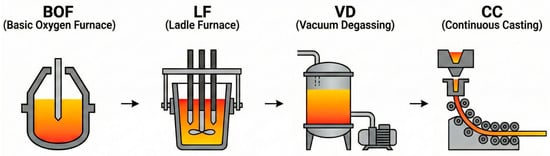
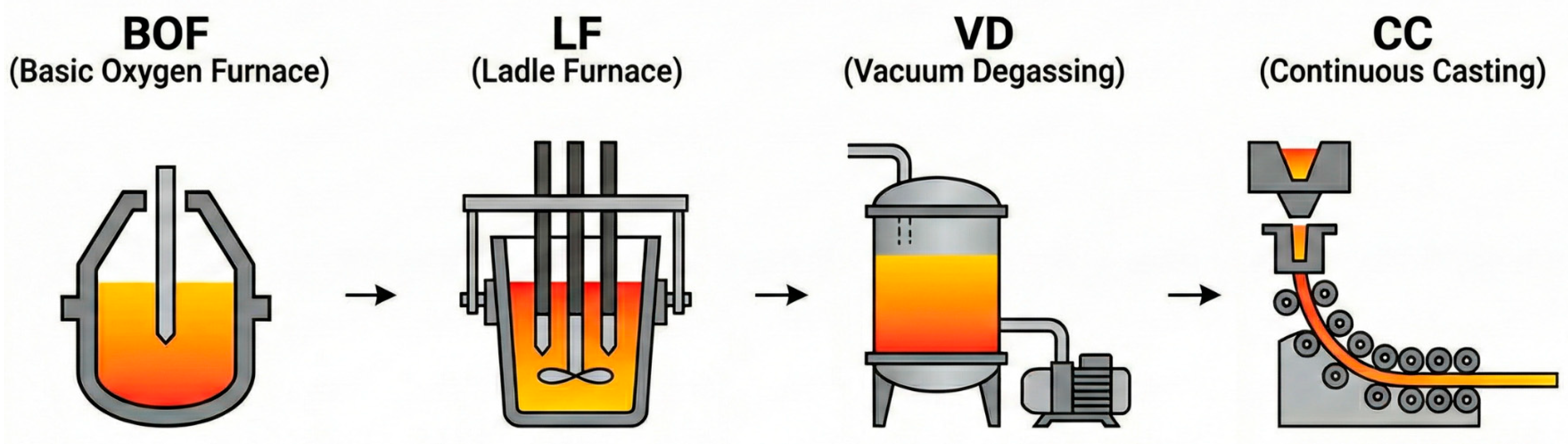
The industrial manufacturing route followed the sequence: Basic Oxygen Furnace (BOF) → Ladle Furnace (LF) → vacuum degassing (VD) → Continuous Casting (CC), as schematically illustrated in Figure 1. In the BOF stage, top-bottom combined blowing was utilized with continuous bottom argon stirring. Tapping was conducted with strict slag retention, accompanied by simultaneous deoxidation and alloying. During LF refining, a white reducing slag was rapidly established in the initial phase. Subsequent to the VD treatment, calcium wire feeding and soft argon blowing were performed to modify inclusions. Finally, the molten steel was continuously cast into slabs for subsequent rolling.
Figure 1.
Pipeline steel smelting process.
2.2. Sampling Locations
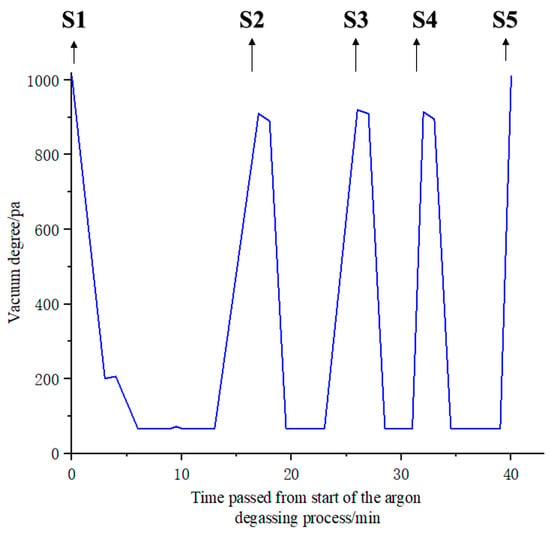
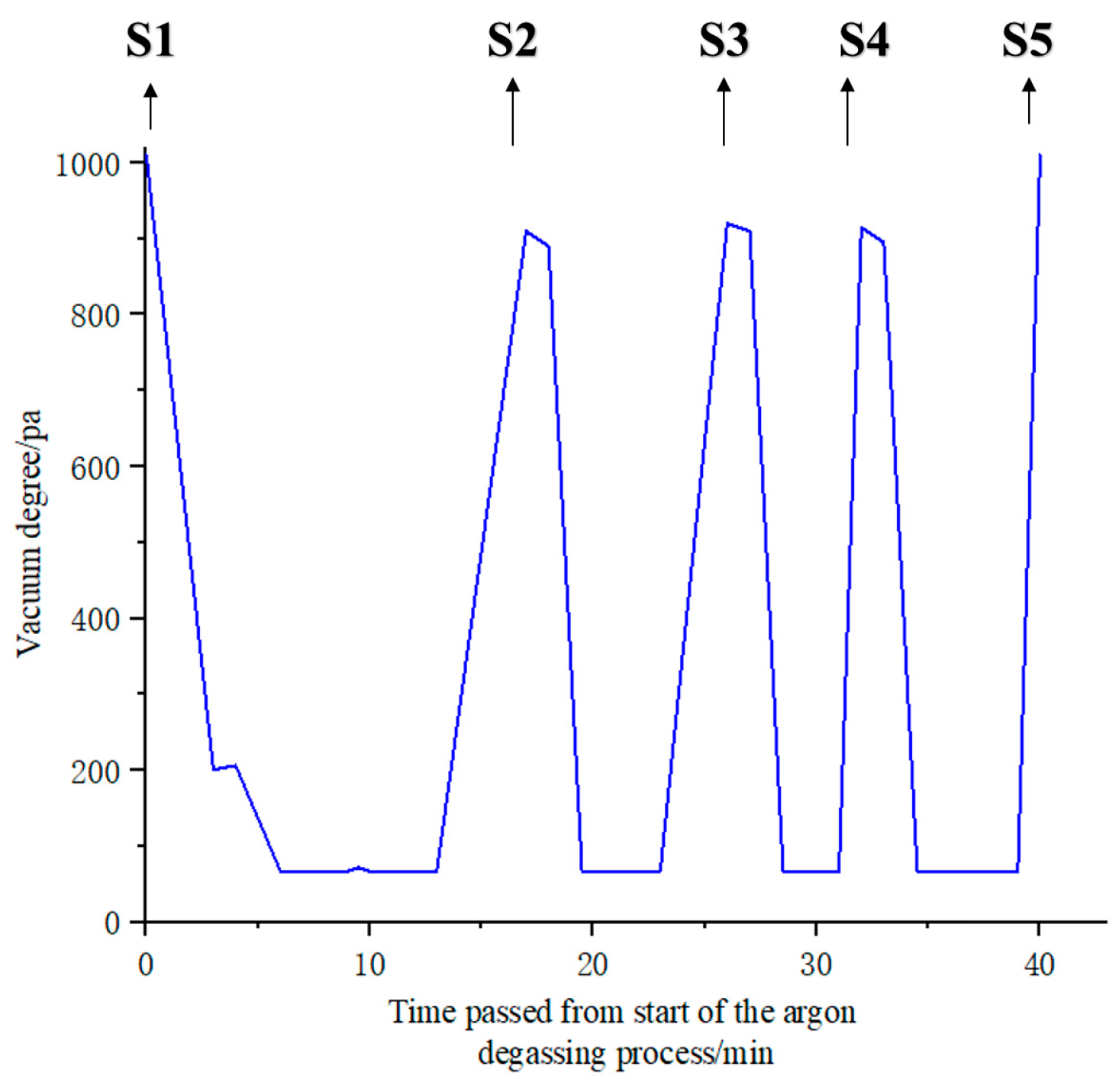
The specific sampling locations within the ladle are illustrated in Figure 2. A total of five steel samples (S1–S5) were collected sequentially throughout the VD process. Sample S1 was obtained immediately prior to the onset of vacuum degassing. During the degassing hold, three intermediate samples were collected at 17 min (S2), 26 min (S3), and 32 min (S4). The final sample (S5) was taken upon the completion of the vacuum treatment.
Figure 2.
Pipeline steel sampling point and vacuum degree variation.
To enable sampling during the vacuum holding phase, a controlled vacuum interruption technique was employed. This involved temporarily breaking the vacuum by back-filling the vessel with argon gas. Samples were then rapidly extracted using an automated VD sampling robot, after which the system was immediately re-evacuated to resume degassing. The variation in vessel pressure during this procedure is presented in Figure 2. As shown, the target vacuum level was restored rapidly after each sampling event. This rapid recovery confirms that the transient pressure fluctuations had a negligible impact on the overall thermodynamic conditions and the validity of the results.
2.3. Chemical and Microstructural Analysis
Upon extraction, the steel samples were analyzed for major alloying elements (C, Si, Mn, P, S). The concentrations of dissolved gases ([O], [N], and [H]) were quantified using an inert gas fusion analyzer. In this study, oxygen and nitrogen were analyzed using an ON736 oxygen–nitrogen analyzer manufactured by LECO Corporation (St. Joseph, MI, USA), while hydrogen content in steel was determined using an EMGA-821 hydrogen analyzer produced by HORIBA, Ltd. (Kyoto, Japan). For inclusion characterization, the samples were machined into 30 mm × 30 mm × 30 mm cubic specimens and prepared via standard metallographic grinding and polishing. The microstructural morphology and chemical composition were characterized using a scanning electron microscope (SEM, [Sigma 300], Carl Zeiss, Oberkochen, Germany) equipped with an energy-dispersive X-ray spectroscopy (EDS, [X-MaxN 80], Oxford Instruments, Oxfordshire, UK). The samples were sputter-coated with a thin layer of gold to ensure conductivity prior to observation. The morphology, size, and composition of a large population of inclusions were characterized using an automated feature analysis system (ASPEX Explorer, V1.0).
Top slag samples were collected concurrently with the steel samples (utilizing the slag adhering to the sampling probe). After cooling and pulverizing, the macroscopic morphology and color evolution of the slag were documented using high-resolution photography. The chemical composition of the slag was determined via X-ray Fluorescence (XRF, Model 9900, Thermo Fisher Scientific, Waltham, MA, USA) spectrometry. For XRF analysis, the slag samples were first dried and then pulverized to a fineness of less than 75 µm (200 mesh). The resulting powders were mixed with a small amount of boric acid binder and pressed into solid pellets under a pressure of 30 tons for 20 s using a hydraulic press.
During sampling, the probe was inserted below the surface of the molten steel. Due to the certain viscosity of the top slag, it tends to adhere to the surface of the sampler. After cooling, the weight after crushing is between 100 and 200 g. After grinding and pressing into blocks, three analytical samples can be formed. The average value of the three analytical results is taken as the test result, which maximally avoids data errors and ensures the validity of the test results. Therefore, each slag sample is considered representative of the overall top slag of the furnace for data analysis. This method of top slag sampling and analysis is often used in the LF white slag refining process. Through continuous collection of slag, the degree of deoxidation can be confirmed.
2.4. Analysis of Inclusions in Steel Plates
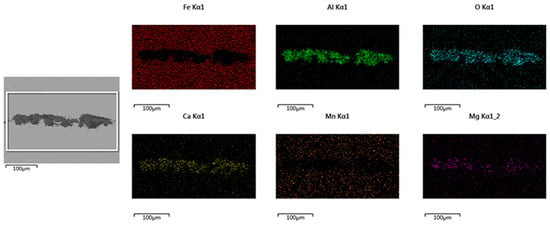
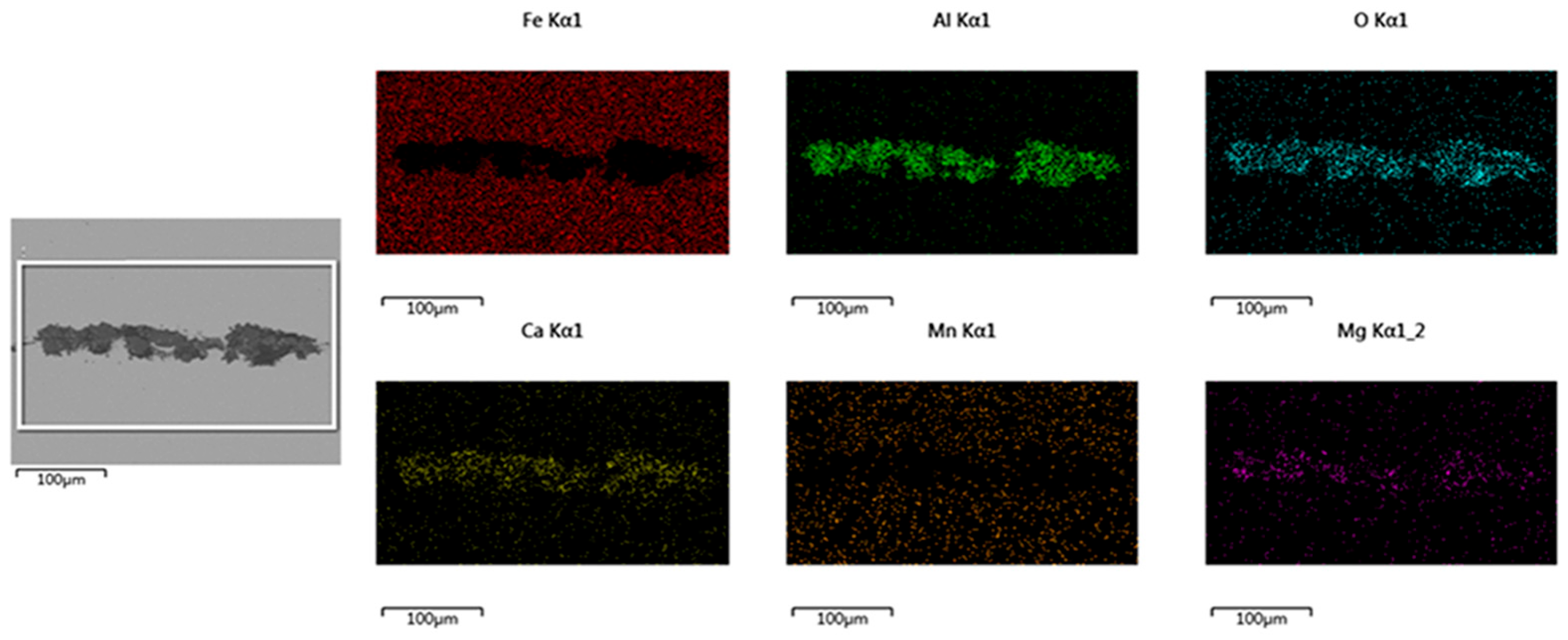
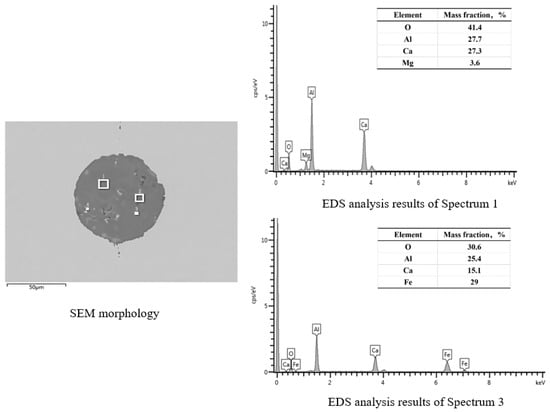
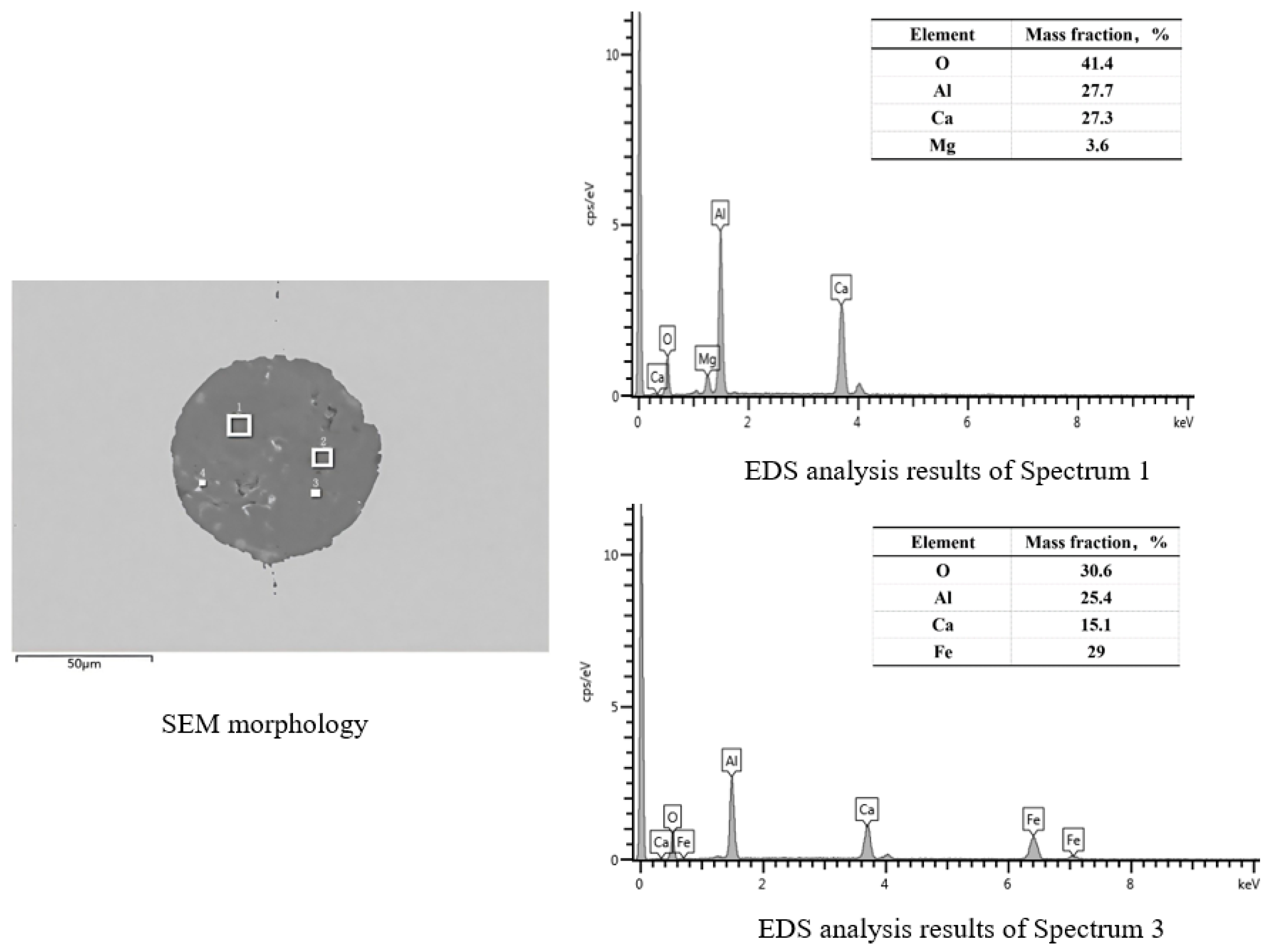
The effectiveness of inclusion control was primarily validated through steel plate inspection results. Actual testing revealed a 308 μm long inclusion defect located at one-fifth of the thickness from the bottom surface of the steel plate. SEM analysis results of the defect are shown in Figure 3. Based on the compositional makeup of the inclusion, it is preliminarily identified as calcium aluminate.
Figure 3.
Composition of steel plate defect.
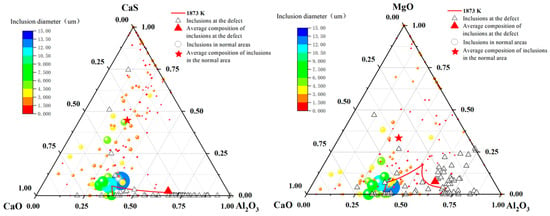
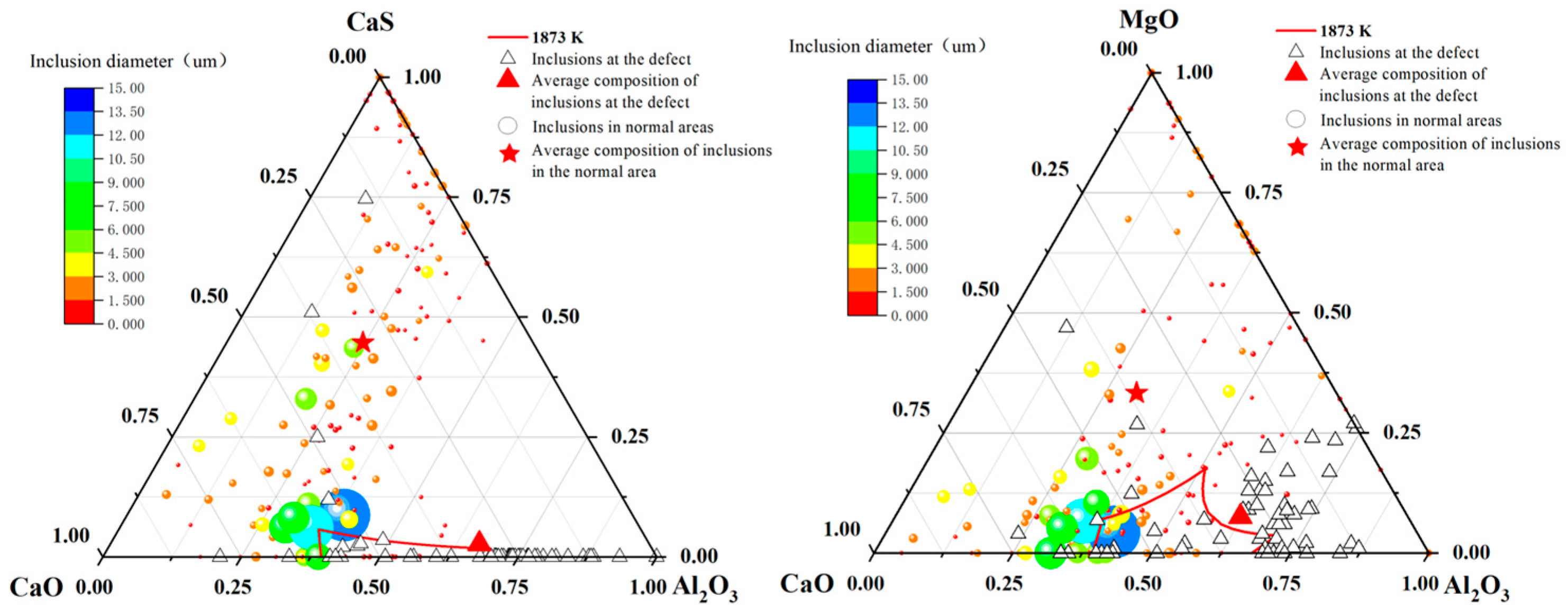
ASPEX scanning analysis was performed on the inclusions in the steel plate defect area, with the results shown in Figure 4. In terms of composition, the inclusions were primarily low-melting-point CaO-Al2O3 containing MgO. Regarding inclusion diameter, multiple large-sized inclusions were observed, located in the liquid phase region. SEM analysis was conducted on these large inclusions, and the results are presented in Figure 5. Based on calculated composition, the inclusion types were identified mainly as C12A7 and CA2.
Figure 4.
Composition analysis of steel plate defects.
Figure 5.
Composition of large inclusions.
2.5. Temperature Measurement Method
The VD vacuum sampling robot (MOTOMAN-GP50, YASKAWA Electric Corporation, Kitakyushu, Japan) can be equipped with a temperature measurement probe. Before sampling, the temperature probe is installed and follows the robot’s mechanical arm. It is inserted simultaneously with the sampling device into the molten steel, with a fixed insertion depth of 400 mm below the liquid surface. After the temperature stabilizes, the recorded temperature value is read, and the temperature measurement is completed. The temperature measurement points during the test process are consistent with the sampling points to avoid affecting the vacuum degree.
2.6. Thermodynamic Correction
It is noted that, in aluminum-killed steels under low oxygen potential, the measured oxygen activity (aO, meas) typically exceeds the true equilibrium oxygen activity (aO, eq) due to electronic conduction limits in the solid electrolyte (often approximated as aO, meas ≈ 2⋅aO, eq) [24,25,26,27,28]. Consequently, the thermodynamic calculations presented in Equations (1)–(4) have been corrected to account for this deviation.
In these equations, [Al] and [O] refer to the amount of these elements in molten steel, T refers to the temperature K, α refers to the activity of the elements, and fo refers to the activity coefficient of O. It is particularly important to note that, although other authors have also employed the same thermodynamic correction-based assumption method, it must be acknowledged that this remains a simplified and imperfect approach, and further optimization is required.
3. Results and Discussion
3.1. Variation in Molten Steel Composition
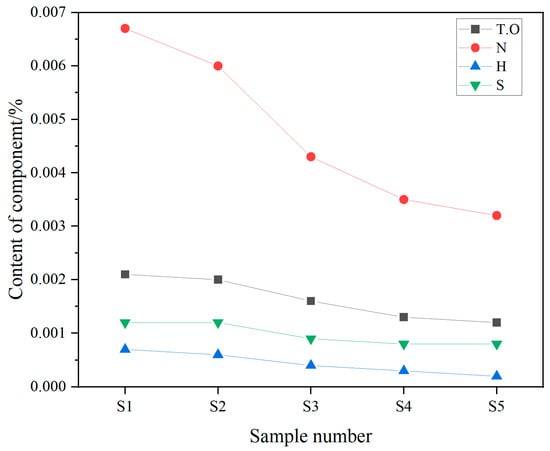
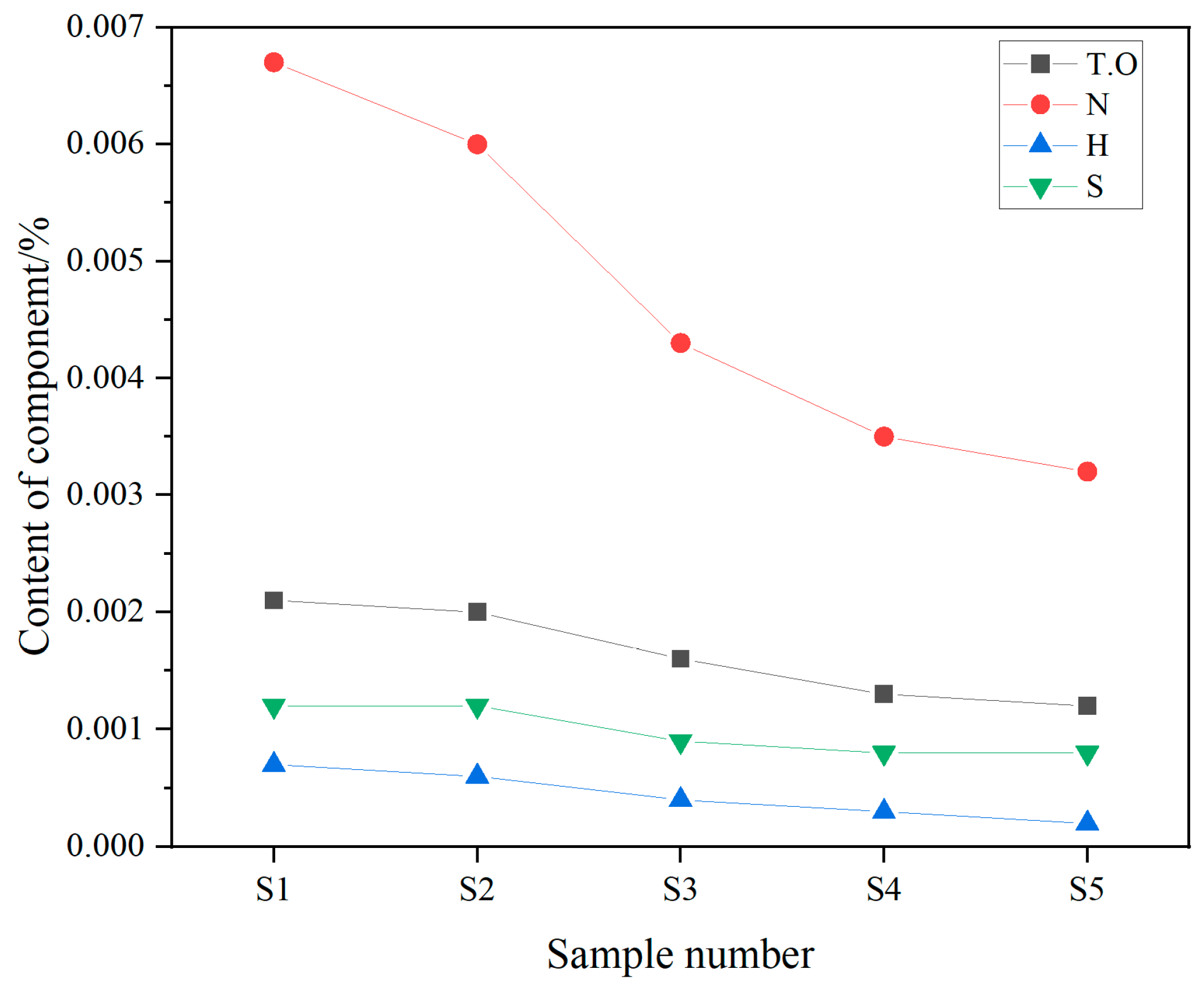
Figure 6 illustrates the temporal variations in oxygen, nitrogen, hydrogen, and sulfur contents within the molten steel. Throughout the VD process, a monotonic decrease was observed for all four elements. The removal kinetics were characterized by a rapid initial reduction rate that gradually diminished as the process approached equilibrium. Table 2 provides the specific details of the changes in each element. Before degassing, the initial oxygen content was 21 ppm. After vacuum treatment for 17 min, it decreased by 1 ppm, showing almost no change. After 26 min of treatment, it decreased by 4 ppm, a reduction of 20%. After 32 min of treatment, it decreased by 3 ppm, a reduction of 18.75%. After degassing, the value stabilized. Before degassing, the initial nitrogen content was 67 ppm. After vacuum treatment for 17 min, it decreased by 7 ppm, with a relatively insignificant change. After 26 min of treatment, it decreased by 17 ppm, with a reduction rate of 28.3%, which was more noticeable. After 32 min of treatment, it decreased by 8 ppm, with a reduction rate of 18.6%, and the degassing process became relatively stable afterwards. Before degassing, the initial hydrogen content was 7 ppm. After vacuum treatment for 17 min, it decreased by 1 ppm, showing almost no change. After 26 min of treatment, it decreased by 2 ppm. After 32 min of treatment, it decreased by 1 ppm. After degassing, the content stabilized. Before degassing, the initial sulfur content was 0.0012%. After vacuum treatment for 17 min, there was no change. After 26 min of treatment, it decreased by 0.0003%. After 32 min of treatment, it decreased by 0.0001%. There was no further change thereafter. The data indicate that during the initial stage of vacuum treatment, changes in the concentration of each element were minimal. In the middle stage of vacuum treatment, all elements showed significant variations. When entering deep vacuum, it indicates that the vacuum degree has a significant impact on oxygen, hydrogen, nitrogen, and sulfur elements. In the later stage of vacuum treatment, the changes in each element tended to be stable, indicating that the control effect of vacuum degree has reached its upper limit at this point. From this, a preliminary conclusion can be drawn: the sensitivity of vacuum degree to gases and sulfur is strongly correlated. As the vacuum degree decreases and the duration increases, each element reaches the maximum removal rate.
Figure 6.
Changes in oxygen, nitrogen, hydrogen and sulfur contents in molten steel.
Table 2.
the specific details of the changes in each element.
By the conclusion of the vacuum treatment, the total oxygen (T.O.) content had decreased from 21 ppm to 12 ppm, corresponding to a removal ratio of 42%. Similarly, the nitrogen content was reduced from 67 ppm to 32 ppm (52% removal), and the hydrogen content dropped from 7 ppm to 2 ppm (71% removal). Desulfurization proceeded concurrently, with the sulfur content decreasing from 0.0012% to 0.0008%, achieving a final removal ratio of 33.3%.
Crucially, the smooth continuity of the concentration profiles indicates that no anomalous fluctuations in gas content (O, N, H) occurred surrounding the sampling intervals. This confirms that the robotic vacuum interruption sampling method preserved the integrity of the data without inducing significant re-oxidation or gas pickup.
3.2. Variation in Molten Steel Temperature
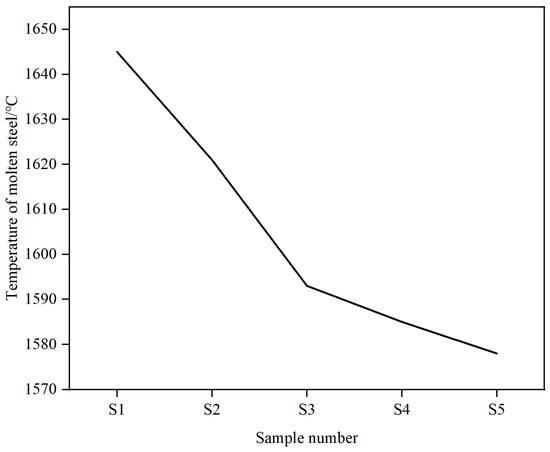
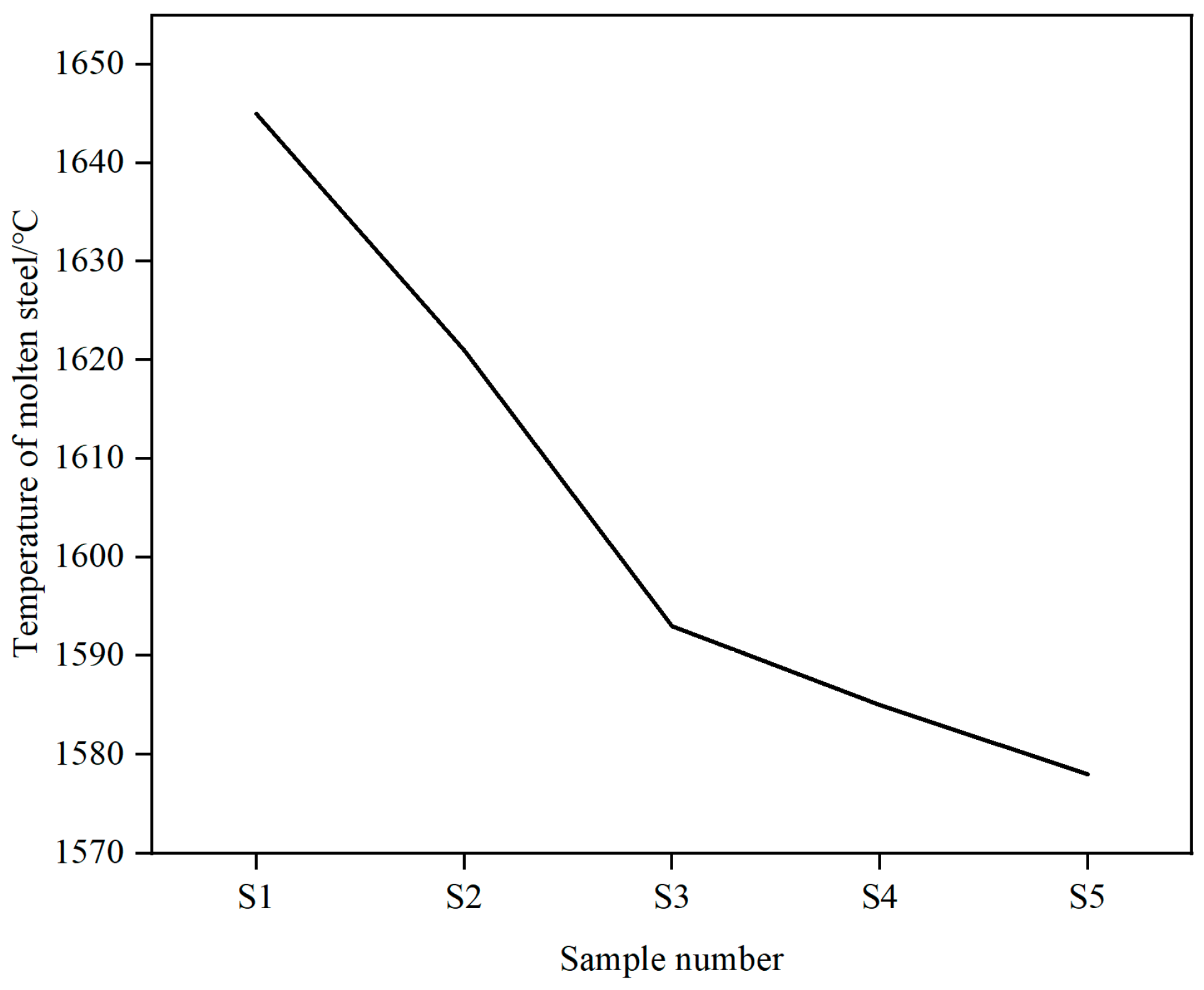
Figure 7 presents the temperature measurement results of the VD processing procedure. Before degassing, the initial temperature was 1645 °C. After 17 min of vacuum treatment, the temperature dropped to 1621 °C. After another 26 min of treatment, the temperature continued to decrease linearly to 1593 °C, a decrease of 52 °C compared to the initial value. After 32 min of treatment, the temperature was 1585 °C, with a smaller temperature drop. After degassing, the temperature was 1578 °C. From the trend of temperature changes, the rate of temperature drop was faster in the early stage of deep vacuum and decreased in the later stage of deep vacuum.
Figure 7.
Steel liquid temperature at sampling point.
3.3. Variation in Top Slag
3.3.1. Change in Slag Color
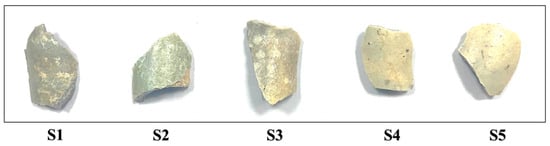
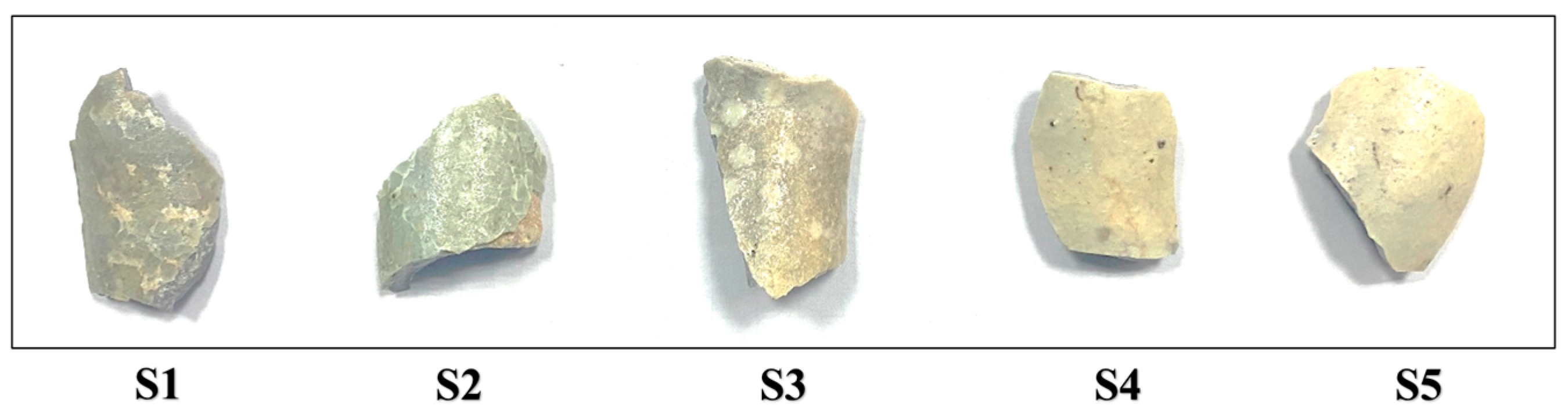
The morphological and chromatic evolution of the top slag across the five sampling points is illustrated in Figure 8. Generally, the slag color transitioned to a progressively lighter hue with increasing vacuum treatment time. This visible change indicates the continuous reduction in transition metal oxides. In actual production, observing the slag color serves as an intuitive and rapid indicator to determine whether the deoxidation and desulfurization reactions are complete. High levels of FeO and MnO cause the slag to appear dark (black or brown). The added reducing agents such as aluminum and carbon will react with FeO and MnO in the slag, reducing iron and manganese from their oxides. The lower the content of FeO and MnO, the weaker the oxidizing property of the slag and the lighter the color. The high-basicity lime-alumina slag (FeO + MnO ≤ 1%) formed at the end indicates that a favorable reducing atmosphere has been established, which is a prerequisite for effective and deep desulfurization, deoxidation, and adsorption of inclusions.
Figure 8.
Morphology and color change in top slag.
3.3.2. Change in the Top Slag Composition
Table 3 details the compositional variations in the top slag. To facilitate analysis, the binary basicity (R) is defined as the mass ratio of CaO/SiO2, and the calcium-to-alumina ratio (C/A) as CaO/Al2O3. Notably, sample S2 exhibited a significant transient fluctuation in basicity compared to S1 and S3. This sharp decrease in R suggests intense steel–slag-refractory interactions during the initial vigorous boiling stage of the vacuum, leading to substantial CaO consumption and SiO2 pickup (likely from ladle glaze or refractory erosion). As the vacuum conditions stabilized, the basicity fluctuations attenuated. Throughout the treatment, the sum of (FeO + MnO)—representing the oxidation potential of the slag—remained consistently below 1 wt%, indicating that the slag’s oxidizability was effectively controlled.
Table 3.
Change in slag composition during VD (mass fraction) %.
- (1)
- Kinetic and Thermodynamic Principles of Slag–Steel Reaction Control
From a kinetic perspective, the VD process utilizes bottom stirring to open the slag layer, creating a slag–steel contact mode similar to that in LF refining. However, due to vacuum degassing, the reaction is often more intense, and the vigorous agitation of the molten steel significantly improves the kinetic conditions for slag–steel reactions. Thermodynamically, at steelmaking temperatures, the refining slag establishes chemical equilibrium with deoxidation elements in the steel, thereby controlling inclusion composition. This control is primarily achieved by adjusting the basicity and composition of the VD refining slag to promote the “plasticization” of inclusions. Integrating kinetics and thermodynamics, the evolution of non-metallic inclusions during the VD process remains predominantly governed by slag–steel reactions. Crucially, slag–steel reaction control over inclusions is mediated through its control over molten steel composition.
- (2)
- Reaction Mechanism and Inclusion Transformation (S1–S2 Stage)
During VD refining, reduction reactions occur between the slag and steel, as represented by Equations (5)–(8). In the transition from the S1 to S2 stage, a decrease in the basicity of the refining slag leads to an increase in the activity of SiO2 in the slag. This drives the forward reaction of Equation (5), resulting in a decrease in SiO2 and an increase in Al2O3 in the slag, coupled with a decrease in [Al] and an increase in [Si] in the steel. Combined with the inclusion-steel reaction described by Equation (6), which proceeds in the forward direction, the Al2O3(inc) content in complex inclusions and the [Si] content in the steel decrease, while the SiO2(inc) content in inclusions and the [Al] content in the steel increase. Consequently, lowering the VD slag basicity clearly favors the transformation of Al2O3(inc) to SiO2(inc) within complex inclusions, representing a transition from brittle to more plastic inclusions.
and represents the activity of Al2O3 and CaO in the slag; and represents the activity of Al and Ca in steel melt dissolution.
- (3)
- Effect of High-Basicity Slag in Later Stages (S3–S5 Stage)
As shown in Table 3, the VD slag exhibits high basicity, classifying it as a high-basicity slag. The basicity change from the S3 to S5 stages is minimal. With such a high-basicity slag, the transformation of inclusions in the steel has largely been completed towards CaO-MgO-Al2O3 or CaO-Al2O3 types. The intense stirring during VD treatment further improves kinetic conditions and exacerbates slag–steel reactions. The high-basicity slag features a high activity of CaO. Under the condition that the oxygen content in the steel has already been reduced to an extremely low level, reactions described by Equations (7) and (8) can occur between the slag and steel. This leads to the substantial formation of CaO-MgO-Al2O3 or CaO-Al2O3 inclusions in the steel.
3.4. Synthesis of Melt and Slag Evolution
Synthesizing the data on melt composition, temperature, and slag evolution, it is evident that the VD refining process is a complex, dynamic system driven by the simultaneous evolution of multiple thermodynamic and kinetic factors.
- (1)
- Gas Removal: The gas content in the steel decreased continuously. The vacuum environment significantly lowered the partial pressure of gas species above the melt, disrupting the initial dissolution equilibrium. This thermodynamic driving force promoted the nucleation and growth of gas bubbles, which continuously escaped from the bath. The kinetic profile—initially rapid removal followed by a deceleration—is primarily governed by the concentration gradient, which diminishes as the process proceeds.
- (2)
- Desulfurization: Despite the low initial sulfur content achieved during LF refining, the VD process contributed an additional 33% desulfurization rate. This demonstrates the effectiveness of the high-basicity, low-oxygen potential conditions maintained during vacuum stirring.
- (3)
- Thermal Evolution: In the absence of an external heating source (such as electrodes in LF), the temperature followed a continuous decline. The rapid cooling observed in the initial stage is attributed to the intense agitation and gas evolution during the initial pressure drop, which accelerated heat loss to the refractories and via surface radiation; this cooling rate moderated as the boiling intensity subsided.
3.5. Inclusion Evolution
3.5.1. Scanned Area of Specimens
To quantitatively investigate the evolution of inclusion composition, size, and morphology, the samples collected from the five designated nodes were analyzed using an automated SEM-EDS inclusion analysis system (SEM, [Sigma 300], Carl Zeiss, Oberkochen, Germany). The total scanned area for each specimen ranges from 30 to 32 mm2, ensuring a statistically representative assessment of the oxide inclusion population.
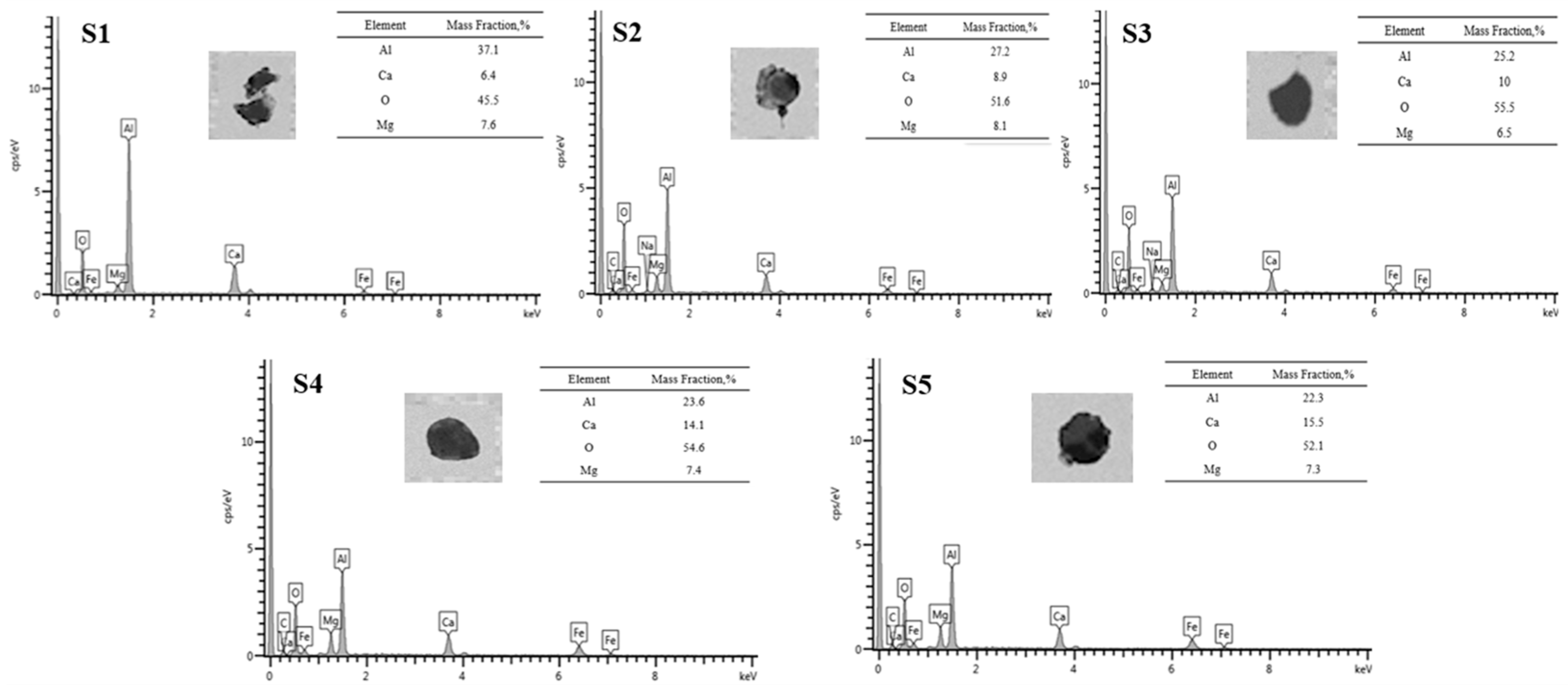
Figure 9 presents the SEM-EDS spectrum results and the corresponding inclusion morphologies for each sampling point. Based on the inclusion morphology and elemental distribution, the inclusion type gradually evolves from alumina-based to calcium aluminate-based. At sampling point S1, prior to vacuum degassing, aluminum deoxidation in the molten steel was relatively thorough, resulting in predominantly alumina inclusions with an irregular morphology. At the initial stage of vacuum degassing, the aluminum content decreases, accompanied by a simultaneous reduction in calcium and magnesium, and the inclusion morphology tends to become spherical. Progressing to the middle stage of vacuum degassing, the inclusion morphology further evolves toward a spherical shape, with aluminum continuing to decrease, while calcium and magnesium gradually increase. From the late deep vacuum stage to the end of the treatment, the inclusion morphology is essentially spherical, having completely transformed into calcium aluminate.
Figure 9.
Inclusion morphology and SEM-EDS results.
3.5.2. Evolution of Inclusion Composition
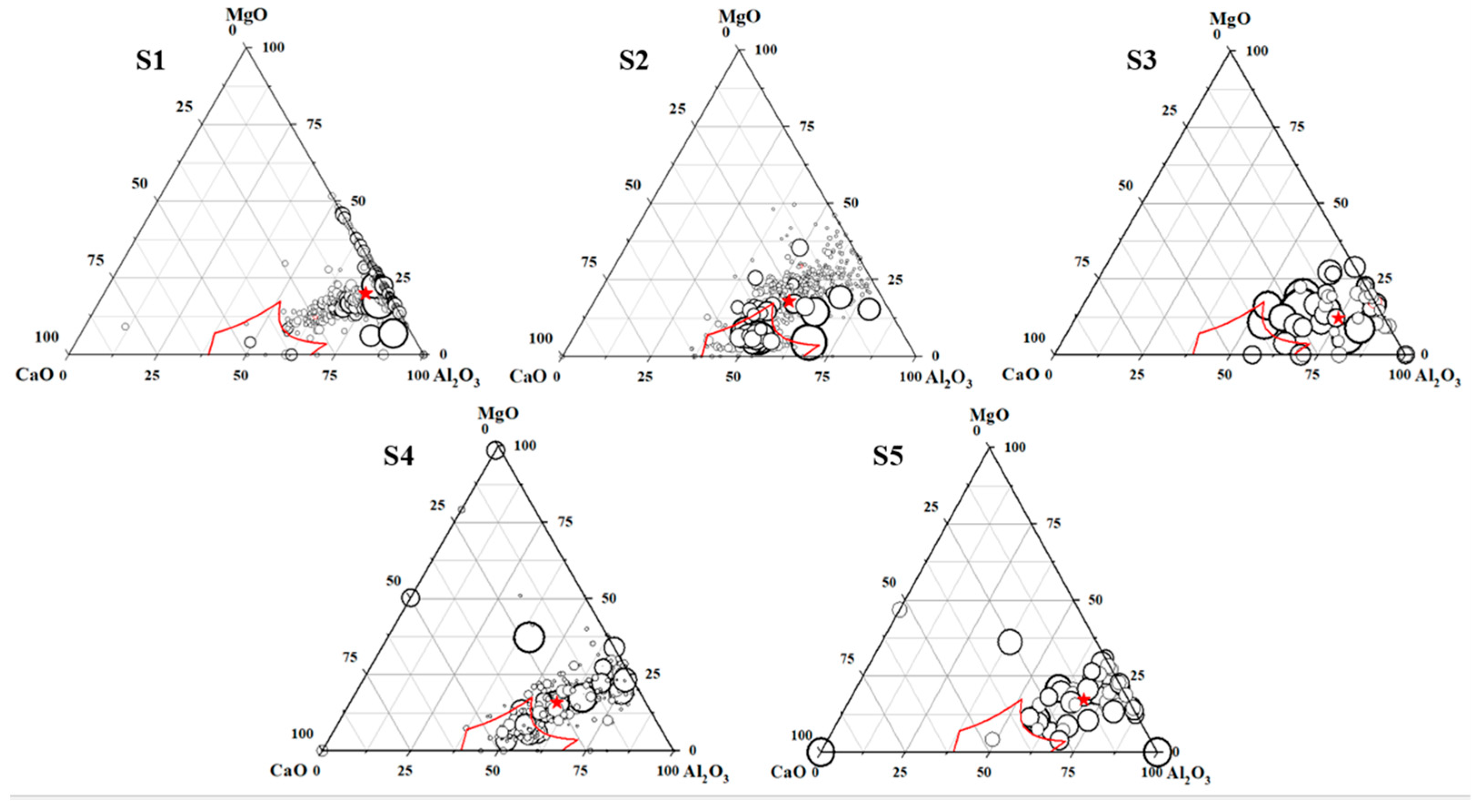
Figure 10 presents the compositional evolution of inclusions plotted on CaO-MgO-Al2O3 ternary phase diagrams for the five sampling stages. In these plots, the symbol diameter scales with inclusion size, while the distribution density reflects the inclusion population. Broadly, the dominant phases were identified as Mg-Al spinels and calcium aluminates. From a process perspective, the inclusion characteristics evolved distinctively:
Figure 10.
Variation in inclusion composition.
- (1)
- Pre-VD (S1): Prior to vacuum treatment, inclusions exhibited a broad size distribution. Due to the absence of calcium treatment in the preceding LF stage, the composition was dominated by MgO and Al2O3 (spinel-type), located outside the low-melting liquidus region (demarcated by the red boundary).
- (2)
- Initial Vacuum (S2): As the vessel pressure dropped, both the average size and number density of inclusions increased. Concurrently, the composition trajectory shifted progressively toward the liquid phase region. This trend indicates spontaneous modification driven by calcium uptake, likely originating from slag entrapment during vigorous stirring or interactions with the ladle lining.
- (3)
- Deep Vacuum (S3–S4): With prolonged vacuum holding time, the total number of inclusions decreased while their average size increased, suggesting that collision, agglomeration, and floatation were the dominant mechanisms.
- (4)
- Post-VD (S5): By the completion of the process, a marked reduction in fine inclusions was observed. This confirms the efficacy of the vacuum treatment—and the associated soft blowing—in facilitating the removal of small-sized inclusions.
3.5.3. Variation in Inclusion Composition
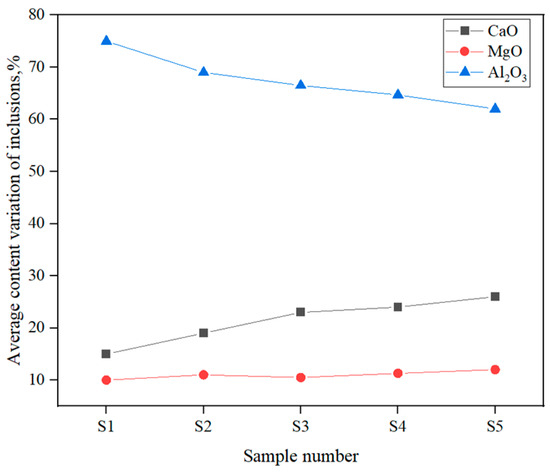
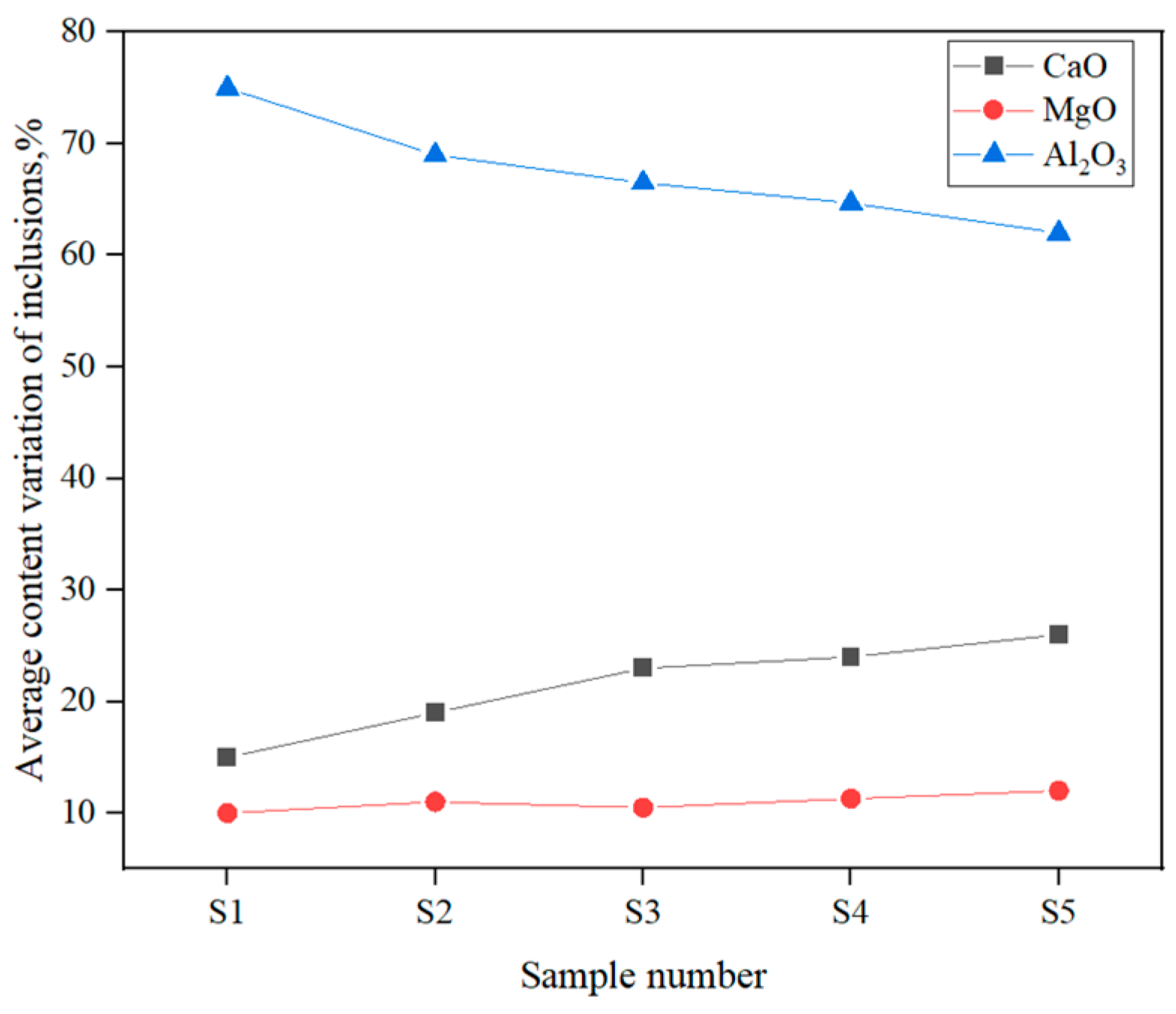
Figure 11 illustrates the temporal evolution of the average oxide composition and the variation in Ca, Mg, and Al contents within the inclusions. The data reveals a notable decline in the mass fraction of Al2O3, correlated with a progressive enrichment in CaO and MgO. This compositional shift is attributed to the vigorous turbulence at the steel–slag interface and the accelerated erosion of the refractory lining during vacuum treatment. These physical and chemical interactions facilitated the transfer of Ca and Mg from the top slag and ladle lining into the inclusions. Consequently, the dominant inclusion types evolving during the process were identified as calcium aluminates and Mg-Al spinels.
Figure 11.
Average composition change in inclusions during refining.
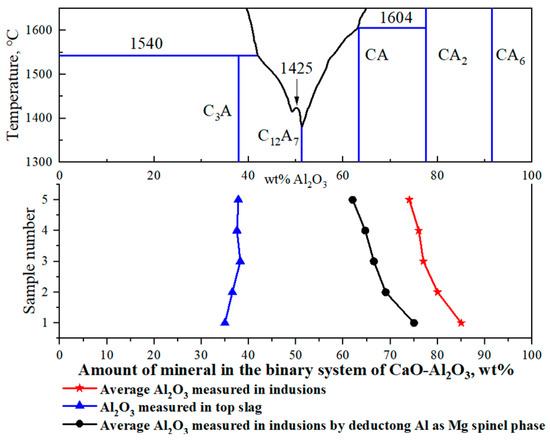
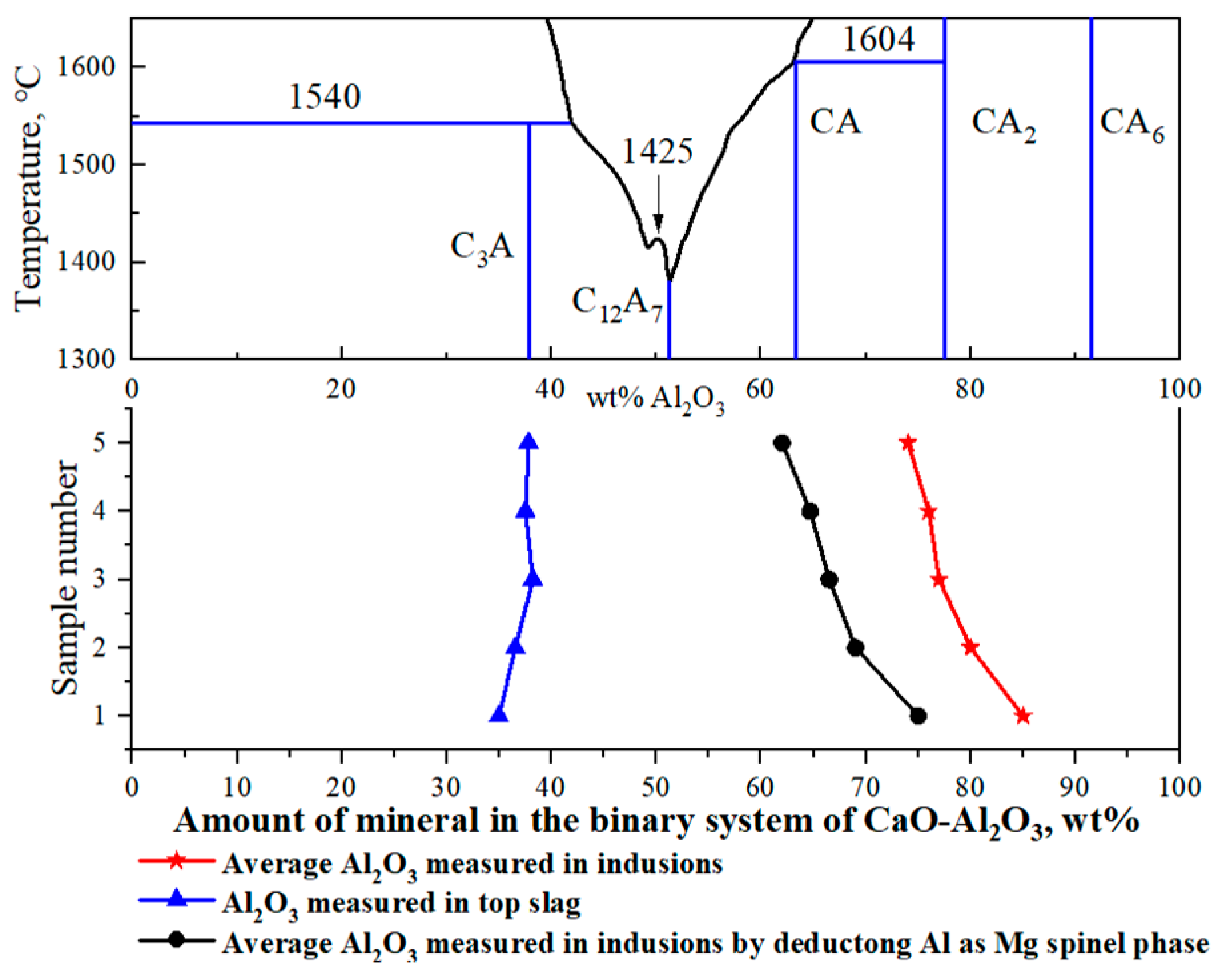
Figure 12 integrates data from Table 2 and Figure 11 to map the relationship between Al2O3 content and the calcium aluminate system for both inclusions and top slag. A distinct compositional discrepancy is evident between the two phases. The top slag is notably calcium-rich, with a composition corresponding to the C3A phase field, trending toward the low-melting C12A7 region. Conversely, the inclusions remain predominantly alumina-rich, with the dominant phases transitioning from CA2 toward CA.
Figure 12.
Average amounts of Al2O3 normalized to the binary system of CaO–Al2O3 in inclusions and top slag in different samples and their respective position compared to binary phase diagram of CaO–Al2O3.
However, a different trend emerges when correcting for the presence of spinel. Under the theoretical assumption that all magnesium exists as stoichiometric Mg-Al spinel, and by subtracting the associated alumina fraction, the effective composition of the remaining calcium aluminate matrix shifts significantly, transitioning from the CA region toward the liquid C12A7 region.
Based on the compositional distribution, the inclusion population during the VD process was characterized by two distinct phases: Mg-Al spinel and calcium aluminates. In the absence of prior calcium treatment during the LF stage, the indigenous inclusions were initially alumina-based. However, dissolved magnesium originating from alloys and refractories reacted with these oxides, establishing Mg-Al spinel as the predominant inclusion type during the initial degassing phase.
A divergence in the inclusion population became evident after 17 min of processing, where the two groups began to separate; this distinction became increasingly pronounced with prolonged vacuum time. Notably, the relative proportion of calcium aluminates progressively increased at the expense of Mg-Al spinel. This trend was mirrored by a rise in the total weight percentage of Calcium (Ca) within the oxides. This transformation is attributed to the favorable kinetic conditions created by the VD process: the vigorous stirring facilitated thorough steel–slag mixing, enhancing mass transfer and allowing calcium—derived from ferrosilicon alloys, top slag, and the ladle lining—to react continuously with alumina/spinel to generate calcium aluminates.
3.5.4. Oxide Inclusion Particle Size Distribution
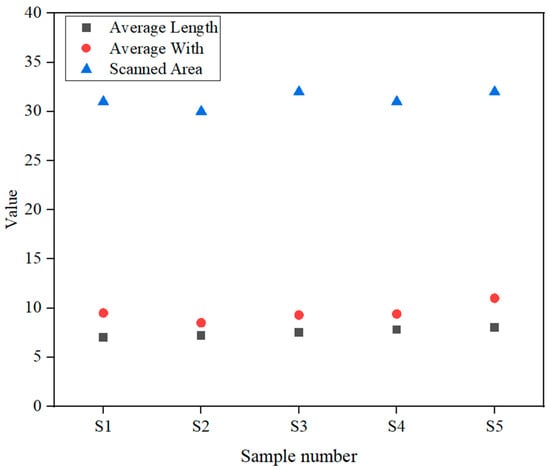
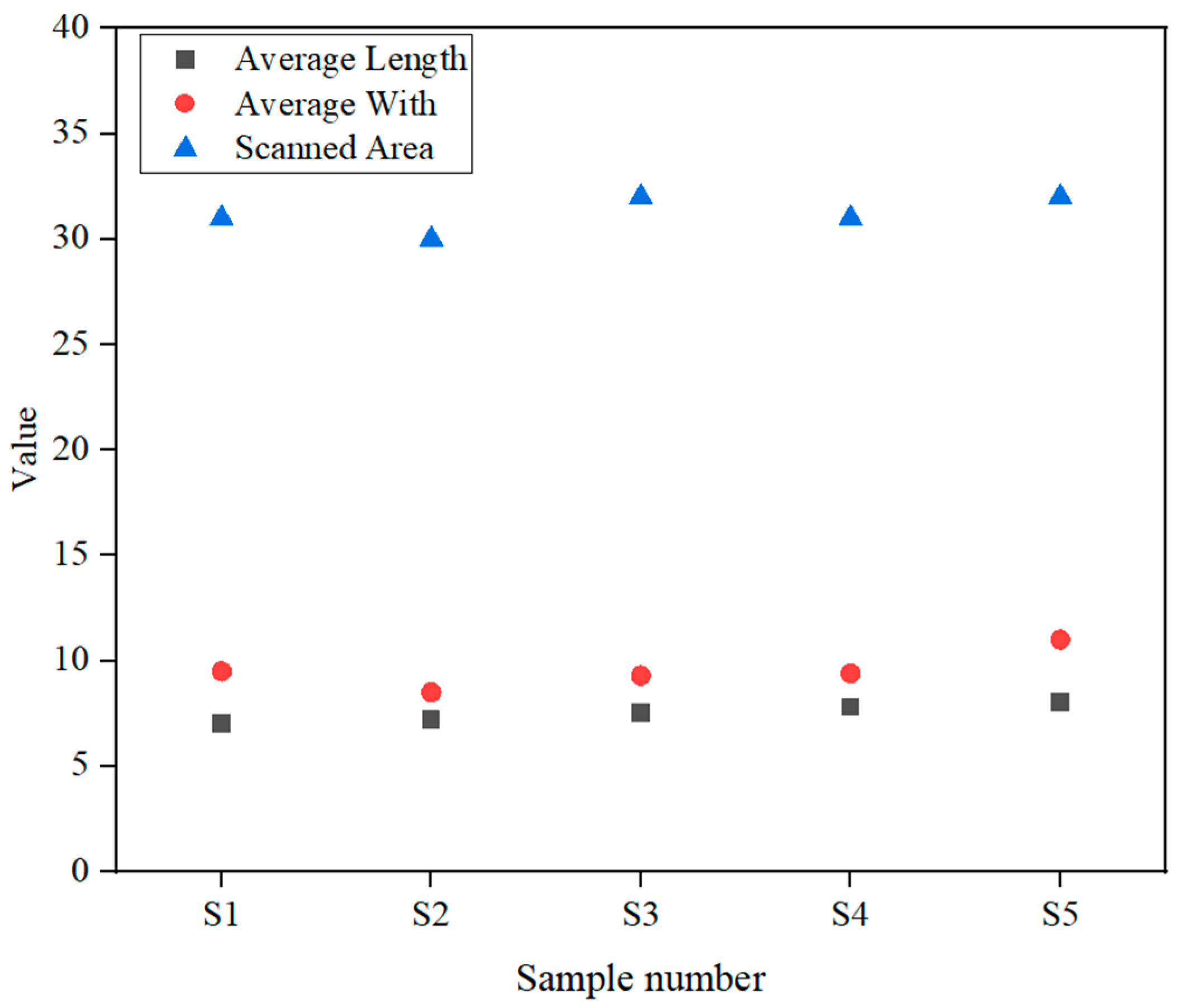
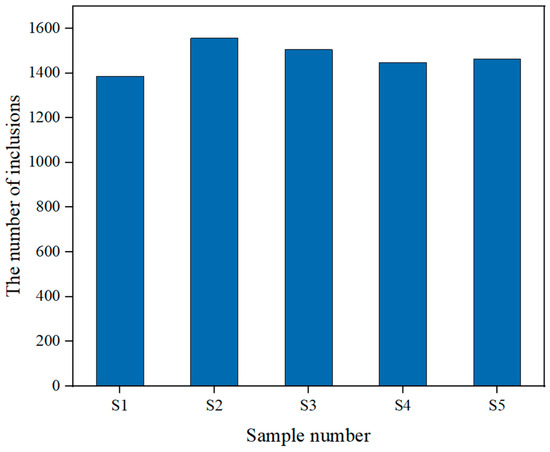
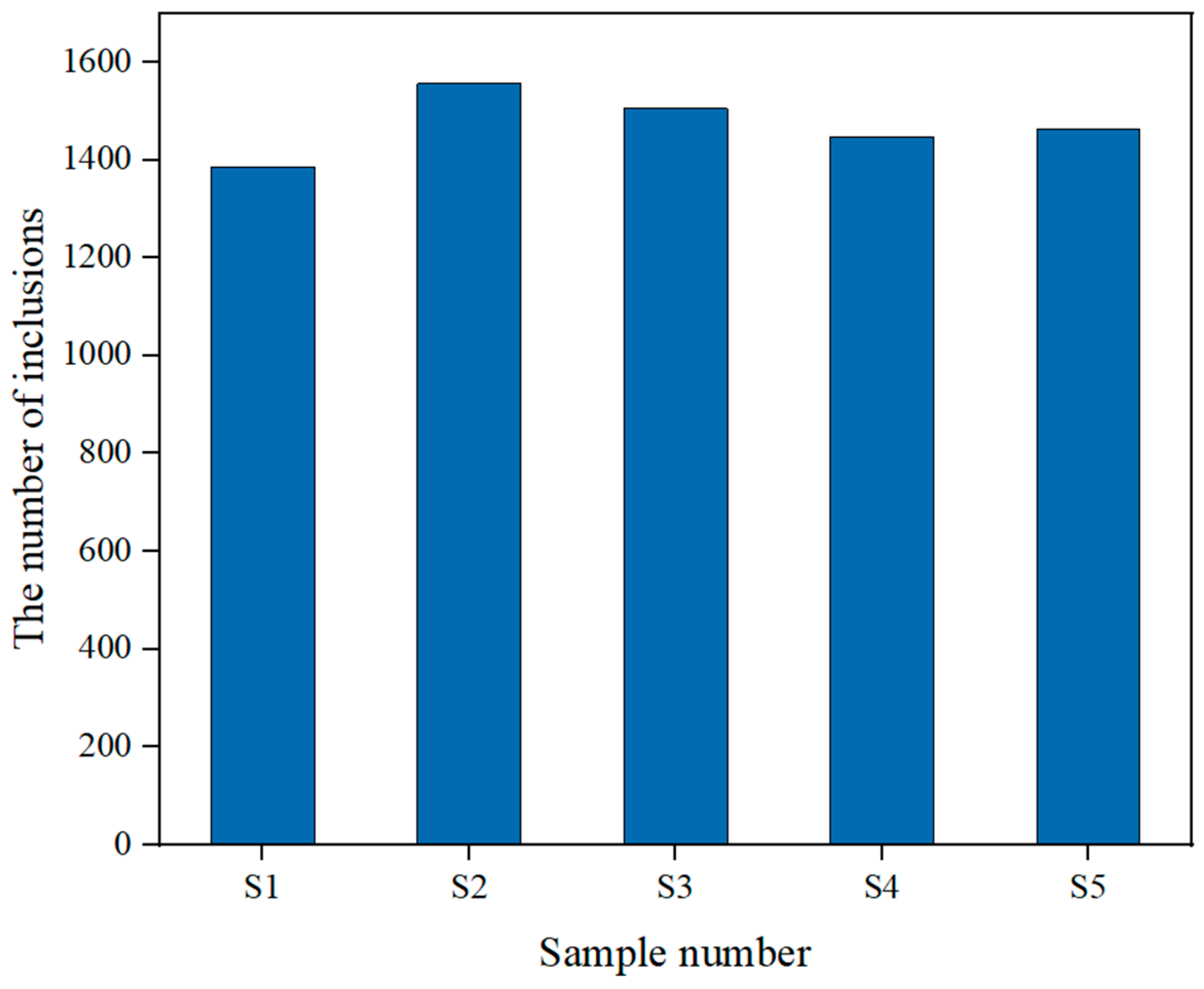
Figure 13 presents the evolution of the average width and length of inclusions at the five sampling points. These averages were obtained by taking the mean of the lengths and widths of all points under the condition that the scanning areas were basically the same (30–32 mm2). The number of sampling points at each sampling position is shown in Figure 14. A clear trend was observed: throughout the vacuum process, both the length and width of the inclusions gradually increased. Notably, the growth rate of the inclusion width was significantly faster than that of the length, indicating that their morphology was evolving towards a lower aspect ratio (i.e., spheroidization) or coarsening.
Figure 13.
The relationship between the values measured by SEM and the samples.
Figure 14.
The number of inclusions at each sampling point.
However, simply measuring the average values of the width and length of inclusions can only represent an overall trend and cannot effectively and intuitively display the changes in the size of inclusions. Therefore, in this paper, the concept of Equivalent Circle Diameter (ECD) is introduced. Its core principle is to convert the two-dimensional cross-section of an irregularly shaped inclusion into the diameter of a circle with an equal area. Direct measurement of their “length” or “width” is challenging and lacks a unified standard. By using scanning electron microscope analysis software (ASPEX Explorer, V1.0) to measure the area of each object and then uniformly calculating its ECD, a set of objective data suitable for statistical analysis (such as average size and size distribution) can be obtained. This method can be used to accurately evaluate the variations in inclusions of different sizes.
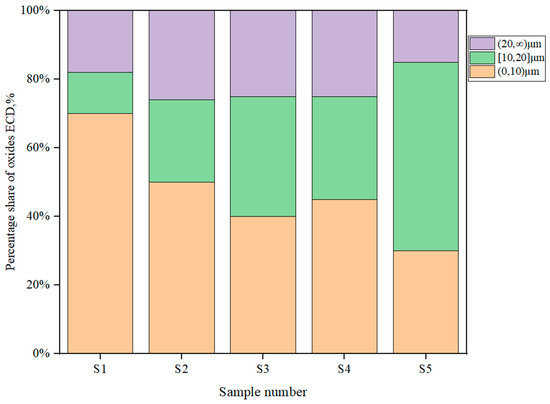
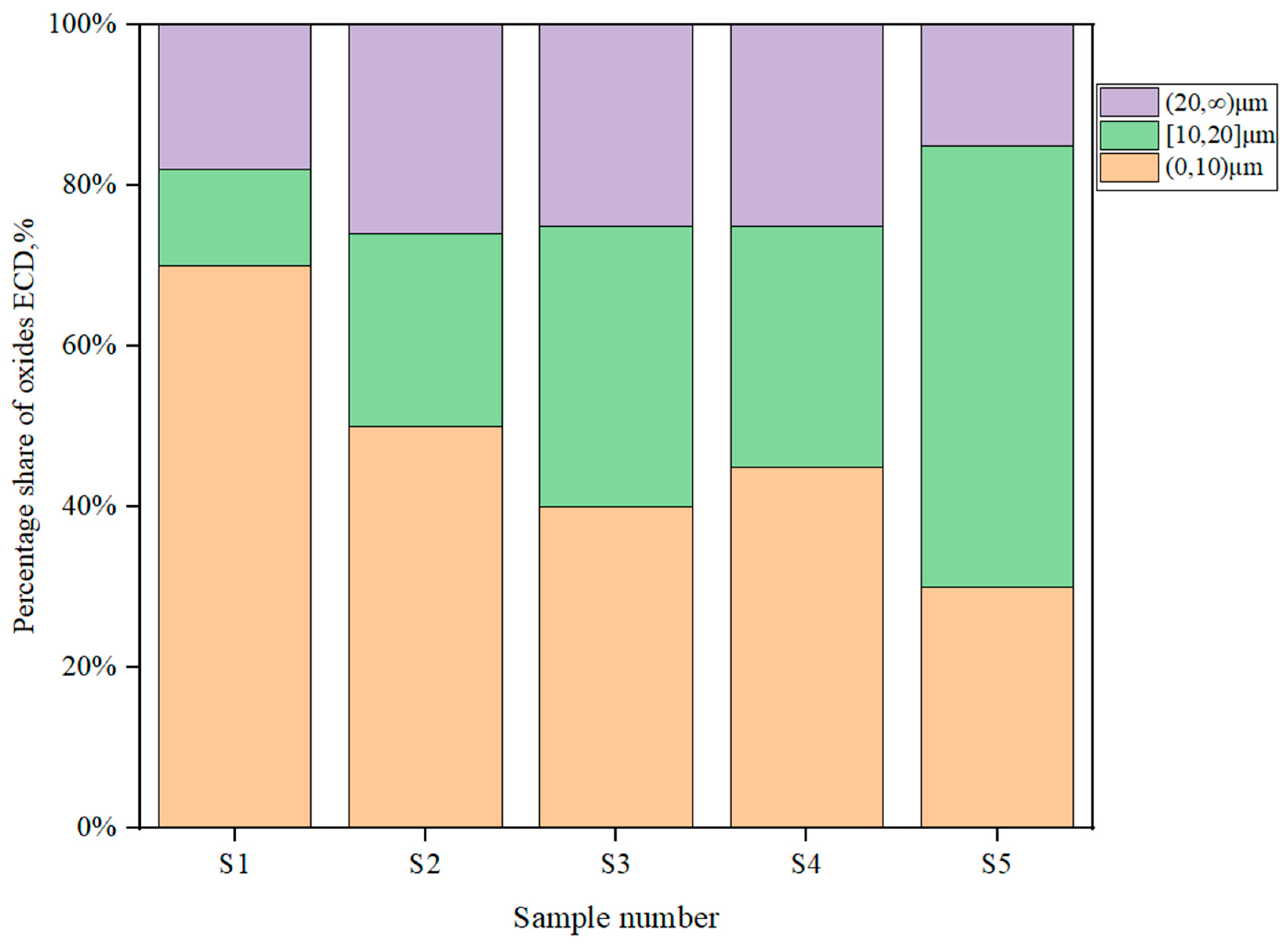
Figure 15 presents the overall changes in inclusions with different equivalent diameters during the vacuum process. Prior to treatment, the population was dominated by fine inclusions within the ECD range of 0 < d < 10 μm. As the vacuum treatment duration extended, a distinct shift in the distribution was observed: the fraction of medium-sized inclusions (10 ≤ d ≤ 20 μm) progressively increased, eventually becoming the predominant population. Conversely, the quantity of large inclusions (ECD > 20 μm) exhibited a declining trend, suggesting that, while finer inclusions coalesced to form medium-sized particles, the largest inclusions were effectively removed via flotation.
Figure 15.
The overall changes in inclusions with different ECD during the vacuum process.
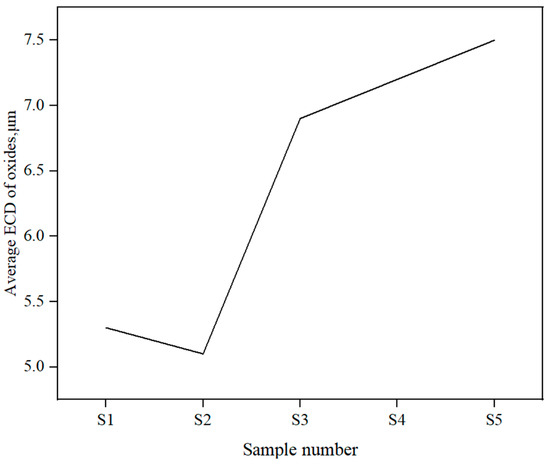
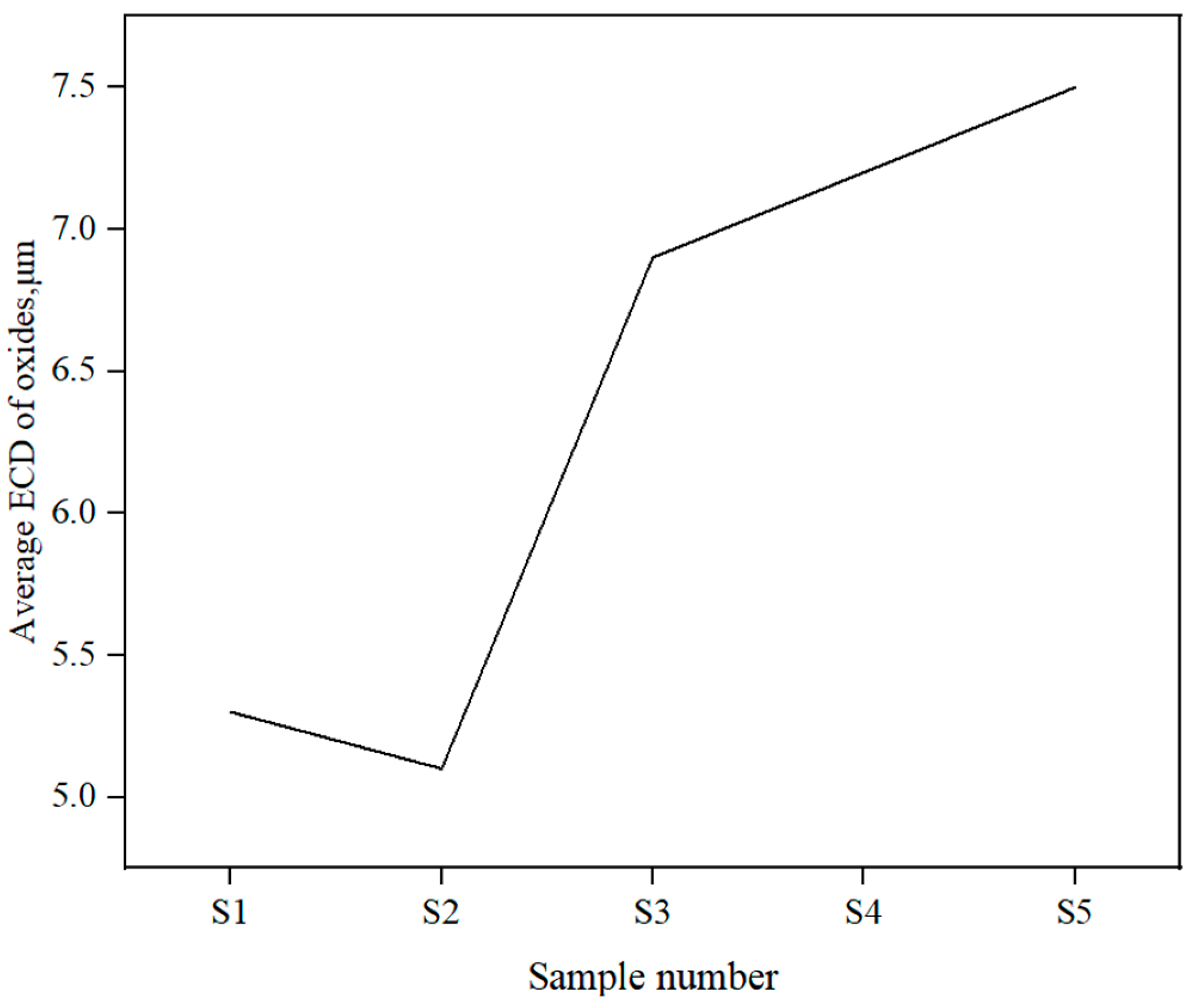
Figure 16 depicts the temporal evolution of the average equivalent circular diameter of inclusions across the five sampling intervals. A minor decrease in average ECD was observed during the initial vacuum stage. Subsequently, the inclusion size exhibited an upward trend with prolonged vacuum time; the growth rate initially accelerated before eventually stabilizing.
Figure 16.
The temporal evolution of the average ECD of inclusions across the five sampling intervals.
Synthesizing the data from Figure 15 and Figure 16, it is concluded that the VD process creates favorable hydrodynamic conditions that promote the collision and coalescence of fine particles, driving their aggregation into larger inclusions (coarsening). The eventual moderation of the growth rate is attributed to the removal mechanism: as inclusions grow, their flotation velocity increases (per Stokes’ Law), leading to their effective assimilation into the top slag, thereby limiting the average size remaining in the melt.
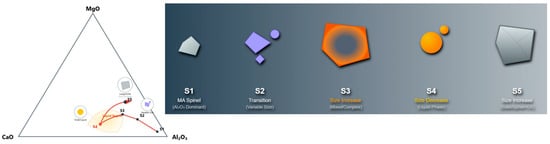
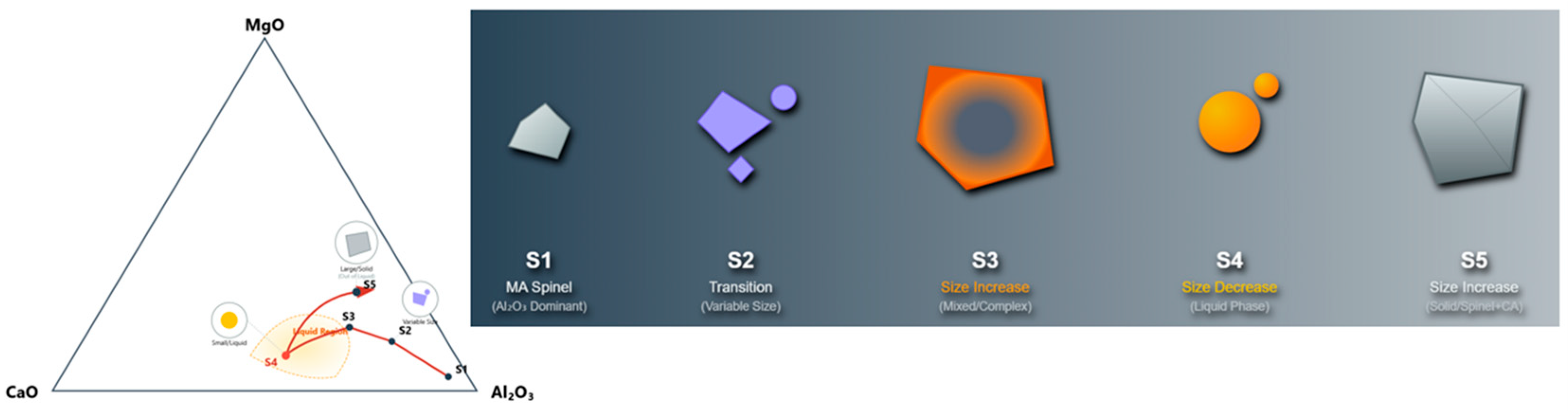
Based on the analysis of Figure 10, Figure 11, Figure 12, Figure 13, Figure 14, Figure 15 and Figure 16, Figure 17 schematically illustrates the compositional migration trajectory of inclusions on the CaO-MgO-Al2O3 ternary phase diagram during the VD process, together with the corresponding evolution patterns of their 3D morphology and size. The transformation mechanism of inclusions exhibits a non-monotonic evolution in terms of both phase composition and geometric morphology, which can be categorized into five distinct stages (S1–S5):
Figure 17.
Schematic illustration of the evolution mechanism of oxide inclusions during the vacuum treatment process.
- (1)
- Stage S1 (Initial State): The inclusions are predominantly identifiable as high-melting-point Mg-Al spinels rich in Al2O3. Morphologically, they present as irregular, solid-state clusters with rough surfaces, serving as the baseline for the subsequent modification.
- (2)
- Stage S2 (Transition): With the initiation of the calcium treatment, the inclusion composition begins to migrate towards the liquidus region. This stage is characterized by dimensional heterogeneity, where the thermodynamic driving force triggers the initial formation of Ca-aluminates on the spinel surface, leading to a mixture of varying sizes.
- (3)
- Stage S3 (Coarsening and Interface Reaction): A significant increase in inclusion size is observed at this stage. The inclusions exhibit a complex multiphase structure, consisting of Mg-Al spinel cores encapsulated by a transient calcium aluminate shell. Although the composition approaches the liquid window, the majority of inclusions remain solid or semi-solid. The size growth is attributed to the agglomeration of partially reactive particles and the volume expansion associated with the formation of complex oxides.
- (4)
- Stage S4 (Liquefaction and Refinement): This stage represents the optimal modification window, where approximately 50% of the inclusions successfully enter the low-melting-point liquid region. Consequently, a distinct reduction in average size is recorded. This phenomenon implies that the fully liquid inclusions undergo dissolution or fragmentation due to interfacial tension effects, transforming into fine, spherical liquid droplets dispersed within the steel matrix.
- (5)
- Stage S5 (Re-precipitation and Over-modification): In the final stage, the compositional trajectory reverses and exits the liquid region, shifting back towards the solid-phase stability domain. This leads to the re-precipitation of solid Mg-Al spinels and complex Ca-aluminates. Notably, the inclusion size increases again, while the number density decreases, suggesting that Ostwald ripening or collision-induced agglomeration of the solidified particles has occurred, marking a deviation from the optimal liquid modification state.
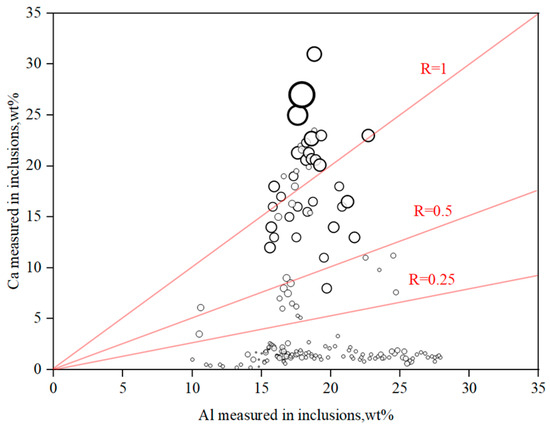
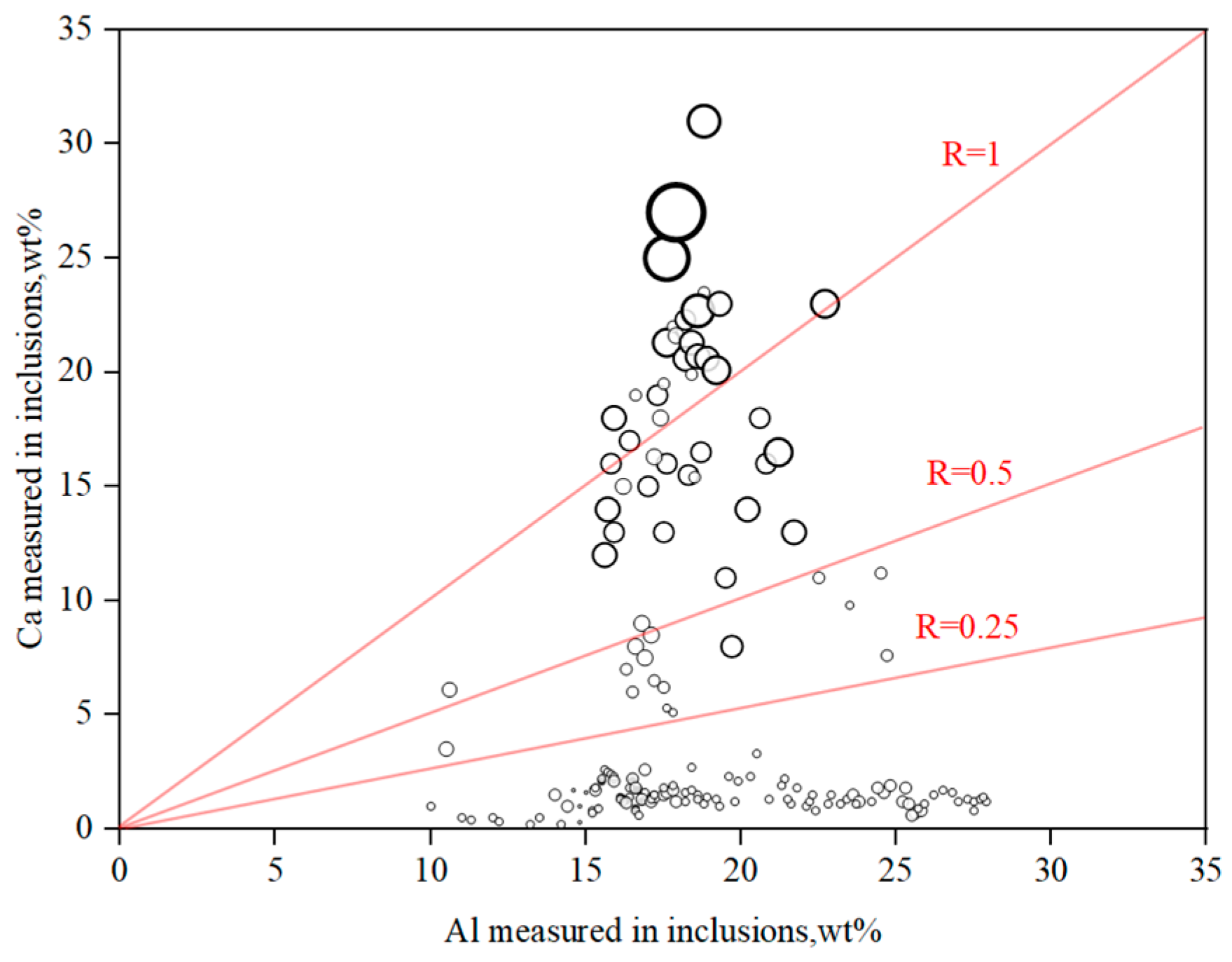
Figure 18 delineates the relationship between the calcium-to-aluminum (Ca/Al) ratio of inclusions and their population density, with the equivalent circular diameter (ECD) represented by the bubble size. A distinct size-density trade-off is observed. In the low Ca/Al regime (<0.25), the population is characterized by a high number density of fine inclusions. As the Ca/Al ratio increases, an inverse correlation becomes apparent: the population density declines, while the average ECD notably increases. Specifically, when the Ca/Al ratio exceeds 1, the formation of coarse inclusions becomes prevalent. These findings underscore the critical role of top slag engineering: by optimizing the slag composition to regulate the Ca/Al ratio within inclusions, the size distribution can be effectively controlled.
Figure 18.
The influence of aluminum and calcium content in inclusions on inclusion density and ECD.
3.6. Discussion and Improvements
3.6.1. Challenge in Tracing Inclusion Calcium Sources and Indirect Assessment
It must be acknowledged that direct and dynamic tracing of calcium sources faces inherent technical challenges in actual industrial steelmaking processes. Firstly, during ladle refining, the reactions among slag, molten steel, and refractory materials are intense, and mixing is thorough, making it extremely difficult to perform an absolute “traceability” of the calcium source for a specific inclusion at a given moment. Secondly, there is currently no industrial-level technology available for real-time tracing of potential calcium sources (e.g., slag, refractory materials) to distinguish their contribution to the final inclusions. In this study, by further analyzing the key elemental ratios related to slag and refractory composition, we demonstrate the consistency between the inclusion composition and potential sources. Actual examination of the ladle lining refractory composition revealed that the (CaO)/(Al2O3) ratio and MgO content closely matched those in the inclusion composition, providing indirect support for our inference
3.6.2. The Transformation Mechanism of Inclusions
- (1)
- On the S2 (Transition) and S3 (Coarsening) Stages: Agglomeration and Interfacial Reaction
The initial increase in inclusion size and the broadening of the size distribution from the S2 to S3 stage are primarily attributed to physical agglomeration and volumetric expansion, rather than being the sole consequence of interfacial chemical reactions. During experimental observation, large, irregular clusters with a distinct core–shell structure (comprising a spinel core surrounded by a calcium aluminate layer) were identified. The phase transformation from solid Al2O3 or MgO·Al2O3 to lower-density calcium aluminates (e.g., 12CaO·7Al2O3) inherently induces volumetric expansion. Concurrently, semi-solid or solid inclusions within the turbulent steel melt undergo frequent collisions. The newly formed, viscous calcium aluminate surface layer promotes the agglomeration and sintering of these particles, leading to significant coarsening. This interpretation is consistent with conclusions drawn in other studies [29,30].
- (2)
- Regarding the S4 (Liquefaction and Refinement) Stage: Liquefaction and Spheroidization
The decrease in the average inclusion size during the S4 stage is a direct result of successful liquefaction, followed by spheroidization and potential fragmentation. In this stage, approximately 50% of the inclusions are fine, perfectly spherical droplets. Energy-dispersive X-ray spectroscopy (EDS) confirms that their composition falls within the low-melting-temperature region of the CaO-Al2O3 or CaO-MgO-Al2O3 phase diagram. When the inclusion composition reaches a low-melting-point phase (e.g., 12CaO·7Al2O3), driven by calcium diffusion, it transforms into a homogeneous liquid phase. To minimize the interfacial energy with the steel matrix, the liquid inclusions immediately spheroidize into droplets. The high interfacial tension between the oxide liquid and the molten steel may also lead to the fragmentation of larger droplets or the dissolution of very fine ones under the influence of fluid flow, thereby reducing the average size. This refinement is a hallmark of effective modification. Similar conclusions have been reported by other researchers [31].
- (3)
- Regarding the S5 (Re-precipitation and Over-modification) Stage: Ostwald Ripening and Compositional Reversal
The increase in size and decrease in number density of inclusions in the final stage can be explained by Ostwald ripening and a kinetically driven deviation from the liquid compositional window. It was observed that the inclusion composition “reversed” back into the solid-phase region of the phase diagram, often with high CaO or CaS detected. The remaining inclusions were fewer in number but larger in size. The underlying mechanisms include Ostwald ripening and kinetic over-modification [32].
Ostwald Ripening: During prolonged vacuum treatment, the system tends to minimize its total interfacial energy. According to the Gibbs–Thomson effect, smaller liquid droplets possess higher solubility and thus gradually dissolve into the steel melt. The dissolved species (Ca, Al, O) subsequently re-precipitate onto the surfaces of larger, more stable inclusions, causing them to grow. This process reduces the total population of inclusions.
Kinetic Over-modification: Excessively long processing times or a local surplus of dissolved calcium can shift the inclusion composition into high-CaO solid phases (e.g., 3CaO·Al2O3) or induce the precipitation of a solid CaS shell around the oxide core. Both scenarios represent a state of “over-modification,” driving the inclusions away from the desired liquid region.
Ostwald ripening is a classical theory for explaining particle growth in melts and is frequently invoked to interpret inclusion evolution during holding periods. Research specific to VD treatment has indicated that kinetic interactions with the top slag can lead to continuous calcium absorption, thereby increasing the CaO content and size of inclusions over time. This finding is consistent with our observations in the S5 stage.
3.6.3. Repeatability and Improvement of Industrial Experiments
The experiments and data acquisition conducted in this study were carried out on the actual production line of a steel plant. Systematic sampling, temperature measurement, and composition analysis were performed on pipeline steel grades produced during continuous vacuum degassing operations. The production line maintains a stable output, with a monthly average production of pipeline steel of approximately 20,000 tons, corresponding to about 100 heats per month. After accounting for normal production cycle variations and equipment maintenance, the effective number of heats available for experimentation is approximately 80% of the total, equating to about 80 heats per month. This sample size provides sufficient material for repeatability tests, ensuring the statistical significance and verifiability of the experimental results.
The sampling and temperature measurement robots used in the trials are integral equipment of the production line and are readily available for operation, ensuring stable and reliable performance. During sampling, the robot automatically controls the immersion depth into the molten steel, the sampling location, and the timing sequence according to predefined programs, guaranteeing consistency and standardization throughout the process. All collected samples were analyzed in the same laboratory using identical analytical equipment, thereby minimizing human operational errors and systemic deviations. This approach significantly enhances the repeatability and comparability of the experimental data, providing a reliable foundation for subsequent process analysis and model validation.
This experiment was conducted on a single heat of pipeline steel produced under routine operational conditions. Key parameters upon VD station entry, including molten steel composition, slag composition, and temperature, all fell within the standard control ranges specified for this grade and were consistent with other production heats. The primary distinction for this experimental heat was the implementation of melt sampling under vacuum conditions. The final product assessment, regarding both chemical composition and mechanical properties, showed no significant deviation from other conventional heats. This consistency indicates that the experimental procedure aligns well with standard production conditions and demonstrates the repeatability of the test method.
It should be noted that the findings presented here are based on a preliminary analysis of data from a single heat. To strengthen the robustness of the conclusions, systematic comparative experiments will be conducted in subsequent work to provide more compelling verification and explanation. Furthermore, a more detailed investigation into the evolution mechanism of non-metallic inclusions during the VD process is required. This will involve the use of advanced micro-analysis techniques, such as field emission scanning electron microscopy (FE-SEM) and automated inclusion analysis systems, to comprehensively elucidate their microscopic behavior and transformation kinetics under vacuum treatment.
4. Conclusions
- (1)
- Thermodynamics and Kinetics: During the VD process, the molten steel temperature and the concentrations of dissolved nitrogen, oxygen, and sulfur exhibited a monotonic decrease. The removal kinetics were characterized by a rapid initial reduction rate, which gradually decelerated as the system approached a quasi-steady state.
- (2)
- Compositional Evolution: The dominant inclusion phases were identified as Mg-Al spinel and calcium aluminates. A distinct compositional discrepancy was observed between the phases: the top slag composition resided within the C3A phase field, trending toward the liquid C12A7 region, whereas the endogenous inclusions transitioned from CA2 toward CA. With prolonged vacuum treatment, the relative fraction of calcium aluminates progressively increased at the expense of Mg-Al spinel, driven by Ca mass transfer from the slag and refractories.
- (3)
- Size Distribution and Growth: A continuous reduction in the population density of fine inclusions (low ECD) was observed throughout the process, accompanied by a concurrent increase in the average inclusion size. This shift in size distribution indicates that the vigorous hydrodynamic stirring during vacuum treatment creates favorable kinetic conditions for inclusion collision and coalescence (coarsening).
Author Contributions
Formal analysis, S.Z. and J.L.; Methodology, D.Z.; Project administration, S.W.; Resources, J.L.; Validation, D.Z.; Writing—original draft, S.Z.; Writing—review and editing, S.Z. and D.Z. All authors have read and agreed to the published version of the manuscript.
Funding
This research is supported by the Central Guidance on Local Science and Technology Development Fund of Hebei Province (226Z1008G) and the National Natural Science Foundation of China (No. 52274336).
Data Availability Statement
The original contributions presented in this study are included in the article. Further inquiries can be directed to the corresponding author.
Conflicts of Interest
Author Jixin Li was employed by the company Shougang Jingtang United Iron and Steel Co., Ltd. The remaining authors declare that the research was conducted in the absence of any commercial or financial relationships that could be construed as a potential conflict of interest.
References
- Yang, G.M.; Yuan, C.; Liu, C.; Wang, Q.; Li, G.Q.; Zou, Y.S.; Huang, A. Effect of MgO–Cr2O3 and MgO–MgAl2O4-based refractories on refractory–steel interface reaction and cleanliness of pipeline steel. J. Iron Steel Res. Int. 2024, 31, 849–860. [Google Scholar] [CrossRef] [Scilit]
- Wang, B.; Liu, X.; Wang, G. Inclusion characteristics and acicular ferrite nucleation in Ti-containing weld metals of X80 pipeline steel. Metall. Mater. Trans. A 2018, 49, 2124–2138. [Google Scholar] [CrossRef] [Scilit]
- Beidokhti, B.; Koukabi, A.H.; Dolati, A. Effect of titanium addition on the microstructure and inclusion formation in submerged arc welded HSLA pipeline steel. J. Mater. Process. Technol. 2009, 209, 4027–4035. [Google Scholar] [CrossRef] [Scilit]
- Xue, H.B.; Cheng, Y.F. Characterization of inclusions of X80 pipeline steel and its correlation with hydrogen-induced cracking. Corros. Sci. 2011, 53, 1201–1208. [Google Scholar] [CrossRef] [Scilit]
- Amezhnov, A.V.; Rodionova, I.G. Effect of non-metallic inclusion chemical and phase composition on corrosion resistance of carbon and low alloy steels in water media typical for oilfield pipeline operating conditions. Metallurgist 2019, 63, 717–726. [Google Scholar] [CrossRef] [Scilit]
- Sidorova, E.; Karasev, A.; Kuznetsov, D.; Jönsson, P.G. Investigation of the initial corrosion destruction of a metal matrix around different non-metallic inclusions on surfaces of pipeline steels. Materials 2022, 15, 2530. [Google Scholar] [CrossRef] [Scilit]
- Shen, P.; Zhang, H.; Xu, K.; Liu, S.; Jiang, J.-X.; Fu, J.-X. Effect of Mg-treatment on transformation of oxide inclusions in X80 pipeline steel. J. Iron Steel Res. Int. 2024, 31, 2802–2814. [Google Scholar] [CrossRef] [Scilit]
- Wang, Y.; Yang, W.; Li, W.F. Evolution of inclusions in a pipeline steel during continuous casting and hot rolling process. J. Iron Steel Res. Int. 2022, 29, 175–185. [Google Scholar] [CrossRef] [Scilit]
- Lv, Z.A.; Ni, H.W.; Zhang, H.; Liu, C.S. Evolution of MnS inclusions in Ti-bearing X80 pipeline steel. J. Iron Steel Res. Int. 2017, 24, 654–660. [Google Scholar] [CrossRef] [Scilit]
- Cheng, W.; Song, B.; Yang, Z.; Mao, J. Effect of rare earth Ce on modifying inclusions in Al-killed X80 pipeline steel. Trans. Indian Inst. Met. 2022, 75, 2837–2846. [Google Scholar] [CrossRef] [Scilit]
- Ren, Q.; Zhang, L.; Christie, S. Evolution of non-metallic inclusions in calcium-treated pipeline steels during secondary refining and continuous casting. Metall. Mater. Trans. B 2021, 52, 1345–1359. [Google Scholar]
- Wang, G.; Nabeel, M.; Mu, W.; Phillion, A.; Dogan, N. In-situ confocal microscopy study on dissolution kinetics of calcium aluminate inclusions in CaO-Al2O3-SiO2 type steelmaking slags. J. Iron Steel Res. Int. 2025, 32, 364–375. [Google Scholar] [CrossRef] [Scilit]
- Yu, H.X.; Wang, X.H.; Zhang, J.; Li, H.B.; Wang, W.J. Cleanliness of alloying structural steel. J. Iron Steel Res. Int. 2011, 18, 6–11. [Google Scholar] [CrossRef] [Scilit]
- Wang, S.; He, S.; Li, J. Deep desulfurization and inclusion control in X80 pipeline steel during LF-RH refining process. Ironmak. Steelmak. 2020, 47, 912–920. [Google Scholar]
- Chu, R.S.; Yang, G.W.; Huang, F.X.; Wang, W.J.; Wang, X.H. Effect of calcium treatment on non-metallic inclusions in X70 pipeline. J. Iron Steel Res. Int. 2013, 20, 24–30. [Google Scholar]
- Liu, Y.Q. Transformation behavior and control of inclusions in X65 pipeline steel during whole process. Iron Steel 2018, 53, 44–53. [Google Scholar]
- Yuan, T.X.; Zhang, B.L.; Liu, Y.Q. Study on inclusion control of high grade pipeline steel. China Metall. 2020, 30, 85–93. [Google Scholar]
- Zhang, L.F. Several topics on non-metallic inclusions in steel requiring in-depth research. Steelmaking 2016, 32, 1. [Google Scholar]
- Zhao, S.; Zhao, D.G.; Li, J.X.; Qian, Y.; Wang, S. Influence and control of VD soft blowing on large inclusions in high-grade pipeline steel X80. Iron Steel 2024, 59, 82–91. [Google Scholar]
- Li, Y.; Hu, X.T.; Shi, S.D.; Yan, Z.; Yang, Z.; Xie, C. Research on cleanliness of X70 pipeline steel produced by LF+VD process. Steelmaking 2024, 40, 57–64. [Google Scholar]
- Steneholm, K.; Andersson, M.; Nzotta, M.; Jönsson, P. Effect of top slag composition on inclusion characteristics during vacuum degassing of tool steel. Steel Res. Int. 2007, 78, 522–530. [Google Scholar] [CrossRef] [Scilit]
- Riyahi Malayeri, K. Vacuum degassing impact on non-metallic inclusions during clean steelmaking. Ironmak. Steelmak. 2023, 50, 878–883. [Google Scholar] [CrossRef] [Scilit]
- Li, M.; Yang, Y.; Yu, S.; Shao, L.; Zou, Z. A numerical study on dehydrogenation of liquid steel supersaturated with hydrogen in a vacuum degasser (VD). Metall. Mater. Trans. B 2023, 54, 1819–1830. [Google Scholar] [CrossRef] [Scilit]
- Steneholm, K.; Andersson, M.; Tilliander, A.; Jönsson, P.G. Removal of hydrogen, nitrogen and sulfur from tool steel during vacuum degassing. Ironmak. Steelmak. 2013, 40, 199–205. [Google Scholar] [CrossRef] [Scilit]
- Capurro, C.; Cerrutti, G.; Cicutti, C. Influence of vacuum degassing on steel cleanliness. In Proceedings of the 9th International Conference on Clean Steel, Budapest, Hungary, 8–10 September 2015. [Google Scholar]
- Riyahimalayeri, K.; Ölund, P. Development of oxide inclusions during vacuum degassing process. Ironmak. Steelmak. 2013, 40, 290–297. [Google Scholar] [CrossRef] [Scilit]
- Riyahimalayeri, K.; Ölund, P.; Selleby, M. Effect of vacuum degassing on non-metallic inclusions in an ASEA-SKF ladle furnace. Ironmak. Steelmak. 2013, 40, 470–477. [Google Scholar] [CrossRef] [Scilit]
- Steneholm, K.; Andersson, M.; Jönsson, P. Change of inclusion characteristics during vacuum degassing of tool steel. Steel Res. Int. 2006, 77, 392–400. [Google Scholar] [CrossRef] [Scilit]
- Li, W.T.; Tang, Q.W.; Wang, K.M.; Jia, X.Y.; Wang, H.J.; Tang, H.Y. Formation and Evolution of Inclusions Throughout the Smelting Process of 20CrMnTiH Gear Steel. Steelmaking 2025, 41, 101–108. [Google Scholar]
- Li, G.S.; Zhan, D.P.; Fang, Y.R. Evolution of Inclusions in 35MnB Steel during the BOF-LF-VD-CC Process. J. Iron Steel Res. 2023, 35, 568–577. [Google Scholar]
- Zhang, H.; Chen, R.; Sun, L.; Zhan, D. Evolution Behavior of Inclusions in H13 Die Steel during the 100t EAF-LF-VD-CC Process. Metall. Eng. 2019, 6, 46. [Google Scholar]
- Yang, L.; Wang, Z.X.; Zhang, C.J.; Zhang, L.Q. Optimization on the Control of Oxygen Content in Low-carbon Steel at Yangchun New Steel. Metal World 2025, 62–67. [Google Scholar] [CrossRef]

Disclaimer/Publisher’s Note: The statements, opinions and data contained in all publications are solely those of the individual author(s) and contributor(s) and not of MDPI and/or the editor(s). MDPI and/or the editor(s) disclaim responsibility for any injury to people or property resulting from any ideas, methods, instructions or products referred to in the content. |
© 2026 by the authors. Licensee MDPI, Basel, Switzerland. This article is an open access article distributed under the terms and conditions of the Creative Commons Attribution (CC BY) license.