


Abstract
Background/Objectives: Forensic epigenetics complements DNA profiling by informing donor age and trace origin, but technical promise does not establish casework validity. We mapped applications and validation evidence. Methods: Scopus, PubMed/MEDLINE and Web of Science were searched through 15 June 2026. Empirical reports were assigned a dominant application and an author-defined C1–C5 evidence category (not a readiness score). Results: Of 596 assessed full texts, 338 entered the evidence map (322 empirical studies and 16 contextual records). Among studies, 312/322 (96.9%) fell within C1–C3, 10 were C4 and none met the C5 definition of documented routine implementation in the indexed and retrievable corpus. C4 records advanced evaluation designs, which may reveal unsuccessful transfer or unresolved bias rather than acceptable casework performance. Age estimation (177 studies) and body-fluid/tissue identification (92) accounted for all C4 evidence. Of 272 identifiable methylation workflows, chemical conversion predominated; 23 studies were non-methylation, 26 reused methylation data without a new assay and one workflow remained unresolved. Conclusions: Published evidence is substantial but heterogeneous; internal performance cannot substitute for independent validation, inter-laboratory reproducibility, calibrated uncertainty, laboratory-specific procedures, controlled reporting and proportionate governance. Study-level counts do not quantify the proportion of distinct validated methods or establish absence of unindexed operational use.
1. Introduction
Short tandem repeat (STR) profiling supports the comparison of DNA profiles and the evaluation of propositions concerning the contributor or contributors to a biological trace [1,2]. It does not, by itself, determine the cellular origin of the DNA, the donor’s age, the biological history of the sample, or the activity through which the trace was deposited. These questions become relevant when contributor-focused profiling alone does not resolve what biological material is present or what additional biological information can legitimately be inferred. Forensic epigenetics therefore operates alongside, rather than in place of, conventional STR profiling by supplying complementary information for distinct investigative or evidential questions.
Epigenetics refers to molecular modifications that influence genome function without changing the underlying DNA sequence. DNA methylation has received the greatest practical attention in forensic research because it is measurable in DNA-based workflows and can be associated with tissue identity, age, environmental exposure, and other biological states [3,4,5]. Unlike inherited STR alleles, however, methylation patterns may vary across tissues, with age, and in relation to environment, disease, exposure, and sample history. This same biological variability is the source of forensic information and a major validation burden.
The literature now covers several distinct applications. DNA methylation-based age estimation has progressed from CpG discovery to targeted prediction models, external validation, and inter-laboratory exercises [6,7,8,9,10]. Body-fluid and tissue identification has developed around tissue-specific differentially methylated regions and targeted CpG assays [11,12]. Other areas include monozygotic-twin differentiation and exposure/lifestyle inference [13,14,15,16]. These applications do not have the same forensic role. Age estimation and most donor-characteristic inferences are predominantly investigative; body-fluid or tissue identification may have more direct evidential relevance because it concerns the nature of the biological material. Even then, identifying a body fluid does not establish how, when, or through which activity the material was deposited. Epigenetic assays likewise complement rather than displace conventional forensic biology. Visual or alternate-light examination can help locate or visualise suspected biological material before sampling; microscopy can provide morphological information about cells or other structures; and presumptive or confirmatory tests provide different levels of support for the presence or identity of particular biological materials. Epigenetic assays address a different layer by interrogating molecular marks in extracted nucleic acid to support tissue-of-origin, age, or other donor-characteristic inference. These functions are complementary, and conventional examination or testing may remain necessary even when an epigenetic assay is used. Integrated molecular studies have also combined methylation information with microbial DNA, nearby genetic variants, or multi-marker sequencing [17,18,19]. Such combinations were treated in this review as supporting workflows or cross-cutting features rather than evidence that the combined workflow is routinely implemented.
STR and epigenetic methods nevertheless share core validation requirements. Both require defined intended use, analytical accuracy and precision, repeatability and reproducibility, sensitivity studies, evaluation of low-template and degraded material, mixture studies, contamination control, thresholds, laboratory-specific validation, inter-laboratory or proficiency-testing evidence, quality assurance, and controlled reporting [20,21,22,23]. These requirements are not unique to forensic science in principle; what is distinctive is the intended forensic use. Methods may be applied to limited, degraded, mixed, or otherwise compromised traces, and their results may inform investigative or judicial decisions, so validated scope, uncertainty, interpretation rules, and reporting limits must be explicit. Published developmental or collaborative evidence can support a laboratory’s decision to undertake internal validation, but it cannot replace that laboratory-specific process. Practical transfer also depends on laboratory context: a specialised epigenetic research workflow may perform strongly under defined conditions, whereas a forensic laboratory considering routine use must demonstrate performance with its own personnel, instrumentation, pre-analytical procedures, thresholds, quality system, and reporting rules [20,21,22,23]. Table 1 summarises these validation parallels as a conceptual comparator only; it does not treat STR profiling or serology as a parallel classified corpus.
Table 1.
Comparison between validation requirements for short tandem repeat (STR) profiling and forensic epigenetic applications.
Epigenetic applications also require evidence directed at the validity of the inference itself. Depending on the endpoint, this includes tissue specificity, population transferability, model calibration, prediction intervals or classification uncertainty, false-positive and false-negative behaviour, biological and environmental confounding, and explicit limits on reporting. The distinction between investigative use, analytical measurement, and evaluative interpretation is therefore important, particularly when probabilistic biological results may be used in legal proceedings [24,26,27,28].
In this review, “casework-relevant” denotes research using forensic sample types, conditions, workflows, or interpretative questions intended to inform casework; it does not indicate established use in routine forensic practice. Routine forensic implementation was treated as the highest evidential endpoint and distinguished from commercial availability, developmental validation, collaborative exercises, isolated case applications, isolated laboratory use, or informal knowledge of use [20,21,22,23,24,25]. The full Category 5 criteria are defined in Methods and Table 2.
Table 2.
Author-defined validation evidence categories.
Although the forensic epigenetics literature has expanded rapidly, biomarker discovery, internal model performance, external validation, testing of mixtures or degraded samples, inter-laboratory reproducibility, and documented forensic implementation represent different forms of evidence [9,10,29,30]. A high coefficient of determination, low mean absolute error, or high classification accuracy may demonstrate technical promise without establishing that the result can be interpreted and reported reliably for a defined forensic use.
Earlier syntheses described the principal applications, analytical approaches, and broader forensic-genetics or epigenomic context [3,30]. The additional synthesis in this review is not simply a larger catalogue of publications: it links each qualifying empirical report to a defined forensic endpoint and molecular stratum, maps the documented validation evidence at study/report level, separates platform capability from endpoint-specific forensic validity, and identifies where transferability, uncertainty, inter-laboratory reproducibility, and implementation documentation remain missing.
Accordingly, this systematic scoping review had four linked objectives: (1) to map the principal forensic epigenetic applications and molecular strata represented in the retrieved literature; (2) to classify, at the level of the qualifying empirical study/report, the reported validation evidence using the author-defined Categories 1–5 in Table 2; (3) to characterise analytical principles and downstream platforms separately from forensic endpoints; and (4) to identify the evidential gaps separating discovery, pre-implementation validation, advanced validation under defined conditions, and documented routine forensic implementation. An additional interpretative aim was to distinguish analytical performance from the validity, transferability, uncertainty, and reportability of the forensic inference. The review was not designed as a bibliometric analysis of citation impact, publication productivity, or research networks. The categories were not designed as a numerical score, a universal quality scale, an accreditation standard, or a legal admissibility test.
2. Results
2.1. Study Selection and Composition of the Evidence Base
Within the evidence map, an empirical primary study was defined as an original investigation that directly evaluated a defined forensic endpoint or a method or model intended to support such an endpoint under the review eligibility criteria; contextual records were original relevant sources that did not meet that endpoint-focused empirical definition. The database searches identified 2212 records. After removal of 1557 duplicate or overlapping records, 655 records remained; 44 were excluded at title/abstract screening, 611 reports were sought, 15 were not retrieved, and 596 were assessed in full. Of these, 338 records were included in the evidence map: 322 empirical primary studies and 16 contextual records. A further 143 full-text reports were retained outside the evidence map for background, comparator, or citation-tracking purposes, and 115 were excluded or non-qualifying (Figure 1). Of the 143 reports retained outside the evidence map, 81 are represented in Table S2 as 69 background/secondary records and 12 comparators. The remaining 62 are individually identified in Supplementary Table S8: 43 reviews retained for citation tracking and 19 background/context reports. Table S2 is a study-level register rather than a separate PRISMA denominator and also retains 10 records (seven excluded and three non-human) that are listed in Table S3 to document their final roles; these overlapping table entries do not represent additional PRISMA reports. None of the 143 reports retained outside the evidence map contributed to empirical application totals, Categories 1–5, or validation claims.
Figure 1.
Preferred Reporting Items for Systematic Reviews and Meta-Analyses extension for Scoping Reviews (PRISMA-ScR) flow diagram [31]. Of 596 full-text reports assessed, 338 records were included in the evidence map (322 empirical primary studies and 16 contextual records), 143 were retained outside the evidence map for background, comparator, or citation-tracking purposes, and 115 were excluded or non-qualifying. Individual full-text exclusion or non-qualifying reasons are reported in Supplementary Table S3. Of the 143 retained outside the map, 81 are documented in Table S2 (69 background/secondary and 12 comparator reports), and 62 are documented separately in Table S8. Ten excluded/non-human entries are intentionally listed in both Tables S2 and S3 for traceability, not counted twice. The 15 reports not retrieved were not among the 596 assessed full texts.
The 322 empirical primary studies were assigned to five mutually exclusive primary application areas. Age estimation accounted for 177 studies (55.0%), body-fluid/tissue identification for 92 (28.6%), monozygotic-twin differentiation for 21 (6.5%), sequencing/platform/method development for 20 (6.2%), and other donor-characteristic inference for 12 (3.7%) (Figure 2). Primary application reflected the dominant endpoint of each study; secondary application and cross-cutting tags were non-additive and did not alter these totals. These percentages describe the retrieved, methylation-centred corpus, not the relative volume of research across the whole field; search coverage differed by application and molecular stratum (Methods Section 4.2; Supplementary Table S5).
Figure 2.
Primary forensic application areas among the 322 qualifying empirical studies. The five application areas were mutually exclusive and assigned according to the dominant application of each study; application and cross-cutting tags were non-additive.
DNA methylation remained the dominant molecular stratum: 288 of 322 empirical studies (89.4%) were DNA-methylation studies, 12 (3.7%) were mixed-molecular studies, and 22 (6.8%) were transcriptomic/non-coding RNA studies. The latter were retained as a distinct molecular stratum and were not described as DNA-methylation evidence; they were captured without a dedicated non-coding RNA search and are not an exhaustive RNA literature sample. Application-by-molecular-stratum counts are provided in Supplementary Table S5.
2.2. Distribution of Validation Evidence
Using the final operational rules, each of the 322 empirical study reports was assigned to the highest category supported by its documented evidence (Methods Section 4.4; Table 2; Supplementary Table S9). The final distribution was Category 1 = 19 (5.9%), Category 2 = 139 (43.2%), Category 3 = 154 (47.8%), Category 4 = 10 (3.1%), and Category 5 = 0. Accordingly, 312/322 studies (96.9%) remained exploratory, provided initial technical evidence, or were at a pre-implementation validation stage. Because classification was performed at the study-report level, this percentage describes the distribution of published study reports and should not be interpreted as the proportion of distinct assays, models, or method families that are insufficiently validated. Within the principal DNA-methylation stratum, the corresponding distribution was Category 1 = 16, Category 2 = 124, Category 3 = 138, Category 4 = 10, and Category 5 = 0; thus, 278/288 DNA-methylation studies (96.5%) remained within Categories 1–3. The 10 Category 4 studies concerned selected age-estimation models and body-fluid/tissue assays subjected to advanced evaluation under defined conditions; Category 4 records the evaluation design and documentary breadth, including unsuccessful transfer or residual systematic bias, rather than universally satisfactory validation performance. No empirical study met the Category 5 definition of documented routine forensic implementation within the indexed and retrievable corpus.
The category distribution differed among applications (Figure 3). Age estimation contained seven Category 4 studies and body-fluid/tissue identification contained three; all other primary application groups remained within Categories 1–3. Contextual records were reported separately and were not assigned a Category 1–5 classification. Full study-level classifications and rationales are provided in Supplementary Tables S2 and S4, with application-level distributions summarised in Supplementary Table S5.
Figure 3.
Distribution of validation evidence categories within the five mutually exclusive empirical primary application areas and in the overall empirical corpus. Percentages were calculated within each row; rounded values may not sum to 100%. The legend provides abbreviated category descriptions. Category 4 (“advanced validation evidence”) denotes an advanced evaluation design, not necessarily a successful transfer or validation outcome. Category 5 (documented routine forensic implementation) was not assigned to any study in the indexed and retrievable corpus.
2.3. Age Estimation
In this review, “age estimation” denotes inference of a person’s chronological age from a biological sample, including chronological age at death when postmortem material is used. It does not denote postmortem interval or time since death, sample/stain age (time since deposition), or wound age. Postmortem interval/time-since-death and time-since-deposition endpoints were treated as distinct from chronological-age estimation; as reported in Section 2.5, no qualifying empirical study had either as its dominant primary application. Wound-age estimation was outside the mapped primary endpoints of this review and was not separately analysed. Age estimation was the largest empirical application area and contained the greatest number of studies with advanced validation evidence. Its distribution was Category 1 = 7, Category 2 = 75, Category 3 = 88, Category 4 = 7, and Category 5 = 0. Selected advanced-validation studies include receiving-laboratory and collaborative/inter-laboratory evaluations [9,10,32,33,34,35]. A further receiving-laboratory, cross-platform transportability evaluation is described in Table 3 and Supplementary Tables S10 and S11. Category 4 applied only to selected assays or models tested under defined external, collaborative, transferability, or inter-laboratory conditions; it did not indicate that age estimation as a whole was established as a routine forensic service.
The age-estimation literature included targeted models developed for defined tissues such as blood, saliva or buccal cells, with extensions to semen, bone, teeth, postmortem samples used for age-at-death estimation, and other difficult matrices [36,37,38,39,40,41,42,43,44,45,46,47,48,49,50,51]. Studies at Category 3 or 4 reported independent datasets, receiving-laboratory transfer, collaborative exercises, casework-relevant stains, or broader technical testing. These designs were heterogeneous. Cross-validation or a training/test split contributing to feature selection, choice among candidate models, fitting, or parameter tuning remained Category 2 evidence. A clearly held-out validation set not used for those development steps could contribute to Category 3 when it provided endpoint-specific validation beyond model fitting, but did not by itself establish Category 4.
Remaining constraints included population and tissue transferability, degraded or low-template traces, mixtures, calibration across laboratories and instruments, failure criteria, and transparent reporting of prediction uncertainty. Analytical accuracy was therefore necessary but insufficient for a defined forensic use. Reported error estimates in living-donor blood or buccal samples and estimates of chronological age at death from bone or teeth concern different target populations and matrices; they should not be pooled or ranked without matching endpoints, age distributions and measurement conditions.
2.4. Body-Fluid and Tissue Identification
Body-fluid and tissue identification was the second largest empirical application area, with Category 1 = 1, Category 2 = 33, Category 3 = 55, Category 4 = 3, and Category 5 = 0 [52,53,54]. The Category 3 block reflected substantial single-laboratory and forensic-like pre-implementation testing, while Category 4 remained restricted to selected assays evaluated through advanced external, collaborative, or inter-laboratory designs.
The evidence centred on tissue-specific DNA methylation and differentially methylated region or CpG assays for semen, saliva, blood, vaginal or menstrual material, skin or epidermal traces, and broader tissue-of-origin questions [11,55,56,57]. Parallel non-coding RNA strategies and overlapping platform tags—including methylation arrays, quantitative PCR (qPCR), SNaPshot, and pyrosequencing—were also represented [17,18,58,59,60,61,62,63]. Because these target and platform tags were descriptive and non-additive, their study-level frequencies are reported in Supplementary Tables S6 and S7 rather than used as application denominators.
Reported validation evidence included collaborative exercises, independent or inter-laboratory testing, developmental validation, casework-oriented samples, and targeted marker validation [12,52,53,54,64,65,66]. The main unresolved requirements were reproducible interpretation thresholds, sensitivity and specificity estimates, limits of detection, tissue-source mixtures versus mixtures of individual donors, low-template and degraded stains, environmental challenges, compatibility with downstream STR profiling, and broader inter-laboratory or proficiency-testing evidence. Experiments containing two biological fluids from one person cannot automatically establish performance on mixtures from two individuals.
Actual casework material was nevertheless represented in both major application areas. Examples included a semen-identification assay evaluated on 33 police casework samples [65], a semen-age model applied to an actual rape case [67], and age-estimation studies using actual crime-scene blood or casework skeletal samples [68,69]. Body-fluid/tissue studies also included material from 18 forensic cases [70] and two actual casework samples examined with combined STR and epigenetic approaches [71]. These reports demonstrate direct contact with case material, but an assay yielding a measurement on a controlled reference specimen, an interpretable result on a mock trace, and a reportable conclusion from an actual submitted forensic item represent different evidential circumstances. A single case application or a small case series was kept distinct from collaborative validation, laboratory implementation, and documented routine use; no separate corpus-wide casework prevalence is therefore reported.
2.5. Other Forensic Applications
No qualifying empirical study had postmortem interval or time-since-deposition inference as its dominant primary application. Related work remained represented in the wider evidence base through secondary application tags, background/secondary records, and non-human evidence [72,73,74,75,76,77]. For example, Bilinsky (2025) [73] was classified by its dominant body-fluid/tissue-identification endpoint despite a descriptive time-interval tag; Hashiyada (2019) [72] was retained as background/secondary, and Sjöholm (2018) [76] concerned non-human rat-brain material rather than eligible human forensic PMI inference. These examples reflect the eligibility and dominant-endpoint rules rather than an absence of related research. The individual study dispositions can be traced in Supplementary Tables S2 and S3. These sources also show why age at death, time since death, and time since deposition should not be treated as interchangeable endpoints: decomposition, temperature, tissue specificity, agonal state, environmental exposure, and casework sampling can alter both the measured signal and its interpretation.
Monozygotic-twin differentiation comprised 21 empirical studies: Category 1 = 9, Category 2 = 8, Category 3 = 4, Category 4 = 0, and Category 5 = 0 [13,14,78,79,80,81,82,83,84,85,86]. The evidence supported biological plausibility and increasing technical sophistication across DNA-methylation and several non-coding RNA approaches; one retained study also had an analytically unresolved sequencing workflow. Important constraints remained tissue dependence, age-related and stochastic divergence, longitudinal stability, cohort size, and reproducibility under forensic sample conditions. Discrimination among known within-pair reference materials should not be conflated with validated inference from unknown trace material across tissues or over time.
Other donor-characteristic inference comprised 12 empirical studies: Category 1 = 0, Category 2 = 6, Category 3 = 6, Category 4 = 0, and Category 5 = 0. The empirical evidence included targeted smoking- and alcohol-related studies [15,16,87,88]. Philibert et al. [89] was retained as a contextual record because the reported toolkit was evaluated for insurance and treatment monitoring rather than a defined forensic inference. Additional qualifying work addressed multi-trait or smoking-related models [90,91,92]. Wang et al. [93] had height as the dominant endpoint, while multi-trait work also assessed height alongside other characteristics [90]. Primary-application counts therefore reflect dominant endpoint assignment and should not be read as counts of every trait examined. Individual-level inference in this broader domain remained vulnerable to confounding, population transferability, tissue effects, uncertainty, privacy concerns, and overinterpretation.
Sixteen contextual records provided ethical, legal, governance, field-development, or directly relevant biological and technical context. Because they fell outside the qualifying empirical endpoint framework, they were not assigned a Category 1–5 classification and did not contribute to Categories 1–5.
2.6. Molecular Strata, Detection Principles, and Analytical Platforms
Sequencing, platform, and method-development studies accounted for 20 primary empirical records: Category 1 = 2, Category 2 = 17, Category 3 = 1, Category 4 = 0, and Category 5 = 0 [19,94,95,96,97,98,99]. Platform capability was treated as supporting an endpoint rather than as a forensic endpoint in itself.
An identifiable methylation-discrimination workflow was reported for 272 empirical studies. Chemical conversion, predominantly bisulfite, was the primary principle in 243 studies (89.3% of identifiable workflows). Restriction-digestion approaches accounted for 18, hybrid/comparative multiple principles for 5, direct native-DNA methylation detection for 3, and enzymatic conversion, affinity/enrichment, and native-DNA fragmentomics for one study each. MSRE and MDRE were classified as restriction-digestion approaches and were not treated as enzymatic conversion. Outside this denominator, 23 empirical studies were non-methylation studies, 26 reused existing methylation data without performing or reporting a new molecular assay, and one study, Zeng et al. [86], retained an unresolved analytical workflow and was not assigned a definitive nanopore or PCR-amplified workflow.
Methodological and readout/platform tags were recorded separately and were non-additive. Chemical conversion appeared as a methodological tag in 248 studies, MSRE in 19, MDRE in 8, enzymatic conversion in 3, direct native-DNA detection in 3, and affinity/enrichment and fragmentomics in one study each. Readout tags included computational/public-data modelling (104), capillary electrophoresis or fragment analysis (98), pyrosequencing (80), and quantitative PCR, droplet digital PCR, methylation-specific PCR, or high-resolution melting (qPCR/ddPCR/MSP/HRM; 66). Additional tags comprised massively parallel or next-generation sequencing, including targeted sequencing (MPS/NGS; 61), SNaPshot or single-base extension (SBE) with capillary electrophoresis (59), methylation microarrays (44), other expression/readout or not reported (36), MassARRAY/Agena EpiTYPER (14), nanopore/direct single-molecule detection (3), and lateral-flow/dipstick readout (1). These frequencies overlap and must not be added to the empirical denominator. Quantification-only qPCR, methods merely cited, and reused arrays or sequencing datasets were not counted as generated platforms; reused/public-data analysis was coded only in its dedicated tag. Detailed full-text-based study-level coding is reported in Supplementary Tables S6 and S7, with Zeng 2026 [86] retained as analytically unresolved.
Table 4 summarises the empirical application-level findings and reports the contextual records separately. It presents the complete category distribution because the small number of Category 4 studies applies only to selected assays or models and does not define the status of an entire application area. Table 3 presents the 10 Category 4 studies individually; Supplementary Table S10 provides the corresponding detailed sample, laboratory, performance, forensic-condition, and limitation fields. Supplementary Table S11 further records descriptive relationships among the ten reports and the difference between unique biological contributors, shared specimens and repeated technical measurements where source-identifiable; it does not provide an additional independent-method denominator.
Table 3.
Category 4 studies: advanced evaluations under defined conditions.
3. Discussion
The findings provide a structured account of the published evidence rather than a verdict on the ultimate value of any method. The main result is that most qualifying publications document discovery, initial technical evidence or pre-implementation validation, whereas advanced evaluations and documented implementation remain uncommon. These report-level counts must not be interpreted as estimates of the number of distinct assays or models that are insufficiently validated. The more consequential gap is the limited accumulation of evidence on transferability, interpretative uncertainty, laboratory implementation and controlled reporting beyond the development setting. Category 4 is not a common performance grade: an independent transportability experiment that exposes bias and a multi-laboratory collaborative exercise may both document advanced evaluation while yielding different conclusions about the method itself.
The absence of Category 5 evidence is therefore a finding about documentation within the published corpus, not a declaration about all operational practice. Unpublished local validation or laboratory experience may exist, but it cannot be counted as documented routine implementation in a systematic map of indexed and retrievable literature [20,21,22,23,24,25].
The comparison with STR practice clarifies why this distinction matters. Established forensic DNA validation separates developmental evidence from laboratory-specific validation and requires procedures, limitations, interpretation rules and quality parameters to be supported by validation data [20,21,22,23]. The comparison in this review is conceptual rather than a parallel categorisation of STR methods. Epigenetic applications add an inferential requirement: validation must address not only whether the molecular signal can be measured reproducibly, but whether the resulting biological estimate or classification remains valid, transferable and reportable for the intended forensic use [9,10,26,32,33]. Analytical robustness is therefore necessary but not sufficient; biological and interpretative validity must also be demonstrated under the tissues, populations, sample states and reporting conditions for which the conclusion is intended.
Confidence in the molecular synthesis is greatest for DNA-methylation-centred applications. Mixed-molecular and transcriptomic/non-coding RNA studies were kept separate because a shared forensic endpoint does not make molecular evidence interchangeable, and validation claims must remain tied to the molecular stratum examined.
Age estimation has the largest evidence base and the highest number of studies documenting advanced evaluation designs, including independent validations and inter-laboratory exercises [9,10,32,33,34,35]. Recent model development also illustrates that technically promising internal performance may still precede external or inter-laboratory validation [101]. Its principal role remains investigative: it may narrow a pool of unknown persons or provide contextual intelligence when no matching profile is available, but it is not an identification method and remains complementary to STR confirmation [1,30]. At a high level, this lead-generating role is analogous to investigative genetic genealogy in that both can support investigative prioritisation without replacing evidential profile comparison [102]. The main unmet requirements are no longer marker discovery alone. They include robust transfer across tissues, age ranges and populations; low-template, degraded and mixed samples; platform and laboratory effects; explicit failure criteria; model-version control; calibration; and prediction uncertainty that can be communicated in a forensic report.
Body-fluid and tissue identification addresses a more trace-centred question and may bear more directly on evidential interpretation. Targeted methylation assays for semen, saliva, blood, vaginal or menstrual material, skin and other tissues can complement conventional forensic biology [12,52,53,54,64,65,66]. The remaining gap is the transition from strong assay performance to reproducible interpretation across mixtures, degraded or low-template stains, environmental challenges and downstream STR workflows, with predefined thresholds and error characteristics. Analytical classification of a fluid or tissue must also remain separate from any later inference about the activity through which the material was deposited [24]; a body-fluid result does not by itself establish mechanism, timing or activity context.
Less developed applications expose related but distinct gaps. Postmortem and difficult-matrix studies rely on different biological assumptions for age at death, time since death and time since deposition, with decomposition, temperature, tissue, agonal state, environment and sampling affecting the signal [72,73,74,75,76,77]. Monozygotic-twin differentiation still requires stronger evidence beyond comparison of known within-pair reference materials, particularly for unknown traces, cross-tissue performance, temporal stability, cohort size and reproducibility under realistic sample conditions [13,14,78,79,80,81,82,83,84,85,86]. Other donor-characteristic inference—including exposure/lifestyle-related traits and body-size phenotypes such as height—remains particularly vulnerable to confounding, population and tissue transferability, privacy concerns and individual-level uncertainty [15,16,87,88,89,90,91,92,93]. Wang et al. [93] focused specifically on height, whereas multi-trait work also assessed height alongside other characteristics [90]. These domains remain further from reportable individual-level inference than age estimation or body-fluid/tissue identification.
Analytical platforms should be judged through the forensic endpoint they are intended to support. Massively parallel sequencing, arrays, nanopore or other direct methylation methods, restriction-digestion assays, chemical or enzymatic conversion, and droplet digital PCR can differ in sensitivity, throughput, accessibility and multiplexing [19,94,95,96,97,98,99], but none is a forensic endpoint in itself. The technology synthesis therefore separates the primary methylation-discrimination principle from methodological and readout tags. This distinction prevents technical novelty or platform capability from being mistaken for endpoint-specific forensic validation.
Computational models are directly relevant to the review objective of distinguishing technical performance from transferable forensic validity. Machine-learning methods can improve prediction or classification [41,43,90,95,103,104], but strong internal performance may reflect the structure of the development dataset rather than performance under new populations, laboratories, platforms or sample conditions. Validation of these models therefore requires external testing, assessment of dataset shift, calibration, version control, explicit failure criteria and uncertainty that can be communicated in a report; interpretability may also be important where model behaviour affects the limits of the forensic conclusion.
Table 3 and Table 4 illustrate the central distinction between analytical performance and forensic validity. A study may show a sensitive assay or accurate model while still leaving unresolved questions about transferability, mixtures, degradation, uncertainty, reproducibility, laboratory procedures and reporting. The category framework may support training and quality-assurance discussions by making these evidence types explicit, but it is not itself a quality score or implementation standard. Progress beyond pre-implementation evidence requires representative sample testing, defined limits of detection and interpretation, reproducible protocols, laboratory-specific validation, inter-laboratory evidence and controlled reporting [9,10,20,21,22,23,24,25,26,32,33].
In U.S. federal practice, Daubert and Federal Rule of Evidence 702 provide a useful legal analogue because they focus on methodological reliability, error, standards and reliable application to the case [105,106]. Validation can therefore inform legal scrutiny of reliability, but it is not equivalent to admissibility, which remains a case- and jurisdiction-specific legal determination.
Table 4.
Application-level summary of validation evidence.
Ethical and legal concerns differ across applications. Age estimation and body-fluid/tissue identification are relatively circumscribed, but both can be overinterpreted if uncertainty and limits are not explicit. Sensitive epigenetic inferences concerning exposure or lifestyle may reveal personal information and invite conclusions beyond the underlying data [4,5,27,28,29,88,89,90,91,92]. Trauma- or stress-related associations raise similar governance concerns, but they were not represented as a dominant qualifying empirical forensic endpoint in this evidence map. For such applications, necessity, proportionality, data protection, population bias, reporting boundaries and the risk of transferring group-level associations to individual-level conclusions are part of defining what can responsibly be reported.
Across the field, the principal missing evidence is validation depth rather than additional marker discovery alone. For age estimation, priorities include harmonised reporting of tissue, age range, population composition, calibration, prediction intervals, platform effects, failure criteria, degraded and mixed samples, and inter-laboratory reproducibility. For body-fluid/tissue identification, priorities include standardised thresholds, sensitivity and specificity, limits of detection, donor and tissue mixtures, environmental challenges, low-template samples, STR compatibility and proficiency-testing exercises [52,54,66]. Across the selected Category 4 evaluations, documented limitations recur in different ways rather than forming a ranked score: age-prediction studies leave tissue/population transfer, local model calibration, prediction-interval coverage, casework low input or observed laboratory bias unresolved in at least some tested workflows; body-fluid/tissue studies often remain concentrated on shared prepared/mock specimens, with local thresholds, open-set/tissue-confusion behaviour, mixture interpretation and casework reporting limits incompletely addressed. These are qualitative source-specific patterns, not prevalence estimates for distinct assays or all 322 studies (Table 4, Tables S10 and S11). More generally, reporting should identify the sample and tissue, assay, model and version, validation population, calibration and uncertainty. Independent validation, inter-laboratory networks, external quality assessment, laboratory-specific procedures and transparent expert interpretation are the steps most clearly missing between the current evidence base and documented routine implementation.
Figure 4 brings together the primary application counts, validation-category distribution, and principal gaps and priorities for future research.
Figure 4.
Empirical distributions (n = 322) by application and Categories 1–5 (upper) panels. The (lower) panel is a qualitative synthesis of implementation priorities, not a frequency ranking of deficiencies assessed across all studies. C5 = 0 means no indexed, retrievable report met the review’s routine-implementation criteria; operational use elsewhere is not excluded.
4. Materials and Methods
4.1. Review Design and Reporting
This study was designed as a systematic scoping review. Its purpose was to map a heterogeneous evidence base rather than pool diagnostic accuracy or evaluate an intervention. A scoping design was appropriate because forensic epigenetics spans different applications, biological materials, analytical platforms, statistical models, validation designs, and translational endpoints. Reporting followed the Preferred Reporting Items for Systematic Reviews and Meta-Analyses extension for Scoping Reviews (PRISMA-ScR) [31]. No review protocol was registered or prepared as a separate written document. An initial structured charting framework and provisional validation-evidence categories were progressively refined during full-text assessment and charting. Their final definitions were consolidated before synthesis and consistently applied across the empirical corpus, as detailed below and in the Supplementary Materials.
The author-defined validation evidence categories were used only to organise the reported evidence. They were not intended to certify legal admissibility, accreditation, proficiency-testing status, or routine implementation, and they do not replace jurisdiction-specific review or laboratory-specific validation.
4.2. Search Strategy, Eligibility Criteria and Study Selection
Searches were conducted in Scopus, PubMed/MEDLINE, and Web of Science Core Collection, with a final search date of 15 June 2026. The searches were limited to English-language records published from 1 January 2010 to the final search date. The 2010 date was applied consistently as the lower temporal eligibility limit. No separate biological, historical, or milestone-based rationale for selecting exactly 2010 was documented; it is therefore reported as a methodological temporal restriction, and relevant earlier literature may have been missed. Search strategies differed in scope and syntax across databases. Scopus used one broad cross-application search plus five modular searches that expanded application-specific vocabulary for age estimation, body-fluid/tissue identification, postmortem interval/time since deposition, monozygotic twins, and sequencing/platforms. PubMed/MEDLINE and Web of Science used single combined cross-application queries and did not reproduce those five modules separately. The databases were therefore complementary rather than exact replications, and topic-specific retrieval sensitivity could differ across them. Across the database-specific strategies, combinations of forensic terms were used with epigenetic, DNA methylation, methylome, age-estimation, body-fluid/tissue, postmortem, time-since-deposition, monozygotic-twin, exposure, trauma, stress, validation, casework, and platform-related terms, as appropriate to each database syntax and search component. The strategy was centred on DNA methylation and did not use a separate non-coding RNA search block. Complete database-specific strategies, interface-limit notes, and raw retrieval counts are provided in Supplementary Table S1.
Eligible empirical primary evidence comprised original research, validation studies, method-development studies, and casework-relevant technical studies involving epigenetic markers, analytical platforms, or interpretation. For this review, a qualifying empirical primary study was an original investigation that directly evaluated a defined forensic endpoint or a method or model intended to support such an endpoint under the eligibility criteria. DNA methylation-centred studies were the principal focus. Mixed-molecular and transcriptomic/non-coding RNA studies were retained only when they directly addressed a forensic application and were analysed separately from DNA-methylation evidence. Accordingly, the non-coding RNA stratum represents relevant records captured by the methylation-centred search and is not necessarily exhaustive. Contextual records comprised original ethical, legal, governance, or field-development records with direct implementation relevance, together with directly relevant original biological or technical studies captured by the search that did not evaluate a defined qualifying forensic endpoint or inference. Background/secondary papers, comparators, non-human studies, and excluded records did not contribute to empirical application or Category 1–5 totals.
Duplicate records were removed before title/abstract screening. In total, 1557 duplicate or overlapping records were removed from the 2212 retrieved records, leaving 655 records for screening. Bibliographic deduplication and evidence-unit linkage were handled as separate steps. At the full-text stage, suspected linked reports were compared for title and authorship, publication type, assay/model identity, sample or dataset provenance, and whether each report contributed new empirical validation information. Correction notices, conference abstracts, preprints, and later journal reports were adjudicated case by case rather than automatically merged or counted separately. When multiple representations described the same underlying empirical work, one controlling evidence unit was retained and the relationship documented; the linked Gopalan abstract/preprint is one example. Reuse of public or previously published datasets within a distinct new analysis did not by itself make the later report a duplicate if it contributed separate validation information, whereas reports without new empirical evidence were not treated as independent evidence units. Related publications on the same assay or model remained separate study-level records when they contained distinct empirical evidence. This linkage was performed for identified overlaps during source-identity and duplicate-evidence-unit checks and was not a corpus-wide reconstruction of method families. Study selection then followed staged title/abstract screening and full-text eligibility assessment. Fifteen reports sought for full-text assessment could not be retrieved because the full texts were not available through the institutional subscriptions and access routes of the authors’ universities; they were therefore not assessed for full-text eligibility. Title/abstract screening and full-text eligibility assessment were undertaken separately by two reviewers, with occasional consultation over uncertain cases. Disagreements concerning eligibility were discussed with additional co-authors, aiming for a shared evidence-based decision. Full-text records were assigned evidence roles after checks of source identity, duplicate evidence units, and eligibility. Reference lists of relevant publications were examined for potentially eligible studies. Reviews retained for citation tracking also supported contextual reading and source verification. No qualifying empirical study entered the evidence map solely through a separate citation-tracking route: all 429 records in the study-level register were traceable to one or more of the three database searches, so citation tracking did not create an additional PRISMA identification stream. The sortable Supplementary Workbook provides the database retrieval source(s) for the 429 study-level register records. The complete numerical flow is reported in Results and Figure 1. Supplementary Table S2 reports the reference-linked 429-record study-level register, including primary application, molecular stratum, evidence role, and secondary application/cross-cutting tags, and Supplementary Table S8 lists the 62 secondary/non-primary reports retained outside the evidence map that are not represented in Table S2.
4.3. Data Charting and Application Classification
The same two reviewers manually charted data from full texts, tables, figures, and available Supplementary Materials through separate assessments, with occasional consultation on uncertain evidence and discussion with additional co-authors when disagreements arose. An initial structured extraction framework was refined during full-text assessment and charting; following consolidation of the final fields, all mapped empirical studies were revisited to ensure consistent extraction. The Supplementary study-level tables report reference-linked study identities, evidence role, primary application, molecular stratum, validation category and rationale, and technology coding. Additional source notes on biological material, molecular targets, reported performance, validation design, forensic sample conditions, limitations, and implementation requirements supported consistency checks and were not treated as a separate quantitative dataset. Missing information was coded as not reported. For validation classification, a feature that was not reported was not treated as proof that the underlying work had not been performed; rather, the study was not credited with evidence that could not be documented from the retrievable report. Exact source identity, preprints, correction notices, duplicate evidence units, and reused datasets were checked separately to prevent double-counting.
Actual casework material was defined as samples originating from real forensic investigations or casework reports. Mock or simulated samples, blinded validation materials, collaborative exercises, and proficiency-style exercises were distinguished from actual casework and were not treated as evidence of routine implementation. Because actual casework use was not coded as a dedicated, exhaustive charting variable and the application/cross-cutting tags were descriptive and not necessarily exhaustive, a corpus-wide prevalence estimate of actual casework use was not calculated retrospectively.
Each empirical primary study was assigned one dominant primary application to prevent double-counting in application totals. Application and cross-cutting tags were descriptive, non-additive, and not necessarily exhaustive. Molecular strata were coded separately as DNA methylation, mixed molecular, or transcriptomic/non-coding RNA. For the technology synthesis, each empirical record was coded along three distinct dimensions: a mutually exclusive primary methylation-discrimination principle, non-additive methodological tags, and non-additive downstream readout/platform tags. Study-performed principles and readouts were distinguished from discovery platforms, reused public or previous data, comparators or confirmation, quantification and quality-control tools, methods merely cited, and non-epigenetic components. Quantification-only quantitative PCR (qPCR) and reused arrays or sequencing datasets were not counted as generated molecular readouts. Methylation-sensitive or methylation-dependent restriction enzymes (MSRE/MDRE) were classified as restriction-digestion approaches, not enzymatic conversion.
4.4. Classification of Validation Evidence
Each qualifying empirical primary study was assigned to one of five author-defined validation evidence categories. The category framework began with provisional definitions that were refined during full-text assessment and charting. After the definitive rules were established, all 322 empirical studies were reassessed to ensure consistent application, including records classified earlier in the review. The two reviewers made separate category assessments: one completed the assignments independently, while the second occasionally consulted on uncertain cases. The resulting assignments were compared; disagreements were discussed with additional co-authors with the aim of reaching a shared, evidence-based decision. The classification was categorical rather than numerical and was applied conservatively. A report received the highest category supported by its documented evidence, considering analytical and interpretative limitations together; an isolated strong performance statistic was insufficient. Different types of evidence could independently support the same category; they were not added together as points. At C4, an advanced external transfer or collaborative design can yield an adverse result and still be described as advanced evaluation; this does not remove the separately documented limitations of that result. The assessment considered analytical performance, independent or external validation, testing of relevant samples and conditions, interpretative limits and uncertainty, and practical laboratory implementation. In brief, Category 1 denoted exploratory discovery, Category 2 initial technical evidence, Category 3 pre-implementation validation, Category 4 advanced validation evidence under defined conditions, and Category 5 documented routine forensic implementation (Table 2). High analytical performance alone was not sufficient for Category 4 or Category 5. When evidence necessary for a higher category was not documented or remained ambiguous in the report, the study was assigned to the highest category supported by the documented evidence. This conservative rule reflects reporting uncertainty as well as validation scope and should not be read as proof that unreported work had not been performed.
Supplementary Table S9 provides operational criteria, alternative qualifying evidence patterns, and worked examples at the Category 2–3 and Category 3–4 boundaries. The examples illustrate how missing or ambiguous information is handled without reducing the categories to a numerical score. Chen et al. (2026; long non-coding RNA age-estimation study), for example, was assigned to Category 3 on the basis of evaluation in independently sourced external cohorts, although ComBat batch correction incorporated known chronological age as a biological covariate. The authors described the resulting external accuracy as an idealised scenario because age would be unknown in forensic use; this was not an independently deployable prediction pipeline. By contrast, Lee (2025) [101] remained Category 2 because test-set performance contributed to the choice of preferred models, without a subsequent untouched validation of those selected models (Supplementary Table S9B). Chen’s Category 3 designation reflects an external-cohort evaluation design, not stronger or prospectively credible prediction for an unknown-age forensic sample. Poussard et al. (2023) [100] was assigned to Category 4 because a receiving laboratory evaluated cross-platform transportability of published models, documenting analytical adaptation separately from performance in a new donor cohort, as well as sensitivity, repeatability and prediction limits. These examples illustrate the documented validation evidence and its limits, rather than establishing routine casework implementation.
For this review, analytical evidence referred to the performance and reproducibility of the assay, marker panel, or model. Interpretative evidence concerned the validity, uncertainty, transferability, and limits of the forensic conclusion. Implementation evidence concerned performance under representative forensic conditions together with laboratory procedures, quality assurance, and reporting requirements. Category assignment considered these domains jointly rather than treating any single performance metric as sufficient.
The unit of classification was the individual empirical study/report, not the assay, model, workflow, laboratory, or method family. Distinct publications concerning the same or related assay/model could contribute separate study-level evidence when they contained distinct empirical validation information, whereas linked representations of the same underlying empirical work were consolidated into one evidence unit. Reuse of a dataset was documented but did not by itself determine whether two reports were duplicates. For the ten Category 4 reports, a supplementary descriptive relation register (S11) identifies documented shared assay families, originating models, receiving laboratories, technical repetitions and biological sample units, while expressly marking unestablished links. It does not reconstruct every method-development chain, and no independence-adjusted sensitivity percentage was calculated. The review did not construct a method-level denominator; category percentages therefore describe the distribution of published studies in the evidence map, not the proportion of distinct methods that are validated.
The 16 contextual records comprised ethics, governance, legal interpretation, field development, and original biological or technical evidence that did not test a qualifying forensic endpoint. They were reported separately and were not assigned a Category 1–5 classification; they were not used to raise the validation category of any biological application. Background/secondary, comparator, non-human, and excluded records were likewise outside Categories 1–5.
In this review, Category 5 was reserved for published, indexed, and retrievable evidence that a defined method had moved beyond validation studies into routine forensic casework implementation, with laboratory-specific validation, standard operating procedures, quality-assurance conditions, defined interpretation and reporting rules, and documented limits of use. Commercial availability, developmental validation, collaborative exercises, or informal knowledge that a method may be used in some laboratories were not sufficient for Category 5 assignment [20,21,22,23,25]. Category 5 therefore did not imply universal admissibility, universal transferability, accreditation, or proof of routine use outside the published corpus. Clearly linked indexed and retrievable reports concerning the same defined method and laboratory workflow could, in principle, be considered together if they collectively documented all required implementation elements; such linked evidence would be treated as one implementation evidence package for the Category 5 assessment. This package-level implementation assessment did not alter the report-level unit used for the descriptive Category 1–5 frequency counts. Potential report relationships were recognised only where they became identifiable during source-identity checks, full-text charting or reference-list examination. Candidate links were assessed through explicitly reported assay/model identity, laboratory context and workflow; reports without a sufficiently established shared method and laboratory workflow were not combined for a possible Category 5 assessment. This targeted treatment of identifiable links was not a corpus-wide reconstruction of method families or an exhaustive search for all possible implementation packages. No linked evidence package meeting the Category 5 definition was identified.
4.5. Synthesis and Consistency Checks
The synthesis was narrative and application-based. Meta-analysis was not attempted because endpoints, tissues, sample types, platforms, models, validation designs, and performance metrics were too heterogeneous for meaningful pooling. Results therefore present the PRISMA flow, composition of the evidence base, primary application distribution, molecular strata, validation evidence categories, application-specific findings, and the separate synthesis of methylation-discrimination principles, methodological tags, and readout/platform patterns. The additional descriptive linkage of Category 4 reports in Table S11 was not used to recalculate the study/report denominators or classify distinct assays as validated or unvalidated.
Manual consistency checks confirmed that each empirical study contributed once to the appropriate evidence role, primary application and, where applicable, Category 1–5 totals; that contextual records were reported separately; and that background/secondary, comparator, non-human, and excluded records did not contribute to empirical denominators. Record identifiers, evidence roles, applications, molecular strata, categories, technology counts, manuscript statements, figures, and Supplementary Tables S2–S8 were cross-checked.
No formal risk-of-bias or source-quality appraisal was performed; the five categories mapped the type and extent of reported validation evidence and were not intended as study-quality ratings.
5. Strengths and Limitations
This review is based on a systematic multi-database search through 15 June 2026 and a final evidence map comprising 322 empirical primary studies and 16 contextual records. It separates empirical evidence from contextual, background/secondary, comparator, non-human, and excluded records; assigns each empirical study to one dominant application for non-duplicative totals; separates molecular strata; and applies source-identity and duplicate-evidence-unit checks to reduce double-counting. Distinguishing analytical, interpretative, and implementation evidence alongside technology coding makes the reported validation gaps auditable. External reproducibility of the bespoke classification framework has not been established.
Several limitations should be considered. The review was restricted to English-language records published from 1 January 2010 to 15 June 2026. The exact 2010 cutoff had no separate documented milestone-based justification and should be understood as a methodological temporal restriction rather than an empirically derived boundary in the development of the field; relevant older literature may therefore be absent. Search coverage was also not identical across databases. Scopus combined a broad search with five modular application-specific searches using additional topic-specific vocabulary, whereas PubMed/MEDLINE and Web of Science used single combined cross-application queries. These strategies were complementary rather than exact replications, so topic-specific retrieval sensitivity may have differed across databases. Together with the language and date restrictions, this may have affected coverage across application areas. No dedicated search of grey or non-indexed operational literature was performed, and selective publication or indexing may therefore have influenced the retrievable evidence base; no formal publication-bias assessment was undertaken. Because the search strategy was centred on DNA methylation and did not include a dedicated non-coding RNA search block, the transcriptomic/non-coding RNA stratum should not be interpreted as exhaustive. The heterogeneity described in Methods precluded meta-analysis. The five-category classification was author-defined and has not itself been externally validated. Category assignment depended on the evidence documented in each retrievable report. Absence of reporting was treated as absence of documented evidence for classification, not proof that the underlying work had not been performed. Because the unit of classification was the study/report, multiple publications may concern the same or related assay or model; technical repeats and participating laboratories must likewise not be treated as independent biological samples; the reported category percentages therefore should not be interpreted as proportions of distinct methods or method families. Screening, charting and category assessment involved separate assessments by two reviewers, with occasional consultation and co-author discussion of disagreements. The assessments were not fully independent throughout, and pre-adjudication inter-reviewer agreement was not formally quantified. Although the charting form and category framework evolved during the review, all 322 empirical studies were reassessed under the final operational definitions.
Non-indexed or locally documented operational practice may be underrepresented, so the finding that no study met the Category 5 definition within the indexed and retrievable corpus does not prove that no laboratory has used any epigenetic method operationally. The 16 contextual records were retained separately without a Category 1–5 classification and should not be read as endpoint-specific validation evidence. Finally, no validation evidence category constitutes a jurisdiction-specific admissibility assessment, accreditation decision, or substitute for laboratory-specific validation.
6. Conclusions
Forensic epigenetics, particularly DNA methylation analysis, has developed a substantial empirical evidence base with clear forensic potential. The final evidence map comprises 322 empirical primary studies and 16 contextual records. Age estimation and body-fluid/tissue identification are the only application areas with Category 4 advanced evaluation designs in the mapped corpus, but they serve different purposes: age estimation is principally investigative, whereas body-fluid or tissue identification may contribute more directly to evidential interpretation while remaining distinct from conclusions about the activity that produced a trace.
The empirical category distribution was Category 1 = 19, Category 2 = 139, Category 3 = 154, Category 4 = 10, and Category 5 = 0. Thus, most qualifying publications documented exploratory, initial technical, or pre-implementation validation evidence. The 10 Category 4 studies concerned selected assays or models documenting advanced evaluation designs under defined conditions; these designs did not necessarily establish successful transfer or routine use. No study met Category 5 within the indexed and retrievable corpus. The framework may support training and quality-assurance discussions by making explicit why publication or strong internal performance does not, by itself, establish a validated forensic use.
The main translational gap is demonstrating that a defined forensic inference remains valid when transferred beyond its development setting and reported under real laboratory constraints. Priority areas are representative low-template, degraded, mixed and environmentally challenged samples; calibrated uncertainty and failure criteria; laboratory-specific and external validation; inter-laboratory reproducibility; controlled reporting; and clear ethical and legal boundaries. Closing these gaps would provide a stronger basis for moving selected epigenetic assays or models from promising research toward documented routine forensic implementation.
Supplementary Materials
The following supporting information can be downloaded at https://www.mdpi.com/article/10.3390/epigenomes10040070/s1. Supplementary Table S1. Search strategies and retrieval audit. S1A. Database search strategies. S1B. Deduplication procedure. S1C. Reports sought but not retrieved (n = 15). Supplementary Table S2. Study-level record register and evidence roles (n = 429). Supplementary Table S3. Full-text reports excluded or classified as non-qualifying (n = 115). Supplementary Table S4. Validation evidence and Category assignment for empirical primary studies (n = 322). Supplementary Table S5. Evidence distributions and report accounting. S5A. Validation Category distribution by primary application (n = 322). S5B. Molecular-stratum distribution among empirical primary studies (n = 322). S5C. Study-level evidence roles (n = 429). S5D. Cross-cutting descriptive tags among empirical primary studies (non-additive). S5E. Report-level accounting. S5F. Empirical primary application by molecular stratum (n = 322). Supplementary Table S6. Primary discrimination principles, methodological tags, and readout/platform frequencies. S6A. Primary discrimination principle among identifiable methylation workflows (n = 272). S6B. Analytical-workflow status among empirical primary studies (n = 322). S6C. Non-additive methylation-method tags (n = 322). S6D. Non-additive readout/platform tags (n = 322). Supplementary Table S7. Study-level technology coding for empirical primary studies (n = 322). Supplementary Table S8. Secondary/non-primary reports retained outside the evidence map and not represented in the study-level register (n = 62). Supplementary Table S9. Operational classification decision guide and worked boundary examples. S9A. Operational decision guide. S9B. Worked boundary examples. Supplementary Table S10. Detailed characterization and qualifying evaluation routes of the 10 Category 4 studies. S10A. Detailed advanced-evaluation characteristics. S10B. Qualifying advanced-evaluation route for each C4 report (n = 10). Supplementary Table S11. Category 4 evaluation-chain relationships and non-independence considerations (n = 10). Table S2 provides the complete 429-record study-level register, with sources identified by their manuscript reference numbers; the main reference list contains the sources cited in the narrative. A sortable XLSX companion provides an integrated register of the 322 empirical studies and database-retrieval sources for the 429 study-level records. In accordance with MDPI’s Instructions for Authors, citations and references used in Supplementary files are also represented in the main text and in the article reference list. For bibliographic completeness, the reference list therefore also includes all unique sources represented in Supplementary Tables S2, S3 and S8; the 497 sources not already represented among References [1,2,3,4,5,6,7,8,9,10,11,12,13,14,15,16,17,18,19,20,21,22,23,24,25,26,27,28,29,30,31,32,33,34,35,36,37,38,39,40,41,42,43,44,45,46,47,48,49,50,51,52,53,54,55,56,57,58,59,60,61,62,63,64,65,66,67,68,69,70,71,72,73,74,75,76,77,78,79,80,81,82,83,84,85,86,87,88,89,90,91,92,93,94,95,96,97,98,99,100,101,102,103,104,105,106] are cited collectively here [107,108,109,110,111,112,113,114,115,116,117,118,119,120,121,122,123,124,125,126,127,128,129,130,131,132,133,134,135,136,137,138,139,140,141,142,143,144,145,146,147,148,149,150,151,152,153,154,155,156,157,158,159,160,161,162,163,164,165,166,167,168,169,170,171,172,173,174,175,176,177,178,179,180,181,182,183,184,185,186,187,188,189,190,191,192,193,194,195,196,197,198,199,200,201,202,203,204,205,206,207,208,209,210,211,212,213,214,215,216,217,218,219,220,221,222,223,224,225,226,227,228,229,230,231,232,233,234,235,236,237,238,239,240,241,242,243,244,245,246,247,248,249,250,251,252,253,254,255,256,257,258,259,260,261,262,263,264,265,266,267,268,269,270,271,272,273,274,275,276,277,278,279,280,281,282,283,284,285,286,287,288,289,290,291,292,293,294,295,296,297,298,299,300,301,302,303,304,305,306,307,308,309,310,311,312,313,314,315,316,317,318,319,320,321,322,323,324,325,326,327,328,329,330,331,332,333,334,335,336,337,338,339,340,341,342,343,344,345,346,347,348,349,350,351,352,353,354,355,356,357,358,359,360,361,362,363,364,365,366,367,368,369,370,371,372,373,374,375,376,377,378,379,380,381,382,383,384,385,386,387,388,389,390,391,392,393,394,395,396,397,398,399,400,401,402,403,404,405,406,407,408,409,410,411,412,413,414,415,416,417,418,419,420,421,422,423,424,425,426,427,428,429,430,431,432,433,434,435,436,437,438,439,440,441,442,443,444,445,446,447,448,449,450,451,452,453,454,455,456,457,458,459,460,461,462,463,464,465,466,467,468,469,470,471,472,473,474,475,476,477,478,479,480,481,482,483,484,485,486,487,488,489,490,491,492,493,494,495,496,497,498,499,500,501,502,503,504,505,506,507,508,509,510,511,512,513,514,515,516,517,518,519,520,521,522,523,524,525,526,527,528,529,530,531,532,533,534,535,536,537,538,539,540,541,542,543,544,545,546,547,548,549,550,551,552,553,554,555,556,557,558,559,560,561,562,563,564,565,566,567,568,569,570,571,572,573,574,575,576,577,578,579,580,581,582,583,584,585,586,587,588,589,590,591,592,593,594,595,596,597,598,599,600,601,602,603].
Author Contributions
Conceptualisation, P.B. and A.P.; methodology, P.B. and C.R.; data curation, P.B. and C.C.; formal analysis, P.B.; investigation, P.B. and C.C.; validation, P.B., C.C., M.G., P.P. and A.P.; visualisation, P.B.; writing—original draft preparation, P.B.; writing—review and editing, P.B., C.C., M.G., P.P., C.B., A.B., L.C., S.G., S.P., C.R., L.S., A.V., L.F. and A.P.; supervision, A.P.; project administration, P.B. All authors have read and agreed to the published version of the manuscript.
Funding
This research received no external funding.
Institutional Review Board Statement
Not applicable.
Informed Consent Statement
Not applicable.
Data Availability Statement
The curated data supporting the quantitative evidence map and narrative synthesis are available in the article and Supplementary Tables S2–S11 and the sortable XLSX companion. Additional source notes used for consistency checks are retained by the authors and were not analysed as a separate dataset. The full-text articles reviewed remain subject to their respective copyright and licensing restrictions and are not redistributed as part of this submission.
Acknowledgments
During the preparation of this manuscript, the authors used OpenAI ChatGPT (5-6 series) as an editorial support tool for language refinement, clarity, structural consistency, manuscript quality-control checks, assistance with the preparation and graphical refinement of figures, and the editorial drafting, organisation, formatting, and consistency checking of Supplementary Materials and associated data tables. Generative AI was not used to perform the literature search, determine study eligibility, extract or classify study data, conduct analyses, generate or modify research data, or formulate scientific conclusions. All AI-assisted output was critically reviewed and edited by the authors, who take full responsibility for the content of the publication.
Conflicts of Interest
The authors declare no conflicts of interest.
Abbreviations
The following abbreviations are used in this manuscript:
| CpG | Cytosine–phosphate–guanine |
| ddPCR | Droplet digital polymerase chain reaction |
| DNA | Deoxyribonucleic acid |
| EQA | External quality assessment |
| HRM | High-resolution melting |
| MDRE | Methylation-dependent restriction enzyme |
| MPS | Massively parallel sequencing |
| MSP | Methylation-specific polymerase chain reaction |
| MSRE | Methylation-sensitive restriction enzyme |
| NGS | Next-generation sequencing |
| qPCR | Quantitative polymerase chain reaction |
| RNA | Ribonucleic acid |
| SBE | Single-base extension |
| SOP | Standard operating procedure |
| STR | Short tandem repeat |
References
- Gunn, P.; Walsh, S.; Roux, C. The nucleic acid revolution continues—Will forensic biology become forensic molecular biology? Front. Genet. 2014, 5, 44. [Google Scholar] [CrossRef] [Scilit]
- Williams, G. The emerging field of forensic epigenetics. Forensic Sci. Int. 2018, 290, e24–e25. [Google Scholar] [CrossRef] [Scilit]
- Rana, A.K. Crime investigation through DNA methylation analysis: Methods and applications in forensics. Egypt. J. Forensic Sci. 2018, 8, 7. [Google Scholar] [CrossRef] [Scilit]
- Shabani, M.; Borry, P.; Smeers, I.; Bekaert, B. Forensic Epigenetic Age Estimation and Beyond: Ethical and Legal Considerations. Trends Genet. 2018, 34, 489–491. [Google Scholar] [CrossRef] [Scilit]
- Dupras, C.; Song, L.; Saulnier, K.M.; Joly, Y. Epigenetic Discrimination: Emerging Applications of Epigenetics Pointing to the Limitations of Policies Against Genetic Discrimination. Front. Genet. 2018, 9, 202. [Google Scholar] [CrossRef] [Scilit]
- Koch, C.M.; Wagner, W. Epigenetic-aging-signature to determine age in different tissues. Aging 2011, 3, 1018–1027. [Google Scholar] [CrossRef] [Scilit]
- Huang, Y.; Yan, J.; Hou, J.; Fu, X.; Li, L.; Hou, Y. Developing a DNA methylation assay for human age prediction in blood and bloodstain. Forensic Sci. Int. Genet. 2015, 17, 129–136. [Google Scholar] [CrossRef] [Scilit]
- Zbieć-Piekarska, R.; Spólnicka, M.; Kupiec, T.; Makowska, Z.; Spas, A.; Parys-Proszek, A.; Kucharczyk, K.; Płoski, R.; Branicki, W. Examination of DNA methylation status of the ELOVL2 marker may be useful for human age prediction in forensic science. Forensic Sci. Int. Genet. 2015, 14, 161–167. [Google Scholar] [CrossRef] [Scilit]
- Pfeifer, M.; Bajanowski, T.; Helmus, J.; Poetsch, M. Inter-laboratory adaption of age estimation models by DNA methylation analysis-problems and solutions. Int. J. Leg. Med. 2020, 134, 953–961. [Google Scholar] [CrossRef] [Scilit]
- Heidegger, A.; Pisarek, A.; de la Puente, M.; Niederstätter, H.; Pośpiech, E.; Woźniak, A.; Schury, N.; Unterländer, M.; Sidstedt, M.; Junker, K.; et al. Development and inter-laboratory validation of the VISAGE enhanced tool for age estimation from semen using quantitative DNA methylation analysis. Forensic Sci. Int. Genet. 2022, 56, 102596. [Google Scholar] [CrossRef] [Scilit]
- Frumkin, D.; Wasserstrom, A.; Budowle, B.; Davidson, A. DNA methylation-based forensic tissue identification. Forensic Sci. Int. Genet. 2011, 5, 517–524. [Google Scholar] [CrossRef] [Scilit]
- Holtkötter, H.; Beyer, V.; Schwender, K.; Glaub, A.; Johann, K.S.; Schürenkamp, M.; Sibbing, U.; Banken, S.; Wiegand, P.; Pfeiffer, H.; et al. Independent validation of body fluid-specific CpG markers and construction of a robust multiplex assay. Forensic Sci. Int. Genet. 2017, 29, 261–268. [Google Scholar] [CrossRef] [Scilit]
- Vidaki, A.; Díez López, C.; Carnero-Montoro, E.; Ralf, A.; Ward, K.; Spector, T.; Bell, J.T.; Kayser, M. Epigenetic discrimination of identical twins from blood under the forensic scenario. Forensic Sci. Int. Genet. 2017, 31, 67–80. [Google Scholar] [CrossRef] [Scilit]
- Li, C.; Zhao, S.; Zhang, N.; Zhang, S.; Hou, Y. Differences of DNA methylation profiles between monozygotic twins’ blood samples. Mol. Biol. Rep. 2013, 40, 5275–5280. [Google Scholar] [CrossRef] [Scilit]
- Maas, S.C.E.; Vidaki, A.; Wilson, R.; Teumer, A.; Liu, F.; van Meurs, J.B.J.; Uitterlinden, A.G.; Boomsma, D.I.; de Geus, E.J.C.; Willemsen, G.; et al. Validated inference of smoking habits from blood with a finite DNA methylation marker set. Eur. J. Epidemiol. 2019, 34, 1055–1074. [Google Scholar] [CrossRef] [Scilit]
- Vidaki, A.; Planterose Jiménez, B.; Poggiali, B.; Kalamara, V.; van der Gaag, K.J.; Maas, S.C.E.; Ghanbari, M.; Sijen, T.; Kayser, M. Targeted DNA methylation analysis and prediction of smoking habits in blood based on massively parallel sequencing. Forensic Sci. Int. Genet. 2023, 65, 102878. [Google Scholar] [CrossRef] [Scilit]
- Choi, A.; Shin, K.-J.; Yang, W.I.; Lee, H.Y. Body fluid identification by integrated analysis of DNA methylation and body fluid-specific microbial DNA. Int. J. Leg. Med. 2014, 128, 33–41. [Google Scholar] [CrossRef] [Scilit]
- Watanabe, K.; Taniguchi, K.; Akutsu, T. Development of a DNA methylation-based semen-specific SNP typing method: A new approach for genotyping from a mixture of body fluids. Forensic Sci. Int. Genet. 2018, 37, 227–234. [Google Scholar] [CrossRef] [Scilit]
- de Bruin, D.D.S.H.; Haagmans, M.A.; van der Gaag, K.J.; Hoogenboom, J.; Weiler, N.E.C.; Tesi, N.; Salazar, A.; Zhang, Y.; Holstege, H.; Reinders, M.; et al. Exploring nanopore direct sequencing performance of forensic STRs, SNPs, InDels, and DNA methylation markers in a single assay. Forensic Sci. Int. Genet. 2025, 74, 103154. [Google Scholar] [CrossRef] [Scilit]
- Scientific Working Group on DNA Analysis Methods (SWGDAM). SWGDAM Validation Guidelines for Forensic DNA Analysis Methods. 5 December 2016. Available online: https://www.swgdam.org/_files/ugd/4344b0_813b241e8944497e99b9c45b163b76bd.pdf (accessed on 5 August 2026).
- European Network of Forensic Science Institutes (ENFSI), DNA Working Group. Guideline for Internal Validation/Verification of Various Aspects of the DNA Profiling Process. DNA-GDL-002, Issue 001. 10 May 2023. Available online: https://enfsi.eu/wp-content/uploads/2024/02/ENFSI-Validation-Guideline-04012024.pdf (accessed on 5 August 2026).
- ANSI/ASB Standard 038; Standard for Internal Validation of Forensic DNA Analysis Methods. First Edition. AAFS Standards Board: Colorado Springs, CO, USA, 2020. Available online: https://www.aafs.org/sites/default/files/media/documents/038_Std_e1.pdf (accessed on 5 August 2026).
- ANSI/ASB Standard 040; Standard for Forensic DNA Interpretation and Comparison Protocols. First Edition. AAFS Standards Board: Colorado Springs, CO, USA, 2019. Available online: https://www.aafs.org/sites/default/files/media/documents/Std_040_e1.pdf (accessed on 5 August 2026).
- European Network of Forensic Science Institutes (ENFSI). ENFSI Guideline for Evaluative Reporting in Forensic Science. Approved Version 3.0. 8 March 2015. Available online: https://enfsi.eu/wp-content/uploads/2016/09/m1_guideline.pdf (accessed on 5 August 2026).
- ANSI/ASB Standard 077; Standard for the Developmental and Internal Validation of Forensic Serological Methods. First Edition. AAFS Standards Board: Colorado Springs, CO, USA, 2020. Available online: https://www.aafs.org/sites/default/files/media/documents/077_Std_e1.pdf (accessed on 5 August 2026).
- Naue, J.; Lee, H.Y. Considerations for the need of recommendations for the research and publication of DNA methylation results. Forensic Sci. Int. Genet. 2018, 37, e12–e14. [Google Scholar] [CrossRef] [Scilit]
- Dupras, C.; Beck, S.; Rothstein, M.A.; Berner, A.; Saulnier, K.M.; Pinkesz, M.; Prince, A.E.R.; Liosi, S.; Song, L.; Joly, Y. Potential (mis)use of epigenetic age estimators by private companies and public agencies: Human rights law should provide ethical guidance. Environ. Epigenet. 2019, 5, dvz018. Available online: https://academic.oup.com/eep/article/5/3/dvz018/5571210 (accessed on 5 August 2026).
- Dupras, C.; Joly, Y.; Rial-Sebbag, E. Human rights in the postgenomic era: Challenges and opportunities arising with epigenetics. Soc. Sci. Inf. 2020, 59, 12–34. [Google Scholar] [CrossRef] [Scilit]
- Palmour, N.; Huang, J.; Joly, Y. The future is not the present: Responsible pathways for forensic epigenetics. Forensic Sci. Int. Genet. 2026, 84, 103514. [Google Scholar] [CrossRef] [Scilit]
- Kayser, M. Forensic genetics in the omics era. Nat. Rev. Genet. 2026, 27, 170–186. [Google Scholar] [CrossRef] [Scilit]
- Tricco, A.C.; Lillie, E.; Zarin, W.; O’Brien, K.K.; Colquhoun, H.; Levac, D.; Moher, D.; Peters, M.D.J.; Horsley, T.; Weeks, L.; et al. PRISMA Extension for Scoping Reviews (PRISMA-ScR): Checklist and explanation. Ann. Intern. Med. 2018, 169, 467–473. [Google Scholar] [CrossRef] [Scilit]
- Kampmann, M.L.; Fleckhaus, J.; Børsting, C.; Jurtikova, H.; Piters, A.; Papin, J.; Gauthier, Q.; Ghemrawi, M.; Doutremepuich, C.; McCord, B.; et al. Collaborative exercise: Analysis of age estimation using a QIAGEN protocol and the PyroMark Q48 platform. Forensic Sci. Res. 2024, 9, owad055. [Google Scholar] [CrossRef] [Scilit]
- Heidegger, A.; Unterländer, M.; Ewers, L.; Staubmann, G.A.; Niederstätter, H.; Marinelli, L.; Fürst, A.; Niewöhner, J.; de la Puente, M.; Kartasińska, E.; et al. Inter-laboratory evaluation of the VISAGE enhanced tool and models for age estimation from blood and buccal cells. Forensic Sci. Int. Genet. 2025, 79, 103316. [Google Scholar] [CrossRef] [Scilit]
- Onofri, M.; Alessandrini, F.; Aneli, S.; Buscemi, L.; Chierto, E.; Fabbri, M.; Fattorini, P.; Garofano, P.; Gentile, F.; Presciuttini, S.; et al. A Ge.F.I. Collaborative Study: Evaluating Reproducibility and Accuracy of a DNA-Methylation-Based Age-Predictive Assay for Routine Implementation in Forensic Casework. Electrophoresis 2025, 46, 76–91. [Google Scholar] [CrossRef] [Scilit]
- Lee, J.E.; Lee, J.M.; Naue, J.; Fleckhaus, J.; Freire-Aradas, A.; Neubauer, J.; Pośpiech, E.; McCord, B.; Kalamara, V.; Gauthier, Q.; et al. A collaborative exercise on DNA methylation-based age prediction and body fluid typing. Forensic Sci. Int. Genet. 2022, 57, 102656. [Google Scholar] [CrossRef] [Scilit]
- Bocklandt, S.; Lin, W.; Sehl, M.E.; Sánchez, F.J.; Sinsheimer, J.S.; Horvath, S.; Vilain, E. Epigenetic predictor of age. PLoS ONE 2011, 6, e14821. [Google Scholar] [CrossRef] [Scilit]
- Bekaert, B.; Kamalandua, A.; Zapico, S.C.; Van de Voorde, W.; Decorte, R. A selective set of DNA-methylation markers for age determination of blood, teeth and buccal samples. Forensic Sci. Int. Genet. Suppl. Ser. 2015, 5, e144–e145. [Google Scholar] [CrossRef] [Scilit]
- Freire-Aradas, A.; Phillips, C.; Mosquera-Miguel, A.; Girón-Santamaría, L.; Gómez-Tato, A.; Casares de Cal, M.; Álvarez-Dios, J.; Ansede-Bermejo, J.; Torres-Español, M.; Schneider, P.M.; et al. Development of a methylation marker set for forensic age estimation using analysis of public methylation data and the Agena Bioscience EpiTYPER system. Forensic Sci. Int. Genet. 2016, 24, 65–74. [Google Scholar] [CrossRef] [Scilit]
- Aliferi, A.; Ballard, D.; Gallidabino, M.D.; Thurtle, H.; Barron, L.; Syndercombe Court, D. DNA methylation-based age prediction using massively parallel sequencing data and multiple machine learning models. Forensic Sci. Int. Genet. 2018, 37, 215–226. [Google Scholar] [CrossRef] [Scilit]
- Jung, S.-E.; Lim, S.M.; Hong, S.R.; Lee, E.H.; Shin, K.-J.; Lee, H.Y. DNA methylation of the ELOVL2, FHL2, KLF14, C1orf132/MIR29B2C, and TRIM59 genes for age prediction from blood, saliva, and buccal swab samples. Forensic Sci. Int. Genet. 2019, 38, 1–8. [Google Scholar] [CrossRef] [Scilit]
- Xu, C.; Qu, H.; Wang, G.; Xie, B.; Shi, Y.; Yang, Y.; Zhao, Z.; Hu, L.; Fang, X.; Yan, J.; et al. A novel strategy for forensic age prediction by DNA methylation and support vector regression model. Sci. Rep. 2015, 5, 17788. [Google Scholar] [CrossRef] [Scilit]
- Cho, S.; Jung, S.-E.; Hong, S.R.; Lee, E.H.; Lee, J.H.; Lee, S.D.; Lee, H.Y. Independent validation of DNA-based approaches for age prediction in blood. Forensic Sci. Int. Genet. 2017, 29, 250–256. [Google Scholar] [CrossRef] [Scilit]
- Vidaki, A.; Ballard, D.; Aliferi, A.; Miller, T.H.; Barron, L.P.; Syndercombe Court, D. DNA methylation-based forensic age prediction using artificial neural networks and next generation sequencing. Forensic Sci. Int. Genet. 2017, 28, 225–236. [Google Scholar] [CrossRef] [Scilit]
- Lee, J.W.; Choung, C.M.; Jung, J.Y.; Lee, H.Y.; Lim, S.-K. A validation study of DNA methylation-based age prediction using semen in forensic casework samples. Leg. Med. 2018, 31, 74–77. [Google Scholar] [CrossRef] [Scilit]
- Peng, F.; Feng, L.; Chen, J.; Wang, L.; Li, P.; Ji, A.; Zeng, C.; Liu, F.; Li, C. Validation of methylation-based forensic age estimation in time-series bloodstains on FTA cards and gauze at room temperature conditions. Forensic Sci. Int. Genet. 2019, 40, 168–174. [Google Scholar] [CrossRef] [Scilit]
- Dias, H.C.; Cordeiro, C.; Pereira, J.; Pinto, C.; Real, F.C.; Cunha, E.; Manco, L. DNA methylation age estimation in blood samples of living and deceased individuals using a multiplex SNaPshot assay. Forensic Sci. Int. 2020, 311, 110267. [Google Scholar] [CrossRef] [Scilit]
- Correia Dias, H.; Cunha, E.; Corte Real, F.; Manco, L. Age prediction in living: Forensic epigenetic age estimation based on blood samples. Leg. Med. 2020, 47, 101763. [Google Scholar] [CrossRef] [Scilit]
- Fleckhaus, J.; Schneider, P.M. Novel multiplex strategy for DNA methylation-based age prediction from small amounts of DNA via Pyrosequencing. Forensic Sci. Int. Genet. 2020, 44, 102189. [Google Scholar] [CrossRef] [Scilit]
- Yi, S.H.; Jia, Y.S.; Mei, K.; Yang, R.Z.; Huang, D.X. Age-related DNA methylation changes for forensic age-prediction. Int. J. Leg. Med. 2015, 129, 237–244. [Google Scholar] [CrossRef] [Scilit]
- Park, J.-L.; Kim, J.H.; Seo, E.; Bae, D.H.; Kim, S.-Y.; Lee, H.-C.; Woo, K.-M.; Kim, Y.S. Identification and evaluation of age-correlated DNA methylation markers for forensic use. Forensic Sci. Int. Genet. 2016, 23, 64–70. [Google Scholar] [CrossRef] [Scilit]
- Hamano, Y.; Manabe, S.; Morimoto, C.; Fujimoto, S.; Tamaki, K. Forensic age prediction for saliva samples using methylation-sensitive high resolution melting: Exploratory application for cigarette butts. Sci. Rep. 2017, 7, 10444. [Google Scholar] [CrossRef] [Scilit]
- Liu, K.-L.; Tsai, L.-C.; Lin, Y.-C.; Chang, Y.-H.; Huang, N.-E.; Wu, F.-C.; Lin, C.-Y.; Huang, K.-C.; Chen, C.-H.; Hsieh, T.-H.; et al. Spermatozoa identification by the 3-plex MSRE-PCR assay: A collaborative exercise. Int. J. Leg. Med. 2022, 136, 397–404. [Google Scholar] [CrossRef] [Scilit]
- Kim, B.M.; Park, S.U.; Schmelzer, L.; Yang, S.-B.; Lee, S.D.; Kim, M.-Y.; Naue, J.; Lee, H.Y. DNA methylation-based organ tissue identification: Marker identification, SNaPshot multiplex assay development, and interlaboratory comparison. Forensic Sci. Int. Genet. 2024, 71, 103052. [Google Scholar] [CrossRef] [Scilit]
- Jung, S.-E.; Cho, S.; Antunes, J.; Gomes, I.; Uchimoto, M.L.; Oh, Y.N.; Di Giacomo, L.; Schneider, P.M.; Park, M.S.; van der Meer, D.; et al. A collaborative exercise on DNA methylation based body fluid typing. Electrophoresis 2016, 37, 2759–2766. [Google Scholar] [CrossRef] [Scilit]
- Madi, T.; Balamurugan, K.; Bombardi, R.; Duncan, G.; McCord, B. The determination of tissue-specific DNA methylation patterns in forensic biofluids using bisulfite modification and pyrosequencing. Electrophoresis 2012, 33, 1736–1745. [Google Scholar] [CrossRef] [Scilit]
- An, J.H.; Choi, A.; Shin, K.-J.; Yang, W.I.; Lee, H.Y. DNA methylation-specific multiplex assays for body fluid identification. Int. J. Leg. Med. 2013, 127, 35–43. [Google Scholar] [CrossRef] [Scilit]
- Lee, H.Y.; Jung, S.-E.; Lee, E.H.; Yang, W.I.; Shin, K.-J. DNA methylation profiling for a confirmatory test for blood, saliva, semen, vaginal fluid and menstrual blood. Forensic Sci. Int. Genet. 2016, 24, 75–82. [Google Scholar] [CrossRef] [Scilit]
- Lee, H.Y.; An, J.H.; Jung, S.-E.; Oh, Y.N.; Lee, E.Y.; Choi, A.; Yang, W.I.; Shin, K.-J. Genome-wide methylation profiling and a multiplex construction for the identification of body fluids using epigenetic markers. Forensic Sci. Int. Genet. 2015, 17, 17–24. [Google Scholar] [CrossRef] [Scilit]
- Forat, S.; Huettel, B.; Reinhardt, R.; Fimmers, R.; Haidl, G.; Denschlag, D.; Olek, K. Methylation Markers for the Identification of Body Fluids and Tissues from Forensic Trace Evidence. PLoS ONE 2016, 11, e0147973, Correction in PLoS ONE 2016, 11, e0156472. https://doi.org/10.1371/journal.pone.0156472. [Google Scholar] [CrossRef] [Scilit]
- Vidaki, A.; Johansson, C.; Giangasparo, F.; Syndercombe Court, D. Differentially methylated embryonal Fyn-associated substrate (EFS) gene as a blood-specific epigenetic marker and its potential application in forensic casework. Forensic Sci. Int. Genet. 2017, 29, 165–173. [Google Scholar] [CrossRef] [Scilit][Green Version]
- Hanson, E.K.; Mirza, M.; Rekab, K.; Ballantyne, J. The identification of menstrual blood in forensic samples by logistic regression modeling of miRNA expression. Electrophoresis 2014, 35, 3087–3095. [Google Scholar] [CrossRef] [Scilit]
- Antunes, J.; Silva, D.S.B.S.; Balamurugan, K.; Duncan, G.; Alho, C.S.; McCord, B. Forensic discrimination of vaginal epithelia by DNA methylation analysis through pyrosequencing. Electrophoresis 2016, 37, 2751–2758. [Google Scholar] [CrossRef] [Scilit]
- Dorum, G.; Ingold, S.; Hanson, E.; Ballantyne, J.; Russo, G.; Aluri, S.; Snipen, L.; Haas, C. Predicting the origin of stains from whole miRNome massively parallel sequencing data. Forensic Sci. Int. Genet. 2019, 40, 131–139. [Google Scholar] [CrossRef] [Scilit]
- Larue, B.L.; King, J.L.; Budowle, B. A validation study of the Nucleix DSI-Semen kit—A methylation-based assay for semen identification. Int. J. Leg. Med. 2013, 127, 299–308. [Google Scholar] [CrossRef] [Scilit]
- Wasserstrom, A.; Frumkin, D.; Davidson, A.; Shpitzen, M.; Herman, Y.; Gafny, R. Demonstration of DSI-semen—A novel DNA methylation-based forensic semen identification assay. Forensic Sci. Int. Genet. 2013, 7, 136–142. [Google Scholar] [CrossRef] [Scilit]
- Silva, D.S.B.S.; Antunes, J.; Balamurugan, K.; Duncan, G.; Alho, C.S.; McCord, B. Developmental validation studies of epigenetic DNA methylation markers for the detection of blood, semen and saliva samples. Forensic Sci. Int. Genet. 2016, 23, 55–63. [Google Scholar] [CrossRef] [Scilit]
- Li, L.; Song, F.; Lang, M.; Hou, J.; Wang, Z.; Prinz, M.; Hou, Y. Methylation-Based Age Prediction Using Pyrosequencing Platform from Seminal Stains in Han Chinese Males. J. Forensic Sci. 2020, 65, 610–619. [Google Scholar] [CrossRef] [Scilit]
- Foox, J.; Bezdan, D.; Vijay, P.; Getz, K.; Ratanachai, K.; Davis, J.W.; Booher, K.; Yang, X.; Meydan, C.; Mason, C.E. Epigenetic Forensics for Suspect Identification and Age Prediction. Forensic Genom. 2021, 1, 83–86. [Google Scholar] [CrossRef] [Scilit]
- Sutter, C.; Haas, C.; Neubauer, J. Assessing the impact of bone type on the accuracy of methylation-based forensic age estimation. Forensic Sci. Int. Genet. 2026, 84, 103459. [Google Scholar] [CrossRef] [Scilit]
- Choung, C.M.; Lee, J.W.; Park, J.H.; Kim, C.H.; Park, H.-C.; Lim, S.-K. A forensic case study for body fluid identification using DNA methylation analysis. Leg. Med. 2021, 51, 101872. [Google Scholar] [CrossRef] [Scilit]
- Lee, J.M.; Park, S.U.; Kim, B.M.; Kim, H.; Lee, H.Y. Enhancing forensic casework interpretation through DNA methylation-based analysis: A case study of pooled blood samples. Forensic Sci. Int. Genet. 2026, 82, 103424. [Google Scholar] [CrossRef] [Scilit]
- Hashiyada, M.; Obayashi, M.; Matsumoto, T.; Yoshimura, S.; Akane, A. Epigenome-wide association study for sudden unexpected infant death. Forensic Sci. Int. Genet. Suppl. Ser. 2019, 7, 818–819. [Google Scholar] [CrossRef] [Scilit]
- Bilinsky, G.; Grinstein, D.; Zvi, A.; Beth-Din, A.; Israeli, O. The last imprint: Differential methylation assay for forensic identification of brain tissue and death determination. J. Biol. Methods 2025, 12, e99010085. [Google Scholar] [CrossRef] [Scilit]
- Badell, I.; Hewett, L.; Stotesbury, T.; Forbes, S.; Shafer, A.B.A. DNA methylation and epigenomic profiling post-mortem of human remain analogs (Sus scrofa) in southern Ontario, Canada. J. Forensic Sci. 2026, 71, 1185–1194. [Google Scholar] [CrossRef] [Scilit]
- Nakatome, M.; Orii, M.; Hamajima, M.; Hirata, Y.; Uemura, M.; Hirayama, S.; Isobe, I. Methylation analysis of circadian clock gene promoters in forensic autopsy specimens. Leg. Med. 2011, 13, 205–209. [Google Scholar] [CrossRef] [Scilit]
- Sjöholm, L.K.; Ransome, Y.; Ekström, T.J.; Karlsson, O. Evaluation of Post-Mortem Effects on Global Brain DNA Methylation and Hydroxymethylation. Basic Clin. Pharmacol. Toxicol. 2018, 122, 208–213. [Google Scholar] [CrossRef] [Scilit]
- Bugaoan, A.J.P.; Lucero-Prisno, D.E.; Aban, J.L. Thanatological Epigenetics as a Postmortem Forensic Tool: A Contextual Call for Epigenetic Clock Research in Asia. Acad. Forensic Pathol. 2026, 16, 20–22. [Google Scholar] [CrossRef] [Scilit]
- Stewart, L.; Evans, N.; Bexon, K.J.; van der Meer, D.J.; Williams, G.A. Differentiating between monozygotic twins through DNA methylation-specific high-resolution melt curve analysis. Anal. Biochem. 2015, 476, 36–39. [Google Scholar] [CrossRef] [Scilit]
- Xu, J.; Fu, G.; Yan, L.; Craig, J.M.; Zhang, X.; Fu, L.; Ma, C.; Li, S.; Cong, B. LINE-1 DNA methylation: A potential forensic marker for discriminating monozygotic twins. Forensic Sci. Int. Genet. 2015, 19, 136–145. [Google Scholar] [CrossRef] [Scilit]
- Du, Q.; Zhu, G.; Fu, G.; Zhang, X.; Fu, L.; Li, S.; Cong, B. A Genome-Wide Scan of DNA Methylation Markers for Distinguishing Monozygotic Twins. Twin Res. Hum. Genet. 2015, 18, 670–679. [Google Scholar] [CrossRef] [Scilit]
- Zhang, N.; Zhao, S.; Zhang, S.-H.; Chen, J.; Lu, D.; Shen, M.; Li, C. Intra-Monozygotic Twin Pair Discordance and Longitudinal Variation of Whole-Genome Scale DNA Methylation in Adults. PLoS ONE 2015, 10, e0135022. [Google Scholar] [CrossRef] [Scilit][Green Version]
- Vidaki, A.; Kalamara, V.; Carnero-Montoro, E.; Spector, T.D.; Bell, J.T.; Kayser, M. Investigating the Epigenetic Discrimination of Identical Twins Using Buccal Swabs, Saliva, and Cigarette Butts in the Forensic Setting. Genes 2018, 9, 252. [Google Scholar] [CrossRef] [Scilit]
- Marqueta-Gracia, J.J.; Álvarez-Álvarez, M.; Baeta, M.; Palencia-Madrid, L.; Prieto-Fernández, E.; Ordoñana, J.R.; de Pancorbo, M.M. Differentially methylated CpG regions analyzed by PCR-high resolution melting for monozygotic twin pair discrimination. Forensic Sci. Int. Genet. 2018, 37, e1–e5. [Google Scholar] [CrossRef] [Scilit]
- Wang, J.; Fu, G.; Wang, Q.; Ma, G.; Wang, Z.; Lu, C.; Fu, L.; Zhang, X.; Cong, B.; Li, S. Differences of circular RNA expression profiles between monozygotic twins’ blood, with the forensic application in bloodstain and saliva. Forensic Sci. Int. Genet. 2024, 69, 103001. [Google Scholar] [CrossRef] [Scilit]
- Cho, M.-J.; Park, S.-J.; Lee, H.Y.; Park, J.-L.; Lee, S.M.; Kim, J.-Y.; Lee, S.-Y.; Kim, S.-Y.; Jun, J.K.; Lee, S.D. Genome-wide DNA methylome profiling to differentiate monozygotic twins. Forensic Sci. Int. Genet. 2025, 79, 103307. [Google Scholar] [CrossRef] [Scilit]
- Zeng, K.; Yang, K.-B.; Du, J.; Rakha, A.; Liu, Z.; Wang, D.-Y.; Chen, Y.-Z.; Wang, S.-W.; Sun, M.-L.; Wang, H.; et al. Epigenetic differentiation of monozygotic twins in forensic investigations using nanopore sequencing. Forensic Sci. Int. Genet. 2026, 81, 103344. [Google Scholar] [CrossRef] [Scilit]
- Wen, D.; Shi, J.; Liu, Y.; He, W.; Qu, W.; Wang, C.; Xing, H.; Cao, Y.; Li, J.; Zha, L. DNA methylation analysis for smoking status prediction in the Chinese population based on the methylation-sensitive single-nucleotide primer extension method. Forensic Sci. Int. 2022, 339, 111412. [Google Scholar] [CrossRef] [Scilit]
- Ambroa-Conde, A.; Casares de Cal, M.A.; Gómez-Tato, A.; Robinson, O.; Mosquera-Miguel, A.; de la Puente, M.; Ruiz-Ramírez, J.; Phillips, C.; Lareu, M.V.; Freire-Aradas, A. Inference of tobacco and alcohol consumption habits from DNA methylation analysis of blood. Forensic Sci. Int. Genet. 2024, 70, 103022. [Google Scholar] [CrossRef] [Scilit]
- Philibert, R.; Miller, S.; Noel, A.; Dawes, K.; Papworth, E.; Black, D.W.; Beach, S.R.H.; Long, J.D.; Mills, J.A.; Dogan, M. A Four Marker Digital PCR Toolkit for Detecting Heavy Alcohol Consumption and the Effectiveness of Its Treatment. J. Insur. Med. 2019, 48, 90–102. [Google Scholar] [CrossRef] [Scilit]
- Llobet, M.O.; Johansson, Å.; Gyllensten, U.; Allen, M.; Enroth, S. Forensic prediction of sex, age, height, body mass index, hip-to-waist ratio, smoking status and lipid lowering drugs using epigenetic markers and plasma proteins. Forensic Sci. Int. Genet. 2023, 65, 102871. [Google Scholar] [CrossRef] [Scilit]
- Pośpiech, E.; Rudnicka, J.; Noroozi, R.; Pisarek-Pacek, A.; Wysocka, B.; Masny, A.; Boroń, M.; Migacz-Gruszka, K.; Pruszkowska-Przybylska, P.; Kobus, M.; et al. DNA methylation at AHRR as a master predictor of smoke exposure and a biomarker for sleep and exercise. Clin. Epigenet. 2024, 16, 147. [Google Scholar] [CrossRef] [Scilit]
- Pośpiech, E.; Pisarek-Pacek, A.; Herda, K.; Wysocka, B.; Sitek, A.; Spólnicka, M.; Branicki, W.; Ossowski, A. Epigenetic predictor of smoking status in buccal cells. Toxicol. Appl. Pharmacol. 2025, 502, 117415. [Google Scholar] [CrossRef] [Scilit]
- Wang, Z.; Fu, G.; Ma, G.; Wang, C.; Wang, Q.; Lu, C.; Fu, L.; Zhang, X.; Cong, B.; Li, S. The association between DNA methylation and human height and a prospective model of DNA methylation-based height prediction. Hum. Genet. 2024, 143, 401–421. [Google Scholar] [CrossRef] [Scilit]
- Naue, J.; Sänger, T.; Hoefsloot, H.C.J.; Lutz-Bonengel, S.; Kloosterman, A.D.; Verschure, P.J. Proof of concept study of age-dependent DNA methylation markers across different tissues by massive parallel sequencing. Forensic Sci. Int. Genet. 2018, 36, 152–159. [Google Scholar] [CrossRef] [Scilit]
- Di Lena, P.; Sala, C.; Nardini, C. Estimage: A webserver hub for the computation of methylation age. Nucleic Acids Res. 2021, 49, W199–W206. [Google Scholar] [CrossRef] [Scilit]
- Simons, R.B.; Karkala, F.; Kukk, M.M.; Adams, H.H.H.; Kayser, M.; Vidaki, A. Comparative performance evaluation of bisulfite- and enzyme-based DNA conversion methods. Clin. Epigenet. 2025, 17, 56. [Google Scholar] [CrossRef] [Scilit]
- Turiello, R.; Nouwairi, R.L.; Keller, J.; Cunha, L.L.; Dignan, L.M.; Landers, J.P. A rotationally-driven dynamic solid phase sodium bisulfite conversion disc for forensic epigenetic sample preparation. Lab Chip 2023, 24, 97–112. [Google Scholar] [CrossRef] [Scilit]
- Dias, H.C.; Manco, L. Predicting age from blood by droplet digital PCR using a set of three DNA methylation markers. Forensic Sci. Int. 2024, 356, 111950. [Google Scholar] [CrossRef] [Scilit]
- So, M.H.; Lee, J.E.; Lee, H.Y. Strategies to deal with genetic analyzer-specific DNA methylation measurements. Electrophoresis 2024, 45, 906–915. [Google Scholar] [CrossRef] [Scilit]
- Poussard, A.; Curci, J.-Y.; Siatka, C.; Hermitte, F.; Pussiau, A.; Singla-Sanchez, H.; Hubac, S. Evaluation of DNA Methylation-Based Age-Prediction Models from Saliva and Buccal Swab Samples Using Pyrosequencing Data. Forensic Sci. 2023, 3, 192–204. [Google Scholar] [CrossRef] [Scilit]
- Lee, J.E.; Cho, S.; So, M.H.; Lee, H.Y. DNA methylation-based semen age prediction using the markers identified in Koreans and Europeans. Forensic Sci. Int. Genet. 2025, 77, 103243. [Google Scholar] [CrossRef] [Scilit]
- Kling, D.; Phillips, C.; Kennett, D.; Tillmar, A. Investigative genetic genealogy: Current methods, knowledge and practice. Forensic Sci. Int. Genet. 2021, 52, 102474. [Google Scholar] [CrossRef] [Scilit]
- Sarac, F.; Seker, H.; Bouridane, A. A support vector regression based model for the quantitative prediction of age and body mass index by using epigenetic information from peripheral blood. In Proceedings of the 2017 International Conference on Cloud and Big Data Computing (ICCBDC 2017), London, UK, 17–19 September 2017; Association for Computing Machinery: New York, NY, USA, 2017; pp. 125–129. [Google Scholar] [CrossRef] [Scilit]
- Fang, C.; Liu, X.; Zhao, J.; Xie, B.; Qian, J.; Liu, W.; Li, B.; Zhang, X.; Wu, H.; Yan, J. Age estimation using bloodstain miRNAs based on massive parallel sequencing and machine learning: A pilot study. Forensic Sci. Int. Genet. 2020, 47, 102300. [Google Scholar] [CrossRef] [Scilit]
- Supreme Court of the United States. Daubert v. Merrell Dow Pharmaceuticals, Inc., 509 U.S. 579 (1993). Available online: https://www.govinfo.gov/app/details/USREPORTS-509/USREPORTS-509-579 (accessed on 10 August 2026).
- United States Courts. Federal Rules of Evidence, Rule 702: Testimony by Expert Witnesses. Rules Amended Through 1 December 2025. Available online: https://www.uscourts.gov/sites/default/files/document/federal-rules-of-evidence.pdf (accessed on 10 August 2026).
- Li, C.; Zhang, S.; Que, T.; Li, L.; Zhao, S. Identical but not the same: The value of DNA methylation profiling in forensic discrimination within monozygotic twins. Forensic Sci. Int. Genet. Suppl. Ser. 2011, 3, e337–e338. [Google Scholar] [CrossRef] [Scilit]
- Lee, H.Y.; Park, M.J.; Choi, A.; An, J.H.; Yang, W.I.; Shin, K.-J. Potential forensic application of DNA methylation profiling to body fluid identification. Int. J. Leg. Med. 2012, 126, 55–62. [Google Scholar] [CrossRef] [Scilit]
- Weidner, C.I.; Lin, Q.; Koch, C.M.; Eisele, L.; Beier, F.; Ziegler, P.; Bauerschlag, D.O.; Jöckel, K.-H.; Erbel, R.; Mühleisen, T.W.; et al. Aging of blood can be tracked by DNA methylation changes at just three CpG sites. Genome Biol. 2014, 15, R24. [Google Scholar] [CrossRef] [Scilit]
- Vidaki, A.; Giangasparo, F.; Syndercombe Court, D. Discovery of potential DNA methylation markers for forensic tissue identification using bisulphite pyrosequencing. Electrophoresis 2016, 37, 2767–2779. [Google Scholar] [CrossRef] [Scilit]
- Lee, H.Y.; Hong, S.R.; Lee, J.E.; Hwang, I.K.; Kim, N.Y.; Lee, J.M.; Fleckhaus, J.; Jung, S.-E.; Lee, Y.H. Epigenetic age signatures in bones. Forensic Sci. Int. Genet. 2020, 46, 102261. [Google Scholar] [CrossRef] [Scilit]
- Anaya, Y.; Yew, P.; Roberts, K.A.; Hardy, W.R. DNA methylation of decedent blood samples to estimate the chronological age of human remains. Int. J. Leg. Med. 2021, 135, 2163–2173. [Google Scholar] [CrossRef] [Scilit]
- Koop, B.E.; Mayer, F.; Gündüz, T.; Blum, J.; Becker, J.; Schaffrath, J.; Wagner, W.; Han, Y.; Boehme, P.; Ritz-Timme, S. Postmortem age estimation via DNA methylation analysis in buccal swabs from corpses in different stages of decomposition—A “proof of principle” study. Int. J. Leg. Med. 2021, 135, 167–173. [Google Scholar] [CrossRef] [Scilit]
- Ambroa-Conde, A.; Girón-Santamaría, L.; Mosquera-Miguel, A.; Phillips, C.; Casares de Cal, M.A.; Gómez-Tato, A.; Álvarez-Dios, J.; de la Puente, M.; Ruiz-Ramírez, J.; Lareu, M.V.; et al. Epigenetic age estimation in saliva and in buccal cells. Forensic Sci. Int. Genet. 2022, 61, 102770. [Google Scholar] [CrossRef] [Scilit]
- Schuetter, J.; Minard-Smith, A.; Hill, B.; Beare, J.L.; Vornholt, A.; Burke, T.W.; Murugan, V.; Smith, A.K.; Chandrasekaran, T.; Shamma, H.J.; et al. Integrated epigenomic exposure signature discovery. Epigenomics 2024, 16, 1013–1029. [Google Scholar] [CrossRef] [Scilit]
- Jung, J.Y.; So, M.H.; Jeong, K.-S.; Kim, S.-I.; Kim, E.J.; Park, J.H.; Kim, E.; Lee, H.Y. Epigenetic age prediction using costal cartilage for the investigation of disaster victims and missing persons. J. Forensic Sci. 2024, 69, 1578–1586. [Google Scholar] [CrossRef] [Scilit]
- Paparazzo, E.; Aceto, M.A.; Serra Cassano, T.; Bruno, F.; Lagrotteria, D.; Geracitano, S.; La Russa, A.; Bauleo, A.; Falcone, E.; Lagani, V.; et al. Reproducibility and validation of a targeted and flexible epigenetic clock for forensic applications. Forensic Sci. Int. 2025, 369, 112409. [Google Scholar] [CrossRef] [Scilit]
- Sutter, C.; Marti, Y.; Haas, C.; Neubauer, J. Methylation-based forensic age estimation in blood, buccal cells, saliva and semen: A comparison of two technologies. Forensic Sci. Int. 2025, 367, 112325. [Google Scholar] [CrossRef] [Scilit]
- Beentjes, I.; Haagmans, M.A.; de Bruin, D.D.S.H.; Permana, A.; Pośpiech, E.; Branicki, W.; M’charek, A.A.; van der Gaag, K.J.; Sijen, T.; Henneman, P. DNA methylation-based forensic framework for age prediction and body fluid identification using nanopore sequencing. Forensic Sci. Int. Genet. 2026, 81, 103370. [Google Scholar] [CrossRef] [Scilit]
- Tiras, F.; Cole, C.; Gray, A. Age-associated DNA methylation loci at lncRNA genomic regions revealed by Oxford Nanopore whole-genome sequencing using four methylation callers. Forensic Sci. Int. Genet. 2026, 84, 103502. [Google Scholar] [CrossRef] [Scilit]
- Park, S.U.; Kim, B.M.; Park, S.; Lee, H.Y. A strategy for body fluid mixture analysis using semen- and epidermis-specific tDMRs and adjacent microhaplotypes/SNPs. Forensic Sci. Int. Genet. 2026, 82, 103429. [Google Scholar] [CrossRef] [Scilit]
- Freire-Aradas, A.; Tomsia, M.; Piniewska-Róg, D.; Ambroa-Conde, A.; Casares de Cal, M.A.; Pisarek, A.; Gómez-Tato, A.; Álvarez-Dios, J.; Pośpiech, E.; Parson, W.; et al. Development of an epigenetic age predictor for costal cartilage with a simultaneous somatic tissue differentiation system. Forensic Sci. Int. Genet. 2023, 67, 102936. [Google Scholar] [CrossRef] [Scilit]
- Watanabe, K.; Yamagishi, T.; Toyomane, K.; Akutsu, T. Validation of a novel fluorescent probe-based real-time PCR assay to detect saliva-specific unmethylated CpG sites for saliva identification. Leg. Med. 2023, 63, 102260. [Google Scholar] [CrossRef] [Scilit]
- Chen, S.; Zhang, C.; Wen, D.; Wang, C.; Tang, X.; Li, X.; Fu, X.; Li, J.; Jin, X.; Luo, H.; et al. Epigenetic Age Signatures in Postmortem Rib Samples. Electrophoresis 2025, 46, 1397–1406. [Google Scholar] [CrossRef] [Scilit]
- Yi, S.H.; Xu, L.C.; Mei, K.; Yang, R.Z.; Huang, D.X. Isolation and identification of age-related DNA methylation markers for forensic age-prediction. Forensic Sci. Int. Genet. 2014, 11, 117–125. [Google Scholar] [CrossRef] [Scilit]
- Bekaert, B.; Kamalandua, A.; Zapico, S.C.; Van de Voorde, W.; Decorte, R. Improved age determination of blood and teeth samples using a selected set of DNA methylation markers. Epigenetics 2015, 10, 922–930. [Google Scholar] [CrossRef] [Scilit]
- Huang, Y.; Yan, J.; Zhuk, H.; Fu, X.; Hou, Y. Analysis of age-related CpGs for forensic purpose in Chinese Han population. Forensic Sci. Int. Genet. Suppl. Ser. 2015, 5, e149–e150. [Google Scholar] [CrossRef] [Scilit][Green Version]
- Lee, H.Y.; Jung, S.-E.; Oh, Y.N.; Choi, A.; Yang, W.I.; Shin, K.-J. Epigenetic age signatures in the forensically relevant body fluid of semen: A preliminary study. Forensic Sci. Int. Genet. 2015, 19, 28–34. [Google Scholar] [CrossRef] [Scilit]
- Silva, D.S.B.S.; Antunes, J.; Balamurugan, K.; Duncan, G.; Alho, C.S.; McCord, B. Evaluation of DNA methylation markers and their potential to predict human aging. Electrophoresis 2015, 36, 1775–1780. [Google Scholar] [CrossRef] [Scilit]
- Zbieć-Piekarska, R.; Spólnicka, M.; Kupiec, T.; Parys-Proszek, A.; Makowska, Z.; Pałeczka, A.; Kucharczyk, K.; Płoski, R.; Branicki, W. Development of a forensically useful age prediction method based on DNA methylation analysis. Forensic Sci. Int. Genet. 2015, 17, 173–179. [Google Scholar] [CrossRef] [Scilit]
- Giuliani, C.; Cilli, E.; Bacalini, M.G.; Pirazzini, C.; Sazzini, M.; Gruppioni, G.; Franceschi, C.; Garagnani, P.; Luiselli, D. Inferring chronological age from DNA methylation patterns of human teeth. Am. J. Phys. Anthropol. 2016, 159, 585–595. [Google Scholar] [CrossRef] [Scilit]
- Hamano, Y.; Manabe, S.; Morimoto, C.; Fujimoto, S.; Ozeki, M.; Tamaki, K. Forensic age prediction for dead or living samples by use of methylation-sensitive high resolution melting. Leg. Med. 2016, 21, 5–10. [Google Scholar] [CrossRef] [Scilit]
- Mawlood, S.K.; Dennany, L.; Watson, N.; Pickard, B.S. The EpiTect Methyl qPCR Assay as novel age estimation method in forensic biology. Forensic Sci. Int. 2016, 264, 132–138. [Google Scholar] [CrossRef] [Scilit]
- Zubakov, D.; Liu, F.; Kokmeijer, I.; Choi, Y.; van Meurs, J.B.J.; van IJcken, W.F.J.; Uitterlinden, A.G.; Hofman, A.; Broer, L.; van Duijn, C.M.; et al. Human age estimation from blood using mRNA, DNA methylation, DNA rearrangement, and telomere length. Forensic Sci. Int. Genet. 2016, 24, 33–43. [Google Scholar] [CrossRef] [Scilit]
- Alghanim, H.; Antunes, J.; Silva, D.S.B.S.; Alho, C.S.; Balamurugan, K.; McCord, B. Detection and evaluation of DNA methylation markers found at SCGN and KLF14 loci to estimate human age. Forensic Sci. Int. Genet. 2017, 31, 81–88. [Google Scholar] [CrossRef] [Scilit]
- Alsaleh, H.; McCallum, N.A.; Halligan, D.L.; Haddrill, P.R. A multi-tissue age prediction model based on DNA methylation analysis. Forensic Sci. Int. Genet. Suppl. Ser. 2017, 6, e62–e64. [Google Scholar] [CrossRef] [Scilit]
- Fleckhaus, J.; Freire-Aradas, A.; Rothschild, M.A.; Schneider, P.M. Impact of genetic ancestry on chronological age prediction using DNA methylation analysis. Forensic Sci. Int. Genet. Suppl. Ser. 2017, 6, e399–e400. [Google Scholar] [CrossRef] [Scilit]
- Goel, N.; Karir, P.; Garg, V.K. Role of DNA methylation in human age prediction. Mech. Ageing Dev. 2017, 166, 33–41. [Google Scholar] [CrossRef] [Scilit]
- Hong, S.R.; Jung, S.-E.; Lee, E.H.; Shin, K.-J.; Yang, W.I.; Lee, H.Y. DNA methylation-based age prediction from saliva: High age predictability by combination of 7 CpG markers. Forensic Sci. Int. Genet. 2017, 29, 118–125. [Google Scholar] [CrossRef] [Scilit]
- Li, L.; Song, F.; Huang, Y.; Zhu, H.; Hou, Y. Age-associated DNA methylation determination of semen by pyrosequencing in Chinese Han population. Forensic Sci. Int. Genet. Suppl. Ser. 2017, 6, e99–e100. [Google Scholar] [CrossRef] [Scilit]
- Naue, J.; Hoefsloot, H.C.J.; Mook, O.R.F.; Rijlaarsdam-Hoekstra, L.; van der Zwalm, M.C.H.; Henneman, P.; Kloosterman, A.D.; Verschure, P.J. Chronological age prediction based on DNA methylation: Massive parallel sequencing and random forest regression. Forensic Sci. Int. Genet. 2017, 31, 19–28. [Google Scholar] [CrossRef] [Scilit]
- Thong, Z.; Chan, X.L.S.; Tan, J.Y.Y.; Loo, E.S.; Syn, C.K.C. Evaluation of DNA methylation-based age prediction on blood. Forensic Sci. Int. Genet. Suppl. Ser. 2017, 6, e249–e251, Correction in Forensic Sci. Int. Genet. Suppl. Ser. 2019, 7, 913. https://doi.org/10.1016/j.fsigss.2019.12.001. [Google Scholar] [CrossRef] [Scilit]
- Feng, L.; Peng, F.; Li, S.; Jiang, L.; Sun, H.; Ji, A.; Zeng, C.; Li, C.; Liu, F. Systematic feature selection improves accuracy of methylation-based forensic age estimation in Han Chinese males. Forensic Sci. Int. Genet. 2018, 35, 38–45. [Google Scholar] [CrossRef] [Scilit]
- Guevara, E.E.; Lawler, R.R. Epigenetic Clocks. Evol. Anthropol. 2018, 27, 256–260. [Google Scholar] [CrossRef] [Scilit]
- Horvath, S.; Oshima, J.; Martin, G.M.; Lu, A.T.; Quach, A.; Cohen, H.; Felton, S.; Matsuyama, M.; Lowe, D.; Kabacik, S.; et al. Epigenetic clock for skin and blood cells applied to Hutchinson Gilford Progeria Syndrome and ex vivo studies. Aging 2018, 10, 1758–1775. [Google Scholar] [CrossRef] [Scilit]
- Shi, L.; Jiang, F.; Ouyang, F.; Zhang, J.; Wang, Z.; Shen, X. DNA methylation markers in combination with skeletal and dental ages to improve age estimation in children. Forensic Sci. Int. Genet. 2018, 33, 1–9. [Google Scholar] [CrossRef] [Scilit]
- Smeers, I.; Decorte, R.; Van de Voorde, W.; Bekaert, B. Evaluation of three statistical prediction models for forensic age prediction based on DNA methylation. Forensic Sci. Int. Genet. 2018, 34, 128–133. [Google Scholar] [CrossRef] [Scilit]
- Spólnicka, M.; Pośpiech, E.; Pepłońska, B.; Zbieć-Piekarska, R.; Makowska, Ż.; Pięta, A.; Karłowska-Pik, J.; Ziemkiewicz, B.; Wężyk, M.; Gasperowicz, P.; et al. DNA methylation in ELOVL2 and C1orf132 correctly predicted chronological age of individuals from three disease groups. Int. J. Leg. Med. 2018, 132, 1–11. [Google Scholar] [CrossRef] [Scilit]
- Alsaleh, H.; Haddrill, P.R. Identifying blood-specific age-related DNA methylation markers on the Illumina MethylationEPIC® BeadChip. Forensic Sci. Int. 2019, 303, 109944. [Google Scholar] [CrossRef] [Scilit]
- Bell, C.G.; Lowe, R.; Adams, P.D.; Baccarelli, A.A.; Beck, S.; Bell, J.T.; Christensen, B.C.; Gladyshev, V.N.; Heijmans, B.T.; Horvath, S.; et al. DNA methylation aging clocks: Challenges and recommendations. Genome Biol. 2019, 20, 249. [Google Scholar] [CrossRef] [Scilit]
- Hong, S.R.; Shin, K.-J.; Jung, S.-E.; Lee, E.H.; Lee, H.Y. Platform-independent models for age prediction using DNA methylation data. Forensic Sci. Int. Genet. 2019, 38, 39–47. [Google Scholar] [CrossRef] [Scilit]
- Khan, N.; Bavle, R.M.; Makarla, S.; Konda, P.; Amulya, S.R.; Hosthor, S.S. Determination of epigenetic age through DNA methylation of NPTX2 gene using buccal scrapes: A pilot study. J. Forensic Dent. Sci. 2019, 11, 147–152. [Google Scholar] [CrossRef] [Scilit]
- Li, S.F.; Peng, F.D.; Wang, J.N.; Zhong, J.J.; Zhao, H.; Wang, L.; Li, Y.J.; Liu, F.; Li, C.X.; Feng, L. Methylation-Based Age Estimation Model Construction and Its Effectiveness Evaluation. J. Forensic Med. Fayixue Zazhi 2019, 35, 17–22. [Google Scholar] [CrossRef]
- McCord, B.; Gauthier, Q.; Alghanim, H.; Antunes, J.; Fernandez Tejero, N.; Duncan, G.; Balamurugan, K. Applications of epigenetic methylation in body fluid identification, age determination and phenotyping. Forensic Sci. Int. Genet. Suppl. Ser. 2019, 7, 485–487. [Google Scholar] [CrossRef] [Scilit]
- Wagner, W. The link between epigenetic clocks for aging and senescence. Front. Genet. 2019, 10, 303. [Google Scholar] [CrossRef] [Scilit]
- Xie, B.; Wang, S.; Xie, M.; Luo, H.; Zhang, K.; Zhao, H.; Song, F.; Huang, Y. Exploring of new age-related CpGs using Methbank database and the pyrosequencing. Forensic Sci. Int. Genet. Suppl. Ser. 2019, 7, 266–267. [Google Scholar] [CrossRef] [Scilit]
- Xin, Y.; Dong, K.; Cao, F.; Tian, Y.; Sun, J.; Peng, M.; Liu, W.; Shi, P. Studies of hTERT DNA methylation assays on the human age prediction. Int. J. Leg. Med. 2019, 133, 1333–1339. [Google Scholar] [CrossRef] [Scilit]
- Zolotarenko, A.D.; Chekalin, E.V.; Bruskin, S.A. Modern Molecular Genetic Methods for Age Estimation in Forensics. Russ. J. Genet. 2019, 55, 1460–1471. [Google Scholar] [CrossRef] [Scilit]
- Becker, J.; Mahlke, N.S.; Reckert, A.; Eickhoff, S.B.; Ritz-Timme, S. Age estimation based on different molecular clocks in several tissues and a multivariate approach: An explorative study. Int. J. Leg. Med. 2020, 134, 721–733. [Google Scholar] [CrossRef] [Scilit]
- Correia Dias, H.; Cordeiro, C.; Corte Real, F.; Cunha, E.; Manco, L. Age Estimation Based on DNA Methylation Using Blood Samples from Deceased Individuals. J. Forensic Sci. 2020, 65, 465–470. [Google Scholar] [CrossRef] [Scilit]
- Freire-Aradas, A.; Pośpiech, E.; Aliferi, A.; Girón-Santamaría, L.; Mosquera-Miguel, A.; Pisarek, A.; Ambroa-Conde, A.; Phillips, C.; Casares de Cal, M.A.; Gómez-Tato, A.; et al. A Comparison of Forensic Age Prediction Models Using Data from Four DNA Methylation Technologies. Front. Genet. 2020, 11, 932. [Google Scholar] [CrossRef] [Scilit]
- Gopalan, S.; Gaige, J.; Henn, B.M. DNA methylation-based forensic age estimation in human bone. bioRxiv 2019. [Google Scholar] [CrossRef] [Scilit]
- Heidegger, A.; Xavier, C.; Niederstätter, H.; de la Puente, M.; Pośpiech, E.; Pisarek, A.; Kayser, M.; Branicki, W.; Parson, W. Development and optimization of the VISAGE basic prototype tool for forensic age estimation. Forensic Sci. Int. Genet. 2020, 48, 102322. [Google Scholar] [CrossRef] [Scilit]
- Karir, P.; Goel, N.; Garg, V.K. Human age prediction using DNA methylation and regression methods. Int. J. Inf. Technol. 2020, 12, 373–381. [Google Scholar] [CrossRef] [Scilit]
- Kondo, M.; Aboshi, H.; Yoshikawa, M.; Ogata, A.; Murayama, R.; Takei, M.; Aizawa, S. A newly developed age estimation method based on CpG methylation of teeth-derived DNA using real-time methylation-specific PCR. J. Oral Sci. 2020, 63, 54–58. [Google Scholar] [CrossRef] [Scilit]
- Lau, P.Y.; Fung, W.K. Evaluation of marker selection methods and statistical models for chronological age prediction based on DNA methylation. Leg. Med. 2020, 47, 101744. [Google Scholar] [CrossRef] [Scilit]
- Montesanto, A.; D’Aquila, P.; Lagani, V.; Paparazzo, E.; Geracitano, S.; Formentini, L.; Giacconi, R.; Cardelli, M.; Provinciali, M.; Bellizzi, D.; et al. A New Robust Epigenetic Model for Forensic Age Prediction. J. Forensic Sci. 2020, 65, 1424–1431. [Google Scholar] [CrossRef] [Scilit]
- Márquez-Ruiz, A.B.; González-Herrera, L.; Luna, J.D.; Valenzuela, A. DNA methylation levels and telomere length in human teeth: Usefulness for age estimation. Int. J. Leg. Med. 2020, 134, 451–459. [Google Scholar] [CrossRef] [Scilit]
- Pan, C.; Yi, S.; Xiao, C.; Huang, Y.; Chen, X.; Huang, D. The evaluation of seven age-related CpGs for forensic purpose in blood from Chinese Han population. Forensic Sci. Int. Genet. 2020, 46, 102251. [Google Scholar] [CrossRef] [Scilit]
- Wei, Z.; Ding, S.; Duan, M.; Liu, S.; Huang, L.; Zhou, F. FeSTwo, a two-step feature selection algorithm based on feature engineering and sampling for the chronological age regression problem. Comput. Biol. Med. 2020, 125, 104008. [Google Scholar] [CrossRef] [Scilit]
- Yudianto, A.; Novita, M.; Jauhani, M.A.; Binarsa, D.B. DNA Methylation from Bloodstain as a Forensic Age Estimation Method. Maj. Kedokt. Bdg. 2020, 52, 11–15. [Google Scholar] [CrossRef] [Scilit]
- Al-Ghanmy, H.S.G.; Al-Rashedi, N.A.M.; Ayied, A.Y. Age estimation by DNA methylation levels in Iraqi subjects. Gene Rep. 2021, 23, 101022. [Google Scholar] [CrossRef] [Scilit]
- Amiri Roudbar, M.; Mousavi, S.F.; Salek Ardestani, S.; Lopes, F.B.; Momen, M.; Gianola, D.; Khatib, H. Prediction of biological age and evaluation of genome-wide dynamic methylomic changes throughout human aging. G3 Genes Genomes Genet. 2021, 11, jkab112. [Google Scholar] [CrossRef] [Scilit]
- Zapico, S.C.; Gauthier, Q.; Antevska, A.; McCord, B.R. Identifying Methylation Patterns in Dental Pulp Aging: Application to Age-at-Death Estimation in Forensic Anthropology. Int. J. Mol. Sci. 2021, 22, 3717. [Google Scholar] [CrossRef] [Scilit]
- Correia Dias, H.; Manco, L.; Corte Real, F.; Cunha, E. A Blood-Bone-Tooth Model for Age Prediction in Forensic Contexts. Biology 2021, 10, 1312. [Google Scholar] [CrossRef] [Scilit]
- Fan, H.; Xie, Q.; Zhang, Z.; Wang, J.; Chen, X.; Qiu, P. Chronological Age Prediction: Developmental Evaluation of DNA Methylation-Based Machine Learning Models. Front. Bioeng. Biotechnol. 2021, 9, 819991. [Google Scholar] [CrossRef] [Scilit]
- Guan, X.; Ohuchi, T.; Hashiyada, M.; Funayama, M. Age-related DNA methylation analysis for forensic age estimation using post-mortem blood samples from Japanese individuals. Leg. Med. 2021, 53, 101917. [Google Scholar] [CrossRef] [Scilit]
- Keerthana, T.; Ramesh, S. Age Estimation Using DNA Extracted from Human Saliva as a Diagnostic Measure in Forensic Odontology. J. Res. Med. Dent. Sci. 2021, 9, 132–139. [Google Scholar]
- Lemesh, V.A.; Kipen, V.N.; Bahdanava, M.V.; Burakova, A.A.; Bulgak, A.G.; Bayda, A.V.; Bruskin, S.A.; Zotova, O.V.; Dobysh, O.I. Determination of Human Chronological Age from Biological Samples Based on the Analysis of Methylation of CpG Dinucleotides. Russ. J. Genet. 2021, 57, 1389–1397. [Google Scholar] [CrossRef] [Scilit]
- Piniewska-Róg, D.; Heidegger, A.; Pośpiech, E.; Xavier, C.; Pisarek, A.; Jarosz, A.; Woźniak, A.; Wojtas, M.; Phillips, C.; Kayser, M.; et al. Impact of excessive alcohol abuse on age prediction using the VISAGE enhanced tool for epigenetic age estimation in blood. Int. J. Leg. Med. 2021, 135, 2209–2219. [Google Scholar] [CrossRef] [Scilit]
- Pisarek, A.; Pośpiech, E.; Heidegger, A.; Xavier, C.; Papież, A.; Piniewska-Róg, D.; Kalamara, V.; Potabattula, R.; Bochenek, M.; Sikora-Polaczek, M.; et al. Epigenetic age prediction in semen—Marker selection and model development. Aging 2021, 13, 19145–19164. [Google Scholar] [CrossRef] [Scilit]
- Schwender, K.; Holländer, O.; Klopfleisch, S.; Eveslage, M.; Danzer, M.F.; Pfeiffer, H.; Vennemann, M. Development of two age estimation models for buccal swab samples based on 3 CpG sites analyzed with pyrosequencing and minisequencing. Forensic Sci. Int. Genet. 2021, 53, 102521. [Google Scholar] [CrossRef] [Scilit]
- So, M.H.; Lee, H.Y. Genetic analyzer-dependent DNA methylation detection and its application to existing age prediction models. Electrophoresis 2021, 42, 1497–1506. [Google Scholar] [CrossRef] [Scilit]
- Sukawutthiya, P.; Sathirapatya, T.; Vongpaisarnsin, K. A minimal number CpGs of ELOVL2 gene for a chronological age estimation using pyrosequencing. Forensic Sci. Int. 2021, 318, 110631. [Google Scholar] [CrossRef] [Scilit]
- Thong, Z.; Tan, J.Y.Y.; Loo, E.S.; Phua, Y.W.; Chan, X.L.S.; Syn, C.K.-C. Artificial neural network, predictor variables and sensitivity threshold for DNA methylation-based age prediction using blood samples. Sci. Rep. 2021, 11, 1744. [Google Scholar] [CrossRef] [Scilit]
- Vidaki, A.; González, D.M.; Jiménez, B.P.; Kayser, M. Male-specific age estimation based on Y-chromosomal DNA methylation. Aging 2021, 13, 6442–6458. [Google Scholar] [CrossRef] [Scilit]
- Woźniak, A.; Heidegger, A.; Piniewska-Róg, D.; Pośpiech, E.; Xavier, C.; Pisarek, A.; Kartasińska, E.; Boroń, M.; Freire-Aradas, A.; Wojtas, M.; et al. Development of the VISAGE enhanced tool and statistical models for epigenetic age estimation in blood, buccal cells and bones. Aging 2021, 13, 6459–6484. [Google Scholar] [CrossRef] [Scilit]
- Xiao, C.; Yi, S.; Huang, D. Genome-wide identification of age-related CpG sites for age estimation from blood DNA of Han Chinese individuals. Electrophoresis 2021, 42, 1488–1496. [Google Scholar] [CrossRef] [Scilit]
- Yudianto, A.; Mieke Sylvia Margaretta, A.R.; Setiawan, F.; Ula, M. Human age estimation through DNA metilation analysis method from bite mark samples in forensic identification. Indian J. Forensic Med. Toxicol. 2021, 15, 706–713. [Google Scholar] [CrossRef] [Scilit]
- Zhang, J.; Fu, H.; Xu, Y. Age prediction of human based on dna methylation by blood tissues. Genes 2021, 12, 870. [Google Scholar] [CrossRef] [Scilit]
- Aliferi, A.; Sundaram, S.; Ballard, D.; Freire-Aradas, A.; Phillips, C.; Lareu, M.V.; Court, D.S. Combining current knowledge on DNA methylation-based age estimation towards the development of a superior forensic DNA intelligence tool. Forensic Sci. Int. Genet. 2022, 57, 102637. [Google Scholar] [CrossRef] [Scilit]
- Correia Dias, H.; Cunha, E.; Corte Real, F.; Manco, L. Challenges and (Un)Certainties for DNAm Age Estimation in Future. Forensic Sci. 2022, 2, 601–614. [Google Scholar] [CrossRef] [Scilit]
- Correia Dias, H.; Corte-Real, F.; Cunha, E.; Manco, L. DNA methylation age estimation from human bone and teeth. Aust. J. Forensic Sci. 2022, 54, 163–176. [Google Scholar] [CrossRef] [Scilit]
- Freire-Aradas, A.; Girón-Santamaría, L.; Mosquera-Miguel, A.; Ambroa-Conde, A.; Phillips, C.; Casares de Cal, M.; Gómez-Tato, A.; Álvarez-Dios, J.; Pospiech, E.; Aliferi, A.; et al. A common epigenetic clock from childhood to old age. Forensic Sci. Int. Genet. 2022, 60, 102743. [Google Scholar] [CrossRef] [Scilit]
- Han, X.; Xiao, C.; Yi, S.; Li, Y.; Chen, M.; Huang, D. Accurate age estimation from blood samples of Han Chinese individuals using eight high-performance age-related CpG sites. Int. J. Leg. Med. 2022, 136, 1655–1665. [Google Scholar] [CrossRef] [Scilit]
- Lee, M.H.; Hwang, J.H.; Seong, K.M.; Ahn, J.J.; Kim, S.J.; Hwang, S.Y.; Lim, S.-K. Application of droplet digital PCR method for DNA methylation-based age prediction from saliva. Leg. Med. 2022, 54, 101992. [Google Scholar] [CrossRef] [Scilit]
- Lucknuch, T.; Praihirunkit, P. Evaluation of age-associated DNA methylation markers in colorectal cancer of Thai population. Forensic Sci. Int. Rep. 2022, 5, 100265. [Google Scholar] [CrossRef] [Scilit]
- Manco, L.; Dias, H.C. DNA methylation analysis of ELOVL2 gene using droplet digital PCR for age estimation purposes. Forensic Sci. Int. 2022, 333, 111206. [Google Scholar] [CrossRef] [Scilit]
- Mayer, F.; Becker, J.; Reinauer, C.; Böhme, P.; Eickhoff, S.B.; Koop, B.; Gündüz, T.; Blum, J.; Wagner, W.; Ritz-Timme, S. Altered DNA methylation at age-associated CpG sites in children with growth disorders: Impact on age estimation? Int. J. Leg. Med. 2022, 136, 987–996. [Google Scholar] [CrossRef] [Scilit]
- Ogata, A.; Kondo, M.; Yoshikawa, M.; Okano, M.; Tsutsumi, T.; Aboshi, H. Dental age estimation based on DNA methylation using real-time methylation-specific PCR. Forensic Sci. Int. 2022, 340, 111445. [Google Scholar] [CrossRef] [Scilit]
- Oka, H.; Dwi Ariani, M.; Akazaki, T.; Miyauchi, M.; Kitagawa, M. Some tips on age estimation using DNA methylation in saliva samples as an index across the Japanese and Indonesian ethnicities. Leg. Med. 2022, 56, 102042. [Google Scholar] [CrossRef] [Scilit]
- Ye, Z.; Jiang, L.; Zhao, M.; Liu, J.; Dai, H.; Hou, Y.; Wang, Z. Epigenome-wide screening of CpG markers to develop a multiplex methylation SNaPshot assay for age prediction. Leg. Med. 2022, 59, 102115. [Google Scholar] [CrossRef] [Scilit]
- Carlsen, L.; Holländer, O.; Danzer, M.F.; Vennemann, M.; Augustin, C. DNA methylation-based age estimation for adults and minors: Considering sex-specific differences and non-linear correlations. Int. J. Leg. Med. 2023, 137, 635–643. [Google Scholar] [CrossRef] [Scilit]
- Cui, H.; Xin, Y.; Cao, F.; Gan, Z.; Tian, Y.; Liu, W.; Shi, P. The correlation between CpG island methylation of hTERT promoter and human age prediction. Leg. Med. 2023, 63, 102270. [Google Scholar] [CrossRef] [Scilit]
- Fleckhaus, J.; Bugert, P.; Al-Rashedi, N.A.M.; Rothschild, M.A. Investigation of the impact of biogeographic ancestry on DNA methylation based age predictions comparing a Middle East and a Central European population. Forensic Sci. Int. Genet. 2023, 67, 102923. [Google Scholar] [CrossRef] [Scilit]
- Fokias, K.; Dierckx, L.; Van de Voorde, W.; Bekaert, B. Age determination through DNA methylation patterns in fingernails and toenails. Forensic Sci. Int. Genet. 2023, 64, 102846. [Google Scholar] [CrossRef] [Scilit]
- Fokias, K.; Dierckx, L.; Van de Voorde, W.; Bekaert, B. Improving the age estimation model for toenails. Forensic Sci. Int. Genet. 2023, 66, 102911. [Google Scholar] [CrossRef] [Scilit]
- Hong, S.R.; Shin, K.-J. Can we integrate method-specific age-predictive models?: Analysis method-induced differences in detected DNA methylation status. Forensic Sci. Int. Genet. 2023, 62, 102805. [Google Scholar] [CrossRef] [Scilit]
- Huang, Y.; Qu, S.; Xiao, Y.; Jian, H.; Liang, W. Progress in age estimation based on DNA methylation. J. Forensic Sci. Med. 2023, 9, 360–366. [Google Scholar] [CrossRef] [Scilit]
- Jiang, L.; Zhang, K.; Wei, X.; Li, J.; Wang, S.; Wang, Z.; Zhou, Y.; Zha, L.; Luo, H.; Song, F. Developing a male-specific age predictive model based on Y-CpGs for forensic analysis. Forensic Sci. Int. 2023, 343, 111566. [Google Scholar] [CrossRef] [Scilit]
- Kotková, L.; Drábek, J. Age-related changes in sperm DNA methylation and their forensic and clinical implications. Epigenomics 2023, 15, 1157–1173. [Google Scholar] [CrossRef] [Scilit]
- Onofri, M.; Delicati, A.; Marcante, B.; Carlini, L.; Alessandrini, F.; Tozzo, P.; Carnevali, E. Forensic Age Estimation Through a DNA Methylation-Based Age Prediction Model in the Italian Population: A Pilot Study. Int. J. Mol. Sci. 2023, 24, 5381. [Google Scholar] [CrossRef] [Scilit]
- Pośpiech, E.; Pisarek, A.; Rudnicka, J.; Noroozi, R.; Boroń, M.; Masny, A.; Wysocka, B.; Migacz-Gruszka, K.; Lisman, D.; Pruszkowska-Przybylska, P.; et al. Introduction of a multiplex amplicon sequencing assay to quantify DNA methylation in target cytosine markers underlying four selected epigenetic clocks. Clin. Epigenet. 2023, 15, 128. [Google Scholar] [CrossRef] [Scilit]
- Refn, M.R.; Andersen, M.M.; Kampmann, M.-L.; Tfelt-Hansen, J.; Sørensen, E.; Larsen, M.H.; Morling, N.; Børsting, C.; Pereira, V. Longitudinal changes and variation in human DNA methylation analysed with the Illumina MethylationEPIC BeadChip assay and their implications on forensic age prediction. Sci. Rep. 2023, 13, 21658. [Google Scholar] [CrossRef] [Scilit]
- Varshavsky, M.; Harari, G.; Glaser, B.; Dor, Y.; Shemer, R.; Kaplan, T. Accurate age prediction from blood using a small set of DNA methylation sites and a cohort-based machine learning algorithm. Cell Rep. Methods 2023, 3, 100567. [Google Scholar] [CrossRef] [Scilit]
- Wang, Z.W.; Li, C.T.; Liu, X.L. Cross-Platform Application of DNA Methylation Age Estimation Model in Eastern Chinese Han Population. Fa Yi Xue Za Zhi 2023, 39, 441–446. [Google Scholar] [CrossRef]
- Xiao, C.; Li, Y.; Chen, M.; Yi, S.; Huang, D. Improved age estimation from semen using sperm-specific age-related CpG markers. Forensic Sci. Int. Genet. 2023, 67, 102941. [Google Scholar] [CrossRef] [Scilit]
- Yang, F.; Qian, J.; Qu, H.; Ji, Z.; Li, J.; Hu, W.; Cheng, F.; Fang, X.; Yan, J. DNA methylation-based age prediction with bloodstains using pyrosequencing and random forest regression. Electrophoresis 2023, 44, 835–844. [Google Scholar] [CrossRef] [Scilit]
- Er, S.; Abik, Z.; Ersoy, G.; Filoglu, G.; Ozkara, H.; Bulbul, O. A semen-specific deoxyribonucleic acid methylation model for epigenetic age estimation and its robustness under environmental challenges. Electrophoresis 2024, 45, 1820–1833. [Google Scholar] [CrossRef] [Scilit]
- Filoglu, G.; Sımsek, S.Z.; Ersoy, G.; Can, K.; Bulbul, O. Epigenetic-based age prediction in blood samples: Model development. J. Forensic Sci. 2024, 69, 869–879. [Google Scholar] [CrossRef] [Scilit]
- Ji, Z.; Xing, Y.; Li, J.; Feng, X.; Yang, F.; Zhu, B.; Yan, J. Male-specific age prediction based on Y-chromosome DNA methylation with blood using pyrosequencing. Forensic Sci. Int. Genet. 2024, 71, 103050. [Google Scholar] [CrossRef] [Scilit]
- Marcante, B.; Delicati, A.; Onofri, M.; Tozzo, P.; Caenazzo, L. Estimation of Human Chronological Age from Buccal Swab Samples through a DNA Methylation Analysis Approach of a Five-Locus Multiple Regression Model. Int. J. Mol. Sci. 2024, 25, 935. [Google Scholar] [CrossRef] [Scilit]
- Noroozi, R.; Rudnicka, J.; Pisarek, A.; Wysocka, B.; Masny, A.; Boroń, M.; Migacz-Gruszka, K.; Pruszkowska-Przybylska, P.; Kobus, M.; Lisman, D.; et al. Analysis of epigenetic clocks links yoga, sleep, education, reduced meat intake, coffee, and a SOCS2 gene variant to slower epigenetic aging. GeroScience 2024, 46, 2583–2604. [Google Scholar] [CrossRef] [Scilit]
- Pinprasert, P.; Ananda, S.K.; Narakornsak, S.; Wunnapuk, K. Age-associated DNA methylation changes with hypermethylation ELOVL2 and ZYG11A in dental samples: A pilot study. ScienceAsia 2024, 50, 2024028. [Google Scholar] [CrossRef] [Scilit]
- Shiga, M.; Asari, M.; Takahashi, Y.; Isozaki, S.; Hoshina, C.; Mori, K.; Namba, R.; Okuda, K.; Shimizu, K. DNA methylation-based age estimation and quantification of the degradation levels of bisulfite-converted DNA. Leg. Med. 2024, 67, 102336. [Google Scholar] [CrossRef] [Scilit]
- Soedarsono, N.; Hanafi, M.G.S.; Hartomo, B.T.; Auerkari, E.I. ELOVL2, PRKG2, and EDARADD DNA Methylation Strongly Estimate Indonesian Adolescents. Diagnostics 2024, 14, 1767. [Google Scholar] [CrossRef] [Scilit]
- Yamagishi, T.; Sakurai, W.; Watanabe, K.; Toyomane, K.; Akutsu, T. Development and comparison of forensic interval age prediction models by statistical and machine learning methods based on the methylation rates of ELOVL2 in blood DNA. Forensic Sci. Int. Genet. 2024, 69, 103004. [Google Scholar] [CrossRef] [Scilit]
- Anand, A.; Agarwal, Y.; Gupta, T.; Lin, J.; Ghemrawi, M.; Gerhard, G.S.; Lee, H. EnsembleAge clock: A reliable and robust epigenetic age clock service reveals epigenetic age acceleration in opioid-overdosed brains. BMC Genom. 2025, 26, 1088. [Google Scholar] [CrossRef] [Scilit]
- Boullón-Cassau, M.; Ambroa-Conde, A.; Casares de Cal, M.A.; Gómez-Tato, A.; Mosquera-Miguel, A.; Ruiz-Ramírez, J.; Cabrejas-Olalla, A.; González-Bao, J.; Casanova-Adán, L.; de la Puente, M.; et al. Exploring legal age estimation using DNA methylation. Forensic Sci. Int. Genet. 2025, 74, 103142. [Google Scholar] [CrossRef] [Scilit]
- Collins, C.; Brown, J.; Chung, H.C. A Cost-Effective Saliva-Based Human Epigenetic Clock Using 10 CpG Sites Identified with the Illumina EPIC 850k Array. DNA 2025, 5, 28. [Google Scholar] [CrossRef] [Scilit]
- Correia Dias, H.; Manco, L. Epigenetic age in blood and bones from deceased individuals: Assessment of DNA methylation at the FHL2 gene by droplet digital PCR. Aust. J. Forensic Sci. 2025, 58, 403–412. [Google Scholar] [CrossRef] [Scilit]
- Gao, N.; Li, J.; Yang, F.; Yu, D.; Huo, Y.; Liu, X.; Ji, Z.; Xing, Y.; Zhang, X.; Yuan, P.; et al. Forensic Age Estimation from Blood Samples by Combining DNA Methylation and MicroRNA Markers Using Droplet Digital PCR. Electrophoresis 2025, 46, 424–432. [Google Scholar] [CrossRef] [Scilit]
- Grignani, P.; Bertoglio, B.; Monti, M.C.; Cuoghi Costantini, R.; Ricci, U.; Onofri, M.; Fattorini, P.; Previderè, C. Age estimation of burnt human remains through DNA methylation analysis. Int. J. Leg. Med. 2025, 139, 175–185. [Google Scholar] [CrossRef] [Scilit]
- Jung, J.Y.; Song, Y.W.; Jeong, K.-S.; Park, H.-C.; So, M.H.; Lee, H.Y. A SNaPshot Assay for Epigenetic Age Prediction of Costal Cartilage. Electrophoresis 2025, 46, 413–423. [Google Scholar] [CrossRef] [Scilit]
- Li, Y.; Liu, X.; Chen, M.; Yi, S.; He, X.; Xiao, C.; Huang, D. DNA methylation-based age estimation from semen: Genome-wide marker identification and model development. Forensic Sci. Int. Genet. 2025, 76, 103215. [Google Scholar] [CrossRef] [Scilit]
- Liu, D.; Raju, A.S. Machine Learning in Forensic Age Prediction: A Comparative Analysis of Regression Models and DNA Methylation Biomarkers. In Proceedings of the Fourth International Conference on Innovations in Computing Research (ICR’25); Daimi, K., Alsadoon, A., Eds.; Lecture Notes in Networks and Systems; Springer: Cham, Switzerland, 2025; Volume 1487, pp. 49–61. [Google Scholar] [CrossRef] [Scilit]
- Mathew, J.A.; Paul, G.; Jacob, J.; Kumar, J.; Dubey, N.; Philip, N.S. A new robust AI/ML based model for accurate forensic age estimation using DNA methylation markers. Forensic Sci. Med. Pathol. 2025, 21, 1145–1162. [Google Scholar] [CrossRef] [Scilit]
- Refn, M.R.; Kampmann, M.-L.; Vyöni, A.; Tfelt-Hansen, J.; Sørensen, E.; Ostrowski, S.R.; Kongstad, M.; Aliferi, A.; Giangasparo, F.; Morling, N.; et al. Independent evaluation of an 11-CpG panel for age estimation in blood. Forensic Sci. Int. Genet. 2025, 76, 103214. [Google Scholar] [CrossRef] [Scilit]
- Sutter, C.; Helbling, D.; Haas, C.; Neubauer, J. The influence of cancer on a forensic age estimation tool. Aging 2025, 17, 1679–1701. [Google Scholar] [CrossRef] [Scilit]
- Verstraeten, L.; Fokias, K.; Saerens, G.; Bekaert, B. Cost-effective optimisation and validation of the VISAGE enhanced tool assay on the Illumina NovaSeq 6000 platform. Forensic Sci. Int. Genet. 2025, 78, 103299. [Google Scholar] [CrossRef] [Scilit]
- Wan, Z.; Henneman, P.; Hoefsloot, H.C.J.; Kloosterman, A.D.; Verschure, P.J. Improved epigenetic age prediction models by combining sex chromosome and autosomal markers. Epigenet. Chromatin 2025, 18, 45. [Google Scholar] [CrossRef] [Scilit]
- Yang, S.-B.; Lee, J.M.; Kim, M.-Y.; Lee, S.D.; Lee, H.Y. Epigenetic aging signatures and age prediction in human skeletal muscle. Aging 2025, 17, 2809–2843. [Google Scholar] [CrossRef] [Scilit]
- Zhu, B.; Li, D.; Han, G.; Yao, X.; Gu, H.; Liu, T.; Liu, L.; Dai, J.; Liu, I.Z.; Liang, Y.; et al. Multiplexing and massive parallel sequencing of targeted DNA methylation to predict chronological age. Front. Aging 2025, 6, 1467639. [Google Scholar] [CrossRef] [Scilit]
- Andrejevic, M.; Tanasic, V.; Srejic, M.M.; Keckarevic, D.; Markovic, M.K. Chronological age estimation from DNA methylation data in a Serbian population: A SNaPshot-based forensic model. Int. J. Leg. Med. 2026, 140, 2631–2644. [Google Scholar] [CrossRef] [Scilit]
- Can, K.; Filoglu, G.; Ersoy, G.; Ozmen, D.; Eskazan, A.E.; Ar, M.C.; Bulbul, O. Evaluation of DNA methylation-based age prediction accuracy in leukemia patients using a six-CpG model trained on healthy blood. Forensic Sci. Med. Pathol. 2026, 22, 910–920. [Google Scholar] [CrossRef] [Scilit]
- Chen, M.; Liu, Y.; Du, A.; Wang, L.; Lin, Y.; Yi, S.; Xiao, C.; Huang, D. DNA methylation-based multi-tissue age prediction model for blood, saliva, and buccal swab samples. Int. J. Leg. Med. 2026, 140, 2671–2679. [Google Scholar] [CrossRef] [Scilit]
- Fakhr, R.; Koh, U.N.; Lee, S.E.; Lim, S.-K. A hexaplex droplet digital PCR assay for DNA methylation-based age prediction from blood samples targeting ELOVL2, FHL2, and TRIM59. Forensic Sci. Int. Genet. 2026, 81, 103396. [Google Scholar] [CrossRef] [Scilit]
- Lee, J.E.; Lee, H.Y. Y-CpG-based semen age prediction: Analysis of vasectomized samples and development of an optimized multiplex assay evaluated in independent and mixed samples. Int. J. Leg. Med. 2026, 140, 2055–2064. [Google Scholar] [CrossRef] [Scilit]
- Liu, Y.; Chen, M.; Li, Y.; Wang, L.; Du, A.; Lin, Y.; Yi, S.; Xiao, C.; Huang, D. A robust cross-tissue DNA methylation model for forensic age estimation from oral samples. Forensic Sci. Int. Genet. 2026, 80, 103331. [Google Scholar] [CrossRef] [Scilit]
- Manco, L.; Correia Dias, H.; Palmeira, L. Examining Epigenetic Age in Women with Different Obesity Conditions Using DNA Methylation at the FHL2 Gene. Methods Protoc. 2026, 9, 47. [Google Scholar] [CrossRef] [Scilit]
- Oka, H.; Akazaki, T.; Miyauchi, M.; Kitagawa, M. FHL2 DNA methylation in tooth root surfaces as a tool for age estimation. J. Forensic Sci. 2026, 71, 593–598. [Google Scholar] [CrossRef] [Scilit]
- Pisarek-Pacek, A.; Rudnicka, J.; Noroozi, R.; Wysocka, B.; Masny, A.; Spólnicka, M.; Ossowski, A.; Sitek, A.; Macur, A.; Janeczko, J.; et al. ForSpEC: A compact forensic epigenetic age clock for sperm cells with cross-platform validation. Forensic Sci. Int. Genet. 2026, 82, 103426. [Google Scholar] [CrossRef] [Scilit]
- Poggiali, B.; Børsting, C.; Kampmann, M.-L.; Wiuf, M.; Kelager, A.; Jepsen, A.H.; Vidaki, A.; Tfelt-Hansen, J.; Andersen, J.D. Age prediction of contributors to two-person DNA mixtures via deconvolution of autosomal DNA methylation profiles. Forensic Sci. Int. Genet. 2026, 83, 103438. [Google Scholar] [CrossRef] [Scilit]
- So, M.H.; Yang, S.-B.; Lee, J.E.; Lee, J.M.; Lee, H.Y. Independent validation of the VISAGE enhanced tool for age prediction in Koreans and analysis of platform transition. Forensic Sci. Int. Genet. 2026, 81, 103346. [Google Scholar] [CrossRef] [Scilit]
- Sutter, C.; Tao, R.; Wang, S.; Boaitey, Y.A.; Owusu-Ofori, A.; Haas, C.; Neubauer, J. Methylation-based forensic age estimation on different biogeographic backgrounds: A study on Central Europeans, East Asians and West Africans. Forensic Sci. Int. Genet. 2026, 82, 103397. [Google Scholar] [CrossRef] [Scilit]
- Tsutsumi, T.; Ogata, A.; Nishizawa, E.; Furukawa, A.; Yonehara, Y.; Aboshi, H.; Kondo, M. Tobacco Smoking Influences ELOVL2 Methylation in Buccal Cells Without Affecting Age Estimation Accuracy. J. Hard Tissue Biol. 2026, 35, 81–86. [Google Scholar] [CrossRef] [Scilit]
- Zhang, J.; Zhao, C.; Jiang, L.; Fan, P.; Li, C.; Liu, R.; Zhao, W. A Five-Color Multiplex Droplet Digital PCR Assay with Support Vector Regression for Forensic Age Prediction. Electrophoresis 2026, 47, 489–501. [Google Scholar] [CrossRef] [Scilit]
- Zhao, X.; Yu, D.; Xu, J.; Mai, Y.; Zhang, K.; Su, L.; Yang, F.; Yan, J. Establishment of a Highly Accurate and Sensitive Age Prediction Model for Multiple Body Fluids: Blood, Saliva, and Semen Using Pyrosequencing. Electrophoresis 2026, 47, 543–555. [Google Scholar] [CrossRef] [Scilit]
- Ma, L.L.; Yi, S.H.; Huang, D.X.; Mei, K.; Yang, R.Z. Screening and identification of tissue-specific methylation for body fluid identification. Forensic Sci. Int. Genet. Suppl. Ser. 2013, 4, e37–e38. [Google Scholar] [CrossRef] [Scilit]
- Balamurugan, K.; Bombardi, R.; Duncan, G.; McCord, B. Identification of spermatozoa by tissue-specific differential DNA methylation using bisulfite modification and pyrosequencing. Electrophoresis 2014, 35, 3079–3086. [Google Scholar] [CrossRef] [Scilit]
- Bartling, C.M.; Hester, M.E.; Bartz, J.; Heizer, E.; Faith, S.A. Next-generation sequencing approach to epigenetic-based tissue source attribution. Electrophoresis 2014, 35, 3096–3101. [Google Scholar] [CrossRef] [Scilit]
- Park, J.-L.; Kwon, O.-H.; Kim, J.H.; Yoo, H.-S.; Lee, H.-C.; Woo, K.-M.; Kim, S.-Y.; Lee, S.-H.; Kim, Y.S. Identification of body fluid-specific DNA methylation markers for use in forensic science. Forensic Sci. Int. Genet. 2014, 13, 147–153. [Google Scholar] [CrossRef] [Scilit]
- Antunes, J.; Balamurugan, K.; Duncan, G.; McCord, B. Tissue-Specific DNA Methylation Patterns in Forensic Samples Detected by Pyrosequencing®. In Methods in Molecular Biology; Humana Press: New York, NY, USA, 2015; Volume 1315, pp. 397–409. [Google Scholar] [CrossRef] [Scilit]
- Bai, L.J.; Yan, P.; Cao, X.M.; Jia, L.N.; Zhang, C.; Guo, D.W. Methylation-sensitive restriction enzyme nested real time PCR, a potential approach for sperm DNA identification. J. Forensic Leg. Med. 2015, 34, 34–39. [Google Scholar] [CrossRef] [Scilit]
- Fu, X.D.; Wu, J.; Wang, J.; Huang, Y.; Hou, Y.P.; Yan, J. Identification of body fluid using tissue-specific DNA methylation markers. Forensic Sci. Int. Genet. Suppl. Ser. 2015, 5, e151–e153. [Google Scholar] [CrossRef] [Scilit][Green Version]
- Taki, T.; Kibayashi, K. Characterization of cellular and extracellular DNA in saliva. Leg. Med. 2015, 17, 471–474. [Google Scholar] [CrossRef] [Scilit]
- Wang, Z.; Zhou, D.; Zhang, S.; Bian, Y.; Hu, Z.; Zhu, R.; Lu, D.; Li, C. Logical Framework of Forensic Identification: Ability to Resist Fabricated DNA. Mol. Biotechnol. 2015, 57, 1030–1037. [Google Scholar] [CrossRef] [Scilit]
- Antunes, J.; Silva, D.S.B.S.; Balamurugan, K.; Duncan, G.; Alho, C.S.; McCord, B. High-resolution melt analysis of DNA methylation to discriminate semen in biological stains. Anal. Biochem. 2016, 494, 40–45. [Google Scholar] [CrossRef] [Scilit]
- Lin, Y.-C.; Tsai, L.-C.; Lee, J.C.-I.; Su, C.-W.; Tzen, J.T.-C.; Linacre, A.; Hsieh, H.-M. Novel identification of biofluids using a multiplex methylation sensitive restriction enzyme-PCR system. Forensic Sci. Int. Genet. 2016, 25, 157–165. [Google Scholar] [CrossRef] [Scilit]
- Lin, Y.-C.; Tsai, L.-C.; Lee, J.C.-I.; Liu, K.-L.; Tzen, J.T.-C.; Linacre, A.; Hsieh, H.-M. Novel identification of biofluids using a multiplex methylation-specific PCR combined with single-base extension system. Forensic Sci. Med. Pathol. 2016, 12, 128–138. [Google Scholar] [CrossRef] [Scilit]
- Watanabe, K.; Akutsu, T.; Sakurada, K. Development of a Real-Time PCR-Based Method for Analyzing Semen-Specific Unmethylated DNA Regions and Methylation Status in Aged Body Fluid Stains. J. Forensic Sci. 2016, 61, S208–S212. [Google Scholar] [CrossRef] [Scilit]
- Watanabe, K.; Akutsu, T.; Takamura, A.; Sakurada, K. Evaluation of a blood-specific DNA methylated region and trial for allele-specific blood identification from mixed body fluid DNA. Leg. Med. 2016, 22, 49–53. [Google Scholar] [CrossRef] [Scilit]
- Fachet, C.; Quarino, L.; Karnas, K.J. High resolution melt curve analysis based on methylation status for human semen identification. Forensic Sci. Med. Pathol. 2017, 13, 86–91. [Google Scholar] [CrossRef] [Scilit]
- Naue, J.; Hoefsloot, H.C.J.; Kloosterman, A.D.; Verschure, P.J. Forensic DNA methylation profiling from minimal traces: How low can we go? Forensic Sci. Int. Genet. 2018, 33, 17–23. [Google Scholar] [CrossRef] [Scilit]
- Samsuwan, J.; Muangsub, T.; Yanatatsaneejit, P.; Mutirangura, A.; Kitkumthorn, N. Combined Bisulfite Restriction Analysis for brain tissue identification. Forensic Sci. Int. 2018, 286, 42–45. [Google Scholar] [CrossRef] [Scilit]
- Fang, C.; Zhao, J.; Li, J.B.; Qian, J.L.; Liu, X.; Sun, Q.F.; Liu, W.L.; Tian, Y.J.; Ji, A.Q.; Wu, H.J.; et al. Massively parallel sequencing of microRNA in bloodstains and evaluation of environmental influences on miRNA candidates using realtime polymerase chain reaction. Forensic Sci. Int. Genet. 2019, 38, 32–38. [Google Scholar] [CrossRef] [Scilit]
- Gauthier, Q.T.; Cho, S.; Carmel, J.H.; McCord, B.R. Development of a body fluid identification multiplex via DNA methylation analysis. Electrophoresis 2019, 40, 2565–2574. [Google Scholar] [CrossRef] [Scilit]
- Tian, H.; Tan, Y.; Li, Z.; Peng, D.; Liang, W.; Zhang, L.; Chen, D.; Feng, T.; Feng, Q.; Wu, M.; et al. Multiplex DNA methylation profiling by ARMS-PCR for body fluid identification. Forensic Sci. Int. Genet. Suppl. Ser. 2019, 7, 820–822. [Google Scholar] [CrossRef] [Scilit]
- Xie, B.; Song, F.; Wang, Y.; Wang, S.; Huang, Y.; Luo, H.; Li, Y. Developing a DNA methylation-based multiplex SNP assay for the identification of semen in mixed stains. Forensic Sci. Int. Genet. Suppl. Ser. 2019, 7, 299–300. [Google Scholar] [CrossRef] [Scilit]
- Alghanim, H.; Balamurugan, K.; McCord, B. Development of DNA methylation markers for sperm, saliva and blood identification using pyrosequencing and qPCR/HRM. Anal. Biochem. 2020, 611, 113933. [Google Scholar] [CrossRef] [Scilit]
- Ghai, M.; Naidoo, N.; Evans, D.L.; Kader, F. Identification of novel semen and saliva specific methylation markers and its potential application in forensic analysis. Forensic Sci. Int. Genet. 2020, 49, 102392. [Google Scholar] [CrossRef] [Scilit]
- Kader, F.; Ghai, M.; Zhou, M. Ethnicity, age and disease-associated variation in body fluid-specific CpG sites in a diverse South African cohort. Forensic Sci. Int. 2020, 314, 110372. [Google Scholar] [CrossRef] [Scilit]
- Liu, K.-L.; Tsai, L.-C.; Lin, Y.-C.; Huang, N.-E.; Yang, L.-J.; Su, C.-W.; Lee, J.C.-I.; Linacre, A.; Hsieh, H.-M. Identification of spermatozoa using a novel 3-plex MSRE-PCR assay for forensic examination of sexual assaults. Int. J. Leg. Med. 2020, 134, 1991–2004. [Google Scholar] [CrossRef] [Scilit]
- Tian, H.; Bai, P.; Tan, Y.; Li, Z.; Peng, D.; Xiao, X.; Zhao, H.; Zhou, Y.; Liang, W.; Zhang, L. A new method to detect methylation profiles for forensic body fluid identification combining ARMS-PCR technique and random forest model. Forensic Sci. Int. Genet. 2020, 49, 102371. [Google Scholar] [CrossRef] [Scilit]
- Watanabe, K.; Akutsu, T. Evaluation of a co-extraction kit for mRNA, miRNA and DNA methylation-based body fluid identification. Leg. Med. 2020, 42, 101630. [Google Scholar] [CrossRef] [Scilit]
- Xie, B.; Song, F.; Wang, S.; Zhang, K.; Li, Y.; Luo, H. Exploring a multiplex DNA methylation-based SNP typing method for body fluids identification: As a preliminary report. Forensic Sci. Int. 2020, 313, 110329. [Google Scholar] [CrossRef] [Scilit]
- Antunes, J.; Gauthier, Q.; Aguiar-Pulido, V.; Duncan, G.; McCord, B. A data-driven, high-throughput methodology to determine tissue-specific differentially methylated regions able to discriminate body fluids. Electrophoresis 2021, 42, 1168–1176. [Google Scholar] [CrossRef] [Scilit]
- Doi, M.; Nishimukai, H.; Asano, M. Application of fragment analysis based on methylation status mobility difference to identify vaginal secretions. Sci. Justice 2021, 61, 384–390. [Google Scholar] [CrossRef] [Scilit]
- Fujimoto, S.; Hamano, Y.; Ichioka, K.; Manabe, S.; Hirai, E.; Ogawa, O.; Tamaki, K. Rapid semen identification from mixed body fluids using methylation-sensitive high-resolution melting analysis of the DACT1 gene. Leg. Med. 2021, 48, 101806. [Google Scholar] [CrossRef] [Scilit]
- Gomaa, R.; Nader, L.; Jamal, J. Application of DNA methylation-based markers in identification of mixed body fluid evidences simulating crime scene scenarios. Egypt. J. Forensic Sci. 2021, 11, 12. [Google Scholar] [CrossRef] [Scilit]
- Li, Z.; Li, J.; Li, Y.; Liu, N.; Liu, F.; Ren, J.; Yun, K.; Yan, J.; Zhang, G. Development of a multiplex methylation-sensitive restriction enzyme-based SNP typing system for deconvolution of semen-containing mixtures. Int. J. Leg. Med. 2021, 135, 1281–1294. [Google Scholar] [CrossRef] [Scilit]
- Liu, Y.; He, H.X.; Xiao, Z.X.; Ji, A.Q.; Ye, J.; Sun, Q.F.; Cao, Y. A systematic analysis of miRNA markers and classification algorithms for forensic body fluid identification. Brief. Bioinform. 2021, 22, bbaa324. [Google Scholar] [CrossRef] [Scilit]
- Abouelkeir, A.R.; Ali, A.A.A.; Abdelsatar, M.F.; Rashed, L.A.; Alsaeed, S.A. Application of the Methylated Markers (Spectrin Beta and DEAD-Box Protein) for Definitive Differentiation Between Fresh and Aged Semen by evaluating Their Role in Identifying Semen from Mixed Body Fluids. Int. J. Med. Toxicol. Forensic Med. 2022, 12, 38615. [Google Scholar] [CrossRef] [Scilit]
- Huang, H.; Liu, X.; Cheng, J.; Xu, L.; He, X.; Xiao, C.; Huang, D.; Yi, S. A novel multiplex assay system based on 10 methylation markers for forensic identification of body fluids. J. Forensic Sci. 2022, 67, 136–148. [Google Scholar] [CrossRef] [Scilit]
- Li, Z.; Li, Y.; Liu, N.; Yuan, F.; Liu, F.; Liu, J.; Yun, K.; Yan, J.; Zhang, G. Typing of semen-containing mixtures using ARMS-based semen-specific CpG-InDel/STR markers. Int. J. Leg. Med. 2022, 136, 1163–1176. [Google Scholar] [CrossRef] [Scilit]
- Lin, Y.-C.; Tsai, L.-C.; Liu, K.-L.; Huang, N.-E.; Yang, L.-J.; Su, C.-W.; Lee, J.C.-I.; Linacre, A.; Hsieh, H.-M. A novel co-amplification system for simultaneous amplification of 23 Y-STR and identification of spermatozoa. Int. J. Leg. Med. 2022, 136, 73–84. [Google Scholar] [CrossRef] [Scilit]
- Watanabe, K.; Taniguchi, K.; Toyomane, K.; Akutsu, T. A new approach for forensic analysis of saliva-containing body fluid mixtures based on SNPs and methylation patterns of nearby CpGs. Forensic Sci. Int. Genet. 2022, 56, 102624. [Google Scholar] [CrossRef] [Scilit]
- Fang, Y.; Chen, M.; Zhu, B. Construction and evaluation of in-house methylation-sensitive SNaPshot system and three classification prediction models for identifying the tissue origin of body fluid. J. Zhejiang Univ. Sci. B 2023, 24, 839–852. [Google Scholar] [CrossRef] [Scilit]
- Fang, Y.; Chen, M.; Cai, M.; Lei, F.; Zhu, B. Selection and validation of a novel set of specific differential methylation markers and construction of a random forest prediction model for the accurate tissue origin identifications of body fluids involving young and middle-aged group of Chinese Han population. Int. J. Leg. Med. 2023, 137, 1395–1405. [Google Scholar] [CrossRef] [Scilit]
- Fernandez-Tejero, N.; Gauthier, Q.; Cho, S.; McCord, B.R. High-resolution melt analysis for the detection of skin/sweat via DNA methylation. Electrophoresis 2023, 44, 371–377. [Google Scholar] [CrossRef] [Scilit]
- Konrad, H.; Lawniczek, J.; Bajramjan, C.; Weber, L.; Bajanowski, T.; Poetsch, M. Knife wound or nosebleed-where does the blood at the crime scene come from? Int. J. Leg. Med. 2023, 137, 1301–1308. [Google Scholar] [CrossRef] [Scilit]
- Konrad, H.; Jürgens, L.; Hartung, B.; Poetsch, M. More than just blood, saliva, or sperm-setup of a workflow for body fluid identification by DNA methylation analysis. Int. J. Leg. Med. 2023, 137, 1683–1692. [Google Scholar] [CrossRef] [Scilit]
- Rhodes, C.; Lewis, C.; Price, K.; Valentine, A.; Creighton, M.R.A.; Boone, E.; Seashols-Williams, S. Evaluation and Verification of a microRNA Panel Using Quadratic Discriminant Analysis for the Classification of Human Body Fluids in DNA Extracts. Genes 2023, 14, 968. [Google Scholar] [CrossRef] [Scilit]
- Silva, D.S.B.S.; Ecker, H.; Walcott, J.; Weeden, R.; Medina, A.; Gorson, J.M. Analysis of DNA methylation markers for tissue identification in individuals with different clinical phenotypes. Electrophoresis 2023, 44, 1037–1046. [Google Scholar] [CrossRef] [Scilit]
- Wang, H.-X.; Liu, X.-Z.; He, X.-M.; Xiao, C.; Huang, D.-X.; Yi, S.-H. Identification of Mixtures of Two Types of Body Fluids Using the Multiplex Methylation System and Random Forest Models. Curr. Med. Sci. 2023, 43, 908–918. [Google Scholar] [CrossRef] [Scilit]
- Altmeyer, L.; Baumer, K.; Hall, D. Differentiation of five forensically relevant body fluids using a small set of microRNA markers. Electrophoresis 2024, 45, 1785–1795. [Google Scholar] [CrossRef] [Scilit]
- Ghemrawi, M.; Fernandez-Tejero, N.; Vaquero, L.; Wanna, A.; Carmel, J.H.; McCord, B. An examination of differences in epigenetic methylation of saliva type samples based on collection method. Electrophoresis 2024, 45, 897–905. [Google Scholar] [CrossRef] [Scilit]
- Kim, B.M.; Park, S.U.; Lee, H.Y. Comparative analysis of SNaPshot and massively parallel sequencing for body fluid-specific DNA methylation markers. Electrophoresis 2024, 45, 1805–1819. [Google Scholar] [CrossRef] [Scilit]
- Li, Z.; Liu, N.; Yuan, F.; Guan, Z.; Liu, J.; Liu, F.; Ren, J.; Yan, J.; Zhang, G. Development of a novel panel for blood identification based on blood-specific CpG-linked SNP markers. Int. J. Leg. Med. 2024, 138, 1205–1219. [Google Scholar] [CrossRef] [Scilit]
- Rothe, J.; Becker, J.M.; Charchinezhadamouei, M.; Mähr, S.; Lembeck, F.; Dannemann, N.; Nagy, M. Expanding the scope of methylation-sensitive restriction enzyme (MSRE) PCR for forensic identification of body fluids through the novel use of methylation-dependent restriction enzymes (MDRE) and the combination of autosomal and Y-chromosomal markers. Int. J. Leg. Med. 2024, 138, 375–393. [Google Scholar] [CrossRef] [Scilit]
- Tang, X.; Wen, D.; Jin, X.; Wang, C.; Xu, W.; Qu, W.; Xu, R.; Jia, H.; Liu, Y.; Li, X.; et al. A preliminary study on identification of the blood donor in a body fluid mixture using a novel compound genetic marker blood-specific methylation-microhaplotype. Forensic Sci. Int. Genet. 2024, 70, 103031. [Google Scholar] [CrossRef] [Scilit]
- Balamurugan, K.; Staples, E.; Alghanim, H.; Duncan, G.; McCord, B. DNA Methylation Markers and the Identification of Buccal Samples for Forensic Tissue Determination. Forensic Sci. 2025, 5, 26. [Google Scholar] [CrossRef] [Scilit]
- Hsu, C.-T.; Tsai, L.-C.; Liu, K.-L.; Lin, Y.-C.; Huang, N.-E.; Lee, J.C.-I.; Linacre, A.; Hsieh, H.-M. Identification of menstrual blood and vaginal fluid using a 4-plex MSRE-PCR system applicable to alleged sexual assault cases. Int. J. Leg. Med. 2025, 139, 1553–1568. [Google Scholar] [CrossRef] [Scilit]
- Li, Z.; Liu, S.; Yuan, F.; Yu, M.; Zhi, S.; Zhao, X.; Zhang, G. Development of a Codetection System Based on STRs and Biofluid-Specific CpG Markers. Biotechnol. Appl. Biochem. 2025, 72, 1505–1516. [Google Scholar] [CrossRef] [Scilit]
- Mizrachi, R.; Neiman, D.; Rosenski, J.; Loyfer, N.; Share, D.; Adjedj, C.; Glaser, B.; Shpitzen, M.; Dor, Y.; Shemer, R.; et al. Genetic/epigenetic DNA markers for linking suspects and tissues in complex crime scenes. Brief. Bioinform. 2025, 26, bbaf395. [Google Scholar] [CrossRef] [Scilit]
- Wen, D.; Xing, H.; Tang, X.; Wang, Y.; Jiang, B.; Li, J.; Liu, Y.; Zha, L. Application of a new composite genetic marker semen-specific methylation-microhaplotype in the analysis of semen-vaginal fluid mixtures. R. Soc. Open Sci. 2025, 12, 241565. [Google Scholar] [CrossRef] [Scilit]
- Zhao, M.; Cai, M.; Lei, F.; Yuan, X.; Liu, Q.; Fang, Y.; Zhu, B. AI-driven feature selection and epigenetic pattern analysis: A screening strategy of CpGs validated by pyrosequencing for body fluid identification. Forensic Sci. Int. 2025, 367, 112339. [Google Scholar] [CrossRef] [Scilit]
- Konrad, H.; Jürgens, L.; Hiekel, P.; Fertyk, S.; Wübbe, D.; Hartung, B.; Poetsch, M. Pitfalls in body fluid identification—Age independent DNA methylation markers for vaginal secretions and menstrual blood in sexual assaults. Int. J. Leg. Med. 2026, 140, 1339–1347. [Google Scholar] [CrossRef] [Scilit]
- Schmelzer, L.; Haehn, F.; Schmidt, U.; Naue, J. DNA methylation-based assay and Random Forest classification model for identification of biological materials. Forensic Sci. Int. Genet. 2026, 84, 103499. [Google Scholar] [CrossRef] [Scilit]
- Schmelzer, L.; Hoogenboom, J.; Naue, J. Linking STRs/SNPs and DNA methylation using massively parallel sequencing for potential forensic applications. Int. J. Leg. Med. 2026, 140, 621–637. [Google Scholar] [CrossRef] [Scilit]
- Singh, M.; Pike, C.V.S.; Krithika, S.; Hearn, T.J. Evaluation of extraction methods for co-isolation of nucleic acid from human saliva for forensic body fluid identification. Int. J. Leg. Med. 2026, 140, 667–683. [Google Scholar] [CrossRef] [Scilit]
- Tang, X.; Wen, D.; Wang, C.; Jia, H.; Liu, Y.; Fu, X.; Liang, B.; Li, J.; Wang, H.; Liu, Y.; et al. The coupling of methylation-sensitive restriction enzyme with recombinant polymerase amplification and lateral flow dipstick for the detection of (menstrual) blood stains. Forensic Sci. Int. Genet. 2026, 81, 103350. [Google Scholar] [CrossRef] [Scilit]
- Xu, J.J.; Gao, N.; Hu, W.J.; Hao, J.X.; Wei, A.J.; Zhao, X.D.; Shi, L.Y.; Yu, D.J.; Zhao, M.Y.; Yan, J.W. Simultaneous analysis of miRNA and 16S rDNA by a multiplex droplet digital PCR system for body fluid source identification. Forensic Sci. Int. Genet. 2026, 84, 103500. [Google Scholar] [CrossRef] [Scilit]
- Zhang, Y.Q.; Liu, B.N.; Shao, C.C.; Xu, H.M.; Xue, A.M.; Zhao, Z.Q.; Shen, Y.W.; Tang, Q.Q.; Xie, J.H. Evaluation of the inclusion of circular RNAs in mRNA profiling in forensic body fluid identification. Int. J. Leg. Med. 2018, 132, 43–52. [Google Scholar] [CrossRef] [Scilit]
- Liu, B.N.; Song, F.; Yang, Q.R.; Zhou, Y.X.; Shao, C.C.; Shen, Y.W.; Zhao, Z.Q.; Tang, Q.Q.; Hou, Y.P.; Xie, J.H. Characterization of tissue-specific biomarkers with the expression of circRNAs in forensically relevant body fluids. Int. J. Leg. Med. 2019, 133, 1321–1331. [Google Scholar] [CrossRef] [Scilit]
- Samie, L.; Champod, C.; Delémont, S.; Basset, P.; Hicks, T.; Castella, V. Use of Bayesian Networks for the investigation of the nature of biological material in casework. Forensic Sci. Int. 2022, 331, 111174. [Google Scholar] [CrossRef] [Scilit]
- Li, Z.; Zhou, B.; Su, M.; Ren, H.; Li, J.; Wang, L.; Zhang, L. Quantitative differential analysis of tsRNAs for forensic body fluid identification: RT-qPCR-based discrimination derived from epithelial cell fluids screening. Forensic Sci. Int. Genet. 2026, 80, 103338. [Google Scholar] [CrossRef] [Scilit]
- Xu, H.; Zhao, Y.; Liu, Z.; Zhu, W.; Zhou, Y.; Zhao, Z. Bisulfite genomic sequencing of DNA from dried blood spot microvolume samples. Forensic Sci. Int. Genet. 2012, 6, 306–309. [Google Scholar] [CrossRef] [Scilit]
- Zhang, S.; Zhao, S.; Wang, Z.; Li, C. Investigation of parent-of-origin SNPs in 5 imprinted genes for forensic purpose. Forensic Sci. Int. Genet. Suppl. Ser. 2013, 4, e304–e305. [Google Scholar] [CrossRef] [Scilit]
- Pandeshwar, P.; Das, R. Role of oral fluids in DNA investigations. J. Forensic Leg. Med. 2014, 22, 45–50. [Google Scholar] [CrossRef] [Scilit]
- Dumache, R.; Ciocan, V.; Muresan, C.; Rogobete, A.F.; Enache, A. Circulating microRNAs as promising biomarkers in forensic body fluids identification. Clin. Lab. 2015, 61, 1129–1135. [Google Scholar] [CrossRef] [Scilit]
- Kovatsi, L.; Vidaki, A.; Fragou, D.; Syndercombe Court, D. Epigenetic Fingerprint. In Personalized Epigenetics; Tollefsbol, T.O., Ed.; Academic Press: Amsterdam, The Netherlands, 2015; pp. 221–243. [Google Scholar] [CrossRef] [Scilit]
- Kreutz, M.; Schock, G.; Kaiser, J.; Hochstein, N.; Peist, R. PyroMark® instruments, chemistry, and software for Pyrosequencing® analysis. Methods Mol. Biol. 2015, 1315, 17–27. [Google Scholar] [CrossRef] [Scilit]
- Dumache, R.; Ciocan, V.; Muresan, C.; Enache, A. Molecular DNA analysis in forensic identification. Clin. Lab. 2016, 62, 245–248. [Google Scholar] [CrossRef] [Scilit]
- Margiotta, G.; Iacovissi, E.; Tommolini, F.; Severini, S.; Carnevali, E. Forensic DNA phenotyping: A new powerful tool in forensic medicine. In Forensic Medicine: Fundamentals, Clinical Perspectives and Challenges; Hammond, E.J., Ed.; Nova Science Publishers: Hauppauge, NY, USA, 2016; pp. 1–23. [Google Scholar]
- Park, J.-L.; Woo, K.-M.; Kim, S.-Y.; Kim, Y.S. Potential forensic application of DNA methylation to identify individuals in a pair of monozygotic twins. Forensic Sci. Int. Genet. Suppl. Ser. 2017, 6, e456–e457. [Google Scholar] [CrossRef] [Scilit]
- Freire-Aradas, A.; Phillips, C.; Girón-Santamaría, L.; Mosquera-Miguel, A.; Gómez-Tato, A.; Casares de Cal, M.Á.; Álvarez-Dios, J.; Lareu, M.V. Tracking age-correlated DNA methylation markers in the young. Forensic Sci. Int. Genet. 2018, 36, 50–59. [Google Scholar] [CrossRef] [Scilit]
- Hunter, P. Uncharted waters: Next-generation sequencing and machine learning software allow forensic science to expand into phenotype prediction from DNA samples. EMBO Rep. 2018, 19, e45810. [Google Scholar] [CrossRef] [Scilit]
- Ito, H.; Udono, T.; Hirata, S.; Inoue-Murayama, M. Estimation of chimpanzee age based on DNA methylation. Sci. Rep. 2018, 8, 9998. [Google Scholar] [CrossRef] [Scilit]
- Park, H.-C.; Ahn, E.-R.; Jung, J.Y.; Park, J.-H.; Lee, J.W.; Lim, S.-K.; Kim, W. Enhanced sensitivity of CpG island search and primer design based on predicted CpG island position. Forensic Sci. Int. Genet. 2018, 34, 134–140. [Google Scholar] [CrossRef] [Scilit]
- Yao, Y.N.; Yang, Q.R.; Shao, C.C.; Liu, B.N.; Zhou, Y.X.; Xu, H.M.; Zhou, Y.Q.; Tang, Q.Q.; Xie, J.H. Null alleles and sequence variations at primer binding sites of STR loci within multiplex typing systems. Leg. Med. 2018, 30, 10–13. [Google Scholar] [CrossRef] [Scilit]
- Zubakov, D.; Chamier-Ciemińska, J.; Kokmeijer, I.; Maciejewska, A.; Martínez, P.; Pawłowski, R.; Haas, C.; Kayser, M. Introducing novel type of human DNA markers for forensic tissue identification: DNA copy number variation allows the detection of blood and semen. Forensic Sci. Int. Genet. 2018, 36, 112–118. [Google Scholar] [CrossRef] [Scilit]
- Zapico, S.C.; Thomas, C.; Zoppis, S. Age estimation based on molecular biology approaches. In Age Estimation: A Multidisciplinary Approach; Adserias-Garriga, J., Ed.; Academic Press: London, UK, 2019; pp. 213–223. [Google Scholar] [CrossRef] [Scilit]
- Fang, C.; Zhao, J.; Liu, X.; Zhang, J.J.; Cao, Y.W.; Yang, Y.R.; Yu, C.R.; Zhang, X.L.; Qian, J.L.; Liu, W.L.; et al. MicroRNA profile analysis for discrimination of monozygotic twins using massively parallel sequencing and real-time PCR. Forensic Sci. Int. Genet. 2019, 38, 23–31. [Google Scholar] [CrossRef] [Scilit]
- Hasnain, S.E. Forensic Epigenetic Analysis: The Path Ahead. Med. Princ. Pract. 2019, 28, 301–308. [Google Scholar] [CrossRef] [Scilit]
- Mitjans, M.; Seidel, J.; Begemann, M.; Bockhop, F.; Moya-Higueras, J.; Bansal, V.; Wesolowski, J.; Seelbach, A.; Ibáñez, M.I.; Kovacevic, F.; et al. Violent aggression predicted by multiple pre-adult environmental hits. Mol. Psychiatry 2019, 24, 1549–1564. [Google Scholar] [CrossRef] [Scilit]
- Richards, R.; Patel, J.; Stevenson, K.; Harbison, S. Assessment of DNA methylation markers for forensic applications. Aust. J. Forensic Sci. 2019, 51, S99–S102, Correction in Aust. J. Forensic Sci. 2020, 52, II. https://doi.org/10.1080/00450618.2019.1589674. [Google Scholar] [CrossRef] [Scilit]
- Xiao, C.; Pan, C.; Liu, E.L.; He, H.Y.; Liu, C.F.; Huang, Y.J.; Yi, S.H.; Huang, D.X. Differences of microRNA expression profiles between monozygotic twins’ blood samples. Forensic Sci. Int. Genet. 2019, 41, 152–158. [Google Scholar] [CrossRef] [Scilit]
- Liu, L.; Wu, J.; Qing, L.; Li, J.; Yang, H.; Ji, A.; Yan, M.; Hu, L.; Nie, S. DNA Methylation Analysis of the NR3C1 Gene in Patients with Schizophrenia. J. Mol. Neurosci. 2020, 70, 1177–1185. [Google Scholar] [CrossRef] [Scilit]
- Rao, A.; Rana, M.; Pradhan, A.; Sinha, M. RNA- and DNA-Based Identification of Body Fluids. In Forensic DNA Typing: Principles, Applications and Advancements; Shrivastava, P., Dash, H.R., Lorente, J.A., Imam, J., Eds.; Springer: Singapore, 2020; pp. 87–104. [Google Scholar] [CrossRef] [Scilit]
- Sakurada, K.; Watanabe, K.; Akutsu, T. Current Methods for Body Fluid Identification Related to Sexual Crime: Focusing on Saliva, Semen, and Vaginal Fluid. Diagnostics 2020, 10, 693. [Google Scholar] [CrossRef] [Scilit]
- Williams, G.; Horn, B. Forensic epigenetics methods and applications. In Epigenetics Methods; Tollefsbol, T.O., Ed.; Academic Press: London, UK, 2020; Volume 18, pp. 647–669. [Google Scholar] [CrossRef] [Scilit]
- Womersley, J.; Xulu, K.; Sommer, J.; Hinsberger, M.; Elbert, T.; Weierstall, R.; Kaminer, D.; Malan-Müller, S.; Seedat, S.; Hemmings, S. DNA methylation correlates of Narrative Exposure Therapy for Forensic Offender Rehabilitation in trauma-exposed men with appetitive aggression. Eur. Neuropsychopharmacol. 2020, 40, S397–S398. [Google Scholar] [CrossRef] [Scilit]
- Cho, S.; Lee, E.H.; Kim, H.; Lee, J.M.; So, M.H.; Ahn, J.J.; Lee, H.Y. Validation of BMI genetic risk score and DNA methylation in a Korean population. Int. J. Leg. Med. 2021, 135, 1201–1212. [Google Scholar] [CrossRef] [Scilit]
- Haddrill, P.R. Developments in forensic DNA analysis. Emerg. Top. Life Sci. 2021, 5, 381–393. [Google Scholar] [CrossRef] [Scilit]
- Hao, T.; Guo, J.; Liu, J.; Wang, J.; Liu, Z.; Cheng, X.; Li, J.; Ren, J.; Li, Z.; Yan, J.; et al. Predicting human age by detecting DNA methylation status in hair. Electrophoresis 2021, 42, 1255–1261. [Google Scholar] [CrossRef] [Scilit]
- Liu, L.; Li, J.; Qing, L.; Yan, M.; Xiong, G.; Lian, X.; Hu, L.; Nie, S. Glucocorticoid receptor gene (NR3C1) is hypermethylated in adult males with aggressive behaviour. Int. J. Leg. Med. 2021, 135, 43–51. [Google Scholar] [CrossRef] [Scilit]
- Naue, J.; Winkelmann, J.; Schmidt, U.; Lutz-Bonengel, S. Analysis of age-dependent DNA methylation changes in plucked hair samples using massive parallel sequencing. Rechtsmedizin 2021, 31, 226–233. [Google Scholar] [CrossRef] [Scilit]
- Planterose Jiménez, B.; Liu, F.; Caliebe, A.; Montiel González, D.; Bell, J.T.; Kayser, M.; Vidaki, A. Equivalent DNA methylation variation between monozygotic co-twins and unrelated individuals reveals universal epigenetic inter-individual dissimilarity. Genome Biol. 2021, 22, 18. [Google Scholar] [CrossRef] [Scilit]
- Romanos, P.; Borjac, J. Epigenetic Discrimination of Lebanese Monozygotic Twins as a Promising Forensic Approach. Russ. J. Genet. 2021, 57, 90–96. [Google Scholar] [CrossRef] [Scilit]
- Turrina, S.; Bortoletto, E.; Giannini, G.; De Leo, D. Monozygotic twins: Identical or distinguishable for science and law? Med. Sci. Law 2021, 61, 62–66. [Google Scholar] [CrossRef] [Scilit]
- Xulu, K.R.; Womersley, J.S.; Sommer, J.; Hinsberger, M.; Elbert, T.; Weierstall, R.; Kaminer, D.; Malan-Müller, S.; Seedat, S.; Hemmings, S.M.J. DNA methylation and psychotherapy response in trauma-exposed men with appetitive aggression. Psychiatry Res. 2021, 295, 113608. [Google Scholar] [CrossRef] [Scilit]
- Attia, M.H. A cautionary note on altered pace of aging in the COVID-19 era. Forensic Sci. Int. Genet. 2022, 59, 102724. [Google Scholar] [CrossRef] [Scilit]
- Becker, J.; Böhme, P.; Reckert, A.; Eickhoff, S.B.; Koop, B.E.; Blum, J.; Gündüz, T.; Takayama, M.; Wagner, W.; Ritz-Timme, S. Evidence for differences in DNA methylation between Germans and Japanese. Int. J. Leg. Med. 2022, 136, 405–413. [Google Scholar] [CrossRef] [Scilit]
- Carratto, T.M.T.; Moraes, V.M.S.; Recalde, T.S.F.; de Oliveira, M.L.G.; Mendes-Junior, C.T. Applications of massively parallel sequencing in forensic genetics. Genet. Mol. Biol. 2022, 45, e20220077. [Google Scholar] [CrossRef] [Scilit]
- Christiansen, S.N.; Andersen, J.D.; Kampmann, M.-L.; Liu, J.; Andersen, M.M.; Tfelt-Hansen, J.; Morling, N. Reproducibility of the Infinium methylationEPIC BeadChip assay using low DNA amounts. Epigenetics 2022, 17, 1636–1645. [Google Scholar] [CrossRef] [Scilit]
- Elkins, K.M. Pyrosequencing Primer Design for Forensic Biology Applications. In PCR Primer Design, 3rd ed.; Basu, C., Ed.; Humana: New York, NY, USA, 2022; Volume 2392, pp. 247–259. [Google Scholar] [CrossRef] [Scilit]
- Konrad, H.; Schäfer, L.; Sturm, H.; Hördt, L.; Bajanowski, T.; Poetsch, M. Vibration as a pitfall in pyrosequencing analyses. Int. J. Leg. Med. 2022, 136, 103–105. [Google Scholar] [CrossRef] [Scilit]
- Liang, X.; Han, X.; Liu, C.; Du, W.; Zhong, P.; Huang, L.; Huang, M.; Fu, L.; Liu, C.; Chen, L. Integrating the salivary microbiome in the forensic toolkit by 16S rRNA gene: Potential application in body fluid identification and biogeographic inference. Int. J. Leg. Med. 2022, 136, 975–985. [Google Scholar] [CrossRef] [Scilit]
- Mazdai, L.; Fabbri, M.; Tirri, M.; Corli, G.; Arfè, R.; Marchetti, B.; Bilel, S.; Bergamin, E.; Gaudio, R.M.; Rubini, M.; et al. Epigenetic Studies for Evaluation of NPS Toxicity: Focus on Synthetic Cannabinoids and Cathinones. Biomedicines 2022, 10, 1398. [Google Scholar] [CrossRef] [Scilit]
- Wang, J.Y.; Zhang, H.X.; Wang, C.Y.; Fu, L.H.; Wang, Q.; Li, S.J.; Cong, B. Forensic age estimation from human blood using age-related microRNAs and circular RNAs markers. Front. Genet. 2022, 13, 1031806. [Google Scholar] [CrossRef] [Scilit]
- Al-Snan, N.R. Forensic applications of NGS-based microRNA analysis. In Next Generation Sequencing (NGS) Technology in DNA Analysis; Dash, H.R., Elkins, K.M., Al-Snan, N.R., Eds.; Academic Press: London, UK, 2023; pp. 357–374. [Google Scholar] [CrossRef] [Scilit]
- Dash, H.R. NGS-based detection and differentiation of forensically relevant body fluids using conventional, molecular, and microbial techniques. In Next Generation Sequencing (NGS) Technology in DNA Analysis; Dash, H.R., Elkins, K.M., Al-Snan, N.R., Eds.; Academic Press: London, UK, 2023; pp. 425–450. [Google Scholar] [CrossRef] [Scilit]
- Fang, C.; Zhou, P.; Li, R.; Guo, J.H.; Qiu, H.X.; Zhang, J.J.; Li, M.; Yu, C.J.; Meng, D.P.; Xu, X.Q.; et al. Development of a novel forensic age estimation strategy for aged blood samples by combining piRNA and miRNA markers. Int. J. Leg. Med. 2023, 137, 1327–1335. [Google Scholar] [CrossRef] [Scilit]
- Ghai, M. Forensic applications of epigenetic (DNA methylation) markers through NGS. In Next Generation Sequencing (NGS) Technology in DNA Analysis; Dash, H.R., Elkins, K.M., Al-Snan, N.R., Eds.; Academic Press: London, UK, 2023; pp. 337–356. [Google Scholar] [CrossRef] [Scilit]
- Kim, J.-Y.; Lee, H.Y.; Lee, S.-Y.; Kim, S.-Y.; Park, J.-L.; Lee, S.D. DNA methylome profiling of blood to identify individuals in a pair of monozygotic twins. Genes Genom. 2023, 45, 1273–1279. [Google Scholar] [CrossRef] [Scilit]
- Piccinini, A.; Bailo, P.; Barbara, G.; Miozzo, M.; Tabano, S.; Colapietro, P.; Farè, C.; Sirchia, S.M.; Battaglioli, E.; Bertuccio, P.; et al. Violence Against Women and Stress-Related Disorders: Seeking for Associated Epigenetic Signatures, a Pilot Study. Healthcare 2023, 11, 173. [Google Scholar] [CrossRef] [Scilit]
- Shabalala, S.; Ghai, M.; Okpeku, M. Analysis of Y-STR diversity and DNA methylation variation among Black and Indian males from KwaZulu-Natal, South Africa. Forensic Sci. Int. 2023, 348, 111682. [Google Scholar] [CrossRef] [Scilit]
- Skrant, C.; Grabylnikov, I.; Elkins, K.M.; Zeller, C.B. Differentiating monozygotic twins using NGS. In Next Generation Sequencing (NGS) Technology in DNA Analysis; Dash, H.R., Elkins, K.M., Al-Snan, N.R., Eds.; Academic Press: London, UK, 2023; pp. 185–194. [Google Scholar] [CrossRef] [Scilit]
- Song, M.; Jiang, L.; Wang, X.; Zhou, W.; Wang, N.; Hou, Y.; Song, F. Loss of Y chromosome in leukocytes can be regarded as a male-specific age predictor for age group estimation in forensic genetics. Mol. Genet. Genom. 2023, 298, 1073–1085. [Google Scholar] [CrossRef] [Scilit]
- Wohlfahrt, D.; Tan-Torres, A.L.; Green, R.; Brim, K.; Bradley, N.; Brand, A.; Abshier, E.; Nogales, F.; Babcock, K.; Brooks, J.P.; et al. A bacterial signature-based method for the identification of seven forensically relevant human body fluids. Forensic Sci. Int. Genet. 2023, 65, 102865. [Google Scholar] [CrossRef] [Scilit]
- Aourangzaib, M.; Chandra, M.; Maham, R.; Naz, A.; Malathi, H.; Qadeer, S.; Mateen, R.M.; Parveen, R. Solving the twin paradox-forensic strategies to identify the identical twins. Forensic Sci. Int. 2024, 363, 112205. [Google Scholar] [CrossRef] [Scilit]
- El-Hossary, N.M.; El-Desouky, M.A.; Sabry, G.M.; Omar, M.F.; Ali, M.Y.; Elzayat, M.G.; Hassan, R.E.; Mohamed, R.H.; Rashidi, F.B. A new insight of blood vs. buccal DNA methylation in the forensic identification of monozygotic triplets. Forensic Sci. Int. 2024, 364, 112247. [Google Scholar] [CrossRef] [Scilit]
- Hamza, M.; Sankhyan, D.; Shukla, S.; Pandey, P. Advances in body fluid identification: MiRNA markers as powerful tool. Int. J. Leg. Med. 2024, 138, 1223–1232. [Google Scholar] [CrossRef] [Scilit]
- Oscandar, F.; Winata, B.; Malinda, Y.; Yohana, W.; Rahayu, N.S.; Susilawati, S.; Mardhian, D.F. Descriptive Analysis of Three Dimensional Radiograph and DNA Methylation for Human Age Estimation: A Preliminary Study. J. Int. Dent. Med. Res. 2024, 17, 1423–1432. [Google Scholar]
- Sapozhnikov, M.; Medina-Paz, F.; Castagnola, M.J.; Zapico, S.C. The Who’s, What’s, and “Y”s: Y Sex Chromosome Loss and Methylation for Analysis in Male Aging and Mortality and Forensic Science Applications. Forensic Sci. 2024, 4, 610–634. [Google Scholar] [CrossRef] [Scilit]
- Daimi, K.; Alsadoon, A. (Eds.) Proceedings of the Fourth International Conference on Innovations in Computing Research (ICR’25); Lecture Notes in Networks and Systems; Springer: Cham, Switzerland, 2025; Volume 1487. [Google Scholar] [CrossRef] [Scilit]
- Al Qaderi, M.S.; Alghailani, S.K.; Alshehhi, A. Machine Learning Models for Studying CpG Methylation Sites and Their Link with Aging. In Proceedings of the 2025 IEEE International Conference on E-health Networking, Application and Services (HealthCom 2025), Abu Dhabi, United Arab Emirates, 21–23 October 2025; Institute of Electrical and Electronics Engineers: New York, NY, USA, 2025. [Google Scholar] [CrossRef] [Scilit]
- Alwis, M.S.N.; Hennayake, H.M.A.M.; Panagoda, P.A.O.K.; Dissanayake, D.M.D.D.; Tennakoon, T.D.D.T. The Epigenetic Clock Concept as an Emerging Molecular Tool for Post-Mortem Interval Estimation in Forensic Investigations. Sri Lanka J. Forensic Med. Sci. Law 2025, 16, 41–49. [Google Scholar] [CrossRef] [Scilit]
- Dash, H.R.; Kumar Das, A. Detection and identification of forensically relevant body fluids. In Investigative and Predictive DNA Testing; Dash, H.R., Ed.; Academic Press: London, UK, 2025; pp. 35–48. [Google Scholar] [CrossRef] [Scilit]
- Gao, S.; Huang, X.; Zhang, X.; Yuan, Z.; Chen, H.; Li, Z.; El-Mesery, H.S.; Shi, J.; Zou, X. Empowering protein single-molecule sequencing: Nanopore technology toward sensing gene sequences. Anal. Methods 2025, 17, 3902–3924. [Google Scholar] [CrossRef] [Scilit]
- Ghemrawi, M.; Nangeroni, L.; Kotchey, L.; Frye, J. DNA Methylation Approaches of Human Body Fluid Detection. In Advances in Forensic Biology and Genetics; Dash, H.R., Elkins, K.M., Al-Snan, N.R., Eds.; Springer: Singapore, 2025; pp. 47–68. [Google Scholar] [CrossRef] [Scilit]
- Huang, C.-H.; Hsu, C.-H.; Tseng, B.-Y.; Chang, M.-C.; Lai, Y.-C.; Lin, C.-Y.; Hsiao, C.; Lu, T.-P.; Yu, S.-L.; Hsieh, S.-T.; et al. Relationships Between Alcohol Intake and Mitochondrial DNA Methylation in the Human Prefrontal Cortex and Nucleus Accumbens. Neuropathol. Appl. Neurobiol. 2025, 51, e70035. [Google Scholar] [CrossRef] [Scilit]
- Kleenayoon, A.; Wiwanitkit, V. Molecular autopsy for analysis of sudden unexplained death cases. In Investigative and Predictive DNA Testing; Dash, H.R., Ed.; Academic Press: London, UK, 2025; pp. 303–314. [Google Scholar] [CrossRef] [Scilit]
- Lu, Y.; Chen, A.; Liao, M.; Tao, R.; Wen, S.; Zhang, S.; Li, C. Development of a microRNA-Based age estimation model using whole-blood microRNA expression profiling. Non-Coding RNA Res. 2025, 12, 81–91. [Google Scholar] [CrossRef] [Scilit]
- Manco, L.; Dias, H.C. Digital polymerase chain reaction: A revolution in forensic DNA analysis. In Investigative and Predictive DNA Testing; Dash, H.R., Ed.; Academic Press: London, UK, 2025; pp. 189–199. [Google Scholar] [CrossRef] [Scilit]
- Ochana, B.-L.; Nudelman, D.; Cohen, D.; Peretz, A.; Piyanzin, S.; Gal Rosenberg, O.; Horn, A.; Loyfer, N.; Varshavsky, M.; Raisch, R.; et al. Time is encoded by methylation changes at clustered CpG sites. Cell Rep. 2025, 44, 115958. [Google Scholar] [CrossRef] [Scilit]
- Poggiali, B.; Dupont, M.E.; Kampmann, M.-L.; Vidaki, A.; Pereira, V.; Børsting, C.; Tfelt-Hansen, J.; Andersen, J.D. Evaluation of the HumanMethylationEPIC v2.0 Bead Chip Using Low Quality and Quantity DNA Samples. Biol. Proced. Online 2025, 27, 34. [Google Scholar] [CrossRef] [Scilit]
- Qian, Y.; Peng, Q.; Qian, Q.; Gao, X.; Liu, X.; Li, Y.; Fan, X.; Cheng, Y.; Yuan, N.; Hadi, S.; et al. A methylation panel of 10 CpGs for accurate age inference via stepwise conditional epigenome-wide association study. Int. J. Leg. Med. 2025, 139, 1193–1203. [Google Scholar] [CrossRef] [Scilit]
- Simons, R.B.; Adams, H.H.H.; Kayser, M.; Vidaki, A. Investigating Single-Molecule Molecular Inversion Probes for Medium-Scale Targeted DNA Methylation Analysis. Epigenomes 2025, 9, 8. [Google Scholar] [CrossRef] [Scilit]
- Vajpayee, K.; Shukla, R.K.; Dash, H.R. Next-Generation Sequencing in Forensic Science. In Advances in Forensic Science: Emerging Technologies and Techniques; Badiye, A., Ed.; Springer: Singapore, 2025; pp. 85–120. [Google Scholar] [CrossRef] [Scilit]
- Wang, D.Y.; Tian, M.H.; Chen, Y.Z.; Wang, S.W.; Xing, X.Y.; Sun, M.L.; Liu, Z.Z.; Liu, Y.L.; Wang, H.B.; Wei, J.Y.; et al. Profiling microRNA expression differentiates monozygotic twins in peripherical blood by droplet digital PCR. Forensic Sci. Int. Genet. 2025, 76, 103230. [Google Scholar] [CrossRef] [Scilit]
- Williams, G.A. Epigenetics and its application in forensic analysis. In Investigative and Predictive DNA Testing; Dash, H.R., Ed.; Academic Press: London, UK, 2025; pp. 147–154. [Google Scholar] [CrossRef] [Scilit]
- Wulandari, F.R.; Yondri, L.; Oscandar, F. Age Estimation of Pawon Man from Pulp Volume Using Cone Beam Computed Tomography 3D Method and Dental DNA Methylation on ELOVL2 Gene. Anthropologie 2025, 129, 103383. [Google Scholar] [CrossRef] [Scilit]
- Abdelaal, G.M.M.; Pal, S.K. Forensic DNA phenotyping: The need for proportionate regulation and judicial clarity in law enforcement. Egypt. J. Forensic Sci. 2026, 16, 36. [Google Scholar] [CrossRef] [Scilit]
- Castagnola, M.J.; Hassan, M.; Dwaraka, V.B.; Smith, R.; Zapico, S.C. The Epigenetic Fingerprint of Lifestyle: Smoking, Vaping, and Exercise Revealed Through Buccal DNA Methylation. Genes 2026, 17, 369. [Google Scholar] [CrossRef] [Scilit]
- Colloca, D.; Manfredini, M.; Gentile, F.; Marino, A.; Gerra, M.C.; Dallabona, C. Use of Epigenetic Markers to Predict Age and Smoking Status in an Italian Population Sample. Forensic Sci. 2026, 6, 20. [Google Scholar] [CrossRef] [Scilit]
- Dash, H.R. Advanced molecular techniques in distinguishing monozygotic twins for forensic applications. Genes Genom. 2026, 48, 471–485. [Google Scholar] [CrossRef] [Scilit]
- Gaudi, S.; Bucchioni, P.; Minutillo, A.; Pichini, S.; Pellegrini, M. Drug-facilitated sexual assault: Innovative dimension of gender-based violence and epigenetic implications. Biochim. Clin. 2026, 50, 49–56. [Google Scholar] [CrossRef] [Scilit]
- Marszałek, K.; Wróbel, M.; Subramanian, B.; Jaworska, K.; Pisarek-Pacek, A.; Piniewska-Róg, D.; Makiel, K.; Suder, A.; Michalczyk, M.; Wysocka, B.; et al. Epigenetic and polygenic contributions to body mass index: A validation study of predictive models. Clin. Epigenet. 2026, 18, 105. [Google Scholar] [CrossRef] [Scilit]
- Sacco, S.; Kapp, J.D.; Nguyen, R.; Rao, I.S.; Green, R.E. Naturally-occurring DNA fragment termini correlate with methylation at CpG sites in hair and blood plasma cell-free DNA. BMC Genom. 2026, 27, 308. [Google Scholar] [CrossRef] [Scilit]
- Shin, H.; Kim, C.-H.; Kim, J.; Kwon, J.; Heo, M.; Kim, N.-E.; Seo, S.; Cho, Y.M.; Hong, Y.-S.; Kim, J.-W.; et al. Integrative methylation profiling uncovers IL10RB hypomethylation as a mediator between environmental heavy metal exposure and lung cancer risk. Environ. Pollut. 2026, 390, 127537. [Google Scholar] [CrossRef] [Scilit]
- Tyagi, S. Navigating the path forward: Exploring the promise and challenges of forensic epigenetics in modern investigations. Proc. Indian Natl. Sci. Acad. 2026. [Google Scholar] [CrossRef] [Scilit]
- Wang, M.; Feng, Y.; Luo, L.; Wang, Z.; Chen, J.; Sun, Q.; Huang, Y.; Tang, R.; Liu, C.; He, G. Large-scale human genomic resources drive innovations toward forensic intelligent source attribution and precision identification. Int. J. Leg. Med. 2026, 140, 1919–1941. [Google Scholar] [CrossRef] [Scilit]
- Kayser, M.; Ordog, T. The common point for forensic and anthropologic genetics and individualized medicine. Croat. Med. J. 2015, 56, 177–178. [Google Scholar] [CrossRef] [Scilit]
- Sinnamon, G.C.B. Psychopathology and Criminal Behavior. In Applied Crime Analysis: A Social Science Approach to Understanding Crime, Criminals, and Victims; Petherick, W., Ed.; Elsevier: Waltham, MA, USA, 2015; pp. 208–252. [Google Scholar] [CrossRef] [Scilit]
- Cho, S.; Seo, H.J.; Lee, J.H.; Kim, M.Y.; Lee, S.D. Influence of immunologic status on age prediction using signal joint T cell receptor excision circles. Int. J. Leg. Med. 2017, 131, 1061–1067. [Google Scholar] [CrossRef] [Scilit]
- Pozhitkov, A.E.; Neme, R.; Domazet-Lošo, T.; Leroux, B.G.; Soni, S.; Tautz, D.; Noble, P.A. Tracing the dynamics of gene transcripts after organismal death. Open Biol. 2017, 7, 160267. [Google Scholar] [CrossRef] [Scilit]
- Abbott, A. Can epigenetics help verify the age claims of refugees? Nature 2018, 561, 15. [Google Scholar] [CrossRef] [Scilit]
- Cassina, M.; Clementi, M. DNA-based methods for age estimation. In P5 Medicine and Justice: Innovation, Unitariness and Evidence; Ferrara, S.D., Ed.; Springer: Cham, Switzerland, 2018; pp. 412–425. [Google Scholar] [CrossRef] [Scilit]
- McCord, B.; Lee, S.B. Novel Applications of Massively Parallel Sequencing (MPS) in Forensic Analysis. Electrophoresis 2018, 39, 2639–2641. [Google Scholar] [CrossRef] [Scilit]
- Raine, A. Antisocial Personality as a Neurodevelopmental Disorder. Annu. Rev. Clin. Psychol. 2018, 14, 259–289. [Google Scholar] [CrossRef] [Scilit]
- Zapico, S.C.; Stone-Gordon, R.; Adserias-Garriga, J. The evolution of methodology in biochemical age estimation. In Age Estimation: A Multidisciplinary Approach; Adserias-Garriga, J., Ed.; Academic Press: London, UK, 2019; pp. 189–197. [Google Scholar] [CrossRef] [Scilit]
- Dragovich, A.Y.; Borinskaya, S.A. Genetic and Genomic Basis of Aggressive Behavior. Russ. J. Genet. 2019, 55, 1445–1459. [Google Scholar] [CrossRef] [Scilit]
- Fox, B.; Bozzay, M.; Verona, E. An Analysis of Monoamine-Related Genotypes and Childhood Trauma in Relation to Psychopathic Traits in Men and Women. Crime Delinq. 2020, 66, 1438–1469. [Google Scholar] [CrossRef] [Scilit]
- Graça, M.G. Monozygotic twins: A personal as well as a criminal and jurisdictional approach. In Developmental and Fetal Origins of Differences in Monozygotic Twins: From Genetics to Environmental Factors; Matias, A., Blickstein, I., Eds.; Academic Press: London, UK, 2020; pp. 296–304. [Google Scholar] [CrossRef] [Scilit]
- Pośpiech, E.; Kukla-Bartoszek, M.; Karłowska-Pik, J.; Zieliński, P.; Woźniak, A.; Boroń, M.; Dąbrowski, M.; Zubańska, M.; Jarosz, A.; Grzybowski, T.; et al. Exploring the possibility of predicting human head hair greying from DNA using whole-exome and targeted NGS data. BMC Genom. 2020, 21, 538. [Google Scholar] [CrossRef] [Scilit]
- Rocchi, A.; Chiti, E.; Maiese, A.; Turillazzi, E.; Spinetti, I. MicroRNAs: An Update of Applications in Forensic Science. Diagnostics 2021, 11, 32. [Google Scholar] [CrossRef] [Scilit]
- Wang, Q.; Jin, B.; Liu, F.; Li, Z.; Tan, Y.; Liang, W.; Huang, F. DNA-based eyelid trait prediction in Chinese Han population. Int. J. Leg. Med. 2021, 135, 1743–1752. [Google Scholar] [CrossRef] [Scilit]
- Elkins, K.M.; Berry, H.E.; Reese, K.R. Applications of NGS in DNA analysis. In Handbook of DNA Profiling; Dash, H.R., Shrivastava, P., Lorente, J.A., Eds.; Springer: Singapore, 2022; pp. 501–518. [Google Scholar] [CrossRef] [Scilit]
- Vuk-Pavlović, S.; Primorac, D. Twelfth ISABS Conference on Forensic and Anthropologic Genetics and Mayo Clinic Lectures in Individualized Medicine, Dubrovnik, Croatia, June 22–27, 2022. Croat. Med. J. 2022, 63, 211–212. [Google Scholar] [CrossRef] [Scilit]
- Wang, J.Y.; Wang, C.Y.; Wei, Y.Y.; Zhao, Y.H.; Wang, C.; Lu, C.L.; Feng, J.; Li, S.J.; Cong, B. Circular RNA as a Potential Biomarker for Forensic Age Prediction. Front. Genet. 2022, 13, 825443. [Google Scholar] [CrossRef] [Scilit]
- Meng, D.P.; Zhou, P.; Li, M.; Xu, J.; Lu, L.C.; Guo, Y.L.; Yu, C.J.; Xu, Y.L.; Xu, X.Q.; Fang, C.; et al. Distinguishing between monozygotic twins’ blood samples through immune repertoire sequencing. Forensic Sci. Int. Genet. 2023, 64, 102828. [Google Scholar] [CrossRef] [Scilit]
- Gouello, A.; Henry, L.; Chadli, D.; Salipante, F.; Gibert, J.; Boutet-Dubois, A.; Lavigne, J.-P. Evaluation of the Microbiome Identification of Forensically Relevant Biological Fluids: A Pilot Study. Diagnostics 2024, 14, 187. [Google Scholar] [CrossRef] [Scilit]
- Afrifah, K.A. Molecular Approaches for Estimation of Time Since Death. In Advances in Forensic Biology and Genetics; Dash, H.R., Elkins, K.M., Al-Snan, N.R., Eds.; Springer: Singapore, 2025; pp. 165–187. [Google Scholar] [CrossRef] [Scilit]
- Hänggi, N.V.; Neubauer, J.; Marti, Y.; Banemann, R.; Kulstein, G.; Courts, C.; Gosch, A.; Hadrys, T.; Haas, C.; Dørum, G. Assessing transcriptomic signatures of aging: Testing an mRNA marker panel for forensic age estimation of blood samples. Forensic Sci. Int. Genet. 2025, 78, 103282. [Google Scholar] [CrossRef] [Scilit]
- Tian, M.; Liu, X.; Wang, D.; Wang, Y.; Wang, S.; Wei, J.; Guan, D.; Yao, J. Differences of tsRNA expression profiles efficiently discriminate monozygotic twins in peripheral blood. Forensic Sci. Int. Genet. 2025, 77, 103242. [Google Scholar] [CrossRef] [Scilit]
- Chen, A.Q.; Xuan, Y.J.; Yang, F.; Liu, Y.N.; Zhao, J.Y.; Liao, M.X.; Lu, Y.F.; Xing, Y.; Zhang, S.H.; Li, C.T. Long non-coding RNAs in human peripheral blood as biomarkers for age prediction. Forensic Sci. Int. Genet. 2026, 82, 103419. [Google Scholar] [CrossRef] [Scilit]
- Lei, F.; Yuan, X.; Lan, Q.; Shen, R.; Wu, Y.; Shi, X.; Zhu, B.; Cong, B. Forensic Transcriptomics: Research Progress of the Past Two Decades. Genom. Proteom. Bioinform. 2026, qzag007. [Google Scholar] [CrossRef] [Scilit]
- Saliva tests now can accurately predict age. J. Calif. Dent. Assoc. 2011, 39, 870. Available online: https://pubmed.ncbi.nlm.nih.gov/22409137/ (accessed on 27 August 2026).
- Barash, M. Authentication of forensic DNA samples [Forensic Sci. Int. Genet. (2009)]. Forensic Sci. Int. Genet. 2011, 5, 253–254. [Google Scholar] [CrossRef] [Scilit]
- Berglund, E.C.; Kiialainen, A.; Syvänen, A.-C. Next-generation sequencing technologies and applications for human genetic history and forensics. Investig. Genet. 2011, 2, 23. [Google Scholar] [CrossRef] [Scilit]
- Gomes, I.; Kohlmeier, F.; Schneider, P.M. Genetic markers for body fluid and tissue identification in forensics. Forensic Sci. Int. Genet. Suppl. Ser. 2011, 3, e469–e470. [Google Scholar] [CrossRef] [Scilit]
- Thanakiatkrai, P.; Welch, L. An investigation into the protective capabilities of nucleosomes on forensic STRs. Forensic Sci. Int. Genet. Suppl. Ser. 2011, 3, e417–e418. [Google Scholar] [CrossRef] [Scilit]
- Burgess, D.J. Human epigenetics: Showing your age. Nat. Rev. Genet. 2013, 14, 6. [Google Scholar] [CrossRef] [Scilit]
- Nayarisseri, A.; Yadav, M.; Bhatia, M.; Pandey, A.; Elkunchwar, A.; Paul, N.; Sharma, D.; Kumar, G. Impact of next-generation whole-exome sequencing in molecular diagnostics. Drug Invent. Today 2013, 5, 327–334. [Google Scholar] [CrossRef] [Scilit]
- Fine, A.M.; Yates, D.N. Epigenetics and the autosomal DNA of human populations: Clinical perspectives and personal genome tests. Int. J. Community Divers. 2014, 13, 27–42. [Google Scholar] [CrossRef] [Scilit]
- Lee, S.B.; McCord, B.; Buel, E. Advances in forensic DNA quantification: A review. Electrophoresis 2014, 35, 3044–3052. [Google Scholar] [CrossRef] [Scilit]
- Prinz, M.; Linacre, A. Highlights of the 25th congress of the International Society for Forensic Genetics (ISFG). Forensic Sci. Int. Genet. 2014, 8, 244–245. [Google Scholar] [CrossRef] [Scilit]
- Yang, Y.; Xie, B.; Yan, J. Application of next-generation sequencing technology in forensic science. Genom. Proteom. Bioinform. 2014, 12, 190–197. [Google Scholar] [CrossRef] [Scilit]
- Song, W.; Zhou, S.; Shao, L.; Wang, N.; Pan, L.; Yu, W. Non-invasive fetal ABO genotyping in maternal plasma using real-time PCR. Clin. Chem. Lab. Med. 2015, 53, 1943–1950. [Google Scholar] [CrossRef] [Scilit]
- Branicki, W.; Kupiec, T.; Prinz, M. Highlights of the 26th congress of the ISFG in Krakow, Poland. Forensic Sci. Int. Genet. 2016, 20, 117–118. [Google Scholar] [CrossRef] [Scilit]
- Liu, X.; Zhao, Z.; Xu, Q.; Wang, Z.; Bian, Y.; Zhang, S.; Li, C. Genome-wide copy number variation analysis in monozygotic twins. Forensic Sci. Int. Genet. Suppl. Ser. 2017, 6, e218–e220. [Google Scholar] [CrossRef] [Scilit]
- Wolak, C.; Cullinan, S.; Best, H.; Kayser, M.; Adams, M. Genetics as a Job Generator. Cell 2019, 177, 24–25. [Google Scholar] [CrossRef] [Scilit]
- Daca-Roszak, P.; Zietkiewicz, E. Transcriptome variation in human populations and its potential application in forensics. J. Appl. Genet. 2019, 60, 319–328. [Google Scholar] [CrossRef] [Scilit]
- Mela, M.; Coons-Harding, K.D.; Anderson, T. Recent advances in fetal alcohol spectrum disorder for mental health professionals. Curr. Opin. Psychiatry 2019, 32, 328–335. [Google Scholar] [CrossRef] [Scilit]
- Perez-Toralla, K.; Pereiro, I.; Garrigou, S.; Di Federico, F.; Proudhon, C.; Bidard, F.-C.; Viovy, J.-L.; Taly, V.; Descroix, S. Microfluidic extraction and digital quantification of circulating cell-free DNA from serum. Sens. Actuators B Chem. 2019, 286, 533–539. [Google Scholar] [CrossRef] [Scilit]
- Daigneault, B.W.; Rajput, S.K.; Smith, G.W. Simple workflow for genome and methylation analyses of ejaculated bovine spermatozoa with low sperm input. BioTechniques 2020, 68, 155–158. [Google Scholar] [CrossRef] [Scilit]
- Neves, I.; Dinis-Oliveira, R.J.; Magalhães, T. Epigenomic mediation after adverse childhood experiences: A systematic review and meta-analysis. Forensic Sci. Res. 2021, 6, 103–114. [Google Scholar] [CrossRef] [Scilit]
- Siahaan, T.; Reckert, A.; Becker, J.; Eickhoff, S.B.; Koop, B.; Gündüz, T.; Böhme, P.; Mayer, F.; Küppers, L.; Wagner, W.; et al. Molecular and morphological findings in a sample of oral surgery patients: What can we learn for multivariate concepts for age estimation? J. Forensic Sci. 2021, 66, 1524–1532. [Google Scholar] [CrossRef] [Scilit]
- Carratto, T.M.T.; Guimarães de Oliveira, M.L.; Mendes-Junior, C.T. Forensic DNA phenotyping in the next-generation sequencing era. In Next Generation Sequencing (NGS) Technology in DNA Analysis; Dash, H.R., Elkins, K.M., Al-Snan, N.R., Eds.; Academic Press: London, UK, 2023; pp. 311–336. [Google Scholar] [CrossRef] [Scilit]
- Lee, H.Y. Current issues in forensic genetics. Genes Genom. 2023, 45, 1227–1228. [Google Scholar] [CrossRef] [Scilit]
- Hwa, H.-L.; Lin, C.-Y.; Yu, Y.-J.; Linacre, A.; Lee, J.C.-I. DNA identification of monozygotic twins. Forensic Sci. Int. Genet. 2024, 69, 102998. [Google Scholar] [CrossRef] [Scilit]
- Ochana, B.L.; Nudelman, D.; Cohen, D.; Peretz, A.; Piyanzin, S.; Gal, O.; Horn, A.; Loyfer, N.; Varshavsky, M.; Raisch, R.; et al. Time is encoded by methylation changes at clustered CpG sites. bioRxiv 2024. [Google Scholar] [CrossRef] [Scilit]
- Vidaki, A.; McCord, B. Innovation in forensic analysis 2024. Electrophoresis 2024, 45, 777–778. [Google Scholar] [CrossRef] [Scilit]
- Dash, H.R.; Patel, A. Genealogically bewildered individuals and forensic identification: A review of current and emerging solutions. Int. J. Leg. Med. 2025, 139, 2001–2021. [Google Scholar] [CrossRef] [Scilit]
- Gao, N.; Yu, D.; Xu, J.; Hao, J.; Liu, J.; Yan, J. Proteomic signature of aging in bloodstain samples: A preliminary study. BMC Genom. 2025, 26, 970. [Google Scholar] [CrossRef] [Scilit]
- Gerber, L.; Whiteley, S.L.; Hahn, E.E.; Holleley, C.E. Stable preservation and recovery of methylation marks from FTA elute cards in species with nucleated red blood cells using a customized DNA extraction method. PLoS ONE 2025, 20, e0329019. [Google Scholar] [CrossRef] [Scilit]
- Okano, M.; Ogata, A.; Aboshi, H.; Kondo, M. Effect of early-life stress on LINE-1 in animal model of child neglect. Biochem. Biophys. Res. Commun. 2025, 763, 151787. [Google Scholar] [CrossRef] [Scilit]
- Shabalala, S.; Ismail, N.; Ghai, M. Forensic applications of compound genetic markers: Trends and future directions. Sci. Justice 2025, 65, 101301. [Google Scholar] [CrossRef] [Scilit]
- Sharma, N. A Landscape of Molecular Methods in Forensic Investigations. Rom. J. Leg. Med. 2025, 33, 261–270. [Google Scholar] [CrossRef] [Scilit]
- Yilmaz, A.; Frankel, W.L.; Zhao, W.; Suarez, A.A.; Chen, W.; Coleman, J.F.; McElroy, J.P.; Pearlman, R.; Goodfellow, P.J.; Hampel, H. Instability in the Penta-C and Penta-D Loci in Microsatellite-Unstable Endometrial Cancer. Int. J. Environ. Res. Public Health 2025, 22, 1674. [Google Scholar] [CrossRef] [Scilit]
- van der Gaag, K.J.; van Marion, V.; van den Berg, R.R.; Weiler, N.E.C.; Hoogenboom, J.; Kal, A.; Kayser, M.; de Knijff, P.; Laros, J.F.J.; Sijen, T.; et al. Identifying a monozygotic twin brother as a donor of DNA in minimal, mixed forensic stains—A case example. Forensic Sci. Int. Genet. 2025, 78, 103292. [Google Scholar] [CrossRef] [Scilit]
- Lee, J.E.; Park, S.U.; So, M.H.; Lee, H.Y. Age prediction using DNA methylation of Y-chromosomal CpGs in semen samples. Forensic Sci. Int. Genet. 2024, 69, 103007, Erratum in Forensic Sci. Int. Genet. 2026, 84, 103503. https://doi.org/10.1016/j.fsigen.2026.103503. [Google Scholar] [CrossRef] [Scilit]
- Oprinca-Muja, L.-A.; Cristian, A.-N.; Oprinca, G.-C.; Topîrcean, E.; Cristian, A.; Mihalache, M.; Mihalache, C.; Popa, M.F.; Morar, S. Genetic and Epigenetic Factors Associated with Burnout Syndrome: A Comprehensive Review. Forensic Sci. 2026, 6, 17. [Google Scholar] [CrossRef] [Scilit]
- Meyer, M.R.; Du, P.; Schuster, F.; Maurer, H.H. Studies on the metabolism of the α-pyrrolidinophenone designer drug methylenedioxy-pyrovalerone (MDPV) in rat and human urine and human liver microsomes using GC-MS and LC-high-resolution MS and its detectability in urine by GC-MS. J. Mass Spectrom. 2010, 45, 1426–1442. [Google Scholar] [CrossRef] [Scilit]
- Sajantila, A.; Palo, J.U.; Ojanperä, I.; Davis, C.; Budowle, B. Pharmacogenetics in medico-legal context. Forensic Sci. Int. 2010, 203, 44–52. [Google Scholar] [CrossRef] [Scilit]
- Kuharić, J.; Kovacic, N.; Marusic, P.; Marusic, A.; Petrovecki, V. Positive identification by a skull with multiple epigenetic traits and abnormal structure of the neurocranium, viscerocranium, and the skeleton. J. Forensic Sci. 2011, 56, 788–793. [Google Scholar] [CrossRef] [Scilit]
- Branicki, W.; Kupiec, T.; Prinz, M. Proceedings of the 26th International ISFG congress. Forensic Sci. Int. Genet. Suppl. Ser. 2015, 5, 1–2. [Google Scholar] [CrossRef] [Scilit]
- Danaher, P.; White, R.L.; Hanson, E.K.; Ballantyne, J. Facile semi-automated forensic body fluid identification by multiplex solution hybridization of NanoString® barcode probes to specific mRNA targets. Forensic Sci. Int. Genet. 2015, 14, 18–30. [Google Scholar] [CrossRef] [Scilit]
- Jeelani, S.; Asokan, G.S.; Sankari, S.L. Oral systemic relation and oral medicine: Review article. Biomed. Pharmacol. J. 2015, 8, 21–25. [Google Scholar] [CrossRef] [Scilit]
- Wink, C.S.D.; Michely, J.A.; Jacobsen-Bauer, A.; Zapp, J.; Maurer, H.H. Diphenidine, a new psychoactive substance: Metabolic fate elucidated with rat urine and human liver preparations and detectability in urine using GC-MS, LC-MSn, and LC-HR-MSn. Drug Test. Anal. 2016, 8, 1005–1014. [Google Scholar] [CrossRef] [Scilit]
- Hanson, E.; Ballantyne, J. Human Organ Tissue Identification by Targeted RNA Deep Sequencing to Aid the Investigation of Traumatic Injury. Genes 2017, 8, 319. [Google Scholar] [CrossRef] [Scilit]
- Pozhitkov, A.E.; Noble, P.A. Gene expression in the twilight of death: The increase of thousands of transcripts has implications to transplantation, cancer, and forensic research. BioEssays 2017, 39, 1700066. [Google Scholar] [CrossRef] [Scilit]
- Blackman, S.; Stafford-Allen, B.; Hanson, E.K.; Panasiuk, M.; Brooker, A.L.; Rendell, P.; Ballantyne, J.; Wells, S. Developmental validation of the ParaDNA® Body Fluid ID System—A rapid multiplex mRNA-profiling system for the forensic identification of body fluids. Forensic Sci. Int. Genet. 2018, 37, 151–161. [Google Scholar] [CrossRef] [Scilit]
- Dorum, G.; Ingold, S.; Hanson, E.; Ballantyne, J.; Snipen, L.; Haas, C. Predicting the origin of stains from next generation sequencing mRNA data. Forensic Sci. Int. Genet. 2018, 34, 37–48. [Google Scholar] [CrossRef] [Scilit]
- Holtkötter, H.; Schwender, K.; Wiegand, P.; Peiffer, H.; Vennemann, M. Improving body fluid identification in forensic trace evidence-construction of an immunochromatographic test array to rapidly detect up to five body fluids simultaneously. Int. J. Leg. Med. 2018, 132, 83–90. [Google Scholar] [CrossRef] [Scilit]
- Stafford-Allen, B.; Dawnay, N.; Hanson, E.K.; Ball, G.; Gupta, A.; Blackman, S.; French, D.J.; Duxbury, N.; Ballantyne, J.; Wells, S. Development of HyBeacon® probes for specific mRNA detection using body fluids as a model system. Mol. Cell. Probes 2018, 38, 51–59. [Google Scholar] [CrossRef] [Scilit]
- de Beijer, R.P.; de Graaf, C.; van Weert, A.; van Leeuwen, T.G.; Aalders, M.C.G.; van Dam, A. Identification and detection of protein markers to differentiate between forensically relevant body fluids. Forensic Sci. Int. 2018, 290, 196–206. [Google Scholar] [CrossRef] [Scilit]
- Albani, P.P.; Fleming, R. Developmental validation of an enhanced mRNA-based multiplex system for body fluid and cell type identification. Sci. Justice 2019, 59, 217–227. [Google Scholar] [CrossRef] [Scilit]
- Dobay, A.; Haas, C.; Fucile, G.; Downey, N.; Morrison, H.G.; Kratzer, A.; Arora, N. Microbiome-based body fluid identification of samples exposed to indoor conditions. Forensic Sci. Int. Genet. 2019, 40, 105–113. [Google Scholar] [CrossRef] [Scilit]
- Huang, H.Y.; Yao, T.; Wu, W.B.; Zhai, C.Y.; Guan, T.S.; Song, Y.L.; Sun, Y.X.; Xiao, C.; Liang, P.Y.; Chen, L. Specific microbes of saliva and vaginal fluid of Guangdong Han females based on 16S rDNA high-throughput sequencing. Int. J. Leg. Med. 2019, 133, 699–710. [Google Scholar] [CrossRef] [Scilit]
- López, C.D.; Vidaki, A.; Ralf, A.; González, D.M.; Radjabzadeh, D.; Kraaij, R.; Uitterlinden, A.G.; Haas, C.; Lao, O.; Kayser, M. Novel taxonomy-independent deep learning microbiome approach allows for accurate classification of different forensically relevant human epithelial materials. Forensic Sci. Int. Genet. 2019, 41, 72–82. [Google Scholar] [CrossRef] [Scilit]
- Kuffel, A.; Gray, A.; Nic Daeid, N. Human Leukocyte Antigen alleles as an aid to STR in complex forensic DNA samples. Sci. Justice 2020, 60, 1–8. [Google Scholar] [CrossRef] [Scilit]
- Ohta, J.; Noda, N.; Minegishi, S.; Sakurada, K. Application of DNA repair for Streptococcus salivarius DNA-based identification of saliva from ultraviolet-exposed samples. Forensic Sci. Int. 2020, 306, 110077. [Google Scholar] [CrossRef] [Scilit]
- Sharma, S.; Singh, R. Detection and discrimination of seminal fluid using attenuated total reflectance Fourier transform infrared (ATR FT-IR) spectroscopy combined with chemometrics. Int. J. Leg. Med. 2020, 134, 411–432. [Google Scholar] [CrossRef] [Scilit]
- Bonicelli, A.; Zioupos, P.; Arnold, E.; Rogers, K.D.; Xhemali, B.; Kranioti, E.F. Age related changes of rib cortical bone matrix and the application to forensic age-at-death estimation. Sci. Rep. 2021, 11, 2086. [Google Scholar] [CrossRef] [Scilit]
- Das, T.; Ammal, A.; Harshey, A.; Mishra, V.; Srivastava, A. Vibrational spectroscopic approaches for semen analysis in forensic investigation: State of the art and way forward. Microchem. J. 2021, 171, 106810. [Google Scholar] [CrossRef] [Scilit]
- Haas, C.; Neubauer, J.; Salzmann, A.P.; Hanson, E.; Ballantyne, J. Forensic transcriptome analysis using massively parallel sequencing. Forensic Sci. Int. Genet. 2021, 52, 102486. [Google Scholar] [CrossRef] [Scilit]
- Salzmann, A.P.; Arora, N.; Russo, G.; Kreutzer, S.; Snipen, L.; Haas, C. Assessing time dependent changes in microbial composition of biological crime scene traces using microbial RNA markers. Forensic Sci. Int. Genet. 2021, 53, 102537. [Google Scholar] [CrossRef] [Scilit]
- Sharma, S.; Chophi, R.; Jossan, J.K.; Singh, R. Detection of bloodstains using attenuated total reflectance-Fourier transform infrared spectroscopy supported with PCA and PCA-LDA. Med. Sci. Law 2021, 61, 292–301. [Google Scholar] [CrossRef] [Scilit]
- Taylor, J.; Hocken, K. People hurt people: Reconceptualising criminogenic need to promote trauma sensitive and compassion focussed practice. J. Forensic Pract. 2021, 23, 201–212. [Google Scholar] [CrossRef] [Scilit]
- Tian, H.; Huang, S.C.; Bai, P.; Xiao, X.; Peng, D.; Zhao, H.; Liu, Y.Q.; Feng, Q.; Liao, M.; Li, F.P.; et al. The effect of infertile semen on the mRNA-based body fluid identification. Electrophoresis 2021, 42, 1614–1622. [Google Scholar] [CrossRef] [Scilit]
- Wang, Q.Y.; Zhang, H.L.; Ren, Z.; Liu, Y.B.; Ji, J.Y.; Huang, J. Transcriptome Sequencing Analysis of Chrysomyia Megacephala Pupae in Different Growing Periods. J. Forensic Med. Fayixue Zazhi 2021, 37, 318–324. [Google Scholar] [CrossRef] [Scilit]
- Jin, X.Y.; Ren, Z.; Zhang, H.L.; Wang, Q.Y.; Liu, Y.B.; Ji, J.Y.; Huang, J. Systematic Selection of Age-Associated mRNA Markers and the Development of Predicted Models for Forensic Age Inference by Three Machine Learning Methods. Front. Genet. 2022, 13, 924408. [Google Scholar] [CrossRef] [Scilit]
- Layne, T.R.; Nouwairi, R.L.; Fleming, R.; Blair, H.; Landers, J.P. Rapid Microchip Electrophoretic Separation of Novel Transcriptomic Body Fluid Markers for Forensic Fluid Profiling. Micromachines 2022, 13, 1657. [Google Scholar] [CrossRef] [Scilit]
- Lehmann-Leo, C.D.; Ramsthaler, F.; Birngruber, C.G.; Verhoff, M.A. Assessment of renal glomerulosclerosis and thickness of the carotid intima-media complex as a means of age estimation in Western European bodies. Int. J. Leg. Med. 2022, 136, 753–763. [Google Scholar] [CrossRef] [Scilit]
- Lewis, C.; Seashols-Williams, S.J. Design and optimization of a 16S microbial qPCR multiplex for the presumptive identification of feces, saliva, vaginal and menstrual secretions. J. Forensic Sci. 2022, 67, 1660–1667. [Google Scholar] [CrossRef] [Scilit]
- Miller, P.H. Reflections and Future Directions. In The Development of Memory in Infancy and Childhood, 3rd ed.; Courage, M.L., Cowan, N., Eds.; Psychology Press: New York, NY, USA, 2022; pp. 393–415. [Google Scholar] [CrossRef] [Scilit]
- Nogueira, T.L.S.; Alem, L.; Santos, O.C.L.; Gonçalves, A.B.R.; Dias, A.S.; Silva, D.A. Human semen stain analysis in casework sample by HRM-qPCR. Forensic Sci. Int. Genet. Suppl. Ser. 2022, 8, 191–192. [Google Scholar] [CrossRef] [Scilit]
- Xiao, Y.Y.; Chen, D.Z.; Peng, D.; Li, Z.L.; Qu, S.Q.; Zhang, R.R.; Liu, G.H.; Zheng, Y.Z.; Tan, M.Y.; Xue, J.M.; et al. Establishment of a co-analysis system for personal identification and body fluid identification: A preliminary report. Int. J. Leg. Med. 2022, 136, 1565–1575. [Google Scholar] [CrossRef] [Scilit]
- Dass, M.; Singh, Y.; Ghai, M. A Review on Microbial Species for Forensic Body Fluid Identification in Healthy and Diseased Humans. Curr. Microbiol. 2023, 80, 299. [Google Scholar] [CrossRef] [Scilit]
- Fu, G.P.; Ma, G.J.; Dou, S.J.; Wang, Q.; Fu, L.H.; Zhang, X.J.; Lu, C.L.; Cong, B.; Li, S.J. Feature selection with a genetic algorithm can help improve the distinguishing power of microbiota information in monozygotic twins’ identification. Front. Microbiol. 2023, 14, 1210638. [Google Scholar] [CrossRef] [Scilit]
- Hayes, A.N.; Touwaide, A. The history of toxicology. In Encyclopedia of Toxicology, 4th ed.; Wexler, P., Ed.; Academic Press: London, UK, 2024; Volume 5, pp. 333–349. [Google Scholar] [CrossRef] [Scilit]
- Kayser, M.; Branicki, W.; Parson, W.; Phillips, C. Recent advances in Forensic DNA Phenotyping of appearance, ancestry and age. Forensic Sci. Int. Genet. 2023, 65, 102870. [Google Scholar] [CrossRef] [Scilit]
- Yu, D.J.; Zhang, J.; Gao, N.; Huo, Y.M.; Li, W.T.; Wang, T.; Zhang, X.M.; Simayijiang, H.; Yan, J.W. Rapid and visual detection of specific bacteria for saliva and vaginal fluid identification with the lateral flow dipstick strategy. Int. J. Leg. Med. 2023, 137, 1853–1863. [Google Scholar] [CrossRef] [Scilit]
- Zhong, Y.; Zeng, K.; Adnan, A.; Li, Y.Z.; Hou, X.K.; Pan, Y.; Li, A.; Zhu, X.M.; Lv, P.; Du, Z.; et al. Discrimination of monozygotic twins using mtDNA heteroplasmy through probe capture enrichment and massively parallel sequencing. Int. J. Leg. Med. 2023, 137, 1337–1345. [Google Scholar] [CrossRef] [Scilit]
- Appel, N.S.; Edgar, H.J.H. A Pilot Study of Age Estimation and Cause of Death: Insights into Skeletal Aging. Forensic Sci. 2024, 4, 508–522. [Google Scholar] [CrossRef] [Scilit]
- Dorum, G.; Haenggi, N.V.; Burri, D.; Marti, Y.; Banemann, R.; Kulstein, G.; Courts, C.; Gosch, A.; Hadrys, T.; Haas, C.; et al. Selecting mRNA markers in blood for age estimation of the donor of a biological stain. Forensic Sci. Int. Genet. 2024, 68, 102976. [Google Scholar] [CrossRef] [Scilit]
- Giovannini, E.; Bonasoni, M.P.; Pascali, J.P.; Bini, C.; Pelletti, G.; Gualandi, A.; Dal Lago, G.; Mercati, A.; Mariotti, B.; Pasini, G.P.; et al. Fetal and Infant Effects of Maternal Opioid Use during Pregnancy: A Literature Review including Clinical, Toxicological, Pharmacogenomic, and Epigenetic Aspects for Forensic Evaluation. Children 2024, 11, 278. [Google Scholar] [CrossRef] [Scilit]
- Haymer, D. State of the art and new directions using DNA and other molecular markers in forensic entomology. Acad. Biol. 2024, 2, 1–8. [Google Scholar] [CrossRef] [Scilit]
- Li, R.; Yang, J.Y.; Wang, N.N.; Zang, Y.; Liu, J.J.; Wu, E.L.; Wu, R.G.; Sun, H.Y. Inference of forensic body fluids/tissues based on mitochondrial DNA copy number: A preliminary study. Int. J. Leg. Med. 2024, 138, 2315–2324. [Google Scholar] [CrossRef] [Scilit]
- Xiao, Y.Y.; Tan, M.Y.; Song, J.L.; Huang, Y.H.; Lv, M.L.; Liao, M.; Yu, Z.L.; Gao, Z.X.; Qu, S.Q.; Liang, W.B. Developmental validation of an mRNA kit: A 5-dye multiplex assay designed for body-fluid identification. Forensic Sci. Int. Genet. 2024, 71, 103045. [Google Scholar] [CrossRef] [Scilit]
- Zhang, J.; Yu, D.J.; Wang, T.; Gao, N.; Shi, L.Y.; Wang, Y.Y.; Huo, Y.M.; Ji, Z.M.; Li, J.L.; Zhang, X.M.; et al. Body fluids should be identified before estimating the time since deposition (TsD) in microbiome-based stain analyses for forensics. Microbiol. Spectr. 2024, 12, e02480-23. [Google Scholar] [CrossRef] [Scilit]
- Chen, Y.-Z.; Li, Y.; Wang, Y.-L.; Rakha, A.; Liu, Z.; Wang, D.-Y.; Wang, S.-W.; Sun, M.-L.; Wang, H.; Adnan, A.; et al. Protein glycosylation modification as a novel forensic biomarker for discriminating monozygotic twins. Forensic Sci. Int. 2025, 376, 112596. [Google Scholar] [CrossRef] [Scilit]
- Ferorelli, D.; Calò, F.; Sirago, G.; Comparcini, D.; Gibelli, F.; Sessa, F.; Carotenuto, M.; Solarino, B.; Salerno, M. Applying the WHO ICF Framework to Fetal Alcohol Spectrum Disorder (FASD): A Forensic and Clinical Perspective on Disability Assessment and Patient Support. Healthcare 2025, 13, 2546. [Google Scholar] [CrossRef] [Scilit]
- Fonseca, R.I.B.; Valle-Silva, G.; Mendes-Junior, C.T.; Fridman, C. Discriminatory power of the Precision ID GlobalFilerTM NGS STR panel v2 in monozygotic twins for forensic applications. Sci. Justice 2025, 65, 101305. [Google Scholar] [CrossRef] [Scilit]
- Helander, A.; Andersson, A.; Villén, T. Origin and Interpretation of Low Methamphetamine Levels Found in Amphetamine-Positive Urine Samples: Support for Methylation of Amphetamine as a Minor Metabolic Pathway. Drug Test. Anal. 2025, 17, 2276–2282. [Google Scholar] [CrossRef] [Scilit]
- Hänggi, N.V.; Amorim, A.; Costa, H.A.; Andersen, J.D.; Kampmann, M.L.; Courts, C.; Neis, M.; Syndercombe-Court, D.; Giangasparo, F.; Fonnelop, A.E.; et al. mRNA profiling and donor association of mock casework samples: Results of a 3rd and 4th EDNAP collaborative exercise. Forensic Sci. Int. Genet. 2025, 79, 103303. [Google Scholar] [CrossRef] [Scilit]
- Kula, C.; Moore, H.E. Tracing time through cuticular clues: The role of rearing conditions and generational divergence in Lucilia sericata (Meigen, 1826) (Diptera: Calliphoridae). Türkiye Entomoloji Derg. 2025, 49, 241–256. [Google Scholar] [CrossRef] [Scilit]
- Liu, M.Y.; Zheng, S.L.; Li, H.M.; Budowle, B.; Wang, L.; Lou, Z.H.; Ge, J.Y. High resolution tissue and cell type identification via single cell transcriptomic profiling. PLoS ONE 2025, 20, e0318151. [Google Scholar] [CrossRef] [Scilit]
- Orr, A.E.; Riley, D.G.; Spiegelman, C.H.; Tomberlin, J.K.; Tarone, A.M. Variable heritability of Cochliomyia macellaria (Diptera: Calliphoridae) development time with and without thermal shock. J. Med. Entomol. 2025, 62, 1057–1065. [Google Scholar] [CrossRef] [Scilit]
- Su, K.; Zheng, L.X.; Xia, Y.; Zhao, Y.X.; Han, L.J.; Zheng, T.A.; Hu, M.; Yang, C.; Chen, W.L.; Yang, F.; et al. Specific microbial biomarkers for distinguishing saliva from vaginal secretions: Integration of 16S rRNA sequencing and real-time quantitative PCR. Forensic Sci. Int. 2025, 377, 112648. [Google Scholar] [CrossRef] [Scilit]
- Swayambhu, M.; Gysi, M.; Haas, C.; Schuh, L.; Walser, L.; Javanmard, F.; Flury, T.; Ahannach, S.; Lebeer, S.; Hanssen, E.; et al. Standardizing a microbiome pipeline for body fluid identification from complex crime scene stains. Appl. Environ. Microbiol. 2025, 91, e0187124. [Google Scholar] [CrossRef] [Scilit]
- Chen, A.Q.; Zhao, J.Y.; Yang, F.; Liu, Y.A.; Xuan, Y.J.; Liao, M.X.; Lu, Y.F.; Xing, Y.; Zhang, S.H.; Li, C.T. Novel RNA transcript signatures for accurate age prediction using RNA profiling. Int. J. Leg. Med. 2026, 140, 2619–2630. [Google Scholar] [CrossRef] [Scilit]
- Elliott, C.I.; Stotesbury, T. Encapsulation of degraded DNA in alginate hydrogels: Rheological characterization and applicability to forensic science. Sci. Justice 2026, 66, 101378. [Google Scholar] [CrossRef] [Scilit]
- Gameli, P.S.; Kutzler, J.; Huppertz, L.M.; Berardinelli, D.; Tronconi, L.; Basile, G.; Carlier, J.; Busardò, F.P.; Auwärter, V. In vivo and in vitro metabolism of the designer benzodiazepine, bretazenil: A comparison of pooled human hepatocytes and liver microsomes with postmortem urine and blood samples. Arch. Toxicol. 2026, 100, 259–273. [Google Scholar] [CrossRef] [Scilit]
- Kumari, P.; Gupta, V.; Chhikara, A.; Dalal, J. Revolutionizing forensic DNA analysis: The potential of CRISPR-Cas9 technology in genetic investigations. J. Forensic Leg. Med. 2026, 117, 103047. [Google Scholar] [CrossRef] [Scilit]
- Sessa, F.; Dervišević, E.; Esposito, M.; Francaviglia, M.; Chisari, M.; Pomara, C.; Salerno, M. Predicting Physical Appearance from Low Template: State of the Art and Future Perspectives. Genes 2026, 17, 59. [Google Scholar] [CrossRef] [Scilit]
- Shehata, T.P.; Alex, S.; van Lierop, S.N.C.; Blom, M.J.; van de Wetering-Tieleman, J.; Prust, N.; Demmers, J.; de Puit, M. An Integrated proteomic workflow for body fluid classification and single amino acid variant identification: Advancing towards body fluid source attribution. Forensic Sci. Int. Genet. 2026, 81, 103343. [Google Scholar] [CrossRef] [Scilit]
- Wen, J.J.; Yu, X.; Zhao, W.Z.; Sui, S.; Xu, J.; Zhao, J.F.; Liu, R.H.; Li, M.; Zhou, P.; Wei, R.; et al. A novel approach for age estimation based on blood mitochondrial DNA analysis. Int. J. Leg. Med. 2026, 140, 2267–2275. [Google Scholar] [CrossRef] [Scilit]
- An, J.H.; Shin, K.J.; Yang, W.I.; Lee, H.Y. Body fluid identification in forensics. BMB Rep. 2012, 45, 545–553. [Google Scholar] [CrossRef] [Scilit]
- Gršković, B.; Zrnec, D.; Vicković, S.; Popović, M.; Mršić, G. DNA methylation: The future of crime scene investigation? Mol. Biol. Rep. 2013, 40, 4349–4360. [Google Scholar] [CrossRef] [Scilit]
- Hannum, G.; Guinney, J.; Zhao, L.; Zhang, L.; Hughes, G.; Sadda, S.; Klotzle, B.; Bibikova, M.; Fan, J.-B.; Gao, Y.; et al. Genome-wide Methylation Profiles Reveal Quantitative Views of Human Aging Rates. Mol. Cell 2013, 49, 359–367. [Google Scholar] [CrossRef] [Scilit]
- Vidaki, A.; Daniel, B.; Court, D.S. Forensic DNA methylation profiling--potential opportunities and challenges. Forensic Sci. Int. Genet. 2013, 7, 499–507. [Google Scholar] [CrossRef] [Scilit]
- Kader, F.; Ghai, M. DNA methylation and application in forensic sciences. Forensic Sci. Int. 2015, 249, 255–265. [Google Scholar] [CrossRef] [Scilit]
- Relton, C.L.; Hartwig, F.P.; Smith, G.D. From stem cells to the law courts: DNA methylation, the forensic epigenome and the possibility of a biosocial archive. Int. J. Epidemiol. 2015, 44, 1083–1093. [Google Scholar] [CrossRef] [Scilit]
- Sijen, T. Molecular approaches for forensic cell type identification: On mRNA, miRNA, DNA methylation and microbial markers. Forensic Sci. Int. Genet. 2015, 18, 21–32. [Google Scholar] [CrossRef] [Scilit]
- Lee, H.Y.; Lee, S.D.; Shin, K.-J. Forensic DNA methylation profiling from evidence material for investigative leads. BMB Rep. 2016, 49, 359–369. [Google Scholar] [CrossRef] [Scilit]
- Freire-Aradas, A.; Phillips, C.; Lareu, M.V. Forensic individual age estimation with DNA: From initial approaches to methylation tests. Forensic Sci. Rev. 2017, 29, 121–144. [Google Scholar]
- Jung, S.-E.; Shin, K.-J.; Lee, H.Y. DNA methylation-based age prediction from various tissues and body fluids. BMB Rep. 2017, 50, 546–553. [Google Scholar] [CrossRef] [Scilit]
- Kader, F.; Ghai, M. DNA methylation-based variation between human populations. Mol. Genet. Genom. 2017, 292, 5–35. [Google Scholar] [CrossRef] [Scilit]
- Santurro, A.; Vullo, A.M.; Borro, M.; Gentile, G.; Russa, R.L.; Simmaco, M.; Frati, P.; Fineschi, V. Personalized medicine applied to forensic sciences: New advances and perspectives for a tailored forensic approach. Curr. Pharm. Biotechnol. 2017, 18, 263–273. [Google Scholar] [CrossRef] [Scilit]
- Vidaki, A.; Kayser, M. From forensic epigenetics to forensic epigenomics: Broadening DNA investigative intelligence. Genome Biol. 2017, 18, 238. [Google Scholar] [CrossRef] [Scilit]
- Parson, W. Age Estimation with DNA: From Forensic DNA Fingerprinting to Forensic (Epi)Genomics: A Mini-Review. Gerontology 2018, 64, 326–332. [Google Scholar] [CrossRef] [Scilit]
- Richards, R.; Patel, J.; Stevenson, K.; Harbison, S. Evaluation of massively parallel sequencing for forensic DNA methylation profiling. Electrophoresis 2018, 39, 2798–2805. [Google Scholar] [CrossRef] [Scilit]
- Vidaki, A.; Kayser, M. Recent progress, methods and perspectives in forensic epigenetics. Forensic Sci. Int. Genet. 2018, 37, 180–195. [Google Scholar] [CrossRef] [Scilit]
- Bacquet, J.; Magdinier, F.; Leonetti, G.; Bartoli, C.; Chiaroni, J.; Tuchtan, L.; Piercecchi, M.-D. Estimation of medico-legal age through the study of DNA methylation: Review of the literature. Rev. Médecine Légale 2019, 10, 129–139. [Google Scholar] [CrossRef] [Scilit]
- Hartomo, B.T.; Soedarsono, N.; Adrianto, A.W.D.; Auerkari, E.I. Review of biomolecular methods for age estimation in application of forensic odontology. In Proceedings of the 4th Biomedical Engineering’s Recent Progress in Biomaterials, Drugs Development, Health, and Medical Devices: Proceedings of the International Symposium of Biomedical Engineering (ISBE 2019), Padang, West Sumatera, Indonesia, 22–24 July 2019; Lischer, K., Abuzairi, T., Rahman, S.F., Gozan, M., Eds.; American Institute of Physics: College Park, MD, USA, 2019; Volume 2193, p. 040002. [Google Scholar] [CrossRef] [Scilit]
- Meng, H.; Ma, K.J.; Dong, L.M.; Li, C.T.; Xiao, B.; Xu, L.Y.; Huang, P.; Xie, J.H. Research Progress on Age Estimation Based on DNA Methylation. J. Forensic Med. Fayixue Zazhi 2019, 35, 537–544. [Google Scholar] [CrossRef]
- Suttipasit, P. Forensic Spermatozoa Detection. Am. J. Forensic Med. Pathol. 2019, 40, 304–311. [Google Scholar] [CrossRef] [Scilit]
- Kader, F.; Ghai, M.; Olaniran, A.O. Characterization of DNA methylation-based markers for human body fluid identification in forensics: A critical review. Int. J. Leg. Med. 2020, 134, 1–20. [Google Scholar] [CrossRef] [Scilit]
- Koop, B.E.; Reckert, A.; Becker, J.; Han, Y.; Wagner, W.; Ritz-Timme, S. Epigenetic clocks may come out of rhythm-implications for the estimation of chronological age in forensic casework. Int. J. Leg. Med. 2020, 134, 2215–2228. [Google Scholar] [CrossRef] [Scilit]
- Maulani, C.; Auerkari, E.I. Age estimation using DNA methylation technique in forensics: A systematic review. Egypt. J. Forensic Sci. 2020, 10, 38. [Google Scholar] [CrossRef] [Scilit]
- Nilendu, D.; Kundu, A.; Chand, A.; Johnson, A. Forensic implications of saliva: An overview. Indian J. Forensic Med. Toxicol. 2020, 14, 189–194. [Google Scholar] [CrossRef] [Scilit]
- Suma, G.N.; Dogra, T.D.; Dinkar, A.D.; Rao, J.K.D.; Seth, P.; Raina, A. Current trends in human dental telomere length measurements in forensic age estimation—A narrative review. J. Forensic Med. Toxicol. 2020, 37, 29–36. [Google Scholar] [CrossRef] [Scilit]
- Wang, Z.H.; Li, S.J. Research Progress on Human Age Estimation Based on DNA Methylation. J. Forensic Med. Fayixue Zazhi 2020, 36, 109–114. [Google Scholar] [CrossRef]
- Åsenius, F.; Danson, A.F.; Marzi, S.J. DNA methylation in human sperm: A systematic review. Hum. Reprod. Update 2020, 26, 841–873. [Google Scholar] [CrossRef] [Scilit]
- Böhme, P.; Reckert, A.; Becker, J.; Ritz-Timme, S. Molecular methods for age estimation: The current state of the art in relation to specific demands of forensic practice. Rechtsmedizin 2021, 31, 177–182. [Google Scholar] [CrossRef] [Scilit]
- Phulari, R.G.S.; Dave, E.J. Evolution of dental age estimation methods in adults over the years from occlusal wear to more sophisticated recent techniques. Egypt. J. Forensic Sci. 2021, 11, 36. [Google Scholar] [CrossRef] [Scilit]
- Sijen, T.; Harbison, S. On the Identification of Body Fluids and Tissues: A Crucial Link in the Investigation and Solution of Crime. Genes 2021, 12, 1728. [Google Scholar] [CrossRef] [Scilit]
- Simpson, D.J.; Chandra, T. Epigenetic age prediction. Aging Cell 2021, 20, e13452. [Google Scholar] [CrossRef] [Scilit]
- Faress, F.; Ameri, M.; Mojbafan, M.; Aminifard, M.; Marashi, S.M. A Systematic Review of the Possibility of Determining Age Based on DNA Methylation of the ELOVL2 Gene in Human Samples. Int. J. Med. Toxicol. Forensic Med. 2023, 13, E39298. [Google Scholar] [CrossRef] [Scilit]
- Huang, Y.H.; Liang, W.B.; Jian, H.; Qu, S.Q. Modeling Methods and Influencing Factors for Age Estimation Based on DNA Methylation. J. Forensic Med. Fayixue Zazhi 2023, 39, 601–607. [Google Scholar] [CrossRef] [Scilit]
- Kattamreddy, A.R. Cracking the Code: Can Forensic Genetics Distinguish Identical Twins? A Technical Perspective. Sri Lanka J. Forensic Med. Sci. Law 2023, 14, 46–51. [Google Scholar] [CrossRef] [Scilit]
- Naue, J. Getting the chronological age out of DNA: Using insights of age-dependent DNA methylation for forensic DNA applications. Genes Genom. 2023, 45, 1239–1261. [Google Scholar] [CrossRef] [Scilit]
- Paparazzo, E.; Lagani, V.; Geracitano, S.; Citrigno, L.; Aceto, M.A.; Malvaso, A.; Bruno, F.; Passarino, G.; Montesanto, A. An ELOVL2-Based Epigenetic Clock for Forensic Age Prediction: A Systematic Review. Int. J. Mol. Sci. 2023, 24, 2254. [Google Scholar] [CrossRef] [Scilit]
- Refn, M.R.; Kampmann, M.L.; Morling, N.; Tfelt-Hansen, J.; Børsting, C.; Pereira, V. Prediction of chronological age and its applications in forensic casework: Methods, current practices, and future perspectives. Forensic Sci. Res. 2023, 8, 85–97. [Google Scholar] [CrossRef] [Scilit]
- Wang, Z.-W.; Xu, Q.-N.; Li, C.-T.; Liu, X.-L. Age Estimation Based on DNA Methylation and Its Application Prospects in Forensic Medicine. J. Forensic Med. Fayixue Zazhi 2023, 39, 72–82. [Google Scholar] [CrossRef] [Scilit]
- Castagnola, M.J.; Medina-Paz, F.; Zapico, S.C. Uncovering Forensic Evidence: A Path to Age Estimation Through DNA Methylation. Int. J. Mol. Sci. 2024, 25, 4917. [Google Scholar] [CrossRef] [Scilit]
- Gerra, M.C.; Dallabona, C.; Cecchi, R. Epigenetic analyses in forensic medicine: Future and challenges. Int. J. Leg. Med. 2024, 138, 701–719. [Google Scholar] [CrossRef] [Scilit]
- Prastyo, E.; Auerkari, E.I.; Suhartono, A.W.; Pasaribu, R.S.; Putra, A.G.A.; Auerkari, P. Performance of Forensic Age Estimation by Aspartic Acid Racemization and DNA Methylation: A Systematic Review. F1000Research 2026, 13, 1368. [Google Scholar] [CrossRef] [Scilit]
- Procopio, N.; Bonicelli, A. From flesh to bones: Multi-omics approaches in forensic science. Proteomics 2024, 24, 2200335. [Google Scholar] [CrossRef] [Scilit]
- Song, B.; Qian, J.; Fu, J. Research progress and potential application of microRNA and other non-coding RNAs in forensic medicine. Int. J. Leg. Med. 2024, 138, 329–350. [Google Scholar] [CrossRef] [Scilit]
- Syvänen, A.-C. From early methods for DNA diagnostics to genomes and epigenomes at high resolution during four decades—A personal perspective. Upsala J. Med. Sci. 2024, 129, e11134. [Google Scholar] [CrossRef] [Scilit]
- Ferreira, M.R.; Carratto, T.M.T.; Frontanilla, T.S.; Bonadio, R.S.; Jain, M.; de Oliveira, S.F.; Castelli, E.C.; Mendes-Junior, C.T. Advances in forensic genetics: Exploring the potential of long read sequencing. Forensic Sci. Int. Genet. 2025, 74, 103156. [Google Scholar] [CrossRef] [Scilit]
- Gemmati, D.; Villanova, M.; Scarpellini, F.; Milani, D.; Cecchi, R.; Singh, A.V.; Gaudio, R.M.; Tisato, V. Epigenetic modifications and transgenerational inheritance in women victims of violence (EWVV). Environ. Epigenet. 2025, 11, dvaf025. [Google Scholar] [CrossRef] [Scilit]
- Grassi, S.; Costantino, A.; Dimitrova, A.; Croce, E.B.; Iasi, F.; Puggioni, A.; De Micco, F.; Vaiano, F. Drug-Induced Epigenetic Alterations: A Set of Forensic Toxicological Fingerprints?—A Systematic Review. Genes 2025, 16, 1129. [Google Scholar] [CrossRef] [Scilit]
- Liu, M.-H.; Xia, X.; Wang, Y.-L.; Wang, D.-Y.; Wang, S.-W.; Chen, Y.-Z.; Sun, M.-L.; Xing, J.-X.; Xuan, J.-F.; Yao, J. Current progress and future perspectives in personal identification of monozygotic twins in forensic medicine. Forensic Sci. Int. Genet. 2025, 76, 103231. [Google Scholar] [CrossRef] [Scilit]
- Marcante, B.; Marino, L.; Cattaneo, N.E.; Delicati, A.; Tozzo, P.; Caenazzo, L. Advancing Forensic Human Chronological Age Estimation: Biochemical, Genetic, and Epigenetic Approaches from the Last 15 Years: A Systematic Review. Int. J. Mol. Sci. 2025, 26, 3158. [Google Scholar] [CrossRef] [Scilit]
- Rojas-Torres, J.; Martínez-Durán, L.; de Anta, J.M.; Bucchi, C.; Fonseca, G.M.; Salazar, L.A. Accuracy and challenges in age estimation in adults: A scoping review of anthropological, dental, biochemical, and molecular methods. Forensic Sci. Med. Pathol. 2025, 21, 1899–1927. [Google Scholar] [CrossRef] [Scilit]
- Yang, S.; Chen, L.; Lin, M.; Shen, C.; Reheman, A. Histone Modifications as Individual-Specific Epigenetic Regulators: Opportunities for Forensic Genetics and Postmortem Analysis. Genes 2025, 16, 940. [Google Scholar] [CrossRef] [Scilit]
- Macfarlane, D.; Roca, G.; Stadler, C.; Zapico, S.C. The Mystery of the Hidden Trace: Emerging Genetic Approaches to Improve Body Fluid Identification. Genes 2026, 17, 146. [Google Scholar] [CrossRef] [Scilit]
- Wang, S.-W.; Tian, M.-H.; Adnan, A.; Yao, J. Progress in sperm cell separation and analytical techniques for semen-epithelial mixed stains: A forensic perspective. Leg. Med. 2026, 82, 102807. [Google Scholar] [CrossRef] [Scilit]
- Zaatar, M.T.; Alghafri, R.; Othman, R.; Ahmed, A.; Alfahel, M.; Alhashimi, M.; Alsabagh, M.; Dayal, A.; Kamal, S.; Khamis, H.; et al. Molecular Age Estimation: Current Perspectives and Future Considerations. Int. J. Mol. Sci. 2026, 27, 3104. [Google Scholar] [CrossRef] [Scilit]
- Zar, M.S.; Bibi, A.; Akhtar, M.S. Unravelling time after death: A comprehensive review of multi-omics approaches in postmortem interval estimation. Forensic Sci. Int. 2026, 379, 112779. [Google Scholar] [CrossRef] [Scilit]
- Zupanič Pajnič, I.; Leskovar, T. Integrative Forensic Genetics, Biochemical, and Histological Methods for Reconstructing Biological Profiles from Aged Human Skeletal Remains. Genes 2026, 17, 258. [Google Scholar] [CrossRef] [Scilit]
- Gilardi, F.; Augsburger, M.; Thomas, A. Will Widespread Synthetic Opioid Consumption Induce Epigenetic Consequences in Future Generations? Front. Pharmacol. 2018, 9, 702. [Google Scholar] [CrossRef] [Scilit]
- Ghemrawi, M.; Tejero, N.F.; Duncan, G.; McCord, B. Pyrosequencing: Current forensic methodology and future applications—A review. Electrophoresis 2023, 44, 298–312. [Google Scholar] [CrossRef] [Scilit]
- Hu, X.; Liu, J.; Xu, T.; Qin, K.; Feng, Y.; Jia, Z.; Zhao, X. Research progress and application of the third-generation sequencing technologies in forensic medicine. Leg. Med. 2024, 71, 102532. [Google Scholar] [CrossRef] [Scilit]
- Rawat, S.; Kushwaha, K. Application of DNA methylation in forensic science: A review. Indian J. Forensic Med. Toxicol. 2016, 10, 108–112. [Google Scholar] [CrossRef] [Scilit]
- Ghai, M.; Evans, D.L.; Joshi, S. Traces of life’s experiences: Epigenetics (DNA methylation) in forensics. In Handbook of Nutrition, Diet, and Epigenetics; Patel, V.B., Preedy, V.R., Eds.; Springer: Cham, Switzerland, 2019; pp. 529–547. [Google Scholar] [CrossRef] [Scilit]
- Mishra, A.; Gondhali, U.; Choudhary, S. Potential of DNA technique-based body fluid. In Handbook of DNA Profiling; Dash, H.R., Shrivastava, P., Lorente, J.A., Eds.; Springer: Singapore, 2022; pp. 321–337. [Google Scholar] [CrossRef] [Scilit]
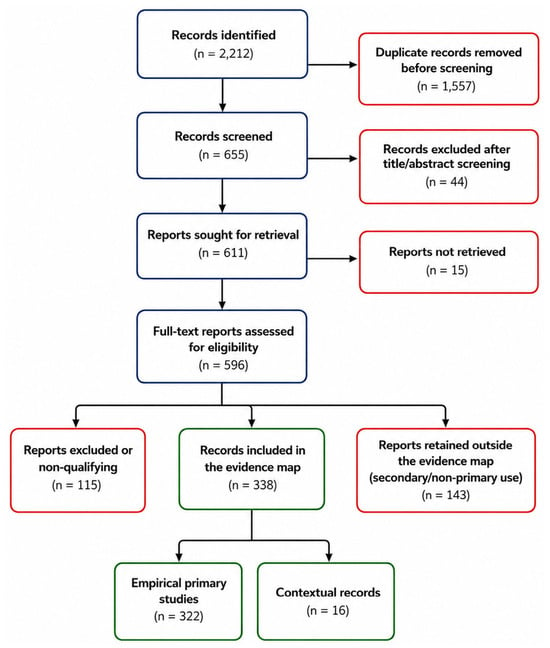
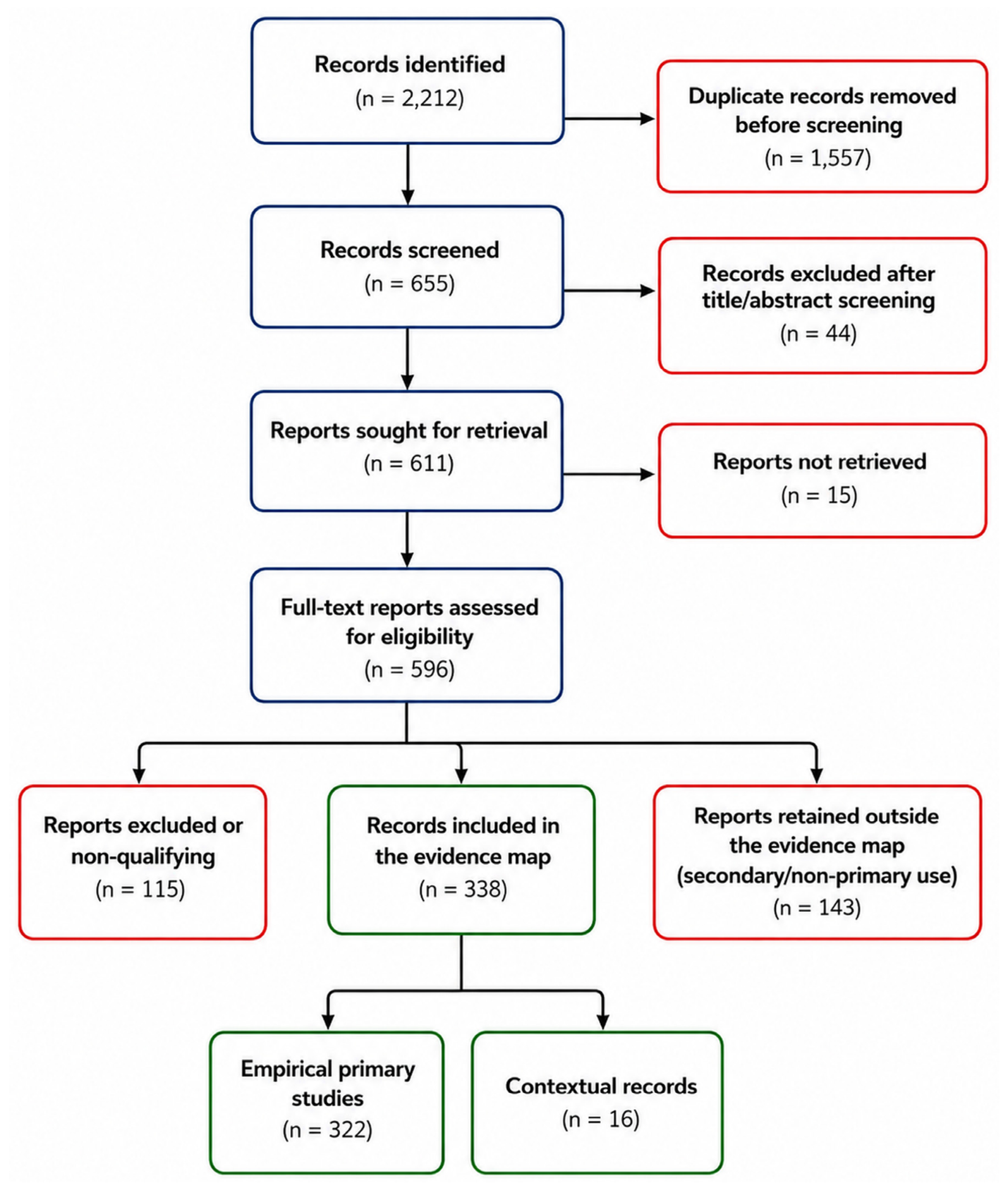
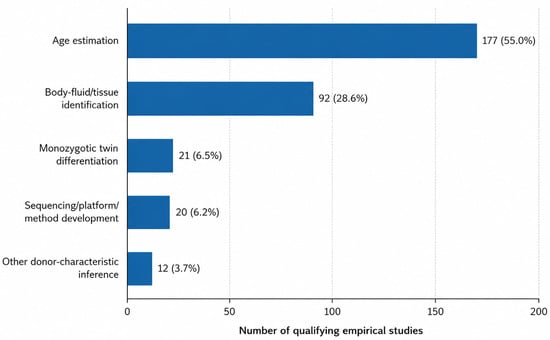
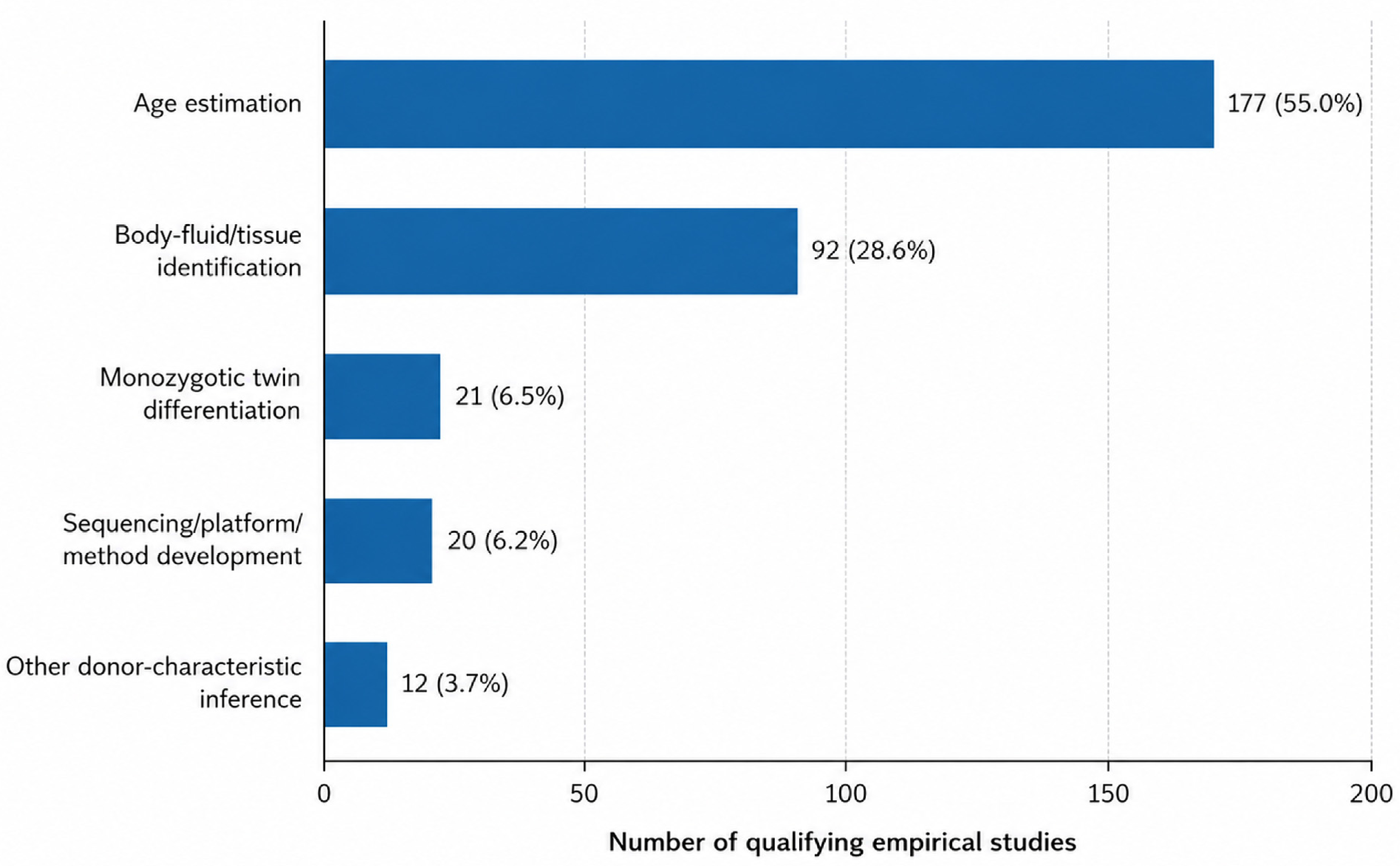
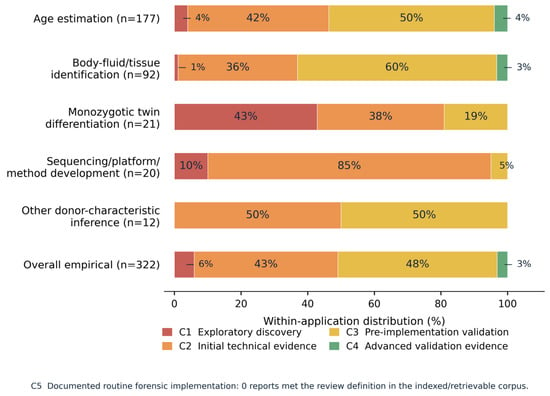
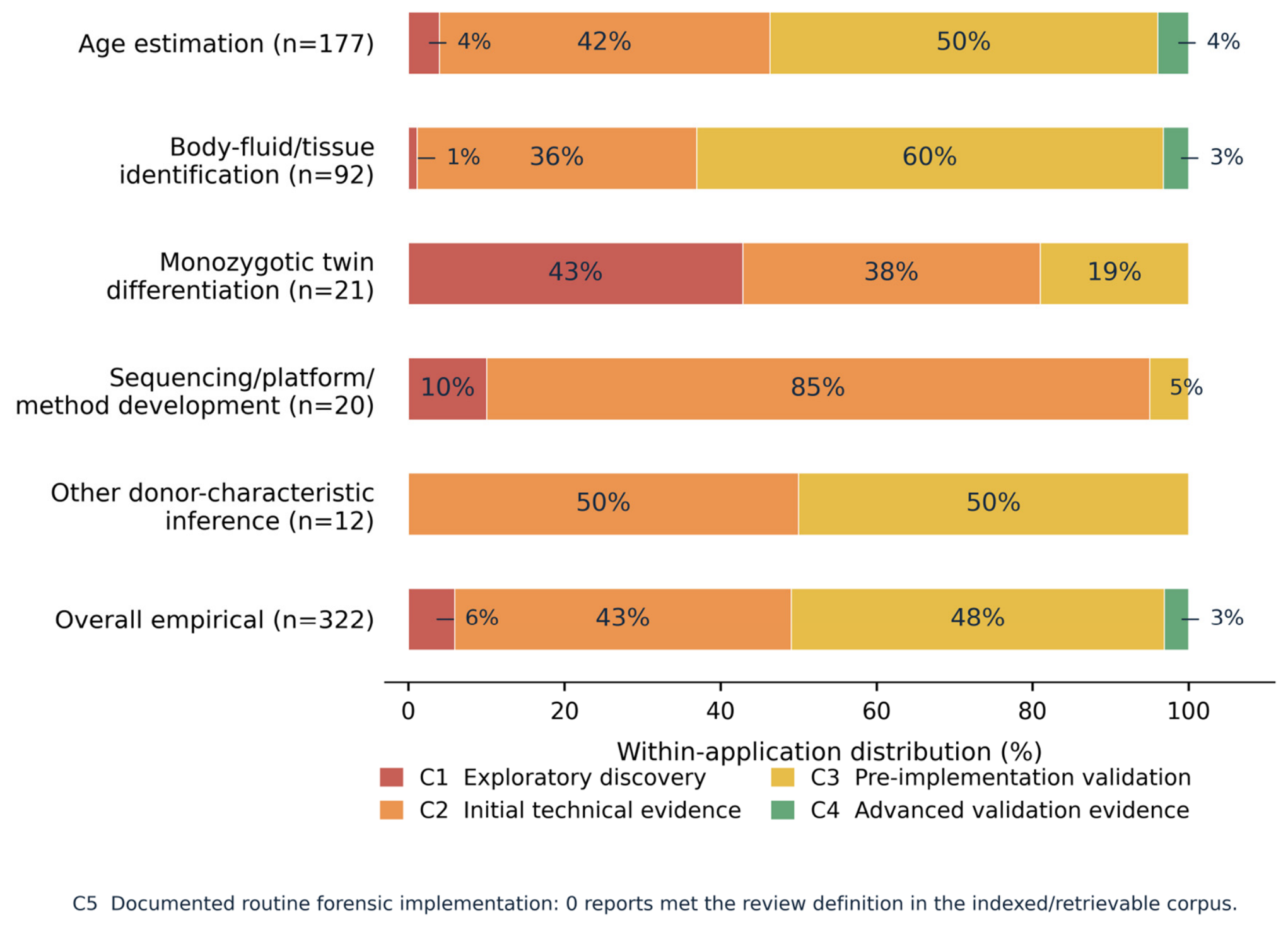
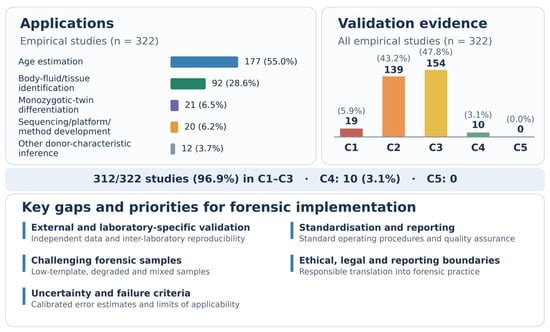
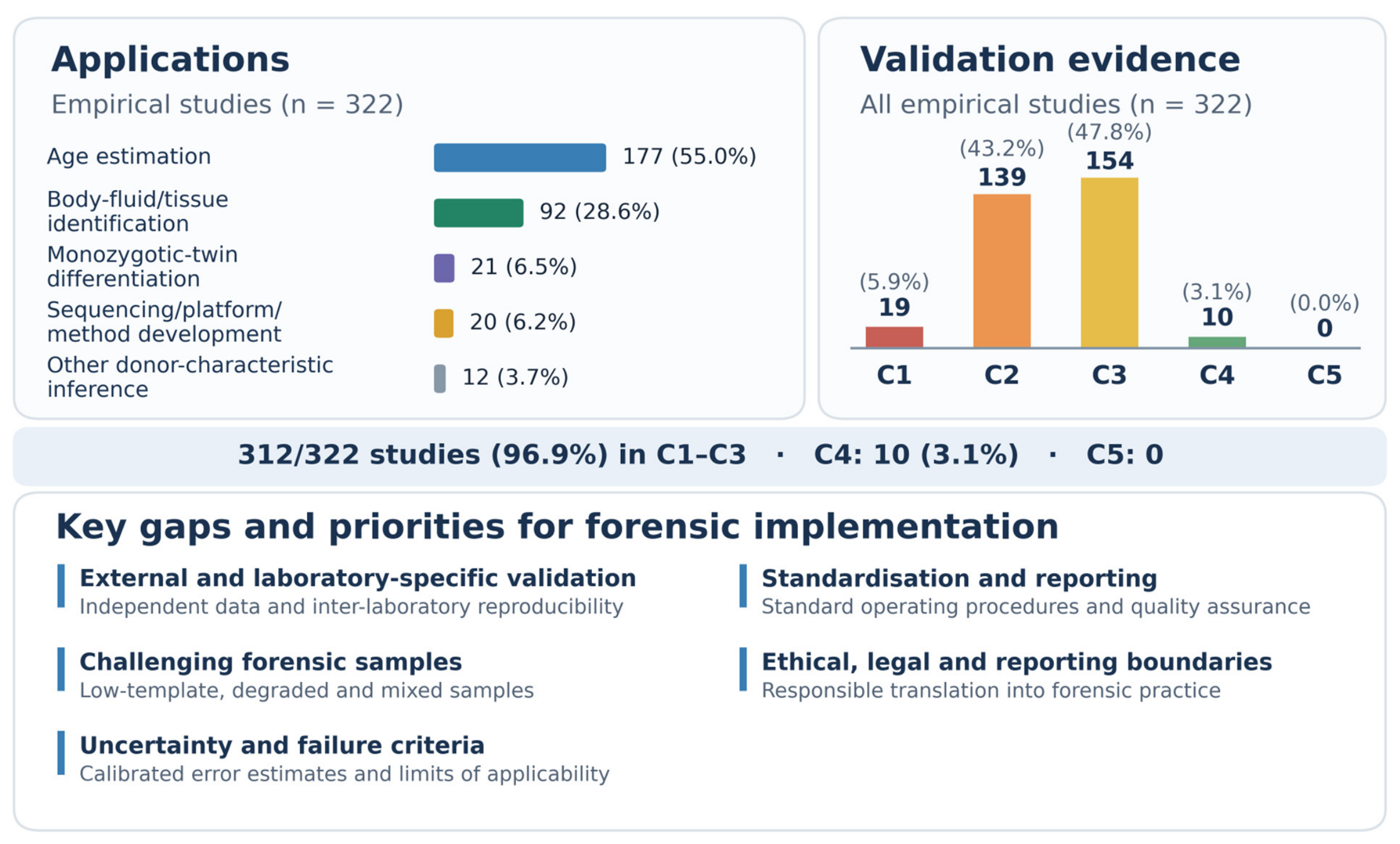

Disclaimer/Publisher’s Note: The statements, opinions and data contained in all publications are solely those of the individual author(s) and contributor(s) and not of MDPI and/or the editor(s). MDPI and/or the editor(s) disclaim responsibility for any injury to people or property resulting from any ideas, methods, instructions or products referred to in the content. |
© 2026 by the authors. Licensee MDPI, Basel, Switzerland. This article is an open access article distributed under the terms and conditions of the Creative Commons Attribution (CC BY) license.