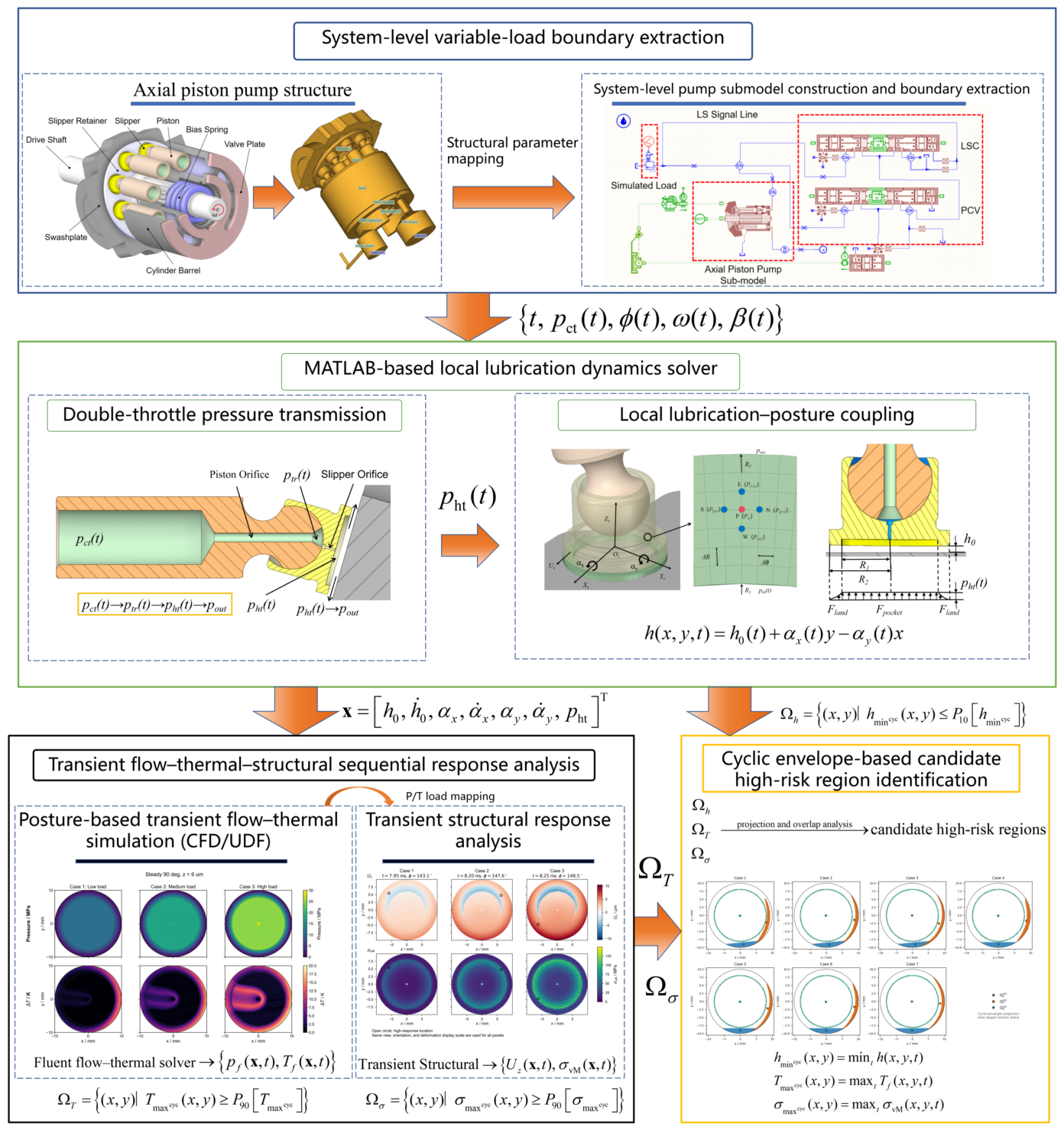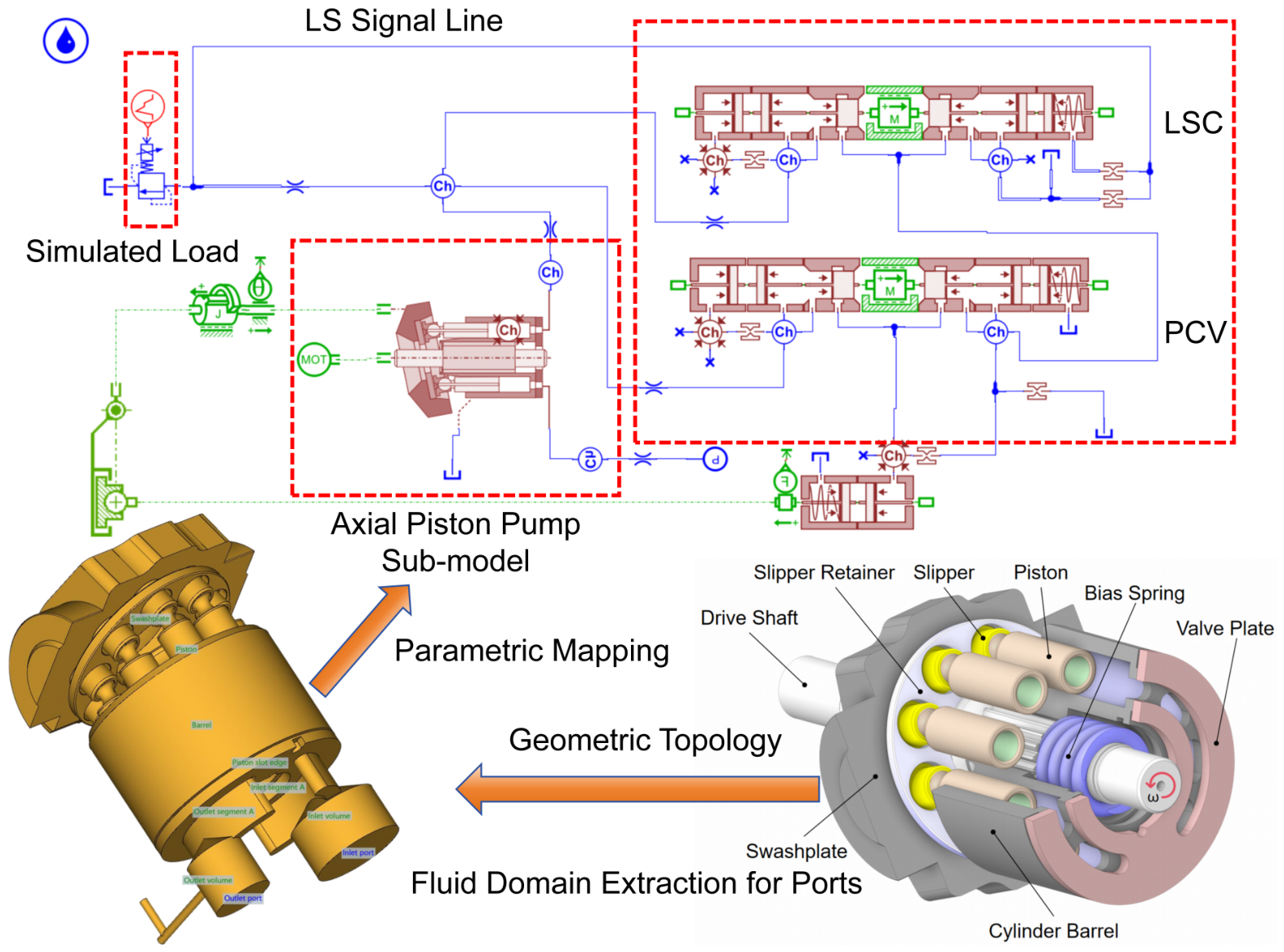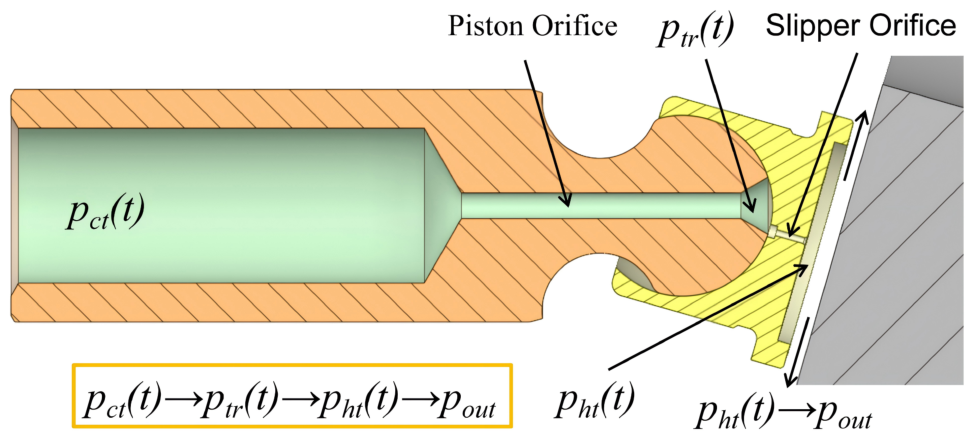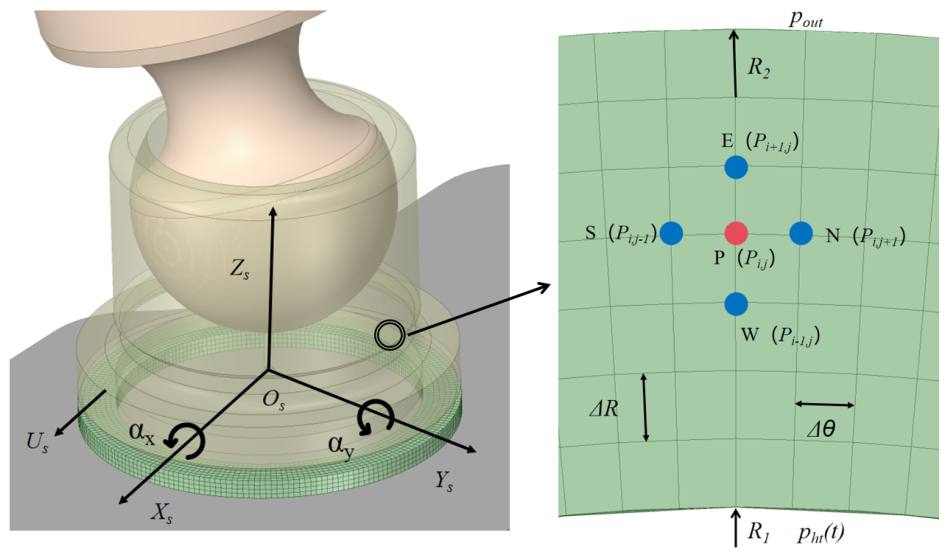
Transient Flow–Thermal–Structural Response and Candidate High-Risk Region Identification of an Axial Piston Pump Slipper Pair Under Variable Loading

Abstract
Share and Cite
Li, J.; Xiong, Z.; Liu, Z.; Liu, X.; Liu, S.; Guo, C.; Zhou, X.; Hu, W. Transient Flow–Thermal–Structural Response and Candidate High-Risk Region Identification of an Axial Piston Pump Slipper Pair Under Variable Loading. Lubricants 2026, 14, 285. https://doi.org/10.3390/lubricants14080285
Li J, Xiong Z, Liu Z, Liu X, Liu S, Guo C, Zhou X, Hu W. Transient Flow–Thermal–Structural Response and Candidate High-Risk Region Identification of an Axial Piston Pump Slipper Pair Under Variable Loading. Lubricants. 2026; 14(8):285. https://doi.org/10.3390/lubricants14080285
Chicago/Turabian StyleLi, Jiabao, Zhonggang Xiong, Zhong Liu, Xintao Liu, Sibo Liu, Cong Guo, Xingyu Zhou, and Wenqiang Hu. 2026. "Transient Flow–Thermal–Structural Response and Candidate High-Risk Region Identification of an Axial Piston Pump Slipper Pair Under Variable Loading" Lubricants 14, no. 8: 285. https://doi.org/10.3390/lubricants14080285
APA StyleLi, J., Xiong, Z., Liu, Z., Liu, X., Liu, S., Guo, C., Zhou, X., & Hu, W. (2026). Transient Flow–Thermal–Structural Response and Candidate High-Risk Region Identification of an Axial Piston Pump Slipper Pair Under Variable Loading. Lubricants, 14(8), 285. https://doi.org/10.3390/lubricants14080285