Physics-Informed Deep Learning for Dynamic Friction Coefficient Prediction in the Pantograph–Catenary System Under Complex Current-Carrying Conditions

 ,
,
Abstract
1. Introduction
1.1. Background
1.2. Literature Review
1.3. Organization and Contributions
- The prediction target for the current-carrying friction interface of the pantograph–catenary system is extended from the conventional wear amount to the dynamic friction coefficient, thereby enhancing the sensitivity of real-time monitoring of the pantograph–catenary interfacial state.
- A physics-informed PISSA-CNN-LSTM model is proposed, in which operating-condition information is embedded into the search-space construction process, achieving simultaneous improvements in prediction accuracy, optimization efficiency, and physical consistency.
2. Current-Carrying Friction Test and Data Preprocessing
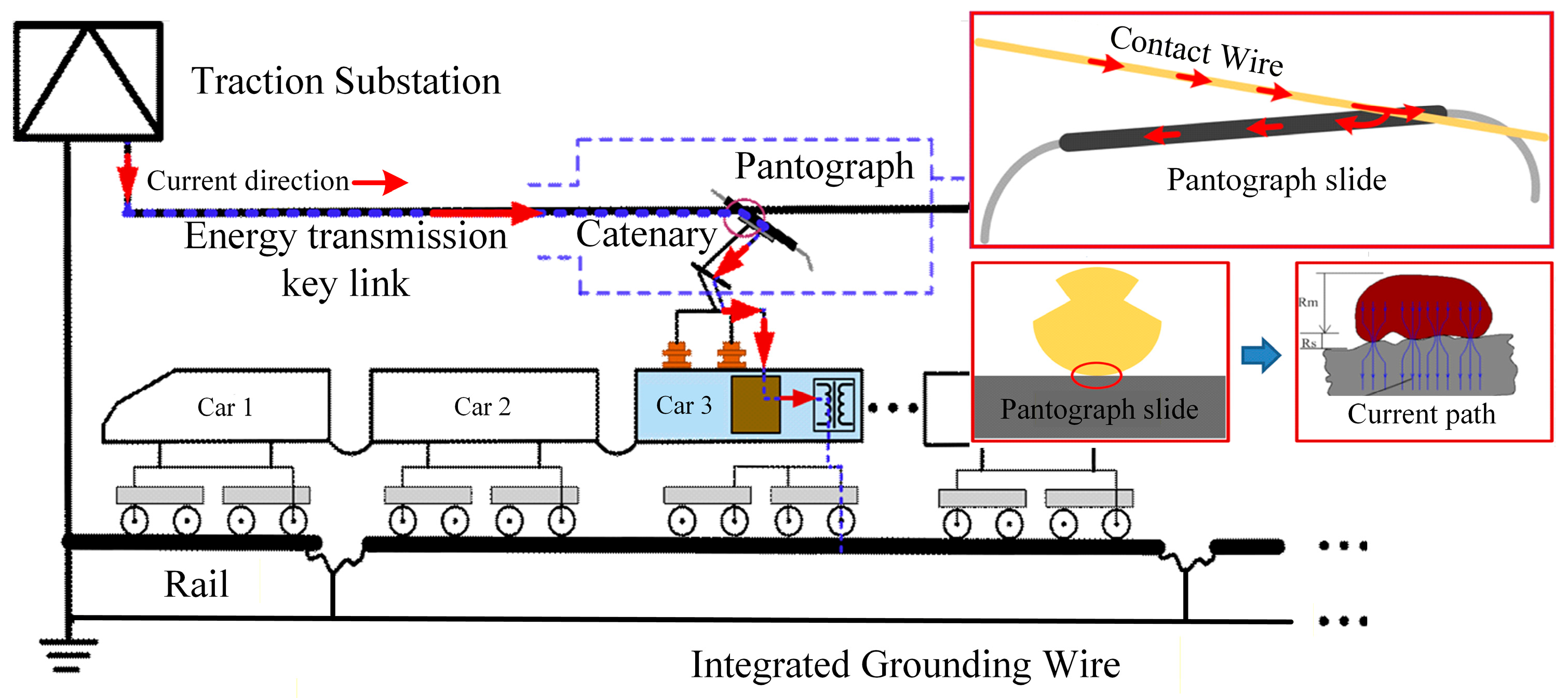
2.1. Test Platform
2.2. Data Processing
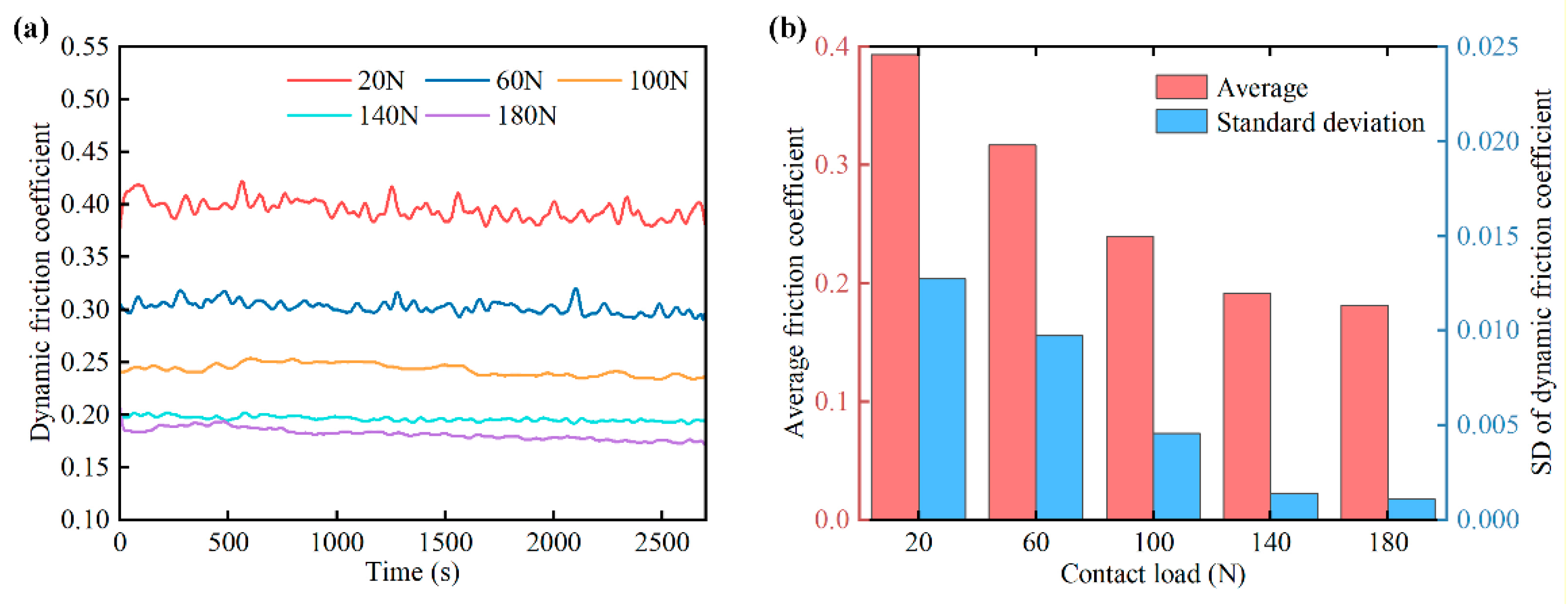
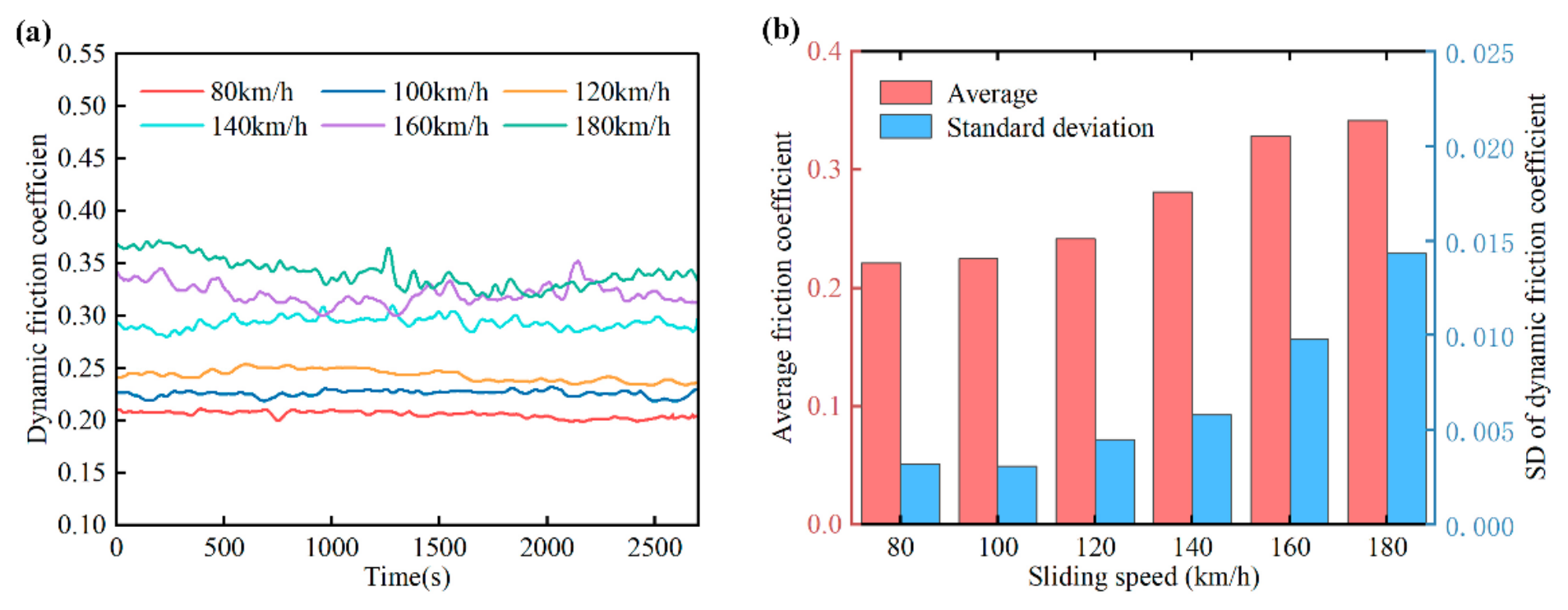
2.3. Dynamic Friction Coefficient Analysis
3. PISSA-CNN-LSTM Model Construction
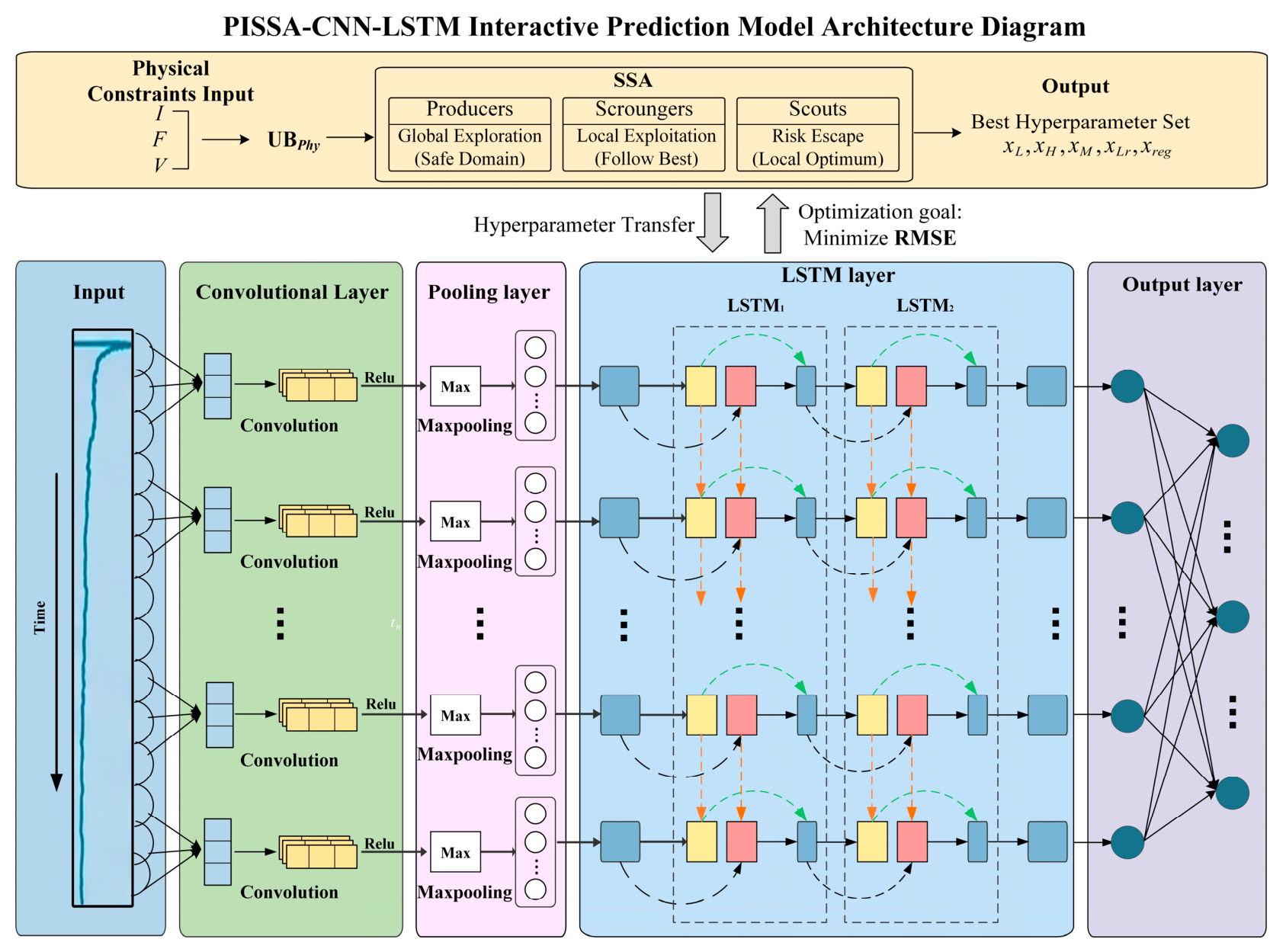
3.1. Construction of the CNN-LSTM Model
3.2. SSA-Based Hyperparameter Optimization of the CNN-LSTM Model
3.3. Physics-Informed Search Space Reconstruction
- (1)
- Influence of the current parameter. As the current approaches the high-current discharge regime, interface arcing and arc ablation become more pronounced, leading to stronger fluctuations in the time-series signal of the friction coefficient. Meanwhile, abrupt local variations and random disturbances become more frequent, resulting in increased signal complexity. Therefore, the upper search bound for the number of hidden units can be appropriately increased to enhance the model’s representational capacity for complex time-series patterns. In addition, under high-current conditions, parameter updates during training are more prone to oscillations. Accordingly, the upper search bound for the initial learning rate should be appropriately reduced as the current value increases, thereby improving training stability.
- (2)
- Influence of the contact load parameter. Under low-load conditions, contact stability at the interface is relatively poor, making contact loss and arcing more likely to occur. As a result, fluctuations and randomness in the time-series signal of the friction coefficient become more pronounced. Therefore, the upper search bound for the number of hidden units can be appropriately increased. Under high-load conditions, the interfacial contact gradually becomes more stable, and the time-series signal tends to stabilize. If excessively high model complexity is maintained, the model may overfit incidental fluctuations and secondary disturbances. Therefore, the L2 regularization constraint should be appropriately strengthened, and the model capacity should be properly reduced.
- (3)
- Influence of the sliding speed parameter. Under high-speed operating conditions, vibration-induced impacts at the interface and arcing become more pronounced, while the fluctuation amplitude and nonlinear complexity of the time-series signal of the friction coefficient increase simultaneously. Therefore, the upper search bound for the number of hidden units should also be appropriately increased. Meanwhile, because mini-batch training is more susceptible to increased variance in gradient estimates, the upper search bound for the batch size should be appropriately enlarged to reduce gradient-estimation variance and improve parameter-update stability. In addition, the number of LSTM layers is affected by the coupled effects of current, contact load, and sliding speed. Since the required depth of time-series modeling varies under different operating conditions, its search boundaries should be adjusted in a unified manner.
4. Results and Discussion
4.1. Comparison and Analysis of Model Predictive Performance
4.2. Hyperparameter Optimization and Convergence Efficiency Analysis
4.3. Robustness and Statistical Significance Analysis
5. Potential Extensions and Applications
6. Conclusions
- (1)
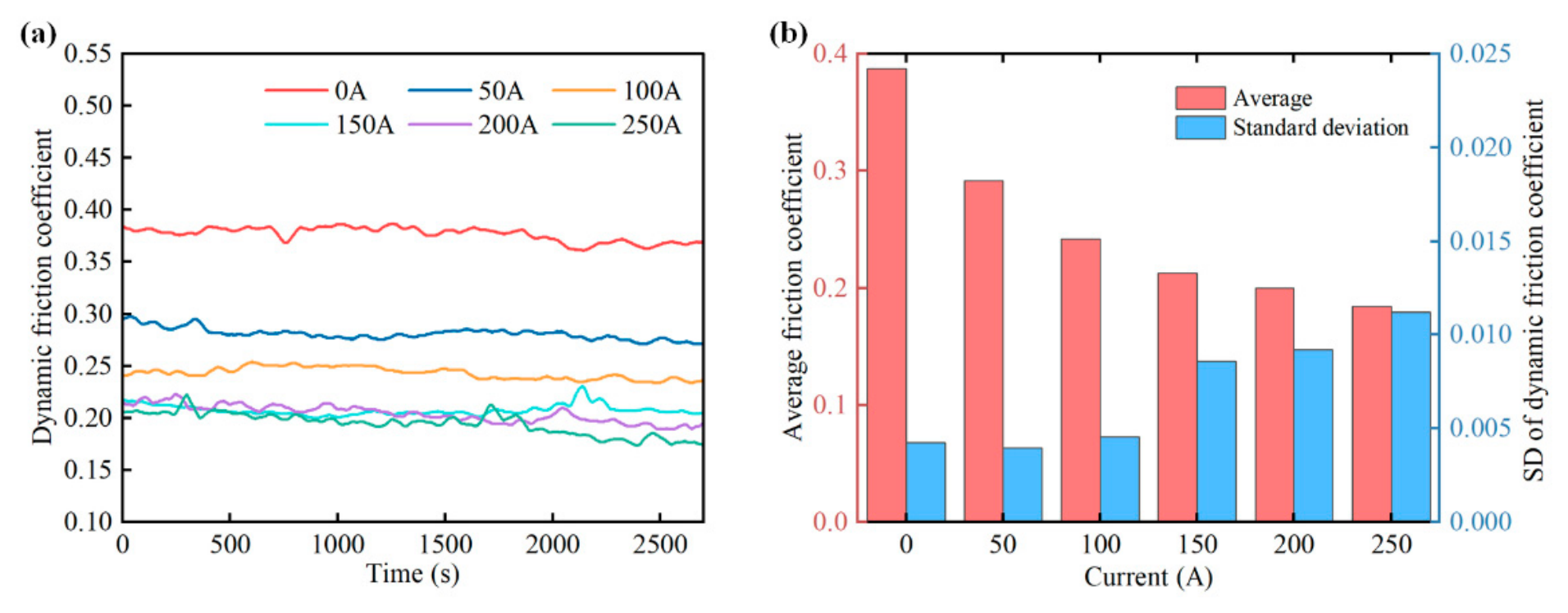
- Increasing the current reduces the mean friction coefficient while intensifying its fluctuations. Increasing the contact load reduces both the mean value and the fluctuation amplitude of the friction coefficient. In contrast, increasing the sliding speed causes both the mean value and the fluctuation intensity of the friction coefficient to increase simultaneously. The friction coefficient sequence exhibits strong nonlinearity, non-stationarity, and operating-condition dependence, providing a basis for constructing a physics-informed search space.
- (2)
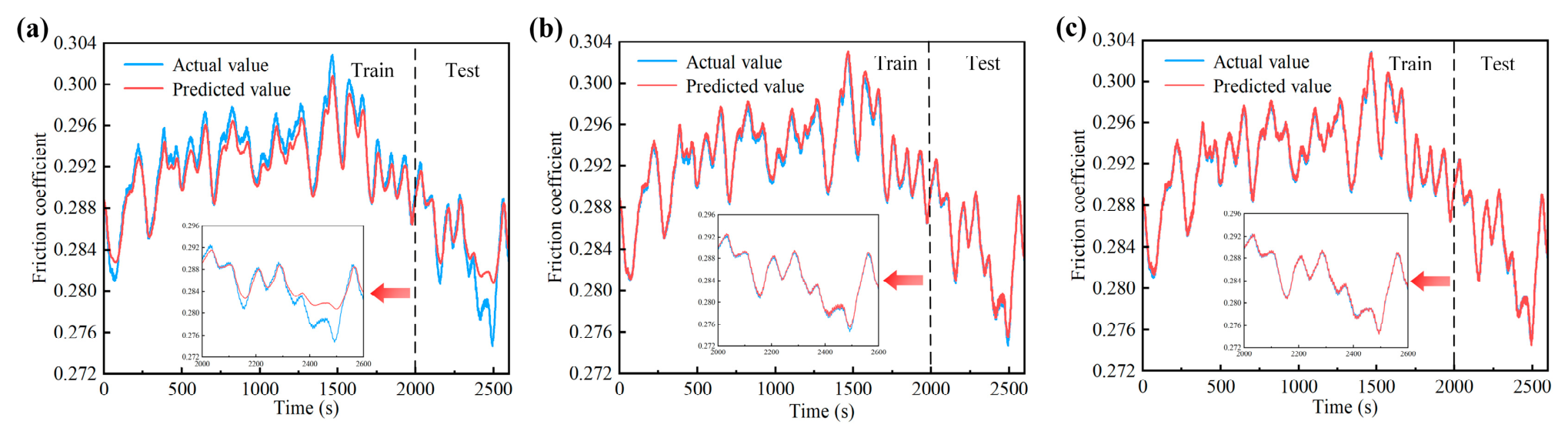
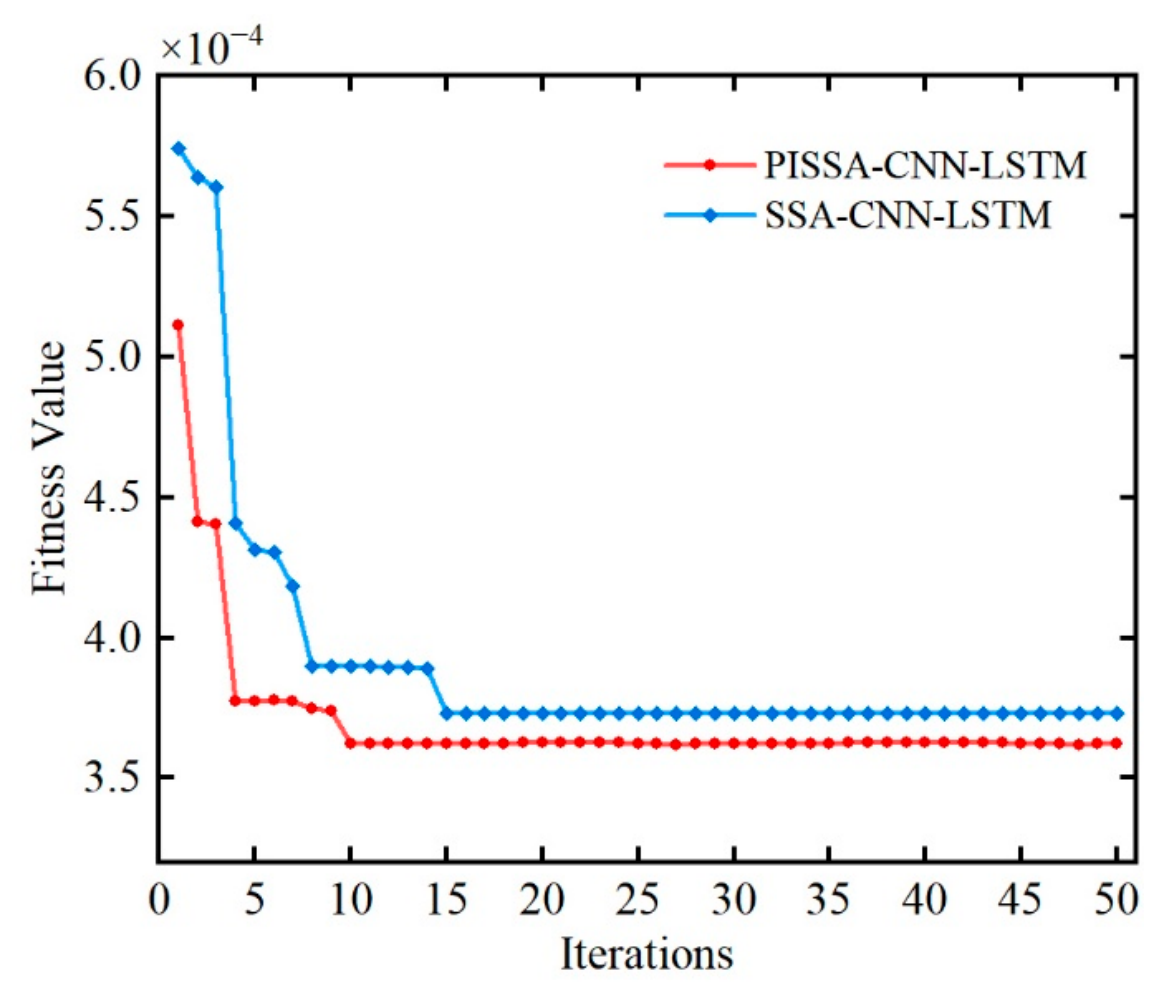
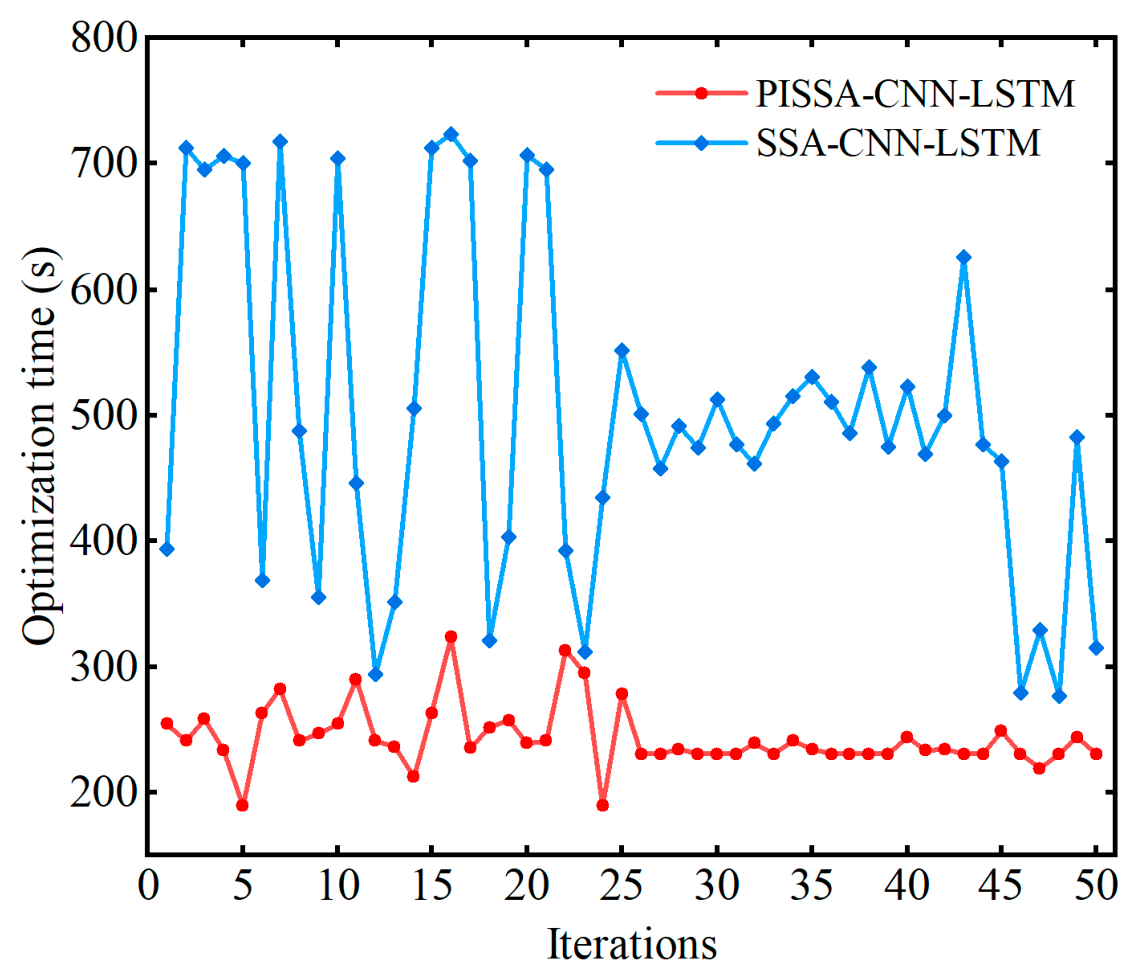
- PISSA-CNN-LSTM maps operating-condition parameters to hyperparameter search boundaries, thereby enabling the transition from black-box optimization to physics-informed guided search. Under the validation operating condition, PISSA-CNN-LSTM reaches the optimal fitness value at the 10th iteration, whereas SSA-CNN-LSTM stagnates at the 15th iteration. The average optimization time of PISSA-CNN-LSTM is 246.94 s, which is 49.38% shorter than that of SSA-CNN-LSTM. On the test set, PISSA-CNN-LSTM achieves an R2 of 0.9904, an RMSE of 3.6479 × 10⁻⁴, an MAE of 3.0009 × 10⁻⁴, and a MAPE of 0.0609%, outperforming the comparative models in all metrics.
- (3)
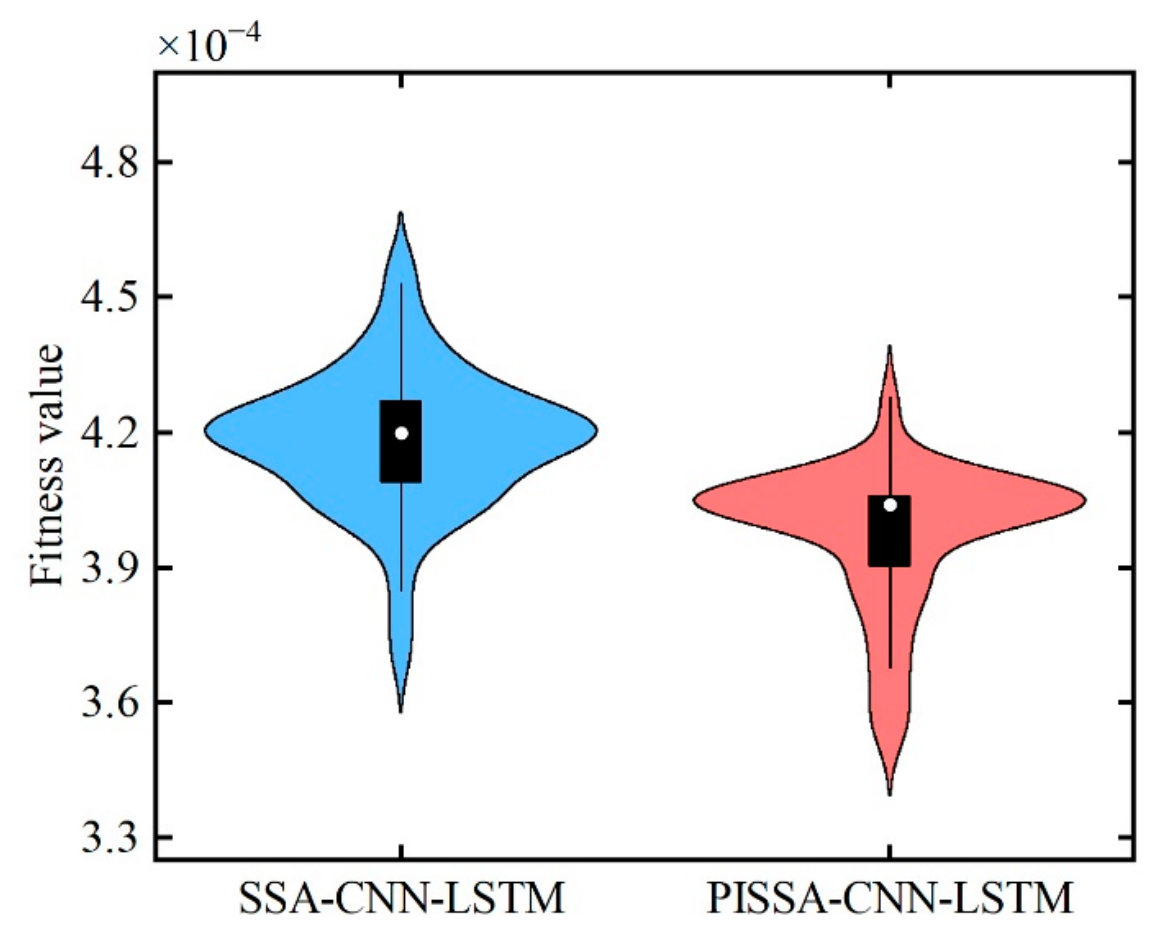
- In 100 repeated trials, the RMSE distribution of PISSA-CNN-LSTM lies at lower values and exhibits smaller dispersion. The Wilcoxon test yields p = 3.6647 × 10⁻⁴ < 0.05, indicating that the performance improvement is statistically significant. The hyperparameter comparison shows that PISSA-CNN-LSTM obtains a larger number of hidden units, a larger batch size, a higher learning rate, and a larger L2 regularization coefficient, which is consistent with the physics-based rationale that higher model capacity is required under high-current and high-speed operating conditions. This strategy can effectively narrow ineffective search regions and improve both optimization efficiency and predictive robustness.
Author Contributions
Funding
Data Availability Statement
Acknowledgments
Conflicts of Interest
Abbreviations
| CNN | Convolutional neural network |
| LSTM | Long short-term memory |
| CNN-LSTM | Hybrid model combining CNN and LSTM |
| SSA | Sparrow search algorithm |
| PISSA | Physics-informed Sparrow search algorithm |
| PISSA-CNN-LSTM | CNN-LSTM model optimized by physics-informed SSA |
| Ytrain | Training output dataset |
| Ytest | Testing output dataset |
| y | Actual output value |
| R2 | Coefficient of determination |
| RMSE | Root mean square error |
| MAE | Mean absolute error |
| MAPE | Mean absolute percentage error |
| p | Significance probability in the Wilcoxon rank-sum test |
References
- Wu, G.N.; Dong, K.L.; Xu, Z.L.; Xiao, S.; Wei, W.F.; Chen, H.; Li, J.; Huang, Z.; Li, J.; Gao, G.; et al. Pantograph–catenary electrical contact system of high-speed railways: Recent progress, challenges, and outlooks. Railw. Eng. Sci. 2022, 30, 437–467. [Google Scholar] [CrossRef] [Scilit]
- Gao, G.Q.; Qian, P.Y.; Xu, Z.L.; Dong, K.L.; Wang, Q.S.; Peng, W.; Liu, Y.; Ma, Y.; Xiao, S.; Huang, G.; et al. The evolution law of the pantograph–catenary arc with the multi-stress coupled force analysis under the sub-atmospheric pressure strong-airflow condition. Phys. Plasmas 2023, 30, 053502. [Google Scholar] [CrossRef] [Scilit]
- Zhi, X.S.; Zhou, N.; Wei, H.F.; Chen, H.M.; Cheng, Y.; Sun, Y.; Zhao, L.; Huang, G.; Zhang, W. Analysis of the abnormal wear of the pantograph contact strip through combined experimental and simulation approaches. Sci. Rep. 2025, 15, 45706. [Google Scholar] [CrossRef] [Scilit] [PubMed]
- Luo, Q.; Bruni, S.; Bucca, G.; Mei, G.M.; Chen, G.X.; Zhang, W.H. Wear performance of pantograph–overhead catenary system: A review. Railw. Eng. Sci. 2026, 1–20. [Google Scholar] [CrossRef] [Scilit]
- Wang, P.; Wei, F.C.; Zhao, Z.W.; Guo, Y.G.; Du, S.M.; Hao, Z.H. Effect of heat treatment temperature on mechanical and tribological properties of copper impregnated carbon/carbon composite. Tribol. Int. 2021, 164, 107209. [Google Scholar] [CrossRef] [Scilit]
- Zhi, X.S.; Zhou, N.; Cheng, Y.; Wei, H.F.; Yao, Y.M.; Zhang, W.H.; Chen, G. Study on wear performance and mechanism of pantograph contact strip that contact with damaged contact wire under ambient humidity. Friction 2026, 14, 9441101. [Google Scholar] [CrossRef] [Scilit]
- Gao, G.Q.; Fu, R.; Wang, Q.S.; Chen, J.H.; Qian, P.Y.; Zeng, J.J.; Weng, X.; Li, H.; Yang, Z.; Wang, H.; et al. Progress on current-carry friction and wear and prediction models: A review. Friction 2025, 14, 9441151. [Google Scholar] [CrossRef] [Scilit]
- Fu, Y.; Qin, H.; Xu, X.; Zhang, X.; Guo, Z. What are the Progresses and Challenges, from the Electrical Properties of Current-Carrying Friction System to Tribological Performance, for a Stable Current-Carrying Interface? J. Bio Tribo Corros. 2022, 8, 4. [Google Scholar] [CrossRef] [Scilit]
- Song, J.Y.; Dong, C.L.; Bai, X.Q.; Yuan, C.Q. Friction-coefficient prediction and wear-state diagnosis of rotary-vane steering gear seals using CNN-LSTM and LightGBM. Tribol. Int. 2025, 212, 110991. [Google Scholar] [CrossRef] [Scilit]
- Yin, F.L.; He, Z.Z.; Nie, S.L.; Ji, H.; Ma, Z.H. Tribological properties and wear prediction of various ceramic friction pairs under seawater lubrication condition of different medium characteristics using CNN-LSTM method. Tribol. Int. 2024, 189, 108935. [Google Scholar] [CrossRef] [Scilit]
- Xue, J.K.; Shen, B. A survey on sparrow search algorithms and their applications. Int. J. Syst. Sci. 2024, 55, 814–832. [Google Scholar] [CrossRef] [Scilit]
- Hosseinzadeh, M.; Andriani, D.P.; Rahmani, A.M.; Gharehchopogh, F.S.; Rahimi, N.; Khan, A.; Darwesh, A.; Khoshvaght, P.; Din, S.; Porntaveetus, T. A Comprehensive Survey of SSA-LSTM Models: Signal Decomposition Techniques, Algorithmic Advances, Practical Applications, and Future Directions. Arch. Comput. Methods Eng. 2026. [Google Scholar] [CrossRef] [Scilit]
- Wu, J.P.; Zhao, P.; Cui, J.H.; Wang, L.Y.; Yang, C.B.; Ouyang, J.P. Data-Driven Prediction of Coefficient of Friction in Wet Friction Components: A Model Development and Interpretability Analysis. J. Tribol. 2025, 147, 074601. [Google Scholar] [CrossRef] [Scilit]
- Xia, Y.Q.; Zhao, H.B.; Feng, X. Prediction of grease performance and optimal additive ratio based on the SSA-GDA-LSSVM model. Tribol. Int. 2025, 202, 110366. [Google Scholar] [CrossRef] [Scilit]
- Zhu, K.P.; Huang, C.Y.; Li, S.; Lin, X. Physics-informed Gaussian process for tool wear prediction. ISA Trans. 2023, 143, 548–556. [Google Scholar] [CrossRef] [Scilit] [PubMed]
- Kovalev, A.; Tian, Y.; Meng, Y.G. Prediction of ball-on-plate friction and wear by ANN with data-driven optimization. Friction 2024, 12, 1235–1249. [Google Scholar] [CrossRef] [Scilit]
- Pashmforoush, F.; Araghizad, A.E.; Budak, E. Physics-informed tool wear prediction in turning process: A thermo-mechanical wear-included force model integrated with machine learning. J. Manuf. Syst. 2024, 77, 266–283. [Google Scholar] [CrossRef] [Scilit]
- Zeng, Y.C.; Song, D.L.; Zhang, W.H.; Zhou, B.; Xie, M.Y.; Tang, X. A new physics-based data-driven guideline for wear modelling and prediction of train wheels. Wear 2020, 456–457, 203355. [Google Scholar] [CrossRef] [Scilit]
- Yang, Y.; Wu, X.Y.; Yu, J.B.; Wang, Y.S.; Sun, X.W. Simulation analysis of slip rings based on archard model. Ind. Contr. Comput. 2019, 32, 107–108+139. (In Chinese) [Google Scholar]
- Wang, H. Research on the Influence of Interface Oxidation on the Characteristics of Friction and Wear of Carbon–Copper Electrical Sliding Contacts. Ph.D. Thesis, Southwest Jiaotong University, Chengdu, China, 2022. [Google Scholar] [CrossRef]
- Ren, W.B.; Zhang, X.; Meng, X.X. Fretting behavior of gold-plated contact materials used in high-frequency vibration and different temperature environment. IEEE Trans. Compon. Packag. Manuf. Technol. 2017, 7, 572–581. [Google Scholar] [CrossRef] [Scilit]
- Mei, G.M.; Fu, W.M.; Chen, G.X.; Zhang, W.H. Effect of high-density current on the wear of carbon sliders against Cu-Ag wires. Wear 2020, 452, 203275. [Google Scholar] [CrossRef] [Scilit]
- Zhao, H.; Feng, Y.; Zhou, Z.J.; Qian, G.; Zhang, J.C.; Huang, X.C.; Zhang, X. Effect of electrical current density, apparent contact pressure, and sliding velocity on the electrical sliding wear behavior of Cu-Ti3AlC2 composites. Wear 2020, 444–445, 203156. [Google Scholar] [CrossRef] [Scilit]
- Li, K.M.; Shang, G.B.; Du, S.M.; Zhang, Y.Z. Effects of friction velocity and current density on current-carrying friction and wear properties of copper matrix composites. Mech. Eng. Mater. 2015, 39, 22–27. (In Chinese) [Google Scholar]
- Shen, M.X.; Ji, D.H.; Hu, Q.; Xiao, L.; Li, Q.P. Current-carrying tribological behavior of C/Cu contact pairs in extreme temperature and humidity environments for railway catenary systems. Sci. China Technol. Sci. 2024, 67, 2537–2548. [Google Scholar] [CrossRef] [Scilit]
- Bouchoucha, A.; Chekroud, S.; Paulmier, D. Influence of the electrical sliding speed on friction and wear processes in an electrical contact copper-stainless steel. Appl. Surf. Sci. 2004, 223, 330–342. [Google Scholar] [CrossRef] [Scilit]
- Yang, Z.H.; Shang, G.B.; Sun, L.M.; Zhang, Y.Z. Effect of relative sliding velocity on current-carrying friction properties of copper-graphite composites. J. Henan Univ. Sci. Technol. 2021, 42, 1–6+117. (In Chinese) [Google Scholar] [CrossRef] [Scilit]
- Wang, L.; Hu, D.C. Study on arc erosion resistance of C/C composites. J. Chin. Soc. Corros. Prote 2009, 29, 235–240. (In Chinese) [Google Scholar]
- Chen, T.H.; Song, C.F.; Zhang, Y.Y.; Niu, K.; Liu, Z.L.; Wang, L.; Sun, C.; Li, M.; Zhang, Y. Current-carrying contact character and wear behavior of an elastic ring at different rolling speeds. Eng. Fail Anal. 2022, 131, 105825. [Google Scholar] [CrossRef] [Scilit]
- Li, C.H.; Zhang, Y.Y.; Ceng, Z.X.; Niu, K.; Song, C.F.; Shang, G.B.; Zhang, Y.Z. Research progress of current-carrying friction and wear. Lubr. Eng. 2022, 47, 153–167. (In Chinese) [Google Scholar]




| Material | Thermal Conductivity λ (J/msk) | Density β (g/cm3) | Hardness H (Pa) |
|---|---|---|---|
| Contact wire | 380 | 3.4 | 8.6 × 10⁸ |
| Carbon strip | 10 | 2.3 | 3.3 × 10⁸ |
| Test Parameter | Parameter Levels |
|---|---|
| DC (A) | 0, 50, 100, 150, 200, 250 |
| Contact load (N) | 20, 60, 100, 140, 180 |
| Sliding speed (km·h−1) | 80, 100, 120, 140, 160, 180 |
| Model | R2 | RMSE | MAE | MAPE |
|---|---|---|---|---|
| CNN-LSTM | 0.6753 | 2.1203 × 10⁻³ | 1.5837 × 10⁻³ | 0.3232% |
| SSA-CNN-LSTM | 0.9899 | 3.7385 × 10⁻⁴ | 3.0414 × 10⁻⁴ | 0.0618% |
| PISSA-CNN-LSTM | 0.9904 | 3.6479 × 10⁻⁴ | 3.0009 × 10⁻⁴ | 0.0609% |
| Hyperparameter | SSA-CNN-LSTM | PISSA-CNN-LSTM |
|---|---|---|
| Number of LSTM layers | 1 | 1 |
| Number of hidden units | 7 | 16 |
| Minimum batch size | 850 | 1420 |
| Learning rate | 0.00068426 | 0.00126218 |
| L2 regularization coefficient | 0.00033903 | 0.00071714 |
Disclaimer/Publisher’s Note: The statements, opinions and data contained in all publications are solely those of the individual author(s) and contributor(s) and not of MDPI and/or the editor(s). MDPI and/or the editor(s) disclaim responsibility for any injury to people or property resulting from any ideas, methods, instructions or products referred to in the content. |
© 2026 by the authors. Licensee MDPI, Basel, Switzerland. This article is an open access article distributed under the terms and conditions of the Creative Commons Attribution (CC BY) license.
Share and Cite
Chen, J.; Gao, G.; Fu, R.; Wang, Q.; Lan, T.; Qian, P.; Huang, G.; Wang, H.; Wu, G. Physics-Informed Deep Learning for Dynamic Friction Coefficient Prediction in the Pantograph–Catenary System Under Complex Current-Carrying Conditions. Lubricants 2026, 14, 284. https://doi.org/10.3390/lubricants14080284
Chen J, Gao G, Fu R, Wang Q, Lan T, Qian P, Huang G, Wang H, Wu G. Physics-Informed Deep Learning for Dynamic Friction Coefficient Prediction in the Pantograph–Catenary System Under Complex Current-Carrying Conditions. Lubricants. 2026; 14(8):284. https://doi.org/10.3390/lubricants14080284
Chicago/Turabian StyleChen, Jinhui, Guoqiang Gao, Rong Fu, Qingsong Wang, Tianwei Lan, Pengyu Qian, Guizao Huang, Hong Wang, and Guangning Wu. 2026. "Physics-Informed Deep Learning for Dynamic Friction Coefficient Prediction in the Pantograph–Catenary System Under Complex Current-Carrying Conditions" Lubricants 14, no. 8: 284. https://doi.org/10.3390/lubricants14080284
APA StyleChen, J., Gao, G., Fu, R., Wang, Q., Lan, T., Qian, P., Huang, G., Wang, H., & Wu, G. (2026). Physics-Informed Deep Learning for Dynamic Friction Coefficient Prediction in the Pantograph–Catenary System Under Complex Current-Carrying Conditions. Lubricants, 14(8), 284. https://doi.org/10.3390/lubricants14080284