Article

From Friction Control to Dynamic Ratcheting and Actuation by Combined Normal and Tangential Oscillations

1
Chair of Theoretical and Applied Mechanics, Samarkand 140104, Uzbekistan
2
Institute of Mechanics, Technische Universität Berlin, 10623 Berlin, Germany
3
Center of Advanced Studies in Mechanics, Tribology, Bio- and Nanotechnologies, Samarkand State University, Samarkand 140104, Uzbekistan
*
Authors to whom correspondence should be addressed.
Lubricants 2026, 14(8), 286; https://doi.org/10.3390/lubricants14080286
Submission received: 17 June 2026 / Revised: 18 July 2026 / Accepted: 24 July 2026 / Published: 25 July 2026

Abstract

The superposition of normal and tangential oscillations in frictional contacts can fundamentally alter the macroscopic friction law and generate directed motion and force. In this work, we investigate the transition between friction reduction, dynamic ratcheting, and vibrational actuation within a unified numerical framework based on a compliant Coulomb friction contact. The system is subjected to simultaneous harmonic oscillations in the normal and tangential directions with an arbitrary phase shift. First, the limiting cases of purely normal and purely tangential oscillations are revisited, demonstrating that both produce equivalent friction–reduction behavior when expressed in terms of appropriate dimensionless parameters. For sufficiently large tangential oscillation amplitudes, a transition to a bidirectional stick-slip regime is identified, characterized by alternating forward and backward motion within a single oscillation cycle. The general case of dual-mode excitation is then analyzed over a broad parameter range. Numerical simulations show that the macroscopic friction coefficient is governed by four dimensionless parameters: the normalized sliding velocity, the normal oscillation ratio, the tangential oscillation parameter, and the phase shift between the oscillation modes. The combined oscillations break the symmetry of the friction law with respect to the direction of motion, resulting in different critical velocities and friction coefficients for positive and negative sliding directions. Depending on the parameter combination, the system exhibits three distinct operational regimes: active friction control, dynamic ratcheting, and vibrational actuation. In the latter regime, the effective friction coefficient becomes negative, indicating a conversion of oscillatory energy into directed mechanical work. The results provide a unified physical interpretation of oscillation-induced transport and force generation in frictional contacts and establish general design principles for vibration-assisted friction-control systems, dynamic ratchets, and oscillatory actuators.

1. Introduction

The use of vibrations and oscillations for controlling and manipulating mechanical systems has attracted sustained attention across many engineering disciplines, including ultrasonic machining, metal forming, precision positioning, and vibration stabilization [1,2,3]. A central physical principle underlying many oscillation-driven systems is symmetry breaking in oscillating contacts, which enables the conversion of periodic excitation into directed macroscopic motion or force generation [4]. Based on this mechanism, a wide range of applications has been developed, such as high-precision linear actuators, traveling-wave ultrasonic motors, vibrational transport systems, and friction-control devices [5,6,7].
In tribological systems, it is well established that oscillations applied either in the normal or in the tangential direction can substantially reduce both static and kinetic friction [8,9,10,11]. The magnitude of this effect strongly depends on the compliance of the contact and its dynamic response to the imposed excitation [12,13]. In addition to the oscillation parameters themselves, contact stiffness represents the most important system parameter governing frictional behavior under oscillatory excitation, as it controls the dynamic response of the contact and the resulting interaction between the oscillating body and the sliding interface.
While the effects of purely normal or purely tangential oscillations are comparatively simple and well understood, the behavior becomes significantly more complex in the case of simultaneous bi-modal excitation [14]. When normal and tangential oscillations are superimposed with a finite phase shift, the friction force generally becomes asymmetric with respect to the direction of sliding velocity. Depending on the oscillation parameters and contact properties, this asymmetry can give rise to several qualitatively different regimes: (1) friction control, (2) dynamic ratcheting, and (3) vibrational actuation.
Previous studies introduced the basic model for contacts subjected to combined normal and tangential oscillations and showed that a phase shift between the two oscillation modes can lead to an asymmetric friction law, dynamic ratcheting, and actuation [14,15]. Reference [14] presented the general classification and several representative examples. The short conference contribution [15] concentrated mainly on two practically important operating conditions, namely zero mean force and zero mean velocity, and presented corresponding two-dimensional projections of the parameter space.
The present paper gives a more systematic and complete presentation of this problem. Pure normal, pure tangential, and combined oscillations are considered in one common dimensionless formulation. The complete friction–velocity characteristics are calculated for both directions of motion over a broad parameter range, and the transition to bidirectional stick-slip motion at large tangential oscillation amplitudes is discussed. The splitting of the positive and negative critical velocities is related to the loss of symmetry of the friction law. In addition, the two-dimensional maps from Ref. [15] are reproduced for the convenience of the reader, and the physical meaning of negative effective friction is clarified by a general energy-balance argument.

2. Method

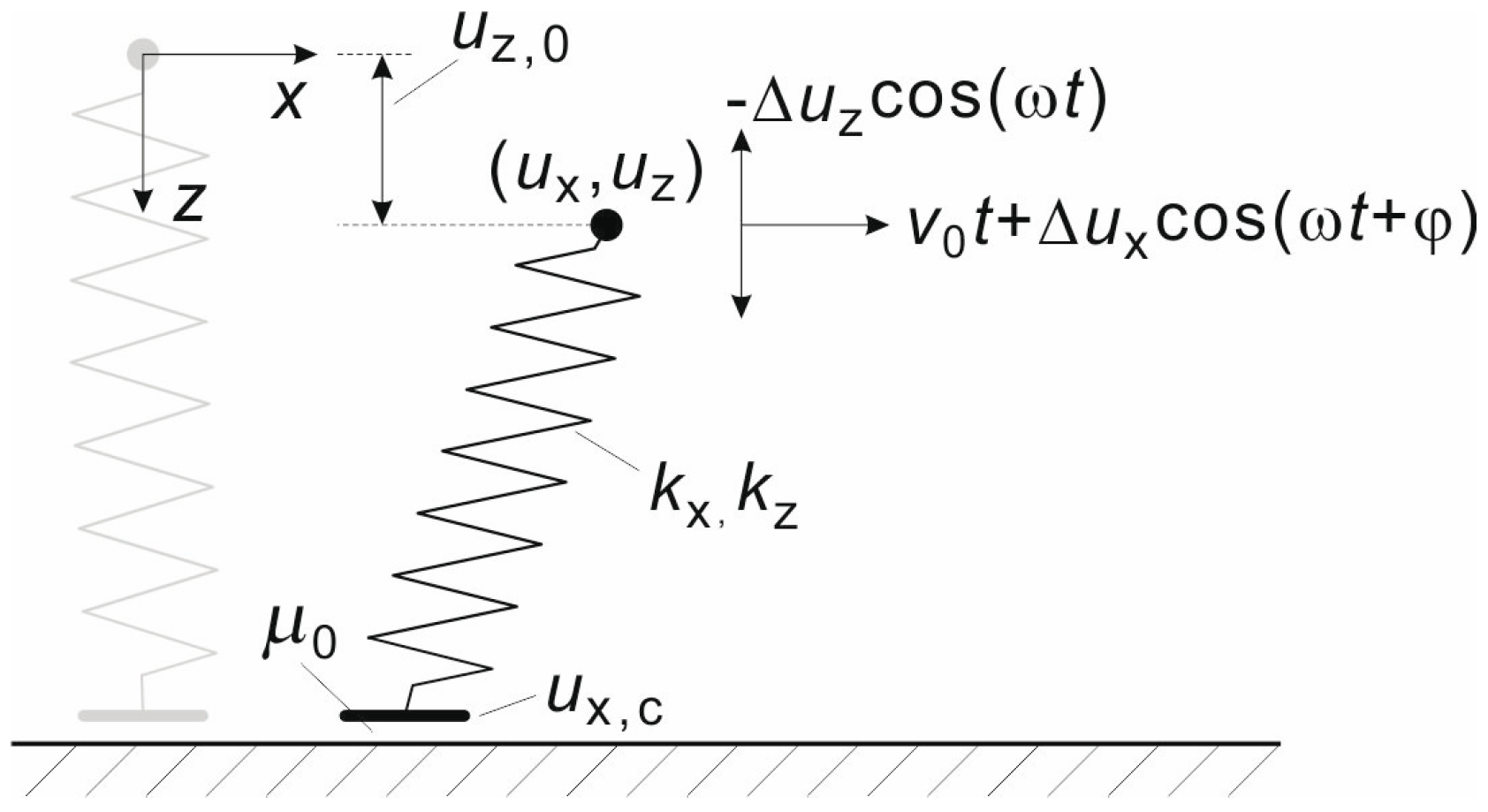
We consider an elastic body (the indenter) in contact with a flat substrate, which may be rigid or elastic. The indenter is pressed against the substrate and moves tangentially with an average sliding velocity. Harmonic oscillations in the normal and tangential directions are superimposed on this motion. The motion is displacement controlled. Therefore, the dynamics of the indenter itself is not considered explicitly, and the contact response is governed mainly by the contact stiffness. The system is reduced to the simple model shown in Figure 1. The contact is represented by a massless point connected to a contact pad by normal and tangential springs with stiffnesses kz and kx. The local interaction obeys Coulomb’s law with the constant coefficient of friction μ0. This basic model and the prescribed kinematics were introduced in Refs. [14,15]. The present paper is concerned with the systematic analysis of the resulting friction–velocity dependencies.
The movement of the point in vertical and tangential direction is prescribed as
u z = u z , 0 Δ u z cos ω t u x = v 0 t + Δ u x cos ω t + φ ,
where uz,0 is the average indentation depth, ∆uz and ∆ux are the amplitudes of the normal and tangential oscillations, respectively, ω is the frequency, and φ denotes the phase shift between the two oscillation modes. To ensure continuous contact during the entire oscillation cycle, the amplitude of the normal oscillation is assumed to satisfy ∆uzuz,0. Due to the finite tangential compliance of the contact, the displacement of the contact pad generally differs from the prescribed displacement of the upper point of the spring. The tangential displacement of the contact pad is denoted by ux,c.
The model is intentionally kept simple in order to isolate the basic mechanism. The contact is massless and quasi-static, the normal and tangential stiffnesses are constant, and the local coefficient of friction is assumed to be independent of load. Constant stiffness is exact for a flat-ended punch. For curved contacts, the stiffness is generally nonlinear. However, the influence of this nonlinearity was investigated in detail for normal oscillations in Ref. [12], where the constant-stiffness approximation was found to reproduce the main friction–reduction behavior very well. The quasi-static approximation is appropriate as long as inertial forces are small compared with the elastic and frictional forces. Close to structural or contact resonances, additional parameters connected with mass, damping, and natural frequencies have to be taken into account [16,17,18].
Previous studies have shown that a critical velocity exists above which the friction–reduction effect disappears. It follows from comparison of the tangential force with the product of the normal force and the local coefficient of friction. The expressions below were derived in Refs. [14,15] and are reproduced here as the basis for the present parameter study.
v c + = ω Δ u x 2 + 2 μ 0 k z k x Δ u x Δ u z cos φ + μ 0 k z k x Δ u z 2 ,   for   v 0 > 0 v c = ω Δ u x 2 2 μ 0 k z k x Δ u x Δ u z cos φ + μ 0 k z k x Δ u z 2 ,   for   v 0 < 0 .
The difference between the two operating modes lies in the sign of the second term. Specifically, for positive sliding velocity, the maximum value occurs at φ = 0 and the minimum at φ = π. Conversely, for negative velocity, the maximum is reached at φ = π and the minimum at φ = 0:
v c , max = ω Δ u x + μ 0 k z k x Δ u z ,   for   v 0 > 0   and   φ = 0 ,   or   v 0 < 0   and   φ = π , v c , min = ω Δ u x μ 0 k z k x Δ u z ,   for   v 0 > 0   and   φ = π ,   or   v 0 < 0   and   φ = 0 . .
Equation (3) further shows that, for the specific limiting combination of amplitudes and φ = π (for positive velocity), or φ = 0 (for negative velocity), the critical value becomes zero. Under these conditions, the mechanism responsible for vibrational friction reduction ceases to exist for movement in one direction.

3. Numerical Simulation and Results

For the prescribed motion defined in Equation (1), the normal and tangential forces acting on the contact pad are calculated over successive oscillation periods. At each time step, the state of the contact follows directly from the Coulomb conditions: the point sticks as long as the tangential force remains below the sliding limit; otherwise, it slips in the corresponding direction. The macroscopic force is obtained by averaging over one period after the periodic state has been reached. Since the model is deterministic and quasi-static, no dynamical stability problem occurs. The numerical discretization was nevertheless checked by reducing the time increment. The averaged curves did not change visibly on the scale of the figures.
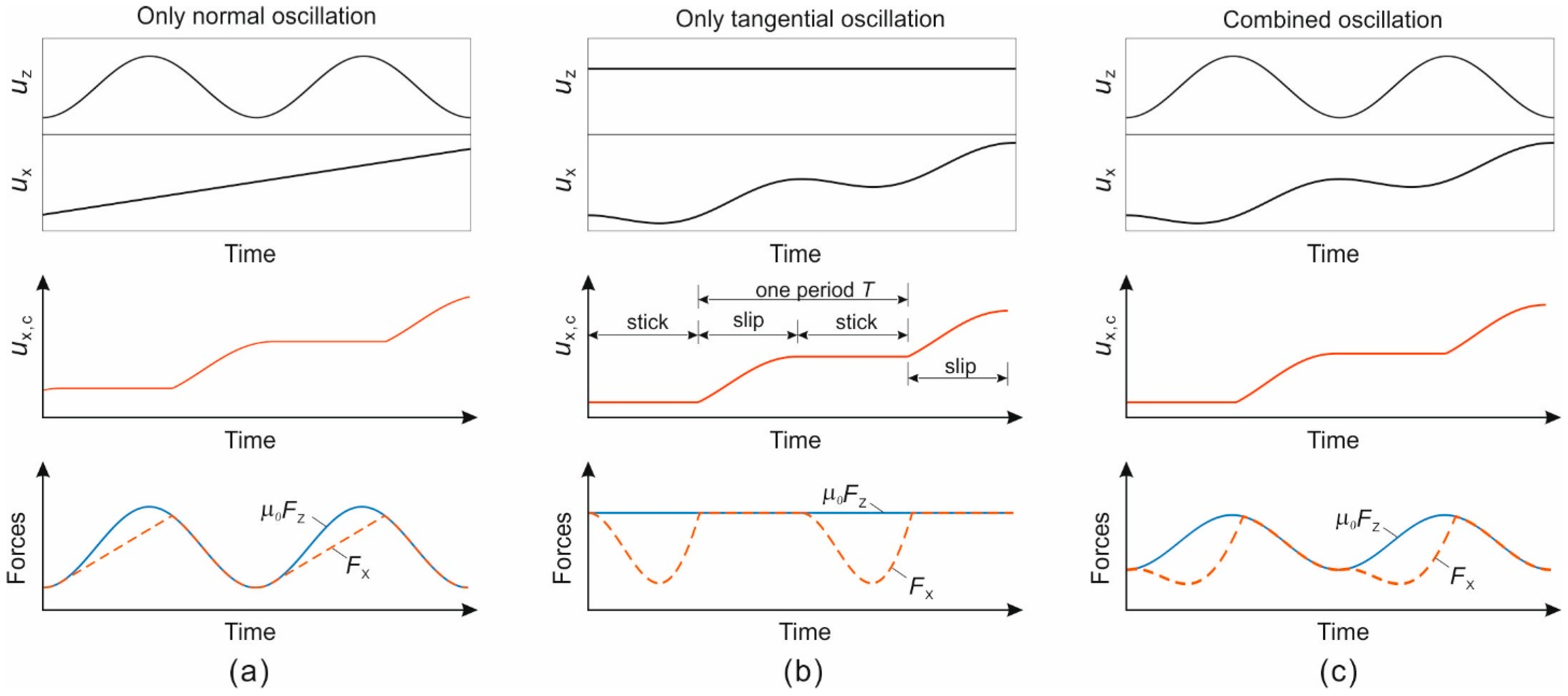
As shown by the results shown in Figure 2, the instantaneous tangential force acting on the contact pad occasionally falls below the sliding threshold ( F x μ 0 F z ). This corresponds to a sticking state, which ultimately leads to a reduction in the macroscopic friction coefficient. The macroscopic friction coefficient, μ , is defined as the ratio of the average tangential force to the average normal force over a complete oscillation period:
μ = F x t F z t .
<·> denotes the time-average operator over one period T = 2π/ω.

3.1. Review of Single-Mode Oscillation

We briefly review the characteristics of single-mode oscillations. For purely normal oscillation, the normalized friction coefficient depends on the ratio of the oscillation amplitude to the indentation depth Δ u z / u z , 0 . For purely tangential oscillation, the reduction is governed by a specific combination of kinematic and contact parameters k x Δ u x μ 0 k z u z , 0 :
μ μ 0 = f Δ u z u z , 0 , v 0 v c ,   for   pure   normal   oscillation .
μ μ 0 = f k x Δ u x μ 0 k z u z , 0 , v 0 v c ,   for   pure   tangential   oscillation .
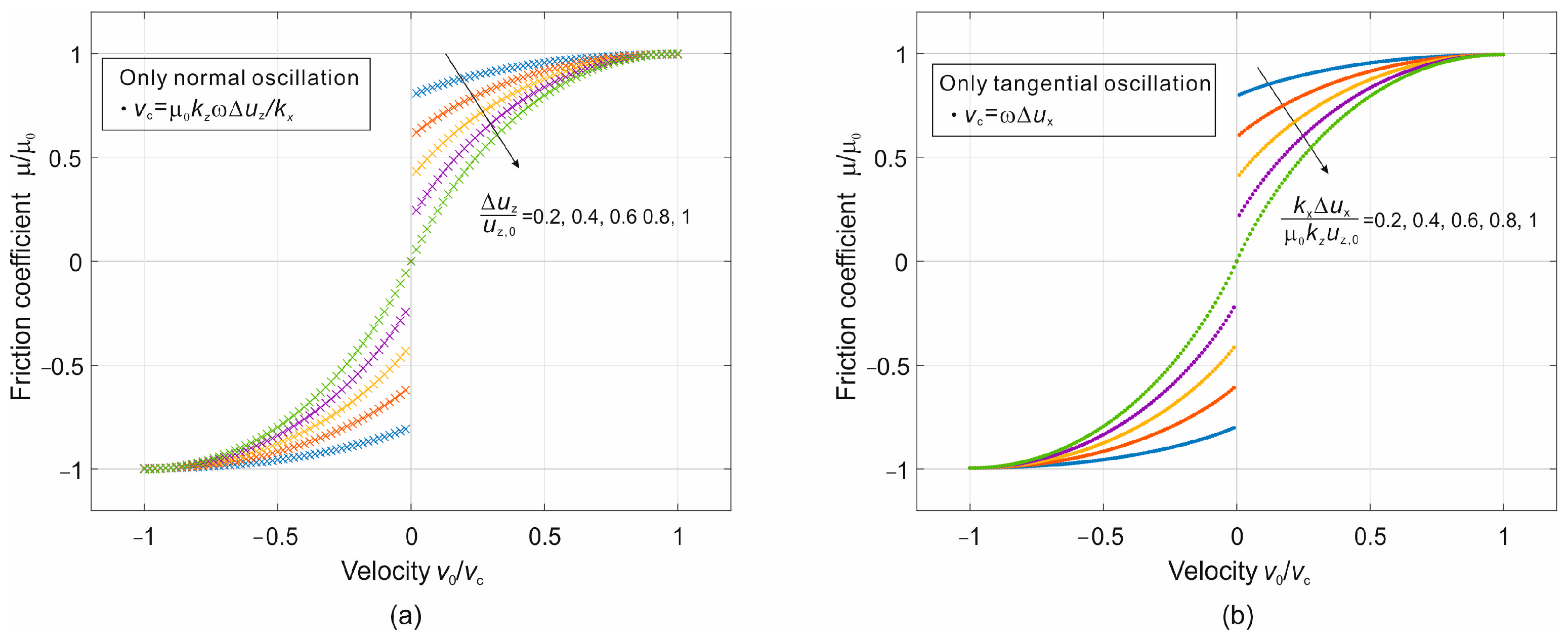
The dependence of the effective friction on the sliding velocity is illustrated in Figure 3a,b. The friction–velocity relationship is symmetric with respect to the direction of sliding. The curves in Figure 3a,b are topologically identical, differing only in the specific combination of governing parameters. This functional similarity was analytically established in [12], where the effective friction for purely normal oscillation is described as
μ μ 0 = 1 Δ u z u z , 0 3 4 v 0 v c 1 2 + 1 4 v 0 v c 1 4 ,   with   v c = μ 0 k z k x ω Δ u z .
For the case of purely tangential oscillation, the same analytical framework applies by substituting the corresponding dimensionless term:
μ μ 0 = 1 k x Δ u x μ 0 k z u z , 0 3 4 v 0 v c 1 2 + 1 4 v 0 v c 1 4 ,   with   v c = ω Δ u x ,   for k x Δ u x μ 0 k z u z , 0 1 .
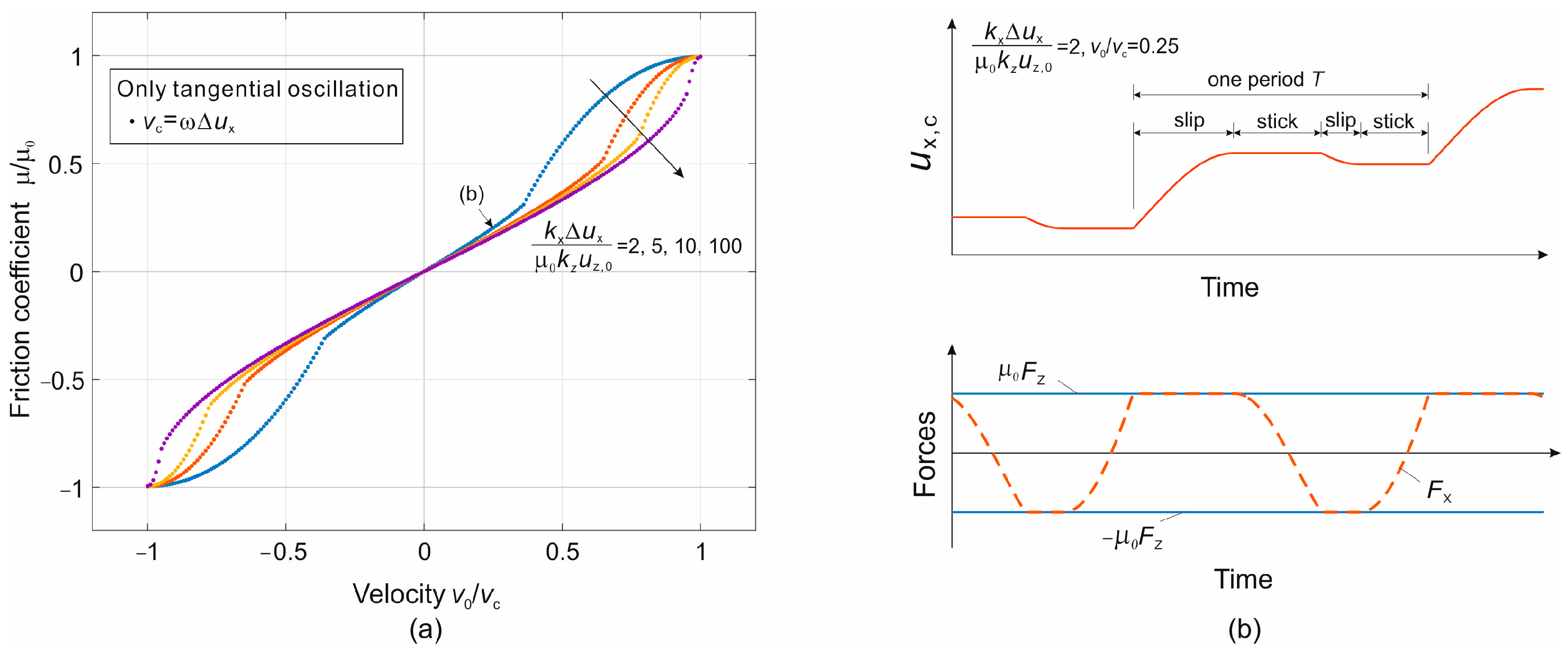
Figure 4 illustrates the transition from the conventional friction–reduction regime to a qualitatively different bidirectional stick-slip state. For moderate values of the dimensionless tangential oscillation parameter, the friction–velocity curve retains the characteristic S-shape observed in Figure 3. However, when the parameter k x Δ u x μ 0 k z u z , 0 exceeds unity, the contact pad begins to move alternately in the positive and negative directions during one oscillation cycle. This results in two sticking and two slipping intervals per period and produces the nearly linear friction–velocity dependence observed at low sliding velocities. This behavior qualitatively differs from the single-slip regime illustrated in Figure 2b (and the corresponding curves in Figure 3b), where the contact remains in a unidirectional sliding or sticking state.

3.2. Results of Dual-Mode Oscillation

In single-mode configurations, the normalized macroscopic friction coefficient μ/μ0 is governed by either the amplitude ratio ∆uz/uz,0 (for normal oscillation) or the tangential parameter k x Δ u x μ 0 k z u z , 0 (for tangential oscillation), alongside the normalized sliding velocity v0/vc, as defined in Equations (5) and (6). Extending this to the general case of dual-mode oscillation, we posit that the effective friction is a function of all these dimensionless groups, as well as the phase shift φ between the two modes:
μ μ 0 = f v 0 v c , Δ u z u z , 0 , k x Δ u x μ 0 k z u z , 0 , φ .
In dual-mode configurations, the critical velocity differs for positive and negative sliding velocities depending on the phase shift (see Equation (2)). To maintain a consistent reference for observing these dynamic phenomena, all velocities in the following analysis are normalized by the positive critical velocity, v0/vc+.
Numerical investigations across a wide range of parameters confirm that the friction coefficient is indeed governed by these four dimensionless groups, thereby validating the functional form proposed in Equation (9).
To systematically investigate the influence of these governing groups on the system response, a comprehensive parametric study was conducted. The analysis explores the parameter space across the following ranges: the normal amplitude ratio Δ u z u z , 0 from 0.2 to 1, the tangential oscillation parameter k x Δ u x μ 0 k z u z , 0 from 0.2 to 2, and phase shift spanning the interval [0, π].
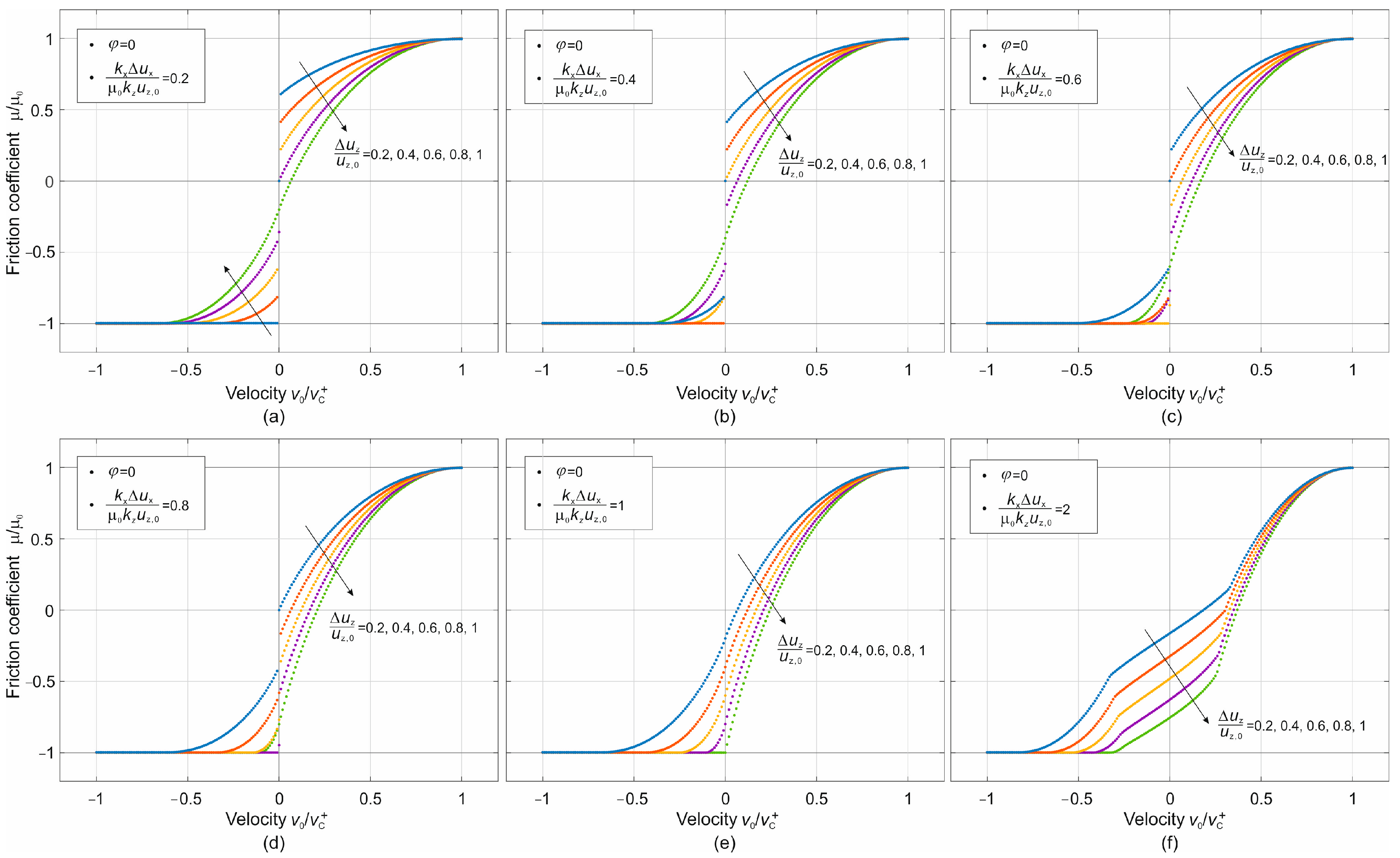
The dependences of the macroscopic coefficient of friction on the sliding velocity for various values of ∆uz/uz,0 and k x Δ u x μ 0 k z u z , 0 are shown in Figure 5 for the phase shift φ = 0. The dual-mode superposition gives rise to a pronounced asymmetry between positive and negative sliding velocities.
Increasing the value of  k x Δ u x μ 0 k z u z , 0 destroys the left-right symmetry of the friction law. Mainly it shifts all the curves downwards, so that the larger static coefficients become smaller and the smaller ones become even negative. When the dimensionless parameter reaches unity (Figure 5e), the curve (green line) reaches −1, indicating the onset of a critical state.
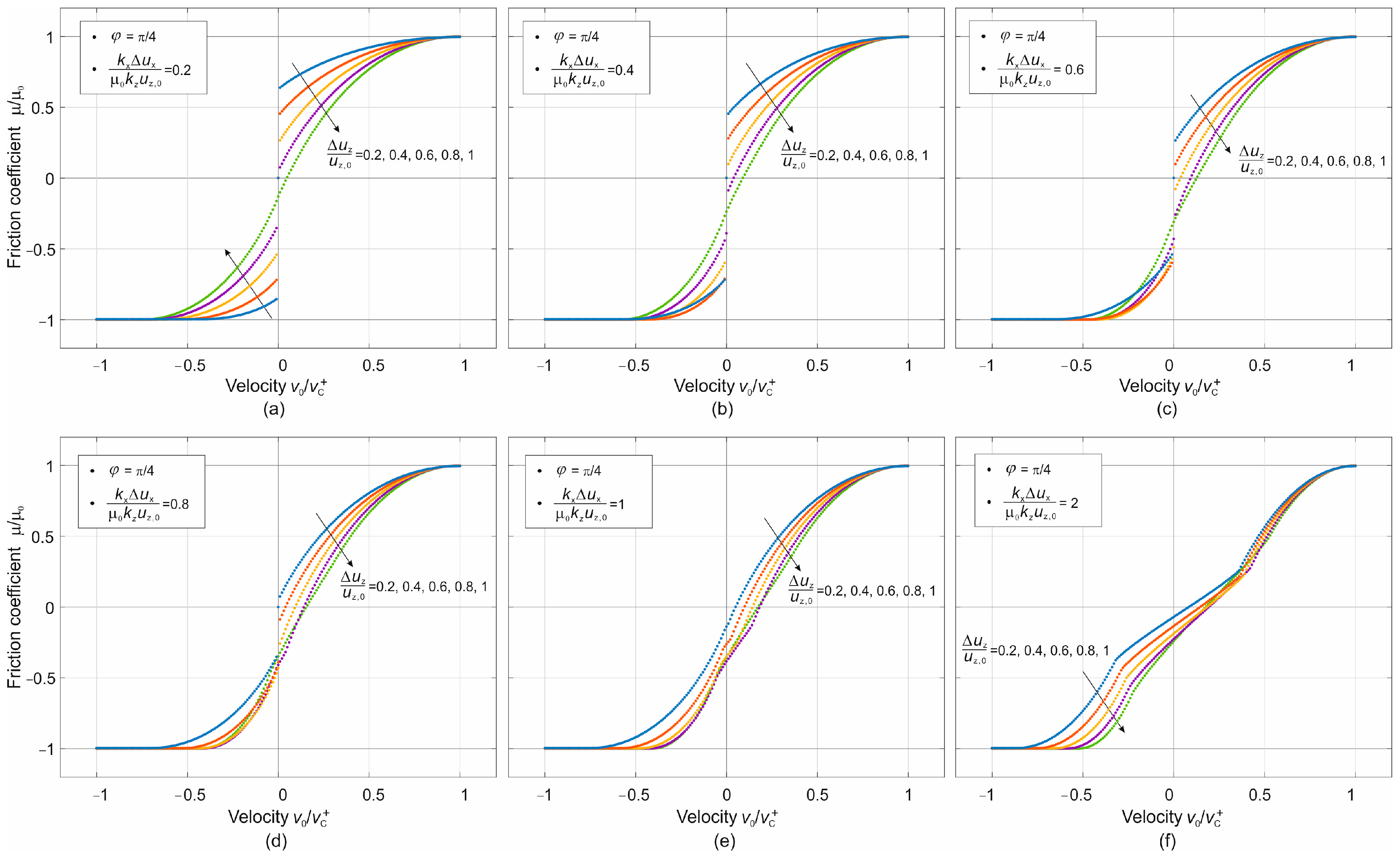
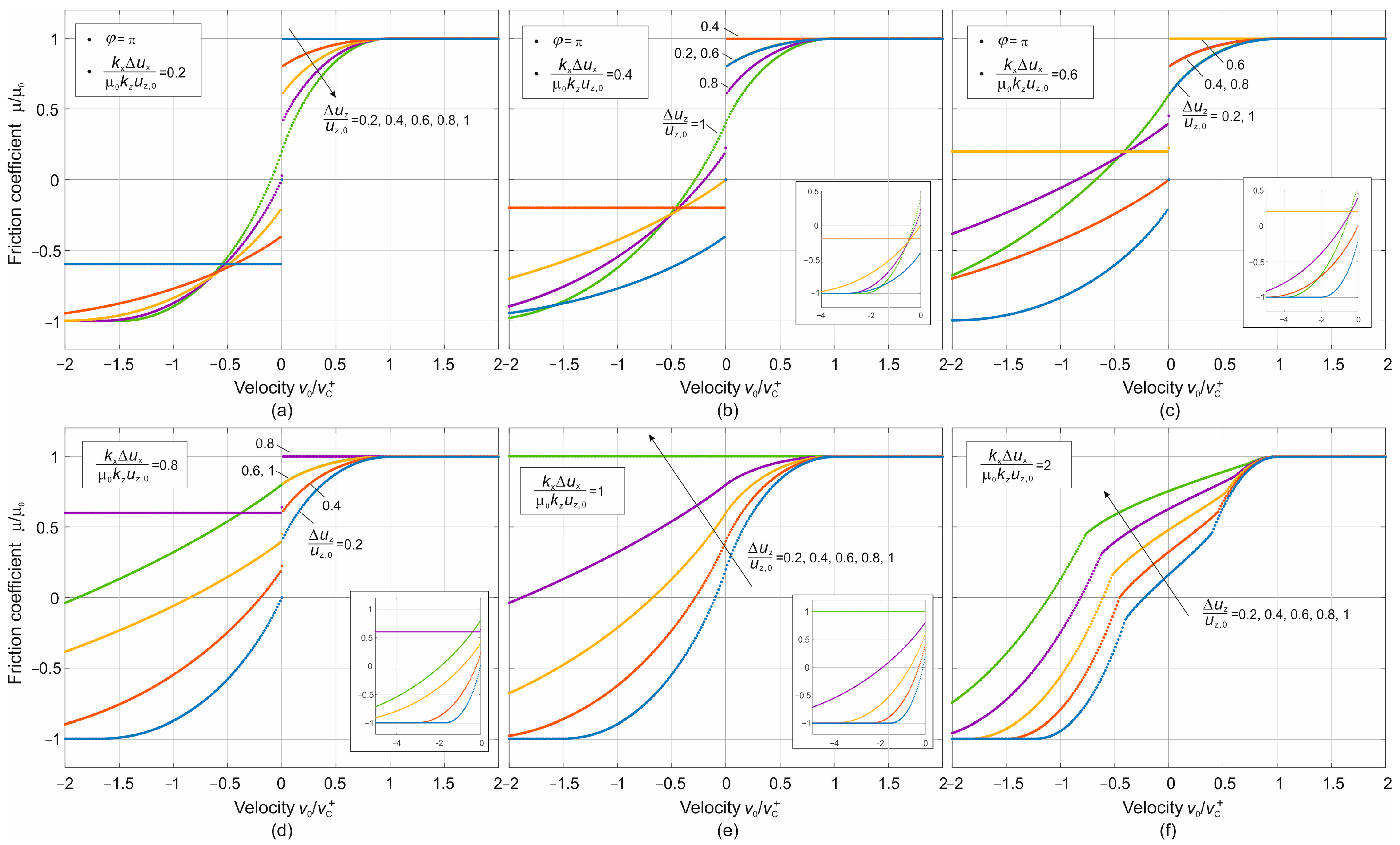
Figure 6, Figure 7, Figure 8 and Figure 9 show the corresponding results for the phase shifts φ = π/4, π/2, 3π/4, and π.
For φ = π/4, the asymmetry remains clearly visible, although it is weaker than for φ = 0. The transition between the different forms of the friction law occurs more gradually, and the interval with negative effective friction becomes smaller.
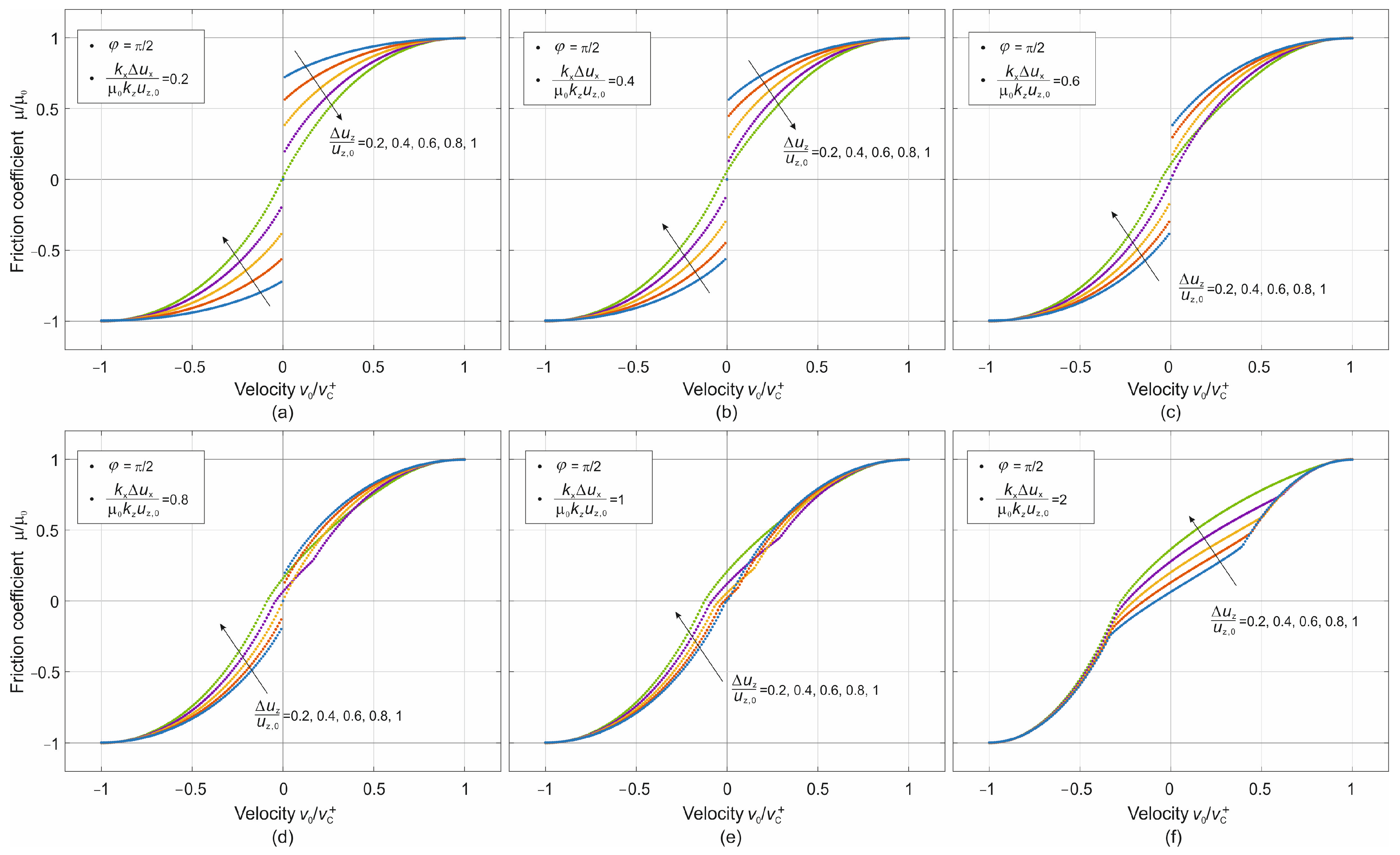
For φ = π/2, the asymmetry between positive and negative sliding directions is smaller. The friction–velocity curves are correspondingly more balanced, although an asymmetric response is still possible for some parameter combinations.
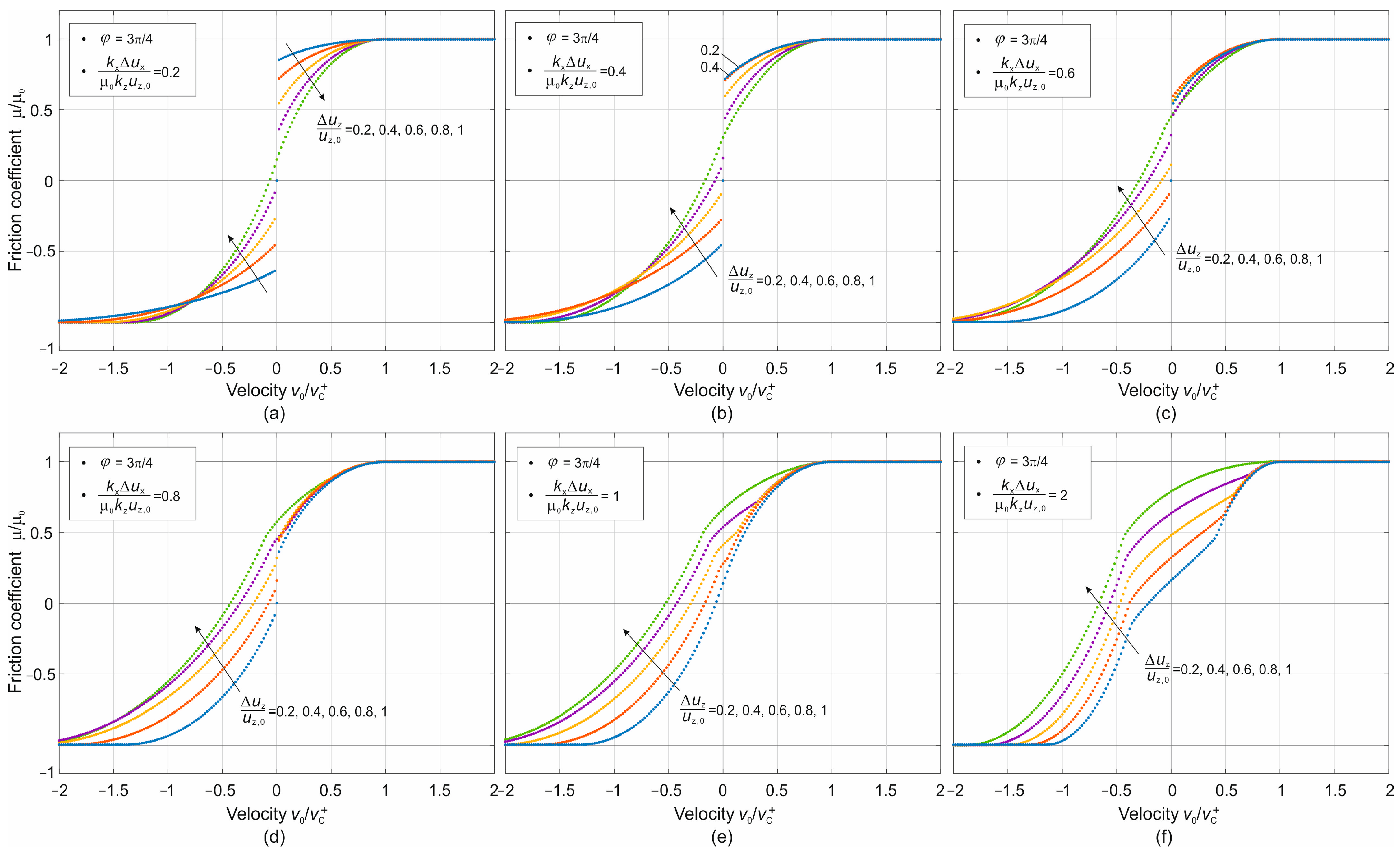
For phase shifts larger than π/2, the asymmetry increases again with the opposite preferred direction compared with φ = 0. This follows directly from the reversed phase relation between the normal and tangential oscillations.
The case φ = π is the opposite limiting case to φ = 0. Here the difference between the positive and negative critical velocities is again maximal, but with reversed direction. Some parameter combinations lead to extended ranges with a nearly constant or negative effective coefficient of friction.
Figure 5, Figure 6, Figure 7, Figure 8 and Figure 9 show that the phase shift is an important control parameter. It determines both the magnitude and the direction of the asymmetry. The asymmetry is strongest for φ = 0 and φ = π and becomes smaller near φ = π/2. Together with the normal and tangential oscillation amplitudes, the phase shift therefore determines whether the contact behaves mainly as a friction-control system, a dynamic ratchet, or an actuator.
In the first regime, the oscillations change the magnitude of friction, while the friction law remains symmetric with respect to reversal of the sliding direction. This is the usual regime of active friction control and is obtained, in particular, for pure normal or pure tangential oscillation.
In the second regime, the friction law is asymmetric, but the averaged friction force still opposes motion in both directions. The resistance is therefore different in the two directions, and the system has a preferred direction of motion. We refer to this behavior as dynamic ratcheting. The asymmetry is generated by the phase-shifted oscillations and does not require a geometrically asymmetric contact.
In the third regime, the effective friction coefficient becomes negative over a finite velocity interval. In this case, energy supplied by the oscillatory excitation is converted into directed mechanical work, and the contact can generate motion or force. The two usual characteristics are the free-running velocity at zero mean force and the generated force at zero mean velocity.
Table 1 summarizes the three regimes. A completely general regime map cannot be represented in two dimensions because the response depends on four dimensionless parameters. Quantitative boundaries can nevertheless be given in selected projections. At zero mean force, a nonzero steady velocity identifies self-propelled operation. At zero mean velocity, a nonzero mean tangential force identifies force generation. The corresponding two-dimensional projections are shown below.

3.3. Two-Dimensional Projections of the Regime Space

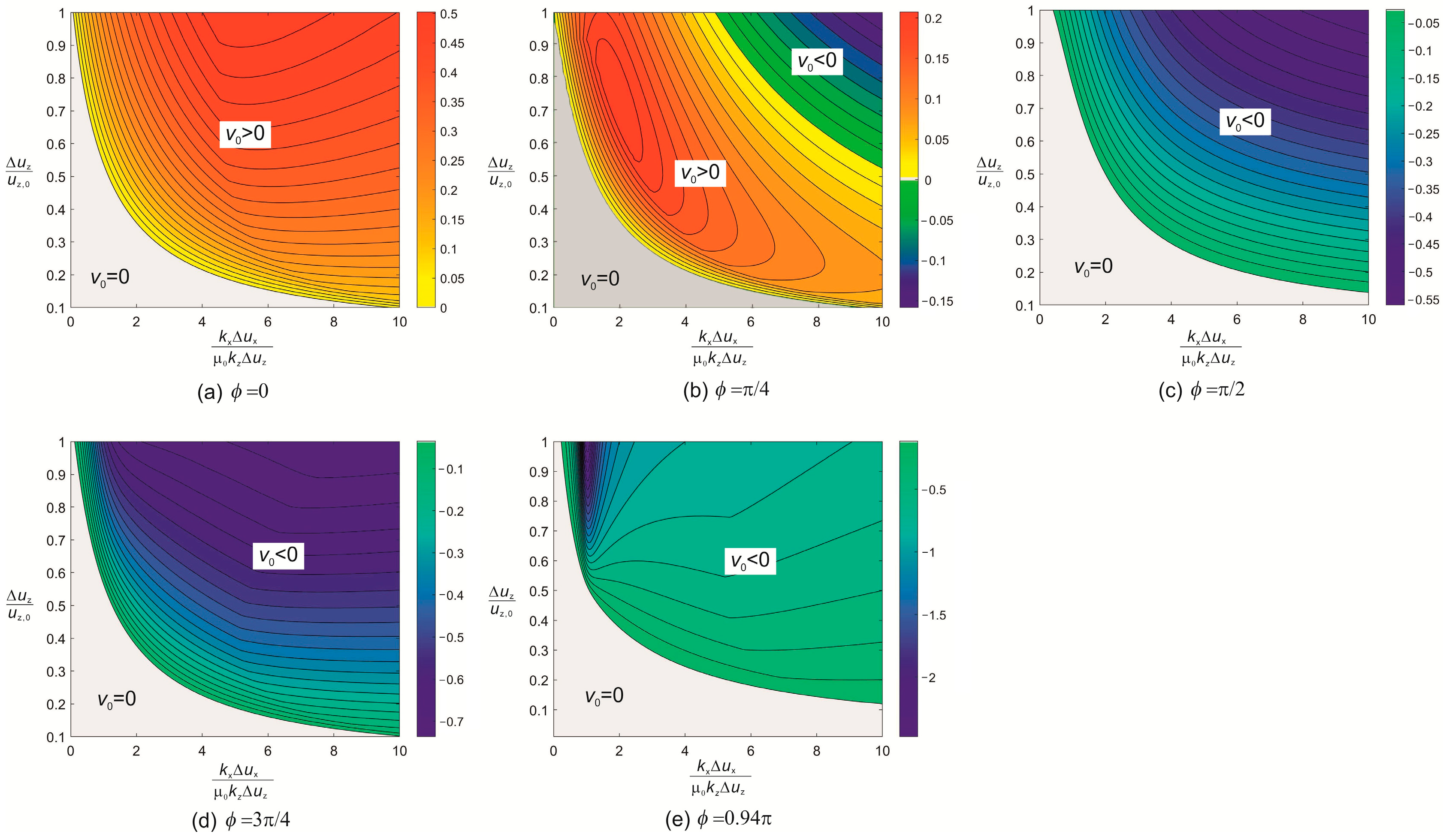
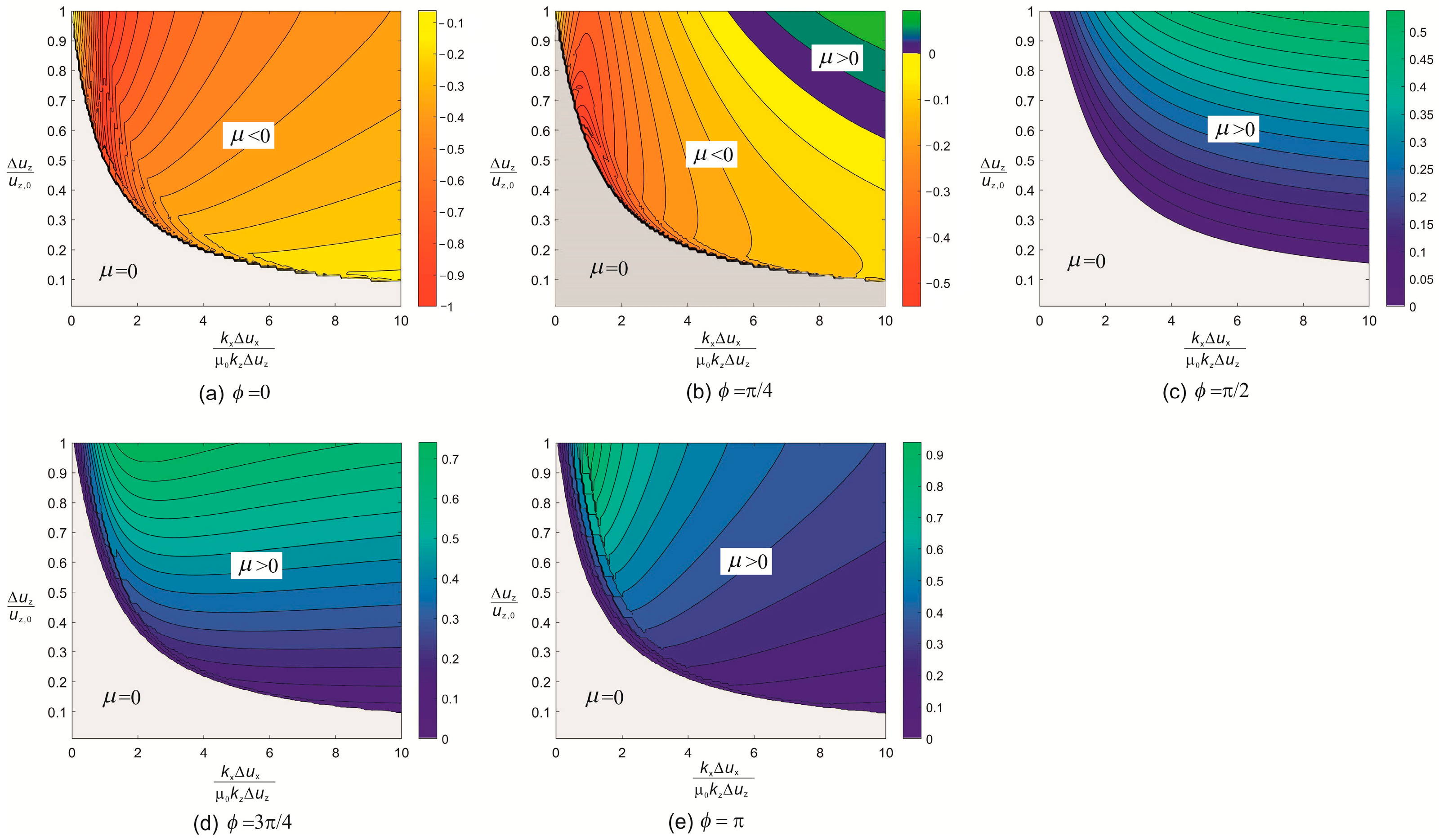
The most meaningful two-dimensional projections are the two operating cases already considered in Ref. [15]. Figure 10 shows the normalized steady velocity at zero mean tangential force. Nonzero values correspond to self-propelled motion, and their sign gives the direction of motion. Figure 11 shows the reduced mean tangential force at zero mean velocity. Nonzero values correspond to force generation. These figures are projections of the multidimensional parameter space and cannot replace the complete friction–velocity curves shown in Figure 5, Figure 6, Figure 7, Figure 8 and Figure 9.

4. Discussion

The three regimes are different forms of the same contact-mechanical mechanism. The phase shift changes the relation between the instantaneous normal force and the imposed tangential oscillation. As a result, the durations and directions of sticking and sliding during one period are changed. This produces different critical velocities for positive and negative motion and, consequently, an asymmetric averaged friction law.
The classification is most conveniently connected with two operating conditions. A zero of the mean tangential force at a finite velocity gives the free-running velocity. A nonzero mean force at zero velocity gives the stall force. The maps in Figure 10 and Figure 11 show these two projections, whereas Figure 5, Figure 6, Figure 7, Figure 8 and Figure 9 contain the complete friction–velocity characteristics for selected parameter combinations.
The sign convention of the macroscopic coefficient should not be confused with the local Coulomb law. Locally, the friction force is directed against the instantaneous relative sliding velocity. The macroscopic coefficient plotted in the figures is defined by F = −μFN. A negative effective value therefore means that the period-averaged force supports the prescribed macroscopic motion. It does not mean that the local friction force acts in the direction of local slip.
Energy is not created by friction. The local Coulomb force always dissipates energy. When the contact works as an actuator, the energy is supplied by the prescribed normal and tangential oscillations. In a periodic state, the elastic energy stored in the contact has the same value after one complete period. The supplied energy is therefore divided between local frictional dissipation and directed mechanical work. A complete separation of the powers supplied by the normal and tangential excitations over the full parameter space would require a separate energetic study. For the symmetric single-mode cases, such an analysis was given in Ref. [19].
Nothing singular happens to the local dissipation at the transition between the three regimes. Energy is dissipated in all cases. The boundaries describe changes in the averaged force-velocity relation, not the appearance or disappearance of dissipation. In asymmetric cases, the cycle-resolved stick-slip process is generally hysteretic, which is reflected in the different response after reversal of the velocity direction.
The dimensionless formulation already contains the dependence on stiffness, local friction coefficient, oscillation amplitudes, and frequency. These dimensional quantities do not enter independently but only through the governing parameter combinations. A separate one-parameter sensitivity study would therefore reproduce the same dependencies in a less general form.
The quasi-static approximation has clear limitations. Inertia introduces further parameters, including mass, damping, and ratios of excitation and natural frequencies. Resonances, impacts, or loss of contact may then occur and can change the critical velocities or produce additional regimes. Such effects were discussed in Refs. [16,17,18]. Their complete treatment would go far beyond the scope of the present paper, which is intended to isolate the quasi-static symmetry-breaking mechanism. The underlying modeling approach has shown good agreement with experiments in related problems [16,17], although direct experimental validation of the complete dual-mode maps remains desirable.

5. Conclusions

The present study connects friction control, dynamic ratcheting, and vibrational actuation within one simple model of a contact subjected to normal and tangential oscillations.
Purely normal and purely tangential oscillations produce qualitatively identical friction–reduction behavior when expressed in terms of the appropriate dimensionless parameters.
For sufficiently large tangential oscillation amplitudes, a transition occurs from a conventional stick–slip state to a bidirectional stick–slip regime characterized by two sticking and two sliding phases within one oscillation cycle.
Under dual-mode excitation, the effective friction coefficient is governed by four dimensionless parameters: the normalized sliding velocity, the normal oscillation ratio, the tangential oscillation parameter, and the phase shift between the oscillation modes.
The superposition of normal and tangential oscillations breaks the symmetry of the friction law with respect to the direction of motion, leading to different critical velocities and friction coefficients for positive and negative sliding directions.
Depending on the parameter combination, the system can operate as a friction-control system, a dynamic ratchet, or an actuator. The transition between these regimes follows from the continuous change in the averaged friction–velocity law.
Negative effective friction occurs for some parameter combinations. It means that energy supplied by the oscillations is converted into directed mechanical work. The local Coulomb friction itself remains dissipative.
The results give a common physical interpretation of friction reduction, directional transport, and force generation in oscillating contacts. The simple model is intended to identify the governing parameters and the basic mechanisms; dynamic and experimental extensions remain subjects for further work.

Author Contributions

Conceptualization, V.L.P.; methodology, V.L.P. and Q.L.; formal analysis, V.L.P. and Q.L.; investigation, I.M. and Q.L.; data curation, I.M. and Q.L.; writing—original draft preparation, I.M., Q.L. and V.L.P.; writing—review and editing, I.M., Q.L. and V.L.P.; visualization, I.M. and Q.L.; supervision, V.L.P. All authors have read and agreed to the published version of the manuscript.

Funding

This work was funded by the Deutsche Forschungsgemeinschaft (DFG, German Research Foundation) under projects number LI 3064/2-2 and PO 810/77-1.

Data Availability Statement

The original contributions presented in this study are included in the article. Further inquiries can be directed to the corresponding authors.

Conflicts of Interest

The authors declare no conflicts of interest.

References

  1. Hagedorn, P. Mechanical Vibrations and Vibration Control. In Passive and Active Structural Vibration Control in Civil Engineering; Soong, T.T., Costantinou, M.C., Eds.; Springer: Vienna, Austria, 1994. [Google Scholar] [CrossRef] [Scilit]
  2. Gee, R.; Hanley, C.; Hussain, R.; Canuel, L.; Martinez, J. Axial Oscillation Tools vs. Lateral Vibration Tools for Friction Reduction—What’s the Best Way to Shake the Pipe? In SPE/IADC Drilling Conference and Exhibition; SPIE: Cergy-Pontoise, France, 2015; Volume D021S012R006. [Google Scholar] [CrossRef] [Scilit]
  3. Du, C.; Xie, L. Modeling and Control of Vibration in Mechanical Systems; CRC Press: Boca Raton, FL, USA, 2010. [Google Scholar] [CrossRef] [Scilit]
  4. Popov, V.L. Oscillation-based methods for actuation and manipulation of nano-objects. AIP Conf. Proc. 2017, 1882, 020056. [Google Scholar] [CrossRef] [Scilit]
  5. Wang, H.; Chen, M.Z.Q. Relationships between vibrations of main device and mechanical network in a classical vibration control system. J. Sound Vib. 2023, 565, 117887. [Google Scholar] [CrossRef] [Scilit]
  6. Sato, K.; Hisamatsu, R.; Akamatsu, K. Controller design for high-speed, ultra-precision positioning of a linear motion stage on a vibrating machine base stage control on a vibrating base. Precis. Eng. 2023, 80, 10–19. [Google Scholar] [CrossRef] [Scilit]
  7. Dong, Z.; Yang, M.; Chen, Z.; Xu, L.; Meng, F.; Ou, W. Design and performance analysis of a rotary traveling wave ultrasonic motor with double vibrators. Ultrasonics 2016, 71, 134–141. [Google Scholar] [CrossRef] [Scilit] [PubMed]
  8. Teidelt, E.; Starcevic, J.; Popov, V.L. Influence of ultrasonic oscillation on static and sliding friction. Tribol. Lett. 2012, 48, 51–62. [Google Scholar] [CrossRef] [Scilit]
  9. Liu, Y.; Chen, P.; Ma, T.; Wang, X. An evaluation method for friction-reducing performance of hydraulic oscillator. J. Pet. Sci. Eng. 2017, 157, 107–116. [Google Scholar] [CrossRef] [Scilit]
  10. Pasternak, E.; Dyskin, A.; Karachevtseva, I. Oscillations in sliding with dry friction. Friction reduction by imposing synchronised normal load oscillations. Int. J. Eng. Sci. 2020, 154, 103313. [Google Scholar] [CrossRef] [Scilit]
  11. Gutowski, P.; Leus, M. The effect of longitudinal tangential vibrations on friction and driving forces in sliding motion. Tribol. Int. 2012, 55, 108–118. [Google Scholar] [CrossRef] [Scilit]
  12. Popov, M.; Popov, V.L.; Popov, N.V. Reduction of friction by normal oscillations. I. Influence of contact stiffness. Friction 2017, 5, 45–55. [Google Scholar] [CrossRef] [Scilit]
  13. Leus, M.; Gutowski, P.; Bachtiak-Radka, E. The effect of contact compliance of sliding pair on friction force reduction at longitudinal tangential vibrations. Tribol. Int. 2023, 187, 108701. [Google Scholar] [CrossRef] [Scilit]
  14. Popov, M.; Li, Q. Multimode active control of friction, dynamic ratchets and actuators. Phys. Mesomech. 2018, 21, 24–31. [Google Scholar] [CrossRef] [Scilit]
  15. Madatov, I.; Li, Q.; Popov, V.L. Actuators based on superposition of normal and tangential oscillations. AIP Conf. Proc. 2025, 3177, 40004. [Google Scholar] [CrossRef] [Scilit]
  16. Mao, X.; Popov, V.L.; Starcevic, J.; Popov, M. Reduction of friction by normal oscillations. II. In-plane system dynamics. Friction 2017, 5, 194–206. [Google Scholar] [CrossRef] [Scilit]
  17. Teidelt, E.; Willert, E.; Filippov, A.E.; Popov, V.L. Modeling of the dynamic contact in stick-slip microdrives using the method of reduction of dimensionality. Phys. Mesomech. 2012, 15, 287–292. [Google Scholar] [CrossRef] [Scilit]
  18. Papangelo, A.; Ciavarella, M. On the limits of quasi-static analysis for a simple Coulomb frictional oscillator in response to harmonic loads. J. Sound Vib. 2015, 339, 280–289. [Google Scholar] [CrossRef] [Scilit]
  19. Benad, J.; Popov, M.; Nakano, K.; Popov, V.L. Stiff and soft active control of friction by vibrations and their energy efficiency. Forsch. Ingenieurwesen 2018, 82, 331–339. [Google Scholar] [CrossRef] [Scilit]
Figure 1. Schematic representation of a frictional contact subjected to superimposed normal and tangential oscillations. The contact is modeled by a massless point connected to a contact pad through an elastic interface characterized by normal and tangential stiffnesses kz and kx.
Lubricants 14 00286 g001
Figure 2. Loads on the contact pad and its movement in tangential direction during sliding (a) under only normal oscillation, (b) under only tangential oscillation and (c) under a combined oscillation. In these examples, φ = π/6, kxux/(μ0kzuz,0) = 0.4, ∆uz/uz,0 = 0.2.
Lubricants 14 00286 g002
Figure 3. Friction reduction under (a) purely normal and (b) purely tangential oscillations. The functional dependencies in both cases are identical, differing only in the governing dimensionless terms and the corresponding critical velocities.
Lubricants 14 00286 g003
Figure 4. (a) Dependence of the effective friction coefficient on the sliding velocity for the parameter k x Δ u x μ 0 k z u z , 0 > 1 under purely tangential oscillations. (b) Representative simulation of the contact dynamics in the low-velocity region, as marked by the arrow in (a), illustrating a bidirectional stick-slip state.
Lubricants 14 00286 g004
Figure 5. Dependence of the macroscopic coefficient of friction on the sliding velocity for different values of ∆uz/uz,0 and k x Δ u x μ 0 k z u z , 0 . The values of parameter k x Δ u x μ 0 k z u z , 0 , corresponding to figures (af) are shown directly in the corresponding sub-plots. The phase shift is equal to φ = 0.
Lubricants 14 00286 g005
Figure 6. The phase shift is equal to φ = π/4. The values of parameter k x Δ u x μ 0 k z u z , 0 , corresponding to figures (af) are shown directly in the corresponding sub-plots.
Lubricants 14 00286 g006
Figure 7. The phase shift is equal to φ = π/2. The values of parameter k x Δ u x μ 0 k z u z , 0 , corresponding to figures (af) are shown directly in the corresponding sub-plots.
Lubricants 14 00286 g007
Figure 8. The phase shift is equal to φ = 3π/4. The values of parameter k x Δ u x μ 0 k z u z , 0 , corresponding to figures (af) are shown directly in the corresponding sub-plots.
Lubricants 14 00286 g008
Figure 9. The phase shift is equal to φ = π. The values of parameter k x Δ u x μ 0 k z u z , 0 , corresponding to figures (af) are shown directly in the corresponding sub-plots.
Lubricants 14 00286 g009
Figure 10. Normalized steady velocity v0/vc at zero mean tangential force as a function of the dimensionless tangential and normal oscillation parameters for representative phase shifts. Adapted from Ref. [15].
Lubricants 14 00286 g010
Figure 11. Reduced mean tangential force (reported as μ/μ0) at zero mean velocity as a function of the dimensionless tangential and normal oscillation parameters for representative phase shifts. Adapted from Ref. [15].
Lubricants 14 00286 g011
Table 1. Three operational regimes.
RegimeCharacteristic FeatureRepresentative Figures
Friction controlSymmetric friction reductionFigure 3 and Figure 4a
Dynamic ratchetingAsymmetric friction law, μ remains positiveFigure 8c–e and Figure 9b–d
Vibrational actuationOscillatory energy converted into mechanical work; characterized by free-running velocity and stall forceFigure 8f and Figure 9f
Disclaimer/Publisher’s Note: The statements, opinions and data contained in all publications are solely those of the individual author(s) and contributor(s) and not of MDPI and/or the editor(s). MDPI and/or the editor(s) disclaim responsibility for any injury to people or property resulting from any ideas, methods, instructions or products referred to in the content.