


Abstract
No-till precision seeding is an important component of conservation tillage, but stable operation remains constrained by compacted undisturbed soil, dense crop residues, and uneven field surfaces. This review examines the evolution of no-till precision seeding equipment from mechanical soil–residue interaction to cyber–physical closed-loop regulation. It first summarizes how soil resistance and residue interference affect furrow opening, seed placement, and seed–soil contact. It then examines the development of residue-management, furrow-opening, covering, and compaction mechanisms, highlighting the transition from passive structural optimization toward active and adaptive operation. Advances in multi-source sensing, electric-drive metering, downforce control, and vibration suppression are further reviewed as enabling technologies for improving seeding stability under variable and high-speed conditions. Despite these advances, persistent trade-offs remain among residue-removal capacity, soil disturbance, energy demand, component durability, system complexity, and operational stability. Emerging approaches based on digital twins, adaptive damping, and cooperative autonomous systems may support further improvements, but their practical implementation still requires robust field performance and effective system integration. Overall, no-till seeding equipment is progressing toward perception-assisted and closed-loop intelligent regulation while continuing to face important mechanical and implementation challenges.
1. Introduction
Conservation tillage is an important part of modern agricultural development. Its role in farmland ecosystems is no longer limited to mechanical field operation. Instead, it is increasingly regarded as a targeted approach for improving soil physical structures and regulating the soil microecological environment [1,2,3,4]. Under complex field conditions, conservation tillage involves unique contact-dynamic processes. No-tillage implements must work against the high shear strength of undisturbed soil. At the same time, they are also affected by three-dimensional obstructions caused by dense and flexible straw residues [5,6,7,8]. Therefore, no-tillage seeding equipment has received growing attention for its ability to reduce hairpinning, improve seedbed quality, increase crop emergence, and maintain field operation efficiency [9,10,11].
With the wider adoption of conservation tillage, the research focus of no-tillage seeding equipment has also changed. Greater attention is now being paid to the uniformity of field operation and the accuracy of anti-blocking and obstacle-avoidance performance. In practical production, farmers need more precise plant spacing and more stable seeding depth under uneven field surfaces. This requires researchers to evaluate the physical adaptability of seeding equipment under complex field conditions during both structural design and control system development [12,13,14]. As a result, the regulation of operation quality has gradually extended to the whole seeding process, including residue clearing, anti-blocking, furrow opening, soil covering, and compaction.
The special working conditions of no-tillage seeding are mainly caused by long-term natural soil consolidation and compaction from heavy machinery [15,16]. Undisturbed soil often shows a sharp increase in penetration resistance, which changes the mechanical boundary of furrow openers. Meanwhile, straw residues tend to accumulate in different forms and create frequent clogging problems for soil-engaging components [17,18,19]. It is difficult to solve these problems through simple structural improvements alone. In many cases, low-disturbance furrow-opening and strong residue-clearing capacities are difficult to achieve at the same time. During field operation, small changes in surface relief or uneven residue distribution may quickly change the force state of mechanical components. This can lead to large fluctuations in seeding depth and spacing.
When no-tillage seeding is carried out at high speed, the machine is exposed to strong nonlinear mechanical impacts. High frequency vibration can spread through the frame and reduce the accuracy of the mechanical transmission system [13,20,21,22,23,24]. This problem is reflected not only in the bouncing and instability of depth-gauge wheels but also in the irregular movement and collision of seeds inside the seed tube [25,26,27]. Although independent electric-drive-metering systems and pneumatic–hydraulic downforce compensation technologies have been introduced, more work is still needed. In particular, precision sensing networks and coordinated control methods should be further explored for different field conditions with heavy residue cover [28,29,30].
Accordingly, the objective of this review is to critically synthesize the evolution of no-till precision seeding equipment within an integrated engineering framework linking soil–residue–tool interaction, contact dynamics, intelligent sensing, and cyber–physical system (CPS)-based closed-loop control. Specifically, this review aims to clarify the coupled mechanical constraints imposed by compacted undisturbed soil and heterogeneous surface residues; compare the operating principles, performance boundaries, and engineering trade-offs of residue-management, furrow opening, covering, and compaction technologies; assess how multi-source sensing, electric drive, downforce regulation, and closed-loop control extend mechanical adaptation toward intelligent regulation; and identify unresolved challenges in cross-condition adaptability, energy demand, component durability, system integration, and field validation. On this basis, the review seeks to provide a structured framework for distinguishing established engineering knowledge from remaining uncertainties and for prioritizing future research on no-till precision seeding systems.
Following this objective, Section 2 describes the literature search strategy, inclusion and exclusion criteria, and critical synthesis methodology. Section 3 examines the physical constraints imposed by undisturbed soil and surface residues and defines their engineering implications for no-till seeding. Section 4 reviews the evolution of residue-clearing, anti-blocking, furrow-opening, soil-covering, and compaction mechanisms from the perspective of contact dynamics and system integration. Section 5 discusses advances in multi-source sensing, environmental perception, electric-drive seed metering, and active downforce regulation toward closed-loop intelligent control. Section 6 identifies the major remaining challenges and discusses future research directions involving intelligent vibration suppression, digital-twin-assisted control, and heterogeneous cooperative operation. Finally, Section 7 summarizes the principal findings, engineering trade-offs, and research priorities.
2. Literature Search and Review Methodology
This review adopted a theme-oriented narrative review method combined with critical synthesis to examine the technological evolution of no-till precision seeding equipment. The literature search was conducted using major academic databases, including Web of Science Core Collection, Scopus, ScienceDirect, SpringerLink, MDPI, ASABE-related publications, Google Scholar, and CNKI. The search terms were organized around three main dimensions: no-till seeding environments, key mechanical components, and intelligent control systems. Representative keywords included “no-till seeding”, “precision seeding”, “conservation tillage”, “crop residue”, “straw management”, “hairpinning”, “anti-blocking device”, “row cleaner”, “furrow opener”, “soil-tool interaction”, “downforce control”, “electric drive”, “machine vision”, “LiDAR”, “cyber-physical system”, “digital twin”, and “UAV–UGV cooperative operation”. Boolean combinations of these terms were used to broaden or narrow the search scope according to the topic of each section.
The inclusion criteria were as follows: studies directly related to no-till or conservation tillage seeding equipment; papers addressing soil–residue–tool interactions, residue cutting and clearing, furrow opening, covering, compaction, or seed placement quality; studies involving field experiments, soil-bin tests, discrete element modeling, multibody dynamics, computational fluid dynamics, machine vision, sensing, or closed-loop control; and review articles or methodological papers that provided theoretical support for the development of intelligent agricultural machinery. Both English and Chinese publications were considered to ensure sufficient coverage of international and regional research progress.
Publications were excluded when they focused only on general crop agronomy without a clear connection to seeding equipment, traditional tillage implements unrelated to no-till conditions, purely theoretical algorithms without agricultural machinery application, or studies with insufficient methodological details. Duplicate publications, inaccessible full texts, and non-peer-reviewed materials with limited technical relevance were also excluded.
For each selected publication, information was extracted on the crop or farming system, soil type, residue characteristics, working speed, key structural parameters, modeling or experimental methods, sensing and control strategies, and performance indicators. Particular attention was paid to indices such as residue cutting or clearing rate, clogging and hairpinning behavior, furrow depth stability, seed spacing accuracy, soil disturbance, downforce regulation, vibration response, energy consumption, and seedbed quality.
The retrieved literature was not synthesized merely in chronological order. Instead, it was reorganized according to the technical logic of no-till precision seeding equipment development. First, the physical constraints imposed by compacted undisturbed soil and surface residue layers were summarized. Second, the structural evolution of anti-blocking devices, furrow openers, covering devices, and press wheels was analyzed from the perspective of contact dynamics and soil–tool interactions. Third, advances in multi-source sensing, electric drives, downforce controls, and cyber–physical system-based closed-loop regulations were reviewed. Finally, emerging directions such as magnetorheological vibration suppression, digital-twin-based surrogate modeling, and UAV–UGV cooperative seeding systems were discussed. This methodological framework allowed the review to identify not only current technological advances but also unresolved trade-offs among residue management, low-disturbance furrow opening, high-speed operations, energy consumption, and intelligent controls.
3. Physical Characteristics of No-Tillage Surfaces and Engineering Requirements for Precision Seeding
Precision no-tillage seeding is carried out in a highly constrained soil–straw composite environment. Unlike conventional tilled seedbeds, the no-tillage surface is shaped by two coupled physical barriers: the high penetration resistance of undisturbed soil and the spatial obstructions caused by surface straw cover. These two factors jointly determine the mechanical boundary conditions for furrow opening, residue cutting, seed placement, and seed–soil contact. The compacted soil layer requires the opener to maintain stable penetration, sufficient structural stiffness, and continuous downforce, while the flexible residue layer demands effective cutting, clearing, or displacement to prevent hairpinning and blockage. Therefore, before discussing the structural design of no-tillage seeding equipment, it is necessary to first clarify the physical properties of the no-tillage surface and the corresponding engineering mechanical requirements for precision seeding. This section analyzes these constraints from two aspects: the high-resistance mechanical characteristics of undisturbed soil and the spatial obstruction effects of straw cover.
3.1. High-Resistance Mechanics of Undisturbed Soil and Furrow-Opening Boundaries
Soil furrowing constitutes the primary phase in realizing no-till precision seeding. The complex microtopography and mechanical impedance within the no-till operational environment directly dictate the engineering mechanical demands of this process [31]. Distinct from the loose arable land treated via conventional plowing and rotary tillage [32,33], the undisturbed soil on the no-till surface persistently remains in a state of natural consolidation and subsidence [34,35,36,37]. Without being subjected to physical perturbation, this undisturbed soil matrix macroscopically exhibits extreme compaction, complex shear yield stress, and nonlinearly escalating penetration resistance [38,39,40]. This high-resistance mechanical medium, derived from the intrinsic characteristics of the undisturbed soil, fundamentally reconstructs the mechanical boundaries of the furrowing operation. It imposes exceptionally stringent physical requirements on the penetration posture stability of the seeder opener, the structural rigidity of the cutting tools, and the dynamic response capability of the active downforce exertion system [41,42,43]. In-depth probing and quantifying of this mechanical boundary serve as the fundamental theoretical prerequisite for overcoming no-till seeding engineering bottlenecks and executing customized equipment modifications.
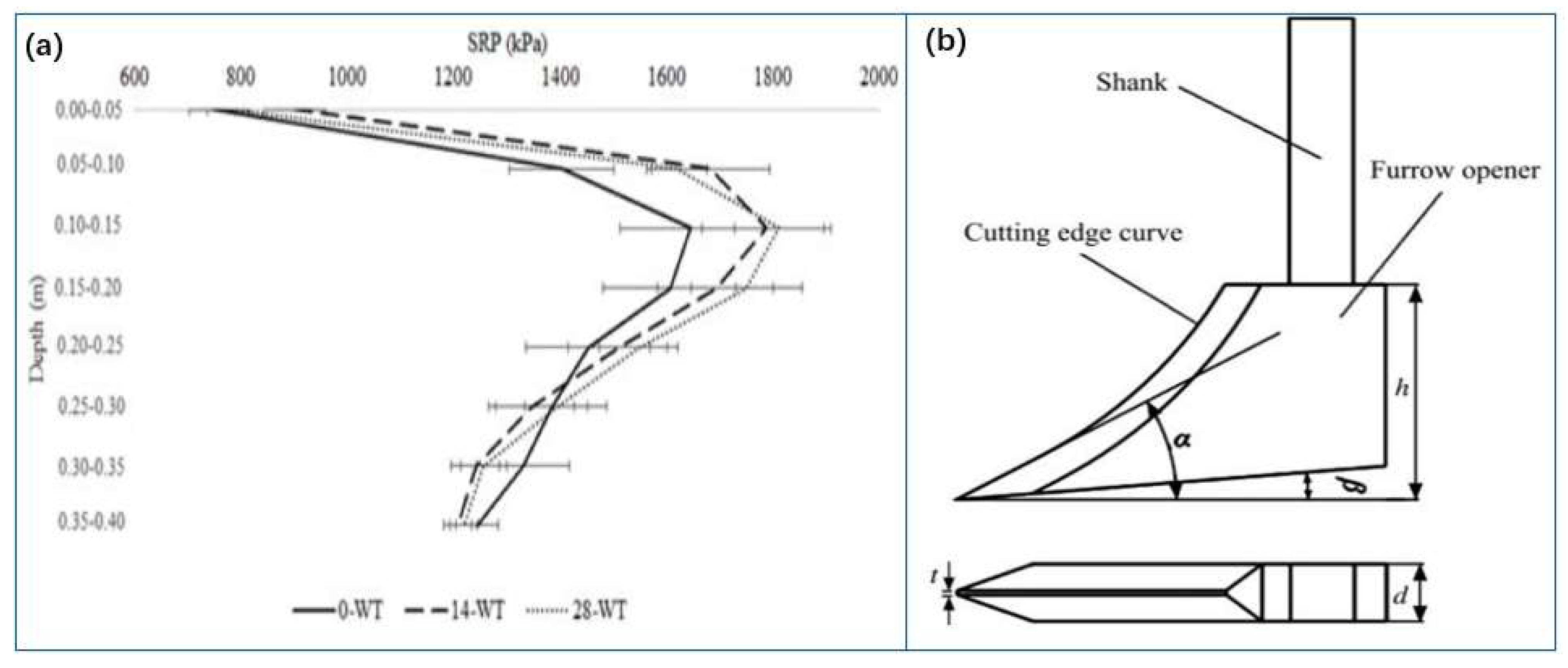
The high-resistance characteristics of undisturbed soil are formed through a long-term physical process. This process results from the accumulation of mechanical stress from heavy machinery and its interaction with the microscopic physicochemical properties of soil over time and space [44,45]. In modern large-scale conservation tillage systems, long-term no-tillage operation is often accompanied by the frequent entry of heavy machines, such as tractors and combine harvesters, into the field [46,47,48,49]. Long-term in situ field monitoring has shown that frequent machinery traffic can cause significant cumulative damage to the physical properties of the shallow soil layer from 0.05 to 0.15 m [50]. Dynamic mechanical compaction increases soil bulk density in no-tillage areas. It also sharply reduces macroporosity and greatly decreases hydraulic conductivity [51,52,53,54]. Over time, this physical evolution forms a dense, high-strength compacted layer beneath the soil surface. This layer greatly increases both the initial penetration resistance and the continuous cutting resistance faced by soil-engaging components during surface cutting [55] (Figure 1a).
Specific soil textures can further amplify this compaction resistance. Multi-point in situ measurements in rice–wheat rotation systems have shown that heavy-textured soils are highly sensitive to no-tillage consolidation [56]. Under the same duration of no-tillage, seeding operations in no-tillage wheat fields can cause a greater increase in soil bulk density in heavy-textured soils. At the same time, total porosity tends to decrease markedly [57,58]. This effect is especially clear in silty clay and loam soils. In these soil types, the compacted layer formed under no-tillage significantly increases the absolute penetration resistance of the surface soil [59,60,61]. Such a dense physical state greatly limits the ability of crop roots to penetrate deeper soil layers. It also creates a strong structural barrier for the smooth entry of mechanical cutting edges [52]. These in situ tests provide a quantitative understanding of how soil texture amplifies the resistance encountered during mechanical furrow opening in no-tillage fields. They also further indicate that modern seeder furrow openers must have sufficient structural stiffness and fatigue resistance to break through compacted heavy-soil layers.
From a micromechanical perspective, high-clay soils undergo fundamental changes in their internal stress distribution and aggregate structures during long-term consolidation without physical disturbance [62]. These changes are often difficult to reverse. Microscopic quantitative analyses of clayey oxide-rich soils under no-tillage have shown that, without mechanical fragmentation by tools such as plowshares, clay soils can easily develop high-resistance structures with very high shear yield stress [7,63]. Mineral components, such as iron and aluminum oxides, further strengthen the bonding between soil particles, markedly altering the shear strength and compressive deformation behavior of soil aggregates. Collectively, these effects indicate the formation of a strong and stable micromechanical skeleton in highly consolidated clay soils. This micromechanical evolution provides an important boundary condition for the engineering design of downforce systems in furrow openers. It also suggests that, when working in highly clayey and heavy-textured soils, traditional soil entry based solely on the static weight of the machine may no longer be sufficient to ensure effective penetration.
For soils with high penetration resistance, relying only on natural recovery through agronomic practices is often not enough to meet the immediate needs of no-tillage seeding. Studies have shown that specific carbon farming systems and alternating tillage patterns have the potential to improve soil physicochemical properties [64]. Deep crop roots and organic matter secretion can, to some extent, improve the pore structure of deeper soil layers. However, this improvement is limited in the shallow surface layer that directly contacts the seeding equipment. In this layer, wheel pressure from heavy machinery and compaction caused by natural rainfall can maintain a high level of penetration resistance. As a result, biological activity alone can hardly reduce this resistance within a short period. This remains a direct engineering challenge for furrow opening in no-tillage seeding [65,66].
From the perspective of dynamic interactions and engineering mechanics, the interactions between soil-engaging components and hard compacted soil directly determines the final quality of the seedbed. Evaluations of the dynamic response of no-tillage seeders operating on hard soil surfaces have shown that the smoothness of machine operation and the consistency of furrow depth are strongly affected by the dynamic and uneven distribution of resistance in the surface compacted layer [67]. Together with mechanical evidence from compaction management in conservation tillage [68], these findings suggest a clear technical pathway for no-tillage fields with naturally dense and compacted soil. The spatial geometry of residue-cutting and furrow-opening components, such as cutting edge angle and soil entry clearance, should be optimized (Figure 1b). At the same time, sufficient and continuous downforce should be provided. These measures are essential for overcoming the current soil mechanical yield boundary and achieving precise and continuous furrow opening.
Figure 1.
Physical resistance boundaries and geometric evolution of furrow openers in no-tillage soil. (a) Macroscopic compaction effect showing the nonlinear increase in shallow-layer penetration resistance (SPR) under high-frequency mechanical traffic [50]; (b) spatial geometric parameters of furrow-opening components for overcoming high-resistance mechanical boundaries, including cutting edge angle (α), soil entry clearance angle (β), opener height (h), width (d), cutting edge thickness (t), and cutting-edge curve [67].
Based on the above evidence from soil physics and contact engineering mechanics, no-tillage soils can be understood as having a strong physical barrier within the soil profile. Because these soils are not loosened by mechanical tillage, they often show high bulk density, low porosity, and extremely high penetration resistance. These high-resistance working conditions, which are largely determined by the original properties of undisturbed soil, have pushed traditional passive and lightweight machine frames close to their physical limits. Therefore, the development of modern no-tillage seeding equipment requires a fundamental upgrade in system architecture. Lightweight frame design should be replaced by high-stiffness load-bearing structures. At the same time, high-frequency intelligent downforce control systems and data-driven digital-twin models for seeding parameters should be introduced. Only through the coordinated action of accurately controlled active downforce and a highly rigid machine body can furrow openers cut steadily into compacted heavy-soil layers under complex and high-resistance field conditions. This is essential for maintaining the spatial uniformity and depth consistency required for precision seeding in the field.
3.2. Spatial Obstruction and Dynamic Intervention Mechanisms of Straw Cover
In the system of precision no-tillage seeding, the large volume of crop residues remaining on the soil surface is not only an agronomic protective cover but also the first spatial obstacle and a complex mechanical medium encountered by furrow openers during soil entry [69,70]. Unlike the relatively static high resistance of undisturbed soil, the residue layer is highly flexible, heterogeneous, and structurally variable, which makes it very likely to cause the serious engineering defect known as hairpinning [71,72]. Hairpinning occurs when soil-engaging components fail to cut the tough surface residue effectively and instead press it directly into the bottom or sidewall of the seed furrow under vertical downward force [42,73]. This phenomenon physically blocks effective contact between the seed and soil capillary water, and has become a key mechanical constraint on germination rate and emergence uniformity in no-tillage seeding. Overcoming this problem requires no-tillage equipment to have either a highly efficient residue-cutting mechanism or an active residue-clearing capability.
To understand the macroscopic accumulation of this spatial obstacle, it is necessary to consider the long-term process of conservation tillage. In a typical rice–wheat rotation system, years of continuous no-tillage and full-straw return can have a profound cumulative effect on the physical condition of the soil surface [74]. Long-term in situ field monitoring has shown that high straw cover is not simply distributed as a two-dimensional layer on the ground. Instead, it forms a flexible three-dimensional obstacle network, with residues crossing and intertwining across the soil surface. This dense biomass cover changes surface microtopography and increases soil surface roughness. More importantly, from a mechanical perspective, it greatly increases the initial shear resistance that soil-engaging components must overcome when cutting into the ground. As a result, it creates a highly complex dynamic boundary for precise furrow opening.
Moreover, the variation in shallow-layer mechanical responses caused by biomass accumulation also changes the physical resistance and water-holding condition of the soil–straw composite interface [64,75,76]. Long-term straw cover on the soil surface can lead to nonlinear changes in moisture distribution and viscoelastic behavior in the shallow soil layer of 0–0.05 m. In situ extraction and analysis using high-fidelity undisturbed soil coring equipment have revealed the complex mechanical changes within this layer. At the moment of mechanical cutting and soil breaking, tough wet straw can become entangled and bonded with highly cohesive soil. This interaction causes a nonlinear increase in both the contact friction coefficient and absolute penetration resistance of the system (Figure 2). Such a fundamental change in the macroscopic physical structure further increases the fluctuation of force acting on the furrow opener during the alternating process of residue cutting and soil breaking. As a result, the cutting edge is continuously exposed to highly unstable dynamic resistance loads.
Figure 2.
Soil-core sampling procedure and soil penetration resistance under different tillage treatments. (a) Tractor-powered metal cylinder inserted into the soil; (b) cylinder retracted from the soil; (c) removal of the cylinder tip; (d) extraction of the inner plastic tube; (e) extracted plastic tube containing the undisturbed soil core; (f) plastic tube containing the soil core (top) and empty slotted tube used for core segmentation (bottom); (g) transfer of the soil core from the holding tube to the slotted tube; (h) cutting of the soil core at predefined positions; (i) extraction of the segmented soil cores; (j) three main soil-core segments and two omitted end pieces; (k) soil penetration resistance profiles under permanent tillage treatments in 1997; (l) soil penetration resistance profiles under permanent tillage treatments in 1999; (m) soil penetration resistance profiles under permanent tillage treatments in 2001; (n) soil penetration resistance profiles under permanent tillage treatments in 2002 [64].
At the microscopic contact-dynamic level, the main damage mechanism of hairpinning lies in the elastic dissipation of vertical downforce by the flexible residue medium. In soil-bin dynamic tests and microscopic deformation observations under controlled conditions, the contact mechanical behavior between disk furrow openers and crop residues with different toughness levels was quantitatively evaluated (Figure 3) [77]. The dynamic tests clearly explain this force-transfer process. When the transient vertical downforce applied by the furrow opener is transferred to the surface residue, the cutting edge must generate enough shear stress to exceed the fracture threshold of the residue tensile strength. If this does not occur instantly, the residue undergoes severe elastic- and plastic-bending deformation. It then loses the physical condition required for clean cutting and is finally pressed into the bottom of the seed furrow opened by the furrow opener. The flexible residue forced into the furrow bottom forms a dense physical barrier around the seed. This barrier cuts off the capillary connection between the seed and the soil water in the furrow sidewall and bottom, leading to a sharp decline in seed water uptake during the critical germination stage.
Figure 3.
Microscopic contact-dynamic model of straw-cover hairpinning and experimental evaluation during controlled dynamic cutting. (a) Axonometric view of the furrow opener in the soil bin; (b) test process; (c) soil-cover thickness measurement cross-section [77].
To define the physical boundary between mechanical clogging and hairpinning, existing studies have systematically analyzed the failure modes and energy dissipation behavior of crop stubble under tool impact [71]. The results show that straw moisture content and its orientation on the soil surface directly determine whether the residue can be cleanly cut or is simply bent and pressed downward. A high moisture content greatly increases the flexibility and shear resistance of straw. Under wet conditions, if the tool does not have sufficient stiffness or cutting speed, tough straw becomes difficult to cut. It can then accumulate and wrap around the soil-engaging components, and may eventually be forced into the bottom of the seedbed, leading to hairpinning.
In response to this complex spatial obstacle, engineering design strategies are gradually shifting from passive forced cutting to active residue clearing. Evaluations of different integrated residue-management systems have shown that precision residue clearing and anti-blocking seed delivery systems designed for heavy residue conditions offer clear technical advantages [78]. At a typical operating speed of 8–12 km h−1, row units equipped with active residue-clearing mechanisms can forcibly remove surface residues within a 0.1 m zone on both sides of the seedbed. This keeps the residue reduction rate in the working strip at about 92%. By physically moving residues away from the seeding path, this engineering intervention effectively reduces the dynamic disturbance caused by straw to the soil-entry posture of the furrow opener. As a result, it improves the uniformity of furrow depth and the accuracy of subsequent seeding.
In terms of adaptability under variable surface conditions, the effects of different residue cover densities, ranging across light, moderate, and heavy cover, have also been comprehensively evaluated for the field performance of no-tillage seeders [79]. In situ field tests have shown that conventional passive residue-cutting disks are prone to row-unit slip and traction interruption under extreme residue conditions, especially when residue density exceeds 1.2 kg m−2, because the available working space can easily become physically blocked [80]. In contrast, residue-clearing and protective devices with power-assisted or active-drive mechanisms can maintain a cleaner furrow-opening path through forced mechanical action. This active spatial separation allows the applied downforce to act more directly on the undisturbed soil, while reducing the ineffective dissipation of vertical force by the straw-cushioning layer.
Based on the above evidence, surface residue should not be regarded simply as a two-dimensional agronomic mulch, but as a heterogeneous three-dimensional mechanical medium with elasticity, shear resistance, and spatial obstruction effects. Together with the high penetration resistance of undisturbed soil, this residue layer defines two coupled physical constraints for no-till seeding equipment. Increasing soil-penetration capacity alone may aggravate soil disturbance and structural loading, whereas increasing residue-cutting or clearing intensity may increase energy demand and interfere with seedbed formation. The engineering problem is therefore not to optimize soil penetration and residue management independently but to coordinate residue clearing, furrow opening, soil covering, and compaction within a continuous soil–residue–machine interaction process. On this basis, Section 4 examines how the geometry, actuation mode, and dynamic response of these core components have evolved to address these coupled constraints.
4. Innovative Design of Core Anti-Blocking and Soil-Engaging Components in No-Tillage Seeding
The core soil-engaging components of precision no-tillage seeders are mainly constrained by two major field challenges: the high penetration resistance of undisturbed soil and the clogging risk caused by surface residues [9,81]. Under complex field conditions, seeding involves a series of continuous soil-engaging dynamic processes, including residue clearing, furrow opening, soil covering, and compaction. This chapter systematically reviews the structural innovations and working mechanisms of the main soil-engaging components used in no-tillage equipment. The front-mounted residue-clearing and anti-blocking mechanisms discussed in Section 4.1 evolved from traditional passive cutting toward active anti-blocking designs, with the aim of improving the removal efficiency of tough straw residues. The rear low-disturbance furrow-opening, soil-covering, and compaction systems discussed in Section 4.2 focused more on the optimization of soil-breaking geometry and adaptive profiling under variable microtopographic conditions. Clarifying the technical evolution of these key components and their overall performance under real field conditions can provide a theoretical basis for the development of next-generation high-quality no-tillage seeding systems.
4.1. Dynamic Evolution, Multiphysics Coupling, and System Optimization of Residue-Clearing and Anti-Blocking Mechanisms
To remove surface cover from the seeding strip and avoid hairpinning caused by flexible biomass, residue-clearing and anti-blocking mechanisms have undergone continuous engineering development in spatial structural design, material mechanics, and operating parameter optimization. This section reviews the evolution of anti-blocking technologies in no-tillage equipment. It shows that their structural development has followed a clear mechanical logic, moving from static reshaping of geometric boundaries to active spatial dynamic intervention, and further toward multiphysics coupling and system integration. A deeper understanding of the dynamic constraints and contact-mechanical changes involved in this process provides an important theoretical basis for improving the adaptability of no-tillage seeders under extremely heavy residue-cover conditions.
4.1.1. Biomechanical Properties of Straw Cover and the Physical Mechanism of Hairpinning
To understand the structural evolution of anti-blocking mechanisms, it is necessary to first examine the physical properties of surface straw from the perspective of material mechanics [82,83]. Crop residues, such as corn and wheat straw, are polymeric biological composites formed by the cross-linking of cellulose, hemicellulose, and lignin. This microscopic network structure gives straw relatively high tensile strength and strong macroscopic flexibility [84,85]. Under natural weathering and wetting by soil capillary water, moisture is redistributed inside the straw along a gradient, causing its mechanical behavior to show typical viscoelastic characteristics [86,87]. When subjected to external mechanical impact, the fiber bundles inside high-moisture straw can slip and deform. In this process, concentrated mechanical stress is partly converted into elastic potential energy.
This biomechanical property directly leads to hairpinning during no-tillage seeding. When passive soil-engaging components, such as smooth disk furrow openers, press vertically against surface straw, the contact area between the metal cutting edge and the straw surface increases rapidly. This disperses the applied vertical downforce. If the transient shear stress generated by the cutting edge does not exceed the shear yield limit of the cellulose-based straw skeleton, the straw will not break in a brittle manner. Instead, it undergoes plastic-bending deformation. As the furrow opener continues to move downward, the uncut flexible straw is pushed into the bottom and sidewalls of the V-shaped seed furrow, forming a hydrophobic barrier at the micro-scale. After the seed falls into this zone, its connection with capillary water in the deeper soil is blocked, which limits water uptake and swelling during germination. Solving this mechanical problem caused by straw toughness is therefore a core requirement in the design of residue-clearing and anti-blocking mechanisms [88,89].
4.1.2. Static Geometric Boundary Reshaping: Topological Optimization and Contact Mechanics of Passive Cutting
In the early development of conservation tillage equipment, residue-clearing components largely depended on the traction force of the machine for operation. The introduction of the front-mounted ripple disk provided a basic vertical impact mechanism. When installed in front of the double-disk opener, the ripple disk uses the vertical normal force generated by its wavy structure during rolling to pre-cut surface residues and break up the compacted soil beneath them [90,91]. This coordinated pre-cutting action reduces the likelihood of straw being pressed directly into the seed furrow. However, under heavy full-residue cover and complex microtopographic conditions, a continuous smooth cutting edge can easily cause straw compression and lateral sliding at the contact interface. This weakens the cutting effect and reduces the overall efficiency of residue handling.
Changing the macroscopic geometric topology of soil-engaging components can reshape the cutting-force boundary of the soil–straw composite. To reduce the operating power demand of residue-cutting components and prevent straw from sliding along the cutting interface, Wang et al. [92] used coupled discrete element and multibody dynamics (DEM–MBD) simulations to optimize the structural parameters of a toothed disk coulter, followed by field validation. Their results showed that the topology-optimized toothed disk maintained stable resistance-reduction performance during high-speed traction at 14.4 km h−1. Its discontinuous sharp cutting edges helped avoid the compression and sliding effects commonly observed with conventional smooth disks, thereby improving the cutting rate of heavy straw residues.
The static geometric evolution of discontinuous cutting edges mechanically relies on the stress concentration effect. When a discontinuous serrated edge or notched cutting edge contacts the straw surface, the contact area is reduced. As a result, the vertical downforce and traction force of the machine are converted into localized shear-stress peaks at the tooth tips. Once these stress peaks exceed the yield threshold of the straw, the residue can be physically damaged in a manner similar to sawing. In compact operating systems, a gear-tooth stalk cutting mechanism [93] has been developed by optimizing a multidimensional parameter matrix, including operating speed, tillage depth, and cutter spacing, to determine its kinematic boundary conditions. The specially arranged toothed edges contact the biomass layer at a high frequency. This helps maintain a high overall cutting rate while reducing lateral shear and disturbance to the non-working soil areas on both sides.
Fine adjustment of the soil-entry vector within the microscopic three-dimensional space can also affect the flow pattern of residues during removal. Adding pick-up blades beside the furrow opener provides a way to control the movement of the soil–straw mixture along the sidewall of the seed furrow. Spatial discrete element analysis has shown that the combination of the blade-tip tangential angle and the micro-soil-entry angle changes the separation and turnover trajectory of loosened soil around the cutting edge. With a properly calibrated soil-entry posture, the pick-up blade can forcibly separate residues from wet soil at the moment of physical contact. The residues are pushed outward, while the subsoil is guided back into the seed furrow [77].
4.1.3. Active Residue Displacement and Directional Throwing: Kinematic Matching and Energy-Transfer Mechanism
When dealing with straw layers with high biomass, strong toughness, and moisture-induced changes in the friction coefficient, passive cutting faces clear physical limits in both resistance reduction and cutting efficiency. As a result, the focus of anti-blocking design has gradually shifted toward active power intervention through external power sources, such as the tractor power take-off (PTO) or hydraulic motors. In this design approach, the working components are responsible for forcing residues to move away from the seeding path. The energy conversion mechanism of the system and the kinematic speed ratio of the moving parts therefore become key factors affecting seedbed cleanliness.
Under the action of active mechanisms, microscopic particle kinematic analysis can reveal the movement trajectory of straw residues. Zhang et al. [81] established a three-dimensional straw–soil–mechanism interaction space based on EDEM numerical simulation (Figure 4a) to analyze the microscopic residue-clearing process of a cylindrical roller–claw anti-blocking mechanism. The microscopic displacement curves (Figure 4b) showed that straw residues mainly underwent rigid displacement along the forward direction of the machine under the action of the rotating claws. A comparison between lateral and longitudinal displacement indicated that the peak longitudinal displacement, about 780 mm, was much greater than the peak lateral displacement, about 270 mm. Straw displacement increased sharply with forward speed, suggesting that the rotational speed of the residue-clearing mechanism must maintain a proper kinematic speed ratio with the forward speed of the machine [81,94]. The tangential speed of the rotating components should be higher than the forward speed of the machine to create a positive speed difference. In this way, straw captured by the claws can gain normal acceleration and centrifugal kinetic energy, overcome gravity and soil adhesion, and be thrown to the side of the seeding row. This helps prevent residue accumulation in front of the seedbed.
Figure 4.
DEM-coupled model of an active anti-blocking mechanism and the microscopic kinematic trajectories of straw residues. (a) EDEM-based simulation model of straw–soil–mechanism interactions; transient lateral (b) and forward (c) displacement evolution of straw residues with different lengths under controlled interventions [81].
In the process of achieving spatial separation of residues, the oblique cutting–sliding theory and bionic design provide different ways to distribute kinetic energy [95]. An oblique-cutting side-throw anti-blocking mechanism uses spatial analytical geometry to define the motion inclination angle and bending angle, thereby changing the velocity vector at the moment when the cutting edge collides with straw. The inclined cutting edge uses the sliding–cutting effect to convert normal impact load into lateral tangential thrust, allowing residue removal with relatively low power consumption for a single unit [96]. In bionic applications, the serrated contour of the mantis foreleg has been extracted and reverse-engineered onto the leading edge of vertical rotary tillage blades. Soil–straw interaction model tests have shown that this nonlinear bionic toothed edge can reduce contact resistance when cutting and throwing surface residues [97]. Inspired by mole digging behavior, an elastic residue cleaner combines curved teeth with torsion springs. At the moment of soil contact, it undergoes slight elastic deformation and converts part of the impact kinetic energy into spring potential energy. After passing the resistance peak, the stored energy is released, increasing the initial throwing velocity applied to the residues [98].
4.1.4. Vibration Unloading and High-Frequency Fatigue Failure
In some high-moisture cropping regions, freshly harvested straw often has a high moisture content, which increases both its shear strength and surface friction coefficient. During cutting, traditional rotary or fixed blades are prone to residue bridging across the cutting edge and wrapping around the blade shaft. The introduction of high-frequency excitation theory has provided a new way to change the failure mode of biomass materials under the action of soil-engaging components.
To address flexible residue wrapping under full-straw cover, Yin et al. [99] designed a supported anti-blocking device equipped with a high-frequency vibrating cutter. Micromechanical modeling showed that, when the cutter installation angle was set between 70° and 82° and the excitation frequency was set at 240–340 rad min−1, the actively applied high-frequency, small-amplitude vibration produced continuous sliding–cutting fatigue impacts on wheat straw. Within milliseconds, the high-frequency excitation applied alternating cyclic stress to the straw, promoting the formation and propagation of microcracks in the internal fiber structure until the fatigue fracture limit was reached. The excitation cycle also introduced a periodic stress-release effect. During the backward motion interval of the cutter, the dynamic friction coefficient between the straw and the metal surface was greatly reduced. This weakened the mechanical conditions that allow flexible stems to lock onto and wrap around the working components, thereby improving the overall physical cutting rate.
4.1.5. Multiphysics Coupling and Multiphase Flow-Field Integration Under Extreme Conditions
When operating conditions extend to high-moisture adhesion, extremely heavy residue cover, and consolidated coarse stubble, interventions based on a single mechanical approach begin to show clear limitations. Multiphysics coupling, including fluid dynamics, contact mechanics, and mechanical dynamics, together with system-level integration of spatial residue discharge, has therefore become a major direction for the engineering optimization of no-tillage anti-blocking equipment.
The spatial movement of high-moisture and strongly adhesive straw is governed by the flow-like behavior of wet sticky materials under mechanical force, making it prone to aggregation and blockage inside the machine housing. To describe the flow trajectory of this complex multiphase medium, recent studies have introduced the Johnson–Kendall–Roberts (JKR) contact mechanics theory. This theory is suitable for flexible particles with surface energy and adhesion, and can be used to simulate energy dissipation and adhesive behavior during the collision of wet and sticky rice straw. Based on this theory, structural topology optimization has been applied to the mechanical system, transforming the original straight guide housing into a logarithmic spiral surface and parabolic spatial guide plates. The geometrically optimized and streamlined surfaces make use of the wall-attached flow effect to constrain the three-dimensional throwing trajectory of wet sticky fragments with lower collision energy loss. This design helps suppress aggregation and adhesion of high-moisture straw inside the housing [100].
For the removal of deeper physical obstacles, vertical rotary cutting combined with strip-tillage systems integrates both cutting and throwing functions. A highly calibrated discrete element model of soil–straw interactions can be used to reproduce the high-speed rotary-cutting flow field. In this process, the vertically rotating blade group generates combined centrifugal and shear forces, which forcibly break the topsoil and embedded root stubble within the working strip. This rigid rotary-cutting mechanism disrupts the compacted structure formed by roots and soil, and removes deeper foreign materials that may block the furrow-opening path [13,101].
To overcome the material fatigue limits of conventional metal blades and address the engineering challenge of cutting flexible biomass, multiphysics coupling technologies have opened a new technical pathway. Hu et al. [102] introduced the concept of non-contact fluid cutting and developed an ultra-high-pressure water-jet-assisted no-tillage residue-cutting system (Figure 5a). Field tests showed that the system used an ultra-high-pressure water jet of 267–280 MPa as a front-end residue-cutting medium. When tough surface straw was subjected to the microsecond-scale rapid penetration and kinetic impact of the water jet, the stagnation pressure generated by the fluid exceeded the compressive and shear strength of the straw fibers, causing brittle fracture of the tissue. Three-dimensional response surface data (Figure 5b) confirmed that, within this ultra-high-pressure range, the water-jet intervention maintained the straw-cutting rate at above 95%. Because the cutting process relied on fluid action rather than direct metal contact, it also reduced physical wear between the tool and soil while lowering the risk of drag-induced clogging.
Figure 5.
Ultra-high-pressure water-jet-assisted non-contact fluid residue-cutting mechanism and its performance validation. (a) Prototype configuration: 1—diesel-engine cooling system; 2—frame; 3—diesel engine; 4—intensifier-pump system; 5—electric-control system; 6—air-cooling system for hydraulic oil; 7—wheel; 8—water tank; 9—hydraulic-oil tank; 10—furrow opener; 11—compaction sliding board for the cutting head; 12—water pump; and α—jet impingement angle. (b) Response surface showing the effects of water-jet pressure and jet impingement angle on the stalk cut-off ratio at a forward speed of 4 km h−1 [102].
The system architecture of no-tillage equipment is evolving toward full-process closed-loop integration. In this framework, the front-end components reduce the physical complexity of biomass through high-speed chopping and spatially directed throwing (Figure 6). The middle components then create a forced lateral separation zone by continuously moving loose residues away with a spiral discharge mechanism. This provides a cleaner seedbed environment for the rear seed-metering and furrow-opening units. The coordinated architecture, which combines front-end high-speed chopping or fluid cutting, middle-stage spiral anti-blocking and directional residue throwing, and rear precision furrow opening, controls straw-related physical obstacles in both time and space. Through power complementarity and spatial coordination among different components, this system helps improve the overall performance of precision no-tillage seeding [94,103].
Figure 6.
Full-dimensional closed-loop integrated architecture of a no-tillage seeding system and spatially directed throwing mechanism. The figure illustrates the overall operating principle and multidimensional coordinated spatial distribution of front-end crushing pretreatment, middle-stage airflow–mechanical coordinated throwing, and rear-end precision seeding [94].
Looking across the above technological evolution, no single residue-management mechanism can be regarded as universally superior under all no-tillage conditions. Passive cutting devices retain advantages in structural simplicity, relatively low energy demand, and maintainability, but their performance can deteriorate as residue density, moisture content, and material toughness increase. Active PTO-driven systems and ultra-high-pressure water-jet technologies can overcome some of the physical limitations of passive cutting under extreme field conditions, yet these improvements are achieved at the cost of increased power consumption, additional chassis load, and greater system complexity, which may conflict with the broader objectives of lightweight design and reduced soil compaction. Therefore, differences in reported performance among residue-clearing and anti-blocking technologies should be interpreted in relation to residue characteristics, operating speed, soil adhesion, and machine configuration rather than as unconditional performance rankings. In addition, the coupling and interference mechanisms among high-frequency excitation, geometric topology optimization, and spatial flow-field guidance remain insufficiently understood when these approaches are integrated within the same row unit. The key unresolved engineering problem is therefore not simply to maximize residue removal but to achieve sufficient anti-blocking capacity while balancing energy consumption, soil disturbance, component wear, chassis load, and system complexity across variable field conditions.
4.2. Contact Dynamics and System Integration for Low-Disturbance Furrow Opening and Adaptive Compaction
Low-disturbance furrow openers and highly adaptable compaction devices are the key terminal components that determine the final emergence quality of precision no-tillage seeding. Under conservation tillage, furrow-opening devices face a set of conflicting engineering requirements. They must generate high normal cutting force to break through the mechanical limits of hard undisturbed soil, while keeping soil disturbance strictly confined to a narrow working strip [104,105,106]. After the seed furrow is opened, the soil-covering and compaction components must overcome the effects of surface microtopography and remaining residues. They need to guide the displaced soil back into the furrow accurately, so that the seed furrow can be closed uniformly and compacted with good quality [88,107]. This continuous sequence of soil-engaging work is essentially a nonlinear dynamic interaction between the mechanical components and the soil–plant root composite across both time and space.
4.2.1. Geometric Posture Reshaping and Low-Disturbance Soil-Breaking Mechanisms
In hard undisturbed soil, traditional straight-shank or large-inclination furrow openers often cause severe three-dimensional shear failure when they are forced into the soil. The separated soil clods may gain excessive lateral kinetic energy and be thrown in an uncontrolled manner. Therefore, reshaping the three-dimensional spatial posture of soil-engaging components has become a fundamental mechanical approach for high-speed low-disturbance furrow opening. This geometric adjustment controls local stress concentrations and the development of lateral frictional interfaces, allowing the opener to break the soil more effectively while limiting unnecessary disturbance. In DEM-based optimization, the soil state was characterized by its moisture content, bulk density, and penetration resistance, while the soil model further incorporated Poisson’s ratio, density, shear modulus, restitution and friction coefficients, bond stiffness, and critical stress.
High-precision discrete element models of soil-engaging interactions have been used to dynamically quantify the three-dimensional stress diffusion path of sharp blade tips as they penetrate undisturbed soil at high speed. A chisel-type furrow opener with an optimized acute-angle geometry uses highly concentrated local shear force to first exceed the mechanical yield limit of the soil. Within the mechanical boundary required to maintain the target depth, this specific geometric topology greatly reduces the traction power demand of the machine and keeps unnecessary soil throwing on both sides of the seeding strip at a very low level [104]. To explore the mechanism of low-disturbance soil breaking under ultra-high-speed traction, Barr et al. [108] systematically evaluated the dynamic performance of bent-leg openers in reducing lateral soil throw and lowering draft resistance. Tests conducted at speeds up to 16 km h−1 confirmed that the bent-leg structure uses its laterally offset geometry to spatially decouple the main cutting edge from the lateral compression surface. This guides the soil shear-slip surface to develop mainly inside the seed furrow, converting part of the soil kinetic energy that would otherwise be thrown outward into downward movement and natural fallback.
Angle–vector coordination and bionic topology within the microscopic three-dimensional space can also reshape the cutting-force state. Three-dimensional mechanical tests under controlled soil-bin conditions have clarified the intervention mechanisms of disk angle and tilt angle. The measured data showed that an appropriate tilt angle can effectively reshape the lateral friction surface as the disk cuts into the soil, providing a basic mechanical database for three-dimensional posture adjustment under variable residue-covered field conditions [109]. For complex microtopographic conditions, such as raised and lowered beds, streamlined boat-shaped furrow-opening and ridge-forming devices [110], as well as bionic furrow openers developed from the biomechanical contour of badger claws [111], use multi-scale geometric surfaces to reduce the inherent stress singularities of sharp-edged cutting tools. The smoother contact geometry provides continuous compression and lateral soil guidance, reducing brittle failure of hard soil clods and confining soil disturbance to a narrow zone.
4.2.2. Coupled Cutting and Physical Degradation of Furrow Openers in Extreme Environments
When no-tillage seeding is extended to extreme environments, such as coastal saline–alkali land or orchards in Southern Xinjiang, furrow openers face even greater challenges in long-term operation. Severe wear during prolonged service can further affect both the soil-discharge flow pattern and the cutting mechanism of the opener, placing these processes under strong spatial and temporal constraints [112].
To address the high bonding strength of coastal saline–alkali soil, Ding et al. [113] carried out targeted structural topology improvement of a double-disk furrow opener. By measuring the macroscopic contact-mechanical parameters of saline–alkali soil, they established a microscopic dynamic evolution model for the soil-cutting and soil-discharge processes of the double-disk opener. A multi-objective optimization algorithm was used to identify the optimal combination of soil-entry clearance and cutting-edge tangential angle. This design effectively interrupted the mechanical transmission path that commonly causes soil adhesion and pushing-induced slip in conventional disk openers. To overcome dense root obstruction in no-tillage systems for orchard green manure crops, the geometric size and kinematic parameters of the furrow opener were precisely matched. This allowed the blade to cut dense weed roots while maintaining a rigid physical constraint on the length-to-width ratio of the seed furrow [114]. In compound operation systems under zero-till conditions, double-disk assemblies with a specific disk angle can complete the spatial separation of granular fertilizer and seeds within a single soil-splitting process [115].
Such high-density precision operation depends heavily on the ideal initial geometry of the cutting edge, but long-term service inevitably leads to degradation of these physical boundaries. A statistical macroscopic evaluation of double-disk cutting components after 80 ha of no-tillage operation revealed the probability density evolution of their mass, average thickness, and outer diameter [116]. Under continuous strong friction from hard soil mixed with sand and gravel, the reduction in the outer diameter and thickness of the furrow opener can significantly change the closing clearance and soil-entry angle at the contact point. This wear-induced change in geometric profile disrupts the original low-disturbance cutting boundary and may cause serious soil backflow. Therefore, introducing wear-resistant coatings into the mechanical structure and establishing a dynamic wear-compensation mechanism are key approaches for maintaining high-quality operation over long service periods.
4.2.3. Dynamic Soil-Covering and Compaction Flow Fields and Microtopography-Adaptive Compensation
After the seedbed microenvironment is opened, the soil-covering and compaction mechanisms must be able to selectively guide clean soil and straw residues in different directions. They also need to sense and compensate for changes in surface inclination in real time.
High-precision calibration of the contact parameters of a single-disk soil-covering device is a prerequisite for analyzing the dynamic behavior of complex multiphase mixtures. In the discrete element environment, a flexible straw double-layer bonded particle model was established using the maximum shear force as the key indicator. This model was used to describe how the cutting depth and working offset angle of the covering disk affect the movement trajectory of the soil–straw mixture [117]. By building a nonlinear elastoplastic contact model and jointly optimizing the spatial offset angle and tilt angle of the covering disk, this coordinated parameter matrix can be accurately adjusted. In this way, the mechanical pushing force can guide clean, fine soil to flow back toward the furrow center first, all while preventing loose surface straw from being drawn into the deeper seedbed again [107].
Under complex sloping field conditions, conventional rigid compaction systems are prone to unilateral suspension or excessive compaction. To address the delayed profiling response of compaction devices, Li et al. [118] developed a slope-adaptive soil-covering and compaction device (SACCD) based on coupled discrete element and multibody dynamics (DEM–MBD). In this study, in situ test data were used to physically calibrate the parameters of the EEPA contact model for black soil. The main EEPA parameters included a soil Poisson’s ratio of 0.25, shear modulus of 5 × 10⁷ Pa, surface energy of 76 J m−2, contact plasticity ratio of 0.30, slope exponent of 1.50, tensile exponent of 2.69, and tangential stiffness multiplier of 0.59 N m−1 [118]. Virtual dynamic simulation (Figure 7a) and force–curve testing (Figure 7b) confirmed that the system could respond to transient changes in surface inclination and dynamically redistribute the vertical downforce between the left and right compaction wheels. Under dynamic conditions with an average surface slope change rate of 0.087 rad s−1, the SACCD controlled the coefficient of variation in seed-furrow soil compaction within 20.4% through its physical compensation mechanism. Simulations further covered slope variation rates from 0 to 0.350 rad s−1, while field measurements showed a maximum slope change of approximately 12.5° over a 5 m horizontal distance, corresponding to about 0.175 rad s−1 at a forward speed of 2 m s−1 [118]. This microtopography-adaptive technology, based on the coupling of mechanical, electrohydraulic, and multibody dynamic systems, overcomes the limitations of traditional one-way static analysis and provides a digital-twin-based validation method for the development of highly adaptable equipment for complex terrain.
Figure 7.
DEM–MBD simulation and dynamic response of the slope-adaptive soil-covering and compaction device (SACCD) under variable slope conditions [118]. (a) Simulated covering and compaction process under real-time slope variation; (b) simulated compaction-force responses of the left and right wheels under different slope variation rates.
Looking across the contact-dynamic evolution of furrow-opening and compaction technologies, current studies reveal clear performance improvements but also substantial condition-dependent trade-offs. Low-disturbance geometric designs, such as bent-leg openers and bionic curved surfaces, can reduce draft and soil disturbance under suitable soil conditions; however, their cutting edges may experience accelerated wear and fatigue in gravelly or highly compacted soils. Similarly, active compaction systems with mechanical–electrohydraulic compensation can improve terrain-following performance, but the added actuators and structural components increase chassis mass and system complexity, creating a trade-off with lightweight design and reduced soil compaction.
Evidence on furrow-opening and row-unit configuration further illustrates that apparently conflicting findings can emerge when performance is evaluated under different environments or using different criteria. Madhusudan et al. [10], using soil-bin tests, found that the double-disk opener provided the highest straw-cutting efficiency, whereas the single-disk opener required the lowest draft, indicating that the preferred configuration depends on whether residue cutting or draft reduction is prioritized. Malasli and Çelik [78] further showed that the residue-cutting performance of a single-disk opener varied substantially with residue type and disk angle. More importantly, field experiments by Brockmueller et al. [11] showed that increased row-unit downforce and coulter use improved soybean establishment on average, but the direction and magnitude of these effects varied across site-years, with some environments showing negative responses. When taken together, these findings do not support a universal ranking of opener geometry, coulter use, or downforce level. Instead, soil conditions, residue biomass and types, crop systems, operating parameters, and the selected performance metric can alter which configuration appears optimal.
A further limitation is the heterogeneity of experimental conditions and evaluation methods across studies. Furrow-opening and compaction devices have been evaluated under different soil textures, moisture contents, bulk densities, operating depths, forward speeds, and residue conditions, while performance has been reported using different indicators, including draft force, soil disturbance, furrow-depth stability, and compaction uniformity. Consequently, numerical advantages reported for one design cannot necessarily be generalized to other soil–residue environments, and apparently inconsistent findings may partly result from differences in test conditions rather than from the inherent superiority of a specific technology. In addition, soil cutting, soil backflow, and final compaction occur as a continuous coupled process in the field, whereas these stages are often treated separately in soil-bin experiments or numerical simulations. Future research should therefore combine standardized performance metrics with integrated DEM–MBD modeling and broader long-term field validation to improve cross-study comparability and achieve a more reliable balance between soil penetration, disturbance control, durability, and machine complexity.
5. Multi-Source Sensing and Precision Control for Intelligent No-Tillage Seeding Systems
Automation and intelligence represent the frontier direction in the development of no-tillage seeding equipment [119,120,121,122,123]. Under extremely heavy residue cover and complex undisturbed surface conditions, purely mechanical anti-blocking components can easily approach their physical and mechanical limits. By introducing multi-source sensing data from machine vision, LiDAR, and other sensors, together with electronically controlled servo actuators, no-tillage seeders can gain the ability to identify field obstacles, adaptively plan operating paths, and perform dynamic closed-loop compensation. These capabilities are central to achieving full-process intelligent operation in no-tillage seeding [124,125,126,127].
5.1. Environment Perception and Active Obstacle-Avoidance Control of No-Tillage Seeders Based on Multi-Modal Sensing and Digital Twins
In no-tillage fields, large amounts of upright and coarse corn or sorghum stubble, together with surface drip irrigation tapes that may be present under conservation tillage conditions, are important engineering obstacles that can cause physical clogging of no-tillage seeders, hairpinning of soil-engaging components, and tearing of drip tapes. Traditional anti-blocking methods mainly rely on mechanical cutting tools to cut and move residues away from the seeding path. However, under field conditions with a high residue density and strong residue toughness, these methods are often limited by structural strength, traction power demand, and operational stability [128,129,130,131,132,133]. To address this problem, the use of high-frequency environmental sensing sensors to obtain the spatial distribution of surface residues in advance [134,135,136], together with onboard computing systems that guide the seeder frame or independent row units for precise obstacle avoidance, is becoming an important frontier direction for overcoming traditional technical bottlenecks [137,138,139,140,141,142]. This approach no longer depends only on direct mechanical confrontation between machine components and residues. Instead, it builds an intelligent operation mode that integrates unstructured seedbed information extraction, multi-source data fusion, and coordinated mechanical–electrohydraulic execution. This provides a new technical pathway for improving the adaptability of no-tillage seeding equipment under complex field conditions.
5.1.1. Multi-Modal Visual Perception and Advanced Semantic Segmentation of Complex Seedbed Backgrounds
In real no-tillage field environments, accurately separating useful information from background noise and extracting a safe micro-path for each seeding row unit are prerequisite computing conditions for intelligent anti-blocking operations [143,144,145,146]. A single optical sensor can easily reach its physical detection limit when facing rapid changes in field illumination, such as frequent strong light reflections, dynamic shadow occlusions caused by machine movement, and dust generated during field operations. To address the signal interference caused by complex illumination changes in the visual sensing system of no-tillage seeders, Chen et al. [147] developed a machine-vision framework for identifying corn stubble rows and extracting navigation lines for seeding units under natural light conditions. The system collected images of upright stubble in real time under variable illumination. It used the Excess Green (ExG) model to enhance the spectral reflectance differences in target residues, and combined it with the Otsu adaptive threshold segmentation method to efficiently separate the target from the complex background at the pixel level. With mathematical morphology operations and the Hough transform algorithm, the system could fit and extract safe operating rows for avoiding stubble in real time. Field quantitative data showed that the stubble-row recognition rate reached 92.00% under soft cloudy-light conditions. Even under strong sunlight reflection on sunny days, the recognition rate remained at 81.33%, while the single-frame processing delay was controlled within 80 ms. These results demonstrate the engineering timeliness of machine vision for high-frequency adaptive path optimization in no-tillage seeders.
For the complex soil surface created by conservation tillage, efficient feature recognition of dense residues and slender drip irrigation tapes is a key sensing bottleneck that must be addressed in the next generation of precision no-tillage seeding equipment. Recent progress in visual navigation for autonomous agricultural robots provides important cross-disciplinary support for this development [148,149,150,151]. For example, in path extraction studies for unstructured maize fields, deep-learning-based semantic segmentation models, such as PSPNet and DeepLabv3+, have shown strong scene understanding and classification robustness [152,153,154]. Through spatial pyramid pooling and encoder–decoder structures, these networks can effectively capture multi-scale global contextual information and accurately recover target boundaries. Empirical results show that, when semantic segmentation masks are combined with a new navigation-line extraction algorithm optimized by the Douglas–Peucker method (Figure 8a), models such as PSPNet and DeepLabv3+ can reduce the mean angle prediction error to as low as 1.6° (Figure 8b). Therefore, transferring these advanced semantic segmentation networks to no-tillage seeding scenarios represents an important research direction for future intelligent equipment [155]. By building multi-scale fusion models specifically designed for complex residue and drip-tape features, no-tillage seeding systems are expected to achieve high-precision semantic mapping and dynamic path planning under strongly disturbed backgrounds, thereby moving from passive mechanical optimization toward active vision-based obstacle avoidance.
Figure 8.
Deep-learning-based semantic segmentation and visual navigation-line extraction for unstructured farmland. (a) Visual extraction pipeline for navigation lines, including mask prediction, polygon fitting, and feature-point extraction; (b) comparison of path extraction performance between ENet, DeepLabv3+, and PSPNet under normal-light, strong-light, and low-light field conditions [153].
At the deeper level of model-architecture development, hybrid recognition models that integrate Vision Transformers (ViTs) with convolutional neural networks (CNNs) have helped overcome the spatial limitations of the receptive fields in traditional convolutional kernels [156]. This architecture uses the global self-attention mechanism to accurately focus on highly distinctive residue textures and the linear contours of drip irrigation tapes. It also applies a multi-modal fusion strategy to process RGB spectral data and near-infrared (NIR) image matrices in parallel [157,158,159]. In benchmark tests, this hybrid computing model achieved nearly 95% pixel-level classification accuracy. With the introduction of the Random Image Cropping and Patching (RICAP) data augmentation algorithm [160], advanced visual networks can greatly reduce overfitting in deep models under the strict constraint of limited real-field samples. Adapting such advanced semantic segmentation networks to the central processing unit of no-tillage seeders can provide the machine with strong computational support for accurately defining safe seedbed boundaries and identifying fragile drip-tape facilities under heavy straw cover.
5.1.2. 3D Point-Cloud Reconstruction and Spatial Calibration of Heterogeneous Sensors
Two-dimensional visual data have an inherent lack of depth information when dealing with complex spatial occlusion and irregular residue distribution. Relying only on visual judgment can easily cause no-tillage furrow openers to collide rigidly with coarse roots buried in deeper soil during the downforce process. To overcome this sensing bottleneck, the introduction of three-dimensional point-cloud data to reconstruct the physical surface morphology of no-tillage fields has become an important trend in the development of agricultural equipment sensing systems toward higher-dimensional spatial perception [161,162,163,164,165,166,167]. At present, deep-learning-driven three-dimensional object detection has shown a mature development pathway in autonomous driving and agricultural robotics [168] (Figure 9a). In response to the unordered and sparse nature of LiDAR point clouds, advanced low-level data processing architectures usually adopt voxelization or pillar-based modeling for structured dimensionality reduction. This tensor transformation not only reduces the disorder of point clouds, but also provides a basis for efficient feature extraction by neural networks. In addition, for the synchronous alignment of cross-modal data, the three-level cross-modal fusion paradigm, covering data-level, feature-level, and decision-level fusion (Figure 9b), offers a systematic solution for overcoming the physical limitations of single sensors. Transferring such advanced multi-source heterogeneous fusion networks, such as the coordination of LiDAR and RGB-D depth cameras, to no-tillage seeding equipment represents a core research direction for future obstacle avoidance and path planning in intelligent agricultural machinery. By deeply integrating the rich texture semantics of images with the precise spatial geometry of point clouds, future no-tillage seeding perception systems are expected to show clear advantages in high-dimensional spatial representation and signal robustness under extreme dust, backlighting, and complex root-stubble conditions.
Figure 9.
Evolution of 3D object detection technologies and cross-modal fusion paradigms for complex no-tillage surface perception. (a) Dual-axis evolutionary framework of deep-learning-based 3D object detection technologies by sensor modality and technical architecture; (b) LiDAR–2D image cross-modal heterogeneous fusion at the data, feature, and decision levels [168].
Efficient coordination of multi-source data and accurate feature-level matching depend heavily on rigorous physical calibration of the underlying hardware of no-tillage seeders. For unmanned traction platforms and large rear-mounted seeding implements, the development of an extrinsic-parameter calibration matrix involving dual LiDAR sensors, stereo RGB-D cameras, and GNSS/IMU modules forms the data foundation of the entire digital perception network [169,170,171]. By extracting spatial planar geometric features from raw point-cloud datasets, high-precision extrinsic calibration algorithms can calculate accurate rotation matrices and translation vectors. These mathematical operations enable seamless transformation from the coordinate systems of independent heterogeneous sensors to the absolute center coordinate system of the tractor body, and further to the local coordinate system of each seeding row unit. This review suggests that such survey-grade, low-level spatial registration directly determines whether a no-tillage seeder can issue precise avoidance commands to the hydraulic lateral-shift mechanism after detecting large residue piles ahead or transversely laid drip irrigation tapes, without spatial distortion or physical coordinate deviation.
5.1.3. Multi-Step Trajectory Optimization and Servo Closed-Loop Control for Row-Unit Lateral Obstacle Avoidance
After high-dimensional environmental perception and spatial coordinate calibration are completed, the dynamic optimization decision-making of the traction chassis and the closed-loop obstacle-avoidance control of the seeding row units directly determine the smoothness of the seeding trajectory and the final physical avoidance rate [172]. The system must process massive perception data within a very short time window, plan multi-step avoidance paths, and drive large inertia mechanical components to achieve high-precision pose adjustment. At the same time, it must ensure that seeds are placed accurately within the required agronomic row spacing [173,174].
To overcome the sensing limitations of a single sensor under severe machine vibration and dust generated during furrow opening, Zhang et al. [175] developed a hydraulic lateral-shift stubble-avoidance system for a no-tillage wheat seeder by integrating multi-source deviation-sensing technologies (Figure 10). This control architecture incorporated a high-precision BeiDou Navigation Satellite System (BDS) to obtain the global deviation of the machine trajectory in real time. At the same time, front-mounted laser ranging sensors were used to scan surface stubble at high frequency and capture the local relative deviation between the furrow-opening components and obstacles. In the central computing unit, a fuzzy PID control algorithm dynamically adjusted the control parameters online according to the input deviation and its rate of change. The algorithm then drove a hydraulic proportional valve to control the lateral movement of the heavy frame and compensate for physical spatial interference. Field tests showed that, at a forward speed of 3 km h−1, the hydraulic servo response delay of the measurement and control system was reduced to 0.15 s, and the absolute tracking error of the lateral-shift actuator remained within ±12 mm. As a result, the system achieved an active physical avoidance rate of 87.2% for upright stubble.
Figure 10.
BDS–LiDAR dual-source perception-based hydraulic lateral-shift stubble-avoidance control architecture for a no-tillage seeder [175].
For dynamic global trajectory control under moving or sudden obstacles in complex no-tillage environments, deep reinforcement learning networks have shown clear advantages in reconstructing the weight-allocation matrix of multi-step decision-making models beyond traditional control theory. A new dynamic window approach (DWA) integrated with reinforcement learning, such as the TD3 network, replaces the manually tuned evaluation-function weights used in conventional DWA [176]. Through continuous trial and error in the continuous action space and by calculating the expected cumulative reward, the network can adaptively adjust its parameters in real time. When facing highly irregular residue distribution and complex drip irrigation pipe networks, this decision-making model can output an optimized pair of linear and angular velocity commands with very low computational latency. It can therefore plan a continuous and smooth multi-step avoidance path for the seeding unit.
To effectively reduce the risk of physical collision when testing algorithms directly with large-tonnage intelligent seeding equipment in the field, introducing pre-validation techniques in digital space has become an important approach in control system development. A high-fidelity simulator (HFS) for offline pre-validation can be constructed to evaluate the global navigation tracking error under specific controller configurations through digital-twin assessment [177]. By reproducing spatial motion trajectories based on Ackermann steering geometry and coupling them with a nonlinear empirical correction model for tire slip, the system can effectively simulate the kinematic lag caused by soft seedbeds under field conditions. Combined with machine-vision-driven real-time tractor recognition and dynamic spatial positioning algorithms [178], the operational boundary of intelligent seeding cooperative navigation systems can be further extended in virtual environments.
Looking across the evolution of no-tillage seeding environment perception and active obstacle-avoidance systems, a major challenge is the integration of advanced perception algorithms with the physical response limits of field machinery. Advanced visual models and LiDAR-based perception can impose substantial computational demands, while vibration, temperature variation, and limited onboard power further constrain edge-computing performance. As the operating speed increases, delays in sensing, inference, communication, and actuator response can reduce the time available for effective obstacle avoidance and may lead to control lag. In addition, frequent lateral adjustment of individual row units must remain compatible with agronomic requirements for row-spacing uniformity. Future closed-loop systems should therefore focus on computationally efficient perception, latency-aware control, and coordinated mechanical–electrohydraulic actuation rather than on trajectory optimization alone.
A cross-study comparison further shows that reported performance is strongly dependent on operating conditions and experimental protocols. Vision-based perception is affected by illumination, background complexity, and image-processing strategy, whereas system-level performance also depends on sensor configuration, operating speed, actuator response, and experimental scale. The reviewed studies suggest that multi-sensor fusion can improve perception robustness, but the field-level benefit of increasingly complex perception and decision algorithms remains uncertain, as many studies assess recognition or planning accuracy without evaluating the complete closed-loop system under comparable conditions. Consequently, performance reported under one set of field conditions should not be directly extrapolated to substantially different environments, and algorithmic accuracy should not be interpreted as equivalent to field-level operational performance. Standardized field protocols and system-level performance metrics are therefore needed for rigorous comparison of intelligent control strategies.
5.2. Multidimensional Measurement, Control, and Dynamic Evolution of High-Speed Precision Seed Metering and Closed-Loop Miss-Seeding Compensation
Because no-tillage operations lack prior land preparation, the soil surface is often highly uneven and covered with large amounts of irregular residue. Under such high-frequency vibration and undulating terrain, traditional mechanical seed-metering devices driven by ground–wheel friction are prone to transient slip. This can cause rotational loss in the mechanical transmission chain, failure of seed filling, and serious distortion of plant spacing in the field. Modern no-tillage seeders increasingly use independent servo motors to drive seed-metering disks. Combined with real-time speed sensing, closed-loop miss-seeding compensation, and forced seed guidance, this architecture reduces the limitations of ground–wheel-driven mechanical transmission [179,180]. This system-level evolution essentially transforms the seeding process from a traditional rigid mechanical arrangement into a closed-loop dynamic control chain that integrates multi-source speed fusion, vibration-assisted unloading and seed filling, and forced flexible seed guiding.
5.2.1. Multidimensional Speed Fusion Perception and Independent Electric-Drive Closed-Loop Control of Row Units
To achieve high spatial precision, an electric seed-metering system must obtain the true ground speed of the machine with minimal latency and strong resistance to vibration interference. This speed serves as the reference for dynamic adjustment of the motor rotation rate. Under complex no-tillage surface conditions, a single GNSS signal can be affected by occlusion from farmland shelterbelts or tractor rollover protection structures. In contrast, a single radar sensor or ground–wheel encoder is highly susceptible to slip-induced distortion caused by straw cover and microtopographic undulation.
To reconstruct the speed-sensing reference system, Wu et al. [181] developed a high-precision speed perception model for maize precision seed metering using a multi-rate Kalman filtering and Rauch–Tung–Striebel smoothing fusion algorithm (multi-rate KF–RTS) (Figure 11a). This architecture aligned high-frequency accelerometer data with low-frequency RTK-GNSS absolute positioning data across time and space. The RTS smoother was then used to perform high-frequency backward correction of the lag errors generated by Kalman filtering, thereby significantly improving the real-time performance and robustness of speed measurement. Virtual and field tests under extreme operating conditions showed that, under strong vibration and complex field environments, the steady-state error of this fusion-based speed measurement model was reduced to 0.046 m s−1, and the maximum transient overshoot was limited to within 4.31%. This high-dimensional speed-fusion algorithm provides high-quality low-level input for electronically controlled seed meters. On this basis, a brushless DC motor (BLDC) direct-drive seed-metering architecture developed with low-latency industrial communication protocols, such as CANopen (Figure 11b), can be seamlessly connected to the high-precision speed signal. By introducing a fuzzy PID algorithm to dynamically filter high-frequency field disturbances, this independent electronic control system successfully decouples machine forward motion from the mechanical rigid connection of the seed-metering mechanism, and maintains the average quality index above 90% under multi-step high-speed operation.
Figure 11.
Closed-loop control architecture for electronically controlled seed metering based on multi-rate sensing fusion and the CANopen protocol. (a) Workflow of the multi-rate KF–RTS fusion algorithm for reducing speed-measurement lag; (b) hardware interconnection and actuator assembly of the CANopen-based electronically controlled seed meter [181].
At the macroscopic closed-loop measurement and control levels of large multi-row no-tillage equipment, plant-spacing nonuniformity caused by differences in the travel trajectories of individual row units represents another spatial control challenge. When a multi-row seeder moves along a curve or performs unstructured path optimization, the row units on the inner and outer sides of the frame have significantly different linear velocities in physical space. A dynamic curve-compensation and positioning model for precision seeding can be established through multi-sensor coordination. By integrating spatiotemporal data from GNSS and an inertial measurement unit (IMU), the model enables online high-frequency calculation of the transient linear velocity and absolute spatial pose of each independently electric-driven seed-metering row unit [182]. Multiple validation results showed that, with the support of high positioning accuracy, even when the traction speed was increased to a high-speed operating condition of 3 m s−1, the closed-loop speed-adaptive compensation qualification rate of the five-row seed-metering system remained stable at 99.81%. This mechanism establishes a fully closed-loop control pathway for independent row-to-row compensation from the perspective of spatial kinematics.
5.2.2. Gas–Solid Flow-Field Seed-Filling Dynamics and Macroscopic Vibration Unloading
After an accurate driving speed is obtained, efficient seed filling of the metering disk becomes the key physical process that determines seed-metering quality. Under no-tillage conditions, the seed-filling performance of pneumatic seed-metering systems is mainly governed by the coupled effects of the microscopic negative-pressure flow field and external macroscopic mechanical excitation.
In situ performance evaluation of air-suction no-tillage seeding under heavy wheat-stubble conditions in the Huang–Huai–Hai Plain and high-yield dense-planting agronomic requirements revealed the interaction mechanism of the gas–solid two-phase flow field [183,184]. The fan’s negative pressure, the angular velocity of the seed-metering disk, and the surface straw coverage together form the core constraint matrix that affects the microscopic seed suction and positive-pressure seed delivery processes. Field operation data confirmed that, with a precise dynamic self-adjusting feedback mechanism for vacuum degree, the pneumatic system could still produce a high-quality seeding sequence with a very low coefficient of variation, even when under residue coverage as high as 90%. To further clarify how high-frequency mechanical excitation under no-tillage conditions disrupts the seed-filling boundary, a micromechanical analysis based on the discrete element method (DEM) reconstructed the kinetic energy dissipation, collision instability, and negative-pressure adsorption behavior of irregular maize kernels under multidimensional random vibration [185]. The dynamic model clearly showed the fluidized evolution of seeds in the filling zone, deepened the self-adjusting logic of pneumatic seed-metering components under complex bumpy conditions, and helped ensure reliable hole filling at high rotational speeds.
The microscopic gas–solid coupling process can be easily disrupted by severe macroscopic vibration of the machine frame. Because precision seed-metering assemblies are highly sensitive to physical vibration, establishing an active vibration-unloading system around each row-unit frame becomes a physical prerequisite for stable seed filling. Cao et al. [186] developed a pneumatic pressure control device (PPCD) specifically for the row units of no-tillage seeders. In this study, a gas–solid coupling finite element simulation method (FESM) was used to optimize the topological parameters of the air spring, including the internal piston radius, piston angle, and cord angle. By precisely regulating the vertical stiffness of the air spring at high frequency, the device forms an effective physical damping barrier at the macroscopic level. It can absorb strong intermittent impact loads transmitted from the untilled hard soil surface to the row unit. This pneumatic unloading mechanism suppresses the reverse transmission of high-frequency vibration toward the base of the seed-metering disk, thereby creating a more stable and low-noise dynamic working environment for high-frequency seed filling and subsequent seed delivery.
5.2.3. Forced Spatial Conveying and “Zero-Velocity” Flexible Seed Delivery
After seeds are discharged with high precision from the seed-metering disk, the spatial trajectory by which they fall through the seed tube to the bottom of the furrow becomes the final physical barrier determining the qualified rate of field seed spacing. Under high-speed operation, traditional gravity-based passive seed tubes lose much of their ability to control the spatiotemporal displacement characteristics of seeds. As seeds move through the tube, severe collision, bouncing, and random tumbling of the release posture can occur. As a result, the carefully controlled seed-metering time sequence may be substantially degraded at the moment of seed landing.
The use of high-speed imaging to capture the full seed-metering and seed delivery process at the microscopic level provides direct data support for reshaping seed-guiding kinematics. Ma et al. [187] conducted spatial kinematic optimization of the seed-receiving mechanism in a belt-type seed tube. This study quantitatively analyzed the entrainment kinetic energy and frictional attenuation of irregular maize seeds driven by bristle paddles at different linear velocities. Optimization tests confirmed that spatially integrating a finger-pickup seed meter with a rigidly driven high-speed seed-carrying belt, while properly matching the belt linear speed with the forward speed of the machine, can actively take over seeds falling at high speed [188]. Subsequent multibody analysis showed that coordinated optimization of seed-tube geometry and seed-release conditions can reduce free-fall time and seed rebound, thereby improving spacing uniformity at high operating speeds.
In addition to mechanically driven rigid entrainment and seed guiding, fluid-dynamic assistance provides another contactless technical pathway for damage-free seed delivery. An annular air-blowing-assisted seed-guiding device designed for maize no-tillage seeders makes effective use of the aerodynamic boundary-layer effect [189]. Through finite element numerical simulation of the airflow field and bench validation, the effects of positive-pressure airflow velocity, inlet angle, and seed-tube cross-sectional geometry on the consistency of seed trajectory were determined. Flow-field analysis showed that, when the annular positive-pressure airflow was maintained at 2 kPa and the air-channel inclination was adjusted to an optimal coordinated parameter combination, the pressurized airflow could form a smooth downward entraining flow field inside the tube with minimal vortex formation. This flow field constrained the seed trajectory and greatly increased the normal downward velocity of seeds. As a non-contact guiding technology based on fluid-dynamic intervention, this approach substantially reduces high-frequency random collision and friction between seeds and the tube wall, thereby markedly improving field seed spacing uniformity under ultra-high-speed operating conditions.
Taken together, the evolution of high-speed seed metering reflects a shift from mechanically synchronized transmission toward electronically regulated and actively constrained seed delivery. Independent electric drive reduces the sensitivity of metering to ground–wheel slip, while pneumatic or mechanically forced conveying reduces the uncertainty associated with seed free fall and collision. However, these improvements address only the longitudinal placement of seeds and do not by themselves ensure stable vertical placement in an uneven no-till seedbed. Accurate seed spacing must therefore be coordinated with stable furrow depth and row-unit–soil contact. This requirement naturally extends high-speed seed-metering control toward coordinated regulation of seed spacing, furrow depth, and row-unit–soil contact.
5.3. Active Seeding-Depth Regulation and Dynamic Downforce Servo Compensation
In no-tillage operating environments, untilled soil often has high physical penetration resistance and complex microtopographic undulation. When the machine advances at high speed, surface residues and hard soil clods can impose significant high-frequency vertical impact loads on the seeding row units. Traditional passive mechanical spring downforce systems are prone to elastic fatigue and mechanical hysteresis when responding to such broadband nonlinear excitation. This can cause the gauge wheels to bounce and temporarily lose contact with the soil surface, leading to substantial variation in seeding depth. Introducing high-precision depth-sensing elements and active servo systems, coupled through mechanical, electrohydraulic, and pneumatic mechanisms, can help build a closed-loop measurement and control network from microscopic deformation sensing to macroscopic dynamic compensation. This is an important engineering pathway for improving seeding-depth uniformity in no-tillage fields. This technological evolution indicates that seeding row units are gradually moving from passive rigid–flexible multibody following toward a digital dynamic stage based on state observation and active force intervention.
5.3.1. Spatial Kinematics and Steady-State Mechanical Boundaries of Row Units
To develop a reliable active downforce compensation system, the macroscopic rigid–flexible mechanical characteristics of the row unit must first be analyzed through a fundamental mathematical framework. Based on the three-dimensional force-balance equations of the parallel four-bar profiling mechanism of a no-tillage seeder, the dynamic response of spring additional downforce (SAD) to changes in the spatial inclination angle of the four-bar linkage constitutes a core kinematic constraint of the system [190]. In-depth digital analysis of this steady-state model confirmed that, when the machine performs high-speed and high-penetration operations on uneven no-tillage surfaces, the geometric hinge parameters of the four-bar linkage must be precisely adjusted and matched with a specific operating inclination range. This is necessary to suppress the transient nonlinear increase and mechanical attenuation of gauge-wheel downforce (GWD) as much as possible. Analysis of these basic mechanical characteristics moves the design process beyond empirical mechanical adjustment and provides a precise baseline dynamic boundary model for the subsequent introduction of externally controlled active actuators.
5.3.2. Flexible Depth Sensing and Reduced-Order Multi-Source Data Fusion
Obtaining low-latency microscopic depth-sensing data is a prerequisite for active seeding-depth control [191]. To address severe vibration interference in no-tillage seeding units, Zhao et al. [192] developed an automatic seeding-depth measurement and control architecture based on flexible piezoelectric film and an electro-pneumatic proportional valve (Figure 12). In this architecture, polyvinylidene fluoride (PVDF) piezoelectric sensors were tightly attached to the inner surface of the gauge wheel, establishing a mathematical mapping between the output voltage signal and the small physical deformation of the rubber layer of the gauge wheel. A comparison of the electromechanical coupling responses of flat and arched sensor topologies showed that the arched structure could extract transient variables of actual furrow depth with higher signal resolution and fidelity. This confirmed the engineering feasibility of piezoelectric materials for deformation sensing in agricultural machinery.
Figure 12.
Seeding-depth measurement and control architecture based on flexible sensing and electro-pneumatic proportional valve regulation [192].
In highly sticky and heavy no-tillage soils, the adhesion between the soil and fragmented straw can seriously obstruct the physical travel of depth-measuring probes, causing substantial attenuation of the depth-sensing signal amplitude. Integrating bionic topological designs provides an effective solution for overcoming this physical shielding effect. By introducing a bionic mackerel streamlined side baffle (BMSSB) at the depth-measuring terminal, discrete element method (DEM)-based digital-twin flow-field analysis confirmed that the streamlined curved surface greatly reduced the contact friction and adhesion force between soil particles and the probe surface [193]. The introduction of this bionic boundary creates a necessary anti-interference environment for high-frequency and clean acquisition of depth data. When multiple sensor arrays operate simultaneously, massive data redundancy and mechanical resonance noise may also occur. To address this problem, multi-sensor data fusion algorithms can be deployed for closed-loop filtering and monitoring of transient seeding depth. These algorithms filter out broadband noise caused by complex soil conditions and tightly constrain the final depth-deviation output within a high-precision millimeter-level control range [170].
5.3.3. Electrohydraulic–Pneumatic Servo Control and Adaptive Predictive Force Compensation
After high-precision physical deformation data for the seeding-depth and soil-resistance parameters are captured, the system must perform real-time closed-loop downforce compensation through high-frequency actuators. For large-tonnage no-tillage seeding equipment, highly integrated electrohydraulic seeding-depth measurement and control systems show strong control capability. By making full use of the high-frequency dynamic response characteristics of proportional solenoid valves and hydraulic cylinders, the system can redistribute hydraulic downforce loads among independent row units in real time according to the small displacement deviations returned by the front-end sensing network [194]. Field tests under multiple operating conditions confirmed that the forced intervention of the electrohydraulic servo system greatly reduced the coefficient of variation in seeding depth, thereby mitigating uneven-depth agronomic defects from the dynamic source.
To move the control strategy from passive delayed compensation toward dynamic predictive optimization, Liu et al. [55] developed an adaptive downforce adjustment matrix specifically for a low-disturbance T-shaped furrow opener. This system quantitatively described the multidimensional interactions between real-time field dynamic parameters, such as soil moisture content and bulk density, and the penetration resistance of the furrow opener. Based on a dynamically evolving control strategy generated through multiparameter fusion, the actuator can move beyond the limitations of direct physical contact. It can predict abrupt changes in the shear resistance of the seedbed soil ahead and establish the required hydraulic load in advance.
More advanced engineering practices have extended the concept of active downforce management across functional modules to the high-speed residue-clearing and anti-blocking assembly at the front of the machine. A purely pneumatic dual-air–spring suspension system allows the low-level measurement and control network to physically decouple and independently regulate the structural stiffness and vertical downforce of the residue-clearing components [195]. Experimental calibration data showed that, under extremely high operating speeds exceeding 10 km h−1, the dual-air-chamber structure could effectively absorb impact energy transmitted from the soil surface. This pneumatic unloading mechanism not only maintains the dynamic stability of the working depth of the anti-blocking cutting tools, but also forms an effective damping and vibration-isolation boundary. As a result, it significantly suppresses the transmission of strong dynamic disturbances from high-frequency bouncing of the residue-clearing components to the core seed-metering row units behind them.
Table 1 summarizes representative quantitative evidence rather than providing a direct performance ranking. Because the studies differ in soil and residue conditions, operating speed, experimental scale, and evaluation metrics, their numerical results are not directly interchangeable. The available evidence nevertheless shows that performance improvements are strongly condition-dependent: mechanical optimization is constrained by soil–residue properties, while sensing and closed-loop control introduce additional requirements for computational robustness, actuator response, and system integration.
Table 1.
Representative quantitative evidence and limitations of no-till seeding technologies.
6. Challenges and Future Perspectives
Modern no-tillage seeding equipment is gradually approaching performance bottlenecks in both mechanical anti-blocking design and multi-source perception-based control. To meet the demands of high-speed operation and adapt to complex field agronomic constraints, equipment development is shifting from single electromechanical control toward system-level coordination. In the future, research on precision no-tillage seeding technology will mainly focus on three core dimensions: cross-domain intelligent damping and vibration isolation, multiphysics digital-twin-based adaptation, and air–ground heterogeneous collaborative operation networks.
6.1. Nonlinear Impact Mechanics of Ultra-High-Speed Soil-Engaging Components and Intelligent Magnetorheological Damping Suspension Architecture
When a no-tillage seeding unit advances into ultra-high-speed operating conditions exceeding 15 km h−1, the interaction boundary between soil-engaging components, hard surface residues, and undisturbed soil shifts from traditional quasi-static cutting toward a nonlinear high-impact mechanical response. This complex high-frequency and broadband excitation can easily induce resonance instability in mechanical anti-blocking mechanisms and accelerate fatigue fracture of cutting edges. However, quantitative data on cumulative fatigue damage and fatigue-life reduction under variable field impact loading remain limited. To overcome this physical bottleneck, the exploration of cross-domain nonlinear large-deformation mechanical modeling and semi-active intelligent suspension control represents a core theoretical pathway for the development of next-generation high-speed seeding equipment.
In analyzing the extreme mechanical response of ultra-high-speed soil-engaging components, traditional finite element analysis is prone to severe mesh distortion when dealing with high strain rates and large-deformation physical tearing. To address this algorithmic limitation, the introduction of the smoothed particle hydrodynamics (SPH) meshfree method can help reconstruct the highly transient force process during soil cutting by soil-engaging components, such as rotary tillage blades. It can also accurately capture microscopic stress-wave propagation and three-dimensional soil-splash trajectories under extremely high-speed cutting conditions [196]. To address the rapid wear of cutting tools caused by high-speed impact, the UMESHMOTION subroutine and arbitrary Lagrangian–Eulerian (ALE) adaptive remeshing technique can theoretically be used to establish an Archard wear model for the cutting process of soil-engaging components. By inversely calibrating the wear coefficient, this framework aims to achieve high-fidelity digital prediction of tool-tip morphology evolution and fatigue fracture boundaries [197].
To absorb and isolate ultra-high-frequency excitation at the macroscopic mechanical-structure level, the cross-domain introduction of intelligent damping suspension technology from vehicle engineering provides a promising simplified solution. The Bingham model and polynomial model have shown high accuracy in characterizing the nonlinear mechanical behavior of magnetorheological (MR) dampers. Dynamic performance validation has shown that, when combined with a linear quadratic regulator (LQR) control algorithm, the Bingham–LQR control matrix can substantially reduce the root mean square (RMS) values of sprung-mass displacement and acceleration under variable field-surface excitation [198]. In future applications, further integration of dynamic vibration absorber structures with PID control strategies [199], or the introduction of negative-stiffness components to build compact MR damping systems [200], could greatly broaden the energy-absorption bandwidth of the actuator and enable millisecond-level dynamic allocation of damping force.
In summary, integrating intelligent magnetorheological actuators with high-frequency response characteristics into the parallel four-bar row units of no-tillage seeders provides a promising new approach for suppressing dynamic disturbances under high-speed operation. This concept aims to use active damping regulation to substantially attenuate the mechanical transmission of high-frequency surface impacts to the core seed-metering and seed-guiding mechanisms. This type of interdisciplinary system-level technology can help maintain the dynamic stability of the machine under complex high-speed conditions, thereby establishing a solid physical and control-theoretical foundation for overcoming the operating-speed bottleneck of conservation tillage equipment.
6.2. Online Closed-Loop Optimization with Multiphysics Digital Twins and Reduced-Order Surrogate Models
At present, the development of soil-engaging components for no-tillage equipment relies heavily on static discrete-element-based spatial design, which makes it difficult to respond to transient variations in real field microtopography. To overcome this physical limitation, it is becoming necessary to shift equipment development toward real-time onboard control. Future no-tillage systems require edge computing to update operating parameters in response to changes in field microtopography. However, under complex field conditions, running high-dimensional physical models with massive computational nodes at high frequency on onboard terminals still faces severe computing-resource constraints.
At the level of digital mapping of physical fields in complex cropping systems, discrete element modeling combined with controlled indoor soil-bin evaluation can be used to optimize the spatial topology of soil-engaging tools under cover-crop systems. This approach enables high-resolution simulation of the micromechanical interactions and mixed-phase flow-field evolution among soil-engaging tools, undisturbed soil, and surface residues [201]. To address the onboard computing bottleneck discussed above, such high-dimensional DEM or SPH physical validation models can be transformed into low-computational-cost surrogate models through machine learning and dimensionality reduction algorithms. Embedding these surrogate models into the onboard control center of the traction chassis represents a forward-looking theoretical pathway for bridging the gap in onboard computing capacity.
In the stages of multi-source information interactions and control execution, building a forward-looking predictive architecture based on an onboard digital twin represents an effective paradigm for achieving dynamic closed-loop control. In theory, by using multi-source heterogeneous sensors to capture real-time parameters, such as soil bulk density, moisture content, and straw coverage, ahead of the machine, the onboard system can predict variations in soil-engaging shear resistance within the next millisecond-scale time window in a virtual digital space. Based on this real-time computational matrix, the proposed digital-twin system could simultaneously issue high-precision commands for dynamic downforce compensation and magnetorheological current regulation to the mechanical–electrohydraulic servo mechanisms of the chassis.
The forward-looking virtual–physical mapping architecture based on reduced-order surrogate models provides a system-level solution for moving beyond the traditional mode of static factory parameter settings in agricultural machinery. This concept aims to tightly couple the physical operating state of no-tillage implements with the virtual digital space, with the expectation of achieving fully digital closed-loop online adaptive optimization under variable no-tillage microtopographic conditions. This system-level theoretical discussion illustrates a potential pathway for multiphysics models to shift from offline simulation toward online measurement and control, and establishes a basic cybernetic framework for the digital-twin foundation of next-generation conservation tillage equipment.
6.3. Air–Ground Heterogeneous Perception Networks and Collaborative Avoidance for Micro-No-Tillage Robot Clusters
At present, large-tonnage single-unit no-tillage seeders are gradually approaching their mechanical limits in terms of operating efficiency, deep soil compaction, and turning maneuverability within fields. To address this physical bottleneck, the exploration of miniaturized, fully electric micro-no-tillage seeding robot clusters based on distributed swarm intelligence, together with air–ground heterogeneous collaborative formations involving unmanned ground vehicles (UGVs) and unmanned aerial vehicles (UAVs), represents a long-term development direction for conservation tillage equipment systems [202,203,204,205,206]. Given that engineering practice in micro-no-tillage robot clusters and air–ground collaborative obstacle avoidance remains limited, transferring advanced algorithmic architectures from the broader field of agricultural robotics to complex environments with extremely heavy residue cover provides a forward-looking theoretical pathway for filling this technical gap.
Physical occlusion caused by tall surface stubble and complex microtopography in no-tillage fields represents a major challenge for perception by single ground machines. To overcome the limited field of view of local detection, UAV platforms can provide an aerial sensing perspective that is less affected by surface occlusion and can perform high-frequency global field patrols. In theory, introducing multi-source visual–inertial navigation systems and point-cloud voxelization feature extraction algorithms from the field of agricultural mapping provides a key premise for addressing this sensing bottleneck [207]. Based on this architecture, an aerial perception center is expected to reconstruct a three-dimensional global semantic costmap (3D Semantic Costmap) in the cloud, incorporating biomass coverage, the spatial distribution of drip irrigation tapes, and microtopographic elevation. This costmap can provide prior data for system-level obstacle avoidance.
At the level of air–ground information interaction and execution, low-latency cross-domain communication and high-slip surface conditions represent two major challenges. Based on a cross-domain communication architecture [208], it is expected that global collision-free proactive path planning commands can be delivered to ground operation clusters in real time [209]. After receiving the global costmap, this review suggests introducing a distributed model predictive control (Distributed MPC) algorithm to build a high-precision dynamic formation and trajectory-tracking model [210]. By using high-frequency receding-horizon optimization within the prediction horizon, this proposed control model is intended to address nonlinear physical constraints in no-tillage fields, such as high slip rates on untilled surfaces and large actuator time delays. Micro-seeding robot clusters could then infer dynamic task–load balancing and interleaved coverage strategies according to current dynamic energy consumption and seedbed topological boundaries, thereby guiding individual seeding units to actively avoid large root stubble and drip-tape facilities.
The above cyber–physical-system (CPS)-based theory of air–ground heterogeneous collaboration provides a new perspective for reducing the dependence of no-tillage seeding on complex single-machine mechanical anti-blocking structures and local environmental computing power. The core task of this theoretical framework is to reconstruct the anti-blocking and obstacle-avoidance logic of no-tillage operation from passive contact-based retreat at the single-machine chassis level into global active avoidance and spatial allocation supported by a cloud–edge–terminal architecture. This system-level theoretical discussion illustrates a potential pathway for avoiding mechanical interference between soil-engaging components and heavily residue-covered field surfaces, and establishes a basic cybernetic framework for future unmanned collaborative precision seeding under no-tillage conditions.
6.4. Research Priorities and Development Roadmap
Despite these advances, several critical questions remain unresolved. In particular, it remains unclear how the operating boundaries of residue-management and soil-engaging mechanisms can be transferred across different soil and residue conditions; how consecutive residue clearing, furrow opening, covering, and compaction should be represented as a coupled dynamic process; under what conditions active and intelligent interventions provide sufficient field benefit to justify their additional energy demand and system complexity; and how improvements in sensing and algorithmic accuracy translate into reliable complete-system performance under long-term field operations. These unresolved questions form the basis for the research priorities outlined below.
Engineering implementation challenges arise after these mechanisms are transferred to complete machines and commercial-scale operation. Major barriers include the lack of standardized test protocols and comparable performance metrics, insufficient long-term validation of wear, sensor stability, actuator reliability, and system robustness, as well as constraints associated with computational latency, energy demand, hardware cost, maintenance, and system integration. Priority should therefore be assigned according to both the scientific uncertainty of the underlying mechanism and the practical consequences of the corresponding implementation barrier.
In the near-term, the highest priority should be assigned to high-impact and comparatively feasible improvements in field robustness and evidence comparability. These include standardized evaluation of residue-management and furrow-opening mechanisms across representative soil and residue conditions, improved durability and wear assessment of low-disturbance components, the better integration and calibration of multi-source sensors under vibration and dust, and enhanced DEM–MBD models of consecutive residue clearing, furrow opening, soil backflow, covering, and compaction processes. These objectives can largely be pursued using existing experimental and computational platforms and can directly improve the reliability and transferability of current no-till seeding technologies. The principal barriers are inconsistent testing protocols, limited cross-condition validation, sensor stability under harsh field environments, and insufficient long-term reliability data.
In the medium term, research should focus on system-level integration of sensing, modeling, and actuation. Reduced-order surrogate models derived from DEM, MBD, or other high-fidelity physical models should be developed for onboard state prediction, while feedforward and model-predictive control should be integrated with active downforce regulation, electric seed metering, and adaptive vibration suppression. The expected impact of these developments is potentially substantial because they could transfer component-level improvements to complete-machine operation. However, implementation is currently constrained by computational latency, cross-condition model generalization, sensor–actuator synchronization, energy consumption, hardware cost, calibration requirements, and maintenance complexity.
In the long term, fully integrated CPS architectures, digital-twin-assisted predictive control, intelligent damping systems, and heterogeneous UAV–UGV cooperative seeding platforms may offer substantial system-level benefits, but these technologies remain comparatively immature for no-till seeding. Their current evidence base is still dominated by simulation, prototype development, controlled experiments, or limited field validation, and their practical performance at commercial operating scales remains uncertain. Major barriers include distributed perception, low-latency communication, autonomous task allocation, onboard computational demand, energy management, functional safety, heterogeneous hardware and software integration, long-term reliability, and compatibility with existing machinery. Economic barriers, including hardware investment, maintenance cost, downtime, and uncertain return on investment, must also be considered. These technologies should therefore be regarded as longer-term research aspirations rather than near-term deployable solutions.
Across all stages, standardized datasets, operating scenarios, experimental protocols, and performance metrics remain a cross-cutting priority. Without common evaluation frameworks, it is difficult to determine whether reported improvements reflect genuine technological advances or differences in soil type, residue condition, machine configuration, operating speed, and experimental protocol. Future evaluations should therefore combine agronomic and control-performance indicators with reliability, energy-use, maintenance, downtime, and techno-economic metrics. Such evidence is necessary to determine not only whether an emerging technology can work but also whether it can be implemented reliably and economically in practical no-till farming systems.
7. Conclusions
This review examined the evolution of no-till precision seeding equipment from mechanical adaptation to soil–residue constraints toward perception-assisted and cyber–physical closed-loop regulation. Several major conclusions can be drawn. First, the fundamental engineering difficulty of no-till seeding originates from the coupled effects of compacted undisturbed soil and heterogeneous surface residues. High soil-penetration resistance increases the demand for stable penetration and downforce, whereas flexible residues introduce clogging, hairpinning, and an unstable seed–soil contact. These interacting constraints explain why the performance of no-till seeders cannot be improved solely through isolated optimization of individual components.
Second, the development of residue-clearing, furrow-opening, covering, and compaction mechanisms shows a clear transition from passive geometric optimization toward active and adaptive intervention. Powered residue management, low-disturbance opener geometries, vibration-assisted mechanisms, and terrain-following compaction systems can improve operation under demanding field conditions. However, these improvements are accompanied by important engineering trade-offs. Increasing residue-removal capacity or soil penetration may increase energy demand and mechanical loading, whereas low-disturbance structures may face durability and wear limitations in highly resistant soils. Similarly, adaptive mechanical and electrohydraulic systems improve terrain-following capabilities but can increase the structural mass and system complexity. Therefore, future mechanical design should focus not only on maximizing the performance of individual functions but also on balancing penetration capacity, residue management, soil disturbance, durability, energy consumption, and machine complexity at the system level.
Third, multi-source sensing, electric-drive seed metering, active downforce regulation, and vibration suppression are extending no-till seeding from mechanical adaptation toward closed-loop regulation. These technologies improve the ability of seeding units to respond to variations in field conditions and operating speed. Nevertheless, high-speed operations continue to expose limitations associated with nonlinear vibrations, actuator responses, heterogeneous soil–residue conditions, and the computational burdens of high-fidelity physical models. The integration of sensing, modeling, and actuation therefore remains an unresolved system-level challenge rather than a fully mature solution.
Against these remaining limitations, digital-twin-assisted controls, reduced-order surrogate modeling, AI-based perception, intelligent damping, and cooperative autonomous platforms remain promising but comparatively immature for no-till seeding. Their practical adoption is constrained not only by onboard computational requirements and sensor–actuator integration, but also by energy demand, hardware and maintenance costs, calibration requirements, reliability, serviceability, and compatibility with existing machinery. Much of the current evidence is derived from simulations, prototypes, controlled experiments, or relatively limited field trials; therefore, reported performance gains cannot yet be assumed to transfer directly to large-scale commercial operation. Multi-site, multi-season, and long-term field validation, together with reliability and techno-economic assessment, is required before these technologies can be considered sufficiently mature for widespread adoption. Future development should therefore prioritize robust, maintainable, and economically justified system integration rather than technological complexity alone.
Author Contributions
Conceptualization, C.Z. and Z.T.; methodology, Y.D. and J.S.; literature search and data curation, C.Z., Y.D. and J.S.; writing—original draft preparation, C.Z.; writing—review and editing, S.W., X.G. and Z.T.; supervision, Z.T.; funding acquisition, Z.T. All authors have read and agreed to the published version of the manuscript.
Funding
This research was funded by the Major science and technology projects of Xinjiang Production and Construction Corps (2025AA014), and by the Modern Agricultural Machinery Equipment and Technology Promotion Project of Jiangsu Province (NJ2025–16).
Data Availability Statement
No new data were created or analyzed in this study. Data sharing is not applicable to this article.
Conflicts of Interest
The authors declare no conflicts of interest.
References
- Soane, B.D.; Ball, B.C.; Arvidsson, J.; Basch, G.; Moreno, F.; Roger-Estrade, J. No-till in northern, western and south-western Europe: A review of problems and opportunities for crop production and the environment. Soil Tillage Res. 2012, 118, 66–87. [Google Scholar] [CrossRef] [Scilit]
- Parandi, A.; Mohammadi, G.; Alagha, A.B.; Khoramivafa, M. Can conservation tillage practices improve soil characteristics in cornfields during a short-term period? Agrosyst. Geosci. Environ. 2025, 8, e70262. [Google Scholar] [CrossRef] [Scilit]
- Yan, Y.F.; Li, H.Y.; Zhang, M.; Liu, X.W.; Zhang, L.X.; Wang, Y.K.; Yang, M.; Cai, R.G. Straw Return or No Tillage? Comprehensive Meta-Analysis Based on Soil Organic Carbon Contents, Carbon Emissions, and Crop Yields in China. Agronomy 2024, 14, 2263. [Google Scholar] [CrossRef] [Scilit]
- Guo, Y.; Cui, M.L.; Xu, Z.G. Spatial Characteristics of Transfer Plots and Conservation Tillage Technology Adoption: Evidence from a Survey of Four Provinces in China. Agriculture 2023, 13, 1601. [Google Scholar] [CrossRef] [Scilit]
- Steponaviciene, V.; Rudinskiene, A.; Ziuraitis, G.; Boguzas, V. The Impact of Tillage and Crop Residue Incorporation Systems on Agrophysical Soil Properties. Plants 2023, 12, 3386. [Google Scholar] [CrossRef] [Scilit] [PubMed]
- Zhang, S.L.; Zhao, H.B.; Wang, X.Z.; Dong, J.X.; Zhao, P.F.; Yang, F.F.; Chen, X.H.; Liu, F.; Huang, Y.X. Discrete element modeling and shear properties of the maize stubble-soil complex. Comput. Electron. Agric. 2023, 204, 107519. [Google Scholar] [CrossRef] [Scilit]
- Liu, L.; Wang, X.L.; Zhang, X.C.; Cheng, X.P.; Wei, Z.C.; Zhou, H.; Zhao, K.L. The impact of ‘T’-shaped furrow opener of no-tillage seeder on straw and soil based on discrete element method. Comput. Electron. Agric. 2023, 213, 108278. [Google Scholar] [CrossRef] [Scilit]
- Xu, Y.F.; Zhang, X.L.; Wu, S.; Chen, C.; Wang, J.Z.; Yuan, S.Q.; Chen, B.; Li, P.P.; Xu, R.J. Numerical simulation of particle motion at cucumber straw grinding process based on EDEM. Int. J. Agric. Biol. Eng. 2020, 13, 227–235. [Google Scholar] [CrossRef] [Scilit]
- Ma, Y.; Li, Z.; Xu, Y.D.; Li, C.L.; Ding, H.; Li, C.H.; Tang, Q.; Liu, M.H.; Hou, J.M. The Development of No-Tillage Seeding Technology for Conservation Tillage—A Review. Sustainability 2025, 17, 1808. [Google Scholar] [CrossRef] [Scilit]
- Madhusudan, B.S.; Kushwaha, H.L.; Kumar, A.; Parray, R.A.; Swain, S.S.; Chowdhury, M.; Nag, R.H.; Asha, K.R.; Rathod, S.K.; Kumar, P.; et al. Critical assessment of furrow openers and operational parameters for optimum performance under conservation tillage. Sci. Rep. 2024, 14, 20928. [Google Scholar] [CrossRef] [Scilit] [PubMed]
- Brockmueller, B.; Drewry, J.L.; Vereecke, L.; Luck, B.; Silva, E.M.; Smith, A. Row unit down force and coulter effects vary by environmental conditions in organic no-till soybeans. Agron. J. 2024, 116, 1478–1491. [Google Scholar] [CrossRef] [Scilit]
- Shang, J.J.; Liu, L.Y.; Zhang, R.F.; Li, H.C.; Hou, S.Y.; Liu, H.X.; Chen, H.T. Research and test of the measurement sensing device for the downforce of no-till planter row unit gauge wheels. Int. J. Agric. Biol. Eng. 2024, 17, 250–259. [Google Scholar] [CrossRef] [Scilit]
- Gao, Y.Y.; Hu, Y.Y.; Yang, S.; Zhao, X.G.; Lu, S.W.; Dou, H.J.; Zhu, Q.Z.; Li, P.Y.; Zhu, Y.Y. Experimental Investigation of Impact Mechanisms of Seeding Quality for Ridge-Clearing No-Till Seeder Under Strip Tillage. Agronomy 2025, 15, 1875. [Google Scholar] [CrossRef] [Scilit]
- Liao, C.Q.; Chen, J.; Geng, F.Z.; Tang, X.M. Airflow basin structure numerical optimisation analysis and suction nozzle characteristics experimental study of vacuum-vibration tray precision seeder. J. Agric. Eng. 2022, 53. [Google Scholar] [CrossRef] [Scilit]
- Kumar, A.; Dong, W.X.; Li, X.X.; Ali, S.U.; Gu, H.J.; Chen, C.; Liu, X.W.; Hu, C.S. Root Spatiotemporal Distribution, Soil Properties and Grain Yield Responses of Wheat (Triticum aestivum L.) to 22 Years of Conservation Tillage and Short-Term Compaction. J. Agron. Crop Sci. 2026, 212, e70198. [Google Scholar] [CrossRef] [Scilit]
- Blanco-Canqui, H.; Lal, R. Axle-Load Impacts on Hydraulic Properties and Corn Yield in No-Till Clay and Silt Loam. Agron. J. 2008, 100, 1673–1680. [Google Scholar] [CrossRef] [Scilit]
- Lin, J.X.; Liao, Q.X.; Wang, X.F.; Kang, Y.; Du, W.B.; Zhang, Q.S. Exploring straw movement through the simulation of shovel-type seedbed preparation machine-straw-soil interaction using the DEM-MBD coupling method. Comput. Electron. Agric. 2024, 226, 109465. [Google Scholar] [CrossRef] [Scilit]
- Qu, J.B.; Qi, X.P.; Wang, F.X.; Che, Y.C.; Che, S.L.; Zhang, Y.Q.; Sun, Y. Development and verification of the fluid model for organic degradable maize straw seedling raising bowl. Int. J. Agric. Biol. Eng. 2025, 18, 43–50. [Google Scholar] [CrossRef] [Scilit]
- Ahmad, F.; Qiu, B.J.; Ding, Q.S.; Ding, W.M.; Khan, Z.M.; Shoaib, M.; Chandio, F.A.; Rehim, A.; Khaliq, A. Discrete element method simulation of disc type furrow openers in paddy soil. Int. J. Agric. Biol. Eng. 2020, 13, 103–110. [Google Scholar] [CrossRef] [Scilit]
- Xie, C.S.; Li, H.J.; Zhu, Y.J.; Xiao, M.H.; Li, D.F.; Liu, Z. Dual-loop control system of composite motion parameters for a self-excited vibratory rotary tiller blade oriented to tillage depth fluctuation suppression. Mech. Syst. Signal Process. 2026, 248, 113988. [Google Scholar] [CrossRef] [Scilit]
- Sarauskis, E.; Vaitauskiene, K. Research of mechanical traction characteristics of direct sowing equipment. Mechanika 2014, 20, 506–511. [Google Scholar] [CrossRef] [Scilit][Green Version]
- He, D.; Li, H.W.; He, J.; Lu, C.Y.; Wang, C.; Wang, Y.B.; Wu, Z.Y.; Tong, Z.W.; Gao, Z. Research on vibration characteristics of no-tillage seeding unit based on the MBD-DEM coupling. Comput. Electron. Agric. 2025, 230, 109877. [Google Scholar] [CrossRef] [Scilit]
- Zhang, L.; Liu, Y.F.; Wu, M.L.; Wu, Z.L. Sowing Performance of the Seeder Drill for the 2BYG-220 Type Combined Rapeseed Planter under Vibration Conditions. Appl. Sci. 2024, 14, 5091. [Google Scholar] [CrossRef] [Scilit]
- Zhang, Z.Q.; Chen, J.; Li, Y.M.; Guan, Z.H.; Liao, C.Q.; Qiao, X.S. Design and experiment on the air-blowing and vibrating supply seed tray for precision seeders. Int. J. Agric. Biol. Eng. 2022, 15, 115–121. [Google Scholar] [CrossRef] [Scilit]
- He, D.; Li, H.W.; Bi, J.S.; Wang, Y.B.; Lu, C.Y.; Wang, C.; Wu, Z.Y.; Li, R.R. Analysis of Multi-Source Vibration Characteristics of No-Tillage Planter Based on Field Operation Condition. Agriculture 2025, 15, 1840. [Google Scholar] [CrossRef] [Scilit]
- Gao, Y.Y.; Yang, Y.F.; Hu, Y.Y.; Han, X.; Feng, K.Y.; Li, P.Y.; Wei, X.H.; Zhai, C.Y. Study on Operating Vibration Characteristics of Different No-Tillage Planter Row Units in Wheat Stubble Fields. Agriculture 2024, 14, 1878. [Google Scholar] [CrossRef] [Scilit]
- Chen, J.; Zhang, Z.Q.; Li, Y.M.; Guan, Z.H.; Tang, X.M. Research on Following Suction and Discharging Motion Control Method of Vacuum-Vibration Precision Seeding Manipulator. Appl. Eng. Agric. 2022, 38, 873–883. [Google Scholar] [CrossRef] [Scilit]
- Moralar, A.; Dalmis, F.; Akdemir, B. Design of an Electro-Hydraulic Laboratory Test System for Adjusting the Inclination Angle of Sowing Machines. Philipp. Agric. Sci. 2025, 108, 79–90. [Google Scholar] [CrossRef] [Scilit]
- Zheng, Y.K.; Zhang, W.P.; Guo, H.Z.; Jiang, H.L.; Liu, L.J.; Zhou, L.M.; Niu, K.; Bai, S.H. Development and Testing of a Variable-Rate Seeding Monitoring and Control System for Unmanned Tractor-Towed Seeding Machines. Inmateh-Agric. Eng. 2026, 78, 1489–1499. [Google Scholar] [CrossRef] [Scilit]
- Guan, X.P.; Nie, S.C.; Ge, H.R.; Ding, Y.H.; Yang, J.S. Research Status and Development Trends of Adjustable Precision Seeders. Agronomy 2026, 16, 495. [Google Scholar] [CrossRef] [Scilit]
- Zhuo, Z.Q.; Xing, A.; Cao, M.; Li, Y.; Zhao, Y.Z.; Guo, X.L.; Huang, Y.F. Identifying the position of the compacted layer by measuring soil penetration resistance in a dryland farming region in Northeast China. Soil Use Manag. 2020, 36, 494–506. [Google Scholar] [CrossRef] [Scilit]
- Han, J.Y.; Liu, C.H. Research on a Method to Measure and Calculate Tillage Resistance of Tractor Mounted Plough. Ama-Agric. Mech. Asia Afr. Lat. Am. 2018, 49, 67–73. [Google Scholar]
- Chen, X.X.; Guo, Y.X.; Hu, J.P.; Xu, G.M.; Liu, W.; Ma, G.X.; Ding, Q.S.; He, R.Y. Quantitative Evaluation of Post-Tillage Soil Structure Based on Close-Range Photogrammetry. Agriculture 2024, 14, 2124. [Google Scholar] [CrossRef] [Scilit]
- Song, Y.; He, X.L.; Fu, J.X.; Zheng, F.L.; Li, Z. Crop yield-soil quality trade-offs under no-tillage and deep tillage in the black soil region of Northeast China. Field Crops Res. 2026, 339, 110337. [Google Scholar] [CrossRef] [Scilit]
- Huang, B.; Gao, J.; Zhang, W.J.; Gan, C.W.; Bao, X.J.; Xu, M.G.; Wu, L. Impacts of conservation tillage on soil organic carbon and crop yield in black soil region of Northeast China: Integrated regulation by climate, management and soil properties. J. Agric. Food Res. 2025, 24, 102388. [Google Scholar] [CrossRef] [Scilit]
- Topa, D.; Cara, I.G.; Jitareanu, G. Long term impact of different tillage systems on carbon pools and stocks, soil bulk density, aggregation and nutrients: A field meta-analysis. Catena 2021, 199, 105102. [Google Scholar] [CrossRef] [Scilit]
- Nawaz, M.M.; Peigné, J.; Fouladidorhani, M.; Lamandé, M.; Arthur, E. Long-term conservation tillage in organic farming maintains sandy loam soil functioning despite increased penetration resistance. Soil Use Manag. 2024, 40, e13150. [Google Scholar] [CrossRef] [Scilit]
- Zhu, L.T.; Liao, Q.X.; Wang, Z.T.; Chen, J.; Chen, Z.L.; Bian, Q.W.; Zhang, Q.S. Prediction of Soil Shear Strength Parameters Using Combined Data and Different Machine Learning Models. Appl. Sci. 2022, 12, 5100. [Google Scholar] [CrossRef] [Scilit]
- Jug, D.; Jug, I.; Radocaj, D.; Wilczewski, E.; Durdevic, B.; Jurisic, M.; Zsembeli, J.; Brozovic, B. Spatio-Temporal Dynamics of Soil Penetration Resistance Depending on Different Conservation Tillage Systems. Agronomy 2024, 14, 2168. [Google Scholar] [CrossRef] [Scilit]
- Schjonning, P.; Lamandé, M.; Keller, T.; Labouriau, R. Subsoil shear strength—Measurements and prediction models based on readily available soil properties. Soil Tillage Res. 2020, 200, 104638. [Google Scholar] [CrossRef] [Scilit]
- Aikins, K.A.; Barr, J.B.; Antille, D.L.; Ucgul, M.; Jensen, T.A.; Desbiolles, J.M.A. Analysis of effect of bentleg opener geometry on performance in cohesive soil using the discrete element method. Biosyst. Eng. 2021, 209, 106–124. [Google Scholar] [CrossRef] [Scilit]
- Aikins, K.A.; Antille, D.L.; Ucgul, M.; Barr, J.B.; Jensen, T.A.; Desbiolles, J.M.A. Analysis of effects of operating speed and depth on bentleg opener performance in cohesive soil using the discrete element method. Comput. Electron. Agric. 2021, 187, 106236. [Google Scholar] [CrossRef] [Scilit]
- Mudarisov, S.; Gabitov, I.; Lobachevsky, Y.; Farkhutdinov, I.; Kravchenko, L. Systematic Evaluation and Experimental Validation of Discrete Element Method Contact Models for Soil Tillage Simulation. Agriengineering 2025, 7, 256. [Google Scholar] [CrossRef] [Scilit]
- Zhao, Z.; Li, H.C.; Liu, J.K.; Yang, S.X. Control method of seedbed compactness based on fragment soil compaction dynamic characteristics. Soil Tillage Res. 2020, 198, 104551. [Google Scholar] [CrossRef] [Scilit]
- Liu, S.F.; Tang, Z.; Shen, C.; Wang, T.; Liang, Y.Q. Effect of Rice Stubble on Soil Compaction Properties of a Crawler Undergoing Combine Harvester Harvesting. Eng. Agric. 2023, 43, e20230057. [Google Scholar] [CrossRef] [Scilit]
- Majdoubi, R.; Masmoudi, L.; Elharif, A. Analysis of soil compaction under different wheel applications using a dynamical cone penetrometer. J. Terramechanics 2024, 111, 21–30. [Google Scholar] [CrossRef] [Scilit]
- Ayetan, O.; Gillespie, A.W.; Heck, R.J.; Barrie, A.; McDonald, I.; Munkholm, L.J. A case study demonstrating the impact of tire inflation pressure and soil management practices on stress and compaction in agricultural soils. Soil Sci. Soc. Am. J. 2026, 90, e70200. [Google Scholar] [CrossRef] [Scilit]
- da Rosa, D.P.; Reichert, J.M.; Lima, E.M.; da Rosa, V.T. Chiselling and wheeling on sandy loam long-term no-tillage soil: Compressibility and load bearing capacity. Soil Res. 2021, 59, 488–500. [Google Scholar] [CrossRef] [Scilit]
- Reichert, J.M.; da Rosa, V.T.; Vogelmann, E.S.; da Rosa, D.P.; Horn, R.; Reinert, D.J.; Sattler, A.; Denardin, J.E. Conceptual framework for capacity and intensity physical soil properties affected by short and long-term (14 years) continuous no-tillage and controlled traffic. Soil Tillage Res. 2016, 158, 123–136. [Google Scholar] [CrossRef] [Scilit]
- Becker, R.K.; Barbosa, E.A.A.; Giarola, N.F.B.; Kochinski, E.G.; Povh, F.P.; de Paula, A.L.; Cherubin, M.R. Mechanical Intervention in Compacted No-Till Soil in Southern Brazil: Soil Physical Quality and Maize Yield. Agronomy 2022, 12, 2281. [Google Scholar] [CrossRef] [Scilit]
- Blanco-Canqui, H.; Wienhold, B.J.; Jin, V.L.; Schmer, M.R.; Kibet, L.C. Long-term tillage impact on soil hydraulic properties. Soil Tillage Res. 2017, 170, 38–42. [Google Scholar] [CrossRef] [Scilit]
- Talukder, R.; Plaza-Bonilla, D.; Cantero-Martínez, C.; Wendroth, O.; Lampurlanés, J. Soil hydraulic properties and pore dynamics under different tillage and irrigated crop sequences. Geoderma 2023, 430, 116293. [Google Scholar] [CrossRef] [Scilit]
- Jabro, J.; Stevens, W.; Iversen, W.; Sainju, U.; Allen, B.; Dangi, S.; Chen, C.C. Soil-Water Retention Curves and Pore-Size Distribution in a Clay Loam Under Different Tillage Systems. Land 2024, 13, 1987. [Google Scholar] [CrossRef] [Scilit]
- Sillon, J.F.; Richard, G.; Cousin, I. Tillage and traffic effects on soil hydraulic properties and evaporation. Geoderma 2003, 116, 29–46. [Google Scholar] [CrossRef] [Scilit]
- Liu, L.; Wang, X.L.; Zhang, X.C.; Cheng, X.P.; Wei, Z.C.; Ji, J.T.; Li, H.; Zhang, H.Y.; Wang, M. Sowing depth control strategy based on the downforce measurement and control system of ‘T’-shaped furrow opener. Biosyst. Eng. 2024, 247, 97–108. [Google Scholar] [CrossRef] [Scilit]
- Akhtar, M.S.; Nabi, G.; Mahmood-ul-Hassan, M. Does No-Till Wheat Sowing in a Rice-Wheat Cropping Sequence Cause Surface-Soil Compaction? Eurasian Soil Sci. 2008, 41, 1205–1212. [Google Scholar] [CrossRef] [Scilit]
- Li, F.J.; Zhang, X.B.; Xu, D.Y.; Ma, Q.; Le, T.; Zhu, M.; Li, C.Y.; Zhu, X.K.; Guo, W.S.; Ding, J.F. No-Tillage Promotes Wheat Seedling Growth and Grain Yield Compared with Plow-Rotary Tillage in a Rice-Wheat Rotation in the High Rainfall Region in China. Agronomy 2022, 12, 865. [Google Scholar] [CrossRef] [Scilit]
- Su, Y.; Gabrielle, B.; Makowski, D. A global dataset for crop production under conventional tillage and no tillage systems. Sci. Data 2021, 8, 33. [Google Scholar] [CrossRef] [Scilit] [PubMed]
- Reichert, J.M.; Brandt, A.A.; Rodrigues, M.F.; da Veiga, M.; Reinert, D.J. Is chiseling or inverting tillage required to improve mechanical and hydraulic properties of sandy clay loam soil under long-term no-tillage? Geoderma 2017, 301, 72–79. [Google Scholar] [CrossRef] [Scilit]
- Raheem, A.; Bankole, O.O.; Danso, F.; Musa, M.O.; Adegbite, T.A.; Simpson, V.B. Physical Management Strategies for Enhancing Soil Resilience to Climate Change: Insights From Africa. Eur. J. Soil Sci. 2025, 76, e70030. [Google Scholar] [CrossRef] [Scilit]
- Maqbool, Z.; Farooq, M.S.; Rafiq, A.; Uzair, M.; Hussain, Q. Utilisation of Climate-Smart Conservation Agriculture Practices for Improved Soil Carbon Sequestration, Greenhouse Gas Mitigation and Sustainable Crop Productivity. Soil Use Manag. 2025, 41, e70103. [Google Scholar] [CrossRef] [Scilit]
- Li, J.M.; Zhang, J.X.; Wang, Y.C.; Zhang, H.; Shen, S.L.; Dong, W.H.; Abudu, S. Study on the Interaction Mechanism Between Sandy Soils and Soil Loosening Device in Xinjiang Cotton Fields Based on the Discrete Element Method. Agriculture 2025, 15, 2587. [Google Scholar] [CrossRef] [Scilit]
- Tavares, J. Structural organization and susceptibility to compaction of clayey Oxisol under no-till farming. Soil Tillage Res. 2026, 260, 107121. [Google Scholar] [CrossRef] [Scilit]
- Cavalaris, C.; Gemtos, T.; Karamoutis, C. Rotational Tillage Practices to Deal with Soil Compaction in Carbon Farming. Soil Syst. 2023, 7, 90. [Google Scholar] [CrossRef] [Scilit]
- Blanco-Canqui, H.; Lal, R. Impacts of long-term wheat straw management on soil hydraulic properties under no-tillage. Soil Sci. Soc. Am. J. 2007, 71, 1166–1173. [Google Scholar] [CrossRef] [Scilit]
- Araya, S.N.; Mitchell, J.P.; Hopmans, J.W.; Ghezzehei, T.A. Long-term impact of cover crop and reduced disturbance tillage on soil pore size distribution and soil water storage. Soil 2022, 8, 177–198. [Google Scholar] [CrossRef] [Scilit]
- Zhang, X.C.; Li, H.W.; Du, R.C.; Ma, S.C.; He, J.; Wang, Q.J.; Chen, W.Z.; Zheng, Z.Q.; Zhang, Z.Q. Effects of key design parameters of tine furrow opener on soil seedbed properties. Int. J. Agric. Biol. Eng. 2016, 9, 67–80. [Google Scholar]
- He, J.; Li, H.W.; McHugh, A.D.; Wang, Q.J.; Li, H.; Rasaily, R.G.; Sarker, K.K. Seed Zone Properties and Crop Performance as Affected by Three No-Till Seeders for Permanent Raised Beds in Arid Northwest China. J. Integr. Agric. 2012, 11, 1654–1664. [Google Scholar] [CrossRef] [Scilit]
- Carretta, L.; Tarolli, P.; Cardinali, A.; Nasta, P.; Romano, N.; Masin, R. Evaluation of runoff and soil erosion under conventional tillage and no-till management: A case study in northeast Italy. Catena 2021, 197, 104972. [Google Scholar] [CrossRef] [Scilit]
- Xu, G.M.; Xie, Y.X.; Joseph, O.A.; Chen, X.X.; Matin, M.A.; Abbas, A.; He, R.Y.; Ding, Q.S. A novel method for measuring and evaluating spatial distribution of straw incorporated by rotary tillage. Agron. J. 2022, 114, 853–866. [Google Scholar] [CrossRef] [Scilit]
- Aikins, K.A.; Barr, J.B.; Ucgul, M.; Jensen, T.A.; Antille, D.L.; Desbiolles, J.M.A. No-tillage furrow opener performance: A review of tool geometry, settings and interactions with soil and crop residue. Soil Res. 2020, 58, 603–621. [Google Scholar] [CrossRef] [Scilit]
- Memon, M.S.; Chen, S.R.; Niu, Y.X.; Zhou, W.W.; Elsherbiny, O.; Liang, R.Z.; Du, Z.Q.; Guo, X.H. Evaluating the Efficacy of Sentinel-2B and Landsat-8 for Estimating and Mapping Wheat Straw Cover in Rice-Wheat Fields. Agronomy 2023, 13, 2691. [Google Scholar] [CrossRef] [Scilit]
- Bianchini, A.; Magalhaes, P.S.G. Evaluation of coulters for cutting sugar cane residue in a soil bin. Biosyst. Eng. 2008, 100, 370–375. [Google Scholar] [CrossRef] [Scilit]
- Sidhu, A.S.; Kang, J.S.; Kaur, J.; Singh, A. Long-Term Consequences of Tillage and Residue Management on the Performance of Rice-Wheat Cropping System in Indo-Gangetic Plains of India. Commun. Soil Sci. Plant Anal. 2024, 55, 2710–2716. [Google Scholar] [CrossRef] [Scilit]
- Kama, R.; Liu, Y.; Aidara, M.; Kpalari, D.F.; Song, J.B.; Diatta, S.; Sulemana, H.; Li, H.S.; Li, Z.Y. Plant-Soil Feedback Combined with Straw Incorporation Under Maize/Soybean Intercropping Increases Heavy Metals Migration in Soil-Plant System and Soil HMRG Abundance Under Livestock Wastewater Irrigation. J. Soil Sci. Plant Nutr. 2024, 24, 7090–7104. [Google Scholar] [CrossRef] [Scilit]
- Li, P.; Li, Y.C.; Zheng, X.Q.; Ding, L.N.; Ming, F.; Pan, A.H.; Lv, W.G.; Tang, X.M. Rice straw decomposition affects diversity and dynamics of soil fungal community, but not bacteria. J. Soils Sediments 2018, 18, 248–258. [Google Scholar] [CrossRef] [Scilit]
- Liu, L.; Wang, X.L.; Zhong, X.K.; Zhang, X.C.; Geng, Y.L.; Zhou, H.; Chen, T. Design and experiment of furrow side pick-up soil blade for wheat strip-till planter using the discrete element method. J. Agric. Eng. 2024, 55. [Google Scholar] [CrossRef] [Scilit]
- Malasli, M.Z.; Çelik, A. Effects of the disc and tilt angle of a single disc-type furrow opener of a no-till seeder on residue distribution and the furrow profile. Turk. J. Agric. For. 2023, 47, 1025–1042. [Google Scholar] [CrossRef] [Scilit]
- Singh, A.; Singh, M.; Raheja, A. Energy Analysis of Wheat Sown With Different Farm Machineries for Rice Residue Management in Punjab. J. Agric. Eng. 2025, 62, 1027–1041. [Google Scholar] [CrossRef] [Scilit]
- Fallahi, S.; Raoufat, M.H. Row-crop planter attachments in a conservation tillage system: A comparative study. Soil Tillage Res. 2008, 98, 27–34. [Google Scholar] [CrossRef] [Scilit]
- Zhang, Q.Y.; Fang, H.M.; Xu, G.W.; Niu, M.M.; Li, J.Y. Experimental and Numerical Analysis of Straw Motion under the Action of an Anti-Blocking Mechanism for a No-Till Maize Planter. Agriculture 2024, 14, 1001. [Google Scholar] [CrossRef] [Scilit]
- Fang, H.M.; Niu, M.M.; Zhu, Z.B.; Zhang, Q.Y. Experimental and numerical investigations of the impacts of separating board and anti-blocking mechanism on maize seeding. J. Agric. Eng. 2022, 53. [Google Scholar] [CrossRef] [Scilit]
- Guo, Y.F.; Sun, Z.Y.; Guo, S.; Fu, J.L. Research on a Novel Heat Treatment Process for Boron Steel Used for Soil-Engaging Components of Tillage Machinery. Agriculture 2024, 14, 1555. [Google Scholar] [CrossRef] [Scilit]
- Rodriguez, M.; Rodriguez, A.; Bayer, J.; Vilaseca, F.; Girones, J.; Mutje, P. Determination of Corn Stalk Fibers’ Strength Through Modeling of the Mechanical Properties of Its Composites. Bioresources 2010, 5, 2535–2546. [Google Scholar] [CrossRef] [Scilit]
- Sutherland, B.; Steele, K.; Carter, J.; Cook, D.D. The influence of water content on the longitudinal modulus of elasticity of maize stalk pith and rind tissues. Plant Methods 2023, 19, 64. [Google Scholar] [CrossRef] [Scilit] [PubMed]
- Li, L.S.; Yu, J.Q.; Zhao, H.Y.; Wang, Y.; Sun, K.; Yu, Y.J. Macro-micro parametric regression-based discrete element modelling of high moisture wheat straw and root for rotary tillage applications. Biosyst. Eng. 2026, 269, 104507. [Google Scholar] [CrossRef] [Scilit]
- Schramm, M.W.; Tekeste, M.Z.; Steward, B.L. Simulation of Uniaxial Compression for Flexible Fibers of Wheat Straw Using the Discrete Element Method. Trans. ASABE 2021, 64, 2025–2034. [Google Scholar] [CrossRef] [Scilit]
- Hou, S.Y.; Wang, S.Z.; Ji, Z.C.; Zhu, X.X. Design and Test of the Clearing and Covering of a Minimum-Tillage Planter for Corn Stubble. Agriculture 2022, 12, 1209. [Google Scholar] [CrossRef] [Scilit]
- Zhang, C.L.; Wang, X.G.; Zhao, D.Y.; Gong, J.G.; Wang, Y.J.; Zhao, J.L. A driven-elastic straw clearing device for strip tillage based on DEM-MFBD coupling simulation significantly improves maize seedling emergence rate. Biosyst. Eng. 2025, 257, 104235. [Google Scholar] [CrossRef] [Scilit]
- Hou, S.Y.; Zhu, Y.F.; Zhu, X.X.; Wang, Y.J.; Ji, W.Y.; Chen, H.T. Design and experiment of a straw clearing mulching no-tillage planter. Biosyst. Eng. 2022, 221, 69–80. [Google Scholar] [CrossRef] [Scilit]
- Hou, S.Y.; Zhu, Y.F.; Ji, Z.C.; Zhu, X.X.; Zhou, C. Design and Test of Elastic Tooth Type Lateral Straw Clearing Roller Based on the Straw Clearing and Mulching No-Tillage Precision Planter. Sustainability 2022, 14, 7238. [Google Scholar] [CrossRef] [Scilit]
- Wang, X.; Liu, X.H.; Yang, H.Y.; Liu, S.; Xu, C.S.; Hou, S.Y.; Chen, H.T. Optimization and Performance Evaluation of Toothed Disc Coulter Structure Parameters Based on DEM-MBD Coupling Technology. Agriculture 2026, 16, 975. [Google Scholar] [CrossRef] [Scilit]
- Jia, H.L.; Jiang, X.M.; Yuan, H.F.; Zhuang, J.; Zhao, J.L.; Guo, M.Z. Stalk cutting mechanism of no-tillage planter for wide/narrow row farming mode. Int. J. Agric. Biol. Eng. 2017, 10, 26–35. [Google Scholar]
- Hou, S.Y.; Zhang, H.F.; Shi, Y.Z.; Jin, B.; Huang, H.; Shi, N.Y.; Ji, W.Y.; Zhou, C. Design and Test of Straw Crushing and Spreading Device Based on Straw Mulching No-Tillage Planter. Agriculture 2025, 15, 2404. [Google Scholar] [CrossRef] [Scilit]
- Chen, X.X.; Xu, G.M.; Zhang, X.Y.; Tan, W.C.; Ding, Q.S.; Tagar, A.A. Performance Evaluation of Biomimetic-Designed Rotary Blades for Straw Incorporation in an Intensive Tillage System. Agriculture 2024, 14, 1426. [Google Scholar] [CrossRef] [Scilit]
- Zhu, A.W.; Xu, C.T.; Liu, Y.F.; Wang, J.S.; Tan, X.D. Design and Experiment of Oblique Stubble-Cutting Side-Throwing Anti-Blocking Device for No-Tillage Seeder. Agriculture 2024, 14, 2250. [Google Scholar] [CrossRef] [Scilit]
- Wang, W.W.; Song, J.L.; Zhou, G.A.; Pan, B.T.; Wang, Q.Q.; Chen, L.Q. Simulations and Experiments of the Seedbed Straw and Soil Disturbance as Affected by the Strip-Tillage of Rowcleaner (DEM). Inmateh-Agric. Eng. 2022, 66, 49–61. [Google Scholar] [CrossRef] [Scilit]
- Wang, Q.; Wang, Z.M.; Zhang, Z.H.; Zhang, K.; Yao, S.; Zhou, W.Q.; Sun, X.B.; Wang, J.W. Design and Test of Bionic Elastic Row Cleaner with Improved Straw Cleaning Performance. Agriculture 2024, 14, 186. [Google Scholar] [CrossRef] [Scilit]
- Yin, M.N.; Wang, W.J.; Chen, Y.L.; Zhou, L.; Li, M.W. Design and Test of a Support Cutting Anti-Clogging Device with Vibration for a No-Till Seeder. Eng. Agric. 2025, 45, e20240115. [Google Scholar] [CrossRef] [Scilit]
- Zhang, F.B.; Luo, Z.T.; Li, W.X.; Zheng, E.L.; Pan, D.C.; Qian, J.; Yao, H.P.; Wang, X.C. Structural design and optimization of crushing and strip-laying device based on discrete element method with wet-adhesive flexible straw model. Comput. Electron. Agric. 2025, 237, 110537. [Google Scholar] [CrossRef] [Scilit]
- Chen, G.B.; Wang, Q.J.; Li, H.W.; He, J.; Wang, X.H.; Zhang, X.Y.; He, D. Experimental research on vertical straw cleaning and soil tillage device based on Soil-Straw composite model. Comput. Electron. Agric. 2024, 216, 108510. [Google Scholar] [CrossRef] [Scilit]
- Hu, H.N.; Li, H.W.; Wang, Q.J.; He, J.; Lu, C.Y.; Wang, Y.B.; Liu, P. Anti-blocking performance of ultrahigh-pressure waterjet assisted furrow opener for no-till seeder. Int. J. Agric. Biol. Eng. 2020, 13, 64–70. [Google Scholar] [CrossRef] [Scilit]
- Li, Y.X.; Lu, C.Y.; Li, H.W.; He, J.; Wang, Q.J.; Huang, S.H.; Gao, Z.; Yuan, P.P.; Wei, X.Y.; Zhan, H.M. Design and Experiment of Spiral Discharge Anti-Blocking and Row-Sorting Device of Wheat No-Till Planter. Agriculture 2022, 12, 468. [Google Scholar] [CrossRef] [Scilit]
- Wang, Z.W.; Kang, R.; Adilet, S.; Hu, G.R.; Yang, H.B.; Liu, G.Y.; Chen, Q.Y.; Jiang, Y.W.; Zhao, K.Y.; Chen, J. Optimal Design and Discrete Element Method Model Development of the Acute Angle Hoe Opener for No-Till System. Processes 2024, 12, 711. [Google Scholar] [CrossRef] [Scilit]
- Aikins, K.A.; Ucgul, M.; Barr, J.B.; Awuah, E.; Antille, D.L.; Jensen, T.A.; Desbiolles, J.M.A. Review of Discrete Element Method Simulations of Soil Tillage and Furrow Opening. Agriculture 2023, 13, 541. [Google Scholar] [CrossRef] [Scilit]
- Chandio, F.A.; Li, Y.M.; Xu, L.Z.; Ma, Z.; Ahmad, F.; Cuong, D.M.; Lakhiar, I.A. Predicting 3D forces of disc tool and soil disturbance area using fuzzy logic model under sensor based soil-bin. Int. J. Agric. Biol. Eng. 2020, 13, 77–84. [Google Scholar] [CrossRef] [Scilit]
- Geng, Y.L.; Wang, X.L.; Zhong, X.K.; Zhang, X.C.; Chen, K.; Wei, Z.C.; Lu, Q.X.; Cheng, X.P.; Wei, M.T. Design and Optimization of a Soil-Covering Device for a Corn No-Till Planter. Agriculture 2022, 12, 1218. [Google Scholar] [CrossRef] [Scilit]
- Barr, J.B.; Desbiolles, J.M.A.; Fielke, J.M. Minimising soil disturbance and reaction forces for high speed sowing using bentleg furrow openers. Biosyst. Eng. 2016, 151, 53–64. [Google Scholar] [CrossRef] [Scilit]
- Malasli, M.Z.; Celik, A. Disc angle and tilt angle effects on forces acting on a single-disc type no-till seeder opener. Soil Tillage Res. 2019, 194, 104304. [Google Scholar] [CrossRef] [Scilit]
- Yang, S.D.; Ma, C.; Zhang, B.C.; Zhang, Y.P.; Yang, J.C. Design and Experiment of No-Tillage Planter for High and Low Borders Wheat. Inmateh-Agric. Eng. 2023, 71, 419–428. [Google Scholar] [CrossRef] [Scilit]
- Tang, Z.Y.; Zeng, Z.W.; Wu, S.L.; Fu, D.B.; He, J.H.; Cai, Y.H.; Chen, Y.; Gong, H.; Qi, L. Optimizing soil resistance and disturbance of bionic furrow opener for paddy field based on badger claw using the CFD-DEM method. Comput. Electron. Agric. 2024, 227, 109549. [Google Scholar] [CrossRef] [Scilit]
- Guan, C.S.; Fu, J.J.; Cui, Z.C.; Wang, S.L.; Gao, Q.S.; Yang, Y.T. Evaluation of the tribological and anti-adhesive properties of different materials coated rotary tillage blades. Soil Tillage Res. 2021, 209, 104933. [Google Scholar] [CrossRef] [Scilit]
- Ding, Z.H.; Wang, D.W.; Salem, A.; Tian, Y.; Bai, H.R.; Abdallah, F.E.; El-Shafie, A.F.; Zhao, K.; Wang, Y.H. Optimal Design and Simulation of Double-Disk Furrow Opener for a Precision Corn Planter in Saline-Alkali Soil. Inmateh-Agric. Eng. 2025, 77, 147–157. [Google Scholar] [CrossRef] [Scilit]
- Ye, R.; Ma, X.T.; Zhao, J.F.; Liao, J.A.; Liu, X.Y.; Xi, L.Q.; Su, G.D. Optimization and Design of Disc-Type Furrow Opener of No-Till Seeder for Green Manure Crops in South Xinjiang Orchards. Agriculture 2023, 13, 1474. [Google Scholar] [CrossRef] [Scilit]
- Sugirbay, A.; Zhao, K.Y.; Liu, G.Y.; Hu, G.R.; Chen, J.; Mustafin, Z.; Iskakov, R.; Kakabayev, N.; Muratkhan, M.; Khan, V.; et al. Double Disc Colter for a Zero-Till Seeder Simultaneously Applying Granular Fertilizers and Wheat Seeds. Agriculture 2023, 13, 1102. [Google Scholar] [CrossRef] [Scilit]
- Rosu, B.; Voicu, G.; Constantin, G.A.; Tudor, P.; Stefan, E.M. Aspects Regarding the Physical Parameters and Wear in the Work Process of the Disc Openers for Seeding Machines. Agriculture 2024, 14, 1066. [Google Scholar] [CrossRef] [Scilit]
- Liu, L.; Wang, X.L.; Zhang, X.C.; Zhong, X.K.; Wei, Z.C.; Geng, Y.L.; Cheng, X.P.; Zhao, K.L.; Bai, M.Y. Determination and verification of parameters for the discrete element modelling of single disc covering of flexible straw with soil. Biosyst. Eng. 2023, 233, 151–167. [Google Scholar] [CrossRef] [Scilit]
- Li, H.; He, J.; Chu, H.L.; Li, H.W.; Wang, Q.J.; Wang, C.; Li, Y.P.; Meng, Z.Q. Profiling and compaction behavior of a slope-adaptive system for cross-slope no-till planting: Simulation and field insights. Int. J. Agric. Biol. Eng. 2026, 19, 67–75. [Google Scholar] [CrossRef] [Scilit]
- Shen, Y.; Yang, F.; Wu, J.B.; Luo, S.; Khan, Z.; Zhang, L.K.; Liu, H. Advances and Future Trends in Electrified Agricultural Machinery for Sustainable Agriculture. Agriculture 2025, 15, 2367. [Google Scholar] [CrossRef] [Scilit]
- Zhu, Y.; Zhang, S.D.; Tang, S.N.; Gao, Q. Research Progress and Applications of Artificial Intelligence in Agricultural Equipment. Agriculture 2025, 15, 1703. [Google Scholar] [CrossRef] [Scilit]
- Jin, Y.C.; Liu, J.Z.; Xu, Z.J.; Yuan, S.Q.; Li, P.P.; Wang, J.Z. Development status and trend of agricultural robot technology. Int. J. Agric. Biol. Eng. 2021, 14, 1–19. [Google Scholar] [CrossRef] [Scilit]
- Jiang, L.; Xu, B.Y.; Husnain, N.; Wang, Q. Overview of Agricultural Machinery Automation Technology for Sustainable Agriculture. Agronomy 2025, 15, 1471. [Google Scholar] [CrossRef] [Scilit]
- Taha, M.F.; Mao, H.P.; Zhang, Z.; Elmasry, G.; Awad, M.A.; Abdalla, A.; Mousa, S.; Elwakeel, A.E.; Elsherbiny, O. Emerging Technologies for Precision Crop Management Towards Agriculture 5.0: A Comprehensive Overview. Agriculture 2025, 15, 582. [Google Scholar] [CrossRef] [Scilit]
- Chen, Z.J.; Yin, J.J.; Farhan, S.M.; Liu, L.; Zhang, D.; Zhou, M.L.; Cheng, J.H. A comprehensive review of obstacle avoidance for autonomous agricultural machinery in multi-operational environment. Artif. Intell. Agric. 2026, 16, 139–163. [Google Scholar] [CrossRef] [Scilit]
- Ge, C.; Zhang, G.J.; Wang, Y.J.; Shao, D.D.; Song, X.J.; Wang, Z.W. Research Status and Development Trends of Artificial Intelligence in Smart Agriculture. Agriculture 2025, 15, 2247. [Google Scholar] [CrossRef] [Scilit]
- Li, K.J.; Shi, J.L.; Hu, C.L.; Xue, W.P. The Intelligentization Process of Agricultural Greenhouse: A Review of Control Strategies and Modeling Techniques. Agriculture 2025, 15, 2135. [Google Scholar] [CrossRef] [Scilit]
- Wu, H.X.; Wang, X.Z.; Chen, X.G.; Zhang, Y.F.; Zhang, Y.W. Review on Key Technologies for Autonomous Navigation in Field Agricultural Machinery. Agriculture 2025, 15, 1297. [Google Scholar] [CrossRef] [Scilit]
- Cheng, M.H.; Zhou, N.; Bhatti, M.A.; Li, D.; Wang, S.Y.; Alasiry, A.; Marzougui, M.; Zeeshan, Z. A Resource Optimization Approach Based on Deep Integration of Vision-Motion System for Sustainable Agriculture. IEEE Trans. Consum. Electron. 2025, 71, 6900–6909. [Google Scholar] [CrossRef] [Scilit]
- Yu, Y.; Hao, S.H.; Guo, S.B.; Tang, Z.; Chen, S.R. Motor Torque Distribution Strategy for Different Tillage Modes of Agricultural Electric Tractors. Agriculture 2022, 12, 1373. [Google Scholar] [CrossRef] [Scilit]
- Han, J.Y.; Yan, X.X.; Tang, H. Method of controlling tillage depth for agricultural tractors considering engine load characteristics. Biosyst. Eng. 2023, 227, 95–106. [Google Scholar] [CrossRef] [Scilit]
- Zhu, Z.; Zeng, L.X.; Chen, L.; Zou, R.; Cai, Y.F. Fuzzy Adaptive Energy Management Strategy for a Hybrid Agricultural Tractor Equipped with HMCVT. Agriculture 2022, 12, 1986. [Google Scholar] [CrossRef] [Scilit]
- Dai, D.; Chen, D.; Wang, S.M.; Li, S.; Mao, X.; Zhang, B.; Wang, Z.Y.; Ma, Z. Compilation and Extrapolation of Load Spectrum of Tractor Ground Vibration Load Based on CEEMDAN-POT Model. Agriculture 2023, 13, 125. [Google Scholar] [CrossRef] [Scilit]
- Zhu, L.W.; Sun, W.M.; Zhang, Q.; Lu, E.; Xue, J.L.; Sha, G.H. Tractor Path Tracking Control Method Based on Prescribed Performance and Sliding Mode Control. Agriculture 2025, 15, 1663. [Google Scholar] [CrossRef] [Scilit]
- Yang, Y.K.; Li, J.B.; Nie, J.; Yang, S.; Tang, J.Q. Cotton Stubble Detection Based on Improved YOLOv3. Agronomy 2023, 13, 1271. [Google Scholar] [CrossRef] [Scilit]
- Sun, C.H.; Sun, J.L.; Ding, S.H.; Li, Q.S.; Ma, L. Path Tracking Control in Autonomous Agricultural Vehicles: A Systematic Survey of Models, Methods, and Challenges. Agriculture 2025, 15, 2522. [Google Scholar] [CrossRef] [Scilit]
- Ma, Z.; Wang, X.Z.; Chen, X.G.; Hu, B.; Li, J.B. Advances in Crop Row Detection for Agricultural Robots: Methods, Performance Indicators, and Scene Adaptability. Agriculture 2025, 15, 2151. [Google Scholar] [CrossRef] [Scilit]
- Ji, Y.H.; Li, S.C.; Peng, C.; Xu, H.Z.; Cao, R.Y.; Zhang, M. Obstacle detection and recognition in farmland based on fusion point cloud data. Comput. Electron. Agric. 2021, 189, 106409. [Google Scholar] [CrossRef] [Scilit]
- Liu, G.W.; Jin, C.Q.; Ni, Y.L.; Yang, T.X.; Liu, Z. UCIW-YOLO: Multi-category and high-precision obstacle detection model for agricultural machinery in unstructured farmland environments. Expert Syst. Appl. 2025, 294, 128686. [Google Scholar] [CrossRef] [Scilit]
- Han, C.Y.; Wu, W.B.; Luo, X.W.; Li, J.H. Visual Navigation and Obstacle Avoidance Control for Agricultural Robots via LiDAR and Camera. Remote Sens. 2023, 15, 5402. [Google Scholar] [CrossRef] [Scilit]
- Syed, T.N.; Zhou, J.; Lakhiar, I.A.; Marinello, F.; Gemechu, T.T.; Rottok, L.T.; Jiang, Z.Z. Enhancing Autonomous Orchard Navigation: A Real time Convolutional Neural Network-Based Obstacle Classification System for Distinguishing ‘Real’ and ‘Fake’ Obstacles in Agricultural Robotics. Agriculture 2025, 15, 827. [Google Scholar] [CrossRef] [Scilit]
- Wang, A.Z.; Ji, X.; Song, Q.; Wei, X.H.; Chen, W.M.; Wang, K. Path Tracking Controller and System Design for Agricultural Tractors Based on Improved Stanley and Sliding Mode Algorithms Considering Sideslip Compensation. Agronomy 2025, 15, 2329. [Google Scholar] [CrossRef] [Scilit]
- Yang, T.; Du, X.T.; Zhang, B.; Wang, X.; Zhang, Z.P.; Wu, C.D. Coverage Path Planning Based on Region Segmentation and Path Orientation Optimization. Agriculture 2025, 15, 1479. [Google Scholar] [CrossRef] [Scilit]
- Cui, B.B.; Cui, X.Y.; Wei, X.H.; Zhu, Y.Y.; Ma, Z.; Zhao, Y.; Liu, Y.F. Design and Testing of a Tractor Automatic Navigation System Based on Dynamic Path Search and a Fuzzy Stanley Model. Agriculture 2024, 14, 2136. [Google Scholar] [CrossRef] [Scilit]
- Zhao, J.M.Y.; Fan, S.X.; Zhang, B.H.; Wang, A.C.; Zhang, L.Y.; Zhu, Q.Z. Research Status and Development Trends of Deep Reinforcement Learning in the Intelligent Transformation of Agricultural Machinery. Agriculture 2025, 15, 1223. [Google Scholar] [CrossRef] [Scilit]
- Jia, W.D.; Tai, K.L.; Dong, X.; Ou, M.X.; Wang, X.W. Design of and Experimentation on an Intelligent Intra-Row Obstacle Avoidance and Weeding Machine for Orchards. Agriculture 2025, 15, 947. [Google Scholar] [CrossRef] [Scilit]
- Zhou, X.Y.; Chen, W.M.; Wei, X.H. Improved Field Obstacle Detection Algorithm Based on YOLOv8. Agriculture 2024, 14, 2263. [Google Scholar] [CrossRef] [Scilit]
- Chen, W.; Wang, Q.; Li, H.; Wang, X. Maize stubble row recognition and guidance line detection based on machine vision in natural illumination. In 2017 ASABE Annual International Meeting; ASABE: St. Joseph, MI, USA, 2017; p. 1. [Google Scholar]
- Lv, R.Y.; Hu, J.P.; Zhang, T.F.; Chen, X.X.; Liu, W. Crop-Free-Ridge Navigation Line Recognition Based on the Lightweight Structure Improvement of YOLOv8. Agriculture 2025, 15, 942. [Google Scholar] [CrossRef] [Scilit]
- Wang, C.D.; Chen, X.Y.; Jiao, Z.Y.; Song, S.; Ma, Z. An Improved YOLOP Lane-Line Detection Utilizing Feature Shift Aggregation for Intelligent Agricultural Machinery. Agriculture 2025, 15, 1361. [Google Scholar] [CrossRef] [Scilit]
- Shen, Y.Y.; Shen, Y.; Zhang, Y.F.; Huo, C.W.; Shen, Z.F.; Su, W.; Liu, H. Research Progress on Path Planning and Tracking Control Methods for Orchard Mobile Robots in Complex Scenarios. Agriculture 2025, 15, 1917. [Google Scholar] [CrossRef] [Scilit]
- Guan, X.P.; Ge, H.R.; Nie, S.C.; Ding, Y.H. Research on Agricultural Autonomous Positioning and Navigation System Based on LIO-SAM and Apriltag Fusion. Agronomy 2025, 15, 2731. [Google Scholar] [CrossRef] [Scilit]
- Wu, L.T.; Cui, Y.Z.; Shi, H.F.; Sun, X.L.; Yang, J.Y.; Cao, X.W.; Zou, P.; Liu, Y. An Improved DeepLabV3+-Based Method for Crop Row Segmentation and Navigation Line Extraction in Agricultural Fields. Sensors 2026, 26, 3142. [Google Scholar] [CrossRef] [Scilit] [PubMed]
- Nkwocha, C.L.; Wang, N. Deep learning-based semantic segmentation with novel navigation line extraction for autonomous agricultural robots. Discov. Artif. Intell. 2025, 5, 73. [Google Scholar] [CrossRef] [Scilit]
- Zhang, Y.F.; Liu, H.; Shen, Y.Y.; He, S.W.; Wang, H.; Shen, Y. A Systematic Review of Modeling and Control Approaches for Path Tracking in Unmanned Agricultural Ground Vehicles. Agronomy 2025, 15, 2274. [Google Scholar] [CrossRef] [Scilit]
- Cao, M.Y.; Tang, F.F.; Ji, P.; Ma, F.Y. Improved real time semantic segmentation network model for crop vision navigation line detection. Front. Plant Sci. 2022, 13, 898131, Corrigendum in Front. Plant Sci. 2023, 14, 1140560. [Google Scholar] [CrossRef] [Scilit] [PubMed]
- Pittala, R.B.; Ramakrishna, B.; Sankar, C.V.R.; Kiran, M.A.; Sharma, N.; Thaile, M.; Surendra, G.; Bhargavi, Y.K. Integrating Vision Transformers and CNNs for High-Accuracy Weed Detection in Crop Fields. Eng. Lett. 2026, 34, 50–63. [Google Scholar]
- Liu, T.L.; Wang, Y.X.; Yang, C.C.; Zhang, Y.L.; Zhang, W.Z. A Lightweight Hybrid CNN-ViT Network for Weed Recognition in Paddy Fields. Mathematics 2025, 13, 2899. [Google Scholar] [CrossRef] [Scilit]
- Fan, X.J.; Ge, C.L.; Yang, X.B.; Wang, W.C. Cross-Modal Feature Fusion for Field Weed Mapping Using RGB and Near-Infrared Imagery. Agriculture 2024, 14, 2331. [Google Scholar] [CrossRef] [Scilit]
- Yang, H.R.; Wang, X.J.; Liang, Q.F.; Huang, S.H.; Wang, P.F.; Sheng, J.D. A Multi-Class Crop Field Identification Method Based on Semantic-SAM Fusion and UAV RGB Imagery. Agriculture 2026, 16, 1108. [Google Scholar] [CrossRef] [Scilit]
- Su, D.; Kong, H.; Qiao, Y.L.; Sukkarieh, S. Data augmentation for deep learning based semantic segmentation and crop-weed classification in agricultural robotics. Comput. Electron. Agric. 2021, 190, 106418. [Google Scholar] [CrossRef] [Scilit]
- Sun, Z.; Liu, F.; Wang, D.C.; Wu, H.Y.; Zhang, G.L. Improving 3D Digital Soil Mapping Based on Spatialized Lab Soil Spectral Information. Remote Sens. 2023, 15, 5228. [Google Scholar] [CrossRef] [Scilit]
- Foldager, F.F.; Pedersen, J.M.; Skov, E.H.; Evgrafova, A.; Green, O. LiDAR-Based 3D Scans of Soil Surfaces and Furrows in Two Soil Types. Sensors 2019, 19, 661. [Google Scholar] [CrossRef] [Scilit] [PubMed]
- Li, S.; Miao, Y.L.; Li, H.; Qiu, R.C.; Zhang, M. RTMR-LOAM: Real time maize 3D reconstruction based on lidar odometry and mapping. Comput. Electron. Agric. 2025, 230, 109820. [Google Scholar] [CrossRef] [Scilit]
- Bagnall, D.K.; Morgan, C.L.S. SLAKES and 3D Scans characterize management effects on soil structure in farm fields. Soil Tillage Res. 2021, 208, 104893. [Google Scholar] [CrossRef] [Scilit]
- Zhao, Z.; Jin, M.Z.; Tian, C.J.; Yang, S.X. Prediction of seed distribution in rectangular vibrating tray using grey model and artificial neural network. Biosyst. Eng. 2018, 175, 194–205. [Google Scholar] [CrossRef] [Scilit]
- Liu, W.; Hu, J.P.; Liu, J.X.; Yue, R.C.; Zhang, T.F.; Yao, M.J.; Li, J. Method for the navigation line recognition of the ridge without crops via machine vision. Int. J. Agric. Biol. Eng. 2024, 17, 230–239. [Google Scholar] [CrossRef] [Scilit]
- Sun, J.L.; Wang, Z.; Ding, S.H.; Xia, J.; Xing, G.Y. Adaptive disturbance observer-based fixed time nonsingular terminal sliding mode control for path-tracking of unmanned agricultural tractors. Biosyst. Eng. 2024, 246, 96–109. [Google Scholar] [CrossRef] [Scilit]
- Zhang, X.; Wang, H.; Dong, H.R. A Survey of Deep Learning-Driven 3D Object Detection: Sensor Modalities, Technical Architectures, and Applications. Sensors 2025, 25, 3668. [Google Scholar] [CrossRef] [Scilit] [PubMed]
- Longani, N.; Kim, G.W. A Robust LiDAR-Inertial Multi Constraint-Based Localization for Agricultural Environments. IEEE Robot. Autom. Lett. 2025, 10, 9638–9645. [Google Scholar] [CrossRef]
- Wang, S.; Yi, S.J.; Zhao, B.; Li, Y.F.; Li, S.F.; Tao, G.X.; Mao, X.; Sun, W.S. Sowing Depth Monitoring System for High speed Precision Planters Based on Multi-Sensor Data Fusion. Sensors 2024, 24, 6331. [Google Scholar] [CrossRef] [Scilit] [PubMed]
- Knuutinen, J.; Backman, J.; Linkolehto, R.; Visala, A. Extrinsic parameter calibration methods of sensors present in a robot tractor. Smart Agric. Technol. 2025, 12, 101318. [Google Scholar] [CrossRef] [Scilit]
- Xiao, J.X.; Li, S.D.; Wang, N.; Sheng, Q.; Wang, T.H.; Li, H.; Zhang, M. An Adaptive Double Closed-Loop Path Tracking Control Method for High-Precision Autonomous Navigation of Agricultural Machinery. J. Field Robot. 2026, 43, 2407–2427. [Google Scholar] [CrossRef] [Scilit]
- Liu, L.X.; Wang, X.; Wang, X.S.; Xie, J.Y.; Liu, H.J.; Li, J.P.; Wang, P.F.; Yang, X. Path Planning and Tracking Control of Tracked Agricultural Machinery Based on Improved A* and Fuzzy Control. Electronics 2024, 13, 188. [Google Scholar] [CrossRef] [Scilit]
- Ahmed, S.; Qiu, B.J.; Ahmad, F.; Kong, C.W.; Xin, H. A State-of-the-Art Analysis of Obstacle Avoidance Methods from the Perspective of an Agricultural Sprayer UAV’s Operation Scenario. Agronomy 2021, 11, 1069. [Google Scholar] [CrossRef] [Scilit]
- Zhang, Z.G.; Guo, Q.F.; He, J.; Zhao, M.Y.; Xing, Z.Y.; Zeng, C.; Lin, H.; Wang, Q.Y. Design and Experiment of Side-Shift Stubble Avoidance System for No-Till Wheat Seeder Based on Deviation-Perception Fusion Technology. Agriculture 2023, 13, 180. [Google Scholar] [CrossRef] [Scilit]
- Wang, J.C.; Yang, L.L.; Cen, H.Y.; He, Y.; Liu, Y.F. Dynamic obstacle avoidance control based on a novel dynamic window approach for agricultural robots. Comput. Ind. 2025, 167, 104272. [Google Scholar] [CrossRef] [Scilit]
- Yu, Y.; Kim, Y.J.; Noguchi, N. High-Fidelity simulator for offline Pre-Validation of agricultural tractor navigation plans based on An optimized Multi-Stage steering model. Comput. Electron. Agric. 2026, 246, 111607. [Google Scholar] [CrossRef] [Scilit]
- Wang, L.; Zhou, D.S.; Zhu, Z.X. A Real-time Tractor Recognition and Positioning Method in Fields Based on Machine Vision. Agriculture 2025, 15, 2548. [Google Scholar] [CrossRef] [Scilit]
- Chen, Y.X.; Chen, L.; Wang, R.C.; Xu, X.; Shen, Y.J.; Liu, Y.L. Modeling and test on height adjustment system of electrically-controlled air suspension for agricultural vehicles. Int. J. Agric. Biol. Eng. 2016, 9, 40–47. [Google Scholar]
- Wu, Q.; Gu, J.N. Design and Research of Robot Visual Servo System Based on Artificial Intelligence. Agro Food Ind. Hi-Tech 2017, 28, 125–128. [Google Scholar]
- Wu, S.X.; Shi, F.; Zhang, X.B.; Liu, J.H.; Huang, D.Y.; Yuan, J. Development of a Maize Precision Seed Metering Control System Based on Multi-Rate KF-RTS Fusion Speed Measurement. Agriculture 2025, 15, 2582. [Google Scholar] [CrossRef] [Scilit]
- Sun, J.Z.; Zhang, Y.; Zhang, Y.T.; Li, P.Z.; Teng, G.F. Precision Seeding Compensation and Positioning Based on Multisensors. Sensors 2022, 22, 7228. [Google Scholar] [CrossRef] [Scilit] [PubMed]
- Li, H.; Liu, H.; Zhou, J.L.; Wei, G.J.; Shi, S.; Zhang, X.C.; Zhang, R.F.; Zhu, H.B.; He, T.F. Development and First Results of a No-Till Pneumatic Seeder for Maize Precise Sowing in Huang-Huai-Hai Plain of China. Agriculture 2021, 11, 1023. [Google Scholar] [CrossRef] [Scilit]
- Yu, Z.Y.; Wang, G.F.; He, X.K.; Gao, W.S.; Chen, Y.Q.; Ren, K.; Nian, X.; Li, C.G. Optimization and Experimental Study on No-Tillage Dense Planting Precision Seed-Fertilizer Co-Sowing System for Maize Oriented to High-Yield Agronomy. Agronomy 2026, 16, 860. [Google Scholar] [CrossRef] [Scilit]
- Yang, J.Y.; Wu, H.L.; Guo, A.F.; Rugerinyange, R.; Liu, C.; Zhao, Z.Y.; Han, W.C.; Yin, L. Performance Optimization and Simulation Test of No-Tillage Corn Precision Planter Based on Discrete Element Method (DEM). Machines 2024, 12, 465. [Google Scholar] [CrossRef] [Scilit]
- Cao, X.P.; Wang, Q.J.; Li, H.W.; He, J.; Lu, C.Y.; Xu, D.J.; Wang, X.H. Design and experiment of the pneumatic pressure control device for no-till planter. Int. J. Agric. Biol. Eng. 2023, 16, 37–46. [Google Scholar] [CrossRef] [Scilit]
- Ma, C.C.; Zhao, Z.H.; Chen, X.M.; Tang, Y.Y.; Song, N.; Xiao, Y.F.; Yang, X. Optimization of Seed-Receiving Mechanism in Belt-Driven Seed Guide Tube Based on High speed Videography Experiment. Agriculture 2025, 15, 174. [Google Scholar] [CrossRef] [Scilit]
- Chen, Y.L.; Jing, H.R.; Zhang, Z.; Guo, Y.H.; Ning, X.F. Design and experiment of the key components of the seeding monomer for high speed corn no-till seeders. Int. J. Agric. Biol. Eng. 2023, 16, 95–103. [Google Scholar] [CrossRef] [Scilit]
- Zhou, H.J.; Zhang, C.L.; Liu, T.; Wang, Y.Z.; Fang, J.; Hu, A.T. Design and Experiment of Annular Air-Blowing Assisted Seed Guiding Device for Corn No-Till Seeder. Inmateh-Agric. Eng. 2024, 73, 50–62. [Google Scholar] [CrossRef] [Scilit]
- Shang, J.J.; Liu, D.M.; Song, X.T.; Han, Y.B.; He, S.T.; Zhang, Y.; Liu, L.Y.; Chen, H.T. Sowing depth stability analysis and test verification of no-tillage planter parallel 4-bar row unit. Heliyon 2024, 10, e36721. [Google Scholar] [CrossRef] [Scilit] [PubMed]
- Li, Y.Y.; Qi, B.; Bao, E.C.; Tang, Z.; Lian, Y.; Sun, M.Y. Design and Analysis of Sowing Depth Detection and Control Device for Multi-Row Wheat Seeders Adapted to Different Terrain Variations. Agriculture 2025, 15, 290. [Google Scholar] [CrossRef] [Scilit]
- Zhao, J.L.; Zhu, L.T.; Jia, H.L.; Huang, D.Y.; Guo, M.Z.; Cong, Y.J. Automatic depth control system for a no-till seeder. Int. J. Agric. Biol. Eng. 2018, 11, 115–121. [Google Scholar] [CrossRef] [Scilit]
- Zhang, C.L.; Chen, S.; Shu, H.; Chen, L.Q.; Xie, X.D.; Wang, W.W. A bionic furrow opener-based real time monitoring method for maize sowing depth. Smart Agric. Technol. 2026, 13, 101716. [Google Scholar] [CrossRef] [Scilit]
- Zhou, L.M.; Ma, Y.H.; Zhou, H.Y.; Niu, K.; Zhao, B.; Wei, L.G.; Bai, S.H.; Zheng, Y.K.; Zhang, W.P. Design and Test of Sowing Depth Measurement and Control System for No-Till Corn Seeder Based on Integrated Electro-Hydraulic Drive. Appl. Sci. 2023, 13, 5823. [Google Scholar] [CrossRef] [Scilit]
- Xia, X.M.; Li, H.G.; Liu, S.Y.; Ran, R.Q.; Cong, Y.J.; Jin, Y.H.; Huang, D.Y. Design and experiment of high speed straw cleaning unit with double air springs. Int. J. Agric. Biol. Eng. 2024, 17, 89–97. [Google Scholar] [CrossRef] [Scilit]
- Zhang, X.Y.; Hu, X.; Zhang, L.X.; Kheiry, A.N.O. Simulation and structural parameter optimization of rotary blade cutting soil based on SPH method. Int. J. Agric. Biol. Eng. 2024, 17, 82–90. [Google Scholar] [CrossRef] [Scilit]
- Zhang, P.; Zhang, X.Y.; Hu, X.; Zhang, L.X.; Shi, X.B.; Li, Z.G. Simulation and experimental study on frictional wear of plough blades in soil cultivation process based on the Archard model. Biosyst. Eng. 2024, 248, 190–205. [Google Scholar] [CrossRef] [Scilit]
- Ferhath, A.A.; Kasi, K. Dynamic Analysis of Bingham and Polynomial Models Using Magnetorheological Damper in a Half-Car Semi-Active Suspension System. J. Vib. Eng. Technol. 2025, 13, 597. [Google Scholar] [CrossRef] [Scilit]
- Samaroo, K.; Awan, A.W.; Islam, S. Semi-Active Suspension Design for an In-Wheel-Motor-Driven Electric Vehicle Using a Dynamic Vibration-Absorbing Structure and PID-Controlled Magnetorheological Damper. Machines 2025, 13, 47. [Google Scholar] [CrossRef] [Scilit]
- Hu, T.; Jiang, L.; Pan, L.Y.; Chen, B.; Gong, N.; Yang, J.; Gong, X.L.; Sun, S.S. Development of a semi-active suspension using a compact magnetorheological damper with negative-stiffness components. Mech. Syst. Signal Process. 2025, 223, 111842. [Google Scholar] [CrossRef] [Scilit]
- Sedara, A.; Zeng, Z.W.; Digman, M.; Timm, A. Optimization of Liquid Manure Injector Designs for Cover Crop Systems Using Discrete Element Modeling and Soil Bin Evaluation. Agriengineering 2025, 7, 404. [Google Scholar] [CrossRef] [Scilit]
- Ünal, I.; Kabas, Ö.; Eceoglu, O.; Moiceanu, G. Adaptive Multi-Robot Communication System and Collision Avoidance Algorithm for Precision Agriculture. Appl. Sci. 2023, 13, 8602. [Google Scholar] [CrossRef] [Scilit]
- Hou, G.Y.; Niu, R.X.; Chen, H.H.; Wang, Y.C.; Zhu, Z.Q.; Zhang, J.Y.; Ma, Y.K.; Li, T.B. A Robotic AI Algorithm for Fusing Generative Large Models in Agriculture Internet of Things. IEEE Internet Things J. 2025, 12, 13511–13524. [Google Scholar] [CrossRef] [Scilit]
- Ding, C.B.; Wang, L.M.; Chen, X.Y.; Yang, H.T.; Huang, L.X.; Song, X.M. A Blockchain-Based Wide-Area Agricultural Machinery Resource Scheduling System. Appl. Eng. Agric. 2023, 39, 1–12. [Google Scholar] [CrossRef] [Scilit]
- Zhu, S.J.; Wang, B.; Pan, S.Q.; Ye, Y.T.; Wang, E.G.; Mao, H.P. Task Allocation of Multi-Machine Collaborative Operation for Agricultural Machinery Based on the Improved Fireworks Algorithm. Agronomy 2024, 14, 710. [Google Scholar] [CrossRef] [Scilit]
- Wang, B.; Du, X.X.; Wang, Y.N.; Mao, H.P. Multi-machine collaboration realization conditions and precise and efficient production mode of intelligent agricultural machinery. Int. J. Agric. Biol. Eng. 2024, 17, 27–36. [Google Scholar] [CrossRef] [Scilit]
- Yuan, Q.B.; Wang, P.G.; Luo, W.; Zhou, Y.X.; Chen, H.C.; Meng, Z.P. Simultaneous Localization and Mapping System for Agricultural Yield Estimation Based on Improved VINS-RGBD: A Case Study of a Strawberry Field. Agriculture 2024, 14, 784. [Google Scholar] [CrossRef] [Scilit]
- Chen, Y.L.; Liu, Z.B.; Lin, Z.; Xu, Z.F.; Guan, X.L.; Zhou, Z.Y.; Zheng, D.T.; Hewitt, A. UAV-UGV cooperative targeted spraying system for honey pomelo orchard. Int. J. Agric. Biol. Eng. 2024, 17, 22–31. [Google Scholar] [CrossRef] [Scilit]
- Katikaridis, D.; Benos, L.; Kateris, D.; Papageorgiou, E.; Karras, G.; Menexes, I.; Berruto, R.; Sorensen, C.G.; Bochtis, D. Proactive Path Planning Using Centralized UAV-UGV Coordination in Semi-Structured Agricultural Environments. Appl. Sci. 2026, 16, 1143. [Google Scholar] [CrossRef] [Scilit]
- Ding, Y.; Wang, L.; Li, Y.W.; Li, D.L. Model predictive control and its application in agriculture: A review. Comput. Electron. Agric. 2018, 151, 104–117. [Google Scholar] [CrossRef] [Scilit]
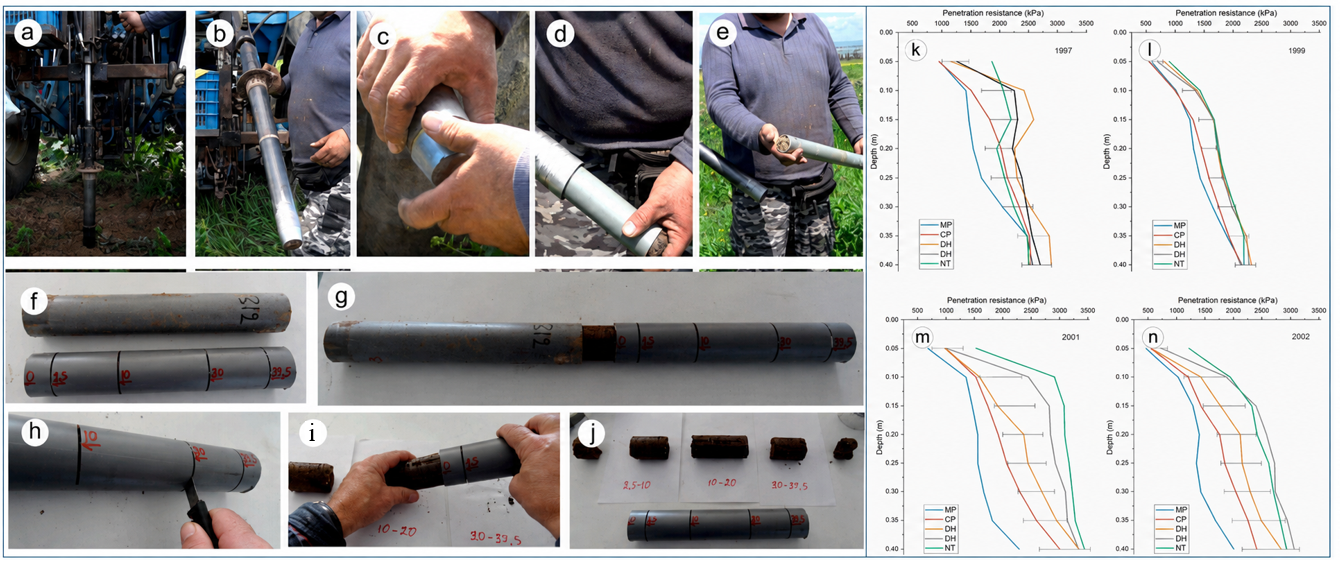
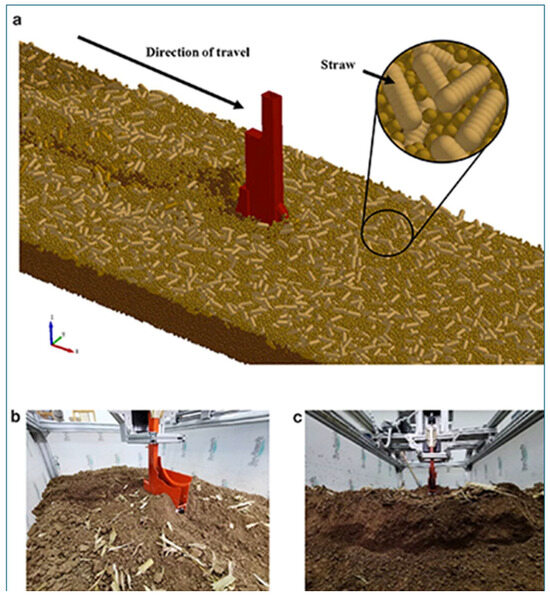
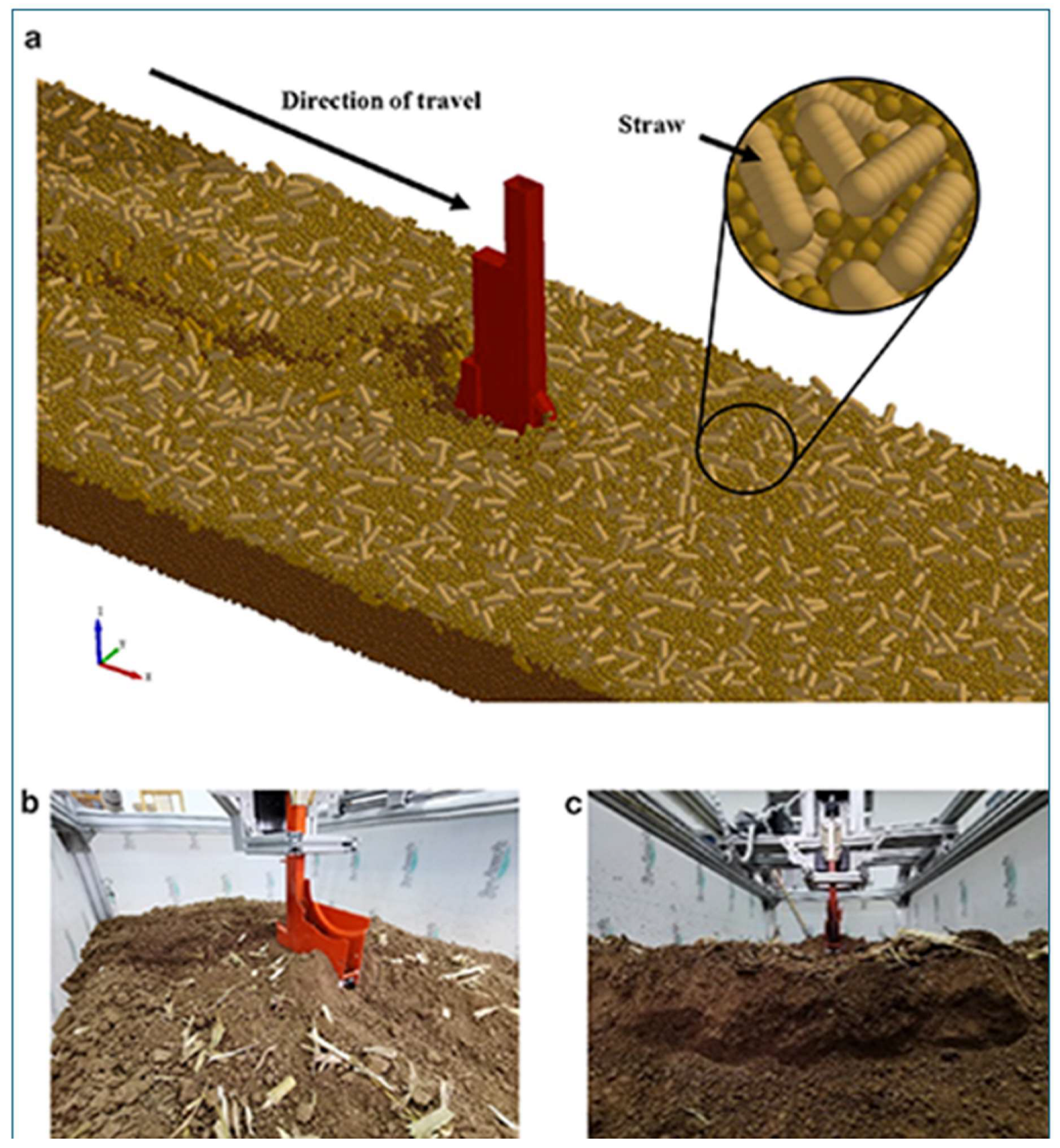
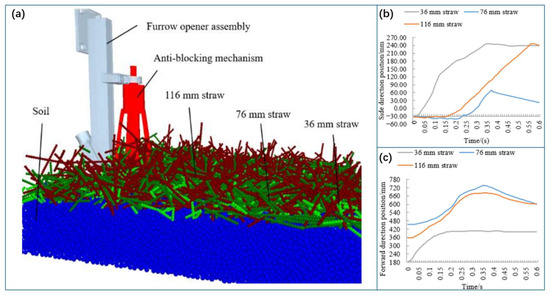
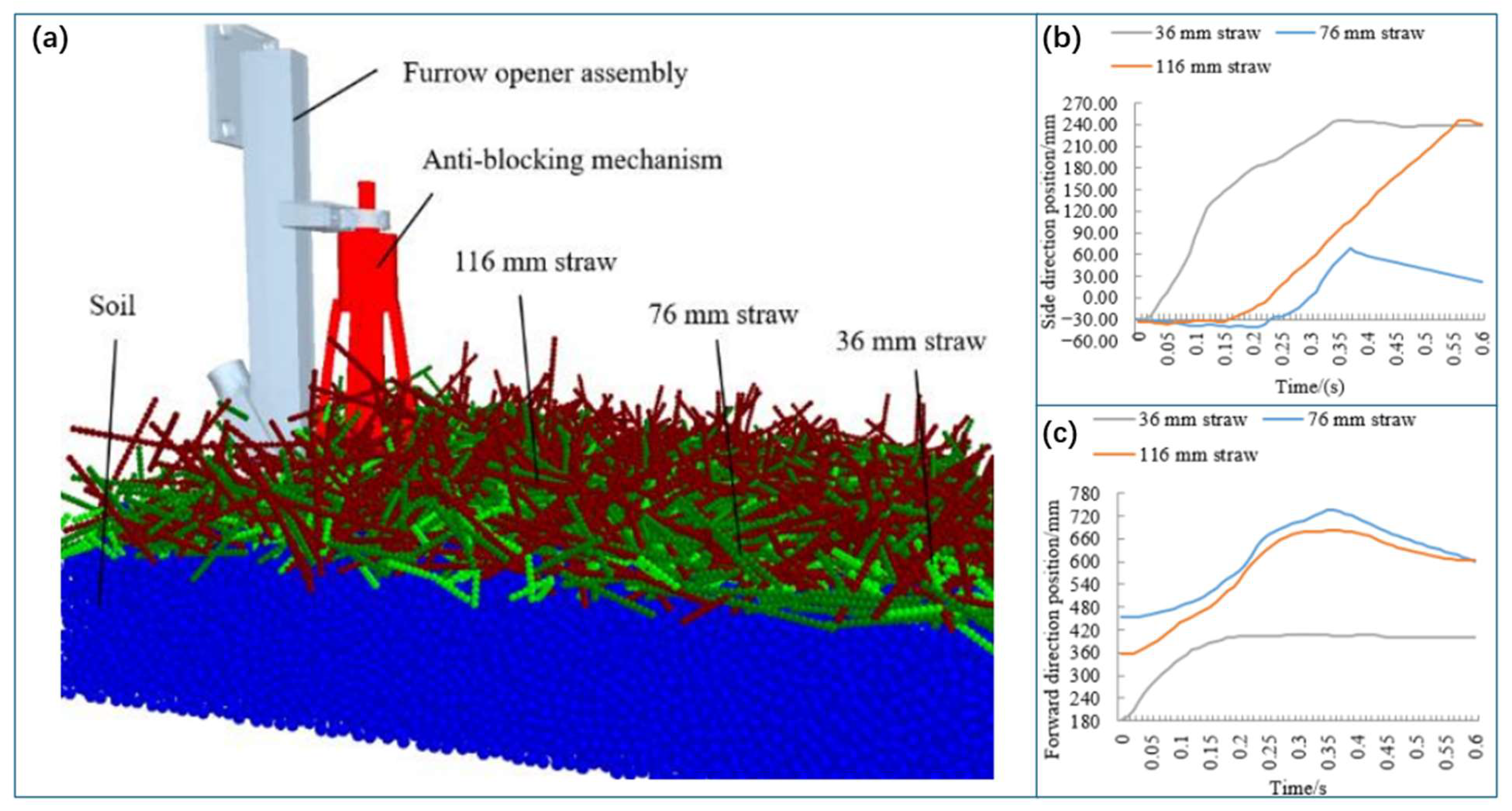
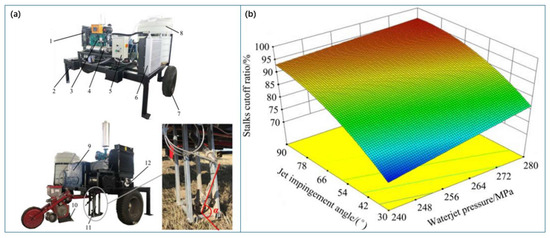
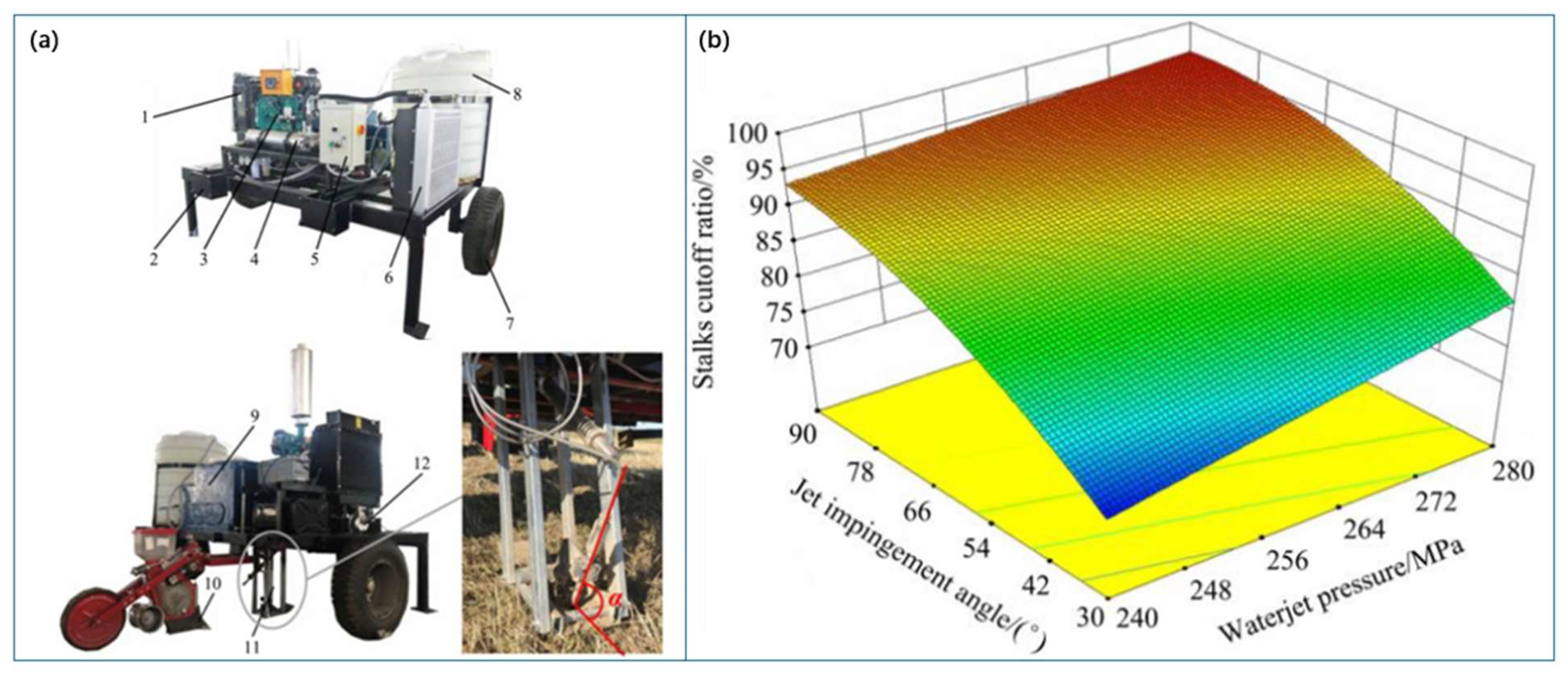
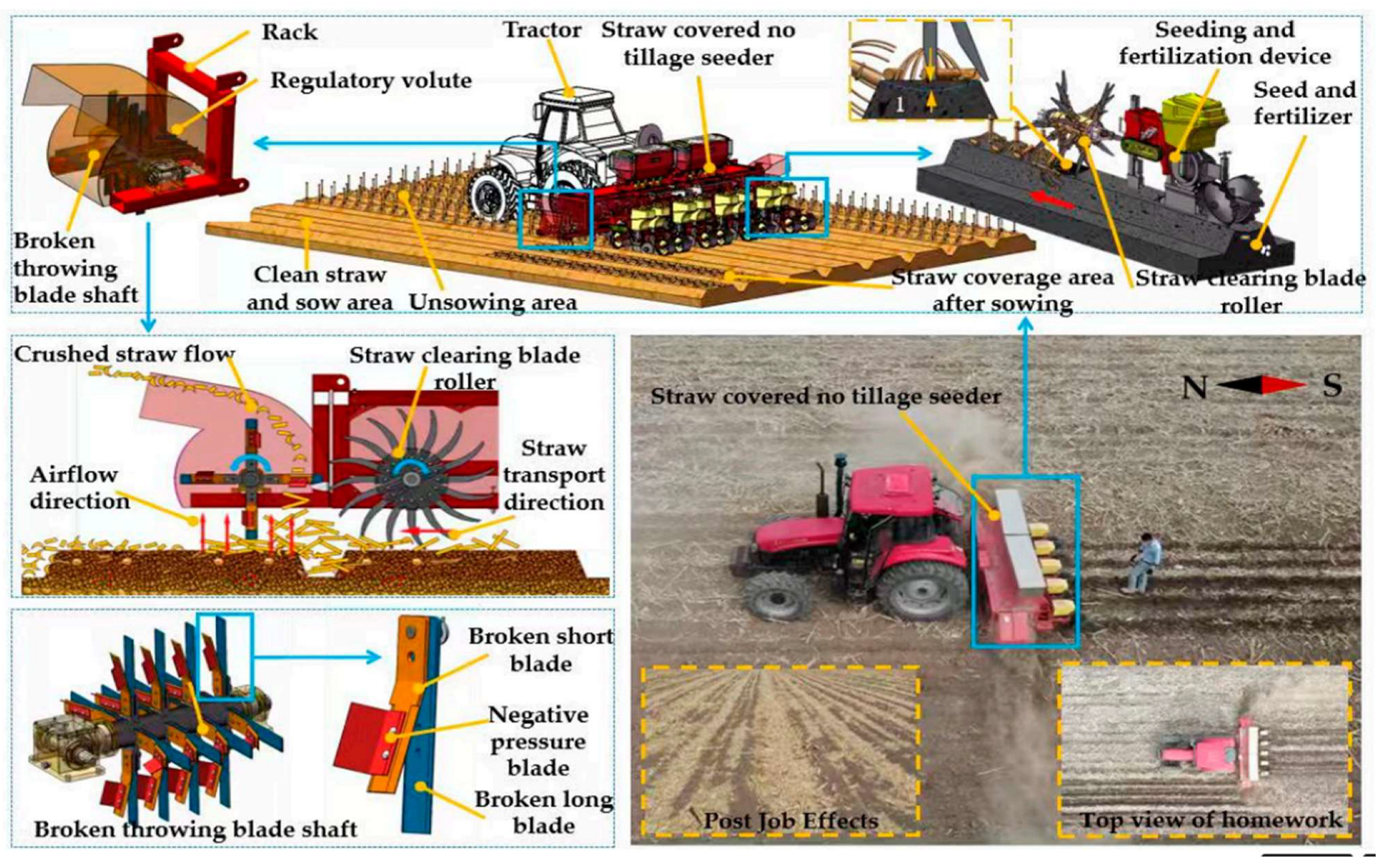
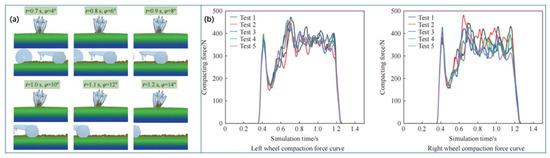
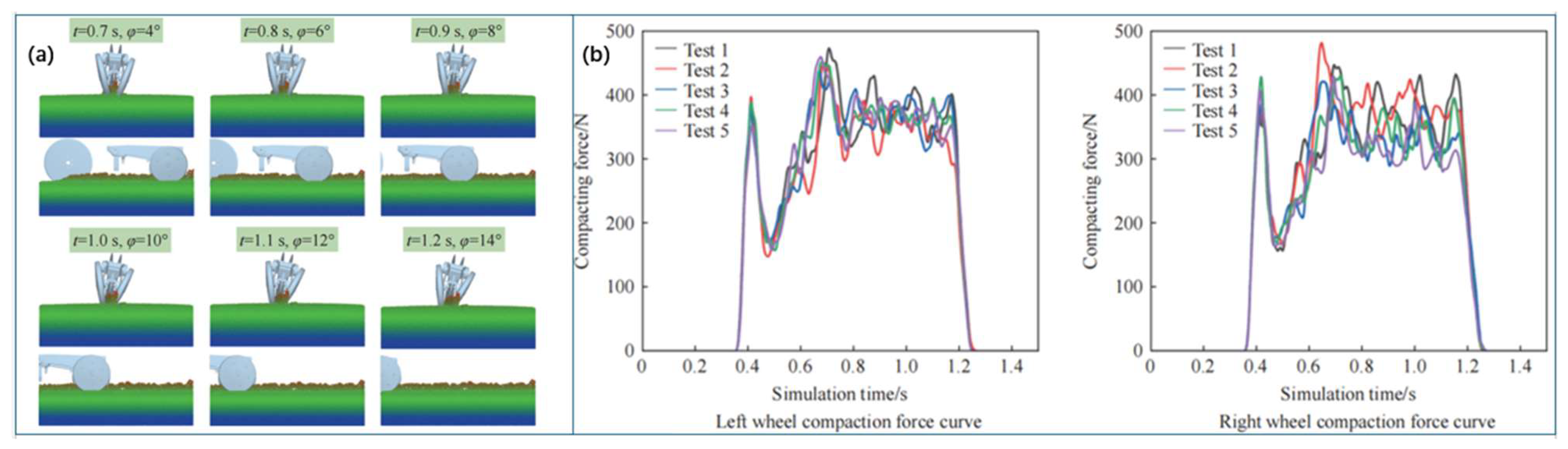
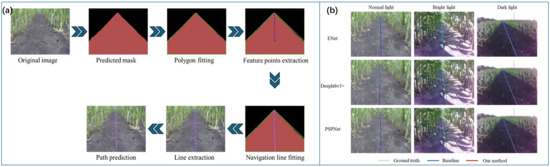
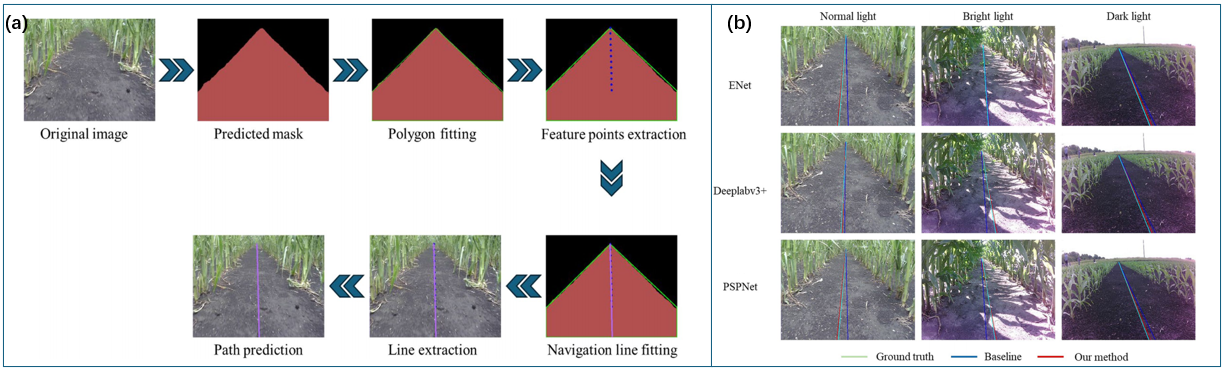
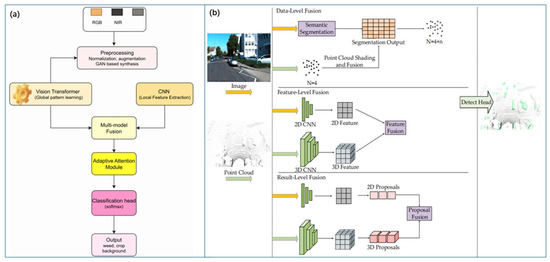
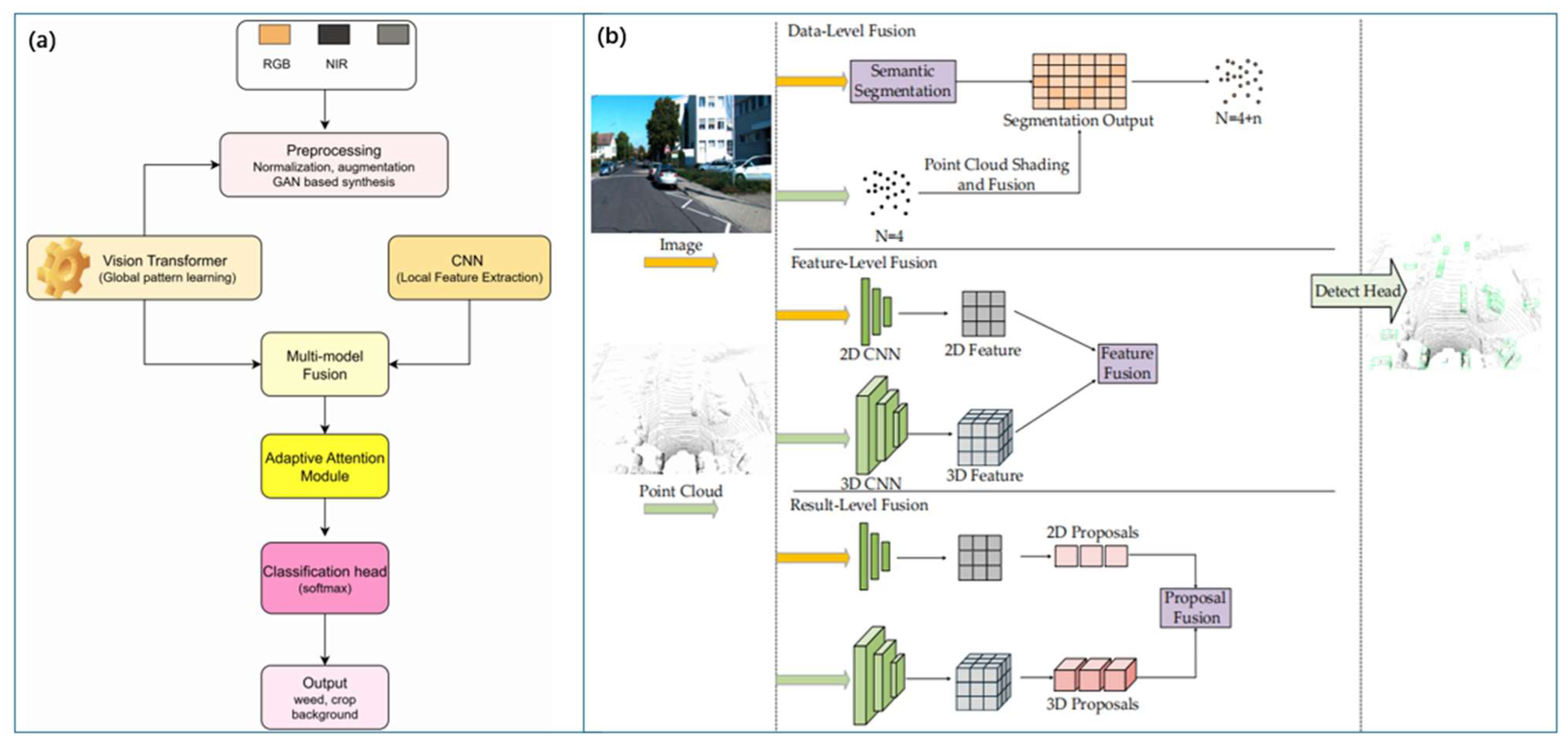
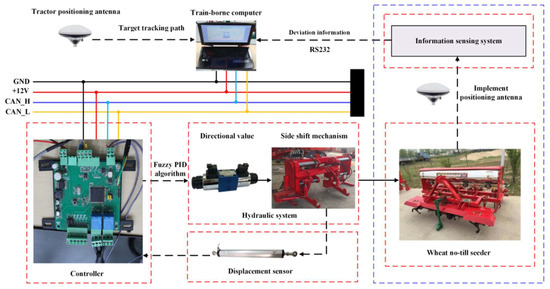
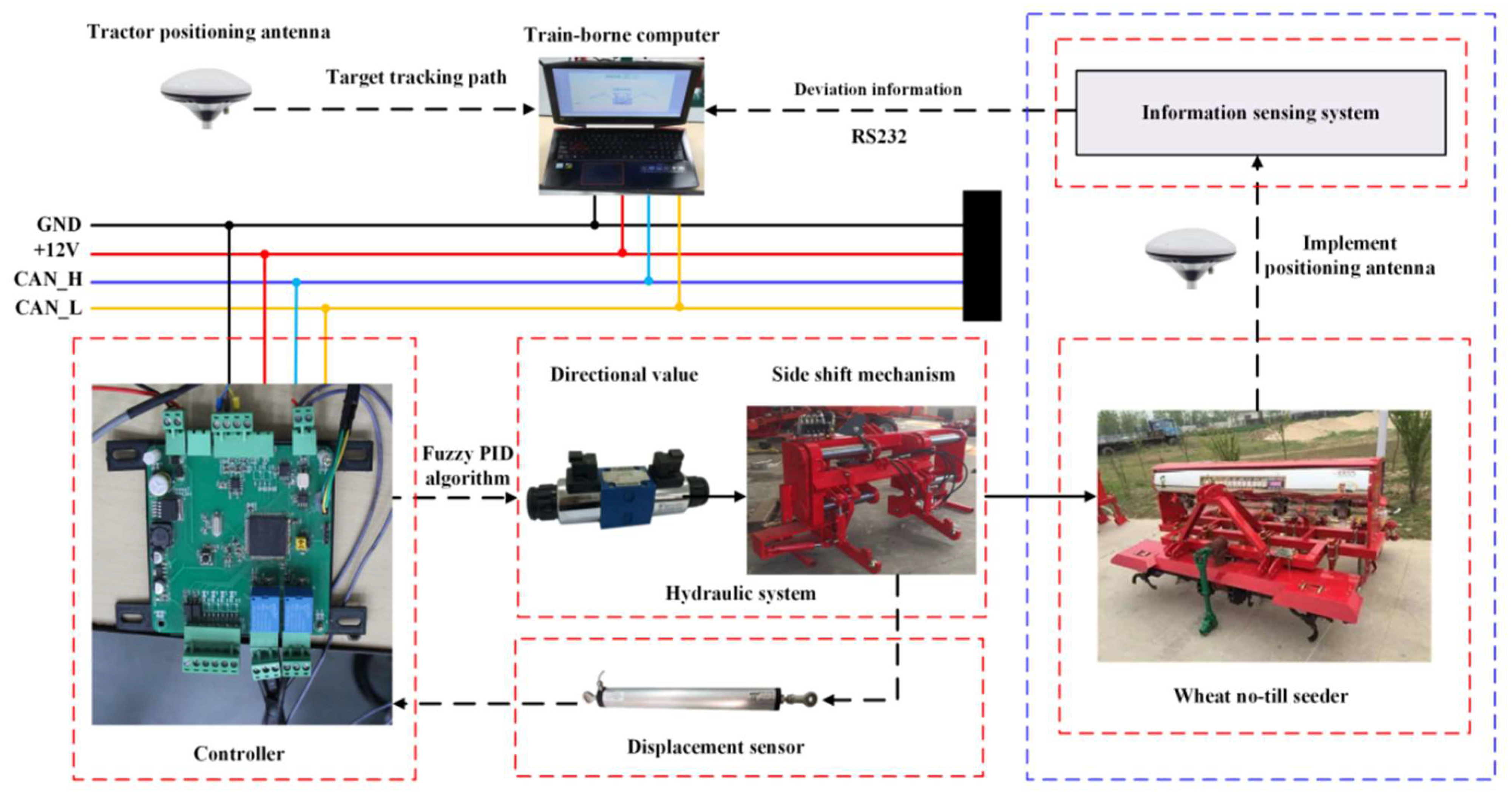
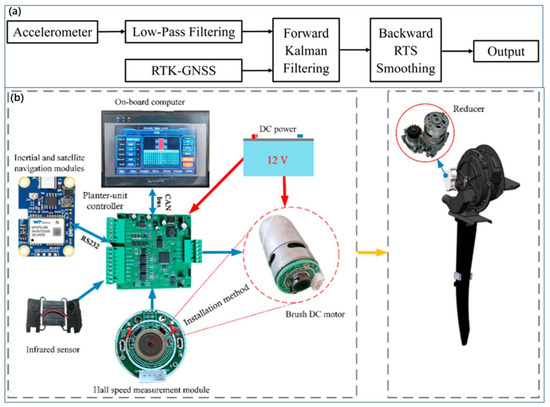
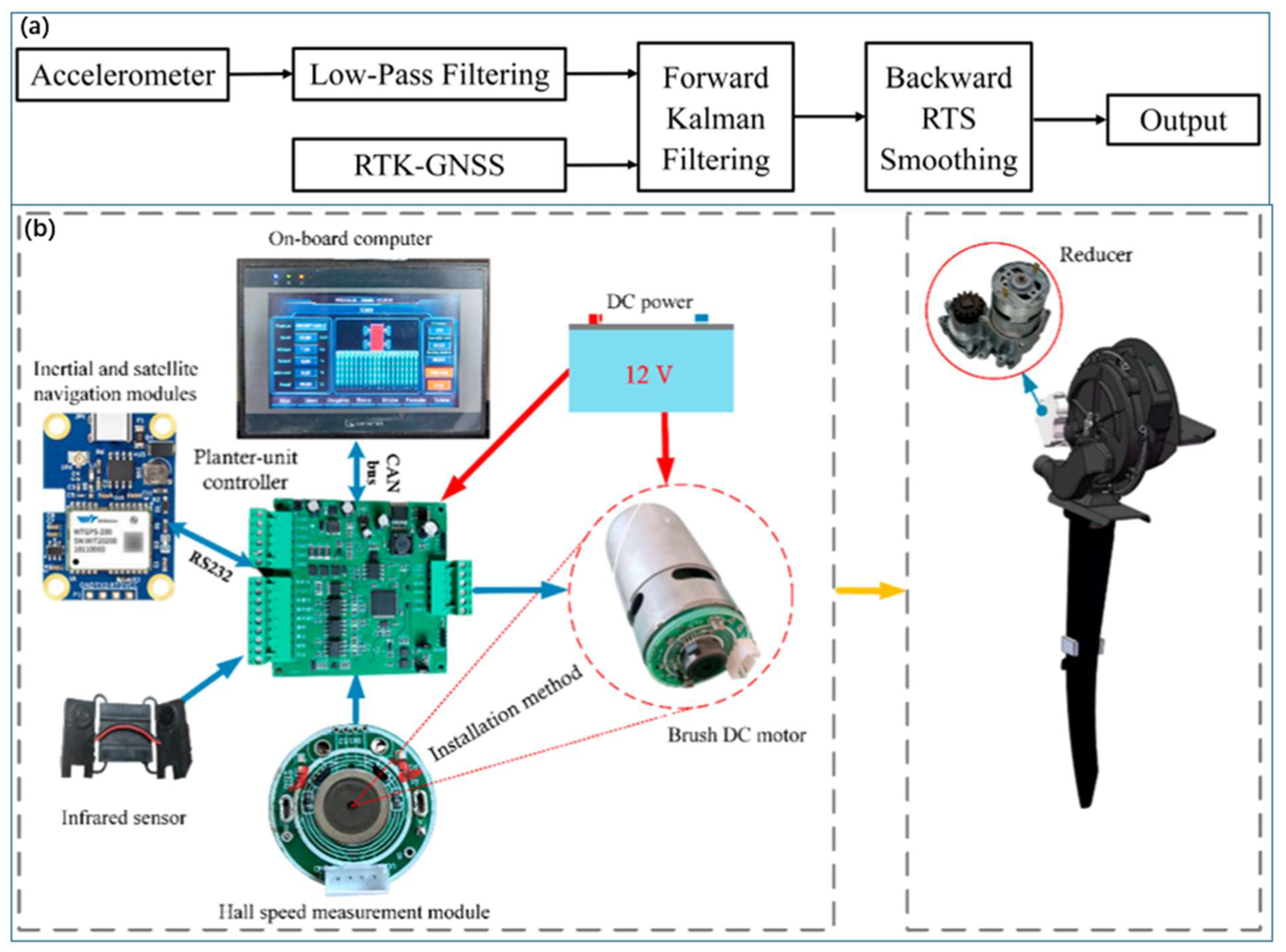
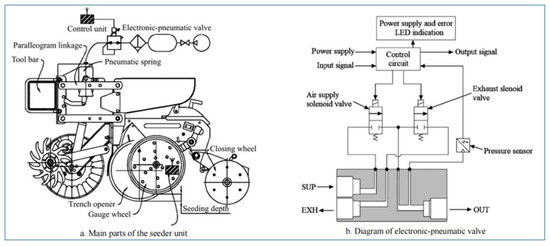
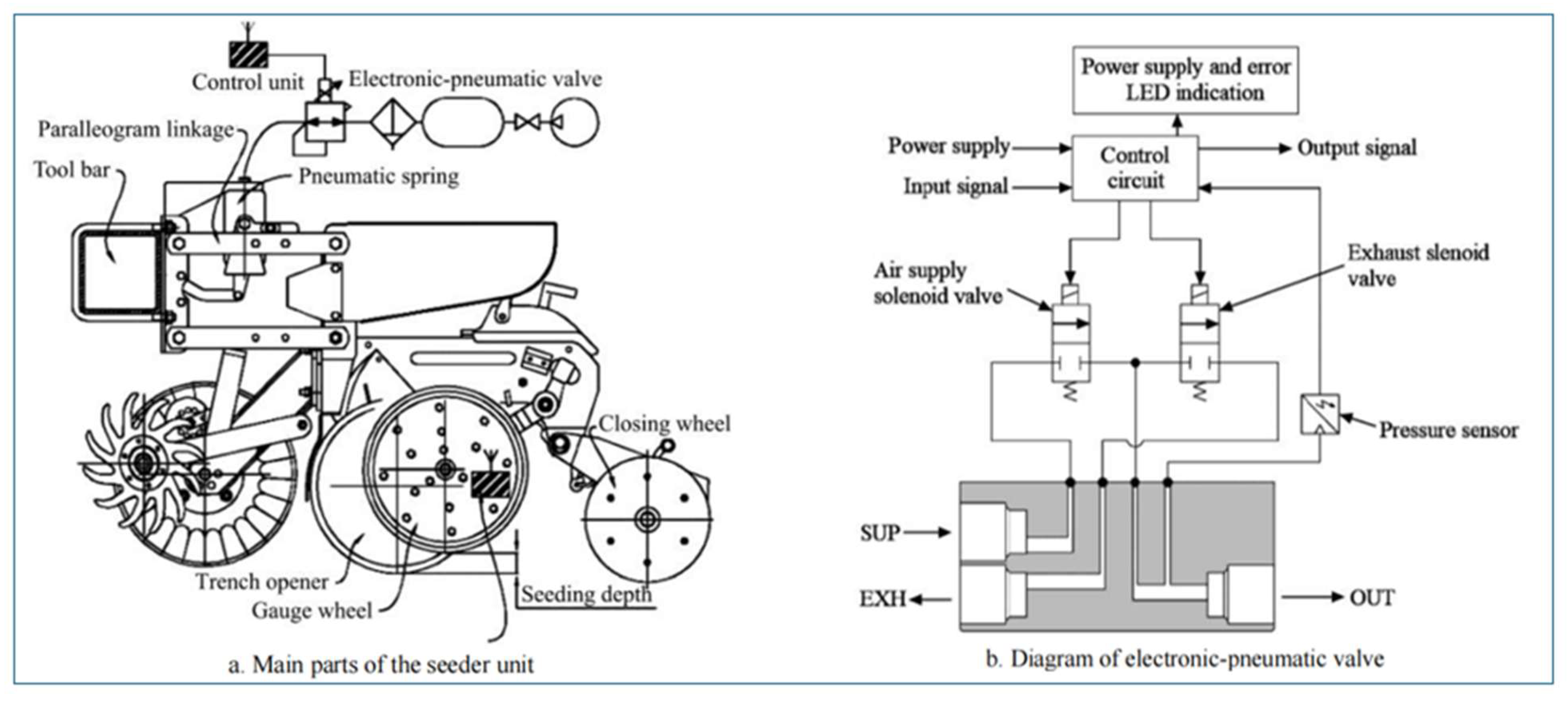

Disclaimer/Publisher’s Note: The statements, opinions and data contained in all publications are solely those of the individual author(s) and contributor(s) and not of MDPI and/or the editor(s). MDPI and/or the editor(s) disclaim responsibility for any injury to people or property resulting from any ideas, methods, instructions or products referred to in the content. |
© 2026 by the authors. Licensee MDPI, Basel, Switzerland. This article is an open access article distributed under the terms and conditions of the Creative Commons Attribution (CC BY) license.