


Abstract
Kutná Hora ore district, one of the largest historical silver deposits in Central Europe, consists of nine major lodes with Pb-Zn-Ag mineralization hosted by high-grade basement rocks of the Kutná Hora Crystalline Complex in central part of the Bohemian Massif. We conducted a detailed electron-microprobe study of a previously unknown ore mineralization from the uppermost level of the Muzejní důl mine, which is a medieval mine located within the Ag-richest Oselské pásmo Lode, in the southern part of the ore district. An unusual nature of this ore mineralization, which originated during three respective stages, was found. The early stage comprises the hypogene mineralization commonly occurring in the southern part of the district, composed of pyrite, arsenopyrite, Fe,Mn-enriched sphalerite, galena, and (keno)argentotetrahedrite-(Fe) hosted in quartz and siderite-rhodochrosite gangue. The second stage was characterized by the corrosion of early vein fill followed by the crystallization of a specific suite of ore minerals anomalously enriched in Ag, Cu, Zn, Cd, As, and Sb, including galena, Cd-enriched and Fe-poor sphalerite, greenockite, bornite, Ag,As,Sb,Mn-bearing chalcopyrite, silver, gold, stephanite, As,Cu-bearing pyrargyrite, Ag-Cu- and Sb-As-bearing polybasite-pearceite group minerals and a suite of tetrahedrite-group minerals, the latter showing wide variations in Ag-Cu, Sb-As, and Fe-Zn-Cd contents. The origin of the second-stage mineralization is interpreted in hydrothermal remobilization of ore metals and metaloids from the early ore mineralization, which was mediated by surficial fluids characterized by elevated redox potential. The third stage comprises acanthite and probably also Ag-Cu minerals (stromeyerite, jalpaite, and mckinstryite), Cu-S phases (covellite, spionkopite, geerite), and an Ag-Cu-Hg mineralization. This late mineralization was likely related to the pre-Cretaceous weathering of the apical part of the ore deposit and to the associated supergene enrichment of deeper parts of the ore zone by descending Ag,Cu-bearing waters.
1. Introduction
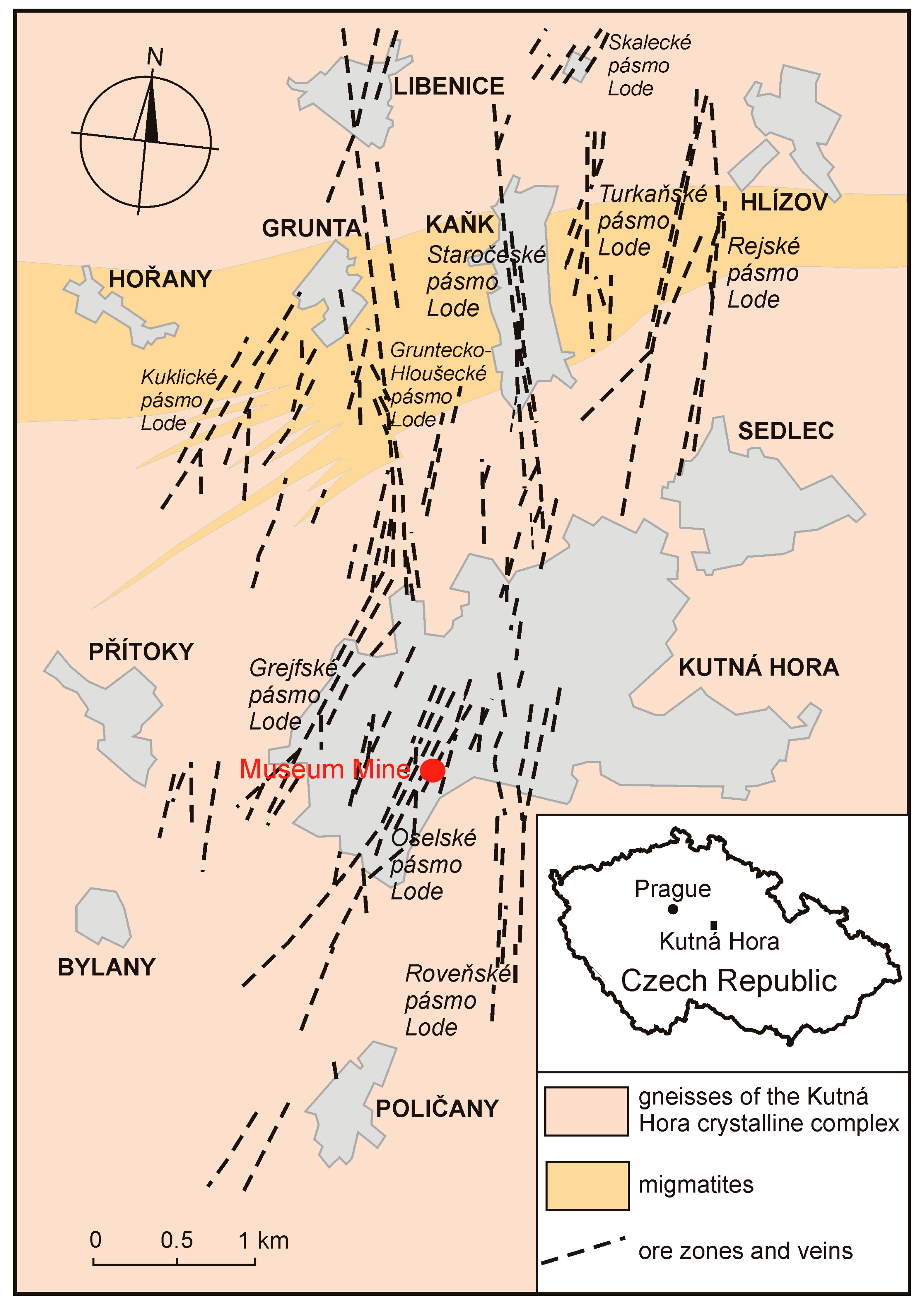
The famous Kutná Hora (Kuttenberg) ore district in central Bohemia (Czech Republic) has been reported on since the 13th century [1]. Its ore mineralization, bound to Late Variscan hydrothermal ore veins and ore lodes (ore zones, pásma in Czech) (Figure 1) hosted by metamorphic basement rocks, was one of the key European sources of silver during the 14th–16th centuries. Based on the volume of slag heaps, it is estimated that 2000–2250 t of silver were extracted in the Kutná Hora ore district during the first 400 years of mining [2].
This early era was the most successful period in the whole history of mining in the district, characterized by intense mining and building-up of a new mining town of Kutná Hora directly in the centre of the mining area. Within tens of years, the town of Kutná Hora turned into one of the largest towns in the Bohemian Kingdom, and the Kutná Hora ore district became one of key pillars of the Kingdom’s economy. The historic centre of the town, including St. Barbara cathedral and the cathedral of the Assumption of Virgin Mary in Sedlec, was in 1995 included in the UNESCO World Heritage Site List. For the first time in the world, the mining works in Kutná Hora reached the vertical depth of 500 m as early before the end of 14th century [2]. Before the end of the 15th century, mining activity moved from the silver-rich southern part of the Kutná Hora ore district to the northern part of the district with silver-bearing sulfidic “pyrite-rich” ores. Ores of this part were poorer in silver, but veins were more massive and ore abundant. Continually increasing operating costs and the import of cheaper silver from South American deposits caused a decline of mining in Kutná Hora at the turn of the 16th and 17th century [2].
Some historical sources (e.g., [3,4]) assume that the beginning of mining in the district and its success was related to the existence of the supergene enrichment of uppermost parts of ore veins. However, the significant presence of supergene-enriched ores in the district has not been proven in modern times (e.g., [5,6]). Holub [7] practically excludes this possibility in his detailed analysis, given that the erosion event associated with the Cretaceous marine transgression removed the near-surface part of the rock environment, including altered parts of hydrothermal veins.
Numerous supergene minerals well-known from this ore district originated during sub-recent weathering of ore materials in mine dumps (including new minerals kaňkite [8], zýkaite [9], bukovskýite [10], parascorodite [11]) and in the space of underground mine workings (e.g., glaucocerinite, woodwardite, hydrozincite, monohydrocalcite, and the new mineral paulišite [12,13]) and have no relation to supergene enrichment as such.
Our systematic long-lasting mineralogical investigations of ore mineralization in the Kutná Hora ore district also involved ore material sampled from the uppermost part of the historical Muzejní důl Mine (Museum Mine) [14] situated directly in the Kutná Hora town center. It was found that it contained a mineralogically rich and geochemically specific mineralization, which was not known from the Kutná Hora ore district yet. This mineralization is considered to contain a specific late-stage hydrothermal assemblage overprinted by a supergene-enriched ore mineralization. The mineralogical characteristics and genetic interpretation of this unique ore mineralization are the subject of this paper.
Figure 1.
Map of the Kutná Hora ore district with nine major ore lodes, adapted from [12]. Each lode (“pásmo” in Czech, “Zug” in German) consists of several veins.
2. Background
2.1. Geological Setting
The Kutná Hora ore district is situated in the central part of the Bohemian Massif, an easternmost segment of the Central European Variscides, which were consolidated during the Variscan Orogeny at the end of Palaeozoic. The ore mineralization is hosted by strongly uplifted basement rocks of the Kutná Hora Crystalline Complex (KHCC). This crystalline complex rims the NE edge the Variegated unit of the Moldanubian Zone of the Bohemian Massif [15]. The general Variscan tectonic setting of the KHCC has recently been interpreted in relation to a wedge-like underplating of the Saxothuringian crust under the Moldanubian block from the west 360 Ma ago, and the subsequent partial melting between 340 and 328 Ma is explained as a result of relamination of this wedge between 350 and 340 Ma ago [16]. Geophysical data, namely gravity Linsser anomalies, reveal the existence of a subvertical crustal strong gradient zone [17] and the existence of a hidden granitic body as an extension of the Central Bohemian Plutonic Complex [18], both reaching depths of around 6 km.
The end of the Variscan Orogeny was associated with rapid uplift and erosion of the crystalline basement, coupled with propagation of extensional faults and sedimentation of Uppermost Carboniferous-to-Permian freshwater molasse detrital sediments in local tectonically ground NNE–SSW striking depressions. The formation of ore mineralization of the Kutná Hora ore district also coincided with this Late Variscan stage of evolution.
Low-rate erosion probably continued during the early Mesozoic, which was followed by a pronounced subsidence after the Cenomanian marine transgression. The Upper Cretaceous (Cenomanian-Turonian) sediments covered the KHCC rocks in the study area, starting with coarse basal clastics [19] and continuing with generally upward fining clastic and later carbonate sediments (sandstones, siltstones, marlstones, limestones). During the Tertiary, low-rate uplift and erosion of the area continued.
2.2. Kutná Hora Ore District
The Kutná Hora Ore District represents a hydrothermal Ag-Pb-Zn sulfidic vein-type mineralization of the Variscan age [20]. The ore district occupies an area of ca. 10 × 5 km elongated in the N–S direction. The ore mineralization is concentrated in nine major and three minor lodes cutting metamorphic rocks of the KHCC (Figure 1). Each lode comprises a hydrothermally altered zone of several hundred meters to about 3 km in length, dozens to several hundred meters in width, reaching several hundred metres to 1 km depth extent [20]. The lodes strike predominantly N–S to NNE–SSW, and each of them consists of several ore veins mutually separated by hydrothermally altered rocks containing ore disseminations and small ore veinlets. The KHCC in the area of this ore district is represented by two different groups of rocks, the Malín unit [21] formed mainly by biotitic gneisses and central migmatites in the north of the ore district, and the inner mica schist zone in the south. This latter unit is formed mainly by gneisses and migmatites with massive intercalations of amphibolites, erlans, serpentinites, eclogites, skarns and marbles. These rocks are occasionally penetrated by evolved pegmatites and lamprophyric dykes [22].
In general, two mineral assemblages are present in the Kutná Hora ore district; one “silver-rich” developed in gneisses and mica schists of the inner mica schists of the KHCC in the south, the other “pyrite-rich” in gneisses and migmatites of the Malín unit in the north [12,20]. From a mineralogical perspective, the northern lodes are characterized by the occurrence of massive base sulfides such as pyrite, pyrrhotite, galena, sphalerite, arsenopyrite, chalcopyrite, marcasite, stannite, and cassiterite accompanied by Ag-Sb sulfosalts such as freibergite (=(keno)argentotetrahedrite-(Fe)) according to valid classification by Biagioni et al. [23], pyrargyrite and miargyrite, and occasionally also canfieldite. Often present are Pb-Sb sulfosalts boulangerite and jamesonite plus owyheeite, and also occurring is a suite of Ag-Pb-Bi-Sb sulfosalts including gustavite, terrywallaceite, vikingite, treasurite, eskimoite, erzwiesite, izoklakeite, matildite, aramayoite [24,25], staročeskéite [26], holubite [27] or lazerckerite [28]. Southern lodes contain larger amounts of Ag-Sb and Ag-Pb-Sb sulfosalts, such as miargyrite, pyrargyrite, freibergite (=(keno)argentotetrahedrite-(Fe)), freieslebenite, diaphorite, owyheeite, minerals of the andorite group, allargentum, and native silver. Accompanying ore minerals in southern lodes include pyrite, arsenopyrite, sphalerite, galena, berthierite, stibnite and Pb-Sb sulfosalts (boulangerite, jamesonite) [29]. The contents of Sn and Bi are typical of northern lodes, while bismuth is missing in southern lodes altogether. The gangue contains mainly quartz and kutnohorite accompanied by rhodochrosite and dolomite in the south. The Mn carbonates are missing in northern lodes.
K-Ar illite dating yielded ages between 298 and 314 Ma for the Kutná Hora ore mineralization [30]. These estimates are fully in agreement with available geological evidence (the vein crosscut foliation of host metamorphic rocks and boulders of ores were found in the Cretaceous conglomerates). Mineral assemblage, fluid inclusion, and stable isotope evidence suggest a high-temperature (300–500 °C) nature of early hydrothermal mineralization and substantial cooling of ore fluids (down to 200–100 °C) during the latest stages [31,32]. Pressure estimates range between 2.2 and 2.7 kbar for the early stage [32], corresponding to upper crustal conditions. The parent fluids were low-salinity (2–7 wt% NaCl equation) aqueous solutions [31,32]. The style of mineralization, mineral paragenesis, mineralization stages, age, as well as formation conditions are similar to the well-known Freiberg ore district in Germany [33,34,35].
2.3. The Oselské Pásmo Lode
The Oselské pásmo Lode, where the samples under study in this paper were found, is the main and largest of the southern silver-rich lodes and has been since the Middle Ages the legendary richest part of the district. It is located under the centre of the town of Kutná Hora, strikes N–S to NNE–SSW with a dip of 70–75° to the W, and reaches the length of ca. 2.8 km.
The Oselské pásmo Lode was exploited by a complex and extraordinary deep mine system from the end of the 13th century. The measured inclined depth of the most legendary and largest mine of the lode, the Osel (Donkey) Mine, which gave the lode its name, was 616 m according the Prášek Report from 1531 [36,37]. In the course of the approximately 250 year history of mining on this lode (between ca. 1290 and 1540), about 80–120 mines were in operation there. The medieval mine workings followed N–S to NNE–SSW trending mineralized veins, accompanied by smaller oblique or perpendicular veins. A small part of this medieval mine system is open today for tourists as the Museum Mine, which is the site of sampling for this study.
The Oselské pásmo Lode consists of a 300 m (in the south) to a 450 m (in the north of the lode) wide system of three main veins (Figure 2). In the south part, these veins are called (from E to W): Jelitská Vein, the main Oselská Vein, and Kavecká Vein. In the central and northern part of the Oselské pásmo Lode (Figure 2), which is fully situated under the urbanized historic centre of the town, there are the Oselská Vein, the Nadložní (Overlying) Vein, and the Čapčošská Vein, which is the continuation of the Kavecká Vein in the south [37,38]. The thickness of the veins was up to 1 m on average.
Figure 2.
The vein system of the Oselské pásmo Lode (left). The map of the Museum Mine (level 1) modified from [14] (right), consisting of medieval mine workings (N–S direction) that exploited the Čapčošská vein and the Nadložní (Overlying) vein, and the drainage adit (WNW–ESE direction). Only the adit is publicly accessible via a tourist trail. The main vein of the Oselské pásmo Lode, the Oselská vein, was not exploited by this mine system.
2.4. The Museum Mine
The Museum Mine is a medieval gallery, originally a drainage adit of the Jiří (George) Mine, which followed the uppermost horizon of the Oselské pásmo Lode. It was discovered in the course of drilling during hydrogeological research in 1967 [37]. A continuation of the complex system of medieval mine workings (Figure 2) was discovered during the speleological research in the 1990’s in spaces accessible from the end of the tourist trail [39].
The accessed medieval mine workings are situated on the Nadložní (Overlying) Vein and the Čapčošská Vein. The Stope South, where the studied mineralization was found, is positioned on the Nadložní (Overlying) Vein, running parallel 30 m east of Čapčošská vein and 150–200 m west of the Oselská Vein. The Čapčošská Vein was opened west of the Cathedral of St. Barbara and the Jesuit College through the mine of Čapčoch, and further to the north through the mines of Ondřej (Andreas), Jiří (George) and others [40]. South of the Čapčoch mine and north of the Jiří Mine, the vein strikes NNE–SSW. The central richest part of this vein strikes N–S in the length of ca. 240 m between the two mine shafts. Recent investigations of the mine system are complicated by the fact that the altitude difference between water level in the medieval mines and the boundary between crystalline rocks and overlying Upper Cretaceous sandstones is only about 6 m, and thus only the underground spaces within this span are accessible to research.
The stope with the occurrence of the ore mineralization in this study most likely comes from an early period of mining soon after the discovery of the deposit in the 2nd half of the 13th century. However, it did not originate in the very earliest period of the discovery of the deposit because it was opened by underground mining due to the 28 m thick layer of Cretaceous sandstones above the gneiss with ore veins, and not by open pit excavation, which must have been used at the very beginning of mining and which would have left no remnants of the stope.
3. Sampling and Analytical Methods
Samples with the studied material were found in one stope in the underground system of medieval mine workings, discovered by speleologists in the course of speleological survey and mapping of St. George’s drainage adit, which is part of the Museum Mine. During the survey, medieval mine workings of the uppermost levels of the central northern part of the Oselské pásmo Lode—right under the urbanized historic centre of the town—were discovered. Most of the mine workings have transportational, drainage or technical purposes with the exception of one stope, which was found to be the subject of mining. The stope, dubbed “Stope South” (red ellipse in Figure 2), is situated ca. 40 m SSW from the end of the tourist trail of the Museum Mine and is situated on the Nadložní vein (Overlying vein) in the central northern part of the Oselské pásmo Lode, now positioned directly under the historical centre of the town of Kutná Hora. All collected and analyzed samples came from backfill, an attle or mining waste, originating in the course of mine filling.
Detailed research was carried out on 117 polished sections prepared from sixty samples collected in 1999–2005 in the area of the Stope South, which include all ore types, recognized in the ore material. The specimens were investigated microscopically and subsequently analyzed using an electron microprobe (more than 2200 point analyses). The majority of samples were analyzed with the electron probe microanalyser Cameca SX 100 (AMETEK, Inc., Berwyn, PA, USA) at Institute of Geology of the Czech Academy of Sciences, Prague using WDS mode, and a smaller portion of quantitative chemical analyses was performed with a Cameca SX 100 electron microprobe at National Museum, Prague, using WDS analysis of polished sections coated with 30 nm of carbon in a vacuum. Complete analytical datasets are given in the Supplementary Materials (Tables S1–S22).
Analyses of most sulfides and native metals were conducted using an acceleration voltage of 25 kV, beam current of 20 nA, and beam size 0.7–2 µm. The beam-sensitive Ag minerals (acanthite, polybasite-group minerals, stephanite, and Ag-Cu-Hg sulfide) were measured at 25 kV, 2–5 nA, and 5–10 µm. The following standards and analytical lines were used: Ag (AgLα), Au (AuMα), Bi2S3 (BiMβ), CdTe (CdLα), Co (CoKα), CuFeS2 (CuKα, SKα), FeS2 (FeKα), GaAs (GaLα), Ge (GeLα), HgTe (HgLα), InAs (InLα), Mn (MnKα), NaCl (ClKα), NiAs (AsLβ), Ni (NiKα), PbS (PbMα), PbSe (SeLβ), PbTe (TeLα), Sb2S3 (SbLα), Sn (SnLα), Tl (Br,I) (TlLα), and ZnS (ZnKα). Oxygen-bearing phases were measured at 15 kV, using beam current 10 nA (illite, apatite) or 5 nA (carbonates) and beam diameter 2 µm (illite, apatite) or 5 µm (carbonates). The following elements were determined in apatite: Al, As, Ba, Ca, Ce, Cl, F, Fe, K, La, Mg, Mn, Na, Nd, P, Pb, Pr, S, Si, Sr, Y and Zn, in illite: Al, Ba, Ca, Co, Cs, Cu, F, Fe, K, Mg, Mn, N, Na, Ni, P, Pb, Rb, Sb, Si, Sr and Zn, and in carbonates: Al, Ba, Ca, Co, Cu, Fe, Mg, Mn, Na, Ni, P, Pb, Si, Sr and Zn. The following standards and analytical lines were used: albite (NaKα), almandine (AlKα, FeKα), baryte (BaLα), BN (NKα), celestite (SKα, SrLβ), CePO4 (CeLα), chalcopyrite (CuKα), Cr2O3 (CrKα), Cs-glass (CsLα), diopside (MgKα), fluorapatite (CaKα, PKα), halite (ClKα), hematite (FeKα), LaPO4 (LaLα), LiF (FKα), NdPO4 (NdLβ), Ni (NiKα), PrPO4 (PrLβ), Rb-Ge glass (RbLα), rhodonite (MnKα), sanidine (KKα, AlKα, SiKα), stibnite (SbLα), TiO2 (TiKα), V (VKα), vanadinite (PbMα), and wollastonite (CaKα, SiKα).
The peak counting time was usually between 10 and 30 s (for N 100 s), whereas those of each background were half of the peak time. The raw counts were converted to wt% using the standard PAP procedure [41]. Oxygen was calculated from stoichiometry. The contents of the above-mentioned elements, which are not included in tables of mineral compositions, were below the detection limits, which range between 0.05 and 0.1 wt% for most elements except for N, F, and rare earth elements, which were around 0.2–0.3 wt%. The data were corrected for overlaps: Ag vs. Cd, As vs. Sb, Ti vs. V, Na vs. Zn, Mn vs. Cr, Ca vs. P, and F vs. Ce.
4. Results
4.1. Ore Types
The following five ore types were recognized in the studied material (Figure 3):
Figure 3.
Appearance of ore types from the Museum Mine. (a) Nest of chalcopyrite (Cp) and associated ore minerals in milky white quartz (Q) of ore type (i); (b) Ladder-like texture of ore type (ii) veinlet defined by columnar crystals of quartz with tetrahedrite-group minerals (TGM) in intergranular spaces. The plane of the veinlet is perpendicular to foliation of host gneiss (R). (c) Veinlet of ore type (ii) composed of quartz, galena and tetrahedrite-group minerals. The foliation planes of host gneiss contain black aggregates of the ore mineralization of ore type (iii). (d) The mineralization of ore type (iv) with wire aggregates of native silver (Ag) covered by acanthite on brown siderite crystals in a fissure cutting the gneiss. (e) Mineral assemblage of a vug in ore type (iv) lined with crystals of quartz, siderite (Sid) and wires of native silver. (f) The lenses (arrowed) of fine-grained galena, pyrite, and chalcopyrite of ore type (v) in host gneiss.
Ore type (i) is represented by a massive milky-white quartz vein (thickness up to 10 cm) almost without drusy cavities containing lenses, nests and patches of bornite and chalcopyrite up to several cm in size (Figure 3a), grain aggregates and coatings of tetrahedrite-group minerals (hereafter abbreviated as TGM), Ag-Cu sulfides (jalpaite, mckinstryite, stromeyerite), acanthite and small outgrowths of native silver. The vein fill is rather homogeneous, the ore nests are located irregularly in the vein, and not even quartz matrix shows textural or colour changes across the vein thickness. In contrast to other ore types, the remnants of wall rock, preserved around the margin of the vein, are strongly mylonitized, with foliation arranged parallel to the course of the vein. Parts of ore minerals and carbonates are located along cracks in the quartz vein. The milky quartz of ore type (i) with malachite, azurite and chalcopyrite was found to form transversal veins at three places, several meters apart in the side walls of the stope. The veins are approximately perpendicular to the general direction of the main ore structure (the Nadložní vein) that was mined in the Stope South.
Ore type (ii) comprises stockwork-type quartz veinlets up to 1 cm thick (Figure 3b). The major veinlets cut the host gneiss approximately perpendicularly to the foliation of the wall rock. The contact of the vein fill with the wall rock is sharp and without any mylonitization. The vein fill typically has the ladder-like texture, defined by subparallel well-developed columnar crystals of quartz among which frequent residual free space remained which was later filled by ore minerals. Quartz crystals, although mostly grown across the whole width of the vein, do not display any features of post-crystalline deformation. The ore mineralization is mainly represented by grains and crystal aggregates of TGM, galena, sphalerite, pyrite and chalcopyrite and black metallic outgrowths of acanthite.
Ore type (iii) is ore mineralization developed on foliation planes of the very gneiss containing quartz veinlets (Figure 3c) of the ore type (ii), occurring in the closest proximity of these veinlets. Ore types (ii) and (iii) are closely related and are spatially intersecting. The ore mineralization of ore type (iii) is represented by occurrences of native silver, acanthite, TGM, and sphalerite.
Ore type (iv) is a fissure mineralization (Figure 3d,e) hosted by veinlets up to 1 cm thick, which are perpendicular to the foliation of the host gneiss. No deformation of the wall rock is observed at the contact with the fill. The veinlets are usually formed by a black fine-grained (size of grains in the range of tenths of mm) homogeneous fill relatively frequently containing up to 2 cm long flat drusy cavities lined with columnar crystals of quartz (colourless rock crystal), lenticular rhombohedral crystals of carbonates, and fluffs of black wires of native silver. Siderite, acanthite on the surface of silver wires (Figure 3e), as well as needles of acanthite on siderite crystals, native silver, small tabular crystals of polybasite–pearceite, and chalcopyrite are characteristic minerals of this ore type.
Ore type (v) includes nests, lenses and patches several cm across directly in gneiss (Figure 3f) or mm-sized veinlets in gneiss (without quartz or with minor quartz) composed of fine-grained galena, chalcopyrite and pyrite. Accessory minerals include acanthite, pearceite, and polybasite. A hand-separated sample of ore type (v) consisting of galena, pyrite and chalcopyrite was powdered, homogenized and analysed by XRF at Geoindustria Laboratories, Černošice, with the aim to determine metal contents of Ag and Au. The analyses yielded 5000 g/t Ag and 5 g/t Au (pers.com. V. Šrein).
4.2. Mineralogy
4.2.1. Gangue Minerals
Quartz is the major gangue of all studied ore types. It usually forms the prevailing filling of ore veins, which hosts grains, nests, or veinlets of ore minerals. Milky massive quartz without drusy cavities predominates in ore type (i). In contrast, well developed columnar quartz crystals up to 8 mm in length appear in quartz veinlets of ore types (ii) and (iii), leaving free space among neighbouring crystals, which was cemented by carbonates and ore minerals (Figure 4a). Quartz is usually the earliest mineral phase of the vein, except for ore type (ii), where early aggregates of rhodochrosite and siderite are replaced by quartz along grain boundaries (Figure 4b).
Figure 4.
Mineral assemblage and development of individual minerals from the studied mineralization on BSE images. (a) Early siderite (Sid)-to-rhodochrosite (Rdc) from the vein margin replaced by quartz (Q) and enclosed in Fe,Mn-bearing sphalerite (Sp). Ore type (ii), sample MU 65. (b) Galena (Ga), sphalerite and late zoned Mn-poor siderite (partly metacrysts) filling residual space among quartz crystals. Quartz contains relics of early rhodochrosite. Ore type (ii), sample MUAG 3. (c) A veinlet containing galena II, chalcopyrite (Cp) and siderite cutting quartz and galena I. Ore type (i), sample MU 54 D. (d) Late zoned Mn-poor drusy siderite growing over Fe,Cd-enriched sphalerite, galena, and minor tetrahedrite-(Zn) around galena. Ore type (ii), sample MUAG 23 A. (e) Zoned Mn-poor siderite filling residual porosity in an ore aggregate composed of native silver (Ag) and Cd-enriched sphalerite. Ore type (iii), sample MUAG 1 A. (f) Late Mn-poor siderite with small rhombohedron of rhodochrosite, filling together with minor acanthite (Ac) porosity in corroded galena I. Ore type (ii), sample MUAG 3.
Carbonates of the siderite-rhodochrosite series are minor to accessory gangue minerals of the ore types (i), (ii), (iii) and (v). They occur in several morphological forms. Enclosed early relics are frequently isolated and strongly replaced by either quartz in ore type (ii) (Figure 4a,b) or sulfides, namely bornite, galena, and chalcopyrite in ore types (i) and (v). Another mode of occurrence is tiny veinlets cutting the earlier quartz-sulfide (pyrite, arsenopyrite, tetrahedrite-group, galena) vein, with galena II and chalcopyrite in ore type (i) (Figure 4c). Late incomplete fillings of drusy cavities or corrosion-related porosity in sulfide-rich portions of the ore, composed of well-developed rhombohedral crystals or crystalline mass, were also observed in ore types (ii) and (iii) (Figure 4d,e). In places, rhombohedral siderite metacrysts replaced galena occur in ore types (ii) and (iii) (Figure 4b). Different styles of internal textures of these carbonates are observed in BSE images, although many aggregates display no zoning. In ore types (ii) and (iii), the following were found: (a) regular darker Mn-enriched euhedral rhombohedral cores of crystals (Figure 4f); (b) irregularly shaped darker Mn-rich corroded relics; both enclosed by brighter siderite-rich aggregates, rimmed with outermost darker growth zones, enriched in Mg and Ca (Figure 4d,e). The generally observed compositional trend, observed across the samples and ore types, is from a Mn-rich carbonate to a Fe-rich carbonate.
Further complication of this overall picture of the evolution of this mineralization brought one carbonate-rich sample from ore type (i), which showed an interrupted evolution with the same chemical pattern in both episodes: the corroded rhodochrosite cores were overgrown by siderite (with decreasing Mn during crystallization), whose crystals were (without signs of a dissolution or a tectonic disturbation) overgrown by Mn-rich siderite and then by siderite zones with consecutively decreasing Mn contents (Figure 5a). The observed paragenetic relations suggest that multiple generations of Fe-Mn carbonates certainly occur in the studied samples, although they often cannot be safely distinguished in many samples due to compositional similarities and the absence of sufficient paragenetic information. The chemical composition of carbonates of rhodochrosite-siderite series was studied in detail based on 375 spot WDS analyses. Besides Fe and Mn, subordinate amounts of Ca, Mg, and, to lesser extent, Zn, were determined. All these elements are considered to be isomineral. In contrast, occasionally detected contents of Cu, Pb, Al, and Si are likely anisomineral, derived from mineral impurities enclosed in the studied carbonates, or from neighboring grains of sulfides. Similarly, higher contents of S, especially those coinciding with elevated contents of heavy metals, are apparently a cross-contamination from neighboring sulfidic mineral phases. The WDS analyses (Table S1) confirmed wide compositional range for the studied carbonates, from almost pure rhodochrosite to almost pure siderite (Rdc0.4–83.3Sid0.8–86.7Cal0.4–23.4Mag2.0–38.0Smi0.0–5.9). Siderite, Mn-rich siderite, Fe-rich rhodochrosite, rhodochrosite, and Ca-rich rhodochrosite are observed in a classification scheme by Trdlička and Hoffman [42] (Figure 6).
Figure 5.
Mineral assemblage and development of individual minerals from the studied mineralization on BSE images. (a) Two-stage development of carbonates of the siderite-rhodochrosite series following the same compositional pattern. Two corroded rhodochrosite (Rdc I) centres are rimmed by a siderite (Sid I) zone finished by distinct crystal faces, which is overgrown by thin zone of rhodochrosite II and then by latest siderite II. Ore type (i), sample MU 55 D. (b) Calcite (Cal) crystals partly sealing residual space among late siderite crystals. Ore type (i), sample MU 55 D. (c) Fine-grained illite (Ill) partly filling residual open space among siderite crystals growing over corroded relics of galena (Ga) in a drusy cavity in quartz (Q) gangue. Ore type (iii), sample MUAG 1 B. (d) Abundant crystals of apatite (Ap) disseminated in a vein composed of quartz and galena. Ore type (v), sample MU 4 R. (e) A single grain of apatite hosted by rhodochrosite enclosed in Fe,Mn-bearing sphalerite (Sp). Ore type (ii), sample MU 65. (f) Euhedral to subhedral slightly zoned (due to variable As contents) pyrite (Py) crystals enclosed in quartz. Ore type (ii), sample MU 11 R2.
Figure 6.
Ternary Mg-Mn-Fe (a,b) and Ca-Mn-Fe (c,d) plots for carbonates of the siderite-rhodochrosite series from Muzejní důl (data points) and their comparison with some published data (outlined). (a,c) are classification diagrams according to [42], (b,d) contain the same data sorted according to mineralization types. PUD—Příbram uranium district, PBD—Březové Hory district of the Příbram Ag-Pb-Zn ore area. Comparative data are from [43,44,45,46,47,48,49].
A distinct evolutionary compositional trend from Mn-rich toward Fe-rich compositions characterized all studied mineralizations, which further continued to a Mg-enriched finish in the case of ore types (i), (ii), and (iii). Discrete portions of the general trend are covered by individual ore types, although wide overlaps occur in most cases. Moreover, different sub-paths characterized the beginning and end of the evolution process. The carbonate crystallization always runs from rhodochrosite to siderite, and the crystallization of siderite within the younger generation of siderite-rhodochrosite (Figure 4b,d,e) ends with a Mg-rich zone. By analogy, the beginning of crystallization of carbonates of the siderite-rhodochrosite series is characterized by rhodochrosite, which has an increased content of Ca (Figure 5). Positive correlations appear between Mn-Ca and Mg-Ca pairs, although distinct groups of data with various contents of both variables are observed. Negative correlations are found for the Mn-Fe and Ca-Fe pairs, and, partly, for the Mg-Fe pair. Zinc does not correlate with any of the major elements.
Calcite is scarce and was recorded in five polished sections belonging to ore types (i) and (ii). It is the youngest mineral phase, which usually fills residual drusy cavities in quartz or siderite gangue (Figure 5b). No zonation is observed in BSE images. The chemical composition of calcite (Table S2) shows minor presence of Fe and Mn. Iron shows similar contents in both ore types, whereas Mn contents are distinctly higher in calcite of ore type (i). Calcite composition is Cal91.5–99.1Rdc0.2–6.4Sid0.7–2.4. No correlation is observed between both minor constituents of calcite.
Illite is the latest mineral in ore type (iii), partly filling some residual open space in the drusy cavities (Figure 5c). Its chemical composition (Table S3) is characterized by 3.22–3.33 apfu Si, 2.58–2.85 apfu Al, 0.05–0.12 apfu Mg, 0.04–0.07 apfu Fe, 0.01–0.02 apfu of both Zn and Ca, and 0.25–0.53 apfu K, calculated on anhydrous base of 11 atoms of oxygen.
Apatite was observed in two samples only. In ore type (v), its small isometric crystals are frequently disseminated in the quartz-galena vein (Figure 5d). This occurrence yielded an interesting chemical composition (Table S4), confirming its genetic affiliation to the ore mineralization, with elevated contents of S (0.11–0.17 apfu), Na (0.08–0.19 apfu), Fe (0.01–0.04 apfu), and Pb (0.02–0.03 apfu). In contrast, a single apatite grain recorded in ore-rich assemblage of ore type (ii) with abundant sphalerite and siderite-rhodochrosite (Figure 5e) showed a more common chemistry with low contents of Fe and Mn (both taking 0.02–0.03 apfu) only. The latter apatite can represent a grain sourced from the wall rock. Furthermore, both apatites are characterized by a deficit of elements in the structural position of P and excess of F. The deficit of P suggests the presence of CO32− ions substituting for PO43−. The calculated contents of C ranged from 0.08 to 0.13 and 0.19 to 0.35 apfu for ore types (ii) and (v), respectively. The higher values than the highest possible stoichiometric values of F extending to 1.66 apfu (again higher in ore type (v)) could be an artefact of an unsuitable orientation of the studied apatite crystals with respect to the incident electron beam [50].
4.2.2. Base Sulfides
Pyrite (ideally FeS2) is common but not a predominating constituent of the studied ore assemblages. It was found in ore types (i), (ii), (iv) and (v). Isolated euhedral crystals or irregularly shaped grains of pyrite reach sizes up to 0.5 mm and usually represent the oldest ore mineral in the vein (Figure 5f), whose crystallization was coeval with the late portion of quartz. Pyrite is hosted by quartz and is often rimmed, cut or partly replaced by younger sulfides, including arsenopyrite, galena, chalcopyrite, bornite, TGM, and members of the polybasite-pearceite series. In BSE images, indistinct zoning is observed due to As content (Figure 5f), and variable porosity is rarely observed. In ore types (i) an (iv), cataclasis of pyrite is frequently observed, especially prior crystallization of bornite or chalcopyrite (Figure 7a). The chemical composition of pyrite (Table S5) is close to the ideal formula, with irregular As and Cu contents up to 0.04 apfu as well as traces of Ag, Pb, Sb and Zn. This composition corresponds to pyrite known from the southern part of the Kutná Hora ore district (Pažout).
Figure 7.
Mineral assemblage and development of individual minerals from the studied mineralization on BSE images. (a) Pyrite (Py) cut by numerous veinlets of chalcopyrite (Cp) and galena (Ga). Outer margin of pyrite grain is rimmed by acanthite (Ac). Ore type (iv), sample MUS 64 C. (b) Coarse-grained galena is replaced by (keno)argentotetraedrite-(Fe) (Atd) along grain boundaries. Ore type (ii), sample MUAG 21 E. (c) Strongly corroded galena with dissolution cavities partly filled by late siderite (Sid). Ore type (ii), sample MUAG 23 E. (d) Early coarse-grained galena I is replaced by (keno)argentotetrahedrite-(Fe). The latter is overgrown by fine-grained galena II, pure sphalerite (Sp), acanthite, and limonite (Lim) around a residual open cavity with a crystal of cerussite (Cer). Ore type (ii), sample MUAG 3. (e) Coarse-rained galena is replaced by native silver (Ag) with minor tetrahedrite-(Zn) (Ttd). Ore type (iii), sample MUAG 1A. (f) A domain composed of eutectic intergrowth of galena and tetrahedrite-(Zn), hosted by an ore aggregate composed of tetrahedrite-(Zn) and native silver. Ore type (iii), sample M 34.
Galena (ideally PbS) was common in the studied samples from all five ore types. Galena is a dominant mineral in ore type (ii) as coarse-grained (with grains up to 1 cm) cleavable aggregates and in ore type (v) as extremely fine-grained filling of veinlets in gneiss associated with chalcopyrite and pyrite and nests in gneiss associated with pyrite and/or with chalcopyrite. Galena occurred at least in two generations, which were undoubtedly confirmed only in ore types (i), (ii) and (iii). Early galena I is coarse-grained, with distinct lines of triangle pits in polished surface manifesting the perfect cleavage of the mineral (Figure 7b). Galena I is strongly corroded (Figure 4d, Figure 5c and Figure 7c) and replaced by (keno)argentotetraedrite-(Fe) (Figure 7b) and overgrown by galena II, Cd-(Fe) bearing sphalerite, acanthite, pearceite, and late siderite (Figure 7c,d). Galena II is fine-grained, often as drusy coatings growing into open space (in ore type (ii); Figure 7d) or as healings of cracks in older galena (in ore type (i); Figure 4c). Both generations of galena do not differ in chemical composition (Table S6). In other ore types, galena forms isolated irregularly shaped grains or tiny veinlets cutting the early pyrite (Figure 7a). In addition, in ore nests hosted by quartz-siderite gangue, it replaces earlier arsenopyrite, Fe,Mn-enriched sphalerite, and/or siderite. Less frequent are euhedral crystals in drusy cavities of quartz gangue, postdating quartz and siderite, and lined by chalcopyrite and tetrahedrite-(Fe). In some cases, galena is partly replaced from grain margins or along cleavage planes by anglesite, native silver (Figure 7e) and/or acanthite. Exceptionally, isolated irregularly shaped or oval domains up to 0.5 mm in size composed of eutectic or myrmekitic intergrowths of galena with chalcopyrite, tetrahedrite-(Zn) or argentotetrahedrite-(Cd) were observed (Figure 7f and Figure 8a). The chemical composition of galena is nearly stoichiometric, only with minor irregular Ag, Cu and Sb contents and traces of As, Cd, Fe, Mn, Se and Zn. In comparison with galena from the southern lodes of the Kutná Hora ore district [29], Pažout, the studied samples show lower Ag contents (up to 0.09 apfu (4.18 wt%), most analyses 0–0.01 apfu) and very low Sb contents (up to 0.02 apfu), which do not correlate with Ag. The determined Cu contents (up to 0.04 apfu) are similar to those known for galena from other southern lodes.
Figure 8.
Mineral assemblage and development of individual minerals from the studied mineralization on BSE images. (a) An intergrowth of galena (Ga) and Ag-enriched chalcopyrite (Cp), hosted by pyrite (Py). Ore type (iv), sample MUS 63 A. (b) Euhedral crystal of arsenopyrite (Asp) enclosed by (keno)argentotetraedrite-(Fe) (Atd) replacing galena (Ga) in quartz (Q) gangue. Ore type (ii), sample MUAG 23 E. (c) Bornite (Bo) with minor chalcopyrite ribbons partly replacing arsenopyrite. Ore type (i), sample MU 8 R2. (d) The Sb-bearing chalcopyrite is rimmed by tetrahedrite-(Fe). Ore type (i), sample MU 8 R4. (e) Consecutive replacement of ore minerals in an ore aggregate hosted by quartz. Early pyrite is followed by bornite, then chalcopyrite and the latest mineral is tetrahedrite-(Fe). Ore type (i), sample MU 56 A. (f) Chalcopyrite veinlets and ribbons replacing bornite. The surface of the ore aggregate is rimmed by jalpaite (Jlp). Ore type (i), sample MU 60 H1.
Arsenopyrite (ideally FeAsS) is a relatively rare component of samples of the ore types (i) and (ii). It occurs as isolated euhedral crystals up to 0.1 mm in size (Figure 8b), which postdate Fe,Mn-enriched sphalerite and are often partly replaced or cut by galena or bornite (Figure 8c). Overgrowths of chalcopyrite, (keno)argentotetrahedrite-(Zn) and -(Fe) (Figure 8b), and acanthite were also found. No zonality is observed in BSE images. During the study of its chemical composition (Table S7), we observed its distinct As-poor character. The determined range of AsS−1 substitution (1.08–1.15 apfu S) is slightly larger than that published by [51] or [52] but corresponds to the composition of arsenopyrite from, e.g., gold [53] or antimony deposits [54,55]. The minor irregular contents of Cu (up to 0.03 apfu) and traces of Ag, Sb and Zn were determined in addition to dominant elements. Similar compositions were determined for arsenopyrite from various lodes of the southern part of the Kutná Hora ore district (Pažout).
Although chalcopyrite (ideally CuFeS2) is not very frequent in the “usual” hypogene ore mineralization of the southern lodes of the Kutná Hora ore district [29] (Pažout), it is common in the studied samples. Chalcopyrite occurs in all five ore types, but a major ore constituent is in the samples of ore type (i). In this ore type, chalcopyrite forms nests, lenses and massive aggregates several centimetres in size, often associated with bornite aggregates of the same size. This is also frequent in veinlets of ore type (v). Chalcopyrite occurs as irregularly shaped grains or massive aggregates up to 1 mm in size, filling together with siderite and TGM ancient drusy cavities in quartz gangue. Chalcopyrite replaces and cuts pyrite, siderite and galena and is replaced and rimmed by tetrahedrite-(Fe), -(Zn), argentotetrahedrite-(Fe), -(Zn), native silver, and/or late acanthite (Figure 7a and Figure 8a,c,d). In ore type (i), chalcopyrite ribbons, veinlets or irregular aggregates replace and cut bornite and Ag-enriched bornite (Figure 8c,e,f). A zonation of chalcopyrite is observed in ore type (i), with early Sb-bearing chalcopyrite being rimmed by Sb-poor chalcopyrite (Figure 9a). In ore type (iv), the Ag-bearing chalcopyrite can contain myrmekitic inclusions of galena (Figure 8a) and minute inclusions of native silver or acanthite partially filling fine porosity (Figure 9b). The chemical composition of chalcopyrite was studied in a great detail (332 point analyses) because it is unusual due to increased minor amounts of Ag, Sb, As and Mn (Table S8); the contents of these elements in chalcopyrite usually range only from tens to hundreds of ppm (e.g., [56,57]). The observed contents of Ag (up to 0.18 apfu, 9.95 wt% in sample from ore type (iv)—Figure 10a) are similar to Ag-rich chalcopyrite from Chisel Lake deposit, Canada (up to 10.9 wt% [58]) and distinctly higher than other previously published data—up to 5.30 wt% (Bytíz, Czech Republic [45]), 4.3 wt% (Um Samiuki, Egypt [59]), 3.25 wt% (Pirunkoukku, Finland [60]) or 2.95 wt% Ag (Yuzhnoe Deposit, Russia, Ref. [61]). The contents of Ag and Sb do not correlate, either Ag or Sb-rich members were found here (Figure 10a), and partial negative correlation between Ag and Cu (Figure 10b) suggests an AgCu−1 substitution. Common Sb contents (up to 0.10 apfu, 5.94 wt% in samples from ore type (i)) negatively correlate with Fe ones (Figure 10c). Increased Sb contents in chalcopyrite are rare. Dolníček et al. [49] reported up to 1.00 wt% Sb for chalcopyrite from the Václav vein, Příbram (Czech Republic), and up to 8.6 wt% Sb was reported for samples from the Chisel Lake deposit (Canada) [58]. Part of chalcopyrite grains from ore type (i) shows increased As contents up to 0.06 apfu (2.59 wt%) (Figure 10d). The published As contents in chalcopyrite do not exceed 0.2 wt% and are usually in the tens to hundreds of ppm [56,57]. Some grains of Sb-rich chalcopyrite also show minor Mn contents (up to 0.06 apfu, 1.88 wt%). Tang et al. [57] state the maximum Mn contents in chalcopyrite as ca. 0.5 wt%.
Figure 9.
Mineral assemblage and development of individual minerals from the studied mineralization in BSE images. (a) Zoned chalcopyrite (Cp) (due to variable Sb contents) is cut by tetrahedrite-(Fe). Ore type (i), sample MU 8 R4. (b) Myrmekitic intergrowths of galena (Ga) and Ag-bearing chalcopyrite. Chalcopyrite contains fine pores that are partly filled by native silver (Ag). Ore type (iv), sample MUS 63 A. (c) Pyrite (Py), arsenopyrite (Asp) and galena overgrown by pure sphalerite, the latter being partly consumed by argentotetrahedrite-(Fe)-to-(Zn) (Atd). Ore type (ii), sample MU 11 R1. (d) The Fe-Mn-bearing sphalerite I is rimmed by pure sphalerite II. Ore type (ii), sample MU 11 R3. (e) A crystal of kenoargentotetrahedrite-(Fe) (Atd) surrounded by galena, which is strongly replaced by native silver. Native silver contains minute inclusions of greenockite (Gr) and polybasite (Plb). The whole ore aggregate is covered by crystals of low-Mn siderite (Sid). Ore type (iii), sample M 31 B. (f) Chalcopyrite veinlets and ribbons replacing bornite. The surface of the ore aggregate is rimmed by stromeyerite (Str) and mckinstryite (Mck). Ore type (i), sample MU 60 H1.
Figure 10.
Chemical composition of chalcopyrite from individual ore types in graphs. (a) Ag vs. Sb contents (apfu). (b) Ag vs. Cu contents (apfu). (c) Fe vs. Sb contents (apfu). (d) Sb vs. As contents (apfu).
Sphalerite (ideally ZnS) is relatively abundant in samples from ore types (ii) and (iii) and more rarely observed in ore types (i) and (iv). The three types of sphalerite were distinguished based on chemical composition (Figure 11a–c, Table S9). The first Fe,Mn-bearing type belongs to the oldest minerals of ore nests in ore types (i), (ii) and (iii) (Figure 4a and Figure 5e). It forms isolated grains up to 1.3 mm in size overgrown by arsenopyrite, galena, chalcopyrite, kenoargentotetrahedrite-(Fe), and/or argentotetrahedrite-(Zn). The Fe contents in the range of 0.10–0.19 apfu (Figure 11a) are accompanied by regular Mn contents (0.01–0.09 apfu) and traces of Cu (up to 0.01 apfu) and Pb, Ag (up to 0.002 and 0.001 apfu, respectively). Rarer Cd-bearing sphalerite was observed in ore types (ii) and (iii) as small euhedral-to-anhedral grains up to 0.1 mm in size associated with kenoargentotetrahedrite-(Fe), Ag-free chalcopyrite and galena II are also enclosed in siderite gangue and partly replaced by native silver (Figure 4d,e and Figure 5c). It always contains Cd (up to 0.03 apfu); contents of Fe and Mn are low, up to 0.04 and 0.003 apfu, respectively (Figure 12b). Silver and Pb were determined only as traces (up to 0.001 apfu). The third type is a pure sphalerite close to the ideal end-member composition with very low contents of Fe (up to 0.05 apfu), Mn and Cu (up to 0.02 apfu) and Cd (up to 0.01 apfu). It forms isolated anhedral grains enclosed in quartz gangue in ore type (ii) and more rarely also in (iii) and (iv). It is associated with chalcopyrite and galena and sometimes rimmed/replaced by argentotetrahedrite-(Fe), tetrahedrite-(Zn), native silver or late acanthite (Figure 7d and Figure 9c). In some cases, veinlets of pure sphalerite cut or overgrow grains of Fe,Mn-bearing sphalerite (Figure 9d). The third type of sphalerite is often coeval with the Cd-rich second type of sphalerite, as both types often form alternating growth zones within sphalerite crystals associated with native silver, galena II and siderite, which are hosted by ore types (ii) and (iii). Only the first type is known in the “usual” hypogene primary mineralization.
Figure 11.
Chemical composition of sphalerite from individual ore types in graphs; crosshairs correspond to previsously known compositions of sphalerite from the southern part of the Kutná Hora ore district [29] (Pažout). (a) Fe vs. Mn contents (apfu). (b) Mn vs. Cd contents (apfu). (c) Fe vs. Cd contents (apfu).
Figure 12.
(a) Graph of Ag vs. Cu contents (apfu) for bornite-related minerals; data for bornite and anomalous bornite are calculated on the base of 10 and 9 apfu, respectively. (b) Graph of Cu + Ag vs. Fe + Pb + Zn contents (at. %) for “anomalous bornite”; published analyses are taken from [62] (Copiapó), [63] (Vielsalm), [64] (Bílá Voda) and [49] (Václav vein, Příbram).
Greenockite (ideally CdS) was found as minute (5 µm) inclusion enclosed together with a similarly sized inclusion of polybasite in native silver neighbouring with an ore association of galena, kenoargentotetrahedrite-(Fe) and tetrahedrite-(Zn) in one sample of ore type (iii) (Figure 9e). Its chemical composition (Table S10) corresponds to stoichiometric CdS with minor contents of Ag, Pb and Zn.
Bornite (ideally Cu5FeS4) was often found in samples from ore type (i); this is the first occurrence of this mineral in the Kutná Hora ore district. In samples of ore type (i), bornite is frequent as nests and lenses up to 5 centimetres in size enclosed in quartz gangue. In ore-rich samples, bornite forms a massive matrix, at least partly formed at the expense of siderite. It encloses isolated corroded grains of argentotetrahedrite-(Fe). Massive bornite is always partly replaced and cut by chalcopyrite and then by Ag-Cu sulfides (mckinstryite, stromeyerite, jalpaite; Figure 8f and Figure 9f). The early stage of bornite replacement is characterized by the formation of minor chalcopyrite veinlets and ribbons (Figure 8c,f), whereas a pronounced replacement is documented by isolated relics of bornite hosted by prevailing chalcopyrite mass. The chemical composition of bornite (Table S11) agrees with the ideal formula Cu5FeS4, but AgCu−1 substitution is significantly present (Figure 12a), and the determined Ag contents reach up to 1.21 apfu. Similarly increased Ag contents are described in bornite, e.g., from the Um Samiuki deposit, Egypt (up to 0.48 apfu) [59], or from Václav vein, Příbram, Czech Republic (up to 0.32 apfu) [49].
The so-called “anomalous bornite” (ideally Cu4FeS4) was found in samples from ore type (i). It forms minute grains (up to 40 µm), replacing quartz along its grain boundaries. In addition, “anomalous bornite” also forms irregularly shaped domains up to 30 µm hosted by bornite. A large aggregate 0.3 mm in length, strongly replaced by chalcopyrite and associated with minor tetrahedrite-(Zn), was encountered in one polished section only (Figure 13a). In BSE images, the “anomalous bornite” is brighter than normal bornite. The chemical analyses (Table S11) indicate stoichiometry close to the ideal formula (Cu,Ag)4FeS4 with significant AgCu−1 substitution with Ag contents in the range of 0.55–1.55 apfu (Figure 12a). This formula does not correspond to any approved mineral species but is close to “anomalous bornite” (Figure 12b) from Copiapó, Chile [62], Vielsalm, Belgium [63] and Bílá Voda near Javorník (Czech Republic) with ideal formula Cu4FeS4 [64], but Ag contents in this phase do not exceed 0.01 apfu. Similar silver-bearing “anomalous bornite” with the empirical formula (Cu2.92Ag1.16)Σ4.08(Fe0.96Zn0.05)Σ3.93 was described by Dolníček et al. [49] from the Václav vein, Příbram (Czech Republic).
Figure 13.
Mineral assemblage and development of individual minerals from the studied mineralization on BSE images. (a) Silver-rich “anomalous bornite” (Bo) strongly replaced by chalcopyrite (Cp) and hosting minor tetrahedrite-(Zn) (Ttd) is embedded in quartz (Q) gangue. Ore type (i), sample MU 8 R2. (b) (Keno)argentotetrahedrite-(Fe) (Atd) is strongly replaced by galena, tetrahedrite-(Zn) and native silver (Ag). Ore aggregate was then covered by crystals of sphalerite (both Cd-rich and pure varieties) and Mn-poor siderite (Sid). Galena was locally replaced by cerussite (Cer). Ore type (ii), sample MUAG 23 E. (c) Complex growth zonality of (keno)argentotetra- hedrite-(Fe) (Atd) strongly replacing early coarse-grained galena I and postdated by fine galena II, pearceite (Prc) and cerussite. Ore type (ii), sample MUAG 3. The green rectangle shows the area of Figure 7d. (d) An aggregate of argentotetrahedrite-(Cd) with minor Ag-rich tetrahedrite-(Cd) intergrown with galena and strongly replaced by zoned native silver (brighter parts contain up to 1.2 wt% Hg). Note sharply contoured domains composed of “eutectic” mixture of galena and TGM. Ore type (iii), sample MUAG 24 A. (e) (Keno)argentotetrahedrite-(Zn) filling remaining space among galena crystals in siderite gangue. Note the absence of corrosion of galena. Ore type (ii), sample MU 59 B. (f) Tetrahedrite-(Fe) (dark) hosting a growth zone of tetrahedrite-(Zn) (bright) and few chalcopyrite inclusions. Ore type (i), sample MU 8 R4.
4.2.3. Tetrahedrite Group Minerals
Minerals of the tetrahedrite group are common in the studied samples, and they are determined in all five ore types. In hand samples, TGM are clearly dominant in ore type (ii) as grains up to 1 cm in quartz veinlets and in ore type (i) as coatings, fillings of cracks and nests in quartz, associated with chalcopyrite and bornite, and reaching several centimetres in size. Great attention was paid to the study of their chemical composition (642 point analyses). The only TGMs known so far in the southern part of the Kutná Hora ore district were kenoargentotetrahedrite-(Fe) and argentotetrahedrite-(Fe) (freibergite) with 3.0–7.5 apfu Ag, dominant Fe (Zn never prevails) and an almost complete lack of As (up to 0.08 apfu; [29], Pažout). On the contrary, in the studied samples, the situation is completely different. The Cd-, Zn- and Fe-dominant members with variable Ag a As contents occur. According to the recently published nomenclature scheme of minerals of the tetrahedrite group [23], we identified nine mineral species (Table S12) from freibergite, tetrahedrite and tennantite series, some defined as new species only recently, including kenoargentotetrahedrite-(Fe), argentotetrahedrite-(Fe) [65], argentotetrahedrite-(Cd) [66], kenoargentotetrahedrite-(Zn) [67], argentotetrahedrite-(Zn) [68], tetrahedrite-(Fe), tetrahedrite-(Zn), tetrahedrite-(Cd) [69] and tennantite-(Fe).
Kenoargentotetrahedrite-(Fe) (ideally Ag6[Cu4Fe2]Sb4S12) and argentotetrahedrite-(Fe) (ideally Ag6[Cu4Fe2]Sb4S13) are the most abundant TGM in the studied samples, which occur chiefly in ore type (ii) and to a lesser extent also in ore types (iii) and (iv). They form tiny veinlets (partly associated with galena) cutting the quartz-siderite-galena ore or Fe,Mn-rich sphalerite. They also form fillings of small drusy cavities in quartz gangue, together with galena and chalcopyrite. Early siderite gangue is in places replaced by kenoargentotetrahedrite-(Fe) along grain boundaries. Larger (more than 1 mm) aggregates of these TGM enclose anhedral grains of Fe,Mn-bearing sphalerite, arsenopyrite, Ag-free and Ag-rich chalcopyrite and galena I, whereas galena II, Cd-bearing sphalerite, other members of TGM, acanthite and late portions of siderite gangue are clearly younger (Figure 7d, Figure 8b and Figure 13b,c). Replacements of early coarse-grained galena by these TGM are often observed (Figure 7d and Figure 13c). In addition, the euhedral shape of its crystal in contact with an intergrowth of galena and tetrahedrite-(Zn) rimmed with native silver was exceptionally recorded in ore type (iii). Usually, no significant zonality of these TGM appeared in BSE images. However, brighter (Ag-richer) domains were rarely identified to consume earlier darker (Ag-poorer) ones in the BSE images of (keno)argentotetrahedrite-(Fe) (Figure 13c). Patchy zoning was also observed. The chemical composition (301 point analyses) of most analysed aggregates corresponds to the “usual” composition (Figure 14 and Figure 15) of these TGMs known from the southern part of the Kutná Hora ore district [29], (Pažout) with 3.24–6.78 apfu Ag, 1.05–1.97 apfu Fe and up to 1.00 apfu Zn, 0.05 apfu Cd, 0.06 apfu As (Table S12). However, other aggregates containing up to 0.41 apfu Cd (Figure 14) or up to 0.57 apfu As (Figure 15b) were also found (48-point analyses).
Figure 14.
The ternary Fe-Cd-Zn graph in at. units (a) and its detailed section (b) for freibergite series minerals, the calculated Cu2+ contents (see Figure 16a) are omitted; yellow field corresponds to previsously known compositions of TGMs from the southern part of the Kutná Hora ore district [29] (Pažout).
Figure 15.
Chemical composition of freibergite series minerals in graphs; yellow fields correspond to previously known compositions of TGMs from the southern part of the Kutná Hora ore district [29], (Pažout). (a) calculated Cu2+ vs. Fe contents (apfu). (b) Ag contents (apfu) vs. As/(As + Sb) ratio (apfu). (c) Ag vs. S contents (apfu).
Rare argentotetrahedrite-(Cd) (ideally Ag6[Cu4Cd2]Sb4S13) occurs only in ore type (iii) in association with tetrahedrite-(Cd). These TGM form irregularly shaped non-zoned aggregates up to 100 µm in size, which are strongly replaced by native silver (Figure 13d). In addition, these TGM contain small (up to 30 µm) isometric objects composed of fine myrmekitic intergrowths of these TGM and galena (Figure 13d). According to obtained WDS analyses (Table S12), the A-site in argentotetrahedrite-(Cd) is occupied, besides minor Cu, by Ag in the range 3.09–3.85 apfu. In the C-position, Cd in the range of 1.18–1.60 apfu prevails over Zn (0.22–0.57 apfu) and Fe (up to 0.11 apfu), and the mineral is As-free (Table S12).
Kenoargentotetrahedrite-(Zn) (ideally Ag6[Cu4Zn2]Sb4S12) and argentotetrahedrite-(Zn) (ideally Ag6[Cu4Zn2]Sb4S13) were found chiefly in ore type (ii) and more rarely in (iii) and (iv). They form together with tiny veinlets, overgrowths, and small nests in Fe,Mn-rich sphalerite, galena, chalcopyrite and siderite gangue (Figure 9c and Figure 13e). Its aggregates are in part rimmed or partly replaced by porous aggregates of native silver, acanthite or polybasite/pearceite. The A-site is dominantly occupied by Ag with contents of 3.01–5.79 apfu. In the C-position, dominant Zn (0.88–1.90 apfu) is substituted by minor Fe (up to 1.11 apfu) and traces of Cd, Mn and Pb. In the X-position, the Sb (3.26–4.00 apfu) is partly replaced by As with contents up to 0.59 apfu. The content of Ag in all minerals of the freibergite series negatively correlates with the content of sulfur (Figure 15) due to the formation of vacancies in Z-position of the ideal formula [23]. The correlation is not entirely ideal, especially considering some uncertainty of measurements of sulfur by EPMA.
The following minerals of the tetrahedrite and tennantite series, which are quite common elsewhere, were not previously known from the Kutná Hora ore district.
The most abundant tetrahedrite-(Fe) (ideally Cu6[Cu4Fe2]Sb4S13) (163 point analyses) occurs mainly in ore type (i), and in types (ii)–(iv) it was only found sporadically. It fills together with siderite and chalcopyrite small drusy cavities in the quartz gangue. Tetrahedrite-(Fe) postdates and replaces siderite, chalcopyrite (partly Sb-rich), bornite, and galena (Figure 8d,e and Figure 9a). It is either rimming or overgrown by tetrahedrite-(Zn), in other samples by pearceite or polybasite. Tetrahedrite-(Fe) also hosts a thin zone of tetrahedrite-(Zn) in ore type (i) (Figure 13f). In the C-position (Figure 16a,b), dominant Fe (1.16–2.28 apfu) is accompanied by Zn (up to 0.76 apfu), Cu2+ (up to 0.49 apfu) and in a few grains, also Cd (up to 0.70 apfu). Antimony in the X-position is substituted by As, reaching up to 1.72 apfu (Figure 16c).
Figure 16.
Chemical composition of tetrahedrite and tennantite series minerals in graphs. (a) Ternary Fe-Cd-Zn graph (at. unit); calculated Cu2+ contents (see (b)) are omitted. (b) Calculated Cu2+ vs. Fe contents (apfu) in C-position. (c) Ag contents (apfu) vs. As/(As + Sb) ratio (apfu).
Abundant tetrahedrite-(Zn) (ideally Cu6[Cu4Zn2]Sb4S13) (100 point analyses) was found in all five ore types. It forms tiny veinlets cutting pyrite or chalcopyrite. The outer growth zone composed of tetrahedrite-(Zn) overgrows a core formed by tetrahedrite-(Fe) in some samples, but in few others, the relationship of both phases is opposite, or a zone of tetrahedrite-(Zn) is enclosed within tetrahedrite-(Fe) (Figure 13f). Small overgrowths of tetrahedrite-(Zn) on margins of kenoargentotetrahedrite-(Fe) were observed in ore types (ii) and (iii) (Figure 16b and Figure 17a). More massive aggregates contain relics of chalcopyrite or galena. The assemblages of Ag-bearing tetrahedrite-(Zn) with native silver and Cd-bearing sphalerite or pearceite-polybasite minerals followed by rims of acanthite were also found (Figure 7e,f). The predominant Zn (0.77–1.99 apfu) in the C-position (Figure 16a,b) is partly substituted by Fe (up to 1.05 apfu), Cd (up to 0.81 apfu) and Cu2+ (up to 0.57 apfu). Antimony is the dominant element in the X-position (Figure 16c), and it is partly replaced by As (up to 1.91 apfu). In one case, a grain with Sn-bearing tetrahedrite-(Zn) was found (Table S12). The determined contents of Me2+ (2.04–2.13 apfu) and Me3+ (3.84–4.13 apfu) elements indicate the presence of Sn (0.26–0.56 apfu) rather in Cu sites (9.43–9.66 apfu). The entry of Sn into the Cu or Me3+ or both positions is also reported for synthetically prepared TGM [70,71], but in nature, the presence of Sn in TGM is exceptionally rare. Similar contents (about 3 wt% Sn) are reported only in [72].
Figure 17.
Mineral assemblage and development of individual minerals from the studied mineralization on BSE images. (a) Relics of (keno)argentotetrahedrite-(Fe) (Atd) strongly replaced by galena II (Ga) and overgrown by crystals of tetrahedrite-(Zn) (Ttd) with minor chalcopyrite (Cp) and acanthite (Ac). Ore type (ii), sample MU 59 A. (b) Tetrahedrite-(Cd) associated with galena, pure variety of sphalerite (Sp), and fine-grained mixture of acanthite, cerussite, and a Cu-S phase (Mix) in the neighbourhood of (keno)argentotetrahedrite-(Fe). Ore type (ii), sample MUAG 3. (c) Tennantite-(Fe) (Tnt) replacing As-bearing chalcopyrite sporadically rimmed by late acanthite. Chalcopyrite contains few minute inclusions of Au-Ag alloys (Au). Ore type (i), sample MU 57 C. (d) Tennantite-(Fe) showing patchy zonation due to variable Ag contents. Ore type (i), sample MU 57 C. (e) Replacement of galena by acanthite. Ore type (iv) or (v), sample MU 5A R. (f) Polybasite (Plb) overgrowing chalcopyrite is replaced by a zoned aggregate composed of malachite (Mlc) and acanthite. Ore type (iv), sample MUS 62.
Tetrahedrite-(Cd) (ideally Cu6[Cu4Cd2]Sb4S13) occurs predominantly in ore type (iii); only rarely was it determined in type (ii). It occurs in close association with minor argentotetrahedrite-(Cd). These TGM form irregularly shaped aggregates up to 100 µm in size, which are hosted and strongly replaced by native silver (Figure 13d). In addition, these TGM contain small (up to 30 µm across) isometric objects composed of fine myrmekitic intergrowths of these TGM and galena (Figure 13d). In other samples, tetrahedrite-(Cd) is associated with (keno)argentotetrahedrite-(Fe), tetrahedrite-(Zn), pure sphalerite and galena in ore type (ii) (Figure 17b). Monomineral filling of tetrahedrite-(Cd) in a residual drusy cavity reaching 200 µm hosted by the quartz gangue is in ore type (iii). In the C-position, dominant Cd (1.10–1.96 apfu) is accompanied by Zn (up to 0.77 apfu) and minor Fe and Cu2+, up to 0.16 and 0.08 apfu, respectively (Figure 16a,b). The A-position of minerals of tetrahedrite series is dominantly occupied by Cu, with Ag contents up to 2.99, 2.96 and 2.86 apfu in its Fe, Zn and Cd members, respectively (Figure 16c).
The occurrences of tennantite-(Fe) (ideally Cu6[Cu4Fe2]As4S13) are only related to ore type (i). Tennantite forms grey or steel black grains, coatings and fillings of cracks in quartz of ore type (i), several centimetres in size, associated with chalcopyrite and bornite. In BSE images, tennantite-(Fe) occurring in irregular aggregates up to 0.3 mm in size is associated with abundant Ag,As-bearing chalcopyrite and rare galena. Chalcopyrite forms intergrowths with tennantite-(Fe), or tennantite-(Fe) replaces this mineral (Figure 17c). A weak irregular diffusive zonality appears rarely due to variations in Ag contents (Figure 17d). Alternatively, an Ag-enriched late zone composed of Ag-rich tetrahedrite-(Fe) to argentotetrahedrite-(Fe) was observed to rim aggregates of tennantite-(Fe). The A-site is occupied, besides dominant Cu, by Ag in the range of 0.10–1.03 apfu (Figure 16c). In the C-position, Fe in the range of 1.37–2.06 apfu prevails over Cu (up to 0.63 apfu—Figure 16b) and minor Zn (up to 0.07 apfu) (Figure 16a). The more significant Cu contents in Fe-dominant tetrahedrite/tennantite may be accompanied by the presence of Cu+ and Fe3+ in the B-position of the structural formula [73,74]. In the X-position, the As (3.57–4.02 apfu) is partly replaced by Sb with contents of up to 0.31 apfu.
4.2.4. Native Ag, Native Au, Ag-, Ag-Sb-, Ag-Cu- and Cu-Sulfides
Silver (ideally Ag) is frequent in samples of ore types (iii) and (ii) and exceptional in ore type (iv). Macroscopic silver is frequent in ore type (iii) as metallic yellow-white plates and strips several centimetres in size on foliation planes of gneiss in a close vicinity of veinlets of ore type (ii), in which native silver forms small metallic outgrowths several millimetres in size in cavities. In ore types (ii) and (iii), silver overgrowths and replaces from margins and along grain boundaries aggregates of chalcopyrite, galena, Cd-bearing sphalerite, and/or Ag-bearing TGM, namely kenoargentotetrahedrite-(Fe), tetrahedrite-(Zn), argentotetrahedrite-(Cd) and tetrahedrite-(Cd). Various stages of replacement of early sulfides are manifested in the studied samples, starting by fine, non-continuous occurrences and evolving via continuous veinlets/overgrowths up to massive aggregates of silver containing small relics of sulfides only (Figure 7e,f, Figure 9b,e and Figure 13d). In BSE images, irregular patchy zonality occurs locally due to variations in contents of Hg and Sb (Figure 13d). Fine porosity of native silver is occasionally observed (Figure 7e and Figure 13d). In ore type (iv), native silver partially fills fine porosity in Ag-bearing chalcopyrite (Figure 9b). Rims of acanthite are often observed on native silver. The WDS analyses (Table S13) show relatively unified composition with low contents of Sb (up to 0.012 apfu, 1.35 wt%), locally also Hg (up to 0.006 apfu, 1.11 wt%), and traces of Cu, Pb, Fe, Cd, Mn, Zn, As, Se and S (probable influence of surrounding mineral phases). Its chemical composition is different from the hypogene silver of the southern lodes of the Kutná Hora ore district, which often contains 2–4 wt% Sb [29] (Pažout).
Gold (ideally Au) was exceptionally determined in one polished section from ore type (i). It forms few microscopic isometric inclusions not exceeding 2 µm in size, which are hosted by chalcopyrite (Figure 17c). The three most reliable WDS analyses (Table S14) showed variable Au/Ag atomic ratios between 3 and 17, a lack of Hg, and always significant contents of Cu, Fe, and S due to incorporation of host sulfide in the excitation volume.
Acanthite (ideally Ag2S) is abundant in the studied material; it was determined in 30 polished sections of all 5 ore types. Macroscopically, acanthite forms mostly black-grey metallic coatings (dull or with strong lustre) several cm in size on quartz of ore type (i) or on gneiss of ore types (iii) and (iv). In ore types (ii) and (iv), it also forms dull black metallic outgrowths several mm in size, exceptionally also wire-like aggregates up to 2 cm in cavities and fissures of gneiss of ore type (iv). In ore type (iv), black metallic needles of acanthite up to 10 mm in length were found on siderite in cavities and fissures in gneiss. In the studied polished sections, acanthite belongs to the latest minerals, often replacing and rimming especially galena (Figure 7a and Figure 17e), chalcopyrite, polybasite-pearceite group minerals (Figure 17f), native silver, and the Ag-rich TGM (argentotetrahedrite-Zn). It forms continuous or non-continuous crusts around grains/aggregates of mentioned earlier phases (Figure 7a and Figure 17e,f). Both porous and non-porous varieties were found, with higher porosity being observed in the earlier/central parts of its aggregates. Acanthite rims around galena are often associated with cerussite (Figure 13e). Acanthite aggregates are up to 100 µm in size and usually do not display a compositional zonation in BSE images. Exceptionally, vug-hosted fan-arranged acicular crystals of acanthite overgrowing siderite crystals were observed in ore type (ii) (Figure 18a). The studied acanthite aggregates are extremely unstable under the electron beam of EPMA; despite all efforts (lower currents, wider beam, shorter acquisition times), only about a quarter of more than a hundred point analyses show somehow acceptable totals and stoichiometry. Regardless, the basic features of its chemical composition (Table S15) are the same, with dominant Ag and S, minor Cu (up to 0.14 apfu, 3.65 wt%) and locally Hg (up to 0.01 apfu, 1.03 wt%) contents and traces of Pb, Fe and Zn.
Figure 18.
Mineral assemblage and development of individual minerals from the studied mineralization on BSE images. (a) Acicular acanthite (Ac) overgrowing crystals of Mn-poor siderite (Sid) enclosing corroded galena (Ga) and crystals of Fe,Cd-bearing sphalerite (Sp). Ore type (ii), sample MUAG 23 A. (b) An inclusion of pyrargyrite (Prg) partly sealing together with inclusions of polybasite-group minerals (Plb) small vugs in kenoargentotetrahedrite-(Fe) (Atd). Ore type (ii), sample MU 53 B. (c) A grain of stephanite (St) partly replaced by pearceite (Prc) and hosted in an ore composed of arsenopyrite (Asp), galena, Ag-bearing chalcopyrite (Cp), and pure sphalerite. Ore type (ii), sample MU 11 R1. (d) A complex aggregate of polybasite-group minerals together with acanthite and cerussite (Cer) replacing galena. The polybasite-group minerals include argentopolybasite (Apb), argentopearceite (Apc) and pearceite. Ore type (iv), sample MUS 61 B-C. White rectangle shows area of (e). (e) Detail of Figure 18d showing the zonality of the aggregate of polybasite group minerals. Ore type (iv), sample MUS 61 B-C. (f) Appearance of unnamed phase Cu3Pb3(Sb > As)S6 (X). Ore type (i), sample MU 54 EF.
Pyrargyrite (ideally Ag3SbS3) is extremely rare in the studied mineralization; it was found in one sample of ore type (ii). Pyrargyrite occurred as an inclusion of 20 × 10 µm which seals together with polybasite and cupropolybasite some of fine vugs in kenoargentotetrahedrite-(Fe) (Figure 18b). Its chemical composition (Table S16) is close to ideal formula Ag3SbS3, with significant AsSb−1 substitution (solid solution with proustite) in the range of 0.12–0.37 apfu As, minor Cu contents (up to 0.14 apfu) and traces of Fe and Zn. In contrast, pyrargyrite from the southern lodes of the Kutná Hora district is always As-free, with only up to 0.02 apfu As [29].
Stephanite (ideally Ag5SbS4) is also very rare. In samples of ore type (ii), stephanite forms small (up to 1 mm) tabular axe-like crystals with intensive lustre in quartz veinlets or pseudo-hexagonal dull grey crystals up to 3 mm on siderite crystals in cavities of quartz. It is associated with galena, arsenopyrite, pure sphalerite, pearceite, and chalcopyrite. Pearceite replaces stephanite from its margin (Figure 18c). The WDS analyses (Table S17) show composition corresponding to ideal formula Ag5SbS4 with only minor contents of Cu (up to 0.09 apfu), As (0–0.07 apfu) and traces of Fe, Cd, and Zn (probable influence of surrounding mineral phases). Usual stephanite from the southern lodes of the Kutná Hora district is Cu-free and contains only up to 0.01 apfu As [29].
Minerals of the polybasite-pearceite group (PPG) are the most frequent Ag-Sb-As-S sulfosalts in the studied samples, and they are observed in all five ore types. Small (up to 2 mm), tabular pseudo-hexagonal black-grey crystals were found on fissures of gneiss of ore type (iv). The nomenclature of the polybasite group has been clarified through the determination of the crystal structures of various polytypes of this group in [75,76], and a general formula [Ag9CuS4][(Ag,Cu)6(As,Sb)2S7] was proposed. Later, the Cu-dominant members (with Cu > 4 apfu), cupropolybasite and cupropearceite were described [77], and more recently, the Cu-free members (with Cu < 0.5 apfu), argentopolybasite and argentopearceite were defined [77,78]. Five members of the polybasite group were determined in the studied material: polybasite, argentopolybasite, cupropolybasite, pearceite and argentopearceite (Figure 19). Their chemical composition (Table S18) differs from members of this group known from the southern lodes of the Kutná Hora district [29], (Pažout) by containing significant amounts of As.
Figure 19.
The graph of Cu contents (apfu) vs. Sb/(As + Sb) ratio (apfu) for pearceite group minerals from individual ore types.
Polybasite (ideally (Ag15Cu)Sb2S11) is the most frequent of PPG, it was observed in samples of all five ore types. Polybasite grains are anhedral, usually up to 30 × 10 μm in size. In the BSE image, it usually appears homogeneous. Small, brighter domains occasionally observed in polybasite from ore type (iv) can refer to inclusions/replacements by acanthite. Argentotetrahedrite-(Zn), tetrahedrite-(Fe), Ag-bearing chalcopyrite, Ag-poor chalcopyrite, and galena are partly overgrown or replaced by polybasite (plus pearceite in places) aggregates, often in assemblage with later acanthite and malachite (Figure 17f). Exceptionally, polybasite overgrows pearceite cores in ore type (v). Scarce inclusions of polybasite partly sealing some fine pores in kenoargentotetrahedrite-(Fe) were found in ore type (ii). An inclusion of polybasite was found to be enclosed in native silver in ore type (iii) (Figure 9e). The chemical composition of polybasite (Table S18) is characterized by contents of Cu and As in the ranges of 1.09–3.28 and 0–0.86 apfu, respectively.
Argentopolybasite (ideally Ag16Sb2S11) is rare, and it was found in samples from ore types (ii) and (iv). It forms irregularly shaped grains of up to 20 × 50 μm, intergrown with pearceite and argentopearceite. All these phases replace galena and are rimmed along grain margins by acanthite (Figure 18d). Argentopolybasite has Cu contents below 0.5 apfu (0.16–0.43), and the range of AsSb−1 substitution is limited to 0.26 apfu (Table S18).
Cupropolybasite (ideally (Ag9Cu7)Sb2S11) forms an isometric inclusion 10 × 5 μm in size in a small vug within kenoargentotetrahedrite-(Fe) in a sample from ore type (ii). It is associated with similar inclusions of pyrargyrite and polybasite, partly sealing some fine pores in the kenoargentotetrahedrite-(Fe) host. Cupropolybasite contains 4.17 apfu Cu and 0.37 apfu As (Table S18).
Pearceite (ideally (Ag15Cu)As2S11) was occasionally found in the ore types (i), (ii), (iv) and (v). Pearceite forms irregularly shaped grains of up to 50 × 30 μm intergrown and/or associated with polybasite, argentopolybasite and argentopearceite, replacing galena (Figure 18d), stephanite (Figure 18c), chalcopyrite and/or argentotetrahedrite-(Zn). Pearceite is earlier than polybasite in ore type (v), forming irregularly shaped darker (in BSE images) cores of grains of minerals of the polybasite-pearceite series. Exceptionally, minute euhedral crystals of pearceite were found to overgrow galena II and compositionally pure sphalerite. In its chemical composition (Table S18), As is partly replaced by Sb up to 0.78 apfu and Cu content varies in the range of 0.56–3.34 apfu.
Argentopearceite (ideally Ag16As2S11) rarely replaces, together with pearceite, argentopolybasite, and acanthite, an aggregate of galena 0.5 mm in size in a sample from ore type (iv). Acanthite is the youngest phase, but the relations among members of the polybasite-pearceite group are texturally complicated (Figure 18d,e). Chemical composition (Table S18) is characterized by 0.36 apfu Cu and 0.04 apfu Sb.
Mckinstryite (ideally Ag1.25Cu0.75S) was found in two samples of ore type (i). This mineral is the most frequent phase among Ag-Cu sulfides. It is closely associated with bornite and chalcopyrite, both being Ag-bearing. Mckinstryite forms up to 25 μm thick non-continuous replacement rims on edges of bornite-chalcopyrite aggregates (Figure 9f). Variability in the Ag/Cu ratio is typical for the chemical composition of the studied mckinstryite (Table S19), with the Cu and Ag contents varying 0.71–0.86 apfu and 1.15–1.29 apfu, respectively (Figure 20). Minor contents of Fe and As were observed (up to 0.04 and 0.01 apfu, respectively), as well as traces of Mn, Sb, and Zn. The mean composition of the studied mckinstryite (calculated from 13 analyses on the basis of 3 apfu) is Ag1.23(Cu0.80Fe0.01)Σ0.81S0.96 and is close to the empirical formula of mckinstryite from the Czech occurrences Milín—Ag1.19Cu0.81S0.99 [79], Václav vein, Příbram—Ag1.21(Cu0.79Fe0.03)Σ0.82S0.97 [49] and type material from the Foster mine, Cobalt, Canada—Ag1.18Cu0.82S [80].
Figure 20.
Graph of Ag vs. Cu + Fe + Cd contents (apfu) for mckinstryite. Published analyses of mckinstryite are taken from Kolitsch [81], Škácha et al. [79] and Dolníček et al. [49]. Ideal range of the mckinstryite composition is from Kolitsch [81].
Jalpaite (ideally Ag3CuS2) occurred in a single sample from ore type (i). Jalpaite is closely associated with Ag-bearing chalcopyrite and bornite; aggregates of these minerals are replaced by jalpaite along their edges (Figure 8f). The anhedral jalpaite grains have sizes of up to 30 × 10 µm. Chemical analyses of jalpaite (Table S19) are partly affected by its instability under the electron beam, which explains some non-stoichiometry and increased analytical totals. The observed contents vary in the range for Ag 2.74–2.89 apfu, Cu 1.26–1.33 apfu, and S 1.84–1.97 apfu in comparison with the ideal formula Ag3CuS2. Minor contents of Fe (0.02 apfu) and traces of Mn, Pb and Zn were also found.
Stromeyerite (ideally AgCuS) is present in ore type (i). Small grains of stromeyerite (up to 15 µm), minor replacements, or its tiny veinlets (often in association with mckinstryite) cut and overgrow the aggregates of bornite partly replaced by ribbons of chalcopyrite (Figure 9f). The chemical composition of stromeyerite (Table S19) is close to the ideal composition AgCuS. The increased Fe content (0.09 apfu) in one point analysis can probably be influenced by the surrounding bornite.
An unnamed phase Cu3Pb3(As,Sb)S6 was found in two polished sections of ore type (i). The first, As-dominant phase, forms an anhedral grain up to 10 × 18 μm in size in galena; the second, Sb-dominant phase occurs as an anhedral grain up to 10 μm in size (Figure 18f). This phase appears not very homogeneous in BSE images and is hosted by complicated aggregates of galena, acanthite, tetrahedrite-(Zn), chalcopyrite, and sphalerite. The chemical compositions of both grains (Table S20) correspond very well with stoichiometry (Cu,Ag)3(Pb, Fe,Zn)3(As,Sb)S6. The As-dominant grain has 0.88–1.01 apfu As with Sb contents in the range of 0.02–0.08 apfu. Dominant Cu is partly substituted by Ag (up to 0.33 apfu), and Pb is accompanied by minor Fe (up to 0.46 apfu) and Zn (up to 0.09 apfu). Its average empirical formula on the base of 13 apfu (mean of 6 analyses) is (Cu2.70Ag0.26)Σ2.96(Pb2.49Fe0.46Zn0.06)Σ3.01(As0.96Sb0.03)Σ0.99S6.08. The Sb-dominant grain contains 0.71–0.79 apfu Sb and 0.29–0.33 apfu As. Other metallic cations present are Ag (up to 0.48 apfu), Zn (up to 0.47 apfu), and Fe (up to 0.13 apfu). The chemical composition can be expressed on the base of 13 apfu by an empirical formula (Cu2.54Ag0.34)Σ2.88(Pb2.43Zn0.45Fe0.09)Σ2.97(Sb0.74As0.30)Σ1.04S6.09 (mean of 6 analyses). The determined chemical composition does not correspond to any known mineral or unnamed mineral phase. However, the stoichiometry and observed minor contents of Fe and Zn suggest that these phases could also be (sub)microscopic intergrowths of galena and tetrahedrite-(Zn) or tennantite-(Fe) in a ratio of approximately 3:1.
Covellite (ideally CuS) was occasionally observed in ore type (i). The fine-grained covellite aggregates replace together with malachite Ag-bearing chalcopyrite (Figure 21a). The chemical composition of covellite (Table S21) is close to the ideal formula CuS with only minor contents of Ag (up to 0.04 apfu) and Fe (up to 0.02 apfu). One aggregate of Ag-rich covellite was also determined; in addition to dominant Cu and S, it contains minor Ag (0.11 apfu) and traces of Fe. Similar minor Ag contents are reported for covellite from, e.g., the Um Samiuki deposit [59], Chah Nali, north Bazman [82], or Tismice near Český Brod [83].
Figure 21.
Mineral assemblage and development of individual minerals from the studied mineralization on BSE images. (a) Porous Ag-rich covellite (Cv) replacing together with malachite (Mlc) a grain of chalcopyrite (Cp) hosted by quartz (Q) gangue. Ore type (i), sample MU 60 G. (b) Lamellar intergrowth of spionkopite (Spi) and geerite (Gee). Ore type (i), sample MU 8 R2. (c) An aggregate of Ag-Cu-Hg sulfide (Ag-Cu-Hg-S) hosting grains of galena enclosed in gneiss (Gn). Ore type (iii), sample MUAG 1 D. (d) Micro-inclusions of galena hosted by Ag-Cu-Hg sulfide. The cavity-related surface of Ag-Cu-Hg sulfide is lined by an Ag-rich phase, presumably acanthite. Ore type (iii), sample MUAG 1 D.
Very rare spionkopite (ideally Cu39S28) and geerite (ideally Cu8S5) were observed in ore type (i). Both phases form distinct fine lamellar intergrowths (Figure 21b). The WDS analyses (Table S21) with Cu contents of 58.5–60.9 at. % and a Cu/S ratio of 1.41–1.56 are affected by the very fine nature of the intergrowths of both phases, but their extreme values correspond well to compositions of spionkopite (Cu/S 1.39, 58.16 at. % Cu) and geerite (Cu/S 1.60, 61.54 at. % Cu) [84].
4.2.5. Hg Mineralization
Mercury mineralization, to date unknown from the Kutná Hora ore district, was found in one polished section prepared from the host gneiss of ore type (iii) in the closest vicinity to quartz veinlets of ore type (ii). The mineralization occurs as a short, irregularly shaped streak up to 280 μm long and 35 μm thick, hosted by gneiss (Figure 21c). In addition, few minute discrete disseminations occur in the proximity of the major occurrence. The Hg-bearing phase forms compact, crust-like or cauliflower-like aggregates, partly strongly porous, which enclose small grains of bright (in BSE) galena (Figure 21c,d). Neglecting them, the Hg-bearing major phase appears homogeneous in some domains or patchy zoned in neighbouring areas. Some residual porosity in Hg-rich phase is lined by a bright Ag-rich phase, presumably acanthite (Figure 21d). Microprobe analyses of Hg-bearing phase (Table S22) yielded variable Ag/Cu/Hg/S contents and low analytical totals (often 80–90 wt%). Analyses are strongly affected by small grain sizes, with inhomogeneity, porosity and instability under an electron beam. Therefore, the obtained results can be considered only approximate. The determined chemical compositions do not correspond to any known mineral or unnamed mineral phase. If compared to balkanite (ideally Cu9Ag5HgS8) (and close danielsite (ideally (Cu,Ag)14HgS8)), there is a lot of Ag and little Cu; in comparison with imiterite (ideally Ag2HgS2), there are low contents of Hg and the presence of Cu; and in comparison with acanthite, there is the presence of Cu and Hg and mostly inconsistent contents of S (Figure 22a,b). The most likely interpretation of these results is a micro-intergrowth of several mineral phases such as acanthite, (meta)cinnabar, or imiterite and some Cu or Cu-Ag sulfides in various ratios.
Figure 22.
Chemical composition of Ag-Cu-Hg sulfides in graphs. (a) Part of ternary Cu-Hg-Ag graph (at. unit). (b) Part of ternary S-Hg-(Ag + Cu) graph (at. unit).
5. Discussion
5.1. Paragenetic Sequence
The construction of the paragenetic scheme is not an easy task because individual minerals occur often scarcely in the vein and in various assemblages in respective ore nests. The missing mutual contacts of many mineral phases preclude the possibility to determine the mutual temporal relations among these mineral phases. Furthermore, there are often serious difficulties with the determination of assignment of individual occurrences of minerals to different generations of these minerals (i.e., in the case of siderite-rhodochrosite or galena) due to similarities in their chemical compositions. Therefore, the construction of a single paragenetic scheme covering all the studied types of ore mineralization (ore types) and all recorded minerals is impossible based on the present state of knowledge. Below, only the well-documented relationships observed in individual types of mineralization are characterized.
Two major ore parageneses are observed to be hosted in ore type (i): one Pb-rich and the other Cu-rich. Their mutual temporal relations are not clear, as they occur in separate nests in the quartz gangue. The Pb-rich assemblage crystallized in the following sequence: quartz–galena I//galena II–chalcopyrite–siderite–calcite (symbol “–“ means growth boundary and “//” denotes tectonic boundary). The sequence of mineralogically richer and more frequent Cu-rich association is illustrated in Figure 23a. The early portion of this branch of ore type (i) mineralization involves common sulfides, including pyrite and arsenopyrite, which are followed by bornite, chalcopyrite, TGM (namely tetrahedrite-(Fe), -(Zn), and tennantite-(Fe)), and, even later, by polybasite group minerals, Ag-Cu sulfides (mckinstryite, stromeyerite, jalpaite), Cu-sulfides and acanthite.
Figure 23.
Paragenetic sequence for Cu-rich assemblage of ore type (i) (a), ore type (ii) (b), and ore type (iii) (c). Note that only well-documented relationships were included, causing the absence of numerous minerals.
The mineralizations of ore types (ii) and (iii) show very similar paragenetic sequences, which are shown in Figure 23b and Figure 23c, respectively. In these mineralizations (ore types), ores of early Stage I are represented by pyrite, arsenopyrite, Fe,Mn-enriched sphalerite, coarse-grained galena I, and TGM I corresponding exclusively to (keno)argentotetrahedrite-(Fe). A tectonic episode separating Stage I and Stage II was usually associated with a pronounced dissolution of some phases from the early ore mineralization, especially galena I and TGM. The following Stage II was characterized by precipitation of fine-grained galena II (chemically indistinguishable from galena I), Cd-rich or pure sphalerite II, chalcopyrite, native silver, and a suite of TGM showing variable compositions different from (keno)argentotetrahedrite-(Fe). The end of ore-forming processes is characterized by the crystallization of Ag-rich sulfide minerals, including pyrargyrite, members of the polybasite group, Ag-Cu sulfides, and, later on, acanthite. The paragenetic position of Ag-Cu-Hg mineralization remains unresolved, as it forms few isolated clusters together with grains of galena. However, it is certainly older than acanthite, which partially rims aggregates of the Ag-Cu-Hg minerals (Figure 21d).
Due to a limited number of studied samples, only fragmentary evidence of paragenetic relations was obtained for ore types (iv) and (v). For example, for quartz–pyrite–siderite–rhodochrosite–galena//chalcopyrite–siderite, as well as quartz–galena–apatite, respective successions were documented for type (v) mineralization.
5.2. Comparison with the Mineralization of the Kutná Hora Ore District
The mineralogy of the Kutná Hora ore district suffers from the absence of modern systematic studies dealing with the whole paragenesis of the studied sites. In the southern part of the Kutná Hora ore district, there exists only one recent work for the Anthony of Padua Mine near Poličany in the southernmost part of the Oselské pásmo Lode [29], which, however, was largely focused on the investigation of ore minerals only. Despite the limited evidence, the studied ore mineralization from the Muzejní důl mine shows some significant mineralogical and geochemical differences in comparison with the previous knowledge of southern lodes. Major mineralogical differences include:
- (i)
- The occurrence of Cu sulfides, Ag-Cu minerals (stromeyerite, mckinstryite, jalpaite), bornite, greenockite, Ag-Cu-Hg mineralization, argentopearceite, cupropolybasite, and most TGM (tetrahedrite-(Fe), tetrahedrite-(Zn), tetrahedrite-(Cd), argentotetrahedrite-(Cd), argentotetrahedrite-(Zn), kenoargentotetrahedrite-(Zn)). All these phases are not known from the hypogene mineralization of other lodes of the Kutná Hora ore district.
- (ii)
- The absence of miargyrite, Pb-Sb sulfosalts, and Ag-Pb-Sb sulfosalts, very frequent in the primary ore mineralization of southern lodes; absence of argyrodite and selenides.
- (iii)
- The absence of carbonates of dolomite series.
The geochemical differences include:
- (i)
- The occurrence of three compositional varieties of sphalerite. Known are usually only Fe,Mn bearing sphalerite and exceptionally also sphalerite with increased both Cd and Fe from the Kutná Hora district [29].
- (ii)
- The enrichment of part of chalcopyrite in Ag, Sb, As and/or Mn.
- (iii)
- The enrichment of part of TGM in Cd, Zn, and As coupled with Ag depletion (only (keno)argentotetrahedrite-(Fe) with 4.0–6.5 apfu Ag are known from all lodes in the Kutná Hora ore district). Moreover, minor local enrichment of TGM in Sn is unique in the Kutná Hora ore district.
- (iv)
- The absence of elevated contents of Sb in native silver (Sb-bearing silver to allargentum are common from southern lodes of the Kutná Hora ore district, where pure, Sb-free native silver is less frequent than Sb-rich native silver).
- (v)
- The presence of As-bearing or even As-dominating sulfosalts (TGM, As-bearing pyrargyrite, polybasite-pearceite series; only essentially As-free sulfosalts are known from the hypogene mineralization of Kutná Hora ore district).
- (vi)
- The presence of elevated Hg manifested by the occurrence of Cu-Ag-Hg sulfides.
Paragenetic relations indicate that the above-mentioned anomalies are exclusively associated with the late portion of the ore assemblage, whereas the early one (typically composed of pyrite, arsenopyrite, Fe,Mn-rich sphalerite, early galena and early TGM (i.e., (keno)argentotetrahedrite-(Fe)) shows no significant deviations.
5.3. Formation Conditions
The collected mineralogical and compositional data offer several lines of evidence for temperature conditions of the studied mineralization:
- (i)
- Arsenopyrite compositional thermometry based on As-S relations [51,52,85] yields for determined contents of As between 27.8 and 30.7 at. % an uppermost crystallization temperature estimate around 360 °C considering the presence of pyrite and the absence of pyrrhotite in the mineral association (Figure 24).Figure 24. Phase diagram of the Fe-As-S system illustrating the relationships among the As content of arsenopyrite (at. %), temperature, and sulfur fugacity. The red line shows the stability of bismuthinite (Bsm) and liquid bismuth (Bi (l)). The green field covers formation conditions of arsenopyrite from the studied mineralization, based on the most typical range of As content and absence of pyrrhotite.
- (ii)
- The variation in chemical composition of Ag-rich members of the TGM suggests a wide temperature span between ca. 350 °C and <170 °C if the approach in [86,87] is adopted (Figure 25). Although the reliability of such estimates could be questionable, a decrease in temperature is observed during the paragenetic evolution of mineralization, which is in agreement with other thermometers.Figure 25. Thermometry according to [85,86] based on chemical composition of Ag-rich members of the tetrahedrite-group minerals from the Muzejní důl mine.
- (iii)
- The illite compositional thermometer according to [88] indicates temperatures between 101 and 190 °C.
- (iv)
- The Cu contents in pyrargyrite (up to 0.14 apfu) suggest temperatures up to ca. 100 °C [89]. This estimate can be realistic, as local Cu saturation can be suggested from Cu-rich mineral assemblage containing kenoargentotetrahedrite-(Fe), polybasite, and cupropolybasite.
- (v)
- The occurrence of mckinstryite indicates formation temperatures below 94.4 °C [81,90]).
- (vi)
- The occurrence of stromeyerite indicates formation temperatures below 93.3 °C [90].
The existing evidence suggests a general decrease in temperature during the evolution of mineralization, from ca. 360 °C for arsenopyrite to less than 100 °C for late Ag-Cu sulfides. In general, these estimates agree with previously published mineralogical, fluid inclusion, and stable isotope evidence from the Kutná Hora ore district [25,31,32].
Temperature was not the only variable that changed during the evolution of the studied mineralization. There are several indications that another one was oxygen fugacity. Changes in the Eh of fluid could explain:
- (i)
- Variations in the chemical composition of precipitating carbonates. The oscillations in Eh could be a reason for repetitive compositional patterns observed during the crystallization of carbonates of the siderite-rhodochrosite series because of decoupling of Fe from Mn [49,91,92]. Siderite precipitation requires a reducing environment rich in Fe2+. A moderate increase of Eh could cause oxidation of iron to Fe3+ (which cannot be incorporated into precipitating carbonate) but could preserve a reduced form of manganese as Mn2+ (which can be incorporated into precipitating carbonate).
- (ii)
- The crystallization of TGM with variable metal ions present in the C-position of the formula (mainly Fe, Cd, Zn, Cu in our case). The occupation of C-position could at least partly reflect redox-induced (in)availability of elements existing in various redox states. This is valid especially for Fe, which was found to be exclusively trivalent in TGM at concentrations less than 1.5 apfu and both di- and tri-valent at high concentrations between 1.5 and 2.0 apfu [93]. Thus, TGM with low Fe contents could precipitate under higher Eh in comparison with TGM showing Fe-dominated contents in the C-position.
- (iii)
- The crystallization of various Cu-Fe sulfides. Precipitation of chalcopyrite, bornite, and Cu sulfides can be related to variable Eh conditions of the fluid [94].
- (iv)
- Variable Au/Ag ratios of Au-Ag alloys. Redox potential is one of the key factors influencing the composition of Au-Ag alloys, showing decreasing Ag content with increasing Eh of the fluid [95,96,97].
- (v)
- Anomalously elevated contents of As in some late ore minerals (chalcopyrite, TGM, Ag-Sb sulfosalts). Arsenic can hardly be remobilized from early sulfides (namely arsenopyrite) by aqueous fluids under reducing conditions (cf. [44]), but it is easily mobilized at elevated redox conditions [98,99]. Exemplified in the early stage of the studied mineralizations, arsenopyrite overgrown by TGM I (i.e., (keno)argentotetrahedrite-(Fe)) never displays any signs of corrosion (Figure 8b), and TGM I does not contain As. In contrast, late bornite did evidently corrode arsenopyrite (Figure 8c) and was associated with elevated As contents in later chalcopyrite and other sulfide minerals. These features can be explained by the activity of fluid with elevated Eh precipitating bornite and accumulating As from the dissolution of arsenopyrite, followed by a decrease in Eh of the same fluid associated with the precipitation of sulfides acting as an effective sink for As. Note that As enrichment in late ore mineralization was never found at other lodes in the Kutná Hora ore district, making the explanation of local changes of redox conditions plausible.
- (vi)
- Anomalously elevated contents of S and Pb in apatite from ore type (v). This requires high contents of sulfate and Pb in the parent fluid, compatible with elevated Eh allowing the increase in both components due to the corrosion of galena. Similarly, locally elevated contents of Zn in carbonates of the siderite-rhodochrosite series can be related to the oxidative dissolution of pre-existing sphalerite.
Although variations undoubtedly occurred, no extreme excursions of the redox potential of the parent fluids took place. The maximum Eh probably did not exceed the buffer hematite-magnetite due to a lack of hematite or hypogene goethite in the ore paragenesis, cf. [49]. Similarly, the minimum Eh did not attain those of the buffer pyrite–pyrrhotite–magnetite due to a lack of pyrrhotite in the studied ore veins.
In contrast, we do not assume significant fluctuations in pH of the fluids, which was likely located in a near-neutral region. Strongly acidic and strongly alkaline pH are unlikely because carbonates and quartz do not display signs of a pronounced dissolution, respectively. Similarly, missing willemite and Mn-oxides (instead of Mn-carbonates) in the studied paragenesis confirm the absence of strongly alkaline solutions [91,100].
5.4. Genetic Model
The available data on the studied mineralization allow us to formulate the following model of the formation in accordance with the geological evolution of the study area. The participation of three stages is suggested (Figure 26).
Figure 26.
A sketch showing the interpreted individual steps of formation of the ore mineralization at the studied site. (a)—stage I, (b)—stage II, (c)—stage III. Arrows indicate the direction of movement of the fluid.
The end of the Variscan Orogeny was associated with rapid uplift manifested by an early development of local shear zones (during the Late Carboniferous) followed by normal faulting of the uplifted basement (in the Uppermost Carboniferous to Lower Permian) in the Bohemian Massif [101]. These processes prepared suitable pathways for circulation of fluids in the area of the Kutná Hora ore district (Figure 26a). Early hot ascending deep ore fluids deposited early ore mineralization involving pyrite, arsenopyrite, sphalerite I, galena I and TGM I (i.e., (keno)argentotetrahedrite-(Fe)) hosted by quartz and minor siderite-rhodochrosite. Although mixing of different types of fluids cannot be excluded, our mineralogical data do not indicate a participation of significant amounts of solutions with elevated Eh during this stage.
In the second stage, the continuing uplift and erosion of the basement made fluid pathways associated with the formation of the ore deposit available for surficial waters. These surficial waters involved either meteoric waters or waters from freshwater Piedmont sedimentary basins developed on the surface above the ore deposit (Figure 26b). The surficial waters with elevated Eh sunk downward into basement along some extensional faults. After heating in depth, waters reached the pre-existing pathways of ore fluids and became either a component (if the flow of deep ore fluids was still active) or the only component (if the flow of deep ore fluids was already finished) of the upward migrating fluids. Warm fluids interacted with vein fill deposited during the early stage, resulting in the dissolution of some unstable minerals. After some interaction, which was probably also associated with cooling during escape towards the surface, the fluids became oversaturated with respect to some minerals, giving rise to the precipitation of a new generation of ore and gangue minerals in the upper part of the ore zone. The crystallization of bornite, chalcopyrite, sphalerite II, galena II, native silver, pyrargyrite, late siderite-rhodochrosite, and a compositional suite of TGM II took place during this stage of evolution. The affiliation of Ag-Cu minerals (stromeyerite, jalpaite, and mckinstryite) and Cu-S phases (covellite, spionkopite, geerite) to this event remains questionable because these minerals could also be related to the third stage. The long migration paths in the basement rocks explain the gently oxidizing character of fluids during this stage (illustrated by the lack of hematite or goethite in the mineral association) because some of the free oxygen would already be consumed during the early interaction of fluids with host rocks in the downward flank of the hydrothermal cell. Variable proportions of surficial waters in the fluid mixture and/or the changing velocity of the fluid movement (which influence the residence time of fluids in rock environment and, thus, consumption of free oxygen) can easily explain the fluctuations in Eh during this stage. The source of ore metals is largely presumed in early veins and not in the fluid itself during the second stage. Lead could be derived from the dissolution of galena I, Zn, Cd, and Hg from sphalerite I, Ag, Cu and Sb from TGM I, and As from arsenopyrite. Nevertheless, the source of Cu remains debatable because Cu is not so frequently found in the early ore mineralization of southern lodes, but it is one of major constituents in newly formed ore assemblages. Supposing the Lower Permian age of this stage, one cannot exclude an external source of at least of part of the Cu, which can be in contemporaneous (i.e., Permian) sedimentary Piedmont basins in places containing Cu mineralization of the red-bed type (cf. [49]). In contrast, some common metals (Fe, Mn) can be derived from multiple sources, including the early vein (early siderite-rhodochrosite, sphalerite, Fe in pyrite and arsenopyrite), host rocks, as well as the fluids themselves. Dealing with a fluid source of Fe and Mn, it is noteworthy that an identical chemical trend to those observed in carbonates of the siderite-rhodochrosite series (i.e., early Ca-enriched rhodochrosite, then siderite, the latest Mg-enriched siderite) is also described from a pure sedimentary environment without any influence of ore-bearing fluids, where concretions of these carbonates originate during early diagenesis of unconsolidated detrital sediments [46,47]; Figure 6. Although this feature could suggest the source of fluids in sedimentary basins developed above the originating ore deposit, future investigations are needed to decide whether such compositional similarity is genetically meaningful or not. In any case, a specific source of fluids, different from those giving rise to mineralization of the first stage, would nicely explain the scarcity of occurrence of a compositionally anomalous mineralization of the second stage in the Kutná Hora ore district. This is even though episodes characterized by elevated Eh are frequently reported during the hypogene evolution of various types of vein-type hydrothermal mineralizations in the Kutná Hora Crystalline Complex, cf. [102,103,104,105,106].
The third stage took place when the uppermost part of the ore deposit approached the zone of weathering due to erosion (Figure 26c). Descendent waters leaching the ores from the uppermost parts of veins became enriched in dissolved metals, which could be re-precipitated in contact with deeper non-weathered parts of veins. Such a cementation-related origin [107] is suggested for acanthite, lining as a late phase many grains of earlier ore minerals neighboring with unsealed porosity. The Ag-Cu minerals (stromeyerite, jalpaite, and mckinstryite) and Cu-S phases (covellite, spionkopite, geerite), at least those tightly spatially associated with acanthite, can also be potentially genetically related to this event and thus be of supergene enrichment-related origin. A pre-Cretaceous age of the third stage is evident from the geological situation in the Muzejní důl mine.
6. Conclusions
Five types of ore mineralization were studied in the uppermost part of the medieval mine located within the Ag-richest Oselské pásmo Lode in the southern part of the famous Ag-Pb-Zn Kutná Hora ore district. Three stages of evolution of ore assemblage were identified during our detailed mineralogical study. The first stage comprises pyrite, arsenopyrite, Fe,Mn-enriched sphalerite, galena, and early Ag-rich tetrahedrite-group minerals (namely (keno)argentotetrahedrite-(Fe)) hosted by quartz and minor early siderite-rhodochrosite. The second stage gave rise to a geochemically unusual assemblage enriched to Cu, Ag, Cd, Sb, and As, to date unknown from the Kutná Hora ore district, involving galena II, Cd-enriched and/or pure sphalerite, chalcopyrite, bornite, greenockite, native silver, gold, pyrargyrite, stephanite, polybasite-group minerals (polybasite, pearceite, argentopearceite, argentopolybasite, cupropolybasite), and a wide suite of tetrahedrite-group minerals (including tetrahedrite-(Fe), tetrahedrite-(Zn), tetrahedrite-(Cd), argentotetrahedrite-(Cd), argentotetrahedrite-(Zn), and kenoargentotetrahedrite-(Zn)), followed by late siderite-rhodochrosite and calcite. The third stage was associated with crystallization of acanthite and possibly also Ag-Cu minerals (stromeyerite, jalpaite, and mckinstryite), Cu-S phases (covellite, spionkopite, geerite), and an Ag-Cu-Hg sulfide mineralization. Whereas minerals of the first stage are widespread in southern lodes of the Kutná Hora ore district, the second stage and Ag-Cu-Hg mineralizations were unknown here. The origin of the first-stage mineralization was related to common deep-seated Late Variscan ore fluids. The origin of second-stage mineralization is interpreted in terms of hydrothermal remobilization of ore elements from the pre-existing early mineralization, which was mediated by the invasion of surficial fluids with increased redox potential. The formation of the third-stage mineralization was associated with supergene enrichment due to pre-Cretaceous weathering of the uppermost part of the studied ore body.
Supplementary Materials
The following supporting information can be downloaded at: https://www.mdpi.com/article/10.3390/min16020196/s1, file Muzeum Mine_EPMA.xlsx, containing the following tables: Table S1: Analyses of carbonates of siderite-rhodochrosite series, Table S2: Analyses of calcite, Table S3: Analyses of illite, Table S4: Analyses of apatite, Table S5: Analyses of pyrite, Table S6: Analyses of galena, Table S7: Analyses of arsenopyrite, Table S8: Analyses of chalcopyrite, Table S9: Analyses of sphalerite, Table S10: Analyses of greenockite, Table S11: Analyses of bornite, Table S12: Analyses of tetrahedrite group minerals, Table S13: Analyses of silver, Table S14: Analyses of gold, Table S15: Analyses of acanthite, Table S16: Analyses of pyrargyrite, Table S17: Analyses of stephanite, Table S18: Analyses of polybasite-pearceite group minerals, Table S19: Analyses of Ag-Cu sulfides, Table S20: Analyses of unnamed phase Cu3Pb3(As,Sb)S6, Table S21: Analyses of Cu sulfides, Table S22: Analyses of Ag-Cu-Hg-S phases.
Author Contributions
Sample collection, R.P. and V.Š., Conceptualization, R.P.; investigation, R.P. and Z.D.; resources, R.P.; writing—original draft preparation, R.P., Z.D., J.S. and V.Š.; writing—review and editing, R.P., Z.D. and J.S. BSE photographs, Z.D., graphs, J.S., tables R.P. and J.S. All authors have read and agreed to the published version of the manuscript.
Funding
This research was financially supported by the Ministry of Culture of the Czech Republic (long-term project DKRVO 2024–2028/1.I.c; National Museum, 00023272). This work was financed by the Czech Science Foundation (GAČR project 15-18917S).
Data Availability Statement
All data are contained in this work.
Acknowledgments
The authors wish to thank Zuzana Korbelová (Geological Institute of the Czech Academy of Sciences) for her contribution to analytical works and EPMA measurements. Vladimír Šrein is thanked for a meticulous selection of samples for polished sections and for manufacturing a part of the polished sections. Milan Holub is thanked for hints on the potential of supergene enrichment in the ore district. Constructive comments by three anonymous reviewers helped to improve the manuscript.
Conflicts of Interest
The authors declare no conflicts of interest. The funders had no role in the design of the study; in the collection, analyses, or interpretation of data; in the writing of the manuscript; or in the decision to publish the results.
References
- Kořínek, J. Ancient Memoirs of Kutná Hora, 1675, re-issued 3rd ed.; Paseka: Praha, Czech Republic, 2000. (In Czech) [Google Scholar]
- Bílek, J. On the issues of mining, slag heaps, and the Vrchlice Dam. In Kutná Hora Mining 9. Historical Overview; Kuttna, Kutná Hora, Czech Republic, 2001. (In Czech) [Google Scholar]
- Radoměřský, P. Coinage of the Přemyslids and Slavníks. Contribution to clarifying the origin of the material base and coinage technique of their silver minting in the 10th century. In Studies in the History of Mining; 1973; Volume 4, pp. 79–106. (In Czech) [Google Scholar]
- Bílek, J. Historical overview of mining in the Kutná Hora district. In A Thousand Years of Mining and Coinage in Kutná Hora; Kutná Hora, Czech Republic, 1985; pp. 21–48. (In Czech) [Google Scholar]
- Katzer, B. The Kutná Hora Mining District. In Proceedings of the Czech Academy of Emperor Franz Joseph for Science, Literature and Art; Class II; Praha, 1895; Volume IV, p. 31. (In Czech) [Google Scholar]
- Koutek, J. Geology of the Kutná Hora ore district. Sbor. Oblast. Muz. V Kutné Hoře 1967, 8–9, 1–80. (In Czech) [Google Scholar]
- Holub, M. On the possibilities of the formation and preservation of rich secondary silver ores in the Kutná Hora district. Slavníks Czech Hist. Antiq. Cuthna 2006, 122–240, (In Czech with German abstract). [Google Scholar]
- Čech, F.; Jansa, J.; Novák, F. Kaňkite, FeAsO4∙3H2O, a new mineral. Neues Jahrb. Mineral. Monatshefte 1976, 3, 426–436. [Google Scholar]
- Čech, F.; Jansa, J.; Novák, F. Zýkaite, Fe3+4(AsO4)3(SO4)(OH)·15H2O, a new mineral. Neues Jahrb. Für Mineral. Monatshefte 1978, 3, 134–144. [Google Scholar]
- Novák, F.; Povondra, P.; Vtělenský, J. Bukovskýite, Fe3+2(AsO4)(SO4)(OH)·7H2O, from Kaňk, near Kutná Hora—A new mineral. Acta Univ. Carol. Geol. 1967, 4, 297–325. [Google Scholar]
- Ondruš, P.; Skála, R.; Viti, C.; Veselovský, F.; Novák, F.; Jansa, J. Parascorodite; FeAsO4∙2H2O—A new mineral from Kaňk near Kutná Hora, Czech Republic. Am. Mineral. 1999, 84, 1439–1444. [Google Scholar] [CrossRef] [Scilit]
- Malec, J.; Pauliš, P. Kutná Hora ore district and surface manifestations of previous mining and metallurgical activities on its territory. Bull. Mineral. Petrol. Odd. Nár. Muz. 1997, 4, 84–105. (In Czech) [Google Scholar]
- Sejkora, J.; Biagioni, C.; Dolníček, Z.; Škoda, R.; Ederová, J. Paulišite, Ca2Zn (CO3)3·2H2O, a new mineral with a novel crystal structure. Am. Mineral. 2025, 110, 480–488. [Google Scholar] [CrossRef] [Scilit]
- Brzák, P. Map Documentation: The Museum Mine of the Czech Museum of Silver in Kutná Hora; ČSS ZO 5-05 Trias, the Kutná Hora Working Group, 2008. (In Czech) [Google Scholar]
- Losert, J. Contribution to the problem of the Pre-Assynthian Tectogenesis and metamorphism in the Moldanubicum of the Bohemian Massif. Krystalinikum 1967, 5, 61–84. [Google Scholar]
- Nahodilová, R.; Hasalová, P.; Štípská, P.; Schulmann, K.; Závada, P.; Míková, J.; Maierová, P. Exhumation of subducted continental crust along the arc region. Gondwana Res. 2020, 80, 157–187. [Google Scholar] [CrossRef] [Scilit]
- Pertoldová, J.; Buriánek, D.; Hrdličková, K.; Čapek, D.; Čopjaková, R.; Schulmannová, B.; Dušek, K.; Haloda, J.; Hanžl, P.; Konopásek, J.; et al. Reconnaissance of Lithologically Contrasting Rocks in the Crystalline Units at the North-Eastern Edge of the Moldanubian Zone—Connection to Basic Geological Mapping at the Scale of 1:25,000; Final Report; Czech Geological Survey: Prague, Czech Republic, 2007. (In Czech)
- Janoušek, V.; Gerdes, A. Timing the magmatic activity within the Central Bohemian Pluton, Czech Republic: Conventional U-Pb ages for the Sázava and Tábor intrusions and their geotectonic significance. J. Geosci. 2003, 48, 70–71. [Google Scholar]
- Vodrážka, R. Upper Cretaceous nearshore facies sediments transgressing over metamorphic rocks from the Kutná Hora medieval silver mine. Geosci. Res. Rep. 2005, 39, 57–59. [Google Scholar]
- Holub, M.; Hoffman, V.; Mikuš, M.; Trdlička, Z. Polymetallic mineralization of the Kutná Hora ore district. Sbor. Geol. Věd. Lož. Geol. Miner. 1982, 23, 60–123. (In Czech) [Google Scholar]
- Synek, J.; Oliveriová, D. Terrane character of the north-east margin of the Moldanubian Zone: The Kutná Hora Crystalline Complex, Bohemian Massif. Geol. Rundsch. 1993, 82, 566–582. [Google Scholar] [CrossRef] [Scilit]
- Štědrá, V.; Čáp, P.; Čech, S.; Dosbaba, M.; Dušek, K.; Dvořák, I.; Holásek, O.; Hradecká, L.; Hroch, T.; Kadlecová, R.; et al. Basic Geological Map of the Czech Republic 1:25,000 with Explanatory Notes, Sheet 13-324 Kutná Hora; Czech Geological Survey: Prague, Czech Republic, 2011; pp. 1–112. (In Czech)
- Biagioni, C.; George, L.G.; Cook, N.J.; Makovicky, E.; Moëlo, Y.; Pasero, M.; Sejkora, J.; Stanley, C.J.; Welch, M.D.; Bosi, F. The tetrahedrite group: Nomenclature and classification. Am. Mineral. 2020, 105, 109–122. [Google Scholar] [CrossRef] [Scilit]
- Pažout, R. Lillianite homologues from Kutná Hora ore district, Czech Republic: A case of large-scale Sb for Bi substitution. J. Geosci. 2017, 62, 37–57. [Google Scholar] [CrossRef] [Scilit]
- Pažout, R.; Sejkora, J.; Šrein, V. Bismuth and bismuth–antimony sulphosalts from Kutná Hora vein Ag–Pb–Zn ore district, Czech Republic. J. Geosci. 2017, 62, 59–76. [Google Scholar] [CrossRef] [Scilit]
- Pažout, R.; Sejkora, J. Staročeskéite, Ag0.70Pb1.60(Bi1.35Sb1.35)Σ2.70S6, from Kutná Hora, Czech Republic, a new member of the lillianite homologous series. Mineral. Mag. 2018, 82, 993–1005. [Google Scholar] [CrossRef] [Scilit]
- Pažout, R.; Plášil, J.; Dušek, M.; Sejkora, J.; Dolníček, Z. Holubite, Ag3Pb6(Sb8Bi3)Σ11S24, from Kutná Hora, Czech Republic, a new member of the andorite branch of the lillianite homologous series. Mineral. Mag. 2023, 87, 582–590. [Google Scholar] [CrossRef] [Scilit]
- Pažout, R.; Dušek, M.; Sejkora, J.; Plášil, J.; Ilinca, G.; Dolníček, Z. Lazerckerite, Ag3.75Pb4.5(Sb7.75Bi4)S24, from Kutná Hora, Czech Republic: A new Sb–Bi member of the andorite branch of the lillianite homologous series. Eur. J. Mineral. 2024, 36, 641–656. [Google Scholar] [CrossRef] [Scilit]
- Pažout, R.; Sejkora, J.; Šrein, V. Ag-Pb-Sb sulfosalts and Se-rich mineralization of Anthony of Padua Mine near Poličany—Model example of the mineralization of Silver Lodes in the historic Kutná Hora Ag-Pb ore district, Czech Republic. Minerals 2019, 9, 430. [Google Scholar] [CrossRef] [Scilit]
- Kříbek, B. K-Ar Mica/Illite and Rb-Sr Sphalerite Dating and Geotectonic Setting of Late Variscan and Post-Variscan Sulphide and Uranium Mineralizations of the Bohemian Massif (Czech Republic). In Proceedings of the 11th SGA Biennial Meeting, Antofagasta, Chile, 26–29 September 2011; Volume 26–29, pp. 108–110. [Google Scholar]
- Sztacho, P. The Kutná Hora Mining District. In Proceedings of the Czech Academy of Emperor Franz Joseph for Science, Literature and Art, Class II, Vol. IV; 1991; Volume 31, pp. 169–170. [Google Scholar]
- Žák, K.; Sztacho, P.; Hušpauer, M.; Mikuš, M. Sulfide Mineralization of the Kutná Hora ore District, Bohemian Massif, Czech Republic: Stable Isotope and Fluid Inclusion Study. In Final Meeting IGCP project No. 291 “Metamorphic Fluids and Ore Deposits”; Abstracts; Praha, Czech Republic, 1993; pp. 1–68. [Google Scholar]
- Bernard, J.H. Beitrag zum Vergleich der Entwicklung von Mineralassoziationen auf den Erzgängen von Kutná Hora und Freiberg (Sachsen). Věst. Ústř. Úst. Geol. 1961, 36, 289–291. [Google Scholar]
- Seifert, T.; Sandmann, D. Mineralogy and geochemistry of indium-bearing polymetallic vein-type deposits: Implications for host minerals from the Freiberg district, Eastern Erzgebirge, Germany. Ore Geol. Rev. 2006, 28, 1–31. [Google Scholar] [CrossRef] [Scilit]
- Swinkels, L.J.; Schulz-Isenbeck, J.; Frenzel, M.; Gutzmer, J.; Burisch, M. Spatial and temporal evolution of the Freiberg epithermal Ag-Pb-Zn district, Germany. Econ. Geol. 2021, 116, 1649–1667. [Google Scholar] [CrossRef] [Scilit]
- Kořan, J. The History of Mining in The Ore District of Kutná Hora (Bohemia); Scietific-Technical Publishing: Prague, Czech Republic, 1950; p. 184, (In Czech with the English summary). [Google Scholar]
- Bílek, J. Oselské pásmo Lode. In Kutná Hora Mining 7; Kutná Hora, Czech Republic, 2000. (In Czech) [Google Scholar]
- Bílek, J. Maps of Undermined Areas of the Kutná Hora ore District 1:5000; Kutná Hora, 1987. [Google Scholar]
- Svoboda, K.; Žáková, A.; Novák, P.; Bohátka, J.; Bartoš, M.; Brzák, P.; Ševců, J.; Pauliš, P. Montanistic Research of Historical Mining Works in the Kutná Hora Region; Museum Mine; Stage Report for the Period 1996–1997, Underground. Czech Speleological Society ZO 5-05; MS, Pardubice, 1997. (In Czech) [Google Scholar]
- Bílek, J. Prospecting and exploration work in the Kutná Hora mining district and its surroundings. In Kutná Hora Mining 6 1976; Reprint; Kuttna, Kutná Hora, Czech Republic, 2000. (In Czech) [Google Scholar]
- Pouchou, J.L.; Pichoir, F. “PAP” (φρZ) procedure for improved quantitative microanalysis. In Micro-Beam Analysis; Armstrong, J.T., Ed.; San Francisco Press: San Francisco, CA, USA, 1985; pp. 104–106. [Google Scholar]
- Trdlička, Z.; Hoffman, V. Untersuchungen der chemischen Zusammensetzung der Gangkarbonate von Kutná Hora (ČSSR). Freiberg. Forsch. 1975, 6, 29–81. [Google Scholar]
- Sejkora, J.; Škácha, P.; Dolníček, Z. Ag-Bi-Hg mineralization from the deposit Brod, uranium and base-metal ore district Příbram (Czech Republic). Bull. Mineral. Petrol. 2019, 27, 259–268. (In Czech) [Google Scholar]
- Sejkora, J.; Dolníček, Z.; Škácha, P.; Ulmanová, J.; Vrtiška, L. Unusual mineralization with willemite from the area of the central part of the Příbram uranium and base-metal district (Czech Republic). Bull. Mineral. Petrol. 2022, 30, 224–242, (In Czech with English abstract). [Google Scholar] [CrossRef] [Scilit]
- Sejkora, J.; Dolníček, Z.; Zachariáš, J.; Ulmanová, J.; Šrein, V.; Škácha, P. Mineralogical and fluid inclusion evidence for reworking of Au mineralization by Ag-Sb-base metal-rich fluids from the Bytíz deposit; Příbram uranium and base-metal ore district, Czech Republic. Minerals 2022, 12, 1539. [Google Scholar] [CrossRef] [Scilit]
- Dolníček, Z.; Kandrnál, L.; Ulmanová, J.; Vratislavská, E.; Hojač, P. Historical mining of pelosiderites at the locality Koryčanská cesta near Moravany, southern part of the Chřiby Mts. Bull. Mineral. Petrol. 2019, 27, 304–316, (In Czech with English abstract). [Google Scholar]
- Dolníček, Z.; Kandrnál, L.; Ulmanová, J.; Vratislavská, E.; Hojač, P. Mineralogy of a rhodochrosite-bearing phosphorite concretion from the locality Tabarky, northern part of the Chřiby Mts. Bull. Mineral. Petrol. 2020, 28, 35–43, (In Czech with English abstract). [Google Scholar] [CrossRef] [Scilit]
- Dolníček, Z.; Ulmanová, J.; Sejkora, J.; Knížek, F.; Škácha, P. Mineralogy and genesis of the Pb-Zn-Sb-Ag vein H32A in the Příbram uranium and base-metal district, Bohemian Massif, Czech Republic. Ore Geol. Rev. 2023, 162, 105695. [Google Scholar] [CrossRef] [Scilit]
- Dolníček, Z.; Sejkora, J.; Škácha, P. Hypogene alteration of base–metal mineralization at the Václav vein (Březové Hory deposit, Příbram, Czech Republic): The result of recurrent infiltration of oxidized fluids. Minerals 2024, 14, 1038. [Google Scholar] [CrossRef] [Scilit]
- Stormer, J.C., Jr.; Pierson, M.J.; Tacker, R.C. Variation of F and Cl X-ray intensity due to anisotropic diffusion of apatite during electron microprobe analysis. Am. Mineral. 1993, 78, 641–648. [Google Scholar]
- Kretschmar, U.; Scott, S.D. Phase relations involving arsenopyrite in the system Fe-As-S and their application. Can. Mineral. 1976, 14, 364–386. [Google Scholar]
- Sharp, Z.D.; Essene, E.J.; Kelly, W.C. A re-examination of the arsenopyrite geothermometer: Pressure considerations and applications to natural assemblages. Can. Mineral. 1985, 23, 517–534. [Google Scholar]
- Andráš, P.; Chovan, M. Gold incorporation into sulphide minerals from the Tatric Unit, the Western Carpathians, with respect to their chemical composition. J. Czech Geol. Soc. 2005, 50, 143–155. [Google Scholar] [CrossRef] [Scilit]
- Majzlan, J.; Chovan, M.; Hurai, V.; Luptáková, J. Hydrothermal mineralisation of the Tatric Superunit (Western Carpathians, Slovakia): I. A review of mineralogical, thermometry and isotope data. Geol. Carpath. 2020, 71, 85–112. [Google Scholar] [CrossRef] [Scilit]
- Sejkora, J.; Števko, M.; Pršek, J.; Hovorič, R.; Makovicky, E.; Chovan, M. Unique Association of Sulphosalts from the Kľačianka Occurrence, Nízke Tatry Mts., Slovak Republic. Minerals 2021, 11, 1002. [Google Scholar] [CrossRef] [Scilit]
- George, L.L.; Cook, N.J.; Crowe, B.B.; Ciobanu, C.L. Trace elements in hydrothermal chalcopyrite. Mineral. Mag. 2018, 82, 59–88. [Google Scholar] [CrossRef] [Scilit]
- Tang, Y.; Sun, D.; Gou, J.; Ni, X.; Zeng, X.; Zhang, X.; Liu, W.; Liang, S.; Deng, C. Chalcopyrite geochemistry: Advancements and implications in ore deposit research. Ore Geol. Rev. 2025, 179, 106528. [Google Scholar] [CrossRef] [Scilit]
- Alexandre, P.; Heine, T.; Fayek, M.; Potter, E.; Sharpe, R. Ore mineralogy of the Chisel Lake Zn-Cu-Ag (+ Au) VMS deposit in the Flin Flon–Snow Lake Domain, Manitoba, Canada. Can. Mineral. 2019, 57, 925–945. [Google Scholar] [CrossRef] [Scilit]
- Shalaby, I.M.; Stumpfl, E.; Helmy, H.M.; El Mahallawi, M.M.; Kamel, O.A. Silver and silver-bearing minerals at the Um Samiuki volcanogenic massive sulphide deposit, Eastern Desert, Egypt. Miner. Depos. 2004, 39, 608–621. [Google Scholar] [CrossRef] [Scilit]
- Novoselov, K.; Belogub, E.; Kotlyarov, V.; Mikhailov, A. Ore mineralogy and formation conditions of the Pirunkoukku gold occurrence (Finland). Eur. J. Mineral. 2015, 27, 639–649. [Google Scholar] [CrossRef] [Scilit]
- Ratkin, V.V.; Simanenko, L.F.; Gonevchuk, V.G.; Eliseeva, O.A. The Ni–Antimonide Mineral Assemblage: A Product of Recrystallization of Sn–Pb–Zn Ores of the Yuzhnoe Deposit, Sikhote-Alin, Russia. In Doklady Earth Sciences; Pleiades Publishing: New York, NY, USA, 2020; Volume 492, pp. 317–319. [Google Scholar]
- Sillitoe, R.H.; Clark, A.H. Copper and copper-iron sulfides as the initial products of supergene oxidation, Copiapó mining district, northern Chile. Am. Mineral. 1969, 54, 1684–1710. [Google Scholar]
- Hatert, F. Occurrence of sulphides on the bornite-idaite join from Vielsalm, Stavelot Massif, Belgium. Eur. J. Mineral. 2003, 15, 1063–1068. [Google Scholar] [CrossRef] [Scilit]
- Sejkora, J.; Škácha, P.; Kopecký, S.S.; Kopecký, S.J.; Pauliš, P.; Malíková, R.; Velebil, D. Se and Cu mineralization from Bílá Voda near Javorník (Czech Republic). Bull. Mineral. Petrol. Odd. Nár. Muz. 2016, 24, 161–177. (In Czech) [Google Scholar]
- Welch, M.D.; Stanley, C.J.; Spratt, J.; Mills, S.J. Rozhdestvenskayaite Ag10Zn2Sb4S13 and argentotetrahedrite Ag6Cu4 (Fe2+, Zn) 2Sb4S13: Two Ag-dominant members of the tetrahedrite group. Eur. J. Mineral. 2018, 30, 1163–1172. [Google Scholar] [CrossRef] [Scilit]
- Mikuš, T.; Vlasáč, J.; Majzlan, J.; Sejkora, J.; Steciuk, G.; Plášil, J.; Rößler, C.; Matthes, C. Argentotetrahedrite-(Cd), Ag6 (Cu4Cd2) Sb4S13, a new member of the tetrahedrite group from Rudno nad Hronom, Slovakia. Mineral. Mag. 2023, 87, 262–270. [Google Scholar] [CrossRef] [Scilit]
- Qu, K.; Sima, X.; Gu, X.; Sun, W.; Fan, G.; Yang, Z.; Wang, Y. Kenoargentotetrahedrite-(Zn), [Ag6]4+(Cu4 Zn2)Sb4S12□, a new member of the tetrahedrite group from the Yindongpo Au deposit, China. Eur. J. Mineral. 2024, 36, 397–409. [Google Scholar] [CrossRef] [Scilit]
- Sejkora, J.; Biagioni, C.; Števko, M.; Raber, T.; Roth, P.; Vrtiška, L. Argentotetrahedrite-(Zn), Ag6(Cu4Zn2)Sb4S13, a new member of the tetrahedrite group. Mineral. Mag. 2022, 86, 319–330. [Google Scholar] [CrossRef] [Scilit]
- Sejkora, J.; Biagioni, C.; Škácha, P.; Musetti, S.; Kasatkin, A.V.; Nestola, F. Tetrahedrite-(Cd), Cu6(Cu4Cd2)Sb4S13, from Radětice near Příbram, Czech Republic: The new Cd member of the tetrahedrite group. Eur. J. Mineral. 2023, 35, 897–907. [Google Scholar] [CrossRef] [Scilit]
- Hansen, M.K.; Makovicky, E.; Karup-Møller, S. Exploratory studies on substitutions in the tetrahedrite-tennantite solid solution series Part IV. Substitution of germanium and tin. Neues Jahrb. Mineral. Abh. 2003, 179, 43–71. [Google Scholar]
- Tippireddy, S.; Prem Kumar, D.S.; Karati, A.; Ramakrishnan, A.; Sarkar, S.; Peter, S.C.; Malar, P.; Kuei-Hsien, C.; Murty, B.S.; Mallik, R.C. Effect of Sn substitution on the thermoelectric properties of synthetic tetrahedrite. ACS Appl. Mater. Interfaces 2019, 11, 21686–21696. [Google Scholar] [CrossRef] [Scilit] [PubMed]
- Mozgova, N.N.; Tsepin, A.I. Grey Ores, Nauka ed.; USSR Academy of Sciences: Moscow, Russia, 1983; p. 280. (In Russian) [Google Scholar]
- Biagioni, C.; Sejkora, J.; Moëlo, Y.; Marcoux, E.; Mauro, D.; Dolníček, Z. Tennantite-(Cu); Cu12As4S13, from Layo, Arequipa Department, Peru: A new addition to the tetrahedrite-group minerals. Mineral. Mag. 2022, 86, 331–339. [Google Scholar] [CrossRef] [Scilit]
- Sejkora, J.; Biagioni, C.; Števko, M.; Musetti, S.; Peterec, D. Tetrahedrite-(Cu) Cu12Sb4S13, from Bankov near Košice, Slovak Republic: A new member of the tetrahedrite group. Mineral. Mag. 2024, 88, 392–399. [Google Scholar] [CrossRef] [Scilit]
- Bindi, L.; Evain, M.; Spry, P.G.; Menchetti, S. The pearceite-polybasite group of minerals: Crystal chemistry and new nomenclature rules. Am. Mineral. 2007, 92, 918–925. [Google Scholar] [CrossRef] [Scilit]
- Bindi, L.; Evain, M.; Spry, P.G.; Tait, K.T.; Menchetti, S. Structural role of copper in the minerals of the pearceite-polybasite group: The case if the new minerals cupropearceite and cupropolybasite. Mineral. Mag. 2007, 71, 641–650. [Google Scholar] [CrossRef] [Scilit]
- Števko, M.; Mikuš, T.; Sejkora, J.; Plášil, J.; Makovicky, E.; Vlasáč, J.; Kasatkin, A. Argentopolybasite, Ag16Sb2S11, a new member of the polybasite group. Mineral. Mag. 2023, 87, 382–395. [Google Scholar] [CrossRef] [Scilit]
- Sejkora, J.; Plášil, J.; Makovicky, E.; Škácha, P.; Dolníček, Z.; Gramblička, R. Argentopearceite, Ag16As2S11, a new silver mineral from the Mikulov and Moldava deposits, (Czech Republic). Mineral. Mag. 2025, 1–26. [Google Scholar] [CrossRef] [Scilit]
- Škácha, P.; Sejkora, J.; Dolníček, Z. Cu-Ag-Sb-As mineralization from the Milín deposit, uranium and base-metal ore district Příbram (Czech Republic). Bull. Mineral. Petrol. 2019, 27, 419–426. (In Czech) [Google Scholar]
- Skinner, B.J.; Jambor, J.L.; Ross, M. Mckinstryite, a new copper-silver sulphide. Econ. Geol. 1966, 61, 1383–1389. [Google Scholar] [CrossRef] [Scilit]
- Kolitsch, U. The crystal structure and compositional range of mckinstryite. Mineral. Mag. 2010, 74, 73–84. [Google Scholar] [CrossRef] [Scilit]
- Boomeri, M.; Biabangard, H.; Nakashima, K.; Gholami, M.J. Mineralography and chemistry of sulfides in Chah Nali Au-bearing silicic veins, north Bazman, southeast of Iran. Petrol. J. 2015, 6, 49–70. [Google Scholar]
- Dolníček, Z.; Profantová, N.; Ulmanová, J. Cu(-Ag) mineralization from Tismice near Český Brod (Permian of the Blanice Furrow, Czech Republic). Bull. Mineral. Petrol. 2021, 29, 197–203, (In Czech with English abstract). [Google Scholar] [CrossRef] [Scilit]
- Sejkora, J.; Pauliš, P.; Gramblička, R.; Dolníček, Z.; Ulmanová, J.; Pour, O. Copper mineralization from Horní Halže near Měděnec in the Krušné hory Mts. (Czech Republic). Bull. Mineral. Petrol. 2021, 29, 351–368. (In Czech) [Google Scholar] [CrossRef] [Scilit]
- Sundblad, K.; Zachrisson, E.; Smeds, S.A.; Berglund, S.; Ålinder, C. Sphalerite geobarometry and arsenopyrite geothermometry applied to metamorphosed sulfide ores in the Swedish Caledonides. Econ. Geol. 1984, 79, 1660–1668. [Google Scholar] [CrossRef] [Scilit]
- Sack, R.O. Internally consistent database for sulfides and sulfosalts in the system Ag2S–Cu2S–ZnS–FeS–Sb2S3–As2S3: Update. Geochim. Cosmochim. Acta 2005, 69, 1157–1164. [Google Scholar] [CrossRef] [Scilit]
- Hernándes, A.N.G.; Akasaka, M. Ag-rich tetrahedrite in the El Zancudo deposit, Colombia: Occurrence, chemical compositions and genetic temperatures. Resour. Geol. 2023, 60, 218–233. [Google Scholar] [CrossRef] [Scilit]
- Battaglia, S. Variations in the chemical composition of illite from five geothermal fields: A possible geothermometer. Clay Miner. 2004, 39, 501–510. [Google Scholar] [CrossRef]
- Harlov, D.E.; Sack, R.O. Ag-Cu exchange equilibria between pyrargyrite, high-skinnerite, and polybasite solutions. Geochim. Cosmochim. Acta 1995, 59, 867–874. [Google Scholar]
- Skinner, B.J. The system Cu-Ag-S. Econ. Geol. 1966, 61, 1–26. [Google Scholar] [CrossRef] [Scilit]
- Hem, J.D. Chemical Equilibria and Rates of Manganese Oxidation; Geological Survey Water-Supply Paper 1667-A; U.S. Government Printing Office: Washington, DC, USA, 1963; p. 64.
- Liu, J.; Chen, Q.; Yang, Y.; Wei, H.; Laipan, M.; Zhu, R.; He, H.; Hochella, M.F. Coupled redox cycling of Fe and Mn in the environment: The complex interplay of solution species with Fe- and Mn-(oxyhydr)oxide crystallization and transformation. Earth Sci. Rev. 2022, 232, 104–105. [Google Scholar] [CrossRef] [Scilit]
- Nasonova, D.I.; Presniakov, I.A.; Sobolev, A.V.; Verchenko, V.Y.; Tsirlin, A.A.; Wei, Z.; Dikarev, E.V.; Shevelkov, A.V. Role of iron in synthetic tetrahedrites revisited. J. Solid State Chem. 2016, 242, 62–69. [Google Scholar] [CrossRef] [Scilit]
- Garrels, R.M.; Christ, C.L. Solution, Minerals, and Equilibria; Harper Row: New York, NY, USA, 1965; pp. 213–233. [Google Scholar]
- Shikazono, N.; Shimizu, M. The Ag/Au ratio of native gold and electrum and the geochemical environment of gold vein deposits in Japan. Miner. Depos. 1987, 22, 309–314. [Google Scholar] [CrossRef] [Scilit]
- Morrison, G.W.; Rose, W.J.; Jaireth, S. Geological and geochemical controls on the silver content (fineness) of gold in gold-silver deposits. Ore Geol. Rev. 1991, 6, 333–364. [Google Scholar] [CrossRef] [Scilit]
- Gammons, C.H.; Williams-Jones, A.E. Hydrothermal geochemistry of electrum: Thermodynamic constraints. Econ. Geol. 1995, 90, 420–432. [Google Scholar] [CrossRef] [Scilit]
- Carraro, A.; Fabbri, P.; Giaretta, A.; Peruzzo, L.; Tateo, F.; Tellini, F. Effects of redox conditions on the control of arsenic mobility in shallow alluvial aquifers on the Venetian Plain (Italy). Sci. Total Environ. 2015, 532, 581–594. [Google Scholar] [CrossRef] [Scilit]
- Wang, J.; Li, Z.; Zhu, Q.; Wang, C.; Tang, X. Review on arsenic environment behaviors in aqueous solution and soil. Chemosphere 2023, 333, 138–869. [Google Scholar] [CrossRef] [Scilit]
- Brugger, J.; McPhail, D.C.; Wallace, M.; Waters, J. Formation of willemite in hydrothermal environments. Econ. Geol. 2003, 98, 819–835. [Google Scholar] [CrossRef]
- Dörr, W.; Zulauf, G. Elevator tectonics and orogenic collapse of a Tibetan-style plateau in the European Variscides: The role of the Bohemian shear zone. Int. J. Earth Sci. (Geol. Rundsch.) 2010, 99, 299–325. [Google Scholar] [CrossRef] [Scilit]
- Dolníček, Z.; Ulmanová, J. Sulphidic mineralization from Alpine-type veins from Markovice near Čáslav (Kutná Hora Crystalline Complex) revisited: Mineral assemblage and chemical composition. Bull. Mineral. Petrol. 2018, 26, 138–148, (In Czech with English abstract). [Google Scholar]
- Dolníček, Z.; Ulmanová, J. Texturally unusual Cu sulphidic mineralization and associated minerals from Alpine-type vein from Markovice near Čáslav. Bull. Mineral. Petrol. 2018, 26, 78–89, (In Czech with English abstract). [Google Scholar]
- Dolníček, Z.; Ulmanová, J. Mineralogy of two types of hydrothermal veins containing REE minerals from the quarry near Vrbčany (Kutná Hora Crystalline Complex). Bull. Mineral. Petrol. 2019, 27, 331–345, (In Czech with English abstract). [Google Scholar]
- Dolníček, Z.; Ulmanová, J. Mineralogy of scheelite-bearing quartz vein and prehnite-bearing Alpine-type vein from the quarry Plaňany near Kolín (Kutná Hora Crystalline Complex). Bull. Mineral. Petrol. 2020, 28, 74–85, (In Czech with English abstract). [Google Scholar] [CrossRef] [Scilit]
- Dolníček, Z.; Ulmanová, J. Pb-Bi mineralization in amphibolites from the quarry Libodřice near Kolín (Kutná Hora Crystalline Complex, Czech Republic. Bull. Mineral. Petrol. 2021, 29, 6–15, (In Czech with English abstract). [Google Scholar] [CrossRef] [Scilit]
- Fanlo, I.; Subías, I.; Mateo, E. Supergene enrichment of primary Cu–Ag assemblages in Ag at the Pardos deposit, Iberian Range, Spain. Can. Mineral. 2010, 48, 415–430. [Google Scholar] [CrossRef] [Scilit]
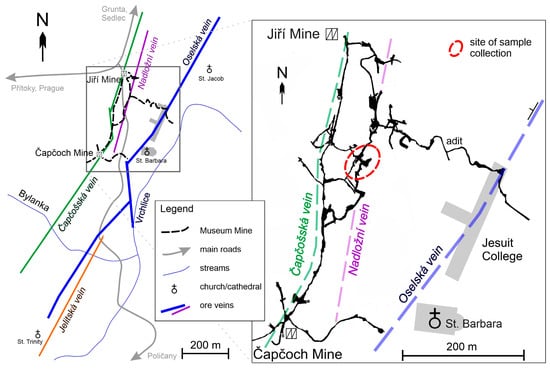
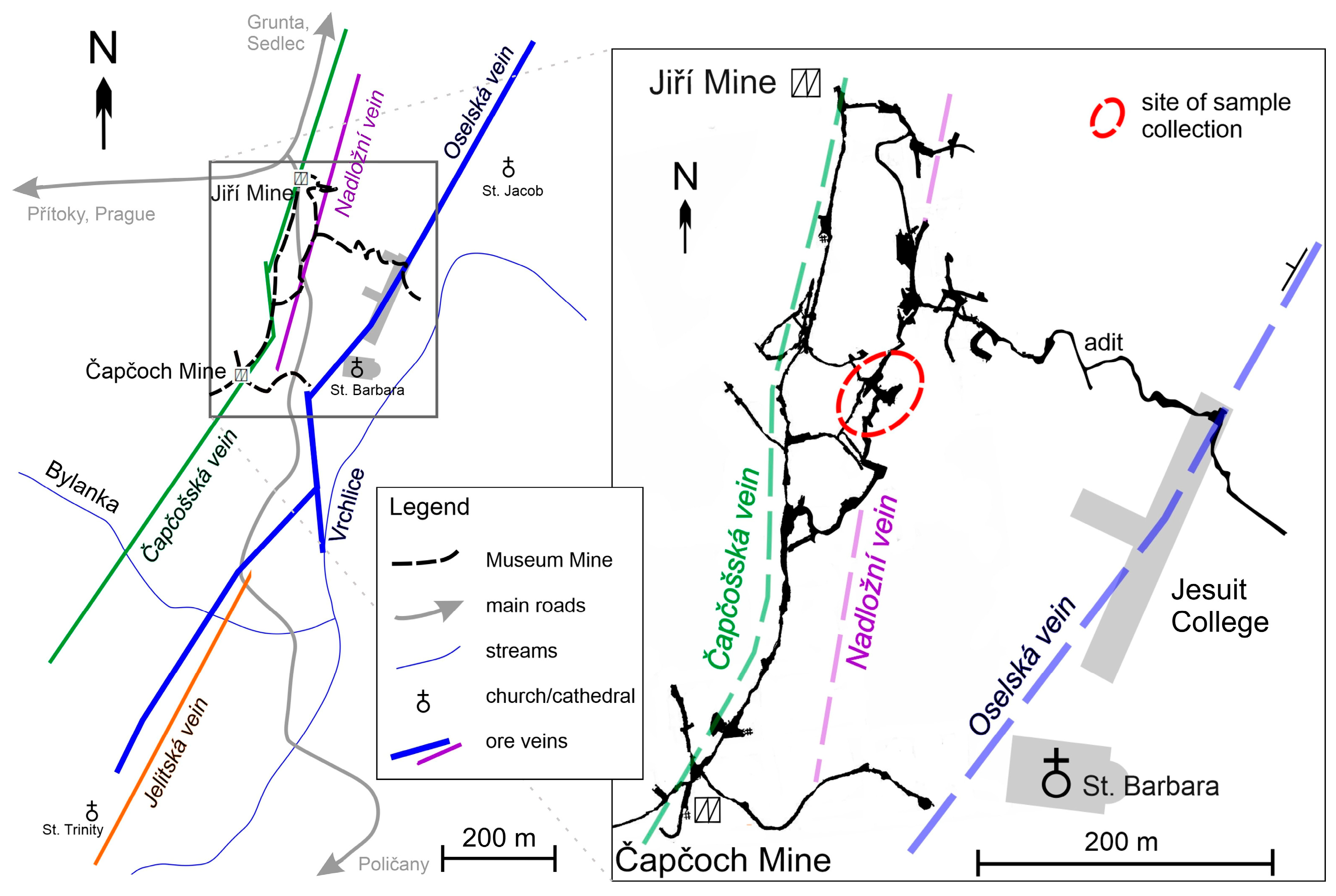
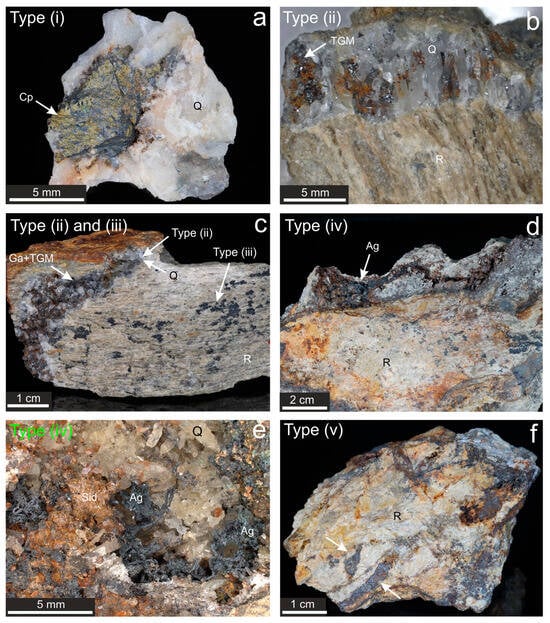
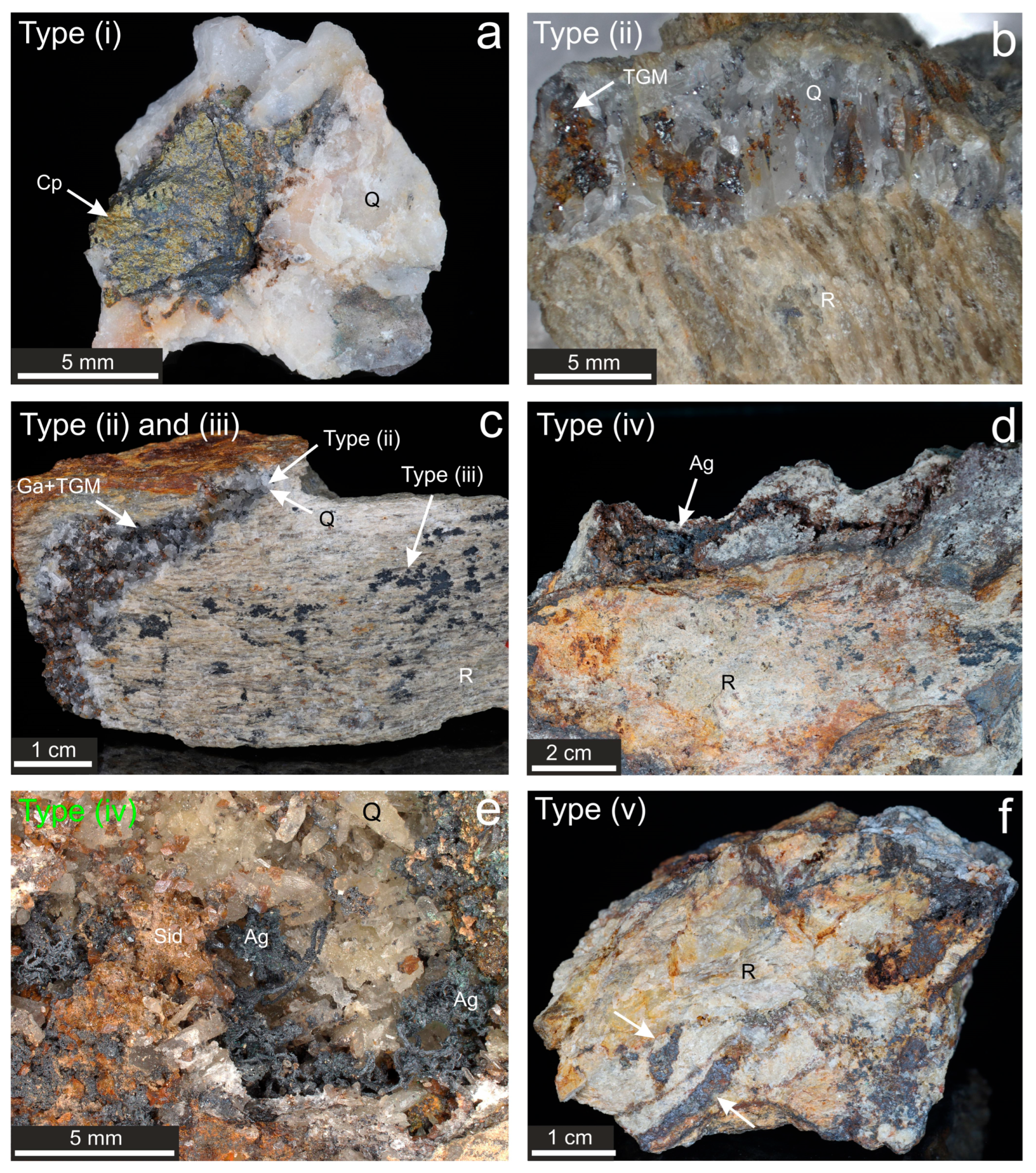
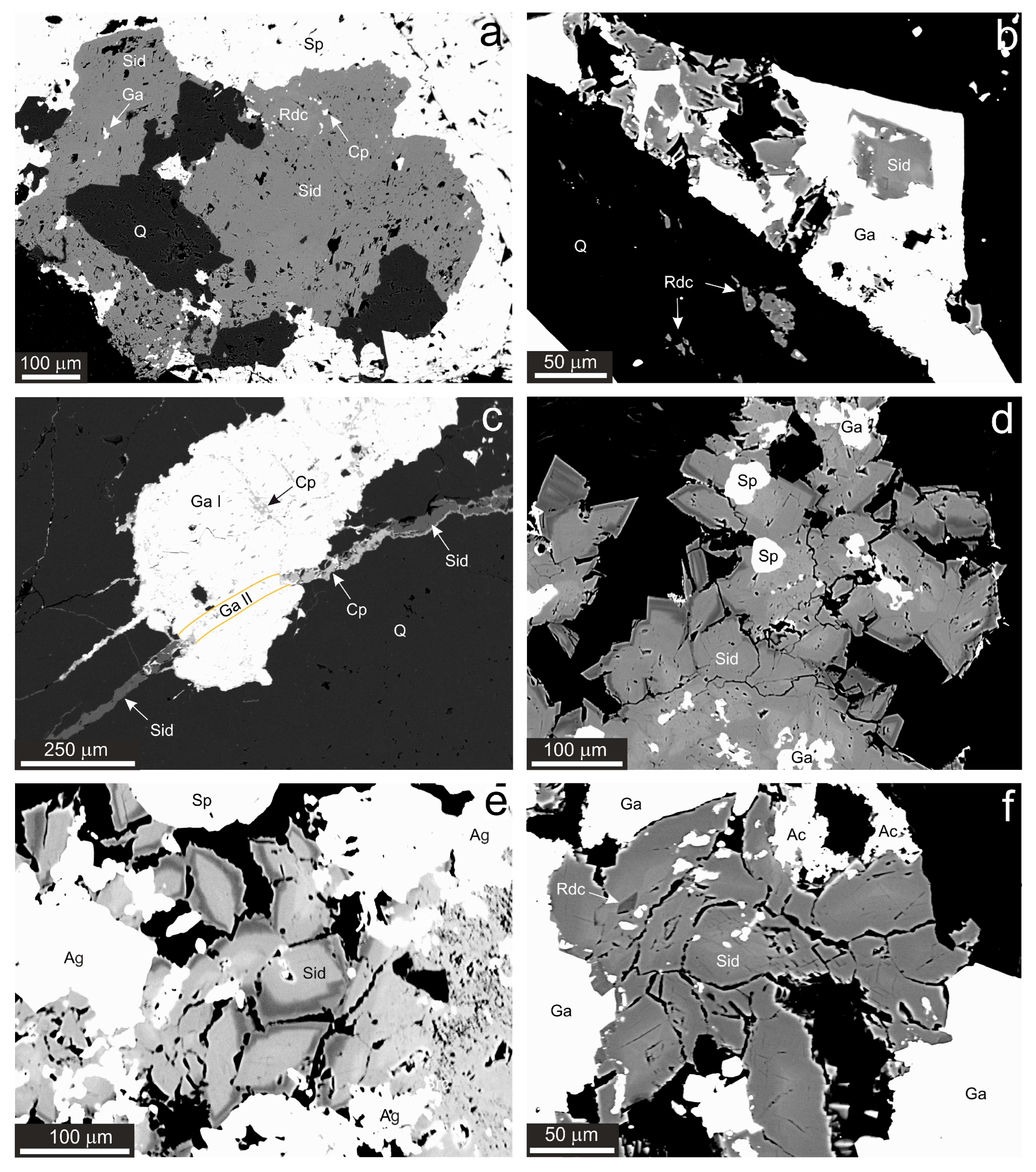
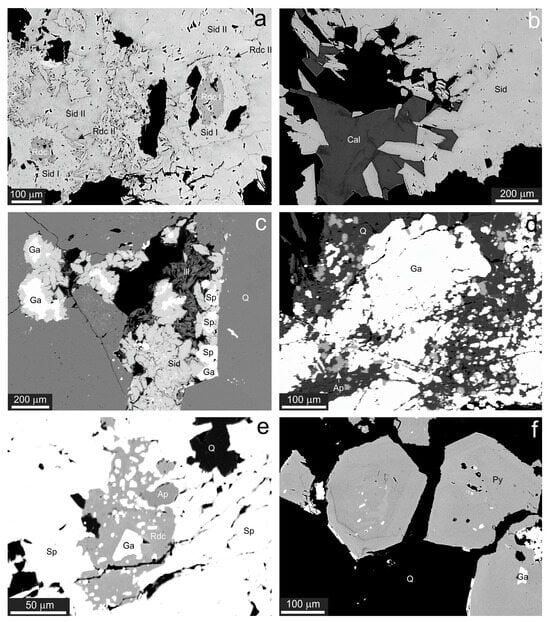
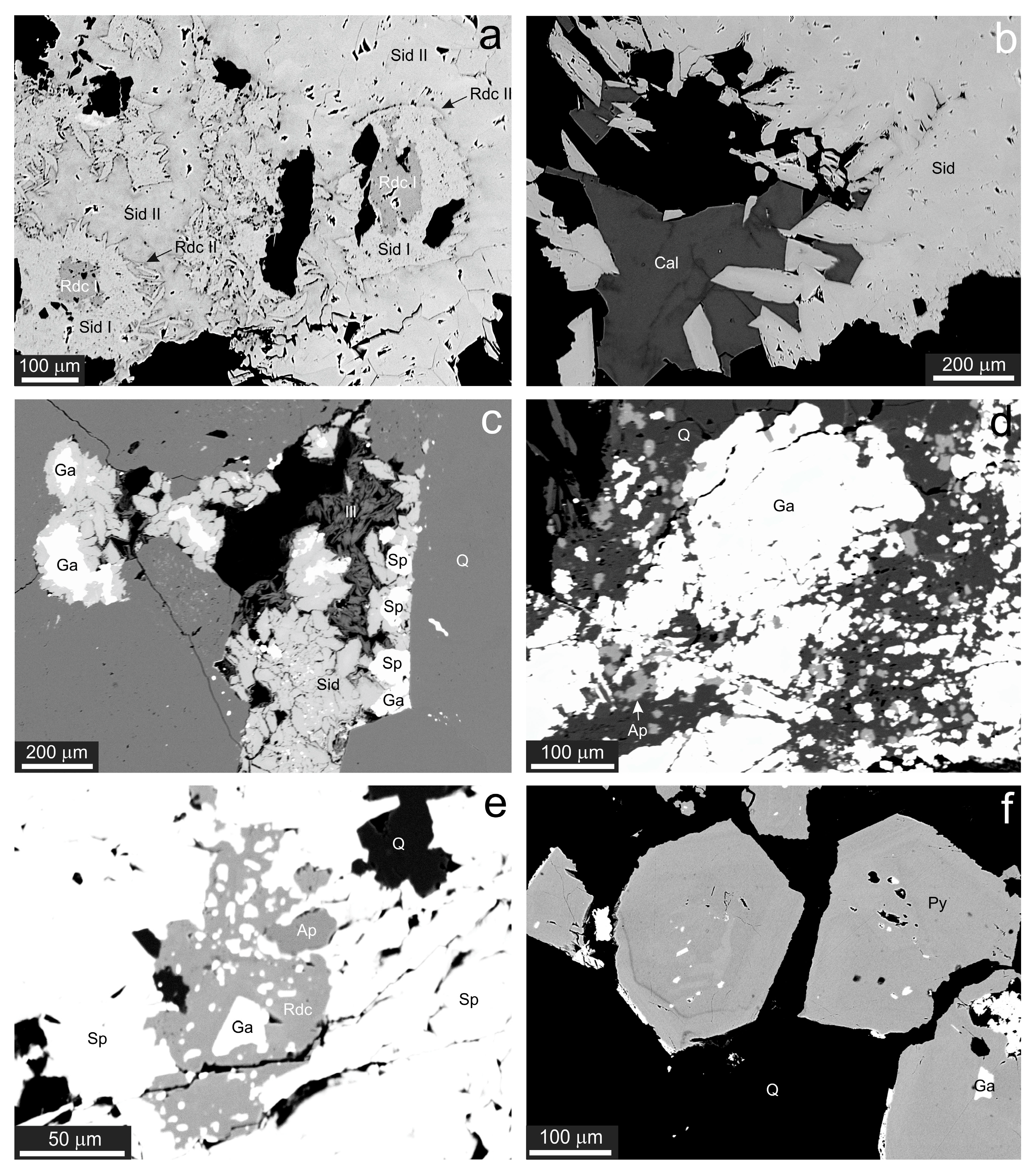
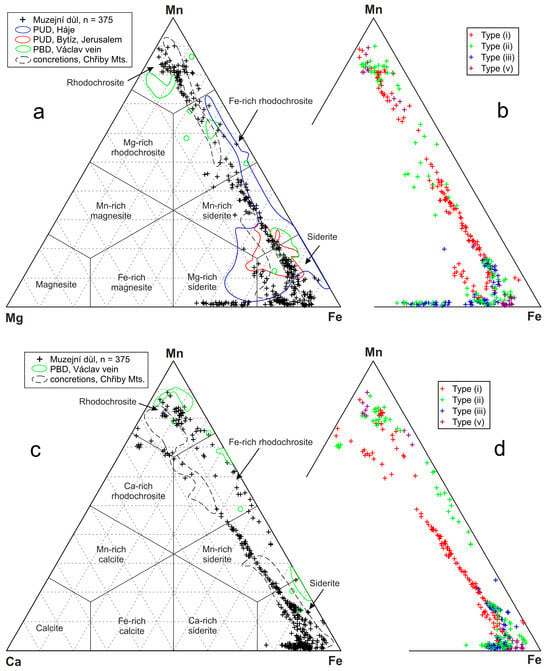
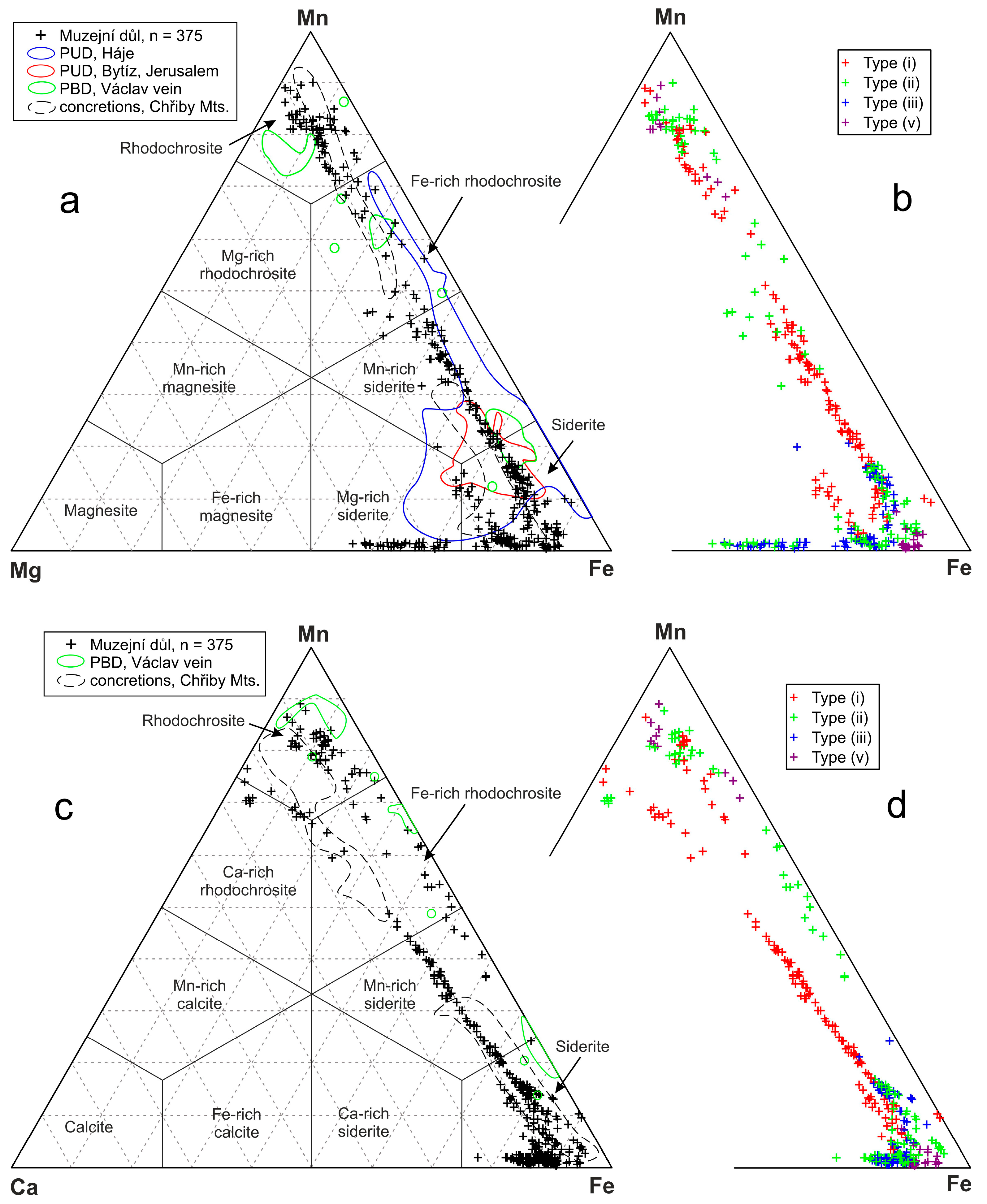
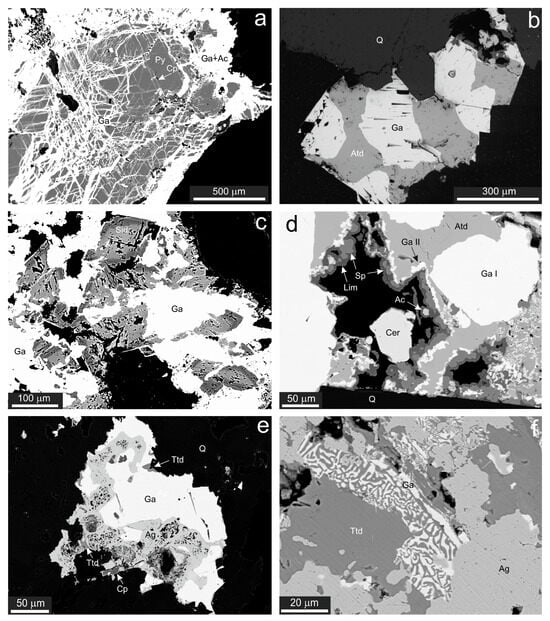
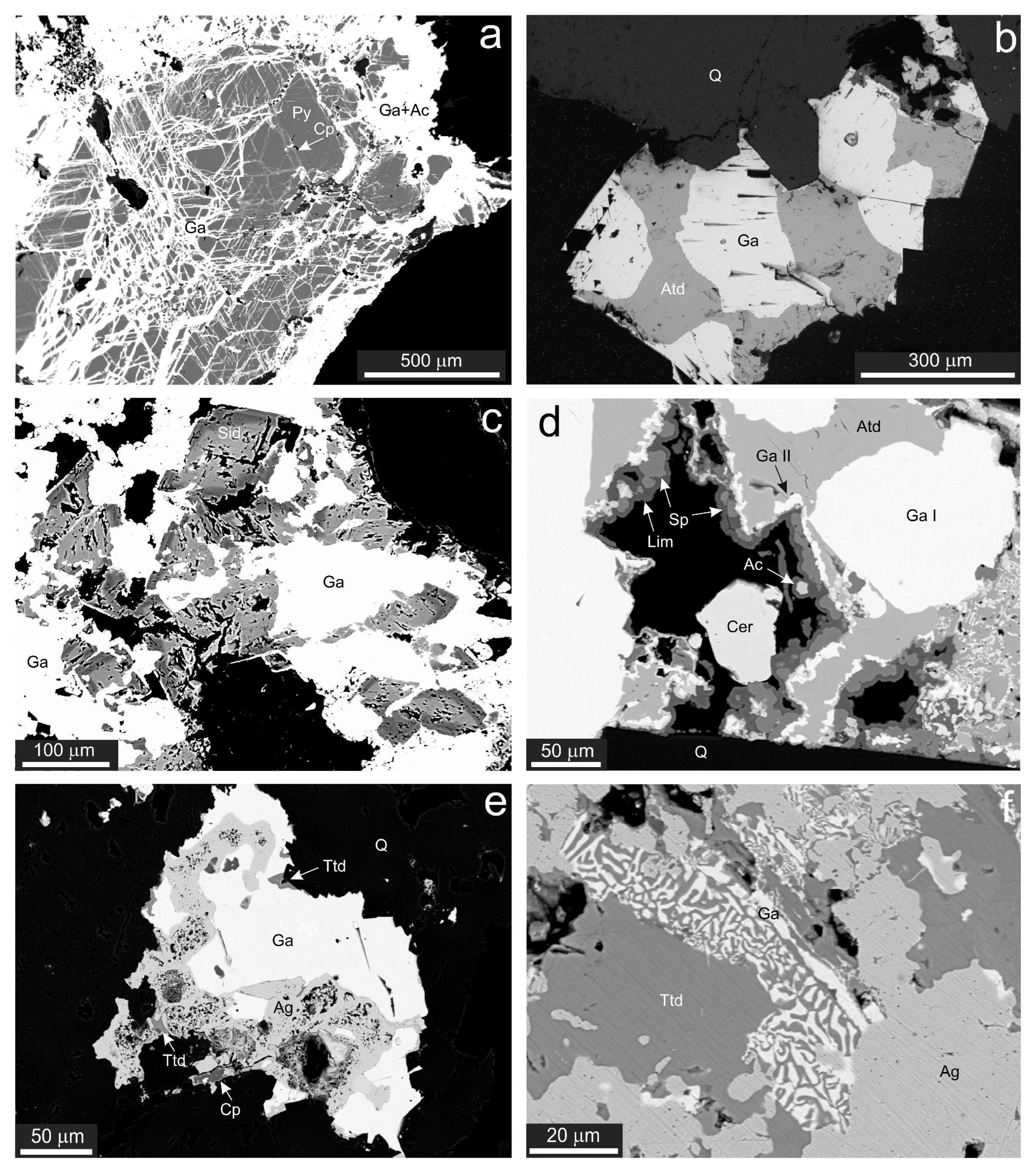
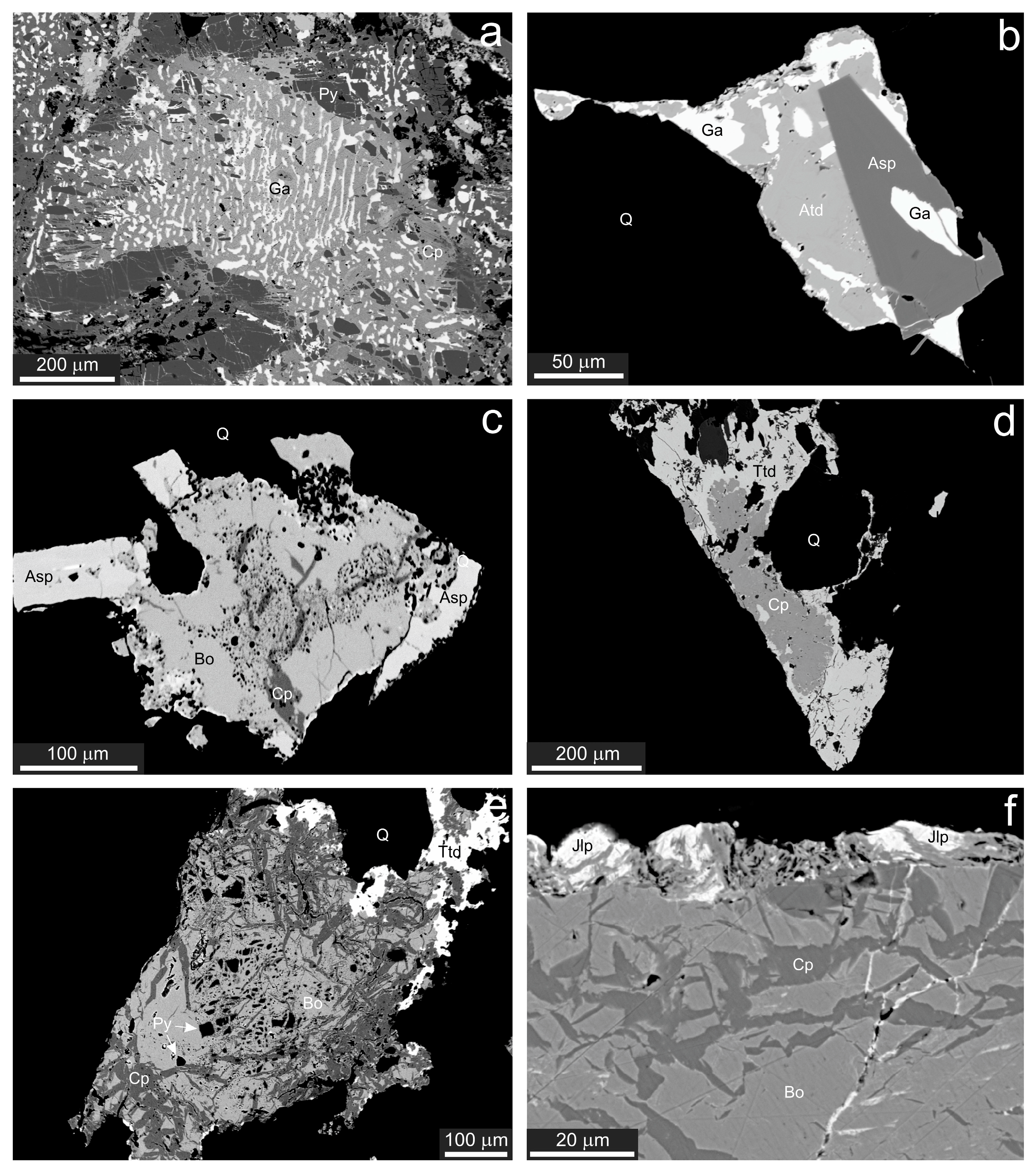
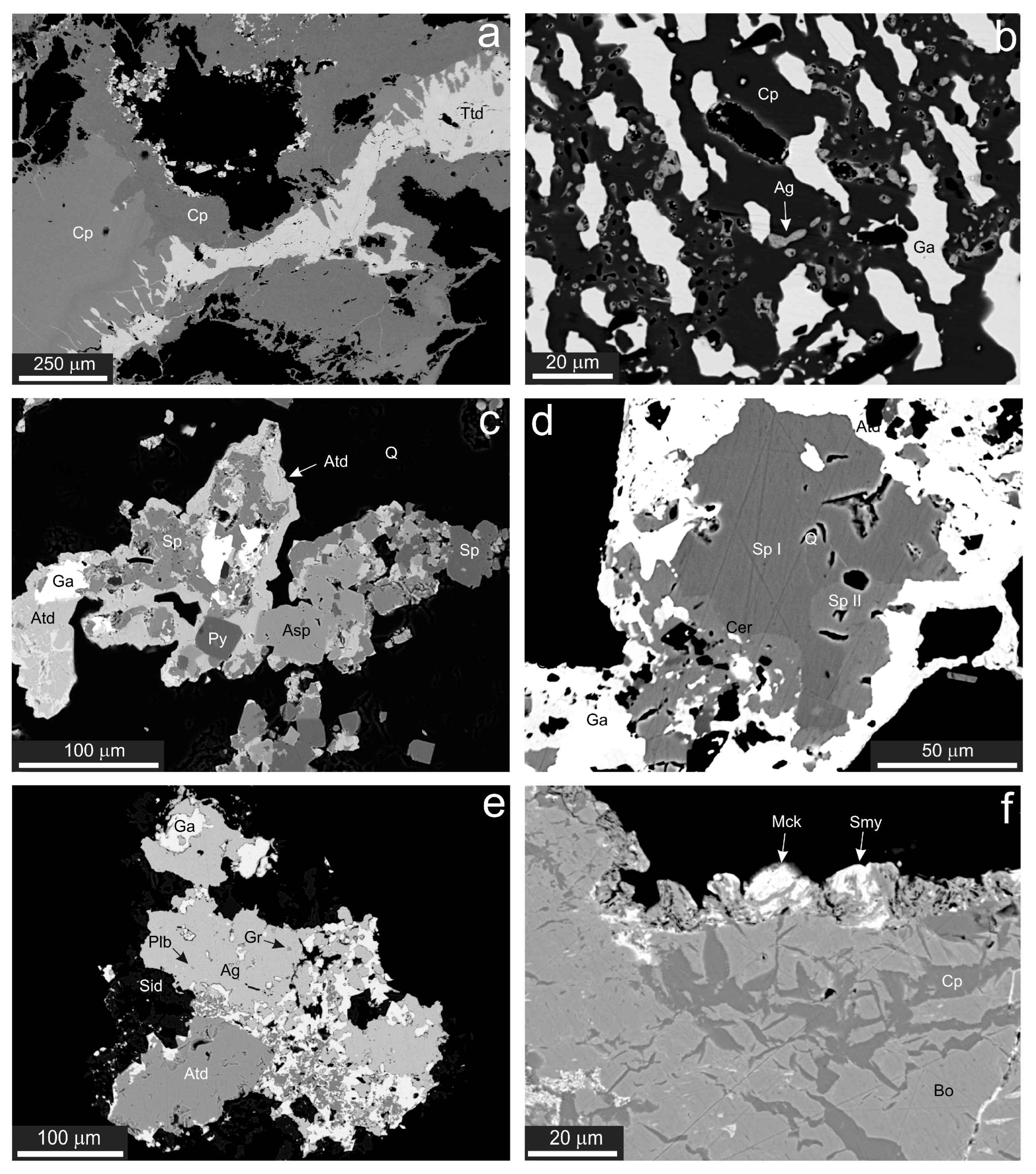
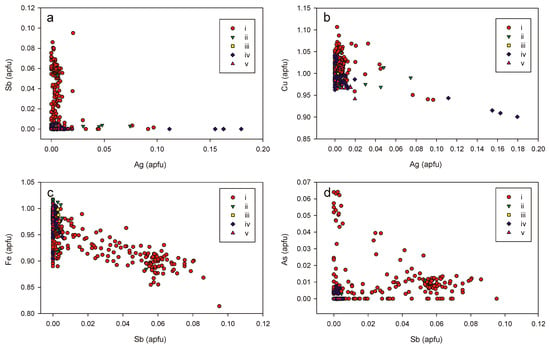
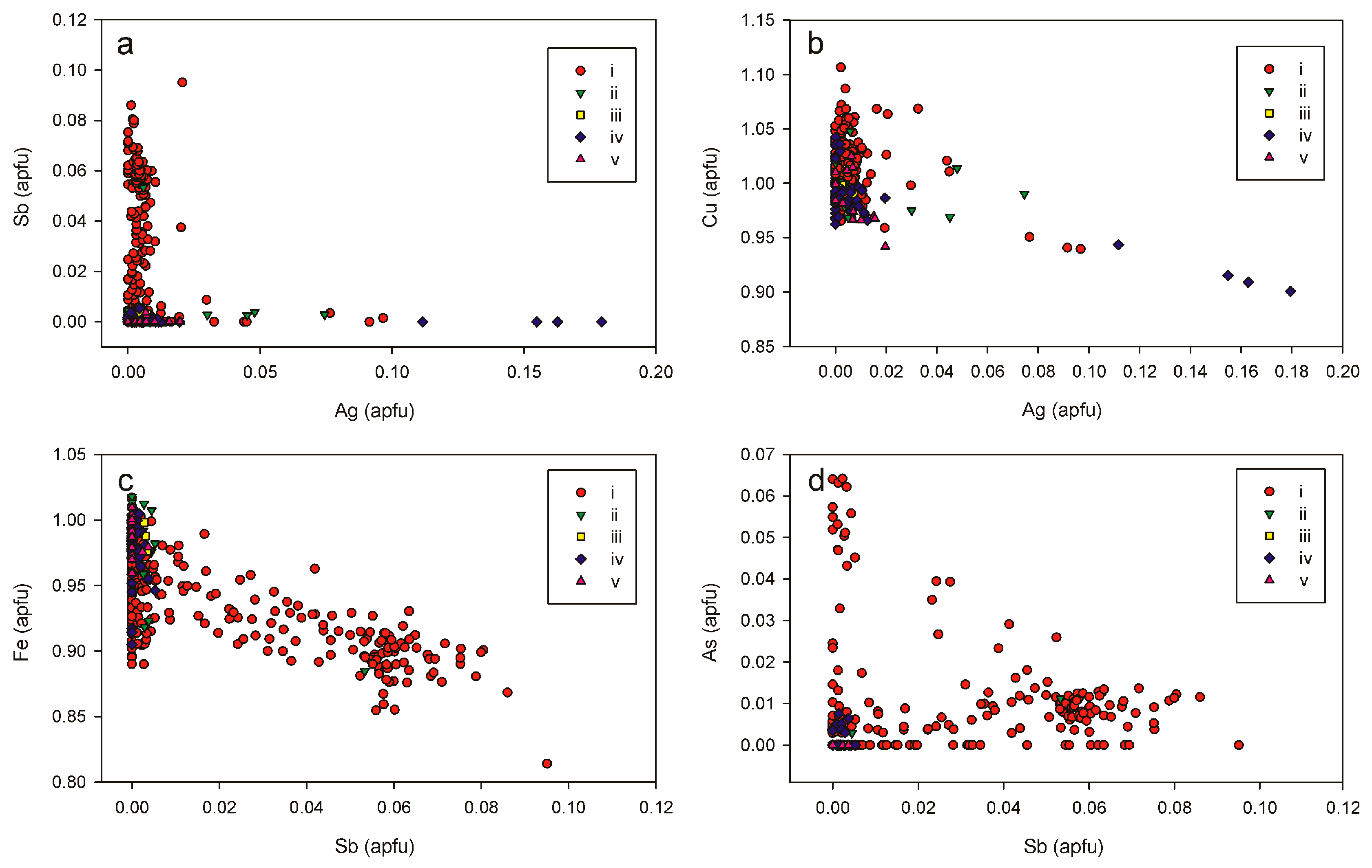
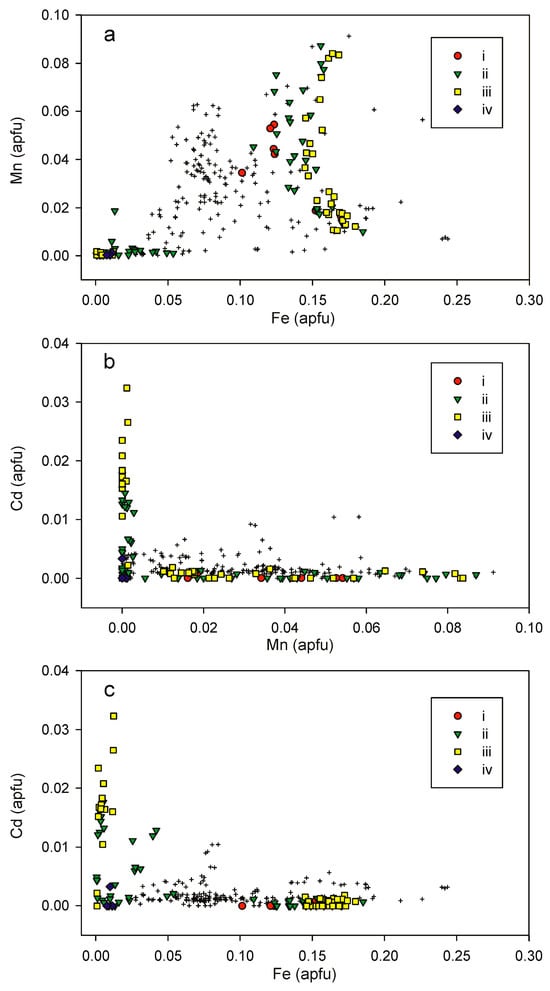
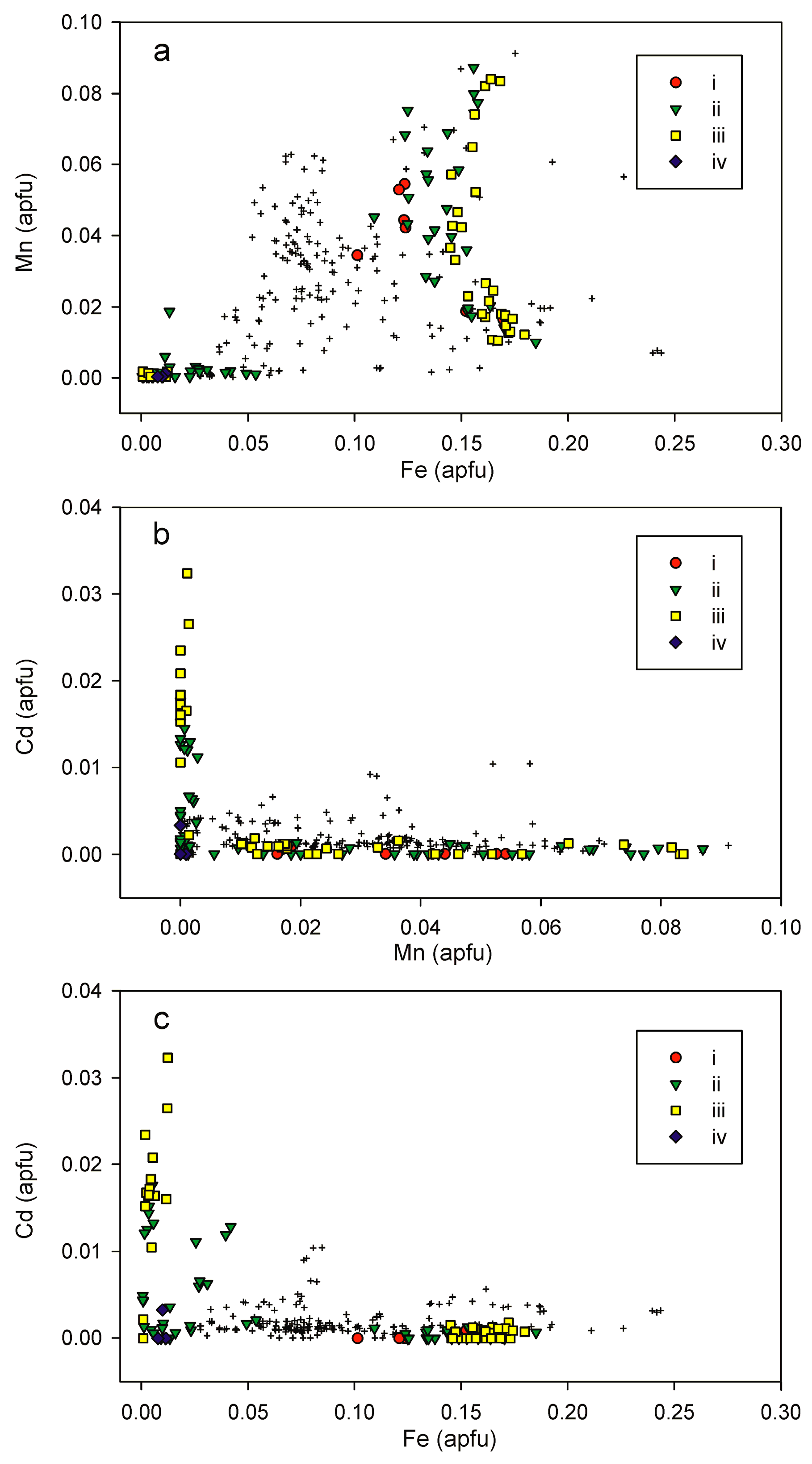
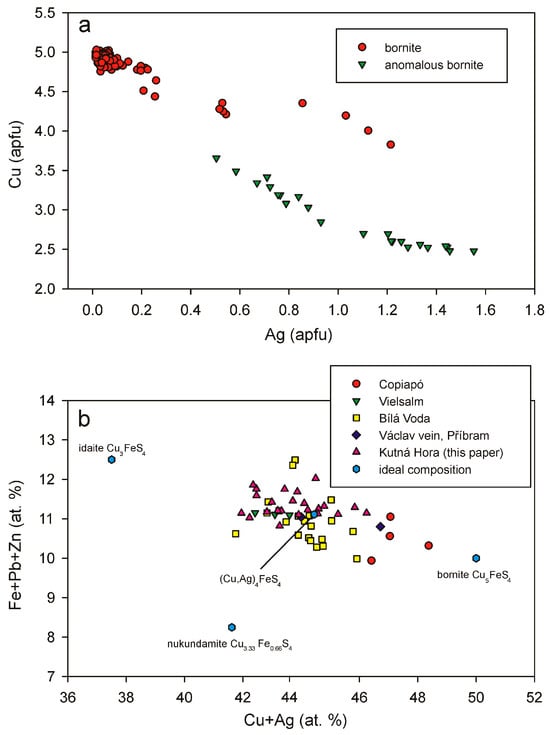
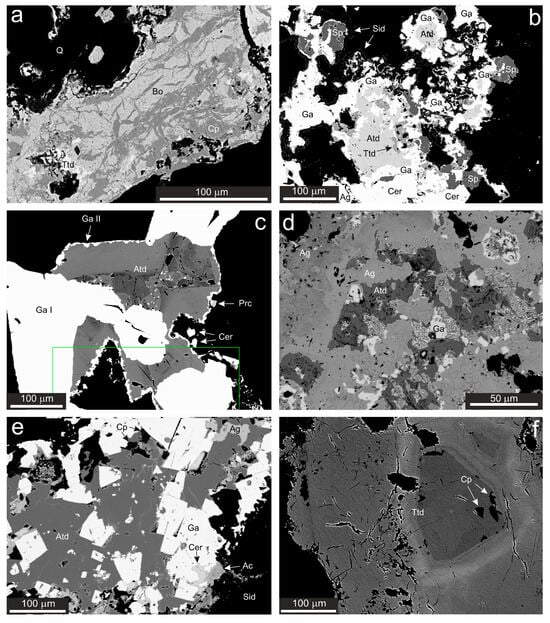
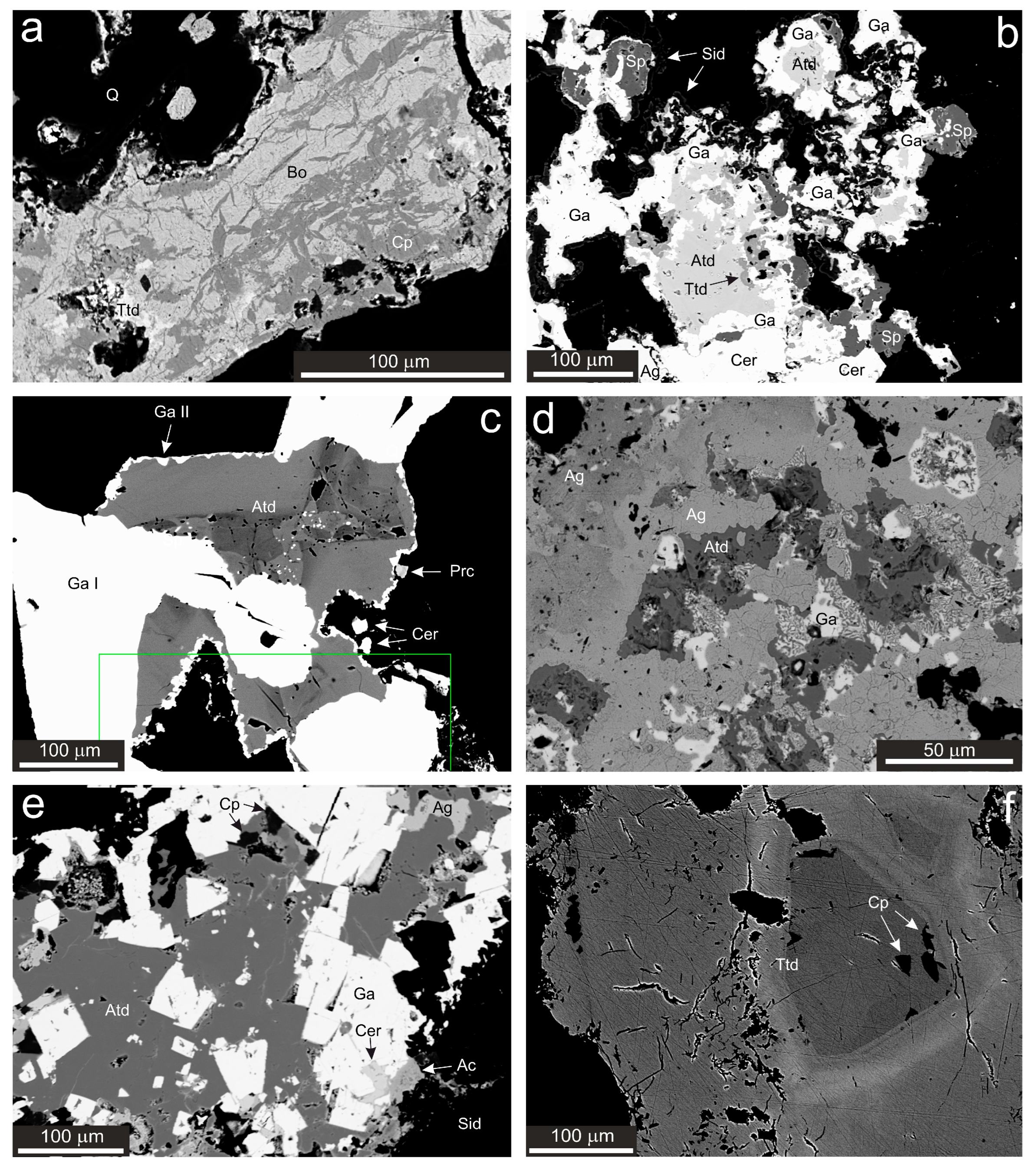
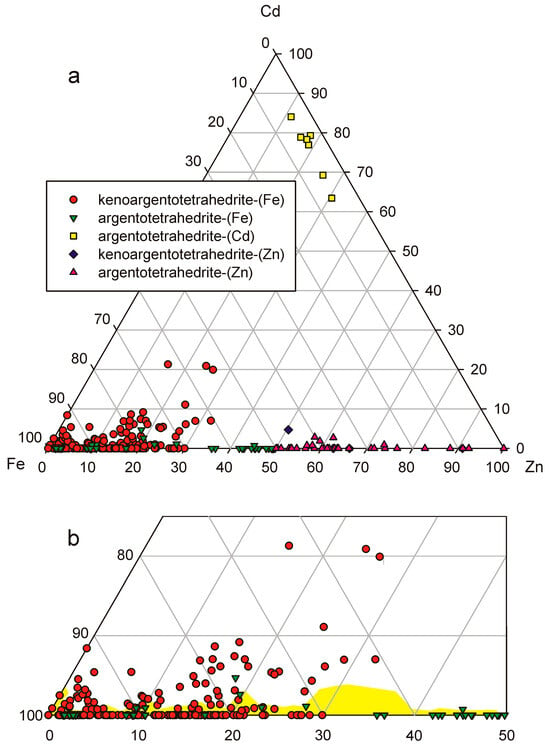
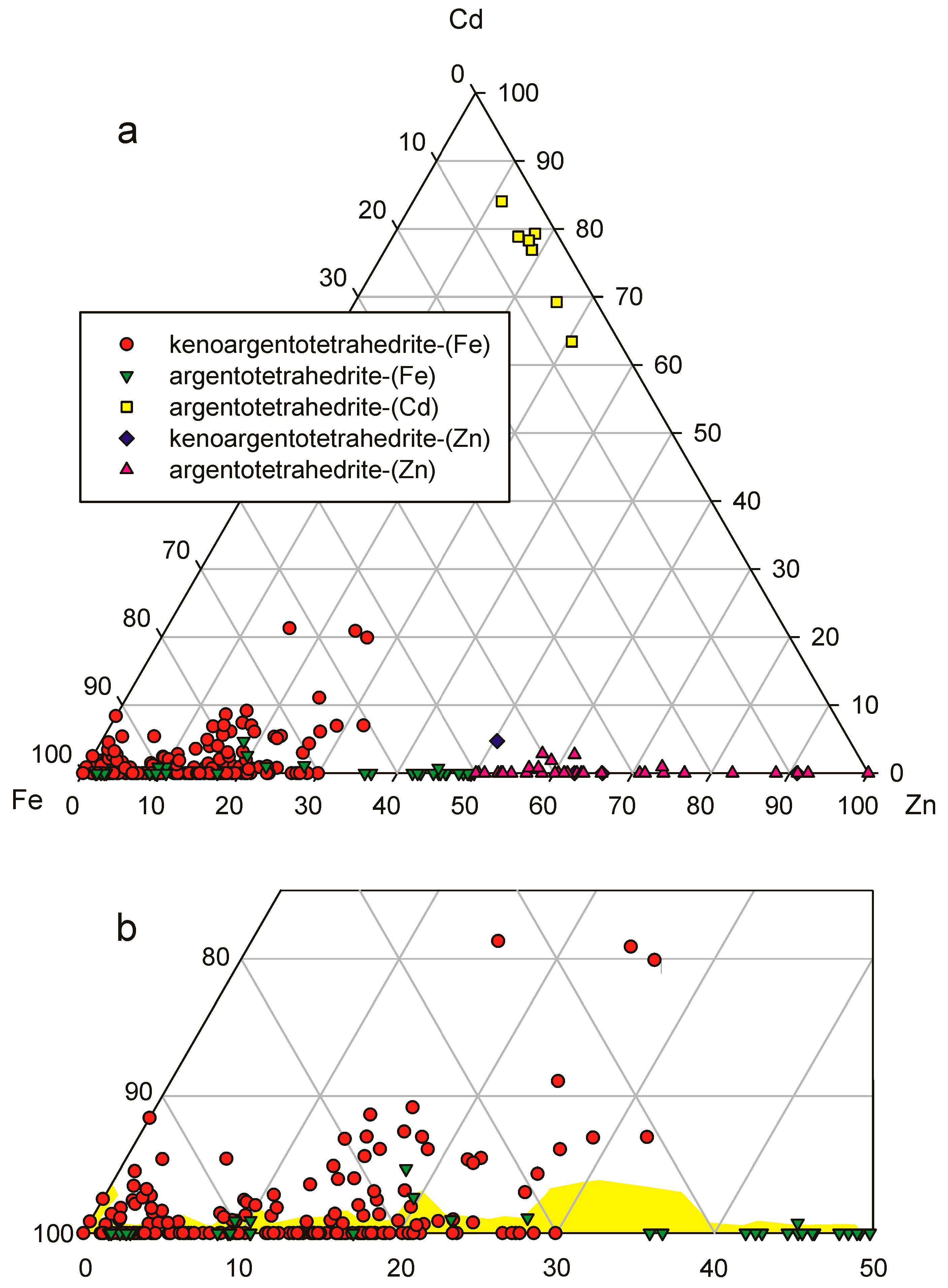
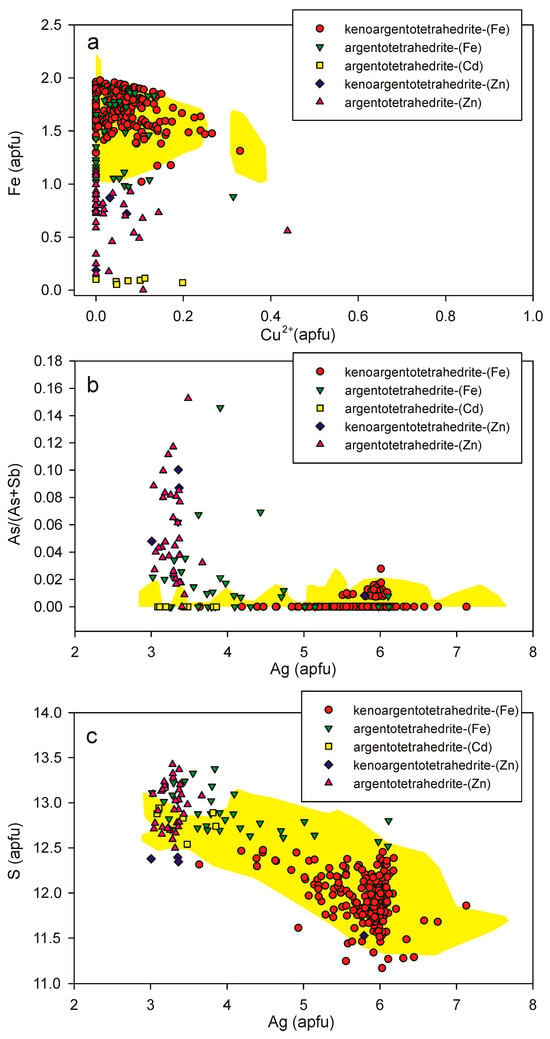
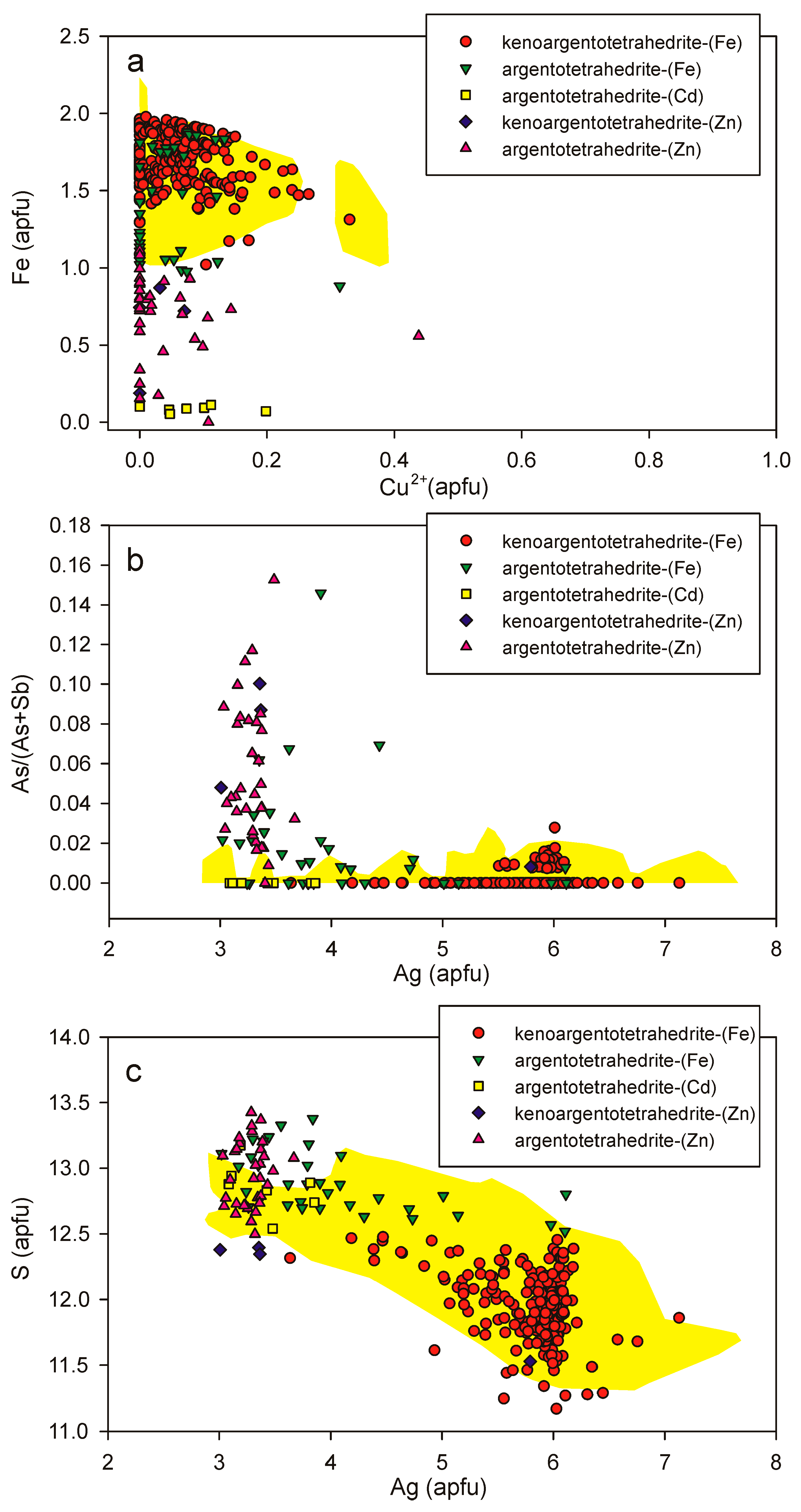
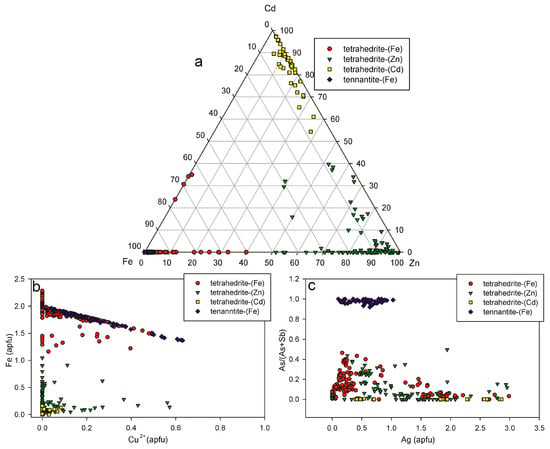
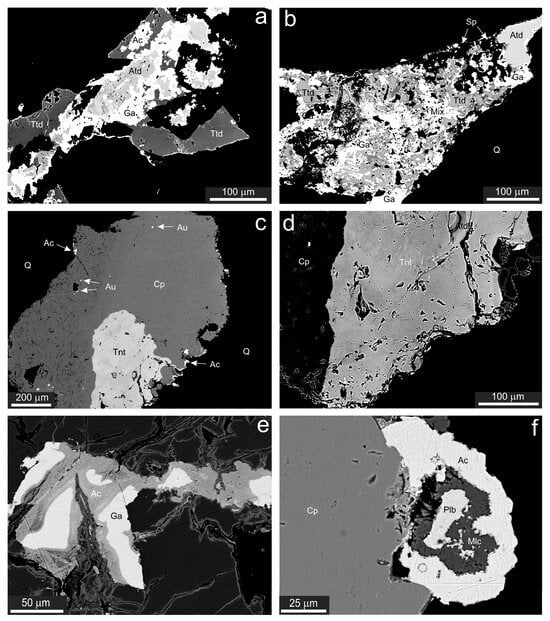
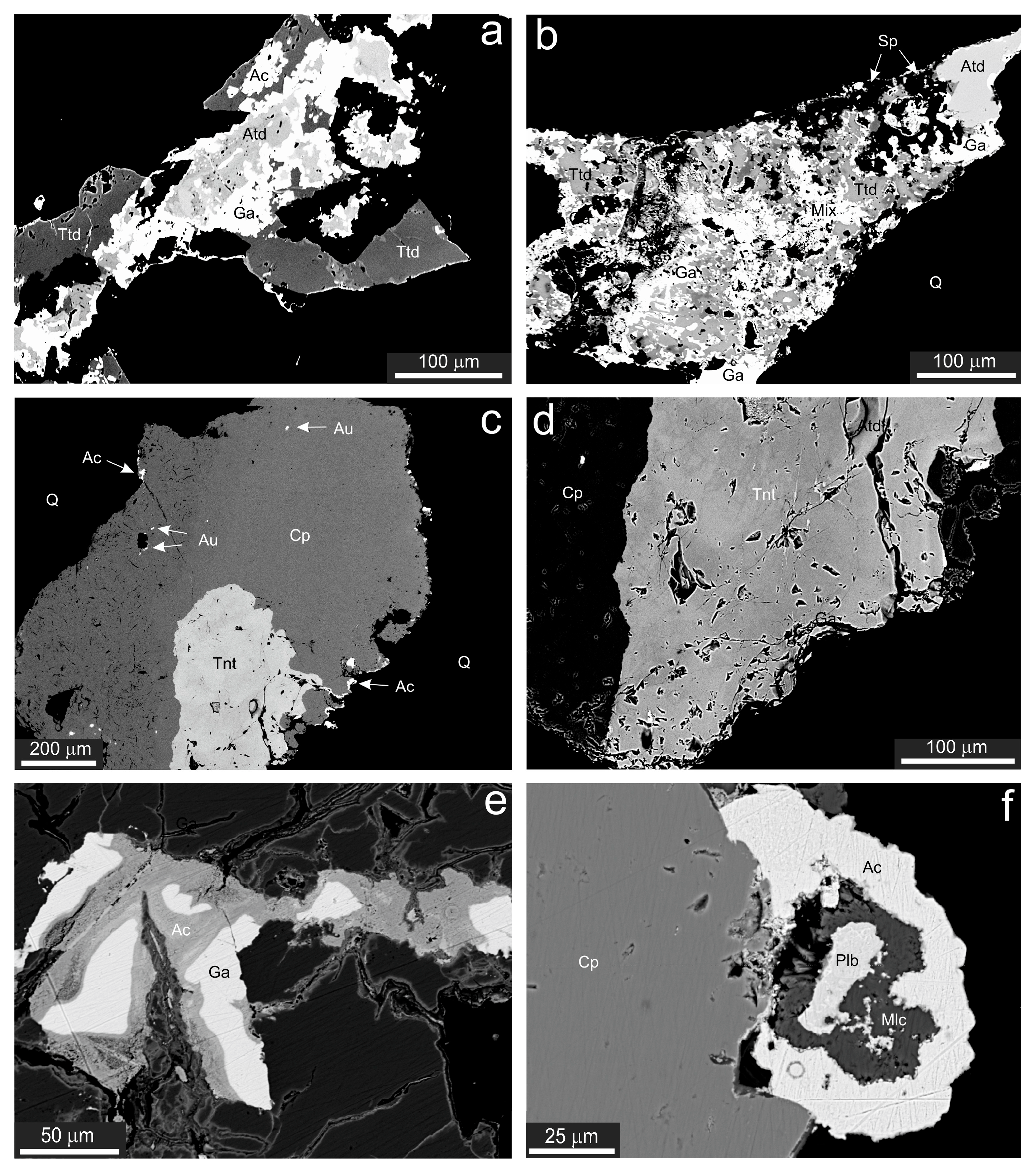
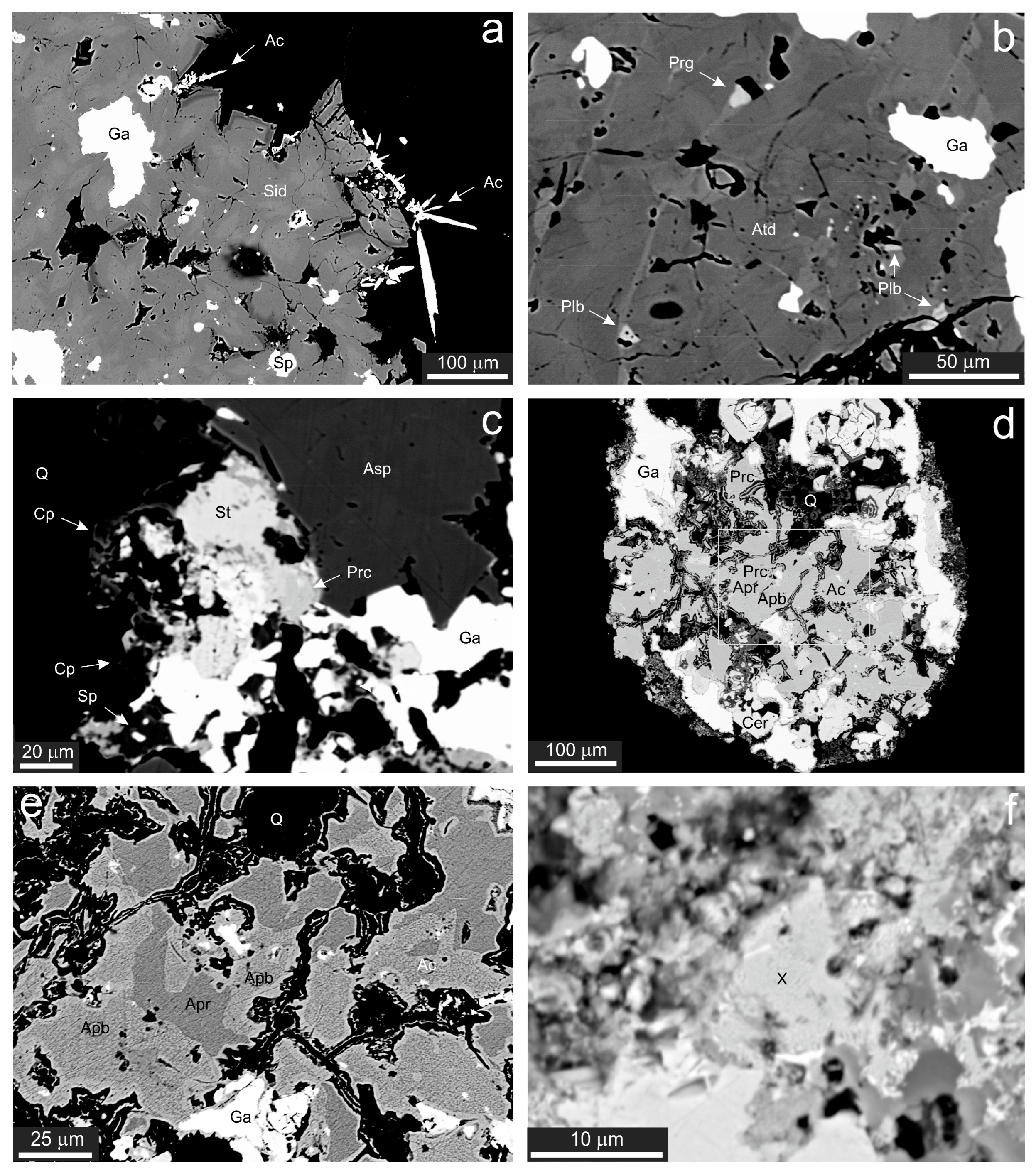
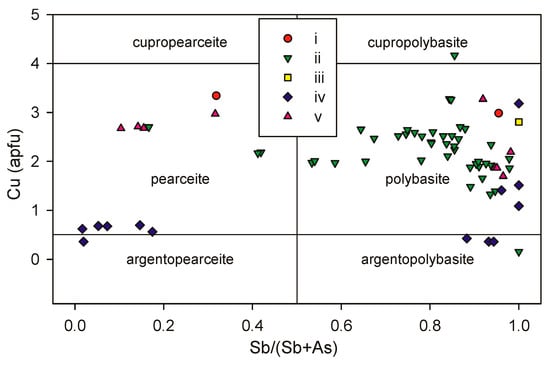
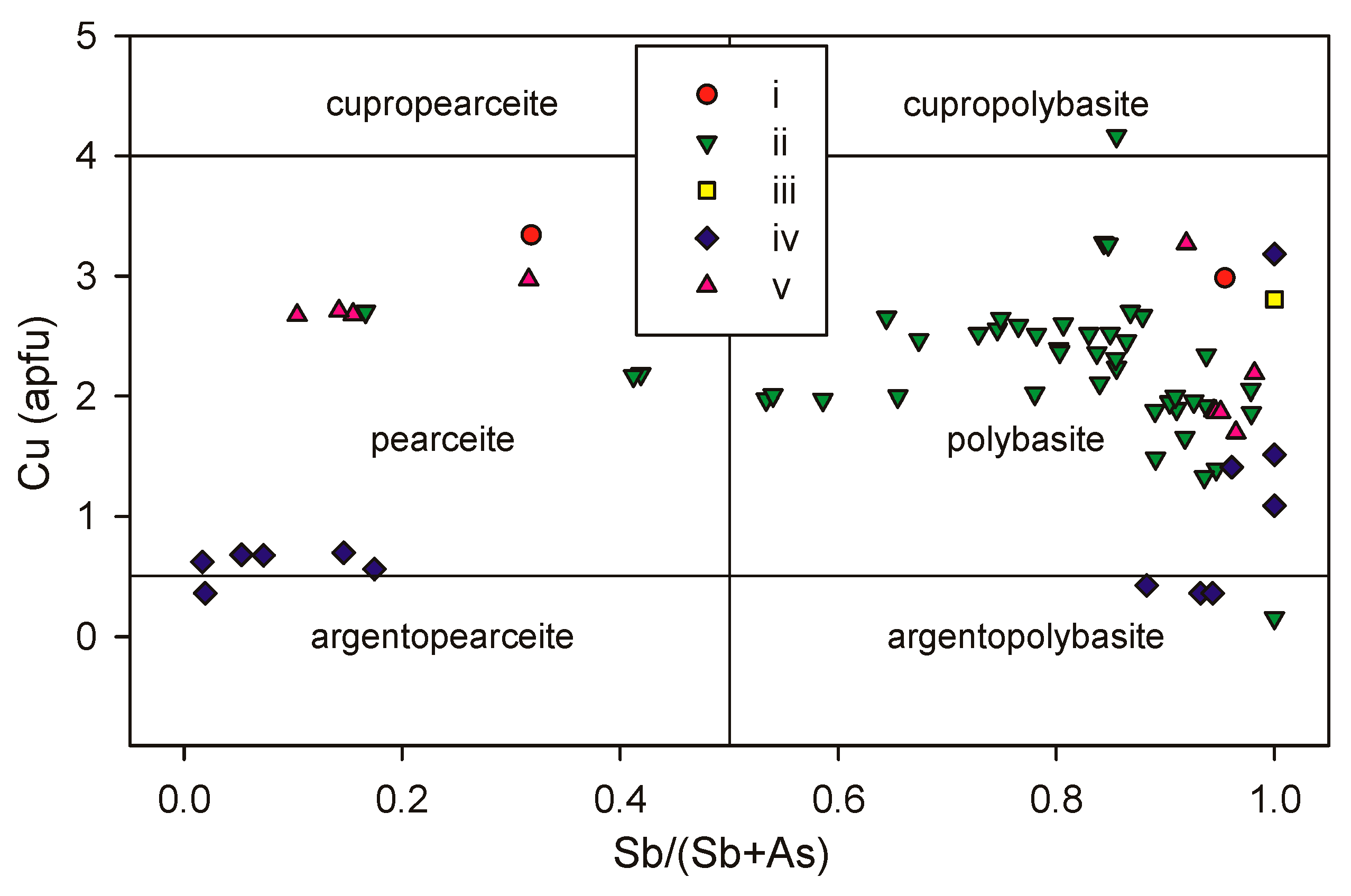
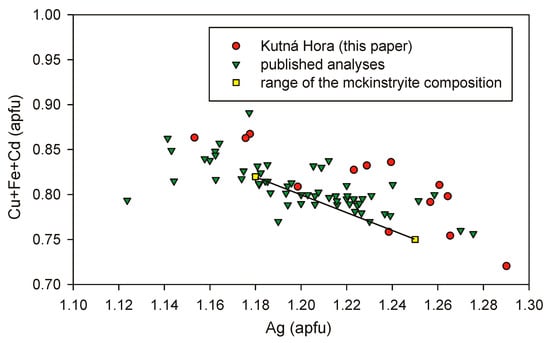
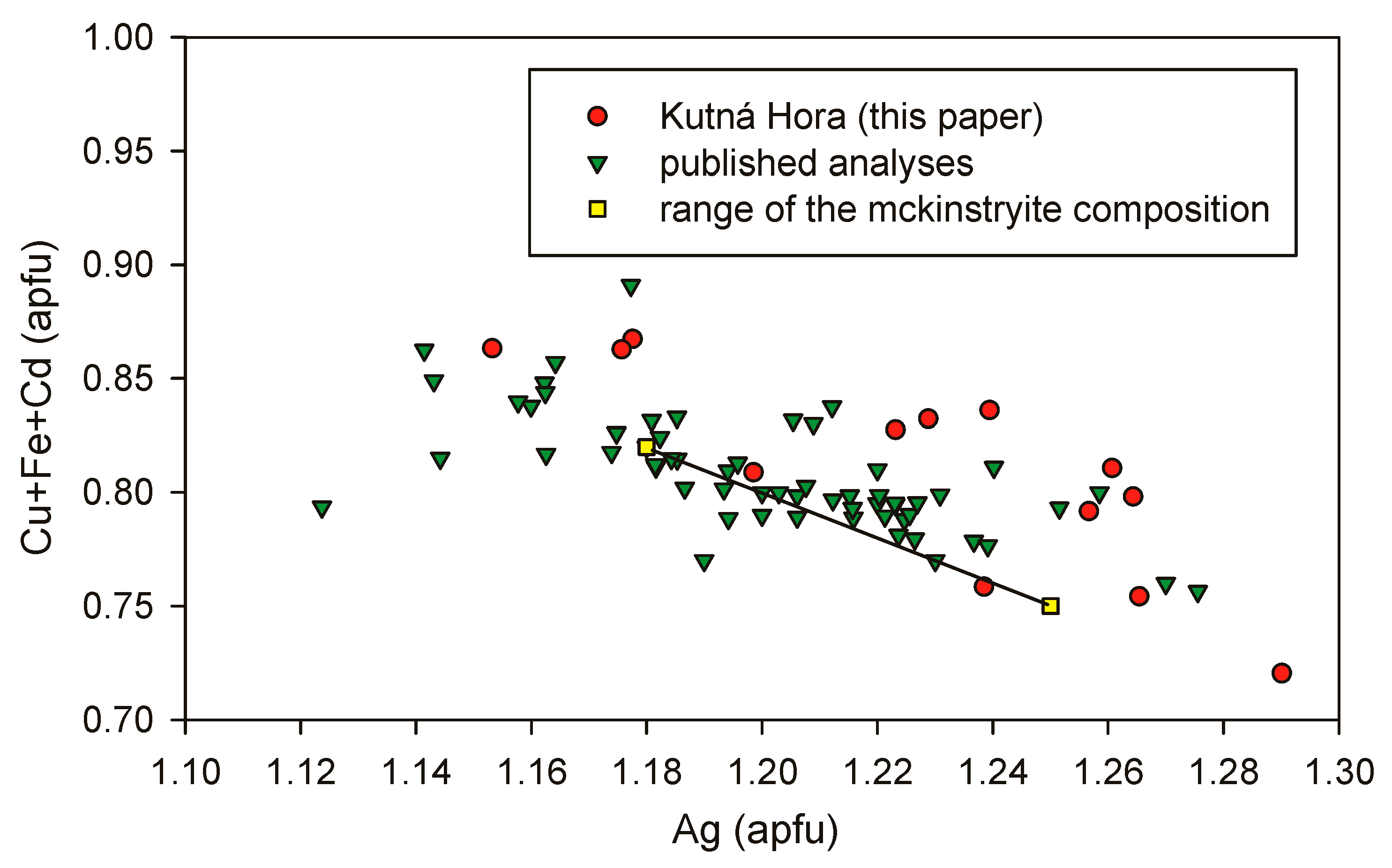
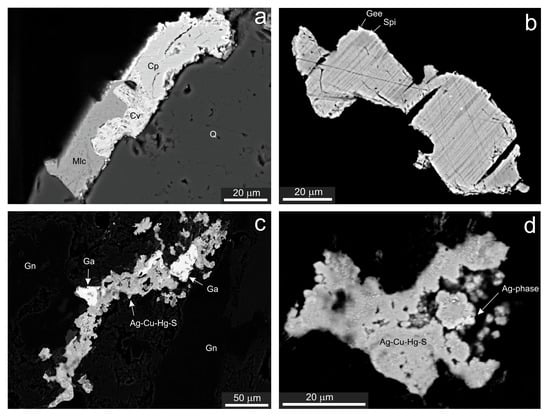
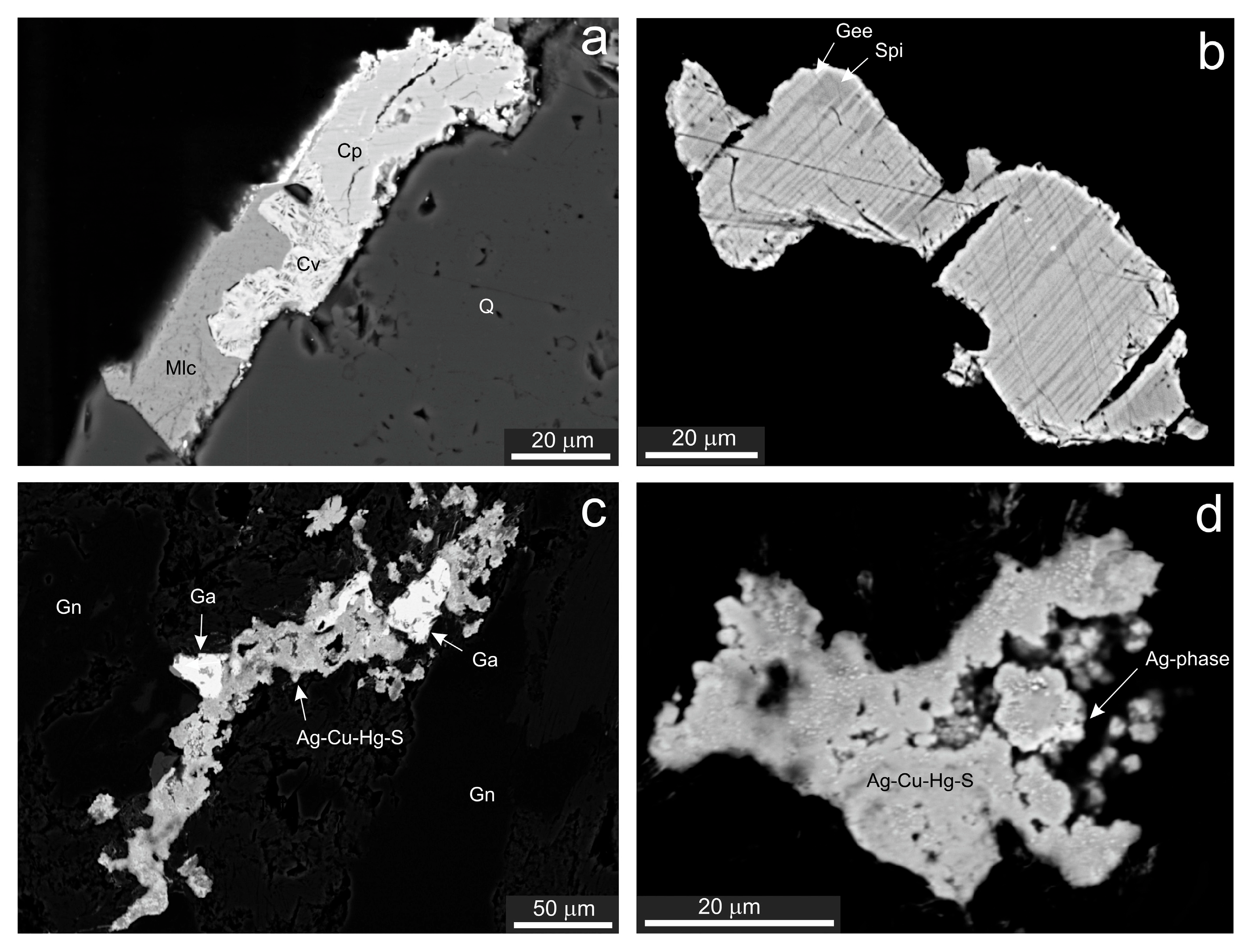
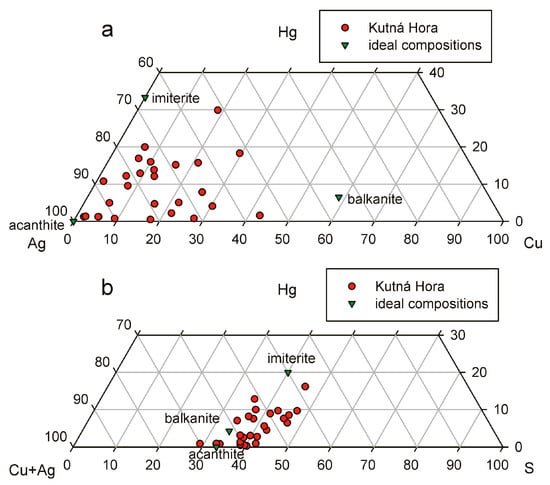
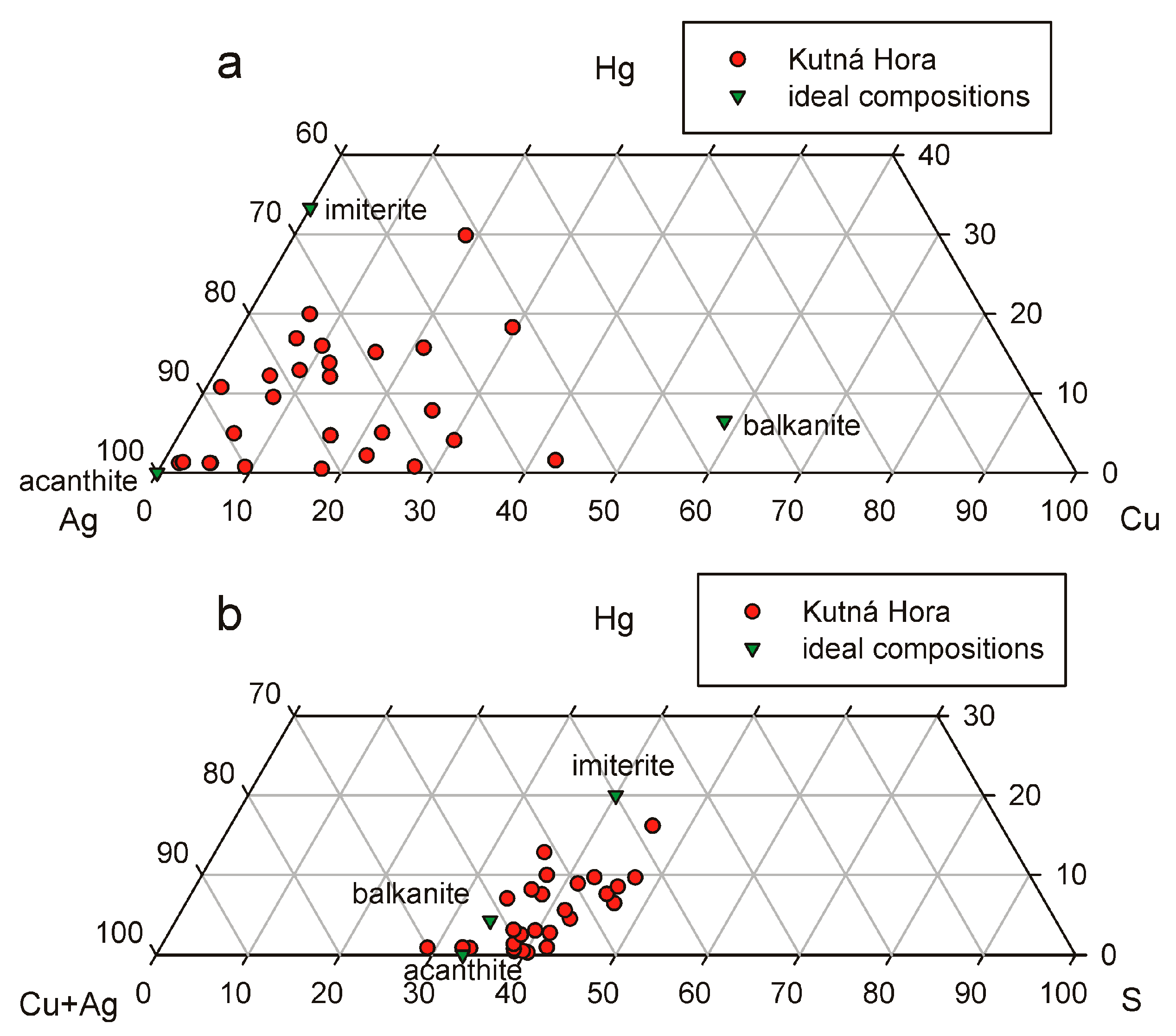
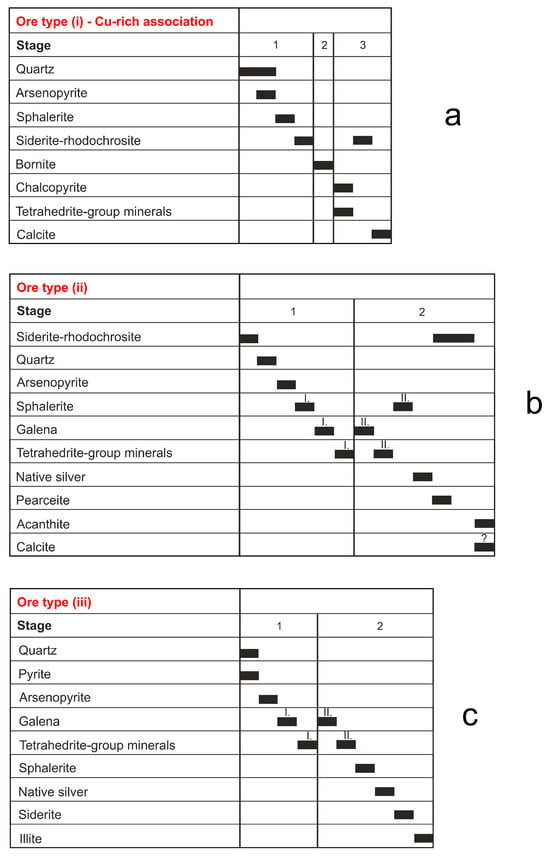
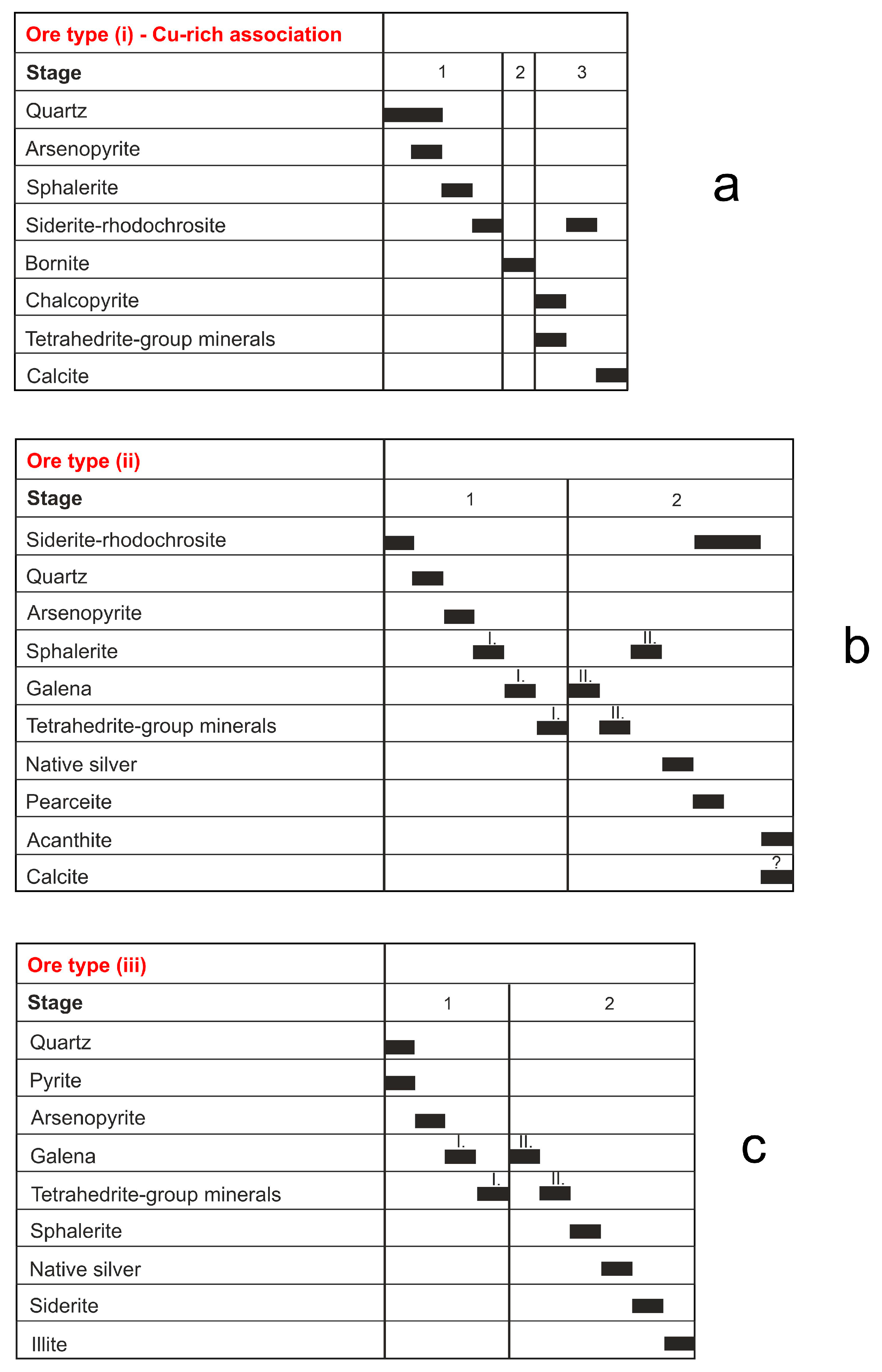
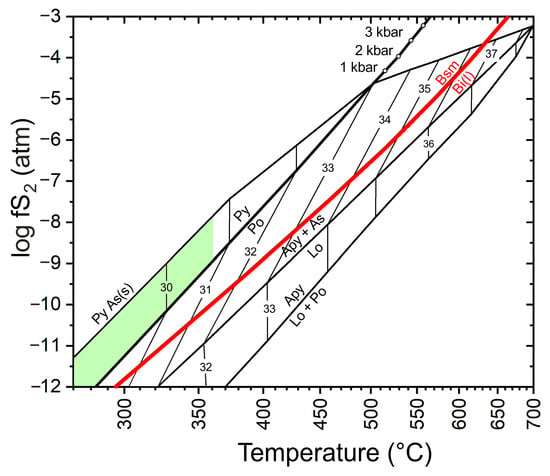
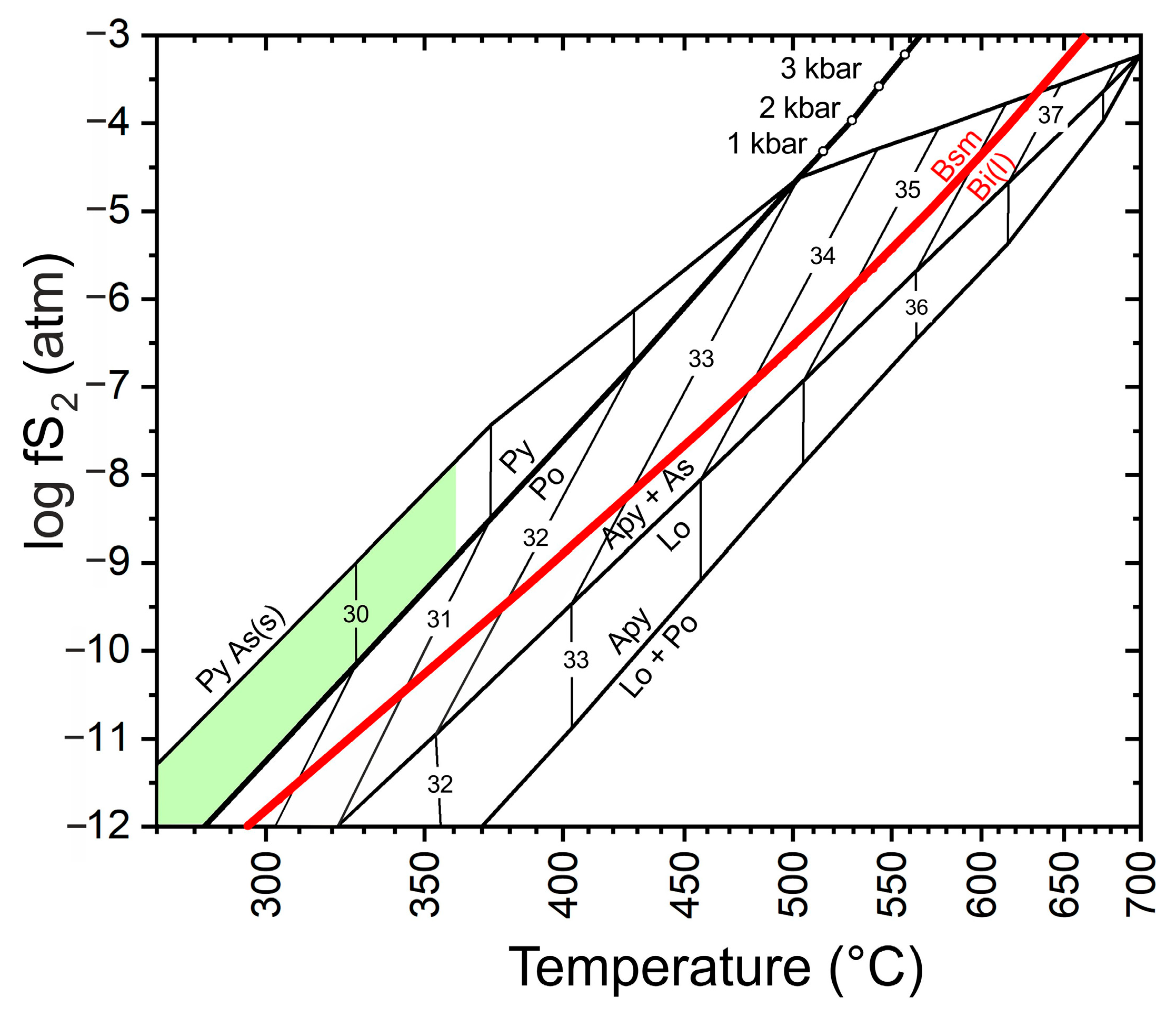
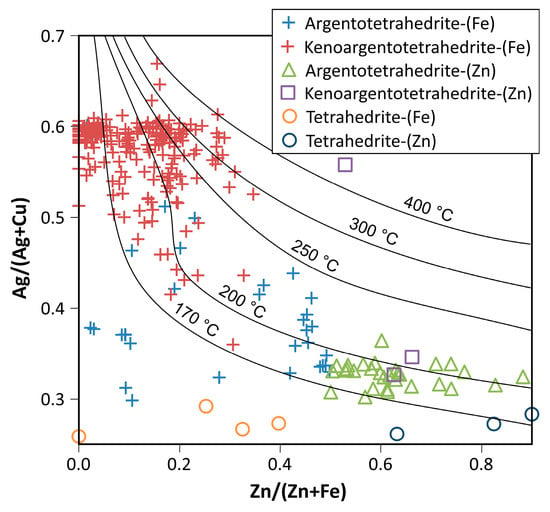
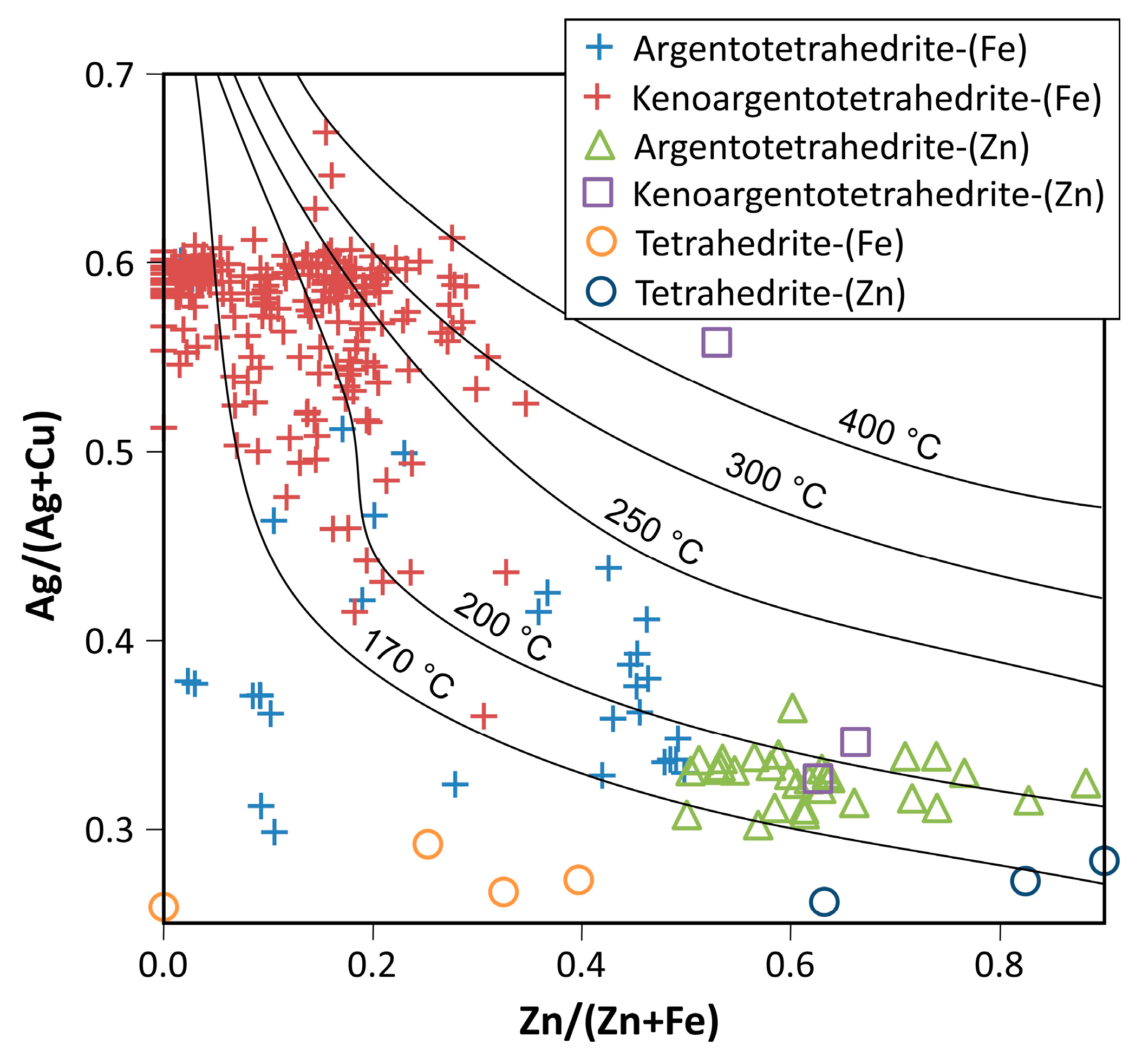
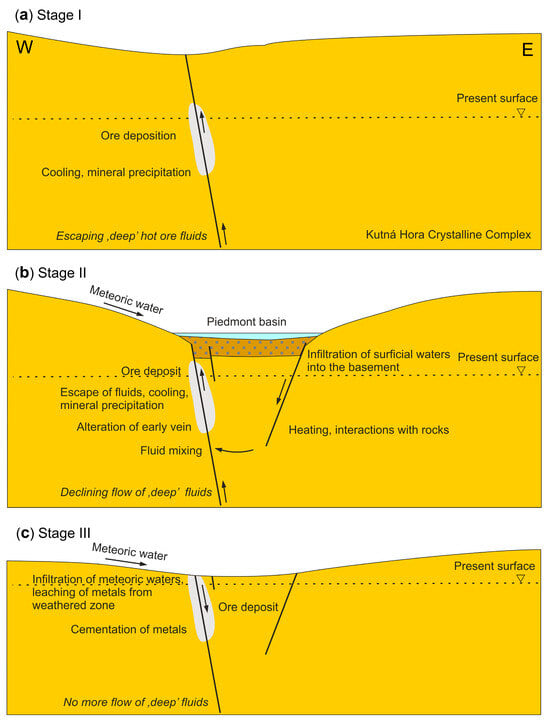
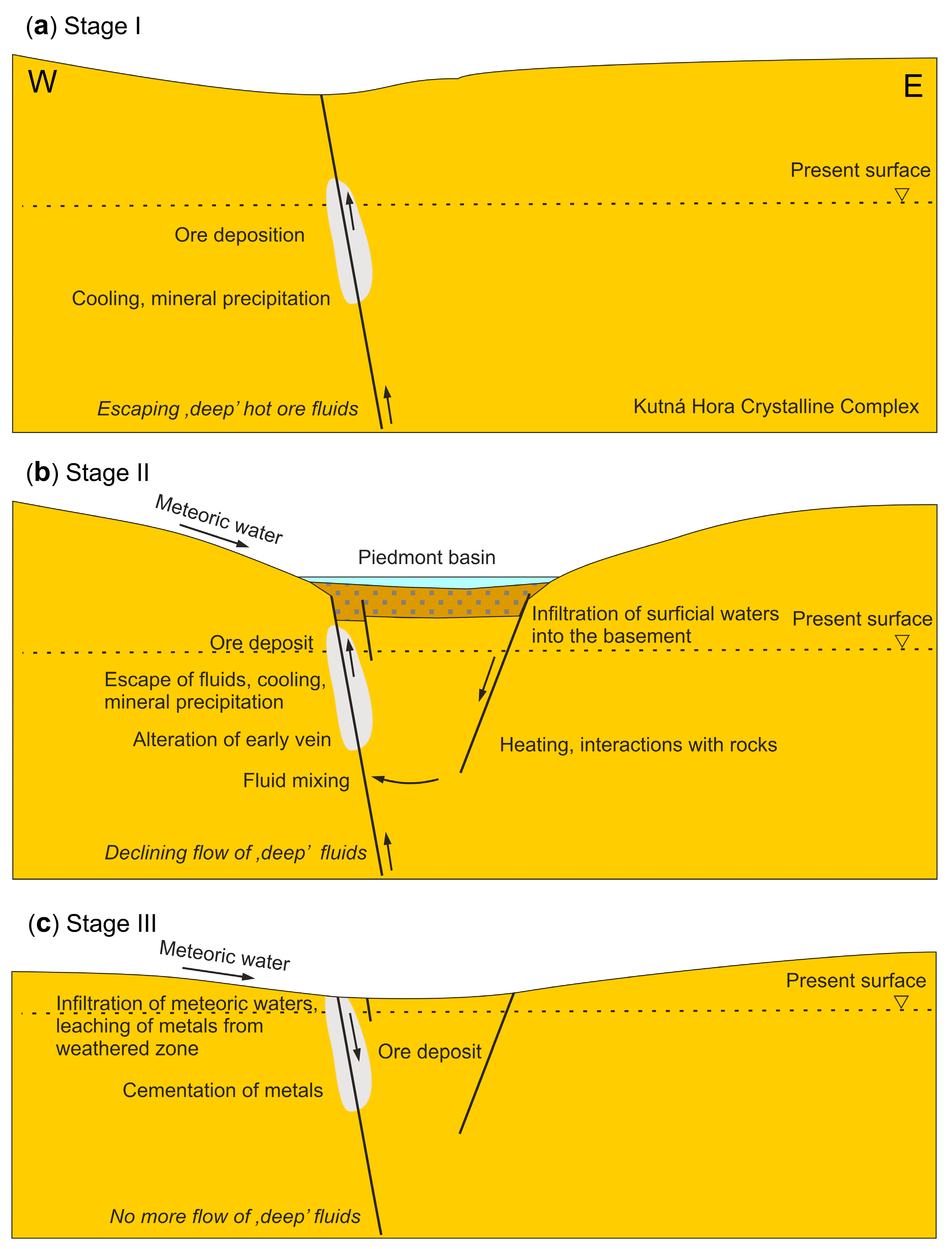
Disclaimer/Publisher’s Note: The statements, opinions and data contained in all publications are solely those of the individual author(s) and contributor(s) and not of MDPI and/or the editor(s). MDPI and/or the editor(s) disclaim responsibility for any injury to people or property resulting from any ideas, methods, instructions or products referred to in the content. |
© 2026 by the authors. Licensee MDPI, Basel, Switzerland. This article is an open access article distributed under the terms and conditions of the Creative Commons Attribution (CC BY) license.