


Abstract
The Bailingshan submarine volcanic-hosted iron deposit in the Eastern Tianshan provides an opportunity to investigate skarn hydrothermal evolution and high-grade Fe mineralization. This study integrates garnet petrography, in situ major- and trace-element analyses, garnet U–Pb geochronology, and amphibole 40Ar/39Ar geochronology. Four generations of grossular–andradite garnet (Grt1–Grt4) exhibit systematic textural and compositional variations reflecting the combined effects of crystal-chemical controls, hydrothermal fluid composition, and fluid–rock interaction. U–Pb dating of Grt2 yields 331.8 ± 8.9 Ma, linking the principal skarn formation and Fe mineralization stage to Early Carboniferous volcanism. Amphibole 40Ar/39Ar dating yields 302.6 ± 2.4 Ma, constraining a younger, localized hydrothermal overprint with limited Fe addition. Integrated evidence indicates that the Bailingshan deposit formed through a multistage, episodic hydrothermal evolution involving initial skarn formation, the principal Grt2–magnetite stage, subsequent shifts in hydrothermal conditions recorded by Grt3 and Grt4, and a localized late-stage hydrothermal overprint. These results not only constrain the timing of mineralization and subsequent overprinting but also offer valuable exploration implications for high-grade Fe mineralization in the Eastern Tianshan and comparable submarine volcanic-hosted iron districts.
1. Introduction
Kiruna-type or iron oxide–apatite (IOA) deposits, as classic examples of volcanic-related high-grade Fe mineralization, are globally significant sources of Fe ore and have consistently attracted research interest in economic geology [1,2]. In contrast to these well-known deposits, submarine volcanic-hosted Fe deposits represent a distinct but equally important type of Fe mineralization. Although rare worldwide, this deposit type is particularly well developed in northwestern China, particularly in northern Xinjiang, where it is a major source of high-grade Fe ore [3]. Representative deposits include the Mengku deposit in the Altay, the Yamansu and Shaquanzi deposits in the East Tianshan, the Biyunshan deposit in the Beishan, and the Beizhan, Zhibo, and Chagangnuoer deposits in the West Tianshan. These deposits are characterized by consistently high ore grades, typically ranging from 40% to 55% Fe [3,4], and collectively account for approximately 47% of the region’s proven iron reserves and up to 78% of its annual iron production [5]. Submarine volcanic-hosted Fe deposits are typically hosted in submarine volcanic-sedimentary successions comprising both lava flows and pyroclastic-sedimentary rocks [3]. Their formation is widely attributed to magmatic–hydrothermal processes in subduction-related settings [3,6,7], and the dominant mineralization style may vary systematically with distance from the volcanic center, from proximal magmatic–hydrothermal mineralization to more distal sedimentary mineralization [3,6]. Despite these observations, the genesis of such high-grade Fe ores remains controversial [4,8,9]. The first concern is whether these deposits represent volcanic-associated sedimentary deposits or magmatic–hydrothermal skarn-type deposits related to concealed intrusive magmatism [7,8]. The second focuses on whether the ore-forming materials were derived solely from coeval volcanic rocks or from deeper, differentiated magmatic fluids [8,10,11]. The third, and most critical, addresses the mechanism of high-grade ore formation. Experimental petrology suggests that magmatic processes alone are unlikely to directly form high-grade magnetite orebodies [12]. Instead, the formation of high-grade iron deposits is often interpreted as the result of multistage, superimposed processes, involving initial iron enrichment, followed by de-silicification, purification, and subsequent iron remobilization and re-enrichment [3]. However, how such hydrothermal processes operate in individual deposits to concentrate iron and form high-grade ore remains poorly constrained.
Resolving these debates requires accurate constraints on the timing and evolution of mineralization-related hydrothermal activity. However, direct high-precision isotopic dating of Fe ores remains challenging. Conventional geochronological methods, such as U–Pb dating of zircon or apatite, often fail to directly date mineralization because these minerals typically predate ore formation or contain inherited components [13,14]. Therefore, alteration assemblages or gangue minerals that are paragenetically and spatially associated with mineralization are commonly dated to indirectly constrain the timing of the ore-forming activity [13,14].
Garnet and amphibole are common minerals in hydrothermal ore-forming systems. Garnet has a high U–Pb closure temperature (>850 °C) [14,15], which allows its U–Pb age to directly record the time of crystallization and thereby provide chronological evidence for related hydrothermal or mineralization events [9,11,14,16,17]. Recent studies have demonstrated the successful application of garnet U–Pb dating to hydrothermal deposits, while significant advances have also been made in the development of matrix-matched reference materials for garnet U–Pb dating [11,13,18,19]. Amphibole commonly forms during medium- to high-temperature hydrothermal alteration, and its 40Ar/39Ar age generally records cooling through the Ar-retention interval, thereby constraining the timing of hydrothermal activity [8,13,16]. Integrating garnet U–Pb and amphibole 40Ar/39Ar geochronology can therefore provide complementary temporal constraints on garnet crystallization and amphibole-bearing hydrothermal activity. This integrated approach is particularly useful for investigating the numerous economically significant iron deposits hosted by volcanic rocks in the Aqishan–Yamansu Zone (e.g., Yamansu, Hongyuntan and Heijianshan), where magnetite is intimately associated with skarn mineral assemblages [8,9,11,20]. Furthermore, garnet exhibits slow diffusion rates for trace elements and is sensitive to variations in physicochemical conditions (e.g., temperature, pH, oxygen fugacity (fO2), salinity) and the composition of the ore-forming fluids during growth [9,11,16,17,21,22]. As a result, systematic textural and compositional variations in garnet may record the combined effects of crystal chemistry, fluid composition, fluid–rock interaction, and changing growth conditions, making garnet a useful tracer of hydrothermal evolution [9,11,17,23]. Therefore, integrated garnet petrography, in situ compositional analysis, and geochronology can provide constraints on hydrothermal evolution, its relationship to mineralization, and the processes of metal enrichment.
The Aqishan–Yamansu metallogenic belt in the Eastern Tianshan hosts numerous submarine volcanic-hosted Fe deposits, with the Bailingshan deposit representing a typical example [9,11,22,24,25]. Previous studies have shown that the orebodies are hosted by Early Carboniferous volcanic rocks, occur as stratabound and lenticular bodies, and are associated with well-developed skarn assemblages [20,24,26]. Ore grades generally exceed 40% Fe. However, the hydrothermal processes associated with high-grade Fe mineralization remain unclear. When did mineralization-related hydrothermal activity occur, and how did it evolve through time? What genetic relationships link garnet growth, magnetite mineralization, and high-grade Fe ore formation? What genetic model can account for high-grade ore formation at the Bailingshan deposit?
To address these questions, this study presents an integrated investigation of the Bailingshan iron deposit by combining detailed garnet petrography, in situ major- and trace-element analyses, garnet U–Pb geochronology, and amphibole 40Ar/39Ar geochronology. The specific objectives are to: (1) investigate the evolution of hydrothermal fluids recorded by garnet and constrain the timing of mineralization-related hydrothermal activity; (2) evaluate the genetic relationships linking garnet growth, magnetite mineralization, and high-grade Fe ore formation; and (3) propose a genetic model for high-grade ore formation at the Bailingshan deposit and discuss its implications for regional exploration.
2. Geological Setting
The Chinese Tianshan orogenic belt, a key segment of the CAOB, is tectonically situated between the southern margin of the Siberian Craton to the north and the northern margin of the Tarim Block to the south. The Eastern Tianshan region, delineated east of 88° E longitude (or east of the Urumqi–Korla Road), records a complex tectonic evolution accompanied by extensive mineralization. This region is tectonically segmented by a series of NW-trending deep faults into distinct domains: the Bogeda–Haerlike Belt, the Dananhu–Tousuquan Zone, the Kangguer–Huangshan Ductile Shear Zone, and the Aqishan–Yamansu Zone by the Kangguer Fault, Yamansu Fault, and Aqikekuduke-Shaqanzi Fault (Figure 1a).
Figure 1.
Simplified geological maps of (a) the Eastern Tianshan and adjacent areas in Xinjiang, NW China (modified after [26], reproduced with permission from Chai et al., Journal of Asian Earth Sciences, published by Elsevier, 2025, and [27], reproduced with permission from Chai et al., Lithos, published by Elsevier, 2019) and (b) the Bailingshan ore district (modified from [28]).
The Bogeda–Harlike Belt consists of Ordovician to Permian volcanic-sedimentary sequences, granitoids, and Late Paleozoic mafic–ultramafic complexes [29]. The Dananhu–Tousuquan Zone consists of Early Paleozoic magmatic rocks [29,30] with VMS Cu-polymetallic deposits and porphyry Cu-(Au) deposits [30] in the north and Devonian-Carboniferous volcanic-sedimentary sequences, intrusive rocks, and Carboniferous porphyry Cu deposits [7] in the south. The Kangguer–Huangshan Ductile Shear Zone includes Early Carboniferous volcanic-sedimentary rocks in the south and mélanges with diverse rock fragments in the north [31]. This zone contains epithermal Au deposits, porphyry-type Mo deposits, orogenic Au deposits, and magmatic Ni-Cu sulfide deposits [22]. The Aqishan–Yamansu Zone, a prominent iron-polymetallic metallogenic belt, extends ~500 km in length and 30–80 km in width, bounded by the Kanggur Shear Zone to the north and the Middle Tianshan Massif to the south. This zone contains dominantly Carboniferous volcanic-sedimentary sequences and granitoids. The intrusions are predominantly composed of Carboniferous granitic and dioritic rocks (349 to 297 Ma) [24,32], with minor Permian tonalite and Triassic monzonitic granitoids (290 to 236 Ma) [29]. Additionally, felsic, intermediate, and mafic dykes intrude both the granitoids and surrounding strata [32]. The zone hosts numerous economic deposits, including volcanic-hosted Fe deposits (e.g., the Hongyuntan, Bailingshan, Yamansu, Shaquanzi, Tuchushan, Kumutag, and Heifengshan deposits [11,24], Heijianshan Fe oxide-Cu (-Au) deposit [33], Weiquan skarn Ag deposit, Donggebi porphyry Mo deposit [34], Hongshanliang Cu deposit, and Shilipo native Cu deposit) (Figure 1a).
The Bailingshan iron deposit is situated at the western segment of the Aqishan–Yamansu Zone (Figure 1b). This deposit is hosted within the Yamansu Formation (Fm.) (also interpreted as the Tugutubalake Formation, which is regionally equivalent to the Matoutan, Shaquanzi, and Dikaner Formations in other mining districts). The exposed strata at Bailingshan comprises the Carboniferous Yamansu Fm., which is subdivided into four lithologic units based on volcanic facies variations: Unit 1 is composed of dacitic crystal-vitric tuff intercalated with dacitic crystal-rich tuff and andesitic crystal-rich tuff. Unit 2 is characterized by andesitic volcanic breccia tuff. Unit 3 displays a vertical compositional zonation from base to top, including andesitic crystal tuff, dacitic crystal-rich tuffaceous lava, and dacitic tuffaceous lava. Unit 4 comprises andesitic breccia tuff, andesitic breccia crystal tuff, and andesitic crystal tuff capped by Quaternary sediments. Unit 1 and Unit 2 constitute the principal ore-hosting units. The ore district develops early-stage EW-trending faults that control both stratigraphic and orebody distribution, whereas NW-trending faults represent post-mineralization structures (Figure 1b). The exposed intrusions comprise granite, granodiorite, monzogranite [24] and granite porphyry [26], with subordinate diabase dikes crosscutting both the granitoids and strata. Zircon U–Pb dating constrains the emplacement of granodiorite, monzogranite, and granite to 333–297 Ma [24].
The Bailingshan deposit hosts six Fe orebodies with a total estimated reserve of 18.35 Mt at 30.5–53.9 wt.% Fe, four of which (I-1, I-2, II, and III) exhibit economic mineralization. Orebody I-1 in the lower part of lithological Unit 2 is the largest in scale (700 × 321 × 2.91 m), with an average grade of 44.56% Fe. Orebodies I-2, II and III are hosted in Unit 1, and I-2 is the largest (1015 × 670 × 8.39 m; avg. 40.62% Fe) (Figure 1b). Most magnetite orebodies occur mainly as stratabound and lenticular to pod-shaped within the host volcanic rocks, with minor vein-type orebodies crosscutting the volcanic sequence (Figure 2a,b). The magnetite ore predominantly exhibits massive, banded, spotted, brecciated, and disseminated textures and is composed primarily of magnetite, hematite, specularite and pyrite (Figure 2c–g). Specially, various brecciated textures are observed, including garnet breccia with various sizes cemented by magnetite and magnetite breccia cemented by garnet (Figure 2f,g). Skarn alteration is extensively developed at Bailingshan, with epidote-dominated skarn being the most prevalent, followed by chlorite–diopside skarn (Figure 2h). Actinolite–magnetite veins are observed crosscutting early-stage disseminated ores, demonstrating multiple generations of mineralization (Figure 2i). Amphibole–specularite veins locally crosscut the magnetite ore and are accompanied by K-feldspar and epidote alteration (Figure 2j,k), indicating late-stage hydrothermal overprint.
Figure 2.
Field and hand-specimen photographs showing wall rock–orebody relationship, representative magnetite ore types, and associated mineral assemblages: (a) Magnetite orebodies hosted in altered volcanic rocks, showing parallel contacts with the wall rocks. (b) Magnetite orebodies crosscutting volcanic rocks along sharp contacts. (c) Massive pyrite-bearing magnetite ore. (d) Banding magnetite ore. (e) Spotted ore with brownish-yellow garnet grains with interstices filled by magnetite. (f) Reddish-brown garnet breccias of variable sizes cemented by magnetite. (g) Brecciated magnetite cemented by fine-grained brownish-yellow garnet. (h) Pink garnet veins crosscutting chlorite–magnetite ore. (i) Tremolite–actinolite–magnetite veins crosscutting chlorite–epidote skarn. (j) Epidote skarn overprinted by K-feldspar alteration. (k) Amphibole–specularite veins accompanied by K-feldspar and epidote alteration crosscutting chlorite–magnetite ore. Abbreviations: Grt—garnet; Grt1—first-generation garnet; Grt2—second-generation garnet; Grt3—third-generation garnet; Grt4—fourth-generation garnet; Di—diopside; Ep—epidote; Act—actinolite; Mt—magnetite; Amp—amphibole; Kf—K-feldspar; Py—pyrite.
3. Petrography of Garnet
The garnets within the Bailingshan deposit occur primarily in ores characterized by spotted, brecciated, massive, and vein textures. Based on detailed field observations and petrographic investigations, four distinct garnet types (Grt1, Grt2, Grt3 and Grt4) have been identified. These garnet types correspond to different generations formed during successive hydrothermal stages, as indicated by their crosscutting relationships, textural characteristics, and compositional zoning patterns.
In hand specimens, Grt1 occurs predominantly as medium-grained (3–5 mm), subhedral–anhedral crystals within spotted-textured ores, displaying a distinct brownish-yellow coloration (Figure 2e). These garnets are relatively rare in the Bailingshan deposit and are mainly associated with spotted-type mineralization. In thin section, Grt1 occurs either as individual grains or aggregates and is extensively replaced by magnetite and skarn minerals, such as diopside and epidote. Although alteration has resulted in significant corrosion along grain boundaries, abundant garnet relicts are preserved and widely dispersed within the matrix. Locally, ring-like reddish-brown color bands are observed; however, these features do not represent compositional zoning in garnet and may represent remnants of altered volcanic rock fragments (Figure 3a). Under cross-polarized light, Grt1 exhibits strong optical anisotropy and pervasive alteration features; critically, it shows no evidence of compositional zoning (Figure 3b). The lack of zoning is further supported by homogeneous backscattered electron (BSE) images (Figure 3c), indicating a relatively uniform major-element composition.
Figure 3.
Representative photomicrographs and BSE images showing garnet textures from the Bailingshan deposit: (a) Subhedral Grt1 partially replaced by magnetite, diopside, and epidote in spotted ore (PPL). (b) Subhedral Grt1 exhibiting anomalous birefringence (XPL). (c) Anhedral Grt1 showing a homogeneous texture in the BSE image. (d) Greenish-yellow anhedral Grt2 in contact with colorless anhedral Grt1 (PPL). (e) Isotropic Grt2 and anisotropic Grt1 (XPL). (f) Distinct BSE contrast between Grt2 and Grt1. (g) Euhedral Grt3 showing a distinct colorless core, greenish-yellow mantle and oscillatory-zoning rim (PPL). (h) Euhedral Grt3 exhibiting an anisotropic core, a uniformly isotropic mantle, and a rim characterized by alternating isotropic and anomalously anisotropy zones (XPL). (i) Euhedral Grt3 showing an irregular dark core, a bright mantle, and a rim composed of alternating broad dark and thin bright bands (BSE). (j) Euhedral Grt4 showing a distinct core–rim texture, comprising a colorless core and alternating light-yellow and colorless bands in the rim (PPL). (k) Grt4 displaying alternating zones of isotropic and anisotropic extinction in both the core and rim (XPL). (l) Grt4 exhibiting a bright euhedral core and a euhedral, oscillatory-zoned rim composed of alternating broad dark and narrow bright bands. Abbreviations: Grt1—first-generation garnet; Grt2—second-generation garnet; Grt3—third-generation garnet; Grt4—fourth-generation garnet; Di—diopside; Ep—epidote; Mt—magnetite; AVR—altered volcanic rock; Q—quartz; PPL—plane-polarized light; XPL—cross-polarized light; BSE—backscattered electron image.
Grt2 exhibits a reddish-brown color in hand specimens and occurs as variably sized breccia fragments cemented by magnetite (Figure 2f). Under plane-polarized light, Grt2 consists of fine- to medium-grained (0.5–4 mm) yellow-green crystals that occur either as discrete grains or as overgrowths along the margins of anhedral Grt1 crystals (Figure 3d). Under cross-polarized light, Grt2 grains exhibit uniform extinction and commonly show well-developed dissolution textures along their contacts with Grt1 (Figure 3e). BSE images reveal a distinct contrast in grayscale intensity between Grt2 and Grt1 (Figure 3f), indicating a sharp compositional difference between the two garnet generations.
Grt3 occurs mainly in massive, disseminated and brecciated ores (Figure 2g). It exhibits a brownish-yellow color and consists of grains with highly variable sizes, ranging from <0.2 to >5 mm, commonly displaying well-developed core–mantle–rim textures. Under plane-polarized light, Grt3 crystals are predominantly subhedral–anhedral in overall form. The cores are anhedral and colorless, separated from the mantles by distinctly embayed boundaries (Figure 3g), indicating that the cores experienced partial dissolution prior to mantle overgrowth, and record a clear interruption in garnet growth. The greenish-yellow mantles and zoned rims share similar crystallographic orientations, contrasting with the anhedral cores, while sharp contacts separate all three domains. These features indicate that the mantle and rim formed co-genetically during a later hydrothermal stage, distinct from that responsible for core formation. Under cross-polarized light, the cores display anomalous optical anisotropy or concentric sector zoning. In contrast, the mantles show uniform isotropic extinction, whereas the rims are characterized by alternating domains of isotropic extinction and anomalous optical anisotropy (Figure 3h). BSE images reveal compositionally distinct dark cores, broad bright mantles, and alternating broad dark bands and narrow bright bands within the rims. Irregular morphological features are occasionally observed along the outermost margin of the rims (Figure 3i).
Grt4 occurs as vein-hosted garnet that crosscuts earlier-formed magnetite, diopside, and epidote within the skarn assemblages (Figure 2h). In thin section, Grt4 crystals are typically euhedral, with grain sizes ranging from 0.4 to 0.6 mm, and display well-developed core–rim textures. Although both the cores and rims exhibit oscillatory zoning, they possess distinct crystal morphologies (Figure 3j), suggesting variations in growth conditions during crystallization. Under cross-polarized light, both domains are characterized by alternating zones of isotropic and anisotropic extinction zones, with relatively broad bands in the rims and narrower bands in the cores (Figure 3k). In BSE images, Grt3 crystals exhibit euhedral bright cores, whereas the rims are commonly characterized by oscillatory zoning with alternating broad dark and narrow bright bands. Localized deformation features are occasionally observed within the outermost zoning domains (Figure 3l).
4. Sampling and Analytical Methods
4.1. Sample Collection and Description
The studied samples, consisting primarily of garnet-bearing ores and late-stage amphibole–specularite veins, were collected from open pits within the Bailingshan deposit. Based on detailed field investigations and petrographic observations, representative grains from four garnet generations (Grt1–Grt4) were selected for compositional analyses using electron microprobe analysis (EMPA) and laser ablation–inductively coupled plasma–mass spectrometry (LA-ICP-MS). These grains were also subjected to in situ U–Pb geochronological analysis, with reliable age determination depending on their U contents and isotopic systematics. Additionally, a well-preserved amphibole crystal (BLS108) was selected for 40Ar/39Ar geochronological analysis.
4.2. Compositional Analysis of Garnet
The major-element compositions of garnet were determined using a JEOL JXA-8230 electron microprobe (JEOL, Tokyo, Japan) at the Institute of Mineral Resources, Chinese Academy of Geological Sciences (Beijing, China). Measurements were carried out under an accelerating voltage of 20 kV, a beam current of 20 nA, and a beam diameter of 5 μm, with detection limits of ~0.01 wt.%. The instrument was calibrated using a combination of natural and synthetic mineral standards, yielding an analytical precision better than 2% for most elements. The acquired data were processed offline using the ZAF correction procedure.
The trace-element compositions of garnet were analyzed by LA-ICP-MS at the State Key Laboratory of Geological Processes and Mineral Resources, China University of Geosciences (Wuhan, China). The analyses were conducted using a 193 nm GeoLas 2005 ArF excimer laser system (Coherent, Santa Clara, CA, USA) coupled with an Agilent 7500a ICP-MS (Agilent, Santa Clara, CA, USA). Helium was applied as the carrier gas and was mixed with argon as make-up gas via a T-connector prior to introduction into the ICP-MS. Ablation was performed with a laser spot size of 33 μm. A signal smoother was employed to stabilize the ion signal, and a pre-ablation of 3–5 laser pulses was applied prior to data acquisition to remove potential surface contamination. Each analysis included approximately 30 s of background measurement (gas blank) followed by 44 s of sample ablation. A block sequence was employed for data acquisition. Each block began and ended with analyses of the reference materials NIST SRM-612, BIR-1G, BCR-2G, and BHVO-2G, with a single NIST SRM-612 analysis inserted after every eight sample measurements. The USGS reference glasses (BCR-2G, BHVO-2G, and BIR-1G) were used as the primary external calibration standards, and NIST SRM-612 was used to monitor instrumental drift. Data processing, including background subtraction, signal integration, and instrumental drift correction, was performed using ICPMSDataCal 9.9 (developed by Yongsheng Liu et al., China University of Geosciences, Wuhan, China) [35], where the drift correction was achieved by linear interpolation using bracketing reference material analyses. Quantitative calibration of both major and trace elements was performed without applying an internal standard by normalizing the sum of all metal oxide contents to 100 wt.%, following the method described in [35]. Representative time-resolved signal intensity profiles of selected major and trace elements (e.g., Si, Fe, Ca, Y, and Zr) during laser ablation are shown in Figure 4a.
Figure 4.
Representative time-resolved LA-ICP-MS signal intensity profiles of the analyzed garnets from the Bailingshan deposit: (a) Selected major and trace elements (e.g., Si, Fe, Ca, Y, and Zr) during laser ablation, showing relatively stable signals (in cps) with no obvious transient spikes indicative of micro-inclusions. (b) Selected isotopes during Grt2 U–Pb dating, showing relatively stable signals (in counts per cycle) with no obvious transient U spikes indicative of U-rich inclusions.
4.3. LA-ICP-MS U-Pb Dating of Garnet
Garnet U–Pb dating was performed using an Agilent 7900 ICP–MS (Agilent, Santa Clara, CA, USA) coupled with a GeoLas HD 193 nm ArF excimer laser ablation system (Coherent, Santa Clara, CA, USA) at Wuhan Sample Solution Analytical Technology Co., Ltd. (Wuhan, China) Prior to data acquisition, the instrument was tuned using NIST SRM 610 to optimize sensitivity and minimize oxide production. Ablation was carried out with a laser beam diameter of 44 μm, an energy of 80 mJ, and a repetition rate of 5 Hz, using He as the carrier gas. A signal smoother was employed to stabilize the ion signal, and a pre-ablation of 5 laser pulses was routinely applied to eliminate potential surface contamination. Signal intensities were recorded in counts per second (cps) by the instrument software. The dwell times were 0.025 s for Pb isotopes (204Pb, 206Pb, 207Pb, and 208Pb) and 0.03 s for 232Th and 238U. Counts per cycle were calculated by multiplying cps values by the corresponding dwell times. A standard-sample bracketing protocol was employed for data acquisition. The entire analytical session began and ended with analyses of NIST SRM 610 to monitor long-term instrumental stability. Each analytical block consisted of two analyses each of zircon 91500, Mali garnet, and Willsboro garnet, followed by six unknown garnet analyses. In this sequence, zircon 91500 was used as the non-matrix-matched primary external reference material for U–Pb isotope-ratio calibration and time-dependent drift correction. Natural garnets from Mali and Willsboro were analyzed as matrix-matched secondary monitoring reference materials to assess analytical accuracy and reproducibility [36]. During this analytical session, the Mali garnet yielded a U–Pb age of 209.4 ± 7.3 Ma (MSWD = 1.03) and the Willsboro garnet yielded an age of 1051 ± 31 Ma (MSWD = 0.40). Both results agree within 2σ uncertainty with their recommended reference values listed in the GeoReM database (http://georem.mpch-mainz.gwdg.de/, accessed on 26 June 2026). Data reduction was performed using ICPMSDataCal 10.8 (developed by Yongsheng Liu et al., China University of Geosciences, Wuhan, China) and included background subtraction, selection and integration of ablation signals, correction of time-dependent instrumental drift, and U–Pb isotope-ratio calibration. Individual analytical uncertainties calculated during data reduction were incorporated into the subsequent age regression. Tera–Wasserburg diagrams were obtained using ISOPLOTR (developed by P. Vermeesch, Geosci. Front., 2018) [37]. Common Pb was treated using the 207Pb-correction method. Because the data points lacked sufficient spread to define a robust-free regression, the lower-intercept age was calculated by anchoring the Tera–Wasserburg regression to an initial common 207Pb/206Pb value of 0.858, derived from the terrestrial Pb evolution model [38]. Representative time-resolved signal intensity profiles for 232Th, 238U, 204Pb, 206Pb, 207Pb, and 208Pb are shown in Figure 4b.
4.4. 40Ar/39Ar Dating Analysis of Amphibole
Amphibole 40Ar/39Ar dating was performed using a Helix MC multi-collector noble gas mass spectrometer at the China Institute of Atomic Energy (CIAE) (Beijing, China). The samples were prepared by crushing and hand-picking under a binocular microscope and ultrasonic cleaning in deionized water and dilute HNO3 to achieve >99% purity. The purified amphibole grains, sealed in a high-purity quartz tube, were co-irradiated with the ZBH-25 biotite standard (132.7 ± 1.2 Ma; 7.6 wt.% K2O) for 24 h in the B4 channel of the 49-2 Swimming Pool Reactor at the CIAE. The irradiation was conducted at a neutron flux of approximately 2.65 × 10¹³ n·cm2s−1, with an integrated neutron fluence of 2.3 × 10¹⁸ n·cm2. Step-heating analysis was performed using a graphite furnace, with each 30-min heating step followed by 30 min of gas purification. During mass spectrometric analysis, twenty cycles of data were collected for each peak. All measured isotopic ratios were regressed to time-zero values and subsequently corrected for mass discrimination, atmospheric argon contamination, analytical blanks, and neutron-induced isobaric interferences. The correction factors for interferences produced during neutron irradiation were determined by analyzing irradiated K2SO4 and CaF2. The obtained values are: (36Ar/37Aro)Ca = 0.0002389, (40Ar/39Ar)K = 0.004782, and (39Ar/37Aro)Ca = 0.000806. Correction for 37Ar radioactive decay was applied. The decay constant used for 40K was λ = 5.543 × 10⁻¹⁰ year−1. The J-value calculated for the amphibole grains was 0.003199. Age spectra and isochron diagrams (normal and inverse) were calculated using ISOPLOT 3.0 (developed by Kenneth R. Ludwig, Berkeley Geochronology Center, Berkeley, CA, USA) [39]. All plateau ages are reported with 2σ uncertainties. Detailed experimental procedures followed those described in [40,41].
5. Results
5.1. Garnet U-Pb Geochronology
In situ U–Pb dating was successful only for Grt2. Preliminary analyses of Grt1, Grt3, and Grt4 failed to yield meaningful ages primarily due to their inherently low U concentrations (mostly <1 μg/g), with even a few grains with higher U contents comparable to Grt2 failing because of extreme common-Pb levels or signal instability. The LA-ICP-MS U–Pb isotopic data for Grt2 are presented in Supplemental Table S1. The cps-based time-resolved LA-ICP-MS signals display relatively stable profiles for 232Th, 238U, 206Pb, 204Pb, and 207Pb throughout the ablation (Figure 4a), with no obvious transient U spikes indicative of U-rich inclusions. These signal characteristics were used to assess the suitability of individual analyses for U–Pb age determination. A total of 46 garnet spot analyses were initially obtained from Grt2, of which 16 were rejected due to severe signal instability (e.g., intersecting micro-inclusions or fractures, extreme common-Pb contents, or unsuitably low U concentrations (<0.9 μg/g)). The remaining 30 analyses show U concentrations ranging from 0.94 to 2.31 μg/g. These data yield a lower-intercept age of 331.8 ± 8.9 Ma (MSWD = 0.64) on the Tera–Wasserburg concordia diagram (Figure 5).
Figure 5.
Tera–Wasserburg concordia diagram showing lower-intercept age for Grt2.
5.2. Amphibole 40Ar/39Ar Geochronology
The 40Ar/39Ar incremental heating data for the amphibole sample, obtained from 13 consecutive temperature steps ranging from 800 to 1400 °C, are listed in Supplemental Table S2. The plateau age spectrum, along with the 40Ar/36Ar versus 39Ar/36Ar normal and inverse isochron diagrams, is shown in Figure 6.
Figure 6.
40Ar/39Ar plateau age spectra (a), normal isochron (b) and inverse isochron (c) ages for amphibole from the Bailingshan iron deposit.
The first six heating steps at lower temperatures (800–1020 °C) produced discordant apparent ages, whereas the subsequent six intermediate-temperature steps (1060–1250 °C) generated consistent apparent ages, forming a flat segment in the age spectrum. These six consecutive steps, representing 82.2% of the total 39Ar released, yielded a plateau age of 302.6 ± 2.4 Ma (MSWD = 0.52) (Figure 6a). These same steps produced an isochron age of 302.0 ± 3.3 Ma (MSWD = 0.92) with an initial 40Ar/36Ar ratio of 299 ± 9.1, as well as an inverse isochron age of 302.1 ± 3.5 Ma (MSWD = 2.3) with an initial 40Ar/36Ar ratio of 299 ± 12 (Figure 6b,c). The single high-temperature step at 1400 °C was excluded from the age calculations due to potential melting effects on Ar release systematics.
The closure temperature of Ar in amphibole is generally estimated at ~500 ± 50 °C [42,43], and thermal events exceeding this temperature can partially or completely reset Ar isotopic systems [40]. Although variations in the Ar isotopic composition and apparent ages in the low-temperature steps (800–1020 °C) and the single step at 1400 °C suggest minor excess Ar, Ar loss, or potential alteration effects, the consistent isochron and inverse isochron ages obtained from the intermediate-heating steps (1060–1250 °C) reinforce the reliability of the plateau age (Figure 6). Furthermore, the initial 40Ar/36Ar ratios (299 ± 9.1 and 299 ± 12) are indistinguishable from the modern atmospheric value (298.56 ± 0.31) within analytical uncertainty [44], indicating negligible excess or inherited non-atmospheric Ar. Therefore, the plateau age of 302.6 ± 2.4 Ma is interpreted to represent the cooling of the amphibole through its Ar closure temperature (~500 °C).
5.3. Compositions of Garnet
5.3.1. Major-Element Compositions
Major-element compositions of four garnet generations (Grt1–Grt4) were determined using 72 spot analyses (Grt1: n = 6; Grt2: n = 16; Grt3: n = 33; Grt4: n = 17). The measured compositions and calculated end-member proportions are presented in Supplemental Table S3. End-member proportions were calculated based on an andradite–grossular–spessartine–almandine–pyrope solid-solution model. Hydrogrossular substitution was not considered, as the EPMA data show no evidence for significant hydrogrossular involvement.
All garnets from the Bailingshan deposit belong to the grossular (Grs)–andradite (Adr) solid-solution series, with dominant compositions ranging from Adr97Grs1 to Adr56Grs39. Minor components include spessartine (<5.37 mol%), pyrope (<0.21 mol%), and almandine (<2.72 mol%). Because these minor components collectively account for only a negligible fraction of the total composition, only the dominant andradite (Adr) and grossular (Grs) components are reported hereafter for simplicity. The consistently low TiO2 and Na2O contents, along with limited variations in SiO2, CaO, and MgO, are diagnostic features of hydrothermal garnets in skarn deposits globally (Figure 7(a1–a4)), as documented in various deposit types, including Fe, Cu, Au, Fe-An, W-Sn and Cu-Au systems [17,21,22,45]. Compared to garnets from typical submarine volcanic-hosted Fe deposits, those from Bailingshan are compositionally similar to garnets from the Hongyuntan and Chagangnuoer deposits but are more Fe-rich than those from Mengku and less Al-rich than those from Yamansu (Figure 7(b1–b4)).
Figure 7.
Major-element compositional diagram for garnets from the Bailingshan deposit (modified from [46]). Abbreviations: Grs—grossular; Adr—andradite; Spe—spessartine; Alm—almandine; Pyr—pyrope; Uv—uvarovite. Data source: Hongyuntan from [47]; Yamansu from [23]; Chagangnuoer from [48]; Mengku from [49]; Skarn Fe deposit from [46].
The four generations of garnet (Grt1–Grt4) exhibit systematic compositional variations. Grt1 is relatively grossular-rich, with compositions of Adr60–66Grs30–34 (Figure 7(a1)). Its core-to-rim compositional homogeneity is consistent with the lack of zoning observed in both optical microscopy and BSE imaging (Figure 3a–c). Grt2 is predominantly high-andradite, with compositions of Adr87–97Grs0–10 (Figure 7(a2)). It is compositionally homogeneous from core to rim, which agrees with the absence of zoning in the petrographic and BSE images (Figure 3d–f). In Grt3, the core is relatively high-grossular (Adr60–67Grs29–33) and is surrounded by a mantle of high-andradite to nearly end-member andradite (Adr82–93Grs4–16). The rim shows oscillatory zoning, alternating between Adr76–95Grs3–21 and Adr56–70Grs25–39 (Figure 7(a3)). This complex core–mantle–rim compositional zonation closely corresponds to clearly visible textural domains in thin section (Figure 3g–i). Grt4 has a relatively high-andradite core (Adr89–96Grs1–9), overgrown by an oscillatory-zoned rim. This rim exhibits alternating compositions between Adr57–68Grs28–39 and Adr77–96Grs6–23 (Figure 7(a4)) corresponding to the oscillatory bands visible in both petrographic and BSE images (Figure 3j–l). Notably, these bands show no systematic compositional trends from the inner to outer edge of the rim.
5.3.2. Trace-Element Compositions
A total of 75 in situ LA-ICP-MS spot analyses were performed on four generations of garnet (Grt1: n = 12; Grt2: n = 10; Grt3: n = 34; Grt4: n = 19). The cps-based time-resolved LA-ICP-MS signals display relatively stable profiles for trace elements and REEs throughout the ablation (Figure 4b), with no obvious transient spikes indicative of micro-inclusions. Detailed analytical data are presented in Supplemental Table S4. The four garnet generations exhibit different chondrite-normalized REE patterns and trace-element signatures (Figure 8 and Figure 9).
Figure 8.
Chondrite-normalized rare earth element patterns of garnets from the Bailingshan deposit. Normalized values are from [50].
Figure 9.
Trace-element correlation plots for garnets from the Bailingshan deposit. (a) ∑REE versus Eu/Eu*. (b) ∑REE versus Y. (c) Eu/Eu* versus U. (d) W versus HFSEs. HFSEs—(Zr + Nb + Ta + Hf).
Grt1 is characterized by relatively high concentrations of ΣREE (18.2–52.5 μg/g) and Y, low U concentrations (0.23–0.63 μg/g), HREE-enriched patterns, and consistently pronounced negative Eu anomalies (Eu/Eu* = 0.38–0.72). In contrast, Grt2 contains substantially lower ΣREE (3.59–7.58 μg/g) and Y contents, displaying slightly LREE-enriched patterns, and is distinguished by pronounced positive Eu anomalies (Eu/Eu* = 1.70–7.93). Compared with Grt1, Grt2 is depleted in most HFSEs (Nb + Ta + Zr + Hf) but enriched in W (22.6–35.4 μg/g) and U (1.47–2.31 μg/g) (Figure 8 and Figure 9). Grt3 exhibits the largest compositional variability, corresponding to its core–mantle–rim zoning. The core contains relatively high ΣREE (8.9–20.1 μg/g) and Y concentrations, displaying steeply HREE-enriched REE patterns with negative Eu anomalies (Eu/Eu* = 0.23–0.43). In contrast, the mantle is characterized by lower ΣREE (3.6–5.56 μg/g) and Y concentrations but elevated W (139.0–260.2 μg/g) and U (1.03–1.83 μg/g) concentrations, hump-shaped REE patterns (peaking at Pr–Nd), and positive Eu anomalies (Eu/Eu* = 1.04–1.81). The oscillatory-zoned rim differs from both the core and mantle by consistently exhibiting negative Eu anomalies (Eu/Eu* = 0.28–0.67) and positive LREE slopes with relatively flat HREE patterns (Figure 8 and Figure 9). Within these oscillatory rims, trace-element contents vary systematically with major-element compositions, where high-andradite bands (Adr77–82Grs15–18) are consistently depleted in ΣREE, Y, and HFSEs relative to adjacent high-grossular bands (Adr55–66Grs30–41). Grt4 also displays pronounced core–rim zonation. The core contains relatively low concentrations of ΣREE (5.58–8.96 μg/g) and Y, displaying LREE-depleted REE patterns characterized by flat HREE segments, along with slightly positive Eu anomalies (Eu/Eu* = 1.13–1.69). In contrast, the oscillatory-zoned rims exhibit trace-element variations coupled with major-element zoning. Notably, high-grossular bands (Adr60–69Grs29–33) contain higher ΣREE and Y concentrations, whereas high-andradite bands contain higher W concentrations (125.2–347.6 μg/g). Both band types display overall HREE-enriched REE patterns, negative Eu anomalies (Eu/Eu* = 0.50–1.0), and similar concentrations of HFSEs (Figure 8 and Figure 9). The textural, major-element, and trace-element characteristics of the four garnet generations are summarized in Table 1.
Table 1.
A summary of the petrographic and compositional characteristics of the four garnet generations from the Bailingshan deposit.
Collectively, trace-element contents and Eu anomalies vary systematically with major-element composition and garnet growth domains. Relatively grossular-rich domains generally contain higher ΣREE and Y concentrations and typically display negative Eu anomalies. Some andradite-rich domains, particularly Grt2, the Grt3 mantle, and the Grt4 core, have lower ΣREE and Y concentrations and show positive Eu anomalies. In contrast, both the andradite-rich and grossular-richer bands in the oscillatory rims of Grt3 and Grt4 display negative Eu anomalies. W concentrations are generally higher in several andradite-rich domains, whereas HFSE behavior varies among garnet generations and growth zones. These systematic differences distinguish the oscillatory rims of Grt3 and Grt4 from their earlier core and mantle domains.
6. Discussion
6.1. Timing of Bailingshan Mineralization
A genetic relationship between Fe mineralization and Carboniferous volcanism has long been proposed for the Bailingshan deposit. However, the temporal framework of mineralization has remained poorly constrained due to the lack of direct dating on skarn minerals. This study provides new geochronological constraints on the timing of mineralization events using garnet U–Pb and amphibole 40Ar/39Ar dating.
As demonstrated previously, the Grt2 U–Pb age of 331.8 ± 8.9 Ma records the timing of Grt2 growth. Petrographic observations show that Grt2 is intimately intergrown with massive magnetite and predates diopside and epidote, consistent with an early prograde skarn stage. Published fluid-inclusion studies of garnet from comparable submarine volcanic-hosted Fe deposits in Xinjiang report homogenization temperatures mainly around ~450–500 °C [20,51], and garnet–magnetite assemblages in prograde skarn systems typically form at 450–600 °C [52]. These constraints indicate that Grt2 most likely crystallized at approximately 450–500 °C, far below its U–Pb closure temperature (>850 °C; [15]). This, together with the absence of later recrystallization, supports the interpretation that this age records the timing of garnet growth rather than subsequent cooling or isotopic resetting. The Grt2 age overlaps within analytical uncertainty with zircon U–Pb ages (333–330 Ma) from volcanic and granitic rocks in the Bailingshan area [26]. Similar age relationships between high-temperature magmatic zircon and lower-temperature hydrothermal garnet have also been documented in several volcanic-hosted Fe deposits in the Eastern Tianshan (e.g., Hongyuntan, Yamansu, and Shaquanzi; [9,11,53]), as well as in other well-dated magmatic–hydrothermal systems [14,17,18]. Previous studies demonstrate that processes of magma emplacement, cooling, fluid release, and hydrothermal mineralization in upper-crustal systems occur on timescales shorter than the analytical resolution of in situ garnet U–Pb dating [54,55,56]. In the shallow submarine volcanic setting of Bailingshan, a rapid transition from magmatic activity to hydrothermal skarn formation is geologically plausible. The overlapping ages are therefore consistent with a short interval between magmatic zircon crystallization and subsequent Grt2 growth within the same volcanic–hydrothermal event. The intimate intergrowth of Grt2 and massive magnetite further indicate that the Grt2 age provides a direct temporal constraint on the principal stage of magnetite mineralization, thereby supporting a temporal link between the principal Fe mineralization and an Early Carboniferous magmatic–hydrothermal event.
The amphibole 40Ar/39Ar plateau age of 302.6 ± 2.4 Ma records cooling below the closure temperature of ~500 °C. However, this age cannot represent slow cooling of the ca. 330 Ma hydrothermal system because the amphibole–specularite vein clearly crosscuts the earlier garnet–magnetite skarn. Given the rapid cooling characteristic of hydrothermal vein systems, this age is interpreted to closely approximate the timing of vein emplacement and amphibole crystallization. The co-occurrence of amphibole and specularite, along with associated K-feldspar–epidote alteration, supports the interpretation that this vein represents a distinct and localized Late Carboniferous Fe-bearing hydrothermal pulse (~302 Ma) rather than a cooling signature inherited from the main ca. 330 Ma mineralization stage. Consequently, the deposit records at least two temporally distinct Fe-mineralizing stages. The ~30 Myr interval between these two events is significantly longer than the duration generally proposed for a single skarn hydrothermal system (<10 Myr; [45]). This further supports our interpretation of two temporally separate hydrothermal episodes rather than the continuous evolution of a single hydrothermal system. This interpretation is also consistent with field observations of late magnetite-bearing veins crosscutting the earlier skarn, granitic porphyry, and volcanic rocks [26].
The garnet U–Pb age of ca. 330 Ma is consistent with the peak period of Early Carboniferous volcanic and granitoid emplacement in the Aqishan–Yamansu belt, such as the volcanic rocks of the Yamansu Formation and related granitoids (e.g., 333–330 Ma; [8,10,24,26]). This temporal coincidence further supports the interpretation that the main Fe mineralization formed during a regional Early Carboniferous magmatic–hydrothermal event. The later amphibole 40Ar/39Ar age of ca. 302 Ma broadly overlaps with a second pulse of magmatism and mineralization widely recognized in the Eastern Tianshan, including the emplacement of Late Carboniferous granites (ca. 310–300 Ma) and the formation of several Fe–Cu deposits (e.g., Shaquanzi, Shuanglong, and Duotoushan) [8,9]. Comparable Early and Late Carboniferous magmatic–hydrothermal events are also recorded in other deposits across the belt [25], suggesting that multistage mineralization at the Bailingshan deposit occurred in response to the regional tectonic–magmatic evolution. Therefore, the new geochronological data not only constrain the timing of the two mineralization episodes at Bailingshan but also provide additional evidence for episodic Carboniferous magmatic–hydrothermal activity in the Eastern Tianshan.
6.2. Constraints on Hydrothermal Fluid Conditions from Garnet Composition
The four generations of garnet (Grt1–Grt4) from the Bailingshan deposit display systematic variations in major-, trace-, and REE compositions. As established by the time-resolved LA-ICP-MS profiles (Figure 4b), trace elements and REEs are predominantly incorporated into the garnet lattice rather than mainly introduced by micro-inclusions. Furthermore, the high-andradite domains, particularly Grt2 and the Grt3 mantle, have relatively higher U but lower ΣREE contents compared to high-grossular domains (Table 1, Figure 9), arguing against dominant contributions from surface adsorption and inclusions during garnet growth [14]. The highly consistent REE patterns (Figure 8) across analyses from equivalent growth domains within the same garnet generation provide additional evidence that lattice substitution is the primary mechanism for trace-element incorporation. Consequently, these geochemical variations, together with textural observations, provide qualitative constraints on the evolution of the ore-forming fluids, consistent with approaches adopted in previous studies [17,21,57,58,59,60].
6.2.1. Limitations of Redox Control on Eu and U Anomalies
Europium anomalies and U concentrations are commonly used as redox-sensitive indicators in hydrothermal systems [56,57,58,59,61,62,63]. However, garnet compositions from the Bailingshan deposit deviate from the predictions of simple redox models, suggesting that Eu and U behavior was influenced by factors other than redox conditions. Conventional models suggest that under oxidizing conditions, Eu3+ predominates and behaves similarly to the other trivalent REEs, generally resulting in negligible to slightly negative Eu anomalies in garnet. All Bailingshan garnet generations are andradite-dominated (Adr97Grs1 to Adr56Grs39) (Figure 6), which is compatible with crystallization under relatively oxidized conditions. This interpretation is also broadly consistent with the principal skarn mineral assemblages, including the massive magnetite associated with Grt2 and the co-precipitation of epidote with Grt1, Grt3, and Grt4 (Figure 2). However, the coexistence of positive Eu anomalies in Grt2, the Grt3 mantle, and the Grt4 core (Supplemental Table S4; Figure 8 and Figure 9) and negative Eu anomalies in Grt1, the Grt3 core, and all oscillatory zones within these compositionally similar garnets shows that Eu anomalies cannot be used as a reliable stand-alone proxy for fluid redox evolution at Bailingshan.
Recent thermodynamic and experimental studies suggest that, in high-temperature (>250 °C) hydrothermal fluids, Eu2+ stability may be influenced more strongly by chloride complexation (e.g., EuCl42−) than by oxygen fugacity (fO2) [61,62]. Consequently, Cl-rich fluids can generate positive Eu anomalies even under the relatively oxidized conditions compatible with andradite stability [21,58,62]. Because Fe may also be transported as chloride complexes in skarn hydrothermal systems, chloride activity may influence both Fe mobility and Eu2+ stability [61,62,64]. This coupled Fe and Eu behavior may be reflected in the Bailingshan garnets. The pronounced positive Eu anomalies in Grt2, the Grt3 mantle, and the Grt4 core coincide with elevated andradite components (Figure 9a,c) and are therefore consistent with a stronger influence of relatively Cl-rich hydrothermal fluids. Conversely, the negative anomalies observed in the Grt1, the Grt3 core, and the oscillatory zones are consistent with reduced chloride activity or relatively lower-salinity conditions. These negative Eu anomalies are consistently paired with relatively low Fe contents (Supplemental Table S4; Figure 9), which is also compatible with a decrease in chloride activity. Nevertheless, in the absence of direct fluid-inclusion constraints and given the complex controls on Eu behavior, including temperature, source composition, redox state, fluid–rock interaction, mineral buffering, and growth-related partitioning [58,61,62,65,66], the coordinated variations in major Fe contents and Eu anomalies are interpreted only as qualitative supporting evidence for the salinity evolution of the hydrothermal system.
Similarly, U concentrations are traditionally interpreted as indicators of hydrothermal redox conditions. Conventional models predict that U enrichment preferentially occurs in andradite crystallized under relatively oxidized conditions, whereas U-poor garnet is generally associated with lower oxidation states [57,58]. More recent crystal-chemical studies suggest that U incorporation also depends on lattice strain and Fe3+ distribution within the garnet structure [14]. However, the Bailingshan garnet compositions do not follow a single redox or crystal-chemical trend. There is no systematic correlation between U concentrations and Fe content in high-andradite domains, nor between U and Ca contents in high-grossular domains (Figure 10a,b). Notably, the Fe-rich andradite oscillatory zones (Adr > 70) consistently contain very low U concentrations (<1 μg/g). This U depletion occurs despite their crystal-chemical suitability for accommodating elevated U under relatively oxidized conditions. Moreover, all garnet generations at Bailingshan have uniformly low U contents (<2.5 μg/g), which is substantially lower than those reported for many skarn deposits (>8 μg/g; [17]). These observations suggest that the low U concentrations at Bailingshan may partly reflect limited U availability in the hydrothermal fluid. Consequently, U concentrations at Bailingshan are not systematically controlled by either andradite composition or redox conditions and should not be regarded as an independent proxy for fluid redox evolution in this system.
Figure 10.
Element correlation plots for garnets from the Bailingshan deposit. (a) Ca2+ (a.p.f.u) versus U. (b) Fe3+ (a.p.f.u) versus U. (c) Ca2+ (a.p.f.u) versus ∑REE.
In summary, neither Eu anomalies nor U concentrations in the Bailingshan garnets can be utilized as independent redox proxies. Instead, their geochemical behaviors should be interpreted in the integrated context of petrography, mineral compositions, paragenetic relationships, and the overall metallogenic evolution.
6.2.2. Constraints on Hydrothermal Fluid Evolution from REE and HFSE Systematics
REE incorporation into andradite–grossular garnet is influenced by crystal-chemical factors related to major-element composition [59,67,68,69]. Grossular-rich garnet generally favors HREE and Y incorporation, whereas andradite-rich garnet may preferentially accommodate LREEs due to its expanded lattice dimensions [67,69]. However, the Bailingshan garnets only partially follow these predicted trends.
Compositionally, the lack of correlation between ∑REE and Ca contents (Figure 10c), combined with very low Na contents (below EPMA detection limits), rules out Ca-site vacancy [58] and Na-coupled substitution mechanisms [70]. Instead, the high-grossular zones of Grt1, Grt3 and Grt4 consistently exhibit elevated HREE and Y contents with HREE-enriched patterns, supporting the dominant incorporation of HREE via an Al3+/Fe3+ coupled substitution [58]. Conversely, the high-andradite zones of Grt2, Grt3 and Grt4 display low HREE and Y contents alongside highly variable REE patterns, including LREE-enriched, hump-shaped, and slightly HREE-enriched patterns (Supplemental Table S4, Figure 8 and Figure 9). These discrepancies suggest that REE distributions in the Bailingshan garnets may have been influenced not only by crystal-chemical effects but also by variations in fluid composition and fluid–rock interaction during garnet growth. To further assess this, ΣREE–Y relationships can provide qualitative information on relative changes in the openness of the hydrothermal system when evaluated together with garnet textures [17,23,69]. At Bailingshan, the positive ∑REE–Y correlation in Grt1, together with its homogeneous texture, is consistent with crystallization under relatively stable and locally buffered conditions. In contrast, the weaker and highly variable ∑REE–Y relationships observed in Grt2–Grt4 (Figure 9b), combined with their complex zoning characteristics, suggest more variable hydrothermal conditions associated with fluid influx and changing fluid–rock interaction.
Although REE–Y systematics provide important constraints on fluid evolution and garnet growth processes, additional mineralogical and trace-element evidence is required to further evaluate changes in fluid–rock interaction intensity. The behavior of high-field-strength elements (HFSEs) provides complementary information because these elements are generally less mobile during hydrothermal alteration [58]. However, HFSE incorporation into garnet is influenced by multiple factors, including fluid composition, crystal-growth kinetics, and crystal-chemical effects [17,57,58,62,71]. Therefore, HFSE variations are not interpreted as direct or quantitative indicators of the water/rock (W/R) ratio but are evaluated qualitatively together with garnet textures, paragenetic relationships, and REE–Y systematics to constrain fluid–rock interaction intensity and hydrothermal-system evolution [17,58,60,69].
At Bailingshan, HFSE concentrations display systematic variations among different garnet generations (Table 1). Grt1 displays homogeneous textures, relatively high HFSE contents, and a positive ΣREE–Y correlation (Figure 9b,d). The combined geochemical and textural features are consistent with relatively stable fluid–rock interaction and limited fluctuations in local hydrothermal conditions during Grt1 growth. In contrast, Grt2 exhibits coarse-grained homogeneous andradite textures, lower HFSE contents and weak ΣREE–Y correlations (Figure 9b,d). Together with its associated magnetite-cemented garnet breccias, these features suggest increased fluid flux and a comparatively open hydrothermal system. Grt3 and Grt4 show intermediate but highly variable HFSE concentrations associated with complex oscillatory zoning and variable ΣREE–Y correlations (Figure 9b,d). The coupled variations among HFSE contents, REE patterns, and zoning structures are consistent with repeated changes in fluid composition and growth conditions, possibly related to episodic fluid pulses or interaction with compositionally distinct fluids [71]. These features are consistent with more dynamic and variable hydrothermal conditions during the later stages of garnet growth.
Overall, the integrated HFSE and REE–Y systematics, together with the garnet textures, suggest that the Bailingshan hydrothermal system evolved from relatively stable to more dynamic and comparatively open conditions.
6.3. Garnet Growth History and Implications for High-Grade Fe Mineralization
The Bailingshan deposit displays typical features of this deposit type, with orebodies and associated skarn hosted in volcanic-sedimentary sequences. Four distinct generations of garnet (Grt1–Grt4) exhibit compositions consistent with a hydrothermal origin. Among them, only Grt2 is directly dated by U–Pb geochronology at ca. 330 Ma, whereas the relative timing of Grt1, Grt3, and Grt4 is constrained by petrographic relationships, crosscutting textures, overgrowths and compositional evolution relative to Grt2. Together, these four generations of garnet provide a record of the multistage evolution of the Bailingshan hydrothermal system and its link to high-grade Fe mineralization.
Grt1 represents the earliest hydrothermal stage, occurring predominantly as anhedral, spot-like grains enclosed by skarn minerals (e.g., diopside and epidote) and hosted in altered volcanic rocks (Figure 3a). Its homogeneous texture, grossular-rich composition, and minimal trace-element variations are consistent with crystallization under relatively stable fluid–rock interaction conditions. Its extensive corrosion and partial replacement by Grt2 clearly confirm its earlier timing. This initial stage likely records the onset of skarn formation and the early precipitation of disseminated magnetite.
Grt2 consists of homogeneous andradite-rich garnet that encloses and partially replaces Grt1 along embayed contacts (Figure 3a). Together with magnetite-cemented angular garnet breccias, these petrographic relationships indicate a major hydrothermal event associated with tectono–hydrothermal fracturing and renewed fluid influx. Such fracturing may have caused a reduction in fluid pressure, potentially promoting fluid phase separation, which, in turn, may have contributed to the destabilization of Fe-bearing complexes and magnetite precipitation [72]. Furthermore, the positive Eu anomalies are consistent with the involvement of relatively Cl-rich magmatic–hydrothermal fluids, possibly reflecting higher salinity. Collectively, these processes and fluid conditions may have promoted large-scale magnetite precipitation. Combined with the U–Pb age of ca. 330 Ma, which overlaps with the age of host volcanism, these observations support the interpretation that Grt2 records the principal Fe-bearing hydrothermal pulse responsible for the main stage of magnetite mineralization at the Bailingshan deposit.
Grt3 is associated with magnetite breccias (Figure 2g) and exhibits complex core–mantle–rim textures with an oscillatory-zoned rim (Figure 3g–i), indicating renewed hydrothermal activity. Its core and mantle compositions differ from those of Grt1 and Grt2 (Figure 7, Figure 8 and Figure 9), suggesting crystallization from a compositionally distinct fluid pulse. Its internal high-grossular-to-high-andradite trend from core to mantle matches the overall compositional evolution from Grt1 to Grt2, followed by subsequent fluid fluctuations recorded by the oscillatory rim. The rim zones are characterized by low HFSE contents, variable ΣREE–Y correlations, and consistent negative Eu anomalies across both the high-andradite and high-grossular bands (Supplemental Table S4, Figure 8 and Figure 9). This combination of petrographic, major-element, and trace-element features is consistent with the dilution of the primary magmatic–hydrothermal fluid by an external low-salinity fluid, possibly meteoric in origin [69]. Therefore, Grt3 is interpreted to record renewed fluid influx and possible subsequent fluid mixing rather than the simple continuous evolution of the earlier hydrothermal system. These features suggest that hydrothermal evolution after the main mineralization stage remained dynamic rather than progressively waning.
Grt4 occurs in crosscutting veins with a core–rim texture and an oscillatory-zoned rim, indicating a separate late-stage hydrothermal event. Its homogeneous high-andradite core differs compositionally from earlier garnets (Figure 7, Figure 8 and Figure 9), suggesting crystallization from a chemically distinct magmatic–hydrothermal fluid pulse. In contrast, the oscillatory-zoned rim exhibits a transition from a positive to negative Eu anomaly and a decrease in Fe content from core to rim (Supplemental Table S4, Figure 8 and Figure 9). These variations may reflect subsequent fluid mixing or changes in fluid–rock interaction. Therefore, Grt4 is interpreted to record a two-stage growth history comprising formation of the homogeneous core followed by development of the oscillatory rim. This stage records continued hydrothermal reactivation rather than renewed large-scale Fe mineralization.
In summary, the four garnet generations record a multistage and episodic evolution of the hydrothermal system, characterized by repeated influxes of compositionally distinct fluids rather than the continuous evolution of a single fluid reservoir. High-grade Fe mineralization formed principally during the Grt2–magnetite stage, whereas Grt3 and Grt4 record subsequent changes in hydrothermal conditions.
Based on the systematic evolution recorded by garnet and the key characteristics of the Bailingshan deposit, including its stratabound nature consistent with syn-volcanic mineralization [24,26], magmatic B-isotope (δ11B = +1.7‰ to +4.1‰) and S-isotope (δ34SV-CDT = −1.7‰ to +0.7‰) signatures [20], and amphibole Ar–Ar and garnet U–Pb geochronology, we propose a multistage fluid evolution model for reconstructing the mineralization history.
Stage 1: Initial skarn formation. Prior to the main ca. 330 Ma Grt2–magnetite stage, magmatic–hydrothermal fluids interacted with volcanic wall rocks under relatively stable fluid–rock interaction conditions, forming Grt1 and disseminated magnetite.
Stage 2: Principal mineralization at ca. 330 Ma. Tectonic fracturing increased permeability and caused rapid decompression, facilitating the focused ascent of Fe-rich, relatively Cl-rich magmatic–hydrothermal fluids. The combined effects of decompression and fluid–rock interaction may have destabilized Fe-bearing complexes and promoted large-scale magnetite precipitation and Grt2 formation.
Stage 3: Renewed fluid pulses. Episodic hydrothermal activity formed Grt3 in association with brecciated magnetite ore and Grt4 in crosscutting veins. The repeated influxes of compositionally distinct hydrothermal fluids, together with possible interaction with external low-salinity fluids, may have contributed to the oscillatory zoning observed in Grt3 and Grt4.
Stage 4: Late overprint at ca. 302 Ma. A late hydrothermal event produced crosscutting amphibole–specularite veins accompanied by K-feldspar–epidote alteration. The ca. 302 Ma amphibole age suggests that this event may have been related to Late Carboniferous regional tectono-magmatic activity in the Eastern Tianshan. This event is interpreted as a localized Fe-bearing hydrothermal overprint accompanied by only limited Fe precipitation rather than a second major Fe mineralization event.
In summary, the Bailingshan deposit exemplifies the multistage and episodic evolution of a submarine volcanic-hosted hydrothermal system from initial skarn formation through the main stage of fracture-controlled magnetite precipitation to late-stage fluid replenishment and localized hydrothermal overprinting. The garnet record provides a detailed archive of this evolution, showing that high-grade Fe mineralization formed principally during the Grt2–magnetite stage, whereas Grt3 and Grt4 record subsequent changes in hydrothermal conditions. This integrated model provides a framework for understanding the multistage genesis of submarine volcanic-hosted iron systems in the Eastern Tianshan.
6.4. Implications for Exploration of Submarine Volcanic-Hosted Fe Deposits
This study provides several implications for the exploration of submarine volcanic-hosted Fe deposits in the Eastern Tianshan and comparable districts. Because the proposed hydrothermal evolution model is based primarily on garnet petrography, geochemistry and geochronology, these implications should be applied together with regional geological and structural information rather than regarded as universal exploration criteria.
(1) Areas associated with Early Carboniferous volcanic centers at ca. 330 Ma may represent favorable regional exploration targets because such centers may have hosted magmatic–hydrothermal systems capable of producing Fe mineralization. (2) Areas characterized by syn-mineralization brittle fracturing and associated skarn alteration are worthy of particular attention because these structures may have focused the principal Fe-bearing hydrothermal fluids. (3) Multiple generations of garnet exhibiting contrasting compositions, such as grossular-rich and andradite-rich varieties, and distinct textures may serve as useful mineralogical indicators of multistage hydrothermal systems associated with Fe mineralization.
7. Conclusions
(1) Four generations of hydrothermal garnet (Grt1–Grt4) belonging to the grossular–andradite series were identified in the Bailingshan iron deposit. Integrated textural and geochemical data indicate that the compositional variations among the four garnet generations reflect the combined effects of crystal-chemical controls, hydrothermal fluid composition, and fluid–rock interaction.
(2) Garnet U–Pb dating constrains the main skarn-forming and Fe mineralization event to 331.8 ± 8.9 Ma, contemporaneous with Early Carboniferous volcanism. In contrast, amphibole 40Ar/39Ar dating yields an age of 302.6 ± 2.4 Ma, which is interpreted to constrain a localized late hydrothermal overprint involving limited Fe precipitation rather than a second major Fe mineralization event.
(3) The Bailingshan deposit records a multistage hydrothermal evolution involving initial skarn formation, a principal Fe-bearing hydrothermal pulse associated with tectono–hydrothermal fracturing, subsequent influxes of compositionally distinct fluids, and a late localized hydrothermal overprint. High-grade Fe mineralization formed principally during the Grt2–magnetite stage, whereas Grt3 and Grt4 record subsequent changes in hydrothermal conditions. These results indicate that the hydrothermal system evolved through episodic fluid pulses rather than through the continuous evolution of a single fluid reservoir. The integrated petrographic, geochemical, and geochronological framework established in this study provides a basis for reconstructing multistage hydrothermal evolution and ore-forming processes in submarine volcanic-hosted Fe deposits.
Supplementary Materials
The following supporting information can be downloaded at: https://www.mdpi.com/article/10.3390/min16080831/s1, Table S1: LA-ICP-MS garnet U-Pb isotopic data from the Bailingshan deposit; Table S2: 40Ar/39Ar step-heating data of amphibole from the Bailingshan deposit; Table S3: Electron microprobe data (wt.%) of garnet from the Bailingshan iron deposit; Table S4: Trace-element data (μg/g) of garnet from the Bailingshan iron deposit.
Author Contributions
F.C.: writing—original draft, methodology, investigation, funding acquisition, formal analysis; Q.M.: investigation, software, editing, visualization; M.X.: methodology, formal analysis; D.Q.: formal analysis; H.Z.: data curation, review, funding acquisition. All authors have read and agreed to the published version of the manuscript.
Funding
This work was financially supported by the National Natural Science Foundation of China (NSFC 41872072) and the Tianshan Talent Training Program of Xinjiang Uygur Autonomous Region (Grant No. 2024TSYCCX0027).
Data Availability Statement
The data presented in this study are available upon request from the corresponding author.
Acknowledgments
The authors thank the Changji geological team of Xinjiang Bureau of Geology for their help and support during our field work. The authors wish to thank the Editor and anonymous reviewers for their critical reviews and helpful comments on the manuscript.
Conflicts of Interest
The authors declare no conflicts of interest.
References
- Cofré, E.; Reich, M.; Ovalle, J.T.; Palma, G.; Barra, F.; Deditius, A.; Simon, A.C.; Roberts, M.; Jicha, B.R. Origin of Volcanic-Hosted Magnetite at the Laguna del Maule Complex, Chile: A New Example of Andean Iron Oxide-Apatite Mineralization. Econ. Geol. 2024, 119, 1393–1411. [Google Scholar] [CrossRef] [Scilit]
- Smith, M.; Herrington, R.; Hawkins, T.; Brownscombe, W.; Watkins, I. Trace element geochemistry of magnetite from iron oxide-apatite (Kiruna type) and magnetite skarn deposits: A discriminant of deposit type and genesis? Mineral. Mag. 2026, 90, 297–314. [Google Scholar] [CrossRef] [Scilit]
- Zhang, Z.C.; Li, H.M.; Li, J.W.; Song, X.Y.; Hu, H.; Li, L.X.; Chai, F.M.; Hou, T.; Xu, D.R. Geological settings and metallogenesis of high-grade iron deposits in China. Sci. China Earth Sci. 2021, 64, 691–715. [Google Scholar] [CrossRef] [Scilit]
- Hou, T.; Zhang, Z.C.; Pirajno, F.; Santosh, M.; Encarnacion, J.; Liu, J.L.; Zhao, Z.D.; Zhang, L.J. Geology, tectonic settings and iron ore metallogenesis associated with submarine volcanism in China: An overview. Ore Geol. Rev. 2014, 57, 498–517. [Google Scholar] [CrossRef] [Scilit]
- Dong, L.H.; Feng, J.; Zhuang, D.Z.; Li, F.M.; Qu, X.; Liu, D.Q.; Tang, Y.L. Discussion of metallogenic models, mineralization characteristic and main type of rich iron ore of Xinjiang. Xinjiang Geol. 2011, 29, 416–422, (In Chinese with English abstract). [Google Scholar]
- Zhang, Z.C.; Hou, T.; Santosh, M.; Li, H.M.; Li, J.W.; Zhang, Z.H.; Song, X.Y.; Wang, M. Spatio-temporal distribution and tectonic settings of the major iron deposits in China: An overview. Ore Geol. Rev. 2014, 57, 247–263. [Google Scholar] [CrossRef] [Scilit]
- Wang, Y.H.; Zhang, H.; Seltmann, R.; Wang, K.; Zhang, F.F.; Liu, J.J.; Zhou, D.Q. Arc magmatic evolution of submarine volcanic-hosted iron deposits: Insights from an economic deposit class in the southern Central Asian orogenic belt, Northwest China. Geosci. Front. 2026, 17, 102361. [Google Scholar] [CrossRef] [Scilit]
- Zhang, W.F.; Zhang, Y.; Chen, H.Y.; Yu, Y.S. Using titanite to constrain geochronology and physicochemical conditions of hydrothermal mineralization events: A case study of the Duotoushan Fe-Cu deposit, Eastern Tianshan, NW China. Geol. J. 2022, 57, 3333–3350. [Google Scholar] [CrossRef] [Scilit]
- Zhang, S.L.; Xiao, B.; Jiang, H.J.; Zhao, L.D. Ages and geochemistry of garnet reveal multi-types of iron-copper mineralization in the Eastern Tianshan, NW China. Ore Geol. Rev. 2024, 172, 106219. [Google Scholar] [CrossRef] [Scilit]
- Hou, T.; Zhang, Z.C.; Santosh, M.; Zhu, J.; Luo, W.J. Geochronology and geochemistry of submarine volcanic rocks in the Yamansu iron deposit, Eastern Tianshan Mountains, NW China: Constraints on the metallogenesis. Ore Geol. Rev. 2014, 56, 487–506. [Google Scholar] [CrossRef] [Scilit]
- Sun, Z.Y.; Wang, M.L.; Sun, Y.G.; Zhu, X.Q.; Yang, T. Zircon and garnet U-Pb dating reveals the mineralization history of volcanic-related skarn iron deposits. J. Asian Earth Sci. 2025, 277, 106401. [Google Scholar] [CrossRef] [Scilit]
- Lindsley, D.H.; Epler, N. Do Fe-Ti-oxide magmas exist? Probably not! Am. Miner. 2017, 102, 2157–2169. [Google Scholar] [CrossRef] [Scilit]
- Li, J.W.; Vasconcelos, P.M.; Zhou, M.F.; Deng, X.D.; Cohen, B.; Bi, S.J.; Zhao, X.F.; Selby, D. Longevity of magmatic–hydrothermal systems in the Daye Cu–Fe–Au District, eastern China with implications for mineral exploration. Ore Geol. Rev. 2014, 57, 375–392. [Google Scholar] [CrossRef] [Scilit]
- Deng, X.D.; Li, J.W.; Luo, T.; Wang, H.Q. Dating magmatic and hydrothermal processes using andradite-rich garnet U–Pb geochronometry. Contrib. Mineral. Petrol. 2017, 172, 71. [Google Scholar] [CrossRef] [Scilit]
- Mezger, K.; Hanson, G.N.; Bohlen, S.R. U-Pb systematics of garnet: Dating the growth of garnet in the late Archean Pikwitonei granulite domain at Cauchon and Natawahunan Lakes, Manitoba, Canada. Contrib. Mineral. Petrol. 1989, 101, 136–148. [Google Scholar] [CrossRef] [Scilit]
- Tang, Y.W.; Gao, J.F.; Lan, T.G.; Cui, K.; Han, J.J.; Zhang, X.; Chen, Y.W.; Chen, Y.H. In situ low-U garnet U-Pb dating by LA-SF-ICP-MS and its application in constraining the origin of Anji skarn system combined with Ar-Ar dating and Pb isotopes. Ore Geol. Rev. 2021, 130, 103970. [Google Scholar] [CrossRef] [Scilit]
- Chao, N.; Chen, X.; Wu, J.H.; Wang, X.Y.; Lin, Y.B.; Lin, D.C.; Li, J.B.; Gu, Y.; Li, M.; Lu, J.L.; et al. Age and compositions of garnet in a magnesian skarn Au-Cu deposit, Tibet, implications for ore-fluid evolution. Ore Geol. Rev. 2023, 152, 105248. [Google Scholar] [CrossRef] [Scilit]
- Stifeeva, M.V.; Salnikova, E.B.; Kotov, A.B.; Gritsenko, Y.D. The Age of Ore-Bearing Skarns of the Gavasai Magnetite Deposit (Kyrgyzstan): Results of U–Pb (ID-TIMS) Geochronological Studies of Garnet. Dokl. Earth Sci. 2025, 520, 17. [Google Scholar] [CrossRef] [Scilit]
- Stifeeva, M.; Salnikova, E.; Adamskaya, E.; Millonig, L.J.; Ivanov, A.; Mottram, C.; Kovach, V.; Kotov, A.; Bryanskiy, N.; Karimov, A.; et al. Kovdor-GRT—A New Natural Reference Material for Garnet U-Pb Dating. Geostand. Geoanal. Res. 2026, in press. [Google Scholar] [CrossRef] [Scilit]
- Zhang, W.F.; Chen, H.Y.; Peng, L.H.; Zhao, L.D.; Huang, J.H.; Lu, W.J.; Liang, P.; Lai, C. Discriminating hydrothermal fluid sources using tourmaline boron isotopes: Example from Bailingshan Fe deposit in the Eastern Tianshan. NW China. Ore Geol. Rev. 2018, 98, 28–37. [Google Scholar] [CrossRef] [Scilit]
- Zhai, D.G.; Liu, J.J.; Zhang, H.Y.; Wang, J.P.; Su, L.; Yang, X.A.; Wu, S.H. Origin of oscillatory zoned garnets from the Xieertala Fe–Zn skarn deposit, northern China: In situ LA-ICP-MS evidence. Lithos 2014, 190–191, 279–291. [Google Scholar] [CrossRef] [Scilit]
- Chen, K.; Shao, Y.J.; Zhang, J.K.; Zhang, Y.; Tan, H.J.; Zhang, Y.C.; Liu, Z.F. Garnet U-Pb geochronology and geochemistry reveal deposit types and fluid evolution: An example from the Dongguashan Cu-Au deposit, eastern China. Ore Geol. Rev. 2022, 145, 104883. [Google Scholar] [CrossRef] [Scilit]
- Sun, Z.Y.; Wang, J.B.; Wang, Y.W.; Long, L.L. Multigeneration garnets record the fluid evolution of volcanic-hosted skarn iron deposit: Study of the Yamansu deposit, NW China. Ore Geol. Rev. 2021, 132, 104004. [Google Scholar] [CrossRef] [Scilit]
- Zhang, W.F.; Chen, H.Y.; Han, J.S.; Zhao, L.D.; Huang, J.H.; Yang, J.T.; Yan, X.L. Geochronology and geochemistry of igneous rocks in the Bailingshan area: Implications for the tectonic setting of late Paleozoic magmatism and iron skarn mineralization in the eastern Tianshan, NW China. Gondwana Res. 2016, 38, 40–59. [Google Scholar] [CrossRef] [Scilit]
- Chen, H.Y.; Xiao, B.; Ma, H.D.; Zhao, L.D.; Wang, Y.F.; Zhang, S.L. The Paleozoic episodic mineralization model in the Eastern Tianshan Region, Central Asian Orogenic Belt. Sci. China Earth Sci. 2025, 68, 2511–2526. [Google Scholar] [CrossRef] [Scilit]
- Chai, F.M.; Liu, F.; Geng, X.X.; Meng, Q.P. Early Carboniferous Arc Magmatism and Iron Mineralization in the Bailingshan Deposit (Eastern Tianshan, NW China): Insights from Geochemistry, Zircon U-Pb Geochronology, and Crust-Mantle Interaction. J. Asian Earth Sci. 2025, 293, 106767. [Google Scholar] [CrossRef] [Scilit]
- Chai, F.M.; Zhang, Z.C.; Li, W.H.; Santosh, M.; Wang, H.P.; Wang, W.; Xu, Q.F. The early Paleozoic Huangtupo VMS Cu-Zn deposit in Kalatag, Eastern Tianshan: Implications from geochemistry and zircon U–Pb geochronology of volcanic host rocks. Lithos 2019, 342–343, 97–113. [Google Scholar] [CrossRef] [Scilit]
- XJBGMR. Xinjiang Bureau of Geology and Mineral Resources. Geological survey report for the Bailingshan iron deposit in Shanshan. Unpublished data. 2014. (In Chinese)
- Du, L.; Long, X.P.; Yuan, C.; Zhang, Y.Y.; Huang, Z.Y.; Sun, M.; Zhao, G.C.; Xiao, W.J. Early Paleozoic dioritic and granitic plutons in the Eastern Tianshan Orogenic Belt, NW China: Constraints on the initiation of a magmatic arc in the southern Central Asian Orogenic Belt. J. Asian Earth Sci. 2018, 153, 139–153. [Google Scholar] [CrossRef] [Scilit]
- Mao, Q.G.; Yu, M.J.; Xiao, W.J.; Windley, B.F.; Li, Y.C.; Wei, X.F.; Zhu, J.J.; Lü, X.Q. Skarn-mineralized porphyry adakites in the Harlik arc at Kalatage, E. Tianshan (NW China): Slab melting in the Devonian-early Carboniferous in the southern Central Asian Orogenic Belt. J. Asian Earth Sci. 2018, 153, 365–378. [Google Scholar] [CrossRef] [Scilit]
- Xiao, W.J.; Windley, B.E.; Allen, M.B.; Han, C.M. Paleozoic multiple accretionary and collisional tectonics of the Chinese Tianshan orogenic collage. Gondwana Res. 2013, 23, 1316–1341. [Google Scholar] [CrossRef] [Scilit]
- Zhao, L.D.; Chen, H.Y.; Han, J.S.; Zhang, S.L. Carboniferous high-Mg andesitic and dioritic rocks in the Aqishan-Yamansu belt: Implications for mantle metasomatism and tectonic setting of the Eastern Tianshan. J. Asian Earth Sci. 2021, 219, 104887. [Google Scholar] [CrossRef] [Scilit]
- Zhao, L.D.; Chen, H.Y.; Zhang, L.; Xia, X.P.; Zhang, W.F.; Li, D.F.; Lu, W.J.; Liang, P.; Li, R.C.; Yang, J.T.; et al. Geology and ore genesis of the late Paleozoic Heijianshan Fe oxide-Cu (-Au) deposit in the Eastern Tianshan, NW China. Ore Geol. Rev. 2017, 91, 110–132. [Google Scholar] [CrossRef] [Scilit]
- Wu, Y.S.; Wang, P.; Yang, Y.F.; Xiang, N.; Li, N.; Zhou, K.F. Ore geology and fluid inclusion study of the Donggebi giant porphyry Mo deposit, Eastern Tianshan, NW China. Geol. J. 2014, 49, 559–573. [Google Scholar] [CrossRef] [Scilit]
- Liu, Y.S.; Hu, Z.C.; Gao, S.; Gunther, D.; Xu, J.; Gao, C.G.; Chen, H.H. In-situ analysis of major and trace elements of anhydrous minerals by LA-ICP-MS without applying an internal standard. Chem. Geol. 2008, 257, 34–43. [Google Scholar] [CrossRef] [Scilit]
- Seman, S.; Stockli, D.F.; McLean, N.M. U-Pb geochronology of grossular-andradite garnet. Chem. Geol. 2017, 460, 106–116. [Google Scholar] [CrossRef] [Scilit]
- Vermeesch, P. IsoplotR: A free and open toolbox for geochronology. Geosci. Front. 2018, 9, 1479–1493. [Google Scholar] [CrossRef] [Scilit]
- Stacey, J.S.; Kramers, J.D. Approximation of terrestrial lead isotope evolution by a two-stage model. Earth Planet. Sci. Lett. 1975, 26, 207–221. [Google Scholar] [CrossRef] [Scilit]
- Ludwig, K.R. User’s Manual for Isoplot 3.00, a geochronological Toolkit for Microsoft Excel. Berkeley Geochronol. Cent. Spec. Publ. 2003, 25–32. Available online: https://books.google.co.in/books/about/User_s_Manual_for_Isoplot_3_00.html?id=OutNAQAAIAAJ&redir_esc=y (accessed on 8 August 2026).
- Chen, W.; Zhang, Y.; Zhang, Y.Q.; Jin, G.S.; Wang, Q.L. Late Cenozoic episodic uplifting in southeastern part of the Tibetan plateau evidence from Ar-Ar thermochronology. Acta Petrol. Sin. 2006, 22, 867–872, (In Chinese with English abstract). [Google Scholar]
- Zhang, Y.; Chen, W.; Chen, K.L.; Liu, X.Y. Study on the Ar-Ar age spectrum of diagenetic I/S and the mechanism of 39Ar recoil loss Examples from the clay minerals of P-T boundary in Changxing, Zhejiang Province. Geol. Rev. 2006, 52, 556–561, (In Chinese with English abstract). [Google Scholar]
- Harrison, T.M. Diffusion of 40Ar in hornblende. Contrib. Mineral. Petrol. 1981, 78, 324–331. [Google Scholar] [CrossRef] [Scilit]
- Reddy, S.M.; Kelley, S.P.; Magennis, L. A micro structural and argon laser probe study of shear zone development at the western margin of the Nanga Parbat-Haramosh Massif, western Himalaya. Contrib. Mineral. Petrol. 1997, 128, 16–29. [Google Scholar] [CrossRef] [Scilit]
- Lee, J.Y.; Marti, K.; Severinghaus, J.P.; Kawamura, K.; Yoo, H.S.; Lee, J.B.; Kim, J.S. A redefinition of the isotopic abundances of atmospheric Ar. Geochim. Cosmochim. Acta 2006, 70, 4507–4512. [Google Scholar] [CrossRef] [Scilit]
- Meinert, L.D.; Dipple, G.M.; Nicolescu, S. World Skarn Deposits. Econ. Geol. 2005, 100, 299–336. [Google Scholar] [CrossRef] [Scilit]
- Meinert, L.D. Skarns and skarn deposits. Geol. Assoc. Can. Proc. 1992, 19, 145–162. [Google Scholar]
- Zhang, L.C.; Wang, Y.T.; Chen, X.F.; Ma, S.Q.; Wang, Z.H.; Yu, C.F. Mineralogy, mineral chemistry and genesis of the Hongyuntan iron deposit in East Tianshan Mountians, Xinjiang. Acta Petrol. Mineral. 2013, 32, 431–449, (In Chinese with English abstract). [Google Scholar]
- Hong, W.; Zhang, Z.H.; Zhao, J.; Wang, Z.H.; Li, F.M.; Shi, F.P.; Liu, X.Z. Mineralogy of the Chagangnuoer iron deposit in Western Tianshan Mountains, Xinjiang, and its geological significance. Acta Petrol. Mineral. 2012, 31, 191–211, (In Chinese with English abstract). [Google Scholar]
- Xu, L.G.; Mao, J.W.; Yang, F.Q.; Ye, H.S.; Zheng, J.M.; Li, J.G.; Cai, Y.B.; Zhao, X.L.; Gao, J.J. Skarn mineral characteristics of Menku iron deposit in Xinjiang and their geological significance. Miner. Depos. 2007, 26, 455–463, (In Chinese with English abstract). [Google Scholar]
- Sun, S.S.; McDonough, W.F. Chemical and isotopic systematics of oceanic basalts: Implications for mantle composition and processes. In Magmatism in the Ocean Basins; Saunders, A.D., Norry, M.J., Eds.; Geological Society Special Publications; Geological Society: London, UK, 1989; Volume 42, pp. 313–345. [Google Scholar] [CrossRef] [Scilit]
- Yang, J.J.; Chai, F.M.; Yang, F.Q.; Zhang, Z.X. Metallogenesis of Batebakebulake iron deposits in Altay, Xinjiang. Chin. J. Geol. 2015, 50, 879–897, (In Chinese with English abstract). [Google Scholar]
- Meinert, L.D.; Hedenquist, J.W.; Satoh, H.; Matsuhisa, Y. Formation of Anhydrous and Hydrous Skarn in Cu-Au Ore Deposits by Magmatic Fluids. Econ. Geol. 2003, 98, 147–156. [Google Scholar] [CrossRef]
- Sun, Z.Y.; Wang, J.B.; Wang, Y.W.; Long, L.L. Zircon and garnet U-Pb dating and in situ trace element of magnetite from the Hongyuntan Fe deposit, Eastern Tianshan, NW China. Ore Geol. Rev. 2020, 127, 103813. [Google Scholar] [CrossRef] [Scilit]
- Cathles, L.M.; Erendi, A.H.J.; Barrie, T. How long can a hydrothermal system be sustained by a single intrusive event? Econ. Geol. 1997, 92, 766–771. [Google Scholar] [CrossRef] [Scilit]
- Sillitoe, R.H. Porphyry copper systems. Econ. Geol. 2010, 105, 3–41. [Google Scholar] [CrossRef] [Scilit]
- Large, S.J.E.; Wotzlaw, J.-F.; Guillong, M.; von Quadt, A.; Heinrich, C.A. Resolving the timescales of magmatic and hydrothermal processes associated with porphyry deposit formation using zircon U–Pb petrochronology. Geochronology 2020, 2, 209–230. [Google Scholar] [CrossRef] [Scilit]
- Smith, M.P.; Henderson, P.; Jeffries, T.E.R.; Long, J.; Williams, C.T. The rare earth elements and uranium in garnets from the Beinn an Dubhaich Aureole, Skye, Scotland, UK: Constraints on processes in a dynamic hydrothermal system. J. Petrol. 2004, 45, 457–484. [Google Scholar] [CrossRef] [Scilit]
- Gaspar, M.; Knaack, C.; Meinert, L.D.; Moretti, R. REE in skarn systems: A LA-ICP-MS study of garnets from the Crown Jewel gold deposit. Geochim. Cosmochim. Acta 2008, 72, 185–205. [Google Scholar] [CrossRef] [Scilit]
- Wen, G.; Qiu, J.; Hofstra, A.H.; Harlov, D.E.; Ren, Z.; Li, J.W. Revealing the role of crystal chemistry in REE fractionation in skarn garnets: Insights from lattice-strain theory. Contrib. Mineral. Petrol. 2024, 179, 18. [Google Scholar] [CrossRef] [Scilit]
- Meyer, N.; Burisch, M.; Gutzmer, J.; Gutzmer, J.; Krause, J.; Scheibert, H.; Markl, J. Mineral chemistry of the Geyer SW tin skarn deposit: Understanding variable fluid/rock ratios and metal fluxes. Miner. Depos. 2025, 60, 85–111. [Google Scholar] [CrossRef] [Scilit]
- Sverjensky, D.A. Europium redox equilibria in aqueous solution. Earth Planet. Sci. Lett. 1984, 67, 70–78. [Google Scholar] [CrossRef] [Scilit]
- Bau, M. Rare-earth element mobility during hydrothermal and metamorphic fluid-rock interaction and the significance of the oxidation state of europium. Chem. Geol. 1991, 93, 219–230. [Google Scholar] [CrossRef] [Scilit]
- Brugger, J.; Etschmann, B.; Pownceby, M.; Liu, W.H.; Grundler, P.; Brewe, D. Oxidation state of europium in scheelite: Tracking fluid-rock interaction in gold deposits. Chem. Geol. 2008, 257, 26–33. [Google Scholar] [CrossRef] [Scilit]
- Kwak, T.A.P.; Brown, W.M.; Abeysinghe, P.B.; Tan, T.H. Fe solubilities in very saline hydrothermal fluids; their relation to zoning in some ore deposits. Econ. Geol. 1986, 81, 447–465. [Google Scholar] [CrossRef] [Scilit]
- Shannon, R.D. Revised effective ionic radii and systematic studies of interatomic distances in halides and chalcogenides. Acta Cryst. 1976, A32, 751–767. [Google Scholar] [CrossRef] [Scilit]
- McKay, G.A.; Mitchell, R.H. The distribution of Eu between plagioclase and silicate liquid: Experimental and analytical study. Geochim. Cosmochim. Acta 1988, 52, 639–644. [Google Scholar]
- Novak, G.A.; Gibbs, G.V. The crystal chemistry of the silicate garnets. Am. Mineral. 1971, 56, 791–825. [Google Scholar]
- Blundy, J.; Wood, B. Prediction of crystal-melt partition coefficients from elastic moduli. Nature 1994, 372, 452–454. [Google Scholar] [CrossRef] [Scilit]
- Zhang, Y.S.; Zhang, Y.M.; Gu, X.X.; Peng, Y.W.; Wang, J.L.; Wang, T.; Xiao, J.L. In-situ U–Pb geochronology, geochemistry, and spatial-temporal evolution of multi-generational garnet from the Muzuke Fe-Cu polymetallic skarn deposit, Chinese Western Tianshan, NW China. J. Geochem. Explor. 2025, 271, 107686. [Google Scholar] [CrossRef] [Scilit]
- Enami, M.; Cong, B.; Yoshida, H.; Kawabe, I. A mechanism for Na incorporation in garnet: An example from garnet in orthogneiss from the Su-Lu terrane, eastern China. Am. Mineral. 1995, 80, 475–482. [Google Scholar] [CrossRef] [Scilit]
- Jamtveit, B.; Hervig, R.L. Constraints on transport and kinetics in hydrothermal systems from zoned garnet crystals. Science 1994, 263, 505–508. [Google Scholar] [CrossRef] [Scilit] [PubMed]
- Xie, Y.L.; Yi, L.S.; Xu, J.H.; Li, G.M.; Yang, Z.M.; Yin, S.P. Characteristics of ore-forming fluids and their evolution for Chongjiang copper deposit in Gangdise porphyry copper belt, Tibet: Evidence from fluid inclusions. Acta Petrol. Sin. 2006, 22, 1023–1030, (In Chinese with English abstract). [Google Scholar]
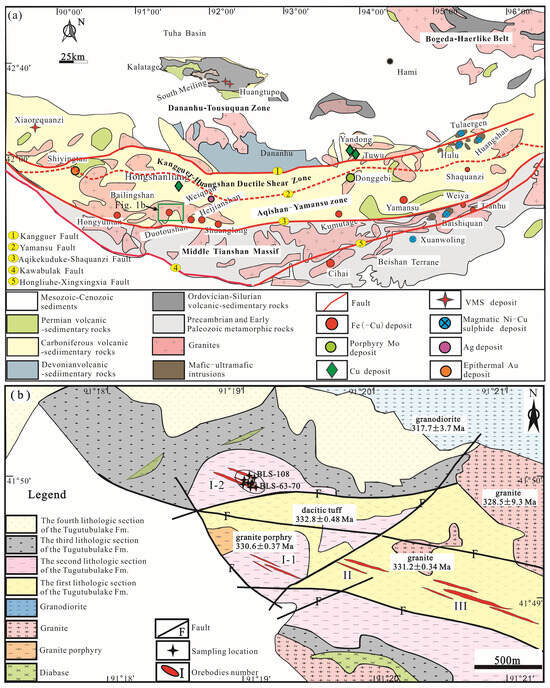
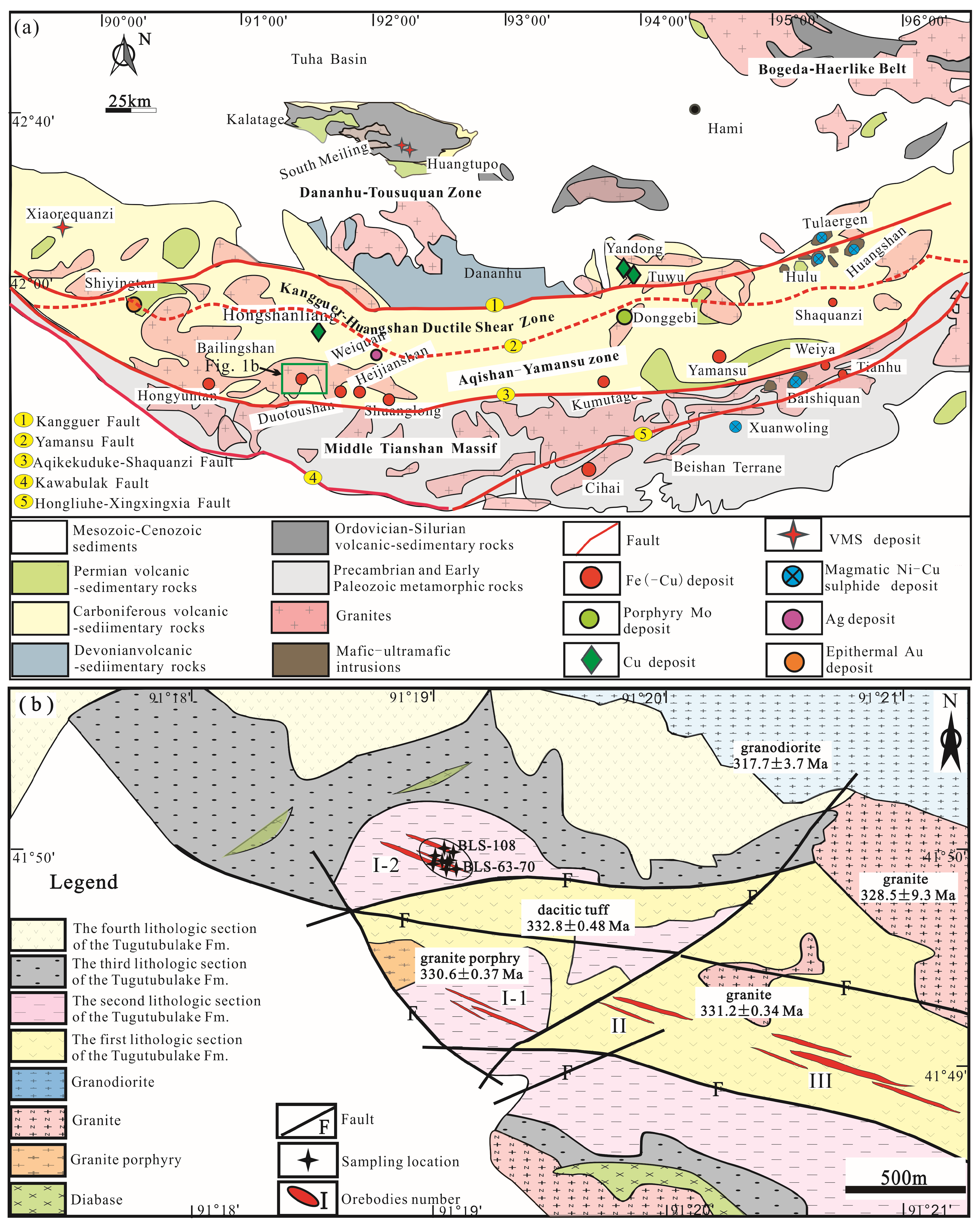
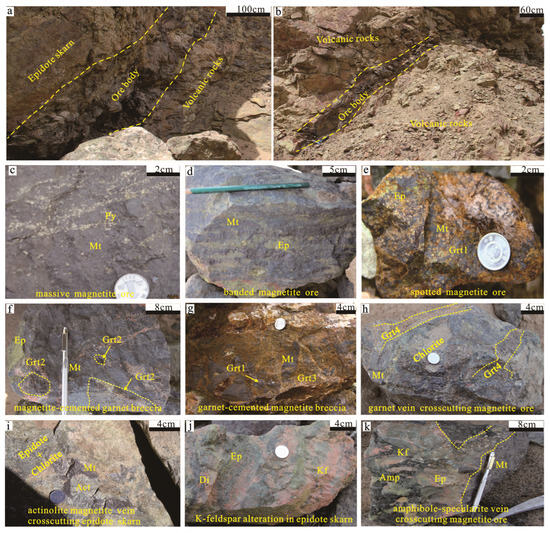
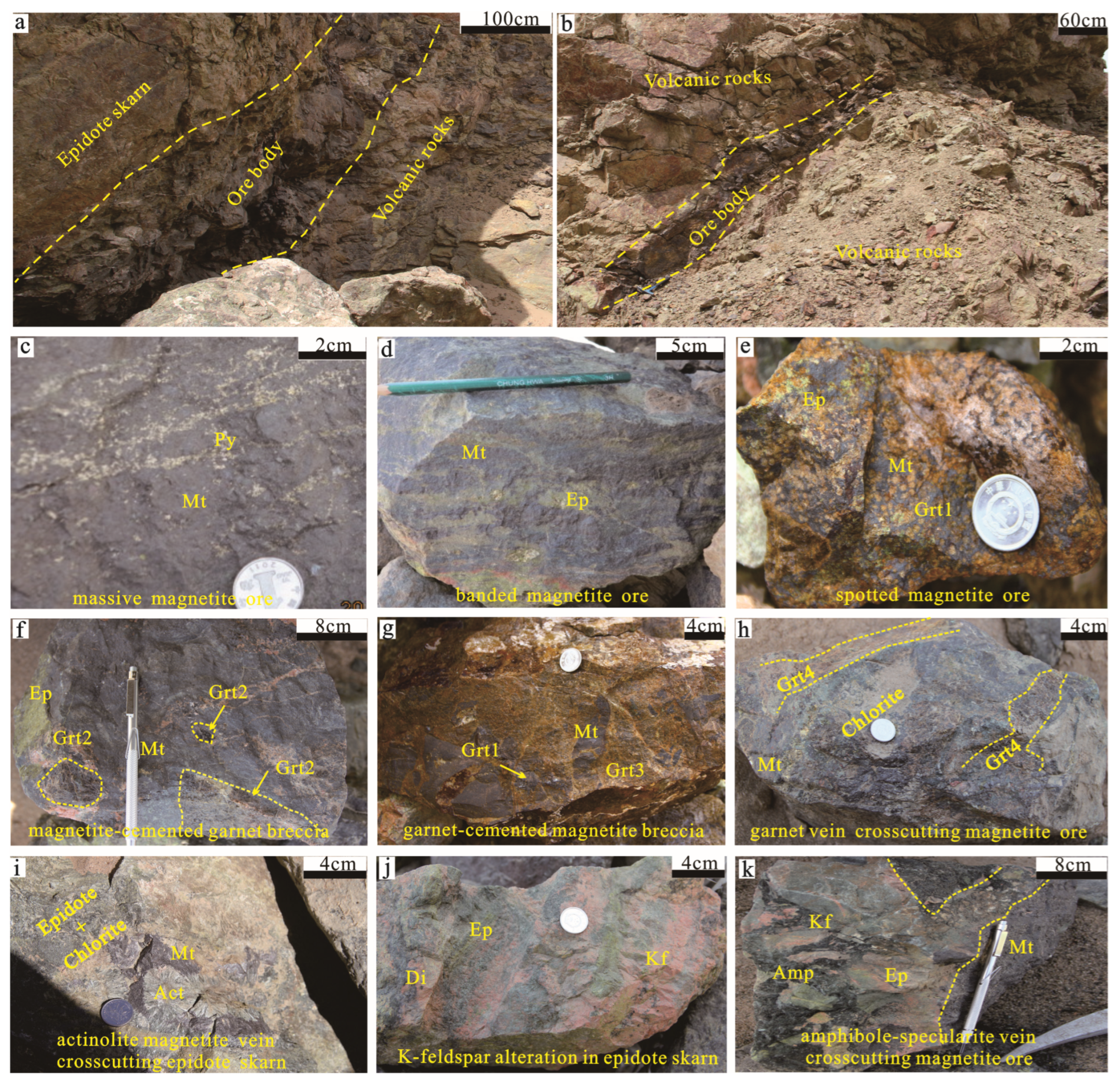
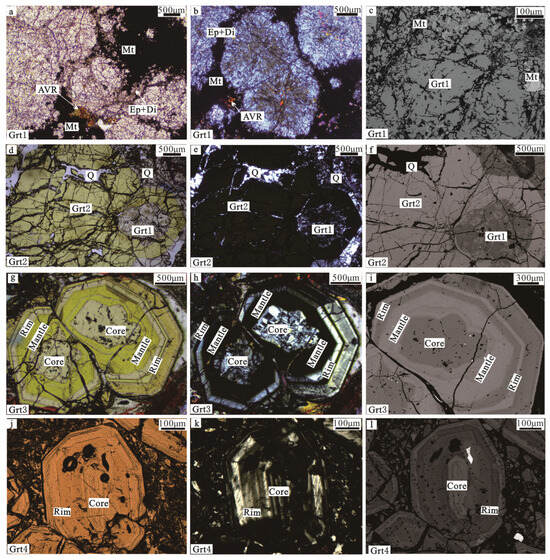
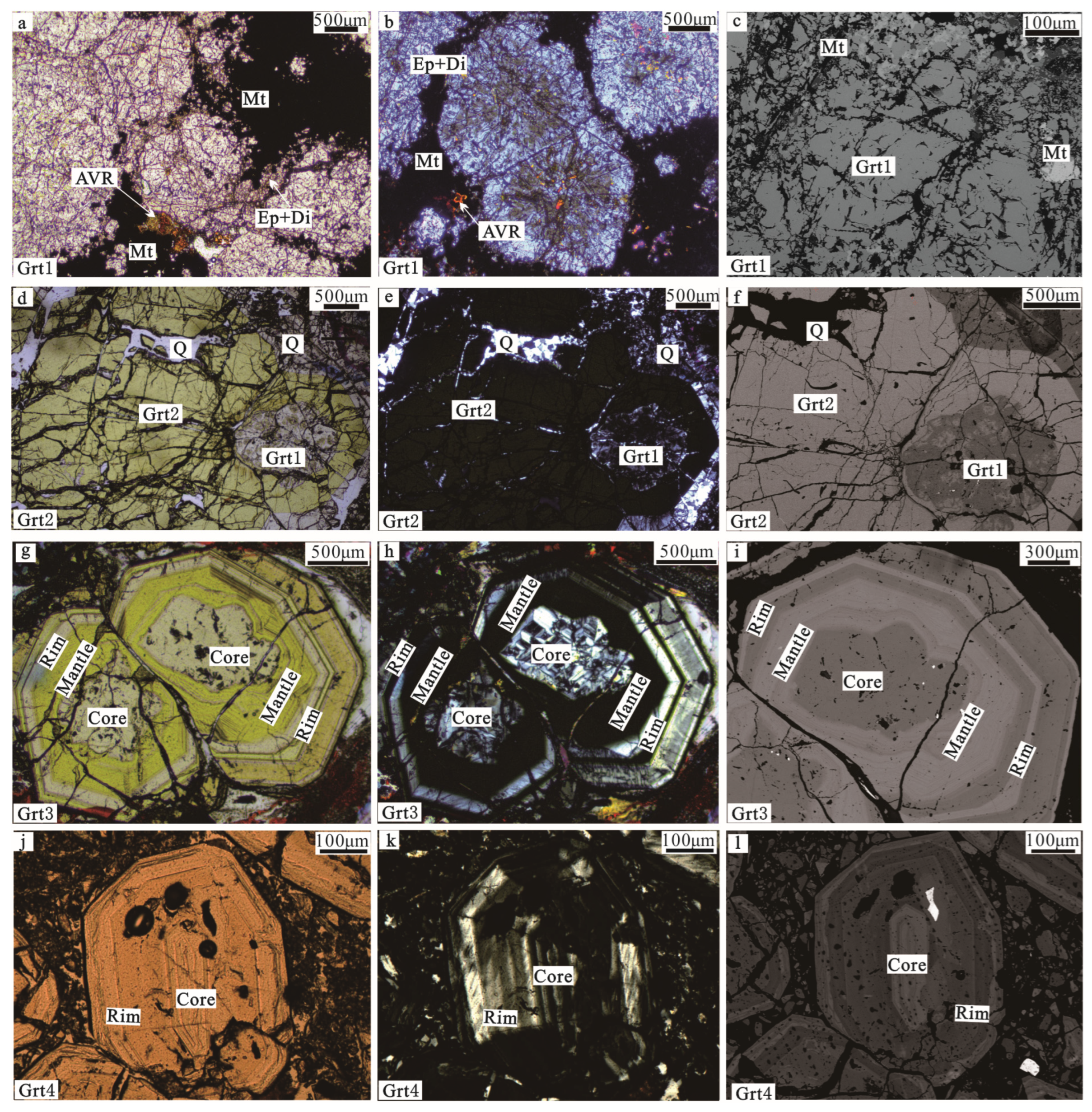
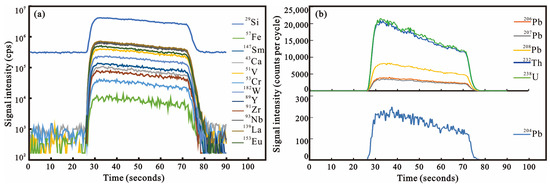
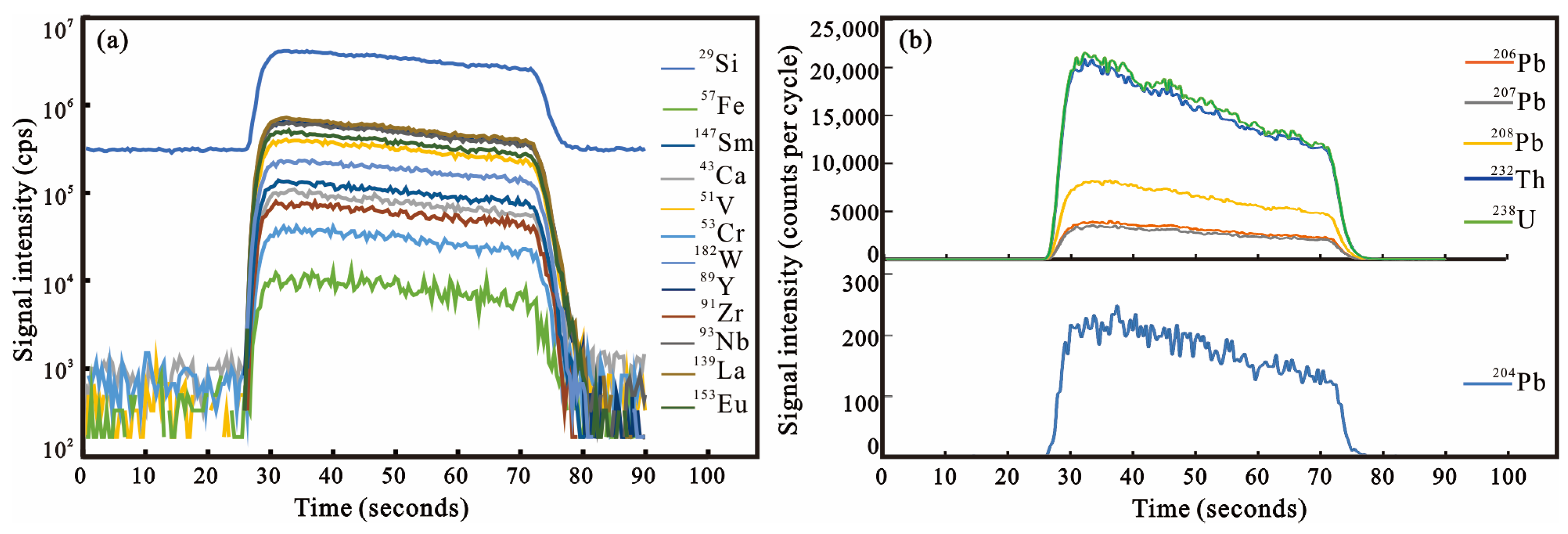
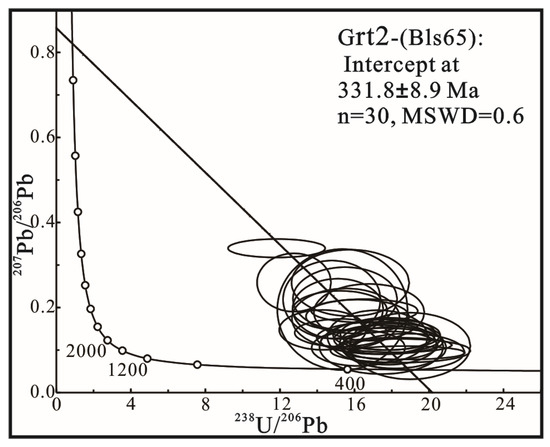
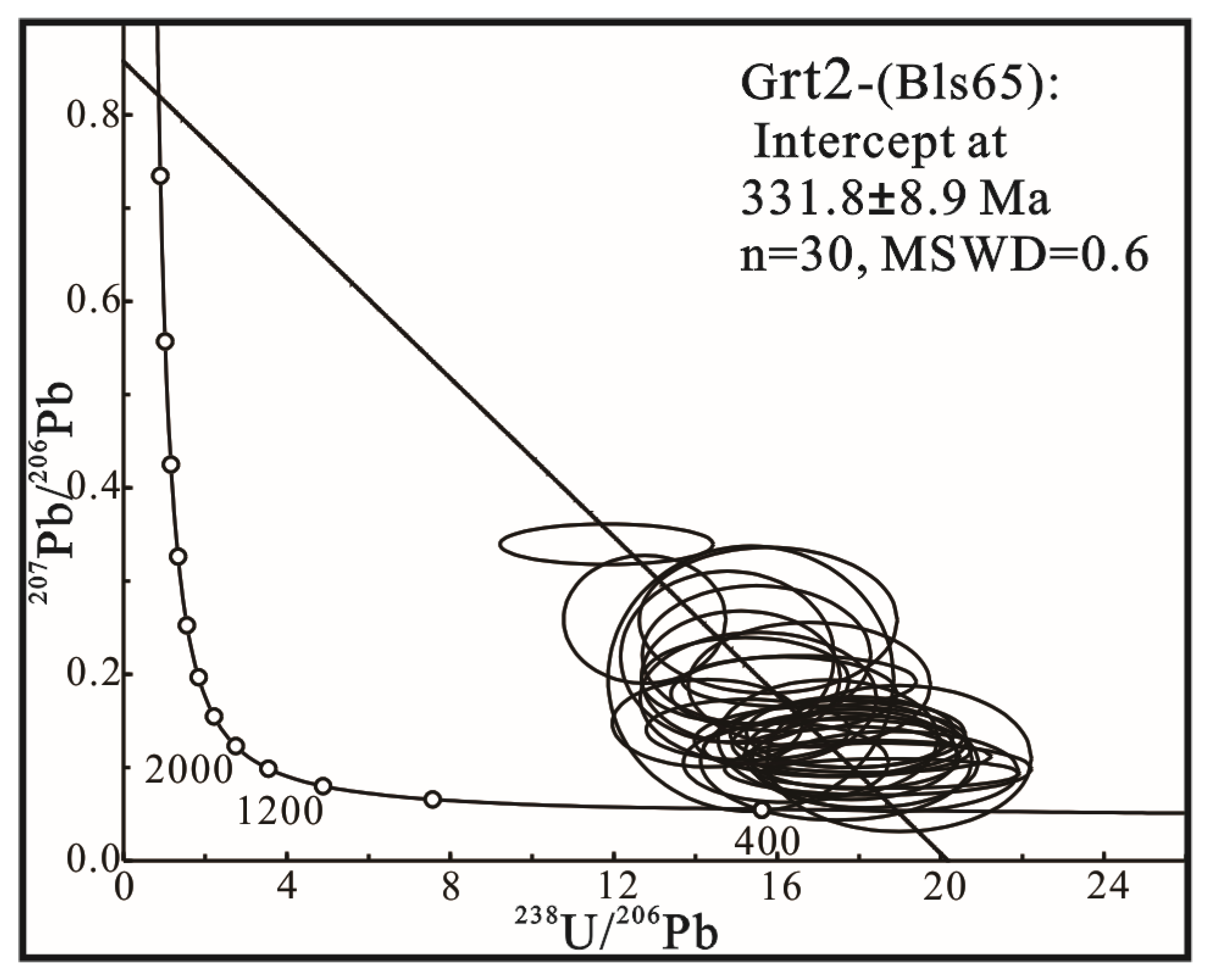
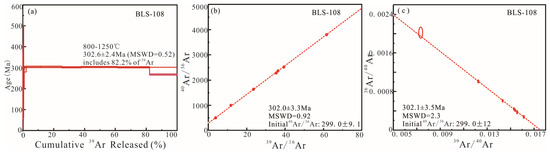
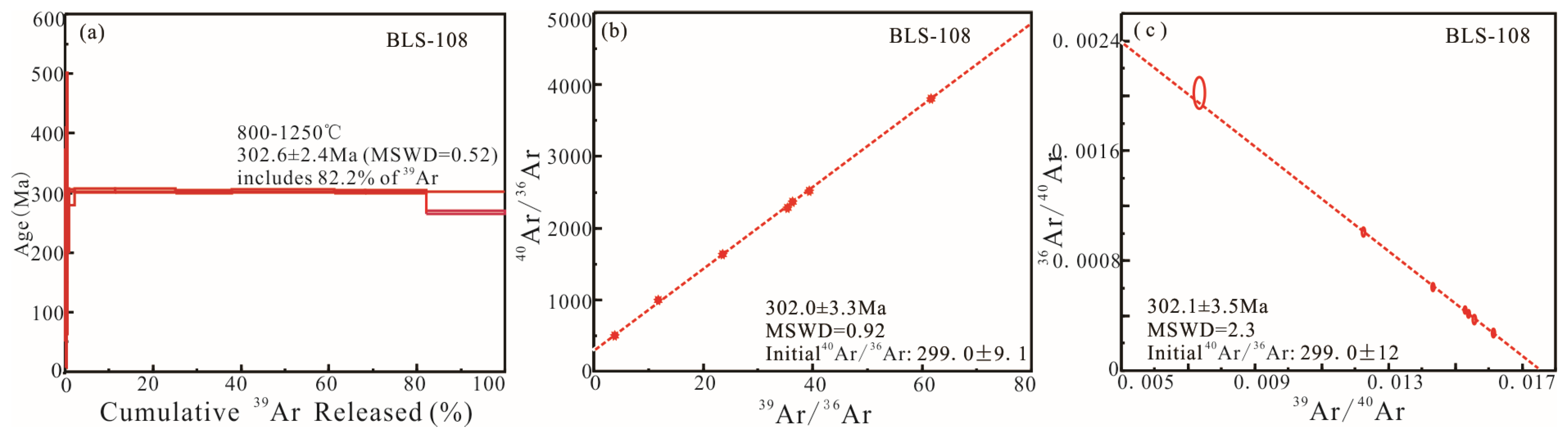
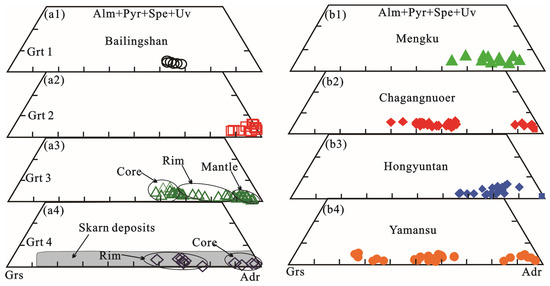
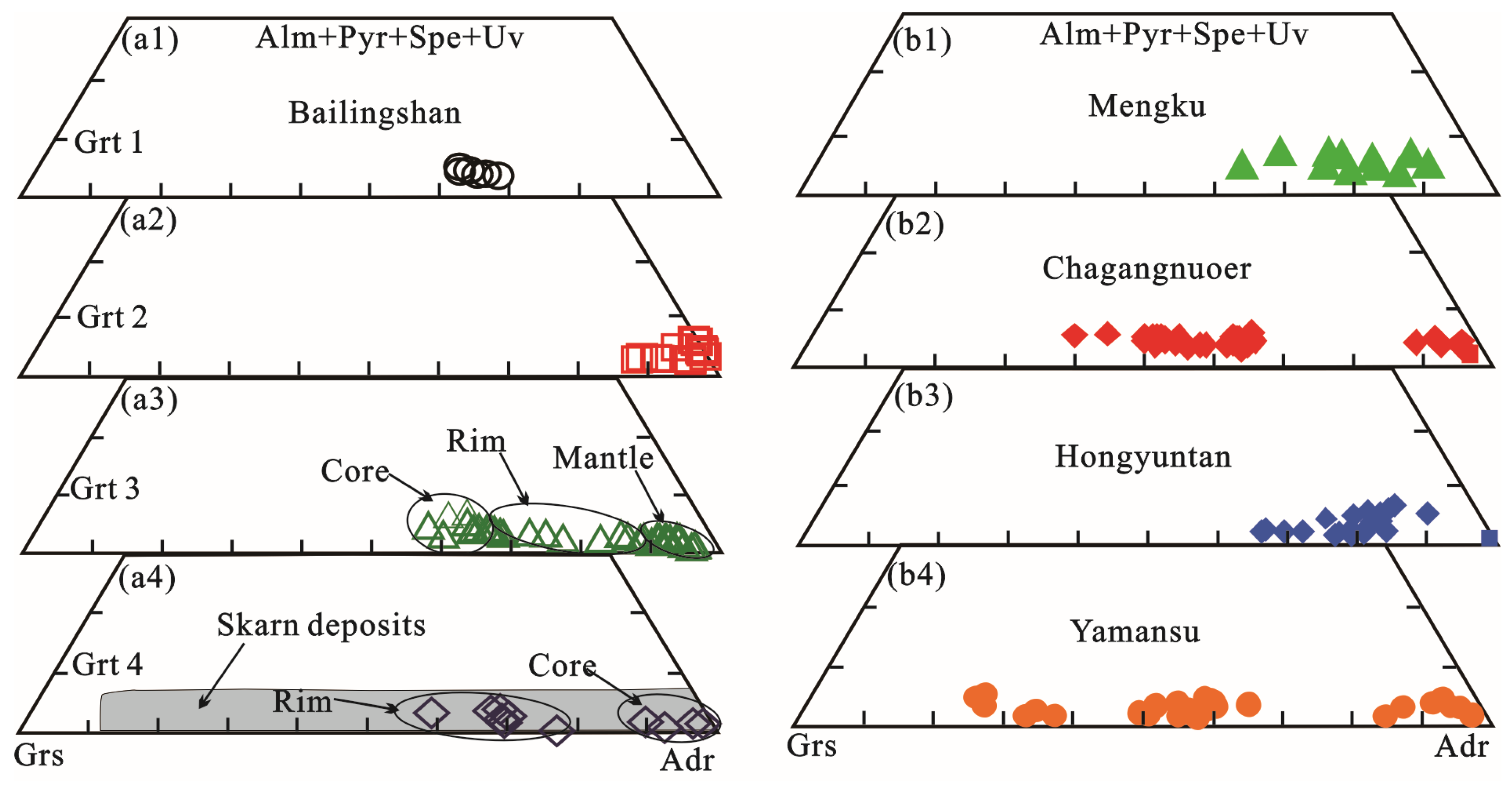
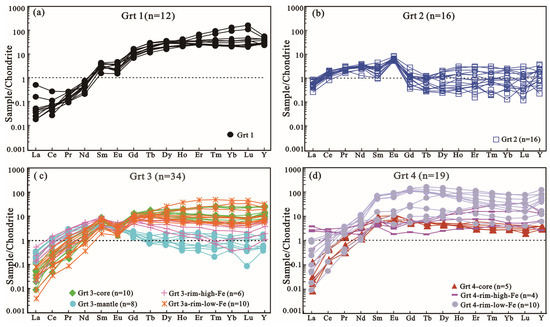
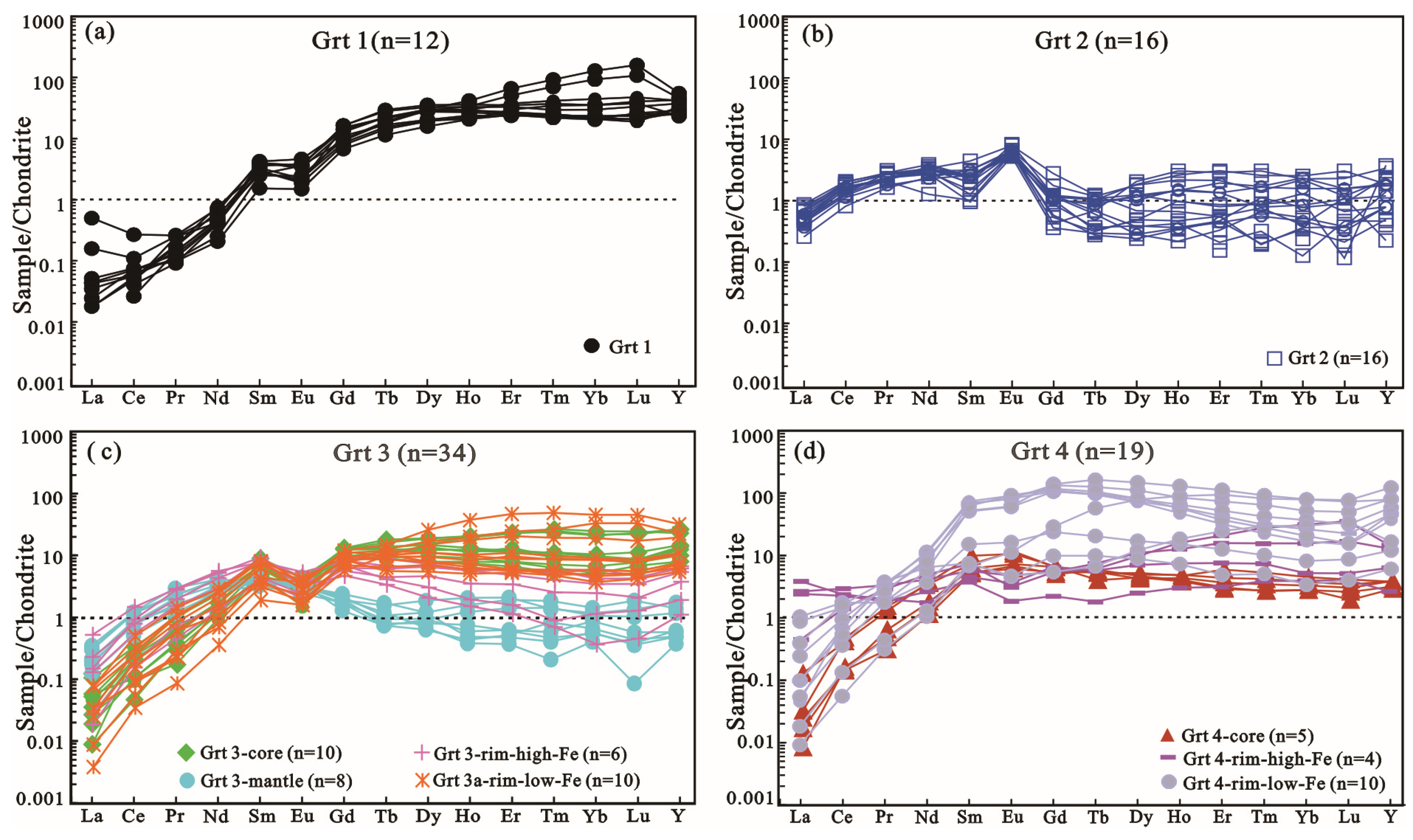
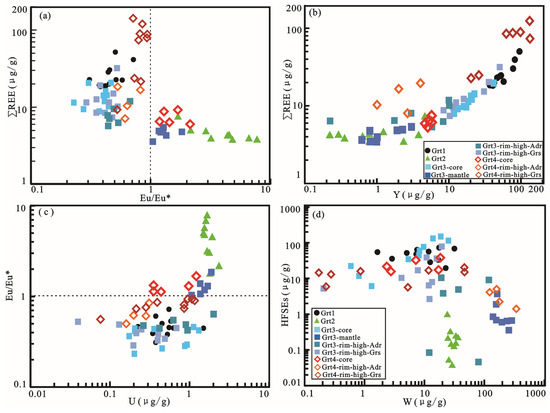
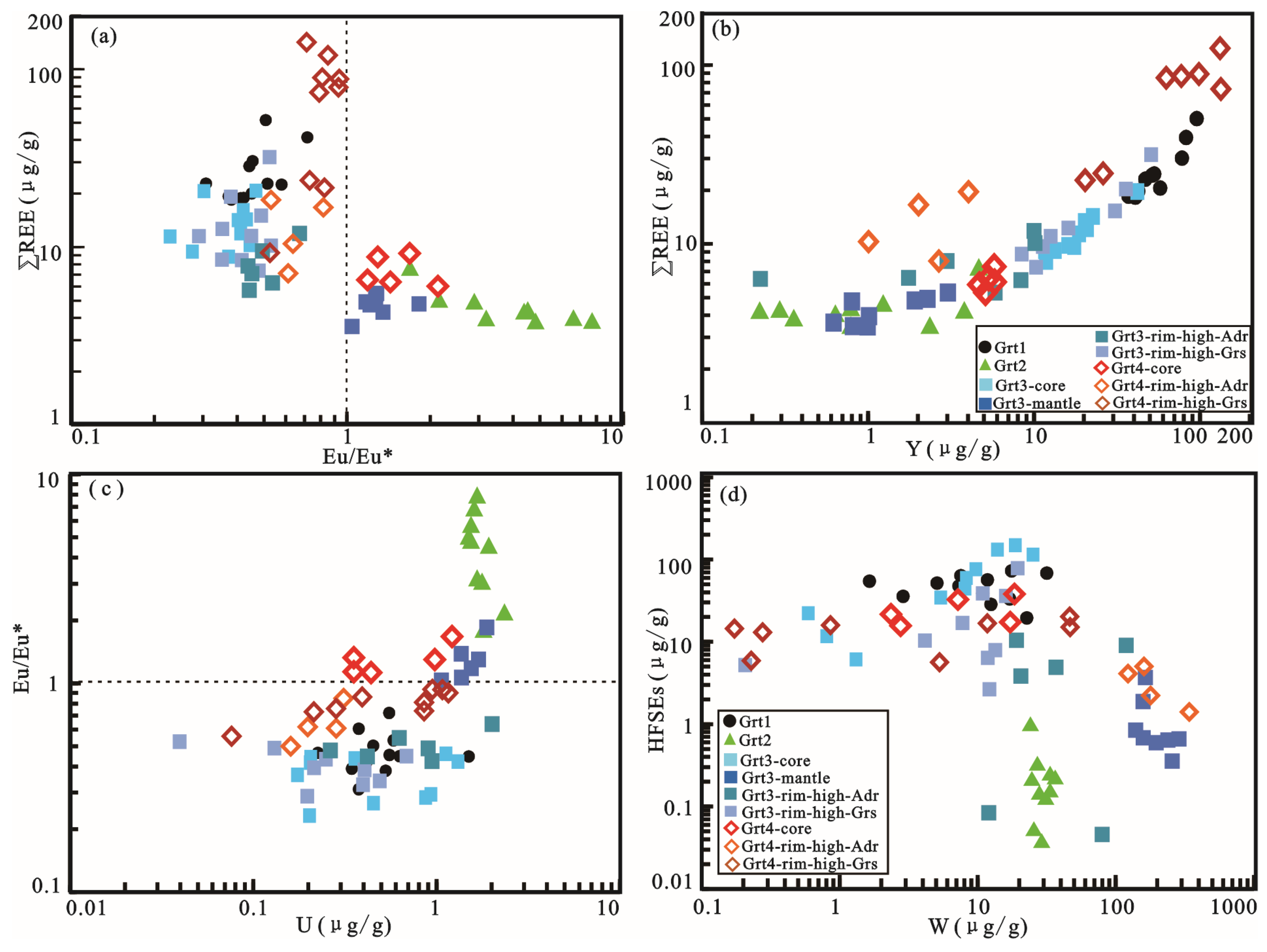
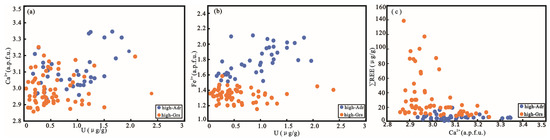
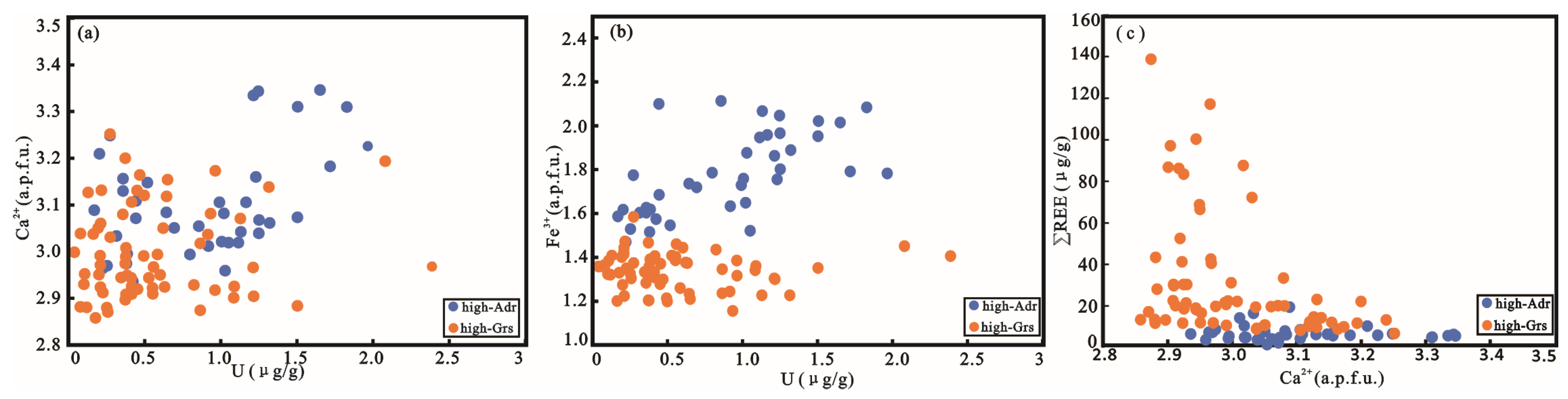

Disclaimer/Publisher’s Note: The statements, opinions and data contained in all publications are solely those of the individual author(s) and contributor(s) and not of MDPI and/or the editor(s). MDPI and/or the editor(s) disclaim responsibility for any injury to people or property resulting from any ideas, methods, instructions or products referred to in the content. |
© 2026 by the authors. Licensee MDPI, Basel, Switzerland. This article is an open access article distributed under the terms and conditions of the Creative Commons Attribution (CC BY) license.