


Abstract
The Driver, Pressure, State, Impact, Response (DPSIR) framework was applied to assess microplastic pollution and the risk of secondary contamination from microplastic-laden spent adsorbents. Key driving forces include increasing plastic production, widespread polymer consumption, and growing reliance on adsorption technologies for microplastic remediation. These drivers impose pressures through the continuous release of polystyrene microplastics (PS-MPs) into aquatic systems and the accumulation of spent adsorbents after treatment. The resulting state is characterized by microplastic-contaminated water and spent adsorbents that pose secondary pollution risks if unmanaged. Circular carbon material (CCM), produced via pyrolysis of spent adsorbents at 600 °C for 2 h, achieved approximately 60% PS-MP removal and exhibited a surface area of 108–137 m2/g and showed a Type II isotherm. The associated impacts include limited recovery efficiency and potential microplastic remobilization. As a response, CCM was upcycled into magnetic circular carbon (MCC) via co-precipitation of iron oxide nanoparticles, improving removal efficiency to ~89%, enhancing mesoporosity and producing a Type IV–H3 isotherm (enhanced mesoporosity), and enabling easy magnetic separation. Overall, DPSIR analysis demonstrates that spent-adsorbent upcycling offers a stabilization and risk-mitigation pathway for microplastic-laden residues, reducing their environmental mobility and supporting circular-economy-based microplastic remediation, while highlighting the need for future emissions characterization to fully quantify net environmental benefits.
1. Introduction
Water contamination is a growing global concern driven by rapid industrialization and population growth. Water quality is deteriorating in many regions, with serious public health consequences [1]. Global plastic production has grown exponentially over recent decades from 2 million tonnes to over 460 million tonnes, contributing millions of tonnes of plastic waste to aquatic systems annually; estimates suggest 0.8–14 million tonnes of micro- and macroplastics enter oceans alone each year, alongside substantial inputs to freshwater ecosystems from rivers, wastewater, and urban runoff, exacerbating contamination worldwide [2]. According to the World Health Organization, millions of people fall sick every year, and over a million die, because of unsafe drinking water and poor sanitation. According to the World Health Organization (WHO), unsafe drinking water and inadequate sanitation contribute substantially to global disease burden and mortality [3,4].
Microplastics (MPs, <5 mm) have emerged as pervasive contaminants in aquatic environments, raising increasing concern due to their documented presence in drinking water, seafood, and human tissues [5]. Microplastic pollution in water poses escalating public health threats, as particles infiltrate human tissues via drinking water and induce oxidative stress, inflammation, neurotoxicity, reproductive harm, and potential carcinogenicity [6,7]. For instance, in humans, microplastics (MPs) can enter the body through ingestion via the gastrointestinal tract, followed by translocation into the lymphatic and circulatory systems, including transfer across the placenta to developing fetuses [8]. Inhalation also represents a significant exposure pathway, enabling MPs to deposit in the respiratory system [9]. Once internalized, MPs may trigger immune and inflammatory responses and exert cytotoxic effects on body cells [9,10]. Therefore, there is an urgent need for better strategies to clean and protect our water sources.
One widely used method to treat polluted water is adsorption, a process that removes harmful substances from wastewater [11,12]. Adsorption is widely applied because it is operationally simple, cost-effective, and adaptable to diverse contaminants. Researchers have explored a wide variety of materials for adsorption, from traditional activated carbons to advanced nanomaterials [13,14,15]. Adsorption-based treatment technologies, including cigarette butt-derived nanocomposites [14], activated carbon [16], polymeric resins [17], mineral sorbents (e.g., clays and iron oxides) [18], metal–organic frameworks (MOFs) [19], biochar-derived carbons [20], magnetic nanocomposites [21], graphene-based materials [22], hybrid porous polymers [23], and engineered aerogels [24] are increasingly investigated for the removal of microplastics from water owing to their high surface areas and tunable surface chemistries [14]; however, the environmental fate and management of microplastic-laden spent adsorbents remain largely overlooked, particularly with respect to secondary pollution risks and end-of-life disposal pathways [25,26]. At the same time, plastic pollution, especially microplastics (MPs), has become a serious threat [14]. Because plastics are used in so many industries due to their strength and low cost, tiny plastic particles are found everywhere, from rivers to oceans. Due to their widespread use and persistence, MPs have been detected across aquatic environments, from rivers to oceans. These MPs come from large plastic waste that breaks down or from products like cosmetics and detergents that contain microbeads (primary MPs). Once in the water, they can harm aquatic life and may even end up in our food [27]. While adsorption helps remove MPs from water, the materials used as adsorbents become saturated and ultimately turn into waste themselves. While most studies focus on contaminant removal efficiency, the post-treatment fate of microplastic-laden spent adsorbents is often overlooked. Improper disposal (e.g., landfilling or incineration) can reintroduce MPs and associated contaminants into the environment, leading to secondary pollution as they leak out. These spent adsorbents, now loaded with captured contaminants (including MPs and co-associated chemicals), pose a new risk [12,28]. If simply burned or dumped, they can cause secondary pollution, releasing contaminants back into the environment. To deal with this issue, our study employs the DPSIR framework (Drivers, Pressures, State, Impacts, Responses), a tool often used by the European Environment Agency to analyze environmental issues. In this study, we place particular emphasis on the ‘Response’ component, examining actionable pathways to prevent secondary contamination from MP-laden spent adsorbents.
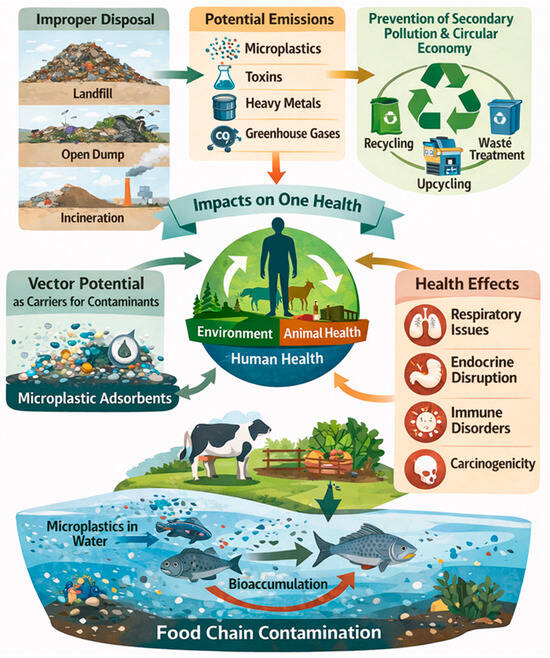
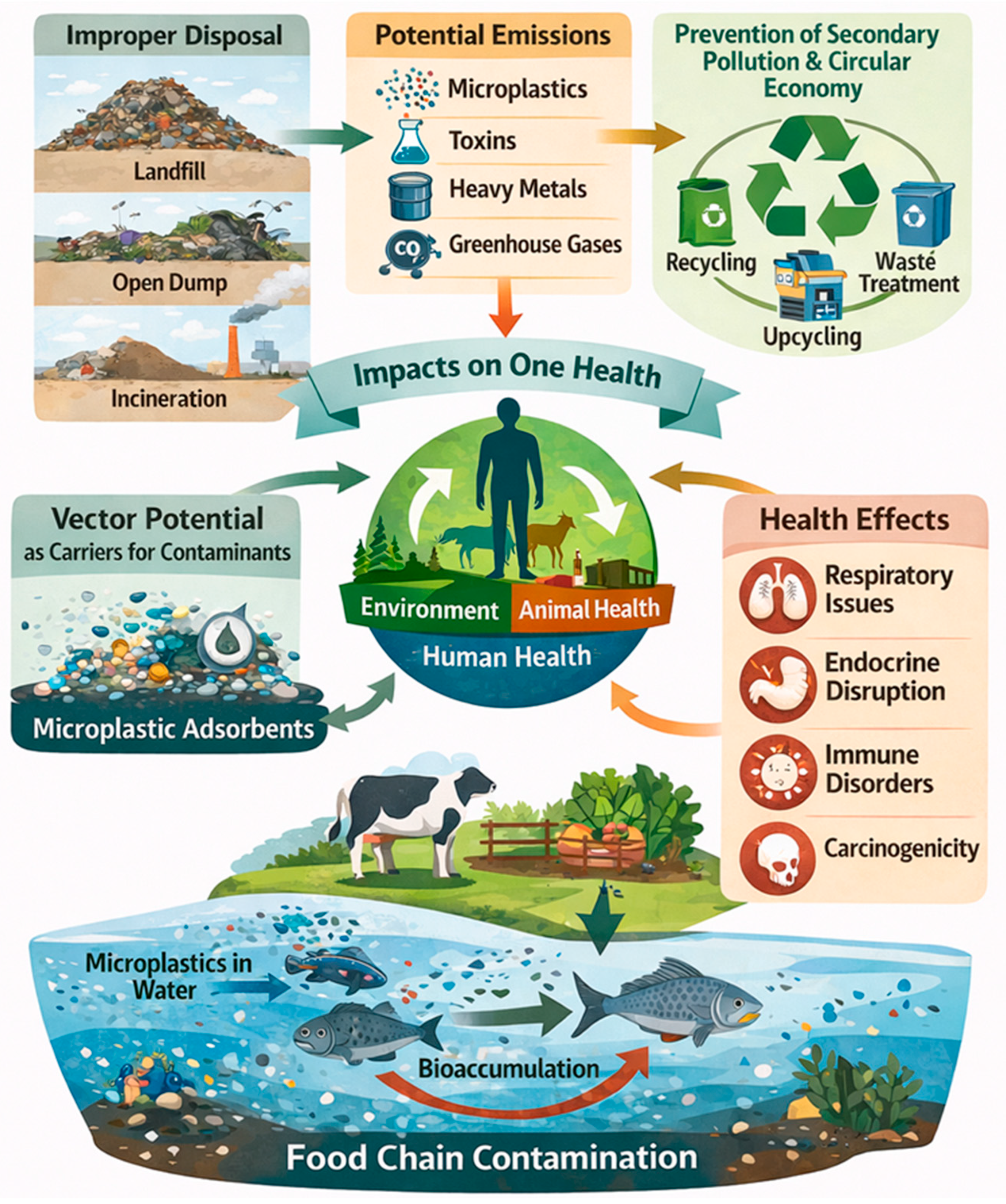
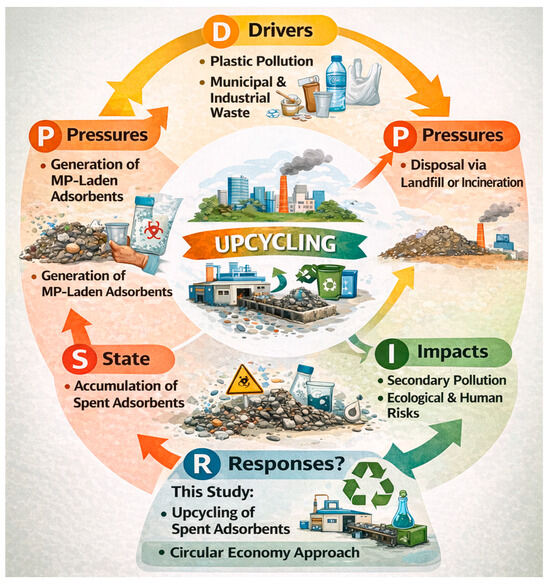
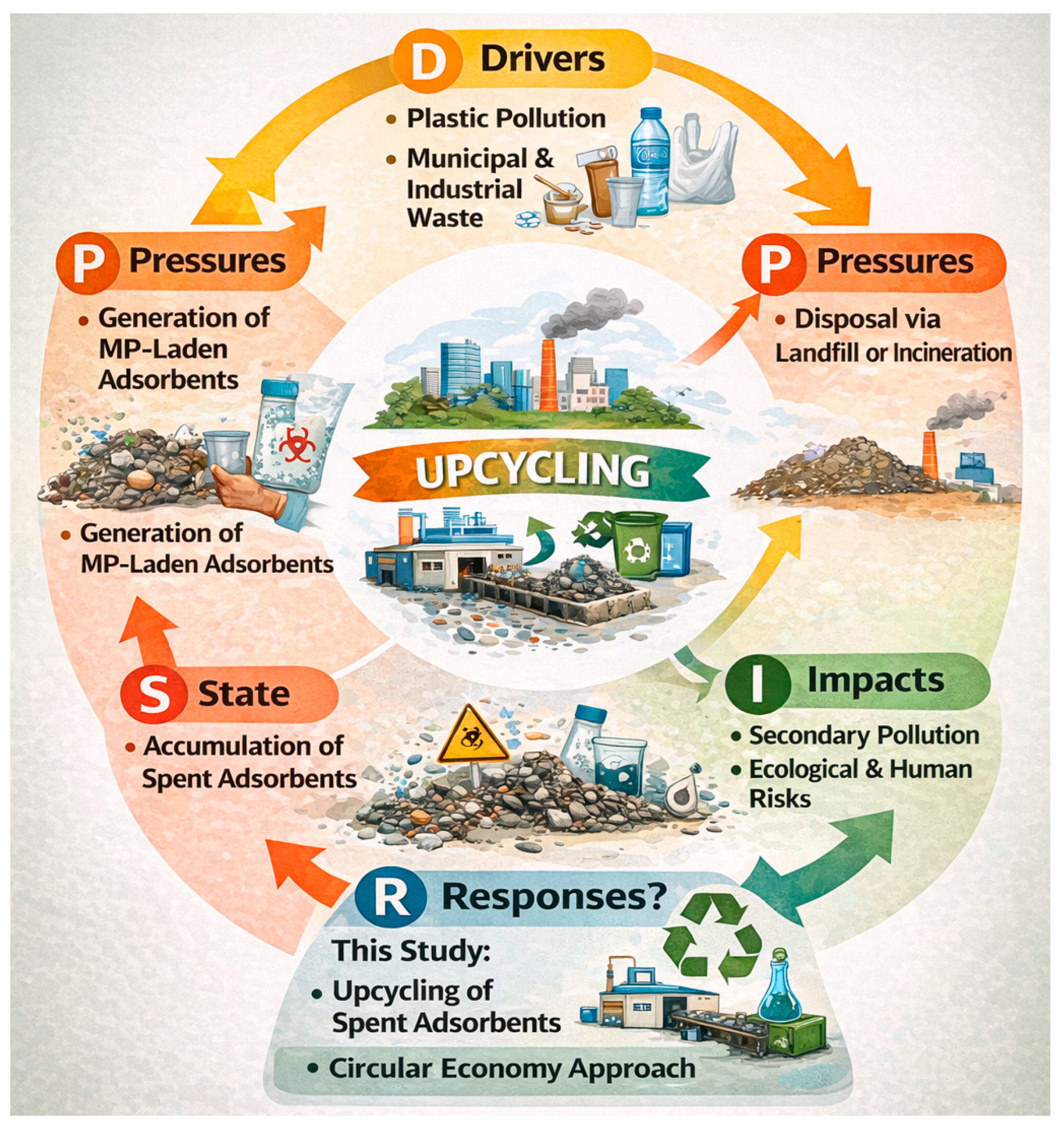
Our proposed solution—upcycling spent adsorbents using pyrolysis—is a process that involves heating waste materials in the absence of oxygen to turn them into valuable carbon-based materials. This approach can stabilize the captured materials and generate a reusable carbon product for subsequent remediation applications. This not only traps the contaminants safely but also gives the material a second life, as a reusable component in future remediation work. It is a sustainable circular approach that avoids creating more waste and pollution. Unlike traditional end-of-life options like landfilling or regeneration, which often lead to leaching and further contamination, pyrolysis offers a cleaner, smarter alternative [29,30]. While many studies have looked at adsorbents loaded with metals or dyes, few have addressed those loaded with MPs, which may break down into even smaller nanoplastics and can also carry other pollutants with them, highlighting their potential role as contaminant vectors [30,31]. These MPs-laden adsorbents can become “contaminant reservoirs” releasing toxic substances under pressure from environmental changes like wet-dry cycles or physical wear. This is a major concern, especially for soil and aquatic ecosystems [32,33]. Despite effective removal of microplastics from aqueous media, the fate of the resulting microplastic-laden spent adsorbents remains poorly understood. If such spent materials are simply discarded or landfilled, microplastics and co-associated contaminants may ultimately re-enter environmental compartments, negate the benefits of adsorption, and pose additional ecological risks. To bridge this gap, the present study applies a circular-economy paradigm within a DPSIR (Drivers, Pressures, State, Impacts, Responses) framework to transform spent adsorbents into circular carbon materials (CCM) and magnetic circular carbon (MCC), thereby converting a potential secondary pollutant into functional adsorbents suitable for reuse in further remediation. This upcycling approach not only stabilizes embedded microplastics but also aligns with sustainable remediation objectives by reducing secondary pollution risks while valorizing waste materials. In the DPSIR framework, these contaminated residues represent Pressures and States that can lead to harmful Impacts if not managed [13,34]. That is why we focus on the Response, not just conceptually, but by demonstrating how upcycling via pyrolysis works. We show how this method can stabilize contaminants, recover value, and align with circular economy principles. Our study goes a step further by modifying the resulting carbon material with iron oxide nanoparticles to render it magnetic, thereby enhancing its reusability in subsequent cleanup efforts. This is not just a concept; it is a real, tested strategy for turning waste into a resource while protecting the environment. Figure 1 and Figure 2 illustrate the environmental risks of MP-laden adsorbents and how our upcycling strategy fits within the DPSIR framework to manage those risks effectively.
Figure 1.
Transport, Fate, and Health Implications of Microplastic-Laden Adsorbents.
Figure 2.
A Response-Driven DPSIR Conceptual Framework for Managing Microplastic-Laden Spent Adsorbents through Upcycling.
2. Materials and Experiments
2.1. Materials and Reagents
Sodium hydroxide, ethanol, iron(II) sulfate heptahydrate (FeSO4·7H2O), and iron(III) chloride hexahydrate (FeCl3·6H2O), were procured from Sigma-Aldrich (Mountain Hwy, Bayswater VIC. Australia). Deionized water (18.2 MΩ/cm), obtained from a Millipore Milli-Q water purification system, was used throughout the experiments. Solution pH was adjusted using 0.1 M HCl or NaOH as required. Spent microplastic-laden adsorbents, recovered from our previous study, were characterized using scanning electron microscopy with energy-dispersive X-ray spectroscopy (SEM–EDS) and Brunauer–Emmett–Teller (BET) surface area analysis.
2.2. Preparation of Spent Microplastic Adsorbent, Pristine, and Magnetic Modified Carbon Materials
2.2.1. Loading and Generation of Spent Microplastic Adsorbents (SMA)
Spent microplastic-laden adsorbents (SMA) were generated through batch adsorption experiments using polystyrene microplastics (PS-MPs). Stock PS suspensions were diluted with deionized water to the desired working concentrations before each experiment. Adsorption tests were performed by adding 15 mg of modified magnetic biochar to 10 mL of PS solution, corresponding to an adsorbent dosage of 1.5 g/L. The initial PS concentration was fixed at 20 mg/L, and the mixtures were agitated at 200 rpm for 5 h at room temperature to ensure adsorption equilibrium. After completion of the adsorption process, the suspensions were centrifuged for 15 min at 3500 rpm, and the supernatants were carefully collected for residual PS analysis using a Shimadzu UV-Vis spectrophotometer (UV-2650, Japan). Absorbance spectra were recorded between 200 and 400 nm, with the maximum absorbance observed, which was used for the quantitative determination of PS concentration. The removal efficiency () were calculated using Equation (1) [14]:
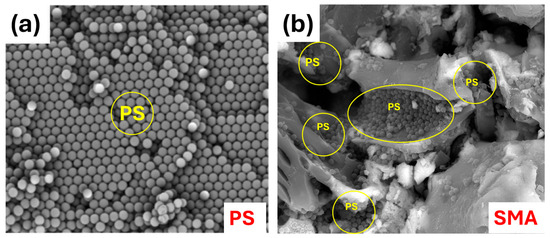
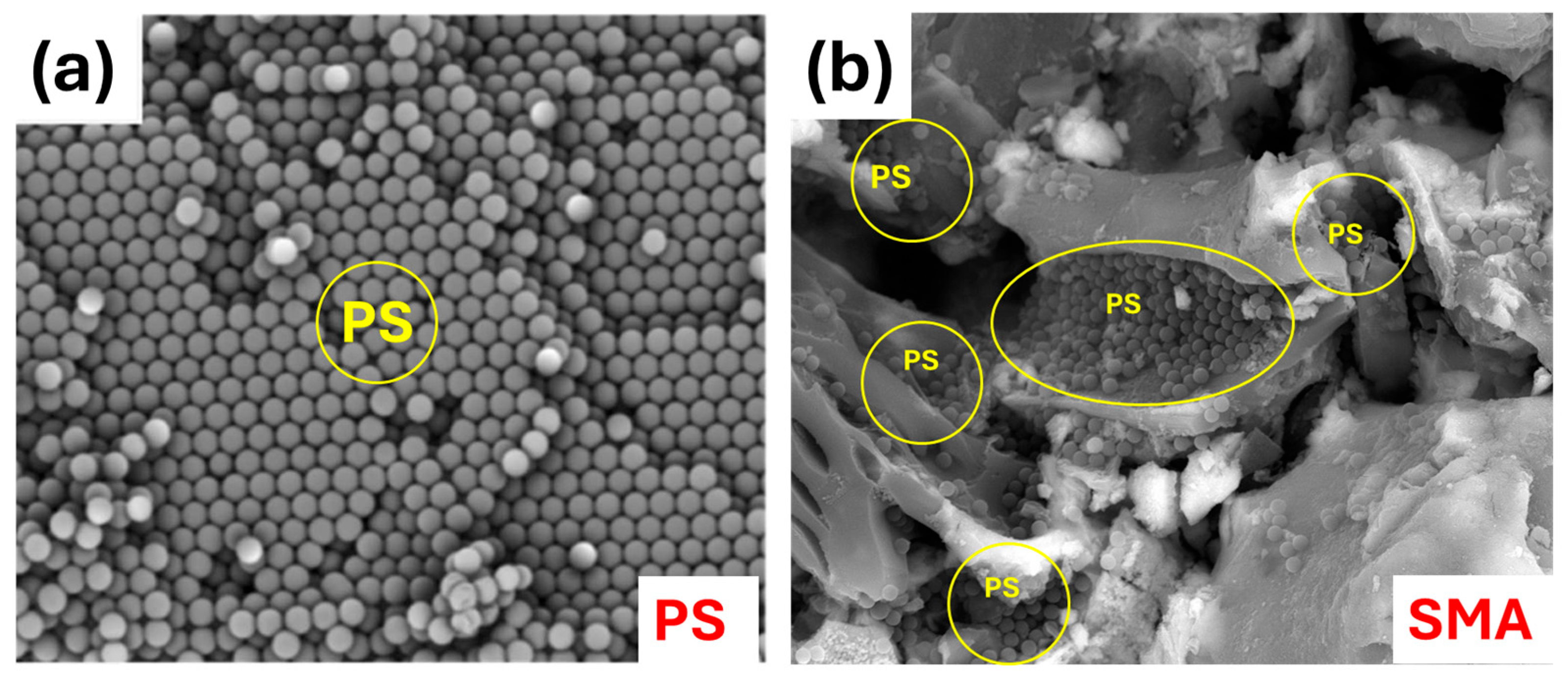
where and (mg/L) represent the initial and equilibrium concentrations of PS in solution, respectively. Following adsorption, the recovered SMA was oven-dried at 60 °C overnight without prior rinsing and subsequently used directly as the precursor material for the production of circular carbon material (CCM) via pyrolysis. The resulting CCM was further used to synthesize magnetic circular carbon (MCC) via co-precipitation with iron oxide nanoparticles. SEM micrographs of spherical polystyrene microplastics and spent microplastic adsorbents (SMA) are presented in Figure 3. Figure 3b indicates the successful loading of PS on the adsorbent.
Figure 3.
SEM micrographs showing (a) pristine spherical polystyrene microplastics and (b) microplastic-laden spent adsorbent after adsorption.
2.2.2. Preparation of Circular Carbon Material (CCM) and Magnetic Circular Carbon (MCC)
The procedure for loading and generating microplastic-laden spent adsorbents (SMA), which served as precursors for the production of circular carbon material (CCM) via pyrolysis, is described in detail in Section 2.2.1. Pyrolysis was carried out in a horizontal tube furnace under an inert N2 atmosphere. Before heating, the tube was purged with N2 for 30 min to remove residual air. The temperature was ramped from room temperature to 600 °C at 5 °C min−1 and held at 600 °C for 2 h. The selected pyrolysis temperature and residence time were guided by previous studies on the carbonaceous materials and thermochemical conversion of plastic-containing wastes, which report that temperatures between 500 and 700 °C effectively induce polymer depolymerization, volatilization, and carbonization while promoting mesopore development and structural stabilization of the carbon matrix [35,36,37]. A temperature of 600 °C was therefore adopted as a compromise between efficient transformation and excessive carbon loss or energy demand, while a residence time of 2 h was chosen to ensure completion of thermal conversion and pore restructuring [36,37]. It is important to emphasize that the present work aims to demonstrate a DPSIR-guided proof-of-concept circular-economy route rather than to optimize operating parameters; therefore, systematic optimization of temperature, residence time, and associated life-cycle impacts is identified as an important focus for future studies.
During pyrolysis, N2 was continuously supplied at ~200 mL min−1. After the holding time, the furnace was allowed to cool naturally to room temperature under continuous N2 flow before sample retrieval. Circular carbon material (CCM) and Magnetic circular carbon were prepared following a documented thermal-conversion approach [14]. Specifically, 5 g of spent microplastic adsorbents (SMA) were pyrolyzed in a tubular furnace at 600 °C for 2 h under a continuous nitrogen atmosphere. After cooling to room temperature, the resulting CCM was gently ground and sieved to obtain a uniform particle-size fraction of 0.154 mm. The prepared CCM was subsequently stored in airtight containers before further conversion into magnetic circular carbon (MCC). After cooling to room temperature, the CCM was washed thoroughly with ethanol and ultrapure water. It was then used as the substrate for synthesizing magnetic circular carbon (MCC) through the co-precipitation of iron species. For this, 1.0 g of CCM was dispersed in 30 mL of ultrapure water (solution X), while 1.0 g of FeCl3·6H2O and 0.46 g of FeSO4·7H2O were dissolved in 70 mL of ultrapure water (solution Y). The two solutions were combined and stirred for 45 min. Subsequently, 0.1 M NaOH was slowly added to adjust the pH to 10–11, facilitating the deposition of magnetic iron oxides onto the surface of CCM. The resulting suspension was agitated for an additional 60 min and kept at 90 °C for 180 min. After cooling, the black precipitate was separated (by filtration and/or magnetic decantation), washed with ultrapure water until a neutral pH was achieved, and oven-dried at 80 °C to yield MCC.
2.3. Characterization Methods
Comprehensive characterization techniques were employed to investigate the structural properties, sorption behavior, and interfacial interactions of both pristine and magnetically modified circular carbon materials. Surface morphology and elemental distribution were examined using scanning electron microscopy (SEM), and energy-dispersive X-ray spectroscopy (EDS). SEM–EDS analysis was conducted using Environmental Scanning Electron Microscopy (SEM, Zeiss Sigma, Germany) equipped with a Bruker energy dispersive X-ray spectroscopy (EDS) detector. EDS mapping was performed at 12 keV with an integration time of 0.5 s per step and a spatial step size of 10 µm, enabling visualization of elemental composition and surface distribution on both CCM and MCC. Textural properties, including surface area, pore structure, and pore volume, were determined using a Brunauer–Emmett–Teller (BET), (Micromeritics Tristar II-3020, USA) analyzer under N2 adsorption–desorption conditions at 77 K.
3. Results and Discussion
3.1. Morphological, Elemental, and Textural Characterization of CCM and MCC
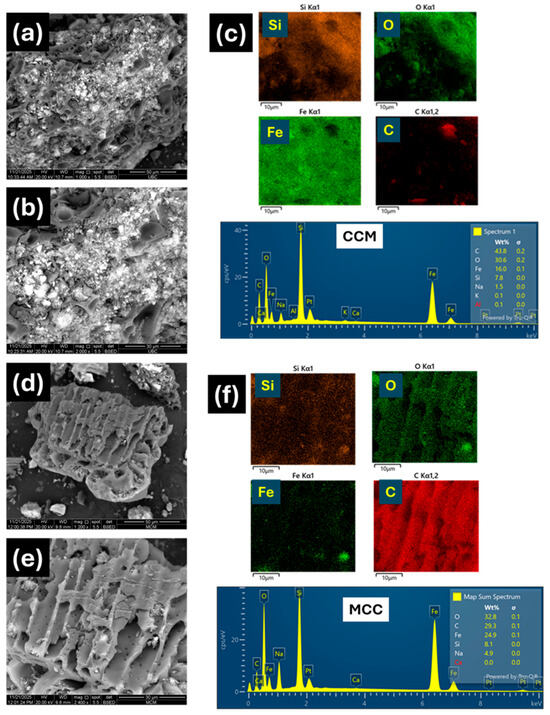
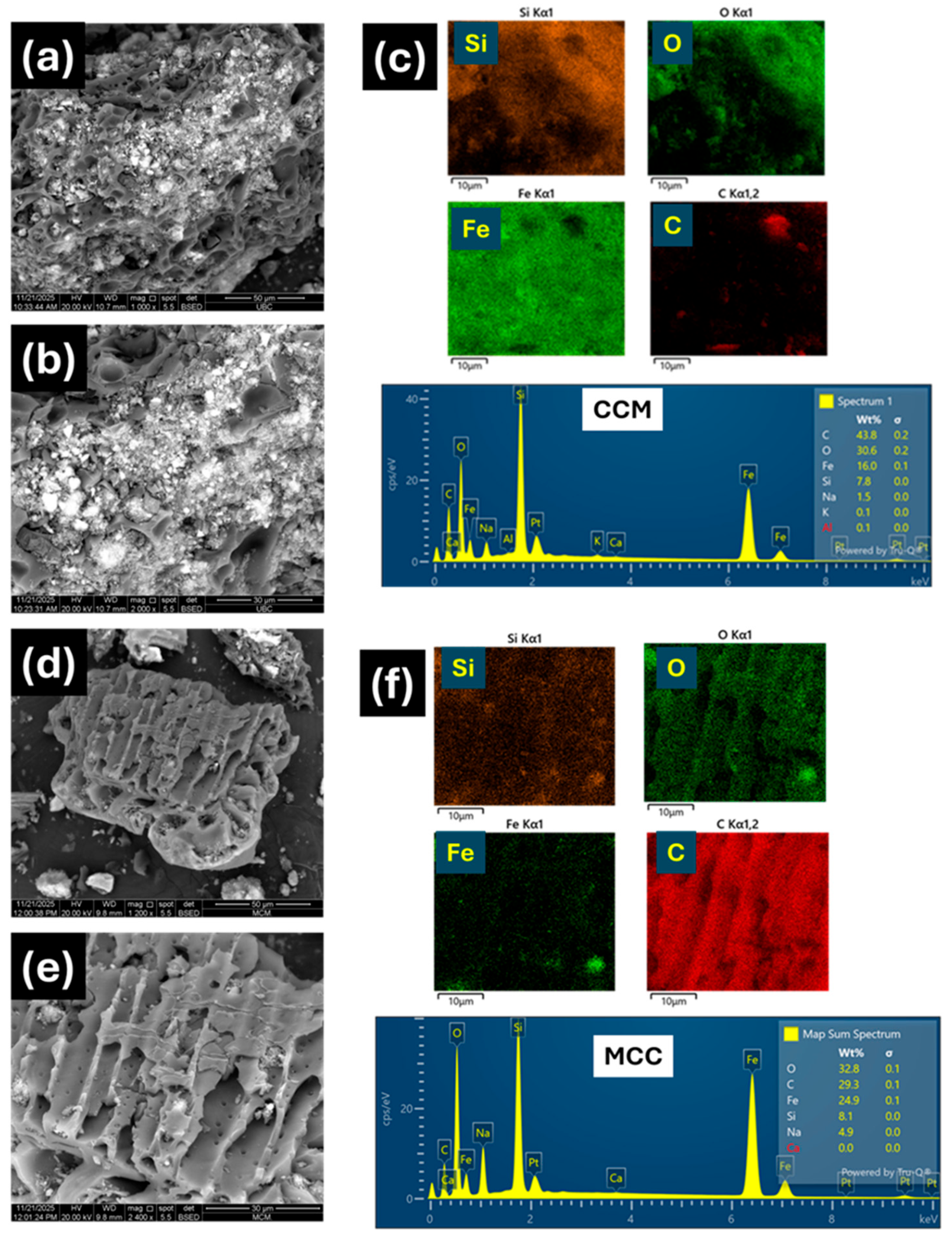
The SEM–EDS analyses show the structural and compositional evolution from CCM to MCC, supported by both morphological and elemental mapping data. In CCM (Figure 4a,b), SEM images show compact, irregular agglomerates with relatively smooth carbonaceous surfaces and partially obstructed pores. This structure is consistent with regenerated biochar derived from previously used magnetic biochar precursors [38,39]. The corresponding EDS spectrum represents a representative area analysis, indicating that CCM retains inherited iron with elemental compositions of C = 43.0 wt%, O = 30.6 wt%, Fe = 16.0 wt%, and Si = 7.8 wt%. As EDS provides location-dependent, semiquantitative surface information, these values are intended to reflect representative surface composition rather than bulk-averaged elemental concentrations. Elemental mapping (Figure 4c) reveals a heterogeneous distribution of Fe dispersed across the carbon matrix rather than forming a continuous coating. This suggests that iron is embedded within the carbon framework, originating from the precursor and remaining after regeneration and pyrolysis. Silicon is uniformly distributed, reflecting the naturally silica-rich composition of rice husk biochar. Oxygen is primarily associated with surface oxygenated functional groups and residual iron oxide domains.
Figure 4.
SEM–EDS characterization of circular carbon material (CCM) and magnetic circular carbon (MCC) derived from microplastic-laden spent adsorbents. (a) SEM micrograph of CCM (scale bar 50 µm; 1000×). (b) SEM micrograph of CCM (scale bar 30 µm, 2000×). (c) Corresponding EDS elemental maps and spectrum of CCM, confirming the presence and heterogeneous distribution of C, O, Fe, and Si. (d) SEM micrograph of MCC (scale bar 50 µm; 1200×). (e) SEM micrograph of MCC (scale bar 30 µm; 2400×). (f) Corresponding EDS elemental maps and spectrum of MCC, demonstrating enriched and more uniformly distributed iron phases with strong Fe–O association, confirming successful magnetic functionalization.
In contrast, MCC (Figure 4d,e) displays a markedly different morphology, characterized by fractured surfaces, well-developed channels, and slit-like pores, indicative of substantial surface reconstruction during co-precipitation. The EDS spectrum shows a pronounced increase in iron content (24.9 wt%) and a decrease in carbon (29.3 wt%), while oxygen rises to 32.8 wt% and silicon at 8.1 wt%. This rise in oxygen is attributed to the formation of iron oxide and hydroxide phases during co-precipitation, leading to extensive Fe–O–Fe and Fe–O–C bonding on the surface. Similar observations have been reported in previous studies [39,40]. Given that EDS is semi-quantitative and surface-biased, the deposition of these iron-oxides partially masks the underlying carbon, resulting in a relative reduction in detected carbon and an increase in oxygen. Elemental mapping (Figure 4f) reveals a more uniform and intensified Fe distribution, with strong overlap between Fe and O signals, confirming successful deposition of magnetic iron phases while preserving the silica-rich rice husk backbone.
Overall, the SEM–EDS results distinguish CCM as a carbon-dominant material with dispersed magnetic residues, while MCC emerges as a co-precipitation-engineered biochar with enriched and uniformly distributed iron oxide phases. The pronounced morphological transformation, along with the textural refinement, supports the effectiveness of co-precipitation in converting CCM into a more iron-rich, magnetically functional MCC suitable for advanced adsorption applications.
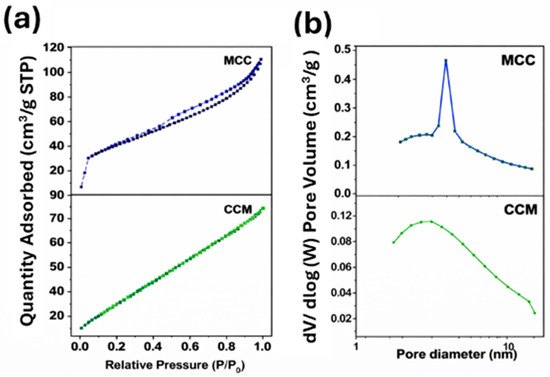
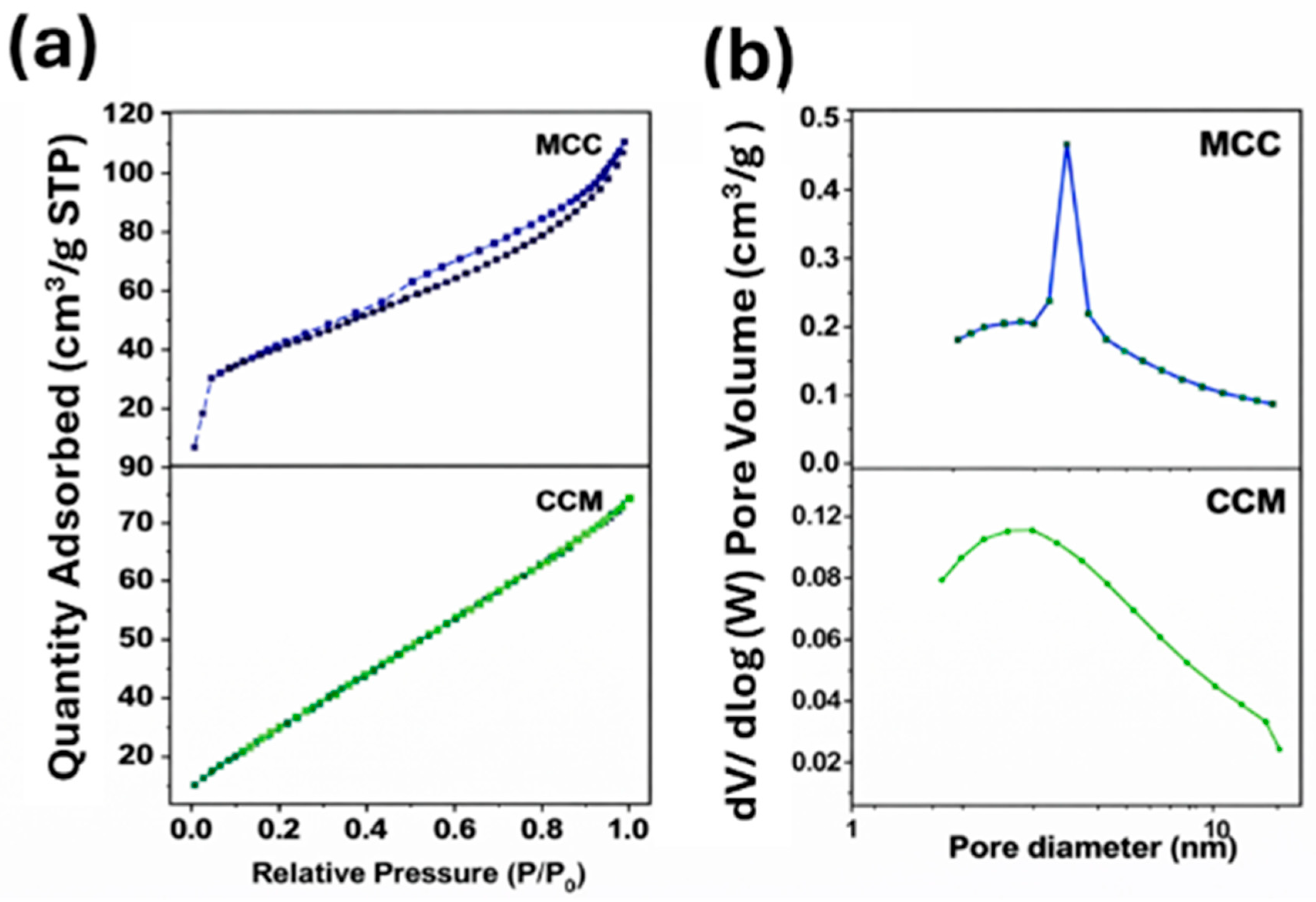
For CCM (Figure 5a), the nitrogen adsorption–desorption curve is nearly linear across the full relative pressure range (P/P0 = 0–1.0) and shows no hysteresis loop, confirming a Type II isotherm. This behavior is characteristic of monolayer-to-multilayer adsorption on open or non-rigid surfaces, where adsorption predominantly occurs on the external surface rather than via capillary condensation [40]. While the measured average pore diameter (3.89–4.14 nm) and pore size distribution (3.2–3.99 nm) (Figure 4b) fall within the IUPAC-defined mesoporous range (2–50 nm), the absence of hysteresis suggests limited capillary condensation and poorly developed mesopore networks. A moderate surface area (108–137 m2/g) and low pore volume (0.082–0.158 cm3/g) further indicate that CCM’s structure is dominated by external surfaces and macropore-like interparticle voids, with negligible microporosity (<2 nm), as evidenced by the lack of a sharp uptick at low P/P0.
Figure 5.
Nitrogen adsorption–desorption isotherms and pore size distributions of CCM and MCC: (a) adsorption–desorption isotherms for CCM and MCC, (b) BJH pore size distribution curves in CCM and MCC.
MCC (Figure 5a), on the other hand, shows a clear Type IV isotherm with a distinct H3 hysteresis loop, particularly at intermediate to high relative pressures (P/P0 ≈ 0.4–1.0), which is indicative of mesoporous materials [40,41]. The H3 loop points to slit-like pores commonly formed in layered or plate-like structures and confirms capillary condensation within mesopores. A higher adsorbed volume at high P/P0, together with an increased pore volume (0.158 cm3/g) and average pore diameter (~4.14 nm), demonstrates a more interconnected and accessible mesoporous network compared to CCM. Again, the lack of steep adsorption rise at very low P/P0 indicates that microporosity is negligible. In summary, although both materials fall into the mesoporous category by size, CCM functions as a weakly mesoporous, external-surface-dominated material (Type II, no hysteresis), while MCC exhibits a well-structured mesoporous system (Type IV–H3), achieved through surface restructuring and iron phase incorporation via co-precipitation.
3.2. Applications of the DPSIR Framework
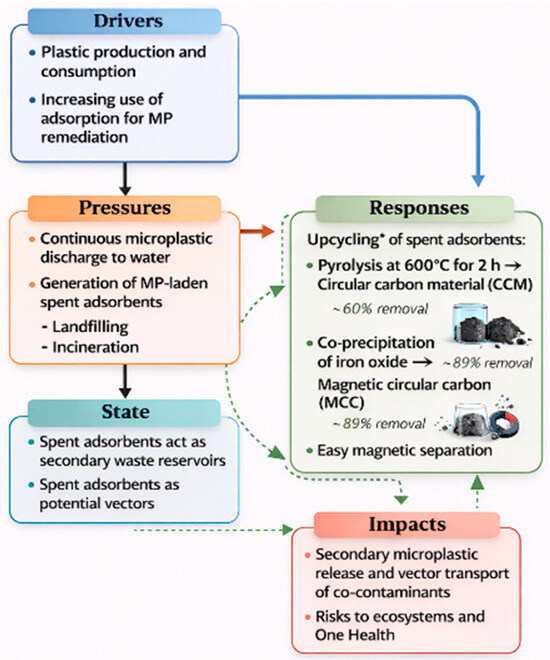
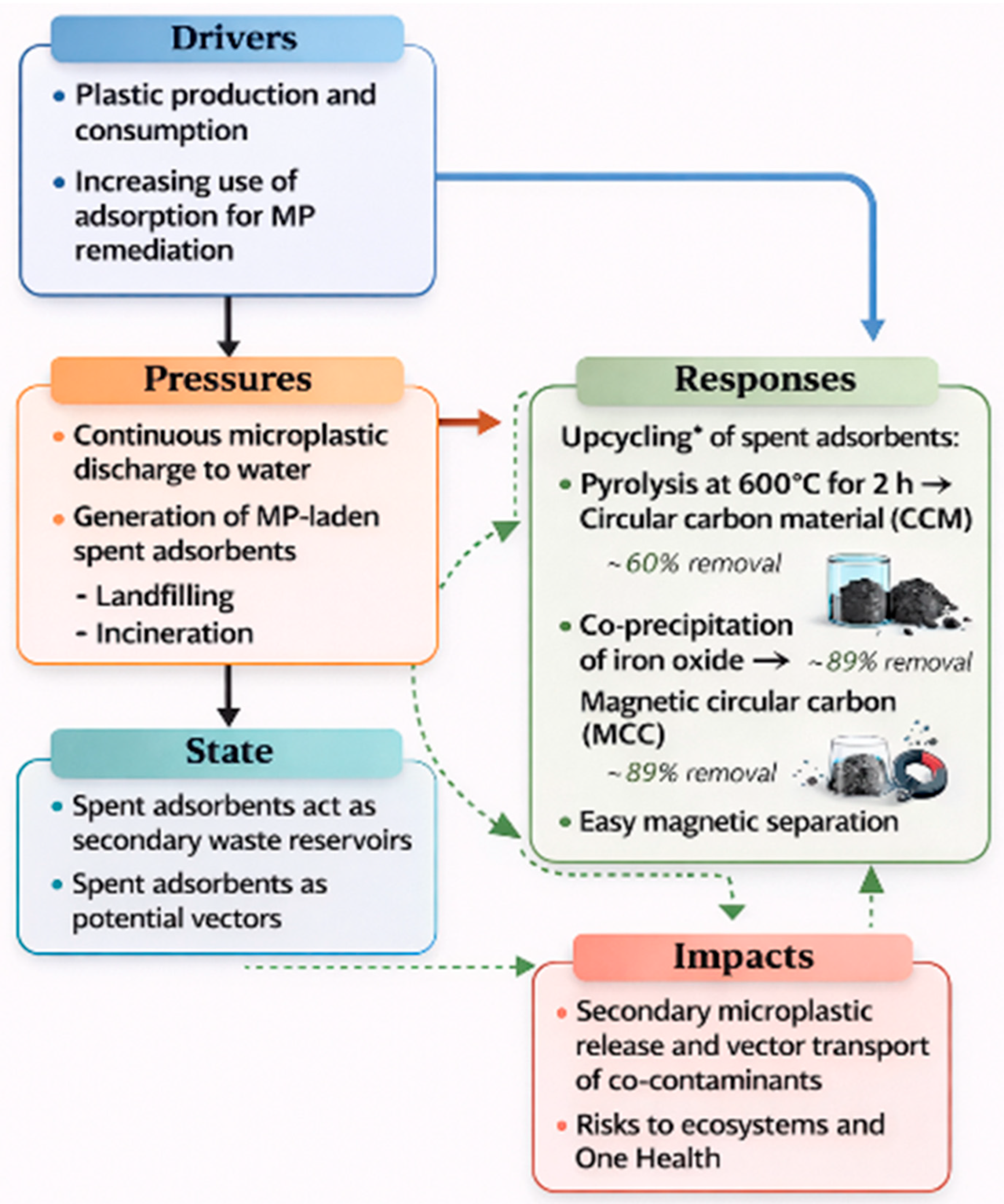
Kristensen et al. (2004) introduced a conceptual framework that differentiates environmental Drivers, Pressures, State, Impacts, and Responses (DPSIR), which has since been widely adopted as an integrative tool for analyzing complex environmental problems and supporting evidence-based policymaking [42]. The DPSIR approach provides a structured means of developing indicators that inform regulators about environmental quality and the consequences of existing or prospective management decisions [42,43,44]. In the present study, this framework is applied to microplastic contamination in aquatic systems, with particular emphasis on the often-overlooked Response component associated with post-use management of microplastic-laden spent adsorbents. An illustration of the DPSIR framework for microplastic remediation and the upcycling of microplastic-laden spent adsorbents into circular carbon materials (CCM) and magnetic circular carbon (MCC) is presented in Figure 6.
Figure 6.
DPSIR framework linking microplastic pollution, spent-adsorbent management, and circular-economy responses through CCM and MCC. (* indicates upcycling as a pivotal response from the DPSIR framework for the mitigation of potential secondary pollution from spent-adsorbents).
3.2.1. Drivers
The rise in global plastic production, inadequate disposal practices, and environmental degradation of plastic waste are key drivers behind the proliferation of microplastic (MP) pollution in aquatic environments [45]. The exponential rise in global plastic production, coupled with inadequate disposal infrastructure and environmental degradation, underlies the pervasive spread of microplastic (MP) pollution in aquatic systems [2,46]. This anthropogenic pressure has driven annual plastic waste inputs estimated at 0.8–14 million tonnes to oceans alone, necessitating advanced remediation technologies such as adsorption [2,14]. While waste-derived magnetic carbon adsorbents offer low-cost, efficient solutions, their widespread deployment generates substantial microplastic-laden spent adsorbent waste, exacerbating secondary pollution pressures and compelling circular upcycling strategies [47,48]. Per capita plastic waste generation continues to intensify this challenge, mirroring patterns observed in urban waste emergencies where daily waste production rose from 0.65 to 0.66 kg/person amid packaging proliferation and population growth [42]. With the global population now exceeding 8 billion and plastic consumption disproportionately concentrated in urban industrial hubs, the volume of spent adsorbent waste scales directly with remediation efforts, creating an urgent need for sustainable end of life pathways [2,49]. These issues necessitate effective clean-up efforts, which have in turn, led to growing interest in adsorption technologies [14,50]. Low-cost, efficient water treatment methods, particularly those employing waste-derived magnetic carbon adsorbents, are in high demand [50]. However, the widespread use of such adsorbents also creates new challenges, namely the generation of microplastic-laden spent adsorbents. This secondary waste poses another environmental threat, emphasizing the need for sustainable, circular strategies in MPs remediation.
3.2.2. Pressures
Within the DPSIR framework, pressures denote the direct stresses exerted on the environment by human activities, such as waste generation, pollutant emissions, and intensive resource use [42]. The scaling deployment of adsorbent-based microplastic (MP) remediation technologies exerts escalating pressures on downstream waste management infrastructure by generating substantial volumes of MP-laden spent materials that demand sustainable end of life treatment [51]. Conventional disposal practices, predominantly landfilling (global sewage sludge ~30–35 million tonnes dry solids/year [52]) and incineration, amplify these pressures through three mechanisms: (1) landfill saturation from cumulative adsorbent sludge accumulation, (2) land contamination via leachate infiltration carrying MPs and sorbed toxicants (PAHs, heavy metals, additives) into soil microbiomes and groundwater, and (3) atmospheric emissions including incomplete MP combustion products, dioxins, and volatile organics [52,53,54]. Another study emphasizes that the predominant end-of-life pathways for spent adsorbents, regeneration for reuse, incineration with energy recovery, and landfilling, each carry distinct environmental limitations [55]. Regeneration has demonstrated reduced environmental impacts overall, whereas heat recovery from incineration generated net negative effects across multiple impact categories [31]. As adsorption systems scale continuously under operational conditions, spent adsorbent generation increases linearly with treatment capacity, saturating conventional linear waste management infrastructure while sustaining One Health risks through contaminant bioaccumulation across the food web [56]. This study mitigates these pressures through circular upcycling of MP-laden adsorbents into CCM and MCC, converting remediation byproducts into reusable carbon materials while mitigating secondary exposure pathways.
3.2.3. State
Due to these pressures, spent adsorbents represent a transitional pollution state: MPs are physically removed from water but remain embedded in solid materials. In the DPSIR framework, the state characterizes environmental compartment conditions resulting from pressures, encompassing alterations in physical, chemical, and ecological properties [43]. Microplastic (MP) remediation through adsorption modifies rather than resolves pollution states. Although MPs are efficiently extracted from water, they concentrate in solid spent adsorbents, establishing a transitional contamination profile marked by diminished aqueous MPs alongside heightened solid phase MP burdens [19].
Environmental hazards thus transition from diffuse water pollution to concentrated solid waste risks. Without proper management, MP-laden spent adsorbents are prone to physical degradation, contaminant leaching, and improper disposal, potentially reintroducing MPs and toxicants into terrestrial and aquatic systems, thus negating reported water quality improvements [17,57]. Comparable pollution shifts occur globally in wastewater treatment, where captured MPs concentrate in sludges, filtration media, and sorbents, redistributing rather than eliminating contamination burdens [58,59]. The resultant accumulation of MP-laden spent adsorbents constitutes a pivotal environmental condition demanding strategic intervention. This study’s DPSIR-informed upcycling approach targets this state by converting spent adsorbents into circular carbon materials (CCM and MCC), immobilizing embedded MPs, minimizing environmental mobility, and redirecting the system toward managed, resource productive conditions. Recent research validates this pathway, demonstrating the successful transformation of plastic-derived wastes, including PET and disposable cup materials, into functional carbons for remediation and construction applications [60,61].
3.2.4. Impacts
Within the DPSIR framework, impacts describe the consequences of altered environmental states on ecosystem functioning, human health, and socio-economic systems [42]. The generation and accumulation of MP-laden spent adsorbents may generate significant environmental and societal impacts if inadequately managed. Physical degradation, weathering, or mechanical disturbance of spent adsorbents can facilitate secondary MP release, while desorption of sorbed additives, plasticizers, or co-contaminants may further compromise soil and water quality, directly affecting water security (SDG 6) and food-system safety (SDG 2) [32,62,63]. Such impacts undermine the long-term effectiveness of adsorption-based water treatment technologies by transferring contamination from aquatic systems to terrestrial or solid-waste compartments rather than achieving permanent risk reduction. Ecologically, secondary MP release can contribute to bioavailability, trophic transfer, and ecosystem stress, with implications for aquatic and terrestrial biodiversity (SDGs 14 and 15) [63]. From a human health perspective, indirect exposure through drinking water, agricultural soils, and food chains raises concerns aligned with the One Health concept and SDG 3. Economically, disposal-oriented end-of-life practices increase resource inefficiency, carbon emissions, and operational costs, limiting scalability and conflicting with responsible production and climate mitigation goals (SDGs 12 and 13) [63,64]. Such impacts compromise long-term remediation efforts, threaten ecosystem integrity, and increase the environmental footprint of adsorption-based technologies. Economically, reliance on disposal-driven methods reduces sustainability and scalability.
By contrast, the circular upcycling approach demonstrated in this study mitigates these impacts by stabilizing MP-laden materials, reducing environmental mobility, and recovering value from secondary waste streams, thereby supporting integrated environmental protection and circular-economy objectives across multiple SDGs.
3.2.5. Responses: Circular-Economy Remediation Using CCM and MCC
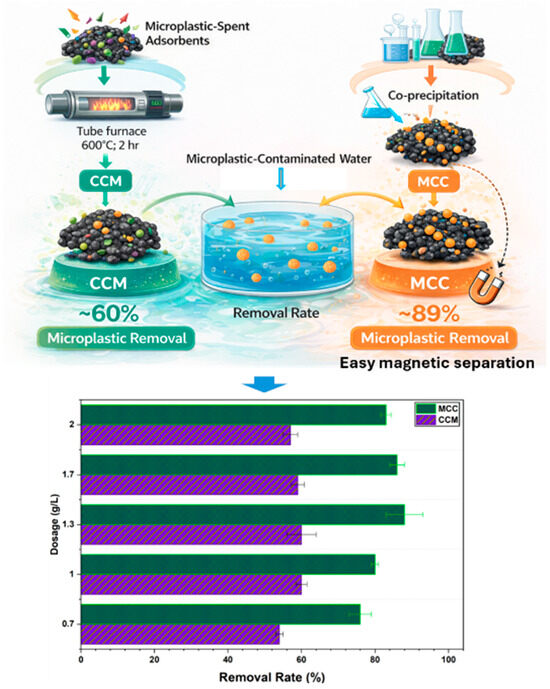
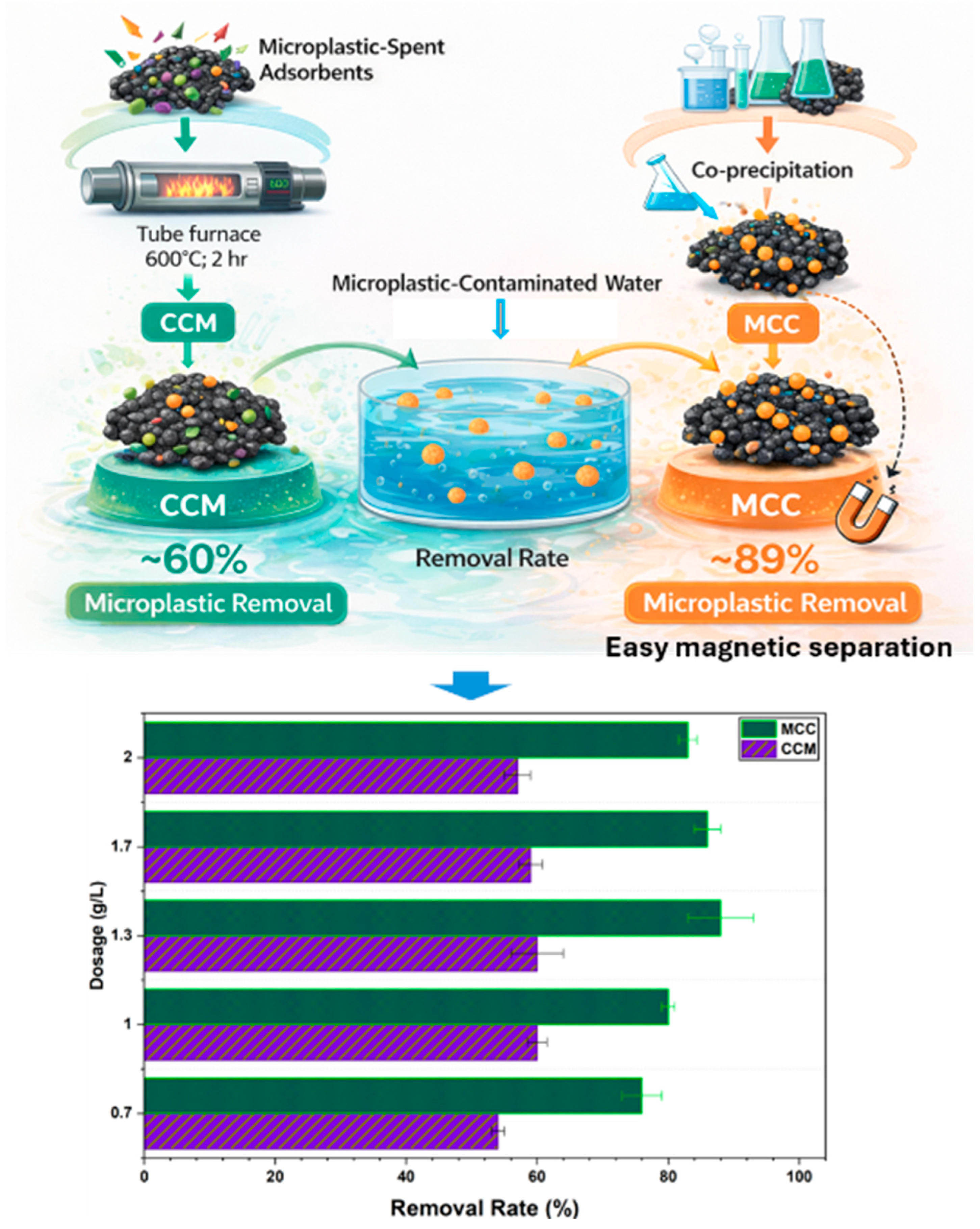
This study proposes a circular-economy-based response by regenerating and upgrading spent MP-laden adsorbents into functional materials, CCM and MCC. Initially, spent adsorbents were pyrolyzed at 600 °C for 2 h in a tube furnace to produce CCM. This was followed by co-precipitation with iron salts to yield MCC. The synthesized carbon materials (CCM and MCC) were evaluated for the batch removal of ~1 μm polystyrene microplastics using the same experimental protocol described in Section 2.2.1, with a fixed contact time of 5 h to ensure adsorption equilibrium. Removal performance was systematically assessed over an adsorbent dosage range of 0.7–2.0 g/L. Under these conditions, CCM and MCC exhibited average removal efficiencies of approximately 60% and 89%, respectively, demonstrating the superior performance of the magnetically modified material (see Figure 7).
Figure 7.
DPSIR Framework: Upcycling of Microplastic-Spent Adsorbents into CCM and MCC and their comparative removal performance of CCM and MCC for ~1 μm polystyrene microplastics under batch conditions. Adsorption experiments were conducted following the protocol described in Section 2.2.1, with a fixed contact time of 5 h and adsorbent dosages ranging from 0.7 to 2.0 g/L.
Figure 7 compares the removal efficiencies of CCM and MCC for ~1 μm polystyrene microplastics over an adsorbent dosage range of 0.7–2.0 g/ L. For both materials, removal increased progressively with dosage, reflecting the greater availability of active sites and enhanced particle–surface interactions at higher solid loadings. At an adsorbent dosage of 1.3 g/L, the removal efficiency was marginally higher than that observed at 1.7–2.0 g/L for both MCC and CCM, indicating the presence of an optimal dosage rather than a strictly increasing trend. This behavior is likely attributable to adsorbent aggregation and partial overlap of active sites at higher concentrations, which reduce the effective surface area and hinders microplastic–adsorbent interactions. In contrast, lower dosages promote better dispersion and greater accessibility of adsorption sites. A similar trend has been reported for the removal of polystyrene microplastics using a ZIF-8 nanocomposite, where removal efficiencies plateau or decline beyond an optimal dosage due to aggregation effects, site–site interactions, and mass-transfer limitations [65]. These observations support the identification of 1.3 g/L as the optimal adsorbent dosage under the present experimental batch conditions. Across all dosages, MCC consistently outperformed CCM, achieving removal efficiencies of approximately 80–89% compared with ~50–65% for CCM. This improvement is attributed to the higher surface area and pore volume of MCC, together with its well-developed mesoporous structure and iron-oxide functionalization, which promote physical entrapment and interfacial interactions with polymeric particles. In addition, the magnetic character of MCC enables rapid post-treatment separation, reducing material losses and facilitating reuse, thereby strengthening its suitability for circular-economy-based microplastic remediation.
MCC outperformed CCM due to its improved surface characteristics, confirmed by SEM and BET analyses. MCC exhibited a higher surface area (137 m2/g) and larger pore volume (0.158 cm3/g) compared to CCM (108 m2/g; 0.082 cm3/g), facilitating better MP adsorption. SEM observations further revealed that CCM retained relatively compact and partially blocked pores, limiting its adsorption capacity. In contrast, MCC displayed a rougher surface and a more porous structure due to iron mineral deposition, enhancing MP–surface interactions and physical entrapment. Its magnetic properties also enabled efficient post-treatment recovery, eliminating sludge generation and simplifying reuse. These features make MCC a promising solution within the DPSIR framework.
For perspective on alternative end-of-life options, a qualitative comparison of landfilling, incineration, and pyrolysis is provided. Landfilling of plastic-containing wastes can act as a persistent source of microplastics through fragmentation and leachate discharge, with continuous release observed as larger plastics degrade over time [66]. Incineration effectively reduces waste volume but generates atmospheric emissions and residual ash that may still contain microplastic fragments, posing environmental and health concerns [67]. In contrast, pyrolysis thermochemically converts plastic waste into useful products such as oils and char, offering opportunities for resource recovery [35]. Life-cycle assessments suggest that pyrolysis can reduce environmental impacts relative to landfilling and lower greenhouse gas emissions compared to incineration, though outcomes depend on process design, energy inputs, and system boundaries [35,66,67]. These observations position pyrolysis as a promising circular pathway, warranting further quantitative evaluation for microplastic-laden spent adsorbent management. It is important to emphasize that the present study demonstrates a proof-of-concept DPSIR pathway rather than a complete environmental or life-cycle assessment of pyrolysis. Upcycling via pyrolysis immobilizes microplastics within a stable carbon matrix and enables material reuse, with the recovery of CCM and MCC from precursor SMA indicating substantial solid-phase retention of captured microplastics; however, comprehensive characterization of pyrolysis emissions (gaseous and condensable fractions), mass balance closure, and energy demand is required to fully quantify net environmental performance. Accordingly, pyrolysis is framed here as a risk-mitigation and stabilization strategy relative to uncontrolled disposal pathways, rather than as an unequivocal pollution-prevention solution.
3.3. Environmental Implications
This study supports the United Nations Sustainable Development Goals (SDGs), particularly SDG 6 (Clean Water and Sanitation), SDG 12 (Responsible Consumption and Production), and SDG 14 (Life Below Water). It shows that microplastic-laden spent adsorbents can be diverted from waste streams into functional carbon materials, reducing the risk of secondary pollution. Treating spent adsorbents as resources promotes safer post-use handling, reduces landfill dependence, and supports circular economy goals. Table 1 highlights how circular regeneration into CCM and MCC helps mitigate environmental impacts and contributes to SDGs 2, 3, 6, 12, 13, 14, and 15. The DPSIR framework integrates lifecycle thinking into remediation planning, strengthening circular practices in MP control.
Table 1.
Impacts of microplastic-laden adsorbents and the mitigating role of circular carbon materials (CCM and MCC) across SDGs and One Health domains.
3.4. Study Limitations and Future Perspectives
Although this study establishes a laboratory-scale, DPSIR-guided proof-of-concept for upcycling microplastic-laden spent adsorbents into circular carbon materials, several limitations warrant consideration. Systematic optimization of pyrolysis parameters (temperature, residence time, and heating rate), multi-cycle regeneration performance, and long-term structural stability of the derived materials were not examined and remain important research priorities. Future work should include quantitative mass balance analysis and comprehensive characterization of pyrolysis off-gases and condensates to determine whether potential pollutant transfer to the gaseous phase is fully controlled under scaled operating conditions. Furthermore, comprehensive characterization of pyrolysis off-gases and condensates, together with energy consumption, reagent demand, and life-cycle environmental impacts, is required to assess scalability and sustainability. Future investigations should focus on pilot-scale validation, including quantification of spent-adsorbent generation rates in operational water-treatment systems and benchmarking against conventional end-of-life routes such as regeneration, landfilling, or incineration. Advanced nanoscale analyses (e.g., TEM and depth-resolved XPS) and accelerated aging tests under realistic conditions will further elucidate transformation mechanisms and substantiate circularity claims. Integration of techno-economic assessments and development of standardized management protocols for microplastic-laden adsorbents will ultimately support translation toward industrial deployment. Furthermore, future work should assess robustness across broader operational windows, including kinetic and equilibrium behavior, and complex water matrices.
4. Conclusions
Applying the Drivers, Pressures, State, Impacts, Responses (DPSIR) framework, this study offers a systems-level perspective on microplastic (MP) remediation, revealing that although adsorption-based technologies effectively remove MPs from aqueous environments, they inadvertently generate MP-laden spent adsorbents that may act as secondary pollution sources if mismanaged. Addressing this critical pressure–impact nexus, the present work introduces an integrated circular solution that couples pyrolysis regeneration with iron-oxide co-precipitation to upcycle these residues into high-value circular carbon material (CCM) and magnetic circular carbon (MCC). The regenerated adsorbents exhibited markedly enhanced physicochemical and functional characteristics, with MCC consistently outperforming CCM across the tested dosage range (0.7–2.0 g/L), achieving up to ~89% polystyrene MP removal compared to ~60% for CCM. This enhancement is attributable to iron-induced surface reconstruction and pore development, as evidenced by scanning electron microscopy and nitrogen sorption analyses. MCC featured a higher specific surface area (137 vs. 108 m2/g), larger pore volume (0.158 vs. 0.082 cm3/g), and a well-developed mesoporous structure characterized by a Type IV isotherm with an H3 hysteresis loop, in contrast to the Type II profile observed for CCM. These structural refinements improved adsorption-site accessibility, facilitated microplastic entrapment within slit-like mesopores, and strengthened interfacial interactions with polymeric particles. Furthermore, the presence of magnetite phases enabled facile magnetic recovery, minimized sludge formation, and enhanced material reusability—addressing both operational efficiency and post-treatment waste management. Viewed through a One Health lens, the proposed waste-to-resource strategy mitigates risks across environmental, animal, and human health domains by reducing the persistence and redistribution of microplastics and their additive-derived contaminants. By mitigating secondary release and subsequent trophic transfer of MPs, the approach safeguards water quality, reduces bioaccumulation in food webs, and curtails potential toxicological and inflammatory risks to living organisms. Consequently, spent adsorbent regeneration emerges not merely as a remediation step but as a critical intervention for protecting ecosystem integrity and public health in tandem. These findings also advance multiple United Nations Sustainable Development Goals (SDGs). Enhanced microplastic removal and material recovery contribute directly to SDG 6 (Clean Water and Sanitation), while reduced MP bioavailability supports SDG 2 (Zero Hunger) and SDG 3 (Good Health and Well-being) by improving food and water safety. The upcycling of waste adsorbents into reusable materials exemplifies SDG 12 (Responsible Consumption and Production) through closed-loop material utilization, whereas minimized plastic leakage promotes the conservation of aquatic and terrestrial ecosystems under SDGs 14 (Life Below Water) and 15 (Life on Land). Additionally, resource-efficient pyrolysis regeneration supports SDG 13 (Climate Action) by lowering carbon emissions and reducing dependence on virgin material production. Overall, this work demonstrates that coupling adsorption, regeneration, and circular-material design within a DPSIR framework offers a holistic and scalable pathway for addressing the complexity of microplastic pollution. The transformation of microplastic-laden residues into magnetically recoverable, high-performance materials provides a model for sustainable wastewater treatment that harmonizes circular economy principles with One Health-oriented environmental management. Rather than claiming complete prevention of secondary pollution, this study demonstrates that DPSIR-guided upcycling can substantially reduce the environmental mobility and disposal-related risks of microplastic-laden spent adsorbents, while identifying emissions quantification as a critical next step for technology validation.
Author Contributions
A.T.A.: Writing—original draft, Visualization, Investigation, Data curation, Software, Formal analysis, Conceptualization. M.M.B.: Writing—review and editing, Visualization, Supervision. M.M.R.: Writing—review and editing, Visualization, Supervision. M.M.: Writing—review and editing, Visualization, Supervision. All authors have read and agreed to the published version of the manuscript.
Funding
This research received no external funding.
Data Availability Statement
The original contributions presented in this study are included in the article. Further inquiries can be directed to the corresponding author.
Acknowledgments
The first author sincerely thanks the University of Newcastle, Australia, for the generous support through the UNIPRS (Tuition Fees) and the UNRS Central Scholarship. Appreciation is also extended for the HDR allowance provided by the University.
Conflicts of Interest
The authors declare that they have no known competing financial interests or personal relationships that could have appeared to influence the work reported in this paper.
References
- Adeleye, A.T.; John, K.I.; Ighalo, J.O.; Ogunniyi, S.; Adeyanju, C.A.; Adeniyi, A.G.; Elawad, M.; Omorogie, M.O. Photocatalytic remediation of methylene blue using hydrothermally synthesized H-Titania and Na-Titania nanotubes. Heliyon 2022, 8, e12610. [Google Scholar] [CrossRef] [Scilit]
- Thompson, R.C.; Courtene-Jones, W.; Boucher, J.; Pahl, S.; Raubenheimer, K.; Koelmans, A.A. Twenty years of microplastic pollution research—What have we learned? Science 2024, 386, eadl2746. [Google Scholar] [CrossRef] [Scilit]
- WHO. WHO Global Water, Sanitation and Hygiene: Annual Report 2019; WHO: Geneva, Switzerland, 2020. [Google Scholar]
- WHO. Progress on Household Drinking Water, Sanitation and Hygiene 2000–2022: Special Focus on Gender; WHO: Geneva, Switzerland, 2023. [Google Scholar]
- Hantoro, I.; Löhr, A.J.; Van Belleghem, F.G.; Widianarko, B.; Ragas, A.M. Microplastics in coastal areas and seafood: Implications for food safety. Food Addit. Contam. Part A 2019, 36, 674–711. [Google Scholar] [CrossRef] [Scilit]
- Basu, A.; Pagadala, R.; Purohit, H. Toxicological consequences of microplastic exposure on human health: Mechanisms, pathways, and systemic outcomes. Healthcraft. Front. 2025, 3, 58–75. [Google Scholar] [CrossRef] [Scilit]
- Kumar, N.; Lamba, M.; Pachar, A.K.; Yadav, S.; Acharya, A. Microplastics–a growing concern as carcinogens in cancer etiology: Emphasis on biochemical and molecular mechanisms. Cell Biochem. Biophys. 2024, 82, 3109–3121. [Google Scholar] [CrossRef] [Scilit]
- Ragusa, A.; Svelato, A.; Santacroce, C.; Catalano, P.; Notarstefano, V.; Carnevali, O.; Papa, F.; Rongioletti, M.C.A.; Baiocco, F.; Draghi, S.; et al. Plasticenta: First evidence of microplastics in human placenta. Environ. Int. 2021, 146, 106274. [Google Scholar] [CrossRef] [Scilit] [PubMed]
- Ali, N.; Katsouli, J.; Marczylo, E.L.; Gant, T.W.; Wright, S.; Bernardino de la Serna, J. The potential impacts of micro-and-nano plastics on various organ systems in humans. eBioMedicine 2024, 99, 104901. [Google Scholar] [CrossRef] [Scilit]
- Sun, S.; Shi, W.; Tang, Y.; Han, Y.; Du, X.; Zhou, W.; Zhang, W.; Sun, C.; Liu, G. The toxic impacts of microplastics (MPs) and polycyclic aromatic hydrocarbons (PAHs) on haematic parameters in a marine bivalve species and their potential mechanisms of action. Sci. Total Environ. 2021, 783, 147003. [Google Scholar] [CrossRef] [Scilit]
- John, K.I.; Agbor, D.; Sani, L.A.; Adeleye, A.T.; Adenle, A.A.; Idris, A.M.; Omoniyi, A.O.; Babalola, J.O.; Osiboye, O.O.; Elawad, M. Adsorption Performance of Zinc Semiconductor Nanoparticles in Tetracycline Removal. J. Clust. Sci. 2023, 34, 1355–1367. [Google Scholar] [CrossRef] [Scilit]
- Adeleye, A.T.; Bahar, M.M.; Megharaj, M.; Rahman, M.M. Recent developments and mechanistic insights on adsorption technology for micro- and nanoplastics removal in aquatic environments. J. Water Process. Eng. 2023, 53, 103777. [Google Scholar] [CrossRef] [Scilit]
- Olugbenga, O.S.; Adeleye, P.G.; Oladipupo, S.B.; Adeleye, A.T.; John, K.I. Biomass-derived biochar in wastewater treatment—A circular economy approach. Waste Manag. Bull. 2024, 1, 1–14. [Google Scholar] [CrossRef] [Scilit]
- Adeleye, A.T.; Bahar, M.M.; Megharaj, M.; Fang, C.; Rahman, M.M. Cigarette butt-derived nanocomposites: A win-win approach for microplastic removal and ecological mitigation. J. Environ. Chem. Eng. 2025, 13, 118676. [Google Scholar] [CrossRef] [Scilit]
- Stylianou, M.; Christou, A.; Dalias, P.; Polycarpou, P.; Michael, C.; Agapiou, A.; Papanastasiou, P.; Fatta-Kassinos, D. Physicochemical and structural characterization of biochar derived from the pyrolysis of biosolids, cattle manure and spent coffee grounds. J. Energy Inst. 2020, 93, 2063–2073. [Google Scholar] [CrossRef] [Scilit]
- Laca, A.; Patiño, Y.; Sánchez-Condado, A.; Sol, D.; Laca, A.; Díaz, M. Performance of activated carbon for polypropylene microplastic removal in wastewater. Sustain. Chem. Environ. 2025, 9, 100211. [Google Scholar] [CrossRef] [Scilit]
- Park, J.W.; Lee, S.J.; Jin, Y.J.; Jeon, Y.; Lee, S.J.; Kim, Y.; Kwon, G.; Hwang, D.Y.; Seo, S. Phenolic-modified cationic polymers as coagulants for microplastic removal. J. Ind. Eng. Chem. 2023, 119, 208–217. [Google Scholar] [CrossRef] [Scilit]
- Nie, X.; Xing, X.; Xie, R.; Wang, J.; Yang, S.; Wan, Q.; Zeng, E.Y. Impact of iron/aluminum (hydr) oxide and clay minerals on heteroaggregation and transport of nanoplastics in aquatic environment. J. Hazard. Mater. 2023, 446, 130649. [Google Scholar] [CrossRef] [Scilit]
- Chen, Y.-J.; Chen, Y.; Miao, C.; Wang, Y.-R.; Gao, G.-K.; Yang, R.-X.; Zhu, H.-J.; Wang, J.-H.; Li, S.-L.; Lan, Y.-Q. Metal–organic framework-based foams for efficient microplastics removal. J. Mater. Chem. A 2020, 8, 14644–14652. [Google Scholar] [CrossRef] [Scilit]
- Abdoul Magid, A.S.I.; Islam, M.S.; Chen, Y.; Weng, L.; Li, J.; Ma, J.; Li, Y. Enhanced adsorption of polystyrene nanoplastics (PSNPs) onto oxidized corncob biochar with high pyrolysis temperature. Sci. Total Environ. 2021, 784, 147115. [Google Scholar] [CrossRef] [Scilit] [PubMed]
- Aragón, D.; García-Merino, B.; Barquín, C.; Bringas, E.; Rivero, M.J.; Ortiz, I. Advanced green capture of microplastics from different water matrices by surface-modified magnetic nanoparticles. Sep. Purif. Technol. 2025, 354, 128813. [Google Scholar] [CrossRef] [Scilit]
- Sumaryada, T.; Nabilah, F.; Handayasari, F.; Kartono, A.; Hardhienata, H. Microplastic contaminant adsorption by graphene oxide layer. J. Biol. Phys. 2025, 51, 12. [Google Scholar] [CrossRef] [Scilit]
- El-Wakeil, A.S.; Ageba, M.F.; Salama, W.M.; Tayel, A.A.; El-Mehasseb, I.M.; El-Shafai, N.M. Removal of microplastic contaminants by a porous hybrid nanocomposite and using the earthworms as a biomarker for the removal of contaminants. J. Ind. Eng. Chem. 2024, 130, 533–546. [Google Scholar] [CrossRef] [Scilit]
- Qiu, W.-P.; Su, H.-Z.; Su, H.; Luo, S.-H.; Lai, L.-S.; Zhu, J.-L.; Xu, Z.-L.; Wang, H.; Wen, P. Eco-friendly taro stem-sourced cellulose/polypyrrole hybrid aerogel: An efficient capture strategy for microplastics removal. Chem. Eng. J. 2025, 523, 168208. [Google Scholar] [CrossRef] [Scilit]
- Chen, Z.; Zheng, R.; Wei, W.; Wei, W.; Zou, W.; Li, J.; Ni, B.-J.; Chen, H. Recycling spent water treatment adsorbents for efficient electrocatalytic water oxidation reaction. Resour. Conserv. Recycl. 2022, 178, 106037. [Google Scholar] [CrossRef] [Scilit]
- Jevremović, A.; Ranković, M.; Janošević Ležajić, A.; Uskoković-Marković, S.; Nedić Vasiljević, B.; Gavrilov, N.; Bajuk-Bogdanović, D.; Milojević-Rakić, M. Regeneration or Repurposing of Spent Pollutant Adsorbents in Energy-Related Applications: A Sustainable Choice? Sustain. Chem. 2025, 6, 28. [Google Scholar] [CrossRef] [Scilit]
- Rozman, U.; Klun, B.; Kalčíková, G. Distribution and removal of microplastics in a horizontal sub-surface flow laboratory constructed wetland and their effects on the treatment efficiency. Chem. Eng. J. 2023, 461, 142076. [Google Scholar] [CrossRef] [Scilit]
- Álvarez-Montero, M.A.; Sanz-Santos, E.; Gómez-Avilés, A.; Belver, C.; Bedia, J. Lignin-based activated carbon as an effective adsorbent for the removal of polystyrene nanoplastics: Insights from adsorption kinetics and equilibrium studies. Sep. Purif. Technol. 2025, 361, 131380. [Google Scholar] [CrossRef] [Scilit]
- Baskar, A.V.; Bolan, N.; Hoang, S.A.; Sooriyakumar, P.; Kumar, M.; Singh, L.; Jasemizad, T.; Padhye, L.P.; Singh, G.; Vinu, A. Recovery, regeneration and sustainable management of spent adsorbents from wastewater treatment streams: A review. Sci. Total Environ. 2022, 822, 153555. [Google Scholar] [CrossRef] [Scilit]
- El Messaoudi, N.; El Khomri, M.; El Mouden, A.; Bouich, A.; Jada, A.; Lacherai, A.; Iqbal, H.M.; Mulla, S.I.; Kumar, V.; Américo-Pinheiro, J.H.P. Regeneration and reusability of non-conventional low-cost adsorbents to remove dyes from wastewaters in multiple consecutive adsorption–desorption cycles: A review. Biomass Convers. Biorefinery 2024, 14, 11739–11756. [Google Scholar] [CrossRef] [Scilit]
- Faheem, M.; Hassan, M.A.; Du, J.; Wang, B. Harnessing potential of smart and conventional spent adsorbents: Global practices and sustainable approaches through regeneration and tailored recycling. Sep. Purif. Technol. 2025, 354, 128907. [Google Scholar] [CrossRef] [Scilit]
- Adeleye, A.T.; Bahar, M.M.; Megharaj, M.; Fang, C.; Rahman, M.M. The Unseen Threat of the Synergistic Effects of Microplastics and Heavy Metals in Aquatic Environments: A Critical Review. Curr. Pollut. Rep. 2024, 10, 478–497. [Google Scholar] [CrossRef] [Scilit]
- Velempini, T.; Ahamed, M.; Pillay, K. Heavy-metal spent adsorbents reuse in catalytic, energy and forensic applications-a new approach in reducing secondary pollution associated with adsorption. Results Chem. 2023, 5, 100901. [Google Scholar] [CrossRef] [Scilit]
- Oladipupo, S.B.; Ayanshola, A.M.; Adeleye, A.T.; John, K.I. Assessment of plastic waste generation and management in residential locations, Ilorin, Nigeria: DPSIR analysis and circular economy pathway. J. Umm Al-Qura Univ. Appl. Sci. 2024, 10, 624–639. [Google Scholar] [CrossRef] [Scilit]
- Yang, R.-X.; Jan, K.; Chen, C.-T.; Chen, W.-T.; Wu, K.C.-W. Thermochemical Conversion of Plastic Waste into Fuels, Chemicals, and Value-Added Materials: A Critical Review and Outlooks. ChemSusChem 2022, 15, e202200171. [Google Scholar] [CrossRef] [Scilit] [PubMed]
- Zhang, X.; Zhao, B.; Liu, H.; Zhao, Y.; Li, L. Effects of pyrolysis temperature on biochar’s characteristics and speciation and environmental risks of heavy metals in sewage sludge biochars. Environ. Technol. Innov. 2022, 26, 102288. [Google Scholar] [CrossRef] [Scilit]
- Cárdenas-Aguiar, E.; Méndez, A.; Gascó, G.; Lado, M.; Paz-González, A. The Effects of Feedstock, Pyrolysis Temperature, and Residence Time on the Properties and Uses of Biochar from Broom and Gorse Wastes. Appl. Sci. 2024, 14, 4283. [Google Scholar] [CrossRef] [Scilit]
- Islam, T.; Peng, C.; Ali, I.; Li, J.; Khan, Z.M.; Sultan, M.; Naz, I. Synthesis of rice husk-derived magnetic biochar through liquefaction to adsorb anionic and cationic dyes from aqueous solutions. Arab. J. Sci. Eng. 2021, 46, 233–246. [Google Scholar] [CrossRef] [Scilit]
- Chu, J.-H.; Kang, J.-K.; Park, S.-J.; Lee, C.-G. Enhanced sonocatalytic degradation of bisphenol A with a magnetically recoverable biochar composite using rice husk and rice bran as substrate. J. Environ. Chem. Eng. 2021, 9, 105284. [Google Scholar] [CrossRef] [Scilit]
- Eltaweil, A.S.; Ali Mohamed, H.; Abd El-Monaem, E.M.; El-Subruiti, G.M. Mesoporous magnetic biochar composite for enhanced adsorption of malachite green dye: Characterization, adsorption kinetics, thermodynamics and isotherms. Adv. Powder Technol. 2020, 31, 1253–1263. [Google Scholar] [CrossRef] [Scilit]
- Bohström, Z.; Lillerud, K.P. Preparation of chabazite with mesopores templated from a cationic polymer. Microporous Mesoporous Mater. 2018, 271, 295–300. [Google Scholar] [CrossRef] [Scilit]
- Kristensen, P. The DPSIR Framework; National Environmental Research Institute: Copenhagen, Denmark, 2004; Volume 10, pp. 1–10. [Google Scholar]
- Iannucci, C.; Munafò, M.; Sambucini, V. Towards environmental analytics: DPSIR as a system of systems. In Advances and New Trends in Environmental Informatics: Stability, Continuity, Innovation; Springer: Berlin/Heidelberg, Germany, 2016; pp. 357–368. [Google Scholar]
- Song, G.; Cao, H.; Liu, L.; Jin, M. Analysis of Marine Microplastic Pollution of Disposable Masks under COVID-19 Epidemic—A DPSIR Framework. Int. J. Environ. Res. Public Health 2022, 19, 16299. [Google Scholar] [CrossRef] [Scilit]
- Suzuki, G.; Uchida, N.; Tanaka, K.; Higashi, O.; Takahashi, Y.; Kuramochi, H.; Yamaguchi, N.; Osako, M. Global discharge of microplastics from mechanical recycling of plastic waste. Environ. Pollut. 2024, 348, 123855. [Google Scholar] [CrossRef] [Scilit]
- Arthur, C.; Baker, J.E.; Bamford, H.A. Proceedings of the International Research Workshop on the Occurrence, Effects, and Fate of Microplastic Marine Debris, 9–11 September 2008, University of Washington Tacoma: Tacoma, WA, USA; NOAA: Silver Spring, MD, USA, 2009. [Google Scholar]
- Duan, X.; Chen, X.; Shi, L.; Cao, Y.; Liang, Y.; Wang, T.; Huang, C.; Cao, Y. Functionality-dependent removal efficiency and mechanisms of polystyrene microplastics by a robust magnetic biochar. J. Environ. Chem. Eng. 2025, 13, 115509. [Google Scholar] [CrossRef] [Scilit]
- He, D.; Zhang, Y.; Yang, S.; Zhang, L.; Lu, J.; Zhao, Y.; Mei, Y.; Han, C.; Luo, Y. Development of a Strategy To Reuse Spent Cr Adsorbents as Efficient Catalysts: From the Perspective of Practical Application. ACS Sustain. Chem. Eng. 2019, 7, 3251–3257. [Google Scholar] [CrossRef] [Scilit]
- Jain, N.; Kourampi, I.; Umar, T.P.; Almansoor, Z.R.; Anand, A.; Rehman, M.E.U.; Jain, S.; Reinis, A. Global population surpasses eight billion: Are we ready for the next billion? AIMS Public Health 2023, 10, 849. [Google Scholar] [CrossRef] [Scilit]
- Parashar, N.; Hait, S. Enhanced microplastics removal from sewage effluents via CTAB-modified magnetic biochar: Efficacy and environmental impact. J. Clean. Prod. 2024, 474, 143606. [Google Scholar] [CrossRef] [Scilit]
- Kerr, S.; Khalil, A.M.; Joshi, B.; Tabish, T.A.; Memon, F.A. Exploring Treatment Efficiency of Graphene Derivatives as Adsorbents for Removal of Microplastics in Water. Desalination Water Treat. 2025, 323, 101294. [Google Scholar] [CrossRef] [Scilit]
- Gong, X. Modification and Utilization of Sewage Sludge-Based Activated Carbon as Metal Adsorbents. Master’s Thesis, University of British Columbia, Vancouver, BC, Canada, 2013. [Google Scholar]
- Hildebrandt, L.; Nack, F.L.; Zimmermann, T.; Pröfrock, D. Microplastics as a Trojan horse for trace metals. J. Hazard. Mater. Lett. 2021, 2, 100035. [Google Scholar] [CrossRef] [Scilit]
- Teuten, E.L.; Saquing, J.M.; Knappe, D.R.U.; Barlaz, M.A.; Jonsson, S.; Björn, A.; Rowland, S.J.; Thompson, R.C.; Galloway, T.S.; Yamashita, R.; et al. Transport and release of chemicals from plastics to the environment and to wildlife. Philos. Trans. R. Soc. B Biol. Sci. 2009, 364, 2027–2045. [Google Scholar] [CrossRef] [Scilit]
- Mohammadi, A.; Sandberg, M.; Venkatesh, G.; Eskandari, S.; Dalgaard, T.; Joseph, S.; Granström, K. Environmental analysis of producing biochar and energy recovery from pulp and paper mill biosludge. J. Ind. Ecol. 2019, 23, 1039–1051. [Google Scholar] [CrossRef] [Scilit]
- Nayak, A.K.; Naik, K.R.; Pal, A. Lignocellulosic-Based Sorbents: A Sustainable Framework for the Adsorption of Pharmaceutical and Heavy Metal Pollutants in Wastewater. In Wastewater Treatment; CRC Press: Boca Raton, FL, USA, 2023; pp. 259–332. [Google Scholar]
- Díaz de Tuesta, J.L.; Roman, F.; Silva, A.S.; Ribeiro, R.; Vieira, O.; Silva, A.; Faria, J.; Gomes, H. Technologies to upcycle plastic solid wastes into nanostructured carbon materials and their application in the removal of micropollutants. In Proceedings of the XXVII Encontro Nacional da Sociedade Portuguesa de Química, Braga, Portugal, 14–16 July 2021. [Google Scholar]
- Petroody, S.S.A.; Hashemi, S.H.; van Gestel, C.A. Transport and accumulation of microplastics through wastewater treatment sludge processes. Chemosphere 2021, 278, 130471. [Google Scholar] [CrossRef] [Scilit]
- Jiang, J.; Wang, X.; Ren, H.; Cao, G.; Xie, G.; Xing, D.; Liu, B. Investigation and fate of microplastics in wastewater and sludge filter cake from a wastewater treatment plant in China. Sci. Total Environ. 2020, 746, 141378. [Google Scholar] [CrossRef] [Scilit]
- Zhang, Y.; Tian, F.; Liu, C.; Liu, X.; He, Y.; Wu, Z. Upcycling of waste PET into high-performance and multifunctional materials. J. Clean. Prod. 2024, 434, 140048. [Google Scholar] [CrossRef] [Scilit]
- Xu, X.; Chen, G.; Wu, Q.; Leng, Z.; Chen, X.; Zhai, Y.; Tu, Y.; Peng, C. Chemical upcycling of waste PET into sustainable asphalt pavement containing recycled concrete aggregates: Insight into moisture-induced damage. Constr. Build. Mater. 2022, 360, 129632. [Google Scholar] [CrossRef] [Scilit]
- Borrelle, S.B.; Ringma, J.; Law, K.L.; Monnahan, C.C.; Lebreton, L.; McGivern, A.; Murphy, E.; Jambeck, J.; Leonard, G.H.; Hilleary, M.A.; et al. Predicted growth in plastic waste exceeds efforts to mitigate plastic pollution. Science 2020, 369, 1515–1518. [Google Scholar] [CrossRef] [Scilit]
- Walker, T.R. (Micro) plastics and the UN sustainable development goals. Curr. Opin. Green Sustain. Chem. 2021, 30, 100497. [Google Scholar] [CrossRef] [Scilit]
- Ren, X.; Tang, J.; Liu, X.; Liu, Q. Effects of microplastics on greenhouse gas emissions and the microbial community in fertilized soil. Environ. Pollut. 2020, 256, 113347. [Google Scholar] [CrossRef] [Scilit]
- Pasanen, F.; Fuller, R.O.; Maya, F. Fast and simultaneous removal of microplastics and plastic-derived endocrine disruptors using a magnetic ZIF-8 nanocomposite. Chem. Eng. J. 2023, 455, 140405. [Google Scholar] [CrossRef] [Scilit]
- Qin, Z.-H.; Siddiqui, M.A.; Xin, X.; Mou, J.-H.; Varjani, S.; Chen, G.; Lin, C.S.K. Identification of microplastics in raw and treated municipal solid waste landfill leachates in Hong Kong, China. Chemosphere 2024, 351, 141208. [Google Scholar] [CrossRef] [Scilit] [PubMed]
- Yang, Z.; Lü, F.; Zhang, H.; Wang, W.; Shao, L.; Ye, J.; He, P. Is incineration the terminator of plastics and microplastics? J. Hazard. Mater. 2021, 401, 123429. [Google Scholar] [CrossRef] [Scilit]
- Shafea, L.; Yap, J.; Beriot, N.; Felde, V.J.M.N.L.; Okoffo, E.D.; Enyoh, C.E.; Peth, S. Microplastics in agroecosystems: A review of effects on soil biota and key soil functions. J. Plant Nutr. Soil Sci. 2023, 186, 5–22. [Google Scholar] [CrossRef] [Scilit]
- Zhou, G.; Wu, Q.; Tang, P.; Chen, C.; Cheng, X.; Wei, X.-F.; Ma, J.; Liu, B. How many microplastics do we ingest when using disposable drink cups? J. Hazard. Mater. 2023, 441, 129982. [Google Scholar] [CrossRef] [Scilit]
- Buyukunal, S.K.; Rbaibi Zipak, S.; Muratoglu, K. Microplastics in a Traditional Turkish Dairy Product: Ayran. Pol. J. Food Nutr. Sci. 2023, 73, 139–150. [Google Scholar] [CrossRef] [Scilit]
- Jin, Y.; Lu, L.; Tu, W.; Luo, T.; Fu, Z. Impacts of polystyrene microplastic on the gut barrier, microbiota and metabolism of mice. Sci. Total Environ. 2019, 649, 308–317. [Google Scholar] [CrossRef] [Scilit] [PubMed]
- Wang, Z.; Sedighi, M.; Lea-Langton, A. Filtration of microplastic spheres by biochar: Removal efficiency and immobilisation mechanisms. Water Res. 2020, 184, 116165. [Google Scholar] [CrossRef] [Scilit]
- Zabaniotou, A.; Rovas, D.; Libutti, A.; Monteleone, M. Boosting circular economy and closing the loop in agriculture: Case study of a small-scale pyrolysis–biochar based system integrated in an olive farm in symbiosis with an olive mill. Environ. Dev. 2015, 14, 22–36. [Google Scholar] [CrossRef] [Scilit]
- Kumar, R.; Verma, A.; Shome, A.; Sinha, R.; Sinha, S.; Jha, P.K.; Kumar, R.; Kumar, P.; Shubham; Das, S.; et al. Impacts of Plastic Pollution on Ecosystem Services, Sustainable Development Goals, and Need to Focus on Circular Economy and Policy Interventions. Sustainability 2021, 13, 9963. [Google Scholar] [CrossRef] [Scilit]
- Filiciotto, L.; Rothenberg, G. Biodegradable Plastics: Standards, Policies, and Impacts. ChemSusChem 2021, 14, 56–72. [Google Scholar] [CrossRef] [Scilit]
- Ji, Y.; Wang, C.; Wang, Y.; Fu, L.; Man, M.; Chen, L. Realistic polyethylene terephthalate nanoplastics and the size- and surface coating-dependent toxicological impacts on zebrafish embryos. Environ. Sci. Nano 2020, 7, 2313–2324. [Google Scholar] [CrossRef] [Scilit]
- Scott, J.W.; Gunderson, K.G.; Green, L.A.; Rediske, R.R.; Steinman, A.D. Perfluoroalkylated Substances (PFAS) Associated with Microplastics in a Lake Environment. Toxics 2021, 9, 106. [Google Scholar] [CrossRef] [Scilit]
- Roy, P.; Mohanty, A.K.; Misra, M. Microplastics in ecosystems: Their implications and mitigation pathways. Environ. Sci. Adv. 2022, 1, 9–29. [Google Scholar] [CrossRef] [Scilit]
- Colpaert, R.; Petit dit Grézériat, L.; Louzon, M.; de Vaufleury, A.; Gimbert, F. Polyethylene microplastic toxicity to the terrestrial snail Cantareus aspersus: Size matters. Environ. Sci. Pollut. Res. Int. 2022, 29, 29258–29267. [Google Scholar] [CrossRef] [Scilit] [PubMed]
- Choudhury, M.; Roy, P. Challenges with microplastic pollution in the regime of UN sustainable development goals. World Dev. Sustain. 2025, 6, 100216. [Google Scholar] [CrossRef] [Scilit]

Disclaimer/Publisher’s Note: The statements, opinions and data contained in all publications are solely those of the individual author(s) and contributor(s) and not of MDPI and/or the editor(s). MDPI and/or the editor(s) disclaim responsibility for any injury to people or property resulting from any ideas, methods, instructions or products referred to in the content. |
© 2026 by the authors. Licensee MDPI, Basel, Switzerland. This article is an open access article distributed under the terms and conditions of the Creative Commons Attribution (CC BY) license.