


Abstract
Effective water governance is essential for sustainable development amidst water scarcity challenges in semi-arid regions like Esmeraldas Province, which has substantial agrotourism potential. Yet, fragmented governance and chronic water shortages threaten its viability. Using a mixed-method approach, this study analyzed how sustainable water governance can support agrotourism development in Esmeraldas Province, Ecuador. This study combined policy gaps analysis, stakeholder surveys (policymakers, farmers, community leaders, and tourism operators), and water availability using the Standardized Precipitation Evapotranspiration Index (SPEI) from 1980 to 2022. The results revealed a lack of policy regulation and water infrastructure as the major governance gaps that need more intervention. The survey respondents indicated that water is mainly used for domestic and economic activities and the conservation of natural ecosystems. The SPEI revealed a significant drought trend falling below −3, with severe drought years coinciding with many crop losses and a fall in tourism. This study highlights the interconnection between water governance and agrotourism in Esmeraldas, Ecuador, proposing a strategic framework that incorporates adaptive governance principles and inclusive participation mechanisms, emphasizing targeted capacity building to strengthen water management practices and enhance the Sustainable Development Goals for agrotourism resilience.
1. Introduction
Water is a critical natural resource, indispensable for life, environmental well-being, and economic development [1]. However, water resources are becoming increasingly threatened due to climate change impacts and a growing demand from agriculture, industries, and domestic sectors, as well as pollution [2]. Agriculture consumes nearly 70% of global freshwater withdrawals, and inefficient water use in this sector poses significant risks to the environmental sustainability and economic stability of communities that rely heavily on agriculture [3]. Therefore, effective water governance is essential to achieve equitable, efficient, and sustainable management of water resources in the face of growing social, economic, and environmental pressures. Recognizing the urgency of these issues, numerous actors and agencies have initiated frameworks, partnerships, and policy reforms to strengthen water governance at the local, national, regional, and international levels [4]. According to OECD [5], water governance encompasses the “range of political, institutional and administrative rules, practices and processes through which decisions are taken and implemented, stakeholders can articulate their interests and have their concerns considered, and decision-makers are held accountable for water management.”
Esmeraldas, a province in Ecuador known for its cultural richness and biodiversity, possesses significant potential for agritourism. By integrating the agriculture and tourism sectors, the region can promote sustainable rural development and generate new socio-economic opportunities [6]. However, this potential is constrained by several challenges, including the impacts of climate change, inadequate water infrastructure, institutional fragmentation, inefficient water use, and socio-economic inequalities [7]. For instance, less than 50% of households in most cantons of Esmeraldas have access to running water, while sewer coverage remains below 6% in most rural areas [8]. This limited access to water is further worsened during peak tourism periods. A notable example occurred in August 2017, when the influx of 40,000 tourists to Atacames forced local authorities to ration water and rely on tanker deliveries to meet demand [9].
Environmental degradation has further intensified the water governance crisis. Between 1990 and 2018, Esmeraldas province lost about 308,000 hectares of forest, which compromised watershed regulation and increased sediment loads in rivers [10]. In 2007, about 60% of residents resided in areas highly susceptible to flooding and landslides, revealing deeper governance failures rooted in marginalization and vulnerability [11]. Additionally, illegal mining and agro-industrial runoff have chronically polluted rivers in the province. Recently, on 13 March 2025, a major oil spill from the rupture of the Trans-Ecuadorian Pipeline System (SOTE) released 25,166 barrels of crude oil, leaving nearly 500,000 residents without potable water [12] and over 51,500 households in urgent need of emergency assistance [13]. These recurring environmental crises underscore the urgent need for effective water governance frameworks that integrate social, administrative, and political systems to ensure resilient water management [14].
In recent years, there has been growing interest in water governance to achieve global goals such as the United Nations‘ Sustainable Development Goals (SDG 6—clean water and sanitation), as well as water security amid climate change and growing demand. Scholars and international organizations typically conceptualize water governance through the following three main paradigms: integrated water resources management (IWRM), the human right to water and sanitation, and polycentric governance. These paradigms insist on cross-sectoral planning at the hydrological scale, prioritize equitable access, and distribute authority across interacting centers so that learning and mutual accountability can co-exist, respectively [15,16,17]. Despite these efforts, water governance is still unevenly adapted and implemented globally. For instance, Latin America has made significant progress with rights-based and participatory water governance models [18], while many African countries, despite having integrated water resources management (IWRM) institutions, continue to face limited capacity and inconsistent financing, which undermine the ability to achieve the SGD 6 targets [19,20]. Similarly, while most Asia–Pacific countries have adopted modern water policies, critical gaps persist in data availability, regulatory enforcement, and stakeholder engagement, which could force about 3.4 billion people to live in water-stressed regions by 2050 [21].
Therefore, this study aims to evaluate how sustainable water governance and its potential can support agrotourism development in Esmeraldas Province, Ecuador, through a mixed-methods approach. Specifically, questionnaires were administered to relevant stakeholders in order to identify and prioritize the key challenges impeding water governance in Esmeraldas Province using multi-criteria decision analysis (MCDA). In addition, we also analyzed existing legal and policy frameworks to identify the institutional and regulatory impediments in Esmeraldas province. Finally, we quantified water availability in this province during 1980–2022 using the Standardized Precipitation Evapotranspiration Index (SPEI), a drought index.
2. Materials and Methods
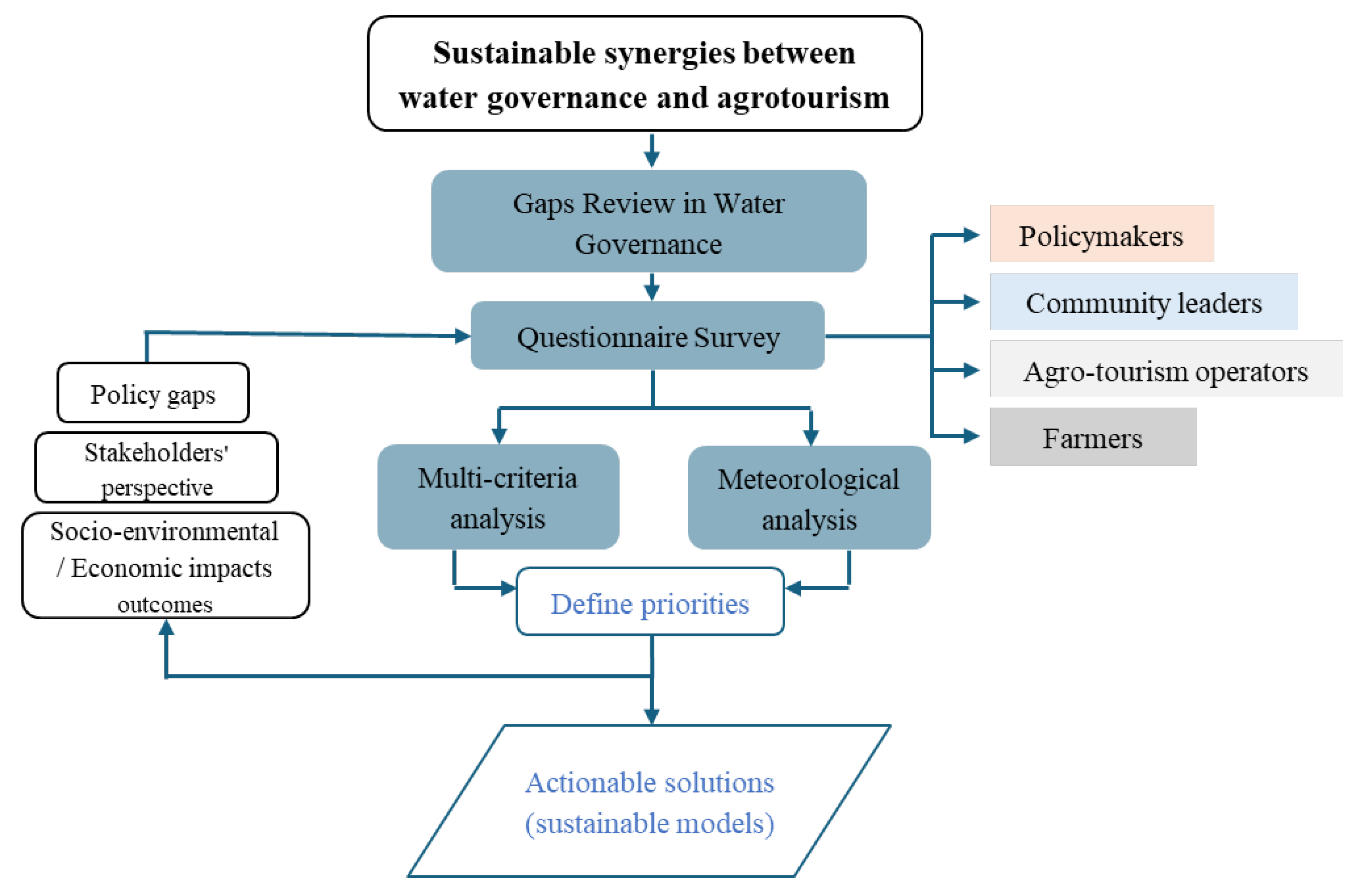
A methodological flowchart of the procedures used in this study is presented in Figure 1, and the methods used are discussed in detail in this section.
Figure 1.
Flowchart of the study plan.
2.1. Study Area
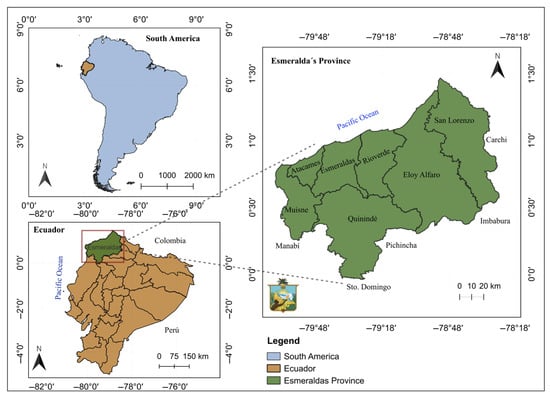
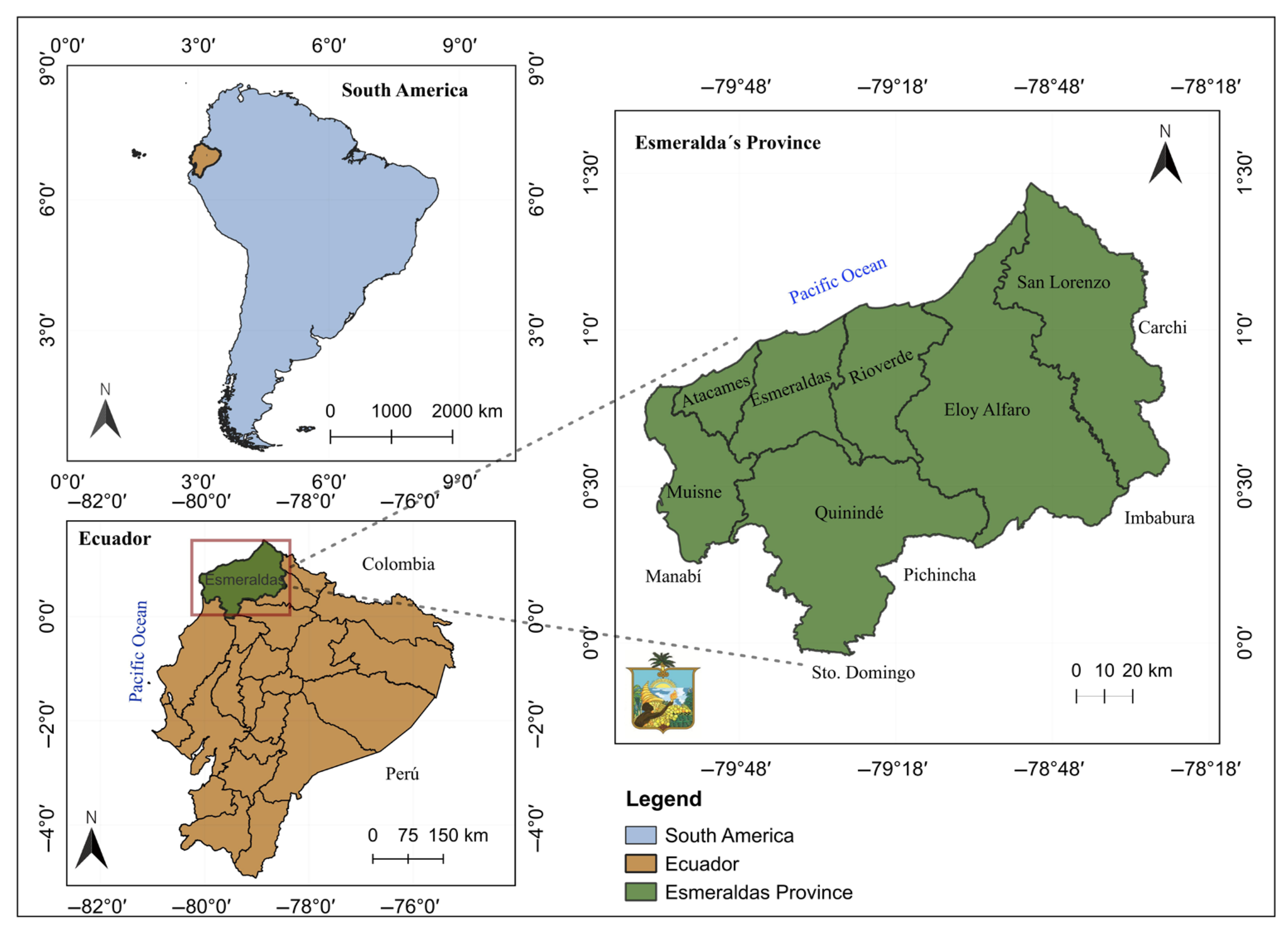
Esmeraldas, an ecological and natural-resource-rich province, is located on the northern Pacific coast of Ecuador, with an area of 15,232.60 km2 (Figure 2). The province comprises 65 autonomous governments, as follows: 7 administrative cantons, 11 urban parishes, and 57 rural parishes. Currently, Esmeraldas’ population is estimated to be approximately 643,000, with 44.9% residing in rural areas and engaging in agricultural activities [22].
Figure 2.
Esmeraldas Province map and its administrative cantons.
Due to its diversity and strategic location, Esmeraldas’ economy relies heavily on tourism and agriculture as the main activities, with the oil industry, commerce, and fishing as secondary activities. The province has a hot semi-arid climate influenced by the Humbold Current (HC), featuring a wet season from January to April and a dry season from May to December, annual temperatures ranging between 22 and 25 °C, and precipitation levels between 500 mm and 7000 mm, primarily influenced by the El Niño and La Niña phenomena [23], making water governance crucial for its sustainability.
2.2. Data Collection
Data collection for this study was organized into three main phases. First, we conducted a review of existing legal and policy frameworks to identify qualitative and quantitative gaps relevant to water governance in Esmeraldas Province. Next, we gathered stakeholder perceptions using a multi-criteria approach and administered a structured survey to key actors in the province. Finally, we collected and analyzed environmental data through statistical and meteorological methods. To capture diverse perspectives, we developed four tailored questionnaires targeting farmers, policymakers, agrotourism operators, and community leaders. These surveys were distributed electronically via Google Forms (accessible at https://docs.google.com/forms/u/0/) between 15 January and 2 March 2025. Each participant received a clear introduction that explained the survey’s purpose and emphasized the voluntary and anonymous nature of participation. Informed consent was obtained in accordance with institutional ethical guidelines, and respondents were encouraged to provide honest and thoughtful answers, knowing that their insights would contribute to research on sustainable water governance. To ensure clarity and accessibility, the questionnaires were initially composed in English and then translated into Spanish, the official language of the study area.
2.2.1. Water Governance’s Gaps Review in Esmeraldas, Ecuador
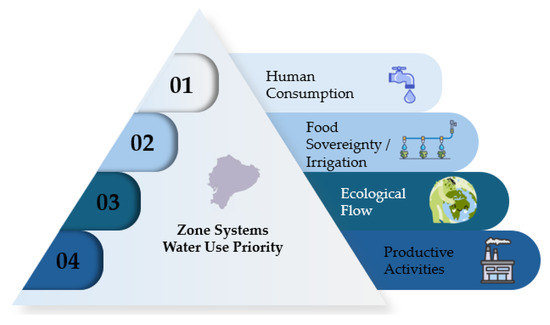
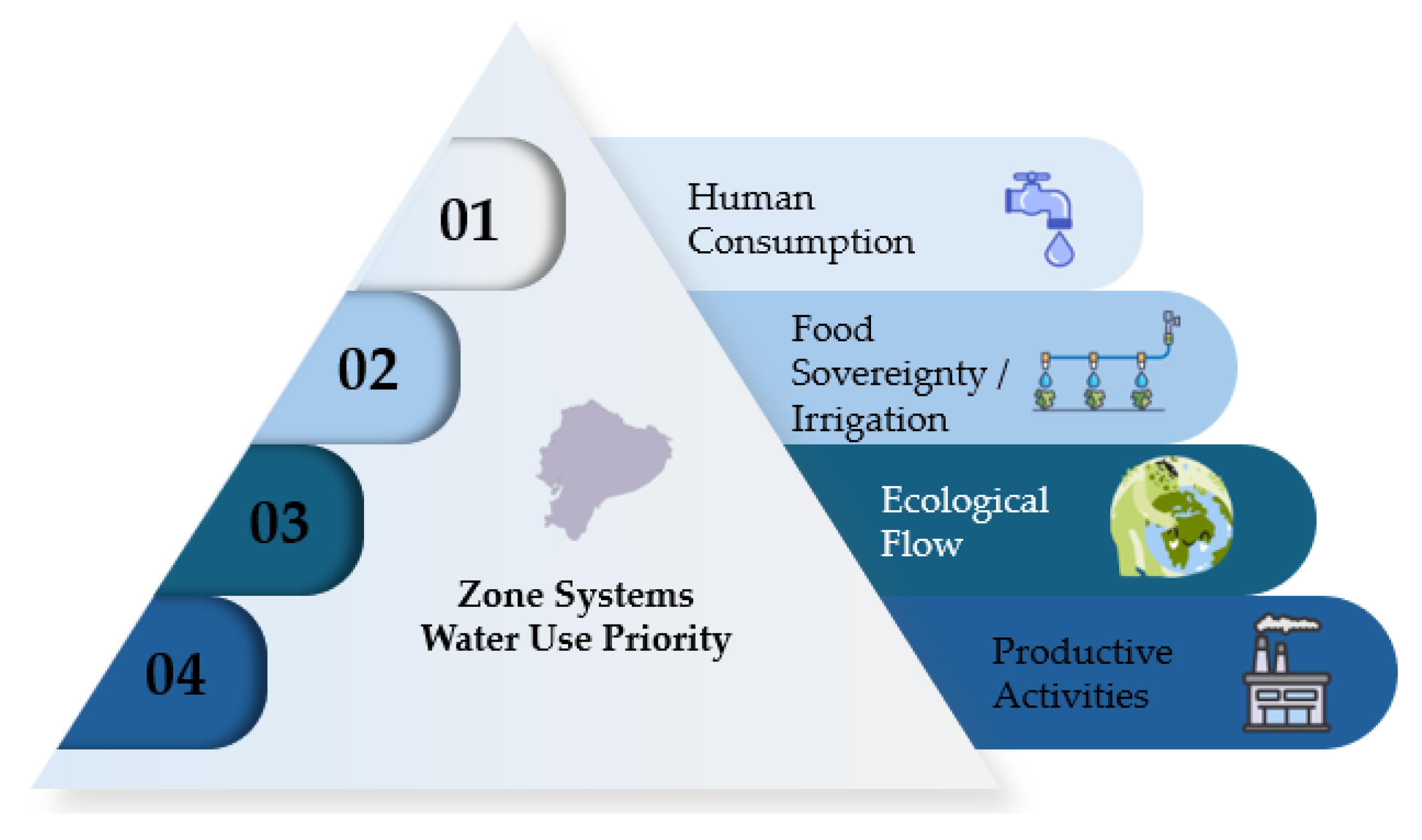
According to Ecuador’s Constitution [24], its overall water governance focuses on sustainability and equality, formalized in the “Ley Orgánica de Recursos Hídricos, Usos, y Aprovechamiento del Agua” (Ecuadorian Organic Law on Water Resources, Uses, and Development of Water) [25,26]. This establishes a legal framework prioritizing equity and sustainability in water governance, granting water as a national strategic resource and a public good under state regulation. This law identifies, creates, and introduces a zoned system that categorizes water allocation into districts based on priority (Figure 3), showcasing categories in their order of importance.
Figure 3.
Water allocation into district use priority.
At the local level, Water Users’ Associations (WUAs) are fundamental to community-based water management. These associations are divided into the following two main types: Agua Potable, which manages the allocation of drinking water, and Riego, which oversees water resources for irrigation and agricultural use [27]. These associations foster community unification and self-water governance, particularly in impoverished and rural areas, where municipal services are limited [28]. A lack of technical and financial resources limits institutional abilities to address infrastructural needs [29].
Regardless of this legal foundation, remarkable gaps persist in the effective implementation of water governance, particularly in Esmeraldas Province [8,30]. Recent studies highlight several structural and institutional challenges, including poor coordination among national, provincial, and local authorities, which result in fragmented regulations and inconsistent policy execution [31,32]. Furthermore, the limited participation of stakeholders and community members in decision-making processes undermines the adaptability and legitimacy of governance frameworks [26,33,34,35].
The absence of incentives and regulations to promote efficient water use in agrotourism further intensifies competition between the agricultural, tourism, and domestic sectors [36,37]. Insufficient investment in water infrastructure, such as treatment systems, storage, and distribution, reduces the province’s capacity to respond to both acute crises and chronic shortages, as evidenced by recent droughts and pollution incidents [12]. Environmental degradation, including contamination from mining, agriculture, industry, and deforestation, also threatens water quality and availability [10,11,38,39,40]. These pressures are aggravated by climate change, which increases the severity and frequency of floods and droughts, thereby challenging the resilience of the tourism and agricultural sectors [41].
A regional and international analysis stresses that while Ecuador’s legal framework is progressive, its practical application is hindered by gaps in data availability, stakeholder engagement, enforcement, and adaptive capacity [42]. In the agrotourism context, these governance gaps manifest the insufficient integration of water management with the limited adaptation of water-saving technologies, rural development strategies, and a lack of participatory mechanisms for resource allocation and conflict resolution [43,44].
2.2.2. Multi-Criteria Analysis
The study used qualitative and quantitative instruments to determine the replicates or number of observations. The survey sample size was calculated using the Cochran Equation (1) based on the total population, with a margin of error of ±6% and a confidence level of 95%. Firstly, 268 responses were collected; however, 18 were excluded due to incomplete or invalid entries, resulting in a final sample of 250 valid responses.
where z is the z-score, ε is the margin of error, N is the population size, and is the population proportion. Of the 250 respondents, 70 were farmers, 64 were policymakers, 85 were agrotourism operators, and 31 were community leaders.
Multi-criteria analysis was used to determine the relative importance of each identified challenge using Equation (2). This equation has been used in previous studies, as shown in Table 1. This method enables a systematic comparison by assigning weight based on stakeholder perspective and expert judgement.
Table 1.
Studies that applied frequency-based weighting methods in different fields.
2.2.3. Water Availability Analysis
To assess the influence of climate variation on water availability in Esmeraldas Province, this study applied the Standardized Precipitation Evapotranspiration Index (SPEI). The SPEI is a widely recognized index that allows for the comparison of drought and flood severity across different times and spaces [48]. The SPEI was calculated using monthly climate data. The monthly water balance equation was calculated using Equation (3), as follows:
where is the difference between precipitation (P) and potential evapotranspiration (PET) at month. values accumulated over k months were calculated using Equation (4) [49,50], as follows:
where n is the number of months and k represents the selected timescales (3, 6, and 12 months).
The Thornthwaite approach, a common approach for estimating potential evapotranspiration, was used in this study due to limited available meteorological datasets [51] (Equation (5)). This method has also been widely used in studies in Ecuador [52,53,54,55,56] as follows:
where is the average of monthly temperatures, I is the annual heat constant, K is the correction factor, and m is an empirically derived exponent.
The accumulated series is fitted to a three-parameter log-logistic distribution (6), as follows:
where F(x) replaces values for at different time scales, adapted to the empirical values at different observations, separately from climate characteristics and time scale analysis [50,57] α, β, and γ scale, shape, and origin parameters. The SPEI values were interpreted as shown in Table 2.
Table 2.
Classification of drought and wetness conditions according to SPEI values.
2.3. Software and Statistics
Primary data were obtained from surveys using questionnaires and descriptively analyzed. Secondary data, including literature reviews from different sources [8,24,25,26,28,31,39,58,59,60] and climate data obtained from NASA Power (v2.4.15) [61], were analyzed using RStudio (v4.2.3) and the SPEI package to assess drought and flood trends at different time scales.
3. Results
3.1. Policy Gaps Analysis
To advance sustainable agrotourism development, a systematic review was employed. This analysis employed the OECD [5] multi-level governance framework to structure gap analysis in alignment with the Ecuadorian environmental legal framework, “Texto Unificado de la Legislación Secundaria del Ministerio del Ambiente” (Ecuadorian Unified Text of Secondary Legislation of the Ministry of the Environment), which provides the basis for water governance at the local and national levels [60], complemented with the main issues identified for the stakeholders’ perspective (Table 3). This approach presents a classification of water use relevant to the region and its definitions based on Ecuador’s primary regulatory sources. The analysis identified political, administrative, and fiscal constraints, outdated laws, limited institutional coordination, and inadequate public investment as the most critical obstacles to equitable access to water for agriculture, touristic activities, and other important economic sectors. These gaps not only hinder sustainable water resource use, but also erode the possibility of water management and agrotourism development synergies in the semi-arid setting of the region.
Table 3.
Relevant gaps across water use and their definition.
3.2. Multi-Criteria Analysis (Stakeholders’ Survey)
3.2.1. Demographic Analysis
The sociodemographic characteristics of 250 respondents among the four stakeholder groups provide important insights (Table 4). The highest proportion of the respondents were young, under 30 years old, with a notable portion (29–36%), indicating a workforce that can quickly adapt to new agricultural and tourism initiatives. The educational background varied notably across sectors, where policymakers showed the highest level (university) at 52%. In comparison, an appreciable percentage of community leaders (39%), farmers (29%), and agrotourism operators (28%) had no formal training. This educational gap strikes the adaptation of sustainable water practices, as higher education recurrently correlates with the implementation of innovative agricultural methods and increased awareness. Regarding expertise, most participants had 1–10 years of service, with the policymakers leading the category at 87%; geographically, Esmeraldas emerged as the most represented sector, particularly among policymakers (64%) and agrotourism operators (59%), highlighting its significance in governance and economic activities. This demographic and cantonal distribution suggests that policies promoting agrotourism through effective water management should address educational gaps among key stakeholders and focus on places like Esmeraldas, where tourism and agriculture are prominent. Implementing training programs on sustainable water governance, particularly for farmers and tourism operators, could strengthen economic diversification while ensuring long-term environmental sustainability.
Table 4.
Sociodemographic characteristics of the participants.
3.2.2. Water Use Perception Analysis
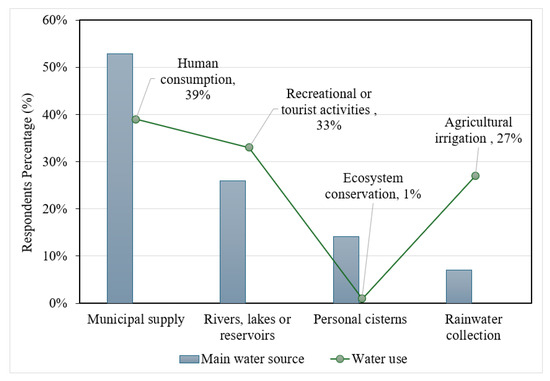
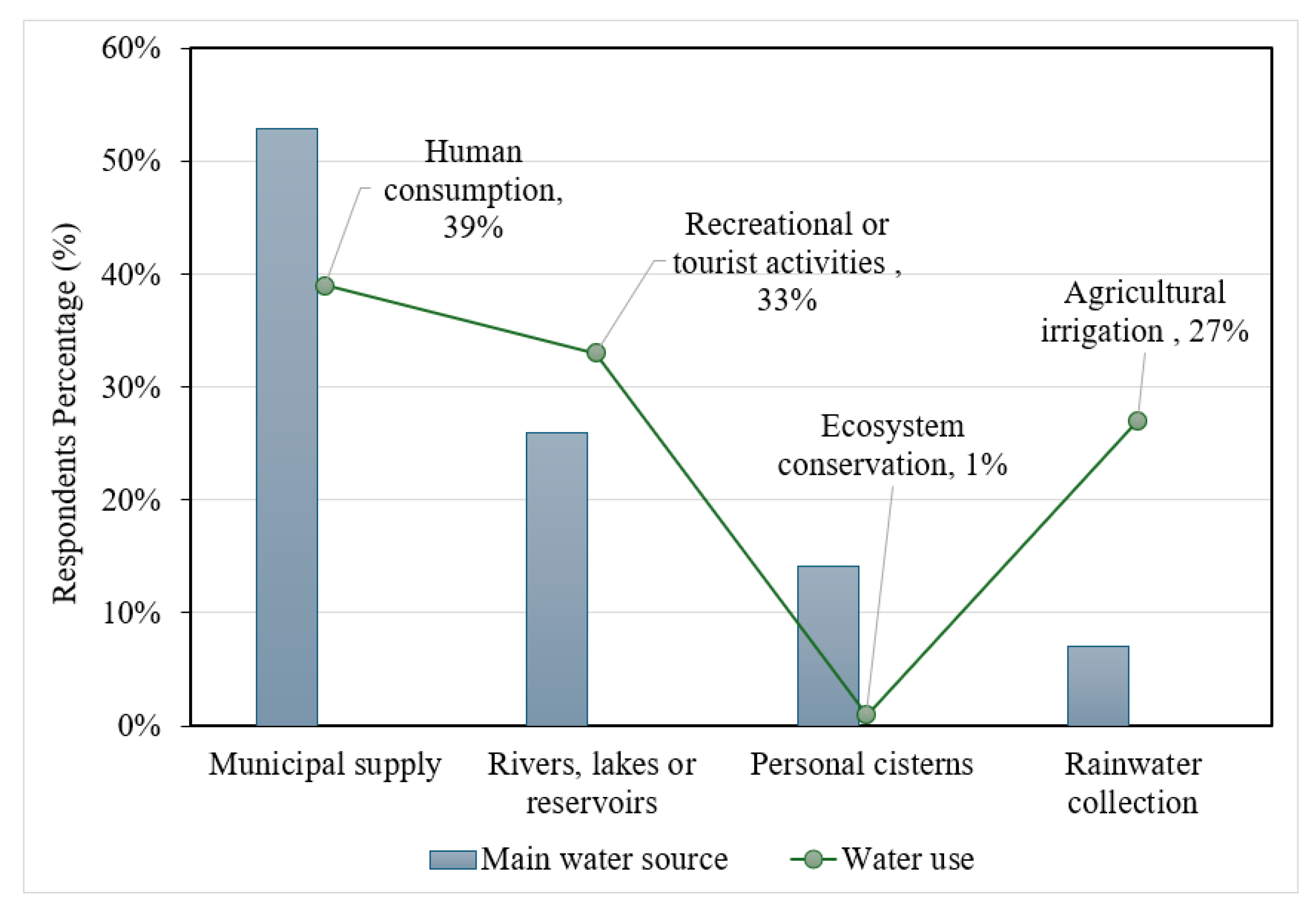
Figure 4 shows the water sourcing and usage patterns among agrotourism providers in Esmeraldas Province (n = 85). The data reveals that human consumption, including domestic and economic activities, is the highest priority, followed by recreational activities and agricultural irrigation. This hierarchy highlights a clear priority given to drinking water, tourism, and crop production, while little attention is paid to ecosystem conservation.
Figure 4.
Water use and main water resource analysis integration.
More than half of the respondents relied primarily on municipal supply. A substantial proportion also depended on natural sources such as rivers and lakes, whereas only a small percentage utilized personal cisterns or rainwater collection systems. These findings reveal two critical insights. First, the sector’s heavy dependence on municipal and natural water sources exposes agrotourism operations to risks associated with supply interruptions, environmental variability, and infrastructure failures. Second, the low adoption of alternative or resilient water sources, such as rainwater collection, suggests a basic and limited strategy for adaptation and a potential governance gap to promote sustainable water management practices.
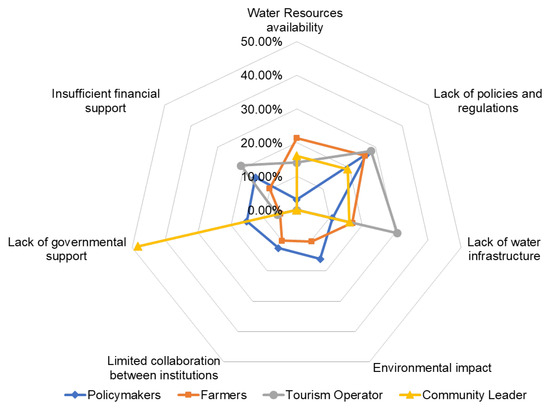
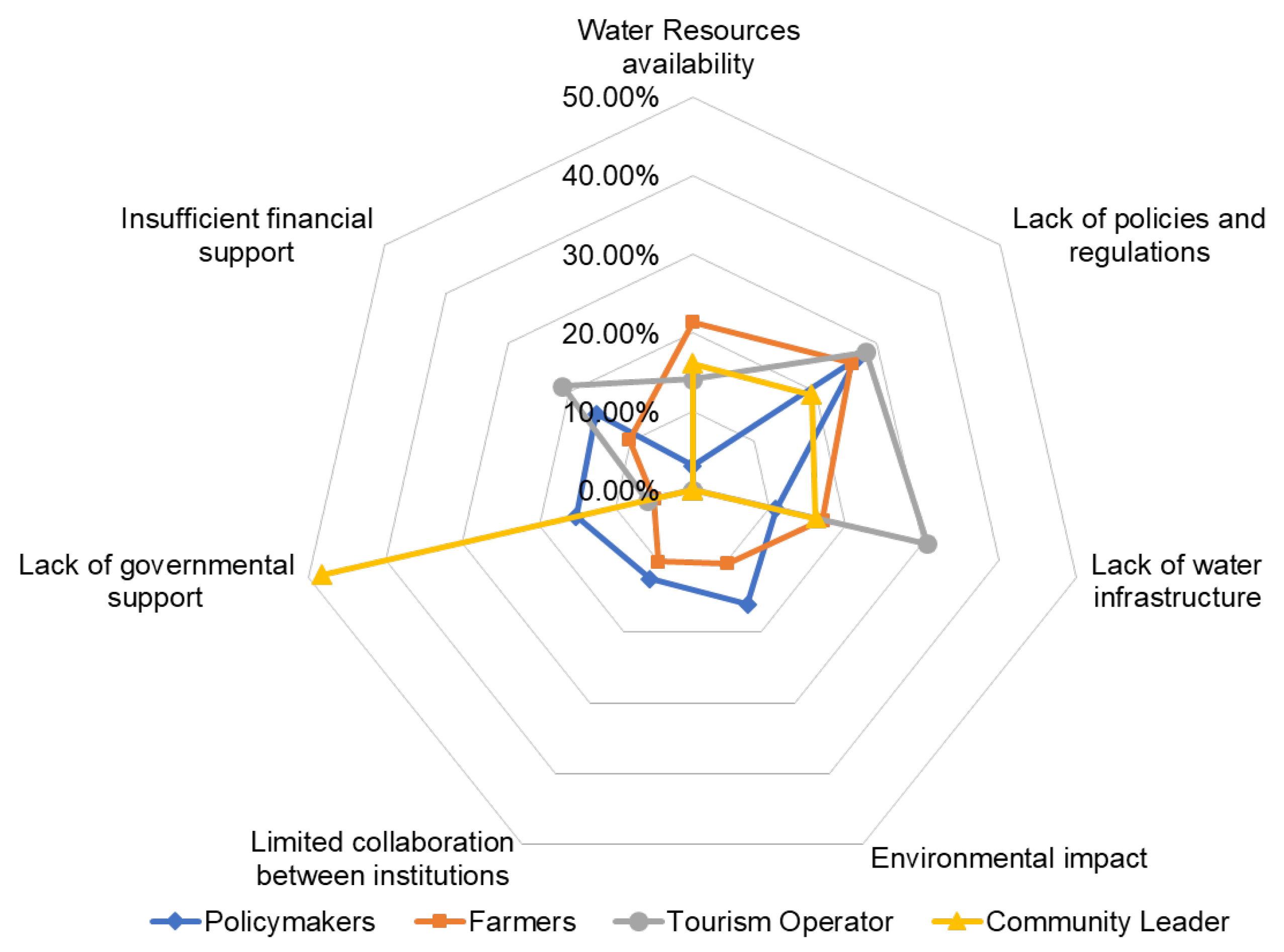
Expectedly, the water governance in Esmeraldas faces complex challenges, as revealed by a cross-analysis of the stakeholder groups and the relative weight of each identified governance gap. By examining both Figure 5 and Table 5, it becomes evident that the most pressing issues, such as unclear policies, inadequate infrastructure, and financial support, are not experienced equally across all sectors.
Figure 5.
Comparative insights on water governance challenges among stakeholder groups.
Table 5.
Assessment of governance challenges by mention frequency and relative weight.
The data emphasizes the relevance of focused, stakeholder solutions, offering a strategic basis to strengthen sustainability synergies concerning water governance and agrotourism for the semi-arid Esmeraldas environment.
3.3. Water Availability Index—SPEI Analysis
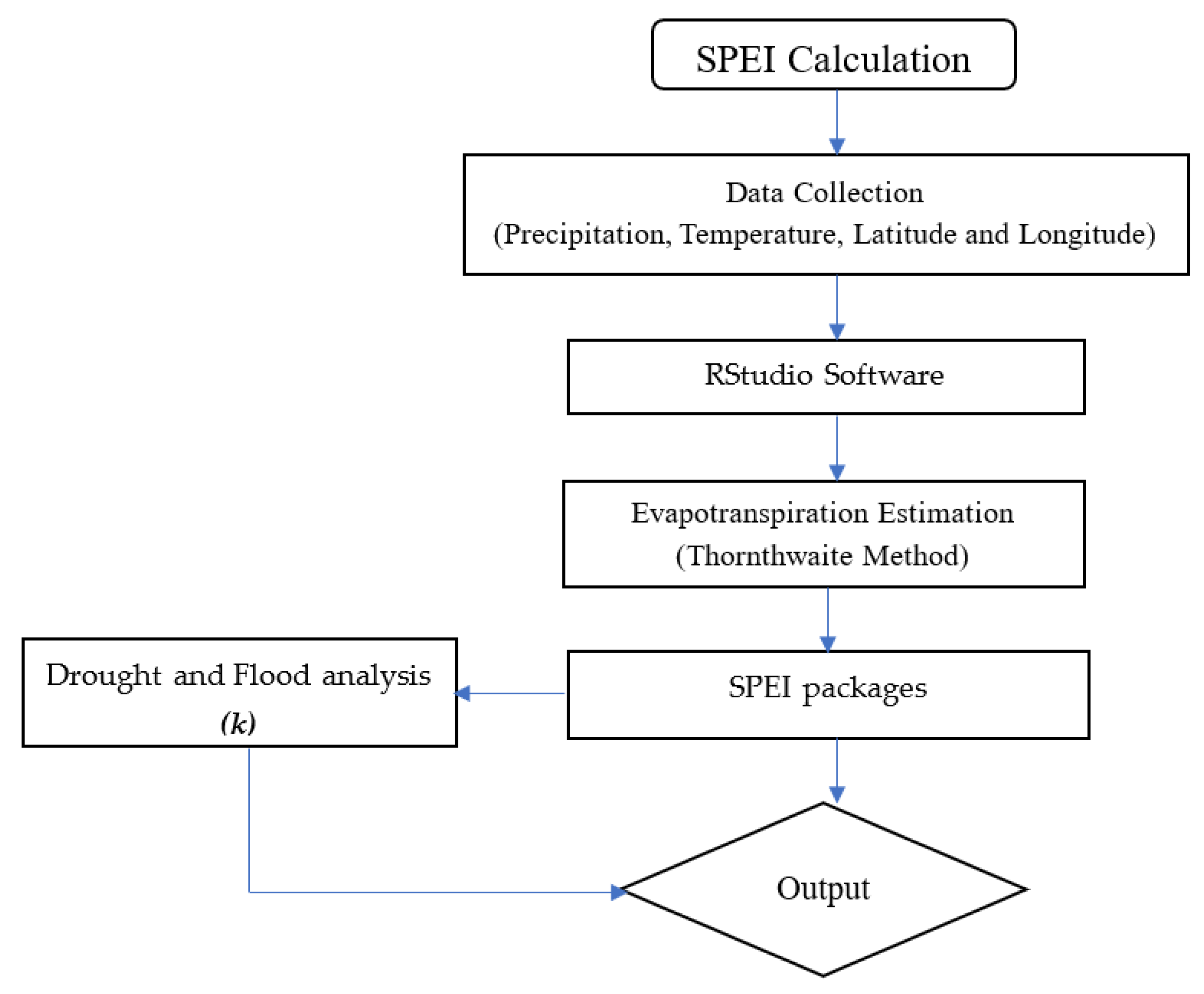
The stakeholder survey conducted on a five-point Likert scale shows that nearly half of the respondents (48.6%) regarded overall water scarcity as the most pressing challenge, while an additional 21.4% pointed to drought. In total, 45.7% of rural water demand is met by rivers as the primary source supplier; to quantify these vulnerabilities, the SPEI (flowchart Figure A1) was applied using data from 1980 to 2022, revealing increased droughts.
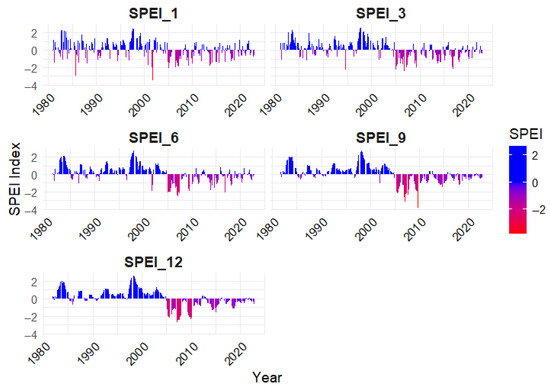
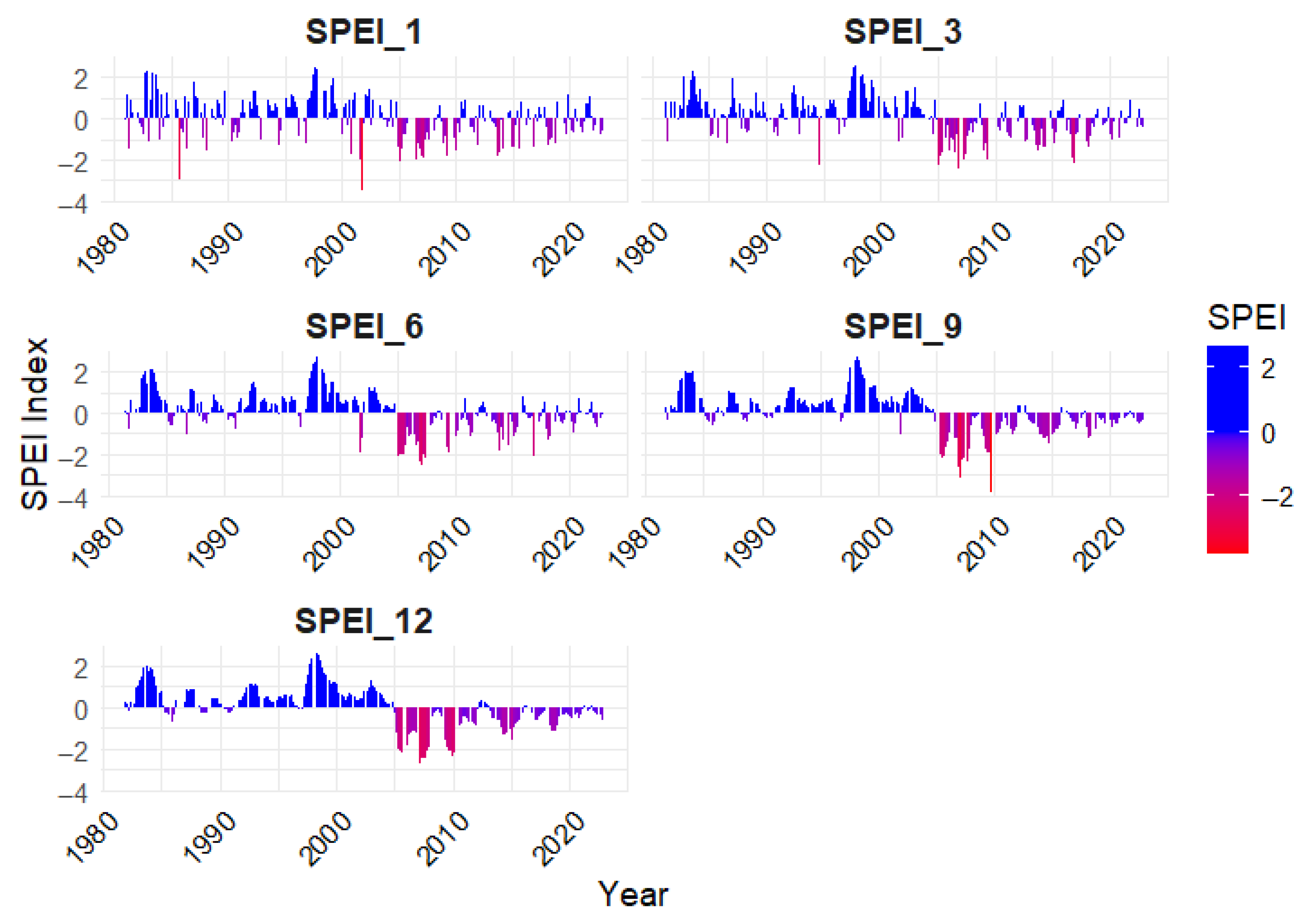
The most severe droughts occurred in the 2000s. Several SPEI values fell below −3, indicating extreme water deficits (Figure 6). These trends pose direct risks to agrotourism, which depends on reliable access for its agricultural activities and visitor services. The increase in drought frequency and intensity is linked to the El Niño and La Niña phenomena and the Humboldt Current wet-season features, changes in atmospheric patterns, and delays in rainy seasons, watersheds, and deforestation degradation in Esmeraldas.
Figure 6.
Temporal variation in SPEI at different timescales (1, 3, 6, 9, and 12 months).
Between 2000 and 2022, the discharge at San Mateo intake on the Esmeraldas River dropped by 45–60%, with most visible case in 2017 [62]. These operational records classify Esmeraldas among the five provinces with the highest drought impacts, resulting in about USD 15 million agricultural losses [63]. A local newspaper [64,65] reported the highest crisis related to water availability in Esmeraldas during this period. Studies have also demonstrated the connection between meteorological data and hydrological variables [57], particularly in the drought assessment, associating them with higher water demand. Hence, the SPEI revealed intensive droughts affecting the water availability in rivers, aquifers, and other human-use sources.
3.4. Actionable Solutions
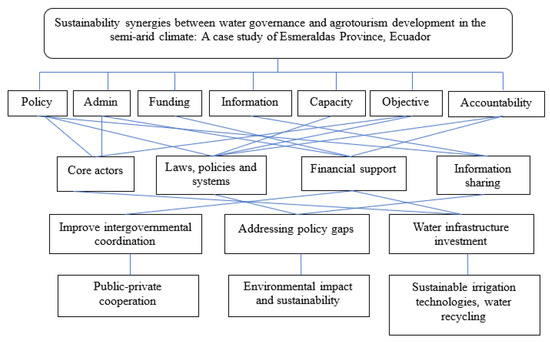
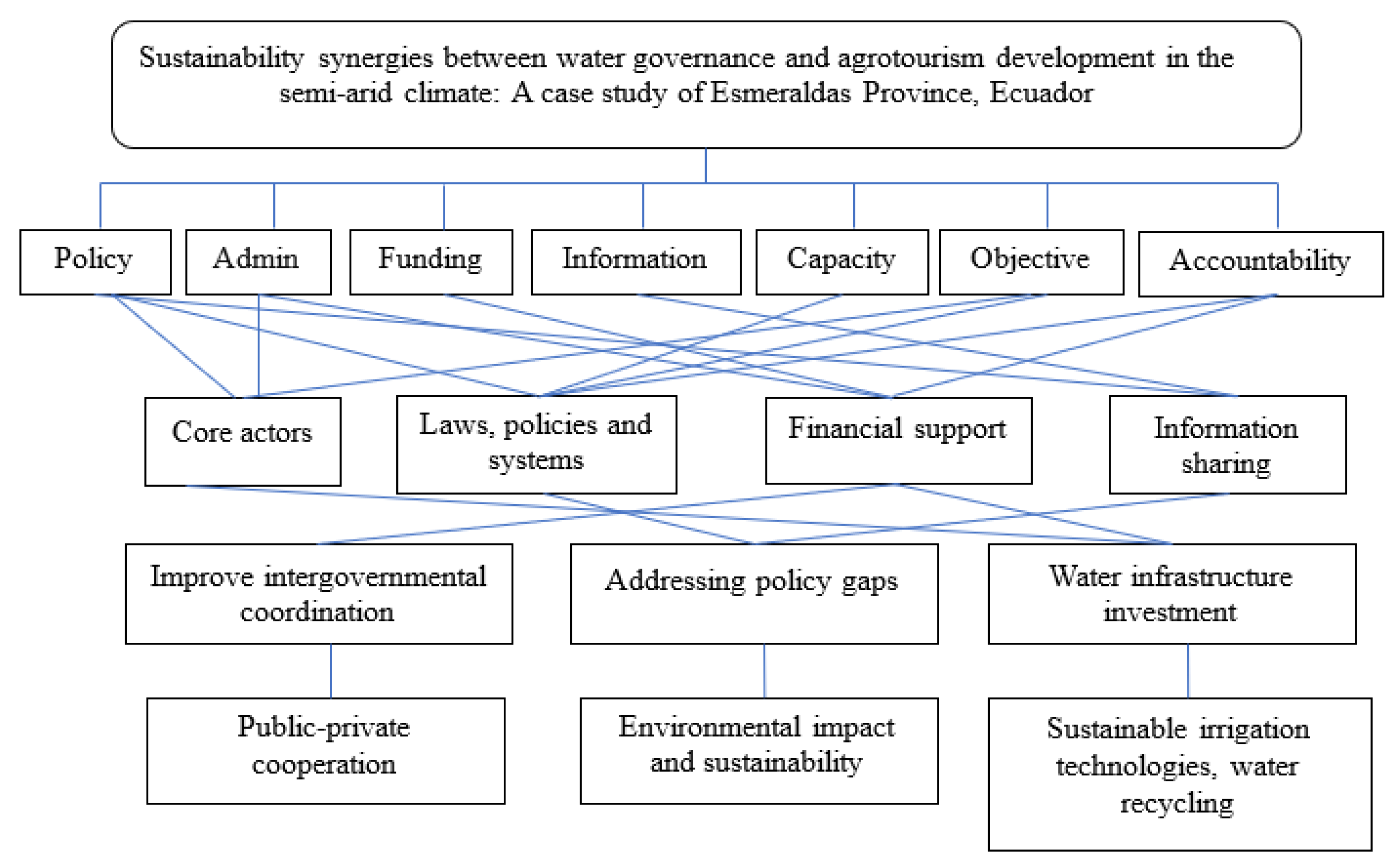
The qualitative and quantitative analysis results show that water governance in Esmeraldas is unprepared to support agrotourism as a sustainable economic strategy. Establishing an adaptive and integrated water governance model to leverage agrotourism as a sustainable economic strategy in Esmeraldas is essential. The lack of clear intersectoral strategies, inadequate infrastructure, and weak institutional coordination constitute major obstacles. Therefore, we propose a conceptual governance framework that synthesizes stakeholder perspectives and existing gaps (Figure 7) [42]. The model advocates intersectoral collaboration, participatory governance, and strategic investments to strengthen the resilience of agriculture and tourism.
Figure 7.
Multi-criteria analysis agrotourism framework based on sustainable water governance.
The conceptual framework illustrates the main gaps identified during the sustainable water governance analysis outlined in Table 5 and summarizes the multi-criteria approach based on the perspectives and findings obtained. The framework provides a clear roadmap to address the most pressing governance gaps, guiding future government policies, stakeholder collaboration, and investment priorities to ensure resilient and sustainable agrotourism in Esmeraldas Province.
The framework fosters sustainability synergies between water governance and agrotourism development in Esmeraldas Province, highlighting the major governance challenges and strategic levels, as presented in Table A1. For every challenge, the table offers targeted solutions ranging from policy changes and innovative financing to technological improvements and stakeholder cooperation, which not only solve water scarcity in a semi-arid context, but also open new business potential in these dry regions.
Adaptation Strategies for Agrotourism in Semi-Arid Regions
Although integrating stakeholders’ perception, policy gaps analysis, and the SPEI within the water governance framework supports agrotourism development, it is essential to implement key strategies to address the diversification of agrotourism activities by reducing water dependence [66,67,68]. In semi-arid regions like Esmeraldas, the adaptation to water scarcity and climate variability is indispensable to enhance the synergy between water governance and sustainable agrotourism and promote local livelihoods. Some of the adaptation strategies include the following:
- a.
- The adoption of drought-resistant crops, such as cassava (yuca), sweet potato (camote), and pigeon pea, provides a well-established strategy to save water, improve biodiversity, and promote agroecosystem resilience [69].
- b.
- The adoption of water-saving technologies like smart irrigation technologies and greywater recycling ensures that both agriculture and tourism activities receive an optimal amount, thus increasing sustainability.
- c.
- The diversification of agrotourism activities can be achieved through incorporating more cultural heritage activities such as traditional festivals, entrepreneurship fairs, and agroproductive fairs. These events were implemented as an adaptation strategy during the COVID-19 emergency [70,71,72,73,74,75].
- d.
- Sensitization and environmental education should be implemented. Considering that efficient water management and agrotourism development depend heavily on community involvement, it is crucial to promote environmental education aimed at reducing water misuse and ensuring that relevant stakeholders, including agrotourism operators, tourists, and farmers, are fully aware of responsible water use [76,77].
4. Discussions
Water governance in Ecuador presents a paradox: although the country has a progressive legal framework [27], reality reveals the deficit in governance implementation, including insufficient coordination between different government levels [31,32] in many regions, particularly in Esmeraldas. This interferes with the sustainability of agrotourism in the province [30]. Key challenges, including a lack of water infrastructure and gaps in policies and regulations, are the main issues affecting all stakeholders, which indicates a common concern about institutional and structural failure. This fragmentation is exacerbated by weak stakeholder engagement mechanisms, particularly the limited participation of farmers and rural residents directly affected by water management policies [26,33,34,35].
Competing demands for water from agriculture, tourism, and human consumption intensify these challenges, particularly in the absence of adequate regulations and incentives for efficient water allocation in emerging agrotourism sectors [36,37]. Additionally, the framework addresses balancing through several interconnected governance components: stakeholders’ cooperation, efficient technologies adoption, and water allocation practices. Acute events like droughts and chronic water treatment, storage, and distribution deficiencies worsen situations [12]. Furthermore, environmental degradation due to mining, deforestation, and agriculture adversely affects water quality and availability [38,39,40]. Climate change is putting additional pressure on the province’s fragile infrastructure, manifesting in more frequent and severe floods and droughts, which negatively impact agriculture and tourism [41]. A clear example is the pronounced and persistent drought scenarios that Esmeraldas experienced from the early 2000s through the 2010s, visible in Standardized Precipitation Evapotranspiration Index (SPEI) values reaching below −3, indicating severe extreme drought and affecting the potential development of the agrotourism sector in the province, as obtained by the SPEI analysis [49]. Although droughts have always been a natural part of the climatic patterns in the area, the frequency and intensity of droughts are increasing, mainly due to global warming, deforestation, and human-induced forest degradation [11]. Studies based on modeling and observations suggest that the droughts occur due to decreased precipitation and a delayed onset of the rainy season, resulting in a longer dry season, especially during El Niño and/or the Oceanic and Atmospheric Niño Index years [78]. Through the SPEI, we could highlight an alarming trend: climate-induced droughts are not isolated anomalies, but a growing norm threatening rural water supplies [2]. These conditions, confirmed by Intergovernmental Panel on Climate Change (IPCC) projections and recent research in tropical regions [49], compromise food security and the sustainable tourism objectives set out in SDG 8.9, which aim to create jobs while promoting local products and culture [79].
The multi-criteria decision analysis (MCDA) conducted as part of this study revealed that, while infrastructure deficiencies are a major problem, they are symptomatic of a deeper problem: rigid, inflexible governance structures unable to respond to dynamic environmental challenges. Comparisons with adaptive and community-based models in Bolivia and Peru highlight that more resilient water governance is both possible and necessary [78]. In Esmeraldas, the prevailing reactive attitude limits long-term sustainability, particularly in agrotourism, which relies heavily on access to quality water.
It is also important to note that civic engagement and behavior change challenges are inextricably linked to educational attainment. Many farmers and tourism operators lack formal education, which limits their participation in governance and their ability to adopt innovative practices. This reveals the need for SDG 4 to provide inclusive, quality education as a foundation for sustainable development [80] and supports UNESCO’s assertion that access to knowledge is the foundation for meaningful civic engagement [81]. Addressing these constraints would not only accelerate progress toward SDG 6.4, which encourages improving water use efficiency, but also align Esmeraldas with global best practices [82].
Limitations and Prospects
This study explores the sustainability synergies between water governance and agrotourism development in a semi-arid region in Ecuador. It also developed a sustainable framework that proposes context-driven and practical solutions to the water governance challenges in water-scarce areas and climate-vulnerable regions. However, the study acknowledges several limitations that could be addressed to improve the accuracy and depth of its analysis. For instance, incorporating methodologies such as the Adaptive Participatory Integrated Approach (APIA), co-production frameworks, Analytic Hierarchy Process (AHP), or Delphi technique could foster stronger local engagement and enhance institutional ownership of water governance processes. Such participatory methods would also help to legitimize decision making and ensure that governance reflects the needs and perspectives of a broader range of stakeholders. Another limitation lies in the sample size; although 250 respondents provided valuable insights, this number may not fully capture the diversity of stakeholders in the region. In this study, the prioritization of governance gaps was based on the frequency with which these challenges were mentioned by the respondents. This method was appropriate for the exploratory nature of the study, as the primary objective was to identify the most pressing water governance challenges in the region. As the first analysis of its kind in this region, the relative weight approach could provide an important baseline for future studies. Despite these limitations, the study provides a critical foundation for understanding the relationship between water governance and agrotourism in semi-arid Ecuador. The findings not only highlight key challenges, but also set the stage for more in-depth, participatory, and methodologically intensive research in the future.
5. Conclusions
Our evidence shows that water governance and agrotourism are not competing agendas, but mutually reinforcing levels for rural resilience. By aligning climate triggers, fiscal incentives, and participatory institutions, Esmeraldas can transform its current “ping-pong governance” into a coherent system capable of delivering SDG 6 (Clean Water and Sanitation) and SDG 8 (Decent Work and Economic Growth) outcomes in tandem. The study demonstrated the critical need for better water management systems to sustain both agriculture and tourism in Esmeraldas Province, Ecuador. The study integrated surveys, climatic data, and policy studies to create a holistic picture of the difficulties confronting water management and consumption in the area. It became evident that the existing system is not functioning as it should, since many people do not have reliable access to clean water, infrastructures are in poor condition, and key stakeholders like farmers and local communities are frequently kept from vital decisions. One of the most significant implications is that tackling these challenges does not simply mean constructing more pipelines or creating new laws. Real change would require active engagement of all relevant stakeholders. This involves listening to their perspectives, creating opportunities for them to share their ideas, and ensuring that each stakeholder has a meaningful role in the governance of water resources within their communities. The study suggests a more flexible, people-focused approach to water governance that will interconnect with multiple sectors, support better investments, and foster resilience. If implemented properly, this can become a model for other communities facing similar water and climate change challenges.
Author Contributions
Conceptualization, E.I.C.E.; methodology, E.I.C.E.; software, E.I.C.E. and Q.A.; validation, K.-S.C. and H.-S.H.; formal analysis, E.I.C.E.; investigation, E.I.C.E.; resources, K.-S.C.; data curation, E.I.C.E.; writing—original draft preparation, E.I.C.E.; writing—review and editing, Q.A., M.J.A. and K.-S.C.; visualization, E.I.C.E.; supervision, K.-S.C. and H.-S.H. All authors have read and agreed to the published version of the manuscript.
Funding
This research received no external funding.
Data Availability Statement
The raw data supporting the conclusions of this article will be made available by the authors on request.
Acknowledgments
The authors extend their appreciation to the Department of Agricultural Civil Engineering and the Institute of International Research and Development (IIRD) at Kyungpook National University under the KOICA Scholarship Program; their support in fostering our academic and national development.
Conflicts of Interest
The authors declare no conflicts of interest.
Abbreviations
The following abbreviations are used in this manuscript:
| MCDA | Multi-criteria decision analysis |
| SPEI | Standardized Precipitation Evapotranspiration Index |
| WUAs | Water Use Associations |
| HC | Humboldt Current |
| IWRM | Integrated Water Resource Management |
| SOTE | Trans-Ecuadorian Pipeline System |
| IWRM | Integrated Water Resources Management |
| NASA | Native Resolution Monthly and Annual |
| IPCC | Intergovernmental Panel on Climate Change |
Appendix A
Table A1.
Synergistic levels for water governance and agrotourism sustainability in semi-arid Esmeraldas Province.
Appendix B
Figure A1.
SPEI flowchart at different timescales (1, 3, 6, 9, and 12).
References
- United Nations. Transforming Our World: The 2030 Agenda for Sustainable Development. 2015. Available online: https://sdgs.un.org/publications/transforming-our-world-2030-agenda-sustainable-development-17981 (accessed on 24 April 2025).
- Sanchez, D.; Krasniqi, V.; Rapuca, A. Agro-Tourism Impact—Analysis of Climate Change Using Google Earth Engine in the Rahovec Wine Region of Kosovo. In International Archives of the Photogrammetry, Remote Sensing and Spatial Information Sciences—ISPRS Archives; International Society for Photogrammetry and Remote Sensing: Hannover, Germany, 2023; Volume 48, pp. 185–192. [Google Scholar] [CrossRef] [Scilit]
- Food and Agriculture Organization of the United Nations (FAO). Overcoming Water Challenges in Agriculture; FAO: Rome, Italy, 2020; Available online: https://www.fao.org/fsnforum/resources/fao-flagships/state-food-and-agriculture-2020-overcoming-water-challenges-agriculture (accessed on 21 July 2025).
- UNDP. User’s Guide on Assessing Water Governance. Available online: https://www.undp.org/publications/users-guide-assessing-water-governance (accessed on 24 April 2025).
- OECD. Water Governance in OECD Countries—A Multi-Level Approach; OECD Studies on Water; OECD Publishing: Paris, France, 2011. [Google Scholar] [CrossRef] [Scilit]
- Reinoso, I. Agrotourism as a Micro-Business Alternative in Ecuador. Master’s Thesis, Universidad Andina Simon Bolivar, Quito, Ecuador, 2011. Available online: https://repositorio.uasb.edu.ec/handle/10644/2995 (accessed on 10 July 2025).
- Local Esmeraldas Government. Potenti-Alization of Agrotourism in Tachina Parish. Alcaldia de Esmeraldas. Available online: https://esmeraldas.gob.ec/noticias/item/982-potenciando-el-agroturismo-en-la-parroquia-tachina (accessed on 20 February 2025).
- El Comercio. Esmeraldas Has Little Access to Water and Sewage. El Comercio, 10 May 2018. Available online: https://www.elcomercio.com/actualidad/negocios/esmeraldas-acceso-agua-alcantarillado-fronteranorte.html (accessed on 2 May 2025).
- Diario La Hora. Water Emergency Hits Atacama Tourism. Diario La Hora, 23 August 2017. Available online: https://www.lahora.com.ec/noticias/emergencia-por-falta-de-agua-golpea-al-turismo-atacameno/#google_vignette (accessed on 2 May 2025).
- Juan Carlos Gonzalez. The Distressing Toll of Deforestation in the Country. Primicias, 10 November 2020. Available online: https://revistagestion.primicias.ec/sociedad-analisis/el-angustioso-saldo-de-la-deforestacion-en-el-pais/ (accessed on 2 May 2025).
- Laura Rival. The Meanings of Forest Governance in Esmeraldas, Ecuador. Oxf. Dev. Stud. 2010, 31, 479–501. [Google Scholar] [CrossRef] [Scilit]
- Orozco, M. The Esmeraldas oil spill is the worst environmental disaster for the state-owned SOTE pipeline in nearly 30 years. Primicias, 26 March 2025. Available online: https://www.primicias.ec/economia/derrame-petroleo-esmeraldas-sote-contaminacion-92550/ (accessed on 2 May 2025).
- RTU. The Oil Spill Emergency in Esmeraldas Affects More than 50,000 Homes. RTU, 17 March 2025. Available online: https://canalrtu.tv/2025/03/17/emergencia-por-derrame-de-petroleo-en-esmeraldas-afecta-a-mas-de-50000-hogares/ (accessed on 2 May 2025).
- Pinos, J. Multiple Water Governance Models: Ecuador as a Case Study. Maskana 2020, 11, 74–80. [Google Scholar] [CrossRef] [Scilit]
- Ostrom, E. Beyond Markets and States: Polycentric Governance of Complex Economic Systems. Am. Econ. Rev. 2010, 100, 641–672. [Google Scholar] [CrossRef] [Scilit]
- General Assembly. Resolution Adopted by the General Assembly on 28 July 2010. “The Human Right to Water and Sanitation”. Available online: https://digitallibrary.un.org/record/687002/files/A_RES_64_292-EN.pdf (accessed on 2 May 2025).
- United Nations. Progress on Integrated Water Resources Management—2021 Update. 2021. Available online: https://www.unwater.org/publications/progress-integrated-water-resources-management-2021-update (accessed on 9 May 2025).
- Bruns, B.R.; Ringler, C.; Meinzen-Dick, R. Water Rights Reform: Lessons for Institutional Design; International Food Policy Research Institute: Washington, DC, USA, 2005; Available online: https://pt.ircwash.org/sites/default/files/Bruns-2005-Water.pdf (accessed on 2 May 2025).
- United Nations. Integrated Water Resources Management; UN Enviroment Programme: Nairobi, Kenya, 2018; Available online: https://www.unep.org/resources/report/progress-integrated-water-resources-management-global-baseline-sdg-6-indicator-651 (accessed on 2 May 2025).
- United Nations. Summary Progress Update 2021: SDG 6—Water and Sanitation for All; UN WATER: Geneva, Switzerland, 2021; Available online: https://www.unwater.org/publications/summary-progress-update-2021-sdg-6-water-and-sanitation-all (accessed on 10 June 2025).
- OECD. Water Governance in Asia-Pacific; OECD: Paris, France, 2021; Available online: https://www.oecd.org/content/dam/oecd/en/publications/reports/2021/03/water-governance-in-asia-pacific_1484bbfa/b57c5673-en.pdf (accessed on 2 May 2025). [CrossRef]
- GADPE. Accounting Institutional Report; GADPE: Esmeraldas, Ecuador, 2022; Available online: https://prefecturadeesmeraldas.gob.ec/wp-content/uploads/2022/03/POA-2022-copia_compressed.pdf (accessed on 10 July 2025).
- Prefectura de Esmeraldas. Territorial Development Plan 2019–2023; Prefectura de Esmeraldas: Esmeraldas, Ecuador, 2019. [Google Scholar]
- Legislativo, D. Constitución de La República Del Ecuador. 2008, Volume 449. Available online: https://www.defensa.gob.ec/wp-content/uploads/downloads/2021/02/Constitucion-de-la-Republica-del-Ecuador_act_ene-2021.pdf (accessed on 2 May 2025).
- Asamblea Nacional. Ley Organica de Recursos Hidricos, Usos y Aprovechamiento Del Agua; Asamblea Nacional: Quito, Ecuador, 2014; Available online: https://www.regulacionagua.gob.ec/wp-content/uploads/2019/06/Ley-Org%C3%A1nica-de-Recursos-H%C3%ADdricos-Usos-y-Aprovechamiento-del-Agua.pdf (accessed on 2 May 2025).
- Menoscal Cañizares, F.A.; García Segarra, H.G. The Human Right to Water in Ecuador. NULLIUS Rev. De Pensam. Crítico En. El ámbito Del. Derecho 2025, 6, 1–18. [Google Scholar] [CrossRef] [Scilit]
- Boelens, R. The Rules of the Game and the Game of the Rules: Normalization and Resistance in Andean Water Control; Wageningen University: Wageningen, The Netherlands, 2008. [Google Scholar]
- Armijos, M.T. “They Cannot Come and Impose on Us”: Indigenous Autonomy and Resource Control through Collective Water Management in Highland Ecuador. Radic. Hist. Rev. 2013, 116, 86–103. [Google Scholar] [CrossRef] [Scilit]
- Vedachalam, S. Making the Case for Climate-Resilient Water Infrastructure and Supporting Strategies; Water Research Foundation: Denver, CO, USA, 2024; Available online: https://www.waterrf.org/research/projects/making-case-climate-resilient-water-infrastructure-and-supporting-strategies (accessed on 2 May 2025).
- Alcaldía Ciudadana de Esmeraldas. Plan de Desarrollo y Ordenamiento Territorial 2022–2033; Alcaldía de Esmeraldas: Esmeraldas, Ecuador, 2022. [Google Scholar]
- Cabascango, A.; Marcelo, R.; Rubio, V.; Renan, C.d.H.; Ros, C.; Hierro, D.; Cabezas, M.A.H.; Benavides, C.; Bolivar, V.; Rubio, C.; et al. Diagnóstico Socio-Económico de La Provincia de Esmeraldas; Instituto Otavaleño de Antropología: Otavalo, Ecuador, 1980. [Google Scholar]
- Biswas, A.K. Water Management in Latin America and the Caribbean. Int. J. Water Resour. Dev. 2010, 293–303. [Google Scholar] [CrossRef] [Scilit]
- Sigalla, O.Z.; Tumbo, M.; Joseph, J. Multi-Stakeholder Platform in Water Resources Management: A Critical Analysis of Stakeholders’ Participation for Sustainable Water Resources. Sustainability 2021, 13, 9260. [Google Scholar] [CrossRef] [Scilit]
- Woodhouse, P.; Muller, M. Water Governance—An Historical Perspective on Current Debates. World Dev. 2017, 92, 225–241. [Google Scholar] [CrossRef] [Scilit]
- Basantes, X. The Use and Exploitation of Water Enters the Public Debate Again. Youtopia Editorial, 29 March 2023. Available online: https://youtopiaecuador.com/agua-ley-usos-debate-ecuador/ (accessed on 3 May 2025).
- MAATE. Work Report. 2024. Available online: https://www.ambiente.gob.ec/wp-content/uploads/downloads/2024/03/2.-ZONA-2-FASE-1-Informe-Detallado-Rendicion-Cuentas-Preliminar.pdf (accessed on 19 April 2025).
- Gössling, S.; Peeters, P. Assessing Tourism’s Global Environmental Impact 1900–2050. J. Sustain. Tour. 2015, 23, 639–659. [Google Scholar] [CrossRef] [Scilit]
- Tyagi, S.; Garg, N.; Paudel, R. Environmental Degradation: Causes and Consequences. Eur. Res. 2014, 81, 1491. [Google Scholar] [CrossRef] [Scilit]
- Mercado-Garcia, D.; Beeckman, E.; Van Butsel, J.; Arroyo, N.D.; Peña, M.S.; Van Buggendhoudt, C.; De Saeyer, N.; Forio, M.A.E.; Schamphelaere, K.A.C.D.; Wyseure, G.; et al. Assessing the Freshwater Quality of a Large-Scale Miningwatershed: The Need for Integrated Approaches. Water 2019, 11, 1797. [Google Scholar] [CrossRef] [Scilit]
- de Mello, K.; Valente, R.A.; Randhir, T.O.; Vettorazzi, C.A. Impacts of Tropical Forest Cover on Water Quality in Agricultural Watersheds in Southeastern Brazil. Ecol. Indic. 2018, 93, 1293–1301. [Google Scholar] [CrossRef] [Scilit]
- European Commission. Raking of Latin American Countries with the Highest Risk of Drought in 2024. Water and wastewater. Available online: https://es.statista.com/estadisticas/1462409/indice-de-riesgo-de-sequia-por-pais-en-america-latina/ (accessed on 27 February 2025).
- OECD. Principles on Water Governance. 2015. Available online: https://www.oecd.org/content/dam/oecd/en/topics/policy-sub-issues/water-governance/oecd-principles-on-water-governance-en.pdf/_jcr_content/renditions/original./oecd-principles-on-water-governance-en.pdf (accessed on 19 April 2025).
- Zhang, B.; Fu, Z.; Wang, J.; Zhang, L. Farmers’ Adoption of Water-Saving Irrigation Technology Alleviates Water Scarcity in Metropolis Suburbs: A Case Study of Beijing, China. Agric. Water Manag. 2019, 212, 349–357. [Google Scholar] [CrossRef] [Scilit]
- Pronti, A.; Auci, S.; Berbel, J. Water Conservation and Saving Technologies for Irrigation. A Structured Literature Review of Econometric Studies on the Determinants of Adoption. Agric. Water Manag. 2024, 299, 108838. [Google Scholar] [CrossRef] [Scilit]
- Reed, M.S.; Graves, A.; Dandy, N.; Posthumus, H.; Hubacek, K.; Morris, J.; Prell, C.; Quinn, C.H.; Stringer, L.C. Who’s in and Why? A Typology of Stakeholder Analysis Methods for Natural Resource Management. J. Environ. Manag. 2009, 90, 1933–1949. [Google Scholar] [CrossRef] [Scilit] [PubMed]
- Hermans, L.M.; Thissen, W.A.H. Actor Analysis Methods and Their Use for Public Policy Analysts. Eur. J. Oper. Res. 2009, 196, 808–818. [Google Scholar] [CrossRef] [Scilit]
- Castella, J.C.; Boissau, S.; Trung, T.N.; Quang, D.D. Agrarian Transition and Lowland-Upland Interactions in Mountain Areas in Northern Vietnam: Application of a Multi-Agent Simulation Model. Agric. Syst. 2005, 86, 312–332. [Google Scholar] [CrossRef] [Scilit]
- Benguería, S.; Latorre, B.; Reig, F.; Serrano, V. About the SPEI; CSIC: Madrid, Spain, 2015; Available online: https://spei.csic.es/home.html (accessed on 3 May 2025).
- Sabzevari, Y.; Eslamian, S.; Pamula, A.S.P.; Bazrkar, M.H. Drought Trend Analysis Using Standardized Precipitation Evapotranspiration Index in Cold-Climate Regions. Atmosphere 2025, 16, 482. [Google Scholar] [CrossRef] [Scilit]
- Pei, W.; Hao, L.; Fu, Q.; Ren, Y.; Li, T. The Standardized Precipitation Evapotranspiration Index Based on Cumulative Effect Attenuation. J. Hydrol. 2024, 635, 131148. [Google Scholar] [CrossRef] [Scilit]
- Uddin, M.J.; Hu, J.; Islam, A.R.M.T.; Eibek, K.U.; Nasrin, Z.M. A Comprehensive Statistical Assessment of Drought Indices to Monitor Drought Status in Bangladesh. Arab. J. Geosci. 2020, 13, 323. [Google Scholar] [CrossRef] [Scilit]
- Ordonez, P.J.A.; Lagos, C.V.S.; Kharlamova, M.D.; Ordonez, W.R.A. Water Budget of a Ramsar Site in Ecuador. RUDN J. Ecol. Life Saf. 2022, 30, 459–474. [Google Scholar] [CrossRef] [Scilit]
- Duque, L.-F.; O’donnell, G.; Cordero, J.; Jaramillo, J.; O’connell, E. Analysis of the Potential Impacts of Climate Change on the Mean Annual Water Balance and Precipitation Deficits for a Catchment in Southern Ecuador. Hydrology 2025, 12, 177. [Google Scholar] [CrossRef] [Scilit]
- Vera, J.F.R.; Mera, Y.E.Z.; Pérez-Martín, M.Á. Adapting Water Resources Systems to Climate Change in Tropical Areas: Ecuadorian Coast. Sci. Total Environ. 2020, 703, 135554. [Google Scholar] [CrossRef] [Scilit] [PubMed]
- Alberto, N.C.C.; Omar, P.D.W.; Elizabeth, F.B.E. Estimation of the Water Balance in the Vinces River Watershed Office Automation and Geomatic Tools. J. Inf. Syst. Eng. Manag. 2025, 10, 878–888. [Google Scholar] [CrossRef] [Scilit]
- Duque-Sarango, P.J.; Cajamarca-Rivadeneira, R.; Wemple, B.C.; Delgado-Fernández, M.E. Estimation of the Water Balance of for a Small Tropical Andean Catchment. Editor. Cienc. Vida 2019, 29, 56–69. [Google Scholar] [CrossRef] [Scilit]
- Vicente-Serrano, S.M.; Beguería, S.; López-Moreno, J.I. A Multiscalar Drought Index Sensitive to Global Warming: The Standardized Precipitation Evapotranspiration Index. J. Clim. 2010, 23, 1696–1718. [Google Scholar] [CrossRef] [Scilit]
- Changijiang Institute of Survey, Planning, Design and Research (CISPDR). National Plan for the Integrated and Integral Management of Water Resources of the Basins and Microbasins Rivers of Ecuador; CISPDR: Wuhan, China, 2016. [Google Scholar]
- United Nations. Ensure Availability and Sustainable Management of Water and Sanitation for All; United Nations: New York, NY, USA, 2023. [Google Scholar]
- Ministerio del Ambiente. Texto Unificado de Lesgislacion Secundaria de Medio Ambiente. 2017. Available online: https://www.ambiente.gob.ec/wp-content/uploads/downloads/2018/05/TULSMA.pdf (accessed on 21 July 2025).
- NASA POWER DAV. Climate Data. Available online: https://power.larc.nasa.gov/data-access-viewer/ (accessed on 9 June 2025).
- El Comercio. Water Service is Gradually Being Restored in Esmeraldas. Editorial El Comercio, 7 March 2017. Available online: https://www.elcomercio.com/actualidad/ecuador/agua-esmeraldas-bomba-inundaciones-clima/ (accessed on 6 July 2025).
- MAATE. National Drought Plan. 2021. Available online: https://www.ambiente.gob.ec/wp-content/uploads/downloads/2021/05/plan-nacional-de-sequia.pdf (accessed on 19 April 2025).
- Editorial La Hora. Health Emergency Due to Lack of Water. Editorial La Hora, 9 November 2001. Available online: https://www.lahora.com.ec/archivo/Emergencia-sanitaria-por-falta-de-agua-20011109-0060.html#google_vignette (accessed on 6 July 2025).
- Editorial La Hora. Low Water Would Leave Us Without Water. Editorial La Hora, 24 October 2001. Available online: https://www.lahora.com.ec/archivo/Estiaje-nos-dejaria-sin-agua-20011024-0024.html (accessed on 6 July 2025).
- Nikolaou, G.; Neocleous, D.; Christou, A.; Kitta, E.; Katsoulas, N. Implementing Sustainable Irrigation in Water-Scarce Regions under the Impact of Climate Change. Agronomy 2020, 10, 1120. [Google Scholar] [CrossRef] [Scilit]
- Evans, R.G.; Sadler, E.J. Methods and Technologies to Improve Efficiency of Water Use. Water Resour. Res. 2008, 44, W00E04. [Google Scholar] [CrossRef] [Scilit]
- Zachariadis, T. Climate Change in Cyprus: Review of the Impacts and Outline of an Adaptation Strategy; Springer Briefs In Enviromental Science: Cham, Switzerland, 2016. [Google Scholar] [CrossRef] [Scilit]
- De Boni, A.; D’amico, A.; Acciani, C.; Roma, R. Crop Diversification and Resilience of Drought-Resistant Species in Semi-Arid Areas: An Economic and Environmental Analysis. Sustainability 2022, 14, 9552. [Google Scholar] [CrossRef] [Scilit]
- Local Esmeraldas Government. Ancestral Traditions Festival, in Music, Dance and Poetry. Alcaldia Ciudadana de Esmeraldas. Available online: https://esmeraldas.gob.ec/festival-tradiciones-ancestrales,-en-m%C3%BAsica,-danza-y-poes%C3%ADa.html (accessed on 17 July 2025).
- Local Esmeraldas Goverment. The Mayor’s Office Promotes the Economic Reactivation of Entrepreneurs. Alcaldia Ciudadana de Esmeraldas. Available online: https://www.esmeraldas.gob.ec/noticias/item/785-alcald%C3%ADa-promueve-la-reactivaci%C3%B3n-econ%C3%B3mica-de-los-emprendedores.html (accessed on 17 July 2025).
- Local Esmeraldas Goverment. Productive Fairs on Weekends in Tabiazo. Alcaldia Ciudadana de Esmeraldas. Available online: https://www.esmeraldas.gob.ec/noticias/item/778-ferias-productivas-los-fines-de-semana-en-tabiazo.html (accessed on 17 July 2025).
- SAETA TV. The “From the Farm to Your Neighborhood” Fair was Held in Tolita 1. SAETA TV Esmeraldas. Available online: https://www.saetatvesmeraldas.com/cantones/esmeraldas/item/2336-se-cumplio-feria-del-agro-a-tu-barrio-en-la-tolita-1 (accessed on 17 July 2025).
- Editorial La Hora. Feria Del Agro a Tu Barrio (From Farm to Your Neighborhood Fair). Editorial La Hora, 21 March 2021. Available online: https://www.lahora.com.ec/esmeraldas/Feria-del-Agro-a-tu-barrio-20210321-0014.html (accessed on 17 July 2025).
- Arias-Hidalgo, D.; Aguilar-Álvarez, R.; Reinhold, D. Sustainable Tourism Practices for Water Treatment and Solid Waste Management in Talamanca Tourist Lodges. Mag. Tecnol. Marcha 2019, 32, 78–88. [Google Scholar] [CrossRef] [Scilit]
- Nature Defenders. Environmental Education and Awareness. Available online: https://defensores.org.gt/en/environmental-education-and-awareness/ (accessed on 17 July 2025).
- Nagar, S. Sensitization of Students towards Environment Sustainability. Ph.D. Thesis, Amity University, Noida, India, 2023. [Google Scholar]
- Amazon Coorporation Treaty Organization. Strategic Action Program Implementation in the Amazon River Basin, Considering Variability and Climate Change. Available online: https://aguasamazonicas.otca.org/bolivia-brasil-y-peru-crean-plan-participativo-de-implementacion-del-sistema-de-alerta-temprana-trinacional/?lang=en (accessed on 8 June 2025).
- Ottaviani, D.; De Luca, C.; Åberg, H.E. Achieving the SDGs through Cultural Tourism: Evidence from Practice in the TExTOUR Project. Eur. J. Cult. Manag. Policy 2024, 14, 12238. [Google Scholar] [CrossRef] [Scilit]
- UNICEF. GOAL 4: Quality Education. Available online: https://data.unicef.org/sdgs/goal-4-quality-education/#:~:text=Goal%204%20aims%20to%20ensure,terms%20of%20access%20and%20quality (accessed on 8 June 2025).
- Hoppers, C.O. Knowledge Production, Access and Governance: A Song from the South; UNESCO: Paris, France, 2020. [Google Scholar]
- Hellegers, P.; Halsema, G. SDG Indicator 6.4.1 “Change in Water Use Efficiency over Time”: Methodological Flaws and Suggestions for Improvement. Sci. Total Environ. 2021, 801, 149431. [Google Scholar] [CrossRef] [Scilit] [PubMed]

Disclaimer/Publisher’s Note: The statements, opinions and data contained in all publications are solely those of the individual author(s) and contributor(s) and not of MDPI and/or the editor(s). MDPI and/or the editor(s) disclaim responsibility for any injury to people or property resulting from any ideas, methods, instructions or products referred to in the content. |
© 2025 by the authors. Licensee MDPI, Basel, Switzerland. This article is an open access article distributed under the terms and conditions of the Creative Commons Attribution (CC BY) license (https://creativecommons.org/licenses/by/4.0/).