


The authors wish to make the following corrections to this paper [1].
We have found an inadvertent error in the initial reservoir storage volume taken in the modeling work. This has had a knock-on effect on the simulation results presented in Table 6 and Figure 6 and Figure 7, along with the description of the results provided in the main text of our article [1]. We have therefore updated these, as described below.
The authors would like to apologize for any inconvenience caused by these changes.
The authors wish to replace the old Table 6 shown in this paper [1]:

Table 6.
Volume (hm3) of water used and efficiency in satisfying the water demands.
with the following corrected Table 6:
Table 6.
Volume (hm3) of water used and efficiency in satisfying the water demands.
On page 27, the second paragraph shown in this paper [1]: “Indeed, the water deficits of the system are considerably reduced (up to 66% for the IWD), and the use of strategic GW resources is minimized (up to 9%). There is no water deficit for the UWSD in the whole drought period for S-I and S-II. The IWD benefits from a mean annual water deficit of 10% for S-II in comparison with 30% for S-I” should be replaced with the following corrected paragraph: “Indeed, the water deficits of the system are considerably reduced (up to 37% for the IWD), and the use of strategic GW resources is minimized (up to 9%). There is no water deficit for the UWSD in the whole drought period for S-I and S-II. The IWD benefits from a mean annual water deficit of 21% for S-II in comparison with 33% for S-I”.
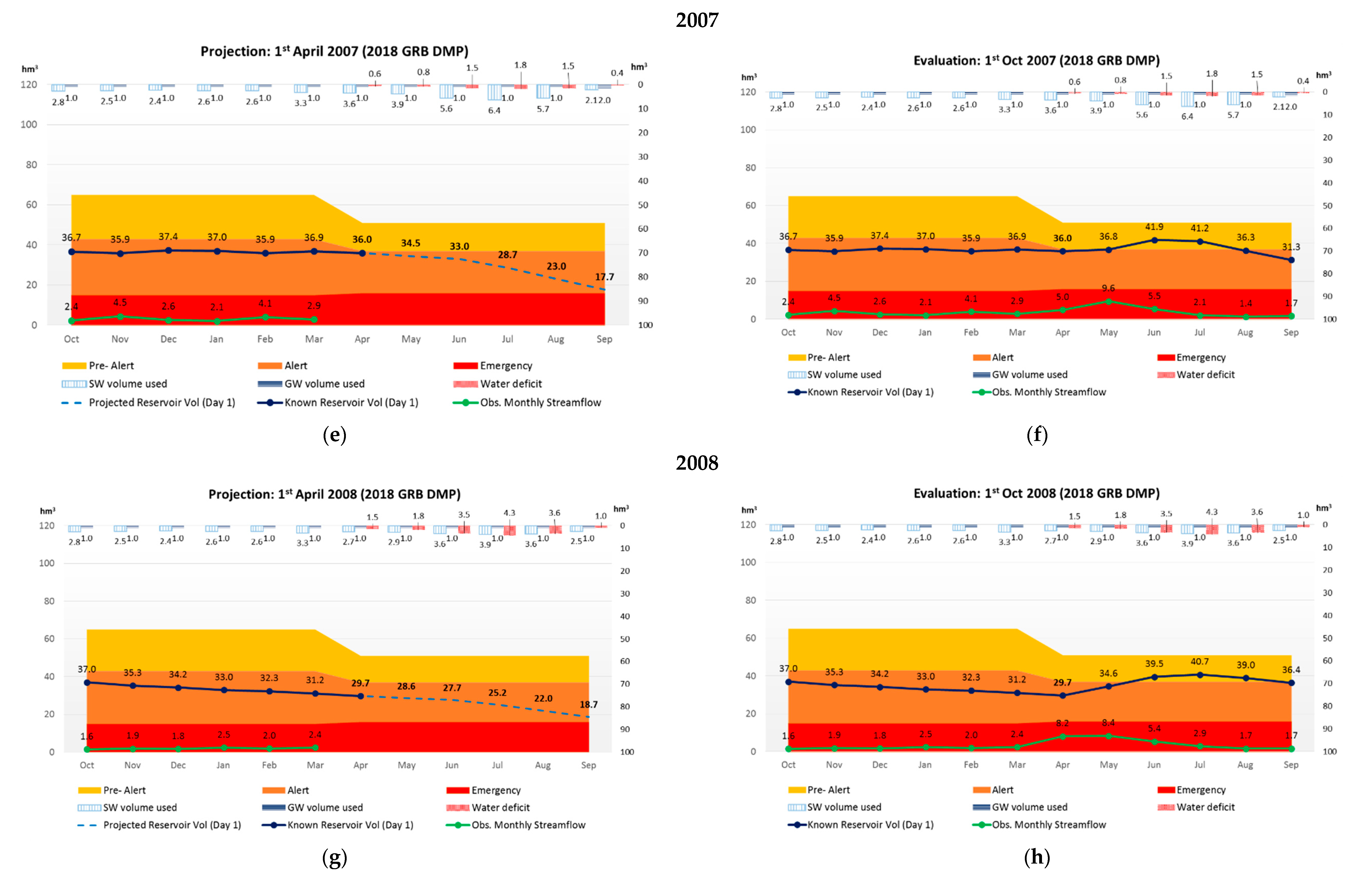
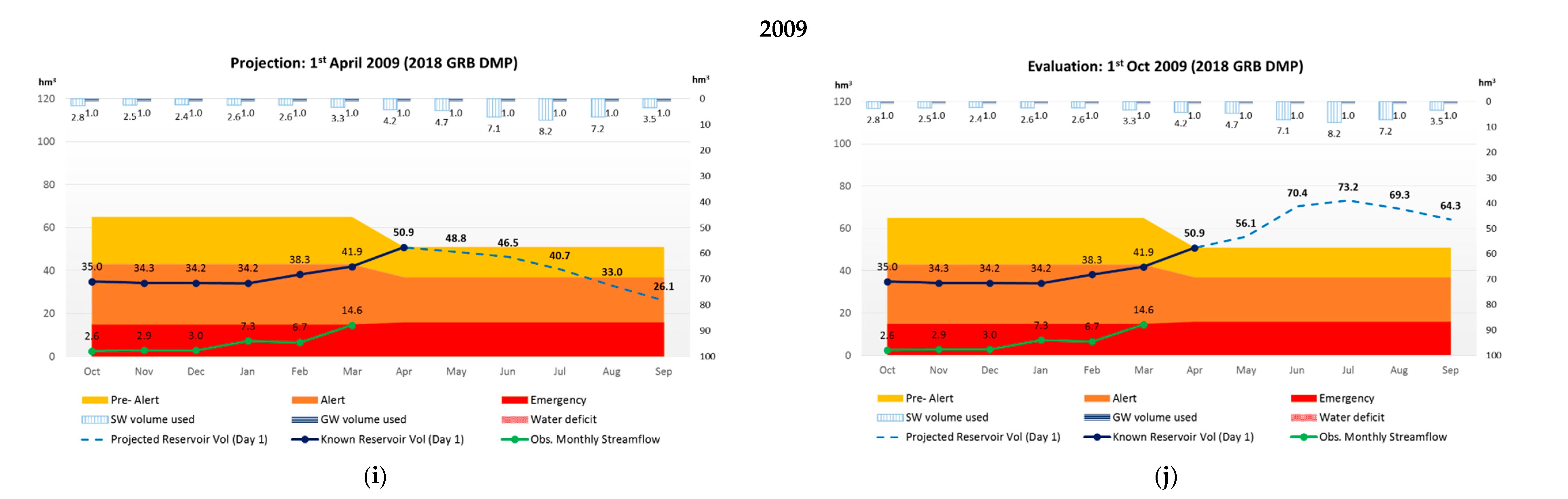
The authors wish to replace the old Figure 6 shown in this paper [1]:
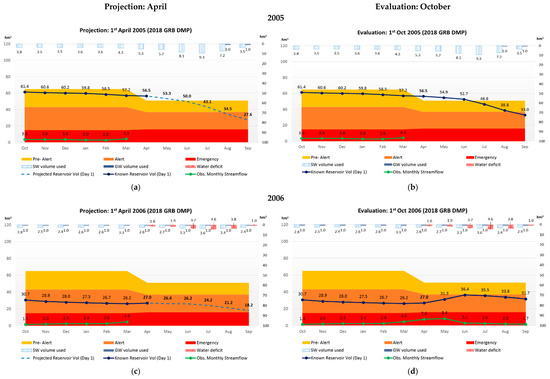
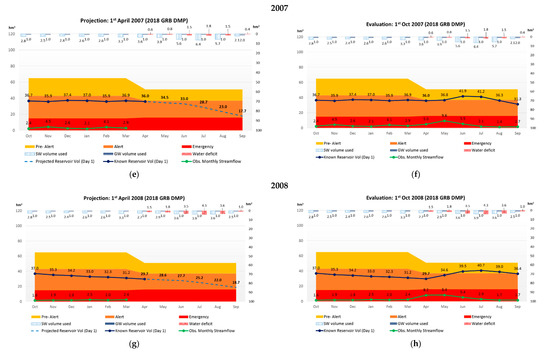
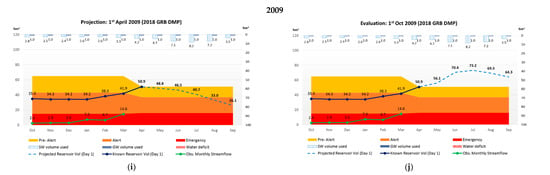
Figure 6.
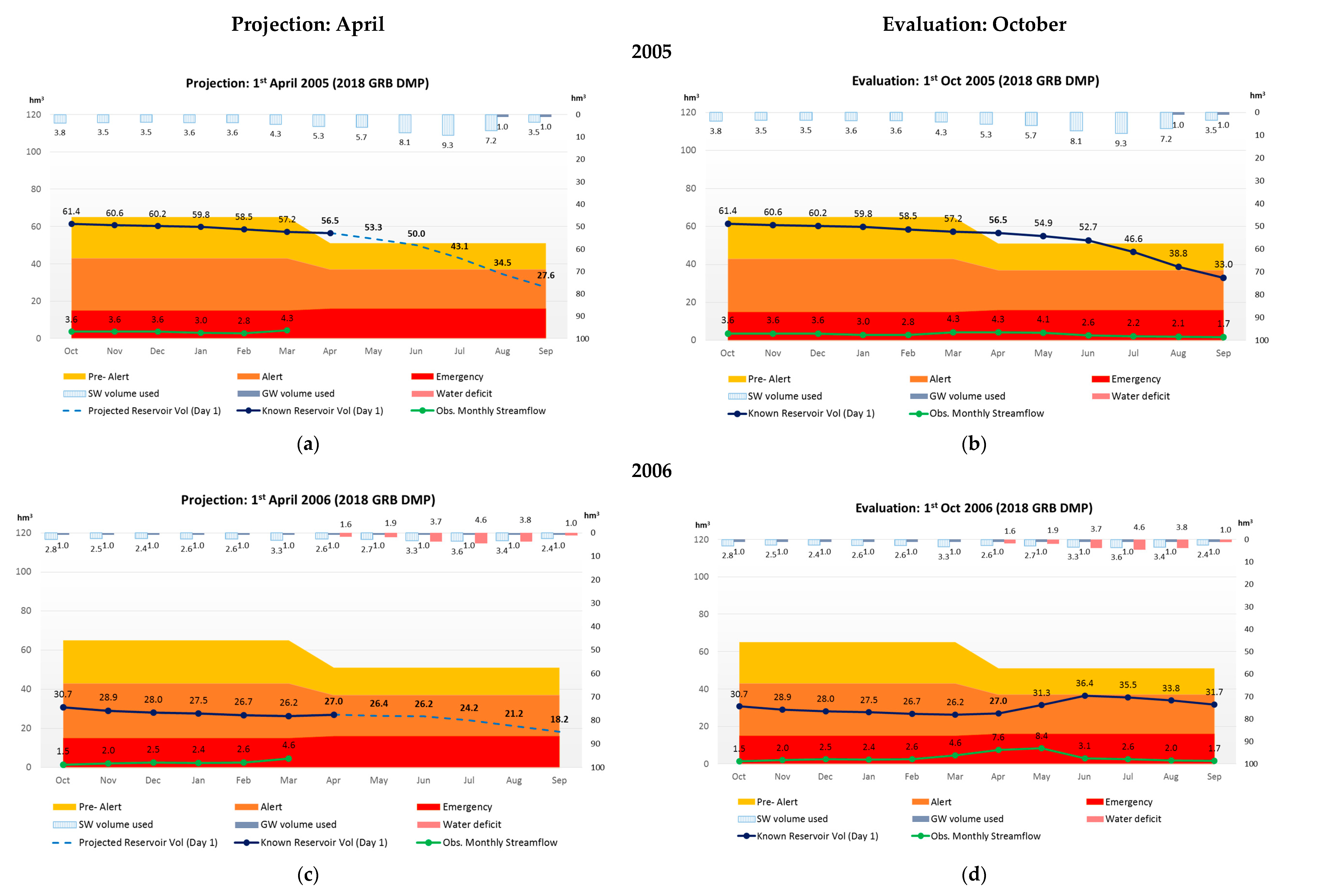
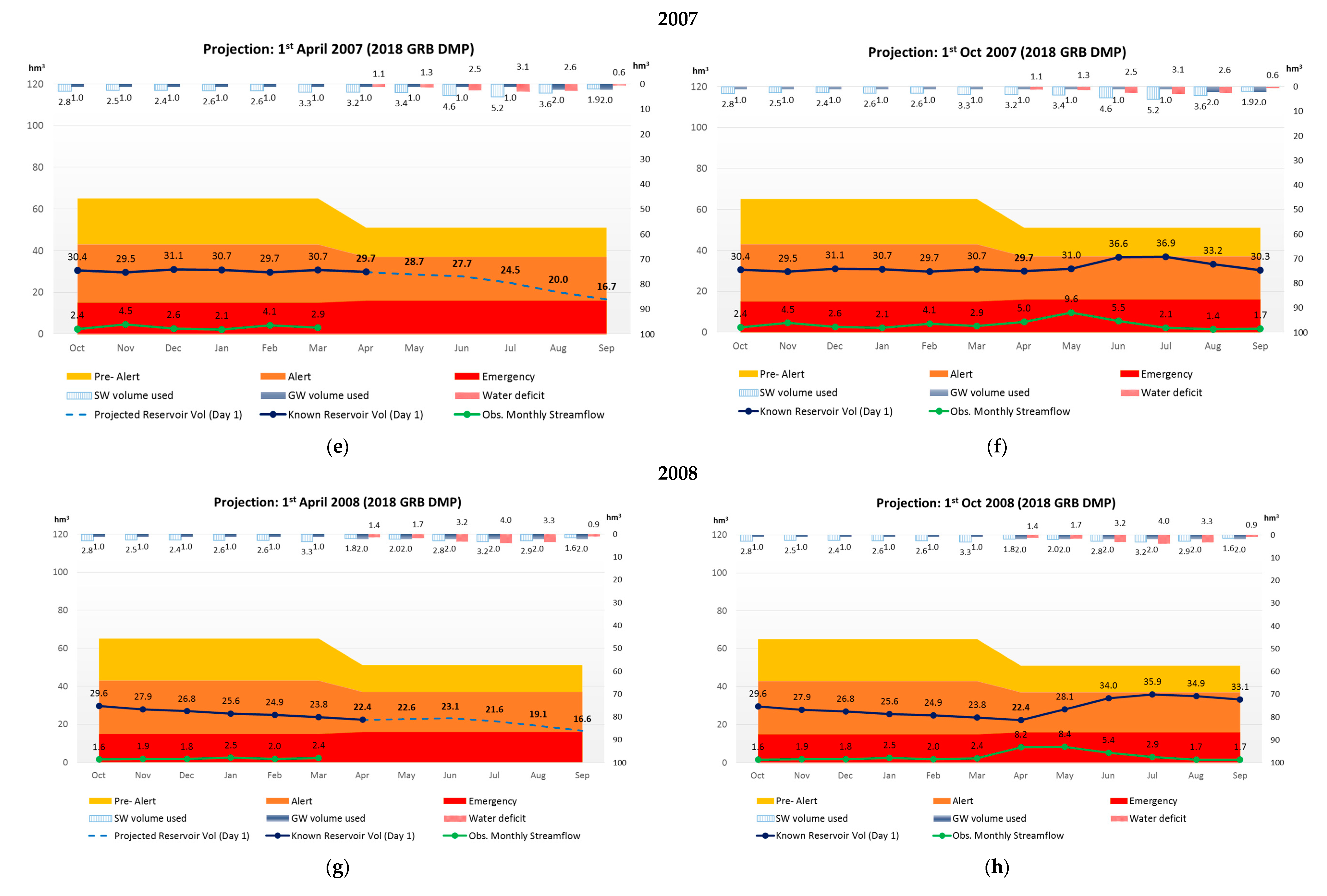
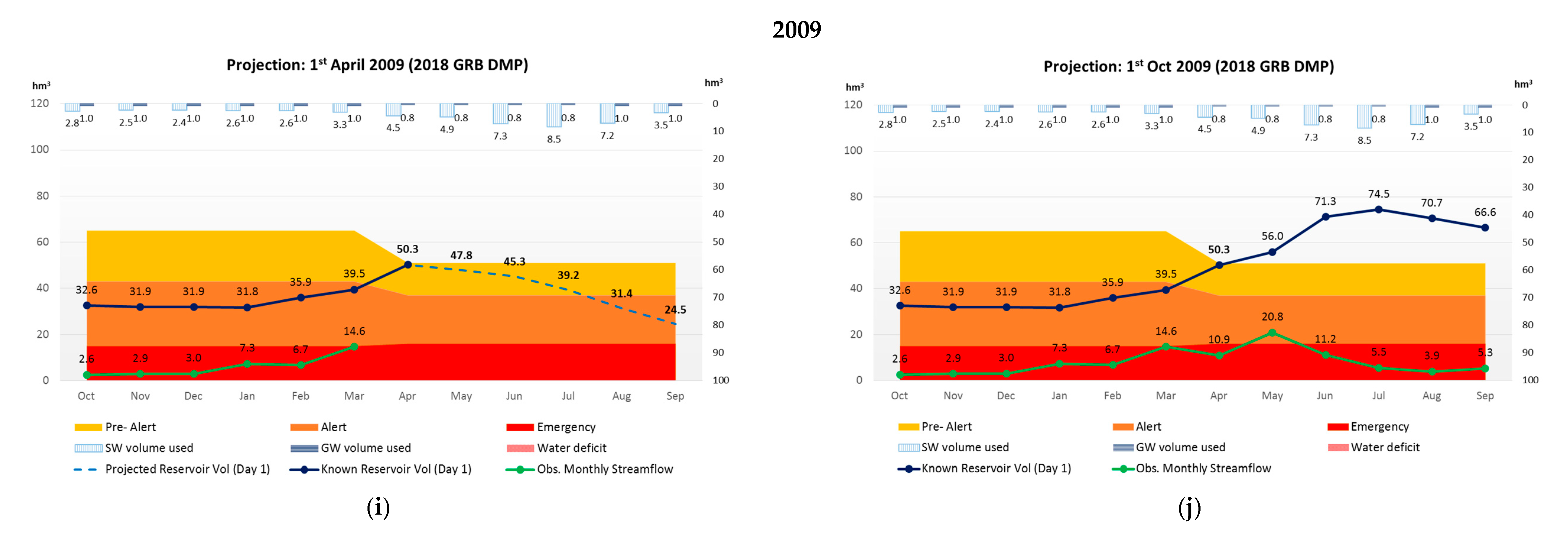
2018 GRB DMP: Measures taken in April (a,c,e,g,i) and evaluation of the real situation made in October (b,d,f,h,j).
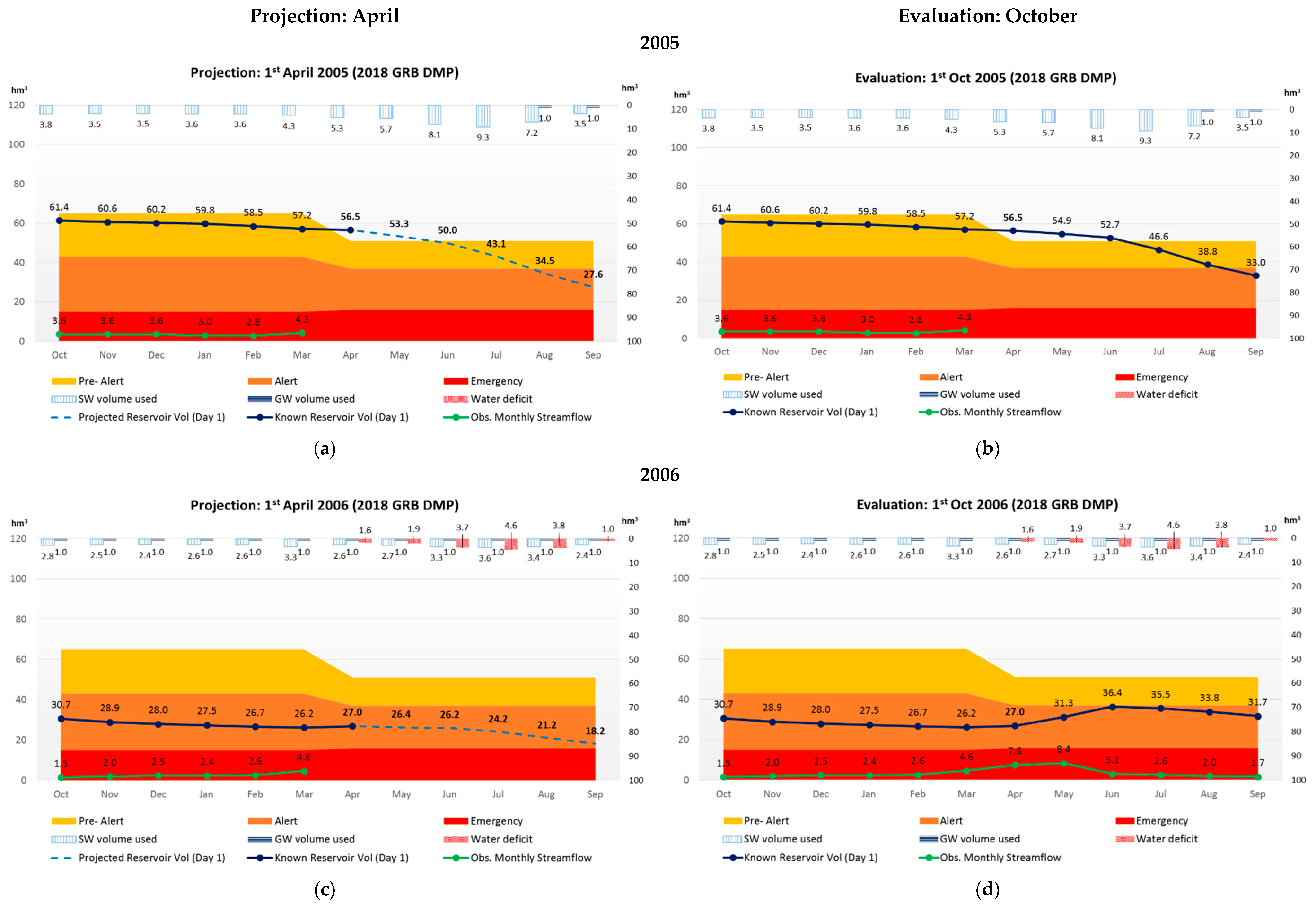
with the following corrected Figure 6:
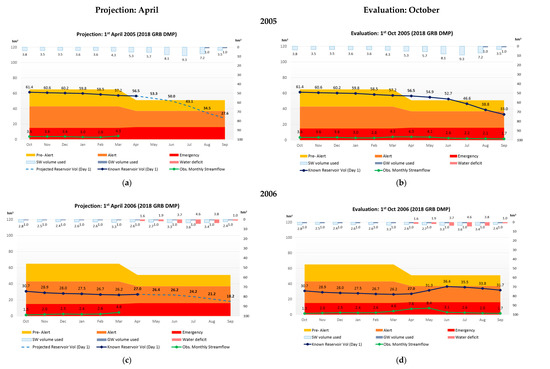
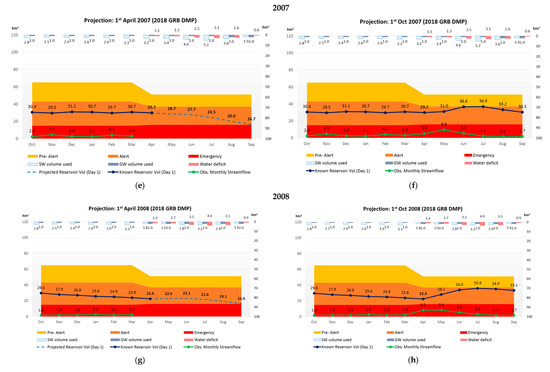
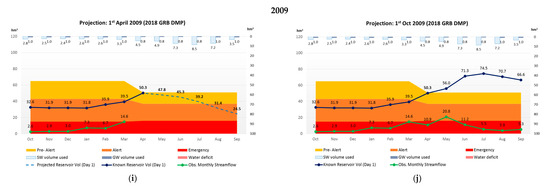
Figure 6.
2018 GRB DMP: Measures taken in April (a,c,e,g,i) and evaluation of the real situation made in October (b,d,f,h,j).
The authors wish to replace the old Figure 7 shown in this paper [1]:
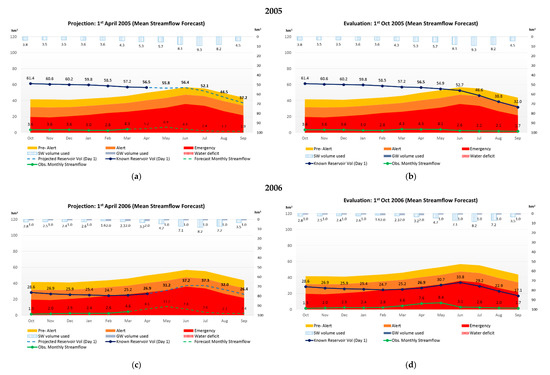
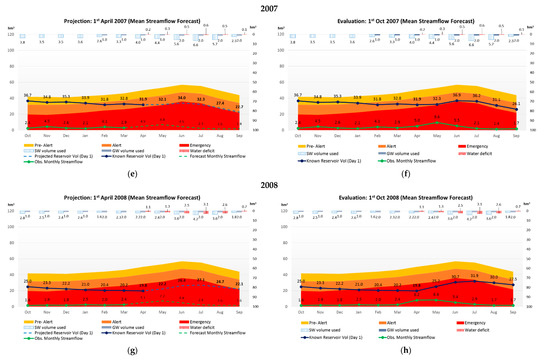
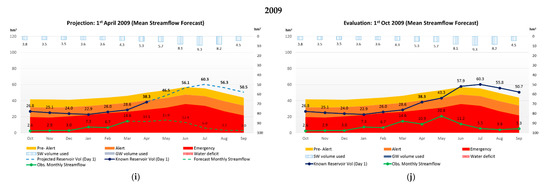
Figure 7.
Using streamflow forecast models (in this case, AQUAFOR): Measures taken in April (a,c,e,g,i) and evaluation of the real situation made in October (b,d,f,h,j).
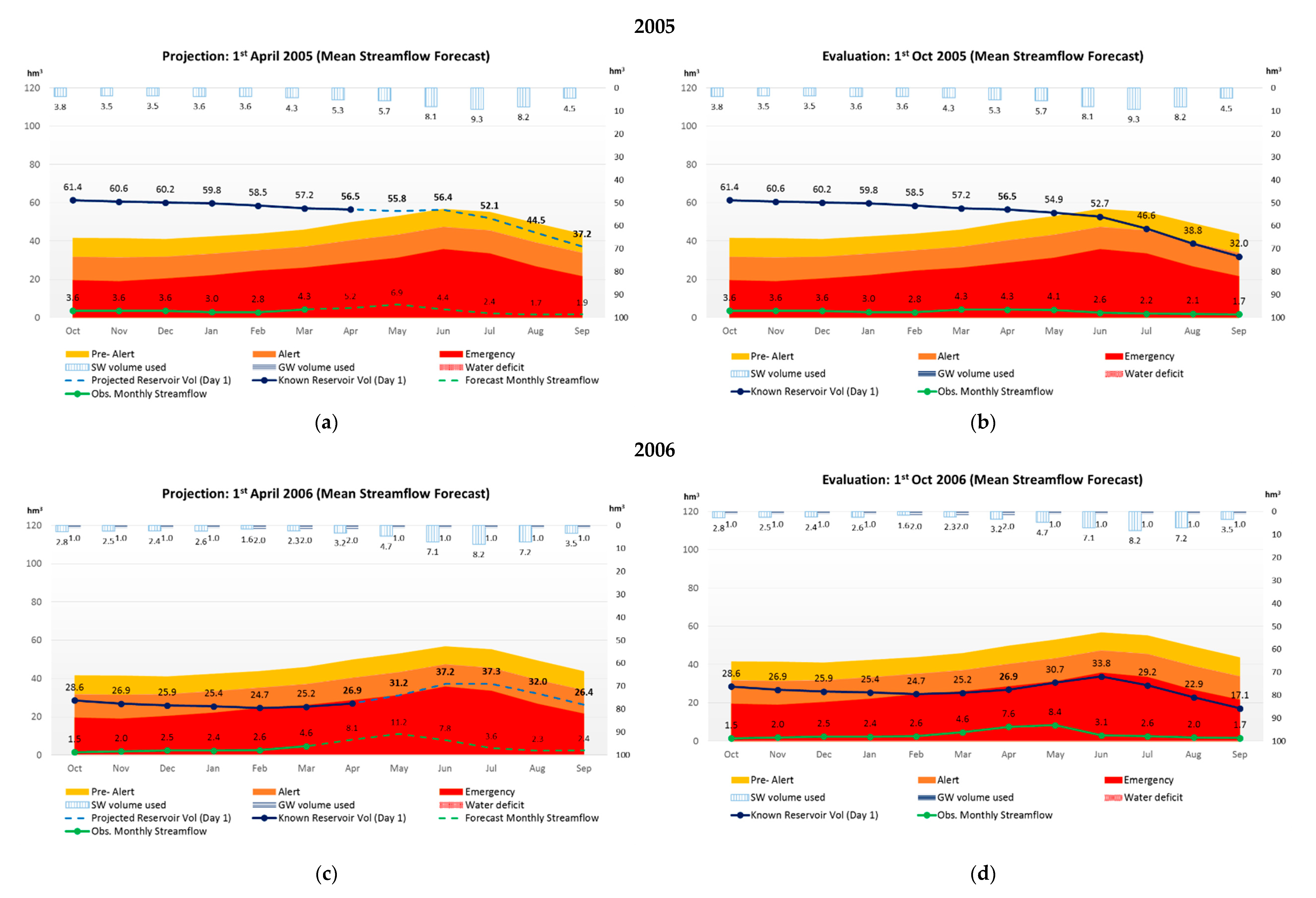
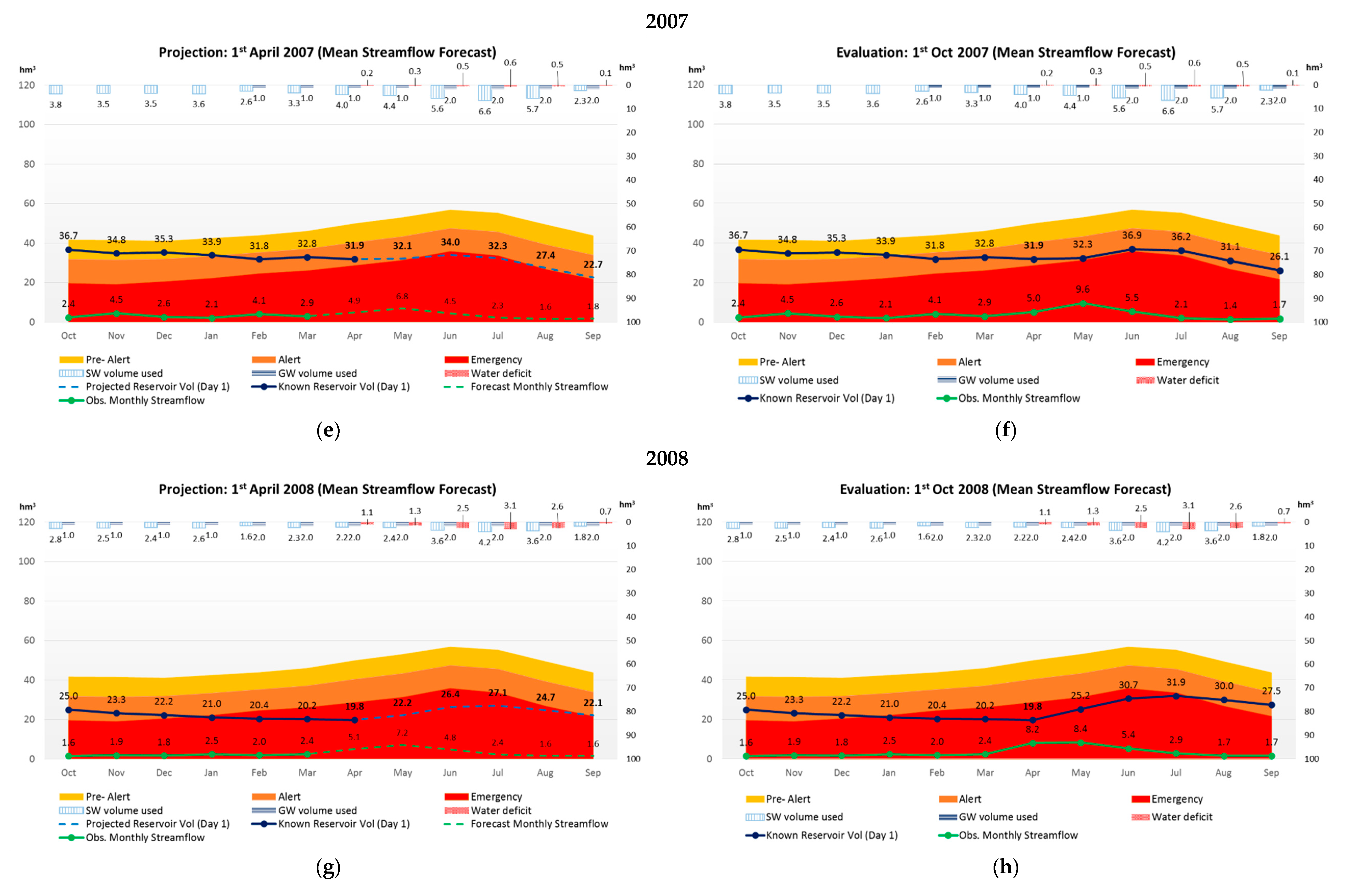
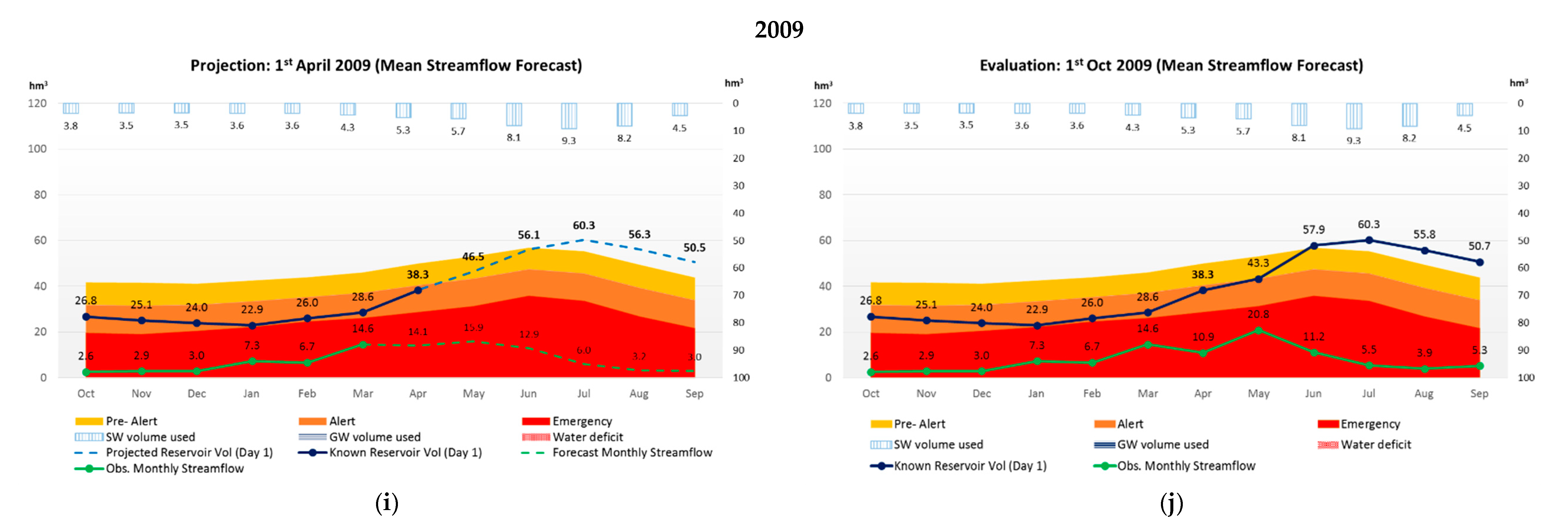
with the following corrected Figure 7:
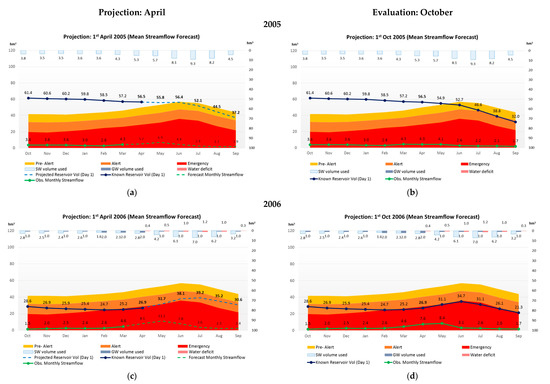
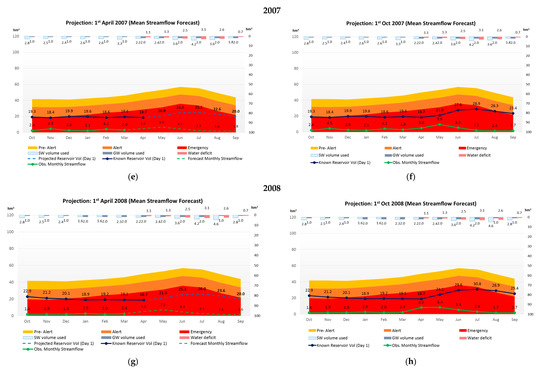
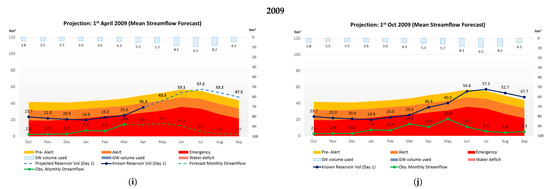
Figure 7.
Using streamflow forecast models (in this case, AQUAFOR): Measures taken in April (a,c,e,g,i) and evaluation of the real situation made in October (b,d,f,h,j).
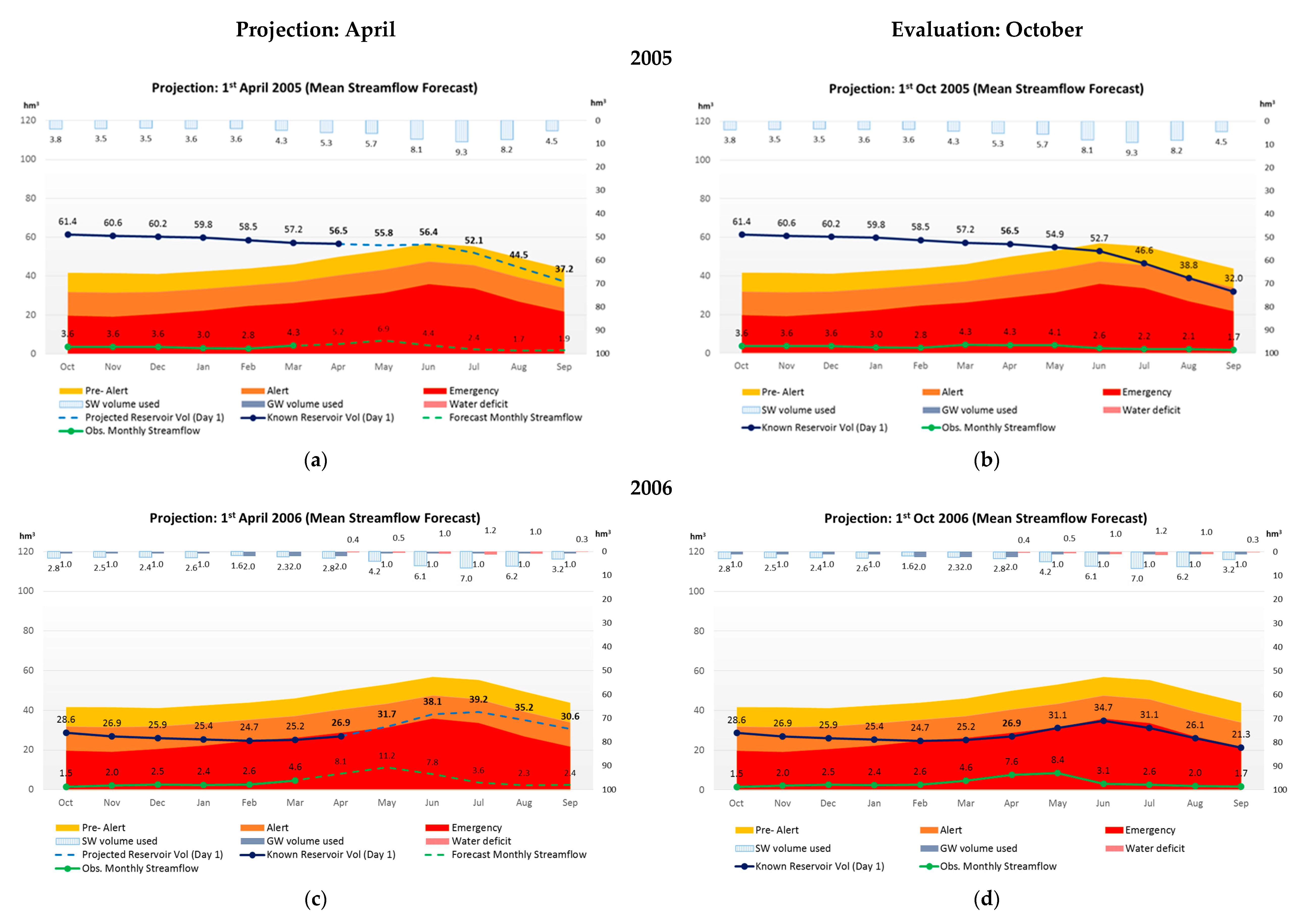
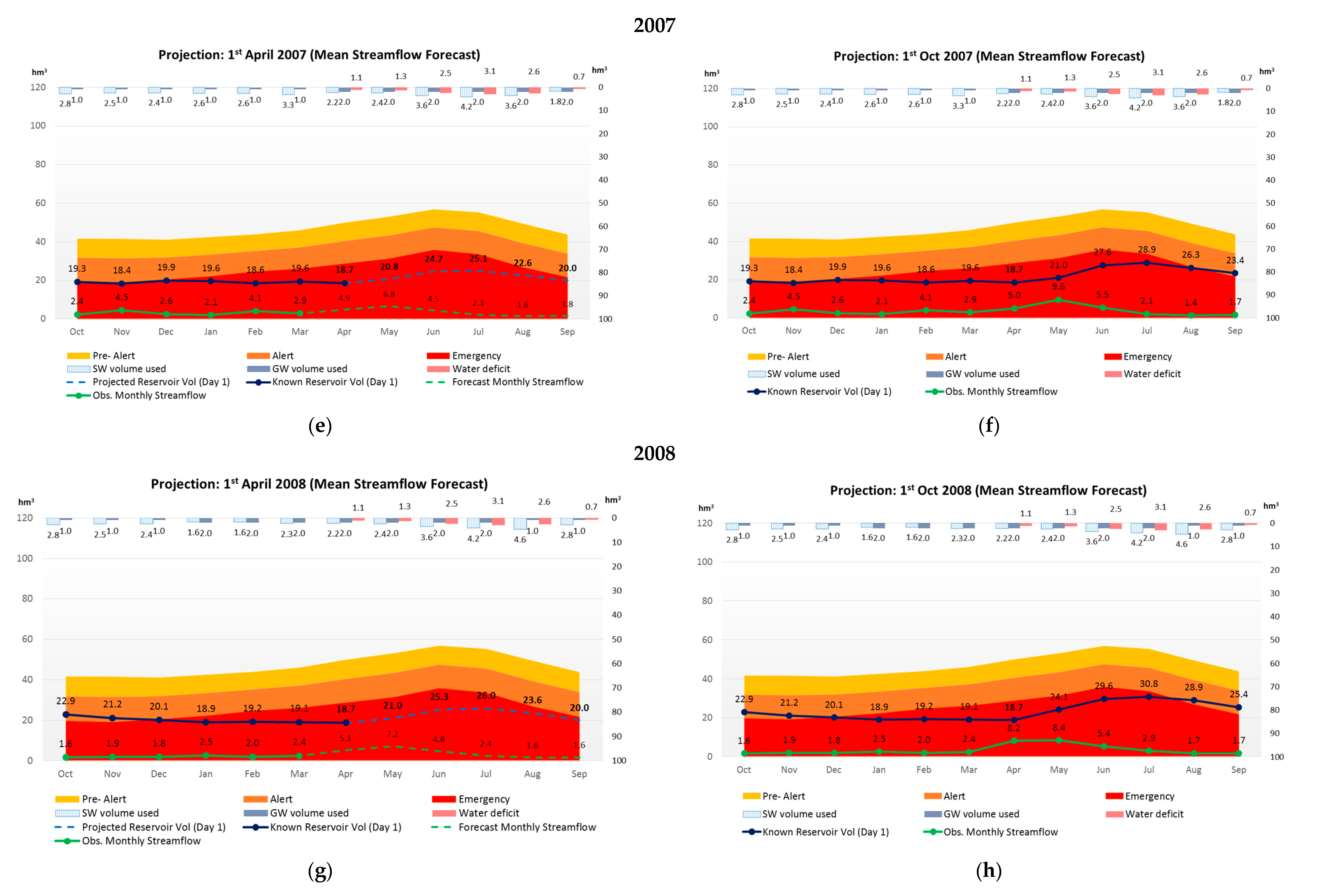
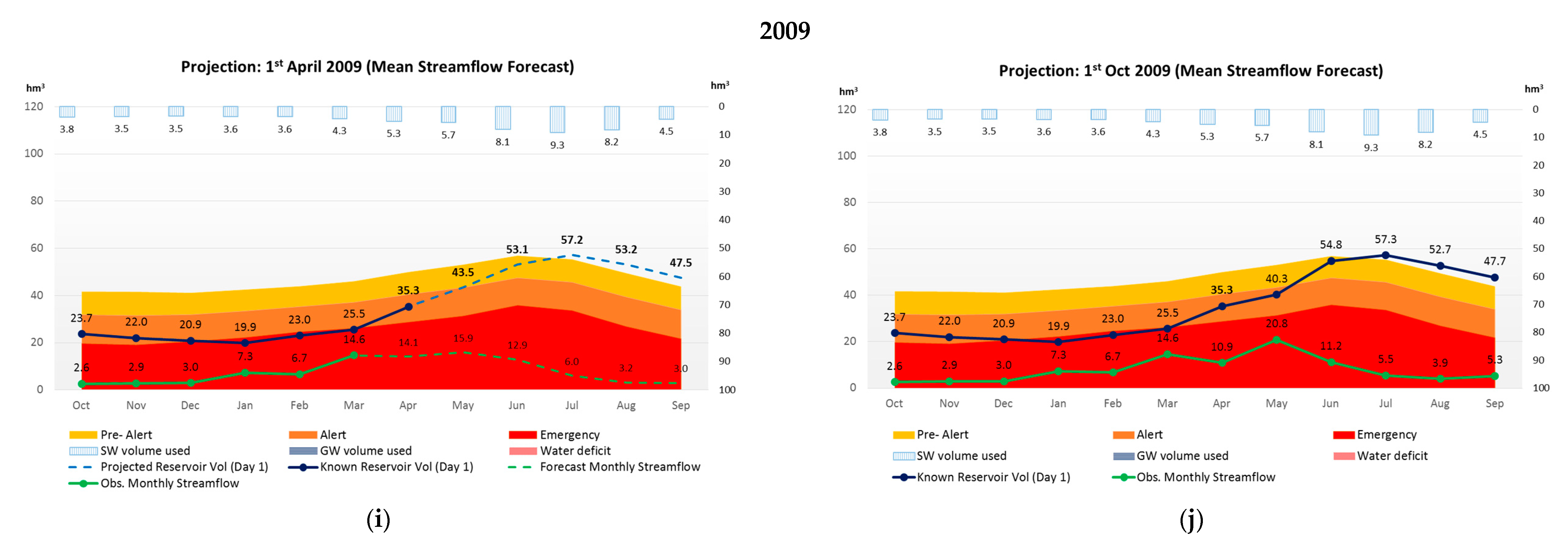
On page 29, the fifth paragraph shown in this paper [1]: “Indeed, the water deficits of the system are considerably reduced (up to 66%), and the use of strategic GW resources is minimized (up to 9%)” should be replaced with the following corrected paragraph: “Indeed, the water deficits of the system are considerably reduced (up to 37%), and the use of strategic GW resources is minimized (up to 9%)”.
Reference
- Hervás-Gámez, C.; Delgado-Ramos, F. Are the Modern Drought Management Plans Modern Enough? The Guadalquivir River Basin Case in Spain. Water 2020, 12, 49. [Google Scholar] [CrossRef] [Scilit]
© 2020 by the authors. Licensee MDPI, Basel, Switzerland. This article is an open access article distributed under the terms and conditions of the Creative Commons Attribution (CC BY) license (http://creativecommons.org/licenses/by/4.0/).