


Abstract
Weeds represent a major constraint in the cultivation of medicinal and aromatic plants (MAPs), causing significant reductions in yield, biomass, and essential oil quality while increasing labor and production costs. Effective weed management is particularly critical during early crop growth, when young plants are most vulnerable to competition. Non-chemical strategies, including cultural practices, mechanical and thermal weeding, mulching, and crop diversification, have proven effective in suppressing weeds, enhancing crop competitiveness, and maintaining yield and quality, especially in organic or low-input systems. Mulching and optimized cultivation strategies consistently provide reliable weed control, improve soil moisture and nutrient use efficiency, and can influence secondary metabolite accumulation. Chemical weed control, including selective pre- and post-emergence herbicides, remains important in slow-growing MAPs but is increasingly constrained by regulatory restrictions and concerns over residues in raw plant material and essential oils. Integrated weed management combining cultural, physical, and reduced chemical approaches offers the most effective solution, balancing efficacy, crop safety, and product quality. Emerging strategies such as bioherbicides, precision agriculture, and robotic systems hold promise but require further research. Advancing weed management in MAPs will depend on interdisciplinary studies, field-scale validation, and technology-driven innovations to support sustainable, high-quality production.
1. Introduction
Weeds are usually defined as plants growing where they are not wanted, especially in agricultural systems, where they compete with crops for nutrients, light, water, and space, thereby reducing yield and quality [1,2]. In the cultivation of medicinal and aromatic plants (MAPs), weeds pose a major challenge, leading to significant reductions in yield, biomass, and product quality while also increasing production costs [3,4]. Yield losses due to weeds in MAPs can be severe, ranging from 35% to 90% depending on the species and management practices [5,6,7,8]. The composition and dynamics of weed flora in MAP systems are strongly influenced by the weed seed bank, which acts as a reservoir of viable propagules in the soil. They are also shaped by climatic and environmental factors such as temperature, precipitation, and light, which affect germination and establishment. In addition, many weed species also occur as associated or volunteer plants in crop stands due to overlapping ecological niches and reproductive strategies [9,10]. Weeds can significantly reduce essential oil yield and alter its composition, with reported reductions of up to 60–80% in species such as Angelica archangelica L. and Mentha arvensis L. [11,12], in addition to direct competition and allelopathic effects [13]. Furthermore, weed infestation increases labor requirements, production costs, and risks of biomass contamination, potentially compromising product quality and safety due to the presence of toxic compounds such as pyrrolizidine and tropane alkaloids [5,14,15,16,17,18,19,20,21].
MAPs are increasingly important globally, contributing to the pharmaceutical, cosmetic, and food industries, and the economic and ecological value of these crops underscores the need for effective cultivation practices [22,23]. Given the high value of MAP products and concerns about pesticide residues, non-chemical and integrated weed management strategies are particularly relevant, as they help safeguard product quality while maintaining yield [24,25].
The critical period for weed control in MAPs generally occurs during early crop growth, when young plants are most vulnerable to competition. In Satureja hortensis L., weed interference begins shortly after sowing and extends to mid-season, significantly reducing essential oil yield and altering composition [26]. In Mentha arvensis, the most sensitive periods were 30–75 days after planting for the first harvest and 15–45 days for the second, with early weed pressure strongly decreasing herb and oil yield, plant height, and leaf-to-stem ratio [12,27]. Similarly, in Mentha piperita L., weed presence reduced biomass and essential oil yield, while hand weeding and higher planting density improved crop growth and yield [28]. Slow initial growth and poor canopy development, as observed in crops like Curcuma longa L., further increase vulnerability to weed competition during early growth stages [7]. The vulnerability of young plants during this critical early growth phase underscores the need for timely, species-specific, and integrated weed management strategies.
Despite the recognized impact of weeds on yield, essential oil quality, and crop economics, comprehensive reviews addressing both chemical and non-chemical management strategies in MAPs remain limited, highlighting a knowledge gap and the importance of integrative assessments. This narrative review aims to provide a comprehensive and structured synthesis of weed management strategies in MAP cultivation, encompassing preventive, physical, cultural, and chemical approaches, as well as emerging technologies, with a particular emphasis on sustainable and integrated practices.
2. Experimental Approaches to Weed Control in MAPs
This review draws on information from several major databases, including ScienceDirect, Springer Nature, Web of Science, Scopus, and Google Scholar. The search was conducted using the keywords “weed management” and “medicinal and aromatic plants” in titles, abstracts, and keywords. Studies were included if they investigated weed management, reported experimental, field, or modeling results, and included a control; review articles were excluded.
A diverse set of non-chemical strategies, including cultivation practices, physical methods, mulching, and crop diversification, has been reported to effectively suppress weeds, enhance crop competitiveness, and maintain yield and quality in MAPs. Additionally, chemical weed management is often used as a control in experiments, so it is also included. These approaches form a foundation for sustainable and integrated weed management, as summarized in Table 1.
Table 1.
Experimental approaches to non-chemical physical and biological weed control in MAPs: methods and controls.
3. Preventive Cultivation Practices Influencing Weed Control
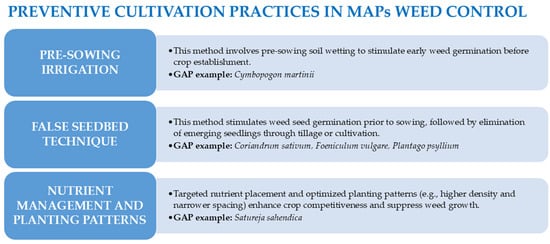
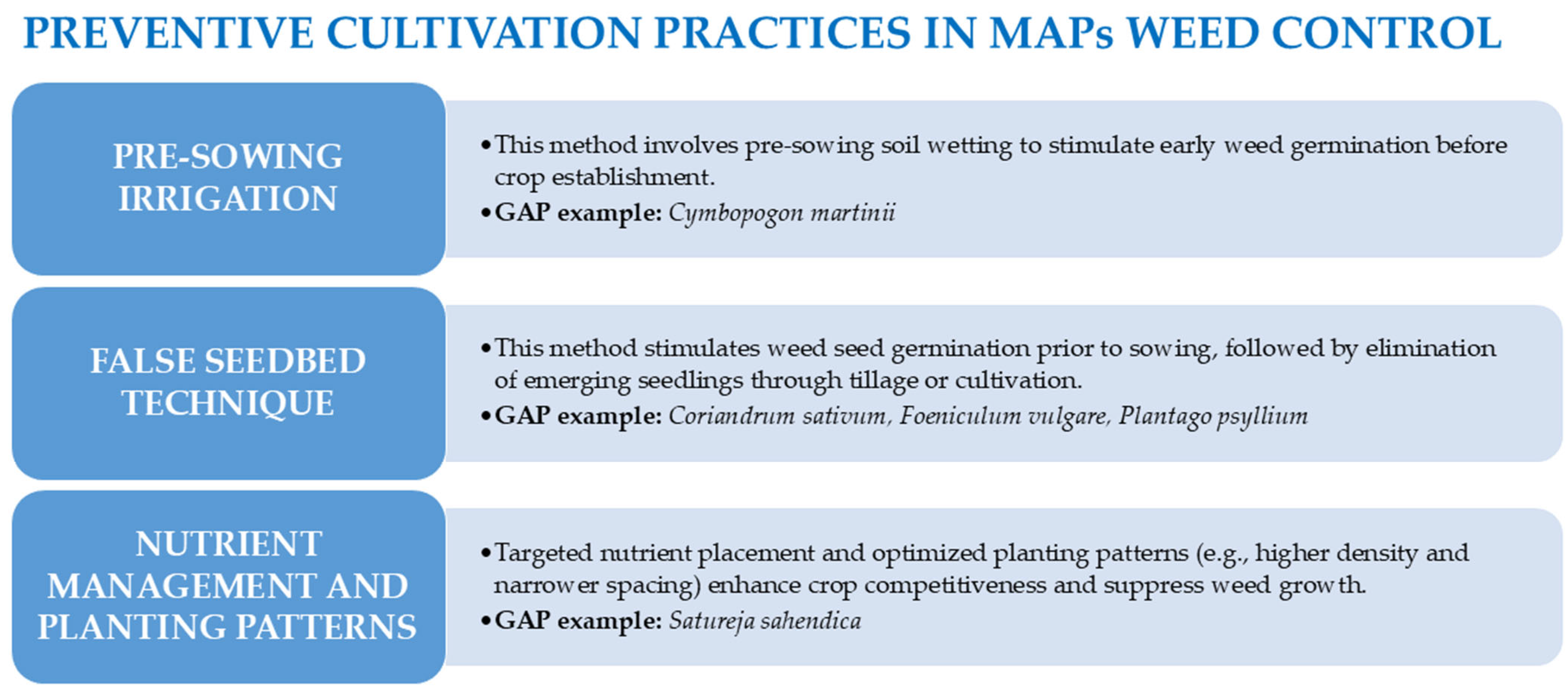
Preventive cultivation practices applied prior to crop establishment, such as pre-sowing irrigation and the false seedbed technique, can effectively reduce weed emergence in MAPs by stimulating germination of non-dormant weed seeds and lowering subsequent weed density and labor requirements [79,80]. In Cymbopogon martini (Roxb.) Will.Watson, repeated pre-sowing irrigations combined with minimal hand weeding significantly reduced weed density and biomass while maintaining seedling growth [44]. Although mechanical weeding, flaming, and mulching reduced weed biomass by 50–95%, the false seedbed often delayed crop establishment and negatively affected early growth, resulting in 40–90% lower seed yields compared with untreated plots, limiting its suitability despite good weed control in Coriandrum sativum L., Foeniculum vulgare Mill., and Plantago psyllium L. crops [35]. In contrast, cultivation practices during crop growth enhance weed suppression indirectly by improving crop competitiveness; in Satureja sahendica Bornm., optimized nutrient management and planting patterns improved crop–weed interactions and increased thymol content without significantly affecting weed density [78], highlighting the value of integrated, non-chemical weed management approaches. A brief summary of preventive cultivation practices with examples of good agricultural practices (GAP) in MAP cultivation is presented in Figure 1.
Figure 1.
Overview of preventive cultivation practices and examples of good agricultural practices (GAP) applied in medicinal and aromatic plant (MAP) cultivation.
4. Physical Methods as Non-Chemical Weed Management Strategy
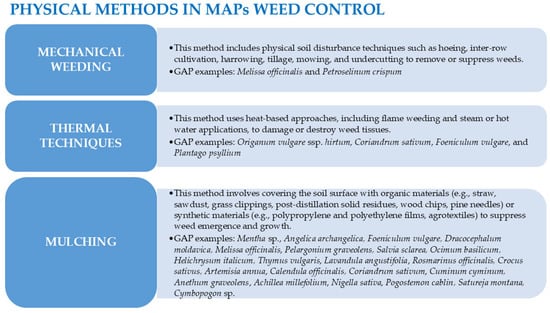
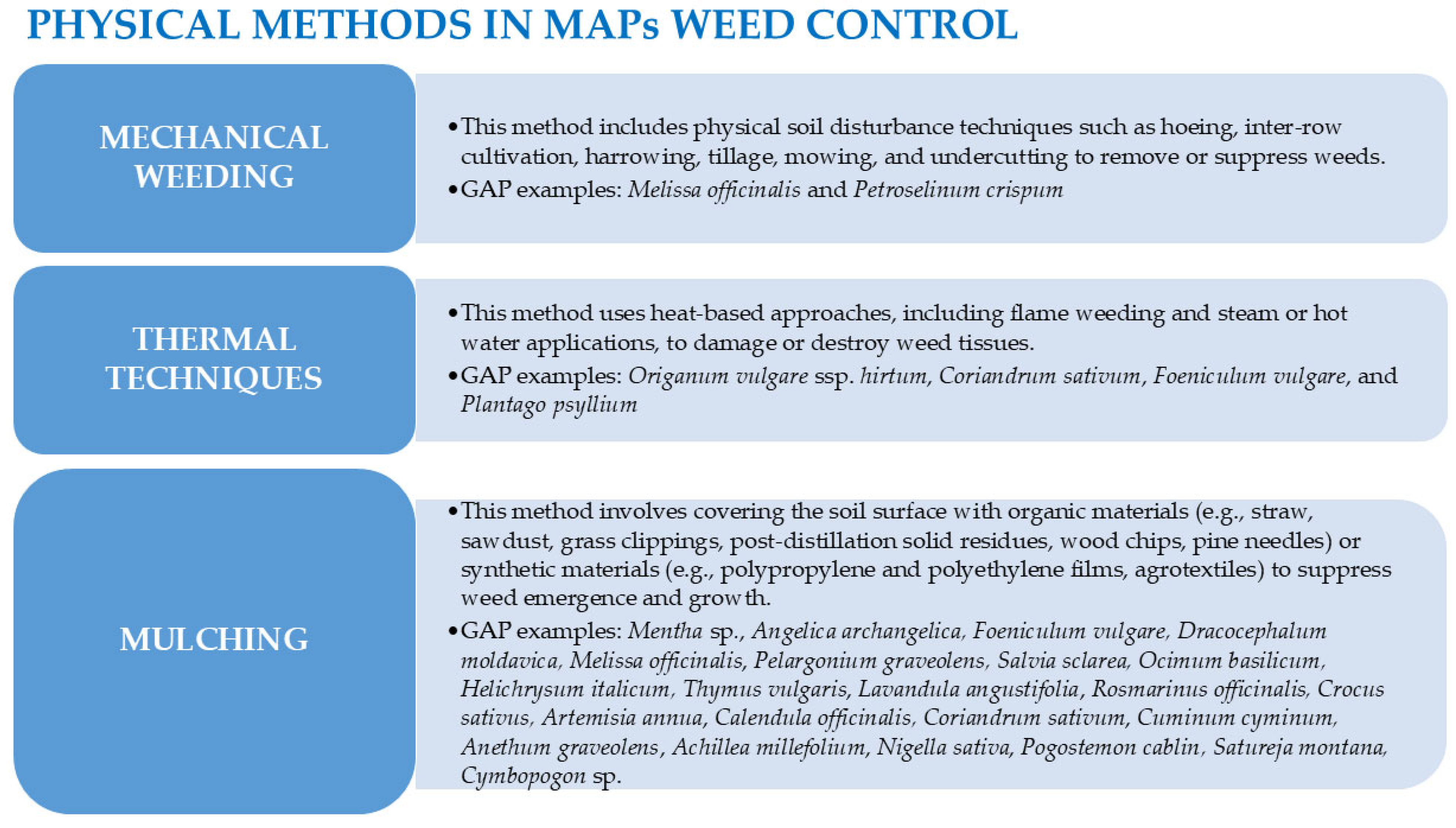
Non-chemical physical weed control methods include mechanical weeding, thermal techniques such as flaming, and mulching, which provide sustainable options for managing weeds in MAP cultivation (Figure 2). In experimental studies, herbicide treatments are often included as a reference to assess the efficacy of these non-chemical approaches, while untreated, weed-infested plots serve as a negative control.
Figure 2.
Overview of physical methods and examples of good agricultural practices (GAP) applied in medicinal and aromatic plant (MAP) cultivation.
4.1. Mechanical Weeding
Mechanical methods include hand and mechanical weeding, such as hoeing, inter-row cultivation, harrowing, tillage, mowing, and undercutting [81]. Regular mechanical weeding and hand weeding using a hand hoe or hand-pushed rotary tiller are commonly used as control methods in experiments [6,11,12,26,28,31,32,35,36,37,44,45,46,47,49,50,53,60,61,62,66,67,70,72,78,82]. To date, only one study has examined other mechanical methods in detail [58]. This study evaluated the performance of five mechanical intra-row weeding devices (finger, tine harrow, ridger share, torsion, and rotary weeders) in MAPs, specifically Melissa officinalis L. and Petroselinum crispum (Mill.) Fuss, during the critical establishment phase. Across eight field trials, weed control efficacy varied widely, with tine harrows and finger weeders showing greater applicability at early growth stages, while rotary weeders caused the most crop damage. Yield reductions were generally limited and inconsistent, and no single device consistently outperformed the others. These results indicate that, despite technological advances, mechanical intra-row weeding alone cannot yet fully replace herbicides, highlighting the need for a combination of complementary non-chemical and integrated weed management approaches and further research under variable field conditions.
4.2. Thermal Weeding
Thermal weed management uses heat to suppress or kill weeds without chemical herbicides by rapidly raising plant tissue temperatures, thereby disrupting cellular structures [83]. The efficacy of thermal weed control is highly variable and depends on several agronomic and environmental factors, including weed growth stage, with younger plants being significantly more susceptible than mature individuals, as well as species-specific tolerance linked to morphological and physiological traits [84,85]. Environmental conditions such as humidity, wind, and soil moisture can further influence heat transfer efficiency and treatment outcomes [86]. In addition, the intensity and duration of heat exposure play a critical role in determining cellular damage and overall weed mortality, which explains the inconsistent results reported across studies [87]. Common thermal techniques include flame weeding and steam or hot water applications. Flame weeding, often applied with propane burners, is the most widely studied method and is particularly effective on young broadleaf weeds, as it causes intracellular water to vaporize and ruptures cell membranes. This method is widely used in both organic and conventional agriculture [88]. Steam and hot water treatments provide a lower fire-risk alternative to open flames, transferring heat to weed plants and seeds to induce dehydration and death [89]. Overall, thermal methods show promise as part of integrated weed management but are limited by high energy requirements, variable efficacy among weed species, and the need for further technological refinement for precise and cost-effective field use, particularly under conditions where application parameters can be carefully optimized [90]. From an economic perspective, the adoption of these methods depends strongly on labor availability, energy costs, and farm scale, which may limit their practical applicability despite their environmental benefits.
Field experiments conducted over three growing seasons evaluated non-chemical (flaming) weed management strategies in comparison with chemical (pre- and post-emergence herbicide) treatments in Origanum vulgare L. ssp. hirtum (Link) Ietswaart [70]. Although none of the treatments provided complete weed control, flaming achieved moderate suppression but caused severe phytotoxicity and the greatest reductions in Origanum vulgare growth and essential oil yield. Post-emergence herbicide applications were the most effective, providing the highest weed control while maintaining Origanum vulgare performance comparable to the weed-free control. These results highlight the potential role of flaming as a non-chemical weed management practice. However, its negative impact on crop tolerance limits its standalone use, emphasizing the need for careful integration with chemical control methods. Further studies on herbicide residues in oregano are required before practical implementation.
Considering that MAPs are increasingly produced under organic systems, where effective non-chemical weed control is critical due to the negative effects of weeds on yield and quality [35], a four-year field experiment on Coriandrum sativum, Foeniculum vulgare, and Plantago psyllium tested several alternatives, including mechanical weeding, flaming, false seedbeds, and biodegradable mulch. Flaming proved to be one of the most effective strategies, reducing weed biomass by up to 95 percent without delaying sowing or negatively affecting crop performance. Overall, flaming provided efficient weed suppression while maintaining crop productivity, making it a promising method for organic cultivation of MAPs.
4.3. Mulching
A recently published review addressed mulching as a sustainable, non-chemical weed management strategy in the cultivation of MAPs, evaluating the effectiveness of organic, synthetic, and living mulches in suppressing weeds and improving crop yield [91]. The review discussed the mechanisms of mulch action, including light interception, physical suppression, and microclimate modification, as well as their effects on soil properties and secondary metabolite biosynthesis. Overall, the findings indicate that mulching effectively reduces weed biomass, enhances crop performance, and supports organic farming systems, although its effectiveness depends on mulch type, application rate, crop species, and agroecological conditions. Numerous studies further confirm mulching as a highly effective non-chemical weed management strategy in MAP cultivation, as summarized in Table 1.
Mulching, both organic and synthetic, is a highly effective non-chemical strategy for weed suppression, yield improvement, and quality enhancement in MAPs. In Mentha piperita, synthetic mulches such as silver-brown film and black agrotextiles nearly completely suppressed weeds and maximized biomass and essential oil yields [60,61]. Similar benefits were observed in Angelica archangelica, where black and silver-brown agrotextiles achieved complete weed control, improved fresh root yields, and influenced essential oil composition [11,32]. In Foeniculum vulgare and Dracocephalum moldavica L., integrating straw or plastic mulches with reduced herbicide application enhanced weed suppression, increased biomass, and improved essential oil yield [47,49,50]. In Melissa officinalis, black polypropylene mulch combined with higher planting density provided full weed control and maximized long-term economic returns [59]. Similarly, Pelargonium graveolens L’Hér. showed enhanced biomass with plastic mulches regardless of fertilizer application [71].
Straw mulching in Mentha spicata L. under rainfed Mediterranean conditions improved essential oil yield, mitigated photosynthetic inhibition, and influenced monoterpene composition, including carvone formation [64]. In Salvia sclarea L., mulching combined with partial substitution of chemical nitrogen with organic manure optimized soil temperature and moisture, enhancing plant growth, essential oil yield, and soil health [75]. Organic mulches, such as wood chips, consistently improved growth, yield, essential oil content, and water use efficiency in Ocimum basilicum L. under different irrigation regimes [66,68]. Black polyethylene mulch increased fresh and dry weight in basil and rosemary, whereas parsley showed no response, highlighting species-specific effects [67]. In Helichrysum italicum (Roth) G. Don, alfalfa and straw mulches differentially influenced flower yield, essential oil content, and bioactive compounds [51]. Black polypropylene mulches also supported growth and weed suppression in Thymus vulgaris L., Lavandula angustifolia Mill., and Rosmarinus officinalis L., proving suitable for marginal agricultural areas [53].
Mulching benefits extend to high-value crops such as Crocus sativus L. and Artemisia annua L., where polyethylene and sawdust mulches reduced weed pressure, conserved soil moisture, and improved vegetative and reproductive performance, corm development, and secondary metabolite accumulation [33,41,42]. In Calendula officinalis L. and Coriandrum sativum, black polythene or rice straw mulches combined with nutrient management or mechanical weeding significantly increased growth, flowering, seed yield, and essential oil content while suppressing weeds [34,36]. In Cuminum cyminum L., wheat mulch combined with reduced herbicide doses reduced weed biomass and improved growth, yield, and essential oil [43].
Other studies highlight mulching effects on soil microclimate and plant physiology. In Anethum graveolens L., polythene mulches enhanced plant height, branching, and seed yield under drip irrigation [30,31]. Mulches also positively influenced secondary metabolite production, as shown for Achillea millefolium L., Lavandula angustifolia, and Nigella sativa L., where organic or reflective polythene mulches improved essential oil and bioactive compound accumulation under optimal irrigation [29,55,65].
In long-term trials, polypropylene woven fabric mulch in Satureja montana L. and straw mulch in Pogostemon cablin Benth. improved water use efficiency, weed suppression, and drought resilience, although excessive moisture retention in clay soils occasionally increased pathogen pressure [73,74,77].
In addition to commonly used synthetic and natural mulches, post-distillation solid residues can also serve as valuable raw materials for mulching [92]. For example, post-distillation solid residues of Cymbopogon sp., when applied as mulch in the same crop, were found to be more effective than other weed management practices, including manual weeding or herbicide application, during the first year of cultivation, a period characterized by slow crop growth and high susceptibility to weed competition [45,46]. On the other hand, mulching with post-distillation solid residues of Cymbopogon sp., applied in Pelargonium sp. during the critical period of weed interference, specifically 45 days after planting and covering the first 90 days after planting, proved to be an effective cultural weed management practice [72].
Collectively, these studies demonstrate that both synthetic and organic mulches are integral to sustainable, non-chemical weed management in MAPs. Mulching improves weed control, optimizes water and nutrient use, enhances growth and yield, and can influence essential oil composition and bioactive compounds, making it a key practice for environmentally friendly and economically viable MAP cultivation.
5. Crop Diversification as Non-Chemical Weed Management Strategy
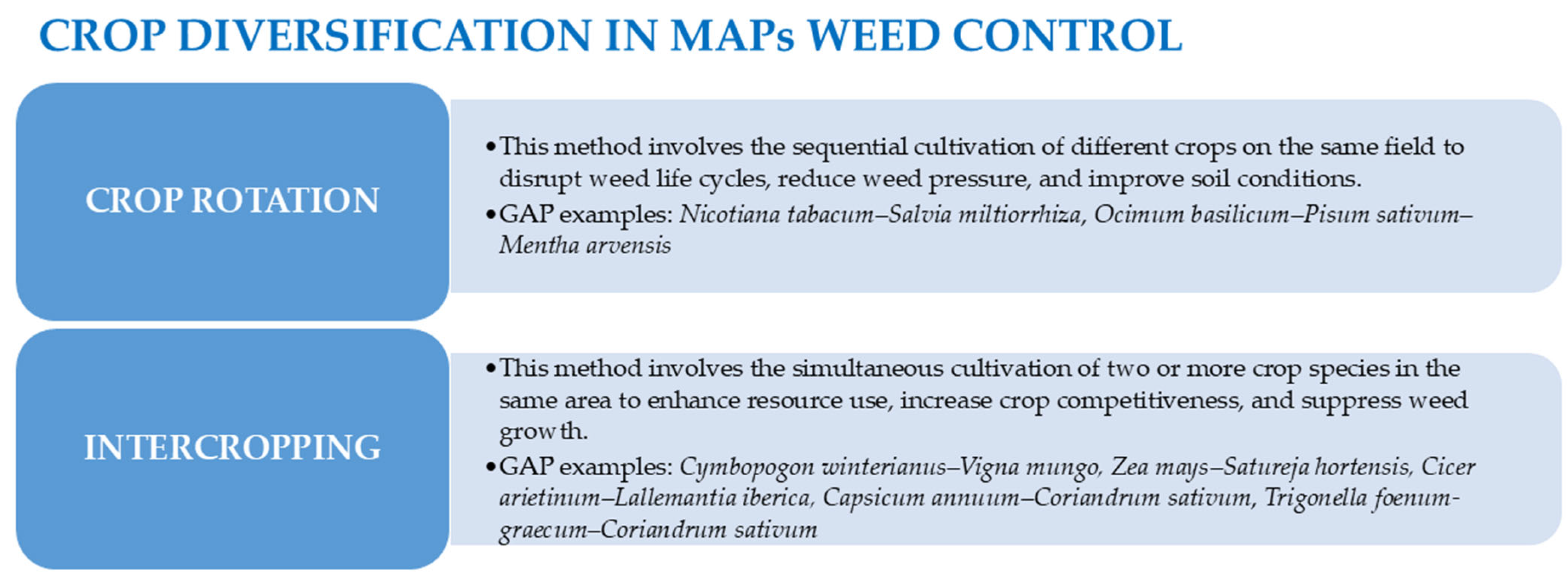
Crop diversification through the integration of medicinal plants into diversified cropping systems enhances agroecosystem sustainability by improving soil health, stimulating microbial activity, and increasing both land-use efficiency and overall crop productivity compared to simplified monocultures [93,94]. Studies show that intercropping or rotating MAPs with food crops can optimize resource use, contribute to effective pest and weed management, and support biodiversity while potentially improving yields and economic returns in sustainable agriculture [95,96]. Figure 3 summarizes key crop diversification practices and provides examples of good agricultural practices applied in MAP production.
Figure 3.
Overview of crop diversification methods and examples of good agricultural practices (GAP) applied in medicinal and aromatic plant (MAP) cultivation.
Continuous monocropping significantly reduces the growth, yield, and quality of Salvia miltiorrhiza Bunge, resulting in economic losses [97]. Crop rotation with tobacco has therefore been suggested as a strategy to optimize cultivation cycles by reshaping the soil microbial community structure [98]. Additionally, a study evaluating different cropping systems found that the sequence Ocimum basilicum (rainy season crop), Pisum sativum L. (winter season crop), and Mentha arvensis (summer season crop) generated the highest economic returns, including the greatest gross and net income, daily profit, and benefit–cost ratios [99]. These findings highlight that, beyond their ecological benefits, diversification strategies can also improve the economic efficiency of weed management by reducing reliance on external inputs and stabilizing yields. This diversified annual cropping system proved particularly effective in increasing farmers’ income while maintaining high yields, demonstrating the economic potential of incorporating aromatic plants into conventional crop rotations.
A recently published review paper addressed the intercropping of MAPs with other crops, such as cereals, legumes, vegetables, and perennial species, as a strategy for sustainable agriculture [96]. Across numerous MAP species, intercropping was shown to improve land-use efficiency, crop productivity, and essential oil yield and quality, often resulting in higher economic returns, particularly when combined with organic inputs or biofertilizers [100,101]. Beyond productivity, these systems provided important ecological benefits by enhancing soil fertility, stimulating microbial activity, increasing biodiversity, and contributing to effective pest and weed management [102,103]. The integration of MAPs into orchards, vineyards, and agroforestry systems further demonstrated their multifunctional role in influencing secondary metabolite production and overall agroecosystem performance [104,105,106]. Overall, intercropping is presented as an economically viable and environmentally sustainable approach, with its success depending on appropriate species selection, planting ratios, and sound agronomic management [96]. A growing body of evidence confirms intercropping as an effective non-chemical weed management approach in MAP production. However, only a limited number of studies explicitly consider weed management as the direct research objective [38,39,46,52,76], as presented in Table 1.
Intercropping has emerged as an important ecological component of non-chemical weed management in MAP production systems, where herbicide options are limited and crop competitiveness is often weak during establishment. By increasing canopy cover, improving spatial resource use, and enhancing crop competition, intercropping systems can suppress weed growth while simultaneously stabilizing yields. In perennial Cymbopogon winterianus Jowitt, weed pressure markedly reduced herb and essential oil yields, underscoring the importance of early weed control; however, although intercropping with Vigna mungo contributed to system diversification, it provided insufficient weed suppression and failed to maintain yields comparable to mulching or manual weeding, indicating limited reliability as a standalone strategy [46].
More consistent benefits of intercropping have been reported in annual and short-cycle crops. In Zea mays L.–Satureja hortensis systems, increasing the proportion of Satureja hortensis significantly reduced weed biomass, while maize yields exceeded those of monocultures, demonstrating that species complementarity can simultaneously enhance weed suppression and crop productivity [76]. Similarly, Cicer arietinum L.–Lallemantia iberica (Stev.) Fisch. et Mey intercropping reduced weed pressure and mitigated yield losses under weedy conditions through greater plant density and canopy closure, supporting its role as a complementary cultural practice that reduces dependence on intensive weed control [52]. In vegetable–herb systems, intercropping Capsicum annuum L. with Coriandrum sativum achieved the strongest reductions in weed density and biomass among several agroecological treatments and produced the highest yields, outperforming mulching and botanical extracts, thereby confirming intercropping as a highly effective non-chemical strategy for sustainable production [38]. Additionally, living mulch systems further illustrate the potential of intercropping for weed suppression. Interseeding Trigonella foenum-graecum L. within Coriandrum sativum stands significantly decreased weed biomass and improved seed yield relative to untreated controls, particularly at higher mulch densities [39]. Nevertheless, weed control was not consistently maintained throughout the season, indicating that living mulch performs best when integrated with supplementary measures such as hand weeding. Collectively, these studies demonstrate that intercropping can substantially reduce weed pressure, enhance crop competitiveness, and improve yield stability without chemical inputs. However, its effectiveness varies with species combinations and environmental conditions, suggesting that intercropping should be implemented as part of integrated weed management programs rather than as a universal standalone solution.
6. Novel Approaches to Weed Control in MAP Cultivation
New approaches to weed management in MAPs, such as biological control, electronic, laser and fully autonomous or semi-autonomous robotic systems, as well as radiation-based methods, remain largely underexplored in the MAP sector. Although some practical experiences and preliminary reports suggest their potential applicability, robust experimental validation under controlled and field conditions is still lacking. The available evidence regarding the application of these novel weed control techniques in MAPs is limited, often fragmentary, and predominantly discussed in review papers rather than supported by comprehensive scientific studies providing clear assessments of their efficacy, selectivity, and economic feasibility [107,108].
Biological control involves the use of living organisms or their metabolic products, particularly plant pathogens, to suppress weed populations, but despite the demonstrated efficacy of fungal genera such as Alternaria, Colletotrichum, Cercospora, Fusarium, Phoma, Phytophthora, Phomopsis, and Puccinia, large-scale adoption is limited by biological, technical, economic, and regulatory constraints [109]. In addition, the specificity of MAP production systems, including small cultivation areas, high crop diversity, and strict quality requirements, further complicates the practical implementation and standardization of bioherbicidal agents under field conditions [35,110,111]. To date, research on MAPs has focused mainly on laboratory and controlled studies of bioherbicidal effects from essential oils, hydrolates, and extracts, with no field applications reported [112,113,114].
Allelopathy, the biochemical interaction between plants via secondary metabolites, offers a flexible and sustainable approach to weed management, but its practical adoption requires integration with crop management strategies, field validation, and potentially biotechnological enhancement to maximize its effectiveness [115]. Allelopathy studies in Petri dishes indicate that six cultivated and wild aromatic and medicinal plants (Ocimum basilicum, Matricaria chamomilla L., Malva sylvestris L., Chelidonium majus L., Melissa officinalis, and Levisticum officinale Koch.) can suppress germination and growth of scentless mayweed (Tripleurospermum inodorum (L.) Sch. Bip.). Extracts from these plants showed strong inhibitory effects, suggesting their potential as additional tools in integrated weed management [116]. Field studies on Melissa officinalis for seed production compared chemical herbicides (bentazon and fluazifop-p-butyl) with nonchemical control using mustard seed meal (1.5–3.0 t/ha). The higher dose significantly reduced weed number and biomass and yielded the most fresh herb, but seeds had reduced germination. The lower dose improved seed quality while maintaining weed suppression comparable to chemical treatments [15]. Despite promising results under controlled conditions, the practical application of allelopathy-based approaches in MAP systems is constrained by variability in field performance, difficulties in standardizing active compounds, and potential trade-offs between weed suppression and crop quality [117,118].
Similarly, although agricultural robotics has advanced significantly for conventional and specialty crops, no original research has yet investigated electronic, laser, or robotic weed control systems specifically designed or validated for MAPs. Evidence in MAPs is therefore currently absent, while existing knowledge is derived entirely from other cropping systems. In vegetables and other high-value row crops and specialty herbs, robotic weed management has progressed rapidly, with systems integrating computer vision, machine learning, and precision actuation technologies for targeted weed removal [119,120]. Examples include autonomous spot-spraying platforms that reduce herbicide use, as well as mechanical and laser-assisted weeding systems that achieve high detection accuracy and weed removal efficiency in row crops and precision agriculture contexts [121,122,123]. These developments illustrate the broader technological potential of robotic weed control in agriculture; however, their direct applicability to MAP systems remains untested and should therefore be interpreted as prospective rather than demonstrated. Moreover, the economic feasibility and technical adaptability of such systems in MAP cultivation remain uncertain, given the typically small-scale production, high plant density, and morphological diversity of MAP species, which may limit the efficiency of current detection and targeting technologies. Finally, radiation methods (e.g., gamma, UV, or electromagnetic) have been studied in MAPs primarily for their effects on plant bioactivity or phenolic content, rather than for in-field weed management [124,125,126]. Consequently, their relevance to weed management in MAP cultivation remains speculative, with no evidence supporting its practical applicability for in-field weed control in MAP systems, and requires substantial experimental validation before any agronomic relevance can be established [127]. Collectively, these emerging strategies remain at an early stage of development in MAP systems, with current evidence largely limited to controlled experiments or extrapolations from other crops [128]. Their practical implementation is constrained by biological, technical, and economic factors, highlighting substantial research gaps and the need for system-specific validation.
7. Chemical Weed Control
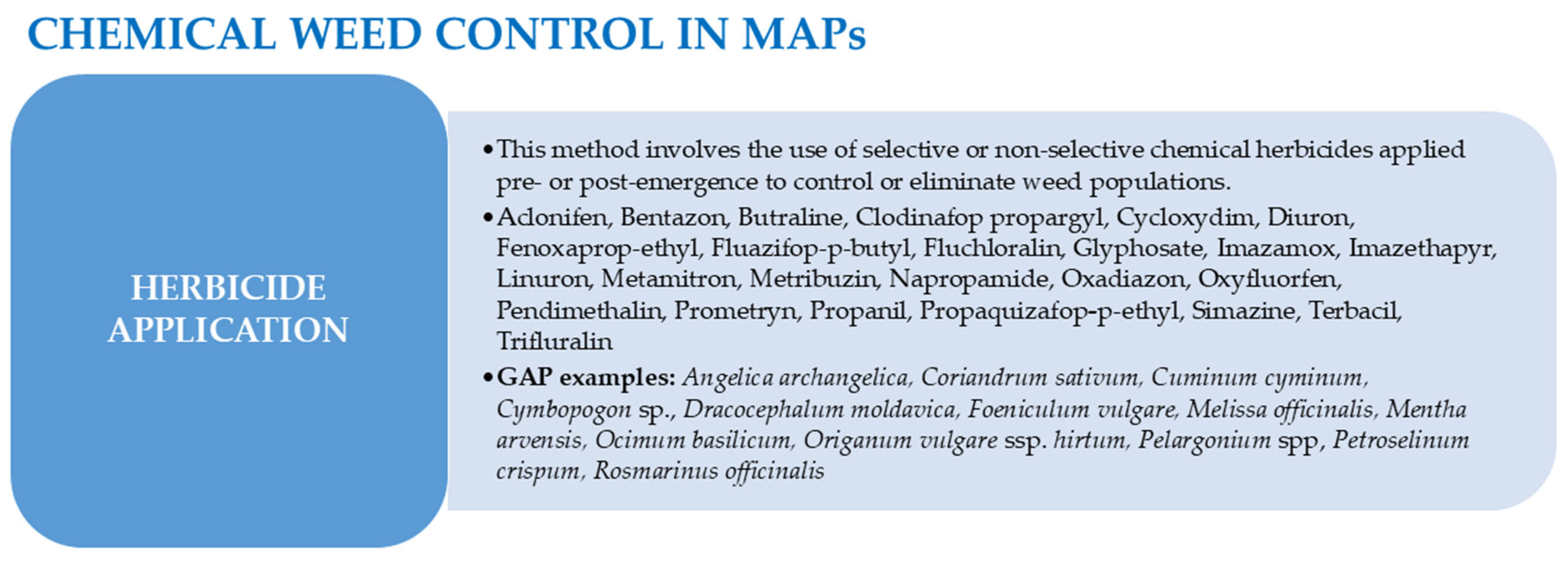
In addition to the abovementioned non-chemical weed management practices, herbicides are frequently included as reference treatments in experimental studies [6,32,36,43,45,46,47,49,50,63,67,70,72,82]; a brief overview is provided in Table 1 and Figure 4. However, the available literature addressing herbicide use in medicinal plants remains limited [12,37,62]. Regulatory restrictions on herbicide use in MAPs within the European Union have reduced the number of approved active substances, resulting in the progressive withdrawal or restriction of several herbicidal compounds from agricultural practice [129].
Figure 4.
Overview of herbicide applications and examples of good agricultural practices (GAP) applied in medicinal and aromatic plant (MAP) cultivation.
7.1. Herbicide Efficacy in MAPs
Chemical weed management has been widely investigated as an effective strategy to protect slow-growing, long-duration medicinal and aromatic crops from yield losses due to weed competition. Field studies in Coriandrum sativum demonstrated that pre- and post-emergence herbicides such as pendimethalin and fluchloralin effectively suppressed weeds, maintaining seed and essential oil yields comparable to weed-free controls, while oxadiazon and propanil were selective but less efficient [36,37]. Similar benefits were observed in Cuminum cyminum, where integration of trifluralin or pendimethalin with wheat mulch reduced weed biomass, improved physiological traits, and enhanced seed and oil yield, with reduced herbicide rates (50–75%) combined with mulch providing comparable efficacy to full doses, suggesting a more sustainable approach [43]. In Foeniculum vulgare, pendimethalin-centered treatments, alone or integrated with hand weeding or mulches, ensured high weed control efficiency, low weed index, and improved economic returns [49,50].
Other studies in Mentha arvensis, Ocimum basilicum, Pelargonium graveolens, Cymbopogon sp., and Angelica archangelica confirmed that herbicides such as pendimethalin, diuron, oxyfluorfen, terbacil, and glyphosate effectively reduce weed density and biomass, producing yields comparable to manual weeding while generally maintaining essential oil quality [6,12,32,45,46,47,62,63,67,70,72,82]. Some herbicides, however, can influence the composition of bioactive secondary metabolites, highlighting the need to balance weed control efficacy with crop quality [32,47].
Overall, pendimethalin consistently emerges as a highly effective and economically viable option, and chemical weed management is often most successful when integrated with physical control measures or mulches, allowing for reduced herbicide rates, sustained season-long weed suppression, and minimal impact on essential oil yield and quality. These findings underscore the importance of optimizing chemical weed strategies in medicinal plant cultivation while considering crop safety, residue limits, and sustainability.
7.2. Herbicide Residues and Product Safety
However, when considering chemical weed management in MAPs, it is essential to account for herbicide and pesticide residues in raw plant material and essential oils [130]. Analyses of a wide range of plant samples have shown that pesticide residues can be present in a substantial proportion of commercially available herbal raw materials, with 50–70% of samples containing at least one active herbicide or fungicide, and in some cases, concentrations exceeding the maximum residue limits (MRLs) established for medicinal and culinary plants [131,132]. Similarly, large datasets on pesticide residues in essential oils indicate that while detections are generally low, certain products, especially those obtained by cold pressing, may contain residues above pharmacopoeial or legal limits, highlighting the need for targeted monitoring and regulatory compliance [133,134].
7.3. Regulatory Constraints and Practical Limitations
These findings indicate that chemical weed management strategies should consider not only effective weed suppression efficacy but also residue minimization in medicinal plant materials [135]. Regulatory frameworks such as the European Union MRLs and pharmacopoeial standards for medicinal plants require that pesticide residues do not compromise product safety and quality, emphasizing the importance of integrated approaches that combine reduced herbicide rates with physical weed control measures. It should be noted that, while the reviewed studies provide substantial information on herbicide efficacy, reports on early visual symptoms of phytotoxicity or plant recovery later in the growing season are scarce. In the European Union, the use of many herbicidal active substances in medicinal and aromatic crops is heavily restricted or withdrawn, further limiting the practical application of chemical weed control [81]. This highlights the importance of carefully evaluating potential crop stress and integrating chemical treatments, where allowed, with physical or cultural weed management measures to ensure crop safety, compliance with residue limits, and sustainable production.
In addition to the progressive withdrawal of active substances, a major limitation of chemical weed management in MAPs is that many herbicides commonly used in conventional agriculture are not registered or approved for use in these crops, further restricting their practical applicability. Moreover, the potential residual effects of pesticides applied to preceding crops are often insufficiently considered prior to the establishment of MAPs, which may pose risks for crop safety, product quality, and compliance with residue regulations. Despite their relevance, these issues remain largely underexplored, and there is a clear lack of targeted research addressing herbicide carryover and its impact on MAP cultivation.
8. Summary and Perspectives
Current evidence clearly demonstrates that weed management remains one of the most critical constraints in MAP production, particularly during early growth stages when crop competitiveness is low. A wide range of non-chemical strategies, especially mulching, mechanical weeding, and crop diversification, have proven effective in reducing weed pressure while maintaining or improving yield and quality. Among these, mulching stands out as the most consistently reliable approach across diverse species and agroecological conditions, offering additional benefits for soil moisture conservation, nutrient use efficiency, and secondary metabolite accumulation. Mechanical and thermal methods provide valuable alternatives, particularly in organic systems, but their effectiveness is often limited by crop sensitivity, labor or energy requirements, and variable field performance. Diversification (i.e., intercropping and living mulches) contributes meaningfully to weed suppression and system sustainability, although its success is highly context-dependent and rarely sufficient as standalone solutions.
Chemical weed control continues to play a significant role, particularly in slow-growing or long-duration MAPs, where it often provides the most consistent and economical weed suppression. However, the number of registered herbicides for MAPs remains limited, and regulatory restrictions, especially within the European Union, are progressively reducing available active substances. In addition, increasing concerns regarding pesticide residues in medicinal raw materials and essential oils, as well as the risk of herbicide resistance from repeated use of the same chemical groups, place strong constraints on chemical weed management. These factors underscore the importance of integrated weed management strategies that combine reduced herbicide doses with physical, cultural, or mulching practices to achieve effective weed control while safeguarding product quality and regulatory compliance. In this context, the economic performance of different weed management strategies, including cost–benefit considerations and long-term profitability, should be regarded as a key factor guiding their practical adoption.
Looking forward, future research should prioritize the development of integrated, crop-specific weed management frameworks that account for species biology, growth dynamics and patterns, and intended end use of MAP products. There is a clear need for long-term, multi-site field studies evaluating combinations of non-chemical and low-input chemical strategies, with particular attention to residue dynamics, essential oil composition, and economic viability. Emerging approaches, such as bioherbicides, precision agriculture tools, and robotic weed control, remain largely unexplored in MAP cultivation systems but offer promising avenues for innovation. Advancing weed management in MAPs will therefore depend on interdisciplinary research, technological adaptation, and policy-aligned practices that support sustainable production while meeting the high quality and safety standards required for medicinal use.
Author Contributions
Conceptualization, M.A. and J.N.R.; methodology, A.B.; software, A.B.; validation, J.N.R. and A.V.; formal analysis, M.A.; investigation, M.A. and J.N.R.; resources, M.A.; data curation, A.B.; writing—original draft preparation, M.A.; writing—review and editing, J.N.R. and A.B.; visualization, A.B.; supervision, A.V.; project administration, A.V.; funding acquisition, M.A., J.N.R., A.B. and A.V. All authors have read and agreed to the published version of the manuscript.
Funding
This research was funded by European Cooperation in Science and Technology (COST), grant number CA23123 (non-chemical weed management in medicinal and aromatic plants—Weeding MAPS).
Data Availability Statement
No new data were created or analyzed in this study. Data sharing is not applicable to this article.
Acknowledgments
The authors acknowledge the support of the Ministry of Education, Science and Technological Development of the Republic of Serbia [grant no. 451-03-33/2026-03/200032].
Conflicts of Interest
The authors declare no conflicts of interest.
Abbreviations
The following abbreviations are used in this manuscript:
| MAP | Medicinal and Aromatic Plants |
| MRL | Maximum Residue Limits |
| GAP | Good Agricultural Practices |
References
- Kubiak, A.; Wolna-Maruwka, A.; Niewiadomska, A.; Pilarska, A.A. The problem of weed infestation of agricultural plantations vs. the assumptions of the European biodiversity strategy. Agronomy 2022, 12, 1808. [Google Scholar] [CrossRef] [Scilit]
- Kumar, S.; Kumari, S.; Rana, S.S.; Rana, R.S.; Anwar, T.; Qureshi, H.; Saleh, M.A.; Alamer, K.H.; Attia, H.; Ercisli, S.; et al. Weed management challenges in modern agriculture: The role of environmental factors and fertilization strategies. Crop Prot. 2024, 185, 106903. [Google Scholar] [CrossRef] [Scilit]
- Chrysargyris, A.; Skaltsa, H.; Konstantopoulou, M. Medicinal and aromatic plants (MAPs): The connection between cultivation practices and biological properties. Agronomy 2022, 12, 3108. [Google Scholar] [CrossRef] [Scilit]
- Ahmadi, F.; Lackner, M.; Starzinger, A. Challenges encountered in growing medicinal and aromatic plants. In Medicinal and Aromatic Plants-Pharmaceutical, Food, and Cosmetic Applications; Berdimurodov, E., Uçar, E., Tuzun, B., Eds.; De Gruyter: Berlin, Germany, 2025; pp. 119–154. [Google Scholar]
- Taak, P.; Koul, B.; Chopra, M.; Sharma, K. Comparative assessment of mulching and herbicide treatments for weed management in Stevia rebaudiana (Bertoni) cultivation. S. Afr. J. Bot. 2021, 140, 303–311. [Google Scholar] [CrossRef] [Scilit]
- Giri, P.; Pandey, S.T.; Roy, S.; Behera, B. Weed dynamics, herbage and oil yield of sweet basil (Ocimum basilicum) under various weed management practices. J. Crop Weed 2016, 12, 145–149. [Google Scholar]
- Ankit; Bindra, A.D.; Rana, S.S.; Manuja, S. Productivity and profitability of turmeric as influenced by integrated weed management. J. Pharmacogn. Phytother. 2021, 10, 434–437. [Google Scholar]
- Kirici, S.; Caliskan, T.; Hatipoglu, R.; Celiktas, V.; Otu Borlu, H. Effects of weed control on seed yield and fatty oil ratio of black cumin (Nigella sativa L.). Turk. J. Field Crops 2021, 26, 226–234. [Google Scholar] [CrossRef] [Scilit]
- Schnee, L.; Sutcliffe, L.M.E.; Leuschner, C.; Donath, T.W. Weed seed banks in intensive farmland and the influence of tillage, field position, and sown flower strips. Land 2023, 12, 926. [Google Scholar] [CrossRef] [Scilit]
- Božić, D.; Dragumilo, A.; Marković, T.; Šilc, U.; Aćić, S.; Tojić, T.; Rajković, M.; Vrbničanin, S. Survey of weed flora diversity as a starting point for the development of a weed management strategy for medicinal crops in Pančevo, Serbia. Horticulturae 2025, 11, 882. [Google Scholar] [CrossRef] [Scilit]
- Lazarević, J.; Vrbničanin, S.; Dragumilo, A.; Marković, T.; Ðurović Pejčev, R.; Roljević Nikolić, S.; Božić, D. Analysis of the effects of organic and synthetic mulching films on the weed, root yield, essential oil yield, and chemical composition of Angelica archangelica L. Horticulturae 2024, 10, 1199. [Google Scholar] [CrossRef] [Scilit]
- Gourav, R.K.; Dawson, J.; Gautam, M.; Kumar, A.; Singh, A.; Patel, A. Effect of chemical weed control on growth, herb yield and oil content of mentha (Mentha arvensis L.) across northern eastern and central highlands of India. J. Exp. Agric. Int. 2024, 46, 803–811. [Google Scholar] [CrossRef] [Scilit]
- Janmohammadi, M.; Sabaghnia, N.; Bashiri, A. Evaluation of the impact of weed control methods on quantitative and qualitative characteristics of moldavian balm; A medicinal plant. Acta Technol. Agric. 2016, 19, 110–116. [Google Scholar] [CrossRef] [Scilit]
- Rana, S.S.; Sharma, N.; Badiyala, D.; Kumar, R. Weed management in turmeric. Indian J. Weed Sci. 2017, 49, 51–57. [Google Scholar] [CrossRef] [Scilit]
- Krawiec, M.; Borowy, A.; Dzida, K. Chemical and nonchemical control of weeds in the cultivation of lemon balm for seeds. Acta Sci. Pol. Hortorum Cultus 2019, 18, 83–93. [Google Scholar] [CrossRef] [Scilit]
- Ansong, M.; Acheampong, E.; Echeruo, J.B.; Afful, S.N.; Ahimah, M. Direct financial cost of weed control in smallholder rubber plantations. Open Agric. 2021, 6, 346–355. [Google Scholar] [CrossRef] [Scilit]
- Das, T.K.; Behera, B.; Nath, C.P.; Ghosh, S.; Sen, S.; Raj, R.; Ghosh, S.; Sharma, A.R.; Yaduraju, N.T.; Nalia, A.; et al. Herbicides use in crop production: An analysis of cost-benefit, non-target toxicities and environmental risks. Crop Prot. 2024, 181, 106691. [Google Scholar] [CrossRef] [Scilit]
- Rao, B.R.R.; Rajput, D.K.; Sastry, K.P.; Bhattacharya, A.K.; Patel, R.P.; Ramesh, S. Effect of crop-weed mixed distillation on essential oil yield and composition of five aromatic crops. J. Essent. Oil Bear. Plants 2007, 10, 127–132. [Google Scholar] [CrossRef] [Scilit]
- Kopp, T.; Abdel-Tawab, M.; Mizaikoff, B. Extracting and analyzing pyrrolizidine alkaloids in medicinal plants: A review. Toxins 2020, 12, 320. [Google Scholar] [CrossRef] [Scilit]
- González-Gómez, L.; Morante-Zarcero, S.; Pereira, J.A.M.; Câmara, J.S.; Sierra, I. Evaluation of tropane alkaloids in teas and herbal infusions: Effect of brewing time and temperature on atropine and scopolamine content. Toxins 2023, 15, 362. [Google Scholar] [CrossRef] [Scilit]
- Kaltner, F.; Gottschalk, C.; de Vries, E.; Mulder, P.P.J. Transfer of pyrrolizidine and tropane alkaloids from tea and herbal tea to infusions. Food Chem. 2025, 489, 145026. [Google Scholar] [CrossRef] [Scilit]
- Zamani, S.; Fathi, M.; Ebadi, M.T.; Máthé, Á. Global trade of medicinal and aromatic plants. A review. J. Agric. Food Res. 2025, 21, 101910. [Google Scholar] [CrossRef] [Scilit]
- Hernández-Bolaños, E.; Sánchez-Retuerta, V.; Matías-Hernández, L.; Cuyas, L. Promising applications on the use of medicinal and aromatic plants in agriculture. Discov. Agric. 2025, 3, 36. [Google Scholar] [CrossRef] [Scilit]
- Wang, H.; Chen, Y.; Wang, L.; Liu, Q.; Yang, S.; Wang, C. Advancing herbal medicine: Enhancing product quality and safety through robust quality control practices. Front. Pharmacol. 2023, 14, 1265178. [Google Scholar] [CrossRef] [Scilit] [PubMed]
- Kariyanna, B.; Senthil-Nathan, S.; Vasantha-Srinivasan, P.; Subba Reddy, B.V.; Krishnaiah, A.; Meenakshi, N.H.; Han, Y.S.; Karthi, S.; Chakravarthy, A.K.; Park, K.B. Comprehensive insights into pesticide residue dynamics: Unraveling impact and management. Chem. Biol. Technol. Agric. 2024, 11, 182. [Google Scholar] [CrossRef] [Scilit]
- Karaman, Y.; Tursun, A.O.; Turkmen, M.; Tursun, N. Determining the critical period for weed control in summer savory (Satureja hortensis L.): A comparative study across two locations. J. Essent. Oil Bear. Plants 2025, 28, 1176–1194. [Google Scholar] [CrossRef] [Scilit]
- Kothari, S.K.; Singh, D.V.; Singh, K. Critical periods of weed interference in Japanese mint (Mentha arvensis L.). Trop. Pest Manag. 1991, 37, 85–90. [Google Scholar] [CrossRef] [Scilit]
- Raoofi, M.M.; Giti, S. The effect of hand weeding and planting density on the yield, essential oil content and some morphological properties of peppermint (Mentha piperita L.) in Hamadan. J. Crop Weed 2015, 11, 154–160. [Google Scholar]
- González-Hernández, M.P.; Barros, R.M.; Romero Franco, R. Effects of inorganic mulches on Achillea millefolium L. sesquiterpene lactones. Eur. J. Med. Plants 2013, 3, 163–173. [Google Scholar] [CrossRef] [Scilit]
- Bairwa, R.C.; Bhunia, S.R.; Narolia, R.K.; Reager, M.L. Response of different mulching and irrigation levels through drip irrigation on the performance of dill (Anethum graveolens). Crop Res. 2020, 55, 134–138. [Google Scholar] [CrossRef] [Scilit]
- Biesiada, A.; Kędra, K. The effect of emergence-improving treatments on the growth, yield and content of macroelements in leaves of garden dill (Anethum graveolens L.) cultivated for early crop. Acta Sci. Pol. Hortorum Cultus 2012, 11, 89–100. [Google Scholar]
- Lazarević, J.; Aćimović, M.; Đurović-Pejčev, R.; Lončar, B.; Vukić, V.; Pezo, L.; Roljević-Nikolić, S.; Vrbničanin, S.; Božić, D. Linking weed control techniques to anti-inflammatory potential: Comparative analysis of Angelica archangelica L. root essential oil profiles. Ind. Crops Prod. 2024, 216, 118656. [Google Scholar] [CrossRef] [Scilit]
- Jigo, F.I.; Ismail, H.; Abubakar, S.Z.; Igbadun, H.E.; Dalhat, M.K. Evaluation of artemisinin contents as affected by soil and water management strategies under gravity-drip irrigation system in Samaru, Nigeria. Niger. J. Eng. 2023, 30, 67–72. [Google Scholar] [CrossRef] [Scilit]
- Ahmed, Z.; Lone, R.A.; Bhat, Z.A.; Neelofar; Nazki, I.T. Effect of different plastic mulches and nutrient spray on flowering and seed production in calendula. Pharma Innov. J. 2022, 11, 2241–2243. [Google Scholar]
- Carrubba, A.; Militello, M. Nonchemical weeding of medicinal and aromatic plants. Agron. Sustain. Dev. 2013, 33, 551–561. [Google Scholar] [CrossRef] [Scilit]
- Hassanein, A.M.A.; Kenawy, A.G.M.; Ibrahim, H.M. Effect of some weed control practices on coriander (Coriandrum sativum L.) productivity and their associated weeds. J. Plant Prod. Mansoura Univ. 2020, 11, 1349–1359. [Google Scholar] [CrossRef] [Scilit]
- Kothari, S.K.; Singh, J.P.; Singh, K. Chemical weed control in Bulgarian coriander (Coriandrum sativum L.). Trop. Pest Manag. 1989, 35, 2–5. [Google Scholar] [CrossRef] [Scilit]
- Rhioui, W.; Figuigui, J.A.; Mikou, K.; Benabderrahmane, A.; Belmalha, S. Effect of mulching, aqueous extract of Thymus zygis (L.) and Melia azedarach (L.), and intercropping with Coriandrum sativum (L.), on weed management, yield, agronomic and physiological parameters of bell pepper crop (Capsicum annuum L.). Vegetos 2024, 37, 701–716. [Google Scholar] [CrossRef] [Scilit]
- Pouryousef, M.; Yousefi, A.R.; Oveisi, M.; Asadi, F. Intercropping of fenugreek as living mulch at different densities for weed suppression in coriander. Crop Prot. 2015, 69, 60–64. [Google Scholar] [CrossRef] [Scilit]
- Gabriel Filho, L.R.A.; Rodrigueiro, G.R.O.; da Silva, A.O.; de Almeida, A.V.R.; Cremasco, C.P. Neuro-fuzzy modeling as support for decision-making in the production of irrigated coriander under mulch in the semi-arid region. Eng. Agrícola 2023, 43, e20220208. [Google Scholar] [CrossRef] [Scilit]
- Mzabri, I.; Rimani, M.; Charif, K.; Kouddane, N.; Berrichi, A. Study of the effect of mulching materials on weed control in saffron cultivation in eastern Morocco. Sci. World J. 2021, 2021, 9727004. [Google Scholar] [CrossRef] [Scilit]
- McGimpsey, J.A.; Douglas, M.H.; Wallace, A.R. Evaluation of saffron (Crocus sativus L.) production in New Zealand. N. Z. J. Crop Hortic. Sci. 1997, 25, 159–168. [Google Scholar] [CrossRef] [Scilit]
- Koochi, M.S.; Madandoust, M. Integrated weed management of cumin (Cuminum cyminum L.) using reduced rates of herbicides and straw mulch. Iran. J. Med. Aromat. Plants Res. 2023, 39, 352–366. [Google Scholar] [CrossRef]
- Singh, A.; Singh, M.; Singh, D.V. Pre-plant weed control for a palmarosa (Cymbopogon martinii) nursery. Int. J. Pest Manag. 1997, 43, 45–48. [Google Scholar] [CrossRef] [Scilit]
- Singh, A.; Singh, K.; Singh, V. Sustainability of organic mulch (distillation waste) and herbicides for weed management in perennial aromatic grasses. Trop. Pest Manag. 1991, 37, 162–165. [Google Scholar] [CrossRef] [Scilit]
- Singh, A.; Singh, M.; Singh, S. Effective utilization of distillation waste as organic mulch for weed management in the aromatic grass, Citronella java. Int. J. Pest Manag. 2001, 47, 253–257. [Google Scholar] [CrossRef] [Scilit]
- Amini, R.; Ebrahimi, A.; Nasab, A.D.M. Moldavian balm (Dracocephalum moldavica L.) essential oil content and composition as affected by sustainable weed management treatments. Ind. Crops Prod. 2020, 150, 112416. [Google Scholar] [CrossRef] [Scilit]
- Solberg, S.Ø.; Dragland, S. The effects of dark-colored plastic, fiber, and paper mulches on yield and over-wintering of perennial herbs. J. Herbs Spices Med. Plants 2007, 12, 13–23. [Google Scholar] [CrossRef] [Scilit]
- Yousefi, A.R.; Rahimi, M.R. Integration of soil-applied herbicides at the reduced rates with physical control for weed management in fennel (Foeniculum vulgare Mill.). Crop Prot. 2014, 63, 107–112. [Google Scholar] [CrossRef] [Scilit]
- Paghadal, A.H.; Kumawat, L.; Ninama, A.R.; Jadeja, J.P. Economics and weed indices under different weed management treatments in fennel (Foeniculum vulgare Mill.). Pharma Innov. J. 2022, 11, 1751–1754. [Google Scholar]
- Curić, A.; Hafner-Vuk, K.; Gavrić, T. The influence of different types of mulch on the yield and content of bioactive compounds of immortelle bioactive compounds of immortelle. Not. Bot. Horti Agrobot. Cluj-Napoca 2025, 53, 14721. [Google Scholar] [CrossRef] [Scilit]
- Nasrollahzadeh, S.; Mohammadi-Azar, M.; Shafagh-Kolvagh, J. Effect of intercropping chickpea and dragons head (Lallemantia iberica Fish. Et Mey) on weeds control and morphological traits in chickpea. Int. J. Biosci. 2014, 4, 159–165. [Google Scholar] [CrossRef] [Scilit]
- Fontana, E.; Hoeberechts, J.; Nicola, S. Effect of mulching on medicinal and aromatic plants in organic farm guest houses. Acta Hortic. 2006, 723, 405–410. [Google Scholar] [CrossRef] [Scilit]
- Hoeberechts, J.; Nicola, S.; Fontana, E. Growth of lavender (Lavandula officinalis) and rosemary (Rosmarinus officinalis) in response to different mulches. Acta Hortic. 2004, 629, 245–251. [Google Scholar] [CrossRef] [Scilit]
- Sekeroglu, N.; Cimen, G.; Kulak, M.; Gezici, S. Plastic mulching or conventional cultivation of lavender flower: What influence on the yield, essential oil and their neuroprotective effects? Trak. Univ. J. Nat. Sci. 2022, 23, 43–52. [Google Scholar] [CrossRef] [Scilit]
- Szekely-Varga, Z.; Boscaiu, M.; Kentelky, E.; Cantor, M. Does mulch affect lavender growth? Bull. Univ. Agric. Sci. Vet. Med. Cluj-Napoca Hortic. 2021, 78, 102–106. [Google Scholar] [CrossRef] [Scilit]
- Joshi, S.; Melkani, S.; Ardeep; Sajwan, M.Y. Effect of organic mulching and spacing on soil properties and yield of chamomile (Matricaria chamomilla L.) cv. CIM Sammohak. Int. J. Chem. Stud. 2020, 8, 1109–1115. [Google Scholar] [CrossRef] [Scilit]
- Junker, C.; Neuhoff, D.; Blum, H.; Heuberger, H.; Bernschein, M.; Pesch, M.; Doring, T.F. Mechanical intra-row weed control at early growth stages in medicinal and aromatic plants using the example of parsley (Petroselinum crispum (Mill.) Fuss) and lemon balm (Melissa officinalis L.). J. Appl. Res. Med. Aromat. Plants 2025, 45, 100623. [Google Scholar] [CrossRef] [Scilit]
- Gordanić, S.V.; Radanović, D.; Rajković, M.; Lukić, M.; Dragumilo, A.; Mrđan, S.; Batinić, P.; Čutović, N.; Mikić, S.; Prijić, Ž.; et al. Influence of mulching and planting density on agronomic and economic traits of Melissa officinalis L. Horticulturae 2025, 11, 866. [Google Scholar] [CrossRef] [Scilit]
- Dragumilo, A.; Marković, T.; Vrbničanin, S.; Prijić, Z.; Mrđan, S.; Radanović, D.; Božić, D. Weed suppression by mulches in Mentha × piperita L. J. Appl. Res. Med. Aromat. Plants 2023, 35, 100499. [Google Scholar] [CrossRef] [Scilit]
- Dragumilo, A.; Đurović Pejčev, R.; Božić, D.; Sarić-Krsmanović, M.; Vrbničanin, S.; Rajković, M.; Marković, T. Impact of synthetic films and organic mulches on yield and quality of Mentha piperita L. essential oil. Ind. Crops Prod. 2025, 224, 120356. [Google Scholar] [CrossRef] [Scilit]
- Yadav, Y.; Kumar, R.; Kumari, A.; Nand, V.; Verma, S.K. Effect of weed management practices on weeds and nitrogen removal by weeds in Japanese mint (Mentha arvensis L.). J. Pharmacogn. Phytochem. 2019, 8, 54–58. [Google Scholar]
- Singh, M.K.; Saini, S.S. Planting date, mulch, and herbicide rate effects on the growth, yield, and physicochemical properties of menthol mint (Mentha arvensis). Weed Technol. 2008, 22, 691–698. [Google Scholar] [CrossRef] [Scilit]
- Delfine, S.; Velikova, V.B.; Mastrodonato, F. Soil-mulching influence on spearmint oil yield, ecophysiological activities and essential-oil content in rainfed environment of Southern Italy. Agronomy 2022, 12, 1521. [Google Scholar] [CrossRef] [Scilit]
- Ahirwar, S.; Nair, R.; Pandey, S.K.; Awasthi, M.K.; Ramakrishnan, R.S.; Jain, S. Effect of irrigation levels and mulching on growth and yield performance of nigella (Nigella sativa L.). Int. J. Res. Agron. 2025, 8, 995–1002. [Google Scholar] [CrossRef] [Scilit]
- Nejatzadeh-Barandozi, F. Effects of different levels of mulch and irrigation on growth traits and essential oil content of basil. Ital. J. Agron. 2020, 15, 1247. [Google Scholar] [CrossRef] [Scilit]
- Ricotta, J.A.; Masiunas, J.B. The effects of black plastic mulch and weed control strategies on herb yield. HortScience 1991, 26, 539–541. [Google Scholar] [CrossRef] [Scilit]
- Palada, M.C.; Crossman, S.M.A.; Kowalski, J.A.; Collingwood, C.D. Evaluation of organic and synthetic mulches for basil production under drip irrigation. J. Herbs Spices Med. Plants 2000, 6, 39–48. [Google Scholar] [CrossRef] [Scilit]
- Kader, E.H.A.; Nakhle, M.; Talj, V.; Taha, N.; Oleik, S.; Housein, M.; Rizk, H. Effect of pine needle mulch and irrigation frequency on the yield of Origanum syriacum under open field condition. Eur. J. Med. Plants 2018, 26, 1–8. [Google Scholar] [CrossRef] [Scilit]
- Gavriil, E.; Eleftherohorinos, I.; Knezević, S.; Tarantilis, P.; Daferera, D.; Sotirakoglou, K.; Economou, G. Efficacy of herbicides and flaming against weeds and their effects in oregano (Origanum vulgare ssp. hirtum) tolerance. Crop Prot. 2026, 199, 107437. [Google Scholar] [CrossRef] [Scilit]
- Silva, A.C.; Blank, A.F.; Santos, W.M.; Prata, P.S.; Alves, P.B.; Arrigoni-Blank, M.F. Fertilization and colors of plastic mulch affect biomass and essential oil of sweet-scented geranium. Sci. World J. 2014, 2014, 828259. [Google Scholar] [CrossRef] [Scilit]
- Kothari, S.K.; Singh, C.P.; Singh, K. Weed control in rose-scented geranium (Pelargonium spp). Pest Manag. Sci. 2002, 58, 1254–1258. [Google Scholar] [CrossRef] [Scilit] [PubMed]
- Nasruddin; Harahap, E.M.; Hanum, C.; Siregar, L.A.M. Growth and yield of patchouli (Pogostemon cablin, Benth) due to mulching and method of fertilizer on rain-fed land. IOP Conf. Ser. Earth Environ. Sci. 2018, 122, 012057. [Google Scholar] [CrossRef] [Scilit]
- Nasruddin; Harahap, E.M.; Hanum, C.; Siregar, L.A.M. Enhancement of drought tolerance in patchouli (Pogostemon cablin, Benth) by modifying micro climate and frequency of fertilization. Indian J. Agric. Res. 2020, 54, 501–505. [Google Scholar] [CrossRef] [Scilit]
- Dhiman, D.; Vishvamitera, S.; Baghla, S.; Singh, S.; Kumar, D.; Kumar, A.; Chauhan, R. Synergistic effect of mulch and nitrogen management on growth and essential oil yield of Salvia sclarea L. Sci. Rep. 2024, 14, 32075. [Google Scholar] [CrossRef] [Scilit] [PubMed]
- Naderi, R.; Bijani, F.; Weyl, P.S.R.; Mueller-Schaerer, H. Intercropping sweet corn with summer savory to increase weed suppression and yield. Weed Technol. 2022, 36, 544–547. [Google Scholar] [CrossRef] [Scilit]
- Mrđan, S.; Marković, T.; Predić, T.; Dragumilo, A.; Filipović, V.; Prijić, Ž.; Lukić, M.; Radanović, D. Satureja montana L. cultivated under polypropylenewoven fabric on clay-textured soil in dry farming conditions. Horticulturae 2023, 9, 147. [Google Scholar] [CrossRef] [Scilit]
- Hossaini, S.M.; Aghaalikhani, M.; Sefidkon, F.; Ghalavand, A. Effect of vermicompost and planting pattern on oil production in Satureja sahendica L. under competition with pigweed (Amaranthus retroflexus L.). J. Essent. Oil Bear. Plants 2016, 19, 606–615. [Google Scholar] [CrossRef] [Scilit]
- Gazoulis, I.; Kanatas, P.; Antonopoulos, N.; Tataridas, A.; Travlos, I. False seedbed for agroecological weed management in forage cereal–legume intercrops and monocultures in Greece. Agronomy 2023, 13, 123. [Google Scholar] [CrossRef] [Scilit]
- Kanatas, P.; Gazoulis, I.; Petraki, D.; Kokkini, M.; Antonopoulos, N.; Travlos, I. False seedbed and stale seedbed against important broadleaf weeds: A case study and a step closer to agroecology. Plants 2025, 14, 564. [Google Scholar] [CrossRef] [Scilit]
- Pavlović, D.; Vrbničanin, S.; Anđelković, A.; Božić, D.; Rajković, M.; Malidža, G. Non-chemical weed control for plant health and environment: Ecological integrated weed management (EIWM). Agronomy 2022, 12, 1091. [Google Scholar] [CrossRef] [Scilit]
- Kothari, S.K.; Singh, K. Chemical weed control in Japanese Mint (Mentha arvensis L.). J. Essent. Oil Res. 1994, 6, 47–55. [Google Scholar] [CrossRef] [Scilit]
- Rajković, M.; Malidža, G.; Tomaš Simin, M.; Milić, D.; Glavaš-Trbić, D.; Meseldžija, M.; Vrbničanin, S. Sustainable organic corn production with the use of flame weeding as the most sustainable economical solution. Sustainability 2021, 13, 572. [Google Scholar] [CrossRef] [Scilit]
- Ulloa, S.M.; Datta, A.; Knezevic, S.Z. Tolerance of selected weed species to broadcast flaming at different growth stages. Crop Prot. 2010, 29, 1381–1388. [Google Scholar] [CrossRef] [Scilit]
- Zhang, Y.; Wang, Y.; Chen, J.; Zhang, Y. A review on the mechanism of soil flame disinfection and the precise control technology of the device. Agriculture 2025, 15, 2447. [Google Scholar] [CrossRef] [Scilit]
- Wiafe, E.K.; Betitame, K.; Ram, B.G.; Sun, X. Technical study on the efficiency and models of weed control methods using unmanned ground vehicles: A review. Artif. Intell. Agric. 2025, 15, 622–641. [Google Scholar] [CrossRef] [Scilit]
- Merfield, C.N.; Hampton, J.G.; Wratten, S.D. Efficacy of heat for weed control varies with heat source, tractor speed, weed species and size. N. Z. J. Agric. Res. 2017, 60, 437–448. [Google Scholar] [CrossRef] [Scilit]
- Upadhyay, A.; Singh, K.P.; Jhala, K.B.; Kumar, M.; Salem, A. Non-chemical weed management: Harnessing flame weeding for effective weed control. Heliyon 2024, 10, e32776. [Google Scholar] [CrossRef] [Scilit]
- Bauer, M.V.; Marx, C.; Bauer, F.V.; Flury, D.M.; Ripken, T.; Streit, B. Thermal weed control technologies for conservation agriculture—A review. Weed Res. 2020, 60, 241–250. [Google Scholar] [CrossRef] [Scilit]
- Peerzada, A.M.; Chauhan, B.S. Thermal weed control: History, mechanisms, and impacts. In Non-Chemical Weed Control; Khawar, J., Bhagirath, S.C., Eds.; Academic Press: Cambridge, MA, USA, 2018; pp. 9–31. [Google Scholar] [CrossRef] [Scilit]
- Dragumilo, A.; Marković, T.; Vrbničanin, S.; Gordanić, S.; Lukić, M.; Rajković, M.; Prijić, Ž.; Božić, D. Mulching for weed management in medicinal and aromatic cropping systems. Horticulturae 2025, 11, 998. [Google Scholar] [CrossRef] [Scilit]
- Aćimović, M.; Leovac Maćerak, A.; Pavlić, B.; Sikora, V.; Zeremski, T.; Erceg, T.; Djatkov, D. Green innovation for solid post-distillation residues valorization: Narrative review of circular bio-economy solutions. Processes 2026, 14, 244. [Google Scholar] [CrossRef] [Scilit]
- Prakasa Rao, E.V.S. Medicinal and aromatic plants for crop diversification and their agronomic implications. Indian J. Agron. 2009, 54, 215–220. [Google Scholar] [CrossRef] [Scilit]
- Fan, H.; Miao, R.; Guo, C.; Bao, X.; He, W.; Sun, Y.; Zhao, C. Research on the effect of diversified cropping on crop quality: A review. Agriculture 2025, 15, 456. [Google Scholar] [CrossRef] [Scilit]
- Pljevljakušić, D.; Brkić, S. Cultivation cost-benefit analysis of some important medicinal plants in Serbia. Nat. Med. Mater. 2020, 40, 13–21. [Google Scholar] [CrossRef] [Scilit]
- Aćimović, M.; Navarro Rocha, J.; Ibraliu, A.; Červenski, J.; Sikora, V.; Winter, S.; Lončar, B.; Pezo, L.; Salamon, I. Intercropping medicinal and aromatic plants with other crops: Insights from a review of sustainable farming practices. Agronomy 2025, 15, 2692. [Google Scholar] [CrossRef] [Scilit]
- Liu, H.; Niu, M.; Zhu, S.; Zhang, F.; Liu, Q.; Liu, Y.; Liu, R.; Zhang, Y. Effect study of continuous monoculture on the quality of Salvia miltiorrhiza Bge roots. BioMed Res. Int. 2020, 2020, 4284385. [Google Scholar] [CrossRef] [Scilit] [PubMed]
- Chen, P.; Zhang, A.; Zhou, X.; Zhuang, Q.; Zhang, X.; Gao, H. Crop rotation increases Salvia miltiorrhiza growth by affecting soil microbial properties and nitrogen cycling. Ind. Crops Prod. 2025, 238, 122392. [Google Scholar] [CrossRef] [Scilit]
- Khan, K.; Verma, R.K. Diversifying cropping systems with aromatic crops for better productivity and profitability in subtropical north Indian plains. Ind. Crops Prod. 2018, 115, 104–110. [Google Scholar] [CrossRef] [Scilit]
- Kordi, S.; Salmasi, S.Z.; Kolvanagh, J.S.; Weisany, W.; Shannon, D.A. Intercropping system and N2 fixing bacteria can increase land use efficiency and improve the essential oil quantity and quality of sweet basil (Ocimum basilicum L.). Front. Plant Sci. 2020, 11, 610026. [Google Scholar] [CrossRef] [Scilit]
- Mohammadzadeh, V.; Rezaei-Chiyaneh, E.; Mahdavikia, H.; Rahimi, A.; Gheshlaghi, M.; Battaglia, M.L.; Harrison, M.T. Effect of intercropping and bio-fertilizer application on the nutrient uptake and productivity of mung bean and marjoram. Land 2022, 11, 1825. [Google Scholar] [CrossRef] [Scilit]
- Weisberger, D.; Nichols, V.; Liebman, M. Does diversifying crop rotations suppress weeds? A meta-analysis. PLoS ONE 2019, 14, e0219847. [Google Scholar] [CrossRef] [Scilit]
- Gu, C.; Bastiaans, L.; Anten, N.P.R.; Makowski, D.; van der Werf, W. Annual intercropping suppresses weeds: A meta-analysis. Agric. Ecosyst. Environ. 2021, 322, 107658. [Google Scholar] [CrossRef] [Scilit]
- Zhang, Y.; Han, M.; Song, M.; Tian, J.; Song, B.; Hu, Y.; Zhang, J.; Yao, Y. Intercropping with aromatic plants increased the soil organic matter content and changed the microbial community in a pear orchard. Front. Microbiol. 2021, 12, 616932. [Google Scholar] [CrossRef] [Scilit] [PubMed]
- Mota-Segantini, D.; Lombini, A.; Rodríguez Declet, A.; De Giorgio, R.; D’Onofrio, C.; Domenico Rombolà, A. Effects of intercropping medicinal and aromatic plants (MAPs) on grapevine cv. Sangiovese berry volatile compounds. Agroecol. Sustain. Food Syst. 2022, 46, 452–462. [Google Scholar] [CrossRef] [Scilit]
- Katsoulis, G.I.; Kimbaris, A.C.; Anastasaki, E.; Damalas, C.A.; Kyriazopoulos, A.P. Chamomile and anise cultivation in olive agroforestry systems. Forests 2022, 13, 128. [Google Scholar] [CrossRef] [Scilit]
- Shamshiri, R.R.; Rad, A.K.; Behjati, M.; Balasundram, S.K. Sensing and perception in robotic weeding: Innovations and limitations for digital agriculture. Sensors 2024, 24, 6743. [Google Scholar] [CrossRef] [Scilit] [PubMed]
- Wang, C.; Song, C.; Xu, T.; Jiang, R. Precision weeding in agriculture: A comprehensive review of intelligent laser robots leveraging deep learning techniques. Agriculture 2025, 15, 1213. [Google Scholar] [CrossRef] [Scilit]
- Golijan Pantović, J.; Sečanski, M.; Gordanić, S.; Šarčević Todosijević, L. Weed biological control with fungi-based bioherbicides. Acta Agric. Serbica 2023, 28, 23–37. [Google Scholar] [CrossRef] [Scilit]
- Chikte, T.; Kopta, T.; Psota, V.; Arizmendi, J.; Chwil, M. A comprehensive review of low- and zero-residue pesticide methods in vegetable production. Agronomy 2024, 14, 2745. [Google Scholar] [CrossRef] [Scilit]
- Raza, T.; Qadir, M.F.; Imran, S.; Khatoon, Z.; Khan, M.Y.; Mechri, M.; Asghar, W.; Rehmani, M.I.A.; Villalobos, S.L.S.; Mumtaz, T.; et al. Bioherbicides: Revolutionizing weed management for sustainable agriculture in the era of one-health. Curr. Res. Microb. Sci. 2025, 8, 100394. [Google Scholar] [CrossRef] [Scilit]
- Konstantinović, B.; Popov, M.; Samardžić, N.; Aćimović, M.; Šućur Elez, J.; Stojanović, T.; Crnković, M.; Rajković, M. The effect of Thymus vulgaris L. hydrolate solutions on the seed germination, seedling length, and oxidative stress of some cultivated and weed species. Plants 2022, 11, 1782. [Google Scholar] [CrossRef] [Scilit]
- Lazarević, J.; Aćimović, M.; Pezo, L.; Lončar, B.; Konstantinović, B.; Popov, M.; Šovljanski, O.; Travičić, V.; Sikora, V.; Vujisić, L. Chemical composition and in vitro biological activity of angelica root and hop strobile essential oils and hydrolates. Waste Biomass Valorization 2024, 15, 867–883. [Google Scholar] [CrossRef] [Scilit]
- Bratovcic, A. Eco-friendly weed management: Nanoformulated bioherbicides for improved crop productivity. Adv. Nanoparticles 2025, 14, 101–120. [Google Scholar] [CrossRef]
- Scavo, A.; Mauromicale, G. Crop Allelopathy for sustainable weed management in agroecosystems: Knowing the present with a view to the future. Agronomy 2021, 11, 2104. [Google Scholar] [CrossRef] [Scilit]
- Baličević, R.; Ravlić, M.; Ravlić, I. Allelopathic effect of aromatic and medicinal plants on Tripleurospermum inodorum (L.) C.H. Schultz. Herbologia 2015, 15, 41–53. [Google Scholar] [CrossRef] [Scilit]
- Khamare, Y.; Chen, J.; Marble, S.C. Allelopathy and its application as a weed management tool: A review. Front. Plant Sci. 2022, 13, 1034649. [Google Scholar] [CrossRef] [Scilit] [PubMed]
- Pedrol, N.; Puig, C.G. Application of allelopathy in sustainable agriculture. Agronomy 2024, 14, 1362. [Google Scholar] [CrossRef] [Scilit]
- Raja, R.; Nguyen, T.T.; Slaughter, D.C.; Fennimore, S.A. Real-time robotic weed knife control system for tomato and lettuce based on geometric appearance of plant labels. Biosyst. Eng. 2020, 194, 152–164. [Google Scholar] [CrossRef] [Scilit]
- Adelman, M.W.; Friis-Hecht, D.; Kim, D.; Leedy, J.G.; Moss, B.A.M.; Park, C.J.; Mbanisi, K.C. PhoenixBot: An autonomous mechanical precision weeding system for small-scale organic farms. IFAC-Pap. 2025, 59, 78–83. [Google Scholar] [CrossRef] [Scilit]
- Slaughter, D.C.; Giles, D.K.; Downey, D. Autonomous robotic weed control systems: A review. Comput. Electron. Agric. 2008, 61, 63–78. [Google Scholar] [CrossRef] [Scilit]
- Lytridis, C.; Pachidis, T. Recent advances in agricultural robots for automated weeding. AgriEngineering 2024, 6, 3279–3296. [Google Scholar] [CrossRef] [Scilit]
- Vijayakumar, S.; Shanmugapriya, P.; Saravanane, P.; Ramesh, T.; Murugaiyan, V.; Ilakkiya, S. Precision weed control using unmanned aerial vehicles and robots: Assessing feasibility, bottlenecks, and recommendations for scaling. NDT 2025, 3, 10. [Google Scholar] [CrossRef] [Scilit]
- Vardhan, P.V.; Shukla, L.I. Gamma irradiation of medicinally important plants and the enhancement of secondary metabolite production. Int. J. Radiat. Biol. 2017, 93, 967–979. [Google Scholar] [CrossRef] [Scilit] [PubMed]
- Pereira, E.; Pimenta, A.I.; Barros, L.; Calhelha, R.C.; Antonio, A.L.; Cabo Verde, S.; Ferreira, I.C.F.R. Effects of gamma radiation on the bioactivity of medicinal and aromatic plants: Mentha × piperita L., Thymus vulgaris L. and Aloysia citrodora Paláu as case studies. Food Funct. 2018, 9, 5150–5161. [Google Scholar] [CrossRef] [Scilit] [PubMed]
- Mahdi Navehsi, F.; Abdossi, V.; Abbaszadeh, B.; Azimi, R.; Dianat, M. Effect of gamma rays on the essential oil and biochemical characteristics of the Satureja mutica Fisch & C. A. Mey. Sci. Rep. 2024, 14, 7581. [Google Scholar] [CrossRef] [Scilit]
- Chirilli, C.; Biafora, A.; Giaccardi, A.; Benedettelli, S.; Migliorini, P. Impact of different agroecological practices for weed management on weeds and crops development. Agronomy 2025, 15, 2335. [Google Scholar] [CrossRef] [Scilit]
- Antle, J.M.; Basso, B.; Conant, R.T.; Godfray, H.C.J.; Jones, J.W.; Herrero, M.; Howitt, R.E.; Keating, B.A.; Munoz-Carpena, R.; Rosenzweig, C.; et al. Towards a new generation of agricultural system data, models and knowledge products: Design and improvement. Agric. Syst. 2017, 155, 255–268. [Google Scholar] [CrossRef] [Scilit]
- Tataridas, A.; Kanatas, P.; Chatzigeorgiou, A.; Zannopoulos, S.; Travlos, I. Sustainable crop and weed management in the era of the EU green deal: A survival guide. Agronomy 2022, 12, 589. [Google Scholar] [CrossRef] [Scilit]
- Zuin, V.G.; Vilegas, J.H.Y. Pesticide residues in medicinal plants and phytomedicines. Phytother. Res. 2000, 14, 73–88. [Google Scholar] [CrossRef] [Scilit]
- Malinowska, E.; Jankowski, K. Pesticide residues in some herbs growing in agricultural areas in Poland. Environ. Monit. Assess. 2015, 187, 775. [Google Scholar] [CrossRef] [Scilit]
- Kowalska, G. Pesticide residues in some polish herbs. Agriculture 2020, 10, 154. [Google Scholar] [CrossRef] [Scilit]
- Klier, B.; Häfner, E.; Albert, H.; Binder, G.; Knödler, M.; Kühn, M.; Schenk, A.; Steinhoff, B. Pesticide residues in herbal drugs: Evaluation of a database. J. Appl. Res. Med. Aromat. Plants 2019, 15, 100223. [Google Scholar] [CrossRef] [Scilit]
- Klier, B.; Knödler, M.; Peschke, J.; Riegert, U.; Steinhoff, B. Pesticide residues in essential oils: Evaluation of a database. Pharmeur. Bio Sci. Notes 2015, 2015, 131–149. [Google Scholar]
- Łozowicka, B.; Jankowska, M.; Rutkowska, E.; Hrynko, I.; Kaczyński, P.; Miciński, J. The evaluation of a fast and simple pesticide multiresidue method in various herbs by gas chromatography. J. Nat. Med. 2014, 68, 95–111. [Google Scholar] [CrossRef] [Scilit]

Disclaimer/Publisher’s Note: The statements, opinions and data contained in all publications are solely those of the individual author(s) and contributor(s) and not of MDPI and/or the editor(s). MDPI and/or the editor(s) disclaim responsibility for any injury to people or property resulting from any ideas, methods, instructions or products referred to in the content. |
© 2026 by the authors. Licensee MDPI, Basel, Switzerland. This article is an open access article distributed under the terms and conditions of the Creative Commons Attribution (CC BY) license.