


Abstract
Fertilization plays an important role in soil nutrient loss from sloping croplands. However, the effect of fertilization on Molybdenum (Mo) loss remains unknown. The aims of this study were to explore the effects of different fertilizers of purple soil on the characteristics of soil molybdenum loss in surface, subsurface runoff and sediments. Five fertilizers treatments (3 replicates) were designed as following: no fertilizer (CK); conventional nitrogen, phosphorus, and potassium fertilizer (NPK); organic fertilizers with livestock manure (OM); nitrogen, phosphorus, and potassium fertilizer plus organic fertilizers with livestock manure (OMNPK); and straw turnover plus nitrogen, phosphorus, and potassium fertilizer (RSDNPK). The changes of runoff-related Molybdenum loss from June to September 2025 were studied. Results showed that fertilization significantly reduced surface runoff and sediment yield compared with CK (p < 0.05). The RSDNPK treatment exhibited the lowest surface runoff, while OM and OMNPK treatments most effectively decreased sediment loss. Dissolved Mo (DMo) was the predominant form of Mo loss across all treatments (50~70% of total loss), significantly higher than particulate Mo (PMo, 25~40%) and Mo of soil sediments (SEMo, 6.5~12.9%). Notably, the OM treatment uniquely shifted Mo loss toward subsurface flow (47.2% of total), whereas other treatments were dominated by surface runoff. Total Mo loss amount varied significantly among treatments (p < 0.05): CK (795 μg/m2) > OM (685 μg/m2) > NPK (596 μg/m2) > OMNPK (533 μg/m2) > RSDNPK (373 μg/m2). The RSDNPK treatment achieved the optimal performance, reducing total Mo loss by 53.1% compared with CK. Structural equation modeling revealed that soil organic matter indirectly controlled Mo loss by modifying soil physical properties and hydrological processes. The findings demonstrate that RSDNPK represents the most effective strategy for minimizing Mo loss in purple soil sloping croplands, outperforming sole organic manure application. This study highlights the importance of organic amendment and management in Mo loss control and provides a scientific basis for sustainable nutrient management in erosion-prone agricultural systems.
1. Introduction
Molybdenum (Mo) content in soils is relatively low, yet it serves as an essential micronutrient playing indispensable roles in plant physiological functions and overall growth [1,2]. Mo primarily participates in nitrogen reduction and assimilation processes in different plant parts, while enhancing photosynthesis and improving plant resistance to cold, drought, and diseases [3,4]. In soils, Mo predominantly exists in the form of molybdate (MoO42−), which upon absorption by plants forms the molybdenum cofactor (MoCo). As a critical component of nitrogenase and nitrate reductase, it participates in biological nitrogen fixation, nitrification, denitrification, nitrate assimilation, and amino acid metabolism, holding significant importance in shaping ecosystem nitrogen cycling [5,6].
Despite high total Mo content in purple soils, ranging from 1.5 to 16.5 mg/kg with an average of approximately 3.7~4.1 mg/kg, available Mo content is generally low, mostly below the critical deficiency threshold of 0.15~0.20 mg/kg [7], resulting in frequent “hidden hunger” for Mo in plants. Béla, et al. [8] reported that deficient-molybdenum soil significantly reduced the activity of nitrate reductase, causing a large accumulation of nitrate in the leaves. This prevented the conversion of nitrate to ammonium nitrogen and organic nitrogen, resulting in disrupted growth metabolism and ultimately hindering the growth of corn. Moussa, et al. [9] conducted a study and found that soil treated with a lack of molybdenum severely inhibited the growth of wheat, manifested as stunted plants, reduced biomass, decreased grain yield, and also significantly reduced the absorption of N, P, K, and various trace elements. Wen, et al. [10] reported that molybdenum increases the biomass and nitrogen absorption of wheat by reducing the accumulation of nitrate in the soil. It also has significant effects on root morphology and root exudates, and ultimately promotes root growth [11,12]. Purple soil, as the most representative soil type in Southwest China, is concentrated in the Sichuan Basin and surrounding hilly and mountainous regions, covering approximately 160,000 km2 and accounting for 68% of the total cultivated land area in Sichuan Province, making it an important agricultural production region [13]. However, it must be noted that purple soils are highly susceptible to soil erosion due to their shallow soil layers and poor structural stability [14]. Distributed across hilly and mountainous areas with slopes varying from gentle (<5°) to steep (>25°), this further exacerbates erosion risks [15].
Rainfall events reaching 30 mm or more are considered large storms with sufficient erosive force to generate runoff. Previous studies have confirmed that highly erosive storms accelerate soil loss along with associated nutrient losses of soil carbon, nitrogen, and phosphorus [16,17]. In various research cases, different soil elements have been observed to be lost. Wang, et al. [18] indicated that in purple soil sloping croplands, subsurface flow is the primary pathway for runoff output during the rainy season, with ammonium nitrogen mainly lost through surface runoff and nitrate nitrogen primarily lost through subsurface flow being the dominant form of total nitrogen loss, while sediment loss was reduced under all fertilization treatments compared to the unfertilized control. Wang, et al. [19] found that rainfall intensity significantly affected nitrogen and phosphorus concentrations in surface runoff, with nitrogen loss dominated by dissolved nitrogen, while phosphorus loss forms varied with rainfall intensity-particulate phosphorus dominated at 40 and 90 mm/h, whereas dissolved phosphorus dominated at 60 mm/h. He, et al. [20] reported that downslope ridge tillage resulted in the greatest surface erosion and phosphorus loss but the smallest subsurface flow and phosphorus loss; conversely, contour ridge tillage minimized surface erosion and phosphorus loss but showed greater subsurface flow losses. Zinc has also been detected in surface runoff and leachate from agricultural soils amended with poultry manure. Iradukunda, et al. [21] examined the loss characteristics of trace elements copper, zinc, and molybdenum under different agricultural management practices in red soils, finding that straw mulching reduced Mo and Zn losses, with sediment-carried trace element losses exceeding those in runoff. Thus, soil nutrients are primarily lost through runoff (surface runoff and subsurface flow) and sediment, influenced by numerous factors including rainfall characteristics, agricultural management practices, soil properties, flow types, and slope gradients [22,23]. However, reports on Mo loss characteristics in purple soils remain extremely limited, hindering our further understanding of Mo migration and transformation processes in soils.
Fertilization, as an important agricultural management measure, can lead to soil pH decline, reduced organic matter content, and soil structure degradation under long-term chemical fertilizer application, directly affecting Mo speciation and availability [24,25]. For example, excessive ammonium nitrogen fertilizer application can exacerbate soil acidification, under which conditions molybdate readily transforms into insoluble polymeric forms, reducing its bioavailability [26,27]; whereas phosphorus fertilizer application may affect Mo distribution between soil solid and liquid phases through competitive adsorption with Mo [28]. Therefore, fertilization ultimately influences Mo speciation (dissolved or particulate) and its loss pathways (runoff or sediment-carried) by altering soil pH, organic matter, structural stability, and erosion sensitivity—mechanisms that hold important guiding significance for understanding Mo loss patterns in purple soil regions.
We hypothesized that (1) fertilization regime would significantly affect the loss characteristics of molybdenum (Mo), including loss concentration, total loss amount, and transport pathways, and (2) wheat straw incorporation combined with nitrogen, phosphorus and potassium fertilizers (RSDNPK) would be more effective in reducing molybdenum loss than the application of organic manure (OM). The main objective of this study was to evaluate the characteristics of Mo loss through runoff and sediment in purple soils under different fertilization types, with the following specific objectives: (1) to determine Mo concentrations in runoff (surface runoff and subsurface flow) and sediment, and calculate total Mo loss; (2) to distinguish dissolved and particulate Mo in runoff to clarify the morphological composition of Mo loss; (3) to compare Mo loss characteristics in runoff from purple soils under different fertilization types and analyze influencing factors of Mo loss, so as to provide a scientific basis for research on fertilization-driven Mo loss mechanisms.
2. Materials and Methods
2.1. Site Description
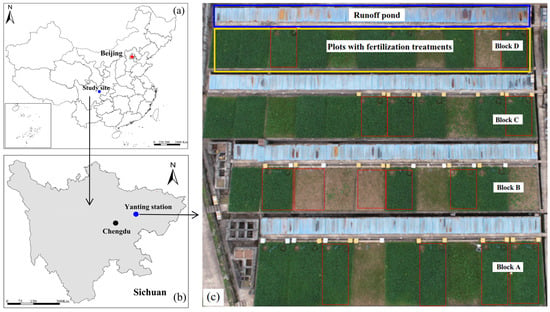
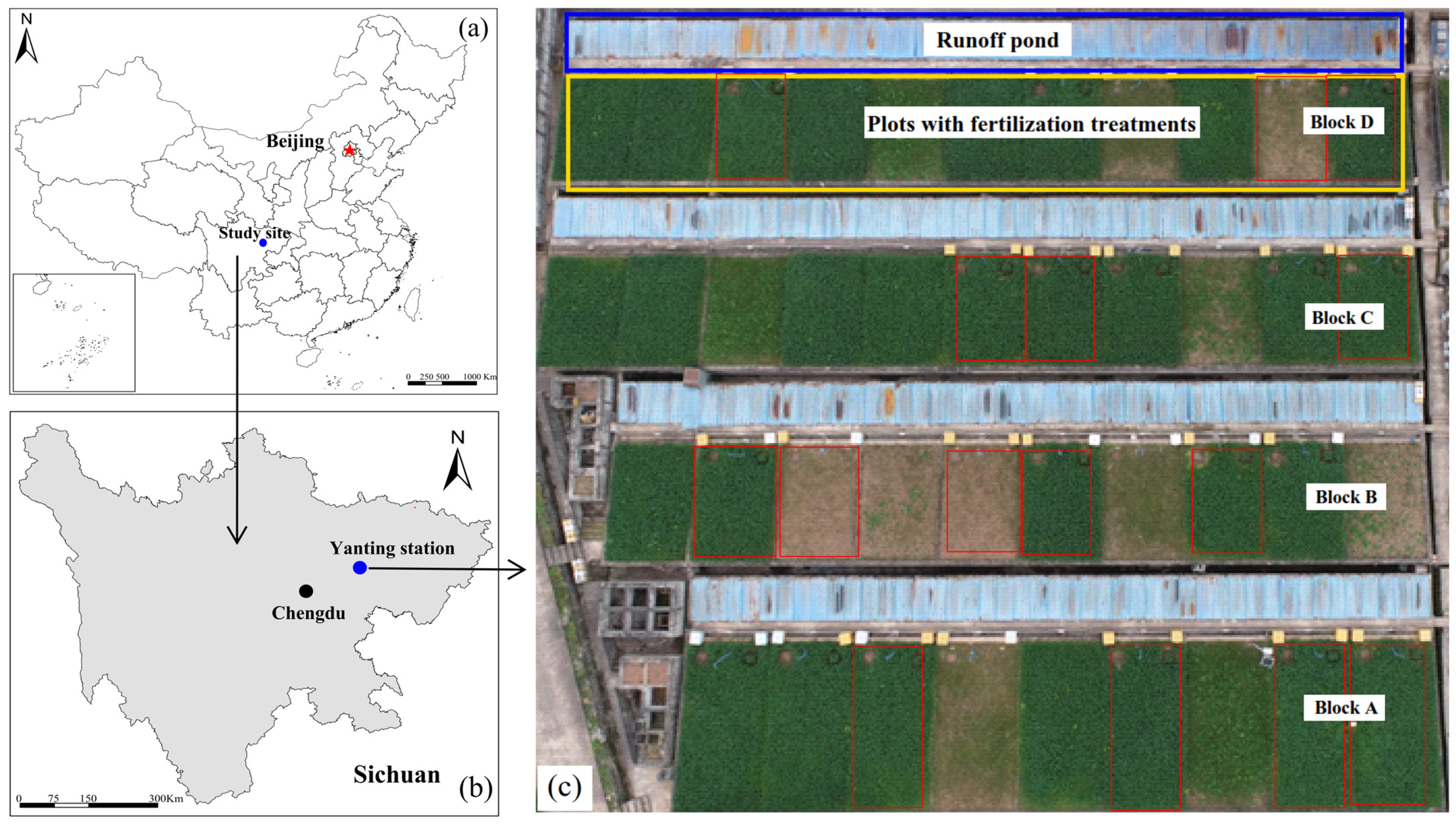
The research site is Yanting Purple Soil Agroecological Experimental Station (31°16′ N, 105°28′ E), Chinese Academy of Sciences, located in Yanting County, Mianyang City, Sichuan Province, China, with an altitude of 400 to 600 m (Figure 1). Nestled under the influence of a quintessential subtropical monsoon climate, this region basks in a mean annual temperature hovering around 17.3 °C, while being graced with approximately 826 mm of rainfall each year, predominantly during the summer months. The soil was calcareous purple soil from the Penglaizhen Formation, and the soil parent material was mudstone. The average length of the slopes used for farming in the region is about 8 m, and the hillside fields between 5° and 10° have a 50% slope [29]. Interfacial flow occurs at the interface between bedrock and soil. And because 75 percent of the precipitation falls during the maize season, this tends to create underground currents [30,31].
Figure 1.
Study area location map (a,b) and top view of experimental area (c). The red box represented the 5 fertilization treatments (3 replicates, a total of 15 plots).
2.2. Experimental Design
2.2.1. Fertilizer Treatment Plot
The experimental setup comprised runoff plots arranged in a randomized block design with three replicates. Plot A measured 8 m in length and 4 m in width, while plots B, C, and D each had dimensions of 8 m in length and 3 m in width. All plots featured a consistent 7° slope gradient and a soil depth of 60 cm (Figure 1c). Fertilization regimes in our study were as follows: (1) No fertilizer (CK); (2) Conventional nitrogen, phosphorus, and potassium fertilizer (NPK); (3) Organic fertilizers with livestock manure (OM); (4) nitrogen, phosphorus, and potassium fertilizer plus organic fertilizers with livestock manure (OMNPK); (5) Straw turnover plus nitrogen, phosphorus, and potassium fertilizer (RSDNPK). The organic fertilizer treatment in this study used collected pig manure, and the straw treatment used wheat straw harvested from winter wheat, which was spread in the field before summer maize planting. The experiment was conducted between June and September, 2025. The program of fertilizer application is a routine practice for farmers in the region and is added in one go before the crops are sown. In summer maize season, fertilisers were applied at rates of 150 kg CO(NH2)2 ha−1 (carbamide), 90 kg P2O5 ha−1 (superphosphate), and 36 kg K2O ha−1 (potassium oxide). The dosage of 5 fertilization treatments is shown in Table 1. At the same time, we have also listed the key physical indicators under the five fertilization treatments (BD, Ks, MWD).
Table 1.
Quantity of fertilizer per fertilization regime for summer maize and the key soil physical properties were bulk density (BD, g/cm3), saturated hydraulic conductivity (Ks, cm/d), and mean weight diameter (MWD, mm).
2.2.2. Experimental Plot
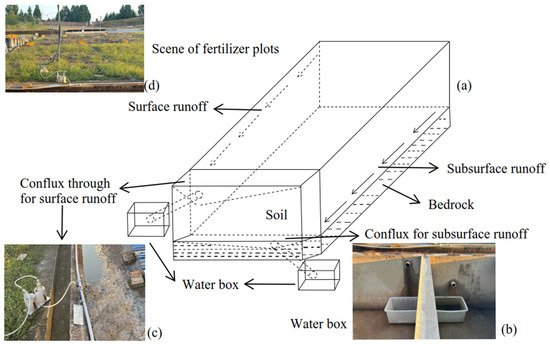
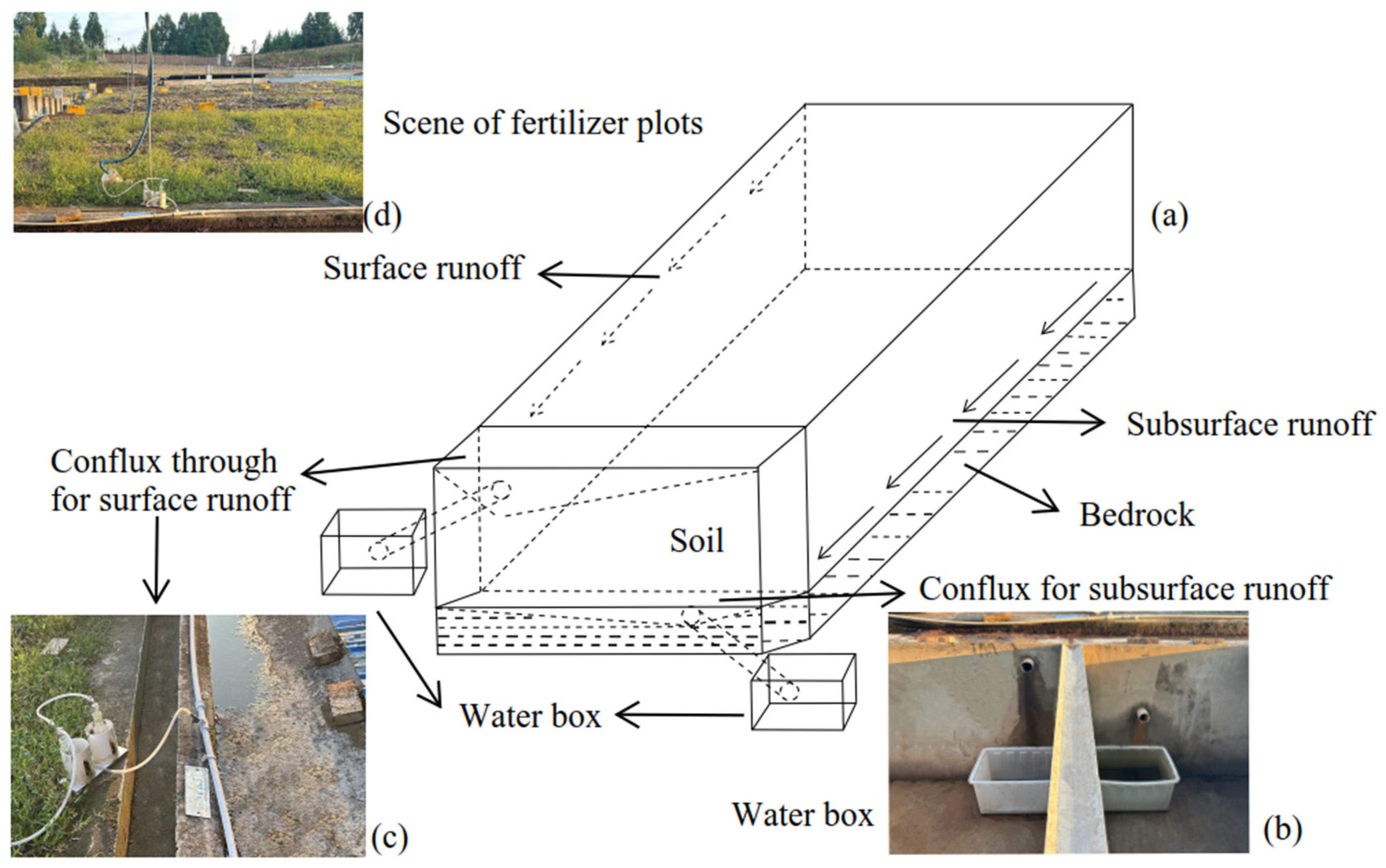
The specific way of constructing the runoff plot structure of fertilized plots was described in detail in Wang, Zhu and Kuang [31] (Figure 2a). This study was carried out in the long-term fertilization experiment and runoff plot mentioned by Wang, Zhu and Kuang [31] (Figure 2d). The difference was that we paid attention to the characteristics of soil molybdenum loss. Surface and subsurface flows flow out through the conflux trough of the topsoil and bedrock to their respective catchment boxes (Figure 2b,c). In order to stop the leakage between the plots, the different plots were separated by cement-filled partitions. The soil utilized in this study is classified as “purple soil,” identified as Pup-Orthic Entisol according to the Chinese Soil Taxonomy (CST) and categorized as Entisol under the USDA Soil Taxonomy system [31]. The soil originated from purple shale, characterized by a distinct soil-bedrock binary structure. The basic physical and chemical properties of the soil showed that the soil type was loam, the pH was 8.08, the organic matter content was 9.44 g/kg, the total N content was 0.71 g/kg, the alkali-hydrolysed N content was 77.44 g/kg, the bulk density was 1.42 g/cm3, the soil water content was 13.73%, and the silt, clay, and sand contents were 50.34%, 21.46%, and 28.20%, respectively. The total molybdenum and available molybdenum contents in the soil were 0.18 mg/kg and 0.03 mg/kg respectively. The molybdenum content in the organic fertilizer was less than 0.001 mg/kg. In this study, the molybdenum source mainly came from the natural reserves of the soil.
Figure 2.
Schematic illustration of the runoff plot structure of purple soil hillslope cropland. (a) the structural diagram of the conflux trough for topsoil and bedrock; (b) the catchment boxes and tanks for runoff; (c) the catchment trough for the upstream; (d) the scene of fertilizer plots.
2.3. Sampling and Analysis
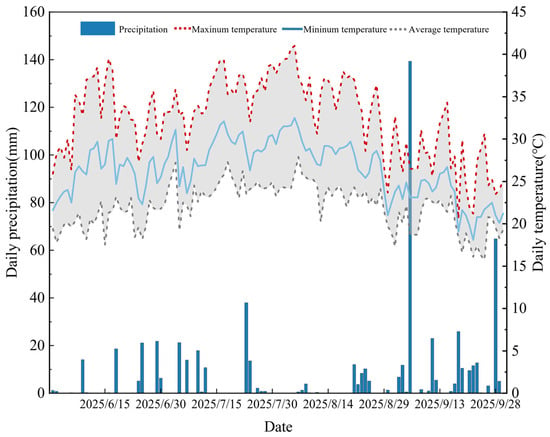
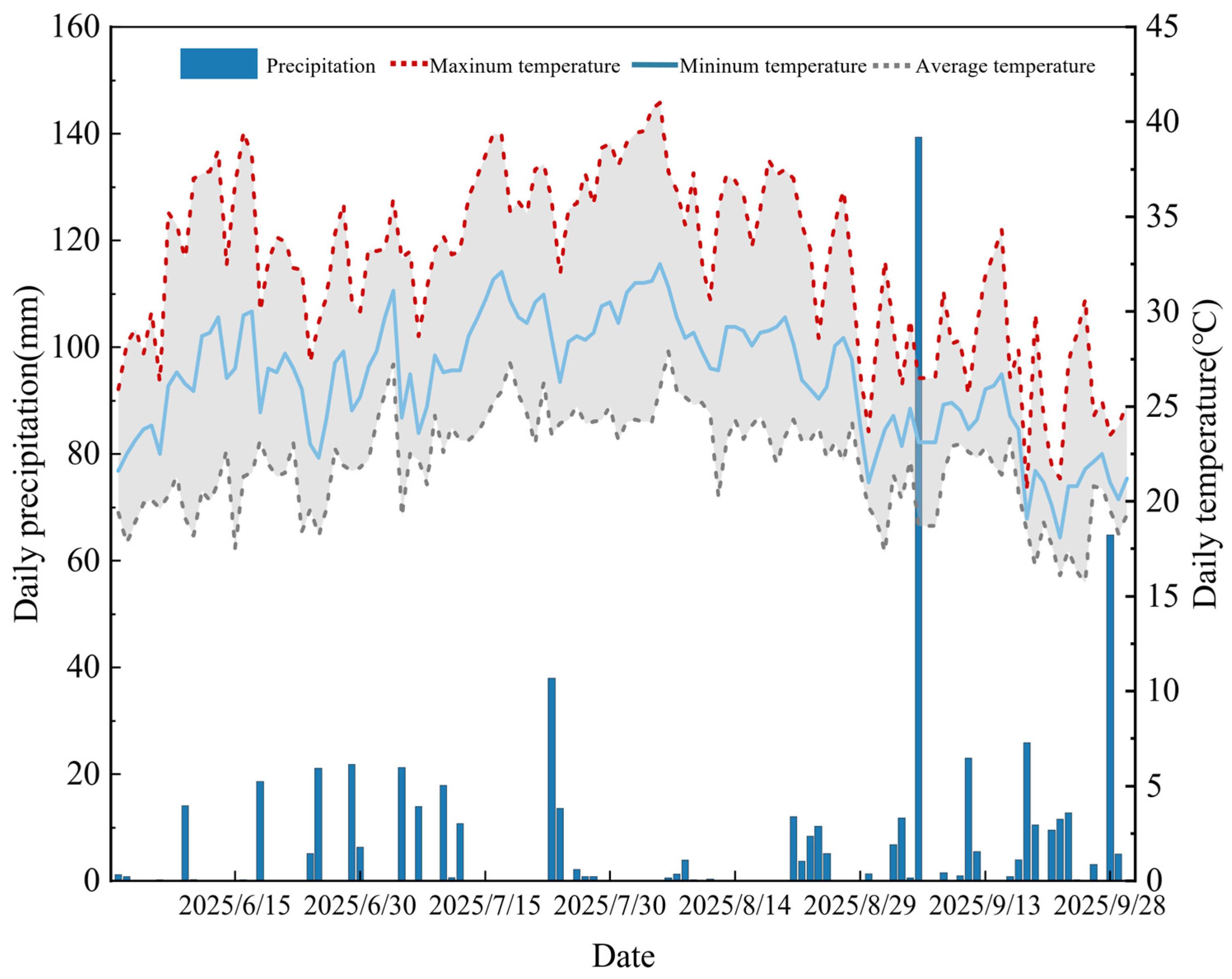
During the observation period (June to September 2025), the study area exhibited pronounced temporal variability in both precipitation and air temperature (Figure 3). Daily precipitation was unevenly distributed, with several high-intensity rainfall events concentrated in mid-summer. Notably, a rainfall event on 4 September exceeded 100 mm, and another on 28 September surpassed 60 mm, indicating the occurrence of short-duration, high-intensity storm events typical of a regional monsoonal climate. The remaining five runoff-generating events had precipitation ranging from 20 to 40 mm. Air temperature remained consistently high throughout the study period. Daily maximum temperatures typically ranged from approximately 30 °C to 40 °C, while minimum temperatures fluctuated between 20 °C and 30 °C (Figure 3).
Figure 3.
The temperature and precipitation variation characteristics from June to September in 2025. The grey area in the picture represents the daily temperature variation range (the area from the lowest temperature to the highest temperature).
After the rainfall ended, we collected the surface and subsurface runoff. Each tank’s water level was measured vertically three times with a stainless steel ruler. The average value was used for subsequent calculations. The water samples were then thoroughly mixed. Two surface runoff samples and one subsurface runoff sample were collected in 250 mL plastic bottles. One of the surface runoff water samples was used for the determination of sediment content by the traditional drying and weighing method. A portion of the other surface runoff sample was filtered through a 0.45 μm microporous membrane. This filtered portion was used to determine dissolved molybdenum (DMo). The remainder was directly used to determine total molybdenum (TMo). Particulate molybdenum (PMo) content in the samples was calculated by subtracting DMo from TMo [32]. Inductively coupled plasma mass spectrometry (ICP-MS) was used to determine the molybdenum content. The monitored isotope is 95Mo. The limit of detection (LOD) and limit of quantification (LOQ) were 0.06 μg/L and 0.24 μg/L, respectively.
The physical and chemical properties of soil were determined by reference to the method of soil agrochemical analysis [33]. Soil organic matter was determined by potassium dichromate heating method (GB 9834-1988) [34]. The soil bulk density was measured by the knife-change method, and the saturated water conductivity was determined by the constant-head method. The soil particle composition was measured using the pipette method, the soil aggregate indicators were determined by the wet sieving method, and the soil erodibility factor was calculated.
2.4. Data Processing
The formula for calculating the runoff volume H (mm) is as follows:
Vi = (S1 ∗ h1 + S2 ∗ h2)
Vi represents the volume of runoff water level (cm3); S1 represents the bottom area of the collection tank (65.2 ∗ 43 = 2803.6 cm2), h1 represents the water level height of the collection tank (cm); S2 represents the bottom area of the collection pool (190 ∗ 192 = 36,480 cm2), h2 represents the water level height of the collection pool (cm); S represents the area of the test region, B, C and D zones are 24 m2, and A zone is 32 m2; 1000 is the conversion coefficient.
The calculation formula for the flux of molybdenum loss Qi (in μg/m2) is as follows:
Ci represents the concentration of molybdenum in the runoff water (μg/L); Vi represents the volume of the runoff (cm3); i represents the number of runoff events that occur each year; S represents the area of the experimental region, and the areas B, C and D are 24 m2, while area A is 32 m2. Q represents the total loss of molybdenum (μg/m2).
The stability indicators of soil aggregates, namely the average weight diameter (MWD), geometric mean diameter (GMD), the proportion of water-stable aggregates with particle size > 0.25 mm (R0.25), fractal dimension (D), and the soil erodibility factor (K), are calculated using the following formulas:
Among them, MT represents the total weight of aggregates; MT > 0.25 refers to the weight of aggregates with a particle size greater than 0.25 mm; is the average diameter of aggregates within the i particle size range, Wi is the content of aggregates within the i particle size range; mi is the weight of soil aggregates of different particle sizes; xmax is the maximum diameter of the aggregates; Mi < xi represents the weight of aggregates with a particle size less than xi.
Statistical analysis was performed with SPSS 26, and the significance tests were set as p < 0.05 and p < 0.01, respectively. Before one-way ANOVA, independent sample t test was performed for the normal distribution of the data, and non-parametric test was performed for the data that did not obey the normal distribution. All drawings are generated using Origin 2021 software. We constructed a structural equation model using Smartpls 4.
3. Results
3.1. Runoff Depth and Sediments Yield
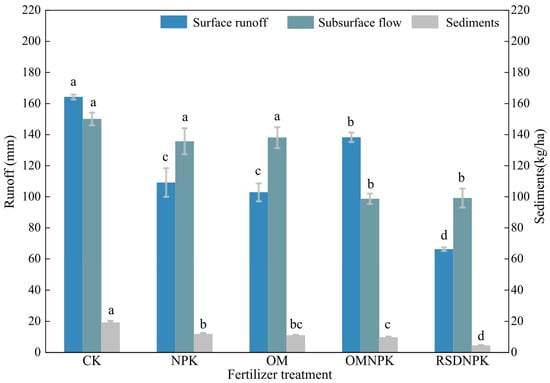
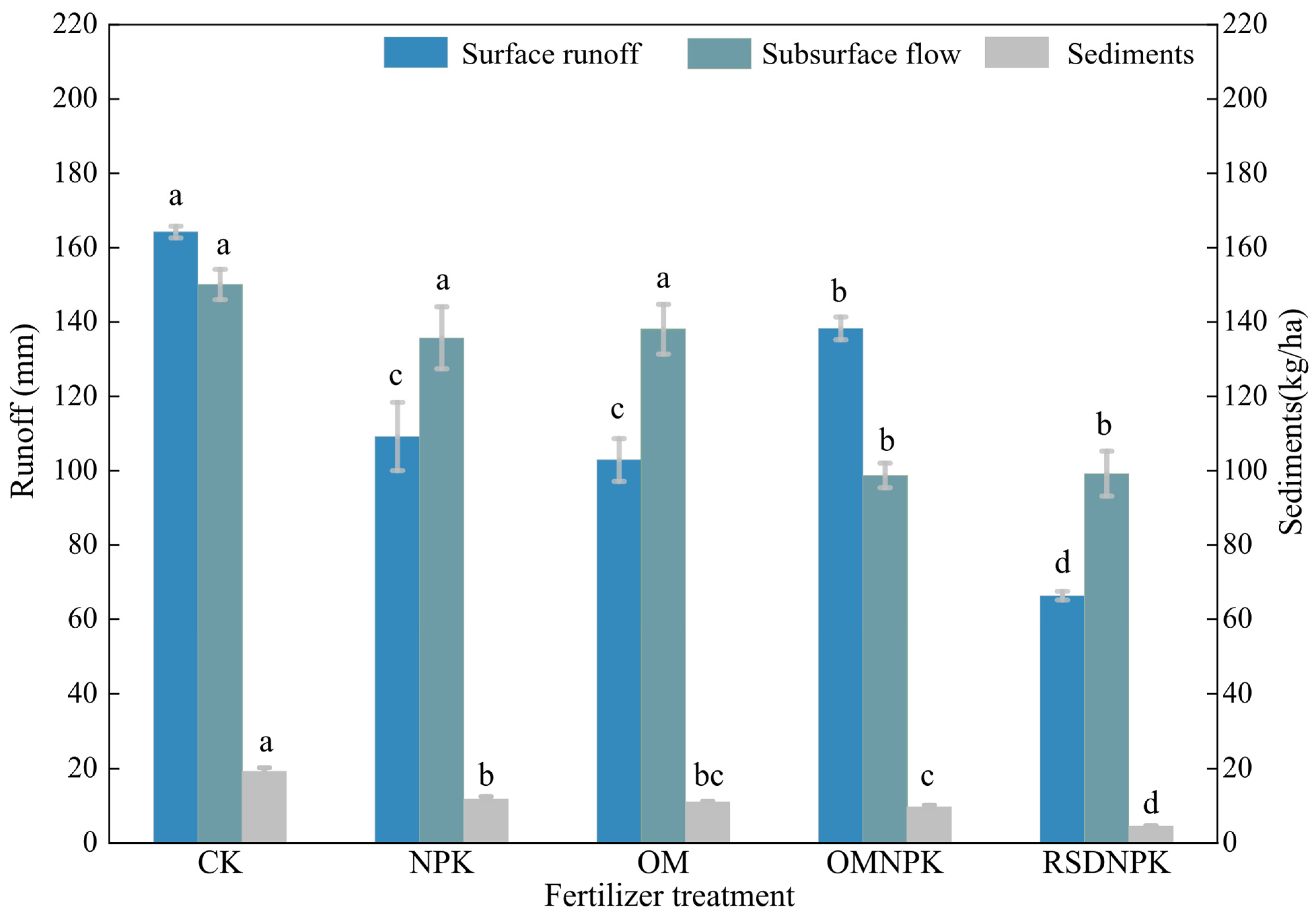
As shown in Figure 4, the surface runoff ranged from 61.51 to 156.21 mm. The results of multiple comparison analysis (Duncan) indicated that the surface runoff in the CK treatment was significantly greater than that in the NPK, OM, OMNPK, and RSDNPK treatments, while the RSDNPK treatment was significantly less than the NPK, OM, and OMNPK treatments (p < 0.05); this suggested that compared with the CK treatment, the application of chemical fertilizers, organic fertilizers, and straw addition significantly reduced surface runoff. The subsurface flow runoff ranged from 63.10 to 80.58 mm, and the CK, NPK, and OM treatments were higher than the OMNPK and RSDNPK treatments (p < 0.05). The sediments ranged from 4.48 to 19.25 kg/ha. Specifically, sediment content in the CK treatment was significantly greater than that in the other four fertilization treatments; the NPK treatment had significantly higher sediment content than the OMNPK and RSDNPK treatments; and the OM and OMNPK treatments had significantly higher sediment content than the RSDNPK treatment (p < 0.05). This indicated that organic fertilizer and straw addition treatments could significantly reduce sediment loss and had a certain retention effect on the sediment in the soil.
Figure 4.
The surface runoff, subsurface runoff and sediment yield under the five fertilization treatments. a~d represent that there are significant differences in the variables at the p < 0.05 level, and the order from a~d is from largest to smallest.
3.2. Molybdenum Concentrations and Loss Amount in the Runoff
3.2.1. Concentrations of Molybdenum
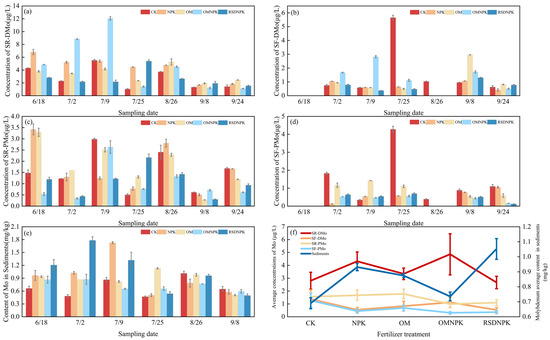
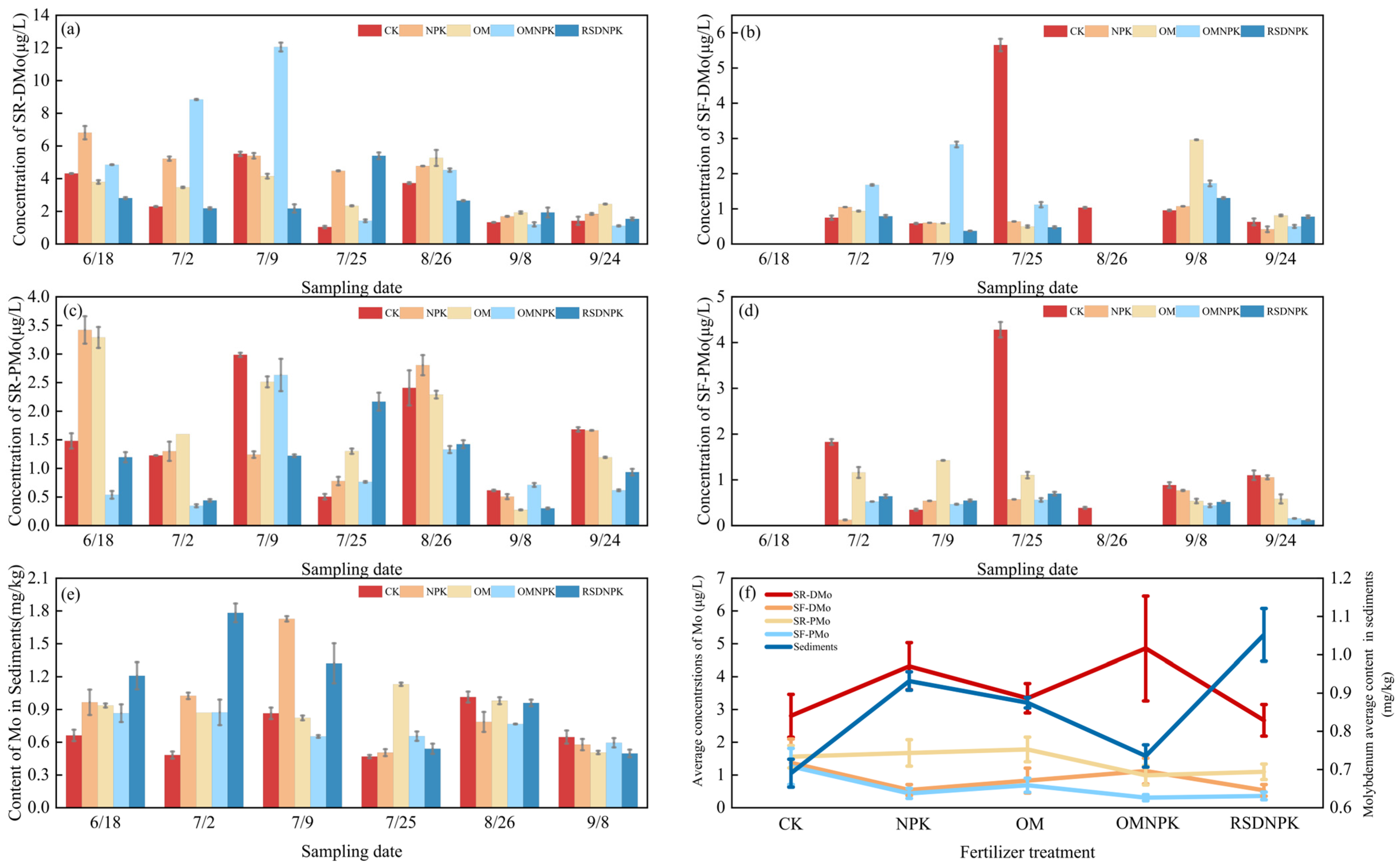
The concentrations of dissolved molybdenum (DMo) and particulate molybdenum (PMo) in surface runoff and subsurface flow exhibited marked temporal variability across the seven sampling events under different fertilization types (Figure 5a–d). The dissolved molybdenum in surface runoff (SR-DMo) had the largest fluctuation amplitude in the OMNPK treatment, reaching a peak on 2 July (about 12.2 μg/L). The dissolved molybdenum in subsurface flow (SF-DMo) showed a significant peak on 25 July in the CK treatment (about 5.8 μg/L), while the fluctuations in other treatments were relatively gentle. The particulate molybdenum in surface runoff (SR-PMo) reached its peak on 18 June in the NPK treatment (about 3.4 μg/L), while the peak of particulate molybdenum in subsurface flow (SF-PMo) occurred on 25 July, with the CK treatment having the highest value (about 4.3 μg/L); After 26 August, all treatments exhibited a trend of concentration decrease and stabilization in the later sampling period. Sediment molybdenum content across the five fertilization treatments ranged from 0.5 to 1.75 mg/kg. In early July, sediment molybdenum content was significantly higher in the RSDNPK and NPK treatments, while those in organic fertilizer treatments (OM, OMNPK) were generally lower (Figure 5e). We found that rainfall intensity exerted a profound impact on dissolved molybdenum concentrations. During moderate rainfall events in July and August (precipitation < 40 mm), SR-DMo concentrations remained consistently high. This was attributed to the leaching of molybdenum that had accumulated in the topsoil during preceding dry periods, without the strong dilution effect of excessive runoff. In contrast, heavy rainfall events on 8 September (>100 mm) and 24 September (>60 mm) resulted in significantly reduced dissolved molybdenum concentrations. This reduction was primarily driven by the dilution effect of increased runoff volume, which dispersed available molybdenum across a larger water volume (Figure 3 and Figure 5a).
Figure 5.
The molybdenum concentrations in runoff and the molybdenum contents in sediment under different fertilization treatments. (a) Dissolved molybdenum in surface runoff (SR-DMo), (b) Dissolved molybdenum in subsurface flow (SF-DMo), (c) Particulate molybdenum in surface runoff (SR-PMo), (d) Particulate molybdenum in subsurface flow (SF-PMo), (e) Molybdenum content in sediment, (f) Average concentration of molybdenum in runoff and average content Mo in sediment (content per kg of sediment).
The average concentration of SR-DMo was the highest under the OMNPK treatment (approximately 4.8 μg/L), and the lowest under the RSDNPK treatment (approximately 2.5 μg/L); while the average concentration of SF-DMo was the highest under the CK treatment (approximately 1.3 μg/L). In particulate molybdenum, the average concentration of SR-PMo was the highest under the OM treatment (approximately 1.7 μg/L), and the lowest under the OMNPK treatment (approximately 1.0 μg/L); the average concentration of SF-PMo was also the highest under the CK treatment (approximately 1.25 μg/L), and the other fertilization treatments were all below 0.7 μg/L, indicating that fertilization has a certain inhibitory effect on the loss of particulate molybdenum in subsurface flow. The average content of molybdenum in the sediments was ranked in the five fertilization treatments as follows: RSDNPK (1.05 mg/kg) > NPK (0.93 mg/kg) > OM (0.87 mg/kg) > OMNPK (0.74 mg/kg) > CK (0.69 mg/kg) (Figure 5f). Notably, although the sediment Mo concentration under the RSDNPK treatment was relatively high, the corresponding total loss amount was the lowest among all treatments (Figure 6), owing to the considerable decrease in sediment mass (Figure 4).
Figure 6.
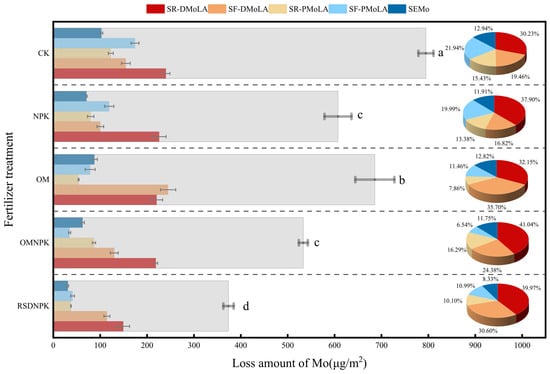
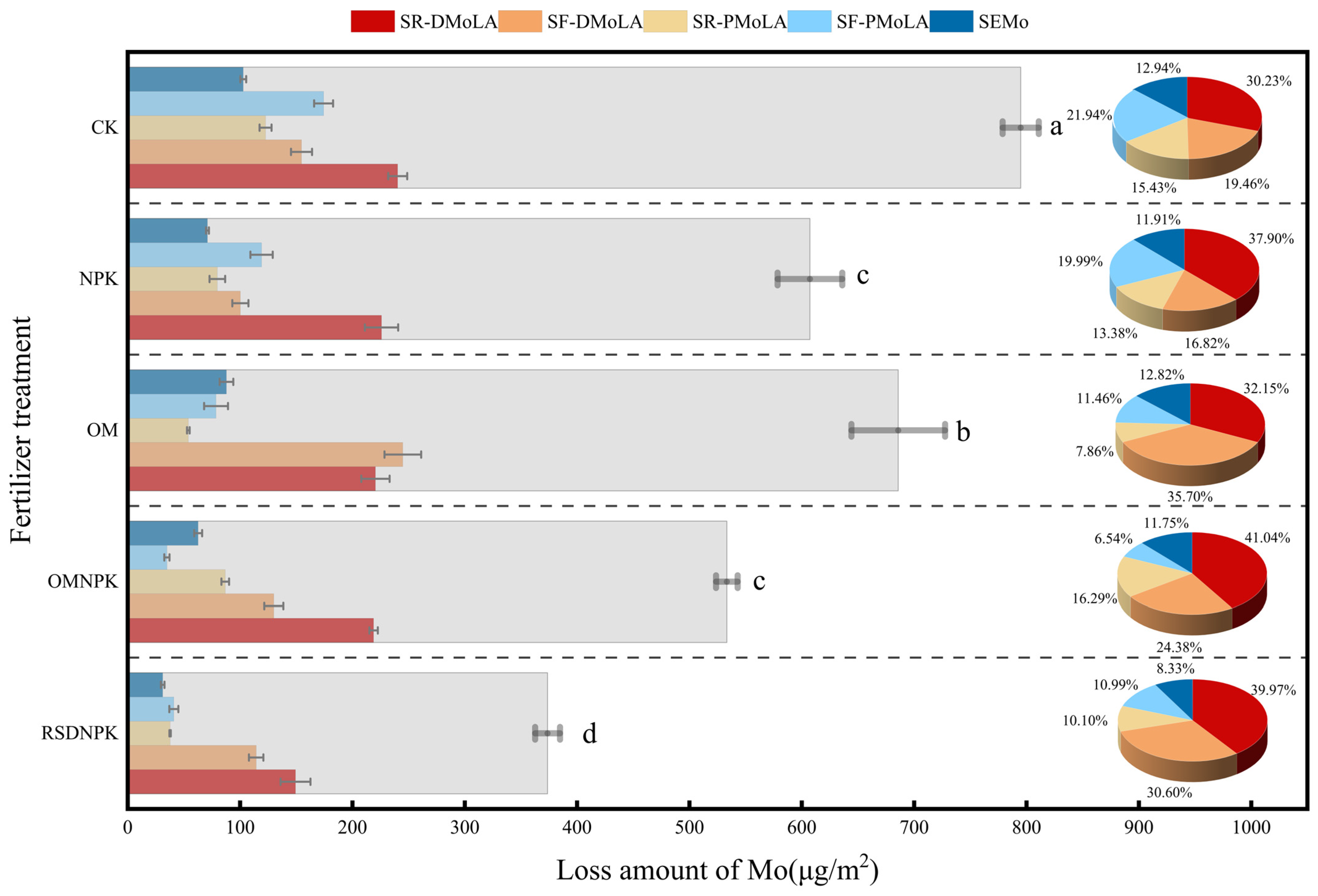
Total molybdenum loss amount and contribution ratios under different fertilization treatments. SR-DMoLA: Loss amount of dissolved molybdenum in surface runoff (SR-DMo); SF-DMoLA: Loss amount of dissolved molybdenum in subsurface flow (SF-DMo); SR-PMoLA: Loss amount of particulate molybdenum in surface runoff (SR-PMo); SF-PMoLA: Loss amount of particulate molybdenum in subsurface flow (SF-PMo); SEMo: Loss amount of molybdenum content in sediments. a~d represent that there are significant differences in the variables at the p < 0.05 level, and the order from a~d is from largest to smallest.
3.2.2. Loss Amount of Molybdenum
Under different fertilization treatments, there were significant differences in the loss amount of molybdenum (Mo) (Figure 6, p < 0.05). Specifically, the CK treatment had the highest total Mo loss (795 μg/m2), followed by the OM treatment (685 μg/m2). Total Mo loss in both the CK and OM treatments was significantly higher than that in the NPK, OMNPK, and RSDNPK treatments (p < 0.05). In contrast, the RSDNPK treatment had the lowest total Mo loss (approximately 373 μg/m2), which was significantly lower than that in the NPK and OMNPK treatments (p < 0.05).
The pie chart in Figure 6 showed the contribution proportions of Mo loss pathways and forms. In the CK treatment, SR-DMoLA was the most dominant loss form, accounting for 30.23%, followed by SF-PMoLA and SF-DMoLA. SEMo made the smallest contribution, at only 12.94%. Under the NPK treatment, SR-DMoLA’s dominance further enhanced, accounting for 37.90%, while SF-DMoLA and SF-PMoLA became secondary contributors. Notably, the OM treatment exhibited significant changes in its loss pattern: SF-DMoLA’s proportion rose to 35.70%, and together with SR-DMoLA (32.23%), they became the two dominant loss forms, while SEMo’s contribution dropped to 7.86%. The OMNPK and RSDNPK treatments had relatively similar loss patterns, the SR-DMoLA of OMNPK treatment exceeded 40%, while that of RSDNPK treatment was close to 40%. Both SR-DMoLA had became the dominant forms; SEMo’s contribution was consistently the lowest, ranging from 6.54% to 8.33%. Across all fertilization treatments, DMo (SR-DMoLA + SF-DMoLA) was the most dominant loss form, with a total proportion of 50–70%, significantly higher than PMo (SR-PMoLA + SF-PMoLA) (25–40%). Soil-suspended molybdenum accounted for the lowest proportion (6.54–12.94%). In terms of runoff pathways, most treatments (CK, NPK, OMNPK, RSDNPK) were dominated by surface runoff loss. The only exception was the OM treatment, where subsurface flow contributed slightly more (47.16%) than surface runoff (40.01%). This slight difference was mainly due to the OM treatment significantly promoting dissolved molybdenum loss via subsurface flow.
3.3. Driving Factors of Molybdenum Concentration and Loss Amount
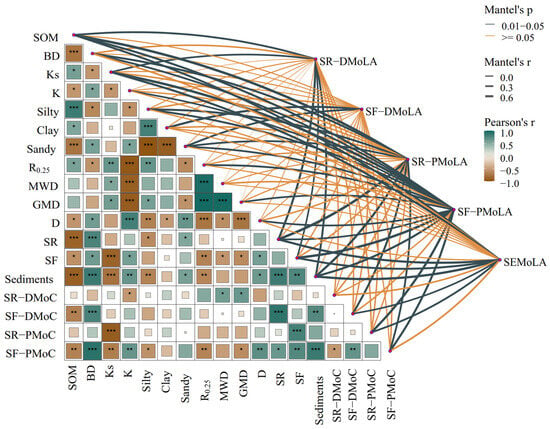
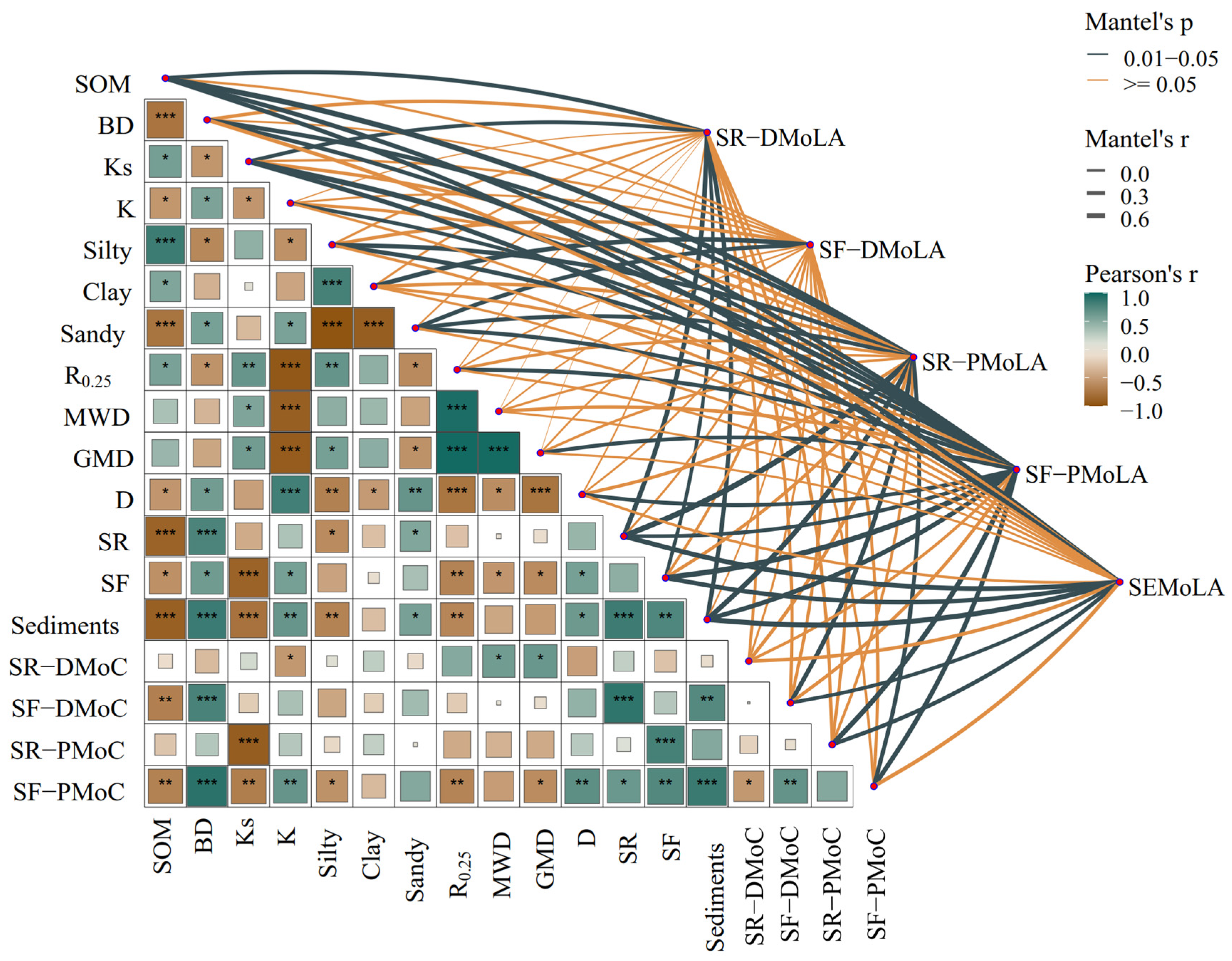
According to correlation analysis, the SOM was strongly negatively associated with SF-DMoC and SF-PMoC, while the BD, SR and Sediments were also significantly positively correlated with the the SF-DMoC and SF-PMoC (Figure 7). The K was negatively correlated with the SR-DMoC, while MWD and GMD were positively correlated with the SR-DMoC. The SF-PMoC was negatively correlated with the Ks.
Figure 7.
Correlation analysis of molybdenum concentration in runoff, loss flux, and environmental factors. SR: Surface runoff; SF: Subsurface flow; Sediments: Sediment volume; SR-DMoC: Dissolved molybdenum concentration in surface runoff; SF-DMoC: Dissolved molybdenum concentration in soil flow; SR-PMoC: Particulate molybdenum concentration in surface runoff; SF-PMoC: Particulate molybdenum concentration in soil flow; SR-DMoLA: Dissolved molybdenum loss flux in surface runoff; SF-DMoLA: Dissolved molybdenum loss flux in soil flow; SR-PMoLA: Particulate molybdenum loss flux in surface runoff; SF-PMoLA: Particulate molybdenum loss flux in soil flow; SEMoLA: Molybdenum loss flux from sediment. Ks: saturated hydraulic conductivity; K: soil erodibility factors. SOM: Soil organic matter; BD: Bulk density; Ks: Saturated hydraulic conductivity; K: Soil erodibility factors. The size of the square in the figure represents the magnitude of the correlation coefficient. The darker the color, the stronger the positive or negative correlation. *, **, *** respectively indicate significant correlations at p < 0.05, p < 0.01, and p < 0.001 levels.
In terms of the molybdenum loss amount, the best explanatory variables for the dissolved molybdenum loss flux (SR-DMoLA/SF-DMoLA) were SOM and soil physical property indicators (Ks, Clay, Sandy) and hydrological process indicators (SR, SF, Sediments). The particulate molybdenum loss flux (SR-PMoLA/SF-PMoLA) was highly coupled with SOM and soil physical property indicators (Ks, BD, K), soil particle composition (Silty, Clay, Sandy), soil aggregate structure stability indicators (R0.25, GMD, D), and sediment loss amount (Sediments); the SEMo sediment loss amount (SEMo) had the strongest positive correlation with the sediment amount (Figure 7).
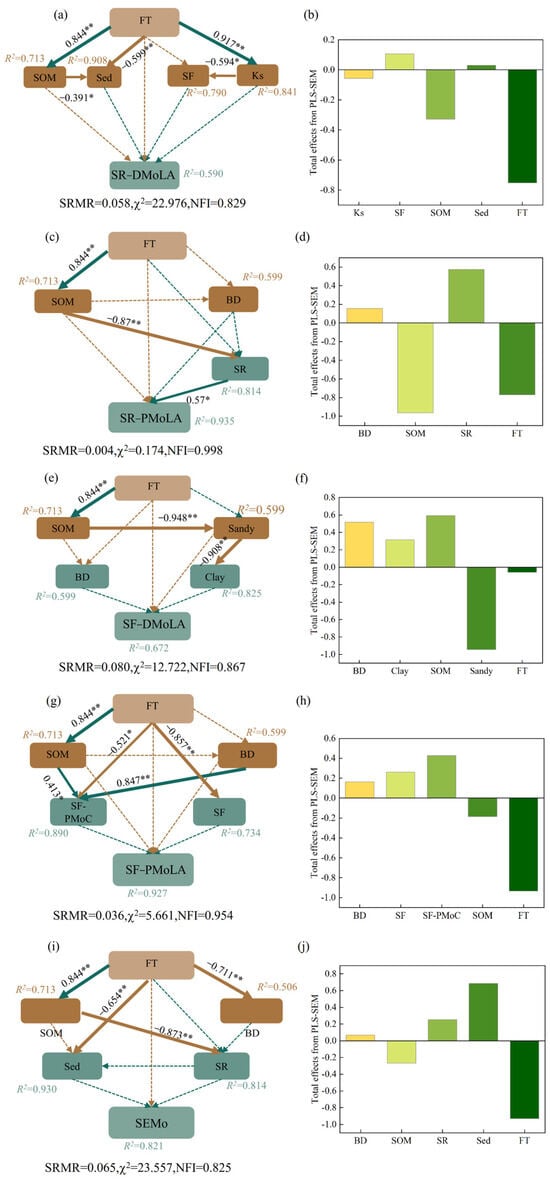
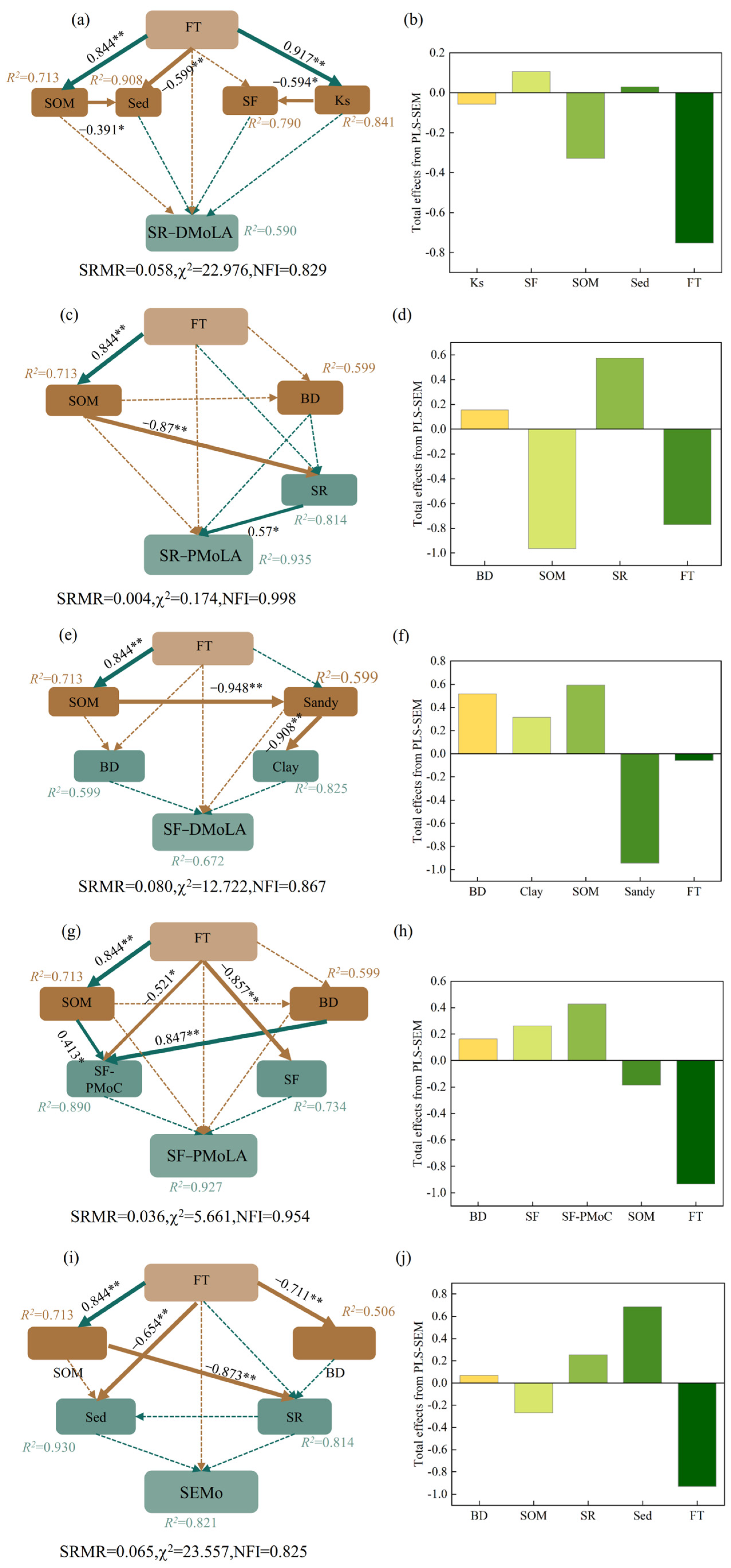
PLS-SEM was used to further reveal the possible pathways by which Fertilizer treatment regulated soil phy-chemical properties and the loss of molybdenum (Figure 8). Overall, the total effect of the fertilization treatment on the loss of molybdenum (SR-DMoLA, SR-PMoLA, SF-PMoLA, SEMo) was the greatest among the driving factors, but this effect was not significant, indicating that the fertilization treatment mostly influenced the loss of molybdenum through indirect effects. The results showed that SOM, under the direct influence of fertilizer treatment, indirectly affected SR-DMoLA by directly and negatively affecting Sed (Figure 8a); The Ks, under the direct influence of fertilizer treatment, indirectly affected SR-DMoLA by directly and negatively affecting SF. The effect of SOM on SR-DMoLA was greater than that of Ks, Sed and SF (Figure 8b). The SOM, under the direct influence of fertilizer treatment, indirectly affected SR-PMoLA by directly and negatively affecting SR (Figure 8c); The effect of SOM on SR-PMoLA was greater than that of SR and BD (Figure 8d). The SOM, under the direct influence of fertilizer treatment, indirectly affected SF-DMoLA by directly and negatively affecting Sandy and Clay (Figure 8e); The effect of Sandy on SF-DMoLA was greater than that of SOM and Clay (Figure 8f). The SOM, under the direct influence of fertilizer treatment, indirectly affected SF-PMoLA by directly and negatively affecting SF-PMoC (Figure 8g); The SF-PMoC and SF, under the direct influence of fertilizer treatment, directly affected SF-PMoLA; The effect of SF-PMoC on SF-PMoLA was greater than that of SF, SOM and BD (Figure 8h). The SOM, under the direct influence of fertilizer treatment, indirectly affected SR by directly and negatively affecting SEMo (Figure 8i); The Sed, under the direct influence of fertilizer treatment, directly affected SEMo; Additionally, the effect of Sed on SEMo was greater than that of SOM and SR (Figure 8j).
Figure 8.
The effects of soil environmental factors on molybdenum loss amount as estimated by partial least squares structural equation modeling (PLS-SEM) ((a), SR-DMoLA; (c), SR-PMoLA; (e): SF-DMoLA; (g): SF-PMoLA; (i): SEMoLA), total effect of molybdenum loss amount ((b), SR-DMoLA; (d), SR-PMoLA; (f): SF-DMoLA; (h): SF-PMoLA; (j): SEMoLA). *,** indicates significant correlations at the p < 0.05 and p < 0.01 levels, respectively.
4. Discussion
The present study demonstrated that fertilization treatments significantly influenced surface runoff, subsurface flow, and sediment yield, and simultaneously regulated the pathways and speciation of molybdenum (Mo) loss. Compared with the control (CK), the NPK, OM, OMNPK, and RSDNPK treatments significantly reduced surface runoff and sediment content (Figure 4), consistent with previous findings that fertilizer application improves soil structure, enhances infiltration, and increases erosion resistance [35,36]. Notably, the RSDNPK treatment exhibited the optimal performance in reducing surface runoff and sediment yield (Figure 4). However, its sediment Mo content was the highest among all treatments, which may be attributed to the rapid decomposition of crop residues and enhanced microbial activity that promote Mo activation and enrichment, coupled with intensive bioturbation increasing the suspension of fine particles and elevating Mo loading in sediments [2,37].
The present study demonstrated that dissolved Mo (DMo) was the predominant form of Mo loss across all fertilization treatments (accounting for 50~70% of total loss), significantly higher than particulate Mo (PMo, 25~40%) (Figure 6). This finding contrasts with the conventional view that trace elements are primarily transported in particulate form during erosion processes [38]. However, other studies have indicated significant variations among different metal elements: arsenic (As) mainly exists in dissolved form in river transport, whereas lead (Pb) is predominantly particulate-bound [39]. In contrast, cadmium (Cd), nickel (Ni), zinc (Zn), and copper (Cu) are primarily transported in dissolved form due to their high solubility [40]. The possible reasons for the dominance of DMo observed in this study are as follows: (1) Molybdenum exhibits relatively high mobility in soils and readily forms soluble molybdate anions (MoO42−) [2,41]. Given that the study area is characterized by calcareous purple soil, alkaline conditions further promote the solubility of molybdate, resulting in higher dissolved Mo concentrations; Although fertilization treatments slightly decreased soil pH relative to the control, the overall soil pH remained at a relatively high alkaline level (7.87~8.36) across all treatments. The slight pH reduction induced by fertilization did not alter the alkaline characteristics of the calcareous purple soil. Consequently, the soil environment still favored the mobilization and dissolution of molybdenum, allowing molybdenum to be transported predominantly in its dissolved form. Thus, the observed dominance of dissolved molybdenum loss in this study was mainly controlled by the inherent alkaline properties of purple soil, rather than the slight pH changes induced by different fertilization practices. (2) The adsorption affinity of Mo to soil particles, as indicated by the distribution coefficient (Kd), may be lower than that of Pb, Cu, and other metals [42,43]; (3) In the RSDNPK treatment, straw return promoted microbial activity, potentially accelerating organic matter decomposition and generating organic acids or chelating agents that mobilized Mo and enhance its solubility [44,45]; (4) In the OM treatment, organic manure application increased soil organic matter, promoted aggregate formation and macropore development, and enhanced preferential flow, which bypassed soil adsorption layers and reduced the contact time between Mo and soil particles [46,47]. This result was consistent with the observation in Figure 6 that the proportion of dissolved molybdenum in subsurface flow (SF-DMoLA) was significantly higher under OM treatment, further confirming that organic matter improved soil macropore structure and thus enhanced subsurface flow and associated molybdenum loss. Ma, et al. [48] observed that Mo in the water flow of the Pearl River Estuary was distributed in both dissolved and particulate phases, exhibiting a biphasic distribution characteristic.
The OMNPK treatment demonstrated optimal or suboptimal environmental performance across multiple indicators: moderate mean concentration of surface runoff dissolved Mo with the largest fluctuation, the lowest particulate Mo concentration, the low sediment Mo content (0.74 mg/kg), and significantly lower total Mo loss than CK and OM (Figure 5). This suggested that combined application of organic manure and chemical fertilizer could synergistically reduce Mo loss. Organic manure improved soil structure and water retention, while chemical fertilizer provided readily available nutrients to promote crop uptake [49]. The PLS-SEM analysis further confirmed that SOM was a key factor regulating Mo loss (Figure 8), exerting its influence indirectly through sediment production, soil porosity, and particle composition [50,51].
One of the most significant findings of this study was that the RSDNPK treatment exhibited the lowest total Mo loss amount (approximately 373 μg/m2) (Figure 6). This result revealed the unique advantage of straw return combined with chemical fertilizer in controlling Mo loss, which could be explained through three mechanisms: (1) The RSDNPK treatment had the lowest surface runoff among all treatments, and its sediment yield was also significantly lower than CK, NPK, OM, and OMNPK (Figure 4). Surface crop residue cover could directly intercept rainfall kinetic energy, reducing splash erosion and runoff scour [52]; meanwhile, humic substances produced during straw decomposition promote soil aggregation and enhance erosion resistance [53]. This synergistic effect of physical barrier and biological cementation effectively reduced the carrier for Mo loss via sediment transport. (2) Although the RSDNPK treatment had the highest sediment Mo content (1.05 mg/kg), its mean concentration of surface runoff dissolved Mo was the lowest (approximately 2.5 μg/L) (Figure 5a,f). This suggested that straw return, by improving soil water retention and pore structure, promoted water infiltration and dilutes Mo concentration in surface runoff [54]; simultaneously, organic acids and humus produced during straw decomposition may complex and immobilize Mo, reducing its solubility and mobility [2]. (3) The RSDNPK treatment was dominated by surface runoff dissolved Mo (40% proportion), but due to its minimal total runoff volume, the actual flux was effectively controlled. Unlike the OM treatment, RSDNPK did not significantly promote subsurface flow, avoiding the potential leaching risk of Mo to deeper soil. (4) Notably, although the OMNPK treatment also contained organic materials (manure) and chemical fertilizer, its total Mo loss was higher than RSDNPK. This difference stemmed from the distinct properties of organic materials: manure released nutrients rapidly with high active organic matter content, which promoted Mo activation in the short term [55]; whereas straw decomposition proceeded more slowly, with nutrient release better synchronized with crop uptake, and its physical cover effect was more persistent [56]. In addition to the differences in nutrient release rates and physical cover effects, there were three key factors contributing to the superior performance of RSDNPK over OMNPK. First, straw return could better improve soil aggregate stability and pore structure compared with manure application, reducing soil erosion and the detachment of Mo-associated particles, thereby decreasing both dissolved and particulate Mo loss through runoff [57]. Second, the slow decomposition of straw could continuously provide organic carbon sources for soil microorganisms, enhancing microbial immobilization of Mo and reducing its bioavailability and mobility in the soil [2]. In contrast, the rapid decomposition of manure might lead to a short-term surge in soil microbial activity, followed by a quick decline, failing to achieve long-term Mo immobilization [58]. Third, straw mulching on the soil surface could effectively reduce raindrop splash erosion, slow down surface runoff velocity, increase water infiltration, and thus reduce the transport of dissolved Mo in surface runoff—an effect that was less pronounced with manure application, which was usually incorporated into the soil and lacked the surface cover advantage [12,59]. This comparison suggested that the type and application method of organic materials exerted significant differential effects on trace element loss regulation [60], with straw return potentially outperforming sole manure application in reducing Mo loss. The combination of straw return and NPK fertilization (RSDNPK) not only balanced nutrient supply and crop uptake but also optimized soil physical and biological properties, ultimately achieving more effective control of Mo loss than OMNPK.
The PLS-SEM analysis results consistently demonstrated that soil organic matter (SOM) was the most critical factor regulating Mo loss, with its influence extending across all loss pathways and effect sizes generally exceeding those of other soil physicochemical properties (Figure 8). SOM did not operate through a single mechanism but rather formed a regulatory network for Mo loss through multiple indirect pathways, reflecting its central role as a hub variable in the soil ecosystem. Furthermore, the direct effect of fertilization treatment itself was not significant, confirming that it primarily influenced Mo loss indirectly through mediating factors such as SOM (Figure 8). In surface runoff pathways (SR-DMoLA and SR-PMoLA), SOM was the absolutely dominant factor; The structural equation model (SEM) revealed that the total effect of sand content on dissolved molybdenum loss via subsurface flow (SF-DMoLA) was greater than that of soil organic matter (SOM). However, neither sand nor SOM exhibited a statistically significant direct path to SF-DMoLA, indicating that their influences were primarily indirect, mediated through changes in soil structure and pore connectivity. Sand content, as an intrinsic soil property, determined the potential capacity for subsurface flow generation by governing pore size distribution and connectivity [61]. In contrast, SOM, as a manageable soil property, played a critical role in regulating the actual magnitude of dissolved molybdenum loss by improving soil aggregate stability and preferential flow pathways [62]. This distinction clarified that while sand provided the structural framework for subsurface transport, organic amendment remained the key management practice for mitigating molybdenum loss in these calcareous purple soils. In surface runoff, particulate Mo loss followed a carrier control mode, where SOM directly reduced the transport carrier by decreasing sediment yield and surface runoff, while bulk density may indirectly influence this process by affecting soil compaction and erosion sensitivity [63]. In surface runoff, DMo loss was controlled by a concentration-dilution mechanism, where SOM and Ks promoted water infiltration to dilute Mo concentration. The negative effect of Ks indicated that enhanced soil hydraulic conductivity accelerated Mo migration toward deeper soil horizons, thereby reducing the dissolved Mo load in surface runoff (Figure 8a) [64,65]. This mode highlighted the significance of hydrological regulation. In subsurface flow, this divergence became more pronounced: particulate Mo loss (SF-PMoLA) was almost entirely controlled by Mo concentration (SF-PMoC), whereas dissolved Mo loss (SF-DMoLA) was dominated by soil texture. This implied that once Mo entered the subsurface flow system, its particulate transport was primarily governed by chemical speciation (such as binding states with colloids) rather than runoff volume itself. This was consistent with the geochemical characteristics of Mo, which readily formed sulfide precipitates or coprecipitates with Fe-Mn oxides under reducing conditions [66,67].
It should be noted that this study has certain limitations, mainly due to the relatively short monitoring period. All data were collected within a single rainy season in 2025, which may limit the temporal representativeness of the observed results. Variations in climate conditions across years could influence soil hydrological processes, molybdenum transformation, and nutrient loss patterns. Therefore, long-term observations are required to verify whether the immobilization effect of straw return on molybdenum can be sustained over multiple years. In addition, the persistence of the inhibitory effect of straw return combined with NPK fertilization on nutrient loss also needs to be further confirmed through long-term monitoring.
5. Conclusions
This study investigated the effects of different fertilization types on molybdenum (Mo) loss in purple soil sloping cropland. The main concluding remarks are as follows:
- (1)
- Dissolved Mo was the predominant form of Mo loss (50~70%), but fertilization modified its transport pathways. The OM treatment uniquely enhanced subsurface flow Mo loss, whereas other treatments were dominated by surface runoff.
- (2)
- The RSDNPK treatment achieved the lowest total Mo loss flux (373 μg/m2), outperforming all other treatments. This indicates that, on sloping lands, the use of straw return to supplement nutrients is more beneficial for the control of micronutrient loss than the sole application of organic manure.
- (3)
- Soil organic matter was the key factor indirectly controlling Mo loss through its effects on soil physical properties and hydrological processes.
- (4)
- The contrasting performances of OM and RSDNPK treatments indicate that the type of organic amendment critically influences its effectiveness in controlling Mo loss.
In summary, straw return combined with NPK fertilization represents a promising strategy for controlling Mo loss in purple soil sloping croplands, balancing agricultural productivity with environmental protection. However, these data were collected during a single season (2025). Therefore, long-term studies are needed to verify whether the observed effects of straw return on Mo immobilization and loss control can be sustained over multiple years.
Author Contributions
X.L.: Writing original draft, Software, Methodology, Investigation, Formal analysis, and data curation. X.S.: Writing-Review and Editing, Methodology, Investigation. C.L.: Visualisation, Formal analysis, Validation, Data curation. G.L.: Writing-review and editing, Supervision, Resources, Funding acquisition, and conceptualisation. All authors have read and agreed to the published version of the manuscript.
Funding
This research was funded by the National Key Research and Development Project grant number 2023YFD1901203. And The APC was funded by the National Key Research and Development Project grant number 2023YFD1901203.
Data Availability Statement
The data presented in this study are available on request from the corresponding author (The data are not publicly available due to privacy).
Acknowledgments
We sincerely appreciate the Yanting Agro-ecological Experimental Station of Purple Soil, Chinese Academy of Sciences, for providing the experimental site and necessary equipment.
Conflicts of Interest
The authors affirm that there are no financial or non—financial competing interests on their part that need to be made public.
References
- Rana, M.; Bhantana, P.; Sun, X.C.; Imran, M.; Shaaban, M.; Moussa, M.; Saleem, M.H.; Elyamine, A.; Binyamin, R.; Alam, M.; et al. Molybdenum as an Essential Element for Crops: An Overview. Biomed. J. Sci. Tech. Res. 2020, 24, 18535–18547. [Google Scholar] [CrossRef] [Scilit]
- Rana, M.; Sankhyan, N.K.; Thakur, P.; Babal, B.; Anjali; Sharma, S.; Kumari, S.; Kumar, P. Molybdenum in soil-plant system: Bioavailability, dynamics and implications for sustainable crop production. Discover Soil 2025, 2, 89. [Google Scholar] [CrossRef] [Scilit]
- Seeda, A.; Abou El-Nour, E.-Z.; Zaghloul, S. Importance of Molybdenum and it Diverse Role in Plant Physiology: A Review. Middle East J. Appl. Sci. 2020, 10, 228–249. [Google Scholar] [CrossRef] [Scilit]
- Zahedi, S.M.; Marjani, M.; Ahmadvandi, H.R.; Alemian, M.; Ikram, M.; Gholami, R.; Sarikhani, S.; Ludwików, A.; Carillo, P. Molybdenum amelioration of drought stress in agricultural crops: A detailed overview of mechanistic actions and future perspectives. S. Afr. J. Bot. 2024, 174, 1017–1029. [Google Scholar] [CrossRef] [Scilit]
- Zayed, O.; Hewedy, O.A.; Abdelmoteleb, A.; Ali, M.; Youssef, M.S.; Roumia, A.F.; Seymour, D.; Yuan, Z.C. Nitrogen Journey in Plants: From Uptake to Metabolism, Stress Response, and Microbe Interaction. Biomolecules 2023, 13, 1443. [Google Scholar] [CrossRef] [Scilit]
- Pérez-González, A.; Gomez-Peralta, J.; Garza, A.; Barba-Behrens, N. Importancia del molibdeno en los sistemas biológicos y su papel en enzimas mononucleares como parte del cofactor Moco. Educ. Química 2012, 23, 23–32. [Google Scholar] [CrossRef] [Scilit]
- Liu, G. Law of Purple Soil Erosion and Its Control Technology; Sichuan University Press: Chengdu, China, 2008. [Google Scholar]
- Béla, K.; Anita, P.-P.; László, H.; László, L.; Éva, B. Effect of molybdenum treatment on molybdenum concentration and nitrate reduction in maize seedlings. Plant Physiol. Biochem. 2015, 96, 38–44. [Google Scholar] [CrossRef] [Scilit]
- Moussa, M.G.; Sun, X.; Ismael, M.A.; Elyamine, A.M.; Rana, M.S.; Syaifudin, M.; Hu, C. Molybdenum-Induced Effects on Grain Yield, Macro–micro-nutrient Uptake, and Allocation in Mo-Inefficient Winter Wheat. J. Plant Growth Regul. 2022, 41, 1516–1531. [Google Scholar] [CrossRef] [Scilit]
- Wen, X.; Hu, C.; Sun, X.; Zhao, X.; Tan, Q. Research on the nitrogen transformation in rhizosphere of winter wheat (Triticum aestivum) under molybdenum addition. Environ. Sci. Pollut. Res. 2019, 26, 2363–2374. [Google Scholar] [CrossRef] [Scilit]
- Lv, X.; Zhang, Y.; Hu, L.; Zhang, Y.; Zhang, B.; Xia, H.; Du, W.; Fan, S.; Kong, L. Low-Nitrogen Stress Stimulates Lateral Root Initiation and Nitrogen Assimilation in Wheat: Roles of Phytohormone Signaling. J. Plant Growth Regul. 2021, 40, 436–450. [Google Scholar] [CrossRef] [Scilit]
- Bhantana, P.; Rana, M.S.; Sun, X.-C.; Moussa, M.G.; Saleem, M.H.; Syaifudin, M.; Shah, A.; Poudel, A.; Pun, A.B.; Bhat, M.A.; et al. Arbuscular mycorrhizal fungi and its major role in plant growth, zinc nutrition, phosphorous regulation and phytoremediation. Symbiosis 2021, 84, 19–37. [Google Scholar] [CrossRef] [Scilit]
- Department of Soil Research of Chengdu Branch, C.A.o.S. Chinese Purple Soil (Part One); Science Press: Beijing, China, 1991. [Google Scholar]
- Pan, M.; Chen, X.; Feng, T.; Yang, L.; Zhu, P. Distribution characteristics of soil aggregate organic carbon and its influence on soil structure stability under typical land use types in purple soil region. Sci. Soil Water Conserv. 2025. [Google Scholar] [CrossRef]
- Xu, W.; Wei, J.; Li, J.; Bao, Y.; Li, S. Topsoil Erodibility on Purple Soil Sloping Farmlands in Three Gorges Reservoir Area. Bull. Soil Water Conserv. 2019, 39, 6. [Google Scholar] [CrossRef]
- Liao, M.; Ye, Z.; Huang, Y.; Lv, T.; Shen, J.; Zhang, Y. Influence of different fertilization management modes on phosphorus loss in run-off from nursery land in the catchment area of Hexi reservoir in Changxing county. Acta Ecol. Sin. 2017, 37, 7342–7350. [Google Scholar] [CrossRef] [Scilit]
- Zhang, X.; Li, Z.; Tang, Z.; Zeng, G.; Huang, J.; Guo, W.; Chen, X.; Hirsh, A. Effects of water erosion on the redistribution of soil organic carbon in the hilly red soil region of southern China. Geomorphology 2013, 197, 137–144. [Google Scholar] [CrossRef] [Scilit]
- Wang, S.; Wang, Z.; Long, Y.; Yan, D.; Ci, E.; Xu, G.; Li, J.; Gao, M. Effect of Fertilizer Reduction and Biochar Application on Soil Nitrogen Loss in Purple Upland. Environ. Sci. 2020, 41, 2406–2415. [Google Scholar] [CrossRef]
- Wang, X.; Chen, Y.; Tong, S.; Huang, G.; Xu, X.; Nie, Y. Effect of rainfall intensity on nitrogen and phosphorus loss in runoff from purple soil sloping farmland. J. Environ. Eng. Technol. 2025, 15, 1045–1054. [Google Scholar] [CrossRef]
- He, X.; Zheng, Z.; Li, T. Effects of Tillage Practices on Soil Erosion and Phosphorus Loss in Sloping Cropland of Purple Soil. Sci. Agric. Sin. 2013, 46, 2492–2500. [Google Scholar] [CrossRef]
- Iradukunda, A.; Zhang, D.; Ye, T.; Habineza, E.; Wang, M.; Uwamahoro, H.; Mperejekumana, P. Trace Elements Loss Characteristics in Runoff Discharge from Tobacco-Growing Red Soil in Sichuan Province of China. J. Agric. Chem. Environ. 2022, 11, 163–183. [Google Scholar] [CrossRef]
- Du, Y.; Li, T.; He, B. Runoff-related nutrient loss affected by fertilization and cultivation in sloping croplands: An 11-year observation under natural rainfall. Agric. Ecosyst. Environ. 2021, 319, 107549. [Google Scholar] [CrossRef] [Scilit]
- Guo, C.; Zhao, Q.; Dai, Y.; Sui, Y.; Zhu, Q. Effect of surface drainage system on water and nutrient loss from sloping farmland in the black soil region of Northeast China. Environ. Earth Sci. 2025, 84, 304. [Google Scholar] [CrossRef] [Scilit]
- Meng, Y.; Liu, W.; Wang, Z.; Wang, J.; Chen, X.; Wang, S. Effects of nitrogen and phosphorus fertilization on grassland productivity and soil physicochemical properties of degraded grass-mixed grasslands. Acta Ecol. Sin. 2025, 45, 3204–3217. [Google Scholar] [CrossRef]
- Muscalu, O.M.; Nedeff, V.; Chitimus, A.D.; Sandu, I.G.; Partal, E.; Mosnegutu, E.; Sandu, I.; Rusu, D.I. Influence of Fertilization Systems on Physical and Chemical Properties of the Soil. Rev. Chim. 2018, 69, 3106–3111. [Google Scholar] [CrossRef] [Scilit]
- Zhang, W.; Wei, C.; Li, J.; Zhou, Q.; Ma, J.; Li, Y.; He, Y.; Zou, Y.; Luo, Y.; Yao, Y. Stabilization of acidification in China’s cropland soils. Nat. Geosci. 2025, 18, 1125–1132. [Google Scholar] [CrossRef] [Scilit]
- Goldberg, S.; Forster, H.S.; Godfrey, C.L. Molybdenum Adsorption on Oxides, Clay Minerals, and Soils. Soil. Sci. Soc. Am. J. 1996, 60, 425–432. [Google Scholar] [CrossRef] [Scilit]
- Williams, C.; Thornton, I. The effect of soil additives on the uptake of molybdenum and selenium from soils from different environments. Plant Soil 1972, 36, 395–406. [Google Scholar] [CrossRef] [Scilit]
- Xiong, Y.; Li, Q. Soil in China; Science Press: Beijing, China, 1986. [Google Scholar]
- Zhu, B.; Wang, T.; Kuang, F.; Luo, Z.; Tang, J.; Xu, T. Measurements of Nitrate Leaching from a Hillslope Cropland in the Central Sichuan Basin, China. Soil. Sci. Soc. Am. J. 2009, 73, 1419–1426. [Google Scholar] [CrossRef] [Scilit]
- Wang, T.; Zhu, B.; Kuang, F. Reducing interflow nitrogen loss from hillslope cropland in a purple soil hilly region in southwestern China. Nutr. Cycl. Agroecosys 2012, 93, 285–295. [Google Scholar] [CrossRef] [Scilit]
- Fishman, M.J.; Friedman, L.C. Molybdenum, Atomic Absorption Spectrometric, Chelation-Extraction; U.S. Geological Survey: Denver, CO, USA; Arlington, VA, USA, 1989; Volume 5.
- Lu, R. Analytical Methods for Soil and Agro-Chemistry; China Agricultural Science and Technology Press: Beijing, China, 2000. [Google Scholar]
- GB9834-1988; Soil Organic Matter Determination Method. China Standards Press: Beijing, China, 1988.
- Acar, M.; Wahab, T.S.; Karaca, Ö.K.; Işık, M.; Sariyev, A.; Ortaş, İ. Exposing how long-term organic inorganic fertilizers affect the physical characteristics of soil. J. Soil Sci. Plant Nutr. 2025, 25, 5187–5201. [Google Scholar] [CrossRef] [Scilit]
- Awwal, Y.A.; Angyu, M.D.; Afolabi, R.J. Impact of various soil amendments on temporal NPK release, soil quality and maize yield in tropical Alfisols of Zaria, Nigeria. Sci. Rep. 2025, 15, 41856. [Google Scholar] [CrossRef] [Scilit]
- Xie, Y.; Xiang, J.-Y.; Long, L.; Ma, Y.; Xing, Z.; Wang, L.; Shao, C.; Liu, N.; Li, F. Impact of different treatment methods and timings on soil microbial communities with transgenic maize straw return. Sci. Rep. 2025, 15, 24820. [Google Scholar] [CrossRef] [Scilit] [PubMed]
- Chen, J.; Fan, P.; Zhang, F.; Tai, L.; Fang, N.; Niu, Y.; Wu, Z.; Fu, Z.; Wang, K. Heavy metal(loid)s migration mechanisms during soil erosion: A systematic quantitative review. Int. Soil. Water Conserv. Res. 2025, 13, 410–421. [Google Scholar] [CrossRef] [Scilit]
- Garneau, C.; Sauvage, S.; Probst, A.; Pérez, J.M.S. Modelling of trace metal transfer in a large river under different hydrological conditions (the Garonne River in southwest France). Ecol. Modell. 2014, 306, 195–204. [Google Scholar] [CrossRef] [Scilit]
- Huber, M.; Welker, A.; Helmreich, B. Critical review of heavy metal pollution of traffic area runoff: Occurrence, influencing factors, and partitioning. Sci. Total Environ. 2015, 541, 895–919. [Google Scholar] [CrossRef] [Scilit]
- Brandely, M.; Coussy, S.; Blanc-Biscarat, D.; Gourdon, R. Assessment of Molybdenum and Antimony speciation in excavated rocks and soils from the Parisian basin using mineralogical and chemical analyses coupled to geochemical modelling. Appl. Geochem. 2022, 136, 105129. [Google Scholar] [CrossRef] [Scilit]
- Sheppard, S.; Long, J.; Sanipelli, B.; Sohlenius, G. Solidliquid Partition Coefficients (Kd) for Selected Soils and Sediments at Forsmark and Laxemar-Simpevarp; Swedish Nuclear Fuel and Waste Management Co. (SKB): Stockholm, Sweden, 2009. [Google Scholar]
- Seidou, C.D.; Wang, T.; Espoire, M.M.R.B.; Dai, Y.; Zuo, Y. A Review of the Distribution Coefficient (Kd) of Some Selected Heavy Metals over the Last Decade (2012–2021). J. Earth Sci. Environ. Prot. 2022, 10, 199–242. [Google Scholar] [CrossRef]
- Suo, Y.; Li, T.; von Sperber, C.; Ge, L.; Cao, C.; Zhai, Z.; Bu, Z.; Wang, M. Low molecular weight organic acids mobilize soil organic phosphorus for enzymatic hydrolysis in a temperate montane peatland. Biogeochemistry 2025, 168, 19. [Google Scholar] [CrossRef] [Scilit]
- Cai, M.; Chen, H.; Tan, H.; Chen, J.; He, S.; Long, M. Temporal dynamics of nutrient release from mulching of legume roots and shoots litter driven by microbial community during decomposition in organic orchards. BMC Plant Biol. 2025, 25, 374. [Google Scholar] [CrossRef] [Scilit]
- Ding, T.; Guo, Z.; Yu, Z.; Li, J.; Liu, J.; Peng, X. Soil macropore structure plays divergent roles in fresh and decomposed particulate organic matter. Commun. Earth Environ. 2025, 6, 648. [Google Scholar] [CrossRef] [Scilit]
- Ngabonziza, D.; Liu, C.; Cui, J.; Liu, X.; Sun, Z.; Zheng, Q. Macropore Characteristics and Their Contribution to Sulfonamide Antibiotics Leaching in a Calcareous Farmland Entisol. Sustainability 2025, 17, 9898. [Google Scholar] [CrossRef] [Scilit]
- Ma, H.; Wang, Y.; Chen, C.; Zhang, Y. Particulate and Dissolved Metals in the Pearl River Estuary, China—Part 2 Partitioning Characteristics and Influencing Factors. Water 2025, 17, 1436. [Google Scholar] [CrossRef] [Scilit]
- Gupta, K.; Bordoloi, N. Integrated nutrient management: Effect on soil properties and crop yields on sandy clay loam soil under maize-wheat cropping system. Agric. Sci. Dig. 2024, 44. [Google Scholar] [CrossRef] [Scilit]
- Brar, B.; Singh, J.; Singh, G.; Kaur, G. Effects of long term application of inorganic and organic fertilizers on soil organic carbon and physical properties in maize–wheat rotation. Agronomy 2015, 5, 220–238. [Google Scholar] [CrossRef] [Scilit]
- Liu, M.; Han, G.; Zhang, Q. Effects of soil aggregate stability on soil organic carbon and nitrogen under land use change in an erodible region in Southwest China. Int. J. Environ. Res. Public Health 2019, 16, 3809. [Google Scholar] [CrossRef] [Scilit]
- Singh, M.C.; Singh, G.; Bishnoi, C.; Malik, A.; Al-Ansari, N.; Mattar, M.A. Impact of polyvinyl alcohol application and wheat straw mulching on soil loss and infiltration rate in semi-arid tropics. Appl. Water Sci. 2024, 14, 223. [Google Scholar] [CrossRef] [Scilit]
- Ren, K.; Song, W.; Wei, Z.; Song, L.; Liu, M.; Zhou, Y.; Zhen, Y.; Wu, X.; Gu, K.; Simarani, K.; et al. Organic material mulching regulated core microbial groups to promote soil carbon and nitrogen cycling and improve faba bean productivity under a triple-cropping system in purple soil hilly region of southwest China. Front. Microbiol. 2025, 16, 1602633. [Google Scholar] [CrossRef] [Scilit]
- Ding, T.; Guo, Z.; Li, W.; Peng, X. Long-term straw return with nitrogen fertilization enhances soil pore structure, POM accumulation, and their positive feedback in a Vertisol. Soil. Tillage Res. 2025, 252, 106602. [Google Scholar] [CrossRef] [Scilit]
- Mohanty, M.; Reddy, K.S.; Probert, M.E.; Dalal, R.C.; Rao, A.S.; Menzies, N.W. Modelling N mineralization from green manure and farmyard manure from a laboratory incubation study. Ecol. Model. 2011, 222, 719–726. [Google Scholar] [CrossRef] [Scilit]
- Kumar, K.; Goh, K.M. Crop residues and management practices: Effects on soil quality, soil nitrogen dynamics, crop yield, and nitrogen recovery. Adv. Agron. 1999, 68, 197–319. [Google Scholar]
- Li, J.; Liu, Z.; Li, X.; Wang, Y.; Li, J.; Wang, K.; You, H.; Zhao, Y.; Xu, Z.; Liu, Q. Temporal variability in rill erosion resistance following maize straw incorporation: Insights into the key controlling factors, contribution rates, and mechanisms over a one-year period. Land. Degrad. Dev. 2025, 36, 4377–4391. [Google Scholar] [CrossRef] [Scilit]
- Yang, H.; Hu, J.; Zhang, B.; Li, Y.; Yang, C.; Chen, F.; Zhu, T.; Xin, Y. Analysis of bacterial community during cow manure and wheat straw composting and the isolation of lignin-degrading bacteria from the compost. Microorganisms 2025, 13, 1716. [Google Scholar] [CrossRef] [Scilit] [PubMed]
- Olkeba, B.; Shoeb, Q.; Bobe, B. Effects of straw mulch and farmyard manure on runoff, erosion, in-situ water conservation, and yield and yield components of wheat at the highlands of Bale, south eastern Ethiopia. Afr. J. Agric. Res. 2012, 7, 5879–5886. [Google Scholar] [CrossRef] [Scilit]
- Gezahegn, A.M. C and N Mineralization of Newly Applied Crop Residues under Different Soil Fertilization History. Am.-Eurasian J. Agric. Environ. Sci. 2021, 17, 354–364. [Google Scholar] [CrossRef]
- Luo, Y.; Wen, T.; Lin, X.; Chen, X.; Shao, L. Quantitative analysis of pore-size influence on granite residual soil permeability using CT scanning. J. Hydrol. 2024, 645, 132133. [Google Scholar] [CrossRef] [Scilit]
- Zhang, Y.; E, S.; Wang, Y.; Su, S.; Bai, L.; Wu, C.; Zeng, X. Long-term manure application enhances the stability of aggregates and aggregate-associated carbon by regulating soil physicochemical characteristics. Catena 2021, 203, 105342. [Google Scholar] [CrossRef] [Scilit]
- Malongweni, S.O.; van Tol, J. Effects of herbivory, fire, and vegetation type on soil compaction and aggregate stability in a semi-arid savanna. Environ. Dev. Sustain. 2025, 27, 13869–13882. [Google Scholar] [CrossRef] [Scilit]
- Usowicz, B.; Lipiec, J. Spatial variability of saturated hydraulic conductivity and its links with other soil properties at the regional scale. Sci. Rep. 2021, 11, 8293. [Google Scholar] [CrossRef] [Scilit]
- Blanchy, G.; Albrecht, L.; Bragato, G.; Garré, S.; Jarvis, N.; Koestel, J. Impacts of soil management and climate on saturated and near-saturated hydraulic conductivity: Analyses of the Open Tension-disk Infiltrometer Meta-database (OTIM). Hydrol. Earth Syst. Sci. 2023, 27, 2703–2724. [Google Scholar] [CrossRef] [Scilit]
- Phillips, R.; Xu, J. A critical review of molybdenum sequestration mechanisms under euxinic conditions: Implications for the precision of molybdenum paleoredox proxies. Earth-Sci. Rev. 2021, 221, 103799. [Google Scholar] [CrossRef] [Scilit]
- Paul, K.M.; Hermans, M.; Jokinen, S.A.; Brinkmann, I.; Filipsson, H.L.; Jilbert, T. Revisiting the applicability and constraints of molybdenum- and uranium-based paleo redox proxies: Comparing two contrasting sill fjords. Biogeosciences 2023, 20, 5003–5028. [Google Scholar] [CrossRef] [Scilit]

Disclaimer/Publisher’s Note: The statements, opinions and data contained in all publications are solely those of the individual author(s) and contributor(s) and not of MDPI and/or the editor(s). MDPI and/or the editor(s) disclaim responsibility for any injury to people or property resulting from any ideas, methods, instructions or products referred to in the content. |
© 2026 by the authors. Licensee MDPI, Basel, Switzerland. This article is an open access article distributed under the terms and conditions of the Creative Commons Attribution (CC BY) license.