


Abstract
To clarify the effects and mechanisms of the solution formed by mixing flaxseed meal powder with water on soil water movement in sandy land, this study conducted laboratory simulation experiments using three extraction forms of flaxseed meal solution (supernatant, suspension, and precipitate) and five application rates (5 kg·m−2, 8 kg·m−2, 11 kg·m−2, 14 kg·m−2, and 17 kg·m−2), with untreated aeolian sandy soil set as the control (CK). The results showed that: (1) Flaxseed meal can significantly reduce the soil water infiltration rate, with the sediment treatment group exhibiting the optimal effect. After the application of the three flaxseed meal treatments, soil infiltration indices decreased significantly, and the magnitude of the reduction became more pronounced with the increase in flaxseed meal application rate. (2) Flaxseed meal exhibited a significant effect on water retention and evaporation inhibition; after continuous evaporation for 35 days following the spraying of different flaxseed meal treatments, the cumulative evaporation of CK was significantly higher than that of the other treatments. Compared with CK, the cumulative evaporation of the groups treated with the supernatant, suspension, and precipitate of flaxseed meal solution decreased by 11.69%, 24.13%, and 43.22%, respectively. The sediment group achieved the optimal effect, and the evaporation inhibition effect was enhanced with the increase in application rate. (3) All three flaxseed meal mixture treatments increased soil bulk density and decreased soil total porosity, and saturated water-holding capacity and minimum water-holding capacity, with the sediment treatment exerting the most significant effect. The efficacy of all treatments became more notable as the application rate increased. There was a highly significant correlation between soil physical properties and water movement rate. Flaxseed meal affects soil water movement by altering soil physical properties. In conclusion, spraying flaxseed meal on the surface of sandy soil can effectively reduce infiltration and inhibit evaporation, with the sediment treatment group achieving the optimal improvement effect. The soil crust formed by flaxseed meal has a strong water-binding capacity, which can maintain water supply for plant growth over a long period, making it highly suitable for popularization and application in sandy farmland.
1. Introduction
With the further advancement of high-quality agricultural development, the coordinated development of ecological civilization has been increasingly valued in the development of the agricultural economy [1]. Soil moisture, a key factor restricting crop growth [2], is highly prone to rapid loss in sandy soil, making it difficult to maintain soil moisture content. This not only increases irrigation costs [3] but also reduces water use efficiency, seriously affects the economic and ecological benefits of agricultural production [4] but also impairs crop yield and quality, which is not conducive to the high-quality economic development of sandy farmland [5,6]. Soil infiltration and evaporation are important processes of soil water movement, which directly determine soil water distribution and the efficient utilization of water by plants [7]. Traditional methods are often adopted in sandy farmland to preserve soil moisture, such as the improvement of irrigation technology [8] and plastic film mulching [9]. Although these methods have certain effects in alleviating water loss, they have many limitations [10]. Therefore, exploring effective water conservation strategies for sandy farmland has become the key to resolving the sustainable development dilemma of regional high-standard sandy farmland. Chemical measures usually involve spraying viscous materials on the surface of sandy cultivated land, which can rapidly form a consolidated layer with resistance to wind–sand shear stress, thus effectively reducing water evaporation [11,12]. However, traditional options mostly rely on polymer materials, which pose risks such as secondary environmental pollution, non-degradability, and negative impacts on soil microbial communities. When considering the food safety of farmland soil and crops, the suitability of application techniques also needs to be taken into account.
Soil conditioners can improve the structure of sandy soil and enhance its water and fertilizer retention capacity, and are widely used in sandy farmland [13]. Flax (Linum usitatissimum L.) is an oil crop originating from North and Northwest China. A complex polysaccharide component—seed gum—can be extracted from its defatted meal, which is commonly used as a food additive, stabilizer, and adhesive [14]. Flaxseed meal is a by-product of flaxseed oil extraction, rich in nutrients and bioactive components [15,16]. This material has good water retention and thermal stability; its main component is a polysaccharide, and its viscosity is relatively stable [17]. The application of this material can effectively avoid secondary soil pollution caused by material degradation, and it is non-toxic to crop growth. In addition, it can provide some nutrient elements required during crop growth and promote crop growth and development [18,19]. At present, numerous studies on the selection and application of similar soil amendments have been conducted and have achieved remarkable results [20]. Using flaxseed meal (a by-product obtained after oil extraction from oil-bearing plant seeds) as the raw material, polysaccharides are extracted by dissolving the meal in water and then spraying it on the surface of shifting sandy land. This practice exhibits excellent sand-fixing effects, effectively slows down the water infiltration rate of aeolian sandy soil, improves the water retention capacity of sandy soil, optimizes soil structure, increases the contents of nutrients and organic matter, and significantly enhances crop yield [21,22]. Therefore, it is suitable for application in sandy cultivated land, and the further development and utilization of this material are promising. Although few studies have focused on whether flaxseed meal may block partial capillary pores and affect soil water movement, existing research has shown that the application of an appropriate concentration of this solution can promote the germination, tillering, and bud growth of wheat seeds. The mechanism by which this material affects crop growth is achieved by filling soil pores, enhancing the hydrophilicity and water retention of soil, regulating soil water infiltration and evaporation, and thus making the retained water available for seed germination and plant growth [23].
In the process of constructing high-standard sandy farmland in the arid sandy regions of Northwest China, especially against the backdrop of scarce natural precipitation in this area, there remains a systematic gap in quantitative research on the water retention mechanisms and efficiency of farmland soils. Existing studies have only focused on the feasibility of flaxseed meal for sand fixation and water retention properties, without exploring its optimal application method and action mechanism; thus, this material has not been fully applied in agricultural production. Most current research treats flaxseed meal as a homogeneous whole, failing to clarify the functional differentiation among its supernatant (soluble components), suspension (colloidal particles), and sediment (solid particles); there is a lack of quantitative distinction regarding the contribution rate of each component in water regulation, and the micro-mechanisms—such as the effects of soluble components on soil water potential and the role of colloidal particles in pore structure remodeling—have not been elucidated. Additionally, research gaps exist in the optimization ratio technology based on component characteristics. These deficiencies have confined the application of flaxseed meal to an empirical stage, making it difficult to achieve precise regulation. Based on this, this study focuses on the water movement regulation effects of different solution components and systematically analyzes the action mechanisms and functional differences of each component, aiming to fill the research gap in component differentiation. It is intended to provide a scientific basis for the efficient and precise popularization and application of flaxseed meal in sandy farmland, and to facilitate the construction and sustainable development of rain-fed high-standard sandy farmland in the arid sandy regions of Northwest China.
2. Materials and Methods
2.1. Test Materials
The test soil was collected from sandy cultivated land on the northern edge of the Kubuqi Desert. After removing large-particle impurities, the soil was brought back to the laboratory, air-dried naturally in the dark, crushed, and sieved through a 2 mm soil sieve for later use to ensure uniform soil texture. The particle size distribution of the soil was determined by the sieving method, with a sieving time of 5 min for each soil sample. The particle size composition of the test soil was as follows: the mass fraction of clay particles (<0.002 mm) was 12.83%; the mass fraction of silt particles (0.002~0.02 mm) was 60.94%; the mass fraction of sand particles (0.02~2 mm) was 26.23%. The soil sample was dominated by silt particles, followed by sand particles, and least by clay particles. The bulk density of the soil measured by the ring knife method was 1.33 g·cm−3, which was used as the standard for filling soil samples in the infiltration and evaporation experiments.
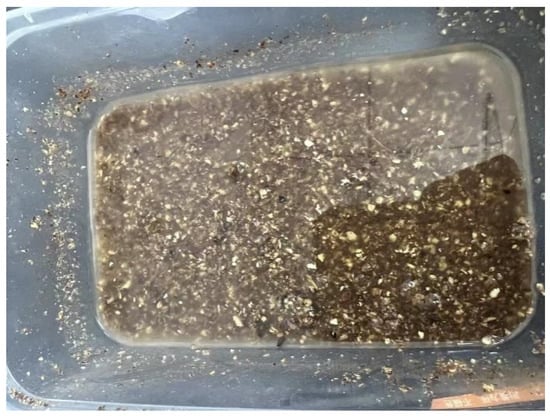
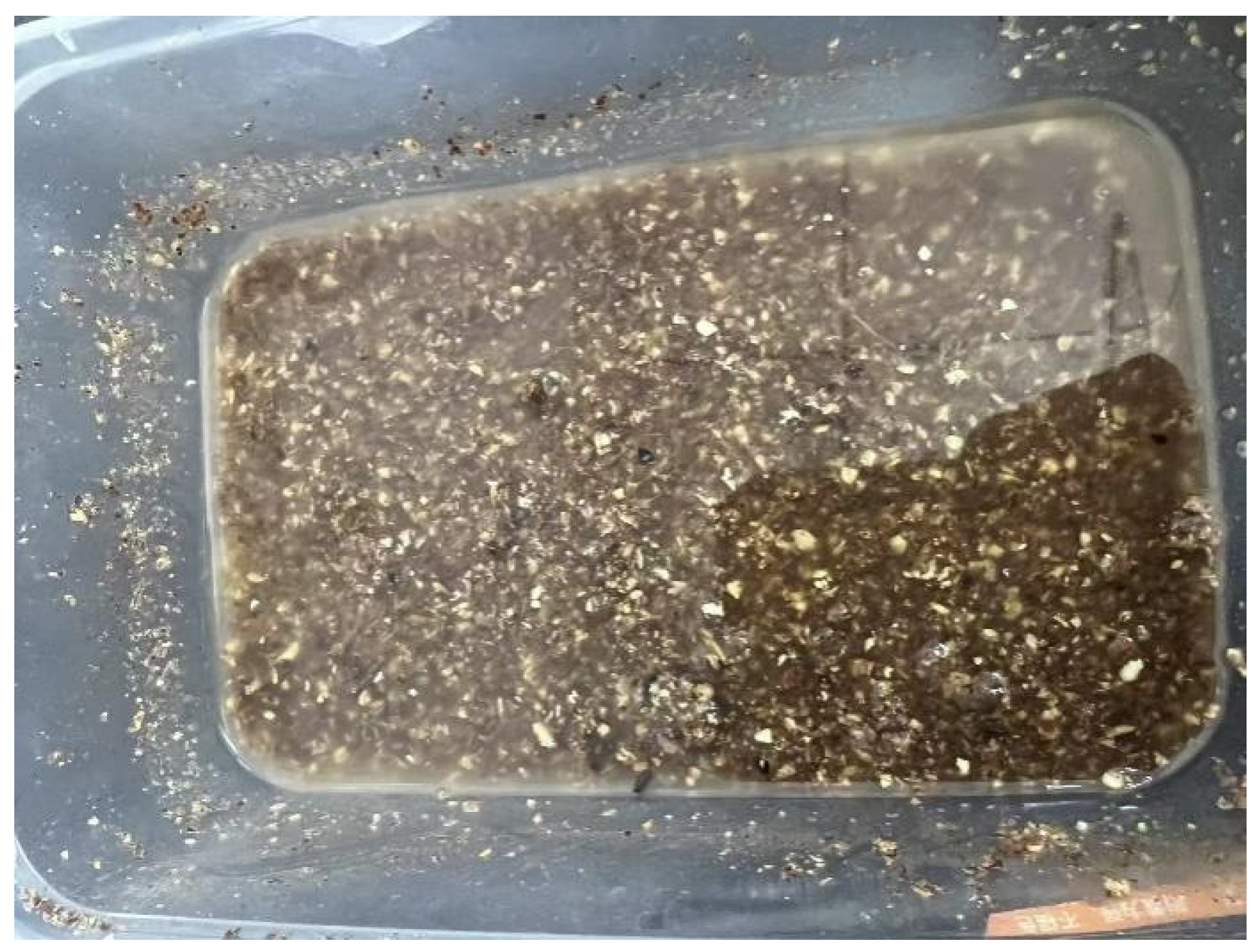
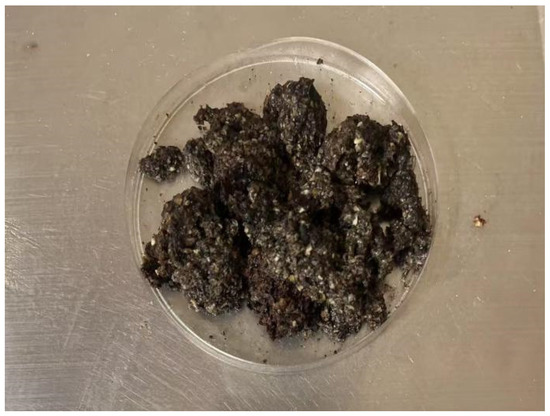
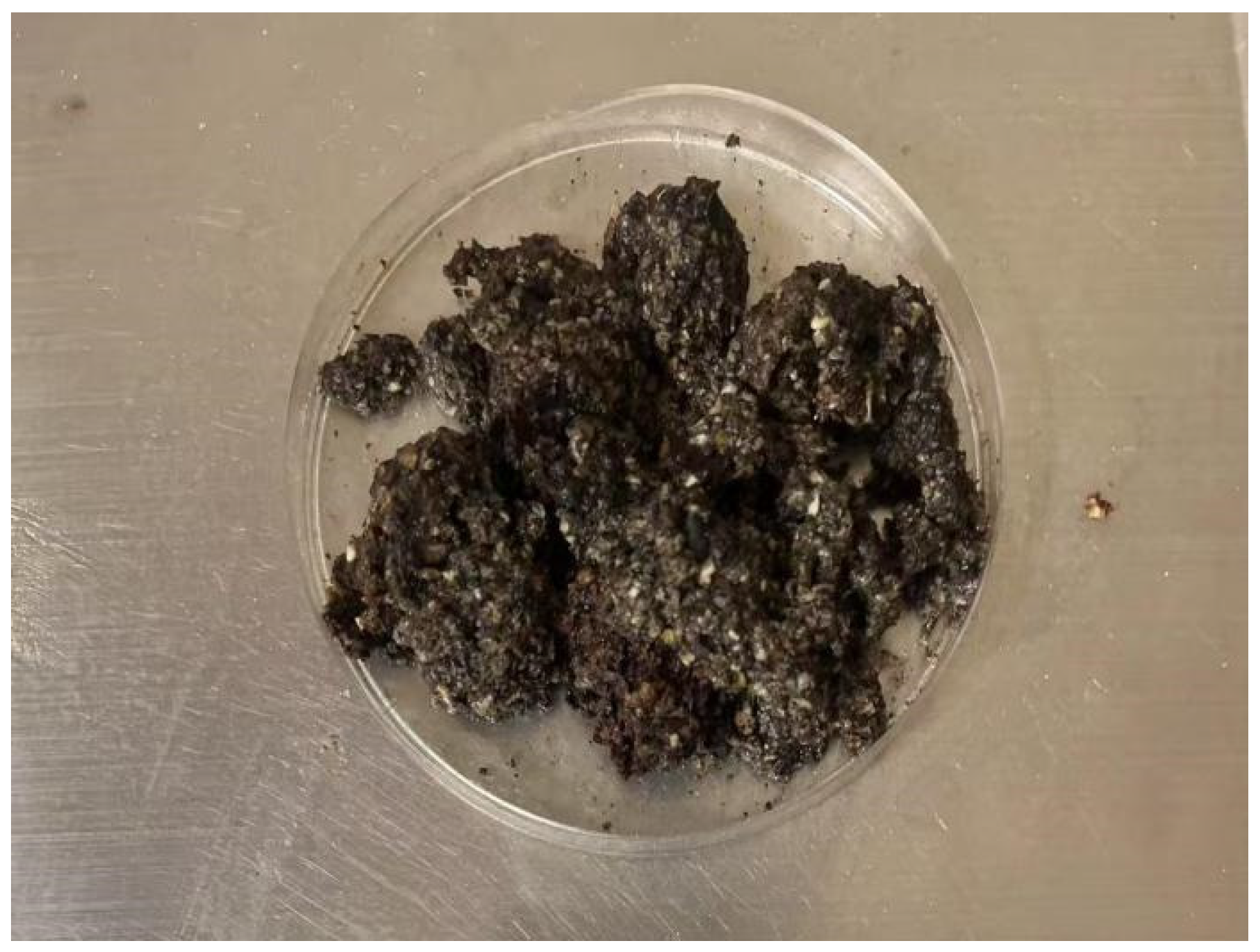
Flaxseed meal was selected as the soil amendment. The main components of flaxseeds include linseed oil and flax protein, as well as a certain amount of flax gum, lignin, vitamins, and minerals. The natural seed gum component produced by dissolving and extracting it in water is a complex polysaccharide, mainly composed of rhamnose, arabinose, fucose, xylose, mannose, glucose, and galactose [24]. This material has high viscosity even at low concentrations and can be used as an emulsifier, stabilizer, and thickener. The solid–liquid ratio (ratio of extracted material to water) of flaxseed meal was designed to be 2.0%, and the extraction time was 24 h to prepare the flaxseed meal solution [7] (Figure 1).
Figure 1.
Photo of flaxseed meal aqueous solution.
2.2. Experimental Design and Methods
In this experiment, flaxseed meal was mixed with water and subjected to three different forms of extraction (supernatant Q: the clear upper liquid after filtering the aqueous solution; suspension X: the mixture of clear liquid and settled solid substances; precipitate C: the solid substance precipitated at the bottom after filtering the aqueous solution). For each treatment method, five application rates were set, namely 5 kg·m−2, 8 kg·m−2, 11 kg·m−2, 14 kg·m−2, and 17 kg·m−2. The supernatant extraction methods with different application rates were denoted as Q1, Q2, Q3, Q4, and Q5, respectively; the suspension extraction methods with different application rates were denoted as X1, X2, X3, X4, and X5 respectively; the precipitate extraction methods with different application rates were denoted as C1, C2, C3, C4, and C5 respectively. The basic parameters of each treatment are shown in Table 1. The basic parameters of the sand fixing agent were tested. Soil samples sprayed with an equal amount of pure water were used as the control (CK), and each treatment was set with 3 replicates.
Table 1.
The basic parameters of the sand fixing agent were tested.
2.3. Determination of Water Absorption and Desorption Rates of Flaxseed Meal
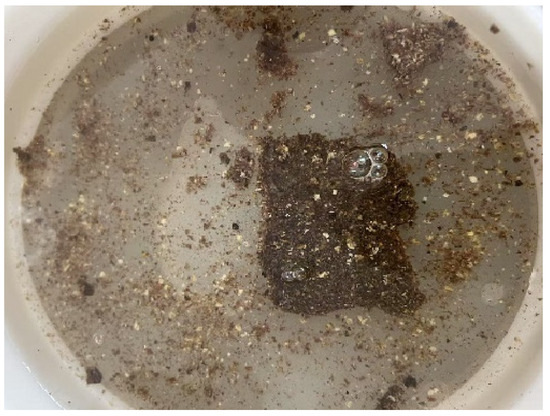
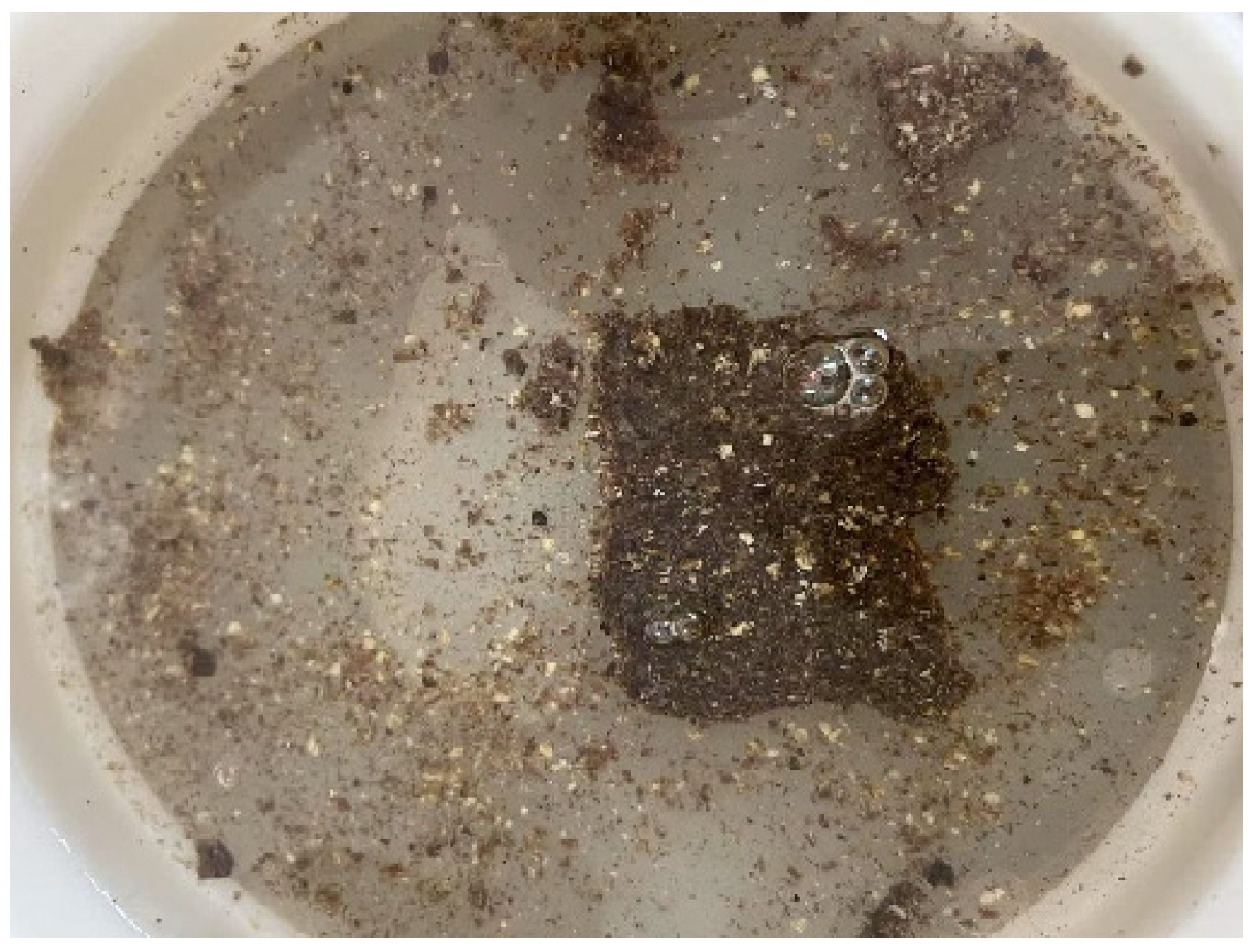
Water absorption rate: Place a 0.18 mm standard sieve in water. After it is completely submerged, take it out and let it stand for a period of time until no more water drops drip out, then weigh its mass. Add sufficient distilled water to a basin, and the water depth should not submerge the upper edge of the standard sieve to prevent flaxseed meal from floating out of the sieve. Weigh the compressed block of flaxseed meal and place it in the sieve. Start timing at the moment when it is completely put into the water. Measure the mass of the sieve at 15 s, 30 s, 1 min, 2 min, 5 min, 10 min, and every 10 min after 10 min until the mass change between two consecutive measurements is not significant. When taking out the sieve, it should be done 2–3 s in advance, and the sieve should be taken out slowly and steadily from the water. Incline and let it stand until no water drips out, then weigh the mass and record the data (Figure 2). This experiment was conducted with three replicates. After excluding outliers, the average value was taken as the experimental result.
Figure 2.
Photo of flaxseed cake as it absorbs water.
Water desorption rate: Weigh the mass of a Petri dish. Take a compressed block of flaxseed meal, allow it to fully absorb water until saturation, filter it through a sieve, place it in the Petri dish, and weigh and record the total mass of the Petri dish. Place the Petri dish in an oven at 80 °C, take it out every 1 h, weigh the mass of the Petri dish + flaxseed meal with a balance, and record the data. Stop the measurement when the difference between two consecutive measurements is small and relatively stable (Figure 3). This experiment was conducted with three replicates. After excluding outliers, the average value was taken as the experimental result.
Figure 3.
Photo of flaxseed meal releasing water.
2.4. Soil Water Infiltration Experiment
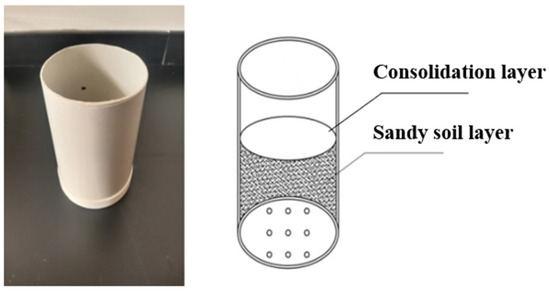
This experiment was conducted using a self-made infiltration device (Figure 4). Based on the bulk density of aeolian sandy soil measured by the ring knife method (1.33 g·cm−3), the sandy soil was layered and packed into organic plastic soil columns with an inner diameter of 9.41 cm and a height of 100.00 cm. Compaction treatment was performed every time 10 cm of soil was packed, and each group was set with three replicate experiments. A 4 cm height was reserved above the soil column during filling to ensure a stable water supply flow from the Marriott bottle. After filling the soil sample, the amendment was sprayed on the soil surface, and the soil column was placed indoors for 3 days. After the consolidated layer was formed, the one-dimensional constant head method was used to carry out the soil infiltration experiment. A Marriott bottle was used to maintain a constant water head of 2 cm for the water supply, and the water flow rate was kept consistent during the experiment. After the start of the infiltration experiment, the readings of the Marriott bottle were recorded at 1, 3, 5, 10, 20, and 30 min, and then once every 30 min thereafter. The cumulative infiltration amount at different time periods was calculated by subtracting the water volume in the constant water head on the soil column surface from the reduced water volume in the Marriott bottle. Meanwhile, the infiltration rate for that period was calculated using the difference in cumulative infiltration amount between two consecutive periods. At the same time, a graduated ruler was pasted on the outer side of the soil column with the soil surface as the starting point. When water infiltrated to the corresponding time, the reading of the wetting front was directly read from the graduated ruler. Simultaneously, the cumulative infiltration amounts when the wetting front reached 5, 10, 15, and 20 cm were calculated, and the differences in cumulative infiltration amounts between adjacent positions were computed. The experiment was terminated after the soil was completely wetted. Soil samples were taken every 10 cm along the soil layer, and the soil water content of the collected samples was measured by the oven-drying method.
Figure 4.
Indication of the infiltration device.
To further study the effects of sand-fixing agents with different application methods and concentrations on soil water infiltration, two models were adopted in this paper for further analysis.
- (1)
- Kostiakov Infiltration Model, whose expression is [25]:
- (2)
- Philip Infiltration Model, whose expression is [26]:
2.5. Soil Water Evaporation Experiment
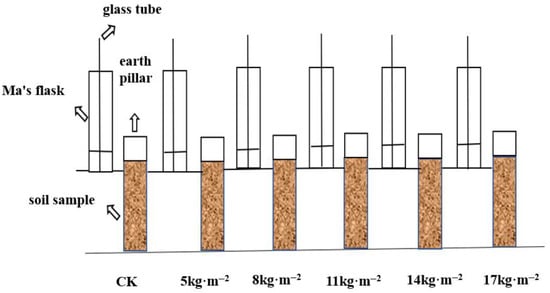
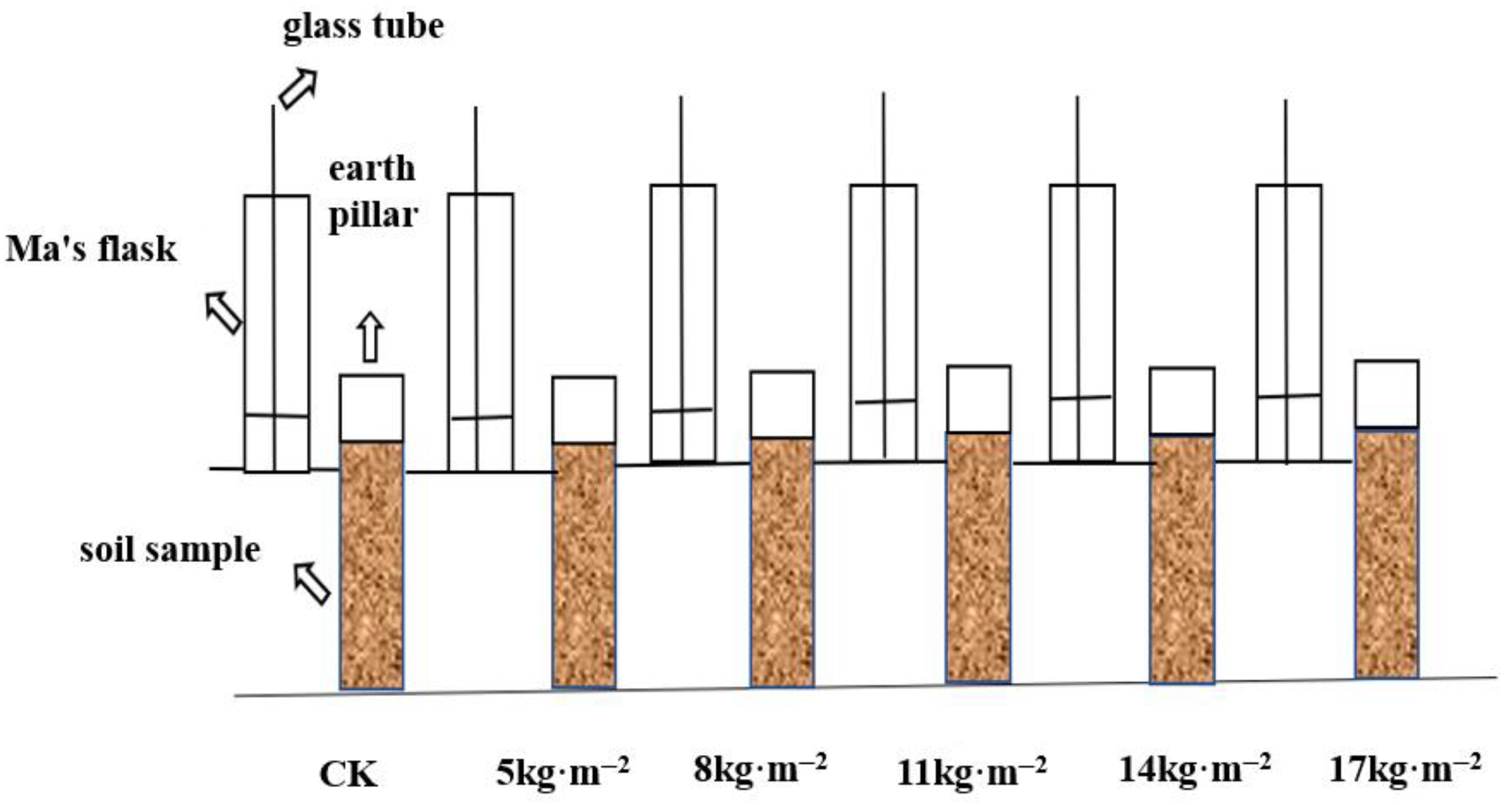
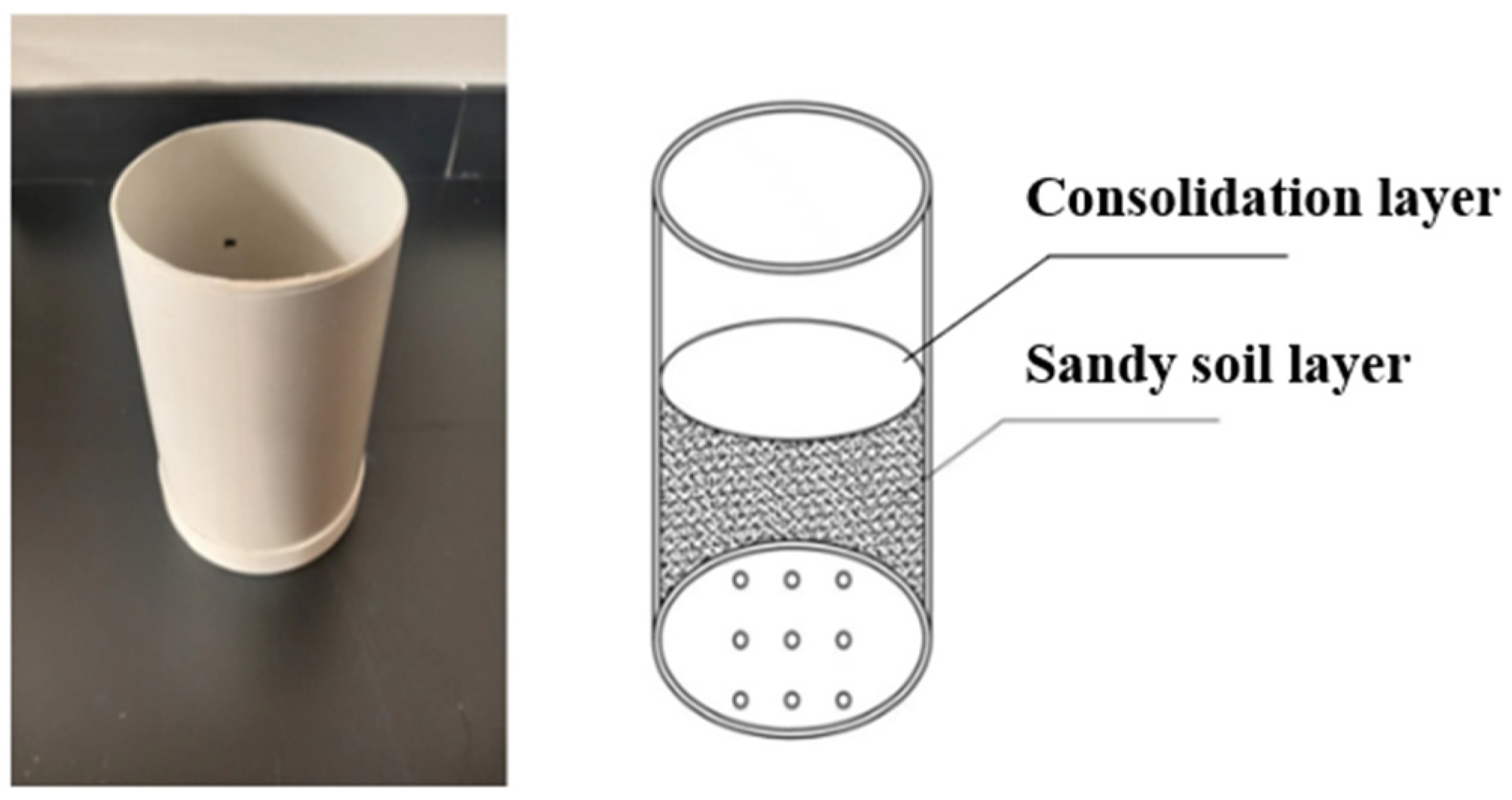
The atmospheric evaporative capacity within the same time period was measured using a self-made evaporating dish (Figure 5). The experiment was conducted with a self-made small PVC evaporator, which had an inner diameter of 11 cm, a wall thickness of 0.5 cm, a net height of 15 cm, and a bottom made of a 0.5 cm thick PVC plate. Nine circular holes with a diameter of 0.5 cm were evenly distributed at the bottom of the bucket, and a mark was made at 25 cm inside the bucket. Air-dried soil was used for layered filling. Air-dried soil was used for layered packing. Referring to the bulk density of aeolian sandy soil measured by the ring knife method (1.33 g·cm−3), the soil was filled into the evaporators, with the height of soil samples in each evaporator controlled at 25 cm. Three replicates were set for each treatment. The arranged evaporators were placed in a water basin to absorb water. During the water absorption process, a layer of plastic film was covered on the surface to prevent evaporation. After water absorption, the evaporators were allowed to stand to drain gravitational water and then weighed. Three types of amendments (Q, X, C) with different application rates were sprayed on each evaporator, and another 3 evaporators were sprayed with an equal amount of clear water as the control (CK), totaling 57 evaporators. A 20 cm diameter evaporating dish filled with the same mass of water as that in the small evaporators was placed next to the small evaporators to measure the atmospheric evaporation E_measured. After measurement, the water volume in the evaporating dish was supplemented to the initial mass. The daily weighing method was adopted to study the effect of the consolidated layer on water evaporation from aeolian sandy soil. This experiment was conducted under the condition of an average indoor humidity of 45%. According to the experimental results, the water in CK evaporated completely around the 18th day, and the daily evaporation change was low. After the 35th day, the soil evaporation of the sand-fixing agent treatment with the best effect basically ended, and the weight value became stable, which was regarded as the end of the entire evaporation experiment. Therefore, 35 days was uniformly selected as the evaporation experiment period.
Figure 5.
Schematic diagram of evaporation device.
To further investigate the effects of sand-fixing agents with different types and concentrations on soil water evaporation, the Black model and Rose model were selected for fitting, and the specific formulas are presented as follows:
- (1)
- Black Model
- (2)
- Rose Model
The coefficient of determination (R2) and root mean square error (RMSE) were used as indices to evaluate the performance of the Black model and Rose model in simulating the soil water evaporation process. The closer the R2 value is to 1 and the smaller the RMSE value is, the better the fitting performance will be.
2.6. Data Processing and Analysis
One-way analysis of variance (ANOVA) was used to test the significance of soil water absorption and desorption capacity, cumulative soil infiltration, wetting front migration rate, soil water content, cumulative evaporation, and daily evaporation. The correlation between soil physical properties and water migration rate was analyzed via a correlation heatmap based on the Mantel test. The root mean square error (RMSE) and coefficient of determination (R2) were adopted to evaluate the fitting effect of the fitting equations. All data statistics were performed using Excel 2010 and SAS software 9.4, while graph plotting was completed with Origin 2021 and AutoCAD 2022.
3. Results
3.1. Water Absorption and Desorption Characteristics of Flaxseed Meal
3.1.1. Water Absorption Characteristics of Flaxseed Meal
The water absorption rate of flaxseed meal is an important parameter for measuring its water-holding capacity, which directly affects the water retention capacity of sand layers, plant growth environment, and wind resistance performance. Figure 6 shows the variation of the water absorption capacity of this material. The mass of flaxseed meal added before the water absorption experiment was 10 g, and the total water absorption reached 44.98 g at 90 min, with a water absorption multiple of approximately 4.50 times. In the first few minutes of the experiment, the water absorption capacity of flaxseed meal was large, and the absorption rate was extremely fast. The rate began to decrease at the 8th–9th min, and the curve flattened out at the 20th min. The water absorption capacity and rate remained stable until the water absorption rate reached dynamic equilibrium at 90 min, marking the end of the water absorption experiment.
Figure 6.
Change in water absorption of flaxseed meal with time.
3.1.2. Water Desorption Characteristics of Flaxseed Meal
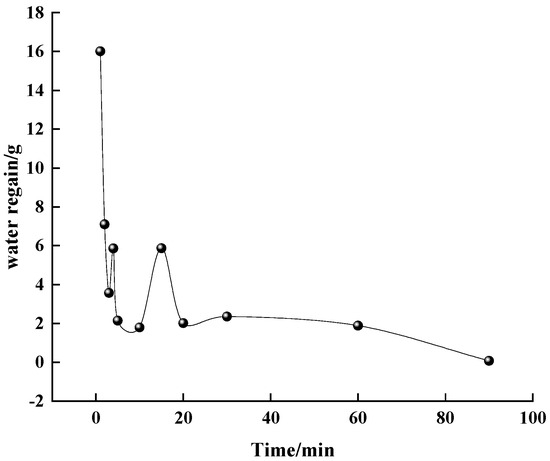
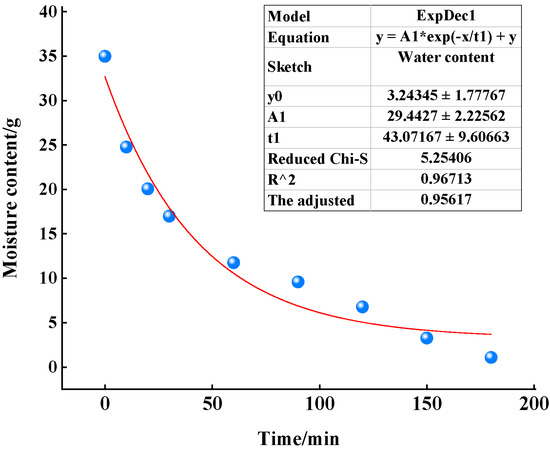
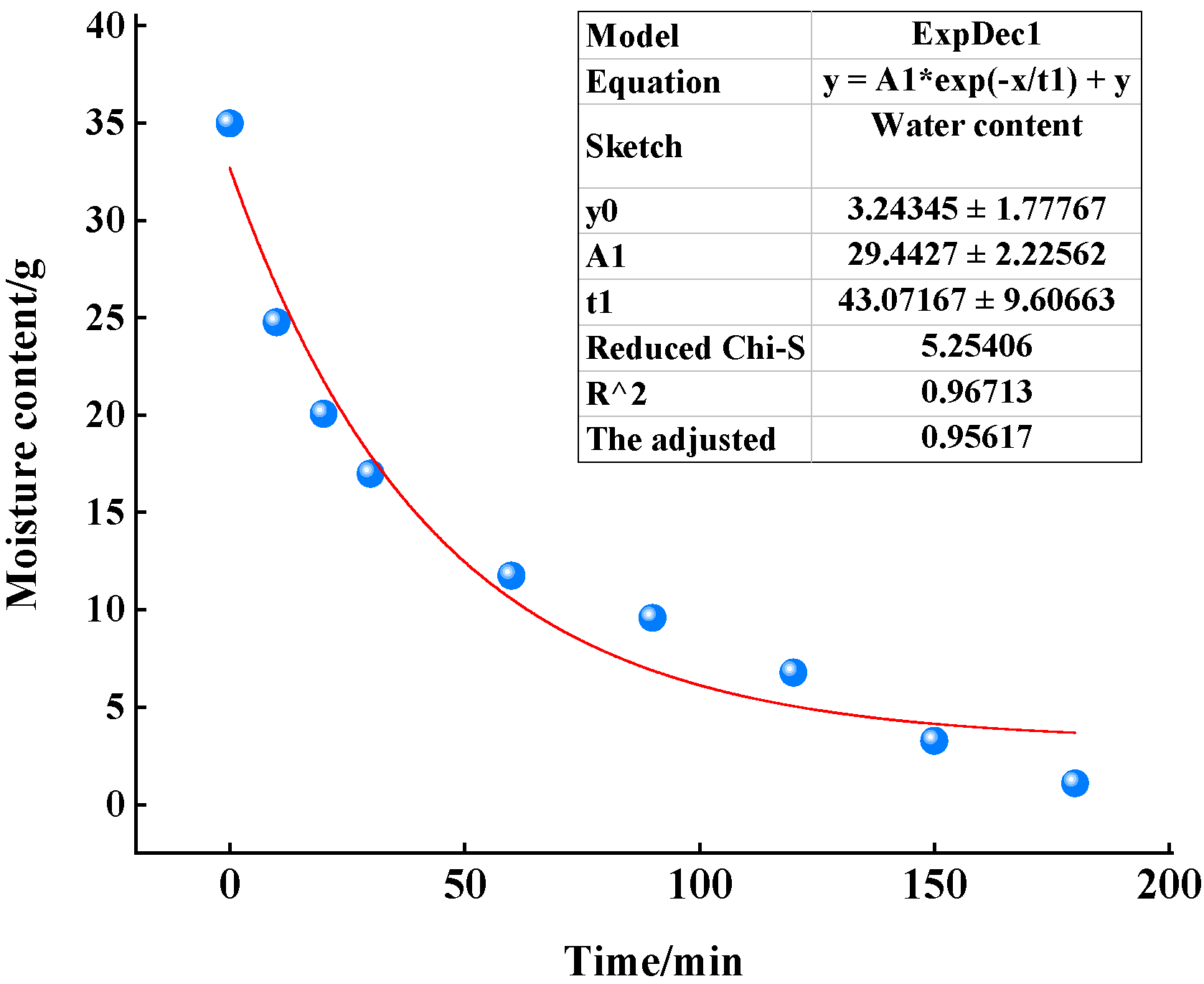
The water desorption rate of flaxseed meal is a key parameter for measuring its capacity to release stored water, which directly affects the continuous supply of soil water, water absorption efficiency of plant roots, and drought resistance. It can be seen from Figure 7 that it takes approximately 180 min for 10 g of water-saturated flaxseed meal to release water completely. During the period of 0–50 min, the water release capacity of this material was large, and the desorption rate was extremely fast, mainly because the material expanded in volume after water absorption, leading to a large contact area with air and thus a high water evaporation rate. During 50–150 min, the water desorption rate of the material slowed down, which was mainly due to the reduction of its volume and the contact area with air as water was released. In the later stage, the change in water release amount was negligible and approached zero, indicating the complete end of the water desorption experiment. The water absorption and desorption experiment indicated that flaxseed meal could effectively absorb water in the early stage and release the stored water to supply the water demand for plant growth after the cessation of continuous water supply.
Figure 7.
Changes of water release from flaxseed meal over time.
3.2. Effects of Flaxseed Meal on Soil Water Infiltration
3.2.1. Effects of Flaxseed Meal on Cumulative Soil Water Infiltration
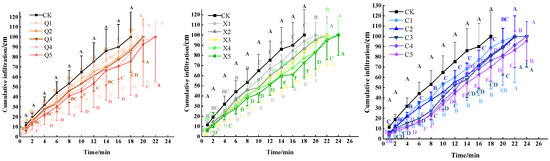
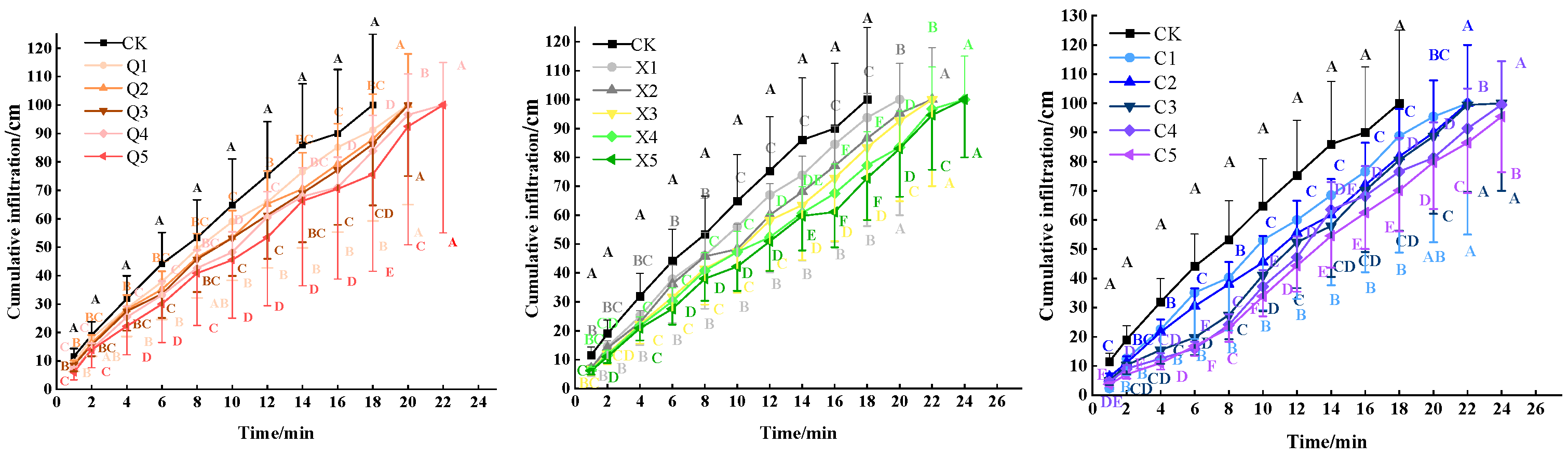
After the application of flaxseed meal treated by the three methods, the cumulative soil water infiltration showed a decreasing trend during the entire infiltration process compared with the control (CK) (Figure 8). At the initial stage of infiltration (1–8 min), the differences in cumulative infiltration among all treatments were relatively significant. The specific results were as follows: the cumulative infiltration of CK was 53.3 cm; the average cumulative infiltration of the supernatant was 40.8 cm; the average cumulative infiltration of the suspension was 42.4 cm; and the average cumulative infiltration of the precipitate was 30.5 cm. Compared with CK, the cumulative infiltration of each treatment decreased by 23.5%, 20.45%, and 42.78%, respectively, with the precipitate treatment showing the most significant effect. For the same treatment method, the cumulative infiltration of flaxseed meal decreased with the increase in application rate. At the middle stage of infiltration (9–14 min), the cumulative infiltration was in the order of CK (86.0 cm) > supernatant (66.2 cm) > suspension (65.2 cm) > precipitate (61.2 cm). Compared with CK, the cumulative infiltration of each treatment decreased by 23.02%, 24.23%, and 28.84%, respectively, and the effects among the three treatments were similar. For the same treatment method, the cumulative infiltration of flaxseed meal decreased with the increase in application rate. At the later stage of infiltration (15–20 min), the cumulative infiltration of CK was 100 cm; the average cumulative infiltration of the supernatant was 92.4 cm; the average cumulative infiltration of the suspension was 90.9 cm; and the average cumulative infiltration of the precipitate was 87.0 cm. Compared with CK, the cumulative infiltration of each treatment decreased by 7.60%, 9.10%, and 13.00%, respectively. For the same treatment method, the cumulative infiltration of flaxseed meal decreased with the increase in application rate.
Figure 8.
Effect of application amount and method of flaxseed meal on soil cumulative infiltration. Uppercase letters indicate significant differences in the cumulative infiltration of soils under different treatments at the same time (p < 0.05).
3.2.2. Effects of Flaxseed Meal on Soil Wetting Front Migration
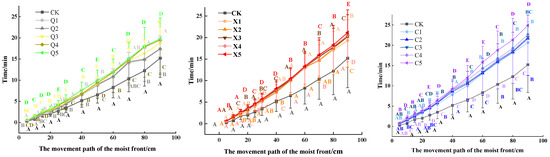
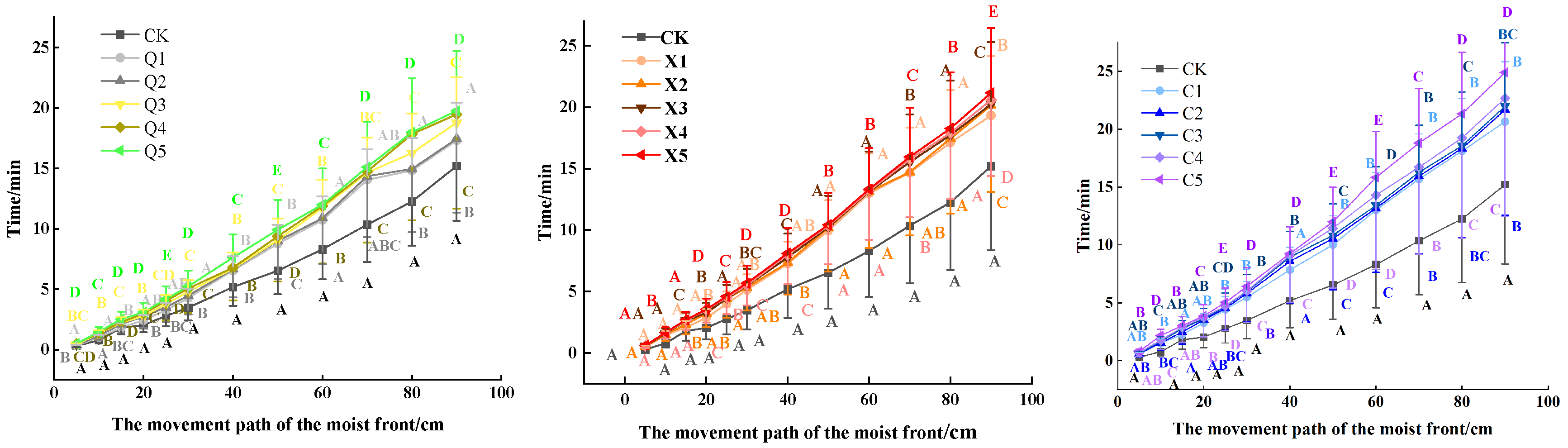
Figure 9 shows the effects of the application rate and application method of flaxseed meal on soil wetting front migration. After the application of flaxseed meal treated by the three methods, the time required for the soil wetting front migration increased compared with that of the control (CK) during the entire infiltration process. At the initial stage of infiltration (wetting front migration distance: 0–30 cm), the time required for CK was 3.5 min; that for the supernatant was 4.8 min; that for the suspension was 5.4 min; and that for the precipitate was 5.9 min. Compared with CK, the time required for the wetting front to migrate 30 cm in each treatment increased by 37.14%, 40.68%, and 68.57%, respectively. At the middle stage of infiltration (wetting front migration distance: 30–60 cm), the time required for CK was 8.3 min; that for the supernatant was 11.4 min; that for the suspension was 13.1 min; and that for the precipitate was 13.9 min. Compared with CK, the time required for the wetting front to migrate 30 cm in each treatment increased by 37.35%, 57.83%, and 67.47%, respectively. At the later stage of infiltration (wetting front migration distance: 60–90 cm), the time required for CK was 15.2 min; that for the supernatant was 18.6 min; that for the suspension was 20.3 min; and that for the precipitate was 22.4 min. Compared with CK, the time required for the wetting front to migrate 90 cm in each treatment increased by 22.37%, 33.55%, and 47.37%, respectively.
Figure 9.
Effect of application amount and method of flaxseed meal on soil wetting front transport. Uppercase letters indicate significant differences in the migration distance of wetting front among different treatments at the same time (p < 0.05).
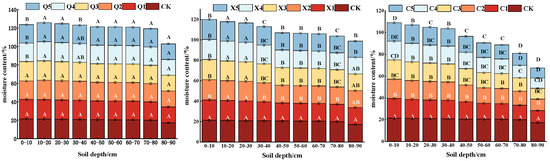
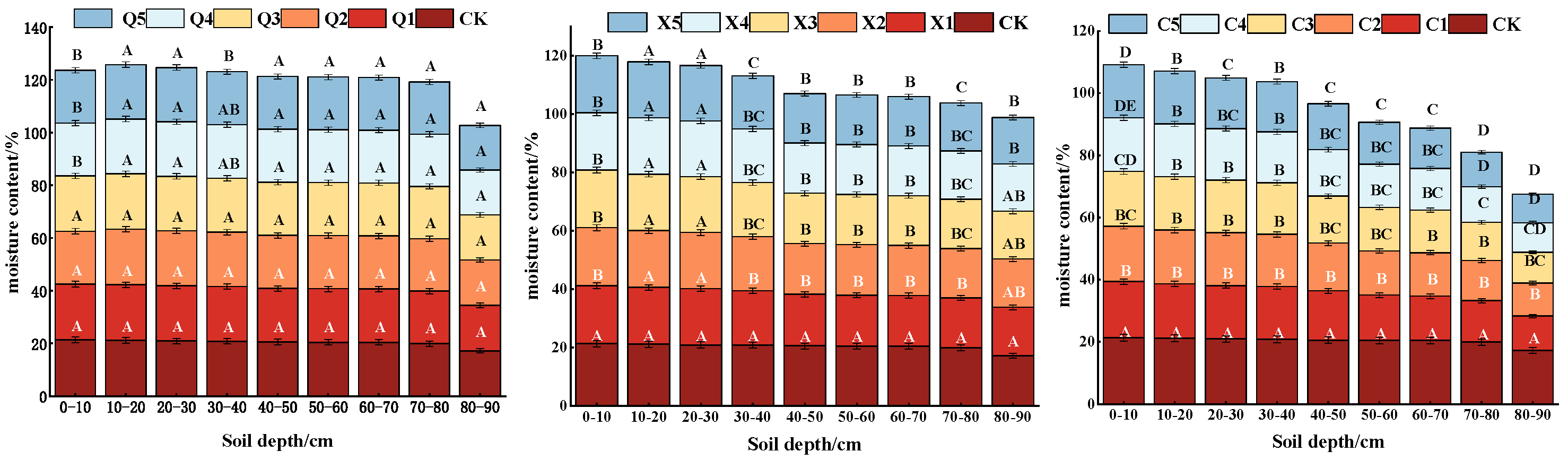
3.2.3. Effects of Flaxseed Meal on Soil Moisture Content
Figure 10 shows the effects of the application rate and application method of flaxseed meal on the soil moisture content in different soil layers. After the application of flaxseed meal treated by the three methods, the soil moisture content showed a decreasing trend during the entire infiltration process compared with that of the control (CK). Among them, the value of the supernatant treatment was relatively close to that of CK, the value of the precipitate treatment had the largest gap with CK, followed by the suspension treatment. As a soil amendment, flaxseed meal has a certain water absorption capacity; it will absorb part of the water molecules and expand, thereby affecting the change of soil moisture content in the lower soil layers. In the topsoil layer (0–30 cm), the soil moisture content was in the order of CK (20.93%) ≈ supernatant (20.75%) > suspension (19.15%) > and precipitate (16.79%). Compared with CK, the soil moisture content of each treatment decreased by 0.18%, 1.78%, and 4.14%, respectively. In the middle soil layer (30–60 cm), the soil moisture content was in the order of CK (20.48%) ≈ supernatant (20.12%) > suspension (17.21%) > precipitate (14.03%). Compared with CK, the soil moisture content of each treatment decreased by 0.36%, 3.27%, and 6.45%, respectively. In the subsoil layer (60–90 cm), the soil moisture content was in the order of CK (17.26%) ≈ supernatant (17.10%) > suspension (16.31%) > precipitate (10.04%). Compared with CK, the soil moisture content of each treatment decreased by 0.16%, 0.95%, and 7.22%, respectively. After the application of flaxseed meal with the same treatment method, the soil moisture content decreased with the increase of the application rate. This is mainly because the solid components of the material itself have water absorption capacity; the higher the application rate, the thicker the crust formed, and the greater the water absorption capacity. In contrast, the supernatant contains a low content of solid components, so it has almost no effect on soil moisture content.
Figure 10.
Effect of application amount and method of flaxseed meal on soil water content in different soil layers. The capital letters in the figure indicate the significant differences in soil moisture content among different treatments at the same soil layer depth (p < 0.05).
3.2.4. Effects of Flaxseed Meal on Infiltration Parameters
Two infiltration models, Philip and Kostiakov, were selected for fitting, and the fitting results are shown in Table 2. For the treatments sprayed with flaxseed meal supernatant, suspension, and precipitate, the R2 of the Philip infiltration model ranged from 0.793 to 0.928; the R2 of the Kostiakov infiltration model ranged from 0.847 to 0.999. The Kostiakov model had lower RMSE values and R2 values closer to 1 than the Philip model, indicating that the Kostiakov model could more truly reflect the variation of cumulative infiltration with time under the treatment of flaxseed meal solution and was thus more suitable for this experiment. In the Kostiakov model, K represents the magnitude of infiltration rate, while a indicates the degree of infiltration rate attenuation. The parameter K of all treatments ranged from 4.103 to 5.187, showing the order of CK > supernatant > suspension > precipitate, and for the same treatment method, K decreased with the increase in application rate. The parameter a of all treatments ranged from −19.388 to 0.500, showing the order of CK < supernatant < suspension < precipitate, and for the same treatment method, a increased with the increase in application rate. These results indicated that flaxseed meal could effectively delay water infiltration; with the increase of its application rate, the initial infiltration rate decreased gradually, while the infiltration attenuation rate increased progressively.
Table 2.
The influence of application amount and method of flaxseed meal on infiltration parameters discussed.
3.3. Effects of Flaxseed Meal on Soil Water Evaporation
3.3.1. Effects of Flaxseed Meal on Cumulative Soil Water Evaporation
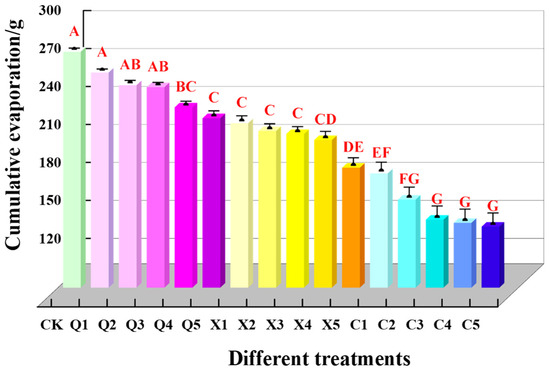
Figure 11 shows the effects of the application rate and application method of flaxseed meal on the cumulative soil water evaporation of different soil layers after continuous evaporation for 35 days following the spraying of flaxseed meal under different treatments, with the cumulative evaporation of CK being significantly higher than that of other treatments. The cumulative evaporation of each treatment was reduced by 11.69%, 24.13%, and 43.22% compared with CK, respectively. The precipitate treatment had the most significant effect on retarding evaporation, followed by the suspension treatment, and the supernatant treatment had the poorest effect. After the application of flaxseed meal under each treatment, the cumulative soil water evaporation decreased with the increase in application rate. For the supernatant treatment, the cumulative evaporation showed the order of 5 kg·m−2 (269.95 g) > 8 kg·m−2 (259.98 g) > 11 kg·m−2 (258.38 g) > 14 kg·m−2 (242.43 g) > 17 kg·m−2 (233.85 g). Compared with CK, the cumulative evaporation of each treatment decreased by 5.74%, 9.22%, 9.78%, 15.35%, and 18.35%, respectively. For the suspension treatment, the cumulative evaporation showed the order of 5 kg·m−2 (229.93 g) > 8 kg·m−2 (223.73 g) > 11 kg·m−2 (221.40 g) > 14 kg·m−2 (216.64 g) > 17 kg·m−2 (194.77 g). Compared with CK, the cumulative evaporation of each treatment decreased by 19.71%, 21.88%, 22.69%, 24.35%, and 31.99%, respectively. For the precipitate treatment, the cumulative evaporation showed the order of 5 kg·m−2 (190.29 g) > 8 kg·m−2 (169.57 g) > 11 kg·m−2 (153.70 g) > 14 kg·m−2 (151.24 g) > 17 kg·m−2 (148.19 g). Compared with CK, the cumulative evaporation of each treatment decreased by 33.56%, 40.79%, 46.33%, 47.19%, and 48.26%, respectively.
Figure 11.
Effect of application amount and method of flaxseed meal on cumulative evaporation. Different uppercase letters indicate significant differences in cumulative evaporation among different treatments (p < 0.05).
3.3.2. Effects of Flaxseed Meal on Daily Soil Water Evaporation
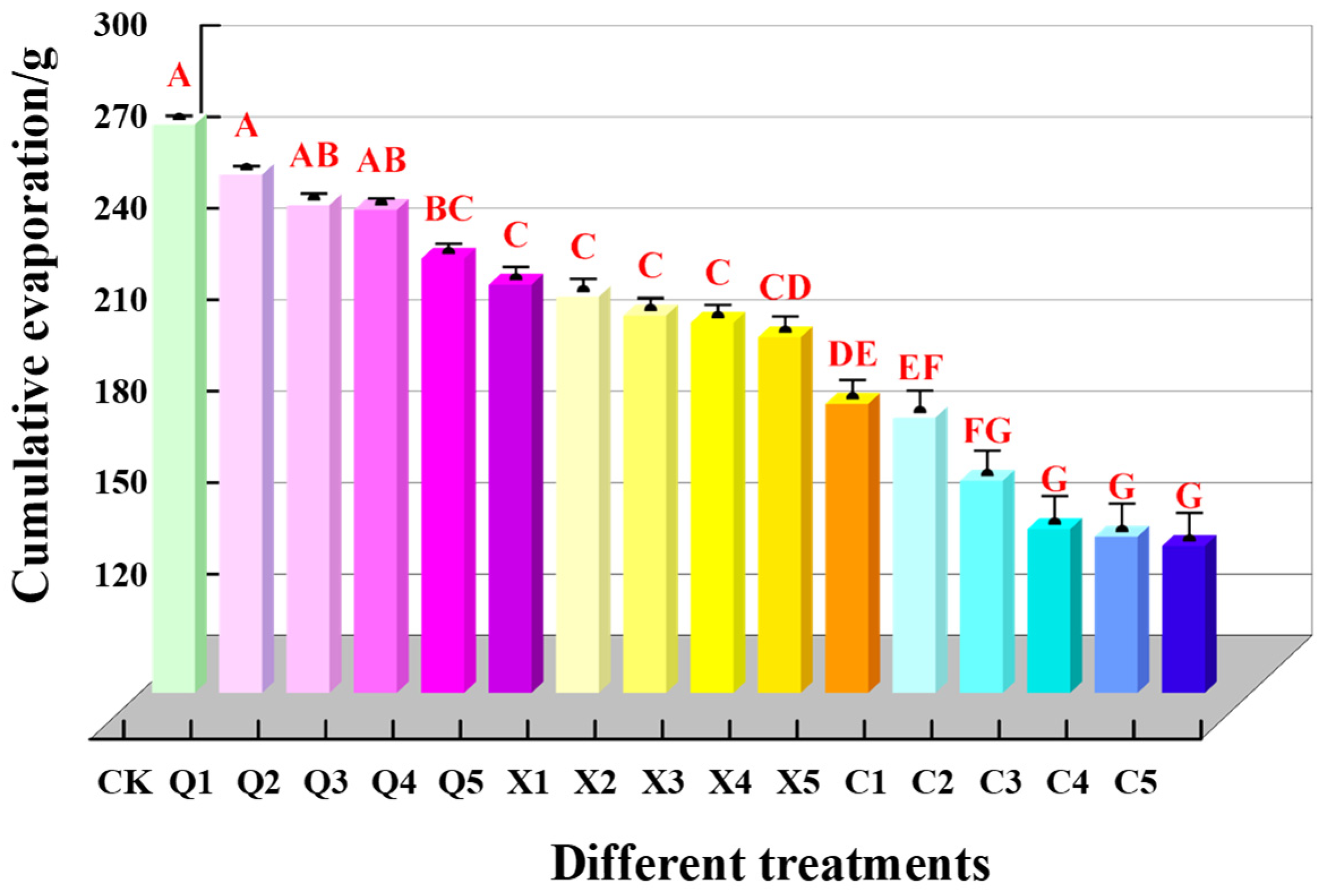
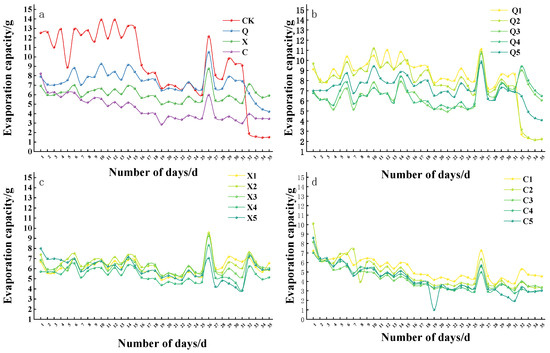
Figure 12 shows the effects of flaxseed meal treatments with different application methods and rates on daily soil water evaporation. On the whole, the daily soil water evaporation showed a decreasing trend with the increase in evaporation days. After the 35th day of the evaporation experiment, the daily evaporation of CK decreased sharply and was lower than that of other treatments. On the 25th–26th days, the daily evaporation of all treatments increased significantly, mainly because the temperature rose during these two days, and the indoor temperature was relatively high, and the high temperature increased the daily evaporation. On the 27th–28th days, the temperature dropped, and the daily evaporation gradually returned to normal with a significant difference compared with the previous two days. It can be seen that temperature is an external factor affecting the water retention effect of flaxseed meal.
Figure 12.
Effect of application amount and method of flaxseed meal on daily evaporation. (a) Three different treatments and the daily evaporation variation trend chart of CK; (b) Trend chart of daily evaporation volume changes of supernatants with different dosages; (c) Trend chart of daily evaporation volume changes of suspensions with different dosages; (d) Trend chart of daily evaporation volume variation of precipitates with different dosages.
The 6th day of the evaporation experiment was selected as the research object representing the initial stage of evaporation. At the initial stage of evaporation, the change in daily evaporation was basically stable with a consistent trend every day. On this day, the daily evaporation of CK was 12.93 g; the average daily evaporation under the flaxseed meal supernatant treatment was 8.81 g; the average daily evaporation under the flaxseed meal suspension treatment was 7.00 g; and the average daily evaporation under the flaxseed meal precipitate treatment was 6.20 g. Compared with CK, the daily evaporation of the three treatments decreased by 31.86%, 45.86%, and 52.05%, respectively.
The 20th day of the evaporation experiment was selected as the research object representing the middle stage of evaporation, and the evaporation showed a decreasing trend day by day during this stage. On this day, the daily evaporation of CK was 7.06 g; the average daily evaporation under the flaxseed meal supernatant treatment was 6.67 g; the average daily evaporation under the flaxseed meal suspension treatment was 5.25 g; and the average daily evaporation under the flaxseed meal precipitate treatment was 3.69 g. Compared with CK, the daily evaporation of the three treatments decreased by 5.52%, 25.64%, and 47.73%, respectively.
The 26th day of the evaporation experiment was selected as the research object representing the day with a large change in daily evaporation caused by abrupt temperature changes. On this day, the daily evaporation of CK was 12.15 g; the average daily evaporation under the flaxseed meal supernatant treatment was 10.48 g; the average daily evaporation under the flaxseed meal suspension treatment was 8.74 g; and the average daily evaporation under the flaxseed meal precipitate treatment was 5.97 g. Compared with CK, the daily evaporation of the three treatments decreased by 13.74%, 28.07%, and 50.86%, respectively.
The 33rd day of the evaporation experiment was selected as the research object representing the later stage of evaporation. During this period, the changes in all treatments except CK were relatively stable. On this day, the daily evaporation of CK was 1.59 g; the average daily evaporation under the flaxseed meal supernatant treatment was 5.07 g; the average daily evaporation under the flaxseed meal suspension treatment was 6.24 g; and the average daily evaporation under the flaxseed meal precipitate treatment was 3.51 g. Compared with CK, the daily evaporation of the three treatments increased by 218.87%, 292.45%, and 120.76%, respectively.
Observation of the effect duration based on the figures shows that for the sediment treatment group, from the day of spraying (Day 0) to Day 32, the conditions of “stable daily evaporation rate and cumulative evaporation growth rate ≤ 0.5 g/d” were satisfied. After Day 33, the daily evaporation rate of the control group (CK) was lower than that of the sediment treatment group, and the improvement effect was no longer manifested. Therefore, the observed effect duration of the sediment treatment was 32 days. For the suspension treatment group, the reduction in cumulative evaporation was 24.13%, and the stable period of daily evaporation rate was slightly shorter than that of the sediment treatment group, with an observed effect duration of approximately 28 days. For the supernatant treatment group, the reduction in cumulative evaporation was only 11.69%, and the observed effect duration was about 22 days. In summary, all flaxseed meal treatments with different application methods and rates exhibited the effect of delaying soil water evaporation, among which the sediment treatment with a high application rate had the most significant inhibition effect on evaporation.
3.3.3. Effects of Flaxseed Meal on Evaporation Parameters
Two evaporation models, Black and Rose, were selected for fitting, and the fitting results are shown in Table 3. The R2 of the Black evaporation model ranged from 0.980 to 0.999, while the R2 of the Rose evaporation model ranged from 0.939 to 0.999. The Black evaporation model was more suitable for this experiment, as it could more truly reflect the relationship between cumulative soil water evaporation and time.
Table 3.
Effects of application amount and method of flaxseed meal on evaporation parameters.
Based on the comprehensive analysis of the two models, the supernatant treatment achieved a better effect at application rates of 11 kg·m−2, 14 kg·m−2, and 17 kg·m−2; the suspension treatment performed well at application rates of 5 kg·m−2, 8 kg·m−2, 11 kg·m−2, and 14 kg·m−2; and the precipitate treatment showed a favorable effect at application rates of 5 kg·m−2 and 11 kg·m−2.
4. Discussion
4.1. Effects of Flaxseed Meal on Soil Water Movement
The water retention capacity of soil amendments is an important evaluation index. Precipitation is the main source of soil water in sandy areas, and the rate of soil water movement affects soil moisture content. It then acts on the plant-available water amount and further affects the water content directly available to plants. In this study, the aeolian sandy soil is characterized by coarse texture, large intergranular pores, weak adsorption capacity, and high infiltration rate, which is not conducive to the effective utilization of precipitation resources. As a soil amendment, flaxseed meal can alter soil structure, affect the soil water potential at the interface between the consolidated layer and soil, and slow down the soil water infiltration rate. After spraying flaxseed meal, the infiltration rate decreased significantly and gradually stabilized. This may be attributed to the fact that the material fills powder the gaps between soil particles, affects soil porosity and uniformity, modifies soil texture, lengthens the migration path of water in the soil, increases the water volume required for complete saturation, and thus leads to the prolongation of cumulative infiltration time. The differences in water infiltration effects among different flaxseed meal treatments may be due to the varying contents of solid particles in the treated flaxseed meal. Flaxseed meal powders obtained via different extraction methods exhibit variations in particle size, particle quantity, viscosity and sugar content; these differences result in the disparities in their ability to cement soil particles and water retention performance. These results are consistent with the findings of Su Peng et al. [29] on the effects of soil amendments on water infiltration. After spraying flaxseed meal, the variation law of soil infiltration rate with time was basically consistent: the initial infiltration rate was relatively high, then decreased rapidly, and finally stabilized. This is mainly because in the early stage of infiltration, the surface soil moisture content is low, the soil is relatively dry, the matrix potential is high, and the soil suction is strong, leading to a fast-moving wetting front and a large cumulative infiltration in the initial stage. With the migration of the wetting front, soil moisture content increases, matrix potential decreases, and the infiltration rate declines and gradually stabilizes. For soil sprayed with flaxseed meal, precipitation can quickly infiltrate into the surface soil in the early stage of infiltration, reducing surface runoff; in the later stage, the infiltration rate decreases, effectively reducing water loss to the deep soil layer [30,31].
After 30 days of continuous evaporation following the spraying of the soil amendment, there were significant differences in cumulative evaporation among all treatments [32]. These results are similar to those obtained by Lu Xiaozhen et al. [33] in water retention experiments using lignin sand-fixing materials. The Beijing Institute of Chemical Fiber [34] conducted a water evaporation experiment using saturated water-containing sand mixed with 0.5% water-retaining agent (by mass ratio) and a control group. After half a month, the water added to the control group evaporated completely, while the water content in the experimental group remained at about 12%. The above experiments and results demonstrate that soil amendments have a good water retention effect. This may be because the application of flaxseed meal slows down the soil evaporation rate; the consolidated layer formed after spraying flaxseed meal destroys the capillary tubes connecting the soil and the atmosphere, inhibiting capillary action. As a result, capillary rise water supplied to the sand surface decreases, and evaporation can only occur in the form of water vapor diffusion, leading to a significant reduction in evaporation. The reason for the different water retention capacities of different flaxseed meal treatments may be their varying viscosities; after binding soil particles, the soil porosity differs, resulting in different water retention capacities [35]. In the later stage of soil water evaporation, water content becomes the limiting factor affecting the evaporation rate. After surface water begins to evaporate, water from the deep layer replenishes it, and water is ultimately stored in the deep soil layer. The above experiments and results prove that flaxseed meal has a good water retention effect and can reduce soil erosion to a certain extent [36,37].
4.2. Regulation of Flaxseed Meal on Soil Physical Properties
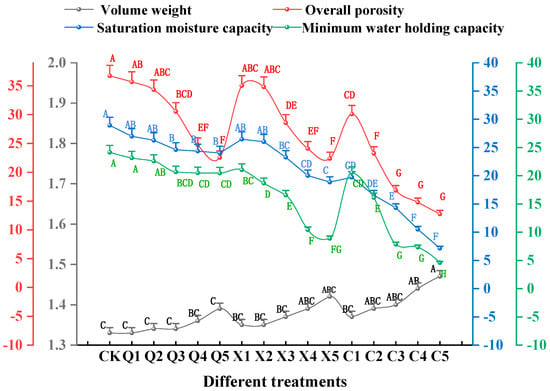
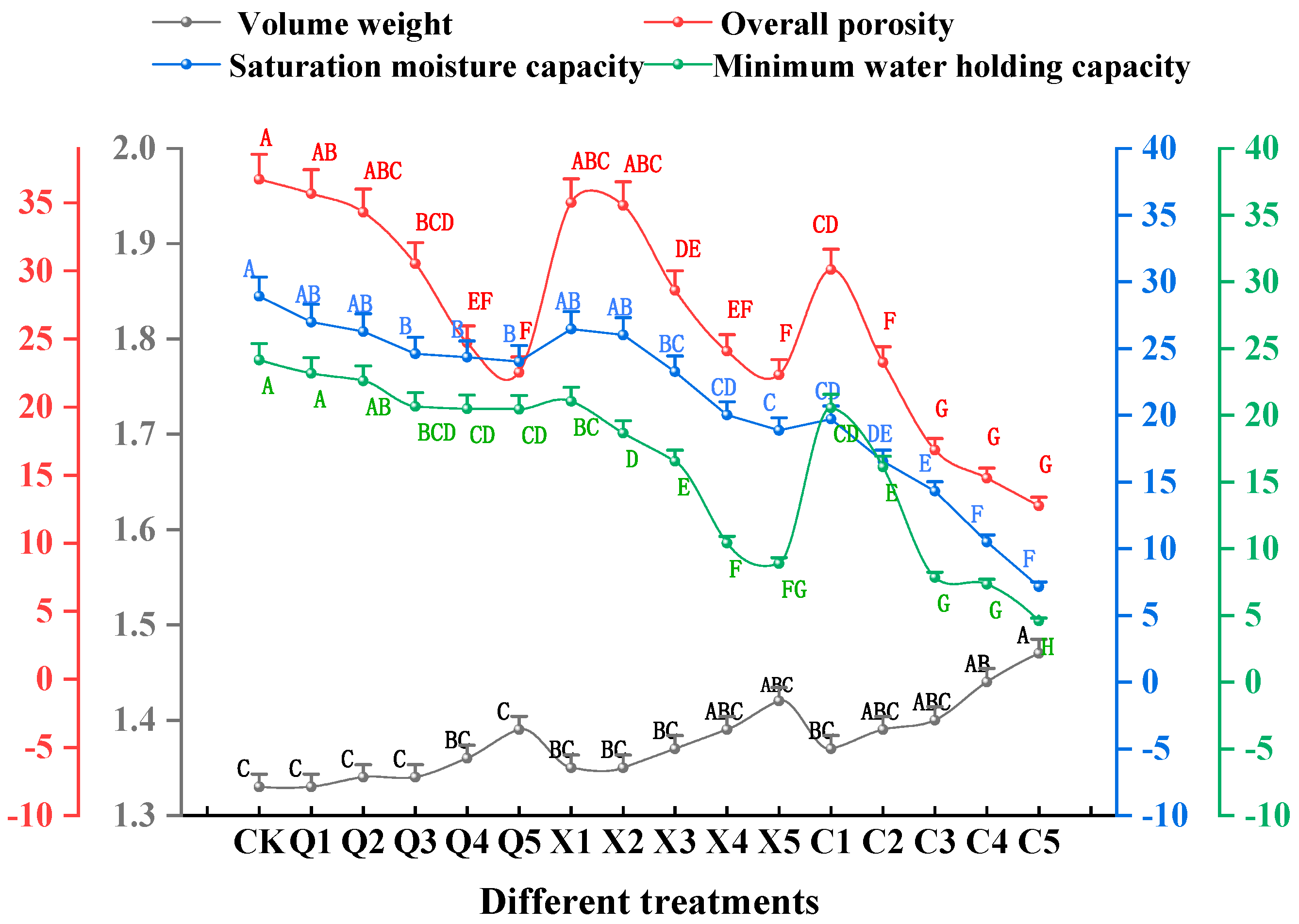
Figure 13 shows the changes in the physical properties of CK soil under different treatments of flaxseed cake meal spraying. After spraying flaxseed meal, soil bulk density decreased significantly compared with CK, while soil porosity, saturated water-holding capacity, and minimum water-holding capacity increased significantly compared with CK, with the magnitude of changes becoming more pronounced with increasing application rates.
Figure 13.
Effects of application rate and application method of flaxseed meal on soil physical properties. Different uppercase letters indicate significant differences in the physical properties among different treatments (p < 0.05).
Soil bulk density showed the following order: average of precipitate treatment (1.41 g·m−3) > average of suspension treatment (1.38 g·m−3) > average of supernatant treatment (1.35 g·m−3) > CK (1.33 g·m−3). Compared with CK, the three treatments increased soil bulk density by 6.32%, 3.46%, and 1.65%, respectively.
Soil porosity showed the following order: average of precipitate treatment (19.54%) < average of suspension treatment (28.98%) < average of supernatant treatment (29.56%) < CK (36.73%). Compared with CK, the three treatments reduced soil porosity by 46.79%, 21.11%, and 19.53%, respectively.
Soil saturated water-holding capacity showed the following order: average of precipitate treatment (13.64%) < average of suspension treatment (22.92%) < average of supernatant treatment (25.25%) < CK (28.91%). Compared with CK, the three treatments reduced soil saturated water-holding capacity by 52.81%, 20.71%, and 12.67%, respectively.
Soil minimum water-holding capacity showed the following order: average of precipitate treatment (11.28%) < average of suspension treatment (15.11%) < average of supernatant treatment (21.46%) < average of CK (24.15%). Compared with CK, the three treatments reduced soil minimum water-holding capacity by 53.29%, 37.45%, and 11.14%, respectively.
It can be concluded from the above data that the application of flaxseed meal first alters soil physical properties such as bulk density, porosity and water-holding capacity, and further regulates soil water movement by modifying these physical properties.
4.3. Correlation Between Soil Physical Properties and Water Movement Rate
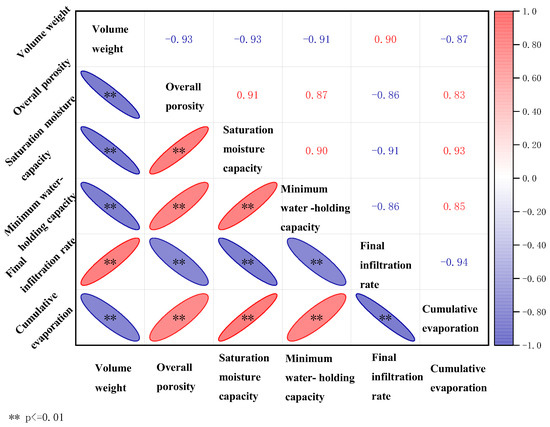
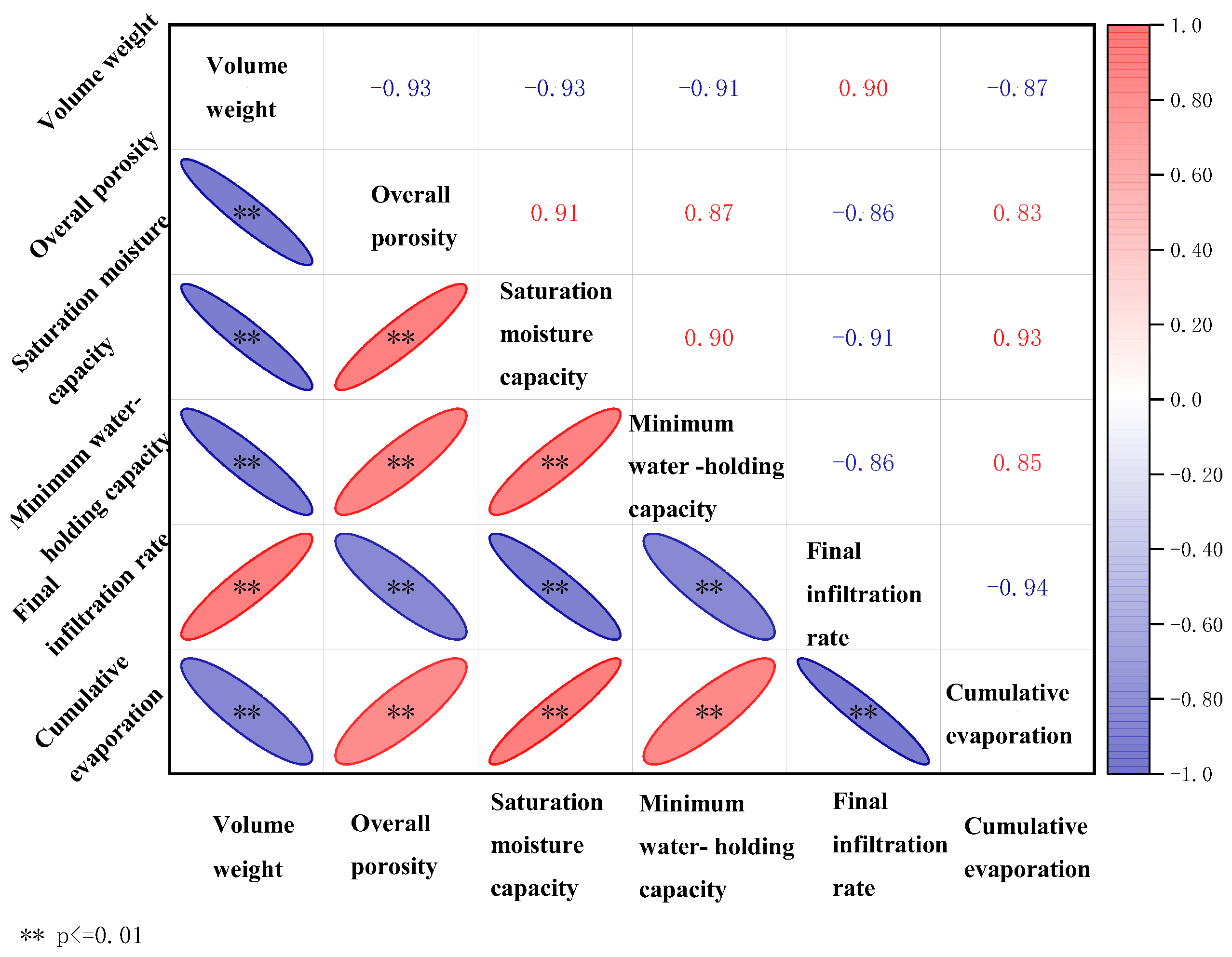
Inherent soil properties such as bulk density, water status, pore structure, and texture are the main factors affecting soil water movement rate and hydraulic parameters, which directly influence soil fertility and the availability of soil water. Exploring the physical properties of the consolidated layer after spraying soil amendments is conducive to explaining the mechanism of its effect on water movement and evaluating the water-retention capacity of flaxseed meal under different treatments and application rates [38]. Figure 14 shows the correlation heatmap between soil physical properties, water movement rate, and hydraulic characteristic parameters. The study found that there was a high correlation among various soil physical properties. Soil bulk density was extremely significantly negatively correlated with total porosity, saturated water-holding capacity, and minimum water-holding capacity (p ≤ 0.01), with correlation coefficients of −0.93, −0.93, and −0.91, respectively. Total porosity, saturated water-holding capacity, and minimum water-holding capacity were extremely significantly positively correlated with each other (p ≤ 0.01), with correlation coefficients of 0.91, 0.87, and 0.90, respectively.
Figure 14.
Correlation heatmap between soil physical properties and soil water movement rate.
The correlation between soil physical properties and water movement rate as well as soil hydraulic parameters was also significant. The final soil infiltration rate was extremely significantly positively correlated with bulk density (p ≤ 0.01), with a correlation coefficient of 0.90, and extremely significantly negatively correlated with total porosity, saturated water-holding capacity, and minimum water-holding capacity (p ≤ 0.01), with correlation coefficients of −0.86, −0.91, and −0.86, respectively. Cumulative evaporation was extremely significantly negatively correlated with bulk density (p ≤ 0.01), with a correlation coefficient of −0.87, and extremely significantly positively correlated with total porosity, saturated water-holding capacity, and minimum water-holding capacity (p ≤ 0.01), with correlation coefficients of 0.83, 0.93, and 0.85, respectively.
The high correlation between physical properties and water movement rate demonstrates that the application of flaxseed meal alters soil physical properties, which in turn affects water movement rate [39]. All three flaxseed meal treatments contain sugar components with stable adhesiveness. When applied to the soil surface, the powder fills the gaps between sand particles under the action of water, and the remaining part agglomerates and stays on the sand surface. The sugar components cement sand particles together to form a crust; soil mass increases while volume changes slightly, resulting in decreased soil porosity and increased bulk density, thus altering soil properties. When soil porosity decreases, the water permeability of soil weakens, leading to a reduction in soil saturated water-holding capacity and minimum water-holding capacity, changing the soil water structure [40], and thereby exerting an impact on soil water movement.
This study explored the regulatory effect of flaxseed meal on water movement in sandy soil through indoor experiments. Although indoor experiments can precisely control test conditions, focus on core influencing factors, and obtain highly reproducible data, they are constrained by objective conditions such as environmental settings, material processing, and scale effects of indoor tests. As a result, there are certain limitations in the practical application and field promotion of the research findings, which are specifically reflected in the following aspects: Firstly, the indoor environmental conditions are single and idealized, failing to simulate the complex field environmental conditions such as diurnal temperature fluctuations, natural rainfall leaching, wind erosion, and dynamic changes in evaporation. Additionally, they cannot replicate the destructive effects of animals and microorganisms on the consolidated layer. Secondly, there are limitations in the experimental scale and differences in effects compared with the field scale. This experiment was conducted using small-scale indoor devices such as soil columns, resulting in significant boundary effects in the experimental system. The range and path of soil water movement are restricted by the device size, making it difficult to simulate the vertical infiltration and horizontal movement of soil water on a large field scale. Furthermore, it cannot reflect the hydraulic connection between field soil water and groundwater, as well as the characteristics of water runoff loss in sloping soil. Thirdly, the short-term nature of the experimental cycle is mismatched with the long-term improvement effect. As a short-term indoor experiment, this study only monitored the dynamic changes of soil water movement during the test period. It did not consider the dynamic evolution characteristics of soil organic matter content, soil water-holding capacity, and pore structure during the long-term decomposition process of flaxseed meal. Nor did it involve the timeliness and sustainability of the improvement effect of flaxseed meal, as well as the feedback changes of soil physical and chemical properties under long-term application. Thus, it cannot fully reflect the comprehensive impact of long-term field application on soil water movement. This study found that the improvement effect of flaxseed meal becomes more significant with the increase in application rate. However, practical observations indicated that when the application rate of the sediment treatment group is excessively high, a thick and dense crust layer is formed, which may trigger negative effects such as slope erosion. Meanwhile, the water absorption and swelling process of the crust layer itself fixes part of the soil water, thereby restricting the germination of some deep-rooted plants and their absorption and utilization of water.
In summary, indoor experiments provide basic data for clarifying the core regulatory mechanism and qualitative laws of flaxseed meal on water movement in sandy soil. However, the aforementioned limitations determine that the results cannot be directly used as quantitative bases for field application. Future research should combine long-term field location experiments to make up for the shortcomings of indoor experiments in terms of environment, scale, and biological factors. Long-term location monitoring should be carried out to explore the optimal application method, rate, and cycle of flaxseed meal under different field conditions, so as to realize the scientific transformation of indoor experimental results to practical field applications.
5. Conclusions
This study investigated the water absorption and retention properties of flaxseed meal treated by different methods, as well as its effects on the physical properties of sandy soil after surface spraying, aiming to clarify the mechanism of flaxseed meal regulating soil water movement. The main conclusions are as follows:
- (1)
- Flaxseed meal could significantly reduce the soil water infiltration rate, with the sediment treatment group exhibiting the most prominent effect. The soil water content of all treatment groups was lower than that of the control group, in the order of control group (20.93%) > supernatant group (20.75%) > suspension group (19.15%) > sediment group (16.79%). The variation ranges of the related infiltration indices increased with the rise in application rate.
- (2)
- Flaxseed meal had a remarkable water retention and evaporation inhibition effect. After a 35-day evaporation experiment, the cumulative soil water evaporation of the supernatant, suspension and sediment groups was reduced by 11.69%, 24.13% and 43.22% compared with the control group, respectively, with the sediment group showing the best effect. Moreover, the evaporation inhibition effect was enhanced with the increase in application rate.
- (3)
- Flaxseed meal led to an increase in soil bulk density and a decrease in total soil porosity as well as soil water-holding capacity, and the sediment group had an extremely significant effect. For the sediment group, the soil bulk density was increased by 6.32%, the total soil porosity was decreased by 46.79%, the saturated water holding capacity was decreased by 52.81%, and the minimum water holding capacity was decreased by 53.29%. The variation ranges of the above indices were positively correlated with the application rate. In conclusion, flaxseed meal regulates soil water movement by altering soil physical properties.
Overall, spraying the flaxseed meal mixture on the surface of sandy soil could effectively reduce water infiltration and evaporation, with the sediment treatment group achieving the optimal improvement effect. The consolidated layer formed by flaxseed meal had a strong water holding capacity, which could provide a long-term water supply for plant growth, making it suitable for popularization and application in sandy farmland.
Author Contributions
Conceptualization, Y.L. and L.Y.; methodology, Y.L. and X.D.; software, Y.L. and W.S.; validation, W.S., L.Y. and Y.L.; formal analysis, W.S.; investigation, Y.L.; resources, X.D.; data curation, W.S. and Y.L.; writing—original draft preparation, Y.L.; writing—review and editing, Y.L.; visualization, Y.L. and W.S.; supervision, X.D.; project administration, X.D.; funding acquisition, X.D. All authors have read and agreed to the published version of the manuscript.
Funding
Basic scientific research projects of Universities directly under the Inner Mongolia Autonomous Region (BR220401); National Key Research and Development Program of China (2022YFC3205200).
Data Availability Statement
The original contributions presented in this study are included in the article. Further inquiries can be directed to the corresponding author.
Acknowledgments
The authors are very grateful to all the partners who participated in this study and the research platform provided by the Science and Technology Innovation Center of ForesTry and Grassland. The authors would like to thank the reviewers for their help and constructive comments and suggestions, which greatly improved the quality of this manuscript.
Conflicts of Interest
The authors declare no conflict of interest.
References
- Sun, B.; Luo, Y.M.; Yang, D.L.; Yang, J.S.; Zhao, Y.G.; Zhang, J.B. Coordinative Management of Soil Resources and Agricultural Farmland Environment for Food Security and Sustainable Development in China. Int. J. Environ. Res. Public Health 2023, 20, 3233. [Google Scholar] [CrossRef] [Scilit]
- Wang, Y.P.; Wang, S.; Ding, J.Y.; Zhao, W.W.; Yin, J.H. A review on the changes in wetting and drying over land under global climate change: Trend, mechanism, and prospect. Acta Ecol. Sin. 2023, 43, 475–486. [Google Scholar] [CrossRef] [Scilit]
- Wang, M.N. Research on Crop Cultivation and Black Soil Protection Strategies in Jilin City. Seed Sci. Technol. 2025, 43, 195–197. [Google Scholar] [CrossRef]
- Li, H.J.; Li, Z.S.; Zhou, X.L.; Ma, Q.; Wang, W.; Sun, J.H.; Zhao, T.K. Effects of Different Tillage Methods on Growth and Yield of Wheat. Shandong Agric. Sci. 2015, 47, 34–36. [Google Scholar] [CrossRef]
- Zheng, Q.M.; Ha, T.; Prishchepov, A.V.; Zeng, Y.W.; Yin, H.; Koh, L.P. The neglected role of abandoned cropland in supporting both food security and climate change mitigation. Nat. Commun. 2023, 14, 6083. [Google Scholar] [CrossRef] [Scilit] [PubMed]
- Wang, Y.M.; Li, J.X.; Kong, X.Z. What drives land abandonment in core grain-producing areas? Evidence from China. Int. J. Environ. Res. Public Health 2022, 19, 5090. [Google Scholar] [CrossRef] [Scilit]
- Yan, T.; Yan, D.R.; Qu, N.; Huang, H.G.; Huang, W.L. Water-soluble Seed Gum for Sand-fixation Agent and Its Application Effect. For. Sci. Technol. 2019, 5, 109–111. [Google Scholar] [CrossRef]
- Jin, Y.R. Key Points of Supporting Technologies for the Reconstruction of Irrigation Canal Systems in Gansu Province. South China Agric. 2021, 15, 217–218. [Google Scholar] [CrossRef]
- Da, W.P.C. Effects of plastic film mulching and straw addition on soil hydrothermal characteristics and potato yield in Shigatse, Xizang. Soils Crops 2025, 14, 188–195. [Google Scholar]
- Yi, Z.J.; Wang, M.; Zhao, C.H. Desert soilization: The concept and practice of making deserts bloom. Innovation 2022, 10, 100200. [Google Scholar] [CrossRef] [Scilit]
- Wang, D.; Song, Z.Q.; Shang, S.B. Study on performance and application of sandy-soil stabilizer from modified lignosulfonates. Chem. Ind. For. Prod. 2005, S1, 59–63. [Google Scholar]
- Ren, T.J.; Yuan, L.M.; Gao, Y.; Wang, C.Y.; Xu, Y.Y. Research progress of environmental friendly sand fixation materials. J. Desert Res. 2023, 43, 160–168. [Google Scholar]
- Liu, G.H.; Wu, G.Y.; Li, J.D.; Wang, J.; Yang, Q.X.; Xue, D. Equivalent pore size characteristics in the soil physical crust. Arid Zone Res. 2023, 40, 1608–1614. [Google Scholar] [CrossRef]
- Xu, H.; Sun, L.P. Research progress and appliance in food Industry of flaxseed gum. China Condiment 2008, 3, 18–22. [Google Scholar]
- Attia, Y.A.; Al-Sagan, A.A.; Hussein, E.S.; Olal, M.J.; Ebeid, T.A.; Al-Abdullatif, A.A.; Alhotan, R.A.; Alyileili, S.R.; Shehata, H.A.; Tufarelli, V. Dietary flaxseed cake influences on performance, quality, and sensory attributes of eggs, serum, and egg trace minerals of laying hens. Trop. Anim. Health Prod. 2024, 56, 50. [Google Scholar] [CrossRef] [Scilit]
- Ji, X.Y.; Liu, X.Y.; Wang, J.P.; Liu, N. Effect of degraded flaxseed meals on the growth performance, nutrient digestibility, and health status of broiler. Anim. Biosci. 2024, 37, 1255–1262. [Google Scholar] [CrossRef] [Scilit] [PubMed]
- Czech, A.; Klimiuk, K.; Sembratowicz, I. Effect of the inclusion of extruded flaxseed in the diet of fattening pigs on lipid metabolism and tissue redox status. Sci. Rep. 2023, 13, 13312. [Google Scholar] [CrossRef] [Scilit]
- Jiang, J.; Xie, H.F.; Jin, Y.C. Bio-effect of Sand Stabilizing Biomass Material Prepared from Lignosulfonates. Environ. Sci. Technol. 2012, 35, 22–26. [Google Scholar]
- Bao, Z.X.; Yuan, L.M.; Jia, R.T.; Hu, Z.J. Performance of Sand-fixing Agent and Development Status and Trend of Environmental Protection Materials. J. Inn. Mong. For. Sci. Technol. 2022, 48, 54–58. [Google Scholar]
- Yan, L.; Yang, J.J. Research Status and Prospect of Novel Chemical Sand-fixing Materials. Mater. Rev. 2009, 23, 51–53. [Google Scholar]
- Wang, D.; Song, Z.Q.; Shang, S.B.; Wang, Y. Application of Polymer Materials to Chemical Sand Fixation. Biomass Chem. Eng. 2006, 40, 44–47. [Google Scholar]
- Hao, F.Y.; Dong, B.; Qi, W.H. Research on Polymer Environmental-friendly Sand-fixing Agents. Environ. Sci. Manag. 2005, 30, 46–47. [Google Scholar]
- Yuan, Z.R.; Jiang, S.H.; Chang, Z.L.; Xiang, H.; Liu, Y.W.; Hang, J.S. Reliability analysis of slope stability considering non-uniform distribution initial soil water content and pore water redistribution. Rock Soil Mech. 2025, 46, 1001–1002. [Google Scholar] [CrossRef]
- Zhang, L. Study on the Extraction and Functional Properties of Flaxseed Gum from Flaxseed Flake. Master’s Thesis, TUST (Tianjin University of Science and Technology), Tianjin, China, 2022. [Google Scholar]
- Zhao, X.M.; Wang, J.W.; Xu, H.J.; Zhou, C.J.; Wang, S.Q.; Xing, G.X. Effects of crop-straw biochar on crop growth and soil fertility over a wheat-millet rotation in soils of China. Soil Use Manag. 2015, 30, 311–319. [Google Scholar] [CrossRef] [Scilit]
- Yin, Y.M.; Li, Y.Y.; Chen, J.C.; Kong, W.B.; Li, R.L.; Peng, E.R. Experimental Study on Water and Salt Transport of Weathering Product of Mirabilite Rock under Different Water Replenishment Modes. Adm. Tech. Environ. Monit. 2025, 37, 82–86. [Google Scholar] [CrossRef]
- Wong, J.T.F.; Chen, Z.K.; Chen, X.W.; Charles, W.W.; Wong, M.H. Soil-water retention behavior of compacted biochar-amended clay: A novel landfill final cover material. J. Soils Sediments 2017, 17, 590–598. [Google Scholar] [CrossRef] [Scilit]
- Ren, T.J. Study on the Application Effect of Plant-Based Sand Fixing Agents on Sandy Farmland. Master’s Thesis, Inner Mongolia Agricultural University, Hohhot, China, 2023. [Google Scholar] [CrossRef]
- Su, P.; Ma, Y.H.; Yang, W.T. Synthesis of a fluoroalkyl acrylate copolymer and its application in sand solidfication. J. Beijing Univ. Chem. Technol. (Nat. Sci. Ed.) 2011, 38, 44–48. [Google Scholar] [CrossRef]
- Zheng, H.; Wang, Z.; Deng, X.; Herbert, S.; Xing, B. Impacts of adding biochar on nitrogen retention and bioavailability in agricultural soil. Geoderma 2013, 206, 32–39. [Google Scholar] [CrossRef] [Scilit]
- Busscher, W.J.; Bjomeberg, D.L.; Sojka, R.E. Field application of PAM as an amendment in deep-tilled US southeastern coastal plain soils. Soil Tillage Res. 2009, 104, 215–220. [Google Scholar] [CrossRef] [Scilit]
- Onder, D.; Aydin, M.; Onder, S. Estimation of actual soil evaporation using E-DiGOR model in different parts of Turkey. Afr. J. Agric. Res. 2009, 14, 505–510. [Google Scholar]
- Lu, X.Z.; Jin, Y.C.; Yang, Y.Q.; Vao, Y.F.; Li, Z.Z. Application of Lignin Sand-Fixer to Vegetation Restoration in Desertificated Areas. Sci. Silvae Sin. 2005, 41, 67–71. [Google Scholar]
- Zhao, Y.G. The development and application progress of water-retaining agents. Soil Water Conserv. China 1995, 16, 52–54. [Google Scholar] [CrossRef]
- Raz-Yaseef, N.; Rotenberg, E.; Yakir, D. Effects of spatial variations in soil evaporation caused bytree shading on water flux partitioning in a semi-arid pine forest. Agric. For. Meteorol. 2005, 41, 67–71. [Google Scholar] [CrossRef] [Scilit]
- Canarutto, S.; Pini, R.; Salem, N.; Guidi, G.V. Water retention and structural variations of a sandy soil treated with two soil conditioner. Agric. Mediterr. 1992, 122, 236–241. [Google Scholar]
- Shinjyo, A. Estimate of enhancement factor BETA of water vapor transfer in a sandy soil mixed with a super water absorbent polymer. Trans. Jpn. Soc. Irrig. Drain. Reclam. Eng. 1993, 165, 65–74. [Google Scholar] [CrossRef]
- Liu, W.Z.; Zhao, J.M.; Zhang, L.W.; Zhu, G.; Mao, G.R.; Cui, H.M. Soil Surface Hydrological Effects of Artificial Vegetation on Loess Steep Slopes. Bull. Soil Water Conserv. 2024, 44, 119–127. [Google Scholar] [CrossRef]
- Vogel, H.J.; Kretzschmar, A. Topological characterization of pore space in soil -sample preparation and digital image-processing. Geoderma 1996, 73, 23–638. [Google Scholar] [CrossRef] [Scilit]
- Wu, Z.R.; Gao, W.M.; Wu, Z.S.; Iwashita, K.; Yang, C.Q. Synthesis and characterization of a novel chemical sand-fixing material of hydrophilic polyurethane. J. Soc. Mater. Sci. 2011, 60, 674–679. [Google Scholar] [CrossRef] [Scilit]

Disclaimer/Publisher’s Note: The statements, opinions and data contained in all publications are solely those of the individual author(s) and contributor(s) and not of MDPI and/or the editor(s). MDPI and/or the editor(s) disclaim responsibility for any injury to people or property resulting from any ideas, methods, instructions or products referred to in the content. |
© 2026 by the authors. Licensee MDPI, Basel, Switzerland. This article is an open access article distributed under the terms and conditions of the Creative Commons Attribution (CC BY) license.