


Simple Summary
Patients with cancer often face pain, anxiety, fear, and distress during needle-related procedures, which can impact their well-being. This study reviewed 14 clinical trials with over 1000 participants to assess whether virtual reality can ease these symptoms. Findings showed that virtual reality was effective in reducing pain, anxiety, depression, fear, and respiratory rate in both adults and children. However, it did not significantly affect heart rate. By offering calming and engaging experiences, virtual reality helped distract patients and reduce their discomfort. These results suggest that virtual reality is a promising non-drug option to improve patient comfort during cancer care. Further research is needed to refine and expand its use across diverse settings and populations.
Abstract
Background. Needle-related procedures (NRPs) in cancer care are often associated with significant pain and anxiety, contributing to psychological and physiological distress. This study aimed to assess the effectiveness of virtual reality (VR)-based interventions in reducing anxiety, pain, depression, fear, and physiological parameters (pulse rate and respiratory rate) in patients with cancer undergoing NRPs. Methods. A systematic search of 11 databases (CINAHL, Cochrane Library, Embase, IEEE Xplore, Medline, ProQuest, PsycINFO, PubMed, Scopus, Web of Science, and CNKI) was conducted from inception to 15 May 2025. Two independent reviewers selected and extracted studies based on predefined inclusion and exclusion criteria. Meta-analyses were performed using Cochrane RevMan 2024 software. Heterogeneity was assessed using Higgins’ I2 statistics and Cochran’s Q test. The GRADE framework was applied to evaluate the quality of evidence. Results. Fourteen randomized controlled trials (RCTs) with 1089 participants were included. VR interventions showed significant benefits compared to controls in reducing anxiety (standard mean difference [SMD] = −1.74, 95% confidence interval [CI]: −2.47 to −1.01, p < 0.001), pain (SMD = −1.30, 95% CI: −1.93 to −0.67, p < 0.001), depression (SMD = −0.73, 95% CI: −0.96 to −0.50, p < 0.001), fear (mean difference [MD] = −1.31, 95% CI: −1.56 to −1.06, p < 0.001), and respiratory rate (MD = −3.85, 95% CI: −6.18 to −1.52, p = 0.001). However, no significant difference was found in pulse rate (MD = 0.25, 95% CI: −14.32 to 14.81, p = 0.97). Conclusions. VR-based interventions are effective in alleviating psychological symptoms (anxiety, depression, fear) and physiological distress (pain, respiratory rate) in patients with cancer undergoing NRPs. However, they do not significantly impact pulse rate. Interpretation of findings should consider limitations such as the small number of studies, limited sample sizes, and high heterogeneity. Further high-quality RCTs with follow-up assessments are warranted. Customizing VR interventions to address demographic and procedural needs may further enhance their effectiveness.
1. Introduction
Cancer is one of the leading causes of global mortality, with its prevalence expected to rise significantly in the coming decades, reaching an estimated 28.4 million cases by 2040 [1]. As survival rates improve, patients with cancer often face diminished quality of life (QOL) due to the psychological and physiological impacts of the disease and its treatments. Common issues such as anxiety, depression, pain, and fear are prevalent, with many patients also experiencing significant distress during needle-related procedures (NRPs), which are routine in cancer care [2]. These procedures, including bone marrow biopsies, venipuncture, and chemotherapy infusions, can induce both physical pain and psychological distress, exacerbating anxiety and fear and further diminishing patients’ QOL [3].
Although traditional pharmacological treatments, such as opioids and benzodiazepines, are commonly used to manage pain and anxiety, they often have significant side effects, limiting their effectiveness and applicability in addressing the broader emotional and psychological dimensions of these symptoms [4]. Furthermore, standard approaches to pain management do not always provide sufficient relief for the distress caused by NRPs, with studies showing that nearly 50% of patients with cancer experience inadequate pain management [5]. Consequently, there is a growing need for alternative, non-pharmacological interventions that can address the multidimensional nature of pain and psychological distress in patients with cancer undergoing NRPs.
Virtual reality (VR) has emerged as a promising solution for managing both the physical and psychological symptoms associated with cancer treatments. By immersing patients in interactive, 3D virtual environments, VR serves as a powerful distraction tool that can reduce the cognitive resources available for pain processing [6]. VR has been shown to alleviate pain [6,7], anxiety [2], depression [7], and fear [8], providing both psychological and physiological benefits. Moreover, VR-based interventions can be tailored to individual needs, offering different levels of immersion—ranging from full-immersive systems with head-mounted display (HMD) to non-immersive systems that utilize smartphones or computers—depending on the therapeutic context [9]. Non-immersive VR uses a desktop screen with keyboard mouse to navigate 3D environments. Semi-immersive VR projects the environment onto a large screen and may include gesture recognition. Fully immersive VR uses an HMD to block visual and auditory distractions, creating a highly immersive experience [9]. Non-immersive VR has shown benefits in adult rehabilitation by supporting physical fitness and balance [10], while immersive VR is more commonly used in pediatric settings, where children’s sensitivity to medical cues makes them more receptive to immersive distraction [11].
Despite the growing body of evidence on the efficacy of VR in managing cancer-related symptoms, there remain significant gaps in research focusing specifically on patients with cancer undergoing NRPs. While previous systematic reviews (SR) have examined VR’s effectiveness in either patients with cancer or patients undergoing NRPs [11,12,13,14], they present key limitations, highlighting the need for the present SR to address these gaps.
Three recent SRs [11,12,13] focused exclusively on pediatric and adolescent populations, neglecting adults despite their increasing cancer burden, as older adults (>65 years) will account for 60% of newly diagnosed cancer cases by 2035 [15]. Additionally, young adult patients with cancer (<39 years) experience worse quality of life and greater psychosocial burdens compared to pediatric patients with cancer [16], underlining the need for broader population coverage. Moreover, the generalizability of findings from these three SRs’ is limited by VR interventions designed for children, such as animal-themed environments [17], ocean rift simulations [17,18], and exergames [19]. These child-oriented VR applications may not be suitable for adults, who may benefit more from nature-based VR interventions shown to improve mood and reduce pain [20,21]. Thus, this SR will include both adult and pediatric oncology populations, with a subgroup analysis to evaluate VR’s differential impacts between these groups.
Meanwhile, Gautama et al. [14] included adult patients with cancer in their review, but they focused primarily on chemotherapy-related symptoms, overlooking the broader spectrum of routine NRPs in oncology, including venipuncture, bone marrow biopsies, and lumbar puncture. Furthermore, while the review showcased VR’s ability to reduce anxiety and pain, it did not differentiate between chemotherapy-induced and procedural-related discomforts, which have distinct underlying mechanisms. Chemotherapy-induced pain and anxiety result primarily from neurotoxic effects of chemotherapeutic agents [22,23], whereas procedural pain arises from curative surgery or short-lived NRPs [24,25]. By expanding beyond chemotherapy, this SR evaluates VR’s effectiveness across various NRPs, addressing an important yet understudied aspect of cancer symptom management.
Previous SRs also had methodological limitations. Three of the aforementioned SRs included fewer than ten studies with small sample sizes [11,12,13], limiting their findings’ generalizability and external validity. In contrast, Gautama et al. [14] included twelve studies, but one-third were published eighteen years ago, making their findings less applicable given the rapid VR advancements and the availability of more up-to-date randomized controlled trials (RCTs) [26]. Additionally, Tsitsi et al. [11] did not perform a meta-analysis, instead emphasizing VR’s usability over its effectiveness. Their narrative synthesis limits the translation of findings into clinical practice.
Therefore, this SR and meta-analysis aims to evaluate the effectiveness of VR-based interventions in reducing pain, anxiety, depression, fear, pulse rate, and respiratory rate in patients with cancer receiving NRPs. By collating and analyzing the latest RCTs, this review seeks to address the under-explored area of VR interventions in cancer care and provide evidence for integrating VR as a complementary tool in managing the complex symptoms associated with NRPs in oncology patients.
2. Methods
This review was conducted in accordance with the Preferred Reporting Items for Systematic Reviews and Meta-Analyses (PRISMA) guidelines [27]. A formal protocol was registered prospectively in PROSPERO under registration ID CRD42025615497. The PRISMA 2020 checklist was presented in Supplementary Table S1.
2.1. Search Strategy
Two independent reviewers employed a three-step search strategy across eleven databases: CINAHL, Cochrane, Embase, IEEE Xplore, Medline, ProQuest, PsycINFO, and PubMed. Additionally, three grey literature sources—GreySource, OpenGrey, and Google Scholar—were consulted. The search period spanned from August 2024 to May 2025. An experienced school librarian validated the search strategy. As all reviewers were proficient in both English and Chinese, studies in both languages were included. Key search terms included ‘Virtual reality,’ ‘Head-mounted display,’ ‘needle,’ ‘venipuncture,’ ‘cancer,’ and ‘oncology.’ Detailed search strategies for each database are provided in Supplementary Table S2.
2.2. Eligibility Criteria
The inclusion criteria were structured using the Population, Intervention, Comparison, and Outcome (PICO) framework:
- Population: Patients with cancer receiving NRPs, regardless of age or cancer type, including both active treatment and survivor groups.
- Intervention: Any type of VR-based intervention (immersive, semi-immersive, or non-immersive), irrespective of setting, duration, session frequency, or application methods.
- Comparison: Usual care, which may include standard medical treatment, psychosocial care, or health education.
- Outcomes: Anxiety, pain, depression, fear, pulse rate, and respiratory rate.
Only RCTs were included. Non-experimental, quasi-experimental studies, reviews, conference papers, and other non-RCT designs were excluded. Moreover, languages other than English and Chinese were excluded from the study. A detailed summary of the eligibility criteria is provided in Supplementary Table S3.
2.3. Study Selection
Search results were organized and imported into EndNote X9.3.3 software. After duplicates were removed, two independent reviewers (DJ and KYJ) cross-screened the titles and abstracts of the remaining studies. Discrepancies were resolved by consulting with two additional reviewers, WWR and ZYC. Full texts of eligible studies were retrieved for further evaluation, with reasons for exclusion recorded in the PRISMA flow chart.
2.4. Data Extraction
A standardized data extraction form was adapted based on the Cochrane Handbook for Systematic Reviews of Interventions [28]. A pilot data extraction was conducted on five studies by two reviewers (DJ and KYJ) to ensure consistency and relevance. Extracted data included authorship, publication year, country, sample size, mean age, cancer type, NRP details, VR methods, VR duration, outcomes, measurement tools, and main results. Any disagreements were resolved with input from WWR and ZYC.
2.5. Risk of Bias and Quality Appraisal
The quality of included studies was assessed independently by two reviewers using the Cochrane Risk-of-Bias (ROB) Tool version 1 [29]. The assessment evaluated five types of biases: selection bias, performance bias, detection bias, attrition bias, and reporting bias, across seven domains: random sequence generation, allocation concealment, blinding of participants and personnel, blinding of outcome assessment, incomplete outcome data, selective reporting, and other biases. Each domain was rated as ‘low risk,’ ‘high risk,’ or ‘unclear.’ Discrepancies were resolved through discussions with both reviewers, WWR and ZYC. The overall quality of evidence was evaluated using the GRADE framework [28], with ratings ranging from high to very low based on five domains: risk of bias, inconsistency, indirectness, imprecision, and publication bias. Each outcome was rated separately using GRADEpro software [30], with inter-rater agreement calculated using Cohen’s Kappa (κ).
2.6. Data Synthesis and Analysis
Meta-analysis was conducted using the online Cochrane Review Manager (RevMan) [31]. All outcomes were treated as continuous data, with the standardized mean difference (SMD) and mean difference (MD) reported with 95% confidence intervals. SMD was used for outcomes measured with different tools, while MD was applied for consistent measurement tools [32]. Effect sizes were categorized as small (<0.5), moderate (0.5–0.8), or large (>0.8) using Cohen’s definitions [28]. Heterogeneity among studies was assessed using I2 statistics and Cochran’s Q chi-square test. I2 values of 0–40%, 30–60%, 50–90%, and 75–100% corresponded to unimportant, moderate, substantial, and considerable heterogeneity, respectively. For low heterogeneity (p > 0.1 and I2 < 50%), a fixed-effect model was applied [33]. In cases of significant heterogeneity (p ≤ 0.1 and I2 ≥ 50%), a random-effects model was used. Subgroup analyses were performed to explore sources of high heterogeneity.
3. Results
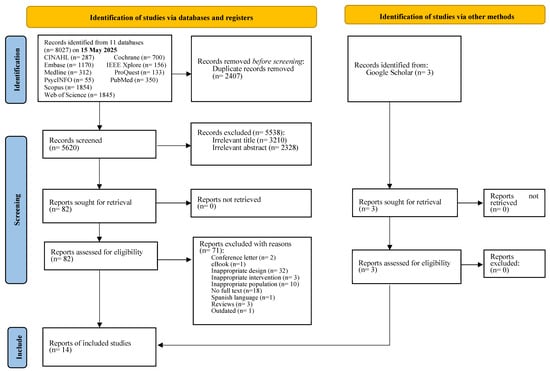
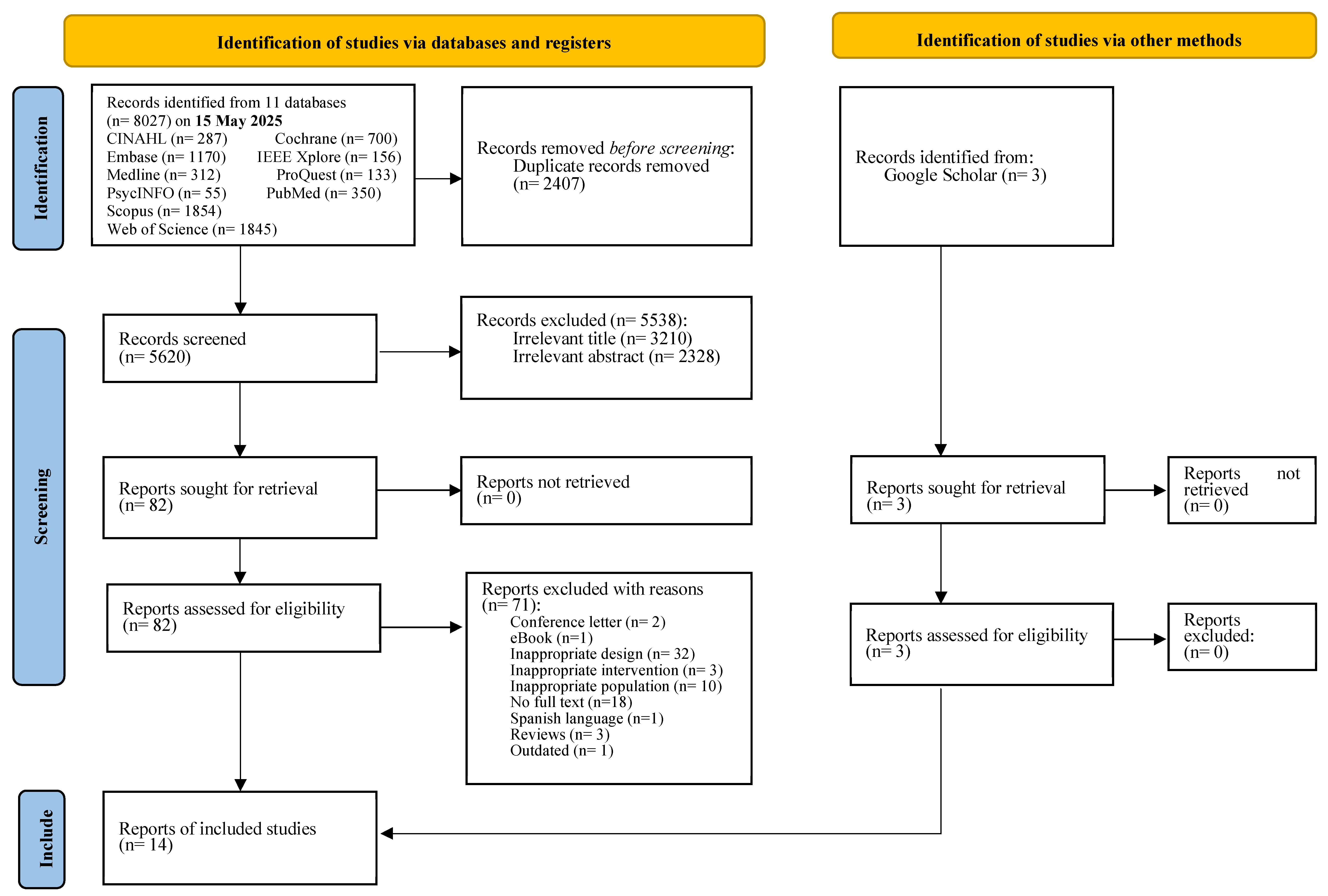
A total of 8027 references were retrieved from the 11 databases, with an additional 3 records identified through hand-searching Google Scholar. Figure 1 illustrates the study section process.
Figure 1.
PRISMA flow chart.
3.1. Characteristics of Included Studies
A total of 14 included studies were conducted in the following countries: China (n = 4) [34,35,36,37], Germany (n = 1) [38], Italy (n = 1) [39], Spain (n = 1) [40], and Turkey (n = 7) [18,41,42,43,44,45,46]. Sample sizes ranged from 19 to 139 participants [35,43]. In these studies, seven studies involved children [18,35,36,38,41,44,45], while another seven involved adults [34,37,39,40,42,43,46].
Regarding types of NRPs that participants receiving, five studies focused on chemotherapy infusion [35,37,39,40,46], three studies on venipuncture and venous blood drawing [36,41,45], four studies on port needle insertion [18,38,43,44], one study on bone marrow aspiration [42], and one study on radical mastectomy [34]. The VR interventions varied in equipment types (headset or smart glasses), duration (8 min to 45 min or procedure-long), frequency (single or multiple sessions), and content (natural scenes or psychoeducational modules). Detailed characteristics of each study are shown below (Table 1).
Table 1.
Characteristics of included 14 studies.
3.2. Quality and Risk of Bias Assessment
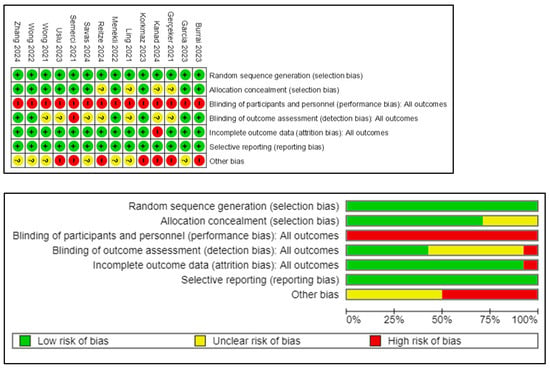
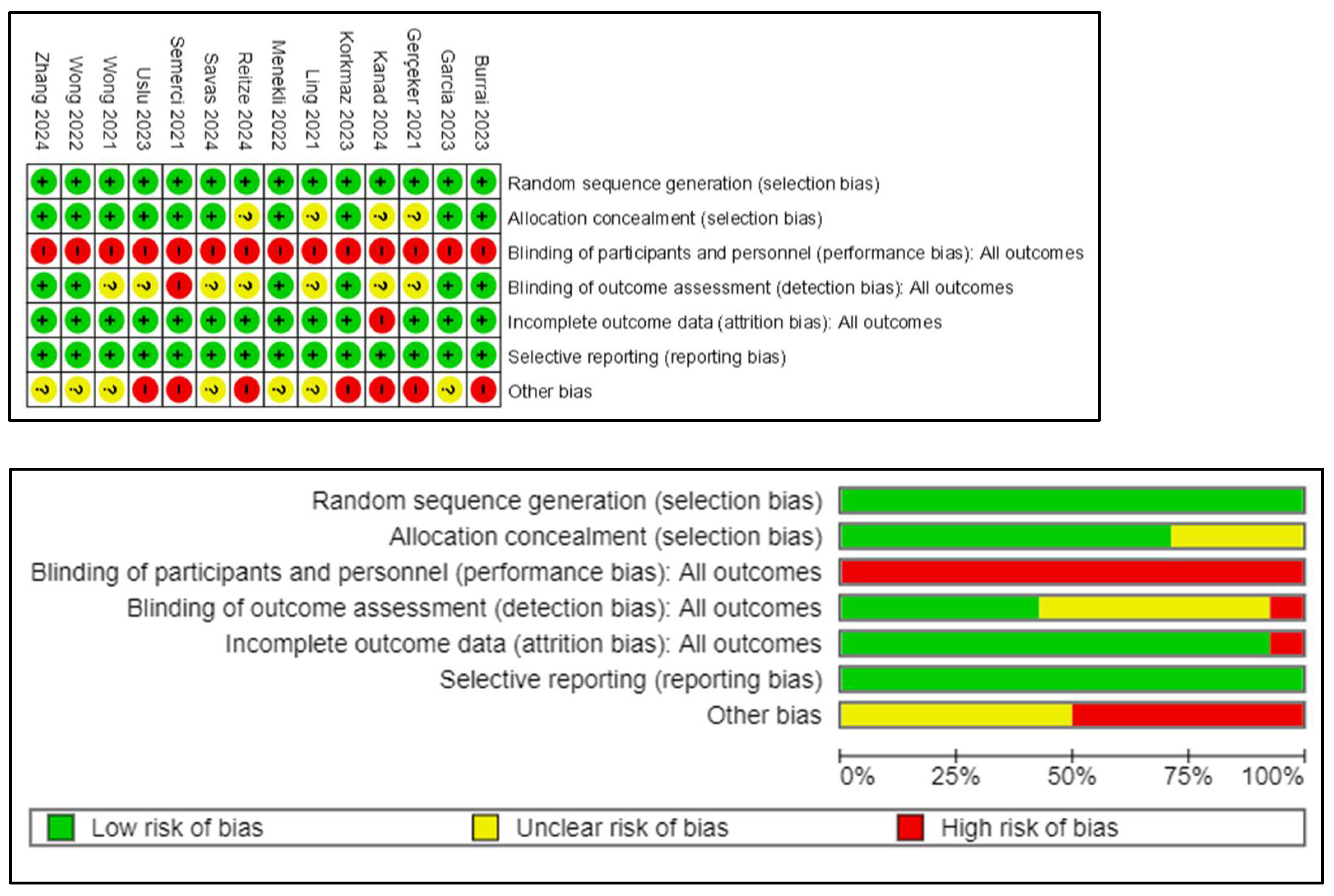
All studies sufficiently described random sequence generation, ten studies mentioned allocation concealment [35,36,37,39,40,42,43,44,45,46], and six studies adopted blinded outcome assessments [35,37,39,40,42,43]. Due to the nature of VR-based interventions, participant and personnel blinding were not feasible. Additionally, thirteen studies exhibited low risk of attrition bias, with one study having a high risk due to 11% dropout rate in the VR intervention group [41]. All fourteen studies had a low risk of reporting bias. The risk of bias graph and summary are shown in Figure 2. The two independent reviewers had a substantial inter-rater agreement with Cohen’s kappa value 0.74 [47].
Figure 2.
Risk of bias analysis of the included studies [18,34,35,36,37,38,39,40,41,42,43,44,45,46].
According to the GRADE approach, the quality of evidence for all outcomes was graded very low due to methodological limitations, significant heterogeneity, and small sample sizes. Further details are presented in Supplementary Table S4.
3.3. Effectiveness of VR Interventions on Primary and Secondary Outcomes
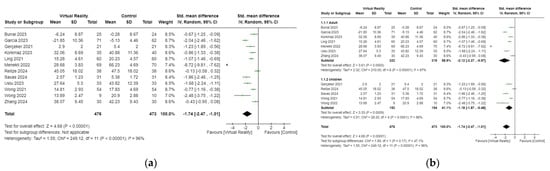
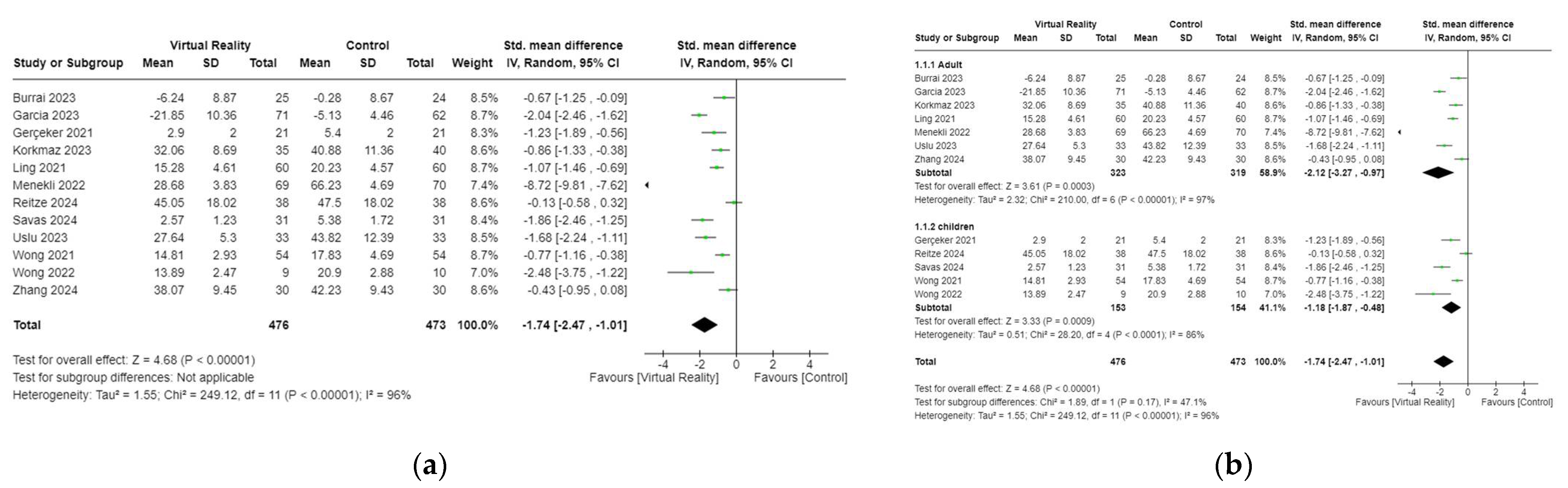
The effects of VR-based interventions on anxiety were measured in 12 studies involving 949 participants [18,34,35,36,37,38,39,40,42,43,44,46]. Results demonstrated that VR-based interventions significantly improved anxiety symptoms in patients with cancer undergoing NRPs compared to control groups (SMD = −1.74, 95% CI −2.47 to −1.01, p < 0.001) (Figure 3a). In the subgroup analysis by age (adult and children), the results showed that VR-based interventions significantly improve anxiety symptoms in adult or children patients with cancer receiving NRPs compared to control groups (SMD = −2.12, 95% CI −3.27 to −0.97, p = 0.0003; SMD = −1.18, 95% CI −1.87 to −0.48, p = 0.0009, respectively) (Figure 3b).
Figure 3.
(a) Forest plot of VR on anxiety. (b) Subgroup analyses of VR on anxiety for patients of different age among patients with cancer [18,34,35,36,37,38,39,40,42,43,44,46].
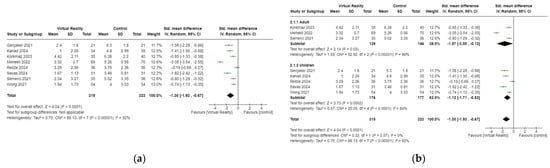
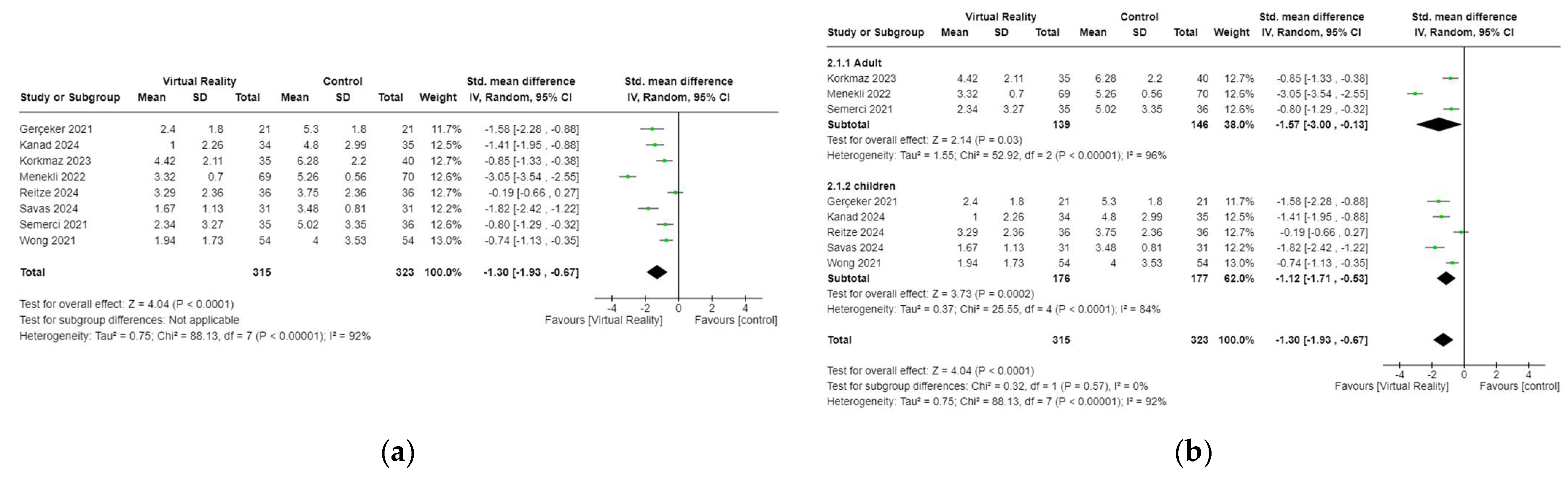
The effectsf VR-sed interventions on pain were measured in eight studies involving 638 patients [18,36,38,41,42,43,44,45]. The results indicated that VR-based interventions significantly reduced pain compared to control groups (SMD = −1.30, 95% CI −1.93 to −0.67, p < 0.001) (Figure 4a).
Figure 4.
(a) Forest plot of VR on pain. (b) Subgroup analyses of VR on pain for patients of different age among patients with cancer [18,36,38,41,42,43,44,45].
In the subgroup analysi [18,36,38,41,42,43,44,45]. by age (adult and children), the results revealed that VR-based interventions significantly improved pain symptoms in both adults (SMD = −1.57, 95% CI −3.00 to −0.13, p = 0.03) and children (SMD = −1.12, 95% CI −1.17 to −0.53, p = 0.0002) (Figure 4b).
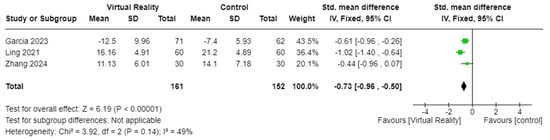
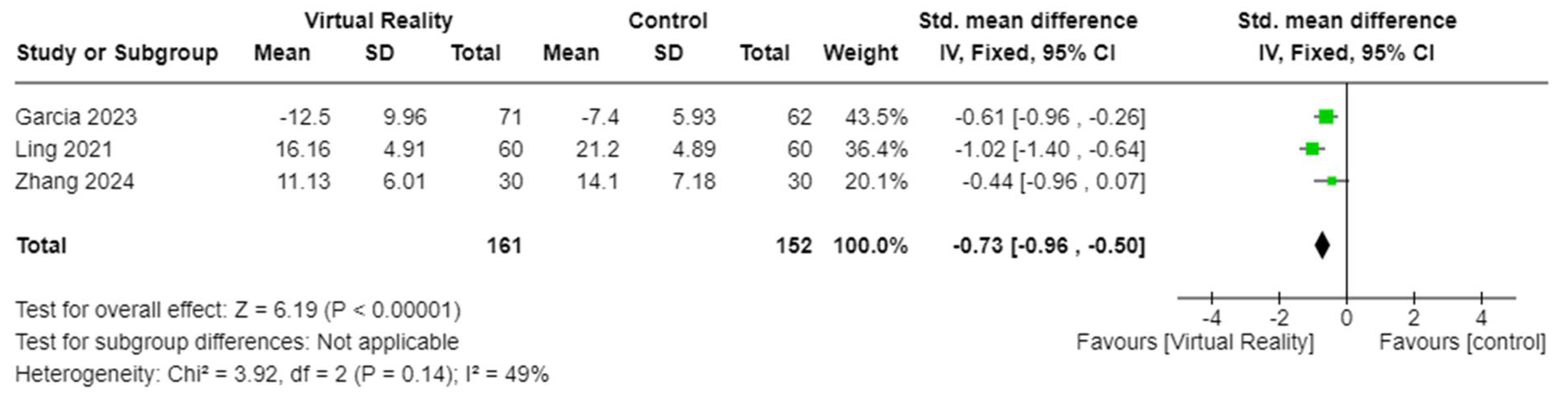
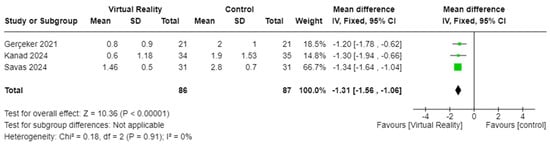
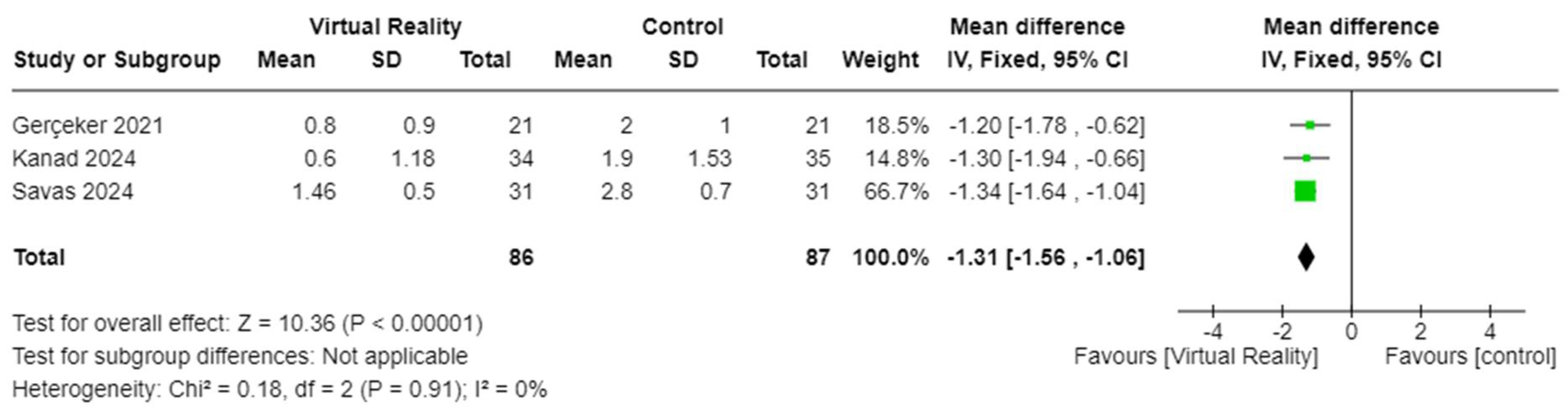
The effects of VR-based interventions on depression in patients with cancer were measured in three studies including 313 patients [34,37,40]. VR-based interventions significantly reduced depressive symptoms in patients with cancer receiving NRPs (SMD = −0.73, 95% CI −0.96 to −0.50, p < 0.001) (Figure 5). Fear-related outcomes were measured in three studies with 173 patients [18,41,44]. The results showed that VR-based interventions effectively improved fear in patients with cancer compared to control groups (MD = −1.31, 95% CI −1.56 to −1.06, p < 0.001) (Figure 6).
Figure 5.
Effectiveness of VR on depression among patients with cancer [34,37,40].
Figure 6.
Effects of VR on fear among patients with cancer [18,41,44].
Three trials reported the results of VR-based interventions on pulse rate [35,36,43]. Results showed no statistically significant effect between VR and control groups (MD = 0.25, 95% CI −14.32 to 14.81, p = 0.97) (Figure 7a). Conversely, two trials involving 201 patients reported that VR was effective in reducing respiratory rate compared to control groups (MD = −3.85, 95% CI −6.18 to −1.52, p = 0.001) [43,44] (Figure 7b).
Figure 7.
Effects of VR on physiological parameters: (a) Pulse rate and (b) Respiratory rate among patients with cancer [35,36,43,44].
4. Discussion
This [35,36,43] review examined the efficacy of VR-based interventions in patients with cancer receiving non-pharmacological treatments (NRPs). The results demonstrate that VR-based interventions significantly reduced anxiety, pain, depression, fear, and respiratory rate compared to standard care. These findings align with previous reviews emphasizing VR’s effectiveness in alleviating anxiety, pain, depression, and fear [2,7,8]. However, these results differ from another review [48], where no significant effects were found. This discrepancy may be attributed to differences in sample sizes, VR intervention types, session durations, and population characteristics.
The effect of VR on pulse rate could not be conclusively determined due to statistical insignificance, which aligns with a recent systematic review indicating no impact of VR-based interventions on pulse rate in cancer symptom management [14]. Therefore, more robust RCTs are needed to explore the impact of VR on pulse rate among patients with cancer undergoing NRPs. Overall, these findings highlight the psychological and physiological benefits of VR, offering valuable insights into its broad potential.
4.1. Effects of VR on Psychological Outcomes of Patients with Cancer
Anxiety, depression, and fear are common psychological symptoms among patients with cancer, particularly in children and adolescents [49]. These symptoms often stem from pain associated with NRPs and the inherent uncertainties of the disease [50,51]. Anxiety is particularly prevalent in patients undergoing chemotherapy [52]. Of the 14 trials included in this review, five focused on chemotherapy patients, with treatment durations ranging from single 20–40 min [35,39] to multiple daily sessions [37,40,46]. Chemotherapy-induced anxiety often arises from uncertainties regarding treatment outcomes, potential pain, side effects, and efficacy [40]. The efficacy of VR in alleviating chemotherapy-related anxiety likely lies in its ability to alter a patient’s perception of time, making the experience seem shorter and more tolerable [40]. Additionally, two studies incorporated specialized psychoeducation modules into VR interventions [34,40], and one study integrated mindfulness meditation [37], both of which are proven to effectively reduce anxiety [53,54].
For shorter-duration NRPs, such as blood drawing, venipuncture, lumbar puncture, and port insertion, VR served as an effective distraction. By diverting the patient’s attention and immersing them in calming, engaging virtual environments, VR alleviated anxiety and provided a temporary escape from the clinical setting [21]. Moreover, subgroup analysis revealed that VR’s effectiveness in reducing anxiety was consistent across both children and adults, suggesting that VR can be effectively used across age groups.
Regarding VR’s ability to reduce fear, all three studies involving children demonstrated its efficacy in alleviating intense fear and distress [55]. Fear in the context of cancer arises from uncertainty about the disease, loss of control over its management, and fear of mortality [56]. In children, this fear is often exacerbated by the discomfort associated with needles and pain [57]. Without appropriate interventions, such fear can lead to negative emotional trauma and avoidance of future treatments [58,59]. VR’s ability to engage children with fascinating cartoons and interactive VR tools effectively distracted them from needles, reducing their fears. This underscores VR’s potential as a powerful non-pharmacological intervention for pediatric patients’ psychological needs during cancer treatment.
Although only three trials showed that VR-based interventions reduced depression, several factors likely contributed to this effect. Two studies incorporated natural themes and auditory elements into the VR experiences [37,40], with virtual immersion in natural environments—such as forests and flowers—paired with calming auditory cues like flowing water and birdsong, shown to improve mood and reduce blood pressure [60]. Interaction with nature through VR has been linked to increased psychological resilience and reduced depression [20,61,62]. Additionally, all three studies incorporated meditation or psychoeducation programs, providing participants with tools to achieve calmness, further contributing to the reduction in depressive symptoms [63,64,65].
4.2. Effects of VR on Physiological Outcomes of Patients with Cancer Aspects
The review found that VR-based interventions effectively reduced pain and respiratory rate, consistent with multiple reviews [6,7,66]. Cancer pain arises from tumor involvement, anticancer treatment, and painful NRPs such as venipuncture and lumbar puncture [67]. These painful experiences are often intensified by fear and anxiety, exacerbating physiological responses like increased respiratory rate and pain perception [6]. Physiologically, VR reduces adrenergic activity by eliciting an anxiolytic effect and suppressing pain signals [42]. The gate control theory [68] further explains VR’s efficacy, as immersive content captures attention, reducing the capacity for pain processing. In our analysis, VR interventions consistently diverted attention from painful stimuli, leading to significant pain relief. Subgroup analysis revealed no significant differences in VR effectiveness between children and adults, suggesting that VR’s mechanism of action operates uniformly across age groups. This echoes the findings of Niaz et al. [69], who reported VR’s effectiveness in reducing procedural pain in children, possibly due to their vivid imagination and greater pain sensitivity, though its impact on adults was not addressed. Moreover, pain reduction also led to a corresponding decrease in respiratory rate, reflecting their closely linked bidirectional relationship [70].
Surprisingly, VR had no effect on pulse rate, which contrasts with findings from previous reviews [6,71]. This discrepancy may be due to differences in the types of NRPs studied, such as port catheter implantation [43], intravenous cannulation [36], and chemotherapy [35], each of which triggers varying pain responses and autonomic reactions [72,73]. The timing and duration of pulse rate measurements during these procedures could also have influenced the outcomes. Future studies should address these limitations by increasing the frequency of pulse rate measurements, using manual methods for accuracy, and recording pulse rate over a full minute.
4.3. Study Strengths and Limitations
This is the first meta-analysis to examine the effectiveness of VR-based interventions on patients with cancer receiving NRPs. With NRPs being a common occurrence in cancer care, this study focuses on a specific and underserved subset of the cancer population. The inclusion of only RCTs ensured robust causal–effect relationships, and randomization minimized potential biases [74]. The review included studies in both English and Chinese, offering a more comprehensive perspective. The inclusion of studies from 2021 to 2024 ensured the evidence is relevant to current healthcare practices. Furthermore, the study demonstrated the broad applicability of VR interventions, with diverse scenarios—from immersive natural environments to psychoeducational modules—tailored to meet various patient needs.
However, controlling heterogeneity was challenging due to variations in VR types, themes, durations, and session frequencies, as well as the mixed adult and pediatric populations. Additionally, the nature of VR-based interventions made it difficult to blind participants, potentially influencing subjective outcomes like pain and anxiety. Some studies also included psychological interventions in the control groups, which could have confounded results. Furthermore, only one Chinese article was included, possibly due to limitations in the authors’ search strategies. Previous reviews have highlighted potential downsides of VR interventions, such as discomforts related to immersive VR using head-mounted displays, including cybersickness and digital eye strain [7,75]. Given that patients with cancer often experience additional discomforts, further research is needed to explore these side effects and their implications. Additionally, the limited number of studies on depression, fear, and physiological parameters may affect the reliability and precision of the findings.
4.4. Implications and Future Research
These findings highlight that VR-based interventions could be a valuable adjunct or alternative for alleviating symptoms in patients with cancer undergoing NRPs, with potential for integration into healthcare services as a non-pharmacological intervention. It is recommended that VR training be incorporated into nursing curricula and hospital training programs, with multi-disciplinary collaboration involving psychologists, health informatics teams, rehabilitation specialists, and oncology providers to optimize its implementation. Future research should focus on determining the optimal duration, frequency, and content of VR interventions, while also exploring long-term benefits, personalized content, and integration with other therapeutic treatments like cognitive–behavioral therapy or mindfulness. Additionally, addressing accessibility, cost, and scalability will be crucial for ensuring equitable access to VR interventions across diverse healthcare settings.
5. Conclusions
This review evaluated the effectiveness of VR-based interventions in alleviating psychological and physiological symptoms in patients with cancer undergoing needle-related procedures (NRPs). VR significantly reduced anxiety, pain, depression, fear, and respiratory rate, demonstrating its potential as a valuable adjunct to traditional cancer care. The use of immersive scenes, cartoons, psychoeducation, and mindfulness programs addresses both mental and physical distress, supporting VR’s integration into clinical practice. Yet, limitations such as high heterogeneity of interventions, limited studies on depression and physiological parameters, and variability in NRP types need to be addressed. Future research should focus on personalized VR content, assess potential side effects like cybersickness, and tailor interventions to different NRPs to optimize patient outcomes.
Supplementary Materials
The following supporting information can be downloaded at: https://www.mdpi.com/article/10.3390/cancers17121954/s1, Table S1. PRISMA 2020 Checklist. Table S2. Detailed search strategies of 11 electronic databases. Table S3. Eligibility criteria. Table S4. GRADE Summary of Evidence Table. Table S5: List of abbreviations.
Author Contributions
Conceptualization and Design: J.D. and Y.Z.; Analysis and Manuscript Writing: J.D. and K.Y.J.K.; Reviewing and Editing: J.D., K.Y.J.K. and W.W.; Overall Supervision and Final Edits: W.W. and Y.Z. All authors have read and agreed to the published version of the manuscript.
Funding
This research received no specific grant from any funding agency in the public, commercial, or not-for-profit sectors.
Acknowledgments
We would like to express our appreciation to the school librarian Toh Kim Kee who guided us in conducting a comprehensive search of the database.
Conflicts of Interest
The authors of this manuscript declare no conflicts of interest.
Correction Statement
This article has been republished with a minor correction to the reference 34. This change does not affect the scientific content of the article.
References
- Sung, H.; Ferlay, J.; Siegel, R.L.; Laversanne, M.; Soerjomataram, I.; Jemal, A.; Bray, F. Global Cancer Statistics 2020: GLOBOCAN Estimates of Incidence and Mortality Worldwide for 36 Cancers in 185 Countries. CA. Cancer J. Clin. 2021, 71, 209–249. [Google Scholar] [CrossRef] [Scilit] [PubMed]
- Chow, H.; Hon, J.; Chua, W.; Chuan, A. Effect of Virtual Reality Therapy in Reducing Pain and Anxiety for Cancer-Related Medical Procedures: A Systematic Narrative Review. J. Pain Symptom Manag. 2021, 61, 384–394. [Google Scholar] [CrossRef] [Scilit] [PubMed]
- Ripamonti, C.I.; Bossi, P.; Santini, D.; Fallon, M. Pain Related to Cancer Treatments and Diagnostic Procedures: A No Man’s Land? Ann. Oncol. 2014, 25, 1097–1106. [Google Scholar] [CrossRef] [Scilit] [PubMed]
- Williams, A.C.D.C.; Craig, K.D. Updating the Definition of Pain. Pain 2016, 157, 2420–2423. [Google Scholar] [CrossRef] [Scilit]
- Wiederhold, B.K.; Gao, K.; Sulea, C.; Wiederhold, M.D. Virtual Reality as a Distraction Technique in Chronic Pain Patients. Cyberpsychology Behav. Soc. Netw. 2014, 17, 346–352. [Google Scholar] [CrossRef] [Scilit]
- Chirico, A.; Lucidi, F.; De Laurentiis, M.; Milanese, C.; Napoli, A.; Giordano, A. Virtual Reality in Health System: Beyond Entertainment. A Mini-Review on the Efficacy of VR During Cancer Treatment. J. Cell. Physiol. 2016, 231, 275–287. [Google Scholar] [CrossRef] [Scilit]
- Bu, X.; Ng, P.H.F.; Xu, W.; Cheng, Q.; Chen, P.Q.; Cheng, A.S.K.; Liu, X. The Effectiveness of Virtual Reality–Based Interventions in Rehabilitation Management of Breast Cancer Survivors: Systematic Review and Meta-Analysis. JMIR Serious Games 2022, 10, e31395. [Google Scholar] [CrossRef] [Scilit] [PubMed]
- Wu, Y.; Wang, N.; Zhang, H.; Sun, X.; Wang, Y.; Zhang, Y. Effectiveness of Virtual Reality in Symptom Management of Cancer Patients: A Systematic Review and Meta-Analysis. J. Pain Symptom Manag. 2023, 65, e467–e482. [Google Scholar] [CrossRef] [Scilit]
- Pittara, M.; Matsangidou, M.; Stylianides, K.; Petkov, N.; Pattichis, C.S. Virtual Reality for Pain Management in Cancer: A Comprehensive Review. IEEE Access 2020, 8, 225475–225489. [Google Scholar] [CrossRef] [Scilit]
- Rutkowski, S.; Rutkowska, A.; Jastrzębski, D.; Racheniuk, H.; Pawełczyk, W.; Szczegielniak, J. Effect of Virtual Reality-Based Rehabilitation on Physical Fitness in Patients with Chronic Obstructive Pulmonary Disease. J. Hum. Kinet. 2019, 69, 149–157. [Google Scholar] [CrossRef] [Scilit]
- Tsitsi, T.; Michail, K.A.; Christou, F.G.; Charalambous, A. Use of Immersive Virtual Reality in Managing Physical and Psychological Distress in Children and Adolescents with Malignancies Undergoing Chemotherapy Treatment via Implanted Vascular Access Device Needle Insertion: A Systematic Review. Eur. J. Oncol. Nurs. 2024, 73, 102695. [Google Scholar] [CrossRef] [Scilit] [PubMed]
- Czech, O.; Wrzeciono, A.; Rutkowska, A.; Guzik, A.; Kiper, P.; Rutkowski, S. Virtual Reality Interventions for Needle-Related Procedural Pain, Fear and Anxiety—A Systematic Review and Meta-Analysis. J. Clin. Med. 2021, 10, 3248. [Google Scholar] [CrossRef] [Scilit] [PubMed]
- Czech, O.; Rutkowski, S.; Kowaluk, A.; Kiper, P.; Malicka, I. Virtual Reality in Chemotherapy Support for the Treatment of Physical Functions, Fear, and Quality of Life in Pediatric Cancer Patients: A Systematic Review and Meta-Analysis. Front. Public Health 2023, 11, 1039720. [Google Scholar] [CrossRef] [Scilit] [PubMed]
- Gautama, M.S.N.; Huang, T.-W.; Haryani, H. A Systematic Review and Meta-Analysis of Randomized Controlled Trials on the Effectiveness of Immersive Virtual Reality in Cancer Patients Receiving Chemotherapy. Eur. J. Oncol. Nurs. 2023, 67, 102424. [Google Scholar] [CrossRef] [Scilit]
- Pilleron, S.; Sarfati, D.; Janssen-Heijnen, M.; Vignat, J.; Ferlay, J.; Bray, F.; Soerjomataram, I. Global Cancer Incidence in Older Adults, 2012 and 2035: A Population-Based Study. Int. J. Cancer 2019, 144, 49–58. [Google Scholar] [CrossRef] [Scilit]
- Avutu, V.; Lynch, K.A.; Barnett, M.E.; Vera, J.A.; Glade Bender, J.L.; Tap, W.D.; Atkinson, T.M. Psychosocial Needs and Preferences for Care among Adolescent and Young Adult Cancer Patients (Ages 15–39): A Qualitative Study. Cancers 2022, 14, 710. [Google Scholar] [CrossRef] [Scilit]
- Caruso, T.J.; George, A.; Menendez, M.; De Souza, E.; Khoury, M.; Kist, M.N.; Rodriguez, S.T. Virtual Reality during Pediatric Vascular Access: A Pragmatic, Prospective Randomized, Controlled Trial. Pediatr. Anesth. 2020, 30, 116–123. [Google Scholar] [CrossRef] [Scilit]
- Gerçeker, G.; Bektaş, M.; Aydınok, Y.; Ören, H.; Ellidokuz, H.; Olgun, N. The Effect of Virtual Reality on Pain, Fear, and Anxiety during Access of a Port with Huber Needle in Pediatric Hematology-Oncology Patients: Randomized Controlled Trial. Eur. J. Oncol. Nurs. 2021, 50, 101886. [Google Scholar] [CrossRef] [Scilit] [PubMed]
- Benzing, V.; Spitzhüttl, J.; Siegwart, V.; Schmid, J.; Grotzer, M.; Heinks, T.; Roebers, C.M.; Steinlin, M.; Leibundgut, K.; Schmidt, M. Effects of Cognitive Training and Exergaming in Pediatric Cancer Survivors—A Randomized Clinical Trial. Med. Sci. Sports Exerc. 2020, 52, 2293. [Google Scholar] [CrossRef] [Scilit]
- Blaschke, S. The Role of Nature in Cancer Patients’ Lives: A Systematic Review and Qualitative Meta-Synthesis. BMC Cancer 2017, 17, 370. [Google Scholar] [CrossRef] [Scilit]
- Scates, D.; Dickinson, J.I.; Sullivan, K.; Cline, H.; Balaraman, R. Using Nature-Inspired Virtual Reality as a Distraction to Reduce Stress and Pain Among Cancer Patients. Environ. Behav. 2020, 52, 895–918. [Google Scholar] [CrossRef] [Scilit]
- Bae, E.H.; Greenwald, M.K.; Schwartz, A.G. Chemotherapy-Induced Peripheral Neuropathy: Mechanisms and Therapeutic Avenues. Neurotherapeutics 2021, 18, 2384–2396. [Google Scholar] [CrossRef] [Scilit]
- Bonhof, C.S.; van de Poll-Franse, L.V.; Vissers, P.A.J.; Wasowicz, D.K.; Wegdam, J.A.; Révész, D.; Vreugdenhil, G.; Mols, F. Anxiety and Depression Mediate the Association between Chemotherapy-Induced Peripheral Neuropathy and Fatigue: Results from the Population-Based PROFILES Registry. Psychooncology 2019, 28, 1926–1933. [Google Scholar] [CrossRef] [Scilit] [PubMed]
- Glare, P.; Aubrey, K.; Gulati, A.; Lee, Y.C.; Moryl, N.; Overton, S. Pharmacologic Management of Persistent Pain in Cancer Survivors. Drugs 2022, 82, 275–291. [Google Scholar] [CrossRef] [Scilit]
- Mestdagh, F.; Steyaert, A.; Lavand’homme, P. Cancer Pain Management: A Narrative Review of Current Concepts, Strategies, and Techniques. Curr. Oncol. 2023, 30, 6838–6858. [Google Scholar] [CrossRef] [Scilit]
- Gao, Y.; Xu, Y.; Liu, N.; Fan, L. Effectiveness of Virtual Reality Intervention on Reducing the Pain, Anxiety and Fear of Needle-related Procedures in Paediatric Patients: A Systematic Review and Meta-analysis. J. Adv. Nurs. 2023, 79, 15–30. [Google Scholar] [CrossRef] [Scilit] [PubMed]
- Page, M.J.; McKenzie, J.E.; Bossuyt, P.M.; Boutron, I.; Hoffmann, T.C.; Mulrow, C.D.; Shamseer, L.; Tetzlaff, J.M.; Akl, E.A.; Brennan, S.E.; et al. The PRISMA 2020 Statement: An Updated Guideline for Reporting Systematic Reviews. BMJ 2021, 372, n71. [Google Scholar] [CrossRef] [Scilit]
- Higgins, J.P.T.; Thomas, J.; Chandler, J.; Cumpston, M.; Li, T.; Page, M.J.; Welch, V.A. Cochrane Handbook for Systematic Reviews of Interventions Version 6.5 (Updated August 2024). Available online: https://handbook-5-1.cochrane.org/ (accessed on 6 November 2024).
- Higgins, J.P.T.; Altman, D.G.; Gøtzsche, P.C.; Jüni, P.; Moher, D.; Oxman, A.D.; Savović, J.; Schulz, K.F.; Weeks, L.; Sterne, J.A.C.; et al. The Cochrane Collaboration’s Tool for Assessing Risk of Bias in Randomised Trials. BMJ 2011, 343, d5928. [Google Scholar] [CrossRef] [Scilit]
- GRADEpro GRADEpro 2024. Available online: https://www.gradepro.org/ (accessed on 19 December 2024).
- Cochrane RevMan: Systematic Review and Meta-Analysis Tool for Researchers Worldwide; Cochrane RevMan: London, UK, 2024.
- Deeks, J.J.; Higgins, J.P.T.; Douglas, A.G. Chapter 10: Analysing Data and Undertaking Meta-Analyses. Available online: https://training.cochrane.org/handbook/current/chapter-10 (accessed on 7 November 2024).
- Faraone, S.V. Interpreting Estimates of Treatment Effects: Implications for Managed Care. Pharm. Ther. 2008, 33, 700. [Google Scholar]
- Ling, Q.N. Effects of perioperative psychological intervention on mental health and complications in patients undergoing radical breast cancer surgery. Gen. Pract. Nurs. 2021, 19, 3697–3698. Available online: https://www.cnki.net/KCMS/detail/detail.aspx?dbcode=CJFD&dbname=CJFDLAST2021&filename=JTHS202126030&uniplatform=OVERSEA&v=GPagndu67alnzD3sInZ7m-7uxOcyjEtYyyMcAwO9i_NT0Tj41fb-GwJai7DfFxmf (accessed on 15 May 2025). (In Chinese)
- Wong, C.L.; Li, C.K.; Choi, K.C.; Kwok, W.S.; Kwok, Y.Y.; Cheung, Y.T.; Chan, W.H. Effects of Immersive Virtual Reality for Managing Anxiety, Nausea and Vomiting among Paediatric Cancer Patients Receiving Their First Chemotherapy: An Exploratory Randomised Controlled Trial. Eur. J. Oncol. Nurs. 2022, 61, 102233. [Google Scholar] [CrossRef] [Scilit] [PubMed]
- Wong, C.L.; Li, C.K.; Chan, C.W.H.; Choi, K.C.; Chen, J.; Yeung, M.T.; Chan, O.N. Virtual Reality Intervention Targeting Pain and Anxiety Among Pediatric Cancer Patients Undergoing Peripheral Intravenous Cannulation: A Randomized Controlled Trial. Cancer Nurs. 2021, 44, 435–442. [Google Scholar] [CrossRef] [Scilit] [PubMed]
- Zhang, B.; Jin, X.; Kuang, X.; Shen, B.; Qiu, D.; Peng, J.; Chen, E.; Dai, X.; Chen, X.; Wong, C.L. Effects of a Virtual Reality-Based Meditation Intervention on Anxiety and Depression among Patients with Acute Leukemia during Induction Chemotherapy: A Randomized Controlled Trial. Cancer Nurs. 2024, 47, E159–E167. [Google Scholar] [CrossRef] [Scilit] [PubMed]
- Reitze, A.; Voigt, M.; Klawonn, F.; Dusch, M.; Grigull, L.; Mücke, U. Impact of Virtual Reality on Peri-Interventional Pain, Anxiety and Distress in a Pediatric Oncology Outpatient Clinic: A Randomized Controlled Trial. BMC Pediatr. 2024, 24, 501. [Google Scholar] [CrossRef] [Scilit]
- Burrai, F.; Ortu, S.; Marinucci, M.; De Marinis, M.G.; Piredda, M. Effectiveness of Immersive Virtual Reality in People with Cancer Undergoing Antiblastic Therapy: A Randomized Controlled Trial. Semin. Oncol. Nurs. 2023, 39, 151470. [Google Scholar] [CrossRef] [Scilit]
- Garcia, A.T.; Serra, C.M.; Huguet, M.A.; Gardo, L.G.; Esteve, A.A.; Quiroga, J.A.R. Efficacy of a Virtual Reality Intervention for Reducing Anxiety, Depression, and Increasing Disease Coping in Patients with Breast Cancer Before Their First Chemotherapy Dose. Cogn. Ther. Res. 2023, 48, 451–465. [Google Scholar] [CrossRef] [Scilit]
- Kanad, N.; Özalp Gerçeker, G.; Eker, İ.; Şen Susam, H. The Effect of Virtual Reality on Pain, Fear and Emotional Appearance during Blood Draw in Pediatric Patients at the Hematology-Oncology Outpatient Clinic: A Randomized Controlled Study. Eur. J. Oncol. Nurs. 2024, 68, 102495. [Google Scholar] [CrossRef] [Scilit]
- Korkmaz, E.; Guler, S. The Effect of Video Streaming with Virtual Reality on Anxiety and Pain During Bone Marrow Aspiration and Biopsy Procedure. Pain Manag. Nurs. 2023, 24, 634–640. [Google Scholar] [CrossRef] [Scilit]
- Menekli, T.; Yaprak, B.; Doğan, R. The Effect of Virtual Reality Distraction Intervention on Pain, Anxiety, and Vital Signs of Oncology Patients Undergoing Port Catheter Implantation: A Randomized Controlled Study. Pain Manag. Nurs. 2022, 23, 585–590. [Google Scholar] [CrossRef] [Scilit]
- Savaş, E.H.; Semerci, R.; Bayram, C. The Effect of a Biofeedback-Based Virtual Reality Game on Pain, Fear and Anxiety Levels during Port Catheter Needle Insertion in Pediatric Oncology Patients: A Randomized Controlled Study. Eur. J. Oncol. Nurs. 2024, 70, 102621. [Google Scholar] [CrossRef] [Scilit]
- Semerci, R.; Akgün Kostak, M.; Eren, T.; Avci, G. Effects of Virtual Reality on Pain During Venous Port Access in Pediatric Oncology Patients: A Randomized Controlled Study. J. Pediatr. Oncol. Nurs. 2021, 38, 142–151. [Google Scholar] [CrossRef] [Scilit] [PubMed]
- Uslu, A.; Arslan, S. The Effect of Using Virtual Reality Glasses on Anxiety and Fatigue in Women with Breast Cancer Receiving Adjuvant Chemotherapy: A Pretest-Posttest Randomized Controlled Study. Semin. Oncol. Nurs. 2023, 39, 151503. [Google Scholar] [CrossRef] [Scilit] [PubMed]
- McHugh, M.L. Interrater Reliability: The Kappa Statistic. Biochem. Med. 2012, 22, 276–282. [Google Scholar] [CrossRef] [Scilit]
- Zeng, Y.; Zhang, J.-E.; Cheng, A.S.K.; Cheng, H.; Wefel, J.S. Meta-Analysis of the Efficacy of Virtual Reality–Based Interventions in Cancer-Related Symptom Management. Integr. Cancer Ther. 2019, 18, 1534735419871108. [Google Scholar] [CrossRef] [Scilit]
- Sun, H.; Yang, Y.; Zhang, J.; Liu, T.; Wang, H.; Garg, S.; Zhang, B. Fear of Cancer Recurrence, Anxiety and Depressive Symptoms in Adolescent and Young Adult Cancer Patients. Neuropsychiatr. Dis. Treat. 2019, 15, 857–865. [Google Scholar] [CrossRef] [Scilit]
- Comparcini, D.; Simonetti, V.; Galli, F.; Saltarella, I.; Altamura, C.; Tomietto, M.; Desaphy, J.-F.; Cicolini, G. Immersive and Non-Immersive Virtual Reality for Pain and Anxiety Management in Pediatric Patients with Hematological or Solid Cancer: A Systematic Review. Cancers 2023, 15, 985. [Google Scholar] [CrossRef] [Scilit]
- Curran, L.; Sharpe, L.; Butow, P. Anxiety in the Context of Cancer: A Systematic Review and Development of an Integrated Model. Clin. Psychol. Rev. 2017, 56, 40–54. [Google Scholar] [CrossRef] [Scilit]
- Ahmad, M.; Bani Mohammad, E.; Anshasi, H.A. Virtual Reality Technology for Pain and Anxiety Management among Patients with Cancer: A Systematic Review. Pain Manag. Nurs. 2020, 21, 601–607. [Google Scholar] [CrossRef] [Scilit]
- Oberoi, S.; Yang, J.; Woodgate, R.L.; Niraula, S.; Banerji, S.; Israels, S.J.; Altman, G.; Beattie, S.; Rabbani, R.; Askin, N. Association of Mindfulness-Based Interventions with Anxiety Severity in Adults with Cancer: A Systematic Review and Meta-Analysis. JAMA Netw. Open 2020, 3, e2012598. [Google Scholar] [CrossRef] [Scilit]
- Setyowibowo, H.; Yudiana, W.; Hunfeld, J.A.; Iskandarsyah, A.; Passchier, J.; Arzomand, H.; Sadarjoen, S.S.; de Vries, R.; Sijbrandij, M. Psychoeducation for Breast Cancer: A Systematic Review and Meta-Analysis. Breast 2022, 62, 36–51. [Google Scholar] [CrossRef] [Scilit]
- Birnie, K.A.; Noel, M.; Chambers, C.T.; Uman, L.S.; Parker, J.A. Psychological Interventions for Needle-related Procedural Pain and Distress in Children and Adolescents. Cochrane Database Syst. Rev. 2018, 2020, CD005179. [Google Scholar] [CrossRef] [Scilit]
- Vrinten, C.; McGregor, L.M.; Heinrich, M.; von Wagner, C.; Waller, J.; Wardle, J.; Black, G.B. What Do People Fear about Cancer? A Systematic Review and Meta-Synthesis of Cancer Fears in the General Population. Psychooncology 2017, 26, 1070–1079. [Google Scholar] [CrossRef] [Scilit]
- McLenon, J.; Rogers, M.A.M. The Fear of Needles: A Systematic Review and Meta-Analysis. J. Adv. Nurs. 2019, 75, 30–42. [Google Scholar] [CrossRef] [Scilit] [PubMed]
- İnal, S.; Canbulat, N. Using of Distraction Methods on Procedural Pain Management of Pediatric Patients. Güncel Pediatri 2015, 13, 116–121. [Google Scholar] [CrossRef] [Scilit]
- Kazak, A.E.; Kassam-Adams, N.; Schneider, S.; Zelikovsky, N.; Alderfer, M.A.; Rourke, M. An Integrative Model of Pediatric Medical Traumatic Stress. J. Pediatr. Psychol. 2006, 31, 343–355. [Google Scholar] [CrossRef] [Scilit]
- Chin, S.; Cavadino, A.; Akroyd, A.; Tennant, G.; Dobson, R.; Gautier, A.; Reynolds, L. An Investigation of Virtual Reality Nature Experiences in Patients with Metastatic Breast Cancer: Secondary Analysis of a Randomized Controlled Trial. JMIR Cancer 2022, 8, e38300. [Google Scholar] [CrossRef] [Scilit] [PubMed]
- Goldy, S.P.; Piff, P.K. Toward a Social Ecology of Prosociality: Why, When, and Where Nature Enhances Social Connection. Curr. Opin. Psychol. 2020, 32, 27–31. [Google Scholar] [CrossRef] [Scilit]
- Shanahan, D.F.; Bush, R.; Gaston, K.J.; Lin, B.B.; Dean, J.; Barber, E.; Fuller, R.A. Health Benefits from Nature Experiences Depend on Dose. Sci. Rep. 2016, 6, 28551. [Google Scholar] [CrossRef] [Scilit]
- Don, B.P.; Van Cappellen, P.; Fredrickson, B.L. Training in Mindfulness or Loving-Kindness Meditation Is Associated with Lower Variability in Social Connectedness Across Time. Mindfulness 2022, 13, 1173–1184. [Google Scholar] [CrossRef] [Scilit]
- Hutcherson, C.A.; Seppala, E.M.; Gross, J.J. Loving-Kindness Meditation Increases Social Connectedness. Emotion 2008, 8, 720–724. [Google Scholar] [CrossRef] [Scilit]
- Rigabert, A.; Motrico, E.; Moreno-Peral, P.; Resurrección, D.M.; Conejo-Cerón, S.; Cuijpers, P.; Martín-Gómez, C.; López-Del-Hoyo, Y.; Bellón, J.Á. Effectiveness of Online Psychological and Psychoeducational Interventions to Prevent Depression: Systematic Review and Meta-Analysis of Randomized Controlled Trials. Clin. Psychol. Rev. 2020, 82, 101931. [Google Scholar] [CrossRef] [Scilit] [PubMed]
- Condon, C.; Lam, W.T.; Mosley, C.; Gough, S. A Systematic Review and Meta-Analysis of the Effectiveness of Virtual Reality as an Exercise Intervention for Individuals with a Respiratory Condition. Adv. Simul. 2020, 5, 33. [Google Scholar] [CrossRef] [Scilit] [PubMed]
- Schug, S.A.; Chandrasena, C. Pain Management of the Cancer Patient. Expert Opin. Pharmacother. 2015, 16, 5–15. [Google Scholar] [CrossRef] [Scilit]
- Melzack, R. Gate Control Theory: On the Evolution of Pain Concepts. Pain Forum 1996, 5, 128–138. [Google Scholar] [CrossRef] [Scilit]
- Niaz, F.; Tariq, S.; Ahmed, A.M.; Afzal, Y.; Shaikh, T.G.; Nashwan, A.J.; Ullah, I. Virtual Reality for Pain and Anxiety Management in Children Undergoing Venipuncture Procedures: A Systematic Review and Meta-Analysis. Glob. Pediatr. 2023, 4, 100060. [Google Scholar] [CrossRef] [Scilit]
- Jafari, H.; Courtois, I.; Van den Bergh, O.; Vlaeyen, J.W.S.; Van Diest, I. Pain and Respiration: A Systematic Review. PAIN 2017, 158, 995. [Google Scholar] [CrossRef] [Scilit] [PubMed]
- Yazdipour, A.B.; Saeedi, S.; Bostan, H.; Masoorian, H.; Sajjadi, H.; Ghazisaeedi, M. Opportunities and Challenges of Virtual Reality-Based Interventions for Patients with Breast Cancer: A Systematic Review. BMC Med. Inform. Decis. Mak. 2023, 23, 17. [Google Scholar] [CrossRef] [Scilit]
- Möltner, A.; Hölzl, R.; Strian, F. Heart Rate Changes as an Autonomic Component of the Pain Response. Pain 1990, 43, 81–89. [Google Scholar] [CrossRef] [Scilit]
- Smith, V.; Warty, R.R.; Sursas, J.A.; Payne, O.; Nair, A.; Krishnan, S.; da Costa, F.S.; Wallace, E.M.; Vollenhoven, B. The Effectiveness of Virtual Reality in Managing Acute Pain and Anxiety for Medical Inpatients: Systematic Review. J. Med. Internet Res. 2020, 22, e17980. [Google Scholar] [CrossRef] [Scilit]
- Hariton, E.; Locascio, J.J. Randomised Controlled Trials—The Gold Standard for Effectiveness Research. BJOG Int. J. Obstet. Gynaecol. 2018, 125, 1716. [Google Scholar] [CrossRef] [Scilit]
- Mylona, I.; Glynatsis, M.N.; Floros, G.D.; Kandarakis, S. Spotlight on Digital Eye Strain. Clin. Optom. 2023, 15, 29–36. [Google Scholar] [CrossRef] [Scilit] [PubMed]



Disclaimer/Publisher’s Note: The statements, opinions and data contained in all publications are solely those of the individual author(s) and contributor(s) and not of MDPI and/or the editor(s). MDPI and/or the editor(s) disclaim responsibility for any injury to people or property resulting from any ideas, methods, instructions or products referred to in the content. |
© 2025 by the authors. Licensee MDPI, Basel, Switzerland. This article is an open access article distributed under the terms and conditions of the Creative Commons Attribution (CC BY) license (https://creativecommons.org/licenses/by/4.0/).