


Abstract
Background/Objectives: There is scientific evidence showing that body- and/or body weight-related blaming, guilting, and shaming continue to be both promoted and tolerated in many societal contexts, including schools and healthcare settings. A deeply ingrained belief still prevails among many individuals that inducing these negative emotions can serve as a motivator for children and adolescents to engage in obesity treatment. Therefore, the aim of this systematic review is to examine these emotions (blame, guilt, shame) in relation to body weight and their impact on psychological functioning within the pediatric population affected by overweight and obesity. Methods: Articles were searched up using PubMed and Web of Science in June 2023 and March 2025. The search was conducted without limiting the years of publication. The inclusion criteria included the following: (1) pediatric samples, (2) full text available, and (3) original research articles. Articles were excluded if they were editorials, letters, replies from authors, review articles, and articles without a full text. Results: The initial search returned 199 results. A total of 16 articles were included in the study. Analysis of the collected records revealed associations between body- or weight-related blame, guilt, and shame and various aspects of psychological functioning in the pediatric population such as (a) interpersonal context (e.g., social stigma, bullying, teasing history, social connectedness, weight-related language used by parents in conversations with children and adolescents; (b) intrapsychic context—relationship with eating and food (e.g., binge eating, dietary restraint, emotional eating, and the risk of developing eating disorders); (c) intrapsychic context—self-perception (e.g., self-esteem, feelings of worthlessness, self-compassion, self-efficacy, perceived control); (d) intrapsychic context—emotional functioning (e.g., emotional distress, anxiety, depression, emotion regulation strategies); and (e) intrapsychic context—additional psychological factors (e.g., mindfulness, quality of life, willingness to seek help, and motivation for both help-seeking and sustaining successful lifestyle changes). Conclusions: Understanding the dynamics of body- and/or weight-related blame, guilt, and shame among children and adolescents with overweight and obesity is essential for developing effective support systems that enhance their well-being and psychological resilience in both the prevention and treatment of obesity. Further research is needed to explore the relationships between body- and weight-related blame, guilt, and shame and psychological functioning in pediatric populations with overweight and obesity, including the dynamics of child–parent–healthcare provider interactions, the context of parenting skills and attitudes that support the child during obesity treatment, the long-term consequences of body- and weight-related blame, guilt, and shame, the relationship between healthcare providers’ tendencies to engage in body- and weight-related shaming or blaming and their communication skills and mental well-being (e.g., levels of professional burnout, emotion regulation skills, and personality traits), as well as the influence of social media on body- and weight-related shame, guilt, and blame.
1. Introduction
The development of overweight and obesity during childhood and adolescence significantly increases the risk of numerous challenges and comorbidities, including those within the psychosocial domain [1,2,3,4]. Extensive research to date suggests that a key contributor to impairments in social functioning and mental health is the social stigma associated with body weight, along with the resulting daily exposure to discrimination and mistreatment [5,6]. Alberga et al. define weight bias as “(…) negative weight-related attitudes, beliefs, assumptions, and judgments toward individuals who are overweight and obese (…)” [7]. Puhl and Heuer further emphasize that this bias manifests through ridicule, exclusion, shaming, and patronization of individuals with overweight or obesity [8]. Among children and adolescents, such experiences can lead to persistent feelings of blame, guilt, and shame related to their body and weight [9,10,11]. It is crucial to examine the relationship between body weight-related blame, guilt, and shame and psychological well-being, as the presence and heightened intensity of these negative emotions significantly increase the risk of various mental health disorders, including depression, anxiety disorders, and eating disorders [1,3,4,12,13,14]. For instance, Puhl and Lessard report that 25–50% of adolescents experience body weight-related discrimination [15], while research by Cerolini et al. indicates that 37% of adolescents have encountered body shaming [12]. Compared to their peers who have not undergone such experiences, these individuals report higher levels of symptom severity and greater internalization of weight bias.
Moreover, responsibility for managing body weight is often disproportionately placed on the child, positioning them as the primary—or even sole—“culprit” in the development of obesity. This attribution can contribute to the internalization of weight stigma, fostering persistent feelings of blame, shame, and guilt [16,17,18]. Such emotions not only undermine motivation to initiate obesity treatment but also serve as significant barriers to adopting healthier lifestyle habits [19]. Their chronic persistence is further associated with poorer overall mental well-being and a depletion of the emotional resources necessary for sustained engagement in the treatment process—blame, guilt, and shame functioning as a “resource thief” [10]. Analyzing this issue is particularly important given that body-related blaming, guilting, and shaming continue to be both promoted and tolerated in many societal contexts, including schools and healthcare settings [20,21]. A deeply ingrained belief still prevails among many individuals that inducing these negative emotions can serve as a motivator for children and adolescents to engage in obesity treatment [13,22,23]. Evidence supporting this concern can be found, for instance, in the findings of Phelan et al., which indicate that weight bias among healthcare professionals diminishes the effectiveness of obesity treatment [24].
Given the growing prevalence of obesity among children and adolescents—rising from approximately 2% (31 million individuals) in 1990 to around 8% (160 million individuals) in 2022 [25]—there is an ongoing search for strategies to enhance the effectiveness of prevention and treatment efforts. Increasing attention is being directed toward social and psychological factors, as research indicates that a sense of self-efficacy and an internal locus of control can facilitate positive changes in health behaviors, whereas stigmatization, (self-)blame, body shaming, and guilt tend to have the opposite effect [12,19,26,27,28,29]. As previously discussed in the context of the “resource thief” concept, internalized weight stigma –rooted in body- and weight-related stereotypes—negatively impacts body image and psychological well-being. This growing culture of body blaming, shaming, and guilting exacts a substantial toll on mental health, increasing the likelihood of depression, low self-esteem, distorted body image, and maladaptive beliefs about the ability to change health behaviors [10,12,19,26,27,28,29]. These maladaptive beliefs often manifest through cognitive distortions such as all-or-nothing thinking, overgeneralization, and catastrophizing. Furthermore, they contribute to the development of binge–restrict cycles, in which individuals engage in extreme, unhealthy weight-control practices—such as fasting and very low-calorie diets—that heighten the risk of eating disorders [12,30,31,32]. Such psychological and behavioral patterns significantly hinder the effectiveness of obesity treatment. Notably, longitudinal studies further suggest that negative emotional experiences related to weight can predict the development of overweight and obesity in adulthood, as well as the emergence of various eating disorder symptoms [33,34]. It should be emphasized here that while obesity is not classified as a mental disorder, it may of be related to behaviors and psychological factors common to eating disorders. In particular, in patients with obesity we can observe [11,12,14,30,31,32] the following: (a) episodes of eating large quantities of food, often quickly and to the point of discomfort, accompanied by feelings of loss of control and shame (which may be associated with binge-eating disorder), (b) consuming food in response to emotion rather than physical hunger (which may be associated with emotional eating), (c) binge–restrict cycles (which may be associated with, among others, bulimia nervosa). Obesity and eating disorders may co-occur and share a wide range of common risk factors regarding psychosocial functioning and lifestyle factors (e.g., low self-esteem, body dissatisfaction, depression, anxiety, trauma/abuse history, sedentary lifestyle and limited access to healthy foods and recreational spaces, poor sleep habits, modeling of disordered eating in the context of family dynamics, unrealistic body image ideals, and weight stigma in the media) [1,4,11,12,14,30,31,32]. Preventing these harmful effects is particularly critical during childhood and adolescence—a developmental period in which personality, identity, self-esteem, and a sense of self-efficacy are being shaped, and when mechanisms such as social comparison and the need for social approval play a pivotal role in psychological development [2,35]. Preventive measures should include, among others, individual-level prevention (e.g., promoting a healthy relationship with food, body, and physical activity), school and family-level (e.g., education and parental modeling of healthy behaviors, anti-bullying activities), community and policy-level prevention (e.g., improving access to healthy foods and safe spaces for physical activity, limiting marketing of unhealthy foods to children, and reducing socioeconomic disparities) [2,12,19,26,27,29,34].
2. Materials and Methods
2.1. The Research Question
To our knowledge, no systematic reviews have been published to date on the relationship between body- or weight-related blame, guilt, and shame and mental health outcomes among children and adolescents with overweight or obesity. Therefore, the aim of this systematic review is to examine these emotions in relation to body weight and their impact on psychological functioning within the pediatric population (childhood and adolescence) affected by overweight and obesity. The research question therefore concerned the relationship between blame, guilt, and shame related to body and body weight and the psychological functioning among the pediatric population with overweight and obesity.
This systematic review employed a PICOS framework focusing on children and adolescents with overweight or obesity (Population), exploring the experiences of body- and weight-related blame, guilt, and shame (Exposure), and assessing their impact on psychological functioning (Outcomes), using original research articles (quantitative and/or qualitative studies); excluded were editorials, reviews, and commentaries (Study design).
It was assumed that the above-mentioned emotions would be associated with both intrapsychic and interpersonal functioning difficulties and would be associated with difficulties in conducting an effective therapeutic process of obesity treatment (e.g., relationships between blame, guilt and shame related to body and body weight and such aspects of intrapsychic functioning as, for example, emotional functioning, mental disorders, self-esteem, sense of efficacy, mindfulness, as well as such aspects of interpersonal functioning as, for example, communication about the body and obesity treatment between the patient and healthcare providers/child and parent, bullying and teasing history, weight stigma).
In order to verify the aforementioned aim of the study and to respond to the research question posed, the following search query was used: (blame OR guilt OR shame OR body shame OR body shaming OR weight shame) AND (mental health OR psychological health OR psychological functioning OR psychological factors) AND (children OR adolescents OR pediatric population OR pediatric sample) AND (obesity OR obese OR excessive body weight OR overweight). This systematic review was not registered in any registry. This systematic review was conducted in accordance with the Preferred Reporting Items for Systematic Reviews and Meta-Analyses (PRISMA) guidelines.
2.2. Finding Studies
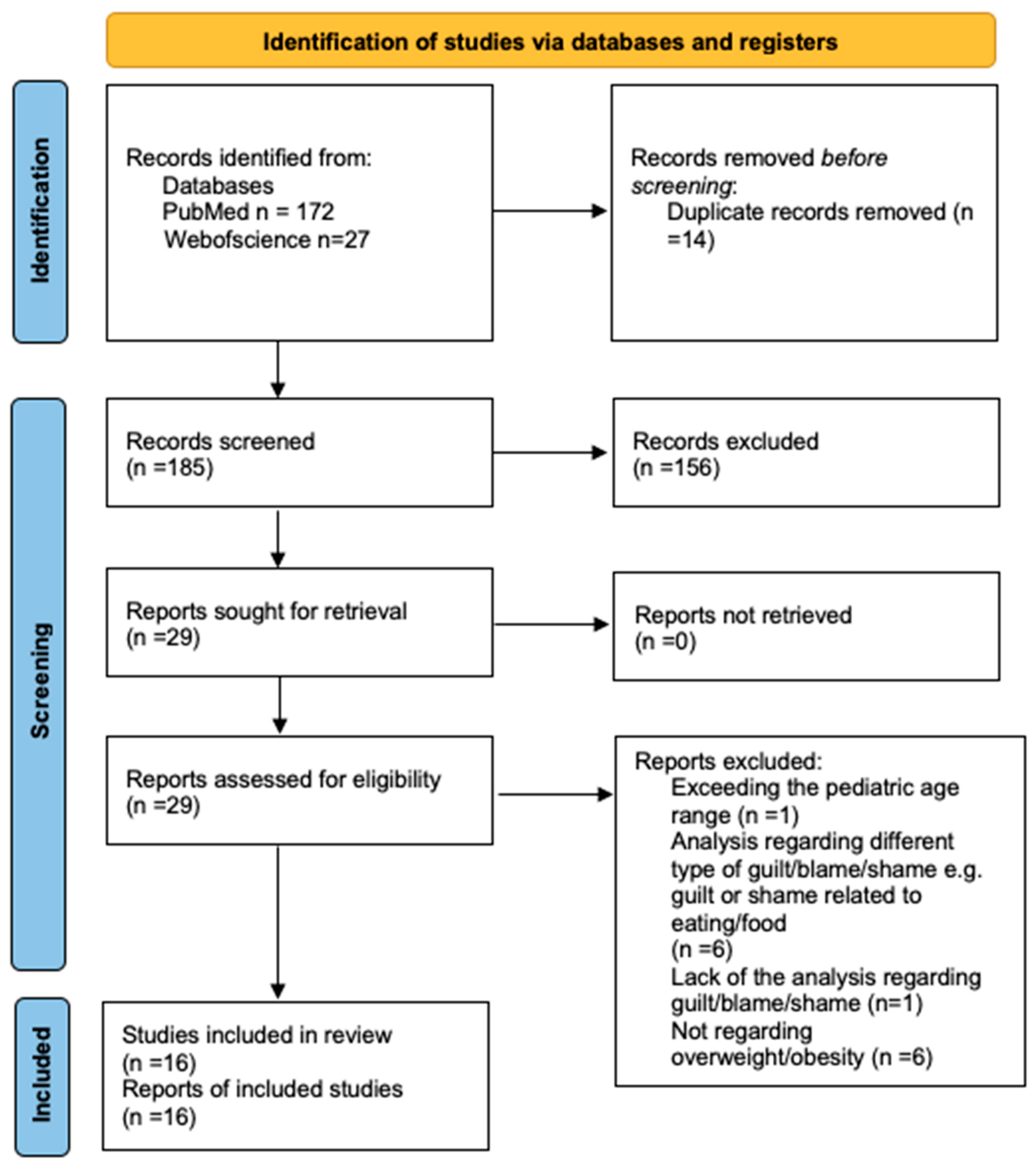
A literature search of articles published in English was conducted via Web of Science and PubMed in June 2023 and in March 2025. Two independent researchers (KCB and MZ) screened the results. The search was conducted without restrictions on the year of publication. The inclusion criteria were as follows: (a) studies involving pediatric samples (childhood and adolescence; however, it should be noted that in some studies, data may be obtained from caregivers reporting on the child’s experiences, or a retrospective approach may be used in which participants describe or assess their childhood/adolescent experiences) [36], (b) full-text availability, and (c) original research articles. Studies were excluded if they were editorials, letters, author replies, review articles, or if the full text was unavailable. The initial search yielded 199 results. Duplicate records were identified and removed using Mendeley Reference Manager, which offers a built-in duplicate detection tool. After screening abstracts, 29 articles were selected for full-text analysis. This systematic review was not registered in any registry.
2.3. Quality Assessment
In order to evaluate the studies’ methodological quality, the National Institutes of Health/National Heart, Lung and Blood Institute (NIH/NHLBI) quality assessment tool for observational cohort and cross-sectional studies, NIH/NHLBI quality assessment tool for before–after (Pre-test–Post-test), and CASP Qualitative Checklist were used. All of the studies assessed with the use of NIH/NHLBI quality assessment tool for observational cohort and cross-sectional studies and NIH/NHLBI quality assessment Tool for before–after (Pre-test–Post-test) were rated as fair. The quality of 4 studies assessed with the use of CASP Qualitative Checklist was rated as high and the quality of 2 studies was rated as moderate to high.
3. Results
Ultimately, 16 full-text articles met the inclusion criteria and were included in the study. A flowchart outlining the study selection process is presented in Figure 1, while the characteristics and findings of the included studies are summarized in Table 1. The following information was extracted from the original articles: authors, year of publication, region, study design, participant characteristics (including sex and age), examined variables, methods, and key outcomes.
Figure 1.
PRISMA 2020 flow diagram.
In summary, the majority of the analyzed studies employed a quantitative approach (N = 8), while qualitative research accounted for 37.5% (N = 6). The smallest category comprised mixed-methods research (N = 2). The oldest study included was published in 2005, with the highest number of publications occurring in 2017 and 2018 (N = 7). The majority of studies originated from the United States (N = 8), followed by Sweden and Portugal (each contributing two studies), while Canada, Italy, Norway, and China each had one publication. Most studies focused on adolescents, with only two studies examining younger children (aged 8–9 years) [19,37]. Additionally, only one study explored the childhood experiences of current adults [11], and just one explicitly presented the perspective of medical providers [13]. The vast majority of studies (N = 11) addressed the concept of body- or weight-related shame, while guilt and blame were examined with similar frequency. Notably, only one study analyzed all three constructs—blame, shame, and guilt—simultaneously [10]. Regarding sample characteristics, women were overrepresented in 12 studies. Additionally, most studies (N = 10) focused on individuals who had already undergone or were currently participating in an intervention (e.g., pediatric weight management programs, weight loss camps, bariatric surgery candidates, or individual nutrition consultations). Only four studies included parent–child dyads, whereas the remaining studies focused exclusively on children, without analyzing interactions with caregivers.
Table 1.
Characteristics of studies regarding pediatric population with overweight and obesity.
4. Discussion
Our systematic review aimed to analyze blame, guilt, and shame related to body weight and their relationship with psychological functioning among children and adolescents with overweight and obesity. Despite the critical importance of these factors in designing effective interdisciplinary prevention strategies, as well as in the diagnosis and treatment of obesity, there remains a limited number of studies examining these variables and their interconnections.
Analysis of the collected records revealed associations between body- or weight-related blame, guilt, and shame and various aspects of psychological functioning in the pediatric population. These associations were observed across the following domains: (a) interpersonal context (e.g., [6,9,10,11,13,16,32,33,40,43])—including factors such as social stigma, bullying, teasing history, social connectedness, expectations regarding weight change, sense of belonging among peers and family, weight-related language used by parents in conversations with children and adolescents, and mindful parenting; (b) intrapsychic context (e.g., [11,19,38,43])—relationship with eating and food—encompassing behaviors such as binge eating, dietary restraint, emotional eating, and the risk of developing eating disorders; (c) intrapsychic context (e.g., [10,11,19,32,43])—self-perception—including self-esteem, feelings of worthlessness and inadequacy, self-compassion, self-efficacy, perceived control, and intrinsic self-worth; (d) intrapsychic context (e.g., [11,33,39,41,42])—emotional functioning—involving emotional distress, anxiety, depression, emotion regulation strategies, and feelings of hopelessness; (e) intrapsychic context (e.g., [6,9,10,13,37])—additional psychological factors—such as mindfulness, quality of life, willingness to seek help, and motivation for both help-seeking and sustaining successful lifestyle changes.
Building on the above findings, it is important to emphasize that childhood and adolescence are critical developmental periods in which a sense of belonging within family and peer groups plays a fundamental role. The significance of social relationships for healthy development has been extensively discussed by Erikson [44] and Bowlby [45]. Moreover, this stage of life is marked by heightened susceptibility to social comparison and increased sensitivity to external judgments and environmental feedback [2,27,46]. As a result, the interplay between a child’s or adolescent’s internal factors (including the intrapsychic aspects mentioned earlier) and interpersonal influences (such as interactions with parents, peers, and healthcare providers) may contribute to psychosocial challenges that significantly impact the treatment process. Therefore, when interpreting the findings of our systematic analysis, it is essential to highlight the evidence supporting several key principles that should be considered when working with children and adolescents with obesity.
First, the findings reinforce that obesity treatment in the pediatric population should adopt a family-based approach rather than focusing solely on the child or the parent in isolation [10,40,43]. This aligns with existing research and clinical guidelines advocating for family-centered interventions [47,48,49,50]. Placing the burden of change solely on the child—while the family environment remains unchanged (e.g., family members continuing to purchase and consume foods the child is advised to limit, or inconsistent health-related rules among family members)—often reinforces feelings of shame, blame, and guilt, as well as a sense of inferiority. In contrast, involving the family in the treatment process fosters several critical benefits: (a) enhancement of parental communication skills and the adoption of parenting strategies that cultivate positive and intrinsic motivation for change in the child, rather than relying on fear, shame, or other negative emotions; (b) increased parental awareness of how their behaviors and communication impact the child’s development, particularly through behavioral modeling within the parent–child relationship, as outlined in Social Learning Theory [51]; and (c) recognition of the family as an interconnected system, wherein the functioning of the entire household—including parents, siblings, and even extended family members (e.g., grandparents)—can influence the child’s ability to engage in effective obesity treatment. This perspective also considers the psychological well-being of all family members, rather than focusing exclusively on the child with obesity.
Secondly, effective obesity treatment should be grounded in a collaborative approach that involves the patient, their family, and an interdisciplinary team comprising medical professionals such as physicians, psychologists, psychiatrists, dietitians, and physiotherapists. This multidisciplinary framework allows for a comprehensive assessment of the patient’s and family’s biopsychosocial well-being, facilitating the development of tailored interventions that address their specific needs [6,9,13,16,43]. Beyond parental awareness and skills, another critical determinant of treatment success is the communication and motivational proficiency of all members of the interdisciplinary team. This includes the ability to use Person-First Language (e.g., referring to a “patient with obesity” rather than an “obese patient”) and to engage in motivational strategies that foster patient autonomy and self-efficacy [10,33]. The importance of these competencies is underscored by initiatives such as the European Association for the Study of Obesity [52] and other professional organizations [53], as well as the growing emphasis on Motivational Interviewing as a key technique for facilitating behavioral change in obesity management [54].
Øen et al. [10] highlight that body- and weight-related blaming, shaming, and guilting can originate from both parents and healthcare providers, often stemming from explicit and implicit weight biases toward patients with obesity [6,24,55,56]. These biases, in turn, negatively impact both patient and provider engagement in the treatment process, leading to lower adherence, increased distrust, and diminished perceptions of care quality among patients [24,57,58]. Given the short- and long-term consequences of these experiences on children’s psychological well-being, it is crucial to modify existing treatment approaches to mitigate these harmful effects. A key consideration in this regard is the recognition of obesity as a chronic, relapsing, and lifelong disease [52]. Consequently, treatment efforts should prioritize sustainable behavioral changes and overall health improvements, rather than focusing exclusively on weight loss as the primary marker of success [9,10]. This perspective underscores the importance of long-term treatment strategies that emphasize health status and progress in habit modification, rather than unrealistic expectations of rapid weight reduction, which can significantly increase the risk of unhealthy behaviors such as very low-calorie dieting, fasting, vomiting, and compulsive exercise [10,13,59]. As Øen et al. emphasize, excessive pressure to achieve substantial weight loss can instill fear of failure in adolescents, exacerbating feelings of shame, self-blame, and helplessness, ultimately discouraging engagement in the treatment process [10]. This can foster detrimental self-perceptions, such as: “It’s my fault, but I don’t know how to change it, and I’m afraid change is impossible because I can’t control myself. I’m worthless.” (clinical observation from the authors’ own experience). Such beliefs contribute to avoidance behaviors, reluctance to seek help, and withdrawal from treatment efforts [60,61].
Furthermore, Gouveia et al. underscore the critical role of effective communication in obesity treatment, stating, “Weight gain prompts feelings of embarrassment and shame. In this case, one does not want to be confronted, and it is common to ‘fail’ to attend booked appointments” [43]. This notion is further supported by patient-reported experiences in Morinder et al., which illustrate how shame and fear of judgment lead adolescents to avoid medical appointments: “I felt ashamed… because you said you would lose weight but instead you gained… felt a bit embarrassed… and you could be sort of scared, like…” (IP 9) [9]. “It was summer when I’d put on… like… five kilos… then I called and cancelled on my own… I really did not want to come… did not show the appointment letter to my mother…” (IP 12) [9]. These testimonies emphasize the importance of fostering an open, nonjudgmental dialogue with patients, reinforcing that meetings with the interdisciplinary team are not assessments of success or failure, but opportunities to adapt and refine treatment strategies. Acknowledging that progress is not linear and that trial-and-error is a natural part of the process can help reduce all-or-nothing thinking and support sustained patient engagement.
Thirdly, assessing the patient’s mental state and providing psychological and psychiatric support during the treatment process should be fundamental components of therapeutic interventions for obesity. This is particularly important because shame, guilt, and self-blame related to body image and/or weight are associated with impaired self-esteem and self-efficacy (e.g., shame, blame, and guilt as a “resource thief”), the development and progression of mental disorders (e.g., depressive symptoms, eating disorders, and other disordered eating behaviors such as secretive or emotional eating), as well as a lower quality of life and the use of maladaptive emotion regulation strategies [10,19,32,37,38,39,41,42]. Moreover, the negative consequences associated with these factors may contribute to the persistence of obesity and other long-term physical and mental health complications [11]. In conclusion, it is important to emphasize that, in some cases, reducing resistance to treatment and/or alleviating symptoms of mental disorders (e.g., depression, anxiety disorders) is necessary to facilitate collaboration with other healthcare team members. Without addressing these psychological factors, effective cooperation may be significantly hindered, highlighting the critical role of collaboration between patients, parents, psychologists/psychotherapists, and psychiatrists.
Understanding the dynamics of body- and/or weight-related blame, guilt, and shame among children and adolescents with overweight and obesity is essential for developing effective support systems that enhance their well-being and psychological resilience in both the prevention and treatment of obesity. In summary, the majority of included studies were conducted using quantitative designs (N = 8), followed by qualitative (N = 6) and mixed-methods (N = 2) approaches. The oldest study was published in 2005, with a peak in 2017–2018, and originated predominantly from the United States. Adolescents were the primary population studied, with limited research on younger children. Notably, few studies examined the parent–child dyads or healthcare providers, and only one study explored all three constructs—blame, guilt, and shame—simultaneously. Female participants were overrepresented in most studies, and the majority of samples included individuals already engaged in weight-related interventions. Analysis of the collected records revealed associations between body- or weight-related blame, guilt, and shame and various aspects of psychological functioning in the pediatric population (e.g., interpersonal context: social stigma, bullying, teasing history, social connectedness, expectations regarding weight change, sense of belonging among peers and family, weight-related language used by parents in conversations with children and adolescents, and mindful parenting; intrapsychic context: relationship with eating and food—encompassing behaviors such as binge eating, dietary restraint, emotional eating, and the risk of developing eating disorders; intrapsychic context: self-perception—including self-esteem, feelings of worthlessness and inadequacy, self-compassion, self-efficacy, perceived control, and intrinsic self-worth; intrapsychic context: emotional functioning—involving emotional distress, anxiety, depression, emotion regulation strategies, and feelings of hopelessness; and intrapsychic context: additional psychological factors—such as mindfulness, quality of life, willingness to seek help, and motivation for both help-seeking and sustaining successful lifestyle changes).
Interventions aimed at pediatric obesity prevention and treatment should actively address and reduce experiences of blame, guilt, and shame to promote psychological well-being and long-term treatment success. The findings of this study highlight the need for healthcare providers, educators, and caregivers to receive training on stigma reduction. Clinical protocols should incorporate psychological screening for shame- and guilt-related distress, while schools and family-based programs should focus on promoting body acceptance.
However, our study is not without limitations. Firstly, a significant proportion of the reviewed studies originate from the United States and are based on experiences shaped by the cultural, social, and economic contexts specific to that region (which may involve the possibility of significant cultural differences). Secondly, the sample sizes and sex distribution vary considerably across studies, with most research focusing primarily on adolescence. Thirdly, the analyzed studies differ in terms of their sample composition, including both non-clinical populations (e.g., students from public high schools) and clinical populations (e.g., patients from pediatric obesity clinics). Fourthly, some studies lack even basic descriptive data about the analyzed participants (e.g., parental characteristics—Williams et al. [32]). Fifthly, the research also lacks a detailed analysis of the social support (including structural support, functional support, key aspects of support including emotional support, informational support, and practical support), as well as an analysis of different types of relationships of adolescents. Sixthly, there is a lack of analyses of long-term treatment effects achieved by patients with differences in their perceived levels of body- and weight-related shame, guilt, and blame. These limitations may significantly affect the generalizability of the findings. Therefore, further research is needed to explore the relationships between body- and weight-related blame, guilt, and shame and psychological functioning in pediatric populations with overweight and obesity, including in other regions of the world (such as Poland). Future studies—particularly longitudinal or experimental research—should address these limitations and focus more on the dynamics of child–parent–healthcare provider interactions, as well as the long-term consequences of body- and weight-related blame, guilt, and shame. Moreover, further research, including updated and expanded systematic reviews, is warranted in order to synthesize future studies in this field.
Additionally, given that guilt and blame have been studied less extensively than shame, further research should examine these aspects in greater depth. An interesting direction for future studies would be to analyze the relationship between healthcare providers’ tendencies to engage in body- and weight-related shaming or blaming and their communication skills and mental well-being (e.g., levels of professional burnout, emotion regulation skills, and personality traits). Further research is also needed on parent–child dynamics, particularly in the context of parenting skills and attitudes that support the child during obesity treatment. Additionally, future studies should consider the influence of social media on the development and reinforcement of body- and weight-related shame, guilt, and blame (also in relation to the usage/abuse of social networks and their conditioning power in the analyzed area).
Author Contributions
Conceptualization, K.C.-B., M.M. and P.M.; methodology, K.C.-B., M.M. and P.M.; validation, P.M.; formal analysis, K.C.-B., M.M. and P.M.; investigation, K.C.-B., M.M. and P.M.; resources, K.C.-B., M.M. and P.M.; data curation, K.C.-B., M.M. and P.M.; writing—original draft preparation, K.C.-B. and M.M.; writing—review and editing, P.M.; visualization, K.C.-B., M.M. and P.M.; supervision, P.M.; project administration, K.C.-B. All authors have read and agreed to the published version of the manuscript.
Funding
The publication is financed by Medical University of Silesia.
Data Availability Statement
The original contributions presented in this study are included in the article. Further inquiries can be directed to the corresponding authors.
Conflicts of Interest
The authors declare no conflicts of interest.
Abbreviations
The following abbreviations are used in this manuscript:
| BMI | Body mass index |
| ED | Eating disorders |
| IP | Interviewed person |
| N | Number |
| NI | No information |
| NM | Normal weight |
| O | Obesity |
| OV | Overweight |
| PreO | Preobesity |
| SB | Spina bifida |
| WM | Weight management |
References
- Amiri, S.; Behnezhad, S. Obesity and anxiety symptoms: A systematic review and meta-analysis. Neuropsychiatrie 2019, 33, 72–89. [Google Scholar] [CrossRef] [Scilit]
- Deviantony, F.; Fitria, Y.; Rondhianto, R.; Pramesuari, N.K.T. An in-depth review of body shaming phenomenon among adolescents: Trigger factors, psychological impact and prevention efforts. S. Afr. J. Psychiatr. 2024, 30, 2341. [Google Scholar] [CrossRef] [Scilit] [PubMed]
- Emmer, C.; Bosnjak, M.; Mata, J. The association between weight stigma and mental health: A meta-analysis. Obes. Rev. 2020, 21, e12935. [Google Scholar] [CrossRef] [Scilit] [PubMed]
- Kokka, I.; Mourikis, I.; Bacopoulou, F. Psychiatric disorders and obesity in childhood and adolescence—A systematic review of cross-sectional studies. Children 2023, 10, 285. [Google Scholar] [CrossRef] [Scilit] [PubMed]
- Alimoradi, Z.; Golboni, F.; Griffiths, M.D.; Broström, A.; Lin, C.-Y.; Pakpour, A.H. Weight-related stigma and psychological distress: A systematic review and meta-analysis. Clin. Nutr. 2020, 39, 2001–2013. [Google Scholar] [CrossRef] [Scilit]
- Roberts, K.J.; Polfuss, M.L.; Marston, E.C.; Davis, R.L. Experiences of weight stigma in adolescents with severe obesity and their families. J. Adv. Nurs. 2021, 77, 4184–4194. [Google Scholar] [CrossRef] [Scilit]
- Alberga, A.S.; Pickering, B.J.; Hayden, K.A.; Ball, G.D.C.; Edwards, A.; Jelinski, S.; Nutter, S.; Oddie, S.; Sharma, A.M.; Russell-Mayhew, S. Weight bias reduction in health professionals: A systematic review. Clin. Obes. 2016, 6, 175–188. [Google Scholar] [CrossRef] [Scilit]
- Puhl, R.M.; Heuer, C.A. The stigma of obesity: A review and update. Obesity 2009, 17, 941–964. [Google Scholar] [CrossRef] [Scilit]
- Morinder, G.; Biguet, G.; Mattsson, E.; Marcus, C.; Larsson, U.E. Adolescents’ perceptions of obesity treatment—An interview study. Disabil. Rehabil. 2011, 33, 999–1009. [Google Scholar] [CrossRef] [Scilit]
- Øen, G.; Kvilhaugsvik, B.; Eldal, K.; Halding, A.G. Adolescents’ perspectives on everyday life with obesity: A qualitative study. Int. J. Qual. Stud. Health Well-Being 2018, 13, 1479581. [Google Scholar] [CrossRef] [Scilit]
- Rosenberger, P.H.; Henderson, K.E.; Bell, R.L.; Grilo, C.M. Associations of weight-based teasing history and current eating disorder features and psychological functioning in bariatric surgery patients. Obes. Surg. 2007, 17, 470–477. [Google Scholar] [CrossRef] [Scilit]
- Cerolini, S.; Vacca, M.; Zegretti, A.; Zagaria, A.; Lombardo, C. Body shaming and internalized weight bias as potential precursors of eating disorders in adolescents. Front. Psychol. 2024, 15, 1356647. [Google Scholar] [CrossRef] [Scilit]
- Darling, K.E.; Warnick, J.; Guthrie, K.M.; Santos, M.; Jelalian, E. Referral to adolescent weight management interventions: Qualitative perspectives from providers. J. Pediatr. Psychol. 2023, 48, 815–824. [Google Scholar] [CrossRef] [Scilit]
- Zeeck, A.; Stelzer, N.; Linster, H.W.; Joos, A.; Hartmann, A. Emotion and eating in binge eating disorder and obesity. Eur. Eat. Disord. Rev. 2011, 19, 426–437. [Google Scholar] [CrossRef] [Scilit]
- Puhl, R.M.; Lessard, L.M. Weight stigma in youth: Prevalence, consequences, and considerations for clinical practice. Curr. Obes. Rep. 2020, 9, 402–411. [Google Scholar] [CrossRef] [Scilit]
- Giles, M.L.; Ball, G.D.C.; Bonder, R.; Buchholz, A.; Gorter, J.W.; Morrison, K.M.; Perez, A.; Walker, M.; McPherson, A.C. Exploring the complexities of weight management care for children with spina bifida: A qualitative study with children and parents. Disabil. Rehabil. 2024, 46, 3440–3448. [Google Scholar] [CrossRef] [Scilit]
- Kent, J.K. Weight centrism in research on children’s active transport to school. J. Transp. Health 2023, 32, 101677. [Google Scholar] [CrossRef] [Scilit]
- Ziviani, J.; Macdonald, D.; Ward, H.; Jenkins, D.; Rodger, S. Physical activity and the occupations of children: Perspectives of parents and children. J. Occup. Sci. 2006, 13, 180–187. [Google Scholar] [CrossRef] [Scilit]
- Orvidas, K.; Burnette, J.L.; Schleider, J.L.; Skelton, J.A.; Moses, M.; Dunsmore, J.C. Healthy body, healthy mind: A mindset intervention for obese youth. J. Genet. Psychol. 2020, 181, 443–457. [Google Scholar] [CrossRef] [Scilit]
- Pereda-Pereda, E.; Echeburúa, E.; Cruz-Sáez, M.S. Anti-fat stereotypes and prejudices among primary school children and teachers in Spain. An. Psicol. 2019, 35, 75–83. [Google Scholar] [CrossRef] [Scilit]
- Robinson, K. Anti-Fat Attitudes in Healthcare. Ph.D. Thesis, University of East London, London, UK, 2021. [Google Scholar]
- Callahan, D. Obesity: Chasing an elusive epidemic. Hastings Cent. Rep. 2013, 43, 34–40. [Google Scholar] [CrossRef] [Scilit]
- Pont, S.J.; Puhl, R.; Cook, S.R.; Slusser, W. Stigma experienced by children and adolescents with obesity. Pediatrics 2017, 140, e20173034. [Google Scholar] [CrossRef] [Scilit]
- Phelan, S.M.; Burgess, D.J.; Yeazel, M.W.; Hellerstedt, W.L.; Griffin, J.M.; van Ryn, M. Impact of weight bias and stigma on quality of care and outcomes for patients with obesity. Obes. Rev. 2015, 16, 319–326. [Google Scholar] [CrossRef] [Scilit]
- World Health Organization. Obesity and Overweight. Available online: https://www.who.int/news-room/fact-sheets/detail/obesity-and-overweight (accessed on 16 April 2025).
- Mustafa, M.S.A.; Mahat, I.R.; Shah, M.A.M.M.; Ali, N.A.M.; Mohideen, R.S.; Mahzan, S. The awareness of the impact of body shaming among youth. Int. J. Acad. Res. Bus. Soc. Sci. 2022, 12, 1096–1110. [Google Scholar] [CrossRef] [Scilit]
- Schlüter, C.; Kraag, G.; Schmidt, J. Body shaming: An exploratory study on its definition and classification. Int. J. Bullying Prev. 2023, 5, 26–37. [Google Scholar] [CrossRef] [Scilit]
- Sugiati, T. The influence of body shaming toward FISIP Airlangga University students behaviour pattern. Indones. J. Soc. Sci. 2019, 11, 16–24. [Google Scholar]
- Syeda, H.; Shah, I.; Jan, U.; Mumtaz, S. Exploring the impact of body shaming and emotional reactivity on the self-esteem of young adults. CARC Res. Soc. Sci. 2023, 2, 60–67. [Google Scholar] [CrossRef] [Scilit]
- Johnson, F.; Wardle, J. Dietary restraint, body dissatisfaction, and psychological distress: A prospective analysis. J. Abnorm. Psychol. 2005, 114, 119–125. [Google Scholar] [CrossRef] [Scilit]
- Hargrave, S.L.; Jones, S.; Davidson, T.L. The outward spiral: A vicious cycle model of obesity and cognitive dysfunction. Curr. Opin. Behav. Sci. 2016, 9, 40–46. [Google Scholar] [CrossRef] [Scilit]
- Williams, K.; Taylor, C.L.; Wolf, K.; Lawson, R.; Crespo, R. Cultural perceptions of healthy weight in rural Appalachian youth. Rural Remote Health 2008, 8, 932. [Google Scholar] [CrossRef] [Scilit]
- Puhl, R.M.; Himmelstein, M.S.; Armstrong, S.C.; Kingsford, E. Adolescent preferences and reactions to language about body weight. Int. J. Obes. 2017, 41, 1062–1065. [Google Scholar] [CrossRef] [Scilit]
- Puhl, R.M.; Wall, M.M.; Chen, C.; Austin, S.B.; Eisenberg, M.E.; Neumark-Sztainer, D. Experiences of weight teasing in adolescence and weight-related outcomes in adulthood: A 15-year longitudinal study. Prev. Med. Rep. 2017, 100, 173–179. [Google Scholar] [CrossRef] [Scilit]
- Harter, S. The development of self-representations during childhood and adolescence. In Handbook of Self and Identity, 2nd ed.; Leary, M.R., Tangney, J.P., Eds.; Guilford: New York, NY, USA, 2003; pp. 610–642. [Google Scholar]
- Hardin, A.P.; Hackell, J.M.; Committee on Practice and Ambulatory Medicine. Age limit of pediatrics. Pediatrics 2017, 140, e20172151. [Google Scholar] [CrossRef] [Scilit]
- Moreira, H.; Canavarro, M.C. Is body shame a significant mediator of the relationship between mindfulness skills and the quality of life of treatment-seeking children and adolescents with overweight and obesity? Body Image 2016, 20, 49–57. [Google Scholar] [CrossRef] [Scilit]
- Iannaccone, M.; D’Olimpio, F.; Cella, S.; Cotrufo, P. Self-esteem, body shame and eating disorder risk in obese and normal weight adolescents: A mediation model. Eat. Behav. 2016, 21, 80–83. [Google Scholar] [CrossRef] [Scilit]
- Brewis, A.A.; Bruening, M. Weight shame, social connection, and depressive symptoms in late adolescence. Int. J. Environ. Res. Public Health 2018, 15, 891. [Google Scholar] [CrossRef] [Scilit]
- Puhl, R.M.; Himmelstein, M.S. A word to the wise: Adolescent reactions to parental communication about weight. Child Obes. 2018, 14, 291–301. [Google Scholar] [CrossRef] [Scilit]
- Sjöberg, R.L.; Nilsson, K.W.; Leppert, J. Obesity, shame, and depression in school-aged children: A population-based study. Pediatrics 2005, 116, e389–e392. [Google Scholar] [CrossRef] [Scilit]
- Tan, Y.; Xin, X.; Wang, X.; Yao, S. Cognitive emotion regulation strategies in Chinese adolescents with overweight and obesity. Child Obes. 2018, 14, 26–32. [Google Scholar] [CrossRef] [Scilit]
- Gouveia, M.J.; Canavarro, M.C.; Moreira, H. Is mindful parenting associated with adolescents’ emotional eating? The mediating role of adolescents’ self-compassion and body shame. Front. Psychol. 2018, 9, 2004. [Google Scholar] [CrossRef] [Scilit]
- Erikson, E.H. Childhood and Society; W. W. Norton & Co.: New York, NY, USA, 1964. [Google Scholar]
- Bowlby, J. Attachment and Loss. Vol. 1: Attachment; Basic Books: New York, NY, USA, 1969. [Google Scholar]
- Saxena, M.S.; Mathur, M.A.; Jain, M.S. Body shaming, emotional expressivity, and life orientation among young adults. J. Emerg. Technol. Innov. Res. 2020, 7, 487–493. Available online: https://www.jetir.org/papers/JETIR2009362.pdf (accessed on 17 April 2025).
- Boutelle, K.N.; Kang Sim, D.E.; Rhee, K.E.; Manzano, M.; Strong, D.R. Family-based treatment program contributors to child weight loss. Int. J. Obes. 2021, 45, 77–83. [Google Scholar] [CrossRef] [Scilit]
- Czepczor-Bernat, K. Leczenie choroby otyłościowej u dzieci—Aspekt psychologiczny. In Choroba Otyłościowa u Dzieci i Młodzieży; Wójcik, M., Brzeziński, M., Eds.; Medical Tribune Polska: Warsaw, Poland, 2024; pp. 54–70. [Google Scholar]
- Epstein, L.H.; Wilfley, D.E.; Kilanowski, C.; Quattrin, T.; Cook, S.R.; Eneli, I.U.; Geller, N.; Lew, D.; Wallendorf, M.; Dore, P.; et al. Family-based behavioral treatment for childhood obesity implemented in pediatric primary care: A randomized clinical trial. JAMA 2023, 329, 1947–1956. [Google Scholar] [CrossRef] [Scilit]
- Hampl, S.E.; Hassink, S.G.; Skinner, A.C.; Armstrong, S.C.; Barlow, S.E.; Bolling, C.F.; Avila Edwards, K.C.; Eneli, I.; Hamre, R.; Joseph, M.M.; et al. Clinical practice guideline for the evaluation and treatment of children and adolescents with obesity. Pediatrics 2023, 151, e2022060640. [Google Scholar] [CrossRef]
- Bandura, A. Teoria Społecznego Uczenia się; Wydawnictwo Naukowe PWN: Warsaw, Poland, 2017. [Google Scholar]
- Bowman-Busato, J.; Schreurs, L.; Halford, J.C.; Yumuk, V.; O’Malley, G.; Woodward, E.; De Cock, D.; Baker, J.L. Providing a common language for obesity: The European Association for the Study of Obesity obesity taxonomy. Int. J. Obes. 2025, 49, 182–191. [Google Scholar] [CrossRef] [Scilit]
- Braddock, A.; Browne, N.T.; Houser, M.; Blair, G.; Williams, D.R. Weight stigma and bias: A guide for pediatric clinicians. Obes. Pillars 2023, 6, 100058. [Google Scholar] [CrossRef] [Scilit]
- Anderson, L.N.; Alvarez, E.; Incze, T.; Tarride, J.E.; Kwan, M.; Mbuagbaw, L. Motivational interviewing to promote healthy behaviors for obesity prevention in young adults (MOTIVATE): A pilot randomized controlled trial protocol. Pilot Feasibility Stud. 2023, 9, 156. [Google Scholar] [CrossRef] [Scilit]
- Garcia, J.T.; Amankwah, E.K.; Hernandez, R.G. Assessment of weight bias among pediatric nurses and clinical support staff toward obese patients and their caregivers. J. Pediatr. Nurs. 2016, 31, e244–e251. [Google Scholar] [CrossRef] [Scilit]
- Tomiyama, A.J.; Finch, L.E.; Belsky, A.C.I.; Buss, J.; Finley, C.; Schwartz, M.B.; Daubenmier, J. Weight bias in 2001 versus 2013: Contradictory attitudes among obesity researchers and health professionals. Obesity 2015, 23, 46–53. [Google Scholar] [CrossRef] [Scilit]
- Alberga, A.S.; Edache, I.Y.; Forhan, M.; Russell-Mayhew, S. Weight bias and health care utilization: Scoping review. Prim. Health Care Res. Dev. 2019, 20, e116. [Google Scholar] [CrossRef] [Scilit]
- Jachyra, P.; Anagnostou, E.; Knibbe, T.J.; Petta, C.; Cosgrove, S.; Chen, L.; Capano, L.; Moltisanti, L.; McPherson, A.C. Weighty conversations: Caregivers’, children’s, and clinicians’ perspectives and experiences of discussing weight-related topics in healthcare consultations. Autism Res. 2018, 11, 1500–1510. [Google Scholar] [CrossRef] [Scilit] [PubMed]
- Maïano, C.; Aimé, A.; Lepage, G.; ASPQ Team; Morin, A.J.S. Psychometric properties of the Weight Self-Stigma Questionnaire (WSSQ) among a sample of overweight/obese French-speaking adolescents. Eat. Weight Disord. 2019, 24, 575–583. [Google Scholar] [CrossRef] [Scilit] [PubMed]
- Kirk, S.F.; Price, S.L.; Penney, T.L.; Rehman, L.; Lyons, R.F.; Piccinini-Vallis, H.; Vallis, T.M.; Curran, J.; Aston, M. Blame, shame, and lack of support: A multilevel study on obesity management. Qual. Health Res. 2014, 24, 790–800. [Google Scholar] [CrossRef] [Scilit] [PubMed]
- Rees, R.; Oliver, K.; Woodman, J.; Thomas, J. The views of young children in the UK about obesity, body size, shape and weight: A systematic review. BMC Public Health 2011, 11, 188. [Google Scholar] [CrossRef] [Scilit]

Disclaimer/Publisher’s Note: The statements, opinions and data contained in all publications are solely those of the individual author(s) and contributor(s) and not of MDPI and/or the editor(s). MDPI and/or the editor(s) disclaim responsibility for any injury to people or property resulting from any ideas, methods, instructions or products referred to in the content. |
© 2025 by the authors. Licensee MDPI, Basel, Switzerland. This article is an open access article distributed under the terms and conditions of the Creative Commons Attribution (CC BY) license (https://creativecommons.org/licenses/by/4.0/).