


Abstract
Lactoferrin is a multifunctional glycoprotein naturally found in mammalian secretions, predominantly in colostrum and milk. As a key component of dairy foods, lactoferrin enhances viral protection and boosts human health, owing to its fundamental properties including antiviral, anti-inflammatory, and immune-modulatory effects. Importantly, the antiviral effect of lactoferrin has been shown against a range of viruses causing serious infections and threatening human health. One of the viruses that lactoferrin exerts significant antiviral effects on is the human papillomavirus (HPV), which is the most prevalent transmitted infection affecting a myriad of people around the world. Lactoferrin has a high potential to inhibit HPV via different mechanisms, including direct binding to viral envelope proteins or their cell receptors, thereby hindering viral entry and immune stimulation by triggering the release of some immune-related molecules through the body, such as lymphocytes. Along with HPV, lactoferrin also can inhibit a range of viruses including coronaviruses and hepatitis viruses in the same manner. Here, we overview the current knowledge of lactoferrin and its effects on HPV and other viral infections.
1. Introduction
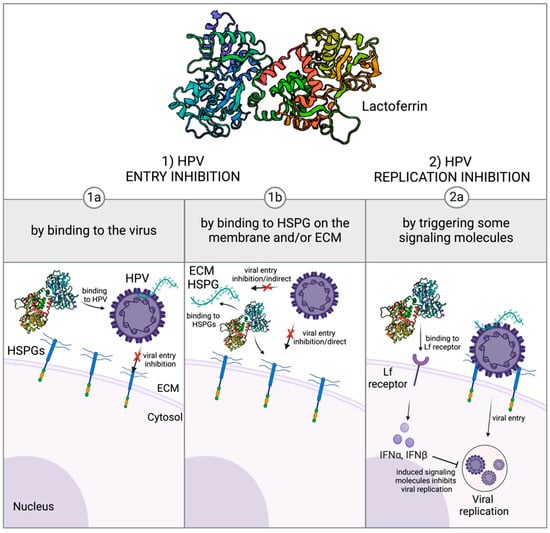
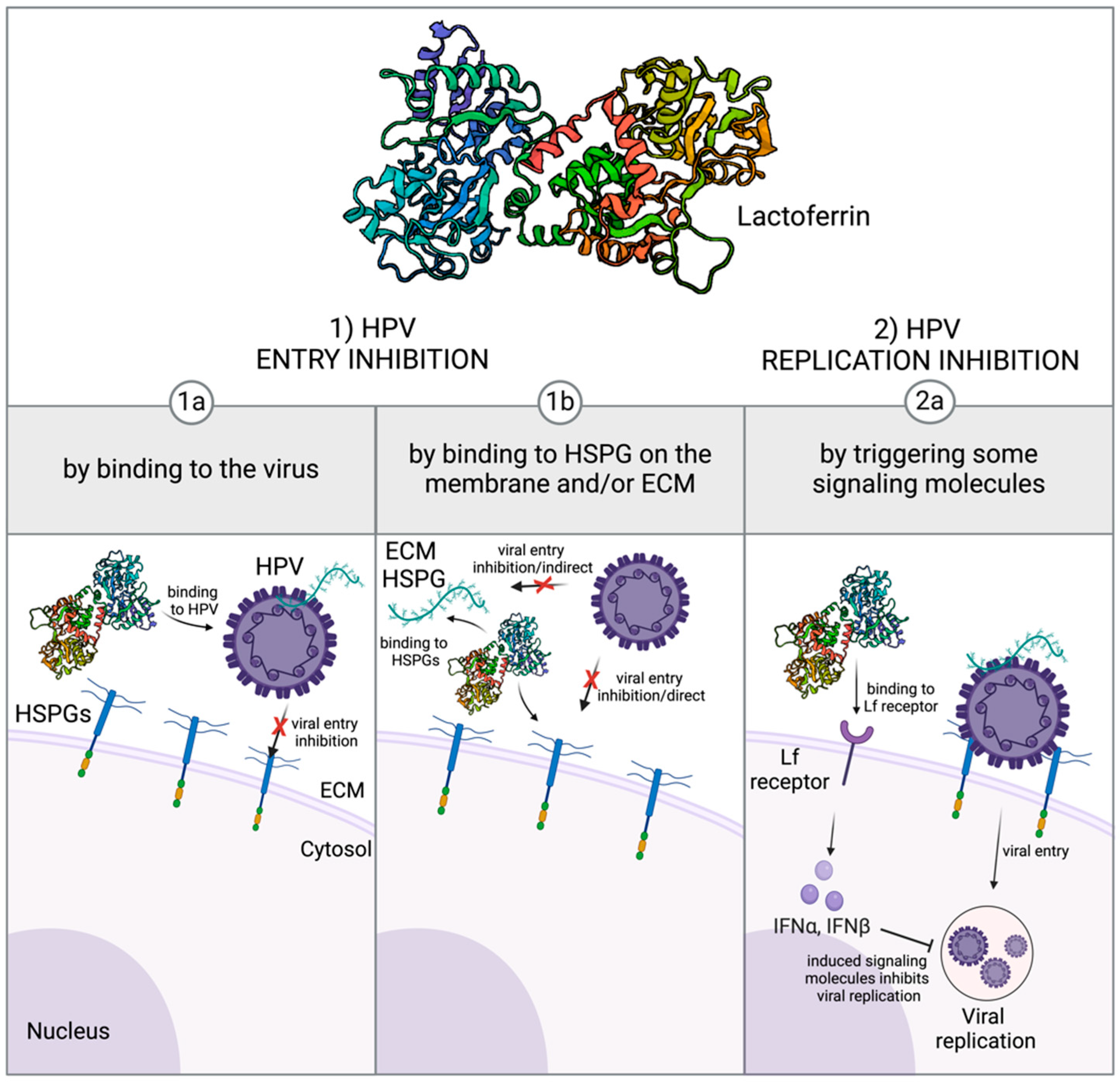
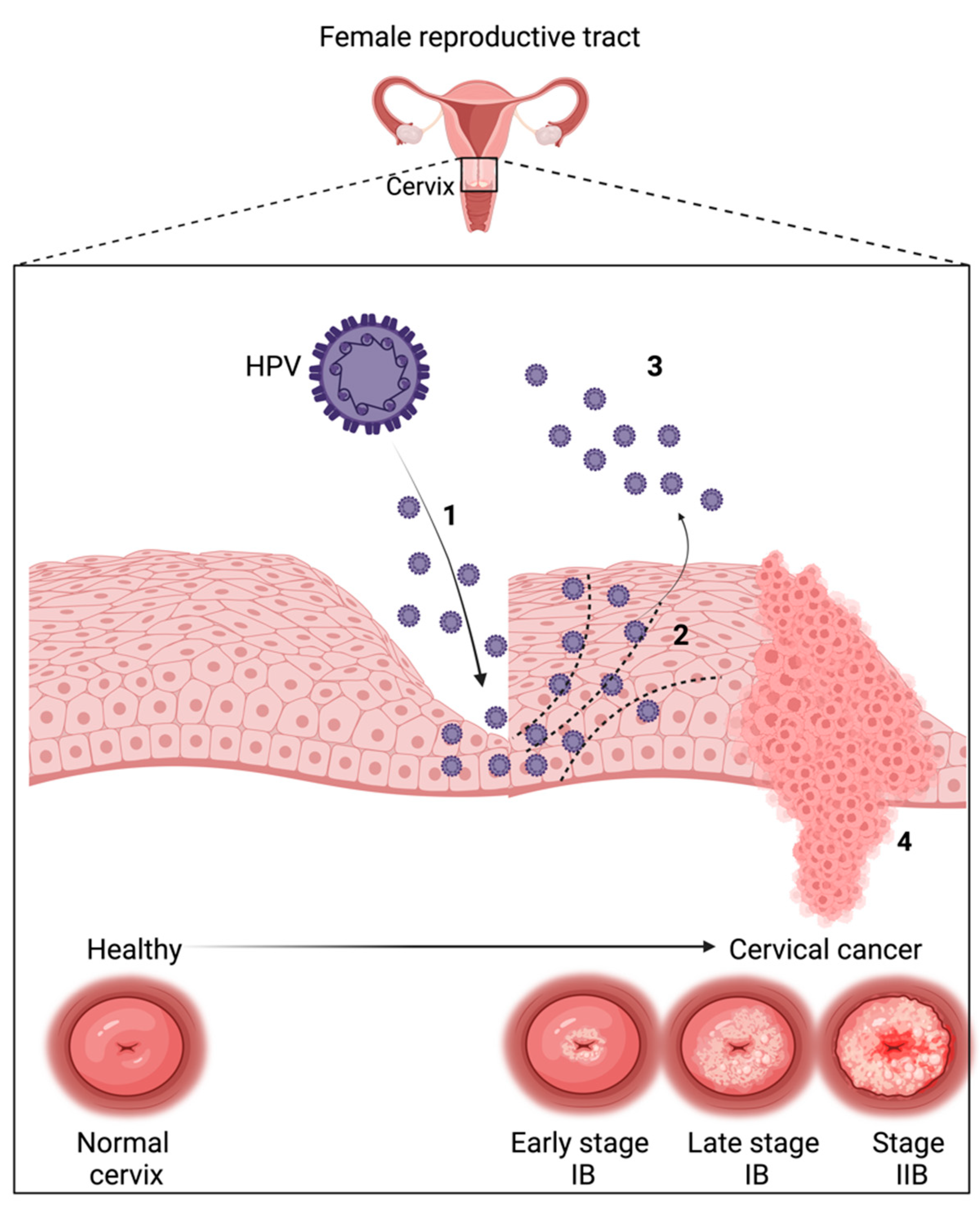
Dairy milk and its nutritional content, in terms of valuable bioactive proteins, exert a diverse function ranging from antiviral to immunomodulatory [1,2,3,4,5,6]. Lactoferrin or in short, Lf, is an important whey protein in most mammals’ milk, various dairy milk, and other dairy-related products [3,4,7]. Lf offers diverse functions ranging from antiviral to anticancer effects due to its unique structure and characteristics [4]. It is an 80 kDa protein including two different subunits named N- and C-lobes, which can bind to distinct metals such as Fe2⁺ and Zn2⁺ [5]. Importantly, Lf can retain iron at an acidic pH where infection and inflammation take place with its cationic nature, enabling it to bind negatively charged viral particles and viral receptors on the cell membrane, such as heparan sulfate (HS) chains attached to the cell membrane via protein chains [6,8]. Thus, it is commonly considered a therapeutic glycoprotein against viral infections as it directly provides inhibition or alleviates the inflammatory-related mechanisms and supports host immunity [9,10,11,12,13]. Following the significant effects of Lf on distinct viral infections to date, it has a high potential to be an effective agent against a widespread viral infection: human papillomavirus (HPV). HPV is currently the most prevalent sexually transmitted infection (STI). It has hundreds of subtypes and severely affects millions of people worldwide [14,15]. Importantly, some distinct strains of HPV, such as HPV-16 and HPV-18, might be carcinogenic [16] and develop into cervical cancer which causes thousands of deaths annually [17]. The antiviral potential of Lf is commonly attributed to three main mechanisms: First, Lf can directly bind to the viral particles, predominantly, the viral envelope proteins, by using its complex and heterogeneous glycans, and so it prevents viral binding to host receptors. Secondly, Lf can directly attach to HPV receptors, such as HS chains on the cell membrane, which inhibits viral entry mechanisms [8]. The third mechanism is related to an indirect way in which Lf stimulates immunity molecules such as chemokines and lymphocytes that can inhibit viral replication in the host by enhancing host immunity [18]. Different in vitro and in vivo studies in this research show that Lf acts as a therapeutic protein for HPV infection and other crucial viral infections, from COVID-19 to hepatitis B [19,20,21]. All this information underscores why Lf is widely recognized for its relevance in combating HPV. Lf effectively binds to viral particles and receptors on host cells, inhibiting viral entry and replication. It is also acknowledged for stimulating the immune system and enhancing immune responses to manage HPV infections. Its effectiveness in treating HPV and reducing the risk of HPV-related diseases, such as cervical cancer, is well-established. Therefore, Lf is considered a valuable therapeutic and preventive agent for HPV-related conditions in the global clinical market. Here, we explore the potential effect of Lf as a dairy food component on major viral infections, primarily HPV, highlighting the mechanisms of action and implications for future research and medical applications targeting this crucial glycoprotein.
2. Lactoferrin: Structure and Biological Functions
Lf is a highly glycosylated and multifunctional protein of the transferrin family [22]. It was first identified and purified from cow milk in 1939 and then discovered also in tears, saliva, mucus, skin, semen, and white blood cells [3,23,24]. Lf is synthesized by many mammals including bovine, human, horse, goat, and some rodent types [24,25,26]. Lf includes about 700 amino acids with a molecular weight of about 80 kDa and has an isoelectric point of 8–8.5 [27,28]. The glycosylation of Lf is highly variable in terms of the abundance and location of the glycosylation sites depending on the species. For instance, human Lf has three glycosylation sites, Asn-137, 478, and 623, whereas bovine Lf possesses five glycosylation sites including Asn-233, 281, 368, 476, and 545. The glycosylation level and location are critical for Lf sensitivity to proteolysis and its physiological functions [29]. Additionally, Lf has two lobes, N (1–332 amino acid) and C (344–703 amino acid), which show a high homology of about 33–43 percent [5]. Each of these lobes can bind diverse metal ions, especially Fe2+ and Fe3+ with a carbonate ion (CO32−). The three-dimensional structure of Lf demonstrates that CO32− binds first and, therefore, the positive charge of Arg is neutralized. The CO32− in the iron coordination binding is critical for iron reversible binding since CO32− protonation is the first step in the breaking of the iron site under a low pH [30,31]. Regarding the binding of Fe, Lf has two conformations called apo and holo forms. The difference between these two forms is that apo-Lf does not include any bound Fe3+ ion, but holo-Lf is in the form of a complex bound with Fe3+. As holo-Lf includes conjugated Fe3+, it has a closed structure that enables it to resist proteolysis more efficiently than apo-Lf with an open conformation [32]. The iron-binding ability of Lf significantly contributes to its biological properties since the iron ion is an important player in many physiological functions, such as cell homeostasis and microorganism growth. Because of the unique structural characteristics of Lf, it is involved in different biological functions, from immune response to viral disease defense [4]. This versatile glycoprotein has attracted regard to the serious pandemic in 2019 called COVID-19 due to its high antiviral effects [33]. Considerably, the antiviral, anti-inflammatory, and immune-modulatory functions enable Lf to be an effective therapeutic protein against different diseases, from viral infections to cancer, by boosting immunity and preventing host cells.
One of the significant effects of Lf bioactivity is related to its immune-modulatory and anti-inflammatory functions [34,35,36]. It serves various functions, namely dendritic cell maturation, triggering proliferation, and declining antigen internalization to enhance immunity [37,38]. In the context of dendritic cell (DC) differentiation, Lf inhibits their mechanism by hindering their responsiveness towards TLR ligands. It is also shown that these effects are diminished when the protein is degraded, indicating that the LF-induced differentiation of monocytes into hyporesponsive DCs is not mediated by endotoxin tolerance. LF may take a role in promoting immune homeostasis in the GI tract [39]. In some reported in vitro model studies with different types of intracellular microorganisms [40,41,42], Lf in both the apo- or iron-saturated form exerts an inhibitory effect against the microbial internalization. The ability of Lf to bind to the GAGs of host cells seems to have crucial implications in the inhibition of bacterial internalization [43]. One of the reported studies indicates that the binding of Lf to integrins through the domains targeted by invasin and to GAGs may induce a dramatic collapse in bacterial–host cell interactions. This mechanism inhibits bacterial internalization [40]. The main mechanism of Lf immunomodulation is related to stimulating the production of immunity-related cells such as T-lymphocytes and B-lymphocytes. In a related study, it was observed that mice, in which bovine Lf was orally administered, had developed a strongly elevated pool of CD3 + T and CD4 + T cell content as a response [44]. Furthermore, CP-immunosuppressed mice given Lf orally could reconstitute a T cell-mediated immune response by regenerating the T cell pool [45]. Lf can also induce the differentiation of T cells from their immature precursors via the induction of the expression of the CD4 antigen under non-pathogenic conditions [46,47]. On the other hand, in the context of a humoral response, Lf was demonstrated to promote the differentiation of splenic B cells in vitro [48]. In addition, Lf binding to CpG-containing oligonucleotides was shown to inhibit their immunostimulatory effects on human B cells [49]. Additionally, Lf can help to activate some lymphocytes including B, T, and NK in the spleen, peripheral blood, and intestine [50,51]. Consequently, Lf can modulate the activity of T and NK cells via the proliferation of T cells [52]. Another noticeable point is that Lf can activate macrophages by stimulating TLR4-dependent and independent signaling that also enhances the production of interleukin 6 (IL-6) and CD-40 [53].
Such inflammation- and immunity-related effects of Lf are particularly highlighted in the context of viral infections, with a specific emphasis on diseases such as COVID-19. Notably, in instances of viral infections, the severity of the disease is often influenced by the degree of the immune response and subsequent inflammation [34]. This holds particular significance in the case of COVID-19, as it has been identified that hyperinflammation in humans is primarily initiated by cytokine storm syndrome rather than the viral infection itself [34]. In severe cases of COVID-19, a distinctive cytokine profile emerges, characterized by elevated levels of cytokines and acute-phase reactants such as IL-6, tumor necrosis factor-alpha (TNFα), and ferritin. In this context, Lf has been shown to reduce IL-6 and TNFα levels and downregulate ferritin expression in sepsis-simulating experimental settings [54,55]. Therefore, the anti-inflammatory effect of bovine Lf results in a decrease in viral replication, as evidenced by in vitro models infected with SARS-CoV-2 [56]. Additionally, Lf strongly interacts with the gp120 protein of HIV by binding to its DC-SIGN receptor on dendritic cells and hinders their interactions, which is essential for the HIV entry mechanism. Thereby, the transmission of the virus through the host cell is inhibited by Lf [26,57]. Overall, Lf is a vital anti-inflammatory and immune-modulatory agent and employs its effect by using different pathways to prevent the host from viral entry and, therefore, infection.
4. Conclusions
Lf, as a versatile whey protein, is largely abundant in different dairy milk sources including bovine and milk with their derived products, enabling such dairy foods to benefit human health and protect it against different viral infections. Lf, with its crucial biological functions, is considered a promising therapeutic protein to combat HPV infection and other viral infections which cause serious health problems worldwide. Particularly, the antiviral, anti-inflammatory, and immune-modulatory effects of Lf make it a potential inhibitory molecule considered in many viral infection treatment studies by hindering the viral entry process. As Lf can inhibit the binding of the virus to host receptors for its entry and viral infection in the beginning of the viral life cycle, it is an effective antiviral protein even at early infection. Thus, Lf in dairy foods is promising an efficient therapy against HPV and other viral infections because of its functions on viral attachment and infection. Yet further experimental and clinical studies are needed to better understand Lf’s exact molecular mechanism and effects on viral infections.
Author Contributions
Conceptualization, A.M.W. and S.K.; writing—original draft preparation, M.K., J.L.d.B.A. and A.R.; writing—review and editing, A.E.K., M.B., M.L. and A.A.C.; visualization, M.K.; supervision, A.M.W. and S.K. All authors have read and agreed to the published version of the manuscript.
Funding
This research received no external funding.
Conflicts of Interest
The authors declare no conflicts of interest.
References
- Sarıtaş, S.; Portocarrero, A.C.M.; Miranda López, J.M.; Lombardo, M.; Koch, W.; Raposo, A.; El-Seedi, H.R.; de Brito Alves, J.L.; Esatbeyoglu, T.; Karav, S.; et al. The Impact of Fermentation on the Antioxidant Activity of Food Products. Molecules 2024, 29, 3941. [Google Scholar] [CrossRef] [Scilit]
- Kaplan, M.; Baydemir, B.; Günar, B.B.; Arslan, A.; Duman, H.; Karav, S. Benefits of A2 Milk for Sports Nutrition, Health and Performance. Front. Nutr. 2022, 9, 935344. [Google Scholar] [CrossRef] [Scilit]
- Sorensen, M.; Sorensen, S.P.L. The Proteins in Whey. Compte Rendu Des Trav. Du Lab. De Carlsberg Ser. Chim. 1940, 23, 55–99. [Google Scholar]
- Vega-Bautista, A.; de la Garza, M.; Carrero, J.C.; Campos-Rodríguez, R.; Godínez-Victoria, M.; Drago-Serrano, M.E. The Impact of Lactoferrin on the Growth of Intestinal Inhabitant Bacteria. Int. J. Mol. Sci. 2019, 20, 4707. [Google Scholar] [CrossRef] [Scilit] [PubMed]
- Rascón-Cruz, Q.; Espinoza-Sánchez, E.A.; Siqueiros-Cendón, T.S.; Nakamura-Bencomo, S.I.; Arévalo-Gallegos, S.; Iglesias-Figueroa, B.F. Lactoferrin: A Glycoprotein Involved in Immunomodulation, Anticancer, and Antimicrobial Processes. Molecules 2021, 26, 205. [Google Scholar] [CrossRef] [Scilit]
- Lang, J.; Yang, N.; Deng, J.; Liu, K.; Yang, P.; Zhang, G.; Jiang, C. Inhibition of SARS Pseudovirus Cell Entry by Lactoferrin Binding to Heparan Sulfate Proteoglycans. PLoS ONE 2011, 6, e23710. [Google Scholar] [CrossRef] [Scilit]
- Frese, S.; Freeman-Sharkey, S.; Kyle, D.; Karav, S.; Duar, R.M. Nutritive Compositions with Bioactive Proteins. US20220273733A1, 2020. Available online: https://patents.google.com/patent/WO2021021765A1/en (accessed on 3 February 2024).
- Hu, Y.; Meng, X.; Zhang, F.; Xiang, Y.; Wang, J. The in Vitro Antiviral Activity of Lactoferrin against Common Human Coronaviruses and SARS-CoV-2 Is Mediated by Targeting the Heparan Sulfate Co-Receptor. Emerg. Microbes Infect. 2021, 10, 317–330. [Google Scholar] [CrossRef] [Scilit]
- Cumberbatch, M.; Dearman, R.J.; Uribe-luna, S.; Headon, D.R.; Ward, P.P.; Conneely, O.M.; Kimber, I. Regulation of Epidermal Langerhans Cell Migration by Lactoferrin. Immunology 2000, 100, 21–28. [Google Scholar] [CrossRef] [Scilit] [PubMed]
- Griffiths, C.E.M.; Cumberbatch, M.; Tucker, S.C.; Dearman, R.J.; Andrew, S.; Headon, D.R.; Kimber, I. Exogenous Topical Lactoferrin Inhibits Allergen-Induced Langerhans Cell Migration and Cutaneous Inflammation in Humans. Br. J. Dermatol. 2001, 144, 715–725. [Google Scholar] [CrossRef] [Scilit]
- Togawa, J.-I.; Nagase, H.; Tanaka, K.; Inamori, M.; Umezawa, T.; Nakajima, A.; Naito, M.; Sato, S.; Saito, T.; Sekihara, H. Lactoferrin Reduces Colitis in Rats via Modulation of the Immune System and Correction of Cytokine Imbalance. Am. J. Physiol. -Gastrointest. Liver Physiol. 2002, 283, G187–G195. [Google Scholar] [CrossRef] [Scilit]
- Legrand, D. Overview of Lactoferrin as a Natural Immune Modulator. J. Pediatr. 2016, 173, S10–S15. [Google Scholar] [CrossRef] [Scilit]
- Eker, F.; Akdaşçi, E.; Duman, H.; Yalçıntaş, Y.M.; Canbolat, A.A.; Kalkan, A.E.; Karav, S.; Šamec, D. Antimicrobial Properties of Colostrum and Milk. Antibiotics 2024, 13, 251. [Google Scholar] [CrossRef] [Scilit] [PubMed]
- Andersson, S.; Rylander, E.; Larsson, B.; Strand, A.; Silfversvärd, C.; Wilander, E. The Role of Human Papillomavirus in Cervical Adenocarcinoma Carcinogenesis. Eur. J. Cancer 2001, 37, 246–250. [Google Scholar] [CrossRef] [Scilit]
- de Sanjosé, S.; Diaz, M.; Castellsagué, X.; Clifford, G.; Bruni, L.; Muñoz, N.; Bosch, F.X. Worldwide Prevalence and Genotype Distribution of Cervical Human Papillomavirus DNA in Women with Normal Cytology: A Meta-Analysis. Lancet Infect. Dis. 2007, 7, 453–459. [Google Scholar] [CrossRef] [Scilit] [PubMed]
- Halec, G.; Schmitt, M.; Dondog, B.; Sharkhuu, E.; Wentzensen, N.; Gheit, T.; Tommasino, M.; Kommoss, F.; Bosch, F.X.; Franceschi, S.; et al. Biological Activity of Probable/Possible High-risk Human Papillomavirus Types in Cervical Cancer. Int. J. Cancer 2013, 132, 63–71. [Google Scholar] [CrossRef] [Scilit] [PubMed]
- Sung, H.; Ferlay, J.; Siegel, R.L.; Laversanne, M.; Soerjomataram, I.; Jemal, A.; Bray, F. Global Cancer Statistics 2020: GLOBOCAN Estimates of Incidence and Mortality Worldwide for 36 Cancers in 185 Countries. CA Cancer J. Clin. 2021, 71, 209–249. [Google Scholar] [CrossRef] [Scilit]
- Wakabayashi, H.; Oda, H.; Yamauchi, K.; Abe, F. Lactoferrin for Prevention of Common Viral Infections. J. Infect. Chemother. 2014, 20, 666–671. [Google Scholar] [CrossRef] [Scilit] [PubMed]
- Puddu, P.; Borghi, P.; Gessani, S.; Valenti, P.; Belardelli, F.; Seganti, L. Antiviral Effect of Bovine Lactoferrin Saturated with Metal Ions on Early Steps of Human Immunodeficiency Virus Type 1 Infection. Int. J. Biochem. Cell Biol. 1998, 30, 1055–1063. [Google Scholar] [CrossRef] [Scilit]
- Li, W.Y.; Li, Q.W.; Han, Z.S.; Jiang, Z.L.; Yang, H.; Li, J.; Zhang, X.B. Growth Suppression Effects of Recombinant Adenovirus Expressing Human Lactoferrin on Cervical Cancer In Vitro and In Vivo. Cancer Biother. Radiopharm. 2011, 26, 477–483. [Google Scholar] [CrossRef] [Scilit]
- Zhang, Y.; Nicolau, A.; Lima, C.F.; Rodrigues, L.R. Bovine Lactoferrin Induces Cell Cycle Arrest and Inhibits Mtor Signaling in Breast Cancer Cells. Nutr. Cancer 2014, 66, 1371–1385. [Google Scholar] [CrossRef] [Scilit]
- Masson, P.L.; Heremans, J.F.; Dive, C.H. An Iron-Binding Protein Common to Many External Secretions. Clin. Chim. Acta 1966, 14, 735–739. [Google Scholar] [CrossRef] [Scilit]
- Vorland, L.H. Lactoferrin: A Multifunctional Glycoprotein. APMIS 1999, 107, 971–981. [Google Scholar] [CrossRef] [Scilit] [PubMed]
- Johanson, B. Isolation of an Iron-Containing Red Protein from Milk. Acta Chem. Scand. 1960, 14, 510–512. [Google Scholar] [CrossRef] [Scilit]
- Levay, P.F.; Viljoen, M. Lactoferrin: A General Review. Haematologica 1995, 80, 252–267. [Google Scholar] [PubMed]
- Legrand, D.; Pierce, A.; Elass, E.; Carpentier, M.; Mariller, C.; Mazurier, J. Lactoferrin Structure and Functions. In Bioactive Components of Milk; Bösze, Z., Ed.; Springer: New York, NY, USA, 2008; pp. 163–194. [Google Scholar] [CrossRef] [Scilit]
- Maciel, K.S.; Santos, L.S.; Bonomo, R.C.F.; Verissimo, L.A.A.; Minim, V.P.R.; Minim, L.A. Purification of Lactoferrin from Sweet Whey Using Ultrafiltration Followed by Expanded Bed Chromatography. Sep. Purif. Technol. 2020, 251, 117324. [Google Scholar] [CrossRef] [Scilit]
- Eker, F.; Bolat, E.; Pekdemir, B.; Duman, H.; Karav, S. Lactoferrin: Neuroprotection against Parkinson’s Disease and Secondary Molecule for Potential Treatment. Front. Aging Neurosci. 2023, 15, 1204149. [Google Scholar] [CrossRef] [Scilit]
- Baker, E.N.; Baker, H.M. Molecular Structure, Binding Properties and Dynamics of Lactoferrin. Cell. Mol. Life Sci. 2005, 62, 2531–2539. [Google Scholar] [CrossRef] [Scilit]
- MacGillivray, R.T.A.; Moore, S.A.; Chen, J.; Anderson, B.F.; Baker, H.; Luo, Y.; Bewley, M.; Smith, C.A.; Murphy, M.E.P.; Wang, Y.; et al. Two High-Resolution Crystal Structures of the Recombinant N-Lobe of Human Transferrin Reveal a Structural Change Implicated in Iron Release. Biochemistry 1998, 37, 7919–7928. [Google Scholar] [CrossRef] [Scilit] [PubMed]
- Baker, E.N. Structure and Reactivity of Transferrins. Adv. Inorg. Chem. 1994, 41, 389–463. [Google Scholar] [CrossRef] [Scilit]
- Baker, E.N.; Baker, H.M.; Kidd, R.D. Lactoferrin and Transferrin: Functional Variations on a Common Structural Framework. Biochem. Cell Biol. 2002, 80, 27–34. [Google Scholar] [CrossRef] [Scilit]
- Andreu, S.; Ripa, I.; Bello-Morales, R.; López-Guerrero, J.A. Liposomal Lactoferrin Exerts Antiviral Activity against HCoV-229E and SARS-CoV-2 Pseudoviruses In Vitro. Viruses 2023, 15, 972. [Google Scholar] [CrossRef] [Scilit] [PubMed]
- Hutchens, T.W.; Lönnerdal, B.; Rumball, S. Lactoferrin Structure and Function: Remaining Questions, Methodological Considerations and Future Directions. In Lactoferrin: Structure and Function; Hutchens, T.W., Rumball, S.V., Lönnerdal, B., Eds.; Springer: Boston, MA, USA, 1994; pp. 287–291. [Google Scholar] [CrossRef] [Scilit]
- Karav, S. Selective Deglycosylation of Lactoferrin to Understand Glycans’ Contribution to Antimicrobial Activity of Lactoferrin. Cell. Mol. Biol. 2018, 64, 52–57. [Google Scholar] [CrossRef] [Scilit] [PubMed]
- Yalçıntaş, Y.M.; Duman, H.; Rocha, J.M.; Bartkiene, E.; Karav, S.; Ozogul, F. Role of Bovine Colostrum against Various Diseases. Food Biosci. 2024, 61, 104818. [Google Scholar] [CrossRef] [Scilit]
- Spadaro, M.; Caorsi, C.; Ceruti, P.; Varadhachary, A.; Forni, G.; Pericle, F.; Giovarelli, M. Lactoferrin, a Major Defense Protein of Innate Immunity, Is a Novel Maturation Factor for Human Dendritic Cells. FASEB J. 2008, 22, 2747–2757. [Google Scholar] [CrossRef] [Scilit]
- Siqueiros-Cendón, T.; Arévalo-Gallegos, S.; Iglesias-Figueroa, B.F.; García-Montoya, I.A.; Salazar-Martínez, J.; Rascón-Cruz, Q. Immunomodulatory Effects of Lactoferrin. Acta Pharmacol. Sin. 2014, 35, 557–566. [Google Scholar] [CrossRef] [Scilit]
- Perdijk, O.; Van Neerven, R.J.J.; Van den Brink, E.; Savelkoul, H.F.J.; Brugman, S. Bovine Lactoferrin Modulates Dendritic Cell Differentiation and Function. Nutrients 2018, 10, 848. [Google Scholar] [CrossRef] [Scilit]
- Di Biase, A.M.; Tinari, A.; Pietrantoni, A.; Antonini, G.; Valenti, P.; Conte, M.P.; Superti, F. Effect of Bovine Lactoferricin on Enteropathogenic Yersinia Adhesion and Invasion in HEp-2 Cells. J. Med. Microbiol. 2004, 53, 407–412. [Google Scholar] [CrossRef] [Scilit]
- Longhi, C.; Conte, M.; Seganti, L.; Polidoro, M.; Alfsen, A.; Valenti, P. Influence of Lactoferrin on the Entry Process of Escherichia Coli HB101(PRI203) in HeLa Cells. Med. Microbiol. Immunol. 1993, 182, 25–35. [Google Scholar] [CrossRef] [Scilit]
- Rose, J.E.; Meyer, D.H.; Fives-Taylor, P.M. Aae, an Autotransporter Involved in Adhesion of Actinobacillus actinomycetemcomitans to Epithelial Cells. Infect. Immun. 2003, 71, 2384–2393. [Google Scholar] [CrossRef] [Scilit]
- Valenti, P.; Antonini, G. Lactoferrin: An Important Host Defence against Microbial and Viral Attack. Cell. Mol. Life Sci. 2005, 62, 2576–2587. [Google Scholar] [CrossRef] [Scilit]
- Boyaka, P.N.; Sfeir, R.M.; Dubarry, M.; Rautureau, M.; Tomé, D. The Mode of Oral Bovine Lactoferrin Administration Influences Mucosal and Systemic Immune Responses in Mice. J. Nutr. 2004, 134, 403–409. [Google Scholar] [CrossRef] [Scilit] [PubMed]
- Artym, J.; Zimecki, M.; Paprocka, M.; Kruzel, M.L. Orally Administered Lactoferrin Restores Humoral Immune Response in Immunocompromised Mice. Immunol. Lett. 2003, 89, 9–15. [Google Scholar] [CrossRef] [Scilit]
- Dhennin-Duthille, I.; Masson, M.; Damiens, E.; Fillebeen, C.; Spik, G.; Mazurier, J. Lactoferrin Upregulates the Expression of CD4 Antigen through the Stimulation of the Mitogen-Activated Protein Kinase in the Human Lymphoblastic T Jurkat Cell Line. J. Cell Biochem. 2000, 79, 583–593. [Google Scholar] [CrossRef] [PubMed]
- Zimecki, M.; Mazurier, J.; Machnicki, M.; Wieczorek, Z.; Montreuil, J.; Spik, G. Immunostimulatory Activity of Lactotransferrin and Maturation of CD4− CD8− Murine Thymocytes. Immunol. Lett. 1991, 30, 119–123. [Google Scholar] [CrossRef] [Scilit] [PubMed]
- Zimecki, M.; Mazurier, J.; Spik, G.; Kapp, J.A. Human Lactoferrin Induces Phenotypic and Functional Changes in Murine Splenic B Cells. Immunology 1995, 86, 122–127. [Google Scholar]
- Britigan, B.E.; Lewis, T.S.; Waldschmidt, M.; McCormick, M.L.; Krieg, A.M. Lactoferrin Binds CpG-Containing Oligonucleotides and Inhibits Their Immunostimulatory Effects on Human B Cells. J. Immunol. 2001, 167, 2921–2928. [Google Scholar] [CrossRef] [Scilit]
- Damiens, E.; Mazurier, J.; El Yazidi, I.; Masson, M.; Duthille, I.; Spik, G.; Boilly-Marer, Y. Effects of Human Lactoferrin on NK Cell Cytotoxicity against Haematopoietic and Epithelial Tumour Cells. Biochim. Et Biophys. Acta (BBA)-Mol. Cell Res. 1998, 1402, 277–287. [Google Scholar] [CrossRef] [Scilit]
- Fischer, R.; Debbabi, H.; Dubarry, M.; Boyaka, P.; Tomé, D. Regulation of Physiological and Pathological Th1 and Th2 Responses by LactoferrinThis Paper Is One of a Selection of Papers Published in This Special Issue, Entitled 7th International Conference on Lactoferrin: Structure, Function, and Applications, and Has Undergone the Journal’s Usual Peer Review Process. Biochem. Cell Biol. 2006, 84, 303–311. [Google Scholar] [CrossRef] [Scilit]
- Legrand, D.; Van Berkel, P.H.C.; Salmon, V.; Van Veen, A.H.; Slomianny, M.-C.; Nuijens, H.J.; Spik, G. The N-Terminal Arg2, Arg3 and Arg4 of Human Lactoferrin Interact with Sulphated Molecules but Not with the Receptor Present on Jurkat Human Lymphoblastic T-Cells. Biochem. J. 1997, 327, 841–846. [Google Scholar] [CrossRef] [Scilit]
- Curran, C.S.; Demick, K.P.; Mansfield, J.M. Lactoferrin Activates Macrophages via TLR4-Dependent and -Independent Signaling Pathways. Cell Immunol. 2006, 242, 23–30. [Google Scholar] [CrossRef] [Scilit]
- Rastogi, N.; Singh, A.; Pandey, S.N.; Sinha, M.; Bhushan, A.; Kaur, P.; Sharma, S.; Singh, T.P. Structure of the Iron-free True C-terminal Half of Bovine Lactoferrin Produced by Tryptic Digestion and Its Functional Significance in the Gut. FEBS J. 2014, 281, 2871–2882. [Google Scholar] [CrossRef] [Scilit] [PubMed]
- Teng, C.T. Factors Regulating Lactoferrin Gene ExpressionThis Paper Is One of a Selection of Papers Published in This Special Issue, Entitled 7th International Conference on Lactoferrin: Structure, Function, and Applications, and Has Undergone the Journal’s Usual Peer Review Process. Biochem. Cell Biol. 2006, 84, 263–267. [Google Scholar] [CrossRef] [Scilit] [PubMed]
- Campione, E.; Lanna, C.; Cosio, T.; Rosa, L.; Conte, M.P.; Iacovelli, F.; Romeo, A.; Falconi, M.; Del Vecchio, C.; Franchin, E.; et al. Lactoferrin Against SARS-CoV-2: In Vitro and In Silico Evidences. Front. Pharmacol. 2021, 12, 666600. [Google Scholar] [CrossRef] [Scilit]
- Berlutti, F.; Pantanella, F.; Natalizi, T.; Frioni, A.; Paesano, R.; Polimeni, A.; Valenti, P. Antiviral Properties of Lactoferrin—A Natural Immunity Molecule. Molecules 2011, 16, 6992–7018. [Google Scholar] [CrossRef] [Scilit]
- Duman, H.; Karav, S. Bovine Colostrum and Its Potential Contributions for Treatment and Prevention of COVID-19. Front. Immunol. 2023, 14, 1214514. [Google Scholar] [CrossRef] [Scilit]
- Drobni, P.; Näslund, J.; Evander, M. Lactoferrin Inhibits Human Papillomavirus Binding and Uptake In Vitro. Antiviral Res. 2004, 64, 63–68. [Google Scholar] [CrossRef] [Scilit]
- Hasegawa, K.; Motsuchi, W.; Tanaka, S.; Dosako, S. Inhibition with Lactoferrin of In Vitro Infection with Human Herpes Virus. Jpn. J. Med. Sci. Biol. 1994, 47, 73–85. [Google Scholar] [CrossRef] [Scilit] [PubMed]
- Marchetti, M.; Trybala, E.; Superti, F.; Johansson, M.; Bergström, T. Inhibition of Herpes Simplex Virus Infection by Lactoferrin Is Dependent on Interference with the Virus Binding to Glycosaminoglycans. Virology 2004, 318, 405–413. [Google Scholar] [CrossRef] [Scilit]
- Hara, K. Lactoferrin Inhibits Hepatitis B Virus Infection in Cultured Human Hepatocytes. Hepatol. Res. 2002, 24, 228–235. [Google Scholar] [CrossRef] [Scilit]
- Redwan, E.M.; EL-Fakharany, E.M.; Uversky, V.N.; Linjawi, M.H. Screening the Anti Infectivity Potentials of Native N- and C-Lobes Derived from the Camel Lactoferrin against Hepatitis C Virus. BMC Complement. Altern. Med. 2014, 14, 219. [Google Scholar] [CrossRef] [Scilit]
- Groot, F.; Geijtenbeek, T.B.H.; Sanders, R.W.; Baldwin, C.E.; Sanchez-Hernandez, M.; Floris, R.; van Kooyk, Y.; de Jong, E.C.; Berkhout, B. Lactoferrin Prevents Dendritic Cell-Mediated Human Immunodeficiency Virus Type 1 Transmission by Blocking the DC-SIGN—Gp120 Interaction. J. Virol. 2005, 79, 3009–3015. [Google Scholar] [CrossRef] [Scilit] [PubMed]
- Bolat, E.; Eker, F.; Kaplan, M.; Duman, H.; Arslan, A.; Saritaş, S.; Şahutoğlu, A.S.; Karav, S. Lactoferrin for COVID-19 Prevention, Treatment, and Recovery. Front. Nutr. 2022, 9, 992733. [Google Scholar] [CrossRef] [Scilit] [PubMed]
- Kaplan, M.; Şahutoğlu, A.S.; Sarıtaş, S.; Duman, H.; Arslan, A.; Pekdemir, B.; Karav, S. Role of Milk Glycome in Prevention, Treatment, and Recovery of COVID-19. Front. Nutr. 2022, 9, 1033779. [Google Scholar] [CrossRef] [Scilit]
- Santos, J.G.d.O.; Migueis, D.P.; Amaral, J.B.d.; Bachi, A.L.L.; Boggi, A.C.; Thamboo, A.; Voegels, R.L.; Pezato, R. Impact of SARS-CoV-2 on Saliva: TNF-⍺, IL-6, IL-10, Lactoferrin, Lysozyme, IgG, IgA, and IgM. J. Oral. Biosci. 2022, 64, 108–113. [Google Scholar] [CrossRef] [Scilit]
- Kaito, M.; Iwasa, M.; Fujita, N.; Kobayashi, Y.; Kojima, Y.; Ikoma, J.; Imoto, I.; Adachi, Y.; Hamano, H.; Yamauchi, K. Effect of Lactoferrin in Patients with Chronic Hepatitis C: Combination Therapy with Interferon and Ribavirin. J. Gastroenterol. Hepatol. 2007, 22, 1894–1897. [Google Scholar] [CrossRef] [Scilit]
- Hadidi, N.; Saffari, M.; Faizi, M. Optimized Transferosomal Bovine Lactoferrin (BLF) as a Promising Novel Non-Invasive Topical Treatment for Genital Warts Caused by Human Papiluma Virus (HPV). Iran. J. Pharm. Res. 2018, 17 (Suppl. S2), 12–23. [Google Scholar] [PubMed]
- Abbas, Z.H.; Doosh, K.S.; Yaseen, N.Y. Effect of Purified Goat Milk Lactoferrin on Cancer Cell Growth (AMN-3) in Vitro. Biochem. Cell Arch. 2019, 19, 2661–2667. [Google Scholar] [CrossRef]
- Gheit, T. Mucosal and Cutaneous Human Papillomavirus Infections and Cancer Biology. Front. Oncol. 2019, 9, 355. [Google Scholar] [CrossRef] [Scilit]
- Andrei, E.C.; Baniță, I.M.; Munteanu, M.C.; Busuioc, C.J.; Mateescu, G.O.; Mălin, R.D.; Pisoschi, C.G. Oral Papillomatosis: Its Relation with Human Papilloma Virus Infection and Local Immunity—An Update. Medicina 2022, 58, 1103. [Google Scholar] [CrossRef] [Scilit]
- Buck, C.B.; Pastrana, D.V.; Lowy, D.R.; Schiller, J.T. Efficient Intracellular Assembly of Papillomaviral Vectors. J. Virol. 2004, 78, 751–757. [Google Scholar] [CrossRef] [Scilit]
- Buck, C.B.; Cheng, N.; Thompson, C.D.; Lowy, D.R.; Steven, A.C.; Schiller, J.T.; Trus, B.L. Arrangement of L2 within the Papillomavirus Capsid. J. Virol. 2008, 82, 5190–5197. [Google Scholar] [CrossRef] [Scilit] [PubMed]
- Smotkin, D.; Wettstein, F.O. Transcription of Human Papillomavirus Type 16 Early Genes in a Cervical Cancer and a Cancer-Derived Cell Line and Identification of the E7 Protein. Proc. Natl. Acad. Sci. USA 1986, 83, 4680–4684. [Google Scholar] [CrossRef] [Scilit] [PubMed]
- Thierry, F.; Heard, J.M.; Dartmann, K.; Yaniv, M. Characterization of a Transcriptional Promoter of Human Papillomavirus 18 and Modulation of Its Expression by Simian Virus 40 and Adenovirus Early Antigens. J. Virol. 1987, 61, 134–142. [Google Scholar] [CrossRef] [Scilit]
- Pal, A.; Kundu, R. Human Papillomavirus E6 and E7: The Cervical Cancer Hallmarks and Targets for Therapy. Front. Microbiol. 2020, 10, 3116. [Google Scholar] [CrossRef] [Scilit]
- Becker, K.A.; Florin, L.; Sapp, C.; Sapp, M. Dissection of Human Papillomavirus Type 33 L2 Domains Involved in Nuclear Domains (ND) 10 Homing and Reorganization. Virology 2003, 314, 161–167. [Google Scholar] [CrossRef] [Scilit]
- Giroglou, T.; Florin, L.; Schäfer, F.; Streeck, R.E.; Sapp, M. Human Papillomavirus Infection Requires Cell Surface Heparan Sulfate. J. Virol. 2001, 75, 1565–1570. [Google Scholar] [CrossRef] [Scilit]
- Kumar, A.; Jacob, T.; Abban, C.Y.; Meneses, P.I. Intermediate Heparan Sulfate Binding During HPV-16 Infection in HaCaTs. Am. J. Ther. 2014, 21, 331–342. [Google Scholar] [CrossRef] [Scilit]
- Abban, C.Y.; Meneses, P.I. Usage of Heparan Sulfate, Integrins, and FAK in HPV16 Infection. Virology 2010, 403, 1–16. [Google Scholar] [CrossRef] [Scilit] [PubMed]
- Porter, S.S.; Stepp, W.H.; Stamos, J.D.; McBride, A.A. Host Cell Restriction Factors That Limit Transcription and Replication of Human Papillomavirus. Virus Res. 2017, 231, 10–20. [Google Scholar] [CrossRef] [Scilit]
- Chiang, C.M.; Ustav, M.; Stenlund, A.; Ho, T.F.; Broker, T.R.; Chow, L.T. Viral E1 and E2 Proteins Support Replication of Homologous and Heterologous Papillomaviral Origins. Proc. Natl. Acad. Sci. USA 1992, 89, 5799–5803. [Google Scholar] [CrossRef] [Scilit]
- McKinney, C.C.; Kim, M.J.; Chen, D.; McBride, A.A. Brd4 Activates Early Viral Transcription upon Human Papillomavirus 18 Infection of Primary Keratinocytes. mBio 2016, 7, 10–1128. [Google Scholar] [CrossRef] [Scilit]
- McBride, A.A. The Papillomavirus E2 Proteins. Virology 2013, 445, 57–79. [Google Scholar] [CrossRef] [Scilit]
- Darnell, G.A.; Schroder, W.A.; Antalis, T.M.; Lambley, E.; Major, L.; Gardner, J.; Birrell, G.; Cid-Arregui, A.; Suhrbier, A. Human Papillomavirus E7 Requires the Protease Calpain to Degrade the Retinoblastoma Protein. J. Biol. Chem. 2007, 282, 37492–37500. [Google Scholar] [CrossRef] [Scilit] [PubMed]
- Yugis, A.R.; Saputra, A.; Noviana, R.; Pamungkas, J.; Suparto, I.H. Comparison of Methods for The Purification of Goat Lactoferrin and Antiviral Activity to Human Papillomavirus. Am. J. Microbiol. Res. 2015, 3, 171–175. [Google Scholar] [CrossRef]
- Mistry, N.; Drobni, P.; Näslund, J.; Sunkari, V.G.; Jenssen, H.; Evander, M. The Anti-Papillomavirus Activity of Human and Bovine Lactoferricin. Antiviral Res. 2007, 75, 258–265. [Google Scholar] [CrossRef] [Scilit]
- Luzi, C.; Brisdelli, F.; Iorio, R.; Bozzi, A.; Carnicelli, V.; Di Giulio, A.; Lizzi, A.R. Apoptotic Effects of Bovine Apo-Lactoferrin on HeLa Tumor Cells. Cell Biochem. Funct. 2017, 35, 33–41. [Google Scholar] [CrossRef] [Scilit]
- Zhang, X.; Du, Z.; Wang, N.; Meng, Y. Effects of Recombinant Adenovirus Vector Expressing Human Lactoferrin on Proliferation and Apoptosis of Cervical Cancer Stem-like Cells. Chin. J. Tissue Eng. Res. 2017, 21, 2009–2014. [Google Scholar] [CrossRef]
- Stragier, I.; Snoeck, R.; De Clercq, E.; Van den Oord, J.J.; Van Ranst, M.; De Greef, H. Local Treatment of HPV-induced Skin Lesions by Cidofovir. J. Med. Virol. 2002, 67, 241–245. [Google Scholar] [CrossRef] [Scilit] [PubMed]
- Fusconi, M.; Grasso, M.; Greco, A.; Gallo, A.; Campo, F.; Remacle, M.; Turchetta, R.; Pagliuca, G.; DE Vincentiis, M. Recurrent Respiratory Papillomatosis by HPV: Review of the Literature and Update on the Use of Cidofovir. Acta Otorhinolaryngol. Ital. 2014, 34, 375–381. [Google Scholar]
- Yang, J.; Pu, Y.; Zeng, Z.; Yu, Z.; Huang, N.; Deng, Q. Interferon for the Treatment of Genital Warts: A Systematic Review. BMC Infect. Dis. 2009, 9, 156. [Google Scholar] [CrossRef] [Scilit]
- Song, S.-H.; Lee, J.-K.; Lee, N.-W.; Saw, H.-S.; Kang, J.-S.; Lee, K.-W. Interferon-γ (IFN-γ): A Possible Prognostic Marker for Clearance of High-Risk Human Papillomavirus (HPV). Gynecol. Oncol. 2008, 108, 543–548. [Google Scholar] [CrossRef] [Scilit]
- Kenter, G.G.; Welters, M.J.P.; Valentijn, A.R.P.M.; Lowik, M.J.G.; Berends-van der Meer, D.M.A.; Vloon, A.P.G.; Essahsah, F.; Fathers, L.M.; Offringa, R.; Drijfhout, J.W.; et al. Vaccination against HPV-16 Oncoproteins for Vulvar Intraepithelial Neoplasia. N. Engl. J. Med. 2009, 361, 1838–1847. [Google Scholar] [CrossRef] [Scilit]
- Krzyzowska, M.; Janicka, M.; Tomaszewska, E.; Ranoszek-Soliwoda, K.; Celichowski, G.; Grobelny, J.; Szymanski, P. Lactoferrin-Conjugated Nanoparticles as New Antivirals. Pharmaceutics 2022, 14, 1862. [Google Scholar] [CrossRef] [Scilit] [PubMed]
- Krzyzowska, M.; Chodkowski, M.; Janicka, M.; Dmowska, D.; Tomaszewska, E.; Ranoszek-Soliwoda, K.; Bednarczyk, K.; Celichowski, G.; Grobelny, J. Lactoferrin-Functionalized Noble Metal Nanoparticles as New Antivirals for HSV-2 Infection. Microorganisms 2022, 10, 110. [Google Scholar] [CrossRef] [Scilit] [PubMed]
- He, S.; Qin, H.; Guan, L.; Liu, K.; Hong, B.; Zhang, X.; Lou, F.; Li, M.; Lin, W.; Chen, Y.; et al. Bovine Lactoferrin Inhibits SARS-CoV-2 and SARS-CoV-1 by Targeting the RdRp Complex and Alleviates Viral Infection in the Hamster Model. J. Med. Virol. 2023, 95, e28281. [Google Scholar] [CrossRef] [Scilit]
- Kobayashi-Sakamoto, M.; Maeda, T.; Kimura, M.; Yusa, J.; Ito, H.; Tani, H.; Kato, Y.; Hirose, K. Bovine Lactoferrin Increases the Poly(I:C)-Induced Antiviral Response In Vitro. Biochem. Cell Biol. 2022, 100, 338–348. [Google Scholar] [CrossRef] [Scilit]
- Graikini, D.; Conesa, C.; Abad, I.; Pérez, M.D.; Sánchez, L. Evaluation of in Vitro Antirotaviral Activity of Lactoferrin from Different Species Using a Human Intestinal Model. Int. Dairy J. 2024, 149, 105818. [Google Scholar] [CrossRef] [Scilit]
- Zhou, H.; Zhu, Y.; Liu, N.; Zhang, W.; Han, J. Effect of Iron Saturation of Bovine Lactoferrin on the Inhibition of Hepatitis B Virus In Vitro. PeerJ 2024, 12, e17302. [Google Scholar] [CrossRef] [Scilit]
- Mann, J.K.; Reddy, T.; van der Stok, M.; Ngubane, A.; Mulaudzi, T.; Mchunu, N.; Nevhungoni, P.; Manickchund, N.; Manickchund, P.; Louise Cairns, C.H.; et al. Hen Egg White Bovine Colostrum Supplement Reduces Symptoms of Mild/Moderate COVID-19: A Randomized Control Trial. Future Sci. OA 2023, 9, FSO882. [Google Scholar] [CrossRef] [Scilit]
- Kobayashi-Sakamoto, M.; Maeda, T.; Yusa, J.; Shimada, T.; Tani, H.; Kato, Y.; Hirose, K. Bovine Lactoferrin Suppresses the Cathepsin-Dependent Pathway of SARS-CoV-2 Entry in Vitro. Int. Dairy J. 2024, 148, 105805. [Google Scholar] [CrossRef] [Scilit]
- Ramírez-Rico, G.; Ruiz-Mazón, L.; Reyes-López, M.; Rivillas Acevedo, L.; Serrano-Luna, J.; de la Garza, M. Apo-Lactoferrin Inhibits the Proteolytic Activity of the 110 KDa Zn Metalloprotease Produced by Mannheimia Haemolytica A2. Int. J. Mol. Sci. 2024, 25, 8232. [Google Scholar] [CrossRef] [Scilit]
- Abad, I.; Sangüesa, A.; Ubieto, M.; Carramiñana, J.J.; Pérez, M.D.; Buey, B.; Mesonero, J.E.; Grasa, L.; Sánchez, L. Protective Effect of Bovine Lactoferrin against Cronobacter Sakazakii in Human Intestinal Caco-2/TC7 Cells. Int. Dairy J. 2022, 133, 105428. [Google Scholar] [CrossRef] [Scilit]
- Wróbel, M.; Małaczewska, J.; Kaczorek-Łukowska, E. Antiviral Effect of Bovine Lactoferrin against Enterovirus E. Molecules 2022, 27, 5569. [Google Scholar] [CrossRef] [Scilit]
- Baram-Pinto, D.; Shukla, S.; Gedanken, A.; Sarid, R. Inhibition of HSV-1 Attachment, Entry, and Cell-to-Cell Spread by Functionalized Multivalent Gold Nanoparticles. Small 2010, 6, 1044–1050. [Google Scholar] [CrossRef] [Scilit] [PubMed]
- Lara, H.H.; Garza-Treviño, E.N.; Ixtepan-Turrent, L.; Singh, D.K. Silver Nanoparticles Are Broad-Spectrum Bactericidal and Virucidal Compounds. J. Nanobiotechnology 2011, 9, 30. [Google Scholar] [CrossRef] [Scilit] [PubMed]
- Johnston, H.J.; Hutchison, G.; Christensen, F.M.; Peters, S.; Hankin, S.; Stone, V. A Review of the in Vivo and in Vitro Toxicity of Silver and Gold Particulates: Particle Attributes and Biological Mechanisms Responsible for the Observed Toxicity. Crit. Rev. Toxicol. 2010, 40, 328–346. [Google Scholar] [CrossRef] [Scilit]
- Mironava, T.; Hadjiargyrou, M.; Simon, M.; Jurukovski, V.; Rafailovich, M.H. Gold Nanoparticles Cellular Toxicity and Recovery: Effect of Size, Concentration and Exposure Time. Nanotoxicology 2010, 4, 120–137. [Google Scholar] [CrossRef] [Scilit]
- Baram-Pinto, D.; Shukla, S.; Perkas, N.; Gedanken, A.; Sarid, R. Inhibition of Herpes Simplex Virus Type 1 Infection by Silver Nanoparticles Capped with Mercaptoethane Sulfonate. Bioconjug Chem. 2009, 20, 1497–1502. [Google Scholar] [CrossRef] [Scilit]
- Nayak, P.S.; Borah, S.M.; Gogoi, H.; Asthana, S.; Bhatnagar, R.; Jha, A.N.; Jha, S. Lactoferrin Adsorption onto Silver Nanoparticle Interface: Implications of Corona on Protein Conformation, Nanoparticle Cytotoxicity and the Formulation Adjuvanticity. Chem. Eng. J. 2019, 361, 470–484. [Google Scholar] [CrossRef] [Scilit]
- Kowdley, K.V. Iron, Hemochromatosis, and Hepatocellular Carcinoma. Gastroenterology 2004, 127, S79–S86. [Google Scholar] [CrossRef] [Scilit]
- Lepanto, M.S.; Rosa, L.; Paesano, R.; Valenti, P.; Cutone, A. Lactoferrin in Aseptic and Septic Inflammation. Molecules 2019, 24, 1323. [Google Scholar] [CrossRef] [Scilit] [PubMed]
- Rosa, L.; Cutone, A.; Lepanto, M.; Paesano, R.; Valenti, P. Lactoferrin: A Natural Glycoprotein Involved in Iron and Inflammatory Homeostasis. Int. J. Mol. Sci. 2017, 18, 1985. [Google Scholar] [CrossRef] [Scilit]
- Mancinelli, R.; Rosa, L.; Cutone, A.; Lepanto, M.S.; Franchitto, A.; Onori, P.; Gaudio, E.; Valenti, P. Viral Hepatitis and Iron Dysregulation: Molecular Pathways and the Role of Lactoferrin. Molecules 2020, 25, 1997. [Google Scholar] [CrossRef] [Scilit] [PubMed]
- Gao, Y.-H.; Wang, J.-Y.; Liu, P.-Y.; Sun, J.; Wang, X.-M.; Wu, R.-H.; He, X.-T.; Tu, Z.-K.; Wang, C.-G.; Xu, H.-Q.; et al. Iron Metabolism Disorders in Patients with Hepatitis B-Related Liver Diseases. World J. Clin. Cases 2018, 6, 600–610. [Google Scholar] [CrossRef] [Scilit] [PubMed]
- Wang, J.; Dong, A.; Liu, G.; Anderson, G.J.; Hu, T.Y.; Shi, J.; Hu, Y.; Nie, G. Correlation of Serum Hepcidin Levels with Disease Progression in Hepatitis B Virus-Related Disease Assessed by Nanopore Film Based Assay. Sci. Rep. 2016, 6, 34252. [Google Scholar] [CrossRef] [Scilit]

Disclaimer/Publisher’s Note: The statements, opinions and data contained in all publications are solely those of the individual author(s) and contributor(s) and not of MDPI and/or the editor(s). MDPI and/or the editor(s) disclaim responsibility for any injury to people or property resulting from any ideas, methods, instructions or products referred to in the content. |
© 2024 by the authors. Licensee MDPI, Basel, Switzerland. This article is an open access article distributed under the terms and conditions of the Creative Commons Attribution (CC BY) license (https://creativecommons.org/licenses/by/4.0/).