Article

Integrating SBAS-InSAR and AT-LSTM for Time-Series Analysis and Prediction Method of Ground Subsidence in Mining Areas

College of Mining Engineering, Taiyuan University of Technology, Taiyuan 030024, China
*
Author to whom correspondence should be addressed.
Remote Sens. 2023, 15(13), 3409; https://doi.org/10.3390/rs15133409
Submission received: 18 April 2023 / Revised: 13 June 2023 / Accepted: 2 July 2023 / Published: 5 July 2023

Abstract

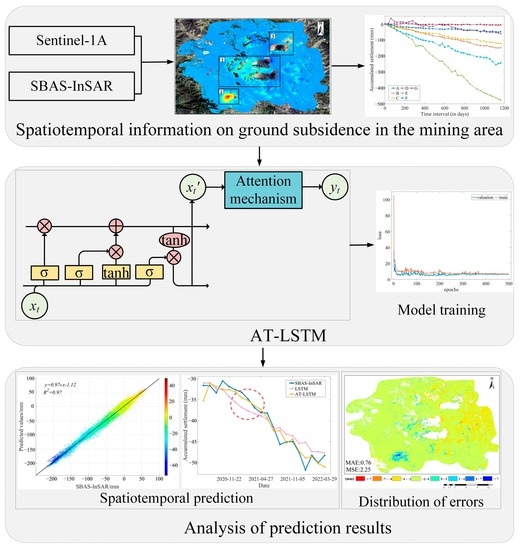
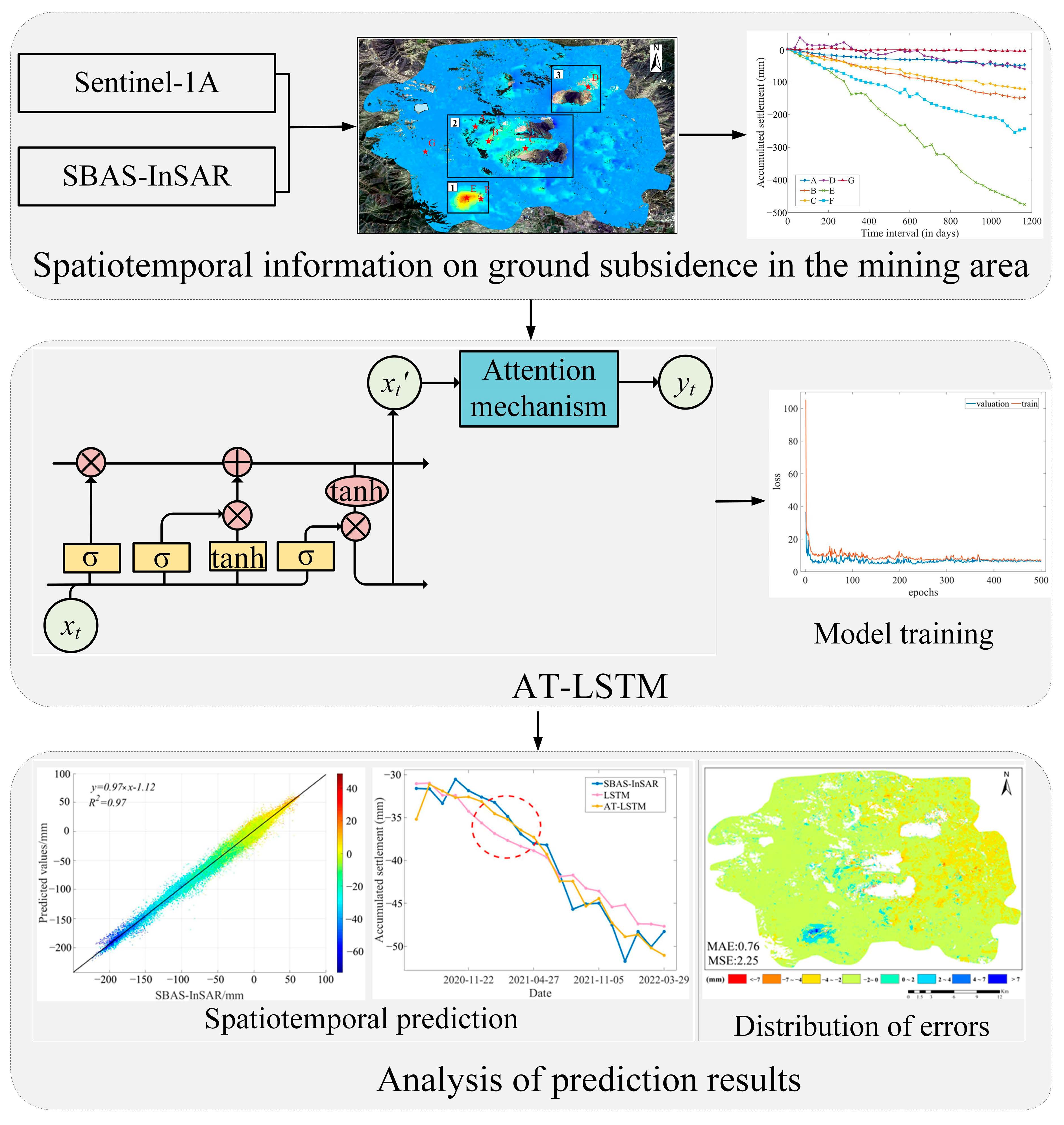
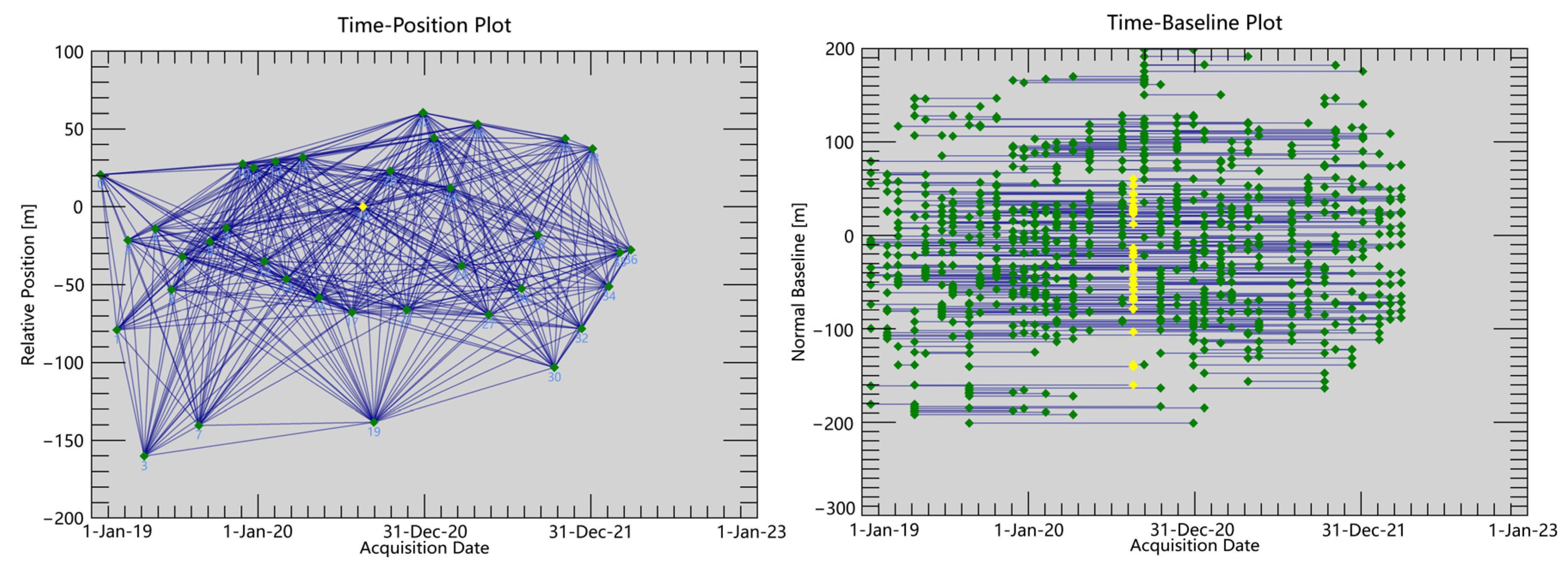
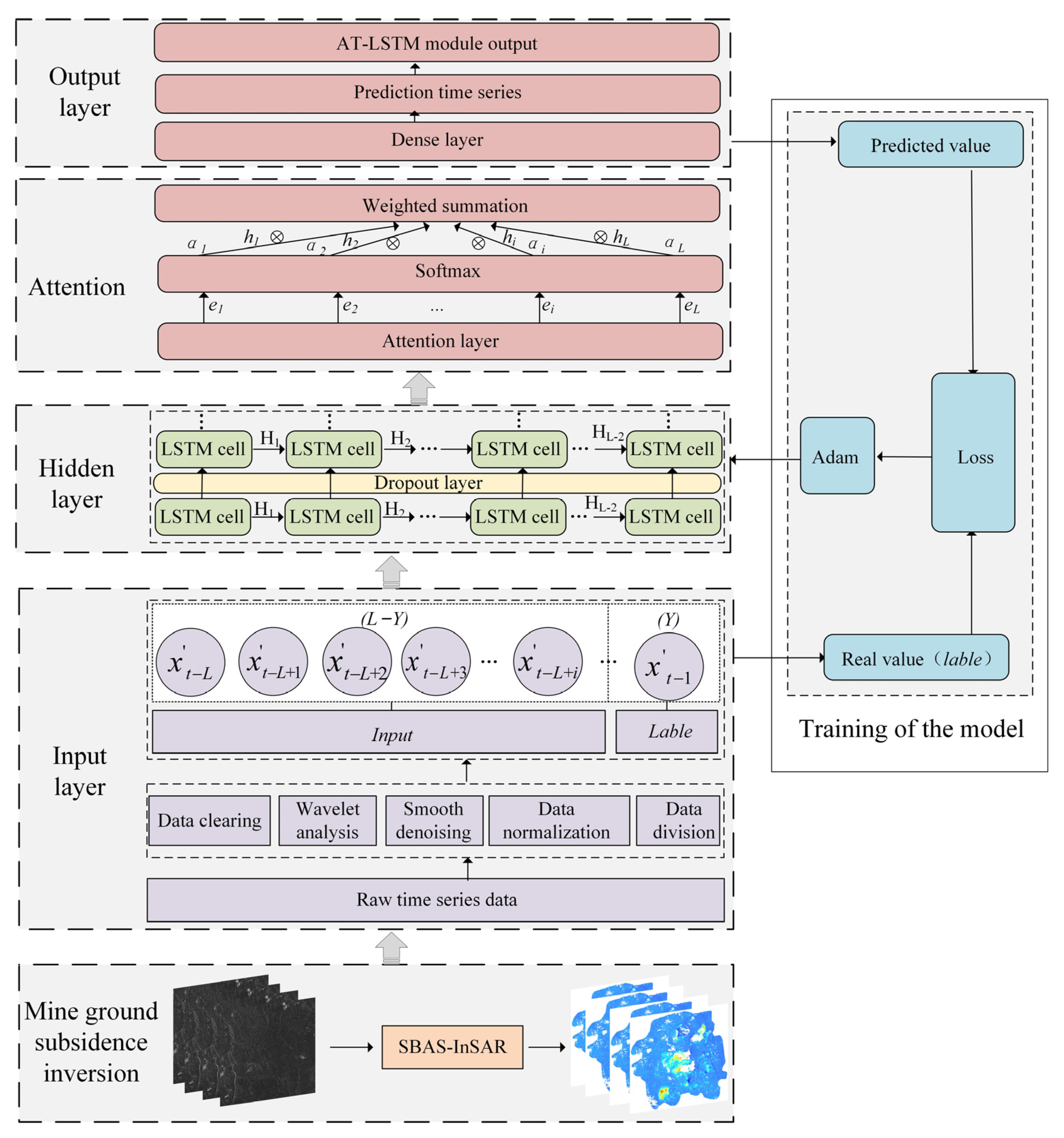
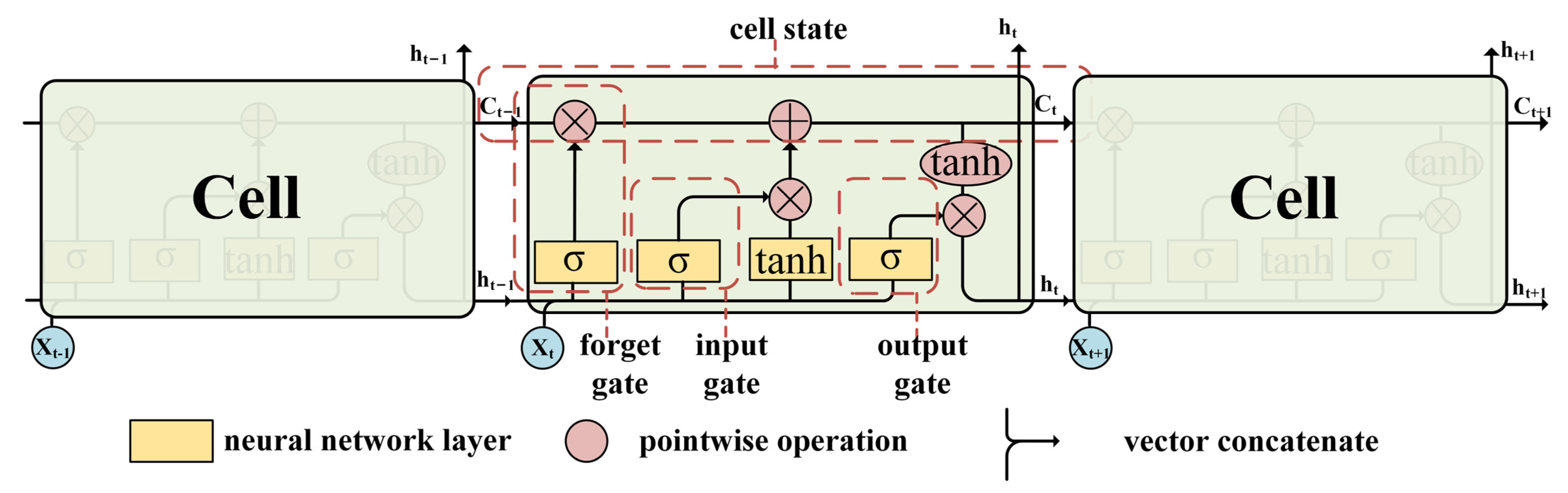
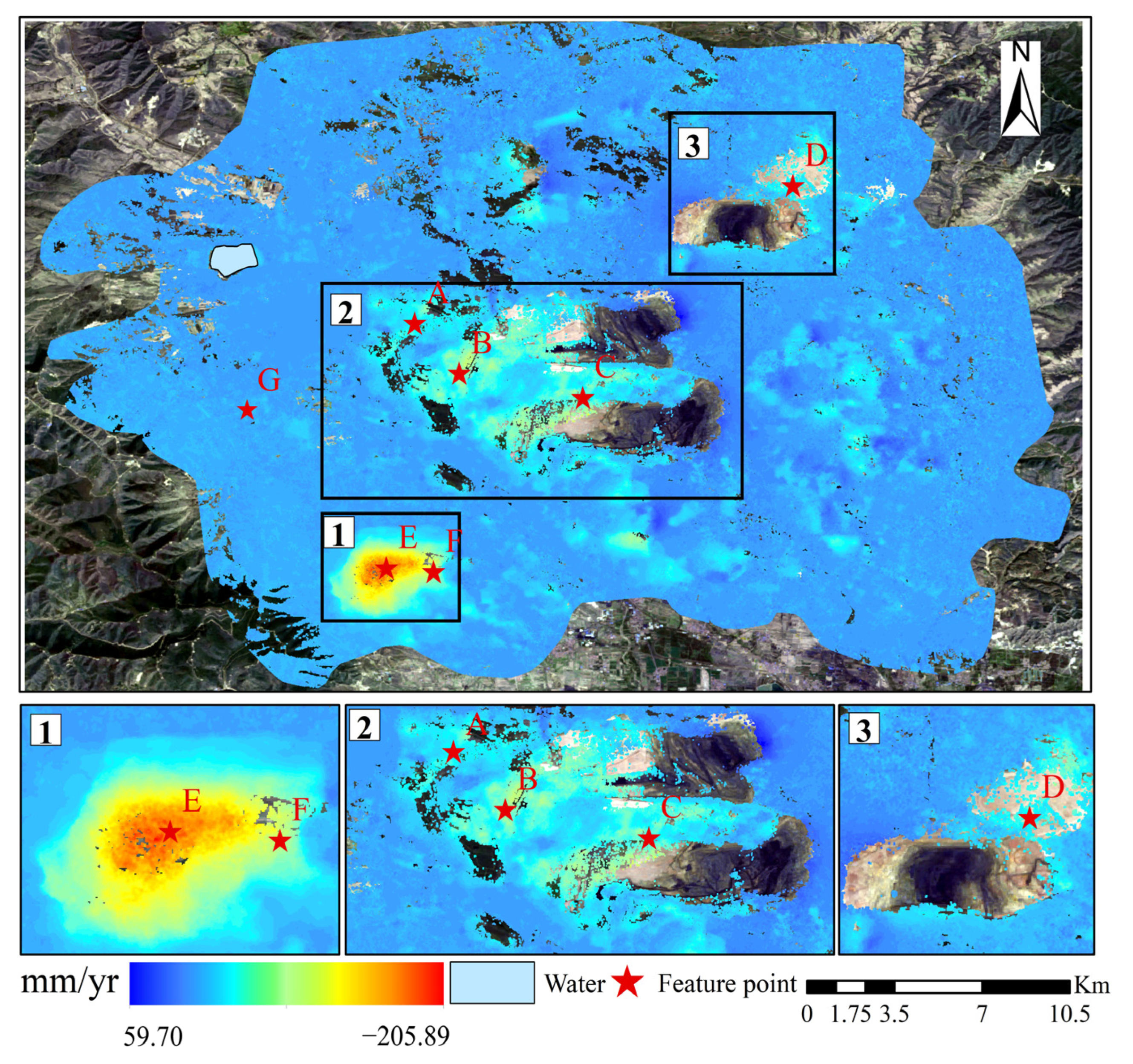
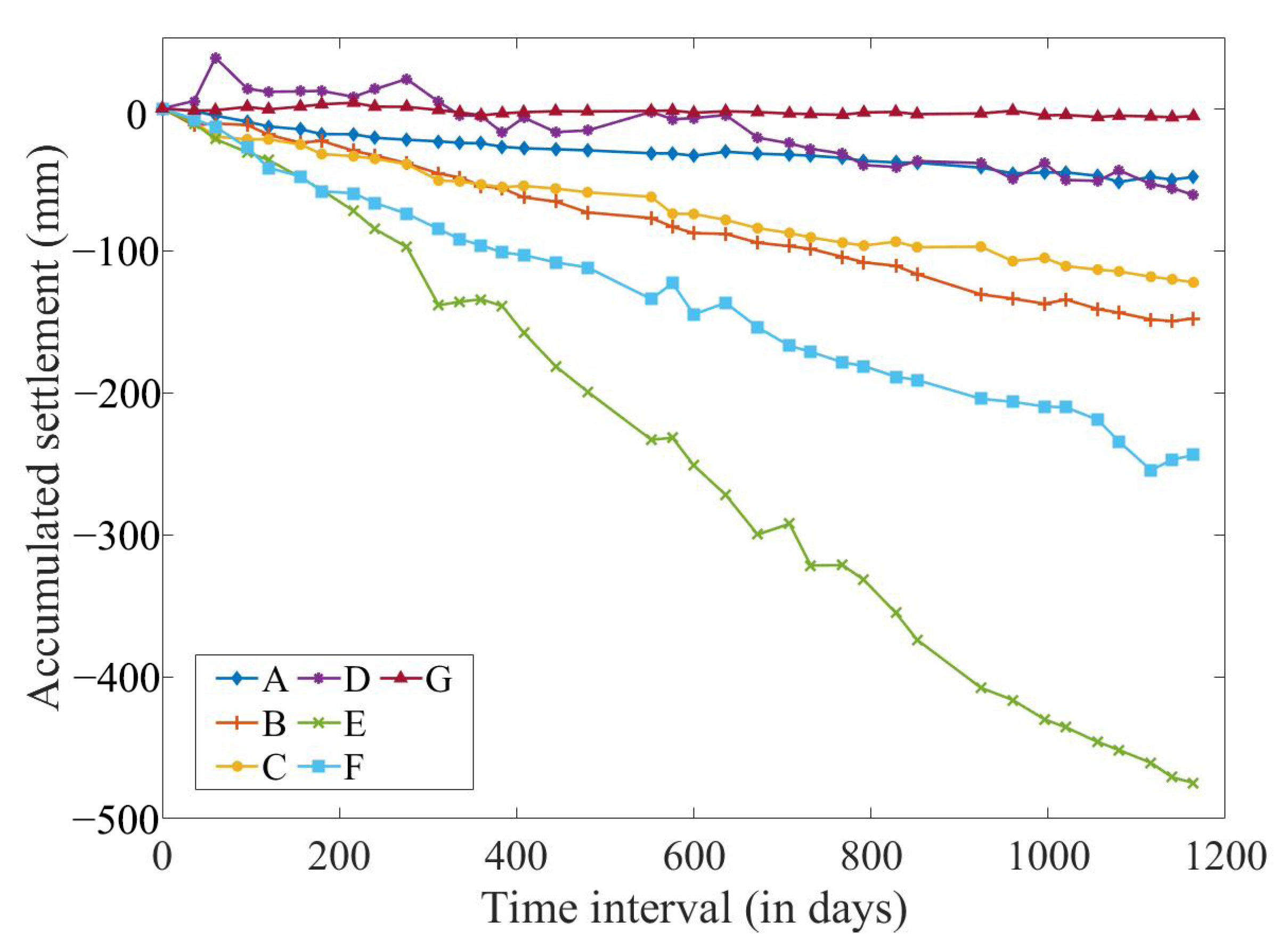
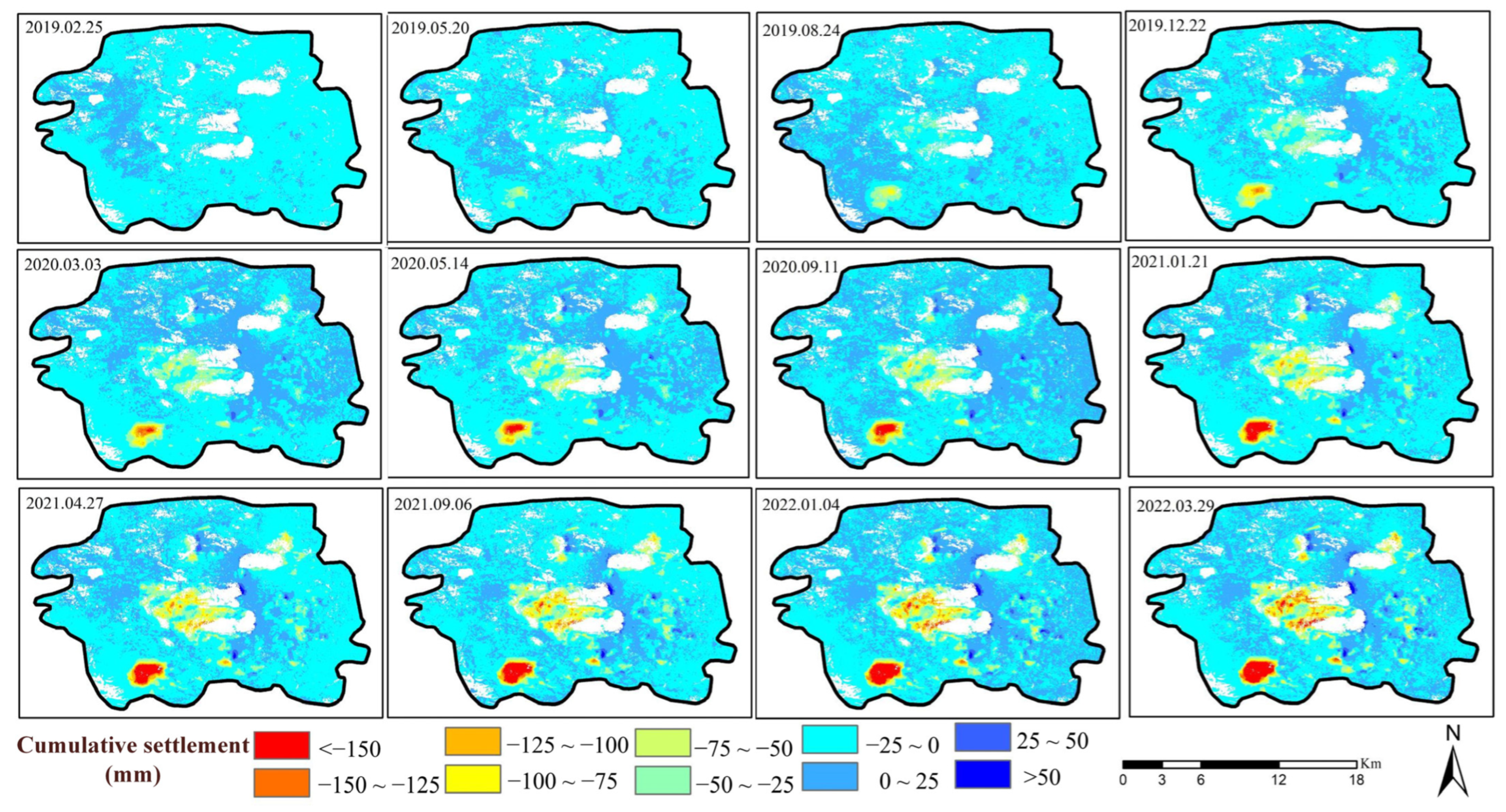
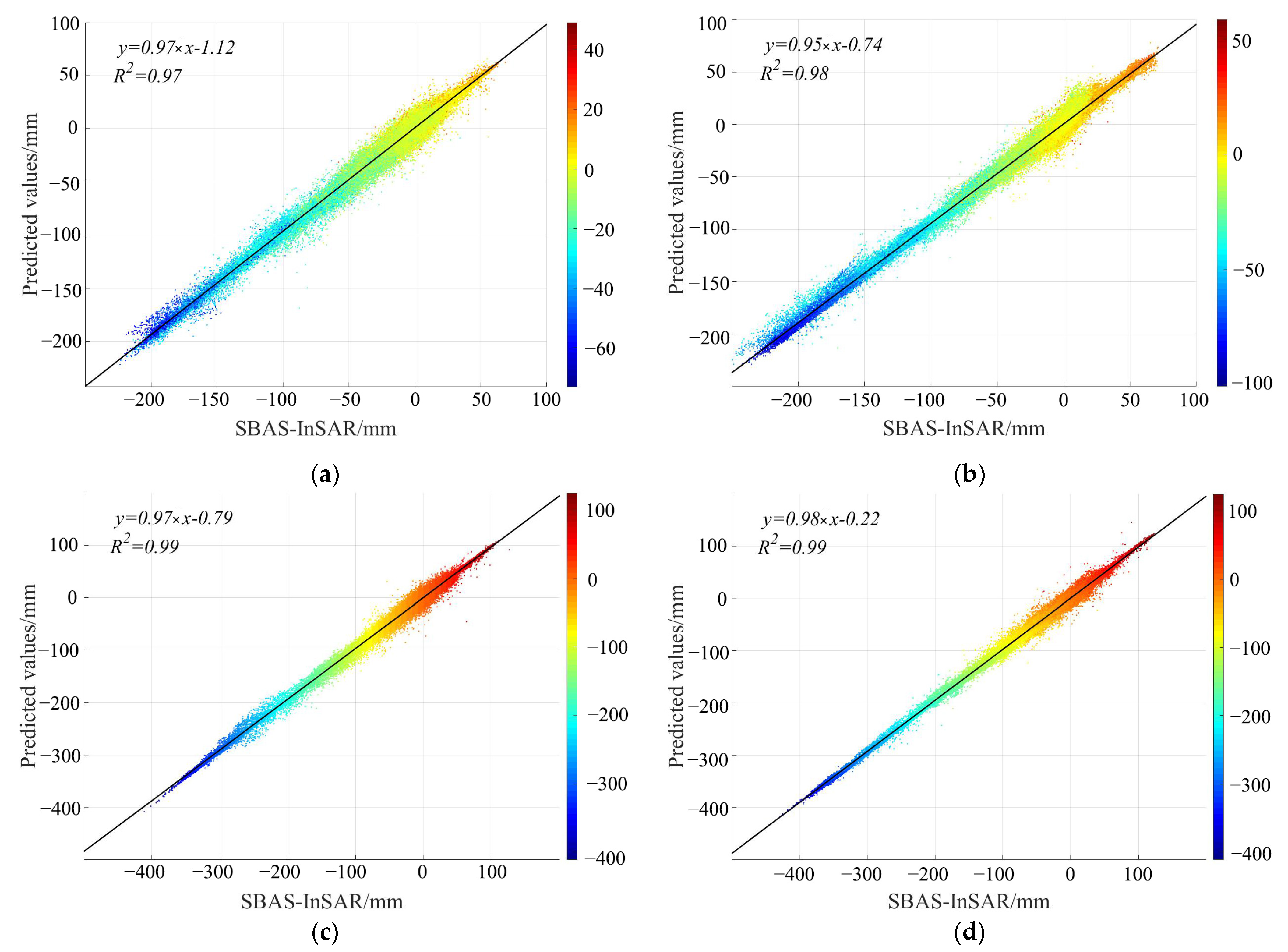
Ground subsidence is a significant safety concern in mining regions, making large-scale subsidence forecasting vital for mine site environmental management. This study proposes a deep learning-based prediction approach to address the challenges posed by the existing prediction methods, such as complicated model parameters or large data requirements. Small baseline subset interferometric synthetic aperture radar (SBAS-InSAR) technology was utilized to collect spatiotemporal ground subsidence data at the Pingshuo mining area from 2019 to 2022, which was then analyzed using the long-short term memory (LSTM) neural network algorithm. Additionally, an attention mechanism was introduced to incorporate temporal dependencies and improve prediction accuracy, leading to the development of the AT-LSTM model. The results demonstrate that the Pingshuo mine area had subsidence rates ranging from −205.89 to −59.70 mm/yr from 2019 to 2022, with subsidence areas mainly located around Jinggong-1 (JG-1) and the three open-pit mines, strongly linked to mining activities, and the subsidence range continuously expanding. The spatial distribution of the AT-LSTM prediction results is basically consistent with the real situation, and the correlation coefficient is more than 0.97. Compared with the LSTM, the AT-LSTM method better captured the fluctuation changes of the time series for fitting, while the model was more sensitive to the mining method of the mine, and had different expressiveness in open-pit and shaft mines. Furthermore, in comparison to existing time-series forecasting methods, the AT-LSTM is effective and practical.
Keywords: mining area; ground subsidence; small baseline subset interferometric synthetic aperture radar (SBAS-InSAR); long short-term memory (LSTM); attention mechanism mining area; ground subsidence; small baseline subset interferometric synthetic aperture radar (SBAS-InSAR); long short-term memory (LSTM); attention mechanism
Graphical Abstract