


Abstract
The heritagisation of cultural landscapes is often understood as a state-led administrative process. At the same time, the discursive origins and adaptive mechanisms that precede formal designation remain underexplored, especially in relation to cultural sustainability. This study examines the pre-heritagisation of Suzhou’s classical gardens during China’s modern transformation by analysing periodical discourse published between 1870 and 1948. Using a mixed-methods approach that combines quantitative content analysis and Critical Discourse Analysis (CDA), it investigates 699 historical texts from the Index to Chinese Newspapers & Periodicals database. The findings reveal a dual discursive process. On the one hand, reports portrayed the gardens as accessible, multifunctional civic spaces through narratives of public use. On the other hand, literati discourse reinforced their classical value through historical memory and aesthetic preservation. Together, these tendencies show how the gardens were materially refunctioned and symbolically re-anchored under modern conditions. Rather than directly producing later heritage designation, this process helped create the socio-cultural conditions through which the gardens acquired broader public intelligibility, cultural legitimacy, and heritage-like meanings before formal institutional recognition.
1. Introduction
Cultural heritage is often understood as the outcome of formal designation, expert evaluation, and state-led conservation. Yet before such institutional recognition takes shape, many sites undergo a longer and less visible phase in which their meanings are reinterpreted, circulated, and gradually shared in the public sphere. This article focuses on that earlier phase, which we describe as pre-heritagisation: the historically contingent process through which places begin to acquire broader cultural legitimacy and heritage-like meanings before formal heritage inscription or legal protection.
Rather than treating modernity as the central object of analysis, this study approaches modern China as the socio-historical context within which such pre-heritagisation unfolded. In this context, the transformation of cultural sites was not only material, but also interpretive: their social functions changed, their public visibility expanded, and their value was increasingly articulated through emerging forms of mass communication. Understanding this process is especially important for debates on cultural sustainability because the continuity of heritage depends not only on the survival of the physical fabric but also on the continued social circulation, reinterpretation, and legitimisation of cultural meaning.
China’s modern transformation provides the broader historical context for this inquiry, while the article focuses empirically on periodical discourse published between 1870 and 1948. Amid profound political upheaval and social transformation, traditional cultural orders were destabilised, and periodicals emerged as a major medium for disseminating political ideas, social commentary, and cultural imagination [1]. Within this changing communicative environment, the classical gardens of Suzhou faced not only physical decline and fragmentation [2] (p. 3) but also a crisis of meaning. Their significance was no longer confined to elite literati circles; instead, it entered a broader, more heterogeneous public arena in which the gardens could be redescribed, revalued, and repositioned as shared cultural assets.
This article focuses on the Four Great Gardens of Suzhou—the Humble Administrator’s Garden, the Lingering Garden, the Lion Grove Garden, and the Canglang Pavilion. Although these gardens were formally inscribed on the UNESCO World Heritage List only in 1997 and 2000, this study argues that a crucial shift in their public cultural status had already begun to take shape much earlier, within modern public discourse from the late nineteenth to the mid-twentieth century. The article does not claim a direct causal relationship between periodical discourse and later heritage policy; rather, it argues that modern media discourse helped create a discursive precondition for subsequent heritage recognition by normalising new forms of public attention, value attribution, and cultural legitimacy.
Existing scholarship has generated important insights into Chinese garden history, garden aesthetics, public park transformation, and later heritage conservation. However, the formative stage preceding formal heritage designation remains underexplored, particularly regarding public discourse and meaning-making. In particular, limited attention has been paid to how modern media participated in redefining traditional Jiangnan gardens as publicly intelligible cultural sites, and how this process may complicate institution-centred understandings of heritage formation often associated with dominant institutional tendencies in Western heritage frameworks. The following section, therefore, reviews these debates and clarifies the conceptual distinction between heritagisation and pre-heritagisation.
Against this background, this study asks: through what discursive mechanisms did classical Suzhou gardens sustain their cultural significance and acquire broader public legitimacy during a period of profound social transformation, and what does this process reveal about how culturally significant landscapes sustain public meaning and cultural legitimacy before formal institutional recognition?
To answer this question, the study pursues three interconnected objectives: first, to trace the quantitative trajectory of public attention to Suzhou’s classical gardens between 1870 and 1948 and identify the key phases during which these sites entered broader public discourse as culturally significant places; second, to analyse the specific discursive mechanisms through which modern periodical texts simultaneously normalised the gardens’ functional adaptation to new public uses and reinforced their classical cultural symbolism, thereby sustaining their significance across a period of rapid social transformation; and third, to develop, on this basis, a conceptual account of pre-heritagisation as a discursive mechanism of cultural sustainability, with analytically delimited implications for understanding how culturally significant landscapes may sustain public meaning and legitimacy before formal heritage institutionalisation in historically specific contexts.
To address this gap, the article employs a mixed-method approach to analyse 699 periodical texts (1870–1948), a methodological strategy well suited to tracing complex cultural transitions through longitudinal textual evidence and one that has been productively applied in recent studies of cultural landscape evolution and heritage interpretation [3,4]. First, quantitative content analysis is used to trace shifts in public attention and to identify key periods of discursive change. Second, Critical Discourse Analysis is applied to examine how media narratives simultaneously normalised the gardens’ functional adaptation to new public uses and reinforced their classical symbolism through cultural and historical representation. By bringing these two dimensions together, the study reconstructs the discursive foundations through which Suzhou’s classical gardens were transformed from elite private retreats into publicly intelligible, heritage-like cultural assets.
In pursuing these objectives, the article makes three contributions to debates on cultural sustainability and heritage formation. First, it provides historical evidence for a discursive conception of cultural sustainability, showing how the long-term viability of culturally significant sites depends on continued public intelligibility and social circulation of meaning rather than on material preservation alone. Second, it proposes a historically grounded analytical framework for understanding adaptive landscape identity reconstruction, demonstrating how functional adaptation and symbolic continuity can operate as mutually reinforcing rather than competing dimensions of sustainable landscape management. Third, it shows how the Suzhou case complicates institution-centred models of heritage formation by highlighting a historically specific case in which public discourse and social recognition constituted an important mechanism of cultural sustainability before formal institutional capture.
2. Literature Review
2.1. From Heritagisation to Pre-Heritagisation: Conceptual Distinctions and Theoretical Positioning
Recent heritage scholarship has increasingly challenged the treatment of heritage as a fixed object inherent in sites, buildings, or material remains. Instead, heritage has been rethought as a cultural and social process. Smith (2006) argues that heritage is not a “thing” or a site in itself, but a cultural process involving acts of remembering and ways of understanding and engaging with the present [5] (pp. 44–45). Harvey (2001) similarly emphasises that heritage should be understood as a process, indeed as something produced by people in relation to their contemporary concerns and experiences, rather than as a phenomenon that emerged only with modern conservation systems [6]. Taken together, these perspectives shift attention away from heritage as a self-evident object and toward the historically contingent practices through which meanings, identities, and claims to significance are socially produced, negotiated, and sustained.
This processual understanding is particularly useful for examining sites whose public significance began to emerge before they were formally incorporated into institutional heritage systems. Existing scholarship has already emphasised the constructed and negotiated character of heritage. In contrast, related notions such as heritage-making, heritage formation, and heritagisation further highlight the processes by which places acquire value, recognition, and legitimacy. Davallon (2015) argues that heritagisation requires the production of knowledge about an object and the identification of its origins before it can be designated for preservation and transmission [7]. Groote, P. & Haartsen, T. likewise stress that heritage is fundamentally bound up with communication and historical representation, through which meanings are conveyed, and place identities are formed [8] (pp. 181–182). Although the phase preceding formal designation has not always been clearly isolated as a distinct analytical stage in broader international heritage theory, some recent Chinese review scholarship has begun to discuss pre-heritagisation more explicitly as a formative phase in the emergence and development of heritage [9]. Building on these discussions, this article uses pre-heritagisation not as a synonym for heritagisation as a whole, but as an analytical term to isolate the earlier stage in which a site becomes increasingly intelligible, shareable, and discussable as a public cultural asset before formal institutional recognition.
In this sense, pre-heritagisation should not be understood as a catch-all term for everything that precedes formal designation. Rather, it refers to a more specific process of value formation in which cultural meanings are socially circulated, represented, and increasingly made intelligible in public discourse. During this stage, a site may undergo both material and interpretive change: its uses may adapt to shifting historical conditions, while its perceived identity is redefined through narrative, representation, and knowledge production. Building on Davallon’s emphasis on knowledge production and Graham and Howard’s focus on communication and representation, pre-heritagisation may thus be understood as the stage in which heritage-like meanings become publicly plausible before they are formally stabilised within institutional systems. This distinction is important because it shifts analytical attention away from formal recognition as the sole beginning of heritage and toward the earlier discursive and social conditions under which heritage claims become publicly plausible.
This analytical move is especially relevant in cases where later formal recognition rests on earlier processes of discursive visibility, symbolic revaluation, and public intelligibility. Rather than treating legal designation as the singular turning point in heritage formation, a pre-heritagisation perspective asks how a place begins to acquire heritage-like meanings and public cultural legitimacy before formal institutional recognition. This is particularly important for heritage types whose significance extends beyond the physical fabric and instead depends on memory, association, representation, and modes of use. Traditional gardens are a notable example in this regard, since their cultural meanings are sustained not only through material form but also through literary memory, symbolic association, and changing forms of public engagement. From this perspective, pre-heritagisation provides a useful framework for analysing how such sites acquire heritage-like meanings before they are formally stabilised within institutional systems.
2.2. Authorised Heritage Discourse and Its Western Epistemic Foundations
A major strand of Critical Heritage Studies has shown that heritage is not only protected through institutions but also constituted through discourse. In this view, the language used to describe places, the categories through which they are classified, and the authorities authorised to speak for them all shape what is recognised as heritage and why it matters. In this regard, Smith’s (2006) formulation of the Authorised Heritage Discourse (AHD) has been especially influential, as it captures how heritage is often framed through expert knowledge, institutional legitimation, and normative assumptions about value, preservation, and material significance [5] (pp. 284–303). Waterton, Smith, and Campbell (2006) further demonstrate the usefulness of Critical Discourse Analysis for heritage research by showing that the ways heritage is written, represented, and communicated are deeply bound up with dominant discourses and power relations [10].
Within this literature, what is often described as a “Western heritage context” is not a single unified model. Still, it is commonly associated with several recurring emphases: expert-led interpretation, institution-centred conservation, a concern with material authenticity and integrity, and the assumption that formal designation marks a decisive threshold in the making of heritage. Smith’s discussion of the Authorised Heritage Discourse helps to explain this broader orientation by showing how heritage is frequently framed through expert authority, institutional legitimation, and normative assumptions about value and preservation [5]. At the doctrinal level, these tendencies were historically consolidated in influential international conservation texts such as the Venice Charter (1964), which has often been treated as emblematic of a material- and monument-centred conservation approach [11]. Winter further shows that debates around Eurocentrism in heritage conservation emerged precisely because such doctrines, long associated with European traditions, came to shape the international field even as their adequacy outside Europe was increasingly questioned [12].
At the same time, this framework has limits. If heritage is viewed primarily through institutional designation and expert validation, then earlier forms of public recognition may be obscured. Yet in many historical situations, places begin to acquire social legitimacy before they are formally categorised as heritage. Newspapers, guidebooks, exhibitions, tourism narratives, and other forms of public representation may all participate in this process by making certain sites more visible, more discussable, and more widely valued [10]. Aigner’s study of heritage-making “from below” is especially relevant here, as it shows that heritage meanings may be shaped not only through formal institutional authority but also through mediated forms of exhibition, representation, and public engagement, even where such participation does not fundamentally overturn dominant expert discourse [13]. In this respect, discourse is not merely secondary commentary on already recognised heritage; it can also be one of the mechanisms through which sites begin to acquire public cultural intelligibility before formal institutional capture.
This does not mean that institutions are unimportant, nor does it imply that discourse alone determines later policy outcomes. Rather, it suggests that heritage formation may involve a longer trajectory in which discursive recognition, public representation, and cultural legitimation precede formal institutional recognition. This is the sense in which pre-heritagisation is useful here: it complements studies of formal heritagisation by focusing on the discursive groundwork through which sites become culturally intelligible as shared cultural assets before formal institutional recognition [7,8].
2.3. Historic Gardens as Heritage and the Limits of Western Frameworks: Towards Non-Western Epistemologies
The heritage status of historic gardens has been re-evaluated in recent scholarship, especially as researchers have become more attentive to the fact that gardens are neither static monuments nor purely aesthetic objects. Rather, they are increasingly understood as dynamic living systems and as a special type of cultural landscape shaped not only by design form and material fabric, but also by ecological processes, maintenance practices, social use, and long-term spatial transformation. From this perspective, historic gardens should not be viewed as isolated objects within a single temporal–spatial frame, but rather should be understood within a broader landscape context that connects their evolution over time with their architectonic elements, surrounding setting, and wider social–ecological relations [14]. While international doctrines such as the Florence Charter (1982) established an important foundation for recognising historic gardens as heritage [15], more recent scholarship has questioned approaches that rely too heavily on fixed notions of authenticity or fabric-centred conservation and that fail to account for the relational, contextual, and evolving character of gardens [16,17].
These issues also connect directly to debates on cultural sustainability. As Soini and Birkeland (2014) argue, cultural sustainability cannot be reduced to the mere continuation of cultural forms, but involves broader questions of heritage, identity, locality, and the transmission of cultural meanings across time [18]. If heritage continuity depends not only on physical survival but also on the continued circulation and renewal of meaning, then historic gardens provide an especially productive field for analysis. Their long-term persistence as cultural sites depends on whether they remain socially intelligible, meaningful, and symbolically relevant within changing historical contexts. In that sense, the sustainability of garden heritage is not reducible to preservation of form alone; it also concerns the reproduction, adaptation, and public transmission of cultural value. In this respect, Lian et al. (2024) are particularly useful in showing that recent scholarship has increasingly sought to integrate conservation and development within a landscape approach, rather than treating protection as the preservation of isolated elements alone [14]. Research in Norway further suggests that the formal language of “cultural heritage” may itself become alienating to the public, who often value the interactive and intangible cultural dimensions of gardens more strongly than their officially sanctioned heritage status [19]. This tension underscores the importance of examining how perceived values, lived experience, and formal designation interact in the making of garden heritage.
This question becomes even more complex in non-Western settings, where heritage trajectories did not necessarily follow the same sequence assumed in institution-centred models. Winter argues that the international field of heritage conservation has long been shaped by Eurocentric assumptions, even as various declarations and recalibrations have sought to address cultural differences and regional specificities [12]. It is important to note, however, that what is often termed the “Western heritage context” is not internally uniform: its dominant tendencies—expert-led valuation, the privileging of material authenticity, and the centrality of formal legal designation—have themselves been contested and revised within Western scholarship and practice. The critique advanced here therefore targets these specific institutional tendencies rather than Western heritage discourse as a whole. This suggests that heritage formation outside Europe should not simply be measured against a Western template, but examined in relation to its own historical conditions, knowledge systems, and public cultures. A case from twentieth-century Iran similarly shows how the perception of gardens can be re-examined through overlooked primary records, highlighting the ways in which heritage status is negotiated amid broader social and political transformations [20]. Together, these observations suggest that heritage consciousness may develop through social processes that diverge from, and sometimes precede, formal institutional recognition—a pattern that the present study examines in the specific context of modern Chinese periodical culture.
Modern China offers an important case in this regard. During the late nineteenth and early twentieth centuries, cultural sites were affected not only by war, urban change, and social transformation, but also by new media circuits and emergent public cultures. Under such conditions, the meanings of traditional gardens could be reconfigured before the establishment or consolidation of modern heritage institutions. The relevance of this case, therefore, lies not only in Chinese garden history itself but also in its capacity to complicate institution-centred models of heritage formation by showing how public discourse, cultural reinterpretation, and changing social use could precede or reshape formal recognition [21].
2.4. Research Gap, Theoretical Contributions, and Analytical Framework
Although scholarship on traditional Chinese gardens has expanded considerably in recent decades, critical theoretical engagement with the process leading up to formal heritage designation remains comparatively limited. Existing research has largely centred on the development of modern Chinese garden-making theory, overlooking the formative role of modern public discourse in shaping the public intelligibility and cultural significance of these gardens as heritage-related sites [22]. Studies have either focused on traditional garden-making theories or on cross-cultural interpretations from expert perspectives [23]. Likewise, investigations into the transformation of the gardens into public spaces have primarily focused on the High Qing period [24] or on modern commercial gardens [25,26], leaving the discursive redefinition of traditional Jiangnan gardens during the pivotal modern era (1840–1948) insufficiently explored.
In particular, modern periodicals have not yet been fully exploited as evidence for tracing how traditional Jiangnan gardens were discursively redefined within a changing urban public sphere. This is a significant omission, because the transformation of gardens from elite private retreats into shared cultural sites was not only a matter of ownership, access, or physical adaptation; it also involved shifts in description, classification, evaluation, and symbolic framing. While modern periodicals are increasingly recognised as valuable sources for capturing the changing relationship between gardens, the city, and society [27,28], their potential to illuminate the early circulation and negotiation of heritage-like meanings through a Critical Heritage Studies lens has not yet been fully realised.
This article addresses that gap through a mixed-method analysis of 699 periodical texts (1870–1948) concerning the Four Great Gardens of Suzhou. It combines quantitative content analysis, used to identify thematic distributions and dominant modes through which the gardens entered public discourse, with Critical Discourse Analysis, used to examine how media narratives negotiated the gardens’ early heritage identity across two key dimensions: emergent social functions and reinforced classical symbolism. This methodological combination is well-suited to examining long-term cultural transitions in textual corpora and has been productively applied in recent studies of cultural landscape evolution and heritage interpretation [3,4]. The use of CDA to analyse the production of heritage meanings through discourse is additionally grounded in Critical Heritage Studies scholarship [10]. By doing so, the article seeks to illuminate pre-heritagisation not as a vague prehistory of later heritage designation, but as a historically significant process through which Suzhou’s classical gardens became increasingly intelligible, shareable, and culturally legitimate as heritage-like public assets before formal institutional recognition. In this sense, the article contributes not only to Chinese garden history, but also to more carefully delimited debates on how heritage meanings may emerge before formal institutional recognition in historically specific contexts.
To position this pre-designation phase within a broader heritage trajectory, this study draws on Peter Howard’s heritage process model. As illustrated in Figure 1, Howard conceptualises heritage not as a static entity but as a dynamic process moving from discovery and inventory to designation and protection [29] (p. 187). This model is useful because it situates formal designation as only one moment within a longer chain of recognition, interpretation, and transformation. Building on this processual perspective, the present study argues that there is an analytically significant phase before formal designation—one in which cultural sites begin to acquire visibility, legitimacy, and heritage-like meanings through public discourse. It is this earlier stage that the article identifies as pre-heritagisation. In this respect, the Suzhou gardens discussed in modern Chinese periodicals were not yet formally institutionalised as heritage. Still, they were already undergoing a crucial process of discursive revaluation that helped bridge the gap between declining private retreats and emerging public cultural assets. This interpretation also aligns with Davallon’s argument that heritagisation depends on the reconstruction of knowledge by those who “discover” the object, thereby establishing its new status and social legitimacy before formal institutional capture [7] (pp. 49–68). The pre-heritagisation framework developed here is thus derived from and bounded by this single, historically specific case. Rather than offering a universally transferable model of non-Western heritage formation, it is proposed as an analytically grounded lens whose broader applicability across other sites, periods, or cultural contexts requires testing through future comparative research.
Figure 1.
Peter Howard’s conceptualisation of the heritage process (adapted). A schematic representation of the main stages and interpretive trajectories in the heritage process.
3. Materials and Methods
3.1. Study Area and Case Selection
Among the classical gardens of Jiangnan, Suzhou has long been treated as a paradigmatic locus. Originating as early as the Spring and Autumn period (770–476 BC), the Classical Gardens of Suzhou developed into a sophisticated artistic system during the Song and Yuan dynasties and reached their zenith between the mid-Ming and early Qing dynasties (approx. 1500–1750) [30] (pp. 1–11). Unlike the expansive, axial symmetry often found in Western Baroque gardens or the vast pastoral landscapes of the English tradition, Suzhou gardens are characterised by ‘spatial enclosure’ and ‘miniaturised nature’ [31] (pp. 339–340).
Historically, these sites were not public amenities but private residential compounds for the scholar-official class (literati), functioning as microcosms for self-cultivation and exclusive social gatherings. Embedded within the dense urban fabric of canals, they were shielded by high boundary walls that enforced strict social and gendered exclusivity; access for the general public was a rare, discretionary act of benevolence during specific festivals rather than a civic right [24]. Consequently, the garden served as a spatial instrument for reinforcing the cultural authority of the elite.
Following the warfare of the Xianfeng–Tongzhi era and the devastation associated with the Taiping occupation of Suzhou (1860–1863), gardens across the lower Yangtze region experienced severe damage, abandonment and fragmentation, prompting early twentieth-century observers to warn of a fundamental rupture in the garden tradition [2] (p. 3). Against this wider backdrop of loss and discontinuity, Suzhou stood out in the late Qing and Republican periods for the number of extant sites and for the relative integrity with which a substantial portion of its garden stock survived and entered the trajectory of modern tourism and public life.
This visibility is further evidenced by Republican-era guidebooks and cartographic ephemera, which solidified a recognisable set of ‘famous scenic spots’ within the historic city of Suzhou and its immediate outskirts. For example, The Latest Tourist Map of Suzhou identified a cluster of garden sites along with the four gardens of Suzhou as ‘famous scenic spots’ [32], thereby presenting these places as visitable destinations within Suzhou’s modern sightseeing system (Figure 2). These media artefacts do not in themselves demonstrate continuous openness in a legal or administrative sense; rather, they show that by the Republican era, a cluster of gardens had become publicly intelligible as visitable urban attractions and was promoted as such within a modern sightseeing system.
Figure 2.
Map of Suzhou’s Ancient City and the Distribution of Gardens. (a) Zuijin Suzhou Youlan Ditu (literally ‘The Latest Tourist Map of Suzhou’, 1943), illustrating key tourist information centred on the historic city, including transportation, local products, commerce, and scenic spots. The original map contains Chinese labels, which are retained as part of the historical source; the lower explanatory section (‘Overview of the Latest Tourist Map of Suzhou’) has been omitted for clarity. (b) Spatial distribution of gardens identified as ‘scenic spots’ in the map (by authors).The site marked in light green (Suzhou Park) represents a modern public park, distinguished from the classical gardens analysed in this study.
The selection of case studies followed principles of historical representativeness and typological diversity, focusing on the four gardens later acclaimed as the ‘Four Great Gardens of Suzhou’: the Humble Administrator’s Garden, the Lingering Garden, the Lion Grove Garden, and the Canglang Pavilion (Figure 3). This selection is not intended to claim statistical representativeness for all Jiangnan gardens; rather, it is based on the historical typicality, analytical relevance, and documentary richness of these sites within the broader tradition of Jiangnan private gardens. Situated within or near the historic walled city of Suzhou (traditionally Gusu), these sites occupy key positions along the city’s canals and streets. This spatial integration makes them ideal subjects for examining how private retreats became embedded in an emerging network of urban public spaces.
Figure 3.
Photographs of the Four Classical Gardens of Suzhou (photographs by the author). (a) The Humble Administrator’s Garden; (b) The Lingering Garden; (c) The Canglang Pavilion; (d) The Lion Grove Garden. The garden names follow the English names used in the UNESCO World Heritage listing of the Classical Gardens of Suzhou.
Suzhou was selected because of its well-established significance in the history of Jiangnan gardens. Within Suzhou, the four gardens were chosen because they have long been recognised in both historical records and modern scholarship as among the city’s most representative classical gardens. As Zhu Xie observed, “when speaking of Suzhou gardens, people all esteem the Four Great Gardens” [33], and Tanaka Akira likewise identified them as representative examples of Jiangnan private gardens [34]. Building on this established scholarly recognition, it is further significant that the Classical Gardens of Suzhou constitute the only group of Jiangnan private gardens later inscribed on the UNESCO World Heritage List. This distinction makes the Suzhou case a particularly persuasive context for examining the socio-cultural and discursive processes that preceded formal heritage recognition: if pre-heritagisation is to be studied anywhere in the Jiangnan tradition, Suzhou—and these four gardens in particular—represent the most historically grounded and analytically justified point of entry.
Each garden represents a distinctive typology in terms of modern ownership transition and spatial accessibility: the Canglang Pavilion retained its official public character; the Lingering Garden evolved into a commercially operated site; while the Humble Administrator’s and Lion Grove Gardens underwent more complex transitions of ownership and function (Figure 4). This diversity renders them ideal for observing the different trajectories of garden publicisation. Accordingly, their representativeness lies not in statistical coverage, but in the combination of canonical status and internal variation within a single historically coherent urban setting. In this sense, ‘typicality’ refers to their canonical status in the history of Jiangnan gardens. In contrast, ‘researchability’ refers to the unusually rich documentary and periodical record that allows their changing identities to be traced over time. Their prominence in the late Qing and Republican periods, together with their varying degrees of openness to visitors, generated a comparatively rich body of periodical documentation, making them especially suitable for tracing how garden sites became publicly intelligible and discursively revalued before formal heritage institutionalisation.
Figure 4.
Timeline of ownership transitions and functional evolution of the Four Great Gardens (1860–1949, by authors). A comparative timeline showing major ownership changes and shifts in use across the four case-study gardens.
3.2. Data Corpus Construction
The broader historical framework of this study spans 1840 to 1948, a century-long transformative era that bridges the late Qing Dynasty and the Republican period. While the systematic state-led protection of Suzhou gardens only gradually commenced after the founding of the People’s Republic of China in 1949—marked by their inclusion in the national heritage conservation lists starting in 1961 (e.g., the Humble Administrator’s Garden)—1948 serves as a logical and strategic terminus for this research.
Drawing on Howard’s (2003) model of the heritage process, which conceptualises heritagisation as a trajectory from discovery and inventory to designation and protection [29] (p. 187), this study treats the pre-1949 era as an analytically significant pre-designation phase. Rather than claiming that later formal heritage recognition was directly determined by periodical discourse, this study argues that, by the late 1940s, Suzhou gardens had already begun to acquire broader public visibility, cultural legitimacy, and heritage-like meanings within modern print culture. During this period, the gardens’ changing social roles, aesthetic value, and public significance were increasingly articulated and circulated through modern periodicals, thereby helping to create an important discursive and cultural precondition for later institutional recognition. Therefore, the period before 1949 can be understood as a formative phase in the heritage process; prior to formal institutionalisation, these gardens had already undergone a significant discursive and socio-cultural revaluation within the public sphere.
The empirical basis of this study is a corpus constructed from the Index to Chinese Newspapers & Periodicals database (Shanghai Library), one of the most comprehensive repositories of modern Chinese print media. The database classifies its materials into three categories: textual content, images, and advertisements. This study focuses primarily on the textual materials. Within the broader historical framework outlined in Figure 4, the retrieval covered the period 1840–1948, while the valid periodical corpus ultimately spans 1870–1948. Using the precise keywords ‘Humble Administrator’s Garden’, ‘Lingering Garden’, ‘Lion Grove Garden’, and ‘Canglang Pavilion’, a full-text search initially yielded 1881 items.
To ensure data validity, all results were manually screened. Exclusion criteria included overlapping advertisements lacking narrative content, duplicates from reprinted regional editions, and mentions of private gardens outside the Suzhou region that shared the same name (e.g., ‘Lion Grove’ in other cities). The final corpus comprises 699 valid texts, encompassing genres such as news reports, travelogues, essays, and poems. The earliest text dates from 1870, while publication peaked between 1911 and 1936 (as shown in the chronological distribution in Figure 5). This corpus provides a rare, longitudinal record of how the gardens were represented, discussed, and revalued in the modern public sphere.
Figure 5.
Chronological trend of the volume of texts on the Four Great Gardens in periodicals (by authors). The figure shows changes in the number of periodical texts concerning each garden across successive time periods.
3.3. Analytical Approach: Mixed-Method Framework
Given the heterogeneous nature of modern periodical texts—fragmented in form and linguistically hybrid—this study adopts a mixed-method approach that combines quantitative content analysis with qualitative Critical Discourse Analysis (CDA). This integrated design follows a sequential mixed-method logic: the quantitative phase provides a structured panoramic overview of thematic distribution across the corpus, and these results then guide the selection of analytical foci and representative texts for the subsequent qualitative phase. In broad methodological terms, this structure resembles an explanatory sequential logic in that initial quantitative patterning is followed by qualitative interpretation. Together, the two phases enable a progression from descriptive thematic patterning to interpretive analysis, aligning with the reflexive orientation of Critical Heritage Studies (CHS). The analysis proceeded in two phases (Figure 6).
Figure 6.
Analytical workflow of the mixed-method study, illustrating the sequential progression from corpus construction through quantitative content analysis (Phase 1) to Critical Discourse Analysis (Phase 2), and the identification of the pre-heritagisation mechanism through which Suzhou’s classical gardens acquired socio-cultural legitimacy and heritage-like meanings before formal institutional recognition (by authors).
Phase 1: Quantitative Content Analysis. The five thematic categories were developed through a primarily inductive process grounded in close reading of the corpus. As an initial organisational step, all texts were first sorted by literary form—news reports, commentaries, poetry, miscellaneous prose, and official communications—a classification based on formal textual features rather than thematic content. Building on this structural foundation, each text was then examined individually, and its primary thematic orientation was identified and recorded. The five principal thematic categories—Poetic Works, Social Reports, Travel Narratives, Garden Maintenance Reports, and Garden Critiques—were subsequently consolidated through iterative comparison and synthesis of these text-level observations across the full corpus. Although the categories were developed inductively from the corpus, their formulation was informed by prior scholarship on modern Chinese periodicals and the historical transformation of urban gardens [1,25]. Statistical distribution analysis was then conducted to visualise the frequency and proportion of each thematic category across the corpus and over time, thereby identifying the dominant modes through which Suzhou’s gardens entered public discourse.
The quantitative results played a direct structuring role in the subsequent CDA phase. Specifically, the quantitative analysis revealed a marked dual pattern in the corpus: Social Reports (26.9%) and Poetic Works (28.9%) together account for over half of all texts, and their temporal distributions indicate sustained co-presence from the 1910s onward rather than a simple sequential displacement of one by the other. As shown in Figure 7, both categories remained concurrently active across much of the Republican period, with a particularly pronounced period of overlapping activity in the mid-1930s, further reinforcing the co-temporal nature of these discursive patterns. This pattern suggests that functional modernisation and classical symbolisation often operated as simultaneous rather than strictly successive discursive tendencies, indicating that the corpus itself called for an analytical framework capable of accounting for both registers concurrently, thereby establishing the two analytical dimensions around which the CDA was organised. Rather than being determined a priori, the focus on Emergent Social Functions and Reinforced Classical Symbolism was derived from recurring patterns in the corpus. Moreover, the selection of specific texts and themes for close reading in the CDA phase was guided by sub-corpus frequency: analytical attention was directed toward topics and sites that generated a sufficient body of textual evidence across multiple genres and time periods, including repair records and commemorative writings centred on the Canglang Pavilion, travel narratives and conservation reports concerning the wisteria at the Humble Administrator’s Garden, and poetic adaptations drawing on Wu Meicun’s camellia verse across multiple genres. This frequency-informed selection ensured that the interpretive analysis was grounded in the empirical structure of the dataset as a whole rather than in exceptional or isolated cases.
Figure 7.
Temporal distribution of Social Reports and Poetic Works in the corpus (1876–1947). The figure presents the annual frequency of Social Reports (solid line) and Poetic Works (dotted line), showing the early predominance of Poetic Works and the sustained co-presence of both categories from the 1910s onward.
Phase 2: Critical Discourse Analysis. Building on the thematic framework established in Phase 1, the second stage applies CDA following Fairclough’s (1995) three-dimensional framework, which analyses discourse at the level of text, discursive practice, and social practice [35]. In this perspective, discourse is understood not merely as a linguistic record but as a form of social practice through which heritage-like meanings are articulated, circulated, and negotiated—an orientation closely aligned with the concerns of Critical Heritage Studies [10].
At the level of text, the analysis examines how the gardens are named, described, and evaluated within individual periodical articles, including the recurrence of terms such as ‘famous garden’, ‘historic site’, and ‘ancient relic’, as well as the rhetorical strategies through which civic or classical values are attributed to the gardens. At the level of discursive practice, the analysis considers how these texts were produced and circulated within the modern periodical system: how travel writing, social reporting, and literary reflection as genres each contributed to the public intelligibility of the gardens, and how the periodical press as a medium enabled the wider dissemination and stabilisation of heritage-like value claims. At the level of social practice, the findings are interpreted in relation to the broader socio-historical context of modern China’s urban transformation, the emergence of new public cultures, and the longer trajectory of heritage formation, thereby situating the discursive patterns identified in the texts within the wider process of pre-heritagisation.
The analysis focuses on how the early heritage identity of the gardens was negotiated across two key dimensions, each associated with observable textual and discursive indicators:
- (1)
- Emergent Social Functions: This dimension examines records of new civic uses—such as civic recreation, political assemblies, and social welfare activities—to understand how the gardens were materially refunctioned and socially reinterpreted as multifunctional public spaces. At the textual level, it is identified through event-based reporting, descriptions of visitor regulations and admission conditions, the use of the term ‘park’ to reframe garden identity, and accounts of collective activities hosted within the gardens. At the level of discursive practice, particular attention is paid to how social reporting genres normalised the gardens’ new civic roles by presenting them as routine features of modern urban life.
- (2)
- Reinforced Classical Symbolism: This dimension traces recurrent narratives—such as the preservation of historic plants and the invocation of literati lineage—to explain how the gardens’ legitimacy was anchored within an elite cultural tradition despite their modernisation. At the textual level, it is identified through the recurrence of named historical figures (e.g., Su Zimei, Wen Zhengming), classical literary references, evaluative descriptors such as ‘elegant’, ‘ancient’, or ‘famous’, and the framing of material traces such as ancient trees and stone inscriptions as repositories of cultural memory. At the level of discursive practice, attention is paid to how poetic and essayistic genres sustained classical associations across the period of study, functioning as vehicles for the rearticulation of literati values within a modernising public sphere.
Together, these two analytical layers reveal the dual dynamics of the pre-heritagisation process: the public refunctionalisation of garden space and the rearticulation of classical cultural memory. The coding scheme governing the thematic classification in Phase 1, including detailed category definitions, inclusion and exclusion criteria, and illustrative examples, is provided in Supplementary Materials (Table S1). The inter-coder reliability assessment conducted for this study is reported in Section 3.4.
3.4. Inter-Coder Reliability Assessment
To assess the reliability of the thematic coding scheme, an inter-coder reliability check was conducted. A random subsample of 100 texts (14.3% of the total corpus of 699) was drawn using random number generation and coded independently by all three members of the research team, without prior discussion. Each text was assigned one primary thematic category and one sub-theme according to the coding scheme provided in the Supplementary Materials (Table S1).
Reliability was assessed using Krippendorff’s Alpha (α) for nominal data, which is recommended for coding schemes involving three or more coders [36,37] (pp. 109–110). At the level of the five principal thematic categories, Krippendorff’s Alpha was α = 0.974. At the sub-theme level, Krippendorff’s Alpha was α = 0.915. Both values substantially exceed the threshold of α ≥ 0.800 recommended for content analysis, indicating strong coding reliability at both levels of categorisation. Supplementary agreement statistics, including percentage agreement, pairwise Cohen’s Kappa values, and the coding matrix for the reliability subsample, are provided in the Supplementary Materials (Tables S1–S3).
Of the 100 sampled texts, three cases (3.0%) showed disagreement at the thematic level, in each instance involving one coder differing from the other two. These disagreements were resolved through structured discussion among the three coders, with the codebook definitions and inclusion/exclusion criteria serving as the primary reference for adjudication. The resulting coding rules were then applied consistently to the remainder of the corpus.
4. Results
4.1. Quantitative Overview of Public Attention
4.1.1. Temporal Trends and Textual Types
The dataset covers the period from 1870 to 1948, showing a clear temporal progression in the public attention given to Suzhou’s gardens. As shown in Figure 5, publication frequency remained low in the late Qing period but increased markedly after 1911. While overall attention was concentrated between the 1910s and the 1940s, the temporal peaks varied by garden: the Lingering Garden reached its most pronounced peak in the 1920s, the Lion Grove Garden and the Canglang Pavilion remained relatively prominent from the 1910s to the 1940s, and the Humble Administrator’s Garden showed notable peaks in the 1910s and 1930s. This temporal distribution coincides with the rapid development of the modern press and the growth of tourism in the Republican era.
In terms of textual types, the corpus exhibits a high degree of diversity. Based on the coding scheme outlined in Section 3.3, all texts were classified into five major categories: Poetic Works, Social Reports, Travel Narratives, Garden Maintenance Reports and Garden Critiques. Quantitative analysis reveals a significant volume of Travel Narratives (134 articles). Within the category of Poetic Works, specific sub-themes such as Garden-visiting Reflections (101 texts) and Travel-inspired Reflections (62 texts) feature prominently. The high frequency of travel-related texts indicates a broader public-facing textual engagement with the gardens, extending beyond the more exclusive gaze associated with garden owners and literati to reach a wider readership of tourists and urban residents.
4.1.2. Thematic Distribution
To map the focus of public discourse, the texts were categorised into the five thematic domains and their associated sub-themes, as shown in Figure 8. The quantitative distribution reveals a striking structural duality.
Figure 8.
Proportional Composition of Themes and Sub-themes in Periodical Texts (by authors). A treemap showing the relative proportions of major thematic categories and their sub-themes in the corpus.
Poetic Works (28.9%) form the largest category. Beyond the travel-related poems mentioned above, they include traditional sub-themes such as Reflections on History (26 pieces) and Reflections on Famous Scenery (13 pieces). This pattern suggests the continued prominence of classical modes of cultural expression within an increasingly modernised social and spatial context.
Social Reports (26.9%), almost equal in proportion to poetry, document the gardens’ modern uses. Specific data points include 61 news items classified under Cultural and Entertainment Events and 27 under Political Activities, as well as reports on Occasional Functions, Social Events, Public Service, and other sub-themes. These figures provide clear empirical evidence of the gardens’ emerging role as multifunctional civic spaces.
Travel Narratives, Garden Maintenance Reports and Garden Critiques together constitute the remaining portion of the corpus. Travel Narratives largely comprise on-site Observations on Garden Visits, Landscape Descriptions and accounts of Recreational Activities, complementing the poetic materials in portraying experiential aspects of garden visiting. Within Garden Maintenance Reports, sub-themes such as Current Condition of the Garden, Administrative Management, Maintenance Works and Conservation Initiatives highlight the growing attention paid to the physical state, management and preservation of the sites. Garden Critiques (9.16%), comprising sub-themes such as Historical Evolution, Garden Design Critiques, and Historical Research, remain a relatively marginal yet more professionalised voice within the overall discursive field.
Site-specific variations are further elucidated by the comparative radar chart (Figure 9) and the statistical analysis of the text volume for each specific garden (Figure 10). While all four gardens exhibit a blend of themes, the Lingering Garden and the Canglang Pavilion show a higher concentration of Social Reports and Garden Maintenance Reports, reflecting their earlier or more sustained public status.
Figure 9.
Proportional Distribution of Text Themes for the Four Great Gardens (by authors). A radar chart comparing the relative prominence of major thematic categories across the four case-study gardens.
Figure 10.
Thematic Composition and Proportion of Periodical Texts for the Four Great Gardens (by authors). Sunburst charts showing the hierarchical composition of thematic categories and sub-themes for each garden.
These site-specific variations also point to several broader quantitative patterns of direct analytical significance. Most notably, the near-equal proportions of Poetic Works (28.9%) and Social Reports (26.9%) suggest that classical literary expression and modern civic reporting did not simply replace one another across the period under study; rather, they developed in tandem. Figure 7 further clarifies the temporal dimension of this relationship: prior to 1910, the corpus is dominated by Poetic Works while Social Reports remain sparse, reflecting the gardens’ continued embedding in relatively restricted literary circles. From the 1910s onward, however, Social Reports increase markedly, and the two categories maintain comparable volumes through much of the subsequent period, with overlapping peaks in the mid-1930s. This structural duality—the rise of modern public-facing discourse alongside the sustained presence of classical modes of representation—is not merely a compositional feature of the corpus but provides a key empirical basis for the analytical framework adopted in the following sections. It suggests that the gardens were simultaneously undergoing material refunctionalisation and symbolic re-anchoring, rather than moving through these only as strictly sequential stages. The high volume of Travel Narratives (19.2%), moreover, points to a broader public-facing textual engagement with the gardens beyond conventional elite literary modes, as writers increasingly represented them as visitable urban destinations worthy of direct, on-site description. Within this broader pattern, the frequency distribution also informed the selection of texts for close reading in the CDA phase: the Canglang Pavilion’s sustained prominence in Social Reports and Garden Maintenance materials, together with the Humble Administrator’s Garden’s recurrent appearance across poetic, travel, and maintenance genres, directed analytical attention toward these two sites as especially salient cases for examining the dual dynamics of pre-heritagisation.
In summary, the quantitative data reveal the sustained co-presence of modern social reporting and classical literary discourse, providing the empirical basis for the following analysis of functional transformation and symbolic continuity.
4.2. Functional Transformation: The Democratisation of Garden Space
The quantitative analysis identified Social Reports as one of the most prominent categories in the corpus (26.9%), encompassing a diverse range of sub-themes related to civic entertainment, political gatherings, welfare activities, and other public functions. This distributional pattern signalled the gardens’ expanding role as multifunctional urban spaces and therefore directed the CDA phase toward this dimension of functional transformation. The first dimension of the pre-heritagisation process entailed a profound spatial reconfiguration. Once enclosed domains of elite retreat, the gardens were progressively redefined as contested public spaces—a transition traceable in the proliferation of travel narratives and social reports identified above.
4.2.1. From Private Sanctuary to Public ‘Famous Site’: Conditional Openings and Uneven Access
Periodical texts most vividly capture the shift from private retreat to public spectacle. The combined share of travelogues and garden-visiting poems (42.49%) attests to a new culture of popular sightseeing that extends well beyond the literati. By the 1920s, travel writings such as A Trip to Gusu [38] routinely listed the Four Great Gardens alongside Tiger Hill and the North Temple Pagoda as canonical destinations, thereby positioning them within a modern ‘famous sites’ system. Their status as ‘famous scenic spots’ was continuously reinforced in public discourse. In periodical travelogues, expressions such as ‘famous garden’, ‘famous scenic spot’, and ‘historic site’ appeared with increasing frequency. By the 1930s, the Four Great Gardens were consistently identified as core tourist destinations [39,40]. This pattern indicates their integration into a modern cognitive system of ‘famous scenic spots’.
Yet this process of publicisation was neither idealised nor instantaneous. From the outset, it was circumscribed by complex conditions of access and entrenched social distinctions. Before the late Qing, each of the Four Gardens had limited periods of openness. Except for the Canglang Pavilion, such openings were typically voluntary acts of benevolence—‘sharing joy with the public’ and ‘accumulating virtue’ [41]. After the Taiping Rebellion, however, degrees and motives of accessibility diverged: the Lingering Garden and Lion Grove Garden remained private properties [42] (p. 8), [43] (pp. 7–8); the Humble Administrator’s Garden oscillated between private and official ownership [44] (pp. 2–8); only the Canglang Pavilion retained an official public status [45] (pp. 6–7). Periodical attention mirrored this hierarchy: the Lingering Garden and the Canglang Pavilion gained early prominence, while references to the other two were sparse.
As a notable example of an open private garden, the Lingering Garden was depicted in Shen Bao reports (1877–1879) as a spectacular scene where ‘ladies and gentlemen from all over the city came in droves, with sedans on land and painted boats on the river, in an endless stream’ [46]. Yet this expanding publicity was regulated by explicit restrictions. As shown in Table 1, from the late Qing to the Republican period, the gardens’ opening models varied, but economic, class, and gender distinctions persisted. The Lingering Garden’s management exhibited the rudiments of commercial operation: citing the need ‘to cover the future repair costs of the garden’, the owner imposed an entry fee of ‘seventy cash per person’ [47]. The Lion Grove Garden required ‘only a name card’ yet refused ‘labourers not in long gowns’ for fear they would ‘disregard public morals’ [48]—a discriminatory measure that provoked public complaint. Even the Canglang Pavilion, with its public tradition, limited women’s entry: an 1876 report on the ‘prohibition of women from visiting the Canglang Pavilion’ justified the ban by citing it as a means of preserving moral customs [49]. Such ubiquitous restrictions demonstrate that the opening-up of garden space was a dynamic process of negotiation within existing social hierarchies.
Table 1.
Opening Conditions of Suzhou Gardens during the Republican Period.
Amidst these contradictory practices, a deeper transformation—a tendency towards ‘parkification’—emerged in periodical discourse. The term ‘park’, introduced from the West, was increasingly used to redefine the gardens’ social role. The 1912 regulations for the Lingering Garden explicitly declared that ‘it should be known that a park is established for the public’s enjoyment’ and required visitors to ‘respect the public good’ [52]. Similar appeals appeared elsewhere: ‘I hope the Lingering Garden will be converted into a park’ [53]. At the same time, the Humble Administrator’s Garden was praised as ‘an exquisite park in the north of the city’ [54]. Although not formally designated as parks, the gardens had begun, both functionally and discursively, to perform some of the social roles associated with modern parks as publicly accessible urban spaces.
4.2.2. A Container for Modern Civic Life: The Emergence of New Functions
Opening the gardens to the public enabled them to rapidly transcend their traditional role as sites of sightseeing and evolve into dynamic ‘containers’ of modern life. As Xiong Yuezhi (2013) notes, modern Chinese parks embodied the overlap of leisure, social, and political spaces [55], a pattern clearly visible in the Four Great Gardens. The ‘social reports’ texts (Figure 11) reconstruct how diverse new functions emerged within these traditional spaces.
Figure 11.
Categories of functional activities reported in social news concerning the Four Great Gardens (by authors). A sunburst chart showing the distribution of functional activity categories reported in Social Reports for each garden.
First, the gardens became venues for public cultural entertainment. Reports on cultural recreation, elegant banquets, and ‘garden news’ record how the sites hosted new commercial and secular activities alongside traditional pursuits such as drinking, tea-tasting, and moon-viewing. The gardens accommodated flower shows, opera societies, amusement parks, and garden parties, with performances ranging from film screenings and Peking opera to modern drama and vocal mimicry [56,57]. Elegant banquets, usually organised by gentry or officials, gradually replaced the intimate owner-centred gatherings of earlier periods. The Canglang Pavilion, for instance, hosted the ‘Star Society Elegant Gathering’ [58], one of the few surviving literati-style assemblies. These activities mark the gardens’ transition from private, refined enclaves to public, secular entertainment venues.
Second, the gardens assumed new functions in modern politics and administration. During this period of transition, they frequently hosted political conferences or accommodated governmental institutions. Reports on political activities, social events, occasional functions and welfare initiatives illustrate this role: the Lingering Garden served as the venue for a welcoming conference for Sun Chuanfang. At the same time, the Jiangsu Branch of the Antiquities Preservation Committee was once located in the Canglang Pavilion [59]. The gardens also provided sites for education: the Suzhou Art School used the Canglang Pavilion as its campus [60], and the Humble Administrator’s Garden housed the National Institute of Social Education [44] (p. 12).
Finally, the gardens developed functions of public welfare and faith. Periodical reports describe charity garden parties at the Humble Administrator’s and Lingering Gardens to raise funds for disaster relief [61,62], and ceremonies at the Canglang Pavilion welcoming the ‘Bronze Guanyin Statue’ for public worship and prayers for rain [63]. From entertainment to politics and welfare, the gardens thus became embedded in civic life, crossing the boundary between elite and popular spheres and undergoing a profound redefinition of spatial identity.
In summary, from public entertainment to political assemblies, and from modern education to social welfare, the multiplicity of activities enacted within the gardens not only reshaped their traditional sense of place and modes of spatial use but also attested to their passage from elite enclaves to shared civic spaces, marking a profound transformation in their spatial identity.
4.3. Symbolic Continuity: Reinforcing the Classical Identity
The quantitative analysis likewise demonstrated the sustained prominence of Poetic Works (28.9%) throughout the study period, with classically oriented sub-themes such as reflections on history and famous scenery maintaining a consistent presence alongside the expanding body of modern civic reporting. This enduring volume of classical discourse directed the CDA phase toward symbolic continuity as the second analytical focus. The second facet of transformation was a process of classical identity reinforcement, running parallel to the refunctionalisation of garden space. While the gardens were physically opened to a modern public, periodical discourse simultaneously anchored their value in a classical, elite past.
4.3.1. The Pathway of Discourse: Anchoring Value in Historical Narratives
In marked contrast to the growing openness of the gardens’ physical space, modern periodicals concurrently reinforced their classical identity in discourse. Reflecting the transitional texture of modern Chinese society, these texts blended the elegant with the popular, encompassing both literati-style poems and essays, as well as miscellaneous writings. Confronted with the rapid transformation of the gardens’ social functions and the wider impact of modernity, poems and essays on ‘reflection on history’ and ‘reflection on Celebrated Scenery’, authored by intellectuals steeped in traditional literati sensibilities, sought to locate and reaffirm the gardens’ enduring cultural value in the past. This discursive tendency was particularly pronounced in writings about the Canglang Pavilion and the Humble Administrator’s Garden—sites distinguished by their longer historical trajectories. Through the continual retelling of narratives associated with specific historical figures and events, periodicals helped confer upon these two gardens an authoritative cultural status within modern society.
Concerning the Canglang Pavilion, the oldest extant garden in Suzhou [64], the periodical discourse reveals a defining characteristic: its historical value was anchored in the foundational narrative of its original builder, Su Shunqin (also known as Su Zimei). Ancient poems themed around the ‘Canglang Pavilion’, together with poetic essays on ‘reminiscing on the past at the Canglang Pavilion’ published in modern periodicals, portrayed the site as a commemorative space dedicated to the admiration of former sages. Verses such as ‘paying homage to the abundant talents of former sages’ [65] exemplify how literary recollection sustained this association. The frequent recurrence of the names ‘Su Zimei’ and ‘Su Shunqin’ served as discursive anchors, evoking remembrance of the pavilion’s founder and closely linking its physical presence to a revered Song-dynasty literati tradition. A 1917 essay, Mourning Su Zimei at the Canglang Pavilion, vividly illustrates this commemorative function: when informed that ‘This is the Canglang Pavilion of Su Zimei’, the author ‘saw the person in the object and was moved by the scene’ [66]. Such representations suggest that the historical narrative helped stabilise a commemorative value for the garden, rooted in the classical literati tradition, even as its space became increasingly public and secularised.
The anchoring of the Humble Administrator’s Garden’s historical value, by contrast, reflects a more intricate discursive formation. A multi-layered framework of cultural meaning emerged through the repeated inscription in periodical texts of a constellation of historical symbols—including ‘Wu Meicun’, the ‘Precious Pearl Camellia’, and ‘Wen Zhengming’s hand-planted wisteria’. Among these, the narrative of the ‘Precious Pearl Camellia’ exemplifies the capacity of discourse to transcend material absence and evolve into a cultural image. The imagery of the Precious Pearl Camellia originated in the early Qing dynasty, when the poet Wu Meicun composed his Ode to the Camellia in the Humble Administrator’s Garden. Poets and scholars subsequently celebrated the poem for more than three centuries. Although the flower itself had perished by the Jiaqing reign of the Qing dynasty at the latest [67] (p. 60), the odes and poetic adaptations continued to appear in modern periodicals. The value of a landscape that no longer existed was thus sustained through the continual retelling of literary memory. In this sense, the discursive image itself became a carrier of heritage-like value, continuously endowing the garden with the cultural capital of being a ‘famous garden by virtue of a famous flower’.
The legend of ‘Wen Zhengming’s hand-planted wisteria’, meanwhile, demonstrates an even more potent anchoring effect when discursive narrative converges with material practice. The act of the late-Qing Jiangsu governor Duanfang, who erected a stone tablet in its honour [67] (p. 61), provided a tangible material foundation for the story. Building upon this, modern periodical writings frequently re-invoked the image [68]. Together, these textual and material inscriptions mutually reinforced one another, jointly ‘anchoring’ the wisteria as an ‘ancient relic’ for admiration—a status that has endured to the present day. Whether the existing wisteria is in fact the original plant is ultimately unverifiable; yet this uncertainty reveals the essence of discursive practice. Its purpose lies not in verifying botanical ‘truth’ but in establishing cultural ‘credibility’. The cultural significance of ‘Wen Zhengming’s hand-planted wisteria’ has thus long transcended the plant itself, crystallising instead through the inscription and reiteration of this enduring historical image.
4.3.2. The Pathway of Practice: The Emergence of a Conservation Consciousness
The value anchoring at the discursive level discussed above finds a clear parallel in the material practices documented in the ‘maintenance updates’ category of periodical texts. These records cover the operation and management of the gardens, their physical condition, construction and repair, and emerging conservation initiatives. On the one hand, they detail the daily management challenges and repair needs resulting from the gardens’ opening. For instance, the Lingering Garden employed more than thirty gardeners who, after the garden gates were closed at dusk and the visitors had left, would each sweep and dust their designated sections [69]. On the other hand, they testify to the rise of a new social practice that transcended routine maintenance. When the gardens faced neglect or threats from modern urban construction, a nascent conservation consciousness aimed at ‘preserving ancient relics’ began to surface and gradually evolved into concrete social action.
The sustained repair of the Canglang Pavilion epitomised this emerging consciousness and its emphasis on the garden’s historical and commemorative value. In 1914, several periodicals simultaneously published a petition by the local figure Huang Yeshi entitled ‘A Plea to Repair the Canglang Pavilion and Preserve an Ancient Relic’ [70]. Replete with classical allusions, the text linked the restoration effort to the historical sentiment of Sima Qian, who ‘gazed upon the Confucian sacred temple at Queli and lingered, unable to depart’. This connection highlights the moral dimension of repair as an act of revering antiquity. By 1941, this awareness had evolved into a government-initiated public campaign, enthusiastically supported by various sectors of society. The movement successfully raised substantial funds to make the Canglang Pavilion ‘look completely new’ and to ‘restore the Five Hundred Sages Ancestral Hall to its former appearance’ [71]. Periodical discourse emphasised that, after the restoration, future generations would be able to ‘admire the former sages, whose exemplary models would endure’. Thus, within the modern public sphere, the continuous repair of the Canglang Pavilion—its literal ‘restoration to former appearance’—perpetuated the historical significance and moral inheritance of ‘paying homage to former sages’, demonstrating a unity of discourse and practice.
If the restoration of the Canglang Pavilion reflected a reverence for collective historical meaning, the protection of ‘Wen Zhengming’s hand-planted wisteria’ at the Humble Administrator’s Garden represented an even deeper internalisation of value from discourse into practice. The aforementioned wisteria, already emblematic through discourse, faced imminent destruction in 1937 due to a road-widening project [72]. At this juncture, the role of the periodical press transcended that of a passive recorder, becoming a platform for public advocacy. Da Gong Bao (Ta Kung Pao) reported the event under the headline ‘The Vandalism of an Ancient Relic’, detailing the initiatives of social groups petitioning the government to preserve this ‘famous relic of Wu’ [73]. Minbao (People’s Journal, 1937) published a correspondence piece, ‘Preserving the Ming Dynasty Wisteria’ [74], which documented the appeals of local figures to the Bureau of Construction, stressing the wisteria’s historical and cultural importance: ‘As the wisteria is of considerable cultural and historical value, we request that it be incorporated into the design and preserved to the greatest extent possible, to protect an ancient relic and thus sustain our culture.’
Under sustained public pressure, the ancient wisteria was ultimately saved. The contemporary writer Cheng Zhanlu (1937) offered a poignant reflection, contrasting the survival of the wisteria with the demise of the Precious Pearl Camellia, and concluding that ‘the degree to which our predecessors preserved the past was not as great as that of people today’ [75]. This comparison suggests that, within the public sphere shaped by modern periodicals, a new and more effective model of conservation had emerged. The value recognition once confined to the literati’s textual discourse had expanded into a collective social practice capable of mobilising public forces and intervening in urban development. This marked a crucial step in the gardens’ pre-heritagisation process, in which the moral imperative to preserve the past was increasingly translated into public engagement and organised, conservation-oriented action.
Together, these two pathways—discursive value anchoring and the emergence of conservation practice—constitute the main analytical findings of the pre-heritagisation process examined in this study.
5. Discussion
The preceding results identify two interlocking discursive dynamics—the functional refunctionalisation of garden space and the reinforcement of classical symbolism—that together constitute the pre-heritagisation process examined in this study. The following discussion addresses three analytically distinct but interrelated questions arising from these findings. Section 5.1 examines the socio-historical mechanisms that enabled functional modernisation and symbolic classicisation to operate simultaneously rather than in opposition. Section 5.2 considers how this discursive process may be understood as a precondition for later formal heritage recognition, without asserting a direct causal relationship. Section 5.3 draws out the broader, but carefully delimited, implications of this non-Western case for debates on heritage formation trajectories and cultural sustainability.
5.1. The Mechanism of Duality: Why ‘Classicisation’ Paralleled ‘Modernisation’
The analysis demonstrates that a persistent duality structured modern periodical discourse: it promoted the gardens’ transformation into accessible urban venues while simultaneously reaffirming their classical, elite associations. This configuration was not incidental. Rather, it was enabled by the socio-political and cultural conditions of late Qing and Republican China, in which new ideals of publicity and civic leisure emerged alongside an intensified concern with cultural continuity and national identity.
On the one hand, the discursive impetus for modernisation and publicisation can be linked to the diffusion of civic ideals and the growing demand for publicly accessible leisure. The recurrent discussion of ‘parkification’ in periodicals [53,54,55] registers the adoption of the park as a modern urban form associated with publicity and civic order. In this respect, the adaptive opening of private gardens constituted one recognisable pathway through which modern Chinese cities expanded public open space [76]. Periodical descriptions of opening hours, ticketing, visitor regulations, and public programming thus did not merely document change; they helped legitimise the reframing of gardens as civic amenities, a process that resonates with what Davallon identifies as the reconstruction of knowledge to establish an object’s new social status [7] (pp. 49–68).
At the same time, the accelerated publicisation of gardens unfolded within a broader cultural transformation marked by secularisation and popularisation. Shifts in performance culture and leisure economies (e.g., the decline of Kunqu and the rise of popular entertainment) and the re-functioning of garden properties for commercial use [77,78] suggest that traditional sites increasingly needed to accommodate diverse practices to remain viable in modern urban life. Within an ethos of national crisis and pragmatic modernity [79], periodicals portrayed gardens as adaptable ‘containers’ for civic recreation, political meetings, and welfare activities, thereby normalising their multifunctionality and widening their social intelligibility as shared urban spaces.
On the other hand, precisely this rapid functional transformation generated an accompanying anxiety about aesthetic and cultural dilution, which intensified classicising discourse. Critiques of stylistic fusion and ‘Westernised’ repair materials—cement, coloured glass, paint, and cast-iron railings—framed such interventions as threats to a distinctively Chinese aesthetic order. Contemporary condemnation of Lion Grove Garden’s use of ‘foreign powder’ on rockeries [80], together with the concerns voiced by cultural figures [81], exemplifies how the perceived ‘new’ and ‘foreign’ could trigger demands for cultural re-anchoring. In response, periodical texts valorised gardens by attributing to them ‘classical flavour’, ‘unadorned simplicity’, and other idioms of cultivated authenticity [82,83]. Simultaneously, relics and living artefacts—stone inscriptions, ancient trees, and the celebrated ‘Wen Zhengming’s hand-planted wisteria’—were foregrounded as repositories of collective memory, thereby linking cultural legitimacy to material traces.
Seen in this light, pre-heritagisation becomes intelligible as a historical stratum in which functional modernisation and symbolic classicisation were not contradictory endpoints but mutually sustaining dimensions of value formation. Periodicals did not simply mirror this tension; they provided a public arena through which the gardens’ emerging public significance was continuously negotiated between utilitarian civic legitimacy and culturally authorised classicism. This duality helps explain how the gardens could be simultaneously refunctioned for modern urban life and revalued as culturally significant sites before formal institutional recognition. The findings presented in Section 4.2 and Section 4.3 are therefore best understood not as parallel tracks, but as mutually constitutive dimensions of a single pre-heritagisation dynamic.
5.2. Pre-Heritagisation as a Discursive Precondition for Later Heritage Recognition
The pre-heritagisation phase did not constitute a formal heritage designation, nor does this study claim a direct causal link between periodical discourse and subsequent protection policy. Rather, the analysis suggests that modern periodicals helped create a discursive environment in which heritage-like value claims could be articulated, circulated, and normalised before formal institutional recognition. While Smith (2006) defines Authorised Heritage Discourse (AHD) primarily in relation to expert-led systems of valuation [5], the Suzhou case indicates that some of the meanings later associated with heritage recognition were already taking shape within broader public discourse. This observation is also consistent with recent findings that AHD in the Chinese context may operate as a more fluid discursive formation rather than as a purely top-down imposition [4].
In this discursive consolidation, quotidian and purely private aspects of garden life were frequently relegated to the background. At the same time, particular motifs such as ‘famous scenes’, exemplary lineages, and ‘historical anecdotes’ were stabilised as publicly shareable markers of significance. Later protection frameworks could institutionalise some of these narratives and evaluative criteria within more formalised heritage regimes. In this sense, pre-heritagisation is best understood not as a vague prehistory of heritage, but as a historically significant phase in which cultural legitimacy, public intelligibility, and evaluative frameworks began to coalesce around the gardens before official designation.
5.3. Implications for Non-Western Heritage Contexts
Finally, this case offers a theoretical complement to existing accounts of heritage formation, one that complicates institution-centred narratives by foregrounding a historically specific Chinese case of heritage formation in which public discourse, rather than formal designation, played a constitutive role. It should be noted that what is often described as a “Western heritage context” is not a unified or homogeneous formation. Nevertheless, a cluster of recurring emphases can be identified across influential heritage frameworks, including expert-led valuation, monument- or fabric-centred conservation, the privileging of material authenticity, and formal legal designation as a key threshold in the recognition of heritage [5,11]. These tendencies have been critically examined by scholars such as Winter (2014), who argues that the international field of heritage conservation has long been shaped by Eurocentric assumptions even as various recalibrations have sought to address cultural differences [12]. Conventional narratives have therefore often depicted heritage conservation in non-Western contexts either as a ‘delayed’ adoption of Western modernity or as the local reception of externally defined heritage frameworks. By contrast, the Suzhou case demonstrates a more internally mediated trajectory of heritage formation, in which changing social use, cultural reinterpretation, and public discourse played constitutive roles before formal institutionalisation.
Rather than indicating a simple adoption of Western heritage concepts, the Suzhou case reflects a broader socio-historical process in which traditional cultural values were gradually reinterpreted through the changing conditions of modern media, public discourse, and urban transformation. The shift from literary appreciation to more public, preservation-oriented discourse—observable, for example, in debates over the restoration of the Canglang Pavilion—suggests a historically specific Chinese pathway through which heritage-like meanings became socially shareable before they became formally codified. Instead of beginning primarily with formal designation or expert validation, the process observed in Suzhou unfolded through the gradual public circulation of value, the expansion of civic intelligibility, and the negotiated rearticulation of classical significance under modern conditions. It should be emphasised that this finding is advanced not as a universal claim about non-Western heritage formation, but as an analytically grounded proposition derived from a single, historically specific case. Its broader applicability across different non-Western contexts remains a question for future comparative research.
The resonance between the Suzhou case and findings from other non-Western or non-institutional heritage contexts further supports this interpretation, while also highlighting important differences. Research on Norwegian garden culture shows that private garden owners frequently resist official heritage labels, valuing instead the interactive and experiential dimensions of garden life—the practices of gardening, sensory engagement, and personal connection—that formal designation tends to overlook or constrain [19]. This suggests that heritage consciousness may develop through lived experience and social practice in ways that diverge from, and sometimes conflict with, institutionally sanctioned categories of value. The Iranian case similarly demonstrates how the official recognition of historical gardens has been highly contingent on shifting political ideologies rather than on consistent heritage criteria: gardens were selectively designated, appropriated, or neglected according to the representational needs of successive regimes, while the social meanings, collective memories, and intangible values embedded in garden life remained largely outside the institutional framework [20]. What unites these cases—and connects them to the Suzhou findings—is the recurring observation that heritage-like meanings may take shape through social processes that precede, exceed, or diverge from formal institutional recognition. At the same time, the Suzhou case is distinctive in the specific mechanism it foregrounds: the role of modern print media in publicly circulating, stabilising, and legitimising heritage-like value claims before any institutional framework was in place. This media-driven discursive dynamic has not been a central focus in the Norwegian or Iranian cases, and its identification in the Suzhou context may offer a productive analytical angle for future comparative work in other rapidly modernising societies with emergent print cultures.
This does not mean that institutional recognition was unimportant in the Suzhou case or elsewhere; rather, it suggests that in some non-Western contexts, the social and discursive groundwork of heritage may become publicly visible before it is formally stabilised by institutional regimes. This case, therefore, contributes to broader debates on heritage formation trajectories by showing that the social circulation of value, rather than formal designation alone, may play a crucial role in how culturally significant landscapes acquire public legitimacy—and by suggesting that this process may take historically specific forms that require examination on their own terms rather than through a single institutional template.
6. Conclusions
Through a mixed-method analysis of modern periodicals, this study reconstructs the formative historical process through which Suzhou’s classical gardens entered a phase of adaptive transformation before formal heritage designation. By tracing discursive trajectories and analysing mechanisms of identity reconstruction, the study shows how periodical discourse between 1870 and 1948 helped establish the socio-cultural conditions under which the gardens could increasingly be understood as shared public and heritage-like sites. In this respect, the modern period can be understood as an important pre-designation phase in the longer trajectory through which Suzhou’s historic gardens came to acquire broader public visibility, cultural legitimacy, and heritage significance within this specific historical and geographical context.
The findings reveal that pre-heritagisation was shaped by a dual dynamic. On the one hand, the gardens were materially refunctioned and socially reinterpreted as multifunctional urban spaces capable of accommodating modern civic needs. On the other hand, they were symbolically re-anchored through classical narratives, literati associations, and material traces of historical continuity. This dual adaptation enabled the gardens to respond to modern social transformations while maintaining continuity of cultural meaning amid rapid societal change. Rather than constituting a contradiction, utility and symbolism operated together as mutually reinforcing dimensions of value formation.
The contributions of this study to debates on cultural sustainability and heritage formation can be understood on three levels. First, this study demonstrates that cultural sustainability depends not only on material preservation or formal institutional protection, but also on the continued social reproduction and public transmission of culturally valued meanings across time. In this context, modern periodicals functioned not merely as passive records, but as important media through which landscape meanings were circulated, stabilised, and made publicly intelligible. This finding suggests that the cultural sustainability of traditional landscapes is not secured in a single institutional moment but is continuously reproduced through public discourse over time. The study therefore provides historical evidence for a discursive conception of cultural sustainability, in which the long-term viability of culturally significant sites rests on continued public intelligibility and social relevance, rather than on physical survival alone.
Second, the duality identified in this study between functional adaptation and symbolic continuity is proposed as a historically grounded analytical framework for understanding how culturally significant landscapes achieve long-term sustainability by combining the two, rather than abandoning inherited meanings. In contrast to heritage frameworks that have often prioritised expert-led valuation, material authenticity, and formal designation as the primary basis of recognition, this framework suggests that sustainable landscape management requires the simultaneous maintenance of social usability and cultural legitimacy. In this sense, the Suzhou case offers analytically suggestive insights, rather than a universally transferable model, for rapidly urbanising societies seeking to integrate cultural continuity with evolving demands for public space and civic use.
Third, by foregrounding pre-heritagisation, this study adds historical depth to understanding how culturally significant landscapes move towards long-term sustainability. More specifically, it develops a conceptual account of pre-heritagisation as a historically grounded mechanism of cultural sustainability. Periodical discourse between 1870 and 1948 did not, by itself, constitute formal recognition of heritage. Still, it did help create a discursive and cultural precondition within which later institutional recognition became more conceivable and more publicly intelligible. Rather than marking a singular origin point, formal heritage designation can therefore be understood as one phase within a longer trajectory of negotiated value formation. This perspective further suggests that, in some historically specific cases, the social and discursive groundwork of heritage may become visible before it is formally stabilised by institutional regimes. In such cases, regional cultural landscapes may become shared societal assets not only through legal protection, but also through earlier processes of discursive reinterpretation, public communication, and social legitimisation.
This study has several limitations. Although the corpus is extensive, it cannot cover all ephemeral local publications, nor does it fully capture other forms of social negotiation taking place beyond print media. Future research could therefore incorporate a wider range of materials—such as private diaries, visual archives, and governmental records—to develop a more comprehensive picture of how heritage-like meanings were circulated and contested across different social arenas. Comparative studies involving Suzhou and other historically comparable Asian or non-Western cases undergoing similar and media-driven cultural legitimation would help refine this framework and identify both possible common patterns and context-specific variations in the discursive formation of heritage-like meanings before formal institutionalisation.
Understanding this formative phase is essential for recognising the historical contingencies through which sustainable cultural landscapes emerge. By showing how the modern period served as a stage for adaptive reinterpretation and social revaluation, this study provides historical insight into the mechanisms by which traditional landscapes persist amid modern transformation. Such insights are especially relevant for rapidly urbanising societies seeking to balance cultural continuity with evolving demands for public space, green infrastructure, and socially meaningful heritage.
Supplementary Materials
The following supporting information can be downloaded at: https://www.mdpi.com/article/10.3390/su18094282/s1, Table S1: Codebook for thematic coding: definitions, inclusion criteria, exclusion criteria, illustrative sub-themes, and primary coding rules. Table S2: Inter-coder reliability coding matrix for the 100-text subsample. Table S3: Pairwise Cohen’s Kappa (κ) values for the inter-coder reliability assessment (n = 100 texts).
Author Contributions
Conceptualisation, Z.G. and H.Z.; methodology, Z.G. and H.Z.; validation, Z.T. and Y.C.; formal analysis, Z.G. and H.Z.; investigation, Z.G.; resources, Z.G. and J.S.; data curation, Z.G., Z.T., J.S. and Y.C.; writing—original draft preparation, Z.G.; writing—review and editing, Z.G. and H.Z.; visualization, Z.G. and Z.T.; supervision, Z.T. and J.S.; project administration, H.Z. All authors have read and agreed to the published version of the manuscript.
Funding
This research received no external funding.
Institutional Review Board Statement
Not applicable.
Informed Consent Statement
Not applicable.
Data Availability Statement
The raw data presented in this study are derived from the Index to Chinese Newspapers & Periodicals database (Shanghai Library) and are not publicly available due to third-party licensing restrictions. However, the list of the 699 analysed articles supporting the findings of this study is available from the corresponding author upon reasonable request.
Acknowledgments
The authors have reviewed and edited the output and take full responsibility for the content of this publication.
Conflicts of Interest
The authors declare no conflicts of interest.
Abbreviations
The following abbreviations are used in this manuscript:
| AHD | Authorised Heritage Discourse |
| CHS | Critical Heritage Studies |
| CDA | Critical Discourse Analysis |
References
- Yao, Q. The Development of China’s Modern Press and a Century of Social Change. Soc. Sci. J. 2001, 6, 122–127. [Google Scholar]
- Tong, J. Jiangnan Yuanlin Zhi; Records of Jiangnan Gardens; China Industry Press: Beijing, China, 1984. [Google Scholar]
- He, D.; Dong, H.; Li, S.; Fang, M. Study on the evolution mechanism of cultural landscapes based on the analysis of historical events—A case study of Gubeikou, Beijing. Buildings 2025, 15, 3495. [Google Scholar] [CrossRef] [Scilit]
- Li, J.; Xu, T.; Gu, X.; Lin, J.; Li, M.; Tao, P.; Dong, X.; Yao, P.; Shao, M. Scene clusters, causes, spatial patterns and strategies in the cultural landscape heritage of Tang Poetry Road in Eastern Zhejiang based on text mining. Herit. Sci. 2023, 11, 212. Available online: https://www.nature.com/articles/s40494-023-01051-x (accessed on 21 January 2026). [CrossRef] [Scilit]
- Smith, L. Uses of Heritage; Routledge: London, UK, 2006. [Google Scholar]
- Harvey, D.C. Heritage pasts and heritage presents: Temporality, meaning and the scope of heritage studies. Int. J. Herit. Stud. 2001, 7, 319–338. [Google Scholar] [CrossRef] [Scilit]
- Davallon, J. Mémoire et patrimoine: Pour une approche des régimes de patrimonialisation. In Mémoire et Nouveaux Patrimoines; Tardy, C., Dodebei, V., Eds.; OpenEdition Press: Marseille, France, 2015; pp. 49–68. [Google Scholar]
- Groote, P.; Haartsen, T. The communication of heritage: Creating place identities. In The Ashgate Research Companion to Heritage and Identity; Graham, B., Howard, P., Eds.; Ashgate Publishing: Aldershot, UK, 2008; pp. 181–194. [Google Scholar]
- Si, D.; Liu, D. An introduction to overseas research on “heritagisation”: Implications for heritage cognition and heritage practice in China. Architect 2020, 4, 109–115. [Google Scholar]
- Waterton, E.; Smith, L.; Campbell, G. The utility of discourse analysis to heritage studies: The Burra Charter and social inclusion. Int. J. Herit. Stud. 2006, 12, 339–355. [Google Scholar] [CrossRef] [Scilit]
- ICOMOS. International Charter for the Conservation and Restoration of Monuments and Sites (The Venice Charter 1964); ICOMOS: Paris, France, 1965; Available online: https://www.icomos.org/images/DOCUMENTS/Charters/venice_e.pdf (accessed on 15 March 2026).
- Winter, T. Beyond Eurocentrism? Heritage conservation and the politics of difference. Int. J. Herit. Stud. 2014, 20, 123–137. [Google Scholar] [CrossRef] [Scilit]
- Aigner, A. Heritage-making “from below”: The politics of exhibiting architectural heritage on the Internet—A case study. Int. J. Herit. Stud. 2016, 22, 181–199. [Google Scholar] [CrossRef] [Scilit]
- Lian, J.; Nijhuis, S.; Bracken, G.; Wu, X.; Wu, X.; Chen, D. Conservation and development of the historic garden in a landscape context: A systematic literature review. Landsc. Urban Plan. 2024, 246, 105027. [Google Scholar] [CrossRef] [Scilit]
- ICOMOS. The Florence Charter (Historic Gardens). Available online: https://www.icomos.org/images/DOCUMENTS/Charters/gardens_e.pdf (accessed on 21 January 2026).
- Jagiełło, M. Do we need a new Florence Charter? The importance of authenticity for the maintenance of historic gardens and other historic greenery layouts in the context of source research (past) and taking into account the implementation of the sustainable development idea (future). Sustainability 2021, 13, 4900. [Google Scholar] [CrossRef] [Scilit]
- Jia, Y.; Zhou, M.; Xia, Y.; Zhang, Y. Research on historic garden conservation based on the “pattern + element” paradigm: A case study of Jiang Shou Ju Yuan Chi. Chin. Landsc. Archit. 2022, 38, 129–133. [Google Scholar] [CrossRef]
- Soini, K.; Birkeland, I. Exploring the scientific discourse on cultural sustainability. Geoforum 2014, 51, 213–223. [Google Scholar] [CrossRef] [Scilit]
- Gao, L.; Dietze-Schirdewahn, A. Garden culture as heritage: A pilot study of garden culture conservation based on Norwegian examples. Urban For. Urban Green. 2018, 30, 239–246. [Google Scholar] [CrossRef] [Scilit]
- Mahdizadeh, S.; Rajendran, L.P. A renewed approach to conservation policy of historical gardens in Iran. Landsc. Res. 2019, 44, 48–61. [Google Scholar] [CrossRef] [Scilit]
- Yan, H. World Heritage as discourse: Knowledge, discipline and dissonance in Fujian Tulou sites. Int. J. Herit. Stud. 2015, 21, 65–80. [Google Scholar] [CrossRef] [Scilit]
- Zhao, J.; Zhang, B. Research on the Origin and Construction of Modern Chinese Garden-Making Theory from a Multidisciplinary Perspective. Landsc. Archit. 2021, 28, 10–17. [Google Scholar] [CrossRef]
- Liu, S.; Huang, X. From Tong Jun to Osvald Sirén: The Westward Spread of Eastern Learning in Modern Chinese Garden Studies. Landsc. Archit. 2021, 28, 18–24. [Google Scholar] [CrossRef]
- Xu, M. The Construction and Transformation of Literati Gardens in Ming-Qing Suzhou: From the Perspective of Scholar-Officials’ Social Activities. Master’s Thesis, Fudan University, Shanghai, China, 2013. [Google Scholar]
- Liu, S.; Huang, X. From Private to Public: The Transformation of Modern Gardens in Wuxi from a Socio-Cultural Perspective. Landsc. Archit. 2020, 27, 20–25. [Google Scholar] [CrossRef]
- Zhang, Y.; Qin, Q. Private Gardens for Public Use: A Comparative Historical Study of Commercial Private Gardens in London and Shanghai. Chin. Landsc. Archit. 2022, 38, 117–122. [Google Scholar]
- Yi, F.; Zhong, L. The Relationship between Modern Chinese Landscape Architecture and Public Health: An Analysis Based on “Shen Bao” Data. Chin. Landsc. Archit. 2023, 39, 38–42. [Google Scholar]
- Ge, Y. The Interaction between Modern Gardens in Wuxi and the City and Society—A Case Study of “Shen Bao”. J. Archit. Hist. 2024, 5, 81–90. [Google Scholar] [CrossRef]
- Howard, P. Heritage: Management, Interpretation, Identity; Leicester University Press: Leicester, UK, 2003. [Google Scholar]
- Suzhou Landscape Architecture Design Institute Co., Ltd. Suzhou Yuanlin Shi; A History of Suzhou Gardens; China Architecture & Building Press: Beijing, China, 2023. [Google Scholar]
- Zhou, W. Zhongguo Gudian Yuanlin Shi; History of Chinese Classical Gardens; Tsinghua University Press: Beijing, China, 1990. [Google Scholar]
- Ge, S. A Trip to Gusu (Continued). Minguo Ribao Republican Daily, 9 June 1926.
- Zhu, X. On Suzhou Huiyin Garden—A Garden Famous for Its Water and Rockery. Cult. Relics 1957, 6, 32–33. [Google Scholar]
- Tanaka, A.; Li, S. The Current State and Issues of Chinese Garden History Research (Part I). Chin. Landsc. Archit. 1998, 1, 10–12. [Google Scholar]
- Fairclough, N. Media Discourse; Edward Arnold: London, UK, 1995. [Google Scholar]
- Hayes, A.F.; Krippendorff, K. Answering the Call for a Standard Reliability Measure for Coding Data. Commun. Methods Meas. 2007, 1, 77–89. [Google Scholar] [CrossRef] [Scilit]
- Krippendorff, K. Content Analysis: An Introduction to Its Methodology, 2nd ed.; Sage: Thousand Oaks, CA, USA, 2004. [Google Scholar]
- Gao, Y. Zuijin Suzhou Youlan Ditu, revised ed.; The Latest Tourist Map of Suzhou; Wenyi Bookstore: Suzhou, China, 1943. [Google Scholar]
- Wang, Z. A Record of a Trip to Suzhou. Minguo Ribao Republican Daily, 8 May 1930.
- Anonymous. Members of the Agricultural Association of China Annual Meeting Tour Suzhou Today. Minbao People’s Journal, 17 July 1933.
- Li, J. On the Opening and Visiting of Private Gardens in Jiangnan during the Ming and Qing Dynasties. Archit. Hist. 2015, 01, 129–135. [Google Scholar]
- Suzhou Municipal Bureau of Gardening and Greening (Ed.) Liuyuan Zhi; Gazetteer of the Lingering Garden; Wenhui Press: Shanghai, China, 2012.
- Suzhou Municipal Bureau of Gardening and Greening (Ed.) Shizilin Zhi; Gazetteer of the Lion Grove Garden; Wenhui Press: Shanghai, China, 2015.
- Suzhou Municipal Bureau of Gardening and Greening (Ed.) Zhuozhengyuan Zhi; Gazetteer of the Humble Administrator’s Garden; Wenhui Press: Shanghai, China, 2012.
- Sun, J. Canglangting Zhi; Gazetteer of the Canglang Pavilion; Wenhui Press: Shanghai, China, 2015. [Google Scholar]
- The Lingering Garden Temporarily Closes. Shen Bao The Shanghai News, 13 April 1877.
- The Lingering Garden Opens its Gates. Shen Bao The Shanghai News, 22 March 1877.
- Sha, L. The General Labour Union Protects the Lion Grove Garden? Xiao Ribao Small Daily News, 19 April 1927.
- Canglang Pavilion Prohibits Women from Visiting. Shen Bao The Shanghai News, 14 April 1876.
- Zhu, Y. Suzhou Zhinan; Suzhou Guide; Wenxin Printing House: Suzhou, China, 1921. [Google Scholar]
- Zheng, Y. Zuixin Suzhou Youlan Zhinan; Latest Suzhou Travel Guide; Dadong Bookstore: Shanghai, China, 1930. [Google Scholar]
- Recent Affairs after the Opening of the Lingering Garden. Shen Bao The Shanghai News, 19 May 1912.
- Hou, L. I Hope the Lingering Garden will be Converted into a Park. Minli Bao Minli News, 1 November 1911.
- Yan, Q. The Humble Administrator’s Garden of Suzhou, Past and Present. Xinwen Bao News Daily, 18 March 1934.
- Xiong, Y. Modern Shanghai Parks and Social Life. Soc. Sci. 2013, 5, 129–139. [Google Scholar]
- The Minxing New Opera Society Has Begun Performances Today; Sui Garden, Ban Garden, Humble Administrator’s Garden, Lingering Garden, and West Garden Are All Open. Shishi Xinbao (Shanghai) The China Times, 15 June 1919.
- Cen, Z. The Garden Parties of Suzhou: The Humble Administrator’s Garden and the Lingering Garden. Shibao The Times, 5 November 1923.
- Yu, A. The Star Society Elegant Gathering at the Canglang Pavilion. Jingangzuan Diamond, 18 January 1937.
- The Jiangsu Branch of the Antiquities Preservation Committee is Established at Suzhou’s Canglang Pavilion. Xi Bao Xi News, 27 June 1928.
- Suzhou Natives Gu Zhonghua, Yan Wenliang, and Others Organise an Art School at the Canglang Pavilion. Shen Bao The Shanghai News, 13 September 1922.
- The Grand Occasion of the Lingering Garden Charity Fair. Minli Bao Minli News, 15 October 1911.
- Jin, Z. A Record of Visiting the Humble Administrator’s Garden. Shibao The Times, 16 November 1917.
- Wu, K. A Supplement on the Bronze Guanyin of the Canglang Pavilion. Xinwen Bao News Daily, 18 June 1926.
- Chen, C. Discussions on Gardens; Shanghai Cultural Publishing House: Shanghai, China, 1980. [Google Scholar]
- Inscription on the Picture of Canglang Pavilion. Shen Bao The Shanghai News, 17 April 1883.
- Zhou, H. Mourning Su Zimei at the Canglang Pavilion. Xixiu Wuxi Alumni J. 1917, 2, 31–32. [Google Scholar]
- Suzhou Municipal Local Records Compilation Committee Office. Draft Gazetteer of the Humble Administrator’s Garden; Wujiang County Hubin Caiyin Factory: Suzhou, China, 1986.
- Zhan, L. Random Jottings from a Hired Study: The Wisteria of the Humble Administrator’s Garden. News Daily, 20 October 1916.
- A Brief Note on the Lingering Garden. Zilin Hu Bao (Shanghai) Chinese edition of the North China Daily News, 15 May 1890.
- Text of the Petition from Huang Yeshi to Repair the Canglang Pavilion and Preserve an Ancient Relic. Datong Bao (Shanghai) Datong Post, 16 April 1914.
- Chairman Gao Invites All Circles to Participate in the Memorial Ceremony for the Five Hundred Sages of the Canglang Pavilion. Xinxi Ribao New Alumni Daily, 22 July 1941.
- The Ancient Wisteria of the Humble Administrator’s Garden … is about to be Felled. Xinwen Bao News Daily, 28 May 1937.
- The Vandalism of an Ancient Relic. Da Gong Bao (Shanghai) Ta Kung Pao, 18 May 1937.
- Preserving the Ming Dynasty Wisteria. Minbao People’s Journal, 20 May 1937.
- Cheng, Z. Trivial Words from the Studio (62): Poetry on the Humble Administrator’s Garden. Shanghai Bao Shanghai Journal, 7 July 1937.
- Li, D. Urban Public Space and Social Life—A Case Study of Modern Urban Parks. Urban Hist. Res. 2000, Z2, 127–153. [Google Scholar]
- Wei, J. A History of Suzhou Gardens in the Republican Era; Gusu Xuan Publishing House: Suzhou, China, 2025. [Google Scholar]
- Qin, Z. (Ed.) A Comprehensive Compilation of Historical Documents on the Jichang Garden of the Qin Clan of Xishan; Shanghai Cishu Publishing House: Shanghai, China, 2009. [Google Scholar]
- Wang, Q. The Emergence of Modern Historical Consciousness in China: From Reorganising the National Past to Recreating Civilisation; Shanghai People’s Publishing House: Shanghai, China, 2024. [Google Scholar]
- Yu, X. The Westernised Lion Grove Garden. Jingangzuan Diamond, 11 March 1937.
- Gu, J. Suzhou Shizhi Biji; Notes on the History and Gazetteers of Suzhou; Wang, X., Ed.; Jiangsu Guji Publishing House: Nanjing, China, 1987. [Google Scholar]
- Hu, S. A Record of Visiting the Humble Administrator’s Garden. Xinyue Crescent Moon 1925, 1, 183. [Google Scholar]
- The Scenery of the Lingering Garden is the Best in Jiangnan, Full of the Flavour of the Grand View Garden. Chen Bao Morning Post, 6 July 1939.


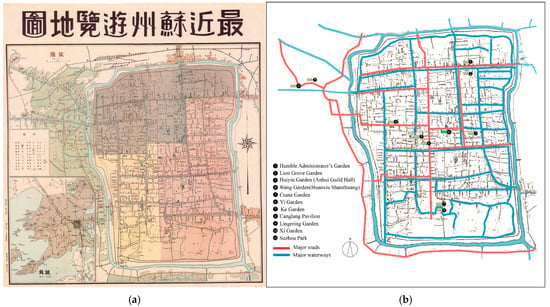
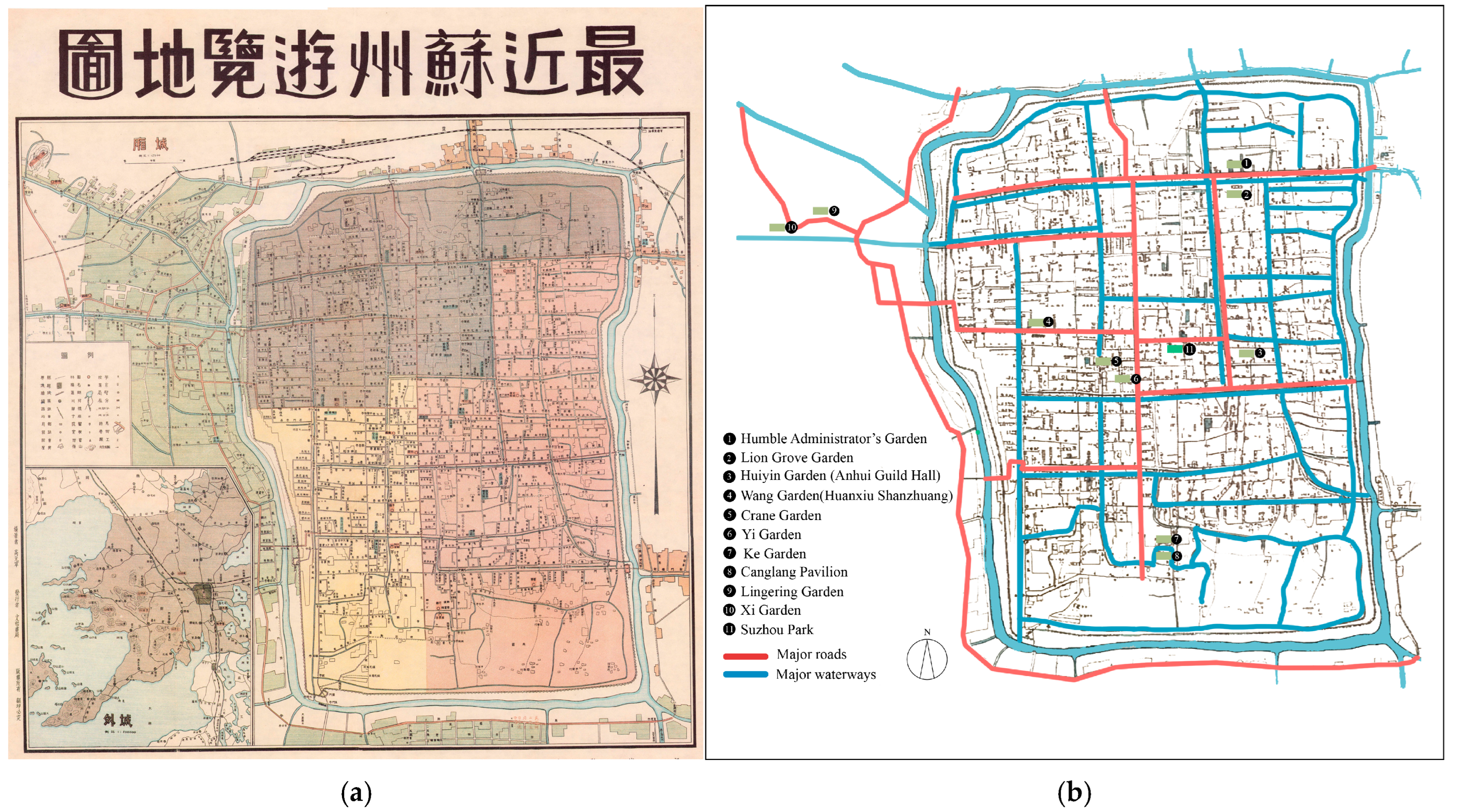
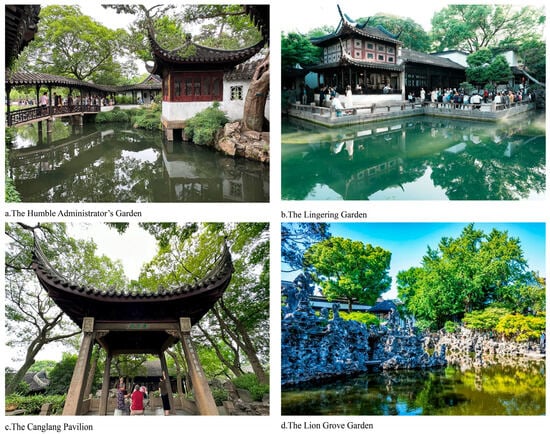
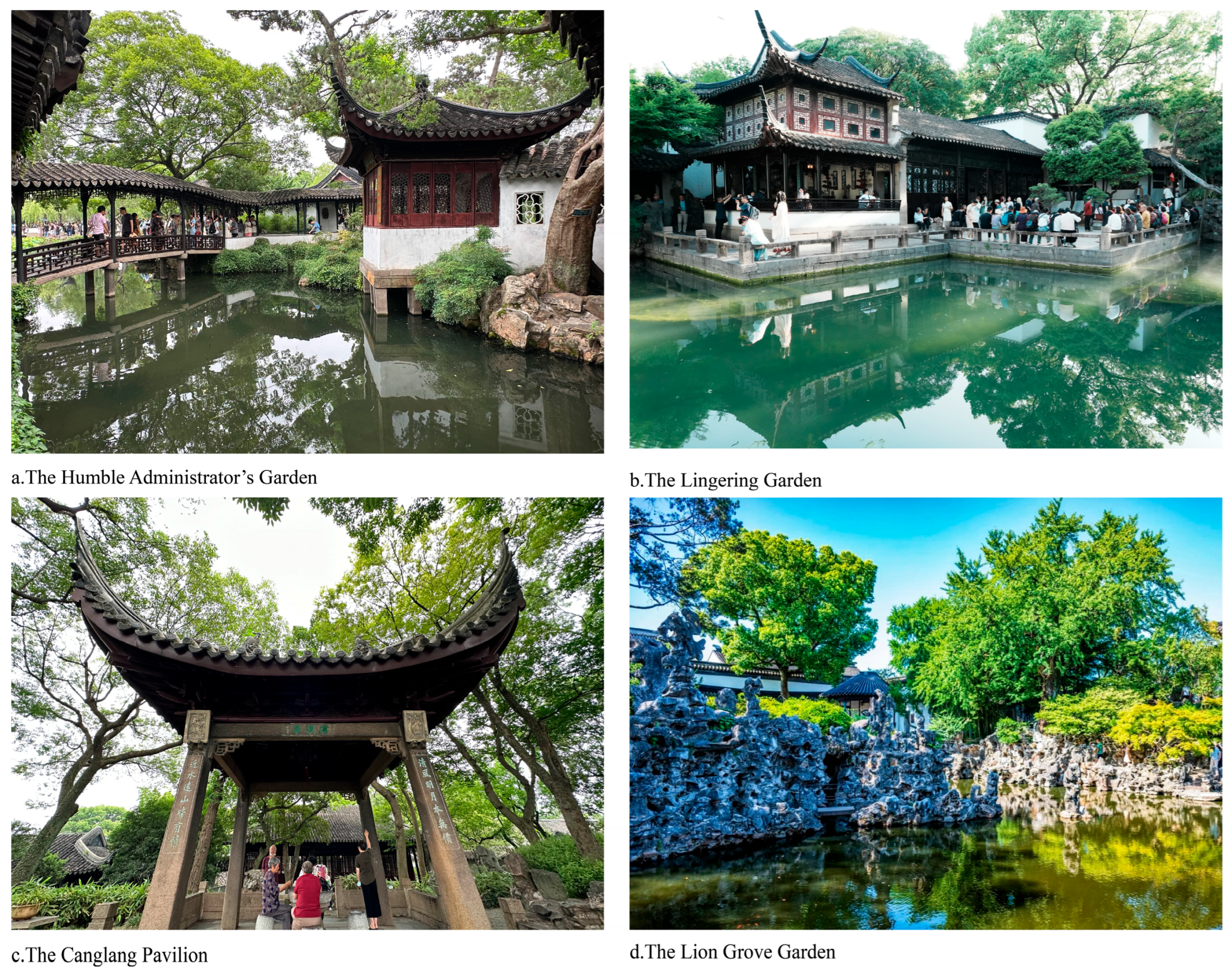
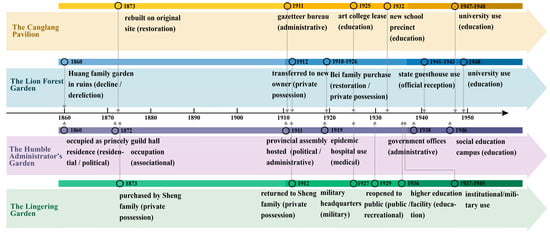
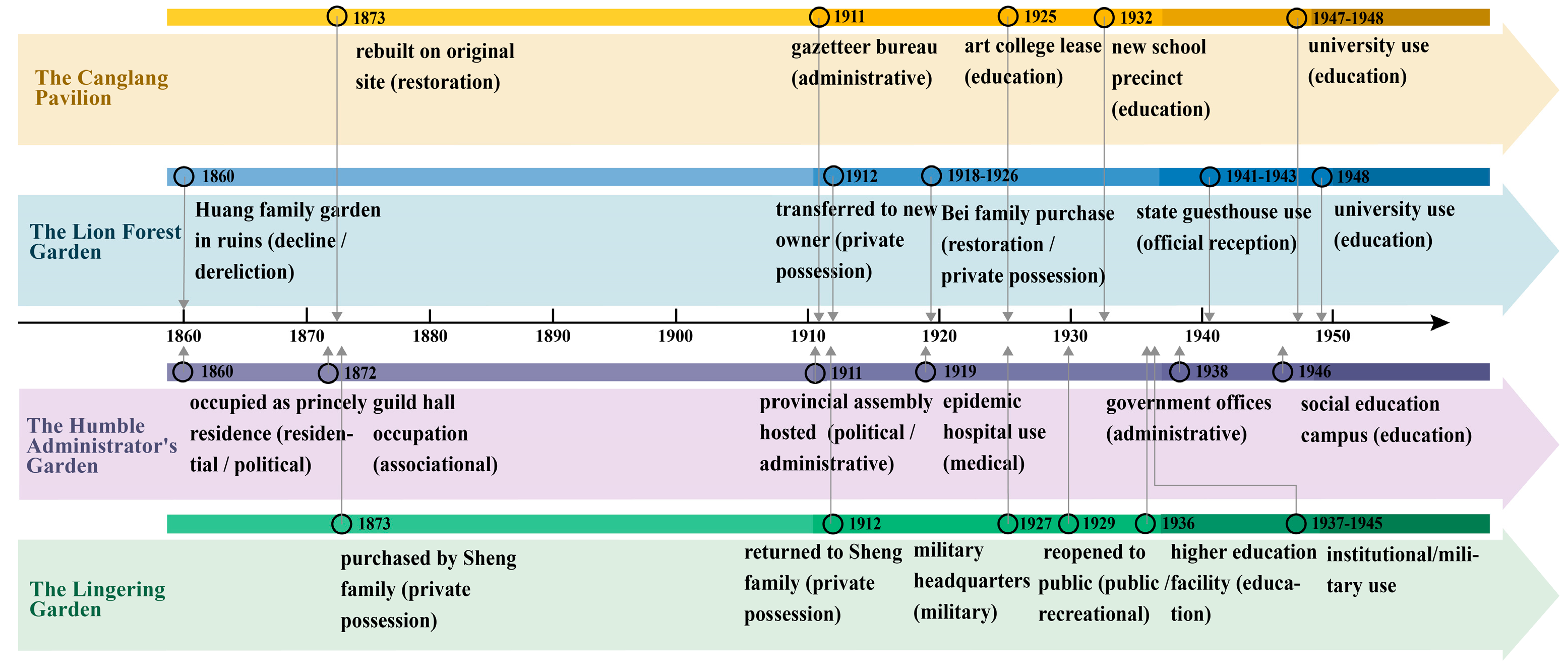
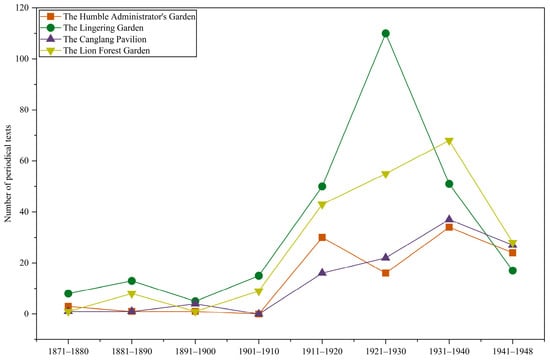
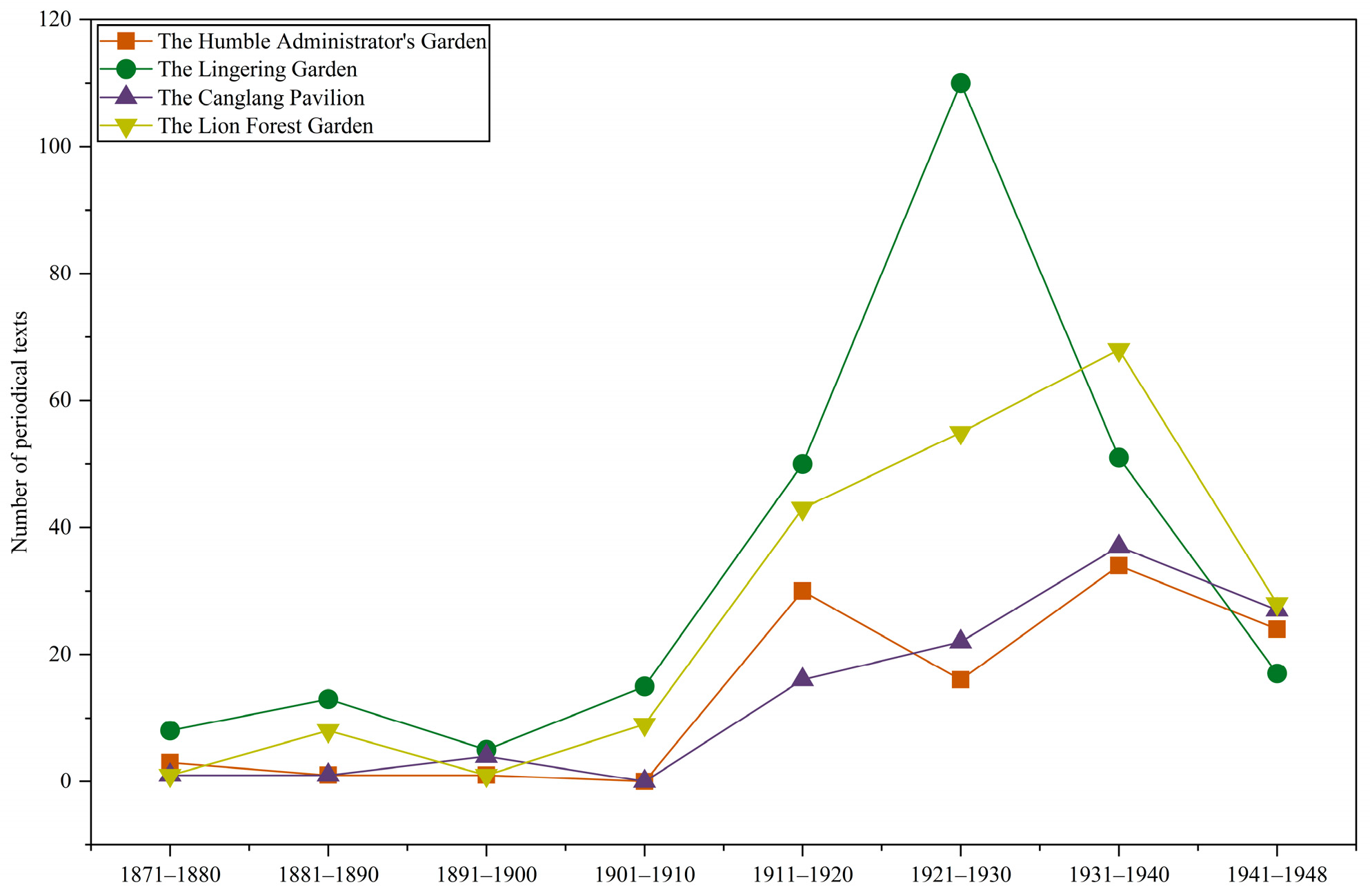
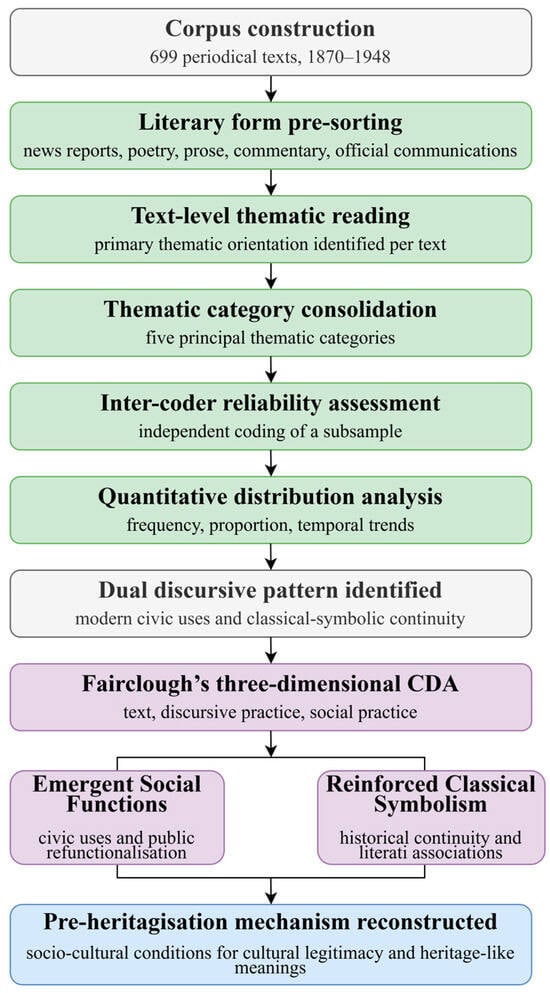
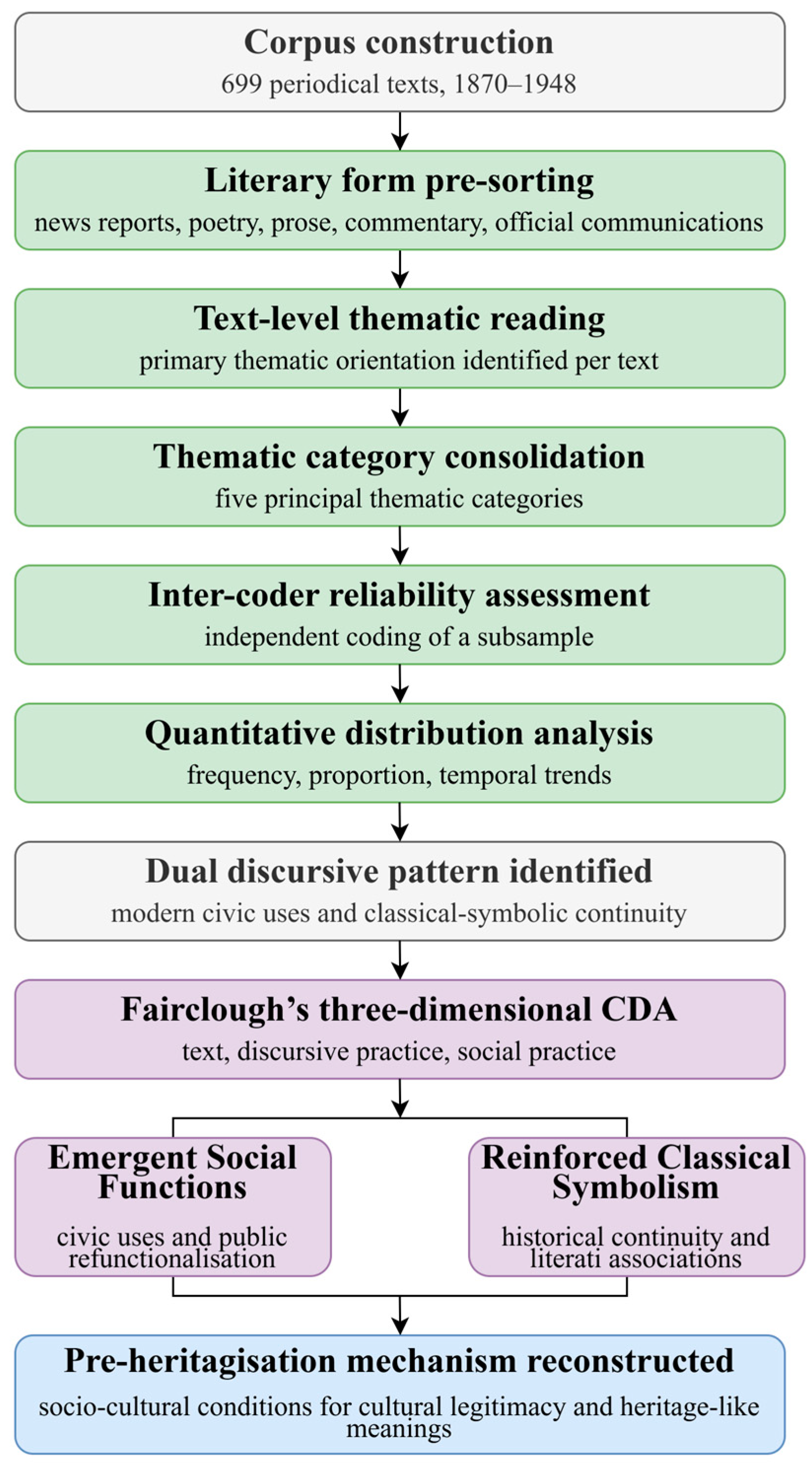
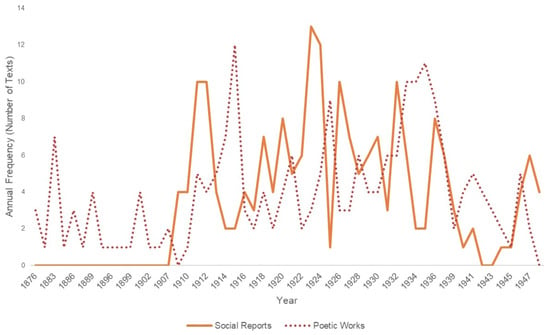
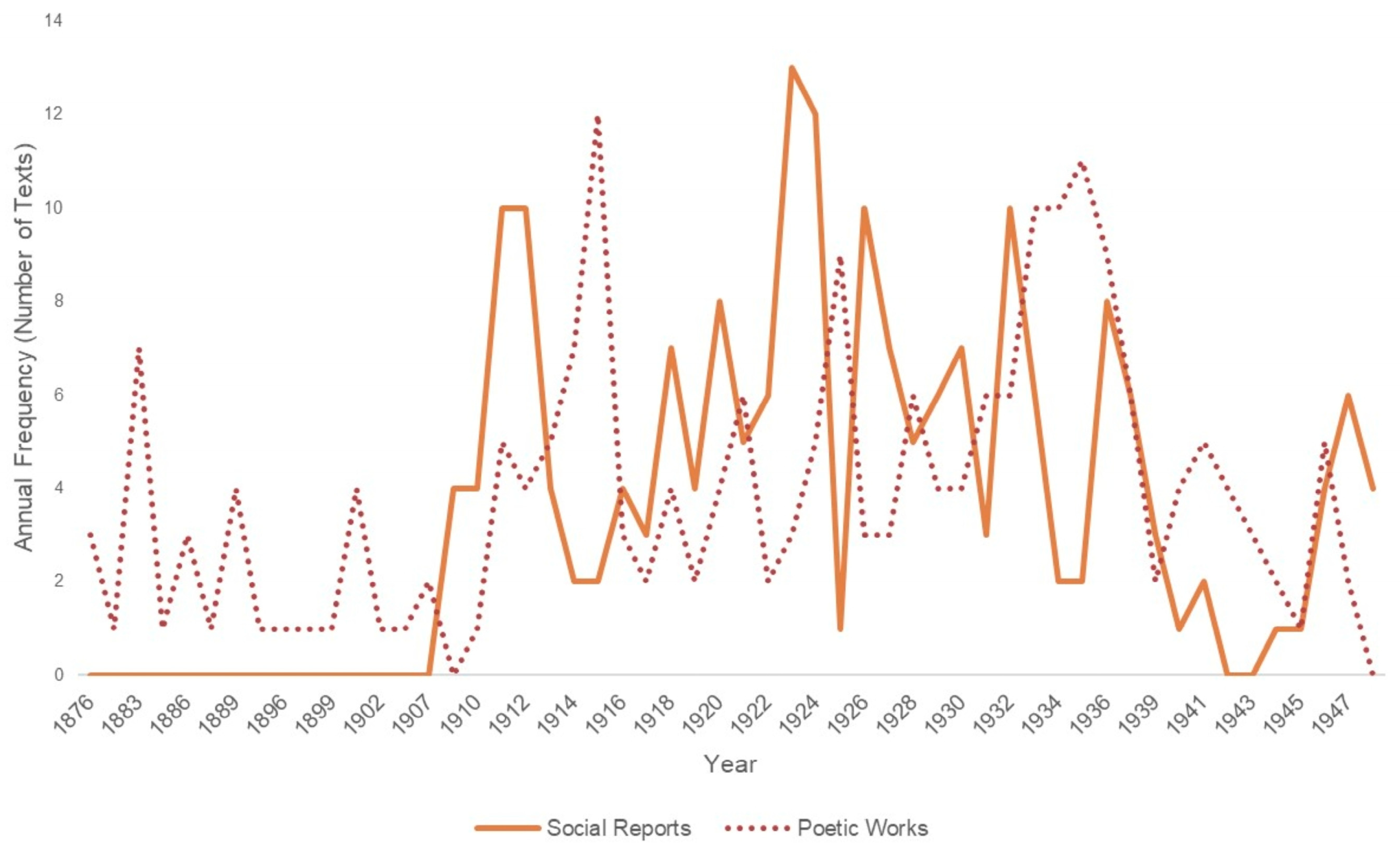
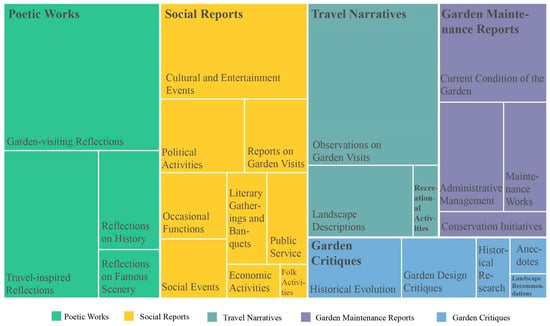
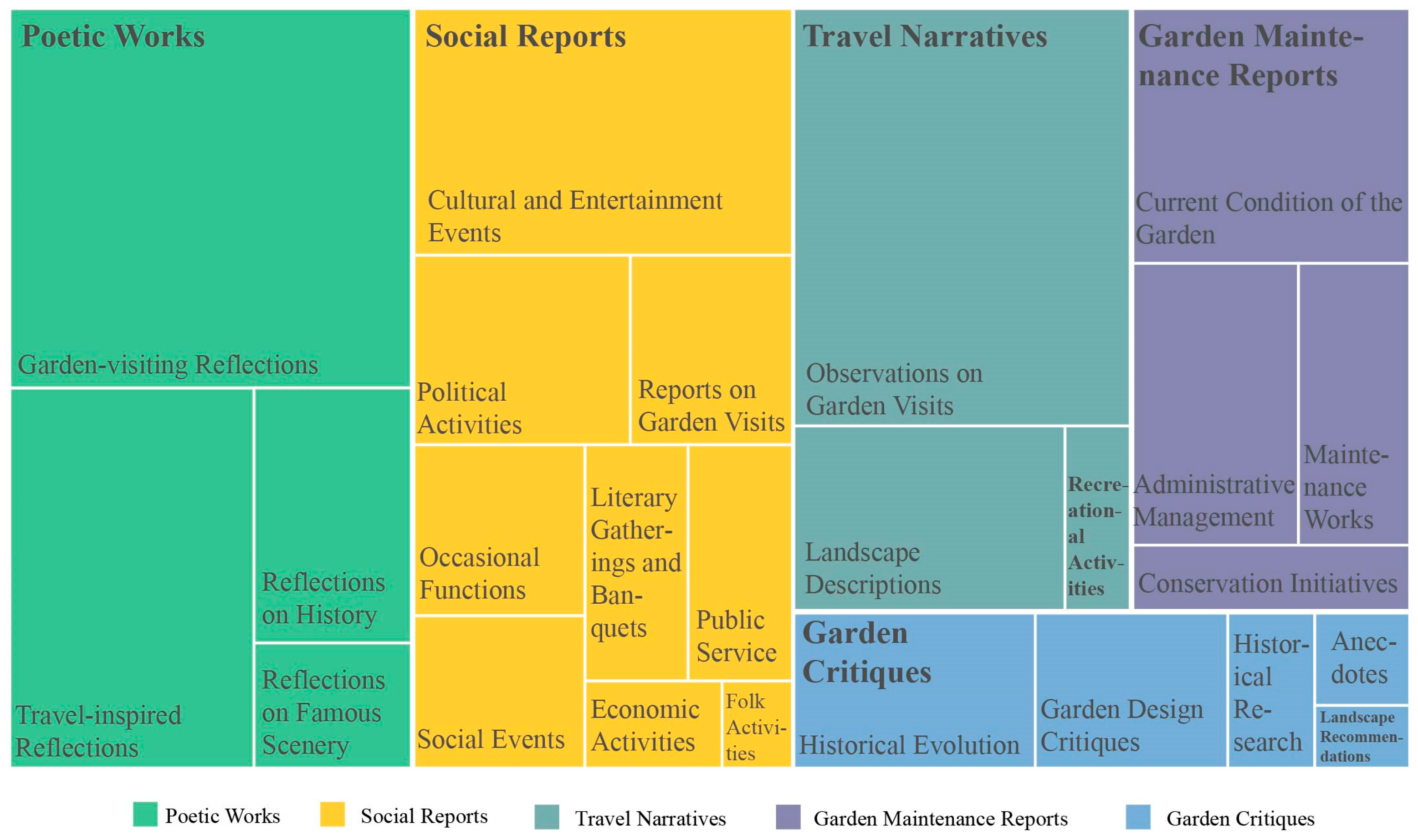
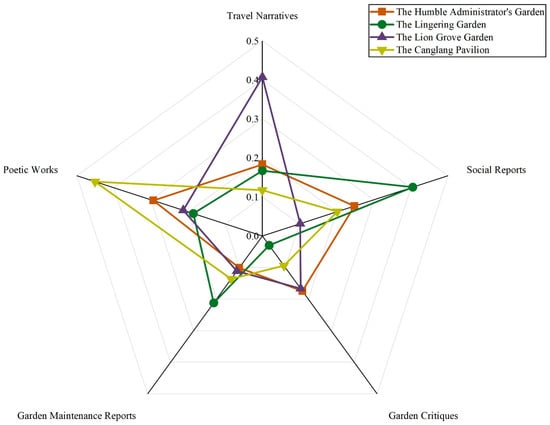
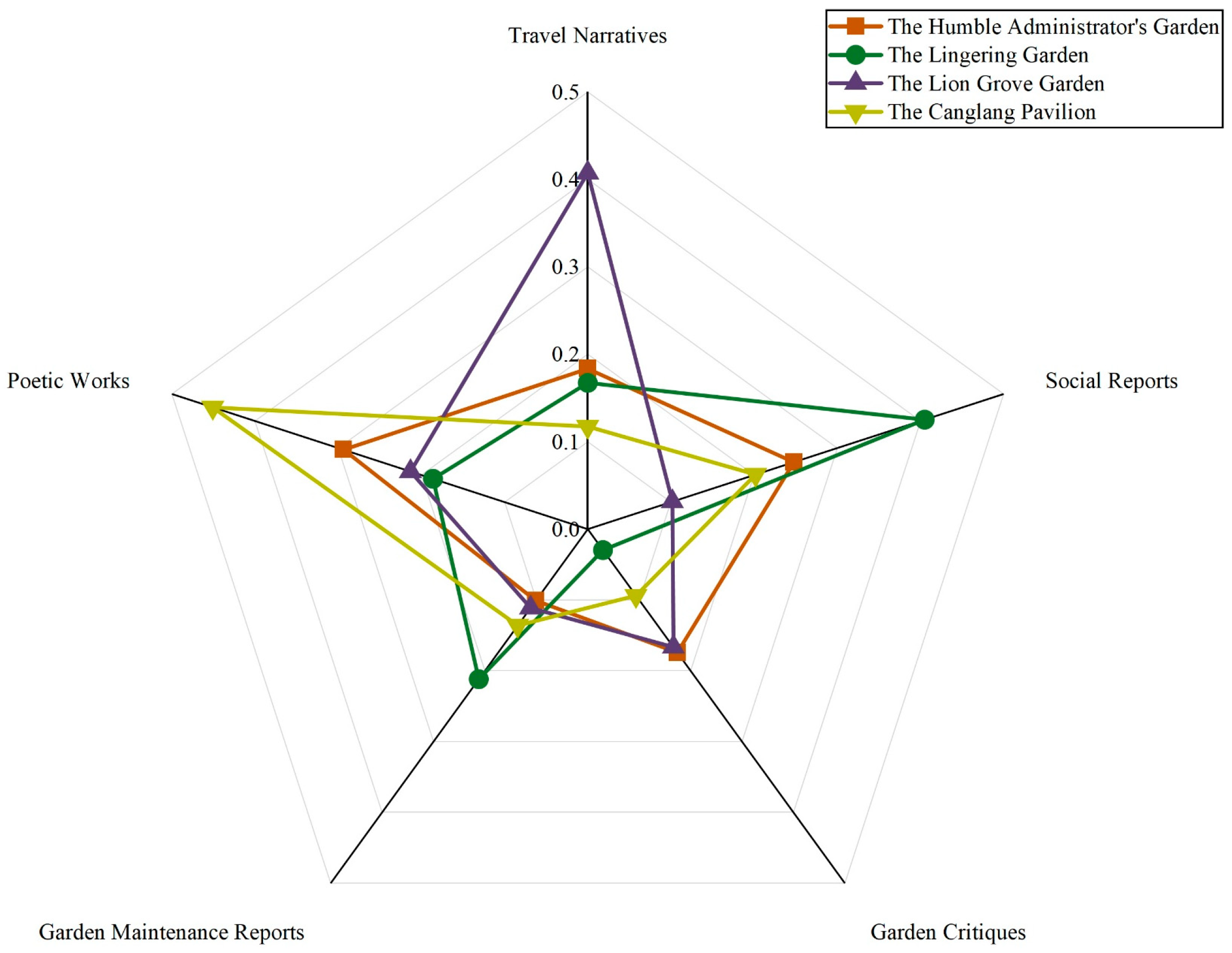
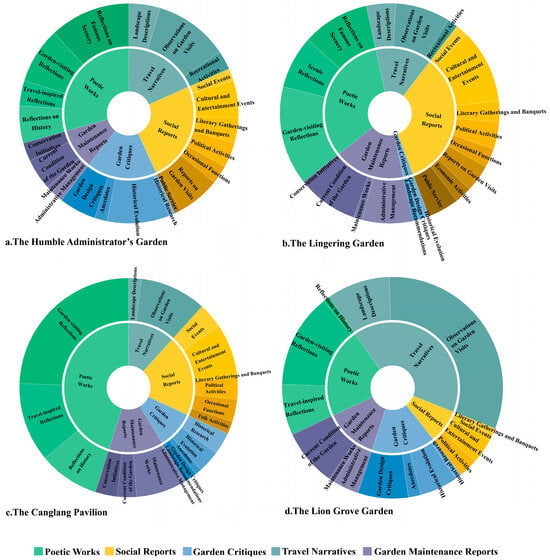
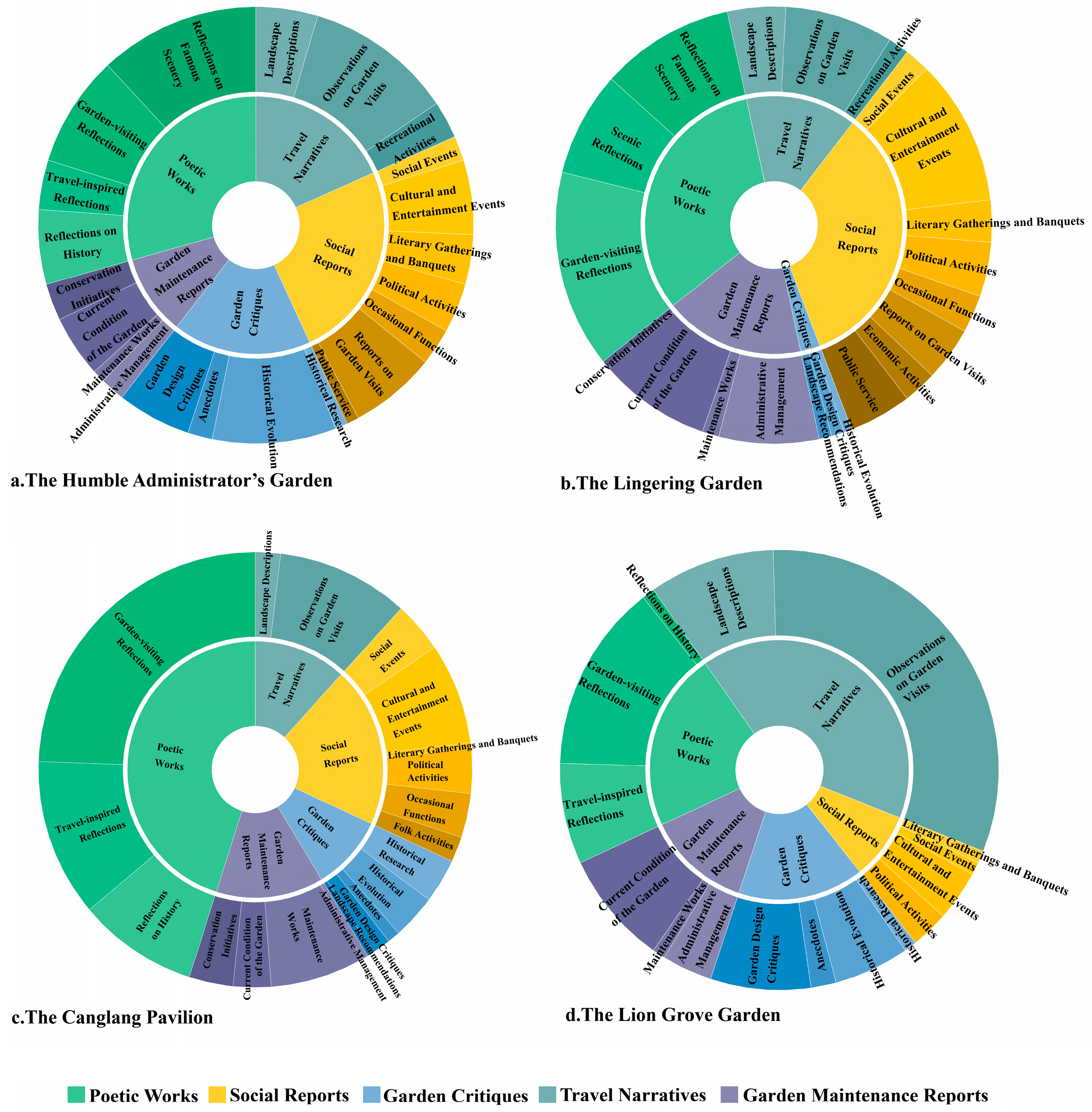
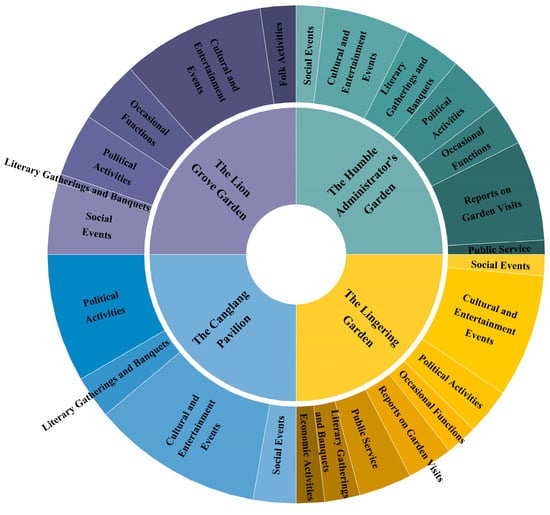
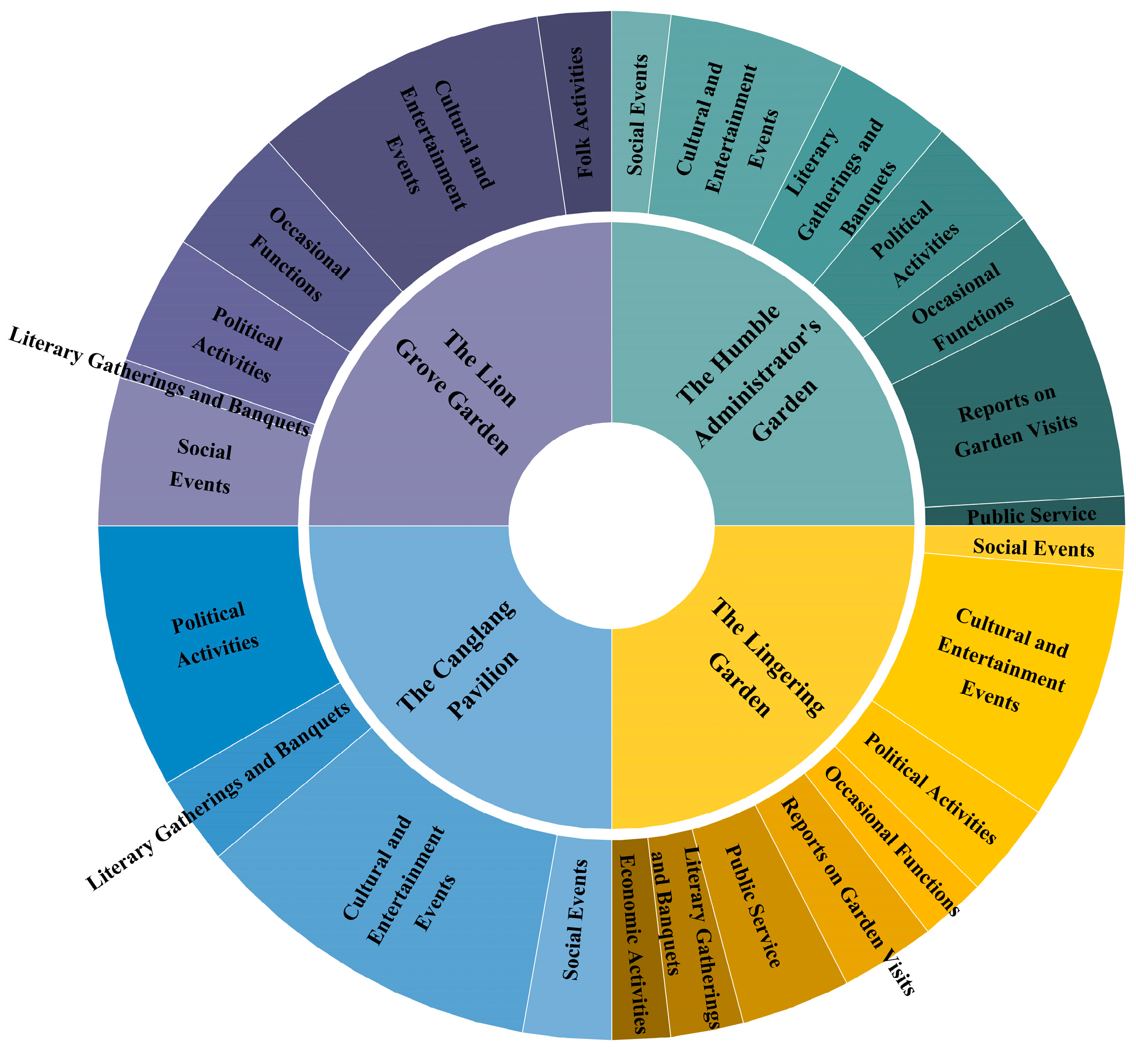

Disclaimer/Publisher’s Note: The statements, opinions and data contained in all publications are solely those of the individual author(s) and contributor(s) and not of MDPI and/or the editor(s). MDPI and/or the editor(s) disclaim responsibility for any injury to people or property resulting from any ideas, methods, instructions or products referred to in the content. |
© 2026 by the authors. Licensee MDPI, Basel, Switzerland. This article is an open access article distributed under the terms and conditions of the Creative Commons Attribution (CC BY) license.