


Abstract
The SDGs and the New Urban Agenda both stress the importance of strengthening urban–rural linkages to promote balanced and inclusive development. Taking China as a case, this paper explores the underlying mechanisms driving the evolution of urban–rural relations. Existing studies have primarily periodized China’s urban–rural relations based on institutional changes, with limited attention to their endogenous evolutionary mechanisms. Drawing on New Institutional Economics, this study develops an “institutional–technological–cognitive” framework. It argues that China’s urban–rural relations have evolved through three stages: prior to the Reform and Opening-Up, institution-led governance resulted in urban–rural separation; in the 1980s–2010s, technological change reshaped the constraints and return structures of factor flows, resulting in urban–rural imbalance; in the 2010s–the present, early urban–rural integration was marked by tensions between cognitive reconstruction and existing institutional arrangements. Throughout the three stages, cognition has evolved from ideological cognition to opportunity-driven cognition and further to value-driven cognition, with its agency continuously strengthening and gradually becoming a key variable influencing the effectiveness of institutional operations and the pathways of technological empowerment. Accordingly, urban–rural relations should be understood not only as the outcome of factor allocation shaped by institutions and technology, but also as a dynamic structure embedded in the evolution of cognition. The advancement of urban–rural integration should place greater emphasis on people-centered cognitive transformation, rather than relying on improvements in factor mobility or population urbanization.
1. Introduction
Unbalanced urban–rural development is a widespread challenge in developing countries. This imbalance results in inefficient allocation of productive factors, particularly labor, across urban and rural areas, thereby constraining economic potential and structural transformation [1,2]. It can also reinforce inequality of opportunity, making individual life chances dependent more on place of birth than on personal ability or effort [3]. Persistent institutional and spatial divides between urban and rural areas can exacerbate inequality, weaken social cohesion, and raise governance costs in an increasingly interconnected economy [4]. Recognizing these challenges, SDG 11 highlights the importance of strengthening economic, social, and environmental linkages between urban and rural areas [5], while the New Urban Agenda calls for more inclusive, resilient, sustainable, and equitable urban systems [6]. Against this background, understanding the evolution of urban–rural relations and the mechanisms through which they shape development has become a critical research agenda for promoting balanced urban–rural development.
Among these countries, China presents a particularly complex and pronounced case of urban–rural imbalance due to its adherence to the urban-centered model for decades. Existing studies mostly start from the institutional perspective, directly relating the phased evolution of urban–rural relations to the national policy cycles. Policies prioritizing heavy industrialization in the early post-1949 period are widely understood to have produced a dualistic urban–rural structure. Since the Reform and Opening-Up, institutional adjustments that continued to privilege urban development are widely seen as having partially alleviated urban–rural tensions. Following the 18th National Congress of the Communist Party of China, the proposal of the Rural Revitalization Strategy and urban–rural integration further signaled a policy turn towards integration-oriented development [7]. Accordingly, the evolution of China’s urban–rural relations has been periodized into stages of separation, mitigation, transformation, and integration [8]. Institutions—understood as the “rules of the game” that structure human interaction—are seen as generating incentive structures that shape, and in some cases determine, patterns of economic and social development [9]. The institutions shaping China’s urban–rural relations have evolved from sustaining a dualistic structure to gradually promoting urban–rural integration. Scholars have accordingly concluded that China’s urban–rural relations are transitioning from a divided state to a more integrated one [10,11]. However, while the institutional perspective offers valuable insights into the evolution of urban–rural relations, it is difficult to explain why urban–rural disparities still face deep structural obstacles when urban–rural institutional barriers are gradually weakened. To understand this issue, it is instructive to return to a core aspect of the theory of institutional change: how institutions arise and evolve.
Douglas North’s research opens up new opportunities to more systematically account for rural–urban interconnections. He emphasizes the foundational role of institutions in shaping incentive structures and long-term economic performance, while technological progress exerts continuous pressure on existing institutional arrangements by altering relative prices and transaction costs, potentially inducing institutional adjustments. However, the stability and evolution of institutions are influenced not only by technological shocks but also by the shared cognitive frameworks of social actors. As North later noted, institutional effectiveness depends on how people understand rules, anticipate the behavior of others, and evaluate their own choices [9,12]. Inspired by this, this paper proposes an integrated analytical perspective, situating urban–rural relations within the co-evolution of institutions, technology, and cognition and explaining how their causal roles in shaping China’s urban–rural relations have evolved over time.
While existing studies have provided important insights into urban–rural relations, they tend to rely on single-dimensional explanations—most notably institutional arrangements or factor mobility. This study advances the urban–rural development literature by introducing an institutional–technological–cognitive framework that highlights the dynamic interactions among these dimensions, moving beyond single-factor explanations. In particular, it brings cognition to the forefront as an independent analytical dimension, explaining why behavioral responses may deviate from institutions. By doing so, this study not only provides a more comprehensive explanation of the evolution of urban–rural relations but also reconceptualizes them as a dynamic relational structure shaped by interacting forces rather than a static outcome.
The remainder of this paper is structured as follows. Section 2 systematically reviews the explanatory frameworks of institutionalism, spatial economics, and development economics within urban–rural relations research, highlighting that single-dimensional perspectives are insufficient to fully account for the evolution of urban–rural relations and why the dynamic interplay between institutions, technology, and cognition is essential for analyzing this evolutionary process. Section 3 addresses the core question of why and how institutions undergo change. It also elaborates on the mechanisms and interactions between institutions, technology, and cognition in socio-economic transformation and develops a dynamic analytical framework suitable for explaining the evolution of urban–rural relations. Section 4, grounded in this conceptual framework, systematically analyses the relative importance of institutions, technology, and cognition in shaping urban–rural relations and how they evolve over time. Section 5 contains a discussion and summary of the operational mechanisms and theoretical and policy implications of the institutional–technology–cognitive framework. Section 6 concludes.
2. Urban–Rural Relations: A Multi-Dimensional Perspective
2.1. Factor Mobility and Spatial Perspectives
A large body of research has approached urban–rural relations from the perspective of factor allocation and mobility, viewing that these relations arise from the spatial movement of key factors such as labor, capital, and land [13]. Densely populated rural areas are often characterized by relatively low marginal productivity, prompting labor to shift from rural agriculture to urban industry [14]. Labor migration contributes to urban–rural linkages by redistributing resources such as income, knowledge, and skills [15]. As urban populations grow and industries expand, urban boundaries continuously extend into surrounding rural areas, driving the conversion of rural land to urban and industrial uses. This process reshapes the spatial structure of rural areas incorporated into urban spheres of influence in terms of infrastructure provision, public services, and population urbanization, thereby deepening functional integration and social linkages between urban and rural areas [16]. Capital tends to flow towards densely populated urban centers with industrial agglomeration and larger markets, reinforcing disparities in capital, industry, and income through positive feedback mechanisms [17]. The urban–rural flow of capital is thus understood as an endogenous outcome of economies of scale, market accessibility, and agglomeration effects [18].
The spatial flow of factors further shapes the spatial structure of urban–rural relations. Urban areas emerge as centers that absorb capital, technology and population, while rural areas become resource supply zones and passive peripheries [19]. Simultaneously, as growth poles, urban areas gradually diffuse their economic activities and technological innovations to surrounding regions, thereby stimulating regional development. However, the diffusion effect is often weaker than the polarization effect, and as a result, rural areas tend to be incorporated into city-dominated development systems, rather than moving toward balanced growth [20]. This pattern of uneven development ultimately leads to the structural locking-in of underdeveloped rural regions in subordinate positions, giving rise to one-way economic and technological dependence on cities [21]. Cities control capital, institutions, and discursive power, while rural areas face systemic marginalization, forming a rigid dual structure [22]. Despite the persistence of pronounced core–periphery characteristics in the overall structure of urban–rural relations, the continuous flow of factors between urban and rural areas constitutes a connected and interdependent space [23]. Moreover, with advances in globalization, digitalization, and artificial intelligence, urban–rural boundaries are becoming increasingly blurred, shifting the relationship from hierarchical differentiation towards functional complementarity [24].
While the factor mobility and spatial structure paradigm offers strong explanations for urban–rural relations, it downplays the role of institutional constraints. This limitation is particularly salient in highly institutionalized contexts such as China, where factor mobility is not solely driven by market mechanisms, and the institutional roots of urban–rural relations remain difficult to capture.
2.2. Institutional Perspectives
During the 1970s, economic history research was criticized for overlooking the long-term effects of institutional arrangements on economic performance [25,26]. Since then, it has become widely recognized that understanding economic history requires attention to institutions [27]. Research on China’s urban–rural relations has similarly been dominated by institution-centered analyses, with many studies attributing urban–rural dynamics to state-led institutional arrangements. The Household Registration System (Hukou), which distinguishes between agricultural and non-agricultural registration, not only functions as a basic mechanism regulating population mobility but also systematically differentiates access to land, welfare, and public services, thereby serving as a primary institutional constraint reinforcing urban–rural segmentation [28,29]. The Dual Land System (DLS)—under which urban land is owned by the state while rural land belongs to village collectives, with farmers holding only contracted management rights or usage rights—and local governments’ reliance on land finance (acquiring rural land at low cost and selling it to developers at high prices) have led to the low-cost flow of land resources from the rural to the urban sector, exacerbating inequalities in resource allocation and development opportunities between urban and rural areas [30,31].
Moreover, the urban-biased allocation of fiscal resources has concentrated capital to support superior urban public services, such as education, healthcare, and social security, further reinforcing the flow of rural resources toward urban areas and consolidating inequality. Despite multiple rounds of reform, these institutional arrangements established during the planned economy era continue to shape factor mobility, social stratification, and spatial inequality between urban and rural areas [32].
The institutional perspective effectively highlights the pivotal role of formal rules in shaping China’s dual urban–rural structure. However, there is a tension between the logic and practice of transitioning from urban–rural fragmentation to integration. Urban–rural disparities have not converged linearly, and the effects of policy reforms vary significantly across regions, social groups, and implementation levels, indicating that institutional change does not automatically shift into structural integration [33,34,35].
2.3. Technological and Cognitive Perspectives
The role of technology and cognition in urban–rural relations has also been extensively discussed. Authors have examined the impact of transport infrastructure [36], information and communication technology [37], e-commerce platforms [38], digitalization [39], agricultural technology [40], etc., on urban–rural development disparities, factor mobility, and regional integration. Such research provides crucial empirical insights into how individual technologies enhance connectivity and resource allocation efficiency. However, technology is often treated as an exogenous condition or micro-level mechanism variable, rather than being conceptualized as a core driver reshaping the overall structure of urban–rural relations. The treatment of cognition in urban–rural research is similar. Although institutional economics and evolutionary economics have long regarded cognition as the critical factor in the formation, persistence, and transformation of institutions [9], this theoretical insight has yet to be fully integrated into studies of urban–rural relations. Existing research predominantly examines migrants’ social perceptions, identity formation, and behavioral responses during rural-to-urban or transnational migration at the individual or household level [41,42], focusing on micro-level decisions such as settlement intentions, household registration choices, welfare expectations, etc. [43,44]. While such studies hold significant empirical value, they fail to effectively embed micro-level findings within macro-structural explanations of urban–rural relationship evolution. Furthermore, they do not fully capture the dynamic interplay between cognitive factors, institutional arrangements, and technological change.
In summary, factor mobility and spatial structures reveal the surface dynamics of urban–rural relations, while discussions on institutions, technology, and cognition probe their underlying drivers. However, existing studies lack a systematic examination of how these three factors jointly and sequentially shape urban–rural factor allocation and spatial structure. Therefore, this paper proposes an integrated framework to uncover the historical logic of China’s urban–rural evolution.
3. A Dynamic Institutional–Technological–Cognitive Framework
3.1. Definition of Urban–Rural Relations
From the perspectives of factor flows, space, and institutions, urban–rural relations have a dual structure characterized by institutional separation [28,29,30,31] and an imbalanced structure—for instance, center–periphery, growth pole, and dependency relations—characterized by the agglomeration of factors toward cities [19,20,21,22,23], as well as an integrative structure characterized by strengthened linkages, functional complementarity, and networking [24]. Although existing studies have deepened the understanding of urban–rural relations from multiple perspectives, their analyses largely remain at the level of interactional representations or static outcomes. They lack a clear conceptualization of urban–rural relations as a deeper relational structure and fail to fully explain how these structural forms are generated and evolve over time under the influence of institutional, technological, and cognitive factors.
To address this limitation, this study conceptualizes urban–rural relations as a dynamic relational structure shaped by the interaction of institutions, technology, and cognition, realized and sustained through factor flows. Within this framework, states such as separation, imbalance, and integration are understood as specific manifestations of this relational structure under different conditions. In this sense, the focus of this study is on urban–rural relations as a relational structure in itself. These different states are not independent objects of analysis, but rather distinct expressions of the same underlying relational structure under varying conditions.
3.2. Formal Institutions, Informal Constraints, and Cognition
To understand the evolution of the urban–rural relational structure, it is necessary to move beyond single-factor explanations and adopt an integrated perspective encompassing institutions, technology, and cognition. Within this framework, it is first essential to clarify the internal structural distinctions within institutions—particularly the distinction between formal institutions and informal constraints—and to specify their relationship to cognition, so as to avoid overlap and ambiguity in the analytical categories.
Douglass North conceptualizes institutions as consisting of formal institutions and informal constraints. An institution operates as an external system of behavioral rules and constraint mechanisms that shape individual actions through legal enforcement, social norms, or reputational incentives. Formal institutions refers to codified rules with explicit enforcement mechanisms, including constitutions, laws, property rights systems, and policy arrangements. Informal constraints, by contrast, encompass customs, traditions, codes of conduct, and moral norms. They emerge through repeated social interactions and are transmitted across generations, exerting influence through social expectations and informal sanctioning mechanisms. Their evolution is typically slower than that of formal institutions [9].
However, the dichotomy between formal institutions and informal constraints remains insufficient to fully explain the micro-level mechanisms of institutional change. To address this limitation, North, in collaboration with Arthur T. Denzau, introduced the concept of “shared mental models” to explain how individuals interpret the world under conditions of uncertainty and how such shared understandings shape the formation and evolution of institutions [9]. In his later work, North further systematized this cognitive perspective, emphasizing that institutions—whether formal or informal—are ultimately a product of the human mind [12].
Accordingly, the three concepts in North’s theoretical framework form a clear hierarchical structure. Formal institutions consist of deliberately designed and codified rule systems. Informal constraints evolve gradually in the form of customs, conventions, and social norms and operate at the collective level by exerting external constraints on behavior through social expectations and informal sanctioning mechanisms. Cognition encompasses beliefs, mental models, and ideologies, forming the interpretive framework through which individuals and groups understand the world, and functions as an internal mechanism shaping their perception and evaluation of institutional rules and their outcomes [45].
3.3. Institutional, Technological, and Cognitive Framework
Within the theory of New Institutional Economics, a representative explanation posits that institutional evolution is driven by efficiency pressures and changes in relative prices. When existing institutions fail to effectively reduce transaction costs or organize economic activities, new institutional arrangements gradually replace old ones. Consequently, long-term economic performance is not merely the outcome of technological or capital accumulation, but rather the product of incentive structures shaped by institutions [26]. However, if institutions are determined by efficiency, why do inefficient ones persist over long periods? This happens because institutional change, like technological change, exhibits path dependency and lock-in effects. Initial institutional choices—shaped by contingent events or specific historical conditions—structure subsequent incentive mechanisms and organizational arrangements. Organizations and interest groups that benefit under the prevailing institutions invest resources to consolidate and reinforce them, creating inertia. As a result, even when superior alternatives exist, the costs of switching can be prohibitively high [9].
Within a context of relatively stable institutions, technology is often regarded as a key factor driving institutional evolution [9]. Here, technology is understood in a broad sense, encompassing not only production technologies but also transport, communication, information-processing, and organizational arrangements. Technological advances alter the constraints on feasible behavior and the structure of relative payoffs, rendering actions that were previously difficult or costly more attainable [46,47]. Technological change does not directly modify institutions; instead, it tends to challenge existing institutions by influencing the choices of individuals and organizations. When new technological conditions lead to frequent circumvention or weakening of institutional constraints, tensions between institutions and actual behavior gradually accumulate, generating pressures for institutional adjustment [12,48].
Cognition plays an important role in the process of institutional evolution. Unlike institutions as an external constraint, cognition reflects how social actors interpret and make sense of rules and their outcomes. For this reason, institutions do not operate solely through formal codification or coercive enforcement; their effectiveness largely depends on how individuals perceive the legitimacy of rules and their potential consequences. When technological change gives rise to new behavioral patterns, how society interprets these behaviors—whether as deviant, exceptional, or as an acceptable new normal—determines their institutional fate. In this sense, institutional evolution often lags behind technological change. Institutional adjustment becomes viable only when existing cognition can no longer adequately account for observed outcomes and alternative interpretive schemes gradually emerge and gain widespread acceptance. Cognition may either amplify technological shocks and accelerate institutional change, or, by reinforcing established beliefs, delay institutional adjustment [12,48].
This study provides the following operational definitions of institutions, technology, and cognition, emphasizing their analytical function in explaining the evolution of urban–rural relations
- Institutions refers to the formal rules that structure interactions between urban and rural areas, including codified policies and legal arrangements such as the Hukou, land, and social security systems and urban–rural development planning. It should be noted that informal constraints typically evolve at a generational pace and, within the medium- to short-term evolution of urban–rural relations examined in this study, remain relatively stable; they can therefore be treated as background conditions rather than core variables.
- Technology refers to technological changes that substantially reshape the cost of connection and the feasibility of transactions between urban and rural areas, including both connective infrastructures that compress physical and informational distance, such as transportation and communication infrastructures, and enabling technologies that enhance efficiency, reconfigure factor allocation, and generate new economic opportunities, including agricultural and industrial production technologies as well as digital, intelligent, and e-commerce platform technologies [49,50,51].
- Cognition refers to the interpretive frameworks, value judgments, and meaning systems through which individuals and groups understand “the urban” and “the rural”, encompassing beliefs, mental models, and ideologies. Unlike informal constraints, which operate as an external rule system that directly regulates behavior, cognition does not itself constitute behavioral norms or social constraints; rather, it functions as an internal interpretive mechanism that shapes how individuals interpret and evaluate institutional rules and their outcomes, thereby indirectly influencing behavioral choices [12,45,52].
Moreover, this study conceptualizes urban–rural relations as an evolving relational structure. Their evolution is driven by the interaction of institutions, technology, and cognition, and it is realized through the flows and reallocation of three core factors—labor, capital, and land—between urban and rural areas. Although existing studies have increasingly incorporated technology as a factor of production, the traditional triad of factors remains the most fundamental set of resources in the structural reproduction of urban–rural relations and they constitute the primary variables directly regulated by existing institutional arrangements. Within the analytical framework of this study, technology is more appropriately treated as a driving force of factor mobility: by reshaping connection costs, transaction feasibility, and the production possibility frontier, it provides both the impetus and the conditions for the reallocation of labor, capital, and land across urban and rural spaces [53,54].
These three elements jointly constitute a dynamic and interactive analytical framework (Figure 1):
Figure 1.
Institutional–technological–cognitive framework.
- First, institutions provide the initial incentive structures and behavioral boundaries for the application of technology and form the institutional environment in which cognition is shaped and reproduced. Through policy implementation, institutions can further reinforce or reshape cognitive orientations, thereby guiding the behavioral choices of social actors and the direction of economic activities.
- Second, technology alters the feasibility of actions and the relative returns of different choices, thereby exerting continuous pressure on existing institutional arrangements and dominant cognitive frameworks. Moreover, technological development can also provide new pathways and supportive conditions for the realization of institutional objectives, thereby promoting institutional adjustment and cognitive updating.
- Third, cognition plays a crucial interpretive and transformative role between institutions and technology. It shapes how society understands and responds to technological change and determines whether technological shocks can be translated into demands for institutional reform, thereby influencing the direction of institutional adjustment and the social acceptance of new technologies and institutional arrangements.
- Through their ongoing interaction, institutions, technology, and cognition jointly constitute the constraints and incentives, feasibility boundaries, and behavioral orientations of factor mobility. Institutions primarily define the constraints and incentive structures governing factor flows, technology alters the feasibility conditions and cost structure of factor mobility, and cognition shapes the direction of factor flows by influencing how individuals understand urban–rural differences and development opportunities. Their combined effects give rise to specific patterns of movement and allocation of labor, capital, and land between urban and rural areas, thereby forming differentiated urban–rural relational structures across different historical stages. In turn, these structures become the initial conditions for subsequent institutional adjustment, technological application, and cognitive reconfiguration, driving the continuous evolution of urban–rural relations.
It should be noted that the dynamic framework proposed in this study rests on the premise that urban–rural factor flows are defined and constrained by formal institutional arrangements. In the absence of formal institutional arrangements between urban and rural areas, the institutional–technological–cognitive interaction mechanism emphasized in this paper would lack a foundational basis and, consequently, have limited explanatory power. Furthermore, if formal institutions impose strong constraints on urban–rural relations, the interaction among the three elements may be restricted and the trajectory of urban–rural relation is likely to be primarily determined by institutional arrangements. In addition, when technological resources are concentrated in particular actors, their application may be driven by market incentives or self-interest and institutions may not work, thereby limiting the formation of an effective interactive mechanism. Furthermore, institutions, technology, and cognition are analytically distinct but empirically intertwined. Therefore, the purpose of this framework is not to claim the strict separation of these dimensions but to highlight their relative causal importance and shifting roles across different stages of urban–rural transformation.
4. The Evolution of Urban–Rural Relations in China
4.1. The First Stage (1950s–1970s)
In the years following the founding of China in 1949, the Cold War placed the country in a profoundly hostile international environment. Compounded by the Korean War, it starkly exposed the vulnerability of China’s underdeveloped industrial foundations, which was perceived as a direct threat to national sovereignty and defense. Under conditions of technological blockade and diplomatic isolation, the state could not rely on international trade or foreign capital to address these security deficits. Consequently, the establishment of an independent and self-sufficient industrial system came to be regarded as a strategic imperative for national survival.
Heavy industry, being capital-intensive by nature, posed a formidable challenge in a context where over 90% of the population lived in rural areas and more than 80% of GDP was derived from agriculture; thus, the state could only convert agricultural surplus into industrial capital accumulation through institutional arrangements. To this end, in 1953 the State Monopoly for Purchasing and Marketing (SMPM) was implemented, under which agricultural products were procured at state-regulated low prices and then centrally allocated to urban residents through rationing. Conversely, industrial goods were sold to rural households at relatively high prices. This price scissors mechanism enabled the state to systematically transfer resources from the agricultural sector to the industrial sector [55]. Moreover, in 1958, the People’s Commune System (PCS) was established to organize rural labor into collective production, aiming to increase agricultural productivity and strengthen control over rural labor and resources. In the same year, the Hukou system was formally implemented, classifying the population into “agricultural” and “non-agricultural” status. Rural residents could only transition to non-agricultural status through narrowly defined channels—such as military service, higher education enrollment, or state-planned employment—while all other forms of rural-to-urban migration were deemed illegal. In contrast, urban residents with non-agricultural Hukou status received guaranteed access to grain rations, formal employment, housing, and social welfare benefits [56]. These institutional arrangements not only ensured a predictable and low-cost flow of agricultural surplus to urban industrial sectors but also maintained the stable operation and cost advantages of the urban industrial system through stringent restrictions on labor mobility.
Technology at this stage was clearly subordinated to the institutional path of accumulation. Limited industrial technology was highly concentrated within state-owned industrial sectors in urban areas. Cities thus gained access to relatively advanced machinery, modern organizational and managerial techniques, and a systematic system for training skilled industrial workers. Similarly, infrastructure investment in transportation and communications prioritized internal linkages within the urban industrial complex, rather than connectivity between urban and rural regions. Restricted population mobility was compounded by the long-term underdevelopment of transport and communication infrastructure in rural regions; infrastructure investment in transportation and communications prioritized internal linkages within the urban industrial complex, rather than connectivity between urban and rural regions. Agricultural technology manifested as low-level mechanization and labor-intensive production methods, with its primary objective centered on ensuring stable grain output and securing the supply of agricultural commodities required by the urban industrial workforce, rather than enhancing farmers’ productivity or income [57]. Rural areas were regarded as “technological depressions”, lacking not only modern technological inputs but even experiencing diminished efficiency in traditional farming techniques due to collectivization. The institutional framework suppressed the application of agricultural technology [58]. Technology in this stage did not emerge as an autonomous force capable of driving institutional change. Instead, it was deeply embedded within the state-led institution and served the existing structure of resource allocation [59].
Why did such markedly unequal urban–rural policies not provoke resistance but instead proceed methodically? A key explanation lies in the profound political and cognitive legacy of land reform in the early years. Through the redistribution of approximately 0.47 million km2 of land to nearly 300 million peasants, land reform utterly overturned the landlord–tenant structure. For the vast majority of poor and landless peasants, the Communist Party was not merely the founder of the regime but the grantor of their very right to survive [60]. Moreover, the historical memory of prolonged warfare meant that the people’s yearning for a stable, unified, and powerful nation overrode all other considerations. Official narratives tightly linked industrialization, national defense and survival, framing them as inseparable national imperatives. Through sustained ideological construction and organizational mobilization, the state cultivated highly empowering cognitive frameworks—for instance, portraying peasants as the backbone of the revolution, the worker–peasant alliance as the class foundation of the republic, and formerly oppressed peasants as the new masters of the country. It fostered a collective mission perception that “supporting industry through agriculture” and “contributing to national industrialization” constituted a morally exalted collective duty.
Within this discourse, peasants were not considered excluded or marginalized social groups, but rather endowed with the political identity of revolutionary subjects and foundational pillars of the state. Their economic sacrifices were thus interpreted as legitimate and necessary collective responsibilities [61]. This ideological cognition enabled the social acceptance of the urban–rural division of labor and the associated institutional transfer of resources over an extended period, significantly reducing the social friction costs of institutional operations and reinforcing the stability of the prevailing institutional structure [12,48].
In this stage, institutions coercively determined the basic direction of factor allocation. Rural labor was strictly constrained by the Hukou system and could not freely access urban labor markets. Land, under collective ownership and the PCS, was fixed within rural areas and could not be allocated across urban and rural sectors as a marketable factor of production. Agricultural surplus (capital) was systematically extracted and transferred to urban and industrial sectors. Technology was also institutionally confined to the urban industrial system and did not substantially reduce the costs of connectivity or the feasibility of transactions between urban and rural areas. An ideology centered on national industrialization and collective interests was widely accepted and internalized, reinforcing the legitimacy of this institutional arrangement and weakening the power of cognition to challenge the existing pattern of factor allocation. As a result, under institutional dominance, factor flows were locked into a unidirectional and structurally asymmetric configuration, thereby producing a highly separated urban–rural relational structure (Figure 2).
Figure 2.
The evolution of China’s urban–rural relations. Note: The “driving forces”-layer bold arrows in the first and second stages represent the key forces that sustain internal consistency among institutions, technology, and cognition. In the third stage, the bold arrow highlights the principal tension, reflecting the divergence between cognition and existing institutional arrangements. In the “transmission mechanism” layer, bold arrows in the third stage denote the strengthening of bidirectional factor flows between urban and rural areas.
4.2. The Second Stage (1980s–2010s)
Under the SMPM, DLS and PCS, land use, labor organization, and income allocation in rural areas were collectively arranged. The egalitarian distribution mechanism weakened labor incentives and resulted in persistently low agricultural productivity. Concurrently, sustained population growth intensified the survival and employment pressures borne by the agricultural sector. Finally, in 1978, under the dual pressures of subsistence needs and institutional constraints, farmers in Xiaogang Village, Anhui Province, and other areas took the lead in experimenting with the “household responsibility system” (allocating land to individual households). Although this initiative breached the PCS, its tangible yield increases prompted local governments to tacitly permit its expansion [62]. A parallel phenomenon is that while the Hukou system denies farmers legitimate pathways into cities, the “unregistered migrant population” (specifically referring to farmers who spontaneously migrated from rural areas to cities without government approval) exhibited a persistent upward trend [63]. Farmers’ deviation from existing institutions did not stem from a priori rejection of the system; rather, it emerged from growing doubts about its effectiveness, formed through practice under conditions of ineffective incentives and subsistence pressures. This form of “practical cognition,” once validated by increased agricultural output, gradually evolved into a systematic challenge to the legitimacy of the institutions and ultimately contributed to the emergence of institutional change. Accordingly, the CPC Central Committee embarked on its Reform and Opening-Up in 1978, gradually transitioning from a highly centralized planned economy toward a socialist market economy. In this process, institutional change did not unfold uniformly across regions but followed a differentiated pattern. Coastal areas were the first to develop institutional pilot schemes and policy space. Local governments actively promoted investment attraction, industrial development, and technology adoption, enabling these regions to become more deeply embedded in external technological and market systems.
During the 1980s, the CPC Central Committee institutionalized the HRS and implemented it nationwide. This reform re-established a direct linkage between labor input and economic returns, substantially enhancing farmers’ autonomy in land management, driving rapid increases in agricultural productivity and thereby releasing substantial surplus rural labor [62]. The Hukou system was gradually relaxed, shifting from “prohibiting mobility” to “guiding orderly mobility.” This arrangement reflected a compromise between the central and local governments, as well as between labor-sending and labor-receiving regions. While the central government sought to control the population size of large cities and maintain stability, coastal local governments aimed to access low-cost labor without assuming public service costs. The relaxation of migration to small towns absorbed mobility demand without burdening large-city finances. Meanwhile, the temporary residence permit system (the validity period typically ranges from three months to one year) functioned as a regulatory instrument that incorporated migrant workers into control-oriented rather than welfare-oriented frameworks. Moreover, the abolition of the SMPM and the PCS marked the formal retreat of the collectivist rural governance structure. Meanwhile, a series of reforms—including the establishment of Special Economic Zones and the opening of coastal port cities—shifted economic coordination from administrative planning toward market-based mechanisms [64]. This institutional response to endogenous efficiency pressures unleashed suppressed agency, thereby creating space for technological adoption, organizational innovation, and cognitive transformation.
In the 1990s–2010s, the rapid diffusion of the internet, mobile communications, and computer technologies ushered China into a phase of informatization. Information technologies substantially reduced market transaction costs, enhanced firm productivity and managerial efficiency, and accelerated technological diffusion and industrial upgrading. Technological change reshaped the spatial constraints and return structure of factor flows, gradually becoming the dominant force within the institutional–technological–cognitive framework. Local governments reduced spatiotemporal distances between urban and rural areas and lowered the costs of cross-regional factor flows through investments in transportation and communication infrastructure. Meanwhile, industrial policies directed factors toward urban and coastal areas, thereby reinforcing structural imbalances in urban–rural and regional development. Firms extensively imported and assimilated advanced foreign technologies, fostering industrial agglomeration and the expansion of an export-oriented economy, thereby allowing cities—particularly in coastal regions—to rapidly emerge as economic growth poles [65]. By contrast, agriculture remained constrained by small-scale household production, insufficient investment, and a shift in policy priorities toward urban and industrial sectors, leaving rural areas in a structural condition characterized by low levels of technology adoption, low returns, and limited capacity to absorb labor [66].
The combination of technology-driven urban industrial expansion and the relative backwardness of the agricultural sector gave rise to persistent patterns of mobility characterized by “semi-urbanization,” where migrant workers worked in cities while retaining their rural Hukou status, yet were excluded from urban welfare benefits [67]. This not only reflected a lagged institutional response to technological diffusion but also underscored the practical trade-offs among different actors regarding cost-sharing and benefit distribution. Under institutional constraints, land factors were incorporated into urban–rural reallocation primarily through expropriation and land-use conversion, thereby providing essential spatial support for urban expansion and industrialization. Meanwhile, rural household savings were mobilized into the urban economy through bank lending and real estate markets, further reinforcing the spatial concentration of capital in urban areas. Although marketization and technological diffusion reinforced the tendency for factors to concentrate from rural to urban areas, this process did not signify a return to institutionalized urban–rural separation. On the contrary, it was precisely the factor mobility and spatial reconfiguration enabled by technology that incorporated urban and rural areas into a unified market, fundamentally reshaping the modes of urban–rural relations.
Local governments reinforced the positioning of cities as growth poles, while firms regarded urban areas as the primary spatial loci for efficiency and profit maximization. Meanwhile, through migration practices, rural labor increasingly came to perceive cities as key pathways for upward mobility. This gave rise to what can be characterized as opportunity-driven cognition, in which cities are understood primarily as sites of economic opportunity and advancement [68]. Rural identity was no longer understood as a fixed institutional destiny but was gradually reimagined as a point of departure that could be improved through technological competence, market participation, and spatial mobility. This shift also reflected a profound internalization of the hierarchical order embedded in the urban–rural dual structure: rather than questioning the rationality of this division, individuals largely accepted it as a given reality and sought upward mobility through education, migration, and other channels of status conversion [69]. Market-oriented individualist cognition such as “the glory of wealth” and “self-realization” thus emerged [70]. Meanwhile, the central and local governments jointly reinforced the preferential positioning of cities in resource allocation and institutional support, reinforcing cities’ symbolic status as carriers of modernity and centers of development [71,72].
In this stage, farmers under subsistence pressures contributed to institutional loosening, thereby creating space for the diffusion of technology. Technological change gradually assumed a dominant role by reshaping the constraints and return structure of factor flows. Meanwhile, institutions, through differentiated arrangements, directed the diffusion of technology and the movement of factors toward cities, particularly coastal regions, while opportunity-driven cognition further reinforced migration toward urban areas. Under the combined influence of these three elements, labor, capital, and land increasingly concentrated in cities, ultimately giving rise to an urban-centered and imbalanced urban–rural structure (Figure 2).
4.3. The Third Stage (2010s to Present)
By 2010, approximately 150 million rural residents had migrated to urban areas for work, while the costs associated with reproducing their labor, for example, childcare and elderly care, remained largely borne by rural households, effectively enabling cities to absorb low-cost labor without fully internalizing these costs. This out-migration contributed to over 60 million left-behind children and a rapidly aging rural population; by 2010, nearly 100 million rural residents were aged 60 or above, representing around 15% of the rural population, and this share had risen to 23.81% by 2020, impacting the position of rural households within the urban–rural division of labor. Meanwhile, farmland abandonment has become a widespread phenomenon nationwide. Since the early 21st century, China’s cropland abandonment rate has fluctuated around 5.86%, affecting an average of 7.6 million hectares annually, further exacerbating the imbalance in urban–rural development [73,74,75].
In response, since 2012, the Chinese government has continuously advanced institutionally driven reforms oriented toward urban–rural integration, seeking to reshape the structure of urban–rural relations. A series of major policy initiatives—including the National New-type Urbanization Plan (2014–2020) [76], the Rural Revitalization Strategy [77], and subsequent policies promoting integrated urban–rural development—have been introduced following the 18th National Congress of the Communist Party of China [78]. These institutions aim to dismantle the longstanding urban–rural dual structure, facilitate the free flow and equal exchange of factors, optimize the allocation of public resources, and promote the equalization of basic public services, ultimately narrowing disparities in development and living standards between urban and rural areas (Table A1). In 2014, the State Council eliminated the distinction between agricultural and non-agricultural status in the Hukou system and relaxed residency restrictions in cities with populations under three million, creating a more equitable institutional environment for population mobility. Urban and rural pension and medical insurance systems were unified, and educational, medical, and elderly care resources were gradually decentralized to counties and townships, promoting convergence in public service provision and narrowing institutional disparities between rural and urban areas. Meanwhile, reforms such as the “three rights separation” of rural land (ownership rights, contract rights, and management rights) and homestead land and the marketization of rural collective commercial land were successively implemented, activating the roles of rural collectives and farmers in land resource allocation while simultaneously reinforcing the boundaries of collective resource governance [79].
During this stage, the central and local governments have continuously strengthened the improvement of urban and rural transportation infrastructure and significantly compressed the temporal distance between urban and rural areas, physically integrating rural regions into urban economic zones and metropolitan systems [80]. Internet platform enterprises have driven the rapid diffusion of mobile internet technologies into rural areas, enabling rural residents and various business entities to become deeply integrated into national and even global markets, thereby making digital technology a key force in reshaping urban–rural relations [81]. Rural e-commerce entrepreneurs, new types of agricultural business entities, and returning “new farmers” actively leverage e-commerce and digital financial tools to expand the boundaries of their operations, facilitating a shift in rural economic activities from traditional agricultural production toward diversified forms of development, thereby, to some extent, weakening the absolute dependence of economic development on geographic agglomeration [82]. Social media platforms have fostered instantaneous communication networks and virtual communities that transcend urban–rural boundaries, reshaping patterns of information diffusion and cultural interaction while providing new platforms for the expression of rural residents [83]. The government-led “Internet +” model further enabled high-quality services—such as education and healthcare—to extend into rural areas through digital technology, alleviating spatial inequalities in public resource allocation. Disparities between urban and rural residents in consumption patterns, entertainment, and access to information have markedly diminished, with digital lifestyles tending towards homogeneity [84].
Such institutionally driven adjustments, primarily oriented toward facilitating factor mobility between urban and rural areas, combined with the diffusion of technologies that reduce information asymmetries and spatial distance, expand market access, and extend public service provision, would be expected to accelerate the convergence of urban–rural identities and promote integration. However, in practice, rural residents generally tend to retain their rural Hukou status. The gap between the urbanization rate of the resident population and that of the Hukou population widened from 16.2 percentage points in 2015 to around 18 percentage points and has since remained at that level (Figure 3), indicating that while population flows from rural to urban areas continue, they are not accompanied by a corresponding conversion to urban Hukou status.
Figure 3.
Resident urbanization and Hukou urbanization. The data are sourced from China’s Statistical Yearbook. Since 2023, the official statistics no longer report the Hukou urbanization rate, so data for the last two years are unavailable.
The divergence between rural residents’ behavior and institutional arrangements stems from the emergence of value-driven cognition among rural residents. The implementation of the Rural Revitalization Strategy has substantially improved rural living environments and agricultural modernization, leading rural residents and broader society to increasingly perceive the countryside not as a single-function space centered on agricultural production and labor out-migration, but as a multifunctional living arena characterized by ecological value, higher quality of life, and diversified development opportunities (e.g., rural tourism, ecological agriculture, and the digital economy) [40,85,86]. Furthermore, the development of transportation infrastructure and digital technologies significantly reduces spatial distance and information asymmetries between urban and rural areas, expands market access, and facilitates the extension of public services. These changes lead rural residents to perceive greater accessibility and opportunity in rural areas [79,87,88]. In contrast, rising urban living costs, intensified educational competition, and increasing life pressures are weakening the long-standing cognition of urban superiority [89,90]. Urban residents increasingly view the countryside as a multifunctional space that offers high-quality food and rural lifestyle experiences, while rural residents increasingly regard it as a viable space for achieving a higher quality of life [91]. The “dual habitation” strategy—working in cities while retaining rural identity—and the active choices of return migration suggest that rural residents do not simply follow the institutional logic of full urbanization [92]. These behaviors are not a mechanical response to institutional incentives and constraints, but rather an active choice based on subjective assessments of urban–rural lifestyles, risks, and future expectations. This indicates that cognition, through the selective interpretation and filtering of institutional and technological signals, becomes a key mechanism shaping behavioral choices (Table A2).
In this stage, the central government, aiming to alleviate the imbalance in urban–rural development, promotes institutional reforms oriented toward facilitating factor mobility and enhancing equity between urban and rural areas, thereby providing directional incentives for both technological diffusion and cognitive restructuring. Digital technology, by compressing spatial and informational distances, expanding market access, and improving service accessibility, continuously reduces the transaction costs of factor mobility and reshapes its relative returns. Under the combined influence of institutional arrangements and technological change, cognition gradually shifts from viewing the countryside as backward to understanding it as a space characterized by higher living quality and diversified development opportunities. However, this cognitive transformation does not follow the institutional trajectory of promoting the citizenization of migrant workers. Instead, under re-evaluative and strategic cognition, rural residents tend to retain their rural identity, thereby constraining institutionally driven convergence in urban–rural identity. Through the joint effects of institutions, technology, and cognition, labor mobility exhibits a pattern characterized by both continued out-migration and return flows between urban and rural areas. Capital, while concentrating in cities, also extends into rural areas through agricultural modernization and rural industrial development. Rural land rights participate in resource allocation through transfer mechanisms. Together, these dynamics give rise to an initial stage of urban–rural integration characterized by bidirectional factor flows and a separation of identity (Figure 2).
5. Discussion
5.1. Rethinking Urban–Rural Relations: Beyond Institution-Based Periodization
Existing studies typically periodize urban–rural relations according to institutional change, implicitly assuming that institutions exert a relatively stable and continuously decisive influence across different historical stages. However, this study shows that the agency of institutions varies significantly over time. In the first stage, institutions act as the primary architects of urban–rural relations, whereas in the second and third stages they function more as mechanisms of adaptive response. They can no longer unilaterally define urban–rural relations; instead, they must seek a balance between technology and cognition. Building on this observation, this paper proposes that the evolution of urban–rural relations follows an internal logic of “consistency formation–consistency breakdown–structural reconfiguration.” Consistency formation refers to a state in which institutions, technology, and cognition are mutually aligned in their developmental direction and together sustain a stable relational structure. Consistency breakdown, by contrast, denotes the emergence of directional divergence among the three elements, resulting in tensions that cannot be resolved through incremental adjustments.
In the first stage, institutions imposed strict constraints on factor mobility and technological development while shaping cognition through ideological construction. The three elements were highly aligned, jointly sustaining a stable pattern of urban–rural separation. The transition from the first to the second stage was not driven by unilateral institutional reform; rather, it resulted from the gradual accumulation of cognitive deviations formed under survival constraints. These deviations challenged the legitimacy of existing institutional arrangements, thereby disrupting the initial alignment and triggering institutional loosening and the reconfiguration of factor flows, which ushered in a new stage of urban–rural relations.
In the second stage, institutions prioritized urban development, technological diffusion was largely concentrated in cities, and cognition widely framed cities as symbols of opportunity and modernization. This relative alignment reinforced a pattern in which labor, capital, and land continuously agglomerated in urban areas, leading to a deepening of urban–rural imbalance. The transition from the second to the third stage was primarily driven by the mounting pressures generated by long-term urban–rural disparities, which compelled a new round of reconfiguration among institutions, technology, and cognition.
In the third stage, the state has promoted institutional reforms oriented towards factor mobility and equity between urban and rural areas. During this process, technology has increasingly diffused into rural areas, and the countryside is no longer widely perceived as backward. However, as rural development becomes more diversified, rural residents do not necessarily accept the convergence of urban and rural identities; instead, many choose to retain their rural status. This structural tension indicates that institutions still need further improvement.
5.2. The Rising Agency of Cognition in Urban–Rural Transformation
The evolution of cognition in China’s urban–rural relations proceeded from ideological cognition to opportunity-driven cognition and ultimately to value-driven cognition. In the first stage, cognitive agency was extremely limited: individuals were effectively assigned identities and possessed little room for choice. In the second stage, cognitive agency became moderate, as individuals made rational decisions within a given opportunity structure, although these opportunities were themselves largely shaped by market forces and policy arrangements. In the third stage, cognitive agencies are high, with individuals actively constructing value-based preferences and making reflexive identity choices.
Across these stages, the agency of cognitive actors has increased progressively—from passive acceptance of externally imposed definitions to rational pursuit of opportunity-based gains and finally to active value judgment and identity selection. This evolution implies that attempts to shape urban–rural cognition through top-down administrative interventions are becoming increasingly ineffective. The “production” of cognition has gradually shifted from the state to individuals and society. The third stage clearly illustrates this shift. At the institutional level, restrictions on urban–rural mobility have been relaxed, and policies have actively promoted the urbanization of rural migrants. However, a large number of them choose to retain their rural Hukou status while working in cities. This form of “selective acceptance” suggests that rural migrants’ recognition of the value of diversified rural development outweighs the additional benefits associated with urban identity. As a result, individuals respond selectively to institutional arrangements based on their own value judgments, generating a structural tension between institutional objectives and actual behavioral outcomes.
5.3. Actors, Distribution, and Structural Inequality in Urban–Rural Transformation
Across all three stages, rural residents have remained in a position of structural disadvantage.
In the first stage, the evolution of urban–rural relations was primarily driven by the state-led industrialization strategy. Urban industrial sectors and the state-owned economic system served as the core actors, while farmers were strictly constrained within rural areas by the Hukou system. Urban industry, the state sector, and urban residents emerged as the main beneficiaries, whereas farmers bore the primary costs of industrial accumulation through mechanisms such as the price scissors and restrictions on labor mobility.
In the second stage, market-oriented reforms and city-oriented development strategies still made urban residents, local governments, and urban industrial sectors the primary beneficiaries. Although farmers were allowed to enter cities, they were largely incorporated into the urban economy as secondary labor, characterized by unstable employment, limited access to social security, and restricted public service provision. At the same time, local governments acquired rural land at low cost to facilitate urban expansion, while the gains from land value appreciation were largely retained within urban areas.
In the third stage, the increasing cognitive agency of rural residents does not imply the elimination of structural disadvantages. On the contrary, the very need for rural residents to weigh urban opportunities against rural identity itself is indicative of persistent inequality. Genuine integration would imply that individuals are not forced to trade off rights against opportunities. In practice, however, pursuing urban citizenship may entail the risk of losing rural land and homestead rights, while retaining rural status may place rural residents in a weaker bargaining position as capital enters the countryside, allowing a disproportionate share of the gains to be captured by external actors [93]. At this stage, cities continue to benefit from the supply of low-cost and flexible labor provided by migrant workers; capital extracts value from rural resources, including land, ecological assets, and cultural capital; and some local governments gain political performance incentives and fiscal transfers through land consolidation and rural revitalization programs. A small number of returnee entrepreneurs may also benefit, but this group is not representative. For the majority of rural residents, regardless of whether they pursue urbanization or retain rural status, they remain at the margins of benefit distribution. Farmers continue to act as adapters to institutional arrangements rather than their rule-makers.
5.4. Institutional Implications
Building on the preceding analysis of institutional–technological–cognitive interactions, a central policy implication emerges: the success of urban–rural integration hinges on whether the interests of rural residents are prioritized in the allocation of resources and the design of institutional rules.
Therefore, a people-centered development approach should be upheld, placing rural residents’ interests at the core of urban–rural integration policies. The structural tension observed in the third stage fundamentally arises from a misalignment between the transformation of rural residents’ cognition and existing institutional arrangements. Although policies have formally abolished the distinction between agricultural and non-agricultural household registration and recognized the equal status of urban and rural residents, the more critical task is to advance the substantive equalization of rights and public services, rather than relying on the pathway of “urbanizing the rural migrants’ population” to achieve institutional integration. Conditioning rural migrants’ access to rights on prior conversion to urban Hukou status effectively perpetuates urban superiority and the underlying logic of the dual household registration system.
Therefore, future progress toward urban–rural integration may require a dual-track approach. On the one hand, rural migrants’ access to the benefits of urban development should not be conditioned on Hukou status; instead, priority should be given to the substantive equalization of public services, social security, and digital infrastructure, particularly by ensuring that rural migrants enjoy urban welfare and by advancing equal provision between urban and rural areas, thereby narrowing disparities in survival conditions and development opportunities [94,95,96]. On the other hand, reforms should progressively decouple Hukou status from land entitlements, transforming rural land rights from membership-based privileges into legally protected, long-term property rights [97,98]. As institutional identity becomes gradually decoupled from asset entitlements, the synergistic effects among institutions, technology, and cognition can be more fully realized, thereby creating a more stable institutional environment for the free mobility of factors and the advancement of urban–rural integration. As the two-way flow of factors advances, institutional design should place greater emphasis on protecting farmers’ rights, particularly in key domains such as land, homestead rights, and collective assets, while strengthening their participation and bargaining power in both resource allocation and benefit distribution. This progress also implies a corresponding adjustment in the logic of governance. The role of government needs to shift gradually from a “development-oriented state” to a “service-oriented state,” with greater emphasis on institutional coordination, public service provision, and institutional repair. By fostering a more flexible and inclusive institutional environment, policy arrangements can better adapt to the evolving realities of social cognition and technological change.
6. Conclusions
This study constructs an analytical framework based on a New Institutional Economics perspective, conceptualizing the institutional–technological–cognitive dynamic framework. Urban–rural relations are defined as a dynamic relational structure jointly shaped by these three elements and realized through factor flows. Building on this conceptualization, the study conducts a stage-based analysis of the evolution of China’s urban–rural relations, revealing how dominant mechanisms vary across stages and how they shape both the direction and structure of factor flows.
The findings suggest that the evolution of urban–rural relations is not driven by any single factor but rather emerges from the interaction among institutions, technology, and cognition. In the first stage, institutions dominate factor allocation through strong constraints, producing a structure of urban–rural separation. In the second stage, technology reshapes constraints and relative returns, driving the agglomeration of factors toward urban areas and intensifying urban–rural imbalance. In the third stage, cognition is reconfigured under the joint influence of institutions and technology, creating new possibilities for integration while simultaneously generating tensions with existing institutional arrangements, thereby constraining the convergence of urban–rural identities and the realization of institutional integration.
More broadly, although the dominant mechanisms evolve across stages, farmers remain in a structurally disadvantaged position throughout: from institutional exclusion to market-based marginalization and ultimately to a condition in which, despite increasing cognitive agency, they are still required to navigate trade-offs among institutional options. This suggests that the evolution of urban–rural relations is not merely a transformation in patterns of factor mobility but also a continuous reconfiguration of rights allocation and development logics.
Based on these findings, this study argues that the key challenge for current urban–rural integration lies not in whether factors can flow, but in how institutions, technology, and cognition jointly shape the direction of factor flows and their distributive outcomes. Future policy should place greater emphasis on safeguarding farmers’ rights and enhancing their capacity for participation in this process so as to prevent the further entrenchment of existing inequalities in the course of integration.
This study makes three main contributions. First, it reconceptualizes urban–rural relations as a dynamic relational structure, thereby providing a clearer analytical lens. Second, it develops an institutional–technological–cognitive framework that captures the interacting mechanisms driving urban–rural transformation. Third, by highlighting the role of cognition in shaping behavioral deviations from institutional intentions, it offers a more comprehensive theoretical account of contemporary urban–rural dynamics.
This study has several limitations. First, while it develops a dynamic framework and provides a macro-level stage analysis, the interaction among institutions, technology, and cognition is primarily examined from a mechanistic perspective and lacks micro-level empirical validation. Second, as the analysis is based on China, the generalizability of the findings to other institutional settings remains to be tested through cross-national comparative research. Future studies could incorporate micro-level data and cross-regional comparisons to provide a more fine-grained empirical examination of the mechanisms underlying the institutional–technological–cognitive framework.
Author Contributions
S.Q.: Conceptualization, Formal analysis, Writing—original draft; G.-T.L.: Writing—review and editing, Supervision; Y.L.: Conceptualization, Methodology, Funding acquisition; B.W.: Conceptualization; R.S.R.: Supervision. All authors have read and agreed to the published version of the manuscript.
Funding
This work was supported by the General Program of the National Social Science Fund of China (Grant 25BKS158), the Key Project of Huainan Normal University (Grant 2024XJZD004), the Anhui Provincial Philosophy and Social Science Projects (Grants AHSKQ2022D050 and AHSKY2022D080), and the Anhui Provincial Humanities and Social Sciences Project (Grant 2023AH051514).
Institutional Review Board Statement
Not applicable.
Informed Consent Statement
Not applicable.
Data Availability Statement
No new data were created or analyzed in this study. Data sharing is not applicable to this article.
Acknowledgments
The authors have reviewed and edited the output and take full responsibility for the content of this publication.
Conflicts of Interest
The authors declare no conflicts of interest.
Abbreviations
The following abbreviations are used in this manuscript:
| SMPM | State Monopoly for Purchasing and Marketing |
| PCS | People’s Commune System |
| Hukou | Household Registration System |
| DLS | Dual Land System |
| HRS | Household Responsibility System |
| The CPC Central Committee | The Central Committee of the Communist Party of China |
Appendix A
Table A1.
Major policy documents on urban–rural integration in China.
Table A2.
Summary of existing studies on urban–rural dynamics in China.
References
- World Bank. World Development Report 2023: Migrants, Refugees, and Societies; World Bank: Washington, DC, USA, 2023. [Google Scholar]
- Lagakos, D. Urban-Rural Gaps in the Developing World: Does Internal Migration Offer Opportunities? J. Econ. Perspect. 2020, 34, 174–192. [Google Scholar] [CrossRef] [Scilit]
- Chetty, R.; Friedman, J.N.; Hendren, N.; Jones, M.R.; Porter, S.R. The Opportunity Atlas: Mapping the Childhood Roots of Social Mobility. Am. Econ. Rev. 2026, 116, 1–51. [Google Scholar] [CrossRef] [Scilit]
- Lenzi, C.; Perucca, G. Cities, Inequalities and the Geography of Societal Discontent in European Regions. Appl. Res. Qual. Life 2026, 21, 131–147. [Google Scholar] [CrossRef] [Scilit]
- United Nations. Transforming Our World: The 2030 Agenda for Sustainable Development; Department of Economic and Social Affairs: New York, NY, USA, 2015; Available online: https://sdgs.un.org/2030agenda (accessed on 12 March 2026).
- UN-Habitat. New Urban Agenda. Available online: https://unhabitat.org/about-us/new-urban-agenda (accessed on 11 March 2026).
- Zhang, Y.N.; Long, H.L.; Ma, L.; Tu, S.S.; Chen, K.Q. Progress in urban–rural relationship research and its implications for rural revitalization. Geogr. Res. 2019, 38, 1–11. (In Chinese) [Google Scholar]
- Zhou, L.; Wang, Q.H.; Luo, J.Z. Historical evolution, contemporary characteristics, and future prospects of the relationship between industry and agriculture and between urban and rural areas. Fujian Trib. 2022, 9, 54–62. (In Chinese) [Google Scholar]
- North, D.C. Institutions, Institutional Change and Economic Performance; Cambridge University Press: Cambridge, UK, 1990. [Google Scholar]
- Zhang, H.P. The evolution of China’s urban–rural relationship over the past 70 years: From division to integration. Chin. Rural Econ. 2019, 3, 2–18. (In Chinese) [Google Scholar]
- Zhang, K.J.; Du, C. From urban–rural overall planning, urban–rural integration, to urban–rural integrated development: Inheritance and sublimation. Rural Econ. 2019, 11, 19–22. (In Chinese) [Google Scholar]
- North, D.C. Introduction to Understanding the Process of Economic Change. In Understanding the Process of Economic Change; W.W. Norton & Company: New York, NY, USA, 2005. [Google Scholar]
- Zhu, X.; Guo, S.; Yuan, H. The Impact of Total Factor Mobility on Rural-Urban Symbiosis: Evidence from 27 Chinese Provinces. PLoS ONE 2023, 18, e0294788. [Google Scholar] [CrossRef] [Scilit] [PubMed]
- Lewis, W.A. Economic Development with Unlimited Supplies of Labour. Manch. Sch. 1954, 22, 139–191. [Google Scholar] [CrossRef] [Scilit]
- de Haas, H. Migration Transitions: A Theoretical and Empirical Inquiry into the Developmental Drivers of International Migration; Oxford University Research Archive: Oxford, UK, 2010. [Google Scholar]
- Spangler, K.; Burchfield, E.K.; Schumacher, B. Past and Current Dynamics of U.S. Agricultural Land Use and Policy. Front. Sustain. Food Syst. 2020, 4, 98. [Google Scholar] [CrossRef] [Scilit]
- Todaro, M.P.; Smith, S.C. Economic Development, 13th ed.; Pearson: Hoboken, NJ, USA, 2020. [Google Scholar]
- Krugman, P. Increasing Returns and Economic Geography. J. Political Econ. 1991, 99, 483–499. [Google Scholar] [CrossRef] [Scilit]
- Hirschman, A.O. Investment Policies and “Dualism” in Underdeveloped Countries. Am. Econ. Rev. 1957, 47, 550–570. [Google Scholar]
- Perroux, F. Note sur la notion de “pôle de croissance”. Économie Appliquée 1955, 8, 307–320. [Google Scholar] [CrossRef] [Scilit]
- Frank, A.G. The Development of Underdevelopment; New England Free Press: Boston, MA, USA, 1966. [Google Scholar]
- Krugman, P. Geography and Trade; MIT Press: Cambridge, MA, USA, 1992. [Google Scholar]
- Wei, H. Accurately Grasping the Scientific Connotations of Coordinating New-Type Urbanization and Comprehensive Rural Revitalization. China Rural Econ. 2024, 1, 1–5. (In Chinese) [Google Scholar]
- Westlund, H.; Borseková, K. The Post-Urban Hypothesis. Glob. Chall. Reg. Sci. 2025, 1, 100005. [Google Scholar] [CrossRef] [Scilit]
- North, D.C. Structure and Change in Economic History; W. W. Norton & Company: New York, NY, USA, 1981. [Google Scholar]
- North, D.C.; Thomas, R.P. The Rise of the Western World: A New Economic History; Cambridge University Press: Cambridge, UK, 1973. [Google Scholar]
- Greif, A.; Mokyr, J. Cognitive Rules, Institutions, and Economic Growth: Douglass North and Beyond. J. Institutional Econ. 2017, 13, 25–52. [Google Scholar] [CrossRef] [Scilit]
- Liu, Z. Institution and Inequality: The Hukou System in China. J. Comp. Econ. 2005, 33, 133–157. [Google Scholar] [CrossRef] [Scilit]
- Hung, J. Hukou System Influencing the Structural, Institutional Inequalities in China: The Multifaceted Disadvantages Rural Hukou Holders Face. Soc. Sci. 2022, 11, 194. [Google Scholar] [CrossRef] [Scilit]
- Whiting, S.H. Land Rights, Industrialization, and Urbanization: China in Comparative Context. J. Chin. Polit. Sci. 2022, 27, 399–414. [Google Scholar] [CrossRef] [Scilit] [PubMed]
- Zhong, S.; Wang, M.; Zhu, Y.; Chen, Z.; Huang, X. Urban Expansion and the Urban–Rural Income Gap: Empirical Evidence from China. Cities 2022, 129, 103831. [Google Scholar] [CrossRef] [Scilit]
- Zhang, L.; Luo, B.L. China’s industry–agriculture and urban–rural relations: Historical evolution, basic experience, and adjustment strategies. Chin. Rural. Econ. 2023, 6, 2–21. (In Chinese) [Google Scholar] [CrossRef]
- Liu, J.; Wei, K.; Shuai, Q. Impact of the New Round of Hukou System Reforms on Rural Household Development Resilience in China. Sci. Rep. 2025, 15, 17098. [Google Scholar] [CrossRef] [Scilit] [PubMed]
- Hao, L. Impact of Relaxing the Hukou Constraints on Return Migration Intentions: Evidence from China. Popul. Res. Policy Rev. 2022, 41, 583–607. [Google Scholar] [CrossRef] [Scilit]
- Lu, C.; Chen, J.; Li, J.; Wang, X. How Urban Welfare Affects the Hukou Selection of Rural Migrants That Belong to Dual-Hukou Families in China. Comp. Migr. Stud. 2025, 13, 4. [Google Scholar] [CrossRef] [Scilit]
- Li, W.; Wang, X.; Hilmola, O.-P. Does High-Speed Railway Influence Convergence of Urban-Rural Income Gap in China? Sustainability 2020, 12, 4236. [Google Scholar] [CrossRef] [Scilit]
- Dong, Y.; Luo, W.; Zhang, X. Information and Communication Technology Diffusion and the Urban–Rural Income Gap in China. Pac. Econ. Rev. 2024, 29, 159–186. [Google Scholar] [CrossRef] [Scilit]
- Wang, L.; Sun, Y. Digital Dividends? Rural E-Commerce Policy and Urban-Rural Income Disparity in China. Telecommun. Policy 2025, 49, 103058. [Google Scholar] [CrossRef] [Scilit]
- Thonipara, A.; Sternberg, R.; Proeger, T.; Haefner, L. Digital Divide, Craft Firms’ Websites and Urban-Rural Disparities—Empirical Evidence from a Web-Scraping Approach. Rev. Reg. Res. 2023, 43, 69–99. [Google Scholar] [CrossRef] [Scilit]
- Liao, R.; Wei, Y.; Bai, Y.; Liu, J. Bridging the Divide: How Agricultural Technological Innovation Narrows the Urban–Rural Income Gap in China. Front. Sustain. Food Syst. 2025, 9, 1595161. [Google Scholar] [CrossRef] [Scilit]
- Atterberry, A.L. Transnational Migration, Ethnic Identity, and Blurred Boundaries: Indian American Youth Redefine Being a Second-Generation Immigrant; Emerald Publishing Limited: Bingley, UK, 2022; Volume 29, pp. 51–72. [Google Scholar]
- Zheng, N.; Wang, S.; Wang, H.; Ye, S. Rural Settlement of Urban Dwellers in China: Community Integration and Spatial Restructuring. Humanit. Soc. Sci. Commun. 2024, 11, 1–12. [Google Scholar] [CrossRef] [Scilit]
- Li, Z.; Gao, F.; Hu, X.; Wu, Y.; Li, M. Relative Poverty and Urban Living Willingness of New-Generation Migrant Workers—Evidence from the China Migrant Dynamics Survey. Cities 2024, 153, 105258. [Google Scholar] [CrossRef] [Scilit]
- Liu, C.; Ren, F.; Fan, Z. The Effect of Urban Experience on the Settlement Intention of Rural Migrants: Evidence from China. Sustainability 2024, 16, 5671. [Google Scholar] [CrossRef] [Scilit]
- Denzau, A.T.; North, D.C. Shared Mental Models: Ideologies and Institutions. Kyklos 1994, 47, 3–31. [Google Scholar] [CrossRef] [Scilit]
- Nelson, R.R.; Sampat, B.N. Making sense of institutions as a factor shaping economic performance. J. Econ. Behav. Organ. 2001, 44, 31–54. [Google Scholar] [CrossRef] [Scilit]
- Mokyr, J. The Lever of Riches: Technological Creativity and Economic Progress; Oxford University Press: Oxford, UK, 1992. [Google Scholar]
- Greif, A. Institutions and the Path to the Modern Economy: Lessons from Medieval Trade; Cambridge University Press: Cambridge, UK, 2006. [Google Scholar]
- Thomä, J. An Urban-Rural Divide (or Not?): Small Firm Location and the Use of Digital Technologies. J. Rural Stud. 2023, 97, 214–223. [Google Scholar] [CrossRef] [Scilit]
- Harvey, D. The Condition of Postmodernity. In The New Social Theory Reader; Routledge: New York, NY, USA, 2008. [Google Scholar]
- Perez, C. Technological Revolutions and Techno-Economic Paradigms. Camb. J. Econ. 2010, 34, 185–202. [Google Scholar] [CrossRef] [Scilit]
- Böhm, R.; Rusch, H.; Baron, J. The Psychology of Intergroup Conflict: A Review of Theories and Measures. J. Econ. Behav. Organ. 2020, 178, 947–962. [Google Scholar] [CrossRef] [Scilit]
- Tacoli, C. Rural-Urban Interactions: A Guide to the Literature. Environ. Urban. 1998, 10, 147–166. [Google Scholar] [CrossRef]
- Xiang, B.; Chen, Y.; Zhang, Y. Effects of the Pilot Policy on Integrated Urban-Rural Development in China: A Quasi-Natural Experiment Analysis. Cities 2026, 168, 106420. [Google Scholar] [CrossRef] [Scilit]
- Cui, X.L. Unified procurement and distribution and industrial accumulation. Res. Chin. Econ. Hist. 1988, 4, 120–135. (In Chinese) [Google Scholar]
- Cai, F.; Du, Y.; Wang, M.Y. Hukou system and labor market protection. Econ. Res. J. 2001, 12, 41–49. (In Chinese) [Google Scholar]
- Lin, J.Y. Institutional Reforms and Dynamics of Agricultural Growth in China. Food Policy 1997, 22, 201–212. [Google Scholar] [CrossRef] [Scilit]
- Lin, J.Y. Collectivization and China’s Agricultural Crisis in 1959–1961. J. Political Econ. 1990, 98, 1228–1252. [Google Scholar] [CrossRef] [Scilit] [PubMed]
- Riskin, C. China’s Political Economy: The Quest for Development Since 1949; Oxford University Press: New York, NY, USA, 1987. [Google Scholar]
- Perkins, D.H. Agricultural Development in China, 1368–1968; Routledge: New York, NY, USA, 2017. [Google Scholar]
- Perry, E. Moving the Masses: Emotion Work in the Chinese Revolution. Mobilization Int. Q. 2002, 7, 111–128. [Google Scholar] [CrossRef] [Scilit]
- Lin, J.Y. The Household Responsibility System in China’s Agricultural Reform: A Theoretical and Empirical Study. Econ. Dev. Cult. Change 1988, 36, S199–S224. [Google Scholar] [CrossRef] [Scilit]
- Mallee, H. In Defence of Migration: Recent Chinese Studies on Rural Population Mobility. China Inf. 1995, 10, 108–140. [Google Scholar] [CrossRef] [Scilit]
- Johnson, D.G. Economic Reforms in the People’s Republic of China. Econ. Dev. Cult. Change 1988, 36, S225–S245. [Google Scholar] [CrossRef] [Scilit]
- Lin, J.Y. China and the Global Economy 1. China Econ. J. 2011, 4, 1–14. [Google Scholar] [CrossRef] [Scilit]
- Zweig, D. The Rural-Urban Divide: Economic Disparities and Interactions in China. By John Knight and Lina Song. Oxford: Oxford University Press, 1999. Xvii, 352 Pp. $85.00 (Cloth). J. Asian Stud. 2001, 60, 169–170. [Google Scholar] [CrossRef] [Scilit]
- Chunguang, W. A Study of Floating Rural People’s “Semi-Urbanization”. Sociol. Stud. 2006, 5, 107–122. [Google Scholar]
- Tai, H. The Stages of Economic Growth: A Non-Communist Manifesto. By W. W. Rostow. Third Edition. Cambridge: Cambridge University Press, 1990. xlviii, 272 pp. J. Asian Stud. 1991, 50, 896–898. [Google Scholar] [CrossRef] [Scilit]
- Bourdieu, P. The Logic of Practice; Stanford University Press: Stanford, CA, USA, 1990. [Google Scholar]
- Lewis, J.W.; Litai, X. Social Change and Political Reform in China: Meeting the Challenge of Success. China Q. 2003, 176, 926–942. [Google Scholar] [CrossRef] [Scilit]
- Chan, K.W. Fundamentals of China’s Urbanization and Policy. China Rev. 2010, 10, 63–93. [Google Scholar]
- Zhang, Y.; Jiang, T.; Sun, J.; Fu, Z.; Yu, Y. Sustainable Development of Urbanization: From the Perspective of Social Security and Social Attitude for Migration. Sustainability 2022, 14, 10777. [Google Scholar] [CrossRef] [Scilit]
- He, B.; Fan, J.; Liu, N.; Li, H.; Wang, Y.; Williams, J.; Wong, K. Depression Risk of ‘Left-behind Children’ in Rural China. Psychiatry Res. 2012, 200, 306–312. [Google Scholar] [CrossRef] [Scilit] [PubMed]
- Tian, G.; Jin, C.; Wu, W. Too Old to Spend? Understanding the Consumption of the Elderly in China. China Econ. Rev. 2024, 88, 102286. [Google Scholar] [CrossRef] [Scilit]
- Chan, K.W. The Household Registration System and Migrant Labor in China: Notes on a Debate. Popul. Dev. Rev. 2010, 36, 357–364. [Google Scholar] [CrossRef] [Scilit]
- The State Council of the People’s Republic of China. National New-Type Urbanization Plan (2014–2020); The State Council Gazette: Beijing, China, 2014. Available online: https://www.gov.cn/gongbao/content/2014/content_2644805.htm (accessed on 11 March 2026).
- The CPC Central Committee and the State Council. Opinions on Implementing the Rural Revitalization Strategy. Available online: https://www.gov.cn/zhengce/2018-02/04/content_5263807.htm (accessed on 11 March 2026).
- Hu, J. Report to the 18th National Congress of the Communist Party of China. 2012. Available online: https://politics.people.com.cn/n/2012/1118/c1001-19612670.html (accessed on 11 March 2026).
- Yu, Y.; Feng, S. Does the Rural Homestead Titling Program Promote the Citizenization of Rural Migrants in China? Habitat Int. 2025, 162, 103431. [Google Scholar] [CrossRef] [Scilit]
- Wang, Z.; Sun, S. Transportation Infrastructure and Rural Development in China. China Agric. Econ. Rev. 2016, 8, 516–525. [Google Scholar] [CrossRef] [Scilit]
- Duanmu, X.; Yu, J.; Yuan, X.; Zhang, X. How Does Digital Infrastructure Mitigate Urban–Rural Disparities? Sustainability 2025, 17, 1561. [Google Scholar] [CrossRef] [Scilit]
- Liu, Y.; Dong, C. Digital Finance, Social Welfare Investment, and Urban–Rural Income Inequality: Moderating Role of Regional Economics and Regional Disparities. Financ. Res. Lett. 2025, 77, 107077. [Google Scholar] [CrossRef] [Scilit]
- Wu, X.; Liu, C. Digitalising Rural Lifestyles: Online Platforms and Everyday Life in Chinese Villages. Geoforum 2025, 159, 104206. [Google Scholar] [CrossRef] [Scilit]
- Zhang, Y.; Hainan, L.; Feng, F.; Wu, X. Digital Economy, Education, Human Capital and Urban–Rural Income Disparity. Financ. Res. Lett. 2025, 71, 106464. [Google Scholar] [CrossRef] [Scilit]
- Qian, J.; Lu, Y.; Cai, Y. Culture-Led Rural Revitalisation in China: Relational Practices of Materiality, Creativity, and Sustainability. Habitat Int. 2025, 165, 103557. [Google Scholar] [CrossRef] [Scilit]
- Wei, Y.; Zhang, A.; Ma, Y. A Bibliometric Review of Rural Living Environment Improvement Research in China Based on CNKI Database: 1992–2022. Sustainability 2023, 15, 6561. [Google Scholar] [CrossRef] [Scilit]
- Wang, X.; Yi, F.; Cai, Y. The Effect of Rural E-Commerce Development on Return Migration Intentions: Evidence from the China Migrants Dynamic Survey. Appl. Econ. Lett. 2023, 31, 2104–2109. [Google Scholar] [CrossRef] [Scilit]
- Liu, L.; Xu, J.; Zhang, Z.; Bi, Y. Assessing the Digital Village Development in China and Its Driving Factors: An Analysis Using Online Media Data. Habitat Int. 2026, 168, 103707. [Google Scholar] [CrossRef] [Scilit]
- Ouyang, Y.; Cai, H.; Yu, X.; Li, Z. Capitalization of Social Infrastructure into China’s Urban and Rural Housing Values: Empirical Evidence from Bayesian Model Averaging. Econ. Model. 2022, 107, 105706. [Google Scholar] [CrossRef] [Scilit]
- Liao, Y.; Song, J.; Zuo, W.; Luo, R.; Zhuang, X.; Wu, R. The Impact of Housing Prices on Chinese Migrants’ Return Intention: A Moderation Analysis of Public Services. Buildings 2025, 15, 1666. [Google Scholar] [CrossRef] [Scilit]
- Wu, M.; Zhang, Q.F.; Donaldson, J. Post-Productivism and Rural Revitalization in China: Drivers and Outcomes. J. Rural Stud. 2024, 110, 103382. [Google Scholar] [CrossRef] [Scilit]
- Fan, Y.; Gao, M.; Bi, L.; Lee, C.L.; Yin, G. Land Rights, Resource Allocation and Urban Settlement Choices of Migrant Workers in Yunnan, Western China. Land Use Policy 2025, 148, 107411. [Google Scholar] [CrossRef] [Scilit]
- Shi, D.; Chen, Q. From Bidirectional Factor Flows to the Reconfiguration of Capital Power: Zhejiang’s Practice of Urban–Rural Integration and Its Theoretical Implications. City Plan. Rev. 2026, 50, 93–101. (In Chinese) [Google Scholar]
- The CPC Central Committee and the State Council. Opinions on Further Safeguarding and Improving People’s Livelihoods and Resolving Urgent Public Concerns. Available online: https://www.gov.cn/zhengce/202506/content_7027015.htm (accessed on 11 March 2026).
- Huang, H.; Zhang, Z. Equalization of Basic Public Services Enabled by Digitization: A Study of Mechanism and Heterogeneity. PLoS ONE 2025, 20, e0317207. [Google Scholar] [CrossRef] [Scilit] [PubMed]
- Zhang, N.; Ding, Y. Urban-Rural Equalization of Basic Public Services, Fertility Behavior and Growth. Int. Rev. Econ. Financ. 2026, 105, 104853. [Google Scholar] [CrossRef] [Scilit]
- The CPC Central Committee and the State Council. Opinions on Promoting Urbanization with County Seats as Important Carriers. 2022. Available online: https://www.gov.cn/zhengce/2022-05/06/content_5688895.htm (accessed on 11 March 2026).
- Li, H.; Chen, K.; Yan, L.; Yu, L.; Zhu, Y. Citizenization of Rural Migrants in China’s New Urbanization: The Roles of Hukou System Reform and Rural Land Marketization. Cities 2023, 132, 103968. [Google Scholar] [CrossRef] [Scilit]
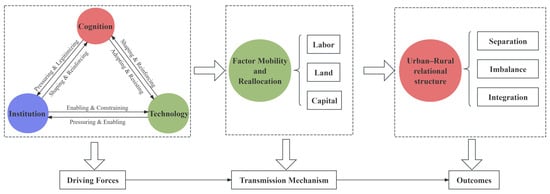
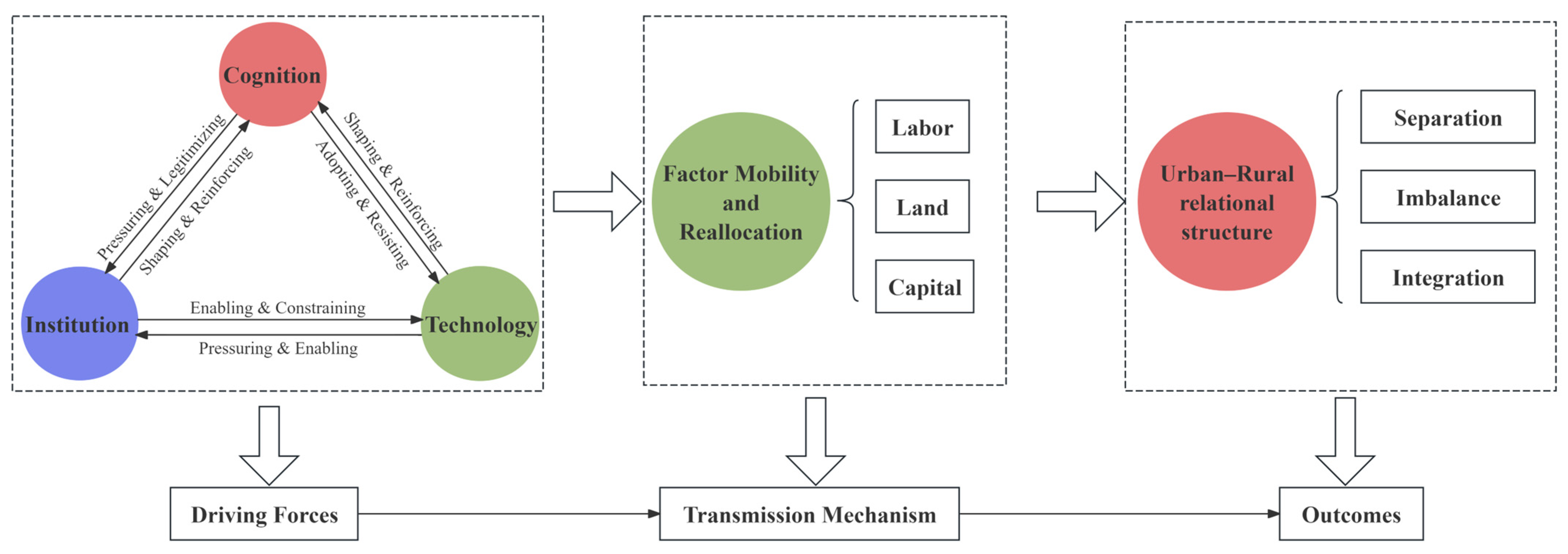
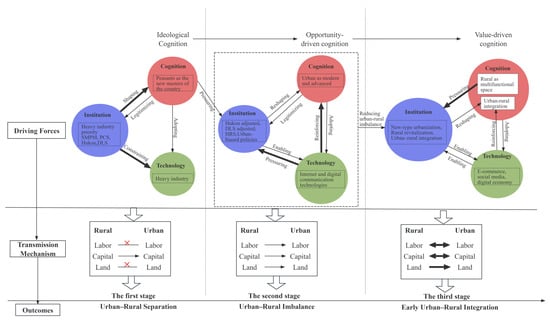
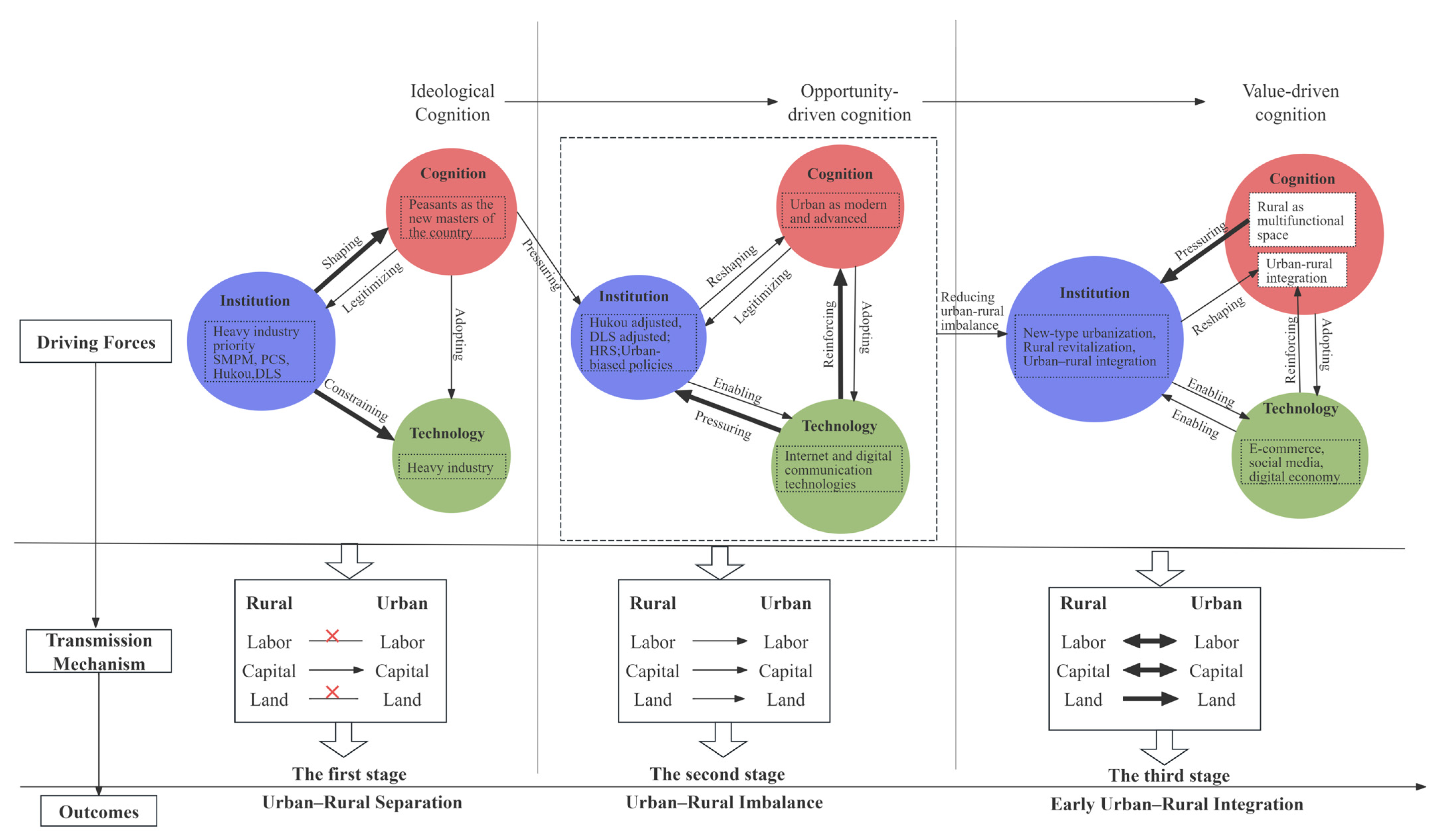
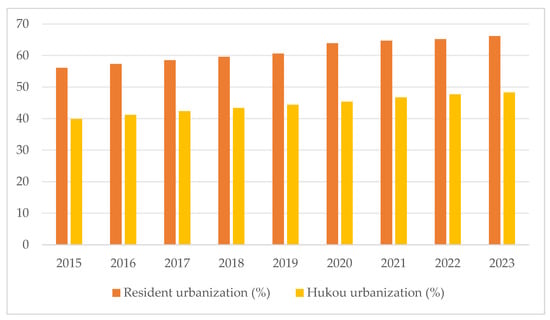
Disclaimer/Publisher’s Note: The statements, opinions and data contained in all publications are solely those of the individual author(s) and contributor(s) and not of MDPI and/or the editor(s). MDPI and/or the editor(s) disclaim responsibility for any injury to people or property resulting from any ideas, methods, instructions or products referred to in the content. |
© 2026 by the authors. Licensee MDPI, Basel, Switzerland. This article is an open access article distributed under the terms and conditions of the Creative Commons Attribution (CC BY) license.