


Abstract
This study comprehensively evaluates the elemental composition of soil and Pinus species needle samples across 25 distinct plots established along the D825 highway in Kahramanmaraş, Türkiye. Located at the confluence of the Mediterranean, East Anatolian, and Central Anatolian regions, this area represents a critical ecological transition zone. A total of 75 soil and 75 needle samples were analyzed in triplicate to assess heavy metal contamination and potential toxicity risks across these elevation gradients. According to the results, the Geoaccumulation Index (Igeo) values for all examined metals remained below zero, categorizing the study area as “unpolluted.” Enrichment Factor (EF) analyses confirmed the lithogenic origin of Cr, Mn, and Ni; however, Lead (Pb) and Cadmium (Cd) exhibited an EF of 1.34. This ‘minimal enrichment’ could potentially be associated with anthropogenic pressures, possibly stemming from traffic emissions on the highway. Although current metal levels fall below global toxicity thresholds (WHO/FAO), the positive skewness and high variation in Pb and Cd distributions suggest a likelihood of localized accumulation, which may warrant systematic monitoring. The original contribution of this study lies in its integrated assessment of plant–soil barrier mechanisms within this unique transition zone, demonstrating how forest ecosystems maintain resilience capacity despite ophiolitic parent material contributions. While soil Cr and Ni levels were elevated due to the geological structure, plant tissue concentrations remained within safe physiological limits, suggesting effective stabilization within the soil-biomass matrix. The findings suggest that these forest ecosystems play a key role in maintaining ecological health and environmental sustainability against potential anthropogenic encroachment in this strategic intersection.
1. Introduction
Forest ecosystems establish a critical equilibrium in global biogeochemical cycles by functioning as both a reservoir and a filter for heavy metals. Industrial emissions, unregulated mining, and atmospheric transport processes have rendered forest soils particularly vulnerable to the accumulation of toxic metals such as Pb, Cd, Mn, and Ni [1]. However, metal concentrations in forest soils are not solely dependent on external inputs; they are also governed by complex interactions between the topsoil (soil horizons) and the biological activities of tree species. Current literature emphasizes that tree species alter soil pH and organic matter composition through “species-specific” litter chemistry and root exudates, which directly impacts the bioavailability of metals [2]. For instance, while the acidification induced by coniferous species increases metal mobilization, the high humic acid content provided by broad-leaved forests facilitates the immobilization of metals by forming chelates within the soil matrix. This phenomenon provides the scientific rationale for utilizing forests as strategic tools in the reclamation of contaminated sites through phytoremediation [3]. Highways, in particular, serve as primary anthropogenic corridors for the transfer of heavy metals into ecosystems via exhaust emissions and mechanical wear [4]. Pinus species (Black Pine and Turkish Pine) distributed along roadsides physically intercept atmospheric particles due to their morphological structures, mediating the transmission of these pollutants into the soil profile [5]. To determine the source and intensity of this accumulation, Enrichment Factor (EF) and Geoaccumulation Index (Igeo) parameters are widely employed in the literature. EF analysis quantitatively reveals anthropogenic enrichment by normalizing metal concentrations against stable elements such as iron (Fe) [6], while Igeo classifies pollution levels by comparing data against natural background values [7,8]. Turkish Pine (Pinus brutia Ten.), a characteristic species of the Mediterranean basin, and Black Pine (Pinus nigra J.F. Arnold), the dominant species of high altitudes, are recognized as significant “biomonitors” due to their high particle retention capacities [9]. While Black Pine is distinguished by its mineralization processes and specific metal accumulation dynamics, Turkish Pine possesses the potential to stabilize metals within the soil matrix through high litter input and organic matter accumulation [10].
In modern environmental monitoring, the focus has shifted from total metal concentrations toward the spatial distribution of metals, the biochemical responses of species, and the resulting risks to ecosystem health [11]. To address these complexities, this study aims to evaluate the soil–plant system beneath Pinus nigra J.F. Arnold, Pinus brutia Ten., and mixed stands (P. sylvestris L. + P. pinea L.) along an elevational gradient. Specifically, this research seeks to: (i) differentiate between lithogenic and anthropogenic metal sources using EF and Igeo indices; (ii) compare the roles of P. brutia and P. nigra in metal stabilization within the soil-biomass matrix; and (iii) determine the effect of altitude on the bioavailability of toxic metals. Unlike previous studies focused solely on soil contamination, this research integrates plant tissue responses to assess ecosystem-level resilience capacity, thereby providing a more holistic understanding of heavy metal dynamics in forest environments.
2. Materials and Methods
2.1. Description and Ecological Characteristics of the Study Area
This research was conducted along the Kahramanmaraş–Göksun highway (D825 State Road) in the Eastern Mediterranean Region, specifically targeting roadside ecosystems exposed to heavy traffic loads within the region’s strategic transportation network. The study area serves as a transition zone located at the intersection of the Mediterranean and Irano-Turanian phytogeographical regions [12]. The vegetation structure of the site consists of P. brutia, a characteristic species of the Mediterranean climate, and P. nigra stands, which become dominant in higher and cooler locations.
Climatologically, the site exhibits a transitional type between the Mediterranean climate and the Central Anatolian continental climate. Characterized by hot, dry summers and cold, snowy winters, the region maintains average annual temperatures between 10 and 14 °C, while annual precipitation fluctuates within the 600–800 mm band toward the Göksun line [13,14]. Temperature and precipitation dynamics exhibit significant variations depending on elevation. In this context, the study was conducted at elevations ranging from 529 m to 1401 m.
The parent material of the region primarily consists of limestone and marly structures. Due to rugged topography and active erosion processes, the soils are classified within the Inceptisol order according to the US Soil Taxonomy, exhibiting Ustept (suborder) characteristics in areas with intensive calcium carbonate accumulation [15]. Characterized by a slightly alkaline pH and high lime content, these soils play a buffering role in heavy metal mobility and nutrient cycling within the region [1].
2.2. Soil Sampling and Analysis
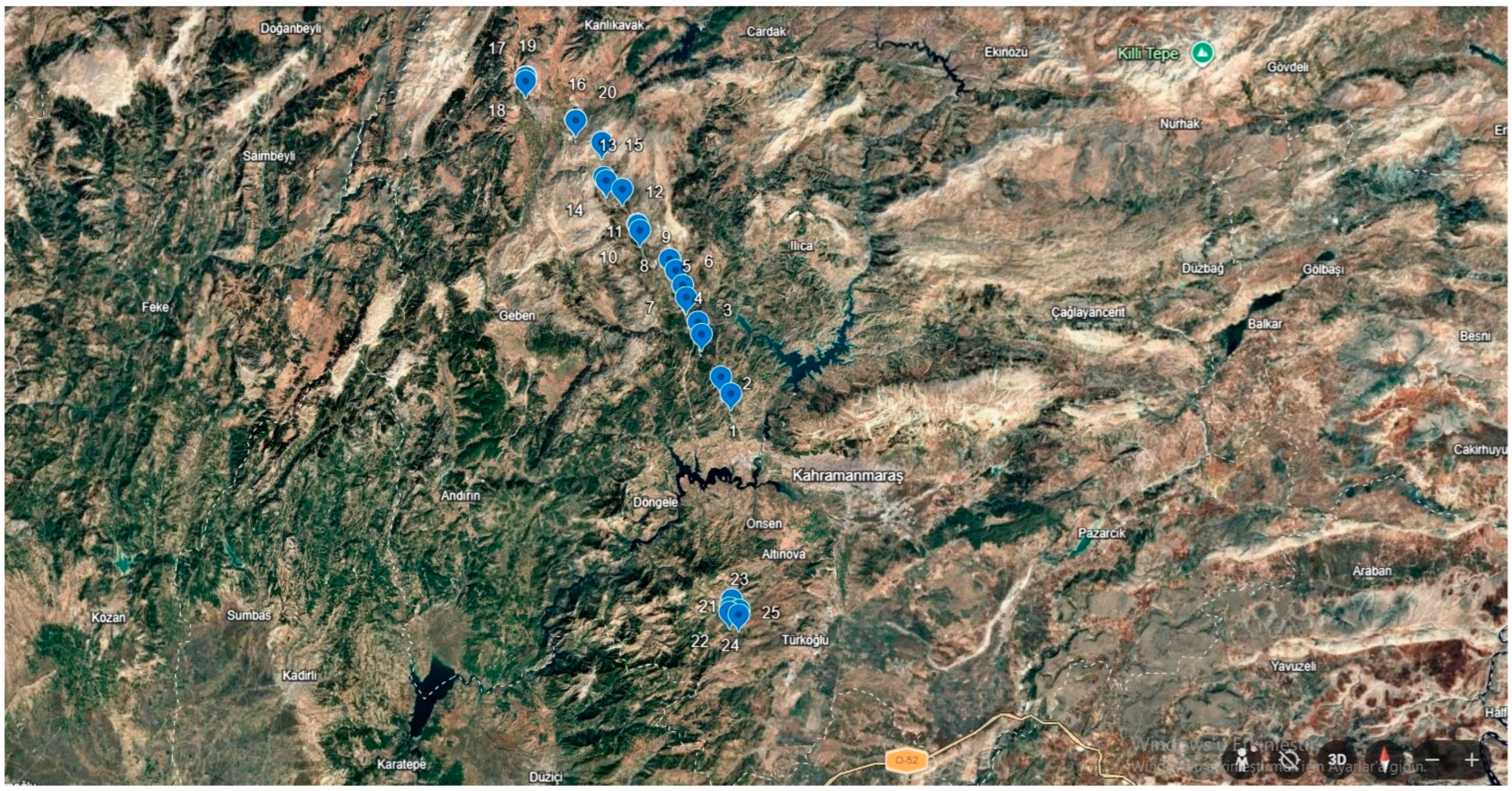
Within the scope of the study, soil samples were collected from a total of 25 sampling plots, comprising P. brutia (14 pieces), P. nigra (7 pieces), and mixed stands of P. sylvestris and P. pinea (4 pieces). At each sampling point, three sub-samples were taken to represent the topsoil layer (0–30 cm); three samples were taken independently from each sampling point, and 75 soil samples were studied. In the determination of sampling points, the distribution characteristics of environmental pollutants and the physical structure of the site were taken as the basis. The distance from road criterion was standardized at 50 m to capture a representative gradient of anthropogenic influence, consistent with the fact that traffic-derived heavy metal emissions exhibit an exponential decline within the first 10–50 m from the roadside [16,17]. Since the sampling areas consisted of open terrain without buildings, exposure uniformity was ensured through topographical similarity. To enhance the comparability of the data, representative areas were selected that possessed similar slope characteristics and remained free of structural irregularities that could interfere with pollutant deposition. Coordinate data for the sampling points were precisely recorded using a Global Positioning System (GPS) (Figure 1). Prior to laboratory analysis, the disturbed soil samples were air-dried at room temperature to determine their physical and chemical properties. Once dried, the samples were ground and passed through a 2 mm sieve to prepare them for analysis [18]. Standard methods recognized in the relevant literature were followed to determine the physicochemical properties and heavy metal concentrations of the soil. The specific analytical protocols and methods employed are detailed in Table 1. Analytical accuracy was validated using certified reference materials (CRM), with recovery rates within ±10%. Duplicate samples and reagent blanks were also analyzed to ensure data quality. Furthermore, the instrument’s limits of detection (LOD) were maintained well below the environmental concentrations recorded, particularly for Cd, to ensure the reliability of the enrichment assessments.
Figure 1.
The work area map (A total of 25 primary sampling plots were established along the transect. Within each plot, samples were collected from three independent sub-locations to ensure representative data, totaling 75 samples per matrix).
Table 1.
Soil variables and the methods used for their analysis.
2.3. Analysis of Calcium Carbonate (CaCO3)
The calcium carbonate (CaCO3) content of the soil samples was determined by the volumetric method using a Scheibler calcimeter. Within the scope of the analysis, soil samples weighing between 0.5 and 1 g were reacted with dilute hydrochloric acid (HCl), and the volume of carbon dioxide (CO2) gas released as a result of this reaction was measured. The obtained gas volume values were converted to standard conditions (Vo: 0 °C, 760 mm Hg) in accordance with the Boyle–Mariotto law, taking into account the ambient temperature (t), barometric pressure (b), and water vapor pressure (e). The following formulation, as specified by Gulcur (1974) [20], was used in the calculations, and the results were expressed as the percentage (%) of lime by mass Equation (1).
Vo = [Vt × (b − e) × 273]/[760 × (273 + t)]
% CaCO3 = [(Vo × 0.4464)/Sample Weight] × 100
2.4. Heavy Metal Analysis in Soil Samples
To determine the heavy metal concentrations (Cd, Pb, Zn, Fe, and Mn) in the soil, a wet digestion method was applied to air-dried soil samples passed through a 2 mm sieve. During the analytical process, a mineralization procedure was performed using strong acid mixtures to facilitate the transition of elements within the soil matrix into the solution [22]. The total heavy metal contents in the resulting filtrates were determined using an Inductively Coupled Plasma–Optical Emission Spectroscopy (ICP-OES, Spectro Analytical Instruments) device.
To verify analytical accuracy, blank samples were included in each measurement series, and the instrument calibration was regularly monitored using standard reference solutions. Heavy metal concentrations in soils primarily depend on the type and chemical composition of the soil’s parent material. The average concentrations of certain heavy metals found in the soils are presented in Table 2.
Table 2.
Pollution limits of the World Health Organization [23].
2.5. Enrichment Factor (EF)
An Enrichment Factor (EF) analysis was applied to distinguish whether the heavy metal accumulation observed in the soils of the study area originated from natural geological processes or anthropogenic activities [6]. The EF method is based on the principle of normalizing measured metal concentrations relative to a reference element that exhibits low mobility in the Earth’s crust and is chemically stable. In this context, Iron (Fe) was selected as the reference element due to its abundance in the Earth’s crust, its high stability in geochemical processes, and its dominant natural background concentration in the studied area [6,7,24]. In the literature, Fe is considered a ‘conservative’ element that is minimally affected by inputs from human activities (anthropogenic effects) and represents the soil matrix [6]. Furthermore, the use of Fe allows for a more accurate and reliable assessment of enrichment levels by normalizing variability arising from particle size differences, particularly in sandy or clayey sediments.
EF values were calculated using the following formula Equation (2):
EF = (Cn/Cref)sample/(Bn/Bref)crust
EF: Enrichment Factor
(Cn/Cref)sample: Represents the ratio of the metal concentration (Cn) to the reference element (Fe) concentration (Cref) in the soil sample.
(Bn/Bref)crust: Represents the ratio of the same metal (Bn) to the reference element (Bref) in the average upper continental crust values provided by Turekian and Wedepohl (1961) [7].
The five-stage classification proposed by Sutherland (2000) [6] was utilized to interpret the calculated EF values (Table 3). The average crust heavy metal values used as a reference are given in Table 4.
Table 3.
Enrichment Factor (EF) classification and pollution levels.
Table 4.
Average crustal heavy metal values used as reference [7] (mg kg−1).
2.6. Heavy Metal Pollution Assessment
To determine the heavy metal pollution levels in the study area soils and the extent of anthropogenic impacts, the Geoaccumulation Index (Igeo), developed by Müller et al. (1977) [8], was employed. This index classifies the degree of pollution by comparing current soil concentrations with natural background values. The Igeo values were calculated using the following equation:
The equation for the Geoaccumulation Index (Igeo) is as follows in Equation (3):
Igeo = log2 (Cn/1.5 × Bn)
The parameters in the equation represent:
Cn: The measured concentration of the heavy metal in the soil samples (mg kg−1).
Bn: The geochemical background value (crustal average) for the same element (mg kg−1) as reported by Turekian and Wedepohl (1961) [7].
1.5: The background matrix correction factor. This constant is used to minimize the effects of potential variations in background values caused by lithogenic (natural) effects or geological differences in the parent material.
The calculated Igeo values were evaluated according to the pollution classification developed by Müller et al. (1977) [8], which is widely utilized in the literature (Table 5). This classification represents seven distinct degrees of pollution ranging from 0 to 6:
Table 5.
Geo-accumulation Index (Igeo) pollution grading scale according to the classification by Müller et al. (1977) [8].
2.7. Plant Sampling, Preparation, and Analysis
Sampling and Pre-treatment: At the soil sampling locations, healthy needles were collected from the terminal portions of the tree crowns and placed in polyethylene zip-lock bags. Upon arrival at the laboratory, the samples were washed with distilled water to remove potential surface dust and contaminants, then dried in an oven at 70 °C until reaching a constant weight. The dried plant materials were ground using a manual mill to prepare them for analysis.
Microwave-Assisted Wet Digestion: A microwave-assisted wet digestion method was employed for the mineralization of the plant samples. In this stage, 0.5 g of the ground sample was weighed into high-pressure resistant Teflon (PTFE) vessels. To digest the samples, 5 mL of concentrated HNO3 (65%) and 2 mL of H2O2 (30%) were added to the vessels [25]. The prepared vessels were placed in a microwave digestion system and subjected to the process for 30–45 min under a programmed temperature and pressure gradient (180–200 °C and 20 bar) as specified in the literature [26,27].
Instrumental Analysis: After the digestion cycle, the vessels were cooled to room temperature. The clear solutions were completed to a volume of 50 mL with ultrapure water and filtered through filter paper. The Cu, Fe, Mn, Ni, Zn, and Pb contents of the samples were determined using Inductively Coupled Plasma–Optical Emission Spectroscopy (ICP-OES).
2.8. Calculation of Bioaccumulation Coefficient (BAC)
To evaluate the heavy metal accumulation capacity and phytoremediation potential of the analyzed plant species, the Bioaccumulation Coefficient (BAC) was calculated. BAC values were determined by the ratio of metal concentration in plant tissues to that in the soil, according to the following formula [28]. Equation (4):
where Cplant represents the metal concentration in plant tissues (mg kg−1) and Csoil represents the metal concentration in the respective soil sample (mg kg−1).
BAC = Cplant/Csoil
2.9. Statistical Analysis
Descriptive statistics of the data are presented using the mean, standard deviation, skewness, and kurtosis coefficients. To determine whether statistically significant differences exist between pine soil groups and plant groups regarding the measured variables, a One-Way Analysis of Variance (ANOVA) was applied. For variables showing statistically significant differences, Duncan’s Multiple Range Test was used for post hoc comparisons. Before conducting ANOVA, the assumption of normality was examined using Shapiro–Wilk and Kolmogorov–Smirnov tests, while the homogeneity of variances was assessed using Levene’s test. Logarithmic and square root transformations were applied to variables that did not meet the normality assumption. For variables that still failed to satisfy normality after transformation, the Kruskal–Wallis H test, a non-parametric method, was utilized. To identify the relationships between variables, Pearson correlation coefficients were calculated, and the correlation matrix was visualized using a heatmap. Furthermore, the distribution of variables across pine soil groups was presented using box plots. All statistical analyses were performed using the SPSS 29.0 (IBM Corp., Armonk, NY, USA) software package and the Python 3.9 (Python Software Foundation, Wilmington, DE, USA) programming language within the Google Colaboratory environment. The level of statistical significance was set at p < 0.05 [29].
3. Results
3.1. Assessment of Soil Samples
The heavy metal concentrations in the soil samples collected from the study area and their enrichment levels relative to the average crustal values [7] are presented in Table 6. Mean concentrations of Cr (50.49 mg kg−1), Mn (436.89 mg kg−1), Co (11.04 mg kg−1), Ni (46.71 mg kg−1), Cu (13.85 mg kg−1), and Zn (69.18 mg kg−1) were found to be below global reference values. Correspondingly, the calculated Enrichment Factor (EF) values for Cr, Mn, Co, Ni, Cu, and Zn ranged between 0.46 and 1.08. On the other hand, the concentrations of Cd (0.27 mg kg−1) and Pb (18.04 mg kg−1) were found to be very close to the reference values, with an EF value of 1.34 calculated for both metals. An EF value exceeding 1 indicates the minimum enrichment for these elements (Table 6), and the Igeo values of all metals are below zero and fall within the non-polluted class (Table 7).
Table 6.
Average heavy metal accumulation and EF in the study area.
Table 7.
Igeo values for the investigated heavy metals.
3.2. Soil Physicochemical Properties and Heavy Metal Distribution
Descriptive statistics revealed significant variation among soil variables (Table 8). Samples were slightly alkaline (pH: 7.664) with low salinity (EC: 0.012%). Average CaCO3 and organic matter (OM) contents were 4.81% and 3.674%, respectively. High Coefficients of Variation (CV) were observed for lime (90.52%) and organic matter (61.72%). Among metals, Fe (32,540.49 mg kg−1) and Mn (456.71 mg kg−1) exhibited the highest concentrations. Notably high CV values were detected for Zn (116.61%), Pb (87.68%), and Cd (71.34%), accompanied by positive skewness values (Zn: 4.55, Pb: 1.42, Cd: 1.08). In contrast, Cr, Co, Ni, and Cu showed lower variability and kurtosis values.
Table 8.
Descriptive statistical analysis of physicochemical properties and heavy metal contents of soil samples (n: 75).
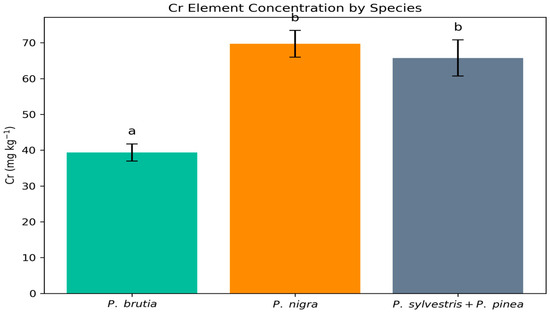
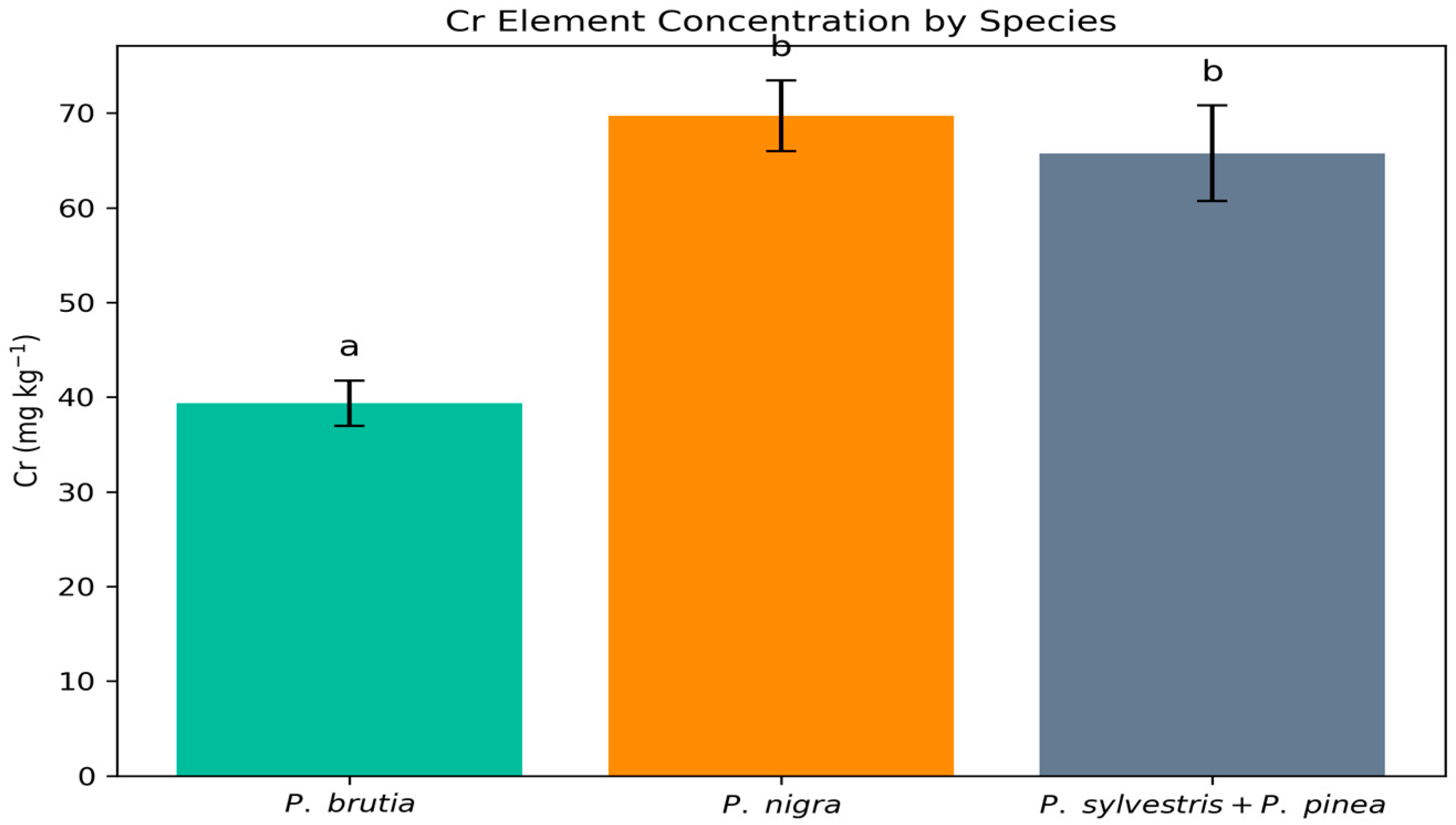
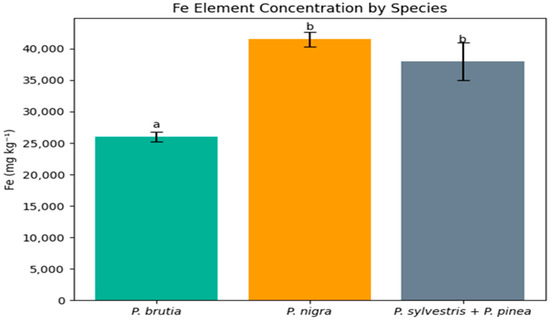
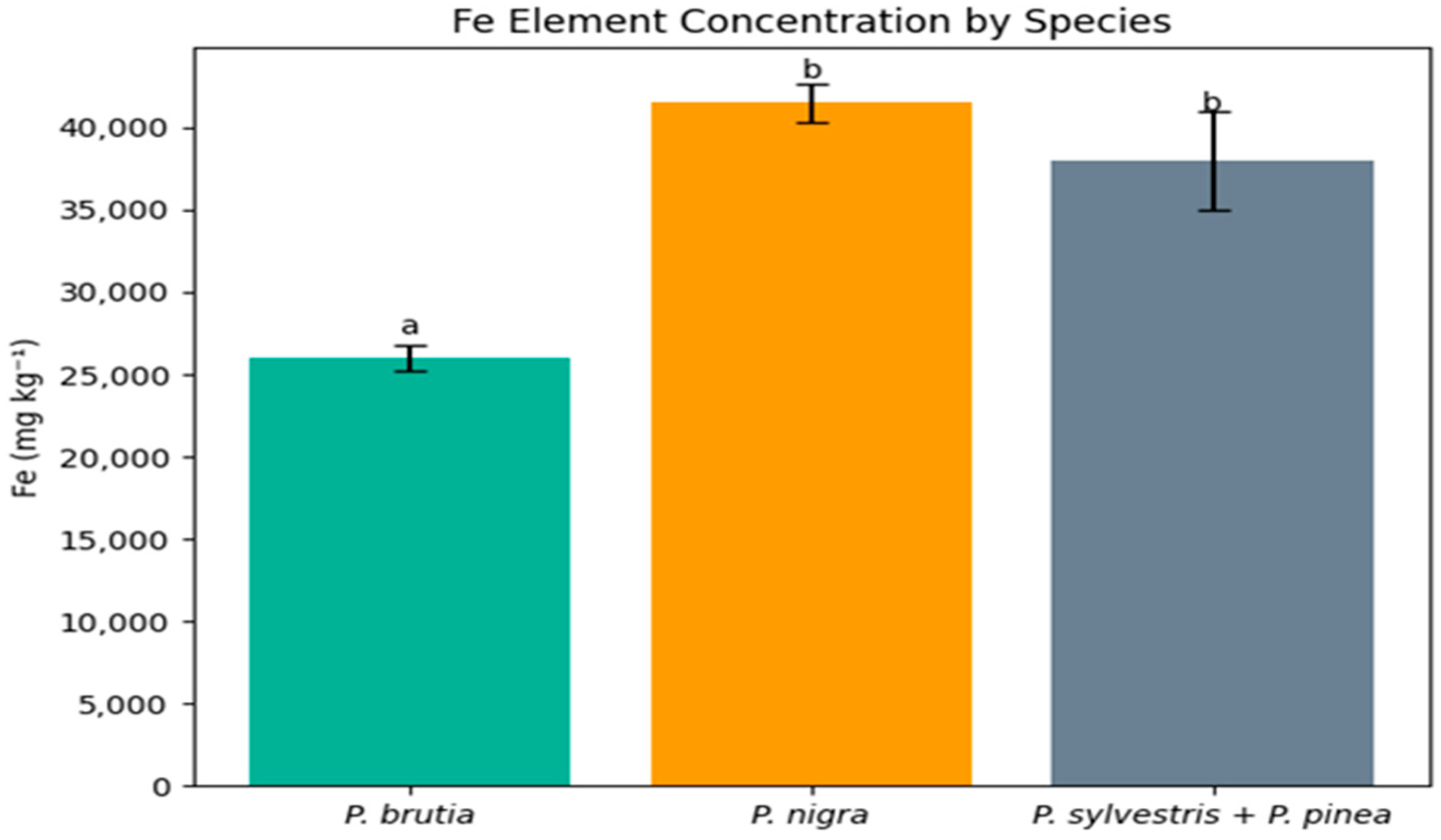
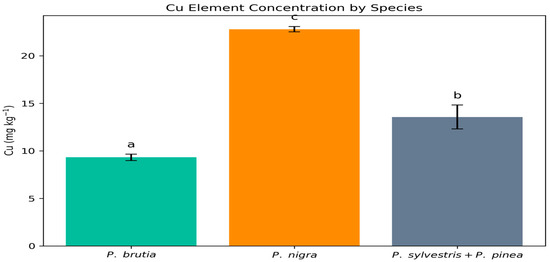
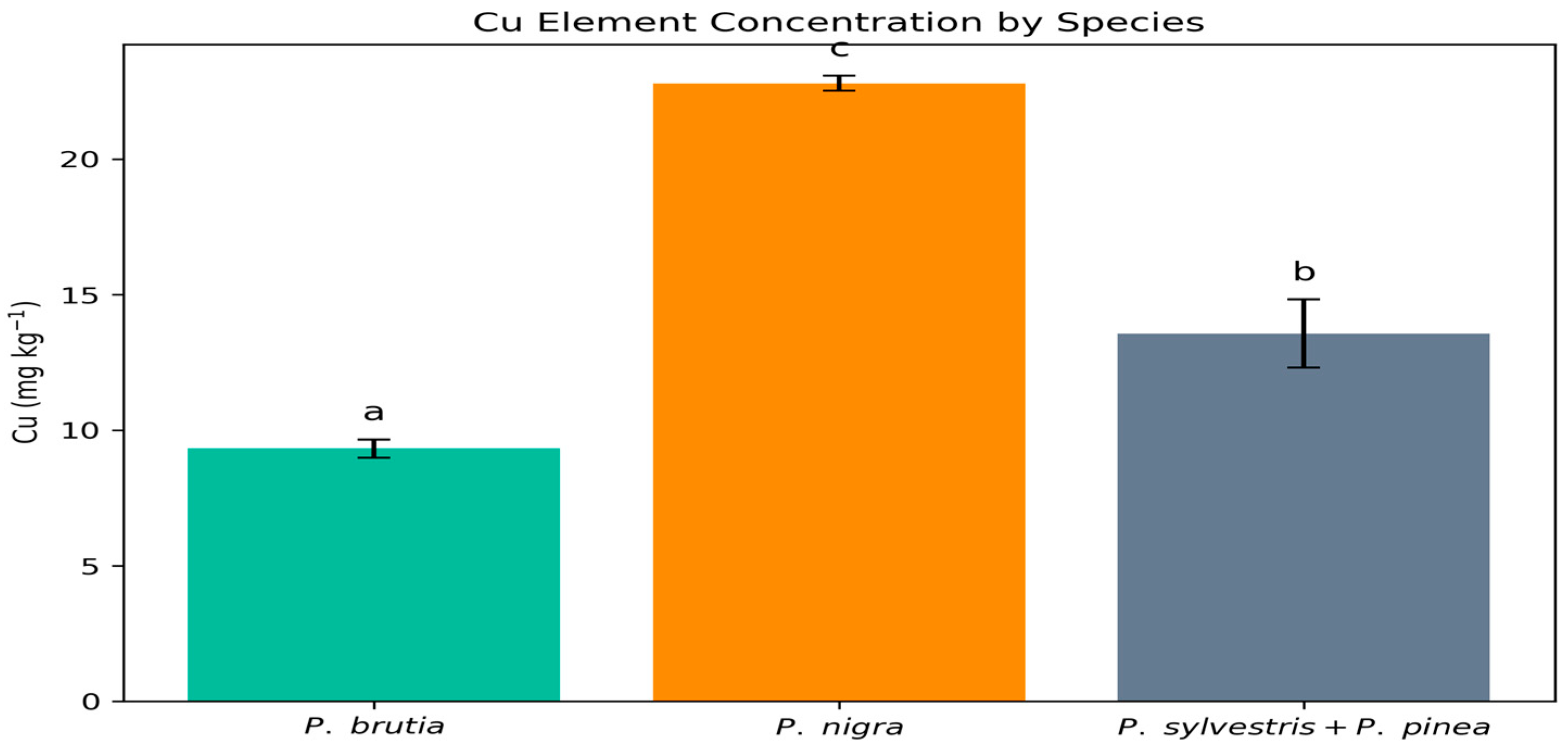
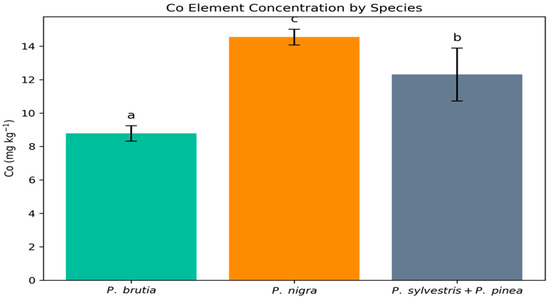
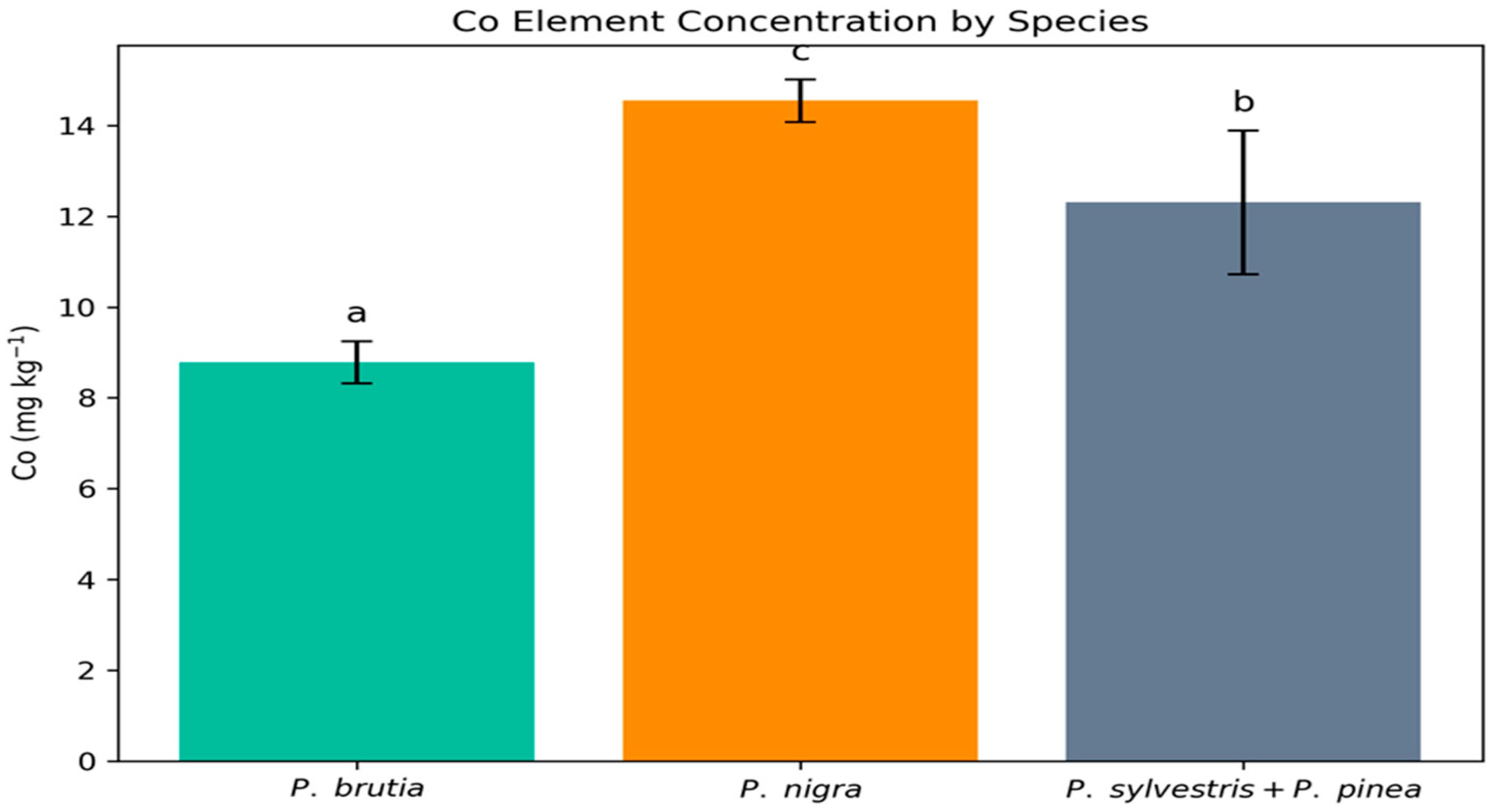
Statistical analysis indicated significant differences in soil parameters based on stand type (Table 9). Cr and Fe concentrations were significantly lower in P. brutia stands (39.33 mg kg−1 and 26,210.2 mg kg−1, respectively; p < 0.01) compared to P. nigra and mixed stands. Distinct statistical groups (a, b, c) were identified for Cu and Co across the three stand types. OM content was highest in P. brutia sites (4.55%) and lowest in P. nigra (2.11%; p < 0.01). CaCO3 content was highest in P. nigra stands. No significant differences were observed for pH, EC, Mn, and Pb (p > 0.05) among species. The distribution of Cr and Fe by species is illustrated in Figure 2 and Figure 3, respectively. Figure 4 and Figure 5 display the species-based distribution for Cu and Co, respectively.
Table 9.
Statistical comparison of selected soil properties and elemental concentrations across different stand types (P. brutia, P. nigra, and P. sylvestris + P. pinea).
Figure 2.
Distribution of soil Cr concentrations across different stand types (P. brutia, P. nigra, and mixed stands (P. sylvestris + P. pinea) (mg kg−1). The letters a and b indicate statistically significant groups.
Figure 3.
Distribution of soil Fe concentrations across different stand types (P. brutia, P. nigra, and mixed stands (P. sylvestris + P. pinea) (mg kg−1). The letters a and b indicate statistically significant groups.
Figure 4.
Distribution of soil Cu concentrations across different stand types (P. brutia, P. nigra, and mixed stands (P. sylvestris + P. pinea) (mg kg−1). The letters a, b, and c indicate statistically significant groups.
Figure 5.
Distribution of soil Co concentrations across different stand types (P. brutia, P. nigra, and mixed stands (P. sylvestris + P. pinea) (mg kg−1). The letters a, b, and c indicate statistically significant groups.
Altitude significantly influenced all soil parameters (p < 0.001) except EC (p = 0.309) (Table 10). Metals such as Cr, Fe, Ni, and Pb showed non-linear distribution, with significant increases at the highest altitude (1401 m) for Ni (89.08 mg kg−1) and Cr (78.30 mg kg−1). pH values fluctuated between 7.13 and 8.15 across the gradient, while CaCO3 peaked at 737 m, 938 m, and 1401 m. The highest OM accumulations occurred in the 720–766 m altitudinal band.
Table 10.
Statistical Analysis of Changes in Soil Physicochemical Properties and Elemental Concentrations Along Different Altitudinal Gradients.
3.3. Assessment of Coniferous Plant Samples
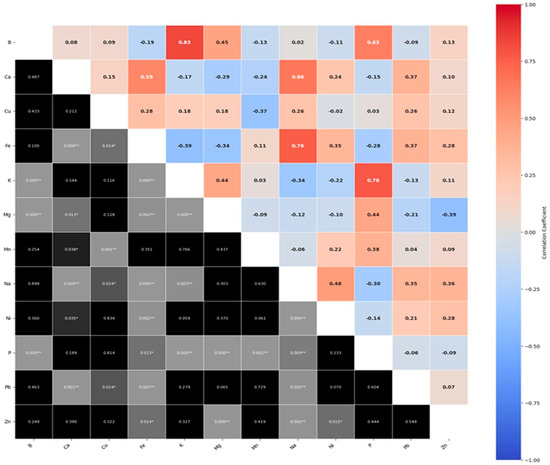
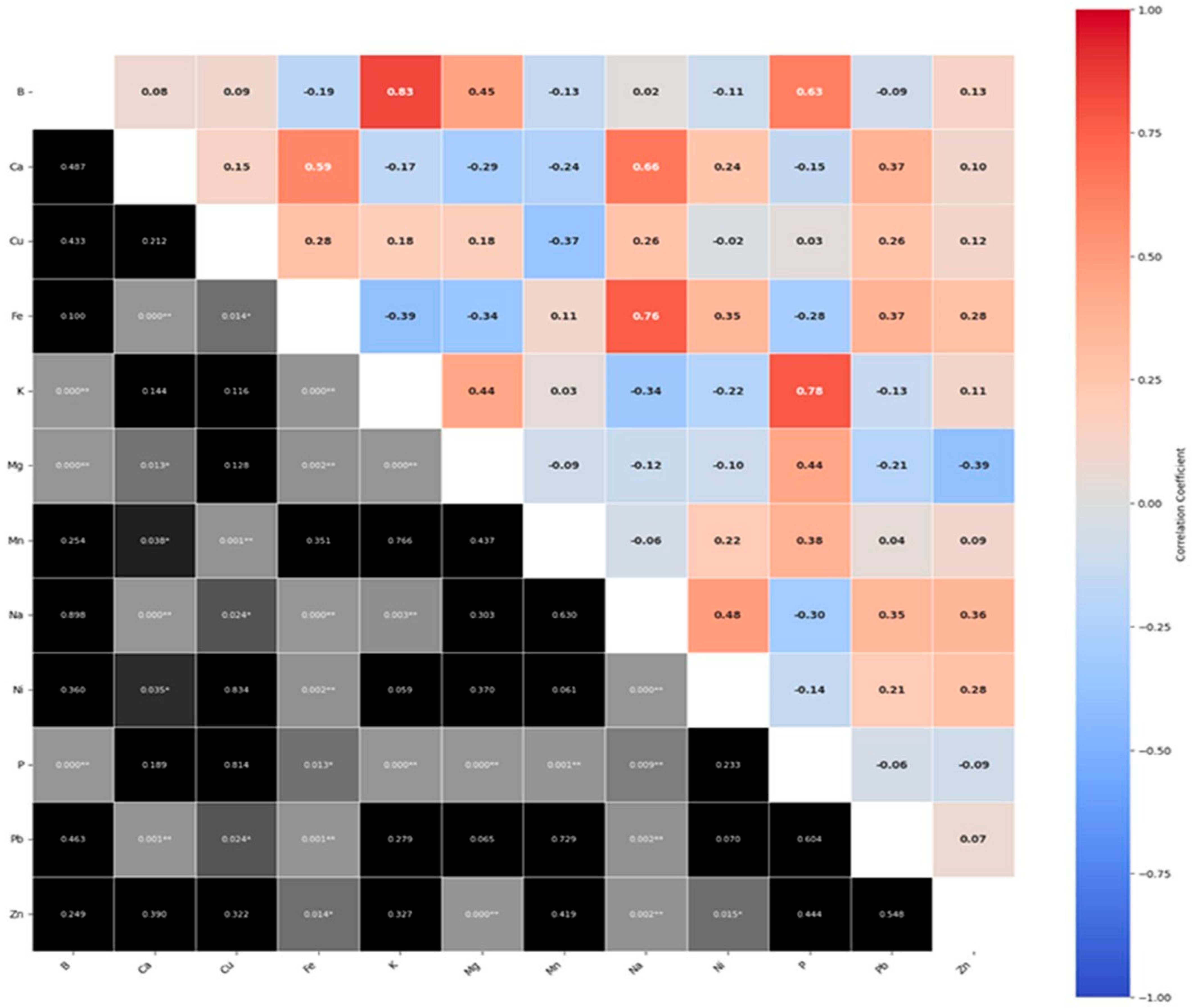
Descriptive statistics for needle samples are shown in Table 11. Fe (183.45 mg kg−1) and Mn (24.40 mg kg−1) exhibited the highest mean values and widest variation, with positive skewness (Fe: 1.99; Mn: 2.89). Conversely, Pb (2.14 mg kg−1) and Cu (14.35 mg kg−1) distributions were closer to normal. Zn (18.78 mg kg−1) was the only parameter with negative skewness. The correlation matrix between the examined elements is shown in Figure 6.
Table 11.
Descriptive statistics of heavy metal contents in plant samples (n = 75).
Figure 6.
Correlation matrix among the investigated elements. The upper right triangle displays Pearson correlation coefficients (r), while the lower left triangle presents statistical significance (p) values. The color scale represents the direction and intensity of the correlation (Red: Positive, Blue: Negative). ** and * denote significance at the p < 0.01 and p < 0.05 levels, respectively.
Species-specific differences were significant for Ni, Zn (p < 0.01), and Cu (p = 0.05) (Table 12). Cu accumulation was highest in mixed stands (16.05 mg kg−1), while Ni was highest in P. brutia (2.03 mg kg−1) and mixed stands (1.93 mg kg−1). Zn concentrations peaked in P. brutia (20.03 mg kg−1) and P. nigra (18.44 mg kg−1). No significant differences were detected for Fe, Mn, and Pb (p > 0.05) among species.
Table 12.
Statistical comparison of element concentrations among plant groups.
To quantitatively express the potential of plant species to accumulate heavy metals present in the soil, Biological Accumulation Coefficients (BAC) were calculated. The average BAC values obtained are presented in Table 13. Analysis of the BAC values revealed that all species studied had the highest accumulation capacity for Cu. In particular, the detection of BAC values above 1 (BAC > 1) in the P. brutia (BACCu = 1.57) and mixed stand (BACCu = 1.22) groups indicates that these species are extremely effective in transporting copper from the soil into the plant body. On the other hand, the very low BAC values obtained for Fe (<0.01) prove that plants form a strong biological barrier against this metal.
Table 13.
Average biological accumulation coefficients (BAC) for the analyzed plant species.
4. Discussion
When the heavy metal dynamics in the research area are evaluated alongside Enrichment Factor (EF) and Geo-accumulation Index (Igeo) parameters, it is observed that the ecosystem largely preserves its natural geochemical structure. The fact that all obtained Igeo values remained below zero confirms that the soils are categorized as “unpolluted” (Class 0) according to the classification by Müller et al. (1977) [8]. This situation verifies that the metal accumulation observed throughout the profile is shaped by natural pedogenic processes and parent rock weathering in the topsoil layer rather than external inputs [30]. In the literature, low Igeo values in forest ecosystems are considered a primary indicator that the site is isolated from industrial activities and intensive urban waste [31].
EF provides a specific framework for distinguishing between the natural geogenic background and anthropogenic inputs of metals. In this study, iron (Fe) was selected as the reference element due to its low anthropogenic mobility and stability in the Earth’s crust. According to the classification proposed by Sutherland (2000) [6], EF values less than 2 are defined as ‘no enrichment’ or ‘minimal enrichment’. The low EF values (EF < 2) determined for Cr, Mn, Co, Ni, Cu, and Zn elements suggest that the presence of these metals in the field is largely of lithogenic origin. This stable and likely natural distribution is further supported by the lower variability and kurtosis values exhibited by these specific metals. However, the calculated EF of 1.34 for Cd and Pb should be considered an ecological potential warning signal. When compared to similar roadside studies, these values are lower than those reported in highly industrialized zones (e.g., EF values between 4.8 and 12.6 for Pb in roadside soils of major highways in China [16] but are notably higher than pristine forest soils (where EF values typically remain below 1.1) [17], indicating a subtle but detectable shift from natural baselines. The high coefficients of variation detected especially in Zn (116.61%), Pb (87.68%), and Cd (71.34%) indicate that these metals are not homogeneously distributed across the site and are concentrated at specific points. Furthermore, the positive skewness values determined for Zn (4.55), Pb (1.42), and Cd (1.08) serve as evidence that external anthropogenic factors or regional accumulations are influential in the distribution of these elements. The location of the study area along the D825 highway points toward a plausible link between this accumulation and traffic emissions. Similar studies have suggested that Pb and Cd levels in roadside forest soils often correlate with traffic intensity and atmospheric transport [32,33]. This observed increase suggests that anthropogenic influence, potentially originating from the roadway, warrants consideration for long-term monitoring, especially within the proximity of the road.
Examination of the physicochemical properties of the soils revealed that the pH values reflect the slightly alkaline character commonly seen in calcimorphic soils under the influence of calcareous parent material [34]. The high variation in lime content (90.52% CV) can be explained by micro-topographic irregularities and parent material heterogeneity. Meanwhile, the variability in organic matter (OM) content (61.72% CV) is thought to stem from different stand types, reflecting differences in litter decomposition rates [15]. In particular, the high coefficients of variation and positive skewness values detected for Zn (4.55), Pb (1.42), and Cd (1.08) verify that lithogenic processes in the distribution of these metals are manipulated by external factors [35]. Conversely, the stable course exhibited by elements such as Cr, Co, and Ni indicates a natural distribution inherited from the parent material [31].
The effect of stand type on soil chemistry has been decisive, especially in terms of heavy metal accumulation and OM dynamics. The higher concentrations of Cr and Fe in Anatolian black pine and mixed stands compared to Turkish pine indicate that species differentiate mineral mobilization through root exudates and decomposition processes. This specific effect of coniferous species on soil acidity and mineral solubility is consistent with the literature [36]. The most striking differentiation was observed in Cu and Co; while Anatolian black pine stood out in copper accumulation, it exhibited extremely low values for cobalt, revealing the species’ selective absorption mechanism in the biochemical cycle. The fact that the OM amount in Turkish pine sites is more than double that of Anatolian black pine (4.55% vs. 2.11%) shows that Turkish pine promotes soil carbon enrichment more effectively through its faster-decomposing litter structure and higher biomass input [15]. High OM content creates a chelation effect that limits vertical transport by holding heavy metals in the form of organic complexes [34].
The fluctuation of soil pH values within slightly alkaline limits across the elevation proves that the region’s soils possess a high buffering capacity [35]. The CaCO3 content was one of the most elevation-sensitive parameters, showing extreme increases at altitudes of 737 m, 938 m, and 1401 m. OM content showed a non-homogeneous distribution along the elevation, with the highest accumulations (7.84% and 7.66%) concentrated in the 720–766 m band. This aligns with literature suggesting that the balance of moisture and temperature at middle elevations maximizes organic matter decomposition and accumulation [37]. In contrast, the fact that EC values were not affected by the altitude factor (p = 0.309) proves that the region’s soils are stable and low-risk in terms of soluble salts.
The statistical distribution of element concentrations detected within the plant body provides critical information about the ecosystem’s biochemical cycle and external pressures. The high positive skewness (Skewness > 1.9) observed for Fe and Mn in descriptive statistics indicates that the uptake of these micronutrients is not homogeneous across the site and is likely suppressed by the extreme increase in lime at high altitude zones (1401 m). Literature reports that alkaline pH and high calcium carbonate presence limit plant availability by reducing the solubility of microelements, but local heterogeneities in the parent material lead to outliers in some samples [15,35].
On the other hand, the variation in Ni and Zn distribution is thought to be directly related to the stand type. The more dominant performance of Turkish pine stands in Ni and Zn accumulation compared to Anatolian black pine is the primary ecophysiological factor explaining the Ni skewness (1.03) and the left-skewed (negative) distribution of Zn. This confirms that the metal load within the plant depends not only on soil concentration but also on the BAC of the species and specific organic acid secretions in the root zone [31,36]. The homogeneous and low-variability distribution exhibited by Pb and Cu values (Skewness ≈ 0) proves that these metals have not yet created an anthropogenic pressure level that would strain plant physiology or create significant interspecies differences. The fact that the “minimal enrichment” level detected for Pb in the soil is not reflected in plant tissues at a similar rate reveals the effectiveness of the barrier mechanisms developed by forest trees against toxic metals at the root–soil interface and shows that current accumulation is largely fed by the natural geochemical background [34]. The BAC values obtained in this study indicate that the capacity of plants to absorb and accumulate heavy metals from the soil varies significantly depending on the type of metal and plant species. In particular, BAC values calculated for Cu being above 1 are considered an indicator of the metal accumulation potential of these species. The literature confirms that a BAC value greater than 1 indicates that the plant effectively absorbs the relevant metal from the soil and can be reliably used in biomonitoring studies [38]. The low Fe and Ni transfer coefficients observed in P. brutia and P. nigra samples are consistent with recent findings that coniferous species develop a selective barrier mechanism against certain metals at the root–soil interface [28]. This reflects the ability of plants to maintain homeostasis even under environmental pollution pressure.
This study has certain methodological limitations that should be acknowledged. First, the research employs a cross-sectional design, providing a snapshot of soil quality at a single point in time. The absence of long-term time-series data limits the ability to track seasonal fluctuations or decadal trends in metal accumulation. Therefore, the observed enrichment levels should be viewed as current indicators rather than definitive long-term trajectories. Future longitudinal studies covering different seasons and longer periods would provide a more comprehensive understanding of the anthropogenic deposition dynamics in this region.
Implications for Sustainable Forest Management and Roadside Planning
The findings of this study provide a baseline for integrating environmental health indicators into sustainable forest management, particularly for ecosystems adjacent to high-traffic corridors like the D825 highway. Although current EF values (mean EF = 1.34 for Pb and Cd) indicate that heavy metal concentrations remain below toxic thresholds, this detected “minimal enrichment” suggests the necessity of implementing proactive management strategies to preserve the current resilience capacity.
Forest Edge Management and Roadside Planning: Managing forest–road interfaces is a primary strategy for mitigating atmospheric deposition associated with traffic emissions. The establishment of “vegetative buffer belts” composed of species with high Biological Accumulation Coefficients (BAC) can facilitate natural filtration. Priority should be given to selecting resilient species that stabilize metals within the root zone or biomass, thereby protecting the inner forest core from the potential “edge effect” of road-sourced contaminants.
Long-Term Monitoring and Adaptation: Transitioning from static conservation to dynamic monitoring is essential for long-term ecological sustainability. Based on the observed variability in Zn, Pb, and Cd concentrations, the following actions are proposed:
Establishment of Permanent Monitoring Plots: Systematic soil and plant tissue analyses every 5–10 years are recommended to quantify anthropogenic pressure trends, particularly in response to potential increases in traffic volume.
Soil Amendment Strategies: In zones where Pb and Cd enrichment is detected, silvicultural interventions aimed at increasing soil organic matter can enhance the soil’s buffering capacity, subsequently reducing the bioavailability of these metals.
Infrastructural Integration: Roadside planning should incorporate drainage systems designed to intercept potentially contaminated runoff from the D825 highway, preventing its direct infiltration into the sloped forest terrains.
Linking these site-specific findings to broader ecological sustainability frameworks ensures that forest roadside management functions as a core component of long-term terrestrial ecosystem protection rather than a reactive measure.
5. Conclusions
This study quantifies the geochemical and biological status of forest soils and vegetation in relation to parent material, altitude, and stand types. The Igeo and EF indices indicate that the study area maintains a predominantly natural geochemical structure, with most heavy metal concentrations being consistent with lithogenic origins (EF < 2). However, Cd and Pb showed a mean EF of 1.34 near the highway, representing a potential early warning signal of anthropogenic influence on natural background levels. Analysis by stand types revealed that Pinus brutia sites exhibit the highest soil organic matter and carbon sequestration potential, while also contributing to ecosystem resilience through the stabilization of Ni and Zn. Along the altitudinal gradient, organic matter peaked at mid-altitude zones (720–766 m), highlighting these areas as key zones for carbon storage. The uptake of micronutrients in plant tissues was found to be limited by alkaline pH and high lime content; nevertheless, toxic metal accumulation remained below established safety thresholds, supported by root–soil barrier mechanisms.
In conclusion, the forest cover serves as a functional matrix for heavy metal stabilization. Based on these findings, it is suggested that future infrastructure planning should consider the implementation of roadside vegetative buffers and drainage filtration systems to mitigate runoff-related pollution. To ensure long-term monitoring of these trends, periodic sampling at 5 to 10-year intervals and the inclusion of emerging pollutants, such as platinum-group elements from catalytic converters, are proposed for sustainable forest management.
Funding
This research received no external funding.
Institutional Review Board Statement
Not applicable.
Informed Consent Statement
Not applicable.
Data Availability Statement
The original contributions presented in this study are included in the article. Further inquiries can be directed to the corresponding author.
Acknowledgments
ICP-OES analyses were performed at the Central Research Laboratory of Erzincan Binali Yıldırım University.
Conflicts of Interest
The author declares no conflicts of interest.
References
- Cronan, C.S. Ecosystem Biogeochemistry: Element Cycling in the Forest Landscape; Springer: Cham, Switzerland, 2017. [Google Scholar]
- Grobelak, A.; Kowalska, A. Heavy metal mobility in soil under futuristic climatic conditions. In Climate Change and Soil Interactions; Prasad, M.N.V., Ed.; Elsevier: Amsterdam, The Netherlands, 2020; pp. 437–451. [Google Scholar]
- Tőzsér, D.; Horváth, R.; Simon, E.; Magura, T. Heavy metal uptake by plant parts of Populus species: A meta-analysis. Environ. Sci. Pollut. Res. 2023, 30, 69416–69430. [Google Scholar] [CrossRef] [Scilit] [PubMed]
- Korzeniowska, J. Heavy Metal Content in the Soil along the Road No. 7 near Chyżne. Atmosphere 2023, 14, 2. [Google Scholar] [CrossRef] [Scilit]
- Räsänen, J. The Role of Northern Tree Species in Capture of Atmospheric Fine Particles. Ph.D. Thesis, University of Eastern Finland, Kuopio, Finland, 2017. [Google Scholar]
- Sutherland, R.A. Bed sediment-associated trace metals in an urban stream, Oahu, Hawaii. Environ. Geol. 2000, 39, 611–627. [Google Scholar] [CrossRef] [Scilit]
- Turekian, K.K.; Wedepohl, K.H. Distribution of the elements in some major units of the earth’s crust. Geol. Soc. Am. Bull. 1961, 72, 175–192. [Google Scholar] [CrossRef] [Scilit]
- Müller, G.; Grimmer, G.; Böhnke, H. Sedimentary record of heavy metals and polycyclic aromatic hydrocarbons in Lake Constance. Naturwissenschaften 1977, 64, 427–431. [Google Scholar] [CrossRef] [Scilit] [PubMed]
- Dadea, C.; Russo, A.; Tagliavini, M.; Mimmo, T.; Zerbe, S. Tree species as tools for biomonitoring and phytoremediation in urban environments: A review with special regard to heavy metals. Arboric. Urban For. 2017, 43, 155–167. [Google Scholar] [CrossRef] [Scilit]
- Chambel, M.R.; Climent, J.; Pichot, C.; Ducci, F. Mediterranean Pines (Pinus halepensis Mill. and brutia Ten.). In Forest Tree Breeding in Europe. Managing Forest Ecosystems; Pâques, L., Ed.; Springer: Dordrecht, The Netherlands, 2013; Volume 25, pp. 229–265. [Google Scholar] [CrossRef] [Scilit]
- Phillips, I.; Chappie, L. Assessment of a heavy metals-contaminated site using sequential extraction, TCLP, and risk assessment techniques. J. Soil Contam. 1995, 4, 311–325. [Google Scholar] [CrossRef] [Scilit]
- Günal, N. Plant Geography Research in Turkey. Turk. Res. Lit. J. 2020, 18, v47–v75. [Google Scholar]
- MGM (General Directorate of Meteorology). Turkey’s Climate According to the Thornthwaite Climate Classification. Research Directorate, Department of Climatology. 2026. Available online: https://www.mgm.gov.tr/Thornthwaite.pdf (accessed on 23 January 2025).
- Trammell, T.L.E.; Schneid, B.P.; Carreiro, M.M. Forest soils adjacent to urban interstates: Soil physical and chemical properties, heavy metals, disturbance legacies, and relationships with woody vegetation. Urban Ecosyst. 2011, 14, 525–552. [Google Scholar] [CrossRef] [Scilit]
- Brady, N.C.; Weil, R.R. The Nature and Properties of Soils, 11th ed.; Prentice-Hall Inc.: Upper Saddle River, NJ, USA, 1996. [Google Scholar]
- Men, C.; Liu, R.; Xu, F.; Wang, Q.; Guo, L.; Shen, Z. Pollution characteristics, risk assessment, and source apportionment of heavy metals in road dust in Beijing, China. Sci. Total Environ. 2018, 612, 138–147. [Google Scholar] [CrossRef] [Scilit]
- Liu, J.; Gong, C.; Tan, C.; Wen, L.; Li, Z.; Liu, X.; Yang, Z. Geochemical baseline establishment and accumulation characteristics of soil heavy metals in Sabaochaqu watershed at the source of Yangtze River, Qinghai-Tibet Plateau. Sci. Rep. 2024, 14, 21945. [Google Scholar] [CrossRef] [Scilit]
- Soil Survey Staff. Keys to Soil Taxonomy, 11th ed.; USDA-Natural Resources Conservation Service: Washington, DC, USA, 2010. [Google Scholar]
- Rhoades, J.D.; Chanduvi, F.; Lesch, S.M.; Food and Agriculture Organization of the United Nations. Soil Salinity Assessment: Methods and İnterpretation of Electrical Conductivity Measurements; Food and Agriculture Organization of the United Nations: Rome, Italy, 1999. [Google Scholar]
- Gulcur, F. Physical and Chemical Analysis Methods of Soil, Istanbul University Faculty of Forestry Publications; I.U. Publication No: 1970, Publication No: 201; Kutulmuş Printing House: Istanbul, Turkey, 1974. [Google Scholar]
- Nelson, D.W.; Sommers, L.E. Total Carbon, Organic Carbon and Organic Matter. In Methods of Soil Analysis, Part 2; Page, A.L., Ed.; American Society of Agronomy and Soil Science Society of America: Madison, WI, USA, 1982; pp. 539–577. [Google Scholar]
- Kloke, A. Orientierungsdaten fur tolerierbare gesa mtgehalte einiger elemente in kulturboden. Mitt.VDLUFA 1980, 1–3, 9–11. [Google Scholar]
- Chiroma, T.M.; Hymore, F.K.; Ebewele, R.O. Heavy Metal Contamination of and Soils Irrigated with Sewage Water in Yola. Niger. J. Eng. Res. Dev. 2003, 2, 25–31. [Google Scholar]
- Taylor, S.R.; McLennan, S.M. The geochemical evolution of the continental crust. Rev. Geophys. 1995, 33, 241–265. [Google Scholar] [CrossRef] [Scilit]
- Jones, J.B.; Case, V.W. Sampling, handling, and analyzing plant tissue samples. In Soil Testing and Plant Analysis, 3rd ed.; Westerman, R.L., Ed.; Soil Science Society of America: Madison, WI, USA, 1990; pp. 389–427. [Google Scholar]
- Campbell, C.R.; Plank, C.O. Preparation of plant tissue for laboratory analysis. Handb. Ref. Methods Plant Anal. 1998, 3, 37–49. [Google Scholar]
- Kacar, B.; İnal, A. Plant Analyses. Nobel Publications; Publication No: 1241; Science Nobel Publishing Distribution Ltd. Co.: Ankara, Turkey, 2008; p. 892. [Google Scholar]
- Saleem, M.H.; Fahad, S.; Khan, S.U.; Din, M.; Ullah, A.; Sabagh, A.E.; Hossain, A.; Llanes, A.; Liu, L. Copper-induced oxidative stress, initiation of antioxidants and phytoremediation potential of flax (Linum usitatissimum L.) seedlings grown under the mixing of two different soils of China. Environ. Sci. Pollut. Res. 2020, 27, 5211–5221. [Google Scholar] [CrossRef] [Scilit] [PubMed]
- IBM Corp. IBM SPSS Statistics for Windows, Version 29.0; IBM Corp: Armonk, NY, USA, 2022; Available online: https://www.ibm.com/products/spss-statistics (accessed on 23 January 2025).
- Barbieri, M. The importance of enrichment factor (EF) and geoaccumulation index (Igeo) to evaluate the soil contamination. J. Geol. Geophys. 2016, 5, 1–4. [Google Scholar]
- Kabata-Pendias, A. Trace Elements in Soils and Plants, 3rd ed.; CRC Press: Boca Raton, FL, USA, 2010; 432p, ISBN 9780429191121. [Google Scholar] [CrossRef] [Scilit]
- Padoan, E.; Romè, C.; Ajmone-Marsan, F. Bioaccessibility and size distribution of metals in road dust and roadside soils along a peri-urban transect. Sci. Total Environ. 2017, 601–602, 89–98. [Google Scholar] [CrossRef] [Scilit] [PubMed]
- Christoforidis, A.; Stamatis, N. Heavy metal contamination in street dust and roadside soil along the major national road in Kavala’s region, Greece. Geoderma 2009, 151, 257–263. [Google Scholar] [CrossRef] [Scilit]
- Schlesinger, W.H. Biogeochemistry: An Analysis of Global Change; No. Ed. 2; Academic Press: Cambridge, MA, USA, 1997; 588p. [Google Scholar]
- Alloway, B.J. Heavy Metals in Soils: Trace Metals and Metalloids in Soils and Their Bioavailability; Springer Science & Business Media: Berlin/Heidelberg, Germany, 2012; Volume 22. [Google Scholar]
- Augusto, L.; Dupouey, J.L.; Ranger, J. Effects of tree species on understory vegetation and environmental conditions in temperate forests. Ann. For. Sci. 2003, 60, 823–831. [Google Scholar] [CrossRef] [Scilit]
- Lal, R. Digging deeper: A holistic perspective of factors affecting soil organic carbon sequestration in agroecosystems. Glob. Change Biol. 2018, 24, 3285–3301. [Google Scholar] [CrossRef] [Scilit] [PubMed]
- Tóth, G.; Hermann, T.; Da Silva, M.R.; Montanarella, L. Heavy metals in agricultural soils of the European Union with implications for food safety. Environ. Int. 2016, 88, 299–309. [Google Scholar] [CrossRef] [Scilit] [PubMed]

Disclaimer/Publisher’s Note: The statements, opinions and data contained in all publications are solely those of the individual author(s) and contributor(s) and not of MDPI and/or the editor(s). MDPI and/or the editor(s) disclaim responsibility for any injury to people or property resulting from any ideas, methods, instructions or products referred to in the content. |
© 2026 by the author. Licensee MDPI, Basel, Switzerland. This article is an open access article distributed under the terms and conditions of the Creative Commons Attribution (CC BY) license.