


Abstract
Freshwater macroinvertebrate diversity remains unevenly documented across North Africa, limiting the use of biodiversity data in conservation planning. Here, we provide a regional synthesis of freshwater macroinvertebrates from the Moulouya River basin and the Eastern Region of Morocco, integrating records from historical literature, expert knowledge, and recent field observations. The dataset documents 525 species, 269 genera, 114 families, and 4924 georeferenced occurrence records compiled between 1914 and 2026. Taxonomic representation was highly uneven, with aquatic insects dominating the dataset and several small-bodied, cryptic, subterranean, and taxonomically difficult groups remaining poorly documented. Chorological analyses revealed a predominance of Palearctic taxa with Mediterranean affinities, together with a substantial proportion of Moroccan, Maghrebian, and Ibero-Maghrebian endemics. Strict Moroccan endemics were especially concentrated in gastropods and were mainly associated with lotic ecosystems and springs. Spatial and temporal patterns revealed apparent richness concentrations in northern and western sectors of the study area, but also strong biases linked to uneven sampling effort. This synthesis provides a baseline for future monitoring, highlights priority habitats and taxonomic gaps, and offers actionable insights to support sustainable water resource management and ecosystem resilience under accelerating climate change and anthropogenic pressures in North African arid and semi-arid regions.
1. Introduction
Morocco occupies an important biogeographical position between Europe and Africa and forms part of the Mediterranean Basin global biodiversity hotspot [1,2]. Influenced by Mediterranean, Atlantic, and Afrotropical biogeographical elements, the country represents a region of faunal exchange and diversification [3,4]. Its complex topography, climatic gradients, and geographic barriers have contributed to high levels of endemism across multiple taxonomic groups, including freshwater fauna [5,6]. Morocco also harbors some of the most extensive and environmentally heterogeneous freshwater systems in North Africa, including river basins, wetlands, springs, temporary streams, groundwater systems, and subterranean aquatic ecosystems [6].
Morocco’s freshwater ecosystems are particularly vulnerable to environmental change, as water availability is constrained by climatic variability and increasing human pressures, including water abstraction and land-use change [7]. Reliable biodiversity data are therefore essential for identifying threatened habitats, assessing ecological risks, and informing conservation strategies [8]. Accurate species identification, georeferenced distribution records, and regularly updated inventories provide the baseline information needed to assess biodiversity patterns and knowledge gaps at regional and national scales [9,10]. Combined with ecological and environmental data, these inventories can inform habitat protection, biodiversity monitoring, invasive species management, and the identification of poorly studied areas [11,12,13].
Freshwater macroinvertebrates represent key components of surface and subterranean aquatic ecosystems, contributing to organic matter processing, nutrient cycling, trophic interactions, and sediment dynamics [14,15]. In groundwater-dependent ecosystems, specialized subterranean fauna may also contribute to detritus processing and microbial regulation under nutrient-limited conditions [16,17]. Surface-dwelling taxa often display habitat specificity and turnover along environmental gradients, including temperature, flow regime, and substrate composition [18,19]. In contrast, groundwater and subterranean fauna frequently exhibit morphological and ecological specialization, limited dispersal, and high endemism associated with long-term isolation in aquifers and karst systems [16,20,21]. These eco-evolutionary characteristics make freshwater macroinvertebrates valuable indicators of ecosystem integrity, hydrological connectivity, habitat degradation, and long-term environmental change.
Updated regional faunal inventories provide essential baseline information for freshwater conservation, documenting species richness, endemism, biogeographical affinities, habitat associations, and gaps in biodiversity knowledge. They can also support monitoring of alien species and help identify habitats requiring further monitoring or conservation attention [6,22,23].
In northeastern Morocco, the Moulouya River basin and the Eastern Region encompass diverse aquatic environments, including permanent and temporary rivers, springs, wetlands, reservoirs, saline and brackish systems, and groundwater-dependent habitats [6]. Here, we compile an updated inventory of freshwater macroinvertebrates from this region, integrating historical literature, previous taxonomic research, and recent field observations. We examine taxonomic richness, chorological composition, endemism, habitat associations, and the spatial and temporal distribution of documented records. Specifically, we aim to (i) characterize the taxonomic and biogeographical composition of the known fauna; (ii) identify habitats and areas with high document richness and endemic; and (iii) highlight taxonomic, geographical and ecological gaps relevant to future conservation planning. This synthesis provides a baseline for improving freshwater biodiversity knowledge and informing the conservation of surface-water and groundwater ecosystems in northeastern Morocco.
2. Materials and Methods
2.1. Study Area
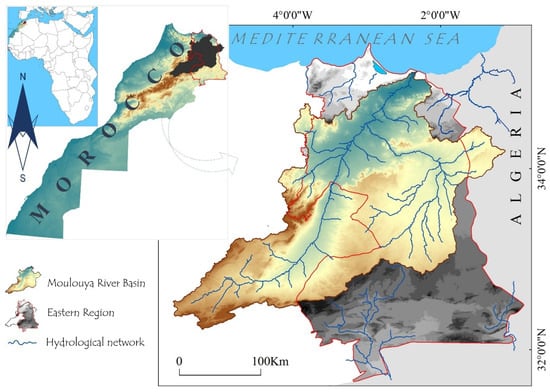
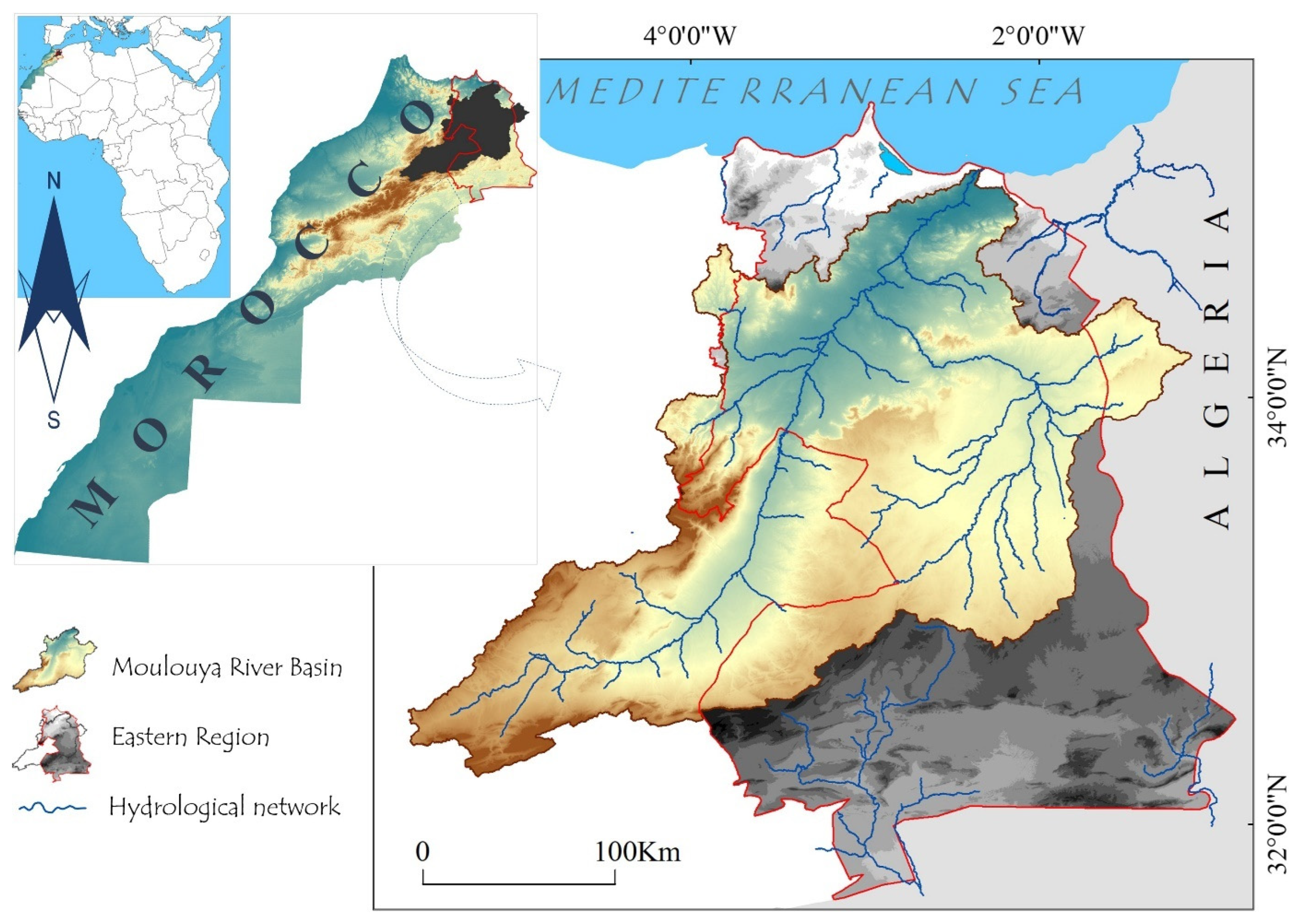
The Moulouya River is one of Morocco’s longest rivers, extending over nearly 600 km across northeastern Morocco before reaching the Mediterranean Sea (Figure 1). Its principal permanent tributaries include the Ansegmir, Melloulou, Za, and Msoun rivers, as well as several intermittent streams characterized by seasonal and episodic flow regimes [24]. The Moulouya River basin covers approximately 56,000 km2, extending mainly across Morocco, with a small portion (3.1%) located in Algeria. On the Moroccan side, this basin heavily intersects the Eastern Region, occupying 34,990 km2 (or 62.48% of the basin). At the national level, this administrative region alone covers 90,130 km2, accounting for 12.7% of the Moroccan territory. The study area, which encompasses the entire Eastern Region plus the portions of the watershed extending beyond its administrative boundaries, thus covers 109,390 km2, representing 15.41% of the country’s total surface area. This vast territory is characterized by remarkable ecological diversity. For the purposes of this study, this geographical and administrative entity is referred to as “northeast Morocco”.
Figure 1.
Location of the Eastern Region of Morocco and the Moulouya River basin.
The Moulouya basin has a predominantly Mediterranean hydrological and climatic regime, with peak discharge in late winter and early spring, and low-flow conditions during summer. The regional climate ranges from semi-arid to sub-humid. The study area encompasses a high diversity of aquatic ecosystems, including springs, streams, rivers, ponds, wetlands, reservoirs, and coastal saline and brackish environments. Notable wetlands include Ramsar sites such as the Nador lagoon, the Moulouya estuary, and the Mohammed V dam.
2.2. Data Collection
We compiled freshwater macroinvertebrate occurrence records from the Moulouya River basin and the Eastern Region of Morocco using two principal sources: (i) a targeted review of national and international literature [24,25,26,27,28,29,30,31,32,33,34,35,36,37,38,39,40,41,42,43,44,45,46,47,48,49,50,51,52,53,54,55,56,57,58,59,60,61,62,63,64,65,66,67,68,69,70,71,72,73,74,75,76,77,78,79,80,81,82,83,84,85,86,87,88,89,90,91,92,93,94,95,96,97,98,99,100,101,102,103,104,105,106,107,108,109]; (ii) previous field surveys and additional observations by the authors conducted between 2014 and 2026 [6,110,111,112,113,114,115,116,117,118,119,120,121,122,123,124,125,126,127,128,129,130,131,132,133,134,135,136,137,138,139,140,141,142,143,144,145,146,147,148,149,150,151,152,153,154,155,156,157,158].
For this study, freshwater macroinvertebrates were defined as aquatic and semi-aquatic invertebrates associated with inland aquatic habitats, such as rivers, streams, springs, wetlands, reservoirs, ponds, groundwater-dependent systems, hyporheic habitats, caves, wells, and slightly brackish inland or coastal-associated systems when taxa were considered part of the non-marine aquatic fauna. Strictly marine species were excluded, except for alien species documented in freshwater or brackish inland habitats. Aquatic insects were included when at least one life stage was aquatic or closely associated with aquatic habitats. Semi-aquatic taxa were retained when included in regional aquatic macroinvertebrate inventories or biomonitoring studies. Fossil records, taxa considered as nomina dubia, and records with uncertain taxonomic status were excluded.
Published sources were identified through targeted Google Scholar searches combining geographical terms (“Moulouya”, “Oriental Morocco”, “eastern Morocco”) with habitat-related terms (“freshwater”, “macroinvertebrates”, “aquatic invertebrates”, “groundwater”, “springs”, “caves”), and taxonomic terms (“Coleoptera”, “Odonata”, “Mollusca”, “Crustacea”, “Diptera”, “Ephemeroptera”, “Trichoptera”, “Plecoptera”, “Heteroptera”, “Hydrachnidia”). The search was conducted between 2014 and 2026, with publications retained when they reported identifiable freshwater macroinvertebrate taxa from localities within the study area.
2.3. Data Validation and Standardization
For each record, we extracted the accepted taxon name, original taxon name when available, locality, date or period of collection, habitat information, source reference, and geographic coordinates when provided. Duplicate records referring to the same taxon, locality, date, and source were removed. Records from repeated surveys at the same locality were retained when they represented distinct sampling events.
Geographic coordinates were standardized in ArcGIS. Historical records lacking coordinates were georeferenced when locality descriptions were sufficiently precise. These estimated coordinates are flagged with an asterisk (*) in Supplementary Table S2. Records with ambiguous or insufficiently precise locality information, such as references to entire provinces or river basins, were excluded from spatial analyses. For temporal analyses, records were grouped into 20-year intervals based on the publication year of their source, rather than their collection date.
To ensure data interoperability and long-term accessibility, the final validated dataset was formatted in accordance with the Darwin Core standard. The standardized georeferenced occurrence dataset was subsequently published in the Global Biodiversity Information Facility (GBIF) network and is permanently accessible [159].
Taxonomic names were standardized according to recent taxonomic revisions and verified against authoritative databases (WoRMS, MolluscaBase, and FADA) accessed between June and August 2026. Taxonomic assignments were additionally checked against published revisions and, where applicable, validated in consultation with taxonomic specialists. Literature records were cross-referenced with the authors’ research databases to identify and exclude synonymies, resolve taxonomic inconsistencies, and detect potential duplicates.
For the temporal analysis, occurrences were aggregated into 20-year intervals based strictly on the publication year of the source studies. Field collection dates were not processed in this analysis, ensuring that every record was assigned a definitive temporal baseline corresponding to its publication date.
Chorological categories followed classifications of La Greca [160] and Vigna Taglianti et al. [161], complemented by taxon-specific revisions. Habitat classified in four categories: (A) groundwater, including caves, aquifers, phreatic and interstitial habitats; (B) springs, including spring heads, pools and outflows; (C) lotic waters, including rivers, creeks, rivulets, and streams; and (D) lentic waters, including lakes, ponds, and wetlands. Presence of taxa in each category is indicated with value 1 in Supplementary Table S1. We use the term stygobiont to refer to taxa exclusively found in groundwater habitats; and crenobiont for those exclusively found in springs. For analyses of habitat associations, each species–habitat combination was counted separately; consequently, species recorded in multiple habitats contributed to more than one category. Habitat percentages were calculated relative to the total number of species–habitat associations rather than the number of species.
2.4. Data Visualization
A map illustrating the spatial distribution of species richness was constructed by plotting the coordinates and total species counts per locality in ArcGIS software (version 10.2; Esri, Redlands, CA, USA).
3. Results
3.1. Taxonomic Composition
Our dataset included 525 freshwater invertebrate species belonging to 269 genera and 114 families, represented by 4924 georeferenced occurrence records compiled from historical literature and authors’ field observations. Supplementary Material Table S1 provides the species checklist, including geographical distributions and habitat associations, whereas Supplementary Material Table S2 contains occurrences along with GPS coordinates, collection dates and source references.
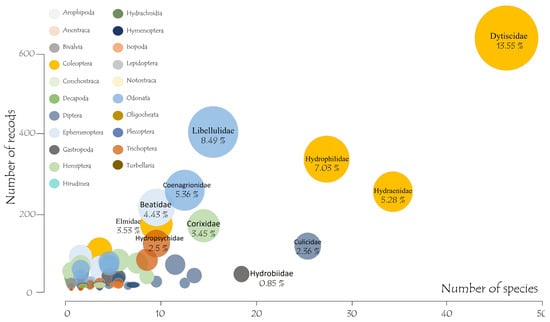
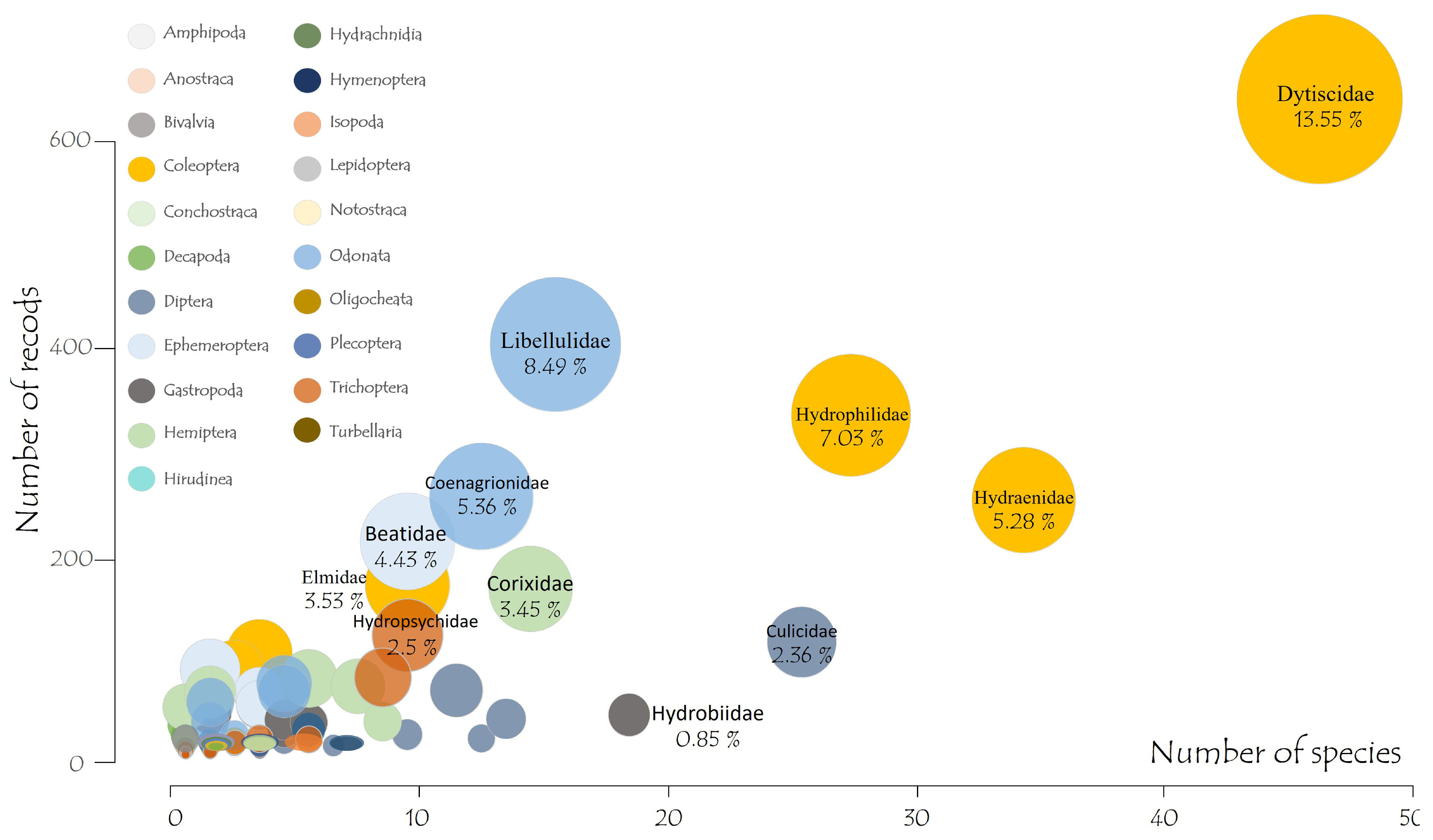
A few families accounted for a substantial proportion of records, whereas most families had relatively few recorded species and occurrences (Figure 2). The beetle family Dytiscidae was the most represented family in both species richness and number of records, accounting for 13.55% of all occurrences. Other well-represented beetle families included Hydrophilidae (7.03%) and Hydraenidae (5.28%). Among other insect families, Libellulidae accounted for 8.49% of records (16 species), followed by Coenagrionidae (5.36%; 13 species) and Baetidae (4.43%; 10 species). Elmidae (3.53%; 10 species) and Corixidae (3.45%; 15 species) were moderately represented. In contrast, Hydrobiidae contributed 19 species but only 0.85% of occurrence records. Overall, these results indicate considerable variation in the taxonomic representation of the compiled records, potentially reflecting differences in species richness, detectability, and historical sampling effort among groups.
Figure 2.
Species richness and number of occurrences across freshwater invertebrate families in the Moulouya River basin and Eastern Region of Morocco. Each point represents a family, with species richness on the x-axis and the number of occurrence records on the y-axis. Circle size is proportional to the number of records. And percentage families indicate each family’s contribution to the total number of records (N = 4924).
3.2. Chorological Composition
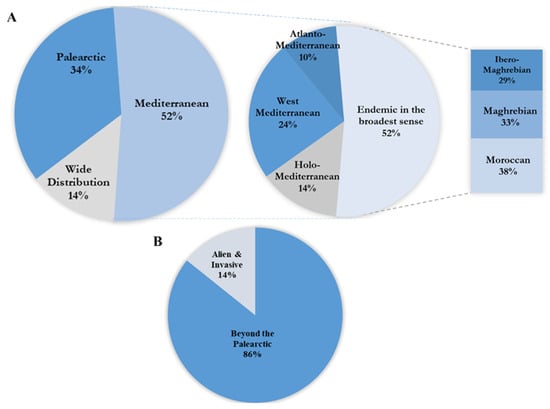
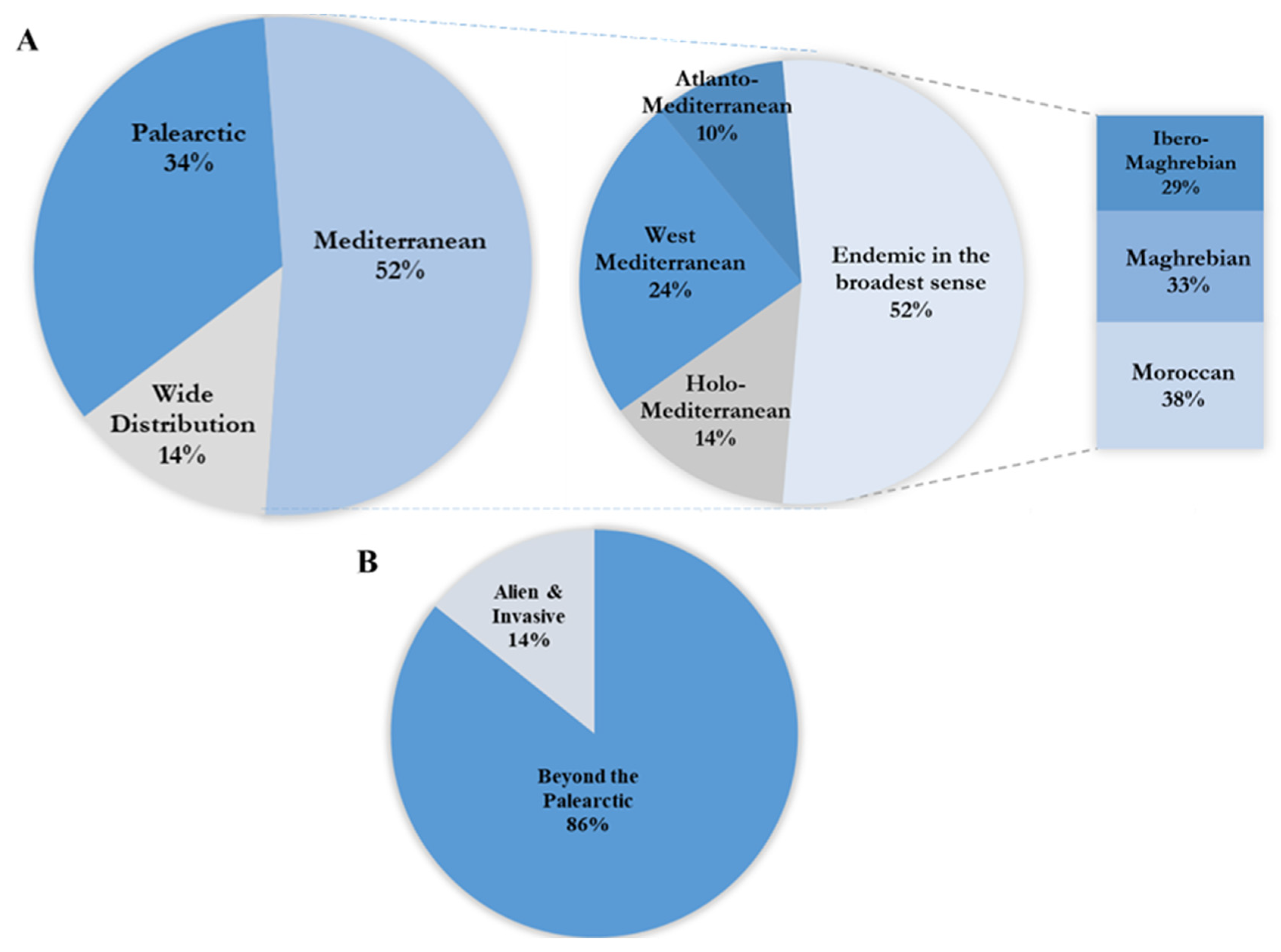
Of the 458 species with chorological assignments, 395 (86.2%) belonged to Palearctic or Mediterranean chorotypes, whereas 63 (13.8%) were widely distributed (Figure 3A). The former comprised 156 strictly Palearctic species (34.1% of the classified fauna) and 239 species with Mediterranean affinities (52.2%).
Figure 3.
Chorological composition of freshwater macroinvertebrates in northeastern Morocco. (A) Distribution of the 458 species with chorological assignments among the main chorotypes and their subcategories. (B) Proportion of alien and/or invasive species among widely distributed taxa (n = 63). Percentages in each subcategory are calculated relative to its corresponding parent category. Absolute counts are reported in Section 3.2, and species-level classifications are provided in Supplementary Table S1.
Within this Mediterranean component (n = 239), endemic taxa in the broad sense accounted for 52.7% (n = 126), followed by West Mediterranean (23.8%, n = 57), Holo-Mediterranean (13.8%, n = 33), and Atlanto-Mediterranean taxa (9.6%, n = 23). Among endemic taxa (n = 126), 48 (38.1%) were strictly Moroccan endemics, whereas 36 (23.6%) had Ibero-Maghrebian distribution, including five restricted to the Ibero-Moroccan region.
Among the widely distributed taxa (n = 63), nine (14%) were classified as alien and/or invasive (Figure 3B), including Helobdella europaea Kutschera, 1987; Branchiura sowerbyi Beddard, 1892; Physella acuta (Draparnaud, 1805), Potamopyrgus antipodarum (J.E. Gray, 1843); and Callinectes sapidus (Rathbun, 1896). These nine species represented 2.0% of the fauna with chorological assessments. Species-level classifications are provided in Supplementary Table S1.
3.3. Strictly Endemic Species Composition
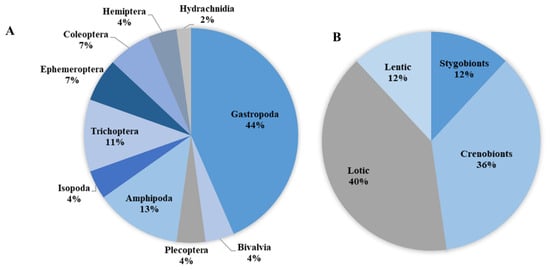
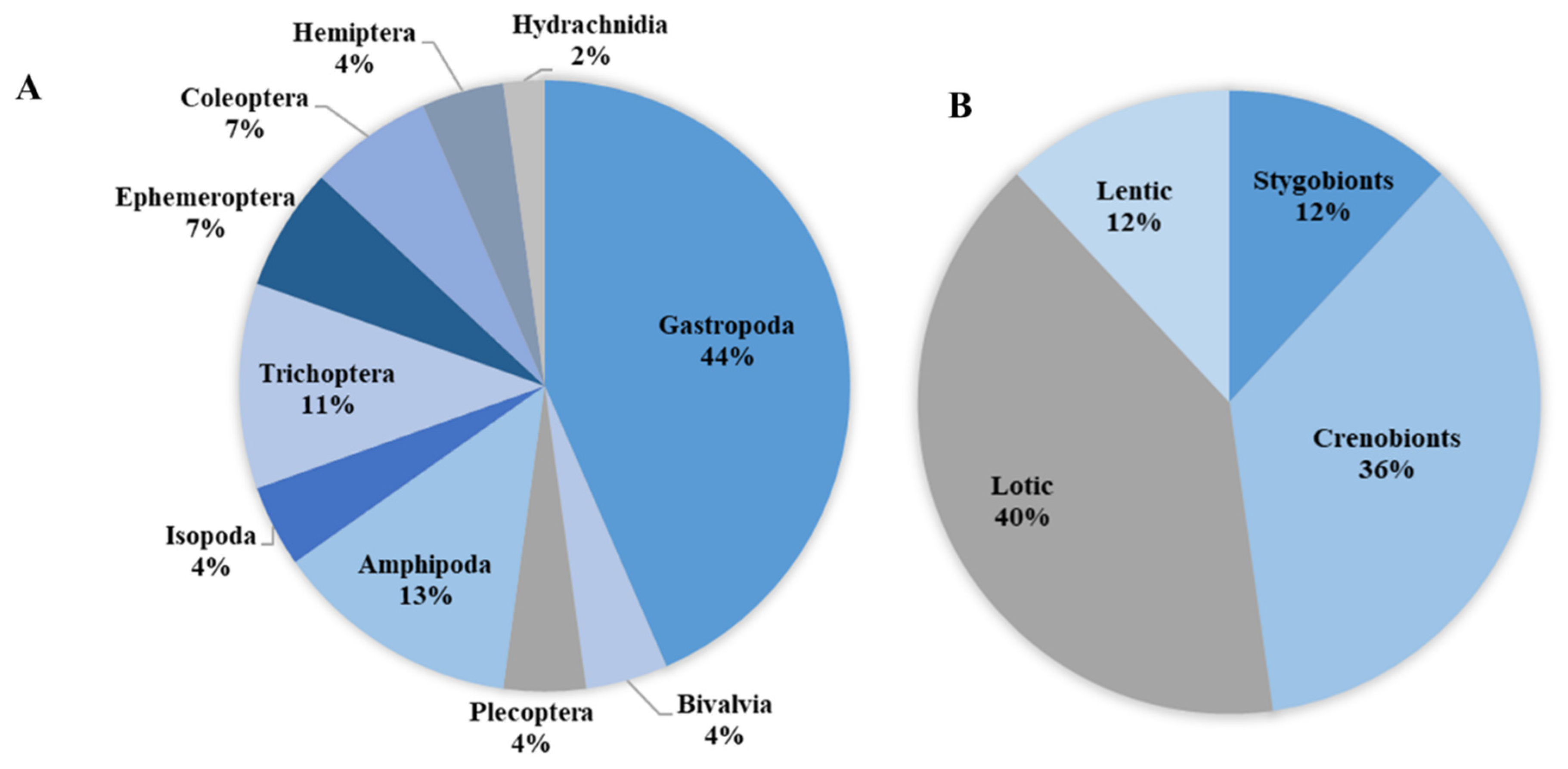
A total of 49 species were identified as strict Moroccan endemics, highlighting the importance of the Moulouya River basin and the Eastern Region as a regional center of endemism. The faunistic composition of these endemic species is dominated by Gastropoda (n = 19; 38.8%), followed by Amphipoda (n = 6; 12.2%), Trichoptera (n = 5; 10.2%), and Diptera (n = 4, 8.2%). Ephemeroptera and Coleoptera accounted for three taxa (n = 3; 7%), whereas Hemiptera (n = 2; 4%), Isopoda (n = 2; 4%), Plecoptera (n = 2; 4%), and Bivalvia (n = 2; 4%) each contributed two taxa (4.1%). Hydrachnidia was represented by a single taxon (2%) (Figure 4A). The 49 endemic taxa accounted for 65 species–habitat associations, as some taxa occurred in multiple habitats. Most associations involved lotic ecosystems (n = 26; 40.0%) and springs (n = 23; 35.4%), whereas lentic and groundwater ecosystems each accounted for eight associations (12.3%) (Figure 4B).
Figure 4.
Faunistic composition of strictly endemic Moroccan species (N = 49) in the Moulouya River basin and the Eastern Region of Morocco (A), and percentages of their habitat categories (B).
3.4. Temporal Trends in Taxonomic Group Composition
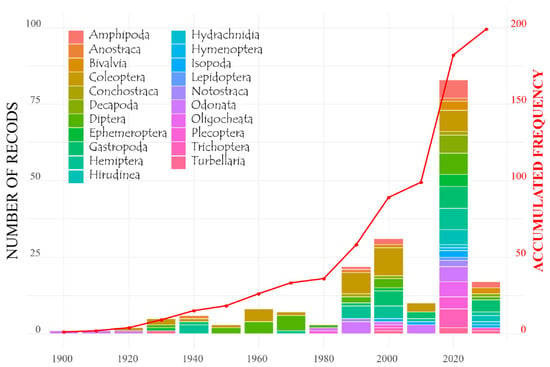
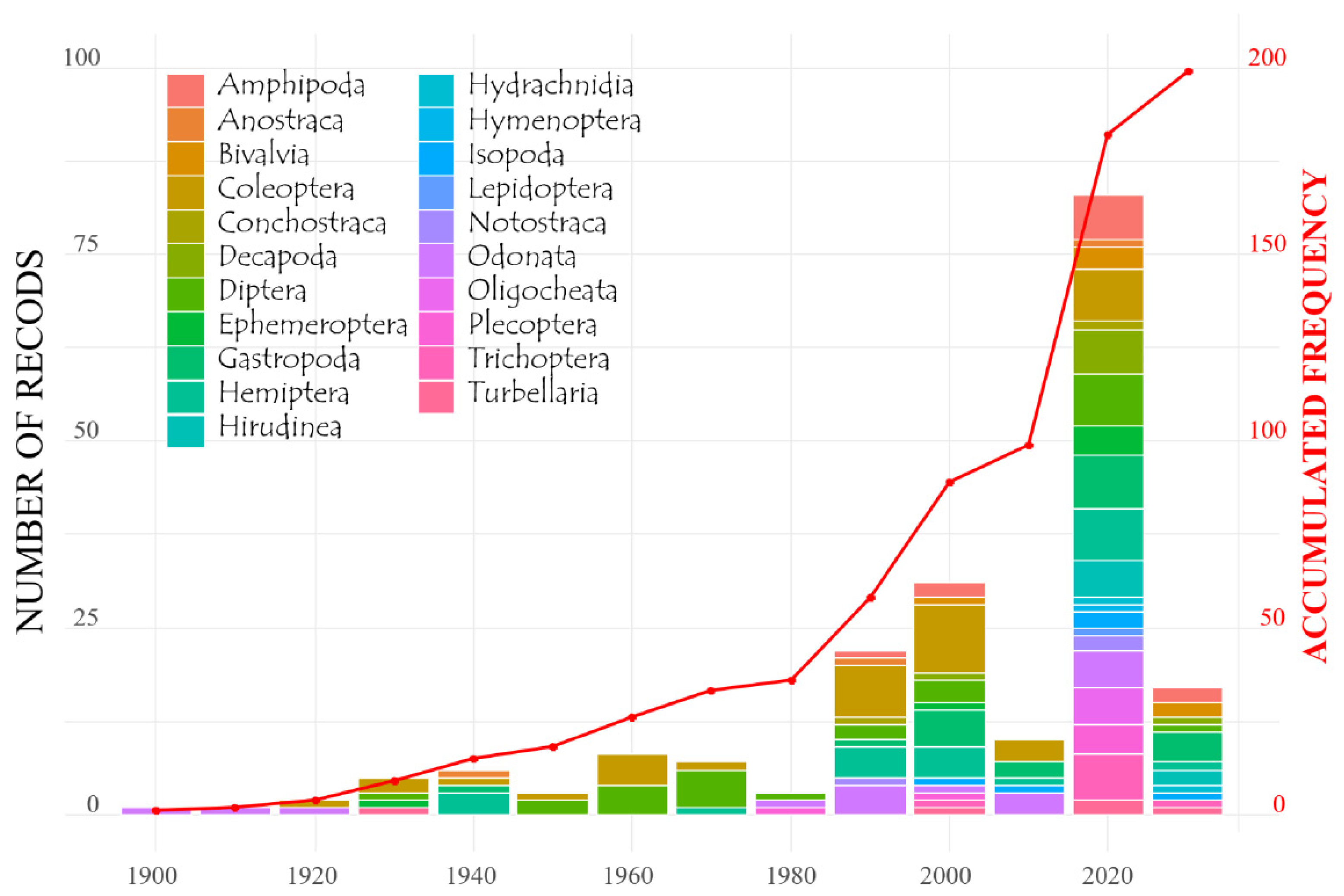
Temporal distribution of published occurrence records was highly uneven (Figure 5). Few records were associated with publications before 1950, followed by a gradual increase between the 1950s and 1980s. Record numbers increased substantially from the 1990s onwards, particularly after 2000, reaching their highest levels during 2010–2020. This increase was accompanied by broader taxonomic representation and is reflected in the steep rise in the cumulative record curve. These patterns reflect the historical accumulation of published biodiversity information rather than temporal changes in species richness or abundance.
Figure 5.
Temporal distribution and cumulative accumulation of scientific publications and records over time in the study area database. Stacked bars represent the number of records assigned to each taxonomic group within each period, while the red line indicates the cumulative number of records over time. The figure illustrates both temporal variation in sampling intensity and the progressive growth of the database.
3.5. Spatial Patterns of Documented Species Richness
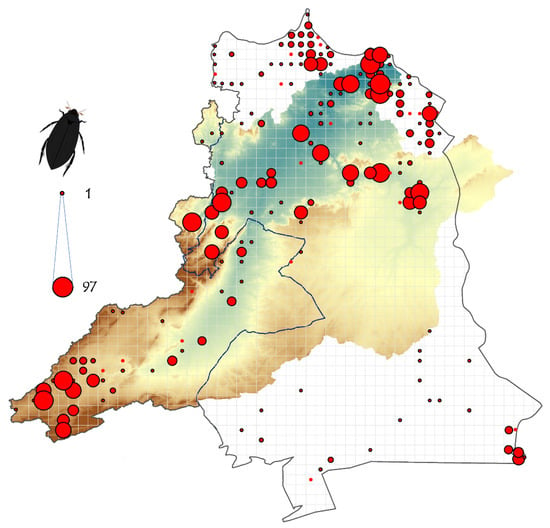
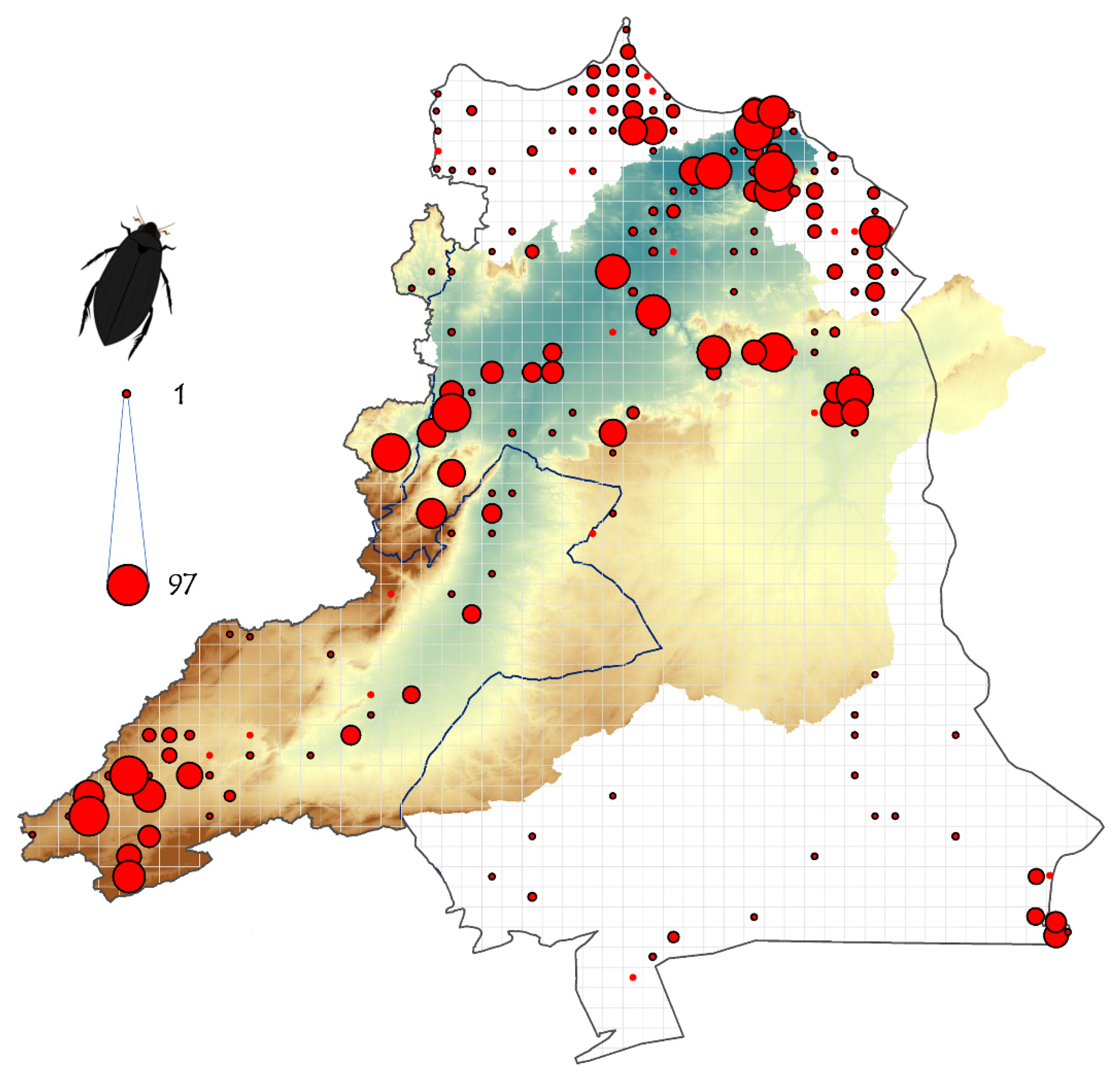
The highest documented species richness was recorded in the northern and northeastern sectors of the study area, particularly in the lower Moulouya wetlands and the watercourses draining the eastern slopes of the Middle Atlas (Figure 6). Other concentrations of documented richness occurred in the Oued Za basin, the Nador Lagoon area, and the Oued Isly basin. In contrast, relatively few species were recorded in the southern and southeastern sectors, including the Figuig Oasis. These spatial patterns should be interpreted cautiously, as they reflect documented occurrences and may be influenced by uneven historical sampling effort.
Figure 6.
The spatial distribution of species within the study area. The red circles indicate observation points, and their size is proportional to the number of species recorded (ranging from 1 to 97).
4. Discussion
4.1. A Regional Baseline Shaped by Uneven Knowledge
This synthesis provides an updated regional inventory of freshwater macroinvertebrates from the Moulouya Basin and the Eastern Region, documenting 525 species, 269 genera, 114 families, and 4924 georeferenced occurrence records. These data support the region’s biodiversity importance but also highlight substantial taxonomic, spatial, and temporal gaps in current knowledge.
Aquatic insects dominate the compiled records, particularly Dytiscidae, Hydrophilidae, Hydraenidae, Libellulidae, Coenagrionidae, and Baetidae. Although this pattern reflects their contribution to the known regional fauna, it may also be influenced by historical research efforts and taxonomic expertise [24,41,44,50]. As reported elsewhere [162], conspicuous and well-studied groups may be more frequently documented than small-bodied, cryptic, subterranean, or taxonomically challenging taxa. The relatively recent documentation of groups such as water mites (Hydracarina), aquatic Curculionidae, Hymenoptera, and Lepidoptera illustrates gaps in historical taxonomic coverage [113,130,131,134,136]. Their late appearance in the inventory rather reflects increasing research attention rather than recent colonization.
Temporal and spatial patterns also reflect uneven documentation. The number of published occurrence records increased substantially after the 1990s, particularly after 2000, coinciding with the expansion of regional hydrobiological research followed by improvements in taxonomic knowledge and sampling coverage. Higher documented richness in the northern, northeastern, and western sectors may partly reflect greater habitat availability, and more permanent aquatic environments, but also differences in sampling effort, accessibility, and research activity. Conversely, the relatively few records from southern and southeastern sectors cannot be interpreted as evidence of intrinsically lower biodiversity, despite the aridity, intermittent flow, and higher environmental stress in these areas. These patterns emphasize the need for more geographically balanced surveys before regional differences in species richness can be assessed reliably [163].
4.2. Endemism and Biogeographical Affinities
The predominance of Palearctic and Mediterranean taxa, together with the substantial proportion of Moroccan, Maghrebian, and Ibero-Maghrebian endemics, highlights the biogeographical affinities of northeastern Morocco’s freshwater macroinvertebrate fauna. These patterns are consistent with other regional faunal groups [49,164,165,166] and with Morocco’s geographical position between Europe and Africa. Accordingly, the known fauna shows stronger affinities with western Mediterranean and European assemblages, whereas Afrotropical elements remain poorly represented [6,167,168].
Historical connections between Europe and North Africa may have contributed to these patterns, facilitating faunal exchanges through the western Mediterranean and potentially other Mediterranean dispersal routes, via the Iberian Peninsula and western Maghreb, and the Italian and Tunisian regions [119]. Changes in geographical connectivity during the Messinian Salinity Crisis may have influenced the dispersal and diversification of freshwater organisms, when the desiccation of the Mediterranean Sea created extensive land bridges and interconnected fluvial systems [169,170]. Subsequent geographical isolation, climatic fluctuations, and topographical barriers may have further contributed to regional differentiation and endemism.
Strict Moroccan endemics were particularly well-represented among gastropods, followed by amphipods and trichopterans. This pattern is consistent with the high endemism reported for Moroccan freshwater molluscs [6] and across the Mediterranean Basin [171]. Limited dispersal, habitat specialization and geographical isolation may contribute to restricted distributions and diversification in freshwater molluscs [6,172,173]. The high number of endemic species documented in rivers and springs suggests that these environments may warrant conservation attention. However, further systematic surveys, particularly in isolated springs, headwaters, hyporheic habitats, and groundwater systems, are needed to address existing knowledge gaps and assess whether additional endemic diversity remains undocumented [174].
4.3. Threats to Endemic and Groundwater-Dependent Biodiversity
Endemic and habitat-specialized taxa may be particularly vulnerable to environmental change because of their restricted distributions and limited dispersal capacity. Major threats include habitat degradation, hydrological alteration, pollution, salinization, and biological invasions [6,127,145]. These pressures are especially relevant in semi-arid regions, where water availability is constrained by climatic variability and increasing human water demand [175].
Freshwater ecosystems in the Moulouya Basin and the Eastern Region are exposed to multiple anthropogenic stressors, including riparian alteration, dam construction, overgrazing, water abstraction, and domestic, industrial, and agricultural pollution [118,176,177]. Groundwater resources are also affected by mineralization and contamination linked to agricultural and industrial activities [178,179,180,181]. Such pressures are particularly concerning for springs, and hyporheic habitats, which may harbor poorly documented endemic and highly specialized taxa.
Salinization is another important pressure, potentially exacerbated by declining precipitation, evaporation, seawater intrusion, and hydrological alteration, particularly in downstream areas [127]. Increasing salinity can alter community composition, reduce suitable habitat for freshwater specialists, and favor salt-tolerant taxa. The vulnerability of habitat-specialized species is illustrated by Aphelocheirus pemae Millán, L’Mohdi & Carbonell, 2016, a geographically restricted aquatic insect reported only from North Africa’s Moroccan fauna [129,140,145]. Its limited distribution and association with running waters make its populations potentially vulnerable to habitat degradation, pollution, and hydrological changes. These pressures highlight the importance of integrating freshwater biodiversity conservation into sustainable water-resource management, particularly in arid and semi-arid regions [118,142,145].
Biological invasions interact with these pressures. Alien or invasive macroinvertebrates reported for the region include Barbronia weberi (Blanchard 1897), Planorbella duryi (Wetherby, 1879), Corbicula fluminalis (O.F. Müller, 1774) and Trichocorixa verticalis verticalis (Fieber, 1851) [182]. Additionally, invasive alien fishes, including Gambusia holbrooki Girard, 1859, Micropterus salmoides Lacépède, 1802, and Cyprinus carpio Linnaeus, 1758 [182], represent additional potential pressures on native aquatic communities. Alien species may affect native fauna through competition, predation or changes in trophic interactions [183,184]. The reported upstream expansion of Callinectes sapidus, facilitated by its broad salinity tolerance, illustrates the potential interaction between biological invasions and salinity gradients [127]. Local disappearance of Potamon algeriense (Herbst, 1785) and Unio foucauldianus Pallary, 1936 have also been reported from parts of the Moulouya River, although their causes remain uncertain [6,127].
4.4. Research Priorities and Potential Frameworks for Long-Term Ecosystem Sustainability
This checklist provides a baseline for future research and conservation planning rather than a complete estimate of freshwater invertebrate diversity in northeastern Morocco. Four main priorities emerge from the gaps identified here.
First, future surveys should broaden their taxonomic coverage to include small-bodied and cryptic invertebrates, particularly meiofaunal groups such as nematodes, small annelids, microcrustaceans, rotifers, and gastrotrichs. These organisms contribute to sediment processes, microbial grazing, and organic matter decomposition [174], but remain poorly documented in regional freshwater inventories [185].
Second, groundwater-dependent ecosystems warrant dedicated attention. Springs, aquifers, wells, caves, hyporheic zones, and interstitial habitats may support specialized and endemic assemblages, potentially serving as refugia during periods of surface-water scarcity [186,187]. However, these habitats are vulnerable to water abstraction, pollution, salinization, and hydrological alteration [175,188]. Standardized surveys would help clarify their biodiversity and conservation relevance [189].
Third, taxonomic and molecular resources should be improved. Identification remains challenging for several freshwater invertebrate groups because of unresolved taxonomy, cryptic diversity, and limited regional reference data [190]. Integrative approaches combining morphology and molecular evidence could improve species delimitation and the reliability of biodiversity inventories [191]. Developing a regional DNA reference library would facilitate future taxonomic research and biomonitoring.
Finally, biodiversity inventories should be integrated with standardized, long-term ecological monitoring. Although occurrence records provide valuable baseline information, they cannot independently establish population trends, local extinctions, or responses to environmental change [192,193]. Repeated biological surveys combined with environmental measurements, including water chemistry, temperature, salinity, flow permanence, land use, and groundwater conditions, would improve assessments of ecological change [19,194]. Publicly accessible, standardized biodiversity data would also enhance reproducibility and facilitate their integration into regional monitoring and conservation initiatives [195]. Such coordinated efforts could strengthen the contribution of freshwater biodiversity information to sustainable water-resource management in northeastern Morocco.
5. Conclusions
This study provides an updated regional synthesis of freshwater macroinvertebrate diversity in the Moulouya River basin and the Eastern Region of Morocco, documenting substantial species richness, predominantly Palearctic–Mediterranean affinities, and a notable proportion of endemic species. Rivers and springs accounted for the highest numbers of documented endemic habitat associations, highlighting their potential conservation importance.
However, the dataset reveals gaps in taxonomic, spatial, and temporal knowledge, particularly small-bodied taxa and subterranean fauna, groundwater-dependent ecosystems and the southern sectors of the study area. Uneven historical sampling also limits the interpretation of spatial richness patterns. These limitations emphasize that the inventory represents a baseline of documented biodiversity rather than a complete assessment of regional species richness or conservation priorities.
Future work should focus on standardized surveys, integrative taxonomy, public deposition of occurrence data, and long-term monitoring. Expanding coverage of poorly studied taxa and habitats, particularly groundwater and hyporheic systems, would improve biodiversity assessments and help integrate freshwater conservation into sustainable water-resource management in northeastern Morocco.
Supplementary Materials
The following supporting information can be downloaded at https://www.mdpi.com/article/10.3390/su182111003/s1, Table S1, taxonomic list; Table S2, records.
Author Contributions
Conceptualization, Y.M., A.M. and F.A.T.; methodology, Y.M. and F.A.T.; software, A.M. and F.A.T.; validation, formal analysis, investigation, Y.M. and F.A.T.; resources, data curation, Y.M. and F.A.T.; writing—original draft preparation, Y.M. and F.A.T.; writing—review and editing, visualization, supervision, Y.M. and A.M. All authors have read and agreed to the published version of the manuscript.
Funding
This research received no external funding.
Institutional Review Board Statement
Not applicable.
Informed Consent Statement
Not applicable.
Data Availability Statement
The occurrence dataset supporting the findings of this study has been deposited in the GBIF network and is openly accessible through the following https://www.gbif.org/dataset/6b3f90ff-fc9a-4962-9605-8a79b81193e7 (accessed on 25 October 2026). Supplementary Table S1 contains the taxonomic checklist, and Supplementary Table S2 contains occurrence records, coordinates, dates, habitats, and sources.
Acknowledgments
We would like to express our sincere gratitude to the Editor and the Reviewers for their helpful and constructive comments, which have greatly improved the manuscript, as well as to Maria Bogomolova for her careful English revision.
Conflicts of Interest
The authors declare no conflicts of interest.
References
- Myers, N.; Mittermeier, R.A.; Mittermeier, C.G.; da Fonseca, G.A.B.; Kent, J. Biodiversity hotspots for conservation priorities. Nature 2000, 403, 853–858. [Google Scholar] [CrossRef] [Scilit]
- Mittermeier, R.A.; Gil, P.R.; Hoffmann, M.; Pilgrim, J.D.; Brooks, T.B.; Mittermeier, C.G.; Lamoreux, J.; Fonseca, G.A.B.; Gil, P.; Hoffman, M.; et al. Hotspots Revisited: Earth’s Biologically Richest and Most Endangered Terrestrial Ecoregions; CEMEX/Conservation International: Mexico City, Mexico, 2004; p. 390. [Google Scholar]
- Balletto, E.; Casale, A. Mediterranean biogeography and the origin of its fauna. Biogeographia 1991, 15, 1–34. [Google Scholar]
- Blondel, J.; Aronson, J.; Bodiou, J.-Y.; Boeuf, G. The Mediterranean Region: Biological Diversity in Space and Time; Oxford University Press: Oxford, UK, 2010; p. 392. [Google Scholar]
- Belhaj, A.; Mingarro, M.; Sánchez-Fernández, D.; Chergui, B.; Pallarés, S. Conservation of freshwater biodiversity in North Africa under future climate and land-cover changes. Biodivers. Conserv. 2024, 33, 1145–1163. [Google Scholar] [CrossRef] [Scilit]
- Mabrouki, Y.; Grego, J.; Taybi, F.A. Freshwater Molluscs of Morocco: An Updated Checklist, Biodiversity Hotspots, and Conservation Issues. Sustainability 2026, 18, 5637. [Google Scholar] [CrossRef] [Scilit]
- Ennabili, A.; Libiad, M.; Haissoufi, M.E.; Khabbach, A.; Bennas, N. Biodiversity, change, and use of Moroccan wetlands. In Wetlands of Tropical and Sub-Tropical Asia and Africa; Finlayson, C.M., Milton, G.R., Finlayson, A., Eds.; Springer: Cham, Switzerland, 2025; pp. 265–296. [Google Scholar]
- Brown, E.D.; Williams, B.K. Ecological integrity assessment as a metric of biodiversity: Are we measuring what we say we are? Biodivers. Conserv. 2016, 25, 1011–1035. [Google Scholar] [CrossRef] [Scilit]
- Guralnick, R.P.; Hill, A.W.; Lane, M. Towards a collaborative, global infrastructure for biodiversity assessment. Ecol. Lett. 2007, 10, 663–672. [Google Scholar] [CrossRef] [Scilit]
- Hortal, J.; Lobo, J.M.; Jiménez-Valverde, A. Limitations of biodiversity databases: Case study on seed-plant diversity in Tenerife, Canary Islands. Conserv. Biol. 2007, 21, 853–863. [Google Scholar] [CrossRef] [Scilit]
- Costello, M.J.; Vanden Berghe, E. Ocean biodiversity informatics: Enabling a new era in marine biology research and management. Mar. Ecol. Prog. Ser. 2006, 316, 203–214. [Google Scholar] [CrossRef] [Scilit]
- Tscharntke, T.; Clough, Y.; Wanger, T.C.; Jackson, L.; Motzke, I.; Perfecto, I.; Vandermeer, J. Global food security, biodiversity conservation and the future of agricultural intensification. Biol. Conserv. 2012, 151, 53–59. [Google Scholar] [CrossRef] [Scilit]
- Le Gall, M.; Overson, R.; Cease, A. A global review on locusts (Orthoptera: Acrididae) and their interactions with livestock grazing practices. Front. Ecol. Evol. 2019, 7, 263, Correction in Front. Ecol. Evol. 2023, 11, 1154640. [Google Scholar] [CrossRef] [Scilit]
- Wallace, J.B.; Webster, J.R. The role of macroinvertebrates in stream ecosystem function. Annu. Rev. Entomol. 1996, 41, 115–139. [Google Scholar] [CrossRef] [Scilit]
- Merritt, R.W.; Cummins, K.W.; Berg, M.B. (Eds.) An Introduction to the Aquatic Insects of North America; Kendall/Hunt Publishing Co.: Dubuque, IA, USA, 2008; p. 1158. [Google Scholar]
- Gibert, J.; Deharveng, L. Subterranean ecosystems: A truncated functional biodiversity. BioScience 2002, 52, 473–481. [Google Scholar] [CrossRef] [Scilit]
- Humphreys, W.F. Aquifers: The ultimate groundwater-dependent ecosystems. Aust. J. Bot. 2006, 54, 115–132. [Google Scholar] [CrossRef] [Scilit]
- Allan, J.D.; Castillo, M.M. Stream Ecology: Structure and Function of Running Waters, 2nd ed.; Springer: Dordrecht, The Netherlands, 2007; p. 436. [Google Scholar]
- Bonada, N.; Prat, N.; Resh, V.H.; Statzner, B. Developments in aquatic insect biomonitoring: A comparative analysis of recent approaches. Annu. Rev. Entomol. 2006, 51, 495–523. [Google Scholar] [CrossRef] [Scilit]
- Botosaneanu, L. (Ed.) Stygofauna Mundi: A Faunistic, Distributional, and Ecological Synthesis of the World Fauna Arising from Subterranean Waters; Brill: Leiden, The Netherlands, 1986; p. 740. [Google Scholar]
- Culver, D.C.; Pipan, T. The Biology of Caves and Other Subterranean Habitats; Oxford University Press: Oxford, UK, 2009; p. 272. [Google Scholar]
- Benamar, L.; Bennas, N.; Hassoun, M.; Millán, A. Checklist of Moroccan aquatic beetles (Coleoptera: Hydraenidae Mulsant, 1844): New records and updates. Zootaxa 2022, 5129, 451–504. [Google Scholar] [CrossRef] [Scilit]
- Belhaj, A.; Sánchez-Fernández, D.; El Hemiani, B.C.; Bennas, N. A general lack of complete inventories for aquatic beetles in Morocco. J. Insect Conserv. 2023, 27, 75–85. [Google Scholar] [CrossRef] [Scilit]
- Berrahou, A.; Cellot, B.; Richoux, P. Distribution longitudinale des macroinvertébrés benthiques de la Moulouya et de ses principaux affluents (Maroc). Ann. Limnol.—Int. J. Limnol. 2001, 37, 223–235. [Google Scholar] [CrossRef] [Scilit][Green Version]
- Alluaud, C. Compte rendu d’une mission zoologique dans le Maroc Sud-oriental (avril–mai 1924). Bull. Soc. Sci. Nat. Maroc. 1926, 6, 12–28. [Google Scholar]
- Aguesse, P.; Dakki, M.; Gheit, A.; Ramdani, M. Les hétéroptères aquatiques du Maroc. Inventaire commenté. Bull. Inst. Sci. 1982, 6, 125–138. [Google Scholar]
- Afzan, H.; Belqat, B. Faunistic and bibliographical inventory of the Psychodinae moth-flies of North Africa (Diptera, Psychodidae). ZooKeys 2016, 558, 119–145. [Google Scholar] [CrossRef] [Scilit]
- Ahuir Galindo, J. New Melanopsis from Morocco. Malacol. Mostra Mond. 2014, 85, 7–8. [Google Scholar]
- Ahuir Galindo, J. New Melanopsis from Morocco. Malacol. Mostra Mond. 2016, 90, 26–28. [Google Scholar]
- Ahuir Galindo, J. A new species of Theodoxus (Gastropoda: Neritidae) from Morocco. Visaya 2020, 5, 41–45. [Google Scholar]
- Bailly-Choumara, H.; Kremer, M. Deuxième contribution à l’étude des Culicoides du Maroc (Diptera, Ceratopogonidae). Cah. ORSTOM Sér. Entomol. Méd. Parasitol. 1970, 8, 383–391. [Google Scholar]
- Bailly-Choumara, H. Rapport d’une Mission Entomologique Effectuée dans la Vallée de la Moulouya du 1.10.67 au 10.10.67; Laboratoire d’Entomologie, Institut Scientifique Chérifien: Rabat, Morocco, 1967; p. 11. [Google Scholar]
- Baratti, M.; Filippelli, M.; Nardi, F.; Messana, G. Molecular phylogenetic relationships among some stygobitic cirolanid species (Crustacea, Isopoda). Contrib. Zool. 2010, 79, 57–67. [Google Scholar] [CrossRef] [Scilit]
- Baylis, M.; el Hasnaoui, H.; Bouayoune, H.; Touti, J.; Mellor, P.S. The spatial and seasonal distribution of African horse sickness and its potential Culicoides vectors in Morocco. Med. Vet. Entomol. 1997, 11, 203–212. [Google Scholar] [CrossRef] [Scilit]
- Bedel, L. Catalogue Raisonné des Coléoptères du nord de l’Afrique (Maroc, Algérie, Tunisie et Tripolitaine) avec Notes sur la Faune des îles Canaries et de Madère; Première Partie; Société Entomologique de France: Paris, France, 1925; p. 402. [Google Scholar]
- Benamar, L. Les Coléoptères Aquatiques du Maroc: Atlas, Biogéographie et Degré de Vulnérabilité. Ph.D. Thesis, Abdelmalek Essaadi University, Tétouan, Morocco, 2015. [Google Scholar]
- Bennas, N. Coléoptères Aquatiques Polyphaga du Rif (Nord du Maroc): Faunistique, écologie et Biogéographie. Ph.D. Thesis, Abdelmalek Essaadi University, Tétouan, Morocco, 2002. [Google Scholar]
- Bennas, N.; Sáinz-Cantero, C.E. Coléoptères aquatiques Adephaga de la chaîne rifaine marocaine (Coleoptera: Gyrinidae, Haliplidae, Noteridae, Hygrobiidae, Dytiscidae). Mem. Soc. Entomol. Ital. 2006, 85, 31–73. [Google Scholar] [CrossRef] [Scilit]
- Bennas, N.; Sáinz-Cantero, C.E. Nouvelles données sur les Coléoptères aquatiques du Maroc: Les Elmidae Curtis, 1830 et les Dryopidae Billberg, 1820 du Rif (Coleoptera). Nouv. Rev. Entomol. 2007, 24, 61–79. [Google Scholar]
- Bennas, N.; Sáinz-Cantero, C.E.; Ouarour, A. Nouvelles données sur les coléoptères aquatiques du Maroc: Les Hydraenidae Mulsant, 1844 (Coleoptera) du Rif. Zool. Baetica 2001, 12, 135–168. [Google Scholar]
- Berrahou, A.; Chavanon, G.; Bellouali, A.; Richoux, P. Études sur la Basse Moulouya (Maroc oriental): 7-Les Coléoptères aquatiques de l’Oued Za. Bull. Mens. Soc. Linn. Lyon 2001, 70, 127–131. [Google Scholar] [CrossRef] [Scilit]
- Bonjean, M. L’épidémiologie du Paludisme au Maroc; Moncho Éditeur: Rabat, Morocco, 1947; p. 66. [Google Scholar]
- Bouayoune, H.; Touti, J.; El Hasnaoui, H.; Baylis, M.; Mellor, P.S. The Culicoides vectors of African horse sickness virus in Morocco: Distribution and epidemiological implications. Arch. Virol. 1998, 14, 113–122. [Google Scholar] [CrossRef] [Scilit]
- Boudot, J.P.; De Knijf, G. Nouvelles données sur les Odonates du Maroc oriental et méridional (Odonata). Martinia 2012, 28, 1–28. [Google Scholar]
- Boulaassafer, K.; Ghamizi, M.; Delicado, D. The genus Mercuria Boeters, 1971 in Morocco: First molecular phylogeny of the genus and description of two new species (Caenogastropoda, Truncatelloidea, Hydrobiidae). ZooKeys 2018, 782, 95–128. [Google Scholar] [CrossRef] [Scilit]
- Boulaassafer, K.; Ghamizi, M.; Machordom, A.; Delicado, D. Phylogenetic relationships within Pseudamnicola Paulucci, 1878 (Caenogastropoda: Truncatelloidea) indicate two independent dispersal events from different continents to the Balearic Islands. Syst. Biodivers. 2020, 18, 396–416. [Google Scholar] [CrossRef] [Scilit]
- Chaker, E.; Bailly-Choumara, H.; Kremer, M. Sixième contribution à l’étude faunistique des Culicoides du Maroc (Diptera, Ceratopogonidae). Bull. Inst. Sci. 1979, 4, 81–86. [Google Scholar]
- Chappuis, P.A. Die Tierwelt der unterirdischen Gewässer. Binnengewässer 1927, 3, 1–175. [Google Scholar]
- Chavanon, G. Catalogue des Coléoptères de la région orientale du Maroc (Province de Guercif exceptée). Trav. Inst. Sci. Sér. Zool. 2020, 57, 1–192. [Google Scholar]
- Chavanon, G.; Berrahou, A.; Millán, A. Apport à la connaissance des coléoptères et hémiptères aquatiques du Maroc oriental: Catalogue faunistique. Boletín Soc. Entomol. Aragon. 2004, 35, 143–162. [Google Scholar]
- Chergui, H.; Chavanon, G.; Berrahou, A.; Melhaoui, M. À propos des Plécoptères du Maroc oriental. Bull. Inst. Sci. 1990, 14, 51–53. [Google Scholar]
- Christodoulou, M.; Antoniou, A.; Magoulas, A.; Koukouras, A. Revision of the freshwater genus Atyaephyra (Crustacea, Decapoda, Atyidae) based on morphological and molecular data. ZooKeys 2012, 229, 53–110. [Google Scholar] [CrossRef] [Scilit]
- Chvála, M.; Lyneborg, L. A revision of Palaearctic Tabanidae (Diptera) described by J. C. Fabricius. J. Med. Entomol. 1970, 7, 543–555. [Google Scholar] [CrossRef] [Scilit]
- Dowling, C. A description of two new species of Tanypodinae (Diptera, Chironomidae) from North Africa. Mem. Am. Entomol. Soc. 1983, 34, 89–94. [Google Scholar]
- Dowling, C. A description of two new species of the genus Thienemannimyia (Diptera, Chironomidae) from North Africa. Entomol. Scand. Suppl. 1987, 29, 157–160. [Google Scholar]
- Driauach, O.; Belqat, B. Additions to the Limoniidae and Pediciidae fauna of Morocco, with an updated checklist (Diptera, Tipuloidea). ZooKeys 2016, 563, 129–146. [Google Scholar] [CrossRef] [Scilit]
- El Haissoufi, M.; De Knijf, G.; van’t Bosch, J.; Bennas, N.; Millán Sánchez, A. Contribution to the knowledge of the Moroccan Odonata, with first records of Orthetrum sabina, and an overview of first and last dates for all species. Odonatologica 2015, 44, 225–252. [Google Scholar]
- de la Escalera, M.M. Los Coleopteros de Marruecos. Trab. Mus. Nac. Cienc. Nat. Ser. Zool. 1914, 11, 1–553. [Google Scholar]
- Fadil, F.; Dakki, M. A new species of Echinogammarus Stebbing, 1899 (Crustacea, Amphipoda) from Moroccan freshwaters. Beaufortia 2003, 53, 53–59. [Google Scholar]
- Fakher El Abiari, A.; Oulbaz, Z.; Messouli, M.; Coineau, N. A new species of Pseudoniphargus (Crustacea, Amphipoda) from subterranean water of northeastern Morocco: Historical biogeography and evolutionary aspects. Contrib. Zool. 1999, 68, 161–171. [Google Scholar] [CrossRef] [Scilit]
- Gaud, J. Présence au Maroc d’Anopheles (Myzomyia) turkhudi Liston, 1901. Arch. Inst. Pasteur Maroc 1945, 4, 144–147. [Google Scholar]
- Gaud, J. Notes bibliographiques sur les Culicidae du Maroc. Arch. Inst. Pasteur Maroc 1953, 4, 443–490. [Google Scholar]
- Gaud, J. Note de terrain. C. R. Soc. Sci. Nat. Maroc. 1957, 23, 116. [Google Scholar] [CrossRef] [Scilit]
- Gaud, J.; Faure, F.; Maurice, A. Répartition et fréquence relative des espèces anophéliennes au Maroc. Ann. Parasitol. Hum. Comp. 1950, 25, 53–60. [Google Scholar] [CrossRef] [Scilit]
- Gauthier, H. La vie aquatique dans les déserts subtropicaux. In La vie dans la région désertique nord-tropicale de l’Ancien Monde. Mém. Soc. Biogéogr. 1938, 6, 107–120. [Google Scholar]
- Gauthier, H. Enquête sur la répartition en Algérie des Mollusques susceptibles de véhiculer la bilharziose vésicale. Arch. Inst. Pasteur Alger. 1934, 12, 305–350. [Google Scholar]
- Ghamizi, M. New stygobiont genus and new species (Gastropoda, Hydrobiidae) from the Rif (Morocco). Ecol. Montenegrina 2020, 31, 50–56. [Google Scholar] [CrossRef] [Scilit]
- Ghamizi, M.; Vala, J.C.; Bouka, H. Le genre Pseudamnicola au Maroc avec description de Pseudamnicola pallaryi n. sp. (Gastropoda: Hydrobiidae). Haliotis 1997, 26, 33–49. [Google Scholar]
- Gomes-dos-Santos, A.; Froufe, E.; Gonçalves, D.V.; Sousa, R.; Prié, V.; Ghamizi, M.; Benaissa, H.; Varandas, S.; Teixeira, A.; Lopes-Lima, M. Freshwater conservation assessments in (semi-)arid regions: Testing river intermittence and buffer strategies using freshwater mussels (Bivalvia, Unionida) in Morocco. Biol. Conserv. 2019, 236, 420–434. [Google Scholar] [CrossRef] [Scilit]
- Guy, Y. Bilan épidémiologique du paludisme au Maroc (données recueillies entre 1960, 1961 et 1962). Ann. Parasitol. Hum. Comp. 1963, 38, 823–857. [Google Scholar] [CrossRef] [Scilit]
- Guy, Y. Une hypothèse au sujet des larves monstrueuses dans le genre Anopheles. Arch. Inst. Pasteur Alger. 1967, 45, 51–61. [Google Scholar]
- Guy, Y.; Holstein, M. Données récentes sur les Anophèles du Maghreb. Arch. Inst. Pasteur Alger. 1968, 46, 142–150. [Google Scholar]
- Jacquemin, G.; Boudot, J.-P. Les Libellules (Odonates) du Maroc; Société Française d’Odonatologie: Bois-d’Arcy, France, 1999; p. 149. [Google Scholar]
- Joly, F.; Poueyto, A.; Guignet, P.; Sauvage, C.; Panouse, J.B.; Vachon, M.; Kocher, L.; Reymond, A. Les Hamada Sud-Marocaines; Travaux de l’Institut Scientifique Chérifien, Série Générale 2; Institut Scientifique Chérifien: Rabat, Morocco, 1954; p. 289. [Google Scholar]
- Kadri, I.B. Distribution Longitudinale des Macroinvertébrés Benthiques de l’Oued Za (Maroc Oriental): Impact des Rejets Domestiques et Industriels. Ph.D. Thesis, Mohammed Premier University, Oujda, Morocco, 2014. [Google Scholar]
- Kettani, K.; Calle, D.; El Ouazzani, T. Mise à jour de l’inventaire des Chironomidés (Diptera) connus du Maroc. Ann. Limnol.—Int. J. Limnol. 2001, 37, 323–333. [Google Scholar] [CrossRef] [Scilit][Green Version]
- Kettani, K.; Ebejer, M.J.; Ackland, D.M.; Bächli, G.; Barraclough, D.; Barták, M.; Carles-Tolrá, M.; Černý, M.; Cerretti, P.; Chandler, P.; et al. Catalogue of the Diptera (Insecta) of Morocco—An annotated checklist, with distributions and a bibliography. ZooKeys 2022, 1094, 1–466. [Google Scholar] [CrossRef] [Scilit]
- Kharboua, M. Écologie et Biologie des Mollusques Dulcicoles et état Actuel de la Bilharziose dans le Maroc Oriental. Ph.D. Thesis, Mohammed Premier University, Oujda, Morocco, 1994. [Google Scholar]
- Kharboua, M. Écologie des mollusques dulçaquicoles de la Meseta côtière marocaine. In Thèse de 3e Cycle; Faculty of Sciences: Marrakech, Morocco, 1988. [Google Scholar]
- Kocher, L. Localisations nouvelles ou intéressantes de Coléoptères marocains. Trav. Inst. Sci. Chérif. Fac. Sci. Rabat Sér. Zool. 1953, 3, 1–142. [Google Scholar]
- Kocher, L. Catalogue commenté des coléoptères du Maroc. Fascicule II: Hydrocanthares, Palpicornes, Brachélytres. Trav. Inst. Sci. Chérif. Fac. Sci. Rabat Sér. Zool. 1958, 14, 1–246. [Google Scholar]
- Kocher, L. Catalogue commenté des coléoptères du Maroc. Fascicule X bis: Nouveaux addenda et corrigenda. Trav. Inst. Sci. Chérif. Fac. Sci. Rabat Sér. Zool. 1968, 34, 1–132. [Google Scholar]
- Kremer, M.; Hommel, M.; Bailly-Choumara, H. Troisième contribution à l’étude faunistique des Culicoides du Maroc. Ann. Parasitol. 1971, 46, 661–670. [Google Scholar] [CrossRef] [Scilit]
- L’Mohdi, O. Les Hémiptères Aquatiques du Maroc: Atlas, Biogéographie et Degré de Vulnérabilité. Ph.D. Thesis, Abdelmalek Essaâdi University, Tétouan, Morocco, 2016. [Google Scholar]
- Laamrani, H.; Khallayoune, K.; Delay, B.; Pointier, J.-P. Factors affecting the distribution and abundance of two prosobranch snails in a thermal spring. J. Freshw. Ecol. 1997, 12, 75–87. [Google Scholar] [CrossRef] [Scilit]
- Leclercq, M. Syrphidae (Diptera) du Maroc. I. Bull. Ann. Soc. Entomol. Belg. 1961, 97, 241–244. [Google Scholar]
- Lestage, J.-A. Éphéméroptères, Plécoptères et Trichoptères recueillis en Algérie par M. H. Gauthier et liste des espèces connues actuellement de l’Afrique du Nord. Bull. Soc. Hist. Nat. Afr. Nord 1925, 16, 8–18. [Google Scholar]
- Lindberg, H. Inventa entomologica itineris Hispanici et Maroccani, quod a. 1926 fecerunt Harald et Håkan Lindberg. XV. Coleoptera aquatica. Acta Soc. Sci. Fenn. 1939, 7, 1–38. [Google Scholar]
- Linnavuori, R. Studies on the South and East Mediterranean Hemipterous Fauna. Acta Entomol. Fenn. 1965, 21, 1–70. [Google Scholar]
- Maachi, M.; Radouani, M. Communauté des coléoptères d’un littoral sableux méditerranéen: La plage de Bou-Areg (Maroc). Ecol. Mediterr. 1993, 19, 29–38. [Google Scholar] [CrossRef] [Scilit]
- Maamri, A.; Pattee, E.; Dolédec, S.; Chergui, H. The benthic macroinvertebrate assemblages in the Zegzel-Cherraa, a partly temporary river system, Eastern Morocco. Ann. Limnol.—Int. J. Limnol. 2005, 41, 247–257. [Google Scholar] [CrossRef] [Scilit][Green Version]
- Mahulu, A.; Clewing, C.; Stelbrink, B.; Chibwana, F.D.; Tumwebaze, I.; Stothard, J.R.; Albrecht, C. Cryptic intermediate snail host of the liver fluke Fasciola hepatica in Africa. Parasites Vectors 2019, 12, 573. [Google Scholar] [CrossRef] [Scilit]
- Nourti, M.; Grichanov, I.Y.; Kettani, K. New records of long-legged flies (Diptera, Dolichopodidae) from Morocco. Acta Biol. Sib. 2019, 5, 118–130. [Google Scholar] [CrossRef] [Scilit]
- Ólafsson, E. Taxonomic revision of western Palaearctic species of the genera Scatella R.-D. and Lamproscatella Hendel, and studies on their phylogenetic position within the subfamily Ephydrinae (Diptera: Ephydridae). Entomol. Scand. Suppl. 1991, 37, 1–100. [Google Scholar]
- Pardo Alcaide, A. Contribución al Conocimiento de la Fauna Entomológica Marroqui: III; Instituto General Franco de estudios e investigacion hispano-arabe, publicaciones fuera de serie; Editora Marroqui: Tétuán, Morocco, 1950; p. 74. [Google Scholar]
- Pardo Alcaide, A. Contribución al connaissance de la fauna entomologique marocaine: VI, Coléoptères du Valle inférieur del Uad Muluya. Tamuda 1955, 3, 39–74. [Google Scholar]
- Reiss, F. Verbreitungsmuster bei palàarktischen Chironomidenarten (Diptera, Chironomidae). Spixiana 1977, 1, 85–97. [Google Scholar]
- Ribera, I.; Hernando, C.; Aguilera, P. Agabus alexandrae sp. n. from Morocco, with a molecular phylogeny of the Western Mediterranean species of the A. guttatus group (Coleoptera: Dytiscidae). Insect Syst. Evol. 2001, 32, 253–262. [Google Scholar] [CrossRef] [Scilit]
- Roux, P.; Thiéry, A. Complément à la répartition des crustacés branchiopodes (Anostraca, Notostraca et Conchostraca) du Maroc: Le Maroc oriental. Bull. Soc. Hist. Nat. Toulouse 1988, 124, 225–233. [Google Scholar]
- Séguy, E. Contribution à l’étude des Diptères du Maroc. Mém. Soc. Sci. Nat. Maroc. 1930, 24, 1–207. [Google Scholar]
- Senevet, G.; Andarelli, L. Le genre Aedes en Afrique du Nord. I. Les larves. Arch. Inst. Pasteur Alger. 1954, 32, 310–351. [Google Scholar]
- Senevet, G.; Andarelli, L. Les Moustiques de l’Afrique du Nord et du Bassin Méditerranéen: Les Genres Culex, Uranotaenia, Theobaldia, Orthopodomyia et Mansonia; Encyclopédie Entomologique; Lechevalier: Paris, France, 1959; Volume 37, p. 384. [Google Scholar]
- Stokkan, M.; Jurado-Rivera, J.A.; Oromí, P.; Juan, C.; Jaume, D.; Pons, J. Species delimitation and mitogenome phylogenetics in the subterranean genus Pseudoniphargus (Crustacea: Amphipoda). Mol. Phylogenet. Evol. 2018, 127, 988–999. [Google Scholar] [CrossRef] [Scilit]
- Trari, B. Culicidae (Diptera): Catalogue raisonné des peuplements du Maroc et études typologiques de quelques gîtes du Gharb et de leurs communautés larvaires. In Thèse de 3e Cycle; Mohamed V University: Rabat, Morocco, 1991. [Google Scholar]
- Trari, B. Les Moustiques (Insectes, Diptères) du Maroc: Atlas de Répartition et études épidémiologiques. Ph.D. Thesis, Mohamed V University, Rabat, Morocco, 2017. [Google Scholar]
- Vidal, J.P. Contribution à l’étude des Hémiptères-Hétéroptères du Maroc. Bull. Soc. Hist. Nat. Afr. Nord. 1937, 28, 185–208. [Google Scholar]
- Vidal, J.P. Contribution à l’étude des Hémiptères-Hétéroptères du Maroc (2e note). Bull. Soc. Hist. Nat. Afr. Nord. 1938, 29, 516–524. [Google Scholar]
- Vidal, J.P. Contribution à l’étude des Hémiptères-Hétéroptères du Maroc (3e note). Bull. Soc. Hist. Nat. Afr. Nord. 1940, 30, 439–452. [Google Scholar]
- Vinçon, G.; El Alami, M.; Errochdi, S. Contribution to the knowledge of the Moroccan High and Middle Atlas stoneflies (Plecoptera, Insecta). Illiesia 2014, 10, 17–31. [Google Scholar] [CrossRef]
- Bespalaya, Y.V.; Vinarski, M.V.; Aksenova, O.V.; Babushkin, E.S.; Gofarov, M.Y.; Kondakov, A.V.; Konopleva, E.S.; Kropotin, A.V.; Mabrouki, Y.; Ovchankova, N.B.; et al. Phylogeny, taxonomy, and biogeography of the Sphaeriinae (Bivalvia: Sphaeriidae). Zool. J. Linn. Soc. 2024, 201, 305–338. [Google Scholar] [CrossRef]
- Bespalaya, Y.V.; Kropotin, A.V.; Aksenova, O.V.; Gofarov, E.S.; Kondakov, I.V.; Konopleva, E.S.; Khrebtova, I.S.; Mabrouki, Y.; Palatov, D.M.; Prokin, A.A.; et al. Global molecular taxonomy, phylogeny and biogeography of the clam genus Corbicula (Bivalvia: Cyrenidae). Zool. Scr. 2026, 55, 74–101. [Google Scholar] [CrossRef] [Scilit]
- Glöer, P.; Mabrouki, Y.; Taybi, A.F. A new genus and two new species (Gastropoda, Hydrobiidae) from Morocco. Ecol. Montenegrina 2020, 28, 1–6. [Google Scholar] [CrossRef] [Scilit]
- Mabrouki, Y. Comparative Study of the Longitudinal Distribution of Benthic Invertebrates of Two Catchments: Za and Melloulou (Tributaries of the Moulouya). Ph.D. Thesis, Mohammed Premier University, Oujda, Morocco, 2017. [Google Scholar]
- Mabrouki, Y.; Taybi, A.F.; Chavanon, G.; Vinçon, G.; Berrahou, A. Contribution à l’étude des plécoptères dans le Maroc Oriental et le bassin versant de la Moulouya et leur distribution en fonction des étages bioclimatiques. J. Mater. Environ. Sci. 2016, 7, 2178–2193. [Google Scholar]
- Mabrouki, Y.; Taybi, A.F.; El Alami, M.; Berrahou, A. New and interesting data on distribution and ecology of mayflies from Eastern Morocco (Ephemeroptera). J. Mater. Environ. Sci. 2017, 8, 2832–2859. [Google Scholar]
- Mabrouki, Y.; Taybi, A.F.; Berrahou, A.; Chaabane, K.; Legssyer, B. Case study of the freshwater shrimp Atyaephyra desmarestii (Millet, 1831) (Crustacea, Decapoda) in the watershed of Moulouya and Eastern Morocco. Vie Milieu 2018, 68, 175–183. [Google Scholar]
- Mabrouki, Y.; Taybi, A.F.; Chavanon, G.; Millán, A.; Berrahou, A. New and interesting data on the distribution of aquatic beetles from Morocco (Coleoptera, Polyphaga). Arx. Miscell. Zool. 2018, 16, 185–211. [Google Scholar] [CrossRef] [Scilit]
- Mabrouki, Y.; Taybi, A.F.; El Alami, M.; Berrahou, A. Biotypology of stream macroinvertebrates from a North African semi-arid catchment: Oued Za (Morocco). Knowl. Manag. Aquat. Ecosyst. 2019, 420, 17. [Google Scholar] [CrossRef] [Scilit]
- Mabrouki, Y.; Ben Ahmed, R.; Taybi, A.F.; Rueda, J. Annotated checklist of the leech (Annelida: Hirudinida) species of the Moulouya River basin, Morocco, with several new distribution records and a historical overview. Afr. Zool. 2019, 54, 199–214. [Google Scholar] [CrossRef] [Scilit]
- Mabrouki, Y.; Taybi, A.F.; Glöer, P. New additions to gastropod fauna (Gastropoda: Hydrobiidae, Lymnaeidae) of Morocco. Ecol. Montenegrina 2020, 31, 40–44. [Google Scholar] [CrossRef] [Scilit]
- Mabrouki, Y.; Taybi, A.F.; El Alami, M.; Wiggers, R.; Berrahou, A. New data on fauna of caddisflies (Insecta: Trichoptera) from northeastern Morocco with notes on chorology. Aquat. Insects 2020, 41, 356–390. [Google Scholar] [CrossRef] [Scilit]
- Mabrouki, Y.; Taybi, A.F.; Glöer, P. Further records of freshwater Gastropods (Mollusca: Hydrobiidae, Lymnaeidae, Planorbidae) from Morocco. Bonn Zool. Bull. 2021, 70, 273–279. [Google Scholar] [CrossRef] [Scilit]
- Mabrouki, Y.; Taybi, A.F.; Glöer, P. New data and records of the genus Theodoxus in Morocco (Gastropoda: Neritidae). Nat. Croat. 2023, 32, 143–148. [Google Scholar] [CrossRef] [Scilit]
- Mabrouki, Y.; Taybi, A.F.; Glöer, P. First record of Fountain bladder snail Physa fontinalis (Linnaeus, 1758) in Morocco. Folia Malacol. 2024, 32, 71–75. [Google Scholar] [CrossRef] [Scilit]
- Mabrouki, Y.; Taybi, A.F.; Ibrahimi, H. Hydropsyche nador sp. n. (Trichoptera: Hydropsychidae), a new species of the Hydropsyche guttata species cluster from Morocco. Aquat. Insects 2024, 45, 3–14. [Google Scholar] [CrossRef] [Scilit]
- Mabrouki, Y.; Taybi, F.A.; Shrestkha, M.; Sidorovskyi, S.; Utevsky, A.; Utevsky, S. Do Wild and Aquacultural Alien Leeches of the Genus Barbronia (Hirudinea: Salifidae) Belong to Barbronia weberi? Evidence from Morocco and Ukraine. Ecol. Montenegrina 2025, 84, 161–173. [Google Scholar] [CrossRef] [Scilit]
- Mabrouki, Y.; Gourari, K.; Taybi, A.F. The Atlantic blue crab Callinectes sapidus Rathbun, 1896 (Portunidae, Malacostraca) could lead to the local extinction of endemic freshwater species in Eastern Morocco. Povolž. Èkol. Ž. 2025, 1, 91–99. [Google Scholar] [CrossRef] [Scilit]
- Marrone, F.; Vecchioni, L.; Deidun, A.; Mabrouki, Y.; Arab, A.; Arculeo, M. DNA taxonomy reveals an overlooked diversity hotspot for freshwater crabs in Northern Africa (Decapoda, Potamidae). Zool. Scr. 2020, 49, 473–487. [Google Scholar] [CrossRef] [Scilit]
- Millán, A.; L’Mohdi, O.; Carbonell, J.A.; Taybi, A.F.; Dakki, M. A new species of Aphelocheirus (Hemiptera: Heteroptera: Aphelocheiridae) from Morocco. Zootaxa 2016, 4173, 577–582. [Google Scholar] [CrossRef] [Scilit]
- Pešić, V.; Bańkowska, A.; Saboori, A.; Mabrouki, Y.; Taybi, A.F.; Zawal, A. First record of the halobiontic Diplodontus semiperforatus (Acari, Hydrachnidia) from North Khorasan, with notes on water mites from saline habitats of Iran. Persian J. Acarol. 2023, 12, 533–541. [Google Scholar] [CrossRef]
- Pešić, V.; Mabrouki, Y.; Taybi, A.F. New DNA-assisted records of water mites from Morocco, with the description of one new species (Acari, Hydrachnidia). Ecol. Montenegrina 2025, 93, 74–83. [Google Scholar] [CrossRef] [Scilit]
- Piscart, C.; Mabrouki, Y.; Taybi, F.A. Description of two new species of freshwater Gammarus Fabricius, 1775 (Amphipoda: Gammaridae) from the Middle Atlas of Morocco. Eur. J. Taxon. 2025, 1026, 123–146. [Google Scholar] [CrossRef] [Scilit]
- Starkevich, P.; Mabrouki, Y.; Taybi, A.F. First record of Tipula (Tipula) paludosa Meigen, 1830 from Morocco, and new distributional records of Tipulidae family (Diptera). Graellsia 2025, 81, e766. [Google Scholar] [CrossRef] [Scilit]
- Taybi, A.F. Hydrobiological study of the Moulouya: Structure of the Biodiversity and Longitudinal Zonation of Benthic Invertebrates. Ph.D. Thesis, Mohamed Premier University, Oujda, Morocco, 2016. [Google Scholar]
- Taybi, A.F.; Mabrouki, Y. The American Blue Crab Callinectes sapidus Rathbun, 1896 (Crustacea: Decapoda: Portunidae) is Rapidly Expanding Through the Mediterranean Coast of Morocco. Thalassas 2020, 36, 267–271. [Google Scholar] [CrossRef] [Scilit]
- Taybi, A.F.; Mabrouki, Y.; Berrahou, A.; Peris-Felipo, F.J.; Chaabane, K. Contribution à l’étude de la relation «plante-hôte-parasite» entre Elodea canadensis Michx.; Hydrellia sp. (Diptera) et Ademon decrescens (Nees, 1811) (Hymenoptera, Opiinae) dans le bassin versant de la Moulouya (Maroc). J. Mater. Environ. Sci. 2016, 7, 2445–2452. [Google Scholar]
- Taybi, A.F.; Mabrouki, Y.; Ghamizi, M.; Berrahou, A. Freshwater malacological composition of Moulouya’s watershed. J. Mater. Environ. Sci. 2017, 8, 1401–1416. [Google Scholar]
- Taybi, A.F.; Mabrouki, Y.; Chavanon, G.; Millán, A.; Berrahou, A. New data on aquatic beetles of Morocco. Balt. J. Coleopterol. 2017, 17, 83–106. [Google Scholar]
- Taybi, A.F.; Mabrouki, Y.; Berrahou, A.; Ait El Abd, A. Bio-ecology of Potamon algeriense in eastern Morocco. Anim. Biodivers. Conserv. 2018, 41, 267–274. [Google Scholar] [CrossRef] [Scilit]
- Taybi, A.F.; Mabrouki, Y.; Chavanon, G.; Millán, A.; Berrahou, A. New data on the distribution of aquatic bugs (Hemiptera) from eastern Morocco. Zootaxa 2018, 4459, 139–163. [Google Scholar] [CrossRef] [Scilit]
- Taybi, A.F.; Mabrouki, Y.; Berrahou, A.; Sbaa, M.; Brochard, C. New data on the dragonfly fauna (Odonata) of the Moulouya River Basin and the Oriental Region, Morocco. Arx. Miscell. Zool. 2019, 17, 85–108. [Google Scholar] [CrossRef] [Scilit]
- Taybi, A.F.; Mabrouki, Y.; Berrahou, A.; Dakki, M.; Millán, A. Longitudinal distribution of macroinvertebrate in a very wet North African Basin: Oued Melloulou (Morocco). Ann. Limnol.—Int. J. Limnol. 2020, 56, 17. [Google Scholar] [CrossRef] [Scilit]
- Taybi, A.F.; Mabrouki, Y.; Chavanon, G.; Millán, A. The alien boatman Trichocorixa verticalis verticalis is expanding in Morocco. Limnetica 2020, 39, 49–59. [Google Scholar] [CrossRef] [Scilit]
- Taybi, A.F.; Mabrouki, Y.; Glöer, P. First record of Potamopyrgus antipodarum in Africa. Graellsia 2021, 77, e140. [Google Scholar] [CrossRef] [Scilit]
- Taybi, A.F.; Mabrouki, Y.; Bozdogan, H.; Millán, A. Are aquatic Hemiptera good indicators of environmental river conditions? Aquat. Ecol. 2021, 55, 1259–1271. [Google Scholar] [CrossRef] [Scilit]
- Taybi, A.F.; Mabrouki, Y.; Keresztes, L. First record of Phyllolabis savtshenkoi in Morocco. Trav. Mus. Natl. Hist. Nat. “Grigore Antipa” 2021, 64, 115–118. [Google Scholar] [CrossRef] [Scilit]
- Taybi, A.F.; Mabrouki, Y.; Glöer, P. Two new species of Mercuria Boeters, 1971 from Morocco (Gastropoda, Hydrobiidae). Nat. Croat. 2022, 31, 63–69. [Google Scholar] [CrossRef]
- Taybi, A.F.; Mabrouki, Y.; Glöer, P. Four new species of the genus Pseudamnicola Paulucci, 1878 from Morocco (Gastropoda, Hydrobiidae). Invertebr. Zool. 2022, 19, 191–198. [Google Scholar] [CrossRef] [Scilit]
- Taybi, A.F.; Mabrouki, Y.; van Haaren, T. Distribution of the alien tubificid worm Branchiura sowerbyi in Morocco. Arx. Miscell. Zool. 2023, 21, 253–260. [Google Scholar] [CrossRef] [Scilit]
- Taybi, A.F.; Mabrouki, Y.; Glöer, P. Gafaita gafaitensis gen. et sp. nov. Invertebr. Zool. 2023, 20, 280–286. [Google Scholar] [CrossRef] [Scilit]
- Taybi, A.F.; Mabrouki, Y.; Glöer, P. A new genus and species of springsnails from Morocco. Nat. Conserv. Res. 2023, 8, 99–105. [Google Scholar] [CrossRef] [Scilit]
- Taybi, A.F.; Mabrouki, Y.; Glöer, P. First record of Helisoma duryi in Morocco. Graellsia 2023, 79, e181. [Google Scholar] [CrossRef] [Scilit]
- Taybi, A.F.; Mabrouki, Y.; Ibrahimi, H. Description of Mesophylax isly sp. nov. from Morocco. Zootaxa 2024, 5492, 279–288. [Google Scholar] [CrossRef] [Scilit]
- Taybi, A.F.; Glöer, P.; Mabrouki, Y. Description of Berkanella selouensis gen. et sp.n.; a new subterranean snail from Morocco and redescription of Islamia tifertiensis Glöer, Mabrouki, et Taybi, 2020 (Gastropoda: Hydrobiidae). Invertebr. Zool. 2024, 21, 147–156. [Google Scholar] [CrossRef] [Scilit]
- Taybi, A.F.; Mabrouki, Y.; Glöer, P.; Piscart, C. Factors Explaining the Distribution of Physella acuta (Draparnaud, 1805) in Freshwaters of Morocco. Water 2024, 16, 803. [Google Scholar] [CrossRef] [Scilit]
- Taybi, A.F.; Mabrouki, Y.; van Haaren, T. New records of freshwater oligochaetes from Morocco. Arx. Miscell. Zool. 2025, 23, 103–107. [Google Scholar] [CrossRef] [Scilit]
- Taybi, F.A.; Mabrouki, Y. First case of infestation of the Sahara Green frog Pelophylax saharicus by the Dragon leech Hirudo troctina in Morocco (Amphibia: Ranidae and Annelida: Hirudinea). Spixiana 2026, 48, 194. [Google Scholar]
- Utevsky, S.; Mabrouki, Y.; Taybi, A.F.; Huseynov, M.; Manafov, A.; Morhun, H.; Shashina, O.; Utevsky, G.; Khomenko, A.; Utevsky, A. New records of leeches of the genus Limnatis (Hirudinea, Praobdellidae) from the South Caucasus and Central Asia: Phylogenetic relationships of Eurasian and African populations. Anim. Biodivers. Conserv. 2022, 45, 43–52. [Google Scholar] [CrossRef] [Scilit]
- GBIF Occurrence Download. Available online: https://www.gbif.org/dataset/6b3f90ff-fc9a-4962-9605-8a79b81193e7 (accessed on 25 October 2026). [CrossRef]
- La Greca, M. La caratterizzazione degli elementi faunistici e le categorie corologiche nella ricerca zoogeografica. Animalia 1975, 2, 101–129. [Google Scholar]
- Vigna Taglianti, A.; Audisio, P.A.; Belfiore, C.; Biondi, M.; Bologna, M.A.; Carpaneto, G.M.; De Biase, A.; De Felici, S.; Piattella, E.; Racheli, T.; et al. Riflessioni di gruppo sui corotipi fondamentali della fauna W–Paleartica ed in particolare italiana. Biogeographia 1992, 16, 159–179. [Google Scholar] [CrossRef] [Scilit]
- Troudet, J.; Grandcolas, P.; Blin, A.; Vignes-Lebbe, R.; Legendre, F. Taxonomic bias in biodiversity data and societal preferences. Sci. Rep. 2017, 7, 9132. [Google Scholar] [CrossRef] [Scilit]
- Sánchez-Fernández, D.; Yela, J.L.; Acosta, R.; Bonada, N.; García-Barros, E.; Guisande, C.; Heine, J.; Millán, A.; Munguira, M.L.; Romo, H.; et al. Are patterns of sampling effort and completeness of inventories congruent? A test using databases for five insect taxa in the Iberian Peninsula. Insect. Conserv. Divers. 2022, 15, 406–415. [Google Scholar] [CrossRef] [Scilit]
- Daoudi, L.; Chavanon, G.; Taybi, A.F.; Mabrouki, Y. Contribution to the knowledge of riparian Coleoptera of Ait Aissa Wadi region of Beni Tadjite-Talsint (Eastern Morocco). J. Mater. Environ. Sci. 2017, 8, 2903–2915. [Google Scholar]
- Chavanon, G. Deuxième complément au catalogue des Coléoptères de la région orientale du Maroc: Nouvelles additions et corrections. L’Entomologiste 2023, 79, 345–357. [Google Scholar]
- Mabrouki, Y.; Taybi, A.F.; Petit, D.P. New data on the distribution of Orthoptera (Caelifera: Ensifera) from eastern Morocco, with notes on chorology. Ann. Soc. Entomol. Fr. 2021, 57, 1–17. [Google Scholar] [CrossRef] [Scilit]
- Doadrio, I. Freshwater fish fauna of North Africa and its biogeography. Ann. Mus. R. Afr. Cent. 1994, 8, 21–34. [Google Scholar]
- Doadrio, I.; Perea, S.; Yahyaoui, A. Morphological and molecular analyses of freshwater blennids: A new species of the genus Salaria Forsskål, 1775 (Actinopterygii, Blennidae) in Morocco. Graellsia 2011, 67, 151–173. [Google Scholar] [CrossRef] [Scilit]
- Hsü, K.J.; Ryan, W.B.F.; Cita, M.B. Late Miocene desiccation of the Mediterranean. Nature 1973, 242, 240–244. [Google Scholar] [CrossRef] [Scilit]
- Rosenbaum, G.; Lister, G.S.; Duboz, C. Reconstruction of the tectonic evolution of the western Mediterranean since the Oligocene. J. Virtual Expl. 2002, 8, 107–130. [Google Scholar] [CrossRef] [Scilit]
- Sabelli, B.; Taviani, M. The making of the Mediterranean molluscan biodiversity. In The Mediterranean Sea: Its History and Present Challenges; Springer: Dordrecht, The Netherlands, 2013; pp. 285–306. [Google Scholar] [CrossRef] [Scilit]
- Strong, E.E.; Gargominy, O.; Ponder, W.F.; Bouchet, P. Global diversity of gastropods (Gastropoda; Mollusca) in freshwater. Hydrobiologia 2008, 595, 149–166. [Google Scholar] [CrossRef] [Scilit]
- Kappes, H.; Haase, P. Slow, but steady: Dispersal of freshwater molluscs. Aquat. Sci. 2012, 74, 1–14. [Google Scholar] [CrossRef] [Scilit]
- Schratzberger, M.; Ingels, J. Meiofauna matters: The roles of meiofauna in benthic ecosystems. J. Exp. Mar. Biol. Ecol. 2018, 502, 12–25. [Google Scholar] [CrossRef] [Scilit]
- Huang, F.; Zhang, Y.; Zhang, D.; Chen, X. Environmental groundwater depth for groundwater-dependent terrestrial ecosystems in arid/semiarid regions: A review. Int. J. Environ. Res. Public Health 2019, 16, 763. [Google Scholar] [CrossRef] [Scilit]
- Fagrouch, A.; Berrahou, A.; El-Halouani, H. The effects of an urban effluent from the city of Taourirt on macroinvertebrate community structure in the Za wadi, (Eastern Morocco). Rev. Sci. Eau. 2011, 24, 87–101. [Google Scholar]
- Mahjoub, M.; Arabi, M.; Sbaa, M.; Smiri, Y. Contribution to the evaluation of the physicochemical and metallic quality of the surface waters of the Moulouya River (Lower Moulouya, Eastern Morocco). Mor. J. Chem. 2023, 11, 243–264. [Google Scholar]
- Fekkoul, H. Groundwater contamination by nitrates, salinity and pesticides: Case of the unconfined aquifer of Triffa Plain (Eastern Morocco). Rev. Maroc. Sci. Agron. Vét. 2013, 1, 10–15. [Google Scholar]
- Yahya, H.S.A.; Jilali, A.; Mostareh, M.; Chafik, Z.; Chafi, A. Microbiological, physicochemical, and heavy metals assessment of groundwater quality in the Triffa plain (eastern Morocco). Appl. Water Sci. 2017, 7, 4497–4512. [Google Scholar] [CrossRef] [Scilit]
- Kadaoui, M.; Bouali, A.; Arabi, M. Assessment of physicochemical and bacteriological groundwater quality in irrigated Triffa Plain, North-East of Morocco. J. Water Land Dev. 2019, 42, 100–109. [Google Scholar] [CrossRef] [Scilit]
- Boukich, O.; Bouaissa, M.; Taupin, J.-D.; Patris, N.; Gharibi, E. Groundwater mineralization processes in a semi-arid region: Hydrogeochemical, isotopic and statistical approaches. Groundw. Sustain. Dev. 2025, 30, 101494. [Google Scholar] [CrossRef] [Scilit]
- Taybi, A.F.; Mabrouki, Y.; Piscart, C. Distribution of Freshwater Alien Animal Species in Morocco: Current Knowledge and Management Issues. Diversity 2023, 15, 169. [Google Scholar] [CrossRef] [Scilit]
- Gallardo, B.; Clavero, M.; Sánchez, M.I.; Vilà, M. Global ecological impacts of invasive species in aquatic ecosystems. Glob. Change Biol. 2016, 22, 151–163. [Google Scholar] [CrossRef] [Scilit]
- Havel, J.E.; Kovalenko, K.E.; Thomaz, S.M.; Amalfitano, S.; Kats, L.B. Aquatic invasive species: Challenges for the future. Hydrobiologia 2015, 750, 147–170. [Google Scholar] [CrossRef] [Scilit]
- Fonseca, G.; Fontaneto, D.; Di Domenico, M. Addressing biodiversity shortfalls in meiofauna. J. Exp. Mar. Biol. Ecol. 2018, 502, 26–38. [Google Scholar] [CrossRef] [Scilit]
- Boulton, A.J.; Datry, T.; Kasahara, T.; Mutz, M.; Stanford, J.A. Ecology and management of the hyporheic zone: Stream–groundwater interactions of running waters and their floodplains. J. N. Am. Benthol. Soc. 2010, 29, 26–40. [Google Scholar] [CrossRef] [Scilit]
- Stubbington, R. The hyporheic zone as an invertebrate refuge: A review of variability in space, time, taxa and behaviour. Mar. Freshw. Res. 2012, 63, 293–311. [Google Scholar] [CrossRef] [Scilit]
- Sacco, M.; Mammola, S.; Altermatt, F.; Alther, R.; Bolpagni, R.; Brancelj, A.; Brankovits, D.; Fišer, C.; Gerovasileiou, V.; Griebler, C.; et al. Groundwater is a hidden global keystone ecosystem. Glob. Change Biol. 2024, 30, e17066. [Google Scholar] [CrossRef] [Scilit]
- Nanni, V.; Piano, E.; Cardoso, P.; Isaia, M.; Mammola, S. An expert-based global assessment of threats and conservation measures for subterranean ecosystems. Biol. Conserv. 2023, 284, 110166. [Google Scholar] [CrossRef] [Scilit]
- Weigand, H.; Beermann, A.J.; Čiampor, F.; Costa, F.O.; Csabai, Z.; Duarte, S. DNA barcode reference libraries for the monitoring of aquatic biota in Europe: Gap-analysis and recommendations for future work. Sci. Total Environ. 2019, 678, 499–524. [Google Scholar] [CrossRef] [Scilit]
- Padial, J.M.; Miralles, A.; De la Riva, I.; Vences, M. The integrative future of taxonomy. Front. Zool. 2010, 7, 16. [Google Scholar] [CrossRef] [Scilit]
- Pereira, H.M.; Ferrier, S.; Walters, M.; Geller, G.N.; Jongman, R.H.G.; Scholes, R.J.; Bruford, M.W.; Brummitt, N.; Butchart, S.H.; Cardoso, A.C.; et al. Essential biodiversity variables. Science 2013, 339, 277–278. [Google Scholar] [CrossRef] [Scilit]
- Lindenmayer, D.B.; Likens, G.E. Effective Ecological Monitoring; CSIRO Publishing: Collingwood, Australia, 2010; p. 170. [Google Scholar]
- Hering, D.; Moog, O.; Sandin, L.; Verdonschot, P.F.M. Overview and application of the AQEM assessment system. Hydrobiologia 2004, 516, 1–20. [Google Scholar] [CrossRef] [Scilit]
- Wieczorek, J.; Bloom, D.; Guralnick, R.; Blum, S.; Döring, M.; Giovanni, R. Darwin Core: An evolving community-developed biodiversity data standard. PLoS ONE 2012, 7, e29715. [Google Scholar] [CrossRef] [Scilit]
Disclaimer/Publisher’s Note: The statements, opinions and data contained in all publications are solely those of the individual author(s) and contributor(s) and not of MDPI and/or the editor(s). MDPI and/or the editor(s) disclaim responsibility for any injury to people or property resulting from any ideas, methods, instructions or products referred to in the content. |
© 2026 by the authors. Licensee MDPI, Basel, Switzerland. This article is an open access article distributed under the terms and conditions of the Creative Commons Attribution (CC BY) license.