


Abstract
Higher education institutions face a dual imperative: expanding access while reducing their environmental and operational footprint. Grounded in Triple Bottom Line theory and the Sustainable Development Goal (SDG) interlinkages framework, this study examines faculty and postgraduate students’ perceived associations between online learning—across environmental, economic, educational, and health dimensions—and five SDGs (SDG3, SDG4, SDG8, SDG12, and SDG13), and how these perceived dimensions interrelate to form a coherent structural model. Data were collected from 306 faculty members and postgraduate students via a five-point Likert-scale questionnaire and analyzed using Partial Least Squares Structural Equation Modeling (PLS-SEM). All nine direct and four specific indirect path relationships were statistically significant at p < 0.001. Perceived economic rationalization exerted the strongest direct path coefficient on perceived responsible consumption (β = 0.648) and the strongest specific indirect effect on perceived climate action (β = 0.371), while perceived health and well-being served as the central pathway statistically linking perceived online learning benefits to perceived quality education and decent work outcomes (β = 0.557 and 0.608, respectively). The structural model statistically accounted for 42–54% of the variance in these perceived SDG-related outcomes. These findings suggest that online learning may be perceived by faculty and postgraduate students as an integrated structural lever—rather than a source of isolated benefits—for advancing interconnected dimensions of the 2030 Agenda in higher education; objective verification of these perceived associations (e.g., using institutional records or environmental metrics) remains an important direction for future research. Theoretical and practical implications for university leaders and policymakers are discussed.
1. Introduction
Recent decades have witnessed a radical transformation in the global education landscape, driven by the accelerated digital revolution that has redefined the concept of campuses and educational resources. Online learning has gone beyond being a mere alternative to traditional education to become a pivotal strategy that directly and indirectly supports the global agenda for sustainable development.
This transformation is not a technological luxury, but a necessity imposed by the dual challenge of expanding access to education and reducing environmental degradation. The first wave of studies on online learning focused on educational acceptance and effectiveness, but recent research trends have shifted to comprehensive environmental impact assessment. The sustainability perspective requires the measurement of tangible benefits beyond the classroom.
To understand the role of this strategy, it must be framed in the context of the Sustainable Development Goals (SDGs), a set of 17 global goals adopted by the United Nations in 2015 to serve as a roadmap for prosperity by 2030 [1]. The goals most relevant to this study’s themes—and subsequently evaluated in the empirical structural model—are quality education (SDG4), through which online learning provides flexible opportunities for all; good health and well-being (SDG3), through safer, more flexible learning environments; decent work and economic growth (SDG8), through enhanced employability and institutional cost savings; responsible consumption and production (SDG12), through reduced physical waste; and climate action (SDG13), through reduced carbon emissions associated with commuting and campus operations. These five goals were selected—rather than others from the full set of 17 SDGs—because each maps directly onto one of the four Triple Bottom Line-based dimensions operationalized in the research instrument (environmental, economic, educational, and health), as detailed in the Theoretical Framework; SDGs without a direct correspondence to one of these four measurable dimensions fall outside the scope of the structural model tested here.
A Jordanian survey of 3000 students found that online learning contributed positively to multiple SDGs (1, 2, 4, 5, 7, 8, 9, 11, 12, 15, 16, and 17) through skills development, SDG awareness, and global knowledge networks [2]. Table 1 illustrates how online learning can contribute to the SDGs. While this broader set reflects the range of contributions reported across the literature, the empirical structural model in this study focuses specifically on the five SDGs (SDG3, SDG4, SDG8, SDG12, and SDG13) that are directly measurable through the environmental, economic, educational, and health dimensions of the research instrument; the remaining SDGs listed in Table 1 are presented as contextual background rather than as modeled constructs.
Table 1.
Contributions of Online Learning to Selected SDGs in HE.
In this context, pioneering work by Roy et al. [14] demonstrated that an online learning-based delivery model can achieve significant energy savings and reduced carbon dioxide emissions relative to traditional education, mainly because of reduced travel and mobility. Similarly, Meryem et al. [15] suggested that online learning helps protect the environment and maximize the use of natural resources while lowering fuel consumption and greenhouse gas emissions related to travel.
Several studies [14,16,17,18,19] show that, compared with traditional in-person courses, online education can reduce energy use and CO2 emissions by up to 85–90%. Paper and print consumption also decreases as materials shift to digital formats, further advancing environmental goals [2,14,16]. The overall decarbonization effect remains substantially positive, although these benefits are partly offset by rising home energy consumption and the need for additional digital infrastructure [14,17,20,21]. Table 2 summarizes the environmental benefits of online learning.
Table 2.
Environmental Benefits of Online Learning.
The percentage figures reported in Table 2 are drawn from the cited primary studies under their own specific and heterogeneous system boundaries (e.g., per-student, per-course, or campus-level assessments), and these sources do not consistently report whether rebound effects—such as increased home energy use or additional digital-device infrastructure—were included in the estimates.
Online learning, including mobile learning and open educational resources, increases access, flexibility, and inclusive, equitable lifelong learning opportunities [2,6,23,24,25]. Beyond its environmental and economic impact, online learning can therefore provide a framework for evaluating education not only in terms of the quality of outputs but also in terms of its low environmental footprint and positive social impact.
Adedoyin and Soykan [26] highlighted the pivotal role of online learning in ensuring continuity of education and providing a safer, healthier learning environment by avoiding large gatherings and protecting student health. Targeted online learning, particularly when used in large classes, has been shown to maintain educational continuity while significantly reducing student clustering and disease transmission during pandemics.
According to Ghanem [27] and Jarillo et al. [3], online learning expands access across geography, time, and life stages, enabling lifelong learning and the inclusion of diverse learners in higher education. Research conducted during COVID-19 indicates that effective online learning can enhance student satisfaction and educational productivity, particularly when learner attitudes, self-efficacy, and instructor support are high [4]. However, these advantages may be limited by digital divides and unequal access to technology, particularly in low-resource environments [2,23,25].
Online learning allows academic operations to continue without interruption, minimizing disruption and supporting public health goals (SDG3: Good Health and Well-being; SDG4: Quality Education) [28]. No cases of on-campus COVID-19 transmission were reported where these strategies were implemented, suggesting meaningful health protection [28]. According to Sankova et al. [29], Abumalloh et al. [30], and Moreal et al. [31], reduced face-to-face contact promotes social distancing and reduces transmission risk during pandemics.
Despite this growing body of evidence, a comprehensive framework that captures the multidimensional nature of online learning remains absent from the literature. Such a framework should integrate foundational outcomes, such as reduced transportation emissions and lower paper and energy consumption, with broader institutional benefits, such as cost savings and improved student and faculty health, within a single model explicitly aligned with the Sustainable Development Goals. Realizing these benefits in practice requires robust digital infrastructure, systematic monitoring of student well-being, and policies aligned with local public health guidance. Periodic online learning drills are likewise warranted, as Yeo et al. [28] suggest that such exercises maintain institutional readiness and ensure operational continuity in the event of future disruptions.
Accordingly, this research aims to analyze the role of online learning as an effective and sustainable strategy, specifically addressing its contribution to saving paper, rationalizing electricity consumption, reducing transportation-related emissions, rationalizing public spending, and protecting students’ health from biological and environmental hazards. The study seeks to provide a comprehensive analytical framework that supports decision-makers in adopting technology-enabled educational strategies that advance sustainability and contribute to building a more resilient, environmentally responsible educational future.
1.1. Theoretical Framework
This study is grounded in Triple Bottom Line (TBL) theory [32], which conceptualizes sustainability as the simultaneous pursuit of environmental, economic, and social value rather than financial performance alone. TBL was selected because its three pillars map directly onto the structure of the research instrument and the resulting measurement model: the environmental (ENV) and economic (ECO) dimensions correspond to the planet and profit pillars, respectively, while the social pillar—the most context-dependent of the three—is operationalized here through the educational (EDU) and health and well-being (HLT) dimensions, reflecting the distinctive social mission of higher education institutions as providers of both learning and a safe, supportive environment for their academic communities. This four-dimension operationalization of a three-pillar theory follows a common and well-established practice in applied TBL research, where the social pillar is frequently disaggregated into more granular, sector-specific constructs to preserve explanatory and measurement precision.
TBL theory, however, explains the categorical structure of the model but not the directional, sequential relationships among the SDG outcome constructs that are subsequently hypothesized in this study. To account for these interconstruct dynamics, the present study draws on the SDG interlinkages framework advanced by Nilsson, Griggs, and Visbeck [33], which conceptualizes the 2030 Agenda not as a set of independent targets but as a system of reinforcing and enabling relationships in which progress on one goal creates the conditions for progress on another. This perspective provides the theoretical rationale for treating SDG12 (Responsible Consumption and Production) and SDG3 (Good Health and Well-being) as intermediary constructs rather than terminal outcomes: consistent with the enabling relationships described by Nilsson et al. [33], economic rationalization is theorized to advance climate action through its effect on responsible consumption (ECO → SDG12 → SDG13), while health and well-being is theorized to function as a precondition that enables the realization of educational and economic benefits (HLT → SDG3 → SDG4; HLT → SDG3 → SDG8). Taken together, TBL theory and the SDG interlinkages perspective provide a coherent theoretical foundation for both the dimensional structure of the questionnaire and the sequential structural pathways to be tested in the hypotheses that follow.
1.2. Problem Statement
Despite the global trend of digitizing Higher Education Institutions (HEIs), the role of online learning as a strategic lever for achieving the United Nations Sustainable Development Goals (SDGs) is conceptually fragmented and analytically underserved within the university ecosystem. Studies recommend institutional SDG-digital strategies, infrastructure standards, staff capacity-building, and explicit “digital-resilient education” targets (e.g., SDG4.8) to transform ad hoc initiatives into a strategic lever [5,6,9,10,11,13].
The research problem is crystallized in two major gaps:
First: The Absence of a Holistic Integrative Framework in HEIs. While previous studies have established the individual benefits of online learning—such as reducing campus carbon footprints or saving paper—there is a lack of a coherent holistic analytical framework that integrates these pillars within the strategic management of universities. Current research frequently treats environmental, economic, and socio-health benefits as separate administrative outcomes rather than components of a larger sustainable mission. This fragmentation undermines the strategic case for HEIs to make online learning a national priority. There is a critical need to move beyond “individual savings” to an integrated structural model that shows how electricity conservation and spending rationalization work together to drive the university’s sustainable development agenda. Yeo et al. [28] indicated that while online learning can theoretically reduce campus energy use, travel emissions, and operational costs, these outcomes were not directly measured or quantified in the cited studies.
Second: The Gap in Interconstruct Dynamics and Stakeholder Alignment. Comparatively few investigations have explored how these diverse benefits interrelate and align with specific Global Goals (SDGs 3, 4, 8, 12, and 13) from the perspective of the university’s core human capital: faculty members and postgraduate students. There is a persistent debate on how to fit these multi-dimensional benefits into a clear predictive model that reflects the unique operational environment of higher education. Specifically, the interdependencies—such as how economic rationalization (SDG12) acts as a precursor to environmental preservation (SDG13), or how health safety (SDG3) enhances educational continuity and professional readiness (SDG4 and 8)—remain unexplored. Without empirical evidence from the academic community, the transition toward “Green Universities” remains a theoretical ambition rather than a data-driven reality.
It is crucial to distinguish between the emergency remote teaching of the COVID-19 pandemic era and the intentional, strategic online learning of today. Research has identified risks such as eye strain, musculoskeletal issues, learner isolation, and poor instructional design [34,35,36,37,38,39]. Many universities reproduce traditional teaching online rather than adopting transformative, SDG-oriented pedagogies [40,41].
Conversely, this study proposes that when online learning is grounded in learning theory, with clear outcomes and interactive methods [35,42], it acts as a catalyst for well-being rather than a source of strain. The use of digital collaborative tools and manageable session lengths [43] provides flexibility in time management and reduces the physical and emotional stress associated with commuting. A well-designed digital learning environment can therefore function as an enabler, rather than a barrier, of the Sustainable Development Goals (SDGs) through enhanced health, safety, and social support.
Consequently, there is an urgent need to develop and apply a comprehensive PLS-SEM analytical framework customized for higher education settings, capable of measuring the overall effect of online learning on SDG achievement and of providing university leaders and other decision-makers with the evidence required to manage an effective transition to this sustainable mode of education.
Based on the foregoing, the purpose of this study is to investigate the structural impact of online learning in four dimensions (environmental, economic, educational, and health) on achieving the Sustainable Development Goals, as well as how these dimensions interact to form a sustainable development model in higher education institutions.
Formally, the research objective is stated as follows: this study aims to (i) examine the perceived structural contribution of online learning—across environmental, economic, educational, and health dimensions—to five Sustainable Development Goals (SDG3, SDG4, SDG8, SDG12, and SDG13), as reported by faculty members and postgraduate students, and (ii) test the direct and specific indirect statistical relationships hypothesized among these perceived SDG outcomes, using Partial Least Squares Structural Equation Modeling (PLS-SEM). The present study is based entirely on faculty and postgraduate students’ self-reported perceptions; no data on actual emissions, energy use, cost, or disease incidence were collected from this study’s participants.
1.3. Research Questions
This research seeks to answer the following key questions, which together address the holistic impact of green online learning:
Research Main Question.
What is the perceived contribution of online learning to the Sustainable Development Goals (SDGs) in higher education institutions, as reported by faculty members and postgraduate students?
Research Sub-Questions
- To what extent do the four dimensions of online learning (Environmental, Economic, Educational, and Health) contribute to achieving the Sustainable Development Goals (SDGs) in higher education?
- What are the interrelationships between the independent dimensions of online learning?
1.4. Research Hypotheses for the PLS-SEM Methodology
Hypotheses are formulated in the PLS-SEM methodology to measure the direct effects between independent potential variables and dependent latent variables. This study assumes that each dimension of green online learning is positively and statistically significantly associated with the holistic dimension of achieving the SDGs.
- Main Hypothesis
H1.
There is a statistically significant positive relationship at the 0.05 significance level between reducing emissions and transport pollution resulting from online learning and achieving the SDG13 goal in higher education (Goal 13: Climate Action).
H2.
There is a statistically significant positive relationship between rationalizing economic spending, conserving resources and energy resulting from online learning and achieving SDG12 (Goal 12: Responsible Consumption and Production).
H3.
There is a statistically significant positive relationship between support for lifelong learning, employment opportunities resulting from online learning and the achievement of SDG4 (Goal 4: Quality Education).
H4.
There is a statistically significant positive relationship between support for lifelong learning, employment opportunities resulting from online learning and the achievement of SDG8 (Goal 8 Decent Work and Economic Growth).
H5.
There is a statistically significant positive relationship at the significance level between health and social security resulting from online learning and the achievement of SDG3 (Goal 3: Good Health and Well-being).
- Inter-Construct Hypotheses (Relationships between Independent Variables)
Additional hypotheses based on logical and scientific predictions are suggested.
H6.
Responsible and resource conservation patterns (SDG12) positively impact emissions reduction and transport pollution reduction (SDG13).
H7.
Health security and social well-being (SDG3) positively and statistically affect support for lifelong learning (SDG4).
H8.
Health security and social well-being (SDG3) positively and statistically affect support for decent work and economic growth (SDG8).
H9.
Climate action (SDG13) positively predicts good health and well-being (SDG3).
- Indirect Path Coefficients—Specific Indirect Effects (H10–H13)
H10.
Economic rationalization in online learning environments positively influences climate action (SDG13) indirectly through the promotion of responsible consumption and production patterns (SDG12).
H11.
Environmental sustainability practices in online learning positively influence health and well-being outcomes (SDG3) indirectly through their effect on climate action (SDG13).
H12.
Health-supportive features of online learning positively influence quality education outcomes (SDG4) indirectly through improvements in students’ health and well-being (SDG3).
H13.
Health-related benefits of online learning positively influence decent work and economic growth (SDG8) indirectly through their effect on students’ health and well-being (SDG3).
Table 3 shows the study main and inter-construct hypotheses and their rationality.
Table 3.
Main and Inter-Construct Hypotheses and their Rationality.
2. Materials, Methods, and Results
This study employs a descriptive-analytical approach, as it is well-suited to the nature of the study objectives. Structural Equation Modeling (SEM), specifically Partial Least Squares (PLS), was also utilized due to its high capacity for testing complex models that contain interrelationships and direct and indirect influences between latent variables. The study population consists of faculty members and postgraduate students in higher education institutions. The convenience sampling method was used, and a sample of 306 respondents was selected in accordance with the PLS-SEM methodology to ensure adequate statistical power to test the hypotheses and structural paths.
2.1. Study Instrument
Participants were faculty members and postgraduate students affiliated with several Saudi universities, including King Saud University, King Faisal University, King Abdulaziz University, and Umm Al-Qura University, among others, reflecting the study’s aim of capturing perceptions across the Saudi higher education sector rather than a single institution. Data collection took place over a period of approximately one month. The questionnaire was distributed electronically through online social and communication channels.
Eligibility was limited to current faculty members or postgraduate students at a Saudi university; prior direct experience with online learning was not applied as a separate eligibility criterion or measured, since virtually all faculty and postgraduate students in Saudi Arabia gained substantial exposure to online instruction during the COVID-19 pandemic, and postgraduate programs at most Saudi universities now include some online-delivered coursework.
The online survey platform required a response to every item before the respondent could proceed to the next page, so no incomplete responses were recorded, and none were excluded on this basis. No dedicated technical mechanism (e.g., unique access tokens or forced single-session authentication) was used to detect duplicate responses; this is acknowledged as a limitation. The questionnaire was developed specifically for this study, originally in Arabic given the target population, and reviewed by a panel of subject-matter experts prior to distribution; the English version presented in this article was translated by the authors and subsequently reviewed by colleagues specializing in English-language editing.
Data were collected from 306 higher education participants using a five-point Likert scale questionnaire. Descriptive statistics were computed via IBM SPSS Statistics (v31) [55], and normality was assessed using the Kolmogorov–Smirnov and Shapiro–Wilk tests [56]; all constructs deviated significantly from normality (p < 0.001). While this non-normality is consistent with the suitability of PLS-SEM, the primary justification for adopting PLS-SEM in this study rests on its suitability for prediction-oriented research involving a complex, multi-construct structural model with both direct and specific indirect pathways, its capacity to estimate composite and reflective constructs simultaneously without the larger sample sizes typically required by covariance-based SEM, and its established use for theory development in emerging research areas such as the integration of online learning with SDG-oriented outcomes [57].
The four predictor dimensions (ENV, ECO, EDU, HLT) were specified as reflective constructs because their indicators represent interchangeable manifestations of a single underlying dimension—supported by their internally consistent reliability (Cronbach’s α and composite reliability above 0.70) and convergent validity (AVE above 0.50)—rather than distinct facets that jointly define the construct, which would instead call for a formative specification. The analysis was conducted in SmartPLS (Version 4.1.1.8) [58] following a two-stage approach. The measurement model was evaluated for reliability (Cronbach’s α and composite reliability ρ_c > 0.70), convergent validity (AVE > 0.50), and discriminant validity using the Fornell-Larcker criterion. The structural model was then estimated using bootstrapping with 5000 subsamples (two-tailed test, 95% confidence level) to test nine direct and four indirect hypotheses. Effect sizes were interpreted following Cohen [59] who suggests the following guidelines for interpreting f-square values: (≥0.02 is small; ≥0.15 is medium; ≥0.35 is large). Path coefficients with p < 0.05 were considered statistically significant.
A conceptual distinction is maintained throughout the instrument between predictor items, which describe specific online-learning practices or mechanisms, and outcome items, which capture a global, goal-level judgment about the corresponding Sustainable Development Goal. For example, the ENV items ask about specific environmental practices—reduced commuting emissions, traffic congestion, and solid waste—whereas the SDG13 item asks respondents for a general judgment on whether online learning helps combat climate change; the ECO items similarly address specific economic practices—commuting costs, paper consumption, and utility use—whereas the SDG12 item asks for a general judgment about responsible consumption. The complete questionnaire, including the full wording of all items, is provided in the Supplementary Materials (Supplementary File S1).
Although this design is intended to minimize semantic overlap between predictors and outcomes, the authors acknowledge that some thematic proximity between practice-level items and goal-level items is difficult to eliminate entirely in survey research of this kind, and that the correspondingly strong path coefficients observed between conceptually related dimensions (e.g., ECO → SDG12, β = 0.648) could partly reflect shared thematic content in addition to a genuine perceived contribution. This possibility—commonly termed criterion contamination—is acknowledged as an alternative interpretation among the study’s limitations.
2.2. Sample Characteristics
The study sample comprised 306 participants drawn from higher education institutions. As shown in Table 4, females represented the majority of respondents (67.6%, n = 207), compared with 32.4% for males (n = 99). Regarding academic rank, assistant professors formed the largest group (33.3%), followed by graduate students (27.5%), associate professors (17.6%), lecturers (12.7%), and full professors (8.8%). In terms of specialization, humanities were the dominant field (51.0%), followed by educational technology and online learning (12.7%), and the science disciplines, including computer science, medicine, engineering, and mathematics (9.8%). By role, the sample comprised 222 faculty members (assistant, associate, and full professors, and lecturers combined) and 84 postgraduate students. Faculty and students were analyzed as a single pooled sample because both groups share direct, active experience with online learning within the same Saudi higher education context and were asked to evaluate the identical set of items.
Table 4.
Sample Characteristics.
2.3. Descriptive Statistics
All items were measured on a 5-point Likert scale, with 1 representing strongly disagree and 5 representing strongly agree. Following Pimentel [60], the mean interval has an equal length of 0.80 (4/5), such that very low agreement is represented by mean scores from 1 to less than 1.80, low from 1.80 to less than 2.60, medium from 2.60 to less than 3.40, high from 3.40 to less than 4.20, and a very high level from 4.20 to 5.00. The overall mean scores for the dimensions ranged from 4.12 to 4.46. The economic impact dimension (ECO) recorded the highest mean (M = 4.46, SD = 0.62), closely followed by the quality education dimension (EDU, M = 4.46, SD = 0.63) and the environmental impact dimension (ENV, M = 4.37, SD = 0.67). The health and well-being dimension (HLT) also showed a very high level of agreement (M = 4.24, SD = 0.76).
At the item level, EDU1 (“ensuring educational continuity during crises”) obtained the highest individual mean (M = 4.70), while the overall SDG support dimension recorded a mean of 4.12, indicating a high level of agreement with online learning’s contribution to the Sustainable Development Goals. SDG4 (“enhance quality and inclusiveness of education”) received the lowest individual mean (M = 3.87, SD = 1.07), suggesting that, while participants strongly endorsed the potential of online learning, they held a more cautious or nuanced view of its ability to ensure equitable and inclusive education for all relative to its logistical and economic benefits. Table 5 presents the descriptive statistics for all items and dimensions.
Table 5.
Descriptive Statistics for all Items and Dimensions.
2.4. Normality Testing
Normality was assessed using the Kolmogorov–Smirnov (K-S) test with Lilliefors correction and the Shapiro–Wilk (S-W) test across all study constructs. As presented in Table 6, both tests yielded statistically significant results for all variables (p < 0.001), indicating that the data deviate from a normal distribution. This finding aligns with the ordinal, Likert-scale nature of the measurement instrument and supports the appropriateness of adopting Partial Least Squares Structural Equation Modeling (PLS-SEM), a non-parametric technique that does not require normally distributed data [57].
Table 6.
Tests of Normality (Kolmogorov–Smirnov and Shapiro–Wilk).
2.5. Measurement Model Assessment
Figure 1 presents the outer loadings for all reflective indicators. Following the recommended threshold of 0.60 for exploratory research contexts [57], all indicator loadings were acceptable. As shown in Figure 1, loadings for the ENV construct ranged from 0.687 (ENV3) to 0.873 (ENV2); ECO loadings ranged from 0.700 (ECO1) to 0.867 (ECO4); EDU loadings ranged from 0.654 (EDU1) to 0.872 (EDU5); and HLT loadings ranged from 0.789 (HLT2) to 0.822 (HLT1 and HLT4). Single-item SDG constructs (SDG3, SDG4, SDG8, SDG12, SDG13) were assigned fixed loadings of 1.000, as each is represented by a single indicator. All loadings exceeded the 0.60 threshold, indicating that each indicator adequately represents its respective construct.
Figure 1.
PLS-SEM Measurement and Structural Model with Standardized Path Coefficients and Indicator Loadings.
2.6. Reliability and Convergent Validity
The measurement model was evaluated in SmartPLS (Version 4.1.1.8) using standard criteria for reflective constructs. As reported in Table 7, all four latent constructs showed satisfactory internal consistency: Cronbach’s alpha values ranged from 0.812 (ENV) to 0.879 (ECO), all exceeding the recommended threshold of 0.70 [61]. Composite reliability (ρ_c) values ranged from 0.877 to 0.909, and rho_a values ranged from 0.821 to 0.887, both surpassing the 0.70 benchmark. Convergent validity was supported by Average Variance Extracted (AVE) values ranging from 0.625 to 0.657, all above the 0.50 threshold [62], indicating that each construct explains more than half of its indicator variance.
Table 7.
Construct Reliability and Convergent Validity.
2.7. Discriminant Validity
Discriminant validity was assessed using the Fornell-Larcker criterion. The diagonal elements in Table 8 represent the square root of each construct’s AVE, which should exceed the inter-construct correlations in the corresponding row and column. The results confirm adequate discriminant validity across all constructs, as the AVE square roots consistently surpassed the off-diagonal correlations. This confirmation, however, is conventionally meaningful only for the four multi-item predictor constructs (ENV, ECO, EDU, HLT). For the five single-item SDG constructs, a fixed loading of 1.0 yields an AVE of 1 by definition, so the Fornell-Larcker and HTMT criteria are trivially satisfied for these constructs and do not constitute an independent validation of their distinctiveness; for SDG3, SDG4, SDG8, SDG12, and SDG13, only the magnitude of the inter-construct correlations themselves (Table 8) is informative, and these remain well below 1, consistent with conceptually distinct constructs. Single-item SDG constructs (SDG3, SDG4, SDG8, SDG12, SDG13) were treated as single-indicator variables with a fixed loading of 1.0. It should be noted that for single-item constructs (SDG3, SDG4, SDG8, SDG12, and SDG13), standard reflective measurement metrics like AVE and Cronbach’s alpha are not applicable; therefore, they were treated as fixed, error-free indicators with a loading of 1.000, in accordance with the recommendations of Hair et al. [63] for handling single-item measures in PLS-SEM.
Table 8.
Fornell-Larcker Criterion—Discriminant Validity Matrix.
The use of single-item measures for the five SDG outcome constructs is further justified on conceptual grounds. Unlike the multidimensional ENV, ECO, EDU, and HLT predictor constructs—which capture several distinct facets of online learning and therefore require multi-item reflective scales—each SDG construct in this study represents a concrete, unidimensional, and easily imagined global outcome (e.g., overall perceived contribution to climate action), consistent with Bergkvist and Rossiter’s criteria [64] for when single-item measures are appropriate. This design choice mirrors common practice in applied SDG-outcome research, where doubly concrete criterion variables are frequently measured with a single global item to preserve questionnaire parsimony given the already extensive multi-dimensional battery. Nonetheless, the authors acknowledge that single-item measurement precludes assessment of internal consistency reliability for these constructs, and this is noted as a limitation, with the development of validated multi-item SDG-outcome scales identified as a priority for future research. This limitation carries particular weight for SDG3 and SDG12, which function not only as endpoint outcomes but also as intermediary constructs in the specific indirect pathways (H10–H13); uncorrected measurement error in these single-item intermediary constructs could bias the estimated indirect effects specifically, beyond its general implications for construct reliability.
As shown in Table 9, all HTMT values were below the threshold of 0.90, indicating discriminant validity across all constructs [65].
Table 9.
HTMT Ratio.
2.8. Structural Model Results
Before testing the structural paths, the model was examined for multicollinearity using the Variance Inflation Factor (VIF). All VIF values for the outer model indicators ranged from 1.350 (ENV3) to 3.793 (ECO4), well below the threshold of 5.0 recommended by Hair et al. [57], indicating that multicollinearity was not a concern in the measurement model. Similarly, inner VIF values for the structural paths ranged from 1.000 (ECO → SDG12) to 1.518 (HLT → SDG3 and SDG13 → SDG3), indicating that the path coefficients could be interpreted without bias introduced by collinearity among the predictor constructs.
To assess the potential for common method bias, a full collinearity test was additionally conducted following the procedure recommended by Kock [66], in which variance inflation factors are computed for all latent variables against a single common factor. Full-collinearity VIF values ranged from 2.131 (ENV) to 3.551 (HLT). All values were below or only marginally above the conservative threshold of 3.3 [66], with the exception of HLT (3.551) and SDG12 (3.303), which were slightly above and at this threshold, respectively. Since no construct approached the more lenient threshold of 5.0 also applied in PLS-SEM research [57], common method bias cannot be ruled out but is unlikely to be severe based on these indicators alone. Because all constructs were measured using a single self-report instrument administered to the same respondents, common method bias remains a plausible concern that these collinearity-based diagnostics alone cannot fully exclude; future studies could strengthen this assessment with a marker-variable technique or by separating predictor and outcome measurement temporally or methodologically.
It is also worth reflecting on the fact that all nine direct and four specific indirect hypotheses were supported at p < 0.001. Considered together with the perception-only design, the criterion contamination discussed above, and the collection of all constructs through a single self-report instrument, this uniformly strong statistical confirmation may partly reflect shared method variance rather than solely the specific theoretical structure being tested. We note this explicitly so that the strength and consistency of these results are interpreted with appropriate caution rather than as unqualified support for the proposed model.
2.8.1. Explanatory Power (R2) and Effect Sizes (f2)
Table 10 presents the coefficient of determination (R2) and Cohen’s f2 effect size for each endogenous construct. The R2 values indicate that the structural model accounts for substantial portions of variance across all SDG outcomes, all of which exceed the minimum threshold of 0.1 suggested by Ritchey [67]: SDG3 (R2 = 0.542), SDG4 (R2 = 0.512), SDG8 (R2 = 0.517), SDG13 (R2 = 0.491), and SDG12 (R2 = 0.420). These values reflect moderate to substantial explanatory power [57]. Effect size analysis revealed that the ECO → SDG12 path produced the largest effect (f2 = 0.723), followed by SDG12 → SDG13 (f2 = 0.567) followed by SDG3 → SDG8 (f2 = 0.564) followed by SDG3 → SDG4 (f2 = 0.468) and HLT → SDG3 (f2 = 0.369), indicating large effect sizes for these relationships. The remaining paths showed small to medium effect sizes (ENV → SDG13: f2 = 0.112; SDG13 → SDG3: f2 = 0.142; EDU → SDG4: f2 = 0.092; EDU → SDG8: f2 = 0.051).
Table 10.
R2 Values and Cohen’s f2 Effect Sizes.
2.8.2. Predictive Relevance (Q2)
In addition to R2 and f2, the predictive relevance of the structural model was assessed by examining the Q2 statistic for each endogenous construct, generated through the PLSpredict procedure. Following the guidelines of Hair et al. [57], Q2 values greater than zero indicate that the model possesses predictive relevance for a given construct [68,69]. Q2 values were SDG3 = 0.467, SDG4 = 0.331, SDG8 = 0.372, SDG12 = 0.412, and SDG13 = 0.234, all greater than zero, indicating that the model possesses predictive relevance for all five SDG outcomes, though this relevance is comparatively modest for SDG13. Comparing the model’s out-of-sample prediction errors against a naïve linear regression (LM) benchmark, the LM benchmark produced lower RMSE and MAE than the PLS-SEM model for all five constructs (SDG12: RMSE 0.547 vs. 0.621; SDG13: 0.691 vs. 0.744; SDG3: 0.593 vs. 0.656; SDG4: 0.854 vs. 0.880; SDG8: 0.739 vs. 0.787).
This indicates that a simple linear combination of the predictors matches or slightly exceeds the full structural model’s predictive accuracy for these single-item outcomes, a pattern consistent with the possibility that part of the model’s apparent predictive strength reflects shared method variance and the conceptual overlap between predictor and outcome items discussed above, rather than a structurally distinct predictive advantage. We report this comparison transparently so that the practical, out-of-sample predictive value of the structural model is not overstated relative to a simpler benchmark.
2.8.3. Direct Path Coefficients (H1–H9)
The structural model was estimated using PLS-SEM with bootstrapping (5000 subsamples) to assess path significance. Table 11 and Figure 2 present the standardized path coefficients (β), t-statistics, and p-values for the nine direct hypotheses.
Table 11.
Direct Path Coefficients—Hypotheses H1 to H9.
Figure 2.
PLS-SEM Structural Model with Standardized Path Coefficients and p-values for Direct Hypotheses.
H1 (ENV → SDG13): The environmental impact of online learning (specifically reduction in emissions and transport pollution) showed a significant positive effect on climate action (β = 0.254, t = 5.140, p < 0.001), supporting H1.
H2 (ECO → SDG12): Economic rationalization through online learning, including (reduced commuting costs, operational expenses, and resource consumption) had the strongest direct effect on responsible consumption patterns (β = 0.648, t = 18.861, p < 0.001), providing support for H2.
It should be noted at this point that the ECO items (reduced commuting costs, paper, and utility consumption) and the SDG12 outcome item (support for responsible consumption patterns) are close paraphrases of one another; part of this strong association may therefore be tautological or semantic rather than evidence of a genuine perceived contribution.
H3 (EDU → SDG4): Online learning’s contribution to quality education through (lifelong learning access, digital infrastructure development, and skill enhancement) significantly predicted SDG4 achievement (β = 0.247, t = 5.872, p < 0.001), supporting H3.
H4 (EDU → SDG8): Educational support for online learning also positively influenced decent work and economic growth (β = 0.183, t = 4.927, p < 0.001), supporting H4.
H5 (HLT → SDG3): Health-related benefits of online learning including (reduced infection risk, improved time flexibility, and reduced physical fatigue) were a strong predictor of good health and well-being outcomes (β = 0.507, t = 8.623, p < 0.001), supporting H5.
H6 (SDG12 → SDG13): Responsible consumption patterns significantly predicted climate action outcomes (β = 0.572, t = 10.442, p < 0.001), providing support for H6 and consistent with the interconnected nature of SDGs.
H7 (SDG3 → SDG4): Good health and well-being outcomes were a significant positive predictor of quality education achievement (β = 0.557, t = 13.894, p < 0.001), supporting H7.
H8 (SDG3 → SDG8): Health security also exerted a strong positive influence on decent work and economic growth (β = 0.608, t = 15.338, p < 0.001), the second-largest path coefficient in the model supporting H8.
H9 (SDG13 → SDG3): Climate action outcomes in turn positively predicted good health and well-being (β = 0.314, t = 4.623, p < 0.001), supporting H9. Because the cross-sectional design tests only the SDG13 → SDG3 direction, this finding provides evidence for this specific directional path rather than a confirmed reciprocal relationship between climate action and health.
The 95% bootstrap confidence intervals (2.5%, 97.5%) for the nine direct paths were as follows: ENV → SDG13 [0.160, 0.352]; ECO → SDG12 [0.581, 0.716]; EDU → SDG4 [0.165, 0.329]; EDU → SDG8 [0.111, 0.258]; HLT → SDG3 [0.390, 0.616]; SDG12 → SDG13 [0.458, 0.671]; SDG13 → SDG3 [0.185, 0.449]; SDG3 → SDG4 [0.475, 0.633]; SDG3 → SDG8 [0.526, 0.684]. None of the intervals contained zero, indicating the statistical significance of all nine direct paths at the 95% confidence level.
2.8.4. Indirect Path Coefficients—Specific Indirect Effects (H10–H13)
The four specific indirect effects were assessed using bootstrapped confidence intervals (5000 subsamples). Table 12 presents results for the four indirect hypotheses.
Table 12.
Indirect Path Coefficients—Hypotheses H10 to H13.
H10 (ECO → SDG12 → SDG13): Economic rationalization exerted a significant specific indirect effect on climate action through responsible consumption (β = 0.371, t = 8.968, p < 0.001, 95% CI [0.291, 0.452]). This represents the largest specific indirect effect in the model, underscoring the role of SDG12 as a critical sequential pathway through which economic efficiency statistically relates to environmental outcomes.
H11 (ENV → SDG13 → SDG3): Environmental practices exerted a significant specific indirect effect on health and well-being outcomes through climate action (β = 0.080, t = 3.765, p < 0.001, 95% CI [0.043, 0.126]). Though the effect size is smaller, the statistical significance indicates a meaningful sequential link between environmental sustainability and public health.
H12 (HLT → SDG3 → SDG4): Health-supportive features of online learning exerted a significant specific indirect effect on quality education through good health and well-being (β = 0.282, t = 7.686, p < 0.001, 95% CI [0.212, 0.356]). This finding highlights how health security is perceived as a precondition for educational achievement.
H13 (HLT → SDG3 → SDG8): Similarly, health-related learning benefits exerted a significant specific indirect effect on decent work and economic growth through good health and well-being (β = 0.308, t = 7.863, p < 0.001, 95% CI [0.233, 0.385]), the largest indirect health-to-economic effect in the model.
Collectively, the specific indirect effect results reveal that the statistical pathways through which online learning relates to perceived sustainable development outcomes are not solely direct. Rather, SDG12 and SDG3 function as significant intermediary constructs that statistically transmit the association of economic- and health-oriented online learning practices with broader perceived sustainability outcomes, consistent with the interconnected nature of the SDGs envisioned by the 2030 Agenda.
2.8.5. Summary of Hypothesis Testing
All 13 hypotheses (nine direct and four indirect) were statistically supported at p < 0.001. The strongest direct effect was observed for the ECO → SDG12 path (β = 0.648), and the largest specific indirect effect was recorded for the ECO → SDG12 → SDG13 path (β = 0.371). The model suggests that online learning environments are associated with meaningful and statistically significant relationships with multiple sustainable development goals through both direct and specific indirect pathways, with the economic, health, and education dimensions emerging as the most influential perceived drivers. The overall explanatory power of the structural model is strong, with R2 values exceeding 0.42 across all endogenous constructs.
2.8.6. Illustrative Participant Observations
The open-ended comments submitted by a small number of participants were summarized and grouped by content rather than analyzed through formal qualitative coding, and are presented here as illustrative observations that complement the quantitative findings rather than as a formal qualitative research component. A number of respondents highlighted the environmental benefits of online learning, emphasizing its role in supporting the transition toward greener educational institutions that rely on digital solutions rather than resource-intensive traditional infrastructure. Participants also pointed to the reduction in infectious disease transmission, decreased environmental pollution, and climate change mitigation as tangible outcomes of shifting to online education. Notably, several comments underscored the role of online learning in raising environmental awareness among both learners and instructors regarding issues such as pollution, waste management, and resource sustainability. Others highlighted the extended lifespan of digital learning materials, which can be updated and reused across multiple student cohorts without full reproduction, as well as the flexibility of revisiting academic content on demand—a feature particularly valued by students with health conditions.
However, a number of critical perspectives were also expressed. Some participants noted that paper consumption has not been fully eliminated, as many students continue to print digital content. Concerns were raised about physical side effects such as eye strain and headaches associated with prolonged screen use. Several respondents pointed out that the discussion of health impacts focused predominantly on physical illness while overlooking the psychological consequences of remote learning, including social isolation and reduced student engagement. While these concerns are valid, the literature has responded with a growing body of instructional design solutions aimed at fostering student engagement and interaction in virtual settings, including collaborative tools, gamification, synchronous discussion forums, and peer-based learning activities [26,51]. One participant drew on personal experience to argue that academic performance and discipline declined noticeably in online settings compared to in-person instruction, suggesting that online learning may be more appropriate for postgraduate levels or as a supplementary mode rather than a full replacement—at least under current conditions.
3. Discussion
Taken together, the results are consistent with the integrative, multidimensional model proposed in this study: across nine direct and four specific indirect relationships, online learning was perceived to have statistically significant and theoretically coherent associations with five Sustainable Development Goals, with the structural model accounting for between 42% and 54% of the variance in these perceived SDG-related outcomes. This pattern responds directly to the two gaps identified in the Problem Statement—the absence of a holistic analytical framework and the lack of empirical evidence on interconstruct dynamics—by showing that the environmental, economic, educational, and health dimensions of online learning are not perceived as isolated administrative outcomes but as interlocking components of a single sustainability architecture.
These findings can be productively interpreted through the theoretical lens outlined earlier. The consistent direct effects observed across all four TBL-aligned dimensions (ENV, ECO, EDU, and HLT) are consistent with the premise of Triple Bottom Line theory [32] that environmental, economic, and social value—here, operationalized through the educational and health dimensions—can be pursued simultaneously through a single institutional strategy rather than treated as competing priorities. More specifically, the pattern of significant indirect effects—particularly ECO → SDG12 → SDG13 and HLT → SDG3 → SDG4/SDG8—provides empirical support for the SDG interlinkages perspective [33]: rather than functioning as independent endpoints, SDG12 and SDG3 operate as the kind of enabling nodes that this framework predicts, transmitting and amplifying the effects of upstream sustainability practices toward downstream developmental outcomes. The theoretical and empirical pictures are therefore mutually reinforcing, lending the structural model interpretive coherence beyond its statistical significance alone.
The economic dimension emerged as the single most powerful perceived driver in the model, producing both the strongest direct path (ECO → SDG12, β = 0.648, large effect) and the largest indirect effect (ECO → SDG12 → SDG13, β = 0.371). This finding suggests that, in the minds of faculty and postgraduate students, the sustainability value of online learning is anchored primarily in tangible, immediately perceptible savings—reduced commuting costs, lower printing and stationery expenditure, and decreased utility consumption—consistent with prior evidence on the cost and resource benefits of campus digitalization [20,22]. Notably, the indirect pathway through which economic rationalization shapes climate outcomes (β = 0.371) was considerably stronger than the environmental dimension’s own direct effect on climate action (ENV → SDG13, β = 0.254). This asymmetry indicates that, from the perspective of the university community, environmental benefits may be experienced less as an autonomous ecological commitment and more as a by-product of economic efficiency—a pattern that resonates with broader critiques in the literature suggesting that institutional sustainability narratives are frequently economically, rather than ecologically, motivated [17,19]. Practically, this implies that HEIs seeking to advance climate-related SDGs may achieve greater traction by foregrounding the economic case for online learning than by appealing to environmental responsibility alone.
A second key pattern concerns the centrality of health and well-being (SDG3) as a structural hub within the model. Health-related features of online learning were a strong predictor of well-being (HLT → SDG3, β = 0.507), which in turn exerted the two largest downstream effects in the entire structural model on quality education (SDG3 → SDG4, β = 0.557) and, especially, on decent work and economic growth (SDG3 → SDG8, β = 0.608, the second-largest path coefficient overall). Good health and well-being therefore function less as a terminal outcome of online learning than as a perceived precondition that must be satisfied before its educational and economic benefits can be realized, a reading consistent with occupational and educational well-being research linking psychological and physical health to productivity and engagement [52,54]. This intermediary role helps explain why SDG3 recorded the highest R2 (0.542) among all endogenous constructs despite receiving input from only two direct predictors (HLT and SDG13): as the principal conduit through which upstream benefits are converted into educational and economic value, it accumulates substantial explained variance. This additional directional path from climate action to well-being (SDG13 → SDG3, β = 0.314), together with the indirect ENV → SDG13 → SDG3 pathway (β = 0.080), further illustrates the cyclical, mutually reinforcing character of the SDGs envisioned by the 2030 Agenda, whereby environmental and health goals are not parallel tracks but feed back into one another [13].
This positive HLT → SDG3 pathway should nonetheless be interpreted against a body of contradictory evidence in the literature: longitudinal studies of engineering students found that feelings of disconnection from peers and instructors intensified rather than diminished as online instruction continued [70], while research on secondary-school pupils has linked online instruction to significant declines in concentration, engagement, and mental well-being relative to classroom learning, with effects more pronounced among students with specific learning difficulties [71]. Reconciling these findings with the present results, the literature has responded with a growing body of instructional design solutions aimed at fostering student engagement and interaction in virtual settings, including collaborative tools, gamification, synchronous discussion forums, and peer-based learning activities [26,51]; moreover, the predominantly faculty and postgraduate composition of the present sample—populations that typically exercise greater autonomy in structuring their own online engagement than the K-12 and undergraduate cohorts studied in the contradictory literature—may partly explain why a positive health pathway emerged here.
By contrast, the educational dimension’s direct contribution to decent work and economic growth was the weakest path in the model (EDU → SDG8, β = 0.183, small effect size, f2 = 0.051). This finding converges with the item-level descriptive results, in which the SDG4 item (“enhance quality and inclusiveness of education”) recorded the lowest individual mean of the entire questionnaire (M = 3.87, SD = 1.07)—markedly lower than the logistical and economic items, which clustered above M = 4.30. Read together, these results suggest that while faculty and postgraduate students readily credit online learning with cost savings and operational continuity, they remain comparatively more cautious about its capacity to deliver equitable, high-quality, labor-market-relevant education for all learners. This tempered assessment is consistent with persistent concerns about digital divides and unequal technology access raised elsewhere in the literature [23,25] and was echoed in participants’ open-ended comments, one of which suggested that online learning may be better suited to postgraduate or supplementary use than to full replacement of in-person instruction. Theoretically, this points to an important asymmetry in the maturity of online learning’s sustainability contributions: its economic and health-related benefits appear to be well-established and broadly endorsed, whereas its pedagogical promise for equitable, employment-relevant education remains comparatively under-realized and more dependent on deliberate instructional design than on the modality itself [5,11].
The qualitative comments offer a useful complement to these quantitative patterns. Respondents who emphasized environmental and health benefits—reduced infection risk, lower pollution, greater institutional sustainability—largely mirrored the strongest quantitative paths in the model. At the same time, several participants noted that the health dimension, as operationalized in this study, foregrounded physical safety while paying comparatively little attention to psychological well-being, isolation, and engagement. This critique does not undermine the model’s core findings so much as it clarifies their scope: the HLT construct captures the physical-safety facet of well-being particularly well, while the psychological facet appears to be addressed less through the technology itself than through deliberate instructional design choices, such as collaborative tools, gamification, and structured peer interaction [26,51]. Future operationalizations of the health dimension would benefit from explicitly incorporating psychological and social well-being alongside the physical-safety items used here.
Finally, the demographic composition of the sample—predominantly female assistant professors working in the humanities—merits brief interpretive comment. This pattern may reflect differential willingness to participate in survey-based research across career stage and discipline, though this study cannot determine the specific mechanism. While this composition does not invalidate the structural relationships identified here, it does raise legitimate questions about the extent to which the findings generalize across academic rank and discipline, an issue addressed further in the Section 4 below.
It is also important to situate the perceived environmental and economic benefits reported here alongside the environmental costs of the digital infrastructure that makes online learning possible in the first place. Recent scholarship emphasizes that digital education is not inherently environmentally benign: data centers, end-user devices, and networking infrastructure carry substantial and rising energy demands, and the short replacement cycles common to educational hardware contribute to a growing electronic-waste burden [72]. The net-benefit narrative implicit in much of the practitioner literature on online learning becomes more credible, not less, when these offsetting costs are acknowledged rather than treated as external to the sustainability calculus; we do not attempt to quantify this trade-off here, since it falls outside the scope of a perception-based survey, but flag it as an important boundary condition for interpreting the present findings and as a priority for future research combining perceptual and lifecycle-based environmental assessment.
4. Limitations
This study has several limitations that should be considered when interpreting the findings and that offer concrete starting points for future research. First, the sample was obtained through convenience sampling and was demographically skewed, with female respondents (67.6%), assistant professors (33.3%), and faculty from the humanities (51.0%) overrepresented relative to other ranks and disciplines. Because disciplinary norms and academic rank may shape both exposure to online learning and willingness to participate in survey research, the structural relationships identified here may not generalize fully to faculty in STEM fields, senior academic ranks, or other institutional contexts; future studies should pursue stratified or quota-based sampling to enable systematic comparison across these groups. Second, the cross-sectional design captures perceptions at a single point in time and cannot establish the temporal precedence implied by the directional language of structural equation modeling; longitudinal or panel designs would allow the proposed causal ordering—particularly the sequential indirect roles of SDG3 and SDG12—to be tested more rigorously.
Third, the SDG outcome constructs (SDG3, SDG4, SDG8, SDG12, and SDG13) were each measured with a single item. While this approach is methodologically defensible and was treated accordingly in the analysis [63], single-item measures cannot be assessed for internal reliability and may be more susceptible to measurement error than multi-item scales; future work should develop and validate multi-item indicators for each SDG outcome to strengthen measurement precision.
Fourth, because all constructs were collected from the same respondents via a single self-administered instrument, the findings may be subject to common method bias and social desirability bias, particularly where institutions actively encourage or mandate online teaching; future research could mitigate this through temporally separated measurement of predictors and outcomes, in addition to the objective institutional data sources.
Fifth, this study captured the perspectives of faculty and postgraduate students only; undergraduate students, administrative staff, and students’ families were not represented, even though their experience of certain dimensions—for example, the economic burden of purchasing personal devices—may differ substantially from that of faculty. Future research that incorporates these stakeholder groups would provide a more complete picture of how the costs and benefits of online learning are distributed across the university community. Faculty and postgraduate students were also analyzed as a single pooled sample (n = 222 and n = 84, respectively) rather than tested separately for measurement invariance or path differences via multigroup analysis; although both groups share direct experience with online learning in the same institutional context, their evaluation of specific dimensions could plausibly differ. A concrete next step for future research would be to conduct a multigroup analysis (MGA) testing measurement invariance and path differences across role (faculty vs. postgraduate students), and, data permitting, across discipline and academic rank given the demographic skew of the present sample.
Sixth, because predictor and outcome items were drawn from the same self-report instrument and some outcome items share thematic content with their corresponding predictor items (e.g., environmental practices and the SDG13 climate-action item, as discussed in Section 2.1), the strong path coefficients observed between conceptually related dimensions (e.g., ECO → SDG12) may partly reflect criterion contamination rather than a purely independent perceived contribution; future studies should employ independent multi-item scales for predictor and outcome constructs, with more clearly differentiated wording, or external and objective institutional indicators, to rule out this alternative explanation.
Seventh, and most fundamentally, all reported relationships describe faculty and postgraduate students’ perceived associations rather than objectively verified outcomes: the study did not collect independent data on actual carbon emissions, electricity consumption, institutional expenditure, employment outcomes, or health indicators, and the findings should therefore be interpreted as evidence of perceived contribution and statistical association rather than demonstrated real-world impact. Future research pairing survey-based perceptions with objective institutional or environmental metrics would substantially strengthen causal inference.
Eighth, because the questionnaire was distributed through an open electronic link rather than a controlled invitation system, no technical mechanism (e.g., unique access tokens or forced single-session authentication) was available to detect duplicate responses; while the mandatory completion of all items before submission ensured no missing data, the possibility of undetected duplicate or low-effort responses cannot be entirely ruled out, and future studies should incorporate such technical safeguards.
Finally, the qualitative comments analyzed here were collected as brief open-ended responses rather than through in-depth interviews or focus groups; richer qualitative methods would allow the mechanisms underlying the quantitative paths—particularly around psychological well-being and instructional quality—to be explored in greater depth.
5. Conclusions
This study set out to examine the perceived structural contribution of online learning—across its environmental, economic, educational, and health dimensions—to the achievement of the Sustainable Development Goals in higher education, as perceived by faculty members and postgraduate students, and to examine how these dimensions interrelate to form a coherent sustainability model. Using PLS-SEM on a sample of 306 respondents, all nine direct and four specific indirect hypotheses were supported at p < 0.001, and the structural model accounted for between 42% and 54% of the variance in the five perceived SDG outcomes examined (SDG3, SDG4, SDG8, SDG12, and SDG13). These results suggest that online learning is perceived not as a loose collection of isolated benefits, but as an integrated structural lever through which higher education institutions can advance multiple, interconnected dimensions of the 2030 Agenda.
From a theoretical standpoint, this study makes two principal contributions that directly address the gaps identified at the outset of the paper. First, it offers one of the first empirically examined, holistic structural models linking perceived environmental, economic, educational, and health dimensions of online learning to a defined set of SDGs, moving the literature beyond studies that document these benefits as separate, unconnected outcomes [14,16,19]. Second, by explicitly modeling interconstruct dynamics through specific indirect effect analysis, the study suggests that economic rationalization (SDG12) and health and well-being (SDG3) are perceived to function as critical transmission mechanisms, rather than terminal outcomes, through which online learning’s benefits propagate toward climate action, quality education, and decent work. This evidence, drawn from the perceptions of the academic community itself, lends support to the claim that the transition toward sustainable, “green” universities can be grounded in measurable structural relationships rather than theoretical ambition alone.
For university leaders and policymakers, three practical implications follow from these findings. First, because economic rationalization exerted the strongest direct and indirect effects in the model, institutions seeking to accelerate progress on climate-related goals may achieve greater buy-in by foregrounding the cost and efficiency benefits of online learning—reduced commuting, printing, and utility costs—rather than relying on environmental appeals alone, while still channeling these economic gains explicitly toward climate action targets. Second, given the centrality of health and well-being as the principal intermediary construct linking online learning to educational and economic outcomes, institutional investment in well-being infrastructure—flexible scheduling, manageable session lengths, and psychological support services—should be treated as a foundational component of online learning strategy rather than a peripheral concern. Third, the comparatively modest direct contribution of the educational dimension to decent work and economic growth, together with participants’ more cautious assessment of online learning’s capacity to ensure equitable, inclusive education, points to a clear priority area: institutions should pair digital expansion with deliberate, SDG4.8-aligned pedagogical redesign and digital-divide mitigation measures, rather than assuming that the modality alone will deliver equitable educational outcomes.
Notwithstanding the limitations discussed above—particularly those concerning sample composition, cross-sectional design, and single-item SDG measurement—this study offers a timely and empirically grounded response to calls for evidence-based, strategic integration of online learning into the sustainability agendas of higher education institutions. As universities worldwide continue to navigate the dual imperative of expanding access to education while reducing their environmental and operational footprint, the structural relationships identified here suggest that online learning, when deliberately designed and strategically managed, can serve as a coherent and measurable lever for advancing the 2030 Agenda. Future research building on this model—through longitudinal designs, multi-stakeholder samples, and validated multi-item SDG measures—will be essential to further substantiate and refine the role of online learning as a perceived driver of sustainable development in higher education.
Supplementary Materials
The following supporting information can be downloaded at: https://www.mdpi.com/article/10.3390/su18168178/s1, File S1: Questionnaire (English translation).
Author Contributions
Conceptualization, F.O.A.; methodology, F.O.A.; investigation, F.O.A. and A.A.; formal analysis, F.O.A. and A.A.; data curation, F.O.A. and A.A.; writing—original draft preparation, F.O.A. (Introduction, Problem Statement, Theoretical Framework, Methodology, Research Questions, and Hypotheses) and A.A. (Discussion, Limitations, and Conclusion); writing—review and editing, A.A.; validation, F.O.A. and A.A.; reference formatting and citation style verification, A.A. All authors have read and agreed to the published version of the manuscript.
Funding
This research was supported and funded by the Deanship of Scientific Research at Imam Mohammad Ibn Saud Islamic University (IMSIU) (grant number IMSIU-DDRSP2602).
Institutional Review Board Statement
This study is waived for ethical review as data collection is strictly anonymous, voluntary and non-interventional, involving only adult professional participants without sensitive-topic involvement by the Faculty of Architecture and Planning, King Abdulaziz University.
Informed Consent Statement
Informed consent was obtained from all participants involved in the study. The questionnaire opened with a statement detailing the purpose of the research, the voluntary nature of participation, the anonymity of responses, and the intended use of the data; continuing to the questionnaire items constituted consent to participate. All respondents were adults—postgraduate students and faculty members—and no personally identifying information was collected at any stage.
Data Availability Statement
The data presented in this study are available from the corresponding author upon reasonable request. The data are not publicly available due to privacy and confidentiality considerations related to the anonymous human-subjects survey design.
Acknowledgments
During the preparation of this manuscript, the authors used Consensus (Consensus.app, AI-powered academic search engine) for the purpose of identifying relevant prior literature, and Claude Sonnet 4.6 (Anthropic) for the purpose of refining the academic language and organization of the manuscript. The authors have reviewed and edited the output and take full responsibility for the content of this publication.
Conflicts of Interest
The author declares no conflicts of interest.
References
- United Nations. Transforming Our World: The 2030 Agenda for Sustainable Development; United Nations: New York, NY, USA, 2015; Available online: https://www.un.org/sustainabledevelopment/ (accessed on 5 January 2026).
- Derbas, A.; Ayyoub, H.; Hyarat, T.; Hnaif, A.; Al-Quraan, R.; Al-Serhan, A.; Al-Tawil, M.; Al-Awamleh, A.; Quteshat, W.; Zyoud, I. The role of online learning in institutions of higher education in achieving the goals of sustainable development in Jordan. PLoS ONE 2025, 20, e0319192. [Google Scholar] [CrossRef] [Scilit] [PubMed]
- Jarillo, M.; Pedraza, L.; Ger, P.; Bocos, E. Challenges of Online Higher Education in the Face of the Sustainability Objectives of the United Nations: Carbon Footprint, Accessibility and Social Inclusion. Sustainability 2019, 11, 5580. [Google Scholar] [CrossRef] [Scilit]
- Wang, X.; Li, G.; Malik, S.; Anwar, A. Impact of COVID-19 on achieving the goal of sustainable development: E-learning and educational productivity. Econ. Res.-Ekon. Istraž. 2021, 35, 1950–1966. [Google Scholar] [CrossRef] [Scilit]
- Akintolu, M.; Adewoye, S. Systematic Review of the Role of Open and Distance Education in Achieving the Sustainable Development Goals (SDGs). Int. J. Learn. Teach. Educ. Res. 2024, 23, 113–129. [Google Scholar] [CrossRef] [Scilit]
- Arango-Uribe, M.; Barrera-Causil, C.; Pallares, V.; Rojas, J.; Díaz, L.; Marrone, R.; Marmolejo-Ramos, F. Statistical modelling of the impact of online courses in higher education on sustainable development. Int. J. Sustain. High. Educ. 2023, 24, 404–425. [Google Scholar] [CrossRef] [Scilit]
- Holmes, J.; Moraes, O.; Rickards, L.; Steele, W.; Hotker, M.; Richardson, A. Online learning and teaching for the SDGs—Exploring emerging university strategies. Int. J. Sustain. High. Educ. 2022, 23, 503–521. [Google Scholar] [CrossRef] [Scilit]
- Hueske, A.; Pontoppidan, C.; Iosif-Lazar, L. Sustainable development in higher education in Nordic countries: Exploring E-Learning mechanisms and SDG coverage in MOOCs. Int. J. Sustain. High. Educ. 2022, 23, 196–211. [Google Scholar] [CrossRef] [Scilit]
- Alotaibi, N. The Significance of Digital Learning for Sustainable Development in the Post-COVID19 World in Saudi Arabia’s Higher Education Institutions. Sustainability 2022, 14, 16219. [Google Scholar] [CrossRef] [Scilit]
- Demir, K. Future of Undergraduate Education for Sustainable Development Goals: Impact of Perceived Flexibility and Attitudes on Self-Regulated Online Learning. Sustainability 2024, 16, 6444. [Google Scholar] [CrossRef] [Scilit]
- Martins, F.; Cezarino, L.; Challco, G.; Liboni, L.; Dermeval, D.; Bittencourt, I.; Paiva, R.; Da Silva, A.; Marques, L.; Isotani, S.; et al. The Role of Hybrid Learning in Achieving the Sustainable Development Goals. Sustain. Dev. 2025, 33, 4792–4809. [Google Scholar] [CrossRef] [Scilit]
- López, B. How Higher Education Promotes the Integration of Sustainable Development Goals—An Experience in the Postgraduate Curricula. Sustainability 2022, 14, 2271. [Google Scholar] [CrossRef] [Scilit]
- Chankseliani, M.; McCowan, T. Higher education and the Sustainable Development Goals. High. Educ. 2021, 81, 1–8. [Google Scholar] [CrossRef] [Scilit] [PubMed]
- Roy, R.; Potter, S.; Yarrow, K. Designing low carbon higher education systems: Environmental impacts of campus and distance learning systems. Int. J. Sustain. High. Educ. 2008, 9, 116–130. [Google Scholar] [CrossRef] [Scilit]
- Meryem, M.; Najat, R.; Jaafar, A.; Salmane, B. Impact of online learning on the environment and the optimization of the use of natural resources. In E3S Web of Conferences; EDP Sciences: Les Ulis, France, 2023; Volume 412, p. 01098. [Google Scholar] [CrossRef] [Scilit]
- Yin, Z.; Jiang, X.; Lin, S.; Liu, J. The impact of online education on carbon emissions in the context of the COVID-19 pandemic—Taking Chinese universities as examples. Appl. Energy 2022, 314, 118875. [Google Scholar] [CrossRef] [Scilit] [PubMed]
- Mannheim, V.; Szalay, Z.; Sándor, R.; Terjék, A.; Avató, J.; Sasvári, P.; István, Z.; Szilágyi, A.; Kaczkó, O.; Szita, K. Energy Efficiency and Decarbonization Resulting from the Transition to Virtual Space. Energies 2025, 18, 1206. [Google Scholar] [CrossRef] [Scilit]
- Wang, B.; Zambrano, C.; Nikravangolsefid, N.; Carvalhais, R.; Niven, A.; Gajic, O.; Dong, Y. Environmental Impact of Online Versus in-Person Critical Care Education Through the Carbon Footprint Analysis of the CERTAIN Program: Cross-Sectional Study. JMIR Form. Res. 2025, 9, e63524. [Google Scholar] [CrossRef] [Scilit] [PubMed]
- Versteijlen, M.; Salgado, F.; Groesbeek, M.; Counotte, A. Pros and cons of online education as a measure to reduce carbon emissions in higher education in the Netherlands. Curr. Opin. Environ. Sustain. 2017, 28, 80–89. [Google Scholar] [CrossRef] [Scilit]
- Chaloeytoy, K.; Inkarojrit, V.; Thanachareonkit, A. Electricity Consumption in Higher Education Buildings in Thailand during the COVID-19 Pandemic. Buildings 2022, 12, 1532. [Google Scholar] [CrossRef] [Scilit]
- Jintao, X.; Yuan, L. EcoPredict: A Unified Deep Learning Framework for Forecasting Energy Consumption in Cloud Classrooms. In Proceedings of the 2024 IEEE 2nd International Conference on Image Processing and Computer Applications (ICIPCA); IEEE: New York, NY, USA, 2024; pp. 266–270. [Google Scholar] [CrossRef] [Scilit]
- Pujani, V.; Akbar, F.; Nazir, R. Managing Electricity Consumption on Campus: The Effect of Online Learning from Home. Int. J. Energy Econ. Policy 2023, 13, 653–660. [Google Scholar] [CrossRef] [Scilit]
- Adarkwah, M. “I’m not against online teaching, but what about us?”: ICT in Ghana post Covid-19. Educ. Inf. Technol. 2020, 26, 1665–1685. [Google Scholar] [CrossRef] [Scilit] [PubMed]
- McGreal, R. Special Report on the Role of Open Educational Resources in Supporting the Sustainable Development Goal 4: Quality Education Challenges and Opportunities. Int. Rev. Res. Open Distrib. Learn. 2017, 18, 292–305. [Google Scholar] [CrossRef] [Scilit]
- Maketo, L.; Issa, T.; Issa, T.; Nau, S. M-Learning adoption in higher education towards SDG4. Future Gener. Comput. Syst. 2023, 147, 304–315. [Google Scholar] [CrossRef] [Scilit]
- Adedoyin, O.B.; Soykan, E. Covid-19 pandemic and online learning: The challenges and opportunities. Interact. Learn. Environ. 2023, 31, 863–875. [Google Scholar] [CrossRef] [Scilit]
- Ghanem, S. E-learning in Higher Education to Achieve SDG4: Benefits and Challenges. In Proceedings of the 2020 Second International Sustainability and Resilience Conference: Technology and Innovation in Building Designs, Online, 11–12 November 2020; IEEE: New York, NY, USA, 2020; pp. 1–6. [Google Scholar] [CrossRef] [Scilit]
- Yeo, S.; Lai, C.; Tan, J.; Gooley, J. A targeted online learning approach for keeping universities open during the COVID-19 pandemic while reducing student physical interactions. PLoS ONE 2021, 16, e0249839. [Google Scholar] [CrossRef] [Scilit] [PubMed]
- Sankova, M.; Nikolenko, V.; Litvinova, T.; Volel, B.; Oganesyan, M.; Rizaeva, N.; Vovkogon, A.; Sankov, S.; Bulygin, K.; Zharikova, T.; et al. Effects of the COVID-19 pandemic on the health of medical students transitioning from traditional education to distance learning: A prospective cohort. BMC Med. Educ. 2025, 25, 284. [Google Scholar] [CrossRef] [Scilit] [PubMed]
- Abumalloh, R.; Asadi, S.; Nilashi, M.; Minaei-Bidgoli, B.; Nayer, F.; Samad, S.; Mohd, S.; Ibrahim, O. The impact of coronavirus pandemic (COVID-19) on education: The role of virtual and remote laboratories in education. Technol. Soc. 2021, 67, 101728. [Google Scholar] [CrossRef] [Scilit] [PubMed]
- Moreal, C.; Chiappinotto, S.; Dentice, S.; Palese, A.; Dobrowolska, B. Digital Education for Self-Care Behavior to Prevent Respiratory Infections in Vulnerable Populations: A Review. In Human Being, Artificial Intelligence and Organization, Conference Proceedings; University of Maribor Press: Maribor, Slovenia, 2025; Volume 44, pp. 657–668. [Google Scholar] [CrossRef] [Scilit]
- Elkington, J. Cannibals with Forks: The Triple Bottom Line of 21st Century Business; Capstone Publishing: Oxford, UK, 1997. [Google Scholar]
- Nilsson, M.; Griggs, D.; Visbeck, M. Policy: Map the interactions between Sustainable Development Goals. Nature 2016, 534, 320–322. [Google Scholar] [CrossRef] [Scilit] [PubMed]
- Li, J.; Che, W. Challenges and coping strategies of online learning for college students in the context of COVID-19: A survey of Chinese universities. Sustain. Cities Soc. 2022, 83, 103958. [Google Scholar] [CrossRef] [Scilit] [PubMed]
- Regmi, K.; Jones, L. A systematic review of the factors—Enablers and barriers—Affecting e-learning in health sciences education. BMC Med. Educ. 2020, 20, 91. [Google Scholar] [CrossRef] [Scilit] [PubMed]
- Mutalib, A.; Akim, A.; Jaafar, M. A systematic review of health sciences students’ online learning during the COVID-19 pandemic. BMC Med. Educ. 2022, 22, 524. [Google Scholar] [CrossRef] [Scilit] [PubMed]
- Singh, H.; Joshi, A.; Malepati, R.; Najeeb, S.; Balakrishna, P.; Pannerselvam, N.; Singh, Y.; Ganne, P. A survey of E-learning methods in nursing and medical education during COVID-19 pandemic in India. Nurse Educ. Today 2021, 99, 104796. [Google Scholar] [CrossRef] [Scilit] [PubMed]
- Seymour-Walsh, A.; Bell, A.; Weber, A.; Smith, T. Adapting to a new reality: COVID-19 coronavirus and online education in the health professions. Rural Remote Health 2020, 20, 97–102. [Google Scholar] [CrossRef] [Scilit] [PubMed]
- Byungura, J.; Nyiringango, G.; Fors, U.; Forsberg, E.; Tumusiime, D. Online learning for continuous professional development of healthcare workers: An exploratory study on perceptions of healthcare managers in Rwanda. BMC Med. Educ. 2022, 22, 851. [Google Scholar] [CrossRef] [Scilit] [PubMed]
- Hadjeris, F. Revisiting sustainable development Goal 4 in the context of COVID-19 Pandemic: A case study of online teaching in Algerian higher education institutions. Hum. Behav. Emerg. Technol. 2021, 3, 160–168. [Google Scholar] [CrossRef] [Scilit] [PubMed]
- Mohammad, R.; Hinduja, P.; Siddiqui, S. Unveiling the path to sustainable online learning: Addressing challenges and proposing solutions in Pakistan. Int. J. Educ. Manag. 2024, 38, 136–157. [Google Scholar] [CrossRef] [Scilit]
- Masters, K.; Correia, R.; Nemethy, K.; Benjamin, J.; Carver, T.; MacNeill, H. Online learning in health professions education. Part 2: Tools and practical application: AMEE Guide No. 163. Med. Teach. 2023, 46, 18–33. [Google Scholar] [CrossRef] [Scilit] [PubMed]
- MacNeill, H.; Masters, K.; Nemethy, K.; Correia, R. Online learning in Health Professions Education. Part 1: Teaching and learning in online environments: AMEE Guide No. 161. Med. Teach. 2023, 46, 4–17. [Google Scholar] [CrossRef] [Scilit] [PubMed]
- Sosa-Díaz, M.; Fernández-Sánchez, M. Massive Open Online Courses (MOOC) within the Framework of International Developmental Cooperation as a Strategy to Achieve Sustainable Development Goals. Sustainability 2020, 12, 10187. [Google Scholar] [CrossRef] [Scilit]
- Martínez-Argüelles, M.; Plana-Erta, D.; Fitó-Bertran, À. Impact of using authentic online learning environments on students’ perceived employability. Educ. Technol. Res. Dev. 2023, 71, 605–627. [Google Scholar] [CrossRef] [Scilit] [PubMed]
- Calvo, S.; Lyon, F.; Morales, A.; Wade, J. Educating at Scale for Sustainable Development and Social Enterprise Growth: The Impact of Online Learning and a Massive Open Online Course (MOOC). Sustainability 2020, 12, 3247. [Google Scholar] [CrossRef] [Scilit]
- Durrani, N.; Qanay, G.; Mir, G.; Helmer, J.; Polat, F.; Karimova, N.; Temirbekova, A. Achieving SDG4, Equitable Quality Education after COVID-19: Global Evidence and a Case Study of Kazakhstan. Sustainability 2023, 15, 14725. [Google Scholar] [CrossRef] [Scilit]
- Singh, A.; Martolia, M. Digital Tools and Inclusive Growth in Higher Education: An Empirical Study Aligned with SDG4. ShodhKosh J. Vis. Perform. Arts 2024, 5, 1125–1138. [Google Scholar] [CrossRef] [Scilit]
- Heller, R.F.; Sun, Y.-Y.; Guo, Z.; Malik, A. Impact on carbon emissions of online study for a cohort of overseas students: A retrospective cohort study. F1000Research 2022, 10, 849. [Google Scholar] [CrossRef] [PubMed]
- Martínez-Acosta, M.; Vázquez-Villegas, P.; Mejía-Manzano, L.A.; Soto-Inzunza, G.V.; Ruiz-Aguilar, K.M.; Kuhn Cuellar, L.; Caratozzolo, P.; Membrillo-Hernández, J. The implementation of SDG12 in and from higher education institutions: Universities as laboratories for generating sustainable cities. Front. Sustain. Cities 2023, 5, 1158464. [Google Scholar] [CrossRef] [Scilit]
- Made, A.; Syahril, S.; Waskito, W.; Ranuharja, F.; Riyanda, A.; Sagala, M.; Rinaldi, D.; Hakim, U.; Oluwaseyi, J.; Torres-Toukoumidis, Á. Online Learning Technology: Implications on Mental Health and Learning Outcomes of Students. Salud Cienc. Tecnol. 2025, 5, 1309. [Google Scholar] [CrossRef] [Scilit]
- Chu, Y.; Li, Y. The Impact of Online Learning on Physical and Mental Health in University Students during the COVID-19 Pandemic. Int. J. Environ. Res. Public Health 2022, 19, 2966. [Google Scholar] [CrossRef] [Scilit] [PubMed]
- Romanello, M.; di Napoli, C.; Green, C.; Kennard, H.; Lampard, P.; Scamman, D.; Walawender, M.; Ali, Z.; Ameli, N.; Ayeb-Karlsson, S.; et al. The 2023 report of the Lancet Countdown on health and climate change: The imperative for a health-centred response in a world facing irreversible harms. Lancet 2023, 402, 2346–2394. [Google Scholar] [CrossRef] [Scilit] [PubMed]
- Mojtabai, R.; Stuart, E.A.; Hwang, I.; Eaton, W.W.; Sampson, N.; Kessler, R.C. Long-term effects of mental disorders on educational attainment in the National Comorbidity Survey ten-year follow-up. Soc. Psychiatry Psychiatr. Epidemiol. 2015, 50, 1577–1591. [Google Scholar] [CrossRef] [Scilit] [PubMed]
- IBM Corp. IBM SPSS Statistics for Windows, Version 31; IBM Corp: Armonk, NY, USA, 2025.
- Shapiro, S.S.; Wilk, M.B. An analysis of variance test for normality (complete samples). Biometrika 1965, 52, 591–611. [Google Scholar] [CrossRef] [Scilit]
- Hair, J.F.; Risher, J.J.; Sarstedt, M.; Ringle, C.M. When to use and how to report the results of PLS-SEM. Eur. Bus. Rev. 2019, 31, 2–24. [Google Scholar] [CrossRef] [Scilit]
- Ringle, C.M.; Wende, S.; Becker, J.-M. SmartPLS 4; SmartPLS: Bönningstedt, Germany, 2024; Available online: https://www.smartpls.com (accessed on 2 June 2026).
- Cohen, J. Statistical Power Analysis for the Behavioral Sciences; Lawrence Erlbaum: Hillsdale, NJ, USA, 1988. [Google Scholar]
- Pimentel, J.L. A note on the usage of Likert Scaling for research data analysis. USM R D J. 2010, 18, 109–112. Available online: https://www.researchgate.net/profile/Jonald-Pimentel/publication/331231816 (accessed on 2 March 2026).
- Nunnally, J.C. Psychometric Theory, 2nd ed.; McGraw-Hill: New York, NY, USA, 1978. [Google Scholar]
- Fornell, C.; Larcker, D.F. Evaluating Structural Equation Models with Unobservable Variables and Measurement Error. J. Mark. Res. 1981, 18, 39–50. [Google Scholar] [CrossRef] [Scilit]
- Hair, J.F.; Hult, G.T.M.; Ringle, C.M.; Sarstedt, M. A Primer on Partial Least Squares Structural Equation Modeling (PLS-SEM), 3rd ed.; SAGE Publications: Thousand Oaks, CA, USA, 2021. [Google Scholar]
- Bergkvist, L.; Rossiter, J.R. The predictive validity of multiple-item versus single-item measures of the same constructs. J. Mark. Res. 2007, 44, 175–184. [Google Scholar] [CrossRef] [Scilit]
- Henseler, J.; Ringle, C.M.; Sarstedt, M. A new criterion for assessing discriminant validity in variance-based structural equation modeling. J. Acad. Mark. Sci. 2015, 43, 115–135. [Google Scholar] [CrossRef] [Scilit]
- Kock, N. Common method bias in PLS-SEM: A full collinearity assessment approach. Int. J. E-Collab. 2015, 11, 1–10. [Google Scholar] [CrossRef] [Scilit]
- Ritchey, F. The Statistical Imagination: Elementary Statistics for the Social Sciences, 2nd ed.; McGraw-Hill: New York, NY, USA, 2007. [Google Scholar]
- Shmueli, G.; Sarstedt, M.; Hair, J.F.; Cheah, J.-H.; Ting, H.; Vaithilingam, S.; Ringle, C.M. Predictive model assessment in PLS-SEM: Guidelines for using PLSpredict. Eur. J. Mark. 2019, 53, 2322–2347. [Google Scholar] [CrossRef] [Scilit]
- Hair, J.F.; Hult, G.T.M.; Ringle, C.M.; Sarstedt, M.; Danks, N.P.; Ray, S. An Introduction to Structural Equation Modeling. In Partial Least Squares Structural Equation Modeling (PLS-SEM) Using R: A Workbook; Springer: Cham, Switzerland, 2021; pp. 1–29. [Google Scholar] [CrossRef] [Scilit]
- Baltà-Salvador, R.; Olmedo-Torre, N.; Peña, M.; Renta-Davids, A.-I. Academic and emotional effects of online learning during the COVID-19 pandemic on engineering students. Educ. Inf. Technol. 2021, 26, 7407–7434. [Google Scholar] [CrossRef] [Scilit] [PubMed]
- Walters, T.; Simkiss, N.J.; Snowden, R.J.; Gray, N.S. Secondary school students’ perception of the online teaching experience during COVID-19: The impact on mental wellbeing and specific learning difficulties. Br. J. Educ. Psychol. 2022, 92, 843–860. [Google Scholar] [CrossRef] [Scilit] [PubMed]
- Chugh, R. The sustainability paradox: Rethinking digital technologies in education for a sustainable future. Humanit. Soc. Sci. Commun. 2026, 13, 275. [Google Scholar] [CrossRef] [Scilit]
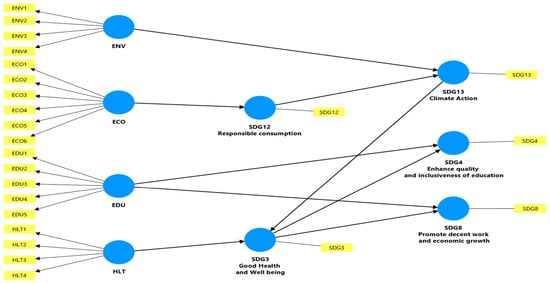
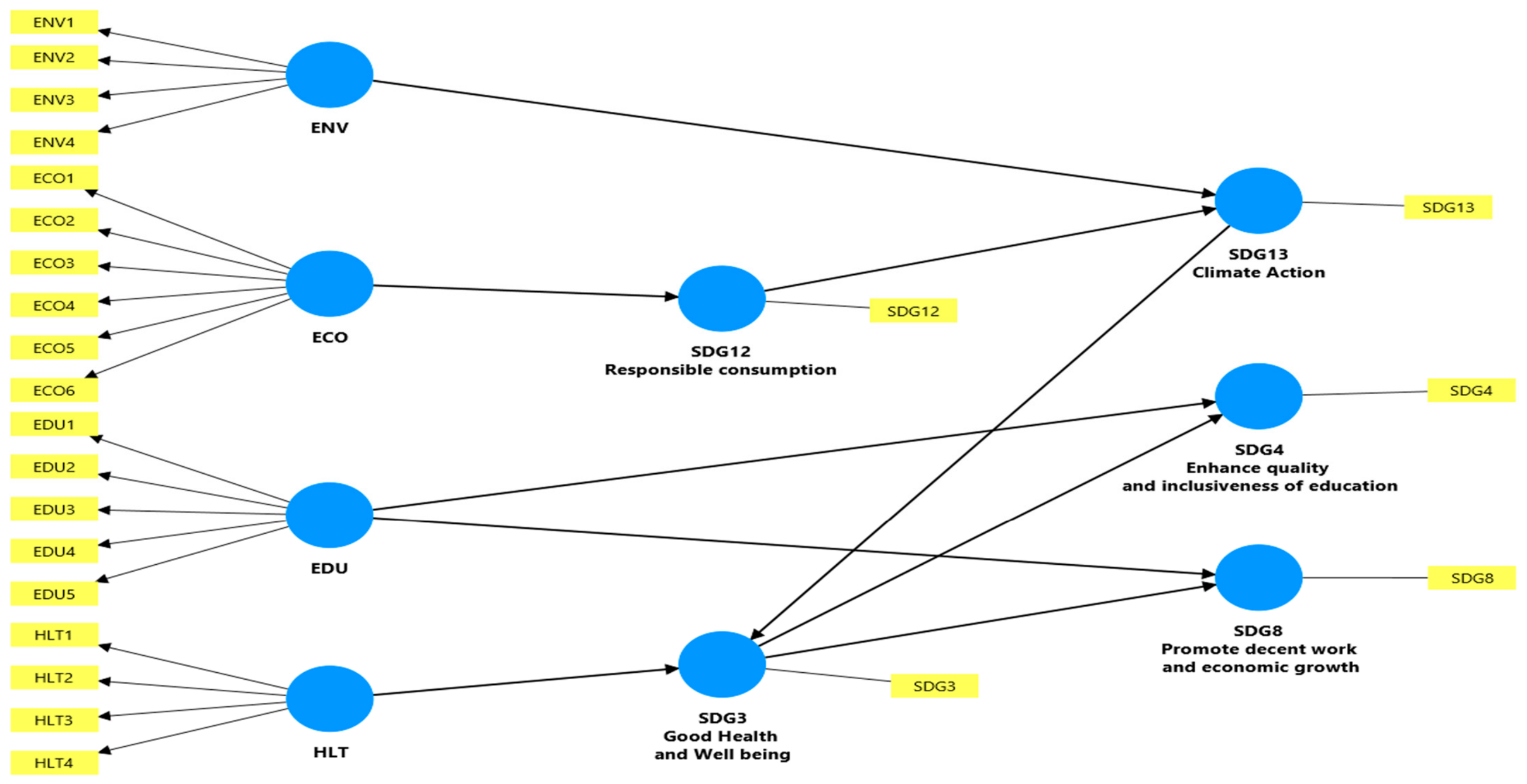
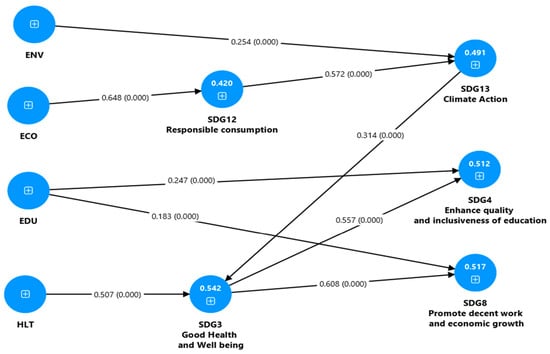
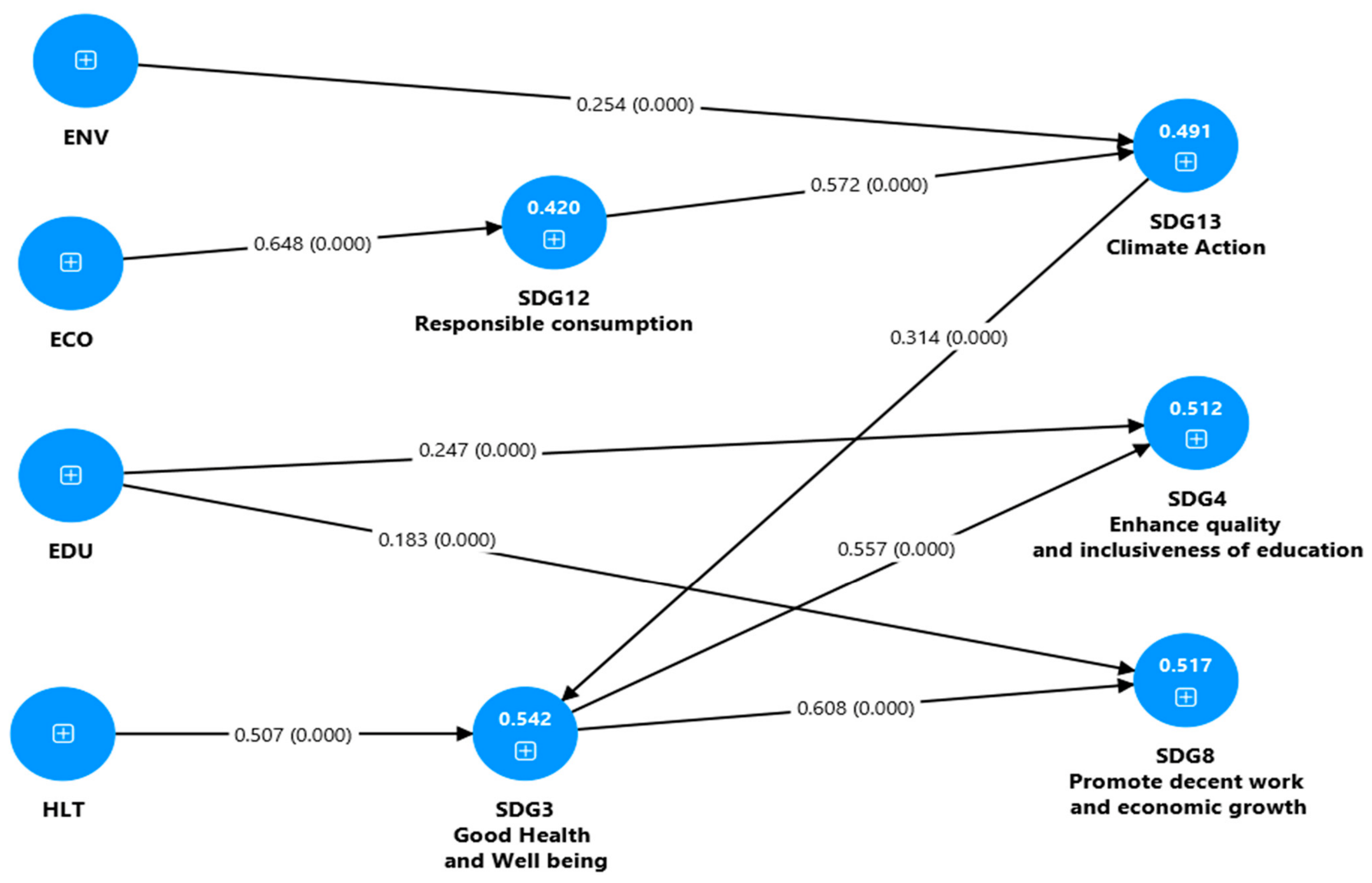

Disclaimer/Publisher’s Note: The statements, opinions and data contained in all publications are solely those of the individual author(s) and contributor(s) and not of MDPI and/or the editor(s). MDPI and/or the editor(s) disclaim responsibility for any injury to people or property resulting from any ideas, methods, instructions or products referred to in the content. |
© 2026 by the authors. Licensee MDPI, Basel, Switzerland. This article is an open access article distributed under the terms and conditions of the Creative Commons Attribution (CC BY) license.