Article

Livelihood Capitals, Income Inequality, and the Perception of Climate Change: A Case Study of Small-Scale Cattle Farmers in the Ecuadorian Andes


1
Facultad de Ciencias de la Vida, Universidad Estatal Amazónica (UEA), Puyo 160101, Ecuador
2
Departamento de Producción Animal, Facultad de Ciencias Veterinarias, Universidad de Córdoba, 14071 Córdoba, Spain
3
Corporación para el Desarrollo Sostenible, Conservación y Cambio Climático (DSC), Tena 150150, Ecuador
4
School of Agricultural and Environmental Sciences, Pontificia Universidad Católica del Ecuador Sede Ibarra (PUCESI), Ibarra 100112, Ecuador
5
Facultad de Ciencias Agropecuarias, Universidad Técnica Estatal de Quevedo (UTEQ), Quevedo Av. Quito km, 1 1/2 vía a Santo Domingo de los Tsáchilas, Quevedo 120550, Ecuador
6
Departamento de Ciencias de la Tierra, Universidad Estatal Amazónica (UEA), Puyo 160101, Ecuador
7
Departamento de Ciencias de la Tierra y Construcción, Universidad de las Fuerzas Armadas ESPE, Sangolquí 171103, Ecuador
*
Author to whom correspondence should be addressed.
Sustainability 2022, 14(9), 5028; https://doi.org/10.3390/su14095028
Submission received: 4 March 2022 / Revised: 16 April 2022 / Accepted: 20 April 2022 / Published: 22 April 2022

Abstract

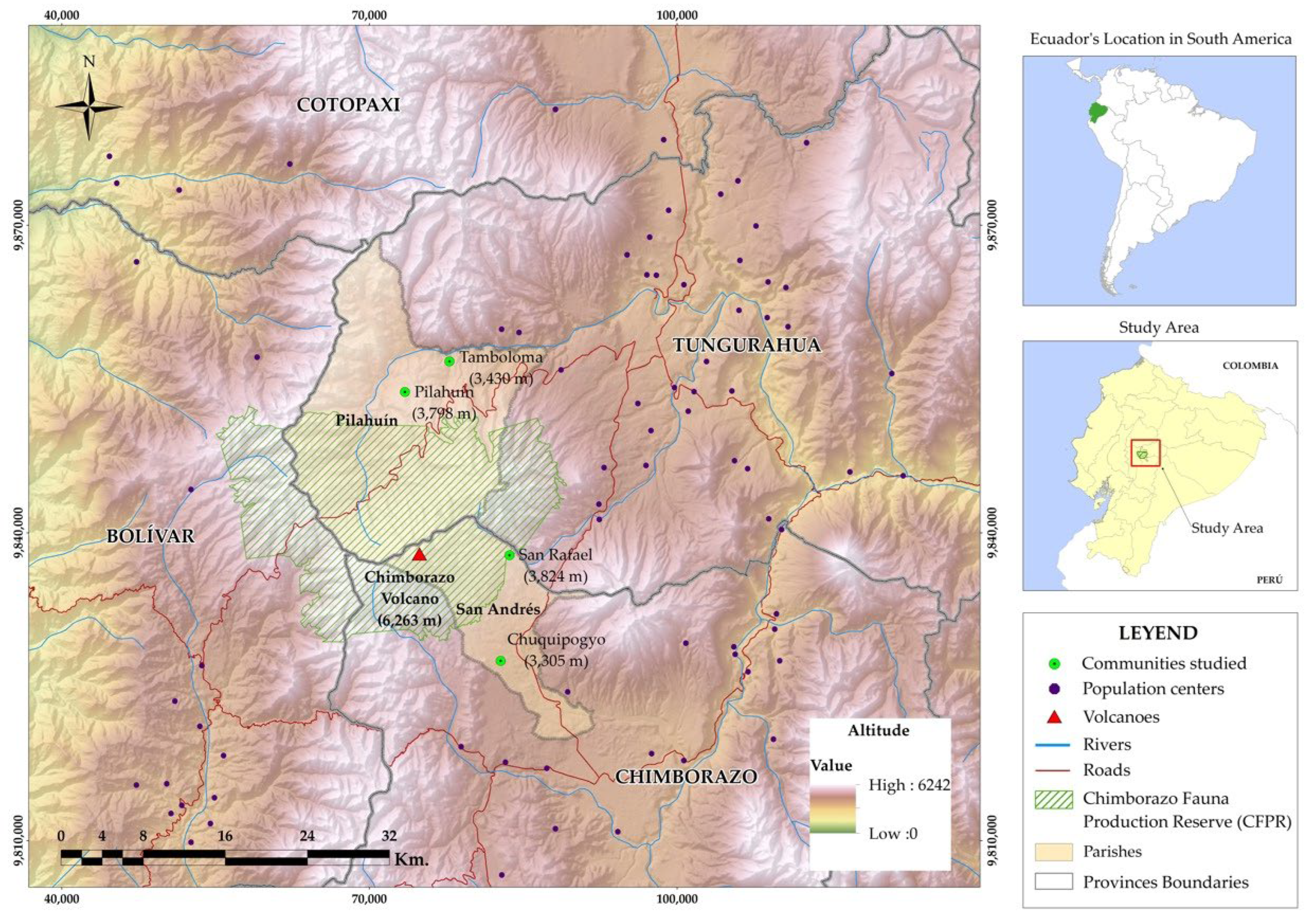
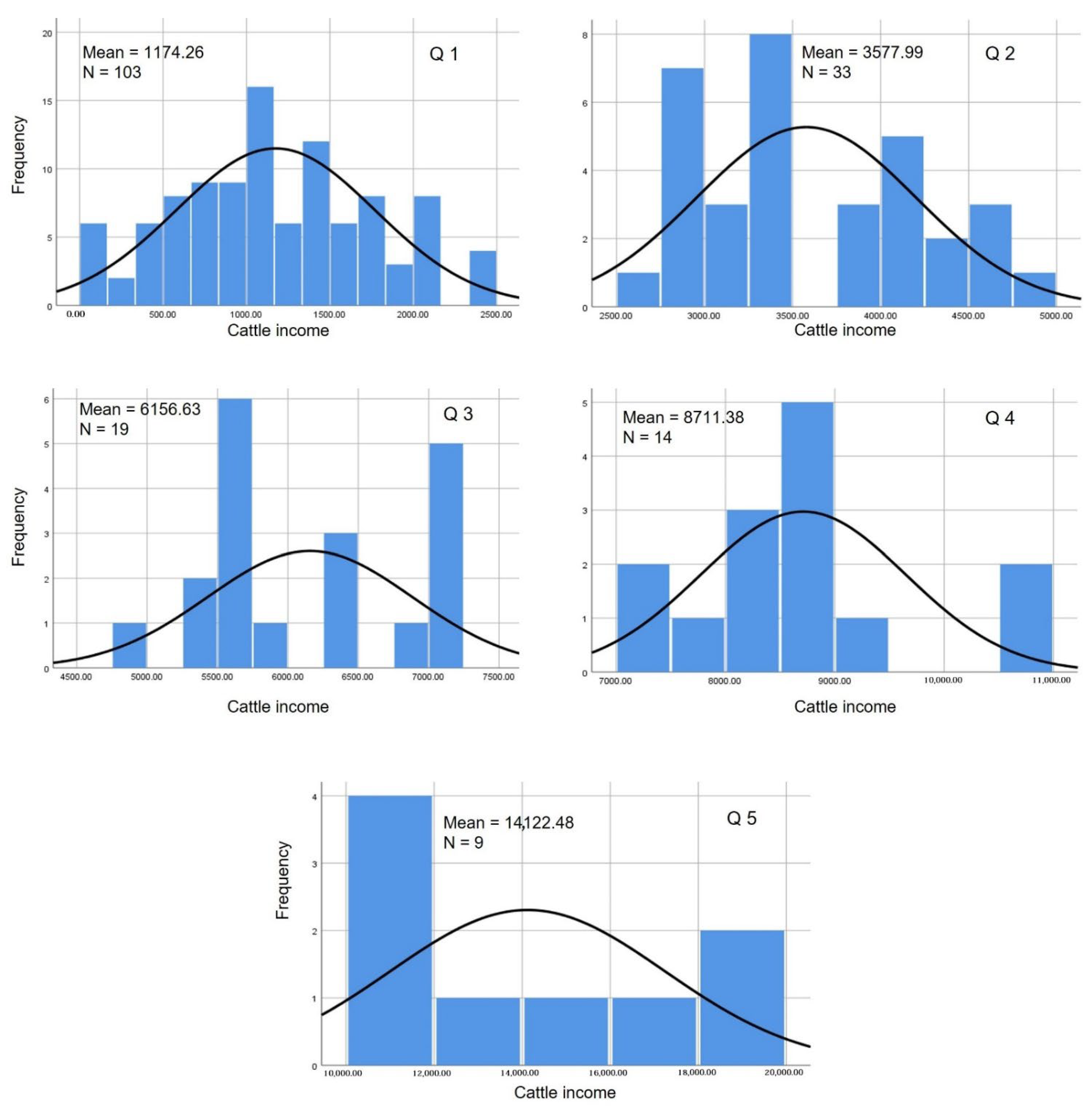
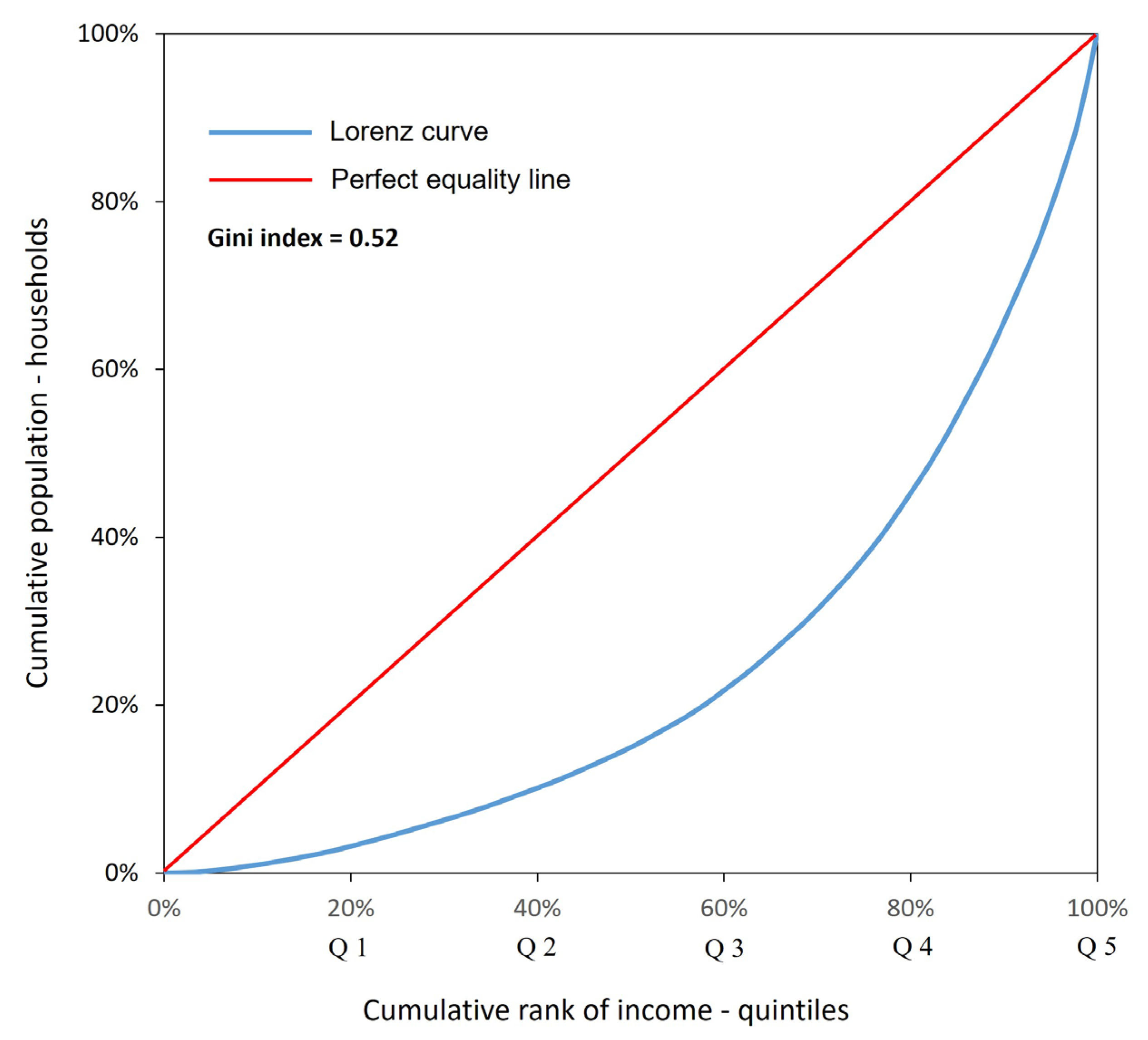
The Sustainable Development Goals (SDG) of 2015 identify poverty, growth, and inequality as three key areas of intervention towards the UN 2030 Agenda for human well-being and sustainability. Herein, the predominant objectives are: (a) To determine the poverty groups by quintiles through the cattle income in households of small milk producers; (b) To characterize rural livelihoods by using capital theory; and (c) To assess the perception of climate change (CC) and the willingness to accept adaptation as well as mitigation measures. The current study was performed in communities that are located in the Ecuadorian Andes, where some 178 surveys were conducted with indigenous Kichwa and mestizo heads of households. From the total net income determined, five groups were organized. The Lorenz curve was applied as a general indicator of the relative inequality, as well as the Gini coefficient (G). On the basis of the theory of capital, the human, social, natural, physical, and financial characteristics were determined, and seven variables were considered to evaluate the perception and willingness to accept mitigation and adaptation actions of the given quintiles. The result of the Gini coefficient was 0.52, which indicates that the poorest 20% of the population only receives 3.40% of the income, while the richest 20% of the quintile obtain about 54% of the total income. It is evident that most producers know little about CC, but that they are willing to receive strengthening programs. Therefore, it is essential to establish strategic guidelines from public policy in order to reduce inequality and to improve the social welfare of producers, with a transversal axis in the strengthening of the capacities on the impact, mitigation, and adaptation to CC, as well as the provision of several tools, such as access to climate information.
Keywords: indigenous; poverty; inequality; climate change; Lorenz curve indigenous; poverty; inequality; climate change; Lorenz curve