


Abstract
Background/objective: The widespread use of pesticides in modern agriculture has raised increasing concern about their potential adverse effects on human health. Exposure to these compounds has been linked to multiple negative health outcomes. This systematic review aims to evaluate and synthesise the available scientific evidence on the effects of pesticide exposure on human health during agricultural production—with particular emphasis on alterations in gut microbiota and intestinal membrane permeability—by integrating results from experimental and observational studies conducted on animals and humans. Methods: This systematic review was conducted in accordance with PRISMA guidelines. A systematic literature search was carried out using the main databases Medline/PubMed, Embase and Web of Science, introducing the search algorithm “pesticides” AND “gut microbiota”, from which a total of seven systematic reviews that met our inclusion criteria were found and subsequently analysed. The quality assessment was based on the principles of evidence-based medicine. This systematic review was registered in the OSF. Results: The findings indicate that prenatal exposure to pesticides is linked to adverse outcomes in foetal development. Additionally, pesticide exposure affects metabolic, immune, and nervous system function due to alterations in gut microbiota composition and membrane permeability. Evidence from animal model studies complements human data by providing insight into the underlying biological mechanisms, such as oxidative stress, liver dysfunction, alterations in hormonal signalling and activation of the inflammatory response. Conclusions: Public health strategies should prioritise reducing pesticide exposure, strengthening environmental protection and supporting further research on gut microbiota modulation and intestinal membrane permeability. Such measures may contribute to the prevention and mitigation of pesticide-related health disorders. Limitations: Human data are insufficient to establish clear causal relationships. Moreover, substantial variability among pesticide types and the difficulty of distinguishing the effects of complex mixtures from those of individual compounds complicate interpretation of the findings.
1. Introduction
Pesticides are natural or synthetic chemical substances used to eradicate pests and insects, and are essential for improving agricultural productivity [1,2]. They increase crop yields and protect plants from disease and damage. Pesticides are divided into several different categories such as herbicides, insecticides, fungicides, molluscicides, ovicides, acaricides, rodenticides and nematicides, with fungicides, insecticides and herbicides being the most widely used [1,2,3,4]. The extensive use of pesticides represents one of the primary sources of toxic compound exposure in the general population, posing a significant environmental toxicology problem [2,3,5]. These chemical agents are designed to eliminate organisms that are considered harmful [5]. However, they can interfere with multiple biological processes in humans, particularly if exposure is chronic or involves combined exposure to multiple products [6,7,8]. Numerous studies have demonstrated that pesticide toxicity occurs via mechanisms such as oxidative stress, altered cholinergic neurotransmission, endocrine disruption, and genotoxic damage [9,10,11,12]. The consequences of pesticide exposure are wide-ranging. They can include acute effects such as respiratory or neuromuscular toxicity, as well as chronic conditions associated with neurodegenerative pathologies and reproductive disorders [2,5]. Studies have also documented the cumulative toxic effects of pesticides on human health and non-target organisms, as well as their capacity for bioaccumulation, which is associated with endocrine disruption and the development of chronic diseases in exposed populations [2,13].
Advances in molecular biology and microbiology have highlighted the critical roles of intestinal permeability and the gut microbiota in systemic health and disease development [14,15]. The gut microbiota plays a fundamental role in maintaining homeostasis and human health by performing protective, structural and metabolic functions essential for physiological balance, including the production of bioactive metabolites, immune regulation and maintenance of epithelial barrier integrity [16,17]. The intestinal mucosal layer acts as the body’s first line of defence by regulating mucus secretion and bacterial degradation, thereby limiting exposure to antigens and pro-inflammatory molecules [18]. In addition, specific bacterial communities reinforce the tight junctions between epithelial cells, preventing macromolecules and endotoxins from entering into the bloodstream [19,20]. The gut microbiota principally contributes to modulating the immune system, regulating the gut–brain axis, synthesising vitamins and bioactive metabolites, protecting the intestinal barrier, and facilitating peristaltic transit [21,22]. Through these mechanisms, the gut microbiota influences the immunoinflammatory response, energy metabolism, and neuroendocrine communication, thereby playing a decisive role in overall human health [23,24]. An imbalance of the gut microbiota (dysbiosis) has been associated with increased susceptibility to gastrointestinal [25,26,27], metabolic [28,29], cardiovascular [30,31], neurodegenerative [32] and autoimmune diseases, in addition to cancer [33,34]. Exposure to pesticides induces significant changes in the abundance of various microbial taxa in relation to the alteration of the gastrointestinal microbiota. This phenomenon is characterised primarily by the proliferation of opportunistic pathogens at the expense of beneficial and resident bacterial genera such as Lactobacillus and Bifidobacterium, resulting in intestinal dysbiosis [35,36]. This alteration has been extensively documented in animal models exposed to organophosphates. Similarly, research on humans exposed to organophosphates indicates that exposure to environmental pesticides modifies not only the taxonomic composition, but also the metabolic pathways of bacteria. These modifications affect basic cellular processes and the biosynthesis of cellular compounds [37,38]. In terms of its impact on intestinal permeability and inflammation, pesticide-induced dysbiosis can compromise the integrity of the intestinal barrier. This decreases the expression of tight junction proteins and facilitates the translocation of microbial components, such as lipopolysaccharides (LPSs), into the bloodstream [39]. This increased intestinal permeability (dysbiosis) promotes the activation of systemic inflammatory pathways and low-grade chronic inflammation, which is central to the pathophysiology of metabolic disorders such as metabolic syndrome and type 2 diabetes, as well as cardiovascular disease [40]. Regarding the disruption of microbial metabolites and signalling, pesticide-induced alterations to the microbiota affect the profile of metabolites generated by it, such as short-chain fatty acids and other bioactive compounds. These metabolites regulate immune, metabolic and neuroendocrine functions [35]. Altered modulation of these metabolites may contribute to pro-inflammatory processes, insulin resistance, and systemic metabolic dysfunction (all of which are key factors in the development of chronic diseases) [35,41]. Microbial imbalance can contribute to both systemic inflammation and immune dysfunction [28,32] as well as toxicant-related pathologies [25]. In this context, the gut microbiota not only modulates digestive health, but mediates toxic responses to environmental xenobiotics by participating in their biotransformation and partial detoxification, an emerging area of significant interest in contemporary toxicology [29]. Numerous studies have documented the disruptive effects of organophosphate, carbamate and neonicotinoid pesticides on the intestinal epithelium and gut microbiota [9,42,43,44]. These agents can alter the structure of bacterial communities, change intestinal permeability and create a pro-inflammatory state linked to oxidative stress and mitochondrial dysfunction [45,46]. Such alterations are linked not only to an increased risk of chronic diseases in adults, but also to transgenerational effects, given that prenatal exposure can adversely affect foetal development through epigenetic and microbiological mechanisms [47,48,49].
Although regulatory measures have been implemented to reduce exposure levels, the persistence of certain organochlorine compounds and the continued use of pesticides in poorly controlled settings, remain significant public health concerns [50]. In this context, this article provides an overview of scientific evidence derived from systematic reviews of experimental and observational studies in humans and animal models, paying special attention to chronic diseases resulting from alterations in the gut microbiota and intestinal membrane permeability. The objective is to evaluate and synthesise available scientific evidence from systematic reviews of experimental and observational studies in humans and animal models, with a particular focus on chronic diseases associated with alterations in gut microbiota and intestinal membrane permeability. In addition, this review aims to provide an up-to-date and robust overview to guide future research and public health policies. The PICO framework was used to define the research question:
P (Population/Participants): Humans exposed to pesticides used in agricultural production, as well as animal models with genetic, biological or behavioural similarities to humans.
I (Intervention/Exposure): Acute or chronic exposure to pesticides through occupational, environmental or dietary contact.
C (Comparison): Human populations or animal models with no exposure or minimal exposure to pesticides.
O (Outcomes): Alterations associated with modifications in the gut microbiota, including changes in intestinal barrier permeability, and their relationship to the development of chronic diseases.
Thus, the research question was formulated as follows: What are the effects of exposure to agricultural pesticides on human health, and how are these effects mediated by alterations in the gut microbiome in comparable animal models and humans, according to available scientific evidence? To systematically delimit and organise the available scientific evidence on this topic, an overview of published systematic reviews covering the period 2018–2025 was undertaken. Systematic reviews provide a rigorous and objective summary of the existing scientific literature on a given topic, by integrating multiple individual studies into a single document, critically appraised by experts. The quality of the evidence was assessed based on the principles of evidence-based medicine and the guidelines of Reyna et al. [51], Galarza and Cruz [52], and Davidoff et al. [53]. Systematic reviews were prioritised for inclusion as they constitute one of the highest levels of scientific evidence. We verified that the reviews had clearly defined objectives, explicit search strategies, transparent inclusion criteria, and a structured synthesis of results. Although no formal risk-of-bias assessment tools were used, restricting inclusion to systematic reviews published in peer-reviewed journals served as an indirect approach to reducing potential methodological bias.
2. Methods
2.1. Research Design
A systematic review of the available scientific literature was conducted, in accordance with the PRISMA (Preferred Reporting Items for Systematic Reviews and Meta-Analyses) Guidelines, to ensure transparency, reproducibility, and methodological rigour in the identification, selection, and analysis of studies.
The process was carried out in several clearly defined phases. First, an exhaustive search of relevant scientific databases was carried out using keywords and MeSH terms related to pesticides, human and animal exposure, and their associated effects on health. Systematic reviews were then selected based on predefined inclusion and exclusion criteria, focusing on studies that provided direct evidence of the relationship between pesticide exposure and gut microbiota alterations, including changes in intestinal barrier permeability and their association with disease development.
Once the systematic reviews had been selected, relevant data were extracted, including information about the pesticide, study design, population, health alterations, outcome variables, main findings, and conclusions.
Finally, the results were synthesised systematically to provide a comprehensive and objective assessment of the impact of pesticides on human and animal health, and to inform recommendations for public health measures aimed at preventing and mitigating diseases associated with pesticide exposure and consumption.
2.2. Search Strategy
A comprehensive search of the scientific literature published between 2018 and the present day was conducted using the Medline/PubMed, Embase and Web of Science databases. The aim was to compile the most relevant information available on the relationship between exposure to pesticides and health. To ensure consistency in the evaluation and analysis of the evidence, only full-text systematic reviews published in English were included.
Initially, the search was conducted by combining key concepts with the Boolean operators AND and OR. The initial search algorithm was established with the terms (“pesticides”) AND (“disease” OR “illness”) AND (“gut microbiota”). This strategy generated many results (10.850), although they were very heterogeneous in relation to the topic of interest. Finally, the search was refined to focus specifically on the relationship between pesticides and gut microbiota, using the final syntax: (“pesticides”) AND (“gut microbiota”). Table 1.
Table 1.
Search algorithms and number of articles in each database.
To ensure the highest quality of scientific evidence, only systematic reviews corresponding to Level I evidence were included. These reviews integrate the findings of all relevant randomised clinical trials and have been critically reviewed by experts in the field.
The review was conducted in two phases; from June to late September 2024, and from January to late May 2025. A systematic and structured procedure was followed to ensure the results obtained were comprehensive and valid. Previous searches were conducted at different times and served as the basis for the searches performed during the periods indicated above, following the final decision to undertake the study presented in this manuscript. This systematic review was registered in the Open Science Framework (OSF) on 20 December 2025 (registration number: osf.io/jruh5).
2.3. Eligibility Criteria
The inclusion criteria considered only systematic reviews comprising observational studies in humans and experimental studies in animal models relevant to humans (mainly rats and mice). Only articles written in English with full text availability were included. Systematic reviews specifically addressing pesticide-induced alterations in gut microbiota and intestinal barrier permeability associated with chronic diseases were considered eligible.
Systematic reviews addressing persistent organic pollutants, metals, endocrine disruptors, and plastic substances were excluded as were reviews of other substances not used in traditional agriculture. Reviews including experimental studies on birds or animals with characteristics that differ substantially from humans, were also excluded.
2.4. Article Selection
First, an initial search was conducted using the algorithms described in the ‘Search Strategy’ section above. The aim was to estimate the volume of existing publications and compile the most relevant information to answer the research question.
Next, the articles relevant to this study were identified using the established inclusion and exclusion criteria. This phase involved reviewing titles and abstracts to determine the relevance of each publication.
Following this, a more detailed screening was carried out by reviewing the full text of the preselected articles.
Each paper was assessed for suitability, and those that did not align with the central theme of the review or lacked relevant conclusion, were excluded.
MJDD and IOS performed the initial screening. Both reviewers independently assessed the titles and abstracts of all articles retrieved from the electronic search. To minimise selection bias, they worked independently, without knowledge of each other’s assessments.
MJDD and TRR performed the full-text screening. The full texts of the preselected articles were reviewed independently by both evaluators, each working without access to the other’s assessment. Discrepancies were resolved through consensus discussion.
Finally, the studies included in the review were selected following the methodological recommendations of Galarza and Cruz (2024) [52] to ensure rigour and consistency in the selection process. The three researchers discussed and reached consensus on the final studies to be included, based on the predefined inclusion and exclusion criteria. At this stage, independent review was unnecessary, since the goal was to achieve unanimous agreement on study inclusion.
2.5. Data Extraction
The following variables were considered relevant and extracted from the selected articles: authors, year of publication, pesticide, sample and/or type of study, results and conclusions. Only information pertinent to the review objectives was considered, and duplicated findings were avoided.
3. Results
3.1. Results of the Study Selection
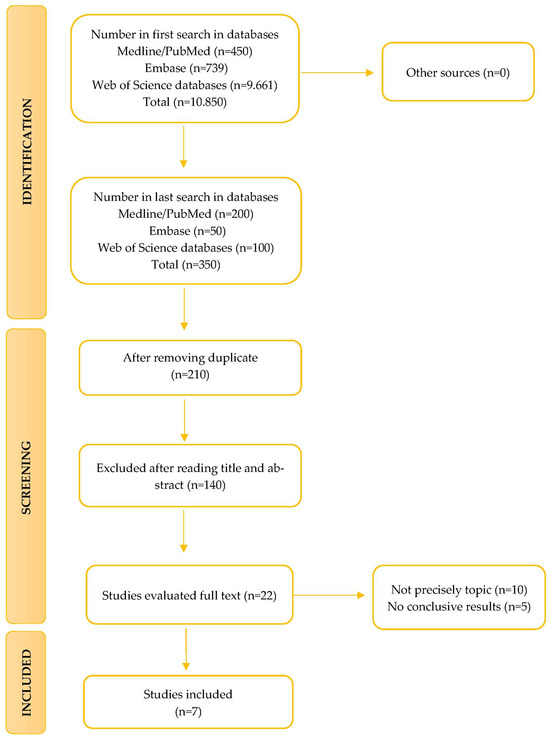
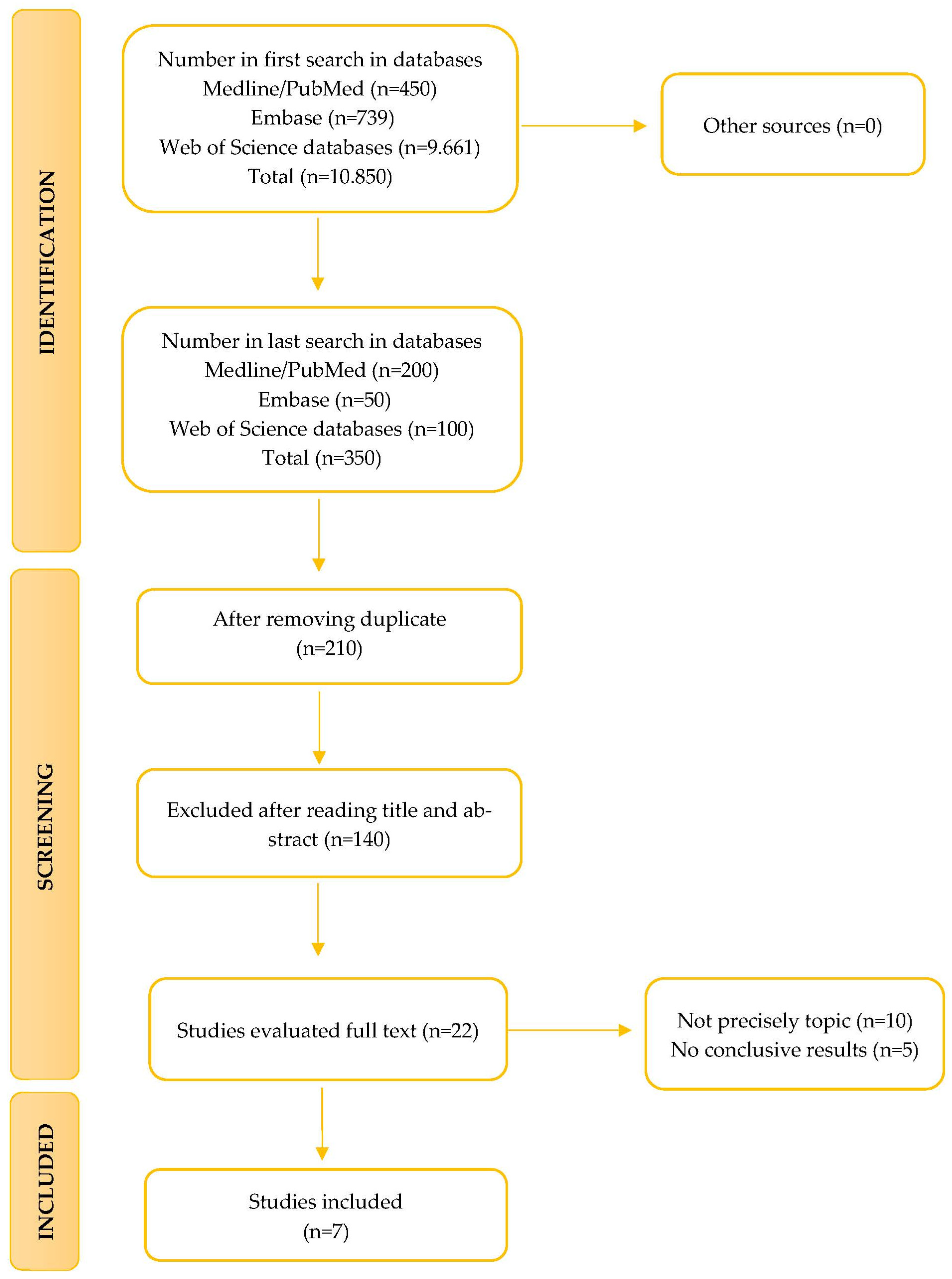
The initial search using the algorithm (“pesticides”) AND (“disease” OR “illness” OR “gut microbiota”) produced 10.850 results. This was then refined using the syntax “pesticides” AND “gut microbiota”, reducing the number of studies identified to 350 articles. After applying the previously described eligibility criteria, 22 studies were selected for review.
The selected articles were then screened in detail, resulting in the exclusion of 10 that did not precisely match the theme of this review, and 5 studies that lacked conclusive results. Consequently, seven articles were included in the final systematic review. The entire selection process is illustrated in the corresponding flow chart (Figure 1).
Figure 1.
Flowchart for study selection.
Of the seven studies selected, three were conducted in the United States and four in Europe. The main characteristics and most relevant data from these studies are presented in Table 2.
Table 2.
Extraction of Relevant Data from the Systematic Review Articles: Main Results and Conclusions.
3.2. Results of the Effects of Pesticide Exposure in Humans
Research conducted on human populations has shown that exposure to pesticides during pregnancy can have adverse effects on foetal development, including, among other things, a decrease in birth weight. A significant association has also been identified between pregnant women living less than 2.000 m from areas where these compounds are used, and an increased risk of their offspring developing autism spectrum disorders [55]. This risk intensifies depending on the degree of exposure, being particularly notable during the second and third trimesters of pregnancy, with an estimated increase of 30% [55]. Similarly, an inverse relationship has been described between prenatal exposure to pesticides and child neuropsychological development, as seen by the appearance of autistic traits in 11-year-old children who were exposed in utero [55].
Furthermore, scientific evidence indicates that exposure to these chemicals is associated with various metabolic disorders, such as insulin resistance, type 2 diabetes mellitus, dyslipidaemia, dysfunction in the biotransformation of chemical compounds, atherosclerosis, obesity and hepatic metabolism disorders [40,57].
Likewise, the existence of intestinal dysbiosis linked to the accumulation of adipose tissue has been documented. Added to this is the activation of the inflammatory response, mediated by the release of pro-inflammatory cytokines, together with alterations in the functionality of the immune system.
Regarding the intestinal microbiome, pesticide exposure has been seen to induce microbial imbalances and dysbiosis, increasing intestinal barrier permeability and generating multiple adverse effects on the health of individuals [40,54,55,56,57,58,59].
3.3. Results of the Effects of Pesticide Exposure in Animal Models
3.3.1. Effects of Exposure in Rats
Experimental studies in rats have revealed a wide range of physiological alterations resulting from exposure to these substances. Nervous system alterations included an increase in the activity of excitatory pathways, a decrease in inhibitory activity, and a loss of dopaminergic neurons in the substantia nigra [55,56]. At the endocrine and metabolic level, elevated basal insulin levels have been documented, accompanied by liver dysfunction affecting key processes such as lipogenesis, gluconeogenesis and glycogenolysis, resulting in hepatotoxicity [40]. Likewise, increases in body weight, obesity, a higher prevalence of phenotypes compatible with type 2 diabetes mellitus, and alterations in the pancreatic islets, characterized by lipid accumulation, have been observed [55,58].
From an immunological perspective, exposure to these compounds is associated with a decrease in immune response and alterations in the mechanisms regulating inflammation. At the intestinal level, both structural and functional changes have been described, including micro- and macro-anatomical alterations located in the right intestine, a reduction in beneficial bacterial genera, the proliferation of potentially pathogenic species, and the establishment of a state of dysbiosis in the intestinal microbiota. Furthermore, the results indicate sex-specific differences in response to exposure, observed across all doses evaluated [54,58].
Collectively, these findings suggest that exposure to pesticides could compromise the homeostasis of the nervous, endocrine, immune, and gastrointestinal systems, underlining the importance of further investigation into their effects on human health and the potential extrapolation of these findings to humans.
3.3.2. Effects of Gestational Exposure to Pesticides on Rat Offspring
Research conducted on rat pups whose mothers were exposed to pesticides during pregnancy has revealed multiple metabolic, neurological and developmental abnormalities [54,58]. Metabolically, hyperlipidaemia and hyperglycaemia were observed in female offspring, while persistent neurological dysfunction was observed throughout their lifespan [54]. In male foetuses, changes in gene transcription in the external genitalia have been reported, along with an increased susceptibility to prostate disease, obesity and kidney disease [40].
The development of the digestive system was also compromised, with delayed maturation of the gastrointestinal tract, dyskinesia and the onset of various intestinal diseases [59]. With respect to the reproductive system, ovarian alterations and abnormalities during the birthing process were documented [54]. At the neuroinflammatory and cellular level, prenatal exposure was also associated with changes in the inflammatory response and in the expression of genes involved in oxidative stress, particularly in brain regions such as the cortex and cerebellum [54,55,58].
Similarly, behavioural changes were identified in offspring, especially in their responses to novel situations, presenting exacerbated phenotypes like those seen in autism spectrum disorder [55]. Collectively, these findings strengthen the evidence that prenatal exposure to pesticides can have persistent adverse effects on offspring development and physiological function.
3.3.3. Effects of Exposure on Mice
Research conducted in mice has shown that pesticide exposure induces significant alterations in the composition and function of the gut microbiome, characterized by dysbiosis and increased intestinal barrier permeability. In the metabolic sphere, impaired energy metabolism has been observed, including reduced weight gain in both sexes, lower body weight in females, and abnormal bacterial translocation [40]. Additionally, increases in blood glucose, glucose intolerance, hepatic lipid accumulation and alterations in the lipid profile have been reported, with raised triglyceride, total cholesterol, HDL and LDL levels [40].
From a genetic and microbiological perspective, exposure to these compounds affects quorum sensing regulation, promoting an increase in bacterial motility and pathogenicity, as well as modifications in the expression of genes linked to cell wall structure and pesticide biotransformation [59]. Similarly, alterations in enterohepatic metabolism, variations in bile acids, insulin resistance and heightened systemic inflammatory processes have been documented, all of which are associated with an increased risk of developing cardiovascular disease and colitis [55,59].
With regard to the central nervous system, dysregulation in the synthesis and release of neurotransmitters has been observed, along with neuronal inflammation, impaired locomotor activity, alterations in short-term memory, and behaviours similar to those seen in autism spectrum disorder [55,56].
In terms of body composition, males show greater susceptibility to abnormal translocation, as well as a significant increase in the accumulation of body, hepatic and epididymal fat [54,55,57,58]. Increases in serum triglyceride and glucose levels have also been reported, along with exacerbated glucose intolerance [40]. At the same time, alterations in gene expression related to metabolic pathways and glucose regulation, have been identified [40].
As a whole, all these findings indicate that pesticide exposure has a multi-systemic impact, compromising energy metabolism, immune homeostasis and neurological function, with effects that differ according to sex and duration of exposure.
4. Discussion
This systematic review, developed in accordance with the PRISMA principles, summarises and contrasts the available evidence on the effects of exposure to agricultural pesticides on gut microbiota and intestinal barrier permeability, as well as their relationship with chronic disease development. The review also considers the implications of prenatal exposure in the short and long-term. Analysing the reviews by Yue et al. [54], Yang et al. [55], Utembe and Kamng’ona [56], Yuan et al. [57], Gambarte and Wolansky [58], Djekkoun et al. [40] and Meng et al. [59], together with the other included literature, allows us to identify consistent patterns, methodological limitations and gaps in knowledge that are relevant for guiding future research.
This study aimed to evaluate and synthesise existing scientific evidence from observational studies in humans and experimental research in animal models relevant to humans. It focused on chronic diseases linked to changes in the gut microbiota and intestinal permeability due to exposure to agricultural pesticides.
Analysis of the selected studies reveals a significant degree of alignment on four key findings. Firstly, alterations in the gut microbiota, intestinal dysbiosis and increased intestinal permeability appear to be central mediators linking environmental exposure to systemic disease. Secondly, pesticide exposure is associated with low-grade chronic inflammation and oxidative stress. Thirdly, a consistent relationship has been found between pesticides and metabolic dysfunction, including insulin resistance, dyslipidaemia, and non-alcoholic fatty liver disease. Lastly, prenatal exposure to pesticides has been linked to lower birth weight and an increased risk of neurobehavioural alterations, including autism spectrum disorder.
From a metabolic perspective, the synthesised evidence substantially agrees on the idea that intestinal dysbiosis and increased intestinal permeability are central mechanisms linking pesticide exposure to insulin resistance, obesity, type 2 diabetes, and dyslipidaemia, as identified by Yue et al. [54], Yang et al. [55], Yuan et al. [57], Meng et al. [59], Djekkoun et al. [40], and Gambarte and Wolansky [58]. These authors concur that pesticides reduce the number of bacteria that produce short-chain fatty acids, particularly butyrate. This compromises the integrity of the intestinal barrier and promotes the translocation of bacterial endotoxins, activating low-grade systemic inflammation, thereby leading to metabolic alterations. This aligns with classic studies by Cummings et al. [60] and Flint et al. [61] on short-chain fatty acids which emphasise the vital role of these microbial metabolites in maintaining intestinal and metabolic homeostasis. Similarly, Yuan et al. [57] and Meng et al. [59] suggest that pesticides alter bile acid metabolism and FXR and TGR5 receptor signalling, thereby integrating the microbiota–gut–liver axis into metabolic pathogenesis.
Regarding hepatic and cardiovascular alterations, the reviews by Yuan et al. [57], Meng et al. [59] and Djekkoun et al. [40], notably align, agreeing that exposure to pesticides contributes to structural and functional alterations in hepatic parenchyma and vascular endothelium. At the hepatic level, evidence suggests increased lipid accumulation in hepatocytes, oxidative stress, and activation of inflammatory pathways that facilitate the progression of steatosis to non-alcoholic fatty liver disease. At the same time, a systemic pro-inflammatory state is observed in the cardiovascular system, which can compromise endothelial integrity, encourage vascular dysfunction, and favour atherogenic processes. These alterations appear to be interconnected via the gut-liver-vascular axis, where dysbiosis and increased intestinal permeability trigger an inflammatory chain reaction that can affect multiple organs.
The association observed between gestational exposure and lower birth weight, aligns with findings reported by Yang et al. [55] and Meng et al. [59], and is further supported by Yuan et al. [57], who review the link between low birth weight and an increased risk of cardio-metabolic diseases in adulthood. This suggests that the effects of prenatal exposure could extend beyond the neonatal period, influencing how metabolic risks develop and change throughout the life cycle.
The findings of Yue et al. [54] and Yuan et al. [57], regarding metabolic alterations related to prenatal exposure, agree that pesticide exposure is associated with intestinal dysbiosis, increased intestinal permeability and low-grade systemic inflammation. This gives rise to a central axis of physiological mechanisms capable of explaining adverse metabolic effects.
In terms of neurobehavioural effects, studies by Yang et al. [55] and Yue et al. [54], suggest that exposure during pregnancy is linked to intestinal dysbiosis and changes to the gut–brain axis. This increases the likelihood of characteristics and diagnoses associated with autism spectrum disorder, particularly when exposure occurs during the second and third trimesters. These findings are supported by murine models, which show neuroinflammation, GABAergic alterations and changes in dopaminergic circuits, as well as modifications in fatty acid and retinol metabolism in offspring [62].
The main strength of this study is how it brings together and compares evidence from both human studies and animal models in a systematic way. The multidisciplinary approach covers metabolic, immunological, neurological and gastrointestinal aspects, and includes a comparative analysis of key authors and the complementary literature. It also evaluates the prenatal and long-term effects, considering plausible biological mechanisms, with a particular focus on chronic diseases associated with alterations in the gut microbiota and intestinal permeability induced by exposure to agricultural pesticides. Furthermore, by focusing on the interaction between dysbiosis, decreased short-chain fatty acids, systemic inflammation, and metabolic dysfunction, this study provides an up-dated conceptual framework that allows critical periods of vulnerability to be identified. This approach enhances the validity of the conclusions and offers a comprehensive view of the systemic effects of pesticide exposure, thereby reinforcing the review’s relevance for future research, the development of prevention strategies and the creation of environmental health policies.
However, even with a systematic method and an integrative approach, there are still some limitations that need to be discussed. Firstly, there is insufficient human evidence to establish definitive causal relationships, given that many studies are cross-sectional or lack longitudinal follow-up. Secondly, there is significant variation in how the studies were performed, especially regarding the different types of pesticides evaluated. Thirdly, most studies struggle to separate the effects of pesticide mixtures from those of individual compounds, which complicates the interpretation of specific results. These limitations highlight the need for prospective studies with repeated exposure measurements, a longitudinal design and an integrated, multi-omic approach, to more accurately characterise the chronic effects of pesticide exposure on health and the underlying biological mechanisms.
5. Conclusions
This systematic review demonstrates that exposure to pesticides primarily impacts human health by altering the gut microbiome and intestinal permeability, thereby triggering systemic inflammation, metabolic dysfunction, and neurobehavioural effects. These underlying changes are crucial for the development of metabolic, inflammatory and neurodevelopmental disorders, particularly when exposure occurs during critical periods of prenatal development. Even though the studies mainly rely on animal models and vary in their methods, the alignment between human and experimental studies supports the relevance of environmental pesticide exposure as a preventable risk factor. Our analysis highlights the need to implement comprehensive public health strategies aimed at reducing exposure to pesticides, particularly among vulnerable groups such as pregnant women and children. This calls for a move towards more sustainable agricultural practices, better regulation and control of these hazardous chemicals, and the promotion of educational programmes to ensure their safe use. At the same time, it is essential to improve environmental surveillance systems, population bio-monitoring, and closely monitor maternal and child development to aid the early detection and mitigation of potential adverse health effects.
These results emphasise the importance of adopting a multidisciplinary approach that combines prevention, surveillance, and translational research to safeguard human health and lessen the burden of disease linked to pesticide exposure.
Author Contributions
Conception and study design, M.J.D.-D.; Methodology, M.J.D.-D. and I.O.-S.; Data collection, M.J.D.-D. and I.O.-S.; Data analysis, M.J.D.-D. and I.O.-S.; Writing—original draft preparation, M.J.D.-D. and I.O.-S.; Writing—review and editing, M.J.D.-D., I.O.-S. and T.R.-R.; Approval of final manuscript, M.J.D.-D., I.O.-S. and T.R.-R. All authors have read and agreed to the published version of the manuscript.
Funding
This research received no external funding.
Institutional Review Board Statement
Not applicable.
Informed Consent Statement
Not applicable.
Data Availability Statement
No new data were created or analyzed in this study. Data sharing is not applicable to this article.
Conflicts of Interest
The authors declare no conflicts of interest.
References
- Kaur, R.; Choudhary, D.; Bali, S.; Singh Bandral, S.; Singh, V.; Ahmad, A.; Rani, N.; Gurjeet Singh, T.; Chandrasekaran, B. Pesticides: An alarming detrimental to health and environment. Sci. Total Environ. 2024, 915, 170113. [Google Scholar] [CrossRef] [Scilit]
- Damalas, C.A.; Eleftherohorinos, I.G. Pesticide exposure, safety issues, and risk assessment indicators. Int. J. Environ. Res. Public Health 2011, 8, 1402–1419. [Google Scholar] [CrossRef] [Scilit]
- Kim, K.H.; Kabir, E.; Jahan, S.A. Exposure to pesticides and the associated human health effects. Sci. Total Environ. 2017, 575, 525–535. [Google Scholar] [CrossRef] [Scilit] [PubMed]
- Mansour, S.A. Environmental impact of pesticides in Egypt. Rev. Environ. Contam. Toxicol. 2008, 196, 1–51. [Google Scholar] [CrossRef] [Scilit] [PubMed]
- Mostafalou, S.; Abdollahi, M. Pesticides: An update of human exposure and toxicity. Arch. Toxicol. 2017, 91, 549–599. [Google Scholar] [CrossRef] [Scilit] [PubMed]
- Arab, A.; Mostafalou, S. Neurotoxicity of pesticides in the context of CNS chronic diseases. Int. J. Environ. Health Res. 2022, 32, 2718–2755. [Google Scholar] [CrossRef] [Scilit]
- Roberts, J.R.; Karr, C.J. Council On Environmental Health. Pesticide exposure in children. Pediatrics 2012, 130, e1765–e1788. [Google Scholar] [CrossRef] [Scilit]
- Burns, C.J.; McIntosh, L.J.; Mink, P.J.; Jurek, A.M.; Li, A.A. Pesticide exposure and neurodevelopmental outcomes: Review of the epidemiologic and animal studies. J. Toxicol. Environ. Health B Crit. Rev. 2013, 16, 127–283. [Google Scholar] [CrossRef] [Scilit]
- Vehovszky, Á.; Farkas, A.; Ács, A.; Stoliar, O.; Székács, U.; Mörtl, M.; Gyóri, J. Neonicotinoid insecticides inhibit cholinergic neurotransmission in a molluscan (Lymnaea stagnalis) nervous system. Aquat. Toxicol. 2015, 167, 172–179. [Google Scholar] [CrossRef] [Scilit]
- Cavallaro, M.C.; Morrissey, C.A.; Headley, J.V.; Peru, K.M.; Liber, K. Comparative chronic toxicity of imidacloprid, clothianidin, and thiamethoxam to Chironomus dilutus and estimation of toxic equivalency factors. Environ. Toxicol. Chem. 2017, 36, 372–382. [Google Scholar] [CrossRef] [Scilit]
- Czarnywojtek, A.; Jaz, K.; Ochmańska, A.; Zgorzalewicz-Stachowiak, M.; Czarnocka, B.; Sawicka-Gutaj, N.; Ziółkowska, P.; Krela-Kaźmierczak, Y.; Intestino, P.; Florek, E.; et al. The effect of endocrine disruptors on the reproductive system—Current knowledge. Eur. Rev. Med. Pharmacol. Sci. 2021, 25, 4930–4940. [Google Scholar] [CrossRef] [Scilit] [PubMed]
- Wan, M.L.Y.; Co, V.A.; El-Nezami, H. Endocrine disrupting chemicals and breast cancer: A systematic review of epidemiological studies. Crit. Rev. Food Sci. Nutr. 2022, 62, 6549–6576. [Google Scholar] [CrossRef] [Scilit] [PubMed]
- Fuller, R.; Landrigan, P.J.; Balakrishnan, K.; Bathan, G.; Bose-O’Reilly, S.; Brauer, S.; Caravanos, J.; Chiles, T.; Cohen, A.; Corra, L.; et al. Pollution and health: A progress update. Lancet Planet. Health 2022, 6, e535–e547. [Google Scholar] [CrossRef] [Scilit] [PubMed]
- Rajilić-Stojanović, M.; de Vos, W.M. The first 1000 cultured species of the human gastrointestinal microbiota. FEMS Microbiol. Rev. 2014, 38, 996–1047. [Google Scholar] [CrossRef] [Scilit]
- Lagier, J.C.; Million, M.; Hugon, P.; Armougom, F.; Raoult, D. Human gut microbiota: Repertoire and variations. Front. Cell. Infect. Microbiol. 2012, 2, 136. [Google Scholar] [CrossRef] [Scilit]
- Sommer, F.; Bäckhed, F. The gut microbiota—masters of host development and physiology. Nat. Rev. Microbiol. 2013, 11, 227–238. [Google Scholar] [CrossRef] [Scilit]
- Wu, H.J.; Wu, E. The role of gut microbiota in immune homeostasis and autoimmunity. Gut Microbes 2012, 3, 4–14. [Google Scholar] [CrossRef] [Scilit]
- Álvarez, J.; Fernández Real, J.M.; Guarner, F.; Gueimonde, M.; Rodríguez, J.M.; Saenz de Pipaon, M.; Sanz, Y. Gut microbes and health. Gastroenterol. Hepatol. 2021, 44, 519–535. [Google Scholar] [CrossRef] [Scilit]
- Parker, A.; Fonseca, S.; Carding, S.R. Gut microbes and metabolites as modulators of blood-brain barrier integrity and brain health. Gut Microbes 2020, 11, 135–157. [Google Scholar] [CrossRef] [Scilit]
- Mukherjee, A.; Lordan, C.; Ross, R.P.; Cotter, P.D. Gut microbes from the phylogenetically diverse genus Eubacterium and their various contributions to gut health. Gut Microbes 2020, 12, 1802866. [Google Scholar] [CrossRef] [Scilit]
- Wang, J.; Hou, Y.; Mu, L.; Yang, M.; Ai, X. Gut microbiota contributes to the intestinal and extraintestinal immune homeostasis by balancing Th17/Treg cells. Int. Immunopharmacol. 2024, 143, 113570. [Google Scholar] [CrossRef] [Scilit] [PubMed]
- Thursby, E.; Juge, N. Introduction to the human gut microbiota. Biochem. J. 2017, 474, 1823–1836. [Google Scholar] [CrossRef] [Scilit] [PubMed]
- Marchesi, J.R.; Adams, D.H.; Fava, F.; Hermes, G.D.A.; Hirschfield, G.M.; Hold, G.; Quraishi, M.N.; Kinross, J.; Smidt, H.; Tuohy, K.M.; et al. The gut microbiota and host health: A new clinical frontier. Gut 2016, 65, 330–339. [Google Scholar] [CrossRef] [Scilit] [PubMed]
- Zhao, G.P.; Wang, X.Y.; Li, J.W.; Wang, R.; Ren, F.Z.; Pang, G.R.; Li, Y.X. Imidacloprid increases intestinal permeability by disrupting tight junctions. Ecotoxicol. Environ. Saf. 2021, 222, 112476. [Google Scholar] [CrossRef] [Scilit]
- Gomaa, E.Z. Human gut microbiota/microbiome in health and diseases: A review. Antonie Leeuwenhoek 2020, 113, 2019–2040. [Google Scholar] [CrossRef] [Scilit]
- Qiu, P.; Ishimoto, T.; Fu, L.; Zhang, J.; Zhang, Z.; Liu, Y. The Gut Microbiota in Inflammatory Bowel Disease. Front. Cell. Infect. Microbiol. 2022, 12, 733992. [Google Scholar] [CrossRef] [Scilit]
- Nishida, A.; Inoue, R.; Inatomi, O.; Bamba, S.; Naito, Y.; Andoh, A. Gut microbiota in the pathogenesis of inflammatory bowel disease. Clin. J. Gastroenterol. 2018, 11, 1–10. [Google Scholar] [CrossRef] [Scilit]
- Cani, P.D.; Jordan, B.F. Gut microbiota-mediated inflammation in obesity: A link with gastrointestinal cancer. Nat. Rev. Gastroenterol. Hepatol. 2018, 15, 671–682. [Google Scholar] [CrossRef] [Scilit]
- Fan, Y.; Pedersen, O. Gut microbiota in human metabolic health and disease. Nat. Rev. Microbiol. 2021, 19, 55–71. [Google Scholar] [CrossRef] [Scilit]
- Wang, Z.; Zhao, Y. Gut microbiota derived metabolites in cardiovascular health and disease. Protein Cell 2018, 9, 416–431. [Google Scholar] [CrossRef] [Scilit]
- Zuo, K.; Li, J.; Wang, P.; Liu, Y.; Liu, Z.; Ying, X.; Liu, X.; Yang, Y. Duration of Persistent Atrial Fibrillation Is Associated with Alterations in Human Gut Microbiota and Metabolic Phenotypes. mSystems 2019, 4, e00422-19. [Google Scholar] [CrossRef] [Scilit] [PubMed]
- Quigley, E.M.M. Microbiota-Brain-Gut Axis and Neurodegenerative Diseases. Curr. Neurol. Neurosci. Rep. 2017, 17, 94. [Google Scholar] [CrossRef] [Scilit] [PubMed]
- Goldbaum, A.A.; Bowers, L.W.; Cox, A.D.; Gillig, M.; Clapp Organski, A.; Cross, T.L. The Role of Diet and the Gut Microbiota in the Obesity-Colorectal Cancer Link. Nutr. Cancer 2025, 77, 626–639. [Google Scholar] [CrossRef] [Scilit]
- Wong, C.C.; Yu, J. Gut microbiota in colorectal cancer development and therapy. Nat. Rev. Clin. Oncol. 2023, 20, 429–452. [Google Scholar] [CrossRef] [Scilit]
- Chen, A.S.; Liu, D.H.; Hou, H.N.; Yao, J.N.; Xiao, S.C.; Ma, X.R.; Li, P.Z.; Cao, Q.; Liu, X.K.; Zhou, Z.Q.; et al. Dietary pattern interfered with the impacts of pesticide exposure by regulating the bioavailability and gut microbiota. Sci. Total Environ. 2023, 858, 159936. [Google Scholar] [CrossRef] [Scilit] [PubMed]
- Réquilé, M.; Gonzàlez Alvarez, D.O.; Delanaud, S.; Rhazi, L.; Bach, V.; Depeint, F.; Khorsi-Cauet, H. Use of a combination of in vitro models to investigate the impact of chlorpyrifos and inulin on the intestinal microbiota and the permeability of the intestinal mucosa. Environ. Sci. Pollut. Res. Int. 2018, 25, 22529–22540. [Google Scholar] [CrossRef] [Scilit]
- Li, J.W.; Fang, B.; Pang, G.F.; Zhang, M.; Ren, F.Z. Age- and diet-specific effects of chronic exposure to chlorpyrifos on hormones, inflammation and gut microbiota in rats. Pestic. Biochem. Physiol. 2019, 159, 68–79. [Google Scholar] [CrossRef] [Scilit] [PubMed]
- Zhang, K.; Paul, K.; Jacobs, J.P.; Cockburn, M.G.; Bronstein, J.M.; Del Rosario, I.; Ritz, B. Ambient long-term exposure to organophosphorus pesticides and the human gut microbiome: An observational study. Environ. Health 2024, 23, 41. [Google Scholar] [CrossRef] [Scilit]
- Giambò, F.; Teodoro, M.; Costa, C.; Fenga, C. Toxicology and Microbiota: How Do Pesticides Influence Gut Microbiota? A Review. Int. J. Environ. Res. Public Health 2021, 18, 5510. [Google Scholar] [CrossRef] [Scilit]
- Djekkoun, N.; Lalau, J.D.; Bach, V.; Depeint, F.; Khorsi-Cauet, H. Chronic oral exposure to pesticides and their consequences on metabolic regulation: Role of the microbiota. Eur. J. Nutr. 2021, 60, 4131–4149. [Google Scholar] [CrossRef] [Scilit]
- Sharma, T.; Sirpu Natesh, N.; Pothuraju, R.; Batra, S.K.; Rachagani, S. Gut microbiota: A non-target victim of pesticide-induced toxicity. Gut Microbes 2023, 15, 2187578. [Google Scholar] [CrossRef] [Scilit] [PubMed]
- Khan, M.N.; Bilal, H.; Khan, S.; Shafiq, M.; Xiaoyang, J. Collateral damage of neonicotinoid insecticides: Unintended effects on gut microbiota of non-target organisms. Comp. Biochem. Physiol. C Toxicol. Pharmacol. 2025, 298, 110330. [Google Scholar] [CrossRef] [Scilit] [PubMed]
- Rivi, V.; Pele, G.; Yakubets, K.; Batabyal, A.; Dominici, R.; Blom, J.M.C.; Tascedda, F.; Benatti, C.; Lukowiak, K. Effects of neonicotinoid and diamide-contaminated agricultural runoff on Lymnaea stagnalis: Insights into stress, neurotoxicity, and antioxidant response. Aquat. Toxicol. 2025, 287, 107535. [Google Scholar] [CrossRef] [Scilit] [PubMed]
- Roman, P.; Cardona, D.; Sempere, L.; Carvajal, F. Microbiota and organophosphates. Neurotoxicology 2019, 75, 200–208. [Google Scholar] [CrossRef] [Scilit]
- Xu, S.; Li, X.; Zhang, S.; Qi, C.; Zhang, Z.; Ma, R.; Xiang, L.; Chen, L.; Zhu, Y.; Tang, C.; et al. Oxidative stress gene expression, DNA methylation, and gut microbiota interaction trigger Crohn’s disease: A multi-omics Mendelian randomization study. BMC Med. 2023, 21, 179. [Google Scholar] [CrossRef] [Scilit]
- Alula, K.M.; Dowdell, A.S.; LeBere, B.; Lee, J.S.; Levens, C.L.; Kuhn, K.A.; Kaipparettu, B.A.; Thompson, W.E.; Blunberg, R.S.; Colgan, S.P.; et al. Interplay of gut microbiota and host epithelial mitochondrial dysfunction is necessary for the development of spontaneous intestinal inflammation in mice. Microbiome 2023, 11, 256. [Google Scholar] [CrossRef] [Scilit]
- Liang, Y.; Zhan, J.; Liu, D.; Luo, M.; Han, J.; Liu, X.; Liu, C.; Cheng, Z.; Zhou, Z.; Wang, P. Organophosphorus pesticide chlorpyrifos intake promotes obesity and insulin resistance through impacting gut and gut microbiota. Microbiome 2019, 7, 19. [Google Scholar] [CrossRef] [Scilit]
- Abou Diwan, M.; Djekkoun, N.; Boucau, M.C.; Dehouck, L.; Biendo, M.; Gosselet, F.; Bach, V.; Cnadela, P.; Khorsi-Cauet, H. Maternal exposure to pesticides induces perturbations in the gut microbiota and blood-brain barrier of dams and the progeny, prevented by a prebiotic. Environ. Sci. Pollut. Res. Int. 2024, 31, 58957–58972. [Google Scholar] [CrossRef] [Scilit]
- Bennett, D.; Bellinger, D.C.; Birnbaum, L.S.; Bradman, A.; Chen, A.; Cory-Slechta, D.A.; Engel, S.M.; Fallin, S.D.; Halladay, A.; Hauser, R.; et al. Project TENDR: Targeting Environmental Neuro-Developmental Risks The TENDR Consensus Statement. Environ. Health Perspect. 2016, 124, A118–A122. [Google Scholar] [CrossRef] [Scilit]
- World Health Organization. Public Health Impact of Pesticides Used in Agriculture. 2020. Available online: https://www.who.int (accessed on 15 November 2025).
- Reyna, M.V.S.; del Toro, A.V.; Vincent, N.A.M.; Amado, F.R.; Salazar, M.O.G.; González, A.M.B.; Ávila, J.M.J. Revisión sistemática: El más alto nivel de evidencia. Orthotips AMOT 2021, 17, 217–221. [Google Scholar]
- Galarza, C.R.; Cruz, P.G. Guía para realizar estudios de revisión sistemática cuantitativa. CienciAmérica 2024, 13, 1–6. [Google Scholar] [CrossRef] [Scilit]
- Davidoff, F.; Haynes, B.; Sackett, D.; Smith, R. Evidence based medicine. BMJ (Clin. Res. Ed.) 1995, 310, 1085–1086. [Google Scholar] [CrossRef] [Scilit] [PubMed]
- Yue, Y.; Sun, X.; Tian, S.; Yan, S.; Sun, W.; Miao, J.; Huang, S.; Diao, J.; Zhou, Z.; Zhu, W. Multi-omics and gut microbiome: Unveiling the pathogenic mechanisms of early-life pesticide exposure. Pestic. Biochem. Physiol. 2024, 199, 105770. [Google Scholar] [CrossRef] [Scilit] [PubMed]
- Yang, Y.; Zhou, S.; Xing, Y.; Yang, G.; You, M. Impact of pesticides exposure during neurodevelopmental period on autism spectrum disorders—A focus on gut microbiota. Ecotoxicol. Environ. Saf. 2023, 260, 115079. [Google Scholar] [CrossRef] [Scilit] [PubMed]
- Utembe, W.; Kamng’ona, A.W. Gut microbiota-mediated pesticide toxicity in humans: Methodological issues and challenges in the risk assessment of pesticides. Chemosphere 2021, 271, 129817. [Google Scholar] [CrossRef] [Scilit]
- Yuan, X.; Pan, Z.; Jin, C.; Ni, Y.; Fu, Z.; Jin, Y. Gut microbiota: An underestimated and unintended recipient for pesticide-induced toxicity. Chemosphere 2019, 227, 425–434. [Google Scholar] [CrossRef] [Scilit]
- Gambarte, P.C.K.; Wolansky, M.J. The gut microbiota as a biomarker for realistic exposures to pesticides: A critical consideration. Neurotoxicol. Teratol. 2022, 91, 107074. [Google Scholar] [CrossRef] [Scilit]
- Meng, Z.; Liu, L.; Yan, S.; Sun, W.; Jia, M.; Tian, S.; Huang, S.; Zhou, Z.; Zhu, W. Gut Microbiota: A Key Factor in the Host Health Effects Induced by Pesticide Exposure? J. Agric. Food Chem. 2020, 68, 10517–10531. [Google Scholar] [CrossRef] [Scilit]
- Cummings, J.H.; Pomare, E.W.; Branch, W.J.; Naylor, C.P.; Macfarlane, G.T. Short chain fatty acids in human large intestine, portal, hepatic and venous blood. Gut 1987, 28, 1221–1227. [Google Scholar] [CrossRef] [Scilit]
- Flint, H.J.; Scott, K.P.; Louis, P.; Duncan, S.H. The role of the gut microbiota in nutrition and health. Nat. Rev. Gastroenterol. Hepatol. 2012, 9, 577–589. [Google Scholar] [CrossRef] [Scilit]
- Dong, T.; Guan, Q.; Hu, W.; Zhang, M.; Zhang, Y.; Chen, M.; Wang, X.; Xia, Y. Prenatal exposure to glufosinate ammonium disturbs gut microbiome and induces behavioral abnormalities in mice. J. Hazard. Mater. 2020, 389, 122152. [Google Scholar] [CrossRef] [Scilit]

Disclaimer/Publisher’s Note: The statements, opinions and data contained in all publications are solely those of the individual author(s) and contributor(s) and not of MDPI and/or the editor(s). MDPI and/or the editor(s) disclaim responsibility for any injury to people or property resulting from any ideas, methods, instructions or products referred to in the content. |
© 2026 by the authors. Licensee MDPI, Basel, Switzerland. This article is an open access article distributed under the terms and conditions of the Creative Commons Attribution (CC BY) license.