


Abstract
The Annonaceae family in Mexico comprises a wide diversity of species with economic, cultural, agricultural, and pharmacological importance; however, research on this group remains fragmented. Therefore, this study analyzed the scientific output on Annonaceae in Mexico using a bibliometric approach. A total of 342 articles published between 1980 and 2025 in the Web of Science were retrieved and analyzed using VOSviewer version 1.6.16. The results showed a sustained increase in annual scientific production; approximately 90% of the articles were published in Q1 journals, with impact factors ranging from 1.3 to 13.4, highlighting the scientific relevance of this family. The main research areas were plant sciences, agriculture, biochemistry and molecular biology, entomology, and food science and technology. Emerging topics focused on the antitumor potential of species such as Annona muricata, A. cherimola, A. coriacea, and A. purpurea. Research on Annonaceae in Mexico has expanded in a multidisciplinary manner, although limited interaction between different areas and institutions persists. This field offers opportunities for biodiversity conservation, sustainable use, and the development of biotechnological and pharmacological applications.
1. Introduction
The Annonaceae family (Magnoliids: Magnoliales) includes angiosperm plants with a pantropical distribution. Currently, there is no consensus on the exact number of species it comprises; however, Couvreur et al. [1] report 2430 species of flowering plants, including shrubs and vines. Hernández-Fuente [2] cites 162 genera and 3049 species, distributed mainly in the tropical and subtropical regions of Central America, South America, Africa, Asia, and Australia, while Nge [3] recognizes 108 genera and 2503 species in four subfamilies: Anaxagoreoideae (25 spp.), Ambavioideae (56 spp.), Annonoideae (1526 spp.), and Malmeoideae (896 spp.).
In Mexico, the National Biodiversity Information System (SNIB) has registered 46 genera with 82 species of the Annonaceae family [4], and more than half of these species are considered endemic to Mexico [5]. However, the Red List of Threatened Species of the International Union for Conservation of Nature (IUCN) [6] reports 27 species in this category. The importance of this family is broad, encompassing species with edible fruits and others with use in therapeutic applications, conservation of agroecosystems, and as insecticides [2,7,8]. Despite their economic, biological, and cultural importance, most species in this family remain underutilized [8,9,10], and existing knowledge about them is scarce and scattered across various disciplines, such as systematics, pharmacology, agronomy, biotechnology, ecology, and ethnobotany [11,12,13].
Furthermore, available statistical data is limited. For example, the most representative and perhaps economically important genus in the Annonaceae family is Annona, with 19 species and three hybrids [2]. Three of these species are considered priority genetic resources for their fruit [14]; however, in Mexico, only two are registered with the National Seed Inspection and Certification Service (SNICS): Annona cherimola Mill. with nine varieties and A. muricata L. with four varieties [15]. These are also the only ones that appear in official statistics, with 59 and 3200 ha cultivated, respectively, in Mexico [16], with plantations in the Central, Gulf, and Pacific regions. These records exclude local species that are important for preserving biodiversity and supporting the traditional knowledge and cultural practices of local communities [2].
Considering that various species of the Annonaceae family are valued for their gastronomic, nutritional, and therapeutic properties [9,17,18], it is necessary to identify trends in scientific and formal research on this family [5,6]. Thus, research and review studies have been carried out on topics such as the identification of acetogenins [19,20,21,22,23], physiology and postharvest technology of some Annonacea [24,25], diversity [5,26,27,28], phytochemical contents, bioactivity, biological actions and toxicological aspects of extracts and isolated compounds, propagation [27,29,30], as well as the biological and agronomic importance of this family [2,31,32,33,34,35]. Despite this, it has been observed that there are few systematic review studies that methodologically allow for visualizing the interconnection within research networks for this family. While there is interest in the Annonaceae family in Mexico, the synthesis of available scientific information has not been concentrated through a bibliometric analysis for its study.
In this context, bibliometric analysis is fundamental to systematizing and visualizing the current state of scientific research on the Annonaceae family in the country. This methodology allows for mapping, identifying, and quantifying trends in scientific research, the most prolific authors and institutions, collaboration networks, and high-impact publications, as well as emerging topics and areas of opportunity [36]. This information can be key to guiding scientific agendas; public policies aimed at conservation are based on standardized, verifiable and quantifiable data. Therefore, this study aims to analyze scientific publications on the Annonaceae family in Mexico from a bibliometric perspective, exploring its evolution over the past 45 years, considering the most represented disciplinary areas, leading institutions, the most productive researchers, the most relevant topics at the national level, knowledge gaps, and, consequently, the research needs for this plant family.
2. Materials and Methods
2.1. Database
For the bibliometric analysis, bibliographic records on research related to the Annonaceae family in Mexico were retrieved from the Web of Science Core Collection (WoSCC), covering the period from 1980 to 19 February 2025 (https://webofknowledge.com/WoS, accessed on 19 February 2025). WoSCC was selected because it is one of the most widely used and standardized databases for bibliometric studies, providing high-quality bibliographic metadata, standardized citation indexing, and compatibility with bibliometric software such as VOSviewer version 1.6.16. In addition, restricting the analysis to a single database minimizes duplicate records and inconsistencies that may arise when integrating records from multiple bibliographic sources, thereby ensuring a standardized dataset for network analysis.
2.2. Search Criteria
To identify the publications included in this study, a topic search was performed in WoSCC using the default period (1980–2025). The search query was:
Results for soursop (Topic) OR guanabana (Topic) OR guanábana (Topic) OR graviola (Topic) OR sweetsop (Topic) OR anon (Topic) OR anón (Topic) OR ilama (Topic) OR biriba (Topic) OR atemoya (Topic) OR annona* (Topic) OR anona* (Topic) OR Ambavioidea* (Topic) OR annonoidea* (Topic) OR Malmeoidea* (Topic) OR chirimo* (Topic) OR chyrimo* (Topic) OR Anaxagoreoidea* (Topic).
The initial search retrieved 11,557 records (Figure 1). To maximize retrieval, the search strategy combined scientific names, botanical taxonomic terms, and the most widely used common names of economically important Annonaceae species. Common names were included only when they consistently retrieved relevant scientific publications indexed in WoSCC. Because many Mexican Annonaceae species are endemic, rare, or have restricted geographical distributions, they lack widely recognized common names. Therefore, in addition to the family name (Annonaceae), the search incorporated the names of recognized subfamilies (Annonoideae, Malmeoideae, Ambavioideae, and Anaxagoreoideae), together with the truncated scientific names Annona and Anona, to maximize taxonomic coverage while maintaining specificity.
Figure 1.
PRISMA flow diagram illustrating the identification, screening, eligibility assessment, and selection process of publications retrieved from the Web of Science Core Collection for the bibliometric analysis of Annonaceae research in Mexico. The database search was conducted on 19 February 2025.
Because the analysis was restricted to the Web of Science Core Collection, duplicate records generated from multiple bibliographic databases were not expected. Nevertheless, all retrieved records were manually inspected before screening to verify that no duplicate publications were included in the final dataset.
2.3. Inclusion and Exclusion Criteria
Records were first filtered by country/region (Mexico) and document type, retaining only original research articles and early access articles (n = 399). Review articles, conference proceedings, book chapters, conference abstracts, editorial materials, and other non-peer-reviewed document types were excluded to ensure consistency in the bibliometric analysis and to avoid duplication of evidence already synthesized in review papers.
Subsequently, each record was manually screened by examining the title, abstract, keywords, and, when necessary, the full text to verify that the study focused on species belonging to the Annonaceae family and that the research had been conducted in Mexico.
During this eligibility assessment, 24 records were excluded because they:
- Corresponded to publications not focused on the Annonaceae family;
- Addressed topics outside the scope of this study (e.g., nanotechnology, mental health, or astrophysics) despite matching one or more search terms;
- Did not satisfy the predefined inclusion criteria.
The final dataset, therefore, consisted of 342 research articles, which were exported as plain-text files including full records and cited references for subsequent bibliometric analyses.
2.4. Data Export and Bibliometric Indicators
Data extraction, visualization and network analyses were performed using VOSviewer. Publication trends, citation indicators, co-authorship, co-citation, bibliographic coupling, and keyword co-occurrence networks were generated using the bibliographic information downloaded from WoSCC.
Network maps consisted of nodes and links, where nodes represented entities such as authors, institutions, countries, references, or keywords. Node size was proportional to the frequency of occurrence, citations, or links depending on the type of analysis, whereas line thickness represented the strength of the relationships between nodes. Different colors indicated clusters generated by the VOSviewer clustering algorithm, and shorter distances between nodes reflected stronger relationships among the analyzed entities.
3. Results
3.1. Temporal Distribution of Publications
Distribution by year of publication. A total of 342 articles on the Annonaceae family in Mexico were published during the study period (1980–2025) (Figure 2). The annual publication pattern showed a sustained increase in scientific production, reflecting the growing interest in this plant family and the progressive consolidation of Annonaceae research in Mexico. Based on publication dynamics, the evolution of research can be divided into three stages:
Figure 2.
Trends in the annual and cumulative number of publications on the Annonaceae family in Mexico from 1980 to February 2025.
1. Initial Stage (1980–2001): This stage comprised 17 publications (4.9% of the total), with fewer than five articles published annually (Figure 2). Research focused primarily on the ecological, agricultural, and pharmacological aspects of economically important species, while scientific production was led mainly by researchers affiliated with the National Autonomous University of Mexico (UNAM).
2. Development Stage (2003–2010): During this period, scientific production increased to 42 publications (12.4% of the total). Research expanded beyond ecological studies to include pharmacology, natural products, and traditional medicine, accompanied by greater collaboration among researchers and institutions.
3. Progress Stage (2011–2025): This stage represented the highest scientific productivity, with 283 publications (82.7% of total records). Publication peaks occurred in 2014, 2019, 2020, 2021, and 2024, indicating a substantial increase in research activity. The thematic scope also expanded, involving plant sciences, agriculture, entomology, biochemistry and molecular biology, and biomedical sciences.
Overall, the cumulative publication trend demonstrated a continuous increase in scientific production on Annonaceae research in Mexico during the last 45 years (Figure 2), reflecting the consolidation and diversification of this research field.
3.2. Most Cited Articles on the Annonaceae Family in Mexico
Analysis of the 20 most cited articles on the Annonaceae family in Mexico showed that not all of them focused primarily on this plant family (Table S1) [37,38,39,40,41,42,43,44,45,46,47,48,49,50,51,52,53,54,55,56]. In eleven of the twenty most cited publications, Annonaceae species were included within broader studies in ethnopharmacology, ecology, entomology, and environmental sciences, whereas the remaining publications investigated Annonaceae as the principal research subject. Among these highly cited publications, three were published in the Journal of Ethnopharmacology, whereas one appeared in Environmental Entomology, both Q1 journals with a strong focus on ethnopharmacology and ecology, respectively.
The most cited publications are concentrated in three major research areas: ethnopharmacology, ecology, and biotechnology. Ethnopharmacology showed the highest citation impact, with the two most cited articles by Castillo-Juárez et al. [37] and Calzada et al. [38], both published in the Journal of Ethnopharmacology. Ecological studies, including those of Aluja et al. [39] and Sanchez-Cordero and Martinez-Gallardo [40], also received high citation counts, whereas biotechnology was represented by the study of Ovruski et al. [41].
Among the 20 most cited publications, only 45% of the articles shown in Table S1 focus on the Annonaceae family as the main research topic, whereas the remaining studies incorporated Annonaceae species within broader biological or environmental research frameworks. These publications covered diverse research areas including chemistry, ethnopharmacology, microbiology, and ecology.
The journal quality analysis indicated that 90% of the retrieved articles were published in Q1 journals, with impact factors ranging from 1.3 to 13.4.
3.3. Web of Science Research Areas on the Annonaceae Family in Mexico
A total of 35 Web of Science (WoSCC) research areas were identified among the 342 publications analyzed on the Annonaceae family in Mexico (Table 1). Based on publication frequency, plant sciences represented the most frequent research area, with 71 publications, followed by agriculture (60), biochemistry and molecular biology (33), entomology (31), and food science and technology (22). Additional research areas included pharmacology and pharmacy (19), chemistry (17), life sciences and biomedicine (16), and environmental sciences and ecology (13).
Table 1.
Top 35 research areas of WoSCC for Annonaceae family in Mexico.
3.4. Bibliometric Analysis of Keyword Co-Occurrence
Co-occurrence refers to the number of times a term appears in more than one publication. A total of 1877 keywords were identified. After applying a minimum occurrence threshold of five, 88 keywords met the selection criteria and were included in the co-occurrence network generated with VOSviewer (Figure 3). In this network, node size is proportional to frequency of occurrence of each keyword, whereas links represent co-occurrence relationships and their thickness reflects the strength of these associations. Different colors indicate clusters of closely related keywords identified by the VOSviewer clustering algorithm, and shorter distances between nodes reflect stronger thematic relationships within the scientific literature. The keyword “Annonaceae” showed the highest co-occurrence frequency (n = 47), consistent with the search strategy used in this study.
Figure 3.
Keyword co-occurrence network in Annonaceae research conducted in Mexico. Larger nodes indicate higher keyword occurrence, links represent co-occurrence relationships, shorter distances between nodes indicate greater thematic relatedness, and colors denote the clusters identified by VOSviewer.
Cluster 1 (red) comprised 30 keywords mainly associated with antioxidant activity, A. muricata, fruit, soursop, bioactive compounds, and polyphenols, presenting one of the principal thematic domains identified in the literature. This cluster also contained terms associated with post-harvest studies and fruit quality.
Cluster 2 (green) included 24 keywords related to phytochemistry and pharmacological research, particularly those associated with secondary metabolites and their biological activities. Cluster 3 (blue) comprised 16 keywords associated with plant growth, development and propagation in the Annonaceae family. Cluster 4 (olive green) consisted of nine keywords related to phytochemical characterization, plant defense, and essential oil. Finally, Cluster 5 (purple) included nine keywords associated with phylogenetic, taxonomic and evolutionary studies, highlighting another major thematic domain of Annonaceae research in Mexico.
3.5. Analysis of Collaboration and Citation Networks
Co-authorship analysis. Co-authorship refers to published material produced jointly by networks of researchers, research centers, institutions, or even countries. The publication of articles on the Annonaceae family in Mexico involved the participation of 1304 authors. After applying a minimum threshold of five publications per author, 30 authors met the selection criteria and were included in the co-authorship network generated using VOSviewer (Figure 4a). In this network, node size is proportional to the number of publications, whereas links represent collaboration relationships and their thickness reflects the strength of collaboration. Different colors represent clusters of closely collaborating authors identified by the VOSviewer clustering algorithm, whereas shorter distances between nodes indicate stronger collaborative relationships.
Figure 4.
Co-authorship networks of authors (a) and institutions (b) in Annonaceae research conducted in Mexico. Larger nodes indicate greater publication output, links represent collaboration, shorter distances between nodes indicate closer collaborative relationships, and colors denote the clusters identified by VOSviewer.
Three collaboration clusters were identified (Figure 4a). The network highlights three major collaborative groups centered on González-Esquinca, Alma; Calzada, Fernando; and Ferreira, Gisela. González-Esquinca and de la Cruz Chacón were among the most productive authors, with 21 and 23 publications and 258 and 171 citations, respectively (Cluster 2: green). The network also showed relatively weak connections between some collaboration groups, suggesting opportunities to strengthen national research collaboration.
A total of 379 institutions were identified, of which 29 met the minimum threshold of five publications and were included in the institutional co-authorship network (Figure 4b). The total link strength was calculated for each institution, resulting in five collaboration clusters (red, green, blue, olive green, and violet), comprising nine, six, five, five, and four institutions, respectively. The National Autonomous University of Mexico (UNAM) showed the highest publication output (73 documents) and the highest total link strength, followed by the Autonomous University of Nayarit (48 documents), the National Polytechnic Institute (31 documents), and the University of Sciences and Arts of Chiapas (29 documents), highlighting their central roles within the national collaboration network.
Co-citation Analysis. This analysis evaluates the intellectual relationships among publications based on the frequency with which two references are cited together in subsequent articles. A total of 40 cited references, each receiving at least 10 citations, met the selection criteria and were included in the reference co-citation network (Figure 5a), where node size represents co-citation frequency and links indicate the strength of co-citation relationships among references. Six reference clusters were identified. De la Cruz Chacón and González-Esquinca [57] and Coria-Téllez et al. [58] occupied the most central positions in the network, exhibiting the highest total link strength within their respective clusters. These references represent key components of the intellectual structure underlying Annonaceae research in Mexico.
Figure 5.
Co-citation network of references (a) and cited authors (b) in Annonaceae research conducted in Mexico. Larger nodes indicate higher co-citation frequency, links represent co-citation relationships, shorter distances between nodes indicate greater relatedness, and colors denote the clusters generated by VOSviewer. The references shown in Co-citation network of references are [19,57,58,59,60,61,62,63,64,65,66,67,68,69,70].
A total of 8500 cited authors were identified, of whom 24 met the inclusion threshold of 20 co-citations (Figure 5b). Five author co-citation clusters were identified. Calzada, F and González-Trujano represented the most influential authors within the network, showing the highest co-citation frequencies and total link strength. Their central position reflects a strong influence on the conceptual development of Annonaceae research in Mexico.
Document citation map. The document citation analysis identified the most highly cited publications within the dataset and their citation relationships. A minimum threshold of 20 citations per document was applied, resulting in 61 publications that met the selection criterion. Of these, 30 formed the largest connected component of the network, while the remaining documents were not linked to each other. The articles with the highest number of citations in the network were Calzada et al. [38] (100 citations), Camacho et al. [44] (67 citations), Sanchez-Cordero and Martinez-Gallardo [40] (66 citations), and Martínez-Vázquez et al. [45] (61 citations). In the citation network, node size represents citation frequency, link thickness indicates the strength of citation relationships, distances between nodes reflect bibliographic relatedness, and colors denote the thematic clusters identified by VOSviewer.
Seven thematic clusters were identified in the citation network (Figure 6). Cluster 1 (network) included studies on ethnopharmacology and traditional medicine. Cluster 2 (green) grouped studies on the biological activity and pharmacological evaluation of natural compounds used in traditional medicine. Cluster 3 (blue) comprised studies on phytochemical characterization and extraction of bioactive compounds. Cluster 4 (olive green) represented studies focused on bioactive compounds and plant-derived extracts with potential pharmacological applications. Cluster 5 (purple) included studies on alkaloid chemistry and its biological activities in Annona species, whereas Cluster 7 (orange) comprised studies focused on the pharmacological potential of Annona species.
Figure 6.
Citation network of publications on the Annonaceae family in Mexico. Larger nodes indicate higher citation frequency, links represent citation relationships, shorter distances between nodes indicate greater bibliographic relatedness, and colors denote the thematic clusters identified by VOSviewer. References shown in the network are [8,19,38,44,45,49,52,55,56,57,63,71,72,73,74,75].
Bibliographic coupling map. This represents the bibliographic coupling relationships among publications based on their shared references [76]. Unlike co-citation analysis, which measures how frequently two publications are cited together, bibliographic coupling links documents that share common references, thereby reflecting similarities in their theoretical and methodological foundations. In this study, 61 articles met the established threshold, of which 39 formed the largest connected network, whereas the remaining publications showed no bibliographic coupling links. The analysis grouped the publications into seven main clusters (Figure 7). Cluster 1 (red) included studies on ethnopharmacology, whereas Cluster 2 (green) grouped studies on the biological activity and pharmacological evaluation of natural compounds used in traditional medicine. Cluster 3 (blue) highlighted work on phytochemistry and the biological activities of Annonaceae secondary metabolites. Cluster 4 (olive green) included studies on extraction techniques and emerging biotechnological applications. Cluster 5 (purple) represented integrative and review-oriented research, Cluster 6 (light blue) grouped studies focused on alkaloid characterization and phytochemical diversity within the Annonaceae family, and Cluster 7 (orange) comprised studies on food technology and postharvest applications of Annonaceae products.
Figure 7.
Bibliographic coupling map of articles related to the Annonaceae family in Mexico. Node size represents the number of citations received by each article, the distance between nodes indicates their similarity based on shared references, and node colors indicate the clusters identified by VOSviewer. References shown in the network are [37,38,45,49,52,57,71,75,77,78,79,80,81,82].
4. Discussion
4.1. Evolution of Research on Annonaceae in Mexico
This study provides a bibliometric analysis of academic research on the Annonaceae family in Mexico between 1980 and 2025, using the Web of Science database.
The temporal analysis revealed a sustained increase in scientific production on the Annonaceae family in Mexico throughout the 45-year study period, following three clearly differentiated stages. During the initial stage (1980–2002), research activity remained limited and was concentrated mainly at the National Autonomous University of Mexico (UNAM), where early studies focused on the ecological, agricultural, and pharmacological aspects of economically important species.
The second stage (2003–2010) was a period of development, marking a turning point in scientific productivity with the publication of 42 articles. During this period, research diversified into ethnopharmacology and traditional medicine. This increase coincided with the expansion of ethnobotanical, pharmacological, and natural-product research programs, which broadened the scientific scope of Annonaceae research in Mexico.
The third stage (2011–2025) was characterized by an exponential increase in scientific production. This expansion coincides with the strengthening of research networks and the emergence of new lines, including studies demonstrating the antitumor activity of bioactive compounds isolated from A. macroprophyllata against colorectal cancer cell lines and in vivo tumor models [83]. Research also expanded into applied plant sciences, including nanobiotechnology, functional food development, plant health, biological pest management, and food science and technology [17,84,85,86,87,88,89]. This period also coincided with the emergence of groups dedicated exclusively to Annonaceae, such as the establishment of the Mexican Annonaceae Network, which promoted national collaboration among researchers working on this plant family [7].
At this stage, recent studies on the Annonaceae family in Mexico show remarkable progress in understanding its diversity, with an emphasis on systematics, phylogenetics, and agricultural applications. These advances have helped to resolve several important problems in the classifications and phylogenetic relationships within the Annonaceae family, which persisted despite recent progress. Recent phylogenomic and taxonomic studies have substantially improved the understanding of evolutionary relationships, generic circumscription, and endemic diversity within Mexican Annonaceae by integrating genomic, morphological, and biogeographic evidence [3,27,90,91]. In parallel, new species such as Desmopsis duran have been described [92], highlighting the importance of cloud forests and rainforests as centers of endemism and reservoirs of previously undocumented plant diversity. Taken together, these findings demonstrate the consolidation of Annonaceae research in Mexico as a multidisciplinary field with increasing international visibility and thematic diversity. The predominance of plant sciences and agriculture, together with the increasing representation of biochemistry, molecular biology, entomology, and food science, indicates that Annonaceae research in Mexico has progressively diversified from traditional botanical studies toward multidisciplinary research with agricultural, biomedical, and technological applications.
The publication pattern identified in this study is consistent with previous bibliometric analyses conducted on medicinal plants, which have likewise reported sustained growth in scientific production over the last decades. Across medicinal plant bibliometrics, scientific output increased over time rather than appearing as an isolated surge in one taxon or country [93,94]. In Latin America and the Caribbean, annual medicinal plant production increased progressively in the first decade of the 21st century, although growth later plateaued rather than continuing indefinitely [95]. Likewise, bibliometric analyses of Centella asiatica and Murraya koenigii documented a progressive diversification of research themes from traditional medicinal uses toward phytochemistry, biotechnology, food science, and biomedical applications [96,97]. Taken together, the evolution of Annonaceae research in Mexico appears consistent with wider medicinal plant bibliometric patterns: rising output, expanding themes beyond traditional use, and strong links to biodiversity-rich research agendas, with translational gaps still evident.
4.2. Scientific Impact and Research Collaboration
The academic impact of Annonaceae research in Mexico is reflected in the high citation rates of key articles, primarily in pharmacology and ecology (Table S1). The four most cited articles come from prestigious journals such as the Journal of Ethnopharmacology and Environmental Entomology, demonstrating the global visibility of Mexican research. In particular, studies have documented the antimicrobial and antiparasitic properties of several Annona species traditionally used in Mexican medicine [37,38]. Likewise, the ecological study by Aluja et al. [39] on fruit fly–plant interactions has received considerable scientific attention, highlighting the ecological importance of Annonaceae species such as Cymbopetalum mayanum Lundell and Mosannona depressa [formerly Malmea gaumeri (Greenm.) Lundell] in tropical ecosystems. The predominance of highly cited publications in ethnopharmacology and ecology confirms that these disciplines have driven the international recognition of Mexican research on Annonaceae. Moreover, the predominance of highly cited articles published in Q1 journals indicates that research on the Annonaceae family in Mexico has achieved considerable international visibility despite the relatively specialized nature of this research field. However, the comparatively lower representation of studies on agro-industrial innovation, food technology, and crop improvement suggests important opportunities for future research.
Pharmacology and ethnopharmacology dominate medicinal plant bibliometrics because citation-rich research clusters around bioactive compounds, drug discovery, and translational potential [93,94]. Ethnopharmacology also sits at the center of the literature, with major outlets and category structures tying traditional knowledge to pharmacology, medicinal chemistry, and complementary medicine [98].
Co-authorship analysis showed that scientific production is concentrated within a limited number of institutions that have established stable collaborative networks (Figure 4b). The UNAM, the Autonomous University of Nayarit, the IPN, and the University of Sciences and Arts of Chiapas are the country’s leading research centers. These collaborations have contributed substantially to consolidating national expertise in Annonaceae research. However, the relatively weak connections observed among some collaborative groups suggest a monopoly of knowledge, and opportunities to strengthen inter-institutional research networks are limited. This pattern also indicates relatively little collaboration with institutions located in southeastern Mexico, despite the fact that the region harbors one of the highest levels of Annonaceae diversity in the country. This limits the plurality of approaches, centralizes funding, and makes it difficult for new researchers to publish or contribute fresh ideas to the field. Therefore, strengthening and promoting collaboration among institutions in this region, along with the integration of traditional ethnobotanical knowledge, could facilitate coordinated strategies for the conservation, domestication, and sustainable use of native Annonaceae species. Traditional knowledge has already guided pharmacological research on species such as A. purpurea, which has long been used by indigenous communities for the treatment of infectious and parasitic diseases [99].
4.3. Research Trends and Emerging Applications
Overall, the bibliographic coupling analysis revealed that research on the Annonaceae family in Mexico is structured around two major knowledge domains: (i) the pharmacological and phytochemical characterization of bioactive compounds, and (ii) the technological valorization of fruits and derived products. The consistency observed among the keyword co-occurrence, document citation, and bibliographic coupling networks indicates that these research domains have remained the principal drivers of scientific development, while progressively incorporating new technological and applied perspectives.
The keyword co-occurrence network revealed five major thematic clusters encompassing pharmacology, phytochemistry, entomology, food science, and plant systematics. These thematic patterns were reinforced by the citation and bibliographic coupling networks, which showed that highly cited publications are organized around ethnopharmacology, natural product chemistry, functional food development, and biotechnology. The thematic structure identified in the present study is consistent with previous bibliometric analyses of medicinal plants, which likewise reported that pharmacology, phytochemistry, natural products, biotechnology, and food-related applications constitute the principal research themes. In Latin America and the Caribbean, co-word patterns are dominated by anti-inflammatory, antioxidant, antimicrobial, antitumor, and other bioactivity terms, and these keywords mostly reflect basic and laboratory research [95], whereas Oyenihi et al. [96] identified pharmacology, phytochemistry, and biomedical applications as the principal thematic clusters in C. asiatica research. Similar thematic diversification has also been reported for M. koenigii, where research evolved from traditional medicinal uses toward biotechnology, food science, and pharmaceutical applications [97]. Annonaceae specific reviews show the same pairing of traditional use with phytochemical and pharmacological investigation, especially around alkaloids, acetogenins, terpenoids, flavonoids, and essential oils [100,101,102]. These similarities suggest that research on Mexican Annonaceae follows the broader evolution observed in medicinal plant research, progressing from taxonomic and descriptive studies toward multidisciplinary research with applications in agriculture, food technology, biotechnology, and human health. Together, these complementary bibliometric approaches demonstrate that research on Mexican Annonaceae has progressively shifted from descriptive botanical studies toward multidisciplinary research integrating chemistry, biology, agriculture, biotechnology, and food science.
From a biochemical perspective, numerous studies have focused on the characterization of secondary metabolites, particularly acetogenins, alkaloids, and flavonoids, because of their broad spectrum of biological activities. Experimental studies have demonstrated antibacterial [103,104,105], antifungal [42,103,106,107,108,109], antihyperglycemic and antidiabetic [12,110,111], α-glucosidase inhibitory [112], and insecticidal activities [88,113]. Comprehensive phytochemical reviews have further highlighted the structural diversity and pharmacological potential of these metabolites within the Annonaceae family [114]. Beyond pharmacology, food science has emerged as one of the fastest-growing research areas. Recent studies have focused on the development of functional foods, nutraceutical products, fermented beverages, edible coatings, and value-added products derived from Annona fruits and their bioactive compounds [17,115,116]. Likewise, entomological research has expanded the understanding of plant–insect interactions and the insecticidal potential of Annonaceae-derived compounds, contributing to environmentally friendly pest management strategies [88,113,117,118].
Taken together, these findings demonstrate that research on Mexican Annonaceae has evolved beyond traditional phytochemical characterization toward multidisciplinary applications with potential impacts on agriculture, food technology, biotechnology, and public health. The convergence of pharmacological, agricultural, and technological research themes identified through multiple bibliometric approaches reflects the increasing scientific maturity of the field and its growing contribution to sustainable innovation based on native plant genetic resources.
4.4. Knowledge Gaps and Future Perspectives
Despite the remarkable scientific progress achieved during the last decade, this bibliometric analysis identified several research gaps that should guide future investigations on the Annonaceae family in Mexico. Although research has expanded considerably, scientific production remains concentrated on a relatively small number of economically important species, particularly A. cherimola, A. macroprophyllata, A. muricata, A. reticulata, and A. squamosa L., which are already included in official certification programs and agricultural production systems [15]. In contrast, several native species, including Annona lutescens, A. purpurea, A. globiflora, D. trunciflora, and Stenanona humilis, remain poorly studied with respect to propagation, genetic improvement, domestication, and commercial utilization [4,5].
This imbalance is particularly relevant considering that 58 Mexican Annonaceae species are included in the IUCN Red List under different conservation categories, including Critically Endangered, Endangered, Vulnerable, Near Threatened, Least Concern, and Data Deficient [6]. Consequently, expanding research toward underutilized native species would contribute not only to biodiversity conservation but also to the sustainable use of valuable genetic resources.
The bibliometric analyses further revealed that pharmacology, phytochemistry, and food science currently dominate the research landscape, whereas comparatively fewer studies address domestication, genetic improvement, seed biology, reproductive biology, sustainable crop management, or conservation biology. Likewise, emerging approaches such as nanotechnology, precision agriculture, metabolomics, and advanced breeding strategies remain underrepresented, despite their potential to accelerate the development of innovative agricultural and biotechnological applications.
Future research should also strengthen botanical exploration and integrative taxonomic approaches combining morphology, phylogenetics, metabolomics, and biogeography to improve species delimitation and support conservation strategy planning. Greater attention should be devoted to seed biology, propagation, pollen cryopreservation [119], and both in situ and ex situ conservation strategies [120], particularly for endemic and threatened taxa. Integrating traditional ecological knowledge with modern scientific approaches could further enhance conservation and sustainable management strategies.
Finally, the diversity of research themes identified in this bibliometric analysis indicates substantial opportunities for translational research. Bioactive compounds from Mexican Annonaceae have demonstrated antihyperglycemic [12,121,122,123], anticancer [83,110], antiparasitic [38,72,124], and anxiolytic activities [51,71,125], highlighting their potential for the development of phytopharmaceuticals, functional foods, nutraceuticals, and other value-added products. Expanding collaboration among research institutions, incorporating complementary bibliographic databases, and promoting interdisciplinary research will be essential to increase the scientific impact and facilitate the translation of research findings into sustainable agricultural practices, biodiversity conservation, and public health applications.
This study has several limitations that should be considered when interpreting the findings. First, the analysis was based exclusively on the Web of Science Core Collection, which, although widely recognized for bibliometric research, does not index all journals included in other multidisciplinary databases such as Scopus or Dimensions. Consequently, some relevant publications may not have been retrieved. Second, because Web of Science predominantly indexes English-language journals, language bias may have influenced the representation of research published in Spanish or in regional journals. Third, citation-based indicators are inherently affected by citation bias, as older publications generally accumulate more citations than recently published studies, irrespective of their scientific quality. Fourth, conference proceedings and review articles were intentionally excluded to ensure a homogeneous dataset composed exclusively of original research articles; however, this decision may have omitted influential publications that contributed to the development of the field. Finally, bibliometric databases are continuously updated, and, therefore, the number of indexed publications and citation counts may change over time. Despite these limitations, the use of standardized selection criteria and a single curated database provides a robust and reproducible overview of the evolution of Annonaceae research in Mexico.
5. Conclusions
This bibliometric analysis demonstrated a continuous increase in scientific production on the Annonaceae family in Mexico, accompanied by greater international participation and thematic diversification. Studies have focused primarily on plant sciences, pharmacology, biotechnology, and food applications, demonstrating a multidisciplinary nature, although with limited interaction between fields. Furthermore, significant knowledge gaps were identified, especially in the taxonomic characterization, ecology, conservation status, and sustainable management of various native species. Future research should strengthen collaborative networks, integrate molecular and ecological approaches, and incorporate traditional knowledge alongside scientific methodologies. This would allow for a more comprehensive understanding of Annonaceae diversity and contribute to the development of evidence-based strategies for its conservation and sustainable use in Mexico.
Supplementary Materials
The following supporting information can be downloaded at https://www.mdpi.com/article/10.3390/ijpb17080072/s1, Table S1: The twenty articles with the highest number of citations related to the Annonaceae family in Mexico according to the Web of Science, which includes Refs. [37,38,39,40,41,42,43,44,45,46,47,48,49,50,51,52,53,54,55,56].
Author Contributions
B.P.C.-P., Conceptualization, writing—review and editing; E.B.C.-L., Conceptualization, writing—review and editing; E.R.-H., compilation of the database, methodology, formal analysis, writing—original draft preparation, writing—review and editing. All authors have read and agreed to the published version of the manuscript.
Funding
This research received no external funding.
Data Availability Statement
The original contributions presented in this study are included in the article/Supplementary Materials. Further inquiries can be directed to the corresponding author.
Acknowledgments
During the preparation of this work, the authors used ChatGPT 4.1 (OpenAI) solely to assist with language refinement, summarization, and formatting of non-scientific content. No generative AI tools were used to generate or interpret scientific data or to draw conclusions. The authors have reviewed and edited the output and take full responsibility for the content of this publication.
Conflicts of Interest
The authors declare no conflicts of interest.
References
- Couvreur, T.L.P.; Helmstetter, A.J.; Koenen, E.J.M.; Bethune, K.; Brandão, R.D.; Little, S.A.; Sauquet, H.; Erkens, R.H.J. Phylogenomics of the Major Tropical Plant Family Annonaceae Using Targeted Enrichment of Nuclear Genes. Front. Plant Sci. 2019, 9, 01941. [Google Scholar] [CrossRef] [Scilit] [PubMed]
- Hernández-Fuentes, L.M.; Montalvo-González, E.; García-Magaña, M.d.L.; Anaya-Esparza, L.M.; Nolasco González, Y.; Villagrán, Z.; González-Torres, S.; Velázquez-Monreal, J.J.; Morelos-Flores, D.A. Current Situation and Perspectives of Fruit Annonaceae in Mexico: Biological and Agronomic Importance and Bioactive Properties. Plants 2022, 11, 7. [Google Scholar] [CrossRef] [Scilit] [PubMed]
- Nge, F.J.; Chaowasku, T.; Damthongdee, A.; Wiya, C.; Soulé, V.R.C.; Rodrigues-Vaz, C.; Bruy, D.; Mariac, C.; Chatrou, L.W.; Chen, J.; et al. Complete Genus-Level Phylogenomics and New Subtribal Classification of the Pantropical Plant Family Annonaceae. Taxon 2024, 73, 1341–1369. [Google Scholar] [CrossRef] [Scilit]
- CONABIO. Catálogo de Autoridades Taxonómicas de Especies de Flora y Fauna Con Distribución En México. Base de datos SNIB-CONABIO. 2025. Available online: https://www.snib.mx/taxonomia/descarga/ (accessed on 6 May 2025).
- de la Cruz-Chacón, I.; Castro-Moreno, M.; Luna-Cázares, L.M.; González-Esquinca, A.R. La Familia Annonaceae Juss. en México. Lacandonia 2016, 10, 71–82. [Google Scholar]
- IUCN. The International Union for Conservation of Nature Red List of Threatened Species. Available online: https://www.iucnredlist.org (accessed on 10 May 2025).
- Andrés, A.J.; Andrés, H.L. Biología, Diversidad, Conservación y Uso Sostenible de Los Recursos Genéticos de Annonaceae En México, 1st ed.; Universidad Autónoma Chapingo-Centro Regional Universitario Centro Occidente. Chapingo, México: Texcoco, Mexico, 2011; pp. 118–124. [Google Scholar]
- Anaya-Esparza, L.M.; García-Magaña, M.d.L.; Domínguez-Ávila, J.A.; Yahia, E.M.; Salazar-López, N.J.; González-Aguilar, G.A.; Montalvo-González, E. Annonas: Underutilized Species as a Potential Source of Bioactive Compounds. Food Res. Int. 2020, 138, 109775. [Google Scholar] [CrossRef] [Scilit] [PubMed]
- Pinto, A.C.d.Q.; Cordeiro, M.C.R.; de Andrade, S.R.M.; Ferreira, F.R.; Filgueiras, H.A.d.C.; Alves, R.E.; Kinpara, D.I. Annona Species; International Center for Underutilised Crops (IUCU), University of Southampton: Southampton, UK, 2005; 284p. [Google Scholar]
- Larranaga, N.; Agustín, J.A.; Albertazzi, F.; Fontecha, G.; Vásquez-Castillo, W.; Cautín, R.; Quiroz, E.; Ragonezi, C.; Hormaza, J.I. Underutilized Fruit Crops at a Crossroads: The Case of Annona cherimola—From Pre-Columbian to Present Times. Horticulturae 2024, 10, 531. [Google Scholar] [CrossRef] [Scilit]
- Jiménez-Zurita, J.O.; Balois-Morales, R.; Alia-Tejacal, I.; Sánchez-Herrera, L.M.; Jiménez-Ruiz, E.I.; Bello-Lara, J.E.; García-Paredes, J.D.; Juárez-López, P. Cold Storage of Two Selections of Soursop (Annona muricata L.) in Nayarit, Mexico. J. Food Qual. 2017, 6095, 4517469. [Google Scholar] [CrossRef] [Scilit]
- Valdes, M.; Calzada, F.; Martínez-Solís, J.; Martínez-Rodríguez, J. Antihyperglycemic Effects of Annona cherimola Miller and the Flavonoid Rutin in Combination with Oral Antidiabetic Drugs on Streptozocin-Induced Diabetic Mice. Pharmaceuticals 2023, 16, 112. [Google Scholar] [CrossRef] [Scilit] [PubMed]
- Martínez-Ortiz, M.A.; Balois-Morales, R.; Bello-Lara, J.E.; Chavarría-Hernández, N.; Rodríguez-Hernández, A.I. Pasting and Viscoelastic Properties of Starches Isolated from Tropical Fruits. Int. Food Res. J. 2024, 31, 1107–1119. [Google Scholar] [CrossRef] [Scilit]
- Escobedo-López, D.; Campos-Rojas, E.; Rodríguez-Núñez, J.R.; Alia-Tejacal, I.; Núñez-Colín, C.A. Priority Areas to Collect Germplasm of Annona (Annonaceae) in Mexico Based on Diversity and Species Richness Indices. Genet. Resour. Crop Evol. 2019, 66, 401–413. [Google Scholar] [CrossRef] [Scilit]
- SNICS. Catálogo Nacional de Variedades Vegetales. 2025. Available online: https://www.gob.mx/snics/articulos/catalogo-nacional-de-variedades-vegetales-en-linea (accessed on 15 November 2025).
- SIAP. Anuario Estadístico de la Producción Agrícola. 2023. Available online: https://www.gob.mx/siap/acciones-y-programas/produccion-agricola-33119 (accessed on 6 May 2025).
- Cornara, L.; Xiao, J.; Smeriglio, A.; Trombetta, D.; Burlando, B. Emerging Exotic Fruits: New Functional Foods in the European Market. eFood 2020, 1, 126–139. [Google Scholar] [CrossRef] [Scilit]
- Ramírez-Rojas, J.O.; Lobato-Calleros, C.; Hernández-Rodríguez, L.; Aguirre-Mandujano, E.; Rodríguez-Huezo, M.E.; Alvarez-Ramirez, J. Effect of the Extraction Temperature on the Physicochemical, Functional and In Vitro Protein Digestibility of Cherimoya (Annona cherimola Mill.) Seed Composite. Plant Foods Hum. Nutr. 2025, 80, 78. [Google Scholar] [CrossRef] [Scilit] [PubMed]
- Schlie-Guzmán, M.A.; García-Carrancá, A.; González-Esquinca, A.R. In Vitro and in Vivo Antiproliferative Activity of Laherradurin and Cherimolin-2 of Annona diversifolia Saff. Phyther. Res. 2009, 23, 1128–1133. [Google Scholar] [CrossRef] [Scilit] [PubMed]
- Batool, A.; Hazafa, A.; Ahmad, S.; Khan, H.A.; Abideen, H.M.Z.; Zafar, A.; Bilal, M.; Iqbal, H.M.N. Treatment of Lymphomas via Regulating the Signal Transduction Pathways by Natural Therapeutic Approaches: A Review. Leuk. Res. 2021, 104, 106554. [Google Scholar] [CrossRef] [Scilit] [PubMed]
- Jacobo-Herrera, N.; Pérez-Plasencia, C.; Castro-Torres, V.A.; Martínez-Vázquez, M.; González-Esquinca, A.R.; Zentella-Dehesa, A. Selective Acetogenins and Their Potential as Anticancer Agents. Front Pharmacol. 2019, 10, 783. [Google Scholar] [CrossRef] [Scilit] [PubMed]
- Bravo-Alfaro, D.A.; Montalvo-González, E.; Zapien-Macias, J.M.; Sampieri-Moran, J.M.; García, H.S.; Luna-Bárcenas, G. Annonaceae Acetogenins: A Potential Treatment for Gynecological and Breast Cancer. Fitoterapia 2024, 178, 106187. [Google Scholar] [CrossRef] [Scilit] [PubMed]
- Gutiérrez-Pinzón, Y.; Martínez-Preciado, A.H.; Velázquez-López, J.M.; Pech-Jiménez, C.; Zúñiga-Mayo, V.M.; Guevara-Martínez, S.J.; Velázquez-Juárez, G. Antimicrobial Potential of Nanomaterials Synthesized with Extracts from Annona Plants: A Review. Antibiotics 2025, 14, 748. [Google Scholar] [CrossRef] [Scilit] [PubMed]
- Pareek, S.; Yahia, E.M.; Pareek, O.P.; Kaushik, R.A. Postharvest Physiology and Technology of Annona Fruits. Food Res. Int. 2011, 44, 1741–1751. [Google Scholar] [CrossRef] [Scilit]
- Berumen-Varela, G.; Hernández-Oñate, M.A.; Tiznado-Hernández, M.E. Utilization of Biotechnological Tools in Soursop (Annona muricata L.). Sci. Hortic. 2019, 245, 269–273. [Google Scholar] [CrossRef] [Scilit]
- Rodríguez-Núñez, J.R.; Campos-Rojas, E.; Andrés-Agustín, J.; Alia-Tejacal, I.; Ortega-Acosta, S.Á.; Peña-Caballero, V.; Madera-Santana, T.J.; Núñez-Colín, C.A. Distribution, Eco-Climatic Characterisation, and Potential Growing Regions of Annona cherimola Mill. (Annonaceae) in Mexico. Ethnobiol. Conserv. 2021, 10, 1–17. [Google Scholar] [CrossRef] [Scilit]
- Ortiz-Rodriguez, A.E.; Ornelas, J.F.; Ruiz-Sanchez, E. A Jungle Tale: Molecular Phylogeny and Divergence Time Estimates of the Desmopsis-Stenanona Clade (Annonaceae) in Mesoamerica. Mol. Phylogenet. Evol. 2018, 122, 80–94. [Google Scholar] [CrossRef] [Scilit] [PubMed]
- Salazar, C.; Vargas-Mendoza, C.F.; Flores, J.S. Estructura y Diversidad Genética de Annona squamosa En Huertos Familiares Mayas de La Península de Yucatán. Rev. Mex. Biodivers. 2010, 81, 759–770. [Google Scholar] [CrossRef] [Scilit]
- Ferreira, G.; De-la-Cruz-Chacón, I.; Fernandes Boaro, C.S.; Baron, D.; Pinto De Lemos, E.E. Propagation of Annonaceous Plants. Rev. Bras. Frutic. 2019, 41, e-500. [Google Scholar] [CrossRef] [Scilit]
- Lopez Encina, C.; Carmona Martin, E.; Arana Lopez, A.; Gonzalez Padilla, I.M. Biotechnology Applied to Annona Species: A Review. Rev. Bras. Frutic. 2014, 36, 17–21. [Google Scholar] [CrossRef] [Scilit]
- Couvreur, T.L.P.; Pirie, M.D.; Chatrou, L.W.; Saunders, R.M.K.; Su, Y.C.F.; Richardson, J.E.; Erkens, R.H.J. Early Evolutionary History of the Flowering Plant Family Annonaceae: Steady Diversification and Boreotropical Geodispersal. J. Biogeogr. 2011, 38, 664–680. [Google Scholar] [CrossRef] [Scilit]
- Longar-Blanco, P.; Bautista-Baños, S. Recovery of the Tropical Fruit Biodiversity of the State of Morelos, Mexico. Acta Hortic. 2002, 575, 207–210. [Google Scholar] [CrossRef] [Scilit]
- Andrés-Agustín, J.; González-Andrés, F.; Nieto-Angel, R.; Barrientos-Priego, A.F. Morphometry of the Organs of Cherimoya (Anona cherimola Mill.) and Analysis of Fruit Parameters for the Characterization of Cultivars, and Mexican Germplasm Selections. Sci. Hortic. 2006, 107, 337–346. [Google Scholar] [CrossRef] [Scilit]
- Vidal-Hernández, L.; López-Moctezuma, H.; Vidal-Martínez, N.A.; Ruiz-Bello, R.; Castillo-Rocha, D.G.; Chiquito-Contreras, R.G. La Situación de Las Annonaceae en México: Principales Plagas, Enfermedades y Su Control. Rev. Bras. Frutic. 2014, 36, 44–54. [Google Scholar] [CrossRef] [Scilit][Green Version]
- Salas-Praiz, J.S. Los Retos de la Produccion de Anonaceas en México: Producción y Mercadeo. Rev. Bras. Frutic. 2014, 36, 71–76. [Google Scholar] [CrossRef] [Scilit][Green Version]
- Passas, I. Bibliometric Analysis: The Main Steps. Encyclopedia 2024, 4, 1014–1025. [Google Scholar] [CrossRef] [Scilit]
- Castillo-Juárez, I.; González, V.; Jaime-Aguilar, H.; Martínez, G.; Linares, E.; Bye, R.; Romero, I. Anti-Helicobacter pylori Activity of Plants Used in Mexican Traditional Medicine for Gastrointestinal Disorders. J. Ethnopharmacol. 2009, 122, 402–405. [Google Scholar] [CrossRef] [Scilit] [PubMed]
- Calzada, F.; Yépez-Mulia, L.; Aguilar, A. In Vitro Susceptibility of Entamoeba histolytica and Giardia lamblia to Plants Used in Mexican Traditional Medicine for the Treatment of Gastrointestinal Disorders. J. Ethnopharmacol. 2006, 108, 367–370. [Google Scholar] [CrossRef] [Scilit] [PubMed]
- Aluja, M.; Rull, J.; Sivinski, J.; Norrbom, A.L.; Wharton, R.A.; Macías-Ordóñez, R.; Díaz-Fleischer, F.; López, M. Fruit Flies of the Genus Anastrepha (Diptera: Tephritidae) and Associated Native Parasitoids (Hymenoptera) in the Tropical Rainforest Biosphere Reserve of Montes Azules, Chiapas, Mexico. Environ. Entomol. 2003, 32, 1377–1385. [Google Scholar] [CrossRef] [Scilit]
- Sánchez-Cordero, V.; Martínez-Gallardo, R. Postdispersal Fruit and Seed Removal by Forest-Dwelling Rodents in a Lowland Rainforest in Mexico. J. Trop. Ecol. 1998, 14, 139–151. [Google Scholar] [CrossRef] [Scilit]
- Ovruski, S.; Schliserman, P.; Aluja, M. Native and Introduced Host Plants of Anastrepha fraterculus and Ceratitis capitata (Diptera: Tephritidae) in Northwestern Argentina. J. Econ. Entomol. 2003, 96, 1108–1118. [Google Scholar] [CrossRef] [Scilit]
- Navarro-García, V.M.; Gonzalez, A.; Fuentes, M.; Aviles, M.; Rios, M.Y.; Zepeda, G.; Rojas, M.G. Antifungal Activities of Nine Traditional Mexican Medicinal Plants. J. Ethnopharmacol. 2003, 87, 85–88. [Google Scholar] [CrossRef] [Scilit] [PubMed]
- Pang, X.N.; Sellaoui, L.; Franco, D.; Netto, M.S.; Georgin, J.; Dotto, G.L.; Abu Shayeb, M.K.; Belmabrouk, H.; Bonilla-Petriciolet, A.; Li, Z.C. Preparation and Characterization of a Novel Mountain Soursop Seeds Powder Adsorbent and its Application for the Removal of Crystal Violet and Methylene Blue from Aqueous Solutions. Chem. Eng. J. 2020, 391, 8. [Google Scholar] [CrossRef] [Scilit]
- Camacho, M.D.R.; Phillipson, J.D.; Croft, S.L.; Solis, P.N.; Marshall, S.J.; Ghazanfar, S.A. Screening of Plant Extracts for Antiprotozoal and Cytotoxic Activities. J. Ethnopharmacol. 2003, 89, 185–191. [Google Scholar] [CrossRef] [Scilit] [PubMed]
- Martínez-Vázquez, M.; Estrada-Reyes, R.; Araujo-Escalona, A.G.; Ledesma-Velázquez, I.; Martínez-Mota, L.; Moreno, J.; Heinze, G. Antidepressant-like Effects of an Alkaloid Extract of the Aerial Parts of Annona cherimolia in Mice. J. Ethnopharmacol. 2012, 139, 164–170. [Google Scholar] [CrossRef] [Scilit] [PubMed]
- Ovruski, S.M.; Schliserman, P.; Aluja, M. Indigenous Parasitoids (Hymenoptera) Attacking Anastrepha fraterculus and Ceratitis capitata (Diptera: Tephritidae) in Native and Exotic Host Plants in Northwestern Argentina. Biol. Control 2004, 29, 43–57. [Google Scholar] [CrossRef] [Scilit]
- Siddique, I.; Vieira, I.C.G.; Schmidt, S.; Lamb, D.; Carvalho, C.J.R.; Figueiredo, R.D.; Blomberg, S.; Davidson, E.A. Nitrogen and Phosphorus Additions Negatively Affect Tree Species Diversity in Tropical Forest Regrowth Trajectories. Ecology 2010, 91, 2121–2131. [Google Scholar] [CrossRef] [PubMed]
- Marín-Muñiz, J.L.; Hernández, M.E.; Moreno-Casasola, P. Comparing Soil Carbon Sequestration in Coastal Freshwater Wetlands with Various Geomorphic Features and Plant Communities in Veracruz, Mexico. Plant Soil 2014, 378, 189–203. [Google Scholar] [CrossRef] [Scilit]
- Jacobo-Herrera, N.J.; Jacobo-Herrera, F.E.; Zentella-Dehesa, A.; Andrade-Cetto, A.; Heinrich, M.; Pérez-Plasencia, C. Medicinal Plants Used in Mexican Traditional Medicine for the Treatment of Colorectal Cancer. J. Ethnopharmacol. 2016, 179, 391–402. [Google Scholar] [CrossRef] [Scilit] [PubMed]
- Guardado-Valdivia, L.; Tovar-Pérez, E.; Chacón-López, A.; López-García, U.; Gutiérrez-Martínez, P.; Stoll, A.; Aguilera, S. Identification and Characterization of a New Bacillus atrophaeus Strain B5 as Biocontrol Agent of Postharvest Anthracnose Disease in Soursop (Annona muricata) and Avocado (Persea americana). Microbiol. Res. 2018, 210, 26–32. [Google Scholar] [CrossRef] [Scilit] [PubMed]
- López-Rubalcava, C.; Piña-Medina, B.; Estrada-Reyes, R.; Heinze, G.; Martínez-Vázquez, M. Anxiolytic-like Actions of the Hexane Extract from Leaves of Annona cherimolia in Two Anxiety Paradigms: Possible Involvement of the GABA/Benzodiazepine Receptor Complex. Life Sci. 2006, 78, 730–737. [Google Scholar] [CrossRef] [Scilit] [PubMed]
- Chávez, D.; Acevedo, L.A.; Mata, R. Jimenezin, a Novel Annonaceous Acetogenin from the Seeds of Rollinia mucosa Containing Adjacent Tetrahydrofuran-Tetrahydropyran Ring Systems. J. Nat. Prod. 1998, 61, 419–421. [Google Scholar] [CrossRef] [Scilit]
- Coates-Estrada, R.; Estrada, A. Frugivory and Seed Dispersal in Cymbopetalum baillonii (Annonaceae) at Los Tuxtlas, Mexico. J. Trop. Ecol. 1988, 4, 157–172. [Google Scholar] [CrossRef] [Scilit]
- Chávez, D.; Acevedo, L.A.; Mata, R. Tryptamine Derived Amides and Acetogenins from the Seeds of Rollinia mucosa. J. Nat. Prod. 1999, 62, 1119–1122. [Google Scholar] [CrossRef] [Scilit] [PubMed]
- Aguilar-Hernández, G.; García-Magaña, M.D.; Vivar-Vera, M.D.; Sáyago-Ayerdi, S.G.; Sánchez-Burgos, J.A.; Morales-Castro, J.; Anaya-Esparza, L.M.; González, E.M. Optimization of Ultrasound Assisted Extraction of Phenolic Compounds from Annona muricata by-Products and Pulp. Molecules 2019, 24, 904. [Google Scholar] [CrossRef] [Scilit] [PubMed]
- González-Trujano, M.E.; Navarrete, A.; Reyes, B.; Hong, E. Some Pharmacological Effects of the Ethanol Extract of Leaves of Annona diversifolia on the Central Nervous System in Mice. Phytother. Res. 1998, 12, 600–602. [Google Scholar] [CrossRef] [Scilit]
- De la Cruz-Chacón, I.; González-Esquinca, A.R. Liriodenine Alkaloid in Annona diversifolia during Early Development. Nat. Prod. Res. 2012, 26, 42–49. [Google Scholar] [CrossRef] [Scilit] [PubMed]
- Coria-Téllez, A.V.; Montalvo-Gónzalez, E.; Yahia, E.M.; Obledo-Vázquez, E.N. Annona muricata: A comprehensive review on its traditional medicinal uses, phytochemicals, pharmacological activities, mechanisms of action and toxicity. Arab. J. Chem. 2016, 11, 662–691. [Google Scholar] [CrossRef] [Scilit]
- Re, R.; Pellegrini, N.; Proteggente, A.; Pannala, A.; Yang, M.; Rice-Evans, C. Antioxidant Activity Applying an Improved ABTS Radical Cation Decolorization Assay. Free Radic. Biol. Med. 1999, 26, 1231–1237. [Google Scholar] [CrossRef] [Scilit] [PubMed]
- Bermejo, A.; Figadère, B.; Zafra-Polo, M.-C.; Barrachina, I.; Estornell, E.; Cortes, D. Acetogenins from Annonaceae: Recent Progress in Isolation, Synthesis and Mechanisms of Action. Nat. Prod. Rep. 2005, 22, 269–303. [Google Scholar] [CrossRef] [Scilit] [PubMed]
- Bradford, M.M. A Rapid and Sensitive Method for the Quantitation of Microgram Quantities of Protein Utilizing the Principle of Protein-Dye Binding. Anal. Biochem. 1976, 72, 248–254. [Google Scholar] [CrossRef] [PubMed]
- Chatrou, L.W.; Pirie, M.D.; Erkens, R.H.J.; Couvreur, T.L.P.; Neubig, K.M.; Abbott, J.R.; Mols, J.B.; Maas, J.W.; Saunders, R.M.K.; Chase, M.W. A New Subfamilial and tribal classification of the Pantropical Flowering Plant Family Annonaceae Informed by Molecular Phylogenetics. Bot. J. Linn. Soc. 2012, 169, 5–40. [Google Scholar] [CrossRef] [Scilit]
- González-Trujano, M.E.; Navarrete, A.; Reyes, B.; Cedillo-Portugal, E.; Hong, E. Anticonvulsant properties and Bio-Guided Isolation of Palmitone from Leaves of Annona diversifolia. Planta Med. 2001, 67, 136–141. [Google Scholar] [CrossRef] [Scilit] [PubMed]
- Jiménez, V.M.; Gruschwitz, M.; Schweiggert, R.M.; Carle, R.; Esquivel, P. Identification of Phenolic Compounds in Soursop (Annona muricata) Pulp by High-Performance Liquid Chromatography with Diode Array and Electrospray Ionization Mass Spectrometric Detection. Food Res. Int. 2014, 65, 42–46. [Google Scholar] [CrossRef] [Scilit]
- Moghadamtousi, S.Z.; Fadaeinasab, M.; Nikzad, S.; Mohan, G.; Ali, H.M.; Kadir, H.A. Annona muricata (Annonaceae): A Review of Its Traditional Uses, Isolated Acetogenins and Biological Activities. Int. J. Mol. Sci. 2015, 16, 15625–15658. [Google Scholar] [CrossRef] [Scilit] [PubMed]
- Peña, J.E.; Bennett, F.D. Arthropods Associated with Annona spp. in the Neotropics. Fla. Entomol. 1995, 78, 329–349. [Google Scholar] [CrossRef] [Scilit]
- Schatz, G.E.; Maas, P.J.M. Synoptic revision of Stenanona (Annonaceae). Blumea 2010, 55, 205–223. [Google Scholar] [CrossRef] [Scilit]
- Calzada, F.; Solares-Pascasio, J.I.; Ordoñez-Razo, R.M.; Velazquez, C.; Barbosa, E.; García-Hernández, N.; Mendez-Luna, D.; Correa-Basurto, J. Antihyperglycemic Activity of the Leaves from Annona cherimola Miller and Rutin on Alloxan-induced Diabetic Rats. Pharmacogn. Res. 2017, 9, 1–6. [Google Scholar] [CrossRef] [Scilit] [PubMed]
- de Lima, M.A.; Alves, R.E. 18—Soursop (Annona muricata L.). In Postharvest Biology and Technology of Tropical and Subtropical Fruits; Yahia, E.M., Ed.; Woodhead Publishing: Cambridge, UK, 2011; pp. 363–392. [Google Scholar]
- Leboeuf, M.; Cavé, A.; Bhaumik, P.K.; Mukherjee, B.; Mukherjee, R. The phytochemistry of the annonaceae. Phytochemistry 1980, 21, 2783–2813. [Google Scholar] [CrossRef] [Scilit]
- López-Rubalcava, C.; Estrada-Camarena, E. Mexican Medicinal Plants with Anxiolytic or Antidepressant Activity: Focus on Preclinical Research. J. Ethnopharmacol. 2016, 186, 377–391. [Google Scholar] [CrossRef] [Scilit] [PubMed]
- Carballo, A.I.; Martínez, A.L.; González-Trujano, M.E.; Pellicer, F.; Ventura-Martínez, R.; Díaz-Reval, M.I.; López-Muñoz, F.J. Antinociceptive Activity of Annona diversifolia Saff. Leaf Extracts and Palmitone as a Bioactive Compound. Pharmacol. Biochem. Behav. 2010, 95, 6–12. [Google Scholar] [CrossRef] [Scilit] [PubMed]
- Chávez, D.; Iglesias-Prieto, R.; Lotina-Hennsen, B. Annonaceous Acetogenins: Naturally Occurring Inhibitors of ATP Synthesis and Photosystem II in Spinach Chloroplasts. Physiol. Plant. 2001, 111, 262–268. [Google Scholar] [CrossRef] [Scilit]
- Rejon-Orantes, J.D.C.; González-Esquinca, A.R.; de la Mora, M.P.; Roldan, G.R.; Cortes, D. Annomontine, an Alkaloid Isolated from Annona purpurea, Has Anxiolytic-Like Effects in the Elevated Plus-Maze. Plant. Med. 2011, 77, 322–327. [Google Scholar] [CrossRef] [Scilit] [PubMed]
- Reyes-Trejo, B.; Guerra-Ramírez, D.; Zuleta-Prada, H.; Cuevas-Sánchez, J.A.; Reyes, L.; Reyes-Chumacero, A.; Rodríguez-Salazar, J.A. Annona diversifolia Seed Oil as A Promising Non-Edible Feedstock for Biodiesel Production. Ind. Crops Prod. 2014, 52, 400–404. [Google Scholar] [CrossRef] [Scilit]
- Kessler, M.M. Bibliographic Coupling between Scientific Papers. Am. Doc. 1963, 14, 10–25. [Google Scholar] [CrossRef] [Scilit]
- Calzada, F.; Correa-Basurto, J.; Barbosa, E.; Mendez-Luna, D.; Yepez-Mulia, L. Antiprotozoal Constituents from Annona cherimola Miller, a Plant Used in Mexican Traditional Medicine for the Treatment of Diarrhea and Dysentery. Pharmacogn. Mag. 2017, 13, 148–152. [Google Scholar] [PubMed]
- Anaya-Esparza, L.M.; Velázquez-Estrada, R.M.; Sayago-Ayerdi, S.G.; Sánchez-Burgos, J.A.; Ramírez-Mares, M.V.; García-Magaña, M.D.L.; Montalvo-González, E. Effect of Thermosonication on Polyphenol Oxidase Inactivation and Quality Parameters of Soursop Nectar. LWT 2017, 75, 545–551. [Google Scholar] [CrossRef] [Scilit]
- Cruz-Estrada, A.; Gamboa-Angulo, M.; Borges-Argáez, R.; Ruiz-Sánchez, E. Insecticidal Effects of Plant Extracts on Immature Whitefly Bemisia tabaci Genn. (Hemiptera: Aleyroideae). Electron. J. Biotechnol. 2013, 16, 9. [Google Scholar] [CrossRef] [Scilit]
- De la Cruz-Chacón, I.; González-Esquinca, A.R.; Fefer, P.G.; Garcia, L.F.J. Liriodenine, Early Antimicrobial Defence in Annona diversifolia. Z. Naturforsch. C. 2011, 66, 377–384. [Google Scholar] [CrossRef] [Scilit] [PubMed]
- Prasad, S.K.; Pradeep, S.; Shimavallu, C.; Kollur, S.P.; Syed, A.; Marraiki, N.; Egbuna, C.; Gaman, M.A.; Kosakowska, O.; Cho, W.C.; et al. Evaluation of Annona muricata Acetogenins as Potential Anti-SARS-CoV-2 Agents Through Computational Approaches. Front. Chem. 2021, 8, 7. [Google Scholar] [CrossRef] [Scilit] [PubMed]
- Sao, A.R.S.; Pires, M.D.; De Freitas, A.; Ribeiro, D.P.; Perez, L.A.A. Actuality and Perspectives of Annonaceous in the World. Rev. Bras. Frutic. 2014, 36, 86–93. [Google Scholar] [CrossRef] [Scilit]
- Delgado-Waldo, I.; Dokudovskaya, S.; Loissell-Baltazar, Y.A.; Pérez-Arteaga, E.; Coronel-Hernández, J.; Martínez-Vázquez, M.; Pérez-Yépez, E.A.; Lopez-Saavedra, A.; Jacobo-Herrera, N.; Pérez Plasencia, C. Laherradurin Inhibits Colorectal Cancer Cell Growth by Induction of Mitochondrial Dysfunction and Autophagy Induction. Cells 2024, 13, 1649. [Google Scholar] [CrossRef] [Scilit] [PubMed]
- Solís-Fuentes, J.A.; Hernández-Medel, M.d.R.; Durán-de-Bazúa, M.d.C. Chapter 124. Soursop (Annona muricata L.) Seeds, Therapeutic and Possible Food Potential; Preedy, R., Watson, R., Patel, B., Eds.; Academic Press: San Diego, CA, USA, 2011; pp. 1045–1052. [Google Scholar] [CrossRef] [Scilit]
- Betancourt-Aranguré, A.; Luna-Esquivel, G.; Rios-Velasco, C.; López-Guzmán, G.G.; Cambero-Campos, O.J.; Cruz-Crespo, E. Descending Death in Soursop (Annona muricata L.) Caused by Lasiodiplodia theobromae in Nayarit, Mexico. Rev. Bio Cienc. 2024, 11, e1594. [Google Scholar] [CrossRef] [Scilit]
- Fernández-Huazo, S.; Ruiz-López, I.I.; Ochoa-Velasco, C.E.; Hernández-Carranza, P. Development and Characterization of Functional Beverage Based on Soursop (Annona muricata L.), Inulin, and Whey Powders. Appl. Food Res. 2024, 4, 100472. [Google Scholar] [CrossRef] [Scilit]
- Morales-Ruiz, M.C.; Abud-Archila, M.; Ventura-Canseco, L.M.C.; Gutiérrez-Miceli, F.A.; Valdez-Salas, B.; Luján-Hidalgo, M.C. Biological Properties of ZnO Phytonanoparticles Obtained from Annona muricata L. Fruit Pulp for Possible Co-Administration with Probiotics Strains. J. Microbiol. Biotechnol. Food Sci. 2024, 14, 9963. [Google Scholar] [CrossRef] [Scilit]
- Parthiban, E.; Bhuvaragavan, S.; Gonzalez-Ortega, O.; Janarthanan, S.; Ramanibai, R. Mosquito Larvicidal Activity of Annona reticulata Extract and Its Lethal Impacts on Allelochemicals Detoxifying Enzymes in Wild Population Dengue Vector, Aedes aegypti. Int. J. Pest Manag. 2024, 70, 478–493. [Google Scholar] [CrossRef] [Scilit]
- Bueno-Rojas, D.A.; Bueno-Rojas, J.A.; Rodríguez-Aguayo, C.; Calderón-Santoyo, M.; Zamora-Gasga, V.M.; Montalvo-González, E.; García-Magaña, M.d.L. Development of Kombucha Beverage with Jackfruit Leaves (Artocarpus heterophyllus Lam) and/or Soursop Leaves (Annona muricata). Food Chem. 2025, 469, 142348. [Google Scholar] [CrossRef] [Scilit] [PubMed]
- Ortiz-Rodriguez, A.E.; Nge, F.J.; Rodrigues-Vaz, C.; Soulé, V.; Schatz, G.E.; Martínez-Velarde, M.F.; Hurtado-Reveles, L.; Rangel-Olguin, M.; Couvreur, T.L.P. Taxonomy, Systematics and Conservation of the Highly Threatened and Endemic Mexican Genus Tridimeris (Annonaceae). Plant Syst. Evol. 2024, 310, 47. [Google Scholar] [CrossRef] [Scilit]
- Ortiz-Rodriguez, A.E.; Ruiz-Sanchez, E.; Ornelas, J.F. Phylogenetic Relationships among Members of the Neotropical Clade of Miliuseae (Annonaceae): Generic Non-Monophyly of Desmopsis and Stenanona. Syst. Bot. 2016, 41, 815–822. [Google Scholar] [CrossRef] [Scilit]
- Gómez-Domínguez, H.; Ortiz-Rodriguez, A.E. A New Species of Desmopsis (Annonaceae) from Mexico: Novel Floral Characteristics for the Neotropical Genera of Miliuseae. Syst. Bot. 2020, 45, 749–753. [Google Scholar] [CrossRef] [Scilit]
- Yeung, A.W.K.; Heinrich, M.; Kijjoa, A.; Tzvetkov, N.T.; Atanasov, A.G. The ethnopharmacological literature: An analysis of the scientific landscape. J. Ethnopharmacol. 2020, 250, 112414. [Google Scholar] [CrossRef] [Scilit] [PubMed]
- El Allaoui, H.; El Ahmadi, K.; El Abdouni, A.; Dira, I.; El Bastrioui, M.; Bouhrim, M.; Eto, B.; Shahat, A.A.; Herqash, R.N.; Haboubi, K. Trends and Insights in Medicinal Plant Extract Research: A Ten-Year Bibliometric and Visualization Study. Horticulturae 2024, 10, 1163. [Google Scholar] [CrossRef] [Scilit]
- Alarcon-Ruiz, C.A.; Maguiña, J.L.; Apolaya-Segura, M.; Carhuapoma-Yance, M.; Aranda-Ventrura, J.; Herrera-Añazco, P. Bibliometric analysis of medicinal plants’ original articles from Latin America and the Caribbean region. J. Scientometr. Res. 2023, 12, 79–91. [Google Scholar] [CrossRef] [Scilit]
- Oyenihi, A.B.; George, T.T.; Oyenihi, O.R.; Obilana, A.O.; Opperman, M. Three Decades of Research on Centella asiatica: Insights and Future Trends from Bibliometric Analysis. J. Herb. Med. 2023, 39, 100662. [Google Scholar] [CrossRef] [Scilit]
- Abdelwahab, S.I.; Taha, M.M.E. Global research trends of the studies on Murraya koenigii (L.) spreng: A Scopus-Based Comprehensive Bibliometric Investigation (1965–2023). Bull. Natl. Res. Cent. 2023, 47, 138. [Google Scholar] [CrossRef] [Scilit]
- Batista, E.M.; Viana, J.D.d.R.; Ayala-Zavala, J.F.; Bruno, L.M.; Oliveira, L.d.S. Research Trends and Evidence Gaps in Selected South/Central American Medicinal Plants: A Scientometric Review. Diversity 2026, 18, 185. [Google Scholar] [CrossRef] [Scilit]
- Díaz-Godínez, C.; Ontiveros-Rodríguez, J.C.; Ríos-Valencia, D.G.; Herbert-Pucheta, J.E.; Zepeda-Vallejo, L.G.; Carrero, J.C. Anti-amoebic Activity of Leaf Extracts and Aporphine Alkaloids Obtained from Annona purpurea. Planta Med. 2020, 86, 425–433. [Google Scholar] [CrossRef] [Scilit] [PubMed]
- Zubaidi, S.N.; Mohd Nani, H.; Ahmad Kamal, M.S.; Abdul Qayyum, T.; Maarof, S.; Afzan, A.; Mohmad Misnan, N.; Hamezah, H.S.; Baharum, S.N.; Mediani, A. Annona muricata: Comprehensive Review on the Ethnomedicinal, Phytochemistry, and Pharmacological Aspects Focusing on Antidiabetic Properties. Life 2023, 13, 353. [Google Scholar] [CrossRef] [Scilit] [PubMed]
- Al Kazman, B.S.M.; Harnett, J.E.; Hanrahan, J.R. Traditional Uses, Phytochemistry and Pharmacological Activities of Annonacae. Molecules 2022, 27, 3462. [Google Scholar] [CrossRef] [Scilit] [PubMed]
- Quílez, A.M.; Fernández-Arche, M.A.; García-Giménez, M.D.; De la Puerta, R. Potential therapeutic applications of the genus Annona: Local and traditional uses and pharmacology. J. Ethnopharmacol. 2018, 225, 244–270. [Google Scholar] [CrossRef] [Scilit] [PubMed]
- León-Fernández, A.E.; Martínez-Cárdenas, L.; Zepeda-Vallejo, L.G.; Arteaga-Garibay, R.I.; Gutiérrez-Martínez, P.; Montalvo-González, E. Antibacterial, Antifungal, Antioxidant and Toxic Effect of Fractioned Extracts from Soursop Pulp. Rev. Bio Cienc. 2019, 6, e400. [Google Scholar]
- López-Romero, B.A.; Aguilar-Hernández, G.; Hargis, B.M.; García-Magaña, M.d.L.; López-García, U.M.; Ortiz-Basurto, R.I.; Zamudio-Ojeda, A.; Latorre, J.D.; Montalvo-González, E. Characterization of an Acetogenin-Carrying Nanosuspension and Its Effect on Bacteria of Interest in the Poultry Industry. Microorganisms 2025, 13, 18. [Google Scholar] [CrossRef] [Scilit] [PubMed]
- López-Romero, B.A.; Téllez-Isaías, G.; Luna-Bárcenas, G.; Zamudio-Ojeda, A.; Velázquez-Juárez, G.; Garcia-Magaña, M.d.L.; Aguilar-Hernández, G.; Montalvo-González, E. Nanosuspensions as Carriers of Annona muricata Acetogenins: Antibacterial Activity against Enterococcus faecalis and Listeria monocytogenes. CyTA—J. Food 2023, 21, 771–780. [Google Scholar] [CrossRef] [Scilit]
- Ochoa-Fuentes, Y.M.; Cerna-Chávez, E.; Landeros-Flores, J.; Hernández-Camacho, S.; Delgado-Ortiz, J.C. Evaluation In Vitro of the Anti-Fungal Activity of Four Methanol Plant Extracts for the Control of Three Species of Fusarium spp. Phyton-Int. J. Exp. Bot. 2012, 81, 69–73. [Google Scholar] [CrossRef] [Scilit]
- López-Romero, B.A.; Luna-Bárcenas, G.; García-Magaña, M.d.L.; Anaya-Esparza, L.M.; Zepeda-Vallejo, L.G.; López-García, U.M.; Ortiz-Basurto, R.I.; Aguilar-Hernández, G.; Pérez-Larios, A.; Montalvo-González, E. Extraction of Acetogenins Using Thermosonication-Assisted Extraction from Annona muricata Seeds and Their Antifungal Activity. Molecules 2022, 27, 6045. [Google Scholar] [CrossRef] [Scilit] [PubMed]
- Morales-Chávez, F.; Núñez-Colín, C.; Mariscal-Amaro, L.; Morales-Vargas, A.; Alia-Tejacal, I.; Rodea-Montero, E.R.; Grijalva-Verdugo, C.; Veloz-García, R.; Rodríguez-Núñez, J.R. Chitosan Coatings with Essential Oils against Colletotrichum gloeosporioides (Penz.) Penz. and Sacc. in Annona muricata L. Fruits. Horticulturae 2023, 9, 908. [Google Scholar] [CrossRef] [Scilit]
- Riley-Saldaña, C.A.; De la Cruz-Chacón, I.; Cruz-Ortega, M.d.R.; Castro-Moreno, M.; González-Esquinca, A.R. Do Colletotrichum gloeosporioides and Rhizopus stolonifer Induce Alkaloidal and Antifungal Responses in Annona muricata Seedlings? J. Biosci. 2023, 78, 57–63. [Google Scholar] [CrossRef] [Scilit] [PubMed]
- Sosa-Crespo, I.; Pareja-Aguiñaga, J.A.; Mugarte-Moguel, A.J.; Chel-Guerrero, L.A.; Betancur-Ancona, D.A. Properties, Benefits and Effects of Soursop (Annona muricata L.) on Blood Glucose and Cancer. Rev. Colomb. Investig. Agroind. 2022, 9, 86–101. [Google Scholar]
- Ponce-Sánchez, C.; Oidor-Chan, V.H.; Álvarez-Ramírez, E.L.; Gómez-Cansino, R.; Zarza-García, A.L.; Gómez-Olivares, J.L.; De León-Sánchez, F.D.; Mendoza-Espinoza, J.A. Chemical Profile and Study of the Antidiabetic Effect of Annona squamosa L. Peel. Waste Biomass Valorization 2024, 15, 1053–1063. [Google Scholar] [CrossRef] [Scilit]
- Brindis, F.; González-Trujano, M.E.; González-Andrade, M.; Aguirre-Hernández, E.; Villalobos-Molina, R. Aqueous Extract of Annona macroprophyllata: A Potential α-Glucosidase Inhibitor. BioMed Res. Int. 2013, 2013, 591313. [Google Scholar] [CrossRef] [Scilit] [PubMed]
- Flores-Dávila, M.; González-Villegas, R.; Guerrero-Rodríguez, E.; Mendoza-Villarreal, R.; Cárdenas-Elizondo, A.; Cerna-Chavez, E.; Aguirre-Uribe, L. Insecticidal Effect of Plant Extracts on Bactericera cockerelli (Hemiptera: Psyllidae) Nymphs. Southwest. Entomol. 2011, 36, 137–144. [Google Scholar] [CrossRef] [Scilit]
- González-Esquinca, A.R.; De-La-Cruz-Chacón, I.; Castro-Moreno, M.; Orozco-Castillo, J.A.; Riley-Saldaña, C.A. Alkaloids and Acetogenins in Annonaceae Development: Biological Considerations. Rev. Bras. Frutic. 2014, 36, 1–16. [Google Scholar] [CrossRef] [Scilit]
- Virgen-Ceceña, L.J.; Anaya-Esparza, L.M.; Coria-Téllez, A.V.; García-Magaña, M.L.; García-Galindo, H.S.; Yahia, E.; Montalvo-González, E. Evaluation of Nutritional Characteristics and Bioactive Compounds of Soursop-Yoghurt and Soursop-Frozen Dessert. Food Sci. Biotechnol. 2019, 28, 1337–1347. [Google Scholar] [CrossRef] [Scilit] [PubMed]
- De los Santos-Santos, M.A.; Jiménez-Zurita, J.O.; Balois-Morales, R.; Alia-Tejacal, I. Evaluation of Starch as an Edible Coating on Phenolic Compounds and Antioxidant Activity in Guanabana (Anonna muricata L.) Fruits. Rev. Fitotec. Mex. 2020, 43, 443–452. [Google Scholar]
- Valdés-Estrada, M.E.; Aldana-Llanos, L.; Hernández-Reyes, M.C.; Gutiérrez-Ochoa, M.; Figueroa-Brito, R. Toxicity of Vegetable Powders on Scyphophorus acupunctatus Gyllenhal (Coleoptera: Curculionidae) Larvae. Southwest. Entomol. 2014, 39, 595–599. [Google Scholar] [CrossRef] [Scilit]
- Solorzano-Toala, R.; Gutierrez-Miceli, F.; Valdez-Salas, B.; Beltran-Partida, E.; Gonzalez-Mendoza, D.; Tzintzun-Camacho, O.; Grimaldo-Juarez, O.; Basilio-Cortes, A. Biosynthesis of Copper Nanoparticles from Acacia cornigera and Annona purpurea and their Insecticidal Effect Against. Tribolium castaneum. Reactions 2024, 5, 274–284. [Google Scholar] [CrossRef] [Scilit]
- Chander, S.; Rajasekharan, P.E.; Vishwakarma, P.K.; Sakthivel, T.; Ayesha, A.N. Pollen Cryopreservation Protocol in Annona Species. In Pollen Cryopreservation Protocols; Rajasekharan, P.E., Rohini, M.R., Eds.; Springer: New York, NY, USA, 2023; pp. 61–73. [Google Scholar]
- Andrés-Agustín, J.; Ledesma-Segura, S.D. Conservación y Uso de Los Recursos Genéticos de Annonaceae En México. Rev. Bras. Frutic. 2014, 36, 118–124. [Google Scholar] [CrossRef] [Scilit]
- Martínez-Solís, J.; Calzada, F.; Barbosa, E.; Valdés, M. Antihyperglycemic and Antilipidemic Properties of a Tea Infusion of the Leaves from Annona cherimola Miller on Streptozocin-Induced Type 2 Diabetic Mice. Molecules 2021, 26, 2408. [Google Scholar] [CrossRef] [Scilit] [PubMed]
- Martínez-Solís, J.; Calzada, F.; Barbosa, E.; Gutiérrez-Meza, J.M. Antidiabetic and Toxicological Effects of the Tea Infusion of Summer Collection from Annona cherimola Miller Leaves. Plants 2022, 11, 3224. [Google Scholar] [CrossRef] [Scilit] [PubMed]
- Calzada, F.; Valdes, M.; Martínez-Solís, J.; Velázquez, C.; Barbosa, E. Annona cherimola Miller and Its Flavonoids, an Important Source of Products for the Treatment of Diabetes Mellitus: In Vivo and In Silico Evaluations. Pharmaceuticals 2023, 16, 724. [Google Scholar] [CrossRef] [Scilit] [PubMed]
- Murrieta-Dionicio, U.; Calzada, F.; Barbosa, E.; Valdés, M.; Reyes-Trejo, B.; Zuleta-Prada, H.; Guerra-Ramírez, D.; del Río-Portilla, F. Antiprotozoal Activity Against Entamoeba hystolitica and Giardia lamblia of Cyclopeptides Isolated from Annona diversifolia Saff. Molecules 2024, 29, 5636. [Google Scholar] [CrossRef] [Scilit] [PubMed]
- Gonzalez-Trujano, M.E.; Martínez, A.L.; Reyes-Ramírez, A.; Reyes-Trejo, B.; Navarrete, A. Palmitone Isolated from Annona diversifolia Induces an Anxiolytic-like Effect in Mice. Planta Med. 2006, 72, 703–707. [Google Scholar] [CrossRef] [Scilit] [PubMed]
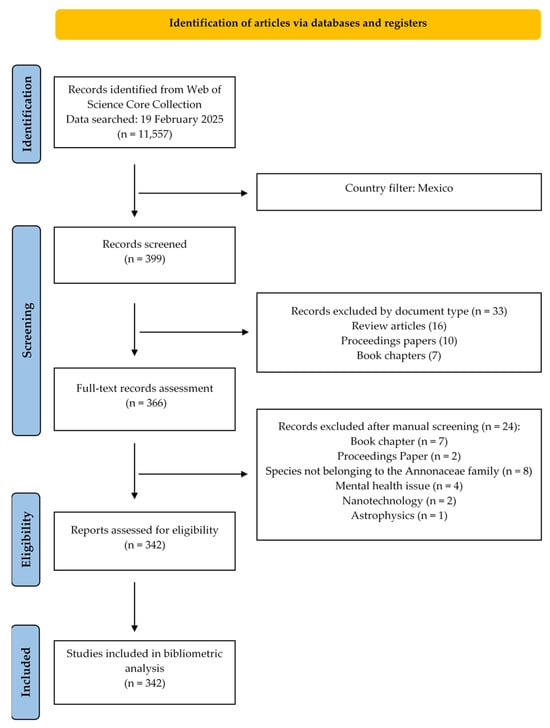
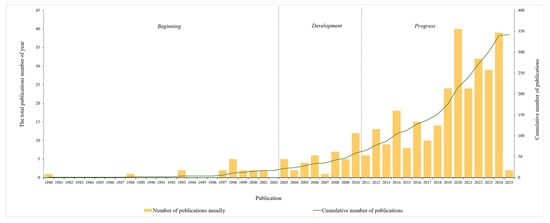
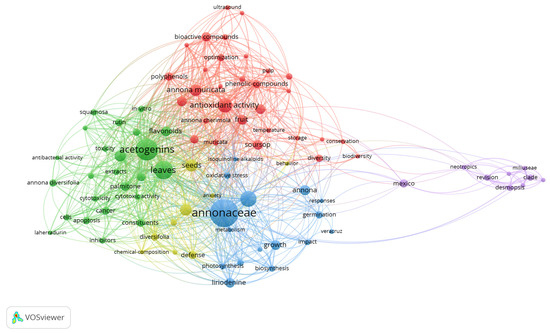
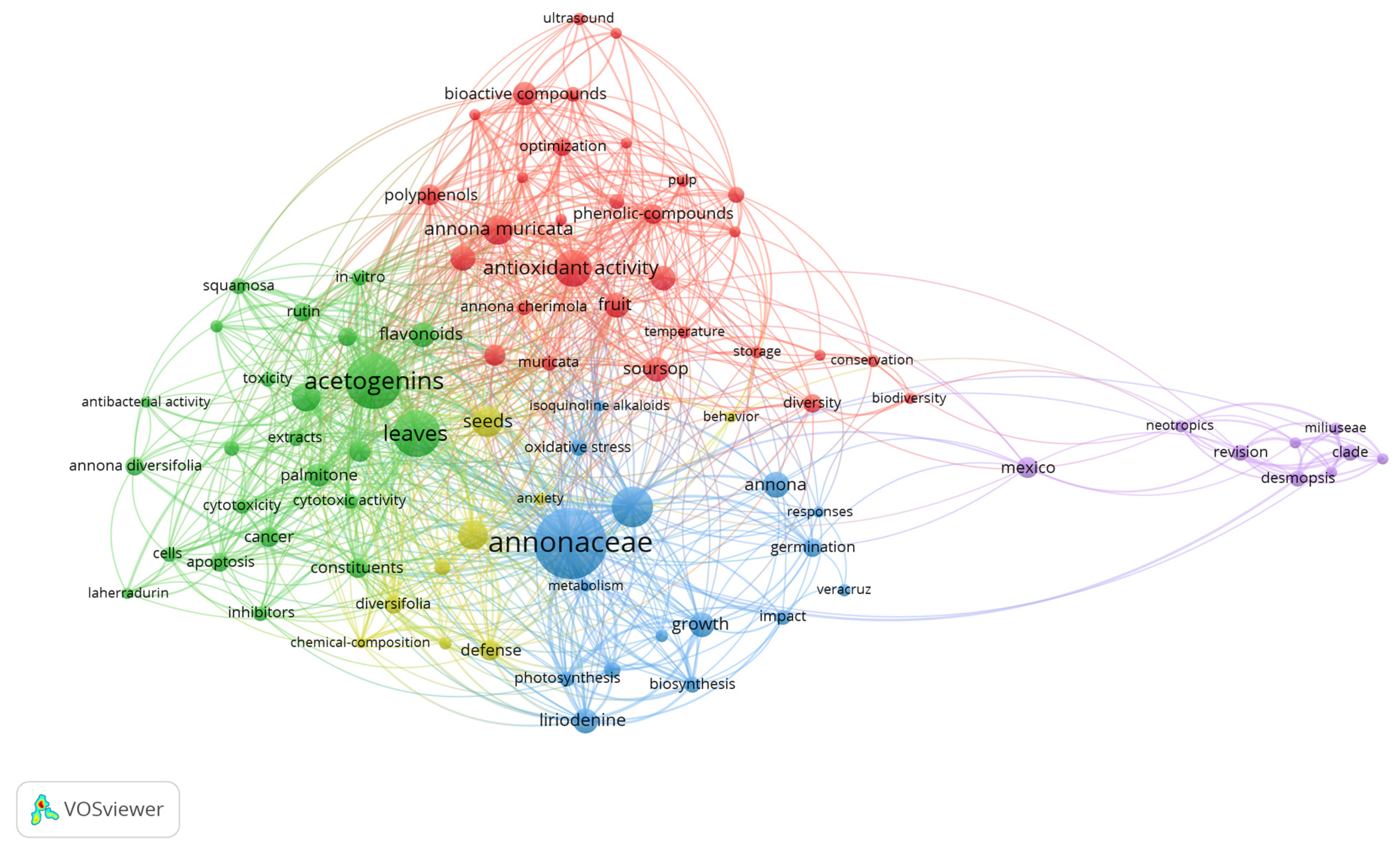
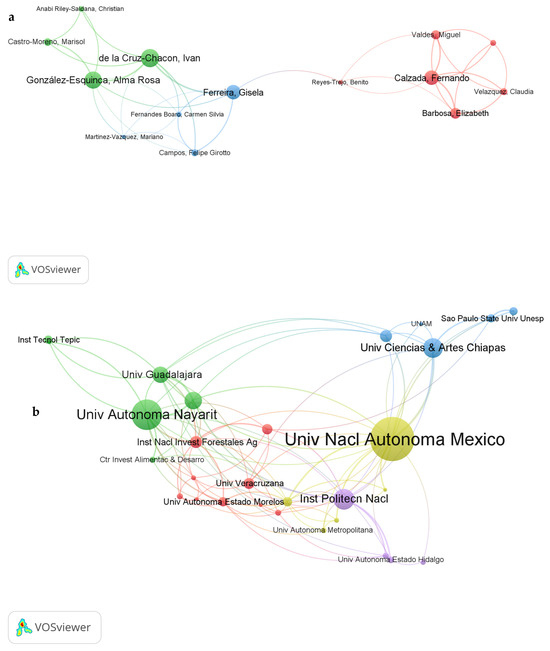
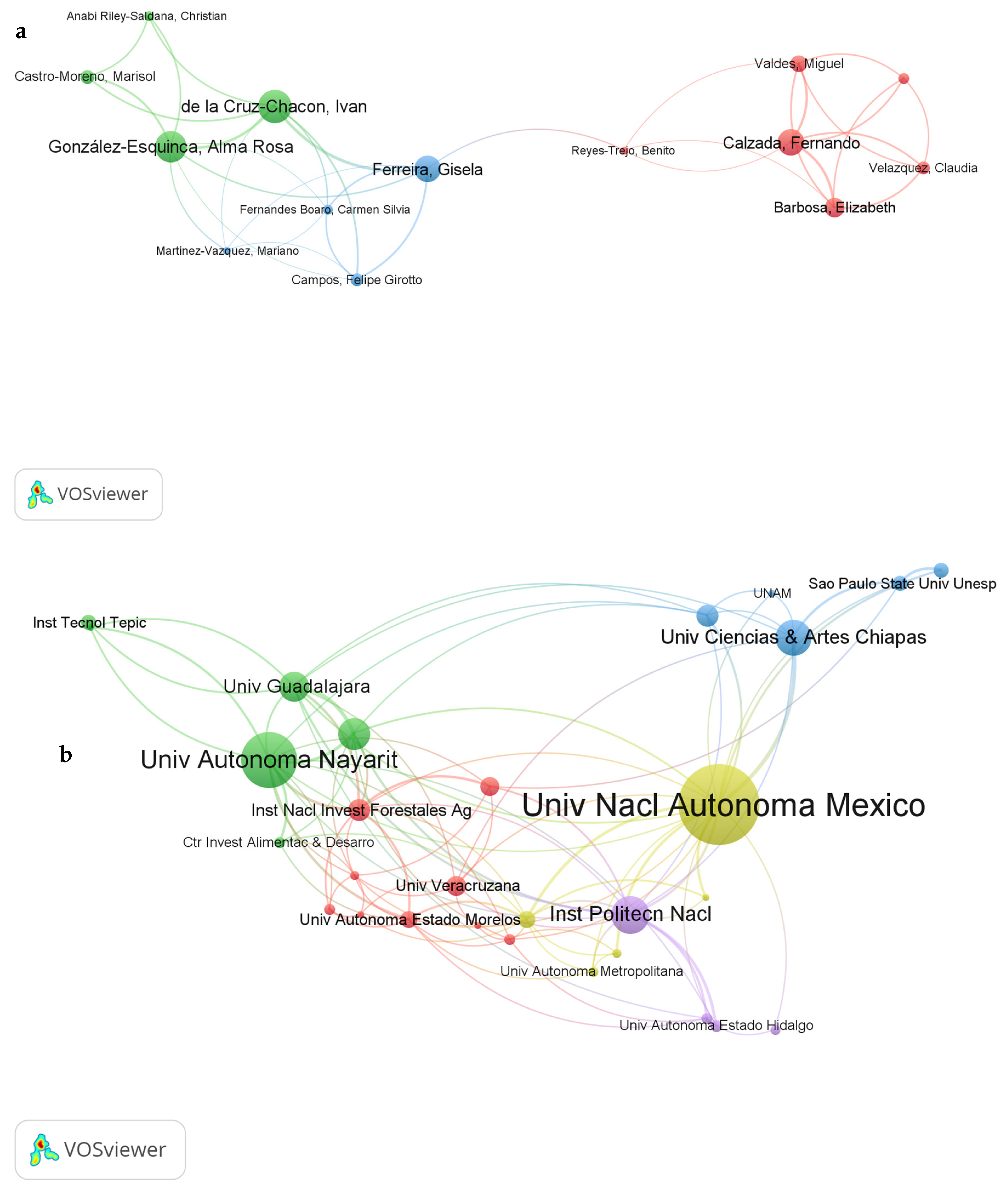
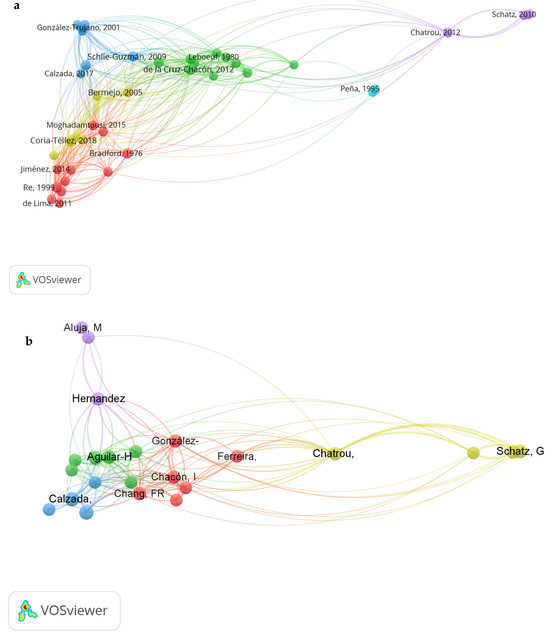
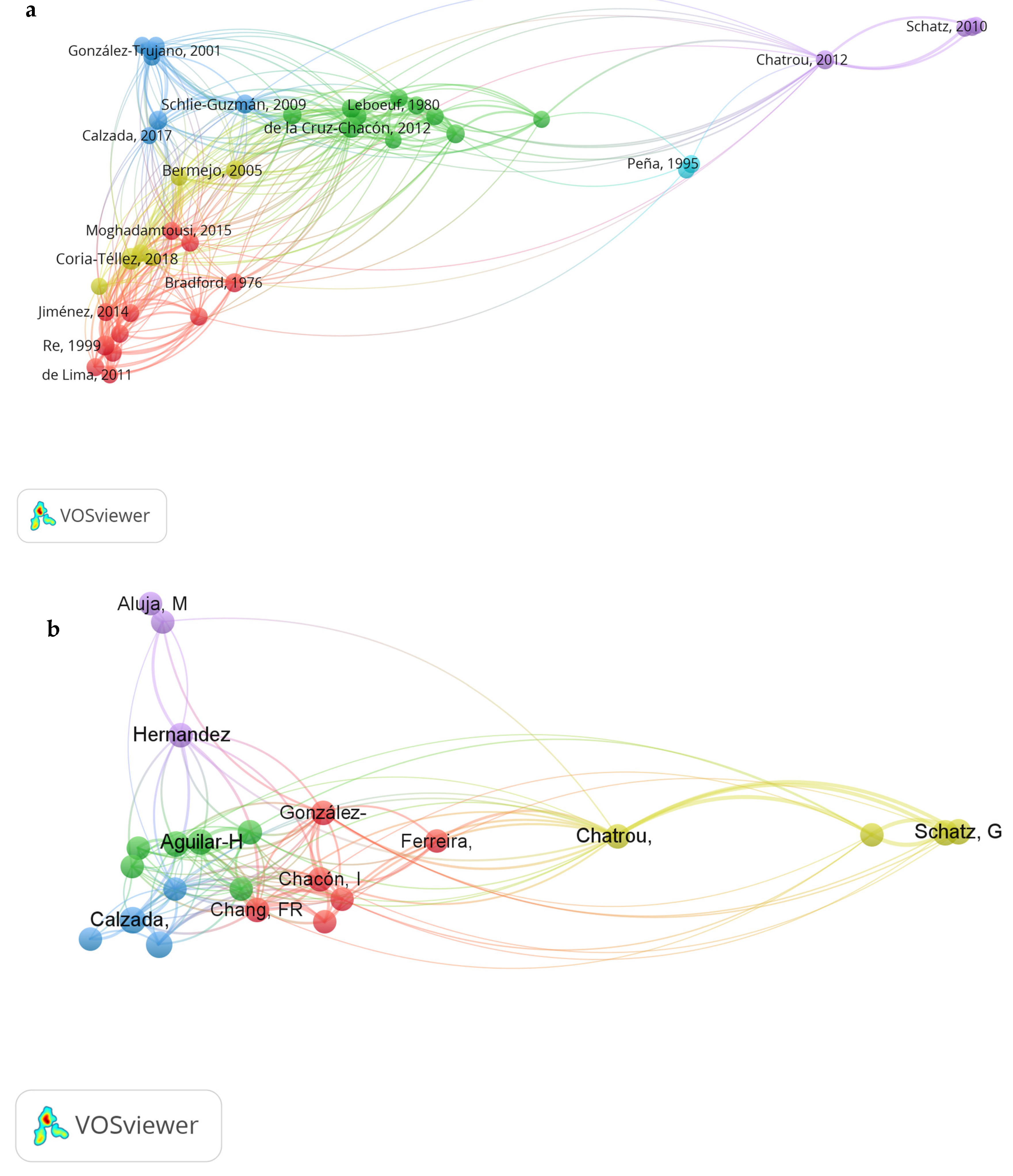
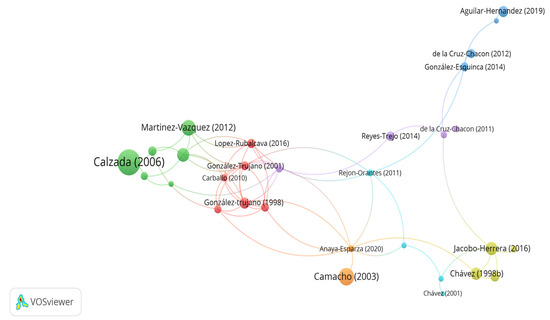
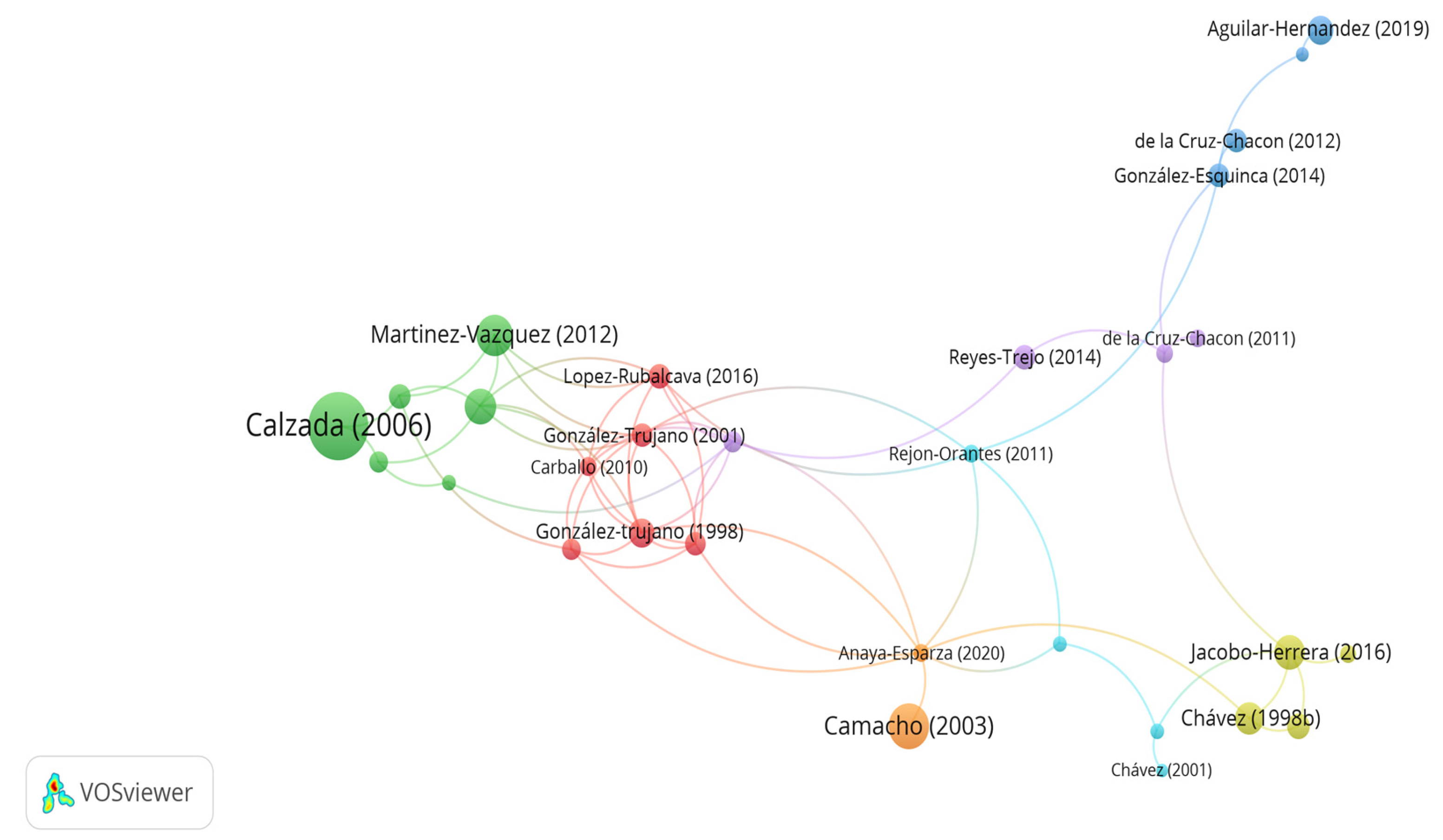
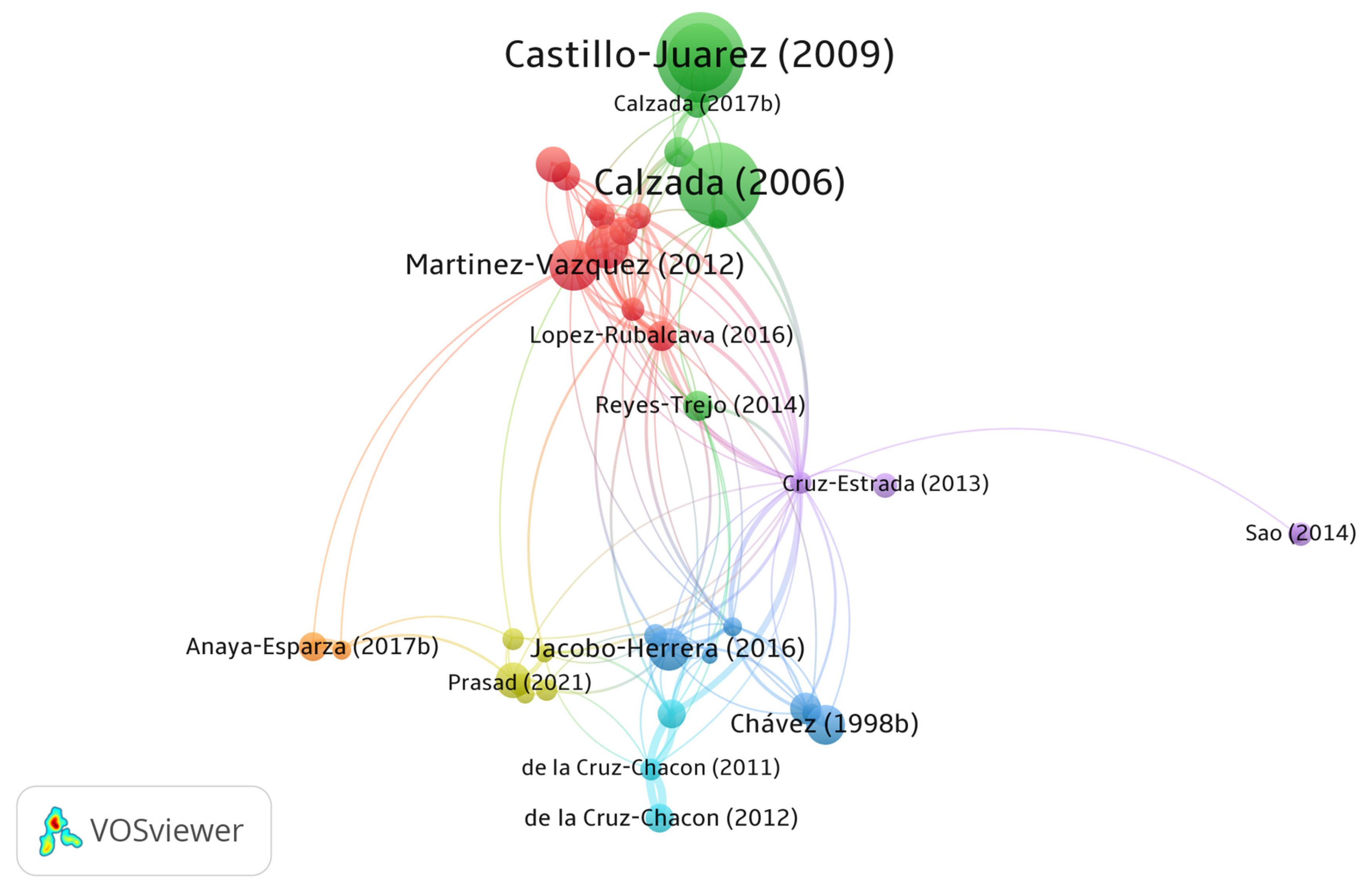

Disclaimer/Publisher’s Note: The statements, opinions and data contained in all publications are solely those of the individual author(s) and contributor(s) and not of MDPI and/or the editor(s). MDPI and/or the editor(s) disclaim responsibility for any injury to people or property resulting from any ideas, methods, instructions or products referred to in the content. |
© 2026 by the authors. Licensee MDPI, Basel, Switzerland. This article is an open access article distributed under the terms and conditions of the Creative Commons Attribution (CC BY) license.