

Article

Tracing Zoonotic Pathogens Through Surface Water Monitoring: A Case Study in China

1
Teaching Quality Supervision and Evaluation Center, Dezhou University, Dezhou 253023, China
2
School of Medicine, Northwest University, Xi’an 710069, China
3
Nanchang Center for Disease Control and Prevention, Nanchang 330038, China
*
Author to whom correspondence should be addressed.
These authors contribute equally to this work.
Microbiol. Res. 2025, 16(12), 252; https://doi.org/10.3390/microbiolres16120252
Submission received: 16 November 2025 / Revised: 1 December 2025 / Accepted: 2 December 2025 / Published: 4 December 2025

Abstract

Intensive aquaculture and animal farming along riverbanks have emerged as significant drivers of downstream public health risks, facilitating the transmission of zoonotic pathogens and antimicrobial resistance (AMR) genes from farm effluents into natural water systems. In this study, we conducted a comprehensive 12-week water monitoring program at the Wei River in Shandong, China, using a combination of rapid detection techniques (RPA-LFD) and whole-genome sequencing to trace the origins of detected pathogens. RPA-LFD screening revealed the sequential appearance of Vibrio parahaemolyticus, Aeromonas veronii, norovirus GII, and Brucella spp. in surface water from March onward, coinciding with documented wastewater discharge events from upstream shrimp and fox farms. Subsequent isolation efforts confirmed the presence of V. parahaemolyticus and A. veronii in both river water and shrimp samples, while Brucella abortus was isolated from fox feces and water samples. Whole-genome sequencing of bacterial isolates revealed that V. parahaemolyticus strains from water and shrimp shared identical sequence types (ST150 and ST809) and resistance gene profiles, indicating a clonal relationship. Similarly, B. abortus isolates from water and fox feces differed by fewer than five SNPs, confirming farm-to-water transmission. Norovirus GII.3 and GII.6 sequences from water and fecal samples clustered phylogenetically with regional clinical strains, suggesting local circulation and environmental dissemination. Our findings highlight the critical role of river water monitoring as an early warning system for pathogen spread, emphasizing the need for integrated surveillance systems that monitor both water quality and the health of upstream farms and wildlife populations. The combined use of RPA-LFD and whole-genome sequencing provides a robust framework for real-time detection and source tracing of zoonotic pathogens, offering valuable insights for future environmental monitoring and public health interventions.

1. Introduction

Estuarine regions, where rivers meet the sea, are dynamic ecosystems that support diverse biological communities and provide essential ecological services. However, these areas are increasingly under threat from anthropogenic activities, particularly intensive aquaculture and animal farming, which can lead to the release of pathogens and antimicrobial resistance genes into the environment [1,2,3]. The spread of zoonotic pathogens and antimicrobial resistance (AMR) through waterways poses significant risks to both human health and wildlife populations [4,5,6,7]. In recent years, the emergence of multidrug-resistant (MDR) pathogens in aquatic environments has become a growing concern, highlighting the urgent need for effective monitoring and management strategies [8,9,10,11].
Advancements in environmental water monitoring have provided valuable insights into the dynamics of pathogen and AMR gene dissemination [12]. Techniques such as whole-genome sequencing and real-time quantitative PCR (RT-qPCR) have enabled researchers to detect and characterize pathogens and resistance genes in water samples with high precision [13,14]. These methods have revealed the presence of zoonotic pathogens, including Vibrio spp., Aeromonas spp., and norovirus, in various aquatic environments, often linked to agricultural and aquacultural activities [15,16,17]. For instance, studies have shown that shrimp farms can be reservoirs for MDR Vibrio spp., which can spread to adjacent wetlands, posing risks to human health [18,19]. Similarly, animal farms have been implicated in the dissemination of pathogens like Brucella spp. and norovirus through wastewater discharge [20,21].
While studies have documented the presence of pathogens in water bodies, few have conducted comprehensive, long-term monitoring programs to trace these pathogens back to their origins [22]. This lack of detailed, source-specific data hampers our ability to implement targeted interventions and effectively manage the risks associated with pathogen and AMR gene spread. Advances in detection techniques have significantly enhanced our ability to identify and quantify viral pathogens in these environments. For instance, the use of RT-qPCR has enabled the detection and quantification of viruses such as Hepatitis E virus in both surface and drinking water samples [23]. Similarly, next-generation sequencing (NGS) technologies have allowed for comprehensive viral community analysis, revealing the presence of diverse viral populations in surface waters [24]. Additionally, passive samplers have been employed to enhance the detection of viruses like avian influenza in surface waters, offering a more efficient and continuous monitoring approach [25].
Recombinase polymerase amplification coupled with lateral flow dipstick (RPA-LFD) is an innovative nucleic acid detection technology that combines the advantages of isothermal amplification and visual detection [26]. Compared to traditional PCR, RPA offers several advantages, including ease of use, high efficiency, high sensitivity, and high specificity. It does not require specific instruments, making it a promising tool for on-site pathogen detection [27,28].
RPA-LFD has been successfully applied in the detection of various pathogens, including bacteria, viruses, and algae. For example, a study developed an RPA-LFD method for the rapid detection of Acinetobacter baumannii, achieving a detection limit of 5 cell/L, which is 100 times more sensitive than conventional PCR methods [29]. Another study established an RPA-LFD assay for the detection of Aeromonas hydrophila, a pathogenic bacterium in fish, with high specificity and sensitivity [30]. Additionally, RPA-LFD has been used to detect Brucella spp. and norovirus in animal and environmental samples, demonstrating its versatility and applicability in different settings [31,32]. Despite these advancements, whether this approach can be effectively applied to the rapid monitoring of pathogen dissemination in surface water remains unclear.
In this study, we address this gap by conducting a 12-week water monitoring program at the estuary of the Wei River in Shandong, China. Due to the presence of aquaculture farms and industrial zones along its banks, the Wei River suffers from severe water pollution, posing a significant threat to the drinking water sources of downstream towns. To clarify the pathogenic risks faced by these water sources, we conducted continuous monitoring over a 12-week period from February to April 2025. Using a combination of RPA-LFD and whole-genome sequencing, we aim to identify and trace six common zoonotic pathogens (Vibrio parahaemolyticus, Vibrio cholerae, Aeromonas hydrophila, Aeromonas veronii, norovirus, and Brucella spp.) and AMR genes from upstream sources, such as shrimp and fox farms, to the downstream river used for drinking and irrigation. This approach allows us to not only detect the presence of pathogens but also to establish their genetic relatedness, thereby providing critical evidence of the pathways of contamination.

2. Materials and Methods

2.1. Study Area and Sampling Site

The Wei River is a large, seasonal river in Shandong Province that flows independently into the sea. It originates from Jishan of Dongguan Town, Ju County, and passes through multiple counties and districts before emptying into the Laizhou Bay of the Bohai Sea. The river spans approximately 246 km with a drainage area of 6367 km2. Here, to better evaluate how farming wastewater discharged from upstream agricultural operations affects downstream drinking water sources, we selected two representative farming facilities as sampling sites (Figure S1). The first site is a shrimp farm located approximately 10 km upstream of Xiaoying Town (36.2105 N, 119.1132 E), and the second site is a fox farm situated about 20 km upstream (36.2538 N, 119.0526 E). These are the only two farms upstream of Xiaoying with confirmed hydrological connections to the Wei River. Meanwhile, the surface water used for drinking and irrigation was also sampled. Meteorological data for the sampling period were obtained from the local hydrometeorological station (Juxian National Climate Station). During the sampling months (2 February–27 April 2025), the average daily temperature ranged from −3.2 °C to 24.8 °C, with an overall mean of 11.6 °C. The mean relative humidity was approximately 68%, and cumulative precipitation during the sampling period was 118 mm. The overall experimental design and workflow are summarized in Figure 1.

2.2. Sampling of Wastewater, Shrimp, and Fox Feces

From 1 February to 19 April 2025, the surface water was collected once a week. Surface water samples were collected from the Wei River at each designated site using a pre-cleaned, sterilized polyethylene bottle (1-L capacity; Nalgene, Thermo Fisher Scientific, Waltham, MA, USA) attached to a telescopic sampling pole (HACH, Loveland, CO, USA). To ensure representative sampling, bottles were rinsed three times with river water before collection. Briefly, the bottle was submerged approximately 10–15 cm below the water surface, avoiding sediment disturbance and floating debris. GPS coordinates, water temperature (±0.1 °C), chemical oxygen demand (COD) (±0.1 mg/L), and turbidity (±0.1 NTU) were recorded in situ using a calibrated multiparameter probe (YSI ProQuatro, YSI Inc., Yellow Springs, OH, USA). Concurrently, in February 2025, we conducted shrimp sampling in the shrimp farm, collecting 20 shrimp specimens with an average individual weight of 12 ± 3.4 g. To evaluate the pathogen spillover from the fox farm to downstream water, we collected fox fecal samples weekly from 1 February to 19 April 2025, with 20 samples collected each time. All fecal samples were transported to the laboratory under refrigeration at 4 °C.

2.3. Pretreatment of Water Samples and Electrochemical DNA Extraction from Aquatic Samples

River water samples (1 L) were concentrated to a final volume of 20 mL using a 0.22 µm hollow-fiber ultrafiltration cartridge (Millipore, Shanghai, China) at 4 °C. The retentate was recovered by reverse flushing with 20 mL of sterile PBS (Solarbio, Beijing, China), resulting in a 50-fold concentration suitable for downstream molecular analysis. Prior to sample processing, the recovery efficiency of the ultrafiltration system was evaluated. Autoclaved river water and distilled water (1 L each) were spiked with Vibrio parahaemolyticus at concentrations of 103, 104, and 105 CFU (n = 3 per concentration). Recovery rates were determined by enumerating colony-forming units (CFU) in the eluate on TCBS agar plates following incubation at 37 °C for 24 h. For cell lysis, 10 mL of the concentrated sample was applied to a microfabricated electrochemical cell housing an interdigitated gold electrode array (50 µm gap, 1 cm2 active area) on a glass substrate (Metrohm Dropsens, Oviedo, Spain), as described previously [29]. Lysis was induced by applying a direct current (DC) voltage of 2.0 V for 60 s under constant stirring (400 rpm) in 1× PBS. This configuration generated a local concentration of hydroxide ions (OH) of approximately 3 mM for efficient bacterial lysis, while simultaneously maintaining a neutral pH (7.0 ± 0.1) via anodic proton generation, thereby eliminating the need for post-lysis washing. Subsequently, a 5 µL aliquot of the lysate was mixed with 45 µL of magnetic bead binding buffer (0.8× AMPure XP beads, Beckman Coulter Life Sciences, Indianapolis, IN, USA) to remove heavy metals and residual proteins. The purified DNA was eluted in 10 µL of 10 mM Tris-HCl buffer (pH 8.0; Thermo Fisher Scientific, Waltham, MA, USA). The extraction efficiency of the electrochemical method was benchmarked against the Qiagen DNeasy Water Mini Kit (Qiagen, Hilden, Germany). Concentrated river water (10 mL) was spiked with 104 CFU of V. parahaemolyticus (n = 10), and DNA yields from both methods were evaluated via quantitative PCR (qPCR) as previously described [33].

2.4. RPA-LFD Assay for Bacterial Pathogens in Surface Water

In this study, we designed an RPA-LFD toolbox comprising nucleic acid release reagents, a microcentrifuge (Eppendorf 5424R, Hamburg, Germany), RPA reagents, and a lateral flow dipstick to detect Brucella spp., Vibrio cholerae, V. parahaemolyticus, A. hydrophila, and A. veronii on site. For each surface water sample, 10 mL was mixed with 90 mL of the respective release reagent. The mixtures were heated at 100 °C for 3 min to lyse cells and release nucleic acids. After a brief centrifugation, the supernatants were collected and used directly as templates for downstream detection. Primers and an nfo probe targeting the gyrB gene of V. parahaemolyticus [33], lolB gene of V. cholerae [34], gyrB gene of A. hydrophila and A. veronii [30], insertion sequence IS711 region of the bp26 gene of Brucella spp. were designed based on previous studies [32]. The RPA primers are listed in Table S1. RPA-LFD assays were performed using the DNA Thermostat Rapid Amplification Kit (Amp-Future Biotech Co., Ltd., Changzhou, China). Each 50 µL reaction contained 2 µL of each primer (10 µM), 29.4 µL of rehydration Buffer A, 0.6 µL of probe (10 µM), 13.5 µL of nuclease-free water, and 1 µL of DNA template. After mixing, 2.5 µL of magnesium acetate buffer B was added to initiate the reaction, followed by brief vortexing and centrifugation. Reactions were incubated at 39 °C for 20 min according to the manufacturer’s protocol. The resulting amplicons were diluted 1:20 in phosphate-buffered saline, and 50 µL of the diluted product was applied to the sample well of a lateral flow dipstick. A positive result was indicated by the appearance of both the test and control lines within 5 min. A negative result was defined by the presence of the control line only, while the absence of both lines signified an invalid test due to procedural or instrumental error.

2.5. Analytical Sensitivity and Specificity of the RPA-LFD Assays

Prior to field deployment, the analytical performance of the RPA-LFD toolbox was evaluated using standard strains and a concentrated river water matrix processed with the same ultrafiltration protocol described above. Reference strains of V. parahaemolyticus (ATCC 17802), V. cholerae (ATCC 14035), A. hydrophila (ATCC 35654), A. veronii (ATCC 35624), and B. abortus (NCTC 10093) were grown on corresponding culture medium [32,33,34] and enumerated by plate counting. Using an automatic mixing device placed inside a biosafety cabinet (Figure S2), we performed cell culture and prepared serial dilutions of norovirus strain CW1 following the protocol described by Fu et al. (2023) [35]. Ten-fold serial dilutions ranging from approximately 1 × 10⁴ to 1 × 100 cells/mL were prepared in sterile PBS and in 0.22 µm-filtered, autoclaved river water. Norovirus stock solution was prepared by inoculating differentiated 3-D intestinal epithelial aggregates with filtered stool filtrate, harvesting culture supernatant at 72 h, clarifying, aliquoting, and storing at –80 °C [31]. A 10-fold dilution was then made by mixing one volume of this thawed stock with nine volumes of fresh maintenance medium. For matrix-based validation, 1 L of spiked sterilized river water at each concentration of above pathogens was respectively concentrated 50-fold as described in Section 2.2, and 10 mL of the retentate was subjected to nucleic-acid extraction and RPA-LFD detection. For each concentration and matrix, eight replicates were tested. The limit of detection (LOD) was defined as the lowest concentration yielding positive test lines in ≥95% of replicates.
Analytical specificity was assessed using a panel of non-target aquatic bacteria that are commonly present in estuarine environments, including Escherichia coli, Salmonella enterica, Pseudomonas aeruginosa, Shewanella putrefaciens, Edwardsiella tarda and Staphylococcus aureus. DNA templates extracted from approximately 106 cells/mL of each strain were tested individually with all RPA-LFD assays under the same conditions as described above. In addition, concentrated river water samples collected prior to the study period and confirmed negative by culture and qPCR were used as negative matrix controls.
To ensure run-to-run quality, each RPA-LFD batch (for both laboratory validation and weekly field monitoring) included: (i) a positive control consisting of purified target DNA at 103–104 copies per reaction; (ii) a no-template control containing nuclease-free water instead of DNA; and (iii) a negative matrix control consisting of concentrated river water collected from an upstream site where all target pathogens were repeatedly undetectable by qPCR. Positive and negative controls were processed in parallel with environmental samples from nucleic-acid preparation to lateral flow read-out, and only runs with valid control line and expected control results were accepted for downstream analysis.

2.6. DNA and RNA Extraction from Shrimp and Fox Fecal Samples

To extract DNA and RNA from shrimp and fox fecal samples, we employed a dual-extraction protocol optimized for both nucleic acids. First, ten grams of shrimp and fox fecal samples were homogenized in phosphate-buffered saline (PBS) for 10 min using a sterile high-speed blender at 4 °C. For DNA extraction, we used the QIAamp DNA Stool Mini Kit (Qiagen, Hilden, Germany), which effectively isolates high-quality DNA from complex fecal samples. For RNA extraction, the RNeasy Mini Kit (Qiagen, Hilden, Germany) was utilized, ensuring the recovery of intact RNA. Both kits were used according to the manufacturer’s instructions, with modifications to accommodate the specific characteristics of shrimp and fox fecal samples. The extracted DNA and RNA were quantified using a NanoDrop ND-1000 spectrophotometer (Thermo Fisher Scientific, Wilmington, DE, USA) and stored at –80 °C until further analysis.

2.7. Isolation and Identification of Bacterial Enteric Pathogens from Wastewater, Shrimp, and Fox Fecal Samples

For Vibrio spp., 100 mL of wastewater and 10 g of shrimp or fox fecal samples were pre-cultured in 100 mL of 3% NaCl alkaline peptone water (Oxoid Ltd., Basingstoke, UK) at 30 °C for 12 h, followed by plating 100 μL aliquots onto thiosulfate-citrate-bile salts-sucrose (TCBS) agar plates (Oxoid Ltd., Basingstoke, UK) with overnight incubation at 30 °C. For Aeromonas spp., samples were pre-enriched in tryptic soy broth (TSB) (Difco Laboratories, Sparks, MD, USA) at 30 °C for 12 h. Subsequently, 100 μL aliquots were streaked onto MacConkey agar plates (Oxoid Ltd., Basingstoke, UK) and incubated overnight at 30 °C. For bacterial identification, the 16S rRNA genes of isolates were amplified by PCR using universal bacterial primers (27F/1492R) (Sangon Biotech, Shanghai, China). The amplicon was sequenced by Tsingke Biotechnology Co., Ltd. (Xi’an, China). The similarity of the 16S rRNA gene sequence was analyzed by using the BLASTn (NCBI BLAST+ v2.16.0) program of the National Center for Biotechnology Information (NCBI).
For Brucella spp., samples were inoculated onto Brucella selective medium (Oxoid, Basingstoke, UK). The inoculated plates were incubated in the presence or absence of for up to 2 weeks [36]. Colonies with typical round, glistening, pinpoint, and honey drop-like appearances were selected. Further identification involved biochemical tests such as oxidase, catalase, urease, CO2 requirement, H2S production, and agglutination with monospecific sera [36,37].

2.8. Genome Sequencing and Gene Content Analysis

Genomic DNA was extracted from bacterial isolates by using a bacterial genomic DNA extraction kit (Takara, Dalian, China). The DNAs were indexed with a Nextera XT DNA Sample Preparation kit (Illumina Inc., San Diego, CA, USA) and sequenced on the Illumina platform (Illumina, bcl2fastq v2.20) with the paired-end 2 × 300 bp protocol at Novogene (Novogene Co., Ltd., Beijing, China). The genomes were annotated by the RAST server [38]. In silico multilocus sequence typing (MLST) of V. parahaemolyticus and Aeromonas was performed with the MLST 2.0 server at the Center for Genomic Epidemiology [39]. Antimicrobial resistance genes (ARGs) were identified with ResFinder (v4.3.0) [40].

2.9. RNA Extraction and Sequencing of Norovirus GII

Viral RNA was extracted from 140 µL of the concentrate obtained from surface water using a QIAamp Viral RNA Mini Kit (Qiagen, Hilden, Germany) according to the manufacturer’s instructions, with a final elution volume of 50 µL. Together with RNA extracted from fox fecal samples, cDNA synthesis was performed using the RevertAid RT Reverse Transcription Kit (Thermo Fisher Scientific, USA) according to the manufacturer’s protocol. A 50 µL TwistAmp® nfo reaction (TwistDx Ltd., Cambridge, UK) was assembled on ice: 29.5 µL rehydration buffer, 2.1 µL each primer (10 µM) targeting the ORF1–ORF2 junction, 0.6 µL FAM-labelled nfo probe (10 µM), 5 µL RNA template, and 2.5 µL 280 mM MgOAc. The mix was incubated at 39 °C for 20 min [31]. Afterwards, 5 µL of the RPA product was diluted 1:10 in HybriDetect assay buffer (Milenia Biotec GmbH, Gießen, Germany) and applied to a Milenia dipstick. A positive result was recorded when both test and control lines appeared within 5 min; only the control line indicated a negative sample.

2.10. Bioinformatic Analysis of the Norovirus GII

Subsequently, RT-PCR was conducted to amplify the ORF2 gene of norovirus GII from the prepared cDNA using one pair of universal primers targeting the ORF2 region of norovirus GII. The amplified products were purified by gel cutting and then used to generate a 150 bp paired-end cDNA library with the TruSeq RNA Library Preparation Kit (Illumina Inc., San Diego, CA, USA) via random hexamer initiation. The library was subsequently sequenced by Tsingke Biotechnology (Xi’an, China). After sequencing, raw reads were filtered using Trimal v.3.3, and adaptor sequences were removed using Cutadapt v1.9.1. Primer sequences were eliminated, and quality filtering was performed using the vsearch fastx_filter option. The sequences were then de-replicated using the vsearch derep_fulllength option and denoised using Usearch (unoise3 option). Clean reads were mapped to a custom reference database of norovirus ORF2 gene sequences using minimap2. The amplicon sequencing data were integrated with norovirus sequences from the NCBI database.
Sequencing data from this study were combined with Chinese norovirus sequences from the NCBI database to construct a phylogenetic tree. Phylogenetic relationships were inferred using the maximum likelihood method, and the reliability of each branch node was assessed by performing 1000 bootstrap replicates. Evolutionary analysis was conducted in MEGA 11 [41], and the phylogenetic tree was visualized using iTOL (v6.0) [42].

2.11. Statistical Analysis

Recovery rates of the 0.22 µm hollow-fiber ultrafiltration cartridge were expressed as mean ± standard deviation (SD). Welch’s t-test was employed to compare the mean recovery between the two matrices. To assess extraction efficiency, a paired t-test was used to compare mean qPCR Cq values between the in-house electrochemical DNA extraction method and the commercial kit. All statistical analyses were performed using SPSS 12.0 software.

3. Results

3.1. Assessment of Concentration Recovery and Electrochemical DNA Extraction Efficiency

To evaluate the reliability of the RPA-LFD workflow, the recovery efficiency of the 0.22 µm hollow-fiber ultrafiltration cartridge was assessed. The mean recovery rates were 61 ± 4% for autoclaved river water and 55 ± 2% for distilled water (Table S2). Welch’s t-test revealed no statistically significant difference between the two matrices (p = 0.08, df = 3.4), indicating that the concentration method was effective and free from significant matrix inhibition. Subsequently, the efficiency of the electrochemical DNA extraction was compared to a standard commercial kit using qPCR analysis. The resulting Cq values were 22.3 ± 0.2 for the electrochemical method and 21.9 ± 0.3 for the commercial kit (n = 6, p = 0.18, paired t-test), corresponding to a relative yield of 96 ± 4%. These findings demonstrate that the electrochemical extraction method is quantitative, reproducible, and maintains high sensitivity, positioning it as a viable alternative to standard extraction protocols.

3.2. Determination of the LOD and Specificity of RPA-LFD Assays

The limit of detection (LOD) for A. veronii was determined by performing the RPA-LFD assay with eight replicates per concentration, resulting in an LOD of approximately 10 cells/mL (Figure S3). Furthermore, the LODs for Norovirus, V. parahaemolyticus, Vibrio cholerae, A. hydrophila, and Brucella spp. were validated based on RPA-LFD assays reported in previous studies [30,31,32,33,34]. The results showed that the LODs for these pathogens ranged from 10 to 50 cells/mL, consistent with previously reported values. Specificity testing confirmed no cross-reactivity with the non-target aquatic bacteria panel (Table S3).

3.3. Detection of Pathogens in Wastewater by RPA-LFD Technique

Beginning 1 February 2025, we initiated a 12-week surface water monitoring program at the Wei River, utilizing an RPA-LFD detection kit that screens for six common zoonotic pathogens to assess the impact of upstream wastewater discharge on downstream communities (Table 1). Starting from the sixth week of monitoring (15 March), V. parahaemolyticus and A. veronii were consistently detected in the water until the end of March. Concurrently, from 29 March 2025, onward, norovirus GII was also identified in the water, persisting until the conclusion of the monitoring period (Figure S4). Notably, in week 11, Brucella spp. were detected using the RPA-LFD assay (Figure S5).

3.4. Isolation of Pathogens in Shrimp and Fox Farms

Following the detection of V. parahaemolyticus and A. veronii at the river, we isolated two strains of V. parahaemolyticus and one strain of A. veronii from the water (Table S4). Concurrently, we promptly conducted sampling and an epidemiological investigation at the upstream shrimp farm. The investigation revealed that, starting from 15 March, the farm had experienced a significant die-off of shrimp, leading to pond cleanout and the discharge of the aquaculture water downstream. We also isolated three strains of V. parahaemolyticus and two strains of A. veronii from the shrimp. To further determine whether the discharge of aquaculture water had caused the downstream river pathogen contamination, we performed whole-genome sequencing on the aforementioned isolated strains.
After detecting norovirus and Brucella spp. in the wastewater in weeks 9 and 12, respectively, we conducted an epidemiological investigation and sampled fox feces at the upstream fox farm. The results indicated that the fox farm had been continuously discharging wastewater since week 8 of the monitoring. In week 12, we isolated Brucella abortus from the fox fecal samples. Additionally, RPA-LFD consistently detected norovirus in the fox fecal samples from week 8 onward.
Following effluent discharge from shrimp and fox farms, COD levels increased from 3–5 to 25–30 mg/L, and turbidity rose from 2–3 to 11–14 NTU. This surge in organic load and suspended solids coincided with the downstream detection of V. parahaemolyticus and norovirus (Figure S6), suggesting that the altered physicochemical conditions facilitated pathogen persistence and transport.

3.5. Genomic Sequencing and Phylogenetic Analysis of V. parahaemolyticus and A. veronii

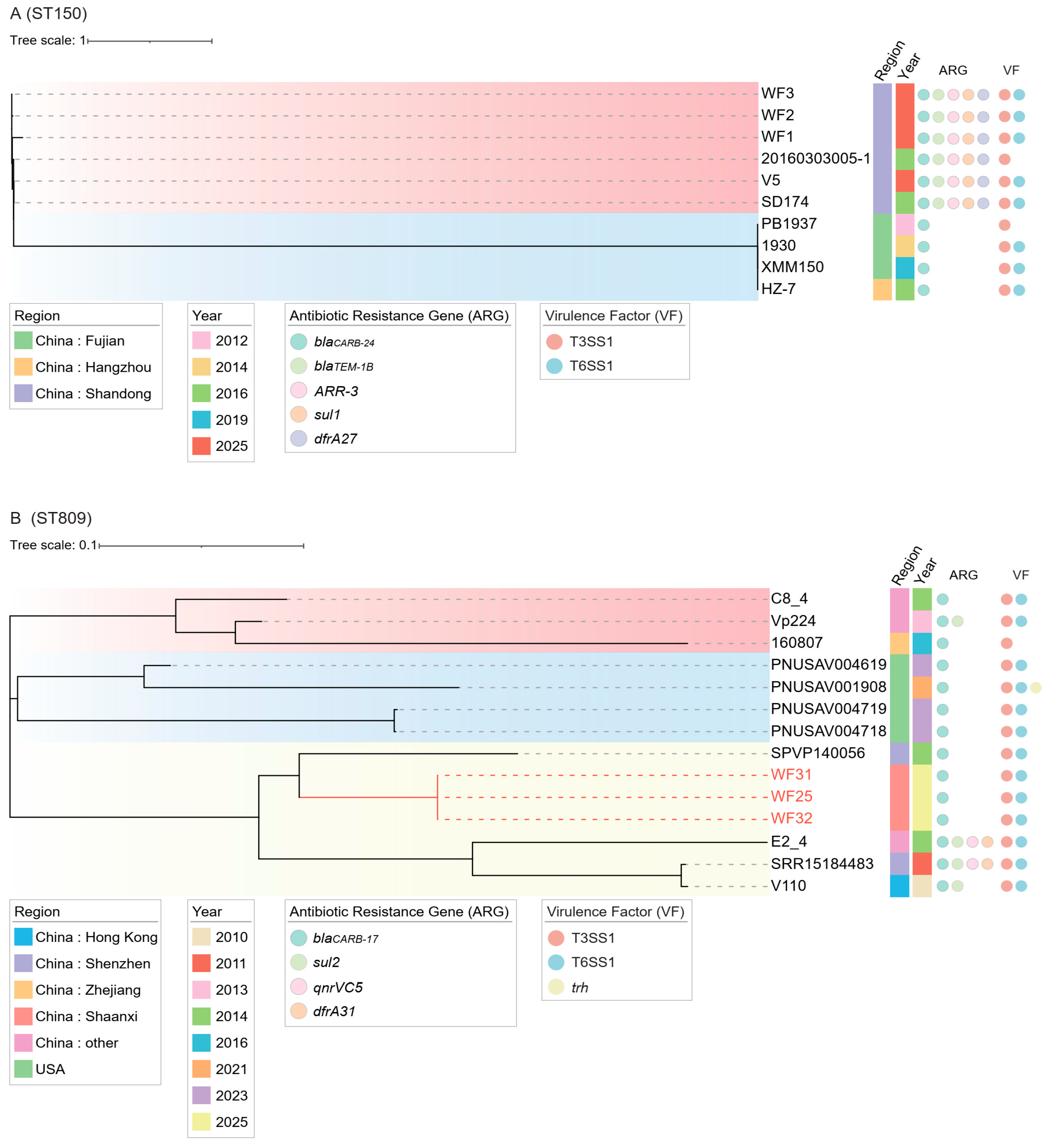
We performed whole-genome sequencing and analysis of five strains of V. parahaemolyticus isolated from river waters and shrimp farms. The results showed that these five strains can be divided into two sequence types (STs): ST809 and ST150. Both genotypes were found in both the river water and the shrimp. To further determine their homology, we constructed phylogenetic trees for ST150 and ST809 based on the core genome of V. parahaemolyticus previously identified. For ST150, the isolates from water and shrimp were genomically identical and shared the identical ARG profile (Figure 2A). Notably, all of the ST150 isolates obtained in this study harbored a plasmid with four ARGs (Figure S7). For ST809, the isolates from water and shrimp were also genetically related (Figure 2B). Additionally, ST809 strains harbored a pirAB-carrying plasmid, which caused shrimp diseases.
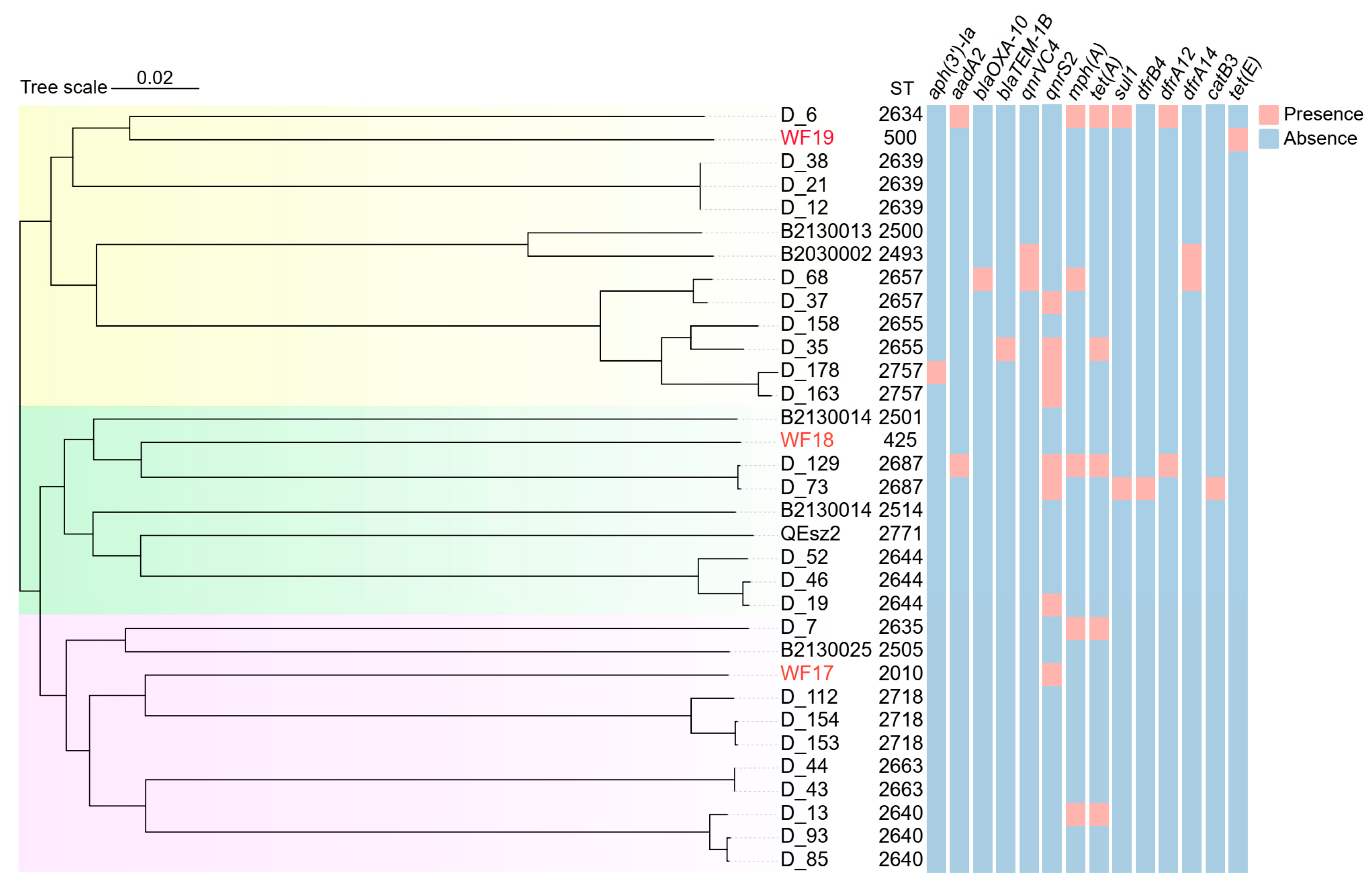
In contrast, for A. veronii, the two strains of A. veronii isolated from river waters were not homologous to those isolated from shrimp, but instead belonged to three separate branches (Figure 3). Furthermore, the antibiotic resistance gene (ARG) profiles of river-water A. veronii isolates were distinct from those of farm isolates. This lack of clonality implies that the river population is genetically diverse and unlikely to have originated from a single-point discharge of farm effluent. Instead, the observed diversity may be attributed to the release of multiple farm strains, environmental amplification, or contributions from additional upstream sources.

3.6. Phylogenetic Analysis of B. abortus

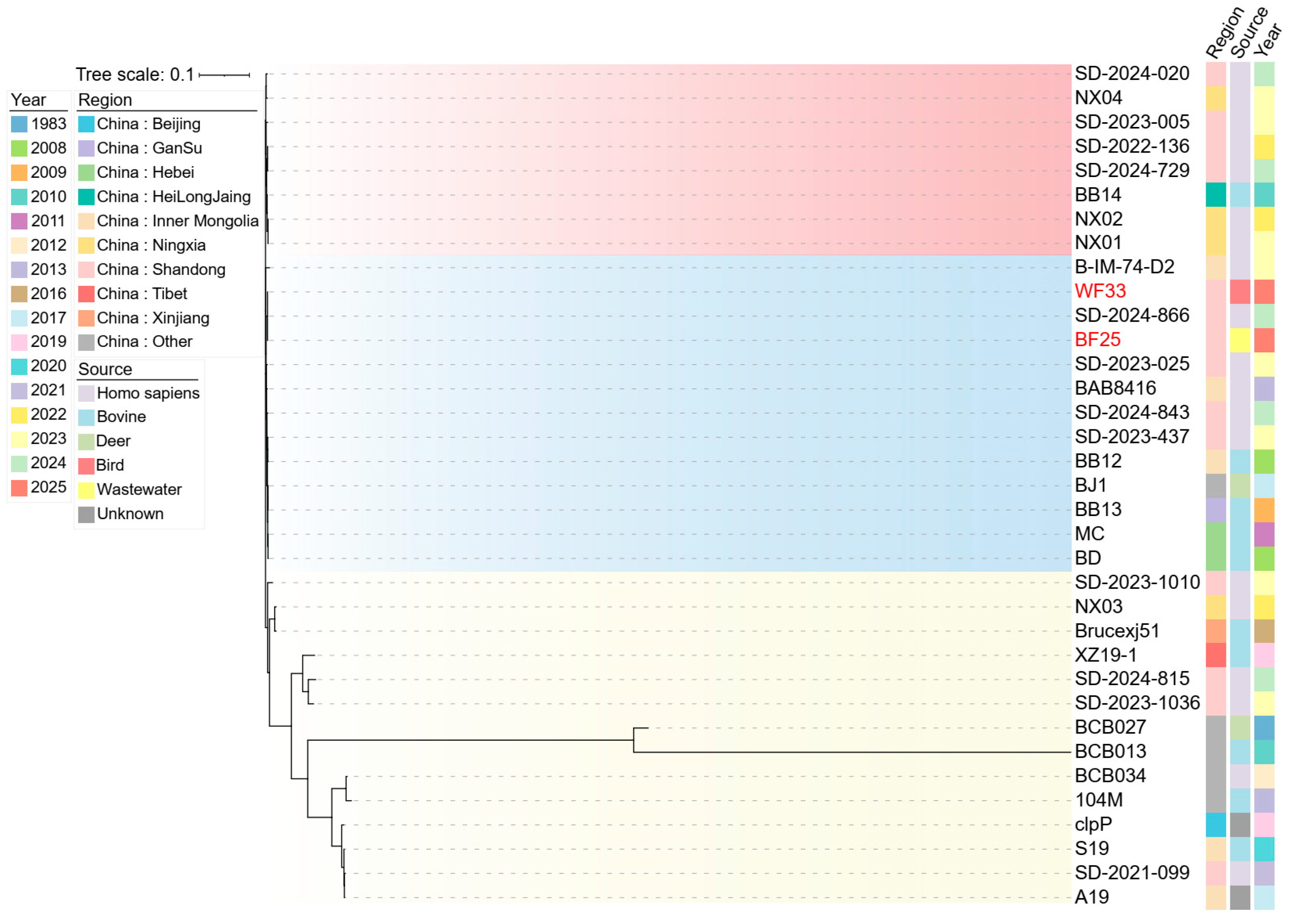
Next, we compared the Brucella strains isolated from river waters and fox feces. Genomic analysis showed that they all belonged to B. abortus and clustered into the same branch, with no more than five SNPs difference (Figure 4). Therefore, we inferred that the B. abortus in the river waters came from fox farms.

3.7. Genotyping and Phylogenetic Analysis of Norovirus in the Surface Water and Fox Farm

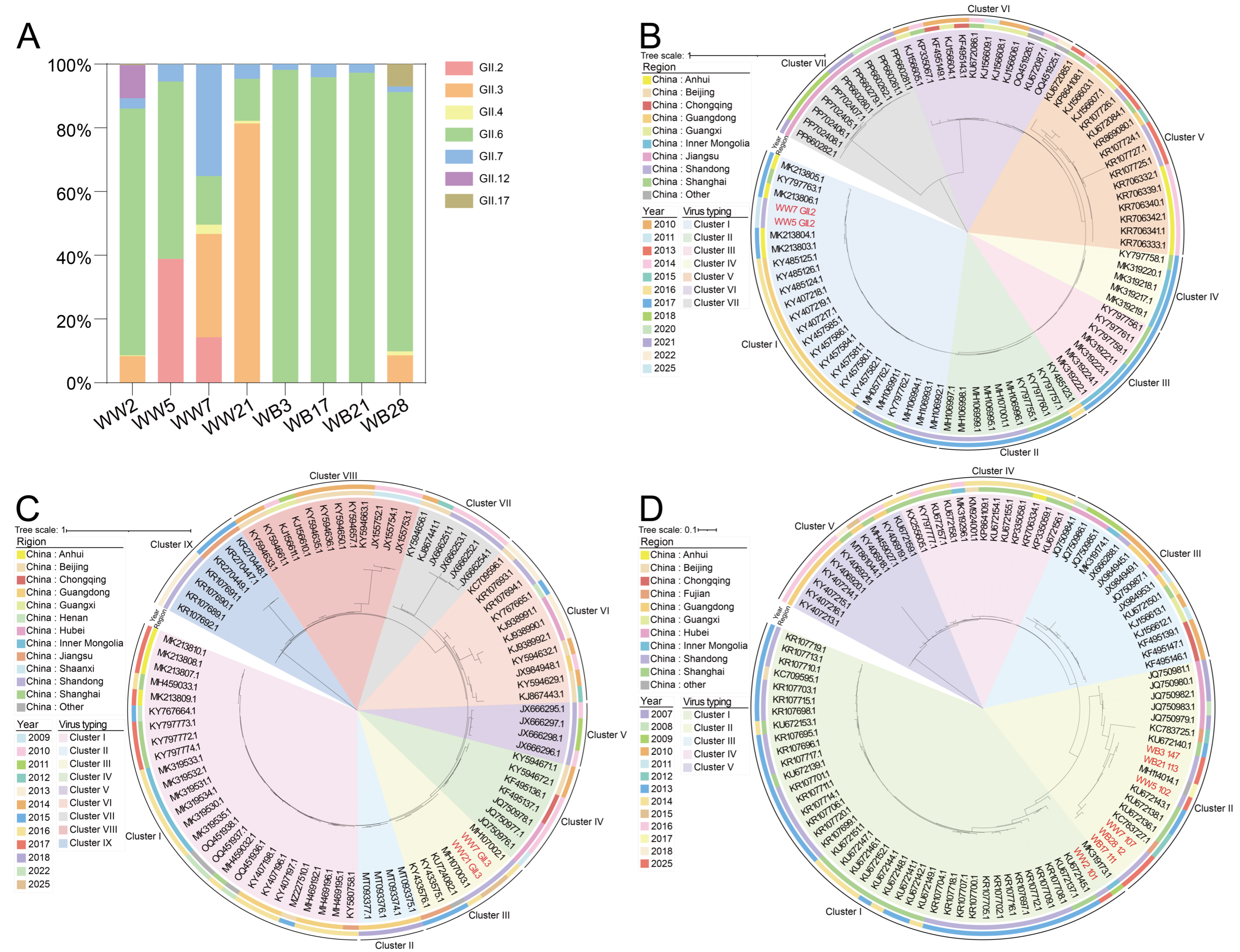
Over the study interval, the norovirus GII population shifted markedly. In wastewater, GII.6 dominated the first two samplings (WW12 and WW15), accounting for 60–80% of reads. By 12 April (WW17), GII.3 and GII.7 had emerged as co-dominant genotypes, and by 19 April (WW21), GII.3 alone comprised >70% of the profile, evidencing a clear temporal succession (Figure 5A). In fecal samples, GII.6 remained overwhelmingly predominant (>80%) at all time points, with no comparable genotype turnover. Phylogeny places GII.2 strains from water samples WW15 and WW17 in a tight monophyletic clade that forms a distinct lineage together with several reference viruses; the cluster nests among contemporary strains from Guangdong, Anhui and Shanghai, implying recent regional circulation (Figure 5B). GII.3 sequences from WW17 and WW21 group within a single, well-supported branch that also includes contemporaneous sequences from Shandong and Jiangsu, revealing shared ancestry across eastern China (Figure 5C). Nearly all GII.6 variants segregate into one dominant genotype; WB3 and WB21 are sister taxa, adjacent to WW5, whereas WB17 and WB28 form a sub-clade that co-locates with WW17. Intermingling of water and stool isolates throughout the branch indicates minimal genetic divergence and a likely common transmission chain (Figure 5D).

4. Discussion

In recent years, surface water-based surveillance has emerged as a crucial tool for detecting and tracing the spread of pathogens in the environment [25]. These advancements, combined with improved bioinformatics tools, have facilitated a better understanding of viral contamination sources, transmission pathways, and the effectiveness of water treatment processes [43,44,45]. In this study, we first conducted weekly water monitoring for the surface water of a river in Shandong Province. Using an RPA-LFD detection kit that includes six common zoonotic pathogens, we successively detected pathogens such as V. parahaemolyticus, Brucella spp., A. veronii, and norovirus. Subsequently, we sampled animals from upstream shrimp and fox farms and isolated and cultured the potential pathogens. We isolated V. parahaemolyticus and A. veronii from shrimp, and B. abortus and norovirus from foxes. RPA-LFD has also been used to monitor the presence of the above pathogens in shrimp and fox farms, linking upstream farming activities to downstream pathogen contamination. Thus, RPA-LFD has shown great potential for rapid and on-site detection of pathogens in water bodies, which provides quick results without the need for complex laboratory equipment, making it ideal for early identification and management of potential health risks [46,47]. To further determine whether the V. parahaemolyticus, B. abortus, A. veronii, and norovirus detected at the surface water originated from the aforementioned farms, we performed whole-genome sequencing on the pathogens isolated from both the surface water and the farms, which provided further evidence of the link between upstream activities and downstream pathogen contamination [18]. The genetic relatedness of the pathogens suggested that the discharge from the farms was a significant source of the pathogens detected in the downstream water. The detection of these pathogens in the river prompted an epidemiological investigation and sampling at upstream shrimp and fox farms. Investigation revealed that the shrimp farm experienced a significant die-off event, necessitating pond drainage and the subsequent discharge of aquaculture effluent downstream. This event coincided spatially and temporally with the detection of V. parahaemolyticus and A. veronii in surface waters. Concurrently, continuous wastewater discharge from the fox farm, identified as ongoing since March 2025, correlated with the presence of norovirus and Brucella spp. Notably, the detection of V. parahaemolyticus ST150 harboring a 106-kb plasmid with four antibiotic resistance genes (blaCARB-2, tet(34), floR, sul2) raises concerns regarding the potential contamination of crops. Although no acute illnesses were reported during the study period, the conjugative nature of the IncA/C plasmid backbone poses a significant risk of horizontal gene transfer to human-associated microbiota.
This study underscores the importance of river water monitoring as an early warning system for pathogen spread. By regularly monitoring the surface water, we were able to detect the presence of pathogens and trace them back to their sources. This proactive approach allows for timely interventions to mitigate the spread of pathogens and protect both human and animal health. The findings emphasize the need for integrated surveillance systems that monitor not only the water quality but also the discharge of pathogens from upstream farms. Such an approach is essential for implementing effective control measures and preventing potential pathogen transmission.
This study also has several limitations. The sampling period was relatively short, which may not have fully captured the seasonal variations and long-term trends of pathogen occurrence and dissemination in the river system. Secondly, the study mainly focused on tracing the origins of pathogens and linking them to upstream farming activities through genetic analysis. However, it did not provide a detailed assessment of the ecological impacts of these pathogens on the river ecosystem, such as their effects on aquatic organisms and the overall ecological balance. Additionally, the study did not fully explore the potential health risks to humans and animals downstream, including the likelihood of infection transmission and the severity of diseases were temporally associated with the detected pathogens. Further research is needed to comprehensively understand the ecological and health consequences of pathogen spread from upstream sources to downstream environments. Despite the demonstrated advantages of the RPA-LFD assay, several challenges remain [48]. Environmental inhibitors, such as humic acids and heavy metals in concentrated river water, may compromise recombinase activity, potentially yielding false-negative results. Furthermore, batch-to-batch variability of lyophilized enzymes can introduce fluctuations in signal intensity. These constraints necessitate confirmatory qPCR for samples exhibiting weak LFD bands and mandate strict storage at −20 °C to preserve reagent reactivity. Future research should focus on optimizing reagent stability and expanding the detection spectrum to include a broader range of pathogens and environmental matrices. In summary, RPA-LFD offers significant potential for the rapid and accurate surveillance of pathogens, contributing to enhanced public health protection and environmental management.

5. Conclusions

Our study underscores the critical role of river water monitoring in detecting and tracing the spread of zoonotic pathogens from upstream sources, such as aquaculture and animal farms, to downstream environments. Through a 12-week monitoring program at the Wei River estuary in China, we identified V. parahaemolyticus, Aeromonas spp., norovirus, and Brucella spp. in the water. Epidemiological investigations and whole-genome sequencing linked these pathogens to upstream shrimp and fox farms, revealing that farming activities significantly contributed to downstream pathogen contamination. This highlights the importance of integrated surveillance systems that monitor water quality and the health of upstream farms and wildlife populations. Our findings emphasize the need for proactive and collaborative measures to mitigate pathogen spread and protect both human and animal health, advocating for a One Health approach to manage ecological balance in coastal regions.

Supplementary Materials

The following supporting information can be downloaded at: https://www.mdpi.com/article/10.3390/microbiolres16120252/s1, Figure S1: Sampling sites of this study; Figure S2: Schematic diagram of an automated cell-culture mixing device that can be placed in a biosafety cabinet; Figure S3: Limits of Detection for Aeromonas veronii RPA-LFD assay; Figure S4: RPA-LFD detection of norovirus GII in the surface water. N: negative control; P: positive control; Figure S5: RPA-LFD detection of Brucella spp. in the surface water. N: negative control; P: positive control; Figure S6: Monthly changes in chemical oxygen demand (COD) and turbidity (NTU) and pathogen detections in surface waters at monitoring sites in 2025; Figure S7: Gene content analysis of ARGs in a plasmid from ST150 strains; Table S1: The primers used in this study; Table S2: Concentration recovery rate between autoclaved river water and distilled water; Table S3: Specificity evaluation of the RPA-LFD assays using standard strains and non-target aquatic bacteria; Table S4: General information of isolates obtained in this study.

Author Contributions

Conceptualization, Y.W. and X.D. (Xinyan Du); methodology, S.F.; software, Y.W. and X.D. (Xinyan Du); validation, X.D. (Xin Du), L.Y. and F.H.; formal analysis, X.D. (Xin Du), L.Y. and F.H.; investigation, Y.W. and X.D. (Xinyan Du); resources, X.D. (Xin Du), L.Y. and F.H.; data curation, Y.W. and X.D. (Xinyan Du); writing—original draft preparation, Y.W., X.D. (Xinyan Du) and S.F.; writing—review and editing, Y.W. and S.F.; visualization, Y.W. and X.D. (Xinyan Du); supervision, Y.W. and X.D. (Xinyan Du); funding acquisition, S.F. and L.Y. All authors have read and agreed to the published version of the manuscript.

Funding

This research was supported by the Key Research and Development Program of Shaanxi Province (2025NC-YBXM-104) and the Science and Technology Research Program of Jiangxi Provincial Health Commission (2026L1010).

Institutional Review Board Statement

The fecal sampling of wild animals has been approved by the ethical committee of Nanchang Center for Disease Control and Prevention (Code: NCCDC2024-018, approved on 3 January 2024).

Informed Consent Statement

Informed consent of animal sampling was obtained from Weifang Xinmuyang Aquaculture Co., Ltd.

Data Availability Statement

Raw sequencing data were deposited in GenBank (NCBI) under Bioproject No. PRJNA1363752.

Acknowledgments

We thank volunteers for the sampling assistance.

Conflicts of Interest

The authors declare no conflicts of interest.

Abbreviations

The following abbreviations are used in this manuscript:
RPA-LFDRecombinase Polymerase Amplification coupled with Lateral Flow Dipstick
LODLimits of Detection
NGSNext-Generation Sequencing
ARGAntimicrobial Resistance Gene(s)
MDRMultidrug-Resistant
MLSTMultilocus Sequence Typing
AMRAntimicrobial Resistance

References

  1. Reverter, M.; Sarter, S.; Caruso, D.; Avarre, J.C.; Combe, M.; Pepey, E.; Pouyaud, L.; Vega-Heredía, S.; de Verdal, H.; Gozlan, R.E. Aquaculture at the crossroads of global warming and antimicrobial resistance. Nat. Commun. 2020, 11, 1870. [Google Scholar] [CrossRef] [PubMed]
  2. Silva, D.G.; Domingues, C.P.F.; Figueiredo, J.F.; Dionisio, F.; Botelho, A.; Nogueira, T. Estuarine aquacultures at the crossroads of animal production and antibacterial resistance: A metagenomic approach to the resistome. Biology 2022, 11, 1681. [Google Scholar] [CrossRef] [PubMed]
  3. Zheng, D.; Yin, G.; Liu, M.; Chen, C.; Jiang, Y.; Hou, L.; Zheng, Y. A systematic review of antibiotics and antibiotic resistance genes in estuarine and coastal environments. Sci. Total Environ. 2021, 777, 146009. [Google Scholar] [CrossRef] [PubMed]
  4. Haile, A.T.; Kibret, M.; Haileselassie, M.M.; Anley, K.A.; Bekele, T.W.; Kassa, J.M.; Demissie, K.; Werner, D.; Graham, D.; Mateo-Sagasta, J. Designing a monitoring plan for microbial water quality and waterborne antimicrobial resistance in the Akaki catchment, Ethiopia. Environ. Monit. Assess. 2025, 197, 317. [Google Scholar] [CrossRef]
  5. Kusi, J.; Ojewole, C.O.; Ojewole, A.E.; Nwi-Mozu, I. Antimicrobial resistance development pathways in surface waters and public health implications. Antibiotics 2022, 11, 821. [Google Scholar] [CrossRef]
  6. Laborda, P.; Sanz-García, F.; Ochoa-Sánchez, L.E.; Gil-Gil, T.; Hernando-Amado, S.; Martínez, J.L. Wildlife and antibiotic resistance. Front. Cell. Infect. Microbiol. 2022, 12, 873989. [Google Scholar] [CrossRef]
  7. Milijasevic, M.; Veskovic-Moracanin, S.; Babic Milijasevic, J.; Petrovic, J.; Nastasijevic, I. Antimicrobial resistance in aquaculture: Risk mitigation within the One Health context. Foods 2024, 13, 2448. [Google Scholar] [CrossRef]
  8. Algammal, A.M.; Mabrok, M.; Ezzat, M.; Alfifi, K.J.; Esawy, A.M.; Elmasry, N.; El-Tarabili, R.M. Prevalence, antimicrobial resistance (AMR) pattern, virulence determinant and AMR genes of emerging multi-drug resistant Edwardsiella tarda in Nile tilapia and African catfish. Aquaculture 2022, 548, 737643. [Google Scholar] [CrossRef]
  9. Hopo, M.G.; Mabrok, M.; Abu-Elala, N.; Yu, Y. Navigating fish immunity: Focus on mucosal immunity and the evolving landscape of mucosal vaccines. Biology 2024, 13, 980. [Google Scholar] [CrossRef]
  10. Mabrok, M.; Algammal, A.M.; El-Tarabili, R.M.; Dessouki, A.A.; ElBanna, N.I.; Abd-Elnaby, M.; El-Lamie, M.M.M.; Rodkhum, C. Enterobacter cloacae as a re-emerging pathogen affecting mullets (Mugil spp.): Pathogenicity testing, LD50, antibiogram, and encoded antimicrobial resistance genes. Aquaculture 2024, 583, 740619. [Google Scholar] [CrossRef]
  11. Raharjo, H.M.; Budiyansah, H.; Mursalim, M.F.; Chokmangmeepisarn, P.; Sakulworakan, R.; Debnath, P.P.; Sivaramasamy, E.; Intan, S.T.; Chuanchuen, R.; Dong, H.T.; et al. The first evidence of blaCTX-M-55, QnrVC5, and novel insight into the genome of MDR Vibrio vulnificus isolated from Asian sea bass (Lates calcarifer) identified by resistome analysis. Aquaculture 2023, 571, 739500. [Google Scholar] [CrossRef]
  12. Hossein, M.; Ripanda, A.S. Pollution by antimicrobials and antibiotic resistance genes in East Africa: Occurrence, sources, and potential environmental implications. Toxicol. Rep. 2025, 14, 101969. [Google Scholar] [CrossRef] [PubMed]
  13. Baker, S.; Thomson, N.; Weill, F.X.; Holt, K.E. Genomic insights into the emergence and spread of antimicrobial-resistant bacterial pathogens. Science 2018, 360, 733–738. [Google Scholar] [CrossRef] [PubMed]
  14. Knight, M.E.; Webster, G.; Perry, W.B.; Baldwin, A.; Rushton, L.; Pass, D.A.; Cross, G.; Durance, I.; Muziasari, W.; Kille, P.; et al. National-scale antimicrobial resistance surveillance in wastewater: A comparative analysis of HT qPCR and metagenomic approaches. Water Res. 2024, 262, 121989. [Google Scholar] [CrossRef] [PubMed]
  15. Ziarati, M.; Zorriehzahra, M.J.; Hassantabar, F.; Mehrabi, Z.; Dhawan, M.; Sharun, K.; Emran, T.B.; Dhama, K.; Chaicumpa, W.; Shamsi, S. Zoonotic diseases of fish and their prevention and control. Vet. Q. 2022, 42, 95–118. [Google Scholar] [CrossRef]
  16. Sampaio, A.; Silva, V.; Poeta, P.; Aonofriesei, F. Vibrio spp.: Life strategies, ecology, and risks in a changing environment. Diversity 2022, 14, 97. [Google Scholar] [CrossRef]
  17. Sanches-Fernandes, G.M.M.; Sá-Correia, I.; Costa, R. Vibriosis outbreaks in aquaculture: Addressing environmental and public health concerns and preventive therapies using gilthead seabream farming as a model system. Front. Microbiol. 2022, 13, 904815. [Google Scholar] [CrossRef]
  18. Wang, Q.; Zhang, Y.; Yang, Q.; Fu, S.; Qu, B.; Defoirdt, T. One health pathogen surveillance demonstrated the dissemination of gut pathogens within the two coastal regions associated with intensive farming. Gut Pathog. 2021, 13, 47. [Google Scholar] [CrossRef]
  19. Fu, S.; Yang, Q.; Wang, Q.; Pang, B.; Lan, R.; Wei, D.; Qu, B.; Liu, Y. Continuous genomic surveillance monitored the in vivo evolutionary trajectories of Vibrio parahaemolyticus and identified a new virulent genotype. mSystems 2021, 6, e01254-20. [Google Scholar] [CrossRef]
  20. Rytkönen, A.; Meriläinen, P.; Valkama, K.; Hokajärvi, A.M.; Ruponen, J.; Nummela, J.; Mattila, H.; Tulonen, T.; Kivistö, R.; Pitkänen, T. Scenario-based assessment of fecal pathogen sources affecting bathing water quality: Novel treatment options to reduce norovirus and Campylobacter infection risks. Front. Microbiol. 2024, 15, 1353798. [Google Scholar] [CrossRef]
  21. Wareth, G.; Melzer, F.; El-Diasty, M.; Schmoock, G.; Elbauomy, E.; Abdel-Hamid, N.; Sayour, A.; Neubauer, H. Isolation of Brucella abortus from a dog and a cat confirms their biological role in re-emergence and dissemination of bovine brucellosis on dairy farms. Transbound. Emerg. Dis. 2017, 64, e27–e30. [Google Scholar] [CrossRef] [PubMed]
  22. Hood, G.; Roche, X.; Brioudes, A.; von Dobschuetz, S.; Fasina, F.O.; Kalpravidh, W.; Makonnen, Y.; Lubroth, J.; Sims, L. A literature review of the use of environmental sampling in the surveillance of avian influenza viruses. Transbound. Emerg. Dis. 2021, 68, 110–126. [Google Scholar] [CrossRef] [PubMed]
  23. Salvador, D.; Neto, C.; Benoliel, M.J.; Caeiro, M.F. Assessment of the presence of hepatitis E virus in surface water and drinking water in Portugal. Microorganisms 2020, 8, 761. [Google Scholar] [CrossRef] [PubMed]
  24. Tan, B.; Ng, C.; Nshimyimana, J.P.; Loh, L.L.; Gin, K.Y.; Thompson, J.R. Next-generation sequencing (NGS) for assessment of microbial water quality: Current progress, challenges, and future opportunities. Front. Microbiol. 2015, 6, 1027. [Google Scholar] [CrossRef]
  25. Wu, Y.; Long, Y.; Yang, X.; Du, X.; Du, X.; Zahan, N.; Deng, Z.; Du, C.; Fu, S. Harnessing a Surface Water-Based Multifaceted Approach to Combat Zoonotic Viruses: A Rural Perspective from Bangladesh and China. Microorganisms 2025, 13, 2526. [Google Scholar] [CrossRef]
  26. Kersting, S.; Rausch, V.; Bier, F.F.; von Nickisch-Rosenegk, M. Rapid detection of Plasmodium falciparum with isothermal recombinase polymerase amplification and lateral flow analysis. Malar. J. 2014, 13, 99. [Google Scholar] [CrossRef]
  27. Hou, P.; Zhao, G.; Wang, H.; He, C.; Huan, Y.; He, H. Development of a recombinase polymerase amplification combined with lateral-flow dipstick assay for detection of bovine ephemeral fever virus. Mol. Cell. Probes 2018, 38, 31–37. [Google Scholar] [CrossRef]
  28. Yao, Y.; Luo, N.; Zong, Y.; Jia, M.; Rao, Y.; Huang, H.; Jiang, H. Recombinase polymerase amplification combined with lateral flow dipstick assay for the rapid and sensitive detection of Pseudo-nitzschia multiseries. Int. J. Mol. Sci. 2024, 25, 1350. [Google Scholar] [CrossRef]
  29. Han, Y.; Yu, H.; Lv, M.; Gao, H.; Lin, W.; Li, W.; Cheng, M.; Huang, Y.; Meng, D.; Wen, T.; et al. Dual-mode electro-driven biosensor: Low-voltage lysis and hybridization synergy for rapid and sensitive pathogen screening. Bioelectrochemistry 2025, 168, 109147. [Google Scholar] [CrossRef]
  30. Wang, S.-R.; Xu, J.-N.; Fan, H.-Y.; Zheng, Y.-P.; Zhou, T.-Q.; Zhang, Y.; Dan, X. Establishment of a method for rapid detection of Aeromonas hydrophila by recombinase polymerase amplification (RPA) combined with lateral flow strips (LFD). Acta Hydrobiol. Sin. 2024, 48, 849–858. [Google Scholar] [CrossRef]
  31. Jia, T.; Yu, Y.; Wang, Y. A recombinase polymerase amplification-based lateral flow strip assay for rapid detection of genogroup II noroviruses in the field. Arch. Virol. 2020, 165, 2767–2776. [Google Scholar] [CrossRef]
  32. Gumaa, M.M.; Cao, X.; Li, Z.; Lou, Z.; Zhang, N.; Zhang, Z.; Zhou, J.; Fu, B. Establishment of a recombinase polymerase amplification (RPA) assay for the detection of Brucella spp. infection. Mol. Cell. Probes 2019, 47, 101434. [Google Scholar] [CrossRef] [PubMed]
  33. Jiang, W.; Ren, Y.; Han, X.; Xue, J.; Shan, T.; Chen, Z.; Liu, Y.; Wang, Q. Recombinase polymerase amplification-lateral flow (RPA-LF) assay combined with immunomagnetic separation for rapid visual detection of Vibrio parahaemolyticus in raw oysters. Anal. Bioanal. Chem. 2020, 412, 2903–2914. [Google Scholar] [CrossRef] [PubMed]
  34. Liao, L.; Shi, W.; Ma, C.; Tang, W.; Qian, Q.; Wang, Y.; Li, J.; Shen, J.; Ji, J.; Ma, J.; et al. Duplex detection of Vibrio cholerae and Vibrio parahaemolyticus by real-time recombinase polymerase amplification. Biomed. Environ. Sci. 2022, 35, 1161–1165. [Google Scholar] [CrossRef] [PubMed]
  35. Fu, S.; Zhang, Y.; Wang, R.; Deng, Z.; He, F.; Jiang, X.; Shen, L. Longitudinal wastewater surveillance of four key pathogens during an unprecedented large-scale COVID-19 outbreak in China facilitated a novel strategy for addressing public health priorities-A proof of concept study. Water Res. 2023, 247, 120751. [Google Scholar] [CrossRef]
  36. Al Dahouk, S.; Nöckler, K. Implications of laboratory diagnosis on brucellosis therapy. Expert Rev. Anti-Infect. Ther. 2011, 9, 833–845. [Google Scholar] [CrossRef]
  37. Elbehiry, A.; Aldubaib, M.; Al Rugaie, O.; Marzouk, E.; Abaalkhail, M.; Moussa, I.; El-Husseiny, M.H.; Abalkhail, A.; Rawway, M. Proteomics-based screening and antibiotic resistance assessment of clinical and sub-clinical Brucella species: An evolution of brucellosis infection control. PLoS ONE 2022, 17, e0262551. [Google Scholar] [CrossRef]
  38. Aziz, R.K.; Bartels, D.; Best, A.A.; DeJongh, M.; Disz, T.; Edwards, R.A.; Formsma, K.; Gerdes, S.; Glass, E.M.; Kubal, M.; et al. The RAST Server: Rapid annotations using subsystems technology. BMC Genom. 2008, 9, 75. [Google Scholar] [CrossRef]
  39. Maiden, M.C.; Bygraves, J.A.; Feil, E.; Morelli, G.; Russell, J.E.; Urwin, R.; Zhang, Q.; Zhou, J.; Zurth, K.; Caugant, D.A.; et al. Multilocus sequence typing: A portable approach to the identification of clones within populations of pathogenic microorganisms. Proc. Natl. Acad. Sci. USA 1998, 95, 3140–3145. [Google Scholar] [CrossRef]
  40. Zankari, E.; Hasman, H.; Cosentino, S.; Vestergaard, M.; Rasmussen, S.; Lund, O.; Aarestrup, F.M.; Larsen, M.V. Identification of acquired antimicrobial resistance genes. J. Antimicrob. Chemother. 2012, 67, 2640–2644. [Google Scholar] [CrossRef]
  41. Tamura, K.; Stecher, G.; Kumar, S. MEGA11: Molecular evolutionary genetics analysis version 11. Mol. Biol. Evol. 2021, 38, 3022–3027. [Google Scholar] [CrossRef]
  42. Letunic, I.; Bork, P. Interactive Tree of Life (iTOL) v5: An online tool for phylogenetic tree display and annotation. Nucleic Acids Res. 2021, 49, W293–W296. [Google Scholar] [CrossRef]
  43. Kahwage, S.; Lanzarini, N.M.; de Paula, B.B.; Saggioro, E.M.; de Faro Motta, A.T.; Mannarino, C.F.; Miagostovich, M.P. Viral genetic diversity in surface and groundwater at a non-operational dumpsite and its surrounding neighborhood. Sci. Total Environ. 2025, 1002, 180604. [Google Scholar] [CrossRef]
  44. John, A.; Kang, S.; Fuhrmann, L.; Topolsky, I.; Kent, C.; Quick, J.; Stadler, T.; Julian, T.R.; Beerenwinkel, N. Characterizing influenza A virus lineages and clinically relevant mutations through high-coverage wastewater sequencing. Water Res. 2025, 287, 124453. [Google Scholar] [CrossRef]
  45. Clough, T.W.; Silvester, R.; Kevill, J.; Farkas, K.; Malham, S.K.; Cross, G.; Robins, P.; Jones, D.L. Predicting norovirus contamination and antimicrobial resistance in coastal waters from community and hospital-derived sources. Water Res. 2025, 288, 124555. [Google Scholar] [CrossRef] [PubMed]
  46. Lin, Y.; Wang, S.; Zhang, M.; Wang, N.; Jing, H.; Lv, J.; Wu, S. Integrating RPA-LFD and TaqMan qPCR for rapid on-site screening and accurate laboratory identification of Coilia brachygnathus and Coilia nasus in the Yangtze River. Foods 2025, 14, 3484. [Google Scholar] [CrossRef] [PubMed]
  47. Li, S.; Li, J.; Wang, K.; Zhu, Q.; Chang, Y.; Wang, L.; Teng, Z.; Wei, X.; Chang, M.; Liu, M.; et al. Establishment and application of dual isothermal amplification of Pasteurella multocida and Streptococcus suis in pigs. Vet. Res. Forum 2025, 16, 365–374. [Google Scholar] [CrossRef] [PubMed]
  48. Srivorakul, S.; Guntawang, T.; Sittisak, T.; Gordsueb, T.; Boonsri, K.; Khattiya, R.; Sthitmatee, N.; Pringproa, K. Development of reverse transcriptase recombinase polymerase amplification combined with lateral flow dipstick for rapid detection of Tilapia Lake Virus (TiLV): Pilot study. Vet. Sci. 2025, 12, 845. [Google Scholar] [CrossRef]
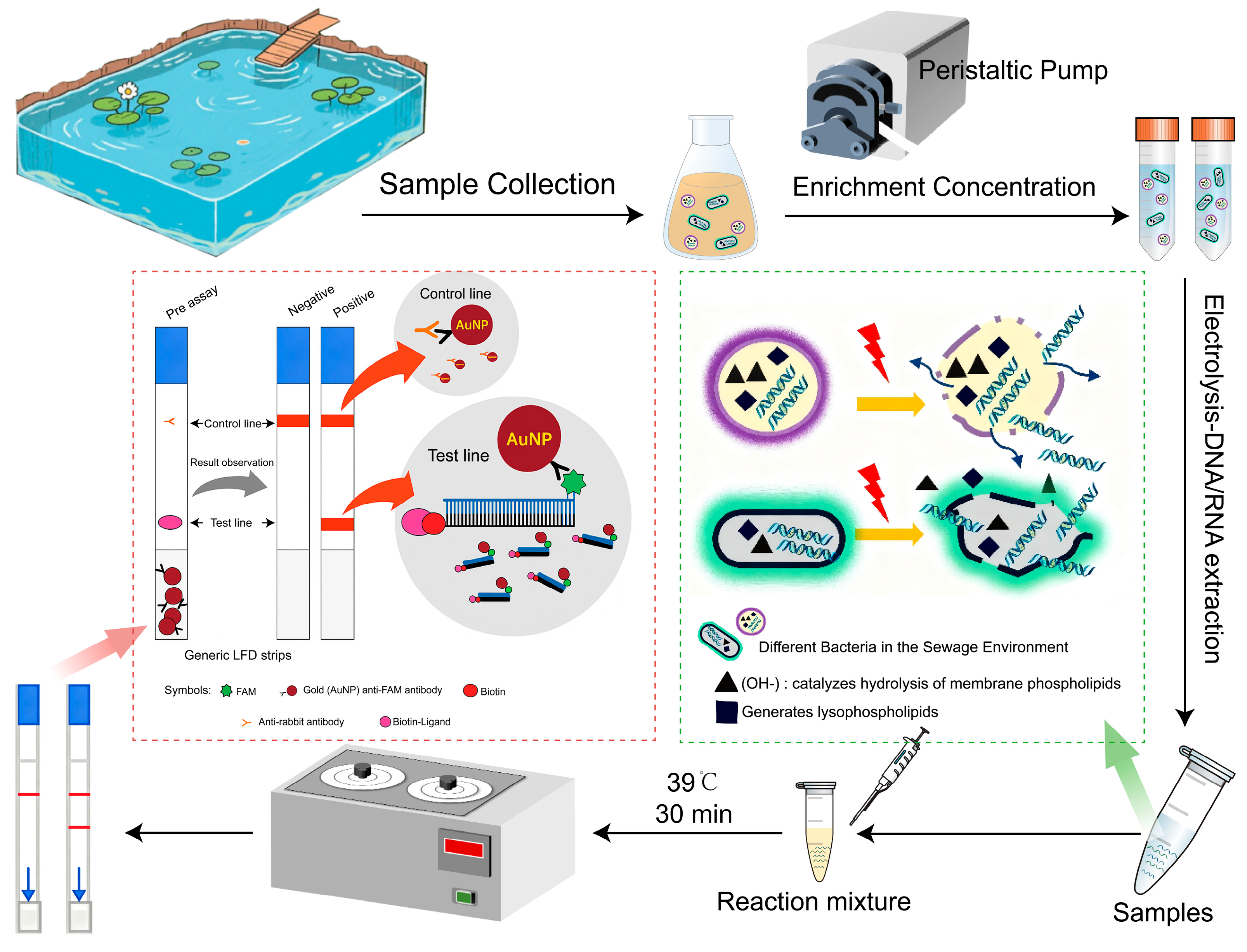
Figure 1. Workflow of this study.
Microbiolres 16 00252 g001
Figure 2. Phylogeny of V. parahaemolyticus ST150 (A) and ST809 (B) collection. A Midpoint rooted maximum likelihood phylogeny of 10 and 14 ST150 (A) and ST809 (B) strains was constructed using a core-genome SNP alignment generated by Snippy v4.6.0. Branch support was performed with 1000 bootstrap replicates. Bootstrap values are represented with gradient colors. Isolates from this study are indicated with a red color.
Microbiolres 16 00252 g002
Figure 3. Phylogeny of a Chinese A. veronii collection. A Midpoint rooted maximum likelihood phylogeny of 33 Chinese A. veronii was constructed using a core-genome SNP alignment generated by Snippy v4.6.0. Branch support was performed with 1000 bootstrap replicates. Bootstrap values are represented with gradient colors. Isolates from this study are indicated with red colors.
Microbiolres 16 00252 g003
Figure 4. Phylogeny of a Chinese Brucella abortus collection. A Midpoint rooted maximum likelihood phylogeny of 35 Chinese Brucella abortus was constructed using a core-genome SNP alignment generated by Snippy v4.6.0. Branch support was performed with 1000 bootstrap replicates. Bootstrap values are represented with gradient colors. Isolates from this study are indicated with red colors.
Microbiolres 16 00252 g004
Figure 5. Temporal and maximum-likelihood phylogenetic tree of norovirus GII genotype variants in China. Temporal changes of norovirus GII genotype variants in surface water and fox feces (A). Y-axis, relative abundance (%) of each GII genotype; x-axis, sequential sampling time points for wastewater (WW12, WW15, WW17, WW21) and fecal specimens (WB2, WB5, WB7, WB21) collected on 29 March, 5 April, 12 April and 19 April 2025. Maximum-likelihood phylogenetic tree of partial capsid gene of norovirus GII genotype GII.2 (B), GII.3 (C) and GII.6 (D) in China and neighboring areas, 2008–2025. Isolates from this study are indicated with a red colour.
Microbiolres 16 00252 g005
Table 1. RPA-LFD detection results for surface water, shrimp, and fox feces.
No. of WeeksTimeSample NameV. parahaemolyticusBrucellaAeromonas veroniiNorovirusV. choleraeA. hydrophila
River
11 February 2025WW-1------
28 February 2025WW-3------
315 February 2025WW-4------
422 February 2025WW-5------
51 March 2025WW-6------
68 March 2025WW-7------
715 March 2025WW-8+-+---
822 March 2025WW-10+-+---
929 March 2025WW-12+-++--
105 April 2025WW-15---+--
1112 April 2025WW-17-+-+--
1219 April 2025WW-21---+--
Shrimp
11 February 2025SW-1------
28 February 2025SW-2------
315 February 2025SW-3------
422 February 2025SW-4------
51 March 2025SW-5------
68 March 2025SW-6------
715 March 2025SW-7+-+---
822 March 2025SW-8+-+---
929 March 2025SW-9+-+---
105 April 2025SW-10------
1112 April 2025SW-11------
1219 April 2025SW-12------
Fox feces
11 February 2025WB1------
28 February 2025WB2------
315 February 2025WB3------
422 February 2025WB4------
51 March 2025WB5------
68 March 2025WB6------
715 March 2025WB7------
822 March 2025WB8------
929 March 2025WB13---+--
105 April 2025WB17---+--
1112 April 2025WB21-+-+--
1219 April 2025WB28-+-+--
“+” indicates positive detection; “-” indicates no detection.
Disclaimer/Publisher’s Note: The statements, opinions and data contained in all publications are solely those of the individual author(s) and contributor(s) and not of MDPI and/or the editor(s). MDPI and/or the editor(s) disclaim responsibility for any injury to people or property resulting from any ideas, methods, instructions or products referred to in the content.