Skip Content
You are currently on the new version of our website. Access the old version .

World Electric Vehicle Journal

World Electric Vehicle Journal (WEVJ) is the first international, peer-reviewed, open access journal that comprehensively covers all studies related to battery, hybrid, and fuel cell electric vehicles, published monthly online.
Quartile Ranking JCR - Q2 (Engineering, Electrical and Electronic | Transportation Science and Technology)

All Articles (3,189)

The efficiency of power transfer is a critical issue for wireless charging applications in electric vehicles. The misalignment between the transmitter coil and the receiver coil in wireless charging leads to a significant reduction in efficiency. This article investigates improving coil misalignment performance in wireless power transfer for electric vehicles using magnetic flux density analysis. The objective is to study the effect of the automatic alignment transmitter system’s movement on error distance. The automatic alignment transmitter system was integrated with a wireless power transfer system to realign the transmitter coil whenever lateral misalignment occurred between the transmitter and receiver coils. The experiment was performed with a horizontal misalignment of 0.35 m and was repeated three times. The gap between the coils was held constant at 0.15 m. The wireless charging system was designed according to the Society of Automotive Engineers (SAE) standard. The experimental results demonstrated that the movement error distance was 0.001 m, with an average error of 0.33%. These findings indicate that the automatic alignment transmitter system achieved an operational effectiveness of 99.67%. The maximum wireless charging efficiencies of 75.78% and 75.59% were recorded for the X-axis and Y-axis adjustments, respectively.

6 February 2026
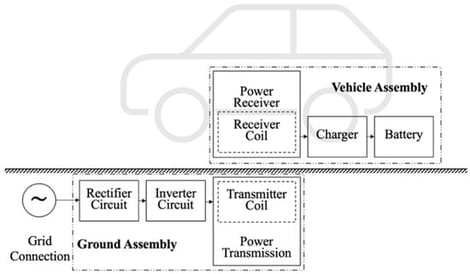
Wireless charging system for electric vehicles.

The automotive industry is currently undergoing a profound transformation, with sustainability emerging as a core tenet of this evolution [...]

6 February 2026

Vehicle Safe Motion in Mixed-Vehicle-Technology Environment

  • Stergios Mavromatis,
  • George Yannis and
  • Yasser Hassan

The application of Connected and Automated Vehicles (CAVs) is steadily increasing, bringing forward expectations of substantial improvements in road safety, traffic efficiency, and environmental sustainability [...]

6 February 2026

Modulated twelve-voltage-vector model predictive current control (MPCC), which applies two or three voltage vectors per control period, exhibits superior steady-state performance compared to modulated six-active-voltage-vector MPCC and conventional MPCC. However, implementing modulated twelve-voltage-vector MPCC requires accurate knowledge of the permanent magnet synchronous motor drive’s inductance and permanent magnet (PM) flux linkage parameters for selecting suboptimal and optimal voltage vectors, as well as computing the duty cycles of optimal vectors. Consequently, its control performance is more sensitive to model parameter inaccuracies. To mitigate parameter sensitivity, a robust modulated twelve-voltage-vector MPCC algorithm based on a model reference adaptive system (MRAS) is proposed. The MRAS-based observer estimates the inductance and PM flux linkage parameters in real time, enhancing model accuracy. The observer is designed with a stability analysis framework, where the proportional and integral gains of the MRAS are theoretically derived to ensure precise parameter estimation. The effectiveness of the proposed algorithm is validated through simulation results, demonstrating satisfactory control performance even under parameter mismatches. Specifically, the torque ripple is reduced from 1.1 A to 0.6 A, corresponding to a reduction of 45.5%. Similarly, the stator flux ripple decreases from 1.75 A to 1 A (42.9% reduction), while the total harmonic distortion (THD) is reduced from 8.39% to 5.48%, representing a 34.7% improvement.

5 February 2026

News & Conferences

Issues

Open for Submission

Editor's Choice

Get Alerted

Add your email address to receive forthcoming issues of this journal.

XFacebookLinkedIn
World Electr. Veh. J. - ISSN 2032-6653