Review

Light Electric Vehicles and Sustainable Transport in Urban Areas: A Bibliometric Review

Department of Transport and Supply Chain Management, Institute of Transport and Logistics Studies (Africa), University of Johannesburg, Auckland Park, Johannesburg 2006, South Africa
World Electr. Veh. J. 2026, 17(1), 23; https://doi.org/10.3390/wevj17010023
Submission received: 24 November 2025 / Revised: 24 December 2025 / Accepted: 30 December 2025 / Published: 1 January 2026
(This article belongs to the Section Vehicle and Transportation Systems)

Abstract

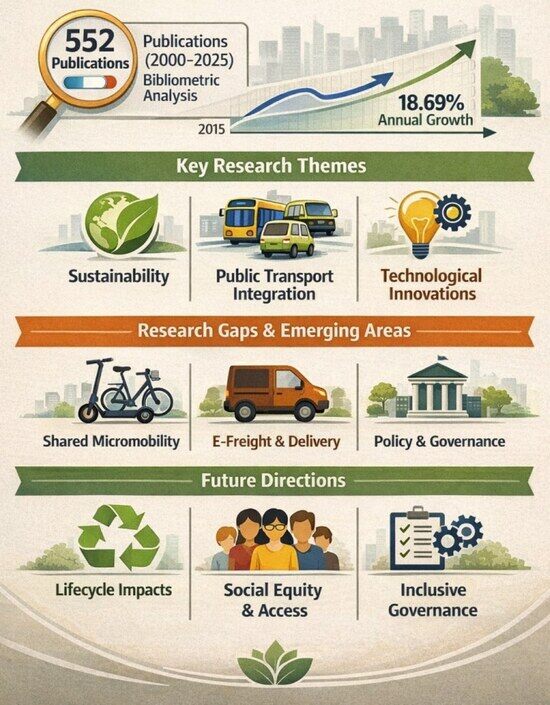
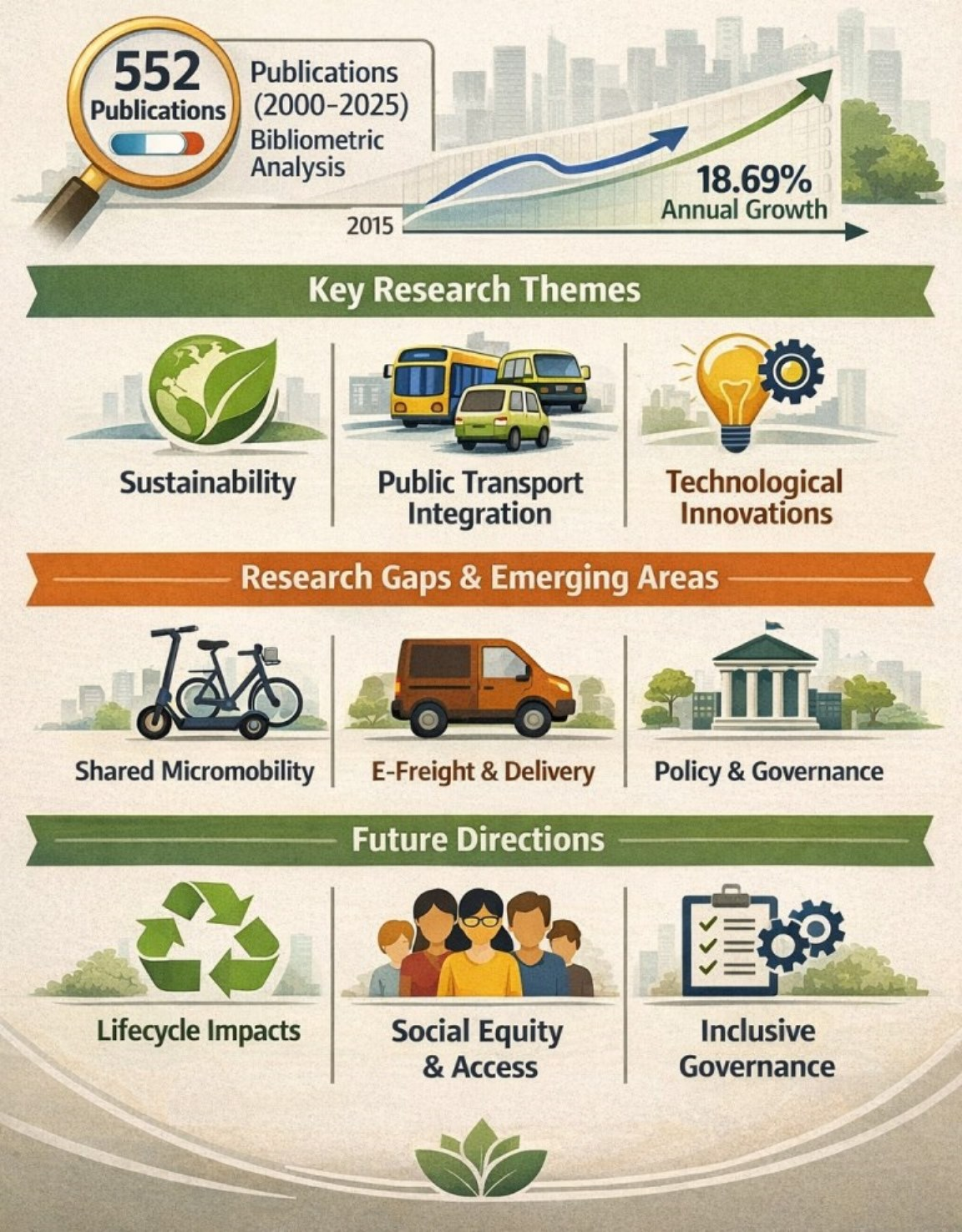
The use of light electric vehicles (LEVs), such as electric bikes and electric scooters, is being increasingly adopted as a sustainable transportation solution in urban areas. This is driven by the need for cleaner, faster, and space-efficient mobility solutions in urban areas. Although research on LEVs has grown over time, it remains fragmented across disciplines, creating a need for an integrated study on how LEVs contribute to sustainable transport in urban areas. This study conducted a bibliometric review to identify key themes in LEVs and sustainable transport in urban areas, and proposed future research agendas based on conceptual patterns and research gaps. The Scopus database was utilised, with a focus on 552 publications covering the period from 2000 to 2025, retrieved on 30 September 2025. The Biblioshiny application (version 5.0) was used to perform bibliometric performance analysis and science mapping techniques. Results revealed that the publication trend steadily rose from 2015, with a significant upsurge after 2020, with an annual growth rate of 18.69%. Three dominant themes were identified, namely sustainability, integration with public transport, and technological innovations, alongside underexplored areas such as shared electric micromobility, freight delivery, and policy and governance. Research gaps remain in lifecycle impacts, social equity, and governance frameworks, highlighting the need for inclusive and sustainable LEV adoption. Future research should capture full lifecycle impacts, expand access to LEVs beyond current user groups, and align rapid technological advances with inclusive governance frameworks.

Graphical Abstract

1. Introduction

Urban areas globally face transport-related challenges, including traffic congestion, infrastructural limitations, air and noise pollution [1,2,3,4,5,6]. For example, only about 52 per cent of the world’s urban population has convenient access to public transport, and the transport sector contributes roughly one-quarter of global energy-related carbon emissions [6]. With the number of vehicles in the world’s top 100 cities expected to grow by 36 per cent by 2030 [7], these challenges are likely to intensify. As a result, there has been a shift from the use of private cars to emerging mobility solutions such as micro-vehicles to improve urban transportation [1,8]. Light electric vehicles (LEVs), such as e-bikes, e-scooters, and e-skateboards, have also emerged as a key innovation for promoting urban sustainability [1,2,9]. They are a critical component of the transition to low-carbon, user-centred urban mobility systems. Urban areas that have integrated LEVs into their broader transport systems have witnessed transformations in urban form, land use, and citizen mobility behaviours [10,11]. These transformations align with the global commitments to the United Nations’ Sustainable Development Goal (SDG) 11—Sustainable Cities and Communities—which calls for inclusive, safe, resilient, and sustainable urban areas. These developments demonstrate the growing potential of LEVs in promoting sustainable transport in urban areas.
There is, however, no universally agreed definition of a light electric vehicle [1]. Various scholars define light electric vehicle differently. For instance, light electric vehicles refer to micromobility modes powered by a battery-powered electric motor, and are characterised by their light weight, energy efficiency, and spatial demands [12]. These include e-scooters and e-bikes, which are limited to 25 kilometres per hour (km/h), as well as electric two-wheelers with a speed limit of 45 km/h [12]. Similarly, LEVs refer to small, lightweight electric-powered vehicles weighing less than 350 kg and a maximum speed of 45 km/h [13]. A light vehicle is a low-weight motorised transport with limited speed, often up to 45 km/h, used mainly for urban trips [1]. This ranges from micro-vehicles, such as e-scooters, to light three- or four-wheeled vehicles [1]. In this study, a light electric vehicle can be defined as a small, lightweight battery-powered transportation mode designed for short urban trips.
From an urban sustainability perspective, LEVs support sustainable urban development. Sustainable transport entails reducing dependence on fossil fuels, lowering air pollution and excess carbon dioxide emissions, easing congestion, and resolving inequities in access to transportation [14]. LEVs are changing how people travel over short distances in urban areas, effectively transforming urban transportation [15]. LEVs reduce carbon emissions, require less urban space, and provide flexible transportation options to conventional vehicles for short trips in urban areas [16,17]. They have the potential to support clean, quiet urban areas that enhance the physical well-being of citizens [18,19]. In addition, they promote equity in transportation by providing affordable, reliable, and equitable transportation options. They enhance the human experience of urban transport by providing a pleasant atmosphere created by the built environment [20].
Despite these advantages, the large-scale use of LEVs in urban areas is hindered by numerous challenges, including safety concerns, inadequate charging infrastructure, high initial costs, limited riding/driving range, and long charging times [21,22,23,24]. Regulations for micromobility remain weak in many cities, creating gaps in safety rules, road-use guidelines, and infrastructure [24]. Infrastructure remains one of the most critical obstacles to LEV and micromobility adoption, as many cities still lack safe, dedicated lanes and basic facilities needed for everyday use [24]. Urban regulations and infrastructure design have struggled to keep pace with the uptake of LEVs in some countries. In agreement, Ombati [25] recommends more research on how regulatory frameworks can be designed to facilitate fair and inclusive transitions to socially sustainable e-mobility solutions. While LEVs can potentially reduce noise and pollution [26], riders can still be exposed to particulate matter and noise pollution from other moving vehicles in cities [27,28]. Riders also use more physical energy than other modes [29]. Thus, the LEVs’ sustainability potential depends on supportive infrastructure, policy frameworks, and technological advancements.
Although numerous studies have explored LEVs from different perspectives, the current literature remains fragmented and lacks an integrated understanding of how LEVs contribute to sustainable transport in urban areas. Prior studies are dispersed across multiple disciplines, such as urban planning [1,2,17,19,21], social sciences [3,12], engineering [13], and environmental science [16,18,20]. Existing studies also focus on isolated themes, such as barriers [22,23], adoption intentions [3,13,30,31], sustainability impacts [32,33], land use [1], and safety [34]. Although some reviews have explored some specific issues, such as safety [35], policy frameworks [9], and environmental benefits [16], little is known of a study that employed bibliometric techniques to review existing studies on LEVs and sustainable transport in urban areas. Thus, this review provides a comprehensive bibliometric mapping of LEVs in relation to sustainable transport in urban areas. The following research objectives guide the study:
  • To identify the key themes used in light electric vehicles and sustainable urban transport research.
  • To propose future research agendas in light electric vehicles and sustainable urban transport research.
The paper is structured as follows: Section 2 focuses on the materials and methods; Section 3 presents the results; Section 4 discusses the findings; and Section 5 concludes the study with recommendations for future research.

2. Materials and Methods

Given the rapid growth and interdisciplinary nature of this field, a bibliometric review offers a timely and rigorous approach to mapping its intellectual structure. Bibliometric analysis allows for the systematic quantification of research patterns, including the evolution of themes, prolific authors, institutions, influential publications, and knowledge gaps [36]. To achieve the objectives, 725 publications were retrieved from the Scopus database on 30 September 2025 using the following search query: Title-Abs-Key (((“electric”) AND (“bike” OR “bicycle” OR “cycle” OR “two wheeler” OR “three wheeler” OR “trike” OR “tricycle” OR “motorbike” OR “motorcycle” OR “scooter” OR “rickshaw” OR “micromobility” OR “moped” OR “hoverboard” OR “skateboard” OR “rideable” OR “quadricycle” OR “unicycle”) OR “e-bike” OR “e-bicycle” OR “e-cycle” OR “e-two wheeler” OR “e2w” OR “e3w” OR “e-three wheeler” OR “e-trike” OR “e-tricycle” OR “e-motorbike” OR “e-motorcycle” OR “e-scooter” OR “e-rickshaw” OR “e-micromobility” OR “e-moped” OR “pedelec” OR “personal electric vehicle” OR “PEV” OR “light electric vehicle” OR “LEV” OR “micro electric vehicle” OR “MEV” OR “e-quadricycle” OR “L-category vehicle” OR “neighborhood electric vehicle” OR “e-unicycle” OR “shared micromobility”) AND ((“sustainable”) AND (“transport” OR “transit” OR “mobility”)) AND (“urban” OR “town” OR “city” OR “cities” OR “metropolitan”)).
To minimise selection bias, the keywords were carefully chosen from relevant literature, including synonyms and alternative terms, to capture all variations of relevant terminologies. Boolean operators were applied to ensure comprehensive and unbiased coverage. Preliminary searches were conducted in the Scopus database to refine the keywords and verify that no key publications were missing. The Scopus database was utilised because it is a reputable source of metadata records required in bibliometric studies [37]. In addition, the Scopus database provides wider, inclusive content coverage, more complete and structured metadata compared to other databases such as Google Scholar and Web of Science [38,39]. Thus, the Scopus database was exclusively used to provide high-quality, standardised metadata to ensure comprehensive, robust, and reproducible bibliometric analysis. To further reduce potential bias, the inclusion criteria for publications comprised of articles, conference papers, book chapters, and reviews written in English and published between 2000 and 2025. This timeframe was selected to understand the evolution of LEVs’ research in the 21st century. The abstracts and topics of the 725 retrieved publications were screened for relevance, resulting in 552 publications. The exclusion criteria applied to clean the publications include lacking topics (0), being without abstracts (0), missing author details (3), or being irrelevant (170). The 170 irrelevant publications either addressed heavy electric vehicles (such as buses and trucks), or non-urban transport contexts, or sustainability topics, but not specifically LEVs, resulting in the 552 publications. There were no duplicates identified during the screening of abstracts and topics. This was achieved by manually comparing publication titles, authors, and years to ensure consistency and maintain data integrity throughout the screening process. These exclusions refined the required data set to include only those strictly aligned with the topic.
The 552 publications were exported from the Scopus database in a Comma-Separated Values (CSV) Excel file for bibliometric analysis (Supplementary File S1). The analysis involved performance analysis (such as top authors, journals, affiliations, and citation analysis) and science mapping (such as thematic map and thematic evolution). This was performed using the Biblioshiny application (version 5.0), an interactive web interface within the Bibliometrix R package (version 5.0), using its built-in functions. This process involved generating performance indicators, such as annual scientific production, sources’ local impact, authors’ local impact, most relevant affiliations, corresponding authors’ countries, and most locally cited documents. Science mapping analyses were conducted using word analysis, thematic mapping, and thematic evolution. To avoid query-induced bias, search-query keywords were excluded from frequency analyses, and clustering was based on co-occurrence patterns of the remaining terms. Word analysis based on authors’ keywords (i.e., the most frequent words and the word cloud) was applied to identify commonly used keywords and their interrelationships. Thematic mapping classified themes based on their centrality and density, while thematic evolution examined changes in research themes over time, dividing the research period into four periods. The future research agendas were derived from conceptual patterns, research gaps, and emerging themes. Results show that research on LEVs and sustainable urban transport is rapidly growing (18.69% annual growth), and relatively young (average age 3.64 years) (Table 1). The dominance of articles and conference papers, with few reviews, highlights the need for synthesis and consolidation of existing knowledge on the topic.

3. Results

This section is organised into two parts: performance analysis and science mapping. These results were used to understand the underlying themes and underexplored areas from which future research agendas were proposed.

3.1. Performance Analysis

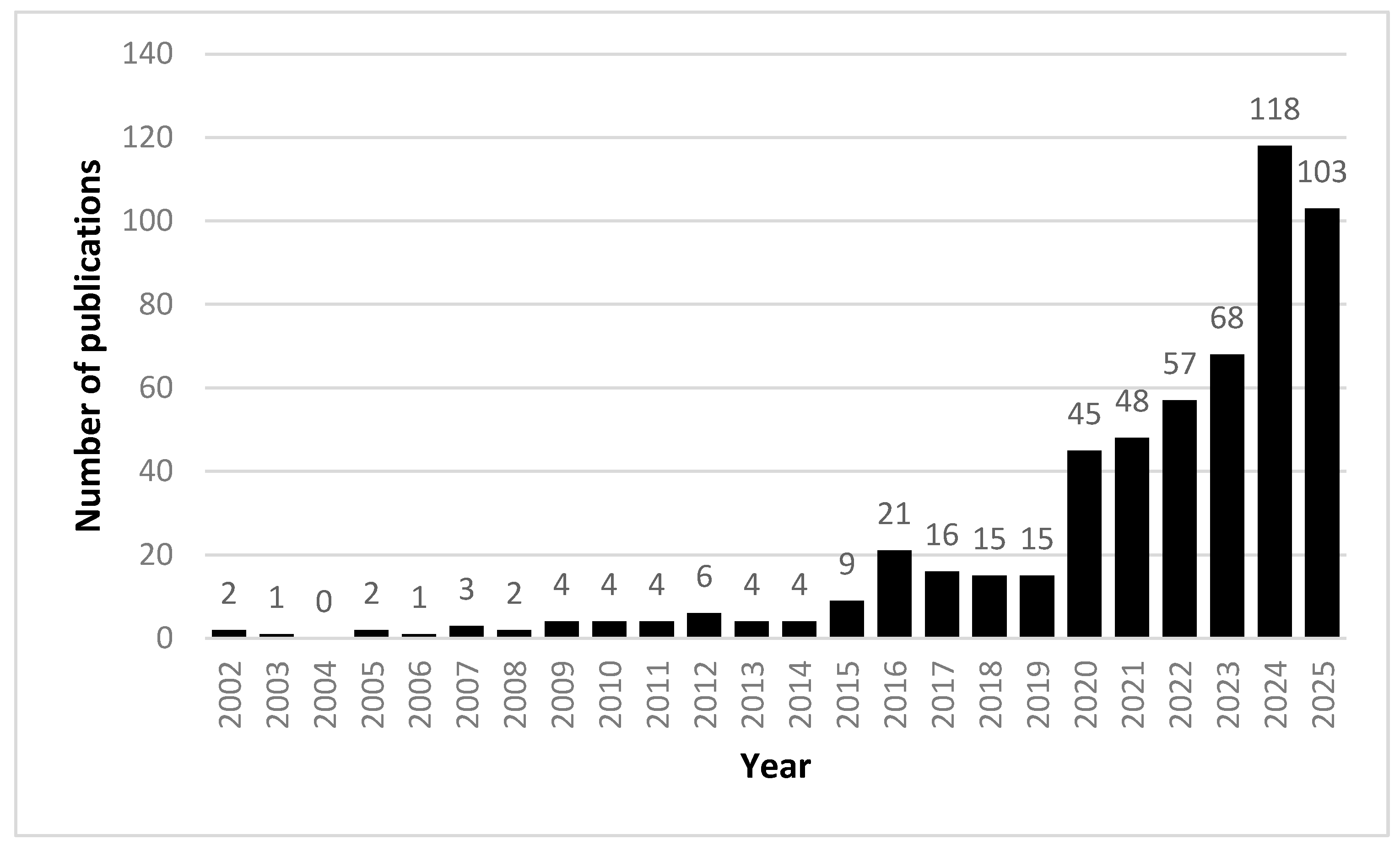
The first phase, from 2000 to 2014, reveals little research output, with less than six publications per year (Figure 1). The use of LEVs for sustainable transport in urban areas was a new concept during this phase. From 2015, the number of publications began to grow steadily, increasing from 9 to 15 by 2019. This phase coincided with the early implementation of SDGs. The phase, from 2020 to 2023, reveals significant research output, peaking at 118 publications in 2024. The use of LEVs became common in urban areas during this phase, driven by demand for clean transport and technological advancements. The drop in publications to 103 in 2025 is due to the incomplete year, but is expected to rise above the record in 2024 once all publications are indexed.

3.1.1. Top Journals on the Topic

The Sustainability journal is the most influential journal, with 33 publications, an h-index of 15, an m-index of 1.667, and 726 total citations calculated from 2017 (Table 2). This is a broad emerging journal with the highest m-index, focusing on areas like the environment, policy, and technological aspects directly linked to LEVs and sustainable transport in urban areas. The Energies and Transportation Research: Part A and D are also emerging journals focusing on specialised topics. For instance, the Energies journal covers specialised topics in energy technologies, batteries, and charging systems. The top journals, such as Sustainability, Sustainable Cities and Society, Transportation Research Part D, Energies, and Journal of Cleaner Production, focus on the environmental and urban sustainability theme. The Transportation Research Part A, Journal of Transport Geography, and Case Studies on Transport Policy focus on the policy theme. Journals like Sustainability, Energies, and the Journal of Cleaner Production focus on an additional theme known as technological advancements in LEVs, particularly in areas such as batteries, charging systems, and cleaner manufacturing. Thus, the top journals concentrate on sustainability, policy, and technology.

3.1.2. Top Authors on the Topic

Table 1 reveals that 3295 authors contributed to publications on the topic. Campisi Tiziana is the most influential author, with nine publications, a h-index of 5, an m-index of 1.25, and 38 total citations calculated as from 2022 (Table 3). This is an influential emerging author with the highest m-index, focusing on areas such as user behaviour, policy, and infrastructure design, as well as the safety of LEVs in sustainable urban mobility. Severengiz Semih is also an influential emerging author with an m-index of 1.25 from seven publications computed from 2022. The author focuses on areas like user acceptance, charging innovations, shared mobility, and the role of LEVs in reducing emissions for both passenger and freight transport. Cherry Christopher R. is a veteran author with the highest number of total citations (333) from four publications, counted from 2007. The author’s influential studies focus on LEV areas like user behaviour, sustainability impacts, and integration with public transport. Castiglione Marisdea and De Vincentis Rosita, are co-athors with the same productivity metrics (i.e., h-index = 3, g-index = 3, m-index = 0.75, number of publications = 3, and total citations = 68), have primarily focused on how electric micromobility can replace car trips.

3.1.3. Top Author Affiliations on the Topic

Top author affiliations are institutions linked to the most prolific researchers based on the number of publications credited to them. Table 4 shows Italy leads with nine institutions, followed by Germany and China, each with three institutions. Developing economies in Africa and South America are underrepresented in the list of top author affiliations.

3.1.4. Top Countries on the Topic

Table 5 shows that Italy leads in scientific production with 304 publications, followed by India (182), Germany (169), and China (165). Research in Italy primarily focuses on LEVs, smart digital mobility, and inclusive urban transport solutions. Research in India mainly focuses on electric scooters as affordable, low-carbon solutions for urban mobility and last-mile delivery. Furthermore, research on the topic shows Europe as the dominant hub (13 countries), with Asia as an emerging region with four countries. Africa and South America are not featured in the list of the most productive countries.

3.2. Science Mapping

3.2.1. Co-Authorship Analysis

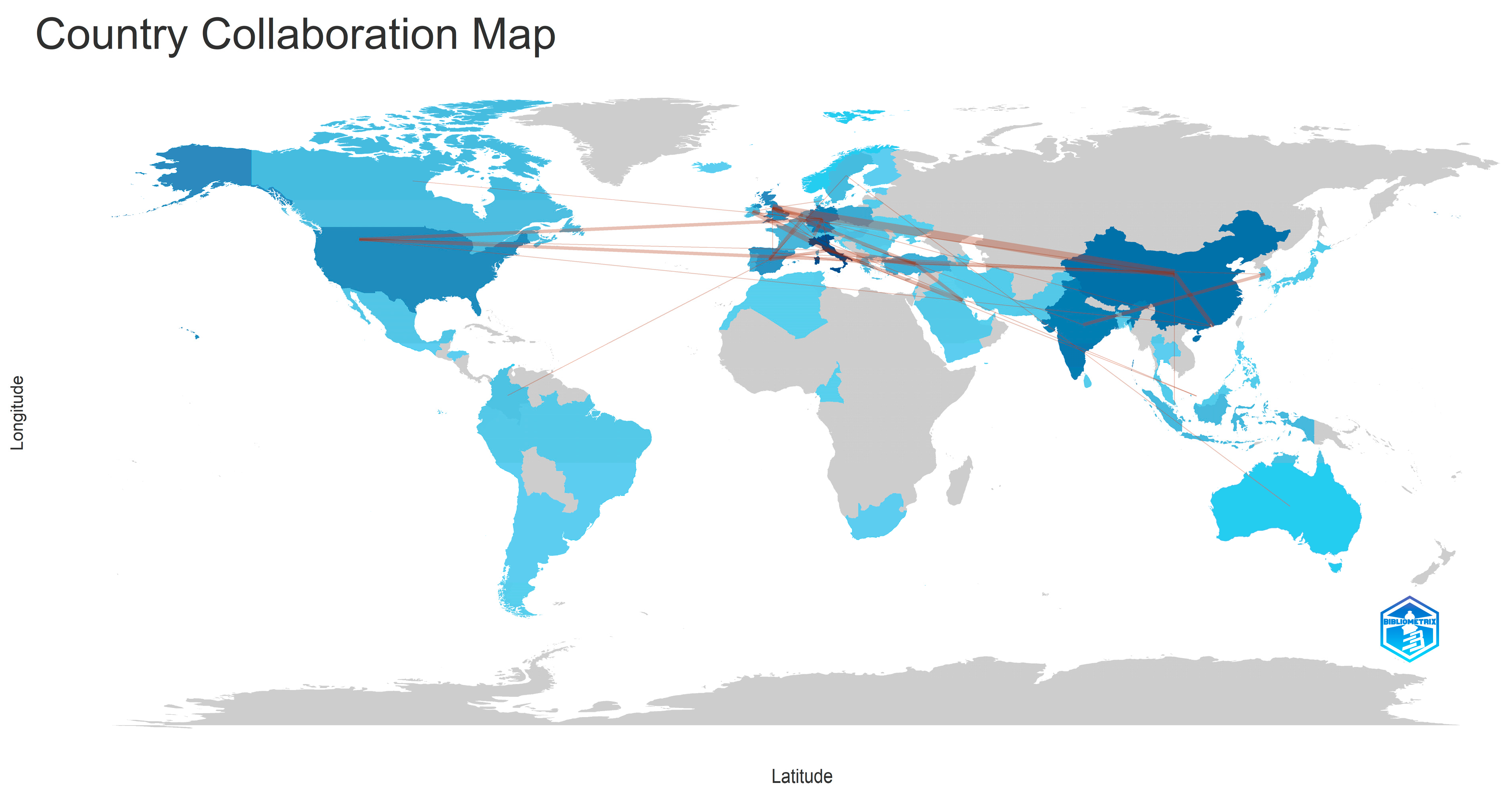
Co-authorship analysis helps identify collaboration patterns in a topic, for example, among countries affiliated with various researchers [36]. Country collaboration maps are used to graphically represent the direction and intensity of research collaborations among countries [40]. European countries (specifically, Italy, Germany, and the United Kingdom) have the strongest collaborations (thickest line) with China (Figure 2). The USA also reported stronger collaborations with the European countries and China. For instance, research collaborations between the USA and China relate to themes such as LEV innovations, service quality improvement, and transportation energy efficiency. The highest research output (represented in dark blue) was also noted in European countries (specifically, Italy, Germany, and the United Kingdom), the USA, China, and India. Some research output (represented in light blue colour) is emerging from countries such as Brazil, South Africa, Canada, and Australia. For instance, research emerging from South Africa relates to the feasibility assessment of LEVs in terms of their impact on the grid and charging infrastructure. Most countries in Africa are underrepresented in research output (represented in grey colour).

3.2.2. Word Analysis

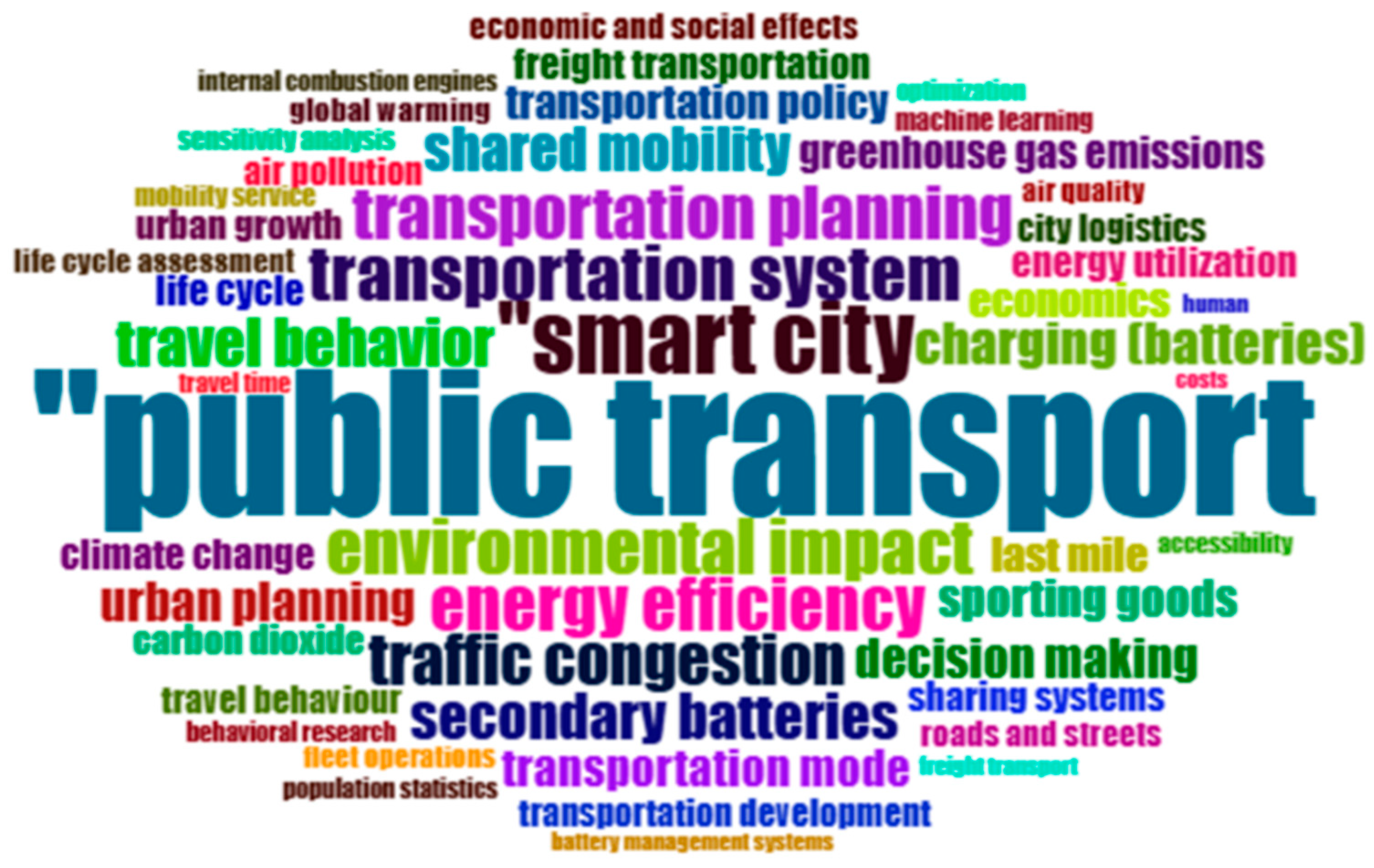
Word analysis helps identify commonly used keywords from publications on a topic and their interrelationships. For instance, a word cloud is used in word analysis to visually represent the keywords commonly used in publications and their relationships on a topic [41]. The keywords used in the search query, as well as generic and methodological terms, were excluded when generating the word cloud (Supplementary File S2). This is because the excluded words appear in most publications and are likely to overshadow other important terms meant to reveal intellectual patterns. Some of the generic or methodological terms excluded are article, surveys, regression analysis, case studies, vehicles, transportation, and China. Greenhouse gas emissions, public transport, smart city, shared mobility, and freight transportation were each merged with their related variants (Supplementary File S3). Figure 3 shows public transport as the most prominent keyword, located at the centre of the word cloud. This shows that the integration of LEVs into public transport is core to urban transport systems. Other keywords in the integration with public transport theme include transport system and sharing systems. Environmental impact is located at the centre of the word cloud. Other keywords in the sustainability theme include greenhouse gas emissions, global warming, air pollution, air quality, lifecycle assessment, energy efficiency, energy utilisation, climate change, economic and social effects. This reflects the foundational role that the LEVs play in reducing emissions, improving energy efficiency, and improving the quality of life in urban areas. Smart city is also located at the centre of the word cloud. Other keywords in the technological innovations theme include secondary batteries, machine learning, and battery management systems. This cluster demonstrates how LEV technologies and digital urban systems facilitate the promotion of sustainable transport in urban areas. The operational and planning theme includes keywords like urban planning, transportation planning, travel behaviour, decision-making, sensitivity analysis, transportation policy, decision making, economics, and transportation mode. This highlights the need for policy frameworks, economic viability, and user-centred mobility planning in urban areas. Keywords such as last mile, fleet operations, optimisation, accessibility, and freight transport represent emerging areas of future research focused on the operational and logistical aspects of LEVs’ adoption in urban areas. However, the word cloud underrepresents keywords related to governance, equity, infrastructure, health and safety of LEVs.

3.2.3. Thematic Mapping

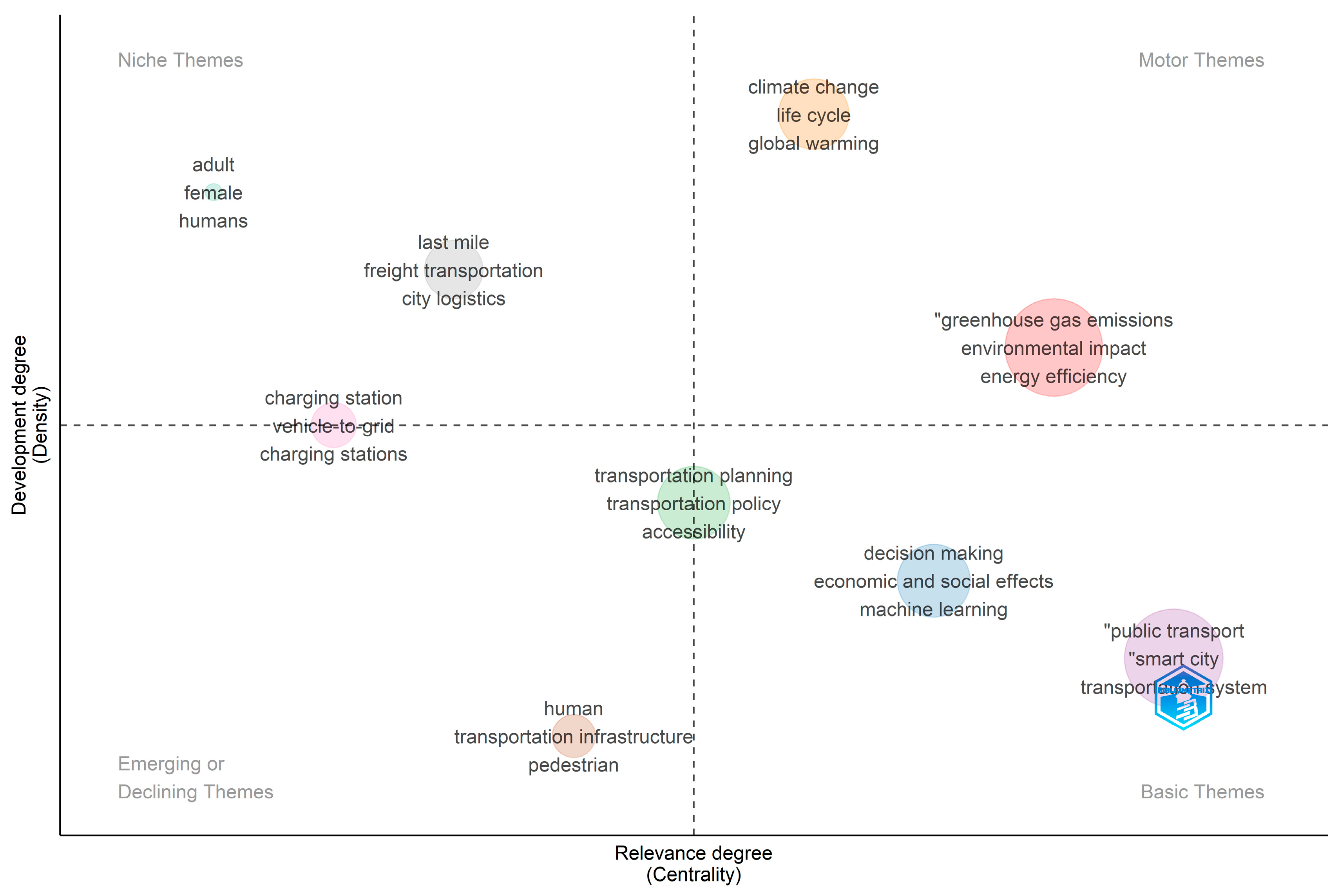
Thematic mapping uses keywords to visually represent the importance or development of words within a topic [41]. This is visualised using four quadrants displayed in Figure 4: motor themes—central and developed, basic themes—central but undeveloped, emerging or declining themes—peripheral and undeveloped, and niche themes—peripheral yet well-developed [42,43]. The keywords used in the search query, as well as generic and methodological terms, were also excluded when generating the thematic map (Supplementary File S2) to avoid query-induced bias. Clustering and thematic classification were based on co-occurrence relationships among the remaining keywords, rather than the presence of the excluded keywords. Thus, the identified themes reflect relational patterns among keywords and are indicative rather than exhaustive representations of all keywords within each theme. Greenhouse gas emissions, public transport, smart city, shared mobility, and freight transportation were each merged with their related variants (Supplementary File S3).
Figure 4 shows that sustainability-related research, including keywords like climate change, life cycle, global warming, greenhouse gas emissions, and energy efficiency, is positioned as a motor theme. This is a well-developed and central theme to the topic, thus forming the foundation for contributing to sustainability by reducing transport-related emissions and ensuring energy efficiency in urban areas. The basic theme includes keywords like smart city, transportation systems, public transport, decision-making, machine learning, economic and social effects that are central but less developed. This indicates that governance, coordination, and system-oriented perspectives of LEVs are frequently examined, but less developed within the literature. Since these are relevant but underexplored areas, extensive research is necessary to harness the potential of LEVs for sustainable transport in urban areas. The niche theme includes keywords like last mile, freight transportation, and city logistics. This highlights the specialised but underexplored areas where LEVs can enhance freight delivery in urban areas. In addition, keywords such as adult, female, and male suggest that social and demographic studies remain underexplored. The emerging or declining themes include keywords like charging stations, vehicle-to-grid, transportation infrastructure, human, and pedestrian. This indicates that infrastructure-related and human-centred aspects of LEVs are either at an early stage of research development or have received little attention to date.

3.2.4. Thematic Evolution

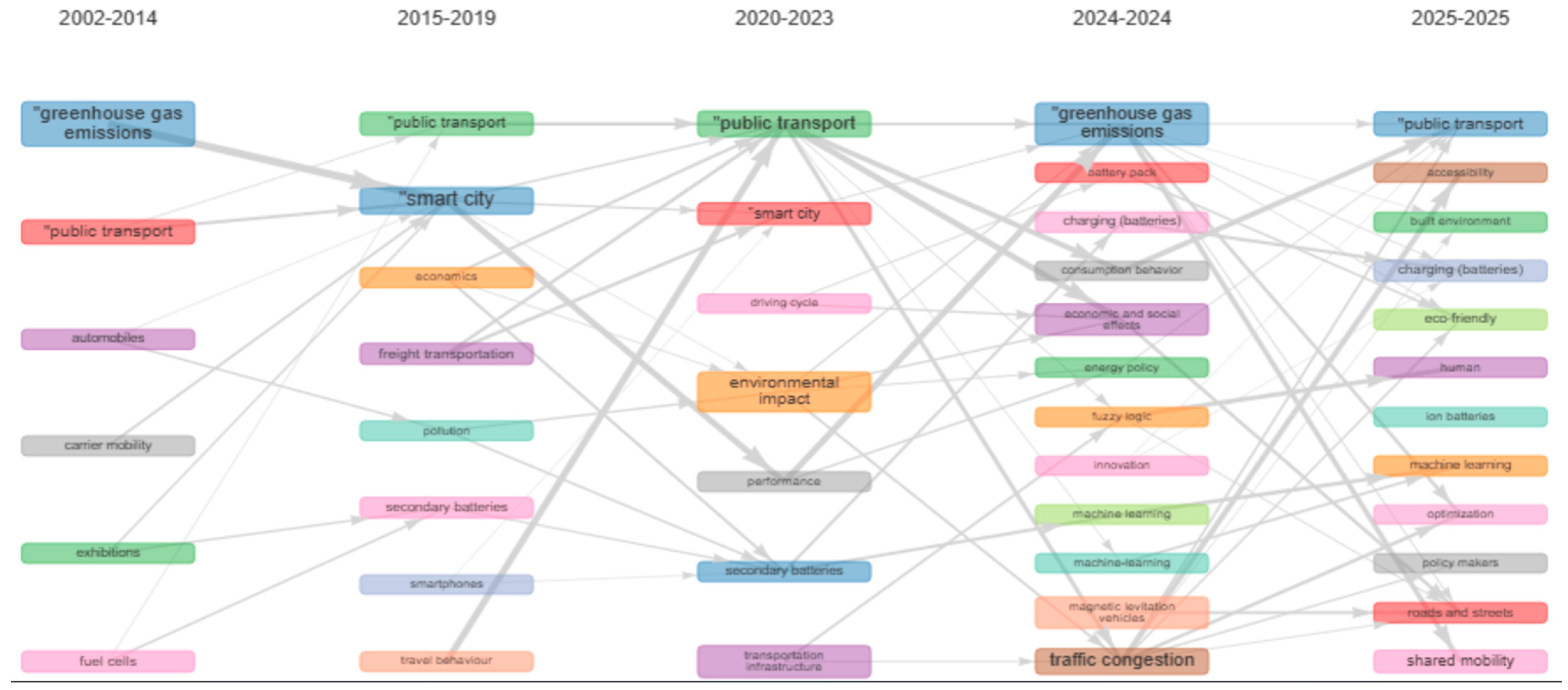
Thematic evolution was divided into four periods based on the trend in the increasing number of publications, as shown in Figure 1. The keywords used in the search query, as well as generic and methodological terms, were also excluded when generating the thematic evolution (Supplementary File S2). Greenhouse gas emissions, public transport, smart city, shared mobility, and freight transportation were each merged with their related variants (Supplementary File S3). The evolution of LEVs and sustainable transport in urban areas research shifts from broad environmental issues to specialised, narrower, technology-driven, user-centred, and policy-oriented issues (Figure 5). From 2000 to 2014, researchers primarily focused on greenhouse gas emissions, pollution, public transport, and general electric vehicle technologies such as fuel cells and automobiles. This lays the foundation for environmental sustainability for LEVs development. A focus on smart city issues characterised the period from 2015 to 2019, as the smart city keyword connects previous and subsequent periods. In addition, keywords such as secondary batteries and smartphones suggest a shift from general environmental concerns to technology-driven transport in urban areas. From 2020 to 2023, research areas became increasingly interconnected, with a primary focus on public transport, smart city, environmental impact, and performance. This shows a need to balance environmental concerns, system performance, and technological advancements. The presence of the keyword transport infrastructure shows a crucial component required to support the evolution of smart and sustainable transport in urban areas. The 2024 to 2025 period includes keywords like energy policy, traffic congestion, consumption behaviour, innovation, charging (batteries), and machine learning. This shows a shift toward policy, operational concerns, and technological advancements. The post-2025 period has already begun focusing on user and behavioural areas, such as accessibility, human-centric choices, eco-friendly options, shared mobility, and the role of policymakers. In addition, the focus has continued on advanced technologies such as charging (batteries), machine learning, and optimisation. This shows that future research on LEVs and sustainable transport in urban areas should not only be technology-driven but also user-centred. Shared mobility, built environment, roads and streets reflect the need to integrate LEVs into urban spaces. It was noted that the topic of public transport and environmental issues, such as greenhouse gas emissions, pollution, environmental impact, and eco-friendly solutions, recur across the thematic evolution. This highlights their crucial role in addressing broad environmental issues, as well as specialised, narrower, technology-driven, user-centred, and policy-oriented issues, in promoting sustainable transport in urban areas.

3.2.5. Citation Analysis

Table 6 outlines the most-cited studies on LEVs and sustainable transport in urban areas. Oeschger et al. [15] have the highest total citations per year, at 43.50, for their review of the integration of micromobility and public transport. The review is influential on the topic by setting research priorities in the social impacts of integrating micromobility and public transport. These include reducing inequalities and promoting social inclusion. The top cited publications focus on key themes like integration with public transport, adoption drivers and sociodemographic profiles, freight transportation, sustainability and efficiency trade-offs, and safety. Integration of LEVs with public transport emerges as a key theme in the top cited publications on the topic [15,44,45,46,47,48,49,50]. Although studies have explored user preferences and the reasons for integrating micromobility with public transport, few have examined its social impacts. These include reducing societal inequalities and promoting social inclusion [15]. Existing studies show that bike sharing and e-scooters are utilised to either replace or complement other modes of transport, such as walking and public transport [44,45,46,47,49]. For instance, in Norway, bike sharing complements public transport in areas lacking a metro and rail network [45]. In the USA, shared e-scooters compete with the bus transportation system in downtown areas but complement it in areas outside downtown [49]. However, the LEVs are primarily used by young, educated men [44,45,51]. This reveals some underexplored groups, such as low-income individuals, women, and older people. The use of e-scooters for transportation is discouraged due to safety issues, arising from the non-use of helmets, inconsistent regulations, and riding under the influence [34]. The increasing use of e-mobility devices has led to conflicts over the sharing of street space, raised concerns about road safety, and resulted in an increase in traffic offences [52]. This shows that gaps remain in the regulatory frameworks that can enhance the safety of LEVs, thereby offering sustainable transport in urban areas. The theme of sustainability and efficiency trade-offs also features prominently in the list of top-cited publications [32,33,46,51,53,54,55]. Weiss et al. [32] noted that LEVs such as e-bikes and scooters have the potential for energy efficiency. However, environmental benefits such as reduced emissions from the use of electric two-wheelers may differ regionally due to factors like infrastructure characteristics, electricity mix, geographic conditions, and mode-shift behaviour [53]. In urban areas, electric cargo bikes can replace conventional vans, resulting in a reduction in carbon emissions [55]. However, the use of LEVs in last-mile freight delivery in urban areas remains an underexplored area. Bike-sharing has been adopted mainly in densely populated areas, particularly by individuals concerned about climate change [51]. Ecer et al. [33] developed a robust framework to assess the sustainability of micromobility options. Despite the focus on sustainability studies, little attention is given to the lifecycle impacts of LEVs, including those from manufacturing, maintenance, and disposal. Adoption drivers and sociodemographic profiles also emerge as a theme in the top-cited publications [30,33,44,51,52,56]. For instance, the key sustainability factors used to evaluate and rank micromobility solutions include scenic adoption, accidents, and computing time [33]. Behavioural factors include perceived values, risks, performance, and social image [30,31]. Social, behavioural, economic, and infrastructural barriers hinder value co-creation in the e-bike sharing system in China [56]. Adoption is also influenced by policies and charging infrastructure [30,31,55]. Melo and Baptista [55] further demonstrate that policy support enables wider use of electric cargo bikes in urban areas. However, some gaps remain in the models regarding shared LEV usage and safety concerns. It was noted that most of the top-cited publications are based in urban areas from Europe, the USA, and Asia, leaving a gap in African and South American urban areas where infrastructure and cultural contexts differ.

4. Discussion

The findings presented in Section 3 reveal that the publication trend in existing research has had a substantial rise since 2020. This growth aligns with broader commitments to Sustainable Development Goals and integrated urban transport planning. The themes used in current research on LEVs and sustainable transport in urban areas remain uneven, with some themes attracting more research than others. Research on the topic focuses on three dominant themes: sustainability, integration with public transportation, and technological innovations. These themes confirm that the topic is becoming more interdisciplinary. Prominent authors, including Campisi Tiziana, Severengiz Semih, and Cherry Christopher, focus their research efforts on the three dominant themes. The sustainability theme was identified as the most dominant theme in the word cloud, based on keywords such as environmental impact, greenhouse gas emissions, global warming, lifecycle assessment, and energy efficiency. The dominance of sustainability-related keywords reflects the fact that LEVs’ environmental impacts are easier to quantify and align with policy compared to the complex social outcomes. While environmental concerns guide policy and research, social and economic considerations remain underexplored, revealing a gap within urban e-micromobility systems. Prominent journals like Sustainability and the Journal of Cleaner Production contain research that primarily focuses on sustainability issues. While the top-cited publications emphasise the energy efficiency benefits of LEVs such as e-bikes and scooters [32], the lifecycle impacts from production to disposal remain underexplored. Such omissions suggest that current research may underestimate the broader sustainability implications of large-scale LEV deployment in urban areas. De Mello Bandeira et al. [54] assert that comprehensive sustainability assessments must account for environmental, social, and economic impacts across the entire lifecycle of electric mobility technologies. In addition, Oeschger et al. [15] advance this theme by identifying future research priorities related to the social dimension. These include the potential to reduce inequalities and promote inclusion in the urban use of LEVs. However, LEVs’ usage patterns suggest that they are concentrated in well-connected urban areas, rather than extending access to underserved areas [58], underscoring the need for targeted policy.
The integration of LEVs with public transport was also identified as a dominant theme. From a systems theory perspective, LEVs are embedded within broader urban mobility systems, where technology, user behaviour, and policy interact dynamically. This perspective is reflected in top-cited publications, which show that integration with public transport is one of the most frequently addressed themes, with LEVs often complementing or substituting for buses or walking in urban areas [15,44,45,46,47,48,49,50]. Research evidence from India and other leading countries indicates a focus on e-scooters and e-bike sharing systems as an affordable and low-carbon mobility solution in urban areas. From an urban planning perspective, the finding suggests that LEVs are increasingly positioned as either complementary to or substitutes for existing public transport systems. This aligns with claims that urban areas are shifting from private cars to emerging micro-vehicles to improve urban mobility [1,8]. Technological innovation was also identified as a dominant theme, with strong representation from countries such as Italy and inclusion of journals such as Energies and the Journal of Cleaner Production. The thematic map reveals a research focus on specialised topics, such as charging stations and vehicle-to-grid. Shaheen and Cohen’s [9] study reinforces this theme by demonstrating how emerging innovations continue to shape mobility planning. LEVs’ adoption patterns further indicate that early adopters of new technologies, such as shared e-scooters, are more likely to adopt the new technology [59], highlighting the interaction between innovation diffusion and behavioural dimensions of technology adoption.
Beyond the dominant themes, this review identified a few underexplored themes. These include shared electric micromobility services, equity and inclusion, freight delivery, and policy and governance. These underexplored areas highlight gaps in the literature where the socio-behavioural, institutional, and regulatory dimensions of sustainable transport have not been sufficiently integrated into existing literature. Top authors, such as Campisi Tiziana, Severengiz Semih, and Cherry Christopher, focus some of their research efforts on these underexplored themes. The top-cited publications revealed that adoption of LEVs in urban areas is influenced by functional aspects such as performance, safety, and cost. Furthermore, adoption is influenced by psychosocial factors like perceived risks, environmental values, and social image [30,31,33,51]. Differences in safety perception and risk tolerance between LEV users and non-users further illustrate why behavioural dimensions remain crucial [59], underscoring the need for targeted policy. Other factors that influence LEV adoption include enabling infrastructure, policies, and charging availability [31]. However, gaps remain in understanding how shared-use models work for LEVs, as well as how social norms and safety concerns influence the adoption of LEVs. This highlights a need for future studies to engage with policy, governance, and behavioural theories to better explain the role of LEVs in sustainable transport. Findings from the thematic evolution post-2025 indicate that interest in user needs and behaviours is emerging. Furthermore, findings from the thematic map further reveal that social and demographic aspects remain underexplored. LEV usage in urban areas is concentrated among young, educated men, leaving low-income groups, women, and older people significantly underrepresented [44,45,51]. The dominance of user groups with specific demographic characteristics suggests the need for policy and planning interventions that broaden participation and reduce exclusion in the adoption and usage of LEVs. Cairns et al. [60] further note that behavioural responses to micromobility vary across contexts, reinforcing the need to design inclusive and equitable LEV options. Behavioural frameworks can provide insights into how user perceptions, social norms, and risk awareness influence adoption patterns and equity outcomes. Policy and planning frameworks also emerge as an underexplored theme. Journals such as Transportation Research Part A and Case Studies on Transport Policy emphasise the importance of regulatory measures and infrastructure planning for sustainable transport in urban areas. Findings from the word cloud highlight the role of fleet operations, travel behaviour, and transportation policy in urban transport. The limited attention to governance models suggests that institutional and policy perspectives have not yet been fully integrated to examine sustainability outcomes in urban transport. In agreement, Ombati [25] recommends more research on how regulatory frameworks can be designed to facilitate fair and inclusive transitions to socially sustainable e-mobility solutions. Freight delivery emerged as an underexplored area despite its growing relevance in urban logistics. Keywords such as last mile, fleet operations, and city logistics reveal increasing interest in understanding how LEVs can enhance sustainable freight systems in urban areas. Most top-cited publications indicate that electric cargo bikes can reduce emissions and improve last-mile delivery efficiency [54,55]. This aligns with Mogire’s [61] finding that freight transportation in urban areas is a critical topic for green innovations aimed at improving delivery efficiency and reducing carbon emissions. This suggests that there is an opportunity for future research to investigate how LEVs can enhance freight transport in urban areas.

5. Conclusions

A bibliometric review was undertaken to identify dominant and underexplored themes and recommend future research agendas on LEVs and sustainable transport in urban areas. The findings indicate an increasing trend in research since 2020, reflecting growing policy interest, technological advancements, and growing demand for clean transportation. It was also established that existing research revolves around three dominant themes. These include sustainability, integration of LEVs with public transport, and technological innovations. A few studies highlighted underrepresented themes: shared e-micromobility, equity and inclusion, freight delivery, and policy and governance. The future research agenda should focus on the research gaps identified in these themes.
  • Sustainability emerged as the most dominant theme. This included studies on the role of LEVs in relation to air quality and energy efficiency at the operational phase, ignoring the lifecycle impacts from manufacturing, maintenance, and disposal. Future studies should focus on assessing the lifecycle impacts of LEVs across various urban areas, especially in developing economies. This can include evaluating battery production and recycling pathways, as well as end-of-life waste systems in various urban areas. Such studies can guide urban policymakers in setting realistic sustainability targets and designing effective LEV adoption strategies.
  • Integration of LEVs with public transport was identified as a dominant theme. In addition, it was found that LEVs are commonly used in urban areas by younger generations. However, older adults, women, and low-income populations remain underrepresented among users. Future studies should focus on how LEVs can be more effectively integrated with public transport to promote equitable and sustainable mobility in urban areas. For example, future research studies should focus on the excluded groups, such as older generations, women, and individuals from low-income backgrounds. This may include examining accessibility, affordability, and behavioural barriers to ensure that integration of LEVs with public transport supports inclusive planning in urban areas.
  • Technological innovation emerged as a dominant theme. However, social and policy frameworks supporting technological innovations remain underexplored. Future studies should examine how smart mobility applications influence equity in the use of LEVs in urban areas. In addition, comparative studies can be conducted across urban areas to identify best practices for aligning technological innovations with supportive regulatory and policy environments. This includes exploring governance models, data-sharing rules, and safety regulations that influence the successful deployment of LEVs across various urban areas.
  • Shared e-micromobility was identified as an underexplored theme. However, gaps exist about the equity impacts and safety concerns of shared e-micromobility in urban areas. Future studies can examine the shared services provided to disadvantaged groups, the safety risks associated with shared usage, and viable governance and business models to support these shared services. This can enable urban planners to develop inclusive and safe shared e-micromobility solutions that meet the needs of diverse user groups in urban areas.
  • Freight delivery was identified as an underexplored theme. Although a few studies have examined the role of electric cargo bikes in last-mile delivery, existing research remains limited to specific contexts in Europe, parts of South America and Asia. Future studies should examine the operational, economic, and policy implications of utilising LEVs for freight delivery in diverse urban contexts, particularly in developing economies. This includes evaluating business models, regulatory frameworks, and infrastructure requirements necessary to support the deployment of LEVs in freight delivery systems.
The bibliometric review was based on studies indexed in the Scopus database. This was due to its broad coverage and strong compatibility with science mapping tools. Whereas the extracted studies are relevant and comprehensive, using a single database may introduce selection bias, as some high-quality publications available in other databases might have been excluded. Future studies can utilise other databases, such as the Web of Science and Google Scholar, for comparative insights. The review utilised keywords captured in Section 2 to identify relevant publications on LEVs and sustainable transport in urban areas. Due to the young nature of the topic, emerging concepts may not be consistently used across studies and might have been excluded. Future studies can update the search strings with the new keywords as the topic advances. Finally, the review only included publications written in English, excluding relevant studies published in languages like Chinese and Russian. While this is a common practice in bibliometric studies to ensure consistency in metadata processing, it introduces a potential language bias that could limit the geographical diversity of the mapped research landscape. Future studies may address this limitation by incorporating multilingual databases or translation tools to capture a more diverse list of publications.
Overall, this bibliometric review extends knowledge on LEVs and sustainable transport in urban areas. The review has consolidated fragmented studies by identifying a coherent framework of three dominant themes (sustainability, integration with public transport, and technological innovations) and a few underexplored themes (shared e-micromobility, equity and inclusion, freight delivery, as well as policy and governance). This establishes a foundation for future frameworks on the topic. The findings highlight a shifting focus in research from broad environmental issues to specialised, narrower, technology-driven, user-centred, policy-oriented concerns. Furthermore, the identified research gaps, such as lifecycle impacts, equitable integration with public transport, governance models, inclusive shared services, and freight applications, offer a focused agenda for strengthening future policy and planning decisions. For instance, policymakers need to design regulations that promote equitable access to LEVs in urban areas.

Supplementary Materials

The following supporting information can be downloaded at: https://www.mdpi.com/article/10.3390/wevj17010023/s1, File S1: 552 Scopus publications; File S2: excluded keywords; File S3: merged keywords.

Funding

This research received no external funding.

Data Availability Statement

No new data were created or analyzed in this study.

Conflicts of Interest

The authors declare no conflict of interest.

References

  1. Ewert, A.; Brost, M.; Eisenmann, C.; Stieler, S. Small and light electric vehicles: An analysis of feasible transport impacts and opportunities for improved urban land use. Sustainability 2020, 12, 8098. [Google Scholar] [CrossRef]
  2. Gössling, S. Integrating e-scooters in urban transportation: Problems, policies, and the prospect of system change. Transp. Res. Part D Transp. Environ. 2020, 79, 102230. [Google Scholar] [CrossRef]
  3. Campisi, T.; Kuşkapan, E.; Çodur, M.Y.; Dissanayake, D. Exploring the influence of socio-economic aspects on the use of electric scooters using machine learning applications: A case study in the city of Palermo. Res. Transp. Bus. Manag. 2024, 56, 101172. [Google Scholar] [CrossRef]
  4. Mogire, E. Last Mile Delivery and Customer Satisfaction Created by Online Retailers in Nairobi. Ph.D. Thesis, University of Johannesburg, Johannesburg, South Africa, 2022. Available online: https://ujcontent.uj.ac.za/esploro/outputs/doctoral/Last-mile-delivery-and-customer-satisfaction/9921406107691 (accessed on 5 September 2025).
  5. Mogire, E.; Kilbourn, P.; Luke, R. The last mile delivery problem: A Kenyan retail perspective. Acta Logist. 2022, 9, 387–395. [Google Scholar] [CrossRef]
  6. UN-Habitat. World Cities Report 2022: Envisaging the Future of Cities; United Nations Human Settlements Programme: Nairobi, Kenya, 2022. Available online: https://unhabitat.org/sites/default/files/2022/06/wcr_2022.pdf (accessed on 19 September 2025).
  7. World Economic Forum. The Future of the Last-Mile Ecosystem. 2020. Available online: https://www.weforum.org/publications/the-future-of-the-last-mile-ecosystem/ (accessed on 19 September 2025).
  8. Chang, A.Y.; Miranda-Moreno, L.; Clewlow, R.; Sun, L. Trend or fad? Deciphering the Enablers of Micromobility in the US. A Report of SAE International 2019. Available online: https://legacy.sae.org/binaries//content/assets/cm/content/topics/micromobility/sae-micromobility-trend-or-fad-report.pdf (accessed on 5 October 2025).
  9. Shaheen, S.; Cohen, A. Shared Micromoblity Policy Toolkit: Docked and Dockless Bike and Scooter Sharing; Transportation Sustainability Research Center: Berkeley, CA, USA, 2019. [Google Scholar] [CrossRef]
  10. Fishman, E.; Cherry, C. E-bikes in the mainstream: Reviewing a decade of research. Transp. Rev. 2016, 36, 72–91. [Google Scholar] [CrossRef]
  11. ITF. Safe Micromobility. 2020. Available online: https://www.itf-oecd.org/sites/default/files/docs/safe-micromobility_1.pdf (accessed on 30 August 2025).
  12. Mesimäki, J.; Lehtonen, E. Light electric vehicles: The views of users and non-users. Eur. Transp. Res. Rev. 2023, 15, 33. [Google Scholar] [CrossRef]
  13. Schelte, N.; Severengiz, S.; Finke, S.; Stommel, J. Analysis on user acceptance for light electric vehicles and novel charging infrastructure. In Proceedings of the IEEE European Technology and Engineering Management Summit (E-TEMS), Bilbao, Spain, 9–11 March 2022; pp. 103–108. Available online: https://scholar.google.com/scholar_lookup?title=Analysis+on+User+Acceptance+for+Light+Electric+Vehicles+and+Novel+Charging+Infrastructure&conference=Proceedings+of+the+IEEE+European+Technology+and+Engineering+Management+Summit+(E-TEMS)&author=Schelte,+N.&author=Severengiz,+S.&author=Finke,+S.&author=Stommel,+J.&publication_year=2022&pages=103%E2%80%93108 (accessed on 30 September 2025).
  14. Kaplan, D. Growing sustainable transportation in an autocentric community: Current trends and applications. In Urban and Regional Planning and Development; Thakur, R., Dutt, A., Thakur, S., Pomeroy, G., Eds.; Springer: Cham, Switzerland, 2020. [Google Scholar] [CrossRef]
  15. Oeschger, G.; Carroll, P.; Caulfield, B. Micromobility and public transport integration: The current state of knowledge. Transp. Res. Part D Transp. Environ. 2020, 89, 102628. [Google Scholar] [CrossRef]
  16. Hollingsworth, J.; Copeland, B.; Johnson, J.X. Are e-scooters polluters? The environmental impacts of shared dockless electric scooters. Environ. Res. Lett. 2019, 14, 084031. [Google Scholar] [CrossRef]
  17. Smith, C.S.; Schwieterman, J.P. E-scooter scenarios: Evaluating the potential mobility benefits of shared dockless scooters in Chicago. J. Urban Mobil. 2021, 1, 100005. [Google Scholar] [CrossRef]
  18. Moreau, H.; de Jamblinne de Meux, L.; Zeller, V.; D’Ans, P.; Ruwet, C.; Achten, W.M. Dockless e-scooter: A green solution for mobility? Comparative case study between dockless e-scooters, displaced transport, and personal e-scooters. Sustainability 2020, 12, 1803. [Google Scholar] [CrossRef]
  19. Fuady, S.N.; Pfaffenbichler, P.C.; Charalampidou, G.; Susilo, Y.O. Micromobility as a catalyst for sustainable urban transportation: A backcasting approach on decarbonisation and energy consumption. Sustain. Futures 2025, 9, 100406. [Google Scholar] [CrossRef]
  20. McQueen, M.; Abou-Zeid, G.; MacArthur, J.; Clifton, K. Transportation transformation: Is micromobility making a macro impact on sustainability? J. Plan. Lit. 2020, 36, 46–61. [Google Scholar] [CrossRef]
  21. Rinaldi, S.; Bellagente, P.; Ferrari, P.; Flammini, A.; Pasetti, M.; Sisinni, E. Design of an ICT platform for a sustainable charging of light electric vehicles using renewable resources. In the Proceedings of the IEEE International Workshop on Metrology for Automotive (MetroAutomotive), Modena, Italy, 28–30 June 2023; pp. 137–142. [Google Scholar] [CrossRef]
  22. Saxena, A.; Yadav, A.K. Adopting a multi-criteria decision-making approach to identify barriers to electrification of urban freight in India. Transp. Res. Rec. 2024, 2678, 816–827. [Google Scholar] [CrossRef]
  23. Sharma, I.; Bansal, P.; Dua, R. Breaking down barriers: Emerging issues on the pathway to full-scale electrification of the light-duty vehicle sector. Energy 2025, 326, 136230. [Google Scholar] [CrossRef]
  24. Bobičić, O.; Esztergar-Kiss, D. Enablers and barriers to micromobility adoption: Urban and suburban contexts. J. Clean. Prod. 2024, 484, 144346. [Google Scholar] [CrossRef]
  25. Ombati, T. Electric mobility and social sustainability research: A bibliometric. Preprints 2025. [Google Scholar] [CrossRef]
  26. Marques, D.L.; Coelho, M.C. A literature review of emerging research needs for micromobility—Integration through a life cycle thinking approach. Future Transp. 2022, 2, 135–164. [Google Scholar] [CrossRef]
  27. Gelb, J.; Apparicio, P. Cyclists’ exposure to atmospheric and noise pollution: A systematic literature review. Transp. Rev. 2021, 41, 742–765. [Google Scholar] [CrossRef]
  28. Okokon, E.O.; Yli-Tuomi, T.; Turunen, A.W.; Taimisto, P.; Pennanen, A.; Vouitsis, I.; Samaras, Z.; Voogt, M.; Keuken, M.; Lanki, T. Particulates and noise exposure during bicycle, bus and car commuting: A study in three European cities. Environ. Res. 2017, 154, 181–189. [Google Scholar] [CrossRef]
  29. Apparicio, P.; Gelb, J.; Carrier, M.; Mathieu, M.È.; Kingham, S. Exposure to noise and air pollution by mode of transportation during rush hours in Montreal. J. Transp. Geogr. 2018, 70, 182–192. [Google Scholar] [CrossRef]
  30. Eccarius, T.; Lu, C.C. Adoption intentions for micro-mobility–Insights from electric scooter sharing in Taiwan. Transp. Res. Part D Transp. Environ. 2020, 84, 102327. [Google Scholar] [CrossRef]
  31. Eccarius, T.; Lu, C.C. Powered two-wheelers for sustainable mobility: A review of consumer adoption of electric motorcycles. Int. J. Sustain. Transp. 2020, 14, 215–231. [Google Scholar] [CrossRef]
  32. Weiss, M.; Cloos, K.C.; Helmers, E. Energy efficiency trade-offs in small to large electric vehicles. Environ. Sci. Eur. 2020, 32, 46. [Google Scholar] [CrossRef]
  33. Ecer, F.; Küçükönder, H.; Kaya, S.K.; Görçün, Ö.F. Sustainability performance analysis of micro-mobility solutions in urban transportation with a novel IVFNN-Delphi-LOPCOW-CoCoSo framework. Transp. Res. Part A Policy Pract. 2023, 172, 103667. [Google Scholar] [CrossRef]
  34. Kazemzadeh, K.; Haghani, M.; Sprei, F. Electric scooter safety: An integrative review of evidence from transport and medical research domains. Sustain. Cities Soc. 2023, 89, 104313. [Google Scholar] [CrossRef]
  35. Cox, P.; Singleton, P. E-scooter safety: Examining the facts and controversies. Transp. Policy 2022, 115, 135–144. [Google Scholar] [CrossRef]
  36. Donthu, N.; Kumar, S.; Mukherjee, D.; Pandey, N.; Lim, W.M. How to conduct a bibliometric analysis: An overview and guidelines. J. Bus. Res. 2021, 133, 285–296. [Google Scholar] [CrossRef]
  37. Baas, J.; Schotten, M.; Plume, A.; Côté, G.; Karimi, R. Scopus as a curated, high-quality bibliometric data source for academic research in quantitative science studies. Quant. Sci. Stud. 2020, 1, 377–386. [Google Scholar] [CrossRef]
  38. Bakhmat, N.; Kolosova, O.; Demchenko, O.; Ivashchenko, I.; Strelchuk, V. Application of international scientometric databases in the process of training competitive research and teaching staff: Opportunities of Web of Science (WoS), Scopus, Google Scholar. J. Theor. Appl. Inf. Technol. 2022, 100, 4914–4924. [Google Scholar]
  39. Pranckutė, R. Web of Science (WoS) and Scopus: The titans of bibliographic information in today’s academic world. Publications 2021, 9, 12. [Google Scholar] [CrossRef]
  40. Mogire, E.; Kilbourn, P.; Luke, R. Electric vehicles in last-mile delivery: A bibliometric review. World Electr. Veh. J. 2025, 16, 52. [Google Scholar] [CrossRef]
  41. Mogire, E.; Kilbourn, P.; Luke, R. Smart charging for e-mobility in urban areas: A bibliometric review. Energies 2025, 18, 4655. [Google Scholar] [CrossRef]
  42. Mageto, J. Current and future trends of information technology and sustainability in logistics outsourcing. Sustainability 2022, 14, 7641. [Google Scholar] [CrossRef]
  43. Luke, R.; Mageto, J. Impact of China’s belt and road initiative on logistics management in Africa: A bibliometric analysis. J. Int. Logist. Trade 2023, 21, 204–219. [Google Scholar] [CrossRef]
  44. Laa, B.; Leth, U. Survey of e-scooter users in Vienna: Who they are and how they ride. J. Transp. Geogr. 2020, 89, 102874. [Google Scholar] [CrossRef]
  45. Böcker, L.; Anderson, E.; Uteng, T.P.; Throndsen, T. Bike sharing use in conjunction to public transport: Exploring spatiotemporal, age and gender dimensions in Oslo, Norway. Transp. Res. Part A Policy Pract. 2020, 138, 389–401. [Google Scholar] [CrossRef]
  46. Badia, H.; Jenelius, E. Shared e-scooter micromobility: Review of use patterns, perceptions and environmental impacts. Transp. Rev. 2023, 43, 811–837. [Google Scholar] [CrossRef]
  47. Bigazzi, A.; Wong, K. Electric bicycle mode substitution for driving, public transit, conventional cycling, and walking. Transp. Res. Part D Transp. Environ. 2020, 85, 102412. [Google Scholar] [CrossRef]
  48. Deveci, M.; Gokasar, I.; Pamucar, D.; Chen, Y.; Coffman, D.M. Sustainable e-scooter parking operation in urban areas using fuzzy Dombi based RAFSI model. Sustain. Cities Soc. 2023, 91, 104426. [Google Scholar] [CrossRef]
  49. Luo, H.; Zhang, Z.; Gkritza, K.; Cai, H. Are shared electric scooters competing with buses? A case study in Indianapolis. Transp. Res. Part D Transp. Environ. 2021, 97, 102877. [Google Scholar] [CrossRef]
  50. Lv, G.; Zheng, S.; Chen, H. Spatiotemporal assessment of carbon emission reduction by shared bikes in Shenzhen, China. Sustain. Cities Soc. 2024, 100, 105011. [Google Scholar] [CrossRef]
  51. Mouratidis, K. Bike-sharing, car-sharing, e-scooters, and Uber: Who are the shared mobility users and where do they live? Sustain. Cities Soc. 2022, 86, 104161. [Google Scholar] [CrossRef]
  52. Zagorskas, J.; Burinskienė, M. Challenges caused by increased use of e-powered personal mobility vehicles in European cities. Sustainability 2019, 12, 273. [Google Scholar] [CrossRef]
  53. Weiss, M.; Dekker, P.; Moro, A.; Scholz, H.; Patel, M.K. On the electrification of road transportation—A review of the environmental, economic, and social performance of electric two-wheelers. Transp. Res. Part D Transp. Environ. 2015, 41, 348–366. [Google Scholar] [CrossRef] [PubMed]
  54. de Mello Bandeira, R.A.; Goes, G.V.; Gonçalves, D.N.S.; de Almeida D’Agosto, M.; de Oliveira, C.M. Electric vehicles in the last mile of urban freight transportation: A sustainability assessment of postal deliveries in Rio de Janeiro-Brazil. Transp. Res. Part D Transp. Environ. 2019, 67, 491–502. [Google Scholar] [CrossRef]
  55. Melo, S.; Baptista, P. Evaluating the impacts of using cargo cycles on urban logistics: Integrating traffic, environmental and operational boundaries. Eur. Transp. Res. Rev. 2017, 9, 30. [Google Scholar] [CrossRef]
  56. Ma, Y.; Rong, K.; Luo, Y.; Wang, Y.; Mangalagiu, D.; Thornton, T.F. Value Co-creation for sustainable consumption and production in the sharing economy in China. J. Clean. Prod. 2019, 208, 1148–1158. [Google Scholar] [CrossRef]
  57. Ma, Y.; Rong, K.; Mangalagiu, D.; Thornton, T.F.; Zhu, D. Co-evolution between urban sustainability and business ecosystem innovation: Evidence from the sharing mobility sector in Shanghai. J. Clean. Prod. 2018, 188, 942–953. [Google Scholar] [CrossRef]
  58. Garus, A.; Dadashev, G.; Ciuffo, B.; Nahmias-Biran, B.-H. Urban micromobility in practice: Insights from a full-year analysis of shared scooter use in Tel Aviv. Smart Cities 2025, 8, 207. [Google Scholar] [CrossRef]
  59. Pourfalatoun, S.; Ahmed, J.; Miller, E.E. Shared electric scooter users and non users: Perceptions on safety, adoption and risk. Sustainability 2023, 15, 9045. [Google Scholar] [CrossRef]
  60. Cairns, S.; Behrendt, F.; Raffo, D.; Beaumont, C.; Kiefer, C. Electrically-assisted bikes: Potential impacts on travel behaviour. Transp. Res. Part A Policy Pract. 2017, 103, 327–342. [Google Scholar] [CrossRef]
  61. Mogire, E. Green innovations in last mile delivery. A research agenda. J. Innov. Bus. Ind. 2026, 4, 29–40. [Google Scholar] [CrossRef]
Figure 1. The annual number of publications.
Wevj 17 00023 g001
Figure 2. Country collaboration map on light electric vehicles and sustainable transport in urban areas (2000–2025).
Wevj 17 00023 g002
Figure 3. Word cloud on light electric vehicles and sustainable transport in urban areas (2000–2025).
Wevj 17 00023 g003
Figure 4. Thematic map on light electric vehicles and sustainable transport in urban areas (2000–2025).
Wevj 17 00023 g004
Figure 5. Thematic evolution on light electric vehicles and sustainable transport in urban areas (2000–2025).
Wevj 17 00023 g005
Table 1. Descriptive summary of the 552 publications (2000–2025).
DescriptionResults
Timespan2000:2025
Sources (journals, books, etc.)207
Documents552
Annual growth rate %18.69
Document average age3.64
Average citations per doc14.68
References4144
DOCUMENT CONTENTS
Keywords plus (ID)3042
Author’s keywords (DE)3960
AUTHORS
Authors3295
Authors of single-authored docs0
AUTHORS COLLABORATION
Single-authored docs0
Co-authors per doc11
International co-authorships %20.83
DOCUMENT TYPES
Article324
Book chapter28
Conference paper188
Review12
Table 2. Top 10 journals on light electric vehicles and sustainable transport in urban areas (2000–2025).
RankJournalh-Indexg-Indexm-IndexTCNPPY_Start
1Sustainability (Switzerland)15261.667726332017
2Transportation Research Part D: Transport and Environment14201.2731306202015
3Sustainable Cities and Society12150.8516152011
4Transportation Research Part A: Policy and Practice10151.111549152017
5Energies9171.125310172018
6Journal of Cleaner Production8111417112018
7Journal of Transport Geography890.841992016
8Transportation Research Procedia6120.6146152016
9Case Studies on Transport Policy460.6677962020
10European Transport Research Review460.36424062015
h-index: Hirsch’s index; g-index: Egghe’s index; m-index: Hirsch’s mean index; TC: total citations; NP: number of publications; PY_Start: publication year start.
Table 3. Top 10 authors on light electric vehicles and sustainable transport in urban areas (2000–2025).
RankElementh-Indexg-Indexm-IndexTCNPPY_Start
1Campisi, Tiziana551.253892022
2Severengiz, Semih561.254072022
3Cherry, Christopher, R.440.21133342007
4Comi, Antonio4517752022
5Schelte, Nora4413542022
6Tesoriere, Giovanni4412642022
7Abbasi, Sorath330.530132020
8Behrendt, Frauke340.321542016
9Castiglione, Marisdea330.756832022
10De Vincentis, Rosita330.756832022
h-index: Hirsch’s index; g-index: Egghe’s index; m-index: Hirsch’s mean index; TC: total citations; NP: number of publications; PY_Start: publication year start.
Table 4. Top author affiliations on light electric vehicles and sustainable transport in urban areas (2000–2025).
RankInstitutionFrequency
1Università Degli Studi Di Brescia40
2Ruhr-Universitat Bochum28
3Alma Mater Studiorum Università Di Bologna21
4Politecnico Di Milano21
5College of Engineering20
6Southeast University20
7Budapest University of Technology and Economics19
8Not reported19
9Deutsches Zentrum Für Luft-Und Raumfahrt (Dlr)18
10Università Degli Studi Di Firenze17
11Tongji University15
12Università Degli Studi Di Enna “Kore”15
13Università Degli Studi Roma Tre15
14Universidad Politécnica De Madrid14
15Università Degli Studi Di Padova14
16Sapienza Università Di Roma13
17Technische Universität Braunschweig13
18Università Degli Studi Di Roma “Tor Vergata”13
19Aristotle University of Thessaloniki12
20Beijing Jiaotong University12
Table 5. Top 20 countries’ scientific production on light electric vehicles and sustainable transport in urban areas (2000–2025).
RankCountryFrequency
1Italy304
2India182
3Germany169
4China165
5Spain118
6United States of America106
7United Kingdom90
8Portugal67
9Poland58
10Indonesia54
11Greece46
12Netherlands39
13France32
14Belgium31
15Sweden30
16Turkey28
17Colombia26
18Ireland24
19Australia21
20Switzerland21
Table 6. Top 20 most cited publications on light electric vehicles and sustainable transport in urban areas (2000–2025).
Author(s) and YearTitleTotal Citations per YearFindings
Oeschger et al. [15]Micromobility and public transport integration: The current state of knowledge.43.50The paper reviewed studies on the integration of micromobility and public transport. While most studies have focused on user preferences and reasons for integration, few have examined the social impacts, such as reducing societal inequalities and promoting social inclusion.
Laa & Leth [44]Survey of e-scooter users in Vienna33.17The paper analysed the socio-economic profiles and usage patterns of e-scooter users in Austria. Most users are young males with good education, moving away from walking and public transport. It was recommended that cities should have policies that adequately allocate more space to cycling infrastructure.
Eccarius & Lu [30]Adoption intentions for micro-mobility–Insights from electric scooter sharing in Taiwan.30.33The paper examined factors influencing the usage of e-scooter sharing services in Taiwan among university students. Students are most likely to use the service if it meets their values and transport needs.
Badia & Jenelius [46]Shared e-scooter micromobility: review of use patterns, perceptions and environmental impacts27.33The paper reviewed studies on usage patterns, perceptions, and environmental impacts of shared e-scooter micromobility. Most studies indicate that shared e-scooters are used for leisure and are replacing walking and public transportation. However, limited studies have been undertaken on integration with public transport.
Böcker et al. [45]Bike sharing use in conjunction to public transport: Exploring spatiotemporal, age and gender dimensions in Oslo, Norway.25.67The paper analysed the potential use of bike sharing when combined with public transport in Norway and how its use differs by age and gender. Bike sharing is used to complement public transportation, especially in areas without a metro or rail network. It is mainly used by young men, with women and older users underrepresented.
Weiss et al. [32]Energy efficiency trade-offs in small to large electric vehicles25.67The study analysed the energy efficiency trade-offs in electric vehicles using energy consumption data from Germany, supplemented with additional data from China, Norway, and the USA. Results showed that energy use increases with vehicle mass, highlighting the efficiency potential of lighter EVs such as e-bikes and scooters.
Ecer et al. [33]Sustainability performance analysis of micro-mobility solutions in urban transportation with a novel IVFNN-Delphi-LOPCOW-CoCoSo framework22.67The study presented a robust decision-making framework to evaluate the sustainability performance of micro-mobility solutions. Results showed that scenic adoption, computing time, and accidents are key sustainability factors, with electric scooters identified as the most promising micro-mobility solutions.
Mouratidis [51]Bike-sharing, car-sharing, e-scooters, and Uber: Who are the shared mobility users and where do they live?20.50The study examined the factors influencing the use of bike-sharing and e-scooters in Norway. While bike-sharing is mostly used by young, single men concerned about climate change, e-scooter users are young, less educated men without disabilities in populated areas.
Eccarius & Lu [31]Powered two-wheelers for sustainable mobility: A review of consumer adoption of electric motorcycles19.00The review paper on electric motorcycle adoption found that perceived value, risks, performance, social image, policies, and charging infrastructure influence consumer adoption. There still exist gaps in how shared use models operate, how social norms influence adoption, and how safety concerns affect users.
Kazemzadeh et al. [34]Electric scooter safety: An integrative review of evidence from transport and medical research domains19.00The paper reviewed studies on the safety of e-scooters. Inexperienced riders, parking risks, and interaction risks were identified as the primary safety concerns associated with e-scooters. In addition, accidents primarily involve young male users. However, gaps remain in helmet use, consistent regulations, and riding under the influence.
Weiss et al. [53]On the electrification of road transportation—A review of the environmental, economic, and social performance of electric two-wheelers18.27The paper reviewed studies on the environmental, economic, and social performance of electric two-wheelers. Electric two-wheelers can reduce energy use and emissions in road transport. However, their overall sustainable performance varies regionally due to factors such as infrastructure characteristics, electricity mix, geographic conditions, and mode shift behaviour.
Bigazzi & Wong [47]Electric bicycle mode substitution for driving, public transit, conventional cycling, and walking18.00The paper examined published studies to identify the mode substitution effects of electric bicycles. E-bikes mainly substitute public transport, followed by conventional bicycles.
Deveci et al. [48]Sustainable e-scooter parking operation in urban areas using fuzzy Dombi based RAFSI model17.33The paper presented a model for determining the optimal parking location of e-scooters in urban areas. The best strategy for arranging sustainable parking slots is the use of geo-fenced hubs that are accessible via public transport.
Zagorskas & Burinskienė [52]Challenges caused by increased use of e-powered personal mobility vehicles in European cities17.00The paper reviewed existing studies to identify challenges of e-powered mobility vehicles in Europe. The use of e-powered personal mobility vehicles in Europe creates major problems with street-space sharing, road safety, and traffic offences.
Ma et al. [56]Value co-creation for sustainable consumption and production in the sharing economy in China16.86The study investigated how value co-creation in the sharing economy supports sustainable consumption and production in China. Social, behavioural, economic, and infrastructural barriers hinder the value co-creation process.
Luo et al. [49]Are shared electric scooters competing with buses? A case study in Indianapolis16.20The study examined whether shared e-scooters compete with or complement bus transportation in Indiana, USA. E-scooters compete with the bus system in downtown areas and complement bus transport in areas outside Indiana’s downtown, where bus coverage is low.
de Mello Bandeira et al. [54]Electric vehicles in the last mile of urban freight transportation: A sustainability assessment of postal deliveries in Rio de Janeiro-Brazil16.00The study reviewed the use of electric vehicles as sustainable alternatives for last-mile delivery of parcels. There is a trend of adopting smaller electric vehicles alongside bicycles, tricycles, and light delivery vehicles for more sustainable last-mile urban deliveries.
Ma et al. [57]Co-evolution between urban sustainability and business ecosystem innovation: Evidence from the sharing mobility sector in Shanghai15.63The paper examined how innovations, such as electric vehicle sharing, contribute to the development of a sustainable urban city in China. The study suggested increased awareness and coordinated governance of the co-evolution in urban systems to transform toward sustainability.
Melo & Baptista [55]Evaluating the impacts of using cargo cycles on urban logistics: Integrating traffic, environmental and operational boundaries15.11The study examined the impact of electric cargo bikes from a public policy perspective in Portugal. E-cargo bikes can replace up to 10% of conventional delivery vans in areas within a 2 km radius, reducing CO2 emissions by up to 73%.
Lv et al. [50]Spatiotemporal assessment of carbon emission reduction by shared bikes in Shenzhen, China15.00The study developed a model used to calculate carbon emission reductions from transport mode substitution and electrification trends in China. Shared bikes reduce emissions by 96 g in the central urban areas of Shenzhen city, mainly near subways, showing strong support for public transport.
Note: The table lists publications based on total citations per year.
Disclaimer/Publisher’s Note: The statements, opinions and data contained in all publications are solely those of the individual author(s) and contributor(s) and not of MDPI and/or the editor(s). MDPI and/or the editor(s) disclaim responsibility for any injury to people or property resulting from any ideas, methods, instructions or products referred to in the content.