


Abstract
Zelkova schneideriana Hand.-Mazz. is an ecologically and economically valuable tree species in China, but its sensitivity to low temperature restricts its use in colder regions. To identify genes and pathways associated with chilling responses, we combined physiological screening, full-length transcriptome construction, Illumina RNA-seq, and time-ordered gene co-expression network analysis (TO-GCN). Fifty seedling lines were evaluated after 7 d at 4 °C, and the line with the lowest relative electrolyte leakage (REL) and malondialdehyde (MDA) content was selected for transcriptome profiling at 0, 3, and 6 d of chilling treatment. RNA-seq detected 5875 differentially expressed genes. Most expression changes occurred by day 3 and were largely maintained on day 6. Pathway reconstruction showed contrasting dynamics between antioxidant-related systems: Flavonoid and anthocyanin biosynthesis were progressively activated, whereas glutathione-related genes, particularly glutathione S-transferase family members, were broadly repressed. TO-GCN highlighted ZeF3H (Ze_transcript_14112) as a late-stage hub associated with anthocyanin biosynthesis and ZeDRT102 (Ze_transcript_44427) as an early-stage hub linked to DNA damage repair and glutathione-associated genes. These results indicate that the chilling response in Z. schneideriana involves activation of flavonoid-based protection together with weakened glutathione-mediated redox regulation, providing candidate genes for functional validation and cold-resistance breeding. These insights provide a critical foundation for molecular breeding strategies that will ultimately facilitate the successful introduction and stable cultivation of this valuable species in northern temperate climates.
1. Introduction
Chilling stress limits plant growth, development, and geographical distribution, and it has become an important constraint on the cultivation and introduction of many woody species [1]. Low temperature can disturb membrane integrity, photosynthesis, redox homeostasis, carbohydrate metabolism, and hormone signaling. Identifying the genetic and physiological basis of chilling tolerance is therefore necessary for selecting tolerant germplasm and for developing molecular breeding strategies [2,3].
Transcriptome analysis has been widely used to resolve cold-responsive regulatory networks in plants. In rice, pan-transcriptomic profiling across representative varieties showed a time-dependent increase in differentially expressed genes under cold treatment, with downregulated genes accounting for a large proportion of the response [4]. In Mussaenda anomala H.L.Li, integrated physiological and transcriptomic analysis linked chilling sensitivity to photosynthetic repression, carbohydrate metabolism, antioxidant responses, and hormonal reprogramming [5]. In Pinus koraiensis Siebold & Zucc., RNA-seq under low-temperature stress identified genes involved in signal perception, transcription factors, and reactive oxygen species scavenging [6]. These studies show that cold responses are species-specific, temporally dynamic, and often involve coordinated changes in antioxidant metabolism and stress signaling.
Zelkova schneideriana is valued for soil and water conservation, timber, medicinal use, and landscape application in China [7]. However, its weak cold tolerance restricts its natural distribution and limits large-scale introduction into colder temperate areas [8,9]. Current protection and introduction approaches rely mainly on physical measures and long-term domestication, which are costly and unstable. Although previous work has described phenotypic performance and stress responses in Z. schneideriana, the genes and pathway-level networks involved in chilling adaptation have not been systematically resolved [8,9]. To our knowledge, this study represents the first attempt to systematically resolve the cold-responsive regulatory mechanisms in Z. schneideriana by integrating time-course transcriptomics with TO-GCN. This novel approach allows us to move beyond static gene expression profiles to uncover the dynamic, temporal hierarchy of pathway activation during early and late chilling adaptation.
In this study, Z. schneideriana seedling lines were screened using physiological indices, and a cold-resistant line was selected for time-course transcriptome sequencing under 4 °C treatment. We then used DEG analysis, pathway annotation, and time-ordered gene co-expression network analysis to identify key pathways and candidate genes. The study was designed to clarify the transcriptional response of Z. schneideriana to chilling stress and to provide candidate targets for subsequent functional validation and cold-resistance breeding. To address the current knowledge gaps regarding cold adaptation in this species, we hypothesized that distinct temporal transcriptional rewiring, particularly involving antioxidant and secondary metabolite pathways, governs the chilling response in tolerant groups. The specific objectives of this study were to: (1) comprehensively evaluate the physiological chilling tolerance of diverse Z. schneideriana germplasm; (2) elucidate the dynamic transcriptomic changes during early and late chilling stress; and (3) identify key candidate genes and metabolic pathways crucial for cold adaptation to provide practical targets for cold-resistance breeding.
2. Materials and Methods
2.1. Plant Materials and Cold-Resistant Line Screening
Seeds of Z. schneideriana from different origins (representing diverse geographical regions, detailed in Table S1) were cultivated in farmland located at 120°34′48″ E and 36°29′24″ N. Healthy seedlings were propagated by cuttings in pots containing soil. After two months of growth, plants were acclimated for 7 d at 4 °C in a growth chamber. A stress temperature of 4 °C was selected as it represents a standard non-freezing chilling condition capable of inducing a physiological stress response without causing immediate lethal cellular damage, and the 7 d duration was determined to be optimal for distinguishing varying degrees of phenotypic cold tolerance among the lines based on preliminary screening. Mature leaves from comparable positions were collected for physiological assays and cold-resistance evaluation. An integrated scoring system was established by combining relative electrolyte leakage and malondialdehyde content.
2.2. Physiological Parameter Measurements
Relative electrolyte leakage (REL) was measured following a previously described method [10]. Briefly, 0.1 g of leaf segments were immersed in 30 mL deionized water and shaken for 24 h. Initial conductivity (R1) was measured using a Leici DDS-307 conductivity meter (Shanghai INESA Scientific Instrument Co., Ltd., Shanghai, China). Samples were then autoclaved and shaken again for 24 h, and final conductivity (R2) was measured. REL was calculated as R1/R2 × 100%.
Malondialdehyde (MDA) content was determined using the thiobarbituric acid method [10]. Leaf tissue (0.1 g) was homogenized in 1 mL of 10% trichloroacetic acid. After centrifugation at 12,000 rpm for 10 min, 400 μL of supernatant was mixed with 400 μL of 0.6% thiobarbituric acid, boiled for 15 min, and centrifuged at 4000 rpm for 10 min. Absorbance was recorded at 532, 600, and 450 nm. MDA content (μmol g−1 fresh weight) was calculated as [6.45 × (OD532 − OD600) − 0.56 × OD450] × total extract volume (mL)/fresh weight (g).
For comprehensive evaluation, REL was classified into five grades: 20%–25% = 1, 26%–30% = 2, 31%–35% = 3, 36%–40% = 4, and 41%–45% = 5. MDA content was classified into six grades: 6–10 = 1, 11–15 = 2, 16–20 = 3, 21–25 = 4, 26–30 = 5, and 31–35 = 6. The comprehensive value was calculated by summing the two classified indices [11], with lower values indicating stronger chilling resistance.
2.3. Transcriptome Sequencing and Analysis
During 4 °C treatment, ten randomly selected Zelkova seedlings were sampled and pooled. Total RNA was extracted using a polysaccharide polyphenol kit (TIANGEN Company, Beijing, China), reverse-transcribed into cDNA, and subsequently used for third-generation full-length transcriptome sequencing to establish a reference transcriptome (Biomarker Technologies, Beijing, China).
The best-performing line after 7 d at 4 °C was selected for second-generation transcriptome sequencing. Nine uniformly cutting-propagated plants of this line were divided into three time-point groups, with three biological replicates per group: 0 d (Ze0: Ze01–Ze03), 3 d (Ze3: Ze31–Ze33), and 6 d (Ze6: Ze61–Ze63). The 0 d time point served as the unstressed baseline control for comparative analysis of the temporal chilling response. The fifth and sixth leaves were harvested for Illumina sequencing (Biomarker Technologies, Beijing, China). Transcript abundance was quantified as FPKM using RSEM (v1.3.3) based on the reference transcriptome [12]. Differentially expressed genes (DEGs) were identified with DESeq2 (v1.34.0) [13] for pairwise comparisons among Ze0, Ze3, and Ze6, using |log2(fold change)| > 1 as the threshold. Stable clustering was obtained at C = 5 after parameter optimization. KEGG pathway enrichment was performed with clusterProfiler (v4.2.2) at p < 0.05 [14].
To construct a time-ordered gene co-expression network, DEGs from the Ze0, Ze3, and Ze6 comparisons were used as input. Initial hub genes were filtered with MFSelector [15] based on two criteria: monotonic expression increase or decrease across time points and significant expression differences between the initial and subsequent stages. The TO-GCN package [15] was then used to construct a hierarchical network with a hard-threshold approach. The Pearson correlation coefficient threshold was set at >0.91 according to TO-GCN internal fitting [15].
2.4. Gene Expression Assay
RT-qPCR analysis was performed using cDNA templates synthesized from the same RNA samples used for RNA-seq, using PerfectStartTM Green qPCR SuperMix (Transgen Biotech, Beijing, China). To validate the reliability of the RNA-seq data, primers were designed for selected genes, with the PCR product size set to the range of 80–150 bp. Ze18S was used as the internal reference gene, chosen because of its experimentally validated stability across varying temperature treatments in Z. schneideriana [8,9]. Eight random DEGs were selected for RT-qPCR validation, and gene-specific primers were designed with Primer3 (v2.5.0) (Table S2) [16]. Real-time PCR with SYBR Green was carried out in 20 μL reaction mixtures. Thermal cycling conditions included 95 °C for 2 min, then 40 cycles of 95 °C for 15 s, 60 °C for 15 s, and 72 °C for 1 min. Relative gene expression was quantified via the 2−ΔΔCT method [3].
2.5. Time-Ordered Gene Co-Expression Subnetworks and Connectivity Analysis
Based on the TO-GCN method [15], selected target genes were used as seed genes. DEGs highly co-expressed with each seed gene were selected according to the time phase of its expression peak, forming time-specific subnetworks. Connectivity analysis was performed for all nodes in each subnetwork. Connectivity was defined as the sum of connection strengths, such as weighted correlation coefficients, between a given gene and all other genes in the subnetwork [17]. Higher connectivity indicates a more central position within the subnetwork and a higher probability of hub-like regulatory function.
3. Results
3.1. Chilling-Resistance Evaluation of Z. schneideriana Lines
After 7 d of treatment at 4 °C, the Z. schneideriana lines differed clearly in physiological performance. REL values ranged from 22% to 43%, and MDA content ranged from 7.40 to 35.63 μmol g−1 (Table 1). Lines 1–5 showed the strongest comprehensive cold resistance, whereas lines 47–50 showed the weakest resistance. To provide context for these variations, lines 1–5 represent germplasms originating from environments that naturally select for cold tolerance, whereas lines 47–50 originated from more susceptible germplasms (Table S1). Most remaining lines had intermediate resistance. Line 1 had the best overall performance and was therefore selected for subsequent transcriptome analysis.
Table 1.
Physiological indices of Z. schneideriana lines after 7 d at 4 °C.
3.2. Transcriptome Sequencing and RT-qPCR Validation
Leaf samples from the selected cold-resistant line were collected at 0 d, 3 d, and 6 d of 4 °C treatment. RNA-seq generated 57.85 Gb of raw data, and each sample yielded more than 6.20 Gb. After quality control, clean reads ranged from 20,427,482 to 23,803,550 per sample. GC contents ranged from 44.55% to 46.53%, and Q30 values ranged from 92.74% to 94.65%, indicating that the sequencing data were suitable for downstream analysis (Table 2).
Table 2.
Transcriptome sequencing data.
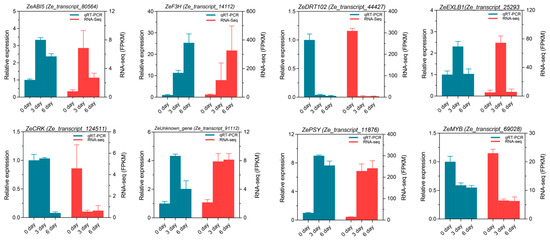
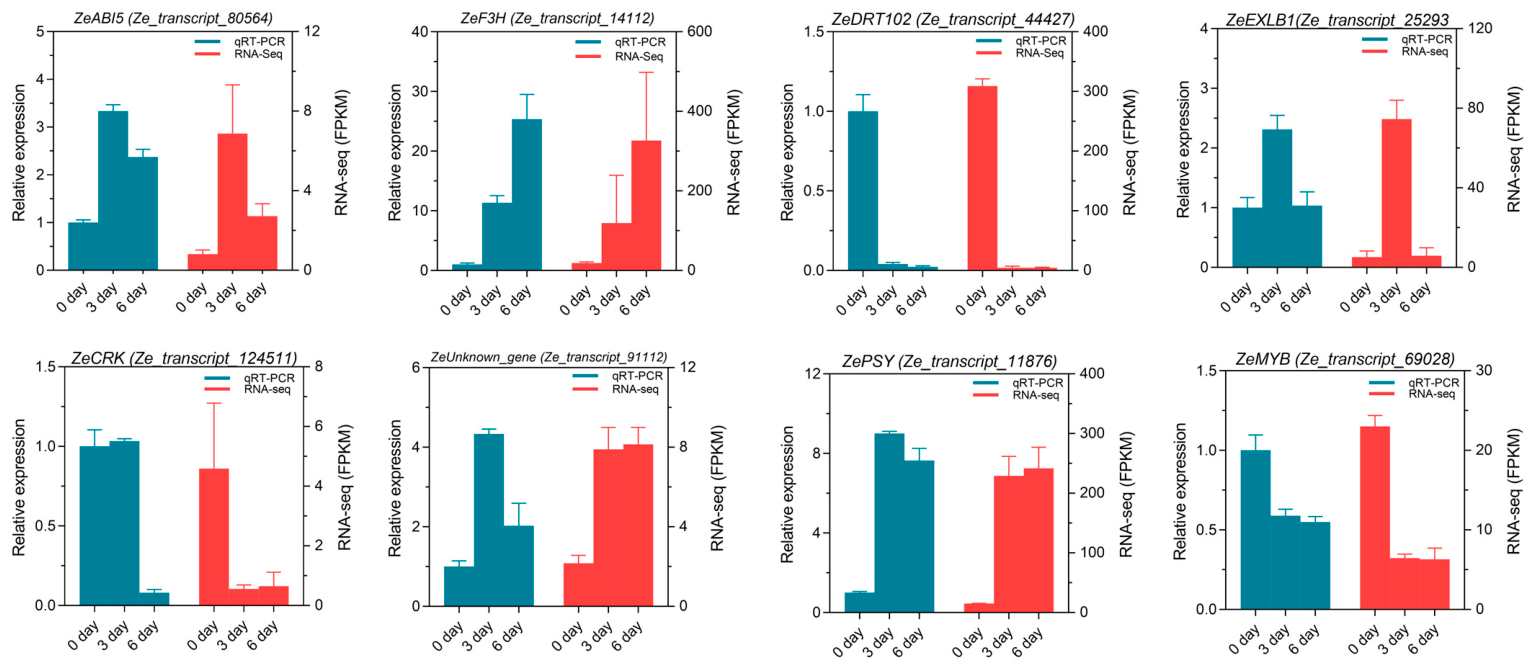
Eight DEGs were selected for RT-qPCR validation. Their expression trends were generally consistent with the RNA-seq results, supporting the reliability of the transcriptome data (Figure 1).
Figure 1.
Comparison of RNA-seq and RT-qPCR expression patterns for eight selected DEGs. The blue bars indicate the RT-qPCR results, whereas the red bars denote the RNA-seq FPKM values. Error bars indicate standard deviation among biological replicates.
3.3. Differentially Expressed Genes Under Chilling Stress
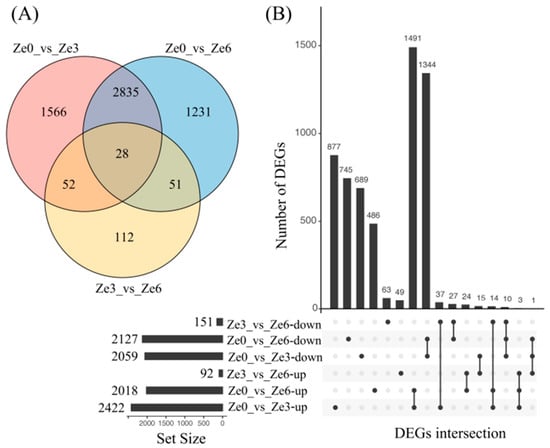
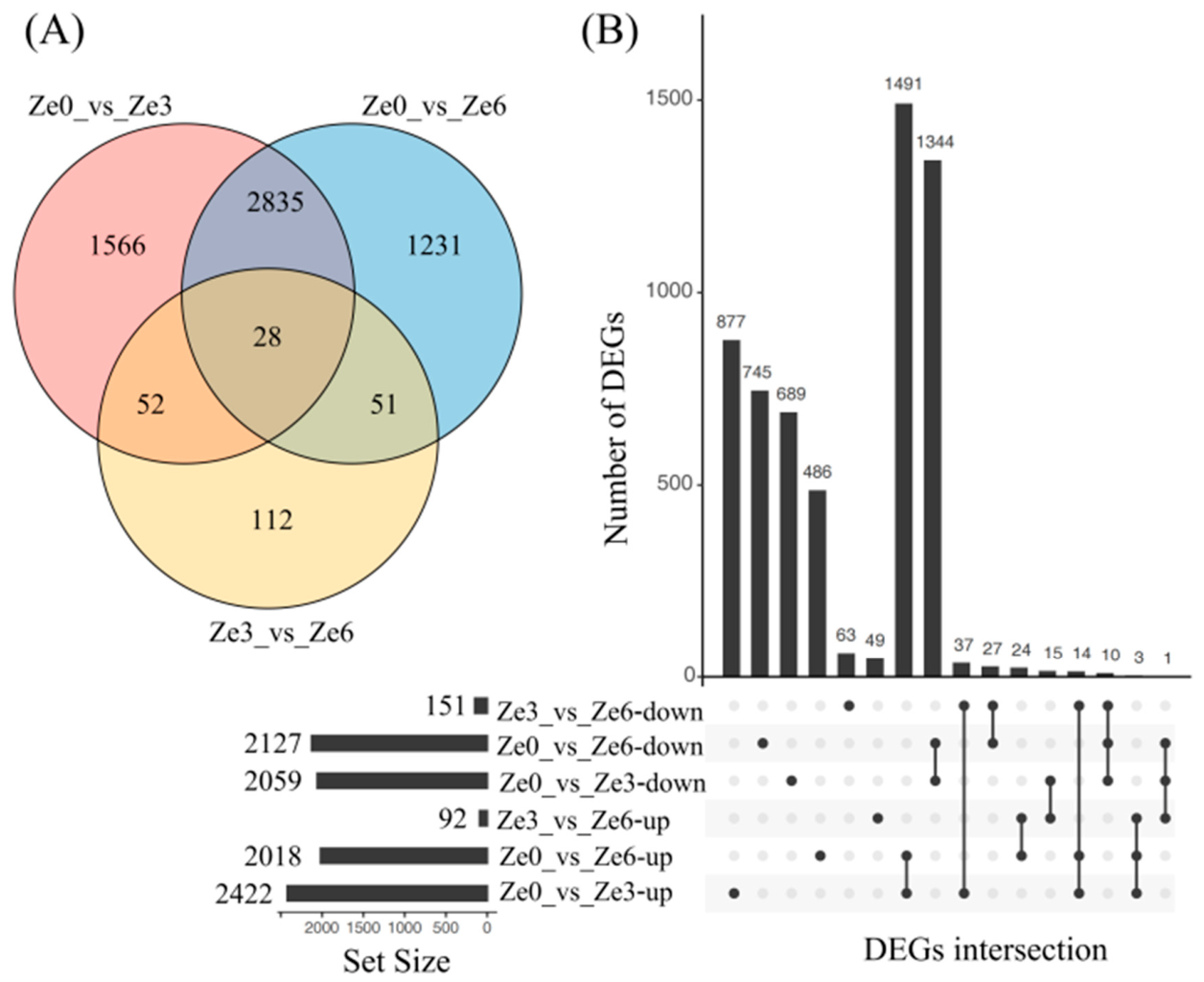
Transcriptome analysis identified 4481, 4145, and 243 DEGs in the Ze0_vs_Ze3, Ze0_vs_Ze6, and Ze3_vs_Ze6 comparisons, respectively (Figure 2). For the Ze0_vs_Ze3 comparison, 2422 genes exhibited increased expression while 2059 showed decreased expression. In the Ze0_vs_Ze6 group, 2127 genes were upregulated and 2018 were downregulated, whereas the Ze3_vs_Ze6 comparison yielded only 151 upregulated and 92 downregulated genes. The Ze0_vs_Ze3 and Ze0_vs_Ze6 comparisons shared 2863 DEGs, including 1508 upregulated and 1355 downregulated genes. These results indicate that major transcriptional reprogramming occurred during the early chilling response and that many expression changes were maintained from day 3 to day 6.
Figure 2.
Differentially expressed genes during chilling stress. (A) Venn diagram of DEGs showing unique and shared genes among the three comparison groups. (B) DEG intersections detailing the quantitative distribution of up- and downregulated genes. Ze0, Ze3, and Ze6 represent samples collected at 0, 3, and 6 d of chilling stress, respectively.
Of the 2422 genes upregulated in Ze0_vs_Ze3, only three (Ze_transcript_81577, Ze_transcript_67563, and Ze_transcript_14329) remained continuously inducible at 6 d (Figure 2B). Notably, Ze_transcript_14329, encoding an anthocyanidin 3-O-glucosyltransferase, exhibited FPKM values of 0.04, 3.09, and 17.82 at 0, 3, and 6 d of chilling treatment, corresponding to 77.25-fold upregulation at 3 d and 445.50-fold upregulation at 6 d, relative to the 0 d control. The sustained induction of this gene aligned with the established positive role of UGT genes in cold tolerance, as demonstrated by a genome-wide analysis identifying multiple flavonoid 3-O-glycosyltransferases that synergistically confer cold resistance in Allium fistulosum L. [18]. A further 1491 genes maintained relatively stable expression, whereas the remaining genes were downregulated to varying degrees compared with Ze3. Among the 2059 genes downregulated in Ze0_vs_Ze3, ten (Ze_transcript_47044, Ze_transcript_50014, Ze_transcript_60693, Ze_transcript_66595, Ze_transcript_89173, Ze_transcript_52737, Ze_transcript_5866, Ze_transcript_92606, Ze_transcript_36911, and Ze_transcript_44032) remained continuously suppressed throughout the chilling treatment. For instance, Ze_transcript_60693, encoding a MYC-type transcription factor bHLH4, exhibited FPKM values of 66.30, 5.03, and 1.21 at 0, 3, and 6 d of chilling treatment, corresponding to a 13.18-fold downregulation at 3 d and a 54.79-fold downregulation at 6 d, relative to the 0 d control. The sustained repression of this gene was consistent with previous reports that MdbHLH4 negatively regulates cold tolerance in Malus domestica (Suckow) Borkh. by inhibiting MdCBF1/3 expression, promoting MdCAX3L-2 expression, and enhancing cold-induced degradation of MdICE1L [19]. However, most of the remaining genes were stable or showed partial recovery at 6 d. This pattern suggests that only a subset of DEGs showed persistent directional changes throughout the treatment.
3.4. Time-Ordered Gene Expression Network
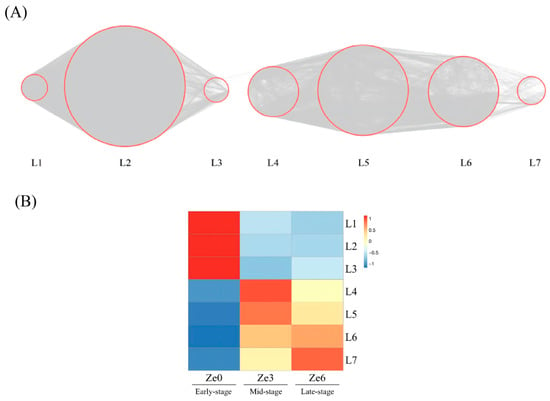
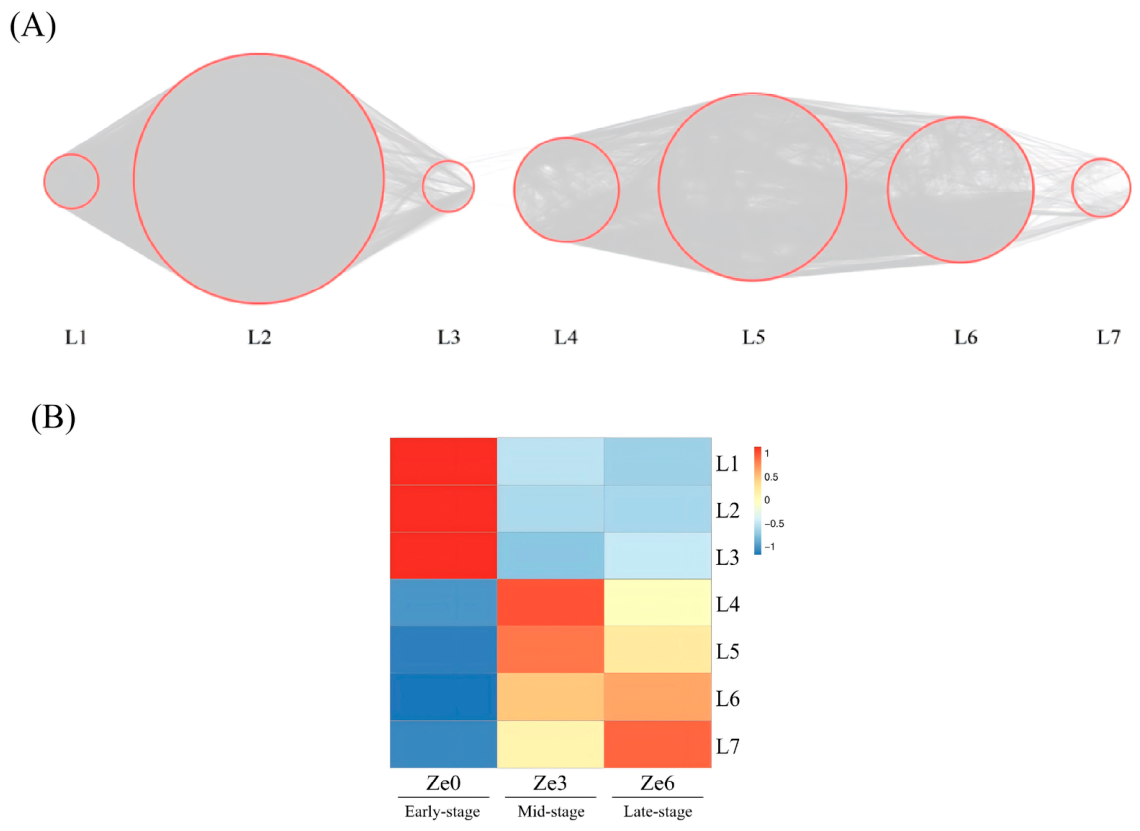
To clarify temporal gene expression dynamics in Z. schneideriana leaves under chilling stress, TO-GCN analysis was performed using 5875 DEGs (Figure 3). The DEGs were assigned to seven time-ordered levels (L1–L7), representing a progressive transcriptional program from day 0 to day 6. According to their overall expression trends, the levels were grouped into three stress-associated periods: early stage (L1–L3), middle stage (L4–L5), and late stage (L6–L7).
Figure 3.
Time-ordered gene expression patterns in Z. schneideriana under chilling stress. (A) TO-GCN results for DEGs. (B) Heatmap of categorized DEGs based on normalized FPKM values. Note: Points in (A) represent genes, and the lines connecting them indicate significant co-expression relationships between gene pairs. L1 to L7 denote the seven hierarchical co-expression levels identified in the time-ordered gene co-expression network, with the size of each circle being proportional to the number of genes contained within it. Color scale in (B) represents row z-score of normalized expression values.
Genes in the early-stage subnetwork showed sustained suppression after chilling treatment, those in the middle-stage subnetwork were induced and then declined, and those in the late-stage subnetwork showed sustained induction. Suppressed genes in L1–L3 outnumbered induced genes in L6–L7, indicating that repression of specific gene sets was a prominent component of the chilling response in Z. schneideriana.
3.5. Functional Annotation of DEGs
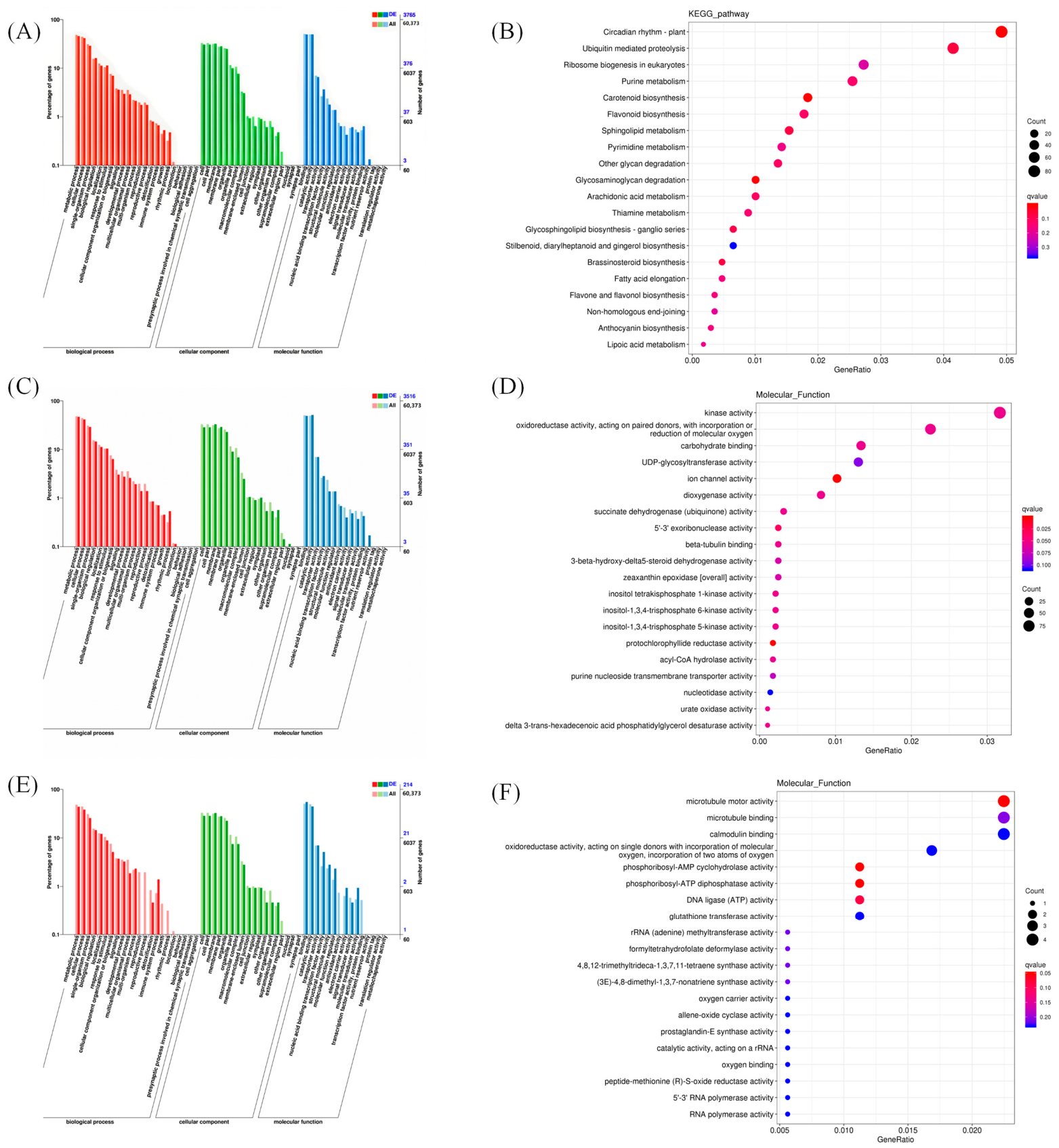
GO enrichment analysis of Ze0_vs_Ze3 showed that 4481 DEGs were assigned to 49 functional subcategories within biological process, cellular component, and molecular function (Figure 4A). The most represented biological-process terms were metabolic process (1720 DEGs) and cellular process (1570 DEGs). In the cellular-component category, membrane (1211 DEGs) and cell (1153 DEGs) were dominant. In molecular function, catalytic activity (1873 DEGs) and binding (1863 DEGs) were most represented. KEGG annotation identified 1687 DEGs, mainly enriched in circadian rhythm-plant, ubiquitin-mediated proteolysis, ribosome biogenesis in eukaryotes, purine metabolism, and carotenoid biosynthesis (Figure 4B).
Figure 4.
GO annotation (A,C,E) and enriched KEGG pathways (B,D,F) for DEGs in Ze0_vs_Ze3 (A,B), Ze0_vs_Ze6 (C,D), and Ze3_vs_Ze6 (E,F). In the GO plots (A,C,E), bars show [gene counts/percentages] assigned to biological process, cellular component, and molecular function categories. In the KEGG dot plots (B,D,F), GeneRatio is the proportion of DEGs assigned to a pathway, dot size represents the number of DEGs, and color represents the q-value (adjusted p-value); a q-value < 0.05 indicates significant enrichment. Ze0, Ze3, and Ze6 denote samples collected after 0, 3, and 6 d at 4 °C, respectively.
For Ze0_vs_Ze6, 4145 DEGs were also assigned to 49 GO subcategories (Figure 4C). Metabolic process and cellular process were the most abundant biological-process terms. Membrane and membrane part dominated the cellular-component category, while catalytic activity and binding were the most frequent molecular-function terms. A total of 1578 DEGs were annotated in KEGG and were enriched mainly in plant-pathogen interaction, circadian rhythm-plant, ubiquitin-mediated proteolysis, purine metabolism, and glutathione metabolism (Figure 4D).
3.6. Glutathione Metabolism Under Chilling Stress
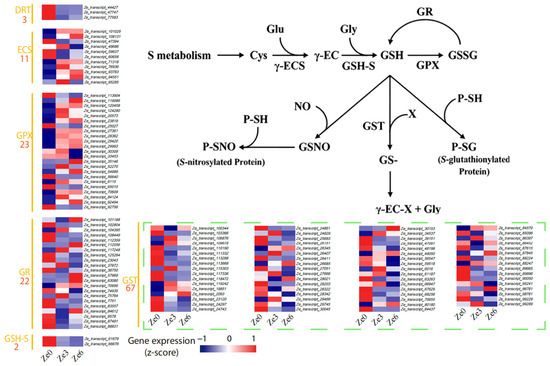
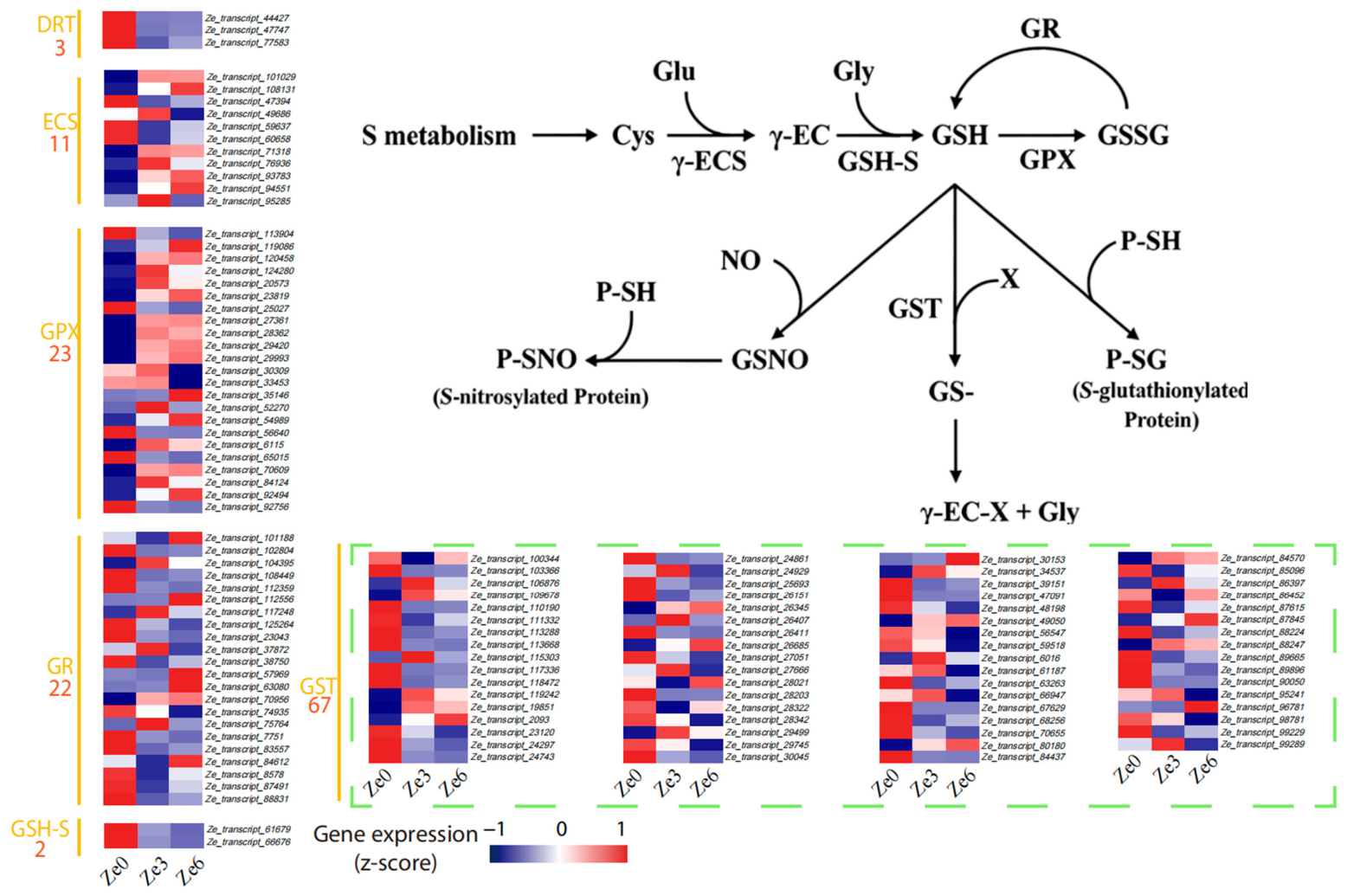
Cold stress induces reactive oxygen species production, which can intensify membrane lipid peroxidation, cause DNA damage, inhibit growth, and disturb metabolism. Glutathione (GSH) is an important antioxidant in plant stress responses. In this study, the glutathione metabolic pathway in Z. schneideriana was reconstructed, and key catalytic enzyme-encoding transcripts were annotated and profiled. Five gene families were identified (Figure 5): ECS (11 transcripts), GPX (23 transcripts), GR (22 transcripts), GSH-S (2 transcripts), and GST (67 transcripts).
Figure 5.
Glutathione metabolic pathway and gene expression profiles in Z. schneideriana under chilling stress. γ-ECS, γ-glutamylcysteine synthetase; GSH-S, glutathione synthetase; GR, glutathione reductase; GPX, glutathione peroxidase; GST, glutathione S-transferase; NO, nitric oxide; GSNO, S-nitrosoglutathione.
The GST family showed especially strong repression. Among 67 GST transcripts, 40 (60%) were persistently suppressed, 18 (27%) were transiently induced at 3 d and then suppressed at 6 d, and only 9 (13%) were activated after 6 d. This pattern suggests weakened glutathione-mediated ROS detoxification under prolonged chilling stress and indicates that reactivation of specific glutathione-related genes may be relevant for improving chilling tolerance in Z. schneideriana.
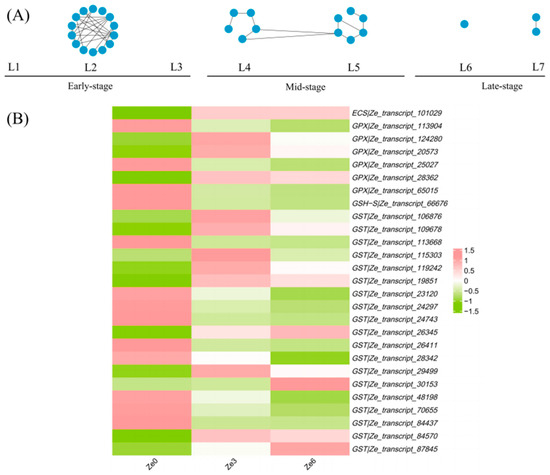
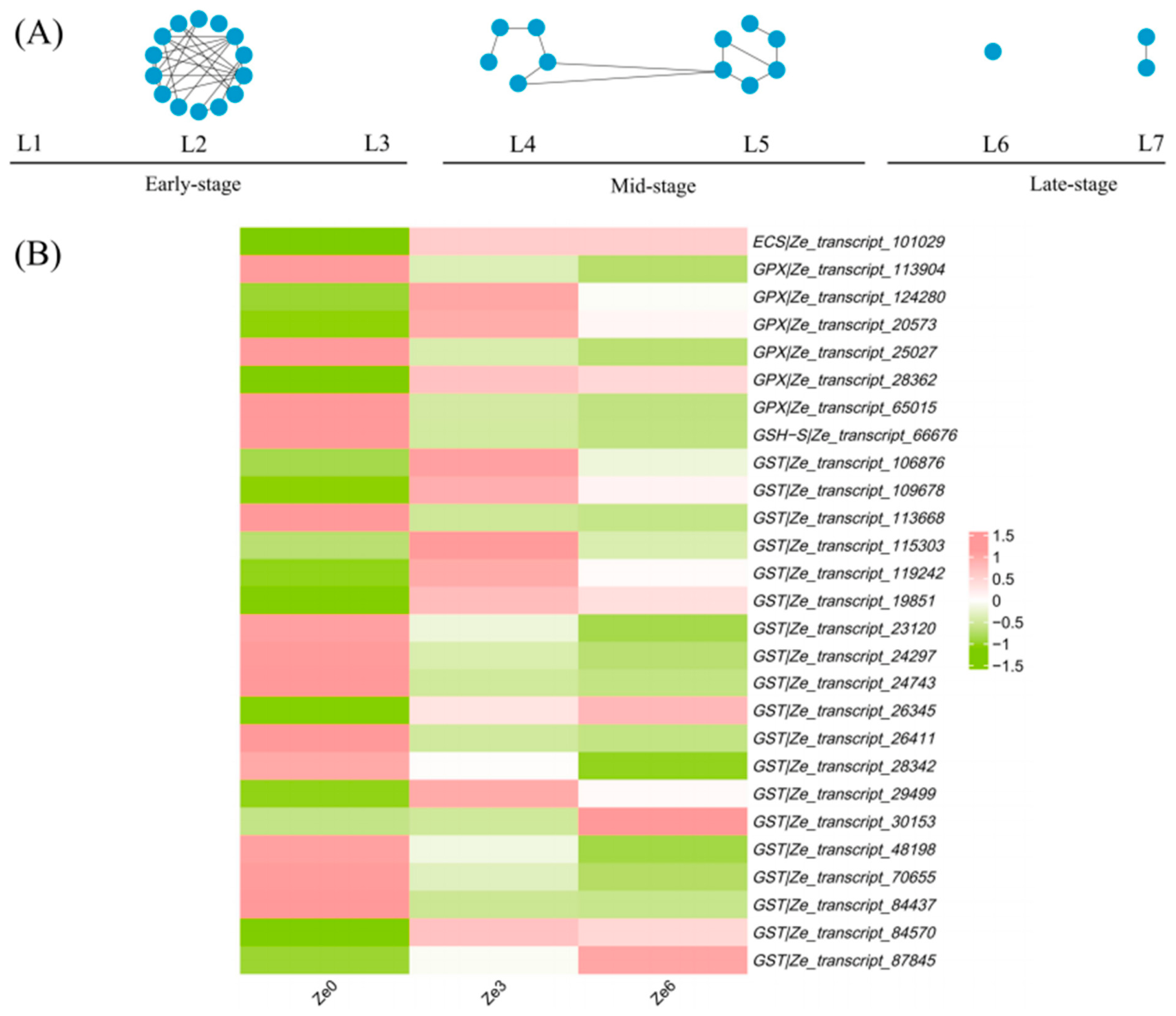
Expression dynamics of glutathione-associated genes were then examined in the TO-GCN framework (Figure 6). As chilling stress progressed, the number of glutathione-related transcripts decreased. The early stage (L1–L3) contained 13 glutathione-related transcripts, the middle stage (L4–L5) contained 11, and the late stage (L6–L7) contained only 3. This decline indicates that glutathione metabolism was more closely associated with early chilling response than with later adaptation.
Figure 6.
DEGs involved in glutathione metabolism and DNA damage repair in the TO-GCN. (A) DEGs across the chilling-stress time course. Blue nodes represent genes involved in glutathione metabolism. Connecting lines indicate significant co-expression relationships between transcripts. L1–L7 indicate the seven hierarchical levels of the TO-GCN. (B) Heatmap of all blue-node genes. Color scale represents log2-transformed expression values.
3.7. Anthocyanin Biosynthesis Under Chilling Stress
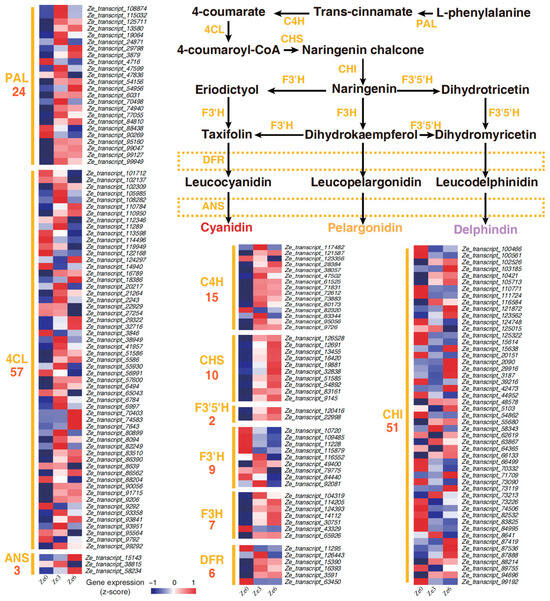
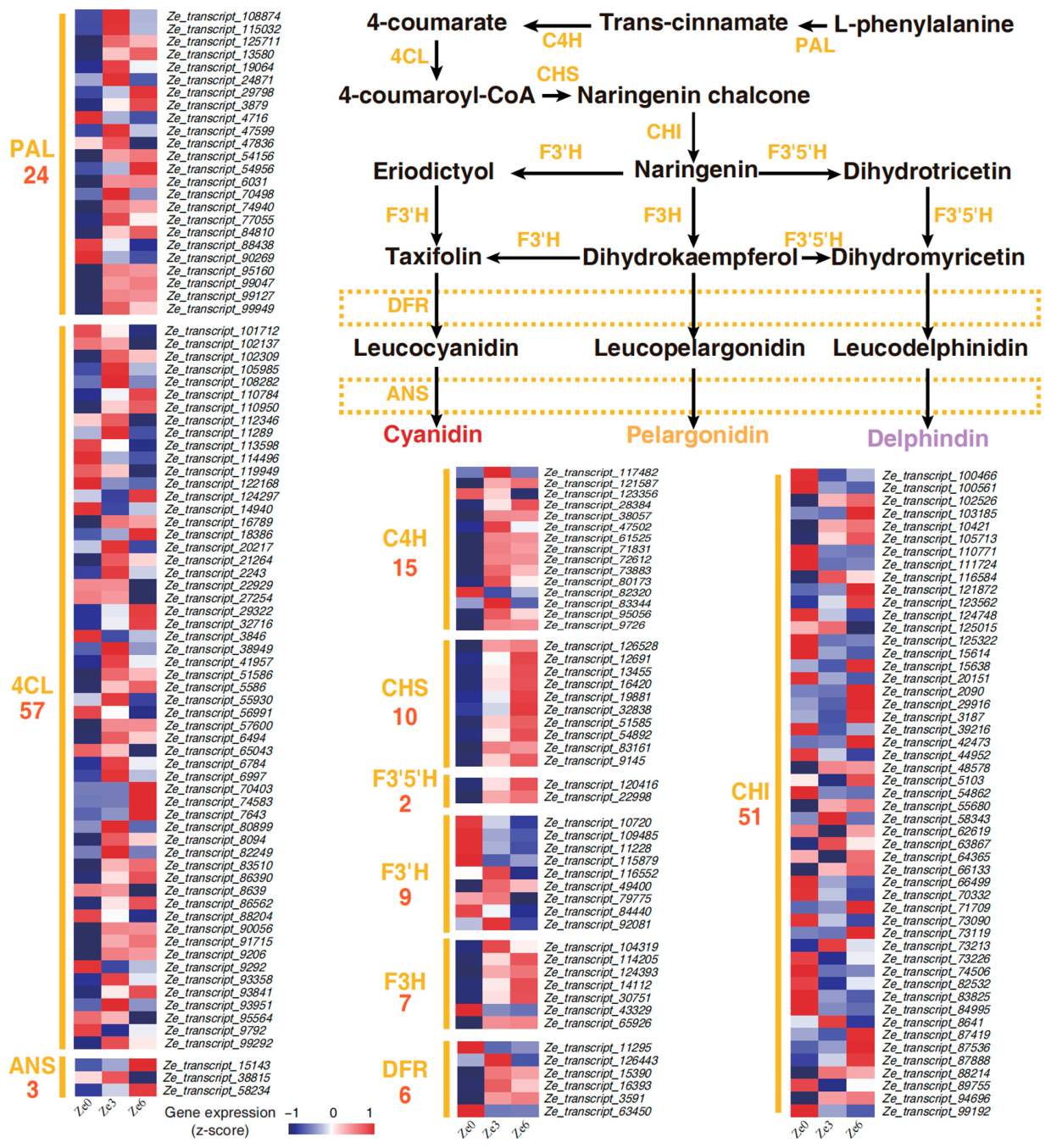
Anthocyanins are widely distributed flavonoids and can contribute to ROS scavenging under abiotic stress. In Z. schneideriana, the anthocyanin biosynthesis pathway showed clear transcriptional rewiring under chilling stress. Ten key gene families were annotated (Figure 7): PAL (24 transcripts), C4H (15 transcripts), 4CL (57 transcripts), CHS (10 transcripts), CHI (51 transcripts), F3H (7 transcripts), F3′5′H (2 transcripts), F3′H (9 transcripts), DFR (6 transcripts), and ANS (3 transcripts).
Figure 7.
Anthocyanin biosynthesis pathway and gene expression profiles in Z. schneideriana under chilling stress. Red numbers below gene abbreviations indicate the number of transcripts corresponding to each gene. PAL, phenylalanine ammonia-lyase; 4CL, 4-coumarate CoA ligase; ANS, anthocyanidin synthase; C4H, cinnamate-4-hydroxylase; CHS, chalcone synthase; F3′5′H, flavonoid 3′,5′-hydroxylase; F3′H, flavonoid 3′-hydroxylase; F3H, flavanone 3-hydroxylase; DFR, dihydroflavonol 4-reductase; CHI, chalcone isomerase.
All ten CHS transcripts, which encode a key enzyme in flavonoid biosynthesis, were markedly induced. F3′5′H and F3H genes, which participate in the formation of delphinidin and cyanidin derivatives, were also upregulated. CHI, F3H, DFR, and ANS showed sustained induction, with increases of 105%, 196%, 143%, and 154%, respectively. In contrast, the F3′H family, which is related to pelargonidin biosynthesis, was mainly downregulated. These results indicate that flavonoid metabolism, especially anthocyanin biosynthesis, is an important component of chilling adaptation in Z. schneideriana.
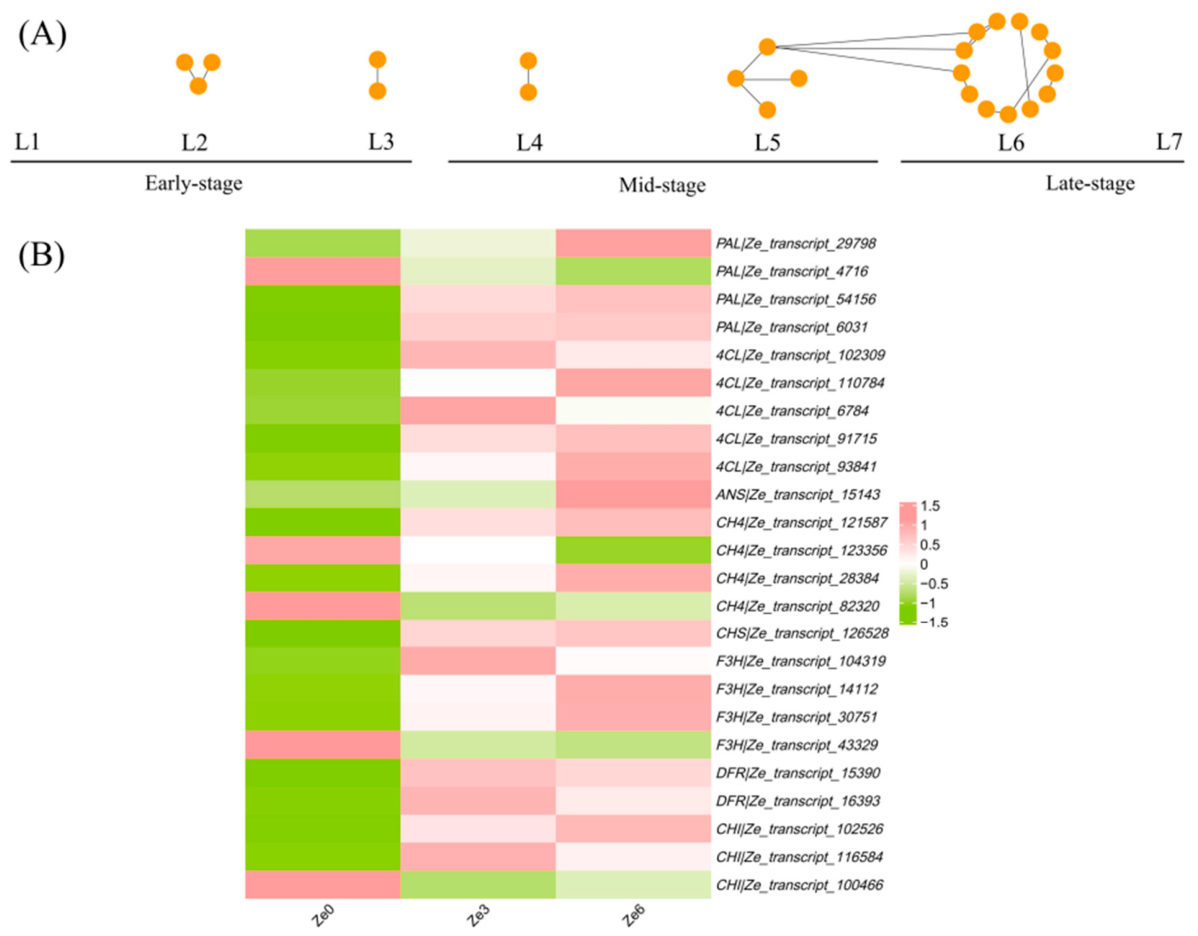
The TO-GCN analysis further showed that the number of anthocyanin-related genes increased as chilling stress progressed (Figure 8). The early stage (L1–L3) contained 5 anthocyanin-related genes, the middle stage (L4–L5) contained 6, and the late stage (L6–L7) contained 13. This temporal increase is consistent with the sustained activation of flavonoid and anthocyanin biosynthesis during later stages of chilling treatment.
Figure 8.
DEGs involved in anthocyanin biosynthesis in the TO-GCN. (A) DEGs across the chilling-stress time course. Yellow nodes indicate transcripts in the anthocyanin metabolic pathway. Connecting lines indicate significant co-expression relationships between transcripts. L1–L7 indicate the seven hierarchical levels of the TO-GCN. (B) Heatmap of all yellow-node genes. Color scale represents log2-transformed expression values.
3.8. ZeDRT102 and ZeF3H as Candidate Genes in Chilling Response
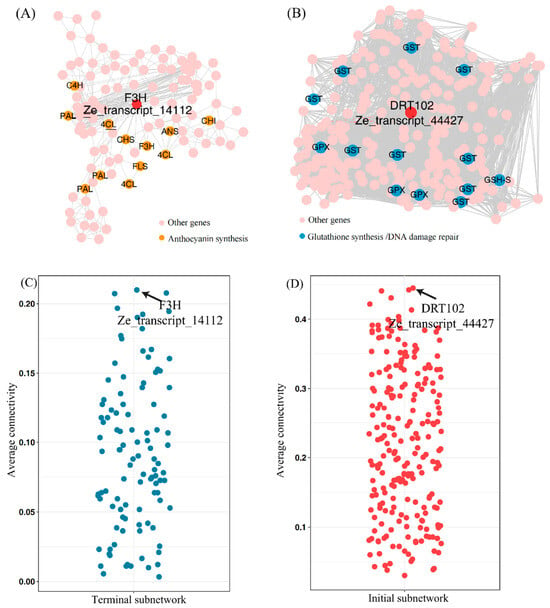
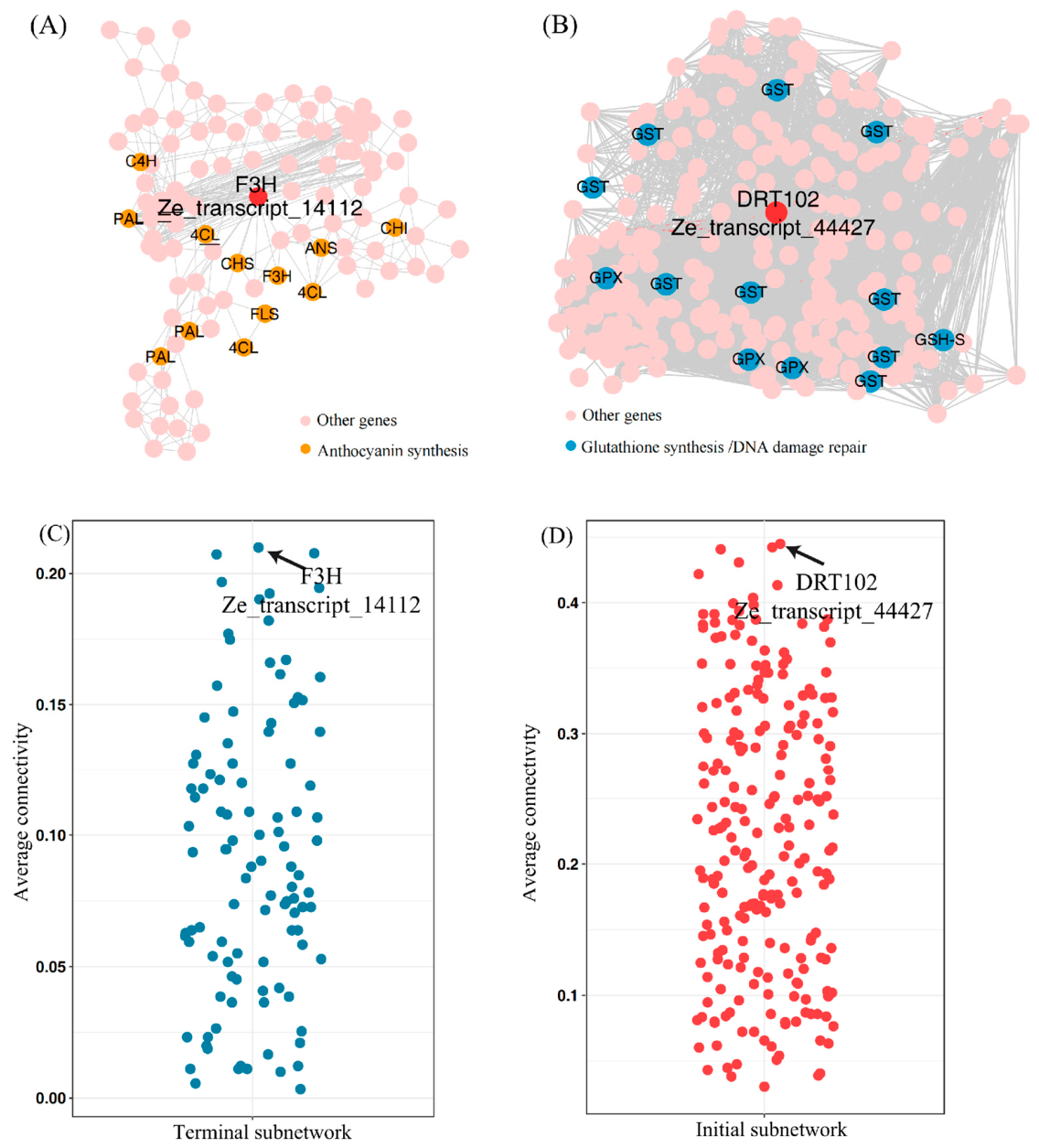
Based on expression profiles and network position, ZeF3H (Ze_transcript_14112), associated with anthocyanin biosynthesis, and ZeDRT102 (Ze_transcript_44427), associated with DNA damage repair and co-expressed with glutathione-related genes, were selected for closer examination. ZeF3H showed sustained upregulation under chilling stress, with expression values of 18.61, 119.32, and 326.84 at 0, 3, and 6 d, respectively. A late-stage subnetwork (L6–L7) centered on ZeF3H was constructed from the time-series co-expression network (Figure 9A). ZeF3H was connected with 109 DEGs in this subnetwork, including 13 genes involved in anthocyanin biosynthesis. Connectivity analysis showed that ZeF3H had high connectivity in the late-stage subnetwork, with a maximum value of 0.21 (Figure 9B).
Figure 9.
Subnetworks of ZeF3H and ZeDRT102 within time-ordered gene co-expression subnetworks. (A) ZeF3H subnetwork related to anthocyanin synthesis at the late stage (L6–L7). (B) ZeDRT102 subnetwork related to glutathione metabolism and DNA damage repair at the early stage (L1–L3). (C) Connectivity values of ZeF3H within the late-stage subnetwork. (D) Connectivity values of ZeDRT102 within the early-stage subnetwork.
ZeDRT102 showed sustained downregulation under chilling stress, with expression values of 309.05, 4.45, and 4.36 at 0, 3, and 6 d, respectively. An early-stage subnetwork (L1–L3) centered on ZeDRT102 was constructed from the same co-expression network (Figure 9C). ZeDRT102 was associated with 260 DEGs in this subnetwork, including 14 glutathione-related genes. Its maximum connectivity value was 0.45 (Figure 9D). These findings suggest that ZeF3H may contribute to late-stage adaptation through anthocyanin biosynthesis, whereas ZeDRT102 may be involved in early stress responses related to DNA damage repair and glutathione-linked redox regulation.
4. Discussion
4.1. Chilling Response in Z. schneideriana Involves Coordinated but Uneven Pathway Regulation
Low temperature restricts plant growth and distribution by affecting multiple physiological and molecular processes. Transcriptomic studies in peanut have shown enrichment of pathways related to photosynthesis, ROS metabolism, carbohydrate metabolism, hormone signaling, and circadian regulation under low temperature [20]. In tea plants, short-term cold responses involve plant-pathogen interaction, circadian clock, MAPK signaling, and hormonal pathways [21]. In Canarium album, chilling stress enriched glutathione metabolism, carotenoid biosynthesis, and circadian rhythm pathways [22]. Cold-induced purine metabolism in Taxus chinensis (Pilg.) Rehder can produce protective metabolites that reduce ROS levels [23], and carotenoid biosynthesis contributes to differential chilling tolerance in rice [24].
In Z. schneideriana, KEGG enrichment showed that circadian rhythm-plant was enriched at both early and later stages, in agreement with the role of circadian regulation in cold response reported in other species [20,21]. Ubiquitin-mediated proteolysis, purine metabolism, and plant-pathogen interaction were also enriched across stress durations [25]. More importantly, glutathione metabolism and anthocyanin biosynthesis showed different temporal behaviors. Glutathione-related genes were enriched but predominantly repressed, whereas anthocyanin-related genes became progressively activated. This contrast suggests that Z. schneideriana relies partly on flavonoid-related protection while its glutathione-mediated redox system may become weakened during prolonged chilling stress.
4.2. Anthocyanin Biosynthesis May Support Later-Stage Chilling Adaptation
The anthocyanin biosynthesis pathway emerged as a major cold-responsive route in this study. PAL, C4H, 4CL, CHS, CHI, F3H, F3′5′H, DFR, and ANS showed notable activation under chilling stress (Figure 7). Similar patterns have been reported in Brassica rapa L., where low temperature induced DFR, ANS, F3H, and CHS and enriched flavonoid and anthocyanin pathways [26]. In Broussonetia papyrifera (L.) L’Hér. ex Vent., cold stress activated BpC4H and BpGST, promoted anthocyanin accumulation, and supported carbon allocation toward anthocyanin production [27].
In the present study, PAL, 4CL, ANS, CHS, F3H, and CHI were consistently induced, supporting anthocyanin accumulation and chilling adaptation (Figure 7 and Figure 8). Among them, ZeF3H showed the strongest expression increase. The late-stage TO-GCN subnetwork showed extensive interactions between ZeF3H and anthocyanin-pathway genes, including PAL, 4CL, ANS, C4H, CHS, DFR, and CHI transcripts. This network position supports a central role for ZeF3H in late-stage chilling response. Previous work showed that overexpression of ZeF3H in tobacco enhanced chilling tolerance by reducing electrolyte leakage and MDA accumulation and increasing proline and soluble sugar contents [8]. F3H homologs in Reaumuria trigyna Maxim. also respond to salt and cold stress, and heterologous expression improves bacterial growth under multiple stresses [28].
Anthocyanins and related flavonoids can mitigate stress damage through ROS scavenging. F3H catalyzes the conversion of flavanones to dihydroflavonols, supplying precursors for anthocyanins and flavonols and contributing to phenolic and flavonoid accumulation [29,30]. Studies in Solanum lycopersicum L., rice, and maize indicate that F3H-mediated flavonol biosynthesis can reduce ROS accumulation and improve tolerance to high temperature, drought/UV-B, or salt stress [31,32,33]. Together with our network results, these findings support ZeF3H as a practical candidate for functional validation in Z. schneideriana.
4.3. Suppression of Glutathione-Related Genes Indicates a Potential Vulnerability
The glutathione pathway has an established role in plant adaptation to chilling stress. For example, phosphorylation of CsGSTU23 enhances cold tolerance in Camellia sinensis (L.) Kuntze [34], and GST overexpression has been associated with chilling tolerance in Citrullus lanatus (Thunb.) Matsum. & Nakai [35]. In Z. schneideriana, however, glutathione-related genes, especially GST, GPX, and GR family members, were mostly repressed during chilling treatment (Figure 5). Within the GST family, 60% of transcripts were persistently suppressed, while only a small subset was activated after 6 d. This sustained repression contrasts with the induction of anthocyanin biosynthesis and may represent a limitation in the chilling-tolerance system of Z. schneideriana.
ZeDRT102 was also notable in the early-stage network. DRT102 is associated with DNA damage repair, and DRT family genes can participate in responses to UV-induced DNA damage [36,37]. In Z. schneideriana, ZeDRT102 was sharply repressed under chilling stress, declining to a small fraction of the 0 d expression level at 3 and 6 d. It was connected with glutathione-related transcripts in the early-stage subnetwork, including ECS, GPX, GSH-S, and GST genes. The number of interacting partners decreased over stress duration, suggesting that its influence on early redox and DNA-repair-associated responses may weaken as chilling stress continues. Similar stress-related functions have been reported for homologous or related genes, including PdDRT102-overexpression in Arabidopsis, which enhanced tolerance to arsenate and salt stress [38]. These results make ZeDRT102 a candidate for further functional studies, especially in relation to DNA stability and glutathione-mediated oxidative stress response.
5. Conclusions
In conclusion, this study validates the hypothesis that Z. schneideriana manages chilling stress through a complex, temporally coordinated transcriptomic response characterized by the uneven regulation of antioxidant pathways. By screening diverse germplasm, we confirmed that flavonoid and anthocyanin biosynthesis were progressively activated, whereas glutathione-related genes were broadly repressed during prolonged cold exposure. Within this framework, ZeF3H was identified as a late-stage hub associated with anthocyanin biosynthesis, while ZeDRT102 was identified as an early-stage hub related to DNA damage repair and glutathione-associated genes. These findings fit into the broader picture of forest tree breeding by offering a mechanistic understanding of cold adaptation in this species. Utilizing hub genes such as ZeF3H and ZeDRT102 as genetic biomarkers can significantly accelerate the development of cold-resilient Z. schneideriana varieties, thereby supporting the successful ecological and economic expansion of this species into colder northern temperate climates.
Supplementary Materials
The following supporting information can be downloaded at: https://www.mdpi.com/article/10.3390/f17091059/s1, Table S1: Geographic origin and collection date of 50 Z. schneideriana lines; Table S2: Candidate differentially expressed genes were selected for qRT-PCR.
Author Contributions
Conceptualization, X.L. and J.X.; methodology, X.L., P.Y. and L.G.; software, P.Y. and L.G.; validation, M.Y. and Y.C.; formal analysis, X.L., P.Y. and L.G.; investigation, L.G., M.Y., Y.C. and J.X.; resources, J.X.; data curation, P.Y. and L.G.; writing—original draft preparation, X.L. and P.Y.; writing—review and editing, L.G., M.Y., Y.C. and J.X.; visualization, X.L. and P.Y.; supervision, J.X.; project administration, J.X.; funding acquisition, J.X. All authors have read and agreed to the published version of the manuscript.
Funding
Financial support for this work was provided by the Science and Technology Innovation Program from the Forestry Administration of Jiangxi Province, grant number 202601, and the Key R&D Program of the Jiangxi Science and Technology Department, grant number 20252BCF320032.
Institutional Review Board Statement
Not applicable.
Informed Consent Statement
Not applicable.
Data Availability Statement
The sequencing data are available from NCBI (accession PRJNA1503663).
Acknowledgments
The authors thank Biomarker Technologies (Beijing, China) for sequencing support.
Conflicts of Interest
The authors affirm that no competing interests exist. Neither the design of the study, nor the collection, analysis, and interpretation of the data, nor the writing of the manuscript, nor the decision to publish the results was influenced in any way by the funding sources.
References
- Zhou, L.; Ullah, F.; Zou, J.; Zeng, X. Molecular and physiological responses of plants that enhance cold tolerance. Int. J. Mol. Sci. 2025, 26, 1157. [Google Scholar] [CrossRef] [Scilit] [PubMed]
- Yang, C.; Liang, L.; Wang, S.; Huang, Q.; Xu, Y. Co-regulation of PySLD5 by miRNA-lncRNA enhances cold tolerance in poplar under overwintering freeze-thaw stress. Plant Cell Environ. 2026, 49, 2098–2112. [Google Scholar] [CrossRef] [Scilit] [PubMed]
- Zhuang, H.; Lin, E.; Xie, J.; Jiang, M.; Ni, F.; Shi, S.; Liu, M.; Miao, S.; Wei, M.; Li, C. InDel variation and contraction of the C-repeat binding factor family contribute to cold sensitivity in Betula fujianensis. Plant Cell 2025, 37, koaf216. [Google Scholar] [CrossRef] [Scilit] [PubMed]
- Zhong, Y.; Luo, Y.; Sun, J.; Qin, X.; Gan, P.; Zhou, Z.; Qian, Y.; Zhao, R.; Zhao, Z.; Cai, W. Pan-transcriptomic analysis reveals alternative splicing control of cold tolerance in rice. Plant Cell 2024, 36, 2117–2139. [Google Scholar] [CrossRef] [Scilit] [PubMed]
- Peng, Z.; Liu, Y.; Tan, X.; He, Z.; Huang, W.; Xie, D.; Mu, S.; Huang, Q.; Hu, Y.; Zhan, L. Integrated physiological, biochemical, and transcriptomic analysis of the cold-sensitive response in Mussaenda anomala. BMC Genom. 2025, 26, 1023. [Google Scholar] [CrossRef] [Scilit] [PubMed]
- Wang, F.; Chen, S.; Liang, D.; Qu, G.; Chen, S.; Zhao, X. Transcriptomic analyses of Pinus koraiensis under different cold stresses. BMC Genom. 2020, 21, 10. [Google Scholar] [CrossRef] [Scilit] [PubMed]
- Yan, F.; Jiang, R.; Yang, C.; Yang, Y.; Luo, Z.; Jiang, Y. Response mechanisms of Zelkova schneideriana leaves to varying levels of calcium stress. Int. J. Mol. Sci. 2024, 25, 9293. [Google Scholar] [CrossRef] [Scilit] [PubMed]
- Gong, L.; Hu, J.; Liu, X.; Lu, X.; Xu, J. Overexpression of flavonoid biosynthesis gene, ZeF3H, from Zelkova schneideriana enhanced plant tolerance to chilling stress. Forests 2025, 16, 1838. [Google Scholar] [CrossRef] [Scilit]
- Wang, L.; Liu, X.; Gong, L.; Hu, J.; Lu, X.; Xu, J. Overexpression of ZsDRT102 from Zelkova schneideriana increases the chilling resistance of plants. Plant Cell Tiss. Org. 2025, 160, 9. [Google Scholar] [CrossRef] [Scilit]
- Zhang, J.; Yang, R.; Wang, Y.; Wang, X.; Wang, L.; Xu, J. The expansin gene SmEXPA13 in Salix matsudana in association with plant salt tolerance. Plant Cell Tissue Organ Cult. 2023, 154, 219–225. [Google Scholar] [CrossRef] [Scilit]
- Campos, P.S.; Quartin, V.; Ramalho, J.C.; Nunes, M.A. Electrolyte leakage and lipid degradation account for cold sensitivity in leaves of Coffea sp. plants. J. Plant Physiol. 2003, 160, 283–292. [Google Scholar] [CrossRef] [Scilit] [PubMed]
- Li, B.; Dewey, C.N. RSEM: Accurate transcript quantification from RNA-Seq data with or without a reference genome. BMC Bioinform. 2011, 12, 323. [Google Scholar] [CrossRef] [Scilit] [PubMed]
- Love, M.I.; Huber, W.; Anders, S. Moderated estimation of fold change and dispersion for RNA-seq data with DESeq2. Genome Biol. 2014, 15, 550. [Google Scholar] [CrossRef] [Scilit] [PubMed]
- Yu, G.; Wang, L.; Han, Y.; He, Q. clusterProfiler: An R package for comparing biological themes among gene clusters. OMICS 2012, 16, 284–287. [Google Scholar] [CrossRef] [Scilit] [PubMed]
- Chang, Y.; Lin, H.; Liu, W.; Yu, C.; Chen, H.; Wartini, P.P.; Li, W. Comparative transcriptomics method to infer gene coexpression networks and its applications to maize and rice leaf transcriptomes. Proc. Natl. Acad. Sci. USA 2019, 116, 3091–3099. [Google Scholar] [CrossRef] [Scilit] [PubMed]
- Untergasser, A.; Cutcutache, I.; Koressaar, T.; Ye, J.; Faircloth, B.C.; Remm, M.; Rozen, S.G. Primer3—New capabilities and interfaces. Nucleic Acids Res. 2012, 40, e115. [Google Scholar] [CrossRef] [Scilit] [PubMed]
- Langfelder, P.; Horvath, S. WGCNA: An R package for weighted correlation network analysis. BMC Bioinform. 2008, 9, 559. [Google Scholar] [CrossRef] [Scilit] [PubMed]
- Bai, M.; Xu, H.; Xing, J.; Zheng, Y.; Liu, L.; Wang, Y. Genome-wide identification and functional analysis of UGT genes reveal multiple flavonoid 3-o-glycosyltransferases synergistically enhancing cold tolerance in Allium Fistulosum. Sci. Hortic. 2026, 357, 114587. [Google Scholar] [CrossRef] [Scilit]
- Yang, J.; Guo, X.; Mei, Q.; Qiu, L.; Chen, P.; Li, W.; Mao, K.; Ma, F. MdbHLH4 negatively regulates apple cold tolerance by inhibiting MdCBF1/3 expression and promoting MdCAX3L-2 expression. Plant Physiol. 2023, 191, 789–806. [Google Scholar] [CrossRef] [Scilit] [PubMed]
- Liu, Y.; Hu, R.; Yuan, C.; Yu, S.; Miao, H.; Sun, Q.; Shan, S. Transcriptome analysis of response to low temperature stress in peanut. J. Peanut Sci. 2026, 55, 145–160. [Google Scholar] [CrossRef]
- Kuzmina, D.; Samarina, L.; Malyukova, L.; Koninskaya, N.; Shkhalakhova, R.; Ryndin, A.; Wang, S.; Wang, Y.; Tong, W.; Xia, E.; et al. In vitro VS in vivo transcriptional approach provides new insight on temporal cold response which works without root system in tea plant (Camellia sinensis (L.) Kuntze). Plant Physiol. Biochem. 2025, 225, 109934. [Google Scholar] [CrossRef] [Scilit] [PubMed]
- Lai, R.; Feng, X.; Chen, J.; Zhang, Y.; Wei, X.; Chen, Y.; Cheng, C.; Wu, R. De novo transcriptome assembly and comparative transcriptomic analysis provide molecular insights into low temperature stress response of Canarium album. Sci. Rep. 2021, 11, 10561. [Google Scholar] [CrossRef] [Scilit]
- Meng, D.; Yu, X.; Ma, L.; Hu, J.; Liang, Y.; Liu, X.; Yin, H.; Liu, H.; He, X.; Li, D. Transcriptomic response of chinese yew (Taxus chinensis) to cold stress. Front. Plant Sci. 2017, 8, 468. [Google Scholar] [CrossRef] [Scilit]
- Zhang, P.; Wu, X.; Chen, Y.; Ji, G.; Ma, X.; Zhang, Y.; Xiang, J.; Wang, Y.; Wang, Z.; Li, L.; et al. Comparative transcriptome combined with morphophysiological analyses revealed carotenoid biosynthesis for differential chilling tolerance in two contrasting rice (Oryza sativa L.) genotypes. Rice 2023, 16, 52. [Google Scholar] [CrossRef] [Scilit]
- Zhou, Y.; Mumtaz, M.A.; Zhang, Y.; Yang, Z.; Hao, Y.; Shu, H.; Zhu, J.; Bao, W.; Cheng, S.; Zhu, G.; et al. Response of anthocyanin biosynthesis to light by strand-specific transcriptome and miRNA analysis in Capsicum annuum. BMC Plant Biol. 2022, 22, 79. [Google Scholar] [CrossRef] [Scilit]
- Dai, Y.; Zhang, L.; Sun, X.; Li, F.; Zhang, S.; Zhang, H.; Li, G.; Fang, Z.; Sun, R.; Hou, X.; et al. Transcriptome analysis reveals anthocyanin regulation in Chinese cabbage (Brassica rapa L.) at low temperatures. Sci. Rep. 2022, 12, 6308. [Google Scholar] [CrossRef] [Scilit]
- Yu, X.; Ni, R.; Zhang, D.; Chen, B.; Li, Q.; Yang, Z.; Li, C.; Liu, F.; Xia, Y.; Hou, G.; et al. Integrated metabolomics and transcriptomics analyses reveal the molecular mechanism of anthocyanin accumulation in veins and leaves of Broussonetia papyrifera under cold stress. Plant Sci. 2026, 364, 112896. [Google Scholar] [CrossRef] [Scilit]
- Zhang, H.; Zhao, L.; Wang, J.; Zheng, L.; Dang, Z.; Wang, Y. Cloning and functional analysis of two flavanone-3-hydroxylase genes from Reaumuria trigyna. Acta Physiol. Plant. 2014, 36, 1221–1229. [Google Scholar] [CrossRef] [Scilit]
- Lamiaa, M.M.; Nabil, K.; Manjul, D. Physiological and molecular responses of ‘Hamlin’ sweet orange trees expressing the VvmybA1 gene under cold stress conditions. Planta 2024, 260, 67. [Google Scholar] [CrossRef] [Scilit]
- Rao, M.J.; Zheng, B. The role of polyphenols in abiotic stress tolerance and their antioxidant properties to scavenge reactive oxygen species and free radicals. Antioxidants 2025, 14, 74. [Google Scholar] [CrossRef] [Scilit] [PubMed]
- Liu, W.; Feng, Y.; Yu, S.; Fan, Z.; Li, X.; Li, J.; Yin, H. The flavonoid biosynthesis network in plants. Int. J. Mol. Sci. 2021, 22, 12824. [Google Scholar] [CrossRef] [Scilit]
- Jan, R.; Khan, M.A.; Asaf, S.; Lubna Park, J.R.; Lee, I.J.; Kim, K.M. Drought and UV radiation stress tolerance in rice is improved by overaccumulation of non-enzymatic antioxidant flavonoids. Antioxidants 2022, 11, 917. [Google Scholar] [CrossRef] [Scilit]
- Xiao, T.; Zhang, S.; Gu, Y.; Hu, H.; Sun, L.; Lu, C.; Warburton, L.M.; Li, H.; Zhu, J. Systematic analysis of the F3H family in maize reveals a role for ZmF3H6 in salt stress tolerance. New Crops 2026, 3, 100082. [Google Scholar] [CrossRef] [Scilit]
- Di, T.; Wu, Y.; Feng, X.; He, M.; Lei, L.; Wang, J.; Li, N.; Hao, X.; Whelan, J.; Wang, X.; et al. CIPK11 phosphorylates GSTU23 to promote cold tolerance in Camellia sinensis. Plant Cell Environ. 2024, 47, 4786–4799. [Google Scholar] [CrossRef] [Scilit]
- Xu, J.; Zhang, M.; Liu, G.; Yang, X.; Hou, X. Comparative transcriptome profiling of chilling stress responsiveness in grafted watermelon seedlings. Plant Physiol. Biochem. 2016, 109, 561–570. [Google Scholar] [CrossRef] [Scilit]
- Zhao, Q.; Chen, S.; Wang, G.; Du, Y.; Zhang, Z.; Yu, G. Exogenous melatonin enhances soybean (Glycine max (L.) Merr.) seedling tolerance to saline-alkali stress by regulating antioxidant response and DNA damage repair. Physiol. Plant. 2022, 174, e13731. [Google Scholar] [CrossRef] [Scilit]
- Pang, Q.; Hays, J.B.; Rajagopal, I.; Schaefer, T.S. Selection of Arabidopsis cDNAs that partially correct phenotypes of Escherichia coli DNA-damage-sensitive mutants and analysis of two plant cDNAs that appear to express UV-specific dark repair activities. Plant Mol. Biol. 1993, 22, 411–426. [Google Scholar] [CrossRef] [Scilit]
- Liu, Y.; Damaris, R.N.; Yang, P. Proteomics analysis identified a DRT protein involved in arsenic resistance in Populus. Plant Cell Rep. 2017, 36, 1855–1869. [Google Scholar] [CrossRef] [Scilit]

Disclaimer/Publisher’s Note: The statements, opinions and data contained in all publications are solely those of the individual author(s) and contributor(s) and not of MDPI and/or the editor(s). MDPI and/or the editor(s) disclaim responsibility for any injury to people or property resulting from any ideas, methods, instructions or products referred to in the content. |
© 2026 by the authors. Licensee MDPI, Basel, Switzerland. This article is an open access article distributed under the terms and conditions of the Creative Commons Attribution (CC BY) license.