


Abstract
Pines (genus Pinus) are a diverse group of conifers widely distributed across the Northern Hemisphere, comprising more than 110 species worldwide. In Europe, pines are a defining component of forests, occupying environments that range from dry Mediterranean lowlands to high-elevation alpine zones. They support a wide spectrum of ecosystem services, from timber and non-wood products to protection, biodiversity, and cultural values. In this review, we bring together ecological traits, silvicultural practices, and management considerations for ten European pine species. This review examines ten major European pine species, including Scots pine (Pinus sylvestris), maritime pine (P. pinaster), stone pine (P. pinea), Aleppo pine (P. halepensis), black pine (P. nigra), mountain pine (P. mugo), Swiss stone pine (P. cembra), Turkish pine (P. brutia), Bosnian pine (P. heldreichii), and Macedonian pine (P. peuce). Together, these species span a wide range of European environments, with Pinus sylvestris showing the broadest distribution. Despite the extensive literature on pine species, information on their ecological, silvicultural, and management attributes remains fragmented across disciplines. To bridge this gap, this review draws on an expert-curated core of scientific and technical literature complemented by a structured literature search adapted from the PRISMA framework, compiling within a single framework their main ecological and silvicultural characteristics, altitudinal range, growth patterns, stand diversity, and management practices and the principal goods and ecosystem services they provide. The comparative analysis highlighted distinct functional groups among European pines, illustrating contrasting adaptive strategies across environmental gradients, with altitudinal distributions ranging from sea level to 2400 m. Mediterranean species, such as P. halepensis, P. pinaster, and P. brutia, generally showed higher drought and fire adaptation, whereas mountain taxa such as P. cembra, P. mugo, and P. heldreichii displayed greater cold tolerance but increased vulnerability due to restricted climatic niches and slow regeneration. Broadly distributed species, such as P. sylvestris and P. nigra, exhibited intermediate ecological strategies, with responses strongly influenced by regional climatic conditions. By integrating evidence on distribution patterns, functional traits, growth patterns, and management practices, this review provides a comparative framework to support adaptive forest management and informed species selection, helping to safeguard forest functions and their associated benefits under ongoing climate change.
1. Introduction
Pine species are distributed worldwide [1] and represent the largest share of growing stock in European forests [2]. The role of pine stands goes far beyond timber production. Several woody and non-woody products, protection, conservation, and other goods and services are associated with their stands and forests [3,4]. Ecological and silvicultural traits of the pine species and site (soil, climate, and topography) influence their distribution [5]. Beyond climate, geology, and site conditions, the evolutionary diversification and functional traits of Pinus are also strongly shaped by fire regimes, with species expressing different life history strategies in relation to recurrent, predictable burning [6]. As climate change increases the frequency and severity of natural disturbances across Europe, the vulnerability of forest ecosystems is rising, threatening forest structure, productivity, and the provision of key ecosystem services [7,8,9]. In this context, synthesizing current knowledge on the ecological, functional, and silvicultural characteristics of European pine species is essential to support adaptive forest management and informed species selection under changing environmental conditions. Ten native pine species are found in Europe [3,5]: Pinus sylvestris (Linnaeus, 1753), Pinus pinaster (Aiton, 1789), Pinus pinea (Linnaeus, 1753), Pinus halepensis (Miller, 1768), Pinus nigra (J.F.Arnold, 1785), Pinus mugo (Turra, 1764), Pinus cembra (Linnaeus, 1753), Pinus brutia (Tenore, 1815), Pinus heldreichii (Christ, 1863), and Pinus peuce (Grisebach, 1846). While some species are linked to specific regions, others have a wider distribution. For example, P. pinaster, P. pinea, and P. halepensis are naturally distributed around the Mediterranean region, north and southwards, and P. nigra, P. brutia, P. mugo, P. cembra, P. peuce, and P. heldreichii are restricted by altitude to central Europe and the Balkans [5]. Inversely, P. sylvestris’s natural distribution ranges from Spain to the Balkans southwards and from Ireland to Denmark northwards and is naturalized in central and northern Europe and in vast areas of Asia [5,10]. Also, the trees’ and stands’ main productions vary: whereas P. sylvestris, P. pinaster, P. halepensis, and P. nigra are mainly used for timber production [5,10], P. pinea is used for fruit due to its edible kernels for human consumption [11] and P. cembra and P. mugo are valuable for protection [5,12]. The ten European pine species examined in this review display contrasting ecological strategies but also share traits that are highly relevant for adaptive forest management.
Although European pines have been widely studied, most existing reviews focus on single species or specific regions. What is still missing is a broader perspective that brings together functional traits, ecological strategies, and management implications across the full Mediterranean–Boreal gradient. This review seeks to address these gaps by assembling ecological, functional, and silvicultural information for ten native European pine species within a single comparative framework. Our aim is to clarify how these species behave in their environmental niches, adaptive traits and management requirements, and how these traits can inform climate adaptive forestry. The study is organized as follows: Section 2 informs the review methodology; Section 3 outlines species distributions; and Section 4 presents species-specific ecological and silvicultural traits, silviculture, main goods and services, and diversity of P. sylvestris (Section 4.1), P. pinaster (Section 4.2), P. pinea (Section 4.3), P. halepensis (Section 4.4), P. nigra (Section 4.5), P. mugo and P. cembra (Section 4.6), and P. brutia, P. heldreichii, and P. peuce (Section 4.7). Section 5 synthesizes cross-species patterns and discusses adaptive management, and Section 6 concludes and identifies priorities for future research. The ecological and silvicultural traits of the European pines species and their distribution help clarify their potential uses and management practices best suited to different site conditions, providing a solid basis for adaptive strategies that sustain forest functions and associated benefits under a changing climate.
2. Review Methodology
This review combines a narrative synthesis with a structured literature search procedure adapted from the PRISMA framework. The aim was to reduce selection bias while providing a broad and balanced overview of the available evidence. The review was first built on the authors’ expertise and targeted identification of key reference sources, including peer-reviewed studies and technical or institutional publications, such as those made available by EUFORGEN. This initial step produced a core bibliography of 174 references, which provided the main conceptual, ecological, and silvicultural basis for the review.
To update and complement this initial body of literature, a structured search was conducted on 17 June 2026 in two major bibliographic databases, Web of Science and Scopus. The searches combined the terms Pinus, ecology, silviculture, distribution, functional traits, climate change, and the scientific names of the target species. An additional exploratory search using Google’s search tools was conducted to identify potentially relevant studies that might not have been retrieved through conventional database searches. The full search strings and the corresponding number of records retrieved are presented in the Supplementary Material (Table S1).
Because the initial search retrieved a large and diverse body of literature and the core bibliography already provided comprehensive coverage of earlier studies, database screening focused on studies published from 2022 onwards. This allowed the review to remain manageable while prioritizing recent advances on climate change impacts, species distribution, functional traits, and forest management. All records were brought together into a single reference database, along with the 174 references previously selected through expert knowledge and targeted searches. Duplicates were removed through a combination of exact and fuzzy matching using title, authorship, publication year, and DOI when available. This step removed overlaps between Scopus and Web of Science, between the database results and the original reference set, and among the additional records identified through Google Lab. The literature search revealed differences in evidence availability among European pine species, largely reflecting variations in geographic distribution and research efforts. Species with wider geographic ranges, such as P. sylvestris, were associated with a larger evidence base, whereas species with more restricted distributions were comparatively less represented in the literature. After deduplication and cross-checking with the original reference set, 80 additional unique records remained for eligibility assessment. These studies were then assessed for their relevance to the objectives of the review. This process resulted in the retention of 29 records, yielding a final dataset of 204 studies (175 + 29) included in the qualitative synthesis. A qualitative synthesis was adopted because it is better suited to integrating heterogeneous evidence while preserving the contextual interpretation of the findings and supporting a comparative framework across species. Although the combination of expert-selected references and structured database searches allowed for broader coverage of the relevant literature, the authors acknowledge that this approach may introduce some degree of selection bias.
Overall, the review brings together recent scientific evidence, foundational literature, and relevant technical and institutional sources. The evidence synthesized in this review reflects the inherent variability of ecological systems arising from regional conditions, management contexts, and methodological differences among studies. Broad generalizations based on specific scenarios or modeling projections were deliberately avoided given the uncertainties associated with their assumptions and extrapolation.
3. Distribution of Pine Species in Europe
In Europe, ten native pine species were described, namely P. brutia (Turkish pine), P. cembra (Swiss pine), P. halepensis (Aleppo pine), P. heldreichii (Bosnian pine), P. mugo (mountain pine), P. nigra (European black pine, Austrian pine), P. peuce (Macedonian pine), P. pinaster (maritime pine), P. pinea (umbrella pine, stone pine), and P. sylvestris (Scots pine) [5]. P. sylvestris is native to Spain, Ireland, the United Kingdom, France, Belgium, The Netherlands, Denmark, Germany, Italy, Bosnia and Herzegovina, Croatia, Hungary, Austria, and Slovakia, but it is naturalized from Spain to China (Figure 1).
Figure 1.
Distribution of P. sylvestris. Data source: [5].
P. pinaster, P. pinea, and P. halepensis are naturally distributed mainly in the Mediterranean region, ranging from Portugal to Greece and extending beyond Europe from Morocco to Lebanon (Figure 2). P. pinaster has been found outside of its natural range distribution in Algeria, France, Iran, Italy, Morocco, Portugal, and Spain; P. pinea in Albania, Croatia, Cyprus, France, Greece, Italy, Lebanon, Spain, and Turkey; and P. halepensis in Albania, Algeria, France, Greece, Italy, Jordan, Lebanon, Malta, Morocco, Spain, Tunisia, and Turkey [5]. The occurrence of P. halepensis in Umbria has been attributed to a historical introduction from the eastern Mediterranean. Schiller and Brunori [13] have discussed several possible pathways, including introduction by Syrian monks and later Crusaders, considering the former hypothesis to be best supported by historical evidence. P. brutia, P. cembra, P. heldreichii, P. mugo, P. nigra, and P. peuce range from Spain to Greece, Bulgaria, and Romania, extending beyond Europe to Azerbaijan and Iraq (Figure 3) [5]. P. brutia has been found outside of its natural range in Armenia, Bulgaria, Cyprus, Georgia, Greece, Iran, Israel, the Russian Federation, Syria, Turkey, and Ukraine; P. cembra in Austria, France, Slovakia, Slovenia, Switzerland, and Ukraine; P. heldreichii in Albania, Bosnia and Herzegovina, Greece, Italy, Montenegro, and North Macedonia; P. mugo in Austria, Bosnia and Herzegovina, Bulgaria, Croatia, Czechia, France, Germany, Greece, Italy, North Macedonia, Poland, Romania, Serbia, Slovakia, Slovenia, Spain, and Ukraine; P. nigra in Albania, Austria, Bulgaria, Croatia, Cyprus, Greece, Italy, Montenegro, Morocco, North Macedonia, Romania, the Russian Federation, Serbia, Slovenia, Spain, and Turkey; and P. peuce in Albania, Bosnia and Herzegovina, Bulgaria, Greece, Montenegro, North Macedonia, and Serbia [5].
Figure 2.
Distribution of P. pinaster, P. pinea and P. halepensis. Data source: [5].
Figure 3.
Distribution of P. brutia, P. cembra, P. heldreichii, P. mugo, P. nigra, and P. peuce. Data source: [5].
The current distribution of European pine species reflects major biogeographical gradients shaped by climatic constraints, topography, and human intervention through afforestation. Mediterranean species, such as P. halepensis, P. pinaster, P. pinea, and P. brutia, are largely confined to regions with hot, dry summers. In contrast, mountain taxa, including P. cembra, P. mugo, P. heldreichii, and P. peuce, are found in cooler environments at higher elevations. P. sylvestris and, to a lesser extent, P. nigra have broader ecological tolerances, occupying a wide range of climatic conditions across Europe.
Climate change is expected to substantially alter the abundance and distribution patterns of pine species across Europe [14,15,16]. P. sylvestris is projected to retreat from central and southeast Europe, with its distribution shifting northwards and towards higher elevations in response to increasing drought stress. At the same time, Mediterranean pine species, including P. nigra, P. pinaster, Pinus pinea, and P. halepensis, are expected to expand their ranges northwards into parts of central Europe [15,17]. In contrast, montane species such as P. cembra, P. mugo, P. heldreichii, and P. peuce are likely to experience habitat loss and range contraction as suitable high-elevation environments become increasingly limited [14,18,19]. The magnitude and direction of these distributional changes will depend not only on climatic drivers but also on species-specific dispersal capacity, adaptive potential, land use dynamics, and forest management practices.
4. Characterization, Silviculture, and Products and Services of the Pine Species
4.1. Pinus sylvestris (Scots Pine)
Scots pine (Table 1) is an early successional (pioneer) species with a large natural distribution range, spreading from the Pyrenees in north Spain to the Russian Far East and from Scandinavia to the inner alpine dry valleys in Switzerland and northern Italy. It is the second most widespread conifer tree species in the World after Juniper spp. [20]. Scots pine is a lowland species but occurs until altitudes of more than 2000 m asl [21]. There is a strong discrepancy between the fundamental and realized niche of Scots pine. In the latter, the species is restricted to very poor and acidic sites, e.g., sand dunes, shallow soils on rocks, or fluviatile sands, where competition from other species is low [22]. The species is well-adapted to subcontinental and continental climates (average temperature range from −5 to 20 °C) with variable annual rainfall (300 to 1800 mm) and grows best on soils not affected by stagnant moisture or ground water. Scots pine has a variable root system, often developing a tap root [23]. Litter shows a wide carbon to nitrogen relationship, which is related to a slow decomposition rate.
In the last centuries, Scots pine was often planted to restore degraded landscapes, e.g., on nitrogen-limited (litter-raked) sites. That means that the species was cultivated far beyond its natural range, so it is still covering a significant share of forestland in northern Germany [24] and Poland [25]. The shift from nitrogen-limited forest ecosystems to well-supplied sites in the recent past has boosted volume growth. In the same location, many stands today show higher site indices than some decades before. Scots pine is a moderately water-consuming tree species. In view of enhancing the soil water conditions in a mixed pine stand, the admixture component reduces evapotranspiration losses and therefore improves seepage rates. This is important because in drought-prone northeast Germany, summer precipitation is nearly completely evapotranspirated, i.e., precipitation of winter fills up soil water, whose surpluses feed seepage [24,25].
Scots pine is quite a robust tree species in its core distribution range. Nevertheless, a range of insect species can periodically affect P. sylvestris in so-called mass outbreaks, such as gypsy moth (Lymantria dispar L.), pine tree lappet moth (Dendrolimus pini L.), or pine processionary moth (Thaumetopoea pityocampa Denis and Schiffermüller) [26]. Mixing Scots pine with broadleaved tree species has been the most promising method to mitigate these classical pine pests. Recently, fungi diseases such as the Diplodia shoot decline have emerged. At the southern distribution boundary, e.g., in the inner alpine dry valleys, Scots pine suffers from a disease complex and is gradually substituted by Quercus pubescens (Willd). The disease complex is driven by drought and reinforced by insects, the pine nematode, land use, and additional factors such as mistletoe damage [27]. Currently, in several regions in Germany, Scots pine is affected by cumulative heat and drought events combined with biotic damaging agents, such as pine bark beetles and fungi, with high rates of mortality and salvage cutting [28]. Thus, in Austria and Germany, Scots pine, especially in pure and homogeneous secondary stands, has recently been identified as one of the species most adversely affected by climate change and is not considered a suitable large-scale substitute for Picea abies (L.).
As a pioneer species, Scots pine shows rapid growth in the juvenile stage. Mean annual increments range from 8 to 14 m3ha−1, varying by ecoregion. In Germany, the latest National Forest Inventory (BWI IV) specifies a mean annual increment (MAI) of around 8 m3ha−1y−1 for Scots pine. Thus, Scots pine’s performance is average and lies between European beech (Fagus sylvatica L.) and oak (Quercus spp.) but is far below the more productive conifers such as Picea abies, Abies alba (Mill.), or the exotic Pseudotsuga menziesii (Mirb.) Franco) [10]. Scots pine is not a very responsive species. If released from competitors, the remaining trees respond well only at young ages. With increasing age, pine trees cannot compensate for an increasing standing space. On a European gradient from northeast to southwest, central European pine stands occupy a mean growth level [29].
Growth trends for Scots pine have been increasing for a long time due to nitrogen emissions (for south Germany) and warmer winter temperatures. However, increasing sensitivity to summer drought and high air temperatures has negatively exposed Scots pines to climate change, which cannot be compensated by the positive growth stimulus of warmer winter temperatures [30]. Scots pines’ mortality has sharply increased in recent years due to climate change. In particular, bark beetles and wood-boring pests have become more aggressive and replace previous damaging agents. High mortality occurs in the mid latitudes and can be assessed by looking at the steepening self-thinning line. Tree-level acclimation strategies, such as lowering leaf area and enhancing water use efficiency, as well as stand-level adjustments, including self-thinning, are apparently insufficient to prevent drought-induced Scots pine mortality [31].
The preferred type of regeneration in Scots pine stands in central European lowlands is natural regeneration on mostly medium to poor sites. Widespread regeneration methods for Scots pine are still clearcut and strip cut. In Scandinavia, the seed tree system also plays a significant role in naturally regenerating Scots pine stands. Common to all of these systems is the creation of bare land conditions for establishing a sufficient amount of seedlings. As a climatically robust species, Scots pine tolerates intensive radiation and frost events, thus showing the typical characteristics of an early-successional pioneer species [10]. Alternatives to clear or strip cutting are still rare for this pine species. Shelterwood cutting or retention systems have a long tradition; the forests, in general, were managed as even-aged pure stands. The suitability of Continuous-Cover Systems for pine management is still questioned due to the difficulty of establishing a vertically structured forest with a light-demanding species. In central Europe, only very few examples exist where such forests can be seen in practice. Even the pine forest of Bärenthoren (near Berlin, Germany), which was the model forest for Alfred Möller to develop his Continuous-Cover Forestry (CCF) concept in the 1910s (The “Dauerwald” [32]), was a two-layered open pine forest with low standing volumes due to litter raking and a lack of nitrogen supply.
Pine cones germinate when there is contact with the mineral soil. Recent studies show that seedling density and the spatial occurrence of seedlings strongly depend on soil scarification and overstory density. Moreover, many other ecological factors influence the success of germination and seedlings’ establishment, such as diaspore supply, browsing, water conditions of the soil, and herbaceous competition. Especially for seedlings and saplings less than 50 cm in height, negative correlations with browsing intensity and herb competition by Vaccinium spp. have been identified.
A gradient study across Europe [29] showed that volume increment decreases with increasing thinning intensity, particularly on fertile sites and in northern Europe. Height growth is slightly higher in thinned stands compared to controls because thinning is lowering drought stress among trees, especially when precipitation is low [29]. Thinning has a particularly strong positive effect on diameter development, e.g., on the future crop trees of a stand. However, these gains should be balanced against reduced stand volume production. Heavy crown thinning at an early stage, combined with artificial pruning, is recommended for the production of high-value timber.
In general, thinning increases the stability of Scots pine stands in the long term, e.g., by positively influencing the h/d ratio of trees. Nevertheless, immediately after thinning, stands are often vulnerable, at least for a short period. As storm damage increases with stand and tree height [33], thinning at an early stage is an important measure for stabilization purposes. Moreover, thinning has been proven to improve resilience (recovery) after drought, at least at younger ages. However, the more frequently drought years occur, the lower trees’ resilience. There is evidence that the water use efficiency of Scots pine depends on provenance, as revealed by the international provenance trial Chorin 85 from 1908, e.g., French provenances are more stress-tolerant than Baltic provenances, but the former having a lower volume performance. Nevertheless, analyses of climatic stress in Scots pine populations confirm that especially the rear edge (e.g., southern) provenances will be prone to future mortality [34]. Provenances should be selected according to the future climate of the target region, as Wegener et al. [35] highlight.
Thinning has only a marginal effect on stand microclimate (e.g., relative soil humidity, relative humidity); mixture with broadleaves and thus a higher leaf area index (LAI) and changes over time in temperature or understory day length are much more significant. Intensive thinning leads to tapered wood and big knots but good allometry concerning stability (height/diameter values). However, wood quality is reduced, along with density reduction. The effect of overyielding mixtures of Scots pine and Fagus sylvatica has been proven in several studies, especially in a landmark investigation along a European gradient from southwest to northeast Europe [36,37]. Due to their complementarity in resource utilization, Scots pine and Fagus sylvatica produced standing volume increases of +12% and stand volume growth increases of +8% compared to the weighted mean of the neighboring monocultures. Overyielding is observed, e.g., in mixtures with European beech. One reason is the more efficient packing of the trees in mixtures per area.
Table 1.
Characteristics of Pinus sylvestris.
In Germany, 22.000 ha of pure stands were converted annually into mixed (and sometimes uneven-aged) stands between 2000 and 2017. Scots pine conversion into mixed Scots pine–broadleaved stands is a frequent measure on fertile sites in northeast Germany. The applied technique is underplanting or natural regeneration in the case of animal seed dispersal. To establish mixed forests, European beech or even oak species can be planted or sowed under fairly dense pine forests. In the case of enough light, Scots pine grows rapidly in the first development stages and outcompetes other competing tree species. The crop tree concept is a feasible option to select superior trees in the stand and to produce valuable timber. Here, artificial pruning is inevitable to maintain high-quality timber. Target diameter harvesting starts at a diameter at breast height (dbh) of 40 to 60 cm, the mature trees being removed by creating small clear or patch cuts [10]. The culmination of value production in northeast Germany lies between 70 and 90 years. Due to its behavior as a light-demanding pioneer species, Scots pine tends to develop even-aged cohorts. A specific silvicultural system to provide good seed supply and to enhance the value production of a pine stand is the seed tree system or the hold-over of trees with potentially high value for another forest generation. Finally, thinning positively influences a diverse range of ecosystem services, such as Non-Wood Forest Products (NWFP) (e.g., mushrooms and berries), or habitats for specific species, such as the capercaillie (Tetrao urogallus L.). Moreover, Scots pine stands are important recreation forests in many northern (boreal) countries [10].
Mixing pine, especially with shade-tolerant or intermediate tree species, such as Fagus sylvatica or Tilia spp., increases the functional diversity and structural heterogeneity of forests [38], whereas the competitive advantages of the tree species in mixtures change annually due to climate variability [39]. Thus, thinning reduces tree mortality, which is also disadvantageous, because deadwood is important for antagonists and high species diversity [29]. The rationale for mixing other tree species with Scots pine is evident: productivity (overyielding) [36], resilience [40], higher faunal biodiversity, and economic advantages due to diversification are the most important points in this context [41]. In a landmark study, Jactel et al. [40] showed that diversity makes forest ecosystems more resilient against pests and diseases. The underlying effects are more habitats for diverse species and thus more antagonists, preventing mass outbreaks of damaging agents. Moreover, in a recent study, Lasek et al. [42] showed that historical admixture has enhanced the genetic diversity and potential adaptive capacity of Polish Scots pine seed stands.
Species richness in pine stands in general enhances faunal diversity in forest ecosystems [29] and diversifies production risks. The most important admixed tree species to P. sylvestris in central Europe are Fagus sylvatica, Quercus spp., Picea abies, and Betula pendula (Roth). They can be admixed in rows or patches to the target species on a spatial scale and below the canopy of an old stand for regeneration. The underplanted broadleaved species component can serve either as the new forest generation or as a trainer species to enhance the quality of the target tree [37].
4.2. Pinus pinaster (Maritime Pine)
Maritime pine (Table 2) has a broad ecological range supported by high genetic variation and phenotypic plasticity. Population divergence is largely shaped by summer drought and cold hardiness ([43] and references therein). The high evolvability of key adaptive traits, including plasticity in water use efficiency, is expected to facilitate rapid microevolutionary responses under ongoing climate change [44]. The species thrives from sea level to 800 m asl and above. It prefers mean annual temperatures of 13–15 °C and typically occurs in areas receiving 400–800 mm of annual rainfall or more. The species prefers light-textured, well-drained soils and is acknowledged for its fast growth and intolerance to shade. Flowering occurs from March to May, with cones maturing in autumn [5,45,46].
Regeneration can be achieved artificially via planting or direct seeding, with initial stocking densities typically ranging from 1100 to 2800 trees ha−1. The species also regenerates after fire through serotinous cones [47]. These cones may open gradually over several years or rapidly following a fire, thereby promoting post-fire recruitment. In naturally regenerating post-fire stands (common in Mediterranean countries), initial densities can be extremely high, ranging from 7500 to 90,000 seedlings ha−1 during the first 20 years [48]. Such natural regeneration is often used to reduce establishment costs. However, this process faces a significant bottleneck during the first year, as seedling survival is frequently compromised by summer drought and intense water stress [47]. De Frutos et al. [49] demonstrated that group selection cuttings can promote natural regeneration and structural diversification in P. pinaster plantations, although early seedling survival remains a critical bottleneck influenced by shrub competition, litter accumulation, and microclimatic conditions.
The species is managed in high forest systems typically as even-aged pure stands, although mixed stands with other pines (e.g., P. halepensis, P. nigra, P. pinea, P. sylvestris) or with broadleaved species (e.g., Castanea sativa, Quercus robur, Eucalyptus spp.) have also been reported [46]. In pure stands, traditional management regimes are oriented towards roundwood production, starting from relatively low initial densities (1100–1200 trees ha−1) and harvesting at minimum rotation ages of 40–50 years. Thinning from below is the most commonly applied method; in timber-oriented systems, 3–4 thinnings are typically recommended between 10 and 30 years, resulting in a final stocking of approximately 300 trees ha−1. To regulate P. pinaster stand density, spacing factors have been widely used (e.g., [50,51,52] and references therein). Luís and Fonseca [53] proposed the use of the Stand Density Index (SDI) to define optimal density ranges, suggesting 60% and 35% of SDI as the upper and lower bounds of the growth density interval. Fonseca and Duarte [52] further recommended a spacing factor of 0.21 to limit understory development, reduce fire vulnerability, and maximize timber yield. Other authors recommend defining thinning intensity based on basal area, with the appropriate level depending on initial stand density and management objectives. According to Erdozain [54], basal area removals of 23%–69%, particularly 50%–70% in dense stands, enhance natural regeneration by increasing seedling establishment and early survival, especially under warm and dry conditions. Short rotation management of maritime pine has also been proposed for energy production, with clearcut ages reduced to approximately 15–20 years. Cotton [55] describes a regime with an initial stand density of ~2500 trees ha−1 and harvest at 15 years. Fonseca and Lousada [56] analyzed a comparable option for post-fire naturally regenerated stands characterized by very high initial densities (~40,000 trees ha−1) and harvest at 20 years. These regimes represent short rotation systems that resemble “energy crops” in which harvested biomass is primarily used for bioenergy, pulp, panels, or pilings. Fonseca and Lousada [56] report that reducing the rotation from 45 to 20 years markedly decreases total volume and stem dimensions, limiting value for large-sized timber but offering advantages when the main objective is the production of small-sized material.
The species is susceptible to diseases and pests, such as processionary caterpillar (Thaumetopoea pityocampa Denis and Schiffermüller) and to root rot pathogen (Heterobasidion annosum (Fries) Brefeld). In addition, these resources face substantial biological risk from the pine wood nematode (Bursaphelenchus xylophilus (Steiner and Bührer) Nickle), as climate change is expected to increase the pathogenicity and expand the distribution of the nematode species [57]. To combat threats such as pine wilt disease and increasing aridity, silvicultural strategies are shifting toward large-scale mixed forest conversion [58]. In addition, adaptive silviculture based on moderate thinning, structural heterogeneity, and the retention of large trees has been identified as a key strategy to enhance drought resilience in dry-edge P. pinaster forests [59].
The wood of P. pinaster is characterized by long tracheids, which provide high axial cohesion and favorable mechanical properties, making it highly versatile. Accordingly, it is used in a wide range of products, from low-value assortments such as packaging and pallets to higher-value applications including structural timber, flooring, carpentry, furniture, veneer, particleboard, plywood, poles, and sleepers [46]. Resin tapping also represents an important by-product. Beyond its economic value, P. pinaster plays a key role in carbon sequestration, dune stabilization, and biodiversity conservation by supporting diverse understory communities (for further details, see [46]).
Table 2.
Characteristics of Pinus pinaster.
4.3. Pinus pinea (Umbrella Pine, Stone Pine)
Umbrella pine (Table 3) is considered a pioneer species well-adapted to a wide range of mean annual precipitations (300–1500 mm) and mean annual temperatures (10–18 °C) and altitudes (0–1000 m asl) [5,45]. It develops well in most soils, except for those that are excessively compact with poor drainage and/or very calcareous [45]. Its sensitivity to winter frosts is low and to spring ones moderate [5]. It is resistant to wind and to wind with salt [45] and has moderate sensitivity to drought [5]. It is sensitive to fire [45] and several pests and diseases [66,67]. In former years, the western conifer seed bug, Leptoglossus occidentalis Heidemann, was the biotic agent causing the greatest damage to cones [68].
It is a semi-shade-tolerant species in its juvenile phase, becoming light-demanding at maturity [5,45]. Its longevity is about 150–300 years [45], and it has an intermediate growth rate, though it depends on the climate. Tree growth in P. pinea is primarily limited by water availability rather than temperature. While mild winters and adequate autumn–spring precipitation promote radial growth [69,70,71], prolonged spring and summer drought reduce cambial activity and disproportionately affect younger trees because of their shallower root systems [69,70,71,72,73,74]. These patterns indicate that water availability during the growing season is the principal ecological constraint shaping productivity across Mediterranean environments. The negative effects of low precipitation (and drought) can be mitigated by mist precipitation (in areas with high relative air humidity) that can incorporate considerable amounts of water in the soil [75]. Soil nutrient and water holding capacity influences growth, with lower growth rates at poor sites [73,76].
Flowering occurs from March to May and fruiting in the spring [45], with cones needing 4 years to mature [77]. Fruiting starts at 15–20 years [45] or sooner in grafted individuals [78]. Tree production varies between 1 and about 300 cones per tree and is related to stand density and climate [79]. The number of fully developed pine nuts and kernels varies from 2 to 183 per cone, corresponding to a weight of 10 and 27 g [80,81]. There is a trend towards heavier seeds in drier climates [18]. However, climate change and Leptoglossus occidentalis have been causing a reduction in the number of fully developed kernels per pine nut [68]. Dispersal of seeds ranges from 0 to 10 m by gravity due to its weight [82], but distance may be increased by animals [83].
P. pinea is frequently managed in agroforestry systems, with fruit production as its main product [66,78]. The stands have lower density for fruit and higher density for timber-oriented stands [66]. Many stands are pure even-aged [73,84,85], whereas others are mixed even-aged [71,85] or pure or mixed uneven-aged [84,86,87]. Management of the stands with low density is related to their main product being fruit. Flowering and fruiting occur mainly in the outer crown, and thus the larger the crown surface the higher the fruit production [79,80,88]. Yet, there is wide variability in cone and seed production between trees and years [66,79,80,88,89,90,91,92], which is related to the climate of the three years between flowering and seed maturation [89]. In general, P. pinea presents one mast year in 3–6-year cycles [66]. The number of pine nuts per cone also has high variability within and between years and trees. This variability is related to the site, with a decrease in production linked to a decrease in precipitation and an increase in temperature [45,78,81]. The most frequent stand structure is high forest even-aged, with clearcut systems and artificial regeneration [84,93] through plantation of plants produced in containers [94] or with uniform shelterwood system [84], with rotations of about 100–120 years [84,93].
Natural regeneration of P. pinea is constrained by both dispersal limitation and water availability [95,96,97]. Relatively heavy seeds (not well-adapted to long-distance wind dispersal) result in regeneration concentrated close to parent trees unless animal dispersers extend dispersal distances or artificial regeneration complements the natural one, while successful establishment depends largely on favorable moisture conditions during the first growing season. Furthermore, cone harvesting may further constrain natural regeneration by reducing the availability of viable seeds. Consequently, natural regeneration is often patchy and irregular, requiring artificial regeneration to complement seedling recruitment in larger canopy openings [84]. The success of natural regeneration depends on years of good production and suitable precipitation. Uneven-aged stands are described in the literature as three to five cohorts [84,98] under irregular shelterwood or selection systems. These systems enable the perpetuity of the stand with more or less constant crown cover and production [98]. Mixed stands of P. pinea with other species (Quercus suber L. [99], Quercus rotundifolia Lam. [99,100], Quercus faginea Lam. [100], P. pinaster [71,101], and P. halepensis [93,102]) are also referenced.
Overall, the growth and reproductive performance of P. pinea are primarily driven by water availability, while stand structure affects the intensity of competition [71,73,74,87]. Silvicultural interventions such as thinning improve performance by reducing water competition rather than directly stimulating growth in both the stem and the crown [103,104]. In mixed stands, competition tends to be lower (due to niche separation), which enhances growth [71,87]. The number of thinnings varies according to the model of silviculture, and the main goal is to promote crown development to enhance cone production. Pruning is also prescribed to form a stem of about 2–4 m, as well as the control of spontaneous vegetation to reduce competition and fire hazards [98].
Table 3.
Characteristics of Pinus pinea.
Potential issues are related to drought, forest fires, and pest and diseases affecting both trees and fruits [63,107]. A specific constraint to growth is drought. Post-drought growth is able to reach pre-drought levels if precipitation is suitable, which is related to the increase in water in the soil and a reduction in evaporation and evapotranspiration [72,108,109]. Repeated drought events might affect the species’ capacity for recovery due to physiological changes [71,72]. However, P. pinea show a trend towards being more affected by drought than Quercus ilex or Juniperus oxycedrus [110], but they are less affected than P. pinaster [111]. Changes in the climate with the increase in aridity likely drive P. pinea northwards and in altitude [112]. Yet, close to nature silviculture promoting uneven-aged structures through selection systems with light-intensity cuts showed a trend towards the maintenance of growth [86].
Three main products are identified in P. pinea stands [66], namely fruit, timber, and resin. The fruit is actually the main product of these systems due to its high nutritional value and market price [113,114,115]. Quantity and spatial and temporal variability of cone production [79,88,90,91,116] and pine nut and kernel efficiency per cone [80,90,91,113] influence the forest system’s sustainability. Manual cone harvest is labor-intensive and dangerous, and mechanical harvest can reduce harvest time and costs and improve labor security [11,117]. The profitability of umbrella pine stands managed for timber and fruit is related to the number of cones per tree and the cone market price [118].
P. pinea stands, both pure and mixed, are heterogeneous in dimension and spatial distribution of the trees and enable the germination and growth of a wide range of species in the understory and also provide services such as protection [119], conservation [120], recreation [121], and carbon storage and sequestration [122]. The factors that influence diversity are the number of species, which are related to the soil, the microclimate, and the stand structure. Understory vegetation increases (in number of species and density) with the decrease in crown cover, especially understory species intolerant to shade (including natural regeneration) [119,120,123]. Moreover, the soil and the microclimate create habitats suited to several species, creating different patterns of distribution [120].
4.4. Pinus halepensis (Aleppo Pine)
Aleppo pine (Table 4), native to the Mediterranean basin, is considered a pioneer plastic species [124]. It develops from 0 to 2000 m asl [45], reaching 1700 m asl in Morocco [1]. It is distributed in climates with mean annual temperatures of 11–23 °C [45,125] and mean annual precipitations of 350–700 mm, up to 1300 mm [125,126]. It has high frost sensitivity both in winter and spring, low sensitivity to wind and wind with salt [45], and high tolerance to drought [124,127], but it is susceptible to fires [126,128] due to its high flammability [129]. It is threatened by several pests, particularly the pine processionary moth (Thaumetopoea pityocampa Denis and Schiffermüller), bark beetles (Orthotomicus erosus Wollaston), and longhorn beetles (Monochamus galloprovincialis Olivier), among other, and diseases including pitch canker (Fusarium circinatum Nirenberg and O’Donnell) and canker (Crumenulopsis sororia (Karsten) Groves) [126]. It can develop in most soils, except for sandy soils with superficial water tables and very high humidity [45,105], withstanding calcareous conditions [105,130] and soils polluted by heavy metals [131,132]. It is a shade-intolerant species [45,105] with 100–150 years of longevity and high growth rates [124].
Table 4.
Characteristics of Pinus halepensis.
Flowering occurs in March–May and cones mature 3 years after flowering in autumn [45,137], and fruiting starts at 10–15 years [91]. It produces 1.6–4 kg of seed per tree and an average of 50,000–60,000 seed per kg [133]. The seed is light with a wing [137] with a dispersal up to 100 m [139]. This species is frugal, adapted to sites with poor soils [124,126] and seasonal and annual variability in precipitation, likely due to its well-developed root system [140] and resilience, particularly in adult trees [141]. Growth of P. halepensis is primarily controlled by water availability, with stand density determining the intensity of competition for this limiting resource. It decreases from sub-humid (0.95 m3ha−1yr−1) to arid (0.67 m3ha−1yr−1) sites, whereas it is higher in better fertility sites [133]. In general, growth increases with the decrease in hydric stress [142]. Inversely, in drought periods, growth decreases mainly due to competition for water (the higher the denser of the stand) [143], as well as fruit production [144]. Arid sites frequently have lower stand densities to reduce competition between trees [145].
It is frequently managed for timber and/or protection. High forest pure even-aged stands are frequent [93,133,146,147], along with mixed stands with P. pinea [145,148], P. pinaster [145,148], P. nigra [148], Quercus ilex Linnaeus [135], Quercus suber Linnaeus [93], and Juniperus spp. [149]. Uneven-aged stands are still being developed [136]. Many high forest even-aged stands often originate from natural regeneration and with high densities [150]. Thinning is an important silvicultural practice to enable growth and to reduce fire risk by decreasing crown continuity, both horizontal and vertical [147]. It is frequently associated with pruning to create vertical discontinuity [129]. Thinning methods vary and can result in a more or less regular tree spatial distribution or a clustered one [147]. Regardless of spatial distribution, there is an increase in diameter growth in the first two years post-thinning [147,151], declining 4–5 years after thinning [152], which indicates its periodical nature [129]. Spatial heterogeneity created by thinning in clusters [147] and other land uses further reduces fire risk [129]. Furthermore, in sites with periodical droughts, thinning increases diameter growth [153], and the growth rate is higher in thinning with heavy intensity than moderate intensity [154]. Moreover, the differences between provenances in terms of growth are small [155]. Admixtures of P. halepensis with P. pinaster, P. pinea, or P. nigra have lower yields than pure stands, which is due to the similarity of the pine species’ traits and the predominance of competitive interactions [148]. In arid conditions, mixed stands of P. halepensis with P. pinaster have higher yields than their pure counterparts, likely due to facilitation interactions. It has been observed that P. halepensis can affect the volume growth of P. pinea, but the former is not affected by the latter [148].
Natural regeneration is frequent, especially in stands after fires [150]. P. halepensis produces both non-serotinous and serotinous cones [156], with a higher proportion of the latter in stands prone to fire [157]. The serotinous cones form a seed bank in the trees [156,157], which enhances natural regeneration.
The rapid colonization ability of P. halepensis, for example, in Greece, alters successional trajectories in Mediterranean pine forests. High seed production, wider dispersal range, and rapid juvenile growth enable the species to outcompete slower-regenerating pines, such as P. pinea, following disturbance. As a result, repeated disturbances may gradually shift forest composition towards P. halepensis dominance, with consequences for associated plant and animal communities [82,158]. Besides competition for resources, P. halepensis may also influence community assembly through allelopathic interactions. The release of secondary metabolites can suppress germination and the early development of understory vegetation, potentially reinforcing pine dominance after establishment and reducing opportunities for the recruitment of competing species [159].
In stands dominated by P. halepensis, fire, in the short term, changes the composition and abundance of plant species [160], with an increase in non-native ones [161], but negatively affects ecosystem services [160]. After fire events, P. halepensis’s resilience is higher when the site is close to their climatic niche. Furthermore, the resilience of this species is higher than that of P. nigra [162]. Climate change with aridity increase is likely to reduce areas suitable for this species in Greece [163]. Moreover, aridity might lead to a reduction of the ecosystem functions and multifunctionality of these forest systems [164].
The high productivity and ecological plasticity of P. halepensis allow it to provide multiple ecosystem services (e.g., timber, resin, edible nuts, and biomass) simultaneously. Relatively fast growth (e.g., compared to P. sylvestris and P. nigra) [165] supports timber and biomass production, while extensive root systems stabilize degraded soils and reduce erosion. These characteristics, combined with high drought tolerance, explain the widespread use of the species in Mediterranean restoration programs. Nevertheless, increasing aridity and fire frequency may reduce the long-term capacity of these forests to maintain multiple ecosystem functions [124,127,165]. Its total volume production is quite variable, ranging from 66 to 251 m3ha−1 in Tunisia, 108 to 350 m3ha−1 in Algeria, and 114 to 285 m3ha−1 in Spain [133]. It produces an average of 1.7–3.3 kg tree−1y−1 of resin that can be used to improve, e.g., biofuels, food preservation, and medicinal products [166]. Its kernels have high nutritional value and are used for human consumption, for example, in Tunisia. The production of cones is higher (in number and weight) in sub-humid than in semi-arid regions, with optimum seed production for a crown diameter of about 8 m [133]. Due to its high growth rate, it is able to store more biomass and thus sequester more carbon when compared with other pine species [165,167]. Many stands have a protection function. Stands from natural and artificial regeneration reduce erosion risk [168,169]. It can tolerate soils polluted with heavy metals (e.g., Zn, Pb, and Cd), supporting its use for phytostabilization [131,132].
P. halepensis stands host a range of herbaceous and shrub species, enhancing diversity [4,170], with more than 300 species in the understory [171]. The understory of uneven-aged stands bears higher diversity, likely due to gaps in the overstory, enhancing the development of vegetation compared to even-aged stands [170]. Diversity of plants in the understory increases with the decrease in the overstory crown cover [170,171], whereas the composition of the understory seems to be related to the overstory’s spatial distribution [171]. Yet, due to its dense regeneration [158] and allelopathic effects [159], it may change and/or restrict the development of the understory plants, thus altering the stand’s diversity. Thinning can promote management through a multi-objective approach, enhancing tree and understory resilience [156] and increasing understory vegetation density [171,172]. The effects of thinning and the control of spontaneous vegetation increase understory diversity, but these effects are temporary, decreasing from the second year after thinning onwards [172].
4.5. Pinus nigra (European Black Pine, Austrian Pine)
European black pine (Table 5) is a montane conifer that has a broad ecological range and exhibits significant morphological and genetic variability, being typically divided into six main subspecies: P. nigra subsp. salzmannii (Pirenean black pine), P. nigra subsp. nigra (Austrian pine), P. nigra subsp. laricio (Corsican/Calabrian black pine), P. nigra subsp. pallasiana (Crimerian/Turkish black pine), P. nigra subsp. dalmatica (Dalmatian black pine), and P. nigra subsp. mauretanica (African black pine) [65,173,174,175]. The species typically occurs from ≈350 m asl in Italy to ≈2200 m asl in the Taurus Mountains, with an optimal altitudinal range of 800–1500 m. However, this range varies considerably among sites and subspecies ([5,173,175] and references herein). It is well-adapted to temperate mountain climates, thriving in mean annual temperatures ranging from 9 to 13 °C [176], and it can tolerate extreme temperatures, withstanding absolute minimums as low as −28.8 °C [177]. Annual precipitation lies between 400 and 1000 mm depending on the subspecies [173], with the lower limit indicating its ability to endure relatively dry conditions compared to other montane conifers. It prefers deep (30–40 cm), well-drained, non-compacted soils, and, although it can grow on calcareous substrates, it tends to perform better in decarbonated soils. Its nutrient requirements are modest, making it suitable for marginal or degraded sites [5,176]. Biologically, the species is known for its exceptional longevity [173], often exceeding 400 years. Juvenile growth is relatively rapid; however, the species is strictly light-demanding [5], which has important implications for stand dynamics and silvicultural management. Flowering typically occurs in May, and cone development spans two growing seasons, with seed maturation taking place in October of the second year [173,177]. Seed production is around 30–40 seeds per cone [173]. Seed dispersal is primarily anemochorous (wind-dispersed) [61,178].
Table 5.
Characteristics of Pinus nigra.
P. nigra is usually managed as pure, even-aged high forest stands [176], but it can also be found in mixed stands with other pine species, particularly P. sylvestris or P. halepensis [173,179]. In Mediterranean countries, depending on management objectives and site conditions, it can be managed using various systems, including small-scale clearcutting (generally 1–3 hectares), uniform or irregular shelterwood systems, and selection cutting [180]. Stand management typically begins with pre-commercial thinning between 15 and 30 years of age, reducing stand density to approximately 1300–1500 trees per hectare. Subsequent selective thinning is implemented every 10–15 years until the end of the rotation period, typically 80–100 years, to promote the growth of future crop trees ([175] and references herein). A review by Vacek et al. [175] found that mature black pine stands averaged 334 ± 187 m3 ha−1 in total standing volume, with a mean annual increment of about 4.9 ± 2.0 m2 ha−1 yr−1. In addition to timber and biomass production (alongside resin extraction), it provides important ecosystem services, especially in erosion control on steep mountain slopes and in the rehabilitation and afforestation of degraded areas [5]. In several regions in Europe, forests dominated by P. nigra are included in the Natura 2000 network (habitat type 9530), highlighting their ecological significance and their role in supporting diverse plant and animal communities [179]. Due to climate warming, the distribution of black pine is expected to change significantly in the future, although this response will likely vary by geographic region. In Mediterranean areas, rising temperatures are linked to increased water stress, which can negatively impact the growth of this species. In contrast, central Europe is expected to experience improved climatic conditions, promoting the expansion of black pine in that region ([174] and references herein). The species is considered a candidate for assisted migration in dry forest sites of central Europe and as a substitute for indigenous conifers in future climate scenarios due to its adaptability [181].
The species is threatened by several factors, including pests, diseases, and wildfires. Major biotic threats include fungi like Dothistroma pini Hulbary and Sphaeropsis sapinea (Fries) Fuckel, the pine processionary caterpillar (Thaumetopoea pityocampa Denis and Schiffermüller), pine wilt disease caused by the pine wood nematode (Bursaphelenchus xylophilus (Steiner & Bührer) Nickle), and the bark beetle Ips pini (Say) ([174] and references herein). Large wildfires pose a significant risk, as well; while the species can tolerate low-intensity fires, it cannot survive severe wildfires. Its ability to regenerate relies on the survival of adult trees, which limits its capacity for rapid recovery [179]. For further details, see the review by Vacek et al. [175]. Recent evidence [162] further indicates that P. nigra shows relatively low post-fire resilience, particularly in stands located near the dry edge of its climatic niche.
4.6. Pinus mugo (Mountain Pine) and Pinus cembra (Swiss Stone Pine)
The mountain pine complex (P. mugo s.l. or P. mugo agg.) (Table 6) exhibits high variability and comprises numerous botanical subspecies. It includes the nominal subspecies P. mugo subsp. mugo, as well as other subspecies and their hybrids, representing the full spectrum of genetic and morphological variation within the species [182]. P. mugo is a European conifer complex with fragmented, “island-like” distribution across the main mountain systems of central and southern Europe. Its western occurrences include the Pyrenees and Iberian mountain ranges, extending through the French Massif Central, Vosges, Black Forest, Jura, and the Alps, continuing southeast into the Dinaric Alps. Eastern populations reach the Eastern and Southern Carpathians and the Rhodope Mountains of Bulgaria and Greece. Southern outposts occur in Spanish and central Italian mountains, while the northern natural boundary includes the Western Carpathians and parts of the Sudetes along the Czech–Slovak–Polish and Czech–German border regions [183,184]. The complex spans a wide altitudinal range from approximately 200 m in low mountain areas up to 2700 m asl, reaching its greatest density in exposed subalpine and alpine zones [184,185].
Morphologically, the complex displays considerable variation in growth form, branching patterns, and habit, reflecting adaptations to harsh climates, poor soils, and high-altitude exposure [184]. Some subspecies rarely exceed 0.5 m, while others may reach 20 m, adopting a tree-like form. The growth of P. mugo subsp. mugo is extremely slow, with seedlings increasing in height by only about 2–3 cm per year, ranking it among Europe’s slowest-growing trees. Its growth form is highly variable and typically irregular. The species usually develops as a low shrub, 2–3 m tall, with numerous stems and branches that spread close to the ground. It is a long-lived species, with a lifespan of 250–300 years. Depending on local conditions, it forms dense shrublands or small forest patches [185].
P. mugo subsp. mugo is fully frost-hardy, light-demanding, and undemanding with regard to soil. It occupies some of the most challenging habitats, including peat bog edges, rocky ridges, steep scree slopes, and limestone outcrops [185]. P. mugo subsp. Mugo’s extensive branched root system stabilizes loose soils and helps prevent erosion, avalanches, and landslides in mountainous areas. The wood, while hard and elastic, is suitable for fuel and crafting small items. The species is widely used in horticulture, with many cultivars planted for ornamental purposes. Its needles are rich in vitamin C and carotenoids, making them valuable for beverages that support the immune system and prevent scurvy, while cones and buds are processed into syrups, liquors, or essential oils with antioxidant properties [184,185]. It maintains overall genetic diversity, though isolated populations in southern and eastern Europe may be vulnerable. Its main threats are human activities, such as pasture expansion, ski area development, and fires, along with climate change, reducing suitable habitats. Fungal diseases, including white snow mold caused by Phacidium infestans P. Karst. and black snow mold caused by Herpotrichia juniperi (Duby) Petrak), affect needles but rarely cause tree mortality, while insect pests are not a major concern [184,185].
Table 6.
Characteristics of Pinus mugo.
The Swiss stone pine (P. cembra) (Table 7) is an alpine timberline species with a focus on the inner alpine granite and gneiss landscapes. It occurs at altitudes between 1000 and 2300 m asl. Average annual temperature varies between 0 and 5 °C and annual rainfall between 500 and 2000 mm. As a timberline species, P. cembra is very robust and frost-tolerant, bearing minimum temperatures of −30 °C. It is a very long-lived tree species, with ages up to 1000 years. Moreover, stone pine grows on diverse soils, including poor and dry soils. Like all species found in the Alpine region today, P. cembra has had an eventful history. Repeated glacial expansion and retreat in central Europe meant that the area of Swiss stone pine was constantly changing. Fossil plant remains (pollen, macro-remains) prove that it probably survived the last ice age along the central and eastern southern edge of the Alps, in the Hungarian Plain, and around the Carpathians. The return to the Alps took place mainly westward into the Eastern Alps and north/westward into the Central and Western Alps. The Carpathians were mostly colonized by nearby populations [186]. This is also reflected in the spatial genetic structure, which reveals five genetic lines of kinship along the east–west axis of the Carpathians and the Alps. The eastern group is particularly dominant in the Carpathians and is thought to have originated mainly from refugia close to the Carpathians; it shows a genetic connection to the Eastern Alps. The three genetic groups in the Western Alps differentiated during the return migration after the last maximum glaciation. In Switzerland, two genetic groups dominate, corresponding to the two main areas in the east and west (Engadin, Valais). Knowledge of this spatial pattern makes it possible, e.g., to detect long-distance seed transfer or to select suitable seed (origin) [19].
The Swiss stone pine relies heavily on the dispersal of its seeds by animals [178], primarily the spotted nutcracker (Nucifraga caryocatactes). From late summer onwards, nutcrackers harvest the seeds as a key food resource and cache them in the soil for winter. A significant proportion of these seeds is not retrieved, thus contributing to pine regeneration. However, the caching sites are often in locations that are unsuitable for germination, meaning successful recruitment depends on the proportion of unrecovered seeds that end up in suitable locations [187]. Caches in forest openings or above the treeline, which are occasionally created, may become particularly important for establishment in the context of climate change, although natural regeneration can be slow and is strongly influenced by micro-site conditions.
Only selected micro-sites with small groups (three to five Swiss stone pines) should be planted. Favorable micro-sites are elevated areas and areas around old tree stumps or tree wood that has been left lying on the slope. During the first 20 years, Swiss stone pines are susceptible to fungal diseases (especially Gremmeniella shoot dieback), which spread under prolonged snow cover. This became very clear in the high-altitude reforestation project on the Stillberg (Davos, canton of Graubünden), where practically all Swiss stone pines in hollows and between avalanche barriers with long snow cover died due to Gremmeniella shoot dieback. Further afforestation failures are commented on by Fragnière et al. [188] from the Swiss canton of Fribourg. Planted Swiss stone pines are susceptible to damage by wildlife and are often swept away, knocked down, and gnawed at by hoofed game. Especially in areas where there are no old trees, the pressure from wildlife on this tree species is enormous. Reforestation without wildlife protection measures is therefore unlikely to be successful [189].
The Swiss stone pine prefers open forest structures. Although it is well-adapted to mountainous locations, it struggles when there are large numbers of trees, especially in the shade of faster-growing species such as Picea abies [12]. In order to preserve the Swiss stone pine even in the face of increasing competition, it should be promoted as early as possible through targeted young forest management or later through the removal of competing species. This will allow the Swiss stone pine to take on valuable mixed tree species functions even outside of its predicted future range should spruce come under increasing pressure from beetle damage in those areas. The following aspects should be taken into account when planting Swiss stone pines [12]: select suitable small sites, avoiding gullies and snow-covered hollows; plant in small groups with spaces between them; mix with other high-altitude tree species (e.g., P. mugo, Larix spp.); use regional planting material in pots, taking into account a possible shift in altitude under future climate conditions; where possible, grow plants at high altitudes (pre-adaptation); and consider planting above the current tree line.
The earliest evidence of the use of Swiss stone pine wood dates back to the Bronze Age (1400 BC). From the 16th century onwards, in addition to its use as firewood, for example, in salt works, a wide range of uses are known. The soft wood, which is easy to work with, was used to make everyday objects for mountain farming, such as bowls, milk utensils, and spoons. Due to its antibacterial and insect-repellent properties, Swiss stone pine wood was popular for furniture used to store goods (cupboards, flour chests). In addition to wood, forest litter was also used in certain regions for animal feed and bedding until the mid-20th century. This had serious consequences for the regeneration of Swiss stone pine: because the raw humus layer was removed, not only did the seedbed disappear but often also the seedlings developing in it. Out of concern for forest regeneration, the use of litter and cones was restricted or prohibited in many areas from 1900 onwards. In addition to the use of litter, regionally compensated hunting of nutcrackers, which continued into the 20th century, hampered natural regeneration. Today, more and more non-forestry products are being manufactured. In addition to these Swiss stone pine products, for which no figures on added value are available, the Swiss stone pine also has an idealistic and, above all, aesthetic value. The centuries-old, weather-beaten symbolic trees are admired, and richly structured Swiss stone pine or mixed Swiss stone pine forests are valued. This landscape quality is considered an important argument for the attractiveness of a tourist destination and thus for local added value [190].
In order to preserve Swiss stone pine forests as diverse habitats at the transition to the alpine zone under future climate conditions, an integrative approach is needed that promotes biodiversity and various forest functions and services, such as protection, use, and recreation. Local conditions and silvicultural history are important factors in assessing where and how Swiss stone pine should be promoted. Most of the genetic diversity of P. cembra is found within populations, with low differentiation between main regions, making the conservation of large, interfertile, and autochthonous populations essential for the species’ long-term adaptability and survival [191]. The two fungal pathogens Swiss stone pine snow fungus (Gremmenia infestans) and Gremmeniella shoot dieback (Gremmeniella abietina) play a decisive role in the regeneration dynamics of Swiss stone pine and influence its spatial distribution. Moreover, the diversity of mixed P. cembra stands can be at risk due to altitudinal shifts and, finally, range loss [12].
Table 7.
Characteristics of Pinus cembra.
4.7. Pinus brutia (Turkish Pine), Pinus heldreichii (Bosnian Pine), and Pinus peuce (Macedonian Pine)
Turkish pine (Table 8) is a Mediterranean pine species closely related to P. halepensis, with which it is capable of natural hybridization [192,193]. The two species are frequently discussed together in the literature [126,194]. It is predominantly distributed along the eastern Mediterranean, with its main populations in Turkey, Crete, Cyprus, Syria, and Lebanon, and smaller, scattered occurrences in Iraq and Iran. Turkey alone hosts the vast majority of the species’ forests, accounting for approximately 3.8 million hectares of the more than 4 million hectares of total forest area [193,195]. The broad climatic tolerance of P. brutia underpins its ecological success across the eastern Mediterranean [193]. Although the species is well-adapted to seasonal drought, its optimum performance in relatively humid Mediterranean environments indicates that it combines drought tolerance with a strong capacity to exploit favorable moisture conditions [193,196]. This ecological strategy distinguishes it from the more xeric P. halepensis and partly explains their contrasting distributions across Mediterranean climatic gradients [193]. It typically occurs from 1400 m asl in the southern Mediterranean, although locally it can reach higher elevations, such as 1650 m asl in the Taurus Mountains of Turkey [126,194]. However, it occurs most optimally at elevations between 800 and 850 m asl [193]. P. brutia is a light-demanding and relatively fast-growing tree species, potentially reaching heights of 35 m and diameters at breast height of up to 150 cm. It achieves its best growth in humid climates where annual rainfall exceeds 900–1000 mm. P. brutia grows mainly on well-drained rocky and calcareous soils, especially rendzina over limestone or marl, and tolerates a wide range of soil types, except for poorly drained ones [193].
P. brutia is the most important conifer species in Turkey [195]. It has both high ecological and economic significance [185,197]. It has a mean annual increment of 2–3 m3ha−1, with maximum yields reaching 12–15 m3ha−1 [193]. Fire represents a major evolutionary driver of P. brutia’s ecology. Traits such as serotinous cones, abundant seed production, and rapid juvenile root development form an integrated regeneration strategy that enables rapid recolonization after disturbance. These adaptations explain both the persistence of the species under recurrent Mediterranean fire regimes and its widespread use in post-fire restoration [193].
Table 8.
Characteristics of Pinus brutia.
The preference for even-aged silvicultural systems reflects the regeneration ecology of P. brutia. As a light-demanding pioneer species, successful seedling establishment depends on large canopy openings that provide sufficient light and reduce competition. Consequently, clearcutting and strip cutting generally mimic the natural post-disturbance conditions under which the species regenerates most successfully, whereas shelterwood systems are mainly appropriate where ecological constraints limit complete canopy removal [193]. The ecological plasticity of P. brutia allows the species to deliver multiple ecosystem services across environmentally heterogeneous landscapes. Its ability to establish on dry, rocky sites while maintaining relatively high productivity makes it particularly valuable for afforestation, watershed protection, and restoration of degraded Mediterranean ecosystems, where both timber production and protective functions are required. Its timber is highly versatile and is used in construction, carpentry, industry, pulp production, and as firewood, while its seeds are utilized in pastry-making. Their resin has a long history of use, including in Greek winemaking, and the tree is also valued as an ornamental species in landscaping [126,193,194].
Despite maintaining relatively high genetic diversity across most of its range, the adaptive capacity of local populations may increasingly depend on disturbance regimes. While the species is well-adapted to periodic wildfire, repeated fires combined with insect outbreaks and emerging pathogens may reduce regeneration success and alter long-term population dynamics under climate change [126,193,194].
Overall, P. brutia is a fire-adapted, light-demanding Mediterranean pioneer with broad ecological plasticity that enables successful establishment across a wide range of dry environments. Its persistence is supported by rapid post-fire regeneration, abundant seed production, and tolerance of nutrient-poor soils. However, increasing drought, recurrent high-severity wildfires, and emerging biotic threats may challenge its long-term resilience in parts of its range. Future management should therefore prioritize the use of natural regeneration where appropriate, maintaining stand structures that reduce fire hazard, and conserving genetic diversity to enhance adaptive capacity under climate change.
Pinus heldreichii, also known as Bosnian pine (Table 9), is an endemic and relict pine species from the Tertiary flora [198] native to the Balkans and a few isolated populations in the Apennine Peninsula.
Table 9.
Characteristics of Pinus heldreichii.
Exceptional longevity is a key component of the ecological strategy of P. heldreichii. Rather than relying on rapid growth or frequent regeneration, the species persists through long individual lifespans and tolerance of harsh environmental conditions, allowing populations to survive infrequent disturbance and prolonged climatic variability. The restriction of P. heldreichii to high-elevation (900–2500 m asl), rocky habitats (steep limestone, dolomite slopes) reflects its specialization for environments characterized by low temperatures, shallow soils (siliceous and ultrabasic bedrocks), and limited water availability [194]. These ecological conditions reduce competition from faster-growing tree species but also restrict opportunities for range expansion, making the species particularly sensitive to climatic changes that alter mountain ecosystems [199]. It performs well in dry, sunny environments, where it can reach heights up to 30 m and diameters up to 150 cm. It has a high frost tolerance and resistance to pests (including Diplodia tip blight caused by the fungal disease Diplodia pinea (Desm.) J. Kickx f. (syn. Sphaeropsis sapinea (Fr.) Dyko and Sutton) and atmospheric pollutants (such as sulphur dioxide, hydrogen fluoride, nitrogen dioxide, and ozone). The combination of cold tolerance, drought and pest resistance, and the ability to establish on nutrient-poor calcareous substrates enables P. heldreichii to occupy ecological niches unavailable to many other European conifers. The main threats are forest fires, illegal logging, and intensive grazing [138].
P. heldreichii typically occurs in mixed stands with silver fir (Abies alba) and European beech (Fagus sylvatica), but it can also form pure stands at higher elevations. Its tolerance of harsh mountain conditions, together with its capacity to establish on steep, rocky slopes, contributes to slope stabilization and erosion control, making the species an important component of mountain ecosystem functioning. Natural regeneration is often irregular in the harsh mountain environments occupied by P. heldreichii, making artificial regeneration an important management tool. Population persistence depends largely on successful seedling recruitment, which represents one of the weakest stages in the life cycle of the species. Thus, reforestations with P. heldreichii are typically done by planting (three-year-old seedlings). The primary value of Bosnian pine lies in ornamental and landscape applications rather than in timber production. Although its wood can be used for general construction, it is rarely exploited commercially. The species is widely employed in reforestation and high-altitude afforestation projects, as well as for erosion control in environmentally sensitive areas. Its combination of ecological resilience, pest resistance, and aesthetic qualities makes it a valuable component of both natural and managed mountain ecosystems [138].
The biology and ecology of P. heldreichii remain poorly studied [199]. Native populations occur in the western Balkan Peninsula (Albania and Greece), the central–western Balkans (Bosnia, Serbia, Montenegro, and Bulgaria), and the southern Italian Apennines (Monte Pollino). However, the taxonomic and phylogenetic relationships between the Italian and Balkan populations remain unresolved. As summarized in [138], differences in morphological traits, including tree height, bark characteristics, and twig and foliage color, have led to contrasting taxonomic interpretations. Some authors recognize P. leucodermis and P. heldreichii as distinct species, whereas other consider all populations to belong to a single species or treat P. leucodermis as a variety of P. heldreichii.
Bosnian pine is listed as low-risk on the IUCN Red List, but its natural distribution is highly limited and fragmented, mainly due to forest fires. In Italy, it occurs in only five small, isolated stands. This fragmentation reduces gene flow and increases genetic drift, putting at least three populations at risk of losing significant genetic diversity in future generations [138].
In summary, P. heldreichii is a long-lived, stress-tolerant mountain conifer adapted to the harsh environmental conditions of high-elevation Mediterranean ecosystems. Its tolerance of cold, drought, poor calcareous soils, and strong winds, together with its resistance to pests and air pollution, enable it to persist in habitats where few other tree species can thrive. Despite these adaptations, its naturally fragmented distribution, limited natural regeneration, forest fires, illegal logging, and intensive grazing threaten the long-term viability of many populations. Future management should therefore prioritize the conservation of genetically diverse populations, protection of natural regeneration through grazing control, continued use in restoration of degraded mountain habitats, and monitoring of population responses to climate change.
Macedonian pine (P. peuce) (Table 10) is a relict Balkan conifer specialized for cold, humid mountain environments. Its current distribution reflects the interaction between climatic constraints, topography, soil conditions, and historical biogeographic processes rather than altitude alone. The species occupies a broad altitudinal range, from about 600 to 2300 m asl [200,201], extending from the lower sub-mountain belt to the upper subalpine forest belt [202]. However, its ecological optimum lies between 1700 and 1900 m asl [203], where a combination of low temperatures, high atmospheric humidity, prolonged snow cover, and reduced competitive pressure from other tree species creates favorable conditions for persistence. At optimal sites, P. peuce can reach impressive dimensions, attaining heights of 35–40 m and diameters of 150 cm diameter at breast height [200]. In contrast, near the tree line and in harsher environments, growth is naturally constrained, and individuals may adopt shrub-like forms, reflecting the species’ ability to adjust morphology to severe climatic stress [202]. It is well-adapted to cold mountain climates characterized by long winters, short summers, and high air humidity. Its growth is positively influenced by high temperatures at the end of the previous growing season and negatively affected by cold winters. It tolerates heavy snowfall and exhibits relatively high resistance to severe winter cold and is hardy to temperatures between −23.3 °C and −28.8 °C. Although the species is generally considered tolerant of moisture variability and is not regarded as strongly drought sensitive, increasing summer water deficits, particularly during August, can negatively influence growth by reducing carbon assimilation during the active growing period [200]. This suggests that while P. peuce is well-adapted to cold climates, its future performance may increasingly depend on changes in seasonal water availability. Its ability to tolerate wind exposure and atmospheric pollution further contributes to its ecological resilience in exposed mountain environments [202].
Table 10.
Characteristics of Pinus peuce.
Soil relationships indicate substantial ecological plasticity but also reveal important regeneration constraints. In its native range, P. peuce grows mainly on soils derived from acid parent materials but also on serpentine, siliceous substrates and occasionally carbonate soils. Outside of the Balkans, the species demonstrates a broad edaphic tolerance, growing successfully on substrates ranging from flushed peats and podzols to sandy soils under poor- to medium-nutrient conditions [201]. This broad soil tolerance reflects physiological adaptability, although optimal development is generally associated with light, well-drained, humus-rich soils that provide favorable conditions for root development and nutrient acquisition. Poor performance on heavy, compacted, or strongly competitive grass-dominated soils indicates that regeneration is strongly influenced by microsite conditions and interspecific competition. The species’ deep and extensive root system represents an important functional adaptation, providing mechanical stability on steep mountain slopes, improving resistance to erosion, and allowing persistence under nutrient-poor and physically demanding conditions. P. peuce is relatively resistant to insect pests and fungal diseases, primarily due to the harsh high-mountain climate of its natural range and the high resin content of its tissues, though it is not entirely immune. As indicated above, the species shows high ecological adaptability [202]. It is a Tertiary relict species that survived major range contractions during the Pleistocene glaciations. Today, it is restricted to two disjunctive populations in the central Balkans, between 41° and 43° N, separated by the Vardar River valley; the western population is spread across Albania and Montenegro and the eastern population in western Bulgaria, with additional scattered occurrences in North Macedonia and northern Greece. It typically occupies north- and northwest-facing slopes near the timberline, where cold temperatures and high humidity prevail [201,202].
P. peuce is wind-pollinated, and its cones follow a two-year developmental cycle. Seed maturation occurs in September–October of the second year, followed by seed dispersal [200,202]. The species exhibits very slow early growth during its first five to six years (“grass stage”) before establishing strong vertical growth, which is believed to be under strong genetic control. The bark remains thin for up to 30 years, making young trees susceptible to deer browsing and fire damage [201].
Although it is one of the most valuable conifer species in the Balkans, P. peuce occupies a limited native area of about 30,000 ha. Due to overexploitation and habitat loss, is currently classified as Near Threatened and included in the IUCN Red List of Species [204]. P. peuce is no longer significantly exploited for timber production in its native range. However, it is a valuable species for high-mountain silviculture and used for afforestation on harsh terrain and erosion-prone sites, improving low-yielding stands and restoring or expanding degraded forest limits. It can also be regenerated naturally. Seedling establishment is slow and early competition control is essential to enable the transition from a prolonged grass stage to vertical growth. Introduced into northern Europe and North America, it has naturalized locally but is not considered invasive, although monitoring is recommended due to its broad site tolerance [200].
The species naturally forms pure stands and mixed stands, most commonly with Norway spruce (Picea abies), Scots pine (P. sylvestris), mountain pine (P. mugo), silver fir (Abies alba), black pine (P. nigra), Bosnian pine (P. heldreichii), and European beech (Fagus sylvatica). In mixed stands, P. peuce combines well with Picea abies or Abies alba, often forming two-storied structures that exploit complementary ecological and growth characteristics. Its intermediate shade tolerance allows it to compete successfully in such mixtures [201,202,203].
P. peuce wood is soft, light, of homogenous structure, thick, and durable. Historically, it was utilized for light construction, furniture, and woodcarving, while its resin was valued in the chemical industry, optics, pharmacy, and traditional medicine. In northern Europe and North America, it is cultivated as a timber tree in plantations and as ornamental. Ecologically, P. peuce is one of the most important conifers in the Balkans, as it provides a large number of ecosystem services, including soil and water protection and biodiversity conservation [202]. P. peuce exhibits considerable morphological and genetic variation across its range, including differences in crown shape, branching habits, bark texture, and strobili color. Two main ecotypes, var. typica and var. vermiculata, correspond to the western and eastern parts of the Vardar River. The species has successfully hybridized with several other pines (P. strobus, P. parviflora, P. monticola, P. ayacahuite, P. lambertiana, P. excelsa, and P. flexilis), producing vigorous seedlings with competitive growth and disease resistance. Genetic studies across Balkan populations indicate significant heritability and potential for selection, while needle terpene profiles reveal affinities among populations from Serbia, Montenegro, Greece, and Kosovo [202].
P. peuce is adapted to harsh mountain environments through high frost tolerance, resistance to snow and exposure, a deep root system, and a slow growth strategy that supports long-term persistence. However, its restricted distribution, fragmented populations, climate change, increasing drought stress, habitat degradation, and limited regeneration capacity represent major threats. Management priorities should focus on conserving genetic diversity, protecting high-elevation habitats, promoting natural regeneration, and maintaining resilient populations through adaptive forest management.
5. Cross-Species Synthesis and Management Implications
The ten pine species described in this article have some similar traits, like shade intolerance, can be cultivated in diverse soil conditions, and, in general, have timber of good quality. Yet, specific traits differentiate them, such as optimal climatic and altitudinal ranges. The information compiled from the literature reflects differences in regional conditions, management history, and site-specific factors, with some findings relying mainly on observational studies. Therefore, the patterns identified should be interpreted within the context of the variability inherent to the available evidence. Nevertheless, they provide a comparative overview of the characteristics reported among species. Based on this synthesis, Table 11 summarizes the main functional, ecological, and management attributes of the ten species analyzed, including shade tolerance, drought resistance, fire adaptation, growth rate, key goods and services, and major vulnerabilities. Their functional diversity offers opportunities to meet a wide range of management objectives—from timber production to protection and non-wood products—provided that species are matched to site conditions and emerging climatic risks.
Table 11.
Overview of functional and silvicultural characteristics of ten native European pine species. Classes: Low (L), Medium (M), High (H).
The qualitative classes assigned to drought tolerance, cold tolerance, fire adaptation, and growth rate represent a literature-based synthesis of the predominant evidence available for each species. These categories are intended to facilitate comparisons among species and should be interpreted as relative rather than absolute or quantitative measures. For simplification, the goods and services column highlights the principal products or functions most closely associated with each species (timber, resin, pine nuts, and protection). Broader ecosystem services, such as biodiversity conservation and recreational value, are recognized for many species but were not individually reported because they are common across most European pines.
The comparison across species reveals clear functional patterns along Europe’s environmental gradients. Mediterranean pines such as P. halepensis, P. pinaster, and P. brutia share a suite of drought-tolerant and fire-adaptive traits that allow them to cope with frequent disturbances. In contrast, alpine species like P. cembra, P. mugo, and P. heldreichii are characterized by slow growth, high cold tolerance, and a strong protective function in mountain landscapes. P. sylvestris and P. nigra occupy intermediate positions, combining broad ecological amplitude with increasing vulnerability to drought in their southern ranges. P. halepensis is one of the most drought-tolerant and fire-adapted Mediterranean pines, although it has also been reported as a potential invader in some non-native environments.
Regarding present-day distributions and expected scenarios, Mediterranean species may expand into areas that become warmer and drier, although increasing drought intensity and more frequent disturbances may reduce regeneration success at the southern margins of their distributions. Conversely, high-elevation species with restricted climatic niches are expected to experience habitat contraction as warming reduces the availability of cold environments, making them particularly vulnerable to future climate change. Species with broad ecological ranges, such as P. sylvestris and P. nigra, are likely to show contrasting regional responses, with declining suitability in southern Europe and persistence or expansion towards northern latitudes. Additionally, it is important to recognize that the current distributions of European pine species (Section 3) are dynamic, as climate change is anticipated to alter species’ ranges.
This synthesis reveals three broad functional groups of Mediterranean and European pine species. The first comprises fire-adapted pines, characterized by traits such as serotiny and rapid post-fire regeneration, which confer high resilience in fire-prone landscapes. The second includes high-mountain pines, long-lived and highly tolerant of cold conditions, which play a key role in slope stabilization, watershed protection, and the maintenance of other ecosystem functions in alpine environments. The third group encompasses ecologically versatile species with broad environmental tolerances and moderate phenotypic plasticity, making them suitable for a wide range of ecological conditions and management objectives. Although these groups simplify a continuum of ecological strategies, they provide a useful framework for understanding species’ responses to environmental change and for matching species selection and silvicultural practices to local site conditions under future climate scenarios. A comparative classification of climate change vulnerability and adaptive capacity was developed based on the individual species profiles and the cross-species synthesis (Supplementary Material, Table S2). Mediterranean fire-adapted species (P. halepensis, P. pinaster and P. brutia) generally demonstrate a higher level of adaptability thanks to their drought tolerance, fire-related characteristics, and regeneration strategies. However, they may still be susceptible to the effects of increasing aridity and more frequent disturbances. In contrast, high-elevation species (P. cembra, P. mugo, and P. heldreichii) are particularly vulnerable due to their restricted climatic niches, slow growth, and limited opportunities for upward migration. Broadly distributed species, such as P. sylvestris and P. nigra, exhibit more variable responses, with vulnerability depending heavily on regional climatic conditions and population context. Overall, adaptive capacity appears to be associated with a combination of ecological plasticity, genetic diversity, and functional traits that enable persistence under changing conditions. These patterns reinforce the importance of site-specific management approaches, including diversification, adaptive thinning, and the maintenance of structural heterogeneity to enhance forest resilience. In general, Mediterranean species are better suited to drought-prone and fire-prone environments, whereas alpine species remain appropriate for high-elevation protective forests. Broadly distributed species may provide greater management flexibility but require careful matching of provenances and site conditions, particularly in regions projected to experience increasing drought stress. Building on these findings, the evidence synthesized in this review highlights several priorities for adaptive forest management. Increasing stand diversity through mixtures with drought-tolerant broadleaved species can enhance resilience while reducing pest and disease risks. Silvicultural interventions, particularly thinning intensity and stand density, should be adjusted to alleviate water stress, especially in Mediterranean and continental regions where drought is expected to intensify. Increasing drought stress may also amplify the impacts of pests and diseases while interacting with more frequent and severe wildfires, reinforcing the need for integrated management strategies that simultaneously address these multiple disturbance agents. In landscapes facing increasing fire frequency, management should favor species with strong post-fire regeneration capacity, such as P. halepensis and P. pinaster, whereas extensive monocultures of more vulnerable species, particularly P. sylvestris in drought-prone areas, should be avoided. Maintaining genetic diversity and selecting seed sources and provenances better suited to projected climatic conditions will become increasingly important for enhancing adaptive capacity, maintaining forest productivity, and improving long-term resilience. Finally, conserving the protective functions of high-elevation forests, especially those dominated by P. cembra and P. heldreichii, should remain a priority given their importance for ecosystem stability and the delivery of critical ecosystem services.
Overall, the comparative framework presented here facilitates cross-species comparisons and supports decision making in adaptive forest management. Future meta-analyses using comparable datasets could further refine these comparisons through quantitative assessments of species’ responses.
6. Conclusions
The distribution of the ten European native pine species largely reflects differences in their ecological traits and environmental requirements. Variations in climatic and soil tolerances, regeneration strategies, and responses to disturbance help to explain both their present-day ranges and the silvicultural models followed across the continent. In turn, this ecological and management diversity is mirrored in the wide range of goods and ecosystem services supplied by pine forests across Europe well beyond timber production. While some pines are primarily managed for wood in pure or mixed stands under even- or uneven-aged systems (e.g., P. sylvestris and P. pinaster), others are chiefly valued for non-wood products, such as edible seeds (P. pinea), for combined production and ecological objectives (e.g., P. halepensis), or for their protective role in harsh mountain environments (e.g., P. heldreichii, P. cembra). In the context of ongoing climate change, such diversity represents a key resource for adaptive forest management. Aligning species (and, where appropriate, genetic material) with site conditions, disturbance regimes (including fires), and emerging threats, while preserving diversity in both composition and structure and applying suitable silvicultural systems, will be central to maintaining forest functions and the benefits they provide in the coming decades. From a management perspective, species selection should be aligned with local site conditions, climatic projections, and management objectives. Adaptive silvicultural practices, including diversification, appropriate thinning regimes, and the maintenance of structural heterogeneity, together with long-term monitoring of forest responses, will be essential to support resilient European pine forests. Knowledge gaps remain regarding the performance of different provenances and their responses to extreme climatic events. Particular attention should also be given to the conservation of genetic resources, especially for populations located at the warm and dry margins of species distributions, which may represent valuable reservoirs of adaptive diversity under future climatic conditions. For some species and ecological contexts, available evidence is still largely based on observational studies, highlighting the value of further experimental assessments to better support adaptive management strategies. Future quantitative analyses based on comparable datasets could also refine the understanding of species’ responses and management options. Overall, the comparative framework developed in this review can support evidence-based species selection, adaptive forest management, and forest policy decisions under changing climatic conditions.
Supplementary Materials
The following supporting information can be downloaded at https://www.mdpi.com/article/10.3390/f17080962/s1, Table S1: Literature search strategy and database records retrieved during the review process; Table S2: Literature-based comparative classification of climate change vulnerability and adaptive capacity for European pine species. Classes: Low (L), Medium (M), High (H).
Author Contributions
Conceptualization, methodology, writing—original draft preparation, and writing—review and editing, A.C.G., T.F.F., P.S., and M.L. All authors have read and agreed to the published version of the manuscript.
Funding
This work is funded by National Funds through the FCT—Foundation for Science and Technology for ACG under the projects R&D unit MED—Mediterranean Institute for Agriculture, Environment and Development (https://doi.org/10.54499/UID/05183/2025) and the Associate Laboratory CHANGE—Global Change and Sustainability Institute (https://doi.org/10.54499/LA/P/0121/2020) and for TFF under the projects UID/04033/2025: Centre for the Research and Technology of Agro-Environmental and Biological Sciences (https://doi.org/10.54499/UID/04033/2025) and LA/P/0126/2020 (https://doi.org/10.54499/LA/P/0126/2020).
Data Availability Statement
Data is contained within the article.
Acknowledgments
The authors would like to acknowledge IUFRO Working Party 1.01.10-Ecology and silviculture of pine and Division 1-Silviculture for the fruitful discussions about pine forest stands. During the revision of this manuscript, the authors used Microsoft Copilot to assist with improving clarity and readability. All suggestions were reviewed, edited, and fully validated by the authors, who take full responsibility for the final content. The authors acknowledge the three anonymous reviewers, whose comments and suggestions contributed to the manuscript’s improvement.
Conflicts of Interest
The authors declare no conflicts of interest.
References
- Farjon, A. The Kew Review: Conifers of the World. Kew Bull. 2018, 73, 8. [Google Scholar] [CrossRef] [Scilit]
- FAO. Global Forest Resources Assessment 2025; FAO: Rome, Italy, 2025. [Google Scholar]
- Bonari, G.; Fernández-González, F.; Çoban, S.; Monteiro-Henriques, T.; Bergmeier, E.; Didukh, Y.P.; Xystrakis, F.; Angiolini, C.; Chytrý, K.; Acosta, A.T.R.; et al. Classification of the Mediterranean Lowland to Submontane Pine Forest Vegetation. Appl. Veg. Sci. 2021, 24, e12544. [Google Scholar] [CrossRef] [Scilit]
- Bonari, G.; Acosta, A.T.R.; Angiolini, C. EU Priority Habitats: Rethinking Mediterranean Coastal Pine Forests. Rend. Lincei Sci. Fis. Nat. 2018, 29, 295–307. [Google Scholar] [CrossRef] [Scilit]
- Caudullo, G.; Welk, E.; San-Miguel-Ayanz, J. Chorological Maps for the Main European Woody Species. Data Brief 2019, 12, 662–666. [Google Scholar] [CrossRef] [Scilit] [PubMed]
- Keeley, J.E. Ecology and Evolution of Pine Life Histories. Ann. For. Sci. 2012, 69, 445–453. [Google Scholar] [CrossRef] [Scilit]
- Lindner, M.; Maroschek, M.; Netherer, S.; Kremer, A.; Barbati, A.; Garcia-Gonzalo, J.; Seidl, R.; Delzon, S.; Corona, P.; Kolström, M.; et al. Climate Change Impacts, Adaptive Capacity, and Vulnerability of European Forest Ecosystems. For. Ecol. Manag. 2010, 259, 698–709. [Google Scholar] [CrossRef] [Scilit]
- Seidl, R.; Thom, D.; Kautz, M.; Martin-Benito, D.; Peltoniemi, M.; Vacchiano, G.; Wild, J.; Ascoli, D.; Petr, M.; Honkaniemi, J.; et al. Forest Disturbances under Climate Change. Nat. Clim. Change 2017, 7, 395–402. [Google Scholar] [CrossRef] [Scilit] [PubMed]
- Forzieri, G.; Girardello, M.; Ceccherini, G.; Mauri, A.; Spinoni, J.; Beck, P.; Feyen, L.; Cescatti, A. Vulnerability of European Forests to Natural Disturbances; European Union: Luxembourg, 2020. [Google Scholar]
- Spathelf, P.; Ammer, C. Forest Management of Scots Pine (Pinus sylvestris L.) in Northern Germany—A Brief Review of the History and Current Trends. Forstarchiv 2015, 86, 59–66. [Google Scholar] [CrossRef] [Scilit]
- Gonçalves, A.C.; Dias, A.B.; Afonso, A.; Pereira, D.G.; Pinheiro, A.; Peça, J.O. Mechanical versus Manual Harvest of Pinus pinea Cones. Biosyst. Eng. 2016, 143, 50–60. [Google Scholar] [CrossRef] [Scilit]
- Gugerli, F. Die Arve—Portrait Eines Gebirgswaldbaums; Merkblatt für die Praxis 72; WSL: Birmensdorf, Switzerland, 2022. [Google Scholar]
- Schiller, G.; Brunori, A. Aleppo Pine (Pinus halepensis Mill.) in Umbria (Italy) Annd Its Relation to Native Isreali Populations. Isr. J. Bot. 1992, 41, 123–127. [Google Scholar] [CrossRef]
- Mauri, A.; Girardello, M.; Strona, G.; Beck, P.S.A.; Forzieri, G.; Caudullo, G.; Manca, F.; Cescatti, A. EU-Trees4F, a Dataset on the Future Distribution of European Tree Species. Sci. Data 2022, 9, 37. [Google Scholar] [CrossRef] [Scilit] [PubMed]
- Dyderski, M.K.; Paź, S.; Frelich, L.E.; Jagodziński, A.M. How Much Does Climate Change Threaten European Forest Tree Species Distributions? Glob. Change Biol. 2018, 24, 1150–1163. [Google Scholar] [CrossRef] [Scilit] [PubMed]
- Salazar-Tortosa, D.F.; Saladin, B.; Castro, J.; Rubio de Casas, R. Climate Change Is Predicted to Impact the Global Distribution and Richness of Pines (Genus pinus) by 2070. Divers. Distrib. 2024, 30, e13849. [Google Scholar] [CrossRef] [Scilit]
- Bede-Fazekas, Á.; Horváth, L.; Kocsis, M. Impact of Climate Change on the Potential Distribution of Mediterranean Pines. Q. J. Hung. Meteorol. Serv. 2014, 118, 41–52. [Google Scholar]
- Salazar-Tortosa, D.; Castro, J.; Saladin, B.; Zimmermann, N.E.; Rubio De Casas, R. Arid Environments Select for Larger Seeds in Pines (Pinus Spp.). Evol. Ecol. 2020, 34, 11–26. [Google Scholar] [CrossRef] [Scilit]
- Casalegno, S.; Amatulli, G.; Camia, A.; Nelson, A.; Pekkarinen, A. Vulnerability of Pinus cembra L. in the Alps and the Carpathian Mountains under Present and Future Climates. For. Ecol. Manag. 2010, 259, 750–761. [Google Scholar] [CrossRef] [Scilit]
- Earle, C.J. Pinus Sylvestris. Available online: https://www.conifers.org/pi/Pinus_sylvestris.php (accessed on 27 July 2026).
- Houston Durrant, T.; de Rigo, D.; Caudullo, G. Pinus sylvestris in Europe: Distribution, habitat, usage and threats. In European Atlas; San-Miguel-Ayanz, J., de Rigo, D., Caudullo, G., Houston Durrant, T., Mauri, A., Eds.; Publications Office of the European Union: Luxembourg, 2016. [Google Scholar]
- Ellenberg, H.; Leuschner, C. Vegetation Mitteleuropas Mit Den Alpen: In Ökologischer, Dynamischer und Historischer Sicht; UTB: Nephi, UT, USA, 2010; ISBN 978-3-8252-8104-5. [Google Scholar]
- Otto, H.-J. Wachstum Und Strukturbildung in Europäischen Kiefernwäldern—Ein Beispiel Für Das Gesetz Des Standorts. Forst Holz 2002, 57, 507–511. [Google Scholar]
- Müller, K. Die Aktuelle Verbreitung Der Kiefer in Brandenburg. In Die Kiefer im Nordostdeutschen Tiefland—Ökologie und Bewirtschaftung; Eberswalder Forstliche Schriftenreihe Band XXXII; Ministerium für Ländliche Entwicklung, Umwelt und Verbraucherschutz (MLUV): Potsdam, Germany, 2007; pp. 9–13. [Google Scholar]
- Dobrowolska, D. Forest Regeneration in Northeastern Poland Following a Catastrophic Blowdown. Can. J. For. Res. 2015, 45, 1172–1182. [Google Scholar] [CrossRef] [Scilit]
- Möller, K.; Walter, A.; Engelmann, K.; Hielscher, K. Die Gefährdung Der Gemeinen Kiefer Durch Insekten. In Die Kiefer im Nordostdeutschen Tiefland—Ökologie und Bewirtschaftung; Eberswalder Forstliche Schriftenreihe Band XXXII; Ministerium für Ländliche Entwicklung, Umwelt und Verbraucherschutz (MLUV): Potsdam, Germany, 2007; pp. 245–257. [Google Scholar]
- Dobbertin, M.; Rippling, A. Der Rückgang Der Gemeinen Kiefer in Den Alpinen Trockentälern. Arch. Forstwes. Landschaftsökologie 2012, 46, 88–95. [Google Scholar]
- Bauhus, J.; Seeling, U.; Dieter, M.; Farwig, N.; Hafner, A.; Kätzel, R.; Kleinschmit, B.; Lang, F.; Lindner, M.; Möhring, B.; et al. Die Anpassung von Wäldern und Waldwirtschaft an den Klimawandel; Wissenschaftlicher Beirat für Waldpolitik Beim Bundesministerium für Ernährung und Landwirtschaft (WBW): Berlin, Germany, 2021. [Google Scholar]
- del Río, M.; Bravo-Oviedo, A.; Pretzsch, H.; Löf, M.; Ruiz-Peinado, R. A Review of Thinning Effects on Scots Pine Stands: From Growth and Yield to New Challenges under Global Change. For. Syst. 2017, 26, eR03S. [Google Scholar] [CrossRef] [Scilit]
- Brichta, J.; Šimůnek, V.; Bílek, L.; Vacek, Z.; Gallo, J.; Drozdowski, S.; Bravo-Fernández, J.A.; Mason, B.; Roig Gomez, S.; Hájek, V.; et al. Effects of Climate Change on Scots Pine (Pinus sylvestris L.) Growth across Europe: Decrease of Tree-Ring Fluctuation and Amplification of Climate Stress. Forests 2024, 15, 91. [Google Scholar] [CrossRef] [Scilit]
- Bose, A.K.; Gessler, A.; Büntgen, U.; Rigling, A. Tamm Review: Drought-Induced Scots Pine Mortality—Trends, Contributing Factors, and Mechanisms. For. Ecol. Manag. 2024, 561, 121873. [Google Scholar] [CrossRef] [Scilit]
- Pommerening, A.; Murphy, S.T. A Review of the History, Definitions and Methods of Continuous Cover Forestry with Special Attention to Afforestation and Restocking. Forestry 2004, 77, 27–44. [Google Scholar] [CrossRef] [Scilit]
- Gardiner, B.; Welten, P. Mitigation of Forest Damage. In Living with Storm Damage to Forests; Gardiner, B., Schuck, A., Schelhaas, M.-J., Orazio, C., Blennow, K., Nicoll, B., Eds.; What Science Can Tell Us; European Forest Institute: Joensuu, Finland, 2013; pp. 79–86. [Google Scholar]
- Mátyás, C.; Balázs, P.; Nagy, L. Climatic Stress Test of Scots Pine Provenances in Northeastern Europe Reveals High Phenotypic Plasticity and Quasi-Linear Response to Warming. Forests 2023, 14, 1950. [Google Scholar] [CrossRef] [Scilit]
- Wegener, M.; Van Der Maaten-Theunissen, M.; Schneck, V.; Van Der Maaten, E. Provenance without Effect? Climate–Growth Relationships and Drought Tolerance in a Scots Pine (Pinus sylvestris L.) Provenance Trial in Northeastern Germany. For. Ecol. Manag. 2026, 614, 123822. [Google Scholar] [CrossRef] [Scilit]
- Pretzsch, H.; del Río, M.; Schütze, G.; Ammer, C.; Annighöfer, P.; Avdagic, A.; Barbeito, I.; Bielak, K.; Brazaitis, G.; Coll, L.; et al. Mixing of Scots Pine (Pinus sylvestris L.) and European Beech (Fagus sylvatica L.) Enhances Structural Heterogeneity, and the Effect Increases with Water Availability. For. Ecol. Manag. 2016, 373, 149–166. [Google Scholar] [CrossRef] [Scilit]
- Bauhus, J.; Forrester, D.I.; Pretzsch, H. From Observations to Evidence about Effects of Mixed-Species Stands. In Mixed-Species Forests: Ecology and Management; Pretzsch, H., Forrester, D.I., Bauhus, J., Eds.; Springer: Berlin/Heidelberg, Germany; Dordrecht, The Netherlands, 2017; pp. 27–71. ISBN 978-3-662-54553-9. [Google Scholar]
- Messier, C.; Bauhus, J.; Doyon, F.; Maure, F.; Sousa-Silva, R.; Nolet, P.; Mina, M.; Aquilué, N.; Fortin, M.-J.; Puettmann, K. The Functional Complex Network Approach to Foster Forest Resilience to Global Changes. For. Ecosyst. 2019, 6, 21. [Google Scholar] [CrossRef] [Scilit]
- Vospernik, S.; Heym, M.; Pretzsch, H.; Pach, M.; Steckel, M.; Aldea, J.; Brazaitis, G.; Bravo-Oviedo, A.; Del Rio, M.; Löf, M.; et al. Tree Species Growth Response to Climate in Mixtures of Quercus Robur/Quercus Petraea and Pinus sylvestris across Europe—A Dynamic, Sensitive Equilibrium. For. Ecol. Manag. 2023, 530, 120753. [Google Scholar] [CrossRef] [Scilit]
- Jactel, H.; Brockerhoff, E.; Duelli, P. A Test of the Biodiversity-Stability Theory: Meta-Analysis of Tree Species Diversity Effects on Insect Pest Infestations, and Re-Examination of Responsible Factors. In Forest Diversity and Function; Scherer-Lorenzen, M., Körner, C., Schulze, E.-D., Eds.; Ecological Studies; Springer-Verlag: Berlin/Heidelberg, Germany, 2005; Volume 176, pp. 235–262. [Google Scholar]
- Schröder, J.; Elmer, M.; Kätzel, R.; Bens, O.; Hüttl, R.F. Bewirtschaftung von Eichen-Kiefern-Mischbeständen Im Nordostdeutschen Tiefland. Allg. Forst Jagdztg. 2010, 4, 6–8. [Google Scholar]
- Lasek, M.; Łabiszak, B.; Wachowiak, M.W. Admixture-Driven Genetic Diversity Supports Adaptive Potential in Scots Pine: Implications for Climate-Resilient Forest Management. For. Ecol. Manag. 2026, 606, 123531. [Google Scholar] [CrossRef] [Scilit]
- De La Mata, R.; Lario, F.J.; Zas, R. Genetic and Environmental Considerations for the Utilization of Pinus pinaster Ait. Provenances across a Region Lacking Proper Local Genetic Materials. For. Ecol. Manag. 2024, 570, 122219. [Google Scholar] [CrossRef] [Scilit]
- Alía, R.; Climent, J.; Santos-del-Blanco, L.; Gonzalez-Arrojo, A.; Feito, I.; Grivet, D.; Majada, J. Adaptive Potential of Maritime Pine under Contrasting Environments. BMC Plant Biol. 2024, 24, 37. [Google Scholar] [CrossRef] [Scilit] [PubMed]
- Ferreira, A.G.; Gonçalves, A.C.; Pinheiro, A.C.A.; Gomes, C.P.; Ilhéu, M.; Neves, N.; Ribeiro, N.A.; Santos, P. Plano Específico de Ordenamento Florestal Para o Alentejo; Ferreira, A.G., Gonçalves, A.C., Eds.; Universidade de Évora: Évora, Portugal, 2001. [Google Scholar]
- Fonseca, T.F.; Gonçalves, A.C.; Lousada, J. Maritime Pine, Its Biological and Silvicultural Traits for the Basis of Natural Resources: An Overview. In Conifers—Recent Advances; Gonçalves, A.C., Fonseca, T.F., Eds.; IntechOpen: London, UK, 2022; pp. 1–35. [Google Scholar]
- Ribeiro, S.; Cerveira, A.; Soares, P.; Fonseca, T. Natural Regeneration of Maritime Pine: A Review of the Influencing Factors and Proposals for Management. Forests 2022, 13, 386. [Google Scholar] [CrossRef] [Scilit]
- Enes, T.; Lousada, J.; Aranha, J.; Cerveira, A.; Alegria, C.; Fonseca, T. Size–Density Trajectory in Regenerated Maritime Pine Stands after Fire. Forests 2019, 10, 1057. [Google Scholar] [CrossRef] [Scilit]
- De Frutos, S.; De La Cámara, A.; Ruiz-Peinado, R.; Bravo-Fernández, J.A.; Roig-Gómez, S.; Rodríguez-Alonso, J.; Del Río, M. Modelling Pinus pinaster Seedling Emergence and Early Survival after Group Selection System Cuttings. For. Ecol. Manag. 2026, 601, 123371. [Google Scholar] [CrossRef] [Scilit]
- Oliveira, A.C.; Pereira, J.S.; Correia, A.V. A Silvicultura Do Pinheiro Bravo; Centro Pinus: Viana do Castelo, Portugal, 2000. [Google Scholar]
- Alegria, C. Simulation of Silvicultural Scenarios and Economic Efficiency. For. Syst. 2011, 20, 361. [Google Scholar] [CrossRef] [Scilit]
- Fonseca, T.; Duarte, J. A Silvicultural Stand Density Model to Control Understory in Maritime Pine Stands. iForest 2017, 10, 829–836. [Google Scholar] [CrossRef] [Scilit]
- Luis, J.S.; Fonseca, T.F. The Allometric Model in the Stand Density Management of Pinus pinaster Ait. in Portugal. Ann. For. Sci. 2004, 61, 807–814. [Google Scholar] [CrossRef] [Scilit]
- Erdozain, M.; Bonet, J.A.; Martínez De Aragón, J.; de-Miguel, S. Forest Thinning and Climate Interactions Driving Early-Stage Regeneration Dynamics of Maritime Pine in Mediterranean Areas. For. Ecol. Manag. 2023, 539, 121036. [Google Scholar] [CrossRef] [Scilit]
- Cotton, L. Focus on Maritime Pine Silviculture in SW France (Alliance Forêts Bois). Pine Silviculture: International Success Factors; Webinar, Centro Pinus, 2020. Available online: https://www.centropinus.org/galleries/videos/maritime-pine-pinus-pinaster-in-france-aquitaine (accessed on 10 August 2026).
- Fonseca, T.; Lousada, J. Management of Maritime Pine: Energetic Potential with Alternative Silvicultural Guidelines. In Forest Biomass—From Trees to Energy; Cristina Gonçalves, A., Sousa, A., Malico, I., Eds.; IntechOpen: London, UK, 2021. [Google Scholar]
- Silva, H.; Cardoso, J.M.S.; Manadas, B.; Fonseca, L. Insights into Pine Wilt Disease: A Review on Biology and Pathogenicity of Bursaphelenchus Xylophilus and B. Mucronatus. Trees For. People 2026, 24, 101123. [Google Scholar] [CrossRef] [Scilit]
- Ma, T.; Shao, Y.; Pei, H.; Hiroshima, T.; Julian, M.M.; Zhang, B.; Ma, B.; Tan, S.; Zhang, X.; Wang, Z.; et al. Bridging Shared PWD-Resistant Consensus and Implementation across Mainland Portugal: An Assessment Framework for Large-Scale Mixed-Forest Conversion Projects and Their Cost–Feasibility. For. Ecol. Manag. 2026, 604, 123482. [Google Scholar] [CrossRef] [Scilit]
- Zavala, M.A.; Angulo, Ó.; De La Parra, R.B.; Moreno-Fernández, D.; Madrigal-González, J. Scaling up Tree Growth to Assess Forest Resilience under Increasing Aridity: The Case of Iberian Dry-Edge Pine Forests. Landsc. Ecol. 2024, 39, 6. [Google Scholar] [CrossRef] [Scilit]
- Alía, R.; Martín, S.; De Miguel, J.; Galera, R.; Agúndez, D.; Gordo, J.; Salvador, L.; Catalán, G.; Gil, A. Regiones de Procedencia Pinus pinaster Aiton; Dirección General de Conservación de la Naturaleza: Madrid, España, 1996; p. 75. [Google Scholar]
- Calama, R.; Manso, R.; Lucas-Borja, M.E.; Espelta, J.M.; Piqué, M.; Bravo, F.; Del Peso, C.; Pardos, M. Natural Regeneration in Iberian Pines: A Review of Dynamic Processes and Proposals for Management. For. Syst. 2017, 26, eR02S. [Google Scholar] [CrossRef] [Scilit]
- Marques, H.; Pinto, G.; Pinto, P.; Teixeira, C. Regiões de Proveniência. Portugal; Autoridade Florestal Nacional: Lisboa, Portugal, 2012; p. 88. [Google Scholar]
- Abad Viñas, R.; Caudullo, G.; Oliveira, S.; de Rigo, D. Pinus pinea in Europe: Distribution, habitat, usage and threats. In European Atlas of Forest Tree Species; San-Miguel-Ayanz, J., de Rigo, D., Caudullo, G., Houston Durrant, T., Mauri, A., Eds.; Publications Office of the European Union: Luxembourg, 2016; p. e01b4fc+. [Google Scholar]
- Gonçalves, J.; Teixeira, P.; Carneiro, S. Valorizar o Pinheiro Bravo: A Prespactiva de Mercado; Centro Pinus: Nazaré, Portugal, 2020; ISBN 978-972-98308-8-4. [Google Scholar]
- Farjon, A. Pinus pinaster. The IUCN Red List of Threatened Species 2013. Available online: https://www.iucnredlist.org/species/42390/2977079 (accessed on 5 December 2025).
- Agrimi, M.; Ciancio, O. Le pin Pignon (Pinus pinea L.); Organisation des Nations Unies Pour l’Alimentation et l’Agriculture: Rome, Italy, 1993. [Google Scholar]
- Sousa, E.; Achando, M.F.; Inácio, M.L.; Rodrigues, J.M.; Ribeiro, D.; Barros, M.C.; Anastácio, D.; Vicente, P.; Evangelista; Mateus, M.F.; et al. Identificação e Monitorização de Pragas e Doenças Em Povoamentos Florestais; Direcção Geral dos Recursos Florestais: Lisboa, Portugal, 2007. [Google Scholar]
- Calama, R.; Gordo, J.; Mutke, S.; Conde, M.; Madrigal, G.; Garriga, E.; Arias, M.; Piqué, M.; Gandía, R.; Montero, G.; et al. Decline in Commercial Pine Nut and Kernel Yield in Mediterranean Stone Pine (Pinus pinea L.) in Spain. iForest 2020, 13, 251–260. [Google Scholar] [CrossRef] [Scilit]
- Castagneri, D.; Battipaglia, G.; von Arx, G.; Pacheco, A.; Carrer, M. Tree-Ring Anatomy and Carbon Isotope Ratio Show Both Direct and Legacy Effects of Climate on Bimodal Xylem Formation in Pinus pinea. Tree Physiol. 2018, 38, 1098–1109. [Google Scholar] [CrossRef] [Scilit] [PubMed]
- Gonçalves, A.C.; Alexandre, C.; Andrade, J.; Pires, R. Effects of Chemical Soil Characteristics, Air Temperature and Precipitation on Pinus pinea Growth in Southern Inland Portugal. Forests 2023, 14, 2160. [Google Scholar] [CrossRef] [Scilit]
- Vergarechea, M.; Calama, R.; Pretzsch, H.; Alday, J.G.; del Río, M. Short- and Long-Term Growth Response to Climate in Mixed and Monospecific Forests of Pinus pinea and Pinus pinaster. Eur. J. For. Res. 2021, 140, 387–402. [Google Scholar] [CrossRef] [Scilit]
- Piraino, S. Assessing Pinus pinea L. Resilience to Three Consecutive Droughts in Central-Western Italian Peninsula. iForest 2020, 13, 246–250. [Google Scholar] [CrossRef] [Scilit]
- Calama, R.; Conde, M.; de-Dios-García, J.; Madrigal, G.; Vázquez-Piqué, J.; Gordo, F.J.; Pardos, M. Linking Climate, Annual Growth and Competition in a Mediterranean Forest: Pinus pinea in the Spanish Northern Plateau. Agric. For. Meteorol. 2019, 264, 309–321. [Google Scholar] [CrossRef] [Scilit]
- Natalini, F.; Alejano, R.; Vázquez-Piqué, J.; Pardos, M.; Calama, R.; Büntgen, U. Spatiotemporal Variability of Stone Pine (Pinus pinea L.) Growth Response to Climate across the Iberian Peninsula. Dendrochronologia 2016, 40, 72–84. [Google Scholar] [CrossRef] [Scilit]
- Baguskas, S.A.; Still, C.J.; Fischer, D.T.; D’Antonio, C.M.; King, J.Y. Coastal Fog during Summer Drought Improves the Water Status of Sapling Trees More than Adult Trees in a California Pine Forest. Oecologia 2016, 181, 137–148. [Google Scholar] [CrossRef] [Scilit] [PubMed]
- Bravo, F.; Lucà, M.; Mercurio, R.; Sidari, M.; Muscolo, A. Soil and Forest Productivity: A Case Study from Stone Pine (Pinus pinea L.) Stands in Calabria (Southern Italy). Iforest—Biogeosci. For. 2011, 4, 25–30. [Google Scholar] [CrossRef] [Scilit]
- Mutke, S.; Gordo, J.; Gil, L. Cone Yield Characterization of a Stone Pine (Pinus pinea L.) Clone Bank. Silvae Genet. 2005, 54, 189–197. [Google Scholar] [CrossRef] [Scilit][Green Version]
- Mutke, S.; Calama, R.; Gonza, S.C.; Montero, G.; Gordo, F.J.; Bono, D.; Gil, L. Mediterranean Stone Pine: Botany and Horticulture. In Horticultural Reviews; Janick, J., Ed.; Wiley-Blackwell: Hoboken, NJ, USA, 2012; pp. 153–201. [Google Scholar]
- Gonçalves, A.C.; Afonso, A.; Pereira, D.G.; Pinheiro, A. Influence of Umbrella Pine (Pinus pinea L.) Stand Type and Tree Characteristics on Cone Production. Agrofor. Syst. 2017, 91, 1019–1030. [Google Scholar] [CrossRef] [Scilit]
- Afonso, A.; Gonçalves, A.C.; Oliveira, D.G. Pinus pinea (L.) Nut and Kernel Productivity in Relation to Cone, Tree and Stand Characteristics. Agrofor. Syst. 2020, 94, 2065–2079. [Google Scholar] [CrossRef] [Scilit]
- Saraiva, I. O Pinhão; Litexa Editora, Lda.: Lisboa, Portugal, 1997. [Google Scholar]
- Ganatsas, P.; Thanasis, G. Pinus halepensis Invasion in Pinus pinea Habitat in Strofylia Forest (Site of NATURA 2000 Network), Southern Greece. J. Nat. Conserv. 2010, 18, 106–117. [Google Scholar] [CrossRef] [Scilit]
- Gómez, J.M.; Schupp, E.W.; Jordano, P. Synzoochory: The Ecological and Evolutionary Relevance of a Dual Interaction. Biol. Rev. 2019, 94, 874–902. [Google Scholar] [CrossRef] [Scilit] [PubMed]
- Barbeito, I.; Pardos, M.; Calama, R.; Canellas, I. Effect of Stand Structure on Stone Pine (Pinus pinea L.) Regeneration Dynamics. Forestry 2008, 81, 617–629. [Google Scholar] [CrossRef] [Scilit]
- Gonçalves, A.C. Effects of Forest Stand Structure in Biomass and Carbon. In Forest Biomass and Carbon; Shukla, G., Chakravarty, S., Eds.; InTech: Rijeka, Croatia, 2018; pp. 1–21. [Google Scholar]
- Collado, E.; Piqué, M.; Coello, J.; de-Dios-García, J.; Fuentes, C.; Coll, L. Close-to-Nature Management Effects on Tree Growth and Soil Moisture in Mediterranean Mixed Forests. For. Ecol. Manag. 2023, 549, 121457. [Google Scholar] [CrossRef] [Scilit]
- de-Dios-García, J.; Pardos, M.; Calama, R. Interannual Variability in Competitive Effects in Mixed and Monospecific Forests of Mediterranean Stone Pine. For. Ecol. Manag. 2015, 358, 230–239. [Google Scholar] [CrossRef] [Scilit]
- Gonçalves, A.C.; Pommerening, A. Spatial Dynamics of Cone Production in Mediterranean Climates: A Case Study of Pinus pinea L. in Portugal. For. Ecol. Manag. 2012, 266, 83–93. [Google Scholar] [CrossRef] [Scilit]
- Mutke, S.; Gordo, J.; Gil, L. Variability of Mediterranean Stone Pine Cone Production: Yield Loss as Response to Climate Change. Agric. For. Meteorol. 2005, 132, 263–272. [Google Scholar] [CrossRef] [Scilit]
- Calama, R.; Montero, G. Cone and Seed Production from Stone Pine (Pinus pinea L.) Stands in Central Range (Spain). Eur. J. For. Res. 2007, 126, 23–35. [Google Scholar] [CrossRef] [Scilit]
- Ganatsas, P.; Tsakaldimi, M.; Thanos, C. Seed and Cone Diversity and Seed Germination of Pinus pinea in Strofylia Site of the Natura 2000 Network. Biodivers. Conserv. 2008, 17, 2427–2439. [Google Scholar] [CrossRef] [Scilit]
- Calama, R.; Madrigal, G.; Candela, J.A.; Montero, G. Effects of Fertilization on the Production of an Edible Forest Fruit: Stone Pine (Pinus pinea L.) Nuts in South-West Andalusia. For. Syst. 2007, 16, 241–252. [Google Scholar] [CrossRef] [Scilit]
- Correia, A.V.; Oliveira, A.C. Principais Espécies Florestais Com Interesse Para Portugal: Zonas de Influência Mediterrânica; Direcção-Geral das Florestas: Lisboa, Portugal, 1999. [Google Scholar]
- Portoghesi, L.; Tomao, A.; Bollati, S.; Mattioli, W.; Angelini, A.; Agrimi, M. Planning Coastal Mediterranean Stone Pine (Pinus pinea L.) Reforestations as a Green Infrastructure: Combining GIS Techniques and Statistical Analysis to Identify Management Options. Ann. For. Res. 2022, 65, 31–46. [Google Scholar] [CrossRef] [Scilit]
- Manso, R.; Pukkala, T.; Pardos, M.; Miina, J.; Calama, R. Modelling Pinus pinea Forest Management to Attain Natural Regeneration under Present and Future Climatic Scenarios. Can. J. For. Res. 2014, 44, 250–262. [Google Scholar] [CrossRef] [Scilit]
- Mayoral, C.; Pardos, M.; Sánchez-González, M.; Brendel, O.; Pita, P. Ecological Implications of Different Water Use Strategies in Three Coexisting Mediterranean Tree Species. For. Ecol. Manag. 2016, 382, 76–87. [Google Scholar] [CrossRef] [Scilit]
- Pardos, M.; Calama, R.; Climent, J. Difference in Cuticular Transpiration and Sclerophylly in Juvenile and Adult Pine Needles Relates to the Species-Specific Rates of Development. Trees 2009, 23, 501–508. [Google Scholar] [CrossRef] [Scilit]
- Gonçalves, A.C. Models of Silviculture for Portuguese Species: Old and New Guidelines. Silva Lusit. 2022, 30, 17–40. [Google Scholar] [CrossRef] [Scilit]
- Louro, G.; Marques, H.; Salinas, F. Elementos de Apoio à Elaboração de Projectos Florestais; Estudos e Informação; Direcção-Geral das Florestas: Lisboa, Portugal, 1999. [Google Scholar]
- Calama, R.; de-Dios-García, J.; del Río, M.; Madrigal, G.; Gordo, J.; Pardos, M. Mixture Mitigates the Effect of Climate Change on the Provision of Relevant Ecosystem Services in Managed Pinus pinea L. Forests. For. Ecol. Manag. 2021, 481, 118782. [Google Scholar] [CrossRef] [Scilit]
- Ledo, A.; Cañellas, I.; Barbeito, I.; Gordo, F.J.; Calama, R.A.; Gea-Izquierdo, G. Species Coexistence in a Mixed Mediterranean Pine Forest: Spatio-Temporal Variability in Trade-Offs between Facilitation and Competition. For. Ecol. Manag. 2014, 322, 89–97. [Google Scholar] [CrossRef] [Scilit]
- Cattaneo, N.; Bravo-Oviedo, A.; Bravo, F. Analysis of Tree Interactions in a Mixed Mediterranean Pine Stand Using Competition Indices. Eur. J. For. Res. 2018, 137, 109–120. [Google Scholar] [CrossRef] [Scilit]
- Shestakova, T.A.; Mutke, S.; Gordo, J.; Camarero, J.J.; Sin, E.; Pemán, J.; Voltas, J. Weather as Main Driver for Masting and Stem Growth Variation in Stone Pine Supports Compatible Timber and Nut Co-Production. Agric. For. Meteorol. 2021, 298–299, 108287. [Google Scholar] [CrossRef] [Scilit]
- Moreno-Fernández, D.; Del Río, M.; Ruiz-Peinado, R.; Cañellas, I. Summer Aridity Modulates Tree Growth Response to Thinning in Mediterranean Pines. For. Ecol. Manag. 2026, 603, 123485. [Google Scholar] [CrossRef] [Scilit]
- Fabião, A.; Fabião, A. Dendrologia Florestal; Quântica Editora—Conteúdos Especializados, Lda.: Porto, Portugal, 2023. [Google Scholar]
- Fady, B.; Fineschi, S.; Vendramin, G.G. EUFORGEN Technical Guidelines for Genetic Conservation and Use for European Italian Stone Pine (Pinus pinea); International Plant Genetic Resources Institute: Rome, Italy, 2004; p. 6. [Google Scholar]
- Niccoli, F.; Kabala, J.P.; Altieri, S.; Faugno, S.; Battipaglia, G. Impact of Toumeyella Parvicornis Outbreak in Pinus pinea L. Forest of Southern Italy: First Detection Using a Dendrochronological, Isotopic and Remote Sensing Analysis. For. Ecol. Manag. 2024, 566, 122086. [Google Scholar] [CrossRef] [Scilit]
- Campelo, F.; Nabais, C.; Freitas, H.; Gutiérrez, E. Climatic Significance of Tree-Ring Width and Intra-Annual Density Fluctuations in Pinus pinea from a Dry Mediterranean Area in Portugal. Ann. For. Sci. 2007, 64, 229–238. [Google Scholar] [CrossRef] [Scilit]
- Novak, K.; de Luis, M.; Čufar, K.; Raventós, J. Frequency and Variability of Missing Tree Rings along the Stems of Pinus halepensis and Pinus pinea from a Semiarid Site in SE Spain. J. Arid Environ. 2011, 75, 494–498. [Google Scholar] [CrossRef] [Scilit]
- Aranda, I.; Martin-Benito, D.; Sánchez-Gómez, D.; De Simón, B.F.; Gea-Izquierdo, G. Different Drought-tolerance Strategies of Tree Species to Cope with Increased Water Stress under Climate Change in a Mixed Forest. Physiol. Plant. 2024, 176, e14562. [Google Scholar] [CrossRef] [Scilit] [PubMed]
- Férriz, M.; Aranda, I.; Gea-Izquierdo, G.; Martin-Benito, D. CO2 Enrichment Does Not Alter the Relative Physiological Performance of Seedlings of Two Close Pine Species under Water Stress. Eur. J. For. Res. 2025, 144, 591–606. [Google Scholar] [CrossRef] [Scilit]
- Akyol, A.; Örücü, Ö.K.; Arslan, E.S. Habitat Suitability Mapping of Stone Pine (Pinus pinea L.) under the Effects of Climate Change. Biologia 2020, 75, 2175–2187. [Google Scholar] [CrossRef] [Scilit]
- Evaristo, I.; Batista, D.; Correia, I.; Correia, P.; Costa, R. Chemical Profiling of Portuguese Pinus pinea L. Nuts. J. Sci. Food Agric. 2010, 90, 1041–1049. [Google Scholar] [CrossRef] [Scilit] [PubMed]
- Nasri, N.; Triki, S. Les protéines de réserve du pin pignon (Pinus pinea L.). Comptes Rendus Biol. 2007, 330, 402–409. [Google Scholar] [CrossRef] [Scilit] [PubMed]
- Nergiz, C.; Dönmez, İ. Chemical Composition and Nutritive Value of Pinus pinea L. Seeds. Food Chem. 2004, 86, 365–368. [Google Scholar] [CrossRef] [Scilit]
- Calama, R.; Gordo, F.J.; Mutke, S.; Montero, G. An Empirical Ecological-Type Model for Predicting Stone Pine (Pinus pinea L.) Cone Production in the Northern Plateau (Spain). For. Ecol. Manag. 2008, 255, 660–673. [Google Scholar] [CrossRef] [Scilit]
- Castro-García, S.; Blanco-Roldán, G.L.; Gil-Ribes, J.A. Vibrational and Operational Parameters in Mechanical Cone Harvesting of Stone Pine (Pinus pinea L.). Biosyst. Eng. 2012, 112, 352–358. [Google Scholar] [CrossRef] [Scilit]
- Pasalodos-Tato, M.; Pukkala, T.; Calama, R.; Cañellas, I.; Sánchez-González, M. Optimal Management of Pinus pinea Stands When Cone and Timber Production Are Considered. Eur. J. For. Res. 2016, 135, 607–619. [Google Scholar] [CrossRef] [Scilit]
- Bonari, G.; Acosta, A.T.R.; Angiolini, C. Mediterranean Coastal Pine Forest Stands: Understorey Distinctiveness or Not? For. Ecol. Manag. 2017, 391, 19–28. [Google Scholar] [CrossRef] [Scilit]
- Bonari, G.; Migliorini, M.; Landi, M.; Protano, G.; Fanciulli, P.P.; Angiolini, C. Concordance between Plant Species, Oribatid Mites and Soil in a Mediterranean Stone Pine Forest. Arthropod-Plant Interact. 2017, 11, 61–69. [Google Scholar] [CrossRef] [Scilit]
- Cutini, A.; Chianucci, F.; Manetti Maria, C. Allometric Relationships for Volume and Biomass for Stone Pine (Pinus pinea L.) in Italian Coastal Stands. Iforest—Biogeosci. For. 2013, 6, 331–335. [Google Scholar] [CrossRef] [Scilit]
- Drius, M.; Carranza, M.L.; Stanisci, A.; Jones, L. The Role of Italian Coastal Dunes as Carbon Sinks and Diversity Sources. A Multi-Service Perspective. Appl. Geogr. 2016, 75, 127–136. [Google Scholar] [CrossRef] [Scilit]
- Varol, O.; Tel, A.Z. Ecological Features of the Pinus pinea Forests in the North-West Region of Turkey (Yalova). Ekoloji 2010, 19, 95–101. [Google Scholar] [CrossRef] [Scilit]
- Novak, K.; De Luis, M.; Saz, M.A.; Longares, L.A.; Serrano-Notivoli, R.; Raventós, J.; Čufar, K.; Gričar, J.; Di Filippo, A.; Piovesan, G.; et al. Missing Rings in Pinus halepensis—The Missing Link to Relate the Tree-Ring Record to Extreme Climatic Events. Front. Plant Sci. 2016, 7, 727. [Google Scholar] [CrossRef] [Scilit] [PubMed]
- Pecchi, M.; Marchi, M.; Giannetti, F.; Bernetti, I.; Bindi, M.; Moriondo, M.; Maselli, F.; Fibbi, L.; Corona, P.; Travaglini, D.; et al. Reviewing Climatic Traits for the Main Forest Tree Species in Italy. iForest 2019, 12, 173–180. [Google Scholar] [CrossRef] [Scilit]
- Mauri, A.; Leo, M.D.; de Rigo, D.; Caudullo, G. Pinus halepensis and Pinus brutia. In European Atlas of Forest; Tree Species Publication Office of the European Union: Luxembourg, 2016; p. e0166b8. [Google Scholar]
- Gazol, A.; Ribas, M.; Gutiérrez, E.; Camarero, J.J. Aleppo Pine Forests from across Spain Show Drought-Induced Growth Decline and Partial Recovery. Agric. For. Meteorol. 2017, 232, 186–194. [Google Scholar] [CrossRef] [Scilit]
- Al-Fitori, M.O.; Kherallah, I.E.; El-Baha, A.M.; Abo-Gazia, H.A.; El-Settawy, A.A.A. Evaluation of Some Man-Made Forests at Al-Jabal Al-Akhdar in Libya. Alex. J. Agric. Sci. 2019, 64, 173–194. [Google Scholar] [CrossRef] [Scilit]
- Piqué, M.; González-Olabarria, J.R.; Busquets, E. Dynamic Evaluation of Early Silvicultural Treatments for Wildfire Prevention. Forests 2022, 13, 858. [Google Scholar] [CrossRef] [Scilit]
- Chambel, M.R.; Climent, J.; Pichot, C.; Ducci, F. Mediterranean Pines (Pinus halepensis Mill. and Brutia Ten.). In Forest Tree Breeding in Europe; Pâques, L.E., Ed.; Managing Forest Ecosystems; Springer: Dordrecht, The Netherlands, 2013; Volume 25, pp. 229–265. [Google Scholar]
- Kharazian, P.; Bacchetta, G.; Cappai, G.; Piredda, M.; De Giudici, G. An Integrated Geochemical and Mineralogical Investigation on Soil-Plant System of Pinus halepensis Pioneer Tree Growing on Heavy Metal Polluted Mine Tailing. Plant Biosyst.—Int. J. Deal. All Asp. Plant Biol. 2023, 157, 272–285. [Google Scholar] [CrossRef] [Scilit]
- Parraga-Aguado, I.; Querejeta, J.-I.; González-Alcaraz, M.N.; Jiménez-Cárceles, F.J.; Conesa, H.M. Elemental and Stable Isotope Composition of Pinus halepensis Foliage along a Metal (Loid) Polluted Gradient: Implications for Phytomanagement of Mine Tailings in Semiarid Areas. Plant Soil 2014, 379, 93–107. [Google Scholar] [CrossRef] [Scilit]
- Jaouadi, W.; Naghmouchi, S.; Alsubeie, M. Should the Silviculture of Aleppo Pine (Pinus halepensis Mill.) Stands in Northern Africa Be Oriented towards Wood or Seed and Cone Production? Diagnosis and Current Potentiality. iForest 2019, 12, 297–305. [Google Scholar] [CrossRef] [Scilit]
- Aguirre, O.; Hui, G.; von Gadow, K.; Jiménez, J. An Analysis of Spatial Forest Structure Using Neighbourhood-Based Variables. For. Ecol. Manag. 2003, 183, 137–145. [Google Scholar] [CrossRef] [Scilit]
- Campelo, F.; Ribas, M.; Gutiérrez, E. Plastic Bimodal Growth in a Mediterranean Mixed-Forest of Quercus Ilex and Pinus halepensis. Dendrochronologia 2021, 67, 125836. [Google Scholar] [CrossRef] [Scilit]
- Rojas-Briales, E.; Oliver-Villanueva, J.-V.; Lerma-Arce, V.; Fuente, D.; Lorenzo-Sáez, E. Improving Sustainable Forest Management of Pinus halepensis Mill. Mid-Aged Stands in a Context of Rural Abandonment, Climate Change, and Wildfires. Forests 2023, 14, 527. [Google Scholar] [CrossRef] [Scilit]
- Earle, C.J. The Gymnosperm Database. Available online: https://www.conifers.org/ (accessed on 15 September 2025).
- Vendramin, G.G.; Fineschi, S.; Fady, B. EUFORGEN Technical Guidelines for Genetic Conservation and Use for Bosnian Pine (Pinus heldreichii); International Plant Genetic Resources Institute: Rome, Italy, 2008; p. 6. [Google Scholar]
- Lavi, A.; Perevolotsky, A.; Kigel, J.; Noy-Meir, I. Invasion of Pinus halepensis from Plantations into Adjacent Natural Habitats. Appl. Veg. Sci. 2005, 8, 85–92. [Google Scholar] [CrossRef] [Scilit]
- Zeiner, M.; Kuhar, A.; Juranović Cindrić, I. Geographic Differences in Element Accumulation in Needles of Aleppo Pines (Pinus halepensis Mill.) Grown in Mediterranean Region. Molecules 2019, 24, 1877. [Google Scholar] [CrossRef] [Scilit] [PubMed]
- Gazol, A.; Oliva, J.; Valeriano, C.; Colangelo, M.; Camarero, J.J. Mixed Pine Forests in a Hotter and Drier World: The Great Resilience to Drought of Aleppo Pine Benefits It Over Other Coexisting Pine Species. Front. For. Glob. Change 2022, 5, 899425. [Google Scholar] [CrossRef] [Scilit]
- Vieira, J.; Nabais, C.; Campelo, F. Dry and Hot Years Drive Growth Decline of Pinus halepensis at Its Southern Range Limit in the Moroccan High Atlas Mountains. Trees 2022, 36, 1585–1595. [Google Scholar] [CrossRef] [Scilit]
- Moreno-Gutiérrez, C.; Battipaglia, G.; Cherubini, P.; Saurer, M.; Nicolás, E.; Contreras, S.; Querejeta, J.I. Stand Structure Modulates the Long-term Vulnerability of Pinus halepensis to Climatic Drought in a Semiarid Mediterranean Ecosystem. Plant Cell Environ. 2012, 35, 1026–1039. [Google Scholar] [CrossRef] [Scilit] [PubMed]
- Girard, F.; Vennetier, M.; Guibal, F.; Corona, C.; Ouarmim, S.; Herrero, A. Pinus halepensis Mill. Crown Development and Fruiting Declined with Repeated Drought in Mediterranean France. Eur. J. For. Res. 2012, 131, 919–931. [Google Scholar] [CrossRef] [Scilit]
- Condés, S.; Aguirre, A.; del Río, M. Crown Plasticity of Five Pine Species in Response to Competition along an Aridity Gradient. For. Ecol. Manag. 2020, 473, 118302. [Google Scholar] [CrossRef] [Scilit]
- Ruiz-Mirazo, J.; Gonzalez-Rebollar, J.L. Growth and Structure of a Young Aleppo Pine Planted Forest after Thinning for Diversification and Wildfire Prevention. For. Syst. 2013, 22, 47. [Google Scholar] [CrossRef] [Scilit]
- Turrión, D.; Fornieles, F.; Bautista, S. Clumped or Regular? The Role of Thinning Pattern on Pine Growth and Soil Water Content in Dense Aleppo Pine Post-Fire Stands. New For. 2022, 53, 893–913. [Google Scholar] [CrossRef] [Scilit]
- Aguirre, A.; del Río, M.; Condés, S. Productivity Estimations for Monospecific and Mixed Pine Forests along the Iberian Peninsula Aridity Gradient. Forests 2019, 10, 430. [Google Scholar] [CrossRef] [Scilit]
- Valeriano, C.; Gutiérrez, E.; Colangelo, M.; Gazol, A.; Sánchez-Salguero, R.; Tumajer, J.; Shishov, V.; Bonet, J.A.; Martínez De Aragón, J.; Ibáñez, R.; et al. Seasonal Precipitation and Continentality Drive Bimodal Growth in Mediterranean Forests. Dendrochronologia 2023, 78, 126057. [Google Scholar] [CrossRef] [Scilit]
- González-Ochoa, A.I.; López-Serrano, F.R.; de las Heras, J. Does Post-Fire Forest Management Increase Tree Growth and Cone Production in Pinus halepensis? For. Ecol. Manag. 2004, 188, 235–247. [Google Scholar] [CrossRef] [Scilit]
- Olivar, J.; Bogino, S.; Rathgeber, C.; Bonnesoeur, V.; Bravo, F. Thinning Has a Positive Effect on Growth Dynamics and Growth–Climate Relationships in Aleppo Pine (Pinus halepensis) Trees of Different Crown Classes. Ann. For. Sci. 2014, 71, 395–404. [Google Scholar] [CrossRef] [Scilit]
- Navarro, F.B.; Jimenez, M.N.; Cañadas, E.M.; Gallego, E.; Terrón, L.; Ripoll, M.A. Effects of Different Intensities of Overstory Thinning on Tree Growth and Understory Plant-Species Productivity in a Semi-Arid Pinus halepensis Mill. Afforestation. For. Syst. 2010, 19, 410–417. [Google Scholar] [CrossRef] [Scilit]
- Navarro-Cerrillo, R.M.; Cachinero-Vivar, A.M.; Pérez-Priego, Ó.; Aspizua Cantón, R.; Begueria, S.; Julio Camarero, J. Developing Alternatives to Adaptive Silviculture: Thinning and Tree Growth Resistance to Drought in a Pinus Species on an Elevated Gradient in Southern Spain. For. Ecol. Manag. 2023, 537, 120936. [Google Scholar] [CrossRef] [Scilit]
- Navarro-Cerrillo, R.M.; Ruiz-Gómez, F.J.; Camarero, J.J.; Castillo, V.; Barberá, G.G.; Palacios-Rodríguez, G.; Navarro, F.B.; Blanco, J.A.; Imbert, J.B.; Cachinero-Vivar, A.M.; et al. Long-Term Carbon Sequestration in Pine Forests under Different Silvicultural and Climatic Regimes in Spain. Forests 2022, 13, 450. [Google Scholar] [CrossRef] [Scilit]
- Veuillen, L.; Prévosto, B.; Zeoli, L.; Pichot, C.; Cailleret, M. Pinus halepensis and P. Brutia Provenances Present Similar Resilience to Drought despite Contrasting Survival, Growth, Cold Tolerance and Stem Quality: Insights from a 45 Year-Old Common Garden Experiment. For. Ecol. Manag. 2023, 544, 121146. [Google Scholar] [CrossRef] [Scilit]
- Moya, D.; De las Heras, J.; López-Serrano, F.R.; Leone, V. Optimal Intensity and Age of Management in Young Aleppo Pine Stands for Post-Fire Resilience. For. Ecol. Manag. 2008, 255, 3270–3280. [Google Scholar] [CrossRef] [Scilit]
- Romero, B.; Scotti, I.; Fady, B.; Ganteaume, A. Fire Frequency, as Well as Stress Response and Developmental Gene Control Serotiny Level Variation in a Widespread Pioneer Mediterranean Conifer, Pinus halepensis. Ecol. Evol. 2023, 13, e9919. [Google Scholar] [CrossRef] [Scilit] [PubMed]
- Petrakis, P.V.; Koulelis, P.P.; Solomou, A.D.; Spanos, K.; Spanos, I.; Feest, A. Insect Diversity in the Coastal Pinewood and Marsh at Schinias, Marathon, Greece: Impact of Management Decisions on a Degraded Biotope. Forests 2023, 14, 392. [Google Scholar] [CrossRef] [Scilit]
- Santonja, M.; Bousquet-Mélou, A.; Greff, S.; Ormeño, E.; Fernandez, C. Allelopathic Effects of Volatile Organic Compounds Released from Pinus halepensis Needles and Roots. Ecol. Evol. 2019, 9, 8201–8213. [Google Scholar] [CrossRef] [Scilit] [PubMed]
- Misseyanni, A.; Christopoulou, A.; Kougkoulos, I.; Vassilakis, E.; Arianoutsou, M. The Impact of Forest Fires on Ecosystem Services: The Case of Greece. Forests 2025, 16, 533. [Google Scholar] [CrossRef] [Scilit]
- Ricci, L.; Farda, B.; Ferrara, A.; Cerasoli, F.; De Simone, W.; Frattaroli, A.R.; Pirone, G.; Musciano, M.D. Short-Term Functional Response to Post-Fire Vegetation Dynamic: A Case Study in a Mediterranean Pinus halepensis Forest. Flora 2024, 310, 152415. [Google Scholar] [CrossRef] [Scilit]
- Codina, G.; Sánchez-Pinillos, M.; Lloret, F.; Lecina-Diaz, J.; Batllori, E. Climatic Niche Position Determines Post-fire Resilience in Mediterranean Forests. J. Ecol. 2026, 114, e70261. [Google Scholar] [CrossRef] [Scilit]
- Fyllas, N.M.; Koufaki, T.; Sazeides, C.I.; Spyroglou, G.; Theodorou, K. Potential Impacts of Climate Change on the Habitat Suitability of the Dominant Tree Species in Greece. Plants 2022, 11, 1616. [Google Scholar] [CrossRef] [Scilit] [PubMed]
- Bastias, C.C.; Rodríguez Castilla, G.; Salazar Zarzosa, P.; Díaz Herraiz, A.; González Herranz, N.; Ruiz-Benito, P.; Barrón, V.; Quero Pérez, J.L.; Villar, R. Differential Aridity-Induced Variations in Ecosystem Multifunctionality between Iberian Pinus and Quercus Mediterranean Forests. Ecol. Indic. 2025, 173, 113411. [Google Scholar] [CrossRef] [Scilit]
- Martínez Del Castillo, E.; Tejedor, E.; Serrano-Notivoli, R.; Novak, K.; Saz, M.Á.; Longares, L.A.; De Luis, M. Contrasting Patterns of Tree Growth of Mediterranean Pine Species in the Iberian Peninsula. Forests 2018, 9, 416. [Google Scholar] [CrossRef] [Scilit]
- Tsaktsira, M.; Tsoulpha, P.; Economou, A.; Scaltsoyiannes, A. Mitigation of Global Climate Change through Genetic Improvement of Resin Production from Resinous Pines: The Case of Pinus halepensis in Greece. Sustainability 2023, 15, 8052. [Google Scholar] [CrossRef] [Scilit]
- De Luis, M.; Čufar, K.; Di Filippo, A.; Novak, K.; Papadopoulos, A.; Piovesan, G.; Rathgeber, C.B.K.; Raventós, J.; Saz, M.A.; Smith, K.T. Plasticity in Dendroclimatic Response across the Distribution Range of Aleppo Pine (Pinus halepensis). PLoS ONE 2013, 8, e83550. [Google Scholar] [CrossRef] [Scilit] [PubMed]
- Cerdà, A.; Lucas Borja, M.E.; Úbeda, X.; Martínez-Murillo, J.F.; Keesstra, S. Pinus halepensis M. versus Quercus Ilex Subsp. Rotundifolia L. Runoff and Soil Erosion at Pedon Scale under Natural Rainfall in Eastern Spain Three Decades after a Forest Fire. For. Ecol. Manag. 2017, 400, 447–456. [Google Scholar] [CrossRef] [Scilit]
- Perdomo-González, A.; Pérez-Reverón, R.; Goberna, M.; León-Barrios, M.; Fernández-López, M.; Villadas, P.J.; Reyes-Betancort, J.A.; Díaz-Peña, F.J. How Harmful Are Exotic Plantations for Soils and Its Microbiome? A Case Study in an Arid Island. Sci. Total Environ. 2023, 879, 163030. [Google Scholar] [CrossRef] [Scilit] [PubMed]
- Hernandez-Tecles, E.; Osem, Y.; Alfaro-Sanchez, R.; De Las Heras, J. Vegetation Structure of Planted versus Natural Aleppo Pine Stands along a Climatic Gradient in Spain. Ann. For. Sci. 2015, 72, 641–650. [Google Scholar] [CrossRef] [Scilit]
- Zangy, E.; Kigel, J.; Cohen, S.; Moshe, Y.; Ashkenazi, M.; Fragman-Sapir, O.; Osem, Y. Understory Plant Diversity under Variable Overstory Cover in Mediterranean Forests at Different Spatial Scales. For. Ecol. Manag. 2021, 494, 119319. [Google Scholar] [CrossRef] [Scilit]
- Prévosto, B.; Bousquet-Mélou, A.; Ripert, C.; Fernandez, C. Effects of Different Site Preparation Treatments on Species Diversity, Composition, and Plant Traits in Pinus halepensis Woodlands. Plant Ecol. 2011, 212, 627–638. [Google Scholar] [CrossRef] [Scilit]
- Isajev, V.; Fady, B.; Semerci, H.; Andonovski, V. EUFORGEN Technical Guidelines for Genetic Conservation and Use for European Black Pine (Pinus nigra); International Plant Genetic Resources Institute: Rome, Italy, 2004; p. 6. [Google Scholar]
- Enescu, C.M.; de Rigo, D.; Caudullo, G.; Mauri, A.; Houston Durrant, T. Pinus nigra in Europe: Distribution, Habitat, Usage and Threats. In European Atlas of Forest Tree Species; Publication Office of the European Union: Luxembourg, 2016; p. e015138. [Google Scholar]
- Vacek, Z.; Cukor, J.; Vacek, S.; Gallo, J.; Bažant, V.; Zeidler, A. Role of Black Pine (Pinus nigra J. F. Arnold) in European Forests Modified by Climate Change. Eur. J. For. Res. 2023, 142, 1239–1258. [Google Scholar] [CrossRef] [Scilit]
- Correia, A.V.; Oliveira, A.C. Principais Espécies Florestais Com Interesse Para Portugal: Zonas de Influência Atlântica; Direcção-Geral das Florestas: Lisboa, Portugal, 2003. [Google Scholar]
- Conifers Conifers. Available online: https://www.conifers.org/topics/index.php (accessed on 30 July 2023).
- Vander Wall, S.B. Seed Dispersal in Pines (Pinus). Bot. Rev. 2023, 89, 275–307. [Google Scholar] [CrossRef] [Scilit]
- Beltrán, M.; Piqué, M.; Cervera, T.; Palero, N.; Camprodon, J. Best Management Practices for the Conservation of Black Pine (Pinus nigra) Forests. Making Compatible Forest Production and Habitat Conservation; Forest Ownership Center: Kanagawa, Japan, 2018; p. 68. [Google Scholar]
- Vettori, C.; Ferrante, R.; Garosi, C.; Parisi, F.; Rossi, P.; Travaglini, D.; Paffetti, D.; Bogunović, S.; Ivanković, M.; Gavranović Markić, A.; et al. Guidelines for Sustainable Forest Management of Pines (P. nigra J.F. Arnold., P. pinea L., P. pinaster Aiton); Pandion: Kanagawa, Japan; Solsona, Catalonia, Spain, 2024; p. 22. [Google Scholar]
- Izmir, Ş.C.; Jevšenak, J.; Krajnc, L.; Hafner, P.; Köse, N. Distinct Spatial Patterns in Climate-Growth Relationships, Vegetation and Resilience Indices of Black Pine (Pinus nigra J.F. Arnold) from Its Northern and Southern Distribution Range. Dendrochronologia 2024, 88, 126236. [Google Scholar] [CrossRef] [Scilit]
- Christensen, K.l. Taxonomic Revision of the Pinus mugo Complex and P. rhaetica (P. mugo sylvestris) (Pinaceae). Nord. J. Bot. 1987, 7, 383–408. [Google Scholar] [CrossRef] [Scilit]
- Hamerník, J.; Musil, I. The Pinus mugo Complex—Its Structuring and General Overview of the Used Nomenclature. J. For. Sci. 2007, 53, 253–266. [Google Scholar] [CrossRef] [Scilit]
- Ballian, D.; Ravazzi, C.; de Rigo, D.; Caudullo, G. Pinus mugo in Europe: Distribution, Habitat, Usage and Threats. In European Atlas of Forest Tree Species; Publication Office of the European Union: Luxembourg, 2016. [Google Scholar]
- Alexandrov, A.; von Wühlisch, S.; Vendramin, G.G. EUFORGEN Technical Guidelines for Genetic Conservation and Use for Mountain Pine (Pinus mugo); International Plant Genetic Resources Institute: Rome, Italy, 2019; p. 6. [Google Scholar]
- Ott, E.; Frehner, M.; Frey, H.-U.; Lüscher, P.U. Gebirgsnadelwälder: Praxisorientierter Leitfaden Für Eine Standortgerechte Waldbehandlung: Ein Praxisorientierter Leitfaden Für Eine Standortgerechte Waldbehandlung; Haupt Verlag: Bern, Schweiz, 1997. [Google Scholar]
- Mattes, H. Der Tannenhäher Im Engadin; Universität Münster: Münster, Germany, 1978. [Google Scholar]
- Fragnière, Y.; Sonnenwyl, V.; Clément, B.; Kozlowski, G. Large-Scale Historical Afforestation Failure with Pinus cembra in the Swiss Prealps. New For. 2022, 53, 533–553. [Google Scholar] [CrossRef] [Scilit]
- Senn, J.; Schönenberger, W. Zwanzig Jahre Versuchsaufforstung Stillberg: Überleben und Wachstum einer subalpinen Aufforstung in Abhängigkeit vom Standort. Schweiz. Z. Forstwes. 2001, 152, 226–246. [Google Scholar] [CrossRef] [Scilit]
- Bisaz, J.A. Die Bedeutung Des Arvenholzes in Graubünden. Bündner Wald 2004, 57, 43–45. [Google Scholar]
- Ulber, M.; Gugerli, F.; Bozic, G. Technical Guidelines for Genetic Conservation and Use for Swiss Stone Pine (Pinus cembra); International Plant Genetic Resources Institute: Rome, Italy, 2004; p. 4. [Google Scholar]
- Bucci, G.; Anzidei, M.; Madaghiele, A.; Vendramin, G.G. Detection of Haplotypic Variation and Natural Hybridization in Halepensis-complex Pine Species Using Chloroplast Simple Sequence Repeat (SSR) Markers. Mol. Ecol. 1998, 7, 1633–1643. [Google Scholar] [CrossRef] [Scilit]
- Boydak, M. Silvicultural Characteristics and Natural Regeneration of Pinus brutia Ten.—A Review. Plant Ecol. 2004, 171, 153–163. [Google Scholar] [CrossRef] [Scilit]
- Fady, B.; Fineschi, S.; Vendramin, G.G. EUFORGEN Technical Guidelines for Genetic Conservation and Use for Aleppo Pine (Pinus halepensis) and Brutia Pine (Pinus brutia); European Forest Genetic Resources Programme (EUFORGEN), European Forest Institute: Joensuu, Finland, 2004; p. 6. [Google Scholar]
- Kandedmir, G.E.; Kandemir, I.; Kaya, Z. Genetic Variation in Turkish Red Pine (Pinus brutia Ten.) Seed Stands as Determined by RAPD Markers. Silvae Genet. 2004, 53, 169–175. [Google Scholar] [CrossRef] [Scilit]
- Quézel, P. Taxonomy and Biogeography of Mediterranean Pines (Pinus halepensis and P. brutia). In Ecology, Biogeography and Management of Pinus halepensis and P. brutia Forest Ecosystems in the Mediterranean Basin; Ne′eman, G., Trabaud, L., Eds.; Backhuys Publishers: Kerkwerve, The Netherlands, 2000; pp. 1–12. [Google Scholar]
- Mauri, A.; Strona, G.; San-Miguel-Ayanz, J. EU-Forest, a High-Resolution Tree Occurrence Dataset for Europe. Sci. Data 2017, 4, 160123. [Google Scholar] [CrossRef] [Scilit] [PubMed]
- Vidaković, M. Conifers: Morphology and Variation; White Lotus Press: Bangkok, Thailand, 1991. [Google Scholar]
- Hodžić, M.M.; Hajrudinović-Bogunić, A.; Bogunić, F.; Marku, V.; Ballian, D. Geographic Variation of Pinus Heldreichii Christ from the Western Balkans Based on Cone and Seed Morphology. Dendrobiology 2020, 84, 81–93. [Google Scholar] [CrossRef] [Scilit]
- Rojas-Sandoval, J. Pinus peuce (Macedonian Pine); CABI Compendium: Oxfordshire, UK, 2024. [Google Scholar] [CrossRef] [Scilit]
- Savill, P.; Mason, B. Pinus peuce Griseb., Macedonian or Balkan Pine. Q. J. For. 2015, 109, 245–252. [Google Scholar]
- Alexandrov, A.H.; Andonovski, V. EUFORGEN Technical Guidelines for Genetic Conservation and Use of Macedonian Pine (Pinus peuce); International Plant Genetic Resources Institute: Rome, Italy, 2011; p. 6. [Google Scholar]
- Holzer, K. Intrinsic Qualities and Growth Potential of Pinus cembra and Pinus peuce in Europe. Biology of Rust Resistance in Forest Tree. In Proceedings of the Biology of Rust Resistance in Forest Trees: Proceedings of a NATO-IUFRO Advanced Study Institute; U. S. Forest Service: University of Idaho: Moscow, Russia, 1969; pp. 17–24. [Google Scholar]
- Farjon, A. Pinus peuce: The IUCN Red List of Threatened Species; IUCN: Gland, Switzerland, 2017. [Google Scholar]
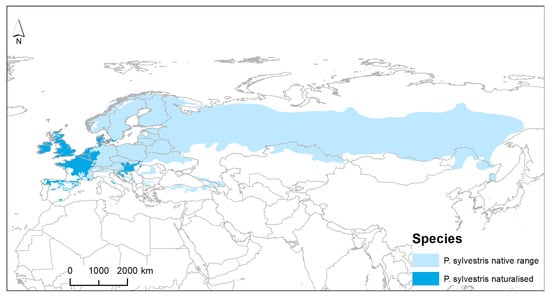
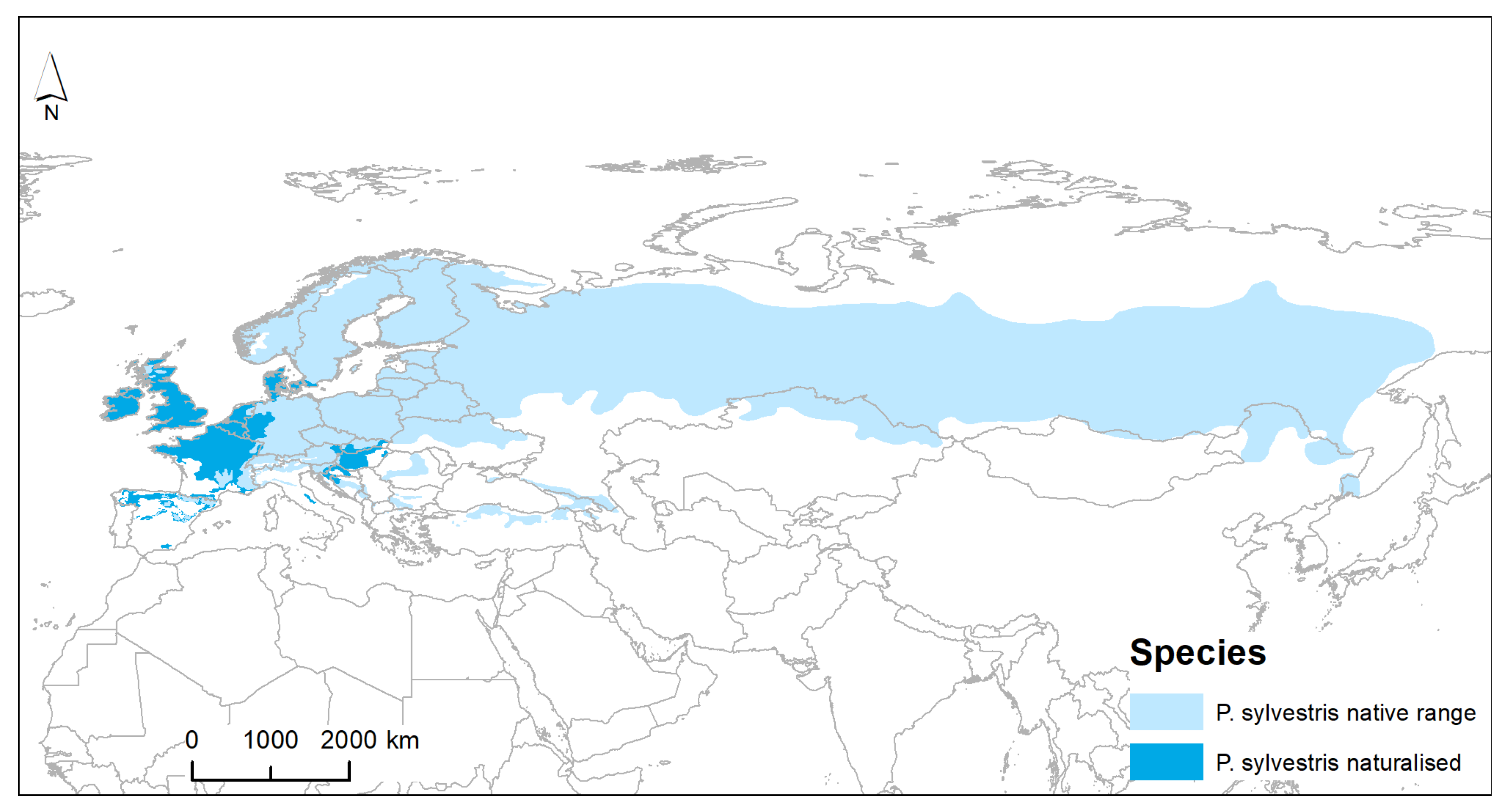
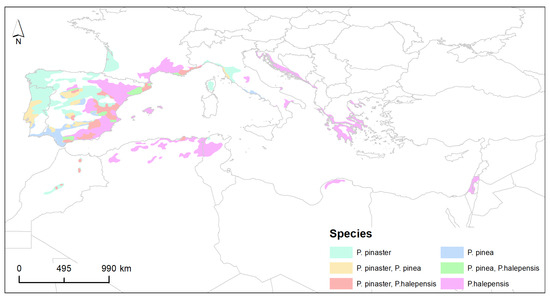
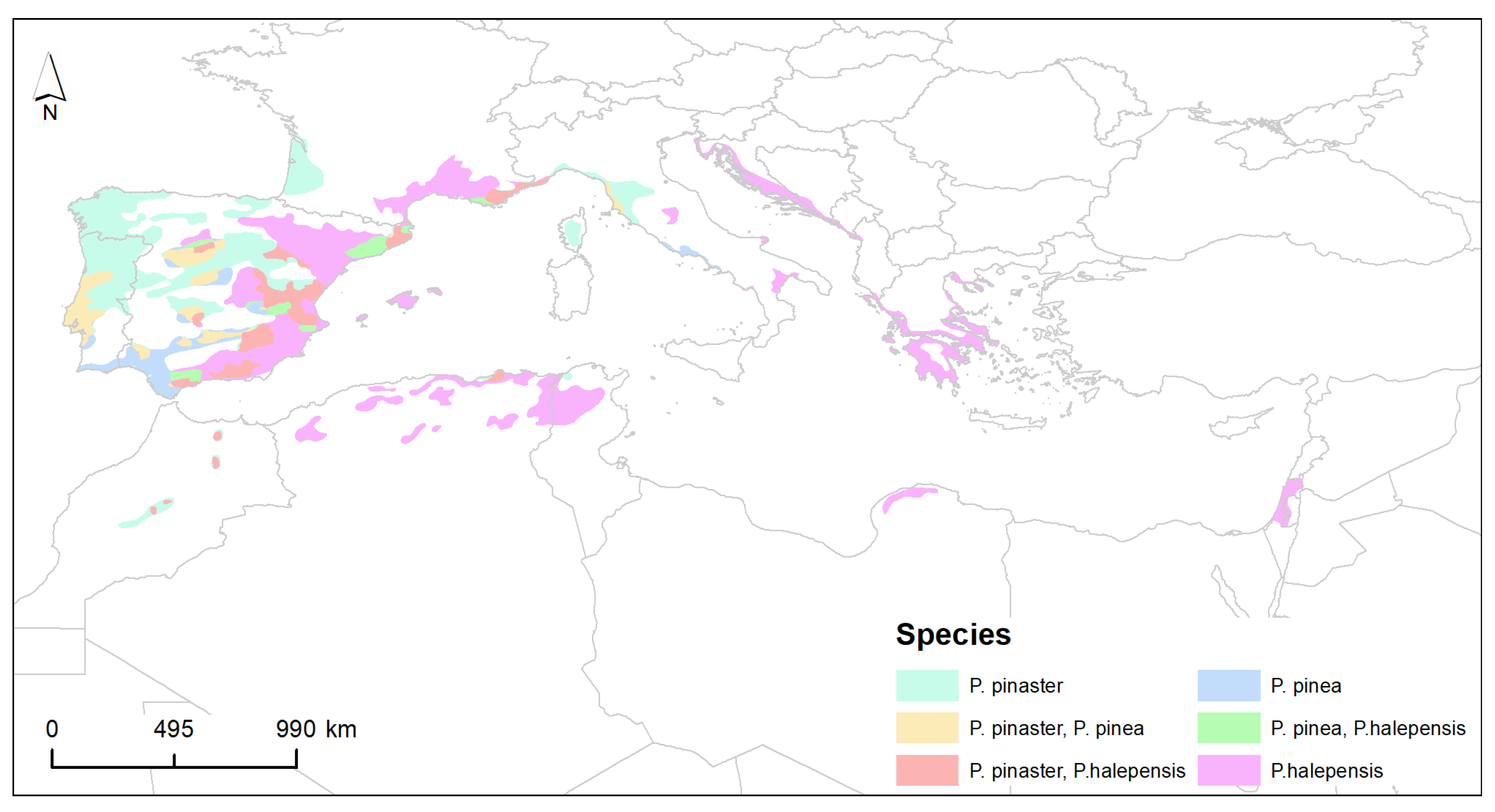
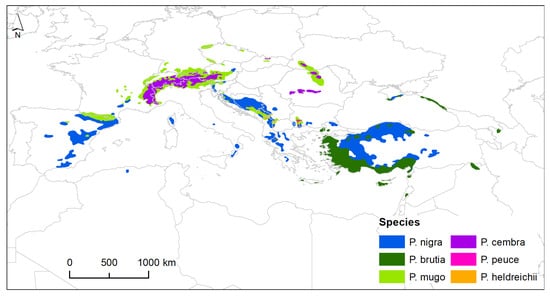
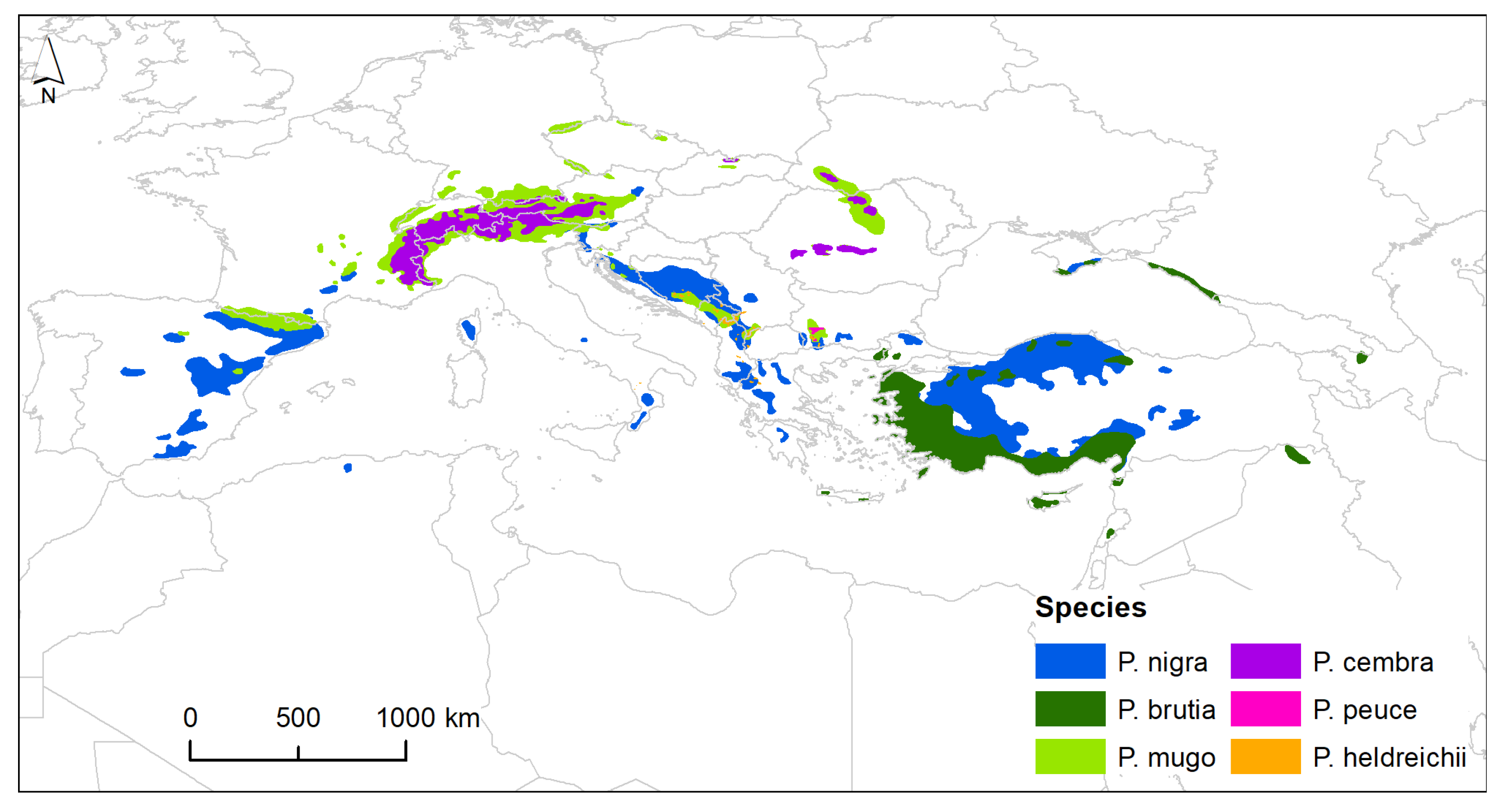

Disclaimer/Publisher’s Note: The statements, opinions and data contained in all publications are solely those of the individual author(s) and contributor(s) and not of MDPI and/or the editor(s). MDPI and/or the editor(s) disclaim responsibility for any injury to people or property resulting from any ideas, methods, instructions or products referred to in the content. |
© 2026 by the authors. Licensee MDPI, Basel, Switzerland. This article is an open access article distributed under the terms and conditions of the Creative Commons Attribution (CC BY) license.