


Abstract
Epiphytic organisms are characteristic elements of the Andean dry forest, playing a crucial role in ecosystem diversity and functionality, but they are threatened by deforestation-related factors. The diversity of epiphytic lichens and bryophytes was recorded in the Pisaca Reserve, which has an artificial pond locally known as “Laguna Pisaca”, serving as a critical micro-watershed. This pond provides water services to the city of Catacocha, motivating local communities to protect its biodiversity. In each zone (low, middle and high), 10 plots of 5 × 5 m were established, where the presence and coverage of lichens and bryophytes were sampled in 4 trees per plot (120 trees). Richness and diversity (Shannon–Weaver and Simpson indices) were calculated. Generalized linear models (GLM) were used to analyze the effect of the zone on richness and diversity, and multivariate analysis was used to analyze species composition. A total of 90 species were recorded (65 lichens and 25 bryophytes), distributed in three zones: 74 in the high, 67 in the low and 41 in the middle zone. Species richness and composition showed significant variations in relation to the three zones, influenced by forest structure, small altitudinal changes and forests disturbance. The forests of the Pisaca Reserve harbor a great diversity of lichens and epiphytic bryophytes, which serve as refuges for biodiversity in the Andean dry montane forest of South Ecuador.
1. Introduction
The Andean dry forest is one of Ecuador’s distinctive ecosystems, located between 1600 and 2300 m altitude [1,2]. These forests harbor a high diversity; however, there are multiple threats, including selective logging, habitat degradation, forest fragmentation, fires, land conversion for agriculture and cattle ranching [3]. In these forests, unique flora and fauna thrive and they play an essential role in biological processes and conservation [4,5].
Epiphytes are an important component of this forests, in terms of diversity and functionality [2,6]. However, only a few studies have focused on dry forest epiphytes; for example, two studies on lichen and bryophyte epiphytes have been conducted in seasonal dry forests of Ecuador [7,8], and following this pattern, local studies on bryophytes in montane Inter-Andean dry forests have been conducted in northern Ecuador [2,6], focusing on vascular and non-vascular epiphytes. Thus, to our knowledge, this study is the first to assess lichen and bryophyte diversity in montane dry forests of southern Ecuador.
Bryophytes and lichens are strongly influenced by macro- and micro-environmental variables, which affect their richness, diversity and community composition on local and regional scales [8,9]. At the regional level, altitude, latitude, temperature and precipitation influence their diversity [10,11,12,13,14,15]. On the other hand, at the local level, forest structure, microclimate and host traits (tree species, pH, bark type) have been identified as principal drivers of their diversity, and due to which they are strongly adapted to the microclimate conditions [8,16,17,18,19]. Therefore, the lack of mechanisms to regulate water uptake and loss makes them sensitive indicators of climatic conditions and can be used as indicators of environmental change [8,17,20,21], related with forests disturbance [22], air pollution [23] and climatic change [24].
The Pisaca Reserve, situated in southern Ecuador within the canton of Paltas in the province of Loja, conserves the last remnants of Andean dry forest in the region, which are rich in biodiversity; for instance, there are 34 species of vascular plants, which belong to 33 genera and 21 botanical families [3,25]. This protected area has an artificial pond called by the locals “Laguna Pisaca” that serves as a critical micro-watershed, providing essential water services to the city of Catacocha and motivating local communities to protect its biodiversity [25,26]. For example, in 2018, UNESCO’s Intergovernmental Hydrological Programme (IHP) designated the Paltas Catacocha WS&H system as an ecohydrology demonstration site, linked to the presence of an artificial pond or Cocha in the Pisaca reserve, within the Paltas Catacocha demonstration area that was restored between 2005 and 2008 [26].
Previous research in the Pisaca Reserve has primarily focused on raising tourism awareness among local residents [27]. Additionally, studies have examined the effects of soil conditioners on the growth and survival of Caesalpinia spinosa Kuntze [28]. Thus, Caesalpinia spinosa (commonly known as Vainillo) has been proposed as a sustainable productive alternative for the Province of Loja [29]. In addition, the area is recognized as part of the “Archaeological Route of the Canton of Paltas”, underscoring its significance as an invaluable site for the city [30]. However, our research is the first to assess the diversity of bryophytes and lichens in the Pisaca Reserve, as studies have been limited to tourism, hydrology and vascular plant diversity.
In the present study, we analyzed the response of epiphytic communities (lichens and bryophytes) to three different zones of Andean dry forest. We hypothesized that, under similar environmental conditions, differences in species diversity and community structure would result from differences in elevation and disturbance, which are associated with changes in forest structure and microclimate. Specifically, we wanted to answer the following questions: (A) Do the different elevations and disturbances influence the richness, diversity and composition of epiphytic communities? and (B) Is forest structure and canopy cover the main factor controlling the structure of epiphytic communities?
2. Materials and Methods
2.1. Study Area
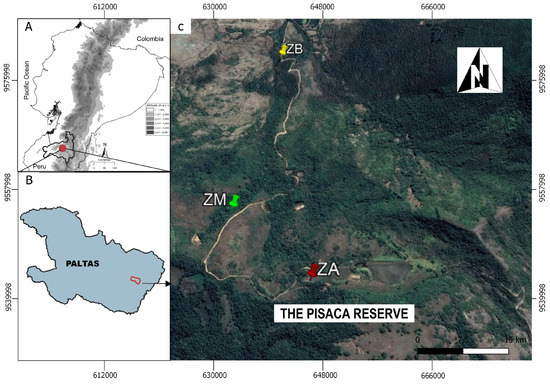
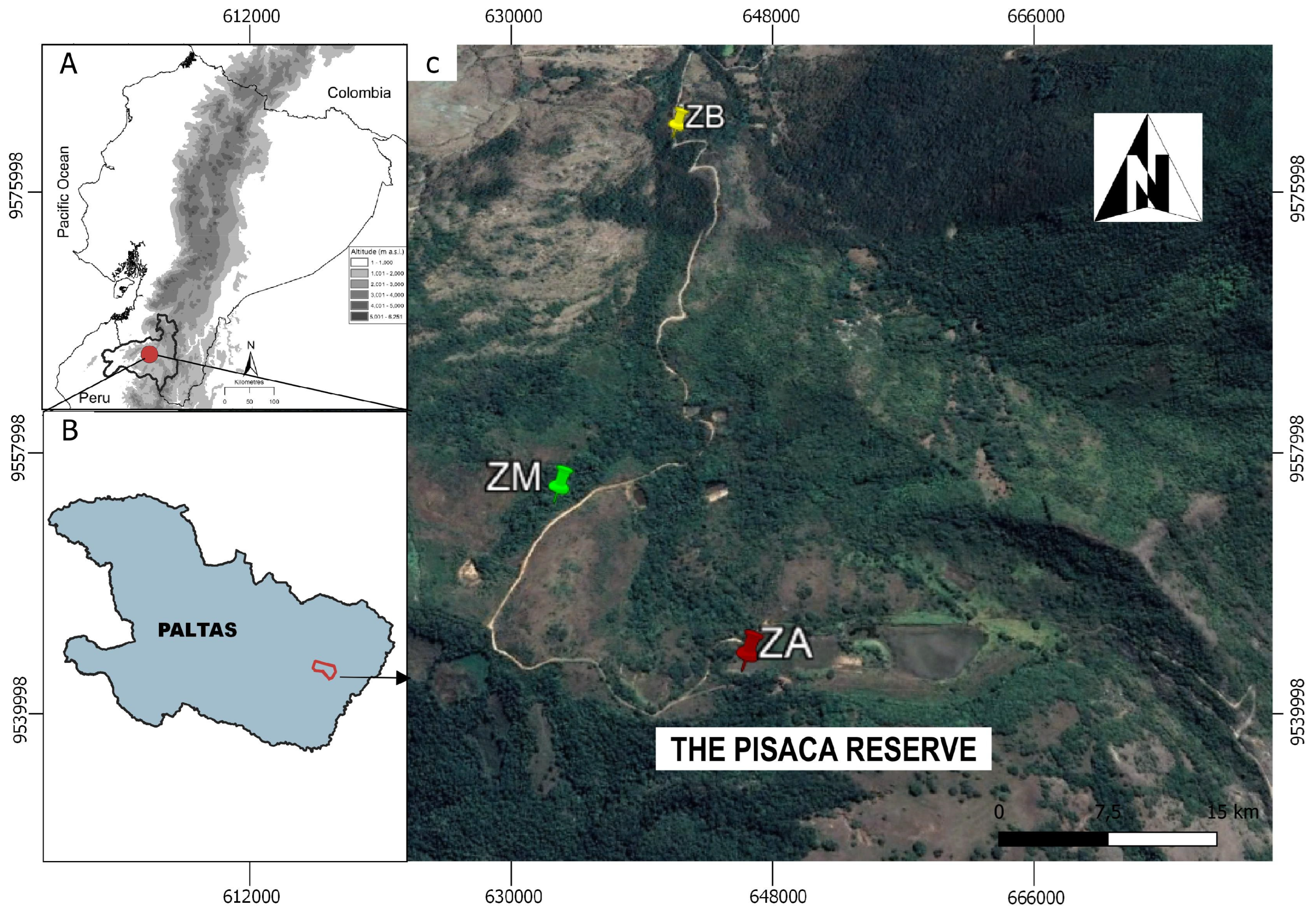
The study was conducted in the Pisaca Reserve, situated in the canton of Paltas in the province of Loja (Figure 1). This reserve is part of the Ecuadorian Andes biogeographical region and is classified as an Andean dry forest, with an area of 39.87 hectares and elevation ranging from 1560 to 2220 m a.s.l. [3,22]. The Pisaca Reserve has a warm, dry tropical climate, with an average annual temperature of 18.6 °C and it is notable for its rich vegetation [22].
Figure 1.
Study area in the Pisaca reserve. (A) Ecuador country with the province of Loja; (B) Cantón Paltas; and (C) Three zones with different elevations and disturbance levels, ZA; high zone, ZM; middle zone, ZB; low zone.
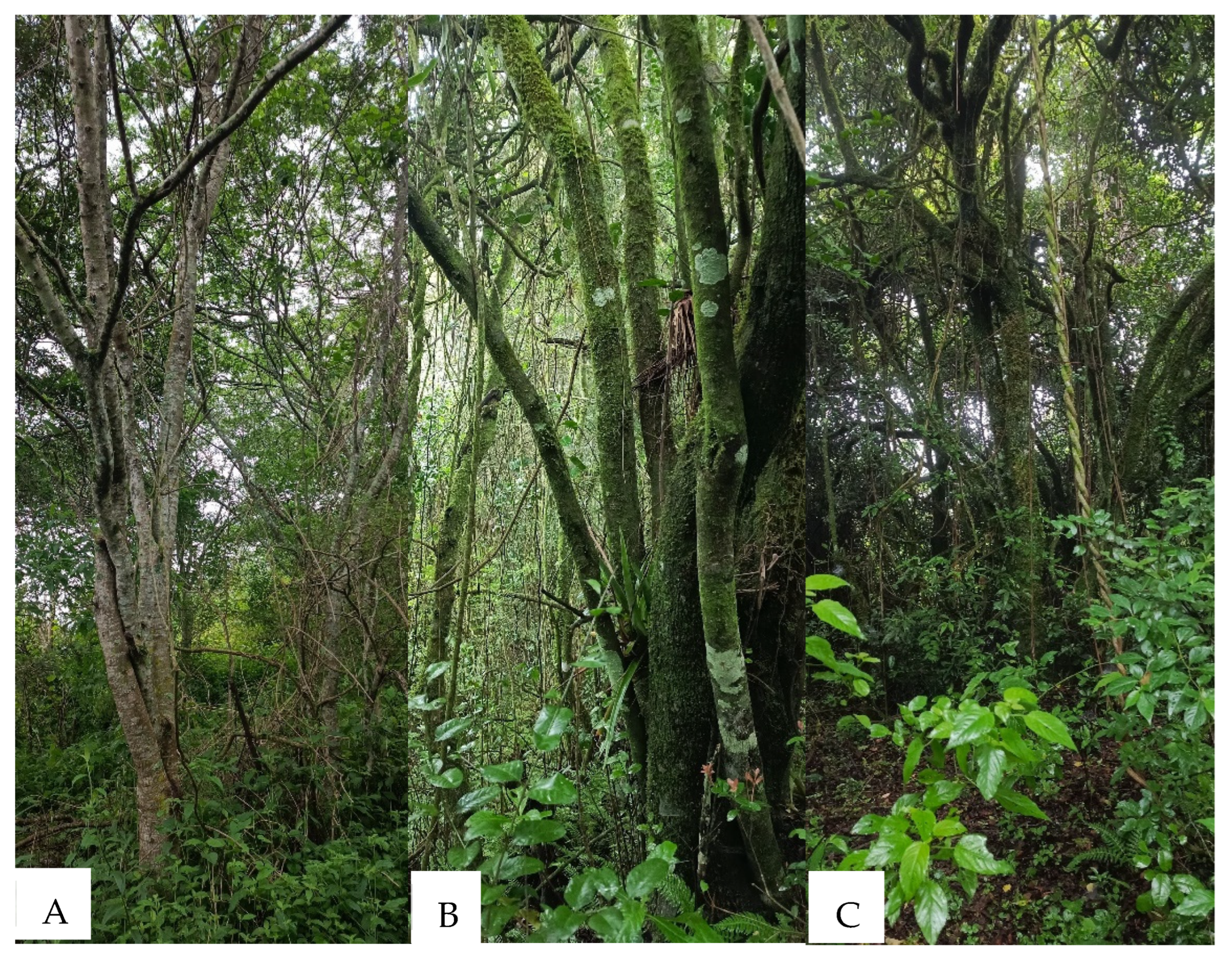
We selected three zones with different elevations and disturbance levels [3] (Figure 2). The low zone (1750–1850 m a.s.l.), historically affected by high disturbance, currently presents a reforestation process where species such as Vachellia macracantha (Humb. & Bonpl. ex Willd.) Seigler & Ebinger, Fulcaldea laurifolia (Bonpl.) Poir. and Duranta repens L. predominate [3]. The middle zone (2040–2140 m a.s.l.), historically affected by medium disturbance, a transition zone between dry forest and Andean forest, is home to species such as Lafoensia acuminata (Ruiz & Pav.) DC., Myrcianthes sp. and Mauria heterophylla Kunth [3]. Finally, the high zone (2160–2320 m a.s.l.) is characterized by fragments of native forest (low disturbance) with a humid microclimate and the presence of floristic elements typical of the Andean region, where Myrcianthes sp., Lafoensia acuminata, Xylosma sp., Myrcia fallax (A.Rich.) DC. and Mauria heterophylla predominate [3].
Figure 2.
Study area in the Pisaca reserve in the canton of Paltas, province of Loja shown three zones, (A) High zone, (B) middle zone, (C) low zone.
2.2. Desing and Data Sampling
In each zone, a total of 10 plots of 5 × 5 m were established with distance of 5 m between them. Within each plot, 4 trees were randomly selected to assess lichen and bryophyte cover on the trunk of each tree using 10 × 50 cm quadrats [31,32]. In addition, elevation, light, bark type and DBH (Diameter breast height) were recorded. Sampling was carried out in July and August 2023. The lichen and bryophytes samples were transferred to the Herbarium of the Universidad Técnica Particular de Loja (HUTPL) for identification, using taxonomic general keys for lichens [33,34,35,36] and bryophytes [37,38,39,40]. In addition, we used keys for specific groups [41,42,43,44].
2.3. Data Analysis
Sampling efficiency was assessed in three zones using a Chao 2 estimator. Richness and diversity were calculated using Shannon–Weaver and Simpson indices. Variation in richness, abundance and diversity in each zone was represented with box plots. To analyze the effects of zone on richness, abundance and diversity, generalized linear models (GLM) with a Poisson error distribution and a logarithmic link function were used [45].
NMDS was used to visualize differences in species composition between zones with Bray–Curtis distance and 999 Monte Carlo permutations. We performed a permutation-based multivariate analysis (PERMANOVA) to assess the effect of different zones in bryophyte and epiphytic lichen composition. All these analyses were carried out using the statistical software R version 3.6.3 with the statistical package ‘vegan’ [46]. To determine the indicator species in each zone, we carried out an indicator species analysis [47]. The indicator species analysis (ISA) provides an indicator value (IV) for each species in each zone. We used the IndVal function of the “labdsv” package [48]. The indicator value ranges from 0 (one species was absent from one zone) to 1 or 100 (one species occurred in all trees of one zone and was absent from other trees).
3. Results
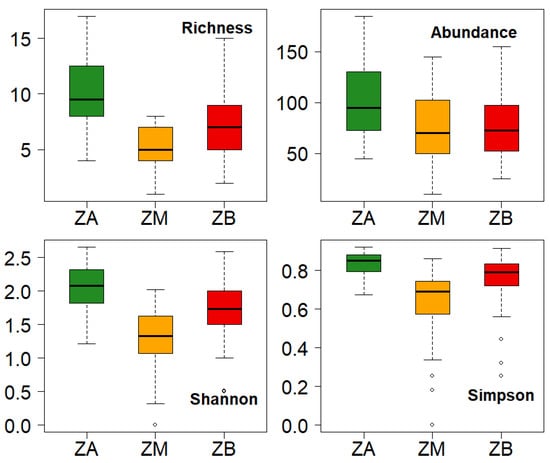
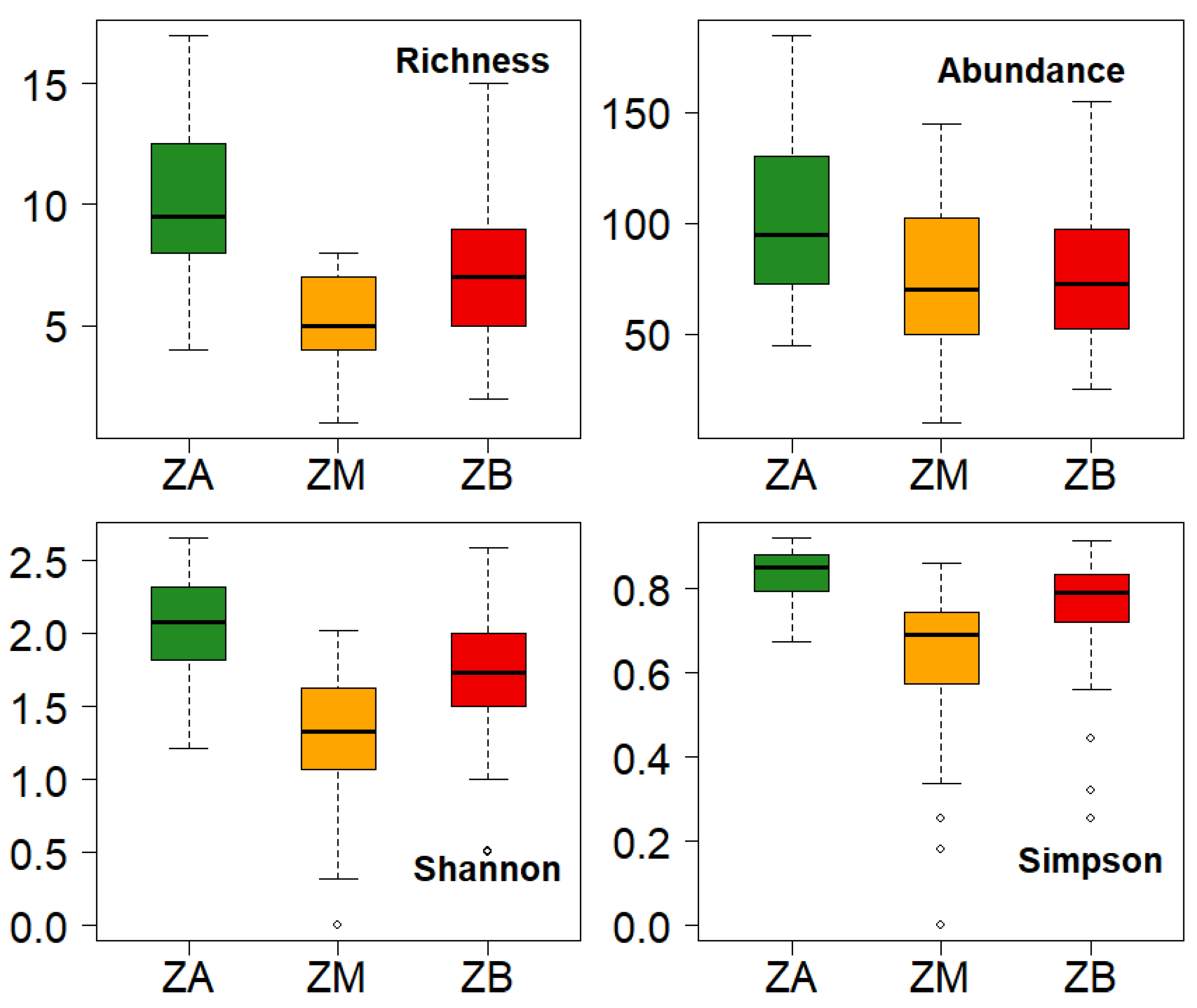
A total of 90 species were identified (Table A1): 65 lichens (32 foliaceous, 29 crustaceous and 4 fruticose) and 25 epiphytic bryophytes (11 liverworts and 14 mosses). The Chao 2 richness estimator indicated a higher estimated number of species in the high zone (ZA), with 74 species, in contrast to the low zone (ZB), which presented 67 species, followed by the middle zone (ZM) with 41 species. The box plots show that the high zone (ZA) has a higher richness, abundance and diversity compared to the low (ZB) and medium (ZM) zones (Figure 3).
Figure 3.
Box plots of richness, abundance and diversity indices (Shannon-Weaver and Simpson).
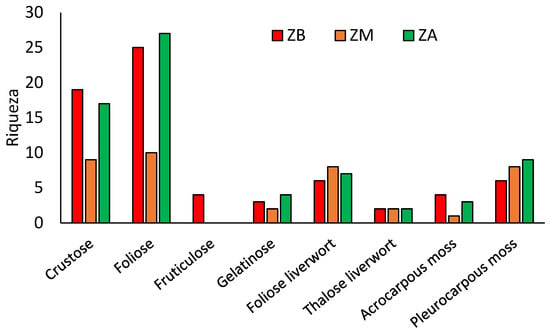
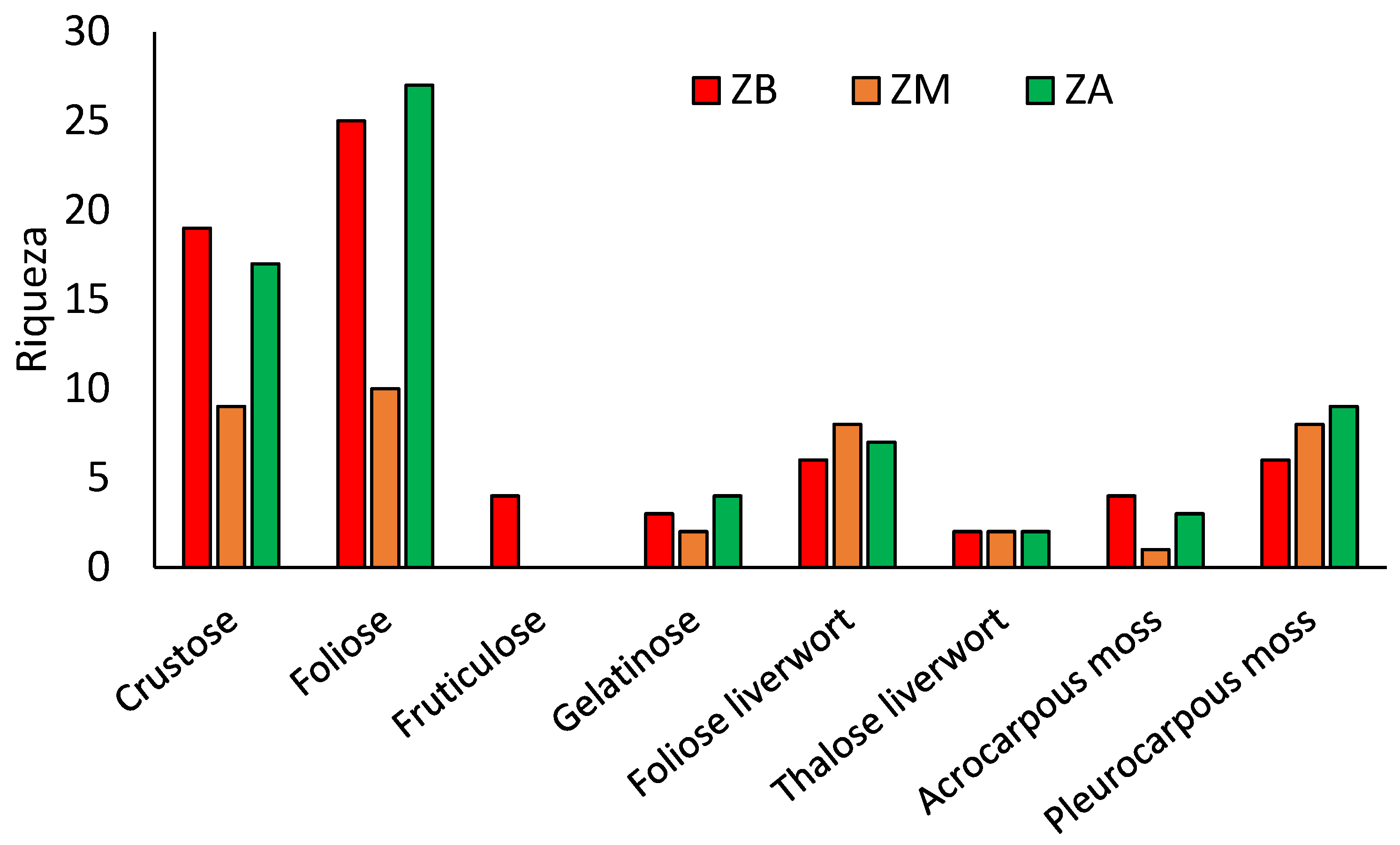
A greater richness of pleurocarpous mosses and foliose liverworts, as well as gelatinous and foliose lichens were observed in the high zone, whereas the low zone contained more species of crustose, fruticose lichens and acrocarpous mosses (Figure 4).
Figure 4.
Barplot showing the richness of different growth forms of bryophytes and lichens.
The GLM model revealed that richness, abundance and Shannon and Simpson indices were positively influenced by the high zone (ZA), whereas ZM and ZB showed negative effects on these diversity metrics (Table 1). In addition, a significant effect of DBH on richness and of light on abundance was observed (Table 1).
Table 1.
Generalized linear models (GLM) results for richness, abundance, Shannon-Weaver and Simpson as a function of zones. t = t-statistics; St = Standard error.
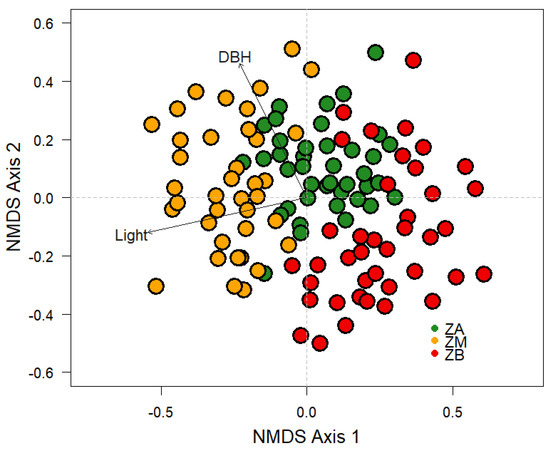
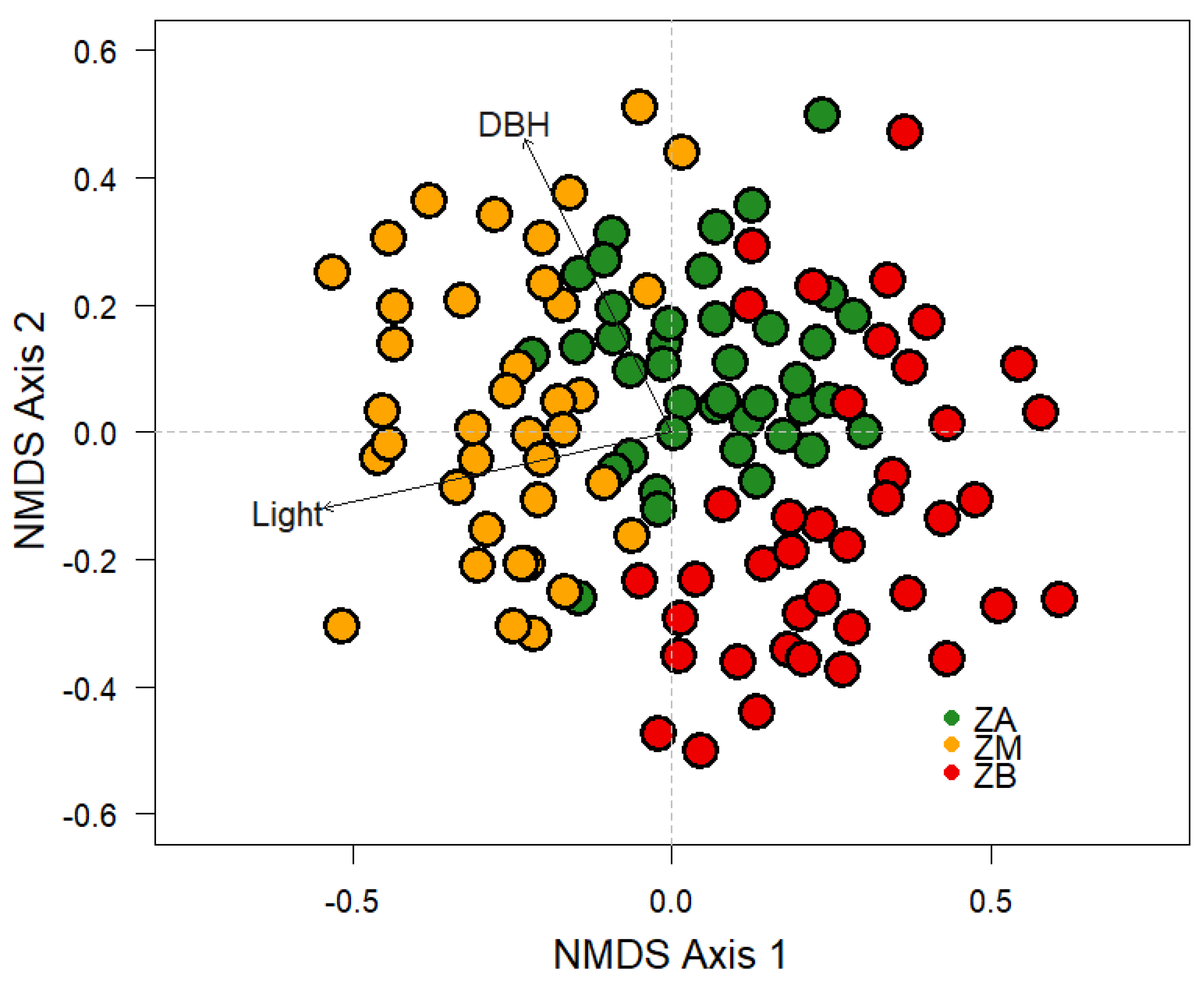
The NMDS analysis indicated that in the high zone (ZA) a greater uniformity of species distribution was observed. In contrast, in the low zone (ZB) and middle zone (ZM), species showed a wider dispersion (Figure 5). Thus, results showed that the epiphyte community composition had changed relative to the zone.
Figure 5.
Non-parametric multidimensional scaling (NMDS) analysis of bryophytes an lichens composition in three zones with different elevations and disturbance levels.
The results of the PERMANOVA test showed that the zone variable exerts a significant influence on the composition of the epiphytic bryophyte and lichen communities, explaining 12% of the variability observed in these communities. On the other hand, the amount of light and diameter at breast height (DBH) were found to have a significant effect on the composition of epiphytic communities; however, the variance is very low at 0.1% (Table 2).
Table 2.
Non-parametric multidimensional scaling analysis (NMDS). Df = degrees of freedom; SS = sum of squares; R2 = coefficient of variation; F = F-statistics.
The ISA showed that 33 species distributed in 15 bryophytes and 18 lichens had significant IVs for the different zones (Table 3). All the zones had different indicator species that were specific to those environmental conditions (Table 3).
Table 3.
The indicator species of bryophytes and lichens of the three zones with their indicator values.
4. Discussion
The results showed that the Andean dry forest zones of the Pisaca Reserve in southern Ecuador have a high diversity and can be considered as refuges of lichen and bryophyte diversity, as our study reported 28 epiphytic bryophyte species and 66 lichen species. This is in contrast with the low richness of bryophytes (13 species) and the lack of presence of lichen species reported by Werner and Gradstein [2] in the montane dry forests of northern Ecuador.
The bryophyte and lichen species richness and diversity were related to elevation, disturbance and forest structure. In the high zone (ZA), richness, cover and diversity were higher due to the native forest, which provides favorable conditions for the development of lichens and bryophytes (pleurocarpous mosses and foliose liverworts), related to a more closed canopy and a microclimate with higher humidity and lower light intensity [2,3,49]. In line with this, several studies have shown that foliose liverworts are very sensitive to forest disturbance, including the disappearance of several species [6,49,50].
In contrast, the lower and middle zones have historically been subject to disturbance [3], which implies a negative impact on richness and diversity, as documented by research in Andean montane dry forests [2,8]. Despite this, the ZB showed greater richness, cover and diversity than the ZM, due to the fact that most species are lichens that prefer drier habitats related with forests disturbance [2].
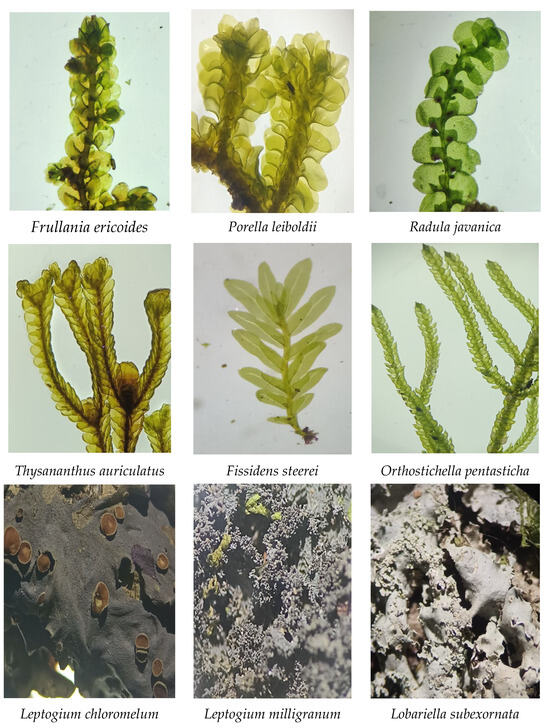
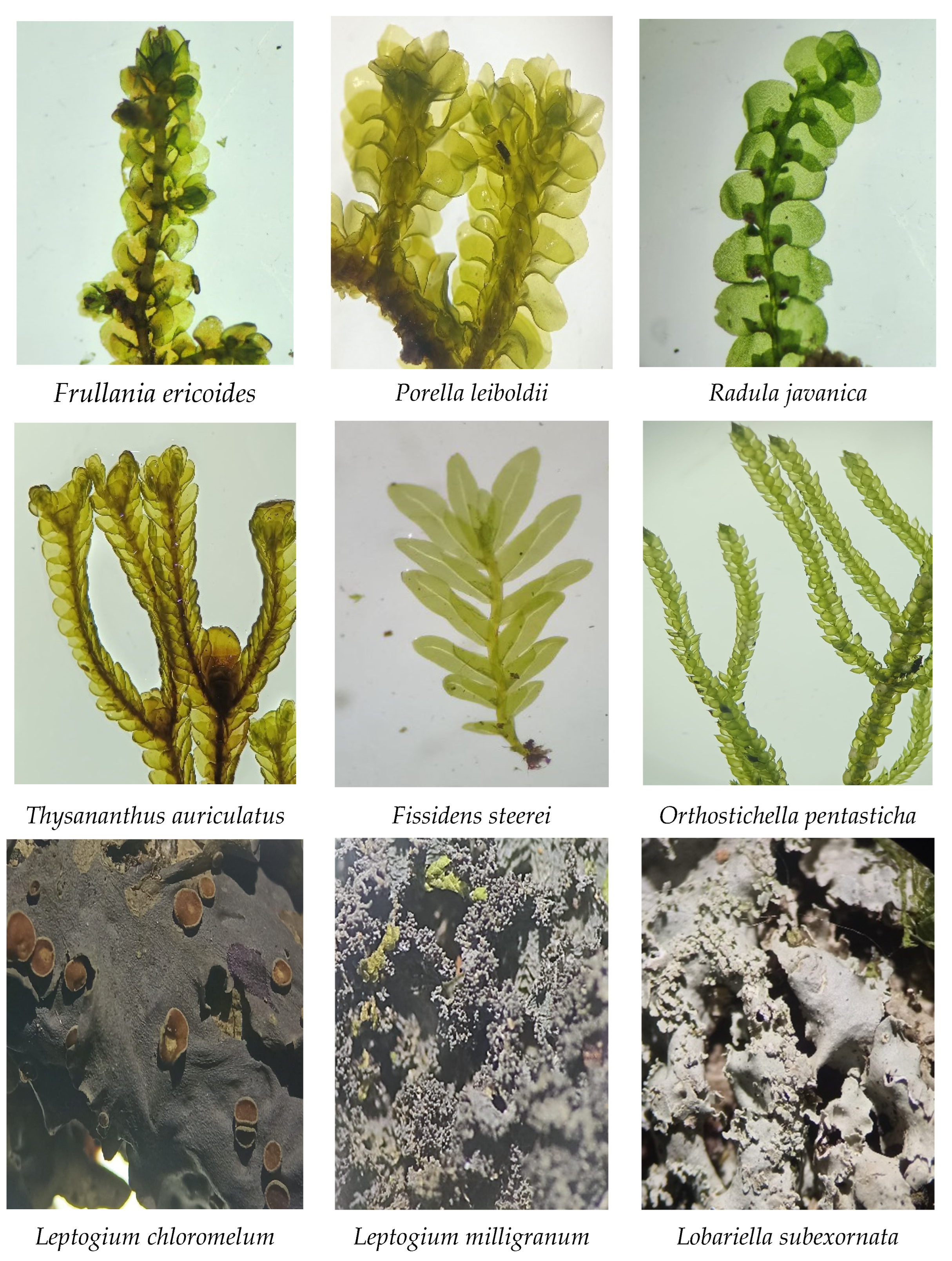
In terms of species composition, it is different in the three zones, where the ZA with the wet canopy and large diameter trees is mainly dominated by bryophytes (foliose liverworts and pleurocarpous mosses) and gelatinose lichens (Figure 6). In this zone, we recorded bryophyte species with high indicator values (e.g., Bryopteris flicina, Neckera chilensis, Porella leiboldii, Porotrichum expansum and Thysananthus auriculatus) and cyanolichens (e.g., Leptogium chloromelum and Leptogium milligranum), which are conditioned to humid microclimates [20,51]. These species are associated with the high diversity, abundance and mature trees recorded in the upper part of the Pisaca Reserve [3]. In addition, the forest remnants in the upper zone are influenced by the moisture provided by the Pisaca wetland [26], creating a favorable habitat for a greater diversity of bryophytes (e.g., Porella leiboldii) and macrolichens (e.g., Lobariella subexornata) with high moisture requirements [29,49,50,51].
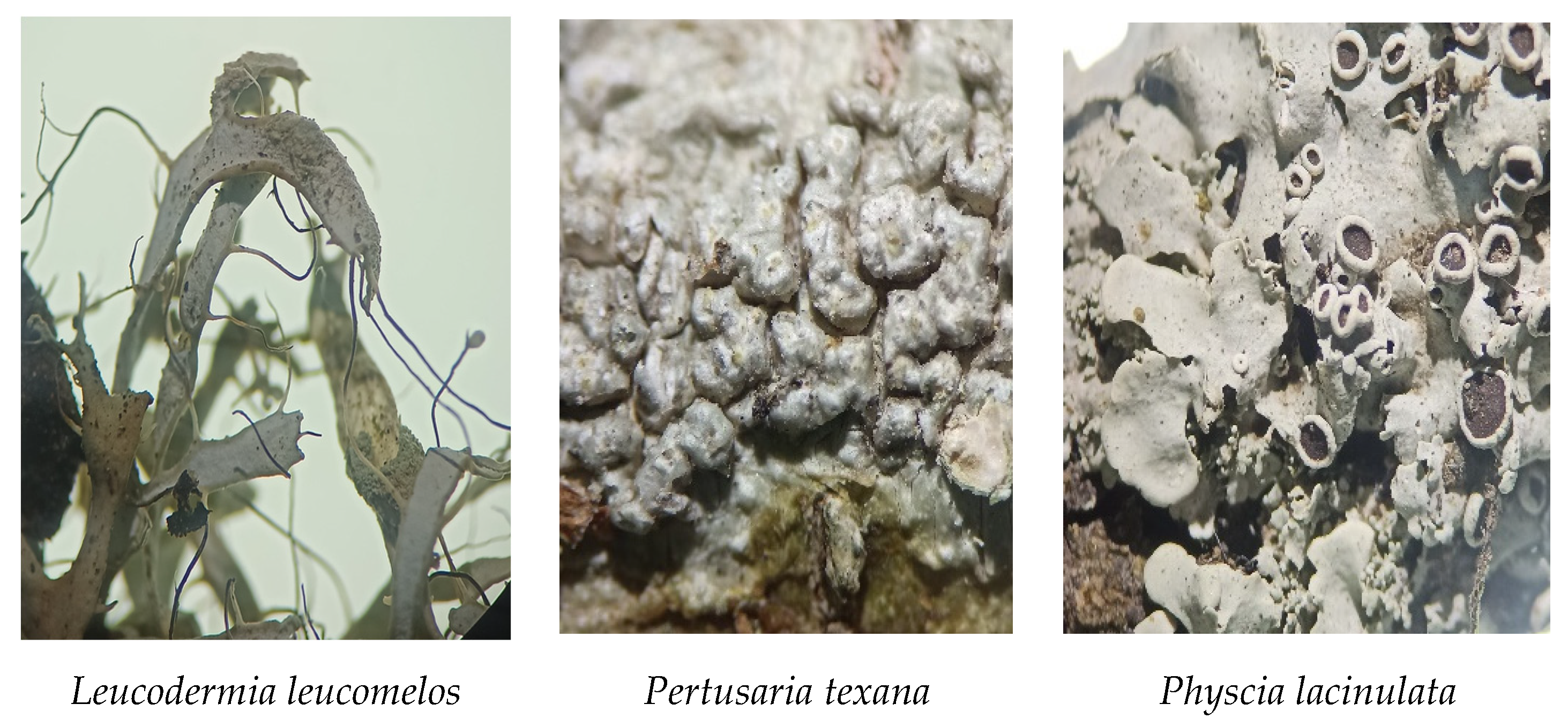
Figure 6.
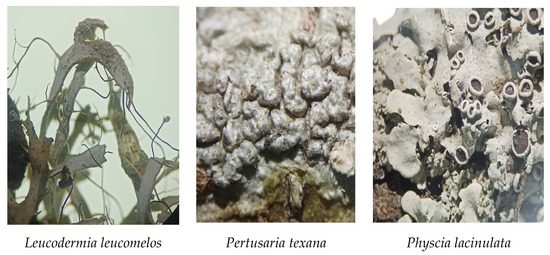
Several species of bryophytes and lichens with high indicator values.
On the other hand, the lower zone showed foliose macrolichens with high indicator values (e.g., Leucodermia leucomelos, Physcia lacinulata), species with a crustose growth form (Chrysothrix candelaris, Coniocarpon cinnabarinum, Ramboldia haematites) and fruticose lichens such as Ramalina celastri, Teloschistes flavicans, Usnea cornuta and Usnea strigosa. Similarly, previous studies have shown that these species are associated with disturbed forests [31,51], and some species have been recorded in dry forests where crustose lichens are dominant [8,52]. In addition, species of the genera Ramalina, Teloschistes and Usnea present secondary metabolites (e.g., usnic acid and parietin) that allow them to protect themselves against excessive light availability [31], which is common in forests of the ZB.
Forests in the ZB have less vegetation cover, density and basal area [3], as much of the forest cover in the ZM and ZB has been lost due to the exploitation of wood for fuel and housing, and land use change from forest to crops and pastures. Although our study has shown that bryophytes and lichens can be indicators of disturbance and environmental change, other factors, such as host tree species, pH and bark moisture, are influential elements in the diversity of lichens and epiphytic bryophytes, suggesting areas for future research that were not evaluated in this study [31,49,53]. For this reason, our results are limited to the Andean dry montane forests of the Pisaca Reserve, as we do not have any other remnants of forest with similar conditions.
5. Conclusions
The Andean dry forest of the Pisaca Reserve can be considered a refuge for a high diversity of epiphytes, with a total of 94 species distributed in different zones, where the richness, diversity and composition of lichen and bryophyte communities are different. The high zone (ZA), with more canopy cover, large trees and high plant diversity, is mainly dominated by bryophytes and cyanolichens, which are restricted to the humid understory due to the influence of the moisture provided by the Pisaca pond. On the other hand, in the low zone (ZB) and middle zone (ZM), lichens with crustose, foliose and fruticose growth forms, which have secondary metabolites, were abundant in these zones with less canopy cover and low plant diversity. Therefore, the high diversity of lichens and epiphytic bryophytes and their relationship with different microclimatic factors in the Pisaca reserve underline the importance of these organisms in maintaining the functioning and conservation of the Pisaca pond.
Author Contributions
Conceptualization, Á.B. and M.G.-P.; methodology, Á.B., M.G.-P. and L.R.; formal analysis, M.G.-P. and Á.B.; investigation, M.G.-P. and Á.B.; writing—original draft preparation, Á.B., M.G.-P., E.Y.-S. and R.A.-H. All authors have read and agreed to the published version of the manuscript.
Funding
This research was funded by the Universidad Técnica Particular de Loja, grant POA-VIN-056.
Data Availability Statement
Data are contained within the article.
Acknowledgments
We thank the Private Technical University of Loja (UTPL) for funding this Open Access publication. We thank Naturaleza y Cultura for access to the Pisaca Reserve.
Conflicts of Interest
The authors declare no conflicts of interest.
Appendix A
Table A1.
Species of bryophytes and lichens occurring in the three different zones.
References
- Ministerio del Ambiente del Ecuador, MAE. Sistema de Clasificación de los Ecosistemas del Ecuador Continental; Subsecretaría de Patrimonio Natural: Quito, Ecuador, 2012. [Google Scholar]
- Werner, F.A.; Gradstein, S.R. Diversity of dry forest epiphytes along a gradient of human disturbance in the tropical andes. J. Veg. Sci. 2009, 20, 59–68. [Google Scholar] [CrossRef] [Scilit]
- Cueva, E.; Lozano, D.; Yaguana, C. Efecto de la gradiente altitudinal sobre la composición florística, estructura y biomasa arbórea del bosque seco andino, Loja, Ecuador. Bosque 2019, 40, 365–378. [Google Scholar]
- Cadena-Ortiz, H.; Varela, S.; Bahamonde-Vinueza, D.; Freile, J.F.; Bonaccorso, E. Birds of Bosque Protector Jerusalem, Guayllabamba Valley, Ecuador. Check List 2015, 11, 1770. [Google Scholar] [CrossRef] [Scilit]
- de la Cadena-Mendoza, G.N.; Ramón-Cabrera, G.M. Diversity of Beetles (Coleoptera) in an Inter-Andean Dry Tropical Forest in Ecuador. Coleopt. Bull. 2023, 77, 561–580. [Google Scholar]
- Werner, F.A.; Gradstein, S.R. Spatial Distribution and Abundance of Epiphytes along a Gradient of Human Disturbance in an Interandean Dry Valley, Ecuador. Selbyana 2010, 30, 208–215. [Google Scholar]
- Benítez, Á.; Aragón, G.; Prieto, M. Lichen diversity on tree trunks in tropical dry forests is highly influenced by host tree traits. Biodivers. Conserv. 2019, 28, 2909–2929. [Google Scholar]
- Benítez, Á.; Ortiz, J.; Matamoros-Apolo, D.; Bustamante, A.; López, F.; Yangua-Solano, E.; Gusmán-Montalván, E. Forest disturbance determines diversity of epiphytic lichens and bryophytes on trunk bases in tropical dry forests. Forests 2024, 15, 1565. [Google Scholar] [CrossRef] [Scilit]
- Wolf, J.H.D. Diversity Patterns and biomass of epiphytic bryophytes and lichens along an altitudinal gradient in the Northern Andes. Ann. Missouri Bot. Gard. 1993, 80, 928–960. [Google Scholar] [CrossRef] [Scilit]
- Hauck, M.; Spribille, T. The significance of precipitation and substrate chemistry for epiphytic lichen diversity in spruce-fir forests of the Salish Mountains, northwestern Montana. Flora-Morphol. Distrib. Funct. Ecol. Plants 2005, 6, 547–562. [Google Scholar] [CrossRef] [Scilit]
- Werth, S.; Wagner, H.H.; Gugerli, F.; Holderegger, R.; Csencsics, D.; Kalwij, J.M.; Scheidegger, C. Quantifying dispersal and establishment limitation in a population of an epiphytic lichen. Ecology 2006, 87, 2037–2046. [Google Scholar]
- Aragón, G.; Martínez, I.; García, A. Loss of epiphytic diversity along a latitudinal gradient in southern Europe. Sci. Total Environ. 2012, 426, 188–195. [Google Scholar]
- Király, I.; Nascimbene, J.; Tinya, F.; Ódor, P. Factors influencing epiphytic bryophyte and lichen species richness at different spatial scales in managed temperate forests. Biodivers. Conserv. 2013, 22, 209–223. [Google Scholar]
- de Menezes, A.A.; da Silva Cáceres, M.E.; Bastos, C.J.P.; Lücking, R. The latitudinal diversity gradient of epiphytic lichens in the Brazilian Atlantic Forest: Does Rapoport’s rule apply? Bryologist 2018, 121, 480–497. [Google Scholar] [CrossRef] [Scilit]
- Zhang, Y.; He, N.; Liu, Y. Temperature factors are a primary driver of the forest bryophyte diversity and distribution in the southeast Qinghai-Tibet Plateau. For. Ecol. Manag. 2023, 527, 120610. [Google Scholar]
- Wolseley, P.A.; Aguirre-Hudson, B. The ecology and distribution of lichens in tropical deciduous and evergreen forests of Northern Thailand. J. Biogeogr. 1997, 24, 327–343. [Google Scholar] [CrossRef] [Scilit]
- Holz, I.; Gradstein, R.S. Cryptogamic epiphytes in primary and recovering upper montane oak forests of Costa Rica–species richness, community composition and ecology. Plant Ecol. 2005, 178, 89–109. [Google Scholar]
- Cáceres, M.E.; Lücking, R.; Rambold, G. Phorophyte specificity and environmental parameters versus stochasticity as determinants for species composition of corticolous crustose lichen communities in the Atlantic rain forest of northeastern Brazil. Mycol. Prog. 2007, 6, 117–136. [Google Scholar]
- Aragón, G.; Martínez, I.; de la Cruz, M.; Hurtado, P. High Host Preferences in Epiphytic Lichens Across Diverse Phorophyte Species in the Mediterranean Region. J. Fungi 2025, 11, 104. [Google Scholar] [CrossRef] [Scilit]
- Nöske, N.M.; Hilt, N.; Werner, F.A.; Brehm, G.; Fiedler, K.; Sipman, H.J.; Gradstein, S.R. Disturbance effects on diversity of epiphytes and moths in a montane forest in Ecuador. Basic Appl. Ecol. 2008, 9, 4–12. [Google Scholar] [CrossRef] [Scilit]
- Peñate-Pacheco, L.; Gil-Novoa, J.E.; Carillo-Fajardo, M.Y. Diversidad taxonómica y funcional de briófitos en diferentes coberturas de un bosque seco tropical, Córdoba (Colombia). Bol. Soc. Argent. Bot. 2022, 57, 687. [Google Scholar] [CrossRef] [Scilit]
- Kantvilas, G.; Jarman, S.J.; Minchin, P.R. Early impacts of disturbance on lichens, mosses and liverworts in Tasmania’s wet eucalypt production forests. Aust. For. 2015, 78, 92–107. [Google Scholar]
- Larsen, R.S.; Bell, J.N.B.; James, P.W.; Chimonides, P.J.; Rumsey, F.J.; Tremper, A.; Purvis, O.W. Lichen and bryophyte distribution on oak in London in relation to air pollution and bark acidity. Environ. Pollut. 2007, 146, 332–340. [Google Scholar]
- Mallen-Cooper, M.; Rodríguez-Caballero, E.; Eldridge, D.J.; Weber, B.; Büdel, B.; Höhne, H.; Cornwell, W.K. Towards an understanding of future range shifts in lichens and mosses under climate change. J. Biogeogr. 2023, 50, 406–417. [Google Scholar]
- Baquero, F.; Sierra, R.; Ordóñez, L.; Tipán, M.; Espinosa, L.; Belen Rivera, M.; Soria, P. La Vegetación de los Andes del Ecuador; EcoCiencia/CESLA/EcoPar/MAG SIGAGRO/CDC-JATUN SACHA/División Geográfica—IGM: Quito, Ecuador, 2004. [Google Scholar]
- Albarracín, M.; Ramón, G.; González, J.; Iñiguez-Armijos, C.; Zakaluk, T.; Martos-Rosillo, S. The ecohydrological approach in water sowing and harvesting systems: The case of the Paltas Catacocha ecohydrology demonstration site, Ecuador. Ecohydrol. Hydrobiol. 2021, 21, 454–466. [Google Scholar] [CrossRef] [Scilit]
- Díaz, L.; Campoverde, S.; Loarte, M.; Guaya, P. Importance of the landscape as a resource in tourist planning. Rev. Tur. Desenvolv. 2021, 37, 31–45. [Google Scholar] [CrossRef]
- Villacrés, D.; Flores, L.; Cartuche, H. Efecto del Acondicionador de Suelo Terracottem Sobre el Prendimiento y Desarrollo de Caesalpinia Spinosa Kuntze en la Reserva Pisaca, Cantón Paltas, Provincia de Loja. Bachelor’s Thesis, Universidad Nacional de Loja, Loja, Ecuador, 2013; pp. 1–123. [Google Scholar]
- Encalada, D.; Castro, L.M.; Cabrera, O.; Ramón, P.; Reyes-Bueno, F.; Paul, C. Factors influencing the expressed willingness to transition from collection to cultivation of non-timber forest products: The case of Caesalpinia spinosa in southern Ecuador. For. Policy Econ. 2025, 170, 103366. [Google Scholar] [CrossRef] [Scilit]
- Paladines, J.E. Ruta Arqueológica Vivencial del Cantón Paltas. Bachelor’s Thesis, Universidad del Azuay, Cuenca, Ecuador, 2019; pp. 1–177. [Google Scholar]
- Benítez, A.; Aragón, G.; González, Y.; Prieto, M. Functional traits of epiphytic lichens in response to forest disturbance and as predictors of total richnes and diversity. Ecol. Indic. 2018, 86, 18–26. [Google Scholar] [CrossRef] [Scilit]
- Guerra, G.; Arrocha, C.; Rodríguez, G.; Déleg, J.; Benítez, Á. Briófitos en los troncos de árboles como indicadores de la alteración en bosques montanos de Panamá. Rev. Biol. Trop. 2020, 68, 492–502. [Google Scholar] [CrossRef] [Scilit]
- Brodo, I.M. Lichens of North America; Yale University Press: New Haven, CT, USA, 2001; Volume 828. [Google Scholar]
- Nash, T.H., III; Ryan, B.D.; Gries, C.; Bungartz, F. Lichen Flora of the Greater Sonoran Desert Region; Lichens Unlimited: Tempe, AZ, USA, 2002; Volume 1. [Google Scholar]
- Nash, T.H., III; Ryan, B.D.; Diederich, P.; Gries, C.; Bungartz, F. Lichen Flora of the Greater Sonoran Desert Region; Lichen Unlimited: Tempe, AZ, USA, 2004; Volume 2. [Google Scholar]
- Nash, T.H., III; Gries, C.; Bungartz, F. Lichen Flora of the Greater Sonoran Desert Region; Lichen Unlimited: Tempe, AZ, USA, 2007; Volume 3. [Google Scholar]
- Churchill, S.P.; Linares, C.E. Prodromus Bryologiae Novo-Granatensis: Introduccion a la Flora de Musgos de Colombia; Instituto de Ciencias Naturales: Bogota, Colombia, 1995. [Google Scholar]
- Gradstein, S.R.; da Costa, D.P. The Hepaticae and Anthocerotae of Brazil; New York Botanical Garden Press: New York, NY, USA, 2003; Volume 87, pp. 1–318. [Google Scholar]
- Gradstein, S.R. Checklist of the liverworts and hornworts of Ecuador. Frahmia 2020, 17, 1–40. [Google Scholar]
- Gradstein, S.R. The Liverworts and Hornworts of Colombia and Ecuador; Springer: Berlin/Heidelberg, Germany, 2021. [Google Scholar]
- Tehler, A. Syncesia (Arthoniales, Euascomycetidae). Flora Neotrop. 1997, 74, 1–48. [Google Scholar]
- Rivas-Plata, E.R.; Lücking, R.; Aptroot, A.; Sipman, H.J.M.; Chaves, J.L.; Umaña, L.; Lizano, D. A first assessment of the Ticolichen biodiversity inventory in Costa Rica: The genus Coenogonium (Ostropales: Coenogoniaceae), with a world-wide key and checklist and a phenotype-based cladistic analysis. Fungal Divers. 2006, 23, 255–321. [Google Scholar]
- Aptroot, A. A world key to the species of Anthracothecium and Pyrenula. Lichenologist 2012, 44, 5–53. [Google Scholar] [CrossRef] [Scilit]
- Lücking, R.; Plata, E.R. Clave y guía ilustrada para géneros de Graphidaceae. Glalia 2008, 1, 1–39. [Google Scholar]
- Zuur, A.F.; Ieno, E.N.; Smith, G.A. Analyzing Ecological Data; Springer: New York, NY, USA, 2007. [Google Scholar]
- Oksanen, J.; Ovaskainen, O.; de Jonge, M.M.J.; Lehikoinen, A.; Ábrego, N.; Opedal, Ø.H.; Tikhonov, G. Modelado conjunto de distribución de especies con el paquete r Hmsc. Métodos Ecol. Evol. 2019, 11, 442–447. [Google Scholar]
- Dufrêne, M.; Legendre, P. Species assemblages and indicator species: The need for a flexible asymmetrical approach. Ecol. Monogr. 1997, 67, 345–366. [Google Scholar] [CrossRef] [Scilit]
- Roberts, D.W. Package “Labdsv”. 2012. Available online: http://cran.rproject.org/web/packages/labdsv/labdsv.pdf (accessed on 1 September 2021).
- Benítez, Á.; Prieto, M.; Aragón, G. Large trees and dense canopies: Key factors for maintaining high epiphytic diversity on trunk bases (bryophytes and lichens) in tropical montane forests. For. J. For. Res 2015, 88, 521–527. [Google Scholar] [CrossRef] [Scilit]
- Benítez, Á.; Nagua, R.; Medina, J.; Lapo, G.; Yangua-Solano, E.; Andrade-Hidalgo, R. Bryophytes as indicators of disturbance in one of the last Remnants of the mountain forests of el Oro province, Ecuador. Plants 2025, 14, 184. [Google Scholar] [CrossRef] [Scilit]
- Benítez, Á.; Prieto, M.; González, Y.; Aragón, G. Effects of tropical montane forest disturbance on epiphytic macrolichens. Sci. Total Environ. 2012, 441, 169–175. [Google Scholar] [CrossRef] [Scilit]
- España-Puccini, P.; Gómez, J.P.; Muñoz-Acevedo, A.; PosadaEcheverría, D.; Martínez-Habibe, M.C. Analysis of the Diversity of Corticolous Lichens Associated with Tree Trunks in the Understories of Four Tropical Dry Forests of the Atlántico Department in Colombia. Forests 2024, 15, 2000. [Google Scholar] [CrossRef] [Scilit]
- Zárate-Arias, N.; Moreno-Palacios, M.; Torres-Benitez, A. Diversidad, especificidad de forófito y preferencias microambientales de líquenes cortícolas de un bosque subandino en la región centro de Colombia. Rev. Acad. Colomb. Cienc. Exactas Fis. Nat. 2019, 43, 737–745. [Google Scholar]

Disclaimer/Publisher’s Note: The statements, opinions and data contained in all publications are solely those of the individual author(s) and contributor(s) and not of MDPI and/or the editor(s). MDPI and/or the editor(s) disclaim responsibility for any injury to people or property resulting from any ideas, methods, instructions or products referred to in the content. |
© 2025 by the authors. Licensee MDPI, Basel, Switzerland. This article is an open access article distributed under the terms and conditions of the Creative Commons Attribution (CC BY) license (https://creativecommons.org/licenses/by/4.0/).